EP1090631A1 - Persönliches Hygieneprodukt - Google Patents
Persönliches Hygieneprodukt Download PDFInfo
- Publication number
- EP1090631A1 EP1090631A1 EP00307849A EP00307849A EP1090631A1 EP 1090631 A1 EP1090631 A1 EP 1090631A1 EP 00307849 A EP00307849 A EP 00307849A EP 00307849 A EP00307849 A EP 00307849A EP 1090631 A1 EP1090631 A1 EP 1090631A1
- Authority
- EP
- European Patent Office
- Prior art keywords
- personal hygiene
- hygiene product
- product according
- molecular weight
- clarity
- Prior art date
- Legal status (The legal status is an assumption and is not a legal conclusion. Google has not performed a legal analysis and makes no representation as to the accuracy of the status listed.)
- Withdrawn
Links
Images



Classifications
-
- A—HUMAN NECESSITIES
- A61—MEDICAL OR VETERINARY SCIENCE; HYGIENE
- A61Q—SPECIFIC USE OF COSMETICS OR SIMILAR TOILETRY PREPARATIONS
- A61Q19/00—Preparations for care of the skin
- A61Q19/10—Washing or bathing preparations
-
- A—HUMAN NECESSITIES
- A61—MEDICAL OR VETERINARY SCIENCE; HYGIENE
- A61K—PREPARATIONS FOR MEDICAL, DENTAL OR TOILETRY PURPOSES
- A61K8/00—Cosmetics or similar toiletry preparations
- A61K8/18—Cosmetics or similar toiletry preparations characterised by the composition
- A61K8/30—Cosmetics or similar toiletry preparations characterised by the composition containing organic compounds
- A61K8/33—Cosmetics or similar toiletry preparations characterised by the composition containing organic compounds containing oxygen
- A61K8/34—Alcohols
- A61K8/345—Alcohols containing more than one hydroxy group
-
- A—HUMAN NECESSITIES
- A61—MEDICAL OR VETERINARY SCIENCE; HYGIENE
- A61K—PREPARATIONS FOR MEDICAL, DENTAL OR TOILETRY PURPOSES
- A61K8/00—Cosmetics or similar toiletry preparations
- A61K8/18—Cosmetics or similar toiletry preparations characterised by the composition
- A61K8/30—Cosmetics or similar toiletry preparations characterised by the composition containing organic compounds
- A61K8/46—Cosmetics or similar toiletry preparations characterised by the composition containing organic compounds containing sulfur
- A61K8/463—Cosmetics or similar toiletry preparations characterised by the composition containing organic compounds containing sulfur containing sulfuric acid derivatives, e.g. sodium lauryl sulfate
-
- A—HUMAN NECESSITIES
- A61—MEDICAL OR VETERINARY SCIENCE; HYGIENE
- A61K—PREPARATIONS FOR MEDICAL, DENTAL OR TOILETRY PURPOSES
- A61K8/00—Cosmetics or similar toiletry preparations
- A61K8/18—Cosmetics or similar toiletry preparations characterised by the composition
- A61K8/72—Cosmetics or similar toiletry preparations characterised by the composition containing organic macromolecular compounds
- A61K8/81—Cosmetics or similar toiletry preparations characterised by the composition containing organic macromolecular compounds obtained by reactions involving only carbon-to-carbon unsaturated bonds
- A61K8/8141—Compositions of homopolymers or copolymers of compounds having one or more unsaturated aliphatic radicals, each having only one carbon-to-carbon double bond, and at least one being terminated by only one carboxyl radical, or of salts, anhydrides, esters, amides, imides or nitriles thereof; Compositions of derivatives of such polymers
- A61K8/8147—Homopolymers or copolymers of acids; Metal or ammonium salts thereof, e.g. crotonic acid, (meth)acrylic acid; Compositions of derivatives of such polymers
-
- A—HUMAN NECESSITIES
- A61—MEDICAL OR VETERINARY SCIENCE; HYGIENE
- A61K—PREPARATIONS FOR MEDICAL, DENTAL OR TOILETRY PURPOSES
- A61K2800/00—Properties of cosmetic compositions or active ingredients thereof or formulation aids used therein and process related aspects
- A61K2800/40—Chemical, physico-chemical or functional or structural properties of particular ingredients
- A61K2800/54—Polymers characterized by specific structures/properties
- A61K2800/542—Polymers characterized by specific structures/properties characterized by the charge
- A61K2800/5424—Polymers characterized by specific structures/properties characterized by the charge anionic
Definitions
- the present invention relates to a personal hygiene product, particularly but not exclusively to a fluid cleansing product which has high viscosity and foaming ability.
- the fluid products have several advantages over solid soaps and cleansers; they can be dispensed and transported more easily and as they are enclosed within a container there is no problem of soap deterioration, which can affect solid soaps when stored uncovered, as a result of their hygroscopic nature. Fluid products also typically produce more foam more quickly than solid soaps, which is pleasing to the user.
- Fluid products may contain suspended particulate material such as flakes, particles such as beads or encapsulates, which not only make them appear more aesthetically pleasing but can also serve an additional purpose since the encapsulates can contain supplementary cleansers, oils or body lotions which are released upon bursting or on contact with water onto the skin of the user.
- the encapsulates may also be used to provide the composition with a larger amount of, e.g. perfume than would otherwise be possible without affecting the desirable properties of the product, or to include compounds such as vitamin E that would otherwise break down.
- Thickness is especially important when particulate material is added to the product so that the product is viscous enough to prevent the particulate material sinking due to gravity, commonly a thickener such as xanthan gum is used in this respect.
- an increase in one ingredient e.g. surfactant, thickener or clarifier
- one ingredient e.g. surfactant, thickener or clarifier
- a compromise must be reached wherein the level of one of the properties is not as high as is desired.
- it is the clarity property that is compromised e.g. commonly a product composition that has suitable viscosity and cleaning / foaming ability is hazy due to the presence of the thickener.
- pearlisers or other components so that the cleaning product still has an acceptable look to the user. Such pearlisers can obscure the suspended particles, making them more difficult to see.
- a personal hygiene product comprising:
- the anionic surfactant containing an alkyl group comprises 9-11% by weight of the product.
- the low molecular weight polyol clarifier preferably comprises 5-8% by weight of the product and the cross-linked polycarboxylate thickener preferably comprises 1.1-1.4% by weight of the product.
- the anionic surfactant containing an alkyl group (hereafter referred to as the anionic surfactant) is preferably in the form of an alkyl sulphate or alkyl ether sulphate.
- the alkyl group of the anionic surfactant preferably has at least one C 8-22 alkyl group.
- the alkyl group of the anionic surfactant has 8-16 carbon atoms.
- the anionic surfactant may be a single compound (preferably C 12 ) or may comprise a mixture of compounds of different chain length, preferably with C 12 predominating.
- the alkyl groups are primary alkyl groups and preferably straight chain.
- the cation of the anionic surfactant may for example be an alkali metal (especially sodium), ammonium, triethylammonium or monoethanol ammonium.
- anionic surfactants are chosen from the group comprising monoethanol ammonium lauryl sulphate, sodium lauryl sulphate, sodium lauryl ether sulphate, triethyl ammonium lauryl sulphate, Empicol ESBTM and Texapon MLSTM (supplied by Albright & Wilson and Henkel respectively).
- the low molecular weight polyol clarifier may be any low molecular weight polyol as recognised by those skilled in the art.
- the molecular weight of the low molecular weight polyol is in the range of 60 to 500, more preferably 76 to 200 and most preferably 76 to 92. It is preferred that the low molecular weight polyol has from 2 to 15 hydroxyl groups and most preferably 2 to 5 hydroxyl groups. Preferred examples of which include ethylene glycol, propylene glycol and glycerol.
- the low molecular weight polyol is miscible with water
- the cross-linked polycarboxylate thickener may be any cross-linked polycarboxylate thickener as recognised by those skilled in the art.
- the cross-linked polycarboxylate thickener is derived from an ethylenically unsaturated acid monomer with a free carboxylic acid group.
- carboxylic acids examples include ⁇ , ⁇ -unsaturated carboxylic acids and dicarboxylic acids. Specific example include acrylic acid, methacrylic acid, itaconic acid, iconatic acid, cinnamic acid, crotonic acid, mesaconic acid, carboxymethyl acrylic acid, maleic acid, fumaric acid and the like. Further examples of classes of acids that may be used include vinyl esters of dicarboxylic acids. A still further example of acid that may be used is 1,4-vinyl benzoic acid. Generally the ⁇ , ⁇ -unsaturated carboxylic acids (particularly those containing 3 to 8 carbon atoms) are preferred.
- the cross-linked polycarboxylate thickener preferably has a degree of cross-linking of less than 2%, more preferably a maximum of 1% (e.g. 0.01% to 1%).
- a degree of cross-linking of less than 2%, more preferably a maximum of 1% (e.g. 0.01% to 1%).
- One or more of allyl sucrose, allyl pentaerythritol or polymers thereof may be used as a cross-linking agent.
- the cross-linked polycarboxylate thickener preferably has a molecular weight of (Mw) of between 500,000 to 3,000,000.
- a specific example of a cross-linked polycarboxylate thickener that may be used in accordance with the invention is Carbopol ETD 2020.
- the personal hygiene product will be water based.
- the personal hygiene product according to the present invention may include any, all or any combination of the following constituents: -
- the personal hygiene product may include suspended particles. Preferred examples of which are selected from the group which includes flakes, solid particles, beads, air bubbles and capsules. It is recognised that capsules may be used to contain desirable additives, which otherwise if free in solution may detrimentally affect the properties of the solution. Generally the additives are oil based. Where capsules are used they may contain one or more of the following: -
- the suspended particles are from 0.3mm to 2.0mm in diameter.
- the personal hygiene product is prepared by adding the constituents in the following order: -
- the personal hygiene product formulation is carried out at 20°C with continuous stirring.
- the personal hygiene product has an absolute viscosity of 16,000 to 30,000 centipoise (when measured on a viscometer (Brookfield DVL+), using spindle 4, set to speed 5, at 20°C). It will be understood by those skilled in the art that the yield figure quoted for a fluid is related to the viscosity of the fluid, wherein the viscosity is measured under two different sets of conditions. The yield figure is recognised as a measure of a fluid's ability to suspend particles. The preferred yield of the personal hygiene product is more than 300.
- the personal hygiene product has a foaming ability of between 30 to 40 mm after 30 minutes when measured by the following technique, which includes the steps of: -
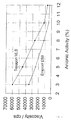
- Aqueous compositions containing 2% propylene glycol and 10% surfactant (either Empicol ESB or Texapon MLS) with a range of Carbopol ETD 2020 concentrations were made up.
- Viscosity was measured using a Brookfield DV1+ viscometer, using spindle 4 set to speed 5, measured at 20°C.
- Aqueous compositions containing 2% propylene glycol and 1.0% Carbopol ETD 2020 with a range of surfactant concentrations were made up.
- the viscosity and clarity of the solutions were measured / assessed as in Example 1.
- the activity of the surfactant was measured by titration technique using a cationic surfactant and the presence of an organic phase, with a dye indicator to gauge the end point of the reaction. This method is known as two-phase titration.
- Aqueous compositions containing 10% Empicol ESB and 1.0% Carbopol ETD 2020 with a range of propylene glycol concentrations were made up. The viscosity and clarity of the solutions were measured / assessed as described above, the results of which are presented in Table 3 and Figure 3.
- Aqueous compositions containing surfactant were made up according to Table 4.
- Foam height was measured by, pipetting 20cm 3 of the solution (at 40°C) into a 100cm 3 measuring cylinder (in which a 1 cm height change is associated with a 10cm 3 volume change) fitted with a "B" stopper.
- Comparative Examples 1 to 4 highlight the problem of obtaining a personal hygiene product comprised of a surfactant, a thickener and a clarifier, which has suitable viscosity, foaming ability and clarity.
- the product must have a viscosity of at least 16,000. As can be seen from Figures 1-3 and Tables 1-4 it is impossible to reach this figure without compromising on the foaming ability or the clarity of the composition. Similarly to reach the desired anionic activity or clarity the viscosity of the product must be compromised.
- Compositions A to R were prepared containing amounts of Empicol ESB, propylene glycol and Carbopol ETD 2020 as indicated by the points on the triangular graph of Figure 4, in which the axes are; Carbopol ETD 2020 concentration measured in wt%, Empicol ESB activity measured in % and propylene glycol concentration measured in wt%.
- Points A, C, J, K, M, N, O and R are within the scope of the invention and are considered to meet the required criteria for the personal hygiene product, i.e. the compositions have a viscosity of between 16,000 to 30,000 centipoise, a yield of over 300, a foaming ability of 30-40mm as described above and a clarity (as defined above) of at least 80 for visible light.
- points A, C and K have foam heights of 40 mm
- point J has a foam height of 42.5mm
- point B has a clarity of 90.9.
- Points B, D, E, F, G, H, I, P and Q are not within the scope of the invention and are not considered to meet the required criteria for the personal hygiene product.
- Compositions A to R were prepared containing amounts of Texapon MLS, propylene glycol and Carbopol ETD 2020 as indicated by the points on the triangular graph of Figure 5, in which the axes are; Carbopol ETD 2020 concentration measured in wt%, Empicol ESB activity measured in % and propylene glycol concentration measured in wt%.
- Points A, C, E, J, K, M, N, O, P, Q and R are within the scope of the invention and are considered to meet the required criteria for the personal hygiene product, i.e. the compositions have a viscosity of between 16,000 to 30,000 centipoise, a yield of over 300, a foaming ability of 30-40 mm as described above and a clarity (as defined above) of at least 80 for visible light.
- point E has a clarity if 97.6.
- Points B, D, F, G, H, and I are not within the scope of the invention and are not considered to meet the required criteria for the personal hygiene product.
- point D has a clarity of only 79.1.
- the absorbance of the compositions in Table 6 were measured on a UV Spectrophotometer (Philips PU 800 Series) set at 600nm with continuous scanning.
Landscapes
- Health & Medical Sciences (AREA)
- Life Sciences & Earth Sciences (AREA)
- Animal Behavior & Ethology (AREA)
- General Health & Medical Sciences (AREA)
- Public Health (AREA)
- Veterinary Medicine (AREA)
- Birds (AREA)
- Epidemiology (AREA)
- Dermatology (AREA)
- Emergency Medicine (AREA)
- Detergent Compositions (AREA)
Applications Claiming Priority (2)
| Application Number | Priority Date | Filing Date | Title |
|---|---|---|---|
| GB9921205 | 1999-09-09 | ||
| GB9921205A GB2354008A (en) | 1999-09-09 | 1999-09-09 | Personal hygiene product |
Publications (1)
| Publication Number | Publication Date |
|---|---|
| EP1090631A1 true EP1090631A1 (de) | 2001-04-11 |
Family
ID=10860562
Family Applications (1)
| Application Number | Title | Priority Date | Filing Date |
|---|---|---|---|
| EP00307849A Withdrawn EP1090631A1 (de) | 1999-09-09 | 2000-09-11 | Persönliches Hygieneprodukt |
Country Status (2)
| Country | Link |
|---|---|
| EP (1) | EP1090631A1 (de) |
| GB (1) | GB2354008A (de) |
Cited By (6)
| Publication number | Priority date | Publication date | Assignee | Title |
|---|---|---|---|---|
| GB2421432A (en) * | 2004-12-23 | 2006-06-28 | Cosmetic Warriors Ltd | Cosmetic jelly |
| EP1120451B2 (de) † | 2000-01-28 | 2008-02-13 | Rohm And Haas Company | Verdickungsmittel für wässriger Systeme |
| US7375063B2 (en) | 2004-07-21 | 2008-05-20 | Colgate-Palmolive Company | Structured body wash |
| WO2009090178A1 (en) * | 2008-01-16 | 2009-07-23 | Glaxo Group Limited | Novel formulation |
| US7723282B2 (en) | 2005-04-21 | 2010-05-25 | Colgate-Palmolive Company | Liquid detergent composition |
| US7749949B2 (en) | 2006-12-15 | 2010-07-06 | Colgate-Palmolive Company | Liquid detergent composition comprising an acrylic polymer/ propylene glycol ether of methyl glucose mixture |
Citations (2)
| Publication number | Priority date | Publication date | Assignee | Title |
|---|---|---|---|---|
| US5750122A (en) * | 1996-01-16 | 1998-05-12 | The Procter & Gamble Company | Compositions for treating hair or skin |
| EP0950400A2 (de) * | 1998-04-13 | 1999-10-20 | Kao Corporation | Kosmetische Zusammensetzung |
Family Cites Families (5)
| Publication number | Priority date | Publication date | Assignee | Title |
|---|---|---|---|---|
| GB1471406A (en) * | 1974-05-21 | 1977-04-27 | Unilever Ltd | Detergent composition |
| JPS5849600B2 (ja) * | 1978-03-06 | 1983-11-05 | 花王株式会社 | 液体シヤンプ−組成物 |
| US4529773A (en) * | 1982-03-17 | 1985-07-16 | David Witiak | Alkali-soluble emulsion polymers in acidic surfactant compositions |
| LU84752A1 (fr) * | 1983-04-15 | 1984-11-28 | Oreal | Composition lavante et moussante a base d'agents tensio-actifs et de polymeres anioniques |
| GB8823655D0 (en) * | 1988-10-07 | 1988-11-16 | Unilever Plc | Liquid detergent compositions |
-
1999
- 1999-09-09 GB GB9921205A patent/GB2354008A/en not_active Withdrawn
-
2000
- 2000-09-11 EP EP00307849A patent/EP1090631A1/de not_active Withdrawn
Patent Citations (2)
| Publication number | Priority date | Publication date | Assignee | Title |
|---|---|---|---|---|
| US5750122A (en) * | 1996-01-16 | 1998-05-12 | The Procter & Gamble Company | Compositions for treating hair or skin |
| EP0950400A2 (de) * | 1998-04-13 | 1999-10-20 | Kao Corporation | Kosmetische Zusammensetzung |
Cited By (11)
| Publication number | Priority date | Publication date | Assignee | Title |
|---|---|---|---|---|
| EP1120451B2 (de) † | 2000-01-28 | 2008-02-13 | Rohm And Haas Company | Verdickungsmittel für wässriger Systeme |
| US7375063B2 (en) | 2004-07-21 | 2008-05-20 | Colgate-Palmolive Company | Structured body wash |
| GB2421432A (en) * | 2004-12-23 | 2006-06-28 | Cosmetic Warriors Ltd | Cosmetic jelly |
| US7723282B2 (en) | 2005-04-21 | 2010-05-25 | Colgate-Palmolive Company | Liquid detergent composition |
| US7749949B2 (en) | 2006-12-15 | 2010-07-06 | Colgate-Palmolive Company | Liquid detergent composition comprising an acrylic polymer/ propylene glycol ether of methyl glucose mixture |
| US7977296B2 (en) | 2006-12-15 | 2011-07-12 | Colgate-Palmolive Company | Liquid detergent composition comprising an acrylic polymer/viscosity control agent mixture |
| US8080507B2 (en) | 2006-12-15 | 2011-12-20 | Colgate-Palmolive Company | Liquid detergent composition comprising an alkylbenzene sulfonate surfactant and polypropylene glycol |
| WO2009090178A1 (en) * | 2008-01-16 | 2009-07-23 | Glaxo Group Limited | Novel formulation |
| CN101917842A (zh) * | 2008-01-16 | 2010-12-15 | 葛兰素集团有限公司 | 新型制剂 |
| JP2011511764A (ja) * | 2008-01-16 | 2011-04-14 | グラクソ グループ リミテッド | 新規製剤 |
| US8491878B2 (en) | 2008-01-16 | 2013-07-23 | Glaxo Group Limited | Sanitizing formulation |
Also Published As
| Publication number | Publication date |
|---|---|
| GB2354008A (en) | 2001-03-14 |
| GB9921205D0 (en) | 1999-11-10 |
Similar Documents
| Publication | Publication Date | Title |
|---|---|---|
| AU2015322055B2 (en) | Non-greasy personal care compositions | |
| US20070184995A1 (en) | Process for generating foam from non-aqueous personal wash cleansers with little or no surfactant | |
| EP0535693A1 (de) | Flüssige Detergenszusammensetzung | |
| IE911001A1 (en) | Foaming personal cleansing product with foam enhancing¹polymer | |
| AU774800B2 (en) | Skin cleansing composition with improved stability | |
| JP2001115189A (ja) | アニオン性界面活性剤及び洗浄剤組成物 | |
| CN102812115A (zh) | 包含含有蜡的微乳液的清洁剂的用途 | |
| HUP0202724A2 (hu) | Javított stabilitású vizes kozmetikai készítmények | |
| KR20160115978A (ko) | 수성 계면활성제 조성물 | |
| US11653645B2 (en) | Foam sanitizer composition | |
| JPH01107838A (ja) | 粘度の増加した界面活性水性製剤 | |
| CN108135799B (zh) | 皮肤清洁剂组合物 | |
| EP1090631A1 (de) | Persönliches Hygieneprodukt | |
| CN114795980A (zh) | 一种双连续相卸妆液及其制备方法 | |
| MX2007000717A (es) | Composiciones limpiadoras liquidas. | |
| US4261851A (en) | Low-irritating detergent composition | |
| EP1000606B1 (de) | Schwach-saures Hautreinigungsmittel enthaltend Alkalisalz von N-Acylaminosäure | |
| JP3525848B2 (ja) | アニオン性界面活性剤及び洗浄剤組成物 | |
| WO2005111115A1 (en) | Pyrrolidone-carboxylic modified polysiloxanes having aqueous and detergent solubilities and water-in-oil emulsion capability | |
| JP2020143011A (ja) | クレンジング化粧料 | |
| US20100041627A1 (en) | Compositions comprising polymeric emulsifiers and methods of using same | |
| EP0207642A2 (de) | Auf anionische und nichtionische oberflächenaktive Stoffe basierende Zusammensetzungen, deren Herstellung und Anwendung | |
| JP2009234967A (ja) | 洗浄剤組成物 | |
| JPS63179817A (ja) | 水性クレンジング料 | |
| EP3919045B1 (de) | Wasserfreies/anhydrisches creme-shampoo |
Legal Events
| Date | Code | Title | Description |
|---|---|---|---|
| PUAI | Public reference made under article 153(3) epc to a published international application that has entered the european phase |
Free format text: ORIGINAL CODE: 0009012 |
|
| AK | Designated contracting states |
Kind code of ref document: A1 Designated state(s): AT BE CH CY DE DK ES FI FR GB GR IE IT LI LU MC NL PT SE |
|
| AX | Request for extension of the european patent |
Free format text: AL;LT;LV;MK;RO;SI |
|
| AKX | Designation fees paid | ||
| REG | Reference to a national code |
Ref country code: DE Ref legal event code: 8566 |
|
| STAA | Information on the status of an ep patent application or granted ep patent |
Free format text: STATUS: THE APPLICATION IS DEEMED TO BE WITHDRAWN |
|
| 18D | Application deemed to be withdrawn |
Effective date: 20011012 |