EP1101112B1 - Leptin vermittelte geninduktion - Google Patents
Leptin vermittelte geninduktion Download PDFInfo
- Publication number
- EP1101112B1 EP1101112B1 EP99941484A EP99941484A EP1101112B1 EP 1101112 B1 EP1101112 B1 EP 1101112B1 EP 99941484 A EP99941484 A EP 99941484A EP 99941484 A EP99941484 A EP 99941484A EP 1101112 B1 EP1101112 B1 EP 1101112B1
- Authority
- EP
- European Patent Office
- Prior art keywords
- leptin
- cells
- induced
- forskolin
- protein
- Prior art date
- Legal status (The legal status is an assumption and is not a legal conclusion. Google has not performed a legal analysis and makes no representation as to the accuracy of the status listed.)
- Expired - Lifetime
Links
Images




Classifications
-
- C—CHEMISTRY; METALLURGY
- C07—ORGANIC CHEMISTRY
- C07K—PEPTIDES
- C07K14/00—Peptides having more than 20 amino acids; Gastrins; Somatostatins; Melanotropins; Derivatives thereof
- C07K14/435—Peptides having more than 20 amino acids; Gastrins; Somatostatins; Melanotropins; Derivatives thereof from animals; from humans
- C07K14/575—Hormones
- C07K14/5759—Products of obesity genes, e.g. leptin, obese (OB), tub, fat
-
- A—HUMAN NECESSITIES
- A61—MEDICAL OR VETERINARY SCIENCE; HYGIENE
- A61K—PREPARATIONS FOR MEDICAL, DENTAL OR TOILETRY PURPOSES
- A61K38/00—Medicinal preparations containing peptides
- A61K38/16—Peptides having more than 20 amino acids; Gastrins; Somatostatins; Melanotropins; Derivatives thereof
- A61K38/17—Peptides having more than 20 amino acids; Gastrins; Somatostatins; Melanotropins; Derivatives thereof from animals; from humans
- A61K38/22—Hormones
- A61K38/2264—Obesity-gene products, e.g. leptin
-
- A—HUMAN NECESSITIES
- A61—MEDICAL OR VETERINARY SCIENCE; HYGIENE
- A61P—SPECIFIC THERAPEUTIC ACTIVITY OF CHEMICAL COMPOUNDS OR MEDICINAL PREPARATIONS
- A61P3/00—Drugs for disorders of the metabolism
-
- A—HUMAN NECESSITIES
- A61—MEDICAL OR VETERINARY SCIENCE; HYGIENE
- A61P—SPECIFIC THERAPEUTIC ACTIVITY OF CHEMICAL COMPOUNDS OR MEDICINAL PREPARATIONS
- A61P3/00—Drugs for disorders of the metabolism
- A61P3/04—Anorexiants; Antiobesity agents
-
- A—HUMAN NECESSITIES
- A61—MEDICAL OR VETERINARY SCIENCE; HYGIENE
- A61P—SPECIFIC THERAPEUTIC ACTIVITY OF CHEMICAL COMPOUNDS OR MEDICINAL PREPARATIONS
- A61P37/00—Drugs for immunological or allergic disorders
-
- A—HUMAN NECESSITIES
- A61—MEDICAL OR VETERINARY SCIENCE; HYGIENE
- A61P—SPECIFIC THERAPEUTIC ACTIVITY OF CHEMICAL COMPOUNDS OR MEDICINAL PREPARATIONS
- A61P43/00—Drugs for specific purposes, not provided for in groups A61P1/00-A61P41/00
Definitions
- the current invention relates to the use of leptin and/or a cytokine which binds to a receptor complex comprising gp130, optionally in combination with a compound acting on adenylate cyclase or one of its downstream targets, to activate a signalling cascade whereby as a result thereof immediate early response and/or late target genes are induced in neuro-endocrine cells or in cells from neuro-endocrine origin.
- leptin displays no apparent sequence similarity to any other known protein.
- leptin is identified as a member of the haematopoietic cytokine receptor family carrying the typical four ⁇ -helical bundle structure. Accordingly, its receptor belongs to the class 1 cytokine receptor superfamily.
- leptin has a pleiotropic role including effects on the haemopoietic system, in immune defence and inflammation, reproduction and pregnancy, regulation of renal function and acceleration of the onset of puberty in female rodents.
- leptin may also exert effects on extraneural tissues extending its metabolic effects.
- Leptin exerts its effects upon binding to a high affinity receptor, the product of the db gene.
- This receptor was originally cloned from mouse choroid plexus and may exist in at least six isoforms through alternative splicing (Tartaglia et al., 1995; Lee et al., 1996). Sofar, most attention has been focused on a ubiquitously expressed splice variant with short cytoplasmic tail (OB-Ra), and on the isoform with a long cytoplasmic domain (OB-Rb), which is predominantly expressed in certain nuclei in the hypothalamus.
- OB-Ra ubiquitously expressed splice variant with short cytoplasmic tail
- OB-Rb long cytoplasmic domain
- RT-PCR and Northern blot analysis also showed expression of the latter isoform in peripheral tissues including pancreas, liver, lung, kidney and adrenals, intestine and adipose tissues, as well as in endothelial cells and CD4 + helper T-cells.
- the detailed structure of the murine leptin receptor gene was recently described. In the db/db mice, a point mutation causing the use of a cryptic splice site leads to the expression of a receptor with a truncated cytoplasmic tail, which is likely signalling deficient.
- the fatty (fa) gene in rats appears to be a functional homologue of the mouse db gene, due to a Gln269Pro substitution in the extracellular domain of the receptor, leading to impaired signalling and obesity. Underscoring the evolutionary conserved role of this pathway, homologous mutations were recently described in humans. Severe early-onset obesity was observed in patients with mutations leading to either impaired leptin (Montague et al., 1997) or leptin receptor (Clement et al., 1998) function.
- the leptin receptor is considered a member of the Class I cytokine receptor superfamily, and is most closely related to gp130, the signalling component of the IL-6R complex, and to the LIF and G-CSF receptors.
- the leptin receptor contains typical motifs involved in signalling such as a JAK tyrosine kinase binding site, and a Box 3 involved in recruitment of STAT-3 upon ligand-induced receptor tyrosine phosphorylation.
- the long isoform is generally believed to be the signalling competent receptor although divergent signalling capacities have been described for the long and short isoforms, which both contain the Box 1 motif.
- the receptor functions as a (ligand-induced) homodimer, independent of gp130. Leptin binding leads to the activation of JAK2 and multiple STATs (STAT-1, STAT-3 and STAT-5b), however only STAT-3 activation was observed in hypothalamic centres in vivo. In established hepatoma cell lines stably expressing the OB-R long isoform, the leptin receptor appears to be functionally equivalent to the endogenous IL-6R.
- NPY neuropeptide Y
- Leptin induces inhibition of NPY biosynthesis and release.
- Such alternative candidate targets include glucagon-like peptide 1 (GLP-1) produced in the brain stem and causing reduced food intake, the melanin-concentrating hormone also involved in hypothalamic regulation of ingestive behaviour, the hypothalamic corticotropin-releasing factor (CRF) inhibiting appetite and stimulating metabolism, and the recently described orexins and cocaine- and amphetamine-regulated transcript (CART), a hypothalamic satiety factor. Effects on the expression of the pro-opio-melanocortin gene by leptin have also been described.
- GLP-1 glucagon-like peptide 1
- CRF corticotropin-releasing factor
- CART cocaine- and amphetamine-regulated transcript
- the PC12 cell line appears to be a physiologically relevant cell line to study leptin-induced gene regulation, since three of the identified genes have been implicated in leptin function or obesity in vivo.
- Activation of STAT-3 protein, and up-regulation of SOCS-3 gene expression have been shown to occur in hypothalamic nuclei by leptin treatment of ob/ob, but not of db/db mice (Vaisse et al., 1996; Bjorbaek et al., 1998).
- metallothionein-II as a leptin-induced immediate early response gene is of special interest since it was recently shown that mice with targeted disruption of both MT-I and MT-II genes become obese, with elevated plasma leptin levels. Sofar, no other clear physiological role could be attributed to these proteins. According to the invention it is further demonstrated that leptin regulates the expression of MT-II in vivo. In addition leptin-mediated regulation in vivo of the serine/threonine kinase Fnk, and of the Pancreatitis Associated Protein I is shown. Both gene transcripts were identified as leptin-induced in PC12 cells, further underscoring the validity of this in vitro model system.
- leptin and/or a cytokine which binds to a receptor complex comprising gp130 can be used to activate a signalling cascade whereby as a result thereof immediate early response and/or late target genes are induced in neuro-endocrine cells or cells of neuro-endocrine origin.
- Said signalling cascade is preferably activated through a leptin receptor while the neuro-endocrine cells are PC12 cells.
- To the invention also belongs the use of leptin and/or a cytokine which binds to a receptor complex comprising gp130, optionally in combination with said compound wherein the compound is forskolin.
- PC12 cells may be differentiated to a neuronal state upon treatment with ⁇ -NGF (beta-nerve growth factor) and forskolin, prior to activation of the said receptor complexes.
- leptin according to the invention optionally in combination with forskolin, provides an induction of immediate early response genes such as STAT-3, SOCS-3, Metallothionein-II, the serine/threonine kinase Fnk and of MRF-1, while the combination of leptin and forskolin has a pronounced induced effect on late target genes such as Pancreatitis Associated Protein I, Squalene Epoxidase, Uridinediphosphate Glucuronyl Transferase and Annexin VIII. Two additional transcripts encoding Leptin Induced Protein I (LIP-I) and Leptin Induced Protein II (LIP-II) were also identified.
- LIP-I Leptin Induced Protein I
- LIP-II Leptin Induced Protein II
- LIP-II is a rat orthologue of the human Down Syndrome Cell Adhesion Molecule (DS-CAM). In both cases, no forskolin co-stimulatory effect was observed. On PC12 cells differentiated to a neural phenotype by combined ⁇ -NGF and forskolin treatment, Pancreatitis Associated Protein III, Peripherin and Mx2 protein were further identified as being regulated by leptin. Finally, from an RDA experiment to search for transcripts differentially induced by hyper-IL-6 compared to leptin in PC12 cells, the Reg gene, another member of the Pancreatitis Associated Protein family, and HIP-1 were identified as selectively up-regulated by H-IL-6.
- the invention also belongs a method of screening for molecules in mammalian cells, in particular human cells using human homologues of the genes isolated according to the current invention, which interfere directly or indirectly with the induction of immediate early response genes and/or late target genes or with the activity of the products of said genes; said genes are inducible by leptin and/or a cytokine which binds to a receptor complex comprising gp130, optionally in combination with a compound acting on adenylate cyclase or acting directly or indirectly on one or more of its downstream targets.
- Part of the invention are thus obtainable molecules by the screening method and a pharmaceutical composition comprising said molecule or molecules.
- composition refers to any composition such as a pharmaceutical composition comprising as an active ingredient said molecule or molecules according to the present invention possibly in the presence of suitable excipients known to the skilled man and may thus be administered in the form of any suitable composition as detailed below by any suitable method of administration within the knowledge of a skilled man.
- the preferred route of administration is parenterally.
- the compositions of this invention will be formulated in a unit dosage injectable form such as a solution, suspension or emulsion, in association with a pharmaceutically acceptable excipient.
- excipients are inherently nontoxic and nontherapeutic. Examples of such excipients are saline, Ringer's solution, dextrose solution and Hank's solution.
- Nonaqueous excipients such as fixed oils and ethyl oleate may also be used.
- a preferred excipient is 5% dextrose in saline.
- the excipient may contain minor amounts of additives such as substances that enhance isotonicity and chemical stability, including buffers and preservatives.
- the isolated functional molecules of the invention thus obtained are administered at a concentration that is therapeutically effective to prevent allograft rejection, GVHD, allergy and autoimmune diseases. The dosage and mode of administration will depend on the individual.
- compositions are administered so that the isolated functional protein/molecule(s) is given at a dose between 1 ⁇ g/kg and 10 mg/kg, more preferably between 10 ⁇ g/kg and 5 mg/kg, most preferably between 0.1 and 2 mg/kg. Preferably, it is given as a bolus dose. Continuous short time infusion (during 30 minutes) may also be used.
- the compositions comprising the isolated functional protein/molecule(s) according to the invention may be infused at a dose between 5 and 20 ⁇ g/kg/minute, more preferably between 7 and 15 ⁇ g/kg/minute.
- the "therapeutically effective amount" of the isolated functional protein according to the invention needed should be determined as being the amount sufficient to cure the patient in need of treatment or at least to partially arrest the disease and its complications. Amounts effective for such use will depend on the severity of the disease and the general state of the patient's health. Single or multiple administrations may be required depending on the dosage and frequency as required and tolerated by the patient.
- the terms "molecules”, “proteins” and “compounds” are interchangeable unless mentioned to the contrary. In order to further disclose the current invention a more detailed explanation is given hereunder.
- PC12 cells In order to study leptin receptor signalling in a neuro-endocrine-related cell type, we transiently transfected PC12 cells with expression vectors for the long or the short isoform of the mouse leptin receptor (pMET7-mLRlo and pMET7-mLRsh respectively) and monitored gene induction by leptin.
- the PC12 cell line was established from a transplantable rat adrenal pheochromocytoma and is frequently used as a model system for differentiation of neuronal cells. Stimulation with recombinant rat ⁇ -nerve growth factor ( ⁇ -NGF) leads to a growth arrest and the formation of dendritic processes and expression of neuronal markers.
- ⁇ -NGF recombinant rat ⁇ -nerve growth factor
- a first reporter construct contains a 500bp fragment of the rat neuropeptide Y (rNPY) promoter sequence coupled to the luciferase gene (pGL3-rNPYluc).
- PC12-LR8 Leptin responsiveness in PC12 cells was further investigated using a clone stably expressing the long isoform of the mouse leptin receptor (PC12-LR8, see below).
- PC12-LR8 After transfection of PC12-LR8 with a reporter construct based on the human POMC (proopiomelanocortin) promoter (pGL3-POMCluc) (Fig. 1C), or a reporter construct based on the rat Pancreatitis Associated Protein I promoter (see below) (Fig. 1 D), leptin induced luciferase activity was measured.
- Administration of ⁇ -NGF (1 ng/ml) mimicked for both reporter constructs the co-stimulatory action of forskolin.
- the ⁇ -NGF and forskolin effects appeared to be additive in this clone (Fig. 1C and 1 D).
- Annexin VIII is a calcium-dependent phospholipid-binding protein expressed in lung, skin, liver, and kidney. The physiologic function of annexin VIII remains unknown.
- Fnk1 FGF-inducible kinase
- Fnk1 FGF-inducible kinase
- FGF-1 Fibroblast Growth factor FGF-1 in murine NIH 3T3 fibroblasts. It is closely related to the polo-family of serine/threonine protein kinases (including human Prk, mouse Snk, human and murine Plk, mouse Sak, Drosophila Polo, and yeast Cdc5).
- Fnk-mRNA is expressed at high levels in skin, but is also detected in brain, intestine, kidney, lung and ovary.
- Fnk transcripts are expressed in high levels in intestine, kidney, liver, lung and skin.
- Prk and Plk kinases are induced by cytokines in hematopoietic cells (Li et al., 1996) and in primary T-cells (Holtrich et al., 1994) respectively. These kinases may play a role in cell proliferation, but their precise role remains unclear.
- MT-II Metallothionein-II
- MT-II Metallothionein-II
- Modulator Recognition Factor 1 is a DNA binding protein belonging to a poorly characterised protein family. (GenBank accession number for sequences of the human homologue and the related human MRF-2 are M62324 and M73837, respectively).
- Pancreatitis Associated Protein I is a C-type lectin-related secretory protein present in small amounts in the rat pancreas (in both endocrine and exocrine cells) and is rapidly overexpressed during the acute phase of pancreatitis.
- the physiological role of PAP I is still unclear at present, but its involvement in acute pancreatitis as an acute phase protein suggests a role in tissue protection and/or recovery.
- PAP I is also expressed in normal intestine and is induced by feeding (Dusetti et al., 1995).
- STAT-3 Signal transducer and activator of transcription 3 (STAT-3) is a key transcription factor mediating the signals for a variety of cytokines.
- STAT-3 A critical role for STAT-3 in leptin signalling has been reported in cell lines (Baumann et al., 1996) and in ob/ob mice (Vaisse et al., 1996).
- Squalene epoxidase is a rate-limiting enzyme in cholesterol biosynthesis. Transcriptional regulation of squalene epoxidase by sterol is part of a co-ordinately controlled biosynthetic pathway (Nakamura et al., 1996).
- SOCS-3 Cytokine Signalling-3
- SOCS-3 Suppressor of Cytokine Signalling-3
- SOCS-3 belongs to a growing family of SOCS proteins. These proteins act as intracellular inhibitors of several cytokine signal transduction pathways. It was recently reported that SOCS-3 may contribute to leptin resistance in vivo. (Bjorbaek et al., 1998).
- Uridinediphosphate Glucuronyl Transferase is a key enzyme involved in bilirubine and drug detoxification, as well as in steroid inactivation and excretion, and in proteoglycan side chain formation. Conjugation of compounds with glucuronic acid renders the molecule strongly acidic and more water soluble at physiological pH than the precursor molecule thereby facilitating metabolism, transport and secretion.
- LIP-II belongs to the immunoglobulin superfamily and is a rat orthologue of the human Down Syndrome Cell Adhesion Molecule, DSCAM. Expression of DSCAM occurs primarily in the brain, and has been implicated in neural development.
- Leptin Induced Proteins LlP-I and LIP-II are hitherto unknown and are therefore new identified nucleic acid/protein sequences as such and thus form part of the current invention.
- Mx2 is a type I interferon-inducible gene, involved in antiviral defence. High expression levels are observed in differentiated PC12 cells, in contrast to very weak expression in undifferentiated cells.
- Peripherin is a cytoskeletal component, which is part of the type III intermediate filament. Increased expression levels are observed in differentiated cells when compared to undifferentiated cells. Up-regulation has been described by Interleukin 6 (IL-6) and Leukemia inhibitory Factor (LIF).
- IL-6 Interleukin 6
- LIF Leukemia inhibitory Factor
- Pancreatitis Associated Protein III is a member of the PAP family of C-type animal lectins, mentioned above. It is also induced in normal intestine upon feeding (Dusetti et al., 1995).
- H-IL-6 hyper-IL-6
- Fig 6 Another RDA experiment was performed to identify transcripts differentially (and selectively) induced by hyper-IL-6 (H-IL-6), compared to leptin (Fig 6).
- H-IL-6 is a fusion protein of IL-6 and the secreted IL-6R subunit (Fischer et al., 1997). In most cases, H-IL-6 treatment led to up-regulation of the same gene-set as observed with leptin.
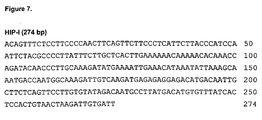
- HIP-I Hydrophili-1 (Hyper-IL-6 induced protein I) corresponds to a novel gene transcript (Fig. 7).
- Reg is another member of the PAP family of C-type lectins.
- Reg was originally isolated from a cDNA library from regenerating rat pancreas islets. Other names are Pancreatic Stone Protein (PSP), Pancreatic Thread Protein (PTP), Islet Cell Regenerating Factor and Lithostatin. It is considered as a growth factor for pancreatic beta cells. Similarly, the previously identified, related transcripts encoding PAP I and PAP III, also appear to be strongly induced by H-IL-6, in contrast to leptin, which requires forskolin co-stimulation.
- Kinetics of induction identifies immediate early response genes and late target genes.
- Optimal stimulation varied between 30 minutes (SOCS-3) and 8 hours (STAT-3) post induction.
- Kinetics of synthesis of SOCS-3 mRNA showed a rapid decline already 2 hours post stimulation.
- optimal mRNA levels were observed between 22 hours (PAP I, UGT) and over 96 hours (Annexin VIII, Squalene epoxidase) post induction.
- the forskolin co-stimulation also allows distinguishing both gene-sets.
- some co-stimulation is apparent for MT-II and MRF-1 but only at later time points, and not in the early induction phase.
- SOCS-3 forskolin co-treatment even leads to a reduced induction.
- a strong co-stimulatory effect is seen in case of PAP I, UGT, Ann VIII and squalene epoxidase from 22 hours post stimulation.
- Leptin treatment of ob/ob mice caused a clear induction of MT-II and Fnk mRNA expression in liver, while expression of PAP I in jejunum was downregulated by leptin.
- 3 out of 4 ob/ob mice showed clear induction of MT-II and Fnk mRNA in liver two hours after stimulation with leptin (100 ⁇ g/mouse) in combination with the 2A5 antibody (200 ⁇ g/mouse). 2A5 has been shown before to potentiate leptin activity in vivo (Verploegen et al., 1997). Twelve hours after injection, expression levels returned to control levels.
- mice starved for 24 hours, received a single injection of human leptin intraperiteonally (R&D Systems, 50 ⁇ g/mouse) in combination with the 2A5 anti-human leptin antibody (200 ⁇ g/mouse).
- a single injection with endotoxin free PBS was performed similarly.
- the leptin effect was evaluated by Northern blot analysis after 2, 6 and 12 hours in prolonged starvation conditions. Starvation conditions led to a moderate increase in MT-II and Fnk mRNA expression in the liver.
- PC12 cells were cultured in RPMI 1640 medium with glutamax-I (GibcoBRL) containing 10% heat-inactivated foetal calf serum (iFCS) and gentamycin (50 ⁇ g/ml). The cells were treated with medium alone or supplemented with 100 ng/ml of mouse leptin (R&D Systems), with forskolin (Sigma) at a concentration of 10 ⁇ M or with a combination both, unless otherwise indicated.
- GibcoBRL glutamax-I
- iFCS heat-inactivated foetal calf serum
- gentamycin 50 ⁇ g/ml
- the cells were treated with medium alone or supplemented with 100 ng/ml of mouse leptin (R&D Systems), with forskolin (Sigma) at a concentration of 10 ⁇ M or with a combination both, unless otherwise indicated.
- resuspended PC12 were seeded on rat tail collagen (Collaborative Biomedical Products) coated plates at 2-3 10 6 cells/25 cm 2 flask in RMPI 1640 medium with glutamax-I containing 10% heat-inactivated horse serum, 5% iFCS and gentamycin. After one day of culturing, the non-adherent cell fraction was removed by refreshing the medium. Differentiation was induced by a combined ⁇ -NGF(10 nglml, R&D Systems) and forskolin (10 ⁇ M) treatment for approximately 5 days. Medium was replaced after 2-3 and 5 days.
- the pMet7 vector was used as an expression vector for the long and short isoforms of the mouse leptin receptor (designated pMET7-mLRlo and pMET7-mLRsh, respectively).
- pMet7 is a modified version of the mammalian pME18S expression vector that utilizes the SR ⁇ promoter as described by Takebe (Takebe et al., 1988).
- PC12 cells were transfected by electroporation using the Equibio "Easyject one" electroporator. Typically, 10 7 cells were electroporated in 0.4 cm electrode gap cuvettes with 5 ⁇ g vector at 300V and 1500C.
- Cos1 cells were maintained in DMEM supplemented with 10% iFCS (GibcoBRL), and were transfected with pMET7-leptinSEAP (a vector expressing the mouse leptin-secreted alkaline phosphatase fusion protein) using lipofectamine (Life Technologies). Medium was replaced after 16 h and conditioned medium (CM) was harvested after 64 h. The estimated concentration of the leptin-SEAP fusion protein was approximately 1 ⁇ g/ml.
- PC12 cells were electroporated with the pMET7-mLRlo expression vector together with the pHCMV-MCS vector containing the neomycin resistance marker.
- Transfected cells were selected for growth in RPMI 1640 medium containing glutamax-I (GibcoBRL) and supplemented with 10% heat-inactivated fetal bovine serum and gentamycin (50 ⁇ g/ml).
- Cells were first grown in selective medium containing 500 ⁇ g/ml G418 sulfate (Calbiochem) for seven days and in 750 ⁇ g/ml G418 from day eight on. After four weeks of growth, colonies were transferred to 48 well plates in medium containing 750 ⁇ g/ml G418.
- Subclones were selected for leptin responsiveness and PAP I gene activation using a one-tube RT-PCR procedure.
- mRNA was hybridised with biotin labelled oligodT and captured to streptavidin-coated tubes. After three times washing, the same tubes were used for the RT-PCR, optimized for detection of PAP I gene induction (mRNA capture and Titan One Tube procedure, Boehringer Mannheim).
- HCl pH7.4 and the lysates were treated at 65°C for 30 min to inactivate endogenous alkaline phosphatases.
- Alkaline phosphatase activity was measured using the CSPD substrate (PhosphaLight, Tropix) according to the manufacturers' specifications in a
- RDA was used to clone differentially expressed cDNAs from PC12 cells, transiently transfected with the leptin receptor long isoform, or from neuronal differentiated PC12-LR8 cells, which stably express the leptin receptor long isoform. In both cases, cloning was performed using mRNA from cells either stimulated with leptin+forskolin or with forskolin alone. This RDA procedure was essentially performed as originally described (Hubank and Schatz, 1994) and modified by Braun et al. (Braun et al., 1995).
- PC12 cells were transfected with the pMET7-LRlo expression vector and stimulated for 72 hours with forskolin alone or with a combination of forskolin and leptin.
- mRNA was obtained from cells treated with ⁇ -NGF and forskolin as described above for 5 days to induce neuronal differentiation, followed by a 24h treatment with leptin (100 ng/ml) or without additional treatment.
- hyper-IL-6 treatment undifferentiated PC12-LR8 cells were treated with either H-IL-6 (5 ng/ml) or leptin (100 ng/ml) for 24h, prior to mRNA isolation and RDA analysis.
- mRNAs were isolated using the Fast Track method (Invitrogen). A 2 ⁇ g sample of mRNA of each cell population was used for RDA analysis. cDNAs were synthesised from the mRNAs and digested with Dpnll. Two oligonucleotide adapter molecules, 5'AGCACTCTCCAGCCTCTCACCGCA 3' (R-Bgl-24) and 5'GATCTGCGGTGA 3' (R-Bgl-12), were ligated to the DpnII-digested cDNA. This mixture was amplified by PCR with R-Bgl-24 oligonucleotides, and the adapters were excised with DpnII.
- a second pair of adapters 5'ACCGACGTCGACTATCCATGAACA 3' (J-Bgl-24) and 5'GATCTGTTCATG 3' (J-Bgl-12) was ligated to the amplified fragments from the leptin-forskolin stimulated cell population and hybridised with the R-Bgl-24 amplified cDNA fragments from the forskolin stimulated cell population (R-Bgl adapters removed) at a ratio of 1:100 for 24h. The hybridisation mix was used as template for amplification by PCR.
- a second round of subtraction was performed by removing the J-Bgl adapters from this first round PCR product, ligating a third pair of oligonucleotide adapters, 5'AGGCAACTGTGCTATCCGAGGGAA 3' (N-Bgl-24) and 5'GATCTTCCCTCG 3' (N-Bgl-12), and hybridised with driver amplicons at a ratio of 1:800.
- a third round of subtraction and amplification was performed using the same conditions as in the first round. Subsequently the transcripts were subcloned into the pCDNA3 or pCR-Blunt (Invitrogen) vector.
- RNA was prepared from PC12 cells using RNeasy TM method (Qiagen). RNA (10 ⁇ g) was separated on a 1.5 % agarose, 6% formaldehyde gel, transferred to a nylon membrane (Zeta-Probe GT Genomic, Bio-Rad), and cross-linked using UV radiation. The filters were hybridised for one hour at 68°C in ExpressHybTM solution (Clontech) with [ 32 P]dCTP-labeled DNA-probes and washed 3 times with 2x SSC, 0.05% SDS at room temperature and twice in 0.1x SSC, 0.1% SDS at 50°C.
- luciferase substrate buffer (20 mM Tricine; 1.07 mM (MgCO 3 ) 4 Mg(OH) 2 5H z O; 2.67 mM MgSO 4 ; 0.1 mM EDTA; 33.3 mM DTT; 270 ⁇ M Coenzyme A (lithium salt); 470 ⁇ M Luciferin (Duchefa); 530 ⁇ M ATP, final pH 7.8) was added to 100 ⁇ l of cell lysate and measured for 5 seconds by TopCountNXT Chemiluminescence Counter (Packard).
- Specific pathogen-free female C57BL/6J-Lep ob mice, 9 weeks old at the beginning of the experiment, further referred to as ob/ob were obtained from The Jackson Laboratory (Maine, USA).
- Specific pathogen-free C57BL/6NCrlBr mice, 8 weeks old at the beginning of the experiment, further referred to as wildtype (wt) were obtained from Charles Rivers Labs. The animals were housed in a temperature-controlled environment with 12 hour light/dark cycles and received water and food ad libitum, with exception for the starvation experiment. All experiments were performed according to the European Guidelines on Animal Care and Use.
- Recombinant human leptin (R&D Systems) was diluted in endotoxin free PBS and administered intraperitoneally in a dose of 100 ⁇ g/mouse.
- a monoclonal antibody raised against human leptin (Verploegen et al., 1997), the dose of leptin was reduced to 50 ⁇ g/mouse.
- the dose of the antibody was 200 ⁇ g/mouse.
- the endotoxin content of the antibody was 0.07 ng/mg protein, as assessed by a chromogenic Limulus amebocyte lysate assay (Coatest, Chromogenix, Sweden). Animals were sacrificed using cervical dislocation. Tissues were resected immediately and frozen in liquid nitrogen. RNA extraction and Northern blot analysis was performed as described above.
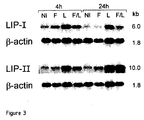
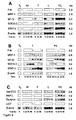
- PC12-LR8 cells were treated with leptin (L), forskolin (F), or a combination of both (F/L) for the indicated length of time.
- Hybridisation with the mouse ⁇ -actin probe was used as a control.
- NI stands for non-induced control cells. Sizes of transcripts are shown on the right. Exposure times to Biomax MS films were 5.5 days for LIP-I and LIP-II, and 1 day for the corresponding ⁇ -actin blot, all at -80°C.
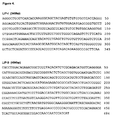
- Sequences A and B respectively correspond to the cloned amplicons from rat LIP-I and rat LIP-II.
- Adherent PC12-LR8 cells were treated with ⁇ -NGF and forskolin for 5 days to induce neuronal differentiation.
- Differentiated cells were treated with leptin (nF/L) for 24 hours, or were left untreated (nF), in the continued presence of ⁇ -NGF and forskolin.
- Non-differentiated cells were treated for 24 hours with leptin and forskolin (F/L) or with forskolin alone (F). Hybridisation was performed with probes as indicated.
- Mouse ⁇ -actin probe was used as a control. Exposure to BioMax film at -80°C was 3 days for Mx2, 3 hours for peripherin, 4 days for PAP III and 16 hours for ⁇ -actin.
- Figure 8 Kinetics of induction of leptin-responsive genes in non-differentiated PC12-LR8 cells.
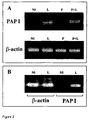
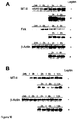
- Leptin deficient ob/ob mice were left untreated (-) or were treated with leptin (100 ⁇ g; +) intraperitoneally. Mice were killed five hours after treatment. Northern blot analysis of MT-II and Fnk in liver and PAP I expression in jejunum is shown. Hybridisation with the mouse ⁇ -actin probe was used as a control and is shown below. Exposure times to BioMax MS films were 4 hours, 3 days, 4 hours and 8 hours for MT-II, Fnk, PAP I and ⁇ -actin respectively.
- mice were starved for 36 hours. After 24 hours mice were treated with PBS (-) or leptin (50 ⁇ g, supplemented with 200 ⁇ g 2A5 anti human leptin antibody; +). At different time points (-24, 0, 2, 6, 12 hours, indicated on top) mice were sacrificed. RNA was extracted from liver tissue (panel A) or jejunum (panel B) and subjected to Northern blot analysis using MT-II and Fnk as probes as indicated. Hybridisation with the mouse ⁇ -actin probe was used as a control and is shown below. Assays were performed and represented in double.
- Exposure times to BioMax MS films shown in panel A were 2 hours, 2 days and 3 hours for MT-II, Fnk and ⁇ -actin respectively. In panel B exposure times were 2 hours for MT-II and 3 hours for ⁇ -actin.
- Identity of the target gene Sizes of the different amplicons (bp) Number of subcloned amplicons Length of corresponding transcript (kb) RDA number Annexin VIII (Ann VIII) 405 2 2.0 1 327 1 Fibroblast Growth Factor-Inducible Kinase (Fnk) 364 3 2.5 1 Hyper-IL-6 Induced Protein (HIP-I) 274 1 1.5 3 Leptin Induced Protein - I (LIP-I) 349 1 6 1 Leptin Induced Protein - II (LIP-II) 484 1 10 1 Metallothionein - II (MT-II) 317 5 0.7 1 Modulator Recognition Factor - 1 (MRF-1) 358 1 2.0 1 Mx2 protein 227
Landscapes
- Health & Medical Sciences (AREA)
- Life Sciences & Earth Sciences (AREA)
- Chemical & Material Sciences (AREA)
- Medicinal Chemistry (AREA)
- Organic Chemistry (AREA)
- General Health & Medical Sciences (AREA)
- Obesity (AREA)
- Engineering & Computer Science (AREA)
- Public Health (AREA)
- Veterinary Medicine (AREA)
- Pharmacology & Pharmacy (AREA)
- Bioinformatics & Cheminformatics (AREA)
- Animal Behavior & Ethology (AREA)
- General Chemical & Material Sciences (AREA)
- Nuclear Medicine, Radiotherapy & Molecular Imaging (AREA)
- Proteomics, Peptides & Aminoacids (AREA)
- Gastroenterology & Hepatology (AREA)
- Chemical Kinetics & Catalysis (AREA)
- Endocrinology (AREA)
- Genetics & Genomics (AREA)
- Zoology (AREA)
- Immunology (AREA)
- Child & Adolescent Psychology (AREA)
- Hematology (AREA)
- Biophysics (AREA)
- Toxicology (AREA)
- Molecular Biology (AREA)
- Diabetes (AREA)
- Epidemiology (AREA)
- Biochemistry (AREA)
- Medicines That Contain Protein Lipid Enzymes And Other Medicines (AREA)
- Measuring Or Testing Involving Enzymes Or Micro-Organisms (AREA)
- Enzymes And Modification Thereof (AREA)
- Pharmaceuticals Containing Other Organic And Inorganic Compounds (AREA)
- Acyclic And Carbocyclic Compounds In Medicinal Compositions (AREA)
- Investigating Or Analysing Biological Materials (AREA)
- Preparation Of Compounds By Using Micro-Organisms (AREA)
- Medicines Containing Material From Animals Or Micro-Organisms (AREA)
Claims (7)
- Verwendung des Gens, welches für das Pankreatitis-assoziierte Protein I oder ein funktionales Fragment davon kodiert, für das Screening nach Molekülen, die direkt oder indirekt in die späte Leptin-Induktion eingreifen.
- Verwendung des Gens, welches für das Pankreatitis-assoziierte Protein I oder ein funktionales Fragment davon kodiert, für das Screening nach Molekülen, die nach Bindung eines Zytokins direkt oder indirekt in die Induktion eines Rezeptorkomplexes, der gp130 umfasst, eingreifen.
- Verwendung gemäß Anspruch 2, wobei das Zytokin Leptin ist.
- Verwendung gemäß einem der vorhergehenden Ansprüche, wobei das funktionale Fragment der Promotor des Gens ist.
- Verwendung gemäß einem der vorhergehenden Ansprüche, wobei die Induktion von einer Verbindung, die auf die Adenylatzyklase einwirkt, unterstützt wird.
- Verwendung gemäß einem der vorhergehenden Ansprüche, wobei die Induktion von einer Verbindung, die auf eines der nachgeschalteten Targets der Adenylatzyklase einwirkt, unterstützt wird.
- Verwendung gemäß Anspruch 5 oder 6, wobei die auf die Adenylatzyklase oder ihre nachgeschalteten Targets einwirkende Verbindung Forskolin ist.
Priority Applications (1)
| Application Number | Priority Date | Filing Date | Title |
|---|---|---|---|
| EP99941484A EP1101112B1 (de) | 1998-07-28 | 1999-07-27 | Leptin vermittelte geninduktion |
Applications Claiming Priority (4)
| Application Number | Priority Date | Filing Date | Title |
|---|---|---|---|
| EP98202524 | 1998-07-28 | ||
| EP98202524 | 1998-07-28 | ||
| EP99941484A EP1101112B1 (de) | 1998-07-28 | 1999-07-27 | Leptin vermittelte geninduktion |
| PCT/EP1999/005489 WO2000007014A2 (en) | 1998-07-28 | 1999-07-27 | Leptin-mediated gene-induction |
Publications (2)
| Publication Number | Publication Date |
|---|---|
| EP1101112A2 EP1101112A2 (de) | 2001-05-23 |
| EP1101112B1 true EP1101112B1 (de) | 2004-10-06 |
Family
ID=8233981
Family Applications (1)
| Application Number | Title | Priority Date | Filing Date |
|---|---|---|---|
| EP99941484A Expired - Lifetime EP1101112B1 (de) | 1998-07-28 | 1999-07-27 | Leptin vermittelte geninduktion |
Country Status (8)
| Country | Link |
|---|---|
| US (1) | US7291458B2 (de) |
| EP (1) | EP1101112B1 (de) |
| JP (1) | JP2002521496A (de) |
| AT (1) | ATE278952T1 (de) |
| AU (1) | AU756617B2 (de) |
| CA (1) | CA2335107C (de) |
| DE (1) | DE69920921T2 (de) |
| WO (1) | WO2000007014A2 (de) |
Families Citing this family (14)
| Publication number | Priority date | Publication date | Assignee | Title |
|---|---|---|---|---|
| EP1101112B1 (de) | 1998-07-28 | 2004-10-06 | Vlaams Interuniversitair Instituut voor Biotechnologie vzw. | Leptin vermittelte geninduktion |
| US7803765B2 (en) | 1999-05-05 | 2010-09-28 | Phylogica Limited | Methods of constructing biodiverse gene fragment libraries and biological modulators isolated therefrom |
| EP1283878B1 (de) | 2000-05-22 | 2005-07-27 | Vlaams Interuniversitair Instituut voor Biotechnologie vzw. | Auf rezeptorgrundlage arbeitende screening-verfahren für protein wechselwirkungen |
| WO2003004643A2 (en) * | 2001-07-03 | 2003-01-16 | Vlaams Interuniversitair Instituut Voor Biotechnologie Vzw | Reversed mammalian protein-protein interaction trap |
| WO2002101034A1 (en) * | 2001-06-08 | 2002-12-19 | Zoegene Corporation | Leptin-induced gene |
| EP1754052B1 (de) * | 2004-06-03 | 2015-07-22 | Phylogica Limited | Modulatoren biochemischer eigenschaften |
| EP1812038A1 (de) | 2004-11-18 | 2007-08-01 | VIB vzw | Fibronectin iii domäne als leptin-rezeptor-antagonisten |
| US8716220B2 (en) * | 2005-09-07 | 2014-05-06 | Nikolaos Tezapsidis | Leptin compositions and methods for treating progressive cognitive function disorders resulting from accumulation of neurofibrillary tangles and amyloid beta |
| US8227408B2 (en) * | 2005-09-07 | 2012-07-24 | Neurotez, Inc. | Leptin as an anti-amyloidogenic biologic and methods for delaying the onset and reducing Alzheimer's disease-like pathology |
| CA2663545A1 (en) | 2006-09-19 | 2008-03-27 | Phylogica Limited | Neuroprotective peptide inhibitors of ap-1 signaling and uses thereof |
| US8822409B2 (en) | 2007-06-20 | 2014-09-02 | Phylogica Limited | Compositions and uses thereof for the treatment of acute respiratory distress syndrome (ARDS) and clinical disorders associated with therewith |
| CA2725143A1 (en) * | 2008-05-21 | 2009-11-26 | Neurotez, Inc. | Methods for treating progressive cognitive disorders related to neurofibrillary tangles |
| GB201504859D0 (en) | 2015-03-23 | 2015-05-06 | Vib Vzw | Viral particle based small molecule-protein interaction trap |
| JP2023507172A (ja) | 2019-12-17 | 2023-02-21 | オリオニス バイオサイエンシズ,インコーポレイテッド | タンパク質分解の調節 |
Family Cites Families (29)
| Publication number | Priority date | Publication date | Assignee | Title |
|---|---|---|---|---|
| US5521066A (en) | 1993-09-13 | 1996-05-28 | Bristol-Myers Squibb Company | Periplasmic membrane-bound system for detecting protein-protein interactions |
| US5716622A (en) * | 1995-01-06 | 1998-02-10 | The Rockefeller University | Functionally active regions of signal transducer and activators of transcription |
| US5712149A (en) * | 1995-02-03 | 1998-01-27 | Cell Genesys, Inc. | Chimeric receptor molecules for delivery of co-stimulatory signals |
| GB9511935D0 (en) | 1995-06-13 | 1995-08-09 | Smithkline Beecham Plc | Novel compound |
| US5972621A (en) * | 1995-11-27 | 1999-10-26 | Millennium Pharmaceuticals, Inc. | Methods of identifying compounds that modulate body weight using the OB receptor |
| AU1406497A (en) | 1995-12-06 | 1997-06-27 | Schering Corporation | Mutational variants of mammalian ob gene proteins |
| US7063958B1 (en) | 1996-01-16 | 2006-06-20 | The Rockefeller University | Nucleic acids db, the receptor for leptin |
| AU2053197A (en) | 1996-02-23 | 1997-09-10 | Ariad Pharmaceuticals, Inc. | Cell-based assay |
| EP0914611A4 (de) * | 1996-04-22 | 2002-10-16 | Merck & Co Inc | Transaktivierung von leptin |
| KR20000016402A (ko) | 1996-06-06 | 2000-03-25 | 피터 기딩스 | 렙틴(ob단백질)의 프레그먼트 |
| US6001816A (en) * | 1996-06-20 | 1999-12-14 | Merck & Co., Inc. | Gene therapy for leptin deficiency |
| EP0954579A1 (de) * | 1996-06-20 | 1999-11-10 | Merck & Co., Inc. | Gentherapie gegen Fettleibigkeit |
| EP0921820A4 (de) * | 1996-06-20 | 2003-01-15 | Merck & Co Inc | Genterapie für die fettleibigkeit |
| US5843697A (en) * | 1996-07-17 | 1998-12-01 | University Of Medicine And Dentistry Of New Jersey | Cells expressing IL-10 receptor and the CRFB4 gene product, an IL-10 receptor accessory protein |
| US5776689A (en) * | 1996-07-19 | 1998-07-07 | The Regents Of The University Of California | Protein recruitment system |
| WO1998012224A1 (en) * | 1996-09-20 | 1998-03-26 | Hoechst Aktiengesellschaft | Use of leptin antagonists for treating insulin resistance in type ii diabetes |
| PL333187A1 (en) * | 1996-11-01 | 1999-11-22 | Smithkline Beecham Plc | Method of detecting compounds which modulate the performance of protein of obesity (ob) |
| US6294330B1 (en) * | 1997-01-31 | 2001-09-25 | Odyssey Pharmaceuticals Inc. | Protein fragment complementation assays for the detection of biological or drug interactions |
| CA2196496A1 (en) | 1997-01-31 | 1998-07-31 | Stephen William Watson Michnick | Protein fragment complementation assay for the detection of protein-protein interactions |
| US6342345B1 (en) | 1997-04-02 | 2002-01-29 | The Board Of Trustees Of The Leland Stanford Junior University | Detection of molecular interactions by reporter subunit complementation |
| AU8405998A (en) | 1997-07-15 | 1999-02-10 | Aurora Biosciences Corporation | Compositions and methods for identifying modulators of transducisomes, a ew class of therapeutic targets |
| US5885779A (en) * | 1997-09-09 | 1999-03-23 | University Of British Columbia | Repressed trans-activator system for characterization of protein-protein interactions |
| EP1053007A2 (de) | 1998-02-11 | 2000-11-22 | Beth Israel Deaconess Medical Center | Methoden und zusammensetzungen zur modulierung der leptinaktivität |
| EP1101112B1 (de) | 1998-07-28 | 2004-10-06 | Vlaams Interuniversitair Instituut voor Biotechnologie vzw. | Leptin vermittelte geninduktion |
| WO2000006722A1 (en) | 1998-07-28 | 2000-02-10 | Vlaams Interuniversitair Instituut Voor Biotechnologie Vzw | Eukaryotic cell-based gene interaction cloning |
| EP1027608B1 (de) | 1998-07-30 | 2010-01-20 | Odyssey Thera, Inc. | Eiweisbruchstückergänzungstests |
| DE60133896D1 (de) * | 2000-06-13 | 2008-06-19 | Bayer Healthcare Ag | Regulierung einer humanen transmembran-serinprotease |
| EP1363949B1 (de) | 2000-11-14 | 2007-09-26 | Vlaams Interuniversitair Instituut voor Biotechnologie vzw. | Funktionelles fragment des leptinrezeptors |
| CN1491232A (zh) | 2001-02-06 | 2004-04-21 | Ĭ��ר������˾ | 免疫原性减弱的经修饰肥胖蛋白 |
-
1999
- 1999-07-27 EP EP99941484A patent/EP1101112B1/de not_active Expired - Lifetime
- 1999-07-27 CA CA002335107A patent/CA2335107C/en not_active Expired - Lifetime
- 1999-07-27 WO PCT/EP1999/005489 patent/WO2000007014A2/en not_active Ceased
- 1999-07-27 AU AU55084/99A patent/AU756617B2/en not_active Expired
- 1999-07-27 JP JP2000562753A patent/JP2002521496A/ja active Pending
- 1999-07-27 DE DE69920921T patent/DE69920921T2/de not_active Expired - Lifetime
- 1999-07-27 AT AT99941484T patent/ATE278952T1/de not_active IP Right Cessation
-
2002
- 2002-09-04 US US10/235,264 patent/US7291458B2/en not_active Expired - Lifetime
Also Published As
| Publication number | Publication date |
|---|---|
| US20030036526A1 (en) | 2003-02-20 |
| WO2000007014A2 (en) | 2000-02-10 |
| JP2002521496A (ja) | 2002-07-16 |
| US7291458B2 (en) | 2007-11-06 |
| AU756617B2 (en) | 2003-01-16 |
| DE69920921T2 (de) | 2006-03-09 |
| DE69920921D1 (de) | 2004-11-11 |
| AU5508499A (en) | 2000-02-21 |
| CA2335107A1 (en) | 2000-02-10 |
| EP1101112A2 (de) | 2001-05-23 |
| CA2335107C (en) | 2010-01-19 |
| ATE278952T1 (de) | 2004-10-15 |
| WO2000007014A3 (en) | 2000-04-27 |
Similar Documents
| Publication | Publication Date | Title |
|---|---|---|
| EP1101112B1 (de) | Leptin vermittelte geninduktion | |
| Siegrist-Kaiser et al. | Direct effects of leptin on brown and white adipose tissue. | |
| Fehmann et al. | Leptin: a potent inhibitor of insulin secretion | |
| Kannisto et al. | Expression of adipogenic transcription factors, peroxisome proliferator-activated receptor gamma co-activator 1, IL-6 and CD45 in subcutaneous adipose tissue in lipodystrophy associated with highly active antiretroviral therapy | |
| Li et al. | Transforming growth factor-β1 induces the differentiation of myogenic cells into fibrotic cells in injured skeletal muscle: a key event in muscle fibrogenesis | |
| Frank et al. | Leptin enhances wound re-epithelialization and constitutes a direct function of leptin in skin repair | |
| Ahima et al. | Leptin | |
| Faggioni et al. | LPS-induced anorexia in leptin-deficient (ob/ob) and leptin receptor-deficient (db/db) mice | |
| Tanizawa et al. | Direct stimulation of basal insulin secretion by physiological concentrations of leptin in pancreatic β cells | |
| Waelput et al. | Identification and expression analysis of leptin-regulated immediate early response and late target genes | |
| Das et al. | Expression of transforming growth factor-beta isoforms (beta 2 and beta 3) in the mouse uterus: analysis of the periimplantation period and effects of ovarian steroids. | |
| Taouis et al. | Cloning the chicken leptin gene | |
| Laubner et al. | Inhibition of preproinsulin gene expression by leptin induction of suppressor of cytokine signaling 3 in pancreatic β-cells | |
| Cao et al. | Leptin receptors in the adrenal medulla of the rat | |
| Chen et al. | Splice variants of the OB receptor gene are differentially expressed in brain and peripheral tissues of mice | |
| Muraoka et al. | Leptin-induced transactivation of NPY gene promoter mediated by JAK1, JAK2 and STAT3 in the neural cell lines | |
| KR20040107492A (ko) | 섬유증 질병의 치료 및/또는 예방을 위한오스테오프로테게린의 용도 | |
| Buyse et al. | Insulin and glucocorticoids differentially regulate leptin transcription and secretion in brown adipocytes | |
| JP4113773B2 (ja) | T細胞誘導性因子またはインターロイキン21をコードする単離された核酸分子、それらがコードするタンパク質およびその用途 | |
| Hwa et al. | Transcriptional regulation of insulin-like growth factor-I by interferon-γ requires STAT-5b | |
| Naggert et al. | The genetics of obesity | |
| Verselis et al. | Regulation of angiogenin expression in human HepG2 hepatoma cells by mediators of the acute-phase response | |
| Weigle et al. | Obesity genes and the regulation of body fat content | |
| Kwok et al. | Cloning and characterization of a PAC1 receptor hop-1 splice variant in goldfish (Carassius auratus) | |
| Di Marco et al. | Leptin receptor‐mediated regulation of cholinergic neurotransmitter phenotype in cells of central nervous system origin |
Legal Events
| Date | Code | Title | Description |
|---|---|---|---|
| PUAI | Public reference made under article 153(3) epc to a published international application that has entered the european phase |
Free format text: ORIGINAL CODE: 0009012 |
|
| 17P | Request for examination filed |
Effective date: 20010111 |
|
| AK | Designated contracting states |
Kind code of ref document: A2 Designated state(s): AT BE CH CY DE DK ES FI FR GB GR IE IT LI LU MC NL PT SE |
|
| AX | Request for extension of the european patent |
Free format text: AL;LT;LV;MK;RO;SI |
|
| 17Q | First examination report despatched |
Effective date: 20030630 |
|
| GRAP | Despatch of communication of intention to grant a patent |
Free format text: ORIGINAL CODE: EPIDOSNIGR1 |
|
| GRAS | Grant fee paid |
Free format text: ORIGINAL CODE: EPIDOSNIGR3 |
|
| GRAA | (expected) grant |
Free format text: ORIGINAL CODE: 0009210 |
|
| AK | Designated contracting states |
Kind code of ref document: B1 Designated state(s): AT BE CH CY DE DK ES FI FR GB GR IE IT LI LU MC NL PT SE |
|
| PG25 | Lapsed in a contracting state [announced via postgrant information from national office to epo] |
Ref country code: NL Free format text: LAPSE BECAUSE OF FAILURE TO SUBMIT A TRANSLATION OF THE DESCRIPTION OR TO PAY THE FEE WITHIN THE PRESCRIBED TIME-LIMIT Effective date: 20041006 Ref country code: LI Free format text: LAPSE BECAUSE OF FAILURE TO SUBMIT A TRANSLATION OF THE DESCRIPTION OR TO PAY THE FEE WITHIN THE PRESCRIBED TIME-LIMIT Effective date: 20041006 Ref country code: IT Free format text: LAPSE BECAUSE OF FAILURE TO SUBMIT A TRANSLATION OF THE DESCRIPTION OR TO PAY THE FEE WITHIN THE PRESCRIBED TIME-LIMIT;WARNING: LAPSES OF ITALIAN PATENTS WITH EFFECTIVE DATE BEFORE 2007 MAY HAVE OCCURRED AT ANY TIME BEFORE 2007. THE CORRECT EFFECTIVE DATE MAY BE DIFFERENT FROM THE ONE RECORDED. Effective date: 20041006 Ref country code: FR Free format text: LAPSE BECAUSE OF NON-PAYMENT OF DUE FEES Effective date: 20041006 Ref country code: FI Free format text: LAPSE BECAUSE OF FAILURE TO SUBMIT A TRANSLATION OF THE DESCRIPTION OR TO PAY THE FEE WITHIN THE PRESCRIBED TIME-LIMIT Effective date: 20041006 Ref country code: ES Free format text: LAPSE BECAUSE OF FAILURE TO SUBMIT A TRANSLATION OF THE DESCRIPTION OR TO PAY THE FEE WITHIN THE PRESCRIBED TIME-LIMIT Effective date: 20041006 Ref country code: CH Free format text: LAPSE BECAUSE OF FAILURE TO SUBMIT A TRANSLATION OF THE DESCRIPTION OR TO PAY THE FEE WITHIN THE PRESCRIBED TIME-LIMIT Effective date: 20041006 Ref country code: BE Free format text: LAPSE BECAUSE OF FAILURE TO SUBMIT A TRANSLATION OF THE DESCRIPTION OR TO PAY THE FEE WITHIN THE PRESCRIBED TIME-LIMIT Effective date: 20041006 Ref country code: AT Free format text: LAPSE BECAUSE OF FAILURE TO SUBMIT A TRANSLATION OF THE DESCRIPTION OR TO PAY THE FEE WITHIN THE PRESCRIBED TIME-LIMIT Effective date: 20041006 |
|
| REG | Reference to a national code |
Ref country code: GB Ref legal event code: FG4D |
|
| REG | Reference to a national code |
Ref country code: CH Ref legal event code: EP |
|
| REG | Reference to a national code |
Ref country code: IE Ref legal event code: FG4D |
|
| REF | Corresponds to: |
Ref document number: 69920921 Country of ref document: DE Date of ref document: 20041111 Kind code of ref document: P |
|
| PG25 | Lapsed in a contracting state [announced via postgrant information from national office to epo] |
Ref country code: SE Free format text: LAPSE BECAUSE OF FAILURE TO SUBMIT A TRANSLATION OF THE DESCRIPTION OR TO PAY THE FEE WITHIN THE PRESCRIBED TIME-LIMIT Effective date: 20050106 Ref country code: GR Free format text: LAPSE BECAUSE OF FAILURE TO SUBMIT A TRANSLATION OF THE DESCRIPTION OR TO PAY THE FEE WITHIN THE PRESCRIBED TIME-LIMIT Effective date: 20050106 Ref country code: DK Free format text: LAPSE BECAUSE OF FAILURE TO SUBMIT A TRANSLATION OF THE DESCRIPTION OR TO PAY THE FEE WITHIN THE PRESCRIBED TIME-LIMIT Effective date: 20050106 |
|
| LTIE | Lt: invalidation of european patent or patent extension |
Effective date: 20041006 |
|
| NLV1 | Nl: lapsed or annulled due to failure to fulfill the requirements of art. 29p and 29m of the patents act | ||
| REG | Reference to a national code |
Ref country code: CH Ref legal event code: PL |
|
| PG25 | Lapsed in a contracting state [announced via postgrant information from national office to epo] |
Ref country code: LU Free format text: LAPSE BECAUSE OF NON-PAYMENT OF DUE FEES Effective date: 20050727 Ref country code: IE Free format text: LAPSE BECAUSE OF NON-PAYMENT OF DUE FEES Effective date: 20050727 Ref country code: GB Free format text: LAPSE BECAUSE OF NON-PAYMENT OF DUE FEES Effective date: 20050727 Ref country code: CY Free format text: LAPSE BECAUSE OF FAILURE TO SUBMIT A TRANSLATION OF THE DESCRIPTION OR TO PAY THE FEE WITHIN THE PRESCRIBED TIME-LIMIT Effective date: 20050727 |
|
| PG25 | Lapsed in a contracting state [announced via postgrant information from national office to epo] |
Ref country code: MC Free format text: LAPSE BECAUSE OF NON-PAYMENT OF DUE FEES Effective date: 20050731 |
|
| PLBE | No opposition filed within time limit |
Free format text: ORIGINAL CODE: 0009261 |
|
| STAA | Information on the status of an ep patent application or granted ep patent |
Free format text: STATUS: NO OPPOSITION FILED WITHIN TIME LIMIT |
|
| 26N | No opposition filed |
Effective date: 20050707 |
|
| EN | Fr: translation not filed | ||
| GBPC | Gb: european patent ceased through non-payment of renewal fee |
Effective date: 20050727 |
|
| REG | Reference to a national code |
Ref country code: IE Ref legal event code: MM4A |
|
| PG25 | Lapsed in a contracting state [announced via postgrant information from national office to epo] |
Ref country code: PT Free format text: LAPSE BECAUSE OF NON-PAYMENT OF DUE FEES Effective date: 20050306 |
|
| PGFP | Annual fee paid to national office [announced via postgrant information from national office to epo] |
Ref country code: DE Payment date: 20180723 Year of fee payment: 20 |
|
| REG | Reference to a national code |
Ref country code: DE Ref legal event code: R071 Ref document number: 69920921 Country of ref document: DE |