EP1102504B1 - Verfahren und Vorrichtung zur Übertragung in einem Kanal mit begrenzten Datenraten - Google Patents
Verfahren und Vorrichtung zur Übertragung in einem Kanal mit begrenzten Datenraten Download PDFInfo
- Publication number
- EP1102504B1 EP1102504B1 EP00403200A EP00403200A EP1102504B1 EP 1102504 B1 EP1102504 B1 EP 1102504B1 EP 00403200 A EP00403200 A EP 00403200A EP 00403200 A EP00403200 A EP 00403200A EP 1102504 B1 EP1102504 B1 EP 1102504B1
- Authority
- EP
- European Patent Office
- Prior art keywords
- relay
- data
- protocol
- transmitting
- formatted
- Prior art date
- Legal status (The legal status is an assumption and is not a legal conclusion. Google has not performed a legal analysis and makes no representation as to the accuracy of the status listed.)
- Expired - Lifetime
Links
- 238000000034 method Methods 0.000 title claims abstract description 13
- 230000005540 biological transmission Effects 0.000 claims abstract description 81
- 230000015654 memory Effects 0.000 claims description 30
- 239000000872 buffer Substances 0.000 claims description 14
- 230000001360 synchronised effect Effects 0.000 claims description 5
- 238000010295 mobile communication Methods 0.000 abstract 1
- 230000011664 signaling Effects 0.000 description 7
- 238000012545 processing Methods 0.000 description 6
- 238000006243 chemical reaction Methods 0.000 description 5
- 230000006978 adaptation Effects 0.000 description 4
- 230000003321 amplification Effects 0.000 description 3
- 238000012937 correction Methods 0.000 description 3
- 238000003199 nucleic acid amplification method Methods 0.000 description 3
- 238000012546 transfer Methods 0.000 description 2
- 238000011282 treatment Methods 0.000 description 2
- 238000004891 communication Methods 0.000 description 1
- 238000001514 detection method Methods 0.000 description 1
- 230000000694 effects Effects 0.000 description 1
- 238000005538 encapsulation Methods 0.000 description 1
- 230000006870 function Effects 0.000 description 1
- 230000014759 maintenance of location Effects 0.000 description 1
- 238000004519 manufacturing process Methods 0.000 description 1
- 238000006386 neutralization reaction Methods 0.000 description 1
- 229920006395 saturated elastomer Polymers 0.000 description 1
- 230000002123 temporal effect Effects 0.000 description 1
- 230000001131 transforming effect Effects 0.000 description 1
- 238000011144 upstream manufacturing Methods 0.000 description 1
Images
Classifications
-
- H—ELECTRICITY
- H04—ELECTRIC COMMUNICATION TECHNIQUE
- H04W—WIRELESS COMMUNICATION NETWORKS
- H04W28/00—Network traffic management; Network resource management
- H04W28/02—Traffic management, e.g. flow control or congestion control
- H04W28/06—Optimizing the usage of the radio link, e.g. header compression, information sizing, discarding information
-
- H—ELECTRICITY
- H04—ELECTRIC COMMUNICATION TECHNIQUE
- H04L—TRANSMISSION OF DIGITAL INFORMATION, e.g. TELEGRAPHIC COMMUNICATION
- H04L47/00—Traffic control in data switching networks
- H04L47/10—Flow control; Congestion control
-
- H—ELECTRICITY
- H04—ELECTRIC COMMUNICATION TECHNIQUE
- H04L—TRANSMISSION OF DIGITAL INFORMATION, e.g. TELEGRAPHIC COMMUNICATION
- H04L47/00—Traffic control in data switching networks
- H04L47/10—Flow control; Congestion control
- H04L47/36—Flow control; Congestion control by determining packet size, e.g. maximum transfer unit [MTU]
-
- H—ELECTRICITY
- H04—ELECTRIC COMMUNICATION TECHNIQUE
- H04L—TRANSMISSION OF DIGITAL INFORMATION, e.g. TELEGRAPHIC COMMUNICATION
- H04L67/00—Network arrangements or protocols for supporting network services or applications
- H04L67/01—Protocols
- H04L67/04—Protocols specially adapted for terminals or networks with limited capabilities; specially adapted for terminal portability
-
- H—ELECTRICITY
- H04—ELECTRIC COMMUNICATION TECHNIQUE
- H04L—TRANSMISSION OF DIGITAL INFORMATION, e.g. TELEGRAPHIC COMMUNICATION
- H04L67/00—Network arrangements or protocols for supporting network services or applications
- H04L67/50—Network services
- H04L67/56—Provisioning of proxy services
- H04L67/565—Conversion or adaptation of application format or content
-
- H—ELECTRICITY
- H04—ELECTRIC COMMUNICATION TECHNIQUE
- H04W—WIRELESS COMMUNICATION NETWORKS
- H04W28/00—Network traffic management; Network resource management
- H04W28/02—Traffic management, e.g. flow control or congestion control
-
- H—ELECTRICITY
- H04—ELECTRIC COMMUNICATION TECHNIQUE
- H04W—WIRELESS COMMUNICATION NETWORKS
- H04W8/00—Network data management
- H04W8/02—Processing of mobility data, e.g. registration information at HLR [Home Location Register] or VLR [Visitor Location Register]; Transfer of mobility data, e.g. between HLR, VLR or external networks
- H04W8/04—Registration at HLR or HSS [Home Subscriber Server]
-
- H—ELECTRICITY
- H04—ELECTRIC COMMUNICATION TECHNIQUE
- H04W—WIRELESS COMMUNICATION NETWORKS
- H04W88/00—Devices specially adapted for wireless communication networks, e.g. terminals, base stations or access point devices
- H04W88/18—Service support devices; Network management devices
- H04W88/181—Transcoding devices; Rate adaptation devices
-
- H—ELECTRICITY
- H04—ELECTRIC COMMUNICATION TECHNIQUE
- H04L—TRANSMISSION OF DIGITAL INFORMATION, e.g. TELEGRAPHIC COMMUNICATION
- H04L69/00—Network arrangements, protocols or services independent of the application payload and not provided for in the other groups of this subclass
- H04L69/08—Protocols for interworking; Protocol conversion
-
- H—ELECTRICITY
- H04—ELECTRIC COMMUNICATION TECHNIQUE
- H04W—WIRELESS COMMUNICATION NETWORKS
- H04W92/00—Interfaces specially adapted for wireless communication networks
- H04W92/04—Interfaces between hierarchically different network devices
- H04W92/12—Interfaces between hierarchically different network devices between access points and access point controllers
Definitions
- the subject of the present invention is a method and a transmission device that can essentially be used for transmitting digital data, in particular data formatted according to the GPRS standard.
- the invention will be implemented in the context of a data transmission to a mobile phone, for example to display on a screen of this mobile phone the results of a visit to a website.
- the invention is more generally intended for adapting the protocol of the GPRS standard to the equipment used for GSM type radio transmissions.
- the necessary fixed equipment comprises, in a base station BS, a so-called BSC equipment, Base Station Controller, for controlling the base station.
- This BSC equipment controls base station transceiver equipment, BTS Base Transceiver Station, which provides a radio interface between the base station controller BSC and a mobile phone.
- a base station controller controls one or more BTS devices. It manages the radio resource: it allocates channels for calls and it makes the decisions of transfer of base station.
- Channel allocation includes the designation of time windows in the frames and carrier frequencies or encoding laws for the TDMA or CDMA type systems respectively (time division multiple access, code division multiple access respectively).
- the links In order to limit the cost of the transceiver stations with fixed receiver-transmitter BTS equipment, these do not perform any other processing than a digital-analog conversion processing and a modulation and / or amplification processing.
- the links In practice between the base station controllers, BSC, and the transceivers of these base stations, BTS, the links have channels calibrated at 16 kilobits per second, in fact 64 kilobits per second channels but capable of route each 4 lanes. Other flows could have been chosen. However, for reasons of industrial manufacture, the equipment in place and those to be installed are now realized with such a limit of flow
- WO 97 37466 A proposes, in a GSM-type system, to replace a PCM connection ("Pulse Code Modulation") between TRAU ("Transcoder and Rate Adaptation Unit") and base stations by an ATM connection ("Asynchronous Transfer”). Fashion ").
- PCM connection Pulse Code Modulation
- TRAU Transcoder and Rate Adaptation Unit
- ATM connection Asynchronous Transfer
- Document DE 197 22 433 A proposes, in a DECT type system using a synchronous transmission mode between base stations and ISDN external network, to allocate several time slots on the radio interface to the same mobile terminal, for the data transmission.
- bit messages that can be transmitted for a duration of 20 milliseconds are then 176 bits, 256 bits, 310 bits and 416 bits respectively.
- the transmission time of these useful bits is 12 milliseconds, 17 milliseconds, 21 milliseconds or 28 milliseconds, respectively. .
- this transmission time is lower than these values but because of of the need to incorporate an encapsulation of bits transmitted on the channel to 16 Kilobits, the time required to return these data and this signaling leads to the overall durations above.
- These different coding schemes have the object that, in frames of 1500 bytes (12 Kilobits), the contribution assigned to the redundancy is less and less strong when switching from the CS1 protocol to the CS4 protocol.
- the data transmission duration corresponding to the CS3 data messages lasts 21 milliseconds, which is more than the GPRS timing period.
- the transmission of a data block, in CS3 encoding will lead to a transmission time between the control circuit BSC of the base station and the BTS circuit transmitting this base station. , greater than the period of time. Consequently, a next period of this timing will have to be neutralized in order to be able, with a third period, to envisage the transmission of a second block according to this coding scheme CS3.
- the object of the invention is to ensure, at least for the less well-protected CS3 type coding scheme, that the effective bit rate is greater than the bit rate of the better protected coding scheme CS2.
- the useful rate of this scheme CS3 will be equal to twelve thirteenths of the theoretical rate, that is to say 14.03 Kilobits per second. This leads approximately to a loss of 7.7% on the theoretical flow.
- the flow rate of the CS3 scheme remains 9.6% higher than that of the CS2 scheme.
- the CS3 scheme can then support a bit error rate of up to 8% without its flow is affected excessively.
- the payload will be reduced from the theoretical rate of 20.8 kilobits per second to 14.4 kilobits per second. That is, almost the same (but a bit better) than the CS3 schema. It should be noted, however, that this disadvantage is of little importance since the normal radio transmission conditions make this coding scheme most of the time impracticable. Indeed as this scheme is not protected by enough redundancy, the bit error rate is very important. The useful flow then drops in a very important way.
- the invention also aims to overcome these disadvantages in a particularly simple manner.
- the subject of the invention is therefore a transmission device according to claim 1.
- the invention also relates to a transmitter according to claims 5 and 6, and a transmission method according to claim 10.
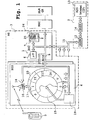
- FIG. 1 shows a transmission device according to the invention.
- This transmission device comprises a first transmitter 1 receiving from a transmitter 2 formatted data messages according to a first protocol.
- the transmitter 1 is a base station control circuit, BSC, of a base station 3 BS.
- BSC base station control circuit
- the same control circuit 1 can govern one or more second transmitters such as 4.
- the second transmitters 4 are simply radio transceivers BTS constituting a radio interface between the first transmitter, the BSC circuits 1 and receivers. mobile phones such as 5.
- the control circuit 1 comprises means, including processing units 6, implementing programs 7 to manage the communication of data between the BTS 4 and mobiles 5.
- GSM Global System for Mobile communications
- a BTS 4 receives by a transmission channel 9 data already formatted according to a GSM protocol.
- BTS 4 complex treatments are undertaken.
- FEC Forward Error Correction
- error detection methods The latter methods make it possible in particular to detect whether a received block is valid or not.
- the data are here symbolically transmitted to a digital to analog converter 10 of the BTS 4.
- This digital to analog converter 10 is also capable of performing variable gain modulation and amplification of radio signals intended for the mobile 5.
- a radio transmission part and a reception part
- a modulation and a digital analog conversion are set up.
- These circuits are very simple.
- Channel 9 also has the disadvantage of having been calibrated at a limited rate, here in a manner common to 16 Kilobits. This disadvantage in return has the advantage that the equipment of the base stations can be standardized and be cheap.
- the transmitter 2 is here an emitter transmitting on a transmission channel 11 data signals formatted according to the GPRS standard, General Packet Radio Service - General Service for Transmission of Radio Packets.
- the GPRS service defines a packet-switched network architecture with mobility management and access by radio.
- a GPRS network can be connected to various fixed data networks based on different protocols: IP (Internet Protocol - Internet Protocol) but also X25, connection-oriented protocol, and CLNP (Connection Less Network Protocol).
- IP Internet Protocol - Internet Protocol
- CLNP Connection Less Network Protocol
- FIG. 1 shows for this purpose that the transmitter 2 comprises a GPRS support node 12 (SGSN), which is connected to one or more base stations such as 3.
- the node 12 is connected to a Packet transmission network 13, an X25 network or the Internet network for example, through a gateway support node 14 (GGSN, Gateway GPRS Support Node).
- the gateway node 14 may be connected to one or more data networks such as the network 13.
- the node 14 is a router that allows packets from external data networks to be routed, via the node 12, to the data station. base 3, in particular the control circuits 1 of this base station 3.
- the first transmitter 1 receives the data according to a GPRS protocol from the transmitter 2, and transmits them to the second transmitter 4 according to a second protocol, here the GSM protocol.
- the second transmitter, the base station 4, transmits them to the receiver 5.
- the second transmitter here the BTS 4
- the BTS 4 comprises a buffer 15 here preferably of the first-in first-out type. It is not necessarily of this type if each packet has a serial number.
- a memory 15 has been shown in the form of a rotating memory with a write input 16 in the memory 15, and a read output 17 of this memory 15. Of course, mechanically the memory does not rotate not, but simply write address pointers and read addresses can write new data in new cells of the memory 15, and collect there respectively data that were previously written.
- the bus 9 is thus connected on the one hand to the input 16 and on the other hand to an input 18 for controlling the digital analog conversion, modulation, amplification and radio transmission circuits.
- the input 18 which receives the signaling accompanying the packets to be transmitted makes it possible to adjust the circuits 10.
- the memory 15 is preferably of the first-in-first-out type, messages I to V being stored in this order. before being extracted in this order. In reception the same type of connection is made.
- the memory 15 is embellished with a decoder 19, also connected to the bus 9, and capable of receiving a retransmission instruction of a previously stored message that has already been transmitted.
- the memory 15 comprises in its different cells messages of rank 0, I, II, III, IV, V and so on.
- the message I is being sent by the circuits 10.
- the message II must be sent.
- the pointer 17 for reading the memory 15 addresses the different cells thereof to pick up these messages I, II, III, IV, V and so on. It can happen that the message of rank 0 has not been well received by the mobile 5.
- the decoder 19 by decoding an instruction can then either temporarily move the read pointer 17 so that it comes re-read at a given moment the message of rank 0, and therefore reissue, or provide the rewrite of the rank message 0 following the message of rank V in the memory 15, so that this message can be retransmitted later.
- the instruction thus executed is intended to avoid having to retransmit through the channel 9, at a limited rate, the content of the message 0 whose control circuit 1 knows that it was poorly received by the receiver 5, and that this knowledge of this bad reception occurs while the message 0 is still memorized in the memory 15. By acting thus it will be avoided to have to retransmit the message of rank 0 badly received twice on the bus 9.
- a control circuit 1 As much as it is possible for a control circuit 1 to govern several BTS such as 4, as much as it is possible for a control circuit 1 to govern, for the same BTS 4, several channels such as 9 supplying several buffers such as 15, by In this case, the efficiency of the improvement provided by the invention can be further increased. Indeed according to an improved mode, it is expected with a new modulation to achieve speeds of 60 Kilobits per time window. In this case, the radio modulation of the circuit 10 will be modified. Under these conditions, it may be possible to pass the CS4 scheme. In this case, it will be possible to feed with the different channels such as the different memories 15 or 20 or more generally a common memory of larger size. If a message, such as message 0, must then be repeated, there will then be no need for this message to be repeated on the same time window.
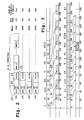
- FIG. 2 shows in summary the different coding schemes CS1 to CS4 used to transmit data according to the GPRS protocol.
- frames of 1500 bytes, or 12 kilobits are carried in packets.
- Each packet has an address portion 21, a payload portion 22, and a payload redundancy portion 23.
- each packet includes synchronization indications SY, transmission power P, and signaling IF.
- the synchronization signals make it possible to clock the operation of the BTS 4. Here they are used at least to clock the pointer 17 for reading.
- the power signals P are in a known manner used to control the power operation of the transmission circuits 10 via the input 18.
- the signaling signals are signals of various types, and may in particular comprise in the invention decodable instructions by the decoder 19.
- CS1 From one scheme, CS1, to the other, CS4, the useful part of data becomes more important while the redundancy portion is reduced. This leads to useful rates ranging from 8800 bits per second to 20800 bits per second. Useful bits transmittable per 20 millisecond period then increase from 176 to 416 as indicated above. For each message so designated, the transmission time, on a transmission channel at 16 Kilobits leads to durations ranging from 12 milliseconds to 28 milliseconds.
- the processing circuits 6 and 7 perform a 25, 26 (LLC, RLC) treatment of known type. They are able to extract packets received on the bus 11 the useful bits to be transmitted on the bus 9. They transmit them in a GSM format by embellishing them with signals of signaling.
- Figure 3 shows the transmission mode in the state of the art and according to the invention respectively.
- messages to transmit numbered I to VIII and whose transmission times according to their coding scheme are recalled. These times are 12 milliseconds or 22 milliseconds in the example.
- a second line at the top of the figure we have shown the effects of the timing imposed by the direct implementation of the GPRS standard, without desynchronization, without waiting time.
- the second line shows the occupancy of channel 9 when it is controlled according to the GPRS standard. In this case, time slots of 20 milliseconds are provided.
- a data message for example message I
- message I For a data message, for example message I, to be transmitted in a time window, it must first be completely received in circuits 1 before the start of the time window which concerns it for its transmission. . This is for example the case after 20 milliseconds for the message I, and this message I can be transmitted for a duration of 12 milliseconds during a second window. Between the dates between 32 milliseconds, end of transmission of the I message, and 40 milliseconds, beginning of the third window, the channel 9 is unoccupied. At 40 milliseconds, the message II that has been received between the dates 12 milliseconds and 34 milliseconds can be transmitted during the third time window starting at the date 40 milliseconds.
- the timing of 20 milliseconds has been abandoned for channel 9.
- the transmissions are in asynchronous mode.
- the third line of FIG. 3 the transmission of the messages I to XI is done by exploiting the flow of the channel 9.
- the third line shows both the occupation of the channel 9 and the input of the memory 15.
- the buffer memory 15 is loaded by the message I for a period of time between 20 milliseconds and 32 milliseconds. Accordingly, during the time window of 20 milliseconds to 40 milliseconds no message can be emitted by the BTS 4 towards the receiver 5.
- the I message, 12 milliseconds is transmitted during the time window of 40 to 60 milliseconds.
- a buffer memory preferably of the first-in first-out type
- the principle is as follows: it is stored in advance, in asynchronous mode, in the Transmitter BTS the blocks to be transmitted. Then they are taken in the buffer at the rate corresponding to the GSM transmission.
- GSM transmission a theoretical maximum rate equal to 250 kilobits per second between a BTS transmitter and a mobile is possible (in the case where all the time slots of the frames would be assigned to the same mobile phone).
- the GSM transmission mode has a bit rate greater than 16 kilobits. With such a higher bit rate, during the fourth period of 60 to 80 milliseconds, the message Il available in the memory 15 can be sent by the base station towards the mobile 5. It can easily be verified that the message V, whose transmission starts at the date 120 milliseconds, could be sent to memory 15 between the period between 98 and 120 milliseconds. On the other hand, the message VI whose reception by the memory 15 ends at the date 144 milliseconds, is unavailable for transmission during the next window from 140 to 160 milliseconds. This must be neutralized. It should be noted that the memory override and control commands can be sent as signaling data in the messages transmitted and decoded by the decoder 19.
- the message VI will only be transmitted by the base station 4 between the dates 160 and 180 milliseconds.
- the message X it was possible to send the message X whereas with the solution of the state of the art only the messages I to VII had been sent.
Landscapes
- Engineering & Computer Science (AREA)
- Computer Networks & Wireless Communication (AREA)
- Signal Processing (AREA)
- Databases & Information Systems (AREA)
- Mobile Radio Communication Systems (AREA)
- Optical Communication System (AREA)
- Data Exchanges In Wide-Area Networks (AREA)
Claims (13)
- - Übertragungsvorrichtung, umfassend eine erste Sendestation (1) des Typs BSC, die von einem Sender (2) nach einem ersten, im paketvermittelten Übertragungsmodus arbeitenden Protokoll formatierte Datennachrichten empfängt und die die auf diese Weise empfangenen Daten in Daten konvertiert, die nach einem zweiten Protokoll formatiert sind, das mit einem leitungsvermittelten Modus arbeitet; und eine zweite Sendestation (4) des Typs BTS, die mit der ersten Sendestation verbunden ist und die die nach dem zweiten Protokoll formatierten Datennachrichten empfängt und sie in einem synchronen Modus an einen Empfänger (5) überträgt; [und] einen Kanal (9) mit begrenzter Übertragungsrate, der die beiden Sendestationen verbindet, dadurch gekennzeichnet, dass die nach dem zweiten Protokoll formatierten Datennachrichten unterschiedliche mögliche Längen aufweisen können, wobei das Protokoll mehrere Übertragungsraten (CS1, CS2, CS3, CS4) für Nutzbits aufweist und wobei die Übertragungsrate für die Nutzbits des Übertragungskanals mit begrenzter Datenrate auf einem Mittelwert zwischen den Datenraten des ersten Protokolls liegt und wobei die Vorrichtung Mittel umfasst, um auf diesem Übertragungskanal mit begrenzter Datenrate und in einem asynchronen Modus die Datennachrichten zu übertragen, die unterschiedliche mögliche Längen aufweisen können.
- - Vorrichtung nach Anspruch 1, dadurch gekennzeichnet, dass sie in der zweiten Sendestation einen Pufferspeicher (15) umfasst, der in einen Übertragungsweg dieser zweiten Sendestation eingefügt ist, um empfangene Nachrichten speichern und anschließend an den Empfänger übertragen zu können.
- - Vorrichtung nach Anspruch 2, dadurch gekennzeichnet, dass die zweite Sendestation einen Decodierer (19) umfasst, um eine Anweisung zur erneuten Übertragung einer Nachricht (0) zu empfangen und um einen bestimmten Neuübertragungsbefehl abzuändern oder um in dem Pufferspeicher eine Kopie einer erneut zu übertragenden Nachricht zu speichern.
- - Vorrichtung nach einem der Ansprüche 2 oder 3, dadurch gekennzeichnet, dass der Pufferspeicher dem FIFO-Typ entspricht.
- - Sendestation (1) des Typs BSC, die von einem Sender (2) nach einem ersten, im paketvermittelten Übertragungsmodus arbeitenden Protokoll formatierte Datennachrichten empfängt und die die auf diese Weise empfangenen Daten in Daten konvertiert, die nach einem zweiten Protokoll formatiert sind, das mit einem leitungsvermittelten Modus arbeitet, wobei diese Sendestation, die als erste Sendestation bezeichnet wird, die nach dem zweiten Protokoll formatierten Datennachrichten an eine zweite Sendestation (4) des Typs BTS überträgt, wobei ein Übertragungskanal (9) mit begrenzter Übertragungsrate die beiden Sendestationen verbindet, dadurch gekennzeichnet, dass die nach dem zweiten Protokoll formatierten Datennachrichten unterschiedliche mögliche Längen aufweisen können, wobei das Protokoll mehrere Übertragungsraten (CS1, CS2, CS3, CS4) für Nutzbits aufweist und wobei die Übertragungsrate für die Nutzbits des Übertragungskanals mit begrenzter Datenrate auf einem Mittelwert zwischen den Datenraten des ersten Protokolls liegt und wobei die erste Sendestation Mittel umfasst, um auf diesem Übertragungskanal mit begrenzter Datenrate und in einem asynchronen Modus die Datennachrichten zu übertragen, die unterschiedliche mögliche Längen aufweisen können.
- - Sendestation (4) des Typs BTS, genannt zweite Sendestation, die mit einer als erste Sendestation bezeichneten Sendestation des Typs BSC verbunden ist, welche von einem Sender (2) nach einem ersten Protokoll formatierte Datennachrichten empfängt und auf diese Weise empfangene Daten in nach einem zweiten Protokoll formatierte Daten konvertiert, welches mit einem leitungsvermittelten Modus arbeitet, wobei die mit der ersten Sendestation verbundene zweite Sendestation die nach dem zweiten Protokoll formatierten Datennachrichten empfängt und sie in einem synchronen Modus an einen Empfänger (5) überträgt, wobei ein Übertragungskanal (9) mit begrenzter Übertragungsrate die beiden Sendestationen verbindet, dadurch gekennzeichnet, dass die nach dem zweiten Protokoll formatierten Datennachrichten unterschiedliche mögliche Längen aufweisen können, wobei das Protokoll mehrere Übertragungsraten (CS1, CS2, CS3, CS4) für Nutzbits aufweist und wobei die Übertragungsrate für die Nutzbits des Übertragungskanals mit begrenzter Datenrate auf einem Mittelwert zwischen den Datenraten des ersten Protokolls liegt und wobei die zweite Sendestation Mittel umfasst, um auf diesem Übertragungskanal mit begrenzter Datenrate und in einem asynchronen Modus die Datennachrichten zu empfangen, die unterschiedliche mögliche Längen aufweisen können.
- - Sendestation nach Anspruch 6, dadurch gekennzeichnet, dass sie einen Pufferspeicher (15) umfasst, der in einen Übertragungsweg dieser Sendestation eingefügt ist, um empfangene Nachrichten speichern und anschließend an den Empfänger übertragen zu können.
- - Sendestation nach Anspruch 7, dadurch gekennzeichnet, dass sie einen Decodierer (19) umfasst, um eine Anweisung zur erneuten Übertragung einer Nachricht (0) zu empfangen und um einen bestimmten Neuübertragungsbefehl abzuändern oder um in dem Pufferspeicher eine Kopie einer erneut zu übertragenden Nachricht zu speichern.
- - Sendestation nach einem der Ansprüche 7 oder 8, dadurch gekennzeichnet, dass der Pufferspeicher dem FIFO-Typ entspricht.
- - Übertragungsverfahren, umfassend die folgenden Schritte:- einen Empfang von nach einem ersten, im paketvermittelten Übertragungsmodus arbeitenden Protokoll formatierten Datennachrichten, die von einem Sender (2) kommen, in einer ersten Sendestation (1);- eine Konvertierung (7) der auf diese Weise empfangenen Daten in nach einem zweiten Protokoll formatierte Daten, das mit einem leitungsvermittelten Modus arbeitet;- die Übertragung der nach dem zweiten Protokoll formatierten Daten an eine zweite Sendestation des Typs BTS, die mit der ersten Sendestation durch einen Übertragungskanal (9) mit begrenzter Datenrate verbunden ist;- eine Übertragung (10) der nach dem zweiten Protokoll formatierten Daten an einen Empfänger (5) in einem synchronen Modus- wobei die nach dem zweiten Protokoll formatierten Datennachrichten unterschiedliche mögliche Längen aufweisen können, wobei das Protokoll mehrere Übertragungsraten (CS1, CS2, CS3, CS4) für Nutzbits aufweist und wobei die Übertragungsrate für die Nutzbits des Übertragungskanals mit begrenzter Datenrate auf einem Mittelwert zwischen den Datenraten des ersten Protokolls liegt; hierbei umfasst das Verfahren- zudem eine Übertragung der Datennachrichten, die unterschiedliche mögliche Längen aufweisen können, auf dem Übertragungskanal mit begrenzter Datenrate und in einem asynchronen Modus.
- -Verfahren nach Anspruch 10, dadurch gekennzeichnet, dass es umfasst:- eine Speicherung (15) mehrerer in einem Pufferspeicher der zweiten Sendestation empfangenen Nachrichten;- wobei diese Speicherung vor der Übertragung an den Empfänger durch diese zweite Sendestation erfolgt.
- -Verfahren nach Anspruch 11, dadurch gekennzeichnet, dass- in der zweiten Sendestation eine Anweisung zur Neuübertragung einer Nachricht decodiert wird (19);- im Pufferspeicher eine Kopie einer erneut zu übertragenden Nachricht gespeichert wird;- und ein bestimmter Befehl zur Neuübertragung abgeändert wird.
- -Verfahren nach einem der Ansprüche 11 oder 12, dadurch gekennzeichnet, dass die Speicherung dem FIFO-Typ entspricht.
Priority Applications (1)
| Application Number | Priority Date | Filing Date | Title |
|---|---|---|---|
| EP05111981A EP1635586A3 (de) | 1999-11-22 | 2000-11-16 | Verfahren und Vorrichtung zur Übertragung von digitalen Daten in einem Kanal mit begrenzten Datenraten |
Applications Claiming Priority (2)
| Application Number | Priority Date | Filing Date | Title |
|---|---|---|---|
| FR9914634 | 1999-11-22 | ||
| FR9914634A FR2801466B1 (fr) | 1999-11-22 | 1999-11-22 | Procede et dispositif de transmission pour des donnees numeriques |
Related Child Applications (1)
| Application Number | Title | Priority Date | Filing Date |
|---|---|---|---|
| EP05111981A Division EP1635586A3 (de) | 1999-11-22 | 2000-11-16 | Verfahren und Vorrichtung zur Übertragung von digitalen Daten in einem Kanal mit begrenzten Datenraten |
Publications (2)
| Publication Number | Publication Date |
|---|---|
| EP1102504A1 EP1102504A1 (de) | 2001-05-23 |
| EP1102504B1 true EP1102504B1 (de) | 2006-12-27 |
Family
ID=9552359
Family Applications (2)
| Application Number | Title | Priority Date | Filing Date |
|---|---|---|---|
| EP00403200A Expired - Lifetime EP1102504B1 (de) | 1999-11-22 | 2000-11-16 | Verfahren und Vorrichtung zur Übertragung in einem Kanal mit begrenzten Datenraten |
| EP05111981A Withdrawn EP1635586A3 (de) | 1999-11-22 | 2000-11-16 | Verfahren und Vorrichtung zur Übertragung von digitalen Daten in einem Kanal mit begrenzten Datenraten |
Family Applications After (1)
| Application Number | Title | Priority Date | Filing Date |
|---|---|---|---|
| EP05111981A Withdrawn EP1635586A3 (de) | 1999-11-22 | 2000-11-16 | Verfahren und Vorrichtung zur Übertragung von digitalen Daten in einem Kanal mit begrenzten Datenraten |
Country Status (6)
| Country | Link |
|---|---|
| US (1) | US20060258381A1 (de) |
| EP (2) | EP1102504B1 (de) |
| CN (1) | CN1251454C (de) |
| AT (1) | ATE349864T1 (de) |
| DE (1) | DE60032564T2 (de) |
| FR (1) | FR2801466B1 (de) |
Families Citing this family (3)
| Publication number | Priority date | Publication date | Assignee | Title |
|---|---|---|---|---|
| US7023810B1 (en) * | 2001-03-21 | 2006-04-04 | Cisco Technology, Inc. | Decoding using redundant packet selection information in wireless communications systems |
| ATE319277T1 (de) * | 2004-07-19 | 2006-03-15 | Siemens Ag | Vefahren zum betrieb eines tragbaren kommunikationsgerätes, und ein tragbares kommunikationsgerät |
| WO2011062216A1 (ja) * | 2009-11-18 | 2011-05-26 | 日本電気株式会社 | 中継装置、中継方法及びプログラム |
Family Cites Families (8)
| Publication number | Priority date | Publication date | Assignee | Title |
|---|---|---|---|---|
| FI94700C (fi) * | 1994-01-21 | 1995-10-10 | Nokia Telecommunications Oy | Matkaviestinjärjestelmän verkkoelementti ja menetelmä pakettimuotoista datasiirtoa varten matkaviestinjärjestelmässä |
| FI103456B1 (fi) * | 1996-03-29 | 1999-06-30 | Nokia Telecommunications Oy | Puheen siirto pakettiverkossa |
| DE19722433A1 (de) * | 1997-05-28 | 1998-12-03 | Siemens Ag | Verfahren und Vorrichtung zur Übertragung eines kontinuierlichen Datenstroms in paketierter Form |
| DE19728033A1 (de) * | 1997-07-01 | 1999-01-07 | Alsthom Cge Alcatel | Mobilfunknetz mit Anschlußvorrichtung zum Anschluß an Kommunikationsnetze |
| FI106175B (fi) * | 1997-08-18 | 2000-11-30 | Nokia Mobile Phones Ltd | Datansiirto matkaviestinverkossa |
| FI980024L (fi) * | 1998-01-07 | 1999-07-08 | Nokia Networks Oy | Solukkoradiojärjestelmä ja menetelmä tukiaseman yhdistämiseksi solukko radiojärjestelmään |
| US6556573B1 (en) * | 1998-06-05 | 2003-04-29 | Nokia Telecommunications Oy | Synchronization of ATM-based network system using variable bit rate ATM adaptation layer protocols |
| ATE307441T1 (de) * | 1999-11-17 | 2005-11-15 | Beschleunigungsabhängige kanalumschaltung in mobilen telekommunikationsnetzen |
-
1999
- 1999-11-22 FR FR9914634A patent/FR2801466B1/fr not_active Expired - Fee Related
-
2000
- 2000-11-16 EP EP00403200A patent/EP1102504B1/de not_active Expired - Lifetime
- 2000-11-16 EP EP05111981A patent/EP1635586A3/de not_active Withdrawn
- 2000-11-16 DE DE60032564T patent/DE60032564T2/de not_active Expired - Lifetime
- 2000-11-16 AT AT00403200T patent/ATE349864T1/de not_active IP Right Cessation
- 2000-11-22 CN CNB001372289A patent/CN1251454C/zh not_active Expired - Fee Related
-
2006
- 2006-07-21 US US11/490,098 patent/US20060258381A1/en not_active Abandoned
Also Published As
| Publication number | Publication date |
|---|---|
| EP1635586A3 (de) | 2007-06-13 |
| CN1300150A (zh) | 2001-06-20 |
| ATE349864T1 (de) | 2007-01-15 |
| DE60032564T2 (de) | 2007-10-04 |
| FR2801466B1 (fr) | 2002-05-31 |
| EP1635586A2 (de) | 2006-03-15 |
| DE60032564D1 (de) | 2007-02-08 |
| EP1102504A1 (de) | 2001-05-23 |
| US20060258381A1 (en) | 2006-11-16 |
| CN1251454C (zh) | 2006-04-12 |
| FR2801466A1 (fr) | 2001-05-25 |
Similar Documents
| Publication | Publication Date | Title |
|---|---|---|
| CN1183723C (zh) | 在分组数据系统中传递分组的方法和设备 | |
| CA1264875A (fr) | Procede et dispositif de transmission de donnees numeriques par messages organises en trames | |
| US6373842B1 (en) | Unidirectional streaming services in wireless systems | |
| EP0431438B1 (de) | Verfahren zur Regelung des Datenstroms in einem Breitband ISDN und Netz zur Realisierung | |
| US6438105B1 (en) | Reliable internet facsimile protocol | |
| EP0034514B1 (de) | Digitale Zeitvielfach-Vermittlungsanlage für Leitungen mit Sprach- und Datenpaketübertragungen | |
| WO2000013098A1 (en) | Combined synchronous and asynchronous message transmission | |
| FR2767442A1 (fr) | Procede destine au transfert des donnees dans un systeme numerique de communication de mobiles | |
| JP2002538711A (ja) | 高性能符号化を可能にする多重化cdmaチャネルの順方向誤り訂正 | |
| US20050232309A1 (en) | In band signal detection and presentation for IP phone | |
| UA70383C2 (uk) | Спосіб попередження відсутності, спосіб генерування, спосіб дос тавки,спосіб ініціалізації та спосіб переупорядкування кадрів даних і мобільна станція, базова станція, пристрій безпровідного зв'язку, пристрій зв'язку (варіанти) та машинно-читабельний носій (варіанти) для їх здійснення | |
| FR2798810A1 (fr) | Procede et systeme de telecommunication en mode paquets dans lequel plusieurs communications sont transferables d'un chemin vers un autre | |
| EP1058477B1 (de) | Schnittstellenvorrichtung zwischen einem ATM-Gerät und einem synchronen Funk-Übertragungskanal | |
| WO2003073681A1 (en) | Method and apparatus for data transmission using variable packet lengths | |
| CN100505608C (zh) | 一种适合卫星网络的自适应拥塞控制方法及系统 | |
| EP0430126B1 (de) | Verfahren und Einrichtung zur digitalen Nachrichtenübertragung mit Anforderung zur automatischen Sendungswiederholung oder "ARQ" | |
| EP1102504B1 (de) | Verfahren und Vorrichtung zur Übertragung in einem Kanal mit begrenzten Datenraten | |
| JP2004519124A (ja) | 受動的同軸分配などの共用伝送媒体における電話方式、レイテンシ敏感データ、ベスト・エフォート型データ及びビデオ・ストリームのための優先パケット伝送システム | |
| EP0430125B1 (de) | Verfahren und Einrichtung zur Anforderung automatischer Sendewiederholungen für digitale Duplexübertragungseinrichtungen mit mindestens einem verrauschten Rückweg | |
| GB2337663A (en) | Communication method and apparatus | |
| EP1411689B1 (de) | Sendewiederholungssteuerungsverfahren von Daten und Vorrichtung zur Durchführung des Verfahrens | |
| EP1362449A1 (de) | Verfahren zur datenübertragung mit einem fehlerschutzniveau, das unter mehreren verschiedenen vorbestimmten niveaus ausgewählt ist | |
| EP2122895B1 (de) | Weiterübertragungsverfahren mit inkrementeller redundanz für fragmentierte pakete | |
| EP0214020A1 (de) | Verfahren zur Übertragung von Daten durch Pakete über ein Netzwerk oder eine Übertragungskette und Vorrichtung zur Durchführung des Verfahrens | |
| JP2007267082A (ja) | データ送受信装置及びデータ送受信方法 |
Legal Events
| Date | Code | Title | Description |
|---|---|---|---|
| PUAI | Public reference made under article 153(3) epc to a published international application that has entered the european phase |
Free format text: ORIGINAL CODE: 0009012 |
|
| AK | Designated contracting states |
Kind code of ref document: A1 Designated state(s): AT BE CH CY DE DK ES FI FR GB GR IE IT LI LU MC NL PT SE TR |
|
| AX | Request for extension of the european patent |
Free format text: AL;LT;LV;MK;RO;SI |
|
| 17P | Request for examination filed |
Effective date: 20011123 |
|
| AKX | Designation fees paid |
Free format text: AT BE CH CY DE DK ES FI FR GB GR IE IT LI LU MC NL PT SE TR |
|
| 17Q | First examination report despatched |
Effective date: 20020430 |
|
| RTI1 | Title (correction) |
Free format text: METHOD AND DEVICE FOR TRANSMITTING IN A LIMITED THROUGHPUT CHANNEL |
|
| GRAP | Despatch of communication of intention to grant a patent |
Free format text: ORIGINAL CODE: EPIDOSNIGR1 |
|
| GRAS | Grant fee paid |
Free format text: ORIGINAL CODE: EPIDOSNIGR3 |
|
| GRAA | (expected) grant |
Free format text: ORIGINAL CODE: 0009210 |
|
| AK | Designated contracting states |
Kind code of ref document: B1 Designated state(s): AT BE CH CY DE DK ES FI FR GB GR IE IT LI LU MC NL PT SE TR |
|
| PG25 | Lapsed in a contracting state [announced via postgrant information from national office to epo] |
Ref country code: FI Free format text: LAPSE BECAUSE OF FAILURE TO SUBMIT A TRANSLATION OF THE DESCRIPTION OR TO PAY THE FEE WITHIN THE PRESCRIBED TIME-LIMIT Effective date: 20061227 Ref country code: NL Free format text: LAPSE BECAUSE OF FAILURE TO SUBMIT A TRANSLATION OF THE DESCRIPTION OR TO PAY THE FEE WITHIN THE PRESCRIBED TIME-LIMIT Effective date: 20061227 Ref country code: DK Free format text: LAPSE BECAUSE OF FAILURE TO SUBMIT A TRANSLATION OF THE DESCRIPTION OR TO PAY THE FEE WITHIN THE PRESCRIBED TIME-LIMIT Effective date: 20061227 Ref country code: AT Free format text: LAPSE BECAUSE OF FAILURE TO SUBMIT A TRANSLATION OF THE DESCRIPTION OR TO PAY THE FEE WITHIN THE PRESCRIBED TIME-LIMIT Effective date: 20061227 Ref country code: IE Free format text: LAPSE BECAUSE OF FAILURE TO SUBMIT A TRANSLATION OF THE DESCRIPTION OR TO PAY THE FEE WITHIN THE PRESCRIBED TIME-LIMIT Effective date: 20061227 |
|
| REG | Reference to a national code |
Ref country code: GB Ref legal event code: FG4D Free format text: NOT ENGLISH |
|
| REG | Reference to a national code |
Ref country code: IE Ref legal event code: FG4D Free format text: LANGUAGE OF EP DOCUMENT: FRENCH |
|
| REF | Corresponds to: |
Ref document number: 60032564 Country of ref document: DE Date of ref document: 20070208 Kind code of ref document: P |
|
| PG25 | Lapsed in a contracting state [announced via postgrant information from national office to epo] |
Ref country code: SE Free format text: LAPSE BECAUSE OF FAILURE TO SUBMIT A TRANSLATION OF THE DESCRIPTION OR TO PAY THE FEE WITHIN THE PRESCRIBED TIME-LIMIT Effective date: 20070327 |
|
| GBT | Gb: translation of ep patent filed (gb section 77(6)(a)/1977) |
Effective date: 20070305 |
|
| RAP2 | Party data changed (patent owner data changed or rights of a patent transferred) |
Owner name: ALCATEL LUCENT |
|
| PG25 | Lapsed in a contracting state [announced via postgrant information from national office to epo] |
Ref country code: ES Free format text: LAPSE BECAUSE OF FAILURE TO SUBMIT A TRANSLATION OF THE DESCRIPTION OR TO PAY THE FEE WITHIN THE PRESCRIBED TIME-LIMIT Effective date: 20070407 |
|
| PG25 | Lapsed in a contracting state [announced via postgrant information from national office to epo] |
Ref country code: PT Free format text: LAPSE BECAUSE OF FAILURE TO SUBMIT A TRANSLATION OF THE DESCRIPTION OR TO PAY THE FEE WITHIN THE PRESCRIBED TIME-LIMIT Effective date: 20070528 |
|
| NLT2 | Nl: modifications (of names), taken from the european patent patent bulletin |
Owner name: ALCATEL LUCENT Effective date: 20070404 |
|
| NLV1 | Nl: lapsed or annulled due to failure to fulfill the requirements of art. 29p and 29m of the patents act | ||
| REG | Reference to a national code |
Ref country code: FR Ref legal event code: CD |
|
| PLBE | No opposition filed within time limit |
Free format text: ORIGINAL CODE: 0009261 |
|
| STAA | Information on the status of an ep patent application or granted ep patent |
Free format text: STATUS: NO OPPOSITION FILED WITHIN TIME LIMIT |
|
| 26N | No opposition filed |
Effective date: 20070928 |
|
| PG25 | Lapsed in a contracting state [announced via postgrant information from national office to epo] |
Ref country code: GR Free format text: LAPSE BECAUSE OF FAILURE TO SUBMIT A TRANSLATION OF THE DESCRIPTION OR TO PAY THE FEE WITHIN THE PRESCRIBED TIME-LIMIT Effective date: 20070328 |
|
| BERE | Be: lapsed |
Owner name: ALCATEL Effective date: 20071130 |
|
| PG25 | Lapsed in a contracting state [announced via postgrant information from national office to epo] |
Ref country code: MC Free format text: LAPSE BECAUSE OF NON-PAYMENT OF DUE FEES Effective date: 20071130 |
|
| PG25 | Lapsed in a contracting state [announced via postgrant information from national office to epo] |
Ref country code: LI Free format text: LAPSE BECAUSE OF NON-PAYMENT OF DUE FEES Effective date: 20071130 Ref country code: CH Free format text: LAPSE BECAUSE OF NON-PAYMENT OF DUE FEES Effective date: 20071130 |
|
| REG | Reference to a national code |
Ref country code: CH Ref legal event code: PL |
|
| PG25 | Lapsed in a contracting state [announced via postgrant information from national office to epo] |
Ref country code: BE Free format text: LAPSE BECAUSE OF NON-PAYMENT OF DUE FEES Effective date: 20071130 |
|
| PG25 | Lapsed in a contracting state [announced via postgrant information from national office to epo] |
Ref country code: CY Free format text: LAPSE BECAUSE OF FAILURE TO SUBMIT A TRANSLATION OF THE DESCRIPTION OR TO PAY THE FEE WITHIN THE PRESCRIBED TIME-LIMIT Effective date: 20061227 Ref country code: LU Free format text: LAPSE BECAUSE OF NON-PAYMENT OF DUE FEES Effective date: 20071116 |
|
| PG25 | Lapsed in a contracting state [announced via postgrant information from national office to epo] |
Ref country code: TR Free format text: LAPSE BECAUSE OF FAILURE TO SUBMIT A TRANSLATION OF THE DESCRIPTION OR TO PAY THE FEE WITHIN THE PRESCRIBED TIME-LIMIT Effective date: 20061227 |
|
| PGFP | Annual fee paid to national office [announced via postgrant information from national office to epo] |
Ref country code: IT Payment date: 20101123 Year of fee payment: 11 |
|
| PG25 | Lapsed in a contracting state [announced via postgrant information from national office to epo] |
Ref country code: IT Free format text: LAPSE BECAUSE OF NON-PAYMENT OF DUE FEES Effective date: 20111116 |
|
| REG | Reference to a national code |
Ref country code: FR Ref legal event code: GC Effective date: 20140717 |
|
| REG | Reference to a national code |
Ref country code: FR Ref legal event code: RG Effective date: 20141016 |
|
| REG | Reference to a national code |
Ref country code: FR Ref legal event code: CA Effective date: 20150521 |
|
| REG | Reference to a national code |
Ref country code: FR Ref legal event code: CA Effective date: 20150521 |
|
| REG | Reference to a national code |
Ref country code: FR Ref legal event code: PLFP Year of fee payment: 16 |
|
| REG | Reference to a national code |
Ref country code: FR Ref legal event code: PLFP Year of fee payment: 17 |
|
| PGFP | Annual fee paid to national office [announced via postgrant information from national office to epo] |
Ref country code: DE Payment date: 20161121 Year of fee payment: 17 Ref country code: FR Payment date: 20161118 Year of fee payment: 17 Ref country code: GB Payment date: 20161122 Year of fee payment: 17 |
|
| REG | Reference to a national code |
Ref country code: DE Ref legal event code: R119 Ref document number: 60032564 Country of ref document: DE |
|
| GBPC | Gb: european patent ceased through non-payment of renewal fee |
Effective date: 20171116 |
|
| REG | Reference to a national code |
Ref country code: FR Ref legal event code: ST Effective date: 20180731 |
|
| PG25 | Lapsed in a contracting state [announced via postgrant information from national office to epo] |
Ref country code: FR Free format text: LAPSE BECAUSE OF NON-PAYMENT OF DUE FEES Effective date: 20171130 Ref country code: DE Free format text: LAPSE BECAUSE OF NON-PAYMENT OF DUE FEES Effective date: 20180602 |
|
| PG25 | Lapsed in a contracting state [announced via postgrant information from national office to epo] |
Ref country code: GB Free format text: LAPSE BECAUSE OF NON-PAYMENT OF DUE FEES Effective date: 20171116 |