EP1105360B1 - Identifizierung von verbindung-protein wechselwirkungen mit bibliotheken von gekoppelten protein-nukleinsäure-molekülen - Google Patents
Identifizierung von verbindung-protein wechselwirkungen mit bibliotheken von gekoppelten protein-nukleinsäure-molekülen Download PDFInfo
- Publication number
- EP1105360B1 EP1105360B1 EP99948042A EP99948042A EP1105360B1 EP 1105360 B1 EP1105360 B1 EP 1105360B1 EP 99948042 A EP99948042 A EP 99948042A EP 99948042 A EP99948042 A EP 99948042A EP 1105360 B1 EP1105360 B1 EP 1105360B1
- Authority
- EP
- European Patent Office
- Prior art keywords
- protein
- compound
- fusion
- nucleic acid
- library
- Prior art date
- Legal status (The legal status is an assumption and is not a legal conclusion. Google has not performed a legal analysis and makes no representation as to the accuracy of the status listed.)
- Expired - Lifetime
Links
- 230000004927 fusion Effects 0.000 title claims abstract description 130
- 230000003993 interaction Effects 0.000 title claims abstract description 22
- 150000001875 compounds Chemical class 0.000 claims abstract description 87
- 238000000034 method Methods 0.000 claims abstract description 65
- 108090000623 proteins and genes Proteins 0.000 claims abstract description 46
- 102000004169 proteins and genes Human genes 0.000 claims abstract description 44
- 239000007787 solid Substances 0.000 claims abstract description 31
- 108020004707 nucleic acids Proteins 0.000 claims abstract description 15
- 102000039446 nucleic acids Human genes 0.000 claims abstract description 15
- 150000007523 nucleic acids Chemical class 0.000 claims abstract description 15
- 230000015572 biosynthetic process Effects 0.000 claims abstract description 10
- 238000006243 chemical reaction Methods 0.000 claims abstract description 4
- 239000011324 bead Substances 0.000 claims description 27
- 239000000126 substance Substances 0.000 claims description 5
- 108090000765 processed proteins & peptides Proteins 0.000 claims description 4
- 239000011521 glass Substances 0.000 claims description 3
- 239000007850 fluorescent dye Substances 0.000 claims description 2
- 238000012216 screening Methods 0.000 description 27
- -1 small molecule compounds Chemical class 0.000 description 22
- 230000027455 binding Effects 0.000 description 12
- 239000003446 ligand Substances 0.000 description 11
- 230000001413 cellular effect Effects 0.000 description 8
- 150000003384 small molecules Chemical class 0.000 description 8
- 238000013459 approach Methods 0.000 description 7
- 239000000872 buffer Substances 0.000 description 7
- 108020004414 DNA Proteins 0.000 description 5
- 108010022394 Threonine synthase Proteins 0.000 description 5
- 102000004419 dihydrofolate reductase Human genes 0.000 description 5
- 230000002285 radioactive effect Effects 0.000 description 5
- 108091032973 (ribonucleotides)n+m Proteins 0.000 description 4
- 239000007790 solid phase Substances 0.000 description 4
- 229920000936 Agarose Polymers 0.000 description 3
- 108091036066 Three prime untranslated region Proteins 0.000 description 3
- 150000001413 amino acids Chemical group 0.000 description 3
- 238000002955 isolation Methods 0.000 description 3
- 239000000463 material Substances 0.000 description 3
- 238000010839 reverse transcription Methods 0.000 description 3
- 238000010561 standard procedure Methods 0.000 description 3
- 238000003786 synthesis reaction Methods 0.000 description 3
- 102000053602 DNA Human genes 0.000 description 2
- FBOZXECLQNJBKD-ZDUSSCGKSA-N L-methotrexate Chemical compound C=1N=C2N=C(N)N=C(N)C2=NC=1CN(C)C1=CC=C(C(=O)N[C@@H](CCC(O)=O)C(O)=O)C=C1 FBOZXECLQNJBKD-ZDUSSCGKSA-N 0.000 description 2
- 108091034117 Oligonucleotide Proteins 0.000 description 2
- FAPWRFPIFSIZLT-UHFFFAOYSA-M Sodium chloride Chemical compound [Na+].[Cl-] FAPWRFPIFSIZLT-UHFFFAOYSA-M 0.000 description 2
- 238000003556 assay Methods 0.000 description 2
- 239000007853 buffer solution Substances 0.000 description 2
- 239000002299 complementary DNA Substances 0.000 description 2
- 238000002372 labelling Methods 0.000 description 2
- 229960000485 methotrexate Drugs 0.000 description 2
- 238000012986 modification Methods 0.000 description 2
- 230000004048 modification Effects 0.000 description 2
- 229930014626 natural product Natural products 0.000 description 2
- 230000009871 nonspecific binding Effects 0.000 description 2
- 239000002773 nucleotide Substances 0.000 description 2
- 125000003729 nucleotide group Chemical group 0.000 description 2
- 238000002360 preparation method Methods 0.000 description 2
- 238000003498 protein array Methods 0.000 description 2
- 239000002002 slurry Substances 0.000 description 2
- 241001156002 Anthonomus pomorum Species 0.000 description 1
- 108091026890 Coding region Proteins 0.000 description 1
- 108020004635 Complementary DNA Proteins 0.000 description 1
- 108020004394 Complementary RNA Proteins 0.000 description 1
- 101150074155 DHFR gene Proteins 0.000 description 1
- 241000196324 Embryophyta Species 0.000 description 1
- 102000004190 Enzymes Human genes 0.000 description 1
- 108090000790 Enzymes Proteins 0.000 description 1
- 102100034343 Integrase Human genes 0.000 description 1
- 241001465754 Metazoa Species 0.000 description 1
- 238000012408 PCR amplification Methods 0.000 description 1
- 241001495084 Phylo Species 0.000 description 1
- 108010092799 RNA-directed DNA polymerase Proteins 0.000 description 1
- 102000007056 Recombinant Fusion Proteins Human genes 0.000 description 1
- 108010008281 Recombinant Fusion Proteins Proteins 0.000 description 1
- 229920004890 Triton X-100 Polymers 0.000 description 1
- 239000013504 Triton X-100 Substances 0.000 description 1
- 240000006365 Vitis vinifera Species 0.000 description 1
- XUQUNBOKLNVMMK-UHFFFAOYSA-N [5-[6-[2-cyanoethoxy-[di(propan-2-yl)amino]phosphanyl]oxyhexylcarbamoyl]-6'-(2,2-dimethylpropanoyloxy)-3-oxospiro[2-benzofuran-1,9'-xanthene]-3'-yl] 2,2-dimethylpropanoate Chemical compound C12=CC=C(OC(=O)C(C)(C)C)C=C2OC2=CC(OC(=O)C(C)(C)C)=CC=C2C21OC(=O)C1=CC(C(=O)NCCCCCCOP(N(C(C)C)C(C)C)OCCC#N)=CC=C21 XUQUNBOKLNVMMK-UHFFFAOYSA-N 0.000 description 1
- 238000001042 affinity chromatography Methods 0.000 description 1
- 238000002306 biochemical method Methods 0.000 description 1
- 210000004899 c-terminal region Anatomy 0.000 description 1
- 125000000837 carbohydrate group Chemical group 0.000 description 1
- 210000004027 cell Anatomy 0.000 description 1
- 229920002678 cellulose Polymers 0.000 description 1
- 239000001913 cellulose Substances 0.000 description 1
- 239000003184 complementary RNA Substances 0.000 description 1
- 238000001514 detection method Methods 0.000 description 1
- LOKCTEFSRHRXRJ-UHFFFAOYSA-I dipotassium trisodium dihydrogen phosphate hydrogen phosphate dichloride Chemical compound P(=O)(O)(O)[O-].[K+].P(=O)(O)([O-])[O-].[Na+].[Na+].[Cl-].[K+].[Cl-].[Na+] LOKCTEFSRHRXRJ-UHFFFAOYSA-I 0.000 description 1
- 239000003814 drug Substances 0.000 description 1
- 238000009509 drug development Methods 0.000 description 1
- 238000007876 drug discovery Methods 0.000 description 1
- 238000010828 elution Methods 0.000 description 1
- 238000005516 engineering process Methods 0.000 description 1
- 239000002532 enzyme inhibitor Substances 0.000 description 1
- 239000000284 extract Substances 0.000 description 1
- 230000002538 fungal effect Effects 0.000 description 1
- 230000003100 immobilizing effect Effects 0.000 description 1
- 238000011534 incubation Methods 0.000 description 1
- 238000007641 inkjet printing Methods 0.000 description 1
- 150000002611 lead compounds Chemical class 0.000 description 1
- 125000003473 lipid group Chemical group 0.000 description 1
- 239000007788 liquid Substances 0.000 description 1
- 210000004185 liver Anatomy 0.000 description 1
- 238000013507 mapping Methods 0.000 description 1
- 239000003550 marker Substances 0.000 description 1
- 239000011159 matrix material Substances 0.000 description 1
- 108020004999 messenger RNA Proteins 0.000 description 1
- 238000002156 mixing Methods 0.000 description 1
- 239000002953 phosphate buffered saline Substances 0.000 description 1
- 238000000206 photolithography Methods 0.000 description 1
- 238000000053 physical method Methods 0.000 description 1
- 238000000159 protein binding assay Methods 0.000 description 1
- 230000004850 protein–protein interaction Effects 0.000 description 1
- 238000011160 research Methods 0.000 description 1
- 239000011347 resin Substances 0.000 description 1
- 229920005989 resin Polymers 0.000 description 1
- 238000007423 screening assay Methods 0.000 description 1
- 238000012163 sequencing technique Methods 0.000 description 1
- 239000011780 sodium chloride Substances 0.000 description 1
- 239000000243 solution Substances 0.000 description 1
- 238000006257 total synthesis reaction Methods 0.000 description 1
- 238000013519 translation Methods 0.000 description 1
Images


Classifications
-
- C—CHEMISTRY; METALLURGY
- C07—ORGANIC CHEMISTRY
- C07K—PEPTIDES
- C07K1/00—General methods for the preparation of peptides, i.e. processes for the organic chemical preparation of peptides or proteins of any length
- C07K1/04—General methods for the preparation of peptides, i.e. processes for the organic chemical preparation of peptides or proteins of any length on carriers
- C07K1/047—Simultaneous synthesis of different peptide species; Peptide libraries
-
- C—CHEMISTRY; METALLURGY
- C07—ORGANIC CHEMISTRY
- C07K—PEPTIDES
- C07K19/00—Hybrid peptides, i.e. peptides covalently bound to nucleic acids, or non-covalently bound protein-protein complexes
Definitions
- the invention features screening methods involving nucleic acid-protein fusions.
- Screening is considered to be an efficient tool to identify binding interactions between proteins and small molecule compounds derived from large pharmaceutically-based collections, new synthetic approaches such as combinatorial chemistry, or natural sources ( TIBTECH, vol. 13, p. 115, 1995 ).
- the multidisciplinary nature of most screening techniques poses significant challenges. The most important challenge of such techniques is maintaining a ready supply of materials for the screen. Screening of small molecule compound libraries with different protein targets requires sufficient amounts of compound. Alternatively, screening of large compound libraries (for example, having 10 6 members or greater) requires large amounts of recombinant protein. Another challenge is to operate the screen rapidly and cost effectively. Screening of compound libraries with different protein targets is generally time consuming if carried out in a sequential fashion.
- WO 98/31700 describes the isolation of proteins with desired properties from large pools of partially or completely random amino acid sequences using RNA-protein fusions.
- the purpose of the present invention is to efficiently identify protein-compound binding interactions (and, particularly, protein-small molecule interactions) by screening small molecule compounds with libraries of protein-nucleic acid fusions (for example, protein-RNA fusions) in a parallel fashion, thus providing a catalogue of small molecule-protein pairs.
- the invention features a method for detecting a compound-protein interaction, the method involving: (a) providing a coded or addressable compound library which comprises a plurality of different compounds, wherein the compounds are immobilized on a solid support; (b) simultaneously contacting the different immobilized compounds in a single reaction chamber with each member of a protein-nucleic acid fusion library under conditions which allow the formation of compound-fusion complexes; (c) isolating the immobilized compound-fusion complexes; and (d) detecting the compound-fusion complex as an indication that the protein of the fusion interacts with the compound
- the protein-nucleic acid fusion is either a protein-RNA fusion, a protein-DNA fusion, or a protein fused to a DNA-RNA hybrid molecule;
- the solid support is a bead; each bead is coded with a unique detectable label; the compound of the complexed protein-nucleic acid fusion is identified by the unique detectable label associated with the bead;
- the detectable label is a peptide label, a nucleic acid label, a chemical label, a fluorescent label, or a radio frequency tag;
- the solid support is a chip and the compound library is immobilized on the chip in an addressable array; each member of the protein-nucleic acid fusion library is detectably labeled; the compound-fusion complex, or the components thereof, are recovered by release from the solid support; the method further involves recovering the protein-nucleic acid fusion from the solid support and identifying the protein; the identity of the protein is determined from the sequence of the nucleic acid portion of the protein-
- the invention features a method for detecting a compound-protein interaction, the method involving: (a) providing a coded or addressable compound library which comprises a plurality of different compounds, wherein the compounds are immobilized on a solid support; (b) simultaneously contacting the library of different immobilized compounds with a protein-nucleic acid fusion library under conditions which allow fusions of the protein-nucleic acid fusion library to bind to the compounds, and (c) detecting a bound protein-nucleic acid fusion as an indication that the protein of the protein-nucleic acid fusion interacts with a compound of the compound library.
- the protein-nucleic acid fusion is either a protein-RNA fusion, a protein-DNA fusion, or a protein fused to a RNA-RNA hybrid molecule; the protein-nucleic acid fusion is detectably labeled and the interaction is indicated by the association of the detectable label with the solid support; the bound protein-nucleic acid fusion is recovered by release from the solid support; the method further involves recovering the protein-nucleic acid fusion from the solid support and identifying the protein; the identity of the protein is determined from the sequence of the nucleic acid portion of the protein-nucleic acid fusion; the solid support is a column, glass slide, chip, or bead; and the compound is a small molecule.
- a “library” is meant a collection of at least two molecules (for example, molecules such as compounds or protein-nucleic acid fusions).
- a compound library preferably includes at least 10 2 or 10 3 members, and, more preferably, at least 10 4 , 10 5 , or 10 6 members.
- a protein-nucleic acid library (for example, a protein-RNA library) preferably includes at least 10 2 or 10 3 members, more preferably, at least 10 4 , 10 5 , or 10 6 members, and, most preferably, at least 10 10 or 10 12 members.
- DNA-RNA hybrid a DNA strand hybridized to a complementary RNA strand.
- the DNA strand is generated by reverse transcription of the RNA molecule.
- an addressable array is meant a fixed pattern of immobilized objects on a solid surface in which the identity of the objects is known or can be readily determined.
- small molecule a compound with a molecular weight of less than or equal to 10,000 Daltons, preferably, less than or equal to 1000 Daltons, and, most preferably, less than or equal to 500 Daltons.
- the present invention provides a number of advantages. For example, the present methods reduce the amount of material required for a screen. In standard screens, considerable amounts of protein and small molecule compounds are required because each compound is screened with a single protein in a spatially segregated chamber. A library of protein-nucleic acid fusion molecules, however, can be screened for binding interactions with small molecule compounds in the same reaction chamber in a parallel fashion.
- the protein target need not be cloned, overexpressed, or isolated, but rather is screened as a protein-nucleic acid fusion molecule and identified by its coding nucleic acid.
- material costs may be further reduced by miniaturization, which is facilitated by the present methods and is limited solely by the choice of detection method for the identification of small molecule-fusion complexes.
- the present invention provides advantages in terms of the time required to carry out a compound screen.
- the methods described herein accelerate the identification of ligands (for example, small molecule ligands) by screening a library of protein targets with a library of potential ligands in a parallel fashion.
- ligands for example, small molecule ligands
- small molecule compounds may be screened, in the present techniques, with a library of protein-nucleic acid fusions in a single assay. Consequently, the present invention facilitates the screening of members of a library of small molecule compounds for binding to the members of a library of proteins in a highly efficient manner.
- the methods of the present invention facilitate the efficient identification of protein-compound (and, preferably, protein-small molecule) binding interactions by screening such compounds with libraries of protein-nucleic acid fusions (for example, protein-RNA fusions), thus providing a catalog of compound-protein pairs.
- Libraries of compounds are screened against libraries of protein-nucleic acid fusions in a single screen.
- the compounds are immobilized on a solid support (for example, a bead, chip, glass slide, or column) to simplify the screen and/or result readings.
- the compound (or the solid support to which it is immobilized) may be tagged with a detectable label characteristic of that particular compound or compound family.
- Any compound may be screened by the methods of the invention, although small molecules represent preferred targets for screening.
- screening of compounds against protein-nucleic acid fusions may be carried out in a number of different formats.
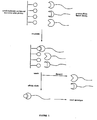
- One particular format is illustrated in Figure 1 .
- a single compound is immobilized on a column or any other solid surface using any one of a variety of standard methods.
- the solid phase-bound small molecule compound is then incubated with screening buffer containing BSA or another inert protein to reduce non-specific binding.
- the buffer solution is removed, and the solid phase presenting the compound is incubated with a solution of a protein-nucleic acid fusion library, followed by washes with screening buffer to remove non-specifically bound fusion molecules.
- RNA portion of the eluted fusion molecules provides an identification of the protein that bound the small molecule compound. Such a “reading” may be carried out as described below.
- multiple compounds may be screened simultaneously against multiple protein-nucleic acid fusions.
- Two exemplary formats for carrying out this type of screen are shown in Figures 2 and 3 .
- an encoded (addressable) library of small molecules is immobilized on beads or any other surface, such as a chip.
- the solid phase-bound library is then incubated with screening buffer containing BSA or another inert protein to reduce non-specific binding. Subsequently, the buffer solution is drained, and the small molecule compound library is incubated with a fusion library, followed by washes with screening buffer to remove non-specifically bound molecules.
- Protein-nucleic acid fusion molecules specifically binding to small molecules are then detected or, if a bead format is utilized, sorted and collected.
- a reading code (or tag or address) is used to identify the small molecule compound, and reading of the nucleic acid portion of bound fusion molecules is used to identify the protein (as described below).
- Protein-nucleic acid fusion molecules of different genotypes and different phenotypes can sometimes bind to the same small molecule compound. If desired, therefore, the bound fraction of fusion molecules may be collected, amplified, and reincubated with an identified ligand under more stringent conditions (e.g., a lower concentration of protein-nucleic acid fusion). This process may be repeated any number of times, allowing for the isolation of a receptor with any desired ligand affinity (for example, selection for a receptor having the highest affinity).
- a binding interaction between a solid phase-bound compound and a fusion molecule may be confirmed or analyzed by addition of free ligand or free protein to a compound-fusion complex in a standard binding assay.
- the present screens may be used to identify unknown compound-protein interactions or may be exploited in circumstances where some general knowledge of an interaction (for example, between a ligand and a receptor) is available.
- biased libraries may be used for screening.
- Such libraries may contain particular classes of compounds (or proteins) or modifications of a single compound (or protein).
- the biasing element tends to increase the average affinity of a ligand for a target receptor and to orient the ligand in a uniform way (see, for example, Chen et al., JACS (1993) vol. 115, p. 12591-12592 ). This type of approach facilitates the identification, for example, of ligands which bind to a receptor at a targeted site.
- the present techniques may be applied to any population of protein-nucleic acid fusions, including protein-RNA fusions, protein-DNA fusions, and fusions between proteins and hybrid DNA-RNA molecules.
- random libraries of protein-RNA fusion molecules may be prepared, for example, as described in Szostak et al., WO-A-9831700 ; Roberts & Szostak, Proc. Natl. Acad. Sci. USA (1997) vol. 94, p. 12297-12302 ; or Kuimelis et al., Addressable Protein Arrays, EP-A-1547678 ).
- libraries of cellular RNA-protein fusion molecules may be prepared from mRNAs or cDNAs that lack 3'-untranslated regions, for example, as described in Lipovsek et al.
- any standard labeling method and any detectable label may be utilized.
- fusions may be radioactively labeled by generating the fusion or fusion components in the presence of radioactive amino acids (for example, 35 S- or 14 C-labeled amino acids) or radioactive nucleotides (for example, 35 S- or 32 P-labeled nucleotides).
- fusion molecules may be fluorescently labeled.
- the DNA linker for example, the dA 27 dCdCP linker described in Roberts & Szostak, Proc. Natl. Acad. Sci. USA (1997) vol.
- RNA-Protein Fusions prepared according to the method of Roberts & Szostak (Proc. Natl. Acad. Sci. USA (1997) vol. 94, p. 12297-12302 ; and Selection of Proteins Using RNA-Protein Fusions, WO-A-9831700 ) or cellular RNA-protein fusions prepared according to the method of Lipovsek et al.
- RNA-Protein Fusion Formation WO-A-0009737
- Hammond et al. Methods for Producing Nucleic Acids Lacking 3'-Untranslated Regions and Optimizing Cellular RNA-Protein Fusion Formation, US-B1-6312927
- a fluorescently-labeled oligonucleotide for example, base pairing a fluorescent poly-dT oligonucleotide to the dA 27 dCdCP linker.
- protein-DNA fusions may also be labeled using similar techniques.
- Such protein-DNA fusions may be generated as described, for example, in Lohse et al., DNA-Protein Fusions and Uses Thereof, WO-A-0032823 .
- the above labeling techniques may be used for fusions of proteins to hybrid DNA-RNA portions (i.e., one strand of each).
- hybrid fusions are generated, for example, by subjecting a RNA-protein fusion to a step of reverse transcription using standard techniques.
- any compound library may be utilized.
- Such libraries may be derived from natural products, synthetic (or semi-synthetic) extracts, or chemical libraries according to methods known in the art.
- natural compound sources include, but are not limited to, plant, fungal, prokaryotic, or animal sources, as well as modification of existing compounds.
- Numerous methods are also available for generating random or directed synthesis (e.g., semi-synthesis or total synthesis) of any number of chemical compounds, including, but not limited to, saccharide-, lipid-, peptide-, and nucleic acid-based compounds.
- Synthetic compound libraries may be obtained commercially or may be produced according to methods known in the art.
- any library or compound is readily modified using standard chemical, physical, or biochemical methods.
- interacting compounds are identified as a result of a detectable label, or "tag,” bound to either the compound or its associated solid support (for example, bead).
- a coded library of small molecule compounds may be prepared on beads as described, for example, in Combs et al., JACS (1996) vol. 118, p. 287-288 .
- a number of encoding schemes are available, including peptide and nucleic acid codes ( Kerr et al., JACS (1993) vol. 115, p. 2529-2531 ; and Brenner & Lerner, Proc. Natl. Acad. Sci. USA (1992) vol. 89, p.
- an addressable library of compounds may be prepared on a solid surface, such as a chip surface.
- a solid surface such as a chip surface.
- Preferable techniques include photolithography (Affymetrix, Santa Clara, CA), mechanical microspotting ( Schena et al., Science (1995) vol. 270, p. 467-470 ; Synteni, Fremont, CA) and ink jetting (Incyte Pharmaceuticals, Palo Alto, CA; and Protogene, Palo Alto, CA).
- any method may be utilized which provides a means for detecting a label associated with the compound or fusion or, if appropriate, for isolating and determining the identity or "address" of the compound-fusion pair.
- compound-protein pairs may be isolated and identified on beads.
- the bead resin is preferably plated out, followed by scanning, for example, for a fluorescent or radioactive label (using, for example, a Phosphorimager to detect a radioactive label).
- Protein-nucleic acid fusion molecules binding to small molecules presented on a bead may be isolated by physically sorting the beads.
- beads bound to fluorescently labeled fusion molecules may be sorted on a fluorescence activated cell sorter (FACS). Selected beads may be individually and spatially separated (for example, into the wells of a 96-well microtiter plate).
- RNA-protein fusions molecules bound to individual beads may then be identified by reverse transcription of the RNA portion, followed by sequencing of the DNA as described by Roberts & Szostak (Proc. Natl. Acad. Sci. USA (1997) vol. 94, p. 12297-12302 ) and Szostak et al. (Selection of Proteins Using RNA-Protein Fusions, U.S.S.N. 09/007,005, January 14, 1998 , and U.S.S.N. 09/247,190, February 9, 1999 ).
- the tag coding for the compound (for example, the small molecule compound) on each individual bead may be read as described above.
- ligand-receptor pairs on a chip surface may be detected by scanning the chip surface for radioactivity or fluorescence.
- the address of the interacting pair on the chip reveals the identity of the compound (for example, the small molecule compound).
- the fusion molecule may be picked from the chip surface using an addressable microcollector or any other standard method (see, for example, Kuimelis et al., Addressable Protein Arrays, U.S.S.N. 60/080,686, April 3, 1998 , and U.S.S.N. 09/282,734, March 31, 1999 ).
- the retrieved fusion molecule may then be identified by characterizing the nucleic acid portion of the fusion as described above.
- DHFR dihydrofolate reductase
- a human liver cDNA library Maxim Biotech, South San Francisco, CA.
- the construct contained the entire DHFR gene with an added C-terminal DYKDDDDK-ASA peptide tag (SEQ ID NO: 1).
- RNA-protein fusions of DHFR were prepared by PCR amplification of the DHFR coding sequence followed by fusion formation as described in Roberts & Szostak (Proc.
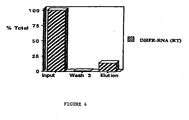
- the liquid was removed, and the methotrexate-agarose was washed 3 times with 500 ⁇ L of 1 x buffer. The fusions were then eluted by incubation of the methotrexate-agarose in 50 ⁇ L 30 ⁇ M methotrexate for 30 minutes at 37°C.
- the present methods provide an efficient means for screening either small or large libraries for compound-protein binding interactions.
- these methods may be utilized to screen protein-nucleic acid fusions against a library of compounds.
- Uses for screening a library of fusion molecules against an encoded (addressable) library of compounds include, without limitation, screening a library of small molecule compounds with a library of nucleic acid-protein (for example, cellular mRNA-protein) fusion molecules for potential new lead compounds (for example, ligands or enzyme inhibitors), screening a library of nucleic acid-protein (for example, cellular mRNA-protein) fusion molecules with a library of small molecule compounds for potential targets (for example, receptors or enzymes), and mapping of binding interactions between the members of a protein library and the members of a small molecule compound library, thus providing a catalogue of ligand-protein pairs.
- nucleic acid-protein for example, cellular mRNA-protein
- potential new lead compounds for example, ligands or enzyme inhibitors
- screening a library of nucleic acid-protein (for example, cellular mRNA-protein) fusion molecules with a library of small molecule compounds for potential targets for example, receptors or enzymes
Landscapes
- Chemical & Material Sciences (AREA)
- Organic Chemistry (AREA)
- Life Sciences & Earth Sciences (AREA)
- Biochemistry (AREA)
- Molecular Biology (AREA)
- General Health & Medical Sciences (AREA)
- Genetics & Genomics (AREA)
- Medicinal Chemistry (AREA)
- Biophysics (AREA)
- Proteomics, Peptides & Aminoacids (AREA)
- Health & Medical Sciences (AREA)
- Analytical Chemistry (AREA)
- Investigating Or Analysing Biological Materials (AREA)
- Measuring Or Testing Involving Enzymes Or Micro-Organisms (AREA)
- Peptides Or Proteins (AREA)
- Apparatus Associated With Microorganisms And Enzymes (AREA)
Claims (20)
- Verfahren zum Nachweisen einer Verbindung-Protein-Wechselwirkung, wobei das Verfahren umfasst:(a) Bereitstellen einer codierten oder adressierbaren Verbindungsbibliothek, welche eine Mehrzahl von verschiedenen Verbindungen umfasst, wobei die Verbindungen auf einem festen Träger immobilisiert sind;(b) gleichzeitig Inkontaktbringen der verschiedenen immobilisierten Verbindungen in einer einzigen Reaktionskammer mit jedem Mitglied einer Protein-Nukleinsäure-Fusionsbibliothek unter Bedingungen, welche die Bildung von Verbindung-Fusionskomplexen erlauben;(c) Isolieren der immobilisierten Verbindung-Fusionskomplexe; und(d) Nachweisen des Verbindung-Fusionskomplexes als Anzeichen, dass das Protein der Fusion mit der Verbindung wechselwirkt.
- Verfahren nach Anspruch 1, wobei die Protein-Nukleinsäure-Fusion eine Protein-RNA-Fusion, eine Protein-DNA-Fusion oder ein Protein, fusioniert an ein DNA-RNA-Hybrid-Molekül, ist.
- Verfahren nach Anspruch 1 oder 2, wobei der feste Träger ein Kügelchen ist.
- Verfahren nach Anspruch 3, wobei jedes besagte Kügelchen mit einer einzigartigen nachweisbaren Markierung codiert ist.
- Verfahren nach Anspruch 4, wobei die Verbindung der komplex gebundenen Protein-Nukleinsäure-Fusion durch die einzigartige nachweisbare Markierung, assoziiert mit dem Kügelchen, identifiziert wird.
- Verfahren nach Anspruch 4 oder 5, wobei die nachweisbare Markierung eine Peptid-Markierung, eine Nukleinsäure-Markierung, eine chemische Markierung, eine fluoreszierende Markierung oder ein Radiofrequenz-Tag ist.
- Verfahren nach Anspruch 1 oder 2, wobei der feste Träger ein Chip ist und die Verbindungsbibliothek auf dem Chip in einer adressierbaren Anordnung immobilisiert ist.
- Verfahren nach Anspruch 7, wobei jedes Mitglied der Protein-Nukleinsäure-Fusionsbibliothek nachweisbar markiert ist.
- Verfahren nach einem der Ansprüche 1 bis 8, wobei der Verbindung-Fusionskomplex, oder die Komponenten davon, durch Freisetzung von dem festen Träger gewonnen werden.
- Verfahren nach einem der Ansprüche 1 bis 9, wobei das Verfahren weiterhin Gewinnen der Protein-Nukleinsäure-Fusion von dem festen Träger und Identifizieren des Proteins umfasst.
- Verfahren nach Anspruch 10, wobei die Identität des Proteins aus der Sequenz des Nukleinsäureanteils der Protein-Nukleinsäure-Fusion bestimmt wird.
- Verfahren nach einem der Ansprüche 1 bis 11, wobei die Verbindung ein Molekulargewicht von weniger als oder gleich 10000 Dalton hat.
- Verfahren zum Nachweisen einer Verbindung-Protein-Wechselwirkung, wobei das Verfahren umfasst:(a) Bereitstellen einer codierten oder adressierbaren Verbindungsbibliothek, welche eine Mehrzahl von verschiedenen Verbindungen umfasst, wobei die Verbindungen auf einem festen Träger immobilisiert sind;(b) gleichzeitig Inkontaktbringen der Bibliothek von verschiedenen immobilisierten Verbindungen mit einer Protein-Nukleinsäure-Fusionsbibliothek unter Bedingungen, welche Fusionen der Protein-Nukleinsäure-Fusionsbibliothek erlauben, um an die Verbindungen zu binden;(c) Nachweisen einer gebundenen Protein-Nukleinsäure-Fusion als Anzeichen, dass das Protein der Protein-Nukleinsäure-Fusion mit einer Verbindung der Verbindungsbibliothek wechselwirkt.
- Verfahren nach Anspruch 13, wobei die Protein-Nukleinsäure-Fusion eine Protein-RNA-Fusion, eine Protein-DNA-Fusion oder ein Protein, fusioniert an ein DNA-RNA-Hybrid-Molekül, ist.
- Verfahren nach Anspruch 13 oder 14, wobei die Protein-Nukleinsäure-Fusion nachweisbar markiert ist und die Wechselwirkung durch die Assoziation der nachweisbaren Markierung mit dem festen Träger angezeigt wird.
- Verfahren nach einem der Ansprüche 13 bis 15, wobei die gebundene Protein-Nukleinsäure-Fusion durch Freisetzung von dem festen Träger gewonnen wird.
- Verfahren nach einem der Ansprüche 13 bis 16, wobei das Verfahren weiterhin Gewinnen der Protein-Nukleinsäure-Fusion von dem festen Träger und Identifizieren des Proteins umfasst.
- Verfahren nach Anspruch 17, wobei die Identität des Proteins aus der Sequenz des Nukleinsäureanteils der Protein-Nukleinsäure-Fusion bestimmt wird.
- Verfahren nach einem der Ansprüche 13 bis 18, wobei der feste Träger eine Säule, ein Objektträger, ein Chip oder ein Kügelchen ist.
- Verfahren nach einem der Ansprüche 13 bis 19, wobei die Verbindung ein Molekulargewicht von weniger als oder gleich 10000 Dalton hat.
Priority Applications (1)
| Application Number | Priority Date | Filing Date | Title |
|---|---|---|---|
| CY20091101052T CY1110515T1 (el) | 1998-08-17 | 2009-10-13 | Προσδιορισμος αλληλεπιδρασεων ενωσης-πρωτεϊνης με χρηση βιβλιοθηκων μοριων συντηξης πρωτεϊνης-νουκλεϊκου οξεος |
Applications Claiming Priority (3)
| Application Number | Priority Date | Filing Date | Title |
|---|---|---|---|
| US9682098P | 1998-08-17 | 1998-08-17 | |
| US96820P | 1998-08-17 | ||
| PCT/US1999/018600 WO2000009464A1 (en) | 1998-08-17 | 1999-08-16 | Identification of compound-protein interactions using libraries of protein-nucleic acid fusion molecules |
Publications (3)
| Publication Number | Publication Date |
|---|---|
| EP1105360A1 EP1105360A1 (de) | 2001-06-13 |
| EP1105360A4 EP1105360A4 (de) | 2005-06-22 |
| EP1105360B1 true EP1105360B1 (de) | 2009-07-29 |
Family
ID=22259237
Family Applications (1)
| Application Number | Title | Priority Date | Filing Date |
|---|---|---|---|
| EP99948042A Expired - Lifetime EP1105360B1 (de) | 1998-08-17 | 1999-08-16 | Identifizierung von verbindung-protein wechselwirkungen mit bibliotheken von gekoppelten protein-nukleinsäure-molekülen |
Country Status (12)
| Country | Link |
|---|---|
| US (1) | US6602685B1 (de) |
| EP (1) | EP1105360B1 (de) |
| JP (1) | JP4278872B2 (de) |
| AT (1) | ATE437844T1 (de) |
| AU (1) | AU757955B2 (de) |
| CA (1) | CA2337490C (de) |
| CY (1) | CY1110515T1 (de) |
| DE (1) | DE69941193D1 (de) |
| DK (1) | DK1105360T3 (de) |
| ES (1) | ES2329205T3 (de) |
| PT (1) | PT1105360E (de) |
| WO (1) | WO2000009464A1 (de) |
Families Citing this family (44)
| Publication number | Priority date | Publication date | Assignee | Title |
|---|---|---|---|---|
| US6517781B1 (en) * | 1997-06-02 | 2003-02-11 | Aurora Biosciences Corporation | Low fluorescence assay platforms and related methods for drug discovery |
| US6436665B1 (en) * | 1999-08-27 | 2002-08-20 | Phylos, Inc | Methods for encoding and sorting in vitro translated proteins |
| DE60118527D1 (de) | 2000-01-24 | 2006-05-18 | Compound Therapeutics Inc | Sensible und multiplexe diagnostische tests zur proteinanalyse |
| US7022479B2 (en) | 2000-01-24 | 2006-04-04 | Compound Therapeutics, Inc. | Sensitive, multiplexed diagnostic assays for protein analysis |
| GB2360282A (en) * | 2000-03-17 | 2001-09-19 | Bioinvent Int Ab | Making and using micro-arrays of biological materials |
| US20040229271A1 (en) * | 2000-05-19 | 2004-11-18 | Williams Richard B. | Compositions and methods for the identification and selection of nucleic acids and polypeptides |
| US7410761B2 (en) * | 2000-05-19 | 2008-08-12 | Proteonova, Inc. | System for rapid identification and selection of nucleic acids and polypeptides, and method thereof |
| US6962781B1 (en) * | 2000-05-19 | 2005-11-08 | Proteonova, Inc. | In vitro evolution of nucleic acids and encoded polypeptide |
| US6539102B1 (en) | 2000-09-01 | 2003-03-25 | Large Scale Proteomics | Reference database |
| US6980674B2 (en) | 2000-09-01 | 2005-12-27 | Large Scale Proteomics Corp. | Reference database |
| WO2003029490A1 (en) * | 2001-10-01 | 2003-04-10 | Yingjian Wang | Methods and arrays for detecting biological molecules |
| AU2002365404A1 (en) * | 2001-11-27 | 2003-06-10 | Compound Therapeutics, Inc. | Solid-phase immobilization of proteins and peptides |
| AU2003267951A1 (en) * | 2002-04-26 | 2003-12-19 | Genencor International, Inc. | Methods and articles for high throughput analysis of biomolecular interactions |
| US20070191402A1 (en) * | 2002-05-17 | 2007-08-16 | Kyowa Hakko Kogyo Co., Ltd. | Method of searching substrate having antidiabetic activity |
| AU2003252136A1 (en) | 2002-07-24 | 2004-02-09 | Ptc Therapeutics, Inc. | METHODS FOR IDENTIFYING SMALL MOLEDULES THAT MODULATE PREMATURE TRANSLATION TERMINATION AND NONSENSE MEDIATED mRNA DECAY |
| US20040142379A1 (en) * | 2003-01-16 | 2004-07-22 | Carlsberg Research Laboratory | Affinity fishing for ligands and proteins receptors |
| KR101337320B1 (ko) * | 2003-11-20 | 2013-12-06 | 사노피 파스퇴르 인크 | 백일해 독소의 정제방법 및 이에 유용한 펩타이드 |
| AU2006295515A1 (en) * | 2005-09-27 | 2007-04-05 | Polybatics Limited | Polymer particles and uses thereof |
| DK2339014T3 (en) | 2005-11-16 | 2015-07-20 | Ambrx Inc | Methods and compositions comprising non-natural amino acids |
| US7749957B2 (en) | 2006-04-06 | 2010-07-06 | E.I. Du Pont De Nemours And Company | Clay-binding peptides and methods of use |
| WO2009009186A2 (en) | 2007-04-13 | 2009-01-15 | The Regents Of The University Of California | Receptors useful for gas phase chemical sensing |
| US7829311B2 (en) | 2007-07-25 | 2010-11-09 | E.I. Du Pont De Nemours And Company | Ketosteroid isomerase inclusion body tag engineered to be acid-resistant by replacing aspartates with glutamate |
| US7678883B2 (en) * | 2007-07-25 | 2010-03-16 | E.I. Du Pont De Nemours And Company | Solubility tags for the expression and purification of bioactive peptides |
| US7951559B2 (en) * | 2007-07-25 | 2011-05-31 | E.I. Du Pont De Nemours And Company | Recombinant peptide production using a cross-linkable solubility tag |
| US7794963B2 (en) | 2007-11-02 | 2010-09-14 | E.I. Du Pont De Nemours And Company | Use of tetracysteine tags in fluorescence-activated cell sorting analysis of prokaryotic cells producing peptides or proteins |
| US8883146B2 (en) | 2007-11-30 | 2014-11-11 | Abbvie Inc. | Protein formulations and methods of making same |
| US8420081B2 (en) | 2007-11-30 | 2013-04-16 | Abbvie, Inc. | Antibody formulations and methods of making same |
| EP2316030B1 (de) | 2008-07-25 | 2019-08-21 | Wagner, Richard W. | Proteinscreeningverfahren |
| US8287845B2 (en) * | 2008-12-18 | 2012-10-16 | E I Du Pont De Nemours And Company | Hair-binding peptides |
| US20100158822A1 (en) * | 2008-12-18 | 2010-06-24 | E .I. Du Pont De Nemours And Company | Peptides that bind to silica-coated particles |
| US20100158846A1 (en) * | 2008-12-18 | 2010-06-24 | E. I. Du Pont De Nemours And Company | Hair-binding peptides |
| US20100158837A1 (en) | 2008-12-18 | 2010-06-24 | E. I. Du Pont De Nemours And Company | Iron oxide-binding peptides |
| JP2012522057A (ja) * | 2009-03-30 | 2012-09-20 | ジヨンソン・アンド・ジヨンソン・コンシユーマー・カンパニーズ・インコーポレーテツド | 化粧用剤の送達のためのペプチドに基づく系 |
| US8481678B2 (en) | 2009-03-30 | 2013-07-09 | E I Du Pont De Nemours And Company | Peptide-based tooth whitening reagents |
| US20120296403A1 (en) | 2010-02-10 | 2012-11-22 | Novartis Ag | Methods and compounds for muscle growth |
| DE102010056289A1 (de) | 2010-12-24 | 2012-06-28 | Geneart Ag | Verfahren zur Herstellung von Leseraster-korrekten Fragment-Bibliotheken |
| ES2926988T3 (es) | 2011-03-15 | 2022-10-31 | X Body Inc | Métodos de cribado de anticuerpos |
| JP6153921B2 (ja) * | 2011-03-24 | 2017-06-28 | オプコ ファーマシューティカルズ、エルエルシー | ビーズまたは粒子ベースのライブラリーを用いた液体生体試料中でのバイオマーカー発見、並びに診断キットおよび治療法 |
| CN103732738A (zh) | 2011-04-28 | 2014-04-16 | 小利兰斯坦福大学托管委员会 | 与样品相关的多核苷酸的鉴定 |
| AU2012347972B2 (en) | 2011-12-05 | 2018-05-10 | X-Body, Inc. | PDGF receptor beta binding polypeptides |
| US9938523B2 (en) * | 2013-03-15 | 2018-04-10 | Arizona Board Of Regents On Behalf Of Arizona State University | Nucleic acid-tagged compositions and methods for multiplexed protein-protein interaction profiling |
| MY191368A (en) | 2013-06-28 | 2022-06-20 | X Body Inc | Target antigen discovery, phenotypic screens and use thereof for identification of target cell specific target epitopes |
| EP3779440A1 (de) | 2013-09-23 | 2021-02-17 | X-Body, Inc. | Verfahren und zusammensetzungen zur erzeugung von bindemitteln gegen zelloberflächenantigene |
| WO2015120058A2 (en) | 2014-02-05 | 2015-08-13 | Molecular Templates, Inc. | Methods of screening, selecting, and identifying cytotoxic recombinant polypeptides based on an interim diminution of ribotoxicity |
Family Cites Families (40)
| Publication number | Priority date | Publication date | Assignee | Title |
|---|---|---|---|---|
| US4537861A (en) * | 1983-02-03 | 1985-08-27 | Elings Virgil B | Apparatus and method for homogeneous immunoassay |
| US4587044A (en) | 1983-09-01 | 1986-05-06 | The Johns Hopkins University | Linkage of proteins to nucleic acids |
| DE229046T1 (de) | 1985-03-30 | 1987-12-17 | Marc Genf/Geneve Ballivet | Verfahren zum erhalten von dns, rns, peptiden, polypeptiden oder proteinen durch dns-rekombinant-verfahren. |
| US5223409A (en) | 1988-09-02 | 1993-06-29 | Protein Engineering Corp. | Directed evolution of novel binding proteins |
| US5424186A (en) | 1989-06-07 | 1995-06-13 | Affymax Technologies N.V. | Very large scale immobilized polymer synthesis |
| AU638762B2 (en) | 1989-10-05 | 1993-07-08 | Optein Inc | Cell-free synthesis and isolation of novel genes and polypeptides |
| US5270163A (en) | 1990-06-11 | 1993-12-14 | University Research Corporation | Methods for identifying nucleic acid ligands |
| US5723286A (en) | 1990-06-20 | 1998-03-03 | Affymax Technologies N.V. | Peptide library and screening systems |
| US5650489A (en) * | 1990-07-02 | 1997-07-22 | The Arizona Board Of Regents | Random bio-oligomer library, a method of synthesis thereof, and a method of use thereof |
| AU8498091A (en) | 1990-08-02 | 1992-03-02 | Regents Of The University Of Colorado, The | Systematic polypeptide evolution by reverse translation |
| US5843701A (en) * | 1990-08-02 | 1998-12-01 | Nexstar Pharmaceticals, Inc. | Systematic polypeptide evolution by reverse translation |
| US5264563A (en) | 1990-08-24 | 1993-11-23 | Ixsys Inc. | Process for synthesizing oligonucleotides with random codons |
| US5795747A (en) | 1991-04-16 | 1998-08-18 | Evotec Biosystems Gmbh | Process for manufacturing new biopolymers |
| DE4112440C1 (de) | 1991-04-16 | 1992-10-22 | Diagen Institut Fuer Molekularbiologische Diagnostik Gmbh, 4000 Duesseldorf, De | |
| WO1993003172A1 (en) | 1991-08-01 | 1993-02-18 | University Research Corporation | Systematic polypeptide evolution by reverse translation |
| US5639603A (en) | 1991-09-18 | 1997-06-17 | Affymax Technologies N.V. | Synthesizing and screening molecular diversity |
| US5733731A (en) | 1991-10-16 | 1998-03-31 | Affymax Technologies N.V. | Peptide library and screening method |
| US5270170A (en) | 1991-10-16 | 1993-12-14 | Affymax Technologies N.V. | Peptide library and screening method |
| US5541061A (en) | 1992-04-29 | 1996-07-30 | Affymax Technologies N.V. | Methods for screening factorial chemical libraries |
| US5565324A (en) | 1992-10-01 | 1996-10-15 | The Trustees Of Columbia University In The City Of New York | Complex combinatorial chemical libraries encoded with tags |
| US6087186A (en) * | 1993-07-16 | 2000-07-11 | Irori | Methods and apparatus for synthesizing labeled combinatorial chemistry libraries |
| US5635602A (en) | 1993-08-13 | 1997-06-03 | The Regents Of The University Of California | Design and synthesis of bispecific DNA-antibody conjugates |
| WO1995011922A1 (en) | 1993-10-29 | 1995-05-04 | Affymax Technologies N.V. | In vitro peptide and antibody display libraries |
| DE69534347T2 (de) | 1994-01-31 | 2006-05-24 | Trustees Of Boston University, Boston | Bibliotheken aus Polyklonalen Antikörpern |
| US5561043A (en) | 1994-01-31 | 1996-10-01 | Trustees Of Boston University | Self-assembling multimeric nucleic acid constructs |
| US5605793A (en) | 1994-02-17 | 1997-02-25 | Affymax Technologies N.V. | Methods for in vitro recombination |
| WO1995032425A1 (en) | 1994-05-23 | 1995-11-30 | Smithkline Beecham Corporation | Encoded combinatorial libraries |
| US5627024A (en) | 1994-08-05 | 1997-05-06 | The Scripps Research Institute | Lambdoid bacteriophage vectors for expression and display of foreign proteins |
| US5559000A (en) | 1995-01-18 | 1996-09-24 | The Scripps Research Institute | Encoded reaction cassette |
| US6100026A (en) * | 1995-04-25 | 2000-08-08 | Irori | Matrices with memories and uses thereof |
| US5751629A (en) | 1995-04-25 | 1998-05-12 | Irori | Remotely programmable matrices with memories |
| US5763263A (en) * | 1995-11-27 | 1998-06-09 | Dehlinger; Peter J. | Method and apparatus for producing position addressable combinatorial libraries |
| US5942443A (en) * | 1996-06-28 | 1999-08-24 | Caliper Technologies Corporation | High throughput screening assay systems in microscale fluidic devices |
| US5872015A (en) * | 1996-05-10 | 1999-02-16 | Board Of Trustees Of The University Of Illinois | Molecular diversity screening method |
| US5962645A (en) * | 1996-10-04 | 1999-10-05 | University Of Maryland | Antiproliferative factor from patients with interstitial cystitis |
| DE69730157T2 (de) | 1996-10-17 | 2005-07-28 | Mitsubishi Chemical Corp. | Molekül, welches genotyp und phänotyp zusammenführt und dessen anwendungen |
| ATE332368T1 (de) * | 1997-01-21 | 2006-07-15 | Gen Hospital Corp | Selektion von proteinen mittels rns-protein fusionen |
| GB9703369D0 (en) | 1997-02-18 | 1997-04-09 | Lindqvist Bjorn H | Process |
| GB9712512D0 (en) | 1997-06-16 | 1997-08-20 | Bioinvent Int Ab | A method for in vitro molecular evolution of protein function |
| US5985575A (en) | 1998-05-20 | 1999-11-16 | Wisconsin Alumni Research Foundation | Tethered function assay for protein function |
-
1999
- 1999-08-16 JP JP2000564919A patent/JP4278872B2/ja not_active Expired - Lifetime
- 1999-08-16 US US09/374,964 patent/US6602685B1/en not_active Expired - Lifetime
- 1999-08-16 AT AT99948042T patent/ATE437844T1/de active
- 1999-08-16 CA CA2337490A patent/CA2337490C/en not_active Expired - Lifetime
- 1999-08-16 AU AU61296/99A patent/AU757955B2/en not_active Expired
- 1999-08-16 DK DK99948042T patent/DK1105360T3/da active
- 1999-08-16 WO PCT/US1999/018600 patent/WO2000009464A1/en not_active Ceased
- 1999-08-16 DE DE69941193T patent/DE69941193D1/de not_active Expired - Lifetime
- 1999-08-16 PT PT99948042T patent/PT1105360E/pt unknown
- 1999-08-16 ES ES99948042T patent/ES2329205T3/es not_active Expired - Lifetime
- 1999-08-16 EP EP99948042A patent/EP1105360B1/de not_active Expired - Lifetime
-
2009
- 2009-10-13 CY CY20091101052T patent/CY1110515T1/el unknown
Also Published As
| Publication number | Publication date |
|---|---|
| ES2329205T3 (es) | 2009-11-23 |
| AU757955B2 (en) | 2003-03-13 |
| AU6129699A (en) | 2000-03-06 |
| DE69941193D1 (de) | 2009-09-10 |
| CA2337490A1 (en) | 2000-02-24 |
| CY1110515T1 (el) | 2015-04-29 |
| WO2000009464A9 (en) | 2000-09-28 |
| PT1105360E (pt) | 2009-09-30 |
| US6602685B1 (en) | 2003-08-05 |
| JP4278872B2 (ja) | 2009-06-17 |
| WO2000009464A1 (en) | 2000-02-24 |
| EP1105360A4 (de) | 2005-06-22 |
| JP2002522057A (ja) | 2002-07-23 |
| EP1105360A1 (de) | 2001-06-13 |
| DK1105360T3 (da) | 2009-11-02 |
| ATE437844T1 (de) | 2009-08-15 |
| CA2337490C (en) | 2012-01-03 |
Similar Documents
| Publication | Publication Date | Title |
|---|---|---|
| EP1105360B1 (de) | Identifizierung von verbindung-protein wechselwirkungen mit bibliotheken von gekoppelten protein-nukleinsäure-molekülen | |
| US6281344B1 (en) | Nucleic acid-protein fusion molecules and libraries | |
| AU779653B2 (en) | Methods for encoding and sorting in vitro translated proteins | |
| US6087103A (en) | Tagged ligand arrays for identifying target-ligand interactions | |
| CA2361725C (en) | Selection of proteins using rna-protein fusions | |
| US5639603A (en) | Synthesizing and screening molecular diversity | |
| US8163567B2 (en) | Methods and compositions comprising capture agents | |
| JP3706942B2 (ja) | 物質と蛋白質との間の相互作用の検出方法、物質と相互作用する蛋白質のスクリーニング方法、及び、物質とその物質と相互作用する蛋白質との複合体の形成方法 | |
| JP4441623B2 (ja) | 対応付け分子およびその構成要素のライブラリーの製造方法および利用方法 | |
| JPWO2003048363A1 (ja) | 対応付け分子とc末端ラベル化蛋白質の複合体および対応付け分子の複合体、ならびにそれらの複合体を利用した蛋白質間相互作用解析方法 | |
| AU776478B2 (en) | Selection of proteins using RNA-protein fusions | |
| US20020102605A1 (en) | Capture arrays using polypeptide capture agents |
Legal Events
| Date | Code | Title | Description |
|---|---|---|---|
| PUAI | Public reference made under article 153(3) epc to a published international application that has entered the european phase |
Free format text: ORIGINAL CODE: 0009012 |
|
| 17P | Request for examination filed |
Effective date: 20010306 |
|
| AK | Designated contracting states |
Kind code of ref document: A1 Designated state(s): AT BE CH CY DE DK ES FI FR GB GR IE IT LI LU MC NL PT SE |
|
| AX | Request for extension of the european patent |
Free format text: AL;LT;LV;MK;RO;SI |
|
| RAP1 | Party data changed (applicant data changed or rights of an application transferred) |
Owner name: COMPOUND THERAPEUTICS, INC. |
|
| A4 | Supplementary search report drawn up and despatched |
Effective date: 20050510 |
|
| 17Q | First examination report despatched |
Effective date: 20060824 |
|
| RAP1 | Party data changed (applicant data changed or rights of an application transferred) |
Owner name: ADNEXUS THERAPEUTICS, INC. |
|
| 17Q | First examination report despatched |
Effective date: 20060824 |
|
| RAP1 | Party data changed (applicant data changed or rights of an application transferred) |
Owner name: BRISTOL-MYERS SQUIBB COMPANY |
|
| GRAP | Despatch of communication of intention to grant a patent |
Free format text: ORIGINAL CODE: EPIDOSNIGR1 |
|
| GRAS | Grant fee paid |
Free format text: ORIGINAL CODE: EPIDOSNIGR3 |
|
| GRAA | (expected) grant |
Free format text: ORIGINAL CODE: 0009210 |
|
| AK | Designated contracting states |
Kind code of ref document: B1 Designated state(s): AT BE CH CY DE DK ES FI FR GB GR IE IT LI LU MC NL PT SE |
|
| REG | Reference to a national code |
Ref country code: GB Ref legal event code: FG4D |
|
| REG | Reference to a national code |
Ref country code: CH Ref legal event code: EP |
|
| REG | Reference to a national code |
Ref country code: IE Ref legal event code: FG4D |
|
| REF | Corresponds to: |
Ref document number: 69941193 Country of ref document: DE Date of ref document: 20090910 Kind code of ref document: P |
|
| REG | Reference to a national code |
Ref country code: CH Ref legal event code: NV Representative=s name: RITSCHER & PARTNER AG |
|
| REG | Reference to a national code |
Ref country code: SE Ref legal event code: TRGR Ref country code: PT Ref legal event code: SC4A Free format text: AVAILABILITY OF NATIONAL TRANSLATION Effective date: 20090923 |
|
| REG | Reference to a national code |
Ref country code: GR Ref legal event code: EP Ref document number: 20090402207 Country of ref document: GR |
|
| REG | Reference to a national code |
Ref country code: DK Ref legal event code: T3 |
|
| REG | Reference to a national code |
Ref country code: ES Ref legal event code: FG2A Ref document number: 2329205 Country of ref document: ES Kind code of ref document: T3 |
|
| PLBE | No opposition filed within time limit |
Free format text: ORIGINAL CODE: 0009261 |
|
| STAA | Information on the status of an ep patent application or granted ep patent |
Free format text: STATUS: NO OPPOSITION FILED WITHIN TIME LIMIT |
|
| 26N | No opposition filed |
Effective date: 20100503 |
|
| REG | Reference to a national code |
Ref country code: CH Ref legal event code: PFA Owner name: BRISTOL-MYERS SQUIBB COMPANY, US Free format text: FORMER OWNER: BRISTOL-MYERS SQUIBB COMPANY, US |
|
| REG | Reference to a national code |
Ref country code: FR Ref legal event code: PLFP Year of fee payment: 18 |
|
| REG | Reference to a national code |
Ref country code: FR Ref legal event code: PLFP Year of fee payment: 19 |
|
| REG | Reference to a national code |
Ref country code: FR Ref legal event code: PLFP Year of fee payment: 20 |
|
| PGFP | Annual fee paid to national office [announced via postgrant information from national office to epo] |
Ref country code: LU Payment date: 20180726 Year of fee payment: 20 |
|
| PGFP | Annual fee paid to national office [announced via postgrant information from national office to epo] |
Ref country code: MC Payment date: 20180730 Year of fee payment: 20 Ref country code: NL Payment date: 20180815 Year of fee payment: 20 Ref country code: ES Payment date: 20180903 Year of fee payment: 20 Ref country code: IT Payment date: 20180823 Year of fee payment: 20 Ref country code: FR Payment date: 20180712 Year of fee payment: 20 Ref country code: DE Payment date: 20180731 Year of fee payment: 20 Ref country code: IE Payment date: 20180809 Year of fee payment: 20 |
|
| PGFP | Annual fee paid to national office [announced via postgrant information from national office to epo] |
Ref country code: GR Payment date: 20180716 Year of fee payment: 20 Ref country code: FI Payment date: 20180809 Year of fee payment: 20 Ref country code: CH Payment date: 20180817 Year of fee payment: 20 Ref country code: GB Payment date: 20180815 Year of fee payment: 20 Ref country code: AT Payment date: 20180725 Year of fee payment: 20 Ref country code: BE Payment date: 20180717 Year of fee payment: 20 Ref country code: SE Payment date: 20180810 Year of fee payment: 20 Ref country code: DK Payment date: 20180810 Year of fee payment: 20 |
|
| PGFP | Annual fee paid to national office [announced via postgrant information from national office to epo] |
Ref country code: PT Payment date: 20180808 Year of fee payment: 20 |
|
| PGFP | Annual fee paid to national office [announced via postgrant information from national office to epo] |
Ref country code: CY Payment date: 20180706 Year of fee payment: 20 |
|
| REG | Reference to a national code |
Ref country code: DE Ref legal event code: R071 Ref document number: 69941193 Country of ref document: DE |
|
| REG | Reference to a national code |
Ref country code: DK Ref legal event code: EUP Effective date: 20190816 |
|
| REG | Reference to a national code |
Ref country code: NL Ref legal event code: MK Effective date: 20190815 |
|
| REG | Reference to a national code |
Ref country code: CH Ref legal event code: PL |
|
| REG | Reference to a national code |
Ref country code: GB Ref legal event code: PE20 Expiry date: 20190815 |
|
| REG | Reference to a national code |
Ref country code: SE Ref legal event code: EUG |
|
| REG | Reference to a national code |
Ref country code: IE Ref legal event code: MK9A |
|
| REG | Reference to a national code |
Ref country code: BE Ref legal event code: MK Effective date: 20190816 |
|
| REG | Reference to a national code |
Ref country code: AT Ref legal event code: MK07 Ref document number: 437844 Country of ref document: AT Kind code of ref document: T Effective date: 20190816 |
|
| PG25 | Lapsed in a contracting state [announced via postgrant information from national office to epo] |
Ref country code: IE Free format text: LAPSE BECAUSE OF EXPIRATION OF PROTECTION Effective date: 20190816 Ref country code: PT Free format text: LAPSE BECAUSE OF EXPIRATION OF PROTECTION Effective date: 20190826 |
|
| PG25 | Lapsed in a contracting state [announced via postgrant information from national office to epo] |
Ref country code: GB Free format text: LAPSE BECAUSE OF EXPIRATION OF PROTECTION Effective date: 20190815 |
|
| REG | Reference to a national code |
Ref country code: ES Ref legal event code: FD2A Effective date: 20200804 |
|
| PG25 | Lapsed in a contracting state [announced via postgrant information from national office to epo] |
Ref country code: ES Free format text: LAPSE BECAUSE OF EXPIRATION OF PROTECTION Effective date: 20190817 |