EP1107334A2 - Organische elektrolumineszente Vorrichtung und Herstellungsverfahren - Google Patents
Organische elektrolumineszente Vorrichtung und Herstellungsverfahren Download PDFInfo
- Publication number
- EP1107334A2 EP1107334A2 EP00250425A EP00250425A EP1107334A2 EP 1107334 A2 EP1107334 A2 EP 1107334A2 EP 00250425 A EP00250425 A EP 00250425A EP 00250425 A EP00250425 A EP 00250425A EP 1107334 A2 EP1107334 A2 EP 1107334A2
- Authority
- EP
- European Patent Office
- Prior art keywords
- organic
- layer
- light
- organic thin
- film layer
- Prior art date
- Legal status (The legal status is an assumption and is not a legal conclusion. Google has not performed a legal analysis and makes no representation as to the accuracy of the status listed.)
- Ceased
Links
Images



Classifications
-
- H—ELECTRICITY
- H10—SEMICONDUCTOR DEVICES; ELECTRIC SOLID-STATE DEVICES NOT OTHERWISE PROVIDED FOR
- H10K—ORGANIC ELECTRIC SOLID-STATE DEVICES
- H10K50/00—Organic light-emitting devices
- H10K50/80—Constructional details
- H10K50/85—Arrangements for extracting light from the devices
-
- H—ELECTRICITY
- H05—ELECTRIC TECHNIQUES NOT OTHERWISE PROVIDED FOR
- H05B—ELECTRIC HEATING; ELECTRIC LIGHT SOURCES NOT OTHERWISE PROVIDED FOR; CIRCUIT ARRANGEMENTS FOR ELECTRIC LIGHT SOURCES, IN GENERAL
- H05B33/00—Electroluminescent light sources
-
- H—ELECTRICITY
- H10—SEMICONDUCTOR DEVICES; ELECTRIC SOLID-STATE DEVICES NOT OTHERWISE PROVIDED FOR
- H10K—ORGANIC ELECTRIC SOLID-STATE DEVICES
- H10K50/00—Organic light-emitting devices
- H10K50/10—OLEDs or polymer light-emitting diodes [PLED]
- H10K50/14—Carrier transporting layers
- H10K50/16—Electron transporting layers
- H10K50/165—Electron transporting layers comprising dopants
Definitions
- the present invention relates to an organic electroluminescent (EL) device having an excellent luminescence property such as high efficient luminance and a method for fabricating the same.
- EL organic electroluminescent
- organic electroluminescent device (which will hereinafter be called “organic EL device”) is a light-emitting device which makes use of the principle that when an electric field is applied, a fluorescent material emits light in response to the charge recombination of holes injected from an anode and electrons injected from a cathode.
- a double layered structure composed of a hole-injecting and transporting layer and an electron-transporting and light-emitting layer or a triple layered structure composed of a hole-injecting and transporting layer, a light-emitting layer and an electron-injecting and transporting layer is well known as an organic EL device.
- an organic EL device In order to increase the recombination efficiency of injected holes and electrons, various improvements in the device structure or fabrication process have been introduced to such multi-layered devices.
- the upper limit of a light-emitting probability exists because a probability of generating a singlet is restricted due to dependency on the spin statistics during the recombination of carriers.
- the upper limit is known to be about 25 %.
- light having an outgoing angle larger than the critical angle cannot be taken out because the light causes the total reflection due to the refractive index of the light-emitting member.
- the refractive index of the light-emitting member is 1.6, only about 20 % of the emitted light can be effectively utilized, and the upper limit of the total energy conversion efficiency including the singlet forming efficiency is forced to be about 5 % (T.
- the means includes a method for elevating an efficiency by providing an ability of collecting light to a substrate (JP-A-63(1988)-314795) and a method for forming a reflection surface on a side surface of a device (JP-A-1(1989)-220394). These methods are effective for a device having a larger light-emitting surface area, but the formation of the lens having the ability of collecting light and the reflection surface on the side surface are hardly performed in a device having a small pixel area such as a dot matrix display.
- the film thickness of the light-emitting layer of the organic EL device is several ⁇ m or less, the formation of the reflection mirror having a tapered surface on the side surface of the device is difficult by using the current technique, and high costs are required for performing the above formation.
- a flattened layer having a refractive index between those of the substrate glass and the light-emitting layer is formed between the substrate glass and the light-emitting layer (JP-A-62(1987)-172691)
- JP-A-62(1987)-172691 the forward light- taking-out efficiency is improved but the total reflection cannot be prevented. Accordingly, even if the method is efficient for the inorganic EL device having the larger refractive index, the method cannot exert the larger improving effect on the organic EL device which has the relatively lower refractive index.
- the taking-out of the light in the conventional organic EL device is insufficient, and the development of the method for taking out the light in the organic EL device is inevitable.
- An organic EL device is described in JP-A-11(1999)-283751 including diffraction gratings for improving the light-taking-out efficiency. According to the method, the light-emitting efficiency is elevated, however, the light-taking-out efficiency is not sufficiently elevated.
- an object of the present invention is to provide an organic EL device having a higher efficiency and a method for fabricating the same.
- the present invention provides, in a first aspect thereof, an organic EL device including a substrate having a main surface, at least one organic thin-film layer overlying the main surface, and a pair of electrodes sandwiching therebetween the organic thin-film layer, at least one of the electrodes being a metallic electrode, the organic thin film layer defining a recombination electroluminescence region which is apart from the metallic electrode by at least 100 nm in a direction normal to the main surface, the organic EL device having a periodic structure in a direction parallel to the main surface.
- the emitted light is efficiently taken out by increasing the distance between the EL light-emitting region and the metal electrode for separating the light-emitting location from the metal electrode.
- the present invention provides, in a second aspect thereof, a method of forming the organic EL device, wherein the organic EL device comprising a substrate having a main surface, a layered structure overlying the main surface and including at least one organic thin-film layer and a refractive layer having a refractive index higher than a refractive index of the organic thin-film layer, and a pair of electrodes sandwiching therebetween the organic thin-film layer, at least one of the electrodes being a transparent electrode, the organic EL device having a periodic structure in a direction parallel to the main surface, and wherein the method comprising the steps of applying a coating solution wherein a precursor including metallic compound is dispersed, and curing the coated film to form the refractive layer.
- the refractive layer having both the appropriate thickness and the transparency can be fabricated at a reduced cost by applying a coating solution in which a precursor containing a metal compound is dispersed followed by solidifying.
- Fig.1 is a vertical sectional view showing a conventional organic EL device.
- Fig.2 is a vertical sectional view showing an organic EL device in accordance with an embodiment of the present invention.
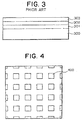
- Fig.3 is a vertical sectional view showing an organic EL device in accordance with Comparative Example.
- Fig.4 shows an exemplified diffraction grating used in the organic EL device of the present invention.
- Fig. 5 is a vertical sectional view showing an organic EL device in accordance with another embodiment.
- Fig.6 is a vertical sectional view showing an organic EL device in accordance with a further embodiment.
- Fig.7 is a vertical sectional view showing an organic EL device in accordance with a still further embodiment.
- Fig.8 is a vertical sectional view showing an example of a substrate having a periodical structure used in a replica method.
- Fig.9 is a vertical sectional view showing an organic EL device in accordance with a still further embodiment.
- Fig. 10 shows another exemplified diffraction grating used in the organic EL device of the present invention.
- a conventional organic EL device has a structure including an organic thin-film layer 101 sandwiched by a pair of electrodes, that is, an anode (not shown) and a cathode 102 overlying an ITO (indium-tin oxide) substrate 100.
- ITO indium-tin oxide
- one of the two electrodes is a transparent electrode made of ITO for taking out emitted light, and the other is a metal electrode.
- the emitted light suffers propagation loss from the metal electrode when the light propagates in the organic thin-film layer ("Photo- integrated Circuit" written by H. Nishihara et al, Ohm K.K.).
- the metal acts as a dielectric having a negative dielectric constant and a large loss due to the inertia effect of a charge in the metal in a region of a light wavelength. While the emitted light component having an outgoing angle at nearly 0° is less affected by the influence of the propagation loss because the path near the metal electrode on which the component passes is shorter, the emitted light component having a larger outgoing angle is affected by the influence of the propagation loss because the path near the metal electrode on which the component passes is longer (Fig.1). When the outgoing angle is larger than a specified angle, the light reflects at an interface with air and enclosed in the EL device, thereby further increasing the influence of the propagation loss by the metal electrode.
- the efficiency of taking-out of the emitted light component having the larger outgoing angle increases the taking-out efficiency of the light in the organic EL device. Accordingly, in the present invention, the emitted light is efficiently taken out by increasing the distance between the EL light-emitting region and the metal electrode for separating the light-emitting location from the metal electrode, and further by preferably providing a periodical structure parallel to the substrate. Thereby, especially, the emitted light component having the larger outgoing angle is efficiently taken out to elevate the light-taking-out efficiency. As a result of the diligent research, the inventors of the present invention have found that the efficient increase of the light-taking-out efficiency can be attained by separating the light-emitting region from the metal electrode by 100 nm or more.
- a refractive layer having a refractive index higher than that of the organic thin-film layer is disposed in a position separated from the metal electrode, the taking-out efficiency of the light is increased because the emitted light propagating in the horizontal direction is concentrated into the refractive layer for reducing the influence of the loss of the propagation from the metal electrode.
- the light can be efficiently taken out by also separating the EL light-emitting region from the metal electrode, and further by preferably providing the periodical structure parallel to the substrate.
- the refractive layer having the higher refractive index may be formed in the following manner.
- the thickness of the refractive layer is preferably 50 nm or more and more preferably 200 nm or more because the emitted light cannot be efficiently enclosed in the thinner refractive layer.
- the refractive index of the refractive layer is required to be higher than that of the organic thin-film layer, and is preferably 1.7 or more.
- the refractive layer is preferably transparent for reducing the loss by absorption.
- Such a refractive layer having both of the appropriate thickness and the transparency is hardly fabricated by an ordinary vapor deposition method such as sputtering.
- a vapor deposition method the formation of the thicker layer lowers the uniformity and the transparency of the layer. Further in the vapor deposition method, the facility conducting the fabrication becomes larger to excessively increase the cost.
- the refractive layer having the above properties can be fabricated at reduced cost by applying a coating solution in which a precursor containing a metal compound is dispersed followed by solidifying.
- Concrete methods for fabricating the refractive layer include a sol-gel method, a thermally decomposition method and an organic acid salt method, and are not restricted thereto.
- a known compound can be used as the precursor containing the metal compound, including a metal alkoxide, an organic acid salt, a metal complex and a metal oxide.
- the pattern of the substrate when solidifying and hardening the refractive layer or the film, can be transferred to the layer by contacting the layer with the substrate having the periodical structure in contact with the layer (replica method). After the solidifying, the refractive layer having the periodical structure can be obtained by peeling off the substrate. Similarly, the refractive layer can be obtained when the substrate having the periodical structure and made of resin is used and, after the formation of the refractive layer having the periodical structure, the substrate is melted or dissolved in accordance with a thermal treatment or a solvent treatment, respectively.
- a layer having a periodical structure formed by fine balls dispersed therein in contact with the refractive layer may be used.
- the periodical structure having the proper refractive index distribution can be fabricated.
- one of the refractive indexes is higher than the other's.
- the preferable diameter of the fine balls for taking out the EL emitted light is effectively 50 nm to 5 ⁇ m.
- the structure of the organic EL structure is a one-organic-layer structure or a multi-organic-layered structure, and examples thereof include a structure of anode/ light-emitting layer/cathode, a structure of anode/ hole-transport layer/light-emitting layer/electron transport-layer/cathode, a structure of anode/ hole-transporting layer/light-emitting layer/cathode, and a structure of anode/light-emitting layer/electron-transporting layer/cathode.
- the anode is transparent and the cathode is made of metal, and the distance between the light-emitting region and the cathode is increased.
- an electron-transporting layer is inserted between the light-emitting layer and the cathode, the light-emitting region and the cathode are sufficiently separated by adjusting the thickness of the electron-transporting layer to be 100 nm or more.
- the electron-transporting layer may be formed as a double layered structure including a layer for blocking the holes and an exciton and a spacer layer for the electron-transporting or as a multi-layered structure having three or more layers.
- the spacer layer made of a highly conductive material By using the spacer layer made of a highly conductive material, the distance between the light-emitting region and the cathode is increased without elevating a driving voltage of the device too high.
- a material having the light- emitting ability and the electron-transporting ability is generally used as the light-emitting layer.
- the region for recombination and emitting is sufficiently separated from the cathode by thickening the light-emitting layer.
- the light-emitting layer is separated from the anode.
- a hole-transporting layer is inserted between the light-emitting layer and the anode, the light-emitting region and the anode are sufficiently separated by adjusting the thickness of the hole-transporting layer to be 100 nm or more.
- the hole-transporting layer may be formed as a double layered structure including a layer for blocking the electrons and an exciton and a spacer layer for the hole-transporting or as a multi-layered structure having three or more layers.
- a material having the light- emitting ability and the hole-transporting ability is generally used as the light-emitting layer.
- the region for recombination and emitting is sufficiently separated from the anode by thickening the light-emitting layer.
- the material for the hole-transporting used in the present invention is not especially restricted, and includes any compound ordinarily used.
- Concrete examples thereof include triphenyl diamines such as bis(di(p-tolyl)aminophenyl)- 1,1-cyclohexane (Compound 01), N,N'-diphenyl- N,N'-bis (3-methylphenyl)- 1,1'-biphenyl-4,4'-diamine (Compound 02) and N,N'-diphenyl-N-N-bis(1-naphtyl)-1,1'-biphenyl)-4,4'-diamine (Compound 03), star burst type compounds (Compounds 04 to 06), and conductive polymers such as poly-p-phenylenevinylene derivatives, polyaniline derivatives and polythiophene derivatives.
- the conductive polymer is effective as the spacer layer having the hole-transporting ability.
- a mixed layer including a Lewis acid such as FeCl 3 and the hole-transporting material may be also used.
- the electron-transporting material used in the present invention is not especially restricted, and includes any compound ordinarily used. Concrete examples thereof include oxadiazole derivatives such as 2-(4-biphenylyl)-5-(4-t-butylphenyl)-1,3,4-oxadiazole (Compound 07) and bis ⁇ 2-(4-t-butylphenyl)-1,3,4-oxadiazole)-m-phenylene (Compound 08), triazole derivatives (Compounds 09 and 10), quinolinol-based metal complexes (Compounds 11 to 14), basophenanthroline (Compound 15) and basocuproine (Compound 16).
- oxadiazole derivatives such as 2-(4-biphenylyl)-5-(4-t-butylphenyl)-1,3,4-oxadiazole (Compound 07) and bis ⁇ 2-(4-t-butylphenyl)-1,3,4-oxadiazole)-m-phen
- a mixed layer including the electron-transporting material and the metal is also effective as the electron-transporting spacer layer because the driving voltage is maintained to be low even when the thickness is increased.
- the electron-transporting material may be appropriately selected from known materials.
- the metal may be appropriately selected from known metals, and such metals having low ionization potential as Mg, Ca, Li, Cs and Al are preferably used for providing the electron-transporting ability.
- the light-emitting material used in the present invention is not especially restricted, and includes any compound ordinarily used. Concrete examples thereof include distyrylarylene derivatives (JP-A-2(1990)-247278 and JP-A-5(1993)-17765)), coumarin derivatives, dicyanomethylenepyran derivatives, perylene derivatives (JP-A-63(1988)-264692), aromatic materials (JP-A-8(1996)-298186 and JP-A-9(1997)-268284), anthracene-family derivatives (JP-A-9(1997)-157643, JP-A-9(1997)-268283 and JP-A-10(1998)-72581), and quinacridone derivatives (JP-A-5(1993)-70773).
- the anode of the organic EL device injects the holes into the hole-transporting layer and preferably has a work function of 4.5 eV or more.
- Concrete examples of the anode material used in the present invention include indium-tin oxide (ITO), tin oxide (NESA) and gold.
- the cathode of the organic EL device injects the electrons into the electron-transporting layer or the light-emitting layer and preferably has a smaller work function.
- the cathode material used in the present invention include indium, aluminum, magnesium, a magnesium-indium alloy, a magnesium-aluminum alloy, an aluminum-lithium alloy, an aluminum-scandium-lithium alloy and a magnesium-silver alloy, and are not restricted thereto.
- the respective layers of the organic EL device of the present invention are formed in accordance with any known method.
- a vacuum vapor deposition method a molecular beam epitaxy (MBE) method, a dipping method in which the EL device is dipped in a solution having a desired material, and an application method such as a spin coating method, a casting method and a bar-coating method and a roll-coating method.
- MBE molecular beam epitaxy
- An ITO film was formed by means of sputtering on a glass substrate 200 such that a sheet resistance of the film was adjusted to be 20 ⁇ / ⁇ , thereby forming an anode 201.
- a SiO film having a thickness of 50 nm was deposited thereon by means of a vacuum deposition method, a reactive gas etching was conducted to form diffraction gratings 202 made of the SiO.
- Each of the diffraction gratings has a pitch of 700 nm and a line-space ratio of 1:1.
- a hole-transporting layer made of the Compound 03 was deposited by the vacuum deposition method in a thickness of 50 nm.
- a light- emitting layer made of the Compound 11 was deposited by the vacuum deposition method in the thickness of 60 nm on the hole-transporting layer.
- an electron- transporting layer made of the Compound 16 and magnesium was co-deposited by the vacuum deposition method at the thickness of 400 nm in a deposition rate of 2:1 on the light-emitting layer.
- a magnesium-silver alloy was co-deposited by the vacuum deposition method in the thickness of 150 nm in a deposition rate of 10:1 to form a cathode 204, thereby fabricating an organic EL device.
- An ITO film was formed by means of sputtering on a glass substrate 300 such that a sheet resistance of the film was adjusted to be 20 ⁇ / ⁇ , thereby forming an anode 301.
- an organic thin-film layer 302 including the following three layers was formed thereon.
- a hole-transporting layer made of the Compound 03 was deposited by the vacuum deposition method in a thickness of 50 nm.
- a light-emitting layer made of the Compound 11 was deposited by the vacuum deposition method in the thickness of 60 nm on the hole-transporting layer.
- an electron-transporting layer made of the Compound 16 and magnesium was co-deposited by the vacuum deposition method in the thickness of 400 nm in a deposition rate of 2:1 on the light-emitting layer.
- a magnesium-silver alloy was co-deposited by the vacuum deposition method in the thickness of 150 nm in a deposition rate of 10:1 to form a cathode 303, thereby fabricating an organic EL device.
- Organic EL devices were fabricated in accordance with the same procedures of Example 1 except that a thickness of each of the organic EL devices was adjusted as shown in Table 1.
- each of emitting brightness was shown in Table 1.
- Example Thickness of Electron-Transporting Layer Emitting Brightness 2 50 nm 168 cd/m 2 3 70 nm 159 cd/m 2 4 100 nm 312 cd/m 2 5 150 nm 360 cd/m 2 6 200 nm 405 cd/m 2 7 700 nm 396 cd/m 2 8 1 ⁇ m 381 cd/m 2
- An organic EL device having a two-dimensional diffraction grating as the SiO pattern shown in Fig.4 was fabricated in accordance with procedures similar to those of Example 1.
- the SiO pattern included rectangular dots 400.
- the pitches of the two-dimensional diffraction grating in the directions of width and length were 700 nm, and the ratios between the lines and the spaces were 1:1.
- a current of 5 mA/cm 2 was applied on the device, emitted light of 489 cd/m 2 was obtained.
- An organic EL device shown in Fig.5 was fabricated. Colloidal particles of indium hydroxide and anhydrous stannic chloride were dispersed in an indium chloride aqueous solution by using ultrasonic waves, and acetic acid and polyvinyl alcohol were added thereto to prepare a coating solution. After the coating solution was applied on a glass substrate 500 by dip coating, the substrate was thermally treated to form an ITO film 501 having a thickness of 1.3 ⁇ m acting as a refractive layer. After a SiO film having a thickness of 50 nm was deposited on the ITO film by means of a vacuum deposition method, diffractive gratings 502 made of the SiO were formed by means of the reactive gas etching. The pitch of the differential gratings was 700 nm, and the ratio between the line and the space was 1:1.
- an organic thin-film layer 503 including the following two layers was formed thereon.
- a hole-transporting layer made of the Compound 03 was deposited by the vacuum deposition method in a thickness of 60 nm.
- a light-emitting layer made of the Compound 11 was deposited by the vacuum deposition method in the thickness of 80 nm on the hole-transporting layer.
- a magnesium-silver alloy was co-deposited by the vacuum deposition method in the thickness of 150 nm in a deposition rate of 10:1 to form a cathode 504, thereby fabricating an organic EL device.
- An organic EL device shown in Fig.5 was fabricated.
- An ITO film and a SiO film similar to those of Example 10 were formed.
- an organic thin-film layer 503 including the following three layers was formed thereon.
- a hole-transporting layer made of the Compound 03 was deposited by the vacuum deposition method in the thickness of 50 nm.
- a light-emitting layer made of the Compound 11 was deposited by the vacuum deposition method in the thickness of 60 nm on the hole-transporting layer.
- an electron-transporting layer made of the Compound 16 and magnesium was co-deposited by the vacuum deposition method in the thickness of 400 nm in a deposition rate of 2:1 on the light-emitting layer.
- a magnesium-silver alloy was co-deposited by the vacuum deposition method in the thickness of 150 nm in a deposition rate of 10:1 to form a cathode 504, thereby fabricating an organic EL device.
- An organic EL device shown in Fig. 5 was fabricated. Similarly to Example 10, a film made of ITO having the thickness of 1.3 ⁇ m was formed on the glass substrate 500, and then ITO was further deposited thereon by sputtering in the thickness of 80 nm to form an ITO film 501 acting as the refractive layer.
- diffractive gratings 502 made of the SiO were formed by means of the reactive gas etching.
- the pitch of the differential gratings was 700 nm, and the ratio between the line and the space was 1:1.
- a hole-transporting layer made of the Compound 03 was deposited by the vacuum deposition method in a thickness of 50 nm.
- a light-emitting layer made of the Compound 11 was deposited by the vacuum deposition method in the thickness of 60 nm on the hole-transporting layer.
- an electron-transporting layer made of the Compound 16 and magnesium was co-deposited by the vacuum deposition method in the thickness of 400 nm in the deposition rate of 2:1 on the light-emitting layer.
- a magnesium-silver alloy was co-deposited by the vacuum deposition method in the thickness of 150 nm in a deposition rate of 10:1 to form a cathode 504, thereby fabricating an organic EL device.
- Transparent sol coating solution
- the prepared transparent sol was dip-coated on a glass substrate 600 which was then thermally treated for forming a preliminary titanium oxide film thereon. The procedures were repeated 10 times to form the titanium oxide film 601 having a thickness of 0.9 ⁇ m acting as the refractive layer.
- an ITO film was formed by means of sputtering thereon such that a sheet resistance of the film was adjusted to be 20 ⁇ / ⁇ , thereby forming an anode 602.
- a reactive gas etching was conducted to form diffraction gratings 603 made of the SiO.
- Each of the diffraction gratings has a pitch of 700 nm and a line-space ratio of 1:1.
- an organic thin-film layer 604 including the following three layers was formed thereon.
- a hole-transporting layer made of the Compound 03 was deposited by the vacuum deposition method in a thickness of 50 nm.
- a light-emitting layer made of the Compound 11 was deposited by the vacuum deposition method in the thickness of 60 nm on the hole-transporting layer.
- an electron-transporting layer made of the Compound 16 and magnesium was co-deposited by the vacuum deposition method in the thickness of 400 nm in the deposition rate of 2:1 on the light-emitting layer.
- a magnesium-silver alloy was co-deposited by the vacuum deposition method in the thickness of 150 nm in a deposition rate of 10:1 to form a cathode 605, thereby fabricating an organic EL device.
- An organic EL device shown in Fig.7 was fabricated. Similarly to Example 13, a titanium oxide film having a thickness of 0.9 ⁇ m was deposited on a glass substrate 700. However, in the final coating step, the thermal treatment was conducted while a silicon substrate was pressed to the coating surface. The silicon substrate had thereon a diffraction grating pattern shown in Fig.8 having a pitch of 800 nm, a line-space ratio of 1:1 and a depth of 50 nm. The silicon substrate having the pattern was separated from the glass substrate, thereby forming a titanium oxide layer 701 having the transferred pattern.
- an ITO film was formed by means of sputtering thereon such that a sheet resistance of the film was adjusted to be 20 ⁇ / ⁇ , thereby forming an anode 702.
- an organic thin-film layer 703 including the following three layers was formed thereon.
- a hole-transporting layer made of the Compound 03 was deposited by the vacuum deposition method in a thickness of 50 nm.
- a light-emitting layer made of the Compound 11 was deposited by the vacuum deposition method in the thickness of 60 nm on the hole-transporting layer.
- an electron-transporting layer made of the Compound 16 and magnesium was co-deposited by the vacuum deposition method in the thickness of 400 nm in the deposition rate of 2:1 on the light-emitting layer.
- a magnesium-silver alloy was co-deposited by the vacuum deposition method in the thickness of 150 nm in a deposition rate of 10:1 to form a cathode 704, thereby fabricating an organic EL device.
- Transparent sol (coating solution) was prepared by diluting Ti(i-OC 3 H 7 ) 4 with anhydrous ethanol and adding dropwise a hydrochloric acid solution diluted with anhydrous ethanol thereto under stirring. After fine balls of SiO 2 having an average particle diameter of 280 nm were dispersed therein, the solution was dip-coated on a glass substrate 900 which was then thermally treated for forming a titanium oxide film 901 having the dispersed SiO 2 fine balls. Then, similarly to Example 13, a titanium oxide film 902 having a thickness of 0.9 ⁇ m acting as the refractive layer was formed thereon.
- an ITO film was formed by means of sputtering thereon such that a sheet resistance of the film was adjusted to be 20 ⁇ / ⁇ , thereby forming an anode 903.
- an organic thin-film layer 903 including the following three layers was formed thereon.
- a hole-transporting layer made of the Compound 03 was deposited by the vacuum deposition method in a thickness of 50 nm.
- a light-emitting layer made of the Compound 11 was deposited by the vacuum deposition method in the thickness of 60 nm on the hole-transporting layer.
- an electron-transporting layer made of the Compound 16 and magnesium was co-deposited by the vacuum deposition method in the thickness of 400 nm in the deposition rate of 2:1 on the light-emitting layer.
- a magnesium-silver alloy was co-deposited by the vacuum deposition method in the thickness of 150 nm in a deposition rate of 10:1 to form a cathode 905, thereby fabricating an organic EL device.
- An organic EL device having a two-dimensional diffraction grating as the SiO pattern shown in Fig.10 was fabricated in accordance with procedures similar to those of Example 13.
- the SiO pattern included rectangular dots 1000.
- the pitches of the two-dimensional diffraction grating in the directions of width and length were 700 nm, and the ratios between the lines and the spaces were 1:1.
- a current of 5 mA/cm 2 was applied on the device, emitted light of 445 cd/m 2 was obtained.
Landscapes
- Physics & Mathematics (AREA)
- Optics & Photonics (AREA)
- Electroluminescent Light Sources (AREA)
Applications Claiming Priority (4)
| Application Number | Priority Date | Filing Date | Title |
|---|---|---|---|
| JP34861699 | 1999-12-08 | ||
| JP34861699 | 1999-12-08 | ||
| JP2000187947 | 2000-06-22 | ||
| JP2000187947A JP3503579B2 (ja) | 1999-12-08 | 2000-06-22 | 有機el素子及びその製造方法 |
Publications (2)
| Publication Number | Publication Date |
|---|---|
| EP1107334A2 true EP1107334A2 (de) | 2001-06-13 |
| EP1107334A3 EP1107334A3 (de) | 2005-07-20 |
Family
ID=26578791
Family Applications (1)
| Application Number | Title | Priority Date | Filing Date |
|---|---|---|---|
| EP00250425A Ceased EP1107334A3 (de) | 1999-12-08 | 2000-12-08 | Organische elektrolumineszente Vorrichtung und Herstellungsverfahren |
Country Status (5)
| Country | Link |
|---|---|
| US (1) | US6734624B2 (de) |
| EP (1) | EP1107334A3 (de) |
| JP (1) | JP3503579B2 (de) |
| KR (1) | KR100371296B1 (de) |
| TW (1) | TW502553B (de) |
Cited By (2)
| Publication number | Priority date | Publication date | Assignee | Title |
|---|---|---|---|---|
| FR2844135A1 (fr) * | 2002-09-03 | 2004-03-05 | Corning Inc | Diode electroluminescente support pour sa fabrication ainsi que procede de fabrication d'une telle diode electroluminescente |
| WO2004088766A1 (en) * | 2003-04-03 | 2004-10-14 | Qinetiq Limited | Optoelectronic devices |
Families Citing this family (36)
| Publication number | Priority date | Publication date | Assignee | Title |
|---|---|---|---|---|
| JP4226835B2 (ja) | 2002-03-29 | 2009-02-18 | 三星エスディアイ株式会社 | 発光素子、その製造方法およびこれを用いた表示装置 |
| DE10228937A1 (de) * | 2002-06-28 | 2004-01-15 | Philips Intellectual Property & Standards Gmbh | Elektrolumineszierende Vorrichtung mit verbesserter Lichtauskopplung |
| DE10228938A1 (de) | 2002-06-28 | 2004-01-15 | Philips Intellectual Property & Standards Gmbh | Elektrolumineszierende Vorrichtung mit Farbfilter |
| EP1525778A2 (de) * | 2002-07-23 | 2005-04-27 | Koninklijke Philips Electronics N.V. | Elektrolumineszenzanzeige, diese enthaltende elektronische vorrichtung und verfahren zur herstellung einer elektrolumineszenzanzeige |
| KR100563046B1 (ko) * | 2003-03-06 | 2006-03-24 | 삼성에스디아이 주식회사 | 유기 전계 발광 표시 장치 |
| WO2004089042A1 (ja) | 2003-03-12 | 2004-10-14 | Mitsubishi Chemical Corporation | エレクトロルミネッセンス素子 |
| CN100463578C (zh) * | 2003-03-12 | 2009-02-18 | 三菱化学株式会社 | 电致发光元件 |
| CN1781339A (zh) | 2003-03-25 | 2006-05-31 | 国立大学法人京都大学 | 发光元件以及有机电致发光元件 |
| JP4822243B2 (ja) * | 2003-03-25 | 2011-11-24 | 国立大学法人京都大学 | 発光素子及び有機エレクトロルミネセンス発光素子 |
| JP2004296219A (ja) * | 2003-03-26 | 2004-10-21 | Fuji Photo Film Co Ltd | 発光素子 |
| KR100651936B1 (ko) * | 2004-06-04 | 2006-12-06 | 엘지전자 주식회사 | 탑 에미션 방식의 유기 el 소자 및 그 제조 방법 |
| US7208863B2 (en) * | 2004-07-09 | 2007-04-24 | Eastman Kodak Company | Light emitting devices with patterned angular color dependency |
| TWI294252B (en) * | 2004-09-28 | 2008-03-01 | Toshiba Matsushita Display Tec | Display |
| TWI257946B (en) * | 2005-08-31 | 2006-07-11 | Chunghwa Picture Tubes Ltd | Organic electro-luminescence device and material of hole transport layer |
| US20070215889A1 (en) * | 2006-03-20 | 2007-09-20 | Semiconductor Energy Laboratory Co., Ltd. | Aromatic amine compound, and light-emitting element, light-emitting device, and electronic appliance using the aromatic amine compound |
| TW200838008A (en) * | 2006-12-04 | 2008-09-16 | Asahi Chemical Ind | Method for producing electronic device and coating solutions suitable for the production method |
| US20090015142A1 (en) * | 2007-07-13 | 2009-01-15 | 3M Innovative Properties Company | Light extraction film for organic light emitting diode display devices |
| US8179034B2 (en) * | 2007-07-13 | 2012-05-15 | 3M Innovative Properties Company | Light extraction film for organic light emitting diode display and lighting devices |
| US20090160317A1 (en) * | 2007-12-21 | 2009-06-25 | Herschel Clement Burstyn | Increasing the external efficiency of organic light emitting diodes utilizing a diffraction grating |
| JP2009259792A (ja) * | 2008-03-26 | 2009-11-05 | Fujifilm Corp | 有機el表示装置 |
| US20100110551A1 (en) * | 2008-10-31 | 2010-05-06 | 3M Innovative Properties Company | Light extraction film with high index backfill layer and passivation layer |
| KR100970482B1 (ko) * | 2008-12-04 | 2010-07-16 | 삼성전자주식회사 | 유기 발광소자 및 그 제조방법 |
| US7957621B2 (en) * | 2008-12-17 | 2011-06-07 | 3M Innovative Properties Company | Light extraction film with nanoparticle coatings |
| JP5575434B2 (ja) * | 2009-08-20 | 2014-08-20 | 住友化学株式会社 | 電極付基板の製造方法 |
| JP5210270B2 (ja) * | 2009-09-09 | 2013-06-12 | ユー・ディー・シー アイルランド リミテッド | 有機電界発光素子及びその製造方法 |
| JP2012069277A (ja) * | 2010-09-21 | 2012-04-05 | Canon Inc | 発光素子及びそれを用いた画像表示装置 |
| US8496341B2 (en) * | 2010-10-07 | 2013-07-30 | Semiconductor Energy Laboratory Co., Ltd. | Lighting device |
| JP5763506B2 (ja) * | 2011-11-18 | 2015-08-12 | Jx日鉱日石エネルギー株式会社 | 有機el素子 |
| EP2782155A4 (de) | 2011-11-18 | 2015-10-14 | Jx Nippon Oil & Energy Corp | Organisches el-element |
| JP5763517B2 (ja) * | 2011-12-16 | 2015-08-12 | Jx日鉱日石エネルギー株式会社 | 有機el素子 |
| TWI477824B (zh) | 2011-12-27 | 2015-03-21 | Asahi Kasei E Materials Corp | Optical substrate and light emitting device |
| US9991463B2 (en) * | 2012-06-14 | 2018-06-05 | Universal Display Corporation | Electronic devices with improved shelf lives |
| KR101458181B1 (ko) * | 2012-07-10 | 2014-11-05 | 한국과학기술원 | 구멍이 형성된 무기물 층을 포함하는 유기 발광 다이오드 소자의 제조 방법 |
| US9806294B2 (en) | 2013-03-28 | 2017-10-31 | Konica Minolta, Inc. | Surface light emitting element |
| KR101866243B1 (ko) * | 2015-01-21 | 2018-06-12 | 코닝정밀소재 주식회사 | 유기발광소자용 광추출 기판 및 이를 포함하는 유기발광소자 |
| JP2017162616A (ja) * | 2016-03-08 | 2017-09-14 | 凸版印刷株式会社 | 有機el素子 |
Citations (4)
| Publication number | Priority date | Publication date | Assignee | Title |
|---|---|---|---|---|
| WO1998017083A1 (en) * | 1996-10-15 | 1998-04-23 | Philips Electronics N.V. | Electroluminescent illumination system |
| JP2848386B1 (ja) * | 1998-01-27 | 1999-01-20 | 日本電気株式会社 | 有機エレクトロルミネッセンス素子およびその製造方法 |
| JPH11106935A (ja) * | 1997-09-30 | 1999-04-20 | Fuji Photo Film Co Ltd | 金属酸化物薄膜の製造方法及び金属酸化物薄膜 |
| JPH11329740A (ja) * | 1998-05-15 | 1999-11-30 | Matsushita Electric Ind Co Ltd | 有機発光素子 |
Family Cites Families (35)
| Publication number | Priority date | Publication date | Assignee | Title |
|---|---|---|---|---|
| JPS5965810A (ja) * | 1982-10-08 | 1984-04-14 | Hitachi Ltd | 回折格子の製作方法 |
| JPH0766856B2 (ja) | 1986-01-24 | 1995-07-19 | 株式会社小松製作所 | 薄膜el素子 |
| JP2814435B2 (ja) | 1987-03-02 | 1998-10-22 | イーストマン・コダック・カンパニー | 改良薄膜発光帯をもつ電場発光デバイス |
| JP2670572B2 (ja) | 1987-06-18 | 1997-10-29 | 株式会社小松製作所 | 薄膜el素子 |
| JPH01220394A (ja) | 1988-02-29 | 1989-09-04 | Hitachi Ltd | 高輝度el素子 |
| US4998038A (en) * | 1988-12-05 | 1991-03-05 | Kabushiki Kaisha Toshiba | Pitted light diffusive coating, a method of forming the coating and a lamp having the coating |
| JPH07119407B2 (ja) | 1989-03-20 | 1995-12-20 | 出光興産株式会社 | エレクトロルミネッセンス素子 |
| DE69110922T2 (de) * | 1990-02-23 | 1995-12-07 | Sumitomo Chemical Co | Organisch elektrolumineszente Vorrichtung. |
| JPH0517765A (ja) | 1991-07-16 | 1993-01-26 | Idemitsu Kosan Co Ltd | 有機エレクトロルミネツセンス素子 |
| JP2974835B2 (ja) | 1991-09-12 | 1999-11-10 | パイオニア株式会社 | 有機エレクトロルミネッセンス素子 |
| KR950007314A (ko) * | 1993-08-31 | 1995-03-21 | 박병엽 | 무선호출 수신기의 광역 호출 서비스 방법 및 그 장치 |
| KR950010704A (ko) * | 1993-09-04 | 1995-04-28 | 엄길용 | 전계 발광 소자 |
| KR0164457B1 (ko) * | 1995-01-20 | 1999-04-15 | 김은영 | 백색발광용 전계발광소자 및 그 제조방법 |
| JPH08298186A (ja) | 1995-04-28 | 1996-11-12 | Toyo Ink Mfg Co Ltd | 有機エレクトロルミネッセンス素子材料およびそれを使用した有機エレクトロルミネッセンス素子 |
| JPH1072581A (ja) | 1995-09-25 | 1998-03-17 | Toyo Ink Mfg Co Ltd | 有機エレクトロルミネッセンス素子用発光材料およびそれを使用した有機エレクトロルミネッセンス素子 |
| JP3666086B2 (ja) | 1995-12-11 | 2005-06-29 | 東洋インキ製造株式会社 | 有機エレクトロルミネッセンス素子用発光材料およびそれを使用した有機エレクトロルミネッセンス素子 |
| JP3511825B2 (ja) | 1996-01-29 | 2004-03-29 | 東洋インキ製造株式会社 | 有機エレクトロルミネッセンス素子用発光材料およびそれを使用した有機エレクトロルミネッセンス素子 |
| JP3564859B2 (ja) | 1996-04-01 | 2004-09-15 | 東洋インキ製造株式会社 | 有機エレクトロルミネッセンス素子用材料およびそれを使用した有機エレクトロルミネッセンス素子 |
| JPH1077467A (ja) * | 1996-09-04 | 1998-03-24 | Sumitomo Chem Co Ltd | 有機エレクトロルミネッセンス素子の製造方法 |
| JPH10167728A (ja) * | 1996-12-11 | 1998-06-23 | Ebara Corp | 結晶性金属酸化物の形成方法 |
| US6091195A (en) * | 1997-02-03 | 2000-07-18 | The Trustees Of Princeton University | Displays having mesa pixel configuration |
| JPH10270171A (ja) * | 1997-01-27 | 1998-10-09 | Junji Kido | 有機エレクトロルミネッセント素子 |
| JPH10270A (ja) | 1997-03-11 | 1998-01-06 | Takeya Co Ltd | パチンコ島台 |
| KR100207587B1 (ko) * | 1997-04-16 | 1999-07-15 | 김춘호 | 전계발광소자및그제조방법 |
| US5928802A (en) * | 1997-05-16 | 1999-07-27 | Eastman Kodak Company | Efficient blue organic electroluminescent devices |
| JPH10321373A (ja) * | 1997-05-19 | 1998-12-04 | Canon Inc | 電界発光素子 |
| US6497969B2 (en) * | 1997-09-05 | 2002-12-24 | Nessdisplay Co., Ltd. | Electroluminescent device having an organic layer including polyimide |
| US6396208B1 (en) * | 1998-01-27 | 2002-05-28 | Nec Corporation | Organic electroluminescent device and its manufacturing process |
| KR100267208B1 (ko) * | 1998-03-17 | 2000-10-16 | 최주식 | 후막 이엘시트 및 그 제조방법 |
| JP2991183B2 (ja) * | 1998-03-27 | 1999-12-20 | 日本電気株式会社 | 有機エレクトロルミネッセンス素子 |
| JP3832088B2 (ja) * | 1998-04-23 | 2006-10-11 | 松下電器産業株式会社 | 有機発光素子 |
| US6392338B1 (en) * | 1998-04-23 | 2002-05-21 | Matsushita Electrical Industrial Co., Ltd. | Organic light emitter having optical waveguide for propagating light along the surface of the substrate |
| JP3287344B2 (ja) * | 1998-10-09 | 2002-06-04 | 株式会社デンソー | 有機el素子 |
| US6469439B2 (en) * | 1999-06-15 | 2002-10-22 | Toray Industries, Inc. | Process for producing an organic electroluminescent device |
| JP4984343B2 (ja) * | 2000-09-29 | 2012-07-25 | 株式会社日立製作所 | 有機電界発光素子及びそれを用いた光電子素子 |
-
2000
- 2000-06-22 JP JP2000187947A patent/JP3503579B2/ja not_active Expired - Fee Related
- 2000-12-08 TW TW089126194A patent/TW502553B/zh not_active IP Right Cessation
- 2000-12-08 KR KR10-2000-0074553A patent/KR100371296B1/ko not_active Expired - Fee Related
- 2000-12-08 US US09/731,700 patent/US6734624B2/en not_active Expired - Lifetime
- 2000-12-08 EP EP00250425A patent/EP1107334A3/de not_active Ceased
Patent Citations (4)
| Publication number | Priority date | Publication date | Assignee | Title |
|---|---|---|---|---|
| WO1998017083A1 (en) * | 1996-10-15 | 1998-04-23 | Philips Electronics N.V. | Electroluminescent illumination system |
| JPH11106935A (ja) * | 1997-09-30 | 1999-04-20 | Fuji Photo Film Co Ltd | 金属酸化物薄膜の製造方法及び金属酸化物薄膜 |
| JP2848386B1 (ja) * | 1998-01-27 | 1999-01-20 | 日本電気株式会社 | 有機エレクトロルミネッセンス素子およびその製造方法 |
| JPH11329740A (ja) * | 1998-05-15 | 1999-11-30 | Matsushita Electric Ind Co Ltd | 有機発光素子 |
Cited By (2)
| Publication number | Priority date | Publication date | Assignee | Title |
|---|---|---|---|---|
| FR2844135A1 (fr) * | 2002-09-03 | 2004-03-05 | Corning Inc | Diode electroluminescente support pour sa fabrication ainsi que procede de fabrication d'une telle diode electroluminescente |
| WO2004088766A1 (en) * | 2003-04-03 | 2004-10-14 | Qinetiq Limited | Optoelectronic devices |
Also Published As
| Publication number | Publication date |
|---|---|
| JP3503579B2 (ja) | 2004-03-08 |
| TW502553B (en) | 2002-09-11 |
| KR100371296B1 (ko) | 2003-02-07 |
| US20010019242A1 (en) | 2001-09-06 |
| US6734624B2 (en) | 2004-05-11 |
| EP1107334A3 (de) | 2005-07-20 |
| JP2001230069A (ja) | 2001-08-24 |
| KR20010062261A (ko) | 2001-07-07 |
Similar Documents
| Publication | Publication Date | Title |
|---|---|---|
| US6734624B2 (en) | Organic electro-luminescence device and method for fabricating same | |
| JP2991183B2 (ja) | 有機エレクトロルミネッセンス素子 | |
| KR100685805B1 (ko) | 발광소자와 그 제조방법 및 이를 이용한 표시장치 | |
| EP2439806B1 (de) | Oled mit verbesserter lichtauskopplung | |
| US20080238310A1 (en) | OLED with improved light outcoupling | |
| EP2012375B1 (de) | Organische lichtemittierende Vorrichtung | |
| US6280861B1 (en) | Organic EL device | |
| JP4470627B2 (ja) | 光学基板、発光素子および表示装置 | |
| US7173276B2 (en) | Highly efficient organic light emitting device using substrate having nanosized hemispherical recesses and method for preparing the same | |
| US9508957B2 (en) | OLED with improved light outcoupling | |
| EP1443572A2 (de) | OLED-Farbanzeige mit verbesserter Emission | |
| JPH11121167A (ja) | 有機el素子 | |
| KR100741104B1 (ko) | 유기 발광 소자 | |
| US6921627B2 (en) | Organic electroluminescent device with self-aligned insulating fillers and method for manufacturing the same | |
| JP4216681B2 (ja) | 有機el素子 | |
| JP2004014529A (ja) | 有機el素子 | |
| JP4893816B2 (ja) | 光学基板、発光素子、表示装置およびそれらの製造方法 | |
| JP4382388B2 (ja) | 有機エレクトロルミネセンス素子用基板、ならびにこれを用いた有機エレクトロルミネセンス素子 | |
| JPH11260566A (ja) | 有機el素子の製造方法および有機el素子 |
Legal Events
| Date | Code | Title | Description |
|---|---|---|---|
| PUAI | Public reference made under article 153(3) epc to a published international application that has entered the european phase |
Free format text: ORIGINAL CODE: 0009012 |
|
| AK | Designated contracting states |
Kind code of ref document: A2 Designated state(s): AT BE CH CY DE DK ES FI FR GB GR IE IT LI LU MC NL PT SE TR |
|
| AX | Request for extension of the european patent |
Free format text: AL;LT;LV;MK;RO;SI |
|
| RAP1 | Party data changed (applicant data changed or rights of an application transferred) |
Owner name: SAMSUNG SDI CO., LTD. |
|
| PUAL | Search report despatched |
Free format text: ORIGINAL CODE: 0009013 |
|
| AK | Designated contracting states |
Kind code of ref document: A3 Designated state(s): AT BE CH CY DE DK ES FI FR GB GR IE IT LI LU MC NL PT SE TR |
|
| AX | Request for extension of the european patent |
Extension state: AL LT LV MK RO SI |
|
| 17P | Request for examination filed |
Effective date: 20051227 |
|
| AKX | Designation fees paid |
Designated state(s): AT BE CH CY DE DK ES FI FR GB GR IE IT LI LU MC NL PT SE TR |
|
| 17Q | First examination report despatched |
Effective date: 20071128 |
|
| RAP1 | Party data changed (applicant data changed or rights of an application transferred) |
Owner name: SAMSUNG MOBILE DISPLAY CO., LTD. |
|
| RAP1 | Party data changed (applicant data changed or rights of an application transferred) |
Owner name: SAMSUNG DISPLAY CO., LTD. |
|
| RAP1 | Party data changed (applicant data changed or rights of an application transferred) |
Owner name: SAMSUNG DISPLAY CO., LTD. |
|
| STAA | Information on the status of an ep patent application or granted ep patent |
Free format text: STATUS: THE APPLICATION HAS BEEN REFUSED |
|
| 18R | Application refused |
Effective date: 20170925 |