EP1114151B1 - Antagonistes du recepteur couple la proteine g - Google Patents
Antagonistes du recepteur couple la proteine g Download PDFInfo
- Publication number
- EP1114151B1 EP1114151B1 EP99944181A EP99944181A EP1114151B1 EP 1114151 B1 EP1114151 B1 EP 1114151B1 EP 99944181 A EP99944181 A EP 99944181A EP 99944181 A EP99944181 A EP 99944181A EP 1114151 B1 EP1114151 B1 EP 1114151B1
- Authority
- EP
- European Patent Office
- Prior art keywords
- receptor
- pcp
- seq
- peptide
- prostaglandin
- Prior art date
- Legal status (The legal status is an assumption and is not a legal conclusion. Google has not performed a legal analysis and makes no representation as to the accuracy of the status listed.)
- Expired - Lifetime
Links
Images


Classifications
-
- C—CHEMISTRY; METALLURGY
- C07—ORGANIC CHEMISTRY
- C07K—PEPTIDES
- C07K14/00—Peptides having more than 20 amino acids; Gastrins; Somatostatins; Melanotropins; Derivatives thereof
- C07K14/435—Peptides having more than 20 amino acids; Gastrins; Somatostatins; Melanotropins; Derivatives thereof from animals; from humans
- C07K14/705—Receptors; Cell surface antigens; Cell surface determinants
- C07K14/72—Receptors; Cell surface antigens; Cell surface determinants for hormones
- C07K14/723—G protein coupled receptor, e.g. TSHR-thyrotropin-receptor, LH/hCG receptor, FSH receptor
-
- A—HUMAN NECESSITIES
- A61—MEDICAL OR VETERINARY SCIENCE; HYGIENE
- A61P—SPECIFIC THERAPEUTIC ACTIVITY OF CHEMICAL COMPOUNDS OR MEDICINAL PREPARATIONS
- A61P15/00—Drugs for genital or sexual disorders; Contraceptives
-
- A—HUMAN NECESSITIES
- A61—MEDICAL OR VETERINARY SCIENCE; HYGIENE
- A61P—SPECIFIC THERAPEUTIC ACTIVITY OF CHEMICAL COMPOUNDS OR MEDICINAL PREPARATIONS
- A61P15/00—Drugs for genital or sexual disorders; Contraceptives
- A61P15/06—Antiabortive agents; Labour repressants
-
- A—HUMAN NECESSITIES
- A61—MEDICAL OR VETERINARY SCIENCE; HYGIENE
- A61P—SPECIFIC THERAPEUTIC ACTIVITY OF CHEMICAL COMPOUNDS OR MEDICINAL PREPARATIONS
- A61P43/00—Drugs for specific purposes, not provided for in groups A61P1/00-A61P41/00
-
- A—HUMAN NECESSITIES
- A61—MEDICAL OR VETERINARY SCIENCE; HYGIENE
- A61K—PREPARATIONS FOR MEDICAL, DENTAL OR TOILETRY PURPOSES
- A61K38/00—Medicinal preparations containing peptides
Definitions
- the invention relates to development of antagonists of a G protein-coupled receptor, which Wind to the G protein-coupled receptor from the extracellular side in a manner different from that of the natural ligand.
- prostaglandins are derived from the oxygenation of arachidonic acid by prostaglandin synthetases. Prostaglandins mediate a wide variety of physiological actions, such as vasomotricity, sleep/wake cycle, intestinal secretion, lipolysis, glomelular filtration, mast cell degranulation, neurotransmission, platelet aggregation, leuteolysis, myometrial contraction and labor, inflammation and arthritis, patent ductus arteriosus, cell growth and differentiation ( Coleman, R.A. et al., 1994, Pharmacol. Rev. 46:205-229 ; Goetzl, E.J. et al., 1995, FASEB J. 9:1051-10585 ).
- Prostanoids mediate their actions through binding to distinct receptors, which belong to the super family of rhodopsin-like seven transmembrane helical receptors. These receptors are coupled to heterotrimeric G-proteins comprising of ⁇ , ⁇ and ⁇ subunits which, upon activation, elicit alternations in cell calcium, initiate phosphoinositide hydrolysis or promotion or repression of cyclic adenosine monophosphate synthesis ( Strader C. D. et al., 1994, Ann. Rev. Biochem. 63:101-132 ).
- the receptor for PGF 2 ⁇ also called FP receptor, shows limited tissue distribution, predominantly expressed in corpora leutea, uterine myometrium, trabecular meshwork of the eye, and to a lesser extent in vascular smooth muscle. Initiation of labor is marked by tremendous rise in PGF 2 ⁇ levels and increased uterine contractility.
- the wide spread use of PGF 2 ⁇ analogues to induce labor in veterinary industry points to the primary role of PGF 2 ⁇ and its receptor in parturition.
- mice lacking the FP receptor fail to undergo labor ( Sugimoto et al., 1997, Science 277:81-83 ).
- labor Sugimoto et al., 1997, Science 277:81-83 .
- prolongation of gestation by arresting premature labor is an effective preventive therapy.
- the relative success of nonsteroidal anti-inflammatory drugs as a short-term therapy toward prevention of premature labor is based on their inhibitory actions upon the synthesis of prostaglandins, particularly PGE 2 and PGF 2 ⁇ .
- inhibition of PGE 2 is associated with serious complications to the fetus such as the closure of ductus arteriosus, renal failure and pulmonary hypertension.
- PGF 2 ⁇ has been attributed a major role in dysmenorrhea, a condition which afflicts 5%-7% of premenopausal women.
- a pre-menstrual increase in PGF 2 ⁇ levels resulting in myometrial spasms underlies the pathogenesis of this disorder.
- Lack of effective antagonists of FP receptor for extended therapy hampered the advances in preventing premature labor and associated sequelae, and the design of such antagonists is the subject of this application.
- Human FP receptor is a 45 kDa integral membrane glycoprotein, consisting of 359 amino acids and shares only 47% sequence identity with EP 1 receptor, and to a lesser extent with other prostanoid receptors ( Abramovitz et al., 1994, J. Biol. Chem. 269:2632-2636 ). Binding of PGF 2 ⁇ to FP receptor is followed by the activation of G ⁇ q ⁇ complex, increased GTP binding by the G ⁇ q subunit, stimulation of phospholipase c ⁇ activity, release of inositol phosphates, increased intra-cellular calcium and subsequent signal transduction phenomena ultimately leading to smooth muscle contraction ( Coleman, R.A. et al., 1994, Pharmacol. Rev. 46:205-229 ). The FP receptor is the only efficacious target for development of therapeutic drugs since a few G ⁇ -proteins catalyze the actions of hundreds of G-protein coupled receptors, thus targets downstream from the receptor are essentially of little use.
- Antagonists of FP receptors directed to the ligand binding site could be of limited use since ligand based inhibitors show cross reactivity with other prostanoid receptors. Their efficacy will be compromised in face of tremendous increase in PGF 2 ⁇ concentrations in myometrium at the onset of labor and in menstruation. The high basal activity of the receptors in the absence of ligand limits the use of ligand-based inhibitors.
- one aim of the present invention is to provide antagonists of FP receptors, which do not crossreact with other prostanoid preceptors.
- Another aim of the present invention is to provide inhibitors of FP receptors by a novel strategy to target the extracellular domains of the receptor protein.
- a prostaglandin FP receptor antagonist which comprises an amino acid sequence of the prostaglandin FP receptor selected from the group consisting of: ilghrdyk (PCP-8; SEQ ID NO:1); wedrfyll (PCP-10; SEQ ID NO:2); YQDRFYLL (PCP-14; SEQ ID NO:3); ILGHRDYK (PCP-13; SEQ ID NO:13); ILAHRDYK (PCP-13.7; SEQ ID NO:4); ILaHRDYK (PCP13.8; SEQ ID NO:14); ILGFRDYK (PCP-13.11; SEQ ID NO:5); ILGHKDYK (PCP-13.13; SEQ ID NO:6); ILGHRNYK (PCP-13.14; SEQ ID NO:7); ILGHQDYK (PCP-13.18; SEQ ID NO:8); ILGHRDY-amide (PCP-13.20; SEQ ID NO:9); ILGHRDYK-amide (PCP-13.20; S
- a peptide having prostaglandin FP receptor antagonist activity said peptide consisting of a variant sequence of SEQ ID NO: 1 or SEQ ID NO: 2 in which one or two amino acid residues are substituted or deleted, wherein said variant sequence contains L- and/or D-amino acids, and wherein the C-terminal group of said peptide is a CO 2 H group or a CONH 2 group.
- prostaglandin FP receptor antagonist or the peptide of the present invention for use in preventing premature delivery of a fetus.
- the antagonist or peptide in-use specifically binds to the extracellular face of the receptor, thereby hampering uterine contractions.
- prostaglandin FP receptor antagonist or the peptide of the present invention for use in preventing and/or treating dysmenorrhea.
- the antagonist or peptide in-use specifically binds to the extracellular face of the receptor to hamper transduction of a signal thereby reducing the pain associated with contractions.
- composition comprising at least one prostaglandin FP receptor antagonist or at least one peptide according to the present invention, in association with a pharmaceutically acceptable carrier.
- Also provided according to the present invention is a method of identifying a compound as a prostaglandin FP receptor antagonist or the peptide according to the present invention capable of binding to the extracellular elements of said receptor, comprising the steps of:
- Also provided according to the present invention is a method for determining activity of the antagonist or the peptide of the present invention as a prostaglandin FP receptor antagonist capable of binding to the extracellular elements of the said receptor, comprising the steps of:
- Also provided according to the present invention is the use of a therapeutically effective amount of the prostaglandin FP receptor antagonist or the peptide of the present invention, for the preparation of a medicament for preventing premature delivery of a fetus.
- Also provided according to the present invention is the use of a therapeutically effective amount of the prostaglandin FP receptor antagonist or the peptide of the present invention, for the preparation of a medicament for preventing and/or treating dysmenorrhea.
- a G protein-coupled receptor antagonist is intended to mean any natural or synthetic compound, peptide protein, antibody, peptidomimetic or small chemical molecules, without limitation, insofar as it can specifically bind to the extracellular structural elements of the G protein-coupled receptor to alter transduction of a signal. More preferably, the antagonist does not crossreact with other prostanoid receptors.
- G protein-coupled receptor antagonist is intended to mean mimetic compounds and/or structurally unrelated compounds with respect to G protein-coupled receptor antagonist, which can also specifically bind to the extracellular structural elements of the G protein-coupled receptor to alter transduction of a signal.
- peptidomimetic thereof is intended to mean any chemical entities, mimetic compounds and/or structurally unrelated compounds with respect to a G protein-coupled receptor antagonist, which can also specifically bind to the extracellular structural elements of the G protein-coupled receptor to alter transduction of a signal.
- Antagonists thus bind to cognate elements in the extracellular surface of the receptor and prevent the receptor function by interfering with its signal initiation or transduction.
- a novel strategy of using peptides derived from the extracellular domains of prostaglandin F 2 ⁇ receptor, FP to inhibit the signal transduction and the functional consequences of FP receptor.
- This method could be generalized to all G protein-coupled receptors.
- Peptides derived from the first and second extracellular loops of FP receptor were found to be effective inhibitors of FP receptor.
- Both PCP-8 and -10 were tested in HEK293 cells expressing the human FP receptor.
- HEK 293 cells stably expressing human FP receptor were plated in 12-well plates in DMEM medium containing 10% fetal bovine serum, penicillin (10 U/ml) and streptomycin (10 ⁇ g/ml) and cultured in a humidified atmosphere containing 5% CO 2 at 37°C. After the wells were 80% confluent, the cells were labeled with 2 ⁇ Ci/ml of [ 3 H]- myo inositol overnight.
- the cells were washed once with PBS, and incubated in 0.5 ml of Kreb's buffer containing 10 mM LiCl and indicated concentrations of PCP peptides for 30 min.
- PGF 2 ⁇ at 1 ⁇ M was added to the cells and the incubation was carried out for an additional 30 min.
- the cells were solubilized with 0.1 N NaOH for 10 min and neutralized with 0.1 N formic acid.
- the lysates were collected and 1 ml each of methanol and chloroform were sequentially added and vortexed briefly. After centrifugation to separate the phases, inositol phosphates were separated by ion exchange chromatography as described below ( Berridge, M.J. et al., 1983, Biochem. J. 212:473-482 ).
- the medium was discarded and the IP3 synthesis was stopped by adding 0.6 ml ice-cold methanol.
- the cells were scraped and collected into polypropylene tubes.
- Distilled water (0.5 ml) and chloroform (0.6 ml) were added and vigorously vortexed for 2 min.
- the phases were separated by centrifugation at 6000 x g for 10 min.
- the aqueous phase was applied to AG-1X-8TM (Formate form) anion exchange columns (1 ml bed volume) and free inositol was eluted with 10 ml of water, followed by 60 mM ammonium formate in 0.1 M formic acid.
- the inositol phosphates were eluted with 5 ml of 1.2 M ammonium formate in 0.1 M formic acid. After adding 3 volumes of scintillation cocktail (Optiphase-HiSafe III), the eluates were counted by scintillation spectrophotometry.
- Fig. 1 Data are expressed as fold stimulation of inositol phosphate synthesis by 1 ⁇ M PGF 2 ⁇ compared to the unstimulated controls.
- Both PCP-8 and -10 at 100 ⁇ M potently inhibited inositol phosphate synthesis initiated by the action of PGF 2 ⁇ on FP receptor.
- the half maximal inhibitory concentrations for both PCP-8 and - 10 were slightly less than 100 ⁇ M.
- porcine eyecup model an ex vivo assay of vascular constriction in porcine retinas which we previously described and validated ( Li et al., 1996 J. Pharmacol. Expt. Therapeut. 278: 370-377 ; Li et al., 1997 Am. J. Physiol. 273: R1283-90 ; Abran et al., 1997 Am. J. Physiol. 272: R995-1001 ).
- FP receptor densities in newborn vasculature are minimal due to down regulation by high levels of circulating prostaglandins in the perinatal period
- the newborn pigs were treated with a prostaglandin synthetase blocker, ibuprofen (30 mg/Kg of bodyweight/ 8 h for 24 h) to increase the density of the receptors as well as their vasomotor effects.
- a prostaglandin synthetase blocker ibuprofen
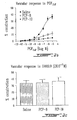
- the results are shown in Fig. 2 .
- the peptide PCP-10 had no effect on the basal tone (diameter of the microvessel) of the vessel ( Fig. 2A ; left panels).
- Addition of 1 ⁇ M of PGF 2 ⁇ potently constricted the vessel in the absence of the peptide (middle-top panel), whereas presence of PCP-10 at 100 ⁇ M markedly inhibited PGF 2 ⁇ -mediated vasoconstriction (middle-bottom panel).
- the peptide had no effect on the vasoconstriction effected by 1 ⁇ M TxA 2 mimetic, U46619, (right panels) acting on another prostanoid receptor coupled to constriction, namely TP receptor.
- PCP-8 In order to understand the structural requirements of PCP-8 in its inhibitory action on PGF 2 ⁇ -induced vasoconstriction, different amino acids in PCP-8 sequence were replaced with other D- or L- amino acids and the resulting peptides were chemically synthesized and tested in porcine eyecup model of ex vivo vasomotricity assay. These peptide variants are listed in Table 1. Table 1 Amino acid sequences of peptide variants of PCP-8 and their inhibitory potency in porcine eyecup model of ex vivo vasomotricity assay Peptide PCP- %Vasomotor response (of constriction) 1 % inhibition of maximal max.
- PCP-13 in D-configuration appears to consists of a N-terminal hydrophobic anchor spaced from the central HRD motif by a glycine residue possibly resulting in a turn conformation of the active peptide; Aromatic and hydrophobic interactions at the carboxy terminus may also add to the potency of PCP-13.
- Uterine tissues from non-pregnant adult pigs were obtained from a local slaughter house and transported to the laboratory on ice. Uterine myometrial strips of approximately 1 cm in length were set up in organ baths containing Kreb's buffer equilibrated with 21% oxygen at 37°C as we have described ( Potvin, W. et al., 1990, Br. J. Pharmacol. 100:341-347 ; Varma, D.R. and Chemtob, S., 1993, J. Pharmacol. Expt. Ther. 265:1096-1104 ). Contractions were recorded by force transducers on Grass-polygraph. Strips were incubated with or without 100 ⁇ M peptides for 30 min before adding PGF 2 ⁇ in step-wise increments (10 -9 to 10 -6 M). Data were expressed as percentage increase over the basal level of average tension (g).
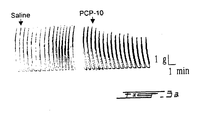
- FIG. 3A A graph of spontaneous uterine contractions (known to be dependent upon prostanoids, mainly PGF 2 ⁇ ) in the absence and the presence of 100 ⁇ M PCP-8 are shown in Fig. 3A .
- Addition of peptide to the strips reduced the force of basal contraction.
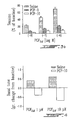
- a dose response of PGF 2 ⁇ on uterine contractility in the presence or absence of PCP-8 and PCP-10 peptides is shown in Fig. 3B . More than 60% (PCP-8) and 80% (PCP-10) reduction in uterine contraction was observed in all concentrations of PGF 2 ⁇ tested.
- both these peptides reduced spontaneous as well as PGF 2 ⁇ -induced contractions in the uterine strips.
- Uterine tissues from non-pregnant adult bovine animals were obtained from a local slaughter house and transported to the laboratory on ice.
- Uterine myometrial strips of approximately 1 cm in length were set up in organ baths containing Kreb's buffer equilibrated with 21% oxygen at 37°C as described above. Contractions were recorded on Grass-polygraph by force transducers. Strips were incubated with or without 100 ⁇ M peptides before adding PGF 2 ⁇ in step-wise increments (10 -8 to 10 -6 M). Data were expressed as change in basal level of average tension (g). The results are shown in Fig. 4 .
- Application of PCP-10 peptide at 100 ⁇ M reversed the basal tone (contractile state) of the uterine muscle. Addition of PGF 2 ⁇ up to 10 ⁇ M did not affect the relaxation produced by PCP-10 suggesting that the effects of PCP peptides are independent of the ligand, which was also shown in the previous results.
Landscapes
- Health & Medical Sciences (AREA)
- Life Sciences & Earth Sciences (AREA)
- Chemical & Material Sciences (AREA)
- Organic Chemistry (AREA)
- General Health & Medical Sciences (AREA)
- Medicinal Chemistry (AREA)
- General Chemical & Material Sciences (AREA)
- Nuclear Medicine, Radiotherapy & Molecular Imaging (AREA)
- Chemical Kinetics & Catalysis (AREA)
- Pharmacology & Pharmacy (AREA)
- Bioinformatics & Cheminformatics (AREA)
- Animal Behavior & Ethology (AREA)
- Engineering & Computer Science (AREA)
- Public Health (AREA)
- Veterinary Medicine (AREA)
- Endocrinology (AREA)
- Reproductive Health (AREA)
- Cell Biology (AREA)
- Immunology (AREA)
- Toxicology (AREA)
- Zoology (AREA)
- Gastroenterology & Hepatology (AREA)
- Biochemistry (AREA)
- Biophysics (AREA)
- Genetics & Genomics (AREA)
- Molecular Biology (AREA)
- Proteomics, Peptides & Aminoacids (AREA)
- Gynecology & Obstetrics (AREA)
- Pregnancy & Childbirth (AREA)
- Peptides Or Proteins (AREA)
- Medicines That Contain Protein Lipid Enzymes And Other Medicines (AREA)
- Investigating Or Analysing Biological Materials (AREA)
- Measuring Or Testing Involving Enzymes Or Micro-Organisms (AREA)
Claims (9)
- Antagoniste de récepteur FP de prostaglandine, comprenant une séquence d'acide aminé du récepteur FP de prostaglandine choisie dans le groupe constitué de : ilghrdyk (PCP-8 ; SEQ ID N°1) ; wedrfyll (PCP-10, SEQ ID N°2) ; YQDRFYLL (PCP-14, SEQ ID N°3), ILGHRDYK (PCP-13, SEQ ID N°13) ; ILAHRDYK (PCP-13.7, SEQ ID N°4) ; ILaHRDYK (PCP13.8 ; SEQ ID N°14) ; ILGFRDYK (PCP-13.11, SEQ ID N°5) ; ILGHKDYK (PCP-13.13 ; SEQ ID N°6) ; ILGHRNYK (PCP-13.14, SEQ ID N°7) ; ILGHQDYK (PCP-13.18 ; SEQ ID N°8) ; ILGHRDY-amide (PCP-13.20 ; SEQ ID N°9) ; ILGHRDYK-amide (PCP-13.21 ; SEQ ID N°15) ; ILGWRDYK (PCP-13.22 ; SEQ ID N°10) ; SNVLCSIF (PCP-15 ; SEQ ID N°12) et ILGXRDYK (PCP-13.24 ; SEQ ID N°11), dans lequel X est une cyclohexyl-alanine, et dans lequel les lettres en minuscule indiquent des acides aminés L et les lettres en majuscule indiquent des acides aminés D.
- Peptide ayant une activité antagoniste de récepteur FP de prostaglandine, ledit peptide étant constitué d'une séquence variante de SEQ ID N°1 ou SEQ ID N°2, dans laquelle un ou deux résidus d'acide aminé sont substitués ou éliminés, dans lequel ladite séquence variante contient des acides aminés L et/ou D, et dans lequel le groupe à l'extrémité C-terminale dudit peptide est un groupe CO2H ou un groupe CONH2.
- Antagoniste de récepteur FP de prostaglandine selon la revendication 1 ou peptide selon la revendication 2, pour utilisation dans la prévention d'un accouchement prématuré.
- Antagoniste de récepteur FP de prostaglandine selon la revendication 1 ou peptide selon la revendication 2, pour utilisation dans la prévention et/ou le traitement de la dysménorrhée.
- Composition pharmaceutique comprenant au moins un antagoniste de récepteur FP de prostaglandine selon la revendication 1, ou au moins un peptide selon la revendication 2, en association avec un excipient pharmaceutiquement acceptable.
- Procédé d'identification d'un composé comme un antagoniste de récepteur FP de prostaglandine selon la revendication 1 ou comme un peptide selon la revendication 2, capable de se lier aux éléments extracellulaires dudit récepteur, comprenant les étapes consistant à :a) cultiver des cellules qui expriment ledit récepteur ou identifier des tissus animaux ex vivo où les conséquences physiologiques dépendent dudit récepteur ;b) mettre lesdites cellules ou lesdits tissus en contact avec ledit composé à une concentration de 10-10 à 10-3 M à tester pour l'activité antagoniste audit récepteur ; etc) mesurer une réponse pour altérer la transduction d'un signal donnant lieu à des conséquences physiologiques choisies dans le groupe constitué d'incréments du calcium cellulaire, de l'hydrolyse de phosphoinositide, de la croissance et/ou de la différenciation cellulaire, de l'expression génique altérée, et de la contraction ou de la dilatation du muscle lisse, dans lequel la réponse est indicative de l'activité antagoniste.
- Procédé de détermination de l'activité de l'antagoniste selon la revendication 1 ou du peptide selon la revendication 2, comme un antagoniste de récepteur FP de prostaglandine capable de se lier aux éléments extracellulaires dudit récepteur, comprenant les étapes consistant à :a) cultiver des cellules qui expriment ledit récepteur ou identifier des tissus animaux ex vivo où les conséquences physiologiques dépendent dudit récepteur ;b) mettre lesdites cellules ou lesdits tissus en contact avec ledit antagoniste ou peptide à une concentration de 10-10 à 10-3 M à tester pour l'activité antagoniste audit récepteur ; etc) mesurer une réponse pour altérer la transduction d'un signal donnant lieu à des conséquences physiologiques choisies dans le groupe constitué d'incréments de calcium cellulaire, d'hydrolyse de phosphoinositide, de croissance et/ou de différenciation cellulaire, d'expression génique altérée, et de contraction ou de dilatation du muscle lisse.
- Utilisation d'une quantité thérapeutiquement efficace de l'antagoniste de récepteur FP de prostaglandine selon la revendication 1 ou du peptide selon la revendication 2, pour la préparation d'un médicament visant à prévenir un accouchement prématuré.
- Utilisation d'une quantité thérapeutiquement efficace de l'antagoniste de récepteur FP de prostaglandine selon la revendication 1 ou du peptide selon la revendication 2, pour la préparation d'un médicament visant à prévenir et/ou à traiter la dysménorrhée.
Applications Claiming Priority (3)
| Application Number | Priority Date | Filing Date | Title |
|---|---|---|---|
| US15462798A | 1998-09-17 | 1998-09-17 | |
| US154627 | 1998-09-17 | ||
| PCT/CA1999/000844 WO2000017348A1 (fr) | 1998-09-17 | 1999-09-15 | Agonistes ou antagonistes du recepteur couple la proteine g |
Publications (2)
| Publication Number | Publication Date |
|---|---|
| EP1114151A1 EP1114151A1 (fr) | 2001-07-11 |
| EP1114151B1 true EP1114151B1 (fr) | 2011-06-29 |
Family
ID=22552099
Family Applications (1)
| Application Number | Title | Priority Date | Filing Date |
|---|---|---|---|
| EP99944181A Expired - Lifetime EP1114151B1 (fr) | 1998-09-17 | 1999-09-15 | Antagonistes du recepteur couple la proteine g |
Country Status (8)
| Country | Link |
|---|---|
| EP (1) | EP1114151B1 (fr) |
| JP (1) | JP4431280B2 (fr) |
| AT (1) | ATE514778T1 (fr) |
| AU (1) | AU5722499A (fr) |
| CA (2) | CA2689373A1 (fr) |
| ES (1) | ES2369470T3 (fr) |
| MX (1) | MXPA01002798A (fr) |
| WO (1) | WO2000017348A1 (fr) |
Families Citing this family (10)
| Publication number | Priority date | Publication date | Assignee | Title |
|---|---|---|---|---|
| EP1138692A1 (fr) | 2000-03-29 | 2001-10-04 | Erasmus Universiteit Rotterdam | Fragments de gonadotrophine chorionique humaine comme immunorégulateurs |
| EP1300418A1 (fr) * | 2001-10-04 | 2003-04-09 | Erasmus Universiteit Rotterdam | Régulation génétique par des oligopeptides |
| US7358330B2 (en) | 2001-03-29 | 2008-04-15 | Biotempt B.V. | Immunoregulatory compositions |
| USRE43279E1 (en) | 2000-03-29 | 2012-03-27 | Biotemp B.V. | Compositions capable of reducing elevated blood urea concentration |
| AU2002248322B2 (en) * | 2001-01-24 | 2005-06-09 | The Arizona Board Of Regents, On Behalf Of, The University Of Arizona | Methods for screening for substances which inhibit FP prostanoid receptor interaction with a compound having PGF2alphaalphaactivity and methods of treating cancer |
| CA2462200A1 (fr) * | 2001-08-10 | 2003-02-20 | Palatin Technologies, Inc. | Peptidomimetiques de metallopeptides biologiquement actifs |
| US7560433B2 (en) | 2001-12-21 | 2009-07-14 | Biotempt B.V. | Treatment of multiple sclerosis (MS) |
| JP2005532295A (ja) * | 2002-04-17 | 2005-10-27 | メディカル リサーチ カウンシル | 月経過多を治療するためのFPレセプターアンタゴニスト又はPGF2αアンタゴニスト |
| GB0208785D0 (en) * | 2002-04-17 | 2002-05-29 | Medical Res Council | Treatment methtods |
| US7521530B2 (en) * | 2002-06-11 | 2009-04-21 | Universite De Montreal | Peptides and peptidomimetics useful for inhibiting the activity of prostaglandin F2α receptor |
Family Cites Families (4)
| Publication number | Priority date | Publication date | Assignee | Title |
|---|---|---|---|---|
| US5688938A (en) | 1991-08-23 | 1997-11-18 | The Brigham & Women's Hospital, Inc. | Calcium receptor-active molecules |
| AU2669992A (en) | 1991-11-05 | 1993-06-07 | G.D. Searle & Co. | 10-acyl-dibenz(b,f) (1,4)-oxazepines and their thiazepines analo gues useful as prostaglandin antagonists |
| US5869281A (en) | 1993-06-25 | 1999-02-09 | Merck Frosst Canada Inc. | DNA encoding prostaglandin receptor FP |
| JPH11514207A (ja) | 1995-01-25 | 1999-12-07 | シーオーアール・セラピューティックス・インコーポレーテッド | 組換えc140リセプター、そのアゴニストおよびアンタゴニスト、並びに該リセプターをコードする核酸 |
-
1999
- 1999-09-15 WO PCT/CA1999/000844 patent/WO2000017348A1/fr not_active Ceased
- 1999-09-15 CA CA2689373A patent/CA2689373A1/fr not_active Abandoned
- 1999-09-15 CA CA002342960A patent/CA2342960C/fr not_active Expired - Fee Related
- 1999-09-15 AU AU57224/99A patent/AU5722499A/en not_active Abandoned
- 1999-09-15 AT AT99944181T patent/ATE514778T1/de active
- 1999-09-15 MX MXPA01002798A patent/MXPA01002798A/es unknown
- 1999-09-15 ES ES99944181T patent/ES2369470T3/es not_active Expired - Lifetime
- 1999-09-15 JP JP2000574248A patent/JP4431280B2/ja not_active Expired - Fee Related
- 1999-09-15 EP EP99944181A patent/EP1114151B1/fr not_active Expired - Lifetime
Also Published As
| Publication number | Publication date |
|---|---|
| CA2689373A1 (fr) | 2000-03-30 |
| WO2000017348A1 (fr) | 2000-03-30 |
| AU5722499A (en) | 2000-04-10 |
| CA2342960C (fr) | 2010-03-09 |
| JP4431280B2 (ja) | 2010-03-10 |
| CA2342960A1 (fr) | 2000-03-30 |
| JP2002526509A (ja) | 2002-08-20 |
| ATE514778T1 (de) | 2011-07-15 |
| EP1114151A1 (fr) | 2001-07-11 |
| MXPA01002798A (es) | 2003-06-06 |
| ES2369470T3 (es) | 2011-12-01 |
Similar Documents
| Publication | Publication Date | Title |
|---|---|---|
| US9073963B2 (en) | Peptides and peptidomimetics useful for inhibiting the activity of prostaglandin F2α receptor | |
| Sherwood | Relaxin’s physiological roles and other diverse actions | |
| US8106020B2 (en) | Calcium receptor activator | |
| AU2016201712A1 (en) | ActRIIb antagonists and dosing and uses thereof | |
| JP2017082000A (ja) | 持続性ペプチド類似体 | |
| EP0309297A2 (fr) | Peptides à activité thérapeutique | |
| CA2342960C (fr) | Agonistes ou antagonistes du recepteur couple la proteine g | |
| EP1079851B1 (fr) | Utilisation d'agents anti-prolactine pour le traitement du cancer | |
| KR20080086438A (ko) | 메타스틴 유도체 및 그의 용도 | |
| US6984719B1 (en) | Peptide antagonists of prostaglandin F2α receptor | |
| EP1255555B1 (fr) | Analogue gnrh de non-mammiferes et son utilisation pour la regulation de la fertilite et de la grossesse | |
| EP1244693B1 (fr) | Compositions destinees a traiter des anormalites en filtration glomerulaire, de persistance du canal arteriel et d'osteoporose | |
| WO2001089582A1 (fr) | Prophylactiques de l'hypertension pulmonaire et remèdes | |
| WO1999058097A2 (fr) | Utilisation d'agents antiprolactine pour le traitement d'affections proliferantes | |
| JP2000191696A (ja) | ペプチドの用途 | |
| EP1908475A1 (fr) | Utilisation d'agents anti-prolactines pour traiter le cancer | |
| HK1117764A (en) | Use of anti-prolactin agents to treat cancer | |
| HK1157629A (en) | Use of a prolactin variant for treating cancer | |
| Thiede et al. | Local Expression and Action of Parathyroid |
Legal Events
| Date | Code | Title | Description |
|---|---|---|---|
| PUAI | Public reference made under article 153(3) epc to a published international application that has entered the european phase |
Free format text: ORIGINAL CODE: 0009012 |
|
| 17P | Request for examination filed |
Effective date: 20010319 |
|
| AK | Designated contracting states |
Kind code of ref document: A1 Designated state(s): AT BE CH CY DE DK ES FI FR GB GR IE IT LI LU MC NL PT SE |
|
| AX | Request for extension of the european patent |
Free format text: AL;LT;LV;MK;RO;SI |
|
| 17Q | First examination report despatched |
Effective date: 20040930 |
|
| RTI1 | Title (correction) |
Free format text: G PROTEIN-COUPLED RECEPTOR ANTAGONISTS |
|
| GRAP | Despatch of communication of intention to grant a patent |
Free format text: ORIGINAL CODE: EPIDOSNIGR1 |
|
| GRAS | Grant fee paid |
Free format text: ORIGINAL CODE: EPIDOSNIGR3 |
|
| GRAA | (expected) grant |
Free format text: ORIGINAL CODE: 0009210 |
|
| AK | Designated contracting states |
Kind code of ref document: B1 Designated state(s): AT BE CH CY DE DK ES FI FR GB GR IE IT LI LU MC NL PT SE |
|
| REG | Reference to a national code |
Ref country code: GB Ref legal event code: FG4D |
|
| REG | Reference to a national code |
Ref country code: CH Ref legal event code: EP |
|
| REG | Reference to a national code |
Ref country code: IE Ref legal event code: FG4D |
|
| REG | Reference to a national code |
Ref country code: DE Ref legal event code: R096 Ref document number: 69943537 Country of ref document: DE Effective date: 20110825 |
|
| REG | Reference to a national code |
Ref country code: NL Ref legal event code: VDEP Effective date: 20110629 |
|
| PG25 | Lapsed in a contracting state [announced via postgrant information from national office to epo] |
Ref country code: SE Free format text: LAPSE BECAUSE OF FAILURE TO SUBMIT A TRANSLATION OF THE DESCRIPTION OR TO PAY THE FEE WITHIN THE PRESCRIBED TIME-LIMIT Effective date: 20110629 |
|
| REG | Reference to a national code |
Ref country code: CH Ref legal event code: NV Representative=s name: MICHELI & CIE SA |
|
| PG25 | Lapsed in a contracting state [announced via postgrant information from national office to epo] |
Ref country code: FI Free format text: LAPSE BECAUSE OF FAILURE TO SUBMIT A TRANSLATION OF THE DESCRIPTION OR TO PAY THE FEE WITHIN THE PRESCRIBED TIME-LIMIT Effective date: 20110629 Ref country code: GR Free format text: LAPSE BECAUSE OF FAILURE TO SUBMIT A TRANSLATION OF THE DESCRIPTION OR TO PAY THE FEE WITHIN THE PRESCRIBED TIME-LIMIT Effective date: 20110930 |
|
| REG | Reference to a national code |
Ref country code: ES Ref legal event code: FG2A Ref document number: 2369470 Country of ref document: ES Kind code of ref document: T3 Effective date: 20111201 |
|
| PG25 | Lapsed in a contracting state [announced via postgrant information from national office to epo] |
Ref country code: BE Free format text: LAPSE BECAUSE OF FAILURE TO SUBMIT A TRANSLATION OF THE DESCRIPTION OR TO PAY THE FEE WITHIN THE PRESCRIBED TIME-LIMIT Effective date: 20110629 |
|
| PG25 | Lapsed in a contracting state [announced via postgrant information from national office to epo] |
Ref country code: NL Free format text: LAPSE BECAUSE OF FAILURE TO SUBMIT A TRANSLATION OF THE DESCRIPTION OR TO PAY THE FEE WITHIN THE PRESCRIBED TIME-LIMIT Effective date: 20110629 Ref country code: PT Free format text: LAPSE BECAUSE OF FAILURE TO SUBMIT A TRANSLATION OF THE DESCRIPTION OR TO PAY THE FEE WITHIN THE PRESCRIBED TIME-LIMIT Effective date: 20111031 |
|
| PG25 | Lapsed in a contracting state [announced via postgrant information from national office to epo] |
Ref country code: CY Free format text: LAPSE BECAUSE OF FAILURE TO SUBMIT A TRANSLATION OF THE DESCRIPTION OR TO PAY THE FEE WITHIN THE PRESCRIBED TIME-LIMIT Effective date: 20110629 |
|
| PG25 | Lapsed in a contracting state [announced via postgrant information from national office to epo] |
Ref country code: MC Free format text: LAPSE BECAUSE OF NON-PAYMENT OF DUE FEES Effective date: 20110930 |
|
| PLBE | No opposition filed within time limit |
Free format text: ORIGINAL CODE: 0009261 |
|
| STAA | Information on the status of an ep patent application or granted ep patent |
Free format text: STATUS: NO OPPOSITION FILED WITHIN TIME LIMIT |
|
| 26N | No opposition filed |
Effective date: 20120330 |
|
| REG | Reference to a national code |
Ref country code: IE Ref legal event code: MM4A |
|
| PG25 | Lapsed in a contracting state [announced via postgrant information from national office to epo] |
Ref country code: DK Free format text: LAPSE BECAUSE OF FAILURE TO SUBMIT A TRANSLATION OF THE DESCRIPTION OR TO PAY THE FEE WITHIN THE PRESCRIBED TIME-LIMIT Effective date: 20110629 |
|
| PG25 | Lapsed in a contracting state [announced via postgrant information from national office to epo] |
Ref country code: IE Free format text: LAPSE BECAUSE OF NON-PAYMENT OF DUE FEES Effective date: 20110915 |
|
| REG | Reference to a national code |
Ref country code: DE Ref legal event code: R097 Ref document number: 69943537 Country of ref document: DE Effective date: 20120330 |
|
| PG25 | Lapsed in a contracting state [announced via postgrant information from national office to epo] |
Ref country code: LU Free format text: LAPSE BECAUSE OF NON-PAYMENT OF DUE FEES Effective date: 20110915 |
|
| PGFP | Annual fee paid to national office [announced via postgrant information from national office to epo] |
Ref country code: AT Payment date: 20141023 Year of fee payment: 16 |
|
| REG | Reference to a national code |
Ref country code: FR Ref legal event code: PLFP Year of fee payment: 17 |
|
| PG25 | Lapsed in a contracting state [announced via postgrant information from national office to epo] |
Ref country code: IT Free format text: LAPSE BECAUSE OF NON-PAYMENT OF DUE FEES Effective date: 20150915 |
|
| REG | Reference to a national code |
Ref country code: AT Ref legal event code: MM01 Ref document number: 514778 Country of ref document: AT Kind code of ref document: T Effective date: 20150915 |
|
| PGRI | Patent reinstated in contracting state [announced from national office to epo] |
Ref country code: IT Effective date: 20160711 |
|
| PG25 | Lapsed in a contracting state [announced via postgrant information from national office to epo] |
Ref country code: AT Free format text: LAPSE BECAUSE OF NON-PAYMENT OF DUE FEES Effective date: 20150915 |
|
| REG | Reference to a national code |
Ref country code: FR Ref legal event code: PLFP Year of fee payment: 18 |
|
| PGFP | Annual fee paid to national office [announced via postgrant information from national office to epo] |
Ref country code: CH Payment date: 20160920 Year of fee payment: 18 Ref country code: DE Payment date: 20160921 Year of fee payment: 18 Ref country code: GB Payment date: 20160920 Year of fee payment: 18 |
|
| PGFP | Annual fee paid to national office [announced via postgrant information from national office to epo] |
Ref country code: FR Payment date: 20160921 Year of fee payment: 18 |
|
| PGFP | Annual fee paid to national office [announced via postgrant information from national office to epo] |
Ref country code: ES Payment date: 20160916 Year of fee payment: 18 |
|
| PGFP | Annual fee paid to national office [announced via postgrant information from national office to epo] |
Ref country code: IT Payment date: 20160922 Year of fee payment: 18 |
|
| REG | Reference to a national code |
Ref country code: DE Ref legal event code: R119 Ref document number: 69943537 Country of ref document: DE |
|
| REG | Reference to a national code |
Ref country code: CH Ref legal event code: PL |
|
| GBPC | Gb: european patent ceased through non-payment of renewal fee |
Effective date: 20170915 |
|
| REG | Reference to a national code |
Ref country code: FR Ref legal event code: ST Effective date: 20180531 |
|
| PG25 | Lapsed in a contracting state [announced via postgrant information from national office to epo] |
Ref country code: GB Free format text: LAPSE BECAUSE OF NON-PAYMENT OF DUE FEES Effective date: 20170915 Ref country code: LI Free format text: LAPSE BECAUSE OF NON-PAYMENT OF DUE FEES Effective date: 20170930 Ref country code: DE Free format text: LAPSE BECAUSE OF NON-PAYMENT OF DUE FEES Effective date: 20180404 Ref country code: CH Free format text: LAPSE BECAUSE OF NON-PAYMENT OF DUE FEES Effective date: 20170930 |
|
| PG25 | Lapsed in a contracting state [announced via postgrant information from national office to epo] |
Ref country code: IT Free format text: LAPSE BECAUSE OF NON-PAYMENT OF DUE FEES Effective date: 20170915 Ref country code: FR Free format text: LAPSE BECAUSE OF NON-PAYMENT OF DUE FEES Effective date: 20171002 |
|
| REG | Reference to a national code |
Ref country code: ES Ref legal event code: FD2A Effective date: 20181019 |
|
| PG25 | Lapsed in a contracting state [announced via postgrant information from national office to epo] |
Ref country code: ES Free format text: LAPSE BECAUSE OF NON-PAYMENT OF DUE FEES Effective date: 20170916 |