EP1118669A2 - Production des anticorps camelids dans des plants - Google Patents
Production des anticorps camelids dans des plants Download PDFInfo
- Publication number
- EP1118669A2 EP1118669A2 EP00310997A EP00310997A EP1118669A2 EP 1118669 A2 EP1118669 A2 EP 1118669A2 EP 00310997 A EP00310997 A EP 00310997A EP 00310997 A EP00310997 A EP 00310997A EP 1118669 A2 EP1118669 A2 EP 1118669A2
- Authority
- EP
- European Patent Office
- Prior art keywords
- plant
- fragment
- hcv33
- myc
- ppv
- Prior art date
- Legal status (The legal status is an assumption and is not a legal conclusion. Google has not performed a legal analysis and makes no representation as to the accuracy of the status listed.)
- Ceased
Links
Images











Classifications
-
- C—CHEMISTRY; METALLURGY
- C07—ORGANIC CHEMISTRY
- C07K—PEPTIDES
- C07K16/00—Immunoglobulins [IG], e.g. monoclonal or polyclonal antibodies
- C07K16/44—Immunoglobulins [IG], e.g. monoclonal or polyclonal antibodies against material not provided for elsewhere, e.g. haptens, metals, DNA, RNA, amino acids
-
- C—CHEMISTRY; METALLURGY
- C07—ORGANIC CHEMISTRY
- C07K—PEPTIDES
- C07K16/00—Immunoglobulins [IG], e.g. monoclonal or polyclonal antibodies
-
- C—CHEMISTRY; METALLURGY
- C12—BIOCHEMISTRY; BEER; SPIRITS; WINE; VINEGAR; MICROBIOLOGY; ENZYMOLOGY; MUTATION OR GENETIC ENGINEERING
- C12N—MICROORGANISMS OR ENZYMES; COMPOSITIONS THEREOF; PROPAGATING, PRESERVING, OR MAINTAINING MICROORGANISMS; MUTATION OR GENETIC ENGINEERING; CULTURE MEDIA
- C12N15/00—Mutation or genetic engineering; DNA or RNA concerning genetic engineering, vectors, e.g. plasmids, or their isolation, preparation or purification; Use of hosts therefor
- C12N15/09—Recombinant DNA-technology
- C12N15/63—Introduction of foreign genetic material using vectors; Vectors; Use of hosts therefor; Regulation of expression
- C12N15/79—Vectors or expression systems specially adapted for eukaryotic hosts
- C12N15/82—Vectors or expression systems specially adapted for eukaryotic hosts for plant cells, e.g. plant artificial chromosomes (PACs)
- C12N15/8241—Phenotypically and genetically modified plants via recombinant DNA technology
- C12N15/8242—Phenotypically and genetically modified plants via recombinant DNA technology with non-agronomic quality (output) traits, e.g. for industrial processing; Value added, non-agronomic traits
- C12N15/8257—Phenotypically and genetically modified plants via recombinant DNA technology with non-agronomic quality (output) traits, e.g. for industrial processing; Value added, non-agronomic traits for the production of primary gene products, e.g. pharmaceutical products, interferon
- C12N15/8258—Phenotypically and genetically modified plants via recombinant DNA technology with non-agronomic quality (output) traits, e.g. for industrial processing; Value added, non-agronomic traits for the production of primary gene products, e.g. pharmaceutical products, interferon for the production of oral vaccines (antigens) or immunoglobulins
-
- C—CHEMISTRY; METALLURGY
- C07—ORGANIC CHEMISTRY
- C07K—PEPTIDES
- C07K2317/00—Immunoglobulins specific features
- C07K2317/10—Immunoglobulins specific features characterized by their source of isolation or production
- C07K2317/13—Immunoglobulins specific features characterized by their source of isolation or production isolated from plants
-
- C—CHEMISTRY; METALLURGY
- C07—ORGANIC CHEMISTRY
- C07K—PEPTIDES
- C07K2317/00—Immunoglobulins specific features
- C07K2317/20—Immunoglobulins specific features characterized by taxonomic origin
- C07K2317/22—Immunoglobulins specific features characterized by taxonomic origin from camelids, e.g. camel, llama or dromedary
-
- C—CHEMISTRY; METALLURGY
- C07—ORGANIC CHEMISTRY
- C07K—PEPTIDES
- C07K2317/00—Immunoglobulins specific features
- C07K2317/60—Immunoglobulins specific features characterized by non-natural combinations of immunoglobulin fragments
- C07K2317/62—Immunoglobulins specific features characterized by non-natural combinations of immunoglobulin fragments comprising only variable region components
- C07K2317/622—Single chain antibody (scFv)
Definitions
- the present invention is in the field of applied biotechnology and relates in particular to an economic way of producing antibodies, or more particularly fragments thereof, in plants.
- microbial or plant sources can be used as bioreactors.
- the antibodies and/or their derivatives are produced on a large scale in modified organisms.
- the use of such 'bioreactors', especially plants has the advantage that scale up to produce large quantities e.g. more than 100 kg or even more than 1000 kg of antibodies is relatively easy and does not require significant investments in harvesting or processing equipment.
- antibodies and/or their derivatives can be produced in plants with the aim of reprogramming the plant metabolism or to improve defence mechanisms of said plant.
- the antibodies to be produced are chosen such that they target specific enzymes to modulate their activity and/or to provide the plant with protection against pathogens such as parasites and viruses.
- genes encoding scFv proteins in plants are not reliably reproducible and hence such a process would not readily lend itself to large scale production.
- expression of genes encoding scFv molecules in plants can have an undesirable effect on plant cell morphology.
- the antibody proteins are fused to specific targeting sequences (peptides) where required.
- Expression in the chloroplast requires an N-terminal chloroplast targeting sequence (generally termed transit peptide) which is cleaved off upon entry into the chloroplast (reviewed in Keegstra & Cline (2000) Plant Cell 11, 557-570).
- transit peptide N-terminal chloroplast targeting sequence
- There is little sequence homology among these transit peptides except that they are often rich in hydroxylated amino acides (eg serine), are deficient in acidic amino acids and they can vary in length from 30 to >100 amino acids.
- Transit peptides with two amino acids of the mature protein eg potato granule-bound starch synthase (GBSS) (Kortsee et al (1996) Plant Journal 10, 83-90), and some have used as many as 23 amino acids of the mature protein eg the small subunit of rubisco from pea (Nawrath et al (1994) Proc. Natl. Acad. Sci USA 91, 12760-12764).
- Another group used the transit peptide of the Arabidopsis small subunit of rubisco plus 24 amino acids of the mature protein followed by a repeat of six amino acids before the cleavage site and an additional two amino acids of the mature rubisco protein (Wong et al (1992) Plant Mol. Biol. 20, 81-93).
- Proteins that enter the secretory system have N-terminal targeting peptides generally known as "signal peptides or sequences" which direct them initially to the endoplasmic reticulum (ER) whence, depending on additional sequences, the proteins are sorted either to vacuoles or are secreted from the cell. In addition, proteins which enter the ER and have a carboxy terminal peptide KDEL are retained within the ER membrane system. For location in the cytoplasm, no targeting sequence is required.
- WO 94/4678 (Casterman et al) describes the isolation of immunoglobulins from Camelids.
- These immunoglobulins hereinafter “heavy chain immunoglobulins” have a characteristic distinct structure in that they are naturally devoid of light chains, with the antigen-binding sites being contained entirely within the heavy chain variable domains. This in turn leads to a characteristic structure for the heavy chains of these immunoglobulins, because the variable domain has no interaction sites for a light chain and a complete antigen-binding site has to be formed with no contribution from the hypervariable loops of a light chain variable domain.
- the heavy chain variable fragments (HCV) of these immunoglobulins are often referred to as VHH fragments.
- Such immunoglobulins or fragments thereof show the functional properties of conventional, four chain, immunoglobulins but by virtue of their simplified structure offer advantages in preparation and use.
- the invention provides a method for modifying a plant to produce an antibody or an active fragment or derivative thereof in a desired cellular compartment, comprising introducing into a plant a DNA sequence encoding a heavy chain immunoglobulin or an active fragment or derivative thereof, or a sequence encoding a protein functionally equivalent thereto, said DNA sequence being operably linked to one or more promoters and provided, as appropriate, with an additional sequence encoding a peptide sequence capable of targeting said antibody or fragment or derivative thereof to said desired cellular compartment.
- Also provided is a method for preparing a heavy chain immunoglobulin or an active fragment or derivative thereof comprising extracting said immunoglobulin or fragment or derivative thereof from a plant modified according to the first aspect of the invention.
- the invention provides the use of a DNA sequence encoding a heavy chain immunoglobulin or an active fragment or derivative thereof, or a sequence encoding a protein functionally equivalent thereto, to cause a plant to produce said antibody or fragment or derivative thereof or protein functionally equivalent thereto in a desired cellular compartment.
- modified plant having, in a desired cellular compartment, enhanced levels of heavy chain immunoglobulins or active fragments or derivatives thereof, or proteins functionally equivalent thereto, particularly compared to equivalent but unmodified plants.
- Seeds, fruits and progeny of such plants and hybrids are included within the invention.
- Food products such as sauces, dressings, tomato products such ketchups, meals, juices and soups, comprising a plant or part thereof according to the invention are also provided.
- compositions comprising a plant or part thereof according to the invention.
- plant means a whole plant or part thereof, or a plant cell or group of plant cells, or an extract thereof.
- the invention is particularly directed at transforming whole plants and the use of the whole plant or significant parts thereof.
- antibody refers to an immunoglobulin which may be derived from natural sources or synthetically produced, in whole or in part.
- An “antibody fragment”, alternatively an “active fragment”, is a portion of a complete antibody or immunoglobulin which retains the ability to exhibit at least part, and preferably all, of the antigen binding activity.
- a "heavy chain immunoglobulin” is an immunoglobulin naturally devoid of any variable light chain domains but which is capable of specifically combining with an antigen.
- the antigen-binding capacity and specificity is located exclusively in the immunoglobulin heavy chains, more specifically in the heavy chain variable domains.
- sequence encoding the heavy chain immunoglobulin or an active fragment or derivative thereof encompasses a genomic or cDNA clone or a sequence which in proper reading frame encodes an amino acid sequence which is functionally equivalent to the amino acid sequence of the protein encoded by the genomic or cDNA clone.
- functionally equivalent is meant any protein or fragment or derivative thereof which has the same or similar antigen-binding properties, said antigen-binding capacity being located in a single binding domain. It should be understood, however, that isolated VH domains of conventional antibodies are not included within the scope of the invention. Similarity in functionality can be evaluated by routine screening assays, for example, by assaying the binding affinity of the immunoglobulins produced upon expression in plants.
- a “functionally equivalent” derivative may be characterised by an insertion, deletion or substitution of one or more amino acid residues in the sequence of the heavy chain immunoglobulin or active fragment thereof and includes within its scope fusion molecules.
- Such derivatives may readily be made by using conventional techniques well known in the art such as peptide synthesis techniques or recombinant DNA manipulation of a gene encoding a heavy chain immunoglobulin by site directed mutagenesis.
- immunoglobulins or fragments or derivatives thereof modified to enable them to function as binding domains in the same way as immunoglobulins naturally devoid of light chain domains may also suitably be used according to the invention.
- a “gene” is a DNA sequence encoding a protein, including modified or synthetic DNA sequences or naturally occurring sequences encoding a protein, and excluding the 5' sequence which drives the initiation of transcription.
- “Operably linked to one or more promoters” means the gene, or DNA sequence, is positioned or connected to the promoter in such a way to ensure its functioning.
- the promoter is any sequence sufficient to allow the DNA to be transcribed. After the gene and promoter sequences are joined, upon activation of the promoter, the gene will be expressed.
- An "equivalent, unmodified” plant is a plant which has a substantially identical genotype to a modified plant of the invention excepting the introduced sequences present in the plant of the invention.
- a “construct” is a polynucleotide comprising nucleic acid sequences not normally associated in nature.
- a “cellular compartment” is a volume or structure separated from the remainder of the cell by at least one membrane. For the purposes of the invention, this also includes the apoplastic space between cells.
- a “targeting peptide” or “transit peptide” is a polypeptide sequence which, when appended to the appropriate end of a protein sequence is capable of directing the import of said protein into a specific cellular compartment.
- the present invention is based on the finding that immunologically active immunoglobulins, or active fragments or derivatives thereof, which are devoid of light chain variable domains, can advantageously be expressed at high level and successfully targeted to specific cellular locations in plant cells, with retention of binding activity and no adverse effects on plant growth or morphology.
- the method of the invention can be used to produce significant amounts of whole heavy chain immunoglobulins, with retention of binding activity, in the major compartments of the plant cell, namely plastid, cytoplasm, apoplast and endoplasmic reticulum.
- Selfing of transformed, antibody-expressing plants produced a new generation of plants, many of which displayed an ability to accumulate higher levels of antibody than the parent plants.
- the amounts of antibody were found to be markedly greater than those typically achieved when conventional antibodies are expressed in plants.
- the accumulation of high levels of functional antibody in the cytoplasm was a particularly unexpected result, since conventional antibodies have generally been found to be produced only in very small amounts in this location, probably owing to the problem of forming the disulphide bonds needed for structural stability in a reducing environment.
- the method of the invention was similarly found to be capable of producing VHH fragments in significant amounts in these different compartments. This was the case for several different VHH fragments, in contrast to the situation with fragments based on conventional antibodies, such as scFv, where the results have been found to be very unpredictable. Importantly, it was found that the accumulation of VHH fragments in any compartment of the cell resulted in no discernible deleterious effect on the plant; again this contrasts with results obtained with scFv fragments, where expression levels were found to be unstable and accumulation of the fragment in the plastids was found to affect adversely the structure and function of these organelles.
- antibodies and active fragments thereof, having specificity for a target antigen may conveniently be prepared by a method which is readily amenable to industrial-scale production. Further, the ability to target the antibodies to any chosen cell compartment makes it possible to use the method of the invention to modulate the activity of specific enzymes irrespective of where in the cell the enzyme is found.
- the antibody or fragment or derivative thereof In order to modify the function of an intracellular protein, the antibody or fragment or derivative thereof must be present and active in those compartments of the host plant cell where the target protein is active. In cases where this is the cytoplasm, the reducing environment inhibits the formation of disulphide links in the antibody and so generally antibodies would not be expected to be active in the cytoplasm. Expression of classical antibodies, or fragments thereof, in the cytoplasm does not generally give rise to functional actively, for example. Similarly, expression of scFv fragments in plastids generally leads to unstable deformed plastids. The targeted expression of active antibodies or fragments or derivatives thereof in compartments of the host plant cell, especially in the cytoplasm, therefore represents a particular advantage of the method of the invention.
- the present inventors have found that even when the levels of expression of heavy chain immunoglobulin or fragment or derivative thereof in the plant cell are low or undetectable by conventional protein chemical methods such as in the case of expression in the cytoplasm, a measurable effect on enzyme activity may still be achieved.
- the ability to modulate plant enzyme activity without accumulating antibodies in large amounts may be beneficial in some circumstances, for example, in minimising potential deleterious effects on the growth and health of the plant.
- the heavy chain immunoglobulins (or fragments or derivatives thereof) to be expressed in accordance to the invention are, or are derived from, immunoglobulins that are naturally devoid of light chains, their antigen binding sites being contained entirely within the heavy chain variable domains.
- immunoglobulins or fragments or derivatives thereof which are obtainable from Camelids as described, for example, in WO 94/4678 above.
- Heavy chain variable domains of immunoglobulins naturally devoid of light chains are particularly preferred for use in the present invention.
- Preferred immunoglobulins for use in the invention are obtainable from Camelids especially from Lamas (for example Lama glama, Lama vicugna or Lama Paccos) or from Camelus (for example Camelus dromedarius or Camelus bactrianus).
- Lamas for example Lama glama, Lama vicugna or Lama Paccos
- Camelus for example Camelus dromedarius or Camelus bactrianus.
- a functionally equivalent protein shows at least 50% similarity to the respective amino acid sequence, preferably at least 70% similarity, more preferably at least 80%, most preferably 90-100% similarity to the respective amino acid sequence as determined by techniques well known in the art.
- the invention also provides for the expression of complex derivative molecules comprising an immunoglobulin or fragment thereof as described above, associated or otherwise connected to one or more other molecules, for example, an enzyme or a further heavy chain variable domain.
- the invention provides specifically for the targeting of expressed antibodies, or fragment or derivatives thereof, to specific cellular compartments. Where the desired compartment is the cytoplasm, this is the default location when no specific targeting sequence is appended to the antibody. For targeting to other compartments, sequences encoding appropriate targeting signals are fused to the sequence encoding the antibody.
- a sequence encoding an appropriate transit peptide is provided, such that said peptide will be fused at the N-terminus of the expressed antibody and subsequently removed upon passage into the organelle.
- Any chloroplast-specific transit peptide may be used together, optionally, with a few (1-3) residues from the N-terminus of the mature protein to which said peptide is fused in nature.
- a number of such sequences proven to be capable of directing successful targeting of heterologous proteins, are well known to those skilled in the art. Particularly preferred is the GBSS transit peptide sequence from potato (van der Leij et al (1991) Mol. Gen. Genet., 228, 240-248).
- a sequence encoding an appropriate signal peptide is provided, such that said peptide will be fused at the N-terminus of the expressed antibody and subsequently removed upon passage into the endoplasmic reticulum, en route to secretion.
- Any signal peptide may be used, including a signal peptide that would naturally direct secretion of an antibody, or other signal peptides derived from animal, plant or microbial secreted or ER-localised proteins.
- Many such sequences are well known to those skilled in the art. Particularly preferred is the PRIa leader sequence (Firek et al; Plant Mol. Biol, 23 861-870 (1993)).
- a signal sequence is provided, as above, and additionally an ER-retention signal is provided.
- this takes the form of a C-terminal polypeptide extension comprising the sequence Lys-Asp-Glu-Leu (KDEL).
- the KDEL sequence may be introduced by mutation of the residues at the C-terminal end of the antibody, or fragment of derivative thereof.
- Suitable plants include tobacco, peas, potatoes, spinach, tomato and tea.
- the DNA sequences of interest will preferably be operably linked (that is, positioned to ensure the functioning of) to one or more suitable promoters which allow the DNA to be transcribed.
- suitable promoters which may be homologous or heterologous to the gene, useful for expression in plants are well known in art, as described, for example, in Weising et al, (1988), Ann. Rev. Genetics, 22 , 421-477). Promoters for use according to the invention may be inducible, constitutive or tissue-specific or have various combinations of such characteristics.
- Useful promoters include, but are not limited to constitutive promoters such as carnation etched ring virus (CERV), cauliflower mosaic virus (CaMV) 35S promoter, or more particularly the double enhanced cauliflower mosaic virus promoter, comprising two CaMV 35S promoters in tandem (referred to as a "Double 35S" promoter).
- constitutive promoters such as carnation etched ring virus (CERV), cauliflower mosaic virus (CaMV) 35S promoter, or more particularly the double enhanced cauliflower mosaic virus promoter, comprising two CaMV 35S promoters in tandem (referred to as a "Double 35S" promoter).
- tissue-specific or developmentally regulated promoter allows for expression of immunoglobulins in certain tissues.
- suitable fruit-specific promoters include the tomato E8 promoter (Deikman et al, (1988), EMBO J, 7 , 3315-3320), 2A11 (Van Haaren et al, Plant Mol Biol, 21 , 625-640), E4 (Cordes et al, (1989), Plant Cell, 1 , 1025-1034) and PG (Bird et al, (1988), Plant Mol. Biol., 11 , 651-662,) Nicholass et al, (1995), Plant Molecular Biology, 28 , 423-435.
- the invention provides in a further aspect an expression cassette comprising as operably linked components in the 5'-3' direction of transcription, a promoter functional in a plant cell, one or more DNA sequences encoding a heavy chain immunoglobulin or an active fragment or derivative thereof or one or more sequences encoding a protein functionally equivalent thereto and a transcriptional and translational termination regulatory region functional in a plant cell.
- the promoter and termination regulatory regions will be functional in the host plant cell and may be heterologous (that is, not naturally occurring in the host plant) or homologous (derived from the plant host species) to the plant cell and the DNA sequence. Suitable promoters which may be used are described above.
- the termination regulatory region may be derived from the 3' region of the gene from which the promoter was obtained or from another gene. Suitable termination regions which may be used are well known in the art and include Agrobacterium tumefaciens nopaline synthase terminator (Tnos), Agrobacterium tumefaciens mannopine synthase terminator (Tmas) and the CaMV 35S terminator (T35S). Particularly preferred termination regions for use according to the invention include the tobacco ribulose bisphosphate carboxylase small subunit termination region (TrbcS) or the Tnos termination region.
- Tnos Agrobacterium tumefaciens nopaline synthase terminator
- Tmas Agrobacterium tumefaciens mannopine synthase terminator
- T35S CaMV 35S terminator
- Particularly preferred termination regions for use according to the invention include the tobacco ribulose bisphosphate carboxylase small subunit termination region (TrbcS) or
- DNA constructs may suitably be screened for activity by transformation into a host plant via Agrobacterium and screening for immunoglobulin levels.
- the expression construct may conveniently be joined to a marker which permits screening or selection, according to methods well known in the art.
- the expression cassette according to the invention may be prepared by cloning the individual promoter/gene/ terminator units into a suitable cloning vector.
- suitable cloning vectors are well known in the art, including such vectors as pUC (Norrander et al, (1983, Gene 26 , 101-106), pEMBL (Dente et al (1983), Nucleic Acids Research, 11 , 1645-1699), pBLUESCRIPT (available from Stratagene), pGEM (available from Promega) and pBR322 (Bolivar et al, (1977), Gene, 2 , 95-113).
- Particularly useful cloning vectors are those based on the pUC series.
- the cloning vector allows the DNA to be amplified or manipulated, for example by joining sequences.
- the cloning sites are preferably in the form of a polylinker, that is a sequence containing multiple adjacent restriction sites, so as to allow flexibility in cloning.
- the nucleotide sequences for the genes may be extracted from the Genbank nucleotide database and searched for restriction enzymes that do not cut. These restriction sites may be added to the genes by conventional methods such as incorporating these sites in PCR primers or by sub-cloning.
- the DNA construct according to the invention is comprised within a vector, most suitably an expression vector adapted for expression in an appropriate host (plant) cell. It will be appreciated that any vector which is capable of producing a recombinant plant comprising the introduced DNA sequence will be sufficient.
- Suitable vectors are well known to those skilled in the art and are described in general technical references such as Pouwels et al, Cloning Vectors. A laboratory manual, Elsevier, Amsterdam (1986). Particularly suitable vectors include the Ti plasmid vectors.
- Transformation techniques for introducing the DNA constructs according to the invention into host cells are well known in the art and include such methods as micro-injection, using polyethylene glycol, electroporation, or high velocity ballistic penetration.
- a preferred method for use according to the present invention relies on agrobacterium - mediated transformation.
- those plant cells or plants into which the desired DNA has been incorporated may be selected by such methods as antibiotic resistance, herbicide resistance, tolerance to amino-acid analogues or using phenotypic markers.
- assays may be used to determine whether the plant cell shows the presence of the desired antibody, or fragment thereof. These include binding assay such as an ELISA or radio-immunoassay.
- Plant cells transformed according to the invention may be grown in an appropriate culture or cultivated in soil or some other such suitable medium by methods well known in the art. It will be appreciated that the particular procedures adopted will vary depending on the plant species used, such variations being well within the knowledge of the average skilled practitioner.
- Seeds produced from modified plants containing the sequence coding for the desired antibody product can subsequently be grown to generate a progeny population of modified plants from which the desired product can be isolated.
- an antibody which has an effect on ingestion can conveniently be introduced in the form of a food product.
- edible plants or parts thereof, modified to incorporate an antibody or fragment or derivative thereof capable of binding a pre-selected antigen may conveniently be used in a method of passively immunising an animal, preferably a mammal and in particular a human, against said antigen.
- Particularly suitable antigens in this case will be pathogenic organisms or derivatives or parts thereof.
- antibodies and fragments or derivatives thereof according to the present invention may suitably by used in methods to modify the properties of the plant in which they are produced.
- the expression in a plant of functional anti-viral antibody can be useful in reducing pathogenicity and so provide a method of producing viral resistance.
- the introduction of antibodies into plants may be used to alter or interfere with plant metabolism by modulating the function of proteins present in the plant such as plant antigens and/or block phytohormones and metabolites.
- HCV denotes heavy chain variable domain
- HCV33 SEQ. ID. No. 1
- the plasmid pSJ.30 is a derivative of the binary vector pGPTV-KAN (Becker et. al., Plant Mol. Biol. 20 : 1195-1197, 1992) modified as follows: An approximately 750 bp (Sac I, T4 DNA polymerase blunted - Sal I) fragment of pJIT60 (Guerineau et al., Plant Mol. Biol. 18 : 815-818, 1992) containing the duplicated cauliflower mosaic virus (CaMV) 35S promoter (denoted 2x35S; Cabb-JI strain, equivalent to nucleotides 7040 to 7376 duplicated upstream of 7040 to 7433, Frank et. al., Cell 21 : 285-294, 1980) was cloned into the Hind III (klenow polymerase repaired) - Sal I sites of pGPTV-KAN to create pSJ.30.
- CaMV cauliflower mosaic virus
- the shuttle vector pPV.3 was constructed by removing the HindIII/EcoRI multiple cloning site from pUC19 and replacing it by a synthetic DNA fragment, destroying the original EcoRI and HindIII sites and introducing a SgfI, HindIII, KpnI, EcoRI and XbaI restriction site.
- the new insert was constructed by annealing the synthetic oligonucleotides PCR.624 (SEQ. ID. No. 12) and PCR.625 (SEQ. ID. No. 13) (Table 1) yielding the insert sequence:
- the KpnI/EcoRI insert from pSJ.30 containing the 2x35S-promoter sequence upstream of the GUS gene, followed by the Nos terminator sequence was inserted into the KpnI/EcoRI opened pPV.3 vector yielding the intermediate vector pPV.5.
- the GUS coding sequence was removed from the intermediate vector pPV.5 as a SalI/SacI fragment and replaced by a synthetic DNA fragment introducing a NcoI, NheI and MunI restriction site, while leaving the original SalI/SacI sites intact.
- the new insert was constructed by annealing the synthetic oligonucleotides PCR.626 (Seq. ID. No. 14) and PCR.627 (Seq. ID. No. 15) (Table 1) yielding the insert sequence:
- the PstI/EcoRI HCV33-myc fragment from pPIC.HCV33-myc (described in WO 99/23221 was inserted into the NcoI/MunI opened vector pPV.5LN together with a 105 bp NcoI/PstI fragment encoding the PRIa leader sequence allowing the in-frame fusion with the 5' framework-1 sequences of the HCV fragment.
- the NcoI/PstI PRIa leader (Firek et. al. , Plant Mol. Biol., 23 , 861-870, 1993) sequence (including the first 4 amino acids of the HCV fragment (QVQL)) was constructed by annealing the synthetic oligonucleotides PCR.293 (Seq. ID. No. 20), PCR.294 (Seq. ID. No. 21), PCR.295 (Seq. ID. No. 22), PCR.296 (Seq. ID. No. 23), and PCR.297 (Seq. ID. No. 24) (Table 1).
- the product of the annealing reaction was cloned as a HindIII/PstI fragment into pUC.19. After verification of the sequence of the synthetic gene fragment by sequencing with primers Seq. ID. No. 25, 26 the NcoI/PstI fragment was excised and used in subsequent cloning reactions.
- NcoI/PstI fragment encoding PRIA leader sequence (DNA Sequence Seq. ID. No. 27, Protein Sequence Seq. ID. No. 28)
- the PstI/EcoRI HCV33-myc fragment from pPIC.HCV33-myc was inserted into the NcoI/MunI opened vector pPV.SLN together with a 252 bp NcoI/PstI fragment encoding the GBSS (including the first 4 amino acids of the HCV fragment (QVQL)) leader sequence allowing the in-frame fusion with the 5' framework-1 sequences of the HCV fragment.
- the NcoI/PstI GBSS leader sequence was constructed by amplifying potato tuber cDNA (Sp. Desiree) with synthetic oligonucleotides 132 (Seq. ID. No. 29) and 133 (Seq. ID. No. 30), 134 (Seq. ID. No. 31) and 136 (Seq. ID. No. 32) (Table 1).
- the products of the amplification reaction were cloned as a NcoI/HpaI, HpaI/PstI fragment into pGEM5Zf(+) (Promega). After verification of the sequence by sequencing with primers Seq. ID. No. 26, 33 (Table 1) the NcoI/PstI was excised and used in subsequent cloning reactions.
- NcoI/PstI fragment encoding GBSS leader sequence (DNA Sequence Seq. ID. No. 34, Protein Sequence Seq. ID. No. 35)
- the PstI/EcoRI HCV33-myc fragment from pPIC.HCV33-myc was inserted into the NcoI/MunI opened vector pPV.5LN together with a synthetic NcoI/PstI DNA fragment allowing the in-frame fusion with the ATG start codon.
- the synthetic linker was constructed by annealing the synthetic oligonucleotides PCR.652 (Seq. ID. No. 36) and PCR.653 (Seq. ID. No. 37) (Table 1) yielding the insert sequence:
- HindIII/BstEII Promoter-leader-HCV33 fragment inserts from pPVSLN-PRIa-HCV33-myc, pPVSLN-GBSS-HCV33-myc and pPV5LN-no leader-HCV33-myc was cloned into HindIII/MunI opened pPV5LN-PRIa-HCV33-myc vector together with a myc-SEKDEL encoding BstEII/EcoRI PCR fragment thus introducing the sequence SEKDEL at the C-terminal end of the myc-tag, thus yielding pPV.5LN-PRIa-HCV33-myc-SEKDEL, pPV.5LN-GBSS-HCV33-myc-SEKDEL and pPV.5LN-No leader-HCV33-myc-SEKDEL.
- the PCR fragment was generated using the synthetic oligonucleotides PCR.300 (Seq. ID. No. 38) and PCR.690 (Seq. ID. No. 39) (Table 1) using pPV.5LN-PRIa-HCV33-myc as a template.
- the BamHI restriction site of the pGPTV-KAN expression vector containing the kanamycin resistance selectable marker gene was destroyed by restricting with BamHI followed by a Klenow reaction.
- HindIII/EcoRI inserts from vectors pPV.5LN-PRla-HCV33-myc, pPV.5LN-GBSS-HCV33-myc, pPV.5LN-No leader-HCV33-myc, pPV.5LN-PR1a-HCV33-myc-SEKDEL, pPV.5LN-GBSS-HCV33-myc-SEKDEL and pPV.5LN-No leader-HCV33-myc-SEKDEL were inserted into the HindIII/EcoRI vector fragment of pSJ.34, yielding pPV.8-GBSS-HCV33-myc, pPV.8-No leader-HCV33-myc, pPV.8-PR1a-HCV33-myc-SEKDEL, pPV.8-GBSS-HCV33-myc-SEKDEL and pPV.8-No leader-
- the PstI/EcoRI (partial) fragment containing scFv3299-hydrophilII (also known as scFv.KC in patent filing WO 96/27612 and described in more detail in WO 99/27386) was inserted into the NcoI/MunI opened vector pPV.5LN together with a 252 bp NcoI/PstI fragment encoding the GBSS leader sequence (as described for pPV.5LN-GBSS-HCV33-myc) allowing the in-frame fusion with the 5' framework-1 sequences of the HCV fragment.
- the sequence of scFv3299 is disclosed in W096/27612 (wherein it is described as FvKC-II), but with the BstEII-SacI linker fragment replaced with a BstEII-SacI fragment encoding a flexible linker yielding the sequence: TVTVSSGGGGSGGGGSGGGGSDIELT (Seq. ID. No. 40).
- the DNA sequence of the linker is described by Jackson et. al. (Selection of variants of antibodies and other protein molecules using phage display on the surface of bacteriophage fd. : in Protein engineering: A Practical Approach, eds. Rees, Sternberg and Wetzel, publ. IRL Press, Oxford, 1992)
- HindIII/EcoRI 2x355 promoter-GBSS-scFV3299-hydrophilII fragment of pPV.5LN-2x35S-GBSS-scFv3299-hydrophilII was inserted into the HindIII/EcoRI vector fragment of pSJ.34.
- HindIII/SacI fragment containing (1x) 35S promoter-GUS.int (Vancanneyt et. al., Mol. Gen. Genet, 220, 245-250, 1990) was inserted into the HindIII/SacI vector fragment of pSJ.34.
- This plant transformation vector with Kan resistance contains the 35S promoter driving the GUS.int gene.
- the CERV promoter was isolated by PCR from infected Dianthus barbatus leaf material obtained from Dr Rene van der Lugt, Research Institute for Plant Protection (IPO-DLO), Binnehaven 5, P.O. Box 9060, NL-6700 GW, Wageningen, Netherlands, using the primers:
- the approximately 380 bp fragment (corresponding to nucleotides 6737-7118 of Hull et. al., EMBO Journal, 5, 3083-3090, 1986) was amplified with oligonucleotides CERV1 (Seq. ID. No. 41) and CERV2 (14 nucleotides downstream of the transcription start site) (Seq. ID. No. 42) (Table 1) and was cloned into the TA cloning vector pT7Blue (Invitrogen) with the promoter in the same orientation as the T7 promoter.
- HindIII - BamHI fragment from pSJ.103 was used as the source of the promoter in plant transformation vectors. Since the HindIII site was 13 nucleotides downstream of the CERV1 oligonucleotide, this sequence was not present in the promoter.
- the HindIII/BamHI CERV promoter fragment of pSJ.103 was inserted into the HindIII/BamHI vector fragment of pSJ.89.
- This plant transformation vector with Kan resistance contains the CERV promoter driving the GUS.int gene.
- HindIII/EcoRI insert from pSJ.108 containing the CERV promoter sequence upstream of the GUS gene, followed by the Nos terminator sequence was inserted into the HindIII/EcoRI opened pPV.3 vector yielding the intermediate vector pPV.7.
- the GUS coding sequence was removed from the intermediate vector pPV.7 as a BamHI/SacI fragment and replaced by a synthetic DNA fragment introducing a NcoI, NheI and MunI restriction site, while leaving the original BamHI/SacI sites intact.
- the new insert was constructed by annealing the synthetic oligonucleotides PCR.628 (Seq. ID. No. 43) and PCR.629 (Seq. ID. No. 44) (Table 1) yielding the insert sequence:
- the PstI/MunI HCV33-myc fragment of pPIC.HCV33-myc was inserted into the NcoI/MunI opened vector pPV.7LN together with a 252 bp NcoI/PstI fragment encoding the GBSS leader sequence (as described for pPV.5LN-GBSS-HCV33-myc) allowing the in-frame fusion with the 5' framework-1 sequences of the HCV fragment.
- the Clone1-His6-myc sequence was amplified by PCR using oligonucleotides PCR.288 (Seq. ID. No. 47) and JWHCV2 (Seq. ID. No. 48) (Table 1) from pHEN.Clone1-His6-myc.
- the PstI (partial)/MunI fragment was inserted into the NcoI/MunI opened vector pPV.7LN together with a 252 bp NcoI/PstI fragment encoding the GBSS leader sequence (as described for pPV.SLN-GBSS-HCV33-myc) allowing the in-frame fusion with the 5' framework-1 sequences of the HCV fragment.
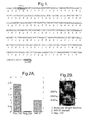
- the DNA sequence of clone 1 (Seq. ID. No 5, Figure 6) was then verified with sequencing primers, Seq. ID. No. 19,49 (Table 1.
- the Clone46-His6-myc sequence was amplified by PCR using oligonucleotides PCR.288 and JWHCV2 from pHEN.Clone46-His6-myc.
- the PstI/MunI fragment was inserted into the NcoI/MunI opened vector pPV.7LN together with a 252 bp NcoI/PstI fragment encoding the GBSS leader sequence (as described for pPV.5LN-GBSS-HCV33-myc) allowing the in-frame fusion with the 5' framework-1 sequences of the HCV fragment.
- the DNA sequence of clone 46 (Seq. ID. No. 6, Figure 12) was then verified by sequencing with primers, Seq. ID. No. 19,49 (Table 1).
- the Clone18-His6-myc sequence was amplified by PCR using oligonucleotides PCR.288 and JWHCV2 from pHEN.Clone18-His6-myc.
- the NcoI/MunI fragment was inserted into the NcoI/MunI opened vector pPV.7LN allowing the in-frame fusion with the 5' framework-1 sequences of the HCV fragment.
- the DNA sequence of clone 18 (Seq. ID. No. 8, Figure 14) was then verified by sequencing with primers, Seq. ID. No. 19,49 (Table 1).
- the Clone18-His6-myc sequence was amplified by PCR using oligonucleotides PCR.288 and JWHCV1 (Seq. ID. No. 50) (Table 1; to generate 3' SEKDEL endoplasmic retention signal) from pHEN.Clone18-His6-myc.
- the NcoI/MunI fragment was inserted into the NcoI/MunI opened vector pPV.7LN allowing the in-frame fusion with the 5' framework-1 sequences of the HCV fragment.
- the DNA sequence of Clone18-His6-myc-SEKDEL (Seq. ID. No. 10, Figure 15) was then verified by sequencing with primers, Seq. ID. No. 19,49 (Table 1).
- the BamHI restriction site of the pGPTV-HYG expression vector containing the hygromycin resistance selectable marker gene was destroyed by restricting with BamHI followed by a Klenow reaction.
- HindIII/EcoRI inserts from vectors pPV.7LN-GBSS-HCV33-myc, pPV.7LN-GBSS-Clone1-His6-myc, pPV.7LN-GBSS-Clone46-His6-myc, pPV.7LN-Clone18-His6-myc and pPV.7LN-Clone18-His6-myc-SEKDEL were inserted into HindIII/EcoRI vector fragment of pSJ.35, yielding pSJ.35-CERV-GBSS-HCV33-myc, pSJ.35-CERV-GBSS-Clone1-His6-myc, pSJ.35-CERV-GBSS-Clone46-His6-myc, pSJ.35-CERV-Clone18-His6-myc and pSJ.35-CERV
- Oligonucleotides 167 (Seq. ID. No. 51) and 168 (Seq. ID. No. 52) (Table 1) were used to amplify the 460bp 5' fragment of the GUS gene (from vector pSJ.34) and modifying the 5' end to create a NcoI site and thus modifying the second amino acid.
- the PCR amplified fragment was digested with NcoI and EcoRV and inserted into HindIII/EcoRI vector fragment of pSJ.34 together with the HindIII/NcoI 2x35S promoter fragment of pPV.5LN and the EcoRV/EcoRI 3'GUS-Nos terminator fragment of pSJ.34, yielding the vector pCJ.102.
- the DNA sequence of the amplified fragment was verified by sequencing with primer Seq. ID. No. 53 (Table 1).
- the NcoI/EcoRI Clone18-His6-myc-Nos fragment of pPV.7LN-Clone18-His6-myc was inserted into the SalI/EcoRI vector fragment of pSJ.35 together with the SalI/NcoI Lat52 promoter fragment of pLAT52-7 (Twell et. al., Development, 109, 705-13, 1990).
- the NcoI/EcoRI Clone18-His6-myc-SEKDEL-Nos fragment of pPV.7LN-Clone18-His6-myc-SEKDEL was inserted into the SalI/EcoRI vector fragment of pSJ.35 together with the SalI/NcoI Lat52 promoter fragment of pLAT52-7 (Twell et. al., Development, 109, 705-13, 1990).
- the PstI/SacI HCV33-myc-SEKDEL fragment of pPV.8-GBSS-HCV33-myc-SEKDEL was inserted into the SalI/SacI vector fragment of pSJ.35 with the SalI/PstI Lat52 promoter-5' antibody gene fragment of pSJ.35-Lat52-Clone18-His6-myc.
- Nicotiana Tabacum var. Petit Havana SR1
- Nicotiana Tabacum var. Petit Havana SR1
- SR1 Petit Havana SR1
- Discs were punched from leaves of these plants using a sterile cork borer, then incubated for 10 minutes in a culture of the agrobacterium strain LBA4404 containing the described plasmids which had been grown overnight in Lennox Broth (5g/l NaCl, Yeast Extract 10 g/l, 10 g/l Bacto Tryptone, 15g/l agar). The overnight culture was spun down for 10 minutes at 3000G and the growth media replaced by re-suspending the cells in MS Basal medium +3% sucrose.
- Discs were removed from the culture and blotted dry on sterile filter paper before plating face down on a nurse culture plate of tobacco cells.
- This plate was prepared by adding 2ml of a cell suspension culture of Nicotiana Bethiama onto a petri dish containing 25ml of MS Salts, B5 vitamins (1mg/l Nicotinic acid, 1mg/lPyridoxine, 10mg/lThiamine, 100mg/l Inositol) +1mg/l 2-4 D, 0.2 mg/lBAP & 0.8%agar. The cells were swirled to cover the agar then covered with a sterile filter paper disc.
- Infected leaf discs were incubated at 26°C in a light intensity of 2000 lux for 2 days, then removed from the nurse culture plates to selection media (MS Basal media +3% sucrose, 0.2mg/l IAA, 1mg/lBAP, 0.9%agar + cefotaxime 500mg/l and kanamycin 100 mg/l or hygromycin B 20mg/l). Plates were then incubated at 3000 lux, 26 C, 16 hours day/8 hour night and transferred every 2 weeks to fresh media (as previously).
- Leaf tissue was homogenised with Polytron probe in 2ml microcentrifuge tubes in the presence of 4ml extraction buffer (200mM Tris-HCl pH7.5, 5mM EDTA, 0.1% Tween 80, 1 mM PMSF ⁇ PhenylMethylSulfonylFluoride ⁇ ) per 1gr leaf material. Solid material was removed from the homogenate by centrifugation (10 min 13,000g). The cleared supernatant was stored at -20°C. Total protein concentration was determined using the PIERCE BCA Protein Assay Reagent detection system.
- Extracts were prepared as for leaf tissue above.
- Leaf tissue was homogenised with Polytron probe in 2ml microcentrifuge tubes in the presence of 4 ml SBE extraction buffer (100mM Tris-HCL pH7.5, 5mM EDTA, 2.5mM 1,4-dithiothreitol, 0.1% (w/v) sodium metabisulphite, 5% (v/v) glycerol, 2.5% (w/v) polyvinylpolypyrollidone, 1mM PMSF, 1 tablet Complete (Roche) per 50ml) per lgr fresh weight. Solid material was removed from the homogenate by centrifugation (10 min 13,000g). The cleared supernatant was stored at -20°C. Total protein concentration was determined using the BioRad Protein Assay Reagent detection system.
- GUS extraction buffer 50mM phosphate pH 7.0, 10mM EDTA, 0.1% Triton X-100, 1 mM DTT.
- 96 well ELISA plates (Greiner) were coated overnight at 4°C with 100 ⁇ l per well of BSA-RR6 conjugate (10 ⁇ g/ml) in 0.05 M NaCO 3 buffer pH9.5. Following three washes with tap water, the plates were incubated for 1 hour at 37°C with 250 ⁇ l per well of a blocking solution of 3% Marvel in TBST (20mM Tris-HCL pH7.5, 140mM Nacl, 0.1% Tween 20). Test plant extracts and appropriate standards (purified, P.pastoris produced HCV33-myc standard) in duplicate were added to wells in a total volume of 100 ⁇ l TBST, and the plates incubated at 4°C overnight. Unbound antibody fragment was removed by 6 washes with tap water.
- Blocking buffer 1% BSA in TBST, all incubations at room temperature.
- Plant extracts were analysed on 10% bis-acrylamide gel using the Bio-Rad mini-Protean II system according to manufacturers instructions. 40 ⁇ g samples and appropriate standards (purified P.pastoris produced HCV33-myc) were diluted in 50 ⁇ l 2xSDS-PAGE loading buffer (20% Glycerol, 20mM Tris-HCL pH 8.0, 0.5% SDS, 0.005% bromophenol blue). The samples were mixed, boiled (5 minutes) and centrifuged briefly before loading onto the gel. The gels were run at 100V for 1 hour in 1x running buffer (25mM Tris, 200mM glycine, 1% SDS).
- Proteins were transferred onto nylon membranes (Millipore) by semi dry blotting at 25V, 80mA for 45 minutes in semi-dry blotting buffer (50mM Tris, 40mM glycine, 0.04% SDS, 20% methanol). The membranes were then dried overnight at room temperature. The membranes were incubated in 3% Marvel, TBST for 10 minutes then in 1ug/mL mouse anti-myc antibody in 1% Marvel, TBST for 60 minutes at room temperature with constant agitation. Unbound antibody was removed by washing 6 times in TBST at room temperature with constant agitation.
- semi-dry blotting buffer 50mM Tris, 40mM glycine, 0.04% SDS, 20% methanol.
- the membranes were then dried overnight at room temperature.
- the membranes were incubated in 3% Marvel, TBST for 10 minutes then in 1ug/mL mouse anti-myc antibody in 1% Marvel, TBST for 60 minutes at room temperature with constant agitation. Unbound antibody was
- the blot was then incubated with the secondary antibody (rabbit anti-mouse IgG conjugated to alkaline phophatase) in 1% Marvel, TBST for 60 minutes at room temperature with constant agitation. Unbound antibody was removed by washing 6 times in TBST at room temperature with constant agitation. Bound antibody was detected by incubating the filters in 10mL of 30mg/mL NBT and 15mg/ml BCIP. Washing the filters with water stopped the colour reaction.
- the secondary antibody rabbit anti-mouse IgG conjugated to alkaline phophatase
- Leaf samples were fixed using 1% Paraformaldehyde+ 0.05% glutaraldehyde in 0.05M sodium phosphate buffer pH6.8, for 4hrs at 4°C, and then washed in phosphate buffer overnight at 4°C.
- Samples were embedded by first dehydrating the samples through alcohol, 50, 70, 90% (15mins) and finally absolute alcohol (2x30mins). They were then placed in hydrophilic resin [6 parts LRGold resin +_4 parts GMA (low acid) +0.1% benzoin ethyl ether (UV activator). Resin was changed several times over period of three days. Finally, samples were embedded, using freshly prepared resin, in flat bottomed plastic moulds, allowing the resin to polymerise for 24hrs at room temperature, under nitrogen gas, using UV light (360nm).
- Step 2 Staining:
- the primary antibody was detected by incubating the grids with 20 ⁇ l aliquots of secondary antibody/gold conjugate diluted in TBS/BSA (Goat a Mouse IgG; 5nm diluted 1:200, 10nm diluted 1:100 20nm diluted 1:50) for 60mins at room temperature.
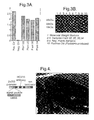
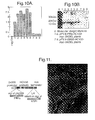
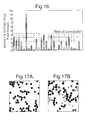
- the grids were washed thoroughly, using TBS followed by washes with deionised water and dried. Some grids were silver enhanced, prior to poststaining with 2% aqueous Uranyl Acetate, followed by Lead Citrate. Photographs were taken using a either a Jeol 100CX Mk2 transmission electron microscope at 60,000 magnification ( Figure 4) or a Jeol 1220 transmission electron microscope at 40,000 magnification ( Figure 11).
- Glucose polymers were precipitated and washed as described by Hawker et al., Arch. Biochem. Biophys., 160, 530-551 (1974). The final pellet was dissolved in DMSO and counted with ReadySafe-scintillation cocktail (Beckmann).
- Tobacco pollen was stained for GUS activity in microtitre wells for up to 1 hour in 1 mM 5-bromo-4-chloro-3-indolyl ⁇ -D-glucuronic acid according to the method of Jefferson et al., EMBO Journal 6: 3901-7, (1987).
- the buffer was modified by the use of histochemical staining buffer comprising 100 mM sodium phosphate pH 7.0, 10 mM EDTA, and 0.1% (v/v) Triton X-100 (Stomp, In: Editorial comments, Vol. 16, No.5. Cleveland: united State Biochemical, 1990).
- Tobacco plants were transformed with expression vector pSJ34-2x35S-GBSS-scFv3299-hydrophilII. After initial detection of high expression of hCG binding activity, these levels were lost - expression was unstable (not shown). Furthermore, immuno-histology studies ( Figure 8) suggested that scFv expression had an adverse affect on plastid structure and function, perhaps due to the aggregation of multiple scFv molecules at the plastid membrane.
- Example 7 Expression of HCV antigen binding activity in the apoplastic space
- Example 8 Expression of HCV33 containing the ER retention signal SEKDEL
- the tobacco line lat52-GUS containing the pollen specific promoter lat52 driving GUS in a single copy homozygous state, was obtained as a gift from Dr. David Twell (Botany Department, University of Leicester, UK). This line was retransformed with expression vector pSJ.35-Lat52-Clone18-His6-myc-SEKDEL. Control lines were obtained by transforming lat52-GUS tobacco with pSJ.35-Lat52-HCV33-myc-SEKDEL. Pollen from 20 lines of each set of transformed tobacco were tested by histochemical staining for GUS activity.
- a cDNA clone IgG2b (Vu et. al., Mol. Imm., 34 , 16-17, 1997) was amplified by PCR using oligonucleotides 304 (Seq. ID. No. 58) and 305 (Seq. ID. No. 59), 306 (Seq. ID. No. 60) and 310 (Seq. ID. NO. 61) (Table 1).
- the amplified fragments were digested with BstEII/HincII and HincII/EcoRI respectively and inserted into NcoI/MunI opened vector pPV.5LN together with the NcoI/BstEII HCV33 fragment from vector pPV.5LN-HCV33-myc, yielding the vector pPV.5-HCV33-IgG2b.
- the DNA sequence of the amplified fragment was verified by sequencing with primers Seq. ID. No. 19, 53, 58, 60 and 62 (Table 1).
- the predicted amino acid sequence contained two mutations at amino acid numbers 167 and 369 ( Figure 18) as compared to the published sequence by Woolven et. al., Immunogen., 50 , 98-101, 1999.
- Oligonucleotides 314 (Seq. ID. No. 63) and 307 (Seq. ID. No. 64) (Table 1) were designed to change the mutations at amino acids 167 (proline) and 369 (Stop codon) to a serine and lysine respectively.
- the HCV33-IgG2b clone was then amplified by PCR using oligonucleotides 314 and 307 (Table 1).
- the amplified fragment was digested with SacI/EcoRI and inserted into HindIII/MunI opened vector pPV.5LN together with the HindIII/SacI fragment from vector pPV.5-HCV33-IgG2b, yielding the vector pPV.5LN-HCV33-IgG2b.
- the DNA sequence of the amplified fragment was verified by sequencing with primers Seq. ID. No. No. 19, 53, 58, 60 and 62 (Table 1) (Table 1) ( Figure 18).
- Vector pPV.5LN-HCV33-IgG2b was amplified by PCR using oligonucleotides 306 and 308 (Seq. ID. No. 65) (Table 1; to generate 3' SEKDEL endoplasmic retention signal).
- the amplified fragment was digested with HincII/EcoRI and inserted into HindIII/EcoRI opened pPV.5LN together with the HindIII/HincII fragment from vector pPV.5LN-PR1a-HCV33-IgG2b.
- the DNA sequence of the amplified fragment was the verified by sequencing with primers Seq. ID. No. 19, 63 (Table 1) (Table 19).
- HindIII/EcoRI inserts from vectors pPV.5LN-HCV33-IgG2b, pPV.5LN-PR1a-HCV33-IgG2b, pPV.5LN-GBSS-HCV33-IgG2b and pPV.5LN-PR1a-HCV33-IgG2b-SEKDEL were inserted into HindIII/EcoRI vector fragment of pSJ.34, yielding pPV.8-HCV33-IgG2b, pPV.8-PR1a-HCV33-IgG2b, pPV.8-GBSS-HCV33-IgG2b and pPV.8-PR1a-HCV33-IgG2b-SEKDEL respectively.
- HCV33-IgG2b Purified and quantified HCV33-IgG2b from tobacco plants was used as the standard.
- Example 13 Expression of anti-SBEII (clone68) antigen binding activity in tobacco directed to the plastids
- the Clone68-His6-myc sequence was amplified by PCR using oligonucleotides PCR.288 (Seq. ID. No. 47) and JWHCV2 (Seq. ID. No. 48) (Table 1) from pHEN.Clone68-His6-myc.
- the PstI/MunI fragment was inserted into the NcoI/MunI opened vector pPV.7LN together with a 252 bp NcoI/PstI fragment encoding the GBSS leader sequence (as described for pPV.5LN-GBSS-HCV33-myc) allowing the in-frame fusion with the 5' framework-1 sequences of the HCV fragment to create pPV.7LN-GBSS-Clone68-His6-myc.
- the DNA sequence of clone 68 was then verified with sequencing primers, Seq. ID. No. 19,49 (Table 1) ( Figure 28).
- HindIII/EcoRI inserts from vector pPV.7LN-GBSS-clone68-His6-myc were inserted into HindIII/EcoRI vector fragment of pSJ.35, yielding vector pSJ.35-CERV-GBSS-clone68-His6-myc.
Landscapes
- Health & Medical Sciences (AREA)
- Chemical & Material Sciences (AREA)
- Genetics & Genomics (AREA)
- Life Sciences & Earth Sciences (AREA)
- Organic Chemistry (AREA)
- Molecular Biology (AREA)
- Medicinal Chemistry (AREA)
- Biophysics (AREA)
- Biochemistry (AREA)
- Immunology (AREA)
- Engineering & Computer Science (AREA)
- General Health & Medical Sciences (AREA)
- Bioinformatics & Cheminformatics (AREA)
- Zoology (AREA)
- General Engineering & Computer Science (AREA)
- Proteomics, Peptides & Aminoacids (AREA)
- Biotechnology (AREA)
- Biomedical Technology (AREA)
- Wood Science & Technology (AREA)
- Cell Biology (AREA)
- Pharmacology & Pharmacy (AREA)
- Microbiology (AREA)
- Physics & Mathematics (AREA)
- Plant Pathology (AREA)
- Breeding Of Plants And Reproduction By Means Of Culturing (AREA)
- Preparation Of Compounds By Using Micro-Organisms (AREA)
Priority Applications (1)
| Application Number | Priority Date | Filing Date | Title |
|---|---|---|---|
| EP00310997A EP1118669A3 (fr) | 1999-12-17 | 2000-12-08 | Production des anticorps camelids dans des plants |
Applications Claiming Priority (3)
| Application Number | Priority Date | Filing Date | Title |
|---|---|---|---|
| EP99310188 | 1999-12-17 | ||
| EP99310188 | 1999-12-17 | ||
| EP00310997A EP1118669A3 (fr) | 1999-12-17 | 2000-12-08 | Production des anticorps camelids dans des plants |
Publications (3)
| Publication Number | Publication Date |
|---|---|
| EP1118669A2 true EP1118669A2 (fr) | 2001-07-25 |
| EP1118669A3 EP1118669A3 (fr) | 2001-08-29 |
| EP1118669A9 EP1118669A9 (fr) | 2001-11-28 |
Family
ID=29286289
Family Applications (1)
| Application Number | Title | Priority Date | Filing Date |
|---|---|---|---|
| EP00310997A Ceased EP1118669A3 (fr) | 1999-12-17 | 2000-12-08 | Production des anticorps camelids dans des plants |
Country Status (2)
| Country | Link |
|---|---|
| US (2) | US20030208797A1 (fr) |
| EP (1) | EP1118669A3 (fr) |
Cited By (8)
| Publication number | Priority date | Publication date | Assignee | Title |
|---|---|---|---|---|
| WO2006079372A1 (fr) * | 2005-01-31 | 2006-08-03 | Ablynx N.V. | Procede de generation de sequences a domaine variable d'anticorps a chaine lourde |
| US9243065B2 (en) | 2002-11-08 | 2016-01-26 | Ablynx N.V. | Polypeptide constructs including VHH directed against EGFR for intracellular delivery |
| US9320792B2 (en) | 2002-11-08 | 2016-04-26 | Ablynx N.V. | Pulmonary administration of immunoglobulin single variable domains and constructs thereof |
| US9371381B2 (en) | 2002-11-08 | 2016-06-21 | Ablynx, N.V. | Single domain antibodies directed against tumor necrosis factor-alpha and uses therefor |
| WO2016071438A3 (fr) * | 2014-11-05 | 2016-06-23 | Agrosavfe Nv | Plante transgénique comprenant un polynucléotide codant un domaine variable d'anticorps à chaîne lourde |
| US9393304B2 (en) | 2008-10-29 | 2016-07-19 | Ablynx N.V. | Formulations of single domain antigen binding molecules |
| US10118962B2 (en) | 2008-10-29 | 2018-11-06 | Ablynx N.V. | Methods for purification of single domain antigen binding molecules |
| US10400033B2 (en) | 2013-04-29 | 2019-09-03 | Agrosavfe N.V. | Agrochemical compositions comprising antibodies binding to sphingolipids |
Families Citing this family (2)
| Publication number | Priority date | Publication date | Assignee | Title |
|---|---|---|---|---|
| ES2456823B1 (es) * | 2012-09-21 | 2015-01-27 | Consejo Superior De Investigaciones Científicas (Csic) | Método de producción de repertorios complejos de moléculas recombinantes |
| CN105555303A (zh) | 2013-06-28 | 2016-05-04 | 贝勒研究院 | 用于多发性硬化症的树突细胞asgpr靶向免疫治疗剂 |
Family Cites Families (8)
| Publication number | Priority date | Publication date | Assignee | Title |
|---|---|---|---|---|
| DE3587548T2 (de) * | 1984-12-28 | 1993-12-23 | Bayer Ag | Rekombinante DNA, die in pflanzliche Zellen eingebracht werden kann. |
| US5959177A (en) * | 1989-10-27 | 1999-09-28 | The Scripps Research Institute | Transgenic plants expressing assembled secretory antibodies |
| ES2150900T3 (es) * | 1989-10-31 | 2000-12-16 | Monsanto Co | Promotor para plantas transgenicas. |
| IT1248361B (it) * | 1991-06-28 | 1995-01-05 | Enea | Vettori plasmidici per l'espressione di geni in piante |
| DK1621554T4 (da) * | 1992-08-21 | 2012-12-17 | Univ Bruxelles | Immunoglobuliner blottet for lette kæder |
| ES2162863T3 (es) * | 1993-04-29 | 2002-01-16 | Unilever Nv | Produccion de anticuerpos o fragmentos (funcionalizados) de los mismos derivados de inmunoglobulinas de cadena pesada de camelidae. |
| IT1264083B1 (it) * | 1993-12-10 | 1996-09-10 | Enea Ente Nuove Tec | Procedimento per la produzione in piante di anticorpi ingegnerizzati, anticorpi prodotti e loro uso in diagnosi e terapia. |
| AU6504796A (en) * | 1995-07-20 | 1997-02-18 | Washington State University Research Foundation | Production of secreted foreign polypeptides in plant cell culture |
-
2000
- 2000-12-08 EP EP00310997A patent/EP1118669A3/fr not_active Ceased
- 2000-12-18 US US09/737,476 patent/US20030208797A1/en not_active Abandoned
-
2005
- 2005-11-07 US US11/267,310 patent/US20060037107A1/en not_active Abandoned
Cited By (14)
| Publication number | Priority date | Publication date | Assignee | Title |
|---|---|---|---|---|
| US9725522B2 (en) | 2002-11-08 | 2017-08-08 | Ablynx N.V. | Pulmonary administration of immunoglobulin single variable domains and constructs thereof |
| US9320792B2 (en) | 2002-11-08 | 2016-04-26 | Ablynx N.V. | Pulmonary administration of immunoglobulin single variable domains and constructs thereof |
| US9371381B2 (en) | 2002-11-08 | 2016-06-21 | Ablynx, N.V. | Single domain antibodies directed against tumor necrosis factor-alpha and uses therefor |
| US9243065B2 (en) | 2002-11-08 | 2016-01-26 | Ablynx N.V. | Polypeptide constructs including VHH directed against EGFR for intracellular delivery |
| WO2006079372A1 (fr) * | 2005-01-31 | 2006-08-03 | Ablynx N.V. | Procede de generation de sequences a domaine variable d'anticorps a chaine lourde |
| US9393304B2 (en) | 2008-10-29 | 2016-07-19 | Ablynx N.V. | Formulations of single domain antigen binding molecules |
| US10118962B2 (en) | 2008-10-29 | 2018-11-06 | Ablynx N.V. | Methods for purification of single domain antigen binding molecules |
| US11370835B2 (en) | 2008-10-29 | 2022-06-28 | Ablynx N.V. | Methods for purification of single domain antigen binding molecules |
| US9993552B2 (en) | 2008-10-29 | 2018-06-12 | Ablynx N.V. | Formulations of single domain antigen binding molecules |
| US11028154B2 (en) | 2013-04-29 | 2021-06-08 | Biotalys NV | Agrochemical compositions comprising antibodies binding to sphingolipids |
| US10400033B2 (en) | 2013-04-29 | 2019-09-03 | Agrosavfe N.V. | Agrochemical compositions comprising antibodies binding to sphingolipids |
| WO2016071438A3 (fr) * | 2014-11-05 | 2016-06-23 | Agrosavfe Nv | Plante transgénique comprenant un polynucléotide codant un domaine variable d'anticorps à chaîne lourde |
| US10858666B2 (en) | 2014-11-05 | 2020-12-08 | Biotalys | Transgenic plants expressing a variable domain of a heavy chain antibody (VHH) that binds to a sphingolipid of a fungus |
| EP3215624B1 (fr) * | 2014-11-05 | 2023-11-29 | Biotalys NV | Plante transgénique comprenant un polynucléotide codant un domaine variable d'anticorps à chaîne lourde |
Also Published As
| Publication number | Publication date |
|---|---|
| US20030208797A1 (en) | 2003-11-06 |
| US20060037107A1 (en) | 2006-02-16 |
| EP1118669A9 (fr) | 2001-11-28 |
| EP1118669A3 (fr) | 2001-08-29 |
Similar Documents
| Publication | Publication Date | Title |
|---|---|---|
| van Engelen et al. | Coordinate expression of antibody subunit genes yields high levels of functional antibodies in roots of transgenic tobacco | |
| AU722668B2 (en) | Methods for producing immunoglobulins containing protection proteins in plants and their use | |
| Fiedler et al. | Optimization of scFv antibody production in transgenic plants | |
| Whitelam et al. | Heterologous protein production in transgenic plants | |
| US20030084482A1 (en) | Production of proteins in plants | |
| JP2008194054A (ja) | 植物における防御タンパク質を含む免疫グロブリンの製造法およびその使用 | |
| CN101115842B (zh) | 使用正义单链病毒rna载体在植物中生产抗体 | |
| Magee et al. | T7 RNA polymerase-directed expression of an antibody fragment transgene in plastids causes a semi-lethal pale-green seedling phenotype | |
| JP2023052262A (ja) | 植物細胞におけるニトロゲナーゼポリペプチドの発現 | |
| WO1996021012A9 (fr) | Procedes de production d'immunoglobulines contenant des proteines de protection dans les plantes et leur utilisation | |
| US6696620B2 (en) | Immunoglobulin binding protein arrays in eukaryotic cells | |
| EP1118669A2 (fr) | Production des anticorps camelids dans des plants | |
| Hiatt et al. | Characterization and applications of antibodies produced in plants | |
| CA2330933A1 (fr) | Procedes et moyens d'expression de polypeptides de mammiferes dans des plantes monocotyledones | |
| AU1851600A (en) | Transgenic plants and methods for production thereof | |
| US6808709B1 (en) | Immunoglobulins containing protection proteins and their use | |
| WO1999024592A1 (fr) | Production de proteines dans des plantes d'alfalfa transgeniques | |
| EP0466995B1 (fr) | Saccharose phosphate Synthétase (SPS), son procédé de préparation, son ADNc et utilisation de l'ADNc pour modifier l'expression de la SPS dans les cellules végétales | |
| AU662111B2 (en) | Sucrose phosphate synthase (SPS), its process for preparation, its cDNA, and utilization of cDNA to modify the expression of SPS in the plant cells | |
| US20060064782A1 (en) | Production of antibodies | |
| Yakoby et al. | Tobacco ribosomal DNA spacer element elevates Bowman–Birk inhibitor expression in tomato plants | |
| US20030093836A1 (en) | Reduction of in planta degradation of recombinant plant products | |
| AU773602B2 (en) | Methods for producing immunoglobulins containing protection proteins in plants and their use | |
| Yang | The expression of a synthetic codon adjusted porcine α-lactalbumin gene in maize callus | |
| EP1029064A1 (fr) | Production de proteines dans des plantes d'alfalfa transgeniques |
Legal Events
| Date | Code | Title | Description |
|---|---|---|---|
| PUAI | Public reference made under article 153(3) epc to a published international application that has entered the european phase |
Free format text: ORIGINAL CODE: 0009012 |
|
| PUAL | Search report despatched |
Free format text: ORIGINAL CODE: 0009013 |
|
| AK | Designated contracting states |
Kind code of ref document: A2 Designated state(s): AT BE CH DE DK ES FR GB GR IE IT LI NL PT SE Kind code of ref document: A2 Designated state(s): AT BE CH CY DE DK ES FI FR GB GR IE IT LI LU MC NL PT SE TR |
|
| AX | Request for extension of the european patent |
Free format text: AL;LT;LV;MK;RO;SI |
|
| AK | Designated contracting states |
Kind code of ref document: A3 Designated state(s): AT BE CH CY DE DK ES FI FR GB GR IE IT LI LU MC NL PT SE TR |
|
| AX | Request for extension of the european patent |
Free format text: AL;LT;LV;MK;RO;SI |
|
| RIN1 | Information on inventor provided before grant (corrected) |
Inventor name: FRENKEN, LEO GERARD JOSEPH Inventor name: VERHOEYEN, MARTINE ELISA Inventor name: TEH, YIH-MIIN Inventor name: WILKINSON, JOY ELIZABETH Inventor name: VAN DER LOGT, CORNELIS PAUL ERIK Inventor name: JOBLING, STEPHEN ALAN |
|
| RIN1 | Information on inventor provided before grant (corrected) |
Inventor name: VERHOEYEN, MARTINE ELISA Inventor name: VAN DER LOGT, CORNELIS PAUL ERIK Inventor name: WILKINSON, JOY ELIZABETH Inventor name: JOBLING, STEPHEN ALAN Inventor name: TEH, YIH-MIIN Inventor name: FRENKEN, LEO GERARD JOSEPH |
|
| 17P | Request for examination filed |
Effective date: 20011018 |
|
| AKX | Designation fees paid |
Free format text: AT BE CH DE DK ES FR GB GR IE IT LI NL PT SE |
|
| 17Q | First examination report despatched |
Effective date: 20060908 |
|
| RAP1 | Party data changed (applicant data changed or rights of an application transferred) |
Owner name: UNILEVER N.V. Owner name: UNILEVER PLC |
|
| STAA | Information on the status of an ep patent application or granted ep patent |
Free format text: STATUS: THE APPLICATION HAS BEEN REFUSED |
|
| 18R | Application refused |
Effective date: 20091129 |