EP1122660A2 - Système et méthode de support de développement de noyau CPU et moyen de stockage associé pour mémoriser le programme de support de développement - Google Patents
Système et méthode de support de développement de noyau CPU et moyen de stockage associé pour mémoriser le programme de support de développement Download PDFInfo
- Publication number
- EP1122660A2 EP1122660A2 EP01300652A EP01300652A EP1122660A2 EP 1122660 A2 EP1122660 A2 EP 1122660A2 EP 01300652 A EP01300652 A EP 01300652A EP 01300652 A EP01300652 A EP 01300652A EP 1122660 A2 EP1122660 A2 EP 1122660A2
- Authority
- EP
- European Patent Office
- Prior art keywords
- cpu core
- assembly language
- source program
- program
- deletion
- Prior art date
- Legal status (The legal status is an assumption and is not a legal conclusion. Google has not performed a legal analysis and makes no representation as to the accuracy of the status listed.)
- Withdrawn
Links
Images







Classifications
-
- G—PHYSICS
- G06—COMPUTING OR CALCULATING; COUNTING
- G06F—ELECTRIC DIGITAL DATA PROCESSING
- G06F30/00—Computer-aided design [CAD]
- G06F30/30—Circuit design
Definitions
- This invention relates generally to a system for supporting development of a CPU core on a logic integrated circuit which can be re-programmed such as a field programmable gate array (hereinafter referred to as FPGA), a programmable logic device (hereinafter referred to as PLD) and the like that is integrated in an FA device, a communication device, a household electrical appliance, and so forth.
- FPGA field programmable gate array
- PLD programmable logic device
- a conventional ASIC Application Specific IC
- ASIC Application Specific IC
- a system LSI having a CPU core
- a method of processing with a program included in the CPU core for a complicated analytic processing For supporting development of the CPU core on said ASIC, semiconductor makers have provided development support systems of the CPU core.
- a user can add instructions of the CPU core according to specifications of other IPs (Intellectual Properties) composing the system LSI, and automatically generate a compiler in correspondence with the added instructions.
- the first object of the present invention is to provide a CPU core development support system which allows the user to change or delete instructions used in a CPU core, and arbitrarily add, change or delete registers in the CPU core on a logic integrated circuit such as an FPGA, PLD and the like, to thereby make it possible to construct a simple CPU core in response to specifications of other IPs on the logic integrated circuit.
- a CPU core development support system for supporting development of a CPU core on a logic integrated circuit such as a field programmable gate array, comprising: a source program which describes a basic grammatical rule of assembly language which is used in the CPU core; a defining means for defining information about addition, change and deletion of instructions of the assembly language; an assembler generating compiler which generates a source program of an assembler which takes in a new grammatical rule in response to the information about addition, change and deletion of the instructions in the basic grammatical rule of the assembly language based on the source program and the information about addition, change and deletion of the instructions of the assembly language defined by the defining means.
- the assembler generating compiler when there are any IPs other than the CPU core on the logic integrated circuit, and if a user defines the information about addition change and deletion of the instructions of the assembly language in response to specifications of the other IPs on the logic integrated circuit through defining means, the assembler generating compiler generates a source program of an assembler which takes in a new grammatical rule in response to the information about addition, change and deletion of the instructions in the basic grammatical rule of the assembly language based on the source program and the information about addition, change and deletion of the instructions of the assembly language defined by the defining means.
- This in the case that there are any IPs other than the CPU core on the logic integrated circuit, allows facilitating the addition, change and deletion of the instructions of the assembly language used in the CPU core in response to specifications of the other IPs.
- the CPU core development support system further comprises a simulator for testing the source program in the assembly language describing operations of the CPU core; and wherein the simulator operates in response to the information about addition, change and deletion of the instructions of the assembly language defined by the defining means.
- the simulator interprets and carries out the source program in the assembly language with using the new grammatical rules similar to the assembler generated by the assembler generating compiler.
- the assembler that is created by compiling the source program of the created assembler separately generates a file composed of label groups of a processing unit in the source program, and a file composed of label groups of a data unit in the source program based on labels defined in the source program by the assembly language when assembling the source program by the assembly language to an object program; and the simulator distinguishes the labels of the processing unit and the labels of the data unit in the source program based on information stored in the two files when simulating the source program created by the assembly language.
- the simulator is capable of readily recognizing labels in the source program between a program segment and a data segment, which makes it possible to facilitate interpreting and carrying out the source program.
- a CPU core development support system for supporting development of a CPU core on a logic integrated circuit such as a field programmable gate array, comprising: a directing means for directing addition, change and deletion of registers in the CPU core; and a renewal means for renewing a source at a hardware description language level of the CPU core based on information about addition, change and deletion of registers in the CPU core directed by the directing means.
- the renewal means renews the source at the hardware description language level of the CPU core based on the information about addition, change and deletion of registers in the CPU core directed by the directing means. This makes it possible to easily add, change and delete the registers in the CPU cores in response to the specifications of the other IPs.
- the renewal means delete the register from the source at the hardware description language level of the CPU core, thereby allowing easily constructing the simple CPU core on the logic integrated circuit.
- the CPU core development support system further comprises; a simulator for testing the source program in the assembly language describing operations of the CPU core; and wherein the simulator operates in response to the information about addition, change and deletion of the registers of directed by the directing means.
- the simulator is capable of interpreting and carrying out the source program including instructions to the registers described in the source of the CPU core that was renewed by the renewal means.
- a method of supporting a CPU core on a logic integrated circuit such as a field programmable gate array by a programmed computer comprising steps of: defining information about addition, change and deletion of instructions in assembly language that is used in the CPU core; and generating a source program of an assembler which takes in a new grammatical rule in response to the information about addition, change and deletion of the instructions in the basic grammatical rule of the assembly language based on the source program describing the basic grammatical rule of the assembly language that is used in the CPU core, and the information about addition, change and deletion of the instructions of the assembly language defined by the defining means.
- a method of supporting development of a CPU core on a logic integrated circuit such as a field programmable gate array by a programmed computer comprising steps of: directing addition, change and deletion of registers in the CPU core; and renewing a source at a hardware description language level of the CPU core based on addition, change and deletion of registers in the CPU core.
- a recording medium storing a program for supporting development of a CPU core on a logic integrated circuit such as a field programmable gate array by a computer: wherein the program is for the CPU core development support system.
- FIG. 1 is a view showing a structure around a CPU core development support system according to one embodiment of the present invention.
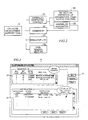
- FIG. 2 is a block diagram of functions of a CPU core development support tool in said CPU core development support system.
- FIG. 3 is a view showing a customizing screen of a CPU core included in said CPU core development support tool.
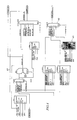
- FIG. 4 is an explanatory view of additional processing of registers in the CPU core employing said CPU core development support tool.
- FIG. 5 is a view showing a debugging screen included in said CPU core development support tool.
- FIG. 6 is a flowchart showing an entire development processing executed by said CPU core development support system.
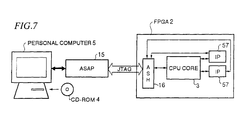
- FIG. 7 is a structural view for down loading an operating description program and a logic synthesis result to an FPGA, and carrying out an actual CPU core test.
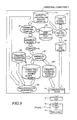
- FIG. 8 is a flowchart showing details of customizing processing of the CPU core and offline debugging test for the CPU core performed by said CPU core development support system.
- FIG. 9 is a view showing a data flow in the customizing processing for the CPU core performed by said CPU core development support system.
- FIG. 10 is a view showing an augmentation processing of a grammatical rule performed by an assembler generating compiler.
- FIG. 11 is an explanatory view of a description method of a source program in MC language.
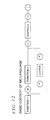
- FIG. 12 is a view showing a basic context of MC language.
- FIG. 13 is a view showing a source program of an assembler corresponding to a source program indicating a selection of the processing described in MC language.
- FIG. 14 is a view showing an example of a simple grammatical rule created in MC language
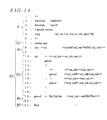
- FIG. 15 is a view showing a leading part of a source program of an assembler generated based on the source program in MC language shown in FIG. 14.
- FIG. 16 is a view showing cal function in the source program of the assembler generated based on the source program in MC language shown in FIG. 14.
- FIG. 17 is a view showing getval function in the source program of the assembler generated based on the source program in MC language shown in FIG. 14.
- FIG. 1 shows the development-support system for a CPU core according to the present embodiment with a structure of a peripheral equipment thereof.
- FPGA field programmable gate array
- the development support system 1 comprises a CPU 7, a CD-ROM drive 8, a hard disk 10, a memory 11, an input section 12 and a display unit 13, wherein the CPU 7 executes entire control of the personal computer 5, the CD-ROM drive 8 reads out various kinds of programs and data stored in the CD-ROM 4, the hard disk 10 stores the CPU core development support tool 6 or various kinds of files 9, the memory 11 is accessible in high speed for temporarily storing various kinds of programs which are stored in the hard disk 10, the input section 12 consists of a key board, a mouse and so forth, and the display unit 13 consists of a display, a printer and so forth. Further, the personal computer 5 has a communication driver 14 for communication through an RS-232C interface.
- the communication driver 14 is connected to an interface device 15 (ASAP: Adaptive Scan Agent Pod).
- the ASAP 15 is equipped with a special-purpose terminal for a boundary scan test, which is called as TAP (Test Access Port), and connected to an ASH (Adaptive Scan Handler) 16 in the FPGA 2.
- TAP Transmission Access Port
- ASH Adaptive Scan Handler
- the ASH 16 is a module for transmitting and receiving signals to and from the ASAP 15. Data transmitted from the communication driver 14 of the personal computer 5 is downloaded to the FPGA 2 through the ASAP 15 and ASH 16.
- Said CD-ROM 4 includes a source at a VHDL (VHSIC hardware description language: one kind of hardware description language) level as well as the CPU core development support tool 6.
- VHDL VHSIC hardware description language: one kind of hardware description language
- the user can customize the source at the VHDL level of the CPU core 3 which is read out from the CD-ROM 4, adds, changes and deletes instructions which can be used in an operating description program of the CPU core 3, and examines the personal computer 5 (hereinafter referred to as offline debugging) for the operating description program created by themselves.
- Customized source at VHDL level of the CPU core 3 is downloaded to the FPGA 2 through the communication driver 14, interface device 15 and ASH 16 after logic synthesis.
- operating description program for which offline debugging is completed is also downloaded to the FPGA 2 through the same route after assembled.
- the CPU core development support tool 6 (hereinafter referred to as development support tool) which is installed in the personal computer 5 from said CD-ROM 4.
- the CPU core development support tool 6 comprises a compiler 21, an assembler 22, a simulator section 23 and a VHDL renewal section 24 (renewal means in claims).
- the compiler 21 (hereinafter, referred to as assembler generating compiler) generates an assembler for a source program in assembly language describing operations of the CPU core 3.
- the assembler 22 assembles the source program in assembly language describing operations of the CPU core 3.
- the simulator section 23 is an interpreter for sequentially interpreting and performing the source program describing operations of the CPU core 3 on a step-by-step basis.
- the VHDL renewal section 24 renews the source at VHDL level of the CPU core 3 based on information directed by the user.
- the assembler generating compiler 21 comprises an MC (Master C) section 25 and an assembler generator 26.
- the MC section 25 defines a grammatical rule of assembly language that can be used in operating description program of the CPU core 3, and analyses syntaxes of said grammatical rule.
- the assembler generator 26 generates a source program of the assembler in C-language according to said grammatical rule based on the syntax analysis of the grammatical rule by the MC section 25.
- Said assembler 22 is composed of the object program created by compiling the source program of the assembler generated by said assembler generator 26.
- the development support tool 6 has a screen 31 for customizing the CPU core 3, and the user employs a register defining screen 32 (direction means in claims) and an instruction defining screen 33 (defining means in claims) in said customizing screen 31, thereby customizing registers in the CPU core 3, and instructions of assembly language that can be used in the operating description program of the CPU core 3.
- the user inputs from the register defining screen 23 information about addition, change or deletion of registers (hereinafter referred to as register defining information). Also, in order to customize instructions of assembly language, the user inputs from the instruction defining screen 33 information about addition, change or deletion of the assembly language (hereinafter referred to as instruction defining information). After the user finishes inputting these defining information, and clicks a setting button 34 through a mouse included in the input section 12 shown in FIG. 1, the VHDL renewal section 24 shown in FIG. 2 renews the source of VHDL level of the CPU core 3 based on these defining information, and besides, the assembler generating compiler 21 generates a source program of the assembler 22 based on these defining information. Further, the simulator section 23 gets in an available state for operation based on these defining information.
- the VHDL renewal part 24 adds the Z-REG 41 into the source at VHDL level of the CPU core 3, and changes contents of the SA-MUX 42 based on these information. Also, the assembler generating compiler 21 generates assembler that new grammatical rules are taken in correspondence with the addition of the Z-REG 41 and LDZ instruction, based on information of adding the Z-REG 41 and LDZ instruction that are respectively input from the register defining screen 32 and instruction defining screen 33.
- the Z-REG 41 and LDZ instruction can be used in the simulator section 23.
- the operation is defined by employing simplified language known as MC (master C) language (refer to FIGS. 11 - 14).
- MC master C
- FIGS. 11 - 14 simplified language
- only the register that is displayed in the register definition screen 32 can be used.
- the simulator section 23 has a debugging screen 51, wherein the user invokes a debugger set screen 53, an assembling direction screen 54, and an editor screen (not shown) and the like from a pull-down menu 52 of the debugging screen 51, and carry out processing such as a direction for the debugger (e.g., setting of a break point), correction of the operating description program of the CPU core 3, assembly of the corrected operating description program and so forth. Further, the user can debug the operating description program by sequentially interpreting and executing the operating description program in step-by-step with the interpreter included in the simulator section 23.
- a direction for the debugger e.g., setting of a break point
- Functions as a debugger included in the simulator section 23 are basically similar to functions of a normal debugger such as setting of a break point, tracing, a memory dump, memory rewriting and so forth.
- the point which is different from functions of the normal debugger is that the user can simulate input from another IP 57 (refer to FIG. 7) in the FPGA 2 in the debugging processing of the present embodiment. Consequently, using the simulator section 23, the user can examine the data generated in the CPU core 3 from the IP 57.
- the assembler 22 classifies the label 56 in the operating description language program into labels of a program segment and a data segment, and creates a symbol table 67 (refer to FIG. 9) which consists of sets of labels for each of segments.
- the simulator section 23 refers to the symbol table 67, thereby easily distinguishing between labels of the program segment and data segment when the interpreter interprets the operating description program. As described above, it should be noted that the simulator section 23 operates based on information input from the register defining screen 32 and instruction defining screen 33 shown in FIG. 3.
- the development support system 1 aims to customize the CPU core 3 according to specifications of various kinds of the IPs 57 on the FPGA 2, and examine the CPU core 3 according to customized contents. Functions required in the CPU core 3 generally differ in response to specifications of the IPs 57 as targets. Accordingly, it is preferrable to change the architecture and operating description program of the CPU core 3 in response to the IPs 57 on the FPGA 2.
- the development support system 1 makes it possible to customize and examine the CPU core 3 in response to specifications of the IPs 57. Concretely explaining, the user first determines registers in the CPU core 3, and specifications of addition, change and deletion of instructions (#1), and then, in response to the specifications, customizes registers of the CPU core 3, and instructions of the assembly language from the customizing screen 31 shown in FIG. 3, besides carries out the offline debugging for the operating description program from the debugging screen 51 shown in FIG. 5 in response to specifications of the customized registers and instructions of assembly language (#2).
- the user creates the source at VHDL level of the IPs 57 as targets (#3), and executes logic synthesis of the source of said IPs 57 and the source at VHDL level in the CPU core 3 renewed by the VHDL renewal section 24 (#4).
- the user connects the FPGA 2 with the personal computer 5 through the ASAP 15, and downloads the object program of the operating description program which is debugged in offline in #2, and the result of logic synthesis in #4 to the FPGA 2 (#5).
- the user carries out an actual CPU core 3 test (online debug) on the FPGA 2 by transmitting and receiving data to and from the CPU core 3 on the FPGA 2 from the personal computer 5 in a state that the personal computer 5 and the FPGA 2 are connected with each other (#6).
- an actual CPU core 3 test online debug
- VHDL original source file VHDL source (VHDL source read out from the CD-ROM 4 in an initial state) of the present CPU core 3.
- the instruction defining screen 33 displays instruction defining information in response to a file (hereinafter referred to as basic grammatical rule file) 62 storing basic grammatical rule (source of basic grammatical source in the assembly language read out from the CD-ROM 4 in an initial state) of the assembly language for the present operating description program.
- basic grammatical rule file storing basic grammatical rule (source of basic grammatical source in the assembly language read out from the CD-ROM 4 in an initial state) of the assembly language for the present operating description program.
- the CPU core development support tool 6 creates an instruction operating and register defining file 64 storing these defining information, and at the same time creates a file (hereinafter referred to as VHDL new source file) 63 of VHDL source in the new CPU core 3 which reflects these defining information.
- the assembler generating compiler 21 in the CPU core development support tool 6 generates an augmented grammatical rule which embodies new grammatical rule in the basic grammatical rule of the assembly language in response to defining contents of new registers and instructions of assembly language, and changes the contents of the basic grammatical rule file 62 into said augmented grammatical rules, and at the same time, generates a source program of the assembler corresponding to said augmented grammatical rule (#12). After that, it stores the created source program into an assembler source file 68. The user compiles said assembler source, thereby obtaining an object program of a desired assembler which embodies a new grammatical rule (#13). Said object program of the assembler is stored as an assembler object file 69 in the hard disk 10 shown in FIG. 1.
- the assembler 22 creates an object file 66 of operating description program, and at the same time, outputs the symbol table 67 for offline debugging based on various kinds of the labels 56 (refer to FIG. 5) in the source of the operating description program.
- the user starts the offline debugging (#16), and using the interpreter function of the simulator section 23, carries out each of instructions in a source file 65 in operating description program in step-by-step (#17), and then, carries out the operating description program.
- the procedure from #11 to #17 is repeated. If it is not necessary to customize the CPU core 3, and the problem can be solved by correcting operating description program (NO in #19), after the user invokes an editing screen from the customizing screen 31, and corrects the operating description program in said editing screen (#20), the procedure from #15 to #17 is repeated.
- the user customizes registers and instructions of assembly language, and creates the instruction operating and register defining file 64
- the assembler generating compiler 21 generates an augmented grammatical rule which embodies a new grammatical rule, based on the instruction operating and register defining file 64 and basic grammatical rule file 62, and rewrites the contents of the basic grammatical rule file 62 into the augmented grammatical rule; and at the same time, generates a source program of the assembler in response to said grammatical rule, and outputs it as the assembler source file 68.
- a compiler 70 Based on said assembler source file 68, a compiler 70 outputs the assembler's object program (hereinafter simply referred to as assembler) 22.
- said assembler 22 Based on the source file 65 of operating description program created by the user, said assembler 22 creates the file 66 which stores the object program of said operating description program, and at the same time, classifies the label 56 in the source of the operating description program into the label 56 of the program segment and the label 56 of data segment, to thereby create the symbol table 67 consisting of sets of the label 56 at every segment.
- the simulator section 23 operates based on said symbol table 67, instruction operating and register defining file 64 and source file 65 of operating description program.
- the VHDL renewal section 24 renews the contents of the VHDL original source file 61 corresponding to the circuit of the CPU core 3, thereby creating a VHDL new source file.
- the CPU 7 in the personal computer downloads the result of the logic synthesis to the FPGA 2 through the communication driver 14, ASAP 15 and ASH 16 in the FPGA 2.
- the user downloads the circuit of the new CPU core 3 and the operating description program of the CPU core 3 into the FPGA 2, thereby making it possible to construct the CPU core 3 on the FPGA 2, and start the online debugging for the CPU core 3.
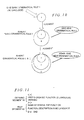
- augmentation processing of grammatical rule performed by the assembler generating compiler 21 is explained. If the user adds a new grammatical rule of assembly language from the customizing screen 31 shown in FIG. 3, the assembler generating compiler 21 generates a new augmented grammatical rule II which embodies a new grammatical rule after inheriting and succeeding a basic grammatical rule I of the assembly language in MC language that is read from the basic grammatical rule file 62.
- the assembler generating compiler 21 generates a re-augmented grammatical rule III which embodies the new grammatical rule after inheriting and succeeding the previously-given grammatical rules I and II.
- the assembler generating compiler 21 augments the grammatical rule so as to embody the new grammatical rule after inheriting and succeeding the previously-given grammatical rule, to thereby generate the source program of assembler 22 corresponding to the augmented grammatical rule.
- the user compiles the source program, thereby obtaining assembler 22 that corresponds to the augmented grammatical rule.
- the grammatical rule stored in said basic grammatical rule file 62 is created in MC language that is simplified language in a description form similar to BNF (Buckus Normal Form).
- the assembler generating compiler 21 Based on the source program of the basic grammatical rule of the assembly language described in MC language read out from the basic grammatical rule file 62, and new grammatical rule input from the customizing screen 31 by the user, the assembler generating compiler 21 generates the source program of the augmented grammatical rule in MC language, and renews the contents of the basic grammatical rule file 62 into the source program of said augmented grammatical rules, and at the same time, converts the source program described in MC language into the source program of the assembler 22 described in C language.
- the assembler generating compiler 21 reads the renewed basic grammatical rule file 62, and extracts a literal train as a token in a line-by-line, and creates a function of the assembler 22 in C language according to the rule of MC language.
- the description method and grammar of the defining segment 81 are same as in the case of C language.
- the user describes variables used in the rule segment 82, definition such as prototype declaration, or functions created by the user and used in the rule segment 82, into the defining segment 81 in C language.
- the assembler generating compiler 21 outputs the described contents in said defining segment 81 as they are, into the source program of the assembler 22.
- the user is required to describe the rule segment 82 in MC language.
- the function in MC language described in the rule segment 82 is converted into the function in C language by the assembler generating compiler 21, and output into the source program of the assembler 22.
- the user has to define a top function created in MC language in a syntax sentence in the top of the rule segment 82, and describe an End sentence in the end.
- sections from 83 to 87 correspond to the rule segment 82.
- a left side is a name of a function while a right side means processing of said function.
- the user describes function 1 in the left side, to thereby define contents of function 1.
- the contents of an upper side of the basic context in the figure indicates that, executing function 1 performs function 2, and when a return value of function 2 is 0, contents of ⁇ sentence>> is performed.
- the contents of a lower side indicates that, instead of processing by function 2, comparison processing between a literal train ("letter") which is enclosed by double quotation marks and an input token is carried out, and the contents of ⁇ sentence>> is also performed even in the case that these are same as each other.
- Parenthesis marks and their meaning which can be used in the rule segment 82 in FIG. 11 are as follows:
- the assembler generating compiler 21 has various kinds of normal functions that can be used in the rule segment 82 in FIG. 11.
- the user can define the grammatical rule of the assembly language by using these normal functions.
- the assembler generating compiler 21 Based on the source program in MC language shown in FIG. 14, the assembler generating compiler 21 generates the source program of the assembler 22 in C-language shown in FIGS. 15 - 17.
- the defining segment 81 in FIG. 14 corresponds to a working section 91 in FIG. 15, and defining sentences 83 - 86 in FIG. 14 respectively correspond to functions 93 - 96 in FIGS. 15 - 17.
- the assembler generating compiler 21 generates the source program of the assembler 22 in response to the grammatical rule given by the user in MC language.
- the assembler generating compiler 21 Based on the source program in MC language describing the basic grammatical rule of assembly language that can be used in the CPU core 3, and information about addition, changes or deletion of instructions of the assembly language input from the instruction defining screen 33, the assembler generating compiler 21 generates the source program of the assembler 22 in which the new grammatical rule is taken in the basic grammatical rule of the assembly language in correspondence to information about addition, changes and deletion of the instructions.
- the instructions of the assembly language that is used in the CPU core 3 can be added, changed or deleted in accordance with the specifications of other IPs 57 in the FPGA 2.
- VHDL renewal section 24 renews the VHDL source of the CPU core 3, thereby making it possible to easily add, change and delete the registers in the CPU core 3 in accordance with the specifications of other IPs 57 of the FPGA 2. This allows to easily construct the CPU core 3 in response to the specifications of other IPs 57. Also, if there is any unwanted register in the CPU core 3, the register can easily be deleted from the source in the hardware description language level of the CPU core 3, so that the simple CPU core 3 can be constructed on the FPGA 2.
Landscapes
- Engineering & Computer Science (AREA)
- Computer Hardware Design (AREA)
- Physics & Mathematics (AREA)
- Theoretical Computer Science (AREA)
- Evolutionary Computation (AREA)
- Geometry (AREA)
- General Engineering & Computer Science (AREA)
- General Physics & Mathematics (AREA)
- Devices For Executing Special Programs (AREA)
- Stored Programmes (AREA)
Applications Claiming Priority (2)
| Application Number | Priority Date | Filing Date | Title |
|---|---|---|---|
| JP2000028902A JP2001216337A (ja) | 2000-02-01 | 2000-02-01 | Cpuコアの開発支援システムとその開発支援方法及び開発支援用プログラムを記録した記録媒体 |
| JP2000028902 | 2000-02-01 |
Publications (2)
| Publication Number | Publication Date |
|---|---|
| EP1122660A2 true EP1122660A2 (fr) | 2001-08-08 |
| EP1122660A3 EP1122660A3 (fr) | 2003-07-02 |
Family
ID=18554236
Family Applications (1)
| Application Number | Title | Priority Date | Filing Date |
|---|---|---|---|
| EP01300652A Withdrawn EP1122660A3 (fr) | 2000-02-01 | 2001-01-25 | Système et méthode de support de développement de noyau CPU et moyen de stockage associé pour mémoriser le programme de support de développement |
Country Status (3)
| Country | Link |
|---|---|
| US (1) | US20010011214A1 (fr) |
| EP (1) | EP1122660A3 (fr) |
| JP (1) | JP2001216337A (fr) |
Families Citing this family (5)
| Publication number | Priority date | Publication date | Assignee | Title |
|---|---|---|---|---|
| JP2004087867A (ja) * | 2002-08-28 | 2004-03-18 | Renesas Technology Corp | 半導体集積回路装置 |
| JP2006031261A (ja) * | 2004-07-14 | 2006-02-02 | Matsushita Electric Ind Co Ltd | マルチメディア処理システム |
| US8087007B2 (en) * | 2006-05-08 | 2011-12-27 | Assima Ltd. | System and method for software prototype-development and validation and for automatic software simulation re-grabbing |
| JP5009979B2 (ja) * | 2006-05-22 | 2012-08-29 | コーヒレント・ロジックス・インコーポレーテッド | 処理システムでのソフトウェアプログラムの実行に基づくasicの設計 |
| US12412014B1 (en) * | 2022-08-31 | 2025-09-09 | Cadence Design Systems, Inc. | IC chip with IC design modification detection |
Family Cites Families (5)
| Publication number | Priority date | Publication date | Assignee | Title |
|---|---|---|---|---|
| JP3205406B2 (ja) * | 1992-11-10 | 2001-09-04 | 富士通株式会社 | 参照対象変数決定処理方法および翻訳処理システム |
| US5784593A (en) * | 1995-09-29 | 1998-07-21 | Synopsys, Inc. | Simulator including process levelization |
| JP2869379B2 (ja) * | 1996-03-15 | 1999-03-10 | 三菱電機株式会社 | プロセッサ合成システム及びプロセッサ合成方法 |
| US6584525B1 (en) * | 1998-11-19 | 2003-06-24 | Edwin E. Klingman | Adaptation of standard microprocessor architectures via an interface to a configurable subsystem |
| US6477683B1 (en) * | 1999-02-05 | 2002-11-05 | Tensilica, Inc. | Automated processor generation system for designing a configurable processor and method for the same |
-
2000
- 2000-02-01 JP JP2000028902A patent/JP2001216337A/ja not_active Withdrawn
-
2001
- 2001-01-25 EP EP01300652A patent/EP1122660A3/fr not_active Withdrawn
- 2001-02-01 US US09/775,066 patent/US20010011214A1/en not_active Abandoned
Also Published As
| Publication number | Publication date |
|---|---|
| US20010011214A1 (en) | 2001-08-02 |
| EP1122660A3 (fr) | 2003-07-02 |
| JP2001216337A (ja) | 2001-08-10 |
Similar Documents
| Publication | Publication Date | Title |
|---|---|---|
| US6608638B1 (en) | System and method for configuring a programmable hardware instrument to perform measurement functions utilizing estimation of the hardware implentation and management of hardware resources | |
| US6584601B1 (en) | System and method for converting graphical programs into hardware implementations which utilize probe insertion | |
| US5557774A (en) | Method for making test environmental programs | |
| US5504902A (en) | Multi-language generation of control program for an industrial controller | |
| EP1004085B1 (fr) | Conversion de programmes graphiques en realisations materielles et systeme correspondant | |
| US7266809B2 (en) | Software debugger and software development support system for microcomputer operable to execute conditional execution instruction | |
| US6536031B2 (en) | Method for generating behavior model description of circuit and apparatus for logic verification | |
| US5517432A (en) | Finite state machine transition analyzer | |
| US20050204344A1 (en) | Program analysis device, analysis method and program of same | |
| US20020007483A1 (en) | Interactive flow visualization, graphical editing and analysis of textual languages | |
| US20100251196A1 (en) | Method and System for Designing a Structural Level Description of an Electronic Circuit | |
| JPH11513512A (ja) | ディジタル信号プロセッサの製造方法 | |
| US5761079A (en) | Engineering change management system employing a smart editor | |
| EP1025492B1 (fr) | Procede de creation d'assembleurs et de simulateurs isa a partir de la description d'une machine | |
| JPH07302281A (ja) | 論理シミュレーションシステム及び論理変更方法 | |
| EP1376413A1 (fr) | Banc de test pour circuits integrés, en particulier mémoires | |
| EP1122660A2 (fr) | Système et méthode de support de développement de noyau CPU et moyen de stockage associé pour mémoriser le programme de support de développement | |
| US5276854A (en) | Method of multiple CPU logic simulation | |
| US6611924B1 (en) | Reducing code size of debug output statements | |
| KR20070058954A (ko) | 임베디드 시스템 프로토타입 개발 지원 장치 및 방법 | |
| JP2760682B2 (ja) | ハードウェアの設計支援システム | |
| KR100417655B1 (ko) | 최적화과정을참조하면서동작검증을행하도록디버그정보를생성하는디버그정보생성장치및프로그래머가최적화과정을의식하면서동작검증을할수있는디버그장치로이루어지는프로그램개발시스템 | |
| US20060190882A1 (en) | System and method for generating assertions using waveforms | |
| CN119002892B (zh) | 可编程逻辑单元仿真和代码生成系统、方法、介质装置及程序产品 | |
| JP3709626B2 (ja) | 回路検証装置 |
Legal Events
| Date | Code | Title | Description |
|---|---|---|---|
| PUAI | Public reference made under article 153(3) epc to a published international application that has entered the european phase |
Free format text: ORIGINAL CODE: 0009012 |
|
| AK | Designated contracting states |
Kind code of ref document: A2 Designated state(s): AT BE CH CY DE DK ES FI FR GB GR IE IT LI LU MC NL PT SE TR |
|
| AX | Request for extension of the european patent |
Free format text: AL;LT;LV;MK;RO;SI |
|
| PUAL | Search report despatched |
Free format text: ORIGINAL CODE: 0009013 |
|
| AK | Designated contracting states |
Designated state(s): AT BE CH CY DE DK ES FI FR GB GR IE IT LI LU MC NL PT SE TR |
|
| AX | Request for extension of the european patent |
Extension state: AL LT LV MK RO SI |
|
| AKX | Designation fees paid | ||
| REG | Reference to a national code |
Ref country code: DE Ref legal event code: 8566 |
|
| STAA | Information on the status of an ep patent application or granted ep patent |
Free format text: STATUS: THE APPLICATION IS DEEMED TO BE WITHDRAWN |
|
| 18D | Application deemed to be withdrawn |
Effective date: 20040103 |