EP1123109B1 - Contulakine-g, ses analogues et ses utilisations - Google Patents
Contulakine-g, ses analogues et ses utilisations Download PDFInfo
- Publication number
- EP1123109B1 EP1123109B1 EP99953226A EP99953226A EP1123109B1 EP 1123109 B1 EP1123109 B1 EP 1123109B1 EP 99953226 A EP99953226 A EP 99953226A EP 99953226 A EP99953226 A EP 99953226A EP 1123109 B1 EP1123109 B1 EP 1123109B1
- Authority
- EP
- European Patent Office
- Prior art keywords
- xaa
- glycan
- lys
- contulakin
- glu
- Prior art date
- Legal status (The legal status is an assumption and is not a legal conclusion. Google has not performed a legal analysis and makes no representation as to the accuracy of the status listed.)
- Expired - Lifetime
Links
Images







Classifications
-
- C—CHEMISTRY; METALLURGY
- C07—ORGANIC CHEMISTRY
- C07K—PEPTIDES
- C07K7/00—Peptides having 5 to 20 amino acids in a fully defined sequence; Derivatives thereof
- C07K7/04—Linear peptides containing only normal peptide links
- C07K7/08—Linear peptides containing only normal peptide links having 12 to 20 amino acids
-
- A—HUMAN NECESSITIES
- A61—MEDICAL OR VETERINARY SCIENCE; HYGIENE
- A61P—SPECIFIC THERAPEUTIC ACTIVITY OF CHEMICAL COMPOUNDS OR MEDICINAL PREPARATIONS
- A61P1/00—Drugs for disorders of the alimentary tract or the digestive system
-
- A—HUMAN NECESSITIES
- A61—MEDICAL OR VETERINARY SCIENCE; HYGIENE
- A61P—SPECIFIC THERAPEUTIC ACTIVITY OF CHEMICAL COMPOUNDS OR MEDICINAL PREPARATIONS
- A61P1/00—Drugs for disorders of the alimentary tract or the digestive system
- A61P1/04—Drugs for disorders of the alimentary tract or the digestive system for ulcers, gastritis or reflux esophagitis, e.g. antacids, inhibitors of acid secretion, mucosal protectants
-
- A—HUMAN NECESSITIES
- A61—MEDICAL OR VETERINARY SCIENCE; HYGIENE
- A61P—SPECIFIC THERAPEUTIC ACTIVITY OF CHEMICAL COMPOUNDS OR MEDICINAL PREPARATIONS
- A61P1/00—Drugs for disorders of the alimentary tract or the digestive system
- A61P1/12—Antidiarrhoeals
-
- A—HUMAN NECESSITIES
- A61—MEDICAL OR VETERINARY SCIENCE; HYGIENE
- A61P—SPECIFIC THERAPEUTIC ACTIVITY OF CHEMICAL COMPOUNDS OR MEDICINAL PREPARATIONS
- A61P21/00—Drugs for disorders of the muscular or neuromuscular system
-
- A—HUMAN NECESSITIES
- A61—MEDICAL OR VETERINARY SCIENCE; HYGIENE
- A61P—SPECIFIC THERAPEUTIC ACTIVITY OF CHEMICAL COMPOUNDS OR MEDICINAL PREPARATIONS
- A61P25/00—Drugs for disorders of the nervous system
- A61P25/04—Centrally acting analgesics, e.g. opioids
-
- A—HUMAN NECESSITIES
- A61—MEDICAL OR VETERINARY SCIENCE; HYGIENE
- A61P—SPECIFIC THERAPEUTIC ACTIVITY OF CHEMICAL COMPOUNDS OR MEDICINAL PREPARATIONS
- A61P25/00—Drugs for disorders of the nervous system
- A61P25/08—Antiepileptics; Anticonvulsants
-
- A—HUMAN NECESSITIES
- A61—MEDICAL OR VETERINARY SCIENCE; HYGIENE
- A61P—SPECIFIC THERAPEUTIC ACTIVITY OF CHEMICAL COMPOUNDS OR MEDICINAL PREPARATIONS
- A61P25/00—Drugs for disorders of the nervous system
- A61P25/14—Drugs for disorders of the nervous system for treating abnormal movements, e.g. chorea, dyskinesia
-
- A—HUMAN NECESSITIES
- A61—MEDICAL OR VETERINARY SCIENCE; HYGIENE
- A61P—SPECIFIC THERAPEUTIC ACTIVITY OF CHEMICAL COMPOUNDS OR MEDICINAL PREPARATIONS
- A61P25/00—Drugs for disorders of the nervous system
- A61P25/14—Drugs for disorders of the nervous system for treating abnormal movements, e.g. chorea, dyskinesia
- A61P25/16—Anti-Parkinson drugs
-
- A—HUMAN NECESSITIES
- A61—MEDICAL OR VETERINARY SCIENCE; HYGIENE
- A61P—SPECIFIC THERAPEUTIC ACTIVITY OF CHEMICAL COMPOUNDS OR MEDICINAL PREPARATIONS
- A61P25/00—Drugs for disorders of the nervous system
- A61P25/18—Antipsychotics, i.e. neuroleptics; Drugs for mania or schizophrenia
-
- A—HUMAN NECESSITIES
- A61—MEDICAL OR VETERINARY SCIENCE; HYGIENE
- A61P—SPECIFIC THERAPEUTIC ACTIVITY OF CHEMICAL COMPOUNDS OR MEDICINAL PREPARATIONS
- A61P25/00—Drugs for disorders of the nervous system
- A61P25/22—Anxiolytics
-
- A—HUMAN NECESSITIES
- A61—MEDICAL OR VETERINARY SCIENCE; HYGIENE
- A61P—SPECIFIC THERAPEUTIC ACTIVITY OF CHEMICAL COMPOUNDS OR MEDICINAL PREPARATIONS
- A61P25/00—Drugs for disorders of the nervous system
- A61P25/24—Antidepressants
-
- A—HUMAN NECESSITIES
- A61—MEDICAL OR VETERINARY SCIENCE; HYGIENE
- A61P—SPECIFIC THERAPEUTIC ACTIVITY OF CHEMICAL COMPOUNDS OR MEDICINAL PREPARATIONS
- A61P25/00—Drugs for disorders of the nervous system
- A61P25/28—Drugs for disorders of the nervous system for treating neurodegenerative disorders of the central nervous system, e.g. nootropic agents, cognition enhancers, drugs for treating Alzheimer's disease or other forms of dementia
-
- A—HUMAN NECESSITIES
- A61—MEDICAL OR VETERINARY SCIENCE; HYGIENE
- A61P—SPECIFIC THERAPEUTIC ACTIVITY OF CHEMICAL COMPOUNDS OR MEDICINAL PREPARATIONS
- A61P25/00—Drugs for disorders of the nervous system
- A61P25/30—Drugs for disorders of the nervous system for treating abuse or dependence
-
- A—HUMAN NECESSITIES
- A61—MEDICAL OR VETERINARY SCIENCE; HYGIENE
- A61P—SPECIFIC THERAPEUTIC ACTIVITY OF CHEMICAL COMPOUNDS OR MEDICINAL PREPARATIONS
- A61P29/00—Non-central analgesic, antipyretic or antiinflammatory agents, e.g. antirheumatic agents; Non-steroidal antiinflammatory drugs [NSAID]
-
- A—HUMAN NECESSITIES
- A61—MEDICAL OR VETERINARY SCIENCE; HYGIENE
- A61P—SPECIFIC THERAPEUTIC ACTIVITY OF CHEMICAL COMPOUNDS OR MEDICINAL PREPARATIONS
- A61P35/00—Antineoplastic agents
-
- A—HUMAN NECESSITIES
- A61—MEDICAL OR VETERINARY SCIENCE; HYGIENE
- A61P—SPECIFIC THERAPEUTIC ACTIVITY OF CHEMICAL COMPOUNDS OR MEDICINAL PREPARATIONS
- A61P43/00—Drugs for specific purposes, not provided for in groups A61P1/00-A61P41/00
-
- A—HUMAN NECESSITIES
- A61—MEDICAL OR VETERINARY SCIENCE; HYGIENE
- A61P—SPECIFIC THERAPEUTIC ACTIVITY OF CHEMICAL COMPOUNDS OR MEDICINAL PREPARATIONS
- A61P7/00—Drugs for disorders of the blood or the extracellular fluid
- A61P7/02—Antithrombotic agents; Anticoagulants; Platelet aggregation inhibitors
-
- A—HUMAN NECESSITIES
- A61—MEDICAL OR VETERINARY SCIENCE; HYGIENE
- A61P—SPECIFIC THERAPEUTIC ACTIVITY OF CHEMICAL COMPOUNDS OR MEDICINAL PREPARATIONS
- A61P9/00—Drugs for disorders of the cardiovascular system
-
- A—HUMAN NECESSITIES
- A61—MEDICAL OR VETERINARY SCIENCE; HYGIENE
- A61P—SPECIFIC THERAPEUTIC ACTIVITY OF CHEMICAL COMPOUNDS OR MEDICINAL PREPARATIONS
- A61P9/00—Drugs for disorders of the cardiovascular system
- A61P9/08—Vasodilators for multiple indications
-
- A—HUMAN NECESSITIES
- A61—MEDICAL OR VETERINARY SCIENCE; HYGIENE
- A61P—SPECIFIC THERAPEUTIC ACTIVITY OF CHEMICAL COMPOUNDS OR MEDICINAL PREPARATIONS
- A61P9/00—Drugs for disorders of the cardiovascular system
- A61P9/10—Drugs for disorders of the cardiovascular system for treating ischaemic or atherosclerotic diseases, e.g. antianginal drugs, coronary vasodilators, drugs for myocardial infarction, retinopathy, cerebrovascula insufficiency, renal arteriosclerosis
-
- A—HUMAN NECESSITIES
- A61—MEDICAL OR VETERINARY SCIENCE; HYGIENE
- A61P—SPECIFIC THERAPEUTIC ACTIVITY OF CHEMICAL COMPOUNDS OR MEDICINAL PREPARATIONS
- A61P9/00—Drugs for disorders of the cardiovascular system
- A61P9/12—Antihypertensives
-
- A—HUMAN NECESSITIES
- A61—MEDICAL OR VETERINARY SCIENCE; HYGIENE
- A61P—SPECIFIC THERAPEUTIC ACTIVITY OF CHEMICAL COMPOUNDS OR MEDICINAL PREPARATIONS
- A61P9/00—Drugs for disorders of the cardiovascular system
- A61P9/14—Vasoprotectives; Antihaemorrhoidals; Drugs for varicose therapy; Capillary stabilisers
-
- C—CHEMISTRY; METALLURGY
- C07—ORGANIC CHEMISTRY
- C07K—PEPTIDES
- C07K14/00—Peptides having more than 20 amino acids; Gastrins; Somatostatins; Melanotropins; Derivatives thereof
- C07K14/435—Peptides having more than 20 amino acids; Gastrins; Somatostatins; Melanotropins; Derivatives thereof from animals; from humans
- C07K14/575—Hormones
-
- C—CHEMISTRY; METALLURGY
- C07—ORGANIC CHEMISTRY
- C07K—PEPTIDES
- C07K9/00—Peptides having up to 20 amino acids, containing saccharide radicals and having a fully defined sequence; Derivatives thereof
- C07K9/001—Peptides having up to 20 amino acids, containing saccharide radicals and having a fully defined sequence; Derivatives thereof the peptide sequence having less than 12 amino acids and not being part of a ring structure
-
- A—HUMAN NECESSITIES
- A61—MEDICAL OR VETERINARY SCIENCE; HYGIENE
- A61K—PREPARATIONS FOR MEDICAL, DENTAL OR TOILETRY PURPOSES
- A61K38/00—Medicinal preparations containing peptides
Definitions
- the present invention is related to U.S. provisional patent applications Serial No. 60/105,015, filed on 20 October 1998, Serial No.60/128,561, filed on 9 April 1999 and Serial No. 60/130,661, filed on 23 April 1999.
- the present invention is directed to congesakin-G (which is the native glycosylated peptide), a des-glycosylated contulakin-G (termed Thr 10 -contulakin-G), and derivatives thereof, to a cDNA clone encoding a precursor of this mature peptide and to a precursor peptide.
- the invention is further directed to the use of this peptide as a therapeutic for anti-seizure, anti-inflammatory, anti-shock, anti-thrombus, hypotensive, analgesia, anti-psychotic, Parkinson's disease, gastrointestinal disorders, depressive states, cognitive dysfunction, anxiety, tardive dyskinesia, drug dependency, panic attack, mania, irritable bowel syndrome, diarrhea, ulcer, GI tumors, Tourette's syndrome, Huntington's chorea, vascular leakage, anti-arteriosclerosis, vascular and vasodilation disorders, as well as neurological, neuropharmalogical and neuropsychopharmacological disorders.
- Mollusks of the genus Conus produce a venom that enables them to carry out their unique predatory lifestyle. Prey are immobilized by the venom that is injected by means of a highly specialized venom apparatus, a disposable hollow tooth that functions both in the manner of a harpoon and a hypodermic needle.
- Venom may be used as a primary weapon to capture prey or as a defense mechanism. Many of these venoms contain molecules directed to receptors and ion channels of neuromuscular systems.
- peptides isolated from Conus venoms have been characterized. These include the ⁇ -, ⁇ - and ⁇ -conotoxins which target nicotinic acetylcholine receptors, muscle sodium channels, and neuronal calcium channels, respectively (Olivera et al., 1985). Conopressins, which are vasopressin analogs, have also been identified (Cruz et al.. 1987). In addition, peptides named conantokins have been isolated from Conus geographus and Conus tulipa (Mena et al., 1990; Haack et al., 1990).
- Patent No. 5,633,347 Recently, peptides named contryphans containing D-tryptophan residues have been isolated from Conus radiatus (U.S. Serial No. 09/061,026), and bromo-tryptophan conopeptides have been isolated from Conus imperialis and Conus radiatus (U.S. Serial No. 08/785,534).
- U.S. Patent No. 5,432,155 describes the synthesis of several conotoxins including the synthesis of a peptide named J-004 having the sequence Xaa 1 Ser-Glu-Glu-Gly-Gly-Ser-Asn-Ala-Thr-Lys-Lys-Xaa 2 -Tyr-Ile-Leu (SEQ ID NO:1) in which Xaa 1 is pyro-Glu, Xaa 2 is proline and Thr 10 may be glycosylaied.
- This patent does not disclose the nature of the glycosylation.
- the present invention is directed to contulakin-G (glycosylated peptides, to derivatives thereof to a cDNA clone encoding a precursor of said peptides and to a precursor peptide as defined in the appended claims.
- the invention is further directed to the use of said peptides as a therapeutic for anti-seizure, anti-inflammatory, anti-shock, anti-thrombus, hypotensive, analgesia, anti-psychotic, Parkinson's disease, gastrointestinal disorders, depressive states, cognitive dysfunction, anxiety, tardive dyskinesia, drug dependency, panic attack, mania, irritable bowel syndrome, diarrhea, ulcer, GI tumors, Tourette's syndrome, Huntington's chorea, vascular leakage, anti-arteriosclerosis, vascular and vasodilation disorders, as well as neurological, neuropharmacological and neuropsychopharmacological disorders.
- the Sparakin-G has the following formula: where Xaa 1 is pyro-Glu Xaa 2 is proline or hydroxyproline and Thr 10 is modified to contain an O-glycan as defined in the claims.
- X 2 is preferably proline.
- a glycan shall mean any N-, S- or O-linked mono-, di-, tri-, poly- or oligosaccharide that can be attached to any hydroxy, amino or thiol group of natural or modified amino acids by synthetic or enzymatic methodologies known in the art.
- the monosaccharides making up the glycan can include D-allose, D-altrose, D-glucose, D-mannose, D-gulose, D-idose, D-galactose, D-talose, D-galactosamine, D-glucosamine, D-N-acetyl-glucosamine (GlcNAc), D-N-acetyl-galactosamine (GalNAc), D-fucose or D-arabinose.
- These saccharides may be structurally modified as described herein, e.g., with one or more O-sulfate, O-phosphate, O-acetyl or acidic groups, such as sialic acid, including combinations thereof.
- the gylcan may also include similar polyhydroxy groups, such as D-penicillamine 2,5 and halogenated derivatives thereof or polypropylene glycol derivatives.
- the glycosidic linkage is beta and 1-4 or 1-3, preferably 1-3.
- the linkage between the glycan and the amino acid may be alpha or beta, preferably alpha and is 1-.
- Preferred glycans are described further herein, with the most preferred glycan being Gal( ⁇ 1 ⁇ 3)GalNAc( ⁇ 1 ⁇ ).
- the present invention is directed to a generic conparakin-G having the following general formula, Xaa 1 -Xaa 2 -Xaa 3 -Xaa 3 -Gly-Gly-Xaa 2 -Xaa 4 -Xaa 5 -Xaa 6 -Xaa 7 -Xaa 8 -Xaa 9 -Xaa 10 -Ile-Leu (SEQ ID NO:2), where Xaa 1 is pyro-Glu, Glu, Gln or ⁇ -carboxy-Glu; Xaa 2 is Ser, Thr or S-glycan modified Cys; Xaa 3 is Glu or ⁇ -carbox ⁇ -Glu; Xaa 4 is Asn, N-glycan modified Asn or S-glycan modified Cys; Xaa 5 is Ala or Gly; Xaa 6 is Thr, Ser, S-glycan modified Cys, Tyr or any unnatural hydroxy containing amino acid
- the C-terminus contains a free carboxyl group, is amidated is acylated, contains a glycan or contains an aldehyde. It is preferred that the C-terminus contains a free carboxyl.
- This peptide may further contain one or more glycans as described above. The glycans may occur at residues 2, 7, 8, 10 and 16.
- the above and other unnatural basic amino acids, unnatural hydroxy containing amino acids or unnatural aromatic amino acids are described in Building Block Index, Version 2.2, by and available from RSP Amino Acid Analogues, Inc., Worcester, MA.
- the present invention is directed to analogs of Contakin-G or-the generic conakin-G.
- These analogs include N-terminal truncations of contulakin-G or the generic rectifakin-G up to and including Thr 10 .
- Lys 11 is N-glycosylated using a carboxylated modified linker.
- This N-glycosylated Lys 11 can be represented as shown in Figure 1 (Toth et al., 1999), in which R 2 , R 3 and R 4 are as described herein.
- R 2 , R 3 and R 4 are as described herein.
- the residue proximal to the truncation is substituted with a glycosylated serine.
- Additional analogs include peptides in which Ser-O-glycan, Thr-O-glycan or Cys-S-glycan is substituted for a residue at position 1-9.
- the present invention is directed to uses of the peptides described herein as a therapeutic for anti-seizure, anti-inflammatory, anti-shock, anti-thrombus, hypotensive, analgesia, anti-psychotic, Parkinson's disease, gastrointestinal disorders, depressive states, cognitive dysfunction, anxiety, tardive dyskinesia, drug dependency, panic attack, mania, irritable bowel syndrome, diarrhea, ulcer, GI tumors, Tourette's syndrome, Huntington's chorea, vascular leakage, anti-arteriosclerosis, vascular and vasodilation disorders, as well as neurological, neuropharmacological and neuropsychopharmacological disorders..
- analgesia is induced in a mammal using one of the peptides described herein.
- epilepsy or convulsions are treated in a mammal.
- schizophrenia is treated in an mammal.
- tardive dyskinesia and acute dystonic reactions are treated in a mammal.
- inflammation is treated in a mammal.
- the invention is further directed to the use of the claimed peptides as a therapeutic for anti-seizure, anti-inflammatory, anti-shock, anti-thrombus, hypotensive, analgesia, anti-psychotic, Parkinson's disease, gastrointestinal disorders, depressive states, cognitive dysfunction, anxiety, tardive dyskinesia, drug dependency, panic attack, mania, irritable bowel syndrome, diarrhea, ulcer, GI tumors, Tourette's syndrome, Huntington's chorea, vascular leakage, anti-arteriosclerosis, vascular and vasodilation disorders, as well as neurological, neuropharmalogical and neuropsychopharmacological disorders.
- the present invention is directed to superbakin-G and conakin-G analogues as defined in the appended claims.
- These peptides may contain single or multiple glycan post-translational modifications at one or more, up to all, of the hydroxyl sites of the peptides.
- the glycans are as described herein.
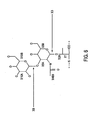
- the native O-glycan attached to contulakin-G is shown in Figure 2.
- Figure 3 shows analogs of the glycan which can be attached to one or more residues of contulakinG.
- R 1 is an amino capable of being derivatized with a gylcan either chemically or enzymatically;
- R 2 is OH, NH 3 NHSO 3 Na, NHAc, O-sulphate, O-phosphate, or O-glycan;
- R 3 is H, SO 3 , PO 3 , acetyl, sialic acid or monosaccharide;
- R 4 is H, SO 3 , PO 3 , acetyl or monosaccharide;
- R 5 is OH, NH 2 , NHSO 3 Na, NHAc, O-sulphate, O-phosphate, O-monosaccharide or, O-acetyl;
- R 6 is H, SO 3 , PO 3 , acetyl or monosaccharide;
- R 7 is H, SO 3 , PO 3 , acetyl or monosaccharide;
- R 8 is H, SO 3 , PO 3 , acetyl or monos
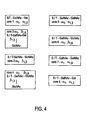
- the preferred core glycans which can be used to modify contulakin-G or analogs disclosed herein are shown in Figure 4. Further branching from these cores using the monosaccharides described herein may also be made. Preferred glycosidic linkages are specified by cores 5 and 7 of Figure 4 with further homolgation of the glycan at positions 3, 4 and 6 of the GalNAc template using the monosaccharides described herein Any free hydroxy function may be O-sulphated, O-phosphorylated or O-aceylated.
- glycosylated conopeptide (contulakin-G or CGX-1160) has higher in vivo potency than the unglycosylated conopeptide (Thr 10 -contulakin-G or CGX-1063), although their in vitro potencies are about the same.
- the glycosylation may be important for better binding with the receptor, and/or enhanced delivery of the conopeptide to its site of action, and/or inhibition of degradation of the conopeptide.
- the present invention is further directed to DNA sequence coding for contulakin-G as described in further herein.
- the invention is further directed to the propeptide for contulakin-G as described in further detail herein.
- the present invention relates to a novel linear glycosylated contulakin-G, and derivatives thereof that are useful as pharmaceutical agents, to methods for their production, to pharmaceutical compositions which include these, compounds and a pharmaceutically acceptable carrier,
- the novel compounds of the present invention are central nervous system agents and their biological actions are effected at a novel "Contulakin-G binding site on the neurotensin receptor". More particularly, the novel compounds of the present invention are analgesics, anti-inflammatory agents, antipsychotic agents for treating psychoses such as schizophrenia and display potent anti-seizure properties in established animal models of epilepsy.
- PAIN Chronic or intractable pain, such as may occur in conditions such as bone degenerative diseases and, cancer, is a debilitating condition which is treated with a variety of analgesic agents, and often opioid compounds, such as morphine.
- C- and A- fibers which project from peripheral sites to the spinal cord carry nociceptive signals.
- Polysynaptic junctions in the dorsal horn of the spinal cord are involved in the relay and modulation of sensations of pain to various regions of the brain, including the periaqueductal grey region.
- Analgesia or the reduction of pain perception, can be effected directly by decreasing transmission along such nociceptive pathways.
- Analgesic opiates are thought to act by mimicking the effects of endorphin or enkephalin peptide-containing neurons, which synapse presynaptically at the C- or A- fiber terminal and which, when they fire, inhibit release of neurotransmitters, including substance P. Descending pathways from the brain are also inhibitory on C- and A-fiber firing.
- neuropathic pain is generally a chronic condition attributable to injury or partial transection of a peripheral nerve. This type of pain is characterized by hyperesthesia, or enhanced sensitivity to external noxious stimuli.
- the hyperesthetic component of neuropathic pain does not respond to the same pharmaceutical interventions as does more generalized and acute forms of pain.
- Opioid compounds such as morphine, while effective in producing analgesia for many types of pain, are not always effective, and may induce tolerance in patients.
- opioid narcotics When a subject is tolerant to opioid narcotics, increased doses are required to achieve a satisfactory analgesic effect. These compounds can produce side effects, such as respiratory depression, which can be life threatening.
- opioids frequently produce physical dependence in patients. Dependence appears to be related to the dose of opioid taken and the period of time over which it is taken by the subject For this reason, alternate therapies for the management of chronic pain are widely sought after.
- compounds which serve as either a replacement for or as an adjunct to opioid treatment in order to decrease the dosage of analgesic compound required have utility in the treatment of pain, particularly pain of the chronic, intractable type.
- Schizophrenia is a neurogenic disorder that is currently treated primarily with neuroleptic compounds such as phenothiazines and butyrophenones, which block dopamine receptors. Since conokin-G has been shown to act at a site on certain neurotensin receptors, and neurotensin actions are implicated in the etiology of schizophrenia (Nemeroff et al. 1992), then conopeptides are useful for the treatment of schizophrenia and related disorders.
- the in vitro selection criteria for conopeptides useful in treating schizophrenia include: a)activation of Contulakin-G sites; b) high affinity reversible binding to a Contulakin-G binding site localized to the limbic region of the brain, and c) inhibition of dopamine release from brain regions, particularly limbic brain regions.
- Tardive dyskinesia and acute dystonic reactions are movement disorders that are commonly produced as side effects of anti-psychotic therapy employing dopamine antagonists, such as haloperidol. These disorders are characterized by supersensitivity of dopamine receptors in certain regions of the brain associated with control of movement, particularly the basal ganglia. Currently, intermittent antipsychotic therapy is used in attempt to avoid onset of the disorder, and such disorders are treated by withdrawal of therapy.
- Criteria for selection of omega-conopeptides for treatment of tardive dyskinesia include: a) activation of Contulakin-G sites; b) high affinity reversible binding to the Contulakin-G site ; c) inhibition of dopamine release from striatal brain regions, and other regions of the basal ganglia, and d) a ratio of inhibition of dopamine release in the basal ganglia to inhibition of dopamine release in the limbic regions.
- Compounds showing sufficiently high activities in in vitro screening assays are then tested in the rat striatal turning model, described above.
- Compounds useful in the method of treating such movement disorders when injected to the striatum on the side of the brain contralateral to the lesion, correct the turning behavior.
- INFLAMMATION A neurogenic component of inflammation has been described, in that blockade of the sympathetic nervous system, and particularly blockade of beta-adrenergic receptors, is helpful in reducing inflammatory joint damage.
- Compounds useful in the treatment of inflammation would be expected to have the following in vitro properties: a) activation of novel Contulakin-G sites; b) high affinity binding to the Contulakin-G binding sites, and c) inhibition of norepinephrine release from nervous tissue.
- Compounds exhibiting sufficiently high activities in such in vitro screening assays are tested in an animal model of rheumatoid arthritis.
- EPILEPSY Epilepsy is a general term which describes disorders of the central nervous system characterized by repeated episodes of seizures. Such seizures may involve the sensory, autonomic or motor nervous systems and are recognized electrophysiologically by the presence of abnormal electric discharges in the brain. The pathophysiology of such abnormal discharge activity is not well understood; however, there is evidence that loss of inhibitory neural input, such as GABA input, is involved in at least some epileptic seizures.
- benzodiazepines e.g., diazepam
- benzodiazepines e.g., diazepam
- biochemical effects of other anti-epileptic compounds include stabilization of excitable membranes by inhibition of voltage-sensitive sodium or potassium channels (phenytoin), and general depression of neuronal function characterized by facilitation of GABAergic transmission, inhibition of the effects of excitatory (glutaminergic) neurotransmission and depression of neurotransmitter release (phenobarbital).
- Compounds useful in the treatment of epilepsy would be expected to have the following in vitro properties: activation of novel Contulakin-G sites; b) high affinity binding to the Conopeptide binding sites, and c) inhibition of excitatory neurotransmitter release from nervous tissue. Compounds exhibiting sufficiently high activities in such in vitro screening assays are tested in an established animal model of epilepsy.
- peptides, derivatives and analogs of the present invention have been found to bind to the neurotensin receptor, these compounds are also useful in connection with conditions associated with the neurotensin receptor and for which neurotensin-like compounds or other compounds have been shown to be active.
- These activities include: methamphetamine antagonists, antipsychotic agents, cerebral medicaments, analgesic agents, anti-endotoxin shock effect, protease inhibition action (an anti-thrombin action, an antiplasmin action), a hypotensive action, an anti-DIC action, an anti-allergic action, a wound healing action, cerebral edema, an edema of the lung, an edema of the trachea, a thrombus, an arteriosclerosis, a burn, and a hypertension, allergic diseases (such as a bronchial asthma and a pollenosis), reducing hemorrhage from a sharp trauma such as an injured tissue portion at the time of surgical operation, a lacerated wound of a brain or other tissues caused by a traffic accident and the like, and for relaxing and curing swelling, pain inflammation caused by trauma, suppressing internal hemorrhage caused by a dull trauma, edemata and inflammation which are accompanied with the internal hemorrhage, suppression
- the conopeptides of the present invention are identified by isolation from Conus venom.
- the conopeptides of the present invention are identified using recombinant DNA techniques by screening cDNA libraries of various Conus species using conventional techniques with degenerate probes. Clones which hybridize to these probes are analyzed to identify those which meet minimal size requirements, i.e., clones having approximately 300 nucleotides (for a propeptide), as determined using PCR primers which flank the cDNA cloning sites for the specific cDNA library being examined. These minimal-sized clones are then sequenced. The sequences are then examined for the presence of a peptide having the characteristics noted above for conopeptides. The biological activity of the peptides identified by this method is tested as described herein, in U.S. Patent No. 5,635,347 or conventionally in the art.
- peptides are sufficiently small to be chemically synthesized.
- General chemical syntheses for preparing the foregoing conopeptides are described hereinafter, along with specific chemical synthesis of conopeptides and indications of biological activities of these synthetic products.
- Various ones of these conopeptides can also be obtained by isolation and purification from specific Conus species using the techniques described in U.S. Patent Nos. 4,447,356 (Olivera et al., 1984), 5,514,774 (Olivera et al.. 1996) and 5,591,821(Olivera et al. 1997).
- the conopeptides of the present invention can be obtained by purification from cone snails, because the amounts of conopeptides obtainable from individual snails are very small, the desired substantially pure conopeptides are best practically obtained in commercially valuable amounts by chemical synthesis using solid-phase strategy.
- the yield from a single cone snail may be about 10 micrograms or less of conopeptide.
- substantially pure is meant that the peptide is present in the substantial absence of other biological molecules of the same type; it is preferably present in an amount of at least about 85% purity and preferably at least about 95% purity.
- Chemical synthesis of biologically active conopeptides depends of course upon correct determination of the amino acid sequence.
- the conopeptides of the present invention may be isolated, synthesized and/or substantially pure.
- the conopeptides can also be produced by recombinant DNA techniques well known in the art. Such techniques are described by Sambrook et al. (1989). The peptides produced in this manner are isolated, reduced if necessary, and oxidized to form the correct disulfide bonds, if present in the final molecule.
- the peptides are synthesized by a suitable method, such as by exclusively solid-phase techniques, by partial solid-phase techniques, by fragment condensation or by classical solution couplings.
- the peptide chain can be prepared by a series of coupling reactions in which constituent amino acids are added to the growing peptide chain in the desired sequence.
- various coupling reagents e.g., dicyclohexylcarbodiimide or diisopropyl- carbonyldimidazole
- various active esters e.g., esters of N-hydroxyphthalimide or N-hydroxy-succinimide
- the various cleavage reagents to carry out reaction in solution, with subsequent isolation and purification of intermediates, is well known classical peptide methodology.
- the protecting group preferably retains its protecting properties and is not split off under coupling conditions
- the protecting group should be stable under the reaction conditions selected for removing the ⁇ -amino protecting group at each step of the synthesis
- the side chain protecting group must be removable, upon the completion of the synthesis containing the desired amino acid sequence, under reaction conditions that will not undesirably alter the peptide chain.
- peptides are not so prepared, they are preferably prepared using the Merrifield solid-phase synthesis, although other equivalent chemical syntheses known in the art can also be used as previously mentioned.
- Solid-phase synthesis is commenced from the C-terminus of the peptide by coupling a protected a-amino acid to a suitable resin.
- a suitable resin can be prepared by attaching an a-amino-protected amino acid by an ester linkage to a chloromethylated resin or a hydroxymethyl resin, or by an amide bond to a benzhydrylamine (BHA) resin or para-methylbenzhydrylamine (MBHA) resin.
- BHA benzhydrylamine
- MBHA para-methylbenzhydrylamine
- the C-terminal amino acid protected by Boc or Fmoc and by a side-chain protecting group, if appropriate, can be first coupled to a chloromethylated resin according to the procedure set forth in Horiki et al. (1978), using KF in DMF at about 60°C for 24 hours with stirring, when a peptide having free acid at the C-terminus is to be synthesized.
- the ⁇ -amino protecting group is removed, as by using trifluoroacetic acid (TFA) in methylene chloride or TFA alone.
- TFA trifluoroacetic acid
- the deprotection is carried out at a temperature between about 0°C and room temperature.
- Other standard cleaving reagents, such as HCl in dioxane, and conditions for removal of specific ⁇ -amino protecting groups may be used as described in Schroder and Lubke (1965).
- the remaining ⁇ -amino- and side chain-protected amino acids are coupled step-wise in the desired order to obtain the intermediate compound defined hereinbefore, or as an alternative to adding each amino acid separately in the synthesis, some of them may be coupled to one another prior to addition to the solid phase reactor.
- Selection of an appropriate coupling reagent is within the skill of the art. Particularly suitable as a coupling reagent is N,N'-dicyclohexylcarbodiimide (DCC, DIC, HBTU, HATU, TBTU in the presence of HoBt or HoAt).
- activating reagents used in the solid phase synthesis of the peptides are well known in the peptide art.
- suitable activating reagents are carbodiimides, such as N,N'-diisopropylcarbodiimide and N-ethyl-N'-(3-dimethylaminopropyl)carbodiimide.
- Other activating reagents and their use in peptide coupling are described by Schroder and Lubke (1965) and Kapoor (1970).
- Each protected amino acid or amino acid sequence is introduced into the solid-phase reactor in about a twofold or more excess, and the coupling may be carried out in a medium of dimethylformamide (DMF):CH 2 Cl 2 (1:1) or in DMF or CH 2 Cl 2 alone.
- DMF dimethylformamide
- the coupling procedure is repeated before removal of the ⁇ -amino protecting group prior to the coupling of the next amino acid.
- the success of the coupling reaction at each stage of the synthesis if performed manually, is preferably monitored by the ninhydrin reaction, as described by Kaiser et al. (1970).
- Coupling reactions can be performed automatically, as on a Beckman 990 automatic synthesizer, using a program such as that reported in Rivier et al. (1978).
- the intermediate peptide can be removed from the resin support by treatment with a reagent, such as liquid hydrogen fluoride or TFA (if using Fmoc chemistry), which not only cleaves the peptide from the resin but also cleaves all remaining side chain protecting groups and also the a-amino protecting group at the N-terminus if it was not previously removed to obtain the peptide in the form of the free acid.
- a reagent such as liquid hydrogen fluoride or TFA (if using Fmoc chemistry)
- TFA trifluoroacetic acid
- one or more scavengers such as anisole, cresol, dimethyl sulfide and methylethyl sulfide are included in the reaction vessel.
- Cyclization of the linear peptide is preferably affected, as opposed to cyclizing the peptide while a part of the peptido-resin, to create bonds between Cys residues.
- fully protected peptide can be cleaved from a hydroxymethylated resin or a chloromethylated resin support by ammonolysis, as is well known in the art, to yield the fully protected amide intermediate, which is thereafter suitably cyclized and deprotected.
- deprotection, as well as cleavage of the peptide from the above resins or a benzhydrylamine (BHA) resin or a methylbenzhydrylamine (MBHA), can take place at 0°C with hydrofluoric acid (HF) or TFA, followed by oxidation as described above.
- HF hydrofluoric acid
- TFA methylbenzhydrylamine
- a suitable method for cyclization is the method described by Cartier et al. (1996).
- compositions containing a compound of the present invention as the active ingredient can be prepared according to conventional pharmaceutical compounding techniques. See, for example, Remington's Pharmaceutical Sciences, 18th Ed. (1990, Mack Publishing Co., Easton, PA). Typically, an antagonistic amount of the active ingredient will be admixed with a pharmaceutically acceptable carrier.
- the carrier may take a wide variety of forms depending on the form of preparation desired for administration, e.g., intravenous, oral or parenteral.
- the compounds can be formulated into solid or liquid preparations such as capsules, pills, tablets, lozenges, melts, powders, suspensions or emulsions.
- any of the usual pharmaceutical media may be employed, such as, for example, water, glycols, oils, alcohols, flavoring agents, preservatives, coloring agents, suspending agents, and the like in the case of oral liquid preparations (such as, for example, suspensions, elixirs and solutions); or carriers such as starches, sugars, diluents, granulating agents, lubricants, binders, disintegrating agents and the like in the case of oral solid preparations (such as, for example, powders, capsules and tablets). Because of their ease in administration, tablets and capsules represent the most advantageous oral dosage unit form, in which case solid pharmaceutical carriers are obviously employed. If desired, tablets may be sugar-coated or enteric-coated by standard techniques.
- the compound may be dissolved in a pharmaceutical carrier and administered as either a solution or a suspension.
- suitable carriers are water, saline, dextrose solutions, fructose solutions, ethanol, or oils of animal, vegetative or synthetic origin.
- the carrier may also contain other ingredients, for example, preservatives, suspending agents, solubilizing agents, buffers and the like.
- the compounds When the compounds are being administered intrathecally, they may also be dissolved in cerebrospinal fluid.
- Administration of the active agent according to this invention may be achieved using any suitable delivery means, including:
- an active agent is delivered directly into the CNS, preferably to the brain ventricles, brain parenchyma, the intrathecal space or other suitable CNS location, most preferably intrathecally.
- targeting therapies may be used to deliver the active agent more specifically to certain types of cells, by the use of targeting systems such as antibodies or cell-specific ligands. Targeting may be desirable for a variety of reasons, e.g. if the agent is unacceptably toxic, if it would otherwise require too high a dosage, or if it would not otherwise be able to enter target cells.
- the active agents which are peptides, can also be administered in a cell based delivery system in which a DNA sequence encoding an active agent is introduced into cells designed for implantation in the body of the patient, especially in the spinal cord region.
- a cell based delivery system in which a DNA sequence encoding an active agent is introduced into cells designed for implantation in the body of the patient, especially in the spinal cord region.
- Suitable delivery systems are described in U.S. Patent No. 5,550,050 and published PCT Application Nos. WO 92/19195, WO 94/25503, WO 95/01203, WO 95/05452, WO 96/02286, WO 96/02646, WO 96/40871, WO 96/40959 and WO 97/12635.
- Suitable DNA sequences can be prepared synthetically for each active agent on the basis of the developed sequences and the known genetic code.
- the active agent is preferably administered in a therapeutically effective amount.
- the actual amount administered, and the rate and time-course of administration, will depend on the nature and severity of the condition being treated. Prescription of treatment, e.g. decisions on dosage, timing, etc., is within the responsibility of general practitioners or specialists, and typically takes into account the disorder to be treated, the condition of the individual patient, the site of delivery, the method of administration and other factors known to practitioners. Examples of techniques and protocols can be found in Remington's Pharmaceutical Sciences.
- the active agents of the present invention exhibit their effect at a dosage range of from about 0.001 ⁇ g/kg to about 500 ⁇ g/kg, preferably from about 0.01 ⁇ g/kg to about 100 ⁇ g/kg, of the active ingredient, more preferably, from about 0.10 ⁇ g/kg to about 50 ⁇ g/kg, and most preferably, from about 1 ⁇ g/kg to about 10 ⁇ g/kg.
- a suitable dose can be administered in multiple sub-doses per day.
- a dose or sub-dose may contain from about 0.1 ⁇ g to about 500 ⁇ g of the active ingredient per unit dosage form.
- a more preferred dosage will contain from about 0.5 ⁇ g to about 100 ⁇ g of active ingredient per unit dosage form. Dosages are generally initiated at lower levels and increased until desired effects are achieved.
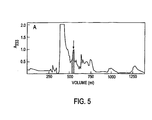
- sequence Ser-Glu-Glu-Gly-Gly-Ser-Asn-Ala-Xaa-Lys-Lys-Pro-Tyr-Ile-Leu(SEQ ID NO:4) was obtained by standard Edman methods confirming removal of the pyroglutamate residue, where Xaa indicates no amino acid was assigned in the 9th cycle (at position 10) although a very low signal for threonine was obtained. Amino acid analyses were consistent with the presence of one threonine residue in the peptide.
- Native contulakin-G was treated with ⁇ -galactosidase isolated from bovine testes. This enzyme preferentially hydrolyzes tetminal ⁇ 1->3 galactopyranosyl residues from the non-reducing end of glycoconjugates. After ⁇ -galactosidase treatment of the native sample a new component was observed on RP-HPLC. This component was collected and analyzed with MALD-MS in which a species was observed at m/z 1907. The difference in mass and the specificity of the enzyme are consistent with a terminal galactose residue being released.
- the new component was collected and analyzed with MALD-MS where an m/z 1704 species was observed consistent with loss of Hex-HexNAc (i.e., the mass was consistent with that predicted for the peptide with an unmodified threonine residue at position 10).
- the enzyme hydrolysis results are consistent with the presence of a Gal ( ⁇ 1->3) GalNAc ( ⁇ 1->) glycan. Based on the 0-glycosidase and the ⁇ -galactosidase hydrolysis results, the structure of the most abundant glycopeptide is:
- the 16-amino acid non-glycosylated peptide was chemically synthesized.
- the synthetic material was found to have the same retention time as the enzymatically des-glycosylated contulakin-G on RP-HPLC.
- the 16-amino acid glycosylated contulakin-G containing Gal ( ⁇ 1->3) GalNAc ( ⁇ 1->) attached to Thr 10 was also synthesized.
- This synthetic glycosylated contulakin-G co-eluted with the native contulakin-G on RP-HPLC.
- the post source decay fragmentation spectra observed for both native and synthetic contulakin-G showed very similar fragmentation patterns.
- the non-glycosylated Thr 10 -contulakin-G analog was found to bind the human neurotensin type I receptor (hNTR1) with 10 fold lower affinity than Neurotensin 1-13 , and even lower affinities for the other NTR's.
- Contulakin-G exhibited significantly lower affinity than the non-glycosylated Thr 10 -contulakin-G analog for all of the NTR's tested.
- Conus peptide characterized above, conuskin-G has a novel biochemical feature: a post-translationally O-glycosylated threonine not previously found in Conus peptides.
- Thr 10 was modified with the disaccharide Gal ( ⁇ 1->3) GalNAc ( ⁇ 1->).
- the corresponding glycosylated and non-glycosylated forms of contulakin-G were synthesized which confirmed the molecular structure of this major glycosylated form of the native molecule based on RP-HPLC co-elution and MS fragmentation criteria.
- the masses of the other more minor molecule species observed with mass spectrometry are consistent with glycan structural variations at peripheral sites on the characterized oligosaccharide core unit (Baenziger, 1994).
- the clone represents a different variant, for example one which was alternatively spliced.
- further proteolytic processing at the C-terminus may be required to generate mature contulakin-G.
- Vespulakinin 1 first identified by Pisano et al. (Yoshida et al., 1976), is, to our knowledge, the only other O-glycosylated peptide toxin which has been isolated from venom other than Conus. Vespulakinin 1 was extracted from the venom sacs of the yellow jacket wasp, Vespula maculirons. The peptide (TAT * T * RRRGRPPGFSPFR-OH (SEQ ID NO: 12) where the asterisk indicates an O-linked glycosylated threonine residue) contains two sequential sites of O-linked glycosylation.
- Vespulakinin is identical to the sequence of Bradykinin (RPPGFSPFR-OH (SEQ ID NO:13)) and the peptide was found to elicit a number of signs also elicited by Bradykinin.
- Vespulakinin is therefore another example of an O-linked glycosylated peptide toxin in which the C-terminus appears to target a mammalian neurotransmitter receptor.
- both contulakin-G and Vespulakinin I contain glycosylated N-terminal extensions to sequences with very high homology to mammalian neuropeptides.
- ⁇ A-conotoxin SIVA a K + channel inhibitor is unusual among disulfide-rich Conus peptides in having a long N-terminal tail, which has an O-glycosylated residue (Craig et al., 1998).
- Conus peptides without multiple disulfides comprise a most eclectic set of families, including the conopressins, conantokins, contryphans and now Conuskin-G.
- the conopressins are probably endogenous molluscan peptides, clearly homologous to the vassopressin/oxytocin family of peptides; these are more widely distributed in molluscan tissues than in Conus venom ducts.
- non-disulfide-rich peptides may be specialized venom peptides exhibiting unusual post-translational modifications.
- ⁇ -carboxylation of glutamate residues and the post-translational epimerization and bromination of tryptophan residues were discovered in conantokins and contryphans.
- both contulakin-G and the non-glycosylated Thr 10 -contulakin-G are rNTR1 agonists at physiologically relevant concentrations (20-30 and 0.6 nM, respectively).
- the observed agonistic effects of both contulakin-G and the non-glycosylated analog, as well as the absence of any agonistic effect of these ligands on CHO cells expressing rNTR2 using the IP accumulation assay does not correlate with the in vitro binding data; both peptides are agonists at concentrations significantly below their IC 50 binding affinity (524 and 79 nM, respectively).
- the role of the glycan is somewhat paradoxical.
- the glycan neither increases the binding affinity, the agonistic potency nor agonistic efficacy,
- the glycan significantly increases the potency of the peptide.
- One simple explanation is that the increased potency of contulakin-G compared with the non-glycosylated analog is due to increased stability.
- An alternative mechanism for the increased potency is transport to the site of action facilitated by the glycan.
- the glycosylated peptide may act with high affinity on an as-yet-undefined neurotensin receptor subtype (Tyler et al., 1998), or may be a selective high affinity ligand for a particular state of a neurotensin receptor subtype.
- the relevant targeted neurotensin receptors may be closely co-localized with carbohydrate binding sites, and that the glycan may serve as an "address label", a mechanism postulated for certain opiate peptides.
- Preliminary data supporting the increased stability hypothesis has been obtained - proteolytic degradation of contulakin-G is inhibited by the presence of the glycan moiety.
- the increased stability may well result in an enhanced supply of the glycopeptide at the receptor.
- the increased in vivo potency of contulakin-G conferred by O-glycosylation clearly requires a more balanced evaluation of the possibilities outlined above.
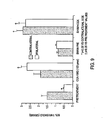
- CGX-1063 (10 fmol-10 nmol, icv) dose-dependently increased the latency to the first hindpaw lick and first response elicited by the hotplate ( Figures 7A-7B). Of interest is the difference in potency of CGX-1063 in increasing the latency to the first hindpaw lick compared to the latency to first response. CGX-1063 also dose-dependently decreased the latency to first fall on the rotarod ( Figure 7C). However, this apparent motor impairment did not appear to be the result of the loss of motor function, since animals were capable of normal locomotor activity when stimulated. Thus, the effect of CGX-1063 on the hotplate unequivocally was an analgesic effect.
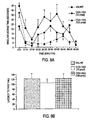
- CGX-1063 (10 or 100 pmol, it) dose-dependently and significantly decreased the second phase of the formalin test (Figure 8A).
- the lower dose (10 pmol) was more effective in decreasing the first phase response time than was the higher dose.
- CGX-1063 treated animals showed no motor impairment compared to vehicle treated animals ( Figure 8B), indicating that the effect of icv CGX-1063 (observed in the hotplate test above) on motor impairment is mediated at higher brain regions, not spinally, and that the analgesic effects of CGX-1063 can be separated from the motor toxicity by using this route (it) of administration.
- the downward shift in the rotorod scores compared to those from animals used in the hotplate test reflects an overall impairment in these animals due to formalin-induced allodynia and inflammation of the hindpaw.
- CGX-1063 has potent analgesic properties in three commonly used models of pain: acute, persistent/inflammatory and neuropathic pain models.
- CGX-1063 administered centrally (icv) dose-dependently reduced the response latency in the hot plate model of acute pain, and was effective in the low picomole to high femtomole range.
- Preliminary data indicate that the analgesic effect of CGX-1063 in this model is not mediated through an opioid mechanism.
- CGX-1063 was also effective in reducing nociceptive activity in the formalin model of persistent/inflammatory pain.
- CGX-1063 showed profound analgesic activity in a model of neuropathic pain. Mechanical withdrawal thresholds in this model were increased nearly six fold compared to pre-treatment values, while not altering sensitivity in the non-injured paw, possibly indicating that CGX-1063 reduces neuropathic allodynia while not affecting normal sensory transmission.
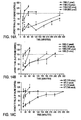
- CGX-1160 dose-dependently increased the tail-flick latency (Fig. 10A) with a time to peak effect of ⁇ 30 minutes (the earliest time tested, Fig. 10B). Furthermore, the increase in latency was long-lasting with elevated withdrawal times at 5 hour post injection that returned to baseline at 24 hours post injection (Fig. 10B). CGX-1063 also showed a dose-dependent, though more variable increase in withdrawal latency, and showed only modest antinociceptive efficacy in this model relative to CGX-1160 (Figs. 10A-10B). In comparison, NT did not significantly elevate withdrawal latency in the tail-flick assay (Figs. 10A-10B).
- CGX-1160 was the most potent of the three compounds.
- phase 1 of the formalin test (Fig. 11 A)
- CGX-1160 had an ED 50 of approximately 30 - 40 pmol while NT had an ED 50 of ⁇ 1 nmol.
- CGX-1063 did not reach the 50% antinociception threshold in phase 1, however, the irregular dose-response in this test warrants repeating the 100 pmol dose in this assay.
- phase 2 of the formalin test all three compounds dose-dependently reduced the paw licking time (indicated in the figures as an increase in the percent antinociception; Fig. 11B).
- CGX-1160 was more potent than the other compounds with an estimated ED 50 of 1 pmol. Lower doses of this compound will be assessed in the future to complete the dose response curve necessary to calculate a more precise ED 50 .
- CGX-1063 was also effective in reducing nociceptive behavior in phase 2, with an estimated ED 50 of 10 - 20 pmol. NT was dramatically less potent than either of the congesakins with an estimated ED 50 of 600 - 700 pmol (Fig. 11B).
- CGX-1160 showed extremely potent and dose-dependent reversal of CFA-induced mechanical allodynia (Fig. 12A).
- the contralateral sensitivity to mechanical pressure was unaltered indicating a potential unilateral alteration in NT receptors in chronic inflammation.
- the mechanical withdrawal threshold in both the CFA-injected paw and the contralateral uninjected paw was dramatically elevated.
- the numbers over the bars indicate the percent increase in mechanical threshold relative to the pre-drug level.
- CGX-1160 had a much greater antiallodynic effect on the CFA injected side relative to the uninjected side.
- CGX-1063 was less potent than CGX-1160, but also completely reversed the CFA-induced allodynia (Fig. 12B).
- the minimally effective dose was 10 pmol, however, at this dose, unlike CGX-1160, the contralateral side was also elevated relative to pre-drug baseline measurements.
- NT showed efficacy in the CFA model at 1 nmol, but not at 100 pmol (Fig. 12C). Other doses of CGX-1160 and NT will be examined in the future to determine accurate ED 50 S for these compounds.
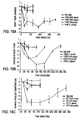
- CGX-1160, -1063, and NT all showed dose-dependent effects on locomotor impairment and body temperature. For all three compounds, maximal impairment was at 15 minutes post i.t. injection (locomotor impairment, Fig.l3A) or 30 minutes (hypothermic effects, Fig. 14A).
- CGX-1063 had no motor toxicity at the lowest dose tested (1 pmol, Fig. 13B), but at higher doses animals showed significant motor toxicity (estimated TD 50 of 10 pmol, Fig. 13B and 15A). At 10 pmol this toxicity lasted for 30 minutes, but resolved by 60 minutes. When 100 pmol or 1 nmol was administered, animals were motor impaired for 2-3 hours (Fig. 14A).
- CGX-1160 was equipotent to CGX-1063 in causing motor impairment (estimated TD 50 of 10 - 20 pmol, Fig. 13B). Similar to CGX-1063, at higher doses (100-500X its ED 50 ) CGX-1160 showed motor impairment that resolved after 5 hours (Figs. 13A and 14B). The estimated TD 50 for NT-induced motor impairment was 3 nmol (Fig. 13B). Similar to the contulakins, at high doses, NT-induced motor impairment that lasted 2-4 hours (Figs. 13A and 14C).
- CGX-1160 and -1063 were equipotent with an estimated TD 50 of 100 pmol (Fig. 15B). However, at this dose CGX-1063 induced a drop in body temperature lasting 2-3 hours (Figs. 15A and 16A), while the hypothermic effect caused by CGX-1160 resolved by 60 minutes (Figs. 15A and 16B). At the highest dose of CGX-1160 (500 pmol, 500X the ED 50 ), the hypothermic effect had not resolved by six hours post-injection (Fig. 16B). NT showed a very similar dose-response and time course to the congesakins.
- NT had no effect or showed a short lasting hypothermic effect (Fig. 16C).
- NT caused a dramatic and long-lasting hypothermia that had not resolved by three hours (Figs. 15A and 16C).
- CGX-1160 and CGX-1063 are potent, broad-spectrum analgesic agents effective in several animal models of acute and chronic pain.
- CGX-1160 is typically 10 fold more potent than CGX-1063, and 1000 times more potent than NT (Table 6).
- CGX-1160 is particularly potent in the model of chronic inflammatory pain where CGX-1160 selectively increases the mechanical withdrawal threshold only in the paw receiving the CFA injection, while not altering the threshold of the ur ⁇ njected paw. This finding indicates that chronic inflammation may lead to a reorganization of NT receptors in nociceptive pathways corresponding to the inflamed paw.
- CGX-1160 was the only compound in these experiments to show an increased potency, this may indicate an upregulation of a receptor subtype for which CGX-1160 may have particular selectivity and specificity.
- this compound shows antinociception at doses 10-100 fold less than for either locomotor impairment or hypothermia, whereas CGX-1063 and NT cause antinociception, locomotor impairment, and hypothermia at approximately equal doses when administered i.t.
- Particularly interesting is the long-lasting hypothermic effect of CGX-1063. When given i.t. at 100 pmol (approximately 10 times its ED 50 in phase 2 of the formalin test, see Fig.
- CGX-1063 caused long-lasting hypothermia relative to comparable antinociceptive doses of CGX-1160 (compare the 10 pmol dose in Fig. 16B) and NT (compare the 10 nmol dose in Fig. 16C). This potentially indicates that CGX-1063 is selective for the NT receptor subtype involved in the hypothermic effect of NT analogs.
- the O-glycosylation of Thr 10 in CGX-1160 may impart selectivity for the antinociceptive NTR subtype, currently thought to be NTR2, as well as metabolic resistance to peptidases.
- phase 2 Comparison of the Antinociceptive Effects, Motor Impairment Effects, and Protective Index of CGX-1160, CGX-1063, and NT in the Formalin Test (phase 2) and CFA-Induced Allodynia Test Formalin Test (phase 2) Compound , pmol pmol PI CGX-1160 1 10 - 20 10 - 20 CGX-1063 10-20 10 - 20 1-2 NT 600-700 3000 5 - 4.3 CFA-Induced Allodynia Test Compound , pmol , pmol PI CGX-1160 ⁇ 0.1 10 - 20 >100 CGX-1063 ⁇ 10 10 - 20 1-5 NT ⁇ 500-600 3000 5-6
Landscapes
- Health & Medical Sciences (AREA)
- Chemical & Material Sciences (AREA)
- Organic Chemistry (AREA)
- Life Sciences & Earth Sciences (AREA)
- Medicinal Chemistry (AREA)
- General Health & Medical Sciences (AREA)
- Bioinformatics & Cheminformatics (AREA)
- Engineering & Computer Science (AREA)
- General Chemical & Material Sciences (AREA)
- Animal Behavior & Ethology (AREA)
- Nuclear Medicine, Radiotherapy & Molecular Imaging (AREA)
- Public Health (AREA)
- Veterinary Medicine (AREA)
- Pharmacology & Pharmacy (AREA)
- Chemical Kinetics & Catalysis (AREA)
- Neurology (AREA)
- Biomedical Technology (AREA)
- Neurosurgery (AREA)
- Molecular Biology (AREA)
- Biochemistry (AREA)
- Proteomics, Peptides & Aminoacids (AREA)
- Genetics & Genomics (AREA)
- Biophysics (AREA)
- Heart & Thoracic Surgery (AREA)
- Cardiology (AREA)
- Psychiatry (AREA)
- Pain & Pain Management (AREA)
- Vascular Medicine (AREA)
- Endocrinology (AREA)
- Gastroenterology & Hepatology (AREA)
- Zoology (AREA)
- Toxicology (AREA)
- Psychology (AREA)
- Urology & Nephrology (AREA)
- Physical Education & Sports Medicine (AREA)
- Diabetes (AREA)
- Hospice & Palliative Care (AREA)
- Rheumatology (AREA)
- Addiction (AREA)
- Orthopedic Medicine & Surgery (AREA)
Claims (39)
- Contulakine-G pratiquement pure, comportant la séquence d'acides aminés Xaa1-Ser-Glu-Glu-Gly-Gly-Ser-Asn-Ala-Thr-Lys-Lys-Xaa2-Tyr-Ile-Leu (Séquence n° 1), dans laquelle Xaa1 représente un résidu d'acide pyroglutamique, Xaa2 représente un résidu de proline ou d'hydroxyproline, et le résidu Thr10 est modifié de manière à porter un O-glycane, lequel O-glycane est Gal(β1→3)GalNAc(α1→).
- Contulakine-G pratiquement pure, conforme à la revendication 1, dans laquelle Xaa2 représente un résidu de proline.
- Contulakine-G générique pratiquement pure, de formule générale suivante (Séquence n° 2) :Xaa1-Xaa2-Xaa3-Xaa3-Gly-Gly-Xaa2-Xaa4-Xaa5-Xaa6-Xaa7-Xaa8-Xaa7-Xaa9-Xaa10-Ile-Leu
dans laquelle :Xaa1 représente pyro-Glu, Glu, Gln ou γ-carboxy-Glu ;Xaa2 représente Ser, Thr ou Cys modifié par S-glycane ;Xaa3 représente Glu ou γ-carboxy-Glu ;Xaa4 représente Asn, Asn modifié par N-glycane ou Cys modifié par S-glycane ;Xaa5 représente Ala ou Gly ;Xaa6 représente Thr, Ser, Cys modifié par S-glycane, Tyr ou n'importe quel acide aminé non-naturel et hydroxylé ;Xaa7 représente Lys, N-méthyl-Lys, N,N-diméthyl-Lys, N,N,N-triméthyl-Lys, Arg, ornithine, homoarginine ou n'importe quel acide aminé basique non-naturel ;Xaa8 représente Ala, Gly, Lys, N-méthyl-Lys, N,N-diméthyl-Lys, N,N,N-triméthyl-Lys, Arg, ornithine, homoarginine, n'importe quel acide aminé basique non-naturel, ou X-Lys où X représente un groupe (CH2)n, phényle,-(CH2)m-(CH=CH)-(CH2)mH ou (CH2)m-(C≡C)-(CH2)mH, n valant de 1 à 4 et m valant de 0 à 2 ;Xaa9 représente Pro ou hydroxy-Pro ;et Xaa10 représente Tyr, mono-iodo-Tyr, di-iodo-Tyr, O-sulfo-Tyr, O-phospho-Tyr, nitro-Tyr, Trp, D-Trp, bromo-Trp, bromo-D-Trp, chloro-Trp, chloro-D-Trp, Phe, L-néo-Trp ou n'importe quel acide aminé aromatique non-naturel ; sous réserve que la contulakine-G générique ne soit pas un peptide de for-mule Xaa1 -Ser-Glu-Glu-Gly-Gly-Ser-Asn-Al a-Thr-Lys-Lys-Xaa2-Tyr-IIe-Leu (Séquence n° 1) dans laquelle Xaa1 représente un résidu d'acide pyroglutamique et Xaa2 représente un résidu de proline ou d'hydroxyproline. - Contulakine-G générique pratiquement pure, de formule générale suivante (Séquence n° 2)dans laquelleXaa1-Xaa2-Xaa3-Xaa3-Gly-Gly-Xaa2-Xaa4-Xaa5-Xaa6-Xaa7-Xaa8-Xaa7-Xaa9-Xaa10-Ile-Leu
qui est modifiée de manière à comporter un O-glycane, un S-glycane ou un N-glycane,
et dans laquelle :Xaa1 représente pyro-Glu, Glu, Gln ou γ-carboxy-Glu ;Xaa2 représente Ser, Thr ou Cys modifié par S-glycane ;Xaa3 représente Glu ou γ-carboxy-Glu ;Xaa4 représente Asn, Asn modifié par N-glycane ou Cys modifié par S-glycane ;Xaa5 représente Ala ou Gly ;Xaa6 représente Thr, Ser, Cys modifié par S-glycane, Tyr ou n'importe quel acide aminé non-naturel et hydroxylé ;Xaa7 représente Lys, N-méthyl-Lys, N,N-diméthyl-Lys, N,N,N-triméthyl-Lys, Arg, ornithine, homoarginine ou n'importe quel acide aminé basique non-naturel ;Xaa8 représente Ala, Gly, Lys, N-méthyl-Lys, N,N-diméthyl-Lys, N,N,N-triméthyl-Lys, Arg, ornithine, homoarginine, n'importe quel acide aminé basique non-naturel, ou X-Lys où X représente un groupe (CH2)n, phényle,-(CH2)m-(CH=CH)-(CH2)mH ou -(CH2)m-(C≡C)-(CH2)mH, n valant de 1 à 4 et m valant de 0 à 2 ;Xaa9 représente Pro ou hydroxy-Pro ;et Xaa10 représente Tyr, mono-iodo-Tyr, di-iodo-Tyr, O-sulfo-Tyr, O-phospho-Tyr, nitro-Tyr, Trp, D-Trp, bromo-Trp, bromo-D-Trp, chloro-Trp, chloro-D-Trp, Phe, L-néo-Trp ou n'importe quel acide aminé aromatique non-naturel ; sous réserve que, si la contulakine-G générique est un peptide de formule Xaa1-Ser-Glu-Glu-Gly-Gly-Ser-Asn-Ala-Thr-Lys-Lys-Xaa2-Tyr-Ile-Leu (Séquence n° 1) dans laquelle Xaa1 représente un résidu d'acide pyroglutamique, Xaa2 représente un résidu de proline ou d'hydroxyproline, et seul le résidu Thr10 est modifié de manière à porter un O-glycane, alors le glycane est Gal(β1→3)GalNAc(α1→) ou un glycane dont la structure est représentée par la formule (3) :
R1 représente un acide aminé capable de former un dérivé avec un glycane par voie chimique ou enzymatique ;
R2 représente OH, NH2, NHSO3Na, NHAc, O-sulfate, O-phosphate, ou un O-glycane ;
R3 représente H, SO3, PO3, acétyle, un acide sialique ou un monosaccharide ;
R4 représente H, SO3, PO3, acétyle ou un monosaccharide ;
R5 représente OH, NH2, NHSO3Na, NHAc, O-sulfate, O-phosphate, O-acé-tyle ou un O-monosaccharide ;
R6 représente H, SO3, PO3, acétyle ou un monosaccharide ;
R7 représente H, SO3, PO3, acétyle ou un monosaccharide ;
R8 représente H, SO3, PO3, acétyle ou un monosaccharide ;
et n vaut de 0 à 4 et m vaut de 1 à 4. - Contulakine-G générique pratiquement pure, conforme à la revendication 3, dans laquelle le glycane est Gal(β1→3)GalNAc(α1→).
- Contulakine-G générique pratiquement pure, conforme à la revendication 4, dans laquelle le glycane est Gal(β1→3)GalNAc(α1→).
- Contulakine-G générique pratiquement pure, conforme à la revendication 3, dans laquelle le glycane présente la structure de formule (3), indiquée dans la revendication 4, dans laquelle
R1 représente un acide aminé capable de former un dérivé avec un glycane par voie chimique ou enzymatique ;
R2 représente OH, NH2, NHSO3Na, NHAc, O-sulfate, O-phosphate, ou un O-glycane ;
R3 représente H, SO3, PO3, acétyle, un acide sialique ou un monosaccharide ;
R4 représente H, SO3, PO3, acétyle ou un monosaccharide ;
R5 représente OH, NH2, NHSO3Na, NHAc, O-sulfate, O-phosphate, O-acé-tyle ou un O-monosaccharide ;
R6 représente H, SO3, PO3, acétyle ou un monosaccharide ;
R7 représente H, SO3, PO3, acétyle ou un monosaccharide ;
R8 représente H, SO3, PO3, acétyle ou un monosaccharide ;
et n vaut de 0 à 4 et m vaut de 1 à 4. - Contulakine-G générique pratiquement pure, conforme à la revendication 4, dans laquelle le glycane présente la structure de formule (3) dans laquelle
R1 représente un acide aminé capable de former un dérivé avec un glycane par voie chimique ou enzymatique ;
R2 représente OH, NH2, NHSO3Na, NHAc, O-sulfate, O-phosphate, ou un O-glycane ;
R3 représente H, SO3, PO3, acétyle, un acide sialique ou un monosaccharide ;
R4 représente H, SO3, PO3, acétyle ou un monosaccharide ;
R5 représente OH, NH2, NHSO3Na, NHAc, O-sulfate, O-phosphate, O-acétyle ou un O-monosaccharide ;
R6 représente H, SO3, PO3, acétyle ou un monosaccharide ;
R7 représente H, SO3, PO3, acétyle ou un monosaccharide ;
R8 représente H, SO3, PO3, acétyle ou un monosaccharide ;
et n vaut de 0 à 4 et m vaut de 1 à 4. - Analogue de contulakine-G pratiquement pur, qui comporte une troncature des 1 à 9 acides aminés N-terminaux d'une contulakine-G générique conforme à l'une des revendications 3 à 8.
- Analogue de contulakine-G pratiquement pur, conforme à la revendication 9, dans lequel un Ser-O-Glycane, un Thr-O-glycane ou un Cys-S-glycane remplace le résidu d'acide aminé à l'extrémité N-terminale tronquée.
- Analogue de contulakine-G pratiquement pur, conforme à la revendication 9, dans lequel un Ser-O-Glycane, un Thr-O-glycane ou un Cys-S-glycane remplace un résidu en positions 2 à 9 de la contulakine-G générique.
- Analogue de contulakine-G pratiquement pur, qui comporte une troncature des 10 acides aminés N-terminaux d'une contulakine-G générique conforme à l'une des revendications 3 à 8 et qui est en outre modifié de manière à comporter un Lys-N-glycane au niveau du résidu n° 11 de ladite contulakine-G générique.
- Acide nucléique isolé, comportant un acide nucléique qui code un précurseur de contulakine-G comportant la séquence d'acides aminés indiquée en Séquence n° 6.
- Acide nucléique isolé, conforme à la revendication 13, comportant la séquence de nucléotides indiquée en Séquence n° 5.
- Peptide précurseur de contulakine-G isolé, comportant la séquence d'acides aminés indiquée en Séquence n° 6.
- Emploi d'une quantité à effet thérapeutique d'un agent actif choisi dans l'ensemble constitué par:dans la préparation d'un médicament permettant de moduler le site de la contulakine-G sur le récepteur de la neurotensine chez un individu qui en a besoin.a) de la contulakine-G, comportant la séquence d'acides aminés Xaa1-Ser-Glu-Glu-Gly-Gly-Ser-Asn-Ala-Thr-Lys-Lys-Xaa2-Tyr-Ile-Leu (Séquence n° 1), dans laquelle Xaa1 représente un résidu d'acide pyroglutamique, Xaa2 représente un résidu de proline ou d'hydroxyproline, et le résidu Thr10 est modifié de manière à porter un O-glycane, lequel O-glycane est Gal(β1 →3)GalNAc(α1→);b) une contulakine-G générique de formule générale suivante (Séquence n°2) : Xaa1-Xaa2-Xaa3-Xaa3-Gly-Gly-Xaa2-Xaa4-Xaa5-Xaa6-Xaa7-Xaa8-Xaa7-Xaa9-Xaa10-Ile-Leu
dans laquelle :Xaa1 représente pyro-Glu, Glu, Gin ou γ-carboxy-Glu ;Xaa2 représente Ser, Thr ou Cys modifié par S-glycane ;Xaa3 représente Glu ou γ-carboxy-Glu ;Xaa4 représente Asn, Asn modifié par N-glycane ou Cys modifié par S-glycane;Xaa5 représente Ala ou Gly ;Xaa6 représente Thr, Ser, Cys modifié par S-glycane, Tyr ou n'importe quel acide aminé non-naturel et hydroxylé ;Xaa7 représente Lys, N-méthyl-Lys, N,N-diméthyl-Lys, N,N,N-triméthyl-Lys, Arg, ornithine, homoarginine ou n'importe quel acide aminé basique non-naturel ;Xaa8 représente Ala, Gly, Lys, N-méthyl-Lys, N,N-diméthyl-Lys, N,N,N-triméthyl-Lys, Arg, ornithine, homoarginine, n'importe quel acide aminé basique non-naturel, ou X-Lys où X représente un groupe (CH2)n, phényle,-(CH2)m-(CH=CH)-(CH2)mH ou -(CH2)m-(C≡C)-(CH2)mH, n valant de 1 à 4 et m valant de 0 à 2 ;Xaa9 représente Pro ou hydroxy-Pro ;et Xaa10 représente Tyr, mono-iodo-Tyr, di-iodo-Tyr, O-sulfo-Tyr, O-phospho-Tyr, nitro-Tyr, Trp, D-Trp, bromo-Trp, bromo-D-Trp, chloro-Trp, chloro-D-Trp, Phe, L-néo-Trp ou n'importe quel acide aminé aromatique non-naturel ; sous réserve que la contulakine-G générique ne soit pas un peptide de for-mule Xaa1 -Ser-Glu-Glu-Gly-Gly-Ser-Asn-Ala-Thr-Lys-Lys-Xaa2-Tyr-Ile-Leu (Séquence n° 1) dans laquelle Xaa1 représente un résidu d'acide pyroglutamique et Xaa2 représente un résidu de proline ou d'hydroxyproline ;c) une contulakine-G générique de formule générale suivante (Séquence n°2) : Xaa1 -Xaa2-Xaa3-Xaa3-Gly-Gly-Xaa2-Xaa4-Xaa5-Xaa6-Xaa7-Xaa8-Xaa7-Xaa9-Xaa10-Ile-Leu
qui est modifiée de manière à comporter un O-glycane, un S-glycane ou un N-glycane,
et dans laquelle :dans laquelleXaa1 représente pyro-Glu, Glu, Gln ou γ-carboxy-Glu ;Xaa2 représente Ser, Thr ou Cys modifié par S-glycane ;Xaa3 représente Glu ou γ-carboxy-Glu ;Xaa4 représente Asn, Asn modifié par N-glycane ou Cys modifié par S-glycane ;Xaa5 représente Ala ou Gly ;Xaa6 représente Thr, Ser, Cys modifié par S-glycane, Tyr ou n'importe quel acide aminé non-naturel et hydroxylé ;Xaa7 représente Lys, N-méthyl-Lys, N,N-diméthyl-Lys, N,N,N-triméthyl-Lys, Arg, ornithine, homoarginine ou n'importe quel acide aminé basique non-naturel ;Xaa8 représente Ala, Gly, Lys, N-méthyl-Lys, N,N-diméthyl-Lys, N,N,N-triméthyl-Lys, Arg, ornithine, homoarginine, n'importe quel acide aminé basique non-naturel, ou X-Lys où X représente un groupe (CH2)n, phényle,-(CH2)m-(CH=CH)-(CH2)mH ou -(CH2)m-(C≡C)-(CH2)mH, n valant de 1 à 4 et m valant de 0 à 2 ;Xaa9 représente Pro ou hydroxy-Pro ;et Xaa10 représente Tyr, mono-iodo-Tyr, di-iodo-Tyr, O-sulfo-Tyr, O-phospho-Tyr, nitro-Tyr, Trp, D-Trp, bromo-Trp, bromo-D-Trp, chloro-Trp, chloro-D-Trp, Phe, L-néo-Trp ou n'importe quel acide aminé aromatique non-naturel ; sous réserve que, si la contulakine-G générique est un peptide de formule Xaa1 -Ser-Glu-Glu-Gly-Gly-Ser-Asn-Ala-Thr-Lys-Lys-Xaa2-Tyr-Ile-Leu (Séquence n° 1) dans laquelle Xaa1 représente un résidu d'acide pyroglutamique, Xaa2 représente un résidu de proline ou d'hydroxyproline, et seul le résidu Thr10 est modifié de manière à porter un O-glycane, alors le glycane est Gal(β1→3)GalNAc(α1→) ou un glycane dont la structure est la suivante :
R1 représente un acide aminé capable de former un dérivé avec un glycane par voie chimique ou enzymatique ;
R2 représente OH, NH2, NHSO3Na, NHAc, O-sulfate, O-phosphate, ou un O-glycane ;
R3 représente H, SO3, PO3, acétyle, un acide sialique ou un monosaccharide ;
R4 représente H, SO3, PO3, acétyle ou un monosaccharide ;
R5 représente OH, NH2, NHSO3Na, NHAc, O-sulfate, O-phosphate, O-acé-tyle ou un O-monosaccharide ;
R6 représente H, SO3, PO3, acétyle ou un monosaccharide ;
R7 représente H, SO3, PO3, acétyle ou un monosaccharide ;
R8 représente H, SO3, PO3, acétyle ou un monosaccharide ;
et n vaut de 0 à 4 et m vaut de 1 à 4 ;d) un analogue de contulakine-G; qui comporte une troncature des 1 à 9 acides aminés N-terminaux d'une contulakine-G générique (b) ou (c) ;e) un analogue de contulakine-G (d), dans lequel un Ser-O-Glycane, un Thr-O-glycane ou un Cys-S-glycane remplace le résidu d'acide aminé à l'extrémité N-terminale tronquée ;f) un analogue de contulakine-G (d), dans lequel un Ser-O-Glycane, un Thr-O-glycane ou un Cys-S-glycane remplace un résidu en positions 2 à 9 de la contulakine-G générique ;g) et un analogue de contulakine-G qui comporte une troncature des 10 acides aminés N-terminaux d'une contulakine-G générique (b) ou (c) et qui est en outre modifié de manière à comporter un Lys-N-glycane au niveau du résidu n° 11 de ladite contulakine-G générique ; - Emploi conforme à la revendication 16, dans lequel le glycane est Gal(β1→3)GalNAc(α1→).
- Emploi conforme à la revendication 16, dans lequel le glycane présente la structure de formule (3), dans laquelle
R1 représente un acide aminé capable de former un dérivé avec un glycane par voie chimique ou enzymatique ;
R2 représente OH, NH2, NHSO3Na, NHAc, O-sulfate, O-phosphate, ou un O-glycane ;
R3 représente H, SO3, PO3, acétyle, un acide sialique ou un monosaccharide ;
R4 représente H, SO3, PO3, acétyle ou un monosaccharide ;
R5 représente OH, NH2, NHSO3Na, NHAc, O-sulfate, O-phosphate, O-acé-tyle ou un O-monosaccharide ;
R6 représente H, SO3, PO3, acétyle ou un monosaccharide ;
R7 représente H, SO3, PO3, acétyle ou un monosaccharide ;
R8 représente H, SO3, PO3, acétyle ou un monosaccharide ;
et n vaut de 0 à 4 et m vaut de 1 à 4. - Emploi conforme à la revendication 16, dans lequel ladite modulation du récepteur de la neurotensine est destinée à servir à traiter les attaques, inflammations, chocs, thromboses, hypertension, douleurs, psychoses, maladie de Parkinson, troubles gastro-intestinaux, états dépressifs, dysfonctionnements cognitifs, anxiété, dyskinésies tardives, dépendances aux drogues, attaques de panique, manies, syndrome de l'intestin irritable, diarrhées, ulcères, tumeurs gastro-intestinales, syndrome de Tourette, chorée de Huntington, fuites vasculaires, artériosclérose, dilatation vasculaire et vasodilatation.
- Emploi conforme à la revendication 16, dans lequel ladite modulation du récepteur de la neurotensine est destinée à servir à traiter l'épilepsie, les attaques ou les convulsions.
- Emploi conforme à la revendication 16, dans lequel ladite modulation du récepteur de la neurotensine est destinée à servir à traiter la douleur.
- Emploi conforme à la revendication 16, dans lequel ladite modulation du récepteur de la neurotensine est destinée à servir à traiter la schizophrénie.
- Emploi conforme à la revendication 16, dans lequel ladite modulation du récepteur de la neurotensine est destinée à servir à traiter les inflammations.
- Emploi conforme à la revendication 16, dans lequel ladite modulation du récepteur de la neurotensine est destinée à servir à traiter les dyskinésies tardives ou les réactions dystoniques aiguës.
- Emploi conforme à la revendication 16, dans lequel l'agent actif est administré au moyen d'un système d'administration choisi dans l'ensemble que constituent la perfusion, l'administration par pompe, l'administration à l'aide d'un polymère biodégradable, l'administration au moyen de cellules enfermées dans des microcapsules, l'injection, et l'administration au moyen de cellules enfermées dans des macrocapsules.
- Emploi conforme à la revendication 25, dans lequel l'administration s'effectue en un endroit du système nerveux central.
- Emploi conforme à la revendication 26, dans lequel l'endroit du système nerveux central est choisi parmi l'espace intrathécal, les ventricules cérébraux et le parenchyme cérébral.
- Emploi conforme à la revendication 25, dans lequel l'administration s'effectue par une voie choisie parmi les voies sous-cutanée, intra-veineuse, intra-artérielle et intramusculaire.
- Agent actif choisi dans l'ensemble constitué par:destiné à servir de médicament.a) de la contulakine-G, comportant la séquence d'acides aminés Xaa1-Ser-Glu-Glu-Gly-Gly-Ser-Asn-Ala-Thr-Lys-Lys-Xaa2-Tyr-Ile-Leu (Séquence n° 1), dans laquelle Xaa1 représente un résidu d'acide pyroglutamique, Xaa2 représente un résidu de proline ou d'hydroxyproline, et le résidu Thr10 est modifié de manière à porter un O-glycane, lequel 0-glycane est Gal(β1→3)GalNAc(α1→) ;b) une contulakine-G générique de formule générale suivante (Séquence n°2) : Xaa1-Xaa2-Xaa3-Xaa3-Gly-Gly-Xaa2-Xaa4-Xaa5-Xaa6-Xaa7-Xaa8-Xaa7-Xaa9-Xaa10-Ile-Leu
dans laquelle :Xaa1 représente pyro-Glu, Glu, Gln ou γ-carboxy-Glu ;Xaa2 représente Ser, Thr ou Cys modifié par S-glycane ;Xaa3 représente Glu ou γ-carboxy-Glu ;Xaa4 représente Asn, Asn modifié par N-glycane ou Cys modifié par S-glycane ;Xaa5 représente Ala ou Gly ;Xaa6 représente Thr, Ser, Cys modifié par S-glycane, Tyr ou n'importe quel acide aminé non-naturel et hydroxylé ;Xaa7 représente Lys, N-méthyl-Lys, N,N-diméthyl-Lys, N,N,N-triméthyl-Lys, Arg, ornithine, homoarginine ou n'importe quel acide aminé basique non-naturel ;Xaa8 représente Ala, Gly, Lys, N-méthyl-Lys, N,N-diméthyl-Lys, N,N,N-triméthyl-Lys, Arg, ornithine, homoarginine, n'importe quel acide aminé basique non-naturel, ou X-Lys où X représente un groupe (CH2)n, phényle,-(CH2)m-(CH=CH)-(CH2)mH ou -(CH2)m-(C≡C)-(CH2)mH, n valant de 1 à 4 et m valant de 0 à 2 ;Xaa9 représente Pro ou hydroxy-Pro ;et Xaa10 représente Tyr, mono-iodo-Tyr, di-iodo-Tyr, O-sulfo-Tyr, O-phospho-Tyr, nitro-Tyr, Trp, D-Trp, bromo-Trp, bromo-D-Trp, chloro-Trp, chloro-D-Trp, Phe, L-néo-Trp ou n'importe quel acide aminé aromatique non-naturel ; sous réserve que la contulakine-G générique ne soit pas un peptide de for-mule Xaa1-Ser-Glu-Glu-Gly-Gly-Ser-Asn-Ala-Thr-Lys-Lys-Xaa2-Tyr-Ile-Leu (Séquence n° 1) dans laquelle Xaa1 représente un résidu d'acide pyroglutamique et Xaa2 représente un résidu de proline ou d'hydroxyproline ;c) une contulakine-G générique de formule générale suivante (Séquence n 2) : Xaa1-Xaa2-Xaa3-Xaa3-Gly-Gly-Xaa2-Xaa4-Xaa5-Xaa6-Xaa7-Xaa8-Xaa7-Xaa9-Xaa10-Ile-Leu
qui est modifiée de manière à comporter un O-glycane, un S-glycane ou un N-glycane,
et dans laquelle :dans laquelleXaa1 représente pyro-Glu, Glu, Gln ou γ-carboxy-Glu ;Xaa2 représente Ser, Thr ou Cys modifié par S-glycane ;Xaa3 représente Glu ou γ-carboxy-Glu ;Xaa4 représente Asn, Asn modifié par N-glycane ou Cys modifié par S-glycane ;Xaa5 représente Ala ou Gly ;Xaa6 représente Thr, Ser, Cys modifié par S-glycane, Tyr ou n'importe quel acide aminé non-naturel et hydroxylé ;Xaa7 représente Lys, N-méthyl-Lys, N,N-diméthyl-Lys, N,N,N-triméthyl-Lys, Arg, ornithine, homoarginine ou n'importe quel acide aminé basique non-naturel ;Xaa8 représente Ala, Gly, Lys, N-méthyl-Lys, N,N-diméthyl-Lys, N,N,N-triméthyl-Lys, Arg, ornithine, homoarginine, n'importe quel acide aminé basique non-naturel, ou X-Lys où X représente un groupe (CH2)n, phényle,-(CH2)m-(CH=CH)-(CH2)mH ou -(CH2)m-(C≡C)-(CH2)mH, n valant de 1 à 4 et m valant de 0 à 2 ;Xaa9 représente Pro ou hydroxy-Pro ;et Xaa10 représente Tyr, mono-iodo-Tyr, di-iodo-Tyr, O-sulfo-Tyr, O-phospho-Tyr, nitro-Tyr, Trp, D-Trp, bromo-Trp, bromo-D-Trp, chloro-Trp, chloro-D-Trp, Phe, L-néo-Trp ou n'importe quel acide aminé aromatique non-naturel ; sous réserve que, si la contulakine-G génériquç est un peptide de formule Xaa1-Ser-Glu-Glu-Gly-Gly-Ser-Asn-Ala-Thr-Lys-Lys-Xaa2-Tyr-Ile-Leu (Séquence n° 1) dans laquelle Xaa1 représente un résidu d'acide pyroglutamique, Xaa2 représente un résidu de proline ou d'hydroxyproline, et seul le résidu Thr10 est modifié de manière à porter un O-glycane, alors le glycane est Gal(β1→3)GalNAc(α1→) ou un glycane dont la structure est la suivante :
R1 représente un acide aminé capable de former un dérivé avec un glycane par voie chimique ou enzymatique ;
R2 représente OH, NH2, NHSO3Na, NHAc, O-sulfate, O-phosphate, ou un O-glycane ;
R3 représente H, SO3, PO3, acétyle, un acide sialique ou un monosaccharide ;
R4 représente H, SO3, PO3, acétyle ou un monosaccharide ;
R5 représente OH, NH2, NHSO3Na, NHAc, O-sulfate, O-phosphate, O-acétyle ou un O-monosaccharide ;
R6 représente H, SO3, PO3, acétyle ou un monosaccharide ;
R7 représente H, SO3, PO3, acétyle ou un monosaccharide ;
R8 représente H, SO3, PO3, acétyle ou un monosaccharide ;
et n vaut de 0 à 4 et m vaut de 1 à 4 ;d) un analogue de contulakine-G, qui comporte une troncature des 1 à 9 acides aminés N-terminaux d'une contulakine-G générique (b) ou (c) ;e) un analogue de contulakine-G (d), dans lequel un Ser-O-Glycane, un Thr-O-glycane ou un Cys-S-glycane remplace le résidu d'acide aminé à l'extrémité N-terminale tronquée ;f) un analogue de contulakine-G (d), dans lequel un Ser-O-Glycane, un Thr-O-glycane ou un Cys-S-glycane remplace un résidu en positions 2 à 9 de la contulakine-G générique ;g) et un analogue de contulakine-G qui comporte une troncature des 10 acides aminés N-terminaux d'une contulakine-G générique (b) ou (c) et qui est en outre modifié de manière à comporter un Lys-N-glycane au niveau du résidu n° 11 de ladite contulakine-G générique ; - Agent actif conforme à la revendication 29, ledit médicament étant destiné au traitement de la douleur, en particulier à celui d'une douleur aiguë.
- Agent actif conforme à la revendication 30, ladite douleur aiguë étant post-traumatique.
- Agent actif conforme à la revendication 30, ladite douleur étant une douleur chronique.
- Agent actif conforme à la revendication 32, ladite douleur chronique résultant d'un cancer.
- Agent actif conforme à la revendication 32, ladite douleur chronique étant une douleur neuropathique.
- Agent actif conforme à la revendication 32, ladite douleur chronique étant inflammatoire.
- Agent actif conforme à l'une des revendications 29 à 35, lequel agent actif est administré au moyen d'un système d'administration choisi dans l'ensemble que constituent la perfusion, l'administration par pompe, l'administration à l'aide d'un polymère biodégradable, l'administration au moyen de cellules enfermées dans des microcapsules, l'injection, et l'administration au moyen de cellules enfermées dans des macrocapsules.
- Agent actif conforme à la revendication 36, l'administration s'effectuant en un endroit du système nerveux central.
- Agent actif conforme à la revendication 37, l'endroit du système nerveux central étant choisi parmi l'espace intrathécal, les ventricules cérébraux et le parenchyme cérébral.
- Agent actif conforme à la revendication 36, l'administration s'effectuant par une voie choisie parmi les voies sous-cutanée, intraveineuse, intra-artérielle et intramusculaire.
Applications Claiming Priority (7)
| Application Number | Priority Date | Filing Date | Title |
|---|---|---|---|
| US10501598P | 1998-10-20 | 1998-10-20 | |
| US105015P | 1998-10-20 | ||
| US12856199P | 1999-04-09 | 1999-04-09 | |
| US128561P | 1999-04-09 | ||
| US13066199P | 1999-04-23 | 1999-04-23 | |
| US130661P | 1999-04-23 | ||
| PCT/US1999/024380 WO2000023092A1 (fr) | 1998-10-20 | 1999-10-20 | Contulakine-g, ses analogues et ses utilisations |
Publications (3)
| Publication Number | Publication Date |
|---|---|
| EP1123109A1 EP1123109A1 (fr) | 2001-08-16 |
| EP1123109A4 EP1123109A4 (fr) | 2002-03-06 |
| EP1123109B1 true EP1123109B1 (fr) | 2003-09-24 |
Family
ID=27379856
Family Applications (1)
| Application Number | Title | Priority Date | Filing Date |
|---|---|---|---|
| EP99953226A Expired - Lifetime EP1123109B1 (fr) | 1998-10-20 | 1999-10-20 | Contulakine-g, ses analogues et ses utilisations |
Country Status (10)
| Country | Link |
|---|---|
| US (6) | US6369193B1 (fr) |
| EP (1) | EP1123109B1 (fr) |
| JP (2) | JP2002527093A (fr) |
| AT (1) | ATE250627T1 (fr) |
| AU (1) | AU766294B2 (fr) |
| CA (1) | CA2347713C (fr) |
| DE (1) | DE69911632T2 (fr) |
| ES (1) | ES2207970T3 (fr) |
| HK (1) | HK1039570B (fr) |
| WO (1) | WO2000023092A1 (fr) |
Families Citing this family (8)
| Publication number | Priority date | Publication date | Assignee | Title |
|---|---|---|---|---|
| US6369193B1 (en) * | 1998-10-20 | 2002-04-09 | University Of Utah Research Foundation | Contulakin-G, analogs thereof and uses therefor |
| US20040176303A1 (en) * | 2003-03-05 | 2004-09-09 | Frank Mari | Conopeptides and methods of use |
| US20060019892A1 (en) * | 2003-03-05 | 2006-01-26 | Florida Atlantic University | Conopeptides and methods of use |
| US20090062211A1 (en) * | 2003-03-05 | 2009-03-05 | Florida Atlantic University | Conopeptides and methods of use |
| WO2009071097A1 (fr) * | 2007-12-05 | 2009-06-11 | Neurokey A/S | Utilisation de médicaments induisant une hypothermie |
| EP2838913A4 (fr) * | 2012-04-17 | 2015-12-02 | Univ Utah Res Found | Conopeptides et analogues ayant une action sur les canaux sodiques, compositions associées et procédés associés |
| EP2896402A1 (fr) * | 2014-01-20 | 2015-07-22 | Vect-Horus | Molécules de neurotensine activés et leurs utilisations |
| GB201603510D0 (en) * | 2016-02-29 | 2016-04-13 | Univ Ulster | Compositions for use in the treatment of neurological disease |
Family Cites Families (5)
| Publication number | Priority date | Publication date | Assignee | Title |
|---|---|---|---|---|
| US587454A (en) * | 1897-08-03 | Peter renk | ||
| US4447356A (en) * | 1981-04-17 | 1984-05-08 | Olivera Baldomero M | Conotoxins |
| SG50624A1 (en) * | 1991-12-30 | 1998-07-20 | Neurex Corp | Methods of producing analgesia and enhancing opiate analgesia |
| US5432155A (en) * | 1993-06-29 | 1995-07-11 | The Salk Institute For Biological Studies | Conotoxins I |
| US6369193B1 (en) * | 1998-10-20 | 2002-04-09 | University Of Utah Research Foundation | Contulakin-G, analogs thereof and uses therefor |
-
1999
- 1999-10-19 US US09/420,797 patent/US6369193B1/en not_active Expired - Lifetime
- 1999-10-20 DE DE69911632T patent/DE69911632T2/de not_active Expired - Lifetime
- 1999-10-20 HK HK02101114.7A patent/HK1039570B/en not_active IP Right Cessation
- 1999-10-20 WO PCT/US1999/024380 patent/WO2000023092A1/fr not_active Ceased
- 1999-10-20 AT AT99953226T patent/ATE250627T1/de not_active IP Right Cessation
- 1999-10-20 CA CA2347713A patent/CA2347713C/fr not_active Expired - Fee Related
- 1999-10-20 EP EP99953226A patent/EP1123109B1/fr not_active Expired - Lifetime
- 1999-10-20 JP JP2000576865A patent/JP2002527093A/ja active Pending
- 1999-10-20 AU AU65203/99A patent/AU766294B2/en not_active Ceased
- 1999-10-20 ES ES99953226T patent/ES2207970T3/es not_active Expired - Lifetime
-
2000
- 2000-06-29 US US09/605,991 patent/US6489298B1/en not_active Expired - Lifetime
- 2000-06-29 US US09/606,247 patent/US6696408B1/en not_active Expired - Lifetime
- 2000-06-29 US US09/605,990 patent/US6344551B1/en not_active Expired - Lifetime
-
2002
- 2002-02-08 US US10/067,857 patent/US20050203003A1/en not_active Abandoned
-
2003
- 2003-10-29 US US10/695,516 patent/US20040072758A1/en not_active Abandoned
-
2010
- 2010-07-30 JP JP2010172540A patent/JP2011024579A/ja active Pending
Also Published As
| Publication number | Publication date |
|---|---|
| US20040072758A1 (en) | 2004-04-15 |
| HK1039570B (en) | 2004-10-15 |
| US6696408B1 (en) | 2004-02-24 |
| EP1123109A4 (fr) | 2002-03-06 |
| WO2000023092A1 (fr) | 2000-04-27 |
| DE69911632D1 (de) | 2003-10-30 |
| ES2207970T3 (es) | 2004-06-01 |
| US6489298B1 (en) | 2002-12-03 |
| AU6520399A (en) | 2000-05-08 |
| US6344551B1 (en) | 2002-02-05 |
| CA2347713C (fr) | 2010-07-13 |
| CA2347713A1 (fr) | 2000-04-27 |
| AU766294B2 (en) | 2003-10-16 |
| JP2002527093A (ja) | 2002-08-27 |
| HK1039570A1 (en) | 2002-05-03 |
| DE69911632T2 (de) | 2004-04-29 |
| US6369193B1 (en) | 2002-04-09 |
| US20050203003A1 (en) | 2005-09-15 |
| ATE250627T1 (de) | 2003-10-15 |
| EP1123109A1 (fr) | 2001-08-16 |
| JP2011024579A (ja) | 2011-02-10 |
| WO2000023092A9 (fr) | 2002-08-22 |
Similar Documents
| Publication | Publication Date | Title |
|---|---|---|
| JP2011024579A (ja) | コンツラキン−g、そのアナログおよびそのための使用 | |
| US7368432B2 (en) | Conotoxin peptides | |
| US6727226B2 (en) | Mu-conopeptides | |
| US6525021B1 (en) | Contulakin-G, analogs thereof and uses therefor | |
| JP2002534996A (ja) | アルファ−コノトキシン・ペプチド | |
| US20060211623A1 (en) | Conopeptides | |
| US6441132B1 (en) | Contryphan peptides | |
| US6767895B2 (en) | I-superfamily conotoxins | |
| AU768091B2 (en) | Tau-conotoxin peptides | |
| US20060178303A1 (en) | Potassium channel blockers | |
| US20030181368A1 (en) | Kappa-A conopeptides and uses thereof | |
| EP1311283A2 (fr) | Omega-conopeptides | |
| US20030119731A1 (en) | Omega-conopeptides | |
| Borin | UIllt€ d St2lt€ S Patent [19][11] Patent Number: 5,889,147 |
Legal Events
| Date | Code | Title | Description |
|---|---|---|---|
| PUAI | Public reference made under article 153(3) epc to a published international application that has entered the european phase |
Free format text: ORIGINAL CODE: 0009012 |
|
| 17P | Request for examination filed |
Effective date: 20010517 |
|
| AK | Designated contracting states |
Kind code of ref document: A1 Designated state(s): AT BE CH CY DE DK ES FI FR GB GR IE IT LI LU MC NL PT SE |
|
| AX | Request for extension of the european patent |
Free format text: AL;LT;LV;MK;RO;SI |
|
| RIN1 | Information on inventor provided before grant (corrected) |
Inventor name: WAGSTAFF, JOHN, D. Inventor name: CRUZ, LOURDES, J. Inventor name: IMPERIAL, JULITA Inventor name: HILLYARD, DAVID, R. Inventor name: WATKINS, MAREN Inventor name: OLIVERA, BALDOMERO, M. Inventor name: GRIFFIN, DAVID Inventor name: CRAIG, A., GREY |
|
| RIC1 | Information provided on ipc code assigned before grant |
Free format text: 7C 07K 7/08 A, 7C 07K 14/575 B, 7C 07K 9/00 B, 7C 07K 14/435 B, 7C 12N 15/12 B, 7A 61K 38/10 B, 7A 61K 38/16 B |
|
| A4 | Supplementary search report drawn up and despatched |
Effective date: 20020116 |
|
| AK | Designated contracting states |
Kind code of ref document: A4 Designated state(s): AT BE CH CY DE DK ES FI FR GB GR IE IT LI LU MC NL PT SE |
|
| RAP1 | Party data changed (applicant data changed or rights of an application transferred) |
Owner name: SALK INSTITUTE Owner name: UNIVERSITY OF UTAH RESEARCH FOUNDATION Owner name: COGNETIX INC. |
|
| 17Q | First examination report despatched |
Effective date: 20020524 |
|
| GRAH | Despatch of communication of intention to grant a patent |
Free format text: ORIGINAL CODE: EPIDOS IGRA |
|
| GRAH | Despatch of communication of intention to grant a patent |
Free format text: ORIGINAL CODE: EPIDOS IGRA |
|
| RAP1 | Party data changed (applicant data changed or rights of an application transferred) |
Owner name: THE SALK INSTITUTE FOR BIOLOGICAL STUDIES Owner name: UNIVERSITY OF UTAH RESEARCH FOUNDATION Owner name: COGNETIX, INC. |
|
| GRAA | (expected) grant |
Free format text: ORIGINAL CODE: 0009210 |
|
| AK | Designated contracting states |
Kind code of ref document: B1 Designated state(s): AT BE CH CY DE DK ES FI FR GB GR IE IT LI LU MC NL PT SE |
|
| PG25 | Lapsed in a contracting state [announced via postgrant information from national office to epo] |
Ref country code: FI Free format text: LAPSE BECAUSE OF FAILURE TO SUBMIT A TRANSLATION OF THE DESCRIPTION OR TO PAY THE FEE WITHIN THE PRESCRIBED TIME-LIMIT Effective date: 20030924 Ref country code: AT Free format text: LAPSE BECAUSE OF FAILURE TO SUBMIT A TRANSLATION OF THE DESCRIPTION OR TO PAY THE FEE WITHIN THE PRESCRIBED TIME-LIMIT Effective date: 20030924 |
|
| REG | Reference to a national code |
Ref country code: GB Ref legal event code: FG4D |
|
| REG | Reference to a national code |
Ref country code: CH Ref legal event code: EP |
|
| PG25 | Lapsed in a contracting state [announced via postgrant information from national office to epo] |
Ref country code: LU Free format text: LAPSE BECAUSE OF NON-PAYMENT OF DUE FEES Effective date: 20031020 Ref country code: CY Free format text: LAPSE BECAUSE OF FAILURE TO SUBMIT A TRANSLATION OF THE DESCRIPTION OR TO PAY THE FEE WITHIN THE PRESCRIBED TIME-LIMIT Effective date: 20031020 |
|
| REG | Reference to a national code |
Ref country code: IE Ref legal event code: FG4D |
|
| REF | Corresponds to: |
Ref document number: 69911632 Country of ref document: DE Date of ref document: 20031030 Kind code of ref document: P |
|
| PG25 | Lapsed in a contracting state [announced via postgrant information from national office to epo] |
Ref country code: MC Free format text: LAPSE BECAUSE OF NON-PAYMENT OF DUE FEES Effective date: 20031031 |
|
| REG | Reference to a national code |
Ref country code: CH Ref legal event code: NV Representative=s name: JACOBACCI & PARTNERS S.P.A. |
|
| PG25 | Lapsed in a contracting state [announced via postgrant information from national office to epo] |
Ref country code: SE Free format text: LAPSE BECAUSE OF FAILURE TO SUBMIT A TRANSLATION OF THE DESCRIPTION OR TO PAY THE FEE WITHIN THE PRESCRIBED TIME-LIMIT Effective date: 20031224 Ref country code: GR Free format text: LAPSE BECAUSE OF FAILURE TO SUBMIT A TRANSLATION OF THE DESCRIPTION OR TO PAY THE FEE WITHIN THE PRESCRIBED TIME-LIMIT Effective date: 20031224 Ref country code: DK Free format text: LAPSE BECAUSE OF FAILURE TO SUBMIT A TRANSLATION OF THE DESCRIPTION OR TO PAY THE FEE WITHIN THE PRESCRIBED TIME-LIMIT Effective date: 20031224 |
|
| ET | Fr: translation filed | ||
| REG | Reference to a national code |
Ref country code: ES Ref legal event code: FG2A Ref document number: 2207970 Country of ref document: ES Kind code of ref document: T3 |
|
| PLBE | No opposition filed within time limit |
Free format text: ORIGINAL CODE: 0009261 |
|
| STAA | Information on the status of an ep patent application or granted ep patent |
Free format text: STATUS: NO OPPOSITION FILED WITHIN TIME LIMIT |
|
| 26N | No opposition filed |
Effective date: 20040625 |
|
| REG | Reference to a national code |
Ref country code: HK Ref legal event code: GR Ref document number: 1039570 Country of ref document: HK |
|
| PG25 | Lapsed in a contracting state [announced via postgrant information from national office to epo] |
Ref country code: PT Free format text: LAPSE BECAUSE OF NON-PAYMENT OF DUE FEES Effective date: 20040224 |
|
| PGFP | Annual fee paid to national office [announced via postgrant information from national office to epo] |
Ref country code: CH Payment date: 20121012 Year of fee payment: 14 Ref country code: IE Payment date: 20121010 Year of fee payment: 14 Ref country code: BE Payment date: 20121018 Year of fee payment: 14 |
|
| PGFP | Annual fee paid to national office [announced via postgrant information from national office to epo] |
Ref country code: NL Payment date: 20121010 Year of fee payment: 14 |
|
| BERE | Be: lapsed |
Owner name: *COGNETIX INC. Effective date: 20131031 Owner name: THE *SALK INSTITUTE FOR BIOLOGICAL STUDIES Effective date: 20131031 Owner name: *UNIVERSITY OF UTAH RESEARCH FOUNDATION Effective date: 20131031 |
|
| REG | Reference to a national code |
Ref country code: NL Ref legal event code: V1 Effective date: 20140501 |
|
| REG | Reference to a national code |
Ref country code: CH Ref legal event code: PL |
|
| REG | Reference to a national code |
Ref country code: IE Ref legal event code: MM4A |
|
| PG25 | Lapsed in a contracting state [announced via postgrant information from national office to epo] |
Ref country code: LI Free format text: LAPSE BECAUSE OF NON-PAYMENT OF DUE FEES Effective date: 20131031 Ref country code: CH Free format text: LAPSE BECAUSE OF NON-PAYMENT OF DUE FEES Effective date: 20131031 |
|
| PG25 | Lapsed in a contracting state [announced via postgrant information from national office to epo] |
Ref country code: NL Free format text: LAPSE BECAUSE OF NON-PAYMENT OF DUE FEES Effective date: 20140501 |
|
| PG25 | Lapsed in a contracting state [announced via postgrant information from national office to epo] |
Ref country code: BE Free format text: LAPSE BECAUSE OF NON-PAYMENT OF DUE FEES Effective date: 20131031 |
|
| PG25 | Lapsed in a contracting state [announced via postgrant information from national office to epo] |
Ref country code: IE Free format text: LAPSE BECAUSE OF NON-PAYMENT OF DUE FEES Effective date: 20131020 |
|
| REG | Reference to a national code |
Ref country code: FR Ref legal event code: PLFP Year of fee payment: 17 |
|
| REG | Reference to a national code |
Ref country code: FR Ref legal event code: PLFP Year of fee payment: 18 |
|
| PGFP | Annual fee paid to national office [announced via postgrant information from national office to epo] |
Ref country code: GB Payment date: 20160926 Year of fee payment: 18 |
|
| PGFP | Annual fee paid to national office [announced via postgrant information from national office to epo] |
Ref country code: FR Payment date: 20160926 Year of fee payment: 18 |
|
| PGFP | Annual fee paid to national office [announced via postgrant information from national office to epo] |
Ref country code: DE Payment date: 20161031 Year of fee payment: 18 |
|
| PGFP | Annual fee paid to national office [announced via postgrant information from national office to epo] |
Ref country code: ES Payment date: 20161010 Year of fee payment: 18 Ref country code: IT Payment date: 20161017 Year of fee payment: 18 |
|
| REG | Reference to a national code |
Ref country code: DE Ref legal event code: R119 Ref document number: 69911632 Country of ref document: DE |
|
| GBPC | Gb: european patent ceased through non-payment of renewal fee |
Effective date: 20171020 |
|
| REG | Reference to a national code |
Ref country code: FR Ref legal event code: ST Effective date: 20180629 |
|
| PG25 | Lapsed in a contracting state [announced via postgrant information from national office to epo] |
Ref country code: GB Free format text: LAPSE BECAUSE OF NON-PAYMENT OF DUE FEES Effective date: 20171020 Ref country code: DE Free format text: LAPSE BECAUSE OF NON-PAYMENT OF DUE FEES Effective date: 20180501 |
|
| PG25 | Lapsed in a contracting state [announced via postgrant information from national office to epo] |
Ref country code: FR Free format text: LAPSE BECAUSE OF NON-PAYMENT OF DUE FEES Effective date: 20171031 |
|
| PG25 | Lapsed in a contracting state [announced via postgrant information from national office to epo] |
Ref country code: IT Free format text: LAPSE BECAUSE OF NON-PAYMENT OF DUE FEES Effective date: 20171020 |
|
| REG | Reference to a national code |
Ref country code: ES Ref legal event code: FD2A Effective date: 20181221 |
|
| PG25 | Lapsed in a contracting state [announced via postgrant information from national office to epo] |
Ref country code: ES Free format text: LAPSE BECAUSE OF NON-PAYMENT OF DUE FEES Effective date: 20171021 |