EP1124882B1 - HERSTELLUNG VON VERNETZTEN ZWEIDIMENSIONALEN POLYMEREN MIT EINER ASYMMETRIE VON $G(a), $G(b)-LACTONEN - Google Patents
HERSTELLUNG VON VERNETZTEN ZWEIDIMENSIONALEN POLYMEREN MIT EINER ASYMMETRIE VON $G(a), $G(b)-LACTONEN Download PDFInfo
- Publication number
- EP1124882B1 EP1124882B1 EP99948335A EP99948335A EP1124882B1 EP 1124882 B1 EP1124882 B1 EP 1124882B1 EP 99948335 A EP99948335 A EP 99948335A EP 99948335 A EP99948335 A EP 99948335A EP 1124882 B1 EP1124882 B1 EP 1124882B1
- Authority
- EP
- European Patent Office
- Prior art keywords
- polyamide
- group
- alkyl
- polymer
- polymers
- Prior art date
- Legal status (The legal status is an assumption and is not a legal conclusion. Google has not performed a legal analysis and makes no representation as to the accuracy of the status listed.)
- Expired - Lifetime
Links
- 0 CC**C(CC(COC)[C@@](C)C(C)OCC(*)C*(N)O)O Chemical compound CC**C(CC(COC)[C@@](C)C(C)OCC(*)C*(N)O)O 0.000 description 2
- JNODDICFTDYODH-UHFFFAOYSA-N OC1OCCC1 Chemical compound OC1OCCC1 JNODDICFTDYODH-UHFFFAOYSA-N 0.000 description 1
Images




Classifications
-
- C—CHEMISTRY; METALLURGY
- C08—ORGANIC MACROMOLECULAR COMPOUNDS; THEIR PREPARATION OR CHEMICAL WORKING-UP; COMPOSITIONS BASED THEREON
- C08G—MACROMOLECULAR COMPOUNDS OBTAINED OTHERWISE THAN BY REACTIONS ONLY INVOLVING UNSATURATED CARBON-TO-CARBON BONDS
- C08G69/00—Macromolecular compounds obtained by reactions forming a carboxylic amide link in the main chain of the macromolecule
- C08G69/02—Polyamides derived from amino-carboxylic acids or from polyamines and polycarboxylic acids
- C08G69/26—Polyamides derived from amino-carboxylic acids or from polyamines and polycarboxylic acids derived from polyamines and polycarboxylic acids
-
- H—ELECTRICITY
- H10—SEMICONDUCTOR DEVICES; ELECTRIC SOLID-STATE DEVICES NOT OTHERWISE PROVIDED FOR
- H10W—GENERIC PACKAGES, INTERCONNECTIONS, CONNECTORS OR OTHER CONSTRUCTIONAL DETAILS OF DEVICES COVERED BY CLASS H10
- H10W20/00—Interconnections in chips, wafers or substrates
- H10W20/40—Interconnections external to wafers or substrates, e.g. back-end-of-line [BEOL] metallisations or vias connecting to gate electrodes
- H10W20/41—Interconnections external to wafers or substrates, e.g. back-end-of-line [BEOL] metallisations or vias connecting to gate electrodes characterised by their conductive parts
- H10W20/44—Conductive materials thereof
- H10W20/4473—Conductive organic materials, e.g. conductive adhesives or conductive inks
-
- A—HUMAN NECESSITIES
- A61—MEDICAL OR VETERINARY SCIENCE; HYGIENE
- A61L—METHODS OR APPARATUS FOR STERILISING MATERIALS OR OBJECTS IN GENERAL; DISINFECTION, STERILISATION OR DEODORISATION OF AIR; CHEMICAL ASPECTS OF BANDAGES, DRESSINGS, ABSORBENT PADS OR SURGICAL ARTICLES; MATERIALS FOR BANDAGES, DRESSINGS, ABSORBENT PADS OR SURGICAL ARTICLES
- A61L27/00—Materials for grafts or prostheses or for coating grafts or prostheses
- A61L27/14—Macromolecular materials
- A61L27/18—Macromolecular materials obtained otherwise than by reactions only involving carbon-to-carbon unsaturated bonds
-
- A—HUMAN NECESSITIES
- A61—MEDICAL OR VETERINARY SCIENCE; HYGIENE
- A61L—METHODS OR APPARATUS FOR STERILISING MATERIALS OR OBJECTS IN GENERAL; DISINFECTION, STERILISATION OR DEODORISATION OF AIR; CHEMICAL ASPECTS OF BANDAGES, DRESSINGS, ABSORBENT PADS OR SURGICAL ARTICLES; MATERIALS FOR BANDAGES, DRESSINGS, ABSORBENT PADS OR SURGICAL ARTICLES
- A61L33/00—Antithrombogenic treatment of surgical articles, e.g. sutures, catheters, prostheses, or of articles for the manipulation or conditioning of blood; Materials for such treatment
- A61L33/06—Use of macromolecular materials
- A61L33/068—Use of macromolecular materials obtained otherwise than by reactions only involving carbon-to-carbon unsaturated bonds
-
- C—CHEMISTRY; METALLURGY
- C08—ORGANIC MACROMOLECULAR COMPOUNDS; THEIR PREPARATION OR CHEMICAL WORKING-UP; COMPOSITIONS BASED THEREON
- C08G—MACROMOLECULAR COMPOUNDS OBTAINED OTHERWISE THAN BY REACTIONS ONLY INVOLVING UNSATURATED CARBON-TO-CARBON BONDS
- C08G69/00—Macromolecular compounds obtained by reactions forming a carboxylic amide link in the main chain of the macromolecule
- C08G69/02—Polyamides derived from amino-carboxylic acids or from polyamines and polycarboxylic acids
- C08G69/04—Preparatory processes
-
- C—CHEMISTRY; METALLURGY
- C08—ORGANIC MACROMOLECULAR COMPOUNDS; THEIR PREPARATION OR CHEMICAL WORKING-UP; COMPOSITIONS BASED THEREON
- C08G—MACROMOLECULAR COMPOUNDS OBTAINED OTHERWISE THAN BY REACTIONS ONLY INVOLVING UNSATURATED CARBON-TO-CARBON BONDS
- C08G69/00—Macromolecular compounds obtained by reactions forming a carboxylic amide link in the main chain of the macromolecule
- C08G69/02—Polyamides derived from amino-carboxylic acids or from polyamines and polycarboxylic acids
- C08G69/08—Polyamides derived from amino-carboxylic acids or from polyamines and polycarboxylic acids derived from amino-carboxylic acids
-
- C—CHEMISTRY; METALLURGY
- C08—ORGANIC MACROMOLECULAR COMPOUNDS; THEIR PREPARATION OR CHEMICAL WORKING-UP; COMPOSITIONS BASED THEREON
- C08G—MACROMOLECULAR COMPOUNDS OBTAINED OTHERWISE THAN BY REACTIONS ONLY INVOLVING UNSATURATED CARBON-TO-CARBON BONDS
- C08G69/00—Macromolecular compounds obtained by reactions forming a carboxylic amide link in the main chain of the macromolecule
- C08G69/02—Polyamides derived from amino-carboxylic acids or from polyamines and polycarboxylic acids
- C08G69/26—Polyamides derived from amino-carboxylic acids or from polyamines and polycarboxylic acids derived from polyamines and polycarboxylic acids
- C08G69/28—Preparatory processes
-
- C—CHEMISTRY; METALLURGY
- C09—DYES; PAINTS; POLISHES; NATURAL RESINS; ADHESIVES; COMPOSITIONS NOT OTHERWISE PROVIDED FOR; APPLICATIONS OF MATERIALS NOT OTHERWISE PROVIDED FOR
- C09D—COATING COMPOSITIONS, e.g. PAINTS, VARNISHES OR LACQUERS; FILLING PASTES; CHEMICAL PAINT OR INK REMOVERS; INKS; CORRECTING FLUIDS; WOODSTAINS; PASTES OR SOLIDS FOR COLOURING OR PRINTING; USE OF MATERIALS THEREFOR
- C09D177/00—Coating compositions based on polyamides obtained by reactions forming a carboxylic amide link in the main chain; Coating compositions based on derivatives of such polymers
-
- H—ELECTRICITY
- H10—SEMICONDUCTOR DEVICES; ELECTRIC SOLID-STATE DEVICES NOT OTHERWISE PROVIDED FOR
- H10K—ORGANIC ELECTRIC SOLID-STATE DEVICES
- H10K71/00—Manufacture or treatment specially adapted for the organic devices covered by this subclass
- H10K71/60—Forming conductive regions or layers, e.g. electrodes
-
- H—ELECTRICITY
- H10—SEMICONDUCTOR DEVICES; ELECTRIC SOLID-STATE DEVICES NOT OTHERWISE PROVIDED FOR
- H10P—GENERIC PROCESSES OR APPARATUS FOR THE MANUFACTURE OR TREATMENT OF DEVICES COVERED BY CLASS H10
- H10P14/00—Formation of materials, e.g. in the shape of layers or pillars
- H10P14/40—Formation of materials, e.g. in the shape of layers or pillars of conductive or resistive materials
- H10P14/46—Formation of materials, e.g. in the shape of layers or pillars of conductive or resistive materials using a liquid
-
- H—ELECTRICITY
- H10—SEMICONDUCTOR DEVICES; ELECTRIC SOLID-STATE DEVICES NOT OTHERWISE PROVIDED FOR
- H10W—GENERIC PACKAGES, INTERCONNECTIONS, CONNECTORS OR OTHER CONSTRUCTIONAL DETAILS OF DEVICES COVERED BY CLASS H10
- H10W70/00—Package substrates; Interposers; Redistribution layers [RDL]
- H10W70/60—Insulating or insulated package substrates; Interposers; Redistribution layers
- H10W70/62—Insulating or insulated package substrates; Interposers; Redistribution layers characterised by their interconnections
- H10W70/66—Conductive materials thereof
- H10W70/666—Organic materials or pastes
Definitions
- the present invention provides polymeric compositions and processes for synthesizing the polymer compositions.
- the process is a polymerization reaction involving a cyclic ⁇ , ⁇ -unsaturated lactone and a long chain primary amine.
- the polymer compositions self-assemble and can form sheets with a polar face and a non-polar face, two polar faces, or two non-polar faces wherein the "face" is defined as the opposed sides of the sheet.
- the polymer compositions are polyamides synthesized from 2(5H)-furanone.
- the present invention further provides polymer compositions and processes for synthesizing the polymer compositions from 2(5H)-furanone for uses as hydrogels, polymers that can bind metals and form complexes that are soluble in organic solvents, polymers for use as flocculants in water purification, polymers for use on non-fouling surfaces for biofilm suppression, polymers for use on non-thrombogenic surfaces, and polymers with uses as thin conductive films for microchips and other electronic devices.
- organic polymeric materials with more sophisticated properties. These include materials that can conduct electricity, that are magnetic, and materials that change some property such as color or refractive index under the influence of various external factors such as pressure, electric fields, magnetic fields, pH changes, or temperature alterations. In all of these applications, one critical requirement is that some functional group or groups along the polymer backbone be aligned in a regular repeating fashion with very high density. Polymeric materials with very different properties can be made depending on the choice of the functional groups. Electron donor-acceptor pairs can be conductive or have optical properties that are influenced by electric or magnetic fields. Such polymeric materials have applications in sensor devices and optical switches.
- An array of negatively charged groups is a typical arrangement sought for conducting organic polymers where the charge carriers are metal ions and protons.
- Hydrogels can be formed if charges are present on the side chains.
- Materials with special conductive, magnetic or electro-optical properties can be fabricated from polymers having specialized aromatic side chains.
- Radical polymerization cannot be used for side chains that contain unsaturations or heteroatoms such as sulfur which act as quenching agents for radicals. Furthermore, side chains containing reactive groups such as carboxylic acids often have to be protected before coupling. Finally, synthesis of most polymers is dependent on fossil fuels, which is a non-renewable resource that is rapidly being depleted, and is a major import product which affects the balance of trade.
- polymers that are polyamides which can be synthesized from renewable resources are set forth below.
- U.S. Patent No. 2,274,831 to Hill discloses polyamides and the preparation of polyamides by polymerizing amino acids containing as a heteroatom a tertiary amino nitrogen or by reacting diamines and dibasic acids, either or both of which contain a hetero atom of tertiary amino nitrogen.
- the preferred method is one that does not require activation of groups of the monomer(s), does not produce any by products that have to be eliminated, that proceeds under mild conditions, that is compatible with a large spectrum of functional groups including alcohols, acids, phosphate groups, sulfonates, nitriles, amides and amines, and which can be carried out in a wide variety of solvents from aprotic solvents to water. Because most polymers are derived from fossil fuels which are a limited resource and a resource that for the most part is imported, there is a need for said polymers be derived from renewable resources.
- the present invention provides a process for the preparation of polyamide polymers from ⁇ , ⁇ -unsaturated lactone and an amine selected from the group consisting of RNH 2 , RNH 3 + and mixtures thereof which can optionally be substituted in R with heteroatoms such as O, N, S and combinations thereof which allow the formation of a polyamide polymer wherein each of the R can be the same or different and separating the polyamide polymer from the reaction mixture, wherein multiple of the R are in vertically aligned spaced relationship along a backbone formed by the polyamide.
- the present invention particularly provides a process for producing polymers using ⁇ , ⁇ -unsaturated gamma-lactone (2(5H)-furanone or butenolide) as an agent to effect the regular, sequential alignment of side chains along a polyamide backbone.
- the polymers prepared according to the present invention can have side groups selected from the group consisting of alkyl, alkene, alkyne, cycloalkyl, aryl, aralkyl, hydroxyl, nitrile, carboxyl, sulfate, phosphate, sulfonyl, trialkyl-ammonium, amino acids, carbohydrates and combinations thereof.
- the present invention further provides polymer compositions which are made from ⁇ , ⁇ -unsaturated lactones, an example being 2(5H)-furanone, and an amine selected from RNH 2 and RNH 3 + or combinations thereof, according to the process of the present invention.
- the polymers of the present invention are two-dimensional polymers that can be used as conductive polymers, for binding metals to form complexes which are then soluble in organic solvents for sequestering or forming thin conductive films for electronic devices, for forming hydrogels with high water capacity for medical and new mechano-electrical applications, and coating surfaces for biofilm suppression, and rendering surfaces non-thrombogenic and non-hemolytic.
- Another object of the present invention is to provide polymer compositions which can form sheets with a polar face and a non-polar face, two polar faces, or two non-polar faces.
- a further object of the present invention to provide polymer compositions synthesized according to the present invention which can be used as hydrogels, for binding metals, for coating surfaces to make the surface hydrophobic or hydrophilic, and for forming conductive films.
- the present invention provides a polyamide prepared by reacting an ⁇ , ⁇ -unsaturated lactone with an amine selected from the group consisting of RNH 2 and RNH 3 + or mixtures thereof, wherein R is between 1 and 50 carbon atoms alone and is optionally substituted with oxygen, nitrogen, sulfur, phosphate or other groups and combinations thereof, wherein multiple of the R are in vertically aligned and spaced relationship along a backbone forming the polyamide.
- the R is selected from the group consisting of alkyl, alkene, alkyne, cycloalkyl, aryl, aralkyl, hydroxyl, nitrile, carboxyl, sulfate, phosphate, sulfonyl, trialkylammonium and combinations thereof and the R groups can further be optionally substituted with a halogen selected from the group consisting of chlorine, iodine, bromine, and fluorine.
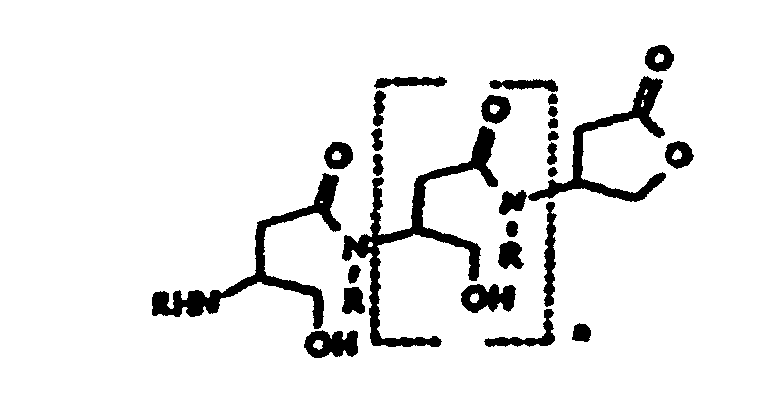
- the present invention particularly provides a polymer composition that is a polyamide with the formula: wherein n is between about 50 and 10,000, wherein R is between 1 and 50 carbon atoms alone and is optionally substituted with oxygen, nitrogen, sulfur, or phosphate and combinations thereof, wherein multiple of the R are in a vertically aligned spaced relationship along a backbone forming the polyamide and wherein R can be positively or negatively charged.
- the R is selected from the group consisting of alkyl, alkene, alkyne, cycloalkyl, aryl, aralkyl, hydroxyl, nitrile, carboxyl, sulfate, phosphate, sulfonyl, trialkylammonium and combinations thereof and the R groups can further be optionally substituted with a halogen selected from the group consisting of chlorine, iodine, bromine, and fluorine.
- the alkyl contains one to thirty carbon atoms.
- the R is an alkenyl polyamine group.
- the R is a pentaethyleneyl hexamine group and in a further still embodiment of the composition, the R is a mixture of alkyl and alkenyl groups.
- the present invention further provides a process for the preparation of polyamide polymers from ⁇ , ⁇ -unsaturated lactone and an amine selected from the group consisting of RNH 2 , RNH 3 + and mixtures thereof which can optionally be substituted with oxygen, nitrogen, sulfur, phosphate and combinations thereof which allow the formation of a polyamide polymer wherein each of the R can be the same or different and separating the polyamide polymer from the reaction mixture, wherein multiple of the R are in vertically aligned spaced relationship along a backbone formed by the polyamide.
- an amine selected from the group consisting of RNH 2 , RNH 3 + and mixtures thereof which can optionally be substituted with oxygen, nitrogen, sulfur, phosphate and combinations thereof which allow the formation of a polyamide polymer wherein each of the R can be the same or different and separating the polyamide polymer from the reaction mixture, wherein multiple of the R are in vertically aligned spaced relationship along a backbone formed by the polyamide.
- the R is selected from the group consisting of alkyl, alkene, alkyne, cycloalkyl, aryl, aralkyl, hydroxyl, nitrile, carboxyl, sulfate, phosphate, sulfonyl, trialkylammonium and combinations thereof and the R groups can further be optionally substituted with a halogen selected from the group consisting of chlorine, iodine, bromine, and fluorine.
- the present invention particularly provides a process for the preparation of a polymer composition that is a polyamide wherein the process comprises reacting in a reaction mixture 2-(5H)furanone and a primary amine selected from the group consisting of RNH 2 , R 2 NH, RNH 3 + and mixtures thereof, wherein R contains between 1 and 50 carbon atoms alone and is optionally substituted with oxygen, nitrogen, sulfur, and phosphate and combinations thereof which allow the formation of a polyamide polymer in the reaction mixture of the formula: wherein n is between 50 and 10,000; and separating the polyamide polymer from the reaction mixture, wherein multiple of the R are in vertically aligned spaced relationship along a backbone formed by the polyamide.
- 2-(5H)furanone and a primary amine selected from the group consisting of RNH 2 , R 2 NH, RNH 3 + and mixtures thereof, wherein R contains between 1 and 50 carbon atoms alone and is optionally substituted with oxygen, nitrogen, sulfur, and phosphate and combinations thereof which allow
- the R is selected from the group consisting of alkyl, alkene, alkyne, cyclical, aryl, aralkyl, hydroxyl, nitrile, carboxyl, sulfate, phosphate, sulfonyl, trialkylammonium and combinations thereof and the R groups can further be optionally substituted with a halogen selected from the group consisting of chlorine, iodine, bromine, and fluorine.
- the R is an alkyl group containing one to eight carbon atoms and the reaction is conducted in the absence of a solvent for the primary amine.
- the R is an alkyl group containing nine to thirty carbon atoms and the reaction is conducted in the presence of a solvent for the primary amine.
- the solvent is toluene.
- the primary amine is an alkylene polyamine and the reaction is conducted in the presence of a solvent for the alkylene polyamine.
- a solvent for the alkylene polyamine is selected from the group consisting of ethanol, a low-molecular weight alcohol, water containing tetrahydrofuron and water containing dioxane.
- the alkylene polyamine is admixed with an alkylamine in the reaction mixture.
- the preferred solvent is selected from the group consisting of chloroform and toluene A.
- the focus of the present invention is a process for preparing a variety of new polymer or polyamides with unusual and unique properties starting from ⁇ , ⁇ -unsaturated lactones such as 2(5H)-furanone.
- U.S. Patent Nos. 5,292,939; 5, 319, 110 and 5,374,773, all to Hollingsworth a process is disclosed which utilizes a hexose source such as lactose for the synthesis of 2(5H)-furanone.
- the inventor has discovered that 2 (5H)-furanone can be used in a process to make polyamides or polymers which process and polymers are the object of the present invention.
- Polymers derived from lactose have the appeal that they are derived from a renewable resource.
- the chemical functionalities which can be imparted to polymers derived from 2(5H)-furanone are many.
- the chemical functionality available from 2(5H)-furanone compliments that obtained from alkenes such as propylene, ethylene, acrylic acid, acrylonitrile, and styrene, all of these are very common monomers used to make polymers.
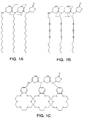
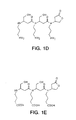
- the R group can also be a molecular system with special optical or electrical properties (Figure 1B), crown ethers (Figure 1C), polyamines with high metal complexation or ion-capture properties (Figure 1D) or carboxylates with cation exchange or capture properties (Figure 1E).
- Figure 1B a molecular system with special optical or electrical properties
- Figure 1C crown ethers
- Figure 1D polyamines with high metal complexation or ion-capture properties
- Figure 1E carboxylates with cation exchange or capture properties
- Examples of uses for such polymer compositions prepared according to the method of the present invention are thin films for electronics through organic conductors, hydrogels, flocculants, nanostructures, and high-capacity ion exchange resins for use in precious or toxic metal recovery and water purification or reclamation. Therefore, the present invention is a process for synthesizing highly functionalized and functionalizable new polymeric materials capable of a wide variety of uses from starch or lactose derived monomers.
- the ability of the present invention for forming charged, neutral, hydrophobic, hydrophilic, electro-active, optically active, magnetically active or other types of polymers from one generalized reaction parallels the well-known radical polymerization of propylene, ethylene, acrylic acid, acrylonitrile, styrene, and other alkenes to form polymers with different physical properties.
- the present invention represents a departure for polymer chemistry from reliance on fossil fuels towards a direction in which agriculturally-derived materials are used as the primary building block.
- the present invention provides processes for the synthesis of new and novel polymer compositions.
- the polymers of the present invention when having an R group, form two-dimensional polymers which means that one end of the polymer, the headgroup which forms the backbone, is different from the other end, the R group which forms the side chains.
- the present invention also provides an opportunity to integrate biopolymers within the polyamide frameworks such as incorporation of biopolymers including but not limited to starch, chitin, chitosan, or cellulose into the reaction mixtures to achieve grafting or bonding. Furthermore, the functionalities present provides some measure of biodegradability for the polymers according to the present invention.
- polymer compositions of the present invention are, but are not limited to, 1) thin conductive films for electronic or electro-magnetic devices, 2) hydrogels with high water capacity for medical and new mechanical-electrical applications, 3) conductive polymers, 4) polyamino-polyamides for metal recovery, and for use as a flocculant in water purification, 5) non-fouling surfaces for biofilm suppression, 6) non-thrombogenic surfaces, and 7) as micelles or liposome or adjuvants for drug delivery.
- the polymerization reaction of the present invention involves a cyclic ⁇ , ⁇ -unsaturated gamma-lactone and a long chain primary amine.
- the long alkyl chains stack in a parallel manner and are held together by hydrophobic forces thereby forming an extended two-dimensional sheet.
- the terminus of the alkyl chain can be a saturated alkyl group such as methyl, isopropyl or isobutyl group or it can be a polar group, such as hydroxyl, nitrile, or amide, or an unsaturated function such as an alkene, acetylene or aryl group.
- the group can be any functionality that does not interfere with reaction of the amino group with the ⁇ , ⁇ -unsaturated gamma-lactone.
- These functionalities can also appear at any position along the alkyl chains thereby giving the polymers special properties such as a band of polar groups (in the case of hydroxyl functions) or a band of stacked n functions (in the case of alkenes, acetylenes, or arenes).
- These polymer compositions can be used for light or electron conduction or for conferring special magnetic or optical properties or for further polymerization.
- the polymers can be ordered by allowing them to form at the interface between a polar and a non-polar layer, e.g. the interface between water and ether.
- the polymers can be used to replace Langmuir Blodgett layers in most applications since the hydroxyl groups on the polar faces can be converted to a wide variety of functionalities by standard chemical techniques. These include but are not limited to acids, esters, amines, amides, nitriles, phosphates, phosphonates, sulfate, thiol, and halo groups.
- the present invention particularly uses an ⁇ , ⁇ -unsaturated gamma-lactone (2(5H)-furanone or butenolide) as an agent to effect the regular, sequential alignment of side chains along a polyamide backbone.
- the method is based on the reactivity of the furanone which undergoes facile reaction with a primary amine by Michael-type addition to yield ⁇ , ⁇ -amino gamma-lactone which then polymerizes to form a polyamide chain with the pendant side chain.
- the method of the present invention can produce many different types of new compositions.
- two-dimensional polymer compositions in which the hydrophobic alkyl chains are on one face and the polar hydroxymethyl groups on the other face are fabricated.
- Two-dimensional polymer compositions are prepared according to the method of the present invention by heating one equivalent of furanone with the appropriate primary amine.
- tetradecylamine is an example, a solvent is required to dissolve the longer chain amine.
- the polymer compositions prepared according to the method of the present invention can be used for coating plastics to render the plastics hydrophilic.
- the free hydroxyl groups on one side of the polymer compositions can be used as sites for functionalization for further surface modifications.
- the R group can be polar or neutral and can range in size from a simple alcohol to a complex carbohydrate residue. When the R group is a carbohydrate, the polymer compositions tend to form stable gels in aqueous solution to form the polymer composition that is a two-dimensional polymer.
- the polymer compositions are anionic.
- Anionic polymer compositions are prepared according to the method of the present invention by heating one equivalent of furanone with the appropriate amino acid in water or water/ethanol in the presence of sufficient base to deprotonate the amino group to form the polymer composition that is an anionic polymer.
- the polymer compositions are cross-linked cationic elastomers.
- Cross-linked cationic elastomer polymer compositions are prepared according to the method of the present invention by heating one or 0.5 equivalents of furanone with the appropriate polyamine in ethanol to form the polymer composition that is a cross-linked elastomer.
- the polymer composition When the R group is a mixture of a long chain aliphatic primary amines and polyamines, the polymer composition is soluble in an organic solvent but can complex metal ions and anions.
- the metal binding polymer composition allows solubilization of metal ions such as copper II, gold I, silver I, nickel I, and iron II and III in solvents such as chloroform or toluene.
- the present invention has established the general conditions for adding amines to 2(5)-furanone to yield polyamides.
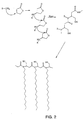
- the mechanism for the reaction is shown in Figure 2.
- Reaction of 2(5)-furanone with a long chain primary amine yields polyamides with structures similar to that shown in Figure 1A.
- the molecular weight of the polyamides can be controlled by adjusting the temperature and time for which the amine and 2(5)-furanone are reacted.
- a non-polar solvent such as ether
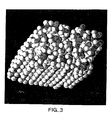
- a polymer sheet is formed ( Figure 3) which has been shown by polarized light microscopy to be highly oriented ( Figure 4).
- the present invention also allows the properties of the polymer compositions to be altered by controlling the degree of polymerization (average molecular weight), the length of the hydrocarbon chain (R group), the degree the hydrocarbon chain is unsaturated, and combinations thereof.
- the polymers of the present invention are completely new materials in the art of polymer chemistry.
- the polymers are two-dimensional sheets having a hydrophobic face and a hydrophilic face which have uses such as modifying the properties of the surfaces of plastics to increase wettability or biocompatibility, or waterproofing hydrophilic surfaces.
- Polymers that can waterproof of hydrophilic surfaces is an important application for the present invention.
- paper is the dominant material for the fabrication of disposable plates and cups and other similar products and for wrapping. Treatment of paper products with certain polymers of the present invention that will make them non-wettable would reduce reliance on the use of non-degradable plastics.
- the ability to control the surface properties of diverse materials with the polymers of the present invention is an important advance in material and surface science.
- n-systems For example, by using polyunsaturated alkyl groups as the side chain (R group), a continuous two-dimensional sheet of n-systems are made, making it possible to fabricate planar materials with a conducting or optically active n-band for use in electronic devices such as carbon-based microchips or display devices.
- Hydrogels can be made according to the present invention by synthesizing polyamides with structures as shown in Figure 1D which when the pH is adjusted to a low value, the polyamides become highly charged and readily form stable hydrogels which can hold many tens of times their weight of water.
- the properties of the hydrogels made according to the present invention can be controlled by adjusting the pH, the ionic strength of the solution, and the number of amino acids per side chain.
- Hydrogels are an important material with a wide variety of uses which include artificial tissue(Refojo and Leong (1981). J. Biomed. Mater. Res., vol. 15, pp. 497-509), surgical implants (Corkhill et al . (1990). Proc. Inst. Mech. Eng., vol. 204, pp. 147-155), contact lens materials (Corkhill et al . (1989). Biomaterials, vol. 10, pp. 3-10; Bruck (1973). J. Biomed. Mater. Res., vol. 7, pp. 387-404), grafting of foreign materials to tissue (Salter and Kell (1991). Curr. Opin. Biotechnol., vol. 2, pp.
- Hydrogels are primarily polymeric compositions that can retain a very high proportion of water.
- a basic structural feature of hydrogels is that the polymer backbone is hydrophilic and often charged. The hydrophilicity ensures good solvation and the charged groups cause the framework to expand because of repulsion of like charge.
- the polymers of the present invention solve the need by providing polymers that are soluble in water and which bind metals in the water producing polymer-metal complexes which then can be extracted into an organic solvent.
- the aforementioned polymers are compositions that are balanced between long hydrocarbon chains and polyamino chains. The hydrocarbon chains pack together to form a two-dimensional lamellar system with the polar polyamino groups on the polar face.
- Such polymers can bind many transition elements which allows the elements to be extracted into organic solvents such as toluene, chloroform, ether or ethyl acetate with very high efficiency.
- metals that can be bound by the polymers are copper II, gold I, silver I, nickel I and iron II and III.
- the polymers of the present invention when complexed with a metal such as copper and gold and in an organic solvent can be deposited, painted or printed onto circuit boards or microchips to connect various elements. The solvent evaporates leaving behind the metal which can conduct electrical currents. Therefore, the polymers can be used to make conductive tracks on an insulating surface which is highly desirable for microelectronics fabrication such as microchips and circuit boards.
- Atomic force microscopy demonstrates that the film surface made by the polymers of the present invention is extremely flat, much flatter than can typically be attained by the leading edge technologies of chemical vapor deposition or sputter coating. Chemical vapor deposition and sputter coating require high vacuums, very high temperatures and/or the formation of very reactive species.
- the polymers of the present invention represent a major step forward in coating technologies and in preparing planar materials.
- the polymers of the present invention can be used in the manufacture of marine paints containing metals such as copper. Copper is toxic to the growth of microorganisms and is a desired component of marine paints (Llewellyn (1972). Ann. Occup. Hyq., vol. 15, pp. 393-397).
- marine paints are oil-based and the forms of copper that are soluble in organic solvents in high proportions are difficult to manufacture. Therefore in many marine paints, copper metal is used because soluble forms of copper are not available.
- Toluene is a common paint solvent and the polymers of the present invention comprising toluene-soluble copper solutions have much promise in manufacture of marine paints especially since the polymers form layers thus increasing the surface availability of the metal. Copper surfaces lead to less fouling than do plastic surfaces in studies involving potable water (Rogers et al. (1994). Appl. Environ. Microbiol., vol. 60, pp. 1585-1592).
- the area of water recovery is another area that can benefit from the polymers of the present invention.
- Polycationic materials such as chitosan are used as flocculants for removal of metal ions, bacteria, and viruses from water (Steinmann and Haveffle (1982).
- the polymers of the present invention can be used for precious metal and radioactive metal recovery (Onsoyen and Skaugrud (1990). J. Chem. Technol. Biotechnol., vol. 49, pp. 395-404; Muzzarelli and Rocchetti (1974). J. Chromatogr., vol. 96, pp. 115-121), toluene-soluble metal complexes will allow the extraction of transition metal ions into organic solvents.
- n-octylamine for producing polymers of the present invention which have short chain amines.
- 2(5H)-furanone (0.84 g. 0.01 mol) was added to a vigorously stirred solution of n-octylamine (1.29 g, 0.01 mol) to form a 1 to 1 mol ratio. Stirring was continued at room temperature until the mixture formed a thick paste. The mixture was then heated at 70°C for four hours during which time the mixture formed a waxy polymeric solid.
- 1 H-NMR spectroscopy in deuterated chloroform showed the disappearance of the signals for furanone between 5.0 and 7.0 ppm and the appearance of new signals between 2.5 and 4.2 ppm representative of the polymer.
- n-tetradecylamine for producing polymers of the present invention which have long chain amines was performed.
- 2(5H)-furanone (0.84 g, 0.01 mol) was added to a vigorously stirred solution of n-tetradecylamine (2.13 g, 0.01 mol) suspended in 10 ml toluene at 70°C to form a 1 to 1 mol ratio.
- the mixture was stirred at 70°C for four hours after which the toluene was removed by distillation.
- a very hard polymer was formed by the reaction.
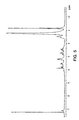
- 1 H-NMR spectroscopy in deuterated chloroform was similar to that for octylamine polymer except that the signals were considerably broader and the signals for the n-tetradecyl side chain were much more intense (Figure 5).
- n-hexadecylamine for producing polymers of the present invention which have long chain amines was performed.
- 2(5H)-furanone (0.84 g, 0.01 mol) was added to a vigorously stirred solution of n-hexadecylamine (2.41 g, 0.01 mol) suspended in 10 ml of a 1:1 solution of toluene to chloroform (volume/volume) at 70°C.
- the mixture was stirred at 70°C for four hours after which the toluene was removed by distillation.
- a brittle polymer with the n-tetradecyl side chains was formed by the reaction.
- n-octadecylamine for producing polymers of the present invention which have long chain amines was performed.
- 2(5H)-furanone (0.84 g, 0.01 mol) was added to a vigorously stirred solution of n-octadecylamine (2.69 g, 0.01 mol) suspended in 10 ml of toluene at 70°C.
- the mixture was stirred at 70°C for four hours after which the toluene was removed by distillation.
- a brittle polymer with the n-octadecyl side chains was formed by the reaction.
- glucosamine hydrochloride for producing polymers of the present invention which have very polar amines was performed.
- 2(5H)-furanone (0.84 g, 0.01 mol) was added to a vigorously stirred solution of glucosamine hydrochloride (2.15 g, 0.01 mol) dissolved in 20 ml of water containing one equivalent of sodium carbonate.
- the mixture was stirred two hours at room temperature and then at 70°C for three hours.
- the reaction mixture was cooled and the polymer product purified by gel filtration on a Biogel P2 (BioRad) column using water as the eluant.
- the polymer product had glucosyl side chains.
- L-valine An example using L-valine to produce an anionic polymer was performed. 1.0 equivalent of sodium hydroxide was added to 0.27 g L-valine in 20 ml of water. Then 2 ml of ethanol was added, followed by 0.25 g (1 equivalent) of furanone. The mixture was stirred at room temperature for 1 hour and then heated at 70°C for three hours. After three hours, the polymer product was purified by cation exchange chromatography to remove the sodium ions and lyophilized. The polymer product had butylene 5-methyl carboxylic acid side chains.
- pentadecanoic acid to produce an anionic polymer was performed. 1.0 equivalent of sodium hydroxide was added to 0.22 g pentadecanoic acid in 20 ml of water. Then 2 ml of ethanol was added, followed by 0.25 g (1 equivalent) of furanone. The mixture was stirred at room temperature for 1 hour and then heated at 70°C for three hours. After three hours, the polymer product was purified by cation exchange chromatography to remove the sodium ions and lyophilized. The polymer product had pentadecanyl acid side chains.
- An example for producing an anionic polymer from phosphoethanolamine sodium salt was performed. 1.0 equivalent of sodium hydroxide was added to 1.63 g phosphoethanolamine sodium salt (0.01 mol) in 20 ml of water. Then 2 ml of ethanol was added, followed by 0.25 g (1 equivalent) of furanone. The mixture was stirred at room temperature for 1 hour and then heated at 70°C for three hours. After three hours, the polymer product was purified by cation exchange chromatography to remove the sodium ions and lyophilized. The polymer had phosphoethanol side chains.
- the polymer was soluble in organic solvents but can complex metal ions and anions from which is useful for solubilization of metal ions such as copper II, gold I, silver I, nickel I, and iron II and III in solvents as non-polar as chloroform or toluene.
- the polymer product was shown to be able to complex metal ions which were then soluble in an organic solvent.
- a reaction wherein the polymer was stirred in an aqueous solution of metal ions followed by extraction of the reaction with an organic solvent resulted in the extraction of the metal ions into the organic layer as judged by the color of said layer.
- An example of producing a polymer film was performed using the two-dimensional polymers from any one of examples 1 through 9.
- the polymer of Example 4 was used to make a two-dimensional polymer film.
- the polymer containing tetradecylamine R groups from Example 4 was dissolved in diethyl ether to form a 0.1% solution.
- Ten ml of the solution was floated on a water surface contained in a petri dish with a radius of 5 centimeters.
- the ether was allowed to dry by slow, unforced evaporation after which time a thin film of the two-dimensional polymer was formed on the water surface.
- the polymer film was recovered and analyzed by laser scanning confocal microscopy in the phase contrast mode, phase contrast microscopy (Figure 4A), and in the polarizing mode with crossed polarizers (Figure 4B).
- the layered structure of the polymer was readily observable by either technique.
- Figure 4A note the smooth fabric-like texture (the sheet was wrinkled during transfer) and in Figure 4B note how thin the edges are in comparison to the area. Also note that there is ordering or chain alignment in a top to bottom direction.
- Similar films were prepared from the polymers from examples 1 through 3, and 5 through 9.
- Two-dimensional polymer compositions of the present invention having a hydrophobic face on one side and a polar poly-cationic face on the other were used to coat materials such as Teflon and polypropylene which were then tested to determine whether said coated materials were thrombogenic and therefore not useful for medical applications such as contact with blood.
- Applications anticipated are use of the two-dimensional polymers for the preparation of non-thrombogenic surfaces for applications where blood would come in contact with a foreign surface (e.g., an implant or catheter) which would present risk of clotting or coagulation.
- FDA Federal Drug Administration
- a two-dimensional polymer prepared from n-octylamine, tetradecylamine, pentaethylamine hexamine and 2 (5H)-furanone which had a hydrophobic face on one side and a polar polycationic face on the other was used to coat materials such that the hydrophobic face was adsorbed to the material.
- the process of coating the material consisted of soaking it in a trough containing the polymer in an ethyl, alcohol and water solution. The polycationic face was then hydrated to form a hydrogel and an interpenetrating gel-layer of Na-heparin was then formed upon the polymer.
- Figure 6 is a schematic diagram showing the alkyl chains of the two-dimensional polymer adsorbed to the hydrophobic face of the material (basement substrate) and the polar heads of the polymer forming a hydrogel comprising the anionic heparin gel, interpenetrating gel matrix, and the cationic gel.
- the following test was performed to quantitate the thrombogenic potential of materials coated with the two-dimensional polymer of the present invention.
- the test was a standard recalcification procedure which consisted of measurement of the clotting time of plasma in contact with the material after addition of excess calcium.
- the procedure consisted of drawing blood using vacutainers containing 0.1 M sodium citrate at a ratio of 9:1 (blood to anticoagulant).
- the blood was stored refrigerated until used in the testing which was within four hours of being drawn. Handling of the drawn blood was in compliance with the Department of Labor, Occupational Safety and Health Administration (OSHA), Occupation Exposure to Bloodborne Pathogens, Final Rule Standard, 29 CFR Part 1910.1030.
- the samples were prepared by immersing 1.8 cm 2 sample in plasma.
- the amount of test material tested was based on USP surface area recommendations or by weight (4.0 g/20 ml extract fluid for polymers and plastic, 2.0 g/20 ml extract fluid for elastomers. Each sample was tested six times.
- test reagents were equilibrated at 37°C for sixty minutes. Samples were prepared in 10 x 75 mm plastic tubes. Plasma (0.2 ml) and sterile saline (0.2 ml) were added to each sample and control tubes. Samples and control tubes were equilibrated exactly ten minutes. Calcium chloride (0.2 ml) was then added to each test and control tube, gently mixed and held at 37°C until the sample clotted. The tubes were inspected by gentle tilting every five seconds. The positive control tube contained plasma and sterile saline and glass beads of approximately the same surface area as the tested sample, and the negative control tube contained polypropylene beads of approximately the same surface area as the tested sample. The control and sample tubes were run through the test concurrently.
- Two-dimensional polymer compositions of the present invention having a hydrophobic face on one side and a polar poly-cationic face were used to coat materials which were then tested to determine whether said coated materials had hemolytic activity and therefore not useful for applications which required contact with blood.
- a two-dimensional polymer with a hydrophobic face on one side and a polar polycationic face on the other prepared from n-octylamine, n-tetradecylamine, pentaethylamine tetramine and 2 (5H)-furanone was used to coat material TEFLON® and polypropylene such that the hydrophobic face was adsorbed to the material by soaking the substrate in a trough containing the polymer in an ethyl, alcohol and water solution.
- the polycationic face was then hydrated to form a hydrogel and an interpenetrating gel-layer of Na-heparin was then formed upon the polymer.
- the following was performed to quantitate the hemolytic potential of materials coated with the two-dimensional polymer of the present invention.
- the test was a standard procedure which consisted of measuring the percent hemolysis of serum in contact with materials coated with said compositions.
- the procedure consisted of drawing blood using vacutainers containing 3.8% sodium citrate.
- the drawn blood was stored refrigerated until used in the testing. Handling of the blood was in compliance with the Department of Labor, Occupational Safety and Health Administration (OSHA), Occupation Exposure to Bloodborne Pathogens, Final Rule Standard, 29 CFR Part 1910.1030.
- the samples were prepared by immersing 1.8 cm 2 sample in plasma.
- the amount of test material tested was based on USP surface area recommendations or by weight (4.0 g/20 ml extract fluid for polymers and plastic, 2.0 g/20 ml extract fluid for elastomers. Each sample was tested three times. To each test tube 14.7 cm 2 of sample and 4.9 ml of the physiological saline was added.
- This example is a method for metallizing plastic, glass, or other non-metallic surfaces.
- a two dimensional polymer with hydrocarbon chains on one face and metal ion chelating groups (to which ions are bound) on the other face was prepared from n-octylamine, tetradecylamine, 2(5H)-furanone and pentaethylene hexamine.
- the polymer was layered (hydrophobic side down) onto the non-metallic surface.
- the ions are then reduced with a suitable reductant to the free metal which remains as a film on the surface.
- Figure 7 represents a two-dimensional polymer with the alkyl chains adsorbed to a hydrophobic substrate (basement membrane) and complexed to metal ions which are then reduced to the metal.
- a copper II solution in toluene was prepared and a dried film of a chloroform solution of the polymer was prepared from n-octylamine, tetradecylamine, 2(5H)-furanone and pentaethylene hexamine on the bottom of an Erlenmeyer flask.
- the solutions when painted onto a glass surface form very even films which are conductive which can be reduced to thin films of copper metal by reacting with dilute borohydride solutions. The metal inhibits biofilm formation.
Landscapes
- Chemical & Material Sciences (AREA)
- Health & Medical Sciences (AREA)
- Chemical Kinetics & Catalysis (AREA)
- Medicinal Chemistry (AREA)
- Organic Chemistry (AREA)
- Polymers & Plastics (AREA)
- Life Sciences & Earth Sciences (AREA)
- Engineering & Computer Science (AREA)
- Epidemiology (AREA)
- Public Health (AREA)
- Veterinary Medicine (AREA)
- General Health & Medical Sciences (AREA)
- Materials Engineering (AREA)
- Animal Behavior & Ethology (AREA)
- Surgery (AREA)
- Wood Science & Technology (AREA)
- Hematology (AREA)
- Dermatology (AREA)
- Oral & Maxillofacial Surgery (AREA)
- Transplantation (AREA)
- Manufacturing & Machinery (AREA)
- Polyamides (AREA)
- Addition Polymer Or Copolymer, Post-Treatments, Or Chemical Modifications (AREA)
- Polyesters Or Polycarbonates (AREA)
Claims (38)
- Verfahren zur Herstellung eines Polyamidpolymers, welches umfasst:(a) Umsetzen in einem Reaktionsgemisch von α,β-ungesättigtem Lacton und einem Amin, ausgewählt aus der Gruppe bestehend aus RNH2, RNH3 + und Mischungen davon, worin R zwischen etwa 1 und 50 Kohlenstoffatome allein enthält und optional mit Heteroatomen O, N, S und P und Kombinationen davon substituiert ist, welche die Bildung eines Polyamidpolymers erlauben, worin jeder der Reste R gleich oder verschieden in der Reaktionsmischung sein kann, und(b) Abtrennen des Polyamidpolymers aus der Reaktionsmischung, worin zahlreiche der Reste R in senkrecht angeordneter räumlicher Beziehung entlang eines durch das Polyamid gebildeten Grundgerüsts sind.
- Verfahren nach Anspruch 1, worin R ausgewählt ist aus der Gruppe bestehend aus Alkyl, Alken, Alkin, Cycloalkyl, Aryl, Aralkyl, Hydroxyl, Nitril, Carboxyl, Sulfat, Phosphat, Sulfonyl, Trialkylammonium und Kombinationen davon und optional mit einem Halogen, ausgewählt aus der Gruppe bestehend aus Cl, I, Br, F und Kombinationen davon, substituiert sein kann.
- Verfahren nach Anspruch 1, worin R Alkyl ist.
- Verfahren nach Anspruch 1, worin R Alkyl ist, das 1 bis 8 Kohlenstoffatome enthält, und worin die Reaktion in Abwesenheit eines Lösemittels für das Amin durchgeführt wird.
- Verfahren nach Anspruch 1, worin R die Alkylgruppe ist, die 9 bis 30 Kohlenstoffatome enthält, und worin die Reaktion in Anwesenheit eines Lösemittels für das Amin durchgeführt wird.
- Verfahren nach Anspruch 5, worin das Lösemittel Toluol ist.
- Verfahren nach Anspruch 1, worin das Amin Alkylenpolyamin ist, und worin die Reaktion in Anwesenheit eines Lösemittels für das Alkylenpolyamin durchgeführt wird.
- Verfahren nach Anspruch 7, worin das Alkylenpolyamin Pentaethylenhexamin ist.
- Verfahren nach Anspruch 8, worin das Lösemittel Ethanol ist.
- Verfahren nach Anspruch 7, worin das Alkylenpolyamin mit einem Alkylamin in der Reaktionsmischung vermischt wird.
- Verfahren nach Anspruch 10, worin das Lösemittel ausgewählt wird aus der Gruppe bestehend aus Chloroform und Toluol A.
- Verfahren gemäß Anspruch 1 zur Herstellung eines Polyamidpolymers, welches umfasst:(a) Umsetzen in einem Reaktionsgemisch von 2(5H)-Furanon und einem Amin, ausgewählt aus der Gruppe bestehend aus RNH2, RNH3 + und Mischungen davon, worin R zwischen etwa 1 und 50 Kohlenstoffatome allein enthält und optional mit Heteroatomen O, N, S, P und Kombinationen davon substituiert ist, welche die Bildung eines Polyamidpolymers erlauben, worin jeder der Reste R gleich oder verschieden in der Reaktionsmischung der Formelsein kann, worin n zwischen etwa 50 und 10000 beträgt, und
 (b) Abtrennen des Polyamidpolymers aus der Reaktionsmischung, worin zahlreiche der Reste R in senkrecht angeordneter räumlicher Beziehung entlang eines durch das Polyamid gebildeten Grundgerüsts sind.
 - Verfahren nach Anspruch 12, worin R ausgewählt ist aus Alkyl, Alken, Alkin, Cycloalkyl, Aryl, Aralkyl, Hydroxyl, Nitril, Carboxyl, Sulfat, Phosphat, Sulfonyl, Trialkylammonium und Kombinationen davon und optional mit einem Halogen, ausgewählt aus der Gruppe bestehend aus Cl, I, Br, F und Kombinationen davon, substituiert sein kann.
- Verfahren nach Anspruch 12, worin R Alkyl ist.
- Verfahren nach Anspruch 12, worin R Alkyl ist, das 1 bis 8 Kohlenstoffatome enthält, und worin die Reaktion in Abwesenheit eines Lösemittels für das Amin durchgeführt wird.
- Verfahren nach Anspruch 12, worin R die Alkylgruppe ist, die 9 bis 30 Kohlenstoffatome enthält, und worin die Reaktion in Anwesenheit eines Lösemittels für das Amin durchgeführt wird.
- Verfahren nach Anspruch 16, worin das Lösemittel Toluol ist.
- Verfahren nach Anspruch 12, worin das Amin ein Alkylenpolyamin ist, und worin die Reaktion in Anwesenheit eines Lösemittels für das Alkylenpolyamin durchgeführt wird.
- Verfahren nach Anspruch 18, worin das Alkylenpolyamin Pentaethylenhexamin ist.
- Verfahren nach Anspruch 19, worin das Lösemittel ausgewählt ist aus der Gruppe bestehend aus Ethanol, anderem Alkohol mit niedrigem Molekulargewicht, Wasser und Tetrahydrofuran und Wasser und Dioxan.
- Polyamid, hergestellt durch Umsetzen von α,β-ungesättigtem Lacton mit einem Amin, ausgewählt aus der Gruppe bestehend aus RNH2, RNH3 + und Mischungen davon, worin R 1 bis 50 Kohlenstoffatome enthält und optional mit Heteroatomen O, N, S, P und Kombinationen davon substituiert ist, worin zahlreiche der Reste R in vertikal angeordneter und räumlicher Beziehung entlang eines das Polyamid bildenden Grundgerüsts sind, und worin N positiv geladen sein kann.
- Polyamid nach Anspruch 21, worin R ausgewählt ist aus Alkyl, Alken, Alkin, Cycloalkyl, Aryl, Aralkyl, Hydroxyl, Nitril, Carboxyl, Sulfat, Phosphat, Sulfonyl, Trialkylammonium und Kombinationen davon und optional mit einem Halogen, ausgewählt aus der Gruppe bestehend aus Cl, I, Br, F und Kombinationen davon, substituiert sein kann.
- Polyamid nach Anspruch 21, worin R Alkyl ist.
- Polyamid nach Anspruch 21, worin das Alkyl 1 bis 8 Kohlenstoffatome enthält.
- Polyamid nach Anspruch 23, worin das Alkyl 9 bis 30 Kohlenstoffatome enthält.
- Polyamid nach Anspruch 21, worin R eine Alkenylpolyamingruppe ist.
- Polyamid nach Anspruch 21, worin R eine Pentaethylenylpentamingruppe ist.
- Polyamid nach Anspruch 21, worin R eine Mischung einer Alkylgruppe und einer Alkenylpolyamingruppe ist.
- Polyamid nach Anspruch 21 der Formel:worin n zwischen etwa 50 und 10000 beträgt, worin R zwischen 1 und 50 Kohlenstoffatome allein enthält und optional mit Heteroatomen Sauerstoff, Stickstoff, Schwefel oder Phosphat und Kombinationen davon substituiert ist, worin zahlreiche der Reste R in vertikal angeordneter räumlicher Beziehung entlang eines das Polyamid bildenden Grundgerüsts sind, und worin R positiv oder negativ geladen sein kann.

- Polyamid nach Anspruch 29, worin R ausgewählt ist aus der Gruppe bestehend aus Alkyl, Alken, Alkin, Cycloalkyl, Aryl, Aralkyl, Hydroxyl, Nitril, Carboxyl, Sulfat, Phosphat, Sulfonyl, Trialkylammonium und Kombinationen davon und optional mit einem Halogen, ausgewählt aus der Gruppe bestehend aus Cl, I, Br, F und Kombinationen davon, substituiert sein kann.
- Polyamid nach Anspruch 29, worin R Alkyl ist.
- Polyamid nach Anspruch 31, worin das Alkyl 1 bis 8 Kohlenstoffatome enthält.
- Polyamid nach Anspruch 31, worin das Alkyl 8 bis 30 Kohlenstoffatome enthält.
- Polyamid nach Anspruch 29, worin R eine Alkenylpolyamingruppe ist.
- Polyamid nach Anspruch 29, worin R eine Pentaethylenylpentamingruppe ist.
- Polyamid nach Anspruch 29, worin R eine Mischung der Alkylgruppe und einer Alkenylpolyamingruppe ist.
- Polyamid nach Anspruch 29, worin R mehr als eine Amin- oder Phosphoniumgruppe enthält, um dem Polyamid eine positive Ladung zu geben.
- Polyamid nach Anspruch 29, worin R wenigstens eine der Gruppen, ausgewählt aus der Gruppe bestehend aus Carboxyl, Sulfat, Sulfonat, Phosphat und Phosphat, enthält, um dem Polyamid eine negative Ladung zu geben.
Applications Claiming Priority (3)
| Application Number | Priority Date | Filing Date | Title |
|---|---|---|---|
| US09/159,305 US6153724A (en) | 1998-09-24 | 1998-09-24 | Preparation of cross-linked 2-dimensional polymers with sidedness from α,β-lactones |
| US159305 | 1998-09-24 | ||
| PCT/US1999/021692 WO2000017254A1 (en) | 1998-09-24 | 1999-09-20 | PREPARATION OF CROSS-LINKED 2-DIMENSIONAL POLYMERS WITH SIDEDNESS FROM α,β-LACTONES |
Publications (3)
| Publication Number | Publication Date |
|---|---|
| EP1124882A1 EP1124882A1 (de) | 2001-08-22 |
| EP1124882A4 EP1124882A4 (de) | 2004-04-21 |
| EP1124882B1 true EP1124882B1 (de) | 2005-08-17 |
Family
ID=22571993
Family Applications (1)
| Application Number | Title | Priority Date | Filing Date |
|---|---|---|---|
| EP99948335A Expired - Lifetime EP1124882B1 (de) | 1998-09-24 | 1999-09-20 | HERSTELLUNG VON VERNETZTEN ZWEIDIMENSIONALEN POLYMEREN MIT EINER ASYMMETRIE VON $G(a), $G(b)-LACTONEN |
Country Status (14)
| Country | Link |
|---|---|
| US (1) | US6153724A (de) |
| EP (1) | EP1124882B1 (de) |
| JP (1) | JP3448277B2 (de) |
| KR (1) | KR100423575B1 (de) |
| CN (1) | CN1211416C (de) |
| AT (1) | ATE302230T1 (de) |
| AU (1) | AU738224B2 (de) |
| BR (1) | BR9913619A (de) |
| CA (1) | CA2342857C (de) |
| DE (1) | DE69926780T2 (de) |
| ES (1) | ES2246581T3 (de) |
| IL (1) | IL142060A0 (de) |
| RU (1) | RU2226198C2 (de) |
| WO (1) | WO2000017254A1 (de) |
Families Citing this family (20)
| Publication number | Priority date | Publication date | Assignee | Title |
|---|---|---|---|---|
| US6797743B2 (en) | 2000-09-27 | 2004-09-28 | Michigan Biotechnology Institute | Antimicrobial polymer |
| US20050043506A1 (en) * | 2000-09-27 | 2005-02-24 | Michigan Biotechnology Institute | Polyamide materials based on unsaturated carboxylic acids and amines |
| US6495657B1 (en) * | 2000-10-27 | 2002-12-17 | Michigan Biotechnology Institute | Two dimensional polyamides prepared from unsaturated carboxylic acids and amines |
| US6399714B1 (en) * | 2000-09-27 | 2002-06-04 | Michigan Biotechnology Institute | Crosslinked polyamide |
| US6509104B2 (en) | 2000-12-05 | 2003-01-21 | Michigan Biotechnology Institute | Antithrombogenic polymer coating |
| US6541601B1 (en) * | 2001-11-27 | 2003-04-01 | Board Of Trustees Of Michigan State University | Unsaturated side chain polyamide polymers |
| US6939554B2 (en) * | 2002-02-05 | 2005-09-06 | Michigan Biotechnology Institute | Antimicrobial polymer |
| WO2003080730A1 (en) * | 2002-03-20 | 2003-10-02 | Michigan Biotechnology Institute | Conductive polymer-based material |
| US6951902B2 (en) * | 2002-08-16 | 2005-10-04 | Michigan Biotechnology Institute | Two dimensional polymer that generates nitric oxide |
| US8062729B2 (en) | 2005-01-14 | 2011-11-22 | Ndsu Research Foundation | Polymeric material with surface microdomains |
| EP1879972A4 (de) * | 2005-05-09 | 2008-10-15 | Ndsu Res Foundation | Antifoulingstoffe mit polyamin-vernetzen polysiloxanen |
| EP1913060A4 (de) * | 2005-07-29 | 2008-11-26 | Ndsu Res Foundation | Funktionalisierte polysiloxanpolymere |
| DE102005049388A1 (de) * | 2005-10-15 | 2007-04-19 | Dechema Gesellschaft Für Chemische Technik Und Biotechnologie E.V. | Verfahren zur Vermeidung oder Verminderung von Biofilmen auf einer Oberfläche |
| US7989074B2 (en) * | 2006-06-09 | 2011-08-02 | Ndsu Research Foundation | Thermoset siloxane-urethane fouling release coatings |
| US8372384B2 (en) * | 2007-01-08 | 2013-02-12 | Ndsu Research Foundation | Quaternary ammonium functionalized cross-linked polyalkylsiloxanes with anti-fouling activity |
| US8299200B2 (en) * | 2007-06-11 | 2012-10-30 | Ndsu Research Foundation | Anchored polysiloxane-modified polyurethane coatings and uses thereof |
| US8709394B2 (en) * | 2007-09-28 | 2014-04-29 | Ndsu Research Foundation | Antimicrobial polysiloxane materials containing metal species |
| US20100004202A1 (en) * | 2008-02-15 | 2010-01-07 | Ndsu Research Foundation | Quaternary ammonium-functionalized-POSS compounds |
| KR101653531B1 (ko) | 2014-10-24 | 2016-09-05 | 한국과학기술연구원 | 퓨란계 코폴리아미드의 제조방법 |
| WO2018038781A1 (en) | 2016-08-25 | 2018-03-01 | General Electric Company | Reduced fouling of hydrocarbon oil |
Family Cites Families (7)
| Publication number | Priority date | Publication date | Assignee | Title |
|---|---|---|---|---|
| US2274831A (en) * | 1939-07-20 | 1942-03-03 | Du Pont | Polyamides and process for their preparation |
| US2691643A (en) * | 1950-11-15 | 1954-10-12 | Transparent Package Company | Preparation of polypeptides of beta-alanine |
| US2786045A (en) * | 1953-01-21 | 1957-03-19 | Tee Pak Inc | Hydroxyacyl-amino acids and their polymers |
| US2968629A (en) * | 1958-09-29 | 1961-01-17 | Universal Oil Prod Co | Method of inhibiting corrosion |
| US3525718A (en) * | 1967-04-25 | 1970-08-25 | Celanese Corp | Process for the production of polyamide resin and product |
| US5125929A (en) * | 1990-11-29 | 1992-06-30 | E. I. Du Pont De Nemours And Company | Fluorescent paper strength enhancing resin |
| CA2049536C (en) * | 1991-05-13 | 1999-07-06 | Rawle I. Hollingsworth | Process for the preparation of 3,4-dihydroxybutanoic acid and salts thereof |
-
1998
- 1998-09-24 US US09/159,305 patent/US6153724A/en not_active Expired - Fee Related
-
1999
- 1999-09-20 DE DE69926780T patent/DE69926780T2/de not_active Expired - Fee Related
- 1999-09-20 BR BR9913619-8A patent/BR9913619A/pt not_active IP Right Cessation
- 1999-09-20 EP EP99948335A patent/EP1124882B1/de not_active Expired - Lifetime
- 1999-09-20 CN CNB99811409XA patent/CN1211416C/zh not_active Expired - Fee Related
- 1999-09-20 WO PCT/US1999/021692 patent/WO2000017254A1/en not_active Ceased
- 1999-09-20 AU AU61539/99A patent/AU738224B2/en not_active Ceased
- 1999-09-20 CA CA002342857A patent/CA2342857C/en not_active Expired - Fee Related
- 1999-09-20 JP JP2000574160A patent/JP3448277B2/ja not_active Expired - Fee Related
- 1999-09-20 KR KR10-2001-7003201A patent/KR100423575B1/ko not_active Expired - Fee Related
- 1999-09-20 IL IL14206099A patent/IL142060A0/xx unknown
- 1999-09-20 ES ES99948335T patent/ES2246581T3/es not_active Expired - Lifetime
- 1999-09-20 AT AT99948335T patent/ATE302230T1/de not_active IP Right Cessation
- 1999-09-20 RU RU2001107965/04A patent/RU2226198C2/ru not_active IP Right Cessation
Also Published As
| Publication number | Publication date |
|---|---|
| ES2246581T3 (es) | 2006-02-16 |
| EP1124882A1 (de) | 2001-08-22 |
| AU738224B2 (en) | 2001-09-13 |
| US6153724A (en) | 2000-11-28 |
| KR20010079806A (ko) | 2001-08-22 |
| EP1124882A4 (de) | 2004-04-21 |
| CA2342857C (en) | 2004-06-22 |
| KR100423575B1 (ko) | 2004-03-22 |
| JP2002526577A (ja) | 2002-08-20 |
| CN1211416C (zh) | 2005-07-20 |
| JP3448277B2 (ja) | 2003-09-22 |
| CA2342857A1 (en) | 2000-03-30 |
| DE69926780T2 (de) | 2006-02-02 |
| ATE302230T1 (de) | 2005-09-15 |
| RU2226198C2 (ru) | 2004-03-27 |
| BR9913619A (pt) | 2001-10-09 |
| CN1320136A (zh) | 2001-10-31 |
| DE69926780D1 (de) | 2005-09-22 |
| AU6153999A (en) | 2000-04-10 |
| IL142060A0 (en) | 2002-03-10 |
| WO2000017254A1 (en) | 2000-03-30 |
Similar Documents
| Publication | Publication Date | Title |
|---|---|---|
| US6153724A (en) | Preparation of cross-linked 2-dimensional polymers with sidedness from α,β-lactones | |
| Payne et al. | Chitosan: a soft interconnect for hierarchical assembly of nano-scale components | |
| Ueda et al. | Preparation of 2-methacryloyloxyethyl phosphorylcholine copolymers with alkyl methacrylates and their blood compatibility | |
| CN112375191B (zh) | 嵌段共聚物及其制备方法和应用 | |
| EP1330484B1 (de) | Zweidimensionale polyamide hergestellt aus ungesättigten carbonsäuren und aminen | |
| Don et al. | Preparation and antibacterial test of chitosan/PAA/PEGDA bi-layer composite membranes | |
| US5606012A (en) | Polyetheramidoamine hydrogels as heparinizable materials | |
| MXPA01002623A (en) | PREPARATION OF CROSS-LINKED 2-DIMENSIONAL POLYMERS WITH SIDEDNESS FROM&agr;,&bgr;-LACTONES | |
| EP4119587A1 (de) | Beschichtungsmittel und medizinisches material damit | |
| CN118165470A (zh) | 共轭聚合物薄膜及其制备方法和应用 | |
| WO2018234564A1 (en) | OXYDO-REDUCABLE CLADABLE COMB COPOLYMER FOR REGULATED ADHESION BETWEEN CELLS AND SUBSTRATES | |
| US20070224403A1 (en) | Ultrathin Polymer Film Using Cucurbituril Derivative and Method of Forming the Same | |
| Mayer | Poly (alkyl-phosphonates), a modular approach to functionalization of surfaces | |
| KR20220151377A (ko) | 불포화 비고리 아민 화합물로 표면 개질된 기질 및 그의 표면 개질 방법 | |
| SU1504237A1 (ru) | Способ получени пленок хитозана | |
| JP3795842B2 (ja) | タンパク質含有ゲル、タンパク質含有ゲル乾燥体及びタンパク質含有ゲルの製造方法 | |
| KR20100122878A (ko) | 베타-사이클로덱스트린 유도체 및 상기 베타-사이클로덱스트린 유도체층을 포함하는 고분자 전해질 다층막 | |
| KR20220151376A (ko) | 퍼퓨릴아민 화합물로 표면 개질된 기질 및 그의 표면 개질 방법 | |
| KR920005832B1 (ko) | 단분자막 제조 장치 | |
| WO2026100250A1 (ja) | 電気化学デバイス及びその製造方法 | |
| CN119529179A (zh) | 一种用于测序芯片表面涂层的聚合物及测序芯片 | |
| JP3837521B2 (ja) | 分子配向の揃った球状微粒子及びその製造方法 | |
| JPH09299868A (ja) | 配向性薄膜の製造方法 | |
| JPS6351129A (ja) | 芳香族ポリスルホン成型物の親水化処理方法 | |
| JPS6330533A (ja) | グラフトポリマ−の製造法 |
Legal Events
| Date | Code | Title | Description |
|---|---|---|---|
| PUAI | Public reference made under article 153(3) epc to a published international application that has entered the european phase |
Free format text: ORIGINAL CODE: 0009012 |
|
| 17P | Request for examination filed |
Effective date: 20010323 |
|
| AK | Designated contracting states |
Kind code of ref document: A1 Designated state(s): AT BE CH CY DE DK ES FI FR GB GR IE IT LI LU MC NL PT SE |
|
| AX | Request for extension of the european patent |
Free format text: AL;LT;LV;MK;RO;SI |
|
| A4 | Supplementary search report drawn up and despatched |
Effective date: 20040305 |
|
| RIC1 | Information provided on ipc code assigned before grant |
Ipc: 7A 61L 27/18 B Ipc: 7C 08G 69/04 B Ipc: 7C 08G 69/08 A |
|
| 17Q | First examination report despatched |
Effective date: 20040816 |
|
| GRAP | Despatch of communication of intention to grant a patent |
Free format text: ORIGINAL CODE: EPIDOSNIGR1 |
|
| GRAS | Grant fee paid |
Free format text: ORIGINAL CODE: EPIDOSNIGR3 |
|
| GRAA | (expected) grant |
Free format text: ORIGINAL CODE: 0009210 |
|
| AK | Designated contracting states |
Kind code of ref document: B1 Designated state(s): AT BE CH CY DE DK ES FI FR GB GR IE IT LI LU MC NL PT SE |
|
| PG25 | Lapsed in a contracting state [announced via postgrant information from national office to epo] |
Ref country code: FI Free format text: LAPSE BECAUSE OF FAILURE TO SUBMIT A TRANSLATION OF THE DESCRIPTION OR TO PAY THE FEE WITHIN THE PRESCRIBED TIME-LIMIT Effective date: 20050817 |
|
| REG | Reference to a national code |
Ref country code: GB Ref legal event code: FG4D |
|
| REG | Reference to a national code |
Ref country code: CH Ref legal event code: NV Representative=s name: PATENTANWALTSBUERO JEAN HUNZIKER Ref country code: CH Ref legal event code: EP |
|
| PG25 | Lapsed in a contracting state [announced via postgrant information from national office to epo] |
Ref country code: CY Free format text: LAPSE BECAUSE OF FAILURE TO SUBMIT A TRANSLATION OF THE DESCRIPTION OR TO PAY THE FEE WITHIN THE PRESCRIBED TIME-LIMIT Effective date: 20050920 |
|
| REG | Reference to a national code |
Ref country code: IE Ref legal event code: FG4D |
|
| REF | Corresponds to: |
Ref document number: 69926780 Country of ref document: DE Date of ref document: 20050922 Kind code of ref document: P |
|
| PG25 | Lapsed in a contracting state [announced via postgrant information from national office to epo] |
Ref country code: MC Free format text: LAPSE BECAUSE OF NON-PAYMENT OF DUE FEES Effective date: 20050930 |
|
| PG25 | Lapsed in a contracting state [announced via postgrant information from national office to epo] |
Ref country code: LU Free format text: LAPSE BECAUSE OF NON-PAYMENT OF DUE FEES Effective date: 20051017 |
|
| PG25 | Lapsed in a contracting state [announced via postgrant information from national office to epo] |
Ref country code: SE Free format text: LAPSE BECAUSE OF FAILURE TO SUBMIT A TRANSLATION OF THE DESCRIPTION OR TO PAY THE FEE WITHIN THE PRESCRIBED TIME-LIMIT Effective date: 20051117 Ref country code: GR Free format text: LAPSE BECAUSE OF FAILURE TO SUBMIT A TRANSLATION OF THE DESCRIPTION OR TO PAY THE FEE WITHIN THE PRESCRIBED TIME-LIMIT Effective date: 20051117 Ref country code: DK Free format text: LAPSE BECAUSE OF FAILURE TO SUBMIT A TRANSLATION OF THE DESCRIPTION OR TO PAY THE FEE WITHIN THE PRESCRIBED TIME-LIMIT Effective date: 20051117 |
|
| PG25 | Lapsed in a contracting state [announced via postgrant information from national office to epo] |
Ref country code: PT Free format text: LAPSE BECAUSE OF FAILURE TO SUBMIT A TRANSLATION OF THE DESCRIPTION OR TO PAY THE FEE WITHIN THE PRESCRIBED TIME-LIMIT Effective date: 20060117 |
|
| REG | Reference to a national code |
Ref country code: ES Ref legal event code: FG2A Ref document number: 2246581 Country of ref document: ES Kind code of ref document: T3 |
|
| ET | Fr: translation filed | ||
| PLBE | No opposition filed within time limit |
Free format text: ORIGINAL CODE: 0009261 |
|
| STAA | Information on the status of an ep patent application or granted ep patent |
Free format text: STATUS: NO OPPOSITION FILED WITHIN TIME LIMIT |
|
| 26N | No opposition filed |
Effective date: 20060518 |
|
| PGFP | Annual fee paid to national office [announced via postgrant information from national office to epo] |
Ref country code: FR Payment date: 20060918 Year of fee payment: 8 |
|
| PGFP | Annual fee paid to national office [announced via postgrant information from national office to epo] |
Ref country code: AT Payment date: 20060920 Year of fee payment: 8 |
|
| PGFP | Annual fee paid to national office [announced via postgrant information from national office to epo] |
Ref country code: NL Payment date: 20060924 Year of fee payment: 8 |
|
| PGFP | Annual fee paid to national office [announced via postgrant information from national office to epo] |
Ref country code: GB Payment date: 20060925 Year of fee payment: 8 |
|
| PGFP | Annual fee paid to national office [announced via postgrant information from national office to epo] |
Ref country code: ES Payment date: 20060926 Year of fee payment: 8 |
|
| PGFP | Annual fee paid to national office [announced via postgrant information from national office to epo] |
Ref country code: IE Payment date: 20060927 Year of fee payment: 8 |
|
| PGFP | Annual fee paid to national office [announced via postgrant information from national office to epo] |
Ref country code: CH Payment date: 20060928 Year of fee payment: 8 |
|
| PGFP | Annual fee paid to national office [announced via postgrant information from national office to epo] |
Ref country code: IT Payment date: 20060930 Year of fee payment: 8 |
|
| PGFP | Annual fee paid to national office [announced via postgrant information from national office to epo] |
Ref country code: BE Payment date: 20061018 Year of fee payment: 8 |
|
| PGFP | Annual fee paid to national office [announced via postgrant information from national office to epo] |
Ref country code: DE Payment date: 20061031 Year of fee payment: 8 |
|
| BERE | Be: lapsed |
Owner name: *MICHIGAN STATE UNIVERSITY Effective date: 20070930 |
|
| REG | Reference to a national code |
Ref country code: CH Ref legal event code: PL |
|
| GBPC | Gb: european patent ceased through non-payment of renewal fee |
Effective date: 20070920 |
|
| PG25 | Lapsed in a contracting state [announced via postgrant information from national office to epo] |
Ref country code: NL Free format text: LAPSE BECAUSE OF NON-PAYMENT OF DUE FEES Effective date: 20080401 |
|
| NLV4 | Nl: lapsed or anulled due to non-payment of the annual fee |
Effective date: 20080401 |
|
| REG | Reference to a national code |
Ref country code: IE Ref legal event code: MM4A |
|
| PG25 | Lapsed in a contracting state [announced via postgrant information from national office to epo] |
Ref country code: AT Free format text: LAPSE BECAUSE OF NON-PAYMENT OF DUE FEES Effective date: 20070920 |
|
| PG25 | Lapsed in a contracting state [announced via postgrant information from national office to epo] |
Ref country code: LI Free format text: LAPSE BECAUSE OF NON-PAYMENT OF DUE FEES Effective date: 20070930 Ref country code: DE Free format text: LAPSE BECAUSE OF NON-PAYMENT OF DUE FEES Effective date: 20080401 Ref country code: CH Free format text: LAPSE BECAUSE OF NON-PAYMENT OF DUE FEES Effective date: 20070930 |
|
| PG25 | Lapsed in a contracting state [announced via postgrant information from national office to epo] |
Ref country code: BE Free format text: LAPSE BECAUSE OF NON-PAYMENT OF DUE FEES Effective date: 20070930 |
|
| REG | Reference to a national code |
Ref country code: FR Ref legal event code: ST Effective date: 20080531 |
|
| PG25 | Lapsed in a contracting state [announced via postgrant information from national office to epo] |
Ref country code: IE Free format text: LAPSE BECAUSE OF NON-PAYMENT OF DUE FEES Effective date: 20070920 Ref country code: FR Free format text: LAPSE BECAUSE OF NON-PAYMENT OF DUE FEES Effective date: 20071001 |
|
| PG25 | Lapsed in a contracting state [announced via postgrant information from national office to epo] |
Ref country code: GB Free format text: LAPSE BECAUSE OF NON-PAYMENT OF DUE FEES Effective date: 20070920 |
|
| REG | Reference to a national code |
Ref country code: ES Ref legal event code: FD2A Effective date: 20070921 |
|
| PG25 | Lapsed in a contracting state [announced via postgrant information from national office to epo] |
Ref country code: ES Free format text: LAPSE BECAUSE OF NON-PAYMENT OF DUE FEES Effective date: 20070921 |
|
| PG25 | Lapsed in a contracting state [announced via postgrant information from national office to epo] |
Ref country code: IT Free format text: LAPSE BECAUSE OF NON-PAYMENT OF DUE FEES Effective date: 20070920 |