EP1126034A2 - Sequences codantes du gene humain BRCA1 - Google Patents
Sequences codantes du gene humain BRCA1 Download PDFInfo
- Publication number
- EP1126034A2 EP1126034A2 EP01107300A EP01107300A EP1126034A2 EP 1126034 A2 EP1126034 A2 EP 1126034A2 EP 01107300 A EP01107300 A EP 01107300A EP 01107300 A EP01107300 A EP 01107300A EP 1126034 A2 EP1126034 A2 EP 1126034A2
- Authority
- EP
- European Patent Office
- Prior art keywords
- brca1
- occur
- frequencies
- sequence
- gene
- Prior art date
- Legal status (The legal status is an assumption and is not a legal conclusion. Google has not performed a legal analysis and makes no representation as to the accuracy of the status listed.)
- Withdrawn
Links
- 101100437864 Homo sapiens BRCA1 gene Proteins 0.000 title 1
- 101150072950 BRCA1 gene Proteins 0.000 claims abstract description 191
- 108700020463 BRCA1 Proteins 0.000 claims abstract description 144
- 102000036365 BRCA1 Human genes 0.000 claims abstract description 141
- 108090000623 proteins and genes Proteins 0.000 claims abstract description 76
- 238000000034 method Methods 0.000 claims abstract description 63
- 108091026890 Coding region Proteins 0.000 claims abstract description 60
- 108700040618 BRCA1 Genes Proteins 0.000 claims abstract description 57
- 206010006187 Breast cancer Diseases 0.000 claims abstract description 55
- 208000026310 Breast neoplasm Diseases 0.000 claims abstract description 55
- 230000035772 mutation Effects 0.000 claims abstract description 51
- 210000000481 breast Anatomy 0.000 claims abstract description 47
- 206010061535 Ovarian neoplasm Diseases 0.000 claims abstract description 40
- 206010033128 Ovarian cancer Diseases 0.000 claims abstract description 37
- 102000004169 proteins and genes Human genes 0.000 claims abstract description 25
- 230000001965 increasing effect Effects 0.000 claims abstract description 24
- 208000034826 Genetic Predisposition to Disease Diseases 0.000 claims abstract description 18
- 238000001415 gene therapy Methods 0.000 claims abstract description 17
- 108020004414 DNA Proteins 0.000 claims description 54
- 108020004705 Codon Proteins 0.000 claims description 42
- 150000007523 nucleic acids Chemical group 0.000 claims description 38
- 108091028043 Nucleic acid sequence Proteins 0.000 claims description 28
- 238000012163 sequencing technique Methods 0.000 claims description 25
- 239000013598 vector Substances 0.000 claims description 24
- 108700028369 Alleles Proteins 0.000 claims description 22
- 201000010099 disease Diseases 0.000 claims description 20
- 208000037265 diseases, disorders, signs and symptoms Diseases 0.000 claims description 20
- 206010028980 Neoplasm Diseases 0.000 claims description 17
- 108091034117 Oligonucleotide Proteins 0.000 claims description 14
- 239000012634 fragment Substances 0.000 claims description 14
- 102000004190 Enzymes Human genes 0.000 claims description 13
- 108090000790 Enzymes Proteins 0.000 claims description 13
- 239000007850 fluorescent dye Substances 0.000 claims description 13
- 208000000236 Prostatic Neoplasms Diseases 0.000 claims description 11
- 230000004614 tumor growth Effects 0.000 claims description 11
- 201000011510 cancer Diseases 0.000 claims description 10
- 206010060862 Prostate cancer Diseases 0.000 claims description 9
- 230000008859 change Effects 0.000 claims description 8
- 230000002596 correlated effect Effects 0.000 claims description 4
- 230000009467 reduction Effects 0.000 claims description 4
- 238000012216 screening Methods 0.000 claims description 4
- 238000001727 in vivo Methods 0.000 claims description 3
- 230000002068 genetic effect Effects 0.000 claims description 2
- 230000002401 inhibitory effect Effects 0.000 claims description 2
- 238000009163 protein therapy Methods 0.000 claims description 2
- 239000008194 pharmaceutical composition Substances 0.000 claims 2
- 108091035707 Consensus sequence Proteins 0.000 abstract description 2
- 239000013615 primer Substances 0.000 description 65
- 238000003752 polymerase chain reaction Methods 0.000 description 51
- 239000000523 sample Substances 0.000 description 44
- 230000003321 amplification Effects 0.000 description 33
- 238000003199 nucleic acid amplification method Methods 0.000 description 33
- 102000039446 nucleic acids Human genes 0.000 description 22
- 108020004707 nucleic acids Proteins 0.000 description 22
- 238000004458 analytical method Methods 0.000 description 16
- 102000054765 polymorphisms of proteins Human genes 0.000 description 15
- 108091032973 (ribonucleotides)n+m Proteins 0.000 description 14
- 230000000295 complement effect Effects 0.000 description 14
- 239000002773 nucleotide Substances 0.000 description 14
- 125000003729 nucleotide group Chemical group 0.000 description 14
- 230000002441 reversible effect Effects 0.000 description 14
- 210000004027 cell Anatomy 0.000 description 12
- 238000001712 DNA sequencing Methods 0.000 description 11
- 238000012546 transfer Methods 0.000 description 11
- 239000000203 mixture Substances 0.000 description 10
- 238000012300 Sequence Analysis Methods 0.000 description 9
- 230000015572 biosynthetic process Effects 0.000 description 9
- 238000006243 chemical reaction Methods 0.000 description 9
- 239000003795 chemical substances by application Substances 0.000 description 9
- 239000000243 solution Substances 0.000 description 9
- 238000003786 synthesis reaction Methods 0.000 description 9
- TWRXJAOTZQYOKJ-UHFFFAOYSA-L Magnesium chloride Chemical compound [Mg+2].[Cl-].[Cl-] TWRXJAOTZQYOKJ-UHFFFAOYSA-L 0.000 description 8
- 239000000975 dye Substances 0.000 description 8
- 238000006116 polymerization reaction Methods 0.000 description 8
- 230000001177 retroviral effect Effects 0.000 description 8
- 238000000137 annealing Methods 0.000 description 7
- 102000054766 genetic haplotypes Human genes 0.000 description 7
- 239000003966 growth inhibitor Substances 0.000 description 7
- 210000004369 blood Anatomy 0.000 description 6
- 239000008280 blood Substances 0.000 description 6
- 238000002347 injection Methods 0.000 description 6
- 239000007924 injection Substances 0.000 description 6
- 230000008569 process Effects 0.000 description 6
- 108010014303 DNA-directed DNA polymerase Proteins 0.000 description 5
- 102000016928 DNA-directed DNA polymerase Human genes 0.000 description 5
- 108010006785 Taq Polymerase Proteins 0.000 description 5
- 238000013459 approach Methods 0.000 description 5
- 239000000872 buffer Substances 0.000 description 5
- 210000000349 chromosome Anatomy 0.000 description 5
- 238000001514 detection method Methods 0.000 description 5
- 230000006870 function Effects 0.000 description 5
- 230000014509 gene expression Effects 0.000 description 5
- 210000000265 leukocyte Anatomy 0.000 description 5
- 238000011160 research Methods 0.000 description 5
- 230000004044 response Effects 0.000 description 5
- 238000012360 testing method Methods 0.000 description 5
- 239000003155 DNA primer Substances 0.000 description 4
- 239000007983 Tris buffer Substances 0.000 description 4
- 230000002124 endocrine Effects 0.000 description 4
- 238000005516 engineering process Methods 0.000 description 4
- 229910001629 magnesium chloride Inorganic materials 0.000 description 4
- 239000000463 material Substances 0.000 description 4
- 230000002611 ovarian Effects 0.000 description 4
- 239000002245 particle Substances 0.000 description 4
- 238000000746 purification Methods 0.000 description 4
- LENZDBCJOHFCAS-UHFFFAOYSA-N tris Chemical compound OCC(N)(CO)CO LENZDBCJOHFCAS-UHFFFAOYSA-N 0.000 description 4
- XLYOFNOQVPJJNP-UHFFFAOYSA-N water Substances O XLYOFNOQVPJJNP-UHFFFAOYSA-N 0.000 description 4
- 108010017826 DNA Polymerase I Proteins 0.000 description 3
- 102000004594 DNA Polymerase I Human genes 0.000 description 3
- 108700024394 Exon Proteins 0.000 description 3
- 102100034343 Integrase Human genes 0.000 description 3
- 108020005187 Oligonucleotide Probes Proteins 0.000 description 3
- 108010092799 RNA-directed DNA polymerase Proteins 0.000 description 3
- 150000001413 amino acids Chemical class 0.000 description 3
- 238000003556 assay Methods 0.000 description 3
- 239000002299 complementary DNA Substances 0.000 description 3
- 150000001875 compounds Chemical class 0.000 description 3
- 238000006073 displacement reaction Methods 0.000 description 3
- 230000012010 growth Effects 0.000 description 3
- 238000009396 hybridization Methods 0.000 description 3
- 108091006086 inhibitor proteins Proteins 0.000 description 3
- 230000003902 lesion Effects 0.000 description 3
- 238000007834 ligase chain reaction Methods 0.000 description 3
- 108010026228 mRNA guanylyltransferase Proteins 0.000 description 3
- 239000002751 oligonucleotide probe Substances 0.000 description 3
- 230000002829 reductive effect Effects 0.000 description 3
- 238000012552 review Methods 0.000 description 3
- 239000007787 solid Substances 0.000 description 3
- 208000005623 Carcinogenesis Diseases 0.000 description 2
- 241000702421 Dependoparvovirus Species 0.000 description 2
- 241000588724 Escherichia coli Species 0.000 description 2
- 241000725303 Human immunodeficiency virus Species 0.000 description 2
- 102000003960 Ligases Human genes 0.000 description 2
- 108090000364 Ligases Proteins 0.000 description 2
- 241000713869 Moloney murine leukemia virus Species 0.000 description 2
- 238000012408 PCR amplification Methods 0.000 description 2
- 108020004511 Recombinant DNA Proteins 0.000 description 2
- 241000700584 Simplexvirus Species 0.000 description 2
- 238000002105 Southern blotting Methods 0.000 description 2
- JLCPHMBAVCMARE-UHFFFAOYSA-N [3-[[3-[[3-[[3-[[3-[[3-[[3-[[3-[[3-[[3-[[3-[[5-(2-amino-6-oxo-1H-purin-9-yl)-3-[[3-[[3-[[3-[[3-[[3-[[5-(2-amino-6-oxo-1H-purin-9-yl)-3-[[5-(2-amino-6-oxo-1H-purin-9-yl)-3-hydroxyoxolan-2-yl]methoxy-hydroxyphosphoryl]oxyoxolan-2-yl]methoxy-hydroxyphosphoryl]oxy-5-(5-methyl-2,4-dioxopyrimidin-1-yl)oxolan-2-yl]methoxy-hydroxyphosphoryl]oxy-5-(6-aminopurin-9-yl)oxolan-2-yl]methoxy-hydroxyphosphoryl]oxy-5-(6-aminopurin-9-yl)oxolan-2-yl]methoxy-hydroxyphosphoryl]oxy-5-(6-aminopurin-9-yl)oxolan-2-yl]methoxy-hydroxyphosphoryl]oxy-5-(6-aminopurin-9-yl)oxolan-2-yl]methoxy-hydroxyphosphoryl]oxyoxolan-2-yl]methoxy-hydroxyphosphoryl]oxy-5-(5-methyl-2,4-dioxopyrimidin-1-yl)oxolan-2-yl]methoxy-hydroxyphosphoryl]oxy-5-(4-amino-2-oxopyrimidin-1-yl)oxolan-2-yl]methoxy-hydroxyphosphoryl]oxy-5-(5-methyl-2,4-dioxopyrimidin-1-yl)oxolan-2-yl]methoxy-hydroxyphosphoryl]oxy-5-(5-methyl-2,4-dioxopyrimidin-1-yl)oxolan-2-yl]methoxy-hydroxyphosphoryl]oxy-5-(6-aminopurin-9-yl)oxolan-2-yl]methoxy-hydroxyphosphoryl]oxy-5-(6-aminopurin-9-yl)oxolan-2-yl]methoxy-hydroxyphosphoryl]oxy-5-(4-amino-2-oxopyrimidin-1-yl)oxolan-2-yl]methoxy-hydroxyphosphoryl]oxy-5-(4-amino-2-oxopyrimidin-1-yl)oxolan-2-yl]methoxy-hydroxyphosphoryl]oxy-5-(4-amino-2-oxopyrimidin-1-yl)oxolan-2-yl]methoxy-hydroxyphosphoryl]oxy-5-(6-aminopurin-9-yl)oxolan-2-yl]methoxy-hydroxyphosphoryl]oxy-5-(4-amino-2-oxopyrimidin-1-yl)oxolan-2-yl]methyl [5-(6-aminopurin-9-yl)-2-(hydroxymethyl)oxolan-3-yl] hydrogen phosphate Polymers Cc1cn(C2CC(OP(O)(=O)OCC3OC(CC3OP(O)(=O)OCC3OC(CC3O)n3cnc4c3nc(N)[nH]c4=O)n3cnc4c3nc(N)[nH]c4=O)C(COP(O)(=O)OC3CC(OC3COP(O)(=O)OC3CC(OC3COP(O)(=O)OC3CC(OC3COP(O)(=O)OC3CC(OC3COP(O)(=O)OC3CC(OC3COP(O)(=O)OC3CC(OC3COP(O)(=O)OC3CC(OC3COP(O)(=O)OC3CC(OC3COP(O)(=O)OC3CC(OC3COP(O)(=O)OC3CC(OC3COP(O)(=O)OC3CC(OC3COP(O)(=O)OC3CC(OC3COP(O)(=O)OC3CC(OC3COP(O)(=O)OC3CC(OC3COP(O)(=O)OC3CC(OC3COP(O)(=O)OC3CC(OC3COP(O)(=O)OC3CC(OC3CO)n3cnc4c(N)ncnc34)n3ccc(N)nc3=O)n3cnc4c(N)ncnc34)n3ccc(N)nc3=O)n3ccc(N)nc3=O)n3ccc(N)nc3=O)n3cnc4c(N)ncnc34)n3cnc4c(N)ncnc34)n3cc(C)c(=O)[nH]c3=O)n3cc(C)c(=O)[nH]c3=O)n3ccc(N)nc3=O)n3cc(C)c(=O)[nH]c3=O)n3cnc4c3nc(N)[nH]c4=O)n3cnc4c(N)ncnc34)n3cnc4c(N)ncnc34)n3cnc4c(N)ncnc34)n3cnc4c(N)ncnc34)O2)c(=O)[nH]c1=O JLCPHMBAVCMARE-UHFFFAOYSA-N 0.000 description 2
- 230000036952 cancer formation Effects 0.000 description 2
- 231100000504 carcinogenesis Toxicity 0.000 description 2
- 239000000969 carrier Substances 0.000 description 2
- 239000003153 chemical reaction reagent Substances 0.000 description 2
- 230000001351 cycling effect Effects 0.000 description 2
- 230000002950 deficient Effects 0.000 description 2
- 238000012217 deletion Methods 0.000 description 2
- 230000037430 deletion Effects 0.000 description 2
- 238000011156 evaluation Methods 0.000 description 2
- 239000012530 fluid Substances 0.000 description 2
- 230000001939 inductive effect Effects 0.000 description 2
- 238000001802 infusion Methods 0.000 description 2
- 150000002632 lipids Chemical class 0.000 description 2
- 238000005259 measurement Methods 0.000 description 2
- 108020004999 messenger RNA Proteins 0.000 description 2
- 238000012986 modification Methods 0.000 description 2
- 230000004048 modification Effects 0.000 description 2
- 238000010369 molecular cloning Methods 0.000 description 2
- -1 nucleoside triphosphates Chemical class 0.000 description 2
- 102000040430 polynucleotide Human genes 0.000 description 2
- 108091033319 polynucleotide Proteins 0.000 description 2
- 239000002157 polynucleotide Substances 0.000 description 2
- 108090000765 processed proteins & peptides Proteins 0.000 description 2
- 230000002285 radioactive effect Effects 0.000 description 2
- 230000008439 repair process Effects 0.000 description 2
- 230000010076 replication Effects 0.000 description 2
- 210000002966 serum Anatomy 0.000 description 2
- 208000024891 symptom Diseases 0.000 description 2
- 208000011580 syndromic disease Diseases 0.000 description 2
- 230000008685 targeting Effects 0.000 description 2
- 238000002560 therapeutic procedure Methods 0.000 description 2
- 210000001519 tissue Anatomy 0.000 description 2
- 239000001226 triphosphate Substances 0.000 description 2
- 235000011178 triphosphate Nutrition 0.000 description 2
- 210000004881 tumor cell Anatomy 0.000 description 2
- 241000701161 unidentified adenovirus Species 0.000 description 2
- 241001430294 unidentified retrovirus Species 0.000 description 2
- 230000003612 virological effect Effects 0.000 description 2
- VHTUHGNVVZPWGO-UHFFFAOYSA-N 7-(2-hydroxyethyl)-1,3-dimethyl-8-(pyridin-3-ylmethyl)purine-2,6-dione Chemical compound OCCN1C=2C(=O)N(C)C(=O)N(C)C=2N=C1CC1=CC=CN=C1 VHTUHGNVVZPWGO-UHFFFAOYSA-N 0.000 description 1
- 108010002913 Asialoglycoproteins Proteins 0.000 description 1
- 108010001857 Cell Surface Receptors Proteins 0.000 description 1
- 102000053602 DNA Human genes 0.000 description 1
- 230000033616 DNA repair Effects 0.000 description 1
- 101150017040 I gene Proteins 0.000 description 1
- 208000026350 Inborn Genetic disease Diseases 0.000 description 1
- 241000699660 Mus musculus Species 0.000 description 1
- BELBBZDIHDAJOR-UHFFFAOYSA-N Phenolsulfonephthalein Chemical compound C1=CC(O)=CC=C1C1(C=2C=CC(O)=CC=2)C2=CC=CC=C2S(=O)(=O)O1 BELBBZDIHDAJOR-UHFFFAOYSA-N 0.000 description 1
- 108010010677 Phosphodiesterase I Proteins 0.000 description 1
- 238000010240 RT-PCR analysis Methods 0.000 description 1
- NINIDFKCEFEMDL-UHFFFAOYSA-N Sulfur Chemical compound [S] NINIDFKCEFEMDL-UHFFFAOYSA-N 0.000 description 1
- 101710137500 T7 RNA polymerase Proteins 0.000 description 1
- 108010040002 Tumor Suppressor Proteins Proteins 0.000 description 1
- 241000700605 Viruses Species 0.000 description 1
- SWPYNTWPIAZGLT-UHFFFAOYSA-N [amino(ethoxy)phosphanyl]oxyethane Chemical class CCOP(N)OCC SWPYNTWPIAZGLT-UHFFFAOYSA-N 0.000 description 1
- 210000001015 abdomen Anatomy 0.000 description 1
- 230000003187 abdominal effect Effects 0.000 description 1
- 239000002253 acid Substances 0.000 description 1
- 150000007513 acids Chemical class 0.000 description 1
- 230000003213 activating effect Effects 0.000 description 1
- 230000004913 activation Effects 0.000 description 1
- GFFGJBXGBJISGV-UHFFFAOYSA-N adenyl group Chemical class N1=CN=C2N=CNC2=C1N GFFGJBXGBJISGV-UHFFFAOYSA-N 0.000 description 1
- 125000003275 alpha amino acid group Chemical group 0.000 description 1
- 230000004075 alteration Effects 0.000 description 1
- 125000000539 amino acid group Chemical group 0.000 description 1
- 210000004102 animal cell Anatomy 0.000 description 1
- 238000003782 apoptosis assay Methods 0.000 description 1
- 230000006907 apoptotic process Effects 0.000 description 1
- 230000008901 benefit Effects 0.000 description 1
- 238000009534 blood test Methods 0.000 description 1
- 150000001720 carbohydrates Chemical class 0.000 description 1
- 235000014633 carbohydrates Nutrition 0.000 description 1
- 230000015556 catabolic process Effects 0.000 description 1
- 239000013592 cell lysate Substances 0.000 description 1
- 239000006285 cell suspension Substances 0.000 description 1
- 230000001413 cellular effect Effects 0.000 description 1
- 238000012512 characterization method Methods 0.000 description 1
- 239000002738 chelating agent Substances 0.000 description 1
- 238000011976 chest X-ray Methods 0.000 description 1
- 238000009535 clinical urine test Methods 0.000 description 1
- 238000010367 cloning Methods 0.000 description 1
- 238000002591 computed tomography Methods 0.000 description 1
- 230000000875 corresponding effect Effects 0.000 description 1
- 238000009223 counseling Methods 0.000 description 1
- SUYVUBYJARFZHO-RRKCRQDMSA-N dATP Chemical compound C1=NC=2C(N)=NC=NC=2N1[C@H]1C[C@H](O)[C@@H](COP(O)(=O)OP(O)(=O)OP(O)(O)=O)O1 SUYVUBYJARFZHO-RRKCRQDMSA-N 0.000 description 1
- SUYVUBYJARFZHO-UHFFFAOYSA-N dATP Natural products C1=NC=2C(N)=NC=NC=2N1C1CC(O)C(COP(O)(=O)OP(O)(=O)OP(O)(O)=O)O1 SUYVUBYJARFZHO-UHFFFAOYSA-N 0.000 description 1
- RGWHQCVHVJXOKC-SHYZEUOFSA-J dCTP(4-) Chemical compound O=C1N=C(N)C=CN1[C@@H]1O[C@H](COP([O-])(=O)OP([O-])(=O)OP([O-])([O-])=O)[C@@H](O)C1 RGWHQCVHVJXOKC-SHYZEUOFSA-J 0.000 description 1
- HAAZLUGHYHWQIW-KVQBGUIXSA-N dGTP Chemical compound C1=NC=2C(=O)NC(N)=NC=2N1[C@H]1C[C@H](O)[C@@H](COP(O)(=O)OP(O)(=O)OP(O)(O)=O)O1 HAAZLUGHYHWQIW-KVQBGUIXSA-N 0.000 description 1
- NHVNXKFIZYSCEB-XLPZGREQSA-N dTTP Chemical compound O=C1NC(=O)C(C)=CN1[C@@H]1O[C@H](COP(O)(=O)OP(O)(=O)OP(O)(O)=O)[C@@H](O)C1 NHVNXKFIZYSCEB-XLPZGREQSA-N 0.000 description 1
- 238000006731 degradation reaction Methods 0.000 description 1
- 238000004925 denaturation Methods 0.000 description 1
- 230000036425 denaturation Effects 0.000 description 1
- 239000005547 deoxyribonucleotide Substances 0.000 description 1
- 125000002637 deoxyribonucleotide group Chemical group 0.000 description 1
- 238000003745 diagnosis Methods 0.000 description 1
- 230000008034 disappearance Effects 0.000 description 1
- 230000000694 effects Effects 0.000 description 1
- 230000012202 endocytosis Effects 0.000 description 1
- 210000002889 endothelial cell Anatomy 0.000 description 1
- 230000007613 environmental effect Effects 0.000 description 1
- 230000002255 enzymatic effect Effects 0.000 description 1
- 239000013604 expression vector Substances 0.000 description 1
- 208000014804 familial ovarian cancer Diseases 0.000 description 1
- 208000028270 functioning endocrine neoplasm Diseases 0.000 description 1
- 238000001476 gene delivery Methods 0.000 description 1
- 208000016361 genetic disease Diseases 0.000 description 1
- 238000010353 genetic engineering Methods 0.000 description 1
- PCHJSUWPFVWCPO-UHFFFAOYSA-N gold Chemical compound [Au] PCHJSUWPFVWCPO-UHFFFAOYSA-N 0.000 description 1
- 239000010931 gold Substances 0.000 description 1
- 229910052737 gold Inorganic materials 0.000 description 1
- 230000036541 health Effects 0.000 description 1
- 238000010438 heat treatment Methods 0.000 description 1
- 210000003494 hepatocyte Anatomy 0.000 description 1
- 201000011045 hereditary breast ovarian cancer syndrome Diseases 0.000 description 1
- 230000006801 homologous recombination Effects 0.000 description 1
- 238000002744 homologous recombination Methods 0.000 description 1
- 210000000688 human artificial chromosome Anatomy 0.000 description 1
- 210000003917 human chromosome Anatomy 0.000 description 1
- 238000003119 immunoblot Methods 0.000 description 1
- 238000010166 immunofluorescence Methods 0.000 description 1
- 238000007901 in situ hybridization Methods 0.000 description 1
- 238000011065 in-situ storage Methods 0.000 description 1
- 230000036512 infertility Effects 0.000 description 1
- 230000000977 initiatory effect Effects 0.000 description 1
- 238000002955 isolation Methods 0.000 description 1
- 230000002934 lysing effect Effects 0.000 description 1
- 210000003712 lysosome Anatomy 0.000 description 1
- 230000001868 lysosomic effect Effects 0.000 description 1
- 210000004962 mammalian cell Anatomy 0.000 description 1
- 238000004519 manufacturing process Methods 0.000 description 1
- 230000001404 mediated effect Effects 0.000 description 1
- 239000012528 membrane Substances 0.000 description 1
- 102000006240 membrane receptors Human genes 0.000 description 1
- 239000002184 metal Substances 0.000 description 1
- 229910052751 metal Inorganic materials 0.000 description 1
- 230000001394 metastastic effect Effects 0.000 description 1
- 206010061289 metastatic neoplasm Diseases 0.000 description 1
- 238000002156 mixing Methods 0.000 description 1
- 239000002777 nucleoside Substances 0.000 description 1
- 210000004940 nucleus Anatomy 0.000 description 1
- 238000011580 nude mouse model Methods 0.000 description 1
- 230000036961 partial effect Effects 0.000 description 1
- 244000052769 pathogen Species 0.000 description 1
- 230000001575 pathological effect Effects 0.000 description 1
- 230000007170 pathology Effects 0.000 description 1
- 239000013610 patient sample Substances 0.000 description 1
- 229960003531 phenolsulfonphthalein Drugs 0.000 description 1
- 150000004713 phosphodiesters Chemical class 0.000 description 1
- 229920000729 poly(L-lysine) polymer Polymers 0.000 description 1
- 230000000379 polymerizing effect Effects 0.000 description 1
- 230000002265 prevention Effects 0.000 description 1
- 239000002987 primer (paints) Substances 0.000 description 1
- 230000005522 programmed cell death Effects 0.000 description 1
- 208000037821 progressive disease Diseases 0.000 description 1
- 102000005962 receptors Human genes 0.000 description 1
- 238000010839 reverse transcription Methods 0.000 description 1
- 238000003757 reverse transcription PCR Methods 0.000 description 1
- 238000012289 standard assay Methods 0.000 description 1
- 239000007858 starting material Substances 0.000 description 1
- 238000006467 substitution reaction Methods 0.000 description 1
- 229910052717 sulfur Inorganic materials 0.000 description 1
- 239000011593 sulfur Substances 0.000 description 1
- 230000002194 synthesizing effect Effects 0.000 description 1
- 230000001225 therapeutic effect Effects 0.000 description 1
- 238000013518 transcription Methods 0.000 description 1
- 230000035897 transcription Effects 0.000 description 1
- 238000010361 transduction Methods 0.000 description 1
- 230000026683 transduction Effects 0.000 description 1
- 238000001890 transfection Methods 0.000 description 1
- 125000002264 triphosphate group Chemical class [H]OP(=O)(O[H])OP(=O)(O[H])OP(=O)(O[H])O* 0.000 description 1
- 230000005760 tumorsuppression Effects 0.000 description 1
- 230000002792 vascular Effects 0.000 description 1
- 238000001262 western blot Methods 0.000 description 1
- 238000010626 work up procedure Methods 0.000 description 1
Images
Classifications
-
- C—CHEMISTRY; METALLURGY
- C07—ORGANIC CHEMISTRY
- C07K—PEPTIDES
- C07K14/00—Peptides having more than 20 amino acids; Gastrins; Somatostatins; Melanotropins; Derivatives thereof
- C07K14/435—Peptides having more than 20 amino acids; Gastrins; Somatostatins; Melanotropins; Derivatives thereof from animals; from humans
- C07K14/46—Peptides having more than 20 amino acids; Gastrins; Somatostatins; Melanotropins; Derivatives thereof from animals; from humans from vertebrates
- C07K14/47—Peptides having more than 20 amino acids; Gastrins; Somatostatins; Melanotropins; Derivatives thereof from animals; from humans from vertebrates from mammals
- C07K14/4701—Peptides having more than 20 amino acids; Gastrins; Somatostatins; Melanotropins; Derivatives thereof from animals; from humans from vertebrates from mammals not used
- C07K14/4702—Regulators; Modulating activity
-
- A—HUMAN NECESSITIES
- A61—MEDICAL OR VETERINARY SCIENCE; HYGIENE
- A61P—SPECIFIC THERAPEUTIC ACTIVITY OF CHEMICAL COMPOUNDS OR MEDICINAL PREPARATIONS
- A61P35/00—Antineoplastic agents
-
- A—HUMAN NECESSITIES
- A61—MEDICAL OR VETERINARY SCIENCE; HYGIENE
- A61P—SPECIFIC THERAPEUTIC ACTIVITY OF CHEMICAL COMPOUNDS OR MEDICINAL PREPARATIONS
- A61P43/00—Drugs for specific purposes, not provided for in groups A61P1/00-A61P41/00
-
- C—CHEMISTRY; METALLURGY
- C07—ORGANIC CHEMISTRY
- C07K—PEPTIDES
- C07K14/00—Peptides having more than 20 amino acids; Gastrins; Somatostatins; Melanotropins; Derivatives thereof
- C07K14/435—Peptides having more than 20 amino acids; Gastrins; Somatostatins; Melanotropins; Derivatives thereof from animals; from humans
- C07K14/46—Peptides having more than 20 amino acids; Gastrins; Somatostatins; Melanotropins; Derivatives thereof from animals; from humans from vertebrates
- C07K14/47—Peptides having more than 20 amino acids; Gastrins; Somatostatins; Melanotropins; Derivatives thereof from animals; from humans from vertebrates from mammals
- C07K14/4701—Peptides having more than 20 amino acids; Gastrins; Somatostatins; Melanotropins; Derivatives thereof from animals; from humans from vertebrates from mammals not used
- C07K14/4702—Regulators; Modulating activity
- C07K14/4703—Inhibitors; Suppressors
-
- C—CHEMISTRY; METALLURGY
- C12—BIOCHEMISTRY; BEER; SPIRITS; WINE; VINEGAR; MICROBIOLOGY; ENZYMOLOGY; MUTATION OR GENETIC ENGINEERING
- C12Q—MEASURING OR TESTING PROCESSES INVOLVING ENZYMES, NUCLEIC ACIDS OR MICROORGANISMS; COMPOSITIONS OR TEST PAPERS THEREFOR; PROCESSES OF PREPARING SUCH COMPOSITIONS; CONDITION-RESPONSIVE CONTROL IN MICROBIOLOGICAL OR ENZYMOLOGICAL PROCESSES
- C12Q1/00—Measuring or testing processes involving enzymes, nucleic acids or microorganisms; Compositions therefor; Processes of preparing such compositions
- C12Q1/68—Measuring or testing processes involving enzymes, nucleic acids or microorganisms; Compositions therefor; Processes of preparing such compositions involving nucleic acids
- C12Q1/6876—Nucleic acid products used in the analysis of nucleic acids, e.g. primers or probes
- C12Q1/6883—Nucleic acid products used in the analysis of nucleic acids, e.g. primers or probes for diseases caused by alterations of genetic material
- C12Q1/6886—Nucleic acid products used in the analysis of nucleic acids, e.g. primers or probes for diseases caused by alterations of genetic material for cancer
-
- A—HUMAN NECESSITIES
- A61—MEDICAL OR VETERINARY SCIENCE; HYGIENE
- A61K—PREPARATIONS FOR MEDICAL, DENTAL OR TOILETRY PURPOSES
- A61K48/00—Medicinal preparations containing genetic material which is inserted into cells of the living body to treat genetic diseases; Gene therapy
-
- C—CHEMISTRY; METALLURGY
- C12—BIOCHEMISTRY; BEER; SPIRITS; WINE; VINEGAR; MICROBIOLOGY; ENZYMOLOGY; MUTATION OR GENETIC ENGINEERING
- C12Q—MEASURING OR TESTING PROCESSES INVOLVING ENZYMES, NUCLEIC ACIDS OR MICROORGANISMS; COMPOSITIONS OR TEST PAPERS THEREFOR; PROCESSES OF PREPARING SUCH COMPOSITIONS; CONDITION-RESPONSIVE CONTROL IN MICROBIOLOGICAL OR ENZYMOLOGICAL PROCESSES
- C12Q2600/00—Oligonucleotides characterized by their use
- C12Q2600/156—Polymorphic or mutational markers
Definitions
- This invention relates to a gene which has been associated with breast and ovarian cancer where the gene is found to be mutated. More specifically, this invention relates to the three coding sequences of the BRCA1 gene BRCA1 (omi1) , BRCA1 (omi2) , and BRCA1 (omi3) ) isolated from human subjects.
- BRCA1 Located on chromosome 17, BRCA1 is the first gene identified to be conferring increased risk for breast and ovarian cancer. Miki et al ., Science 266 :66-71 (1994). Mutations in this "tumor suppressor" gene are thought to account for roughly 45% of inherited breast cancer and 80-90% of families with increased risk of early onset breast and ovarian cancer. Easton et al ., American Journal of Human Genetics 52 :678-701 (1993).
- Locating one or more mutations in the BRCA1 region of chromosome 17 provides a promising approach to reducing the high incidence and mortality associated with breast and ovarian cancer through the early detection of women at high risk. These women, once identified, can be targeted for more aggressive prevention programs. Screening is carried out by a variety of methods which include karyotyping, probe binding and DNA sequencing.
- genomic DNA is extracted from whole blood and the coding sequences of the BRCA1 gene are amplified.
- the coding sequences might be sequenced completely and the results are compared to the DNA sequence of the gene.
- the coding sequence of the sample gene may be compared to a panel of known mutations before completely sequencing the gene and comparing it to a normal sequence of the gene.
- BRCA1 coding sequence If a mutation in the BRCA1 coding sequence is found, it may be possible to provide the individual with increased expression of the gene through gene transfer therapy. It has been demonstrated that the gene transfer of the BRCA1 coding sequence into cancer cells inhibits their growth and reduces tumorigenesis of human cancer cells in nude mice. Jeffrey Holt and his colleagues conclude that the product of BRCA1 expression is a secreted tumor growth inhibitor, making BRCA1 an ideal gene for gene therapy studies. Transduction of only a moderate percentage of tumor cells apparently produces enough growth inhibitor to inhibit all tumor cells. Arteaga, CL, and JT Holt Cancer Research 56: 1098-1103 (1996), Holt, JT et al., Nature Genetics 12: 298-302 (1996).
- the BRCA1 gene is divided into 24 separate exons. Exons 1 and 4 are noncoding, in that they are not part of the final functional BRCA1 protein product.
- the BRCA1 coding sequence spans roughly 5600 base pairs (bp). Each exon consists of 200-400 bp, except for exon 11 which contains about 3600 bp.
- To sequence the coding sequence of the BRCA1 gene each exon is amplified separately and the resulting PCR products are sequenced in the forward and reverse directions. Because exon 11 is so large, we have divided it into twelve overlapping PCR fragments of roughly 350 bp each (segments "A" through "L" of BRCA1 exon 11).
- BRCA1 a single coding sequence for the BRCA1 gene has been available for comparison to patient samples. That sequence is available as GenBank Accession Number U14680.
- BRCA1 a "consensus coding sequence"
- a consensus coding sequence will make it possible for true mutations to be easily identified or differentiated from polymorphisms. Identification of mutations of the BRCA1 gene and protein would allow more widespread diagnostic screening for hereditary breast and ovarian cancer than is currently possible.
- Two additional coding sequences have been isolated and characterize.
- the BRCA1 (omi2) SEQ. ID. NO.: 3, and BRCA1 (omi3) SEQ. ID. NO.:5 coding sequences also have utility in diagnosis, gene therapy and in making therapeutic BRCA1 protein.
- a coding sequence of the BRCA1 gene which occurs most commonly in the human gene pool is provided.
- the most commonly occurring coding sequence more accurately reflects the most likely sequence to be found in a subject.
- Use of the coding sequence BRCA1 (omi1) SEQ. ID. NO.: 1, rather than the previously published BRCA1 sequence, will reduce the likelihood of misinterpreting a "sequence variation" found in the population (i.e. polymorphism) with a pathologic "mutation" (i.e. causes disease in the individual or puts the individual at a high risk of developing the disease).
- misinterpretation is particularly worrisome.
- the present invention is based on the isolation of three coding sequences of the BRCA1 gene found in human individuals.
- the alternative alleles at polymorphic (non-mutation causing variations) sites along a chromosome can be represented as a "haplotype" within a gene such as BRCA1.
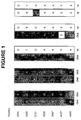
- the BRCA1 (omi1) haplotype is shown in Figure 1 with dark shading (encompassing the alternative alleles found at nucleotide sites 2201, 2430, 2731, 3232, 3667, 4427, and 4956).
- the haplotype that is in GenBank is shown with no shading.
- the common "consensus" haplotype is found intact in five separate chromosomes labeled with the OMI symbol (numbers 1-5 from left to right).
- BRCA1 omi2
- BRCA1 omi3
- Breast and Ovarian cancer is understood by those skilled in the art to include breast and ovarian cancer in women and also breast and prostate cancer in men.
- BRCA1 is associated genetic susceptibility to inherited breast and ovarian cancer in women and also breast and prostate cancer in men. Therefore, claims in this document which recite breast and/or ovarian cancer refer to breast, ovarian and prostate cancers in men and women.
- Coding sequence or " DNA coding sequence” refers to those portions of a gene which, taken together, code for a peptide (protein), or which nucleic acid itself has function.
- Protein or “peptide” refers to a sequence amino acids which has function.
- BRCA1 (omi) refers collectively to the “BRCA1 (omi1) ", “BRCA1 (omi2) “ and “BRCA1 (omi3) " coding sequences.
- BRCA1 (omi1) refers to SEQ. ID. NO.: 1, a coding sequence for the BRCA1 gene. The coding sequence was found by end to end sequencing of BRCA1 alleles from individuals randomly drawn from a Caucasian population found to have no family history of breast or ovarian cancer. The sequenced gene was found not to contain any mutations. BRCA1 (omi1) was determined to be a consensus sequence by calculating the frequency with which the coding sequence occurred among the sample alleles sequenced.
- BRCA1 (omi2) and “BRCA1 (omi3)” refer to SEQ. ID. NO.: 3, and SEQ. ID. NO.: 5 respectively. They are two additional coding sequences for the BRCA1 gene which were also isolated from individuals randomly drawn from a Caucasian population found to have no family history of breast or ovarian cancer. polymorphisms
- Primer refers to a sequence comprising about 20 or more nucleotides of the BRCA1 gene.
- Genetic susceptibility refers to the susceptibility to breast or ovarian cancer due to the presence of a mutation in the BRCA1 gene.
- target polynucleotide refers to the nucleic acid sequence of interest e.g., the BRCA1 encoding polynucleotide.
- Other primers which can be used for primer hybridization will be known or readily ascertainable to those of skill in the art.
- Consensus genomic sequence means the allele of the target gene which occurs with the greatest frequency in a population of individuals having no family history of disease associated with the target gene.
- Substantially complementary to refers to a probe or primer sequences which hybridize to the sequences provided under stringent conditions and/or sequences having sufficient homology with BRCA1 sequences, such that the allele specific oligonucleotide probe or primers hybridize to the BRCA1 sequences to which they are complimentary.
- Haplotype refers to a series of alleles within a gene on a chromosome.
- isolated refers to substantially free of other nucleic acids, proteins, lipids, carbohydrates or other materials with which they may be associated. Such association is typically either in cellular material or in a synthesis medium.
- “Mutation” refers to a base change or a gain or loss of base pair(s) in a DNA sequence, which results in a DNA sequence which codes for a non-functioning protein or a protein with substantially reduced or altered function.
- Polymorphism refers to a base change which is not associated with known pathology.
- Tumor growth inhibitor protein refers to the protein coded for by the BRCA1 gene. The functional protein is thought to suppress breast and ovarian tumor growth.
- the invention in several of its embodiments includes:
- nucleic acid specimen in purified or non-purified form, can be utilized as the starting nucleic acid or acids, providing it contains, or is suspected of containing, the specific nucleic acid sequence containing a polymorphic locus.
- the process may amplify, for example, DNA or RNA, including messenger RNA, wherein DNA or RNA may be single stranded or double stranded.
- RNA is to be used as a template, enzymes, and/or conditions optimal for reverse transcribing the template to DNA would be utilized.
- a DNA-RNA hybrid which contains one strand of each may be utilized.
- a mixture of nucleic acids may also be employed, or the nucleic acids produced in a previous amplification reaction herein, using the same or different primers may be so utilized. See TABLE II.
- the specific nucleic acid sequence to be amplified i.e ., the polymorphic locus, may be a fraction of a larger molecule or can be present initially as a discrete molecule, so that the specific sequence constitutes the entire nucleic acid. It is not necessary that the sequence to be amplified be present initially in a pure form; it may be a minor fraction of a complex mixture, such as contained in whole human DNA.
- DNA utilized herein may be extracted from a body sample, such as blood, tissue material and the like by a variety of techniques such as that described by Maniatis, et. al. in Molecular Cloning:A Laboratory Manual, Cold Spring Harbor, NY, p 280-281, 1982). If the extracted sample is impure, it may be treated before amplification with an amount of a reagent effective to open the cells, or animal cell membranes of the sample, and to expose and/or separate the strand(s) of the nucleic acid(s). This lysing and nucleic acid denaturing step to expose and separate the strands will allow amplification to occur much more readily.
- the deoxyribonucleotide triphosphates dATP, dCTP, dGTP, and dTTP are added to the synthesis mixture, either separately or together with the primers, in adequate amounts and the resulting solution is heated to about 90°-100°C from about 1 to 10 minutes, preferably from 1 to 4 minutes. After this heating period, the solution is allowed to cool, which is preferable for the primer hybridization. To the cooled mixture is added an appropriate agent for effecting the primer extension reaction (called herein "agent for polymerization”), and the reaction is allowed to occur under conditions known in the art. The agent for polymerization may also be added together with the other reagents if it is heat stable.
- This synthesis (or amplification) reaction may occur at room temperature up to a temperature above which the agent for polymerization no longer functions.
- the temperature is generally no greater than about 40°C. Most conveniently the reaction occurs at room temperature.
- the primers used to carry out this invention embrace oligonucleotides of sufficient length and appropriate sequence to provide initiation of polymerization.
- Environmental conditions conducive to synthesis include the presence of nucleoside triphosphates and an agent for polymerization, such as DNA polymerase, and a suitable temperature and pH.
- the primer is preferably single stranded for maximum efficiency in amplification, but may be double stranded. If double stranded, the primer is first treated to separate its strands before being used to prepare extension products.
- the primer must be sufficiently long to prime the synthesis of extension products in the presence of the inducing agent for polymerization. The exact length of primer will depend on many factors, including temperature, buffer, and nucleotide composition.
- the oligonucleotide primer typically contains 12-20 or more nucleotides, although it may contain fewer nucleotides.
- Primers used to carry out this invention are designed to be substantially complementary to each strand of the genomic locus to be amplified. This means that the primers must be sufficiently complementary to hybridize with their respective strands under conditions which allow the agent for polymerization to perform. In other words, the primers should have sufficient complementarity with the 5' and 3' sequences flanking the mutation to hybridize therewith and permit amplification of the genomic locus.
- Oligonucleotide primers of the invention are employed in the amplification process which is an enzymatic chain reaction that produces exponential quantities of polymorphic locus relative to the number of reaction steps involved.
- one primer is complementary to the negative (-) strand of the polymorphic locus and the other is complementary to the positive (+) strand.
- Annealing the primers to denatured nucleic acid followed by extension with an enzyme, such as the large fragment of DNA polymerase I (Klenow) and nucleotides results in newly synthesized + and - strands containing the target polymorphic locus sequence.
- the product of the chain reaction is a discreet nucleic acid duplex with termini corresponding to the ends of the specific primers employed.
- oligonucleotide primers of the invention may be prepared using any suitable method, such as conventional phosphotriester and phosphodiester methods or automated embodiments thereof.
- diethylphosphoramidites are used as starting materials and may be synthesized as described by Beaucage, et al., Tetrahedron Letters, 22 :1859-1862, 1981.
- One method for synthesizing oligonucleotides on a modified solid support is described in U.S. Patent No. 4,458,066.
- the agent for polymerization may be any compound or system which will function to accomplish the synthesis of primer extension products, including enzymes.
- Suitable enzymes for this purpose include, for example, E. coli DNA polymerase I, Klenow fragment of E. coli DNA polymerase, polymerase muteins, reverse transcriptase, other enzymes, including heat-stable enzymes ( e.i ., those enzymes which perform primer extension after being subjected to temperatures sufficiently elevated to cause denaturation), such as Taq polymerase.
- Suitable enzyme will facilitate combination of the nucleotides in the proper manner to form the primer extension products which are complementary to each polymorphic locus nucleic acid strand.
- the synthesis will be initiated at the 3' end of each primer and proceed in the 5' direction along the template strand, until synthesis terminates, producing molecules of different lengths.
- the newly synthesized strand and its complementary nucleic acid strand will form a double-stranded molecule under hybridizing conditions described above and this hybrid is used in subsequent steps of the process.
- the newly synthesized double-stranded molecule is subjected to denaturing conditions using any of the procedures described above to provide single-stranded molecules.
- the steps of denaturing, annealing, and extension product synthesis can be repeated as often as needed to amplify the target polymorphic locus nucleic acid sequence to the extent necessary for detection.
- the amount of the specific nucleic acid sequence produced will accumulate in an exponential fashion. Amplification is described in PCR. A Practical Approach, ILR Press, Eds. M. J. McPherson, P. Quirke, and G. R. Taylor, 1992.
- the amplification products may be detected by Southern blots analysis, without using radioactive probes.
- a small sample of DNA containing a very low level of the nucleic acid sequence of the polymorphic locus is amplified, and analyzed via a Southern blotting technique or similarly, using dot blot analysis.
- the use of non-radioactive probes or labels is facilitated by the high level of the amplified signal.
- probes used to detect the amplified products can be directly or indirectly detectably labeled, for example, with a radioisotope, a fluorescent compound, a bioluminescent compound, a chemiluminescent compound, a metal chelator or an enzyme.
- Sequences amplified by the methods of the invention can be further evaluated, detected, cloned, sequenced, and the like, either in solution or after binding to a solid support, by any method usually applied to the detection of a specific DNA sequence such as PCR, oligomer restriction (Saiki, et.al ., Bio/Technology , 3 :1008-1012, 1985), allele-specific oligonucleotide (ASO) probe analysis (Conner, et. al ., Proc. Natl. Acad. Sci. U.S.A., 80 :278, 1983), oligonucleotide ligation assays (OLAs) (Landgren, et. al ., Science , 241 :1007, 1988), and the like. Molecular techniques for DNA analysis have been reviewed (Landgren, et. al ., Science , 242 :229-237, 1988).
- the method of amplifying is by PCR, as described herein and as is commonly used by those of ordinary skill in the art.
- Alternative methods of amplification have been described and can also be employed as long as the BRCA1 locus amplified by PCR using primers of the invention is similarly amplified by the alternative means.
- Such alternative amplification systems include but are not limited to self-sustained sequence replication, which begins with a short sequence of RNA of interest and a T7 promoter. Reverse transcriptase copies the RNA into cDNA and degrades the RNA, followed by reverse transcriptase polymerizing a second strand of DNA.
- nucleic acid sequence-based amplification is nucleic acid sequence-based amplification (NASBA) which uses reverse transcription and T7 RNA polymerase and incorporates two primers to target its cycling scheme.
- NASBA can begin with either DNA or RNA and finish with either, and amplifies to 10 8 copies within 60 to 90 minutes.
- nucleic acid can be amplified by ligation activated transcription (LAT).
- LAT ligation activated transcription
- Amplification is initiated by ligating a cDNA to the promoter oligonucleotide and within a few hours, amplification is 10 8 to 10 9 fold.
- the QB replicase system can be utilized by attaching an RNA sequence called MDV-1 to RNA complementary to a DNA sequence of interest. Upon mixing with a sample, the hybrid RNA finds its complement among the specimen's mRNAs and binds, activating the replicase to copy the tag-along sequence of interest.
- Another nucleic acid amplification technique ligase chain reaction (LCR), works by using two differently labeled halves of a sequence of interest which are covalently bonded by ligase in the presence of the contiguous sequence in a sample, forming a new target.
- the repair chain reaction (RCR) nucleic acid amplification technique uses two complementary and target-specific oligonucleotide probe pairs, thermostable polymerase and ligase, and DNA nucleotides to geometrically amplify targeted sequences.
- a 2-base gap separates the oligonucleotide probe pairs, and the RCR fills and joins the gap, mimicking DNA repair.
- Nucleic acid amplification by strand displacement activation (SDA) utilizes a short primer containing a recognition site for hincII with short overhang on the 5' end which binds to target DNA.
- a DNA polymerase fills in the part of the primer opposite the overhang with sulfur-containing adenine analogs.
- HincII is added but only cuts the unmodified DNA strand.
- a DNA polymerase that lacks 5' exonuclease activity enters at the cite of the nick and begins to polymerize, displacing the initial primer strand downstream and building a new one which serves as more primer.
- SDA produces greater than 107-fold amplification in 2 hours at 37°C. Unlike PCR and LCR, SDA does not require instrumented Temperature cycling.
- Another method is a process for amplifying nucleic acid sequences from a DNA or RNA template which may be purified or may exist in a mixture of nucleic acids.
- the resulting nucleic acid sequences may be exact copies of the template, or may be modified.
- the process has advantages over PCR in that it increases the fidelity of copying a specific nucleic acid sequence, and it allows one to more efficiently detect a particular point mutation in a single assay.
- a target nucleic acid is amplified enzymatically while avoiding strand displacement. Three primers are used. A first primer is complementary to the first end of the target. A second primer is complementary to the second end of the target.
- a third primer which is similar to the first end of the target and which is substantially complementary to at least a portion of the first primer such that when the third primer is hybridized to the first primer, the position of the third primer complementary to the base at the 5' end of the first primer contains a modification which substantially avoids strand displacement.
- the BRCA1 (omi) DNA coding sequences were obtained by end to end sequencing of the BRCA1 alleles of five subjects in the manner described above followed by analysis of the data obtained.
- the data obtained provided us with the opportunity to evaluate seven previously published polymorphisms and to affirm or correct where necessary, the frequency of occurrence of alternative codons.
- the coding sequences can be used for gene therapy.
- a variety of methods are known for gene transfer, any of which might be available for use.
- This novel gene delivery approach involves the use of human chromosomes that have been striped down to contain only the essential components for replication and the genes desired for transfer.
- DNA is linked to a targeting molecule that will bind to specific cell-surface receptors, inducing endocytosis and transfer of the DNA into mammalian cells.
- a targeting molecule that will bind to specific cell-surface receptors, inducing endocytosis and transfer of the DNA into mammalian cells.
- One such technique uses poly-L-lysine to link asialoglycoprotein to DNA.
- An adenovirus is also added to the complex to disrupt the lysosomes and thus allow the DNA to avoid degradation and move to the nucleus. Infusion of these particles intravenously has resulted in gene transfer into hepatocytes.
- MoMLV Moloney Murine Leukemia Virus
- AAV adeno-Associated Virus
- HSV herpes simplex virus
- HSV herpes simplex virus
- HSV herpes simplex virus
- HSV herpes simplex virus
- HSV herpes simplex virus
- HSV herpes simplex virus
- HSV herpes simplex virus
- HSV herpes simplex virus
- HSV herpes simplex virus
- poxvirus vectors the poxvirus vectors
- HSV human immunodeficiency virus
- the ideal genetic manipulation for treatment of a genetic disease would be the actual replacement of the defective gene with a normal copy of the gene.
- Homologous recombination is the term used for switching out a section of DNA and replacing it with a new piece.
- the defective gene can be replaced with a normal gene which expresses a functioning BRCA1 tumor growth inhibitor protein.
- the BRCA1 amino acid and nucleic acid sequence may be used to make diagnostic probes and antibodies.
- Labeled diagnostic probes may be used by any hybridization method to determine the level of BRCA1 protein in serum or lysed cell suspension of a patient, or solid surface cell sample.
- the BRCA1 amino acid sequence may be used to provide a level of protection for patients against risk of breast or ovarian cancer or to reduce the size of a tumor.
- Methods of making and extracting proteins are well known. Itakura et al. U.S. Patents 4,704,362, 5, 221, 619, and 5,583,013. BRCA1 has been shown to be secreted. Jensen, R.A. et al. Nature Genetics 12 : 303-308 (1996).
- a first degree relative is a parent, sibling, or offspring.
- a second degree relative is an aunt, uncle, grandparent, grandchild, niece, nephew, or half-sibling.
- Genomic DNA was isolated from white blood cells of five subjects selected from analysis of their answers to the questions above. Dideoxy sequence analysis was performed following polymerase chain reaction amplification.
- Genomic DNA (100 nanograms) extracted from white blood cells of five subjects. Each of the five samples was sequenced end to end. Each sample was amplified in a final volume of 25 microliters containing 1 microliter (100 nanograms) genomic DNA, 2.5 microliters 10X PCR buffer (100 mM Tris, pH 8.3, 500 mM KCl, 1.2 mM MgCl 2 ), 2.5 microliters 10X dNTP mix (2 mM each nucleotide), 2.5 microliters forward primer, 2.5 microliters reverse primer, and 1 microliter Taq polymerase (5 units), and 13 microliters of water.
- 10X PCR buffer 100 mM Tris, pH 8.3, 500 mM KCl, 1.2 mM MgCl 2
- 2.5 microliters 10X dNTP mix (2 mM each nucleotide
- 2.5 microliters forward primer 2.5 microliters reverse primer
- 1 microliter Taq polymerase 5 units
- the primers in Table II, below were used to carry out amplification of the various sections of the BRCA1 gene samples.
- the primers were synthesized on an DNA/RNA Model 394® Synthesizer.
- PCR products were purified using Qia-quick® PCR purification kits (Qiagen cat# 28104; Chatsworth, CA). Yield and purity of the PCR product determined spectrophotometrically at OD 260 on a Beckman DU 650 spectrophotometer.
- Fluorescent dye was attached to PCR products for automated sequencing using the Taq Dye Terminator® Kit (Perkin-Elmer cat# 401628). DNA sequencing was performed in both forward and reverse directions on an Applied Biosystems, Inc. (ABI) Foster City, CA., automated Model 377® sequencer. The software used for analysis of the resulting data was "Sequence Navigator® software" purchased through ABI.
- Tables 3 and 4 depict one aspect of the invention, sets of at least two alternative codon pairs wherein the codon pairs occur in the following frequencies, respectively, in a population of individuals free of disease:
- the data show that for each of the samples.
- the BRCA1 gene is identical except in the region of seven polymorphisms. These polymorphic regions, together with their locations, the amino acid groups of each codon, the frequency of their occurrence and the amino acid coded for by each codon are found in TABLE IV below.
- Genomic DNA (100 nanograms) extracted from white blood cells of the subject is amplified in a final volume of 25 microliters containing 1 microliter (100 nanograms) genomic DNA, 2.5 microliters 10X PCR buffer (100 mM Tris, pH 8.3, 500 mM KCl, 1.2 mM MgCl 2 ), 2.5 microliters 10X dNTP mix (2 mM each nucleotide), 2.5 microliters forward primer (BRCA1-11K-F, 10 micromolar solution), 2.5 microliters reverse primer (BRCA1-11K-R, 10 micromolar solution),and 1 microliter Taq polymerase (5 units), and 13 microliters of water.
- 10X PCR buffer 100 mM Tris, pH 8.3, 500 mM KCl, 1.2 mM MgCl 2
- 2.5 microliters 10X dNTP mix (2 mM each nucleotide
- BRCA1-11K-F forward primer
- BRCA1-11K-R 2.5 microliters reverse primer
- PCR primers used to amplify a patient's sample BRCA1 gene are listed in Table II.
- the primers were synthesized on an DNA/RNA Model 394® Synthesizer. Thirty-five cycles are of amplification are performed, each consisting of denaturing (95°C; 30 seconds), annealing (55°C; 1 minute), and extension (72°C; 90 seconds), except during the first cycle in which the denaturing time is increased to 5 minutes, and during the last cycle in which the extension time is increased to 5 minutes.
- PCR products are purified using Qia-quick® PCR purification kits (Qiagen, cat# 28104; Chatsworth, CA). Yield and purity of the PCR product determined spectrophotometrically at OD 260 on a Beckman DU 650 spectrophotometer.
- Fluorescent dye is attached to PCR products for automated sequencing using the Taq Dye Terminator® Kit (Perkin-Elmer cat# 401628). DNA sequencing is performed in both forward and reverse directions on an Applied Biosystems, Inc. (ABI) Foster City, CA., automated Model 377® sequencer.
- the software used for analysis of the resulting data is "Sequence Navigator® software" purchased through ABI.
- the BRCA1 (omi1) SEQ. ID. NO.:1 sequence is entered into the Sequence Navigator® software as the Standard for comparison.
- the Sequence Navigator® software compares the sample sequence to the BRCA1 (omi1) SEQ. ID. NO.:1 standard, base by base.
- the Sequence Navigator® software highlights all differences between the BRCA1 (omi1) SEQ. ID. NO.:1 DNA sequence and the patient's sample sequence.
- a first technologist checks the computerized results by comparing visually the BRCA1 (omi1) SEQ. ID. NO.:1 standard against the patient's sample, and again highlights any differences between the standard and the sample.
- the first primary technologist interprets the sequence variations at each position along the sequence. Chromatograms from each sequence variation are generated by the Sequence Navigator® software and printed on a color printer. The peaks are interpreted by the first primary technologist and a second primary technologist.
- a secondary technologist then reviews the chromatograms. The results are finally interpreted by a geneticist. In each instance, a variation is compared to known polymorphisms for position and base change. If the sample BRCA1 sequence matches the BRCA1 (omi1) SEQ. ID. NO.:1 standard, with only variations within the known list of polymorphisms, it is interpreted as a gene sequence.
- a person skilled in the art of genetic susceptibility testing will find the present invention useful for determining the presence of a known or previously unknown mutation in the BRCA1 gene.
- a list of mutations of BRCA1 is publicly available in the Breast Cancer Information Core at: http://www.nchgr.nih.gov/dir/lab_transfer/bic. This data site became publicly available on November 1, 1995. Friend, S. et al. Nature Genetics 11 :238, (1995). Sequencing is carried out as in EXAMPLE 1 using a blood sample from the patient in question. However, a BRCA1 (omi) sequence is used for reference and polymorphic sites are compared to the nucleic acid sequences listed above for codons at each polymorphic site.
- a sample is one which compares to the BRCA1 (omi2) SEQ. ID. NO.: 3 sequence and contains one of the base variations which occur at each of the polymorphic sites.
- the codons which occur at each of the polymorphic sites are paired here reference.
- Exon 11 of the BRCA1 gene is subjected to direct dideoxy sequence analysis by asymmetric amplification using the polymerase chain reaction (PCR) to generate a single stranded product amplified from this DNA sample.
- PCR polymerase chain reaction
- Genomic DNA (100 nanograms) extracted from white blood cells of the subject is amplified in a final volume of 25 microliters containing 1 microliter (100 nanograms) genomic DNA, 2.5 microliters 10X PCR buffer (100 mM Tris, pH 8.3, 500 mM KCl, 1.2 mM MgCl 2 ), 2.5 microliters 10X dNTP mix (2 mM each nucleotide), 2.5 microliters forward primer (BRCA1-11K-F, 10 micromolar solution), 2.5 microliters reverse primer (BRCA1-11K-R, 10 micromolar solution),and 1 microliter Taq polymerase (5 units), and 13 microliters of water.
- 10X PCR buffer 100 mM Tris, pH 8.3, 500 mM KCl, 1.2 mM MgCl 2
- 2.5 microliters 10X dNTP mix (2 mM each nucleotide
- BRCA1-11K-F forward primer
- BRCA1-11K-R 2.5 microliters reverse primer
- the PCR primers used to amplify a patient's sample BRCA1 gene are listed in Table II.
- the primers were synthesized on an DNA/RNA Model 394® Synthesizer. Thirty-five cycles are of amplification are performed, each consisting of denaturing (95°C; 30 seconds), annealing (55°C; 1 minute), and extension (72°C; 90 seconds), except during the first cycle in which the denaturing time is increased to 5 minutes, and during the last cycle in which the extension time is increased to 5 minutes.
- PCR products are purified using Qia-quick® PCR purification kits (Qiagen, cat# 28104; Chatsworth, CA). Yield and purity of the PCR product determined spectrophotometrically at OD 260 on a Beckman DU 650 spectrophotometer.
- Fluorescent dye is attached to PCR products for automated sequencing using the Taq Dye Terminator® Kit (Perkin-Elmer cat# 401628). DNA sequencing is performed in both forward and reverse directions on an Applied Biosystems, Inc. (ABI) Foster City, CA., automated Model 377® sequencer.
- the software used for analysis of the resulting data is "Sequence Navigator® software" purchased through ABI.
- the BRCA1 (omi2) SEQ. ID. NO.: 3 sequence is entered into the Sequence Navigator® software as the Standard for comparison.
- the Sequence Navigator® software compares the sample sequence to the BRCA1 (omi2) SEQ. ID. NO.: 3 standard, base by base.
- the Sequence Navigator® software highlights all differences between the BRCA1 (omi2) SEQ. ID. NO.: 3 DNA sequence and the patient's sample sequence.
- a first technologist checks the computerized results by comparing visually the BRCA1 (omi2) SEQ. ID. NO.: 3 standard against the patient's sample, and again highlights any differences between the standard and the sample.
- the first primary technologist interprets the sequence variations at each position along the sequence. Chromatograms from each sequence variation are generated by the Sequence Navigator® software and printed on a color printer. The peaks are interpreted by the first primary technologist and also by a second primary technologist.
- a secondary technologist then reviews the chromatograms. The results are finally interpreted by a geneticist. In each instance, a variation is compared to known polymorphisms for position and base change. If the sample BRCA1 sequence matches the BRCA1 (omi2) SEQ. ID. NO.: 3 standard, with only variations within the known list of polymorphisms, it is interpreted as a gene sequence.
- a person skilled in the art of genetic susceptibility testing will find the present invention useful for determining the presence of a known or previously unknown mutation in the BRCA1 gene.
- a list of mutations of BRCA1 is publicly available in the Breast Cancer Information Core at: http://www.nchgr.nih.gov/dir/lab_transfer/bic. This data site became publicly available on November 1, 1995. Friend, S. et al. Nature Genetics 11 :238, (1995).
- a mutation in exon 11 is characterized by amplifying the region of the mutation with a primer which matches the region of the mutation.
- Exon 11 of the BRCA1 gene is subjected to direct dideoxy sequence analysis by asymmetric amplification using the polymerase chain reaction (PCR) to generate a single stranded product amplified from this DNA sample.
- PCR polymerase chain reaction
- Genomic DNA (100 nanograms) extracted from white blood cells of the subject is amplified in a final volume of 25 microliters containing 1 microliter (100 nanograms) genomic DNA, 2.5 microliters 10X PCR buffer (100 mM Tris, pH 8.3, 500 mM KCl, 1.2 mM MgCl 2 ), 2.5 microliters 10X dNTP mix (2 mM each nucleotide), 2.5 microliters forward primer (BRCA1-11K-F, 10 micromolar solution), 2.5 microliters reverse primer (BRCA1-11K-R, 10 micromolar solution),and 1 microliter Taq polymerase (5 units), and 13 microliters of water.
- 10X PCR buffer 100 mM Tris, pH 8.3, 500 mM KCl, 1.2 mM MgCl 2
- 2.5 microliters 10X dNTP mix (2 mM each nucleotide
- BRCA1-11K-F forward primer
- BRCA1-11K-R 2.5 microliters reverse primer
- the PCR primers used to amplify segment K of exon 11 are as follows: The primers are synthesized on an DNA/RNA Model 394® Synthesizer. Thirty-five cycles are performed, each consisting of denaturing (95°C; 30 seconds), annealing (55°C; 1 minute), and extension (72°C; 90 seconds), except during the first cycle in which the denaturing time is increased to 5 minutes, and during the last cycle in which the extension time is increased to 5 minutes. PCR products are purified using Qia-quick® PCR purification kits (Qiagen, cat# 28104; Chatsworth, CA). Yield and purity of the PCR product determined spectrophotometrically at OD 260 on a Beckman DU 650 spectrophotometer.
- Fluorescent dye is attached to PCR products for automated sequencing using the Taq Dye Terminator® Kit (Perkin-Elmer cat# 401628). DNA sequencing is performed in both forward and reverse directions on an Applied Biosystems, Inc. (ABI) Foster City, CA., automated Model 377® sequencer.
- the software used for analysis of the resulting data is "Sequence Navigator® software" purchased through ABI.
- the BRCA1 (omi2) SEQ. ID. NO.: 3 sequence is entered into the Sequence Navigator® software as the Standard for comparison.
- the Sequence Navigator® software compares the sample sequence to the BRCA1 (omi2) SEQ. ID. NO.: 3 standard, base by base.
- the Sequence Navigator® software highlights all differences between the BRCA1 (omi2) SEQ. ID. NO.: 3 DNA sequence and the patient's sample sequence.
- a first technologist checks the computerized results by comparing visually the BRCA1 (omi2) SEQ. ID. NO.: 3 standard against the patient's sample, and again highlights any differences between the standard and the sample.
- the first primary technologist interprets the sequence variations at each position along the sequence. Chromatograms from each sequence variation are generated by the Sequence Navigator® software and printed on a color printer. The peaks are interpreted by the first primary technologist and a second primary technologist.
- a secondary technologist then reviews the chromatograms. The results are finally interpreted by a geneticist. In each instance, a variation is compared to known polymorphisms for position and base change. Mutations are noted by the length of non-matching variation. Such a lengthy mismatch pattern occurs with deletions and substitutions.
- the 3888delGA mutation may be found.
- the 3888delGA mutation The BRCA1 gene lies in segment "K" of exon 11.
- the DNA sequence results demonstrate the presence of a two base pair deletion at nucleotides 3888 and 3889 of the published BRCA1 (omi) sequence.
- This mutation interrupts the reading frame of the BRCA1 transcript, resulting in the appearance of an in-frame terminator (TAG) at codon position 1265.
- TAG in-frame terminator
- This mutation is, therefore, predicted to result in a truncated, and most likely, non-functional protein.
- the formal name of the mutation will be 3888delGA. This mutation is named in accordance with the suggested nomenclature for naming mutations, Baudet, A et al., Human Mutation 2:245-248, (1993).
- the growth of ovarian, breast or prostate cancer can be arrested by increasing the expression of the BRCA1 gene where inadequate expression of that gene is responsible for hereditary ovarian, breast and prostate cancer. It has been demonstrated that transfection of BRCA1 into cancer cells inhibits their growth and reduces tumorigenesis. Gene therapy is performed on a patient to reduce the size of a tumor.
- the LXSN vector is transformed with any of the BRCA1 (omi1) SEQ. ID. NO.:1, BRCA1 (omi2) SEQ. ID. NO.:3, or BRCA1 (omi3) SEQ. ID. NO.:5 coding region.
- the LXSN vector is transformed with wildtype BRCA1 (omi1) SEQ. ID. NO.:1 coding sequence.
- the LXSN-BRCA1 (omi1) retroviral expression vector is constructed by cloning a Sal I-linkered BRCA1 (omi1) cDNA (nucleotides 1-5711) into the Xho I site of the vector LXSN. Constructs are confirmed by DNA sequencing. Holt et al. Nature Genetics 12 : 298-302 (1996).
- Retroviral vectors are manufactured from viral producer cells using serum free and phenol-red free conditions and tested for sterility, absence of specific pathogens, and absence of replication-competent retrovirus by standard assays. Retrovirus is stored frozen in aliquots which have been tested.
- Patients receive a complete physical exam, blood, and urine tests to determine overall health. They may also have a chest X-ray, electrocardiogram, and appropriate radiologic procedures to assess tumor stage.
- LXSN-BRCA1 LXSN-BRCA1
- retroviral vectors into peritoneal sites containing tumor, between 10 9 and 10 10 viral particles per dose.
- Blood samples are drawn each day and tested for the presence of retroviral vector by sensitive polymerase chain reaction (PCR)-based assays. The fluid which is removed is analyzed to determine:
- the number of doses depends upon the response to treatment.
- Breast and Ovarian cancer is understood by those skilled in the art to include breast and ovarian cancer in women and also breast and prostate cancer in men.
- BRCA1 is associated genetic susceptibility to inherited breast and ovarian cancer in women and also breast and prostate cancer in men. Therefore, claims in this document which recite breast and/or ovarian cancer refer to breast, ovarian and prostate cancers in men and women.
Landscapes
- Health & Medical Sciences (AREA)
- Chemical & Material Sciences (AREA)
- Life Sciences & Earth Sciences (AREA)
- Organic Chemistry (AREA)
- Proteomics, Peptides & Aminoacids (AREA)
- General Health & Medical Sciences (AREA)
- Zoology (AREA)
- Genetics & Genomics (AREA)
- Medicinal Chemistry (AREA)
- Biophysics (AREA)
- Molecular Biology (AREA)
- Biochemistry (AREA)
- Engineering & Computer Science (AREA)
- Analytical Chemistry (AREA)
- Immunology (AREA)
- Toxicology (AREA)
- Wood Science & Technology (AREA)
- Gastroenterology & Hepatology (AREA)
- Pathology (AREA)
- Bioinformatics & Cheminformatics (AREA)
- Nuclear Medicine, Radiotherapy & Molecular Imaging (AREA)
- Biotechnology (AREA)
- Chemical Kinetics & Catalysis (AREA)
- Hospice & Palliative Care (AREA)
- Veterinary Medicine (AREA)
- Oncology (AREA)
- Pharmacology & Pharmacy (AREA)
- Animal Behavior & Ethology (AREA)
- Physics & Mathematics (AREA)
- General Chemical & Material Sciences (AREA)
- Microbiology (AREA)
- Public Health (AREA)
- General Engineering & Computer Science (AREA)
- Measuring Or Testing Involving Enzymes Or Micro-Organisms (AREA)
- Medicines That Contain Protein Lipid Enzymes And Other Medicines (AREA)
- Medicines Containing Material From Animals Or Micro-Organisms (AREA)
- Micro-Organisms Or Cultivation Processes Thereof (AREA)
- Peptides Or Proteins (AREA)
Applications Claiming Priority (3)
| Application Number | Priority Date | Filing Date | Title |
|---|---|---|---|
| US598591 | 1996-02-12 | ||
| US08/598,591 US5654155A (en) | 1996-02-12 | 1996-02-12 | Consensus sequence of the human BRCA1 gene |
| EP97907894A EP0820526B1 (fr) | 1996-02-12 | 1997-02-12 | Sequences codantes du gene humain brca 1 |
Related Parent Applications (1)
| Application Number | Title | Priority Date | Filing Date |
|---|---|---|---|
| EP97907894A Division EP0820526B1 (fr) | 1996-02-12 | 1997-02-12 | Sequences codantes du gene humain brca 1 |
Publications (2)
| Publication Number | Publication Date |
|---|---|
| EP1126034A2 true EP1126034A2 (fr) | 2001-08-22 |
| EP1126034A3 EP1126034A3 (fr) | 2001-08-29 |
Family
ID=24396174
Family Applications (3)
| Application Number | Title | Priority Date | Filing Date |
|---|---|---|---|
| EP10184120A Withdrawn EP2351854A1 (fr) | 1996-02-12 | 1997-02-12 | Séquences codantes du gène humain BRCA1 |
| EP01107300A Withdrawn EP1126034A3 (fr) | 1996-02-12 | 1997-02-12 | Séquences codantes du gène humain BRCA1 |
| EP97907894A Expired - Lifetime EP0820526B1 (fr) | 1996-02-12 | 1997-02-12 | Sequences codantes du gene humain brca 1 |
Family Applications Before (1)
| Application Number | Title | Priority Date | Filing Date |
|---|---|---|---|
| EP10184120A Withdrawn EP2351854A1 (fr) | 1996-02-12 | 1997-02-12 | Séquences codantes du gène humain BRCA1 |
Family Applications After (1)
| Application Number | Title | Priority Date | Filing Date |
|---|---|---|---|
| EP97907894A Expired - Lifetime EP0820526B1 (fr) | 1996-02-12 | 1997-02-12 | Sequences codantes du gene humain brca 1 |
Country Status (14)
| Country | Link |
|---|---|
| US (2) | US5654155A (fr) |
| EP (3) | EP2351854A1 (fr) |
| JP (2) | JPH11503924A (fr) |
| AT (1) | ATE208425T1 (fr) |
| AU (1) | AU1977897A (fr) |
| BR (1) | BR9702080A (fr) |
| CA (1) | CA2218251C (fr) |
| DE (1) | DE69707985T2 (fr) |
| DK (1) | DK0820526T3 (fr) |
| ES (1) | ES2170366T3 (fr) |
| IL (1) | IL121926A (fr) |
| IS (1) | IS4587A (fr) |
| PT (1) | PT820526E (fr) |
| WO (1) | WO1997029213A1 (fr) |
Families Citing this family (41)
| Publication number | Priority date | Publication date | Assignee | Title |
|---|---|---|---|---|
| US6403303B1 (en) * | 1996-05-14 | 2002-06-11 | Visible Genetics Inc. | Method and reagents for testing for mutations in the BRCA1 gene |
| US5747282A (en) * | 1994-08-12 | 1998-05-05 | Myraid Genetics, Inc. | 17Q-linked breast and ovarian cancer susceptibility gene |
| US6083698A (en) * | 1995-09-25 | 2000-07-04 | Oncormed, Inc. | Cancer susceptibility mutations of BRCA1 |
| US5654155A (en) * | 1996-02-12 | 1997-08-05 | Oncormed, Inc. | Consensus sequence of the human BRCA1 gene |
| US6951721B2 (en) * | 1996-02-12 | 2005-10-04 | Gene Logic Inc. | Method for determining the haplotype of a human BRCA1 gene |
| US20030022184A1 (en) * | 1996-02-12 | 2003-01-30 | Oncormed. Inc. | Coding sequences of the human BRCA1 gene |
| US6130322A (en) * | 1996-02-12 | 2000-10-10 | Gene Logic, Inc. | Coding sequences of the human BRCA1 gene |
| US6838256B2 (en) | 1996-02-12 | 2005-01-04 | Gene Logic Inc. | Coding sequences of the human BRCA1 gene |
| US5891857A (en) * | 1996-02-20 | 1999-04-06 | Vanderbilt University | Characterized BRCA1 and BRCA2 proteins and screening and therapeutic methods based on characterized BRCA1 and BRCA2 proteins |
| CA2198801A1 (fr) * | 1996-02-29 | 1997-08-29 | Catherine M. Phelan | Methode et trousse pour l'evaluation du risque de cancer des ovaires chez les porteuses de mutation brca1 |
| AU736210B2 (en) * | 1996-07-08 | 2001-07-26 | Board Of Regents, The University Of Texas System | Brca1 compositions and methods for the diagnosis and treatment of breast cancer |
| AU4586697A (en) * | 1996-09-20 | 1998-04-14 | Board Of Regents, The University Of Texas System | Compositions and methods comprising bard1 and other brca1 binding proteins |
| WO1998018966A1 (fr) * | 1996-10-31 | 1998-05-07 | Jennifer Lescallett | Amorces pour l'amplification de brca1 |
| US6048689A (en) * | 1997-03-28 | 2000-04-11 | Gene Logic, Inc. | Method for identifying variations in polynucleotide sequences |
| EP0878552A1 (fr) * | 1997-05-13 | 1998-11-18 | Erasmus Universiteit Rotterdam | Détection moléculaire d'aberration chromosomique |
| WO1999006598A2 (fr) * | 1997-08-04 | 1999-02-11 | Oncormed, Inc. | Determination d'alleles communs fonctionnels dans une population et applications de ceux-ci |
| US20090269814A1 (en) * | 1998-05-22 | 2009-10-29 | Murphy Patricia D | Method of Analyzing a BRCA2 Gene in a Human Subject |
| AU9586598A (en) * | 1997-09-23 | 1999-04-12 | Oncormed, Inc. | Genetic panel assay for susceptibility mutations in breast and ovarian cancer |
| US6492109B1 (en) | 1997-09-23 | 2002-12-10 | Gene Logic, Inc. | Susceptibility mutation 6495delGC of BRCA2 |
| US6030832A (en) * | 1997-11-21 | 2000-02-29 | Myriad Genetics, Inc. | Carboxy-terminal BRCA1 interacting protein |
| US6177410B1 (en) | 1997-12-05 | 2001-01-23 | Vanderbilt University | Therapeutic methods for prostate cancer |
| US6897018B1 (en) * | 1998-02-25 | 2005-05-24 | The United States Of America As Represented By The Department Of Health And Human Services | DLC-1 gene deleted in cancers |
| EP1078098A1 (fr) * | 1998-05-04 | 2001-02-28 | Dako A/S | Procede et sondes de detection d'aberrations chromosomiques |
| US6686163B2 (en) * | 1998-05-06 | 2004-02-03 | Gene Logic Inc. | Coding sequence haplotype of the human BRCA1 gene |
| EP1096955B9 (fr) | 1998-07-13 | 2006-07-05 | Board of Regents, The University of Texas System | L'utilisation d'anticorps vis-a-vis des aminophospholipides pour le traitement du cancer |
| EP1234585A3 (fr) | 1998-09-04 | 2004-01-21 | The Regents Of The University Of Michigan | Compositions pour la prévention ou le traitement du cancer |
| US6087112A (en) * | 1998-12-30 | 2000-07-11 | Oligos Etc. Inc. | Arrays with modified oligonucleotide and polynucleotide compositions |
| US20030180789A1 (en) * | 1998-12-30 | 2003-09-25 | Dale Roderic M.K. | Arrays with modified oligonucleotide and polynucleotide compositions |
| US20060121463A1 (en) * | 2002-06-06 | 2006-06-08 | The John Hopkins University | Allelic variation in human gene expression |
| DE60335383D1 (de) | 2002-07-15 | 2011-01-27 | Univ Texas | Antikörper mit bindung an anionische phospholipide und aminophospholipide und ihre verwendung bei der behandlung von virusinfektionen |
| TWI304321B (en) | 2002-12-27 | 2008-12-11 | Toray Industries | Layered products, electromagnetic wave shielding molded articles and method for production thereof |
| WO2008109433A2 (fr) | 2007-03-02 | 2008-09-12 | The Cleveland Clinic Foundation | Peptides anti-angiogéniques |
| WO2005061728A1 (fr) * | 2003-12-16 | 2005-07-07 | Institut Curie | Methodes et compositions pour mettre en evidence des mutations dans des acides nucleiques |
| HRP20130459T1 (en) | 2004-01-22 | 2013-06-30 | University Of Miami | Topical co-enzyme q10 formulations and methods of use |
| WO2009060198A1 (fr) | 2007-11-09 | 2009-05-14 | Peregrine Pharmaceuticals, Inc. | Compositions d'anticorps anti-vegf et procédés correspondants |
| EP3075867B1 (fr) * | 2008-09-03 | 2019-03-13 | Quantumdx Group Limited | Stratégies de détection et procédés destinés à la détection d'acides nucléiques au moyen de biocapteurs |
| US8372580B2 (en) | 2008-11-21 | 2013-02-12 | Morehouse School Of Medicine | BRCA1 function-based cellular assays |
| JP2014532403A (ja) | 2011-10-31 | 2014-12-08 | ゲノミク ビジョン | ゲノムモールスコードを分子コーミングと併用する乳癌及び卵巣癌遺伝子並びに遺伝子座brca1及びbrca2におけるゲノム再編成の検出、可視化、及び高解像度物理マッピングの方法 |
| US20160040220A1 (en) | 2013-03-15 | 2016-02-11 | Genomic Vision | Methods for the detection of breakpoints in rearranged genomic sequences |
| WO2014140788A1 (fr) | 2013-03-15 | 2014-09-18 | Genomic Vision | Procédés de détection d'amplifications de séquences dans le locus brca1 |
| EP3839974B9 (fr) | 2019-12-20 | 2023-05-03 | Dynamic Code AB | Procédé d'analyse de la probabilité de maladies |
Family Cites Families (10)
| Publication number | Priority date | Publication date | Assignee | Title |
|---|---|---|---|---|
| US5221619A (en) | 1977-11-08 | 1993-06-22 | Genentech, Inc. | Method and means for microbial polypeptide expression |
| US5583013A (en) | 1977-11-08 | 1996-12-10 | Genentech, Inc. | Method and means for microbial polypeptide expression |
| US4704362A (en) | 1977-11-08 | 1987-11-03 | Genentech, Inc. | Recombinant cloning vehicle microbial polypeptide expression |
| US4458066A (en) * | 1980-02-29 | 1984-07-03 | University Patents, Inc. | Process for preparing polynucleotides |
| US5593840A (en) | 1993-01-27 | 1997-01-14 | Oncor, Inc. | Amplification of nucleic acid sequences |
| WO1995019369A1 (fr) * | 1994-01-14 | 1995-07-20 | Vanderbilt University | Procede de detection et de traitement du cancer du sein |
| US5693473A (en) * | 1994-08-12 | 1997-12-02 | Myriad Genetics, Inc. | Linked breast and ovarian cancer susceptibility gene |
| EP0699754B2 (fr) * | 1994-08-12 | 2009-08-12 | The University of Utah Research Foundation | Méthode de diagnose pour la prédisposition au cancer du sein et des ovaires |
| DE69521002T3 (de) * | 1994-08-12 | 2010-02-25 | The University Of Utah Research Foundation, Salt Lake City | Mutationen des mit 17q verbundenen Ovarial- und Brustkrebs Empfindlichkeitsgens |
| US5654155A (en) * | 1996-02-12 | 1997-08-05 | Oncormed, Inc. | Consensus sequence of the human BRCA1 gene |
-
1996
- 1996-02-12 US US08/598,591 patent/US5654155A/en not_active Expired - Lifetime
-
1997
- 1997-02-12 EP EP10184120A patent/EP2351854A1/fr not_active Withdrawn
- 1997-02-12 AU AU19778/97A patent/AU1977897A/en not_active Abandoned
- 1997-02-12 US US08/798,691 patent/US5750400A/en not_active Expired - Lifetime
- 1997-02-12 DK DK97907894T patent/DK0820526T3/da active
- 1997-02-12 PT PT97907894T patent/PT820526E/pt unknown
- 1997-02-12 WO PCT/US1997/003038 patent/WO1997029213A1/fr not_active Ceased
- 1997-02-12 EP EP01107300A patent/EP1126034A3/fr not_active Withdrawn
- 1997-02-12 AT AT97907894T patent/ATE208425T1/de active
- 1997-02-12 EP EP97907894A patent/EP0820526B1/fr not_active Expired - Lifetime
- 1997-02-12 DE DE69707985T patent/DE69707985T2/de not_active Expired - Lifetime
- 1997-02-12 BR BR9702080-0A patent/BR9702080A/pt not_active Application Discontinuation
- 1997-02-12 ES ES97907894T patent/ES2170366T3/es not_active Expired - Lifetime
- 1997-02-12 CA CA2218251A patent/CA2218251C/fr not_active Expired - Fee Related
- 1997-02-12 IL IL121926A patent/IL121926A/en not_active IP Right Cessation
- 1997-02-12 JP JP9528770A patent/JPH11503924A/ja not_active Withdrawn
- 1997-10-10 IS IS4587A patent/IS4587A/is unknown
-
2011
- 2011-10-14 JP JP2011227253A patent/JP2012090627A/ja active Pending
Also Published As
| Publication number | Publication date |
|---|---|
| JPH11503924A (ja) | 1999-04-06 |
| EP2351854A1 (fr) | 2011-08-03 |
| DK0820526T3 (da) | 2002-03-04 |
| EP0820526A4 (fr) | 1998-07-08 |
| CA2218251C (fr) | 2010-10-19 |
| JP2012090627A (ja) | 2012-05-17 |
| IS4587A (is) | 1997-10-10 |
| WO1997029213A1 (fr) | 1997-08-14 |
| ATE208425T1 (de) | 2001-11-15 |
| EP1126034A3 (fr) | 2001-08-29 |
| PT820526E (pt) | 2002-05-31 |
| BR9702080A (pt) | 1999-12-28 |
| CA2218251A1 (fr) | 1997-08-14 |
| EP0820526A1 (fr) | 1998-01-28 |
| IL121926A (en) | 2006-08-01 |
| US5750400A (en) | 1998-05-12 |
| AU1977897A (en) | 1997-08-28 |
| US5654155A (en) | 1997-08-05 |
| DE69707985D1 (de) | 2001-12-13 |
| DE69707985T2 (de) | 2002-10-31 |
| EP0820526B1 (fr) | 2001-11-07 |
| IL121926A0 (en) | 1998-03-10 |
| ES2170366T3 (es) | 2002-08-01 |
Similar Documents
| Publication | Publication Date | Title |
|---|---|---|
| EP0820526B1 (fr) | Sequences codantes du gene humain brca 1 | |
| Xu et al. | Mutations and alternative splicing of the BRCA1 gene in UK breast/ovarian cancer families | |
| US5756294A (en) | Susceptibility mutation for breast and ovarian cancer | |
| Yang et al. | Genomic structure and mutational analysis of the human KIF1B gene which is homozygously deleted in neuroblastoma at chromosome 1p36. 2 | |
| US5766851A (en) | Susceptibility gene for obesity and type II diabetes mellitus | |
| US20090269814A1 (en) | Method of Analyzing a BRCA2 Gene in a Human Subject | |
| Wang et al. | Extensive DNA deletion associated with severe disease alleles on spinal muscular atrophy homologues | |
| US6838256B2 (en) | Coding sequences of the human BRCA1 gene | |
| JP2013143958A (ja) | ヒトbrca2遺伝子の表現型の決定方法 | |
| Mizoguchi et al. | Mutations of the PKD1 gene among Japanese autosomal dominant polycystic kidney disease patients, including one heterozygous mutation identified in members of the same family | |
| Ganesh et al. | Mutation screening for Japanese Lafora's disease patients: identification of novel sequence variants in the coding and upstream regulatory regions of EPM2A gene | |
| EP1352092B1 (fr) | Mutations affectant le gene de la ferroportine 1 associe a l'hematochromatose hereditaire | |
| EP1641937B1 (fr) | Mutations dans le gene slc40a1 associees a l'homeostasie du fer alteree | |
| KR100431285B1 (ko) | 텔로머라제 유전자의 다형성 vntr과 이를 이용한dna 타이핑 및 텔로머라제 관련 질병의 진단방법 | |
| AU777341B2 (en) | Coding sequences of the human BRCA1 gene | |
| US20050095590A1 (en) | Brain expressed cap-2 gene and protein associated with bipolar disorder | |
| US20130280703A1 (en) | Method of analyzing a brca2 gene in a human subject | |
| US20060154272A1 (en) | Novel coding sequence haplotypes of the human BRCA2 gene | |
| US20030022184A1 (en) | Coding sequences of the human BRCA1 gene | |
| WO1998005677A1 (fr) | Mutation du gene de susceptibilite du cancer du sein et de l'ovaire | |
| Allikmets et al. | From gene chips to |
Legal Events
| Date | Code | Title | Description |
|---|---|---|---|
| PUAI | Public reference made under article 153(3) epc to a published international application that has entered the european phase |
Free format text: ORIGINAL CODE: 0009012 |
|
| PUAL | Search report despatched |
Free format text: ORIGINAL CODE: 0009013 |
|
| AC | Divisional application: reference to earlier application |
Ref document number: 820526 Country of ref document: EP |
|
| AK | Designated contracting states |
Kind code of ref document: A2 Designated state(s): AT BE CH DE DK ES FI FR GB GR IE IT LI LU MC NL PT SE |
|
| AK | Designated contracting states |
Kind code of ref document: A3 Designated state(s): AT BE CH DE DK ES FI FR GB GR IE IT LI LU MC NL PT SE |
|
| RIN1 | Information on inventor provided before grant (corrected) |
Inventor name: ZENG, BIN Inventor name: SCHELTER, DENISE B. Inventor name: OLSON, SHERI J. Inventor name: CRITZ, BRENDA S. Inventor name: ALVARES, CHRISTOPHER P. Inventor name: ALLEN, ANTONETTE C. Inventor name: MURPHY, PATRICIA D. |
|
| 17P | Request for examination filed |
Effective date: 20020214 |
|
| AKX | Designation fees paid |
Free format text: AT BE CH DE DK ES FI FR GB GR IE IT LI LU MC NL PT SE |
|
| 17Q | First examination report despatched |
Effective date: 20061214 |
|
| STAA | Information on the status of an ep patent application or granted ep patent |
Free format text: STATUS: THE APPLICATION HAS BEEN WITHDRAWN |
|
| 18W | Application withdrawn |
Effective date: 20141030 |