EP1127542B1 - Regelung von Fitnessübungen - Google Patents
Regelung von Fitnessübungen Download PDFInfo
- Publication number
- EP1127542B1 EP1127542B1 EP01660033A EP01660033A EP1127542B1 EP 1127542 B1 EP1127542 B1 EP 1127542B1 EP 01660033 A EP01660033 A EP 01660033A EP 01660033 A EP01660033 A EP 01660033A EP 1127542 B1 EP1127542 B1 EP 1127542B1
- Authority
- EP
- European Patent Office
- Prior art keywords
- heart rate
- measuring arrangement
- arrangement according
- rate measuring
- lactate
- Prior art date
- Legal status (The legal status is an assumption and is not a legal conclusion. Google has not performed a legal analysis and makes no representation as to the accuracy of the status listed.)
- Expired - Lifetime
Links
- 238000011084 recovery Methods 0.000 claims abstract description 59
- JVTAAEKCZFNVCJ-UHFFFAOYSA-M Lactate Chemical compound CC(O)C([O-])=O JVTAAEKCZFNVCJ-UHFFFAOYSA-M 0.000 claims description 79
- 238000004364 calculation method Methods 0.000 claims description 15
- 230000008859 change Effects 0.000 claims description 15
- 238000013178 mathematical model Methods 0.000 claims description 13
- 238000004519 manufacturing process Methods 0.000 claims description 10
- 238000013528 artificial neural network Methods 0.000 claims description 9
- 210000003205 muscle Anatomy 0.000 claims description 9
- QVGXLLKOCUKJST-UHFFFAOYSA-N atomic oxygen Chemical compound [O] QVGXLLKOCUKJST-UHFFFAOYSA-N 0.000 claims description 7
- 229910052760 oxygen Inorganic materials 0.000 claims description 7
- 239000001301 oxygen Substances 0.000 claims description 7
- 238000012549 training Methods 0.000 claims description 6
- 239000008280 blood Substances 0.000 claims description 5
- 210000004369 blood Anatomy 0.000 claims description 5
- 238000005259 measurement Methods 0.000 claims description 2
- 210000002569 neuron Anatomy 0.000 claims 1
- 230000035479 physiological effects, processes and functions Effects 0.000 claims 1
- 230000006870 function Effects 0.000 description 16
- 230000007246 mechanism Effects 0.000 description 8
- 238000000034 method Methods 0.000 description 8
- JVTAAEKCZFNVCJ-UHFFFAOYSA-N lactic acid Chemical compound CC(O)C(O)=O JVTAAEKCZFNVCJ-UHFFFAOYSA-N 0.000 description 6
- WQZGKKKJIJFFOK-GASJEMHNSA-N Glucose Natural products OC[C@H]1OC(O)[C@H](O)[C@@H](O)[C@@H]1O WQZGKKKJIJFFOK-GASJEMHNSA-N 0.000 description 5
- 239000008103 glucose Substances 0.000 description 5
- DRBBFCLWYRJSJZ-UHFFFAOYSA-N N-phosphocreatine Chemical compound OC(=O)CN(C)C(=N)NP(O)(O)=O DRBBFCLWYRJSJZ-UHFFFAOYSA-N 0.000 description 4
- 230000007423 decrease Effects 0.000 description 4
- ZKHQWZAMYRWXGA-KQYNXXCUSA-J ATP(4-) Chemical compound C1=NC=2C(N)=NC=NC=2N1[C@@H]1O[C@H](COP([O-])(=O)OP([O-])(=O)OP([O-])([O-])=O)[C@@H](O)[C@H]1O ZKHQWZAMYRWXGA-KQYNXXCUSA-J 0.000 description 3
- ZKHQWZAMYRWXGA-UHFFFAOYSA-N Adenosine triphosphate Natural products C1=NC=2C(N)=NC=NC=2N1C1OC(COP(O)(=O)OP(O)(=O)OP(O)(O)=O)C(O)C1O ZKHQWZAMYRWXGA-UHFFFAOYSA-N 0.000 description 3
- 230000001186 cumulative effect Effects 0.000 description 3
- -1 lactate Chemical compound 0.000 description 3
- 235000014655 lactic acid Nutrition 0.000 description 3
- 239000004310 lactic acid Substances 0.000 description 3
- 230000001766 physiological effect Effects 0.000 description 3
- 238000012360 testing method Methods 0.000 description 3
- 210000000707 wrist Anatomy 0.000 description 3
- 230000017531 blood circulation Effects 0.000 description 2
- 238000006243 chemical reaction Methods 0.000 description 2
- 239000004020 conductor Substances 0.000 description 2
- CVSVTCORWBXHQV-UHFFFAOYSA-N creatine Chemical compound NC(=[NH2+])N(C)CC([O-])=O CVSVTCORWBXHQV-UHFFFAOYSA-N 0.000 description 2
- 238000010586 diagram Methods 0.000 description 2
- 230000037149 energy metabolism Effects 0.000 description 2
- 230000001121 heart beat frequency Effects 0.000 description 2
- 230000002045 lasting effect Effects 0.000 description 2
- 230000007774 longterm Effects 0.000 description 2
- 238000012544 monitoring process Methods 0.000 description 2
- 238000003062 neural network model Methods 0.000 description 2
- 230000008569 process Effects 0.000 description 2
- 238000012545 processing Methods 0.000 description 2
- 238000010521 absorption reaction Methods 0.000 description 1
- 230000006978 adaptation Effects 0.000 description 1
- TTWYZDPBDWHJOR-IDIVVRGQSA-L adenosine triphosphate disodium Chemical compound [Na+].[Na+].C1=NC=2C(N)=NC=NC=2N1[C@@H]1O[C@H](COP(O)(=O)OP(O)(=O)OP([O-])([O-])=O)[C@@H](O)[C@H]1O TTWYZDPBDWHJOR-IDIVVRGQSA-L 0.000 description 1
- 238000013459 approach Methods 0.000 description 1
- 230000004872 arterial blood pressure Effects 0.000 description 1
- 210000001367 artery Anatomy 0.000 description 1
- 230000008901 benefit Effects 0.000 description 1
- 230000005540 biological transmission Effects 0.000 description 1
- 238000009534 blood test Methods 0.000 description 1
- 150000001720 carbohydrates Chemical class 0.000 description 1
- 235000014633 carbohydrates Nutrition 0.000 description 1
- 230000015556 catabolic process Effects 0.000 description 1
- 230000002860 competitive effect Effects 0.000 description 1
- 229960003624 creatine Drugs 0.000 description 1
- 239000006046 creatine Substances 0.000 description 1
- 230000007812 deficiency Effects 0.000 description 1
- 230000001419 dependent effect Effects 0.000 description 1
- 230000000881 depressing effect Effects 0.000 description 1
- 238000011161 development Methods 0.000 description 1
- 235000014113 dietary fatty acids Nutrition 0.000 description 1
- 238000005315 distribution function Methods 0.000 description 1
- 239000003814 drug Substances 0.000 description 1
- 230000000694 effects Effects 0.000 description 1
- 239000013013 elastic material Substances 0.000 description 1
- 229930195729 fatty acid Natural products 0.000 description 1
- 239000000194 fatty acid Substances 0.000 description 1
- 150000004665 fatty acids Chemical class 0.000 description 1
- 235000013305 food Nutrition 0.000 description 1
- 238000009532 heart rate measurement Methods 0.000 description 1
- 230000006698 induction Effects 0.000 description 1
- 238000012067 mathematical method Methods 0.000 description 1
- 230000004060 metabolic process Effects 0.000 description 1
- 229940093882 musclecare Drugs 0.000 description 1
- 230000003287 optical effect Effects 0.000 description 1
- 230000002123 temporal effect Effects 0.000 description 1
Images




Classifications
-
- A—HUMAN NECESSITIES
- A61—MEDICAL OR VETERINARY SCIENCE; HYGIENE
- A61B—DIAGNOSIS; SURGERY; IDENTIFICATION
- A61B5/00—Measuring for diagnostic purposes; Identification of persons
- A61B5/22—Ergometry; Measuring muscular strength or the force of a muscular blow
- A61B5/221—Ergometry, e.g. by using bicycle type apparatus
- A61B5/222—Ergometry, e.g. by using bicycle type apparatus combined with detection or measurement of physiological parameters, e.g. heart rate
-
- A—HUMAN NECESSITIES
- A61—MEDICAL OR VETERINARY SCIENCE; HYGIENE
- A61B—DIAGNOSIS; SURGERY; IDENTIFICATION
- A61B5/00—Measuring for diagnostic purposes; Identification of persons
- A61B5/0002—Remote monitoring of patients using telemetry, e.g. transmission of vital signals via a communication network
-
- A—HUMAN NECESSITIES
- A61—MEDICAL OR VETERINARY SCIENCE; HYGIENE
- A61B—DIAGNOSIS; SURGERY; IDENTIFICATION
- A61B5/00—Measuring for diagnostic purposes; Identification of persons
- A61B5/02—Detecting, measuring or recording for evaluating the cardiovascular system, e.g. pulse, heart rate, blood pressure or blood flow
- A61B5/024—Measuring pulse rate or heart rate
Definitions
- the invention relates to exercise and sports, particularly to applications in which recovery of a person from a fitness exercise performed by him/her is controlled.
- Recovery after exercising is important both to metabolism and muscle care. Stress pain resulting from exercising can be reduced considerably by a well-performed recovery exercise. In that case recovery is achieved in shorter time and the capability of the muscles and the system to perform the next exercise improves considerably.
- the most important function of the recovery exercise is to remove any lactic acid, i.e. lactate, accumulated in the body quickly and efficiently so that the lactate does not cause pain and post-exercise stress in the muscles. For this reason, the recovery exercise has to be performed at a stress level which prevents build-up of additional lactate, but enables effective removal of lactate from the body. Thus the recovery exercise is performed below the anaerobic threshold.
- the object of the invention is to provide an improved arrangement of controlling a fitness exercise. This is achieved with the arrangement to be described in the following.
- the invention relates to a heart rate measuring arrangement, comprising measuring means for measuring the heart rate to obtain information on it.
- the heart rate measuring arrangement comprises a calculation unit, which is arranged to form control information for controlling a recovery exercise so that it is performed at a heart rate level below a threshold value of heart rate, the heart rate variation being higher than a predetermined threshold value of heart rate variation at heart rate levels below the threshold value of heart rate, and the control information further comprises a sufficient duration for the recovery exercise, which duration is estimated by means of a threshold level of lactate concentration in the body at which level the recovery exercise can be finished, display means for presenting the formed control information.
- the invention relates to an apparatus for controlling recovery of a person from a fitness exercise performed by him/her.
- the fitness exercise refers to a physical exercise which is at least partly performed at a workload level exceeding the anaerobic level, in which case lactate is accumulated in the muscles of the person's body.
- the recovery exercise means the exercise phase that follows the actual fitness exercise or competitive exercise which is mainly performed at a workload level below the anaerobic level.
- Controlling means control information provided e.g. by a heart rate monitor, such as the heart rate level, the heart rate limits within which the recovery exercise should be performed, and the time preferably used for the recovery exercise.
- an anaerobic threshold value i.e. the threshold value of heart rate
- heart rate variation means temporal variations in heart beats around the expected moments at which the heart should beat.
- the variation is calculated as moving standard deviation, but it can also be calculated by another prior art mathematical method, e.g. by a method which utilizes the distribution function between the heart rate and the heart rate variation.
- the heart rate variation naturally decreases as the heart rate, i.e. the heart beat frequency, increases.
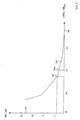
- Figure 1 illustrates variation as a function 100 of heart rate, i.e.
- the x axis 104 shows the heart rate as per cent of the maximum heart rate and the y axis 102 shows standard deviation as milliseconds around the expected moment at which the heart should beat.
- Figure 1 illustrates dependency between the heart rate variation and the heart rate, which applies to the majority of people.
- the heart rate level is e.g. 40% of the maximum heart rate
- the heart rate variation is between 15 to 25 milliseconds.
- the maximum heart rate means the heart rate value that can be calculated e.g. by the formula (220 - age), in which case the maximum heart rate of a 40-year old person is 180.
- the maximum heart rate can also be measured at the maximal workload or determined from the person's physiological properties using a neural network, for instance.
- the angular point of heart rate variation i.e. the change point 106
- the change point 106 of heart rate variation is connected to the anaerobic limit point 106b of energy metabolism. It can be seen from Figure 1 that the anaerobic limit point 106b is at a slightly higher heart rate level, i.e. 15 to 25 beats higher, than the change point 106 of heart rate variation.
- the intersection point of the change point 106 is about 4 milliseconds at the y axis, but may vary e.g. from 3 to 5 milliseconds.
- the fitness exercise refers to a physical exercise which is at least partly performed at a workload level exceeding the anaerobic limit, in which case lactate accumulates in the muscles of the person's body. Lactate concentration can be estimated for a given period, e.g. a few hours before and after the fitness exercise, and thus the invention is not limited to the actual performance of the fitness exercise.
- a fitness exercise can be divided e.g. into the following phases: warm-up, active phase, recovery phase, in which case the fitness exercise is preceded and followed by a rest. Different phases can be defined and distinguished from one another e.g. on the basis of heart rate levels and/or workload levels.
- the recovery phase for example, can be defined as an exercise level where the heart rate level drops from 130 beats/minute to a rest level of 70 beats/minute.
- the recovery phase is considered to begin when the heart rate level is below the limit of the active phase, i.e. 130 beats/minute, for two minutes, for instance.
- the exercising person monitors his/her heart rate at least at the end of the fitness exercise.
- the exerciser starts to walk, for example, so that the heart rate drops to a heart rate value below the change point of heart rate variation.
- it should be performed as close to the change point as possible, i.e. at a heart rate which is about 55 to 60% of the maximum heart rate.
- the physical condition of the exercising person is also taken into account in the calculation of the change point of heart rate variation.
- Physical condition can be defined e.g. as the maximal oxygen uptake, which can be determined e.g. by measuring the maximal oxygen uptake at the maximal workload or by forming an estimate by means of a neural network, into which one or more physiological parameters are fed as input parameters and/or several stress parameters that describe the workload.
- the physical condition affects curve 100 shown in Figure 1 so that the change point of heart rate variation of a fit person is at a higher heart rate level than that of an unfit person.
- the proportional share of heart rate variation of the maximum heart rate is the same for both these persons.
- a fit person can exercise at a higher workload without the exercise being anaerobic.
- the distance between the points 106 and 106b depends on the person's condition and lactate properties. In the case of a person with a very good condition, for example, the distance between the points is larger, which is taken into account in an embodiment by considering the person's condition in calculation and determination of controlling.
- a prior art lactate tolerance test for example, is used. In the test, blood tests are used to locate the threshold of the angular coefficient of the lactate curve under stress, which corresponds to the heart rate level at point 106b.
- recovery from a fitness exercise is controlled by means of the vanishing point of heart rate variation and the lactate that has accumulated in the body during exercise.
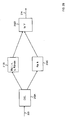
- the amount of lactate in the body is estimated by a two-part mathematical model which is described in greater detail in Figure 2 .
- the mathematical model refers to a set of mathematical operations and rules for determining output parameter values from the input parameter values. Mathematical operations include arithmetic operations, such as addition, subtraction and multiplication.
- the mathematical model can naturally be implemented as a table or a database, in which case the output parameter value corresponding to a given input parameter is read directly from the database. It is clear that the model may consist of only one part or of more than two parts.
- One or more parameters 202 representing the person's heart rate are fed into the first part 200 of the model as input parameters.
- the input data of the model also comprise one or more stress parameters 204 describing the exercise workload, such as running speed or pedalling speed of the exercise bike.
- the third set of input parameters for the model consists of one or more physiological parameters 206 of the person, such as height, weight or gender.
- the above-mentioned input parameter sets 204 to 206 are optional, i.e. they may be included in the model separately, simultaneously, or be omitted from the model.
- the first part 200 of the model is implemented as a neural network which has been trained with user data comprising information on hundreds or even thousands of users.
- the first part of the model provides the person's stress level 208 during exercise as the output.
- the output parameter set 210 provided by the model represents one or more fitness parameters which describe the person's physical condition, such as the maximal oxygen uptake or the fitness index.
- the input parameters to be fed into the second part 212 of the model include the above-mentioned information representing the exercise stress level 208 and optionally one or two fitness parameters 210 describing the user's condition.
- the second sub-model 212 is a mathematically formed physiological model which gives the amount 214 of lactate in the person's body as the output parameter on the basis of the input parameters.
- the amount 214 of lactate is used as the input parameter of control routines 216 which control removal of lactate from the body, using the control output 218 for monitoring that the duration and efficiency of the recovery exercise are sufficient.
- the person whose recovery is to be monitored preferably uses a heart rate monitor.
- the heart rate monitor is a device employed in sports and medicine, which measures human heart rate information either from an electrical impulse transmitted by the heart or from the pressure produced by the heart beat on an artery.
- the heart rate monitors comprise an electrode belt to be fitted around the user's chest to measure the heart rate by means of two or more electrodes.
- the electrode belt transmits the measured heart rate information inductively as one or more magnetic pulses per heart beat, for instance, to a wrist-worn receiver unit.
- the receiver unit calculates the heart rate and, when needed, other heart rate variables, such as moving standard deviation of the heart rate.
- the receiver unit i.e. the wrist monitor
- the heart rate monitor refers to the entity consisting of the electrode belt and the receiver unit.
- the heart rate monitor can also be a one-piece device in which the display means are located on the chest, and thus there is no need to transmit the information to a separate receiver unit.
- the structure of the heart rate monitor can be such that it only comprises a wrist-worn monitor which operates without the electrode belt to be fitted around the chest, measuring the heart rate information from the vessel pressure.
- the heart rate measuring arrangement refers to the above-described heart rate monitor solutions.
- the heart rate measuring arrangement also comprises solutions in which heart rate information is transmitted to an external computer or to a data network, which has display means, such as a computer screen, for presenting the information measured or generated by the heart rate monitor.
- the functions of the invention are performed in the receiving unit if the heart rate monitor consists of two pieces.
- One or more mathematical models of the invention and other functions required by the model are preferably implemented by software for a general-purpose processor.
- the models and functions can also be implemented as ASIC, with separate logic components or in a corresponding manner.
- the heart rate monitor comprises means for feeding user-specific physiological information, stress information and information on a fitness exercise.
- the feeding means can be, for instance, a keypad of the heart rate monitor, display equipment that supports control, a speech controller, a telecommunications port for external control or the like.
- the heart rate monitor also preferably comprises means for controlling the exerciser during a recovery exercise.
- the controlling means can be e.g. the display of a heart rate monitor, a speech controller, a telecommunications port for transmitting information to external means, such as a computer, or the like.
- An advantage of the invention is that it provides more accurate controlling of recovery from a fitness exercise than the prior art.
- Figure 1 illustrates change of heart rate variation as a function of heart rate
- Figure 2A is a block diagram illustrating a model structure according to an embodiment of the invention.
- Figure 2B is a block diagram illustrating a model structure according to an embodiment of the invention.
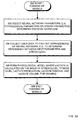
- Figure 3A is a method chart of an embodiment according to the invention.
- Figure 3B is a method chart of an embodiment according to the invention.
- Figure 3C is a method chart of an embodiment according to the invention.
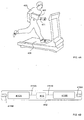
- FIG. 4A illustrates an embodiment of the heart rate measuring arrangement according to the invention
- Figure 4B illustrates the electrode belt shown in Figure 4A from the side to be fitted against the body of the person to be measured
- Figure 4C illustrates an embodiment of a two-piece heart rate monitor.
- the change point of heart rate variation which can be determined from the maximum heart rate of a person, is used for controlling recovery. At heart rate values exceeding the change point the heart rate variation drops below the threshold value of heart rate variation. The majority of people have a threshold value of 4 ms. When the fitness exercise is finished or the workload is reduced, the heart rate starts to decrease and thus the heart rate variation begins to increase. When the variation exceeds the threshold value, recovery can be deemed to have begun.
- Heart rate variation can be utilized for controlling the recovery exercise e.g. so that a 10-minute recovery exercise is performed at a workload which keeps the heart rate variation between 6 to 8 ms. Naturally the heart rate can also be employed for controlling recovery because the heart rate and the heart rate variation correlate with each other.
- FIGS 3A to 3C illustrate a preferred embodiment of use of the invention.
- a neural network 200 which is shown in Figure 2 , is formed in steps 302 to 304 of Figure 3A .
- the invention is not limited to the use of a neural network as the model for determining the stress level on the basis of the heart rate information, but some other prior art classifier can also be used.
- parameters are selected for the model.
- the parameters that describe the person's heart rate information are compulsory, whereas physiological parameters and stress parameters are optional.
- Parameters that represent the heart rate information include the heart rate, standard deviation of the heart rate, change rate of the heart rate and similar parameters that can be calculated from the heart rate.
- the heart rate is used in the model, but the above-mentioned heart rate parameters can be combined in various ways as the input parameters of the model.
- Physiological parameters are optional input parameters of the model.
- One or more physiological parameters such as the person's age, gender, height, weight and the like can be inserted into the model.
- the input parameters of the model may comprise one or more stress parameters that describe the exercise workload.
- the stress parameters typically comprise e.g. running speed, pedalling speed of the exercise bike or a similar parameter.
- the neural network model is trained, i.e. the weighting coefficients of the model parameters are matched.
- the model is preferably trained by means of a large set of users, which includes e.g. over 1000 users.
- the model yields the person's stress level during exercise, which can be used for controlling recovery.
- the stress level is expressed e.g. as workload/time unit.
- the model yields one or more fitness parameters describing the person's physical condition as output parameters.
- the fitness parameter may be e.g. the maximal oxygen uptake or the fitness index.
- the model yields the amount of lactate in the body, which is used in the controlling of recovery.
- the model is preferably calibrated by real user data before the actual use.
- a physiological model related to step 306 will be described on the basis of physiological properties of a person.
- the efficiency of a fitness exercise can be described as exercise intensity in relation to time.
- the intensity can be examined as heart beat frequency in relation to time.
- momentary exercise intensity is examined this way, the result will be only a momentary rough estimate of the stress level, which gives hardly any information on the exercise performed.
- the effect of long-term exercise stress depends on the individual, i.e. a fit person sustains stress better than an unfit person.
- both persons may be able to perform exactly the same exercise at the same intensity, but the exercise affects both persons differently: the fit person does not become significantly exhausted whereas the unfit person performs the same exercise at the extreme limits of his/her capacity.
- the influence of momentary stress on an individual and on the stress level experienced by the individual during exercise depends on previous stress.
- the present invention provides a non-invasive and indirect way of measuring lactate and utilizing the information on the amount of lactate in the body for controlling recovery from a fitness exercise.
- the amount of lactate 214 is formed as a function of heart rate information 202 during the fitness exercise, and in the following recovery exercise the removal of lactate 214 from the body is monitored on the basis of the heart rate information 202.
- the physiological basis for the models illustrated in Figure 2 is obtained from human energy metabolism. Muscles receive the energy needed for exercise from ATP (adenosine triphosphate). The ATP deficiency resulting from exercise should be replenished by producing new ATP from the energy reserves. For the first 10 to 15 seconds since the exercise stress starts, creatine reserves are sufficient for producing the ATP needed by the muscles. After this, the energy obtained from the glucose in the body can be used. Fatty acids cannot be utilized until about 15 minutes after the onset of exercise stress. In short maximal stress lasting only for tens of seconds, energy production is always chiefly anaerobic. In exercise stress of a few seconds energy is produced mainly by alactic processes by means of creatine phosphate.
- ATP adenosine triphosphate
- the creatine phosphate reserves are small and after ten seconds of exercise stress, energy is produced mainly by lactic processes. In longer maximal stress lasting for dozens of minutes the proportion of aerobic energy production increases. However, the long-term stress employs nearly the same energy production mechanisms as the short time stress. Carbohydrates from food provide glucose which is stored in muscles as glucogen. In glucolysis glucose degrades and releases energy. The reaction may take place either aerobically or anaerobically.
- Lactate is thus produced in anaerobic glucolysis.
- the amount of lactate, i.e. lactic acid, in the body is a balance reaction. A small but equal amount of lactate is produced and removed at rest. If the workload increases, more lactate is produced, but the lactate removal mechanisms also start to function at a higher rate. If the stress level does not rise to a very high level, the lactate removal mechanisms can remove lactate at the same rate as it is produced. In hard exercise stress, more lactate is produced than removed. This leads to a rapid increase of the lactate level in the body and exhaustion. The lactate removal mechanisms of a fit person are efficient and quick to react. A lactate surplus is generated when the production rate of lactate is higher that the removal rate.
- a lactate curve which presents the amount of lactate as a function of heart rate, represents in a way the person's condition.
- the curve of an unfit person grows more evenly than that of a fit person.
- the lactate level of a fit person is relatively low up to a rather high stress level.
- the lactate threshold At a certain stress level, known as the lactate threshold, the curve rises steeply.
- This curve form can be explained by the fact that the lactate removal mechanisms of a fit person are efficient and react rapidly to the elevated production rate of lactate.
- the amount of lactate does not increase significantly until the maximal lactate removal rate is reached.
- the lactate removal mechanisms of an unfit person are weaker and follow the elevated lactate production rate with a minor delay.
- the lactate curve is known, it is easy to plan exercise and recovery. Exercise should take place within the lactate curve area in which development is desired because exercise generally improves blood circulation, and consequently the efficiency of the removal mechanisms.
- the recovery exercise should be performed at a level at which the lactate removal mechanisms function maximally, i.e. preferably at a stress level just below the anaerobic limit.
- FIG. 2B An embodiment of the physiological model is shown in Figure 2B .
- the person's stress level 208 during exercise is fed into the model as input data.
- a delay unit 212A enables presentation of the model as a neural network according to an embodiment. Since the physiological model is preferably in the form of a differential equation, a discrete form of the model can be implemented by a delay unit 212A which provides feedback.
- the physiological model with units 212B to 212D can be expressed simply by formula (1)
- dla t dt 1 V ⁇ Ra t - Rd t
- la(t) is the lactate concentration
- Ra(t) is the lactate production rate
- Rd(t) is the lactate removal rate
- V is the lactate breakdown rate.
- Parameter k in the model represents the dependency of Ra on the stress level 208
- I represents the dependency of Rd on the stress level
- n represents the dependency of Rd on la
- s the dependency of Rd on Rdmax The above-mentioned parameters of the model may be adapted to their user-specific optimal values on the basis of a reference exercise performed by the user. In the reference exercise the stress parameters are accurately defined.
- the model provides the lactate amount 214 in the body, which can be fed into a controller 216 monitoring recovery according to Figure 2A .
- a person i.e. the exerciser or his/her coach, can also control the recovery exercise.
- the controller 216 preferably monitors that the amount of lactate remains below the threshold value, in which case the lactate removal rate is higher than the lactate production rate.
- the controller preferably monitors the duration of the recovery exercise, i.e. the fact that a sufficient amount of lactate is removed from the body to avoid stress pain caused by lactate.
- the controller 216 also receives information on the heart rate, and, in addition to lactate values, the controller 216 uses the change point of heart rate variation in controlling recovery from a fitness exercise.
- the control function 218 provided by the controller 216 can be supplied e.g. to the display of the heart rate monitor or provided for the user as a voice message.
- Figure 3B illustrates feeding of user-specific information into the model and adaptation of the model to a certain user.
- user-specific physiological parameters are fed into the mathematical model.
- the mathematical model such as a neural network model, and physiological parameters are used for forming a rough estimate of the user's physical condition.
- stress parameters corresponding to a reference exercise are fed into the model.
- a reference exercise e.g. a 12-minute running exercise in accordance with the Cooper's test, is performed in step 326.
- a specified estimate of the user's condition can be formed using the fitness parameters, such as the maximal oxygen uptake.
- Figure 3C illustrates use of a solution of the invention.
- the user's maximum heart rate is calculated by the formula 220 - age, and thus the maximum heart rate of a 30-year person, for example, is 190.
- the person's threshold heart rate is calculated, which is 63% of the maximum heart rate, i.e. 120 in this case.
- the threshold heart rate value is thus a rough estimate of the person's anaerobic limit.
- the person's condition is used for specifying the threshold heart rate. For example, if 10 beats are added to the threshold heart rate value of a fit person, the person's threshold heart rate will be 130.
- step 346 the person carries out the actual fitness exercise the recovery from which is to be controlled according to the invention.
- the models described in connection with Figures 2A to 2B are used for estimating the lactate concentration in the person's body as a function of heart rate.
- step 348 the fitness exercise is monitored and finished, after which the person starts a recovery exercise, which, according to the example, should also be performed at a relatively heavy workload, at a heart rate slightly below 130.
- the controller shown in Figure 2B or the exerciser or another person monitors the amount of lactate during recovery, i.e. the fact that the lactate removal rate is optimal and at least exceeds the production rate. A sufficient duration can be determined for the recovery exercise from the threshold value formed for the amount of lactate in accordance with step 350.
- FIG. 4A shows a person 400 who performs an exercise on a treadmill 406.
- the heart rate of the person 200 is measured by means of a transmitter electrode belt 402 fitted around the chest.
- the heart rate is measured by two or more electrodes 410A to 410B of the transmitter electrode belt 402, between which a difference of potential is created as the heart beats.
- the transmitter electrode belt 402 is fitted around the person's chest by means of an elastic band made of elastic material, for instance.
- the measured heart rate is preferably transmitted inductively to a wrist-worn receiver 404 which preferably also comprises a display for showing the measured heart rate.
- the invention is also applicable to heart rate monitors, in which the electrode belt 402 on the chest, in addition to measuring, takes care of storing, processing and displaying the heart rate information, and thus the wrist-worn receiver unit 404 is unnecessary.
- the heart rate monitor can also be a single wrist-worn device, in which the transmitter part and the receiver part are integrated into one single device, and thus transmitter and receiver electronics are unnecessary.
- the heart beat can be measured from the wrist, either from an ECG signal, arterial pressure pulse or by observing optically changes in the absorption or reflection of blood circulation.
- FIG 4B shows the electrode belt 402 of Figure 4A in greater detail.
- the electrode belt 402 is illustrated from the side of the electrodes 410A to 410B, i.e. from the side facing the body.
- the figure also shows securing means 416A to 416B, by which the electrode belt 402 can be secured to an elastic band to be fitted around the chest.
- an electronic unit 412 for processing the heart rate information obtained from the electrodes 410A to 410B is illustrated by a broken line.
- the electrodes 410A and 410B are connected to the electronic unit 412 with conductors 414A and 414B, respectively.
- FIG. 4C illustrates the structures of the transmitter electrode belt 402 and the receiver 404 by means of an embodiment.
- the topmost part of the figure shows the transmitter electrode belt 402, the middle part shows a sample of heart rate information to be transmitted and the bottom part shows the essential parts of the receiver unit 404.
- the electronic unit 412 of the transmitter electrode belt 402 receives heart rate information from the means 410A to 410B for measuring one or more heart rate parameters.
- the measuring means 410A to 410B are preferably electrodes.
- the heart rate monitor comprises at least two electrodes, but more can also be used. From the electrodes the signal is applied to an ECG preamplifier 420 from which the signal is transferred via an AGC amplifier 422 and a power amplifier 424 to a transmitter 426.
- the transmitter 426 is preferably implemented as a coil which sends the heart rate information 432 inductively to a receiver, such as a wrist-worn receiver unit 404 or to an external computer, for instance.
- One 5 kHz burst 432A corresponds to one heart beat, for instance, or a cluster of a plurality of bursts 432A to 432C may correspond to one beat.
- the intervals 432A to 432B of bursts 430A to 430C can be equal or different in duration, as appears from Figure 4C .
- Information can be transmitted inductively, or alternatively, optically or via a conductor, for instance.
- the receiver 404 such as the wrist-worn receiver, comprises a receiver coil 440, from which the received signal is applied through a signal receiver 442 to a central processor 444, which coordinates the operation of different parts.
- the receiver 404 preferably also comprises a memory 448 for storing the heart rate information and display means 450 for presenting the heart rate or the heart rate parameters derived from it, such as the standard deviation.
- the display means 450 also show information needed to control recovery, such as the heart rate level at which the recovery exercise is optimal and the recovery exercise duration.
- the display means 450 can also show the amount of lactate in the person's body or the person's stress level, for instance.
- the display means 450 is, for example, the display of a heart rate monitor or a speech controller.
- the display means 450 may also comprise means for transmitting the heart rate and/or feedback information to an external computer or data network.
- the transmitting means can be implemented e.g.
- a heart rate measuring arrangement is in question if the information measured or generated by the heart rate monitor is transmitted to equipment outside the heart rate monitor, such as a computer.
- the display means are then located in the computer, by which the information measured in real-time or stored in the memory 448 of the heart rate monitor can be displayed.
- the heart rate monitor further comprises forming means 452 for forming control information from the measured heart rate information for controlling the recovery exercise.
- the forming means 452 are preferably implemented as the heart rate monitor's calculating unit.
- the calculating unit preferably implements the functions required by the invention for forming control information, such as location of the change point of heart rate variation in one embodiment or calculation of a person's maximum heart rate value on the basis of age.
- the calculation unit 452 comprises a mathematical model 200, which by means of input parameters provides e.g. the amount of lactate in the body and/or the person's stress level as output parameters. In that case, the calculation unit 452 forms the control information using the output parameters provided by the model.
- the output parameters provided by the model can naturally be presented as such by the display means 450 of the heart rate monitor. It is clear that the calculating unit 542 need not be implemented as a separate device unit but the calculating unit 452 and the mathematical model 200 included therein can be part of the central processor 444. Further, it is clear that the heart rate monitor need not necessarily comprise a separate calculating unit 452 but the model 200 can be implemented in the central processor 444, for instance.
- the heart rate monitor i.e. receiver 404 in the solution of Figure 4C , preferably comprises feeding means 446, such as a keypad or speech controller means. The feeding means 446 can be used e.g. for feeding the physiological parameters and stress parameters required by the model 200.
- the functions, means and one or more models implementing the invention are implemented by means of software in a general-purpose processor.
- Said means can also be implemented as ASIC, by separate logic components or by any corresponding known method.
- the heart rate monitor refers to an entity consisting of the transmitter electrode belt 402 and the receiver 404.
- the heart rate monitor can also be implemented so that the above-described functions included in the transmitter electrode belt 402 and the receiver 404 are located in one device.
- This one-piece device can be either fitted on the chest for heart rate measurement, or alternatively, worn on the wrist.
- the electrode belt 402 and the receiver 404 may also comprise other parts than those shown in Figures 4B and 4C , but it is not relevant to describe them here.
Landscapes
- Health & Medical Sciences (AREA)
- Life Sciences & Earth Sciences (AREA)
- Heart & Thoracic Surgery (AREA)
- Surgery (AREA)
- Physics & Mathematics (AREA)
- Physiology (AREA)
- Biophysics (AREA)
- Pathology (AREA)
- Engineering & Computer Science (AREA)
- Biomedical Technology (AREA)
- Cardiology (AREA)
- Medical Informatics (AREA)
- Molecular Biology (AREA)
- Physical Education & Sports Medicine (AREA)
- Animal Behavior & Ethology (AREA)
- General Health & Medical Sciences (AREA)
- Public Health (AREA)
- Veterinary Medicine (AREA)
- Measuring Pulse, Heart Rate, Blood Pressure Or Blood Flow (AREA)
- Control Of Eletrric Generators (AREA)
- Exchange Systems With Centralized Control (AREA)
- Measurement And Recording Of Electrical Phenomena And Electrical Characteristics Of The Living Body (AREA)
- Preparation Of Compounds By Using Micro-Organisms (AREA)
Claims (26)
- Anordnung zur Messung der Herzfrequenz, umfassend Messmittel (410A - 410B) für das Messen der Herzfrequenz, um Information über diese zu erhalten, dadurch gekennzeichnet, dass die Anordnung zur Messung der Herzfrequenz umfasst:eine Berechnungseinheit (452), die ausgebildet ist, um Steuerinformation aus der durch das Messen erhaltenen Herzfrequenzinformation zu bilden, um eine Rekonvaleszenzübung so zu steuern, dass sie bei einem Herzfrequenzniveau ausgeführt wird, das unter einem Schwellwert der Herzfrequenz liegt, wobei die Variation der Herzfrequenz höher als ein vorbestimmter Schwellwert der Variation der Herzfrequenz bei Herzfrequenzniveaus ist, die unter dem Schwellwert der Herzfrequenz liegen, undwobei die Steuerinformation weiter eine ausreichende Dauer für die Rekonvaleszenzübung umfaßt, wobei diese Dauer mittels des Schwellwertniveaus der Lactatkonzentration im Körper geschätzt wird, bei der die Rekonvaleszenzübung beendet werden kann,Anzeigemittel (450) für das Präsentieren der ausgebildeten Steuerinformation.
- Anordnung zur Messung der Herzfrequenz nach Anspruch 1, dadurch gekennzeichnet, dass die Steuerinformation die Dauer der Rekonvaleszenzübung umfasst.
- Anordnung zur Messung der Herzfrequenz nach Anspruch 1, dadurch gekennzeichnet, dass die Anordnung zur Messung der Herzfrequenz einen Speicher für das Speichern der Herzfrequenzinformation umfasst.
- Anordnung zur Messung der Herzfrequenz nach Anspruch 1, dadurch gekennzeichnet, dass die Meßmittel einen Elektrodengürtel für das Messen der Herzfrequenz umfassen, wobei die Anordnung zur Messung der Herzfrequenz weiter eine Empfängereinheit umfasst, die Ausbildungsmittel und Anzeigemittel umfasst.
- Anordnung zur Messung der Herzfrequenz nach Anspruch 4, dadurch gekennzeichnet, dass das Anzeigemittel die Anzeige einer Empfängereinheit ist.
- Anordnung zur Messung der Herzfrequenz nach Anspruch 1, dadurch gekenn- zeichnet, dass die Anordnung zur Messung der Herzfrequenz eine einstückige, am Handgelenk getragene Herzfrequenzüberwachungseinrichtung ist.
- Anordnung zur Messung der Herzfrequenz nach Anspruch 1, dadurch gekennzeichnet, dass die Berechnungseinheit ausgebildet ist, eine Berechnung auszuführen, so dass der Schwellwert der Herzfrequenz 45 bis 55% der Herzfrequenz beträgt, die der maximalen Sauerstoffaufnahme entspricht.
- Anordnung zur Messung der Herzfrequenz nach Anspruch 1, dadurch gekennzeichnet, dass die Berechnungseinheit ausgebildet ist, eine Berechnung auszuführen, so dass der Schwellwert der Herzfrequenz 60 bis 70% der maximalen Herzfrequenz der Person beträgt.
- Anordnung zur Messung der Herzfrequenz nach Anspruch 8, dadurch gekennzeichnet, dass die Berechnungseinheit ausgebildet ist, die Herzfrequenz zu verwenden, die der maximalen Belastung in Form der maximalen Herzfrequenz oder der Herzfrequenz, die auf der Basis des Alters der Person geschätzt wird, entspricht.
- Anordnung zur Messung der Herzfrequenz nach Anspruch 1, dadurch gekennzeichnet, dass die Berechnungseinheit ausgebildet ist, ungefähr 4 ms als den Schwellwert der Variation der Herzfrequenz zu verwenden.
- Anordnung zur Messung der Herzfrequenz nach Anspruch 1, dadurch gekennzeichnet, dass die Variation der Herzfrequenz die Differenz zwischen dem tatsächlichen Moment und dem erwarteten Moment, der aus der Herzfrequenz berechnet werden kann, beschreibt.
- Anordnung zur Messung der Herzfrequenz nach Anspruch 1, dadurch gekennzeichnet, dass die Berechnungseinheit ausgebildet ist, eine Variation der Herzfrequenz als eine Standardabweichung aus der Differenz zwischen einem oder mehreren tatsächlichen Momenten der Herzfrequenz und dem erwarteten Moment, der aus der Herzfrequenz berechnet werden kann, auszubilden.
- Anordnung zur Messung der Herzfrequenz nach Anspruch 1, dadurch gekennzeichnet, dass die Berechnungseinheit ein mathematische Modell umfasst, das ausgebildet ist, um den Wert eines oder mehrerer Ausgabeparameter zu liefern, um die Steuerinformation in der Berechnungseinheit in Erwiderung auf den Wert eines oder mehrerer Eingabeparameter auszubilden.
- Anordnung zur Messung der Herzfrequenz nach Anspruch 13, dadurch gekennzeichnet, dass das Modell ausgebildet ist, um mindestens einen Herzfrequenzfrequenzparameter als Eingabeparameter zu empfangen und um die Menge des Lactats im Körper als Ausgabeparameter zu liefern.
- Anordnung zur Messung der Herzfrequenz nach Anspruch 14, dadurch gekennzeichnet, dass das Modell ausgebildet ist, einen oder mehrere Fitnessparameter, die die physische Kondition der Person beschreiben, zu verwenden, um die Menge des Lactats zu schätzen.
- Anordnung zur Messung der Herzfrequenz nach Anspruch 15, dadurch gekennzeichnet, dass der Fitnessparameter die maximale Sauerstoffaufnahme ist.
- Anordnung zur Messung der Herzfrequenz nach Anspruch 13, dadurch gekennzeichnet, dass das mathematische Modell ausgebildet ist, einen oder mehreren der folgenden Parameter als Eingabedaten zu empfangen: einen oder mehrere physiologische Parameter, die die Physiologie der Person beschreiben, einen oder mehrere Belastungsparameter, die die Übungsbelastung beschreiben.
- Anordnung zur Messung der Herzfrequenz nach Anspruch 13, dadurch gekennzeichnet, dass das mathematisch Modell ausgebildet ist, die Menge des Lactats im Körper der Person auf der Basis des Belastungsniveaus, das die Person während der Fitnessübung erfährt, zu schätzen.
- Anordnung zur Messung der Herzfrequenz nach Anspruch 13, dadurch gekennzeichnet, dass das mathematische Modell ausgebildet ist, die Menge des Lactats im Körper der Person mittels einem oder mehreren der folgenden Punkte zu schätzen: die Lactatproduktionsrate in einem Muskel, die Lactatabnahmerate im Muskel und das Blutvolumen, in das das Lactat verteilt wird.
- Anordnung zur Messung der Herzfrequenz nach Anspruch 1, dadurch gekennzeichnet, dass die Berechnungseinheit ausgelegt ist, die Lactatkonzentration im Körper für das Ausbilden der Steuerinformation für die Rekonvaleszenzübung zu verwenden.
- Anordnung zur Messung der Herzfrequenz nach Anspruch 13, dadurch gekennzeichnet, dass das mathematische Modell ein neuronales Netz ist.
- Anordnung zur Messung der Herzfrequenz nach Anspruch 21, dadurch gekennzeichnet, dass das neuronale Netz auf der Basis der Benutzerinformation, die von einer großen Zahl von Benutzern gesammelt wird, trainiert wird.
- Anordnung zur Messung der Herzfrequenz nach Anspruch 21, dadurch gekennzeichnet, dass die Wichtungskoeffizienten zwischen Neuronen, die beim Training des neuronalen Netzes verwendet werden, mittels einer Rückkopplung, die den Wert einer oder mehrerer Ausgabeparameter verwendet, spezifiziert worden sind.
- Anordnung zur Messung der Herzfrequenz nach Anspruch 17, dadurch gekennzeichnet, dass der physiologische Parameter das Alter, das Gewicht, die Größe oder das Geschlecht ist.
- Anordnung zur Messung der Herzfrequenz nach Anspruch 17, dadurch gekennzeichnet, dass der Belastungsparameter die Laufgeschwindigkeit, der Widerstand eines Übungsfahrrads oder ein ähnlicher Parameter ist.
- Anordnung zur Messung der Herzfrequenz nach Anspruch 14, dadurch gekennzeichnet dass der Herzfrequenzparameter die Herzfrequenz, die Variation der Herzfrequenz, die Änderungsrate der Herzfrequenz oder dergleichen ist.
Applications Claiming Priority (2)
| Application Number | Priority Date | Filing Date | Title |
|---|---|---|---|
| FI20000418A FI115288B (fi) | 2000-02-23 | 2000-02-23 | Palautumisen ohjaus kuntosuorituksen yhteydessä |
| FI20000418 | 2000-02-23 |
Publications (3)
| Publication Number | Publication Date |
|---|---|
| EP1127542A2 EP1127542A2 (de) | 2001-08-29 |
| EP1127542A3 EP1127542A3 (de) | 2003-01-08 |
| EP1127542B1 true EP1127542B1 (de) | 2009-01-28 |
Family
ID=8557689
Family Applications (1)
| Application Number | Title | Priority Date | Filing Date |
|---|---|---|---|
| EP01660033A Expired - Lifetime EP1127542B1 (de) | 2000-02-23 | 2001-02-19 | Regelung von Fitnessübungen |
Country Status (5)
| Country | Link |
|---|---|
| US (1) | US6687535B2 (de) |
| EP (1) | EP1127542B1 (de) |
| AT (1) | ATE421864T1 (de) |
| DE (1) | DE60137555D1 (de) |
| FI (1) | FI115288B (de) |
Families Citing this family (117)
| Publication number | Priority date | Publication date | Assignee | Title |
|---|---|---|---|---|
| US6749537B1 (en) | 1995-12-14 | 2004-06-15 | Hickman Paul L | Method and apparatus for remote interactive exercise and health equipment |
| US7985164B2 (en) * | 1999-07-08 | 2011-07-26 | Icon Ip, Inc. | Methods and systems for controlling an exercise apparatus using a portable data storage device |
| US8029415B2 (en) * | 1999-07-08 | 2011-10-04 | Icon Ip, Inc. | Systems, methods, and devices for simulating real world terrain on an exercise device |
| US7537546B2 (en) | 1999-07-08 | 2009-05-26 | Icon Ip, Inc. | Systems and methods for controlling the operation of one or more exercise devices and providing motivational programming |
| US7166064B2 (en) * | 1999-07-08 | 2007-01-23 | Icon Ip, Inc. | Systems and methods for enabling two-way communication between one or more exercise devices and computer devices and for enabling users of the one or more exercise devices to competitively exercise |
| US7628730B1 (en) | 1999-07-08 | 2009-12-08 | Icon Ip, Inc. | Methods and systems for controlling an exercise apparatus using a USB compatible portable remote device |
| US7166062B1 (en) | 1999-07-08 | 2007-01-23 | Icon Ip, Inc. | System for interaction with exercise device |
| CA2414306A1 (en) * | 2000-06-30 | 2002-01-10 | Lifewaves International, Inc. | Systems and methods for assessing and modifying an individual's physiological condition |
| US6921351B1 (en) | 2001-10-19 | 2005-07-26 | Cybergym, Inc. | Method and apparatus for remote interactive exercise and health equipment |
| FR2839362B1 (fr) * | 2002-05-06 | 2004-09-17 | Acpe | Dispositif de suivi des performances et/ou des ressources physiques d'un cheval lors d'un entrainement ou d'une competition |
| US6821229B2 (en) | 2002-08-30 | 2004-11-23 | Tanita Corporation | Walking support system |
| US7309315B2 (en) * | 2002-09-06 | 2007-12-18 | Epoch Innovations, Ltd. | Apparatus, method and computer program product to facilitate ordinary visual perception via an early perceptual-motor extraction of relational information from a light stimuli array to trigger an overall visual-sensory motor integration in a subject |
| US20070159926A1 (en) | 2003-04-17 | 2007-07-12 | Nike, Inc. | Adaptive Watch |
| US20050054940A1 (en) * | 2003-04-23 | 2005-03-10 | Almen Adam J. | Apparatus and method for monitoring heart rate variability |
| US7460899B2 (en) * | 2003-04-23 | 2008-12-02 | Quiescent, Inc. | Apparatus and method for monitoring heart rate variability |
| DE10324904B4 (de) * | 2003-05-30 | 2013-03-07 | Siemens Aktiengesellschaft | Vorrichtung zur Trainingseinstellung im Sport, insbesondere im Laufsport |
| US7937149B2 (en) * | 2003-12-03 | 2011-05-03 | Medtronic, Inc. | Method and apparatus for detecting change in physiologic parameters |
| WO2005060826A1 (fr) * | 2003-12-19 | 2005-07-07 | Compex Medical S.A. | Cardio-frequence-metre |
| US7031766B1 (en) | 2004-04-20 | 2006-04-18 | Pacesetter, Inc. | Methods and devices for determining exercise diagnostic parameters |
| US7676262B1 (en) * | 2004-04-20 | 2010-03-09 | Pacesetter, Inc. | Methods and devices for determining exercise compliance diagnostics |
| US20180008865A9 (en) | 2004-05-10 | 2018-01-11 | Koko Fitness, Inc. | Exercising apparatus |
| US8105207B1 (en) * | 2004-05-10 | 2012-01-31 | Michael G. Lannon | Exercising apparatus |
| US7771319B1 (en) | 2004-05-10 | 2010-08-10 | Michael G. Lannon | Exercising apparatus |
| US20060079794A1 (en) * | 2004-09-28 | 2006-04-13 | Impact Sports Technologies, Inc. | Monitoring device, method and system |
| US20070106132A1 (en) * | 2004-09-28 | 2007-05-10 | Elhag Sammy I | Monitoring device, method and system |
| US20060253010A1 (en) * | 2004-09-28 | 2006-11-09 | Donald Brady | Monitoring device, method and system |
| US7887492B1 (en) | 2004-09-28 | 2011-02-15 | Impact Sports Technologies, Inc. | Monitoring device, method and system |
| US20070232450A1 (en) * | 2004-10-22 | 2007-10-04 | Mytrak Health System Inc. | Characterizing Fitness and Providing Fitness Feedback |
| US20070232455A1 (en) * | 2004-10-22 | 2007-10-04 | Mytrak Health System Inc. | Computerized Physical Activity System to Provide Feedback |
| US20070232452A1 (en) * | 2004-10-22 | 2007-10-04 | Mytrak Health System Inc. | Computerized Spinning Exercise System and Methods Thereof |
| US7846067B2 (en) * | 2004-10-22 | 2010-12-07 | Mytrak Health System Inc. | Fatigue and consistency in exercising |
| US7914425B2 (en) * | 2004-10-22 | 2011-03-29 | Mytrak Health System Inc. | Hydraulic exercise machine system and methods thereof |
| AU2005311941A1 (en) * | 2004-12-02 | 2006-06-08 | Baylor University | Exercise circuit system and method |
| US20060241864A1 (en) * | 2005-04-22 | 2006-10-26 | Outland Research, Llc | Method and apparatus for point-and-send data transfer within an ubiquitous computing environment |
| US7641592B2 (en) * | 2005-05-06 | 2010-01-05 | Jonathan Roche Ventures, Llc | Interval fitness training |
| US7519537B2 (en) * | 2005-07-19 | 2009-04-14 | Outland Research, Llc | Method and apparatus for a verbo-manual gesture interface |
| US7577522B2 (en) | 2005-12-05 | 2009-08-18 | Outland Research, Llc | Spatially associated personal reminder system and method |
| US20070117081A1 (en) * | 2005-10-31 | 2007-05-24 | Ford John H | System and Method for Delivering Information to Optimize Information Retention |
| WO2007109050A2 (en) * | 2006-03-15 | 2007-09-27 | Glass Andrew B | System and method for controlling the presentation of material and operation of external devices |
| US20120237906A9 (en) * | 2006-03-15 | 2012-09-20 | Glass Andrew B | System and Method for Controlling the Presentation of Material and Operation of External Devices |
| FI119717B (fi) * | 2006-05-04 | 2009-02-27 | Polar Electro Oy | Käyttäjäkohtainen suoritemittari, menetelmä ja tietokoneohjelmistotuote |
| JP4231876B2 (ja) * | 2006-05-18 | 2009-03-04 | 株式会社コナミスポーツ&ライフ | トレーニングシステム、操作端末、及びトレーニング支援プログラムを記録したコンピュータ読み取り可能な記録媒体 |
| WO2008003830A1 (en) | 2006-07-04 | 2008-01-10 | Firstbeat Technologies Oy | Method and system for guiding a person in physical exercise |
| EP1875859A1 (de) * | 2006-07-05 | 2008-01-09 | Nederlandse Organisatie voor Toegepast-Natuuurwetenschappelijk Onderzoek TNO | System zur Bestimmung des effektiven Trainingsherzschlagbereichs |
| US20080051261A1 (en) * | 2006-08-25 | 2008-02-28 | Lewis Charles A | Exercise protocols for treadmills and bicycle ergometers for exercise, diagnostics and rehabilitation |
| US7771320B2 (en) | 2006-09-07 | 2010-08-10 | Nike, Inc. | Athletic performance sensing and/or tracking systems and methods |
| USD590898S1 (en) | 2006-09-29 | 2009-04-21 | Michael G. Lannon | Exercising apparatus |
| US20080090703A1 (en) * | 2006-10-14 | 2008-04-17 | Outland Research, Llc | Automated Personal Exercise Regimen Tracking Apparatus |
| US20080103023A1 (en) * | 2006-10-26 | 2008-05-01 | Sonu Ed Chung | Method of Developing and Creating a Personalized Exercise Regime in a Digital Medium |
| FI20065735A0 (fi) * | 2006-11-20 | 2006-11-20 | Salla Koski | Mittaus-, seuranta- ja hoitojärjestelmä sekä järjestelmään kuuluvia laitteita |
| US20080204225A1 (en) * | 2007-02-22 | 2008-08-28 | David Kitchen | System for measuring and analyzing human movement |
| WO2008112894A1 (en) * | 2007-03-15 | 2008-09-18 | Jiayi Li | Devices, systems, kits and methods for treatment of obesity |
| US20080300110A1 (en) * | 2007-05-29 | 2008-12-04 | Icon, Ip | Exercise device with exercise log and journal |
| US20080312041A1 (en) * | 2007-06-12 | 2008-12-18 | Honeywell International, Inc. | Systems and Methods of Telemonitoring |
| FI20075908A0 (fi) * | 2007-12-14 | 2007-12-14 | Polar Electro Oy | Elektroniikkalaite ja menetelmä |
| JP5643116B2 (ja) | 2008-03-03 | 2014-12-17 | ナイキ イノベイト セー. フェー. | 対話型運動器具システム |
| US9370691B2 (en) * | 2008-03-27 | 2016-06-21 | Polar Electro Oy | Apparatus for metabolic training load, mechanical stimulus, and recovery time calculation |
| FI20085402A0 (fi) * | 2008-05-02 | 2008-05-02 | Firstbeat Technologies Oy | Kuntotesti |
| JP5657526B2 (ja) * | 2008-05-14 | 2015-01-21 | ハートマイルズ、リミテッド ライアビリティー カンパニー | 身体活動モニタ及びデータ収集ユニット |
| US20100279822A1 (en) * | 2008-11-01 | 2010-11-04 | Ford John Hajime | Systems and methods for optimizing one or more audio tracks to a video stream |
| WO2010085688A1 (en) * | 2009-01-22 | 2010-07-29 | Under Armour, Inc. | System and method for monitoring athletic performance |
| US8251874B2 (en) * | 2009-03-27 | 2012-08-28 | Icon Health & Fitness, Inc. | Exercise systems for simulating real world terrain |
| US8602988B2 (en) * | 2010-02-02 | 2013-12-10 | Recovery Science and Technology, LLC | Recovery determination methods and recovery determination apparatuses |
| FI20105796A0 (fi) * | 2010-07-12 | 2010-07-12 | Polar Electro Oy | Fysiologisen tilan analysointi kuntosuoritusta varten |
| US10572721B2 (en) | 2010-08-09 | 2020-02-25 | Nike, Inc. | Monitoring fitness using a mobile device |
| US9011292B2 (en) | 2010-11-01 | 2015-04-21 | Nike, Inc. | Wearable device assembly having athletic functionality |
| US9457256B2 (en) | 2010-11-05 | 2016-10-04 | Nike, Inc. | Method and system for automated personal training that includes training programs |
| US12327624B2 (en) | 2010-11-05 | 2025-06-10 | Nike, Inc. | User interface for remote joint workout session |
| CA2816589A1 (en) | 2010-11-05 | 2012-05-10 | Nike International Ltd. | Method and system for automated personal training |
| US9977874B2 (en) | 2011-11-07 | 2018-05-22 | Nike, Inc. | User interface for remote joint workout session |
| CN113270185B (zh) | 2010-11-10 | 2024-09-24 | 耐克创新有限合伙公司 | 用于基于时间的运动活动测量和显示的系统和方法 |
| US8827930B2 (en) * | 2011-01-10 | 2014-09-09 | Bioguidance Llc | System and method for patient monitoring |
| US9119983B2 (en) * | 2011-11-15 | 2015-09-01 | Icon Health & Fitness, Inc. | Heart rate based training system |
| US9339691B2 (en) | 2012-01-05 | 2016-05-17 | Icon Health & Fitness, Inc. | System and method for controlling an exercise device |
| GB201202637D0 (en) * | 2012-02-16 | 2012-04-04 | Univ Leuven Kath | Exercise system and method |
| US9332917B2 (en) * | 2012-02-22 | 2016-05-10 | Siemens Medical Solutions Usa, Inc. | System for non-invasive cardiac output determination |
| US9681836B2 (en) | 2012-04-23 | 2017-06-20 | Cyberonics, Inc. | Methods, systems and apparatuses for detecting seizure and non-seizure states |
| KR101907089B1 (ko) | 2012-11-16 | 2018-10-11 | 삼성전자주식회사 | 젖산 역치 추정 장치 및 방법 |
| US20140213416A1 (en) * | 2013-01-27 | 2014-07-31 | Leao Wang | Electronic control dashboard capable of displaying fitness age |
| CN104884133B (zh) | 2013-03-14 | 2018-02-23 | 艾肯运动与健康公司 | 具有飞轮的力量训练设备 |
| US20150088006A1 (en) * | 2013-09-20 | 2015-03-26 | Simbionics | Method for determining aerobic capacity |
| EP3974036B1 (de) | 2013-12-26 | 2024-06-19 | iFIT Inc. | Mechanismus des magnetischen widerstands in einer kabelmaschine |
| US11291392B2 (en) | 2014-03-03 | 2022-04-05 | LifeQ Limited Limited | Real-time and continuous determination of excess post-exercise oxygen consumption and the estimation of blood lactate |
| WO2015138339A1 (en) | 2014-03-10 | 2015-09-17 | Icon Health & Fitness, Inc. | Pressure sensor to quantify work |
| WO2015191445A1 (en) | 2014-06-09 | 2015-12-17 | Icon Health & Fitness, Inc. | Cable system incorporated into a treadmill |
| US9924901B2 (en) | 2014-06-16 | 2018-03-27 | Potomac Health Solutions, Inc. | Methods, media, and apparatus for optimizing physical training based on real-time blood lactate monitoring |
| WO2015195965A1 (en) | 2014-06-20 | 2015-12-23 | Icon Health & Fitness, Inc. | Post workout massage device |
| US20160058372A1 (en) | 2014-09-02 | 2016-03-03 | Apple Inc. | Terrain type inference from wearable with motion sensing |
| US10388183B2 (en) * | 2015-02-27 | 2019-08-20 | Icon Health & Fitness, Inc. | Encouraging achievement of health goals |
| US10391361B2 (en) | 2015-02-27 | 2019-08-27 | Icon Health & Fitness, Inc. | Simulating real-world terrain on an exercise device |
| US10244948B2 (en) | 2015-03-06 | 2019-04-02 | Apple Inc. | Statistical heart rate monitoring for estimating calorie expenditure |
| WO2017014183A1 (ja) * | 2015-07-17 | 2017-01-26 | Blue Wych合同会社 | 運動能力及び運動の評価システム |
| US9693727B1 (en) | 2016-03-31 | 2017-07-04 | Firstbeat Technologies Oy | Method and system to determine anaerobic threshold of a person non-invasively from freely performed exercise and to provide feedback on training intensity |
| US9517028B1 (en) * | 2015-08-18 | 2016-12-13 | Firstbeat Technologies Oy | Method and system to determine anaerobic threshold of a person non-invasively from freely performed exercise and to provide feedback on training intensity |
| EP3132745B1 (de) | 2015-08-18 | 2021-12-22 | Firstbeat Analytics OY | Verfahren und vorrichtung zur nichtinvasiven bestimmung eines anaeroben schwellwertes einer person aus frei durchgeführten übungen und zur bereitstellung von feedback auf die trainingsintensität |
| US10699594B2 (en) | 2015-09-16 | 2020-06-30 | Apple Inc. | Calculating an estimate of wind resistance experienced by a cyclist |
| US10620232B2 (en) | 2015-09-22 | 2020-04-14 | Apple Inc. | Detecting controllers in vehicles using wearable devices |
| US10625137B2 (en) | 2016-03-18 | 2020-04-21 | Icon Health & Fitness, Inc. | Coordinated displays in an exercise device |
| US10272317B2 (en) | 2016-03-18 | 2019-04-30 | Icon Health & Fitness, Inc. | Lighted pace feature in a treadmill |
| US10493349B2 (en) | 2016-03-18 | 2019-12-03 | Icon Health & Fitness, Inc. | Display on exercise device |
| US10694994B2 (en) | 2016-03-22 | 2020-06-30 | Apple Inc. | Techniques for jointly calibrating load and aerobic capacity |
| CN105877731A (zh) * | 2016-03-29 | 2016-08-24 | 杭州铿锵科技有限公司 | 用于考核学生运动量的考核装置 |
| US10687707B2 (en) | 2016-06-07 | 2020-06-23 | Apple Inc. | Detecting activity by a wheelchair user |
| US10709933B2 (en) | 2016-08-17 | 2020-07-14 | Apple Inc. | Pose and heart rate energy expenditure for yoga |
| US10687752B2 (en) | 2016-08-29 | 2020-06-23 | Apple Inc. | Detecting unmeasurable loads using heart rate and work rate |
| US10617912B2 (en) | 2016-08-31 | 2020-04-14 | Apple Inc. | Systems and methods of swimming calorimetry |
| US11896368B2 (en) | 2016-08-31 | 2024-02-13 | Apple Inc. | Systems and methods for determining swimming metrics |
| JP6745980B2 (ja) | 2016-08-31 | 2020-08-26 | アップル インコーポレイテッドApple Inc. | 水泳分析のシステム及び方法 |
| US10512406B2 (en) | 2016-09-01 | 2019-12-24 | Apple Inc. | Systems and methods for determining an intensity level of an exercise using photoplethysmogram (PPG) |
| US10671705B2 (en) | 2016-09-28 | 2020-06-02 | Icon Health & Fitness, Inc. | Customizing recipe recommendations |
| US10625114B2 (en) | 2016-11-01 | 2020-04-21 | Icon Health & Fitness, Inc. | Elliptical and stationary bicycle apparatus including row functionality |
| US10600509B2 (en) | 2017-02-22 | 2020-03-24 | International Business Machines Corporation | Wearable device for automated construction of training plans and method of using the same |
| US11051720B2 (en) | 2017-06-01 | 2021-07-06 | Apple Inc. | Fitness tracking for constrained-arm usage |
| CN110136799B (zh) * | 2019-05-08 | 2023-05-30 | 江苏康兮运动健康研究院有限公司 | 一种低强度阻抗运动的评价指导方法和装置 |
| US11937904B2 (en) | 2019-09-09 | 2024-03-26 | Apple Inc. | Detecting the end of cardio machine activities on a wearable device |
| US12109453B2 (en) | 2019-09-27 | 2024-10-08 | Apple Inc. | Detecting outdoor walking workouts on a wearable device |
| US12478835B2 (en) | 2019-09-27 | 2025-11-25 | Apple Inc. | Detecting the end of hiking activities on a wearable device |
Family Cites Families (12)
| Publication number | Priority date | Publication date | Assignee | Title |
|---|---|---|---|---|
| US4566461A (en) * | 1983-02-15 | 1986-01-28 | Michael Lubell | Health fitness monitor |
| US5842997A (en) * | 1991-02-20 | 1998-12-01 | Georgetown University | Non-invasive, dynamic tracking of cardiac vulnerability by simultaneous analysis of heart rate variability and T-wave alternans |
| JPH05220120A (ja) | 1992-02-18 | 1993-08-31 | Casio Comput Co Ltd | 運動強度表示装置 |
| WO1994002904A1 (en) * | 1992-07-21 | 1994-02-03 | Hayle Brainpower Pty Ltd. | Interactive exercise monitoring system |
| US5891044A (en) * | 1992-10-06 | 1999-04-06 | Gw Scientific, Inc. | Detection of abnormal and induction of normal heart rate variability |
| DE4338958C2 (de) * | 1992-11-16 | 1996-08-22 | Matsushita Electric Works Ltd | Verfahren zum Festlegen einer für das Einhalten einer Sollpulszahl optimalen Leistung |
| DE4406286A1 (de) * | 1994-02-26 | 1995-08-31 | Stegmann Heiner Dr Med | Verfahren zur Bestimmung der individuellen anaeroben Schwelle eines Menschens |
| FI110303B (fi) * | 1994-12-29 | 2002-12-31 | Polar Electro Oy | Menetelmä ja laite kunto- tai urheiluharjoittelun rasitustasojen ja harjoittelun rasittavuuden määrittämiseksi |
| US5738612A (en) | 1996-12-04 | 1998-04-14 | Colin Corporation | Exercise apparatus having exercise-load changing function |
| US6176241B1 (en) * | 1998-12-04 | 2001-01-23 | Saul Blau | System and method for cardiorespiratory conditioning |
| US6212427B1 (en) * | 1999-02-02 | 2001-04-03 | J&J Engineering | Heart rate variability feedback monitor system |
| FI114201B (fi) * | 2000-02-23 | 2004-09-15 | Polar Electro Oy | Laktaatin määrän arviointi elimistössä |
-
2000
- 2000-02-23 FI FI20000418A patent/FI115288B/fi not_active IP Right Cessation
-
2001
- 2001-02-19 AT AT01660033T patent/ATE421864T1/de not_active IP Right Cessation
- 2001-02-19 EP EP01660033A patent/EP1127542B1/de not_active Expired - Lifetime
- 2001-02-19 DE DE60137555T patent/DE60137555D1/de not_active Expired - Lifetime
- 2001-02-23 US US09/792,302 patent/US6687535B2/en not_active Expired - Lifetime
Also Published As
| Publication number | Publication date |
|---|---|
| EP1127542A2 (de) | 2001-08-29 |
| EP1127542A3 (de) | 2003-01-08 |
| FI20000418A0 (fi) | 2000-02-23 |
| HK1038170A1 (en) | 2002-03-08 |
| DE60137555D1 (de) | 2009-03-19 |
| FI115288B (fi) | 2005-04-15 |
| ATE421864T1 (de) | 2009-02-15 |
| US20010027266A1 (en) | 2001-10-04 |
| FI20000418L (fi) | 2001-08-23 |
| US6687535B2 (en) | 2004-02-03 |
Similar Documents
| Publication | Publication Date | Title |
|---|---|---|
| US6687535B2 (en) | Controlling of fitness exercise | |
| EP1127543B1 (de) | Nicht invasive Abschätzung des Laktatgehaltes im Körper im Zusammenhang mit körperlicher Anstrengung | |
| US6540686B2 (en) | Measurement relating to human body | |
| US6512948B1 (en) | Exercise machine, physical strength evaluation method, and pulse rate meter | |
| EP0748185B1 (de) | Verfahren und vorrichtung zur bestimmung des grades der anstrengung von fitness- und athletik-geräten und zur anzeige der beanspruchung beim training | |
| EP1402817B1 (de) | Auswertung von stressniveauabhängigem Übungsparameter | |
| EP2925217B1 (de) | Verfahren und system zur bestimmung einer atmungsschwelle | |
| EP1147790B1 (de) | Verfahren und Vorrichtung zur Messung physiologischer Parameter | |
| US8082030B2 (en) | Method, user-specific performance monitor, system, and computer software product | |
| US20060063980A1 (en) | Mobile phone apparatus for performing sports physiological measurements and generating workout information | |
| WO1990012538A1 (en) | Universal fitness testing system | |
| EP0590634A2 (de) | Verfahren und Gerät zur Messung der körperlichen Kraft einer Person | |
| US8401630B2 (en) | Method of determining training intensity | |
| HK1038170B (en) | Controlling of fitness exercise | |
| HK1038685A (en) | Assessment of lactate concentration in body | |
| HK1060271B (en) | Evaluation of exercise stress level dependent parameter | |
| HK1041188B (en) | Measurement relating to human energy metabolism |
Legal Events
| Date | Code | Title | Description |
|---|---|---|---|
| PUAI | Public reference made under article 153(3) epc to a published international application that has entered the european phase |
Free format text: ORIGINAL CODE: 0009012 |
|
| AK | Designated contracting states |
Kind code of ref document: A2 Designated state(s): AT BE CH CY DE DK ES FI FR GB GR IE IT LI LU MC NL PT SE TR |
|
| AX | Request for extension of the european patent |
Free format text: AL;LT;LV;MK;RO;SI |
|
| RIC1 | Information provided on ipc code assigned before grant |
Free format text: 7A 61B 5/22 A, 7A 61B 5/02 B, 7A 61B 5/0255 B, 7A 61B 5/0402 B, 7G 05B 13/02 B, 7G 06F 17/00 B, 7G 06N 3/063 B |
|
| PUAL | Search report despatched |
Free format text: ORIGINAL CODE: 0009013 |
|
| RIC1 | Information provided on ipc code assigned before grant |
Free format text: 7A 61B 5/22 A, 7G 05B 13/02 B, 7G 06N 3/02 B |
|
| AK | Designated contracting states |
Kind code of ref document: A3 Designated state(s): AT BE CH CY DE DK ES FI FR GB GR IE IT LI LU MC NL PT SE TR |
|
| AX | Request for extension of the european patent |
Free format text: AL;LT;LV;MK;RO;SI |
|
| 17P | Request for examination filed |
Effective date: 20030307 |
|
| AKX | Designation fees paid |
Designated state(s): AT BE CH CY DE DK ES FI FR GB GR IE IT LI LU MC NL PT SE TR |
|
| 17Q | First examination report despatched |
Effective date: 20041021 |
|
| 17Q | First examination report despatched |
Effective date: 20041021 |
|
| GRAP | Despatch of communication of intention to grant a patent |
Free format text: ORIGINAL CODE: EPIDOSNIGR1 |
|
| GRAS | Grant fee paid |
Free format text: ORIGINAL CODE: EPIDOSNIGR3 |
|
| GRAA | (expected) grant |
Free format text: ORIGINAL CODE: 0009210 |
|
| AK | Designated contracting states |
Kind code of ref document: B1 Designated state(s): AT BE CH CY DE DK ES FI FR GB GR IE IT LI LU MC NL PT SE TR |
|
| REG | Reference to a national code |
Ref country code: GB Ref legal event code: FG4D |
|
| REG | Reference to a national code |
Ref country code: CH Ref legal event code: EP |
|
| REG | Reference to a national code |
Ref country code: IE Ref legal event code: FG4D |
|
| REF | Corresponds to: |
Ref document number: 60137555 Country of ref document: DE Date of ref document: 20090319 Kind code of ref document: P |
|
| REG | Reference to a national code |
Ref country code: HK Ref legal event code: GR Ref document number: 1038170 Country of ref document: HK |
|
| NLV1 | Nl: lapsed or annulled due to failure to fulfill the requirements of art. 29p and 29m of the patents act | ||
| PG25 | Lapsed in a contracting state [announced via postgrant information from national office to epo] |
Ref country code: FI Free format text: LAPSE BECAUSE OF FAILURE TO SUBMIT A TRANSLATION OF THE DESCRIPTION OR TO PAY THE FEE WITHIN THE PRESCRIBED TIME-LIMIT Effective date: 20090128 Ref country code: NL Free format text: LAPSE BECAUSE OF FAILURE TO SUBMIT A TRANSLATION OF THE DESCRIPTION OR TO PAY THE FEE WITHIN THE PRESCRIBED TIME-LIMIT Effective date: 20090128 Ref country code: ES Free format text: LAPSE BECAUSE OF FAILURE TO SUBMIT A TRANSLATION OF THE DESCRIPTION OR TO PAY THE FEE WITHIN THE PRESCRIBED TIME-LIMIT Effective date: 20090509 |
|
| PG25 | Lapsed in a contracting state [announced via postgrant information from national office to epo] |
Ref country code: SE Free format text: LAPSE BECAUSE OF FAILURE TO SUBMIT A TRANSLATION OF THE DESCRIPTION OR TO PAY THE FEE WITHIN THE PRESCRIBED TIME-LIMIT Effective date: 20090428 Ref country code: PT Free format text: LAPSE BECAUSE OF FAILURE TO SUBMIT A TRANSLATION OF THE DESCRIPTION OR TO PAY THE FEE WITHIN THE PRESCRIBED TIME-LIMIT Effective date: 20090629 Ref country code: AT Free format text: LAPSE BECAUSE OF FAILURE TO SUBMIT A TRANSLATION OF THE DESCRIPTION OR TO PAY THE FEE WITHIN THE PRESCRIBED TIME-LIMIT Effective date: 20090128 |
|
| PG25 | Lapsed in a contracting state [announced via postgrant information from national office to epo] |
Ref country code: MC Free format text: LAPSE BECAUSE OF NON-PAYMENT OF DUE FEES Effective date: 20090228 Ref country code: BE Free format text: LAPSE BECAUSE OF FAILURE TO SUBMIT A TRANSLATION OF THE DESCRIPTION OR TO PAY THE FEE WITHIN THE PRESCRIBED TIME-LIMIT Effective date: 20090128 |
|
| REG | Reference to a national code |
Ref country code: CH Ref legal event code: PL |
|
| PG25 | Lapsed in a contracting state [announced via postgrant information from national office to epo] |
Ref country code: LI Free format text: LAPSE BECAUSE OF NON-PAYMENT OF DUE FEES Effective date: 20090228 Ref country code: DK Free format text: LAPSE BECAUSE OF FAILURE TO SUBMIT A TRANSLATION OF THE DESCRIPTION OR TO PAY THE FEE WITHIN THE PRESCRIBED TIME-LIMIT Effective date: 20090128 Ref country code: CH Free format text: LAPSE BECAUSE OF NON-PAYMENT OF DUE FEES Effective date: 20090228 |
|
| REG | Reference to a national code |
Ref country code: IE Ref legal event code: MM4A |
|
| PLBE | No opposition filed within time limit |
Free format text: ORIGINAL CODE: 0009261 |
|
| STAA | Information on the status of an ep patent application or granted ep patent |
Free format text: STATUS: NO OPPOSITION FILED WITHIN TIME LIMIT |
|
| 26N | No opposition filed |
Effective date: 20091029 |
|
| PG25 | Lapsed in a contracting state [announced via postgrant information from national office to epo] |
Ref country code: IE Free format text: LAPSE BECAUSE OF NON-PAYMENT OF DUE FEES Effective date: 20090219 |
|
| PG25 | Lapsed in a contracting state [announced via postgrant information from national office to epo] |
Ref country code: GR Free format text: LAPSE BECAUSE OF FAILURE TO SUBMIT A TRANSLATION OF THE DESCRIPTION OR TO PAY THE FEE WITHIN THE PRESCRIBED TIME-LIMIT Effective date: 20090429 |
|
| PG25 | Lapsed in a contracting state [announced via postgrant information from national office to epo] |
Ref country code: IT Free format text: LAPSE BECAUSE OF FAILURE TO SUBMIT A TRANSLATION OF THE DESCRIPTION OR TO PAY THE FEE WITHIN THE PRESCRIBED TIME-LIMIT Effective date: 20090128 |
|
| PG25 | Lapsed in a contracting state [announced via postgrant information from national office to epo] |
Ref country code: LU Free format text: LAPSE BECAUSE OF NON-PAYMENT OF DUE FEES Effective date: 20090219 |
|
| PG25 | Lapsed in a contracting state [announced via postgrant information from national office to epo] |
Ref country code: TR Free format text: LAPSE BECAUSE OF FAILURE TO SUBMIT A TRANSLATION OF THE DESCRIPTION OR TO PAY THE FEE WITHIN THE PRESCRIBED TIME-LIMIT Effective date: 20090128 |
|
| PG25 | Lapsed in a contracting state [announced via postgrant information from national office to epo] |
Ref country code: CY Free format text: LAPSE BECAUSE OF FAILURE TO SUBMIT A TRANSLATION OF THE DESCRIPTION OR TO PAY THE FEE WITHIN THE PRESCRIBED TIME-LIMIT Effective date: 20090128 |
|
| REG | Reference to a national code |
Ref country code: FR Ref legal event code: PLFP Year of fee payment: 16 |
|
| REG | Reference to a national code |
Ref country code: FR Ref legal event code: PLFP Year of fee payment: 17 |
|
| REG | Reference to a national code |
Ref country code: FR Ref legal event code: PLFP Year of fee payment: 18 |
|
| PGFP | Annual fee paid to national office [announced via postgrant information from national office to epo] |
Ref country code: DE Payment date: 20200220 Year of fee payment: 20 Ref country code: GB Payment date: 20200218 Year of fee payment: 20 |
|
| PGFP | Annual fee paid to national office [announced via postgrant information from national office to epo] |
Ref country code: FR Payment date: 20200217 Year of fee payment: 20 |
|
| REG | Reference to a national code |
Ref country code: DE Ref legal event code: R071 Ref document number: 60137555 Country of ref document: DE |
|
| REG | Reference to a national code |
Ref country code: GB Ref legal event code: PE20 Expiry date: 20210218 |
|
| PG25 | Lapsed in a contracting state [announced via postgrant information from national office to epo] |
Ref country code: GB Free format text: LAPSE BECAUSE OF EXPIRATION OF PROTECTION Effective date: 20210218 |