EP1133491B1 - Benzofuranderivate, verfahren zu ihrer herstellung, ihre anwendung als medikament und sie enthaltende pharmazeutische zubereitungen - Google Patents
Benzofuranderivate, verfahren zu ihrer herstellung, ihre anwendung als medikament und sie enthaltende pharmazeutische zubereitungen Download PDFInfo
- Publication number
- EP1133491B1 EP1133491B1 EP99956121A EP99956121A EP1133491B1 EP 1133491 B1 EP1133491 B1 EP 1133491B1 EP 99956121 A EP99956121 A EP 99956121A EP 99956121 A EP99956121 A EP 99956121A EP 1133491 B1 EP1133491 B1 EP 1133491B1
- Authority
- EP
- European Patent Office
- Prior art keywords
- alkyl
- substituted
- formula
- amino
- radicals
- Prior art date
- Legal status (The legal status is an assumption and is not a legal conclusion. Google has not performed a legal analysis and makes no representation as to the accuracy of the status listed.)
- Expired - Lifetime
Links
- 0 C*C(*(C)*)N Chemical compound C*C(*(C)*)N 0.000 description 1
Classifications
-
- C—CHEMISTRY; METALLURGY
- C07—ORGANIC CHEMISTRY
- C07D—HETEROCYCLIC COMPOUNDS
- C07D405/00—Heterocyclic compounds containing both one or more hetero rings having oxygen atoms as the only ring hetero atoms, and one or more rings having nitrogen as the only ring hetero atom
- C07D405/02—Heterocyclic compounds containing both one or more hetero rings having oxygen atoms as the only ring hetero atoms, and one or more rings having nitrogen as the only ring hetero atom containing two hetero rings
- C07D405/12—Heterocyclic compounds containing both one or more hetero rings having oxygen atoms as the only ring hetero atoms, and one or more rings having nitrogen as the only ring hetero atom containing two hetero rings linked by a chain containing hetero atoms as chain links
-
- A—HUMAN NECESSITIES
- A61—MEDICAL OR VETERINARY SCIENCE; HYGIENE
- A61P—SPECIFIC THERAPEUTIC ACTIVITY OF CHEMICAL COMPOUNDS OR MEDICINAL PREPARATIONS
- A61P13/00—Drugs for disorders of the urinary system
- A61P13/12—Drugs for disorders of the urinary system of the kidneys
-
- A—HUMAN NECESSITIES
- A61—MEDICAL OR VETERINARY SCIENCE; HYGIENE
- A61P—SPECIFIC THERAPEUTIC ACTIVITY OF CHEMICAL COMPOUNDS OR MEDICINAL PREPARATIONS
- A61P19/00—Drugs for skeletal disorders
- A61P19/08—Drugs for skeletal disorders for bone diseases, e.g. rachitism, Paget's disease
- A61P19/10—Drugs for skeletal disorders for bone diseases, e.g. rachitism, Paget's disease for osteoporosis
-
- A—HUMAN NECESSITIES
- A61—MEDICAL OR VETERINARY SCIENCE; HYGIENE
- A61P—SPECIFIC THERAPEUTIC ACTIVITY OF CHEMICAL COMPOUNDS OR MEDICINAL PREPARATIONS
- A61P27/00—Drugs for disorders of the senses
- A61P27/02—Ophthalmic agents
-
- A—HUMAN NECESSITIES
- A61—MEDICAL OR VETERINARY SCIENCE; HYGIENE
- A61P—SPECIFIC THERAPEUTIC ACTIVITY OF CHEMICAL COMPOUNDS OR MEDICINAL PREPARATIONS
- A61P31/00—Antiinfectives, i.e. antibiotics, antiseptics, chemotherapeutics
-
- A—HUMAN NECESSITIES
- A61—MEDICAL OR VETERINARY SCIENCE; HYGIENE
- A61P—SPECIFIC THERAPEUTIC ACTIVITY OF CHEMICAL COMPOUNDS OR MEDICINAL PREPARATIONS
- A61P35/00—Antineoplastic agents
-
- A—HUMAN NECESSITIES
- A61—MEDICAL OR VETERINARY SCIENCE; HYGIENE
- A61P—SPECIFIC THERAPEUTIC ACTIVITY OF CHEMICAL COMPOUNDS OR MEDICINAL PREPARATIONS
- A61P35/00—Antineoplastic agents
- A61P35/04—Antineoplastic agents specific for metastasis
-
- A—HUMAN NECESSITIES
- A61—MEDICAL OR VETERINARY SCIENCE; HYGIENE
- A61P—SPECIFIC THERAPEUTIC ACTIVITY OF CHEMICAL COMPOUNDS OR MEDICINAL PREPARATIONS
- A61P43/00—Drugs for specific purposes, not provided for in groups A61P1/00-A61P41/00
-
- A—HUMAN NECESSITIES
- A61—MEDICAL OR VETERINARY SCIENCE; HYGIENE
- A61P—SPECIFIC THERAPEUTIC ACTIVITY OF CHEMICAL COMPOUNDS OR MEDICINAL PREPARATIONS
- A61P9/00—Drugs for disorders of the cardiovascular system
-
- A—HUMAN NECESSITIES
- A61—MEDICAL OR VETERINARY SCIENCE; HYGIENE
- A61P—SPECIFIC THERAPEUTIC ACTIVITY OF CHEMICAL COMPOUNDS OR MEDICINAL PREPARATIONS
- A61P9/00—Drugs for disorders of the cardiovascular system
- A61P9/10—Drugs for disorders of the cardiovascular system for treating ischaemic or atherosclerotic diseases, e.g. antianginal drugs, coronary vasodilators, drugs for myocardial infarction, retinopathy, cerebrovascula insufficiency, renal arteriosclerosis
Definitions
- the subject of the present invention is new derivatives benzofuran, their preparation process, their application as drugs and pharmaceutical compositions the containing.
- the subject of the invention is the compounds of formula (I) wherein R 1 , R 2 , R 4 , R 5 and R 7 have the meanings indicated below, their physiologically acceptable salts and their prodrugs.
- the compounds of formula (I) are compounds having a pharmacological activity and can therefore be used as medicaments. They are antagonists of the vitronectin receptor and cell adhesion inhibitors and they inhibit bone resorption mediated by osteoclasts. They are therefore useful for the therapeutic or prophylactic treatment of diseases which are due, at least in part, to an unwanted increase in bone resorption, for example osteoporosis.
- the invention further relates to processes for the preparation of the compounds of formula (I), their use, in particular as a medicament and the pharmaceutical compositions containing them.
- Bone is constantly undergoing a dynamic process that includes bone resorption and bone formation. These processes are mediated via specialized cells.
- the formation of bone is the result of the deposition of a mineral matrix by osteoblasts and bone resorption is the result of the dissolution of this bone matrix by osteoclasts.
- the majority of bone disorders are based on a disturbed balance between bone formation and bone resorption.
- Osteoporosis is characterized by a dry loss of this bone matrix.
- An activated mature osteoclast resorbs the bone, after adhesion to the bone matrix, via the secretion of proteolytic enzymes and protons within the adhesion zone, resulting in depressions or digging of the surface of the bone. bones that appear when the osteoclast comes off the bone.
- Integrins are a receptor superfamily mediating the cell / cell adhesion processes and more particularly cell / matrix, including in particular ⁇ IIb ⁇ 3 as receptor for blood platelets (fibrinogen) and ⁇ v ⁇ 3 as a vitronectin receptor.
- the peptides containing the RGD motif as well as the anti ⁇ v ⁇ 3 antibodies are known for their capacity to inhibit the resorption of dentin, to prevent osteoclast adhesion to the mineralized matrices (Horton et al., Exp. Cell Res (1991), 195, 368).
- the Echistatin peptide isolated from snake venom also containing a RGD motif and described as an inhibitor of osteoclast adhesion to bone is therefore a potent inhibitor of bone resorption in tissues in vitro culture (Sato et al. Cell Biol (1990), 111, 1713) and in vivo in rats (Fisher et al., Endocrinology (1993) 132, 1411).
- the ⁇ v ⁇ 3 receptor is a transmembrane glycoprotein which is expressed in a large number of cells, including endothelial cells, smooth muscle cells, osteoclast and cancer cells, which thus leads to a pluripotentiality of the compounds of formula (I) according to the invention.
- the ⁇ v ⁇ 3 receptors expressed at the level of the osteoclast membrane, are at the base of the adhesion / resorption process, contribute to the organization of the cellular cytoskeleton, and are involved in osteoporosis.
- the ⁇ v ⁇ 3 receptors expressed at the smooth muscle cells of the aorta stimulate their migration towards neointima, which leads to the formation of arteriosclerosis and the occurrence of post-angioplastic restenosis (Brown et al., Cardiovascular Res (1994), 28, 1815).
- Endothelial cells secrete growth factors that are mitogenic to the endothelium and may contribute to the formation of new blood vessels (Angiogenesis). Antagonists of integrin ⁇ v ⁇ 3 can thus cause a regression of cancerous tumors by inducing apoptosis of angiogenic blood vessels.
- Antagonists of integrin ⁇ v ⁇ 3 can thus cause a regression of cancerous tumors by inducing apoptosis of angiogenic blood vessels.
- Cheresh et al (Science 1995, 270, 1500) disclosed anti- ⁇ v ⁇ 3 or ⁇ v antagonists ⁇ 3 receptor which inhibit the process of angiogenesis induced by bFGF in the rat eye, a property which can be used for the treatment of retinopathies, including diabetics.
- Patent Application WO-A-94/12181 describes systems substituted aromatic or nonaromatic compounds and WO-A-94/08577 describes substituted heterocycles as antagonists of the fibrinogen receptor and aggregation inhibitors platelet.
- EP-A-528 586 and EP-A-528587 disclose derivatives phenylalanine substituted with an aminoalkyl or a Heterocycle and WO-A-95/32710 discloses aryl derivatives as inhibitors of bone resorption by osteoclasts.
- WO-A-96/00574 discloses benzodiazepines and WO-A-96/00730 describes compounds that inhibit the fibrinogen receptor, especially benzodiazepines that are linked to a 5-membered ring as antagonists of the vitronectin.
- DE-A-19654483 discloses antagonists of vitronectin receptor derived from tyrosine.
- DE-19629816.4 claims cycloalkyl derivatives as antagonists of the vitronectin receptor.
- derivatives acylguanidine of formula (I) have a high activity as a receptor inhibitor of vitronectin and bone resorption mediated via osteoclasts.
- R 1 and R 2 independently of one another, represent a hydrogen atom or an alkyl group containing from 1 to 6 carbon atoms which is unsubstituted or substituted with R 3 , either R 1 and R 2 together form a divalent alkylene radical containing from 2 to 9 carbon atoms, saturated or unsaturated, such that - (CH 2 ) p - in which p is 2, 3, 4, 5, 6, 7, 8 or 9, unsubstituted or substituted by one or more radicals selected from halogen, (C 1 -C 6 ) -alkyl, (C 1 -C 6 ) -alkoxy, (C 6 -C 14 ) -aryl, (C 6 -C 14 ) -aryl- (C 1 -C 6 ) -alkyl, (C 5 -C 14 ) -heteroaryl, (C 5 -C 14 ) -heteroaryl- (I) -heteroaryl- (
- radicals which can be found several times in the compounds of formula (I), for example the radical R 3 are independent of each other and can be identical or different.
- the alkyl radicals can be linear or branched, saturated or mono- or poly-unsaturated. This also applies when they carry a substituent or when they are included in groups such as for example alkoxy, alkoxycarbonyl, aralkyl or heteroarylalkyl.
- (C 1 -C 8 ) -alkyl means methyl, ethyl, propyl, butyl, pentyl, hexyl, heptyl, octyl, nonyl, the n-isomers of these radicals, isopropyl, isobutyl, isopentyl, neopentyl, isohexyl, 3-methylpentyl, 2,3,4-trimethylhexyl, sec-butyl, tert-butyl, tert-pentyl.
- the unsaturated alkyl radicals are, for example, alkenyl radicals such as vinyl, 1-propenyl, allyl, butenyl, 3-methyl-2-butenyl or alkynyl radicals such as ethynyl, 1-propynyl or propargyl.
- Unsaturated bivalent alkylene radicals are understood to mean the alkenylene and alkynylene radicals which may also be linear or branched. These are, for example, vinylene, propenylene, ethynylene or propynylene radicals.
- the cycloalkyl radicals can be monocyclic, bicyclic or tricyclic.
- cyclopropyl cyclobutyl, cyclopentyl, cyclohexyl, cycloheptyl, cyclooctyl, cyclononyl, cyclodecyl, cycloundecyl, cyclododecyl, cyclotetradecyl or cyclooctadecyl radicals which, where appropriate, may be substituted with one or more alkyls containing from 1 to 4 carbon atoms. carbon.
- substituted cycloalkyl radicals mention may be made of 4-methylcyclohexyl and 2,3-dimethylcyclohexyl.
- the bicycloalkyl and tricycloalkyl radicals may be unsubstituted or substituted in any position by one or more oxo groups and / or 1 or more identical or different alkyl groups such as methyl or isopropyl and preferably methyl.
- the junction bond of the bi or tricyclic radical can be at any position of the molecule. The bond may be at the bridged carbon atom or one of the other carbon atoms. This connection can also present any position from the point of view of stereochemistry, for example exo or endo.
- bicycloalkyl or tricycloalkyl radicals include camphanyl, bornyl, adamantyl such as 1-adamantyl or 2-adamantyl, caranyl, episobornyl, epibornyl, norbornyl or norpinanyl.
- halogen is meant fluorine, chlorine, bromine or iodine.
- carbocyclic (C 6 -C 14 ) -aryl radicals mention may be made of phenyl, naphthyl, biphenylyl, anthryl or fluorenyl and especially 1-naphthyl, 2-naphthyl and phenyl.
- aryl radicals in particular phenyl radicals, may be unsubstituted or substituted by one or more identical or different radicals chosen from (C 1 -C 8 ) alkyl, in particular (C 1 -C 4 ) alkyl, C 1 -C 8 ) -alkoxy, halogen such as fluorine, chlorine and bromine, nitro, amino, trifluoromethyl, hydroxyl, methylenedioxy, cyano, hydroxycarbonyl, aminocarbonyl, (C 1 -C 4 ) -alkoxycarbonyl, phenyl, phenoxy, benzyl and benzyloxy.
- halogen such as fluorine, chlorine and bromine
- nitro amino, trifluoromethyl, hydroxyl, methylenedioxy, cyano, hydroxycarbonyl, aminocarbonyl, (C 1 -C 4 ) -alkoxycarbonyl, phenyl, phenoxy, benzyl and benzyl
- the substituent can be located in position 2, 3 or 4, and preferably in position 3 or 4.
- the substituents can be in position 2, 3 or 2, 4 or 2, 5 or 2, 6 or 3, 4 or 3, 5.
- the two substituents are in position 3,4.
- the positions are the following: 2, 3, 4 or 2, 3, 5 or 2, 3, 6 or 2, 4, 5 or 2, 4, 6 or 3, 4, 5.
- the naphthyl radicals or other aryl radicals can be substituted in all positions, for example the 1-naphthyl radical in position 2-, 3-, 4-, 5-, 6-, 7-, and 8 and the 2-naphthyl radical in position 1-, 3-, 4-, 5-, 6-, and 7.
- the (C 5 -C 14 ) -heteroaryl group may represent a monocyclic or polycyclic aromatic system in which 1, 2, 3, 4 or 5 carbon atoms of the ring are replaced by heteroatoms, in particular those which are identical or different from the group consisting of nitrogen, oxygen and sulfur.
- the (C 5 -C 14 ) -heteroaryl groups mention may be made of 2-pyridyl, 3-pyridyl, 4-pyridyl, pyrrolyl, furyl, thienyl, imidazolyl, pyrazolyl, oxazolyl, isoxazolyl, thiazolyl, isothiazolyl, tetrazolyl and pyridyl groups.
- the heterocyclic system may be substituted by the same substituents mentioned above for the carbocyclic system.
- heteroaryl radicals are preferred monocyclic or bicyclic aromatic systems having 1, 2 or 3 heteroatoms, in particular 1 or 2 heteroatoms, chosen from N, O or S, and which are unsubstituted or substituted by groups such as (C 1 -C 6 ) -alkyl, (C 1 -C 6 ) -alkoxy, fluorine, chlorine, nitro, amino, trifluoromethyl, hydroxyl, (C 1 -C 4 ) -alkoxycarbonyl, phenyl, phenoxy, benzyloxy, and benzyl.
- groups such as (C 1 -C 6 ) -alkyl, (C 1 -C 6 ) -alkoxy, fluorine, chlorine, nitro, amino, trifluoromethyl, hydroxyl, (C 1 -C 4 ) -alkoxycarbonyl, phenyl, phenoxy, benzyloxy, and benzyl.
- monocyclic or bicyclic aromatic systems containing from 5 to 10 chains having 1 to 3 heteroatoms, in particular 1 or 2 heteroatoms, chosen from N, O and S and which may be substituted with 1 or 2 substituents such as (C 1 -C 4 ) -alkyl, (C 1 -C 4 ) -alkoxy, phenyl, phenoxy, benzyl and benzyloxy.
- R 1 and R 2 together form a bivalent alkylene radical containing from 2 to 9 carbon atoms
- R 1 and R 2 together with the two nitrogen atoms to which they are bonded and the central carbon atom of guanidine to which the two nitrogens are bound, a monocyclic 1,3-diazaheterocycle which is bonded to the nitrogen atom in the (CH 2 ) m-CO-NH group via its 2-position.
- 1,3-heterocycles which may be substituted as indicated at the level of the (C 2 -C 9 ) -alkylene radical or of the guanidine nitrogen atom
- R 1 and R 2 together with the two nitrogen atoms they are bonded and the central carbon atom of the guanidine to which the two nitrogens are bonded, a bicyclic heterocycle which is bonded to the nitrogen atom of the (CH 2 ) m-CO-NH group and which can be substituted as indicated above.
- the 5 to 7-membered rings condensed at the carbon-carbon bond of the (C 2 -C 9 ) -alkylene radical may be saturated, monounsaturated, diunsaturated or aromatic; it is for example cycopropane, cyclohexane, cyclohexene, cyclohexadiene, cycloheptane or benzene.
- the condensed ring is substituted and / or the (C 2 -C 9 ) -alkylene radical is substituted, they are preferably mono- or di-substituted independently of one another by an identical radical R 3 or different.
- R 1 and / or R 2 are substituted alkyl groups, they are preferably mono- or di-substituted independently of one another by an identical or different radical R 3 .
- the optically active carbon atoms contained in the compounds of formula (I) may independently of one another have the R configuration or the S configuration.
- the compounds of formula (I) may be in the form of pure enantiomers or of pure diastereoisomers or in the form of a mixture of enantiomers, for example in the form of racemates or mixtures of diastereoisomers.
- the subject of the present invention is therefore enantiomers pure, the mixtures of these enantiomers, the diastereoisomers pure and mixtures of these diastereoisomers.
- the invention includes mixtures of two or more two stereoisomers of formula (I) and all the ratios of these stereoisomers within said mixtures.
- the compounds of formula (I) may, where appropriate, be present as E-isomers or Z-isomers.
- the subject is therefore pure E isomers, pure Z isomers and E / Z blends in any ratio.
- the diastereoisomers, including the E / Z isomers can be separated into individual isomers, for example by chromatography. Racemates can be separated into two enantiomers by common methods such as chiral phase chromatography or by resolution methods.
- the physiologically acceptable salts of the compounds of formula (I) are in particular pharmaceutically usable or non-toxic or physiologically usable salts.
- the compounds of formula (I) contain an acidic group such as carboxylic acid, they are, for example, alkaline or alkaline earth metal salts such as the sodium, potassium, magnesium and calcium salts, and also the salts formed with physiologically acceptable quaternary ammonium ions and acid addition salts such as ammonia and physiologically acceptable organic amines such as for example triethylamine, ethanolamine or tris- (2-hydroxyethyl) amine.
- alkaline or alkaline earth metal salts such as the sodium, potassium, magnesium and calcium salts
- physiologically acceptable quaternary ammonium ions and acid addition salts such as ammonia and physiologically acceptable organic amines such as for example triethylamine, ethanolamine or tris- (2-hydroxyethyl) amine.
- the compounds of formula (I) when they contain a basic group, they can form an addition salt with acids, for example with inorganic acids such as hydrochloric acid, sulfuric acid, phosphoric acid or with organic carboxylic acids such as acetic acid, trifluoroacetic acid, citric acid, benzoic acid, maleic acid, fumaric acid, tartaric acid, methanesulfonic acid or para toluene sulfonic acid.
- inorganic acids such as hydrochloric acid, sulfuric acid, phosphoric acid
- organic carboxylic acids such as acetic acid, trifluoroacetic acid, citric acid, benzoic acid, maleic acid, fumaric acid, tartaric acid, methanesulfonic acid or para toluene sulfonic acid.
- the compounds of formula (I) which comprise a basic group and an acidic group, such as for example guanidino and carboxylic acid, can be present in the form of Zwiterions (betaans), which are also included in the present invention.
- the Q - physiologically acceptable anion which is contained in the compounds of formula (I) when R 4 is an alkyl radical substituted by a charged ammonium group is preferably a monovalent anion or an equivalent of a polyvalent anion of an acid organic or inorganic non-toxic, physiologically acceptable and in particular pharmaceutically acceptable, for example the anion or an equivalent of an anion of one of the acids mentioned above useful for the formation of addition salts.
- Q - may be for example one of the anions (or anion equivalent) of a group selected from chlorine, sulfate, phosphate, acetate, trifluoroacetate, citrate, benzoate, maleate, fumarate, tartrate, methanesulfonate and paratoluenesulfonate.
- the salts of the compounds of formula (I) can be obtained by the ordinary methods known to the man of the in the art, for example by combining a compound of formula (I) with an organic or inorganic acid or a base in a solvent or dispersant or from another salt by cation exchange. or anion.
- the invention also includes all salts of the compounds of formula (I) which, because of their low acceptability physiological, are not directly usable as but can be used as intermediates to implement chemical modifications at the level of the compounds of formula (I) or starting materials for the preparation of salts physiologically acceptable.
- the present invention also includes all solvates compounds of formula (I), for example hydrates, solvates formed with alcohols, and all derivatives of compounds of formula (I), for example esters, prodrugs and other physiologically acceptable derivatives, as well as metabolites of the compounds of formula (I).
- the radicals R 1 and R 2 preferably represent a hydrogen atom or together form a divalent saturated or unsaturated alkylene radical containing from 2 to 5 carbon atoms and in particular from 2 to 4 atoms of carbon and especially 2 or 3 carbon atoms, which alkylene radical is unsubstituted or substituted by one or two identical or different radicals selected from halogen, (C 1 -C 6 ) -alkyl, (C 1 -C 6 ) - alkoxy, (C 6 -C 14 ) -aryl, (C 6 -C 14 ) -aryl- (C 1 -C 6 ) alkyl, (C 5 -C 14 ) -heteroaryl, (C 5 -C 14 ) -heteroaryl - (C 1 -C 6 ) -alkyl, (C 3 -C 12 ) -cycloalkyl and (C 3 -C 12 ) -cycloalkyl and (C 3 -
- R 1 and R 2 preferably represent a hydrogen atom or a - (CH 2 ) p - group, in which p is 2, 3, 4 or 5, preferably 2, 3 or 4, most preferably 2 or 3, and which is unsubstituted or substituted by one or two identical or different radicals selected from halogen, (C 1 -C 6 ) -alkyl, (C 1 -C 6 ) -alkoxy, (C 6 -C 14 ) -aryl, (C 6 -C 14 ) -aryl- (C 1 -C 6 ) alkyl, (C 5 -C 14 ) -heteroaryl, (C 5 -C 14 ) -heteroaryl- (C 1 -C 6 ) -alkyl, (C 3 -C 12 ) -cycloalkyl and (C 3 -C 12 ) -cycloalkyl- (C 1 -C 6 ) -alkyl
- R 3 is preferably an alkyl or alkoxy group containing from 1 to 4 carbon atoms.
- R 4 is preferably a hydrogen atom or an alkyl group containing 1 to 6 carbon atoms unsubstituted or substituted with a group selected from (C 1 -C 4 ) -alkoxy, (C 1 -C 4 ) -alkyl -S (O) 2 and NR 9 R 9 'wherein R 9 and R 9 ' independently of one another represent a hydrogen atom or (C 1 -C 4 ) -alkyl.
- R 4 is especially a hydrogen atom or an alkyl group containing from 1 to 4 carbon atoms unsubstituted or substituted by the radicals mentioned above.
- R 5 is preferably a hydrogen atom, a CO 2 R 6 group , SO 2 R 6 , SO 2 NHR 6 or SO 2 NHCO 2
- R 6 R 6 is preferably a (C 1 -C 8 ) -alkyl or naphthyl radical, unsubstituted or substituted by R 3 , a (mono-, bi- or tri-) -cycloalkyl radical containing from 3 to 12 carbon atoms or (C 3 -C 12 ) (mono-, bi- or tri-) cycloalkyl (C 1 -C 6 ) alkyl or the radical of formula (II) in which the R 3 radicals may be the same or different, and may be located at any position of the phenyl radical, q is 0, 1, 2 or 3, preferably 0 or 1 and most preferably 0 and q ' is equal to 0 or 1.
- R 6 represents more particularly an alkyl radical containing from 1 to 4 carbon atoms, a phenyl radical mono, bi or trisubstituted by (C 1 -C 6 ) alkyl, a naphthyl radical, an adamantylmethyl radical; or the radical of formula (II) in which q is 0 or 1.
- R 6 represents very particularly the radical of formula (II) with q equal to 0 or 1 and q 'equal to 1, ie a benzyl radical unsubstituted or monosubstituted in the ortho, meta or para position by R 3 .
- R 7 is preferably a hydrogen atom or an alkyloxycarbonyl group containing from 2 to 7 carbon atoms, more particularly hydrogen or alkyloxycarbonyl containing from 2 to 5 carbon atoms and especially hydrogen.
- Preferred compounds of formula (I) are compounds in which one or more radicals have the preferred meanings.
- the subject of the invention is a compound of formula (I ') in which, R 1 and R 2 represent a hydrogen atom or together form a saturated or unsaturated divalent alkylene radical containing from 2 to 5 carbon atoms or more particularly represent a hydrogen atom or together form a group - (CH 2 p -, wherein p is 2, 3, 4 or 5, preferably 2, 3 or 4, most preferably 2 or 3, said alkylene radical or - (CH 2 ) p - group being unsubstituted or substituted by one or two identical or different radicals chosen from halogen, (C 1 -C 6 ) -alkyl, (C 1 -C 6 ) -alkoxy, (C 6 -C 14 ) -aryl, (C 6 -C 14 ) -aryl- ( C 1 -C 6 ) alkyl, (C 5 -C 14 ) -heteroaryl, (C 5 -C 14 ) -heteroaryl- (
- the invention also more particularly relates to a compound of formula (I '), in which R 1 and R 2 represent a hydrogen atom or together form a saturated or unsaturated divalent alkylene radical containing from 2 to 4 carbon atoms or more particularly represent a hydrogen atom or together form a - (CH 2 ) p - group, in which p is 2, 3 or 4, said alkylene radical or - (CH 2 ) p - group being unsubstituted or substituted by one or two identical or different radicals chosen from halogen, (C 1 -C 6 ) -alkyl, (C 1 -C 6 ) -alkoxy, (C 6 -C 14 ) -aryl, (C 6 -C 14 ) -aryl - (C 1 -C 6 ) alkyl, (C 5 -C 14 ) -heteroaryl, (C 5 -C 14 ) -heteroaryl- (C 1 -C 6 ) -al
- the invention also more particularly relates to a compound of formula (I '), in which R 1 and R 2 represent a hydrogen atom or together form a divalent alkylene radical which is saturated or unsaturated and contains from 2 to 3 carbon atoms or more particularly represent a hydrogen atom or together form a - (CH 2 ) p - group, wherein p is 2 or 3, said alkylene radical or - (CH 2 ) p group being unsubstituted or substituted by one or two identical or different radicals chosen from halogen, (C 1 -C 6 ) -alkyl, (C 1 -C 6 ) -alkoxy, (C 6 -C 14 ) -aryl, (C 6 -C 14 ) -aryl- ( C 1 -C 6 ) alkyl, (C 5 -C 14 ) -heteroaryl, (C 5 -C 14 ) -heteroaryl- (C 1 -C 6 ) -alkyl
- the subject of the invention is particularly the compounds of formula (I) or (I ') as defined above in which R 5 is a CO 2 R 6 radical, R 6 being as defined above and in particular -CH 2 Ph, -C (CH 3 ) 3 and CH 2 -Adamantyl, said compounds of formula (I) being in all their possible isomeric stereo forms, alone or in mixture in any ratio, as well as their physiologically acceptable salts and prodrugs.
- the subject of the invention is particularly the compounds of formula (I) or (I ') as defined above in which R 5 is a radical SO 2 R 6 , R 6 being as defined above and in particular alkyl containing from 1 to 6 carbon atoms, naphthyl and phenyl substituted by one or more alkyl radicals containing from 1 to 6 carbon atoms or CF 3 group, said compounds of formula (I) being in all their possible isomeric stereo forms, alone or as a mixture according to any ratio, as well as their physiologically acceptable salts and their prodrugs.
- the subject of the invention is particularly the compounds of formula (I) or (I ') as defined above in which R 5 is a radical SO 2 NHR 6 or SO 2 NHCO 2 R 6 , R 6 being as defined above and in particular -CH 2 Ph, -C (CH 3 ) 3 and CH 2 -Adamantyl, said compounds of formula (I) being in all their possible isomeric stereo forms, alone or in mixture in any ratio, as well as their physiologically acceptable salts and their prodrugs.
- the COX group in formula (III) or (VI) is preferably the carboxylic acid group or an activated derivative of the carboxylic acid.
- X for example is hydroxyl or halogen, in particular chlorine or bromine, alkoxy, preferably methoxy or ethoxy, aryloxy, for example phenoxy, or pentafluorophenoxy, phenylthio, methylthio, 2-pyridylthio or a nitrogen heterocycle bonded via an atom hydrogen, in particular an azole such as for example 1-imidazolyl.
- X may also be for example ((C 1 -C 4 ) -alkyl) -O-CO-O- or tolylsulfonyloxy and the activated acid derivative may be a mixed anhydride. If X is a hydroxyl, then if the guanidine of formula (IV) reacts with a carboxylic acid of formula (III), then the carboxylic acid is first activated. Activation may be effected for example with dicyclohexylcarbodiimide (DCCI) or with O - ((cyano (ethoxycarbonyl) methylene) amino) -1,1,3,3-tetramethyluronium tetrafluoroborate (TOTU, König et al., Proc.
- DCCI dicyclohexylcarbodiimide
- TOTU O - ((cyano (ethoxycarbonyl) methylene) amino) -1,1,3,3-tetramethyluronium tetrafluoroborate
- the guanidine salts can also be used in the reaction with the compounds of -formula (III), the free guanidine being formed insitu or in a separate step using a base .
- reaction of an activated carboxylic acid derivative of formula (III) with guanidine (or derivative) of formula (IV) is preferably carried out in a manner known per se a protic or aprotic organic solvent, but inert.
- solvents such as methanol, isopropanol, tert-butanol, dimethylformamide or tetrahydrofuran at temperatures ranging from 0 ° C to reflux temperature of these solvents, especially during the reaction of methyl or ethyl esters (X is a methoxy or ethoxy) with guanidines.
- the reactions of compounds of COX type with free guanidines are advantageously carried out in an inert aprotic solvent such as dimethylformamide, tetrahydrofuran, dimethoxyethane or dioxane, where appropriate by adding a base such as, for example, tert-butoxide. of potassium or sodium methoxide.
- a base such as, for example, tert-butoxide. of potassium or sodium methoxide.
- water can also be used as a solvent in the reactions of the compounds of formula (III) with guanidines of formula (IV), for example using a base such as sodium hydroxide.
- X is chlorine
- the reaction will preferably be carried out by addition of an acid scavenger, for example a base or an excess of guanidine (or derivative).
- the reaction mixture is then treated and if desired the reaction product is purified according to methods known to those skilled in the art.
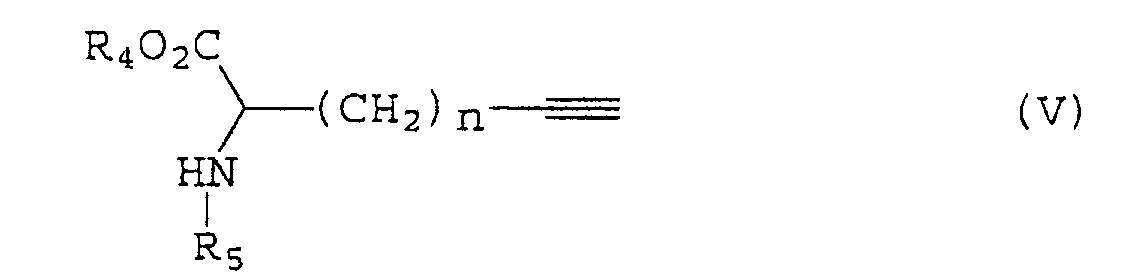
- the protective groups that may be present in the compounds obtained from the compounds of formulas (V), (VI), (III) and (IV) are then removed by conventional methods, for example the tert-butyl ester groups are converted to carboxylic acid by treatment with trifluoroacetic acid, benzyl groups are eliminated by hydrogenation or fluorenylmethoxycarbonyl groups are removed in the presence of secondary amine and other reactions are carried out by methods standards, for example by acylation reactions. Yes necessary, the conversion into physiologically acceptable by methods known to the human job.
- R 5 represents a hydrogen atom
- the functionalization of the amine group present in the compounds of formula (I), that is to say in particular when R 5 represents a CO 2 group R 6 , SO 2 R 6 , SO 2 NHR 6 or SO 2 NHCO 2 R 6 is carried out at the level of compounds of formula (V), (III) or (I) and preferably (III).
- R 5 CO 2 R 6 from the corresponding amine
- a compound of formula X'-CO 2 R 6 is reacted, X 'being a leaving group and especially O-succinic or a halogen.
- the compounds of formula (IV) are commercially available or easily accessible to those skilled in the art.
- the compounds of formula (VI) are also known or also easily accessible to those skilled in the art, in particular according to the methods described below in Preparation 3.
- the compounds of formula (V) may be prepared according to methods described in International Application WO97 / 40052 or may be accessible by analogy. This process is illustrated in the scheme described below, it being understood that the present invention is not restricted to these syntheses or starting materials. There is no major difficulty for those skilled in the art to provide for modifications of the syntheses described in our application for the preparation of other compounds of formula (I) according to the invention.
- the compounds of formula (I) are compounds having a pharmacological activity and can thus be used to as drugs in the treatment or prevention of bone diseases, tumor diseases as well as cardiovascular disorders.
- the compounds of formula (I) as well as their physiologically acceptable salts and their prodrugs can be administered to animals, preferably to mammals and in particular to humans as medicaments for therapeutic or prophylactic purposes. They may be administered as such or in admixture with one or more other compounds of formula (I) or in the form of a pharmaceutical preparation (pharmaceutical composition) which allows enteral or parenteral administration and which contains as active compound an effective dose of at least one compound of formula (I) and / or its physiologically acceptable salts and / or prodrugs as well as common and pharmaceutically inert carriers and / or additives.
- a pharmaceutical preparation pharmaceutical composition
- the subject of the present invention is therefore the compounds of formula (I) and / or their physiologically acceptable salts and / or their prodrugs as a medicine.
- the present invention also relates to the use of compounds of formula (I) and / or their salts physiologically acceptable and / or their prodrugs for the preparation medicines for the prevention or treatment of diseases mentioned above or below, for example for treatment or prevention of bone diseases.
- the present invention also relates to pharmaceutical compositions which allow enteral or parenteral administration and which contain, as active compound, an effective dose of at least one compound of formula (I) and / or its physiologically acceptable salts and / or its prodrugs and one or more conventional and pharmaceutically inert carriers and optionally one or more additives.
- the medicaments may be administered orally, for example in the form of pills, tablets, coated tablets, film-coated tablets, granules, soft capsules and capsules, solutions, syrups, emulsions, suspensions or mixtures of aerosol.
- the administration can, however, be carried out rectally, for example in the form of a suppository or parenterally, for example in the form of injectable solutions, infusions, microcapsules or implants or percutaneously, for example in the form of ointments, solutions, pigments or dyes or by other routes such as aerosol or nasal spray.
- the pharmaceutical preparations according to the invention are prepared according to methods known per se, organic or inorganic, pharmaceutically inert carriers being added to the compounds of formula (I) and / or their physiologically acceptable salts and / or their prodrugs.
- Suitable carriers for soft gelatin capsules or for suppositories are, for example, fats, waxes, semi-solid or liquid polyols, natural or modified oils etc.
- Suitable vehicles for the preparation of solutions, for example injectable solutions, emulsions or syrups are for example water, alcohols, glycerol, polyols, sucrose, invert sugars, glucose, vegetable oils, etc.
- Suitable carriers for microcapsules or implants are, for example, copolymers of glyoxilic acid and lactic acid.
- the pharmaceutical preparations normally contain from 0.5% to 90% by weight of compounds of formula (I) and / or their physiologically acceptable salts.
- the pharmaceutical preparations may contain additives such as, for example, diluents, disintegrants, binders, lubricants, wetting agents, stabilizers, emulsifiers, preservatives, sweeteners , flavoring agent dyes or flavoring agents, thickeners, buffering agents, and also solvents or solubilizers or agents for obtaining a retarding effect and also salts for modifying the osmotic pressure, coating agents or antioxidants. They may also contain two or more compounds of formula (I) and / or their physiologically acceptable salts and / or their prodrugs. In addition, in addition to at least one or more compounds of formula (I) and / or their physiologically acceptable salts and / or their prodrugs, they may contain at least one or more active ingredients that can be used therapeutically or prophylactically.
- the pharmaceutical compositions normally contain from 0.2 to 500 mg, and preferably from 1 to 200 mg of formula (I) and / or their physiologically acceptable salts and / or their prodrugs.
- the compounds of formula (I) are particularly antagonists of vitronectin receptors and are thus capable of, for example, of inhibiting the adhesion of osteoclasts to the bone surface and thus bone resorption by osteoclasts.
- the action of the compounds of formula (I) can be demonstrated for example in an assay in which the inhibition of vitronectin binding to cells which contain the vitronectin receptor is determined. Details on this test are given below.
- the compounds of formula (I) and their physiologically acceptable salts and their prodrugs are generally suitable for the treatment or the prevention of diseases related to the interactions between the vitronectin receptors and their ligands, in the processes cell-cell or cell-matrix interaction or that may be influenced by the inhibition of such interactions, to relieve or heal when inhibition of such interactions is desired.
- diseases related to the interactions between the vitronectin receptors and their ligands in the processes cell-cell or cell-matrix interaction or that may be influenced by the inhibition of such interactions, to relieve or heal when inhibition of such interactions is desired.
- such interaction plays an important role in bone resorption, angiogenesis or proliferation of smooth vascular muscle cells.
- the diseases of the bone whose treatment or prevention require the use of the compounds of formula (I), are in particular osteoporosis, hypercalcemia, osteopenia, for example caused by bone metastases, dental disorders by Examples include periodontitis, hyperparathyroidism, periarticular erosions in rheumatoid arthritis, and Paget's disease.
- the compounds of formula (I) can be used to relieve, prevent or treat bone disorders that are caused by glucocorticoid treatments, steroid or corticosteroid-mediated therapies or by deficiencies in the body. male or female sex hormones.
- All these disorders are characterized by bone loss, which is based on a lack of balance between bone formation and bone destruction and which can be favorably influenced by the inhibition of bone resorption by osteoclasts.
- the compounds of formula (I) and their physiologically acceptable salts and their prodrugs are used as inhibitors of tumor growth or cancer metastases, in the treatment of inflammatory disorders.
- cardiovascular disorders such as arteriosclerosis or restenosis, or the treatment or prevention of nephropathy or retinopathy such as for example diabetic retinopathy.
- the compounds according to the invention may also possess an activity with respect to other integrins which interact with their ligand via the tripeptide sequence RGD ( ⁇ v ⁇ 1 , ⁇ v ⁇ 5 , ⁇ IIb ⁇ 3 ), confer on them pharmacological properties that can be used to treat the pathologies associated with these receptors.
- This activity with regard to integrins thus makes the compounds of formula (I) usable in the prevention or the treatment of numerous diseases such as those mentioned above or in the review by Dermot Cox DN ⁇ P 8 (4) May 1995 , 197-205, the contents of which are incorporated in the present application.
- the doses may vary within wide limits and must be set according to the person to be treated. This depends, for example, on the compound used or the nature and severity of the disease to be treated and whether in severe or chronic conditions or if prophylactic treatment is used.
- the daily dose generally varies from 0.01 to 100 mg / kg and preferably from 0.1 to 50 mg / kg, in particular from 0.1 to 5 mg / kg. . For example, for a 75 kg adult, a daily dose ranging from 0.3 to 0.5 mg / kg can be considered.
- the daily dose ranges from approximately 0.01 to 100 mg / kg and preferably from 0.05 to 10 mg / kg.
- the daily dose can be divided, especially in the case of administration of a large amount of active ingredient, in several, for example 2, 3 or 4 parts. If necessary, depending on the individual behavior, it may be necessary to administer the different doses increasing or decreasing.
- the compounds of formula (I) as medicaments, it is also possible to envisage their use as a vehicle or carrier of active compounds in order to transport these active compounds in a specific manner to an action site (Drug targeting, see Targeted Drug Delivery, RC Juliano, Handbook of Experimental Pharmacology, Vol 100, Ed Born, GVR et al, Springer Verlag).
- the active compounds that can be transported are in particular those used for the treatment or prevention of the diseases mentioned above.
- the compounds of formula (I) and their salts can also be used as a diagnostic agent, by example for in vitro methods or as auxiliary in biochemical studies in which we want to block the receptor vitronectin or influence interactions cell-cells or cell-matrices. They can furthermore be used as an intermediary for the preparation other compounds, in particular other active agents, which are accessible from the compounds of formula (I), example by modification or introduction of radicals or functional groups.
- Products have been identified by mass spectrum (MS) infrared (IR) and / or NMR spectrum.
- the compounds which have been purified by chromatography using an eluent which contains, for example, acetic or trifluoroacetic acid, and who are then dried or in which during the last synthesis step, for example trifluoroacetic acid was used to eliminate a protective group tert-butyl, sometimes contain, depending on the way whose product has been dried, the acid from the eluent or of the last synthesis step and so lie partially or completely in the form of the salt of the acid used, for example in the form of an acetic acid salt or trifluoroacetic. They can also be more or less hydrated.
- PCC pyridine chlorochorate DMF
- DMF dimethylformamide
- THF tetrahydrofuran
- MeOH methanol
- TFA trifluoroacetic acid
- TEA triethylamine
- BTEAC benzyltriethylammonium chloride
- DMAC dimethylacetamide
- ep. (Shoulder) F strong); s (singlet); d (doublet); t (triplet); 1 (broad) m (multiplet).
- This compound is prepared according to the methods described by FG Schreiber et al. (Chem Lett (1975) 1257-1258, J. Chem Perkin Trans (1976) 1514-1518), by B. Loev et al. (Tet Lett (1974) 13, 1101-1103) or alternatively by electrophilic iodination of the corresponding non-iodinated derivative methyl 4-hydroxybenzenepropanoate by action of iodine in the presence of sodium hypochlorite then sodium hydroxide in methanol.
- Example 1 5- [3-Oxo-3 - [(1,4,5,6-tetrahydro-2-pyrimidinyl) amino) propyl] -.
- Alpha. [[(phenylmethoxy) carbonyl] amino] -2- benzofuranepropanoique
- Stage a Formation of 5- [3-oxo-3 - [(1,4,5,6-tetrahydro-2-pyrimidinyl) amino) propyl] -.
- Alpha. [[(phenylmethoxy) carbonyl] amino acylguanidine ] -2-Benzofuranpropanoate of 1,1-dimethylethyl
- Example 2 5- [3-oxo-3 - [(1,4,5,6-tetrahydro-2-pyrimidinyl) amino] propyl-.alpha. - [[(phenylmethoxy) carbonyl] amino] -2-benzofuranpropanoate 1-methylethyl.
- Example 5 5- [3-Oxo-3 - [(1,4,5,6-tetrahydro-2-pyrimidinyl) amino] propyl] - .alpha.- [[[(tricyclic acid) mono- (trifluoroacetate)) [3.3.1.1 3.7 ] dec-1-yl) methoxy] carbonyl] amino] -2-benzofuranpropanoic acid.
- Stage a .alpha .- [[[(tricyclo [3.3.1.1 3,7 ] dec-1-yl) methoxy] carbonyl] -amino] -5- (3-methoxy-3-oxopropyl) -2-benzofuranpropanoate 1,1-dimethylethyl
- Example 6 5- [3-oxo-3 - [(1,4,5,6-tetrahydro-2-pyrimidinyl) amino] -propyl] - .alpha .- [[[[[(tricyclo [2.3.1.1 3,7 ] dec-1-yl) methoxycarbonyl] amino] sulfonyl] amino] -2-benzofuranpropanoic acid
- Stage a Addition of chlorosulfonyl 5- (3-methoxy-3-oxopropyl) .alpha .- [[[[[[(tricyclo [2.3.1.1 3,7 ] -dec-1-yl) methoxy] carbonyl] amino] sulfonyl ] amino] -2-benzofuranpropanoate 1,1-dimethylethyl.
- step c is carried out starting from 220 mg of the tert-butyl ester obtained in the preceding stage and 1.5 ml of trifluoroacetic anhydride.
- Example 7 5- [3-Oxo-3 - [(1,4,5,6-tetrahydro-2-pyrimidinyl) amino] propyl] -.
- Alpha. [[[[phenyl] methoxy] carbonyl] amino] sulfonyl] amino] -2-benzofuranpropanoique
- Example 8 Mono (trifluoroacetate) of alpha- [[[(phenylmethyl) amino] sulfonyl] amino] -5- [3-oxo-3 - [(1,4,5,6- tetrahydro)] 2-pyrimidinyl) amino] propyl] -2-benzofuranpropanoique
- step c The procedure is as in Example 5, step c, starting with 306 mg of the tert-butyl ester obtained in the preceding stage and 2 ml of trifluoroacetic acid. 250 mg of expected product is obtained.
- Stage a .alpha .- [[4- (1,1-dimethylethyl) phenylsulfonyl] amino] -5- (3-methoxy-3-oxopropyl) -2-benzofuranpropanoate 1,1-dimethylethyl.
- Example 11 5- [3-Oxo-3 - [(1,4,5,6-tetrahydro-2-pyrimidinyl) amino] propyl] -. Alpha .- [propylsulfonyl) amino] -2-benzofuranpropanoic acid .
- Example 12 Acid.alpha .- [methylsulfonyl) amino] -5- [3-oxo-3 - [(1,4,5,6-tetrahydro-2-pyrimidinyl) amino] propyl] -2-benzofuranpropanoic acid.
- Example 13 Acid alpha .- [(1-Naphthalenylsulfonyl) amino] -5- [3-oxo-3 - [(1,4,5,6-tetrahydro-2-pyrimidinyl) amino] propyl] -2- benzofuranpropanoic acid.
- Example 14 ⁇ - [(1-naphthalenylsulfonyl) amino] -5- [3-oxo-3 - [(1,4,5,6-tetrahydro-2-pyrimidinyl) amino] propyl] -2-benzofuranpropanoate 1-methylethyl.
- the wells are washed again six times, and then incubated for 2 hours at room temperature with a gentle stirring of 125 rpm, in the presence of 100 ⁇ l of anti-peroxidase-coupled receptor antibody (the antibody 4B12-HRP is diluted in incubation buffer (50 mM TRIS pH 7.4, 0.5% BSA, 0.05% Tween 20, 1 mM MnCl 2 , 50 ⁇ M CaCl 2 , 50 ⁇ M MgCl 2 , 100 mM NaCl). adapt according to the receiver lot).
- incubation buffer 50 mM TRIS pH 7.4, 0.5% BSA, 0.05% Tween 20, 1 mM MnCl 2 , 50 ⁇ M CaCl 2 , 50 ⁇ M MgCl 2 , 100 mM NaCl.
- TBM Microwell Peroxidase Substrate Kirkegaard System Ref cat 50-76-00
- This kit contains a vial A of substrate (3,3 ', 5,5'-tetramethylbenzidine at 0,4 g / l) and a vial B (H 2 O 2 at 0,02% in citrate / citric acid buffer).
- a volume of A is mixed with a volume of B, then the reaction mixture is distributed at a rate of 100 .mu.l / well.
- the enzymatic reaction develops between 6 to 10 'for Kistrin / ⁇ V ⁇ 3 and its evolution is stopped by the addition of 100 ⁇ l of 1M phosphoric acid.
- the optical density is determined at 450 nm.
- Bmin Minimum binding in the presence of the highest concentration of product.
- Example K / VnR IC50 ( ⁇ M) 1 0,009 5 0,045 7 0.01 6 0,065 8 0.0087 13 0.0055 14 3.7 9 0,015 10 0.0091 11 0.0057 12 0.0067
Landscapes
- Health & Medical Sciences (AREA)
- Chemical & Material Sciences (AREA)
- Organic Chemistry (AREA)
- Life Sciences & Earth Sciences (AREA)
- General Health & Medical Sciences (AREA)
- Veterinary Medicine (AREA)
- Public Health (AREA)
- Animal Behavior & Ethology (AREA)
- Chemical Kinetics & Catalysis (AREA)
- General Chemical & Material Sciences (AREA)
- Medicinal Chemistry (AREA)
- Nuclear Medicine, Radiotherapy & Molecular Imaging (AREA)
- Pharmacology & Pharmacy (AREA)
- Bioinformatics & Cheminformatics (AREA)
- Engineering & Computer Science (AREA)
- Physical Education & Sports Medicine (AREA)
- Orthopedic Medicine & Surgery (AREA)
- Heart & Thoracic Surgery (AREA)
- Cardiology (AREA)
- Oncology (AREA)
- Urology & Nephrology (AREA)
- Rheumatology (AREA)
- Ophthalmology & Optometry (AREA)
- Communicable Diseases (AREA)
- Vascular Medicine (AREA)
- Pharmaceuticals Containing Other Organic And Inorganic Compounds (AREA)
- Furan Compounds (AREA)
- Plural Heterocyclic Compounds (AREA)
Claims (19)
- Verbindung der Formel (I)in der

entweder R1 und R2 unabhängig voneinander ein Wasserstoffatom oder eine Gruppe Alkyl mit 1 bis 6 Kohlenstoffatomen darstellen, nicht substituiert oder substituiert durch R3,
oder R1 und R2 bilden zusammen einen gesättigten oder ungesättigten, bivalenten Rest Alkylen mit 2 bis 9 Kohlenstoffatomen, nicht substituiert oder substituiert durch einen oder mehrere Reste, ausgewählt unter Halogen, (C1-C6)-Alkyl, (C1-C6)-Alkoxy, (C6-C14)-Aryl, (C6-C14) -Aryl- (C1-C6)-alkyl, (C5-C14)-Heteroaryl, (C5-C14)-Heteroaryl- (C1-C6)-alkyl, (C3-C12)-Cycloalkyl, (C3-C12)-Cycloalkyl-(C1-C6)-alkyl und Oxo, wobei der bivalente Rest Alkylen im Bereich der Kohlenstoff-Kohlenstoff-Bindung mit einem Carbocyclus oder einem Heterocyclus mit 5 bis 7 Ringgliedern und 1 oder 2 Stickstoffatomen, gesättigt oder ungesättigt und nicht substituiert oder substituiert durch 1 oder 2 Reste R3, verbunden sein kann;
R3 eine Gruppe (C1-C8)-Alkyl, (C1-C8)-Alkoxy, (C6-C14)-Aryl, (C6-C14)]-Aryl-(C1-C4)-alkyl, (C5-C14)-Heteroaryl, (C5-C14)-Heteroaryl-(C1-C4)-alkyl, Halogen, Trifluormethyl, Hydroxyl, Nitro, Amino,
NH- [(C1-C4)-Alkyl], N[(C1-C4)-Alkyl]2, NHCO-(C1-C4)-Alkyl oder CO- (C1-C4)-Alkyl bedeutet;
entweder R4 ein Wasserstoffatom oder eine Gruppe (C1-C6)-Alkyl-CO-O-(C1-C4)-alkyl oder (C1-C6)-Alkyl darstellt, nicht substituiert oder substituiert durch einen Rest, ausgewählt unter Hydroxyl, (C1-C4)-Alkoxy, (C1-C4)-Alkyl-SO2, NR9R9' und N+R9R9'R9"Q-, worin R9, R9' und R9", unabhängig voneinander, Wasserstoff, eine Gruppe (C1-C6)-Alkyl, (C6-C14)-Aryl, (C6-C14)-Aryl-(C1-C4)-alkyl, (C5-C14)-Heteroaryl, (C5-C14)-Heteroaryl-(C1-C4)-alkyl bedeuten und Q- ein physiologisch akzeptables Anion ist,
oder einen der folgenden Reste darstellt: wobei die punktierten Linien die Position der Bindung darstellen; R5 ein Wasserstoffatom oder eine Gruppe bedeutet, ausgewählt unter COR6, CO2R6, SO2R6, SO2NHR6, SO2NHCOR6, SO2NHCO2R6, CONH2 und CONHR6, worin R6 (C1-C8)-Alkyl, (C6-C14)-Aryl, (C6-C14)-Aryl- (C1-C6)-alkyl, (C5-C14)-Heteroaryl oder (C5-C14)-Heteroaryl-(C1-C6)-alkyl, (C3-C20)-(Mono-, Bi- oder Tri-)-cycloalkyl, (C3-C20)-(Mono-, Bi- oder Tri-)-cycloalkyl-(C1-C6)-alkyl darstellt, wobei der Rest Aryl oder Heteroaryl nicht substituiert oder substituiert ist durch 1, 2 oder 3 Reste R3;
R7 ein Wasserstoffatom, (C1-C6)-Alkyl-O-CO-, Hydroxyl, (C1-C6)-Alkyl-O-CO-O- oder Nitro darstellt;
m gleich 0, 1, 2 oder 3 ist;
n eine ganze Zahl von 1, 2 oder 3 ist;
wobei die genannten Reste Alkyl mono- oder polyungesättigt, die genannten Reste Cycloalkyl mono-, bi- oder tricyclisch, nicht substituiert oder substituiert durch ein oder mehrere (C1-C4)-Alkyl oder bei den Bi- und Tricycloalkylen durch ein oder mehrere Oxo, sein können, die genannten Reste Aryl oder Heteroaryl nicht substituiert oder substituiert durch ein oder mehrere gleiche oder verschiedene Reste, ausgewählt unter (C1-C8)-Alkyl, (C1-C8)-Alkoxy, Halogen, Nitro, Amino, Trifluormethyl, Hydroxyl, Methylendioxy, Cyano, Hydroxycarbonyl, Aminocarbonyl, (C1-C4)-Alkoxycarbonyl, Phenyl, Phenoxy, Benzyl und Benzyloxy, sein können,
wobei die genannten Verbindungen der Formel (I) in allen ihren möglichen stereoisomeren Formen, allein oder in Mischung in irgendeinem Verhältnis, vorliegen können, und die an das Phenyl angrenzende Gruppe Acylguanidin sich in Position para oder meta vom Sauerstoff befindet,
sowie ihre physiologisch akzeptablen Salze und ihre Vormedikamente (Prodrugs). - Verbindung der Formel (I) wie in Anspruch 1 definiert, die der Formel (I')entspricht, in der

R1 und R2 ein Wasserstoffatom darstellen oder zusammen einen gesättigten oder ungesättigten, bivalenten Rest Alkylen mit 2 bis 5 Kohlenstoffatomen bilden, der nicht substituiert oder substituiert ist durch einen oder zwei, gleiche oder verschiedene Reste, ausgewählt unter Halogen, (C1-C6)-Alkyl, (C1-C6)-Alkoxy, (C6-C14)-Aryl, (C6-C14) -Aryl- (C1-C6)-alkyl, (C5-C14)-Heteroaryl, (C5-C14)-Heteroaryl-(C1-C6)-alkyl, (C3-C12)-Cycloalkyl und (C3-C12)-Cycloalkyl-(C1-C6)-alkyl und Oxo, wobei der Rest Alkylen im Bereich der Kohlenstoff-Kohlenstoff-Bindung mit einem Carbocyclus oder einem Heterocyclus mit 5 bis 7 Ringgliedern und 1 oder 2 Stickstoffatomen, gesättigt oder ungesättigt und nicht substituiert oder substituiert durch R3, verbunden sein kann;
R3 eine Gruppe Alkyl oder Alkoxy mit 1 bis 6 Kohlenstoffatomen bedeutet;
R4 ein Wasserstoffatom oder eine Gruppe Alkyl mit 1 bis 6 Kohlenstoffatomen darstellt, nicht substituiert oder substituiert durch eine Gruppe, ausgewählt unter (C1-C4)-Alkoxy, (C1-C4)-Alkyl-SO2 und NR9R9', worin R9 und R9', unabhängig voneinander, ein Wasserstoffatom oder (C1-C4)-Alkyl bedeuten;
R5 ein Wasserstoffatom, eine Gruppe CO2R6, SO2R6, SO2NHR6 oder SO2NHCO2R6 bedeutet, worin R6 einen Rest (C1-C8)-Alkyl oder Naphthyl, nicht substituiert oder substituiert durch R3, einen Rest Cycloalkyl mit 3 bis 12 Kohlenstoffatomen oder (C3-C12)-Cycloalkyl-(C1-C6)-alkyl oder den Rest der Formel (II)darstellt, worin die Reste R3 gleich oder verschieden sein können und sich in irgendeiner Position des Restes Phenyl befinden können,
q und q' gleich 0 oder 1 sind;
m eine ganze Zahl von 1, 2 oder 3 ist;
n eine ganze Zahl von 1, 2 oder 3 ist;
wobei die genannten Reste Alkyl mono- oder polyungesättigt, die genannten Reste Cycloalkyl mono-, bi- oder tricyclisch, nicht substituiert oder substituiert durch ein oder mehrere (C1-C4)-Alkyl oder bei den Bi- und Tricycloalkylen durch ein oder mehrere Oxo, sein können, die genannten Reste Aryl oder Heteroaryl nicht substituiert oder substituiert durch ein oder mehrere gleiche oder verschiedene Reste, ausgewählt unter (C1-C8)-Alkyl, (C1-C8)-Alkoxy, Halogen, Nitro, Amino, Trifluormethyl, Hydroxyl, Methylendioxy, Cyano, Hydroxycarbonyl, Aminocarbonyl, (C1-C4)-Alkoxycarbonyl, Phenyl, Phenoxy, Benzyl und Benzyloxy, sein können,
wobei die genannten Verbindungen der Formel (I) in allen ihren möglichen stereoisomeren Formen, allein oder in Mischung in irgendeinem Verhältnis, vorliegen können, sowie ihre physiologisch akzeptablen Salze und ihre Prodrugs. - Verbindung der Formel (I') wie in Anspruch 2 definiert, in der R1 und R2 ein Wasserstoffatom darstellen oder zusammen einen gesättigten oder ungesättigten, bivalenten Rest Alkylen mit 2 bis 4 Kohlenstoffatomen bilden, der nicht substituiert oder substituiert ist durch einen oder zwei, gleiche oder verschiedene Reste, ausgewählt unter Halogen, (C1-C6)-Alkyl, (C1-C6)-Alkoxy, (C6-C14)-Aryl, (C6-C14) -Aryl-(C1-C6)-alkyl, (C5-C14)-Heteroaryl, (C5-C14)-Heteroaryl-(C1-C6)-alkyl, (C3-C12)-Cycloalkyl und (C3-C12)-Cycloalkyl-(C1-C6)-alkyl und Oxo, wobei der Rest Alkylen im Bereich der Kohlenstoff-Kohlenstoff-Bindung mit einem Carbocyclus oder einem Heterocyclus mit 5 bis 7 Ringgliedern und 1 oder 2 Stickstoffatomen, gesättigt oder ungesättigt und nicht substituiert oder substituiert durch R3, verbunden sein kann;
R3 eine Gruppe Alkyl oder Alkoxy mit 1 bis 6 Kohlenstoffatomen bedeutet;
R4 ein Wasserstoffatom oder eine Gruppe Alkyl mit 1 bis 6 Kohlenstoffatomen darstellt,
R5 ein Wasserstoffatom, eine Gruppe CO2R6, SO2R6, SO2NHR6 oder SO2NHCO2R6 bedeutet, worin R6 einen Rest (C1-C8)-Alkyl oder Naphthyl, nicht substituiert oder substituiert durch R3, einen Rest Cycloalkyl mit 3 bis 12 Kohlenstoffatomen oder (C3-C12)-Cycloalkyl-(C1-C6)-alkyl oder den Rest der Formel (II)darstellt, worin die Reste R3 gleich oder verschieden sein können und sich in irgendeiner Position des Restes Phenyl befinden können,
q und q' gleich 0 oder 1 sind;
m eine ganze Zahl von 1, 2 oder 3 ist;
n eine ganze Zahl von 1, 2 oder 3 ist;
wobei die genannten Reste Alkyl mono- oder polyungesättigt, die genannten Reste Cycloalkyl mono-, bi- oder tricyclisch, nicht substituiert oder substituiert durch ein oder mehrere (C1-C4)-Alkyl oder bei den Bi- und Tricycloalkylen durch ein oder mehrere Oxo, sein können, die genannten Reste Aryl oder Heteroaryl nicht substituiert oder substituiert durch ein oder mehrere gleiche oder verschiedene Reste, ausgewählt unter (C1-C8)-Alkyl, (C1-C8)-Alkoxy, Halogen, Nitro, Amino, Trifluormethyl, Hydroxyl, Methylendioxy, Cyano, Hydroxycarbonyl, Aminocarbonyl, (C1-C4)-Alkoxycarbonyl, Phenyl, Phenoxy, Benzyl und Benzyloxy, sein können,
wobei die genannten Verbindungen der Formel (I) in allen ihren möglichen stereoisomeren Formen, allein oder in Mischung in irgendeinem Verhältnis, vorliegen können, sowie ihre physiologisch akzeptablen Salze und ihre Prodrugs. - Verbindung der Formel (I') wie in Anspruch 2 oder 3 definiert, in der R1 und R2 ein Wasserstoffatom darstellen oder zusammen einen gesättigten oder ungesättigten, bivalenten Rest Alkylen mit 2 bis 3 Kohlenstoffatomen bilden, der nicht substituiert oder substituiert ist durch einen oder zwei, gleiche oder verschiedene Reste, ausgewählt unter Halogen, (C1-C6)-Alkyl, (C1-C6)-Alkoxy, (C6-C14)-Aryl, (C6-C14)-Aryl-(C1-C6)-alkyl, (C5-C14)-Heteroaryl, (C5-C14)-Heteroaryl-(C1-C6)-alkyl, (C3-C12)-Cycloalkyl und (C3-C12)-Cycloalkyl-(C1-C6)-alkyl und Oxo, wobei der Rest Alkylen im Bereich der Kohlenstoff-Kohlenstoff-Bindung mit einem Carbocyclus oder einem Heterocyclus mit 5 bis 7 Ringgliedern und 1 oder 2 Stickstoffatomen, gesättigt oder ungesättigt und nicht substituiert oder substituiert durch R3, verbunden sein kann;
R3 eine Gruppe Alkyl oder Alkoxy mit 1 bis 6 Kohlenstoffatomen bedeutet;
R4 ein Wasserstoffatom oder eine Gruppe Alkyl mit 1 bis 6 Kohlenstoffatomen darstellt,
R5 ein Wasserstoffatom, eine Gruppe CO2R6, SO2R6, SO2NHR6 oder SO2NHCO2R6 bedeutet, worin R6 einen Rest (C1-C8)-Alkyl oder Naphthyl, nicht substituiert oder substituiert durch R3, einen Rest Cycloalkyl mit 3 bis 12 Kohlenstoffatomen oder (C3-C12)-Oycloalkyl-(C1-C6)-alkyl oder den Rest der Formel (II)darstellt, worin die Reste R3 gleich oder verschieden sein können und sich in irgendeiner Position des Restes Phenyl befinden können,
q und q' gleich 0 oder 1 sind;
m eine ganze Zahl von 2 ist;
n eine ganze Zahl von 1 ist;
wobei die genannten Reste Alkyl mono- oder polyungesättigt, die genannten Reste Cycloalkyl mono-, bi- oder tricyclisch, nicht substituiert oder substituiert durch ein oder mehrere (C1-C4)-Alkyl oder bei den Bi- und Tricycloalkylen durch ein oder mehrere Oxo, sein können, die genannten Reste Aryl oder Heteroaryl nicht substituiert oder substituiert durch ein oder mehrere gleiche oder verschiedene Reste, ausgewählt unter (C1-C8)-Alkyl, (C1-C8)-Alkoxy, Halogen, Nitro, Amino, Trifluormethyl, Hydroxyl, Methylendioxy, Cyano, Hydroxycarbonyl, Aminocarbonyl, (C1-C4)-Alkoxycarbonyl, Phenyl, Phenoxy, Benzyl und Benzyloxy, sein können,
wobei die genannten Verbindungen der Formel (I) in allen ihren möglichen stereoisomeren Formen, allein oder in Mischung in irgendeinem Verhältnis, vorliegen können, sowie ihre physiologisch akzeptablen Salze und ihre Prodrugs. - Verbindung der Formeln (I) oder (I') wie in irgendeinem der Ansprüche 1 bis 4 definiert, worin R5 ein Rest CO2R6 ist und R6 -CH2Ph, -C(CH3)3 und CH2-Adamantyl darstellt, wobei die genannten Verbindungen der Formel (I) in allen ihren möglichen stereoisomeren Formen, allein oder in Mischung in irgendeinem Verhältnis, vorliegen können, sowie ihre physiologisch akzeptablen Salze und ihre Prodrugs.
- Verbindung der Formeln (I) oder (I') wie in irgendeinem der Ansprüche 1 bis 4 definiert, worin R5 ein Rest SO2R6 ist und R6 einen Rest Alkyl mit 1 bis 6 Kohlenstoffatomen, Naphthyl und Phenyl darstellt, substituiert durch einen oder mehrere Reste Alkyl mit 1 bis 6 Kohlenstoffatomen oder die Gruppe CF3, wobei die genannter Verbindungen der Formel (I) in allen ihren möglichen stereoisomeren Formen, allein oder in Mischung in irgendeinem Verhältnis, vorliegen können, sowie ihre physiologisch akzeptablen Salze und ihre Prodrugs.
- Verbindung der Formeln (I) oder (I') wie in irgendeinem der Ansprüche 1 bis 4 definiert, worin R5 ein Rest SO2NHR6 oder SO2NHCO2R6 ist und R6 -CH2Ph, -C(CH3)3 und CH2-Adamantyl darstellt,
wobei die genannten Verbindungen der Formel (I) in allen ihren möglichen stereoisomeren Formen, allein oder in Mischung in irgendeinem Verhältnis, vorliegen können, sowie ihre physiologisch akzeptablen Salze und ihre Prodrugs. - Verbindung der Formeln (I) oder (I') wie in irgendeinem der Ansprüche 1 bis 7 definiert, mit den folgenden Namen:sowie ihre physiologisch akzeptablen Salze und ihre Prodrugs.5-{3-Oxo-3-[(1,4,5,6-tetrahydro-2-pyrimidinyl)-amino]-propyl}-.alpha.-{[(phenylmethoxy)-carbonyl]-amino}-2-benzofuran-propansäure,5-{3-Oxo-3-[(1,4,5,6-tetrahydro-2-pyrimidinyl)-amino]-propyl}-.alpha.-{[(phenylmethoxy)-carbonyl]-amino}-2-benzofuran-propansäure-1-methylethylester,5-{3-Oxo-3-[(1,4,5,6-tetrahydro-2-pyrimidinyl)-amino]-propyl}-.alpha.-{[(phenylmethoxy)-carbonyl]-amino}-2-benzofuran-propansäure-ethylester,5-{3-Oxo-3-[(1,4,5,6-tetrahydro-2-pyrimidinyl)-amino]-propyl}-.alpha.-{[((tricyclo[3.3.1.1.3,7]-dec-1-yl)methoxy)-carbonyl]-amino}-2-benzofuran-propansäure,5-{3-Oxo-3-[(1,4,5,6-tetrahydro-2-pyrimidinyl)-amino]-propyl}-.alpha.-{{[[((tricyclo[2.3.1.1.3,7]-dec-1-yl)methoxy)-carbonyl]-amino]-sulfonyl}-amino}-2-benzofuran-propansäure,5-{3-Oxo-3-[(1,4,5,6-tetrahydro-2-pyrimidinyl)-amino]-propyl}-.alpha.-{[[((phenyl)-methoxy)-carbonyl]-amino]-sulfonyl}-2-benzofuran-propansäure,.alpha.-{[((Phenylmethyl)-amino)-sulfonyl]-amino}-5-{3-oxo-3-[(1,4,5,6-tetrahydro-2-pyrimidinyl)-amino]-propyl}-2-benzofuranpropansäure,.alpha.-{[(4-(1,1-Dimethylethyl)-phenyl)-sulfonyl]-amino}-5-{3-oxo-3-[(1,4,5,6-tetrahydro-2-pyrimidinyl)-amino]-propyl}-2-benzofuran-propansäure,.alpha.-{[(4-(1-Methylethyl)-phenyl)-sulfonyl]-amino}-5-{3-oxo-3-[(1,4,5,6-tetrahydro-2-pyrimidinyl)-amino]-propyl}-2-benzofuran-propansäure,5-{3-Oxo-3-[(1,4,5,6-tetrahydro-2-pyrimidinyl)-amino]-propyl}-.alpha.-[(propyl-sulfonyl)-amino]-2-benzofuran-propansäure,.alpha.-[(Methyl-sulfonyl)-amino]-5-{3-oxo-3-[(1,4,5,6-tetrahydro-2-pyrimidinyl)-amino]-propyl}-2-benzofuran-propansäure,.alpha.-[(1-Naphthalin-sulfonyl)-amino]-5-{3-oxo-3-[(1,4,5,6-tetrahydro-2-pyrimidinyl)-amino]-propyl}-2-benzofuran-propansäure,.alpha.-[(1-Naphthalin-sulfonyl)-amino]-5-{3-oxo-3-[(1,4,5,6-tetrahydro-2-pyrimidinyl)-amino]-propyl}-2-benzofuran-propansäure-1-methylethylester,
- Verfahren zur Herstellung der Verbindungen der Formel (I) wie in irgendeinem der Ansprüche 1 bis 8 definiert, das die Kupplung von zwei oder mehreren Fragmenten umfaßt, die durch Retrosynthese der Verbindungen der Formel (I) abgeleitet werden können.
- Verfahren nach Anspruch 9, bei dem man die folgenden Stufen durchführt:a) Bildung einer Carbonsäure oder eines Carbonsäure-Derivates der Formel (III)in der R4, R5, n und m wie in Anspruch 1 bei der Formel (I) definiert sind und X eine durch ein Nukleophil substituierbare Abgangsgruppe darstellt, durch Reaktion des Aminoesters der Formel (V)
 in der R4, R5 und n wie in Anspruch 1 bei der Formel (I) definiert sind, in Anwesenheit eines Katalysators und im basischen Medium mit einer Carbonsäure oder einem Carbonsäure-Derivat der Formel (VI)
 in der m und X wie weiter oben definiert sind, wobei die eventuellen funktionellen Gruppen, die in Form von Vorläufern oder in geschützter Form vorliegen, anschließend in Gruppen umgewandelt werden, die in den Verbindungen der Formel (I) anwesend sind, und
 b) Kupplung der Carbonsäure oder eines Carbonsäure-Derivates der Formel (III) wie weiter oben definiert mit einem Guanidin oder einem Guanidin-Derivat der Formel (IV)in der R1, R2 und R7 wie in Anspruch 1 bei der Formel (I) definiert sind, wobei die eventuellen funktionellen Gruppen, die in Form von Vorläufern oder in geschützter Form vorliegen, anschließend in Gruppen umgewandelt werden, die in den Verbindungen der Formel (I) anwesend sind.
- Als Arzneimittel eine Verbindung der Formel (I) und/oder ihre physiologisch akzeptablen Salze und/oder ihre Prodrugs wie in irgendeinem der Ansprüche 1 bis 8 definiert.
- Pharmazeutische Zusammensetzung, umfassend mindestens eine Verbindung der Formel (I) wie in irgendeinem der Ansprüche 1 bis 8 definiert und/oder ihre physiologisch akzeptablen Salze und/oder ihre Prodrugs sowie einen oder mehrere übliche, inerte pharmazeutische Träger und gegebenenfalls einen oder mehrere Zusatzstoffe.
- Als Arzneimittel mit einer antagonistischen Aktivität des Rezeptors von Vitronectin eine Verbindung der Formel (I) und/oder ihre physiologisch akzeptablen Salze und/oder ihre Prodrugs wie in irgendeinem der Ansprüche 1 bis 8 definiert.
- Als Arzneimittel mit einer Inhibitor-Aktivität der Knochenresorption oder zur Behandlung oder Vorbeugung der Osteoporose eine Verbindung der Formel (I) und/oder ihre physiologisch akzeptablen Salze und/oder ihre Prodrugs wie in irgendeinem der Ansprüche 1 bis 8 definiert.
- Als Arzneimittel mit einer Inhibitor-Aktivität für das tumorale Wachstum oder die kanzerogenen Metastasen eine Verbindung der Formel (I) und/oder ihre physiologisch akzeptablen Salze und/oder ihre Prodrugs wie in irgendeinem der Ansprüche 1 bis 8 definiert.
- Als Arzneimittel mit einer anti-inflammatorischen Aktivität oder zur Behandlung oder Vorbeugung von cardiovasculären Störungen, Restenosen, Arteriosklerose, Nephropathien oder Retinopathien eine Verbindung der Formel (I) und/oder ihre physiologisch akzeptablen Salze und/oder ihre Prodrugs wie in irgendeinem der Ansprüche 1 bis 8 definiert.
- Verwendung der Verbindungen der Formel (I) und/oder ihrer physiologisch akzeptablen Salze und/oder ihrer Prodrugs wie in irgendeinem der Ansprüche 1 bis 8 definiert, für die Herstellung von Arzneimitteln, die für die Vorbeugung oder die Behandlung der Osteoporose vorgesehen sind.
- Verwendung der Verbindungen der Formel (I) und/oder ihrer physiologisch akzeptablen Salze und/oder ihrer Prodrugs wie in irgendeinem der Ansprüche 1 bis 8 definiert, für die Herstellung von Arzneimitteln, die für die Inhibierung des tumoralen Wachstums oder der kanzerogenen Metastasen vorgesehen sind.
- Verwendung der Verbindungen der Formel (I) und/oder ihrer physiologisch akzeptablen Salze und/oder ihrer Prodrugs wie in irgendeinem der Ansprüche 1 bis 8 definiert, für die Herstellung von Arzneimitteln, die für die Vorbeugung oder Behandlung von cardiovasculären Störungen, Restenosen, Arteriosklerose, Nephropathien oder Retinopathien vorgesehen sind.
Applications Claiming Priority (3)
| Application Number | Priority Date | Filing Date | Title |
|---|---|---|---|
| FR9814779A FR2786184B1 (fr) | 1998-11-24 | 1998-11-24 | Nouveaux derives du benzofurane, leur procede de preparation, leur application comme medicaments et les compositions pharmaceutiques les renfermant |
| FR9814779 | 1998-11-24 | ||
| PCT/FR1999/002879 WO2000031070A1 (fr) | 1998-11-24 | 1999-11-23 | Nouveaux derives du benzofurane, leur procede de preparation, leur application comme medicaments et les compositions pharmaceutiques les renfermant |
Publications (2)
| Publication Number | Publication Date |
|---|---|
| EP1133491A1 EP1133491A1 (de) | 2001-09-19 |
| EP1133491B1 true EP1133491B1 (de) | 2003-02-19 |
Family
ID=9533118
Family Applications (1)
| Application Number | Title | Priority Date | Filing Date |
|---|---|---|---|
| EP99956121A Expired - Lifetime EP1133491B1 (de) | 1998-11-24 | 1999-11-23 | Benzofuranderivate, verfahren zu ihrer herstellung, ihre anwendung als medikament und sie enthaltende pharmazeutische zubereitungen |
Country Status (8)
| Country | Link |
|---|---|
| US (2) | US6458801B1 (de) |
| EP (1) | EP1133491B1 (de) |
| JP (1) | JP4522586B2 (de) |
| AT (1) | ATE232859T1 (de) |
| DE (1) | DE69905490T2 (de) |
| ES (1) | ES2192870T3 (de) |
| FR (1) | FR2786184B1 (de) |
| WO (1) | WO2000031070A1 (de) |
Families Citing this family (3)
| Publication number | Priority date | Publication date | Assignee | Title |
|---|---|---|---|---|
| EP1176145A1 (de) * | 2000-07-28 | 2002-01-30 | Aventis Pharma Deutschland GmbH | Neue Guanidin-Derivate als Inhibitoren der Zelladhäsion |
| US6653346B1 (en) * | 2002-02-07 | 2003-11-25 | Galileo Pharmaceuticals, Inc. | Cytoprotective benzofuran derivatives |
| US7078541B2 (en) * | 2002-02-07 | 2006-07-18 | Galileo Pharmaceuticals, Inc. | Benzofuran derivatives |
Family Cites Families (8)
| Publication number | Priority date | Publication date | Assignee | Title |
|---|---|---|---|---|
| WO1994008962A1 (en) * | 1992-10-14 | 1994-04-28 | Merck & Co., Inc. | Fibrinogen receptor antagonists |
| GB9408577D0 (en) * | 1994-04-29 | 1994-06-22 | Fujisawa Pharmaceutical Co | New compound |
| CA2190870A1 (en) * | 1994-05-27 | 1995-12-07 | George D. Hartman | Compounds for inhibiting osteoclast-mediated bone resorption |
| GB9522007D0 (en) * | 1995-10-27 | 1996-01-03 | Fujisawa Pharmaceutical Co | New compound |
| US5955495A (en) * | 1996-05-03 | 1999-09-21 | Hoffmann-La Roche Inc. | Method of treating diseases of the CNS |
| GB9614347D0 (en) * | 1996-07-09 | 1996-09-04 | Smithkline Beecham Spa | Novel compounds |
| DE19629816A1 (de) * | 1996-07-24 | 1998-01-29 | Hoechst Ag | Neue Cycloalkyl-Derivate als Inhibitoren der Knochenresorption und Vitronectinrezeptor-Antagonisten |
| US5981514A (en) * | 1998-02-12 | 1999-11-09 | Somberg; John C. | (N-alkyl-N-hydroxymethylamino)alkoxybenzoylbenzofurans and the phosphate esters thereof |
-
1998
- 1998-11-24 FR FR9814779A patent/FR2786184B1/fr not_active Expired - Lifetime
-
1999
- 1999-11-23 EP EP99956121A patent/EP1133491B1/de not_active Expired - Lifetime
- 1999-11-23 JP JP2000583898A patent/JP4522586B2/ja not_active Expired - Lifetime
- 1999-11-23 ES ES99956121T patent/ES2192870T3/es not_active Expired - Lifetime
- 1999-11-23 US US09/856,542 patent/US6458801B1/en not_active Expired - Lifetime
- 1999-11-23 DE DE69905490T patent/DE69905490T2/de not_active Expired - Lifetime
- 1999-11-23 WO PCT/FR1999/002879 patent/WO2000031070A1/fr not_active Ceased
- 1999-11-23 AT AT99956121T patent/ATE232859T1/de not_active IP Right Cessation
-
2002
- 2002-06-26 US US10/180,253 patent/US6586442B2/en not_active Expired - Fee Related
Also Published As
| Publication number | Publication date |
|---|---|
| FR2786184B1 (fr) | 2002-09-20 |
| ATE232859T1 (de) | 2003-03-15 |
| US20020187976A1 (en) | 2002-12-12 |
| US6586442B2 (en) | 2003-07-01 |
| DE69905490T2 (de) | 2003-07-24 |
| JP2002530403A (ja) | 2002-09-17 |
| FR2786184A1 (fr) | 2000-05-26 |
| DE69905490D1 (de) | 2003-03-27 |
| WO2000031070A1 (fr) | 2000-06-02 |
| US6458801B1 (en) | 2002-10-01 |
| JP4522586B2 (ja) | 2010-08-11 |
| ES2192870T3 (es) | 2003-10-16 |
| EP1133491A1 (de) | 2001-09-19 |
Similar Documents
| Publication | Publication Date | Title |
|---|---|---|
| SK9032000A3 (en) | Novel acylguanidine derivatives as inhibitors of bone resorption and as vitronectin receptor antagonists | |
| EA003102B1 (ru) | Сульфонамидные производные в качестве ингибиторов рассасывания костной ткани и ингибиторов адгезии клеток, способ их получения, применение и фармацевтическая композиция | |
| EP2368891B1 (de) | Pyrimidin Derivate als Antagonisten von Vitronectin Rezeptoren | |
| EP1133478B1 (de) | Acylguanidinen derivate, verfahren zu deren herstellung, deren verwendung als heilmittel und diese enthaltende pharmazeutische zusammenstellungen | |
| EP1282621B1 (de) | Vitronektin rezeptor antagonisten | |
| EP2070914B1 (de) | Neue antagonistische Derivate des Vitronektinrezeptors, ihr Herstellungsverfahren, ihre Anwendung als Arzneimittel und die pharmazeutischen Zusammensetzungen, die sie enthalten | |
| EP1133491A1 (de) | Benzofuranderivate, verfahren zu ihrer herstellung, ihre anwendung als medikament und sie enthaltende pharmazeutische zubereitungen | |
| JP2003532732A5 (de) | ||
| WO2000031044A1 (fr) | Derives d'iminoguanidines, leur procede de preparation, leur application comme medicaments | |
| EP1157028B1 (de) | 11.beta.-substituierte steroide, verfahren zu ihrer herstellung sowie zwischenprodukte davon, ihre verwendung als medikamente und pharmazeutische zusammensetzungen davon | |
| JP5002109B2 (ja) | セル接着の防止剤としての新規なグアニジノ誘導体 | |
| FR2796381A1 (fr) | Derives bicycliques de thioazepine ou de caprolactame, leur procede de preparation et les intermediaires de ce procede, leur application comme medicaments et les compositions pharmaceutiques les contenant | |
| CZ20002672A3 (cs) | Sulfonamidové deriváty jako inhibitory kostní resorpce a jako inhibitory buněčné adheze | |
| FR2793796A1 (fr) | Nouveaux derives d'imidazoles, leur procede de preparation et les intermediaires de ce procede, leur application comme medicaments et les compositions pharmaceutiques les contenant |
Legal Events
| Date | Code | Title | Description |
|---|---|---|---|
| PUAI | Public reference made under article 153(3) epc to a published international application that has entered the european phase |
Free format text: ORIGINAL CODE: 0009012 |
|
| 17P | Request for examination filed |
Effective date: 20010625 |
|
| AK | Designated contracting states |
Kind code of ref document: A1 Designated state(s): AT BE CH CY DE DK ES FI FR GB GR IE IT LI LU MC NL PT SE |
|
| 17Q | First examination report despatched |
Effective date: 20011029 |
|
| GRAG | Despatch of communication of intention to grant |
Free format text: ORIGINAL CODE: EPIDOS AGRA |
|
| GRAG | Despatch of communication of intention to grant |
Free format text: ORIGINAL CODE: EPIDOS AGRA |
|
| GRAH | Despatch of communication of intention to grant a patent |
Free format text: ORIGINAL CODE: EPIDOS IGRA |
|
| GRAH | Despatch of communication of intention to grant a patent |
Free format text: ORIGINAL CODE: EPIDOS IGRA |
|
| GRAA | (expected) grant |
Free format text: ORIGINAL CODE: 0009210 |
|
| AK | Designated contracting states |
Designated state(s): AT BE CH CY DE DK ES FI FR GB GR IE IT LI LU MC NL PT SE |
|
| PG25 | Lapsed in a contracting state [announced via postgrant information from national office to epo] |
Ref country code: IE Free format text: LAPSE BECAUSE OF FAILURE TO SUBMIT A TRANSLATION OF THE DESCRIPTION OR TO PAY THE FEE WITHIN THE PRESCRIBED TIME-LIMIT Effective date: 20030219 Ref country code: GR Free format text: LAPSE BECAUSE OF FAILURE TO SUBMIT A TRANSLATION OF THE DESCRIPTION OR TO PAY THE FEE WITHIN THE PRESCRIBED TIME-LIMIT Effective date: 20030219 Ref country code: FI Free format text: LAPSE BECAUSE OF FAILURE TO SUBMIT A TRANSLATION OF THE DESCRIPTION OR TO PAY THE FEE WITHIN THE PRESCRIBED TIME-LIMIT Effective date: 20030219 Ref country code: AT Free format text: LAPSE BECAUSE OF FAILURE TO SUBMIT A TRANSLATION OF THE DESCRIPTION OR TO PAY THE FEE WITHIN THE PRESCRIBED TIME-LIMIT Effective date: 20030219 |
|
| REG | Reference to a national code |
Ref country code: GB Ref legal event code: FG4D Free format text: NOT ENGLISH |
|
| REG | Reference to a national code |
Ref country code: CH Ref legal event code: EP |
|
| REG | Reference to a national code |
Ref country code: IE Ref legal event code: FG4D Free format text: FRENCH |
|
| REF | Corresponds to: |
Ref document number: 69905490 Country of ref document: DE Date of ref document: 20030327 Kind code of ref document: P |
|
| PG25 | Lapsed in a contracting state [announced via postgrant information from national office to epo] |
Ref country code: PT Free format text: LAPSE BECAUSE OF FAILURE TO SUBMIT A TRANSLATION OF THE DESCRIPTION OR TO PAY THE FEE WITHIN THE PRESCRIBED TIME-LIMIT Effective date: 20030519 Ref country code: DK Free format text: LAPSE BECAUSE OF FAILURE TO SUBMIT A TRANSLATION OF THE DESCRIPTION OR TO PAY THE FEE WITHIN THE PRESCRIBED TIME-LIMIT Effective date: 20030519 |
|
| GBT | Gb: translation of ep patent filed (gb section 77(6)(a)/1977) | ||
| REG | Reference to a national code |
Ref country code: CH Ref legal event code: NV Representative=s name: A. BRAUN, BRAUN, HERITIER, ESCHMANN AG PATENTANWAE |
|
| REG | Reference to a national code |
Ref country code: IE Ref legal event code: FD4D Ref document number: 1133491E Country of ref document: IE |
|
| REG | Reference to a national code |
Ref country code: ES Ref legal event code: FG2A Ref document number: 2192870 Country of ref document: ES Kind code of ref document: T3 |
|
| PGFP | Annual fee paid to national office [announced via postgrant information from national office to epo] |
Ref country code: MC Payment date: 20031023 Year of fee payment: 5 |
|
| PGFP | Annual fee paid to national office [announced via postgrant information from national office to epo] |
Ref country code: NL Payment date: 20031028 Year of fee payment: 5 Ref country code: LU Payment date: 20031028 Year of fee payment: 5 |
|
| PGFP | Annual fee paid to national office [announced via postgrant information from national office to epo] |
Ref country code: SE Payment date: 20031029 Year of fee payment: 5 Ref country code: IE Payment date: 20031029 Year of fee payment: 5 |
|
| PGFP | Annual fee paid to national office [announced via postgrant information from national office to epo] |
Ref country code: BE Payment date: 20031031 Year of fee payment: 5 |
|
| PG25 | Lapsed in a contracting state [announced via postgrant information from national office to epo] |
Ref country code: CY Free format text: LAPSE BECAUSE OF FAILURE TO SUBMIT A TRANSLATION OF THE DESCRIPTION OR TO PAY THE FEE WITHIN THE PRESCRIBED TIME-LIMIT Effective date: 20031123 |
|
| PLBE | No opposition filed within time limit |
Free format text: ORIGINAL CODE: 0009261 |
|
| STAA | Information on the status of an ep patent application or granted ep patent |
Free format text: STATUS: NO OPPOSITION FILED WITHIN TIME LIMIT |
|
| 26N | No opposition filed |
Effective date: 20031120 |
|
| PG25 | Lapsed in a contracting state [announced via postgrant information from national office to epo] |
Ref country code: LU Free format text: LAPSE BECAUSE OF NON-PAYMENT OF DUE FEES Effective date: 20041123 |
|
| PG25 | Lapsed in a contracting state [announced via postgrant information from national office to epo] |
Ref country code: SE Free format text: LAPSE BECAUSE OF NON-PAYMENT OF DUE FEES Effective date: 20041124 |
|
| PG25 | Lapsed in a contracting state [announced via postgrant information from national office to epo] |
Ref country code: MC Free format text: LAPSE BECAUSE OF NON-PAYMENT OF DUE FEES Effective date: 20041130 Ref country code: BE Free format text: LAPSE BECAUSE OF NON-PAYMENT OF DUE FEES Effective date: 20041130 |
|
| BERE | Be: lapsed |
Owner name: *GENENTECH INC. Effective date: 20041130 Owner name: S.A. *AVENTIS PHARMA Effective date: 20041130 |
|
| PG25 | Lapsed in a contracting state [announced via postgrant information from national office to epo] |
Ref country code: NL Free format text: LAPSE BECAUSE OF NON-PAYMENT OF DUE FEES Effective date: 20050601 |
|
| EUG | Se: european patent has lapsed | ||
| NLV4 | Nl: lapsed or anulled due to non-payment of the annual fee |
Effective date: 20050601 |
|
| PGFP | Annual fee paid to national office [announced via postgrant information from national office to epo] |
Ref country code: CH Payment date: 20061027 Year of fee payment: 8 |
|
| PGFP | Annual fee paid to national office [announced via postgrant information from national office to epo] |
Ref country code: ES Payment date: 20061114 Year of fee payment: 8 |
|
| PGFP | Annual fee paid to national office [announced via postgrant information from national office to epo] |
Ref country code: IT Payment date: 20061130 Year of fee payment: 8 |
|
| BERE | Be: lapsed |
Owner name: *GENENTECH INC. Effective date: 20041130 Owner name: S.A. *AVENTIS PHARMA Effective date: 20041130 |
|
| REG | Reference to a national code |
Ref country code: CH Ref legal event code: PFA Owner name: GENENTECH, INC. Free format text: GENENTECH, INC.#1 DNA WAY#SOUTH SAN FRANCISCO, CA 94080-4990 (US) $ AVENTIS PHARMA S.A.#20, AVENUE RAYMOND ARON#92160 ANTONY (FR) -TRANSFER TO- GENENTECH, INC.#1 DNA WAY#SOUTH SAN FRANCISCO, CA 94080-4990 (US) $ AVENTIS PHARMA S.A.#20, AVENUE RAYMOND ARON#92160 ANTONY (FR) |
|
| PG25 | Lapsed in a contracting state [announced via postgrant information from national office to epo] |
Ref country code: CH Free format text: LAPSE BECAUSE OF NON-PAYMENT OF DUE FEES Effective date: 20071130 Ref country code: LI Free format text: LAPSE BECAUSE OF NON-PAYMENT OF DUE FEES Effective date: 20071130 |
|
| REG | Reference to a national code |
Ref country code: CH Ref legal event code: PL |
|
| REG | Reference to a national code |
Ref country code: ES Ref legal event code: FD2A Effective date: 20071124 |
|
| PG25 | Lapsed in a contracting state [announced via postgrant information from national office to epo] |
Ref country code: ES Free format text: LAPSE BECAUSE OF NON-PAYMENT OF DUE FEES Effective date: 20071124 |
|
| PG25 | Lapsed in a contracting state [announced via postgrant information from national office to epo] |
Ref country code: IT Free format text: LAPSE BECAUSE OF NON-PAYMENT OF DUE FEES Effective date: 20071123 |
|
| REG | Reference to a national code |
Ref country code: FR Ref legal event code: PLFP Year of fee payment: 17 |
|
| REG | Reference to a national code |
Ref country code: FR Ref legal event code: PLFP Year of fee payment: 18 |
|
| REG | Reference to a national code |
Ref country code: FR Ref legal event code: PLFP Year of fee payment: 19 |
|
| REG | Reference to a national code |
Ref country code: FR Ref legal event code: PLFP Year of fee payment: 20 |
|
| PGFP | Annual fee paid to national office [announced via postgrant information from national office to epo] |
Ref country code: DE Payment date: 20181113 Year of fee payment: 20 |
|
| PGFP | Annual fee paid to national office [announced via postgrant information from national office to epo] |
Ref country code: GB Payment date: 20181121 Year of fee payment: 20 Ref country code: FR Payment date: 20181011 Year of fee payment: 20 |
|
| REG | Reference to a national code |
Ref country code: DE Ref legal event code: R071 Ref document number: 69905490 Country of ref document: DE |
|
| REG | Reference to a national code |
Ref country code: GB Ref legal event code: PE20 Expiry date: 20191122 |
|
| PG25 | Lapsed in a contracting state [announced via postgrant information from national office to epo] |
Ref country code: GB Free format text: LAPSE BECAUSE OF EXPIRATION OF PROTECTION Effective date: 20191122 |