EP1137802B1 - Verfahren zur aktivitätsbestimmung einer substanz mittels eines funktionellen in vitro tests - Google Patents
Verfahren zur aktivitätsbestimmung einer substanz mittels eines funktionellen in vitro tests Download PDFInfo
- Publication number
- EP1137802B1 EP1137802B1 EP99957374A EP99957374A EP1137802B1 EP 1137802 B1 EP1137802 B1 EP 1137802B1 EP 99957374 A EP99957374 A EP 99957374A EP 99957374 A EP99957374 A EP 99957374A EP 1137802 B1 EP1137802 B1 EP 1137802B1
- Authority
- EP
- European Patent Office
- Prior art keywords
- substance
- protein
- function
- activity
- proteins
- Prior art date
- Legal status (The legal status is an assumption and is not a legal conclusion. Google has not performed a legal analysis and makes no representation as to the accuracy of the status listed.)
- Expired - Lifetime
Links
- 239000000126 substance Substances 0.000 title claims abstract description 244
- 238000000034 method Methods 0.000 title claims abstract description 178
- 230000000694 effects Effects 0.000 title claims abstract description 141
- 238000000338 in vitro Methods 0.000 title claims abstract description 49
- 238000011990 functional testing Methods 0.000 title claims abstract description 30
- 108090000623 proteins and genes Proteins 0.000 claims abstract description 287
- 102000004169 proteins and genes Human genes 0.000 claims abstract description 177
- 238000005259 measurement Methods 0.000 claims abstract description 18
- 238000001514 detection method Methods 0.000 claims abstract description 15
- 238000013519 translation Methods 0.000 claims description 82
- 238000012216 screening Methods 0.000 claims description 67
- 238000013518 transcription Methods 0.000 claims description 48
- 230000035897 transcription Effects 0.000 claims description 48
- 108020004707 nucleic acids Proteins 0.000 claims description 46
- 102000039446 nucleic acids Human genes 0.000 claims description 46
- 150000007523 nucleic acids Chemical class 0.000 claims description 46
- 239000003112 inhibitor Substances 0.000 claims description 41
- 239000000284 extract Substances 0.000 claims description 33
- 238000006243 chemical reaction Methods 0.000 claims description 26
- 239000000203 mixture Substances 0.000 claims description 23
- 102000004163 DNA-directed RNA polymerases Human genes 0.000 claims description 21
- 108090000626 DNA-directed RNA polymerases Proteins 0.000 claims description 21
- 230000027455 binding Effects 0.000 claims description 18
- 238000002360 preparation method Methods 0.000 claims description 16
- 108020004414 DNA Proteins 0.000 claims description 13
- 108700008625 Reporter Genes Proteins 0.000 claims description 13
- 108090000765 processed proteins & peptides Proteins 0.000 claims description 10
- 230000002255 enzymatic effect Effects 0.000 claims description 9
- 230000003321 amplification Effects 0.000 claims description 6
- 238000003199 nucleic acid amplification method Methods 0.000 claims description 6
- 108091028043 Nucleic acid sequence Proteins 0.000 claims description 4
- 239000012634 fragment Substances 0.000 claims description 4
- 150000002500 ions Chemical class 0.000 claims description 4
- 108091033319 polynucleotide Proteins 0.000 claims description 4
- 102000040430 polynucleotide Human genes 0.000 claims description 4
- 239000002157 polynucleotide Substances 0.000 claims description 4
- 238000011144 upstream manufacturing Methods 0.000 claims description 4
- 230000001413 cellular effect Effects 0.000 claims description 3
- 102000015404 Amino Acid Receptors Human genes 0.000 claims description 2
- 108010025177 Amino Acid Receptors Proteins 0.000 claims description 2
- 229930186217 Glycolipid Natural products 0.000 claims description 2
- 102000002068 Glycopeptides Human genes 0.000 claims description 2
- 108010015899 Glycopeptides Proteins 0.000 claims description 2
- 108010021625 Immunoglobulin Fragments Proteins 0.000 claims description 2
- 102000008394 Immunoglobulin Fragments Human genes 0.000 claims description 2
- 230000000692 anti-sense effect Effects 0.000 claims description 2
- 239000003443 antiviral agent Substances 0.000 claims description 2
- 150000001491 aromatic compounds Chemical class 0.000 claims description 2
- 230000033228 biological regulation Effects 0.000 claims description 2
- 150000004676 glycans Chemical class 0.000 claims description 2
- 239000005556 hormone Substances 0.000 claims description 2
- 229940088597 hormone Drugs 0.000 claims description 2
- 150000002632 lipids Chemical class 0.000 claims description 2
- 229920001282 polysaccharide Polymers 0.000 claims description 2
- 239000005017 polysaccharide Substances 0.000 claims description 2
- 102000004196 processed proteins & peptides Human genes 0.000 claims description 2
- 235000000346 sugar Nutrition 0.000 claims description 2
- 150000008163 sugars Chemical class 0.000 claims description 2
- 210000004671 cell-free system Anatomy 0.000 claims 3
- UNXRWKVEANCORM-UHFFFAOYSA-N triphosphoric acid Chemical class OP(O)(=O)OP(O)(=O)OP(O)(O)=O UNXRWKVEANCORM-UHFFFAOYSA-N 0.000 claims 2
- 238000010200 validation analysis Methods 0.000 claims 2
- 239000003153 chemical reaction reagent Substances 0.000 claims 1
- 230000008569 process Effects 0.000 abstract description 39
- 230000006870 function Effects 0.000 description 129
- 235000018102 proteins Nutrition 0.000 description 100
- 238000012360 testing method Methods 0.000 description 51
- 230000000875 corresponding effect Effects 0.000 description 34
- 102000004190 Enzymes Human genes 0.000 description 33
- 108090000790 Enzymes Proteins 0.000 description 33
- 102000006635 beta-lactamase Human genes 0.000 description 27
- 108090000204 Dipeptidase 1 Proteins 0.000 description 20
- 239000000523 sample Substances 0.000 description 16
- 230000017730 intein-mediated protein splicing Effects 0.000 description 15
- 102000035195 Peptidases Human genes 0.000 description 14
- 108091005804 Peptidases Proteins 0.000 description 14
- OMOVVBIIQSXZSZ-UHFFFAOYSA-N [6-(4-acetyloxy-5,9a-dimethyl-2,7-dioxo-4,5a,6,9-tetrahydro-3h-pyrano[3,4-b]oxepin-5-yl)-5-formyloxy-3-(furan-3-yl)-3a-methyl-7-methylidene-1a,2,3,4,5,6-hexahydroindeno[1,7a-b]oxiren-4-yl] 2-hydroxy-3-methylpentanoate Chemical compound CC12C(OC(=O)C(O)C(C)CC)C(OC=O)C(C3(C)C(CC(=O)OC4(C)COC(=O)CC43)OC(C)=O)C(=C)C32OC3CC1C=1C=COC=1 OMOVVBIIQSXZSZ-UHFFFAOYSA-N 0.000 description 14
- IAZDPXIOMUYVGZ-UHFFFAOYSA-N Dimethylsulphoxide Chemical compound CS(C)=O IAZDPXIOMUYVGZ-UHFFFAOYSA-N 0.000 description 12
- 239000004365 Protease Substances 0.000 description 12
- 241000725303 Human immunodeficiency virus Species 0.000 description 11
- 102000001218 Rec A Recombinases Human genes 0.000 description 11
- 108010055016 Rec A Recombinases Proteins 0.000 description 11
- 241000700605 Viruses Species 0.000 description 11
- 108010017640 Aspartic Acid Proteases Proteins 0.000 description 10
- 102000004580 Aspartic Acid Proteases Human genes 0.000 description 10
- 241000187479 Mycobacterium tuberculosis Species 0.000 description 10
- 239000000137 peptide hydrolase inhibitor Substances 0.000 description 10
- 108010043121 Green Fluorescent Proteins Proteins 0.000 description 9
- 102000004144 Green Fluorescent Proteins Human genes 0.000 description 9
- 239000003242 anti bacterial agent Substances 0.000 description 9
- 108010002833 beta-lactamase TEM-1 Proteins 0.000 description 9
- 239000005090 green fluorescent protein Substances 0.000 description 9
- 108020004999 messenger RNA Proteins 0.000 description 9
- 108020004256 Beta-lactamase Proteins 0.000 description 8
- 238000013537 high throughput screening Methods 0.000 description 8
- 230000002401 inhibitory effect Effects 0.000 description 8
- 235000019419 proteases Nutrition 0.000 description 8
- 238000002560 therapeutic procedure Methods 0.000 description 8
- 229940088710 antibiotic agent Drugs 0.000 description 7
- 230000008901 benefit Effects 0.000 description 7
- 239000003781 beta lactamase inhibitor Substances 0.000 description 7
- 229940126813 beta-lactamase inhibitor Drugs 0.000 description 7
- 210000004027 cell Anatomy 0.000 description 7
- 230000035945 sensitivity Effects 0.000 description 7
- 108010010369 HIV Protease Proteins 0.000 description 6
- 230000005764 inhibitory process Effects 0.000 description 6
- 238000004519 manufacturing process Methods 0.000 description 6
- 239000000758 substrate Substances 0.000 description 6
- AVKUERGKIZMTKX-NJBDSQKTSA-N ampicillin Chemical compound C1([C@@H](N)C(=O)N[C@H]2[C@H]3SC([C@@H](N3C2=O)C(O)=O)(C)C)=CC=CC=C1 AVKUERGKIZMTKX-NJBDSQKTSA-N 0.000 description 5
- 229960000723 ampicillin Drugs 0.000 description 5
- 238000002474 experimental method Methods 0.000 description 5
- 230000016434 protein splicing Effects 0.000 description 5
- 108020003175 receptors Proteins 0.000 description 5
- 102000005962 receptors Human genes 0.000 description 5
- 210000003705 ribosome Anatomy 0.000 description 5
- HZZVJAQRINQKSD-UHFFFAOYSA-N Clavulanic acid Natural products OC(=O)C1C(=CCO)OC2CC(=O)N21 HZZVJAQRINQKSD-UHFFFAOYSA-N 0.000 description 4
- 206010010144 Completed suicide Diseases 0.000 description 4
- 241000588724 Escherichia coli Species 0.000 description 4
- 241000713772 Human immunodeficiency virus 1 Species 0.000 description 4
- 108091092195 Intron Proteins 0.000 description 4
- 108010006519 Molecular Chaperones Proteins 0.000 description 4
- -1 acids nucleic acids Chemical class 0.000 description 4
- 102000005936 beta-Galactosidase Human genes 0.000 description 4
- 108010005774 beta-Galactosidase Proteins 0.000 description 4
- 230000003115 biocidal effect Effects 0.000 description 4
- 230000000295 complement effect Effects 0.000 description 4
- 238000011161 development Methods 0.000 description 4
- 210000003527 eukaryotic cell Anatomy 0.000 description 4
- GNBHRKFJIUUOQI-UHFFFAOYSA-N fluorescein Chemical compound O1C(=O)C2=CC=CC=C2C21C1=CC=C(O)C=C1OC1=CC(O)=CC=C21 GNBHRKFJIUUOQI-UHFFFAOYSA-N 0.000 description 4
- 230000002068 genetic effect Effects 0.000 description 4
- 230000007246 mechanism Effects 0.000 description 4
- 238000012545 processing Methods 0.000 description 4
- 241000894006 Bacteria Species 0.000 description 3
- 241000701867 Enterobacteria phage T7 Species 0.000 description 3
- WSFSSNUMVMOOMR-UHFFFAOYSA-N Formaldehyde Chemical compound O=C WSFSSNUMVMOOMR-UHFFFAOYSA-N 0.000 description 3
- 206010034133 Pathogen resistance Diseases 0.000 description 3
- 239000002253 acid Substances 0.000 description 3
- 238000003556 assay Methods 0.000 description 3
- 230000031018 biological processes and functions Effects 0.000 description 3
- 239000012472 biological sample Substances 0.000 description 3
- 230000015572 biosynthetic process Effects 0.000 description 3
- HZZVJAQRINQKSD-PBFISZAISA-N clavulanic acid Chemical compound OC(=O)[C@H]1C(=C/CO)/O[C@@H]2CC(=O)N21 HZZVJAQRINQKSD-PBFISZAISA-N 0.000 description 3
- 229960003324 clavulanic acid Drugs 0.000 description 3
- 150000001875 compounds Chemical class 0.000 description 3
- 230000007423 decrease Effects 0.000 description 3
- 238000009792 diffusion process Methods 0.000 description 3
- 201000010099 disease Diseases 0.000 description 3
- 208000037265 diseases, disorders, signs and symptoms Diseases 0.000 description 3
- 230000005714 functional activity Effects 0.000 description 3
- 230000007062 hydrolysis Effects 0.000 description 3
- 238000006460 hydrolysis reaction Methods 0.000 description 3
- 230000003301 hydrolyzing effect Effects 0.000 description 3
- 230000035800 maturation Effects 0.000 description 3
- 244000005700 microbiome Species 0.000 description 3
- 230000004048 modification Effects 0.000 description 3
- 238000012986 modification Methods 0.000 description 3
- 230000000144 pharmacologic effect Effects 0.000 description 3
- 239000011541 reaction mixture Substances 0.000 description 3
- PYWVYCXTNDRMGF-UHFFFAOYSA-N rhodamine B Chemical compound [Cl-].C=12C=CC(=[N+](CC)CC)C=C2OC2=CC(N(CC)CC)=CC=C2C=1C1=CC=CC=C1C(O)=O PYWVYCXTNDRMGF-UHFFFAOYSA-N 0.000 description 3
- 239000000243 solution Substances 0.000 description 3
- FKENQMMABCRJMK-RITPCOANSA-N sulbactam Chemical compound O=S1(=O)C(C)(C)[C@H](C(O)=O)N2C(=O)C[C@H]21 FKENQMMABCRJMK-RITPCOANSA-N 0.000 description 3
- 229960005256 sulbactam Drugs 0.000 description 3
- 230000001225 therapeutic effect Effects 0.000 description 3
- 230000001988 toxicity Effects 0.000 description 3
- 231100000419 toxicity Toxicity 0.000 description 3
- 238000012546 transfer Methods 0.000 description 3
- 238000011282 treatment Methods 0.000 description 3
- 239000001226 triphosphate Substances 0.000 description 3
- 235000011178 triphosphate Nutrition 0.000 description 3
- 229940126085 β‑Lactamase Inhibitor Drugs 0.000 description 3
- 108091032973 (ribonucleotides)n+m Proteins 0.000 description 2
- 239000004382 Amylase Substances 0.000 description 2
- 102000013142 Amylases Human genes 0.000 description 2
- 108010065511 Amylases Proteins 0.000 description 2
- 229930186147 Cephalosporin Natural products 0.000 description 2
- 108020004705 Codon Proteins 0.000 description 2
- 208000035473 Communicable disease Diseases 0.000 description 2
- 238000000018 DNA microarray Methods 0.000 description 2
- KCXVZYZYPLLWCC-UHFFFAOYSA-N EDTA Chemical compound OC(=O)CN(CC(O)=O)CCN(CC(O)=O)CC(O)=O KCXVZYZYPLLWCC-UHFFFAOYSA-N 0.000 description 2
- 241000206602 Eukaryota Species 0.000 description 2
- 108010016183 Human immunodeficiency virus 1 p16 protease Proteins 0.000 description 2
- CKLJMWTZIZZHCS-REOHCLBHSA-N L-aspartic acid Chemical compound OC(=O)[C@@H](N)CC(O)=O CKLJMWTZIZZHCS-REOHCLBHSA-N 0.000 description 2
- 101710163270 Nuclease Proteins 0.000 description 2
- 229930182555 Penicillin Natural products 0.000 description 2
- FAPWRFPIFSIZLT-UHFFFAOYSA-M Sodium chloride Chemical compound [Na+].[Cl-] FAPWRFPIFSIZLT-UHFFFAOYSA-M 0.000 description 2
- 101710137500 T7 RNA polymerase Proteins 0.000 description 2
- 108020004566 Transfer RNA Proteins 0.000 description 2
- 235000019418 amylase Nutrition 0.000 description 2
- 230000002924 anti-infective effect Effects 0.000 description 2
- 230000000840 anti-viral effect Effects 0.000 description 2
- 229940019748 antifibrinolytic proteinase inhibitors Drugs 0.000 description 2
- 230000001580 bacterial effect Effects 0.000 description 2
- 244000052616 bacterial pathogen Species 0.000 description 2
- 230000015556 catabolic process Effects 0.000 description 2
- 230000030570 cellular localization Effects 0.000 description 2
- 229940124587 cephalosporin Drugs 0.000 description 2
- 150000001780 cephalosporins Chemical class 0.000 description 2
- 238000012512 characterization method Methods 0.000 description 2
- 238000003776 cleavage reaction Methods 0.000 description 2
- 238000010367 cloning Methods 0.000 description 2
- 230000002079 cooperative effect Effects 0.000 description 2
- 230000007797 corrosion Effects 0.000 description 2
- 238000005260 corrosion Methods 0.000 description 2
- 238000006731 degradation reaction Methods 0.000 description 2
- 239000003599 detergent Substances 0.000 description 2
- 238000010790 dilution Methods 0.000 description 2
- 239000012895 dilution Substances 0.000 description 2
- 229940042399 direct acting antivirals protease inhibitors Drugs 0.000 description 2
- 239000002552 dosage form Substances 0.000 description 2
- 235000013305 food Nutrition 0.000 description 2
- 238000000265 homogenisation Methods 0.000 description 2
- 230000006698 induction Effects 0.000 description 2
- 208000015181 infectious disease Diseases 0.000 description 2
- 230000000977 initiatory effect Effects 0.000 description 2
- 239000003446 ligand Substances 0.000 description 2
- 239000012528 membrane Substances 0.000 description 2
- 230000037353 metabolic pathway Effects 0.000 description 2
- 230000000813 microbial effect Effects 0.000 description 2
- 238000012544 monitoring process Methods 0.000 description 2
- 239000002773 nucleotide Substances 0.000 description 2
- 230000001717 pathogenic effect Effects 0.000 description 2
- 230000037361 pathway Effects 0.000 description 2
- 150000002960 penicillins Chemical class 0.000 description 2
- 230000003389 potentiating effect Effects 0.000 description 2
- 235000019833 protease Nutrition 0.000 description 2
- 101150079601 recA gene Proteins 0.000 description 2
- 230000001105 regulatory effect Effects 0.000 description 2
- 238000011160 research Methods 0.000 description 2
- 230000007017 scission Effects 0.000 description 2
- 238000011895 specific detection Methods 0.000 description 2
- 238000003786 synthesis reaction Methods 0.000 description 2
- 239000004753 textile Substances 0.000 description 2
- 230000002103 transcriptional effect Effects 0.000 description 2
- 201000008827 tuberculosis Diseases 0.000 description 2
- 230000003612 virological effect Effects 0.000 description 2
- 150000003952 β-lactams Chemical class 0.000 description 2
- 102000040650 (ribonucleotides)n+m Human genes 0.000 description 1
- 108020004635 Complementary DNA Proteins 0.000 description 1
- 206010011409 Cross infection Diseases 0.000 description 1
- 241000195493 Cryptophyta Species 0.000 description 1
- 102000052510 DNA-Binding Proteins Human genes 0.000 description 1
- 230000004568 DNA-binding Effects 0.000 description 1
- 101710096438 DNA-binding protein Proteins 0.000 description 1
- 241000305071 Enterobacterales Species 0.000 description 1
- KRHYYFGTRYWZRS-UHFFFAOYSA-M Fluoride anion Chemical compound [F-] KRHYYFGTRYWZRS-UHFFFAOYSA-M 0.000 description 1
- 241000233866 Fungi Species 0.000 description 1
- 108700007698 Genetic Terminator Regions Proteins 0.000 description 1
- 208000026350 Inborn Genetic disease Diseases 0.000 description 1
- 102100034343 Integrase Human genes 0.000 description 1
- 108060001084 Luciferase Proteins 0.000 description 1
- 239000005089 Luciferase Substances 0.000 description 1
- 102000005741 Metalloproteases Human genes 0.000 description 1
- 108010006035 Metalloproteases Proteins 0.000 description 1
- 241001465754 Metazoa Species 0.000 description 1
- 102000005431 Molecular Chaperones Human genes 0.000 description 1
- 241000186362 Mycobacterium leprae Species 0.000 description 1
- 108091060545 Nonsense suppressor Proteins 0.000 description 1
- 108091034117 Oligonucleotide Proteins 0.000 description 1
- 208000005228 Pericardial Effusion Diseases 0.000 description 1
- 102000003992 Peroxidases Human genes 0.000 description 1
- 102220470514 Proteasome subunit beta type-3_V82A_mutation Human genes 0.000 description 1
- 241000589517 Pseudomonas aeruginosa Species 0.000 description 1
- 108010092799 RNA-directed DNA polymerase Proteins 0.000 description 1
- 241001468001 Salmonella virus SP6 Species 0.000 description 1
- VMHLLURERBWHNL-UHFFFAOYSA-M Sodium acetate Chemical compound [Na+].CC([O-])=O VMHLLURERBWHNL-UHFFFAOYSA-M 0.000 description 1
- 108700005078 Synthetic Genes Proteins 0.000 description 1
- 108020005038 Terminator Codon Proteins 0.000 description 1
- 108010067390 Viral Proteins Proteins 0.000 description 1
- JLCPHMBAVCMARE-UHFFFAOYSA-N [3-[[3-[[3-[[3-[[3-[[3-[[3-[[3-[[3-[[3-[[3-[[5-(2-amino-6-oxo-1H-purin-9-yl)-3-[[3-[[3-[[3-[[3-[[3-[[5-(2-amino-6-oxo-1H-purin-9-yl)-3-[[5-(2-amino-6-oxo-1H-purin-9-yl)-3-hydroxyoxolan-2-yl]methoxy-hydroxyphosphoryl]oxyoxolan-2-yl]methoxy-hydroxyphosphoryl]oxy-5-(5-methyl-2,4-dioxopyrimidin-1-yl)oxolan-2-yl]methoxy-hydroxyphosphoryl]oxy-5-(6-aminopurin-9-yl)oxolan-2-yl]methoxy-hydroxyphosphoryl]oxy-5-(6-aminopurin-9-yl)oxolan-2-yl]methoxy-hydroxyphosphoryl]oxy-5-(6-aminopurin-9-yl)oxolan-2-yl]methoxy-hydroxyphosphoryl]oxy-5-(6-aminopurin-9-yl)oxolan-2-yl]methoxy-hydroxyphosphoryl]oxyoxolan-2-yl]methoxy-hydroxyphosphoryl]oxy-5-(5-methyl-2,4-dioxopyrimidin-1-yl)oxolan-2-yl]methoxy-hydroxyphosphoryl]oxy-5-(4-amino-2-oxopyrimidin-1-yl)oxolan-2-yl]methoxy-hydroxyphosphoryl]oxy-5-(5-methyl-2,4-dioxopyrimidin-1-yl)oxolan-2-yl]methoxy-hydroxyphosphoryl]oxy-5-(5-methyl-2,4-dioxopyrimidin-1-yl)oxolan-2-yl]methoxy-hydroxyphosphoryl]oxy-5-(6-aminopurin-9-yl)oxolan-2-yl]methoxy-hydroxyphosphoryl]oxy-5-(6-aminopurin-9-yl)oxolan-2-yl]methoxy-hydroxyphosphoryl]oxy-5-(4-amino-2-oxopyrimidin-1-yl)oxolan-2-yl]methoxy-hydroxyphosphoryl]oxy-5-(4-amino-2-oxopyrimidin-1-yl)oxolan-2-yl]methoxy-hydroxyphosphoryl]oxy-5-(4-amino-2-oxopyrimidin-1-yl)oxolan-2-yl]methoxy-hydroxyphosphoryl]oxy-5-(6-aminopurin-9-yl)oxolan-2-yl]methoxy-hydroxyphosphoryl]oxy-5-(4-amino-2-oxopyrimidin-1-yl)oxolan-2-yl]methyl [5-(6-aminopurin-9-yl)-2-(hydroxymethyl)oxolan-3-yl] hydrogen phosphate Polymers Cc1cn(C2CC(OP(O)(=O)OCC3OC(CC3OP(O)(=O)OCC3OC(CC3O)n3cnc4c3nc(N)[nH]c4=O)n3cnc4c3nc(N)[nH]c4=O)C(COP(O)(=O)OC3CC(OC3COP(O)(=O)OC3CC(OC3COP(O)(=O)OC3CC(OC3COP(O)(=O)OC3CC(OC3COP(O)(=O)OC3CC(OC3COP(O)(=O)OC3CC(OC3COP(O)(=O)OC3CC(OC3COP(O)(=O)OC3CC(OC3COP(O)(=O)OC3CC(OC3COP(O)(=O)OC3CC(OC3COP(O)(=O)OC3CC(OC3COP(O)(=O)OC3CC(OC3COP(O)(=O)OC3CC(OC3COP(O)(=O)OC3CC(OC3COP(O)(=O)OC3CC(OC3COP(O)(=O)OC3CC(OC3COP(O)(=O)OC3CC(OC3CO)n3cnc4c(N)ncnc34)n3ccc(N)nc3=O)n3cnc4c(N)ncnc34)n3ccc(N)nc3=O)n3ccc(N)nc3=O)n3ccc(N)nc3=O)n3cnc4c(N)ncnc34)n3cnc4c(N)ncnc34)n3cc(C)c(=O)[nH]c3=O)n3cc(C)c(=O)[nH]c3=O)n3ccc(N)nc3=O)n3cc(C)c(=O)[nH]c3=O)n3cnc4c3nc(N)[nH]c4=O)n3cnc4c(N)ncnc34)n3cnc4c(N)ncnc34)n3cnc4c(N)ncnc34)n3cnc4c(N)ncnc34)O2)c(=O)[nH]c1=O JLCPHMBAVCMARE-UHFFFAOYSA-N 0.000 description 1
- 150000007513 acids Chemical class 0.000 description 1
- 230000009471 action Effects 0.000 description 1
- 230000003213 activating effect Effects 0.000 description 1
- 230000006978 adaptation Effects 0.000 description 1
- LSQZJLSUYDQPKJ-NJBDSQKTSA-N amoxicillin Chemical compound C1([C@@H](N)C(=O)N[C@H]2[C@H]3SC([C@@H](N3C2=O)C(O)=O)(C)C)=CC=C(O)C=C1 LSQZJLSUYDQPKJ-NJBDSQKTSA-N 0.000 description 1
- 229960003022 amoxicillin Drugs 0.000 description 1
- 238000004458 analytical method Methods 0.000 description 1
- 230000003042 antagnostic effect Effects 0.000 description 1
- 230000000844 anti-bacterial effect Effects 0.000 description 1
- 230000001093 anti-cancer Effects 0.000 description 1
- 230000000843 anti-fungal effect Effects 0.000 description 1
- 229940121375 antifungal agent Drugs 0.000 description 1
- 239000000427 antigen Substances 0.000 description 1
- 230000000890 antigenic effect Effects 0.000 description 1
- 108091007433 antigens Proteins 0.000 description 1
- 102000036639 antigens Human genes 0.000 description 1
- 235000003704 aspartic acid Nutrition 0.000 description 1
- 230000003416 augmentation Effects 0.000 description 1
- 229940098164 augmentin Drugs 0.000 description 1
- 239000003782 beta lactam antibiotic agent Substances 0.000 description 1
- OQFSQFPPLPISGP-UHFFFAOYSA-N beta-carboxyaspartic acid Natural products OC(=O)C(N)C(C(O)=O)C(O)=O OQFSQFPPLPISGP-UHFFFAOYSA-N 0.000 description 1
- 238000001574 biopsy Methods 0.000 description 1
- 101150049515 bla gene Proteins 0.000 description 1
- 210000004369 blood Anatomy 0.000 description 1
- 239000008280 blood Substances 0.000 description 1
- 210000001124 body fluid Anatomy 0.000 description 1
- 239000010839 body fluid Substances 0.000 description 1
- 210000004899 c-terminal region Anatomy 0.000 description 1
- 230000003197 catalytic effect Effects 0.000 description 1
- 238000004113 cell culture Methods 0.000 description 1
- 230000036978 cell physiology Effects 0.000 description 1
- 230000007541 cellular toxicity Effects 0.000 description 1
- 210000001175 cerebrospinal fluid Anatomy 0.000 description 1
- 239000002738 chelating agent Substances 0.000 description 1
- 239000003795 chemical substances by application Substances 0.000 description 1
- 239000003593 chromogenic compound Substances 0.000 description 1
- 238000004737 colorimetric analysis Methods 0.000 description 1
- 230000002860 competitive effect Effects 0.000 description 1
- 238000007796 conventional method Methods 0.000 description 1
- 238000007865 diluting Methods 0.000 description 1
- 239000003814 drug Substances 0.000 description 1
- 238000001952 enzyme assay Methods 0.000 description 1
- 230000005284 excitation Effects 0.000 description 1
- 238000013100 final test Methods 0.000 description 1
- 238000005558 fluorometry Methods 0.000 description 1
- 208000016361 genetic disease Diseases 0.000 description 1
- 230000001900 immune effect Effects 0.000 description 1
- 238000001727 in vivo Methods 0.000 description 1
- 238000012750 in vivo screening Methods 0.000 description 1
- 229960001936 indinavir Drugs 0.000 description 1
- CBVCZFGXHXORBI-PXQQMZJSSA-N indinavir Chemical compound C([C@H](N(CC1)C[C@@H](O)C[C@@H](CC=2C=CC=CC=2)C(=O)N[C@H]2C3=CC=CC=C3C[C@H]2O)C(=O)NC(C)(C)C)N1CC1=CC=CN=C1 CBVCZFGXHXORBI-PXQQMZJSSA-N 0.000 description 1
- 238000002955 isolation Methods 0.000 description 1
- 230000004807 localization Effects 0.000 description 1
- 238000007403 mPCR Methods 0.000 description 1
- 238000004949 mass spectrometry Methods 0.000 description 1
- 230000008384 membrane barrier Effects 0.000 description 1
- 230000002503 metabolic effect Effects 0.000 description 1
- 239000002207 metabolite Substances 0.000 description 1
- 229910052751 metal Inorganic materials 0.000 description 1
- 239000002184 metal Substances 0.000 description 1
- 238000009629 microbiological culture Methods 0.000 description 1
- 238000005459 micromachining Methods 0.000 description 1
- 108010029942 microperoxidase Proteins 0.000 description 1
- 238000005497 microtitration Methods 0.000 description 1
- 230000035772 mutation Effects 0.000 description 1
- 238000007857 nested PCR Methods 0.000 description 1
- LSQZJLSUYDQPKJ-UHFFFAOYSA-N p-Hydroxyampicillin Natural products O=C1N2C(C(O)=O)C(C)(C)SC2C1NC(=O)C(N)C1=CC=C(O)C=C1 LSQZJLSUYDQPKJ-UHFFFAOYSA-N 0.000 description 1
- 230000036961 partial effect Effects 0.000 description 1
- 244000052769 pathogen Species 0.000 description 1
- 108010091212 pepstatin Proteins 0.000 description 1
- FAXGPCHRFPCXOO-LXTPJMTPSA-N pepstatin A Chemical compound OC(=O)C[C@H](O)[C@H](CC(C)C)NC(=O)[C@H](C)NC(=O)C[C@H](O)[C@H](CC(C)C)NC(=O)[C@H](C(C)C)NC(=O)[C@H](C(C)C)NC(=O)CC(C)C FAXGPCHRFPCXOO-LXTPJMTPSA-N 0.000 description 1
- 210000004912 pericardial fluid Anatomy 0.000 description 1
- 108040007629 peroxidase activity proteins Proteins 0.000 description 1
- 210000004910 pleural fluid Anatomy 0.000 description 1
- 238000011084 recovery Methods 0.000 description 1
- 230000008261 resistance mechanism Effects 0.000 description 1
- 230000004044 response Effects 0.000 description 1
- 238000003757 reverse transcription PCR Methods 0.000 description 1
- 238000012552 review Methods 0.000 description 1
- 238000005096 rolling process Methods 0.000 description 1
- 238000007423 screening assay Methods 0.000 description 1
- 229930000044 secondary metabolite Natural products 0.000 description 1
- 238000000926 separation method Methods 0.000 description 1
- 238000012163 sequencing technique Methods 0.000 description 1
- HELHAJAZNSDZJO-OLXYHTOASA-L sodium L-tartrate Chemical compound [Na+].[Na+].[O-]C(=O)[C@H](O)[C@@H](O)C([O-])=O HELHAJAZNSDZJO-OLXYHTOASA-L 0.000 description 1
- 239000001632 sodium acetate Substances 0.000 description 1
- 235000017281 sodium acetate Nutrition 0.000 description 1
- 239000011780 sodium chloride Substances 0.000 description 1
- 239000001433 sodium tartrate Substances 0.000 description 1
- 229960002167 sodium tartrate Drugs 0.000 description 1
- 235000011004 sodium tartrates Nutrition 0.000 description 1
- 239000002689 soil Substances 0.000 description 1
- 238000001228 spectrum Methods 0.000 description 1
- 239000000021 stimulant Substances 0.000 description 1
- 230000004936 stimulating effect Effects 0.000 description 1
- 238000003860 storage Methods 0.000 description 1
- 210000001179 synovial fluid Anatomy 0.000 description 1
- LPQZKKCYTLCDGQ-WEDXCCLWSA-N tazobactam Chemical compound C([C@]1(C)S([C@H]2N(C(C2)=O)[C@H]1C(O)=O)(=O)=O)N1C=CN=N1 LPQZKKCYTLCDGQ-WEDXCCLWSA-N 0.000 description 1
- 229960003865 tazobactam Drugs 0.000 description 1
- 210000001519 tissue Anatomy 0.000 description 1
- 231100000167 toxic agent Toxicity 0.000 description 1
- 239000003440 toxic substance Substances 0.000 description 1
- 125000002264 triphosphate group Chemical class [H]OP(=O)(O[H])OP(=O)(O[H])OP(=O)(O[H])O* 0.000 description 1
- 210000002700 urine Anatomy 0.000 description 1
- 238000000196 viscometry Methods 0.000 description 1
- XLYOFNOQVPJJNP-UHFFFAOYSA-N water Substances O XLYOFNOQVPJJNP-UHFFFAOYSA-N 0.000 description 1
- 239000002132 β-lactam antibiotic Substances 0.000 description 1
- 229940124586 β-lactam antibiotics Drugs 0.000 description 1
Images




Classifications
-
- G—PHYSICS
- G01—MEASURING; TESTING
- G01N—INVESTIGATING OR ANALYSING MATERIALS BY DETERMINING THEIR CHEMICAL OR PHYSICAL PROPERTIES
- G01N33/00—Investigating or analysing materials by specific methods not covered by groups G01N1/00 - G01N31/00
- G01N33/48—Biological material, e.g. blood, urine; Haemocytometers
- G01N33/50—Chemical analysis of biological material, e.g. blood, urine; Testing involving biospecific ligand binding methods; Immunological testing
- G01N33/68—Chemical analysis of biological material, e.g. blood, urine; Testing involving biospecific ligand binding methods; Immunological testing involving proteins, peptides or amino acids
-
- C—CHEMISTRY; METALLURGY
- C12—BIOCHEMISTRY; BEER; SPIRITS; WINE; VINEGAR; MICROBIOLOGY; ENZYMOLOGY; MUTATION OR GENETIC ENGINEERING
- C12Q—MEASURING OR TESTING PROCESSES INVOLVING ENZYMES, NUCLEIC ACIDS OR MICROORGANISMS; COMPOSITIONS OR TEST PAPERS THEREFOR; PROCESSES OF PREPARING SUCH COMPOSITIONS; CONDITION-RESPONSIVE CONTROL IN MICROBIOLOGICAL OR ENZYMOLOGICAL PROCESSES
- C12Q1/00—Measuring or testing processes involving enzymes, nucleic acids or microorganisms; Compositions therefor; Processes of preparing such compositions
- C12Q1/68—Measuring or testing processes involving enzymes, nucleic acids or microorganisms; Compositions therefor; Processes of preparing such compositions involving nucleic acids
- C12Q1/6897—Measuring or testing processes involving enzymes, nucleic acids or microorganisms; Compositions therefor; Processes of preparing such compositions involving nucleic acids involving reporter genes operably linked to promoters
-
- G—PHYSICS
- G01—MEASURING; TESTING
- G01N—INVESTIGATING OR ANALYSING MATERIALS BY DETERMINING THEIR CHEMICAL OR PHYSICAL PROPERTIES
- G01N33/00—Investigating or analysing materials by specific methods not covered by groups G01N1/00 - G01N31/00
- G01N33/48—Biological material, e.g. blood, urine; Haemocytometers
- G01N33/50—Chemical analysis of biological material, e.g. blood, urine; Testing involving biospecific ligand binding methods; Immunological testing
- G01N33/68—Chemical analysis of biological material, e.g. blood, urine; Testing involving biospecific ligand binding methods; Immunological testing involving proteins, peptides or amino acids
- G01N33/6803—General methods of protein analysis not limited to specific proteins or families of proteins
- G01N33/6845—Methods of identifying protein-protein interactions in protein mixtures
-
- G—PHYSICS
- G01—MEASURING; TESTING
- G01N—INVESTIGATING OR ANALYSING MATERIALS BY DETERMINING THEIR CHEMICAL OR PHYSICAL PROPERTIES
- G01N2500/00—Screening for compounds of potential therapeutic value
Definitions
- the present invention relates to a method for determining the in vitro activity of one or more substances using a functional test consisting in detecting and / or measuring a variation of at least one function known to be one or more proteins produced in vitro in the presence and absence of said substance, or to the substance in the presence or absence of in vitro produced proteins .
- the process of the invention will therefore also be referred to hereinafter as the screening method.
- Said known function preferably corresponds to proteins expressed in vitro, also called target proteins.
- the method of the invention therefore aims to determine the activity of the substance tested on a known function corresponding to one or more protein (s) produced (s) in vitro.
- the known function corresponds to the substance (s) tested.
- the method of the invention makes it possible to determine whether the known activity of this substance is modified by one or more proteins produced in vitro.
- the target protein is an enzyme.
- This enzyme may correspond, inter alia, to the reverse transcriptase or the aspartic acid proteinase of the AIDS virus, to the RecA intein of Mycobacterium tuberculosis, to an antibiotic resistance protein, or to a set of enzymes involved. in a metabolic pathway.
- function is understood to mean the activity of one or more substances which is detected and / or measured by a functional test.
- Functional variation is understood to mean the difference in activity of the function measured in the presence or absence of substance.
- the variation in function corresponds to the difference in activity of the substance in the presence or absence of proteins expressed in vitro.
- the functional test can implement one or more reporter molecules.
- the reporter molecule may correspond to any molecule capable of directly or indirectly revealing the activity of one or more target proteins, it may be a nucleic acid molecule, a protein or a peptide, such as an antibody or a mixture of specific antibodies capable of revealing the activity of a target protein, or a substrate or a cascade of substrates, one of which is that of a target protein.
- the function may correspond to an enzymatic activity or an affinity.
- any type of specific functional test may be envisaged by those skilled in the art to demonstrate this variation.
- Those skilled in the art may for example refer to books such as Methods In Enzymology or Annual Review Of Biochemistry, in which a large number of enzyme assay and substrate preparation methods have been described.
- the demonstration of a function variation corresponding to the affinity of, for example, an antigen for an antibody, a protein for DNA, a receptor for a ligand, etc.
- the detection of a variation of function can be carried out for example by tests such as the binding of ligands labeled with an isotope or by an enzyme or a fluorophore, by an immunological detection using antibodies labeled with a metal or an enzyme or a fluorophore.
- organism any type of organism or micro-organ, such as viruses, bacteria, algae, fungi, or any product containing synthetic or natural nucleic acids allowing the expression of one or more proteins encoding advantageously for a function.
- process is meant the development of a disease, an infection or cells, for example cancerous or contambling cells or mechanisms of bacterial resistance.
- processes can take place on a host or in an industrial process (food processing, paper processing, textile).
- substance is understood to mean polynucleotides, peptides, proteins, ions, molecules or natural or synthetic chemical compositions, hormones, aromatic compounds, antibodies, antibody fragments, genes, cellular receptors, amino acids, glycopeptides, lipids, glycolipids, sugars, polysaccharides, etc., capable of modifying the activity of one or more functions of an organism or a process.
- substances may correspond to one or more seed heads. It can be any agent capable of modifying the function (s) such as antiviral agents, inhibitors, stimulants.
- the method of the invention is therefore particularly applicable to the screening of substances capable of modifying the activity of one or more target proteins or function, involved in a biological process thanks to the in vitro expression of the so-called or said proteins.
- the method of the invention accepts the screening of several substances simultaneously, especially when it comes to substances that may interact to express a function or to modify a function. Accordingly, it is meant singular and plural substance in the process of the invention described hereinafter.
- the method of the invention makes it possible, in a preferred form of the invention, to screen substances capable of modifying the activity of a single target protein expressed in vitro having, for example, an enzymatic activity, such as an amylase, a polymerase, protease, or capable of modifying an observable property of this protein, such as for example a "DNA-binding" activity, an antigenic affinity, or else capable of modifying the activity or a property of a variant of this target protein, such as for example a thermostable amylase, a more processive polymerase, an anti-protease resistant protease, or a DNA binding protein having a higher affinity for DNA.
- an enzymatic activity such as an amylase, a polymerase, protease, or capable of modifying an observable property of this protein, such as for example a "DNA-binding" activity, an antigenic affinity, or else capable of modifying the activity or a property of a variant of this target protein, such as for example
- the method of the invention also makes it possible to screen substances capable of modifying the activity of a set of proteins expressed in vitro .
- the set of proteins that is the target of the substances to be tested.
- This set of expressed proteins may correspond, for example, to the enzymes constituting a route of synthesis of a metabolite or a pathway for the degradation of a toxic compound, but it may also correspond to proteins constituting the subunits of a complex protein.
- the substances to be tested are then evaluated for their ability to modify the overall activity of this set of protein, which implies that these substances can either modify the activity of all, a part or a single urn of whole protein, because the modification of the activity of one or a part of the proteins causes the modification of the activity of the whole.
- the method of the invention also makes it possible to determine or screen in a second embodiment of the process of the invention the protein or proteins expressed in vitro capable of modifying the activity of one or more known substances.
- the quality of a screening technique for substances or proteins capable of modifying the activity of a function is mainly based on the effectiveness of the activity test. This test must be highly specific, sensitive, fast and reproducible.
- the difficulty of in vivo screening methods for such molecules relies, among other things, on the toxicity and the cellular localization (membrane barrier) of the target protein.
- the present invention aims to provide a method of high-throughput isolation of substances or proteins capable of modifying the activity of a protein or several target proteins or known functions making it possible to overcome the above problems.
- step (a) of the method of the invention consists in placing the gene (s) coding for the protein (s) to be produced in step (c), under the control of elements necessary for transcription and translation in vitro, that is to say under the control of a promoter (in 5 ') and optionally a terminator of an RNA polymerase (in 3') for to be transcribed in vitro.
- a particular embodiment of the invention consists in using the promoter and the terminator of phage T7 or SP6 or Q ⁇ or ⁇ RNA polymerase.
- a ribosome binding site is introduced upstream of the gene or said genes.
- the gene (s) coding for the protein (s) corresponding to the known function that it is desired to detect and / or measure in step (d) of the method of the invention are known or unknown genes, synthetic or otherwise, placed under the control of the above sequences by conventional techniques known to those skilled in the art.
- nucleic acids such as a sample of soil, plant, human or animal, water, microbial culture, cell or viral, biopsy, an organism or a process.
- this sample may also correspond to products of any method for amplifying genomic DNA, synthetic DNA, mRNA, or any nucleic acid product derived from treatments commonly used by those skilled in the art. It may be, of course, a raw biological sample such as blood, tissue, urine, or any other body fluid such as cerebrospinal fluid, synovial fluid, pleural fluid, pericardial fluid, or previously treated to prepare the acids nucleic acids it contains.
- Step (a) can be performed by any other suitable technique. Indeed, the preparation of the nucleic acid molecule of step (a) can be carried out by any other method known to those skilled in the art such as a restriction cut allowing the recovery of the gene (s) of interest followed by oriented ligation with the control elements necessary for transcription and in vitro translation indicated above.
- the nucleic acids preferably have a size of 1 to several tens of kb, preferably 1 to 40 kb and advantageously 1 to 10 kb when the sample is of prokaryotic origin. These fragments may carry a partial or whole operon.
- the nucleic acids preferably have a size in the range of several tens to several hundred kilobases in the case of a eukaryotic organism.
- the fragments will preferably have a size of 1 to 5 kb in the case of a eukaryotic organism.
- the biological sample from which the nucleic acid molecules of step (a) are prepared may come from one or more prokaryotic organisms or eukaryotic cells, or even identical or different viruses, but it may also be consist of a synthetic nucleic acid sequence or library or is composed of organisms and / or nucleic acids unknown. It may be a eukaryotic DNA library and then the transcription reaction of step (b) is completed by an in vitro splicing and maturation reaction of the mRNAs using a nuclear extract.
- the screening method according to the invention accepts several modes of implementation in particular depending on the type of activity of the target protein or proteins.
- the target gene (s) prepared in step (a) can encode one or more target proteins or functions involved in various types of biological processes.
- gene (s) can come from several prokaryotic organisms or eukaryotic cells or viruses.
- a process may be for example an infectious disease, a bacterial or viral resistance mechanism, a metabolic chain or a process involved in an industrial process of food processing, paper processing, preparation of detergents, textile manufacturing etc ....
- the transcription step (b) and the translation phase of step (c) may be simultaneous, which means that the translation phase of step (c) is carried out simultaneously with the transcription of the step ( b), or broken down into two distinct stages, (b) transcription and (c) translation.
- steps (b) and (c) makes it possible to optimize the yields of each step, and thus to produce larger quantities of proteins, which is particularly useful in the case of detection of enzymes with a low specific activity.
- This decoupling also makes it possible to standardize the formation of the products in step (c) and to be able to compare the various functions expressed later.
- step (b) The decoupling between the transcription of step (b) and the translation of step (c) also makes it possible to avoid the problems of degradation of the DNA template by nucleases if it has been prepared by PCR. Indeed, the components of the transcription reaction are less contaminated by nucleases, unlike translation extracts.
- the decoupling also allows the use of different translation extracts depending on the origin of the screened DNA.
- the translation phase of the transcript in step (c) is advantageously carried out with a translation extract of the same origin or an origin close to that of the biological sample on which is practiced the method of the invention.
- the correspondence between the origin of the translation signals of the transcripts and the translation extract is optimized for optimum translation efficiency.
- a translation extract of an extremophilic organism if the preparation in step (a) uses a sample of nucleic acid originating from the same organism or a another extremophilic organism (thermophilic, halophilic, acidophilic, etc.) or a eukaryotic cell translation extract if the preparation in step (a) uses a sample of eukaryotic nucleic acid.
- these respective extracts are likely to improve the efficiency of the process.
- These extracts are chosen for their ability to translate the transcripts in step (c).
- the process of the invention is remarkable in that it implements an adequation between the expression punctuation of the transcripts of step (b) and the translation extracts used.
- These extracts are also characterized in that either they do not contain the desired function, or they contain it but it is not detectable under the test conditions performed to detect the desired function.
- This is for example the use of a translation extract containing a mesophilic beta-galactosidase activity for translating a mRNA of a thermophilic beta-galactosidase and detecting the activity of the latter at high temperature, which eliminates the mesophilic beta-galactosidase activity.
- step (a) for example DNA of gram-positive or negative microorganisms, eukaryotes, viruses, etc., and of the function tested, different extracts of translation can be used.
- a particular implementation of the method of the invention consists in using in step (c) a translation extract which is in fact a mixture of several translation extracts. It may be for example translation extract of E. coli overexpressing a chaperone A protein mixed with an E. coli translation extract overexpressing a chaperone B protein. Any type of mixture is conceivable as long as it corresponds to the characteristics described above.
- a translation extract in which is added one or more specific tRNAs of one or more codons.
- the translation extracts thus obtained then make it possible to translate mRNAs comprising these specific codons, such as, for example, the translation of an mRNA containing an amber codon by adding to the translation extract one or more suppressor tRNAs.
- step (c) with a translation extract can also be carried out with a universal translation extract regardless of the origin of the sample, for example an extract of E. coli and / or all (s) other cell extract (s) supplemented or not with interesting molecules such as those, for example, indicated above (tRNA, chaperone ).
- a universal translation extract regardless of the origin of the sample, for example an extract of E. coli and / or all (s) other cell extract (s) supplemented or not with interesting molecules such as those, for example, indicated above (tRNA, chaperone ).
- step (c) it is also possible to add to the translation extract of step (c) one or more substances favoring a more efficient folding or maturation of the expressed proteins, such as, for example, chaperones, detergents, sulfobetaines, extracts membrane, etc.
- substances favoring a more efficient folding or maturation of the expressed proteins such as, for example, chaperones, detergents, sulfobetaines, extracts membrane, etc.
- Step (d) can thus consist in detecting and / or measuring several variation of functions corresponding to one or more of the proteins produced in step (d) or corresponding to one or more substances.
- the function variation (s) are detected or measured directly or indirectly by one or more functional test (s) of the protein (s) produced ( s) in step (c) or the substance (s) to be screened.
- the function (s) is (are) read for example continuously, for example by fluorometry or by colorometry or by viscometry or by mass spectrometry.
- step (d) The detection and / or measurement of the function variation corresponding to the protein (s) produced in step (c) or the substance (s) is advantageously carried out in step (d). ) by a functional test using the presence at one of the steps (a), (b), (c) or (d) of one or more reporter molecule (s) making it possible to detect and / or measure the activity of the protein (s) produced in step (c) or the substance (s) to be screened corresponding to the function analyzed in step (d).
- the method of the invention makes it possible to develop new functional tests. In recent years, we have seen a rise in high-throughput screening (HTS) tests. These screens, to be optimal, require the implementation of sensitive functional tests, or these functional tests are not always available.
- the method of the invention makes it possible to identify one or more functional test (s) for improving the revelation of one or more functions of a process or an organism, and thus of improve the measurement of the variation of this or these function (s) in the presence or absence of one or more substance (s).
- the substance corresponds to the reporter molecule capable of revealing a function.
- the method of the invention has a real advantage for functional genomics.
- the method of the invention is particularly applicable to the after genomic sequencing.
- the project to decode the human genome has given birth to a new science genomics, now present at the heart of the therapeutic enterprise.
- Genomics makes it possible to identify and describe the genes that dictate the manufacture and arrangement of all the molecules of an organism.
- These genes encoding functions of organisms or processes can be expressed by the method of the invention, which makes it possible to confirm the function encoded by a reading frame identified by bioinformatics, to highlight one or more pharmaceutical substances capable of to modify said coded function by one or more proteins expressed by the method of the invention or which will make it possible to identify the targets of a substance corresponding to one or more functions of an organism or a process expressed in the step (c).
- Another example of functional genomics consists in identifying at the genetic level a gene corresponding to a protein whose activity is modified by one or more substances.
- this application of the method of the invention is of particular interest.
- the genes corresponding to the proteins encoded by this organism or this process will then be prepared according to a particular form of implementation of step (a) described above, so as to isolate said genes, and to express them in steps (b) and (c) the process of the invention.
- a functional test in step (d) makes it possible to measure the activity of the substance in the presence and absence of each of the proteins expressed in step (c).
- the measurement in step (d) of a variation in activity of the substance in the presence and in the absence of proteins expressed in step (c) then makes it possible to identify the protein (s) whose activity is modified by said substance within the organism or process.
- This implementation of the invention has the enormous advantage of being able to go directly back to the gene from the protein or proteins expressed in step (c) and isolated in step (a). We can identify the target functional at the genetic level of one or more substances.
- the method of the invention makes it possible to subject to high throughput all of the expressible proteins of a given organism. to an automated functional test, and to go back in a few hours to the genes corresponding to the desired function.
- the method of the invention can also be applied to the screening of substances capable of modifying the function corresponding to a set of target proteins.
- the genes encoding these proteins may be located on the same DNA fragment as in the case of an operon, or at different locations in genomic DNA as in some metabolic pathways.
- the ribosome binding site of each of the genes is its natural ribosome binding site, and it is preferred to use in step (c) an extract. of translation prepared from the organism from which the target gene (s) or a phylogenetically close organism originate.
- the ribosome binding site may be the natural site of each of the genes or another ribosome binding site more suited to the translation step (c).
- a variant of the first (i) and the second form (ii) of implementation of the above method consists in producing in parallel or simultaneously, the method of the invention described above with a single protein, each step ( a) being performed with each of the genes.
- An alternative to parallel or simultaneous realization of the methods of the invention consists in separately producing for each of the genes the steps (a), (b) and (c), and then, for the final screening involving each of the proteins, to gather the products of steps (c) to achieve step (d).
- the method of the invention when the method relates to the screening of substances capable of modifying the activity of a set of proteins whose genes are physically separated on the genome of an organism, the method of the invention consists in producing in parallel or simultaneously , the method of the invention described above with a single protein, each step (a) being performed with each of the genes.
- An alternative to the parallel or simultaneous production of the methods of the invention consists in carrying out, separately for each of the genes, steps (a), (b) and (c) and then, for the final screening involving each of the proteins, collecting the products of steps (c) to perform step (d).
- the method of the invention makes it possible to screen substances capable of modifying the activity of a set of target proteins.
- the method of the invention can therefore be applied to the screening of substances capable of modifying the activity of variants of a protein or variants of a set of proteins.
- the gene or genes corresponding to this or these variants may be contained for example in the same sample of starting nucleic acids.
- the implementation of the method of the invention then consists in carrying out each step (a) with each of the mutants of said gene so as to express each of them separately.
- the separation of the mutants contained in the sample can be carried out by cloning, extreme dilution, or by any other method known to those skilled in the art.
- This application of the process of the invention therefore consists in screening all the substances to be tested not on a target protein or on a set of target proteins but on all variants existing from that (s) -ci, whose corresponding genes are contained in a single sample of nucleic acids.
- This application of the method of the invention therefore makes it possible to determine the spectrum of action of the substances to be tested.
- the invention thus also relates to the application of the method for screening substances capable of modifying the different variants of a target protein or of a set of target proteins.
- the sample of a patient infected with this virus may contain several variants of the virus each expressing a different protease. It is therefore interesting to carry out a screening on each of the different proteases in order to determine those which are inhibited by the known protease inhibitors or those which can be inhibited by new substances to be tested.
- the invention allows in vitro analysis of different variants of a target protein or set of target proteins.
- This object is achieved according to the invention, optionally by amplifying the different mutants, for example by cell culture or by molecular amplification, then isolating each mutant gene, for example by cloning or by extreme dilution, and expressing each of these genes in accordance with the invention. in steps (a), (b) and (c) of the process of the invention, and finally by screening the substances capable of modifying the activity of the protein or proteins produced in step (d).
- the screening method consists, for example, in the case of HIV proteases to perform an inhibition test with the different inhibitors or the different substances to be tested on each protease individually.
- each of the proteases expressed according to the method of the invention can then be characterized so as to reveal the representation of the different variants of the virus that infect a patient.
- the result of the screening method according to the invention then makes it possible to adapt the therapy of the patient.
- the functional test may employ one or more reporter molecules.
- the reporter molecule must be present in step (c) or (d) to reveal the possible activity of the target protein as a function of the role of the substance tested during screening.
- the reporter molecule can also be present in the reaction mixture as soon as one of the steps (a) to (b), either in its final form of reporter molecule, or, according to a particular embodiment of the invention, under the form of a nucleic acid molecule (DNA, or RNA) corresponding to the gene encoding said reporter molecule, and then designated hereinafter reporter gene.
- the reporter molecule will advantageously be produced during step (c) together with the target protein (s).
- the reporter molecule is a protein which is produced in step (c) together with the target protein or proteins.
- the gene coding for the reporter molecule is placed under the control of transcription and translation regulation sequences similar to that of the gene or genes coding for the protein or proteins targets, so that the reporter gene is coexpressed with the target gene (s).
- the reporter gene may be the gene for the GFP (Green Fluorescent Protein) protein or the beta-lactamase (TEM-1) protein.
- GFP Green Fluorescent Protein
- TEM-1 beta-lactamase
- PFM Green Fluorescent Protein
- it is the emission of fluorescence that is evaluated. It is then possible to perform a test such that GFP fluoride only if the activity of the products of the target gene or genes is modified by the molecule (s) tested (s).
- beta-lactamase it is the activity of this enzyme that is evaluated by incubating a fraction of the translation reaction in a buffer containing nitrocéphine.
- Nitrocelephine is a chromogenic beta-lactamine that has the property of turning from yellow to red when hydrolysed by an active beta-lactamase.
- a yellow test indicates, for example, that the molecule (s) tested is (are) capable of modifying the activity of the product of the target gene.
- any other reporter gene can be envisaged in the process of the invention, such as those of beta-galactosidase, luciferase, peroxidase or a microperoxidase, etc. It should be noted that the reporter gene of GFP exhibits advantage of producing a protein whose activity is instantly measurable, which allows additional time savings. However, a reporter gene coding for a protein having a beta-lactamase type enzyme activity exhibits a high sensitivity due to the multiplying enzymatic coefficient.
- a particular form of implementation of the method of the invention with a reporter gene consists in expressing in vitro a reporter gene in which a gene or several genes coding for the protein or proteins have been inserted, the set of these genes. being under the control of the same regulatory sequences of transcription and translation.
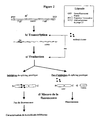
- nucleic acid molecule prepared in step (a) corresponding to this embodiment of the process of the invention is shown in Figure 2 in the appendix.
- This particular case where the target gene and the reporter gene is coexpressed, is entirely adapted to the target gene corresponding to the inteins such as the RecA intein of Mycobacterium tuberculosis.
- FIG. 3 Another particular form of implementation of the method of the invention with a reporter gene consists in using a target gene (coding for a target protein or a function) which can itself be a reporter gene.
- a target gene coding for a target protein or a function
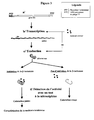
- FIG. 3 An example of a nucleic acid molecule prepared in step (a) corresponding to this embodiment of the method of the invention is shown in Figure 3 in the appendix.
- This embodiment is particularly suitable for a target protein having a directly detectable activity in vitro, such as an enzymatic activity, such as beta-lactamase.
- the beta-lactamase gene plays a key role in resistance to beta-lactam antibiotics by hydrolyzing these molecules before they can act on their therapeutic targets.
- the beta-lactamase activity can be evaluated by means of a test. nitrocelephine.
- the steps of the method of the invention can be carried out successively without interruption by the same operator, advantageously on an automated device integrating each of the steps, or can be performed in a discontinuous manner, possibly by different operators.
- test substance corresponds to a polynucleotide sequence
- it may have a role as such or as a gene coding for a protein.
- this polynucleotide sequence has all the sequences necessary for its expression in vitro during of the transcription and translation reaction.
- it will be expressed by the same regulatory sequences as the target gene (s) so that their expression is concomitant and that the molecule has time to modify the activity of the products of the gene (s) expressed after steps (b) and ( vs). This avoids generating false positive or false negative results.
- One of the possible roles of the substances to be screened is to slow down or stop, in vitro, the activity of a target protein or a set of target proteins, which may be involved for example in the progression of a disease.
- These molecules will, for example, come from libraries of particular pharmacological interest derived from combinatorial chemistry work taking into account the structure of pre-existing potent inhibitors and / or the active site structure of a target enzyme and its particular characteristics.
- the substances tested in the context of the process of the invention may also have a stimulatory or activating effect on the product activity of a gene or several target genes having a key role in a process.
- Such molecules may prove useful as enzymatic cofactors making it possible to increase the activity of an enzyme in a given industrial phenomenon (agri-food or other) and thus to gain in yield.
- test substance proves to be effective in modifying the activity of the target protein, it is advantageous to verify, by any suitable method, that this substance does not inhibit one of the process steps.
- this protein can be tested according to the method of the invention on proteins having an activity similar to that of the target protein or proteins.
- the method of the invention can be advantageously implemented on any type of support and is therefore easily automated.
- support is meant, for example, wells of microtiter plates and also biochips. These can contain several tens to thousands of locations. Thus, on a single support, tens to thousands of substances may be tested for their ability to modify the activity encoded by the target gene (s) of one or more nucleic acid molecules prepared in step (a).
- a particular embodiment of the method of the invention consists in charging the wells of these plates with a mixture of transcription reaction and coupled concentrated translation (components necessary for transcription and translation) containing one or more acid molecules. nucleic acid prepared in step (a) and the reporter molecule, and then freeze them to avoid the early initiation of the transcription / translation reaction.
- the frozen plates are placed on an automaton, which deposits in each well a volume of the molecule to be tested making it possible to dilute the transcription and translation mixture until it is concentrated once. Homogenization can be envisaged via the automaton, but the reaction volumes should be small enough for diffusion to ensure homogenization.
- the measurement of the activity of one or more target proteins or of the reporter molecule of step (d), and therefore of the effect of the test substance on a target protein or a set of target proteins, can also be advantageously automated.
- the eventual modification of the activity of the target protein is read directly on the support in a fluorimetry reader (if the reporter is for example GFP) or in colorimetry (if the reporter is, for example, beta-lactamase).
- the Automated readings will be adapted to the revelation of the reporter. It is thus possible to carry out a continuous reading of the activity of the reporter.
- Automation has advantages in terms of screening potential.
- the process of the invention can be envisaged in a micromachining concept so as to manipulate thousands of reaction nanovolumes on a single support. This represents a certain advantage in terms of cost but also in potential for high throughput screening.
- the method of the invention implemented on a biochip makes it possible to screen collections of substances for example from combinatorial chemistry work having, for example, antifungal or antibacterial or antiviral or anticancer properties or collections of substances directed against diseases such as those of Parkinson's or Alzheimer's.
- the method of the invention applied at high speed makes it possible to identify the key substance best suited to a given function-lock in a minimum of time. It allows to test quickly and systematically all possible combinations of a given set of substances.
- the invention relates to a device comprising an arrangement of one or more supports, robots and a reader of said supports for carrying out the steps of the method of the invention.
- Another subject of the invention is a kit for screening substances capable of modifying the activity of one or more in vitro functions in accordance with one of the embodiments of the method of the invention.
- such a kit comprises the means for revealing the function, an RNA polymerase, and nucleotide sequences for the preparation of nucleic acid molecules comprising the or the genes allowing the expression of the protein or proteins corresponding to the detected and / or quantified function, the four nucleotide triphosphates, the mixtures necessary for the said preparation, the transcription and the translation, possibly substances, possibly controls.
- Kits and supports can be envisaged for detecting and / or measuring a variation simultaneously or not of one or more functions of one or more processes or one or more organisms.
- the invention therefore also relates to a support having a series of locations for the implementation of a method of the invention, characterized in that each of said locations allows the detection and / or measurement of a variation of function.
- the substance to be screened can be present in the wells or be added at the end of the reaction.
- the tables below illustrate various results that can be obtained by the method of the invention on a sample comprising a function.
- the signal variation measurement is done by any technique known to those skilled in the art.
- the signals are measured according to their property, directly or not, which may or may not require the presence of a protractor. It is It is conceivable that the signal (s) may be continuously read in the form of kinetics, for example.
- the method of the invention thus offers a large choice of embodiments from the functions and the means used to reveal them.
- the method of the invention also makes it possible to study the effect of a substance on one or more functions. Indeed, a substance is likely to act on the active site of two different functions. This is the case, for example, of bivalent ion chelators such as EDTA which inhibit both metalloproteinases and polymerases (these two enzymes need bivalent ions to function). On the other hand, it is also possible that the effect of a substance on a function induces secondary metabolites responsible for variation of activity of one or more other functions.
- Table 5 below shows that substance A makes it possible to increase the activity of a function 1 and inhibits a function 2.
- Another form of implementation of the method of the invention consists in testing several substances on a function. These substances may be added in a combined or sequential manner to each of the process steps. The test of several substances on a function will make it possible to determine if these substances have between them a cooperative effect or an antagonistic effect, if they are between them competitive or complementary.
- the process of the invention makes it possible to test all possible combinations of substances on one or more functions. 1) Table 7 below shows that substance A increases functional activity. Substance B has no effect on function. The pair of substances A and B increases even more than the substance A only the activity of the function. Substance B has a complementary or cooperative effect of substance A.
- Table 7 ⁇ / u> Signal Without substance 0 In the presence of a substance A + + In the presence of a substance B 0 In the presence of substances A and B + + + 2)
- Table 8 shows that the functional activity is increased in the same way in the presence of the substance A alone or substances A and B. The substance B therefore has no effect on the function, as shown the functional test in the presence of substance B alone.
- Table 9 shows that substances A and B separately and the pair of substances A and B inhibit function.
- Variations of one or more functions obtained in the presence of one or more substances may be compared with one another to determine the best substance (s) or combination of substances and the best amount of each substance. .
- the method of the invention can therefore also be used to study the different galenic forms of one or more substances. After identifying one or more substances capable of modifying the activity of one or more functions, these substances will be used to treat a product.
- the dosage form of the substance or substances will be important for optimal effectiveness of the substance or substances on the function (s) of the said product (s). This is why the component or components of the dosage form can be added to the substance or substances in the method of the invention to study their impact on the variation of activity of one or more functions.
- the method of the invention also makes it possible to monitor the behavior of one or more functions in the presence of one or more substances.
- Table 11 below illustrates this type of result on the toxicity of a substance A on functions 1 and 2.
- Table 11 shows at time t that a substance A increased the activity of a function 1, which continues to increase at time t + 1.
- substance A has lost its effectiveness on function 1.
- the function 1 thus becomes less sensitive to the effect of substance A over time.
- Table 11 also shows that substance A inhibits more and more over time a function 2.
- ⁇ u> Table 11 ⁇ / u> Function 1 Function 2 In the absence of substance + +++ Measurement at time t in the presence of substance A ++ ++ Measurement at time t + 1 in the presence of substance A ++++ + Measurement at time t + 2 in the presence of substance A + 0
- the method of the invention thus makes it possible to assess over time the effectiveness of the one or more substances capable of optimizing the variation or activities of the one or more functions.
- Example VI High throughput screening of aspartic acid proteinase inhibitors .
- aspartic acid proteinase used as a target in various antiviral therapies (such as triple therapy).
- the search for potent inhibitors of aspartic acid proteinases is expanding in view of the adaptation of the virus to inhibitors: 6 weeks after the start of therapy with an HIV-1 proteinase inhibitor (indinavir), isolates resistant to the inhibitor are detected. They are manifested inter alia by a mutation at the residue V82A / F / T of the proteinase of HIV-1 (4).
- indinavir HIV-1 proteinase inhibitor
- isolates resistant to the inhibitor are detected. They are manifested inter alia by a mutation at the residue V82A / F / T of the proteinase of HIV-1 (4).
- the goal of different Pharmaceutical companies is therefore developing a high throughput screening system to find new inhibitors of aspartic acid proteinase.
- the screening assay for new aspartic acid (HIV) proteinase inhibitors is based on the method of the invention.
- the target gene encoding the wild-type aspartic acid proteinase of HIV is placed under the control of the phage T7 RNA polymerase promoter and terminator, which allows transcription and translation of the corresponding protein in vitro.
- the reporter molecule used in step (d) is a peptide containing cleavage sites specific for HIV proteinase. This peptide is covalently bound respectively to N and C terminal to a fluorescent molecule (such as for example fluorescein) and a quencher of the latter (such as rhodamine).
- a fluorescent molecule such as for example fluorescein
- a quencher of the latter such as rhodamine
- the gene prepared in step (a) is placed in different wells of a microtiter plate.
- the corresponding wells are loaded with a coupled transcriptional reaction and translation reaction mixture (components required for transcription and translational concentration) containing the reporter molecule.
- the corresponding plates are rapidly frozen to avoid early initiation of the transcription and translation reaction.
- This transcriptional and translational reaction can be either performed with a cell translation extract of E. coli, or with a translation extract of eukaryotic cells.
- the translation extract chosen depends on the type of primers used in (a) with or without ribosome binding site.
- the frozen plates are placed on an automaton, which deposits in each well a volume of the substance (s) to be tested for diluting the mixture of transcription and translation until it is once concentrated.
- Fluorescein and rhodamine are then in a sufficiently close environment to provide FRET (fluorescence resonance energy of transfer) type energy transfer. After exposure of the reporter peptide at a given wavelength (about 490 nm), only the red fluorescence of the quencher will be detectable.
- FRET fluorescence resonance energy of transfer
- the reporter peptide is cleaved. Fluorescein and rhodamine are then too far away to ensure energy transfer. After exposure of the cleavage products at a given wavelength (about 490 nm), only the green fluorescence of fluorescein is detectable.
- a specificity control test is performed by incubating this substance in a transcription and translation reaction allowing the expression of another reporter gene (GFP type) to verify that this substance is not actually an inhibitor of transcription or translation.
- GFP type another reporter gene
- FIG. 1 A representation of the process of the invention is shown schematically in FIG.
- Example VII High-throughput Screening of Protein Splicing Inhibitor of the RecA Intein of Mycobacterium tuberculosis
- Inteins are protein introns recently discovered within protein sequences. They have all the information necessary for their own excision. This recently highlighted process is comparable to the splicing of the premessing RNAs. Thus, by convention, the internal protein sequence is called intein and the two external sequences are extéines (3). This phenomenon of specific protein excision is very fast. These inteins have been discovered in very different gene pools and are present in both prokaryotes and eukaryotes.
- the RecA protein of Mycobacterium tuberculosis contains such an element.
- Other pathogenic Mycobacteria may have such sequence in RecA as Mycobacterium Leprae. Nevertheless, these two protein introns are different in size, sequence and location, which makes them very specific (2).
- the splicing inhibition represents a new therapeutic pathway against the multiplication of the bacterium responsible for tuberculosis. Only an in vitro test , such as the one proposed, makes it possible to analyze the inhibition of a protein splicing phenomenon, which is too fast to be analyzed in vivo.
- a screening system of Intra Splice Inhibitors of RecA from Mycobacterium tuberculosis is being developed.
- the proposed test is based on the method of the invention and consists in expressing in vitro the gene coding for a reporter protein such as GFP, within which the intein of the recA Mycobacterium tuberculosis gene has been inserted.
- a substance of a pharmacological interest library is added to the transcription and translation mixture. If this substance is active as an inhibitor, it prevents splicing of the intein after translation, which inhibits the expression of mature GFP. On the contrary, if this substance is inactive, the activity of GFP can be detected ( Figure 2).
- a second test makes it possible to verify that this substance is specific. This second test consists of incubating said substance in a transcription and translation mixture containing the gfp gene without any intein and verifying that the gene can be transcribed and translated in the presence of this substance.
- the substances thus detected can be tested on other inteins of interest in a given process.
- Example VIII High throughput screening of beta-lactamase inhibitors.
- Beta-lactams penicillins and cephalosporins are the most widely used class of antibiotics in anti-infectious therapy. Since the introduction into therapy of these molecules, new resistances to these compounds are developing. From Different mechanisms of resistance acquired by resistant germs, one of the most important is to produce an enzyme (beta-lactamase type) capable of hydrolyzing the antibiotic molecule before it could act. Following the global and intensive use of antibiotics, the speed of new resistance is currently faster than the discovery of new antibiotics.
- the screening of new suicide inhibitors consists in carrying out a transcription and translation reaction allowing the expression of beta-lactamase TEM-1.
- the bla gene is under the control of the promoter and terminator sequences of phage T7 RNA polymerase.
- a substance from a library of molecules of pharmacological interest is added to the reaction mixture. If this substance is active as a beta-lactamase inhibitor, it inhibits the catalytic activity of the enzyme. In the other case, an active beta-lactamase is produced.
- the beta-lactamase activity is then evaluated via a chromogenic substrate of beta-lactamase: the nitrocelephine.
- the method of the invention makes it possible to compare the sensitivity and the reproducibility of several types of functional tests in a very short time.
- beta-lactamase TEM-1 was expressed in vitro using 0.5 ⁇ g mRNA of this gene and translating this enzyme as described by Zubay in a final volume of 100 ⁇ l.
- Test 1 determination of the hydrolysis of nitrocéphine.
- Test 3 assay for the hydrolysis of ampicillin by fluorescence revelation (Chen KC and Holmes KK, 1986, Enhancement of fluorescence specific detection of microbial beta-lactamases, J. Clin Microbiol., 23 (3), 539-544).
- Figures 4, 5 and 6 illustrate the comparison of the sensitivity and reproducibility of several methods of detecting a function
- Figure 4 indicates that the activity test (ampicillin) does not reveal the activity of the enzyme regardless of the concentration thereof.
- tests 1 and 3 make it possible to obtain a signal which correlates with the volume of translation added in the test.
- the activity test 3 fluorescence seems to give a less sensitive response than the activity test 1 (nitrocéphine) for low enzyme concentrations.
- Figures 5 and 6 indicate that the test 3 is more reproducible than the test 1.
- the test 3 can be considered as a test of choice to measure the activity of this beta-lactamase function.
- the method of the invention thus makes it possible to test and validate in a very short time the sensitivity of several methods of detecting a function.
- This type of application is particularly interesting in the context of the development of a screening system which often requires the most accurate and reproducible sensitivity test possible, in order to be able to detect the variation of a function by this method. test when adding a substance.
- ⁇ -lactams penicillins and cephalosporins
- penicillins and cephalosporins are the most commonly used class of antibiotics in anti-infective therapy. Since the introduction into therapy of these molecules, new Resistance to these compounds is developing, favoring the expansion of nosocomial infections.
- an enzyme ⁇ -lactamase TEM-1 for certain enterobacteria for example, or beta-lactamase PSE for Pseudomonas aeruginosa
- the volume was then supplemented to 58 ⁇ l with a revealing solution (final concentration: NaP 40 mM pH 7.0, 100 ⁇ g / ml of nitrocéphine and 0.25 mM DMSO).
- the reaction was monitored spectrophotometrically at 486 nm.
- Three controls were carried out: one without translation extract (thus without enzyme), one with the substrate alone, and one without any potential inhibitor.
- FIG. 9 indicates that under these conditions, the wild-type enzyme TEM-1 is 87% inhibited, while the two mutants retain respectively a residual activity of 26% and 35%. While inhibitor # 1 appears to be effective against the wild-type enzyme, it appears that it is not against enzymes that are already resistant to a beta-lactamase inhibitor.
- the method of the invention therefore makes it possible to set up very rapidly a screening at the molecular level of substances capable of modifying the activity of a target, and then validating the results on equivalent targets.
- This FRET peptide has the property of releasing fluorescence when it is cleaved by the protease of the HIV virus.
- a substance that does not inhibit the activity of the HIV protease is therefore characterized by the appearance of a fluorescent signal when the well is exposed to UV.
- Three controls were carried out: one without translation extract (thus without enzyme), one with the substrate alone, and one without any potential inhibitor.
- the method of the invention thus makes it possible very simply to carry out an in vitro screening of substance capable of modifying the activity of a function.
- the method of the invention therefore makes it possible to set up very rapidly a screening at the molecular level of substances capable of modifying the activity of a target, and then validating the results on equivalent targets.
Landscapes
- Life Sciences & Earth Sciences (AREA)
- Health & Medical Sciences (AREA)
- Engineering & Computer Science (AREA)
- Chemical & Material Sciences (AREA)
- Molecular Biology (AREA)
- Immunology (AREA)
- Hematology (AREA)
- Urology & Nephrology (AREA)
- Biomedical Technology (AREA)
- Proteomics, Peptides & Aminoacids (AREA)
- Physics & Mathematics (AREA)
- Organic Chemistry (AREA)
- Biochemistry (AREA)
- Microbiology (AREA)
- Biotechnology (AREA)
- General Health & Medical Sciences (AREA)
- Analytical Chemistry (AREA)
- Medicinal Chemistry (AREA)
- Genetics & Genomics (AREA)
- General Physics & Mathematics (AREA)
- Pathology (AREA)
- Bioinformatics & Cheminformatics (AREA)
- Zoology (AREA)
- Biophysics (AREA)
- Food Science & Technology (AREA)
- Cell Biology (AREA)
- Wood Science & Technology (AREA)
- Bioinformatics & Computational Biology (AREA)
- General Engineering & Computer Science (AREA)
- Measuring Or Testing Involving Enzymes Or Micro-Organisms (AREA)
- Investigating Or Analysing Biological Materials (AREA)
Claims (25)
- Verfahren des Siebens einer Substanz fähig zu modifizieren die bekannte Funktion eines oder mehrerer Proteine, charakterisiert dadurch dass sie enthält die folgenden Etappen:a) die Vorbereitung von wenigstens einem Molekül Nukleinsäure enthaltend den oder die Gene kodierend für ein oder mehrere Proteine und Varianten besagter Proteine aufweisend besagte Funktion und die Kontrollelemente notwendig zur Übertragung und zur Übersetzung des oder der Gene,b) die Übertragung in vitro in ein azelluläres System des oder der in Etappe (a) vorbereiteten Nukleinsäuremoleküle,c) die Übersetzung in vitro in ein azelluläres System des oder der in Etappe (b) vorbereiteten Übertragung(en),d) die Aufspürung und/oder die Messung der Veränderung von besagter Funktion bekannt bei den Proteinen oder variantenbesagter Proteine hergestellt bei Etappe (c) im Beisein und bei Abwesenheit besagter Substanz, das azelluläre System der Etappen (b) und (c) nicht enthaltend besagte Funktion oder wenn sie sie enthält ist sie nicht aufspürbar unter den Bedingungen des Aufspürens und/oder der Messung,e) die Bestätigung auf Varianten der Substanzen erzeugend eine Veränderung besagter Funktion.
- Verfahren des Siebens nach Anspruch 1, charakterisiert dadurch dass besagte Funktion eine enzymatische Aktivität ist.
- Verfahren des Siebens nach einem der vorangehenden Ansprüche, charakterisiert dadurch dass besagte Substanz ausgewählt ist aus Polynukleotiden, Peptiden, Proteinen, Ionen, Molekülen oder natürlichen oder synthetischen chemischen Zusammensetzungen, Hormonen, aromatischen Zusammensetzungen, Antikörper, Fragmente von Antikörpern, Genen, Zellrezeptoren, Aminosäuren, Glykopeptiden, Lipiden, Glykolipiden, Zucker, Polysacchariden.
- Verfahren des Siebens nach einem der vorangehenden Ansprüche, charakterisiert dadurch dass besagte Substanz entspricht einer oder mehreren Serienköpfen.
- Verfahren des Siebens nach einem der vorangehenden Ansprüche, charakterisiert dadurch dass besagte Substanz hemmend ist für die bekannte Funktion.
- Verfahren des Siebens nach einem der vorangehenden Ansprüche, charakterisiert dadurch dass besagte Substanz ein antivirales Mittel ist.
- Verfahren des Siebens nach einem der vorangehenden Ansprüche 1 bis 6, charakterisiert dadurch dass die Vorbereitung von einem oder mehreren Molekülen Nukleinsäure der Etappe (a) darin besteht unter Kontrolle zu bringen den oder die Gene welche für das oder die besagten Proteine kodiert:- für die Übertragung eines Initiators (in 5') und eventuell eines Terminators einer RNS Polymerase (in 3'),- für die Übersetzung eines Anbringungsortes der Ribosome oberhalb des oder der Gene.
- Verfahren des Siebens nach einem der vorangehenden Ansprüche 1 bis 7, charakterisiert dadurch dass die Etappe (a) darin besteht vorzubereiten das oder die Nukleinsäuremoleküle durch eine Verstärkungsreaktion des oder der Gene kodierend für das oder die besagten Proteine.
- Verfahren des Siebens nach Anspruch 8, charakterisiert dadurch dass die Etappe (a) darin besteht vorzubereiten das oder die Nukleinsäuremoleküle durch eine Verstärkungsreaktion vom Typ PCR oder NASBA des oder der Gene kodierend für das oder die besagten Proteine, mit Hilfe eines oder mehreren Paaren von Anfangsstücken, jedes bestehend:- für das Anfangsstück Richtung, der Sequenz die sich hybridiert oberhalb eines oder mehrerer Nukleinsäuremoleküle beinhaltend den oder die Gene kodierend für das oder die besagten Proteine, und einem Initiator von RNS Polymerase und eventuell einem Anbringungsort der Ribosome, und- für das Anfangsstück Gegenrichtung, der Sequenz die sich hybridiert unterhalb eines oder mehrerer Nukleinsäuremoleküle beinhaltend den oder die Gene kodierend für das oder die besagten Proteine, und eventuell einem Terminator von RNS Polymerase.
- Verfahren des Siebens nach einem der vorangehenden Ansprüche, charakterisiert dadurch dass besagte Funktion entspricht einer Menge von Proteinzielen deren Gene kodierend für diese Proteine situiert sind auf demselben DNS Fragment wie im Falle eines Operons, oder an verschiedenen Stellen der DNS.
- Verfahren des Siebens nach einem der vorangehenden Ansprüche 1 bis 10, charakterisiert dadurch dass die Etappe (a) darin besteht vorzubereiten ein Nukleinsäuremolekül enthaltend die Gene (das Operon) kodierend für die Proteine, in 5' der Gesamtheit der besagten Gene (des Operons) einen Initiator von RNS Polymerase, eventuell in 3' der Gesamtheit der besagten Gene (des Operons) einen Terminator von RNS Polymerase, und für jeden der besagten Gene seinen natürlichen Anbringungsort der Ribosome.
- Verfahren des Siebens nach Anspruch 11, charakterisiert dadurch dass man gebraucht bei der Etappe (c) ein Übersetzungsextrakt vorbereitet ausgehend von dem Organismus woher stammt der oder die Zielgene oder eines phytogenetisch nahen Organismus.
- Verfahren des Siebens nach einem der Ansprüche 1 und 10, charakterisiert dadurch dass die Etappe (a) darin besteht vorzubereiten ein oder mehrere Nukleinsäuremoleküle enthaltend die Gene kodierend für die Proteine, in 5' eines jeden der besagten Gene ein Initiator von RNS Polymerase und ein Anbringungsort der Ribosome, und eventuell in 3' von jedem der besagten Gene ein Terminator von RNS Polymerase.
- Verfahren des Siebens nach Anspruch 13, charakterisiert dadurch dass der Anbringungsort der Ribosome der natürliche Ort eines jeden Genes sein kann oder ein anderer Anbringungsort der Ribosome besser angepasst an die Etappe (c) des Übersetzens.
- Verfahren des Siebens nach einem der vorangehenden Ansprüche, charakterisiert dadurch dass die besagten Proteine Varianten eines Proteins sind oder Varianten einer Menge von Proteinen.
- Verfahren des Siebens nach einem der Ansprüche 1 bis 15, charakterisiert dadurch dass das Aufspüren und/oder das Messen der Veränderung der Funktion des oder der Proteine hergestellt bei Etappe (c) oder der Substanz hergestellt bei der Etappe (d) durch einen funktionellen Test anwendend das Gegenwärtigsein bei einer der Etappen (a), (b), (c) oder (d) eines oder mehrerer Zuträgermoleküle erlaubend aufzuspüren und/oder zu messen die Aktivität besagter Proteine.
- Verfahren des Siebens nach Anspruch 16, charakterisiert dadurch dass das Zuträgermolekül ein Molekül ist fähig zu enthüllen direkt oder indirekt die Aktivität eines oder mehrerer besagter Moleküle.
- Verfahren des Siebens nach Anspruch 17, charakterisiert dadurch dass das Zuträgermolekül ein Molekül ist das hergestellt wird in der Etappe (c) gemeinsam mit dem oder den besagten Proteinen.
- Verfahren des Siebens nach Anspruch 18, charakterisiert dadurch dass der Gen kodierend für das Zuträgermolekül unter Kontrolle gestellt wird von Regelsequenzen der Übertragung und der Übersetzung ähnlich wie jene des oder der Gene kodierend für das oder die besagten Proteine, auf solche Weise dass der Zuträgergen zusammen ausgedrückt wird mit dem oder den besagten Genen.
- Verfahren des Siebens nach Anspruch 16, charakterisiert dadurch dass das oder eines der Proteine hergestellt in Etappe (c) auch ein Zuträgermolekül bilden.
- Verfahren des Siebens nach einem der Ansprüche 1 bis 19, charakterisiert dadurch dass besagte Substanz eingeführt wird vor oder während wenigstens einer der Etappen (b) bis (d).
- Verfahren des Siebens nach einem der vorangehenden Ansprüche, charakterisiert dadurch dass nach der Messung und/oder der Aufspürung einer Veränderung einer Funktion, man überprüft das besagte Substanz nicht hemmt die Übertragung und die Übersetzung in vitro in einem azellulären Proteinsystem.
- Ein Kit für die Anwendung einer Verfahren des Siebens einer Substanz fähig zu modifizieren die Aktivität einer Funktion bekannt nach einem der vorangehenden Ansprüche, charakterisiert dadurch dass er enthält:- eine RNS Polymerase, nukleotide Sequenzen für die Vorbereitung der Nukleinsäuremoleküle enthaltend den oder die Gene erlaubend den Ausdruck des oder der Proteine beinhaltend besagte Funktion, sowie Varianten des besagten oder der besagten Proteine, die vier Triphosphat Nukleotide,- die nötigen Mischungen zu besagter Vorbereitung, für die Übertragung und die Übersetzung nicht enthaltend besagte Funktion oder sie enthaltend aber dann ist sie nicht aufspürbar in den Bedingungen des Aufspürens und/oder der Messung,- wenigstens eine Substanz geeignet die Aktivität der bekannten Funktion zu verändern,- eventuell Markierer die so genannte Funktion die sowie Varianten der so genannten oder der so genannten Proteinen enthalten.
- Ein Kit für die Anwendung einer Verfahren des Siebens einer Substanz fähig zu modifizieren die Aktivität einer Funktion bekannt nach einem der vorangehenden Ansprüche, charakterisiert dadurch dass er außerdem enthält wenigstens einen Halter enthaltend eine Serie von Positionen für die Anwendung der Etappen des Ausdrückens, des Aufspürens und der Bestätigung.
- Gebrauch einer Kombinierung von Reagensen für die Anwendung einer Verfahren des Siebens einer Substanz fähig zu modifizieren die Aktivität einer Funktion bekannt nach einem der Ansprüche 1 bis 22, besagte Kombinierung enthaltend:- eine RNS Polymerase, nukleotide Sequenzen für die Vorbereitung der Nukleinsäuremoleküle enthaltend den oder die Gene erlaubend den Ausdruck eines oder mehrerer Proteine, sowie Varianten des besagten oder der besagten Proteine, beinhaltend besagte Funktion, die vier Triphosphat Nukleotide,- die nötigen Mischungen zu besagter Vorbereitung, für die Übertragung und die Übersetzung, besagte Mischungen nicht enthaltend die Funktion des oder der besagten Proteine oder sie enthaltend aber dann ist sie nicht aufspürbar in den Bedingungen des Aufspürens und/oder der Messung,- eventuell Markierer die so genannte Funktion die sowie Varianten der so genannten oder der so genannten Proteinen enthalten.
Priority Applications (1)
| Application Number | Priority Date | Filing Date | Title |
|---|---|---|---|
| EP06290080A EP1666612A3 (de) | 1998-12-08 | 1999-12-08 | Verfahren zur Aktivitätsbestimmung einer Substanz mittels eines funktionellen in vitro Tests |
Applications Claiming Priority (3)
| Application Number | Priority Date | Filing Date | Title |
|---|---|---|---|
| FR9815488 | 1998-12-08 | ||
| FR9815488A FR2786788B1 (fr) | 1998-12-08 | 1998-12-08 | Procede de criblage de substances capables de modifier l'activite d'une ou plusieurs proteines cibles ou d'un ensemble cible de proteines exprimees in vitro |
| PCT/FR1999/003062 WO2000034514A1 (fr) | 1998-12-08 | 1999-12-08 | PROCEDE DE DETERMINATION DE L'ACTIVITE D'UNE SUBSTANCE METTANT EN OEUVRE UN TEST FONCTIONNEL $i(IN VITRO) |
Related Child Applications (1)
| Application Number | Title | Priority Date | Filing Date |
|---|---|---|---|
| EP06290080A Division EP1666612A3 (de) | 1998-12-08 | 1999-12-08 | Verfahren zur Aktivitätsbestimmung einer Substanz mittels eines funktionellen in vitro Tests |
Publications (2)
| Publication Number | Publication Date |
|---|---|
| EP1137802A1 EP1137802A1 (de) | 2001-10-04 |
| EP1137802B1 true EP1137802B1 (de) | 2006-02-08 |
Family
ID=9533725
Family Applications (2)
| Application Number | Title | Priority Date | Filing Date |
|---|---|---|---|
| EP99957374A Expired - Lifetime EP1137802B1 (de) | 1998-12-08 | 1999-12-08 | Verfahren zur aktivitätsbestimmung einer substanz mittels eines funktionellen in vitro tests |
| EP06290080A Withdrawn EP1666612A3 (de) | 1998-12-08 | 1999-12-08 | Verfahren zur Aktivitätsbestimmung einer Substanz mittels eines funktionellen in vitro Tests |
Family Applications After (1)
| Application Number | Title | Priority Date | Filing Date |
|---|---|---|---|
| EP06290080A Withdrawn EP1666612A3 (de) | 1998-12-08 | 1999-12-08 | Verfahren zur Aktivitätsbestimmung einer Substanz mittels eines funktionellen in vitro Tests |
Country Status (9)
| Country | Link |
|---|---|
| EP (2) | EP1137802B1 (de) |
| JP (1) | JP2002531851A (de) |
| AT (1) | ATE317454T1 (de) |
| AU (1) | AU779179B2 (de) |
| CA (1) | CA2354572A1 (de) |
| DE (1) | DE69929817T2 (de) |
| FR (1) | FR2786788B1 (de) |
| IL (2) | IL143639A0 (de) |
| WO (1) | WO2000034514A1 (de) |
Families Citing this family (3)
| Publication number | Priority date | Publication date | Assignee | Title |
|---|---|---|---|---|
| EP1160332A1 (de) * | 2000-05-30 | 2001-12-05 | Amsterdam Support Diagnostics B.V. | Verfahren zum Nachweis von enzymatischer Aktivität oder von Resistenz gegen enzymatiche Inhibitoren |
| WO2002008766A1 (fr) * | 2000-07-26 | 2002-01-31 | Japan Science And Technology Corporation | Sonde permettant d'analyser une interaction protéine/protéine et méthode d'analyse utilisant cette sonde |
| DE10158904A1 (de) * | 2001-11-30 | 2003-06-12 | Roche Diagnostics Gmbh | Verfahren zur Herstellung von linearen DNA Fragmenten für die in vitro Expression von Proteinen |
Family Cites Families (11)
| Publication number | Priority date | Publication date | Assignee | Title |
|---|---|---|---|---|
| US4557862A (en) * | 1983-10-28 | 1985-12-10 | University Patents, Inc. | Rhodamine derivatives as fluorogenic substrates for proteinases |
| AU1322692A (en) * | 1990-11-05 | 1992-05-26 | United States Of America, As Represented By The Secretary Of The Army, The | Method for the in vitro production of protein from a dna sequence without cloning |
| US5235039A (en) * | 1991-06-10 | 1993-08-10 | Eli Lilly And Company | Substrates for hiv protease |
| JPH07184648A (ja) * | 1992-02-07 | 1995-07-25 | Kunitada Shimotoono | Hcvプロテイナーゼ活性物質、その製造法並びに同プロテイナーゼおよび同プロテイナーゼ阻害剤のアッセイ法 |
| AU4843893A (en) * | 1992-09-02 | 1994-03-29 | Scripps Research Institute, The | Coupled isothermal polynucleotide amplification and translation system |
| US5436131A (en) * | 1993-04-02 | 1995-07-25 | Merck & Co., Inc. | Color screening assay for identifying inhibitor resistant HIV protease mutants |
| AU693443B2 (en) * | 1993-04-08 | 1998-07-02 | Research Development Foundation | Cell free system for protein synthesis and use of chaperone proteins therein |
| GB9320562D0 (en) * | 1993-10-06 | 1993-11-24 | Zeneca Ltd | Novel assay and applications |
| US5763198A (en) * | 1994-07-22 | 1998-06-09 | Sugen, Inc. | Screening assays for compounds |
| US6063562A (en) * | 1994-09-16 | 2000-05-16 | Sepracor, Inc. | In vitro method for predicting the evolutionary response of HIV protease to a drug targeted thereagainst |
| DE19710159A1 (de) * | 1997-03-12 | 1998-10-01 | Hoechst Ag | In vitro Transkriptionsverfahren zum Screening von Naturstoffen und anderen chemischen Substanzen |
-
1998
- 1998-12-08 FR FR9815488A patent/FR2786788B1/fr not_active Expired - Fee Related
-
1999
- 1999-12-08 AT AT99957374T patent/ATE317454T1/de not_active IP Right Cessation
- 1999-12-08 AU AU15100/00A patent/AU779179B2/en not_active Ceased
- 1999-12-08 DE DE69929817T patent/DE69929817T2/de not_active Expired - Lifetime
- 1999-12-08 EP EP99957374A patent/EP1137802B1/de not_active Expired - Lifetime
- 1999-12-08 JP JP2000586947A patent/JP2002531851A/ja active Pending
- 1999-12-08 WO PCT/FR1999/003062 patent/WO2000034514A1/fr not_active Ceased
- 1999-12-08 CA CA002354572A patent/CA2354572A1/fr not_active Abandoned
- 1999-12-08 IL IL14363999A patent/IL143639A0/xx active IP Right Grant
- 1999-12-08 EP EP06290080A patent/EP1666612A3/de not_active Withdrawn
-
2001
- 2001-06-07 IL IL143639A patent/IL143639A/en not_active IP Right Cessation
Non-Patent Citations (2)
| Title |
|---|
| JERMUTUS ET AL: "Recent advances in producing and selecting functional proteins by using cell-free transation", CURRENT OPINION IN BIOTECHNOLOGY, vol. 9, 1998, pages 534 - 548 * |
| Tranlation of the laid-open Japanese patent application 7-184648 * |
Also Published As
| Publication number | Publication date |
|---|---|
| JP2002531851A (ja) | 2002-09-24 |
| EP1666612A2 (de) | 2006-06-07 |
| EP1666612A3 (de) | 2006-06-21 |
| CA2354572A1 (fr) | 2000-06-15 |
| DE69929817D1 (de) | 2006-04-20 |
| FR2786788A1 (fr) | 2000-06-09 |
| FR2786788B1 (fr) | 2002-04-19 |
| AU1510000A (en) | 2000-06-26 |
| IL143639A0 (en) | 2002-04-21 |
| AU779179B2 (en) | 2005-01-13 |
| WO2000034514A1 (fr) | 2000-06-15 |
| ATE317454T1 (de) | 2006-02-15 |
| DE69929817T2 (de) | 2006-12-28 |
| EP1137802A1 (de) | 2001-10-04 |
| IL143639A (en) | 2007-08-19 |
Similar Documents
| Publication | Publication Date | Title |
|---|---|---|
| EP2844753B1 (de) | Verfahren zur gewinnung von peptiden | |
| US8232378B2 (en) | Compositions and methods for the identification of inhibitors of protein synthesis | |
| FR3099182A1 (fr) | Procédé de détection et de quantification d'une espèce biologique d'intérêt par analyse métagénomique | |
| FR3099181A1 (fr) | Procédé de détection et de quantification d'une espèce biologique d'intérêt par analyse métagénomique, avec prise en compte d'un calibrateur. | |
| US6818396B1 (en) | Process for determination of the activity of a substance using an in vitro functional test | |
| EP1137801B9 (de) | Diagnostische methode basierend auf der function eines proteins das in einer zellfreien umgebung produziert wird, ausgehend von einer probe von nukleinsäuren | |
| US12091776B2 (en) | Protease activity profiling via programmable phage display of comprehensive proteome-scale peptide libraries | |
| EP1666612A2 (de) | Verfahren zur Aktivitätsbestimmung einer Substanz mittels eines funktionellen in vitro Tests | |
| EP4463561A1 (de) | Verfahren zur bestimmung der methicillinresistenz von staphylococcus aureus-stämmen | |
| FR3061720A1 (fr) | Procede de detection et quantification d'adn circulant et utilisations | |
| US20160090628A1 (en) | Detection of mineralocorticoid receptor activation and personalized antihypertensive therapy based thereon | |
| EP1104489B1 (de) | Verfahren zur isolierung und charakterisierung potentieller funktionen ausgehend von einer biologischen probe, welche nukleinsäuren enthält | |
| FR3099180A1 (fr) | Procédé de détection et de quantification d'une espèce biologique d'intérêt par analyse métagénomique, comportant l'utilisation d'une espèce de contrôle. | |
| EP1257666A1 (de) | Methode zum nachweis mycobacterium tuberculosis spezifischer inteine und deren verwendung für tuberkulose | |
| FR3135991A1 (fr) | Procédé d’identification des enzymes BLSE chez les entérobactéries | |
| FR3099183A1 (fr) | Procédé de détection et de quantification d'une espèce biologique d'intérêt par analyse métagénomique, et détermination d'un niveau de confiance associé | |
| CA2610057A1 (fr) | Methode et trousses de detection de mutations associees a maladies genetiques recessives | |
| WO2020188216A1 (fr) | Méthode ultrasensible de détection de la mort cellulaire |
Legal Events
| Date | Code | Title | Description |
|---|---|---|---|
| PUAI | Public reference made under article 153(3) epc to a published international application that has entered the european phase |
Free format text: ORIGINAL CODE: 0009012 |
|
| 17P | Request for examination filed |
Effective date: 20010615 |
|
| AK | Designated contracting states |
Kind code of ref document: A1 Designated state(s): AT BE CH CY DE DK ES FI FR GB GR IE IT LI LU MC NL PT SE |
|
| AX | Request for extension of the european patent |
Free format text: AL;LT;LV;MK;RO;SI |
|
| 17Q | First examination report despatched |
Effective date: 20020523 |
|
| GRAP | Despatch of communication of intention to grant a patent |
Free format text: ORIGINAL CODE: EPIDOSNIGR1 |
|
| GRAS | Grant fee paid |
Free format text: ORIGINAL CODE: EPIDOSNIGR3 |
|
| GRAA | (expected) grant |
Free format text: ORIGINAL CODE: 0009210 |
|
| AK | Designated contracting states |
Kind code of ref document: B1 Designated state(s): AT BE CH CY DE DK ES FI FR GB GR IE IT LI LU MC NL PT SE |
|
| PG25 | Lapsed in a contracting state [announced via postgrant information from national office to epo] |
Ref country code: FI Free format text: LAPSE BECAUSE OF FAILURE TO SUBMIT A TRANSLATION OF THE DESCRIPTION OR TO PAY THE FEE WITHIN THE PRESCRIBED TIME-LIMIT Effective date: 20060208 |
|
| REG | Reference to a national code |
Ref country code: GB Ref legal event code: FG4D Free format text: NOT ENGLISH |
|
| REG | Reference to a national code |
Ref country code: CH Ref legal event code: EP |
|
| REG | Reference to a national code |
Ref country code: IE Ref legal event code: FG4D Free format text: LANGUAGE OF EP DOCUMENT: FRENCH |
|
| REF | Corresponds to: |
Ref document number: 69929817 Country of ref document: DE Date of ref document: 20060420 Kind code of ref document: P |
|
| REG | Reference to a national code |
Ref country code: CH Ref legal event code: NV Representative=s name: SUSI PRYDE-HAENI BSC |
|
| PG25 | Lapsed in a contracting state [announced via postgrant information from national office to epo] |
Ref country code: DK Free format text: LAPSE BECAUSE OF FAILURE TO SUBMIT A TRANSLATION OF THE DESCRIPTION OR TO PAY THE FEE WITHIN THE PRESCRIBED TIME-LIMIT Effective date: 20060508 |
|
| PG25 | Lapsed in a contracting state [announced via postgrant information from national office to epo] |
Ref country code: ES Free format text: LAPSE BECAUSE OF FAILURE TO SUBMIT A TRANSLATION OF THE DESCRIPTION OR TO PAY THE FEE WITHIN THE PRESCRIBED TIME-LIMIT Effective date: 20060519 |
|
| REG | Reference to a national code |
Ref country code: SE Ref legal event code: TRGR |
|
| GBT | Gb: translation of ep patent filed (gb section 77(6)(a)/1977) |
Effective date: 20060517 |
|
| PG25 | Lapsed in a contracting state [announced via postgrant information from national office to epo] |
Ref country code: PT Free format text: LAPSE BECAUSE OF FAILURE TO SUBMIT A TRANSLATION OF THE DESCRIPTION OR TO PAY THE FEE WITHIN THE PRESCRIBED TIME-LIMIT Effective date: 20060710 |
|
| PLBE | No opposition filed within time limit |
Free format text: ORIGINAL CODE: 0009261 |
|
| STAA | Information on the status of an ep patent application or granted ep patent |
Free format text: STATUS: NO OPPOSITION FILED WITHIN TIME LIMIT |
|
| PG25 | Lapsed in a contracting state [announced via postgrant information from national office to epo] |
Ref country code: MC Free format text: LAPSE BECAUSE OF NON-PAYMENT OF DUE FEES Effective date: 20061231 |
|
| 26N | No opposition filed |
Effective date: 20061109 |
|
| PG25 | Lapsed in a contracting state [announced via postgrant information from national office to epo] |
Ref country code: GR Free format text: LAPSE BECAUSE OF FAILURE TO SUBMIT A TRANSLATION OF THE DESCRIPTION OR TO PAY THE FEE WITHIN THE PRESCRIBED TIME-LIMIT Effective date: 20060509 |
|
| PG25 | Lapsed in a contracting state [announced via postgrant information from national office to epo] |
Ref country code: LU Free format text: LAPSE BECAUSE OF NON-PAYMENT OF DUE FEES Effective date: 20061208 |
|
| PG25 | Lapsed in a contracting state [announced via postgrant information from national office to epo] |
Ref country code: CY Free format text: LAPSE BECAUSE OF FAILURE TO SUBMIT A TRANSLATION OF THE DESCRIPTION OR TO PAY THE FEE WITHIN THE PRESCRIBED TIME-LIMIT Effective date: 20060208 |
|
| PGFP | Annual fee paid to national office [announced via postgrant information from national office to epo] |
Ref country code: SE Payment date: 20091218 Year of fee payment: 11 Ref country code: IE Payment date: 20091217 Year of fee payment: 11 Ref country code: AT Payment date: 20091217 Year of fee payment: 11 |
|
| PGFP | Annual fee paid to national office [announced via postgrant information from national office to epo] |
Ref country code: IT Payment date: 20091223 Year of fee payment: 11 |
|
| PG25 | Lapsed in a contracting state [announced via postgrant information from national office to epo] |
Ref country code: AT Free format text: LAPSE BECAUSE OF NON-PAYMENT OF DUE FEES Effective date: 20101208 |
|
| REG | Reference to a national code |
Ref country code: SE Ref legal event code: EUG |
|
| PG25 | Lapsed in a contracting state [announced via postgrant information from national office to epo] |
Ref country code: SE Free format text: LAPSE BECAUSE OF NON-PAYMENT OF DUE FEES Effective date: 20101209 |
|
| PG25 | Lapsed in a contracting state [announced via postgrant information from national office to epo] |
Ref country code: IE Free format text: LAPSE BECAUSE OF NON-PAYMENT OF DUE FEES Effective date: 20101208 |
|
| PG25 | Lapsed in a contracting state [announced via postgrant information from national office to epo] |
Ref country code: IT Free format text: LAPSE BECAUSE OF NON-PAYMENT OF DUE FEES Effective date: 20101208 |
|
| REG | Reference to a national code |
Ref country code: FR Ref legal event code: PLFP Year of fee payment: 17 |
|
| PGFP | Annual fee paid to national office [announced via postgrant information from national office to epo] |
Ref country code: CH Payment date: 20151222 Year of fee payment: 17 Ref country code: GB Payment date: 20151221 Year of fee payment: 17 |
|
| PGFP | Annual fee paid to national office [announced via postgrant information from national office to epo] |
Ref country code: BE Payment date: 20151221 Year of fee payment: 17 Ref country code: NL Payment date: 20151221 Year of fee payment: 17 Ref country code: FR Payment date: 20151218 Year of fee payment: 17 |
|
| PGFP | Annual fee paid to national office [announced via postgrant information from national office to epo] |
Ref country code: DE Payment date: 20151217 Year of fee payment: 17 |
|
| PG25 | Lapsed in a contracting state [announced via postgrant information from national office to epo] |
Ref country code: BE Free format text: LAPSE BECAUSE OF NON-PAYMENT OF DUE FEES Effective date: 20161231 |
|
| REG | Reference to a national code |
Ref country code: DE Ref legal event code: R119 Ref document number: 69929817 Country of ref document: DE |
|
| REG | Reference to a national code |
Ref country code: CH Ref legal event code: PL |
|
| REG | Reference to a national code |
Ref country code: NL Ref legal event code: MM Effective date: 20170101 |
|
| GBPC | Gb: european patent ceased through non-payment of renewal fee |
Effective date: 20161208 |
|
| PG25 | Lapsed in a contracting state [announced via postgrant information from national office to epo] |
Ref country code: NL Free format text: LAPSE BECAUSE OF NON-PAYMENT OF DUE FEES Effective date: 20170101 |
|
| REG | Reference to a national code |
Ref country code: FR Ref legal event code: ST Effective date: 20170831 |
|
| PG25 | Lapsed in a contracting state [announced via postgrant information from national office to epo] |
Ref country code: LI Free format text: LAPSE BECAUSE OF NON-PAYMENT OF DUE FEES Effective date: 20161231 Ref country code: CH Free format text: LAPSE BECAUSE OF NON-PAYMENT OF DUE FEES Effective date: 20161231 Ref country code: FR Free format text: LAPSE BECAUSE OF NON-PAYMENT OF DUE FEES Effective date: 20170102 |
|
| PG25 | Lapsed in a contracting state [announced via postgrant information from national office to epo] |
Ref country code: GB Free format text: LAPSE BECAUSE OF NON-PAYMENT OF DUE FEES Effective date: 20161208 Ref country code: DE Free format text: LAPSE BECAUSE OF NON-PAYMENT OF DUE FEES Effective date: 20170701 |
|
| REG | Reference to a national code |
Ref country code: BE Ref legal event code: MM Effective date: 20161231 |