EP1140890B1 - Chromanderivate - Google Patents
Chromanderivate Download PDFInfo
- Publication number
- EP1140890B1 EP1140890B1 EP99965422A EP99965422A EP1140890B1 EP 1140890 B1 EP1140890 B1 EP 1140890B1 EP 99965422 A EP99965422 A EP 99965422A EP 99965422 A EP99965422 A EP 99965422A EP 1140890 B1 EP1140890 B1 EP 1140890B1
- Authority
- EP
- European Patent Office
- Prior art keywords
- formula
- chroman
- ylmethyl
- compounds
- compound
- Prior art date
- Legal status (The legal status is an assumption and is not a legal conclusion. Google has not performed a legal analysis and makes no representation as to the accuracy of the status listed.)
- Expired - Lifetime
Links
- VZWXIQHBIQLMPN-UHFFFAOYSA-N chromane Chemical class C1=CC=C2CCCOC2=C1 VZWXIQHBIQLMPN-UHFFFAOYSA-N 0.000 title claims abstract description 12
- 150000003839 salts Chemical class 0.000 claims abstract description 19
- 229910052739 hydrogen Inorganic materials 0.000 claims abstract description 18
- 125000004432 carbon atom Chemical group C* 0.000 claims abstract description 15
- 125000000217 alkyl group Chemical group 0.000 claims abstract description 14
- 125000002252 acyl group Chemical group 0.000 claims abstract description 11
- 230000015572 biosynthetic process Effects 0.000 claims abstract description 8
- 239000003814 drug Substances 0.000 claims abstract description 8
- 238000003786 synthesis reaction Methods 0.000 claims abstract description 8
- 125000001997 phenyl group Chemical group [H]C1=C([H])C([H])=C(*)C([H])=C1[H] 0.000 claims abstract description 5
- 229910052760 oxygen Inorganic materials 0.000 claims abstract description 4
- -1 -CO-R5 Chemical group 0.000 claims description 43
- 150000001875 compounds Chemical class 0.000 claims description 43
- 239000003054 catalyst Substances 0.000 claims description 21
- 238000000034 method Methods 0.000 claims description 12
- 238000002360 preparation method Methods 0.000 claims description 11
- 229910052723 transition metal Inorganic materials 0.000 claims description 9
- 150000003624 transition metals Chemical group 0.000 claims description 9
- KDLHZDBZIXYQEI-UHFFFAOYSA-N Palladium Chemical compound [Pd] KDLHZDBZIXYQEI-UHFFFAOYSA-N 0.000 claims description 8
- 239000000203 mixture Substances 0.000 claims description 8
- 239000010948 rhodium Substances 0.000 claims description 7
- 239000000543 intermediate Substances 0.000 claims description 6
- 238000002425 crystallisation Methods 0.000 claims description 5
- 239000003446 ligand Substances 0.000 claims description 5
- HKFMQJUJWSFOLY-OAQYLSRUSA-N sarizotan Chemical compound C1=CC(F)=CC=C1C1=CN=CC(CNC[C@@H]2OC3=CC=CC=C3CC2)=C1 HKFMQJUJWSFOLY-OAQYLSRUSA-N 0.000 claims description 5
- VURFVHCLMJOLKN-UHFFFAOYSA-N diphosphane Chemical compound PP VURFVHCLMJOLKN-UHFFFAOYSA-N 0.000 claims description 4
- 125000003754 ethoxycarbonyl group Chemical group C(=O)(OCC)* 0.000 claims description 4
- 229910052751 metal Inorganic materials 0.000 claims description 4
- 239000002184 metal Substances 0.000 claims description 4
- 125000001160 methoxycarbonyl group Chemical group [H]C([H])([H])OC(*)=O 0.000 claims description 4
- BSRHATGBRQMDRF-SECBINFHSA-N [(2r)-3,4-dihydro-2h-chromen-2-yl]methanamine Chemical compound C1=CC=C2O[C@@H](CN)CCC2=C1 BSRHATGBRQMDRF-SECBINFHSA-N 0.000 claims description 3
- 210000003169 central nervous system Anatomy 0.000 claims description 3
- UMVMZZNJPQTHBV-UHFFFAOYSA-N n-(3,4-dihydro-2h-chromen-2-ylmethyl)cyclopropanecarboxamide Chemical compound C1CC2=CC=CC=C2OC1CNC(=O)C1CC1 UMVMZZNJPQTHBV-UHFFFAOYSA-N 0.000 claims description 3
- 229910052763 palladium Inorganic materials 0.000 claims description 3
- 125000005931 tert-butyloxycarbonyl group Chemical group [H]C([H])([H])C(OC(*)=O)(C([H])([H])[H])C([H])([H])[H] 0.000 claims description 3
- HBAQYPYDRFILMT-UHFFFAOYSA-N 8-[3-(1-cyclopropylpyrazol-4-yl)-1H-pyrazolo[4,3-d]pyrimidin-5-yl]-3-methyl-3,8-diazabicyclo[3.2.1]octan-2-one Chemical class C1(CC1)N1N=CC(=C1)C1=NNC2=C1N=C(N=C2)N1C2C(N(CC1CC2)C)=O HBAQYPYDRFILMT-UHFFFAOYSA-N 0.000 claims description 2
- KJTLSVCANCCWHF-UHFFFAOYSA-N Ruthenium Chemical compound [Ru] KJTLSVCANCCWHF-UHFFFAOYSA-N 0.000 claims description 2
- 229910052741 iridium Inorganic materials 0.000 claims description 2
- GKOZUEZYRPOHIO-UHFFFAOYSA-N iridium atom Chemical compound [Ir] GKOZUEZYRPOHIO-UHFFFAOYSA-N 0.000 claims description 2
- GOUBCYXYLMPDQA-UHFFFAOYSA-N n-[(4-oxo-2,3-dihydrochromen-2-yl)methyl]acetamide Chemical compound C1=CC=C2OC(CNC(=O)C)CC(=O)C2=C1 GOUBCYXYLMPDQA-UHFFFAOYSA-N 0.000 claims description 2
- 229910052703 rhodium Inorganic materials 0.000 claims description 2
- MHOVAHRLVXNVSD-UHFFFAOYSA-N rhodium atom Chemical compound [Rh] MHOVAHRLVXNVSD-UHFFFAOYSA-N 0.000 claims description 2
- 229910052707 ruthenium Inorganic materials 0.000 claims description 2
- 238000002955 isolation Methods 0.000 claims 1
- CWONCLAJTVUXET-UHFFFAOYSA-N n-(3,4-dihydro-2h-chromen-2-ylmethyl)acetamide Chemical compound C1=CC=C2OC(CNC(=O)C)CCC2=C1 CWONCLAJTVUXET-UHFFFAOYSA-N 0.000 claims 1
- CWONCLAJTVUXET-LLVKDONJSA-N n-[[(2r)-3,4-dihydro-2h-chromen-2-yl]methyl]acetamide Chemical compound C1=CC=C2O[C@@H](CNC(=O)C)CCC2=C1 CWONCLAJTVUXET-LLVKDONJSA-N 0.000 claims 1
- GOUBCYXYLMPDQA-SECBINFHSA-N n-[[(2r)-4-oxo-2,3-dihydrochromen-2-yl]methyl]acetamide Chemical compound C1=CC=C2O[C@@H](CNC(=O)C)CC(=O)C2=C1 GOUBCYXYLMPDQA-SECBINFHSA-N 0.000 claims 1
- CWONCLAJTVUXET-NSHDSACASA-N n-[[(2s)-3,4-dihydro-2h-chromen-2-yl]methyl]acetamide Chemical compound C1=CC=C2O[C@H](CNC(=O)C)CCC2=C1 CWONCLAJTVUXET-NSHDSACASA-N 0.000 claims 1
- GOUBCYXYLMPDQA-VIFPVBQESA-N n-[[(2s)-4-oxo-2,3-dihydrochromen-2-yl]methyl]acetamide Chemical compound C1=CC=C2O[C@H](CNC(=O)C)CC(=O)C2=C1 GOUBCYXYLMPDQA-VIFPVBQESA-N 0.000 claims 1
- 125000006239 protecting group Chemical group 0.000 abstract description 7
- 125000002924 primary amino group Chemical group [H]N([H])* 0.000 abstract description 4
- 239000013067 intermediate product Substances 0.000 abstract 1
- OKKJLVBELUTLKV-UHFFFAOYSA-N Methanol Chemical compound OC OKKJLVBELUTLKV-UHFFFAOYSA-N 0.000 description 144
- 229910052717 sulfur Inorganic materials 0.000 description 28
- LFQSCWFLJHTTHZ-UHFFFAOYSA-N Ethanol Chemical compound CCO LFQSCWFLJHTTHZ-UHFFFAOYSA-N 0.000 description 18
- 238000006243 chemical reaction Methods 0.000 description 17
- WYURNTSHIVDZCO-UHFFFAOYSA-N Tetrahydrofuran Chemical compound C1CCOC1 WYURNTSHIVDZCO-UHFFFAOYSA-N 0.000 description 16
- YMWUJEATGCHHMB-UHFFFAOYSA-N Dichloromethane Chemical compound ClCCl YMWUJEATGCHHMB-UHFFFAOYSA-N 0.000 description 12
- ZMXDDKWLCZADIW-UHFFFAOYSA-N N,N-Dimethylformamide Chemical compound CN(C)C=O ZMXDDKWLCZADIW-UHFFFAOYSA-N 0.000 description 12
- YXFVVABEGXRONW-UHFFFAOYSA-N Toluene Chemical compound CC1=CC=CC=C1 YXFVVABEGXRONW-UHFFFAOYSA-N 0.000 description 12
- QTBSBXVTEAMEQO-UHFFFAOYSA-N Acetic acid Chemical compound CC(O)=O QTBSBXVTEAMEQO-UHFFFAOYSA-N 0.000 description 11
- 239000002253 acid Substances 0.000 description 10
- 238000005984 hydrogenation reaction Methods 0.000 description 10
- GVVCHDNSTMEUCS-UAFMIMERSA-N (2r,5r)-1-[2-[(2r,5r)-2,5-diethylphospholan-1-yl]phenyl]-2,5-diethylphospholane Chemical compound CC[C@@H]1CC[C@@H](CC)P1C1=CC=CC=C1P1[C@H](CC)CC[C@H]1CC GVVCHDNSTMEUCS-UAFMIMERSA-N 0.000 description 9
- XEKOWRVHYACXOJ-UHFFFAOYSA-N Ethyl acetate Chemical compound CCOC(C)=O XEKOWRVHYACXOJ-UHFFFAOYSA-N 0.000 description 9
- 241000143980 Satyrinae Species 0.000 description 9
- UFHFLCQGNIYNRP-UHFFFAOYSA-N Hydrogen Chemical compound [H][H] UFHFLCQGNIYNRP-UHFFFAOYSA-N 0.000 description 8
- KFZMGEQAYNKOFK-UHFFFAOYSA-N Isopropanol Chemical compound CC(C)O KFZMGEQAYNKOFK-UHFFFAOYSA-N 0.000 description 8
- DTQVDTLACAAQTR-UHFFFAOYSA-N Trifluoroacetic acid Chemical compound OC(=O)C(F)(F)F DTQVDTLACAAQTR-UHFFFAOYSA-N 0.000 description 8
- VLKZOEOYAKHREP-UHFFFAOYSA-N n-Hexane Chemical compound CCCCCC VLKZOEOYAKHREP-UHFFFAOYSA-N 0.000 description 8
- YLQBMQCUIZJEEH-UHFFFAOYSA-N tetrahydrofuran Natural products C=1C=COC=1 YLQBMQCUIZJEEH-UHFFFAOYSA-N 0.000 description 8
- 239000012442 inert solvent Substances 0.000 description 7
- UHOVQNZJYSORNB-UHFFFAOYSA-N Benzene Chemical compound C1=CC=CC=C1 UHOVQNZJYSORNB-UHFFFAOYSA-N 0.000 description 6
- RTZKZFJDLAIYFH-UHFFFAOYSA-N Diethyl ether Chemical compound CCOCC RTZKZFJDLAIYFH-UHFFFAOYSA-N 0.000 description 6
- VEXZGXHMUGYJMC-UHFFFAOYSA-N Hydrochloric acid Chemical compound Cl VEXZGXHMUGYJMC-UHFFFAOYSA-N 0.000 description 6
- KWYUFKZDYYNOTN-UHFFFAOYSA-M Potassium hydroxide Chemical compound [OH-].[K+] KWYUFKZDYYNOTN-UHFFFAOYSA-M 0.000 description 6
- 239000001257 hydrogen Substances 0.000 description 6
- VLTRZXGMWDSKGL-UHFFFAOYSA-N perchloric acid Chemical compound OCl(=O)(=O)=O VLTRZXGMWDSKGL-UHFFFAOYSA-N 0.000 description 6
- HEMHJVSKTPXQMS-UHFFFAOYSA-M Sodium hydroxide Chemical compound [OH-].[Na+] HEMHJVSKTPXQMS-UHFFFAOYSA-M 0.000 description 5
- QAOWNCQODCNURD-UHFFFAOYSA-N Sulfuric acid Chemical compound OS(O)(=O)=O QAOWNCQODCNURD-UHFFFAOYSA-N 0.000 description 5
- 150000007513 acids Chemical class 0.000 description 5
- UKVIEHSSVKSQBA-UHFFFAOYSA-N methane;palladium Chemical compound C.[Pd] UKVIEHSSVKSQBA-UHFFFAOYSA-N 0.000 description 5
- YPANBNNTDTUMLB-UHFFFAOYSA-N n-[(4-oxochromen-2-yl)methyl]acetamide Chemical compound C1=CC=C2OC(CNC(=O)C)=CC(=O)C2=C1 YPANBNNTDTUMLB-UHFFFAOYSA-N 0.000 description 5
- BDERNNFJNOPAEC-UHFFFAOYSA-N propan-1-ol Chemical compound CCCO BDERNNFJNOPAEC-UHFFFAOYSA-N 0.000 description 5
- 239000002904 solvent Substances 0.000 description 5
- IAZDPXIOMUYVGZ-UHFFFAOYSA-N Dimethylsulphoxide Chemical compound CS(C)=O IAZDPXIOMUYVGZ-UHFFFAOYSA-N 0.000 description 4
- 229960000583 acetic acid Drugs 0.000 description 4
- 125000002777 acetyl group Chemical group [H]C([H])([H])C(*)=O 0.000 description 4
- 239000003480 eluent Substances 0.000 description 4
- 239000000758 substrate Substances 0.000 description 4
- JOXIMZWYDAKGHI-UHFFFAOYSA-N toluene-4-sulfonic acid Chemical compound CC1=CC=C(S(O)(=O)=O)C=C1 JOXIMZWYDAKGHI-UHFFFAOYSA-N 0.000 description 4
- XLYOFNOQVPJJNP-UHFFFAOYSA-N water Substances O XLYOFNOQVPJJNP-UHFFFAOYSA-N 0.000 description 4
- RYHBNJHYFVUHQT-UHFFFAOYSA-N 1,4-Dioxane Chemical compound C1COCCO1 RYHBNJHYFVUHQT-UHFFFAOYSA-N 0.000 description 3
- CSCPPACGZOOCGX-UHFFFAOYSA-N Acetone Chemical compound CC(C)=O CSCPPACGZOOCGX-UHFFFAOYSA-N 0.000 description 3
- WEVYAHXRMPXWCK-UHFFFAOYSA-N Acetonitrile Chemical compound CC#N WEVYAHXRMPXWCK-UHFFFAOYSA-N 0.000 description 3
- OFOBLEOULBTSOW-UHFFFAOYSA-N Malonic acid Chemical compound OC(=O)CC(O)=O OFOBLEOULBTSOW-UHFFFAOYSA-N 0.000 description 3
- VYPSYNLAJGMNEJ-UHFFFAOYSA-N Silicium dioxide Chemical compound O=[Si]=O VYPSYNLAJGMNEJ-UHFFFAOYSA-N 0.000 description 3
- 235000011054 acetic acid Nutrition 0.000 description 3
- 150000001298 alcohols Chemical class 0.000 description 3
- 150000001408 amides Chemical class 0.000 description 3
- 238000004458 analytical method Methods 0.000 description 3
- 125000003118 aryl group Chemical group 0.000 description 3
- 239000002585 base Substances 0.000 description 3
- KRKNYBCHXYNGOX-UHFFFAOYSA-N citric acid Chemical compound OC(=O)CC(O)(C(O)=O)CC(O)=O KRKNYBCHXYNGOX-UHFFFAOYSA-N 0.000 description 3
- 230000008025 crystallization Effects 0.000 description 3
- 238000001514 detection method Methods 0.000 description 3
- 230000014759 maintenance of location Effects 0.000 description 3
- 239000000741 silica gel Substances 0.000 description 3
- 229910002027 silica gel Inorganic materials 0.000 description 3
- 125000003088 (fluoren-9-ylmethoxy)carbonyl group Chemical group 0.000 description 2
- ZWEHNKRNPOVVGH-UHFFFAOYSA-N 2-Butanone Chemical compound CCC(C)=O ZWEHNKRNPOVVGH-UHFFFAOYSA-N 0.000 description 2
- XNWFRZJHXBZDAG-UHFFFAOYSA-N 2-METHOXYETHANOL Chemical group COCCO XNWFRZJHXBZDAG-UHFFFAOYSA-N 0.000 description 2
- DLFVBJFMPXGRIB-UHFFFAOYSA-N Acetamide Chemical compound CC(N)=O DLFVBJFMPXGRIB-UHFFFAOYSA-N 0.000 description 2
- QGJOPFRUJISHPQ-UHFFFAOYSA-N Carbon disulfide Chemical compound S=C=S QGJOPFRUJISHPQ-UHFFFAOYSA-N 0.000 description 2
- HEDRZPFGACZZDS-UHFFFAOYSA-N Chloroform Chemical compound ClC(Cl)Cl HEDRZPFGACZZDS-UHFFFAOYSA-N 0.000 description 2
- 229910020366 ClO 4 Inorganic materials 0.000 description 2
- RGHNJXZEOKUKBD-SQOUGZDYSA-N D-gluconic acid Chemical compound OC[C@@H](O)[C@@H](O)[C@H](O)[C@@H](O)C(O)=O RGHNJXZEOKUKBD-SQOUGZDYSA-N 0.000 description 2
- XTHFKEDIFFGKHM-UHFFFAOYSA-N Dimethoxyethane Chemical compound COCCOC XTHFKEDIFFGKHM-UHFFFAOYSA-N 0.000 description 2
- VZCYOOQTPOCHFL-OWOJBTEDSA-N Fumaric acid Chemical compound OC(=O)\C=C\C(O)=O VZCYOOQTPOCHFL-OWOJBTEDSA-N 0.000 description 2
- LRHPLDYGYMQRHN-UHFFFAOYSA-N N-Butanol Chemical compound CCCCO LRHPLDYGYMQRHN-UHFFFAOYSA-N 0.000 description 2
- UFWIBTONFRDIAS-UHFFFAOYSA-N Naphthalene Chemical compound C1=CC=CC2=CC=CC=C21 UFWIBTONFRDIAS-UHFFFAOYSA-N 0.000 description 2
- PVNIIMVLHYAWGP-UHFFFAOYSA-N Niacin Chemical compound OC(=O)C1=CC=CN=C1 PVNIIMVLHYAWGP-UHFFFAOYSA-N 0.000 description 2
- NBIIXXVUZAFLBC-UHFFFAOYSA-N Phosphoric acid Chemical compound OP(O)(O)=O NBIIXXVUZAFLBC-UHFFFAOYSA-N 0.000 description 2
- DKGAVHZHDRPRBM-UHFFFAOYSA-N Tert-Butanol Chemical compound CC(C)(C)O DKGAVHZHDRPRBM-UHFFFAOYSA-N 0.000 description 2
- 125000001931 aliphatic group Chemical group 0.000 description 2
- 125000004453 alkoxycarbonyl group Chemical group 0.000 description 2
- 125000004063 butyryl group Chemical group O=C([*])C([H])([H])C([H])([H])C([H])([H])[H] 0.000 description 2
- 150000001735 carboxylic acids Chemical class 0.000 description 2
- 238000004296 chiral HPLC Methods 0.000 description 2
- 238000003776 cleavage reaction Methods 0.000 description 2
- WNLDNIDQWYTFIL-UHFFFAOYSA-K cycloocta-1,3-diene rhodium(3+) trifluoromethanesulfonate Chemical compound [Rh+3].C1CCC=CC=CC1.[O-]S(=O)(=O)C(F)(F)F.[O-]S(=O)(=O)C(F)(F)F.[O-]S(=O)(=O)C(F)(F)F WNLDNIDQWYTFIL-UHFFFAOYSA-K 0.000 description 2
- XBDQKXXYIPTUBI-UHFFFAOYSA-N dimethylselenoniopropionate Natural products CCC(O)=O XBDQKXXYIPTUBI-UHFFFAOYSA-N 0.000 description 2
- 229940079593 drug Drugs 0.000 description 2
- 230000000694 effects Effects 0.000 description 2
- 150000002170 ethers Chemical class 0.000 description 2
- 125000001495 ethyl group Chemical group [H]C([H])([H])C([H])([H])* 0.000 description 2
- 238000001640 fractional crystallisation Methods 0.000 description 2
- 238000009905 homogeneous catalytic hydrogenation reaction Methods 0.000 description 2
- 239000011261 inert gas Substances 0.000 description 2
- SUMDYPCJJOFFON-UHFFFAOYSA-N isethionic acid Chemical compound OCCS(O)(=O)=O SUMDYPCJJOFFON-UHFFFAOYSA-N 0.000 description 2
- TWBYWOBDOCUKOW-UHFFFAOYSA-N isonicotinic acid Chemical compound OC(=O)C1=CC=NC=C1 TWBYWOBDOCUKOW-UHFFFAOYSA-N 0.000 description 2
- 150000002576 ketones Chemical class 0.000 description 2
- JVTAAEKCZFNVCJ-UHFFFAOYSA-N lactic acid Chemical compound CC(O)C(O)=O JVTAAEKCZFNVCJ-UHFFFAOYSA-N 0.000 description 2
- 238000004519 manufacturing process Methods 0.000 description 2
- BDAGIHXWWSANSR-UHFFFAOYSA-N methanoic acid Natural products OC=O BDAGIHXWWSANSR-UHFFFAOYSA-N 0.000 description 2
- 125000002496 methyl group Chemical group [H]C([H])([H])* 0.000 description 2
- 150000007522 mineralic acids Chemical class 0.000 description 2
- 125000000896 monocarboxylic acid group Chemical group 0.000 description 2
- LQNUZADURLCDLV-UHFFFAOYSA-N nitrobenzene Chemical compound [O-][N+](=O)C1=CC=CC=C1 LQNUZADURLCDLV-UHFFFAOYSA-N 0.000 description 2
- 239000012071 phase Substances 0.000 description 2
- 235000011007 phosphoric acid Nutrition 0.000 description 2
- WLJVNTCWHIRURA-UHFFFAOYSA-N pimelic acid Chemical compound OC(=O)CCCCCC(O)=O WLJVNTCWHIRURA-UHFFFAOYSA-N 0.000 description 2
- 125000001501 propionyl group Chemical group O=C([*])C([H])([H])C([H])([H])[H] 0.000 description 2
- 125000001436 propyl group Chemical group [H]C([*])([H])C([H])([H])C([H])([H])[H] 0.000 description 2
- 230000035484 reaction time Effects 0.000 description 2
- 230000007017 scission Effects 0.000 description 2
- 239000012453 solvate Substances 0.000 description 2
- 239000007858 starting material Substances 0.000 description 2
- 150000003460 sulfonic acids Chemical class 0.000 description 2
- VZGDMQKNWNREIO-UHFFFAOYSA-N tetrachloromethane Chemical compound ClC(Cl)(Cl)Cl VZGDMQKNWNREIO-UHFFFAOYSA-N 0.000 description 2
- VZCYOOQTPOCHFL-UHFFFAOYSA-N trans-butenedioic acid Natural products OC(=O)C=CC(O)=O VZCYOOQTPOCHFL-UHFFFAOYSA-N 0.000 description 2
- 238000010626 work up procedure Methods 0.000 description 2
- BJEPYKJPYRNKOW-REOHCLBHSA-N (S)-malic acid Chemical compound OC(=O)[C@@H](O)CC(O)=O BJEPYKJPYRNKOW-REOHCLBHSA-N 0.000 description 1
- WSLDOOZREJYCGB-UHFFFAOYSA-N 1,2-Dichloroethane Chemical compound ClCCCl WSLDOOZREJYCGB-UHFFFAOYSA-N 0.000 description 1
- RNHDAKUGFHSZEV-UHFFFAOYSA-N 1,4-dioxane;hydrate Chemical compound O.C1COCCO1 RNHDAKUGFHSZEV-UHFFFAOYSA-N 0.000 description 1
- OXQGTIUCKGYOAA-UHFFFAOYSA-N 2-Ethylbutanoic acid Chemical compound CCC(CC)C(O)=O OXQGTIUCKGYOAA-UHFFFAOYSA-N 0.000 description 1
- ZNQVEEAIQZEUHB-UHFFFAOYSA-N 2-ethoxyethanol Chemical compound CCOCCO ZNQVEEAIQZEUHB-UHFFFAOYSA-N 0.000 description 1
- 125000004198 2-fluorophenyl group Chemical group [H]C1=C([H])C(F)=C(*)C([H])=C1[H] 0.000 description 1
- BMYNFMYTOJXKLE-UHFFFAOYSA-N 3-azaniumyl-2-hydroxypropanoate Chemical compound NCC(O)C(O)=O BMYNFMYTOJXKLE-UHFFFAOYSA-N 0.000 description 1
- 125000004180 3-fluorophenyl group Chemical group [H]C1=C([H])C(*)=C([H])C(F)=C1[H] 0.000 description 1
- OSWFIVFLDKOXQC-UHFFFAOYSA-N 4-(3-methoxyphenyl)aniline Chemical compound COC1=CC=CC(C=2C=CC(N)=CC=2)=C1 OSWFIVFLDKOXQC-UHFFFAOYSA-N 0.000 description 1
- 125000001255 4-fluorophenyl group Chemical group [H]C1=C([H])C(*)=C([H])C([H])=C1F 0.000 description 1
- 125000004172 4-methoxyphenyl group Chemical group [H]C1=C([H])C(OC([H])([H])[H])=C([H])C([H])=C1* 0.000 description 1
- CIWBSHSKHKDKBQ-JLAZNSOCSA-N Ascorbic acid Natural products OC[C@H](O)[C@H]1OC(=O)C(O)=C1O CIWBSHSKHKDKBQ-JLAZNSOCSA-N 0.000 description 1
- 0 C*N(*)CC(C1)OC2=CC(C)(*)C=CC=C2C1=* Chemical compound C*N(*)CC(C1)OC2=CC(C)(*)C=CC=C2C1=* 0.000 description 1
- OKTJSMMVPCPJKN-UHFFFAOYSA-N Carbon Chemical compound [C] OKTJSMMVPCPJKN-UHFFFAOYSA-N 0.000 description 1
- BVKZGUZCCUSVTD-UHFFFAOYSA-L Carbonate Chemical compound [O-]C([O-])=O BVKZGUZCCUSVTD-UHFFFAOYSA-L 0.000 description 1
- RGHNJXZEOKUKBD-UHFFFAOYSA-N D-gluconic acid Natural products OCC(O)C(O)C(O)C(O)C(O)=O RGHNJXZEOKUKBD-UHFFFAOYSA-N 0.000 description 1
- FEWJPZIEWOKRBE-JCYAYHJZSA-N Dextrotartaric acid Chemical compound OC(=O)[C@H](O)[C@@H](O)C(O)=O FEWJPZIEWOKRBE-JCYAYHJZSA-N 0.000 description 1
- ZAFNJMIOTHYJRJ-UHFFFAOYSA-N Diisopropyl ether Chemical compound CC(C)OC(C)C ZAFNJMIOTHYJRJ-UHFFFAOYSA-N 0.000 description 1
- DGAQECJNVWCQMB-PUAWFVPOSA-M Ilexoside XXIX Chemical compound C[C@@H]1CC[C@@]2(CC[C@@]3(C(=CC[C@H]4[C@]3(CC[C@@H]5[C@@]4(CC[C@@H](C5(C)C)OS(=O)(=O)[O-])C)C)[C@@H]2[C@]1(C)O)C)C(=O)O[C@H]6[C@@H]([C@H]([C@@H]([C@H](O6)CO)O)O)O.[Na+] DGAQECJNVWCQMB-PUAWFVPOSA-M 0.000 description 1
- AFVFQIVMOAPDHO-UHFFFAOYSA-N Methanesulfonic acid Chemical compound CS(O)(=O)=O AFVFQIVMOAPDHO-UHFFFAOYSA-N 0.000 description 1
- FXHOOIRPVKKKFG-UHFFFAOYSA-N N,N-Dimethylacetamide Chemical compound CN(C)C(C)=O FXHOOIRPVKKKFG-UHFFFAOYSA-N 0.000 description 1
- PXHVJJICTQNCMI-UHFFFAOYSA-N Nickel Chemical compound [Ni] PXHVJJICTQNCMI-UHFFFAOYSA-N 0.000 description 1
- GRYLNZFGIOXLOG-UHFFFAOYSA-N Nitric acid Chemical compound O[N+]([O-])=O GRYLNZFGIOXLOG-UHFFFAOYSA-N 0.000 description 1
- CTQNGGLPUBDAKN-UHFFFAOYSA-N O-Xylene Chemical compound CC1=CC=CC=C1C CTQNGGLPUBDAKN-UHFFFAOYSA-N 0.000 description 1
- 239000007868 Raney catalyst Substances 0.000 description 1
- 229910000564 Raney nickel Inorganic materials 0.000 description 1
- PMZURENOXWZQFD-UHFFFAOYSA-L Sodium Sulfate Chemical compound [Na+].[Na+].[O-]S([O-])(=O)=O PMZURENOXWZQFD-UHFFFAOYSA-L 0.000 description 1
- KDYFGRWQOYBRFD-UHFFFAOYSA-N Succinic acid Natural products OC(=O)CCC(O)=O KDYFGRWQOYBRFD-UHFFFAOYSA-N 0.000 description 1
- FEWJPZIEWOKRBE-UHFFFAOYSA-N Tartaric acid Natural products [H+].[H+].[O-]C(=O)C(O)C(O)C([O-])=O FEWJPZIEWOKRBE-UHFFFAOYSA-N 0.000 description 1
- XSTXAVWGXDQKEL-UHFFFAOYSA-N Trichloroethylene Chemical group ClC=C(Cl)Cl XSTXAVWGXDQKEL-UHFFFAOYSA-N 0.000 description 1
- 239000000654 additive Substances 0.000 description 1
- 230000000996 additive effect Effects 0.000 description 1
- 125000002723 alicyclic group Chemical group 0.000 description 1
- 229910052783 alkali metal Inorganic materials 0.000 description 1
- 150000001340 alkali metals Chemical class 0.000 description 1
- 229910052784 alkaline earth metal Inorganic materials 0.000 description 1
- 150000001342 alkaline earth metals Chemical class 0.000 description 1
- 150000004703 alkoxides Chemical class 0.000 description 1
- BJEPYKJPYRNKOW-UHFFFAOYSA-N alpha-hydroxysuccinic acid Natural products OC(=O)C(O)CC(O)=O BJEPYKJPYRNKOW-UHFFFAOYSA-N 0.000 description 1
- 125000003277 amino group Chemical group 0.000 description 1
- 150000003863 ammonium salts Chemical class 0.000 description 1
- 150000001450 anions Chemical class 0.000 description 1
- 238000013459 approach Methods 0.000 description 1
- 125000003435 aroyl group Chemical group 0.000 description 1
- 125000005098 aryl alkoxy carbonyl group Chemical group 0.000 description 1
- 125000003710 aryl alkyl group Chemical group 0.000 description 1
- 125000005161 aryl oxy carbonyl group Chemical group 0.000 description 1
- 125000004391 aryl sulfonyl group Chemical group 0.000 description 1
- 235000010323 ascorbic acid Nutrition 0.000 description 1
- 239000011668 ascorbic acid Substances 0.000 description 1
- 229960005070 ascorbic acid Drugs 0.000 description 1
- SRSXLGNVWSONIS-UHFFFAOYSA-N benzenesulfonic acid Chemical compound OS(=O)(=O)C1=CC=CC=C1 SRSXLGNVWSONIS-UHFFFAOYSA-N 0.000 description 1
- 229940092714 benzenesulfonic acid Drugs 0.000 description 1
- 125000003236 benzoyl group Chemical group [H]C1=C([H])C([H])=C(C([H])=C1[H])C(*)=O 0.000 description 1
- 125000001797 benzyl group Chemical group [H]C1=C([H])C([H])=C(C([H])=C1[H])C([H])([H])* 0.000 description 1
- LHHCSNFAOIFYRV-DOVBMPENSA-N boceprevir Chemical compound O=C([C@@H]1[C@@H]2[C@@H](C2(C)C)CN1C(=O)[C@@H](NC(=O)NC(C)(C)C)C(C)(C)C)NC(C(=O)C(N)=O)CC1CCC1 LHHCSNFAOIFYRV-DOVBMPENSA-N 0.000 description 1
- KDYFGRWQOYBRFD-NUQCWPJISA-N butanedioic acid Chemical compound O[14C](=O)CC[14C](O)=O KDYFGRWQOYBRFD-NUQCWPJISA-N 0.000 description 1
- 125000000484 butyl group Chemical group [H]C([*])([H])C([H])([H])C([H])([H])C([H])([H])[H] 0.000 description 1
- 125000001589 carboacyl group Chemical group 0.000 description 1
- 229910052799 carbon Inorganic materials 0.000 description 1
- 125000002843 carboxylic acid group Chemical group 0.000 description 1
- 238000006555 catalytic reaction Methods 0.000 description 1
- 150000008280 chlorinated hydrocarbons Chemical class 0.000 description 1
- 238000004587 chromatography analysis Methods 0.000 description 1
- 235000015165 citric acid Nutrition 0.000 description 1
- 238000004440 column chromatography Methods 0.000 description 1
- SBZXBUIDTXKZTM-UHFFFAOYSA-N diglyme Chemical compound COCCOCCOC SBZXBUIDTXKZTM-UHFFFAOYSA-N 0.000 description 1
- MOTZDAYCYVMXPC-UHFFFAOYSA-N dodecyl hydrogen sulfate Chemical compound CCCCCCCCCCCCOS(O)(=O)=O MOTZDAYCYVMXPC-UHFFFAOYSA-N 0.000 description 1
- 150000002148 esters Chemical class 0.000 description 1
- AFAXGSQYZLGZPG-UHFFFAOYSA-N ethanedisulfonic acid Chemical compound OS(=O)(=O)CCS(O)(=O)=O AFAXGSQYZLGZPG-UHFFFAOYSA-N 0.000 description 1
- CCIVGXIOQKPBKL-UHFFFAOYSA-M ethanesulfonate Chemical compound CCS([O-])(=O)=O CCIVGXIOQKPBKL-UHFFFAOYSA-M 0.000 description 1
- LYCAIKOWRPUZTN-UHFFFAOYSA-N ethylene glycol Natural products OCCO LYCAIKOWRPUZTN-UHFFFAOYSA-N 0.000 description 1
- 238000001704 evaporation Methods 0.000 description 1
- 230000008020 evaporation Effects 0.000 description 1
- 238000001914 filtration Methods 0.000 description 1
- 235000019253 formic acid Nutrition 0.000 description 1
- 239000001530 fumaric acid Substances 0.000 description 1
- 239000007789 gas Substances 0.000 description 1
- 239000012362 glacial acetic acid Substances 0.000 description 1
- 239000000174 gluconic acid Substances 0.000 description 1
- 235000012208 gluconic acid Nutrition 0.000 description 1
- 229940093915 gynecological organic acid Drugs 0.000 description 1
- 150000008282 halocarbons Chemical class 0.000 description 1
- 125000000623 heterocyclic group Chemical group 0.000 description 1
- 150000004677 hydrates Chemical class 0.000 description 1
- 229930195733 hydrocarbon Natural products 0.000 description 1
- 150000002430 hydrocarbons Chemical class 0.000 description 1
- 150000002431 hydrogen Chemical class 0.000 description 1
- 238000007327 hydrogenolysis reaction Methods 0.000 description 1
- WGCNASOHLSPBMP-UHFFFAOYSA-N hydroxyacetaldehyde Natural products OCC=O WGCNASOHLSPBMP-UHFFFAOYSA-N 0.000 description 1
- 238000011065 in-situ storage Methods 0.000 description 1
- 125000000959 isobutyl group Chemical group [H]C([H])([H])C([H])(C([H])([H])[H])C([H])([H])* 0.000 description 1
- 125000001449 isopropyl group Chemical group [H]C([H])([H])C([H])(*)C([H])([H])[H] 0.000 description 1
- 125000000468 ketone group Chemical group 0.000 description 1
- TYQCGQRIZGCHNB-JLAZNSOCSA-N l-ascorbic acid Chemical compound OC[C@H](O)[C@H]1OC(O)=C(O)C1=O TYQCGQRIZGCHNB-JLAZNSOCSA-N 0.000 description 1
- 239000004310 lactic acid Substances 0.000 description 1
- 235000014655 lactic acid Nutrition 0.000 description 1
- 125000000040 m-tolyl group Chemical group [H]C1=C([H])C(*)=C([H])C(=C1[H])C([H])([H])[H] 0.000 description 1
- VZCYOOQTPOCHFL-UPHRSURJSA-N maleic acid Chemical compound OC(=O)\C=C/C(O)=O VZCYOOQTPOCHFL-UPHRSURJSA-N 0.000 description 1
- 239000011976 maleic acid Substances 0.000 description 1
- 239000001630 malic acid Substances 0.000 description 1
- 235000011090 malic acid Nutrition 0.000 description 1
- 125000001570 methylene group Chemical group [H]C([H])([*:1])[*:2] 0.000 description 1
- LNOPIUAQISRISI-UHFFFAOYSA-N n'-hydroxy-2-propan-2-ylsulfonylethanimidamide Chemical compound CC(C)S(=O)(=O)CC(N)=NO LNOPIUAQISRISI-UHFFFAOYSA-N 0.000 description 1
- 239000011664 nicotinic acid Substances 0.000 description 1
- 235000001968 nicotinic acid Nutrition 0.000 description 1
- 229960003512 nicotinic acid Drugs 0.000 description 1
- 229910017604 nitric acid Inorganic materials 0.000 description 1
- 150000002825 nitriles Chemical class 0.000 description 1
- 150000002828 nitro derivatives Chemical class 0.000 description 1
- LYGJENNIWJXYER-UHFFFAOYSA-N nitromethane Chemical compound C[N+]([O-])=O LYGJENNIWJXYER-UHFFFAOYSA-N 0.000 description 1
- 229910000510 noble metal Inorganic materials 0.000 description 1
- 125000003261 o-tolyl group Chemical group [H]C1=C([H])C(*)=C(C([H])=C1[H])C([H])([H])[H] 0.000 description 1
- 238000005580 one pot reaction Methods 0.000 description 1
- 150000007524 organic acids Chemical class 0.000 description 1
- 235000005985 organic acids Nutrition 0.000 description 1
- 239000012074 organic phase Substances 0.000 description 1
- BSCHIACBONPEOB-UHFFFAOYSA-N oxolane;hydrate Chemical compound O.C1CCOC1 BSCHIACBONPEOB-UHFFFAOYSA-N 0.000 description 1
- 125000001037 p-tolyl group Chemical group [H]C1=C([H])C(=C([H])C([H])=C1*)C([H])([H])[H] 0.000 description 1
- 239000003208 petroleum Substances 0.000 description 1
- CHOLPKIHPFNIPE-UHFFFAOYSA-N phosphanylphosphane rhodium Chemical class [Rh].PP CHOLPKIHPFNIPE-UHFFFAOYSA-N 0.000 description 1
- 150000003016 phosphoric acids Chemical class 0.000 description 1
- OXNIZHLAWKMVMX-UHFFFAOYSA-N picric acid Chemical class OC1=C([N+]([O-])=O)C=C([N+]([O-])=O)C=C1[N+]([O-])=O OXNIZHLAWKMVMX-UHFFFAOYSA-N 0.000 description 1
- IUGYQRQAERSCNH-UHFFFAOYSA-N pivalic acid Chemical compound CC(C)(C)C(O)=O IUGYQRQAERSCNH-UHFFFAOYSA-N 0.000 description 1
- 239000002243 precursor Substances 0.000 description 1
- 235000019260 propionic acid Nutrition 0.000 description 1
- 230000001681 protective effect Effects 0.000 description 1
- IUVKMZGDUIUOCP-BTNSXGMBSA-N quinbolone Chemical compound O([C@H]1CC[C@H]2[C@H]3[C@@H]([C@]4(C=CC(=O)C=C4CC3)C)CC[C@@]21C)C1=CCCC1 IUVKMZGDUIUOCP-BTNSXGMBSA-N 0.000 description 1
- 239000011541 reaction mixture Substances 0.000 description 1
- 238000011084 recovery Methods 0.000 description 1
- 238000005070 sampling Methods 0.000 description 1
- 125000002914 sec-butyl group Chemical group [H]C([H])([H])C([H])([H])C([H])(*)C([H])([H])[H] 0.000 description 1
- 229910052938 sodium sulfate Inorganic materials 0.000 description 1
- 235000011152 sodium sulphate Nutrition 0.000 description 1
- 239000011877 solvent mixture Substances 0.000 description 1
- 238000003756 stirring Methods 0.000 description 1
- 125000000542 sulfonic acid group Chemical group 0.000 description 1
- 150000003462 sulfoxides Chemical class 0.000 description 1
- 239000011975 tartaric acid Substances 0.000 description 1
- 235000002906 tartaric acid Nutrition 0.000 description 1
- LMBFAGIMSUYTBN-MPZNNTNKSA-N teixobactin Chemical compound C([C@H](C(=O)N[C@@H]([C@@H](C)CC)C(=O)N[C@@H](CO)C(=O)N[C@H](CCC(N)=O)C(=O)N[C@H]([C@@H](C)CC)C(=O)N[C@@H]([C@@H](C)CC)C(=O)N[C@@H](CO)C(=O)N[C@H]1C(N[C@@H](C)C(=O)N[C@@H](C[C@@H]2NC(=N)NC2)C(=O)N[C@H](C(=O)O[C@H]1C)[C@@H](C)CC)=O)NC)C1=CC=CC=C1 LMBFAGIMSUYTBN-MPZNNTNKSA-N 0.000 description 1
- 125000000999 tert-butyl group Chemical group [H]C([H])([H])C(*)(C([H])([H])[H])C([H])([H])[H] 0.000 description 1
- 125000005425 toluyl group Chemical group 0.000 description 1
- YNJBWRMUSHSURL-UHFFFAOYSA-N trichloroacetic acid Chemical compound OC(=O)C(Cl)(Cl)Cl YNJBWRMUSHSURL-UHFFFAOYSA-N 0.000 description 1
- 239000008096 xylene Substances 0.000 description 1
Classifications
-
- C—CHEMISTRY; METALLURGY
- C07—ORGANIC CHEMISTRY
- C07D—HETEROCYCLIC COMPOUNDS
- C07D405/00—Heterocyclic compounds containing both one or more hetero rings having oxygen atoms as the only ring hetero atoms, and one or more rings having nitrogen as the only ring hetero atom
- C07D405/02—Heterocyclic compounds containing both one or more hetero rings having oxygen atoms as the only ring hetero atoms, and one or more rings having nitrogen as the only ring hetero atom containing two hetero rings
- C07D405/12—Heterocyclic compounds containing both one or more hetero rings having oxygen atoms as the only ring hetero atoms, and one or more rings having nitrogen as the only ring hetero atom containing two hetero rings linked by a chain containing hetero atoms as chain links
-
- A—HUMAN NECESSITIES
- A61—MEDICAL OR VETERINARY SCIENCE; HYGIENE
- A61P—SPECIFIC THERAPEUTIC ACTIVITY OF CHEMICAL COMPOUNDS OR MEDICINAL PREPARATIONS
- A61P25/00—Drugs for disorders of the nervous system
-
- C—CHEMISTRY; METALLURGY
- C07—ORGANIC CHEMISTRY
- C07D—HETEROCYCLIC COMPOUNDS
- C07D311/00—Heterocyclic compounds containing six-membered rings having one oxygen atom as the only hetero atom, condensed with other rings
- C07D311/02—Heterocyclic compounds containing six-membered rings having one oxygen atom as the only hetero atom, condensed with other rings ortho- or peri-condensed with carbocyclic rings or ring systems
- C07D311/04—Benzo[b]pyrans, not hydrogenated in the carbocyclic ring
- C07D311/22—Benzo[b]pyrans, not hydrogenated in the carbocyclic ring with oxygen or sulfur atoms directly attached in position 4
-
- C—CHEMISTRY; METALLURGY
- C07—ORGANIC CHEMISTRY
- C07D—HETEROCYCLIC COMPOUNDS
- C07D311/00—Heterocyclic compounds containing six-membered rings having one oxygen atom as the only hetero atom, condensed with other rings
- C07D311/02—Heterocyclic compounds containing six-membered rings having one oxygen atom as the only hetero atom, condensed with other rings ortho- or peri-condensed with carbocyclic rings or ring systems
- C07D311/04—Benzo[b]pyrans, not hydrogenated in the carbocyclic ring
- C07D311/58—Benzo[b]pyrans, not hydrogenated in the carbocyclic ring other than with oxygen or sulphur atoms in position 2 or 4
-
- Y—GENERAL TAGGING OF NEW TECHNOLOGICAL DEVELOPMENTS; GENERAL TAGGING OF CROSS-SECTIONAL TECHNOLOGIES SPANNING OVER SEVERAL SECTIONS OF THE IPC; TECHNICAL SUBJECTS COVERED BY FORMER USPC CROSS-REFERENCE ART COLLECTIONS [XRACs] AND DIGESTS
- Y02—TECHNOLOGIES OR APPLICATIONS FOR MITIGATION OR ADAPTATION AGAINST CLIMATE CHANGE
- Y02P—CLIMATE CHANGE MITIGATION TECHNOLOGIES IN THE PRODUCTION OR PROCESSING OF GOODS
- Y02P20/00—Technologies relating to chemical industry
- Y02P20/50—Improvements relating to the production of bulk chemicals
- Y02P20/55—Design of synthesis routes, e.g. reducing the use of auxiliary or protecting groups
Definitions
- the invention had the object of finding new compounds, in particular as intermediates in the synthesis of medicaments can be used.
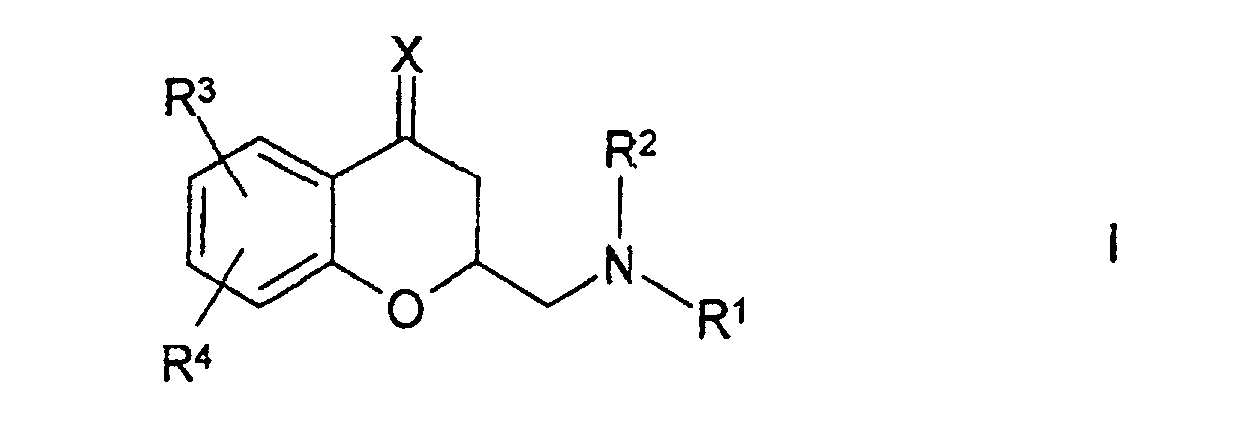
- the invention relates to the chroman derivatives of the formula I and their Salts.
- alkyl has 1 to 6, preferably 1, 2, 3 or 4 carbon atoms.
- Alkyl is preferably methyl or ethyl, furthermore propyl, isopropyl, furthermore also butyl, isobutyl, sec-butyl or tert-butyl.
- Acyl has 1 to 6, preferably 1, 2, 3 or 4 C atoms.
- Acyl is in particular acetyl, propionyl or butyryl.
- R 2 is preferably H, and also methyl, ethyl or propyl.
- R 3 and R 4 are preferably H.
- R 5 is preferably, for example, phenyl, o-, m- or p-tolyl, o-, m- or p-hydroxyphenyl, o-, m- or p-methoxyphenyl, o-, m- or p-fluorophenyl.
- the radical R 1 denotes acyl, -CO-R 5 or else a known amino-protecting group, particularly preferably acetyl.
- amino protecting group is well known and relates to groups that are suitable, an amino group before chemical reactions to protect (block), but which are easily removable after the desired chemical reaction at other sites of the molecule has been carried out. Typical of such groups are in particular unsubstituted acyl, aryl, aralkoxymethyl or aralkyl groups. There the amino protecting groups after the desired reaction (or reaction sequence) By the way, their nature and size are not critical; however, preference is given to those having 1-20, in particular 1-8 C atoms.
- acyl group is in the context of the present Process and the present compounds in the broadest sense.
- the compounds of formula I may contain one or more chiral centers and therefore occur in different stereoisomeric forms.
- Formula I encompasses all these forms.
- the invention further provides a process for the preparation of chroman derivatives of the formula I according to claim 1 and their salts, in which X is O, characterized in that a compound of the formula II in which R 1 , R 2 , R 3 , R 4 have the meanings given in claim 1 and X represents O, hydrogenated with the aid of an enantiomerically enriched catalyst.
- the invention also provides a process for preparing chroman derivatives of the formula I as claimed in claim 1 and salts thereof in which X is H, characterized in that a compound of the formula II in which R 1 , R 2 , R 3 , R 4 have the meanings given in claim 1 and X represents O, hydrogenated with the aid of an enantiomerically enriched catalyst, and then reduced as usual.
- the invention also provides a process for the preparation of Chromanderivaten of formula I, characterized in that it is at the enantiomerically enriched catalyst around a transition metal complex is.
- the catalyst is one Transition metal complex containing a metal selected from Group rhodium, iridium, ruthenium and palladium.
- the invention further relates to a process for the preparation of Chromanderivaten of formula I, characterized in that it is at the catalyst is a transition metal complex, wherein the Transition metal is complexed with a chiral diphosphine ligand.
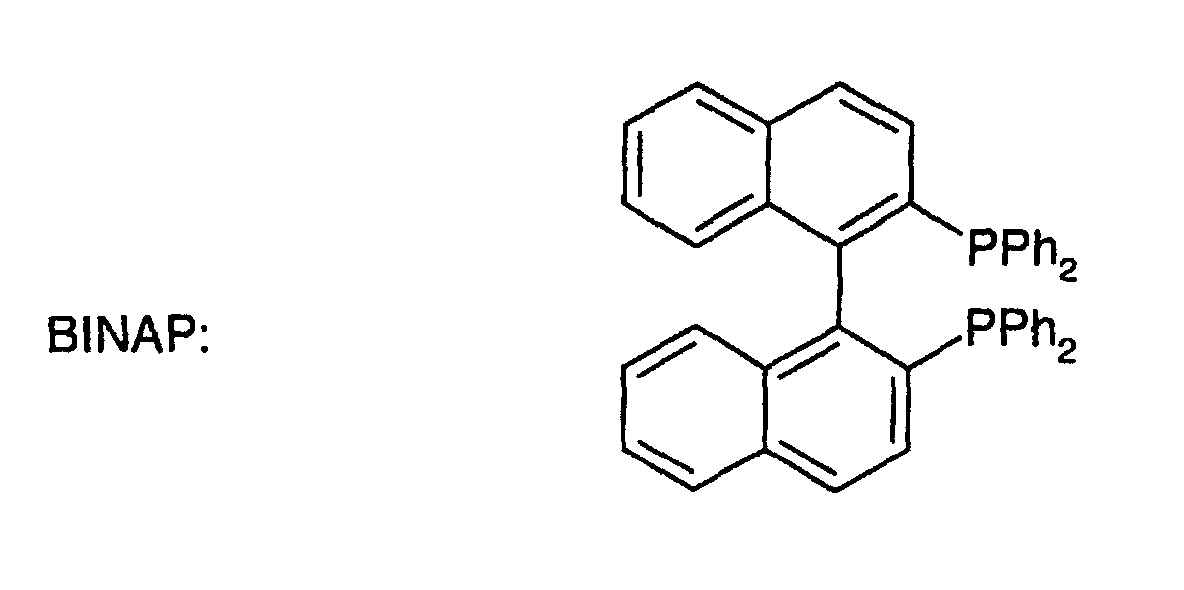
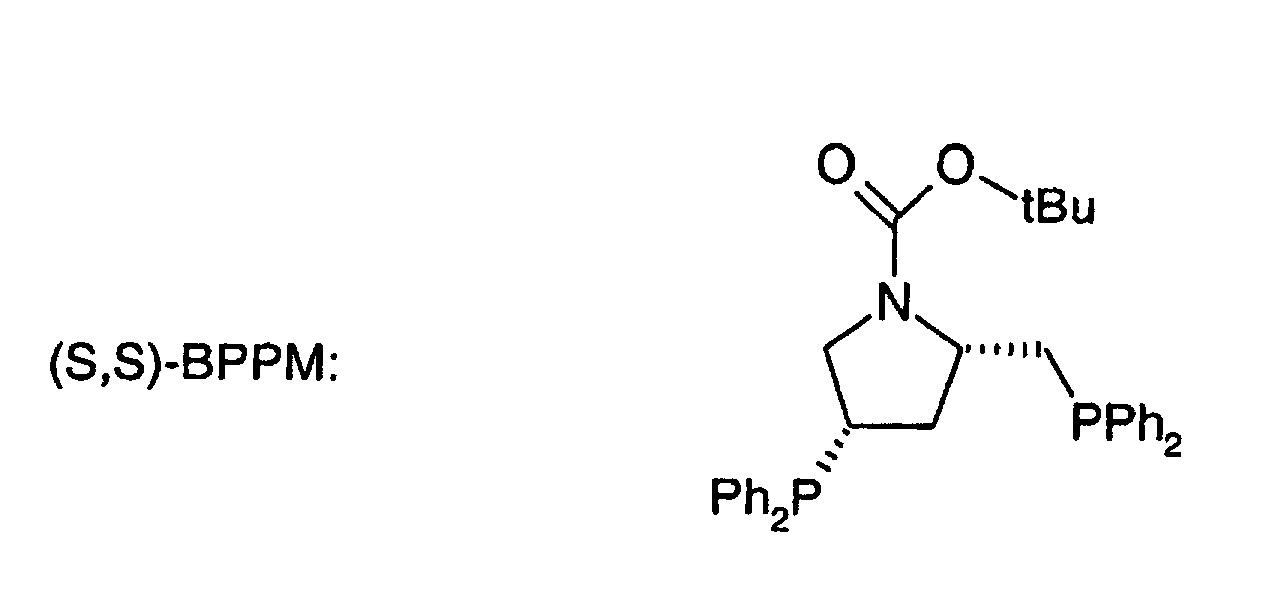
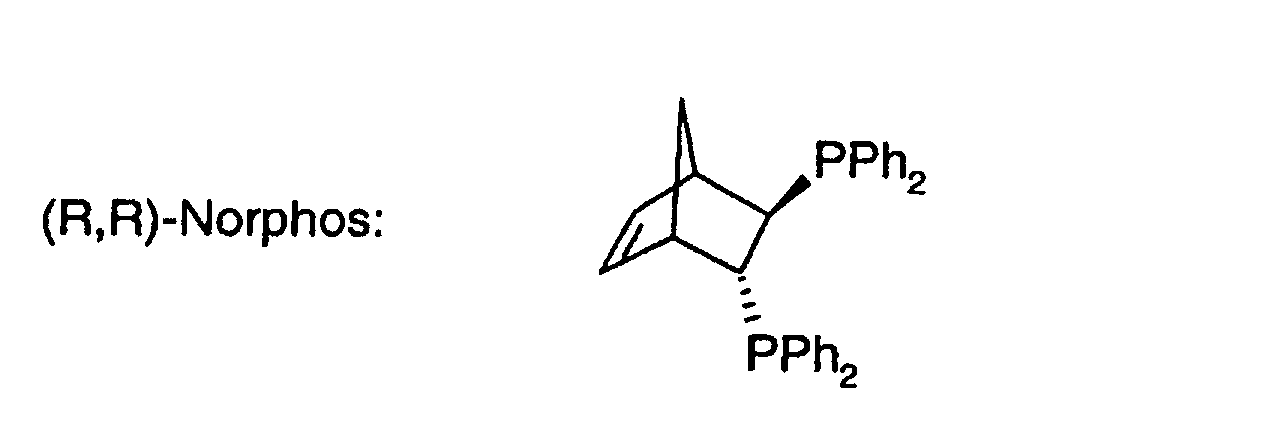
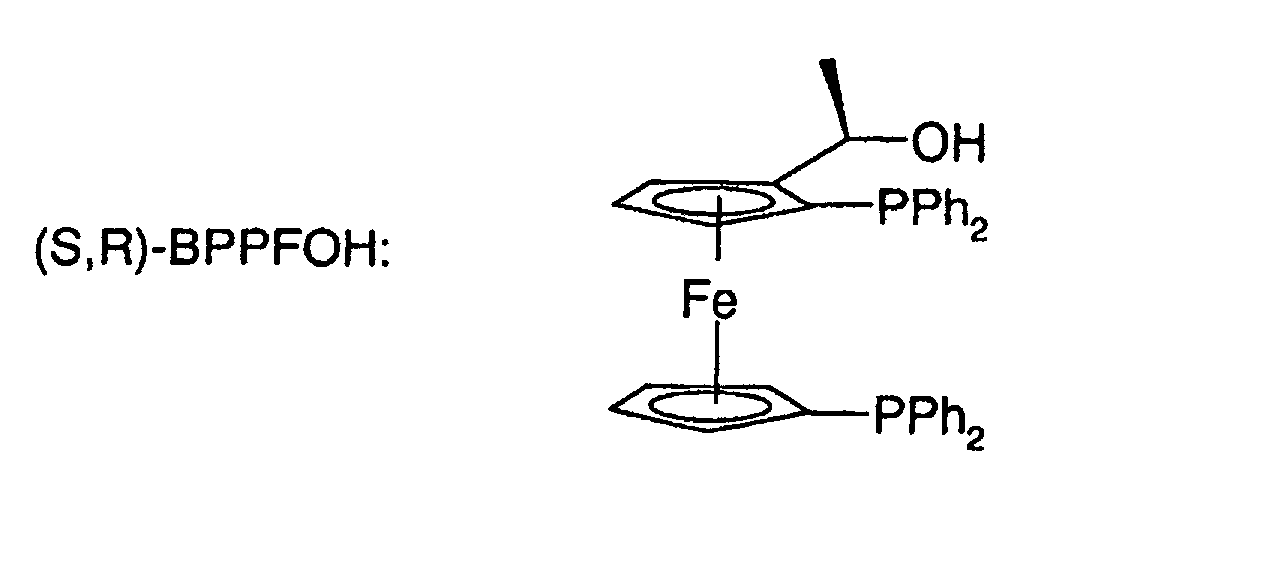
- Precursors for the chiral ligands are compounds such as Rh (COD) 2 OTf (rhodium cyclooctadiene triflate), [Rh (COD) Cl] 2 , Rh (COD) 2 BF 4 , [Ir (COD) Cl] 2 , Ir (COD) 2 BF 4 or [Ru (COD) Cl 2 ] x .
- the starting materials can, if desired, also be formed in situ, so they are not isolated from the reaction mixture, but immediately further converts to the compounds of formula I.
- the compounds of formula II are known in part.
- the compound 2- (acetylamino-methyl) -chromene-4-one (Beilstein RN 178696) from Schmutz et al., Helv. Chim. Acta; 36 , 1953; 620, 623, 625.
- the unknown compounds can easily be prepared analogously to the known compounds.
- the conversion of a compound of the formula II in which X is O into a compound of the formula I in which X represents O, is carried out according to the invention with hydrogen gas with the aid of an enantiomerically enriched catalyst in an inert solvent such as, for example, methanol or ethanol.
- Suitable inert solvents are, for example, e.g. Hydrocarbons such as Hexane, petroleum ether, benzene, toluene or xylene; chlorinated hydrocarbons such as trichlorethylene, 1,2-dichloroethane, carbon tetrachloride, chloroform or dichloromethane; Alcohols such as isopropanol, n-propanol, n-butanol or tert-butanol; Ethers, such as diethyl ether, diisopropyl ether, tetrahydrofuran (THF) or dioxane; Glycol ethers such as ethylene glycol monomethyl or monoethyl ether (methyl glycol or ethyl glycol), ethylene glycol dimethyl ether (Diglyme); Ketones such as acetone or butanone; Amides such as acetamide, Dimethylacetamide or dimethylformamide (DMF); Ni
- the reaction time of the enantioselective hydrogenation is between a few minutes and 14 days, the reaction temperature between 0 and 150 °, normally between 20 and 130 °.
- the catalyst / substrate ratio is between 1: 2000 and 1:50, more preferably 1: 1000 to 1: 100.
- the reaction time is then for example between 3 and 20 hours.
- the hydrogenation is carried out under 1-200 bar hydrogen, preferably at 3-100 bar.
- cleavage of a radical R 1 from a compound of formula I takes place - depending on the protective group used - eg with strong acids, useful with TFA (trifluoroacetic acid) or perchloric acid, but also with other strong inorganic acids such as hydrochloric acid or sulfuric acid, strong organic carboxylic acids such Trichloroacetic acid or sulfonic acids such as benzene or p-toluenesulfonic acid.
- strong acids useful with TFA (trifluoroacetic acid) or perchloric acid
- other strong inorganic acids such as hydrochloric acid or sulfuric acid
- strong organic carboxylic acids such Trichloroacetic acid or sulfonic acids
- benzene or p-toluenesulfonic acid strong organic carboxylic acids
- the presence of an additional inert solvent is possible, but not always necessary.
- Suitable inert solvents are preferably organic, for example carboxylic acids such as acetic acid, ethers such as tetrahydrofuran or dioxane, amides such as dimethylformamide, halogenated hydrocarbons such as dichloromethane, and also alcohols such as methanol, ethanol or isopropanol and water. Also suitable are mixtures of the abovementioned solvents. TFA is preferably used in excess without the addition of another solvent, perchloric acid in the form of a mixture of acetic acid and 70% perchloric acid in a ratio of 9: 1.
- the reaction temperatures are suitably between about 0 and about 50 °, preferably between 15 and 30 ° ,
- the group BOC is preferably cleaved off with TFA in dichloromethane or with about 3 to 5 n hydrochloric acid in dioxane at 15-30 °.
- the cleavage of the acetyl group is carried out by customary methods (PJ Kocienski, Protecting Groups, Georg Thieme Verlag, Stuttgart, 1994 ).
- Hydrogenolytically removable protecting groups can be cleaved off, for example, by treatment with hydrogen in the presence of a catalyst (eg a noble metal catalyst such as palladium, conveniently on a support such as carbon).
- a catalyst eg a noble metal catalyst such as palladium, conveniently on a support such as carbon.
- Suitable solvents are the abovementioned, in particular, for example, alcohols such as methanol or ethanol or amides such as DMF.
- the hydrogenolysis is usually carried out at temperatures between about 0 and 100 ° and pressures between about 1 and 200 bar, preferably at 20-30 ° and 1-10 bar.
- a base of the formula I can be converted with an acid into the associated acid addition salt, for example by reaction of equivalent amounts of the base and the acid in an inert solvent such as ethanol and subsequent evaporation.
- inorganic acids can be used, for example sulfuric acid, nitric acid, hydrohalic acids such as hydrochloric acid or hydrobromic acid, phosphoric acids such as orthophosphoric acid, sulfamic acid, and also organic acids, in particular aliphatic, alicyclic, araliphatic, aromatic or heterocyclic mono- or polybasic carboxylic, sulfonic or sulfuric acids, eg formic acid, acetic acid, propionic acid, pivalic acid, diethylacetic acid, malonic acid, succinic acid, pimelic acid, fumaric acid, maleic acid, lactic acid, tartaric acid, malic acid, citric acid, gluconic acid, ascorbic acid, nicotinic acid, isonicotinic acid, methane- or ethanesulfonic acid, ethanedisulfonic acid, 2-hydroxyethanesulfonic acid
- compounds of formula I can be reacted with bases (e.g., sodium or Potassium hydroxide or carbonate) into the corresponding metal, in particular Alkali metal or alkaline earth metal, or in the corresponding Ammonium salts are converted.
- bases e.g., sodium or Potassium hydroxide or carbonate
- the invention further relates to the use of the compounds of formula I as intermediates for the synthesis of drugs.
- Corresponding medicaments are described, for example, in EP 0 707 007 described.
- the invention further relates to the use of the compounds of formula I as intermediates for the synthesis of drugs, the Show effects on the central nervous system.
- Rh (COD) 2 OTf rhodium cyclooctadiene triflate
- the catalyst-substrate solution to be hydrogenated was filled in an inert gas in an autoclave.
- the protective gas atmosphere was replaced by repeated rinsing with hydrogen (1-5 bar H 2 atmosphere).
- the approaches analog 1.1. already reacted at room temperature and 5 bar of hydrogen.
- the catalysts analog 1.2. yielded the best results at 50 ° C and 80 bar hydrogen. In general, the hydrogenation was stopped after 15 hours.
- Rh-OTf ( R , R ) -EtDuphos MeOH 5 45 p 9th 23d Rh-OTf ( R , R ) -EtDuphos MeOH 5 31 p 10th 12 Ru-Cl 2 - ( R ) -BINAP i PrOH 5 50 s (AgOOCCF 3 ) 11th 19 Rh-ClO 4 - ( S , S ) -chiraphos i PrOH 1 - 12th 20 Rh-OTf- ( S , S ) -DIOP THF 1 rac.
- Rh-OTf- ( S , S ) -DIOP THF 3 8 R 14th 21 Rh-OTf ( R , R ) skewphos THF 1 - 15th 22b Rh-OTf- ( S , S ) -BPPM MeOH 1 7 p 16th 24a Rh-OTf- ( R , S ) -BPPFOH MeOH 1 54 R 17th 24b Rh-OTf- ( R , S ) -BPPFOH MeOH 1 54 R 18th 24c Rh-OTf- ( R , S ) -BPPFOH MeOH 5 63 R 19th 25a Rh-OTf- ( R ) -BINAP MeOH 1 1 R 20th 25b Rh-OTf- ( R ) -BINAP MeOH 5 rac.
Landscapes
- Chemical & Material Sciences (AREA)
- Organic Chemistry (AREA)
- Health & Medical Sciences (AREA)
- Nuclear Medicine, Radiotherapy & Molecular Imaging (AREA)
- Pharmacology & Pharmacy (AREA)
- Neurosurgery (AREA)
- Biomedical Technology (AREA)
- Chemical Kinetics & Catalysis (AREA)
- General Chemical & Material Sciences (AREA)
- Medicinal Chemistry (AREA)
- Bioinformatics & Cheminformatics (AREA)
- Engineering & Computer Science (AREA)
- Neurology (AREA)
- Life Sciences & Earth Sciences (AREA)
- Animal Behavior & Ethology (AREA)
- General Health & Medical Sciences (AREA)
- Public Health (AREA)
- Veterinary Medicine (AREA)
- Pharmaceuticals Containing Other Organic And Inorganic Compounds (AREA)
- Organic Low-Molecular-Weight Compounds And Preparation Thereof (AREA)
- Plural Heterocyclic Compounds (AREA)
- Pyrane Compounds (AREA)
- Low-Molecular Organic Synthesis Reactions Using Catalysts (AREA)
Abstract
Description

- R1
- Acyl mit 1-6 C-Atomen, -CO-R5, Phenylacetyl, Phenoxyacetyl, Methoxycarbonyl, Ethoxycarbonyl, 2,2,2-Trichlorethoxycarbonyl, tert.-Butoxycarbonyl, 2-lodethoxycarbonyl, Carbobenzoxycarbonyl, 4-Methoxybenzyloxycarbonyl, 9-Fluorenylmethoxycarbonyl oder 4-Methoxy-2,3,6-trimethylphenyl-sulfonyl,
- R2
- H oder Alkyl mit 1-6 C-Atomen,
- R3, R4
- jeweils unabhängig voneinander H, Alkyl mit 1-6 C-Atomen, CN, Hal oder COOR2,
- R5
- unsubstituiertes oder ein- oder zweimal durch Alkyl mit 1-6 C-Atomen, OR2 oder Hal substituiertes Phenyl,
- X
- H,H oder O,
- Hal
- F, Cl, Br oder I
sowie deren Salze,
wobei N-(Chroman-2-ylmethyl)-cyclopropancarbonsäureamid ausgeschlossen ist.
Gegenstand der Erfindung sind auch die optisch aktiven Formen, die Racemate, die Enantiomeren sowie die Hydrate und Solvate, z.B. Alkoholate, dieser Verbindungen.
R2 bedeutet vorzugsweise H, ferner auch Methyl, Ethyl oder Propyl.
R3 und R4 bedeuten vorzugsweise H.
R5 bedeutet vorzugsweise z.B. Phenyl, o-, m- oder p-Tolyl, o-, m- oder p-Hydroxyphenyl, o-, m- oder p-Methoxyphenyl, o-, m- oder p-Fluorophenyl. Der Rest R1 bedeutet Acyl, -CO-R5 oder aber eine an sich bekannte Aminoschutzgruppe, besonders bevorzugt ist Acetyl.
dadurch gekennzeichnet, daß man eine Verbindung der Formel II

mit Hilfe eines enantiomerenangereicherten Katalysators hydriert.
dadurch gekennzeichnet, daß man eine Verbindung der Formel II

mit Hilfe eines enantiomerenangereicherten Katalysators hydriert,
und anschließend wie üblich reduziert.




So kennt man z.B. die Verbindung 2-(Acetylamino-methyl)-chromen-4-on (Beilstein RN 178696) aus Schmutz et al., Helv. Chim. Acta; 36, 1953; 620, 623, 625.
Die Umwandlung einer Verbindung der Formel II, in der X O bedeutet, in eine Verbindung der Formel I, in der X O bedeutet, erfolgt erfindungsgemäß mit Wasserstoffgas mit Hilfe eines enantiomerenangereicherten Katalysators in einem inerten Lösungsmittel wie beispielsweise Methanol oder Ethanol.
Üblicherweise liegt das Verhältnis Katalysator/Substrat zwischen 1:2000 und 1:50, besonders bevorzugt bei 1:1000 bis 1:100. Die Reaktionszeit liegt dann z.B. zwischen 3 und 20 Stunden. Die Hydrierung wird unter 1-200 bar Wasserstoff durchgeführt, vorzugsweise bei 3-100 bar.
Die Abspaltung der Acetylgruppe erfolgt nach üblichen Methoden (P.J. Kocienski, Protecting Groups, Georg Thieme Verlag, Stuttgart, 1994).
Eine Base der Formel I kann mit einer Säure in das zugehörige Säureadditionssalz übergeführt werden, beispielsweise durch Umsetzung äquivalenter Mengen der Base und der Säure in einem inerten Lösungsmittel wie Ethanol und anschließendes Eindampfen. Für diese Umsetzung kommen insbesondere Säuren in Frage, die physiologisch unbedenkliche Salze liefern. So können anorganische Säuren verwendet werden, z.B. Schwefelsäure, Salpetersäure, Halogenwasserstoffsäuren wie Chlorwasserstoffsäure oder Bromwasserstoffsäure, Phosphorsäuren wie Orthophosphorsäure, Sulfaminsäure, ferner organische Säuren, insbesondere aliphatische, alicyclische, araliphatische, aromatische oder heterocyclische ein- oder mehrbasige Carbon-, Sulfon- oder Schwefelsäuren, z.B. Ameisensäure, Essigsäure, Propionsäure, Pivalinsäure, Diethylessigsäure, Malonsäure, Bernsteinsäure, Pimelinsäure, Fumarsäure, Maleinsäure, Milchsäure, Weinsäure, Äpfelsäure, Citronensäure, Gluconsäure, Ascorbinsäure, Nicotinsäure, Isonicotinsäure, Methan- oder Ethansulfonsäure, Ethandisulfonsäure, 2-Hydroxyethansulfonsäure, Benzolsulfonsäure, p-Toluolsulfonsäure, Naphthalin-mono- und Disulfonsäuren, Laurylschwefelsäure. Salze mit physiologisch nicht unbedenklichen Säuren, z.B. Pikrate, können zur Isolierung und/oder Aufreinigung der Verbindungen der Formel I verwendet werden.

R1 die in Anspruch 1 angegebene Bedeutung hat,
R2, R3 und R4 H bedeuten und X O bedeutet,
mit Hilfe eines enantiomerenangereicherten Katalysators hydriert,
R1 die in Anspruch 1 angegebene Bedeutung hat,
R2, R3 und R4 H bedeuten und X O bedeutet,
die enantiomerenreine (R)-Verbindung der Formel I, worin
R1 die in Anspruch 1 angegebene Bedeutung hat,
R2, R3 und R4 H bedeuten und X O bedeutet,
durch Kristallisation gewinnt,
daß man
R1 die in Anspruch 1 angegebene Bedeutung hat,
R2, R3 und R4 H bedeuten und X O bedeutet,
anschließend wie üblich reduziert,
daß man
R1 die in Anspruch 1 angegebene Bedeutung hat,
R2, R3 und R4 H bedeuten und X H,H bedeutet,
den Rest R1 abspaltet,
daß man

Der Enantiomerenüberschuß des Hydrierprodukts wurde an chiraler HPLC-Phase bestimmt:
Säule: Daicel Chiralcel OJ (I.D. x Länge /mm : 4,6 x 250)
Eluent: n-Hexan:i-Propanol = 9:1
Flow: 0,8 ml/min (18 bar, 28 °C)
Detection: UV 250 nm
Retention: Rt (R) = 25 min; Rt (S) = 27 min
Das Einengen der rohen Hydrierlösung führte zur Ausfällung des Produkts. Man stellte eine Vergrößerung des Enantiomerenüberschusses durch die fraktionierende Kristallisation fest.

| Elab- Nr. | Komplex: Metall-Anion-Lig (Zusatz) | Lsm | Druck | % ee | |
| 1. | 18 | Rh-OTf-(R,R)-EtDuphos | CH2Cl2 | 1 | 55 S |
| 2. | 13 | Rh-OTf-(R,R)-EtDuphos | THF | 1 | 44 S |
| 3. | 14 | Rh-OTf-(R,R)-EtDuphos | MeOH | 1 | 64 S |
| 4. | 15 | Rh-OTf-(R,R)-EtDuphos | EE | 1 | 33 S |
| 5. | 6 | Rh-OTf-(R,R)-EtDuphos | iPrOH | 1 | 20 S |
| 6. | 23a | Rh-OTf-(R,R)-EtDuphos | MeOH | 1 | 34 S |
| 7. | 23b | Rh-OTf-(R,R)-EtDuphos | MeOH | 1 | 36 S |
| 8. | 23c | Rh-OTf-(R,R)-EtDuphos | MeOH | 5 | 45 S |
| 9. | 23d | Rh-OTf-(R,R)-EtDuphos | MeOH | 5 | 31 S |
| 10. | 12 | Ru-Cl2-(R)-BINAP | iPrOH | 5 | 50 S |
| (AgOOCCF3) | |||||
| 11. | 19 | Rh-ClO4-(S,S)-Chiraphos | iPrOH | 1 | - |
| 12. | 20 | Rh-OTf-(S,S)-DIOP | THF | 1 | rac. |
| 13. | 20 | Rh-OTf-(S,S)-DIOP | THF | 3 | 8 R |
| 14. | 21 | Rh-OTf-(R,R)-Skewphos | THF | 1 | - |
| 15. | 22b | Rh-OTf-(S,S)-BPPM | MeOH | 1 | 7 S |
| 16. | 24a | Rh-OTf-(R,S)-BPPFOH | MeOH | 1 | 54 R |
| 17. | 24b | Rh-OTf-(R,S)-BPPFOH | MeOH | 1 | 54 R |
| 18. | 24c | Rh-OTf-(R,S)-BPPFOH | MeOH | 5 | 63 R |
| 19. | 25a | Rh-OTf-(R)-BINAP | MeOH | 1 | 1 R |
| 20. | 25b | Rh-OTf-(R)-BINAP | MeOH | 5 | rac. |
| 21. | 26a | Rh-OTf-(S,S)-Norphos | MeOH | 1 | 42 R |
| 22. | 26b | Rh-OTf-(S,S)-Norphos | MeOH | 5 | 60 R |
| 23. | 26c | Rh-OTf-(S,S)-Norphos | iPrOH | 5 | 12 R |
| 24. | 26d | Rh-OTf-(S,S)-Norphos | THF | 5 | 3 R |
| 25. | 27a | Rh-OTf-(S,S)-Norphos | MeOH | 8 | 64 R |
| 26. | 27b | Rh-Cl-(S,S)-Norphos | MeOH | 8 | 40 R |
| 27. | 27c | Rh-OTf-(S,S)-Norphos | MeOH | 30 | 65 R |
| 28. | 27d | Rh-OTf-(S,S)-Norphos | MeOH | 60 | 64 R |
| 29. | 28a | Rh-OTf-(R,R)-EtDUPhos | MeOH | 10 | 16 S |
| 30. | 28b | Rh-OTf-(R,R)-EtDUPhos | MeOH | 30 | 28 S |
| 31. | 29a | Rh-OTf-(R,S)-BPPFOH | MeOH | 10 | 55 R |
| 32. | 29b | Rh-OTf-(R,S)-BPPFOH | MeOH | 30 | 56 R |
| 33. | 37 | Rh-ClO4-(S,S)-Chiraphos | MeOH | 10 | 30 R |
| 34. | 38 | Rh-OTf-(S,S)-DIOP | MeOH | 10 | rac. |
| 35. | 39 | Rh-OTf-(R,R)-Skewphos | MeOH | 10 | 46 S |
| 36. | 40 | Rh-OTf-(S,S)-BPPM | MeOH | 10 | 9 S |
| 37. | 41 | Ir-Cl-(S,S)-DIOP | MeOH | 10 | 8 R |
| 38. | 42 | Ir-Cl-(S,S)-DIOP | CH2Cl2 | 10 | 7 S |
| 0. | 43 | Ir-Cl-(S,S)-DIOP (+ I) | MeOH | 10 | - |
| 1. | 44 | Ir-Cl-(S,S)-DIOP (+ I) | MeOH | 30 | - |
| 2. | 45 | Ir-Cl-(S,S)-DIOP (+ I | MeOH | 10 | - |
| +CH3COOH) | |||||
| 3. | 46 | Ir-OTf-(S,S)-DIOP | MeOH | 10 | 11R |
| 4. | 47 | Ir-OTf-(S,S)-DIOP (+ I) | MeOH | 10 | 39 R |
| 5. | 49 | Rh-OTf-(S,S)-Norphos | MeOH | 10, RT | 57 R |
| 6. | 50 | Rh-OTf-(S,S)-Norphos | MeOH | 10, 50°C | 60 R |
| 7. | 52 | Rh-BF4-(R,S)-PFctB | MeOH | 10, 50°C | 33 S |
| 8. | 54 | Rh-Cl-(R)-BINAP | Tol:MeOH 5:1 | 80, 50°C | 91S |
| 9. | 59 | Rh-Cl-(S,S)-Norphos | Tol:MeOH 5:1 | 80, 50°C | 19 R |
| 10. | 62 | roh 59//Pd/C | Tol:MeOH 5:1 | 7, 50°C | 18 R |
Claims (11)
- Chromanderivate der Formel Iworin
- R1
- Acyl mit 1-6 C-Atomen, -CO-R5, Phenylacetyl, Phenoxyacetyl, Methoxycarbonyl, Ethoxycarbonyl, 2,2,2-Trichlorethoxycarbonyl, tert.-Butoxycarbonyl, 2-Iodethoxycarbonyl, Carbobenzoxycarbonyl, 4-Methoxybenzyloxycarbonyl, 9-Fluorenylmethoxycarbonyl oder 4-Methoxy-2,3,6-trimethylphenyl-sulfonyl,
- R2
- H oder Alkyl mit 1-6 C-Atomen,
- R3, R4
- jeweils unabhängig voneinander H, Alkyl mit 1-6 C-Atomen, CN, Hal oder COOR2,
- R5
- unsubstituiertes oder ein- oder zweimal durch Alkyl mit 1-6 C-Atomen, OR2 oder Hal substituiertes Phenyl,
- X
- H, H oder O,
- Hal
- F, Cl, Br oder I
sowie deren Salze,
wobei N-(Chroman-2-ylmethyl)-cyclopropancarbonsäureamid ausgeschlossen ist. - Enantiomere der Verbindungen der Formel I gemäß Anspruch 1.
- Verbindungen der Formel I gemäß Anspruch 1sowie deren Salze.a) N-(4-Oxo-chroman-2-ylmethyl)-acetamid;b) N-(Chroman-2-ylmethyl)-acetamid;c) (S)-N-(4-Oxo-chroman-2-ylmethyl)-acetamid;d) (R)-N-(4-Oxo-chroman-2-ylmethyl)-acetamid;e) (S)-N-(Chroman-2-ylmethyl)-acetamid;f) (R)-N-(Chroman-2-ylmethyl)-acetamid.
- Verfahren zur Herstellung von Chromanderivaten der Formel I nach Anspruch 1 sowie von deren Salzen, worin X O bedeutet,
dadurch gekennzeichnet, daß man eine Verbindung der Formel IIworin R1, R2, R3, R4 die in Anspruch 1 angegebenen Bedeutungen haben und X O bedeutet,
mit Hilfe eines enantiomerenangereicherten Katalysators hydriert. - Verfahren zur Herstellung von Chromanderivaten der Formel I nach Anspruch 1 sowie von deren Salzen, worin X H,H bedeutet,
dadurch gekennzeichnet, daß man eine Verbindung der Formel IIworin R1, R2, R3, R4 die in Anspruch 1 angegebenen Bedeutungen haben und X O bedeutet,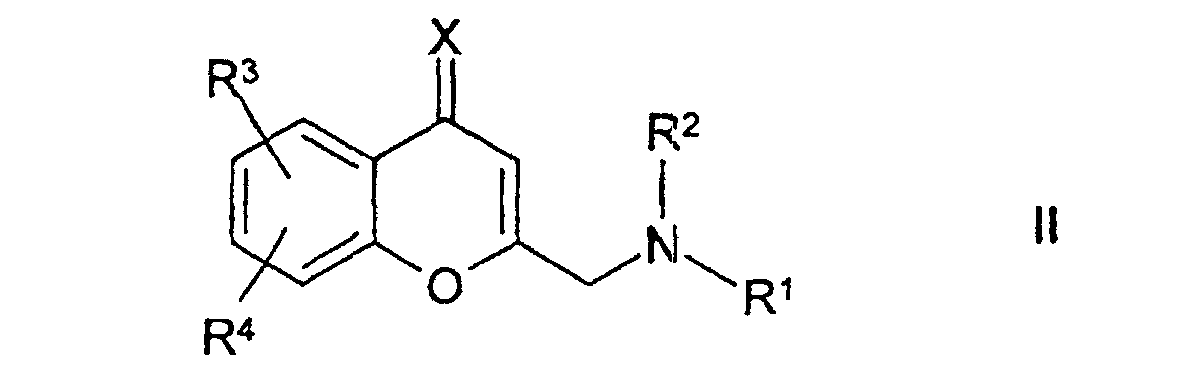
mit Hilfe eines enantiomerenangereicherten Katalysators hydriert, und anschließend wie üblich reduziert. - Verfahren zur Herstellung von Chromanderivaten der Formel I nach den Ansprüchen 4 oder 5, dadurch gekennzeichnet, daß es sich bei dem enantiomerenangereicherten Katalysator um einen Übergangsmetallkomplex handelt.
- Verfahren zur Herstellung von Chromanderivaten der Formel I nach den Ansprüchen 4, 5 oder 6, dadurch gekennzeichnet, daß es sich bei dem Katalysator um einen Übergangsmetallkomplex, enthaltend ein Metall ausgewählt aus der Gruppe Rhodium, Iridium, Ruthenium und Palladium,
handelt. - Verfahren zur Herstellung von Chromanderivaten der Formel I nach den Ansprüchen 4, 5, 6 oder 7, dadurch gekennzeichnet, daß es sich bei dem Katalysator um einen Übergangsmetallkomplex handelt, worin das Übergangsmetall mit einem chiralen Diphosphanliganden komplexiert ist.
- Verwendung der Verbindungen der Formel I nach Anspruch 1 als Zwischenprodukte zur Synthese von Arzneimitteln.
- Verwendung der Verbindungen der Formel I nach Anspruch 1 als Zwischenprodukte zur Synthese von Arzneimitteln, die Wirkungen auf das Zentralnervensystem zeigen.
- Verwendung der Verbindungen der Formel I nach Anspruch 1 bei der Synthese von
(R)-2-[5-(4-Fluorophenyl)-3-pyridylmethylaminomethyl]-chroman und dessen Salzen, dadurch gekennzeichnet, daß manwobei die Gewinnung des (R)-Enantiomeren durch Kristallisation aus dem enantiomerenangereicherten (R,S)-Gemisch auch nach Stufe c) oder nach Stufe d) durchgeführt werden kann.a) eine Verbindung der Formel IIworin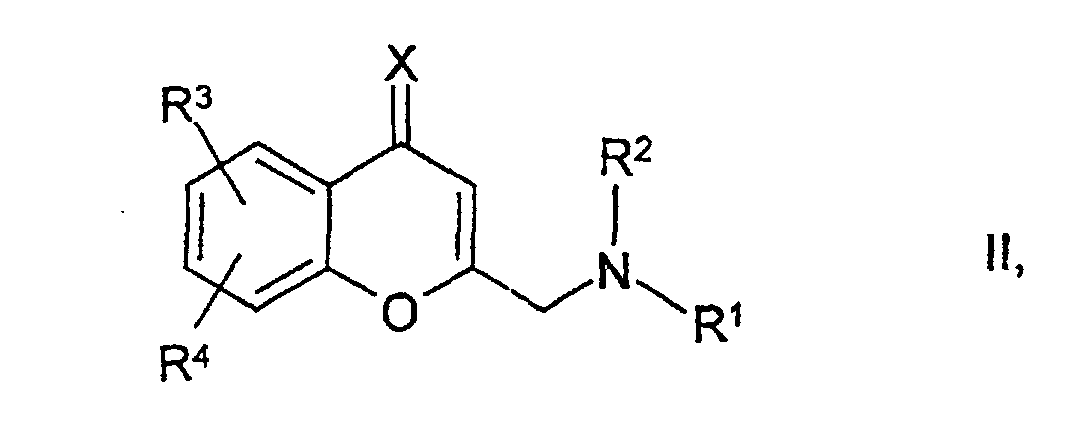
R1 die in Anspruch 1 angegebene Bedeutung hat,
R2, R3 und R4 H bedeuten und X O bedeutet,
mit Hilfe eines enantiomerenangereicherten Katalysators hydriert,b) daß man aus dem so erhaltenen enantiomerenangereicherten Gemisch der (R)- und (S)-Verbindungen der Formel I, worin
R1 die in Anspruch 1 angegebene Bedeutung hat,
R2, R3 und R4 H bedeuten und X O bedeutet,
die enantiomerenreine (R)-Verbindung der Formel I, worin
R1 die in Anspruch 1 angegebene Bedeutung hat,
R2, R3 und R4 H bedeuten und X O bedeutet,
durch Kristallisation gewinnt,
daß manc) die enantiomerenreine (R)-Verbindung der Formel I, worin
R1 die in Anspruch 1 angegebene Bedeutung hat,
R2, R3 und R4 H bedeuten und X O bedeutet,
anschließend wie üblich reduziert,
daß mand) aus der so erhaltenen (R)-Verbindung der Formel I, worin
R1 die in Anspruch 1 angegebene Bedeutung hat,
R2, R3 und R4 H bedeuten und X H,H bedeutet,
den Rest R1 abspaltet,
daß mane) das so erhaltene (R)-(Chroman-2-ylmethyl)-amin in sein Säureadditionssalz umwandelt und dieses in bekannter Weise zu (R)-2-[5-(4-Fluorophenyl)-3-pyridylmethylaminomethyl]-chroman umsetzt und gegebenenfalls in sein Säureadditionssalz umwandelt,
Priority Applications (1)
| Application Number | Priority Date | Filing Date | Title |
|---|---|---|---|
| SI9930269T SI1140890T1 (en) | 1998-12-17 | 1999-12-01 | Chroman derivatives |
Applications Claiming Priority (3)
| Application Number | Priority Date | Filing Date | Title |
|---|---|---|---|
| DE19858341A DE19858341A1 (de) | 1998-12-17 | 1998-12-17 | Chromanderivate |
| DE19858341 | 1998-12-17 | ||
| PCT/EP1999/009333 WO2000035901A1 (de) | 1998-12-17 | 1999-12-01 | Chromanderivate |
Publications (2)
| Publication Number | Publication Date |
|---|---|
| EP1140890A1 EP1140890A1 (de) | 2001-10-10 |
| EP1140890B1 true EP1140890B1 (de) | 2003-02-26 |
Family
ID=7891486
Family Applications (1)
| Application Number | Title | Priority Date | Filing Date |
|---|---|---|---|
| EP99965422A Expired - Lifetime EP1140890B1 (de) | 1998-12-17 | 1999-12-01 | Chromanderivate |
Country Status (26)
| Country | Link |
|---|---|
| US (1) | US6646136B1 (de) |
| EP (1) | EP1140890B1 (de) |
| JP (1) | JP4790910B2 (de) |
| KR (1) | KR100676017B1 (de) |
| CN (1) | CN1140522C (de) |
| AR (1) | AR021900A1 (de) |
| AT (1) | ATE233253T1 (de) |
| AU (1) | AU760501B2 (de) |
| BR (1) | BR9916188B1 (de) |
| CA (1) | CA2355098C (de) |
| CZ (1) | CZ300544B6 (de) |
| DE (2) | DE19858341A1 (de) |
| DK (1) | DK1140890T3 (de) |
| ES (1) | ES2193779T3 (de) |
| HK (1) | HK1043119B (de) |
| HU (1) | HU229060B1 (de) |
| ID (1) | ID29273A (de) |
| NO (1) | NO328132B1 (de) |
| PL (1) | PL194157B1 (de) |
| PT (1) | PT1140890E (de) |
| RU (1) | RU2233277C2 (de) |
| SK (1) | SK285837B6 (de) |
| TW (1) | TWI222866B (de) |
| UA (1) | UA72235C2 (de) |
| WO (1) | WO2000035901A1 (de) |
| ZA (1) | ZA200105840B (de) |
Families Citing this family (12)
| Publication number | Priority date | Publication date | Assignee | Title |
|---|---|---|---|---|
| WO2001092250A2 (en) * | 2000-06-02 | 2001-12-06 | Cor Therapeutics, Inc. | Synthesis of 2-acyl substituted chromanes and intermediates thereof |
| DE10044091A1 (de) * | 2000-09-07 | 2002-04-04 | Merck Patent Gmbh | Chromanonderivate |
| DE60333094D1 (de) * | 2002-04-17 | 2010-08-05 | Cytokinetics Inc | Verbindungen, zusammensetzungen und verfahren |
| EP1539727B1 (de) * | 2002-07-17 | 2009-02-18 | Cytokinetics, Inc. | Verbindungen, zusammensetzungen und verfahren zur behandlung von zellulären proliferativen erkrankungen |
| JP2005539062A (ja) * | 2002-09-13 | 2005-12-22 | サイトキネティクス・インコーポレーテッド | 化合物、組成物および方法 |
| EP1670456A2 (de) * | 2003-10-06 | 2006-06-21 | Cytokinetics, Inc. | Verbindungen, zusammensetzungen und verfahren |
| CN100424034C (zh) * | 2006-08-25 | 2008-10-08 | 华中科技大学 | 一种磷石膏复合砖及其生产方法 |
| RU2404174C2 (ru) * | 2008-12-08 | 2010-11-20 | ГОУ ВПО "Северо-Осетинский государственный университет имени Коста Левановича Хетагурова" | 4-иминометил-3-(7-ацетоксихромон-3-ил) бензойная кислота, обладающая антибактериальной активностью |
| ES2534318B1 (es) * | 2013-10-18 | 2016-01-28 | Artax Biopharma Inc. | Derivados de cromeno sustituidos por alcóxido como inhibidores de la interacción TCR-Nck |
| ES2534336B1 (es) * | 2013-10-18 | 2016-01-28 | Artax Biopharma Inc. | Derivados de cromeno como inhibidores de la interacción TCR-Nck |
| CN108690017B (zh) * | 2018-05-04 | 2021-06-18 | 新乡学院 | 一种铑催化的莫西沙星侧链中间体的制备方法 |
| CN113979983B (zh) * | 2021-11-03 | 2023-10-03 | 中国人民解放军空军军医大学 | 一种非达司他关键中间体的不对称合成方法 |
Family Cites Families (7)
| Publication number | Priority date | Publication date | Assignee | Title |
|---|---|---|---|---|
| DE2745305A1 (de) * | 1977-10-07 | 1979-04-19 | Bayer Ag | Insektizide und akarizide mittel |
| DE2745306A1 (de) * | 1977-10-07 | 1979-04-19 | Bayer Ag | Insektizide mittel |
| CA2022693A1 (en) * | 1989-08-05 | 1991-02-06 | Rolf Gericke | Chroman derivatives |
| DE4102103A1 (de) * | 1991-01-25 | 1992-08-20 | Bayer Ag | Substituierte benzoxazepine und benzthiazepine, verfahren zu ihrer herstellung und ihre verwendung in arzneimitteln |
| DE4135474A1 (de) * | 1991-10-28 | 1993-04-29 | Bayer Ag | 2-aminomethyl-chromane |
| RU2039739C1 (ru) * | 1993-03-01 | 1995-07-20 | Пятигорский фармацевтический институт | Замещенные фениламиды -3-(4`-оксо- 4н-1`-бензопиранил-3`)-пропен -2-карбоновой кислоты, обладающие антиаллергической активностью |
| PT707007E (pt) * | 1994-10-14 | 2002-06-28 | Merck Patent Gmbh | Derivados amino(tio)eter como agentes activos no snc |
-
1998
- 1998-12-17 DE DE19858341A patent/DE19858341A1/de not_active Withdrawn
-
1999
- 1999-01-12 UA UA2001075094A patent/UA72235C2/uk unknown
- 1999-12-01 AT AT99965422T patent/ATE233253T1/de active
- 1999-12-01 ES ES99965422T patent/ES2193779T3/es not_active Expired - Lifetime
- 1999-12-01 AU AU20946/00A patent/AU760501B2/en not_active Expired
- 1999-12-01 CN CNB998142247A patent/CN1140522C/zh not_active Expired - Lifetime
- 1999-12-01 PL PL348191A patent/PL194157B1/pl unknown
- 1999-12-01 CA CA002355098A patent/CA2355098C/en not_active Expired - Fee Related
- 1999-12-01 KR KR1020017007512A patent/KR100676017B1/ko not_active Expired - Fee Related
- 1999-12-01 ID IDW00200101558A patent/ID29273A/id unknown
- 1999-12-01 HK HK02104515.6A patent/HK1043119B/zh not_active IP Right Cessation
- 1999-12-01 US US09/868,704 patent/US6646136B1/en not_active Expired - Lifetime
- 1999-12-01 BR BRPI9916188-5A patent/BR9916188B1/pt not_active IP Right Cessation
- 1999-12-01 JP JP2000588161A patent/JP4790910B2/ja not_active Expired - Lifetime
- 1999-12-01 SK SK816-2001A patent/SK285837B6/sk not_active IP Right Cessation
- 1999-12-01 DK DK99965422T patent/DK1140890T3/da active
- 1999-12-01 DE DE59904407T patent/DE59904407D1/de not_active Expired - Lifetime
- 1999-12-01 WO PCT/EP1999/009333 patent/WO2000035901A1/de not_active Ceased
- 1999-12-01 PT PT99965422T patent/PT1140890E/pt unknown
- 1999-12-01 HU HU0104819A patent/HU229060B1/hu not_active IP Right Cessation
- 1999-12-01 RU RU2001119277/04A patent/RU2233277C2/ru not_active IP Right Cessation
- 1999-12-01 CZ CZ20012145A patent/CZ300544B6/cs not_active IP Right Cessation
- 1999-12-01 EP EP99965422A patent/EP1140890B1/de not_active Expired - Lifetime
- 1999-12-15 TW TW088121987A patent/TWI222866B/zh not_active IP Right Cessation
- 1999-12-17 AR ARP990106530A patent/AR021900A1/es active IP Right Grant
-
2001
- 2001-06-15 NO NO20012964A patent/NO328132B1/no not_active IP Right Cessation
- 2001-07-16 ZA ZA200105840A patent/ZA200105840B/en unknown
Also Published As
Similar Documents
| Publication | Publication Date | Title |
|---|---|---|
| EP1140890A1 (de) | Chromanderivate | |
| EP0722943A1 (de) | 9-substituierte 2-(2-n-Alkoxyphenyl)-purin-6-one | |
| DE10044091A1 (de) | Chromanonderivate | |
| CH670644A5 (de) | ||
| EP1233961B9 (de) | Verfahren zur herstellung von 5-(1-piperazinyl)-benzofuran-2-carboxamid durch übergansmetall-katalysierte aminierung | |
| CH623584A5 (de) | ||
| EP1049674B1 (de) | Verfahren zur herstellung von (-)cis-3- hydroxy-1- methyl-4-(2, 4,6-trimethoxyphenyl)- piperidin | |
| DE69202173T2 (de) | Phenylethanolamino- und Phenylethanolaminomethyltetraline, Verfahren zu deren Herstellung Zwischenprodukte davon und diese enthaltende pharmazeutische Zusammensetzungen. | |
| DE60002303T2 (de) | Verfahren zur herstellung von paroxetin | |
| EP0389425B1 (de) | Neue Benzothiopyranylamine | |
| WO2001004112A2 (de) | Benzofuranderivate | |
| DE102008033165A1 (de) | Verfahren zum Herstellen eines optisch aktiven ß-Hydroxycarbonsäurederivats | |
| WO2000026193A1 (de) | Verfahren zur herstellung von 4-[(2',5'-diamino-6'-halogenpyrimidin-4'-yl)amino]-cyclopent-2-enylmethanolen | |
| EP2812317B1 (de) | Verfahren zur stereoselektiven synthese von 1,4-geschützten 9-hydroxy-5-oxo-1,4-diaza-spiro [5.5]undecane | |
| EP2313377B1 (de) | Verfahren zur stereoselektiven synthese bicyclischer heterocyclen | |
| DE102004033313A1 (de) | Verfahren zur Herstellung von Enantiomeren 3-hydroxy-3-phenyl-propylaminen | |
| EP0551653A1 (de) | Enantiomerenreine 2-Oxa-5,8-diazabicyclo (4.3.0)nonane sowie Verfahren zu ihrer Herstellung | |
| DE4329776A1 (de) | Naphthoxazine, ihre Herstellung und Verwendung | |
| EP0803502B1 (de) | Verfahren zur Herstellung von optisch aktiven 2-Piperazincarbonsäurederivaten | |
| DE4032055A1 (de) | Verfahren zur herstellung von optisch aktiven 4-aryl-2-pyrrolidinonen | |
| EP1939182A1 (de) | Verfahren zur Herstellung von (R oder S)-2-Alkyl-3-heterocyclyl-1-propanolen | |
| CH672786A5 (de) | ||
| DD209630A5 (de) | Verfahren zur herstellung von flutrolin | |
| DE4112352A1 (de) | Substituierte piperidin-derivate, ihre herstellung und verwendung | |
| CH503027A (de) | Verfahren zur Herstellung neuer Indenopyridinderivate |
Legal Events
| Date | Code | Title | Description |
|---|---|---|---|
| PUAI | Public reference made under article 153(3) epc to a published international application that has entered the european phase |
Free format text: ORIGINAL CODE: 0009012 |
|
| 17P | Request for examination filed |
Effective date: 20010406 |
|
| AK | Designated contracting states |
Kind code of ref document: A1 Designated state(s): AT BE CH CY DE DK ES FI FR GB GR IE IT LI LU MC NL PT SE |
|
| AX | Request for extension of the european patent |
Free format text: AL;LT PAYMENT 20010406;LV PAYMENT 20010406;MK;RO PAYMENT 20010406;SI PAYMENT 20010406 |
|
| 17Q | First examination report despatched |
Effective date: 20020304 |
|
| GRAH | Despatch of communication of intention to grant a patent |
Free format text: ORIGINAL CODE: EPIDOS IGRA |
|
| GRAH | Despatch of communication of intention to grant a patent |
Free format text: ORIGINAL CODE: EPIDOS IGRA |
|
| GRAA | (expected) grant |
Free format text: ORIGINAL CODE: 0009210 |
|
| AK | Designated contracting states |
Designated state(s): AT BE CH CY DE DK ES FI FR GB GR IE IT LI LU MC NL PT SE |
|
| AX | Request for extension of the european patent |
Extension state: LT LV RO SI |
|
| REG | Reference to a national code |
Ref country code: GB Ref legal event code: FG4D Free format text: NOT ENGLISH |
|
| REG | Reference to a national code |
Ref country code: CH Ref legal event code: EP |
|
| REG | Reference to a national code |
Ref country code: IE Ref legal event code: FG4D Free format text: GERMAN |
|
| REF | Corresponds to: |
Ref document number: 59904407 Country of ref document: DE Date of ref document: 20030403 Kind code of ref document: P |
|
| REG | Reference to a national code |
Ref country code: GR Ref legal event code: EP Ref document number: 20030401520 Country of ref document: GR |
|
| REG | Reference to a national code |
Ref country code: DK Ref legal event code: T3 |
|
| REG | Reference to a national code |
Ref country code: SE Ref legal event code: TRGR |
|
| GBT | Gb: translation of ep patent filed (gb section 77(6)(a)/1977) | ||
| ET | Fr: translation filed | ||
| REG | Reference to a national code |
Ref country code: ES Ref legal event code: FG2A Ref document number: 2193779 Country of ref document: ES Kind code of ref document: T3 |
|
| PG25 | Lapsed in a contracting state [announced via postgrant information from national office to epo] |
Ref country code: MC Free format text: LAPSE BECAUSE OF NON-PAYMENT OF DUE FEES Effective date: 20031231 |
|
| PLBE | No opposition filed within time limit |
Free format text: ORIGINAL CODE: 0009261 |
|
| STAA | Information on the status of an ep patent application or granted ep patent |
Free format text: STATUS: NO OPPOSITION FILED WITHIN TIME LIMIT |
|
| 26N | No opposition filed |
Effective date: 20031127 |
|
| REG | Reference to a national code |
Ref country code: SI Ref legal event code: IF |
|
| PGFP | Annual fee paid to national office [announced via postgrant information from national office to epo] |
Ref country code: DK Payment date: 20141211 Year of fee payment: 16 |
|
| PGFP | Annual fee paid to national office [announced via postgrant information from national office to epo] |
Ref country code: SE Payment date: 20141211 Year of fee payment: 16 Ref country code: IE Payment date: 20141209 Year of fee payment: 16 Ref country code: FI Payment date: 20141209 Year of fee payment: 16 Ref country code: LU Payment date: 20141202 Year of fee payment: 16 Ref country code: GR Payment date: 20141112 Year of fee payment: 16 |
|
| PGFP | Annual fee paid to national office [announced via postgrant information from national office to epo] |
Ref country code: PT Payment date: 20141201 Year of fee payment: 16 Ref country code: AT Payment date: 20141125 Year of fee payment: 16 |
|
| PGFP | Annual fee paid to national office [announced via postgrant information from national office to epo] |
Ref country code: CY Payment date: 20141128 Year of fee payment: 16 |
|
| PGFP | Annual fee paid to national office [announced via postgrant information from national office to epo] |
Ref country code: BE Payment date: 20141211 Year of fee payment: 16 |
|
| REG | Reference to a national code |
Ref country code: FR Ref legal event code: PLFP Year of fee payment: 17 |
|
| PG25 | Lapsed in a contracting state [announced via postgrant information from national office to epo] |
Ref country code: BE Free format text: LAPSE BECAUSE OF NON-PAYMENT OF DUE FEES Effective date: 20151231 |
|
| REG | Reference to a national code |
Ref country code: PT Ref legal event code: MM4A Free format text: LAPSE DUE TO NON-PAYMENT OF FEES Effective date: 20160601 |
|
| REG | Reference to a national code |
Ref country code: LT Ref legal event code: MM9D Effective date: 20151201 |
|
| REG | Reference to a national code |
Ref country code: DK Ref legal event code: EBP Effective date: 20151231 |
|
| PG25 | Lapsed in a contracting state [announced via postgrant information from national office to epo] |
Ref country code: LU Free format text: LAPSE BECAUSE OF NON-PAYMENT OF DUE FEES Effective date: 20151201 Ref country code: CY Free format text: LAPSE BECAUSE OF NON-PAYMENT OF DUE FEES Effective date: 20151201 |
|
| REG | Reference to a national code |
Ref country code: SE Ref legal event code: EUG |
|
| REG | Reference to a national code |
Ref country code: AT Ref legal event code: MM01 Ref document number: 233253 Country of ref document: AT Kind code of ref document: T Effective date: 20151201 |
|
| PG25 | Lapsed in a contracting state [announced via postgrant information from national office to epo] |
Ref country code: SE Free format text: LAPSE BECAUSE OF NON-PAYMENT OF DUE FEES Effective date: 20151202 Ref country code: PT Free format text: LAPSE BECAUSE OF NON-PAYMENT OF DUE FEES Effective date: 20160601 |
|
| REG | Reference to a national code |
Ref country code: IE Ref legal event code: MM4A |
|
| REG | Reference to a national code |
Ref country code: SI Ref legal event code: KO00 Effective date: 20160830 |
|
| REG | Reference to a national code |
Ref country code: GR Ref legal event code: ML Ref document number: 20030401520 Country of ref document: GR Effective date: 20160707 |
|
| PG25 | Lapsed in a contracting state [announced via postgrant information from national office to epo] |
Ref country code: IE Free format text: LAPSE BECAUSE OF NON-PAYMENT OF DUE FEES Effective date: 20151201 |
|
| REG | Reference to a national code |
Ref country code: FR Ref legal event code: PLFP Year of fee payment: 18 |
|
| PG25 | Lapsed in a contracting state [announced via postgrant information from national office to epo] |
Ref country code: GR Free format text: LAPSE BECAUSE OF NON-PAYMENT OF DUE FEES Effective date: 20160707 Ref country code: AT Free format text: LAPSE BECAUSE OF NON-PAYMENT OF DUE FEES Effective date: 20151201 |
|
| PG25 | Lapsed in a contracting state [announced via postgrant information from national office to epo] |
Ref country code: DK Free format text: LAPSE BECAUSE OF NON-PAYMENT OF DUE FEES Effective date: 20151231 |
|
| PG25 | Lapsed in a contracting state [announced via postgrant information from national office to epo] |
Ref country code: FI Free format text: LAPSE BECAUSE OF NON-PAYMENT OF DUE FEES Effective date: 20151201 |
|
| REG | Reference to a national code |
Ref country code: FR Ref legal event code: PLFP Year of fee payment: 19 |
|
| REG | Reference to a national code |
Ref country code: FR Ref legal event code: PLFP Year of fee payment: 20 |
|
| PGFP | Annual fee paid to national office [announced via postgrant information from national office to epo] |
Ref country code: NL Payment date: 20181017 Year of fee payment: 20 |
|
| PGFP | Annual fee paid to national office [announced via postgrant information from national office to epo] |
Ref country code: DE Payment date: 20181120 Year of fee payment: 20 |
|
| PGFP | Annual fee paid to national office [announced via postgrant information from national office to epo] |
Ref country code: CH Payment date: 20181217 Year of fee payment: 20 Ref country code: FR Payment date: 20181011 Year of fee payment: 20 Ref country code: GB Payment date: 20181128 Year of fee payment: 20 |
|
| PGFP | Annual fee paid to national office [announced via postgrant information from national office to epo] |
Ref country code: IT Payment date: 20181220 Year of fee payment: 20 Ref country code: ES Payment date: 20190103 Year of fee payment: 20 |
|
| REG | Reference to a national code |
Ref country code: DE Ref legal event code: R071 Ref document number: 59904407 Country of ref document: DE |
|
| REG | Reference to a national code |
Ref country code: NL Ref legal event code: MK Effective date: 20191130 |
|
| REG | Reference to a national code |
Ref country code: CH Ref legal event code: PL |
|
| REG | Reference to a national code |
Ref country code: GB Ref legal event code: PE20 Expiry date: 20191130 |
|
| PG25 | Lapsed in a contracting state [announced via postgrant information from national office to epo] |
Ref country code: GB Free format text: LAPSE BECAUSE OF EXPIRATION OF PROTECTION Effective date: 20191130 |
|
| REG | Reference to a national code |
Ref country code: ES Ref legal event code: FD2A Effective date: 20201204 |
|
| PG25 | Lapsed in a contracting state [announced via postgrant information from national office to epo] |
Ref country code: ES Free format text: LAPSE BECAUSE OF EXPIRATION OF PROTECTION Effective date: 20191202 |