EP1152901B1 - Support d'impression et sa preparation par imprimante a jet d'encre - Google Patents
Support d'impression et sa preparation par imprimante a jet d'encre Download PDFInfo
- Publication number
- EP1152901B1 EP1152901B1 EP00908428A EP00908428A EP1152901B1 EP 1152901 B1 EP1152901 B1 EP 1152901B1 EP 00908428 A EP00908428 A EP 00908428A EP 00908428 A EP00908428 A EP 00908428A EP 1152901 B1 EP1152901 B1 EP 1152901B1
- Authority
- EP
- European Patent Office
- Prior art keywords
- clay
- lithographic printing
- printing plate
- hydrophilic
- porous layer
- Prior art date
- Legal status (The legal status is an assumption and is not a legal conclusion. Google has not performed a legal analysis and makes no representation as to the accuracy of the status listed.)
- Expired - Lifetime
Links
Images

Classifications
-
- B—PERFORMING OPERATIONS; TRANSPORTING
- B41—PRINTING; LINING MACHINES; TYPEWRITERS; STAMPS
- B41M—PRINTING, DUPLICATING, MARKING, OR COPYING PROCESSES; COLOUR PRINTING
- B41M5/00—Duplicating or marking methods; Sheet materials for use therein
- B41M5/50—Recording sheets characterised by the coating used to improve ink, dye or pigment receptivity, e.g. for ink-jet or thermal dye transfer recording
- B41M5/52—Macromolecular coatings
-
- B—PERFORMING OPERATIONS; TRANSPORTING
- B41—PRINTING; LINING MACHINES; TYPEWRITERS; STAMPS
- B41C—PROCESSES FOR THE MANUFACTURE OR REPRODUCTION OF PRINTING SURFACES
- B41C1/00—Forme preparation
- B41C1/10—Forme preparation for lithographic printing; Master sheets for transferring a lithographic image to the forme
- B41C1/1066—Forme preparation for lithographic printing; Master sheets for transferring a lithographic image to the forme by spraying with powders, by using a nozzle, e.g. an ink jet system, by fusing a previously coated powder, e.g. with a laser
-
- B—PERFORMING OPERATIONS; TRANSPORTING
- B41—PRINTING; LINING MACHINES; TYPEWRITERS; STAMPS
- B41M—PRINTING, DUPLICATING, MARKING, OR COPYING PROCESSES; COLOUR PRINTING
- B41M5/00—Duplicating or marking methods; Sheet materials for use therein
- B41M5/50—Recording sheets characterised by the coating used to improve ink, dye or pigment receptivity, e.g. for ink-jet or thermal dye transfer recording
- B41M5/502—Recording sheets characterised by the coating used to improve ink, dye or pigment receptivity, e.g. for ink-jet or thermal dye transfer recording characterised by structural details, e.g. multilayer materials
- B41M5/506—Intermediate layers
-
- B—PERFORMING OPERATIONS; TRANSPORTING
- B41—PRINTING; LINING MACHINES; TYPEWRITERS; STAMPS
- B41M—PRINTING, DUPLICATING, MARKING, OR COPYING PROCESSES; COLOUR PRINTING
- B41M5/00—Duplicating or marking methods; Sheet materials for use therein
- B41M5/50—Recording sheets characterised by the coating used to improve ink, dye or pigment receptivity, e.g. for ink-jet or thermal dye transfer recording
- B41M5/52—Macromolecular coatings
- B41M5/5245—Macromolecular coatings characterised by the use of polymers containing cationic or anionic groups, e.g. mordants
-
- B—PERFORMING OPERATIONS; TRANSPORTING
- B41—PRINTING; LINING MACHINES; TYPEWRITERS; STAMPS
- B41N—PRINTING PLATES OR FOILS; MATERIALS FOR SURFACES USED IN PRINTING MACHINES FOR PRINTING, INKING, DAMPING, OR THE LIKE; PREPARING SUCH SURFACES FOR USE AND CONSERVING THEM
- B41N1/00—Printing plates or foils; Materials therefor
- B41N1/12—Printing plates or foils; Materials therefor non-metallic other than stone, e.g. printing plates or foils comprising inorganic materials in an organic matrix
- B41N1/14—Lithographic printing foils
-
- B—PERFORMING OPERATIONS; TRANSPORTING
- B41—PRINTING; LINING MACHINES; TYPEWRITERS; STAMPS
- B41M—PRINTING, DUPLICATING, MARKING, OR COPYING PROCESSES; COLOUR PRINTING
- B41M5/00—Duplicating or marking methods; Sheet materials for use therein
- B41M5/50—Recording sheets characterised by the coating used to improve ink, dye or pigment receptivity, e.g. for ink-jet or thermal dye transfer recording
- B41M5/502—Recording sheets characterised by the coating used to improve ink, dye or pigment receptivity, e.g. for ink-jet or thermal dye transfer recording characterised by structural details, e.g. multilayer materials
- B41M5/508—Supports
-
- B—PERFORMING OPERATIONS; TRANSPORTING
- B41—PRINTING; LINING MACHINES; TYPEWRITERS; STAMPS
- B41M—PRINTING, DUPLICATING, MARKING, OR COPYING PROCESSES; COLOUR PRINTING
- B41M5/00—Duplicating or marking methods; Sheet materials for use therein
- B41M5/50—Recording sheets characterised by the coating used to improve ink, dye or pigment receptivity, e.g. for ink-jet or thermal dye transfer recording
- B41M5/52—Macromolecular coatings
- B41M5/5218—Macromolecular coatings characterised by inorganic additives, e.g. pigments, clays
-
- B—PERFORMING OPERATIONS; TRANSPORTING
- B41—PRINTING; LINING MACHINES; TYPEWRITERS; STAMPS
- B41M—PRINTING, DUPLICATING, MARKING, OR COPYING PROCESSES; COLOUR PRINTING
- B41M5/00—Duplicating or marking methods; Sheet materials for use therein
- B41M5/50—Recording sheets characterised by the coating used to improve ink, dye or pigment receptivity, e.g. for ink-jet or thermal dye transfer recording
- B41M5/52—Macromolecular coatings
- B41M5/5236—Macromolecular coatings characterised by the use of natural gums, of proteins, e.g. gelatins, or of macromolecular carbohydrates, e.g. cellulose
-
- B—PERFORMING OPERATIONS; TRANSPORTING
- B41—PRINTING; LINING MACHINES; TYPEWRITERS; STAMPS
- B41M—PRINTING, DUPLICATING, MARKING, OR COPYING PROCESSES; COLOUR PRINTING
- B41M5/00—Duplicating or marking methods; Sheet materials for use therein
- B41M5/50—Recording sheets characterised by the coating used to improve ink, dye or pigment receptivity, e.g. for ink-jet or thermal dye transfer recording
- B41M5/52—Macromolecular coatings
- B41M5/5254—Macromolecular coatings characterised by the use of polymers obtained by reactions only involving carbon-to-carbon unsaturated bonds, e.g. vinyl polymers
-
- B—PERFORMING OPERATIONS; TRANSPORTING
- B41—PRINTING; LINING MACHINES; TYPEWRITERS; STAMPS
- B41M—PRINTING, DUPLICATING, MARKING, OR COPYING PROCESSES; COLOUR PRINTING
- B41M5/00—Duplicating or marking methods; Sheet materials for use therein
- B41M5/50—Recording sheets characterised by the coating used to improve ink, dye or pigment receptivity, e.g. for ink-jet or thermal dye transfer recording
- B41M5/52—Macromolecular coatings
- B41M5/5263—Macromolecular coatings characterised by the use of polymers obtained otherwise than by reactions only involving carbon-to-carbon unsaturated bonds
- B41M5/5281—Polyurethanes or polyureas
-
- Y—GENERAL TAGGING OF NEW TECHNOLOGICAL DEVELOPMENTS; GENERAL TAGGING OF CROSS-SECTIONAL TECHNOLOGIES SPANNING OVER SEVERAL SECTIONS OF THE IPC; TECHNICAL SUBJECTS COVERED BY FORMER USPC CROSS-REFERENCE ART COLLECTIONS [XRACs] AND DIGESTS
- Y10—TECHNICAL SUBJECTS COVERED BY FORMER USPC
- Y10T—TECHNICAL SUBJECTS COVERED BY FORMER US CLASSIFICATION
- Y10T428/00—Stock material or miscellaneous articles
- Y10T428/24—Structurally defined web or sheet [e.g., overall dimension, etc.]
- Y10T428/24802—Discontinuous or differential coating, impregnation or bond [e.g., artwork, printing, retouched photograph, etc.]
- Y10T428/24917—Discontinuous or differential coating, impregnation or bond [e.g., artwork, printing, retouched photograph, etc.] including metal layer
-
- Y—GENERAL TAGGING OF NEW TECHNOLOGICAL DEVELOPMENTS; GENERAL TAGGING OF CROSS-SECTIONAL TECHNOLOGIES SPANNING OVER SEVERAL SECTIONS OF THE IPC; TECHNICAL SUBJECTS COVERED BY FORMER USPC CROSS-REFERENCE ART COLLECTIONS [XRACs] AND DIGESTS
- Y10—TECHNICAL SUBJECTS COVERED BY FORMER USPC
- Y10T—TECHNICAL SUBJECTS COVERED BY FORMER US CLASSIFICATION
- Y10T428/00—Stock material or miscellaneous articles
- Y10T428/249921—Web or sheet containing structurally defined element or component
- Y10T428/249953—Composite having voids in a component [e.g., porous, cellular, etc.]
-
- Y—GENERAL TAGGING OF NEW TECHNOLOGICAL DEVELOPMENTS; GENERAL TAGGING OF CROSS-SECTIONAL TECHNOLOGIES SPANNING OVER SEVERAL SECTIONS OF THE IPC; TECHNICAL SUBJECTS COVERED BY FORMER USPC CROSS-REFERENCE ART COLLECTIONS [XRACs] AND DIGESTS
- Y10—TECHNICAL SUBJECTS COVERED BY FORMER USPC
- Y10T—TECHNICAL SUBJECTS COVERED BY FORMER US CLASSIFICATION
- Y10T428/00—Stock material or miscellaneous articles
- Y10T428/25—Web or sheet containing structurally defined element or component and including a second component containing structurally defined particles
- Y10T428/259—Silicic material
Definitions
- the present invention relates to a lithographic printing plate, and an ink jet printing process for production thereof.
- the lithographic printing plates of the present invention exhibit good resolution, and do not suffer from the "fingerprint" problem associated with conventional lithographic plates. They are also suitable for pressruns of over 100,000 copies.
- the offset lithographic printing process utilizes a developed planographic printing plate having oleophilic image areas and hydrophilic non-image areas.
- the plate is commonly dampened before or during inking with an oil-based ink composition.
- the damping process utilizes an aqueous fountain solution such as those described in U.S. Patents Nos. 3,877,372, 4,278,467 and 4,854,969.
- aqueous fountain solution such as those described in U.S. Patents Nos. 3,877,372, 4,278,467 and 4,854,969.
- Lithographic printing plates can be manufactured using a mask approach and a dye-based hot melt ink jet ink.
- U.S. Patent No. 4,833,486 discloses a dye-based hot melt ink composition which is jetted onto a conventional photopolymer plate. The deposited ink acts as a mask during plate exposure, and is removed from the plate together with the exposed photopolymer during development of the plate.
- This technique involves multiple processing steps such as UV-irradiation, chemical development and plate drying, which result in high production costs and environmental concerns.
- European Patent Publication No. 503,621 discloses a direct lithographic plate making method which includes jetting a photocuring ink onto the plate substrate, and exposing the plate to UV radiation to harden the image area. An oil-based ink may then be adhered to the image area for printing onto a printing medium.
- Canadian Patent No. 2,107,980 discloses an aqueous ink composition which includes a first polymer containing a cyclic anhydride or derivative thereof and a second polymer that contains hydroxyl sites.
- the two polymers are thermally crosslinked in a baking step after imaging of a substrate.
- the resulting matrix is said to be resistant to an acidic fountain solution of an offset printing process.
- the Examples illustrate production of imaged plates said to be capable of lithographic runlengths of from 35,000 to 65,000 copies, while a non-crosslinked imaged plate exhibited a runlength of only 4,000 copies.
- Porous ink receptive layers are also known.
- Other references which disclose clay-containing substrates, as opposed to clay-containing layers supported on a substrate, include U.S. Patent Nos. 4,883,486 and 5,364,702.
- U.S. Patent No. 4,883,486 discloses an ink jet image transfer lithographic apparatus which jets melted hydrophobic ink onto aluminum or paper plates, with paper plates having a high clay content found to be useful and economical. No discussion of specific clays or porosity of the plate is provided.
- U.S. Patent No. 5,364,702 discloses an ink-jet recording layer supported on a substrate, with the ink receiving layer containing at least one of acetylene glycol, ethylene oxide addition product and acetylene glycol and acetylene alcohol, each of which have a triple bond in its molecule.
- the ink receiving layer may also contain an inorganic pigment such as silica, a water-soluble polymeric binder, and a cationic oligomer or polymer. No discussion of porosity is provided.
- the printable media- of the present invention employs a copolymer having a plurality of amine sites, which are at least partially neutralized with an acid.
- JP-A-1-151852 discloses ink jet recording sheets comprising a substrate and a color receiving layer.
- U.S. Patent No. 5,820,932 discloses a process for the production of lithographic printing plates.
- Ink jet liquid droplets form an image upon the surface of a printing plate corresponding to digital information depicting the image as provided by a computer system which is in communication with the printer heads.
- the droplets from the printer head comprise resin forming reactants which polymerize on the plate surface, alone or in combination with reactant precoated on the plate, to form a printable hard resin image.
- the resin image so formed provides a lithographic printing plate useful for extended print runs.
- the present invention does not require polymerization of the fluid composition jetted upon the printable media substrate.
- An object of the present invention is to provide a lithographic printing plate capable of extended runlengths which exhibits good resolution and transfer to the substrate.
- Another object of the present invention is to overcome the "fingerprint" problem.
- a feature of the present invention is a substrate having a porous ceramic (clay-containing) layer supported thereon.
- Another feature of the invention is an ink-receptive, thermoplastic layer supported on the porous layer, with the ink receptive layer containing a copolymer having a maximum surface energy of 50 mN/m (dyne/cm) and a plurality of tertiary amine sites, the amine sites being at least partially neutralized with an acid.
- An advantage of the present invention is the elimination of the exposure and chemical development steps of conventional lithographic printing plate manufacturing processes, thereby achieving lower production cost and an environmentally-friendly process.
- the present invention relates to a lithographic printing plate, including: (a) a substrate having a hydrophilic, porous layer on at least one surface; and (b) an ink receptive, thermoplastic image layer adhered to the hydrophilic porous layer, wherein the ink receptive layer contains a copolymer having a maximum surface energy of 50 mN/m (dyne/cm) and a plurality of tertiary amine sites, the amine sites being at least partially neutralized with an acid.
- the invention also relates to a method for preparing a lithographic printing plate, including: (a) applying a hydrophilic, porous layer onto a substrate; (b) applying a fluid composition onto the hydrophilic, porous layer by means of an ink jet printing apparatus, where the fluid composition contains a copolymer having a maximum surface energy of 50 mN/m (dyne/cm) and a plurality of tertiary amine sites, the amine sites being at least partially neutralized with an acid, and (c) drying the fluid composition.
- the Figure illustrates the theoretical mechanisms believed responsible for the improved properties exhibited by the lithographic printing plate of the present invention. More specifically, the Figure illustrates the acid/base matching of a fluid composition to the silicated, hydrophilic, porous layer.
- the applicants have discovered a high resolution lithographic printing plate that can be imaged by drop-on-demand ink jet printing techniques without using conventional exposure and development steps.
- the lithographic printing plate does not suffer from the "fingerprint" problem which afflicts conventional lithographic plates.
- the resolution of the lithographic printing plate can be even further improved by acid/base interfacial matching of a basic, porous and hydrophilic substrate with a fluid composition which contains a partially or completely neutralized basic polymer.
- hydrophilic it is meant a surface on which the equilibrium contact angle of water is less than 40 degrees when measured in an air environment at 25°C and at 35% relative humidity using a goniometer. As a reference point, the equilibrium contact angle of water on a surface deemed to be substantially hydrophilic is from 0 to 20 degrees.
- porous layer it is meant a hydrophilic layer having a water or water-based ink absorption rate which results in an acoustic attenuation of at least 5% of the original acoustic signal after 5 seconds, as determined by acoustic measurements using an EST surface sizing instrument commercially available from Muetek Analytic, Inc., Marietta, GA.
- fluid composition it is meant a composition that, when applied by an ink jet print head onto a hydrophilic, porous layer of a substrate, will form an image area which, when dried, will adhere to the layer and will accept subsequent application of ink conventionally used in lithographic printing.
- the fluid composition thus must satisfy the demanding performance requirements of ink jet ink compositions.
- the lithographic printing plate of the present invention includes:
- the substrate may be aluminum, polymeric film or paper, and is preferably roughened by conventional chemical, electrochemical or mechanical surface treatments.
- a chemical roughening treatment is disclosed in U.S. Patent No. 5,551,585. It is known that the surface of an aluminum substrate may be made basic by contacting the aluminum with an aqueous silicate solution at a temperature between 20°C and 100°C, preferably between 80 and 95°C.
- Polymeric substrates such as polyethylene terephthalate or polyethylene naphthalate film can be coated with a hydrophilic subbing layer composed of, for example, a dispersion of titanium dioxide particles in crosslinked gelatin to provide a roughened surface.
- a hydrophilic subbing layer composed of, for example, a dispersion of titanium dioxide particles in crosslinked gelatin to provide a roughened surface.
- Paper supports can be similarly treated and employed as substrates.
- the hydrophilic, porous layer of the substrate includes a water soluble binder, hardening agent and a clay selected from the group consisting of kaolin, hydrotalcite, glauconite, a mixture of metal oxides, a serpentine clay, a montmorillonite clay, an illite clay, a chlorite clay, a vermiculite clay, a bauxite clay, an attapulgite clay, a sepiolite clay, a palygorskite clay, a corrensite clay, an allophane clay, an imogolite clay, a boehmite clay, a gibsite clay, a cliachite clay and a laponite clay.
- Kaolin and montmorillonite clays are preferred, and a clay containing a mixture of aluminum oxide, silicon oxide, sodium, titanium, calcium, aluminum and silica is especially preferred.
- the water soluble binder may be selected from the group consisting of gelatin, a cellulose, poly(vinyl pyrrolidone), polyacrylamide, polyvinyl alcohol, agar, algin, carrageenan, fucoidan, laminaran, gum arabic, corn hull gum, gum ghatti, guar gum, karaya gum, locust bean gum, pectin, dextrin, starch and polypeptide.
- a cellulosic binder such as hydroxypropyl methyl cellulose, is preferred.
- Suitable hardening agents include, but are not limited to, tetraalkoxysilanes (such as tetraethoxysilane and tetramethoxysilane) and silanes having at least two hydroxy, alkoxy or acetoxy groups, including but not limited to 3-aminopropyltrihydroxysilane, glycidoxypropyltriethoxysilane, 3-aminopropylmethyldihydroxysilane, 3-(2-aminoethyl)aminopropyltrihydroxy silane, N-trihydroxysilylpropyl-N,N,N-trimethylammoniumchloride, trihydroxysilylpropanesulfonic acid and salts thereof.
- the first two compounds in this list are preferred. These materials can be readily obtained from several commercial sources including Aldrich Chemical Company, Milwaukee, WI.
- the hydrophilic, porous layer may also contain amorphous silica particles (for example, about 5 ⁇ m in average size) to provide a surface roughness that is eventually used for printing, fillers (such as ground limestone, talc, calcium sulfate, barium sulfate, titanium dioxide, zinc oxide, zinc sulfide, zinc carbonate, titanium white, aluminum silicate, diatomaceous earth, calcium silicate, magnesium silicate, aluminum hydroxide, alumina and lithophone), pigments (such as styrene-based plastic pigments, acrylic-based plastic pigments, microcapsules and urea resin pigments), pigment dispersants, thickeners, blowing agents, penetrants, dyes or colored pigments, optical brighteners, ultraviolet radiation absorbers, antioxidants, preservatives and antifungal agents.
- fillers such as ground limestone, talc, calcium sulfate, barium sulfate, titanium dioxide, zinc oxide, zinc sulfide, zinc carbonate,
- the hydrophilic, porous layer may also contain a non-ionic surfactant, such as CT-121 which contains 2,4,7,9-tetramethyl-5-decyne-4,7-diol, (available from Air Products Corporation, Allentown, PA), ZONYLTM FSN nonionic surfactant (available from DuPont, Wilmington, DE), Olin 10G (available from Olin Corporation, Stamford, CT) and FLUORADTM FC 431 nonionic surfactant (available from 3M Company, St. Paul, MN).
- CT-121 is preferred.
- the hydrophilic, porous layer may also contain one or more metal oxides of silicon, beryllium, magnesium, aluminum, germanium, arsenic, indium, tin, antimony, tellurium, lead, bismuth or transition metals.
- silicon is considered a "metal.”
- Silicon oxide, aluminum oxide, titanium oxide and zirconium oxide compounds are preferred, and silicon oxide and titanium oxide compounds are most preferred, in the practice of this invention. Mixtures of oxides can also be used in any combination and proportions.
- Component Broad Range Preferred Range Clay 30 - 80 % 50 - 70 % Colloidal silica 15 - 50 % 20 - 40 % Water-soluble polymer binder 2 - 15 % 5 - 12 % Hardening agent 1 - 10 % 1 - 5 % Surfactant 0.01 - 1 % 0.1 - 0.5 % Amorphous silica 0.1 - 10 % 1 - 3 %
- the porous, hydrophilic composition may be applied to the substrate as an aqueous solution or dispersion by conventional methods, and then permitted to harden (crosslink) by drying the composition at elevated temperatures, for example 100-120°C for 5-10 minutes.
- the hydrophilic, porous layer so obtained has a dry coating weight of at least 5 g/m 2 , preferably from 10 to 20 g/m 2 .
- the fluid composition is applied over the areas of the hydrophilic, porous layer which constitute a desired image, preferably by means of an ink jet printing apparatus.
- the fluid composition is then dried to form an ink receptive, thermoplastic image layer adherent to the hydrophilic, porous layer.
- Drying may be accomplished by allowing the fluid composition to air dry or, preferably by the application of heat, for example, by exposure to temperatures of 105 to 130°C for 5-60 seconds. Forced air drying can be used to reduce drying time.
- the hydrophilic layer is sufficiently porous that it permits a portion of the water of the fluid composition to be absorbed into the interior of the layer rather than remaining on the surface. This porosity is believed to permit fast drying of each dot of the fluid composition in place, and to minimize expansion of the dot over the surface of the hydrophilic layer.
- the resulting ink receptive layer comprises a plurality of dots forming a desired image to be printed.
- the dots can have an average ratio (i.e., dot diameter:droplet diameter) of not more than 2.5, preferably not more than 2.2, where droplet diameter is defined as the size of a droplet of a fluid composition formed by the ink jet printer employed to apply the ink receptive layer. The lower the average ratio, the higher the resolution.
- the fluid composition typically also contains a surfactant, a humectant and water in addition to the copolymer, which may be selected from the group consisting of polyacrylates, styrenated polyacrylates, polyamides and polyurethanes.
- Suitable polyacrylates and styrenated polyacrylates may be prepared from comonomers having the following formula: where R 1 is hydrogen or C 1-5 alkyl; R 2 is C 1-5 alkyl; R 3 is hydrogen or methyl; X is -C 6 H 4 - or n is 2 to 6; and Q is oxygen or N-H.
- Illustrative comonomers include acrylates such as dimethylaminoethyl acrylate, dimethylaminoethyl methacrylate, diethylaminoethyl acrylate, diethylaminoethyl methacrylate, di(t-butyl)aminoethyl acrylate and di(t-butyl)aminoethyl methacrylate, acrylamides such as dimethylamino-propyl methacrylamide, and styrenes such as p-dimethylamino styrene, and diethylamino styrene.
- acrylates such as dimethylaminoethyl acrylate, dimethylaminoethyl methacrylate, diethylaminoethyl acrylate, diethylaminoethyl methacrylate, di(t-butyl)aminoethyl acrylate and di(t
- the copolymer may also be a polyamide prepared from a comonomer having at least one tertiary amine site in its backbone.
- Suitable comonomers include 1,4-bis(3-aminopropyl) piperazine and dialkyl C 1-10 1,4-piperazinedipropionate.
- the copolymer may also be a polyurethane prepared from a comonomer having the following formula: HOH 2 CH 2 C-Z-CH 2 CH 2 OH where Z is an aliphatic, cycloaliphatic or aromatic divalent radical which contains at least one tertiary amino group, with the proviso that the radical is bonded to the remainder of the comonomer structure by carbon-to-carbon bonds.
- Suitable comonomers which may be employed to prepare the copolymer include those which conform to the following formula: wherein R is an aliphatic, cycloaliphatic or aromatic substituent, and u is 1 to 6. N-methyldiethanol amine is a suitable comonomer.
- An acid is employed to partially or completely neutralize the amine sites of the copolymer, and should possess a relatively low molecular weight.
- Suitable acids conform to one of the formulae in the group consisting of H-(CH 2 ) n -COOH and where R is hydrogen, -CH 3 or -CH 2 CH 3 ; and n is a number from 0 to 6.
- Formic acid, acetic acid, lactic acid, and glycolic acid are preferred as the neutralizing acid, with formic acid being especially preferred.
- the copolymer should have a maximum surface energy, as measured according to the Owens-Wendt method, as described in J. APPL. POL. SCI, 13 , p. 1741 (1969), based on two liquid probes (water and diiodomethane), of 50 mN/m (dynes/cm), preferably from 20 to 50 mN/m (dynes/cm).
- the second component of the fluid composition is a non-ionic or cationic surfactant which serves to lower the dynamic surface tension of the fluid composition so that it can be jetted upon a substrate by a conventional ink jet printer.
- the dynamic surface tension of the fluid composition may range from 20 to 60 mN/m (dynes/cm), preferably from mN/m (32 to 44 dynes/cm), Acetylenic glycols, ethoxylated glycols, ethoxylated/propoxylated block copolymers and sorbitan esters are preferred surfactants.
- the viscosity of the fluid composition should not exceed 20 mPa ⁇ s (centipoise) at 25 °C, and is preferably 1 to 10 mPa ⁇ s (centipoise), most preferably 1 to 5 mPa ⁇ s (centipoise).
- the fluid composition preferably contains a humectant to ensure that it will retain water while the ink jet printer is idle.
- Suitable humectants include glycerol, ethylene glycol, diethylene glycol, triethylene glycol, propylene glycol, dipropylene glycol, tripropylene glycol, ethylene glycol monomethyl ether, diethylene glycol monomethyl ether, triethylene glycol monomethyl ether, and propylene glycol monomethyl ether, di-propylene glycol monomethyl ether, tripropylene glycol monomethyl ether, and combinations thereof.
- the fluid composition may be prepared by mixing the appropriate amounts of copolymer and the non-ionic or cationic surfactant in deionized water.
- the fluid composition may preferably contain from 0.1 to 10 percent by weight of the copolymer, from 0.001 to 5 weight percent by weight of the surfactant, and from about 85 to about 99 percent by weight water, all based upon the total weight of the composition. It is even more preferred that the fluid composition contains from 0.1 to 3 weight percent by weight of the copolymer, from 0.05 to 1 weight percent of the surfactant, and from 95 to 99 weight percent water, based on the total weight of the composition.
- the humectant may be present in an amount of from 0.1 to 10 weight percent, preferably 1 to 3 weight percent, based on the total weight of the composition.
- the fluid composition may also contain colorants, biocides, corrosion inhibitors and anti-foaming agents.
- the hydrophilic, porous layer has a plurality of sodium silicate sites, which renders its surface even more basic.
- the fluid composition contains a basic copolymer which is partially or fully neutralized with an acid. It is thus possible to "interfacially match" the basic, hydrophilic and porous layer of the printing plate substrate with the basic copolymer of the fluid composition. It is preferred that the basic sites of the fluid composition's copolymer should be partially neutralized, thereby ensuring that both acidic and basic sites are present in the copolymer. The presence of both acidic and basic sites is believed to permit two different mechanisms (electrostatic repulsion and double salt replacement) to occur simultaneously. This "acid/base interfacial matching" theory is illustrated by the Figure and explained below.
- the net effect of such evaporation is to increase the relative percentage of non-neutralized basic sites of the copolymer which are present in the primary film in comparison to the bulk of the liquid droplet. These non-neutralized basic sites will be repulsed by the basic sites present on the surface of the silicated porous layer.
- the electron pair repulsion between the free tertiary amine groups of the polymer and the basic sites of the silicated porous layer tends to reduce the expansion of the liquid droplet, which results in a dot diameter which is smaller in relation to the diameter of the liquid droplet, thereby imparting superior resolution to the ink receptive composition.
- the silicated porous layer and the partially neutralized basic copolymer of the fluid composition are "interfacially matched" to provide for such repulsion.
- a second mechanism is believed to occur in the bulk of the liquid droplet. Relatively little evaporation of the acid and water occurs in the bulk of the liquid droplet. Thus, the proportion of acid neutralized basic sites in the bulk of the droplet is greater than in the primary film. It is theorized that an acid/base double salt substitution reaction occurs between the acid sites present in the partially neutralized basic copolymer in the bulk of the ink droplet and the basic sites present on the surface of the silicated porous layer.
- the silicated porous layer and the partially neutralized basic copolymer of the fluid composition are "interfacially matched" to provide a proton from the neutralized amine group which is attracted by the basic site of the sodium silicate, as shown in the Figure.
- This second mechanism is currently believed to be responsible for the superior adhesion and durability of the resulting ink receptive layer, and may explain why a crosslinking step is not required in the present invention.
- the ink receptive layer is "thermoplastic" in the sense that it is not covalently crosslinked.
- MIBK methyl isobutyl ketone
- n-dodecylmercaptan 0.75 g
- VAZO 88 1,1'-azobicyclohexanecarbo-nitrile initiator 15 g was stirred, nitrogen-blanketed and heated to reflux temperature. Then a blend of dimethylaminoethyl methacrylate (84 g), methyl methacrylate (216 g) and MIBK (20 g) was added dropwise over 2.5 hours at as constant a rate as possible. A solution of VAZO 88 initiator (1.5 g) in MIBK (20 g) was added thirty minutes later.
- the product was an opaque dispersion of a 28% DMAEMA/72% MMA copolymer 75% neutralized with formic acid.
- the dispersion had a pH of 6.20, a percent solids of 33.2, and a Brookfield viscosity of 16900 mPa ⁇ s (centipoise) at 5 rpm.
- MIBK methyl isobutyl ketone
- MIBK methyl isobutyl ketone
- separate addition funnels were charged with a) a blend of methyl methacrylate (140g), ethyl acrylate (40g), and 2-(dimethylamino)ethyl methacrylate (70g), and b) a solution of "VAZO 88" 1,1'-azobicyclohexanecarbo-nitrile initiator (1.0g) in MIBK (25g). Simultaneous dropwise addition was started at reflux and carried out at rates such that each addition was completed in 2.5 hours.
- MIBK methyl isobutyl ketone
- the monomer funnel was rinsed into the batch with MIBK (20g). An hour later VAZO 88 initiator (1g) in MIBK (10g) was added, followed by a 5g MIBK funnel rinse. Heating was stopped three hours later, and stirring was discontinued after the reaction mixture cooled to room temperature.
- the solution was concentrated by distillation, removing 85g of solvent.
- the solution was diluted with a solution of formic acid (15.4g) (approximately 75% of theoretical neutralization) and water (400g).
- the resulting viscous, heterogeneous dispersion was azotropically distilled until its temperature reached 99° and little or no more MIBK was being removed. During this distillation, water (150g) was added to reduce viscosity. As the dispersion cooled, it was diluted further with water (100g), plus ten drops of formic acid.
- the product was a translucent dispersion of a 56% methyl methacrylate/28% dimethylaminoethyl methacrylate/16% ethyl acrylate copolymer 75% neutralized with formic acid.
- the dispersion had a pH of 6.25, a percent solids of 26.2 and a Brookfield viscosity of 4100 mPa ⁇ s (centipoise) at 20 rpm.
- Fluid compositions were prepared by adding an appropriate amount of the partially neutralized, basic copolymer dispersions of Examples 1 and 2 to deionized water which additionally contained a non-ionic surfactant and a glycerol humectant. The mixture was stirred to ensure homogeneous mixing, and filtered through a 1 micron pore size filter. The resulting fluid compositions are set forth below in Table 2 below:
- LUDOX SM-30 (240 g, 30% colloidal silica in water, Du Pont), METHOCEL K 100 LV binder resin (408 g, hydroxy propyl methyl cellulose 5% in water, Dow Chemical), TEX 540 kaolin clay (144 g, ECC International), SYLOID 7000 amorphous silica (32 g, W. R. Grace) and CT-121 non-ionic surfactant (12 g, Air Products) were mixed with 240 g water in a shear mixer for fifteen minutes and then passed through an Eiger horizontal mill filled with zirconia beads for a total of four passes to produce the clay coating composition summarized in Table 3 below: COMPOUND AMOUNT AQUEOUS WT.% SOLID WT.
- Tetramethyl orthosilicate (8 ml) was added to the clay coating composition of Example 4 (950 g).
- the coating composition was mixed vigorously and coated upon polyester or aluminum substrates using conventional coating methods to achieve a dry coating weight of 12-16 g/m 2 .
- the coatings were allowed to harden/ crosslink at 100-125°C for 5-10 minutes.
- the clay-containing coating composition contained a mixture of two different clays having two different particle sizes, and (ii) different mixing techniques were used. More particularly, LUDOX SM-30 (160 g), METHOCEL K 100 LV binder resin (408 g), kaolin clay G (80 g), TEX 540 kaolin clay (80 g), SYLOID 7000 amorphous silica (16 g) and CT-121 non-ionic surfactant (13 g) were mixed with 319 g water in a ceramic ball mill with ceramic shots (weight of shots was 1614 g) for 48 hours to produce the clay coating composition summarized in Table 5 below: COMPOUND AMOUNT AQUEOUS WT.% SOLID WT.% LUDOX SM-30 Colloidal Silica (30%) 160 g 4.5% 18.6% METHOCEL K 100 LV Hydroxypropyl methyl cellulose (5%) 408 g 1.9% 7.9% Kaolin Clay G (avg.
- Tetramethyl orthosilicate (8 ml) was added to the clay coating composition of Example 6 (950 g).
- the coating composition was mixed vigorously and coated upon polyester and aluminum substrates using conventional coating methods to achieve a dry coating weight of 12-16 g/m 2 .
- the coatings were allowed to harden/crosslink at 100-125 °C for 5-10 minutes.
- Example 3 The three fluid compositions prepared in Example 3 were image- wise applied to the clay containing hydrophilic substrates of Examples 5 and 7 using a commercially available EPSON ink jet printer having an ink jet drop volume of approximately 14 picoliters.
- Table 5 summarizes the resolution achieved by the clay containing hydrophilic substrates in comparison to three non-porous plates.
- the first non-porous substrate, "STD-1,” is an aluminum oxide plate which is degreased, etched and subjected to a desmut step.
- the smooth plate is then anodized without any roughening step and coated with a silicated interlayer by immersing the plate in a sodium silicate solution (80g/liter), commercially available under the trademark N-38 from the Philadelphia Quartz Co. at 75°C for one minute.
- the coated plate is then rinsed with deionized water and dried at room temperature.
- the second and third non-porous substrates, STD-2 and STD-3, respectively, are commercially available.
- Average ratio is an average value based on over 30 dots, and was determined by optical microscopy and commercially available Image Pro software.
- the hydrophilic, porous layers of the printable media produced in Examples 5 and 7 exhibited substantially the same average ratio, regardless of whether they were adhered to polyester film substrates or aluminum substrates.
- An acoustic emitter and receiver are placed on opposite sides of a container filled with water, and a continuous acoustic signal is transmitted from the emitter through the water to the receiver.
- the substrate to be tested is then placed in the container perpendicularly to the acoustic wave direction, and the decrease, if any, in the transmitted signal strength is measured over time. A decrease in signal strength indicates penetration of the water into the interior of the hydrophilic layer.
- CHB-Silicated refers to chemical graining in a basic solution. After a matte finishing process, a solution of 50 to 100 g/liter NaOH is used during graining at 50 to 70°C. for 1 minute. The grained plate is then anodized using DC current of about 8 A/cm 2 for 30 seconds in an H 2 SO 4 solution (280 g/liter) at 30°C. The anodized plate is then coated with an interlayer.
- Silicated means the anodized plate is immersed in a sodium silicate solution (80 g/liter), commercially available under the trademark N-38 from the Philadelphia Quartz Co. at 75°C. for one minute. The coated plate is then rinsed with deionized water and dried at room temperature.
- Resistance to Wear is the ability of a lithographic printing plate to withstand numerous impressions without loss of image and corresponding loss of density.
- Fingerprint is measured by deliberately pressing one's hands on the non-image areas of a lithographic printing plate immediately prior to printing, and then inspecting images printed using the printing plate to determine whether such images include a handprint.
- the clay-containing substrate produced in Example 5 was silicated by immersing it in a sodium silicate solution (80 g/liter), commercially available under the trademark N-38 from the Philadelphia Quartz Co., at 75°C. for one minute. The coated plate was then rinsed with deionized water and dried at room temperature.
- a sodium silicate solution 80 g/liter
- N-38 commercially available under the trademark N-38 from the Philadelphia Quartz Co.
- silicated porous layer Both the silicated porous layer, and a corresponding non-silicated porous control, were imaged with fluid composition III-1 of Example 3 using an ink jet printer.
- the average ratio of the silicated porous layer was 1.61, which compares favorably to the 1.86 average ratio value achieved by the non-silicated porous control.
Landscapes
- Physics & Mathematics (AREA)
- Optics & Photonics (AREA)
- Engineering & Computer Science (AREA)
- Manufacturing & Machinery (AREA)
- Ink Jet Recording Methods And Recording Media Thereof (AREA)
- Printing Plates And Materials Therefor (AREA)
- Ink Jet (AREA)
Claims (35)
- Plaque d'impression lithographique comprenant :(a) un substrat ayant une couche poreuse hydrophile contenant de l'argile sur au moins une surface ; et(b) une couche d'image thermoplastique de réception d'encre collée à ladite couche poreuse hydrophile, dans laquelle ladite couche de réception d'encre contient un copolymère ayant une énergie de surface maximale de 50 mN/m (dyne/cm) et une pluralité de sites d'amine tertiaire, lesdits sites d'amine étant au moins partiellement neutralisés avec un acide.
- Plaque d'impression lithographique selon la revendication 1, dans laquelle ladite couche poreuse hydrophile comprend un liant soluble dans l'eau, un agent durcissant et une argile choisie dans le groupe constitué du kaolin, de l'hydrotalcite, de la glauconite, d'un mélange d'oxydes métalliques, d'une argile de type serpentine, d'une argile de type montmorillonite, d'une argile de type illite, d'une argile de type chlorite, d'une argile de type vermiculite, d'une argile de type bauxite, d'une argile de type attapulgite, d'une argile de type sépiolite, d'une argile de type palygorskite, d'une argile de type corrensite, d'une argile de type allophane, d'une argile de type imogolite, d'une argile de type boehmite, d'une argile de type gibbsite, d'une argile de type cliachite et d'une argile de type laponite.
- Plaque d'impression lithographique selon la revendication 2, dans laquelle ladite couche poreuse hydrophile comprend en outre de la silice colloïdale ayant une taille de particules moyenne inférieure à 1 micron, et de la silice amorphe ayant une taille de particules moyenne d'au moins 1 µm.
- Plaque d'impression lithographique selon la revendication 2, dans laquelle ledit liant soluble dans l'eau est choisi dans le groupe constitué par la gélatine, une cellulose, la poly(vinylpyrrolidone), le polyacrylamide, l'alcool polyvinylique, l'agar-agar, l'algine, la carraghénane, le fucoïdane, la laminarane, la gomme arabique, corn hull gum, la gomme ghatti, la gomme de guar, la gomme karaya, la gomme de caroube, la pectine, le dextrane, l'amidon et le polypeptide.
- Plaque d'impression lithographique selon la revendication 4, dans laquelle ledit liant soluble dans l'eau comprend un polymère cellulosique et dans laquelle ladite argile est un mélange d'oxyde d'aluminium et d'oxyde de silicium.
- Plaque d'impression lithographique selon la revendication 5, dans laquelle ladite argile comprend en outre le sodium, le titane, le calcium, l'aluminium et la silice.
- Plaque d'impression lithographique selon l'une quelconque des revendications 1 à 6, dans laquelle ledit substrat est choisi dans le groupe constitué par l'aluminium, le film polymère et le papier.
- Plaque d'impression lithographique selon l'une quelconque des revendications 1 à 7, comprenant en outre une couche intermédiaire entre ladite couche poreuse hydrophile et ladite couche d'image thermoplastique de réception d'encre, ladite couche intermédiaire ayant une pluralité de sites de silicate de sodium.
- Plaque d'impression lithographique selon la revendication 7, dans laquelle ledit substrat est de l'aluminium rugueux.
- Plaque d'impression lithographique selon l'une quelconque des revendications 1 à 9, dans laquelle ladite couche de réception d'encre comprend une pluralité de points appliqués par impression à jet d'encre.
- Plaque d'impression lithographique selon la revendication 10, dans laquelle lesdits points ont un rapport moyen ne dépassant pas 2,5.
- Plaque d'impression lithographique selon l'une quelconque des revendications 1 à 11, dans laquelle le poids d'un revêtement sec de la couche poreuse hydrophile est d'au moins 5 g/m2.
- Plaque d'impression lithographique selon l'une quelconque des revendications 1 à 12, dans laquelle ladite couche poreuse hydrophile a une rugosité de surface (Ra) comprise entre environ 0,5 et environ 1,0 µm.
- Procédé de préparation d'une plaque d'impression lithographique, comprenant les étapes consistant à :(a) appliquer une couche poreuse hydrophile contenant de l'argile sur un substrat, une surface dudit substrat ayant été éventuellement rendue rugueuse ;(b) appliquer une composition fluide sur ladite couche poreuse hydrophile au moyen d'un appareil d'impression à jet d'encre, dans lequel ladite composition fluide contient un copolymère ayant une énergie de surface maximale de 50 mN/m (dyne/cm) et une pluralité de sites d'amine tertiaire, lesdits sites d'amine étant au moins partiellement neutralisés avec un acide ; et(c) sécher ladite composition fluide.
- Procédé selon la revendication 14, dans lequel ledit substrat est tel que défini dans les revendications 7 ou 9.
- Procédé selon la revendication 14, dans lequel ladite couche poreuse hydrophile est telle que définie dans l'une quelconque des revendications 2 à 6.
- Procédé selon l'une quelconque des revendications 14 à 16, dans lequel ladite composition fluide contient également un tensioactif, un humectant et de l'eau.
- Procédé selon l'une quelconque des revendications 14 à 17, dans lequel ledit copolymère est choisi dans le groupe constitué des polyacrylates, des polyacrylates au styrène, des polyamides et des polyuréthanes.
- Procédé selon la revendication 18, dans lequel ledit copolymère est soit un polyacrylate, soit un polyacrylate au styrène, et est préparé à partir d'un comonomère ayant la formule suivante :dans laquelle

R1 est l'hydrogène ou un alkyle en C1-C5 ;
R2 est un alkyle en C1-C5 ;
R3 est l'hydrogène ou un méthyle ;
X est -C6H4- oun est compris entre 2 et 6 ; et
Q est l'oxygène ou N-H. - Procédé selon la revendication 19, dans lequel ledit comonomère est choisi parmi l'acrylate de diméthylaminoéthyle, le méthacrylate de diméthylaminoéthyle, l'acrylate de diéthylaminoéthyle, le méthacrylate de diéthylaminoéthyle, l'acrylate de di(t-butyl)aminoéthyle et le méthacrylate de di(t-butyl)aminoéthyle ; le méthacrylamide de diméthylaminopropyle, le p-diméthylamino styrène et le diéthylamino styrène.
- Procédé selon la revendication 18, dans lequel ledit copolymère est un polyamide préparé à partir d'un comonomère ayant au moins un site amino tertiaire dans son squelette.
- Procédé selon la revendication 21, dans lequel ledit comonomère est une pipérazine alkyl-substituée ou une pipérazine substituée par un ester d'alkyle.
- Procédé selon la revendication 22, dans lequel ladite pipérazine alkyl-substituée est choisie dans le groupe constitué de la 1,4-bis(3-aminopropyl)pipérazine et du 1,4-pipérazinedipropionate de dialkyle.
- Procédé selon la revendication 18, dans lequel ledit copolymère est un polyuréthane préparé à partir d'un comonomère ayant la formule suivante :
- Procédé selon la revendication 24, dans lequel ledit comonomère correspond à la formule suivante :dans laquelle
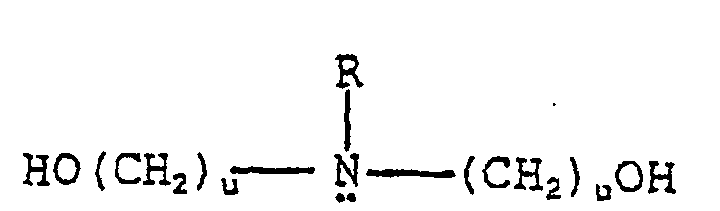
R est un substituant aliphatique, cycloaliphatique ou aromatique, et
u est compris entre 1 et 6,
ou à la formule suivante :dans laquelle u est compris entre 1 et 6.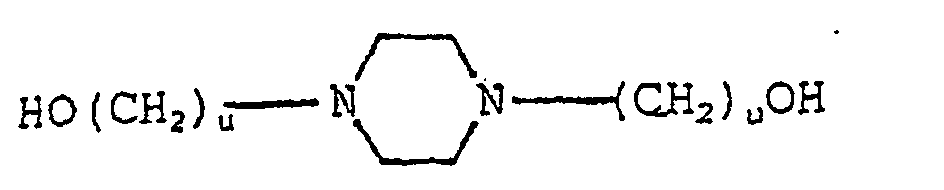
- Procédé selon la revendication 24, dans lequel ledit comonomère est la N-méthyldiéthanolamine.
- Procédé selon l'une quelconque des revendications 14 à 26, dans lequel ledit acide est un composé qui correspond à l'une des formules dans le groupe constitué de H-(CH2)n-COOH etdans laquelle R est l'hydrogène, -CH3 ou -CH2CH3 ; et
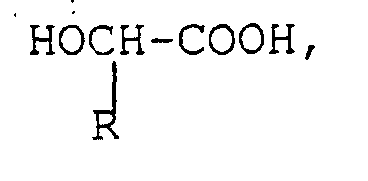
n est un nombre compris entre 0 et 6. - Procédé selon la revendication 27, dans lequel ledit acide est choisi dans le groupe constitué d'acide formique, d'acide acétique, d'acide lactique et d'acide glycolique.
- Procédé selon la revendication 17, dans lequel ledit tensioactif est choisi dans le groupe constitué des glycols acétyléniques, des glycols éthoxylés, des copolymères à blocs éthoxylés/propoxylés et des esters de sorbitan.
- Procédé selon la revendication 17, dans lequel ledit humectant est choisi dans le groupe constitué du glycérol, de l'éthylène glycol, du diéthylène glycol, du triéthylène glycol, du propylène glycol, du dipropylène glycol, du tripropylène glycol, du monométhyléther d'éthylène glycol, du monométhyléther de diéthylène glycol, du monométhyléther de triéthylène glycol, du monométhyléther de propylène glycol, du monométhyléther de dipropylène glycol et du monométhyléther de tripropylène glycol.
- Procédé selon la revendication 17, dans lequel ladite composition fluide a une viscosité de 20 mPa.s ,(centipoises) ou moins à 25°C.
- Procédé selon la revendication 17, dans lequel ledit copolymère est présent en une quantité de 0,1 à 10 pour cent en poids sur la base du poids total de la composition.
- Procédé selon la revendication 17, dans lequel ledit tensioactif est présent en une quantité de 0,001 à 5 pour cent en poids sur la base du poids total de la composition.
- Procédé selon la revendication 17, dans lequel ledit humectant est présent en une quantité de 1 à 10 pour cent en poids sur la base du poids total de la composition.
- Plaque d'impression lithographique préparée conformément au procédé selon l'une quelconque des revendications 14 à 35.
Applications Claiming Priority (3)
| Application Number | Priority Date | Filing Date | Title |
|---|---|---|---|
| US09/244,041 US6245421B1 (en) | 1999-02-04 | 1999-02-04 | Printable media for lithographic printing having a porous, hydrophilic layer and a method for the production thereof |
| US244041 | 1999-02-04 | ||
| PCT/US2000/002410 WO2000046034A1 (fr) | 1999-02-04 | 2000-02-02 | Support d'impression et sa preparation par imprimante a jet d'encre |
Publications (2)
| Publication Number | Publication Date |
|---|---|
| EP1152901A1 EP1152901A1 (fr) | 2001-11-14 |
| EP1152901B1 true EP1152901B1 (fr) | 2003-07-09 |
Family
ID=22921165
Family Applications (1)
| Application Number | Title | Priority Date | Filing Date |
|---|---|---|---|
| EP00908428A Expired - Lifetime EP1152901B1 (fr) | 1999-02-04 | 2000-02-02 | Support d'impression et sa preparation par imprimante a jet d'encre |
Country Status (4)
| Country | Link |
|---|---|
| US (1) | US6245421B1 (fr) |
| EP (1) | EP1152901B1 (fr) |
| DE (1) | DE60003788T2 (fr) |
| WO (2) | WO2000046034A1 (fr) |
Families Citing this family (41)
| Publication number | Priority date | Publication date | Assignee | Title |
|---|---|---|---|---|
| DE69820844T2 (de) * | 1997-12-25 | 2004-06-09 | Dainichiseika Color & Chemicals Mfg. Co. Ltd., Nihonbashi | Tintenstrahlaufzeichnungsblatt und Beschichtungszusammensetzung für die Herstellung dieses Blatts |
| US6455132B1 (en) * | 1999-02-04 | 2002-09-24 | Kodak Polychrome Graphics Llc | Lithographic printing printable media and process for the production thereof |
| WO2001049506A2 (fr) * | 2000-01-06 | 2001-07-12 | Aprion Digital Ltd. | Fluide et solution de revetement pour la preparation de plaques d'impression et leur procede d'utilisation |
| US6532871B1 (en) | 2000-01-27 | 2003-03-18 | Kodak Polychrome Graphics Llc | Method of controlling image resolution on a substrate using an autophobic fluid |
| DE10018547C2 (de) * | 2000-04-14 | 2003-11-20 | Koenig & Bauer Ag | Verfahren zur Bebilderung von Druckplatten |
| US20030054140A1 (en) * | 2000-05-18 | 2003-03-20 | Keizaburo Matsumoto | Printed matter, its application and production method therefor |
| US6692890B2 (en) * | 2001-04-04 | 2004-02-17 | Kodak Polychrome Graphics Llc | Substrate improvements for thermally imageable composition and methods of preparation |
| JP2002370465A (ja) | 2001-06-14 | 2002-12-24 | Konica Corp | 印刷版材料、印刷版材料の画像形成方法及び印刷方法 |
| US20030031887A1 (en) * | 2001-07-11 | 2003-02-13 | Alcoa Inc. | Aluminum paper |
| GB0218505D0 (en) * | 2002-08-09 | 2002-09-18 | Eastman Kodak Co | Inkjet recording medium |
| US20040055720A1 (en) * | 2002-09-19 | 2004-03-25 | Torras Joseph H. | Paper compositions, imaging methods and methods for manufacturing paper |
| US7014897B2 (en) * | 2002-12-16 | 2006-03-21 | Xerox Corporation | Imaging member having a textured imaging surface and a phase change ink image producing machine having same |
| US20080299363A1 (en) * | 2003-02-03 | 2008-12-04 | Jivan Gulabrai Bhatt | Method for Preparation of a Lithographic Printing Plate and to a Lithographic Printing Plate Produced by the Method |
| US7399507B2 (en) * | 2003-02-03 | 2008-07-15 | Jivan Gulabrai Bhatt | Method for preparation of a lithographic printing plate and to a lithographic printing plate produced by the method |
| US20040202955A1 (en) * | 2003-02-13 | 2004-10-14 | Goodin Jonathan W. | Method for making printing plate by inkjet deposition of coalescing agent |
| JP2004299108A (ja) * | 2003-03-28 | 2004-10-28 | Dainippon Printing Co Ltd | 熱転写受像シート |
| US20050160934A1 (en) | 2004-01-23 | 2005-07-28 | Molecular Imprints, Inc. | Materials and methods for imprint lithography |
| US7307118B2 (en) | 2004-11-24 | 2007-12-11 | Molecular Imprints, Inc. | Composition to reduce adhesion between a conformable region and a mold |
| US6981446B2 (en) * | 2003-07-08 | 2006-01-03 | Eastman Kodak Company | Ink-jet imaging method |
| KR20060041247A (ko) * | 2003-07-18 | 2006-05-11 | 시바 스페셜티 케미칼스 홀딩 인크. | 잉크 젯 기록 매체 |
| US7056643B2 (en) * | 2003-10-09 | 2006-06-06 | Eastman Kodak Company | Preparation of a printing plate using ink-jet |
| US20050139108A1 (en) * | 2003-12-29 | 2005-06-30 | Ray Kevin B. | Preparation of a printing plate using an ink jet technique |
| US8076386B2 (en) * | 2004-02-23 | 2011-12-13 | Molecular Imprints, Inc. | Materials for imprint lithography |
| US7736836B2 (en) * | 2004-09-22 | 2010-06-15 | Jonghan Choi | Slip film compositions containing layered silicates |
| US20060160016A1 (en) * | 2004-10-12 | 2006-07-20 | Presstek, Inc. | Inkjet-imageable lithographic printing members and methods of preparing and imaging them |
| US7533980B2 (en) * | 2005-02-15 | 2009-05-19 | Hewlett-Packard Development Company, L.P. | Ink set and media for ink-jet printing |
| US8142703B2 (en) | 2005-10-05 | 2012-03-27 | Molecular Imprints, Inc. | Imprint lithography method |
| WO2008010230A2 (fr) * | 2006-05-10 | 2008-01-24 | Technova Imaging Systems (P) Ltd. | Plaques d'impression lithographiques et procédés d'élaboration |
| US7915334B2 (en) * | 2006-11-13 | 2011-03-29 | Kanzaki Specialty Papers, Inc. | Dual purpose receiver sheet |
| WO2008094863A1 (fr) * | 2007-01-29 | 2008-08-07 | Sun Chemical Corporation | Encre lithographique |
| EP2244886B1 (fr) * | 2007-12-04 | 2012-10-10 | W. R. Grace & Co.-Conn | Support résistant à l'abrasion |
| WO2010140594A1 (fr) * | 2009-06-01 | 2010-12-09 | 株式会社ツジデン | Film durci à effacement des empreintes digitales et son procédé de production ; affichage, écran tactile, et dispositif électronique utilisant celui-ci |
| CN102220055B (zh) * | 2011-04-28 | 2013-05-29 | 陈凯 | 一种用于喷墨ctp版材的涂层涂料、版基及其制备方法 |
| DE112012004378T5 (de) * | 2011-10-19 | 2014-07-17 | Mitsubishi Paper Mills Limited | Träger für lithografische Druckplatten und lichtempfindliche lithografische Negativ-Druckplatte |
| CN104609830B (zh) * | 2014-11-21 | 2017-01-11 | 佛山欧神诺陶瓷股份有限公司 | 一种建筑节能型被动调湿功能陶瓷砖及其生产方法 |
| JP2020515431A (ja) * | 2017-03-27 | 2020-05-28 | フリント グループ ジャーマニー ゲーエムベーハー | 画像レリーフ構造の製造方法 |
| CN116887866A (zh) | 2020-12-03 | 2023-10-13 | 巴特尔纪念研究院 | 聚合物纳米颗粒和dna纳米结构组合物及用于非病毒递送的方法 |
| JP7694092B2 (ja) * | 2021-03-25 | 2025-06-18 | 富士フイルムビジネスイノベーション株式会社 | 樹脂粒子分散液の製造方法、静電荷像現像用トナーの製造方法、及び静電荷像現像用トナー |
| WO2022216977A1 (fr) | 2021-04-07 | 2022-10-13 | Batelle Memorial Institute | Technologies de conception, de construction, de test et d'apprentissage rapides pour identifier et utiliser des vecteurs non viraux |
| WO2025072751A1 (fr) | 2023-09-29 | 2025-04-03 | Battelle Memorial Institute | Compositions de nanoparticules polymères pour l'expression in vivo de polypeptides |
| US12441996B2 (en) | 2023-12-08 | 2025-10-14 | Battelle Memorial Institute | Use of DNA origami nanostructures for molecular information based data storage systems |
Family Cites Families (22)
| Publication number | Priority date | Publication date | Assignee | Title |
|---|---|---|---|---|
| US3877372A (en) | 1973-12-03 | 1975-04-15 | Kenneth W Leeds | Treatment of a printing plate with a dampening liquid |
| US4278467A (en) | 1978-09-11 | 1981-07-14 | Graphic Arts Technical Foundation | Substitutive additives for isopropyl alcohol in fountain solution for lithographic offset printing |
| EP0071345B1 (fr) | 1981-07-23 | 1985-06-05 | American Can Company | Composition d'encre et procédé d'impression à jets d'encre |
| EP0101266A3 (fr) | 1982-08-09 | 1985-04-03 | Milliken Research Corporation | Procédé et appareil pour l'impression |
| US4781985A (en) | 1986-06-20 | 1988-11-01 | James River Graphics, Inc. | Ink jet transparency with improved ability to maintain edge acuity |
| US4854969A (en) | 1986-07-02 | 1989-08-08 | Sun Chemical Corporation | Lithographic fountain solutions |
| JPS63224988A (ja) | 1987-03-16 | 1988-09-20 | Canon Inc | 被記録材 |
| US4833486A (en) | 1987-07-08 | 1989-05-23 | Dataproducts Corporation | Ink jet image transfer lithographic |
| JP3126128B2 (ja) | 1989-07-12 | 2001-01-22 | 三菱製紙株式会社 | インクジェット記録媒体 |
| JPH04282249A (ja) | 1991-03-12 | 1992-10-07 | Nippon Paint Co Ltd | インクジェット方式による平版のダイレクト製版方法とその装置 |
| EP0591916A3 (en) | 1992-10-07 | 1994-05-18 | Roland Man Druckmasch | Printing ink for offset printing |
| US5551585A (en) | 1995-04-10 | 1996-09-03 | Sun Chemical Corporation | Process for the surface treatment of lithographic printing plate precursors |
| JP3586032B2 (ja) | 1995-04-20 | 2004-11-10 | キヤノン株式会社 | 硬化性組成物、及びこれを用いた印字用媒体の製造方法 |
| EP0751194A3 (fr) | 1995-05-04 | 1998-01-14 | SCITEX DIGITAL PRINTING, Inc. | Procédé pour fabriquer une encre aqueuse contenant un pigment noir donnant un film à haute résistivité pour imprimantes à jet d'encre |
| JPH0929926A (ja) | 1995-07-13 | 1997-02-04 | Dainippon Printing Co Ltd | 平版印刷版用原版、平版印刷版および平版印刷版の製造方法 |
| US5820932A (en) | 1995-11-30 | 1998-10-13 | Sun Chemical Corporation | Process for the production of lithographic printing plates |
| US5716436B1 (en) | 1995-11-30 | 1999-08-24 | Eastman Kodak Co | Ink jet containing polyester ionomers |
| JPH09255765A (ja) | 1996-03-27 | 1997-09-30 | Dainippon Ink & Chem Inc | 硬化性樹脂組成物 |
| JPH10151852A (ja) | 1996-11-25 | 1998-06-09 | Fuji Photo Film Co Ltd | インクジェット記録用シート |
| US5789070A (en) | 1996-12-11 | 1998-08-04 | Eastman Kodak Company | Inkjet ink image recording elements with cationically modified cellulose ether layers |
| GB9711428D0 (en) | 1997-06-04 | 1997-07-30 | Eastman Kodak Co | Printing plate and method of preparation |
| US5900345A (en) | 1997-10-06 | 1999-05-04 | Kodak Polychrome Graphics, Llc | Surfactant in precoat for lithographic plates |
-
1999
- 1999-02-04 US US09/244,041 patent/US6245421B1/en not_active Expired - Fee Related
-
2000
- 2000-02-02 EP EP00908428A patent/EP1152901B1/fr not_active Expired - Lifetime
- 2000-02-02 WO PCT/US2000/002410 patent/WO2000046034A1/fr not_active Ceased
- 2000-02-02 DE DE60003788T patent/DE60003788T2/de not_active Expired - Fee Related
- 2000-02-04 WO PCT/US2000/003036 patent/WO2000046035A1/fr not_active Ceased
Also Published As
| Publication number | Publication date |
|---|---|
| WO2000046035A1 (fr) | 2000-08-10 |
| DE60003788D1 (de) | 2003-08-14 |
| WO2000046034A9 (fr) | 2001-11-01 |
| EP1152901A1 (fr) | 2001-11-14 |
| DE60003788T2 (de) | 2004-08-05 |
| WO2000046035A9 (fr) | 2001-09-20 |
| US6245421B1 (en) | 2001-06-12 |
| WO2000046034A1 (fr) | 2000-08-10 |
Similar Documents
| Publication | Publication Date | Title |
|---|---|---|
| EP1152901B1 (fr) | Support d'impression et sa preparation par imprimante a jet d'encre | |
| US6455132B1 (en) | Lithographic printing printable media and process for the production thereof | |
| US6276273B1 (en) | Surfactant-pretreated printing plate substrate, lithographic printing plate and method for production thereof | |
| US6532871B1 (en) | Method of controlling image resolution on a substrate using an autophobic fluid | |
| US6758140B1 (en) | Inkjet lithographic printing plates | |
| EP1082223B1 (fr) | Procede d'imagerie et d'impression utilisant un element de reception de fluide contenant de l'argile | |
| JP3885668B2 (ja) | 平版印刷版材料および平版印刷版材料の固定方法 | |
| US6740702B2 (en) | Coating liquid for forming ink-receiving layer | |
| JP3092948B2 (ja) | 耐水性インクジェットプリントをもたらす水性インク受容性インクジェット受容媒体 | |
| US6354209B1 (en) | Method for making positive working printing plates from a latex | |
| EP1398150A1 (fr) | Préparation des plaques d'impression lithographiques par jet d'encre | |
| JP2004066817A (ja) | 印刷版の製造方法および印刷版調製用組成物 | |
| EP0976550B1 (fr) | Procédé de fabrication de plaques d'impression travaillant en positif à partir d'un latex | |
| JPH1067905A (ja) | 硬化性組成物、記録媒体及びその製造方法 | |
| JPH07117332A (ja) | インクジェット記録用シート | |
| JP3591087B2 (ja) | インクジェット記録用シート | |
| WO1998052766A2 (fr) | Impression a plat | |
| JP2005305741A (ja) | 平版印刷版材料及び平版印刷版、並びにそれを用いた印刷方法 | |
| JP2001030621A (ja) | 水性インク記録用シート及びそれを用いた記録体 | |
| JP2003103908A (ja) | インクジェット記録用シート及び該シートの製造方法 | |
| JP2007144754A (ja) | インク記録体用樹脂組成物及びインク記録体 | |
| JP2005169832A (ja) | インク記録体用樹脂組成物及びインク記録体 | |
| JP2007181967A (ja) | インク記録体用樹脂組成物及びインク記録体 | |
| JP2006130668A (ja) | 平版印刷版材料、平版印刷版及び印刷方法 |
Legal Events
| Date | Code | Title | Description |
|---|---|---|---|
| PUAI | Public reference made under article 153(3) epc to a published international application that has entered the european phase |
Free format text: ORIGINAL CODE: 0009012 |
|
| 17P | Request for examination filed |
Effective date: 20010827 |
|
| AK | Designated contracting states |
Kind code of ref document: A1 Designated state(s): DE FR GB IT NL Kind code of ref document: A1 Designated state(s): AT BE CH CY DE DK ES FI FR GB GR IE IT LI LU MC NL PT SE |
|
| 17Q | First examination report despatched |
Effective date: 20020311 |
|
| GRAH | Despatch of communication of intention to grant a patent |
Free format text: ORIGINAL CODE: EPIDOS IGRA |
|
| RIN1 | Information on inventor provided before grant (corrected) |
Inventor name: SHIMAZU, KENICHI Inventor name: SHAH, AJAY Inventor name: AURENTY, PATRICE, M. |
|
| GRAH | Despatch of communication of intention to grant a patent |
Free format text: ORIGINAL CODE: EPIDOS IGRA |
|
| GRAA | (expected) grant |
Free format text: ORIGINAL CODE: 0009210 |
|
| RIN1 | Information on inventor provided before grant (corrected) |
Inventor name: SHIMAZU, KENICHI Inventor name: SHAH, AJAY Inventor name: AURENTY, PATRICE, M. |
|
| AK | Designated contracting states |
Designated state(s): DE FR GB IT NL |
|
| REG | Reference to a national code |
Ref country code: GB Ref legal event code: FG4D |
|
| REF | Corresponds to: |
Ref document number: 60003788 Country of ref document: DE Date of ref document: 20030814 Kind code of ref document: P |
|
| REG | Reference to a national code |
Ref country code: IE Ref legal event code: FG4D |
|
| PG25 | Lapsed in a contracting state [announced via postgrant information from national office to epo] |
Ref country code: GB Free format text: LAPSE BECAUSE OF NON-PAYMENT OF DUE FEES Effective date: 20040202 |
|
| ET | Fr: translation filed | ||
| PLBE | No opposition filed within time limit |
Free format text: ORIGINAL CODE: 0009261 |
|
| STAA | Information on the status of an ep patent application or granted ep patent |
Free format text: STATUS: NO OPPOSITION FILED WITHIN TIME LIMIT |
|
| 26N | No opposition filed |
Effective date: 20040414 |
|
| PG25 | Lapsed in a contracting state [announced via postgrant information from national office to epo] |
Ref country code: DE Free format text: LAPSE BECAUSE OF NON-PAYMENT OF DUE FEES Effective date: 20040901 Ref country code: NL Free format text: LAPSE BECAUSE OF NON-PAYMENT OF DUE FEES Effective date: 20040901 |
|
| GBPC | Gb: european patent ceased through non-payment of renewal fee |
Effective date: 20040202 |
|
| PG25 | Lapsed in a contracting state [announced via postgrant information from national office to epo] |
Ref country code: FR Free format text: LAPSE BECAUSE OF NON-PAYMENT OF DUE FEES Effective date: 20041029 |
|
| NLV4 | Nl: lapsed or anulled due to non-payment of the annual fee |
Effective date: 20040901 |
|
| REG | Reference to a national code |
Ref country code: IE Ref legal event code: MM4A |
|
| REG | Reference to a national code |
Ref country code: FR Ref legal event code: ST |
|
| PG25 | Lapsed in a contracting state [announced via postgrant information from national office to epo] |
Ref country code: IT Free format text: LAPSE BECAUSE OF NON-PAYMENT OF DUE FEES Effective date: 20050202 |