EP1154625A2 - Adaptation d'un système de réponse vocal interactif aux appelants et/ou perturbations - Google Patents
Adaptation d'un système de réponse vocal interactif aux appelants et/ou perturbations Download PDFInfo
- Publication number
- EP1154625A2 EP1154625A2 EP01111441A EP01111441A EP1154625A2 EP 1154625 A2 EP1154625 A2 EP 1154625A2 EP 01111441 A EP01111441 A EP 01111441A EP 01111441 A EP01111441 A EP 01111441A EP 1154625 A2 EP1154625 A2 EP 1154625A2
- Authority
- EP
- European Patent Office
- Prior art keywords
- terminal
- dialog
- dialog system
- dialogue
- data
- Prior art date
- Legal status (The legal status is an assumption and is not a legal conclusion. Google has not performed a legal analysis and makes no representation as to the accuracy of the status listed.)
- Withdrawn
Links
Images


Classifications
-
- H—ELECTRICITY
- H04—ELECTRIC COMMUNICATION TECHNIQUE
- H04M—TELEPHONIC COMMUNICATION
- H04M3/00—Automatic or semi-automatic exchanges
- H04M3/42—Systems providing special services or facilities to subscribers
- H04M3/487—Arrangements for providing information services, e.g. recorded voice services or time announcements
- H04M3/493—Interactive information services, e.g. directory enquiries ; Arrangements therefor, e.g. interactive voice response [IVR] systems or voice portals
-
- H—ELECTRICITY
- H04—ELECTRIC COMMUNICATION TECHNIQUE
- H04M—TELEPHONIC COMMUNICATION
- H04M2242/00—Special services or facilities
- H04M2242/14—Special services or facilities with services dependent on location
-
- H—ELECTRICITY
- H04—ELECTRIC COMMUNICATION TECHNIQUE
- H04M—TELEPHONIC COMMUNICATION
- H04M2242/00—Special services or facilities
- H04M2242/22—Automatic class or number identification arrangements
-
- H—ELECTRICITY
- H04—ELECTRIC COMMUNICATION TECHNIQUE
- H04M—TELEPHONIC COMMUNICATION
- H04M3/00—Automatic or semi-automatic exchanges
- H04M3/42—Systems providing special services or facilities to subscribers
- H04M3/42025—Calling or Called party identification service
- H04M3/42034—Calling party identification service
- H04M3/42059—Making use of the calling party identifier
-
- H—ELECTRICITY
- H04—ELECTRIC COMMUNICATION TECHNIQUE
- H04M—TELEPHONIC COMMUNICATION
- H04M3/00—Automatic or semi-automatic exchanges
- H04M3/42—Systems providing special services or facilities to subscribers
- H04M3/42025—Calling or Called party identification service
- H04M3/42085—Called party identification service
- H04M3/42102—Making use of the called party identifier
Definitions
- the invention relates to a method for controlling a dialog system and previous adaptation of a dialogue system to circumstances that are suitable for the To influence recognition rate of a speech recognition unit of the dialog system and / or tailor the dialogue to the needs of the caller.
- a dialog system is an automatic system that is integrated into one Telecommunications network communicates with a user via voice.
- voice input can also be made via the Keys of the telecommunication terminal take place (e.g. DTMF).
- Typical Applications for such systems are information, information, ordering or telephone banking systems. Simple systems allow the user to navigate in one tree-like menu structure, more complex systems such as the EVAR system (cf. Gallwitz, F .; Niemann, H .; Nöth, E.
- dialog system An example of a dialog system that can be reached by telephone is the dialog system "FränKi - The Franconian Cinema Information System" of the applicant.
- This dialog system can be reached at 0911-5273802.
- the dialog system can also be reached via telephone services that are offered on the Internet. More information can be found on the Internet at "www.sympalog.de”.
- the Fränki dialogue system is also the subject of numerous publications, of which in particular the publication by Gallwitz, F .; Niemann, H .; Nöth, E. and others: "The Er Weg Spoken Dialogue System EVAR: State Of The Art Information Retrieval System, In Proceedings of 1998 International Symposium on Spoken Dialogue (ISSD 98), Sydney, Australia, 1998, pages 19 to 26" .
- dialog systems start from an initial dialog state with every call, in which there is no information about the caller's whereabouts. Information regarding the whereabouts of the caller may be changed in the course of a Dialogues collected (e.g. "Where do you want to go to the cinema?"), Or as a result of one explicit identification of the caller fed into the dialog system.
- EP 920 173 A2 an adaptation to the acoustic conditions for the purposes of speech recognition, speaker recognition, topic / word spotting and language identification based on the telephone number is already known, but not the adaptation of the dialog sequence to parameters such as the location of the User.
- US 58 95 447 A only speech recognition is known.
- WO 95/20859 A1 also only provides a reference to the language of the user, but not to his location.
- EP 953 968 A2 discloses a method for adapting the speech recognizer to a speaker.
- dictation systems are delivered to the speaker in a learning phase customized.
- such methods are only used in telephone speech dialogue systems limited use. Unlike with a dictation system, the adjustment must be done with one Dialogue system can be done within a few seconds without a several minutes continuous learning phase precedes the dialogue.
- the present invention aims to improve dialog systems Consideration of features available before or at the beginning of the dialog or circumstances of the caller or user.
- a dialog system should be specified that carries out the method according to the invention.
- the invention is based on the consideration that the dialog system has a very large number End devices is used, but that the circle of callers from a certain End device is often very small. For example, cell phones are usually only used by used by a single person. Furthermore, the invention is based on the consideration that a terminal involved in a connection in a specific geographic region limits the options desired by the user.
- At least one data record is saved, which contains at least one information about the contains expected or earlier use of the dialog system. Will a connection built between a terminal and the dialog system, so that is at the Connection involved terminal or the group containing the terminal involved determined.
- the one saved for the determined end device or for the determined group Data set is used to control the dialogue between those using the terminal Participants and the dialog system used.
- the information about the expected Use from the evaluation of at least one previous use of the dialog system gained a connection with the same terminal. This is the procedure Understanding that the use of the dialogue system by the same person in the Usually done in a similar way because this person has their behaviors and theirs Maintains information need. For example, one person only Transfers made using a telephone banking system and this Remittances are only sent to a small group of business partners. The service previously used as well as details for transfer forms are stored in the Record saved.
- the dialog system will depend on the information about the expected use is controlled so that there is a choice by itself suggests that the terminal has previously selected, e.g. will the Operator who previously only made transfers using the telephone banking system did not ask if she wanted to know her account balance because of it it can be assumed that she will find out the account balance in a different way.
- the Dialogsystem immediately suggests starting transfers.
- the automatic Restriction of options up to the suggestion of a Choice or more selected choices lead to one shorter dialogue.
- the usability of the dialog system is made easier and the while dialogue fees will be reduced.
- the one Telecommunications network each stored at least one data set, the one Contains information about previous use of the dialog system. For all incoming Calls for which a terminal device could be determined are records as far retrieved available.
- a connection is established between an end device and the automatically working dialog system on the connection the terminal involved or the group containing the terminal involved.
- there methods are preferably used that are available in the telecommunications network poses. For example, with an ISDN connection (Integrated Services Digital Network) the number of the calling device before the complete Connection establishment available as an indicator.
- ISDN connection Integrated Services Digital Network
- each data packet contains the address of the sending terminal and that of the recipient.
- the database is searched for the terminal or group determined in this way.
- a data record determined during the search is then used to adapt the dialog system used the user state.
- This procedure ensures that after a while the majority of the Terminals using dialog system data sets are available. With the help of this Records can be adapted to the user especially in the first few seconds of dialogue in comparison to conventional methods. While Known procedures work in the first seconds without adjustment, will the inventive method the dialog system before the start of the dialog or adjusted in the first seconds of the dialog. Will the records appear after each Call updated and expanded, so the adjustment is further increased.
- Groups of devices can be based on the area code or by Form language comparison between different devices. For example, that Dialog system possibly used by one person from several end devices, e.g. from a terminal in the office, from a terminal at home and from one Mobile phone off.
- the method according to the invention is used both in dialog systems with a menu-like Dialog structure aimed at recognizing individual words, but also at complex dialogue systems that are able to complete sentences understand and respond appropriately.
- Dialog systems in which the Methods used according to the invention are successfully used for example Dialogue system for information, e.g. about a timetable or about events, and a Dialogue system for telephone banking.
- a geographical Position of the end device determined and used to initialize the subsequent dialog is recorded under which the terminal in the telecommunications network is achievable.
- the Invention can also be the identifier of the caller's number or parts of the Call number e.g. the area code to be taken into account statements of the dialogue system and make selections dependent on the area from which the user calls.
- the network operator can Position of the caller or information about the cell in which the user is located pass on via telephone line or via mobile radio. From that or from that Region-specific information is obtained, which is also in the Dialog process can be integrated.
- Initialization means setting up better choices in the interactive dialogue, the selection of suitable formulations of the system or the Preassignment of dialog parameters.
- the part of the Characteristic for terminal devices of different connection types to the telecommunication network different.
- Mobile phone numbers start in Germany for example depending on the respective network with the numbers 0170, 0171, 0173 etc. and can be clearly distinguished from landline phones.
- Depends on the Different methods are used for the configuration in the speech recognition unit for speech recognition and / or different adaptation methods for different ones Language qualities used. This approach is based on the consideration that the transmission quality depends on the type of connection.
- the voice quality is for example, in mobile networks less than in a fixed network.
- the label can be based on elaborate procedures for determining the Transmission quality can be waived.
- the data records for the end devices contain both voice data and parameters Adaptation of the speech recognition unit as well as information about the expected or earlier use of the dialogue system.
- the first and second aspects of the invention can be combined in that from the dialog system both a previously saved data record and a Indicator used to determine the geographic positioning of the caller become.
- the invention accordingly includes both individually and in combination Evaluation of a data record to the terminal device, the acquisition of a preselection of the Phone number of the terminal, determining the position of a mobile device.
- the invention also relates to a dialog system that has an interface to one Telecommunications network, a storage unit for storing data and at least contains a control unit.
- the control unit is designed so that the dialog system after a method according to one of the above-mentioned aspects of the invention or according to their Continuing education works.
- a computer program for executing an inventive method also belongs Method or its further developments and a data carrier for storing the Computer program or a computer program product for the invention, e.g. a CD (Compact Disk) or a memory circuit.
- a CD Compact Disk
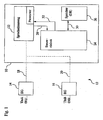
- FIG. 1 shows a dialog system 10 that can be reached by telephone and that uses a Telecommunications network 12 is accessible from terminals 14 and 16.
- the Telecommunications network 12 is, for example, the telecommunications network of DeutscheInstitut AG.
- the terminals 14 and 16 are ISDN telephones (Integrated Services Digital Network).
- the terminal 14 is used by a subscriber TlnA, who lives in the Nuremberg area. Therefore, the terminal 14 is in the area code 0911 Telecommunication network 12 reachable.
- the terminal 16 is owned by a subscriber TlnB used who lives in the Berlin area.
- the area code of the terminal 16 is the Numeric sequence 030.
- a voice connection is made between terminal 14 and dialog system 10 Telecommunications network 12 set up or switched.
- the dialog system 10 through the subscriber TlnB is used, a connection 20 between the terminal 16 and the dialog system 10 set up or switched.
- Dialog system 10 is a further development of the well-known dialog system "FränKi - The Franconian Cinema Information System ".
- the speech recognition unit 22 is used to recognize the language of dialogue partners, e.g. the language of the participant TlnA or TlnB.
- the speech recognition unit 22 is via an interface, not shown, with voice connections 18 and 20 connected.
- the received speech signals are included in the speech recognition unit 22 Processes known from speech recognition. The are already as digital data available speech signals to phonemic units of, for example 10 ms combined. Predefined characteristics are extracted from these units, for example the presence of certain frequencies.
- speech recognition unit generates data in which the recognized words are encoded.
- the functions of the speech recognition unit 22 are executed a program stored in a memory of the dialog system 10 by a Processor of the dialog system 10 provided.
- the words recognized by the speech recognition unit 22 are transmitted via an internal Message channel 28 transmitted to the control unit 24 and there for controlling the dialog used.
- the control unit 24 is also able to call the numbers on the dialog to read and evaluate the terminals 14 and 16 involved.
- the carried out Process steps are explained in more detail below with reference to FIG. 2.
- Has the Control unit 24 determines a phone number or the area code of a phone number, so takes effect it via a bus system 30 to the storage unit 26 in order to store a data record Find phone number or area code. If a data record is determined, the data contained therein for dialog control and / or for setting parameters of the Speech recognition system 22 used, cf. Arrow 32.
- the control unit 24 does not influence the dialog by activating one shown voice output unit that automatically generates voice signals. This Synthetic voice signals are via the voice connection 18 or 20 to Participants TlnA or TlnB forwarded.
- the functions of the control unit 24 are when executing the commands one stored in the memory of the dialog system 10 Program provided by a processor.
- FIG. 2 shows method steps that take place in the dialog system 10 when a call is accepted be carried out. Therefore, when explaining the method steps, reference is also made to the figure 1 referred.
- the method begins in a method step 100 with the Selection of the dialog system 10 by a participant, e.g. the participant TlnA or the participant TlnB.
- the control unit 24 checks whether the number of the terminal used by the caller is available. For this the ISDN service CLIP (Caller Line Identification Protocol) used, with whose help the Call number of the calling terminal is transmitted to the called terminal. Is the Call number of the calling terminal is not available because, for example, the calling Participants use the ISDN service CLIR (Caller Line Identification Repression) Suppression of the display of the number on the other side uses, follows immediately after method step 102, a method step 104. Reads in method step 104 the control unit 24 from the memory 26 a basic data set, the standard parameters for setting the speech recognition unit 22 contains. These parameters become Speech recognition unit 22 transmitted and used for speech recognition.
- CLIP Call Line Identification Protocol
- Step 106 becomes the incoming call through dialog system 10 accepted and a predetermined dialogue was carried out. At the end of the dialogue the method is ended in a method step 108. Since the number of the Caller is not available, no new record can be stored in memory 26 to save.
- Step 110 the control unit 24 checks whether in the memory 26 there is a data record for the call number of the calling terminal. Is not a Data record available for this phone number, so follows immediately after Step 110 is a step 112.
- control unit 24 uses the preselection Number disconnected. It is then checked whether a data record is in memory 26 the area code is available. If this is not the case, immediately after the Method step 112 a method step 114, in which the control unit contains the basic data record reads from the memory 26 and the parameters stored therein to the Speech recognition unit 22 transmitted. Then in one process step 116 the call was answered and the dialogue was carried out. The Parameters of the basic data set used in the speech recognition unit.
- control unit 24 automatically creates a data record in a method step 118 generated to the phone number of the terminal and stored in the memory 26.
- the record contains parameters which are derived from the speech data of the Participant have been generated. The parameters are for adjusting the Memory recognition unit to the calling subscriber and to the Transmission properties of the transmission channel between the calling terminal and the dialog system 10 suitable.
- step 112 If, on the other hand, it is determined in step 112 that a data record for the preselection of the calling terminal is present, it follows immediately after method step 112 a method step 120.
- the control unit 24 reads one to the Area code belonging record.
- the data set contains parameters that are related to the Speech recognition unit 22 are transmitted and in which peculiarities of the dialect are included, which is spoken in the area in which the calling terminal located.
- the method with the method steps 116 and 118 continued.
- the speech recognition unit 22 the parameters adapted to the dialect are used to increase the recognition rate.
- a data record is stored in memory 26 for the call number stored, which contains parameters with which the speech recognition system 22 to the Participant's voice and the transmission characteristics of the transmission channel has been adjusted.
- method step 110 If it is determined in method step 110 that a data record for the telephone number of the calling terminal is present, it follows immediately after method step 110 a method step 122.
- the control unit 24 reads from the Memory 26 the special data record belonging to the call number.
- the one in particular Record contained parameters are of the same on a previous call Terminal has been generated.
- the parameters are sent to the speech recognition unit 22 transmitted and there before the start of the dialogue to adapt the Speech recognition unit 22 used to the idiosyncrasies of the calling subscriber.
- a subsequent step 124 the call is answered and the Dialogue carried out.
- the recognition rate of the speech recognition unit 22 is also too Beginning of the dialogue very high because the speech recognition unit is already on the voice of the subscriber and the transmission properties of the channel is adapted.
- a method step 126 a data record for the phone number of the calling terminal is stored in the memory 26, which contains parameters based on the voice data obtained during the last connection have been updated. The method is then ended in method step 108.
- those stored in memory 26 Data records also provide information about the type of use of the dialog system 10 previous calls. Based on this information, the control unit 24 influences the Dialogue management in process steps 106, 116 and 124. At the end of the dialogue are available if the number is available in step 118 or Method step 126 also stores data about the last dialog saved.
- FIG. 3 shows a process flow diagram which is preferably used for the preselection consideration.
- An incoming call in step 200 e.g. with an ISDN number, the availability of the call number, in particular the area code, is checked in step 202. If the number is available, the area code can be extracted. In this case (yes branch) it is then checked in step 204 whether regional data for this area code is available. If the answer is affirmative, a region-specific initialization of the dialog is carried out in step 206. The call is then accepted in step 210 and the dialog is initiated. The dialog is finally ended in step 212.
- step 202 determines whether the area code is available. If it is determined in step 202 that the area code is not available, a standard initialization for the dialog is carried out in step 208. The calling is then accepted and cf. the dialogue started above.
- Step 208 made a standard initialization.
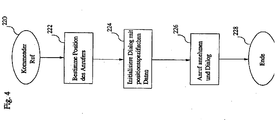
- the position of the caller from a mobile radio network is coordinated with the mobile radio operator.
- the incoming call in step 220 is subjected to a position determination of the caller in step 222 by evaluating information about the cell or base station of the call.
- the dialog is then initialized with position-specific data in step 224 and the call is accepted in step 226 and the dialog is initiated.
- the dialog ends in step 228.
Landscapes
- Engineering & Computer Science (AREA)
- Signal Processing (AREA)
- Telephonic Communication Services (AREA)
Applications Claiming Priority (2)
| Application Number | Priority Date | Filing Date | Title |
|---|---|---|---|
| DE2000122700 DE10022700A1 (de) | 2000-05-10 | 2000-05-10 | Sprachdialogsystem |
| DE10022700 | 2000-05-10 |
Publications (2)
| Publication Number | Publication Date |
|---|---|
| EP1154625A2 true EP1154625A2 (fr) | 2001-11-14 |
| EP1154625A3 EP1154625A3 (fr) | 2003-11-05 |
Family
ID=7641401
Family Applications (1)
| Application Number | Title | Priority Date | Filing Date |
|---|---|---|---|
| EP01111441A Withdrawn EP1154625A3 (fr) | 2000-05-10 | 2001-05-10 | Adaptation d'un système de réponse vocal interactif aux appelants et/ou perturbations |
Country Status (2)
| Country | Link |
|---|---|
| EP (1) | EP1154625A3 (fr) |
| DE (1) | DE10022700A1 (fr) |
Families Citing this family (2)
| Publication number | Priority date | Publication date | Assignee | Title |
|---|---|---|---|---|
| EP1363271A1 (fr) | 2002-05-08 | 2003-11-19 | Sap Ag | Méthode et système pour le traitement et la mémorisation du signal de parole d'un dialogue |
| DE10220524B4 (de) | 2002-05-08 | 2006-08-10 | Sap Ag | Verfahren und System zur Verarbeitung von Sprachdaten und zur Erkennung einer Sprache |
Family Cites Families (7)
| Publication number | Priority date | Publication date | Assignee | Title |
|---|---|---|---|---|
| WO1995020859A1 (fr) * | 1994-01-27 | 1995-08-03 | At & T Corp. | Methode flexible permettant la selection d'une langue dans un systeme de telecommunication |
| US6061433A (en) * | 1995-10-19 | 2000-05-09 | Intervoice Limited Partnership | Dynamically changeable menus based on externally available data |
| US5895447A (en) * | 1996-02-02 | 1999-04-20 | International Business Machines Corporation | Speech recognition using thresholded speaker class model selection or model adaptation |
| US5884262A (en) * | 1996-03-28 | 1999-03-16 | Bell Atlantic Network Services, Inc. | Computer network audio access and conversion system |
| US6016336A (en) * | 1997-11-18 | 2000-01-18 | At&T Corp | Interactive voice response system with call trainable routing |
| EP0920173A3 (fr) * | 1997-11-25 | 2002-05-08 | AT&T Corp. | Réseau de télécommunication amélioré |
| CN1144172C (zh) * | 1998-04-30 | 2004-03-31 | 松下电器产业株式会社 | 包括最大似然方法的基于本征音的发言者适应方法 |
-
2000
- 2000-05-10 DE DE2000122700 patent/DE10022700A1/de not_active Ceased
-
2001
- 2001-05-10 EP EP01111441A patent/EP1154625A3/fr not_active Withdrawn
Also Published As
| Publication number | Publication date |
|---|---|
| EP1154625A3 (fr) | 2003-11-05 |
| DE10022700A1 (de) | 2001-11-22 |
Similar Documents
| Publication | Publication Date | Title |
|---|---|---|
| DE69934275T2 (de) | Gerät und Verfahren um die Benutzerschnittstelle der integrierten Sprachantwortsystemen zu verbessern | |
| DE69329849T2 (de) | Telefonanrufbeantworter mit zuordnung von angezeigten daten zu aufgezeichneten sprachnachrichten | |
| DE69839068T2 (de) | System und Verfahren zur automatischen Verarbeitung von Anruf und Datenübertragung | |
| DE3819538C2 (fr) | ||
| DE60001765T2 (de) | Verfahren und Gerät zur Zusammensetzung und Präsentation von strukturierten Sprachpostnachrichten | |
| DE69731907T2 (de) | Sprachpost über Internet | |
| DE69625793T2 (de) | Telefonnetz-dienst zur umwandlung von sprache in wahltöne | |
| DE69635015T2 (de) | Automatische vokabularerzeugung für auf einem telekommunikationsnetzwerk basierte sprachgesteuerte wahl | |
| DE60113644T2 (de) | Methode und System zur Verwaltung einer Datenbank in einem Kommunikationsnetz | |
| DE602004009358T2 (de) | Mobiltelefonsystem | |
| DE60133097T2 (de) | Verfahren und übertragungsnetzwerk zur steuerung von menufunktionen eines mobilen telefons | |
| DE19632296A1 (de) | Verfahren und Vorrichtung zum Vermitteln von Mitfahrgelegenheiten in einem Telekommunikationsnetz | |
| DE60018971T2 (de) | Verfahren und gerät zum aufbau eines telefonanrufes | |
| EP1154625A2 (fr) | Adaptation d'un système de réponse vocal interactif aux appelants et/ou perturbations | |
| WO2003041434A1 (fr) | Reinitialisation d'informations emises | |
| EP1668879A1 (fr) | Procede d'etablissement d'une liaison de telecommunication avec une signalisation d'appel multimedias | |
| EP1668932B1 (fr) | Procédé et dispositif pour établir une liaison de communication | |
| EP1892938B1 (fr) | Établir une communication à une appelé qui est accessible par plusieurs terminaux | |
| DE102008029857A1 (de) | Verfahren zum Herstellen einer Telefonverbindung | |
| WO1998058479A2 (fr) | Configuration de terminaux dans des systemes de telecommunication | |
| DE19618784B4 (de) | Schnellwahlverfahren zur Verwendung in Tastentelefonsystemen | |
| DE4123455C2 (de) | Verfahren zur paßwortgesicherten Steuerbefehlübertragung von einem Funktelefonteilnehmer zu einem Sprachspeichersystem | |
| DE3003252A1 (de) | Schaltungsanordnung zur steuerung eines fuer den fernsprechauftragsdienst eingesetzten zentralen anrufbeantworters | |
| DE19751170A1 (de) | Verfahren zur Auswahl eines Teilnehmers eines Telekommunikationsnetzes | |
| DE102005012877B4 (de) | Verfahren zur Datenübermittlung über ein Telekommunikationsnetz von einem Endgerät eines ersten Telekommunikationsteilnehmers zu einem Endgerät eines zweiten Telekommunikationsteilnehmers |
Legal Events
| Date | Code | Title | Description |
|---|---|---|---|
| PUAI | Public reference made under article 153(3) epc to a published international application that has entered the european phase |
Free format text: ORIGINAL CODE: 0009012 |
|
| AK | Designated contracting states |
Kind code of ref document: A2 Designated state(s): AT BE CH CY DE DK ES FI FR GB GR IE IT LI LU MC NL PT SE TR |
|
| AX | Request for extension of the european patent |
Free format text: AL;LT;LV;MK;RO;SI |
|
| PUAL | Search report despatched |
Free format text: ORIGINAL CODE: 0009013 |
|
| AK | Designated contracting states |
Kind code of ref document: A3 Designated state(s): AT BE CH CY DE DK ES FI FR GB GR IE IT LI LU MC NL PT SE TR |
|
| AX | Request for extension of the european patent |
Extension state: AL LT LV MK RO SI |
|
| AKX | Designation fees paid | ||
| REG | Reference to a national code |
Ref country code: DE Ref legal event code: 8566 |
|
| STAA | Information on the status of an ep patent application or granted ep patent |
Free format text: STATUS: THE APPLICATION IS DEEMED TO BE WITHDRAWN |
|
| 18D | Application deemed to be withdrawn |
Effective date: 20040507 |