EP1161948A2 - Pharmazeutische Zusammensetzung und Nahrungsmittel zur Behandlung von Gehirnödem - Google Patents
Pharmazeutische Zusammensetzung und Nahrungsmittel zur Behandlung von Gehirnödem Download PDFInfo
- Publication number
- EP1161948A2 EP1161948A2 EP01303728A EP01303728A EP1161948A2 EP 1161948 A2 EP1161948 A2 EP 1161948A2 EP 01303728 A EP01303728 A EP 01303728A EP 01303728 A EP01303728 A EP 01303728A EP 1161948 A2 EP1161948 A2 EP 1161948A2
- Authority
- EP
- European Patent Office
- Prior art keywords
- melatonin
- brain
- edema
- treatment
- composition
- Prior art date
- Legal status (The legal status is an assumption and is not a legal conclusion. Google has not performed a legal analysis and makes no representation as to the accuracy of the status listed.)
- Granted
Links
Images



Classifications
-
- A—HUMAN NECESSITIES
- A61—MEDICAL OR VETERINARY SCIENCE; HYGIENE
- A61K—PREPARATIONS FOR MEDICAL, DENTAL OR TOILETRY PURPOSES
- A61K31/00—Medicinal preparations containing organic active ingredients
- A61K31/33—Heterocyclic compounds
- A61K31/395—Heterocyclic compounds having nitrogen as a ring hetero atom, e.g. guanethidine or rifamycins
- A61K31/40—Heterocyclic compounds having nitrogen as a ring hetero atom, e.g. guanethidine or rifamycins having five-membered rings with one nitrogen as the only ring hetero atom, e.g. sulpiride, succinimide, tolmetin, buflomedil
- A61K31/403—Heterocyclic compounds having nitrogen as a ring hetero atom, e.g. guanethidine or rifamycins having five-membered rings with one nitrogen as the only ring hetero atom, e.g. sulpiride, succinimide, tolmetin, buflomedil condensed with carbocyclic rings, e.g. carbazole
- A61K31/404—Indoles, e.g. pindolol
- A61K31/4045—Indole-alkylamines; Amides thereof, e.g. serotonin, melatonin
-
- A—HUMAN NECESSITIES
- A23—FOODS OR FOODSTUFFS; TREATMENT THEREOF, NOT COVERED BY OTHER CLASSES
- A23L—FOODS, FOODSTUFFS OR NON-ALCOHOLIC BEVERAGES, NOT OTHERWISE PROVIDED FOR; PREPARATION OR TREATMENT THEREOF
- A23L33/00—Modifying nutritive qualities of foods; Dietetic products; Preparation or treatment thereof
- A23L33/10—Modifying nutritive qualities of foods; Dietetic products; Preparation or treatment thereof using additives
-
- A—HUMAN NECESSITIES
- A61—MEDICAL OR VETERINARY SCIENCE; HYGIENE
- A61P—SPECIFIC THERAPEUTIC ACTIVITY OF CHEMICAL COMPOUNDS OR MEDICINAL PREPARATIONS
- A61P25/00—Drugs for disorders of the nervous system
-
- A—HUMAN NECESSITIES
- A61—MEDICAL OR VETERINARY SCIENCE; HYGIENE
- A61P—SPECIFIC THERAPEUTIC ACTIVITY OF CHEMICAL COMPOUNDS OR MEDICINAL PREPARATIONS
- A61P7/00—Drugs for disorders of the blood or the extracellular fluid
- A61P7/10—Antioedematous agents; Diuretics
-
- A—HUMAN NECESSITIES
- A61—MEDICAL OR VETERINARY SCIENCE; HYGIENE
- A61P—SPECIFIC THERAPEUTIC ACTIVITY OF CHEMICAL COMPOUNDS OR MEDICINAL PREPARATIONS
- A61P9/00—Drugs for disorders of the cardiovascular system
- A61P9/10—Drugs for disorders of the cardiovascular system for treating ischaemic or atherosclerotic diseases, e.g. antianginal drugs, coronary vasodilators, drugs for myocardial infarction, retinopathy, cerebrovascula insufficiency, renal arteriosclerosis
-
- A—HUMAN NECESSITIES
- A61—MEDICAL OR VETERINARY SCIENCE; HYGIENE
- A61P—SPECIFIC THERAPEUTIC ACTIVITY OF CHEMICAL COMPOUNDS OR MEDICINAL PREPARATIONS
- A61P9/00—Drugs for disorders of the cardiovascular system
- A61P9/12—Antihypertensives
-
- A—HUMAN NECESSITIES
- A61—MEDICAL OR VETERINARY SCIENCE; HYGIENE
- A61K—PREPARATIONS FOR MEDICAL, DENTAL OR TOILETRY PURPOSES
- A61K9/00—Medicinal preparations characterised by special physical form
- A61K9/10—Dispersions; Emulsions
- A61K9/127—Synthetic bilayered vehicles, e.g. liposomes or liposomes with cholesterol as the only non-phosphatidyl surfactant
Definitions
- the present invention relates to a composition for the treatment or prevention of brain edema. More particularly, it relates to a pharmaceutical or food composition for the treatment or prevention of brain edema comprising melatonin as an active ingredient. Additionally, it relates to the use of melatonin in the preparation of the above composition. Finally, it relates also to a method for the treatment or prevention of brain edema with the above composition.
- Brain edema refers to a condition where fluid is excessively accumulated in intercellular spaces or in cells of brain tissue resulting in swelling of brain tissue. The swelling of brain tissue in the limited cranial space increases intracranial pressure. Thus, brain edema is generally associated with increased intracranial pressure.
- Brain edema can be etiologically classified into “vasogenic brain edema” and “cytotoxic brain edema” (I. Klatzo, J. Neuropatho. Exp. Neurol., 25: 1-14, 1967).
- Vasogenic edema is caused by injury of cerebral blood vessels. Injury of cerebral vessels and capillaries modifies and deteriorates vascular permeability. When vascular permeability is modified and deteriorated, fluid migrates into intracellular spaces of brain. The migration of fluid increases the fluid content in the intracellular spaces. The vasogenic edema is typically found in brain tumor and cerebral hemorrhage.
- Cytotoxic edema is caused by injury of cells. Damage of cells modifies and deteriorates the permeability of cell membrane. When the cell membrane permeability is modified and deteriorated, fluid is allowed to migrate into cells. The migration of fluid increases the fluid content in the cells.
- the cytotoxic edema is typically found in hypoxia, toxipathy (induced by arsenic, carbon oxide and the like) and metabolic disorders (diabetic coma, uremia and the like).
- ischemic brain edema brain edema caused by brain ischemia or deficient cerebral blood flow
- post-ischemic brain edema brain edema caused by cerebral recirculation after brain ischemia or cerebral blood flow deficiency
- the modification of vascular or cellular permeability would also be involved in the onset of the edema of this classification.
- the increased intracranial pressure caused by brain edema gives rise to a secondary cerebral disorder such as disturbance of cerebral blood flow, ischemia, hypoxia, and cerebral hernia.
- the secondary cerebral disorder triggers additional deterioration of vascular or cellular permeability, and the additional deterioration of vascular or cellular permeability causes additional brain edema, extending edema by edema itself.
- Such an extension of edema by edema itself looks like a forest fire where a primary fire is the cause of an additional fire (see I. Klatzo & F. Seitelberger (eds): Brain Edema, Springer-Verlag, New York, 1967).
- the "forest fire-like" extension is inherent and characteristic in brain edema that generates in a rigid and limited cranial space which essentially differs from the edemas of the other organs. Due to the "forest fire-like" extension, brain edema is a severe mortal disease.
- the treatment of brain edema relies on the administration of a hypertonic solution, a steroid, a diuretic and an adjuvant such as a thrombolytic and a microcirculation improver.
- the hypertonic solution mainly comprises glycerol or mannitol (for example, 10% of glycerol, 5 % of fructose and 0.9 % of NaCl) which promotes the movement of a fluid in a brain tissue into a blood vessel by increasing serum osmotic pressure.
- the steroid is considered to exhibit an anti-brain edema effect by reinforcing a cell membrane.
- brain diseases such as cerebral thrombosis, cerebral embolism and cerebral infarction
- brain diseases such as cerebral thrombosis, cerebral embolism and cerebral infarction
- Melatonin N-[2-(5-methoxy-lH-indol-3-yl)ethyl]acetamide
- pineal gland which is one of the neurohormonal organs and influences the formation of a diurnal rhythm (for example, Chem. & Eng. News, 45: 40, 1967).
- Melatonin is used for the treatment of disorders of a diurnal rhythm such as a sleep disorder and emotional disorder caused by for example jet-lag or night work (for example, Barchas et al., Nature 214: 919, 1967 and A. Miles et al., CRC Crit. Rev. Clin. Lab. Sci., 25: 231-253, 1987).
- Melatonin has an anti-oxidative activity. For example, it prevents in vitro oxidative deterioration by oxygen free radicals in various biocomponents (R. J. Reiter et al., Life Sci., 60(25), 2255-2271, 1997).
- R. J. Reiter describes that one of the potential major causes of age-related brain deterioration is toxic free radicals formed by aerobic metabolism in brain. According to R. J. Reiter, such brain deterioration could be reduced by the anti-oxidative activity of melatonin (R. J. Reiter, FASEB J., 9: 526-533, 1995).
- melatonin inhibits the production of NO in the brain after transient ischemia/recirculation and reduces brain injury caused by the free radicals (J. M. Guerrero et al., J. Pineal Res., 23: 24-31, 1997).
- WO 97/20555 discloses that a mild motor dysfunction resulting from brain ischemia of the foot-fault rate of 0.01 can be lowered to the foot-fault rate of 0.002 by administration of a "rescue solution" containing melatonin, kynurenine and other agents to the brain ischemic rat.
- the foot-fault rate of the group without the administration of the rescue solution was 0.005.
- the foot-fault rate is determined according to Hernandez-Schallert foot-fault test wherein rats are forced to walk on a bar 3 to 6 cm in diameter and the number of rats which slip is counted.
- the foot-fault rate is a proportion of rats which slip after ischemia to rats which slip before ischemia.
- vasopermeability caused by inflammation
- cell membrane permeability caused by free radicals
- cerebral vasopermeability is controlled by blood-brain barrier which is absent in blood vessels in other organs.
- astroglia is involved in the blood-brain barrier, which is also absent in blood vessels in other organs. Studies of brain edema in view of the brain specific vasopermeability have not been satisfactorily conducted.
- an object of the invention is to provide a useful and effective means for the treatment or prevention of brain edema.
- One aspect of the invention relates to a pharmaceutical or food composition for the treatment or prevention of brain edema comprising an effective amount of melatonin for the treatment or prevention.
- Another aspect of the invention is the use of melatonin for the preparation of a pharmaceutical or food composition for the treatment or prevention of brain edema comprising an effective amount of melatonin for the treatment or prevention.
- a further aspect of the invention relates to a method for the treatment or prevention of brain edema comprising administering to a subject in need of the treatment or prevention, a pharmaceutical or food composition comprising an effective amount of melatonin for the treatment or prevention.
- Fig. 1 shows photographs of specimens of a brain after ischemia.
- Photograph A is a micrograph of a specimen stained with GFAP.
- Photograph B is an amplification of an area enclosed within the square marked in photograph A.
- Photograph C is an amplification of an area enclosed within the square marked in photograph B.
- Photograph D is an amplification of an area enclosed within a square in photograph A and shows an area of cortex near the penumbra at a higher magnification.
- Figures 1E and 1F show cerebral cortex in adjacent sections of Fig. 1A.
- the scale as indicated by the scale bar at the lower right in each photograph is 1 mm in Fig. 1A and 1B, 100 ⁇ m in Fig. 1C, and in each of photographs D to F is 50 ⁇ m.
- a white single arrow, ⁇ , as marked in Figs. D and E shows a neuron and a white double arrow, ⁇ , marked in Fig. F designates both a neuron and an astroglia.
- Fig. 2 shows photographs of specimens of ischemic brains of a melatonin-treated rat and a melatonin-non-treated (control) rat.
- Photographs A, B and C are micrographs of specimens of a melatonin-non-treated rat administered with saline.
- Photographs D, E and F are micrographs of specimens of a rat administered with melatonin.
- the specimens of Photographs A, B, D and E were stained with DFAP.
- the specimens of Photographs C and F were stained with MAP-2.
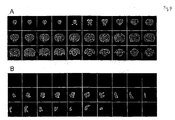
- Fig. 3 shows 30 consecutive T 2 -weighted magnetic resonance images of a brain of an ischemic rat administered with saline (control).
- Photographs A show each whole area of slices.
- Photographs B show each edematous area from the whole areas of Photographs A. Images were aligned from rostral to caudal slices. Slice thickness was 0.6 mm, and total covered thickness was 18.0 mm.
- Fig. 4 shows 30 consecutive T 2 -weighted magnetic resonance images of a brain of an ischemic rat administered with melatonin.
- Photographs A show each whole area of slices.
- Photographs B show each edematous area from the whole areas of Photographs A. Images were aligned from rostral to caudal slices. Slice thickness was 0.6 mm, and total covered thickness was 18.0 mm.
- Fig. 5 shows the volume of brain edema of ischemic rats administered determined with the magnetic resonance images of Figs. 3 and 4 comparing with the volume of brain edema of ischemic rats administered with saline.
- the first finding is that brain ischemia preferentially injures astroglia as compared with neurons (Fig. 1).
- the injury of astroglia will be directly associated with an injury of a blood-brain barrier, that is, a modification in a permeability of a cerebral blood vessel.
- the first injury of astroglia will cause brain edema, and the brain edema will additionally generate deficiency of cerebral blood flow.
- the additional deficiency of cerebral blood flow will secondarily injure other healthy astrocytes expanding the brain edema.
- melatonin preferentially protects astroglia from an injury caused by a poison or ischemia and preferentially cures an injured astroglia (Fig. 2).
- the protection and curing of astroglia by melatonin will directly prevent the vascular permeability from injury and cures the injury.
- melatonin treats and prevents brain edema, and inhibits a "forest fire-like" extension of brain edema through its capacity to protect astroglia from injury and to cure injured astroglia.
- the first group of subjects to be administered with the pharmaceutical or food composition of the invention comprising melatonin is the group of patients suffering from brain edema.
- melatonin treats astroglia injured by ischemia, edema or other causes and treats a blood-brain barrier so that edema is cured.
- Melatonin prevents or reduces secondary injury of the blood-brain barrier caused by secondary injury of astroglia caused by brain edema so that a "forest fire-like" extension of brain edema is suppressed.
- the composition of the invention is used for the treatment of brain edema in the first group of the subjects.
- the second group of subjects to be administered with the pharmaceutical or food composition of the invention is the group of subjects who are judged by clinicians to have the risk of suffering from brain ischemia. According to our finding, such subjects have the risk of injuring their astroglia and blood-brain barrier. In the second group of the subjects, melatonin will protect the astroglia and blood-brain barrier from injury caused by brain ischemia so that onset of brain edema is prevented. Accordingly, the composition of the invention is used for the prevention of brain edema in the second group of the subjects.
- the subjects having the risk of suffering from brain ischemia include, but are not limited to, subjects suffering from cerebral thrombosis, cerebral embolism, cerebral infarction, cerebral hemorrhage, subarachnoid hemorrhage, transient brain ischemia, hyperlipemia, hypertension, cardiac arrest or brain contusion.
- Diagnosis and monitoring of brain edema are conducted by a clinician based on information including a progress of conditions such as an increase in intracranical pressure, a CT scanning, a magnetic resonance imaging (MRI) and the like. That is, the brain edema of this invention depends on and is defined as the result of a clinician's judgement based on the above diagnosis or monitoring.
- MRI magnetic resonance imaging
- Melatonin as used herein, includes melatonin encapsulated in an encapsulating matrix, a liposome or the like.
- Melatonin encapsulated in an encapsulating matrix is gradually released from the matrix into blood so that its residence time in blood is apparently increased.
- the encapsulating matrix comprises cyclodextrin and pharmaceutically acceptable biodegradable synthetic polymers such as polylactic acid, a copolymer of lactic acid and glycol, poly- ⁇ -hydroxybutyric acid and the like. Cyclodextrins attached onto a pharmaceutically acceptable synthetic polymer are included in the definition of cyclodextrin.
- melatonin When melatonin is encapsulated in a liposome, its residence time in blood can be also increased.
- composition of the invention may be either a pharmaceutical composition or a food composition to be administered or served to the subject.
- the pharmaceutical and food compositions essentially contain melatonin in an amount effective for treatment or prevention of brain edema.
- the composition of the invention can be administered or served every day or at a predetermined interval depending on a condition or state of a disease giving the risk of brain edema such as cerebral thrombosis or cerebral embolism.
- the administration or serving of the composition of the invention is continued until the risk of an onset of brain edema is lowered to a desirable level, and depends on a clinician's judgement.
- the administration or serving of the composition of the invention is continued until the brain edema is cured or is lowered to a desired level. It is stopped also by a clinician's judgement.
- the amount of melatonin to be administered or served to the subjects depends on various factors such as the sex of the subject, the age of the subject, the body weight of the subject, the diet of the subject, the administration route applied, the condition of the brain edema, the degree of the risk of inducing brain ischemia, the condition of the diseases which may give the subject brain ischemia (such as cerebral thrombosis and cerebral embolism), and the condition of circulatory systems of the subject.
- the amount is determined by a clinician.
- the daily dose or amount of melatonin is determined such that a daily blood concentration of melatonin ranges from 1 ng/ml to 100 ⁇ g/ml.
- its daily dose is determined such that a daily blood concentration of melatonin ranges from 10 ng/ml to 300 ⁇ g/ml.
- melatonin varies whether melatonin is administered orally or by intravenous injection, or whether melatonin is encapsulated or not.
- the availability varies also with the dosage form of oral administration. Therefore, the daily dose of the composition of the invention to be administered varies depending on the administration conditions as above. For example, in case of oral administration of melatonin, an oral dose of about 0.8 mg/kg-body weight would be necessary to give 100 ng/ml of blood concentration of melatonin.
- the expression "daily blood concentration” as used above means the total blood concentration of melatonin administered per day. For example, when the blood concentration by the first administration reaches 50 ⁇ g/ml and the blood concentration by the second administration on the same day reaches 30 ⁇ g/ml, the daily blood concentration is calculated to be 80 ⁇ g/ml. It is unnecessary to determine the daily blood concentration by practically measuring the blood concentration of melatonin. A clinician or a specialist will be able to estimate the daily blood concentration of a specific clinical case.
- the above-mentioned blood concentration of melatonin is referred to melatonin in a free form.
- melatonin is encapsulated in an encapsulating matrix or a liposome, its apparent residence time in blood is longer since melatonin in an encapsulated form is gradually released in blood.
- the blood concentration of melatonin in the encapsulated form may be lower than that in melatonin in the free form.
- the pharmaceutical composition of the invention is administered by various routes, such as permucosally (sublingually, intranasally, oral mucosally and the like), orally, enterally, percutaneously, intravenously, by aspiration, by suppository or by instillation.
- the administration route is determined depending on the amount of melatonin to be administered, conditions of a patient or a subject and the like. It is determined by a clinician.
- the pharmaceutical composition of the invention contains one or more of pharmaceutical carriers.
- the pharmaceutical carrier should be pharmaceutically acceptable.
- the pharmaceutical carrier to be used mainly depends on the dosage form.
- the pharmaceutical carrier may be a binder (such as tragacanth gum, acacia, corn starch and gelatin), a vehicle (such as potassium diphosphate), a disintegrator (such as corn potato, potato starch and alginic acid), a lubricant (such as magnesium stearate), a sweetening agent (such as sucrose), a dye, a flavoring agent (such as orange flavor), and a solvent (such as water, ethanol and glycerol).
- the pharmaceutical composition for oral administration may contain a pharmaceutically acceptable antioxidant (such as cysteine, glutathione, ascorbic acid, sodium metasulfite, and sodium bisulfite) as a pharmaceutical carrier.
- the pharmaceutical composition for injection of the present invention may be a sterile powder composition, a freeze-dried powder composition or the like which can be used by merely dissolving in a sterile water.
- a diluent or a solvent such as a sterile water, an isotonic saline and a pH butter can be used as a pharmaceutically acceptable carrier used in the pharmaceutical composition for injection.
- An aqueous ethanol may be used as the solvent.
- the pharmaceutical composition for injection of the invention may contain, as a pharmaceutical carrier, saccharides (such as glucose, mannitol, and dextran), polyhydric alcohols (such as glycerol), and/or inorganic salts (such as sodium salts and magnesium salts). Further, it may contain a pharmaceutically acceptable antioxidant such as cysteine, glutathione, ascorbic acid, sodium metasulfite, and sodium bisulfite.
- saccharides such as glucose, mannitol, and dextran
- polyhydric alcohols such as glycerol
- inorganic salts such as sodium salts and magnesium salts.
- a pharmaceutically acceptable antioxidant such as cysteine, glutathione, ascorbic acid, sodium metasulfite, and sodium bisulfite.
- compositions for other administration routes such as intranasal, aspiration or percutaneous administrations are known for those skilled in the art.
- the pharmaceutical composition of the invention may contain any nutritional agent in addition to melatonin.
- any nutritional agent in addition to melatonin.
- the pharmaceutical composition of the invention when administered orally or parenterally, it may contain nutrients such as amino acids, vitamins, lipids, and glucose.
- the pharmaceutical composition of the invention when administered by instillation, it may contain nutrients such as glucose, vitamins, amino acids, and lipids.
- the pharmaceutical composition of the invention may contain one or more therapeutic agents conventionally used in the treatment of brain edema.
- therapeutic agents conventionally used in the treatment of brain edema.
- the examples of the therapeutic agent for brain edema include hypertonic solutions such as glycerol and mannitol; steroids such as dexamethasone; diuretics such as furosemide and acetazol; and adjuvants such as an thrombolytic agent, microcirculation improvers, and urinastin and gabexate mesilate stabilizing cell membranes.
- the pharmaceutical composition of the invention may contain therapeutic agents for the treatment of diseases such as cerebral thrombosis, cerebral embolism, and a hypertensive encephalopathy.
- the known therapeutic agents for the treatment of cerebral embolism include an anti-edema, an anticoagulant, a thrombolytic agent, a calcium antagonist and the like.
- the known therapeutic agents for the treatment of cerebral thrombosis include an anti-edema, an anti-platelet agent, a calcium antagonist and the like.
- the pharmaceutical composition of the invention for oral administration is preferably in the form of sustained release.
- sustained release standard sustained release preparations such as a preparation having a gel coating and a preparation having a multiple coating and preparations for local release such as a preparation capable of rupturing in a pylorus or a preparation capable of foaming in a duodenum are well known.
- the composition for oral administration include tablets, pills, capsules, ampoules, folded powders, elixirs, suspensions, syrups and the like.
- the pharmaceutical composition of the invention for per rectal administration may be in the form of a suppository.
- a suppository Various forms of suppositories are well known.
- the composition of the invention is a food composition
- any food may be used since melatonin is tasteless and stable against heat and enzymes under cooking conditions.
- the food includes cooked foods such as a hamburger and soup as well as uncooked foods such as a fruit juice.
- Cold foods such as an ice cream, emulsified foods such as a mayonnaise, gelled foods such as a custard pudding and a jelly and fermented food such as yogurt are included in the food for the food composition of the invention.
- Foodstuffs for example, seasonings such as a tomato sauce, a bouillon and a soy sauce are also included in the food for the food composition of the invention.
- Melatonin can be added to the food in a pure form or in a mixed form with one or more food additives.
- the mixed form may be tablet, granule, powder, extrudate, emulsion, gel or the like.
- the examples of the food additive are disintegrators (such as starch), extenders (such as starch, protein-lyzate, casein, sugar, and glucose), solvents (such as edible fat or oil, ethanol and water), emulsifiers for W/O or O/W emulsion, and gel-forming materials.
- melatonin may be added in a raw foodstuff before cooking such as a minced meat, a cooked food such as a bouillabaisse and a stew, or milk before preparation of yogurt.
- melatonin may be added in a food before cold storing or freezing.
- the amount of melatonin to be added in a food is such that the above mentioned daily dose of melatonin is satisfied.
- the food composition of the invention can be served to the subject one, two or three times a day, with or without administration of the pharmaceutical composition of the invention.
- a 24G plug was inserted from a right external carotid artery of each rat so as to arrive to an origin of its middle cerebral artery of Willis's circle through its internal carotid artery. Immediately the anesthesia was stopped and the rat was dehypnotized. After one hour, the plug was taken out under halothane anesthesia, thereby a blood flow was recanalized.
- the brain of each rat was fixed with an aqueous 4% paraformaldehyde solution to prepare a brain specimen. Then, the brain specimen was stained according to the standard ABC method using an anti-GFAP antibody (GFAP staining; astroglia were stained)
- photograph A and photograph B corresponding to an amplification of an area enclosed with a square in photograph A, astrocytes in an ischemic core area were fallen out and gliosis (i.e. an overgrowing of astroglia) was observed in its penumbra area (i.e. a lateral area of corpus striatum and a mantle of cerebral cortex).
- Photograph C corresponding to an amplification of an area enclosed with a square in photograph B showed that in an ischemic core area of cerebral cortex, astroglia was killed, but neurons were alive.
- Photograph D corresponding to an amplification of an area enclosed with a square in photograph A showed that in a penumbra area of cerebral cortex, astroglia was killed, but neurons (marked by white single arrows) were alive.
- Photographs E and F show cerebral cortex, in which ⁇ represents a neuron and ⁇ represents both a neuron and an astroglia.
- Photograph E showed that astroglia were killed, but neurons were alive.
- Photograph F showed that both neurons and astroglia was alive.
- brain edema resulting from brain ischemia is caused by a modification in cerebrovascular permeability resulting from the injury of astroglia and that a secondary modification in cerebrovascular permeability resulting from a secondary injury of astroglia caused by a secondary lowering or deficiency of a cerebral blood flow caused by the original edema is involved in a "forest fire-like" extension of brain edema.
- Ischemic rats in Example 1 were divided into two groups.
- first group non-melatonin administration group
- a physiological saline solution was injected to a stomach of each rat using a sound for 10 days from the first day (24 hours after the recanalization of the blood flow).
- second group a melatonin-containing physiological saline solution was similarly administered in an amount of 6 mg of melatonin per kg of rat.
- Specimens of brain in the non-melatonin administration group (photographs A, B and C) and in the melatonin administration group (photograph D, E and F) were made in the same manner as described in Example 1. These brain specimens were stained using a GFAP staining (photographs A, B, D and E) or a MAP-2 staining MAP-2 stains neurons.
- Photograph B corresponds to an amplification of an area enclosed with a square in photograph A.
- Photograph E corresponds to an amplification of an area enclosed with a square in photograph D.
- the GFAP staining demonstrated that falling out of astroglia in an ischemic core area and gliosis in its penumbra area were present in the non-melatonin administration group and that the falling out of astroglia and the gliosis were reduced by the administration of melatonin in the melatonin administration group.
- the MAP-2 staining showed that neurons were alive in both the non-melatonin administration group (photograph C) and the melatonin administration group (photograph F), but the number of the living neurons in the melatonin administration group was higher than that in the non-melatonin administration group.
- IgG diapedesis area (area stained with an anti-IgG antibody) from a blood vessel in each of cerebral cortex and corpus striatum was observed using the NIH imaging system in the non-melatonin administration group and the melatonin administration group of Example 2. Results are shown in Table 1.
- group population IgG diapedesis area (mm 2 ; average ⁇ SE) cerebral cortex corpus striatum non-elatonin administration 11 14.5 ⁇ 2.0 10.6 ⁇ 3.0 melatonin administration 11 5.5 ⁇ 4.5 7.2 ⁇ 4.0
- Table 1 demonstrates that in the non-melatonin administration group, the diapedesis of IgG into cerebral cortex and corpus striatum occurs due to brain ischemia and brain ischemia breaks a blood-brain barrier. It demonstrates also that the breakage of a blood-brain barrier due to brain ischemia is inhibited by the administration of melatonin in the melatonin administration group.
- Results of experiment (3) together with those of experiment (2) demonstrate that brain ischemia preferentially injures astroglia leading to the breakage of a blood-brain barrier and that the injury of astroglia, i.e. the breakage of a blood-brain barrier, is inhibited by melatonin.
- astrocytes Isolation and incubation of astrocytes were conducted according to the method as described in Neuroscience, 87: 497-807 (1998).
- the cerebral cortex of a fetal rat was removed, from which astrocytes were separated by trypsin treatment at 37°C for 20 minutes and incubated on a 24 well culture dish containing DMEM media + 10 % FBS under 5% CO 2 /air atmosphere at 37°C.
- the injury of incubated astrocytes was induced by replacing the medium with a serum-free DMEM medium (serum-free group) or adding 6 mM of a metabolic inhibitor, 3-nitropropionic acid (3-NPA), to the medium (3-NPA group).
- the serum-free group and the 3-NPA group were divided into two sub-groups, respectively. To one sub-group of each group, 10 ⁇ g/ml of melatonin was added to the medium.
- the number of the alive astrocytes was counted according to the neutron red assay after 3 days from the incubation in the 3-NPA group or according to the MTT (3-(4,5-dimethyl-thiozolyl)-2,5-diphenyl-tetrazolium bromide) assay after 10 days from the replacement of the medium.
- the test of significance was conducted by ANOVA. Results are shown in Table 2.
- group number of strocytes (% of control; average ⁇ SE) non-treatment 100 ⁇ 5 3-NPA 50 ⁇ 5 3-NPA + melatonin 63 ⁇ 4 serum-free 34 ⁇ 3 serum-free + elatonin 48 ⁇ 4
- melatonin protected astrocytes from the injury caused by 3-NPA or the injury caused by the replacement of a serum-free medium.
- Example 1 demonstrate that brain ischemia preferentially injures astroglia, destroys blood-brain barrier, and deteriorates vascular permeability, which deterioration causes brain edema.
- the experiments further demonstrate that the ischemic or poisonous injury of astroglia can be prevented and cured by the administration of melatonin, strongly suggesting that melatonin will treat and prevent brain edema caused by the first injury of astroglia or the second injury of astroglia caused by edema.
- a plug is inserted from an internal carotid artery of a 8 to 10-week-old SD male rat so as to arrive to a branch of its middle cerebral artery, thereby the middle cerebral artery is occluded for 60 minutes.
- Astroglias in a penumbra area of brain capillary is injured by brain ischemia and astroglias in other areas and neutron are injured by an ischemic metabolic disorder so that cytotoxic edema is mainly caused. Thereafter, the blood flow is recanalized by removing the plug, thereby a blood flows into the ischemia area at a stroke and moisture is passed from an injured blood-brain barrier to a paremchyma of brain so that vasogenic edema is mainly caused.
- the extent of brain edema can be observed by determining the change in intracerebral moisture content using magnetic resonance imaging (MRI) according to two analysis methods; the T 2 highlighted image mainly catches vasogenic edema and the scattering highlighted image mainly catches cytotoxic edema. It can be determined also by observing a brain specimen under a microscope.
- MRI magnetic resonance imaging
- MCA middle cerebral artery
- the rats were anesthetized with halothane and inserted with an embolus (a 4-0 Ethicon nylon filament, with tip diameter tapered to the size of a 26G needle) from the external carotid artery, via the internal carotid artery, to the base of either left or right MCA, thereby the blood flow to the MCA was stopped.
- anesthesia was cut off and rats were allowed to recover for 1 hour.
- Behavioral tests (see below) were performed to confirm successful unilateral ischemia.
- the rats were re-anesthetized with halothane, the embolus withdrawn, the blood reperfusion established, and the skin sutured.
- the forelimb akinesia test and the spontaneous rotational test were conducted during MCA occlusion (i.e., during the 1 hour-embolism) as the behavioral tests. Detailed description and specific criteria for each test to determine successful ischemia have been reported in Borlongan CV, et al. and Nishino H, et al. supra. Briefly, the forelimb akinesia test involved holding the animal by the tail and noting the positions of the forelimbs. Rats with MCA occlusion demonstrate a characteristic posture; i.e. the forelimb in the ischemic side is stretched out while the forelimb in the contralateral side clipped to their chest muscles. For the spontaneous rotational test, the rat was placed in a box made of Plexiglas and the direction of the rat's rotation was noted over 5 minutes.
- Melatonin was dissolved in saline and administered orally (6.0 mg/kg) just prior to the 1 hour-MCA occlusion and 1 day after the surgery (melatonin treatment group). Saline was administered similarly to the melatonin non-treatment group.
- MRI A MRI system (SMIS, UK), consisted of a 4.7 T/400 horizontal superconducting magnet equipped with actively shielded gradient coils (60 mT/m, 26-cm i.d.), was used to obtain brain images of ischemic rats.
- Volume of edema is (number of pixels in edema region) x (voxel volume), where the voxel volume is 0.054 mm 3 . Criteria of pixels within the edema region was defined as pixels that showed more than 120% of the signal intensity compared to the averaged signal intensity in contralateral side of the brain. Pixels that corresponded to the ventricles were excluded carefully. Statistics were made by ANOVA followed by Scheffe's t-test. Differences were considered significant at P ⁇ 0.05.
Landscapes
- Health & Medical Sciences (AREA)
- Life Sciences & Earth Sciences (AREA)
- Chemical & Material Sciences (AREA)
- Engineering & Computer Science (AREA)
- Veterinary Medicine (AREA)
- Pharmacology & Pharmacy (AREA)
- Public Health (AREA)
- Medicinal Chemistry (AREA)
- General Health & Medical Sciences (AREA)
- Animal Behavior & Ethology (AREA)
- Bioinformatics & Cheminformatics (AREA)
- Nuclear Medicine, Radiotherapy & Molecular Imaging (AREA)
- Organic Chemistry (AREA)
- General Chemical & Material Sciences (AREA)
- Chemical Kinetics & Catalysis (AREA)
- Cardiology (AREA)
- Mycology (AREA)
- Polymers & Plastics (AREA)
- Food Science & Technology (AREA)
- Heart & Thoracic Surgery (AREA)
- Nutrition Science (AREA)
- Epidemiology (AREA)
- Urology & Nephrology (AREA)
- Vascular Medicine (AREA)
- Hematology (AREA)
- Diabetes (AREA)
- Biomedical Technology (AREA)
- Neurology (AREA)
- Neurosurgery (AREA)
- Pharmaceuticals Containing Other Organic And Inorganic Compounds (AREA)
- Coloring Foods And Improving Nutritive Qualities (AREA)
- Medicinal Preparation (AREA)
- Indole Compounds (AREA)
Applications Claiming Priority (2)
| Application Number | Priority Date | Filing Date | Title |
|---|---|---|---|
| US556701 | 2000-04-24 | ||
| US09/556,701 US20020119191A1 (en) | 2000-04-24 | 2000-04-24 | Pharmaceutical or food composition for treatment or prevention of brain edema |
Publications (3)
| Publication Number | Publication Date |
|---|---|
| EP1161948A2 true EP1161948A2 (de) | 2001-12-12 |
| EP1161948A3 EP1161948A3 (de) | 2003-01-08 |
| EP1161948B1 EP1161948B1 (de) | 2004-12-22 |
Family
ID=24222486
Family Applications (1)
| Application Number | Title | Priority Date | Filing Date |
|---|---|---|---|
| EP01303728A Expired - Lifetime EP1161948B1 (de) | 2000-04-24 | 2001-04-24 | Pharmazeutische Zusammensetzung und Nahrungsmittel zur Behandlung von Gehirnödem |
Country Status (4)
| Country | Link |
|---|---|
| US (2) | US20020119191A1 (de) |
| EP (1) | EP1161948B1 (de) |
| JP (1) | JP2002020285A (de) |
| DE (1) | DE60107900T2 (de) |
Cited By (1)
| Publication number | Priority date | Publication date | Assignee | Title |
|---|---|---|---|---|
| EP1496893A4 (de) * | 2002-03-28 | 2007-03-28 | Oxis Int Inc | Neuroprotektionsverfahren, zusammensetzungen und screening-verfahren dafür |
Families Citing this family (6)
| Publication number | Priority date | Publication date | Assignee | Title |
|---|---|---|---|---|
| EP1587510A4 (de) * | 2003-01-31 | 2007-08-08 | Univ Hong Kong | Verfahren zur behandlung von ischämischemschlaganfall mit melatonin |
| MXPA06009377A (es) * | 2004-02-20 | 2007-03-07 | Lifescape Biosciences Inc | Composiciones y metodos para regulacion del sueno. |
| US20100068169A1 (en) * | 2007-02-23 | 2010-03-18 | University Of The Witwatersrand, Johannesburg | Monolithic drug delivery system |
| WO2009096821A1 (en) * | 2008-01-29 | 2009-08-06 | St.Jude Medical Ab | Method and implantable medical device (imd) for monitoring permeability status of cell membranes. |
| US9532952B2 (en) | 2011-01-28 | 2017-01-03 | Physician's Seal, LLC | Controlled-release compositions of melatonin combined with sedative and/or analgesic ingredients |
| WO2012103411A2 (en) | 2011-01-28 | 2012-08-02 | Zx Pharma, Llc | Controlled-release melatonin composition and related methods |
Family Cites Families (13)
| Publication number | Priority date | Publication date | Assignee | Title |
|---|---|---|---|---|
| US4945103A (en) * | 1989-01-17 | 1990-07-31 | Michael Cohen | Method of treating pre-menstrual syndrome |
| ATE181670T1 (de) * | 1991-05-09 | 1999-07-15 | Neurim Pharma 1991 | Melatonin enthaltende arzneimittel |
| JP3065506B2 (ja) * | 1995-04-03 | 2000-07-17 | 株式会社資生堂 | ピラゾリジン誘導体及びラジカルスカベンジャー、脳梗塞抑制剤、脳浮腫抑制剤 |
| JP3285746B2 (ja) * | 1995-11-24 | 2002-05-27 | 株式会社資生堂 | フェニレンジアミン誘導体及びラジカルスカベンジャー、脳梗塞抑制剤、脳浮腫抑制剤 |
| JP4598203B2 (ja) * | 1995-12-01 | 2010-12-15 | ビーティージー・インターナショナル・リミテッド | 脳機能改善剤 |
| US5700828A (en) * | 1995-12-07 | 1997-12-23 | Life Resuscitation Technologies, Inc. | Treatment or prevention of anoxic or ischemic brain injury with melatonin-containing compositions |
| US6011019A (en) * | 1996-03-12 | 2000-01-04 | University Of South Florida | Vasoactive effects and free radical generation by β-amyloid peptides |
| US5891465A (en) * | 1996-05-14 | 1999-04-06 | Biozone Laboratories, Inc. | Delivery of biologically active material in a liposomal formulation for administration into the mouth |
| WO1998021947A1 (en) * | 1996-11-18 | 1998-05-28 | Internutria, Inc. | Compositions and treatment for nighttime persistent reproductive transition symptoms |
| US5855920A (en) * | 1996-12-13 | 1999-01-05 | Chein; Edmund Y. M. | Total hormone replacement therapy |
| KR19980049239A (ko) * | 1996-12-19 | 1998-09-15 | 윤석모 | 상치를 이용한 천연멜라토닌함유 식품의 제조방법 |
| CN1164422A (zh) * | 1997-05-19 | 1997-11-12 | 北京三株工业有限责任公司 | 一种具有改善睡眠作用的功能食品 |
| US6075045A (en) * | 1999-04-28 | 2000-06-13 | Ajinomoto Co., Inc. | Method of treating paralysis of the extremities caused by cerebral infarction |
-
2000
- 2000-04-24 US US09/556,701 patent/US20020119191A1/en not_active Abandoned
-
2001
- 2001-04-20 JP JP2001122869A patent/JP2002020285A/ja not_active Withdrawn
- 2001-04-24 DE DE60107900T patent/DE60107900T2/de not_active Expired - Lifetime
- 2001-04-24 EP EP01303728A patent/EP1161948B1/de not_active Expired - Lifetime
-
2006
- 2006-11-22 US US11/562,486 patent/US20070098777A1/en not_active Abandoned
Cited By (1)
| Publication number | Priority date | Publication date | Assignee | Title |
|---|---|---|---|---|
| EP1496893A4 (de) * | 2002-03-28 | 2007-03-28 | Oxis Int Inc | Neuroprotektionsverfahren, zusammensetzungen und screening-verfahren dafür |
Also Published As
| Publication number | Publication date |
|---|---|
| DE60107900T2 (de) | 2005-12-15 |
| US20070098777A1 (en) | 2007-05-03 |
| US20020119191A1 (en) | 2002-08-29 |
| EP1161948B1 (de) | 2004-12-22 |
| EP1161948A3 (de) | 2003-01-08 |
| DE60107900D1 (de) | 2005-01-27 |
| JP2002020285A (ja) | 2002-01-23 |
Similar Documents
| Publication | Publication Date | Title |
|---|---|---|
| AU2010286704B2 (en) | Methods for the prevention and treatment of cerebral ischemia | |
| RU2528097C2 (ru) | Способы и составы для лечения субарахноидального кровоизлияния коронарной и артериальной аневризмы | |
| Robinson | 3 Disorders of antidiuretic hormone secretion | |
| CA2821312A1 (en) | Methods for facilitating muscle recovery after a period of disuse using beta-hydroxy-beta-methylbutyrate | |
| KR20070034591A (ko) | 발작 및 발작병을 치료하기 위한 화합물 및 방법 | |
| CN112384216A (zh) | 用于增强生物利用度和电压门控钾离子通道开放暴露的方法 | |
| US20060287253A1 (en) | Compounds and methods for treating seizure disorders | |
| EP1161948B1 (de) | Pharmazeutische Zusammensetzung und Nahrungsmittel zur Behandlung von Gehirnödem | |
| GB2085729A (en) | Pharmaceutical composition for oral administration containing coagulation factor VIII | |
| US20240245649A1 (en) | Method and Composition for Mimicking Caloric Restriction by Administration of Ergothioneine | |
| KR20210137511A (ko) | 비타민 k 투여에 의한 신속한 내피 기능 개선, 동맥 경직 감소 및 혈관 석회화 반전 | |
| EP3375450B1 (de) | Zusammensetzung zur behandlung oder vorbeugung von einer ischämischen zerebrovaskulären erkrankung über nasale verabreichung | |
| Wang et al. | Direct visualization of microcirculation impairment after acute subdural hemorrhage in a novel animal model | |
| BENJAMIN | Infantile form of pernicious (Addisonian) anemia: report of a long term study of a case | |
| Hill | Ventricular dilation following intraventricular hemorrhage in the premature infant | |
| EP1174134B1 (de) | Melatonin zur behandlung von paralysen ausgelöst durch hirnschlag | |
| JPH05500655A (ja) | 異化性腸管関連疾患および宿主防衛機構障害の治療用医薬組成物 | |
| CN103037901B (zh) | 抑制cd36以控制肥胖和胰岛素敏感性 | |
| Bounous et al. | Use of an elemental diet in animals during treatment with 5-fluorouracil (NSC-19893) | |
| CN113768943B (zh) | Tlr4通路抑制剂在制备药物中的用途 | |
| Etheridge Jr | Hypoglycemia and the central nervous system | |
| Saunders et al. | Hypernatremic hemorrhagic encephalopathy as an unexpected critical complication in children: a case report from a tertiary hospital | |
| AU2017330451B2 (en) | Apoaequorin and vitamin D-containing compositions and methods of using same | |
| Tobian et al. | The influence of renal prostaglandins, central nervous system and NaCl on hypertension of Dahl S rats | |
| McCrossin et al. | Congenital skin defects, twins and toxoplasmosis |
Legal Events
| Date | Code | Title | Description |
|---|---|---|---|
| PUAI | Public reference made under article 153(3) epc to a published international application that has entered the european phase |
Free format text: ORIGINAL CODE: 0009012 |
|
| AK | Designated contracting states |
Kind code of ref document: A2 Designated state(s): AT BE CH CY DE DK ES FI FR GB GR IE IT LI LU MC NL PT SE TR |
|
| AX | Request for extension of the european patent |
Free format text: AL;LT;LV;MK;RO;SI |
|
| PUAL | Search report despatched |
Free format text: ORIGINAL CODE: 0009013 |
|
| AK | Designated contracting states |
Kind code of ref document: A3 Designated state(s): AT BE CH CY DE DK ES FI FR GB GR IE IT LI LU MC NL PT SE TR |
|
| AX | Request for extension of the european patent |
Free format text: AL;LT;LV;MK;RO;SI |
|
| 17P | Request for examination filed |
Effective date: 20030505 |
|
| AKX | Designation fees paid |
Designated state(s): AT BE CH CY DE DK ES FI FR GB GR IE IT LI LU MC NL PT SE TR |
|
| RIN1 | Information on inventor provided before grant (corrected) |
Inventor name: UNEYAMA, HISAYUKI,C/O CENTRAL RESEARCH LAB. Inventor name: TORII, KUNIO,C/O CENTRAL RESEARCH LABORATORIES Inventor name: NISHINO, HITOO |
|
| 17Q | First examination report despatched |
Effective date: 20030926 |
|
| GRAP | Despatch of communication of intention to grant a patent |
Free format text: ORIGINAL CODE: EPIDOSNIGR1 |
|
| GRAS | Grant fee paid |
Free format text: ORIGINAL CODE: EPIDOSNIGR3 |
|
| GRAA | (expected) grant |
Free format text: ORIGINAL CODE: 0009210 |
|
| RBV | Designated contracting states (corrected) |
Designated state(s): DE FR GB |
|
| AK | Designated contracting states |
Kind code of ref document: B1 Designated state(s): DE FR GB |
|
| REG | Reference to a national code |
Ref country code: GB Ref legal event code: FG4D |
|
| REG | Reference to a national code |
Ref country code: IE Ref legal event code: FG4D |
|
| REF | Corresponds to: |
Ref document number: 60107900 Country of ref document: DE Date of ref document: 20050127 Kind code of ref document: P |
|
| PLBE | No opposition filed within time limit |
Free format text: ORIGINAL CODE: 0009261 |
|
| STAA | Information on the status of an ep patent application or granted ep patent |
Free format text: STATUS: NO OPPOSITION FILED WITHIN TIME LIMIT |
|
| ET | Fr: translation filed | ||
| 26N | No opposition filed |
Effective date: 20050923 |
|
| PGFP | Annual fee paid to national office [announced via postgrant information from national office to epo] |
Ref country code: GB Payment date: 20100325 Year of fee payment: 10 |
|
| PGFP | Annual fee paid to national office [announced via postgrant information from national office to epo] |
Ref country code: FR Payment date: 20100521 Year of fee payment: 10 |
|
| PGFP | Annual fee paid to national office [announced via postgrant information from national office to epo] |
Ref country code: DE Payment date: 20100430 Year of fee payment: 10 |
|
| REG | Reference to a national code |
Ref country code: DE Ref legal event code: R119 Ref document number: 60107900 Country of ref document: DE |
|
| REG | Reference to a national code |
Ref country code: DE Ref legal event code: R119 Ref document number: 60107900 Country of ref document: DE |
|
| GBPC | Gb: european patent ceased through non-payment of renewal fee |
Effective date: 20110424 |
|
| REG | Reference to a national code |
Ref country code: FR Ref legal event code: ST Effective date: 20111230 |
|
| PG25 | Lapsed in a contracting state [announced via postgrant information from national office to epo] |
Ref country code: FR Free format text: LAPSE BECAUSE OF NON-PAYMENT OF DUE FEES Effective date: 20110502 |
|
| PG25 | Lapsed in a contracting state [announced via postgrant information from national office to epo] |
Ref country code: GB Free format text: LAPSE BECAUSE OF NON-PAYMENT OF DUE FEES Effective date: 20110424 |
|
| PG25 | Lapsed in a contracting state [announced via postgrant information from national office to epo] |
Ref country code: DE Free format text: LAPSE BECAUSE OF NON-PAYMENT OF DUE FEES Effective date: 20111031 |