EP1164133A2 - Enantiomerisch reine Beta-D-Dioxolan-Nukleoside - Google Patents
Enantiomerisch reine Beta-D-Dioxolan-Nukleoside Download PDFInfo
- Publication number
- EP1164133A2 EP1164133A2 EP01203571A EP01203571A EP1164133A2 EP 1164133 A2 EP1164133 A2 EP 1164133A2 EP 01203571 A EP01203571 A EP 01203571A EP 01203571 A EP01203571 A EP 01203571A EP 1164133 A2 EP1164133 A2 EP 1164133A2
- Authority
- EP
- European Patent Office
- Prior art keywords
- dioxolane
- nucleosides
- benzoyl
- enantiomerically pure
- nucleoside
- Prior art date
- Legal status (The legal status is an assumption and is not a legal conclusion. Google has not performed a legal analysis and makes no representation as to the accuracy of the status listed.)
- Granted
Links
Images

Classifications
-
- A—HUMAN NECESSITIES
- A61—MEDICAL OR VETERINARY SCIENCE; HYGIENE
- A61K—PREPARATIONS FOR MEDICAL, DENTAL OR TOILETRY PURPOSES
- A61K31/00—Medicinal preparations containing organic active ingredients
- A61K31/66—Phosphorus compounds
- A61K31/675—Phosphorus compounds having nitrogen as a ring hetero atom, e.g. pyridoxal phosphate
-
- A—HUMAN NECESSITIES
- A61—MEDICAL OR VETERINARY SCIENCE; HYGIENE
- A61P—SPECIFIC THERAPEUTIC ACTIVITY OF CHEMICAL COMPOUNDS OR MEDICINAL PREPARATIONS
- A61P31/00—Antiinfectives, i.e. antibiotics, antiseptics, chemotherapeutics
- A61P31/12—Antivirals
-
- A—HUMAN NECESSITIES
- A61—MEDICAL OR VETERINARY SCIENCE; HYGIENE
- A61P—SPECIFIC THERAPEUTIC ACTIVITY OF CHEMICAL COMPOUNDS OR MEDICINAL PREPARATIONS
- A61P31/00—Antiinfectives, i.e. antibiotics, antiseptics, chemotherapeutics
- A61P31/12—Antivirals
- A61P31/14—Antivirals for RNA viruses
- A61P31/18—Antivirals for RNA viruses for HIV
-
- A—HUMAN NECESSITIES
- A61—MEDICAL OR VETERINARY SCIENCE; HYGIENE
- A61P—SPECIFIC THERAPEUTIC ACTIVITY OF CHEMICAL COMPOUNDS OR MEDICINAL PREPARATIONS
- A61P37/00—Drugs for immunological or allergic disorders
- A61P37/02—Immunomodulators
- A61P37/04—Immunostimulants
-
- C—CHEMISTRY; METALLURGY
- C07—ORGANIC CHEMISTRY
- C07D—HETEROCYCLIC COMPOUNDS
- C07D405/00—Heterocyclic compounds containing both one or more hetero rings having oxygen atoms as the only ring hetero atoms, and one or more rings having nitrogen as the only ring hetero atom
- C07D405/02—Heterocyclic compounds containing both one or more hetero rings having oxygen atoms as the only ring hetero atoms, and one or more rings having nitrogen as the only ring hetero atom containing two hetero rings
- C07D405/04—Heterocyclic compounds containing both one or more hetero rings having oxygen atoms as the only ring hetero atoms, and one or more rings having nitrogen as the only ring hetero atom containing two hetero rings directly linked by a ring-member-to-ring-member bond
Definitions
- This invention is in the area of organic synthesis of nucleosides, and in particular relates to a process for the preparation of enantiomerically pure ⁇ -D-(-)-dioxolane nucleosides.
- these nucleosides are known to inhibit HIV reverse transcriptase as well as cause chain-termination of the growing viral DNA chain.
- nucleoside derivatives play an important role in their biological activity.
- the C1' position of the ribose in the nucleoside (the carbon bound to the nitrogen of the heterocyclic base) is a chiral center because the carbon is attached to four different moieties.
- there is an optically active center at C4' of the nucleoside (the ring carbon bound to the hydroxymethyl group that is phosphorylated in nucleotides).
- both the base attached to the C1' atom and the hydroxymethyl group attached to the C4' atom are on the same side of the carbohydrate ring.
- a carbohydrate configuration in which the C1' and C4'-substituents are on the same side of the carbohydrate plane (i.e., the substituents are cis) is referred to as a " ⁇ -configuration.”
- a carbohydrate configuration in which the C1' and C4'-substituents are on the opposite side of the carbohydrate plane (i.e., the substituents are trans) is referred to as an " ⁇ -configuration”.
- a nucleoside is designated a D -nucleoside if the non-hydrogen substituent attached to the C4'-atom is above the plane of the carbohydrate ring.
- the nucleoside is designated an L -nucleoside if the non-hydrogen substituent attached to the C4'-atom is below the plane of the carbohydrate ring.
- the non-naturally occurring ⁇ -isomers of nucleosides are rarely biologically active, and are typically toxic.
- Endo and exo refer to the conformations in which the atoms are at the same or opposite side of the sugar ring in relation to the base).
- the C3'-exo and C3'-endo conformations place the C5' atom in axial and equitorial positions, respectively.
- the position of the C5' atom affects the location of the 5'-hydroxyl group in relation to the base. Since the 5'-hydroxyl group is the site of phosphorylation of the nucleoside, its location with respect to the rest of the nucleoside is important.
- the product was synthesized in five steps from benzyloxyaldehyde dimethylacetal and ( ⁇ )-methyl glycerate to produce a 79% yield of the 1:1 diastereomeric mixture.
- the X-ray crystallographic analysis of the product revealed that the dioxolane ring adopts the 3 T 4 conformation commonly observed in ribonucleosides, with the 03' atom in the endo position.
- Norbeck reported that the racemic mixture of dioxolane-T exhibits an anti-HIV activity of 20 ⁇ M in ATH8 cells, and attributed the low efficacy against the virus to an effect of the endo conformation of the O3' atom.
- Belleau et al., in the Fifth International Conf. on AIDS, Montreal, Canada June 4-9, 1990, paper No. T.C.O.l., reported a method of synthesis of cytidine nucleosides that contain oxygen or sulfur in the 3'-position.
- the dioxolane ring was prepared by the condensation of RCO 2 CH 2 CHO with glycerine.
- the Belleau synthesis results in a racemic mixture of diastereoisomers about the C4' carbon of the nucleoside.
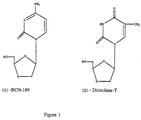
- Belleau reported that the sulfur analog, referred to as NGBP-21 or ( ⁇ ) BCH-189 (see Figure 1), had high anti-HIV activity. ( ⁇ ) BCH-189 is currently undergoing preclinical toxicology.
- the invention as disclosed is an asymmetric process for the preparation of enantiomerically pure ⁇ -D-(-)-dioxolane-nucleosides.
- the process involves the initial preparation of (2R,4R)- and (2R,4S)-4-acetoxy-2-(protected-oxymethyl)-dioxolane from 1,6-anhydromannose, a sugar that contains all of the necessary stereochemistry for the enantiomerically pure final product, including the correct diastereomeric configuration about the 1 position of the sugar (that becomes the 4'-position in the later formed nucleoside).
- the (2R,4R)- and (2R,4S)-4-acetoxy-2-(protected-oxymethyl)-dioxolane is condensed with a desired heterocyclic base in the presence of SnCl 4 , other Lewis acid, or trimethylsilyl triflate in an organic solvent such as dichloroethane, acetonitrile, or methylene chloride, to provide the stereochemically pure dioxolane-nucleoside.
- the enantiomerically pure dioxolane nucleosides are active HIV agents, that are significantly more effective than the prior prepared racemic mixtures of the compounds.
- the anti-viral activity of the compounds is surprising in light of the generally accepted theory that moieties in the endo conformation, including these dioxolanes, are not effective antiviral agents.
- the enantiomerically pure dioxolane nucleosides are less toxic than the racemic mixture of nucleosides because the nonnaturally occurring isomer has been eliminated.
- the product can be used as a research tool to study the inhibition of HIV in vitro or can be administered in a pharmaceutical composition to-inhibit the growth of HIV in vivo.
- Figure 1 is an illustration of the chemical structures of ( ⁇ )-1-[(2 ⁇ ,4 ⁇ )-2-(hydroxymethyl)-4-dioxolanyl]thymine (dioxolane-T) and ( ⁇ )-1-[(2 ⁇ ,4 ⁇ )-2-(hydroxymethyl)-4-(1,3-thioxolane)]thymine (BCH-189).
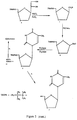
- Figure 2 is an illustration of the method of synthesis of enantiomerically pure ⁇ -D-(-)-dioxolanethymine.
- protected refers to a moiety that has been placed on a functional group of a molecule to prevent further reaction of the moiety during derivatization of another portion of the molecule.
- Protecting groups particularly for oxygen and nitrogen, are well known to those skilled in the art of organic chemistry.
- 1,3-dioxolane nucleoside refers to a nucleoside derivative as depicted in Figures 1 and 2, wherein a 1,3-dioxolane is attached to a heterocyclic base, typically a purine or pyrimidine base, through the oxathiolane C5 carbon (that becomes the Cl'-carbon in the nucleoside).
- 1,6-anhydromannose compound 1 , Figure 2
- This sugar contains all of the necessary stereochemistry for the enantiomerically pure final product (see for example, compound 11 , Figure 2), including the correct diastereomeric configuration about the 1 position of the sugar (that becomes the 4'-position in the later formed nucleoside).
- 1,6-Anhydromannose can be prepared according to procedures described in Knauf, A.E.; Hann, R.M.; Hudson, C.S. J. Am. Chem .
- the 1,6-anhydromannose is converted to its isopropylidene derivative with dimethoxypropane and p-toluenesulfonic acid, which, without isolation, is benzoylated in the 4-position to compound 2 (see Figure 2).
- An acyl group can also be used to protect the 4-position.
- the isopropylidene group of compound 2 is then removed by a catalytic amount of an acid such as sulfuric acid, hydrochloric acid, formic acid, trifluoroacetic acid, sulfamic acid, in 60% aqueous dioxane or other suitable organic solvent at a temperature range of approximately 0 to 50°C to give ()-1,6-anhydro-4-0-benzoyl- ⁇ -D-mannopyranose in high yield as a white solid.
- an acid such as sulfuric acid, hydrochloric acid, formic acid, trifluoroacetic acid, sulfamic acid
- the glycol of (-)-1,6-anhydro-4-O-benzoyl- ⁇ -D-mannopyranose is oxidatively cleaved by treatment with NaIO 4 in H 2 O/EtOH (1:1) for one hour at approximately room temperature to produce to the corresponding dialdehyde.
- Lead tetraacetate can also be used as the oxidizing reagent for this reaction.
- dialdehyde is immediately reduced in situ with any suitable reducing agent, including NaBH 4 , diisobutylaluminum hydride (DIBAL-H), lithium borohydride (LiBH 4 ), or sodium bis(2-methoxyethoxy)-aluminum hydride (Red-Al), at approximately room temperature or below.
- any suitable reducing agent including NaBH 4 , diisobutylaluminum hydride (DIBAL-H), lithium borohydride (LiBH 4 ), or sodium bis(2-methoxyethoxy)-aluminum hydride (Red-Al)
- compound 4 isomerizes by benzoyl migration from a secondary to a primary position to produce (-)-(2R,4R) -4- (2-benzoxy-1-hydroxyethyl)-2- (hydroxymethyl)-dioxolane (compound 5, Figure 2).
- the 2-position of the dioxolane is then protected with a suitable oxygen protecting group, for example, a trisubstituted silyl group such as trimethylsilyl, dimethylhexylsilyl, t-butyldimethylsilyl, t-butyldiphenylsilyl, trityl, alkyl group, acyl groups such as acetyl, propionyl, benzoyl, p-NO 2 benzoyl, or toluyl, methylsulfonyl, or p-toluylsulfonyl.
- a preferred protecting group is t-butyldiphenylsilyl.
- the benzoyl group is removed from the 2-hydroxyethyl-position with a strong base such as sodium methoxide or ammonia in methanol at approximately 0 to 50°C to produce (-)-(2R,4R)-2-(protected-O-methyl)-4-(1,2-dihydroxyethyl)-dioxolane (compound 6, Figure 2) in high yield.
- a strong base such as sodium methoxide or ammonia in methanol
- the 1,2-dihydroxyethyl group in the 4-position of the dioxolane is converted to a carboxylic acid with an oxidizing agent such as NaIO 4 /RuO 2 , or lead tetraacetate, at approximately 0 to 50°C to produce (+)-(2R,4R)-2-(protected-oxymethyl)-4-carboxyldioxolane (see compound 7, Figure 2).
- an oxidizing agent such as NaIO 4 /RuO 2 , or lead tetraacetate
- a modified Hunsdiecker reaction (Dhavale, D.; et al., Tetrahedron Lett. , 1988, 29 , 6163) is then carried out in ethyl acetate with Pb(OAc) 4 to convert (+)-(2R,4R)-2-(protected-oxymethyl)-4-carboxyldioxolane to the corresponding key intermediates (2R,4R)- and (2R,4S)-4-acetoxy-2-(protected-oxymethyl) dioxolane (see compound 8, Figure 2) in good yield.
- the enantiomerically pure dioxolane prepared as described in Section A. is condensed with a protected base in the presence of trimethylsilyl triflate (trimethylsilyl trifluoromethanesulfonate) or a Lewis acid in a dry organic solvent.
- Purine bases include adenine, hypoxanthine, N 6 -alkylpurines, N 6 -benzylpurine, N 6 -halopurine, and guanine.
- Pyrimidine bases include thymine, cytosine, 6-azapyrimidine, 2-mercaptopyrimidine, and uracil. A thymine base is preferred in a condensation reaction carried out with a dioxolane derivative, and a cytosine base is preferred when the condensation reaction is carried out with a 1,3-thioxolane.
- Protecting groups are well known to those skilled in the art, and include trimethylsilyl, dimethylhexylsilyl, t-butyldimethylsilyl, and t-butyldiphenylsilyl, tritylmethyl, alkyl groups, acyl groups (lower alkyl-C(O)) such as acetyl and propionyl, methylsulfonyl, and p-toluylsulfonyl.
- Friedel-Crafts catalysts that can be used in the condensation reaction include SnCl 4 , ZnCl 4 , TiCl 4 , AlCl 3 , FeCl 3 , BF 3 -diethylether, and BCl 3 . These catalysts require anhydrous conditions because the presence of water reduces their activity. The catalysts are also inactivated in the presence of organic solvents with active hydrogens, such as alcohols and organic acids.
- the catalysts are typically used in solvents such as carbon disulfide, methylene chloride, nitromethane, 1,2-dichloroethane, nitrobenzene, tetrachloroethane, chlorobenzene, benzene, toluene, dimethylformamide, tetrahydrofuran, dioxane, or acetonitrile.
- solvents such as carbon disulfide, methylene chloride, nitromethane, 1,2-dichloroethane, nitrobenzene, tetrachloroethane, chlorobenzene, benzene, toluene, dimethylformamide, tetrahydrofuran, dioxane, or acetonitrile.
- Anhydrous aluminum chloride is not soluble in carbon disulfide. Niedballa, et al., J. Org. Chem. 39, 25 (1974).
- the preferred catalyst is SnCl 4 .
- the 5'-O-position of the nucleoside is deprotected.
- Desilylation can be carried out with a variety of reagents, including acetic acid, trifluoroacetic acid, hydrogen fluoride, n-tetrabutylammonium fluoride, potassium fluoride and pyridinium HCl.
- acetic acid is preferred for commercial scale use because it is inexpensive.
- Other reagents for desilylation are known to those skilled in the art.
- Deacylation is accomplished in acid or base. 5-0-Ethers can be cleaved with BCl 3 or trimethylsilyl iodide.
- 1,6-anhydro- ⁇ -D-mannopyranose (compound 1 ) was mixed with acetone (800 ml) and methanol (300 ml) and stirred for approximately thirty minutes until only a free-flowing solid remained. Dimethoxypropane (300 ml), and p-toluenesulfonic acid (5 g) were then added, and the mixture stirred for 2 hours.
- reaction mixture was then made basic with triethylamine (pH 8), and filtered to remove the white solid material.
- the solvents were evaporated, and the residue taken up in ethyl acetate and then crystallized to obtain 4 grams of the 2,3-isopropylidenated product as clear needles.
- ⁇ -D-(-)-Dioxolane-nucleosides can be used as research tools to inhibit the growth of HIV in vitro, or can be administered pharmaceutically to inhibit the growth of HIV in vivo.
- ⁇ -D-(-)-dioxolane-nucleosides to inhibit HIV can be measured by various experimental techniques.
- the technique used herein, and described in detail below measures the inhibition of viral replication in phytohemagglutinin (PHA) stimulated human peripheral blood mononuclear (PBM) cells infected with HIV-1 (strain LAV).
- PHA phytohemagglutinin
- PBM human peripheral blood mononuclear
- strain LAV HIV-1
- the amount of virus produced is determined by measuring the virus-coded reverse transcriptase enzyme.
- the amount of enzyme produced is compared to an HIV control. The method is described in detail below.
- the median effective (EC 50 ) concentration for (-)-1-[(2 ⁇ ,4 ⁇ )-2-(hydroxymethyl)-4-dioxolanyl]thymine was determined by the median effect method ( Antimicrob. Agents Chemother. 30, 491-498 (1986). Briefly, the percent inhibition of virus, as determined from measurements of reverse transcriptase, is plotted versus the micromolar concentration of compound.
- the EC 50 is the concentration of compound at which there is a 50% inhibition of viral growth.
- DDA 2',3'-dideoxyadenosine
- AZDU 3'-azido-2',3'-dideoxyuridine
- DDT 3'-dideoxythymidine
- Mitogen-stimulated uninfected human PBM cells (3.8 x 10 5 cells/ml) were cultured in the presence and 2absence of drug under similar conditions as those used for the antiviral assay described above. The cells were counted after 6 days using a hemacytometer and the trypan blue exclusion method, as described by Schinazi et al., Antimicrobial Agents and Chemotherapy , 22(3), 499 (1982).
- the IC 50 is the concentration of compound which inhibits 50% of normal cell growth.
- the IC 50 of (-)-1-[(2 ⁇ ,4 ⁇ )-2-(hydroxymethyl)-4-dioxolanyl]thymine was measured as over 100 ⁇ M, indicating that the compound was not toxic in uninfected PBM cells evaluated up to 100 ⁇ M.
- Humans suffering from diseases caused by HIV infection can be treated by administering to the patient an effective amount of ⁇ -D-(-)-dioxolane-nucleosides or their salts in the presence of a pharmaceutically acceptable carrier or diluent.
- the active materials can be administered by any appropriate route, for example, orally, parenterally, intravenously, intradermally, subcutaneously, or topically, in liquid or solid form.
- the active compound is included in the pharmaceutically acceptable carrier or diluent in an amount sufficient to deliver to a patient a therapeutically effective amount of compound to inhibit HIV replication in vivo without causing serious toxic effects in the patient treated.
- HIV inhibitory amount is meant an amount of active ingredient sufficient to exert an HIV inhibitory effect as measured by, for example, an assay such as the ones described herein.
- compositions should produce a serum concentration of active ingredient of from about 0.2 to 40 ⁇ M.
- a preferred concentration range is from 0.2 to 20 ⁇ M and most preferably about 1 to 10 ⁇ M.
- the pharmaceutical compositions should provide a dosage of from 1 to 60 milligrams of compound per kilogram of body weight per day.
- concentration of active compound in the drug composition will depend on absorption, inactivation, and excretion rates of the drug as well as other factors known to those of skill in the art. It is to be noted that dosage values will also vary with the severity of the condition to be alleviated. It is to be further understood that for any particular subject, specific dosage regimens should be adjusted over time according to the individual need and the professional judgment of the person administering or supervising the administration of the compositions, and that the concentration ranges set forth herein are exemplary only and are not intended to limit the scope or practice of the claimed composition.
- the active ingredient may be administered at once, or may be divided into a number of smaller doses to be administered at varying intervals of time.
- Oral compositions will generally include an inert diluent or an edible carrier. They may be enclosed in gelatin capsules or compressed into tablets.
- the active compound can be incorporated with excipients and used in the form of tablets, troches, or capsules. Pharmaceutically compatible binding agents, and/or adjuvant materials can be included as part of the composition.
- the tablets, pills, capsules, troches and the like can contain any of the following ingredients, or compounds of a similar nature: a binder such as microcrystalline cellulose, gum tragacanth or gelatin; an excipient such as starch or lactose, a disintegrating agent such as alginic acid, Primogel, or corn starch; a lubricant such as magnesium stearate or Sterotes; a glidant such as colloidal silicon dioxide; a sweetening agent such as sucrose or saccharin; or a flavoring agent such as peppermint, methyl salicylate, or orange flavoring.
- a binder such as microcrystalline cellulose, gum tragacanth or gelatin
- an excipient such as starch or lactose, a disintegrating agent such as alginic acid, Primogel, or corn starch
- a lubricant such as magnesium stearate or Sterotes
- a glidant such as colloidal silicon dioxide
- dosage unit form When the dosage unit form is a capsule, it can contain, in addition to material of the above type, a liquid carrier such as a fatty oil.
- dosage unit forms can contain various other materials which modify the physical form of the dosage unit, for example, coatings of sugar, shellac, or other enteric agents.
- ⁇ -D-(-)-Dioxolane-nucleosides or their salts can be administered as a component of an elixir, suspension, syrup, wafer, chewing gum or the like.
- a syrup may contain, in addition to the active compounds, sucrose as a sweetening agent and certain preservatives, dyes and colorings and flavors.
- ⁇ -D-(-)-Dioxolane-nucleosides or their salts can also be mixed with other active materials that do not impair the desired action, or with materials that supplement the desired action, such as antibiotics, antifungals, antiinflammatories, or other antivirals, including other nucleoside anti-HIV compounds.
- Solutions or suspensions used for parenteral, intradermal, subcutaneous, or topical application can include the following components: a sterile diluent such as water for injection, saline solution, fixed oils, polyethylene glycols, glycerine, propylene glycol or other synthetic solvents; antibacterial agents such as benzyl alcohol or methyl parabens; antioxidants such as ascorbic acid or sodium bisulfite; chelating agents such as ethylenediaminetetraacetic acid; buffers such as acetates, citrates or phosphates and agents for the adjustment of tonicity such as sodium chloride or dextrose.
- the parental preparation can be enclosed in ampoules, disposable syringes or multiple dose vials made of glass or plastic.
- preferred carriers are physiological saline or phosphate buffered saline (PBS).
- the active compounds are prepared with carriers that will protect the compound against rapid elimination from the body, such as a controlled release formulation, including implants and microencapsulated delivery systems.
- a controlled release formulation including implants and microencapsulated delivery systems.
- Biodegradable, biocompatible polymers can be used, such as ethylene vinyl acetate, polyanhydrides, polyglycolic acid, collagen, polyorthoesters, and polylactic acid. Methods for preparation of such formulations will be apparent to those skilled in the art. The materials can also be obtained commercially from Alza Corporation and Nova Pharmaceuticals, Inc.
- Liposomal suspensions including liposomes targeted to infected cells with monoclonal antibodies to viral antigens
- liposome formulations may be prepared by dissolving appropriate lipid(s) (such as stearoyl phosphatidyl ethanolamine, stearoyl phosphatidyl choline, arachadoyl phosphatidyl choline, and cholesterol) in an inorganic solvent that is then evaporated, leaving behind a thin film of dried lipid on the surface of the container.
- appropriate lipid(s) such as stearoyl phosphatidyl ethanolamine, stearoyl phosphatidyl choline, arachadoyl phosphatidyl choline, and cholesterol
- an inorganic solvent that is then evaporated, leaving behind a thin film of dried lipid on the surface of the container.
- An aqueous solution of the active compound or its monophosphate, diphosphate, and/or triphosphate derivatives are then introduced into the container.
- the container is then swirled by hand to free lipid material from the sides of the container and to disperse
- Mono, di, and triphosphate derivative of ⁇ -D-(-)-dioxolane-nucleosides can be prepared as described below.
- the monophosphate can be prepared according to the procedure of Imai et al., J. Org. Chem. , 34(6), 1547-1550 (June 1969). For example, about 100 mg of ⁇ -D-(-)-dioxolane-nucleoside and about 280 ⁇ l of phosphoryl chloride are reacted with stirring in about 8 ml of dry ethyl acetate at about 0°C for about four hours. The reaction is quenched with ice. The aqueous phase is purified on an activated charcoal column, eluting with 5% ammonium hydroxide in a 1:1 mixture of ethanol and water. Evaporation of the eluant gives ammonium-( ⁇ -D-(-)-dioxolane-nucleoside)-5'-monophosphate.
- the diphosphate can be prepared according to the procedure of Davisson et al., J. Org. Chem. , 52(9), 1794-1801 (1987).
- ⁇ -D-(-)-Dioxolane-nucleosides can be prepared from the corresponding tosylate, that can be prepared, for example, by reacting the nucleoside with tosyl chloride in pyridine at room temperature for about 24 hours, working up the product in the usual manner (e.g., by washing, drying, and crystallizing it).
- the triphosphate can be prepared according to the procedure of Hoard et al., J. Am. Chem. Soc. , 87(8), 1785-1788 (1965).
- ⁇ -D-(-)-dioxolane-nucleoside is activated (by making a imidazolide, according to methods known to those skilled in the art) and treating with tributyl ammonium pyrophosphate in DMF.
- the reaction gives primarily the triphosphate of the nucleoside, with some unreacted monophosphate and some diphosphate. Purification by anion exchange chromatography of a DEAE column is followed by isolation of the triphosphate, e.g., as the tetrasodium salt.
Landscapes
- Health & Medical Sciences (AREA)
- Chemical & Material Sciences (AREA)
- Organic Chemistry (AREA)
- Life Sciences & Earth Sciences (AREA)
- Pharmacology & Pharmacy (AREA)
- Veterinary Medicine (AREA)
- Public Health (AREA)
- General Health & Medical Sciences (AREA)
- Animal Behavior & Ethology (AREA)
- Medicinal Chemistry (AREA)
- General Chemical & Material Sciences (AREA)
- Virology (AREA)
- Chemical Kinetics & Catalysis (AREA)
- Nuclear Medicine, Radiotherapy & Molecular Imaging (AREA)
- Immunology (AREA)
- Communicable Diseases (AREA)
- Oncology (AREA)
- Epidemiology (AREA)
- Engineering & Computer Science (AREA)
- AIDS & HIV (AREA)
- Tropical Medicine & Parasitology (AREA)
- Molecular Biology (AREA)
- Bioinformatics & Cheminformatics (AREA)
- Pharmaceuticals Containing Other Organic And Inorganic Compounds (AREA)
- Plural Heterocyclic Compounds (AREA)
- Saccharide Compounds (AREA)
- Preparation Of Compounds By Using Micro-Organisms (AREA)
Priority Applications (1)
| Application Number | Priority Date | Filing Date | Title |
|---|---|---|---|
| EP05075365A EP1600448A3 (de) | 1990-12-05 | 1991-12-05 | Enantiomerisch reine Beta-D-Dioxolan-Nukleoside |
Applications Claiming Priority (3)
| Application Number | Priority Date | Filing Date | Title |
|---|---|---|---|
| US07/622,762 US5179104A (en) | 1990-12-05 | 1990-12-05 | Process for the preparation of enantiomerically pure β-D-(-)-dioxolane-nucleosides |
| US622762 | 1990-12-05 | ||
| EP19920902800 EP0562009A4 (en) | 1990-12-05 | 1991-12-05 | Enantiomerically pure -g(b)-d-(-)-dioxolane-nucleosides |
Related Parent Applications (1)
| Application Number | Title | Priority Date | Filing Date |
|---|---|---|---|
| EP19920902800 Division EP0562009A4 (en) | 1990-12-05 | 1991-12-05 | Enantiomerically pure -g(b)-d-(-)-dioxolane-nucleosides |
Related Child Applications (1)
| Application Number | Title | Priority Date | Filing Date |
|---|---|---|---|
| EP05075365A Division EP1600448A3 (de) | 1990-12-05 | 1991-12-05 | Enantiomerisch reine Beta-D-Dioxolan-Nukleoside |
Publications (3)
| Publication Number | Publication Date |
|---|---|
| EP1164133A2 true EP1164133A2 (de) | 2001-12-19 |
| EP1164133A3 EP1164133A3 (de) | 2002-01-02 |
| EP1164133B1 EP1164133B1 (de) | 2007-08-01 |
Family
ID=24495427
Family Applications (4)
| Application Number | Title | Priority Date | Filing Date |
|---|---|---|---|
| EP01203571A Expired - Lifetime EP1164133B1 (de) | 1990-12-05 | 1991-12-05 | Verfahren zur Herstellung von Enantiomerisch reine Beta-D-Dioxolan-Nukleoside |
| EP19920902800 Ceased EP0562009A4 (en) | 1990-12-05 | 1991-12-05 | Enantiomerically pure -g(b)-d-(-)-dioxolane-nucleosides |
| EP05075365A Withdrawn EP1600448A3 (de) | 1990-12-05 | 1991-12-05 | Enantiomerisch reine Beta-D-Dioxolan-Nukleoside |
| EP05077620A Withdrawn EP1693373A1 (de) | 1990-12-05 | 1991-12-05 | Enantiomerisch reine Beta-D-Dioxolan-Nukleoside |
Family Applications After (3)
| Application Number | Title | Priority Date | Filing Date |
|---|---|---|---|
| EP19920902800 Ceased EP0562009A4 (en) | 1990-12-05 | 1991-12-05 | Enantiomerically pure -g(b)-d-(-)-dioxolane-nucleosides |
| EP05075365A Withdrawn EP1600448A3 (de) | 1990-12-05 | 1991-12-05 | Enantiomerisch reine Beta-D-Dioxolan-Nukleoside |
| EP05077620A Withdrawn EP1693373A1 (de) | 1990-12-05 | 1991-12-05 | Enantiomerisch reine Beta-D-Dioxolan-Nukleoside |
Country Status (9)
| Country | Link |
|---|---|
| US (1) | US5179104A (de) |
| EP (4) | EP1164133B1 (de) |
| JP (3) | JP3421335B2 (de) |
| AT (1) | ATE368660T1 (de) |
| AU (2) | AU9147591A (de) |
| CA (2) | CA2590125A1 (de) |
| DE (1) | DE69133576T2 (de) |
| ES (1) | ES2291268T3 (de) |
| WO (1) | WO1992010497A1 (de) |
Cited By (1)
| Publication number | Priority date | Publication date | Assignee | Title |
|---|---|---|---|---|
| EP1569659A4 (de) * | 2002-12-09 | 2009-03-25 | Univ Georgia Res Found | Dioxolan-thyminund kombinationen gegen 3tc/azt-resistente hiv-stämme |
Families Citing this family (47)
| Publication number | Priority date | Publication date | Assignee | Title |
|---|---|---|---|---|
| US6350753B1 (en) * | 1988-04-11 | 2002-02-26 | Biochem Pharma Inc. | 2-Substituted-4-substituted-1,3-dioxolanes and use thereof |
| US6175008B1 (en) | 1988-04-11 | 2001-01-16 | Biochem Pharma Inc. | Processes for preparing substituted 1,3-oxathiolanes with antiviral properties |
| US5466806A (en) * | 1989-02-08 | 1995-11-14 | Biochem Pharma Inc. | Processes for preparing substituted 1,3-oxathiolanes with antiviral properties |
| US6903224B2 (en) | 1988-04-11 | 2005-06-07 | Biochem Pharma Inc. | Substituted 1,3-oxathiolanes |
| US6703396B1 (en) | 1990-02-01 | 2004-03-09 | Emory University | Method of resolution and antiviral activity of 1,3-oxathiolane nuclesoside enantiomers |
| US5204466A (en) * | 1990-02-01 | 1993-04-20 | Emory University | Method and compositions for the synthesis of bch-189 and related compounds |
| US5827727A (en) * | 1990-02-01 | 1998-10-27 | Emory University | Method of resolution of 1,3-oxathiolane nucleoside enantiomers |
| US5914331A (en) * | 1990-02-01 | 1999-06-22 | Emory University | Antiviral activity and resolution of 2-hydroxymethyl-5-(5-fluorocytosin-1-yl)-1,3-oxathiolane |
| US5276151A (en) * | 1990-02-01 | 1994-01-04 | Emory University | Method of synthesis of 1,3-dioxolane nucleosides |
| US5444063A (en) * | 1990-12-05 | 1995-08-22 | Emory University | Enantiomerically pure β-D-dioxolane nucleosides with selective anti-Hepatitis B virus activity |
| US5925643A (en) * | 1990-12-05 | 1999-07-20 | Emory University | Enantiomerically pure β-D-dioxolane-nucleosides |
| US5817667A (en) * | 1991-04-17 | 1998-10-06 | University Of Georgia Research Foudation | Compounds and methods for the treatment of cancer |
| GB9111902D0 (en) * | 1991-06-03 | 1991-07-24 | Glaxo Group Ltd | Chemical compounds |
| US20050192299A1 (en) * | 1992-04-16 | 2005-09-01 | Yung-Chi Cheng | Method of treating or preventing hepatitis B virus |
| GB9226927D0 (en) * | 1992-12-24 | 1993-02-17 | Iaf Biochem Int | Dideoxy nucleoside analogues |
| US20020120130A1 (en) * | 1993-09-10 | 2002-08-29 | Gilles Gosselin | 2' or 3' -deoxy and 2', 3' -dideoxy-beta-L-pentofuranonucleo-side compounds, method of preparation and application in therapy, especially as anti- viral agents |
| CA2637774C (en) | 1993-09-10 | 2011-07-19 | Emory University | Nucleosides with anti-hepatitis b virus activity |
| US5587362A (en) * | 1994-01-28 | 1996-12-24 | Univ. Of Ga Research Foundation | L-nucleosides |
| IL115156A (en) * | 1994-09-06 | 2000-07-16 | Univ Georgia | Pharmaceutical compositions for the treatment of cancer comprising 1-(2-hydroxymethyl-1,3-dioxolan-4-yl) cytosines |
| US5703058A (en) * | 1995-01-27 | 1997-12-30 | Emory University | Compositions containing 5-fluoro-2',3'-didehydro-2',3'-dideoxycytidine or a mono-, di-, or triphosphate thereof and a second antiviral agent |
| US6391859B1 (en) | 1995-01-27 | 2002-05-21 | Emory University | [5-Carboxamido or 5-fluoro]-[2′,3′-unsaturated or 3′-modified]-pyrimidine nucleosides |
| US5808040A (en) * | 1995-01-30 | 1998-09-15 | Yale University | L-nucleosides incorporated into polymeric structure for stabilization of oligonucleotides |
| ATE346651T1 (de) * | 1995-06-07 | 2006-12-15 | Univ Emory | Nucleoside mit anti-hepatitis b virus wirksamkeit |
| US5753789A (en) * | 1996-07-26 | 1998-05-19 | Yale University | Oligonucleotides containing L-nucleosides |
| US6022876A (en) * | 1996-11-15 | 2000-02-08 | Yale University | L-β-dioxolane uridine analogs and methods for treating and preventing Epstein-Barr virus infections |
| US5792773A (en) * | 1996-11-15 | 1998-08-11 | Yale University | L-β-dioxolane uridine analog administration for treating Epstein-Barr virus infection |
| ATE267198T1 (de) * | 1997-03-19 | 2004-06-15 | Univ Emory | Synthese und anti-hiv und anti-hepatitis virus aktivität von 1,3-oxaselenolan nucleosiden |
| ES2314157T3 (es) * | 1998-11-02 | 2009-03-16 | Gilead Sciences, Inc. | Terapia de combinacion para tratar el virus de la hepatitis b. |
| DK1140937T3 (da) * | 1998-12-23 | 2004-03-22 | Shire Biochem Inc | Antivirale nucleosid-analoger |
| US6511983B1 (en) | 1999-03-01 | 2003-01-28 | Biochem Pharma Inc. | Pharmaceutical combination of antiviral agents |
| US6653318B1 (en) * | 1999-07-21 | 2003-11-25 | Yale University | 5-(E)-Bromovinyl uracil analogues and related pyrimidine nucleosides as anti-viral agents and methods of use |
| AU1262001A (en) | 1999-11-04 | 2001-05-14 | Biochem Pharma Inc. | Method for the treatment or prevention of flaviviridae viral infection using nucleoside analogues |
| US6436948B1 (en) | 2000-03-03 | 2002-08-20 | University Of Georgia Research Foundation Inc. | Method for the treatment of psoriasis and genital warts |
| PT1574512E (pt) | 2001-03-01 | 2008-03-05 | Abbott Lab | Formas polimórficas e outras formas cristalinas de cis-ftc |
| EA015145B1 (ru) | 2003-01-14 | 2011-06-30 | Джилид Сайэнс, Инк. | Фармацевтическая композиция и пероральная фармацевтическая дозированная форма (варианты), проявляющие активность в отношении вич-инфекций, лечебный набор и таблетка и способ лечения или предотвращения симптомов или эффектов вич-инфекции |
| DE10335061B4 (de) * | 2003-07-31 | 2005-11-17 | Wacker-Chemie Gmbh | Verfahren zur Herstellung von OH-geschützten [4-(2,6-damino-9H-purin-9-yl)-1,3-dioxolan-2-yl]methanol-Derivaten |
| CN101044122A (zh) * | 2004-02-03 | 2007-09-26 | 埃莫里大学 | 制备1,3-二氧戊环核苷的方法 |
| TWI471145B (zh) | 2005-06-13 | 2015-02-01 | Bristol Myers Squibb & Gilead Sciences Llc | 單一式藥學劑量型 |
| TWI375560B (en) | 2005-06-13 | 2012-11-01 | Gilead Sciences Inc | Composition comprising dry granulated emtricitabine and tenofovir df and method for making the same |
| WO2009052050A1 (en) * | 2007-10-15 | 2009-04-23 | Pharmasset, Inc. | Dioxolane thymine phosphoramidates as anti-hiv agents |
| TW201026715A (en) | 2008-12-23 | 2010-07-16 | Pharmasset Inc | Nucleoside phosphoramidates |
| CL2009002206A1 (es) | 2008-12-23 | 2011-08-26 | Gilead Pharmasset Llc | Compuestos derivados de pirrolo -(2-3-d]-pirimidin-7(6h)-tetrahidrofuran-2-il fosfonamidato, composicion farmaceutica; y su uso en el tratamiento de enfermedades virales. |
| JP6104504B2 (ja) | 2008-12-23 | 2017-03-29 | ギリアド ファーマセット エルエルシー | ヌクレオシド類似体 |
| ES2477228T3 (es) | 2009-12-22 | 2014-07-16 | Bridgestone Corporation | Composición mejorada de un modificador vin�lico y procedimientos para utilizarla |
| CL2011000716A1 (es) | 2010-03-31 | 2012-04-20 | Gilead Pharmasset Llc | Formas cristalinas 1 6 de (s)-isopropil-2-(((s)-(((2r.3r.4r.5r)-5-(2,4-dioxo-3,4-dihidropirimidin-1(2h)-il)-4-fluoro-3-hidroxi-4-metil tetrahidrofuran-2-il)metoxi)(fenoxi)fosforil)amino)propanoato; composicion y combinacion farmaceutica; y su uso para tratar una infeccion por el virus de la hepatitis c. |
| CN103351414B (zh) * | 2013-06-19 | 2016-06-01 | 河南中烟工业有限责任公司 | 烟用保润剂1-o-羟乙基-d-吡喃甘露糖及其制备方法 |
| WO2015005961A1 (en) | 2013-07-12 | 2015-01-15 | Emd Millipore Corporation | A method of determining virus removal from a sample containing a target protein using activated carbon |
Family Cites Families (5)
| Publication number | Priority date | Publication date | Assignee | Title |
|---|---|---|---|---|
| NZ228645A (en) | 1988-04-11 | 1991-09-25 | Iaf Biochem Int | 1,3-dioxolane derivatives substituted in the 5th position by a purine or pyrimidine radical; treatment of viral infections |
| US5041449A (en) * | 1988-04-11 | 1991-08-20 | Iaf Biochem International, Inc. | 4-(nucleoside base)-substituted-1,3-dioxolanes useful for treatment of retroviral infections |
| US5047407A (en) * | 1989-02-08 | 1991-09-10 | Iaf Biochem International, Inc. | 2-substituted-5-substituted-1,3-oxathiolanes with antiviral properties |
| US5276151A (en) | 1990-02-01 | 1994-01-04 | Emory University | Method of synthesis of 1,3-dioxolane nucleosides |
| GB9103544D0 (en) * | 1991-02-20 | 1991-04-10 | Alcan Int Ltd | Coating powders |
-
1990
- 1990-12-05 US US07/622,762 patent/US5179104A/en not_active Expired - Lifetime
-
1991
- 1991-12-05 EP EP01203571A patent/EP1164133B1/de not_active Expired - Lifetime
- 1991-12-05 CA CA002590125A patent/CA2590125A1/en active Pending
- 1991-12-05 EP EP19920902800 patent/EP0562009A4/en not_active Ceased
- 1991-12-05 JP JP50295692A patent/JP3421335B2/ja not_active Expired - Lifetime
- 1991-12-05 AT AT01203571T patent/ATE368660T1/de not_active IP Right Cessation
- 1991-12-05 ES ES01203571T patent/ES2291268T3/es not_active Expired - Lifetime
- 1991-12-05 EP EP05075365A patent/EP1600448A3/de not_active Withdrawn
- 1991-12-05 CA CA002099589A patent/CA2099589C/en not_active Expired - Lifetime
- 1991-12-05 AU AU91475/91A patent/AU9147591A/en not_active Abandoned
- 1991-12-05 DE DE69133576T patent/DE69133576T2/de not_active Expired - Lifetime
- 1991-12-05 EP EP05077620A patent/EP1693373A1/de not_active Withdrawn
- 1991-12-05 WO PCT/US1991/009124 patent/WO1992010497A1/en not_active Ceased
-
1997
- 1997-03-27 AU AU16640/97A patent/AU714646B2/en not_active Ceased
-
2000
- 2000-08-15 JP JP2000246125A patent/JP3881165B2/ja not_active Expired - Fee Related
-
2006
- 2006-09-27 JP JP2006263009A patent/JP4280276B2/ja not_active Expired - Lifetime
Non-Patent Citations (1)
| Title |
|---|
| C.K. CHU ET AL.: "Asymmetric synthesis of enantiomerically pure (-)-(1'R,4'R)-dioxolane-thymine and its anti-HIV activity" TETRAHEDRON LETTERS, vol. 32, 1991, pages 3791-3794, XP002181533 * |
Cited By (1)
| Publication number | Priority date | Publication date | Assignee | Title |
|---|---|---|---|---|
| EP1569659A4 (de) * | 2002-12-09 | 2009-03-25 | Univ Georgia Res Found | Dioxolan-thyminund kombinationen gegen 3tc/azt-resistente hiv-stämme |
Also Published As
| Publication number | Publication date |
|---|---|
| ATE368660T1 (de) | 2007-08-15 |
| EP0562009A4 (en) | 1993-11-24 |
| ES2291268T3 (es) | 2008-03-01 |
| DE69133576T2 (de) | 2008-04-17 |
| US5179104A (en) | 1993-01-12 |
| JPH07502973A (ja) | 1995-03-30 |
| CA2099589A1 (en) | 1992-06-06 |
| JP2007008959A (ja) | 2007-01-18 |
| JP2001097973A (ja) | 2001-04-10 |
| EP1164133A3 (de) | 2002-01-02 |
| JP3881165B2 (ja) | 2007-02-14 |
| WO1992010497A1 (en) | 1992-06-25 |
| EP1164133B1 (de) | 2007-08-01 |
| CA2590125A1 (en) | 1992-06-25 |
| AU1664097A (en) | 1997-07-17 |
| EP1600448A3 (de) | 2006-08-23 |
| AU9147591A (en) | 1992-07-08 |
| JP3421335B2 (ja) | 2003-06-30 |
| EP1600448A2 (de) | 2005-11-30 |
| CA2099589C (en) | 2007-08-21 |
| EP1693373A1 (de) | 2006-08-23 |
| DE69133576D1 (de) | 2007-09-13 |
| AU714646B2 (en) | 2000-01-06 |
| JP4280276B2 (ja) | 2009-06-17 |
| EP0562009A1 (de) | 1993-09-29 |
Similar Documents
| Publication | Publication Date | Title |
|---|---|---|
| EP1164133B1 (de) | Verfahren zur Herstellung von Enantiomerisch reine Beta-D-Dioxolan-Nukleoside | |
| EP1081148B1 (de) | Enantiomerisch reine Beta-D-Dioxolan-Nukleoside | |
| WO1994004154A9 (en) | ENANTIOMERICALLY PURE β-D-DIOXOLANE-NUCLEOSIDES | |
| EP0805683B1 (de) | 5-fluoro-2',3'-ungesättigte pyrimidinnucleoside | |
| RU2126405C1 (ru) | (-)-4-амино-5-фтор-1-(2-гидроксиметил-1,3-оксатиолан-5-ил)-(1h)-пиримидин- 2-он, смесь его энантиомеров, способы их получения, способ лечения | |
| EP0666749B1 (de) | Ematiomerenreine beta-d-dioxolane nucleoside mit selektiver antihepatitis b-virus wirkung | |
| HK1086264A (en) | Enantiomerically pure beta-d-(-)-dioxolane-nucleosides | |
| AU2003200421B2 (en) | Enantiomerically pure beta-D-dioxolane-nucleosides | |
| HK1014663B (en) | Enantiomerically pure beta-d-dioxolane nucleosides with selective anti-hepatitis b virus activity |
Legal Events
| Date | Code | Title | Description |
|---|---|---|---|
| PUAI | Public reference made under article 153(3) epc to a published international application that has entered the european phase |
Free format text: ORIGINAL CODE: 0009012 |
|
| PUAL | Search report despatched |
Free format text: ORIGINAL CODE: 0009013 |
|
| AC | Divisional application: reference to earlier application |
Ref document number: 562009 Country of ref document: EP |
|
| AK | Designated contracting states |
Kind code of ref document: A2 Designated state(s): AT BE CH DE DK ES FR GB GR IT LI LU MC NL SE |
|
| AK | Designated contracting states |
Kind code of ref document: A3 Designated state(s): AT BE CH DE DK ES FR GB GR IT LI LU MC NL SE |
|
| RIN1 | Information on inventor provided before grant (corrected) |
Inventor name: SCHINAZI, RAYMOND F. Inventor name: CHU, CHUNG K. |
|
| 17P | Request for examination filed |
Effective date: 20020521 |
|
| AKX | Designation fees paid |
Free format text: AT BE CH DE DK ES FR GB GR IT LI LU MC NL SE |
|
| 17Q | First examination report despatched |
Effective date: 20030409 |
|
| GRAP | Despatch of communication of intention to grant a patent |
Free format text: ORIGINAL CODE: EPIDOSNIGR1 |
|
| RTI1 | Title (correction) |
Free format text: PROCESS FOR THE PREPARATION OF ENANTIOMERICALLY PURE BETA-D-(-)-DIOXOLANE-NUCLEOSIDES |
|
| GRAS | Grant fee paid |
Free format text: ORIGINAL CODE: EPIDOSNIGR3 |
|
| GRAA | (expected) grant |
Free format text: ORIGINAL CODE: 0009210 |
|
| AC | Divisional application: reference to earlier application |
Ref document number: 0562009 Country of ref document: EP Kind code of ref document: P |
|
| AK | Designated contracting states |
Kind code of ref document: B1 Designated state(s): AT BE CH DE DK ES FR GB GR IT LI LU MC NL SE |
|
| REG | Reference to a national code |
Ref country code: GB Ref legal event code: FG4D |
|
| REG | Reference to a national code |
Ref country code: CH Ref legal event code: EP |
|
| REF | Corresponds to: |
Ref document number: 69133576 Country of ref document: DE Date of ref document: 20070913 Kind code of ref document: P |
|
| ET | Fr: translation filed | ||
| PG25 | Lapsed in a contracting state [announced via postgrant information from national office to epo] |
Ref country code: NL Free format text: LAPSE BECAUSE OF FAILURE TO SUBMIT A TRANSLATION OF THE DESCRIPTION OR TO PAY THE FEE WITHIN THE PRESCRIBED TIME-LIMIT Effective date: 20070801 |
|
| NLV1 | Nl: lapsed or annulled due to failure to fulfill the requirements of art. 29p and 29m of the patents act | ||
| REG | Reference to a national code |
Ref country code: CH Ref legal event code: PL |
|
| PG25 | Lapsed in a contracting state [announced via postgrant information from national office to epo] |
Ref country code: CH Free format text: LAPSE BECAUSE OF FAILURE TO SUBMIT A TRANSLATION OF THE DESCRIPTION OR TO PAY THE FEE WITHIN THE PRESCRIBED TIME-LIMIT Effective date: 20070801 Ref country code: AT Free format text: LAPSE BECAUSE OF FAILURE TO SUBMIT A TRANSLATION OF THE DESCRIPTION OR TO PAY THE FEE WITHIN THE PRESCRIBED TIME-LIMIT Effective date: 20070801 Ref country code: LI Free format text: LAPSE BECAUSE OF FAILURE TO SUBMIT A TRANSLATION OF THE DESCRIPTION OR TO PAY THE FEE WITHIN THE PRESCRIBED TIME-LIMIT Effective date: 20070801 |
|
| REG | Reference to a national code |
Ref country code: ES Ref legal event code: FG2A Ref document number: 2291268 Country of ref document: ES Kind code of ref document: T3 |
|
| PG25 | Lapsed in a contracting state [announced via postgrant information from national office to epo] |
Ref country code: BE Free format text: LAPSE BECAUSE OF FAILURE TO SUBMIT A TRANSLATION OF THE DESCRIPTION OR TO PAY THE FEE WITHIN THE PRESCRIBED TIME-LIMIT Effective date: 20070801 |
|
| PG25 | Lapsed in a contracting state [announced via postgrant information from national office to epo] |
Ref country code: GR Free format text: LAPSE BECAUSE OF FAILURE TO SUBMIT A TRANSLATION OF THE DESCRIPTION OR TO PAY THE FEE WITHIN THE PRESCRIBED TIME-LIMIT Effective date: 20071102 Ref country code: DK Free format text: LAPSE BECAUSE OF FAILURE TO SUBMIT A TRANSLATION OF THE DESCRIPTION OR TO PAY THE FEE WITHIN THE PRESCRIBED TIME-LIMIT Effective date: 20070801 |
|
| PLBE | No opposition filed within time limit |
Free format text: ORIGINAL CODE: 0009261 |
|
| STAA | Information on the status of an ep patent application or granted ep patent |
Free format text: STATUS: NO OPPOSITION FILED WITHIN TIME LIMIT |
|
| PG25 | Lapsed in a contracting state [announced via postgrant information from national office to epo] |
Ref country code: SE Free format text: LAPSE BECAUSE OF FAILURE TO SUBMIT A TRANSLATION OF THE DESCRIPTION OR TO PAY THE FEE WITHIN THE PRESCRIBED TIME-LIMIT Effective date: 20071101 |
|
| 26N | No opposition filed |
Effective date: 20080506 |
|
| PG25 | Lapsed in a contracting state [announced via postgrant information from national office to epo] |
Ref country code: LU Free format text: LAPSE BECAUSE OF NON-PAYMENT OF DUE FEES Effective date: 20071205 |
|
| PGFP | Annual fee paid to national office [announced via postgrant information from national office to epo] |
Ref country code: MC Payment date: 20091127 Year of fee payment: 19 |
|
| PGFP | Annual fee paid to national office [announced via postgrant information from national office to epo] |
Ref country code: FR Payment date: 20091221 Year of fee payment: 19 Ref country code: GB Payment date: 20091202 Year of fee payment: 19 Ref country code: ES Payment date: 20100113 Year of fee payment: 19 Ref country code: IT Payment date: 20091215 Year of fee payment: 19 |
|
| PGFP | Annual fee paid to national office [announced via postgrant information from national office to epo] |
Ref country code: DE Payment date: 20091203 Year of fee payment: 19 |
|
| PG25 | Lapsed in a contracting state [announced via postgrant information from national office to epo] |
Ref country code: MC Free format text: LAPSE BECAUSE OF NON-PAYMENT OF DUE FEES Effective date: 20101231 |
|
| GBPC | Gb: european patent ceased through non-payment of renewal fee |
Effective date: 20101205 |
|
| REG | Reference to a national code |
Ref country code: FR Ref legal event code: ST Effective date: 20110831 |
|
| PG25 | Lapsed in a contracting state [announced via postgrant information from national office to epo] |
Ref country code: FR Free format text: LAPSE BECAUSE OF NON-PAYMENT OF DUE FEES Effective date: 20110103 |
|
| REG | Reference to a national code |
Ref country code: DE Ref legal event code: R119 Ref document number: 69133576 Country of ref document: DE Effective date: 20110701 |
|
| PG25 | Lapsed in a contracting state [announced via postgrant information from national office to epo] |
Ref country code: DE Free format text: LAPSE BECAUSE OF NON-PAYMENT OF DUE FEES Effective date: 20110701 Ref country code: GB Free format text: LAPSE BECAUSE OF NON-PAYMENT OF DUE FEES Effective date: 20101205 |
|
| PG25 | Lapsed in a contracting state [announced via postgrant information from national office to epo] |
Ref country code: IT Free format text: LAPSE BECAUSE OF NON-PAYMENT OF DUE FEES Effective date: 20101205 |
|
| REG | Reference to a national code |
Ref country code: ES Ref legal event code: FD2A Effective date: 20120206 |
|
| PG25 | Lapsed in a contracting state [announced via postgrant information from national office to epo] |
Ref country code: ES Free format text: LAPSE BECAUSE OF NON-PAYMENT OF DUE FEES Effective date: 20101206 |