EP1170264B1 - Vitrocéramique translucide, procédé pour fabriquer une vitrocéramique translucide et utilisation de celle-ci - Google Patents
Vitrocéramique translucide, procédé pour fabriquer une vitrocéramique translucide et utilisation de celle-ci Download PDFInfo
- Publication number
- EP1170264B1 EP1170264B1 EP00114268A EP00114268A EP1170264B1 EP 1170264 B1 EP1170264 B1 EP 1170264B1 EP 00114268 A EP00114268 A EP 00114268A EP 00114268 A EP00114268 A EP 00114268A EP 1170264 B1 EP1170264 B1 EP 1170264B1
- Authority
- EP
- European Patent Office
- Prior art keywords
- glass
- ceramic
- solid solution
- beta
- quartz solid
- Prior art date
- Legal status (The legal status is an assumption and is not a legal conclusion. Google has not performed a legal analysis and makes no representation as to the accuracy of the status listed.)
- Expired - Lifetime
Links
Images

Classifications
-
- C—CHEMISTRY; METALLURGY
- C03—GLASS; MINERAL OR SLAG WOOL
- C03C—CHEMICAL COMPOSITION OF GLASSES, GLAZES OR VITREOUS ENAMELS; SURFACE TREATMENT OF GLASS; SURFACE TREATMENT OF FIBRES OR FILAMENTS MADE FROM GLASS, MINERALS OR SLAGS; JOINING GLASS TO GLASS OR OTHER MATERIALS
- C03C10/00—Devitrified glass ceramics, i.e. glass ceramics having a crystalline phase dispersed in a glassy phase and constituting at least 50% by weight of the total composition
- C03C10/0018—Devitrified glass ceramics, i.e. glass ceramics having a crystalline phase dispersed in a glassy phase and constituting at least 50% by weight of the total composition containing SiO2, Al2O3 and monovalent metal oxide as main constituents
- C03C10/0027—Devitrified glass ceramics, i.e. glass ceramics having a crystalline phase dispersed in a glassy phase and constituting at least 50% by weight of the total composition containing SiO2, Al2O3 and monovalent metal oxide as main constituents containing SiO2, Al2O3, Li2O as main constituents
Definitions
- the invention has a translucent glass-ceramic, a process for their preparation and their use as an object.
- glasses of the system Li 2 O-Al 2 O 3 -SiO 2 can be converted into glass ceramics (LAS glass ceramics) with high-quartz mixed crystals and / or keatite mixed crystals as main crystal phases.
- the production of these glass ceramics takes place in various stages. After the melt and H adoptedforrn Freedom the material is usually cooled below the transformation temperature. Subsequently, the starting glass is transferred by controlled crystallization in a glass-ceramic article. This ceramization takes place in a multi-stage temperature process, in which nuclei, usually from TiO 2 or ZrO 2 / TiO 2 mixed crystals, are initially produced by nucleation at the temperature between about 600-800 ° C. SnO 2 can also nucleate be involved.
- nuclei usually from TiO 2 or ZrO 2 / TiO 2 mixed crystals
- a key property of these glass-ceramics is that they can be used to produce materials which have an extremely low coefficient of thermal expansion in the range from room temperature to about 700 ° C. of ⁇ 1.5 ⁇ 10 -6 / K.
- glass ceramics containing high quartz mixed crystals as the main crystal phase can be in a given temperature range z. B. even between room temperature and 700 ° C even materials with almost zero expansion realize.
- These glass-ceramics find application in a transparent form, e.g. as fire-resistant glass, fireplace view panels or cookware.
- a transparent form e.g. as fire-resistant glass, fireplace view panels or cookware.
- Cooking surface is a reduction in light transmission desirable to the To avoid checking the technical equipment under the cooking surface. This reduction in light transmission is e.g. by coloring transparent Glass ceramics as well as by translucent or opaque converted glass ceramics reached.
- WO 99/06334 a translucent glass-ceramic is known, which has a haze level of at least 50%. Further claimed WO 99/06334 a corresponding translucent glass-ceramic with a transmission in the visible of 5 to 40%.
- the mentioned translucent Glass ceramics contain either ⁇ -spodumene (keatite mixed crystals) as predominant crystal phase or exclusively ⁇ -spodumene as single crystal phase.
- EP 0 437 228 A1 describes a transparent glass ceramic with ⁇ -quartz mixed crystals (High quartz mixed crystals) as the predominant crystal phase or a white opaque glass-ceramic with ⁇ -spodumene mixed crystals (keatite mixed crystals) as the predominant crystal phase.
- variable-translucent glass-ceramic described in document EP 536 478 A1 contains areas with ⁇ -spodumene / gahnite mixed crystals in addition to areas with ⁇ -quartz mixed crystals. These gahnite mixed crystals (ZnO • Al 2 O 3 ) result from the phase transformation of ⁇ -quartz mixed crystals into ⁇ -spodumene mixed crystals and compensate for the density change associated with this phase transformation. This allows the immediate vicinity of transparent, translucent and opaque areas in a glass-ceramic article. In the translucent and opaque areas, keatite mixed crystals are the main crystal phase. Gahnite crystals have a much higher thermal expansion than the mentioned mixed crystal phases (high quartz or keatite) of typical LAS glass ceramics. Such a variably crystallized product is expected to have disadvantages in impact resistance and prematurely cracks in the structure due to the different expansion characteristics in use.
- substantially transparent glass ceramics with slight turbidity are known, with ⁇ -spodumene mixed crystals as the predominant crystal phase in the interior of the glass ceramic.
- ⁇ -spodumene mixed crystals are colored brown.
- a comparable glass ceramic is known from US 4,218,512.
- a translucent glass ceramic with a visible light transmission of 0.5-10% at 4 mm sample thickness an impact strength of greater than 18 cm breakage height averaged with a 200g heavy steel ball in the falling ball test, a temperature difference greater than 650 ° C, preferably greater than 700 ° C., with keatite mixed crystals as predominant crystal phase in the interior of the glass ceramic, with high quartz mixed crystals as crystal phase in the surface layer of the glass ceramic, a thermal expansion of the high quartz mixed crystals smaller than that of the keatite mixed crystals, so that a surface state of the glass ceramic is produced, which counteracts the development of strength-lowering surface injuries, a SiO 2 content of the high quartz mixed crystals is greater than 80 wt .-%, so that upon cooling of the glass ceramic to room temperature, the conversion of high quartz Mixed layer phase is prevented to an undesirable deep quartz mixed crystal phase, which leads to cracks in the surface of the glass ceramic, the layer structure is generated with keatite mixed crystal
- the glass-ceramic In the crystallization of the high quartz mixed crystal phase in the temperature range from 760 to 850 ° C, the glass-ceramic can at a certain temperature but the temperature range can also be at least partially be driven through.
- the glass ceramic according to the invention or according to the invention Process produced glass-ceramic high quartz mixed crystals as the predominant crystal phase in the surface layer of the glass-ceramic on.
- ⁇ T is the temperature difference strength
- ⁇ is the Poisson's ratio
- E is the modulus of elasticity
- ⁇ is the coefficient of thermal expansion (thermal expansion)
- ⁇ g is the strength for which the value established in practical use due to surface imperfections must be used.
- substantially the strength should be ⁇ g high and the coefficient of thermal expansion ⁇ should be small, according to the usual practice of injury. Modulus of elasticity and Poisson's value can only be influenced to a lesser extent by the composition and the production.
- the thermal expansion of the glass ceramic between room temperature and 700 ° C. is less than 1.3 ⁇ 10 -6 / K, preferably less than 1.1 ⁇ 10 -6 / K.
- an approximately 100 to 600 nm thick glassy layer is produced on the immediate surface above the high-quartz mixed crystals.
- the components are not incorporated into the high-quartz mixed crystals, for example Akalioxide such.
- Akalioxide such as Na 2 O, K 2 O and alkaline earth oxides such as CaO, SrO, BaO, enriched.
- the alkali metal and alkaline earth metal oxides mentioned should be constituents of the composition.
- high quartz mixed crystals can be destroyed by the attack of acids by replacing the lithium by protons of the acid. With the destruction of the high quartz mixed crystals in the near-surface layer, their positive influence on the temperature difference resistance is also lost.
- the described layer structure with a ca. 100 to 600 nm thick glassy Layer, a near-surface layer of high quartz mixed crystals and the keatite mixed crystals in the interior of the glass-ceramic can during the ceramization the glass ceramic are produced by the temperature range of the Nucleation of Zr / Ti-containing seed crystals from 650 to 760 ° C with high Heating rates of greater than 7 K / min is traversed and the crystallization of High quartz mixed crystal phase at a temperature of about 760 to 850 ° C. is carried out.
- the residence time should be in the temperature range between 650 and 850 ° C less than 60 Minutes, otherwise there was a deterioration of the temperature difference resistance observed.
- the maximum temperature of the production process is at temperatures of 1000 to 1100 ° C.
- the conversion into the translucent glass-ceramic according to the invention takes place with a light transmission of 0.5 to 10% with a sample thickness of 4 mm.
- the heating rates and the holding time at maximum temperature must now be selected so that, on the one hand, the desired translucency, ie light transmission of 0.5 to 10% with 4 mm sample thickness, is produced.
- the holding time must not be extended to the extent that the high-quartz mixed crystal phase in the surface have impermissibly high SiO 2 contents. SiO 2 contents of the order of> 80% can lead to a transformation from the high quartz to the deep quartz structure on cooling.
- the composition of the high quartz mixed crystals changes with the holding time.
- the high-quartz mixed-crystal phase becomes increasingly SiO 2 -rich, so that the holding time at maximum temperatures must be limited in terms of process technology.
- the permissible holding time depends on the composition of the glass ceramic, the heating rate and the height of the maximum temperature.
- thin-layer X-ray diffraction can be used. By measuring with grazing incidence, angle about 0.6 °, the crystalline quartz phase is detected in the surface. Principal reflections of the crystalline quartz phase are at 2 ⁇ values of 20.5 and 26 °.
- the a-lattice constant of the respective crystalline quartz phase can be determined.
- the a-lattice constant of the unit cell represents the SiO 2 content of the quartz phase.
- Low a-lattice constants stand for high SiO 2 contents.
- a limit value for the a lattice constant can be determined in which, due to high SiO 2 contents of> 80% in the quartz phase during cooling, the undesired conversion into the deep quartz structure takes place.
- the limits for the a-lattice constant are on the order of 5.00 to 5.04 ⁇ .
- the conversion of the high-quartz mixed crystals into the deep-quartz structure must be avoided at all costs, because it leads to a volume contraction and, due to the high thermal expansion of the deep quartz, compared with the keatite mixed crystal phase in the interior of the glass-ceramic to high tensions in the surface.
- the high tensile stresses create surface cracks in the glass-ceramic article that drastically reduce the impact resistance below the required value.
- the avoidance of surface cracks is decisive for the achievement of the high required impact strengths of 18 cm in the middle tested with a 200 g heavy steel ball in a falling ball test in accordance with DIN 52306.
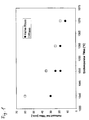
- FIG. 1 shows, for a specific composition (glass No. 1 in Table 1), how the surface cracks occur as a result of inadmissibly prolonged holding times at a given heating rate and maximum temperature.
- the respective limit value for the a-lattice constant measured by thin-layer X-ray diffraction can thus also be determined.
- FIG. 2 shows the samples identical to FIG.
- the critical SiO 2 content for the unwanted conversion of the high-quartz mixed crystals into the deep quartz structure in this example lies at values of the lattice constant of a ⁇ about 5.02 ⁇ .
- the mean grain size of the keatite mixed crystals in the interior of the glass ceramic is 0.3 ⁇ m to 2 ⁇ m and preferably 1 to 1.5 ⁇ m.
- the upper limit can be explained by the fact that larger mean grain sizes, ie coarse microstructure, result in unfavorably high micro-stresses.
- the mean grain size should not be less than 0.3 ⁇ m, preferably not less than 1 ⁇ m, because otherwise the propagation of cracks would not be impeded geometrically enough. In the range of average grain size of 0.3 to 2 ⁇ m, it is evidently achieved by means of the known phenomenon of crack branching that a high strength is achieved with violation ⁇ g in practice.
- a glass-ceramic according to the invention is preferably characterized by an oxide-based composition by weight of Li 2 O 3.0-4.0, Na 2 O 0-1.0, K 2 O 0-0.6, ⁇ Na 2 O. + K 2 O 0.2-1.0, MgO 0-1.5, CaO 0-0.5, SrO 0-1.0, BaO 0-2.5, ⁇ CaO + SrO + BaO 0.2- 3.0, ZnO 1.0-2.2, Al 2 O 3 > 19.8-23, SiO 2 66-70, TiO 2 2.0-3.0, ZrO 2 0.5-2.0 and P 2 O 5 0-1.0.
- the translucent glass-ceramic Li 2 O, ZnO, Al 2 O 3 and SiO 2 within the specified limits are necessary. These components are components of the high quartz and keatite mixed crystals. The relatively narrow limits are necessary so that the desired structural structure is formed.
- the Al 2 O 3 content should be> 19.8 wt .-%, because otherwise undesirable high SiO 2 contents of the near-surface high quartz mixed crystals are favored.
- the Al 2 O 3 content is less than 23 wt .-%, because high Al 2 O 3 levels in the shaping of the melt can lead to unwanted devitrification of mullite.
- MgO and P 2 O 5 can be installed.
- the addition of the alkalis Na 2 O, K 2 O and the alkaline earths CaO, SrO, BaO improves the meltability and the devitrification behavior of the glass in the production.
- the contents are limited because these components remain essentially in the residual glass phase of the glass ceramic and increase the thermal expansion at too high levels in an undesirable manner.
- the specified minimum sums of alkalis or alkaline earths are required so that the structure of the invention can form.
- the TiO 2 content is between 2 and 3 wt .-%
- the ZrO 2 content is between 0.5 and 2 wt .-%. Both are indispensable as nucleating agents.
- the translucent glass ceramic can be prepared in the preparation by addition of conventional refining agents, such as As 2 O 3 , Sb 2 O 3 , SnO 2 , CeO 2 , sulfate or chloride.
- the translucent glass-ceramic according to the invention can be produced in different shades in accordance with the requirements and wishes of the market. If a high white value is desired in the Lab system of L *> 83, the content of coloring impurities here in particular V 2 O 5 , MoO 3 , CoO and NiO must be limited to extremely low values during production. Thus V 2 O 5 should be ⁇ 15 ppm, MoO 3 ⁇ 20 ppm, CoO ⁇ 10 ppm, NiO ⁇ 10 ppm and the total sum of said color oxides ⁇ 30 ppm.
- an opaque glass ceramic with light transmission ⁇ 0.5% at a thickness of 4 mm can also be produced from the same composition.
- the opaque glass-ceramics another embodiment can be realized.
- a glass ceramic according to the invention or one after the according to the invention produced glass ceramic, use in translucent or opaque form as cooking surfaces or cookware and in transparent form as fire-resistant glass, fireplace visor, cookware or windows for pyrolysis stoves.
- inventive Glass ceramic plates are made on the basis of those for use as a cooking surface typical load situation.
- One for the exam sufficiently large Part of the glass ceramic plate to be tested (usually a square Cutout with the dimensions 250 mm x 250 mm) was stored horizontally.
- the underside of the glass ceramic plate was by means of a circular conventional radiant heater, as commonly used in hobs is used, heated, with any existing temperature limiter are disabled.
- the top of the glass ceramic plate was through shielded a metal hood against external, interfering with the measurement influences. Also on top was the during the heating process gradually increasing surface temperature of the glass ceramic plate measured, and at the hottest point within the heating system typical inhomogeneous surface temperature distribution.
- the respect has its edge temperature range to be tested plate edge area while an unheated minimum width - measured as the minimum distance between Plate outer edge and inner boundary of the lateral insulation edge of the steel radiator - according to the most critical hob standard Radiator positioning. During the heating process gets the unheated outer area under tangential tensile stresses. The temperature at the measuring position described above, in which the glass ceramic plate breaking under the effect of tangential tensile stresses was used as a characteristic value used for the temperature difference resistance.
- the impact resistance was determined by a falling ball test in accordance with DIN 52306 determined.
- the test sample was a square (100 x 100 mm) Part of the glass ceramic disk to be tested in a test frame and place a 200 g steel ball on the middle of the sample calmly. The drop height is gradually increased until the break occurs. by virtue of the statistical character of the shock resistance became this test run a series of about 10 samples and the mean of the measured Breakage heights determined.
- the starting glasses were made using glass standard Raw materials at temperatures of about 1640 ° C melted and refined.
- the molding was carried out by the usual methods, e.g. Pour or Rolls instead of castings were starting from about 680 ° C in a lehr cooled to room temperature and needed in the for the investigations Size divided.
- Table 1 shows compositions of glasses according to the invention and the low levels of coloring impurities.
- Composition of oxide-based glasses in% by weight Glass No. 1 Glass No. 2 Li 2 O 3.5 3.5 Na 2 O 0.2 0.15 K 2 O 0.2 0.2 MgO 1.2 1.15 BaO 1.0 0.8 ZnO 1.7 1.5 Al 2 O 3 20.2 20.0 SiO 2 66.9 67.2 TiO 2 2.7 2.6 ZrO 2 1.7 1.7 As 2 O 3 0.7 1.2 total 100.0 100.0
- Dyeing impurities Glass No. 1 Glass No. 2 V 2 O 5 6 ppm - MoO 3 2 ppm - CoO ⁇ 1 ppm - NiO 4 ppm - MnO 2 ⁇ 1 ppm Cr 2 O 3 ⁇ 10 ppm -
- glass ceramics according to the invention were produced by the following transformations (ceramizations): In the examples in Table 2, a total of about 15 to 20 plates are converted, from which impact strengths and temperature differential strengths are averaged.
- plate-shaped green glass articles of thickness 4 were used mm used according to composition according to glass no.
- the green glass plates were heated at 11 K / min to 845 ° C.
- the material was at this Temperature maintained for 23 minutes.
- Then the material was continued with 9.5 K / min heated to a maximum temperature of 1060 ° C and there for 23 minutes held.
- the cooling was carried out at 12 K / min to 835 ° C and from there the material continued to cool with oven characteristic to room temperature.
- the properties The resulting converted glass-ceramic are shown in Table 2 listed under Example 3.
- plate-shaped green glass articles of thickness about 4 mm were converted with a uniform program.
- the composition of the examples corresponds to the composition of glass no. 1 from Table 1.
- the plate-shaped samples were heated up to maximum temperature at a uniform heating rate of 7.5 K / min and kept there at maximum temperature according to the indicated holding times. During heating at a constant heating rate, the crystallization of the high-quartz mixed crystals takes place in the temperature range between 760 and 850 ° C.
- Table 3 shows the relationship between the production conditions with the maximum temperature and holding time varied, and the properties of white L *, color (sample thickness 4 mm), light transmission ⁇ (polished samples, thickness as shown in Table 3) and the occurrence of surface cracks.
- FIG. 1 shows graphically the appearance of surface cracks for the samples of Table 3 with too long hold time. Using appropriate diagrams, the allowable holding time can be determined empirically for each composition at a given heating rate and maximum temperature.
- FIG. 2 shows the a-lattice constant of the near-surface quartz phase of the samples with and without surface cracks determined by thin-layer X-ray diffraction. The critical SiO 2 content of ⁇ 80% by weight in the near-surface high quartz mixed crystals for conversion into the deep quartz structure occurs in this composition when the a lattice constant is ⁇ 5.02 ⁇ .
- glasses of the base composition of Glass 2 of Table 1 were doped with various coloring components and melted.
- Plate-shaped green glass objects of thickness 4 mm were converted at a maximum temperature of 1020 ° C and a holding time of 1 hour.
- Table 4 shows the colors obtained with the dopants, light transmission values (polished samples, 4 mm thick) and white values.
- Properties of coloring materials doped glass-ceramics example 13 14 15 16 17 Glass no.
Landscapes
- Chemical & Material Sciences (AREA)
- Engineering & Computer Science (AREA)
- Chemical Kinetics & Catalysis (AREA)
- Crystallography & Structural Chemistry (AREA)
- Dispersion Chemistry (AREA)
- Life Sciences & Earth Sciences (AREA)
- Ceramic Engineering (AREA)
- General Chemical & Material Sciences (AREA)
- Geochemistry & Mineralogy (AREA)
- Materials Engineering (AREA)
- Organic Chemistry (AREA)
- Glass Compositions (AREA)
- Re-Forming, After-Treatment, Cutting And Transporting Of Glass Products (AREA)
- Surface Treatment Of Glass (AREA)
- Immobilizing And Processing Of Enzymes And Microorganisms (AREA)
Claims (19)
- Vitrocéramique translucide avec1.1 une transmission lumineuse dans le visible de 0,5 à 10% pour un échantillon de 4 mm d'épaisseur,1.2 une résistance aux chocs, testée avec une sphère d'acier d'un poids de 200 g dans un test de chute de sphère, supérieure à une hauteur de chute de 18 cm en valeur moyenne,1.3 une résistance aux différences de température supérieure à 650°C,1.4 des cristaux mixtes de kéatite comme phase cristalline prédominante à l'intérieur de la vitrocéramique,1.5 des cristaux mixtes de quartz bêta comme autre phase cristalline dans la couche superficielle de la vitrocéramique,1.6 une dilatation thermique des cristaux mixtes de quartz bêta inférieure à celle des cristaux mixtes de kéatite de telle sorte que l'on crée un état de surface de la vitrocéramique qui s'oppose à l'apparition de défauts de surface qui abaissent sa résistance mécanique, et1.7 une teneur en SiO2 des cristaux mixtes de quartz bêta inférieure à 80% en poids de manière à empêcher lors du refroidissement de la vitrocéramique à température ambiante la conversion de la phase cristalline mixte de quartz bêta en une phase cristalline mixte de quartz alpha non souhaitée qui conduit à des fissures dans la surface de la vitrocéramique.
- Vitrocéramique selon la revendication 1, caractérisée en ce que la résistance de la vitrocéramique aux différences de température est supérieure à 700°C.
- Vitrocéramique selon la revendication 1 ou 2, caractérisée en ce que la vitrocéramique présente la forme de plaques.
- Vitrocéramique selon au moins l'une des revendications 1 à 3, caractérisée par une composition en % en poids sur base des oxydes de:
Li2O 3,0-4,0 Na2O 0-1,0 K2O 0-0,6 ΣNa2O+K2O 0,2-1,0 MgO 0-1,5 CaO 0-0,5 SrO 0-1,0 BaO 0-2,5 ΣCaO+SrO+BaO 0,2-3,0 ZnO 1,0-2,2 Al2O3 >19,8-23 SiO2 66-70 TiO2 2,0-3,0 ZrO2 0,5-2,0 P2O5 0-1,0 - Vitrocéramique selon au moins l'une des revendications 1 à 4, caractérisée en ce que sur la surface directe de la vitrocéramique, au-dessus de la couche contenant des cristaux mixtes de quartz bêta, se trouve une couche vitreuse à plus forte teneur en Na2O, K2O et/ou CaO, SrO, BaO, qui convient pour protéger la vitrocéramique en particulier de l'attaque d'acides sur les cristaux mixtes de quartz bêta.
- Vitrocéramique selon la revendication 5, caractérisée en ce que la couche vitreuse présente une épaisseur de 100 à 600 nm.
- Vitrocéramique selon au moins l'une des revendications 1 à 6, caractérisée en ce que les cristaux mixtes de quartz bêta qui constituent la couche superficielle contenant une phase cristalline présentent une épaisseur de 0,1 à 2,0 µm.
- Vitrocéramique selon au moins l'une des revendications 1 à 7, caractérisée en ce que la taille moyenne des grains des cristaux mixtes de kéatite à l'intérieur de la vitrocéramique vaut de 0,3 µm à 2 µm, de préférence de 1 à 1,5 µm.
- Vitrocéramique selon au moins l'une des revendications 1 à 8, caractérisée en ce que la dilatation thermique de la vitrocéramique entre la température ambiante et 700°C est inférieure à 1,3.10-6/K, de préférence inférieure à 1,1.10-6/K.
- Vitrocéramique selon au moins l'une des revendications 1 à 9, caractérisée en ce que la vitrocéramique présente sur un système de laboratoire un indice de blanc L* > 83.
- Vitrocéramique selon la revendication 10, caractérisée en ce que la vitrocéramique présente une teneur très faible en impuretés colorantes telles que V2O5 < 15 ppm, MoO3 < 20 ppm, CoO < 10 ppm, NiO < 10 ppm et en ce que la teneur totale en les impuretés ci-dessus est < 30 ppm.
- Vitrocéramique selon au moins l'une des revendications 1 à 9, caractérisée par l'addition de composants colorants, par exemple des composés chlorés de V, Cr, Mn, Ce, Fe, Co, Cu, Ni et/ou Se pour modifier la teinte blanche de façon contrôlée.
- Vitrocéramique selon la revendication 12, caractérisée en ce que la vitrocéramique contient pour l'établissement d'une coloration beige des composants colorants tels que CeO2, MnO2 et/ou Fe2O3.
- Procédé pour la fabrication d'une vitrocéramique translucide, essentiellement en forme de plaque, avecune transmission lumineuse dans le visible de 0,5 à 10% pour un échantillon de 4 mm d'épaisseur,une résistance aux chocs, testée avec une sphère d'acier d'un poids de 200 g dans un test de chute de sphère, supérieure à une hauteur de chute de 18 cm en valeur moyenne,une résistance aux différences de température supérieure à 650°C,des cristaux mixtes de kéatite comme phase cristalline prédominante à l'intérieur de la vitrocéramique,des cristaux mixtes de quartz bêta comme autre phase cristalline dans la couche superficielle de la vitrocéramique,une dilatation thermique des cristaux mixtes de quartz bêta inférieure à celle des cristaux mixtes de kéatite de telle sorte que l'on crée un état de surface de la vitrocéramique qui s'oppose à l'apparition de défauts de surface qui abaissent sa résistance mécanique,une teneur en SiO2 des cristaux mixtes de quartz bêta inférieure à 80% en poids de manière à empêcher lors du refroidissement de la vitrocéramique à température ambiante la conversion de la phase cristalline mixte de quartz bêta en une phase cristalline mixte de quartz alpha non souhaitée qui conduit à des fissures dans la surface de la vitrocéramique,la structure des couches à cristaux mixtes de kéatite comme phase cristalline prédominante à l'intérieur de la vitrocéramique et à cristaux mixtes de quartz bêta comme phase cristalline prédominante dans la couche superficielle de la vitrocéramique étant créée par le fait quela plage de température de formation des germes de cristaux contenant Zr/Ti, de 650 à 760°C, est traversée à des vitesses de chauffage élevées supérieures à 7 K/min,la cristallisation de la phase cristalline mixte de quartz bêta est réalisée à une température de 760 à 850°C,et le temps de séjour dans la plage de température comprise entre 650 et 850°C est inférieure à 60 minutes.
- Procédé selon la revendication 14, caractérisé en ce qu'un verre d'une composition (en % en poids sur base des oxydes) de:
Li2O 3,0-4,0 Na2O 0-1,0 K2O 0-0,6 ΣNa2O+K2O 0,2-1,0 MgO 0-1,5 CaO 0-0,5 SrO 0-1,0 BaO 0-2,5 ΣCaO+SrO+BaO 0,2-3,0 ZnO 1,0-2,2 Al2O3 >19,8-23 SiO2 66-70 TiO2 2,0-3,0 ZrO2 0,5-2,0 P2O5 0-1,0 - Procédé selon la revendication 14 ou 15, caractérisé en ce que la conversion de la phase cristalline mixte de quartz bêta en la phase cristalline mixte de kéatite à l'intérieur de la vitrocéramique est réalisée à des températures maximales de 1 000 à 1 100°C, la vitesse de chauffage et le temps de séjour à la température maximale étant sélectionnés de telle sorte que les cristaux mixtes de quartz bêta formés à proximité de la surface ne se convertissent pas en cristaux mixtes de quartz alpha lors du refroidissement à température ambiante.
- Procédé selon au moins l'une des revendications 14 à 16, dans lequel la vitrocéramique est cependant opaque, caractérisé en ce que la céramisation de la vitrocéramique est réalisée à des températures supérieures à 1 100°C et la vitrocéramique obtenue présente dans le visible une transmission lumineuse < 0,5% pour un échantillon de 4 mm d'épaisseur.
- Procédé selon au moins l'une des revendications 14 à 16, dans lequel la vitrocéramique est cependant transparente, caractérisé en ce que la céramisation de la vitrocéramique est réalisée à des températures inférieures à 1 000°C et la vitrocéramique obtenue présente dans le visible une transmission lumineuse > 80% pour un échantillon de 4 mm d'épaisseur, la vitrocéramique présentant comme phase cristalline prédominante essentiellement des cristaux mixtes de quartz bêta.
- Utilisation d'une vitrocéramique selon au moins l'une des revendications précédentes, sous forme translucide ou opaque, comme surface de cuisson ou ustensile de cuisson et sous forme transparente comme verre anti-feu, plaque de surveillance de cheminée, ustensile de cuisson ou fenêtres pour fours de pyrolyse.
Priority Applications (7)
| Application Number | Priority Date | Filing Date | Title |
|---|---|---|---|
| EP00114268A EP1170264B1 (fr) | 2000-07-04 | 2000-07-04 | Vitrocéramique translucide, procédé pour fabriquer une vitrocéramique translucide et utilisation de celle-ci |
| AT00114268T ATE248780T1 (de) | 2000-07-04 | 2000-07-04 | Transluzente glaskeramik, verfahren zur herstellung einer transluzenten glaskeramik sowie deren verwendung |
| ES00114268T ES2201976T3 (es) | 2000-07-04 | 2000-07-04 | Material vitroceramico translucido, procedimiento para la produccion de un material vitroceramico translucido, asi como su utilizacion. |
| DE50003541T DE50003541D1 (de) | 2000-07-04 | 2000-07-04 | Transluzente Glaskeramik, Verfahren zur Herstellung einer transluzenten Glaskeramik sowie deren Verwendung |
| US09/898,892 US6515263B2 (en) | 2000-07-04 | 2001-07-03 | Cooking stove having a smooth-top glass ceramic cooktop, and a smooth-top glass ceramic cooktop with a glass ceramic cooktop cooking surface, method for production of stoves with smooth-top glass ceramic cooktops and smooth-top glass ceramic cooktops |
| PL01348410A PL348410A1 (en) | 2000-07-04 | 2001-07-03 | Semitranslucent vitreoceramic material, method of obtaining such material, application thereof and products made of such vitreoceramic material |
| JP2001203104A JP4680432B2 (ja) | 2000-07-04 | 2001-07-04 | 半透明ガラスセラミック、半透明ガラスセラミックの製造方法及びその用途 |
Applications Claiming Priority (1)
| Application Number | Priority Date | Filing Date | Title |
|---|---|---|---|
| EP00114268A EP1170264B1 (fr) | 2000-07-04 | 2000-07-04 | Vitrocéramique translucide, procédé pour fabriquer une vitrocéramique translucide et utilisation de celle-ci |
Publications (2)
| Publication Number | Publication Date |
|---|---|
| EP1170264A1 EP1170264A1 (fr) | 2002-01-09 |
| EP1170264B1 true EP1170264B1 (fr) | 2003-09-03 |
Family
ID=8169150
Family Applications (1)
| Application Number | Title | Priority Date | Filing Date |
|---|---|---|---|
| EP00114268A Expired - Lifetime EP1170264B1 (fr) | 2000-07-04 | 2000-07-04 | Vitrocéramique translucide, procédé pour fabriquer une vitrocéramique translucide et utilisation de celle-ci |
Country Status (7)
| Country | Link |
|---|---|
| US (1) | US6515263B2 (fr) |
| EP (1) | EP1170264B1 (fr) |
| JP (1) | JP4680432B2 (fr) |
| AT (1) | ATE248780T1 (fr) |
| DE (1) | DE50003541D1 (fr) |
| ES (1) | ES2201976T3 (fr) |
| PL (1) | PL348410A1 (fr) |
Cited By (9)
| Publication number | Priority date | Publication date | Assignee | Title |
|---|---|---|---|---|
| DE102004024583A1 (de) * | 2004-05-12 | 2005-12-08 | Schott Ag | Transluzente oder opake Kochfläche bestehend aus einer einfärbbaren Glaskeramik sowie deren Verwendung |
| DE102008020895A1 (de) | 2008-04-25 | 2009-10-29 | Schott Ag | Glaskeramikplatte |
| DE102005046570B4 (de) * | 2005-10-01 | 2010-01-21 | Schott Ag | Unterseitig beschichtete Glaskeramikplatte |
| DE102009010952A1 (de) | 2009-02-27 | 2010-09-09 | Schott Ag | Beschichtung für den Anzeigebereich von Glas- oder Glaskeramik-Scheiben, Verfahren zur Herstellung einer solchen Beschichtung und deren Verwendung |
| WO2011009544A1 (fr) | 2009-07-20 | 2011-01-27 | Schott Ag | Vitrocéramique haute performance et procédé de fabrication d'une vitrocéramique haute performance |
| WO2012010341A1 (fr) | 2010-07-23 | 2012-01-26 | Schott Ag | Vitrocéramique à base de silicate de lithium-aluminium transparente ou teintée et transparente à dilatation thermique adaptée, et utilisation correspondante |
| DE102010045149A1 (de) | 2010-09-11 | 2012-03-15 | Bayer Material Science Ag | Beschichtung auf Polyurethanbasis für Anzeigebereiche |
| DE102011009235A1 (de) | 2011-01-22 | 2012-07-26 | Schott Ag | Festigkeitssteigernde Beschichtung auf Polyurethan-basis |
| CN105143126A (zh) * | 2013-02-28 | 2015-12-09 | 欧罗克拉公司 | 展现出棕色-灰色显色的非不透明、无砷β-锂辉石玻璃陶瓷 |
Families Citing this family (47)
| Publication number | Priority date | Publication date | Assignee | Title |
|---|---|---|---|---|
| DE19857117C2 (de) * | 1998-12-10 | 2001-05-03 | Schott Glas | Kochfläche aus Glaskeramik mit geringer Schmutzauffälligkeit |
| DE10238607B4 (de) | 2002-08-16 | 2006-04-27 | Schott Ag | Verfahren zur Formung von Glas oder Glaskeramik und dessen Verwendung |
| DE10238608A1 (de) * | 2002-08-16 | 2004-03-04 | Schott Glas | Bauteil aus einer Lithiumaluminosilikat-Glaskeramik |
| WO2005042437A2 (fr) * | 2003-09-30 | 2005-05-12 | Schott Ag | Surfaces antimicrobiennes en verre et vitroceramique et leur production |
| DE10362074B4 (de) * | 2003-10-14 | 2007-12-06 | Schott Ag | Hochschmelzendes Glas oder Glaskeramik sowie der Verwendung |
| FR2863607B1 (fr) * | 2003-12-11 | 2006-09-29 | Snc Eurokera | Vitroceramiques a surface modifiee et leur preparation |
| FR2864071A1 (fr) * | 2003-12-17 | 2005-06-24 | Snc Eurokera | Vitroceramiques, verres precurseurs, articles en lesdites vitroceramiques, elaboration desdits vitroceramiques et articles |
| DE102005019247B9 (de) * | 2004-05-12 | 2009-06-25 | Schott Ag | Verfahren zur Herstellung von Glaskeramik |
| JP4741282B2 (ja) | 2004-05-12 | 2011-08-03 | ショット アクチエンゲゼルシャフト | ガラスセラミック品を作製する方法 |
| DE102004059728A1 (de) * | 2004-12-11 | 2006-06-22 | Schott Ag | Verfahren zur Herstellung von Glas- oder Glaskeramik und insbesondere Glas- oder Glaskeramik-Artikel |
| CN1305796C (zh) * | 2005-05-09 | 2007-03-21 | 广东科迪微晶玻璃实业有限公司 | 黑色透明微晶玻璃以及其制品的生产方法 |
| US7147634B2 (en) | 2005-05-12 | 2006-12-12 | Orion Industries, Ltd. | Electrosurgical electrode and method of manufacturing same |
| US8814861B2 (en) | 2005-05-12 | 2014-08-26 | Innovatech, Llc | Electrosurgical electrode and method of manufacturing same |
| WO2007139068A1 (fr) * | 2006-05-29 | 2007-12-06 | Nippon Electric Glass Co., Ltd. | VERRE CRISTALLISÉ À BASE DE Li2O-Al2O3-SiO2 |
| DE102006027739B4 (de) | 2006-06-16 | 2008-05-29 | Schott Ag | Kochfeld mit einer Glaskeramikplatte als Kochfläche |
| EP1978784B1 (fr) * | 2007-04-05 | 2014-05-21 | Whirlpool Corporation | Procédé pour estimer la température de surface d'une plaque de cuisson de position aléatoire |
| DE102007023497B4 (de) * | 2007-05-18 | 2010-08-05 | Schott Ag | Verfahren und Vorrichtung zur Herstellung von Gläsern, Glaskeramiken oder Keramiken sowie deren Verwendung |
| DE102007025893B4 (de) | 2007-06-01 | 2014-08-21 | Schott Ag | Glaskeramisches Panzermaterial und Verfahren zur Herstellung einer Panzerung mit einer Glaskeramik-Komponente |
| US7881593B2 (en) * | 2007-11-16 | 2011-02-01 | Cfom Inc. | Gas cooking appliance with removable burners and useable work area |
| ITTV20080085A1 (it) * | 2008-06-19 | 2009-12-20 | Yuri Schiocchet | Struttura in materiale ceramico e relativo procedimento di realizzazione |
| DE102008058318B3 (de) | 2008-11-21 | 2010-06-17 | Schott Ag | Kratzfeste Silikonbeschichtung für Kochflächen aus Glas oder Glaskeramik |
| EP2364957A1 (fr) * | 2010-02-26 | 2011-09-14 | Corning Incorporated | Glaskeramiken mit Massenstreuungseigenschaften und Herstellungsverfahren dafür |
| FR2962192B1 (fr) * | 2010-06-30 | 2014-02-07 | Eurokera | Dispositif de cuisson comprenant une plaque en verre ou vitroceramique, du type possedant au moins un moyen de masquage d'elements internes recouverts par la plaque |
| DE102010054967B4 (de) * | 2010-12-08 | 2014-08-28 | Schott Ag | Borfreies Universalglas und dessen Verwendung |
| FR2969460B1 (fr) * | 2010-12-17 | 2012-12-28 | Eurokera | Dispositif de cuisson par induction |
| WO2013011897A1 (fr) | 2011-07-15 | 2013-01-24 | 旭硝子株式会社 | Boîtier en verre cristallisé |
| EP2903945B1 (fr) * | 2012-10-04 | 2020-09-02 | Corning Incorporated | Article comportant une couche de verre et une couche de vitrocéramique et procédé de fabrication de l'article |
| KR102173670B1 (ko) | 2012-10-04 | 2020-11-04 | 코닝 인코포레이티드 | 세라믹 상을 갖는 적층 유리 제품 및 이의 제조방법 |
| KR102173671B1 (ko) | 2012-10-04 | 2020-11-04 | 코닝 인코포레이티드 | 감광성 유리를 통한 압축 응력 적층 유리 제품 및 이의 제조 방법 |
| FR2997391B1 (fr) * | 2012-10-30 | 2014-11-21 | Eurokera | Plaque en verre pour dispositif de cuisson par induction |
| CN103111517A (zh) * | 2013-01-14 | 2013-05-22 | 无锡市玉祁红光电子有限公司 | 一种软焊料装片整形压模及其制造方法 |
| FR3002532B1 (fr) | 2013-02-28 | 2015-02-27 | Eurokera | Vitroceramique du type aluminosilicate de lithium contenant une solution solide de beta-spodumene |
| CH707926A1 (de) * | 2013-04-17 | 2014-10-31 | Saint Gobain | Herstellung einer Scheibe aus keramischem Glas. |
| US9521708B2 (en) | 2014-01-10 | 2016-12-13 | Haier Us Appliance Solutions, Inc. | Oven range appliance |
| DE102014013528B4 (de) * | 2014-09-12 | 2022-06-23 | Schott Ag | Beschichtetes Glas-oder Glaskeramiksubstrat mit beständigen multifunktionellen Oberflächeneigenschaften, Verfahren zu dessen Herstellung und dessen Verwendung |
| JP7255968B2 (ja) | 2014-10-30 | 2023-04-11 | コーニング インコーポレイテッド | ガラスセラミック組成物及びこれを組み込んだラミネートガラス |
| EP3031785B1 (fr) * | 2014-12-12 | 2018-10-17 | Schott AG | Procede de fabrication d'un element en vitroceramique faisant appel a un revetement structure |
| DE102014226986B9 (de) | 2014-12-23 | 2017-01-12 | Schott Ag | Glaskeramisches Substrat aus einer transparenten, eingefärbten LAS-Glaskeramik und Verfahren zu dessen Herstellung |
| DE102015103461B4 (de) | 2015-03-10 | 2018-08-02 | Schott Ag | Verfahren zur Herstellung eines Glas- oder Glaskeramikartikels mit einer farbigen glasbasierten Beschichtung, beschichteter Glas- oder Glaskeramikartikel und dessen Verwendung |
| DE102016101048B3 (de) * | 2016-01-21 | 2017-03-09 | Schott Ag | Glaskeramik-Kochmulde mit einem Infrarot-Sensor |
| DE102016101066B3 (de) * | 2016-01-21 | 2017-02-23 | Schott Ag | Verfahren zur Herstellung eines vorzugsweise nicht eingefärbten glaskeramischen Materials mit geringem Streulichtanteil sowie verfahrensgemäß hergestelltes glaskeramisches Material und dessen Verwendung |
| DE102016111438A1 (de) | 2016-06-22 | 2017-12-28 | Schott Ag | Element aus Glaskeramik mit intrinsischer Dekoration und Verfahren zu dessen Erzeugung |
| CN107401026B (zh) * | 2017-07-21 | 2019-10-22 | 无锡小天鹅电器有限公司 | 衣物处理装置及其洗涤用剂的投放控制方法和装置 |
| CN112608032B (zh) * | 2018-10-26 | 2022-04-22 | 成都光明光电股份有限公司 | 微晶玻璃、微晶玻璃制品及其制造方法 |
| KR20220129481A (ko) * | 2021-03-16 | 2022-09-23 | 쇼오트 아게 | 특정한 열 팽창 특성을 갖는 유리 세라믹 |
| CN112919810B (zh) * | 2021-03-23 | 2022-02-18 | 成都光明光电股份有限公司 | 玻璃陶瓷、玻璃陶瓷制品及其制造方法 |
| IT202100031361A1 (it) | 2021-12-14 | 2023-06-14 | Marine Cookers Srls | “migliorato piano cottura” |
Family Cites Families (18)
| Publication number | Priority date | Publication date | Assignee | Title |
|---|---|---|---|---|
| US3573074A (en) * | 1968-03-08 | 1971-03-30 | Corning Glass Works | Halide nucleated glass-ceramic articles giving mie light scattering |
| US3886539A (en) * | 1972-12-26 | 1975-05-27 | Gen Motors Corp | Domestic appliance control and display systems |
| US3927238A (en) * | 1973-05-07 | 1975-12-16 | Bell Telephone Labor Inc | Lead-free glaze for high density alumina |
| US4011091A (en) * | 1975-08-13 | 1977-03-08 | Owens-Illinois, Inc. | Ceramic materials containing keatite |
| US4057670A (en) * | 1976-01-28 | 1977-11-08 | Jenaer Glaswerk Schott & Gen. | Cooking surfaces of glass-ceramic plates with layers with different values for radiation transmission |
| US4218512A (en) * | 1979-01-04 | 1980-08-19 | Ppg Industries, Inc. | Strengthened translucent glass-ceramics and method of making |
| US4211820A (en) * | 1979-02-02 | 1980-07-08 | Corning Glass Works | Brown glass-ceramic articles |
| DE3345316A1 (de) * | 1982-12-20 | 1984-06-20 | Corning Glass Works, Corning, N.Y. | Glaskeramik, besonders fuer fensterglas in holz- und kohleoefen |
| DE3576682D1 (de) * | 1985-10-26 | 1990-04-26 | Schott Glaswerke | Durchsichtige farbige glaskeramik mit guter temperaturbelastbarkeit und variabel einstellbarer transmission im ir-bereich. |
| FR2657079B1 (fr) | 1990-01-12 | 1993-04-09 | Corning France | Verres precurseurs de vitroceramiques, procede de conversion de ces verres en vitroceramiques a dilation tres faible ou nulle et vitroceramiques obtenues. |
| US5173453A (en) * | 1991-10-09 | 1992-12-22 | Corning Incorporated | Variably translucent glass-ceramic article and method for making |
| US5491115A (en) * | 1994-07-18 | 1996-02-13 | Corning Incorporated | Colored glass-ceramics and method |
| US5512520A (en) * | 1994-11-14 | 1996-04-30 | Corning Incorporated | Ivory color in opaque glass-ceramic |
| KR970009316B1 (ko) * | 1995-05-04 | 1997-06-10 | 강원호 | Las계 결정화 유리의 화학적 강화방법 |
| US5714420A (en) * | 1995-12-08 | 1998-02-03 | Cerdec Corporation - Drakenfeld Products | Partially crystallizing ceramic enamel composition containing bismuth silicate, and use thereof |
| JP3436291B2 (ja) * | 1996-03-05 | 2003-08-11 | 日本電気硝子株式会社 | 調理器用トッププレート |
| FR2766816B1 (fr) | 1997-08-01 | 1999-08-27 | Eurokera | Plaque vitroceramique et son procede de fabrication |
| DE19907038C2 (de) * | 1999-02-19 | 2003-04-10 | Schott Glas | Transluzente oder opake Glaskeramik mit Hochquarz-Mischkristallen als vorherrschender Kristallphase und deren Verwendung |
-
2000
- 2000-07-04 DE DE50003541T patent/DE50003541D1/de not_active Expired - Lifetime
- 2000-07-04 AT AT00114268T patent/ATE248780T1/de not_active IP Right Cessation
- 2000-07-04 ES ES00114268T patent/ES2201976T3/es not_active Expired - Lifetime
- 2000-07-04 EP EP00114268A patent/EP1170264B1/fr not_active Expired - Lifetime
-
2001
- 2001-07-03 US US09/898,892 patent/US6515263B2/en not_active Expired - Lifetime
- 2001-07-03 PL PL01348410A patent/PL348410A1/xx not_active Application Discontinuation
- 2001-07-04 JP JP2001203104A patent/JP4680432B2/ja not_active Expired - Fee Related
Cited By (15)
| Publication number | Priority date | Publication date | Assignee | Title |
|---|---|---|---|---|
| DE102004024583A1 (de) * | 2004-05-12 | 2005-12-08 | Schott Ag | Transluzente oder opake Kochfläche bestehend aus einer einfärbbaren Glaskeramik sowie deren Verwendung |
| DE102005046570B4 (de) * | 2005-10-01 | 2010-01-21 | Schott Ag | Unterseitig beschichtete Glaskeramikplatte |
| US8715817B2 (en) | 2008-04-25 | 2014-05-06 | Schott Ag | Glass ceramic plate |
| DE102008020895A1 (de) | 2008-04-25 | 2009-10-29 | Schott Ag | Glaskeramikplatte |
| DE102009010952A1 (de) | 2009-02-27 | 2010-09-09 | Schott Ag | Beschichtung für den Anzeigebereich von Glas- oder Glaskeramik-Scheiben, Verfahren zur Herstellung einer solchen Beschichtung und deren Verwendung |
| WO2011009544A1 (fr) | 2009-07-20 | 2011-01-27 | Schott Ag | Vitrocéramique haute performance et procédé de fabrication d'une vitrocéramique haute performance |
| DE102010006232A1 (de) | 2009-07-20 | 2011-02-17 | Schott Ag | Hochleistungsglaskeramik und Verfahren zur Herstellung einer Hochleistungskeramik |
| DE102010006232B4 (de) * | 2009-07-20 | 2016-09-15 | Schott Ag | Hochleistungsglaskeramik und Verfahren zur Herstellung einer Hochleistungskeramik sowie ihre Verwendung |
| WO2012010341A1 (fr) | 2010-07-23 | 2012-01-26 | Schott Ag | Vitrocéramique à base de silicate de lithium-aluminium transparente ou teintée et transparente à dilatation thermique adaptée, et utilisation correspondante |
| DE102010032113A1 (de) | 2010-07-23 | 2012-01-26 | Schott Ag | Transparente oder transparente eingefärbte Lithiumaluminiumsilikat Glaskeramik mit angepasster thermischer Ausdehnung und deren Verwendung |
| EP3878825A1 (fr) | 2010-07-23 | 2021-09-15 | Schott AG | Vitrocéramique teintée et transparente en silicate de lithium aluminium à expansion thermique adaptée et son utilisation |
| DE102010045149A1 (de) | 2010-09-11 | 2012-03-15 | Bayer Material Science Ag | Beschichtung auf Polyurethanbasis für Anzeigebereiche |
| DE102011009235A1 (de) | 2011-01-22 | 2012-07-26 | Schott Ag | Festigkeitssteigernde Beschichtung auf Polyurethan-basis |
| CN105143126A (zh) * | 2013-02-28 | 2015-12-09 | 欧罗克拉公司 | 展现出棕色-灰色显色的非不透明、无砷β-锂辉石玻璃陶瓷 |
| CN105143126B (zh) * | 2013-02-28 | 2019-07-09 | 欧罗克拉公司 | 展现出棕色-灰色显色的非不透明、无砷β-锂辉石玻璃陶瓷 |
Also Published As
| Publication number | Publication date |
|---|---|
| JP2002179437A (ja) | 2002-06-26 |
| PL348410A1 (en) | 2002-01-14 |
| DE50003541D1 (de) | 2003-10-09 |
| ATE248780T1 (de) | 2003-09-15 |
| US6515263B2 (en) | 2003-02-04 |
| JP4680432B2 (ja) | 2011-05-11 |
| ES2201976T3 (es) | 2004-04-01 |
| US20020026932A1 (en) | 2002-03-07 |
| EP1170264A1 (fr) | 2002-01-09 |
Similar Documents
| Publication | Publication Date | Title |
|---|---|---|
| EP1170264B1 (fr) | Vitrocéramique translucide, procédé pour fabriquer une vitrocéramique translucide et utilisation de celle-ci | |
| DE102014226986B4 (de) | Glaskeramisches Substrat aus einer transparenten, eingefärbten LAS-Glaskeramik und Verfahren zu dessen Herstellung | |
| EP0437228B2 (fr) | Verre céramisable thermiquement, vitrocéramique produit de ce verre et procédé pour le produire | |
| DE69308701T2 (de) | Transparente kristallisierte Glaskeramik mit geringem Ausdehnungskoeffizienten | |
| US4461839A (en) | Colored transparent, translucent and opaque glass-ceramics | |
| DE102004024583A1 (de) | Transluzente oder opake Kochfläche bestehend aus einer einfärbbaren Glaskeramik sowie deren Verwendung | |
| US5173453A (en) | Variably translucent glass-ceramic article and method for making | |
| DE69204791T2 (de) | Selbstglasierende, Lithiumdisilikat enthaltende Glaskeramik. | |
| DE19907038C2 (de) | Transluzente oder opake Glaskeramik mit Hochquarz-Mischkristallen als vorherrschender Kristallphase und deren Verwendung | |
| KR101848517B1 (ko) | 베타-석영 유리 세라믹 및 관련된 전구체 유리 | |
| EP1837312B1 (fr) | Verre de lithium-aluminium-silicate avec cycle court de céramisation | |
| DE102017101114B4 (de) | Verfahren zur Herstellung eines vorzugsweise nicht eingefärbten glaskeramischen Materials mit geringem Streulichtanteil sowie verfahrensgemäß hergestelltes glaskeramisches Material und dessen Verwendung | |
| DE3003016C2 (fr) | ||
| DE102016211065B4 (de) | Transparenter, vorzugsweise eingefärbter Glaskeramikartikel mit geringem Streulichtanteil und hoher Festigkeit sowie Verfahren zu seiner Herstellung und seine Verwendung | |
| DE202018100558U1 (de) | Eingefärbte transparente Lithiumaluminiumsilikat-Glaskeramik | |
| EP1236695A2 (fr) | Vitrocéramique | |
| DE102010043326B4 (de) | Verfahren zur festigkeitssteigernden Keramisierung eines gefloateten kristallisierbaren Glases, keramisiertes Floatglas und Verwendung des keramisierten Floatglases | |
| DE19939787A1 (de) | Transparente, mit Vanadiumoxid-Zusatz dunkel einfärbbare Glaskeramik mit Hochquarz-Mischkristallen als vorherrschende Kristallphase und Verfahren zu ihrer Herstellung | |
| DE102008054386B3 (de) | Transparente Glaskeramik mit niedriger Dichte und deren Verwendung | |
| DE102005019247B9 (de) | Verfahren zur Herstellung von Glaskeramik | |
| EP3450411A1 (fr) | Vitroceramique en aluminosilicate de lithium transparente teintée et son utilisation | |
| DE102024127180A1 (de) | Transparenter Glaskeramikartikel |
Legal Events
| Date | Code | Title | Description |
|---|---|---|---|
| PUAI | Public reference made under article 153(3) epc to a published international application that has entered the european phase |
Free format text: ORIGINAL CODE: 0009012 |
|
| 17P | Request for examination filed |
Effective date: 20000704 |
|
| AK | Designated contracting states |
Kind code of ref document: A1 Designated state(s): AT BE CH CY DE DK ES FI FR GB GR IE IT LI LU MC NL PT SE |
|
| AX | Request for extension of the european patent |
Free format text: AL;LT;LV;MK;RO;SI |
|
| AKX | Designation fees paid |
Free format text: AT BE CH CY DE DK ES FI FR GB GR IE IT LI LU MC NL PT SE |
|
| GRAH | Despatch of communication of intention to grant a patent |
Free format text: ORIGINAL CODE: EPIDOS IGRA |
|
| GRAH | Despatch of communication of intention to grant a patent |
Free format text: ORIGINAL CODE: EPIDOS IGRA |
|
| GRAA | (expected) grant |
Free format text: ORIGINAL CODE: 0009210 |
|
| AK | Designated contracting states |
Kind code of ref document: B1 Designated state(s): AT BE CH CY DE DK ES FI FR GB GR IE IT LI LU MC NL PT SE |
|
| PG25 | Lapsed in a contracting state [announced via postgrant information from national office to epo] |
Ref country code: GB Free format text: LAPSE BECAUSE OF FAILURE TO SUBMIT A TRANSLATION OF THE DESCRIPTION OR TO PAY THE FEE WITHIN THE PRESCRIBED TIME-LIMIT Effective date: 20030903 Ref country code: IE Free format text: LAPSE BECAUSE OF FAILURE TO SUBMIT A TRANSLATION OF THE DESCRIPTION OR TO PAY THE FEE WITHIN THE PRESCRIBED TIME-LIMIT Effective date: 20030903 Ref country code: NL Free format text: LAPSE BECAUSE OF FAILURE TO SUBMIT A TRANSLATION OF THE DESCRIPTION OR TO PAY THE FEE WITHIN THE PRESCRIBED TIME-LIMIT Effective date: 20030903 Ref country code: FI Free format text: LAPSE BECAUSE OF FAILURE TO SUBMIT A TRANSLATION OF THE DESCRIPTION OR TO PAY THE FEE WITHIN THE PRESCRIBED TIME-LIMIT Effective date: 20030903 Ref country code: CY Free format text: LAPSE BECAUSE OF FAILURE TO SUBMIT A TRANSLATION OF THE DESCRIPTION OR TO PAY THE FEE WITHIN THE PRESCRIBED TIME-LIMIT Effective date: 20030903 |
|
| REG | Reference to a national code |
Ref country code: GB Ref legal event code: FG4D Free format text: NOT ENGLISH |
|
| REG | Reference to a national code |
Ref country code: CH Ref legal event code: EP |
|
| REF | Corresponds to: |
Ref document number: 50003541 Country of ref document: DE Date of ref document: 20031009 Kind code of ref document: P |
|
| REG | Reference to a national code |
Ref country code: IE Ref legal event code: FG4D Free format text: GERMAN |
|
| PG25 | Lapsed in a contracting state [announced via postgrant information from national office to epo] |
Ref country code: GR Free format text: LAPSE BECAUSE OF FAILURE TO SUBMIT A TRANSLATION OF THE DESCRIPTION OR TO PAY THE FEE WITHIN THE PRESCRIBED TIME-LIMIT Effective date: 20031203 Ref country code: SE Free format text: LAPSE BECAUSE OF FAILURE TO SUBMIT A TRANSLATION OF THE DESCRIPTION OR TO PAY THE FEE WITHIN THE PRESCRIBED TIME-LIMIT Effective date: 20031203 Ref country code: DK Free format text: LAPSE BECAUSE OF FAILURE TO SUBMIT A TRANSLATION OF THE DESCRIPTION OR TO PAY THE FEE WITHIN THE PRESCRIBED TIME-LIMIT Effective date: 20031203 |
|
| NLV1 | Nl: lapsed or annulled due to failure to fulfill the requirements of art. 29p and 29m of the patents act | ||
| PG25 | Lapsed in a contracting state [announced via postgrant information from national office to epo] |
Ref country code: PT Free format text: LAPSE BECAUSE OF FAILURE TO SUBMIT A TRANSLATION OF THE DESCRIPTION OR TO PAY THE FEE WITHIN THE PRESCRIBED TIME-LIMIT Effective date: 20040203 |
|
| GBV | Gb: ep patent (uk) treated as always having been void in accordance with gb section 77(7)/1977 [no translation filed] |
Effective date: 20030903 |
|
| REG | Reference to a national code |
Ref country code: ES Ref legal event code: FG2A Ref document number: 2201976 Country of ref document: ES Kind code of ref document: T3 |
|
| REG | Reference to a national code |
Ref country code: IE Ref legal event code: FD4D |
|
| ET | Fr: translation filed | ||
| PG25 | Lapsed in a contracting state [announced via postgrant information from national office to epo] |
Ref country code: LU Free format text: LAPSE BECAUSE OF NON-PAYMENT OF DUE FEES Effective date: 20040704 Ref country code: AT Free format text: LAPSE BECAUSE OF NON-PAYMENT OF DUE FEES Effective date: 20040704 |
|
| PLBE | No opposition filed within time limit |
Free format text: ORIGINAL CODE: 0009261 |
|
| STAA | Information on the status of an ep patent application or granted ep patent |
Free format text: STATUS: NO OPPOSITION FILED WITHIN TIME LIMIT |
|
| PG25 | Lapsed in a contracting state [announced via postgrant information from national office to epo] |
Ref country code: MC Free format text: LAPSE BECAUSE OF NON-PAYMENT OF DUE FEES Effective date: 20040731 Ref country code: BE Free format text: LAPSE BECAUSE OF NON-PAYMENT OF DUE FEES Effective date: 20040731 Ref country code: LI Free format text: LAPSE BECAUSE OF NON-PAYMENT OF DUE FEES Effective date: 20040731 Ref country code: CH Free format text: LAPSE BECAUSE OF NON-PAYMENT OF DUE FEES Effective date: 20040731 |
|
| 26N | No opposition filed |
Effective date: 20040604 |
|
| BERE | Be: lapsed |
Owner name: *SCHOTT GLAS Effective date: 20040731 |
|
| REG | Reference to a national code |
Ref country code: CH Ref legal event code: PL |
|
| PGFP | Annual fee paid to national office [announced via postgrant information from national office to epo] |
Ref country code: ES Payment date: 20050720 Year of fee payment: 6 |
|
| PGFP | Annual fee paid to national office [announced via postgrant information from national office to epo] |
Ref country code: IT Payment date: 20060731 Year of fee payment: 7 |
|
| REG | Reference to a national code |
Ref country code: FR Ref legal event code: TP |
|
| REG | Reference to a national code |
Ref country code: ES Ref legal event code: FD2A Effective date: 20060705 |
|
| BERE | Be: lapsed |
Owner name: *SCHOTT GLAS Effective date: 20040731 |
|
| PG25 | Lapsed in a contracting state [announced via postgrant information from national office to epo] |
Ref country code: ES Free format text: LAPSE BECAUSE OF NON-PAYMENT OF DUE FEES Effective date: 20060705 |
|
| PG25 | Lapsed in a contracting state [announced via postgrant information from national office to epo] |
Ref country code: IT Free format text: LAPSE BECAUSE OF NON-PAYMENT OF DUE FEES Effective date: 20070704 |
|
| REG | Reference to a national code |
Ref country code: FR Ref legal event code: PLFP Year of fee payment: 17 |
|
| REG | Reference to a national code |
Ref country code: FR Ref legal event code: PLFP Year of fee payment: 18 |
|
| REG | Reference to a national code |
Ref country code: FR Ref legal event code: PLFP Year of fee payment: 19 |
|
| PGFP | Annual fee paid to national office [announced via postgrant information from national office to epo] |
Ref country code: DE Payment date: 20190719 Year of fee payment: 20 Ref country code: FR Payment date: 20190719 Year of fee payment: 20 |
|
| REG | Reference to a national code |
Ref country code: DE Ref legal event code: R071 Ref document number: 50003541 Country of ref document: DE |