EP1236695A2 - Vitrocéramique - Google Patents
Vitrocéramique Download PDFInfo
- Publication number
- EP1236695A2 EP1236695A2 EP02001405A EP02001405A EP1236695A2 EP 1236695 A2 EP1236695 A2 EP 1236695A2 EP 02001405 A EP02001405 A EP 02001405A EP 02001405 A EP02001405 A EP 02001405A EP 1236695 A2 EP1236695 A2 EP 1236695A2
- Authority
- EP
- European Patent Office
- Prior art keywords
- glass
- glass ceramic
- tio
- temperature
- zro
- Prior art date
- Legal status (The legal status is an assumption and is not a legal conclusion. Google has not performed a legal analysis and makes no representation as to the accuracy of the status listed.)
- Withdrawn
Links
Images

Classifications
-
- C—CHEMISTRY; METALLURGY
- C03—GLASS; MINERAL OR SLAG WOOL
- C03B—MANUFACTURE, SHAPING, OR SUPPLEMENTARY PROCESSES
- C03B11/00—Pressing molten glass or performed glass reheated to equivalent low viscosity without blowing
- C03B11/06—Construction of plunger or mould
- C03B11/10—Construction of plunger or mould for making hollow or semi-hollow articles
-
- C—CHEMISTRY; METALLURGY
- C03—GLASS; MINERAL OR SLAG WOOL
- C03B—MANUFACTURE, SHAPING, OR SUPPLEMENTARY PROCESSES
- C03B32/00—Thermal after-treatment of glass products not provided for in groups C03B19/00, C03B25/00 - C03B31/00 or C03B37/00, e.g. crystallisation, eliminating gas inclusions or other impurities; Hot-pressing vitrified, non-porous, shaped glass products
- C03B32/02—Thermal crystallisation, e.g. for crystallising glass bodies into glass-ceramic articles
-
- C—CHEMISTRY; METALLURGY
- C03—GLASS; MINERAL OR SLAG WOOL
- C03C—CHEMICAL COMPOSITION OF GLASSES, GLAZES OR VITREOUS ENAMELS; SURFACE TREATMENT OF GLASS; SURFACE TREATMENT OF FIBRES OR FILAMENTS MADE FROM GLASS, MINERALS OR SLAGS; JOINING GLASS TO GLASS OR OTHER MATERIALS
- C03C10/00—Devitrified glass ceramics, i.e. glass ceramics having a crystalline phase dispersed in a glassy phase and constituting at least 50% by weight of the total composition
- C03C10/0018—Devitrified glass ceramics, i.e. glass ceramics having a crystalline phase dispersed in a glassy phase and constituting at least 50% by weight of the total composition containing SiO2, Al2O3 and monovalent metal oxide as main constituents
- C03C10/0027—Devitrified glass ceramics, i.e. glass ceramics having a crystalline phase dispersed in a glassy phase and constituting at least 50% by weight of the total composition containing SiO2, Al2O3 and monovalent metal oxide as main constituents containing SiO2, Al2O3, Li2O as main constituents
Definitions
- the invention relates to a glass and a glass ceramic with high quartz and / or Keatite mixed crystals and a process for their production, and their Use as a carrier material for the coating.
- glasses from the Li 2 O-Al 2 O 3 -SiO 2 system can be converted into glass ceramics with high quartz mixed crystals and / or keatite mixed crystals as the main crystal phases. These glass ceramics are manufactured in several stages. After melting and hot forming, the material is usually cooled at temperatures in the region of the transformation temperature (Tg) to remove thermal stress. The material is further cooled to room temperature. The vitreous body is examined for its specified quality characteristics.
- Tg transformation temperature
- the starting glass is crystallized and converted into a glass-ceramic article.
- This ceramization takes place in a multi-stage temperature process in which nuclei are first generated from TiO 2 or ZrO 2 / TiO 2 mixed crystals by nucleation at temperatures from 600 ° C to 800 ° C. SnO 2 can also be involved in nucleation.
- high-quartz mixed crystals grow on these seeds at the crystallization temperature of 700 ° C to 900 ° C. When the temperature rises further in the range from 800 ° C to 1100 ° C, these high quartz mixed crystals continue to convert into keatite mixed crystals.
- the stability range of the high-quartz mixed crystal containing glass ceramic is extended depending on the composition.
- the transition temperature into the keatite mixed crystal phase is up to 150 ° C above the crystallization temperature of the high quartz mixed crystal glass ceramic.
- the high-quartz mixed crystals transform into keatite mixed crystals almost seamlessly.
- Glass ceramics with high quartz mixed crystals can be displayed transparently.
- the conversion to keatite mixed crystal is associated with crystal growth, therefore with increasing crystallite size.
- light is increasingly scattered.
- the light transmission is increasingly reduced.
- the glass-ceramic article appears increasingly translucent and ultimately opaque.
- the high light transmission of the glasses and glass ceramics enables an effective quality assessment. Shaped bodies with defects that are safety-relevant or endanger the specified product properties can be sorted out before further process steps.
- a key property of these glass ceramics is the manufacturability of materials which have an extremely low coefficient of thermal expansion in the range from 20 ° C to 300 ° C and above that of ⁇ 1.5 ⁇ 10 -6 / K. With glass ceramics that contain high-quartz mixed crystals as the main crystal phase, even materials with almost zero expansion are obtained in this temperature range.
- glass ceramics are modified so that their zero thermal expansion lies in the temperature range of - 50 ° C to + 50 ° C, which is important for this application.
- Such a glass ceramic material is produced under the name ZERODUR at SCHOTT GLAS.
- these glass ceramics are also used as a material in lighting technology used for reflectors in applications where it is due to miniaturization and high light outputs at high thermal loads comes. Compared to the common reflectors made of borosilicate or aluminosilicate glass These glass ceramics meet the highest requirements with regard to temperature resistance and temperature gradient strength.
- the Reflectors are used light sources that allow in a small Volume to generate high light intensity.
- the light sources are based on the technical principle of powerful halogen lamps, arc or Gas discharge lamps.
- the radiation maximum of these high-performance lamps lies at wavelengths of 1 ⁇ m, therefore in the near infrared.
- These glass ceramics can be made with metallic layers, such as aluminum or coated with alternating layer systems made of oxidic substances become.
- the oxide multilayers work on the interference principle and allow you to reflect the visible light and the incident light Let infrared radiation through to the rear.
- the carrier material should be a have high IR transmission so it can get the IR radiation backwards lets through and does not heat up excessively. Reflectors of this type are called cold light reflectors.
- Digital projection equipment and DVD or video recorder projection devices are increasingly using glass ceramic cold light reflectors fitted.
- Glass ceramics that are used as mirror supports in astronomy are described in DE-A-1902432 and US-A-4285728.
- the shape is created by pouring the molten glass into a refractory mold. Before the mirroring the glass ceramics obtained after crystallization High-quartz mixed crystal as the predominant crystal phase initially ground and then polished. This process leads to the desired geometric Contour and low surface roughness. However, it is time and cost intensive.
- US Pat. No. 4,438,210 describes transparent glass ceramics with high quartz mixed crystal as the predominant crystal phase which, despite the comparatively high Fe 2 O 3 contents of up to 1000 ppm, are essentially colorless.
- the composition of the glass ceramics is in% by weight 65-75 SiO 2 , 1-4 Li 2 O, 15-25 Al 2 O 3 , 0.5-2 ZnO, 0-2 Na 2 O and / or K 2 O, 2-6 TiO 2 , 0-2 ZrO 2 , 0-2.5 BaO, 0-1.2 F and 100-1000 ppm Fe 2 O 3 .
- the object of the invention is a glass and a glass ceramic with high quartz and / or Keatite mixed crystals, which are suitable for coating with a mirror layer suitable and an economical and environmentally friendly process to provide for the manufacture of glass and glass ceramics.
- the object is achieved by a glass ceramic with a composition in% by weight, based on the total composition, of: Li 2 O 3.0-5.5 Na 2 O 0-2.5 K 2 O 0-2.0 ⁇ Na 2 O + K 2 O 0.5-3.0 ⁇ MgO + ZnO ⁇ 0.3 SrO 0-2.0 BaO 0-3,5 B 2 O 3 0-4.0 Al 2 O 3 19.0 to 27.0 SiO 2 55.0 to 66.0 TiO 2 1.0 to 5.5 ZrO 2 0-2.5 ⁇ TiO 2 + ZrO 2 3.0-6.0 P 2 O 5 0-8.0 Fe 2 O 3 ⁇ 200 ppm F 0-0.6 as a replacement for O and optionally contains at least one refining agent, such as As 2 O 3 , Sb 2 O 3 , SnO 2 , CeO 2 , sulfate and chloride compounds.
- a refining agent such as As 2 O 3 , Sb 2 O 3 , SnO 2 , CeO 2 , sulfate and chloride compounds.
- the glass For shaping by pressing or blowing, the glass should have a low processing temperature V A ⁇ 1300 ° C.
- V A processing temperature
- the temperature loads in the area of the feeder, the outlet and for the pressing tools are thereby reduced, which increases the service life.
- the melting of the glass in the melting tank and the bubble quality of the glass obtained are also favorably influenced by the low viscosity.
- the upper devitrification temperature of the glass melt should be at most 50 ° C above the processing temperature (V A ).
- the upper devitrification temperature of the glass melt is the highest temperature at which the first crystals appear in contact with the shaping materials.
- V A processing temperature
- the low surface roughness of the glassy obtained during the pressing Shaped body must not deteriorate unacceptably during crystallization.
- the surface roughness can change, especially when large, medium crystallite sizes are formed increase the glass ceramic.
- After applying the mirror layer the surface roughness remains largely and causes a partial scattering of light. This light scattering increases the light output deteriorated.
- An Ra value is used as the target value for the surface roughness the glass ceramic of ⁇ 50 nm, preferably ⁇ 20 nm. With this Luminous efficacy is achieved, which is a costly polishing of the carrier material usually make redundant before coating.
- the thermal expansion of the glass ceramic in the temperature range between room temperature and 300 ° C should be less than 1.2 ⁇ 10 -6 / K. This results in a high temperature gradient strength, since the temperature differences in the mirror support material cannot build up critical, thermally induced stresses. In particular, the defects in the glass ceramic or microcracks between the mirror layer and the carrier material which cannot be completely avoided cannot be stimulated to grow due to the stresses caused by temperature differences when switching on and off or during use.
- the material Especially for use as a cold light reflector, in applications with the highest radiation power, the material must have high transmission in the near infrared so that it allows the IR radiation to pass through and does not heat up excessively.
- an IR transmission of> 85% at 1050 nm and 4 mm thickness is achieved.
- the radiation maximum of most bright light sources is at this wavelength.
- the choice of choosing very clean, therefore low-iron batch raw materials In order to reduce the absorption in this critical area, one has the choice of choosing very clean, therefore low-iron batch raw materials.
- composition of the glass ceramic with high quartz and / or keatite mixed crystals according to the invention contains, in% by weight, based on the basic composition: Li 2 O 3.0-5.5 Na 2 O 0-2.5 K 2 O 0-2.0 ⁇ Na 2 O + K 2 O 0.5-3.0 MgO + ZnO ⁇ 0.3 SrO 0-2.0 BaO 0-3,5 B 2 O 3 0-4.0 Al 2 O 3 19.0 to 27.0 SiO 2 55.0 to 66.0 TiO 2 1.0 to 5.5 ZrO 2 0-2.5 ⁇ TiO 2 + ZrO 2 3.0-6.0 P 2 O 5 0-8.0 Fe 2 O 3 ⁇ 200 ppm F 0-0.6 as a replacement for O and optionally at least one refining agent such as As 2 O 3 , Sb 2 O 3 , SnO 2 , CeO 2 , sulfate and chloride compounds.
- refining agent such as As 2 O 3 , Sb 2 O 3 , SnO 2 , CeO 2 , sulfate
- the oxides Li 2 O, Al 2 O 3 and SiO 2 are necessary components of glass ceramics with high quartz and / or keatite mixed crystal phases.
- MgO, ZnO and P 2 O 5 can be incorporated into the crystal phases as further components.
- Li 2 O contents of over 5.5% by weight increase the crystal growth rate and endanger the devitrification stability.
- the MgO content is limited due to the increased coloring in combination with Fe 2 O 3 trace concentrations.
- the Zn crystal chemistry related to Mg is therefore limited.
- the sum of MgO and ZnO should be less than 0.3% by weight.
- the P 2 O 5 content is limited to a maximum of 8% by weight. Higher levels lead to a significantly deteriorated chemical resistance of the glass ceramic.
- the glass-ceramic carrier materials are usually chemically cleaned before being coated with the mirror layer in order to remove surface contamination, in particular of an organic type. If the chemical resistance of the glass ceramic is poor, the surface of the glass ceramic can be attacked, as a result of which the surface roughness deteriorates and the luminous efficiency is reduced.
- the Al 2 O 3 content should be 19-27% by weight. The Al 2 O 3 content is less than 27% by weight in order to avoid high viscosities of the glass melt and the undesired devitrification of the glass melt to mullite.
- the SiO 2 content is limited to a maximum of 66% by weight, since this component increases the viscosity of the glass and impairs the lower processing temperatures V A of the glass melt, which are more advantageous for shaping via presses.
- V A the glass melt
- SrO, BaO the alkaline earth oxides
- the meltability and the devitrification behavior of the glass is improved during production.
- the total Na 2 O + K 2 O should be at least 0.5% by weight.
- the use of Na 2 O and K 2 O is necessary in order to produce a glassy surface layer which is advantageous for the low surface roughness in the glass ceramic.
- TiO 2 and ZrO 2 are important as nucleating agents.
- the sum of the nucleating agents TiO 2 + ZrO 2 should be 3.0 to 6.0% by weight. Minimum levels of 3.0% by weight are required in order to achieve the high seed density and thus small crystallite sizes required for high light transmission and infrared transmission.
- the small crystallite sizes are also necessary for achieving a low surface roughness of the glass ceramic without polishing Ra ⁇ 50 nm, preferably ⁇ 20 nm.
- the content of the nucleating agents should not exceed 6.0% by weight, because otherwise the devitrification stability of the glass melt during the shaping is impaired by pressing.
- the composition can contain up to 0.6% by weight of F as a substitute for O.
- fluorine has proven itself to lower the viscosity of the glass melt and can also increase the strength of the glass ceramic, but contents of just 0.6% by weight lead to a deterioration in the temperature / time resistance (compaction). Changes to the glass ceramic surface can also cause flaking.
- the glass melts are refined with the refining agents customary for this glass system, such as As 2 O 3 , Sb 2 O 3 , SnO 2 , CeO 2 , sulfate and chloride compounds in the usual amounts of 0.5 to 2% by weight.
- refining agents customary for this glass system such as As 2 O 3 , Sb 2 O 3 , SnO 2 , CeO 2 , sulfate and chloride compounds in the usual amounts of 0.5 to 2% by weight.
- the water content of the glasses according to the invention is dependent on the Choice of batch raw materials and of the process conditions at the Melt, usually between 0.01 and 0.06 mol / l.
- the glass is converted into a glass ceramic with high quartz mixed crystals as the main crystal phase.
- the glass ceramic contains the following composition in% by weight, based on the total composition: Li 2 O 3.0-5.0 Na 2 O 0-2.0 K 2 O 0-1.5 ⁇ Na 2 O + K 2 O 0.5-2.5 MgO + ZnO ⁇ 0.30 SrO 0-2.0 BaO 0-3,5 ⁇ SrO + BaO ⁇ 4.0 B 2 O 3 0-4.0 Al 2 O 3 19.0 to 27.0 SiO 2 55.0 to 66.0 TiO 2 1.0 to 5.5 ZrO 2 0-2.5 ⁇ TiO 2 + ZrO 2 3.5-5.5 P 2 O 5 0-8.0 ⁇ B 2 O 3 + P 2 O 5 1.0-8.0 Fe 2 O 3 ⁇ 130 ppm F 0-0.3 as a replacement for O and optionally at least one refining agent, such as As 2 O 3 , Sb 2 O 3 , SnO 2 , CeO 2 , sulfate and chloride compounds.
- the glass ceramic is characterized by a particularly low thermal expansion of ⁇ 0.5 ⁇ 10 -6 / K in the temperature range from 20 ° C to 300 ° C and a very high transmission in the near infrared for 4 mm thickness at 1050 nm of> 87% , preferably> 89%.
- the Fe 2 O 3 content is to be reduced to below 130 ppm by choosing low-iron raw materials.
- the alkali contents, alkaline earths, fluorine and the sum of the nucleating agents TiO 2 + ZrO 2 are limited.
- the total of the composition B 2 O 3 + P 2 O 5 should contain 1-8% by weight.
- the crystallization temperature of the high quartz mixed crystal phase and the transformation temperature into the keatite mixed crystals should be are at least 40 ° C, preferably more than 80 ° C apart. This goal is achieved by reducing, in particular in the case of the residual glass formers, the alkalis, alkaline earths, B 2 O 3 .
- the composition should also be free of fluorine additives.
- the glass ceramic contains a composition in% by weight, based on the total composition: Li 2 O 3.0-5.0 Na 2 O 0-2.0 K 2 O 0-1.5 ⁇ Na 2 O + K 2 O 0.5-2.0 MgO + ZnO ⁇ 0.30 SrO 0-2.0 BaO 0-3,5 ⁇ SrO + BaO ⁇ 3.0 B 2 O 3 0-3.0 Al 2 O 3 21.0 to 27.0 SiO 2 55.0 to 66.0 TiO 2 1.5-5.5 ZrO 2 0-2.5 ⁇ TiO 2 + ZrO 2 3.5-5.0 P 2 O 5 0-8.0 ⁇ B 2 O 3 + P 2 O 5 1.0-8.0 Fe 2 O 3 ⁇ 200 ppm technically free of F and optionally at least one refining agent, such as As 2 O 3 , Sb 2 O 3 , SnO 2 , CeO 2 , sulfate and chloride compounds.
- refining agent such as As 2 O 3 , Sb 2 O 3 , SnO 2 , CeO 2 , s
- a glass ceramic which is particularly advantageous for shaping by pressing has a low processing temperature V A ⁇ 1270 ° C. and an upper devitrification temperature which is close to or even below the processing temperature V A.
- Crystal phases that are critical with regard to devitrification are, above all, mullite (aluminum silicate), baddeleyite (ZrO 2 ).
- mullite aluminum silicate
- ZrO 2 baddeleyite
- it is necessary to limit the components of this critical crystal phase, in particular Al 2 O 3 , SiO 2 , ZrO 2 while an increase in the alkalis Na 2 O, K 2 O and alkaline earths SrO, BaO has a positive effect on the devitrification behavior effect.
- the P 2 O 5 content should be at least 1% by weight, since P 2 O 5 counteracts the devitrification of mullite.
- the composition is free of fluorine additives.
- the preferred glass ceramic with these properties contains a composition in% by weight based on the total composition of: Li 2 O 3.5-5.0 Na 2 O 0-2.0 K 2 O 0-1.5 ⁇ Na 2 O + K 2 O 0.5-2.5 MgO + ZnO ⁇ 0.30 SrO 0-2.0 BaO 0-3,5 ⁇ SrO + BaO 1.0-4.0 B 2 O 3 0-4.0 Al 2 O 3 20-25 SiO 2 55-63 TiO 2 1.5-5.5 ZrO 2 0-2.0 ⁇ TiO 2 + ZrO 2 3.5-5.0 P 2 O 5 1.0-8.0 ⁇ B 2 O 3 + P 2 O 5 2.0-8.0 Fe 2 O 3 ⁇ 200 ppm technically free of F and optionally at least one refining agent, such as As 2 O 3 , Sb 2 O 3 , SnO 2 , CeO
- the average crystallite size of the glass ceramic should be ⁇ 300 nm, preferably be ⁇ 80 nm.
- the average crystallite size of the glass ceramic should be ⁇ 300 nm, preferably be ⁇ 80 nm.
- a glassy surface layer enriched with these components is formed during the ceramization and has a thickness of up to 1.5 ⁇ m.
- Additions of the alkaline earth oxides SrO, BaO and B 2 O 3 also support the formation of the glassy surface layer. Higher thicknesses should be avoided due to the risk of surface cracks caused by differences in thermal expansion.
- the glassy surface layer ensures that the increase in surface roughness in the glass ceramic compared to the starting glass is less than 10 nm and generally less than 5 nm.
- the surface roughness of the carrier material is then largely determined by the surface roughness caused by the process technology during the pressing.
- the glass ceramic in the visible area it is desirable to color the glass ceramic in the visible area.
- the advantages of high transmission in the near infrared from 900 to 1800 nm for use as a cold light reflector are to be retained.
- the good light transmission for a reliable quality assessment of the pressed glassy shaped body should also be maintained.
- the color oxide V 2 O 5 at contents of 0.1 to 0.5% by weight has proven particularly useful .
- the addition of V 2 O 5 leads to a slight green coloration in the glass, a strong coloration takes place during ceramization, while only little is absorbed in the near IR.
- the maximum temperature resistance of the glass ceramic is determined by the compaction certainly.
- Compaction means that the thermally highly stressed Areas of the glass ceramic carrier material stronger than thermally less contract contaminated areas. This effect occurs due to structural changes depending on the temperature / time load of the glass ceramic.
- the different Temperature / time load and associated compaction is particularly noticeable with larger articles.
- a high level of compaction leads to impermissibly high compaction tensions between the thermally high and less stressed areas of the item. In extreme cases This can lead to breakage if used for long periods at high temperatures.
- the compaction based on a sample length of 100 mm should be after tempering 600 ° C, 200 h less than 60 ⁇ m, which means even applications with highest thermal load is satisfied.
- the radiation maxima most bright lamp types and their spectral distribution met. This makes the glass-ceramic carrier material extremely versatile.
- the glass should have a thermal expansion in the temperature range between room temperature and 300 ° C. of ⁇ 5 ⁇ 10 -6 / K, preferably ⁇ 4.5 ⁇ 10 -6 / K and a transformation temperature Tg of greater than 600 ° C.
- the IR transmission should have the high values known from glass ceramic of> 85%, preferably> 87% at 4 mm thickness in the wavelength range from 900 nm to 1800 nm.
- the light transmission of the glass should be at least 85% with a thickness of 4 mm.
- This high light transmission enables molded articles with defects that are safety-relevant or that can sort out the specified product properties, such as the good light yield. This is economically advantageous because the subsequent process steps up to the mirrored carrier material and the final inspection cause additional costs.
- the light transmission of the glass ceramic should be at least 50%, preferably more than 85%, measured at a thickness of 4 mm, in order to identify defects that occur during the ceramization and in order to be able to sort out the article before further process steps. For high light transmission, absorption and scattering effects must be reduced.
- the absorption is essentially reduced by the low iron contents with reduced TiO 2 , MgO and ZnO contents.
- To reduce the light scattering it is necessary to reduce the crystallite sizes to values well below the wavelength of visible light, and to keep the differences in the refractive index between the crystal phase and the residual glass phase small.
- the glassy or glass-ceramic Carrier material in the form of a reflector in the form of a reflector, the inner contour of which or several parabolas is approximated. If the light source as essentially point source located at the focal point of the parabola, one becomes the Execute the inner contour as a parabola to ensure a parallel alignment of the reflected To achieve light. For a light source that is linear due to its design Has expansion, it is often technically advantageous to the inner contour or approximate several parabolas.
- the glassy or glass-ceramic carrier material is coated with an IR-permeable mirror layer.
- Metals such as aluminum are less suitable for this because they reflect in the near IR.
- Layer sequences made of different oxide layers which are optimized with regard to the number, sequence and thickness of the layers and refractive indices of the layers, can ensure that these layer sequences reflect well in visible light and are transparent to the heat radiation of the light source in the infrared.
- Layer sequences made of oxides, such as SiO 2 and TiO 2 are preferably used.
- Vacuum evaporation, sputtering and preferably PICVD coating can be used as the coating method.
- the carrier material for coating with a mirror layer is shaped via a feeder, in which a drop of defined weight in a Mold is given. About a stamp with a smooth surface pressed the required parabolic contour of the carrier material.
- the glassy Backing materials are then removed from the press mold and into thermally relaxed in a cooling furnace. Then the quality control takes place to sort out defective moldings.
- the glass according to the invention allows use both as glassy Backing material for the coating, as well, after conversion into a Glass ceramic with high quartz mixed crystals or keatite mixed crystals as Main crystal phase, as a glass-ceramic carrier material with high temperature gradient strength and high temperature resistance.
- the glass is germinated at temperatures of 630 ° C to 750 ° C for a period of> 15 minutes in order to produce high seed densities and then the crystallization at temperatures of 700 ° C to 850 ° C, for a period of at least 30 minutes. Due to this process, the average crystallite size of the glass ceramic is less than 80 nm and the thermal expansion in the temperature range between 20 ° C and 300 ° C is less than 0.5 ⁇ 10 -6 / K.
- the conversion takes place at temperatures from 780 ° C to 1000 ° C and the average crystallite size here is less than 300 nm and the thermal expansion in the temperature range between 20 ° C and 300 ° C is less than 1.2 ⁇ 10 -6 / K.
- Glass ceramic carrier materials with keatite mixed crystals as the main crystal phase have higher thermal expansion and thus reduced temperature gradient strength compared to those with high quartz mixed crystals as the main crystal phase. Due to the larger average crystallite sizes, the light transmission is also at lower values; a slightly translucent appearance due to scattering on the crystallites can be determined.
- Glass ceramic carrier materials with keatite mixed crystals as the main crystal phase generally have improved temperature / time resistance (compaction). They can therefore offer advantages in applications with higher operating temperatures.
- the glass ceramic according to the invention and / or the starting glass are preferably found use as a reflector, especially cold light reflector, carrier material for a mirror layer, cover plate in lighting technology, in particular wherever high light output is associated with high radiant heat must be tolerated with temperature differences. While the glassy Carrier material economically favorable solutions with reduced requirements in terms of temperature resistance and temperature gradient strength, The glass ceramics meet the highest requirements with regard to these properties. These carrier materials have a very high infrared transmission and thus allow the use as cold light reflectors.
- the present invention is illustrated by examples and a drawing further clarified.
- the starting glasses were made using those customary in the glass industry Raw materials melted and refined at temperatures of 1620 ° C. After melting in crucibles made of sintered silica glass, the Melt cast in platinum crucible and over at temperatures of 1580 ° C Homogenized for 30 min by stirring. After 2 hours at 1640 ° C, castings of 140x100x30 mm size were cast and in a cooling furnace starting at 650 ° C cooled down to room temperature, due to thermal Reduce tensions. The test samples were made from these castings, like rods for measuring the coefficient of thermal expansion and plates for measuring the transmission, prepared. The glassy patterns, in those required for investigations on glass ceramics Sizes were then listed using the nucleation and crystallization conditions converted into glass ceramic.
- Table 1 shows compositions of glasses according to the invention.
- Examples 7, 8 and 9 are comparative examples and show the advantages of the invention compared to the state of the art.
- the iron contents caused by the raw materials used are given in ppm.
- the H 2 O content was determined by infrared measurements and is given in mol / l.
- the transformation temperature Tg, the processing temperature V A , the thermal expansion in the temperature range between 20 ° C and 300 ° C, the density, the light transmittance ⁇ in the range of visible light according to EN 410 and the infrared transmission at 4 mm thickness were added to the melted glasses the wavelengths 1050 and 1800 nm determined.
- the glasses were placed in the platinum crucible for measuring the devitrification behavior melted.
- OEG upper devitrification limit
- DTA measurements provide the crystallization temperature of the glass for the Transition to the high-quartz mixed crystal containing glass ceramic and for Conversion temperature in the glass ceramic containing keatite mixed crystal.
- a uniform, constant heating rate of 5 K / min was used.
- the table shows the temperatures for the crystallization of the high quartz mixed crystal glass ceramic and the transformation into the keatite mixed crystal containing Glass ceramic listed.
- glasses no. 1 to 6 the requirements for glass, for shaping by pressing and the use as a carrier material for coating with a mirror layer in glassy form.
- the processing temperature V A was below 1300 ° C and sometimes even below 1270 ° C.
- the upper devitrification temperature OEG was at most 50 ° C above the processing temperature V A of the glasses, sometimes even below it.
- the thermal expansion of the glass in the temperature range between room temperature and 300 ° C was less than 5 ⁇ 10 -6 / K.
- the transformation temperature Tg was above 600 ° C.
- the light transmission of the glasses, which is particularly important for quality assessment, was above 85% for 4 mm thickness.
- Glasses For use as a mirror support material in glassy form Glasses have a high IR transmission at 1050 nm and 4 mm thickness of> 85%. These good transmission values were also in the wavelength range from 900 to 1800 nm reached.
- the DTA peak temperatures for the crystallization of the high quartz mixed crystal and the transformation into the keatite mixed crystal was at least 40 ° C apart.
- Comparative Examples 8 and 9 have a very low viscosity due to their compositions.
- the transformation temperatures Tg are low.
- the devitrification stability does not meet the requirements.
- Table 2 shows the starting glasses for the ceramization according to the glass no. listed in Table 1.
- Examples 17 and 18 are Compared glass ceramics.
- the ceramization means the transfer of the glasses into the glass ceramics was carried out under the nucleation and crystallization conditions listed in Table 2.
- the glasses were changed from room temperature to 500 at 5 K / min ° C heated. Heating to the indicated nucleation temperatures was carried out at 4 K / min. Nucleation temperatures and the duration of nucleation are given in Table 2. The increase in the nucleation temperature the crystallization temperature was at a heating rate of 1.5 K / min carried out, at the specified crystallization temperature and the listed The glasses were crystallized for a long time. The cooling took place until 500 ° C with a cooling rate of approx. 4K / min, then by switching off the Stove heating.
- Examples 12 and 15 show glass ceramics that are in white / translucent glass ceramics with keatite mixed crystals. were converted as the main crystal phase.
- the remaining examples according to the invention have high quartz mixed crystals as the predominant crystal phase.
- the crystal phase proportions and the average crystallite size of the main crystal phase were determined by means of X-ray diffraction.
- the examples according to the invention have the desired low values for the thermal expansion measured in the temperature range between 20 ° C. and 300 ° C.
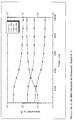
- Figure 1 shows the transmission course of glass ceramics depending on the wavelength.
- FIG. 1 shows the transmission curve for the glass no. 2, and the one from it manufactured glass ceramics with high quartz or keatite mixed crystals as Main crystal phase (Examples 11 and 12). Between 900 and 1800 nm high transmission values achieved. In contrast, the comparison glass ceramic shows Example No. 17, in the ceramized state, broad absorption bands approx. 1050 nm and 1800 nm, which are attributed to the high iron contents. The high IR transmission required is achieved with the examples according to the invention reached. The light transmission of the glass ceramics according to the invention has the high values that are important for quality inspection.
- Figure 2 shows Li, Na, K and Ba SIMS depth profiles of the invention Glass ceramic.
- the surface roughness of the glass ceramic For the measurement of the surface roughness of the glass ceramic, several approximately equal sized samples with a surface of 2x2 cm 2 and a thickness of approx. 0.5 cm are prepared from a casting with a fire-polished surface, as was created when the glass was poured. One of the samples remains glassy for comparison purposes, others are transferred to the glass ceramic under the specified ceramization conditions.
- the surface roughness of the samples is measured with an atomic force microscope (AFM) in a square measuring range of 50 ⁇ m side length.
- a fire-polished surface is used for the measurement in the manner described, because the surface is not influenced by the pressing process.
- the low roughness values are attributed to the presence of a glassy surface layer in the glass ceramics.
- FIG. 2 shows the depth profile of the element concentration of Li, Na, K and Ba measured on a cross section from Example 13. It can be seen from the concentration curve of the alkali and alkaline earth elements that in this example the glassy surface layer of approximately 400 nm thick, which is favorable for achieving good surface roughness values, has formed.
- the Li depth profile correlates with the presence of the crystals in which it is preferably installed.
- the compaction is a change in length of a 100 mm long rod Annealing measured at 600 ° C, 200 h. With this versus usual Operating conditions will be increased in a time-lapse test Modeled on the temperature / time resistance of the glass ceramic. It will achieved the required low compaction values, while the comparison glass ceramic Example 18 has high values.
Landscapes
- Chemical & Material Sciences (AREA)
- Engineering & Computer Science (AREA)
- Organic Chemistry (AREA)
- Materials Engineering (AREA)
- Ceramic Engineering (AREA)
- Crystallography & Structural Chemistry (AREA)
- Geochemistry & Mineralogy (AREA)
- General Chemical & Material Sciences (AREA)
- Chemical Kinetics & Catalysis (AREA)
- Life Sciences & Earth Sciences (AREA)
- Dispersion Chemistry (AREA)
- Physics & Mathematics (AREA)
- Thermal Sciences (AREA)
- Manufacturing & Machinery (AREA)
- Glass Compositions (AREA)
- Optical Elements Other Than Lenses (AREA)
- Surface Treatment Of Glass (AREA)
Priority Applications (1)
| Application Number | Priority Date | Filing Date | Title |
|---|---|---|---|
| EP02027439A EP1291328B1 (fr) | 2001-03-02 | 2002-01-21 | Méthode de production d'un matériau substrat pour une couche miroir |
Applications Claiming Priority (2)
| Application Number | Priority Date | Filing Date | Title |
|---|---|---|---|
| DE10110225A DE10110225C2 (de) | 2001-03-02 | 2001-03-02 | Glaskeramisches Trägermaterial, Verfahren zu seiner Herstellung und seine Verwendung |
| DE10110225 | 2001-03-02 |
Related Child Applications (1)
| Application Number | Title | Priority Date | Filing Date |
|---|---|---|---|
| EP02027439A Division EP1291328B1 (fr) | 2001-03-02 | 2002-01-21 | Méthode de production d'un matériau substrat pour une couche miroir |
Publications (2)
| Publication Number | Publication Date |
|---|---|
| EP1236695A2 true EP1236695A2 (fr) | 2002-09-04 |
| EP1236695A3 EP1236695A3 (fr) | 2002-11-27 |
Family
ID=7676160
Family Applications (2)
| Application Number | Title | Priority Date | Filing Date |
|---|---|---|---|
| EP02001405A Withdrawn EP1236695A3 (fr) | 2001-03-02 | 2002-01-21 | Vitrocéramique |
| EP02027439A Expired - Lifetime EP1291328B1 (fr) | 2001-03-02 | 2002-01-21 | Méthode de production d'un matériau substrat pour une couche miroir |
Family Applications After (1)
| Application Number | Title | Priority Date | Filing Date |
|---|---|---|---|
| EP02027439A Expired - Lifetime EP1291328B1 (fr) | 2001-03-02 | 2002-01-21 | Méthode de production d'un matériau substrat pour une couche miroir |
Country Status (6)
| Country | Link |
|---|---|
| US (2) | US6673729B2 (fr) |
| EP (2) | EP1236695A3 (fr) |
| JP (1) | JP4342140B2 (fr) |
| DE (2) | DE10110225C2 (fr) |
| MY (1) | MY127574A (fr) |
| TW (1) | TWI297332B (fr) |
Cited By (5)
| Publication number | Priority date | Publication date | Assignee | Title |
|---|---|---|---|---|
| CN100431993C (zh) * | 2004-05-12 | 2008-11-12 | 肖特股份有限公司 | 制备玻璃陶瓷制品的方法 |
| WO2019089602A1 (fr) * | 2017-10-31 | 2019-05-09 | Corning Incorporated | Aluminosilicates peralumineux de lithium présentant une viscosité élevée à l'état liquide |
| CN112876066A (zh) * | 2020-06-30 | 2021-06-01 | 成都光明光电股份有限公司 | 环保玻璃材料 |
| CN113735450A (zh) * | 2021-09-09 | 2021-12-03 | 温州市康尔微晶器皿有限公司 | 透明高硬镁铝硅微晶玻璃及其制备方法 |
| US20230100027A1 (en) * | 2021-08-25 | 2023-03-30 | Schott Ag | Crystallizable lithium aluminum silicate glass and glass ceramic produced therefrom |
Families Citing this family (53)
| Publication number | Priority date | Publication date | Assignee | Title |
|---|---|---|---|---|
| AUPR448901A0 (en) * | 2001-04-19 | 2001-05-24 | Dyhrberg, Roger Wayne Richard | Improved mooring system |
| US20030125184A1 (en) * | 2001-12-21 | 2003-07-03 | Schott Glas | Glass ceramic product with variably adjustable zero crossing of the CTE-T curve |
| JP2004075441A (ja) * | 2002-08-14 | 2004-03-11 | Huzhou Daikyo Hari Seihin Yugenkoshi | Li2O−Al2O3−SiO2系結晶性ガラス及び結晶化ガラス、ならびに該結晶性ガラス及び結晶化ガラスの製造方法 |
| DE10238608A1 (de) * | 2002-08-16 | 2004-03-04 | Schott Glas | Bauteil aus einer Lithiumaluminosilikat-Glaskeramik |
| EP1625099A2 (fr) | 2003-04-01 | 2006-02-15 | Corning Incorporated | Substrat pour reflecteur de lampe, verre, materiaux vitro-ceramiques et procedes de fabrication |
| US7226881B2 (en) * | 2003-09-19 | 2007-06-05 | Kabushiki Kaisha Ohara | Ultra low thermal expansion transparent glass ceramics |
| WO2005066082A1 (fr) * | 2004-01-05 | 2005-07-21 | Schott Ag | Systeme technique, utilisation du systeme technique et procede de fabrication d'elements cylindriques creux en vitroceramique |
| JP2007517753A (ja) * | 2004-01-05 | 2007-07-05 | ショット アクチエンゲゼルシャフト | ガラスセラミックの使用方法 |
| DE102004008824B4 (de) * | 2004-02-20 | 2006-05-04 | Schott Ag | Glaskeramik mit geringer Wärmeausdehnung sowie deren Verwendung |
| DE102004024583A1 (de) * | 2004-05-12 | 2005-12-08 | Schott Ag | Transluzente oder opake Kochfläche bestehend aus einer einfärbbaren Glaskeramik sowie deren Verwendung |
| JP2006199538A (ja) * | 2005-01-20 | 2006-08-03 | Huzhou Daikyo Hari Seihin Yugenkoshi | Li2O−Al2O3−SiO2系結晶性ガラス及び結晶化ガラス並びにLi2O−Al2O3−SiO2系結晶化ガラスの製造方法。 |
| WO2006080557A1 (fr) * | 2005-01-31 | 2006-08-03 | Kabushiki Kaisha Ohara | Vitroceramiques et procede de fabrication de celles-ci |
| JP4977372B2 (ja) * | 2005-01-31 | 2012-07-18 | 株式会社オハラ | 結晶化ガラスおよびその製造方法 |
| FR2887870B1 (fr) * | 2005-06-30 | 2007-10-05 | Snc Eurokera Soc En Nom Collec | Elaboration de vitroceramiques de beta-quartz et/ou de beta-spodumene, d'articles en de telles vitroceramiques; vitroceramiques, arcticles en lesdites vitroceramiques et verres precurseurs |
| JP2007197310A (ja) * | 2005-12-28 | 2007-08-09 | Nippon Electric Glass Co Ltd | 結晶化ガラスおよびそれを用いた反射鏡基材並びに反射鏡 |
| US20070270299A1 (en) * | 2006-05-17 | 2007-11-22 | 3M Innovative Properties Company | Glass-ceramics and methods of making same |
| JP4977406B2 (ja) * | 2006-06-06 | 2012-07-18 | 株式会社オハラ | 結晶化ガラス及び結晶化ガラスの製造方法 |
| FR2909374B1 (fr) | 2006-11-30 | 2016-11-25 | Soc En Nom Collectif Dite : Eurokera | Vitroceramiques de beta-quartz, transparentes et incolores, a faible teneur en tio2; articles en lesdites vitroceramiques ; verres precurseurs, procedes d'elaboration |
| US8176828B2 (en) * | 2007-03-21 | 2012-05-15 | Schott Corporation | Glass-ceramic with laminates |
| US9091510B2 (en) * | 2007-03-21 | 2015-07-28 | Schott Corporation | Transparent armor system and method of manufacture |
| DE102007025893B4 (de) | 2007-06-01 | 2014-08-21 | Schott Ag | Glaskeramisches Panzermaterial und Verfahren zur Herstellung einer Panzerung mit einer Glaskeramik-Komponente |
| US8603616B1 (en) | 2007-09-27 | 2013-12-10 | Schott Corporation | Lightweight transparent armor window |
| JP5053948B2 (ja) * | 2007-12-21 | 2012-10-24 | 株式会社オハラ | 結晶化ガラス |
| JP5435395B2 (ja) * | 2008-02-06 | 2014-03-05 | 日本電気硝子株式会社 | ガラス物品の製造方法 |
| KR100988603B1 (ko) * | 2008-05-21 | 2010-10-18 | 삼성전기주식회사 | 낮은 열팽창계수를 가지는 유리조성물, 유리섬유,인쇄회로기판의 절연층 및 인쇄회로기판 |
| US20150132560A9 (en) * | 2008-11-13 | 2015-05-14 | Thilo Zachau | Highly transparent impact-resistant plate laminate and armored or bulletproof glass and articles made with same |
| US9199873B2 (en) | 2008-11-13 | 2015-12-01 | Schott Ag | Process for producing a highly transparent impact-resistant glass ceramic |
| JP4559523B2 (ja) * | 2009-02-24 | 2010-10-06 | 株式会社オハラ | 情報記録媒体用ガラス基板およびその製造方法 |
| DE102009011850B3 (de) | 2009-03-05 | 2010-11-25 | Schott Ag | Verfahren zum umweltfreundlichen Schmelzen und Läutern einer Glasschmelze für ein Ausgangsglas einer Lithium-Aluminium-Silikat(LAS)-Glaskeramik sowie deren Verwendung |
| DE102010027461B4 (de) | 2010-07-17 | 2019-08-22 | Schott Ag | Lithiumhaltige, transparente Glaskeramik mit geringer Wärmedehnung, einer weitestgehend amorphen, an Lithium verarmten, überwiegend glasigen Oberflächenzone und hoher Transmission, ihre Herstellung und Verwendung |
| US20120196109A1 (en) * | 2010-08-31 | 2012-08-02 | Sasha Marjanovic | Surface nucleated glass ceramics for tv cover glass |
| KR102173671B1 (ko) | 2012-10-04 | 2020-11-04 | 코닝 인코포레이티드 | 감광성 유리를 통한 압축 응력 적층 유리 제품 및 이의 제조 방법 |
| EP2903945B1 (fr) * | 2012-10-04 | 2020-09-02 | Corning Incorporated | Article comportant une couche de verre et une couche de vitrocéramique et procédé de fabrication de l'article |
| JP6761344B2 (ja) * | 2013-08-30 | 2020-09-23 | コーニング インコーポレイテッド | イオン交換可能なガラス、ガラスセラミック、およびその製造方法 |
| WO2017106629A1 (fr) | 2015-12-17 | 2017-06-22 | Corning Incorporated | Verre à ions échangeables présentant une diffusion rapide |
| DE102016101066B3 (de) | 2016-01-21 | 2017-02-23 | Schott Ag | Verfahren zur Herstellung eines vorzugsweise nicht eingefärbten glaskeramischen Materials mit geringem Streulichtanteil sowie verfahrensgemäß hergestelltes glaskeramisches Material und dessen Verwendung |
| DE102016211065B4 (de) | 2016-06-21 | 2019-09-05 | Schott Ag | Transparenter, vorzugsweise eingefärbter Glaskeramikartikel mit geringem Streulichtanteil und hoher Festigkeit sowie Verfahren zu seiner Herstellung und seine Verwendung |
| EP3526171B1 (fr) * | 2016-10-12 | 2023-12-13 | Corning Incorporated | Vitrocéramique |
| CN107915412A (zh) * | 2017-12-01 | 2018-04-17 | 成都光明光电股份有限公司 | 微晶玻璃及其基板 |
| US20210276913A1 (en) * | 2018-04-24 | 2021-09-09 | Corning Incorporated | Method for forming glass-ceramic articles and glass-ceramic articles formed therefrom |
| CN108821570B (zh) * | 2018-07-10 | 2021-06-08 | 山东康友光电科技股份有限公司 | 一种制备表面强化的透明平板玻璃的配方及方法 |
| WO2020086036A2 (fr) * | 2018-10-25 | 2020-04-30 | Turkiye Sise Ve Cam Fabrikalari Anonim Sirketi | Application d'un procédé de cristallisation contrôlée lors de la production de vitrocéramique à faible coefficient de dilatation thermique |
| CN111302631A (zh) * | 2018-12-12 | 2020-06-19 | 佛山市顺德区美的电热电器制造有限公司 | 微晶玻璃及其制备方法和应用 |
| JP2022512405A (ja) | 2018-12-12 | 2022-02-03 | コーニング インコーポレイテッド | イオン交換可能なリチウム含有アルミノケイ酸塩ガラス |
| CN111302632B (zh) * | 2018-12-12 | 2023-08-22 | 佛山市顺德区美的电热电器制造有限公司 | 具有低高温黏度的微晶玻璃及其制备方法、玻璃制品及烹饪器具 |
| US12281036B2 (en) * | 2019-07-12 | 2025-04-22 | Corning Incorporated | Methods for forming glass ceramic articles |
| JP7602188B2 (ja) * | 2020-04-23 | 2024-12-18 | 日本電気硝子株式会社 | 結晶化ガラス |
| DE102020117468A1 (de) * | 2020-07-02 | 2022-01-05 | Schott Ag | Transparenter, nicht eingefärbter Lithiumaluminiumsilikat-Glaskeramikartikel mit Hochquarz-Mischkristall als Hauptkristallphase sowie Verfahren zur Herstellung des Artikels und dessen Verwendung |
| CN112679095B (zh) * | 2020-12-25 | 2022-03-11 | 醴陵旗滨电子玻璃有限公司 | 一种微晶玻璃及其制备方法、智能终端和显示器 |
| WO2022194846A1 (fr) * | 2021-03-16 | 2022-09-22 | Schott Ag | Composant de précision euvl ayant un comportement de dilatation thermique spécifique |
| KR20220129481A (ko) * | 2021-03-16 | 2022-09-23 | 쇼오트 아게 | 특정한 열 팽창 특성을 갖는 유리 세라믹 |
| CN117321015A (zh) * | 2021-03-16 | 2023-12-29 | 肖特股份有限公司 | 具有特定热膨胀行为的精密部件 |
| EP4194416A1 (fr) * | 2021-12-10 | 2023-06-14 | Schott Ag | Plaque de recouvrement vitrocéramique, son procédé de fabrication ainsi que son utilisation et appareil d'affichage numérique comprenant une telle plaque de recouvrement |
Citations (3)
| Publication number | Priority date | Publication date | Assignee | Title |
|---|---|---|---|---|
| DE1902432A1 (de) | 1967-07-01 | 1970-09-17 | Jenaer Glaswerk Schott & Gen | Verfahren zum Herstellen kompakter transparenter Glaskeramik-Formteile |
| US4285728A (en) | 1975-02-06 | 1981-08-25 | Owens-Illinois, Inc. | Method of making low expansion crystallized glass-ceramics and telescope mirror blanks made thereby |
| US4438210A (en) | 1982-12-20 | 1984-03-20 | Corning Glass Works | Transparent colorless glass-ceramics especially suitable for use as stove windows |
Family Cites Families (24)
| Publication number | Priority date | Publication date | Assignee | Title |
|---|---|---|---|---|
| US1578448A (en) * | 1925-07-16 | 1926-03-30 | Lebby States Lee | Method of pressing glass |
| GB501865A (en) * | 1937-02-05 | 1939-03-07 | Corning Glass Works | Process of making glass articles having optically accurate surfaces and articles produced thereby |
| US3788865A (en) * | 1964-07-31 | 1974-01-29 | C Babcock | Crystallized glass ceramics and process for forming same |
| US3484328A (en) * | 1965-03-05 | 1969-12-16 | Owens Illinois Inc | Telescope mirror blank |
| DE2203675A1 (de) * | 1971-02-08 | 1972-08-24 | Owens Illinois Inc | Verfahren zur Herstellung eines Glaskeramikgegenstandes hohen Bruchmoduls |
| US4192688A (en) * | 1972-07-07 | 1980-03-11 | Owens-Illinois, Inc. | Product and process for forming same |
| JPS61101434A (ja) * | 1984-10-23 | 1986-05-20 | Nippon Sheet Glass Co Ltd | 透明結晶化ガラス |
| JPS62182135A (ja) * | 1986-02-05 | 1987-08-10 | Nippon Electric Glass Co Ltd | 赤外線透過ガラスセラミツクスおよびその製造方法 |
| US4901503A (en) | 1988-07-11 | 1990-02-20 | Security Plastics, Inc. | Apparatus for separating and packaging plastic parts |
| JPH02188432A (ja) * | 1989-01-13 | 1990-07-24 | Hitachi Ltd | 光学部品の成形型 |
| US4940674A (en) * | 1989-11-13 | 1990-07-10 | Corning Incorporated | High strength, haze-free, transparent glass-ceramics |
| JPH0737334B2 (ja) * | 1991-02-01 | 1995-04-26 | 岡本硝子株式会社 | 耐熱性セラミックス成形体及びその製造法 |
| US5147436A (en) * | 1991-04-09 | 1992-09-15 | Corning Incorporated | Method for forming flat glass-ceramic articles |
| JPH054824A (ja) * | 1991-06-24 | 1993-01-14 | Matsushita Electric Ind Co Ltd | 赤外線透過性レンズの製造方法 |
| JPH0648786A (ja) * | 1992-07-30 | 1994-02-22 | Nippon Electric Glass Co Ltd | 防火安全ガラス |
| DE4321373C2 (de) * | 1993-06-26 | 1995-12-14 | Schott Glaswerke | Glaskeramik mit hoher Transmission im Wellenlängenbereich von 2700 bis 3300 nm, Verfahren zu deren Herstellung und deren Verwendung |
| JP2668057B2 (ja) * | 1994-09-13 | 1997-10-27 | 株式会社オハラ | 低膨張透明ガラスセラミックス |
| JPH0948626A (ja) * | 1995-08-02 | 1997-02-18 | Namiki Precision Jewel Co Ltd | 腕時計用カバーガラス及びその製造方法 |
| DE19622522C1 (de) * | 1996-06-05 | 1998-01-22 | Schott Glaswerke | Verfahren zur Herstellung von dichtgesinterten Glaskeramik-Formkörpern |
| DE19721737C1 (de) * | 1997-05-24 | 1998-11-12 | Schott Glas | Blei- und cadmiumfreie Glaszusammensetzung zum Glasieren, Emaillieren und Dekorieren von Gläsern oder Glaskeramiken sowie Verfahren zur Herstellung einer damit beschichteten Glaskeramik |
| JP3526047B2 (ja) * | 1998-06-19 | 2004-05-10 | 日本電気硝子株式会社 | Li2 O−Al2 O3 −SiO2 系透明結晶化ガラス |
| DE19907038C2 (de) * | 1999-02-19 | 2003-04-10 | Schott Glas | Transluzente oder opake Glaskeramik mit Hochquarz-Mischkristallen als vorherrschender Kristallphase und deren Verwendung |
| JP3767260B2 (ja) * | 1999-08-02 | 2006-04-19 | 日本電気硝子株式会社 | Li2O−Al2O3−SiO2系結晶化ガラス及び結晶性ガラス |
| DE19939787C2 (de) * | 1999-08-21 | 2003-11-27 | Schott Glas | Transparente, mit Vanadiumoxid-Zusatz dunkel einfärbbare Glaskeramik mit Hochquarz-Mischkristallen als vorherrschende Kristallphase, Verfahren zu ihrer Herstellung und ihre Verwendung |
-
2001
- 2001-03-02 DE DE10110225A patent/DE10110225C2/de not_active Expired - Fee Related
-
2002
- 2002-01-21 EP EP02001405A patent/EP1236695A3/fr not_active Withdrawn
- 2002-01-21 EP EP02027439A patent/EP1291328B1/fr not_active Expired - Lifetime
- 2002-01-21 DE DE50214957T patent/DE50214957D1/de not_active Expired - Lifetime
- 2002-02-05 US US10/068,804 patent/US6673729B2/en not_active Expired - Fee Related
- 2002-02-26 TW TW091103405A patent/TWI297332B/zh not_active IP Right Cessation
- 2002-02-28 MY MYPI20020706A patent/MY127574A/en unknown
- 2002-03-01 JP JP2002056225A patent/JP4342140B2/ja not_active Expired - Fee Related
-
2003
- 2003-08-26 US US10/647,966 patent/US20050076676A1/en not_active Abandoned
Patent Citations (3)
| Publication number | Priority date | Publication date | Assignee | Title |
|---|---|---|---|---|
| DE1902432A1 (de) | 1967-07-01 | 1970-09-17 | Jenaer Glaswerk Schott & Gen | Verfahren zum Herstellen kompakter transparenter Glaskeramik-Formteile |
| US4285728A (en) | 1975-02-06 | 1981-08-25 | Owens-Illinois, Inc. | Method of making low expansion crystallized glass-ceramics and telescope mirror blanks made thereby |
| US4438210A (en) | 1982-12-20 | 1984-03-20 | Corning Glass Works | Transparent colorless glass-ceramics especially suitable for use as stove windows |
Cited By (8)
| Publication number | Priority date | Publication date | Assignee | Title |
|---|---|---|---|---|
| CN100431993C (zh) * | 2004-05-12 | 2008-11-12 | 肖特股份有限公司 | 制备玻璃陶瓷制品的方法 |
| WO2019089602A1 (fr) * | 2017-10-31 | 2019-05-09 | Corning Incorporated | Aluminosilicates peralumineux de lithium présentant une viscosité élevée à l'état liquide |
| US11820706B2 (en) | 2017-10-31 | 2023-11-21 | Corning Incorporated | Peraluminous lithium aluminosilicates with high liquidus viscosity |
| CN112876066A (zh) * | 2020-06-30 | 2021-06-01 | 成都光明光电股份有限公司 | 环保玻璃材料 |
| CN112876066B (zh) * | 2020-06-30 | 2022-04-15 | 成都光明光电股份有限公司 | 环保玻璃材料 |
| US20230100027A1 (en) * | 2021-08-25 | 2023-03-30 | Schott Ag | Crystallizable lithium aluminum silicate glass and glass ceramic produced therefrom |
| CN113735450A (zh) * | 2021-09-09 | 2021-12-03 | 温州市康尔微晶器皿有限公司 | 透明高硬镁铝硅微晶玻璃及其制备方法 |
| CN113735450B (zh) * | 2021-09-09 | 2022-12-20 | 温州市康尔微晶器皿有限公司 | 透明高硬镁铝硅微晶玻璃及其制备方法 |
Also Published As
| Publication number | Publication date |
|---|---|
| EP1236695A3 (fr) | 2002-11-27 |
| JP4342140B2 (ja) | 2009-10-14 |
| EP1291328B1 (fr) | 2011-03-16 |
| TWI297332B (en) | 2008-06-01 |
| DE10110225C2 (de) | 2003-07-17 |
| DE10110225A1 (de) | 2002-09-26 |
| US20020183187A1 (en) | 2002-12-05 |
| MY127574A (en) | 2006-12-29 |
| EP1291328A3 (fr) | 2004-01-02 |
| EP1291328A2 (fr) | 2003-03-12 |
| US20050076676A1 (en) | 2005-04-14 |
| DE50214957D1 (de) | 2011-04-28 |
| JP2002326837A (ja) | 2002-11-12 |
| US6673729B2 (en) | 2004-01-06 |
Similar Documents
| Publication | Publication Date | Title |
|---|---|---|
| DE10110225C2 (de) | Glaskeramisches Trägermaterial, Verfahren zu seiner Herstellung und seine Verwendung | |
| EP3018107B1 (fr) | Vitroceramique en aluminosilicate de lithium hautement cristalline et son utilisation | |
| EP2817269B9 (fr) | Vitrocéramique transparente peu colorée à base de silicate de lithium et d'aluminium et utilisation de ladite vitrocéramique | |
| DE102014226986B4 (de) | Glaskeramisches Substrat aus einer transparenten, eingefärbten LAS-Glaskeramik und Verfahren zu dessen Herstellung | |
| EP1837312B1 (fr) | Verre de lithium-aluminium-silicate avec cycle court de céramisation | |
| DE69308701T2 (de) | Transparente kristallisierte Glaskeramik mit geringem Ausdehnungskoeffizienten | |
| DE69915428T2 (de) | Glaskeramiken mit niedriger Ausdehnung | |
| DE102016208300B3 (de) | Kristallisierbares Lithiumaluminiumsilikat-Glas und daraus hergestellte transparente Glaskeramik sowie Verfahren zur Herstellung des Glases und der Glaskeramik und Verwendung der Glaskeramik | |
| DE202018006435U1 (de) | Transparente-ß-Quarzglaskeramik mit niedrigem Lithium-Gehalt | |
| DE202018100558U1 (de) | Eingefärbte transparente Lithiumaluminiumsilikat-Glaskeramik | |
| DE19907038C2 (de) | Transluzente oder opake Glaskeramik mit Hochquarz-Mischkristallen als vorherrschender Kristallphase und deren Verwendung | |
| DE202018102514U1 (de) | Glaskeramik mit reduziertem Lithium-Gehalt | |
| DE102016211065B4 (de) | Transparenter, vorzugsweise eingefärbter Glaskeramikartikel mit geringem Streulichtanteil und hoher Festigkeit sowie Verfahren zu seiner Herstellung und seine Verwendung | |
| DE202014010349U1 (de) | Glaskeramik des Typs Lithium Aluminiumsilikat enthaltend eine feste Lösung aus ß-Spodumen | |
| WO2015024857A1 (fr) | Procédé de détermination d'une fenêtre de processus et procédé de fabrication d'une vitrocéramique | |
| DE2723600A1 (de) | Emaille fuer opalglas | |
| EP3872044B1 (fr) | Verre de silicate de lithium-aluminium cristallisable et vitrocéramique fabriquée à partir de celui-ci, ainsi que procédé de fabrication du verre et du verre céramique et utilisation du verre céramique | |
| DE202018006443U1 (de) | Beta-Spodumen-Glaskeramiken, die weiß, opaleszent oder opak sind, mit niedrigem Titangehalt und zinngeläutert | |
| DE102008054386B3 (de) | Transparente Glaskeramik mit niedriger Dichte und deren Verwendung | |
| DE102020117468A1 (de) | Transparenter, nicht eingefärbter Lithiumaluminiumsilikat-Glaskeramikartikel mit Hochquarz-Mischkristall als Hauptkristallphase sowie Verfahren zur Herstellung des Artikels und dessen Verwendung | |
| EP3872043B1 (fr) | Verre de silicate de lithium-aluminium cristallisable et vitrocéramique fabriquée à partir de celui-ci, ainsi que procédé de fabrication du verre et du verre céramique et utilisation du verre céramique | |
| EP3450411B1 (fr) | Vitroceramique en aluminosilicate de lithium transparente teintée et son utilisation | |
| DE2429563C2 (de) | Durchsichtige, in der Aufsicht schwarze, in der Durchsicht dunkelrote Glaskeramik des Systems SiO tief 2-AI tief 2 O tief 3-Li tief 2 O mit hohem Wärmespannungsfaktor R größer als 1000, insbesondere zur Herstellung von beheizbaren Platten, sowie Verfahren zur Herstellung der Glaskeramik Jenaer Glaswerk Schott & Gen., 6500 Mainz | |
| DE69514805T2 (de) | Glaszusammensetzung für Substrate und daraus hergestellte Substrate für Plasma-Anzeigetafel | |
| DE2429563B1 (de) | Durchsichtige, in der Aufsicht schwarze, in der Durchsicht dunkelrote Glaskeramik des Systems SiO tief 2-AI tief 2 O tief 3-Li tief 2 O mit hohem Wärmespannungsfaktor R größer als 1000, insbesondere zur Herstellung von beheizbaren Platten, sowie Verfahren zur Herstellung der Glaskeramik Jenaer Glaswerk Schott & Gen., 6500 Mainz |
Legal Events
| Date | Code | Title | Description |
|---|---|---|---|
| PUAI | Public reference made under article 153(3) epc to a published international application that has entered the european phase |
Free format text: ORIGINAL CODE: 0009012 |
|
| 17P | Request for examination filed |
Effective date: 20020121 |
|
| AK | Designated contracting states |
Kind code of ref document: A2 Designated state(s): AT BE CH CY DE DK ES FI FR GB GR IE IT LI LU MC NL PT SE TR |
|
| AX | Request for extension of the european patent |
Free format text: AL;LT;LV;MK;RO;SI |
|
| PUAL | Search report despatched |
Free format text: ORIGINAL CODE: 0009013 |
|
| AK | Designated contracting states |
Kind code of ref document: A3 Designated state(s): AT BE CH CY DE DK ES FI FR GB GR IE IT LI LU MC NL PT SE TR |
|
| AX | Request for extension of the european patent |
Free format text: AL;LT;LV;MK;RO;SI |
|
| AKX | Designation fees paid |
Designated state(s): AT BE CH CY DE DK ES FI FR GB GR IE IT LI LU MC NL PT SE TR |
|
| RAP1 | Party data changed (applicant data changed or rights of an application transferred) |
Owner name: SCHOTT AG |
|
| 17Q | First examination report despatched |
Effective date: 20050211 |
|
| GRAP | Despatch of communication of intention to grant a patent |
Free format text: ORIGINAL CODE: EPIDOSNIGR1 |
|
| RIC1 | Information provided on ipc code assigned before grant |
Ipc: C03C 10/00 20060101AFI20111010BHEP |
|
| STAA | Information on the status of an ep patent application or granted ep patent |
Free format text: STATUS: THE APPLICATION IS DEEMED TO BE WITHDRAWN |
|
| 18D | Application deemed to be withdrawn |
Effective date: 20120320 |