EP1171397B1 - Procede de scellement de verre - Google Patents
Procede de scellement de verre Download PDFInfo
- Publication number
- EP1171397B1 EP1171397B1 EP00925467A EP00925467A EP1171397B1 EP 1171397 B1 EP1171397 B1 EP 1171397B1 EP 00925467 A EP00925467 A EP 00925467A EP 00925467 A EP00925467 A EP 00925467A EP 1171397 B1 EP1171397 B1 EP 1171397B1
- Authority
- EP
- European Patent Office
- Prior art keywords
- indium
- glass
- pieces
- indium alloy
- seal
- Prior art date
- Legal status (The legal status is an assumption and is not a legal conclusion. Google has not performed a legal analysis and makes no representation as to the accuracy of the status listed.)
- Expired - Lifetime
Links
- 238000000034 method Methods 0.000 title claims abstract description 43
- 239000005394 sealing glass Substances 0.000 title 1
- 239000011521 glass Substances 0.000 claims abstract description 85
- APFVFJFRJDLVQX-UHFFFAOYSA-N indium atom Chemical compound [In] APFVFJFRJDLVQX-UHFFFAOYSA-N 0.000 claims abstract description 82
- 229910052738 indium Inorganic materials 0.000 claims abstract description 76
- 229910000846 In alloy Inorganic materials 0.000 claims abstract description 62
- 239000002184 metal Substances 0.000 claims abstract description 26
- 229910052751 metal Inorganic materials 0.000 claims abstract description 26
- 238000010438 heat treatment Methods 0.000 claims abstract description 15
- 238000000576 coating method Methods 0.000 claims description 13
- 238000007789 sealing Methods 0.000 claims description 8
- RYGMFSIKBFXOCR-UHFFFAOYSA-N Copper Chemical compound [Cu] RYGMFSIKBFXOCR-UHFFFAOYSA-N 0.000 claims description 7
- 229910052802 copper Inorganic materials 0.000 claims description 7
- 239000010949 copper Substances 0.000 claims description 7
- 238000005476 soldering Methods 0.000 claims description 5
- 239000005341 toughened glass Substances 0.000 claims description 5
- 239000011248 coating agent Substances 0.000 claims description 4
- 238000000151 deposition Methods 0.000 claims description 4
- 239000010935 stainless steel Substances 0.000 claims description 3
- 229910001220 stainless steel Inorganic materials 0.000 claims description 3
- ATJFFYVFTNAWJD-UHFFFAOYSA-N Tin Chemical compound [Sn] ATJFFYVFTNAWJD-UHFFFAOYSA-N 0.000 claims description 2
- 229910052709 silver Inorganic materials 0.000 claims description 2
- 239000004332 silver Substances 0.000 claims description 2
- 230000015572 biosynthetic process Effects 0.000 abstract description 3
- XEEYBQQBJWHFJM-UHFFFAOYSA-N Iron Chemical compound [Fe] XEEYBQQBJWHFJM-UHFFFAOYSA-N 0.000 description 4
- 238000004519 manufacturing process Methods 0.000 description 4
- 230000000694 effects Effects 0.000 description 3
- 238000001771 vacuum deposition Methods 0.000 description 3
- 229910001128 Sn alloy Inorganic materials 0.000 description 2
- 229910045601 alloy Inorganic materials 0.000 description 2
- 239000000956 alloy Substances 0.000 description 2
- 230000008021 deposition Effects 0.000 description 2
- 238000005516 engineering process Methods 0.000 description 2
- 229910052742 iron Inorganic materials 0.000 description 2
- 150000002739 metals Chemical class 0.000 description 2
- 238000011176 pooling Methods 0.000 description 2
- 238000003825 pressing Methods 0.000 description 2
- 229910000679 solder Inorganic materials 0.000 description 2
- 238000002834 transmittance Methods 0.000 description 2
- 229910001316 Ag alloy Inorganic materials 0.000 description 1
- 229910000831 Steel Inorganic materials 0.000 description 1
- 238000004378 air conditioning Methods 0.000 description 1
- 230000015556 catabolic process Effects 0.000 description 1
- 238000004140 cleaning Methods 0.000 description 1
- 238000013034 coating degradation Methods 0.000 description 1
- 230000008602 contraction Effects 0.000 description 1
- 238000006731 degradation reaction Methods 0.000 description 1
- 230000001419 dependent effect Effects 0.000 description 1
- 239000003599 detergent Substances 0.000 description 1
- -1 indium/tin alloys Chemical compound 0.000 description 1
- 239000000463 material Substances 0.000 description 1
- 238000002844 melting Methods 0.000 description 1
- 230000008018 melting Effects 0.000 description 1
- 238000010943 off-gassing Methods 0.000 description 1
- 230000003287 optical effect Effects 0.000 description 1
- 230000002035 prolonged effect Effects 0.000 description 1
- 230000005855 radiation Effects 0.000 description 1
- 239000000565 sealant Substances 0.000 description 1
- 238000000926 separation method Methods 0.000 description 1
- 239000002904 solvent Substances 0.000 description 1
- 239000010959 steel Substances 0.000 description 1
- 230000035882 stress Effects 0.000 description 1
- 230000008646 thermal stress Effects 0.000 description 1
Images


Classifications
-
- E—FIXED CONSTRUCTIONS
- E06—DOORS, WINDOWS, SHUTTERS, OR ROLLER BLINDS IN GENERAL; LADDERS
- E06B—FIXED OR MOVABLE CLOSURES FOR OPENINGS IN BUILDINGS, VEHICLES, FENCES OR LIKE ENCLOSURES IN GENERAL, e.g. DOORS, WINDOWS, BLINDS, GATES
- E06B3/00—Window sashes, door leaves, or like elements for closing wall or like openings; Layout of fixed or moving closures, e.g. windows in wall or like openings; Features of rigidly-mounted outer frames relating to the mounting of wing frames
- E06B3/66—Units comprising two or more parallel glass or like panes permanently secured together
- E06B3/663—Elements for spacing panes
- E06B3/66304—Discrete spacing elements, e.g. for evacuated glazing units
-
- C—CHEMISTRY; METALLURGY
- C03—GLASS; MINERAL OR SLAG WOOL
- C03C—CHEMICAL COMPOSITION OF GLASSES, GLAZES OR VITREOUS ENAMELS; SURFACE TREATMENT OF GLASS; SURFACE TREATMENT OF FIBRES OR FILAMENTS MADE FROM GLASS, MINERALS OR SLAGS; JOINING GLASS TO GLASS OR OTHER MATERIALS
- C03C27/00—Joining pieces of glass to pieces of other inorganic material; Joining glass to glass other than by fusing
- C03C27/06—Joining glass to glass by processes other than fusing
- C03C27/08—Joining glass to glass by processes other than fusing with the aid of intervening metal
-
- E—FIXED CONSTRUCTIONS
- E06—DOORS, WINDOWS, SHUTTERS, OR ROLLER BLINDS IN GENERAL; LADDERS
- E06B—FIXED OR MOVABLE CLOSURES FOR OPENINGS IN BUILDINGS, VEHICLES, FENCES OR LIKE ENCLOSURES IN GENERAL, e.g. DOORS, WINDOWS, BLINDS, GATES
- E06B3/00—Window sashes, door leaves, or like elements for closing wall or like openings; Layout of fixed or moving closures, e.g. windows in wall or like openings; Features of rigidly-mounted outer frames relating to the mounting of wing frames
- E06B3/66—Units comprising two or more parallel glass or like panes permanently secured together
- E06B3/673—Assembling the units
- E06B3/67326—Assembling spacer elements with the panes
-
- E—FIXED CONSTRUCTIONS
- E06—DOORS, WINDOWS, SHUTTERS, OR ROLLER BLINDS IN GENERAL; LADDERS
- E06B—FIXED OR MOVABLE CLOSURES FOR OPENINGS IN BUILDINGS, VEHICLES, FENCES OR LIKE ENCLOSURES IN GENERAL, e.g. DOORS, WINDOWS, BLINDS, GATES
- E06B3/00—Window sashes, door leaves, or like elements for closing wall or like openings; Layout of fixed or moving closures, e.g. windows in wall or like openings; Features of rigidly-mounted outer frames relating to the mounting of wing frames
- E06B3/66—Units comprising two or more parallel glass or like panes permanently secured together
- E06B3/673—Assembling the units
- E06B3/67326—Assembling spacer elements with the panes
- E06B3/67334—Assembling spacer elements with the panes by soldering; Preparing the panes therefor
-
- E—FIXED CONSTRUCTIONS
- E06—DOORS, WINDOWS, SHUTTERS, OR ROLLER BLINDS IN GENERAL; LADDERS
- E06B—FIXED OR MOVABLE CLOSURES FOR OPENINGS IN BUILDINGS, VEHICLES, FENCES OR LIKE ENCLOSURES IN GENERAL, e.g. DOORS, WINDOWS, BLINDS, GATES
- E06B3/00—Window sashes, door leaves, or like elements for closing wall or like openings; Layout of fixed or moving closures, e.g. windows in wall or like openings; Features of rigidly-mounted outer frames relating to the mounting of wing frames
- E06B3/66—Units comprising two or more parallel glass or like panes permanently secured together
- E06B3/673—Assembling the units
- E06B3/67339—Working the edges of already assembled units
- E06B3/6736—Heat treatment
-
- E—FIXED CONSTRUCTIONS
- E06—DOORS, WINDOWS, SHUTTERS, OR ROLLER BLINDS IN GENERAL; LADDERS
- E06B—FIXED OR MOVABLE CLOSURES FOR OPENINGS IN BUILDINGS, VEHICLES, FENCES OR LIKE ENCLOSURES IN GENERAL, e.g. DOORS, WINDOWS, BLINDS, GATES
- E06B3/00—Window sashes, door leaves, or like elements for closing wall or like openings; Layout of fixed or moving closures, e.g. windows in wall or like openings; Features of rigidly-mounted outer frames relating to the mounting of wing frames
- E06B3/66—Units comprising two or more parallel glass or like panes permanently secured together
- E06B3/677—Evacuating or filling the gap between the panes ; Equilibration of inside and outside pressure; Preventing condensation in the gap between the panes; Cleaning the gap between the panes
- E06B3/6775—Evacuating or filling the gap during assembly
Definitions
- This invention relates to a method of forming an air-tight seal between two pieces of glass, particularly but not exclusively two panes of glass to form an evacuated double glazing unit.
- Evacuated glazing generally consists of two glass sheets separated by a regular array of support pillars, typically 0.2mm high.
- a contiguous seal provides an air-tight unit which is in general evacuated to 0.1Pa or less to reduce gaseous conduction to a minimal level.
- vacuum glazing units have only been manufactured using a solder glass seal formed at temperatures above 400°C between the glass pieces. The air is subsequently pumped out from between the pieces using a pump-out tube.
- present evacuated glazing units are limited to using hard-coated types of low-emittance films or coatings on their internal glass surfaces, and cannot be made with tempered glass. Many high performance low emittance coatings cannot at present survive temperatures in excess of 200°C or so for any prolonged period of time.
- Low emittance coatings reduce long wave radiative heat transfer through the glazing unit.
- hard coatings have in general higher emittance to long-wave radiation in the range 2.5-30 ⁇ m than soft-coated films, which have emittances ⁇ 0.1.
- a method of forming an air-tight seal between two pieces of glass comprising the steps of:
- Indium, or indium alloy has been found to be particularly useful in forming an air-tight seal between two pieces of glass, once the indium or indium alloy has been suitably positioned onto the glass, made molten, and then cooled.
- a layer of indium or indium alloy is added onto each piece of glass (prior to heating) in the region of the seal, and this can be carried out using any of the known and suitable metal-glass deposition or bonding techniques.
- any coating or film on the glass is removed from at least the intended area of the seal prior to the application of indium or indium alloy to such glass.
- the glass is preferably cleaned and/or baked prior to the application of the indium or indium alloy.
- the glass pieces with the layer(s) of indium or indium alloy are heated to a uniform temperature to provide constant and equivalent bonding at each and every location, and more preferably a relatively slow heating regime is used.
- the heating temperature is dependent on which indium or indium alloy is used. Most if not all suitable materials melt at 220°C or less, generally 200°C or less. Therefore, the temperature of the heating should generally not exceed 220°C, and will commonly be below 200°C.
- one or more, preferably one, additional metal layers can be located between the indium or indium alloy surface films.
- Such metal layer could be in the form of a wire or a gasket, etc.
- the metal layer could be made from any suitable metal or alloy able to bond with indium or indium alloy.
- Such metals include indium or an indium alloy, or other metals eg copper or steel such as stainless steel.
- Such other metal layers could be added per se, or pre-coated with indium or a suitable indium alloy to assist bonding when heated.
- an intermediate metal layer assists if the deposited layers of indium or indium alloy on the glass pieces are not of the correct thickness or uniformity to allow them to meet and so bond together when they and the glass pieces are heated, and/or to generally increase the separation between the glass pieces, and/or to reduce the thickness of the indium or indium alloy surface film required, and/or to provide good inter-metal bonding.
- the heating temperature and regime depends upon the indium or which indium alloy is used.
- the layers of indium or indium alloy are provided as the coating around a suitable support such as a metal wire or gasket, which coated support is placed directly between the glass pieces and heated, preferably with associated pressure, to form the seal.
- a suitable support such as a metal wire or gasket
- the thickness of the seal of the present invention may be similar to the thickness of existing seals, e.g. between 0.05-0.2mm or more. Intermediate support pillars between glass panes are commonly about 0.1-0.2mm in height. The width of the seal may again be similar to that of existing seals, e.g. between 3-10mm.
- the pieces of glass could be of any suitable size, shape or design, between which a seal is desired.
- the two pieces need not be similar in size, shape or design.
- the present invention is suitable to form a relatively small air-type seal between two glass panes or sheets.
- the invention is particularly suitable for the formation of evacuated double glazing units. Thus preferably, the heating to form the seal is conducted under vacuum.
- Larger glazing units can also be formed by the present invention using additional sheets of glass to provide eg triple glazing units with either one or two of the inner spaces between the three sheets evacuated.
- Triple glazing can be used to minimise wind loading on vacuum glazing, and allow larger panes to be utilised.
- the normal spacing for double glazing could still be used between the evacuated component and a third glass sheet.
- An advantage of the use of a third glass pane is a reduction in thermal gradients, and thus reduction in expansion/contraction of the vacuum glazing unit, and subsequent induced thermal stress.
- One or more of the glass pieces being sealed by the present invention could also be coated to minimise solar gain and thus make the vacuum glazing unit suitable for use in hot climates (with a consequent large reduction in any air conditioning load).
- This allows the introduction of additional glazing technologies such as electrochromics, photochromics and thermochromics, which enable the glazing to be changed from transparent to opaque.
- Such technologies cannot be used with existing sealing techniques, the temperatures for which are so high as to destroy the chromicity.
- the invention is also suitable for sealing holes or apertures in a piece of glass, e.g. a pump-out hole.
- the indium or indium alloy could be added around the hole or aperture, and similarly layered on a glass cover piece, not necessarily being flat.
- Figure 1 shows two panes of glass 2 suitable for forming a double glazing unit. Along the edges of each pane 2, there is a layer of indium 4. Between the indium layers 4, there is shown pieces of indium wire 6 which may be required should the indium layers 4 not meet when the panes 2 are brought together. Figure 1 also shows an array of pillars 8 to provide support between the panes 2.
- the forming of the seal maybe be performed in the following manner.
- the glass panes, either with or without low emittance coatings, can be cleaned using suitable solvents and/or detergents.
- the cleaned panes can then be baked out for a period of time at a temperature less than that resulting in degradation of any coatings. If the coatings are incompatible with the indium or indium alloy, they should be removed in the location of the intended seal.
- the indium films are then deposited onto the surfaces of both glass panes in the region of the intended seal, either using a vacuum deposition technique, or an ultrasonic soldering iron or other known methods suitable to bond indium to glass.
- the pillar array is then arranged between the panes.
- indium or indium alloy wire or a gasket is located between the indium films.
- Vacuum deposition can deposit layers of indium or indium alloy up to 1 ⁇ m thick. Ultrasonic soldering can deposit thicker layers.
- a vacuum chamber is evacuated to a pressure of less than 0.1Pa, with the panes and the indium or indium alloy therein.
- the heat is then supplied, possibly using radiant heaters or a heat platen, to raise the temperature of the glass and the indium or indium alloy to a temperature at which the indium or indium alloy films, and any wire, etc, fuse.
- this temperature is approximately 157°C.
- Some indium alloys have lower temperature requirements, others slightly higher.
- the temperature can be reduced by applying pressure, generally on the top glass pane.
- the temperature is uniform and is less than that at which the indium could flow and so to avoid causing gaps in the seal and local pooling effects.
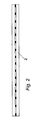
- Figure 2 shows a formed unit.
- the vacuum in the double glazing unit can be formed using the pump-out tube method.
- a pump-out tube is located in the upper glass pane prior to any cleaning and the deposition of any indium or indium alloy.
- the lower glass pane is generally located in an oven or on a heated platen, with the upper sheet positioned so that the two deposited indium or indium alloy surfaces are touching.
- Heat is applied to raise the temperature of the glass and the indium or indium alloy to a temperature at which the indium or indium alloy films and any wire etc, fuse. Again the temperature can be reduced by applying pressure, and it is preferred that the temperature is uniform and is less than that at which the indium could flow to cause gaps in the seal and local pooling effects.
- a vacuum reservoir is attached to the pump-out tube and used to evacuate the glazing unit to a pressure of less than 0.1Pa.
- An electrical resistance heater is used to seal the pump-out tube.
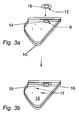
- the pump-out hole is sealed as shown in Figures 3a and 3b .
- a thin ring of indium or indium alloy 9 is deposited around the small diameter hole 14 pre-drilled into one of the two glass sheets 10, (between which sheets 10 is also a pillar array 11).
- a thin ring of indium or indium alloy 12 is also coated onto a glass cover slide 16 of radius approximately 7.5mm with a bevelled upper edge.
- the glass cover slide 16 is located over the pump-out hole 14 so that the two rings of indium or indium alloy 9,12 substantially mate.
- a vacuum cup fitting (not shown) is located on to the glass surface 10 so that the cover slide 16 is completely enclosed within it.
- a small heater element within the vacuum fitting locates over the cover slide 16 and holds it in location while vacuum pump-out occurs through the natural gaps between indium or indium alloy layers 9, 12.
- the main sealants used are indiums, or an indium alloy formed with one or more of the group comprising tin, silver and lead, such as indium/tin alloys, indium/tin/silver alloys, or other indium based alloys with the desired melting temperatures, bonding and strength characteristics.
- a vacuum edge seal may also be formed as shown in Figure 4.
- Figure 4 shows two panes of glass 20, and on both panes of glass 20 in the region adjacent to the edge are thin layers of indium or indium alloy 22. These layers of indium or indium alloy can be laid down using an ultrasonic soldering iron or preferably via vacuum deposition. Between the indium layers 22 is a thin metal gasket 24 made for example from copper. Copper and indium bond well together, and the use of a copper gasket allows the use of micro layers of indium on the glass, which should reduce cost.
- the copper gasket 24 is deposited on the indium layer 22 of the lower glass pane 20, and the indium layer 22 on the face of the upper glass pane 20 is then located on the metal gasket 24. Heating the unit as mentioned above forms seals between the indium layers 22 and the metal gasket 24.
- the sealing mechanism could be performed in vacuum, or in an oven with subsequent pump-out via a pump-out tube, as described above.
- the present invention provides a method of fabricating seals between glass pieces, in particular evacuated double or multiple glazing units at relatively low temperatures. These allow the use of soft coatings such as those consisting of multiple dielectric/metal/dielectric layers on glass, to give optimal thermal and optical performance. With reduced rates of heat transfer through the glazing unit, there is lower heat loss in buildings with high visible transmittance.
- Such glazing units could also be used eg for transparent doors for refrigerators, or solar energy collector covers, or in conjunction with electrochromics, photochromics or thermochromics.
- the use of low fabrication temperatures also reduces embodied energy, and reduces any possible film or coating degradation during the fabrication process, and reduces stress in the region of the edge seal system.
Landscapes
- Engineering & Computer Science (AREA)
- Chemical & Material Sciences (AREA)
- Civil Engineering (AREA)
- Structural Engineering (AREA)
- Life Sciences & Earth Sciences (AREA)
- General Chemical & Material Sciences (AREA)
- Geochemistry & Mineralogy (AREA)
- Materials Engineering (AREA)
- Organic Chemistry (AREA)
- Chemical Kinetics & Catalysis (AREA)
- Ceramic Engineering (AREA)
- Joining Of Glass To Other Materials (AREA)
- Glass Compositions (AREA)
Claims (24)
- Une méthode de formation d'un joint étanche à l'air entre deux volumes de verre (2) comprenant les étapes de :(a) avant l'étape (b), déposer une ou plusieurs couches d'indium ou d'alliage d'indium sur chaque volume de verre (2) à l'emplacement du joint d'étanchéité ; et(b) chauffer la/les couche(s) d'indium (4) ou d'alliage d'indium et les volumes de verre (2) à une température à laquelle la/les couche(s) fondent afin de former le joint d'étanchéité entre les volumes;dans laquelle la ou chaque couche d'indium ou d'alliage d'indium est déposée sur le verre en utilisant une technique de brasage par ultrasons.
- Une méthode telle que revendiquée dans la revendication 1 dans laquelle tout revêtement ou film sur le verre est éliminé de la zone prévue pour le joint d'étanchéité avant l'application de l'indium ou de l'alliage d'indium sur cette zone.
- Une méthode telle que revendiquée dans n'importe laquelle des revendications précédentes dans laquelle le verre est nettoyé et/ou cuit avant l'application de l'indium ou de l'alliage d'indium.
- Une méthode telle que revendiquée dans n'importe laquelle des revendications précédentes dans laquelle les volumes de verre ainsi que leur(s) couche(s) d'indium ou d'alliage d'indium sont chauffés à une température uniforme.
- Une méthode telle que revendiquée dans n'importe laquelle des revendications précédentes dans laquelle la température du chauffage ne dépasse pas 220 °C, de préférence 200 °C.
- Une méthode telle que revendiquée dans n'importe laquelle des revendications précédentes dans laquelle une pression est appliquée sur un volume de verre ou sur les deux au cours du chauffage.
- Une méthode telle que revendiquée dans n'importe laquelle des revendications précédentes dans laquelle une couche de métal additionnelle est placée entre les couches d'indium ou d'alliage d'indium.
- Une méthode telle que revendiquée dans la revendication 7 dans laquelle la couche de métal se présente sous la forme d'un fil (6) ou d'un joint statique.
- Une méthode telle que revendiquée dans la revendication 7 ou la revendication 8, dans laquelle le métal de la couche de métal additionnelle est à même de se lier avec l'indium ou l'alliage d'indium.
- Une méthode telle que revendiquée dans la revendication 9 dans laquelle le métal est un ou plusieurs métaux sélectionnés dans le groupe comprenant l'indium, l'alliage d'indium, le cuivre, l'acier inoxydable, le cuivre enduit d'indium ou d'alliage d'indium et l'acier inoxydable enduit d'indium ou d'alliage d'indium.
- Une méthode telle que revendiquée dans n'importe laquelle des revendications précédentes, dans laquelle l'alliage d'indium est formé à partir d'indium et d'un ou plusieurs métaux du groupe comprenant l'étain, l'argent et le plomb.
- Une méthode telle que revendiquée dans n'importe laquelle des revendications précédentes destinée à former un joint étanche à l'air entre deux volumes de verre (2) comprenant les étapes de :(a) ajouter une couche d'indium (4) ou d'alliage d'indium sur des surfaces opposées des volumes de verre (2) à l'emplacement du joint d'étanchéité ;(b) placer une couche de métal additionnelle (6) sur une des couches d'indium (4) ou d'alliage d'indium ; et(c) mettre en contact les volumes de verre (2) afin de créer un contact entre les couches d'indium (4) ou d'alliage d'indium et la couche de métal intermédiaire (6), et chauffer ces couches ainsi que les volumes de verre (2) à une température entre 220 et 100 °C afin de former un joint d'étanchéité entre les volumes (2).
- Une méthode telle que revendiquée dans la revendication 1 dans laquelle les couches d'indium ou d'alliage d'indium sont fournies sous la forme d'un revêtement autour d'un support approprié.
- Une méthode telle que revendiquée dans n'importe laquelle des revendications précédentes destinée à sceller un trou ou une ouverture dans un volume de verre.
- Une méthode telle que revendiquée dans n'importe laquelle des revendications précédentes dans laquelle l'étanchéisation est effectuée sous vide.
- Une méthode telle que revendiquée dans n'importe laquelle des revendications 1 à 13 et 15 destinée à former un joint étanche à l'air entre deux carreaux de verre ou vitres.
- Une méthode telle que revendiquée dans la revendication 16 destinée à former une unité à vitrage double ou multiple.
- Une méthode telle que revendiquée dans la revendication 17 dans laquelle l'unité à vitrage double ou multiple est une unité sous vide.
- Une méthode telle que revendiquée dans la revendication 18 dans laquelle les bords de l'unité sont scellés avant de faire le vide.
- Une méthode telle que revendiquée dans la revendication 19 dans laquelle le vide est fait dans l'unité par l'intermédiaire d'un trou de mise sous vide (14).
- Une méthode telle que revendiquée dans la revendication 20, dans laquelle le trou de mise sous vide (14) est scellé en utilisant une méthode telle que revendiquée dans la revendication 13.
- Une méthode telle que revendiquée dans la revendication 21 dans laquelle la température utilisée pour sceller le trou de mise sous vide (14) est inférieure à la température utilisée pour sceller les carreaux de verre (2).
- Une méthode telle que revendiquée dans n'importe laquelle des revendications précédentes dans laquelle un ou plusieurs volumes parmi les volumes de verre sont du verre trempé.
- Une méthode telle que revendiquée dans n'importe laquelle des revendications précédentes dans laquelle un ou plusieurs volumes de verre sont recouverts d'un film électrochromique, photochromique ou thermochromique.
Applications Claiming Priority (5)
| Application Number | Priority Date | Filing Date | Title |
|---|---|---|---|
| GB9908703 | 1999-04-17 | ||
| GBGB9908703.3A GB9908703D0 (en) | 1999-04-17 | 1999-04-17 | Vacuum glazing |
| GB9915795 | 1999-07-07 | ||
| GBGB9915795.0A GB9915795D0 (en) | 1999-07-07 | 1999-07-07 | Vacuum glazing |
| PCT/GB2000/001495 WO2000063130A1 (fr) | 1999-04-17 | 2000-04-17 | Procede de scellement de verre |
Publications (2)
| Publication Number | Publication Date |
|---|---|
| EP1171397A1 EP1171397A1 (fr) | 2002-01-16 |
| EP1171397B1 true EP1171397B1 (fr) | 2008-03-12 |
Family
ID=26315418
Family Applications (1)
| Application Number | Title | Priority Date | Filing Date |
|---|---|---|---|
| EP00925467A Expired - Lifetime EP1171397B1 (fr) | 1999-04-17 | 2000-04-17 | Procede de scellement de verre |
Country Status (10)
| Country | Link |
|---|---|
| US (1) | US7204102B1 (fr) |
| EP (1) | EP1171397B1 (fr) |
| JP (1) | JP2002542138A (fr) |
| AT (1) | ATE388925T1 (fr) |
| AU (1) | AU4419200A (fr) |
| DE (1) | DE60038288T2 (fr) |
| DK (1) | DK1171397T3 (fr) |
| ES (1) | ES2301481T3 (fr) |
| PT (1) | PT1171397E (fr) |
| WO (1) | WO2000063130A1 (fr) |
Cited By (2)
| Publication number | Priority date | Publication date | Assignee | Title |
|---|---|---|---|---|
| CN101781085A (zh) * | 2010-03-23 | 2010-07-21 | 左树森 | 钢化、半钢化真空玻璃的制造方法 |
| CN101863616A (zh) * | 2010-03-03 | 2010-10-20 | 左树森 | 一种钢化真空玻璃的制造方法 |
Families Citing this family (43)
| Publication number | Priority date | Publication date | Assignee | Title |
|---|---|---|---|---|
| JP2004165152A (ja) | 2002-10-21 | 2004-06-10 | Canon Inc | 気密容器の製造方法及び画像表示装置の製造方法及び接合方法 |
| AU2003900862A0 (en) * | 2003-02-26 | 2003-03-13 | The University Of Sydney | Improved sealing arrangement for use in evacuating a glass chamber |
| EP1838635A2 (fr) * | 2004-12-20 | 2007-10-03 | Corning Incorporated | Procede de fabrication d'une enveloppe de verre |
| US20080020083A1 (en) * | 2006-06-06 | 2008-01-24 | Kabushiki Kaisha Topcon | Method for joining optical members, structure for integrating optical members and laser oscillation device |
| CN101148313B (zh) * | 2006-09-20 | 2011-01-12 | 黄家军 | 一步成型真空玻璃及其制造方法和设备 |
| JP2008280232A (ja) * | 2007-04-13 | 2008-11-20 | Hitachi Metals Ltd | 被接合体の接合部形成装置及びそれを用いたガラス基板の接合装置、並びに被接合体の接合部形成方法及びそれを用いたガラス基板の接合方法 |
| CN101391859B (zh) * | 2007-09-20 | 2011-08-24 | 刘元生 | 一种真空玻璃的生产工艺 |
| CN101402514B (zh) | 2007-10-03 | 2011-09-07 | 日立金属株式会社 | 氧化物接合用焊料合金和使用了它的氧化物接合体 |
| FR2933332B1 (fr) * | 2008-07-02 | 2010-09-10 | Bertron Creation | Procede de fabrication d'une plaque decorative |
| US20120199393A1 (en) | 2009-09-04 | 2012-08-09 | Shunsaku Yoshikawa | Lead-free solder alloy, connecting member and a method for its manufacture, and electronic part |
| CN102079619B (zh) * | 2009-11-27 | 2012-02-15 | 洛阳兰迪玻璃机器股份有限公司 | 一种玻璃板复合封接方法 |
| CN102079632A (zh) * | 2009-11-27 | 2011-06-01 | 洛阳兰迪玻璃机器有限公司 | 一种真空玻璃封接方法及真空玻璃产品 |
| DE102010045616A1 (de) * | 2009-12-22 | 2011-06-30 | Elino Industrie-Ofenbau GmbH, 52355 | Verfahren und Vorrichtung zur Herstellung von Isolierglas |
| CN102020415B (zh) * | 2010-03-02 | 2014-06-04 | 青岛亨达玻璃科技有限公司 | 弧形真空玻璃 |
| DE202010007081U1 (de) | 2010-05-21 | 2010-08-26 | Bayerisches Zentrum für Angewandte Energieforschung e.V. | Vorrichtung zum Erzeugen einer gasdichten Ultraschall-Lötverbindung |
| DE102010021126B4 (de) | 2010-05-21 | 2023-09-07 | Bayerisches Zentrum für Angewandte Energieforschung e.V. | Verfahren und Vorrichtung zum Erzeugen einer gasdichten Ultraschall-Lötverbindung |
| CN102336531A (zh) * | 2010-07-28 | 2012-02-01 | 叶卫 | 真空玻璃板和制造方法及模板 |
| US8270059B2 (en) | 2010-08-05 | 2012-09-18 | Soladigm, Inc. | Multi-pane electrochromic windows |
| CN102452801B (zh) * | 2010-10-29 | 2016-05-25 | 洛阳兰迪玻璃机器股份有限公司 | 一种真空玻璃封接方法及其产品 |
| CN102476926B (zh) * | 2010-11-23 | 2013-12-18 | 洛阳兰迪玻璃机器股份有限公司 | 一种真空玻璃封接装置 |
| CN102476910A (zh) * | 2010-11-23 | 2012-05-30 | 洛阳兰迪玻璃机器股份有限公司 | 一种狭缝式真空玻璃封接装置 |
| WO2012075724A1 (fr) * | 2010-12-10 | 2012-06-14 | Luoyang Landglass Technology Co., Ltd. | Composant de verre à vide |
| WO2012075723A1 (fr) * | 2010-12-10 | 2012-06-14 | Luoyang Landglass Technology Co., Ltd. | Verre à vide ayant un trou de montage |
| CN102617025B (zh) * | 2011-01-31 | 2014-06-25 | 洛阳兰迪玻璃机器股份有限公司 | 一种制作真空玻璃构件时获得真空的方法 |
| US9328512B2 (en) | 2011-05-05 | 2016-05-03 | Eversealed Windows, Inc. | Method and apparatus for an insulating glazing unit and compliant seal for an insulating glazing unit |
| DE102012104360A1 (de) * | 2012-05-21 | 2013-11-21 | Aerogas Gmbh | Vakuumisolierglaseinheit und deren Herstellung |
| US20130316099A1 (en) * | 2012-05-22 | 2013-11-28 | Eversealed Windows, Inc. | Stand-off construction for vacuum insulated glass |
| DE102013008087A1 (de) * | 2013-03-28 | 2014-10-02 | Weru Gmbh | Türblatt mit spezieller Füllung |
| CN105377783B (zh) | 2013-05-10 | 2019-03-08 | 康宁股份有限公司 | 采用低熔融玻璃或薄吸收膜对透明玻璃片进行激光焊接 |
| US10280680B2 (en) * | 2013-12-31 | 2019-05-07 | Guardian Glass, LLC | Vacuum insulating glass (VIG) unit with pump-out port sealed using metal solder seal, and/or method of making the same |
| JP6391892B1 (ja) * | 2015-08-20 | 2018-09-19 | ブイケイアール・ホールディング・エイ/エス | 温度分布を改良したvigユニットを製造する方法 |
| EP3337943B1 (fr) | 2015-08-20 | 2020-10-14 | VKR Holding A/S | Tête d'évacuation de petit diamètre pour fabrication d'unité de vig |
| US10253550B1 (en) | 2015-10-30 | 2019-04-09 | Corning Incorporated | Vacuum insulated glass units and methodology for manufacturing the same |
| CN105565683B (zh) * | 2015-12-15 | 2018-12-07 | 洛阳兰迪玻璃机器股份有限公司 | 一种钢化真空玻璃的制作方法及其生产线 |
| CN105541132B (zh) * | 2015-12-15 | 2019-01-04 | 洛阳兰迪玻璃机器股份有限公司 | 一种钢化真空玻璃的制作方法及其生产线 |
| CN105633185B (zh) * | 2016-04-08 | 2017-09-15 | 常州天合光能有限公司 | 一种太阳电池封装方法及封装结构 |
| WO2018145014A1 (fr) * | 2017-02-06 | 2018-08-09 | Schott Gemtron Corporation | Stratifiés de verre thermiquement isolants avec une couche de revêtement non uniforme et des cavités scellées de molécules de gaz |
| WO2020050302A1 (fr) * | 2018-09-05 | 2020-03-12 | 日本板硝子株式会社 | Verre sous vide et procédé pour sa fabrication |
| CN109912240A (zh) * | 2018-10-18 | 2019-06-21 | 汪坤明 | 一种真空玻璃及其密封方法 |
| CN109912239A (zh) * | 2018-10-18 | 2019-06-21 | 汪坤明 | 一种真空玻璃及其制造方法 |
| US11158519B2 (en) | 2018-12-06 | 2021-10-26 | Corning Incorporated | Method of forming capped metallized vias |
| WO2020176931A1 (fr) * | 2019-03-01 | 2020-09-10 | The University Of Sydney | Procédé de fabrication d'une unité de vitrage isolée sous vide |
| EP3950625B1 (fr) * | 2019-03-29 | 2025-02-12 | Panasonic Intellectual Property Management Co., Ltd. | Unité de panneau de verre |
Citations (1)
| Publication number | Priority date | Publication date | Assignee | Title |
|---|---|---|---|---|
| EP1199289A1 (fr) * | 1999-03-25 | 2002-04-24 | Nippon Sheet Glass Co., Ltd. | Panneau de verre et son procede de production |
Family Cites Families (7)
| Publication number | Priority date | Publication date | Assignee | Title |
|---|---|---|---|---|
| JPS526545A (en) * | 1975-07-04 | 1977-01-19 | Hitachi Ltd | Method of manufacturing liquid crystal display element |
| NL8204238A (nl) * | 1982-11-02 | 1984-06-01 | Philips Nv | Elektronenbuis en werkwijze voor het vervaardigen van deze elektronenbuis. |
| GB2202367A (en) * | 1987-03-18 | 1988-09-21 | Philips Electronic Associated | Channel plate electron multipliers |
| JPH0742828B2 (ja) * | 1989-04-04 | 1995-05-10 | 日本板硝子株式会社 | 複層ガラスのシール構造 |
| US5279851A (en) * | 1991-04-03 | 1994-01-18 | Nippon Sheet Glass Co., Ltd. | Method of manufacturing a conductive glass with high strength and wear resistance |
| JPH1179799A (ja) * | 1997-09-04 | 1999-03-23 | Nippon Sheet Glass Co Ltd | 複層ガラス |
| JP2000119046A (ja) * | 1998-10-09 | 2000-04-25 | Nippon Sheet Glass Co Ltd | ガラスパネルの周縁部封止構造 |
-
2000
- 2000-04-17 AT AT00925467T patent/ATE388925T1/de not_active IP Right Cessation
- 2000-04-17 JP JP2000612228A patent/JP2002542138A/ja active Pending
- 2000-04-17 DE DE60038288T patent/DE60038288T2/de not_active Expired - Lifetime
- 2000-04-17 ES ES00925467T patent/ES2301481T3/es not_active Expired - Lifetime
- 2000-04-17 US US09/959,111 patent/US7204102B1/en not_active Expired - Lifetime
- 2000-04-17 AU AU44192/00A patent/AU4419200A/en not_active Abandoned
- 2000-04-17 DK DK00925467T patent/DK1171397T3/da active
- 2000-04-17 PT PT00925467T patent/PT1171397E/pt unknown
- 2000-04-17 EP EP00925467A patent/EP1171397B1/fr not_active Expired - Lifetime
- 2000-04-17 WO PCT/GB2000/001495 patent/WO2000063130A1/fr not_active Ceased
Patent Citations (1)
| Publication number | Priority date | Publication date | Assignee | Title |
|---|---|---|---|---|
| EP1199289A1 (fr) * | 1999-03-25 | 2002-04-24 | Nippon Sheet Glass Co., Ltd. | Panneau de verre et son procede de production |
Cited By (3)
| Publication number | Priority date | Publication date | Assignee | Title |
|---|---|---|---|---|
| CN101863616A (zh) * | 2010-03-03 | 2010-10-20 | 左树森 | 一种钢化真空玻璃的制造方法 |
| CN101863616B (zh) * | 2010-03-03 | 2012-10-03 | 左树森 | 一种钢化真空玻璃的制造方法 |
| CN101781085A (zh) * | 2010-03-23 | 2010-07-21 | 左树森 | 钢化、半钢化真空玻璃的制造方法 |
Also Published As
| Publication number | Publication date |
|---|---|
| US7204102B1 (en) | 2007-04-17 |
| DE60038288D1 (de) | 2008-04-24 |
| EP1171397A1 (fr) | 2002-01-16 |
| ES2301481T3 (es) | 2008-07-01 |
| WO2000063130A1 (fr) | 2000-10-26 |
| DK1171397T3 (da) | 2008-07-14 |
| JP2002542138A (ja) | 2002-12-10 |
| ATE388925T1 (de) | 2008-03-15 |
| AU4419200A (en) | 2000-11-02 |
| DE60038288T2 (de) | 2009-04-30 |
| PT1171397E (pt) | 2008-08-07 |
Similar Documents
| Publication | Publication Date | Title |
|---|---|---|
| EP1171397B1 (fr) | Procede de scellement de verre | |
| US5005557A (en) | Heat-insulating building and/or light element | |
| US8512829B2 (en) | Metal-inclusive edge seal for vacuum insulating glass unit, and/or method of making the same | |
| CA2633029C (fr) | Panneau de verre | |
| EP2099997B1 (fr) | Unité de vitrage à isolation sous vide (ig) comprenant un joint de bord étanche à élément métallique | |
| EP0953718B1 (fr) | Procédé de construction d'un vitrage sous vide | |
| AU647400B2 (en) | Process for coating a glass surface | |
| US6558494B1 (en) | Vacuum IG window unit with edge seal at least partially diffused at temper and completed via microwave curing, and corresponding method of making the same | |
| US20100006090A1 (en) | Vacuum solar thermal panel | |
| KR101081390B1 (ko) | 진공 유리 제조방법 및 이에 의하여 제조되는 진공유리 | |
| TW201605631A (zh) | 具有金屬周緣密封之真空絕緣玻璃(vig)單元及/或其製備方法 | |
| CN101302081A (zh) | 真空绝缘玻璃构件以及其制造方法和装置 | |
| WO2013180998A1 (fr) | Unité de fenêtre en verre à isolation sous vide (vig) affichant une variation réduite de la hauteur du joint et son procédé de réalisation | |
| CA1290624C (fr) | Unite vitree isolante | |
| KR100990858B1 (ko) | 진공창호유리 및 그 제조방법 | |
| WO2000029704A1 (fr) | Procede de fabrication de panneaux de verre sous vide | |
| WO2000066868A1 (fr) | Piliers ecarteurs avec depot cda pour vitrage a vide isolant | |
| GB2261247A (en) | Multiple glazed panel soldered spacer joint | |
| EP3513027A1 (fr) | Vitrage isolant à stores intégrés | |
| US20120291769A1 (en) | Roof-mounted water heater | |
| WO2020097463A1 (fr) | Verre isolant sous vide à haute performance et peu coûteux, et procédé de fabrication | |
| EP3645821A1 (fr) | Système de joint d'étanchéité et de scellement pour la production d'une unité de vitrage isolant sous vide | |
| AU659532B2 (en) | Improvements to thermally insulating glass panels | |
| AU759410B2 (en) | Glass panel |
Legal Events
| Date | Code | Title | Description |
|---|---|---|---|
| PUAI | Public reference made under article 153(3) epc to a published international application that has entered the european phase |
Free format text: ORIGINAL CODE: 0009012 |
|
| 17P | Request for examination filed |
Effective date: 20011113 |
|
| AK | Designated contracting states |
Kind code of ref document: A1 Designated state(s): AT BE CH CY DE DK ES FI FR GB GR IE IT LI LU MC NL PT SE |
|
| AX | Request for extension of the european patent |
Free format text: AL;LT;LV;MK;RO;SI |
|
| 17Q | First examination report despatched |
Effective date: 20020226 |
|
| GRAP | Despatch of communication of intention to grant a patent |
Free format text: ORIGINAL CODE: EPIDOSNIGR1 |
|
| GRAS | Grant fee paid |
Free format text: ORIGINAL CODE: EPIDOSNIGR3 |
|
| GRAA | (expected) grant |
Free format text: ORIGINAL CODE: 0009210 |
|
| RAP1 | Party data changed (applicant data changed or rights of an application transferred) |
Owner name: UUTECH LIMITED |
|
| AK | Designated contracting states |
Kind code of ref document: B1 Designated state(s): AT BE CH CY DE DK ES FI FR GB GR IE IT LI LU MC NL PT SE |
|
| REG | Reference to a national code |
Ref country code: GB Ref legal event code: FG4D |
|
| REG | Reference to a national code |
Ref country code: CH Ref legal event code: EP |
|
| REG | Reference to a national code |
Ref country code: IE Ref legal event code: FG4D |
|
| REF | Corresponds to: |
Ref document number: 60038288 Country of ref document: DE Date of ref document: 20080424 Kind code of ref document: P |
|
| REG | Reference to a national code |
Ref country code: SE Ref legal event code: TRGR |
|
| REG | Reference to a national code |
Ref country code: ES Ref legal event code: FG2A Ref document number: 2301481 Country of ref document: ES Kind code of ref document: T3 |
|
| REG | Reference to a national code |
Ref country code: DK Ref legal event code: T3 |
|
| REG | Reference to a national code |
Ref country code: GR Ref legal event code: EP Ref document number: 20080401518 Country of ref document: GR |
|
| REG | Reference to a national code |
Ref country code: PT Ref legal event code: SC4A Free format text: AVAILABILITY OF NATIONAL TRANSLATION Effective date: 20080612 |
|
| ET | Fr: translation filed | ||
| PLBE | No opposition filed within time limit |
Free format text: ORIGINAL CODE: 0009261 |
|
| STAA | Information on the status of an ep patent application or granted ep patent |
Free format text: STATUS: NO OPPOSITION FILED WITHIN TIME LIMIT |
|
| 26N | No opposition filed |
Effective date: 20081215 |
|
| PGFP | Annual fee paid to national office [announced via postgrant information from national office to epo] |
Ref country code: ES Payment date: 20090414 Year of fee payment: 10 |
|
| PGFP | Annual fee paid to national office [announced via postgrant information from national office to epo] |
Ref country code: IT Payment date: 20090418 Year of fee payment: 10 Ref country code: LU Payment date: 20090420 Year of fee payment: 10 Ref country code: PT Payment date: 20090403 Year of fee payment: 10 |
|
| PG25 | Lapsed in a contracting state [announced via postgrant information from national office to epo] |
Ref country code: CY Free format text: LAPSE BECAUSE OF FAILURE TO SUBMIT A TRANSLATION OF THE DESCRIPTION OR TO PAY THE FEE WITHIN THE PRESCRIBED TIME-LIMIT Effective date: 20080312 |
|
| PGFP | Annual fee paid to national office [announced via postgrant information from national office to epo] |
Ref country code: MC Payment date: 20090326 Year of fee payment: 10 |
|
| PGFP | Annual fee paid to national office [announced via postgrant information from national office to epo] |
Ref country code: CH Payment date: 20090430 Year of fee payment: 10 |
|
| PGFP | Annual fee paid to national office [announced via postgrant information from national office to epo] |
Ref country code: GR Payment date: 20090415 Year of fee payment: 10 |
|
| REG | Reference to a national code |
Ref country code: CH Ref legal event code: NV Representative=s name: MURGITROYD & COMPANY |
|
| PGFP | Annual fee paid to national office [announced via postgrant information from national office to epo] |
Ref country code: DK Payment date: 20100429 Year of fee payment: 11 Ref country code: FI Payment date: 20100426 Year of fee payment: 11 |
|
| PGFP | Annual fee paid to national office [announced via postgrant information from national office to epo] |
Ref country code: AT Payment date: 20100426 Year of fee payment: 11 |
|
| PGFP | Annual fee paid to national office [announced via postgrant information from national office to epo] |
Ref country code: BE Payment date: 20100428 Year of fee payment: 11 |
|
| PG25 | Lapsed in a contracting state [announced via postgrant information from national office to epo] |
Ref country code: MC Free format text: LAPSE BECAUSE OF NON-PAYMENT OF DUE FEES Effective date: 20100430 |
|
| REG | Reference to a national code |
Ref country code: CH Ref legal event code: PL |
|
| PG25 | Lapsed in a contracting state [announced via postgrant information from national office to epo] |
Ref country code: PT Free format text: LAPSE BECAUSE OF NON-PAYMENT OF DUE FEES Effective date: 20101018 Ref country code: LI Free format text: LAPSE BECAUSE OF NON-PAYMENT OF DUE FEES Effective date: 20100430 Ref country code: CH Free format text: LAPSE BECAUSE OF NON-PAYMENT OF DUE FEES Effective date: 20100430 |
|
| PG25 | Lapsed in a contracting state [announced via postgrant information from national office to epo] |
Ref country code: GR Free format text: LAPSE BECAUSE OF NON-PAYMENT OF DUE FEES Effective date: 20101103 Ref country code: IT Free format text: LAPSE BECAUSE OF NON-PAYMENT OF DUE FEES Effective date: 20100417 |
|
| REG | Reference to a national code |
Ref country code: ES Ref legal event code: FD2A Effective date: 20110715 |
|
| PG25 | Lapsed in a contracting state [announced via postgrant information from national office to epo] |
Ref country code: ES Free format text: LAPSE BECAUSE OF NON-PAYMENT OF DUE FEES Effective date: 20110705 |
|
| PGFP | Annual fee paid to national office [announced via postgrant information from national office to epo] |
Ref country code: FR Payment date: 20110518 Year of fee payment: 12 Ref country code: SE Payment date: 20110429 Year of fee payment: 12 |
|
| PGFP | Annual fee paid to national office [announced via postgrant information from national office to epo] |
Ref country code: NL Payment date: 20110502 Year of fee payment: 12 |
|
| PG25 | Lapsed in a contracting state [announced via postgrant information from national office to epo] |
Ref country code: ES Free format text: LAPSE BECAUSE OF NON-PAYMENT OF DUE FEES Effective date: 20100418 |
|
| BERE | Be: lapsed |
Owner name: UUTECH LTD Effective date: 20110430 |
|
| PGFP | Annual fee paid to national office [announced via postgrant information from national office to epo] |
Ref country code: DE Payment date: 20110620 Year of fee payment: 12 |
|
| REG | Reference to a national code |
Ref country code: AT Ref legal event code: MM01 Ref document number: 388925 Country of ref document: AT Kind code of ref document: T Effective date: 20110417 |
|
| PG25 | Lapsed in a contracting state [announced via postgrant information from national office to epo] |
Ref country code: BE Free format text: LAPSE BECAUSE OF NON-PAYMENT OF DUE FEES Effective date: 20110430 Ref country code: FI Free format text: LAPSE BECAUSE OF NON-PAYMENT OF DUE FEES Effective date: 20110417 |
|
| REG | Reference to a national code |
Ref country code: DK Ref legal event code: EBP |
|
| PG25 | Lapsed in a contracting state [announced via postgrant information from national office to epo] |
Ref country code: AT Free format text: LAPSE BECAUSE OF NON-PAYMENT OF DUE FEES Effective date: 20110417 |
|
| PG25 | Lapsed in a contracting state [announced via postgrant information from national office to epo] |
Ref country code: DK Free format text: LAPSE BECAUSE OF NON-PAYMENT OF DUE FEES Effective date: 20110430 |
|
| PG25 | Lapsed in a contracting state [announced via postgrant information from national office to epo] |
Ref country code: LU Free format text: LAPSE BECAUSE OF NON-PAYMENT OF DUE FEES Effective date: 20100417 |
|
| REG | Reference to a national code |
Ref country code: NL Ref legal event code: V1 Effective date: 20121101 |
|
| REG | Reference to a national code |
Ref country code: SE Ref legal event code: EUG |
|
| REG | Reference to a national code |
Ref country code: FR Ref legal event code: ST Effective date: 20121228 |
|
| REG | Reference to a national code |
Ref country code: DE Ref legal event code: R119 Ref document number: 60038288 Country of ref document: DE Effective date: 20121101 |
|
| PG25 | Lapsed in a contracting state [announced via postgrant information from national office to epo] |
Ref country code: FR Free format text: LAPSE BECAUSE OF NON-PAYMENT OF DUE FEES Effective date: 20120430 Ref country code: SE Free format text: LAPSE BECAUSE OF NON-PAYMENT OF DUE FEES Effective date: 20120418 |
|
| PG25 | Lapsed in a contracting state [announced via postgrant information from national office to epo] |
Ref country code: NL Free format text: LAPSE BECAUSE OF NON-PAYMENT OF DUE FEES Effective date: 20121101 |
|
| PGFP | Annual fee paid to national office [announced via postgrant information from national office to epo] |
Ref country code: IE Payment date: 20140327 Year of fee payment: 15 |
|
| PGFP | Annual fee paid to national office [announced via postgrant information from national office to epo] |
Ref country code: GB Payment date: 20140326 Year of fee payment: 15 |
|
| PG25 | Lapsed in a contracting state [announced via postgrant information from national office to epo] |
Ref country code: DE Free format text: LAPSE BECAUSE OF NON-PAYMENT OF DUE FEES Effective date: 20121101 |
|
| GBPC | Gb: european patent ceased through non-payment of renewal fee |
Effective date: 20150417 |
|
| REG | Reference to a national code |
Ref country code: IE Ref legal event code: MM4A |
|
| PG25 | Lapsed in a contracting state [announced via postgrant information from national office to epo] |
Ref country code: GB Free format text: LAPSE BECAUSE OF NON-PAYMENT OF DUE FEES Effective date: 20150417 |
|
| PG25 | Lapsed in a contracting state [announced via postgrant information from national office to epo] |
Ref country code: IE Free format text: LAPSE BECAUSE OF NON-PAYMENT OF DUE FEES Effective date: 20150417 |