EP1174437A1 - Inhibiteur hormonal stimulant les melanocytes - Google Patents
Inhibiteur hormonal stimulant les melanocytes Download PDFInfo
- Publication number
- EP1174437A1 EP1174437A1 EP00917447A EP00917447A EP1174437A1 EP 1174437 A1 EP1174437 A1 EP 1174437A1 EP 00917447 A EP00917447 A EP 00917447A EP 00917447 A EP00917447 A EP 00917447A EP 1174437 A1 EP1174437 A1 EP 1174437A1
- Authority
- EP
- European Patent Office
- Prior art keywords
- group
- carbon atoms
- chain
- general formula
- melanocyte
- Prior art date
- Legal status (The legal status is an assumption and is not a legal conclusion. Google has not performed a legal analysis and makes no representation as to the accuracy of the status listed.)
- Withdrawn
Links
Images
Classifications
-
- C—CHEMISTRY; METALLURGY
- C07—ORGANIC CHEMISTRY
- C07K—PEPTIDES
- C07K5/00—Peptides containing up to four amino acids in a fully defined sequence; Derivatives thereof
- C07K5/04—Peptides containing up to four amino acids in a fully defined sequence; Derivatives thereof containing only normal peptide links
- C07K5/08—Tripeptides
- C07K5/0802—Tripeptides with the first amino acid being neutral
- C07K5/0804—Tripeptides with the first amino acid being neutral and aliphatic
-
- C—CHEMISTRY; METALLURGY
- C07—ORGANIC CHEMISTRY
- C07K—PEPTIDES
- C07K5/00—Peptides containing up to four amino acids in a fully defined sequence; Derivatives thereof
- C07K5/04—Peptides containing up to four amino acids in a fully defined sequence; Derivatives thereof containing only normal peptide links
- C07K5/08—Tripeptides
- C07K5/0802—Tripeptides with the first amino acid being neutral
- C07K5/0812—Tripeptides with the first amino acid being neutral and aromatic or cycloaliphatic
-
- A—HUMAN NECESSITIES
- A61—MEDICAL OR VETERINARY SCIENCE; HYGIENE
- A61K—PREPARATIONS FOR MEDICAL, DENTAL OR TOILETRY PURPOSES
- A61K38/00—Medicinal preparations containing peptides
Definitions
- the present invention relates to novel peptide derivatives having an inhibitory activity of melanocyte-stimulating hormone, and melanocyte-stimulating hormone inhibitory compositions, as well as to a whitening agent, an immunofunction regulator, an appetite regulator, a cosmetic or a skin preparation for external use, which comprises at least one of the said novel peptide derivatives and the said inhibitory compositions.
- Melanocyte-stimulating hormone is known to participate in the control of the colors of the skin and hair of humans and animals, and to darken the color of the human skin (e.g., Nature (1961) 189, 176-179). It is reported as the main cause of such action that melanocyte-stimulating hormone accelerates the growth of melanocytes and also activates tyrosinase which is an enzyme for the biosynthesis of melanin (Proc. Natl. Acad. Sci. (1995) 92, 1789-1793). On the other hand, it is known that melanocyte-stimulating hormone is produced by skin epidermal cells, and that the production amount is increased largely by the irradiation of ultraviolet rays (ACTH Relat. Rept. (1995) 6, 63-68). It is thought from these facts that melanocyte-stimulating hormone is the main cause of pigmentation after sunburn by ultraviolet rays.
- melanocyte-stimulating hormone As other actions of melanocyte-stimulating hormone, there are known an inhibitory action of the production of nitrogen monoxide by macrophages and an immunosuppressive action through IL-10 (e.g., Immunology Today (1997) 18, 140-145) and an appetite-controlling action (e.g., Am. J. Physiol. 274 Endocrinol. Metab. 37 (1998) E627-E633).
- the suppression of the formation of melanocyte-stimulating hormone or the inhibition of the action thereof can realize the prevention of pigmentation to be caused by ultraviolet rays, the prevention, improvement or recovery of or from immune abnormality or immunodeficiency, or the regulation of body weight by appetite control.
- melanocyte-stimulating hormone inhibitors His-D-Arg-Ala-Trp-D-Phe-Lys-NH 2 (Peptides (1994) 15, 627-632), D-Trp-Arg-Leu-NH 2 (Proc. Natl. Acad. Sci. (1995) 92, 2894-2898), and the like.
- these inhibitors all contain tryptophan which is an unstable amino acid, and therefore there is a problem that the stability during storage is inferior.
- inhibitors are known to decolor the skin of reptiles and the pigment cells of amphibians, but it has not been clarified whether they have the action of suppressing the formation of melanin and the activation of tyrosinase by melanocyte-stimulating hormone, which cause the pigmentation of the human skin.
- melanocyte-stimulating hormone inhibitors which even show effects of decoloring pigment cells, and the like, upon the evaluation with cells, exhibit only weak effects, and that the expression of the effects takes some period of time even though they exhibit effects such as the prevention of pigmentation, the prevention, improvement or recovery of or from immune abnormality or immunodeficiency, the regulation of body weight by appetite control, or the like, in the case of their actual application to living body.
- a first object of the present invention is to provide novel peptide derivatives, which can inhibit the action of melanocyte-stimulating hormone, whereby the pigmentation by ultraviolet rays can be prevented, can prevent, improve or recover from immune abnormality or immunodeficiency, or regulate body weight by appetite control, and also can be used as cosmetics or external preparations for the skin, and in addition, can be produced easily, and are excellent in the stability during storage.
- a second object of the present invention is to provide a melanocyte-stimulating hormone inhibitory composition which has a remarkably excellent inhibitory effect of pigmentation, are effective for the prevention, improvement or recovery of or from immune abnormality or immunodeficiency, or can regulate body weight by appetite control, and also can be used as cosmetics or external preparations for the skin, when actually applied to the living body.
- the present invention relates to di- or tripeptide derivatives having a naphthyl group and represented by the following general formula (1) or salts thereof.
- Ar represents a naphthyl group which may have substituent(s)
- R 1 , R 2 and R 3 represent each independently a hydrogen atom or a straight-chain or branched-chain alkyl group having 1 to 6 carbon atoms which may have substituent(s)
- R 4 represents a hydrogen atom, an amino acid side chain, an amino group, an amidino group, a guanidinyl group, a straight-chain or branched-chain aminoalkyl group having 1 to 6 carbon atoms, a straight-chain or branched-chain amidinoalkyl group having 1 to 6 carbon atoms, a straight-chain or branched-chain guanidinoalkyl group having 1 to 6 carbon atoms, or an amidinoaryl group having 6 to 12 carbon atoms, all of which may have substituent(s)
- the present invention relates to a melanocyte-stimulating hormone inhibitory composition which comprises, as the active ingredient, a compound having an inhibitory activity of melanocyte-stimulating hormone, the said compound showing a 50% inhibitory concentration of cAMP production (IC50) of 100 nM or less.
- the present invention relates to a melanocyte-stimulating hormone inhibitory composition which comprises, as the active ingredient, at least one selected from the peptide derivatives represented by the above general formula (1) or salts thereof.
- the present invention relates to a whitening agent, an immunofunction regulator, an appetite regulator, a cosmetic or a skin preparation for external use, which comprises, as the active ingredient, at least one of such melanocyte-stimulating hormone inhibitory compositions or the compounds having an inhibitory activity of melanocyte-stimulating hormone, the said compounds showing a 50% inhibitory concentration of cAMP production (IC50) of 100 nM or less.
- IC50 50% inhibitory concentration of cAMP production
- R 6 is defined as described above, and specific examples of Y in the case where R 6 is NHY, include a hydrogen atom, and an acetyl group, popionyl group, isopropionyl group, n-butyroyl group, isobutyroyl group, sec-butyroyl group, tert-butyroyl group, n-amyloyl group, sec-amloyl group, tert-amyloryl group, isoamyloyl group, n-hexyloyl group, cyclohexyloyl group, n-heptanoyl group, n-octanoyl group, 2-ethylhexyloyl group, nonyoyl group, isononyoyl group, decanoyl group, isodecanoyl group, undecanoyl group, lauroy
- the position where Ar and X 1 , both defined as above, are bonded to each other, is not particularly limited and any position may be optionally selected.
- the hydrogen atom(s) of these groups bonded to the aromatic ring may be replaced by one or more of halogen atoms, alkyl groups having 1 to 6 carbon atoms, hydroxyl groups, hydroxyalkyl groups having 1 to 6 carbon atoms, nitro groups, alkoxyl groups having 1 to 6 carbon atoms groups or carboxyl groups, or sulfonic acid.
- the hydrogen atoms are replaced by two or more groups, the two or more substituents may be the same or different.
- amino acid side chains there may be mentioned amino acid side chains (by amino acid side chain being meant a residue resulting from the removal of C(COOH)NH 2 from an amino acid) derivable from acidic amino acids such as glutamic acid, aspartic acid, cysteic acid, homocysteic acid, and the like, neutral amino acids such as alanine, ⁇ -alanine, 2-aminobutyric acid, valine, norvaline, leucine, norleucine, isoleucine, phenylalanine, phenylglycine, threonine, serine, homoserine, tyrosine, dopa, cysteine, methionine, glutamine, asparagine, and the like, and basic amino acids such as lysine, homolysine, ornithine, arginine, homoarginine, histidine, and the like; or a hydrogen atom.
- acidic amino acids such as glutamic acid, aspartic acid, cysteic acid
- side chains derivable from basic amino acids are more preferred.
- side chains derivable from the amino acids there may be mentioned amidinoethyl, amidinopropyl, amidinobutyl, amidinopentyl, amidinohexyl, amidinophenyl, and the like, having an amidino group.
- R 7 in the general formula (2) defined as above include amino acid side chains derivable from acidic amino acids such as glutamic acid, aspartic acid, cysteic acid, homocysteic acid, and the like, neutral amino acids such as alanine, ⁇ -alanine, 2-aminobutyric acid, valine, norvaline, leucine, norleucine, isoleucine, phenylalanine, phenylglycine, tryptophan, threonine, serine, homoserine, tyrosine, dopa, cysteine, methionine, glutamine, asparagine, and the like, and basic amino acids such as lysine, homolysine, ornithine, arginine, homoarginine, histidine and the like; or a hydrogen atom.
- amino acid side chains derivable from neutral amino acids having a hydrophobic side chain are preferred.
- R 9 defined as above include a hydrogen atom, a methyl group, ethyl group, propyl group, isopropyl group, n-butyl group, isobutyl group, sec-butyl group, tert-butyl group, n-amyl group, sec-amyl group, tert-amyl group, isoamyl group, n-hexyl group, cyclohexyl group, n-heptyl group, n-octyl group, 2-ethylhexyl group, nonyl group, isononyl group, decyl group, isodecyl group, undecyl group, lauryl group, tridecyl group, isotridecyl group, myristyl group, cetyl group, isocetyl group, stearyl group, isostearyl group, oleyl group, vehenyl group, 2-hydroxyethyl group, 2-
- the residue of each amino acid of the peptide derivatives represented by the above general formula (1) may be either optically active one or racemic one.
- salts of the compounds represented by the above general formula (1) include physiologically acceptable salts, for example, inorganic salts, e.g., those of alkali metals such as sodium, potassium and the like, those of alkaline earth metals such as magnesium, calcium and the like, ammonium salts, and the like; organic amine salts, e.g., those of monoethanolamine, diethanolamine, triethanolamine, 2-amino-2-methyl-1-propanol, 2-amino-2-methyl-1,3-propanediol, lysine, ornithine, arginine and the like; halogen salts, e.g., those of chlorine, bromine, iodine and the like; inorganic acid salts, e.g., hydrochloride, sulfate, carbonate, phosphate and the like; organic acid salts, e.g., acetates, trifluoroacetates, tartrates, citrates, p
- the peptide derivatives of the present invention represented by the above general formula (1) can be synthesized, for example, as follows. First, a protected basic amino acid and a neutral amino acid whose carboxyl group has been amidated are condensed with a water-soluble carbodiimide in methylene chloride, and successive treatment such as acid treatment affords a protected dipeptide wherein only the protective group on the main chain has been removed.
- the protected dipeptide and an N-terminal protected amino acid derivative having an aryl group such as naphthylmethyl group or the like on the side chain are condensed with a water-soluble carbodiimide in methylene chloride, and the protective group of the resulting protected tripeptide is removed by, for example, reduction in the presence of palladium-carbon catalyst, whereby an aimed-at peptide derivative is obtained.
- N-terminal amino group is acylated, alkylated, hydroxyalkylated or 3-alkoxy-2-hydroxypropylated
- various derivatives wherein the N-terminal amino group is acylated, alkylated, hydroxyalkylated or 3-alkoxy-2-hydroxypropylated can be obtained by, for example, reacting a protected tripeptide whose N-terminal is only deprotected, with an acid anhydride, an acid chloride, an alkyl halide, an epoxyalkane or an alkyl glycidyl ether, followed by reductive deprotection in the presence of palladium-carbon catalyst, and the like.
- a tripeptide whose C-terminal is a carboxyl group can be obtained by catalytic reduction of a tripeptide similarly obtained using a neutral amino acid whose carboxyl group is protected with a benzyl group instead of the neutral amino acid whose carboxyl group is amidated.
- various derivatives can be obtained by subjecting an N-terminal amino group to acylation, alkylation, hydroxyalkylation or 3-alkoxy-2-hydroxypropylation in a step precedent to the step of removing the benzyl group which is a protective group of the basic amino acid side chain or a protective group of the carboxyl group, and successive catalytic reduction.
- dehydrative condensation of the peptide derivatives with an alcohol in the presence of an acid catalyst affords various C-terminal carboxylic ester derivatives.
- a derivative whose C-terminal carboxyl group is esterified or amidated can be obtained by dehydrative condensation of a tripeptide whose C-terminal is a carboxyl group and whose amino group on the mian chain and basic amino acid side chain have been protected, with an alkylamine or addition reaction of the tripeptide with an epoxyalkane or an alkyl glycidyl ether, followed by similar successive catalytic reduction.
- the 50% inhibitory concentration of cAMP production (IC50) according to the present invention regarding the compounds having a melanocyte-stimulating hormone (MSH) inhibitory activity is measured and defined as follows.
- B16 melanoma cells are inoculated on a 12-well plate in such way that 1 ⁇ 10 4 cells are inoculated into 1 well, and cultured at 37°C for 48 hours in the presence of 5% CO 2 .
- the wells are washed with 1 ml of a serum-free medium (serum-free D-MEM medium) per 1 well.
- a serum-free medium containing 1 mM 3-isobutyl-1-methylxanthine, 10 nM melanocyte-stimulating hormone and a compound to be tested at a different concentration is added in an amount of 1 ml per 1 well, followed by incubation at 37°C for 5 minutes.
- the medium is completely removed from the plate, 1 ml of ice-cooled 2.5% perchloric acid is exactly added thereto, and then the whole is incubated for 30 minutes under ice-cooling to extract cAMP from within the cells.
- the extract solution is neutralized by adding 4.2M potassium hydroxide solution in an amount of 90 ml per 1 well.
- cAMP authentic samples are prepared so as to be 0 to 3200 fM, and each sample is placed in an amount of 100 ⁇ l in a 96-well plate.
- 0.05M acetate buffer pH 5.8, containing 0.02% serum and 0.01% antiseptic agent
- 200 ⁇ l of 0.05M acetate buffer pH 5.8, containing 0.02% serum and 0.01% antiseptic agent
- NSB well Non-specific Binding Well
- 200 ⁇ l of 0.05M acetate buffer pH 5.8, containing 0.02% serum and 0.01% antiseptic agent
- NSB well Non-specific Binding Well
- the plate is capped and incubated at 3 to 5°C for 1 hour. After the incubation, each of all the wells is washed four times with 400 ⁇ l in total of 0.01M phosphate buffer (pH 7.5, containing 0.05% "Tween 20"). The liquid remaining in the wells is removed by placing the plate in such manner that the opening parts of the wells face downward, and patting the plate on a paper.
- the 50% inhibitory concentration of cAMP production (IC50) is defined by the value in terms of nM unit, of a 50% inhibitory concentration obtained by the above procedures, of a test compound against cAMP production with 10 nM melanocyte-stimulating hormone.
- melanocyte-stimulating hormone inhibiting compounds of the present invention exhibiting a 50% inhibitory concentration of cAMP production (IC50) of 100 nM or less, particularly preferred are those inhibiting pigmentation by ultraviolet rays for employing as a whitening agent.
- the melanocyte-stimulating hormone inhibiting compounds of the present invention exhibiting a 50% inhibitory concentration of cAMP production (IC50) of 100 nM or less have preferably a molecular weight of 800 or less, more preferably 200 to 600, from the view-point of percutaneous absorbability, intestinal absorbability, solubility, easiness of production, and the like.
- the melanocyte-stimulating hormone inhibitory composition, whitening agent, immunofunction controlling agent, appetite controlling agent, cosmetic and external preparation for the skin of the present invention which comprise, as the active ingredient, a peptide derivative represented by the above general formula (1) or a salt thereof, may be prepared optionally as those for oral or parenteral administration.
- a compound exhibiting a 50% inhibitory concentration of CAMP production (IC50) of 100 nM or less may be prepared in such dosage form that they may be directly administered on the skin by, e.g., application.
- they are prepared by incorporating into a cosmetic or an external preparation for the skin, at least one selected from the peptides of the present invention and salts thereof or a melanocyte-stimulating hormone inhibiting compound exhibiting a 50% inhibitory concentration of CAMP production (IC50) of 100 nM or less.
- IC50 50% inhibitory concentration of CAMP production
- At least one selected from the peptides and salts thereof of the present invention or a melanocyte-stimulating hormone inhibiting compound exhibiting a 50% inhibitory concentration of cAMP production (IC50) of 100 nM or less may be incorporated into a cosmetic usually in an amount of 0.01 to 10% by weight, preferably 0.1 to 5% by weight, relative to the total amount of the cosmetic, and into an external preparation of the present invention usually in an amount of 0.01 to 50% by weight, preferably 0.1 to 20% by weight.
- the amount is less than 0.01% by weight, the effect caused by the addition is not exhibited and therefore, such amount is not preferable.
- the amount is more than 50% by weight, there may be problems of feeling upon the use such as occurrence of creaky feeling toward the skin and therefore, such amount is not preferable either.
- a melanocyte-stimulating hormone inhibiting compound exhibiting a 50% inhibitory concentration of cAMP production (IC50) of 100 nM or less is used by incorporating the same into a cosmetic or an external preparation, ingredients generally used in cosmetics or external preparations may be added within the amount range where the effects intended by the present invention are not inhibited.
- ingredients generally used in cosmetics or external preparations there may be mentioned oily materials, surfactants, solvents, moisture keeping agents, polymeric substances, powdery substances, pigments, perfumes, other conventional ingredients, and the like.
- the oily materials include oils and fats such as animal and vegetable oils, and the like, waxes such as lanolin, and the like, hydrocarbons such as paraffin, and the like, higher alcohols such as cetanol, and the like, higher fatty acids such as stearic acid, and the like, sterols, phospholipids such as lecithin, and the like, synthetic esters of myristic acid, and the like, metal soaps, silicone oils, and the like.
- oils and fats such as animal and vegetable oils, and the like, waxes such as lanolin, and the like, hydrocarbons such as paraffin, and the like, higher alcohols such as cetanol, and the like, higher fatty acids such as stearic acid, and the like, sterols, phospholipids such as lecithin, and the like, synthetic esters of myristic acid, and the like, metal soaps, silicone oils, and the like.
- the surfactants include anionic surfactants, cationic surfactants, amphoteric surfactants, nonionic surfactants, emulsifying or solubilizing agents, and the like.
- the solvents include lower alcohols such as ethanol, and the like, ethers, glycerols, liquid nonionic surfactants, liquid oily materials, other organic solvents, water, and the like.
- the moisture keeping agents include polyhydric alcohols such as glycerol, and the like, salts of organic acids such as pyrrolidonecarboxylic acid, and the like, urea, mucopolysaccharides such as hyaluronic acid, and the like, salts of amino acids such as proline, and the like, and the like.
- the polymeric substances include natural polymeric compounds such as collagen, and the like, semi-synthetic polymeric compounds such as partially deacetylated chitin, and the like, synthetic polymeric compounds such as carboxymethyl cellulose, and the like, and the like.
- the powdery substances include inorganic pigments such as talc, and the like, functional pigments such as synthetic mica, and the like, hybrid fine powder, pearl-glossy pigments such as titanium dioxide-covered mica, and the like, photochromic pigments, polymeric powders such as nylon powder, and the like, organic powders such as N 6 -lauroyllysine, and the like, and the like.
- the pigments include the first class of the Japanese statutory tar pigments, the second class of the Japanese statutory tar pigments, the third class of the Japanese statutory tar pigments, hair dyes, natural pigments, mineral pigments, and the like.
- the perfumes include animal perfumes such as musk, and the like, vegetable perfumes such as jasmine, and the like, synthetic perfumes such as ⁇ -amylcinnamaldehyde, and the like, blended perfumes, and the like.
- the other conventional ingredients for cosmetics or external preparations for the skin include antiseptics/disinfectants, antioxidants, UV absorbers, chelating agents, antifading agents, buffering agents, medicines for acne, antiscurf and antiitch agents, antiperspirant deodorant, medicines for burns, acaricides/pediculicides, keratin softeners, medicines for xeroderma, antivirus agents, transdermal absorption promoting agents, hormones, vitamins, amino acids/peptides, proteins, astringents, anti-inflammatory agents, refrigerants/irritants, ingredients derived from animals or vegetables, melanin synthesis inhibitors (whitening agents), antibiotics, antifungal agents, hair growth agents, and the like.
- the melanocyte-stimulating hormone inhibitory composition, whitening agent, immunofunction controlling agent, appetite controlling agent, cosmetic and external preparation for the skin of the present invention are not particularly limited in their dosage form, and they may take suitable dosage forms such as solutions, pastes, gels, solids, granules, powders, capsules, aerosols, and the like.
- oils may be used in the dosage form of oils, lotions, creams, emulsions, gels, shampoos, hair rinses, hair conditioners, enamels, foundations, lipsticks, face powders, packs, ointments, tablets, injections, granules, capsules, perfumes, powders, eau de Colognes, tooth pastes, soaps, aerosols, cleansing foams, and the like.
- the melanocyte-stimulating hormone inhibitory compositon, whitening agent, immunofunction controlling agent, appetite controlling agent, cosmetic and external preparation for the skin of the present invention can be used as agents for preventing or improving skin ageing, agents for preventing or improving skin inflammation, bath agents, hair growth agents, skin care solutions, anti-sunburn agents, agents for preventing or improving hyperesthesia optica such as xeroderma pigmentosum, solar urticaria, and the like, agents for preventing or improving photoallergy, agents for preventing or improving photoimmunosuppression, or agents for preventing or improving skin roughness due to trauma, chaps and cracks, and the like.
- the melanocyte-stimulating hormone inhibitory compositon or whitening agent of the present invention is useful for preventing or improving pigmentation by ultraviolet rays, and for preventing or improving chloasma, ephelides and senile pigment freckle.
- the melanocyte-stimulating hormone inhibitory composition of the present invention can be used as agents for preventing or treating various diseases in which melanocyte-stimulating hormone participates, such as immune abnormality or immunodeficiency, or for the purpose of the regulation of body weight by appetite control.
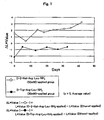
- Figure 1 shows the results of the inhibitory test on melanocyte-stimulating hormone in a living body (Test Example 4).
- Boc-Arg(Z 2 ) (5 g, 9.22 mmol) was dissolved in methylene chloride (75 ml), and under ice-cooling, water-soluble carbodiimide hydrochloride (1.77 g, 9.22 mmol) and HOBt (1-hydroxybenzotriazole, 1.25 g, 9.22 mmol) were added thereto. Then, a methylene chloride solution (75 ml) of LeuNH 2 hydrochloride (1.61 g, 9.68 mmol) and triethylamine (1.91 g, 18.9 mmol) was added dropwise thereto over a period of 10 minutes, and the mixture was heated back to room temperature, followed by stirring overnight.
- Test Example 1 Measurement of 50% inhibitory concentration of CAMP production (IC50)
- IC50 50% inhibitory concentration of CAMP production
- Results will be shown in Table 2. As shown in the table, the agents tested inhibited effectively the cAMP increasing action by melanocyte-stimulating hormone. Test on inhibition against melanocyte-stimulating hormone Test Compound 50% inhibitory concentration (IC50,nM) D-1-Nal-Arg-LeuNH 2 540 D-2-Nal-Arg-LeuNH 2 42 L-1-Nal-Arg-LeuNH 2 470 D-Trp-Arg-LeuNH 2 230
- Test Example 2 Test on suppression of the melanin formation caused by human melanocytes
- Human melanocytes in logarithmic growth phase were treated with trypsin and inoculated to a 6-well plate with "Medium 154s" (manufactured by Kurabo Industries Ltd., containing a growth factor (HMGS)), in an amount of 1.5 ⁇ 10 5 per 1 well in terms of cell number.
- the cells were cultured at 37°C in a carbon dioxide incubator, the CO 2 concentration being 5%, for 1 day. Thereafter, rinsing was carried out with the use of HBS (Hepes Buffer Saline), followed by medium replacement with "MCDB153" (containing fetal bovine serum, insulin, b-FGF, transferrin, and tocopherol), and followed by culturing for further 2 days.
- HBS Hepes Buffer Saline
- MCDB153 containing fetal bovine serum, insulin, b-FGF, transferrin, and tocopherol
- a whitening agent (containing a compound to be tested) was prepared with "MCDB153" (containing fetal bovine serum, insulin, b-FGF, transferrin, and tocopherol) + melanocyte-stimulating hormone in such way that the concentration would be 200 ⁇ M, 20 ⁇ M, or 2 ⁇ M, and was added to the 6-well plate.
- MCDB153 containing fetal bovine serum, insulin, b-FGF, transferrin, and tocopherol
- a further 6-well plate culture was carried out with the use of "MCDB153” (containing fetal bovine serum, insulin, b-FGF, transferrin, and tocopherol) + melanocyte-stimulating hormone without the whitening agent, and still further a 6-well plate culture was carried out with the use of "MCDB153” (containing fetal bovine serum, insulin, b-FGF, transferrin, and tocopherol) alone, at the same time.
- the medium replacement with the above "MCDB153" (containing fetal bovine serum) containing a whitening agent was carried out twice every 2 days.
- the effect of suppressing the melanin formation was confirmed on the 6th day. Namely, the medium on each 6-well plate was removed by suction, and the wells were rinsed with HBS. Thereafter, the 6-well plate was air-dried, and 1/5M NaOH (230 ⁇ l) was added to the wells to dissolve the melanin out of the melanocytes. The solution (200 ⁇ l) was evaluated by Abs (absorbance) on a microplate reader (475 nm). The suppression rate of the melanin formation by each compound tested was calculated according to the following equation (1). The results will be shown below in Table 3.
- test compounds suppressed effectively the melanin formation by the melanocytes, increased by the addition of the melanocyte-stimulating hormone. It can be understood from this that the test compounds have an inhibitory activity of the melanin formation induced by melanocyte stimulating hormone.
- D-2-Nal-Arg-LeuNH 2 of the present invention showed an APHA value of 20 and was almost not colored, whereas D-Trp-Arg-LeuNH 2 , a known melanocyte-stimulating hormone inhivitor showed an APHA value of 200 and was much colored. It can be understood from this, that D-2-Nal-Arg-LeuNH 2 of the present invention has a good stability.
- Test Example 4 Inhibitory test of melanocyte-stimulating hormone in living body (Test of suppressing pigmentation in brown guinea pigs)
- Inhibitory test of melanocyte-stimulating hormone was carried out by repeating the application of each test compound on a quinea pig and irradiation with ultraviolet rays, followed by measuring the degree of coloring, as follows.
- the brown guinea pigs were individually fixed by means of a fixing instrument and shaved in a square shape of about 3 cm ⁇ 3 cm on their back with the use of a pair of hair clippers "THRIVE MODEL 6000AD” (manufactured by Natsume Seisakusyo) and "Home Hair Clipper Ceramic ER722" (manufactured by National) and an electric shaver "Dual 1500AC/RC" (manufactured by BRAUN).
- the skin after shaved was wiped with a water-soaked absorbent cotton, and the moisture was removed with a paper towel "KIMWIPE” (manufactured by CRECIA).
- tape stripping The exfoliation of part of the horny layer by detaching an adhesive tape which has been attached onto the skin surface.
- the skin of the back of the shaven brown guinea pigs was wiped with an ethanol-soaked absorbent cotton, and the horny layer having an area of about 2 cm x 2 cm was subjected to tape stripping five times with the use of an adhesive tape "Scotch 313D" (manufactured by 3M).
- the sample was applied once a day in an amount of 10 ⁇ l onto the predetermined part (for 5 days).
- the sample was applied onto the predetermined part.
- the application of the sample was carried out twice a day (in the morning and in the evening), in an amount of 10 ⁇ l for 5 days per 1 week (from Monday to Friday) (for 2 weeks).
- the sample was applied twice a day (in the morning and in the evening) in an amount of 10 ⁇ l for 5 days per 1 week (from Monday to Friday) (for 40 days).
- test compound of D-2-Nal-Arg-LeuNH 2 (or D-Trp-Arg-LeuNH 2 ) was also applied even to the 50% ethanol-applied group. From the time when the irradiation with ultraviolet rays had been terminated, 50% ethanol was applied to the 50% ethanol-applied group.
- the irradiation with ultraviolet rays was carried out once a day on three days a week (Monday, Wednesday, and Friday), i.e., 6 times in total after the passage of 5 days from the day when the tape stripping had been conducted.
- the brown guinea pigs were shaven on the back in a similar manner to the above, every time, and the part for evaluation was washed with water to remove the compound to be tested, and then an excess water was removed with a paper towel.
- the brown guinea pigs were individually fixed by means of a fixing instrument and irradiated with UVB with the eyes being protected with an aluminum foil (Apparatus for irradiation with ultraviolet rays "Dermaray M-DMR-80 type" (Clinical Supply)).
- the irradiation was carried out under the conditions of 0.5 mW x 5 minutes and the intensity of ultraviolet rays was controlled by measuring by means of a ultraviolet rays meter "DVR-305/365 “D(II)" (Clinical Supply).
- CM-2002 spectrocolorimeter
- JIS Japanese Industrial Standard
- the vertical axis represents the difference between the L* value at the evaluated part onto which D-2-Nal-Arg-LeuNH 2 (or D-Trp-Arg-LeuNH 2 ) was applied and the L* value at the evaluated part onto which 50% ethanol was applied, as ⁇ L* value.
- the horizontal axis represents day(s). The 0th day from the start of the evaluation means the day when the irradiation with ultraviolet rays was finished. The larger the ⁇ L* value is, the smaller the pigmentation is, and this means inhibition of melanocyte-stimulating hormone.
- the compounds having a melanocyte-stimulating hormone inhibitory activity i.e., a 50% inhibitory concentration of cAMP production (IC50) of 100 nM or less, exhibit a sufficient inhibitory effect against melanocyte-stimulating hormone in a living body.
- the peptide derivatives and melanocyte-stimulating hormone inhibitory compositions of the present invention can inhibit the action of melanocyte-stimulating hormone, whereby pigmentation can be prevented, can prevent, improve or recover from immune abnormality or immunodeficiency, or regulate body weight by appetite control, and also can be used as cosmetics or external preparations for the skin, and in addition, can be produced easily, and are excellent in the stability during storage.
Landscapes
- Chemical & Material Sciences (AREA)
- Organic Chemistry (AREA)
- Genetics & Genomics (AREA)
- Biochemistry (AREA)
- Biophysics (AREA)
- General Health & Medical Sciences (AREA)
- Health & Medical Sciences (AREA)
- Medicinal Chemistry (AREA)
- Molecular Biology (AREA)
- Proteomics, Peptides & Aminoacids (AREA)
- Life Sciences & Earth Sciences (AREA)
- Medicines That Contain Protein Lipid Enzymes And Other Medicines (AREA)
- Cosmetics (AREA)
- Peptides Or Proteins (AREA)
Applications Claiming Priority (3)
| Application Number | Priority Date | Filing Date | Title |
|---|---|---|---|
| JP11863399 | 1999-04-26 | ||
| JP11863399 | 1999-04-26 | ||
| PCT/JP2000/002687 WO2000064926A1 (fr) | 1999-04-26 | 2000-04-25 | Inhibiteur hormonal stimulant les melanocytes |
Publications (2)
| Publication Number | Publication Date |
|---|---|
| EP1174437A1 true EP1174437A1 (fr) | 2002-01-23 |
| EP1174437A4 EP1174437A4 (fr) | 2006-03-15 |
Family
ID=14741372
Family Applications (1)
| Application Number | Title | Priority Date | Filing Date |
|---|---|---|---|
| EP00917447A Withdrawn EP1174437A4 (fr) | 1999-04-26 | 2000-04-25 | Inhibiteur hormonal stimulant les melanocytes |
Country Status (6)
| Country | Link |
|---|---|
| US (1) | US7375085B1 (fr) |
| EP (1) | EP1174437A4 (fr) |
| JP (1) | JP4273662B2 (fr) |
| KR (1) | KR100679878B1 (fr) |
| CN (1) | CN1261449C (fr) |
| WO (1) | WO2000064926A1 (fr) |
Cited By (1)
| Publication number | Priority date | Publication date | Assignee | Title |
|---|---|---|---|---|
| EP2228381A2 (fr) | 2004-05-11 | 2010-09-15 | Centre National de la Recherche Scientifique (CNRS) | Conjugués dipeptidiques antagonistes de l'alpha-MSH |
Families Citing this family (5)
| Publication number | Priority date | Publication date | Assignee | Title |
|---|---|---|---|---|
| MY160253A (en) * | 2010-01-12 | 2017-02-28 | Pola Chem Ind Inc | Prophylactic or ameliorating agent for pigmentation |
| JP5669436B2 (ja) * | 2010-05-18 | 2015-02-12 | ポーラ化成工業株式会社 | 組成物 |
| JP5911209B2 (ja) * | 2011-06-14 | 2016-04-27 | ポーラ化成工業株式会社 | 皮膚外用剤 |
| JP2013018713A (ja) * | 2011-07-07 | 2013-01-31 | Pola Chemical Industries Inc | 皮膚外用剤 |
| JP5911293B2 (ja) * | 2011-12-21 | 2016-04-27 | ポーラ化成工業株式会社 | 皮膚外用剤 |
Family Cites Families (10)
| Publication number | Priority date | Publication date | Assignee | Title |
|---|---|---|---|---|
| US2179979A (en) * | 1938-02-02 | 1939-11-14 | Hoffmann La Roche | alpha-naphthacetyl-amino acids and process for the manufacture of same |
| US3619196A (en) * | 1968-10-24 | 1971-11-09 | Konishiroku Photo Ind | Light-sensitive color-photographic emulsions |
| EP0093551B1 (fr) | 1982-04-30 | 1991-01-16 | Ajinomoto Co., Inc. | Composition pharmaceutique |
| JPS59227851A (ja) * | 1983-06-09 | 1984-12-21 | Sankyo Co Ltd | レニン阻害作用を有するペプチド類 |
| AU631868B2 (en) | 1989-04-20 | 1992-12-10 | Mount Sinai School Of Medicine Of The City University Of New York, The | Hepatospecific insulin analogues |
| WO1995012611A1 (fr) * | 1993-11-01 | 1995-05-11 | Japat Ltd. | Antagonistes de recepteur d'endotheline |
| FR2721021B1 (fr) * | 1994-06-10 | 1996-07-12 | Rhone Poulenc Rorer Sa | Nouveaux inhibiteurs de farnésyl transférase, leur préparation et les compositions pharmaceutique qui les contiennent. |
| EP0820464A2 (fr) * | 1995-03-31 | 1998-01-28 | Takeda Chemical Industries, Ltd. | Inhibiteur de la protease de cysteine |
| EP0842946A1 (fr) * | 1996-11-14 | 1998-05-20 | Laboratoire Theramex S.A. | Analogues de LHRH à conformation forcée, leur utilisation et composés pharmaceutiques |
| US6388054B1 (en) * | 1998-08-20 | 2002-05-14 | John M. Stewart | Anti-cancer compounds |
-
2000
- 2000-04-25 KR KR1020017010124A patent/KR100679878B1/ko not_active Expired - Fee Related
- 2000-04-25 EP EP00917447A patent/EP1174437A4/fr not_active Withdrawn
- 2000-04-25 CN CNB008042101A patent/CN1261449C/zh not_active Expired - Fee Related
- 2000-04-25 US US09/926,391 patent/US7375085B1/en not_active Expired - Fee Related
- 2000-04-25 WO PCT/JP2000/002687 patent/WO2000064926A1/fr not_active Ceased
- 2000-04-25 JP JP2000614275A patent/JP4273662B2/ja not_active Expired - Fee Related
Cited By (2)
| Publication number | Priority date | Publication date | Assignee | Title |
|---|---|---|---|---|
| EP2228381A2 (fr) | 2004-05-11 | 2010-09-15 | Centre National de la Recherche Scientifique (CNRS) | Conjugués dipeptidiques antagonistes de l'alpha-MSH |
| US8097590B2 (en) | 2004-05-11 | 2012-01-17 | Centre National De La Recherche Scientifique (Cnrs) | α-MSH-antagonist dipeptide conjugates |
Also Published As
| Publication number | Publication date |
|---|---|
| CN1261449C (zh) | 2006-06-28 |
| JP4273662B2 (ja) | 2009-06-03 |
| EP1174437A4 (fr) | 2006-03-15 |
| KR20010104706A (ko) | 2001-11-26 |
| KR100679878B1 (ko) | 2007-02-07 |
| CN1341119A (zh) | 2002-03-20 |
| WO2000064926A1 (fr) | 2000-11-02 |
| US7375085B1 (en) | 2008-05-20 |
Similar Documents
| Publication | Publication Date | Title |
|---|---|---|
| JP4427901B2 (ja) | シスチン誘導体の用途 | |
| US7354926B2 (en) | Molecules derived from noraporphine | |
| US10159636B2 (en) | Cosmetic composition containing acetylated oligoglucuronans | |
| AU2008327932B2 (en) | Compositions for reducing oxidative stress and uses thereof | |
| US6075052A (en) | Skin external preparation | |
| FR2955326A1 (fr) | Nouveau compose lipo-phosphate ou lipo-sulfate, compositions le contenant et utilisations cosmetiques et dermopharmaceutiques | |
| KR20150029888A (ko) | 발모 촉진 펩타이드, 이의 제조방법, 및, 이를 함유하는 탈모방지 또는 발모촉진용 조성물 | |
| US5126327A (en) | Melanocyte-stimulating hormone inhibitor and external preparation containing the same | |
| KR101667383B1 (ko) | 비오틴이 결합된 hexapeptide-2 유도체 및 이의 용도 | |
| US7375085B1 (en) | Melanocyte-stimulating hormone inhibitors | |
| EP1090625B1 (fr) | Composition topique pour la peau et l'usage de celle-ci | |
| WO2018034453A1 (fr) | Conjugué de minoxidil et d'un peptide | |
| FR2958641A1 (fr) | Nouveaux composes de type polyterpenique, compositions cosmetiques, nutraceutiques et pharmaceutiques les contenant et utilisations dans ces domaines. | |
| JPWO2000064926A1 (ja) | メラノサイト刺激ホルモン阻害剤 | |
| JP5552741B2 (ja) | 亜鉛を有効成分として含有する美白剤 | |
| AU2003200465B2 (en) | Compositions for Skin Lightening and Toning Down Pigment Disorders, Comprising Creatinine and/or Creatinine Derivatives as Active Substances | |
| KR100505469B1 (ko) | 신규한 펩타이드 화합물 및 그 용도 | |
| JPH03123716A (ja) | メラノサイト刺激ホルモン拮抗剤および該拮抗剤を含有する皮膚外用剤 | |
| KR20040052388A (ko) | 신규한 펩타이드 화합물 및 그 용도 |
Legal Events
| Date | Code | Title | Description |
|---|---|---|---|
| PUAI | Public reference made under article 153(3) epc to a published international application that has entered the european phase |
Free format text: ORIGINAL CODE: 0009012 |
|
| 17P | Request for examination filed |
Effective date: 20011115 |
|
| AK | Designated contracting states |
Kind code of ref document: A1 Designated state(s): AT BE CH CY DE DK ES FI FR GB GR IE IT LI LU MC NL PT SE |
|
| RBV | Designated contracting states (corrected) |
Designated state(s): DE FR GB IT |
|
| RIC1 | Information provided on ipc code assigned before grant |
Ipc: A61K 38/06 20060101ALI20060117BHEP Ipc: C07K 5/083 20060101AFI20001107BHEP |
|
| A4 | Supplementary search report drawn up and despatched |
Effective date: 20060126 |
|
| STAA | Information on the status of an ep patent application or granted ep patent |
Free format text: STATUS: THE APPLICATION IS DEEMED TO BE WITHDRAWN |
|
| 18D | Application deemed to be withdrawn |
Effective date: 20090213 |