EP1186162B1 - Multi-modal videozielerfassung und richtungsvorrichtung und verfahren - Google Patents
Multi-modal videozielerfassung und richtungsvorrichtung und verfahren Download PDFInfo
- Publication number
- EP1186162B1 EP1186162B1 EP01905655.5A EP01905655A EP1186162B1 EP 1186162 B1 EP1186162 B1 EP 1186162B1 EP 01905655 A EP01905655 A EP 01905655A EP 1186162 B1 EP1186162 B1 EP 1186162B1
- Authority
- EP
- European Patent Office
- Prior art keywords
- target
- camera
- information
- processor
- speech
- Prior art date
- Legal status (The legal status is an assumption and is not a legal conclusion. Google has not performed a legal analysis and makes no representation as to the accuracy of the status listed.)
- Expired - Lifetime
Links
Images




Classifications
-
- G—PHYSICS
- G06—COMPUTING OR CALCULATING; COUNTING
- G06V—IMAGE OR VIDEO RECOGNITION OR UNDERSTANDING
- G06V10/00—Arrangements for image or video recognition or understanding
- G06V10/20—Image preprocessing
- G06V10/255—Detecting or recognising potential candidate objects based on visual cues, e.g. shapes
-
- H—ELECTRICITY
- H04—ELECTRIC COMMUNICATION TECHNIQUE
- H04N—PICTORIAL COMMUNICATION, e.g. TELEVISION
- H04N23/00—Cameras or camera modules comprising electronic image sensors; Control thereof
- H04N23/60—Control of cameras or camera modules
- H04N23/66—Remote control of cameras or camera parts, e.g. by remote control devices
Definitions
- the present invention relates generally to the field of video-camera systems, such as a video conferencing systems, and more particularly to video camera targeting systems that locate and acquire targets using an input characterizing a target and a machine-classification system to assist in target acquisition responsively to that input.
- Video targeting and tracking systems that respond to user commands to change, or acquire, a target is a rapidly-growing field.
- the speed of computers and, consequently, the speed of image-processing and speech processing are such that very convenient mechanisms for aiming and re-aiming cameras can be provided.
- a user can point to an object of interest to position a zoom-capable camera on a pan-tilt base.
- Such automated systems are more intuitive and easier to control than conventional systems that require more explicit commands such as voice-command ("command-control,” basically a speech-based symbol processor where each verbal command corresponds to an instruction, for example "PAN- LEFT,” "UP,” “DOWN”' etc.), joystick control, and continuous target tracking.
- Continuous tracking systems typically track moving objects using a camera with an image detector to capture images of an object. These captured images are then processed to find and track the object. When a camera is used to capture the images, and the object being tracked moves far away from the center of the camera's field of view, the camera's aim is adjusted to continue the tracking process.
- Video information from one or more fixed cameras is processed electronically such that the target of interest remains visible in a desired configuration in the output video signal despite the fact that the object may not be centered in the field of view of any particular camera.
- the tracking process can be accomplished through fixed cameras, which are generally less expensive than PTZ cameras.
- WO-A-97/08896 discloses an open area security system comprising an acoustic sensor array capable of forming elevational and azimuthal beams, or comprising two such arrays separated by a predetermined distance.
- a camera mounted in the vicinity of the arrays may be automatically directed toward a detected, sound-producing event.
- Event data may be prestored in memory and the system may learn of the event's character as an emergency or non-emergency status.
- Triangulation and other computational techniques may be utilized to determine from the beams the location (x/y coordinates) of the event, thus allowing the camera to be focused and zoomed to capture high resolution images of the event.
- US 5,844,599 discloses a voice-following video system for dynamically capturing the view of an active speaker including a video camera, a position control system for the video camera, and one or more voice-activated emitters.
- a voice-activated emitter is associated with each potential speaker. As a person talks, the associated voice-activated emitter transmits a position signal.
- the position control system uses the position signal as a beacon to determine the location of the active speaker. The position control system then adjusts the pan and/or tilt of the video camera to bring the active speaker into the field of view and tracks that person's movements.
- TDRBF Radial Basis Function
- One obvious problem associated with this system results from the misdirection of the camera to an object or target that the operator did not intend to target.
- Sources of this problem include operator error (i.e., the operator did not precisely point to the desired direction), system error (i.e., the system did not correctly interpret the operator's gesture), and inherent ambiguity (i.e., the information in the gesture is insufficient to define a target coordinate unambiguously).
- operator error i.e., the operator did not precisely point to the desired direction
- system error i.e., the system did not correctly interpret the operator's gesture
- inherent ambiguity i.e., the information in the gesture is insufficient to define a target coordinate unambiguously.
- the likelihood that the camera will focus on the wrong target will increase if multiple objects are found along the trajectory of the pointed direction or if there are multiple objects within close proximity to the targeted object.
- Manually redirecting the camera can be time-consuming, nullify any benefit from having such an automated system.
- operating an advanced video system is
- the present invention relates generally to the field of video-camera systems, such as a video conferencing systems, and more particularly to video camera targeting systems that locate and acquire targets using an input characterizing a target and a machine-classification system to assist in target acquisition responsively to that input.
- the characterization and classification are employed together with one or more inputs of other modalities such as gesture-control.
- an operator is able to make pointing gestures toward an object and, simultaneously speak a sentence identifying the object to which the speaker is pointing. At least one term of the sentence, presumably, is associated with a machine-sensible characteristic by which the object can be identified.
- the system captures and processes the voice and gesture inputs and re-positions a PTZ video camera to focus on the object that best matches both the characteristics and the gesture.
- the PTZ camera is aimed based upon the inputs the system receives and the system's ability to locate the target by its sensors.
- the system receives information concerning the location of the object by processing the pointing gestures of the operator.
- the system also receives information about the object through a speech recognition processor that converts the voice inputs of the operator into symbols that can be correlated to one or more machine-sensible characteristics.
- the characteristic is stored as a vector containing values or value ranges corresponding to the system's sensors and is used for locating and acquiring the object. This conversion process is explained in more detail below.
- information via one modality may characterize the target directly or identify it in a way that can be correlated to a machine-sensible characterization. That information can then be used to locate, or assist in the location of, the intended target.
- the speech information is extracted from normal speech, and also is not the sole channel through which information target information is obtained (e.g., it is also supplied by gestures) a clear advantage is obtained in that it greatly reduces the need for a training. Because of the oversupply of information about the target, direction indicated by pointing, characterization by speech, etc. and the fact that information is extracted from natural modes of communication, an individual may control the video system without any training at all.
- the camera may be aimed by the operator/speaker using intuitive gestures, speech, or other inputs.
- the use of inputs of multiple modalities can help insure that the system is accurately targeted.
- One benefit of using multi-modal inputs is the reduction of system or human error by reducing ambiguity in the totality of commands. This loosens the demands on the operator because inherently ambiguous instructions can be compensated for by a large supply of information.
- the system selects the targeted object through the use of multi-modal criteria to refine the system's search for the target. The various criteria provide the system with information to help identify the most likely target and to eliminate false target options.
- a video camera monitors the gestures of an operator located within the view of a video camera or other sensor.
- the operator triggers the locating process by pointing to an object (the target).
- the pointing gesture can consist of extending a finger towards the target, moving a hand in the direction of the targeted object, or any other signal that the system can sense to establish a pointing trajectory.
- the pointing gesture may serve as one input and may also serve as a triggering event which initiates a process of gathering and deciphering inputs of other modalities which are substantially simultaneous with the triggering event.
- the trigger in this embodiment may be the operator's pointing gesture towards the targeted object.
- the trigger can also be a trigger word or phrase spoken by the operator, e.g., "Please direct your attention to " or any other possible triggering action, such as pressing a button on a remote control or snapping of the fingers.
- the system also captures and parses the voice commands of the operator. These voice commands, or voice inputs, may provide the basis for an input of a second modality.
- speech that occurs before the triggering event may also be captured by buffering the speech and only processing a portion bracketed by silent pauses before and after a trigger event has occurred.
- the speech may be converted to compact symbols at all times and the resulting symbols time-tagged to determine simultaneity.
- the symbols be they text, or tokens associated with a limited set of speech terms, are used to correlate machine-sensible features that relate to the speech that occurs substantially simultaneously with the trigger event.
- the voice input is processed to establish a second criterion to assist with locating and identifying the target.
- the voice input can comprise one or a number of terms that describe the targeted object, such as the generic name of the object (a barrel), the color of the object (orange or transparent), the texture/material of the object (shiny), a noise emanating from the object (pounding noise), the shape of the object (oval, high aspect ratio), the movement of the object (bouncing, crawling, vibrating), the size of the object (large, about 3 ft. wide), the temperature of the object (hot), or any other feature of the object (blinking light) that the system is capable of identifying through its sensors.
- These sensors can include a multitude and/or a combination of different sensors such as infrared sensors to measure heat and a sound source locator to locate sound.
- the conversion of a verbal input to criteria for assisting with locating the targeted object can be accomplished in different ways.
- One possible way is to convert the voice input to a target vector by which the system, through its sensors, can search for, and identify, the correct target from a group of possible targets.
- the conversion may be through a speech classifier, which classifies different sounds in the input and relates them to target features in the form of target vectors or templates with which objects in a current scene can be compared to determine if a match is found.
- the term "orange” can be converted to a target vector. To do this, it is not necessary to convert the audio input to text since that is one type of classifier.
- the end result required is one or more vectors of machine-sensible parameters that can be compared to images to provide a match estimate between the target and a current image.
- the speech containing the word "hot” can be correlated to a target vector for use with an infrared camera or heat sensor.
- Multiple sensory inputs may be used in combination forming target a vector containing parameters with temperature, color, shape (e.g., moments of shape outlines in processed images), sound, etc.
- the association between terms and the target features can be recorded in a look-up table, which associates the terms to the comparison criteria. For example, the phrase “please direct your attention to the sleeping cat on top of the red table” may cause the system to parse out the terms “sleeping,” “cat,” “top of,” “red,” and “table.” Other terms are simply not contained in the look-up-table.
- the "found” terms are then converted to search criteria, which assist with locating targets that may fit these criteria and to identify the target.
- the identification of terms of the sentence as relational terms, e.g., top of, and other terms such as adverbs, adjectives, etc. can be considered during processing and is a factor in determining the criteria upon which a comparison of selected targets is made.
- An analysis of the sentence structure may be used to give higher or exclusive priority to certain terms, e.g., the direct object, by which the target vector is established.
- Other grammatical parsing may be used to identify other important key terms in a sentence, such as an adjective that describes the direct object.
- the conversion method may parse out all terms identified within the system's look-up table and establish search criteria or target vectors without regard to the grammatical structure of the sentence. This conversion method would filter out non machine-sensible and other irrelevant terms because the feature vectors associated with them would never match the image classifier. Although simpler than the previously described method, it is more likely to result in a misidentification due to its inability to distinguish between relevant and irrelevant criteria based on the sentence structure. For example, in the above example, the system may not be able to determine which object the operator intended to focus on, the table or the cat.
- the inputs are buffered so that those inputs immediately prior to and following the triggering event may be distinguished.
- the system may contain a buffer to capture inputs that occur substantially prior to and after the triggering event. So, for example, if an operator says "as seen in the painting" and then subsequently makes a pointing gesture that is interpreted as a trigger, the buffer would still capture all the relevant speech.
- the operator can provide feedback to the system by affirming or rejecting its decision.
- the system can identify the selected object in various ways, including highlighting an image of the object on the screen, making a beeping sound, or simply zooming in on the object and displaying the image on a monitor. If the target is incorrect, the operator may also provide additional inputs to assist the system in making another selection. Such additional inputs can include commands such as "to the right,” “not that shoe,” “no, the larger object,” etc.
- the additional inputs can also include non-voice inputs, such as a signal from a joystick to direct the system or additional pointing gestures.
- the system may track the object until it receives another signal, either by voice or other inputs, to redirect the camera back to the speaker or to a different target.
- the process of identifying the target can be altered and/or refined.
- the camera immediately focuses on the area most likely to contain the targeted object.
- the camera can scan an area in the immediate vicinity of the operator and progress outwardly in the pointing direction until an adequate match based upon the inputs is made.
- the system may also locate the closest object or target in the general pointing direction and proceed to the next closest object or target until a satisfactory match is made based on the proximity of various objects to the operator.
- the system can analyze every object in the general pointing direction and compare each target to the criteria established by the inputs to compute a numerical value based on the likelihood that each target is the intended target. The system can then select and display the targets from the most likely match to the least likely match.
- the system prior to the triggering event, can continuously scan the entire room, including all objects and potential targets located in the room. Potential targets may be identified based on various criteria including: changes in the scene since the last use of the system, proximity of the objects to the camera, aspect ratio of objects in the scene, uniformity of color fields, etc.
- an updateable look-up table can provide a basis for the system to learn and improve.
- the system can learn by associating inputs with certain characteristics.
- the system can improve its ability to choose the correct object. For example, the system, by comparing targets with the as of yet unknown term "mauve,” the system may ultimately establish an association between the term "mauve" and objects having certain ranges in the color space.
- This learning process can occur through actual use of the system, during an initial programming process established by the manufacturer, by downloading information from other systems with a larger or more refined look up table, or by a number of other methods available such as sharing of data of other systems through a network to combine the learning experience of various systems.
- the system can also learn non-target characteristics. For example, the system can learn targets are usually located in a particular area of the room.
- the system can also learn the targeting behaviors of individual operators. For example, the system can learn that a particular individual targets an object by completely extending his arm towards the object and can therefore disregard false signals, such as inadvertent gestures.
- the system can associate different areas of the room into different sectors with each sector being a possible input.
- the operator can say "System, focus on the chair in sector 4," or "Locate the floral arrangement in the table sector.”
- the system would direct the camera toward sector 4 and locate and target the chair in sector 4.
- a tracking video system is automatically controlled by a speaker 4.
- a subject camera 1 (and, possibly another subject camera 44 depending on the technology used for identifying a pointing trajectory, subject acquisition and targeting, etc.) and a target camera 2 are trained on the speaker 1 and a target object 5, respectively.
- the speaker's 1 gestures and voice are used to control the object camera 2 to aim at the target of interest.
- the object camera 2 is mounted on a swivel base 24, which allows panning and tilting or other movements.
- the target camera is also equipped with a zoom lens 25. Both the zoom lens 25 and the swivel base 24 are under the control of a processor 3.
- the processor receives input about the gestures and speech of the speaker 4 via video signals from the subject camera 1 and a sound sensor 8, respectively.
- the processor classifies speech of the speaker 4 to obtain information about the intended target at which the target camera 2 is to be aimed.
- the latter information about the target is data that can be correlated with machine-sensible characteristics of the target.
- One set of machine-sensible characteristics is the video image of the target obtained from the target camera 2.
- Another set of machine-sensible characteristics may also be used by the processor 3 to help identify the intended target. For example an infrared sensor 6 may be used.
- the subject camera 1 captures the gestures of an operator 4, and the target camera 2 captures an image of a target 5 for display on a monitor 9 and transmission to a communications channel 29.
- the ultimate destination of the video data, the communications channel 29, may be a broadcast transmitter, a network connection to one or more video output devices, or any of a variety of different destinations.
- the processor 3 performs image processing on the image from the subject camera 1. From the image of the speaker 4 and the sound inputs, the processor 3 identifies any of a number of events that may indicate the speaker's wish to redirect the target camera 2.
- the triggering event could be a gesture or a sequence of words, for example.
- One triggering event, which also provides information about the location of the new target is a pointing gesture.
- the processor 3 may parse information received from all of its sensors 1, 2, 6, 8, and attempts to classify this information to identify a location of the target.
- the processor 3, through a controller 7, directs the target camera 2 toward the new target.
- speech is initially picked up by a speech transducer or microphone 19.
- the speech is buffered in a memory or other suitable device 18.
- the speech is classified, in a classification processor 17, into various different classes such as triggering events (e.g., the words "please direct you attention"), and descriptors (e.g., the color "red,” “round,” or “barrel”).
- the descriptors may be packaged as target vectors in a processor 47 and delivered to a control processor 10.
- Certain classification results may be automatically delivered to the Processor controller 10 directly.
- data 120 may include triggering events that cause the control processor to take, upon receipt of the triggering event, a target description vector 118 that transmitted most contemporaneously with the receipt of the triggering event.
- a target vector may be assembled by the target vector processor 47 only when a trigger event is received at its input 121 so that data stream 118 contains one or more target vectors only when a trigger event indicator is received at 121.
- a stream of classes is received and buffered. These classes identify various descriptors, trigger events, etc.
- the class indicators can be serially numbered in a mod-2 or mod-3 fashion to indicate those that occur simultaneously.
- the simultaneity of a series of classes can be identified with those classes that were generated between two pauses assumed to bracket a sentence. Alternatively, they can be the series of classes occurring within a specified time range on either side of a triggering event. In the latter case many of the classes would lack a serial number because they fell outside the time interval surrounding a triggering event. Still another alternative is to parse grammatically the sentence structure using word recognition and a grammatical level of classification. Then descriptors that fall within a same sentence would have the same serial number.
- the above processes will be clarified in connection with an example sequence of events below.
- the control processor 10 receives various inputs.
- a sound source transducer 49 which could be an array of microphones to pinpoint the source of sounds, applies a signal to a sound source processor 16 which applies a position vector 102 to control processor 10. If the target emits a sound, this information can be used to locate the target based on the source vector 102.
- a push-button 15 provides an auxiliary input, for example, it could be a triggering event to indicate the speaker's desire to aim the target camera 2 at a new target.
- the effect of the push-button triggering event could be the same as that for the speech triggering event.
- the tracking system has a number of functional components that indicate how processor 10 is able to identify triggering events, pointing trajectories, target images, speech and other sounds, etc.
- the processor 10 communicates with a speaker camera 1 and a target camera 2 respectively via subject video 63, subject image classification 53, and target video 61, target image classification 51.
- the speaker camera 1 is used to capture images/gestures of an operator and the target camera 2 is used to capture images of a target.
- the processor 10 aims or positions the target camera 2 based upon the inputs received by its sensors.
- the sensors include the speaker camera 1 for capturing the gestures of the operator; the target camera 2 for receiving visual characteristics of possible targets; and an infrared sensor 14 for locating sources of heat, e.g., body heat from a person, and for determining the temperatures of possible targets.
- the system also includes a joystick with a push button 15 for receiving commands from the operator, such as information concerning the location of the target, positive or negative feedback from the operator, or a trigger signal; a sound source location sensor 16, 49 for locating objects emitting sounds; and a combination of a speech/classification processor 17, a buffer 18, and a speech transducer 19 for receiving and processing voice inputs.
- a storyboard 342 illustrates a scene containing a human figure 320 representing a speaker who also controls the video tracking device, a computer 321 with a blinking light 322.
- the frames A, B, C, D, E, and F represent snapshots of time.
- the speaker is saying the words shown in speech frame A'.
- the words spoken in frame B are indicated by frame B', those spoken during frame C in C', etc.
- the speaker makes some remarks about an object of interest, namely the computer 321.
- the speaker says words that are recognized by the speech processing system of the video tracking system of the invention.
- the recognition system classifies the speech as a trigger event indicated by the bubble 360.
- the word "red” is recognized as indicated by the bubble 365.
- the gesture of the operator is recognized as a pointing gesture which produces another trigger event 366.
- the images also contain information to derive a pointing trajectory 367 that can be used to acquire the object of interest.
- the word "computer” is recognized as indicated by bubble 370.
- the word "blinking light” is recognized as indicated by bubble 375. The significant time interval is caught in an audio buffer 340 and parsing begins and ends with a pause before and after the single sentence A' through F' that was spoken.
- this particular embodiment consists of two cameras, a similar result can be achieved with one camera capable of performing both functions.
- the one camera can both receive an input from the operator, e.g., pointing gesture, and acquire a target for display by alternating between focusing on the operator and focusing on the intended target. Switching between the two targets can be triggered by voice commands or by other signals that the system is capable of sensing.
- the system frames and tracks the speaker (A-1) until the target acquisition process is triggered by a pointing gesture by the speaker (A-3).
- the process can be triggered in other ways such as through a voice command, a non-pointing gesture, snapping of the fingers, etc.
- the system can capture the speaker's pointing trajectory and search for the intended target by searching an area most likely to contain the target based on the pointing trajectory and a pre-determined proximity of the nearest object.
- the system selects a target (A-5) in the selected area and compares its properties to a criterion (A-6) established based on the inputs until a satisfactory match is found. If the system is unable to locate a satisfactory match in the original search area, the system may then search for targets located in other surrounding areas (A-10, A-11).
- speaker feedback For instance, if an incorrect target is selected, the speaker can communicate with the system and issue a negative response (A-8), which the system interprets as a command to select another object (A-5).
- a negative response by the speaker can take various forms such as a verbal command, e.g., "not that object", snapping of the fingers, pressing a button, etc.
- the system listens for an input from the speaker to select a new target or to re-aim the camera back to the speaker (A-1, A-9).
- Fig. 4 showing an alternative embodiment similar to the embodiment of Fig. 3 , the system is triggered by a voice input by the speaker (B-2).
- the speaker's gestures and additional voice inputs are captured by the system (B-4).
- the system scans an area in close proximity to the speaker for possible targets (B-4), compares the target to the search criteria (B-5) and progressively searches outwardly in the pointing trajectory (B-10) until a sufficient match is found.
- the system frames and tracks the speaker (C-1).
- the system also scans the surrounding area and stores information concerning the machine-sensible properties of possible targets, as well as the location of the possible targets (C-2). Locating possible targets can be based on a number of different search criteria such as targets having a low aspect ratio, objects in the foreground, targets having a certain colors, patterns, etc.
- the system receives the inputs describing the intended target and highlights the target that is most likely to be the intended target based on the inputs (C-4).
- the inputs preferably contain at least one input concerning the classification of the target and preferably contain an input concerning the general location of the target.
- This embodiment also contains feedback features, which allow the system to display the most likely target if the present selection is incorrect.
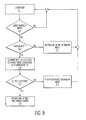
- voice inputs "green” and "tree” are received by a speech recognition processor (D-3). These inputs (D-1, D-2) are preferably converted to a machine readable value/signal for use with a look-up table (D-4).
- the look-up-table converts the input to a target vector (D-5) for use by the system and its sensors to locate the intended target.
- the vector can include the RGB envelope for green, the shape values and the texture values for an assortment of trees for use with an image sensor, e.g., video camera.
- the look-up table corresponds different inputs and associates them with the corresponding target vector for locating the target.
- the system scans the room to locate potential targets and stores machine sensible characteristics of those potential targets (E-1, E-2, F-1, F-2).
- the system can locate and identify potential targets through an edge filtering process by one or a number of cameras to determine an object's shape, size and texture and from that information, determine whether the object is a potential target. Further, the system can also choose targets based on its color, whether it makes a sound, or whether an object is a recently placed object in the room based on a recorded memory of the room.
- the system receives the voice input and converts the input to a target vector used to locate the target (E-3, E-4, E-5).
- the likely targets are converted to a format by which the processed voice inputs are compared (F-3).
- the potential targets can be converted to their commonly recognized term, e.g., a book, and compared to inputs based on those terms.
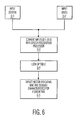
- the system can identify an input that it does not recognize (G-2). It then determines whether the system has ever received this input before and, if so, compares the characteristics of the targets associated with this input. By comparing this input with the machine sensible characteristics of previous, correctly-identified targets associated with this input, the system can identify similarities between the targets to develop a prediction engine to add vectors and associated terms to its look-up table. The addition of new terms to the look-up table can improve its ability to correctly identify the intended target.
- look-up table can also take place by downloading the new term and its corresponding search vector, such as through the Internet, or through other programming options.
Landscapes
- Engineering & Computer Science (AREA)
- Multimedia (AREA)
- Physics & Mathematics (AREA)
- General Physics & Mathematics (AREA)
- Theoretical Computer Science (AREA)
- Signal Processing (AREA)
- User Interface Of Digital Computer (AREA)
- Image Processing (AREA)
- Closed-Circuit Television Systems (AREA)
- Studio Devices (AREA)
- Two-Way Televisions, Distribution Of Moving Picture Or The Like (AREA)
- Image Analysis (AREA)
Claims (9)
- Verfahren zum Ermitteln und Wiedergeben eines Bildes eines Ziels (5), wobei dieses Verfahren die nachfolgenden Verfahrensschritte umfasst:das Empfangen von Information von einer bedienenden Person (4) in Bezug auf den Ort des Zieles (5), wobei der genannte Schritt des Empfangs von Information das mit Hilfe einer Kamera (1) Abtasten eines Bildes einer Gebärde einer bedienenden Person (4), die eine Richtung auf das Ziel (5) hin angibt und das Durchführen einer Bildverarbeitung an dem Bild mit Hilfe eines Prozessors (3);
gekennzeichnet durch die weiteren Verfahrensschritte:das Empfangen weiterer Information von der bedienenden Person (4), wobei diese weitere Information über einen Spracherkennungsprozessor empfangen und in einen Zielbeschreibungsvektor von maschinenempfindlichen Parametern umgewandelt wird;das Vergleichen eines Zielbeschreibungsvektors oder mehrerer Zielbeschreibungsvektoren mit den von der Kamera (1) oder einer weiteren Kamera (2) erfassten Bildern zum Schaffen einer Übereinstimmungsschätzung zwischen dem Ziel und einem aktuellen Bild zum Bestimmen eines optimalen Ziels; unddas Zielen der Kamera (1) oder der anderen Kamera (2) auf das genannte Ziel (5) in Reaktion auf die Ergebnisse des genannten Schrittes des Empfangs von Information und der Bestimmung des optimalen Zieles durch den genannten Vergleich, wobei das genannte Zielen von einem Prozessor (3) gesteuert wird. - Verfahren nach Anspruch 1, das den nachfolgenden Verfahrensschritt umfasst: das Abtasten eines von einer bedienenden Person (4) Auslöseereignisses, wobei der genannte Schritt des Empfangs weiterer Information im Wesentlichen gleichzeitig mit dem genannten Abtastschritt auftritt.
- Verfahren nach Anspruch 1, das weiterhin das Verarbeiten der genannten Sprache zur Verwendung mit wenigstens einem Maschinensensor (6, 8) umfasst, wobei der genannte wenigstens eine Maschinensensor (6, 8) und die genannte Sprache der Ortung des genannten Ziels (5) behilflich sind.
- Verfahren nach Anspruch 3, wobei der genannte Verarbeitungsschritt das Verarbeiten der genannten Stimminformation umfasst, wobei eine Nachschlagtabelle verwendet wird, die Terme aus der genannten Sprache assoziiert zur Suche nach Kriterien zur Verwendung mit dem genannten wenigstens einen Sensor (6, 8).
- Verfahren nach Anspruch 4, wobei die genannte Nachschlagtabelle modifizierbar ist.
- Verfahren nach Anspruch 5, wobei die genannte Nachschlagtabelle durch Empfang von Information über das gekoppelte Weltcomputernetzwerk modifiziert wird.
- Verfahren nach Anspruch 5 oder 6, wobei die genannte Nachschlagtabelle zum Enthalten einer zusätzlichen Stimmeingabe und entsprechender Suchkriterien modifiziert wird, wobei die hinzugefügte Stimmeingabe und die genannten entsprechenden Suchkriterien, die durch den Vergleich vorhergehender Assoziation der genannten hinzugefügten Stimmeingabe mit wenigstens einem maschinenempfindlichen Kennzeichen wenigstens eines einwandfrei identifizierten mit der genannten Stimmeingabe assoziierten Zieles (5) eingeführt wurden, wobei das maschinenempfindliche Kennzeichen eine Basis zum Bestimmen der genannten entsprechenden Suchkriterien bilden.
- Verfahren nach Anspruch 1-7, das die nachfolgenden weiteren Verfahrensschritte umfasst:das Abtasten eines Gebietes nach etwaigen Zielen (5);das Identifizieren der etwaigen Ziele (5);das Speichern von Information in Bezug auf Orte der genannten etwaigen Ziele (5) und weiterer Information in Bezug auf maschinenempfindliche Kennzeichen derselben;und wobei der Schritt des Richtens der Kamera weiterhin in Reaktion auf Ergebnisse des genannten Speicherschrittes und/oder der genannten Schritte des Informationsempfangs und/oder des Empfangs weiterer Information durchgeführt wird.
- System zum Ermitteln und Wiedergeben eines Bildes eines Ziels (5), wobei dieses System Folgendes umfasst:Mittel zum Empfangen von Information von einer bedienenden Person (4) in Bezug auf den Ort des Zieles (5), wobei die genannten Mittel zum Empfangen von Information von der bedienenden Person eine Kamera (1) und einen Prozessor (3) aufweisen, wobei das genannten Empfangen von Information das Abtasten einer Gebärde einer bedienenden Person (4), die eine Richtung auf das Ziel (5) hin angibt dadurch gekennzeichnet, dass das System weiterhin Folgendes umfasst:Mittel zum Empfangen weiterer Information von der bedienenden Person (4) über einen Spracherkennungsprozessor;Mittel zum Umwandeln der weiteren Information in einen Zielbeschreibungsvektor maschinenempfindlicher Parameter;Mittel zum Vergleichen eines Zielbeschreibungsvektors oder mehrerer Zielbeschreibungsvektoren mit den von der Kamera (1) oder einer weiteren Kamera (2) erfassten Bildern zum Schaffen einer Übereinstimmungsschätzung zwischen dem Ziel und einem aktuellen Bild zum Bestimmen eines optimalen Ziels; undMittel zum Zielen einer Kamera (2) auf das genannte Ziel (5) in Reaktion auf den Empfang von Information und der Bestimmung des optimalen Zieles durch den genannten Vergleich, wobei die Mittel zum Zielen der Kamera (2) einen Prozessor (3) umfassen.
Applications Claiming Priority (3)
| Application Number | Priority Date | Filing Date | Title |
|---|---|---|---|
| US09/488,028 US7028269B1 (en) | 2000-01-20 | 2000-01-20 | Multi-modal video target acquisition and re-direction system and method |
| US488028 | 2000-01-20 | ||
| PCT/EP2001/000120 WO2001054399A2 (en) | 2000-01-20 | 2001-01-08 | Multi-modal video target acquisition and re-direction system and method |
Publications (2)
| Publication Number | Publication Date |
|---|---|
| EP1186162A2 EP1186162A2 (de) | 2002-03-13 |
| EP1186162B1 true EP1186162B1 (de) | 2013-07-31 |
Family
ID=23938052
Family Applications (1)
| Application Number | Title | Priority Date | Filing Date |
|---|---|---|---|
| EP01905655.5A Expired - Lifetime EP1186162B1 (de) | 2000-01-20 | 2001-01-08 | Multi-modal videozielerfassung und richtungsvorrichtung und verfahren |
Country Status (4)
| Country | Link |
|---|---|
| US (1) | US7028269B1 (de) |
| EP (1) | EP1186162B1 (de) |
| JP (1) | JP2003520528A (de) |
| WO (1) | WO2001054399A2 (de) |
Cited By (1)
| Publication number | Priority date | Publication date | Assignee | Title |
|---|---|---|---|---|
| WO2018155936A1 (en) * | 2017-02-24 | 2018-08-30 | Samsung Electronics Co., Ltd. | Vision-based object recognition device and method for controlling the same |
Families Citing this family (78)
| Publication number | Priority date | Publication date | Assignee | Title |
|---|---|---|---|---|
| US8352400B2 (en) | 1991-12-23 | 2013-01-08 | Hoffberg Steven M | Adaptive pattern recognition based controller apparatus and method and human-factored interface therefore |
| US7904187B2 (en) | 1999-02-01 | 2011-03-08 | Hoffberg Steven M | Internet appliance system and method |
| GB2380556A (en) | 2001-10-05 | 2003-04-09 | Hewlett Packard Co | Camera with vocal control and recording |
| US6990639B2 (en) | 2002-02-07 | 2006-01-24 | Microsoft Corporation | System and process for controlling electronic components in a ubiquitous computing environment using multimodal integration |
| EP1380987B1 (de) * | 2002-07-09 | 2008-10-15 | Accenture Global Services GmbH | Schallsteuerungsanlage |
| WO2004047011A2 (en) * | 2002-11-20 | 2004-06-03 | Koninklijke Philips Electronics N.V. | User interface system based on pointing device |
| US7092002B2 (en) * | 2003-09-19 | 2006-08-15 | Applied Minds, Inc. | Systems and method for enhancing teleconferencing collaboration |
| KR101000925B1 (ko) * | 2004-03-08 | 2010-12-13 | 삼성전자주식회사 | 음성 인식이 효율적으로 이용되는 디지털 촬영 장치의제어 방법, 및 이 방법을 사용한 디지털 촬영 장치 |
| US8456506B2 (en) | 2004-08-03 | 2013-06-04 | Applied Minds, Llc | Systems and methods for enhancing teleconferencing collaboration |
| US20060200350A1 (en) * | 2004-12-22 | 2006-09-07 | David Attwater | Multi dimensional confidence |
| JP4604877B2 (ja) * | 2005-06-24 | 2011-01-05 | 富士ゼロックス株式会社 | 表示画像制御プログラム、画像配信装置、表示画像制御装置、表示画像制御方法 |
| US7697827B2 (en) | 2005-10-17 | 2010-04-13 | Konicek Jeffrey C | User-friendlier interfaces for a camera |
| US20090222671A1 (en) | 2005-10-25 | 2009-09-03 | Burbank Jeffrey H | Safety features for medical devices requiring assistance and supervision |
| US7636105B2 (en) * | 2006-04-05 | 2009-12-22 | Etreppid Technologies Llc | Method and apparatus for providing motion control signals between a fixed camera and a PTZ camera |
| US20090323923A1 (en) * | 2006-04-24 | 2009-12-31 | Video Accessory Corporation | Controller using dual-tone multi-frequency (dtmf) tones |
| US20080123959A1 (en) * | 2006-06-26 | 2008-05-29 | Ratner Edward R | Computer-implemented method for automated object recognition and classification in scenes using segment-based object extraction |
| US20080112593A1 (en) * | 2006-11-03 | 2008-05-15 | Ratner Edward R | Automated method and apparatus for robust image object recognition and/or classification using multiple temporal views |
| JP5284599B2 (ja) * | 2007-03-30 | 2013-09-11 | 株式会社日立国際電気 | 画像処理装置 |
| KR101562913B1 (ko) * | 2007-09-26 | 2015-10-23 | 에이큐 미디어 인크 | 오디오-비주얼 내비게이션 및 통신 다이나믹 메모리 아키텍처 |
| JP5495612B2 (ja) * | 2008-04-23 | 2014-05-21 | キヤノン株式会社 | カメラ制御装置及び方法 |
| US8405727B2 (en) * | 2008-05-01 | 2013-03-26 | Apple Inc. | Apparatus and method for calibrating image capture devices |
| US8508671B2 (en) | 2008-09-08 | 2013-08-13 | Apple Inc. | Projection systems and methods |
| US8538084B2 (en) * | 2008-09-08 | 2013-09-17 | Apple Inc. | Method and apparatus for depth sensing keystoning |
| US20100079426A1 (en) * | 2008-09-26 | 2010-04-01 | Apple Inc. | Spatial ambient light profiling |
| US8610726B2 (en) * | 2008-09-26 | 2013-12-17 | Apple Inc. | Computer systems and methods with projected display |
| US8527908B2 (en) * | 2008-09-26 | 2013-09-03 | Apple Inc. | Computer user interface system and methods |
| US7881603B2 (en) * | 2008-09-26 | 2011-02-01 | Apple Inc. | Dichroic aperture for electronic imaging device |
| US20100079653A1 (en) * | 2008-09-26 | 2010-04-01 | Apple Inc. | Portable computing system with a secondary image output |
| US8345101B2 (en) * | 2008-10-31 | 2013-01-01 | International Business Machines Corporation | Automatically calibrating regions of interest for video surveillance |
| US8612286B2 (en) * | 2008-10-31 | 2013-12-17 | International Business Machines Corporation | Creating a training tool |
| US8429016B2 (en) * | 2008-10-31 | 2013-04-23 | International Business Machines Corporation | Generating an alert based on absence of a given person in a transaction |
| US7996793B2 (en) | 2009-01-30 | 2011-08-09 | Microsoft Corporation | Gesture recognizer system architecture |
| US20100199231A1 (en) * | 2009-01-30 | 2010-08-05 | Microsoft Corporation | Predictive determination |
| TW201032087A (en) * | 2009-02-19 | 2010-09-01 | Asustek Comp Inc | Command control system and method thereof |
| US8477174B2 (en) * | 2009-02-27 | 2013-07-02 | Avaya Inc. | Automatic video switching for multimedia conferencing |
| CN102405463B (zh) * | 2009-04-30 | 2015-07-29 | 三星电子株式会社 | 利用多模态信息的用户意图推理装置及方法 |
| WO2010147600A2 (en) * | 2009-06-19 | 2010-12-23 | Hewlett-Packard Development Company, L, P. | Qualified command |
| US9014546B2 (en) | 2009-09-23 | 2015-04-21 | Rovi Guides, Inc. | Systems and methods for automatically detecting users within detection regions of media devices |
| US8619128B2 (en) | 2009-09-30 | 2013-12-31 | Apple Inc. | Systems and methods for an imaging system using multiple image sensors |
| US8502926B2 (en) * | 2009-09-30 | 2013-08-06 | Apple Inc. | Display system having coherent and incoherent light sources |
| US9244533B2 (en) | 2009-12-17 | 2016-01-26 | Microsoft Technology Licensing, Llc | Camera navigation for presentations |
| US8687070B2 (en) | 2009-12-22 | 2014-04-01 | Apple Inc. | Image capture device having tilt and/or perspective correction |
| US20110311144A1 (en) * | 2010-06-17 | 2011-12-22 | Microsoft Corporation | Rgb/depth camera for improving speech recognition |
| US8497897B2 (en) | 2010-08-17 | 2013-07-30 | Apple Inc. | Image capture using luminance and chrominance sensors |
| US8538132B2 (en) | 2010-09-24 | 2013-09-17 | Apple Inc. | Component concentricity |
| US9484065B2 (en) | 2010-10-15 | 2016-11-01 | Microsoft Technology Licensing, Llc | Intelligent determination of replays based on event identification |
| US8667519B2 (en) | 2010-11-12 | 2014-03-04 | Microsoft Corporation | Automatic passive and anonymous feedback system |
| EP2666070A4 (de) * | 2011-01-19 | 2016-10-12 | Hewlett Packard Development Co | Verfahren und system für multimodale steuerung und gestensteuerung |
| US10642934B2 (en) | 2011-03-31 | 2020-05-05 | Microsoft Technology Licensing, Llc | Augmented conversational understanding architecture |
| US9760566B2 (en) | 2011-03-31 | 2017-09-12 | Microsoft Technology Licensing, Llc | Augmented conversational understanding agent to identify conversation context between two humans and taking an agent action thereof |
| US9842168B2 (en) | 2011-03-31 | 2017-12-12 | Microsoft Technology Licensing, Llc | Task driven user intents |
| US20120257035A1 (en) * | 2011-04-08 | 2012-10-11 | Sony Computer Entertainment Inc. | Systems and methods for providing feedback by tracking user gaze and gestures |
| US9064006B2 (en) | 2012-08-23 | 2015-06-23 | Microsoft Technology Licensing, Llc | Translating natural language utterances to keyword search queries |
| WO2012160566A1 (en) * | 2011-05-23 | 2012-11-29 | Hewlett-Packard Development Company, L.P. | Multimodal interactions based on body postures |
| US20130342568A1 (en) * | 2012-06-20 | 2013-12-26 | Tony Ambrus | Low light scene augmentation |
| CN103051838A (zh) * | 2012-12-25 | 2013-04-17 | 广东欧珀移动通信有限公司 | 一种摄像控制方法及装置 |
| KR101526049B1 (ko) * | 2013-06-19 | 2015-06-04 | 동명대학교산학협력단 | 가상 생태공원 가시화 시스템 |
| CN104281114B (zh) * | 2013-07-12 | 2018-03-06 | 上海弼智仿生高科技有限公司 | 智能设备运动控制系统 |
| RU2672307C2 (ru) * | 2013-07-31 | 2018-11-13 | Общество с ограниченной ответственностью "Камера Биай" (ООО "Камера Биай") | Способ (варианты) систематизации видеоданных производственного процесса и система (варианты) |
| US9356061B2 (en) | 2013-08-05 | 2016-05-31 | Apple Inc. | Image sensor with buried light shield and vertical gate |
| KR102047703B1 (ko) * | 2013-08-09 | 2019-11-22 | 엘지전자 주식회사 | 이동 단말기 및 이의 제어 방법 |
| US9674563B2 (en) | 2013-11-04 | 2017-06-06 | Rovi Guides, Inc. | Systems and methods for recommending content |
| US10845884B2 (en) * | 2014-05-13 | 2020-11-24 | Lenovo (Singapore) Pte. Ltd. | Detecting inadvertent gesture controls |
| US9990433B2 (en) | 2014-05-23 | 2018-06-05 | Samsung Electronics Co., Ltd. | Method for searching and device thereof |
| US11314826B2 (en) | 2014-05-23 | 2022-04-26 | Samsung Electronics Co., Ltd. | Method for searching and device thereof |
| DE102015110759A1 (de) * | 2015-07-03 | 2017-01-05 | Mathias Jatzlauk | Gestensteuerungsanordnung zur Anwendung mit mehreren Nutzern |
| WO2017038541A1 (ja) * | 2015-09-03 | 2017-03-09 | ソニー株式会社 | 映像処理装置、映像処理方法、及び、プログラム |
| US10824320B2 (en) * | 2016-03-07 | 2020-11-03 | Facebook, Inc. | Systems and methods for presenting content |
| US11034362B2 (en) * | 2016-07-07 | 2021-06-15 | Harman International Industries, Incorporated | Portable personalization |
| US10075672B2 (en) * | 2016-12-20 | 2018-09-11 | Facebook, Inc. | Optimizing video conferencing using contextual information |
| US10547937B2 (en) * | 2017-08-28 | 2020-01-28 | Bose Corporation | User-controlled beam steering in microphone array |
| JP7258857B2 (ja) * | 2017-09-05 | 2023-04-17 | メタ プラットフォームズ, インク. | 撮像装置によって以前キャプチャされた動画データに基づく、撮像装置による動画データキャプチャの修正 |
| US11284007B2 (en) | 2018-03-27 | 2022-03-22 | Tactacam LLC | Camera system |
| KR102714774B1 (ko) * | 2018-05-04 | 2024-10-11 | 구글 엘엘씨 | 자동화된 어시스턴트 기능(들)의 핫-워드 프리 적응 |
| JP7471279B2 (ja) | 2018-05-04 | 2024-04-19 | グーグル エルエルシー | 検出された口運動および/または注視に基づく自動化アシスタントの適応 |
| CN114342350B (zh) * | 2019-09-03 | 2024-11-12 | 索尼集团公司 | 成像控制装置、成像控制方法、程序以及成像设备 |
| US11889261B2 (en) | 2021-10-06 | 2024-01-30 | Bose Corporation | Adaptive beamformer for enhanced far-field sound pickup |
| US12548558B2 (en) | 2022-01-19 | 2026-02-10 | Google Llc | Mitigating false positives and/or false negatives in hot word free adaptation of automated assistant |
Citations (2)
| Publication number | Priority date | Publication date | Assignee | Title |
|---|---|---|---|---|
| US5844599A (en) * | 1994-06-20 | 1998-12-01 | Lucent Technologies Inc. | Voice-following video system |
| WO1999034276A2 (en) * | 1997-12-23 | 1999-07-08 | Koninklijke Philips Electronics N.V. | System and method for constructing three-dimensional images using camera-based gesture inputs |
Family Cites Families (23)
| Publication number | Priority date | Publication date | Assignee | Title |
|---|---|---|---|---|
| US4471683A (en) | 1982-08-26 | 1984-09-18 | The United States Of America As Represented By The Secretary Of The Air Force | Voice command weapons launching system |
| US5027149A (en) | 1988-01-28 | 1991-06-25 | Konica Corporation | Voice-recognition camera |
| US4951079A (en) | 1988-01-28 | 1990-08-21 | Konica Corp. | Voice-recognition camera |
| JPH0771288B2 (ja) | 1990-08-24 | 1995-07-31 | 神田通信工業株式会社 | 自動視野調整方法及び装置 |
| JP3689285B2 (ja) * | 1991-06-20 | 2005-08-31 | 富士ゼロックス株式会社 | 入力装置および入力装置用ヘッドマウントディスプレイ |
| JPH06131437A (ja) * | 1992-10-20 | 1994-05-13 | Hitachi Ltd | 複合形態による操作指示方法 |
| JPH06313838A (ja) | 1993-04-28 | 1994-11-08 | Nikon Corp | 音声入力カメラ |
| US5471542A (en) | 1993-09-27 | 1995-11-28 | Ragland; Richard R. | Point-of-gaze tracker |
| US5521634A (en) * | 1994-06-17 | 1996-05-28 | Harris Corporation | Automatic detection and prioritized image transmission system and method |
| US5652849A (en) * | 1995-03-16 | 1997-07-29 | Regents Of The University Of Michigan | Apparatus and method for remote control using a visual information stream |
| JP3363283B2 (ja) * | 1995-03-23 | 2003-01-08 | 株式会社日立製作所 | 入力装置、入力方法、情報処理システムおよび入力情報の管理方法 |
| JP3729918B2 (ja) * | 1995-07-19 | 2005-12-21 | 株式会社東芝 | マルチモーダル対話装置及び対話方法 |
| WO1997008896A1 (en) | 1995-08-23 | 1997-03-06 | Scientific-Atlanta, Inc. | Open area security system |
| US6176782B1 (en) | 1997-12-22 | 2001-01-23 | Philips Electronics North America Corp. | Motion-based command generation technology |
| GB9614837D0 (en) * | 1996-07-12 | 1996-09-04 | Rank Xerox Ltd | Interactive desktop system with multiple image capture and display modes |
| DE19639728C2 (de) * | 1996-09-26 | 1998-12-24 | Siemens Ag | Video-Überwachungseinrichtung |
| US5982420A (en) * | 1997-01-21 | 1999-11-09 | The United States Of America As Represented By The Secretary Of The Navy | Autotracking device designating a target |
| US6118888A (en) * | 1997-02-28 | 2000-09-12 | Kabushiki Kaisha Toshiba | Multi-modal interface apparatus and method |
| JP3886074B2 (ja) * | 1997-02-28 | 2007-02-28 | 株式会社東芝 | マルチモーダルインタフェース装置 |
| US6005610A (en) * | 1998-01-23 | 1999-12-21 | Lucent Technologies Inc. | Audio-visual object localization and tracking system and method therefor |
| US6593956B1 (en) * | 1998-05-15 | 2003-07-15 | Polycom, Inc. | Locating an audio source |
| JP2000004435A (ja) * | 1998-06-12 | 2000-01-07 | Canon Inc | カメラ制御装置及び方法並びに記憶媒体 |
| US6377296B1 (en) * | 1999-01-28 | 2002-04-23 | International Business Machines Corporation | Virtual map system and method for tracking objects |
-
2000
- 2000-01-20 US US09/488,028 patent/US7028269B1/en not_active Expired - Lifetime
-
2001
- 2001-01-08 JP JP2001553292A patent/JP2003520528A/ja active Pending
- 2001-01-08 EP EP01905655.5A patent/EP1186162B1/de not_active Expired - Lifetime
- 2001-01-08 WO PCT/EP2001/000120 patent/WO2001054399A2/en not_active Ceased
Patent Citations (2)
| Publication number | Priority date | Publication date | Assignee | Title |
|---|---|---|---|---|
| US5844599A (en) * | 1994-06-20 | 1998-12-01 | Lucent Technologies Inc. | Voice-following video system |
| WO1999034276A2 (en) * | 1997-12-23 | 1999-07-08 | Koninklijke Philips Electronics N.V. | System and method for constructing three-dimensional images using camera-based gesture inputs |
Non-Patent Citations (2)
| Title |
|---|
| BOLT R A ET AL: "TWO-HANDED GESTURE IN MULTI-MODAL NATURAL DIALOG", UIST '92. 5TH ANNUAL SYMPOSIUM ON USER INTERFACE SOFTWARE AND TECHNOLOGY. PROCEEDINGS OF THE ACM SYMPOSIUM ON USER INTERFACE SOFTWARE AND TECHNOLOGY. MONTEREY, NOV. 15 - 18, 1992; [ACM SYMPOSIUM ON USER INTERFACE SOFTWARE AND TECHNOLOGY], NEW YORK, N, 15 November 1992 (1992-11-15), pages 7 - 14, XP000337546, ISBN: 978-0-89791-549-6, DOI: 10.1145/142621.142623 * |
| HOWELL J ET AL: "Learning gestures for visually mediated interaction", PROCEEDINGS OF THE BRITISH MACHINE VISION CONFERENCE, XX, XX, 1 October 1998 (1998-10-01), pages 508 - 517, XP008123236 * |
Cited By (4)
| Publication number | Priority date | Publication date | Assignee | Title |
|---|---|---|---|---|
| WO2018155936A1 (en) * | 2017-02-24 | 2018-08-30 | Samsung Electronics Co., Ltd. | Vision-based object recognition device and method for controlling the same |
| EP3580692A4 (de) * | 2017-02-24 | 2020-02-26 | Samsung Electronics Co., Ltd. | Vorrichtung zur sichtbasierten objekterkennung und verfahren zur steuerung davon |
| US10644898B2 (en) | 2017-02-24 | 2020-05-05 | Samsung Electronics Co., Ltd. | Vision-based object recognition device and method for controlling the same |
| US11095472B2 (en) | 2017-02-24 | 2021-08-17 | Samsung Electronics Co., Ltd. | Vision-based object recognition device and method for controlling the same |
Also Published As
| Publication number | Publication date |
|---|---|
| WO2001054399A2 (en) | 2001-07-26 |
| WO2001054399A3 (en) | 2001-12-27 |
| US7028269B1 (en) | 2006-04-11 |
| JP2003520528A (ja) | 2003-07-02 |
| EP1186162A2 (de) | 2002-03-13 |
Similar Documents
| Publication | Publication Date | Title |
|---|---|---|
| EP1186162B1 (de) | Multi-modal videozielerfassung und richtungsvorrichtung und verfahren | |
| US8970725B2 (en) | User interface system based on pointing device | |
| US7236611B2 (en) | Gesture activated home appliance | |
| US9639744B2 (en) | Method for controlling and requesting information from displaying multimedia | |
| RU2422878C1 (ru) | Способ управления телевизором с помощью мультимодального интерфейса | |
| US20110273551A1 (en) | Method to control media with face detection and hot spot motion | |
| KR102663375B1 (ko) | 음성 및 영상 자동 포커싱 방법 및 장치 | |
| TW201941099A (zh) | 智慧型裝置的交互目標確定方法和裝置 | |
| JP2002251234A (ja) | 複数のセンサによるヒューマンインタフェースシステム | |
| CN112507829B (zh) | 一种多人视频手语翻译方法及系统 | |
| US10971152B2 (en) | Imaging control method and apparatus, control device, and imaging device | |
| WO2008004331A1 (fr) | Procédé et dispositif d'émission vocale, liés à des images | |
| KR20210029388A (ko) | 시각 장애인을 위한 물건 탐지 및 안내를 위한 시스템 | |
| US20230251745A1 (en) | Systems and methods for providing on-screen virtual keyboards | |
| JP2013250683A (ja) | 情報処理システム、情報処理方法、通信端末、情報処理装置およびその制御方法と制御プログラム | |
| JP2018081630A (ja) | 検索装置、検索方法およびプログラム | |
| JP3792907B2 (ja) | ハンドポインティング装置 | |
| Carbini et al. | From a Wizard of Oz experiment to a real time speech and gesture multimodal interface | |
| JP2012118679A (ja) | 情報処理装置、単語判別装置、画面表示操作装置、単語登録装置およびこれらに関する方法ならびにプログラム | |
| JP2001307107A (ja) | 画像処理装置および方法、並びに記録媒体 | |
| JP2007257088A (ja) | ロボット装置及びそのコミュニケーション方法 | |
| JPH05108302A (ja) | 音声と指示動作を用いた情報入力方法 | |
| US20230300444A1 (en) | Image capturing system and method for adjusting focus | |
| EP3852006B1 (de) | Gestenbasierte steuerung einer messvorrichtung | |
| CN116386639A (zh) | 语音交互方法及相关装置、设备、系统和存储介质 |
Legal Events
| Date | Code | Title | Description |
|---|---|---|---|
| PUAI | Public reference made under article 153(3) epc to a published international application that has entered the european phase |
Free format text: ORIGINAL CODE: 0009012 |
|
| AK | Designated contracting states |
Kind code of ref document: A2 Designated state(s): AT BE CH CY DE DK ES FI FR GB GR IE IT LI LU MC NL PT SE TR |
|
| AX | Request for extension of the european patent |
Free format text: AL;LT;LV;MK;RO;SI |
|
| 17P | Request for examination filed |
Effective date: 20020627 |
|
| RBV | Designated contracting states (corrected) |
Designated state(s): DE FR GB |
|
| 17Q | First examination report despatched |
Effective date: 20070103 |
|
| GRAP | Despatch of communication of intention to grant a patent |
Free format text: ORIGINAL CODE: EPIDOSNIGR1 |
|
| GRAS | Grant fee paid |
Free format text: ORIGINAL CODE: EPIDOSNIGR3 |
|
| GRAA | (expected) grant |
Free format text: ORIGINAL CODE: 0009210 |
|
| AK | Designated contracting states |
Kind code of ref document: B1 Designated state(s): DE FR GB |
|
| REG | Reference to a national code |
Ref country code: GB Ref legal event code: FG4D |
|
| RAP2 | Party data changed (patent owner data changed or rights of a patent transferred) |
Owner name: KONINKLIJKE PHILIPS N.V. |
|
| REG | Reference to a national code |
Ref country code: DE Ref legal event code: R096 Ref document number: 60148199 Country of ref document: DE Effective date: 20130926 |
|
| REG | Reference to a national code |
Ref country code: DE Ref legal event code: R081 Ref document number: 60148199 Country of ref document: DE Owner name: KONINKLIJKE PHILIPS N.V., NL Free format text: FORMER OWNER: KONINKLIJKE PHILIPS ELECTRONICS N.V., EINDHOVEN, NL Effective date: 20140328 Ref country code: DE Ref legal event code: R081 Ref document number: 60148199 Country of ref document: DE Owner name: KONINKLIJKE PHILIPS N.V., NL Free format text: FORMER OWNER: KONINKLIJKE PHILIPS ELECTRONICS N.V., EINDHOVEN, NL Effective date: 20130805 |
|
| PLBE | No opposition filed within time limit |
Free format text: ORIGINAL CODE: 0009261 |
|
| STAA | Information on the status of an ep patent application or granted ep patent |
Free format text: STATUS: NO OPPOSITION FILED WITHIN TIME LIMIT |
|
| 26N | No opposition filed |
Effective date: 20140502 |
|
| REG | Reference to a national code |
Ref country code: DE Ref legal event code: R097 Ref document number: 60148199 Country of ref document: DE Effective date: 20140502 |
|
| REG | Reference to a national code |
Ref country code: FR Ref legal event code: PLFP Year of fee payment: 16 |
|
| REG | Reference to a national code |
Ref country code: FR Ref legal event code: PLFP Year of fee payment: 17 |
|
| REG | Reference to a national code |
Ref country code: FR Ref legal event code: PLFP Year of fee payment: 18 |
|
| PGFP | Annual fee paid to national office [announced via postgrant information from national office to epo] |
Ref country code: DE Payment date: 20200131 Year of fee payment: 20 Ref country code: GB Payment date: 20200129 Year of fee payment: 20 |
|
| PGFP | Annual fee paid to national office [announced via postgrant information from national office to epo] |
Ref country code: FR Payment date: 20200128 Year of fee payment: 20 |
|
| REG | Reference to a national code |
Ref country code: DE Ref legal event code: R071 Ref document number: 60148199 Country of ref document: DE |
|
| REG | Reference to a national code |
Ref country code: GB Ref legal event code: PE20 Expiry date: 20210107 |
|
| PG25 | Lapsed in a contracting state [announced via postgrant information from national office to epo] |
Ref country code: GB Free format text: LAPSE BECAUSE OF EXPIRATION OF PROTECTION Effective date: 20210107 |