EP1207450A2 - Anzeigesystem zur industrieller Automatisierung - Google Patents
Anzeigesystem zur industrieller Automatisierung Download PDFInfo
- Publication number
- EP1207450A2 EP1207450A2 EP01125642A EP01125642A EP1207450A2 EP 1207450 A2 EP1207450 A2 EP 1207450A2 EP 01125642 A EP01125642 A EP 01125642A EP 01125642 A EP01125642 A EP 01125642A EP 1207450 A2 EP1207450 A2 EP 1207450A2
- Authority
- EP
- European Patent Office
- Prior art keywords
- message
- user
- industrial automation
- display
- messages
- Prior art date
- Legal status (The legal status is an assumption and is not a legal conclusion. Google has not performed a legal analysis and makes no representation as to the accuracy of the status listed.)
- Ceased
Links
Images



Classifications
-
- G—PHYSICS
- G05—CONTROLLING; REGULATING
- G05B—CONTROL OR REGULATING SYSTEMS IN GENERAL; FUNCTIONAL ELEMENTS OF SUCH SYSTEMS; MONITORING OR TESTING ARRANGEMENTS FOR SUCH SYSTEMS OR ELEMENTS
- G05B23/00—Testing or monitoring of control systems or parts thereof
- G05B23/02—Electric testing or monitoring
- G05B23/0205—Electric testing or monitoring by means of a monitoring system capable of detecting and responding to faults
- G05B23/0259—Electric testing or monitoring by means of a monitoring system capable of detecting and responding to faults characterized by the response to fault detection
- G05B23/0267—Fault communication, e.g. human machine interface [HMI]
- G05B23/0272—Presentation of monitored results, e.g. selection of status reports to be displayed; Filtering information to the user
-
- G—PHYSICS
- G06—COMPUTING OR CALCULATING; COUNTING
- G06F—ELECTRIC DIGITAL DATA PROCESSING
- G06F3/00—Input arrangements for transferring data to be processed into a form capable of being handled by the computer; Output arrangements for transferring data from processing unit to output unit, e.g. interface arrangements
- G06F3/01—Input arrangements or combined input and output arrangements for interaction between user and computer
- G06F3/048—Interaction techniques based on graphical user interfaces [GUI]
- G06F3/0481—Interaction techniques based on graphical user interfaces [GUI] based on specific properties of the displayed interaction object or a metaphor-based environment, e.g. interaction with desktop elements like windows or icons, or assisted by a cursor's changing behaviour or appearance
-
- G—PHYSICS
- G06—COMPUTING OR CALCULATING; COUNTING
- G06F—ELECTRIC DIGITAL DATA PROCESSING
- G06F3/00—Input arrangements for transferring data to be processed into a form capable of being handled by the computer; Output arrangements for transferring data from processing unit to output unit, e.g. interface arrangements
- G06F3/01—Input arrangements or combined input and output arrangements for interaction between user and computer
- G06F3/048—Interaction techniques based on graphical user interfaces [GUI]
- G06F3/0481—Interaction techniques based on graphical user interfaces [GUI] based on specific properties of the displayed interaction object or a metaphor-based environment, e.g. interaction with desktop elements like windows or icons, or assisted by a cursor's changing behaviour or appearance
- G06F3/0483—Interaction with page-structured environments, e.g. book metaphor
Definitions
- the present invention relates to the field of industrial automation and, in particular, to a monitoring device in a network system having the capability of displaying event related messages in a discreet navigational window and a method of displaying and using the discreet navigational window for the purposes of accessing the source of messages and resolving problems associated with any fault-causing events, with minimal obstruction of work space on the display monitor.
- Modern industrial automation utilizes applications which alert the user of the application to problems that may arise related to a particular sector in an automated line, such as a manufacturing line.
- An "application” may comprise any number of different steps for accomplishing certain tasks.
- a computer application may involve a program with which a computer user interacts to perform a task, as distinguished from the familiar application software where a system or other software creates a functional environment in which the application software is designed to run.
- the user interacts, or wants to interact, with the entity(ies) that is (are) to be controlled, commanded, or directed, such as with the program steps in the case of debugging a program, or with a manufacturing line sector in the case of controlling the steps of processing a product through the line.
- entity(ies) that is (are) to be controlled, commanded, or directed
- Such an interaction is provided through a monitor with a display.
- the productivity of the user that is, the successfully maximized control of the events by the user, depends upon how well the information on that monitor is displayed, and how well the user can interact with the events through the information that is displayed on the monitor.
- the present state of the art in this area has been lacking in certain aspects, and therefore needs improvement.
- a screen display 100 on a conventional monitor is shown.
- a display is divided into various smaller regions, sometimes called windows, bars, and fields in which icons representing different commands, tools, etc., may be located.
- regions 10, 20, 30 and 40 may be referred to as bars, while larger regions 50, 60 and 70 may be referred to as windows, or even as pages or subset of pages.
- Another favored term for a region such as 70 is a "side-bar". Icons in their respective bars are referenced as 25, 35 and 45 in Fig. 1a.
- the bar at the top of the display may be a "menu bar" and those at the bottom a "status-bar.” As these terms are well known in the art, and for brevity, they will not be described here in any greater detail.
- regions such as shown in Fig. 1a are programmed to be of a certain size.
- regions other than the "bars" can even be resized by manually pointing with a cursor to an edge of the regions and moving an appearing arrow in the direction desired for resizing the region, or window.
- the present invention is directed to a device and a method for improving the Man/Machine interface (MMI) or Human/Machine Interface (HMI) between a display and the user of the display.
- MMI Man/Machine interface
- HMI Human/Machine Interface
- the present invention provides a method of preserving work space on an industrial automation computer display, while at the same time providing a place for pop-up windows.
- a display device is also provided with an alert to warn the worker with an appropriate signal associated with significant event related messages that must be addressed by the worker, all without encroaching upon the work space.
- the worker is able to "jump" to the location of the event with a quick click at an unobtrusive and discreet navigator indicator on the edge of a display and get on with the problem resolution immediately.
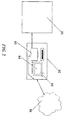
- Such an industrial automation display arrangement is useful in a control system connected to an industrial equipment cluster in a network environment as depicted in Fig. 2.
- control system referenced by numeral 02 in the same Figure, comprises display 04 which is supported by computer 03 and also has a speaker 05 that is capable of issuing audible warning in the case of a fault-causing event occurring in equipment 01 which is part of network 06.
- the present invention addresses at least two of the common problems associated with working with computer monitors, terminals, or, in general, information presenting displays, namely, the work space on the display in which the user must complete his/her tasks and the manner in which the events received by the display are presented to the user.
- problems may arise in either case, and those problems are then relayed to a worker through the display.
- the messages that report these problems or events are not classified in the order of their importance, nor are they presented to the worker at the display in a well organized and logical manner so as to enable to worker to work in the most productive way.
- These fault-causing events may not present themselves to the user through the display, nor alert the user to the arrival of such important messages. If inquired after by the user, messages may appear on the screen in such a way as to obscure the work space.
- a computer display is provided that is capable of presenting cumulative or sequential messages to the user through an unobtrusive, discreet navigator for running application programs comprising a primary display region, a peripheral display region, a message indicator superimposed over a portion of the peripheral region, and a user-activated icon for causing retrieval and display of an industrial automation system message.
- a computer display is used advantageously by arranging the screen area available on the display in an orderly manner so as to get the most benefit with the least area for each function.
- the narrow peripheral region around the outside perimeter of the display is reserved for conventional drop-down menus, such as File, Edit, View, Insert, Format, Print, etc., or any other processing tools which are represented by their well-known icons.
- the interior primary region is partitioned into three areas, namely, a side region where a control panel for the particular application program resides, an upper portion where an identifying record of the application is shown, and the larger lower region where an interactive work space is provided for the user.
- the event/message is relayed to the display through a conventional computer system with a processor, memory, monitor and a key board, which are not described here in detail in order not to obscure the main features of the present invention.
- the information in text form, is placed in a unobtrusive and discreet indicator, that is, in a small sliver of space, temporarily superimposed over other existing icons, for example, that may be already programmed to be shown on the frame like peripheral region of the display.
- the pop-up window contains a list of events related to the significant event which is listed on top for priority. Then the user assesses the fault-causing event, and takes an appropriate action by entering the necessary commands on the workspace, during which the pop-up window retracts from the display. Once the action remedies the problem, the original significant message and the discreet navigator indicator which carried it also disappear from the display, thus relinquishing its temporary place to the normally occupying indicator with its function intact.
- An embodiment of the present invention includes, in addition to an auto-activated discreet navigator, a user-activated icon to retrieve messages on demand, even in the absence of the discreet navigator, and to display the most significant message in the discreet navigator which then appears, or the significant message and all the related messages in the pop-up window which may include a menu.
- Another embodiment of the present invention is a method for displaying messages relating to industrial automation applications and providing user-activated inquiry into the messages, and for use in the context of an industrial automation display having a peripheral display region and a primary display region.
- the method comprises the steps of providing a message indicator, in the peripheral region only, indicating the presence of a message, receiving a signal from the user via the user's activation of the message indicator, and, in response to receiving the signal from the user, retrieving the contents of a message associated with the message indicator and displaying the retrieved message contents in a pop-up window adjacent to the peripheral display region.
- the display having a discreet navigator is augmented further with the capability of presenting cumulative or sequential events or messages to the user through an auto-visual feedback. That is, at the same time the signal is received, the information in the text form is placed in the unobtrusive and discreet navigator indicator.
- the discreet navigator indicator Once the user receives the auto-visual signal, then he/she sees the discreet navigator indicator appear, and then assesses what action to take. The user then can turn off the blinking visual indicator that also appears nearby to continue with the work at hand.
- the user clicks on the discreet navigator indicator then the visual indicator is turned off automatically. However, if the discreet navigator indicator is first clicked, then that action prompts the pop-up window to appear over an interactive work space on the display.
- the user accesses the fault-causing event, and takes an appropriate action by entering the necessary commands on the workspace, during which the pop-up window retracts from the display, or closes down.
- the action remedies the problem, the original significant message and the discreet navigator indicator which carried it also disappear from the display, thus relinquishing its temporary place to the normally occupying indicator with its function intact.
- the auto-visual aid is coupled with an auto-aural, or acoustic signal so that the combined audio-visual warning that emanates from the display reinforces the possibility of the message not being missed by the user operator.
- the information in the text form is placed in the unobtrusive and discreet navigator indicator.
- the audio-visual indicator is turned off automatically.
- that action prompts the pop-up window to appear over an interactive work space on the display. Then the user assesses the fault-causing event, and takes an appropriate action by entering the necessary commands on the workspace, during which the pop-up window retracts from the display. Once the action remedies the problem, the original significant message and the discreet navigator indicator which carried it also disappear from the display, thus relinquishing its temporary place to the normally occupying indicator with its function intact.
- the present invention also discloses embodiments of a method of automated navigation for accessing a fault-causing event in a computer display having an audio-visual feedback coupled with either the auto-activated discreet navigator, or the user-activated icon, or a combination thereof.
- a method for having the computer display to present a message for the combination is accomplished by providing a message indicator, in the peripheral region only, indicating the presence of a message; receiving a signal from the user via the user's activation of the message indicator; and in response to receiving the signal from the user, retrieving the contents of a message associated with the message indicator and displaying the retrieved message contents in a pop-up window adjacent to the peripheral display region.
- the messages are related to fault-causing events, and a single message is retrieved if the user's activation comprises a selection lasting a first period of time, and a plurality of messages is retrieved if the user's activation comprises a second period of time, where the first period of time is less than the second period of time.
- “user's activation” here means the user indicating and intention versus the "user's selection” means actually indicating an icon for a period of time.
- a method for using a user interacting with the disclosed industrial automation display comprising the steps of receiving an industrial automation display comprising a message indicator superimposed on the peripheral display region; activating retrieval of message contents by selecting the message indicator; and receiving the retrieved message contents via a pop-up window, wherein the messages related to the fault-causing event are presented in the order of their occurrence.
- the messages are associated with respective time tags and in an order based on the time tags.
- a method of user interacting with an industrial automation display comprises the steps of receiving an audio-visual signal, wherein the audio-visual signal comprises an aural sound and a blinking message indicator, and where the blinking message indicator shows a fault-causing message in text form and blinking in a color in contrast to the surrounding environment; the user responding to the signal by viewing and assessing the nature of the'fault-causing message; clicking on the message indicator and causing a pop-up-window to appear over a task area on the display; wherein the pop-up window shows a list of messages related to the fault-causing event, and the user responding to the signal by entering appropriate key-strokes in response to the messages listed in the pop-up window.
- the auto-activated discreet navigator is a message indicator that appears unobtrusively superimposed over a portion of the lower edge of said computer display only as triggered by an event/message, and that the user-activated icon retrieves a latest event/message when tapped quickly for a first period of time and retrieves all messages and places them in a pop-up menu when held down for a second period of time longer than the first period of time.
- the events or messages are stored, and the last event or message to occur is displayed in a space-saving manner in a navigator with audio-visual feedback.
- the complete list of events/messages appears when the user requests it through a user-activated icon, allowing navigation to and assessment of the events. After selection of an entry and initiation of a "jump" to the fault location, the list disappears and the event is once again reduced to the original display of the discreet navigator, which can also be made to disappear altogether until the next significant event occurs. That is, the user sees the complete list in a pop-up window for only as long as she/he needs to, and thus considerably more working area is made available.
- Fig. 1a is an industrial automation display showing the various regions on the screen of the display, according to prior art.
- Fig. 1b is an industrial automation display showing the obstruction of a work-space when Pop-up-Windows of irregular shapes and sizes are used, according to prior art.
- Fig. 2 is a network system showing the connection of an industrial automation display to industrial equipment via a computer in a control system, according to the present invention.
- Fig. 3 is a computer display showing the orderly partition of the screen area into functional regions, according to the present invention.
- Fig. 4 is an industrial automation display showing the effective use of a peripheral portion of the screen, according to the present invention.
- Fig 5 shows the functional names of the indicators used on the lower edge of the computer display of the present invention.
- Fig. 6 is a portion of an industrial automation display showing the discreet navigator, user-activated, visual and aural Indicators of the present invention being used on the lower edge of the display, according to the present invention.
- Fig. 7 is a portion of an industrial automation display showing the Pop-up-Window and the message list, therein, according to the present invention.
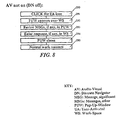
- Fig. 8 is a Flow Chart showing the steps of the present invention when Audio-Visual signal is not on, according to the present invention.
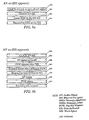
- Figs. 9a is a Flow Chart showing the steps of the present invention when Audio-Visual signal is on, and where the message is viewed in the discreet navigator indicator only, according to the present invention.
- Fig. 9b is a Flow Chart showing the steps of the present invention when Audio-Visual signal is on, where the message is viewed in a Pop-up-Window (PUW), according to the present invention.
- PW Pop-up-Window
- Figs. 3 through 9a-9b show a computer display, capable of presenting cumulative or sequential events or messages to the user through an unobtrusive and discreet navigator and with an audio-visual feedback, and methods for providing and for using the same. It will be better understood with further description below that it is important for the navigator to be unobtrusive and discreetly displayed in the form of a message indicator when a fault-causing event takes place in an industrial equipment that is part of a network, such as depicted in Fig. 2.
- display 200 is provided with a frame-like and narrow peripheral region of which only the upper edge rows 210, 220, 230 and the lower edge are shown to contain tools 225 and icons 235 that are useful for processing software programs, operating programs, or application programs in general.
- the lateral edges 240 can also be used for anchoring icons for flying or drop-down menus.
- icons 215 are the familiar ones that are used to control the size of the screen, as well the closing and the minimization of the display screen. As these tools are well known in the field, no attempt will be made to describe them here in any detail so as to not obscure the main features and key aspects of the present invention.
- lateral edges 240 wrap around the bottom edge where indicators 241-246 are located.
- indicators 241-246 are located.
- the interior primary region of the industrial automation display shown in Fig. 3 is partitioned into three primary regions, namely, side region, or side bar 270, upper right region 250 and region 260 which provides the largest area for an interactive work-space for the user of the display.
- the smaller area, region 250 is reserved for identifying the name, and the associated information of the particular program that is running on the system.
- Side bar 270 is arranged to have a control panel with its subdivisions, such as 273 and 275 as shown in the same Figure.
- the control panel has tools that are also specific to the application program that is being run on the system.
- system is a conventional computer system comprising a processor, memory, a monitor, key board any other peripheral equipment such as printers, etc. that are necessary to run an application software or program. As these types of systems are known in the field, for brevity, they will not be described here.
- a feature of the present invention is the manner of utilization of the lower edge of the display shown in Fig. 4.
- Indicator 241 is reserved for displaying the name of the project that is undertaken, while indicator 242 indicates whether the system is online or not.
- the other indicators namely, indicators 243-246 are shown to have specific names I, II, III, IV, which are reserved for the functions that are named in Fig. 5.
- these indicators can have dual functions such that the functions shown in Fig. 5 can be temporarily superimposed over other existing icons with different names and functions.
- any one of the four indicators may have any of the functions shown in Fig. 5, it is preferred that they have the functions as assigned in the Table of Fig. 5.
- the user-activated (UA) indicator with the chevron symbol is located centrally, because it is the indicator that is most often used to query messages and hence should be readily accessible.
- the most important message indicator that is, the discreet navigator (DN) indicator, is immediately next to the UA-indicator.
- the warning light, preferably red, and the intermittent aural indicator are to one side of the lower edge of the display, but still well within the view of the display users. As it will be more apparent later, the warning light can also be combined with DN-indicator 243.
- a significant advantage of the present invention is that during operation -- such as when debugging a software program, or when monitoring the process steps in a manufacturing line -- when a significant event occurs, first an audio-visual warning is displayed automatically. At the same time a textual message or code to that effect is displayed in message indicator 243. If there are other messages, that is, if there are cumulative and sequential messages or events, they are stored and a significant event -- if there is one -- based on a priority coding, or the last event to occur is displayed in a space-saving manner in indicator 243. An exemplary message "BIT OVERFLOW" is shown in Fig. 7.
- message indicator 243 on the lower edge of the display does not obstruct any information that is in the primary region of the display, that is the information is displayed unobtrusively and discreetly. It is also another aspect of the present invention that indicator 243 can now be used as a "navigator” to investigate further the cause of the event or the fault by clicking on the indicator and "jumping" to the location of the fault (hence the term “discreet navigator", or DN). "Clicking” is used here in the conventional sense of pointing and pressing a pointing device associated with a computer.
- the discreet navigator can be used in two modes: namely, by a quick click, or tap, on the indicator, which will then take the user to the cause of the single fault, or by dwelling on the indicator for a period of time longer than the previously described tap (time duration adjustable), which will then trigger a pop-up window (PUW) and make visible in it the entire list of events related to the initial event.
- the visual or audio-visual signal can be turned off by clicking on indicators 245 and 246, or on a single indicator if the two functions are combined, or it is automatically turned off when the discreet navigator indicator is activated by a click. However, if a new message is received while working with the DN, a new audio-visual sign will be emanating from the display.
- PUW 280 is shown in Fig. 7.
- PUW is relatively small in comparison with the area provided as work-space (WS) 260.
- PUW becomes visible if the discreet navigator is pressed for longer than a quick click, and also when the user-activated icon 244 is pressed.
- Flow charts in Figs. 8, and 9a and 9b show the mode operation when the audio-visual AV signal not on, and on, respectively.
Landscapes
- Engineering & Computer Science (AREA)
- General Engineering & Computer Science (AREA)
- Theoretical Computer Science (AREA)
- Human Computer Interaction (AREA)
- Physics & Mathematics (AREA)
- General Physics & Mathematics (AREA)
- Automation & Control Theory (AREA)
- Digital Computer Display Output (AREA)
- User Interface Of Digital Computer (AREA)
- Debugging And Monitoring (AREA)
Applications Claiming Priority (4)
| Application Number | Priority Date | Filing Date | Title |
|---|---|---|---|
| US24381900P | 2000-10-27 | 2000-10-27 | |
| US243819P | 2000-10-27 | ||
| US935137 | 2001-08-21 | ||
| US09/935,137 US20020070972A1 (en) | 2000-10-27 | 2001-08-21 | Industrial automation display arrangement and method |
Publications (2)
| Publication Number | Publication Date |
|---|---|
| EP1207450A2 true EP1207450A2 (de) | 2002-05-22 |
| EP1207450A3 EP1207450A3 (de) | 2008-05-14 |
Family
ID=26936109
Family Applications (1)
| Application Number | Title | Priority Date | Filing Date |
|---|---|---|---|
| EP01125642A Ceased EP1207450A3 (de) | 2000-10-27 | 2001-10-26 | Anzeigesystem zur industrieller Automatisierung |
Country Status (2)
| Country | Link |
|---|---|
| US (1) | US20020070972A1 (de) |
| EP (1) | EP1207450A3 (de) |
Cited By (4)
| Publication number | Priority date | Publication date | Assignee | Title |
|---|---|---|---|---|
| WO2004053609A1 (en) * | 2002-12-12 | 2004-06-24 | Abb Research Ltd | A control system controlling a plurality of real world objects, and a method for hanling messages from a mobile user connected to the control system |
| EP1660957A1 (de) * | 2003-08-30 | 2006-05-31 | Hauni Maschinenbau AG | Anzeige- und bedieneinheit für eine maschine der tabakverarbeitenden industrie |
| WO2015106835A1 (en) * | 2014-01-16 | 2015-07-23 | Abb Technology Ag | Method and arrangement for facilitating operation of an automation or control system |
| CN109753029A (zh) * | 2017-11-06 | 2019-05-14 | 西门子股份公司 | 识别和显示操作员访问过程对象的方法及操作员系统 |
Families Citing this family (19)
| Publication number | Priority date | Publication date | Assignee | Title |
|---|---|---|---|---|
| US7000181B2 (en) * | 2001-06-21 | 2006-02-14 | International Business Machines Corporation | Dynamic data display having slide drawer windowing |
| US20040145608A1 (en) * | 2003-01-24 | 2004-07-29 | International Business Machines Corporation | User interface for conducting chats over a network |
| US7380218B2 (en) | 2003-03-27 | 2008-05-27 | International Business Machines Corporation | Method and apparatus for managing windows |
| US7178109B2 (en) * | 2003-08-12 | 2007-02-13 | Chordiant Software, Inc. | Process/viewer interface |
| US20070101287A1 (en) * | 2005-11-03 | 2007-05-03 | International Business Machines Corporation | Pop-up windows in a computer system |
| US8924335B1 (en) | 2006-03-30 | 2014-12-30 | Pegasystems Inc. | Rule-based user interface conformance methods |
| US20090176517A1 (en) * | 2008-01-06 | 2009-07-09 | Apple Inc. | Multiple Recipient Messaging Service for Mobile Device |
| US8843435B1 (en) | 2009-03-12 | 2014-09-23 | Pegasystems Inc. | Techniques for dynamic data processing |
| US8468492B1 (en) | 2009-03-30 | 2013-06-18 | Pegasystems, Inc. | System and method for creation and modification of software applications |
| US8890675B2 (en) * | 2010-06-02 | 2014-11-18 | Honeywell International Inc. | Site and alarm prioritization system |
| US8880487B1 (en) | 2011-02-18 | 2014-11-04 | Pegasystems Inc. | Systems and methods for distributed rules processing |
| US9195936B1 (en) | 2011-12-30 | 2015-11-24 | Pegasystems Inc. | System and method for updating or modifying an application without manual coding |
| WO2014008941A1 (en) * | 2012-07-12 | 2014-01-16 | Abb Technology Ltd | A method of handling an alarm or an event within a process control system |
| US10469396B2 (en) | 2014-10-10 | 2019-11-05 | Pegasystems, Inc. | Event processing with enhanced throughput |
| US10593164B2 (en) * | 2015-11-09 | 2020-03-17 | Honeywell International Inc. | Aggregate monitor data in real-time by worker |
| US10698599B2 (en) | 2016-06-03 | 2020-06-30 | Pegasystems, Inc. | Connecting graphical shapes using gestures |
| US10698647B2 (en) | 2016-07-11 | 2020-06-30 | Pegasystems Inc. | Selective sharing for collaborative application usage |
| US11048488B2 (en) | 2018-08-14 | 2021-06-29 | Pegasystems, Inc. | Software code optimizer and method |
| US11567945B1 (en) | 2020-08-27 | 2023-01-31 | Pegasystems Inc. | Customized digital content generation systems and methods |
Family Cites Families (20)
| Publication number | Priority date | Publication date | Assignee | Title |
|---|---|---|---|---|
| US4851985A (en) * | 1985-04-15 | 1989-07-25 | Logitek, Inc. | Fault diagnosis system for comparing counts of commanded operating state changes to counts of actual resultant changes |
| US4808971A (en) * | 1987-10-07 | 1989-02-28 | Essex Group, Inc. | Alarm apparatus |
| KR930003423B1 (ko) * | 1991-01-25 | 1993-04-29 | 삼성전자 주식회사 | 프린팅 진행 표시 방법 및 회로 |
| US5534887A (en) * | 1994-02-18 | 1996-07-09 | International Business Machines Corporation | Locator icon mechanism |
| JPH0822403A (ja) * | 1994-07-11 | 1996-01-23 | Fujitsu Ltd | 計算機システムの監視装置 |
| US5559946A (en) * | 1994-08-30 | 1996-09-24 | Intel Corporation | Method and apparatus for adding a new tab to a tab bar window |
| AU3461595A (en) * | 1994-09-30 | 1996-04-26 | Apple Computer, Inc. | Method and apparatus for displaying and accessing control and status information in a computer system |
| US5617526A (en) * | 1994-12-13 | 1997-04-01 | Microsoft Corporation | Operating system provided notification area for displaying visual notifications from application programs |
| US5673404A (en) * | 1995-12-20 | 1997-09-30 | At&T Global Information Solutions Company | End-user customizable feedback display for windowed applications |
| US5960199A (en) * | 1996-11-12 | 1999-09-28 | International Business Machines Corporation | Model trace view for object-oriented systems |
| US6385662B1 (en) * | 1997-10-03 | 2002-05-07 | Ericsson Inc. | Method of processing information using a personal communication assistant |
| US6002398A (en) * | 1997-10-30 | 1999-12-14 | Novell, Inc. | Navigation between property pages with tabs and menus |
| US6412021B1 (en) * | 1998-02-26 | 2002-06-25 | Sun Microsystems, Inc. | Method and apparatus for performing user notification |
| US6108003A (en) * | 1998-03-18 | 2000-08-22 | International Business Machines Corporation | Maintaining visibility and status indication of docked applications and application bars |
| JPH11298572A (ja) * | 1998-04-07 | 1999-10-29 | Nec Shizuoka Ltd | 受信装置及び受信情報表示方法 |
| US6212412B1 (en) * | 1998-06-09 | 2001-04-03 | Qualcomm Incorporated | System and method for character case control in a wireless communication device |
| US6172428B1 (en) * | 1998-12-30 | 2001-01-09 | Westwood Corporation | Digital control system and method for generator sets |
| US6542163B2 (en) * | 1999-05-05 | 2003-04-01 | Microsoft Corporation | Method and system for providing relevant tips to a user of an application program |
| US6590587B1 (en) * | 1999-11-30 | 2003-07-08 | Agilent Technologies, Inc. | Monitoring system and method implementing navigation interface logic |
| US6756999B2 (en) * | 2000-04-06 | 2004-06-29 | Microsoft Corporation | Method and system for clustering and grouping taskbar buttons |
-
2001
- 2001-08-21 US US09/935,137 patent/US20020070972A1/en not_active Abandoned
- 2001-10-26 EP EP01125642A patent/EP1207450A3/de not_active Ceased
Cited By (6)
| Publication number | Priority date | Publication date | Assignee | Title |
|---|---|---|---|---|
| WO2004053609A1 (en) * | 2002-12-12 | 2004-06-24 | Abb Research Ltd | A control system controlling a plurality of real world objects, and a method for hanling messages from a mobile user connected to the control system |
| CN100409189C (zh) * | 2002-12-12 | 2008-08-06 | Abb研究有限公司 | 处理来自连接到控制系统的移动用户的消息的方法 |
| US7873371B2 (en) | 2002-12-12 | 2011-01-18 | Abb Research Ltd. | Control system controlling a plurality of real world objects, and a method for handling messages from a mobile user connected to the control system |
| EP1660957A1 (de) * | 2003-08-30 | 2006-05-31 | Hauni Maschinenbau AG | Anzeige- und bedieneinheit für eine maschine der tabakverarbeitenden industrie |
| WO2015106835A1 (en) * | 2014-01-16 | 2015-07-23 | Abb Technology Ag | Method and arrangement for facilitating operation of an automation or control system |
| CN109753029A (zh) * | 2017-11-06 | 2019-05-14 | 西门子股份公司 | 识别和显示操作员访问过程对象的方法及操作员系统 |
Also Published As
| Publication number | Publication date |
|---|---|
| US20020070972A1 (en) | 2002-06-13 |
| EP1207450A3 (de) | 2008-05-14 |
Similar Documents
| Publication | Publication Date | Title |
|---|---|---|
| EP1207450A2 (de) | Anzeigesystem zur industrieller Automatisierung | |
| US6043816A (en) | User interface mechanism for maintaning quick access to important information in a windows-based computer environment | |
| US7646294B2 (en) | Alarm maps to facilitate root cause analysis through spatial and pattern recognition | |
| US5984502A (en) | Keypad annunciator graphical user interface | |
| US5140678A (en) | Computer user interface with window title bar icons | |
| JP4806445B2 (ja) | 複数のウィンドウを重ねて表示する表示装置の表示を制御する制御装置、制御プログラムおよび制御方法 | |
| JP4921338B2 (ja) | プラント監視制御システム | |
| US7360168B2 (en) | Automatically scaling the information and controls in navigation tabs per available window area | |
| US20100017746A1 (en) | Method and system for generating a control system user interface | |
| US7007240B1 (en) | Method and system for displaying non-overlapping program and auxiliary windows | |
| EP1515289B1 (de) | Benutzerschnittstelle für eine Kontrollstation | |
| JP2012513066A (ja) | アラームトレンドサマリー表示システム及び表示方法 | |
| EP0817012A3 (de) | Auswahl von Befehlen in einem Rechnersystem | |
| JPH06230918A (ja) | グラフィック・ユーザ・インタフェースにおける視覚的メッセージの表示方法および装置 | |
| US6137470A (en) | Task manager and task support windows | |
| EP0896274A1 (de) | Verfahren und Vorrichtung zur Erleichterung der Navigation zwischen Softwareanwendungen und verbesserte Sicht auf der Anzeige | |
| JP2000056826A (ja) | 監視制御装置 | |
| EP0528396A2 (de) | Verfahren zur Steuerung eines industriellen Prozesses | |
| JP4541764B2 (ja) | データベース環境を監視するためのマイクロ‐モニタ | |
| JPH11167478A (ja) | 警報表示方法及びこれを用いた分散型制御システム | |
| US7574670B2 (en) | Systems and methods for interfacing with a user of a computer system | |
| JP2003140798A (ja) | 表示制御装置およびプログラム | |
| US6208324B1 (en) | Event/switch matrix window | |
| JPH0784750A (ja) | コンテナ・オブジエクトの内容物を表示する方法及び装置 | |
| EP1107100A1 (de) | Verfahren und Vorrichtung zur Auswahl von Software mittels einer graphischen Benutzerschnittstelle |
Legal Events
| Date | Code | Title | Description |
|---|---|---|---|
| PUAI | Public reference made under article 153(3) epc to a published international application that has entered the european phase |
Free format text: ORIGINAL CODE: 0009012 |
|
| AX | Request for extension of the european patent |
Free format text: AL;LT;LV;MK;RO;SI |
|
| PUAL | Search report despatched |
Free format text: ORIGINAL CODE: 0009013 |
|
| AK | Designated contracting states |
Kind code of ref document: A3 Designated state(s): AT BE CH CY DE DK ES FI FR GB GR IE IT LI LU MC NL PT SE TR |
|
| AX | Request for extension of the european patent |
Extension state: AL LT LV MK RO SI |
|
| 17P | Request for examination filed |
Effective date: 20081113 |
|
| AKX | Designation fees paid |
Designated state(s): DE FR GB IT |
|
| 17Q | First examination report despatched |
Effective date: 20090114 |
|
| STAA | Information on the status of an ep patent application or granted ep patent |
Free format text: STATUS: THE APPLICATION HAS BEEN REFUSED |
|
| 18R | Application refused |
Effective date: 20120306 |