EP1221982B1 - Isoalloxazinderivate zur neutralisierung von biologischen schmutzstoffen - Google Patents
Isoalloxazinderivate zur neutralisierung von biologischen schmutzstoffen Download PDFInfo
- Publication number
- EP1221982B1 EP1221982B1 EP00965012A EP00965012A EP1221982B1 EP 1221982 B1 EP1221982 B1 EP 1221982B1 EP 00965012 A EP00965012 A EP 00965012A EP 00965012 A EP00965012 A EP 00965012A EP 1221982 B1 EP1221982 B1 EP 1221982B1
- Authority
- EP
- European Patent Office
- Prior art keywords
- group
- groups
- compound
- hydrogen
- optionally substituted
- Prior art date
- Legal status (The legal status is an assumption and is not a legal conclusion. Google has not performed a legal analysis and makes no representation as to the accuracy of the status listed.)
- Expired - Lifetime
Links
- 0 Cc(c(C(O*)=O)c1)cc(N=C2C(*3)=O)c1N(C)C2=NC3=O Chemical compound Cc(c(C(O*)=O)c1)cc(N=C2C(*3)=O)c1N(C)C2=NC3=O 0.000 description 3
- GFMCZXORWBKYES-UHFFFAOYSA-N CC(c(cc1N=C2C(N3)=O)c(C)cc1N(C)C2=NC3=O)=O Chemical compound CC(c(cc1N=C2C(N3)=O)c(C)cc1N(C)C2=NC3=O)=O GFMCZXORWBKYES-UHFFFAOYSA-N 0.000 description 1
- KPDQZGKJTJRBGU-UHFFFAOYSA-N Cc(cc1N2C)c(C)cc1N=C(C(N1)=O)C2=NC1=O Chemical compound Cc(cc1N2C)c(C)cc1N=C(C(N1)=O)C2=NC1=O KPDQZGKJTJRBGU-UHFFFAOYSA-N 0.000 description 1
Classifications
-
- A—HUMAN NECESSITIES
- A61—MEDICAL OR VETERINARY SCIENCE; HYGIENE
- A61L—METHODS OR APPARATUS FOR STERILISING MATERIALS OR OBJECTS IN GENERAL; DISINFECTION, STERILISATION OR DEODORISATION OF AIR; CHEMICAL ASPECTS OF BANDAGES, DRESSINGS, ABSORBENT PADS OR SURGICAL ARTICLES; MATERIALS FOR BANDAGES, DRESSINGS, ABSORBENT PADS OR SURGICAL ARTICLES
- A61L2/00—Disinfection or sterilisation of materials or objects, in general; Accessories therefor
- A61L2/02—Disinfection or sterilisation of materials or objects, in general; Accessories therefor using physical processes
- A61L2/08—Radiation
- A61L2/088—Radiation using photocatalysts or photosensitisers
-
- A—HUMAN NECESSITIES
- A61—MEDICAL OR VETERINARY SCIENCE; HYGIENE
- A61L—METHODS OR APPARATUS FOR STERILISING MATERIALS OR OBJECTS IN GENERAL; DISINFECTION, STERILISATION OR DEODORISATION OF AIR; CHEMICAL ASPECTS OF BANDAGES, DRESSINGS, ABSORBENT PADS OR SURGICAL ARTICLES; MATERIALS FOR BANDAGES, DRESSINGS, ABSORBENT PADS OR SURGICAL ARTICLES
- A61L2/00—Disinfection or sterilisation of materials or objects, in general; Accessories therefor
- A61L2/02—Disinfection or sterilisation of materials or objects, in general; Accessories therefor using physical processes
- A61L2/08—Radiation
- A61L2/10—Ultraviolet [UV] radiation
-
- A—HUMAN NECESSITIES
- A61—MEDICAL OR VETERINARY SCIENCE; HYGIENE
- A61L—METHODS OR APPARATUS FOR STERILISING MATERIALS OR OBJECTS IN GENERAL; DISINFECTION, STERILISATION OR DEODORISATION OF AIR; CHEMICAL ASPECTS OF BANDAGES, DRESSINGS, ABSORBENT PADS OR SURGICAL ARTICLES; MATERIALS FOR BANDAGES, DRESSINGS, ABSORBENT PADS OR SURGICAL ARTICLES
- A61L2/00—Disinfection or sterilisation of materials or objects, in general; Accessories therefor
- A61L2/16—Disinfection or sterilisation of materials or objects, in general; Accessories therefor using chemical substances
- A61L2/18—Liquid substances
-
- A—HUMAN NECESSITIES
- A61—MEDICAL OR VETERINARY SCIENCE; HYGIENE
- A61P—SPECIFIC THERAPEUTIC ACTIVITY OF CHEMICAL COMPOUNDS OR MEDICINAL PREPARATIONS
- A61P17/00—Drugs for dermatological disorders
- A61P17/02—Drugs for dermatological disorders for treating wounds, ulcers, burns, scars, keloids, or the like
-
- C—CHEMISTRY; METALLURGY
- C07—ORGANIC CHEMISTRY
- C07D—HETEROCYCLIC COMPOUNDS
- C07D475/00—Heterocyclic compounds containing pteridine ring systems
- C07D475/12—Heterocyclic compounds containing pteridine ring systems containing pteridine ring systems condensed with carbocyclic rings or ring systems
- C07D475/14—Benz [g] pteridines, e.g. riboflavin
-
- A—HUMAN NECESSITIES
- A61—MEDICAL OR VETERINARY SCIENCE; HYGIENE
- A61L—METHODS OR APPARATUS FOR STERILISING MATERIALS OR OBJECTS IN GENERAL; DISINFECTION, STERILISATION OR DEODORISATION OF AIR; CHEMICAL ASPECTS OF BANDAGES, DRESSINGS, ABSORBENT PADS OR SURGICAL ARTICLES; MATERIALS FOR BANDAGES, DRESSINGS, ABSORBENT PADS OR SURGICAL ARTICLES
- A61L2103/00—Materials or objects being the target of disinfection or sterilisation
- A61L2103/05—Living organisms or biological materials
-
- A—HUMAN NECESSITIES
- A61—MEDICAL OR VETERINARY SCIENCE; HYGIENE
- A61L—METHODS OR APPARATUS FOR STERILISING MATERIALS OR OBJECTS IN GENERAL; DISINFECTION, STERILISATION OR DEODORISATION OF AIR; CHEMICAL ASPECTS OF BANDAGES, DRESSINGS, ABSORBENT PADS OR SURGICAL ARTICLES; MATERIALS FOR BANDAGES, DRESSINGS, ABSORBENT PADS OR SURGICAL ARTICLES
- A61L2103/00—Materials or objects being the target of disinfection or sterilisation
- A61L2103/05—Living organisms or biological materials
- A61L2103/09—Blood or products thereof
Definitions
- photosensitizers compounds which absorb light of a defined wavelength and transfer the absorbed energy to an energy acceptor
- Various photosensitizers have been proposed for use as blood additives.
- a review of some photosensitizers including psoralens, and some of the issues of importance in choosing photosensitizers for decontamination of blood products is provided in Goodrich, R.P., et al. (1997), "The Design and Development of Selective, Photoactivated Drugs for Sterilization of Blood Products," Drugs of the Future 22:159-171.
- photosensitizers that have been proposed for use for blood component sterilization have undesirable properties.
- European Patent Application 196,515 published October 8, 1986, suggests the use of non-endogenous photosensitizers such as porphyrins, psoralens, acridine, toluidines, flavine (acriflavine hydrochloride), phenothiazine derivatives, and dyes such as neutral red and methylene blue, as blood additives.
- Another molecule, chlorpromazine has been used as a photosensitizer, however its usefulness is limited by the fact that it should be removed from any fluid administered to a patient after the decontamination procedure because it has a sedative effect.
- Protoporphyrin which occurs naturally within the body, can be metabolized to form a photosensitizer, however, its usefulness is limited in that it degrades the desired biological activities of proteins.
- alkylating agents In addition to molecules which can serve as photosensitizers, alkylating agents have been proposed for use as blood contaminant neutralizers. Alkylating agents are believed to deactivate microorganisms by alkylating nucleophilic groups of amino acid residues and nucleic bases at a certain pH. Ethyleneimine has been reported to deactivate certain viruses (United States Patent No. 5,891,075 (Budowsky, et al.), WO 97/07674 (published March 6, 1997)).
- 7,8-dimethyl-10-ribityl isoalloxazine (Riboflavine or vitamin B2) absorbs light from about 200 to 500 nm.
- the ring system core of 7,8-dimethyl-10-ribityl isoalloxazine is resistant to photodegradation but the ribityl side chain of riboflavin undergoes photodegradation.
- Photolysis of 7,8-dimethyl-10-ribityl isoalloxazine may form lumichrome (7,8-dimethylalloxazine) depending on conditions. 7,8-dimethylalloxazine strongly absorbs ultraviolet (UV) light and only weakly absorbs visible light.
- UV ultraviolet
- United States Patent No. 5,811,144 discusses the treatment of beer with visible light under substantially anaerobic conditions to reportedly reduce the riboflavin content of the beer.
- Lumichrome and lumiflavin are reported to be produced by the photolysis of milk (Parks, O.W. and Allen, C. (1977) Dairy Sci. 60 :1038-1041; Toyosaki, T. and Hayashi, A. (1993) Milestatt 48 :607-609).
- Such fluids may also contain one or more components selected from the group consisting of protein, e.g. biologically active protein such as a therapeutic protein, blood and blood constituents, without destroying the biological activity of such components.
- the methods comprise:
- n is an integer between 0 and 5. In another group of compounds, n is an integer from 0 to 10. In another group of compounds, n is an integer from 0 to 20.
- a fluid comprising biologically active protein, blood or blood constituents, and microorganism neutralizer, obtainable by the method above.
- the fluid may also contain neutralized microorganisms.
- a blood product is also provided comprising a microorganism neutralizer obtainable by the method above.
- n is an integer between 0 and 5. In another group of compounds, n is an integer from 0 to 10. In another group of compounds, n is an integer from 0 to 20.
- the substituents included in the compounds and used in the methods of the invention may be any substituent not having structures or reactivity which would substantially interfere with the desired microorganism neutralization of the microorganism neutralizer, as may readily be determined without undue experimentation by those skilled in the art.
- the invention provides a class of compounds wherein a plurality of R1, R2, R3, R4, R5 and R6 are neither CH 3 nor H; and a class of compounds wherein one of R1, R2, R3, R4, R5 and R6 is neither CH 3 nor H.
- Particular embodiments of compounds of those classes include those wherein a R1, R2, R3, R4, R5 or R6 which is neither CH 3 nor H imparts substantial water solubility to the microorganism neutralizer.
- R is a substituent imparting water solubility to the molecule, including, but not limited to, ascorbate, alcohol, polyalcohol; amine or polyamines, straight chain or cyclic saccharides, sulfates, phosphates, alkyl chains optionally substituted with -OH at any position, glycols, including polyethylene glycol and polyethers.
- Another class of compounds of the invention include those wherein a R1, R2, R3, R4, R5 or R6 that is neither H nor CH 3 contains a halogen or is a halogen, wherein the halogen is selected from the group consisting of fluorine, chlorine, bromine and iodine.
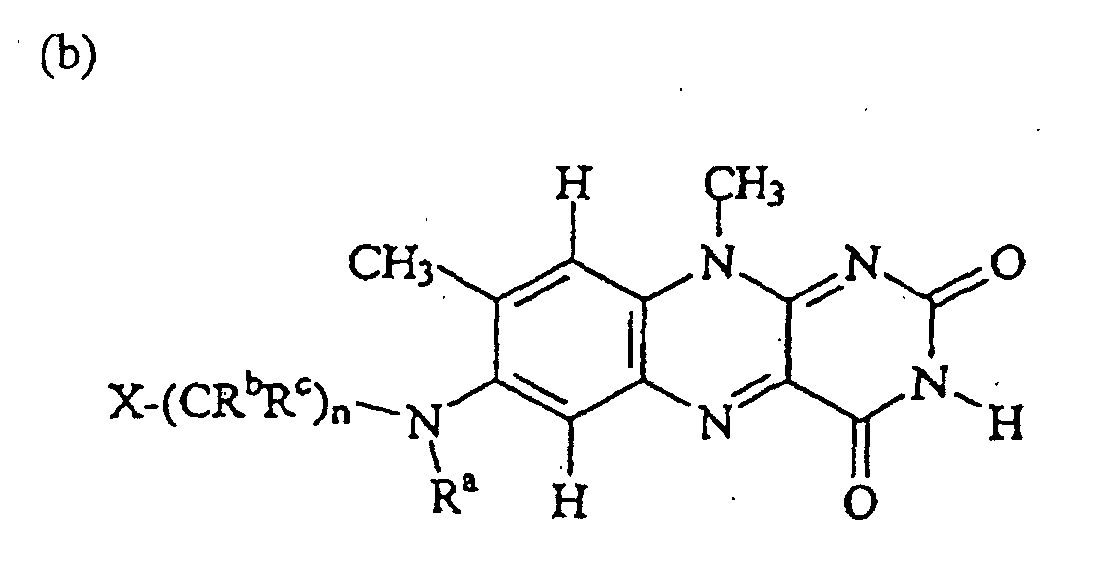
- Particular embodiments of compounds of this class include compounds where a R1, R2, R3, R4, R5 or R6 that is neither H nor CH 3 is: -NR a -(CR b R c ) n -X wherein X is a halogen selected from the group consisting of chlorine, bromine and iodine, or is a water soluble group, R a , R b and R c are, independently of each other, selected from the group consisting of hydrogen and optionally substituted hydrocarbyl, and n is an integer from 0 to 20.
- W is a substituent which makes the compound soluble in water at a concentration of at least 10 ⁇ M including, but not limited to, ascorbate, alcohol, polyalcohol; amine or polyamines, straight chain or cyclic saccharides, sulfates, phosphates, alkyl chains optionally substituted with -OH at any position, glycols, including polyethylene glycol and polyethers.
- R1, R2, R3, R4, R5 or R6 that is neither H nor CH 3 contains a halogen or is a halogen
- a R1, R2, R3, R4, R5 or R6 that is neither H nor CH 3 is: X-(CH 2 ) n -, wherein X is a halogen selected from the group consisting of chlorine, bromine and iodine, and n is an integer from 0 to 6 preferably n is either 1 or 2.
- X is a halogen selected from the group consisting of chlorine, bromine and iodine
- n is an integer from 0 to 6 preferably n is either 1 or 2.
- a preferred example of compounds of this class include:
- R1 is CH 2 -(CH 2 OH) 3 -CH 2 OH and those wherein R1 is not CH 2 -(CH 2 OH) 3 -CH 2 OH. Also, those compounds wherein R3 and R6 are H are included in the invention.
- the term “amine” refers to a primary, secondary, or tertiary amine group.
- a “polyamine” is a group that contains more than one amine group.
- a “sulfate” group is a salt of sulfuric acid. Sulfate groups include the group (SO 4 ) 2- .
- Phosphates contain the group PO 4 3- .
- “Glycols” are groups that have two alcohol groups per molecule of the compound. “Glycols” are also known as diols. A glycol is described by the formula: C n H 2n (OH) 2 , where n is an integer.
- a “carboxylic acid” is a group which includes the formula: -COOH.
- An “ether” is a group containing -O-.
- a “salt” is a group where a hydrogen atom of an acid has been replaced with a metal atom or a positive radical, such as NH 4 + .
- “Ascorbate” includes groups with formula:
- hydrocarbyl is used herein to refer generally to organic groups comprised of carbon chains to which hydrogen and optionally other elements are attached. CH 2 or CH groups and C atoms of the carbon chains of the hydrocarbyl may be replaced with one or more heteroatoms (i.e., non-carbon atoms). Suitable heteroatoms include but are not limited to O, S, P and N atoms.
- hydrocarbyl includes, but is not limited to alkyl, alkenyl, alkynyl, ether, polyether, thioether, straight chain or cyclic saccharides, ascorbate, aminoalkyl, hydroxylalkyl, thioalkyl, aryl and heterocyclic aryl groups, optionally substituted isoalloxazine molecules, amino acid, polyalcohol, glycol, groups which have a mixture of saturated and unsaturated bonds, carbocyclic rings and combinations of such groups.
- the term also includes straight-chain, branched-chain and cyclic structures or combinations thereof. Hydrocarbyl groups are optionally substituted.
- Hydrocarbyl substitution includes substitution at one or more carbons in the group by moieties containing heteroatoms.
- Suitable substituents for hydrocarbyl groups include but are not limited to halogens, including chlorine, fluorine, bromine and iodine, OH, SH, NH 2 , COH, CO 2 H, OR a , SR a , NR a R b , CONR a R b , where R a and R b independently are alkyl, unsaturated alkyl or aryl groups.
- alkyl takes its usual meaning in the art and is intended to include straight-chain, branched and cycloalkyl groups.
- the term includes, but is not limited to, methyl, ethyl, n-propyl, isopropyl, n-butyl, sec-butyl, isobutyl, tert-butyl, n-pentyl, neopentyl, 2-methylbutyl, 1-methylbutyl, 1-ethylpropyl, 1,1-dimethylpropyl, n-hexyl, 1-methylpentyl, 2-methylpentyl, 3-methylpentyl, 4-methylpentyl, 3,3-dimethylbutyl, 2,2-dimethylbutyl, 1,1-dimethylbutyl, 2-ethylbutyl, 1-ethylbutyl, 1,3-dimethylbutyl, n-heptyl, 5-methylhexyl, 4-methylhexyl,
- cycloalkyl refers to alkyl groups having a hydrocarbon ring, particularly to those having rings of 3 to 7 carbon atoms. Cycloalkyl groups include those with alkyl group substitution on the ring. Cycloalkyl groups can include straight-chain and branched-chain portions. Cycloalkyl groups include but are not limited to cyclopropyl, cyclobutyl, cyclopentyl, cyclohexyl, cycloheptyl, cyclooctyl, and cyclononyl. Cycloalkyl groups can optionally be substituted.
- Aryl groups may be substituted with one, two or more simple substituents including, but not limited to, lower alkyl, e.g., methyl, ethyl, butyl; halo, e.g., chloro, bromo; nitro; sulfato; sulfonyloxy; carboxy; carbo-lower-alkoxy, e.g., carbomethoxy, carbethoxy; amino; mono- and di-lower-alkylamino, e.g., methylamino, ethylamino, dimethylamino, methylethylamino; amido; hydroxy; lower-alkoxy, e.g., methoxy, ethoxy; and lower-alkanoyloxy, e.g., acetoxy.
- lower alkyl e.g., methyl, ethyl, butyl
- halo e.g., chloro, bromo
- unsaturated alkyl group is used herein generally to include alkyl groups in which one or more carbon-carbon single bonds have been converted to carbon-carbon double or triple bonds.
- the term includes alkenyl and alkynyl groups in their most general sense.
- the term is intended to include groups having more than one double or triple bond, or combinations of double and triple bonds.
- Unsaturated alkyl groups include, without limitation, unsaturated straight-chain, branched or cycloalkyl groups.
- Unsaturated alkyl groups include without limitation: vinyl, allyl, propenyl, isopropenyl, butenyl, pentenyl, hexenyl, hexadienyl, heptenyl, cyclopropenyl, cyclobutenyl, cyclopentenyl, cyclopentadienyl, cyclohexenyl, cyclohexadienyl, 1-propenyl, 2-butenyl, 2-methyl-2-butenyl, ethynyl, propargyl, 3-methyl-1-pentynyl, and 2-heptynyl. Unsaturated alkyl groups can optionally be substituted.
- Substitution of alkyl, cycloalkyl and unsaturated alkyl groups includes substitution at one or more carbons in the group by moieties containing heteroatoms. Suitable substituents for these groups include but are not limited to OH, SH, NH 2 , COH, CO 2 H, OR c , SR c , P, PO, NR c R d , CONR c R d , and halogens, particularly chlorines and bromines where R c and R d , independently, are alkyl, unsaturated alkyl or aryl groups.
- Preferred alkyl and unsaturated alkyl groups are the lower alkyl, alkenyl or alkynyl groups having from 1 to about 3 carbon atoms.
- aryl is used herein generally to refer to aromatic groups which have at least one ring having a conjugated pi electron system and includes without limitation carbocyclic aryl, aralkyl, heterocyclic aryl, biaryl groups and heterocyclic biaryl, all of which can be optionally substituted.
- Preferred aryl groups have one or two aromatic rings.
- Carbocyclic aryl refers to aryl groups in which the aromatic ring atoms are all carbons and includes without limitation phenyl, biphenyl and napthalene groups.
- Alkyl refers to an alkyl group substituted with an aryl group. Suitable aralkyl groups include among others benzyl, phenethyl and picolyl, and may be optionally substituted. Aralkyl groups include those with heterocyclic and carbocyclic aromatic moieties.
- Heterocyclic aryl groups refers to groups having at least one heterocyclic aromatic ring with from 1 to 3 heteroatoms in the ring, the remainder being carbon atoms. Suitable heteroatoms include without limitation oxygen, sulfur, and nitrogen. Heterocyclic aryl groups include among others furanyl, thienyl, pyridyl, pyrrolyl, N-alkyl pyrrolo, pyrimidyl, pyrazinyl, imidazolyl, benzofuranyl, quinolinyl, and indolyl, all optionally substituted.
- Heterocyclic biaryl refers to heterocyclic aryls in which a phenyl group is substituted by a heterocyclic aryl group ortho, meta or para to the point of attachment of the phenyl ring to the decalin or cyclohexane.
- Heterocyclic biaryl includes among others groups which have a phenyl group substituted with a heterocyclic aromatic ring. The aromatic rings in the heterocyclic biaryl group can be optionally substituted.
- Biaryl refers to carbocyclic aryl groups in which a phenyl group is substituted by a carbocyclic aryl group ortho, meta or para to the point of attachment of the phenyl ring to the decalin or cyclohexane.
- Biaryl groups include among others a first phenyl group substituted with a second phenyl ring ortho, meta or para to the point of attachment of the first phenyl ring to the decalin or cyclohexane structure. Para substitution is preferred.
- the aromatic rings in the biaryl group can be optionally substituted.
- Aryl group substitution includes substitutions by non-aryl groups (excluding H) at one or more carbons or where possible at one or more heteroatoms in aromatic rings in the aryl group.
- Unsubstituted aryl in contrast, refers to aryl groups in which the aromatic ring carbons are all substituted with H, e.g. unsubstituted phenyl (-C 6 H 5 ), or naphthyl (-C 10 H 7 ).
- Suitable substituents for aryl groups include among others, alkyl groups, unsaturated alkyl groups, halogens, OH, SH, NH 2 , COH, CO 2 H, OR e , SR e , NR e R f , CONR e R f , where R e and R f independently are alkyl, unsaturated alkyl or aryl groups.
- Preferred substituents are OH, SH, OR e , and SR e where R e is a lower alkyl, i.e., an alkyl group having from 1 to about 3 carbon atoms.
- substituents are halogens, more preferably chlorine or bromine, and lower alkyl and unsaturated lower alkyl groups having from 1 to about 3 carbon atoms.
- aryl groups having bridging substituents include phenylbenzoate.
- Substituents also include moieties, such as -(CH 2 ) l -, -O-(CH 2 ) l - or -OCO-(CH 2 ) l -, where l is an integer from about 2 to 7, as appropriate for the moiety, which bridge two ring atoms in a single aromatic ring as, for example, in a 1, 2, 3, 4-tetrahydronaphthalene group.
- Alkyl and unsaturated alkyl substituents of aryl groups can in turn optionally be substituted as described supra for substituted alkyl and unsaturated alkyl groups.
- alkoxy group and "thioalkoxy group” (also known as mercaptide groups, the sulfur analog of alkoxy groups) take their generally accepted meaning.
- Alkoxy groups include but are not limited to methoxy, ethoxy, n-propoxy, isopropoxy, n-butoxy, sec-butoxy, isobutoxy, tert-butoxy, n-pentyloxy, neopentyloxy, 2-methylbutoxy, 1-methylbutoxy, 1-ethyl propoxy, 1,1 -dimethylpropoxy, n-hexyloxy, 1-methylpentyloxy, 2-methylpentyloxy, 3-methylpentyloxy, 4-methylpentyloxy, 3,3-dimethylbutoxy, 2,2-dimethoxybutoxy, 1-1-dimethylbutoxy, 2-ethylbutoxy, 1-ethylbutoxy, 1,3-dimethylbutoxy, n-pentyloxy, 5-methylhexyloxy, 4-methylhex
- Optional or “optionally” means that the subsequently described event or circumstance may or may not occur, and that the description includes instances where said event or circumstance occurs and instances in which it does not.
- optionally substituted phenyl means that the phenyl radical may or may not be substituted and that the description includes both unsubstituted phenyl radicals and phenyl radicals wherein there is substitution.
- amino acids as used herein include naturally occurring and commercially available amino acids and optical isomers thereof. Typical natural and commercially available amino acids are glycine, alanine, serine, homoserine, threonine, valine, norvaline, leucine, isoleucine, norleucine, aspartic acid, glutamic acid, lysine, ornithine, histidine, arginine, cysteine, homocysteine, methionine, phenylalanine, homophenylalanine, phenylglycine, o-, m-, and p-tyrosine, tryptophan, glutamine, asparagine, proline and hydroxyproline.
- amino acid as used herein includes amino acid residues and amino acid side chains.
- An “amino acid residue” is an amino acid radical -NHCH(R)C(O)-, wherein R is an amino acid side chain, except for the amino acid residues of proline and hydroxyproline which are --N(CH 2 -CH 2 -CH 2 )CHC(O)-- and --N(CH-CHOHCH 2 )CHC(O)--, respectively.
- An amino acid side chain is a radical found on the ⁇ -carbon of an ⁇ -amino acid as defined herein, where the radical is either hydrogen (side chain of glycine), methyl (side chain of alanine), or is a radical bonded to the ⁇ -carbon by a methylene (--CH 2 --), or phenyl group.
- a protected glucose derivative takes its usual meaning in the art and includes a glucose molecule wherein some of the hydroxyl groups are substituted with acetate groups.
- Contacting reaction components with each other refers to providing a medium and/or reaction chamber in which the reaction components are placed together so that they can react with each other.
- the reaction components are suspended or dissolved in a carrier fluid which is a liquid medium.
- “Maintaining reaction components in contact” means keeping the components together in such a way that they can react with each other.
- Straight chain or cyclic saccharides include mono- , di- and poly-, straight chain and cyclic saccharides that are optionally substituted with an amino group which is optionally acetylated.
- Straight chain saccharides that are useful in this invention include but are not limited to those molecules with a chain of 5 or 6 carbon atoms with one or more -OH groups attached, and either an aldehyde or ketone group.
- Cyclic saccharides are saccharides that are in a ring form.
- Disaccharides are compounds wherein two monosaccharide groups are linked.
- Polysaccharides are compounds wherein more than two monosaccharide groups are linked. Specific examples of saccharides useful in this invention include glucose, ribose and glucosamine, among others.
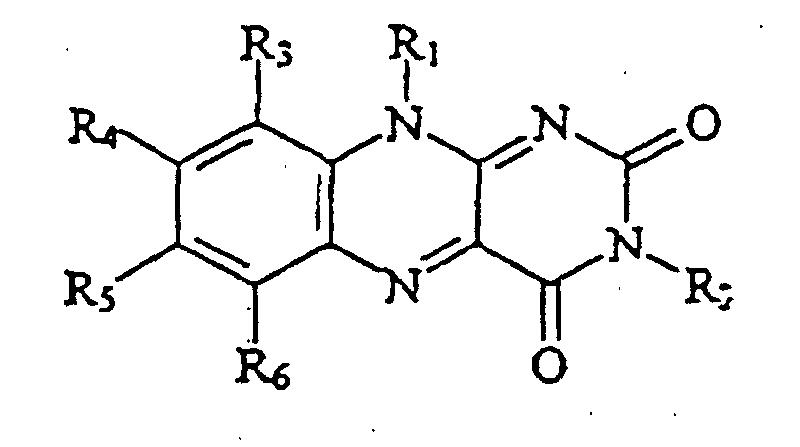
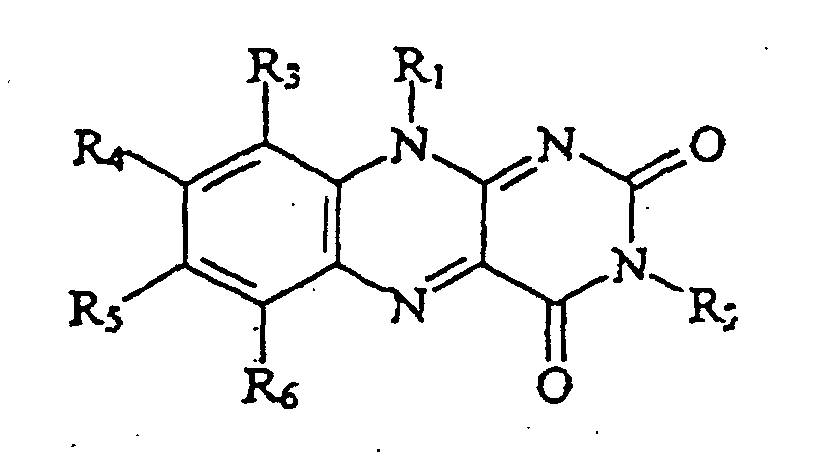
- Isoalloxazine “isoalloxazine derivative” or “core structure of isoalloxazine” include compounds that comprise the structure: where R1-R6 are substituted with various substituents, as described elsewhere.
- neutralization of a microorganism means totally or partially preventing the microorganism from replicating, either by killing the microorganism or otherwise interfering with its ability to reproduce.
- a “neutralizer” is a compound that is capable of neutralizing a microorganism.
- the neutralizers useful in this invention include molecules with the core structure of isoalloxazine, as defined above.
- To "activate the microorganism neutralizer” is to expose the microorganism neutralizer to a triggering event that causes it to become active toward neutralizing microorganisms.
- Microorganisms include viruses (both extracellular and intracellular), bacteria, bacteriophages, fungi, blood-transmitted parasites, and protozoa.
- Exemplary viruses include acquired immunodeficiency (HIV) virus, hepatitis A, B and C viruses, sinbis virus, cytomegalovirus, vesicular stomatitis virus, herpes simplex viruses, e.g. types I and II, human T-lymphotropic retroviruses, HTLV-III, lymphadenopathy virus LAV/IDAV, parvovirus, transfusion-transmitted (TT) virus, Epstein-Barr virus, and others known to the art.
- HIV acquired immunodeficiency
- hepatitis A, B and C viruses sinbis virus
- cytomegalovirus vesicular stomatitis virus
- herpes simplex viruses e.g. types I and II, human T-lymphotropic retroviruses, HTLV-III, lymphadenopathy
- Bacteriophages include ⁇ X174, ⁇ 6, ⁇ , R17, T 4 , and T 2 .
- Exemplary bacteria include P. aeruginosa, S. aureus, S. epidermis, L. monocytogenes, E. coli, K. pneumonia and S. marcescens.
- Neutralization of white blood cells may be desirable when suppression of immune or autoimmune response is desired, e.g., in processes involving transfusion of red cells, platelets or plasma when donor white blood cells may be present.
- Triggering event refers to the stimulus that activates the microorganism neutralizer. Triggering events are exposure of the neutralizer to an neutralization effective wavelength of light, or a pH sufficient to activate the neutralizer to neutralize microorganisms.
- Water soluble group includes a group that, when included as a substituent on the neutralizer, imparts substantial solubility in water to the compound. Typically, the compound is soluble in water at a concentration of about 10 - 150 ⁇ M.
- Water soluble groups as referred to in this invention include, but are not limited to alcohols; polyalcohols; straight chain or cyclic saccharides; amines and polyamines; sulfate groups; phosphate groups; ascorbate groups; alkyl chains optionally substituted with -OH at any position; glycols, including polyethylene glycols, and polyethers.
- biologically active means capable of effecting a change in a living organism or component thereof.
- biologically active with respect to “biologically active protein” as referred to herein does not refer to proteins which are part of the microorganisms being neutralized.
- non-toxic with respect to the neutralizers means low or no toxicity to humans and other mammals, and does not mean non-toxic to the microorganisms being neutralized.
- Substantial destruction of biological activity means at least as much destruction as is caused by porphyrin and porphyrin derivatives, metabolites and precursors which are known to have a damaging effect on biologically active proteins and cells of humans and mammals.
- substantially non-toxic means less toxic than porphyrin, porphyrin derivatives, metabolites and precursors that are known for blood sterilization.
- neutralizers are less toxic than porphyrin, porphyrin derivatives, metabolites and precursors that are known for blood sterilization.
- blood product includes blood constituents and therapeutic protein compositions containing proteins derived from blood as defined above. Fluids containing biologically active proteins other than those derived from blood may also be treated by the methods of this invention. Such fluids may also contain one or more components selected from the group consisting of protein, e.g. biologically active protein such as a therapeutic protein, blood and blood constituents, without destroying the biological activity of such components.
- protein e.g. biologically active protein such as a therapeutic protein, blood and blood constituents
- Decontamination methods of this invention using isoalloxazine derivatives as defined above do not substantially destroy the biological activity of fluid components other than microorganisms. As much biological activity of these components as possible is retained, although in certain instances, when the methods are optimized, some loss of biological activity, e.g., denaturization of protein components, must be balanced against effective decontamination of the fluid. So long as fluid components retain sufficient biological activity to be useful for their intended or natural purposes, their biological activities are not considered to be substantially destroyed.
- Decomposition of the neutralizer upon exposure to light refers to the chemical transformation of the neutralizer into new compounds.
- An example of decomposition of the neutralizer is the production of lumichrome upon exposure of riboflavin to visible light.
- a "photosensitizer” is defined as any compound which absorbs radiation of one or more defined wavelengths and subsequently utilizes the absorbed energy to carry out a chemical process.
- Photosensitizers of this invention may include compounds which preferentially adsorb to nucleic acids, thus focusing their photodynamic effect upon microorganisms and viruses with little or no effect upon accompanying cells or proteins.
- Other photosensitizers of this invention are also useful, such as those using singlet oxygen-dependent mechanisms.
- alkylating agent is a compound that reacts with amino acid residues and nucleic bases and inhibits replication of microorganisms.
- the contaminant neutralizers of the invention neutralize microorganisms by exposure to a triggering event of either exposure to an activation-effective wavelength of light in the uv/visible region of the spectrum or an activation-effective pH.
- the neutralizer must be one which does not substantially destroy desired components of the fluid being decontaminated, and also preferably which does not degrade into products which substantially destroy desired components or have significant toxicity or substantially decompose into ultraviolet light absorbing compounds.
- the fluid containing an appropriate concentration of the neutralizer is exposed to photoradiation of the appropriate wavelength to activate the neutralizer, using an amount of photoradiation sufficient to activate the neutralizer, but less than that which would cause substantial damage to the biological components or substantially interfere with biological activity of other proteins present in the fluid.
- the wavelength of light used and the amount of radiation used will depend on the neutralizer selected, as is known to the art or readily determinable without undue experimentation by one of ordinary skill in the art, using literature sources or direct measurement.
- the light source is a uv/visible light source providing 320 nm to about 700 nm, and more preferably about 365 nm to about 650 nm of radiation.
- the amount of neutralizer to be mixed with the fluid will be an amount sufficient to adequately neutralize microorganisms therein.
- the neutralizer is soluble in the fluid and present in an amount less than the upper solubility limit of the neutralizer in the fluid.
- optimal concentrations for desired neutralizers may be readily determined by those skilled in the art without undue experimentation.
- the smallest effecacious concentration of neutralizer is used.
- the neutralizer is used in a concentration of at least 1 ⁇ M up to the solubility of the neutralizer in the fluid, and typically the concentration of neutralizer is about 10 ⁇ M. Other concentrations are also able to be used. An excess of neutralizer may be present in the solution.
- the neutralizer may also be used in a suspension, where the neutralizer is not soluble in the fluid, provided that adequate mixing is provided to contact the neutralizer with the fluid.
- the neutralizer may also be removed from the fluid prior to administration of the fluid to a patient. All other parameters that may be involved in a decontamination system, including appropriate temperatures for the reaction of the neutralizer as well as the ranges of temperature, photoradiation intensity and duration, and neutralizer concentration which will optimize microbial neutralization and minimize damage to desired proteins and/or cellular components in the fluid are also easily determined as is known in the art or readily determinable without undue experimentation by one of ordinary skill in the art, using literature sources or direct measurement.
- the appropriate pH, concentration of neutralizer that is effective, and other parameters are determined by means known to one of ordinary skill in the art.
- contacting the contaminant neutralizer with the fluid containing microorganisms to be neutralized may be sufficient to activate the contaminant neutralizer (i.e., the triggering event when pH is used to activate the microorganism neutralizer may not need to be externally applied).
- An effective concentration is generally from about 10 - 100 ⁇ M.
- a pH of about 5 to about 8 is generally effective to activate the neutralizer. Other concentrations and pH's may be used.
- a solution or suspension of contaminant neutralizer may be prepared and stored and when desired, used by contacting with fluid or other substance containing contaminants and exposing to a triggering event.
- the appropriate apparatus may be designed. Batch or flow-through systems may be used, for example.
- the isoalloxazine derivatives of this invention can be used in the decontamination systems described in U.S. Patent Nos. 5,290,221, 5,536,238, 5,290,221 and 5,536,238, and U.S. Patent Application Nos. 09/119,666 and 09/357,188.
- the fluid to be decontaminated is mixed with neutralizer. If light is used to neutralize the contaminants, the fluid and neutralizer are irradiated with a sufficient amount of photoradiation at an appropriate wavelength to activate the neutralizer to react with microorganisms in the fluid such that microorganisms in the fluid are neutralized. If pH is used to neutralize the contaminants, the pH of the fluid and neutralizer is changed, if necessary, by any means known in the art.
- Examples of materials which may be treated by the methods of this invention are whole blood and aqueous compositions containing biologically active proteins derived from blood or blood constituents. Packed red cells, platelets and plasma (fresh or fresh frozen plasma) are exemplary of such blood constituents.
- therapeutic protein compositions containing proteins derived from blood such as fluids containing biologically active protein useful in the treatment of medical disorders, e.g., factor VIII, Von Willebrand factor, factor IX, factor X, factor XI, Hageman factor, prothrombin, anti-thrombin III, fibronectin, plasminogen, plasma protein fraction, immune serum globulin, modified immune globulin, albumin, plasma growth hormone, somatomedin, plasminogen streptokinase complex, ceruloplasmin, transferrin, haptoglobin, antitrypsin and prekallikrein may be treated by the decontamination methods of this invention.
- Other fluids which could benefit from the treatment of this invention are peritoneal solutions used
- This method is also useful for treating other fluids including fluids which are meant for nourishment of humans or animals such as water, fruit, juices, milk, broths, soups and the like.
- the method is also useful for treating parenteral solutions.
- This invention may also be used to treat surfaces, as described in United States Patent Application No. 09/119,666.
- the isoalloxazine derivative compounds of this invention may also coat surfaces such as blood or peritoneal dialysis tubing sets to assure sterile connections and sterile docking.
- the neutralizer may be applied in a suitable carrier such as water or a solution containing other treatment additives, by spraying, dipping, wiping on, or by other means known to the art.
- a suitable carrier such as water or a solution containing other treatment additives
- the amount of neutralizer and the conditions to activate the neutralizer required for treatment will be readily determined by one of skill in the art without undue experimentation depending on the level of contamination and the material being treated.
- the activated neutralizer is capable of neutralizing the microorganisms present, such as by interfering to prevent their replication. This may occur with activation of the molecule with uv/visible light, or may occur by the nature of the substituent on the isoalloxazine core and an alteration of the pH of the system in the absence of light. Specificity of action of the neutralizer may be conferred by the close proximity of the neutralizer to the nucleic acid of the microorganism and this may result from binding of the neutralizer to the nucleic acid.
- "Nucleic acid” includes ribonucleic acid (RNA) and deoxyribonucleic acid (DNA).
- Other Neutralizers may act by binding to cell membranes or by other mechanisms.
- the neutralizer may also be targeted to the microorganism to be neutralized by covalently coupling to an antibody, preferably a specific monoclonal antibody to the microorganism.
- Enhancers may also be added to the fluid to make the process more efficient and selective.
- enhancers include antioxidants or other agents to prevent damage to desired fluid components or to improve the rate of neutralization of microorganisms and are exemplified by adenine, histidine, cysteine, tyrosine, tryptophan, ascorbate, N-acetyl-L-cysteine, propyl gallate, glutathione, mercaptopropionylglycine, dithiothreotol, nicotinamide, BHT, BHA, lysine, serine, methionine, glucose, mannitol, trolox, glycerol, and mixtures thereof.
- the use of the compounds of this invention to neutralize microorganisms requires mixing or contacting the isoalloxazine derivative with the material to be decontaminated. Mixing or contacting may be done by simply adding the neutralizer or a solution containing the neutralizer to a fluid to be decontaminated. In one embodiment using light to neutralize the microorganisms, the material to be decontaminated to which a light-triggered neutralizer has been added is flowed past a photoradiation source, and the flow of the material generally provides sufficient turbulence to distribute the neutralizer throughout the fluid to be decontaminated.
- the fluid and light-triggered neutralizer are placed in a photopermeable container and irradiated in batch mode, preferably while agitating the container to fully distribute the photosensitizer and expose all the fluid to the radiation.
- insoluble materials may be used in the process of this invention, for example, by suspending the isoalloxazine derivative in the biological fluid and exposing the fluid and isoalloxazine derivative to the triggering event.
- the pH-triggered compound is placed in contact with the fluid to be treated. In some embodiments using a pH-triggered compound, the pH of the fluid-compound mixture will require changing in order to trigger neutralization by means known to one of ordinary skill in the art, such as the use of acid or base.
- a sample of an isoalloxazine derivative is analyzed using a scanning UV spectrophotometer over the region 200 to 900 nm.
- the sample is dissolved in distilled water.
- An absorption spectrum is obtained, and extinction coefficients at the absorbance maxima and other wavelengths of interest are determined. From the absorption spectrum and extinction coefficients, appropriate wavelengths for irradiation are determined.
- An appropriate wavelength is one at which the extinction coefficient is sufficient to ensure adequate activation of the sensitizer in solution.
- Example 2 Neutralization of microorganisms with isoalloxazine derivatives using light
- 7-chloroethylamino-8,10-methyl isoalloxazine is dissolved in blood at concentrations of 10 - 100 ⁇ M.
- the solutions are spiked with a representative microorganism. Aliquots are removed and the pH of different aliquots is adjusted to 1.0, 3.0, 5.0, 7.0, 9.0 with sodium carbonates. The solutions are mixed to distribute the components. The neutralization results are determined as described above.
- Carboxyriboflavin (1, McCormick, D. (1970) J. Heter. Chem. 7 :447) is photolyzed in aqueous alkali to form a carboxylumiflavine (2).
- Compound 2 is converted to an acid chloride 3 with oxallylchloride.
- Compound 3 is reacted with ascorbate ion, glucosamine, a protected glucose derivative or di or triethylene glycol to form a water soluble derivative 4 where the light sensitive water soluble moiety W is far removed from the amide containing ring.
- One of the chlorines from 6 will be replaced with W to impart water solubility to the compound.
- Riboflavin methanol is synthesized by the method of McCormick and upon photolysis it will yield lumiflavine methanol 7.
- the hydroxyl group is replaced with a water soluble group (e.g., W, 8) as described earlier.
- the N-3 (R2) of lumiflavine is alkylated using the method of P. Hemmerich (1964) Helv. Chim. Acta 47 :464. This method is adapted to place water soluble groups at (R2) (e.g., 9).
- This lumiflavine will be water soluble, absorb visible light, and should not break down upon photolysis with visible light.
- the corresponding series 10 and 11 are formed by application of known reactions.
- All compounds of this invention may be prepared by the methods above or by methods well known in the art, or by adapting the methods above or methods well known in the art.
- reactants specified herein may be substituted for others that produce a similar function.
Landscapes
- Health & Medical Sciences (AREA)
- Chemical & Material Sciences (AREA)
- Life Sciences & Earth Sciences (AREA)
- Veterinary Medicine (AREA)
- Public Health (AREA)
- General Health & Medical Sciences (AREA)
- Animal Behavior & Ethology (AREA)
- Organic Chemistry (AREA)
- Epidemiology (AREA)
- Chemical Kinetics & Catalysis (AREA)
- General Chemical & Material Sciences (AREA)
- Pharmacology & Pharmacy (AREA)
- Nuclear Medicine, Radiotherapy & Molecular Imaging (AREA)
- Medicinal Chemistry (AREA)
- Dermatology (AREA)
- Bioinformatics & Cheminformatics (AREA)
- Engineering & Computer Science (AREA)
- Pharmaceuticals Containing Other Organic And Inorganic Compounds (AREA)
- Medicinal Preparation (AREA)
- Nitrogen And Oxygen Or Sulfur-Condensed Heterocyclic Ring Systems (AREA)
- Medicines Containing Material From Animals Or Micro-Organisms (AREA)
- Agricultural Chemicals And Associated Chemicals (AREA)
- Apparatus For Disinfection Or Sterilisation (AREA)
- External Artificial Organs (AREA)
Claims (37)
- Verfahren zur Behandlung eines Fluids in vitro, um Mikroorganismen, die darin vorhanden sein können, ganz oder teilweise an einer Replikation zu hindern, wobei das Verfahren umfasst:(a) die Zugabe zu dem Fluid von mindestens 1 µM eines Neutralisators für Mikroorganismen der Formelin der R1, R2, R3, R4, R5 und R6 jeweils unabhängig voneinander ausgewählt werden aus der Gruppe, bestehend aus Wasserstoff, ggfs. substituiertem Hydrocarbyl, Alkohol, Amin, Polyamin, Sulfat, Phosphat, Halogen, ausgewählt aus der aus Chlor, Brom und Iod bestehenden Gruppe, Salzen der vorstehenden;
und -NRa-(CRbRc)n-X, in der X ein aus der aus Chlor, Brom und Iod bestehenden Gruppe ausgewähltes Halogen ist, Ra, Rb und Rc unabhängig voneinander ausgewählt werden aus der Gruppe, bestehend aus Wasserstoff, ggfs. substituiertem Hydrocarbyl und Halogen, ausgewählt aus der aus Chlor, Brom und Iod bestehenden Gruppe, und n eine ganze Zahl von 0 bis 20 ist;
wobei eine ggfs. substituierte Hydrocarbylgruppe eine Gruppe ist, ausgewählt aus Alkyl, Alkenyl, Aikynyi, Ether, Polyether, Thioether, geradkettigen oder cyclischen Sacchariden, Ascorbat, Aminoalkyl-, Hydroxyalkyl-, Thioalkyl-, Aryl- und heterocyclischen Arylgruppen, Isoalloxazinmolekülen, Aminosäure, Polyalkohol, Glycol, carbocyclischen Ringen und Kombinationen solcher Gruppen, von denen jede ggfs. mit Halogen(en), OH, SH, NH2, COH, CO2H, ORa, SRa, NRaRb, CONRaRb substituiert ist, wobei Ra und Rb unabhängig voneinander Alkyl-, ungesättigte Alkyl- oder Arylgruppen bedeuten;
vorausgesetzt, dass R1 nicht -OH oder eine geradkettige Alkylgruppe ist, wenn das zweite Kohlenstoffatom der Kette mit -OH oder =O substituiert ist, und R1, R4 und R5 nicht alle Methylgruppen sind, wenn R2, R3 und R6 alle Wasserstoff sind;b) Exponieren des Fluids aus Schritt (a) an ein auslösendes Ereignis einer Lichtstrahlung oder eines pH, die bzw. der ausreicht, um den Mikroorganismenneutralisator zu aktivieren, wodurch die Mikroorganismen ganz oder teilweise an der Replikation gehindert werden. - Verfahren nach Anspruch 1, bei dem das Fluid ein Lebensmittelprodukt, ein für den Verbrauch durch Menschen oder Tiere bestimmtes Getränk oder eine peritoneale Dialyselösung ist.
- Verfahren nach Anspruch 1, bei dem das Fluid eine oder mehrere Komponenten enthält, ausgewählt aus der aus Protein, Blut und Blutbestandteilen bestehenden Gruppe.
- Verfahren nach Anspruch 3, bei dem R1, R2, R3, R4, R5 und R6 jeweils unabhängig voneinander ausgewählt werden aus der Gruppe, bestehend aus Wasserstoff, ggfs. substituiertem Alkohol, geradkettigem oder cyclischem Saccharid, Aminosäure, Amin, Polyamin, Polyether, Polyalkohol, Sulfat, Phosphat, Carbonyl, Glycol, Halogen, ausgewählt aus der aus Chlor, Brom und Iod bestehenden Gruppe, Aldehyd, Keton, Carbonsäure und Ascorbat.
- Verfahren nach Anspruch 3, bei dem das auslösende Ereignis eine Lichtstrahlung ist, die ausreicht, um den Mikroorganismenneutralisator zu aktivieren.
- Verfahren nach Anspruch 3, bei dem das auslösende Ereignis ein pH ist, der ausreicht, um den Mikroorganismenneutralisator zu aktivieren.
- Verfahren nach Anspruch 3, bei dem die Mikroorganismen ausgewählt werden aus der Gruppe, bestehend aus HIV-Viren, Hepatitisviren, Sindbisviren, Cytomegalovirus, dem Virus der vesikulären Stomatitis, Herpes simplex-Viren, Vaccinia-Virus, humanen T-lymphotropen Retroviren, HTLV-III, Lymphadenopathia-Virus LAV/IDAV, Parovirus, dem durch Transfusionen übertragenen Virus (TT-Virus), Epstein-Barr-Virus, Bakteriophagen ΦX174, Φ6, λ, R17, T4, T2, P. aeruginosa, S. aureus, S. epidermidis, L. monocytogenes, E. coli, K. pneumoniae und S. marcescens.
- Verfahren nach Anspruch 3, bei dem der Mikroorganismenneutralisator ausgewählt wird ausin der R ausgewählt wird aus der Gruppe, bestehend aus Ascorbat, Alkohol, Polyalkohol, Amin, Polyamin, geradkettigen oder cyclischen Sacchariden, Sulfaten, Phosphaten, Polyethylenglycolen und Polyethern;
 in der X ein aus der aus Chlor, Brom und Iod bestehenden Gruppe ausgewähltes Halogen ist, Ra, Rb und Rc unabhängig voneinander ausgewählt werden aus der Gruppe, bestehend aus Wasserstoff, ggfs. substituiertem Hydrocarbyl und Halogen, ausgewählt aus der aus Chlor, Brom und Iod bestehenden Gruppe, und n eine ganze Zahl von 0 bis 20 ist;
 in der W eine Gruppe ist, die den Neutralisator bei einer Konzentration von mindestens 10 µM in Wasser löslich macht.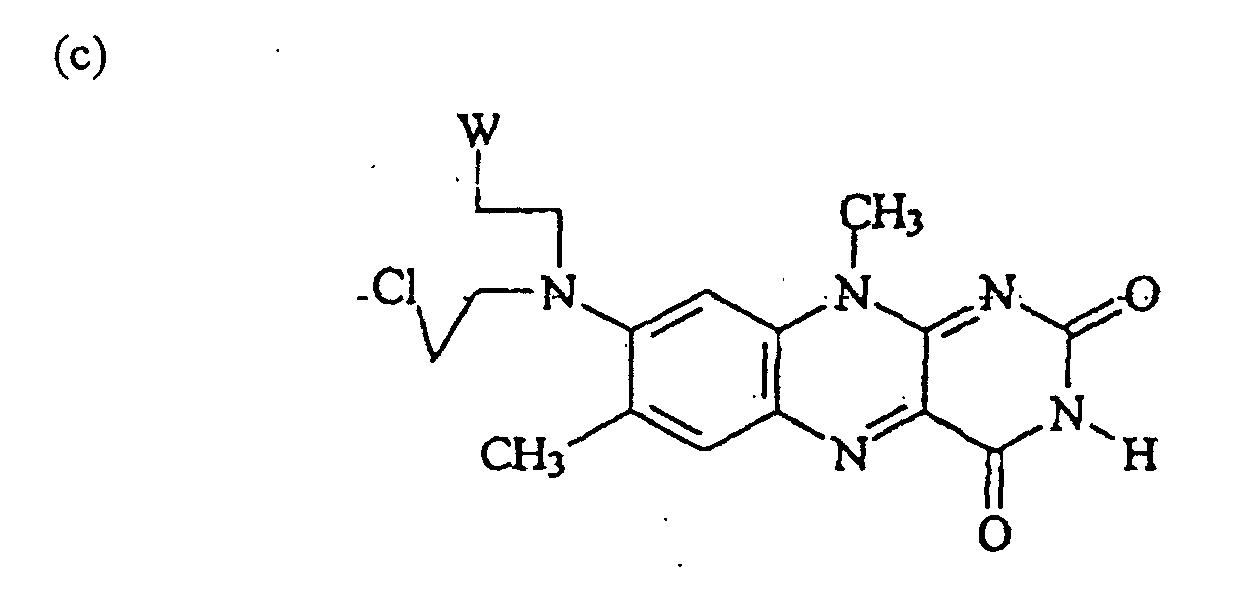
- Verfahren nach Anspruch 3, bei dem das Fluid Plättchen, rote Blutkörperchen, Serum oder Plasma umfasst, das vom Vollblut getrennt ist.
- Verfahren nach Anspruch 3, bei dem der Mikroorganismenneutralisator einem Antikoagulans zugesetzt und das Antikoagulans zum Fluid gegeben wird.
- Verfahren nach Anspruch 3, bei dem dem Fluid ein Antioxidans zugesetzt wird, ehe das Fluid dem auslösenden Ereignis ausgesetzt wird.
- Verfahren nach Anspruch 3, bei dem dann, wenn der Mikroorganismenneutralisator photolytische Produkte erzeugt, die photolytischen Produkte für Menschen oder Tiere weniger toxisch sind als Porphyrin.
- Verfahren, bei dem Mikroorganismen auf einer Oberfläche ganz oder teilweise an der Replikation gehindert werden, umfassend:(a) das Aufbringen von mindestens 1 µM einer Verbindung der Formelin der R1, R2, R3, R4, R5 und R6 jeweils unabhängig voneinander ausgewählt werden aus der Gruppe, bestehend aus Wasserstoff, ggfs. substituiertem Hydrocarbyl, Alkohol, Amin, Polyamin, Sulfat, Phosphat, Halogen, ausgewählt aus der aus Chlor, Brom und Iod bestehenden Gruppe, Salzen der vorstehenden;
und -NRa-(CRbRc)n-X, in der X ein aus der aus Chlor, Brom und Iod bestehenden Gruppe ausgewähltes Halogen ist, Ra, Rb und Rc unabhängig voneinander ausgewählt werden aus der Gruppe, bestehend aus Wasserstoff, ggfs. substituiertem Hydrocarbyl und Halogen, ausgewählt aus der aus Chlor, Brom und Iod bestehenden Gruppe, und n eine ganze Zahl von 0 bis 20 ist;
wobei eine ggfs. substituierte Hydrocarbylgruppe eine Gruppe ist, ausgewählt aus Alkyl, Alkenyl, Alkynyl, Ether, Polyether, Thioether, geradkettigen oder cyclischen Sacchariden, Ascorbat, Aminoalkyl-, Hydroxyalkyl-, Thioalkyl-, Aryl- und heterocyclischen Arylgruppen, Isoalloxazinmolekülen, Aminosäure, Polyalkohol, Glycol, carbocyclischen Ringen und Kombinationen solcher Gruppen, von denen jede ggfs. mit Halogen(en), OH, SH, NH2, COH, CO2H, ORa, SRa, NRaRb, CONRaRb substituiert ist, wobei Ra und Rb unabhängig voneinander Alkyl-, ungesättigte Alkyl- oder Arylgruppen bedeuten;
vorausgesetzt, dass R1 nicht -OH oder eine geradkettige Alkylgruppe ist, wenn das zweite Kohlenstoffatom der Kette mit -OH oder =O substituiert ist, und R1, R4 und R5 nicht alle Methylgruppen sind, wenn R2, R3 und R6 alle Wasserstoff sind;b) Exponieren der Oberfläche an ein auslösendes Ereignis einer Lichtstrahlung oder eines pH, die bzw. der ausreicht, um den Mikroorganismenneutralisator zu aktivieren, wodurch die Mikroorganismen ganz oder teilweise an der Replikation gehindert werden. - Verfahren nach Anspruch 1 oder 13, bei dem R1, R2, R3, R4, R5 und R6 jeweils unabhängig voneinander ausgewählt werden aus der Gruppe, bestehend aus Wasserstoff, ggfs. substituiertem Alkohol, Polyalkohol, geradkettigem oder cyclischem Saccharid, Aminosäure, Ether, Polyether, Amin, Polyamin, Sulfat, Phosphat, Carbonyl, Glycol, Halogen, ausgewählt aus der aus Chlor, Brom und Iod bestehenden Gruppe, Aldehyd, Keton, Carbonsäure und Ascorbat.
- Verfahren nach Anspruch 14, bei dem die Oberfläche die Oberfläche eines Lebensmittels, eines Tierkadavers, eine Oberfläche zur Zubereitung von Lebensmitteln oder eine Oberfläche eines Bade- oder Waschgefäßes ist.
- Fluid, das durch das Verfahren von Anspruch 3 erhältlich ist und biologisch aktives Protein, Blut oder Blutbestandteile und den Mikroorganismenneutralisator umfasst.
- Blutprodukt, das durch das Verfahren von Anspruch 3 erhältlich ist und den Mikroorganismenneutralisator umfasst.
- Verbindung der Strukturin der R1, R2, R3, R4, R5 und R6 jeweils unabhängig voneinander ausgewählt werden aus der Gruppe, bestehend aus Wasserstoff, ggfs. substituiertem Hydrocarbyl, Alkohol, Amin, Polyamin, Sulfat, Phosphat, Halogen, ausgewählt aus der aus Chlor, Brom und Iod bestehenden Gruppe, Salzen der vorstehenden;

und -NRa-(CRbRc)n-X, in der X ein aus der aus Chlor, Brom und Iod bestehenden Gruppe ausgewähltes Halogen ist, Ra, Rb und Rc unabhängig voneinander ausgewählt werden aus der Gruppe, bestehend aus Wasserstoff, ggfs. substituiertem Hydrocarbyl und Halogen, ausgewählt aus der aus Chlor, Brom und Iod bestehenden Gruppe, und n eine ganze Zahl von 0 bis 20 ist;
vorausgesetzt,
R1 ist nicht -OH oder eine geradkettige Alkylgruppe, wenn das zweite Kohlenstoffatom der Kette mit -OH oder =O substituiert ist; und R1 ist kein geradkettiges Alkyl mit 2, 3, 4 oder 5 Kohlenstoffatomen, das mit -OH, -COH oder -H endet, wenn R2, R3 und R6 H sind und R4 und R5 CH3 sind;
R1 ist nicht -CH2CH2-(CHOH)2-CH3 oder -CH2CH2(CHOH)2-CH2SO4 oder 1'-D-Sorbityl oder 1'-D-Dulcityl oder 1'-D-Rhamnityl oder 1'-D,L-Glyceryl oder -CH2-O-C(O)-CH3 oder CH2-O-C(O)-CH2CH3 oder 2',3',4',5'-Di-O-isopropyridenriboflavin oder 8-Aminooctyl, wenn R2, R3 und R6 H sind und R4 und R5 CH3 sind;
R1 ist nicht 1'-D-Sorbityl oder 1'-D-Dulcityl, wenn R4 und R5 beide Chloratome sind und wenn R2, R3 und R6 alle Wasserstoffatome sind;
R5 ist nicht Ethyl oder Chlor, wenn R1 und R4 Methyl sind und R2, R3 und R6 alle Wasserstoffatome sind;
R4 und R5 sind nicht beide Methoxy oder beide Tetramethylen, wenn R1 Methyl ist und R2, R3 und R6 alle Wasserstoffatome sind;
R2 ist nicht -CH2CH2NH, wenn R1, R4 und R5 CH3 sind und R3 und R6 H sind;
R2 ist nichtwenn R1, R4 und R5 CH3 sind und R3 und R6 H sind;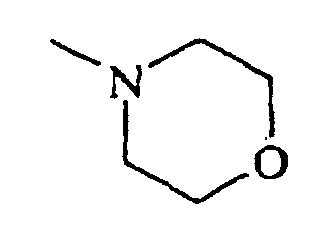
R5 ist nicht Chlor, wenn R4 Methoxy ist und R1 Ethyl-2'N-pyrrolidino ist und R2, R3 und R6 Wasserstoff sind;
R1 ist nicht N,N-Dimethylaminopropyl oder N,N-Diethylaminoethyl, wenn R5 Chlor oder Methyl ist und R2, R3, R4 und R6 Wasserstoff sind;
R3 ist nicht -NH(CH2CH2)Cl, wenn R6 -NH2 ist und R1, R2, R4 und R5 H sind;
R1, R4 und R5 sind nicht alle Methylgruppen, wenn R2, R3 und R6 alle Wasserstoffatome sind;
R1, R4, R5 und R2 sind nicht alle Methylgruppen, wenn R3 und R6 Wasserstoffatome sind;
R2 ist nicht Carboxymethyl, wenn R1, R4 und R5 Methyl sind und R3 und R6 Wasserstoff sind;
R4 ist nicht -NH2, wenn R1 und R5 Methyl sind und R2, R3 und R6 alle Wasserstoff sind;
R1 ist keine Phenylgruppe, wenn R4 und R5 Methyl sind und R2, R3 und R6 alle H sind;
R1 ist nicht Methyl oder N,N-Dimethylaminoethyl, wenn R2, R3, R4, R5 und R6 alle Wasserstoff sind;
R2, R4 und R5 sind nicht alle Methyl, wenn R1 Acetoxyethyl ist und R3 und R6 Wasserstoff sind;
R5 ist nicht Methyl, wenn R1 N,N-Diethylaminoethyl ist und R2, R3, R4 und R6 alle Wasserstoff sind;
R4 und R5 sind nicht beide Chlor, wenn R1 Methyl ist und R2, R3 und R6 alle Wasserstoff sind;
R1 ist nicht Ethyl, β-Chlorethyl, n-Butyl, Anilino, Benzyl, Phenyl, p-Tolyl oder p-Anisyl, wenn R5 NH2 ist und R2, R3, R4 und R6 alle Wasserstoff sind;
und R4 ist nicht Chlor, wenn R1 N,N-Dimethylaminopropyl ist und R2, R3, R5 und R6 alle Wasserstoff sind. - Verbindung nach Anspruch 18, bei der eines oder eine Vielzahl von R1, R2, R3, R4, R5 und R6 weder CH3 noch H ist.
- Verbindung nach Anspruch 19, bei der eine Vielzahl von R2, R3, R4, R5 und R6 weder H noch CH3 sind.
- Verbindung nach Anspruch 19, in der ein R1, R2, R3, R4, R5 und R6, das weder CH3 noch H ist, ausgewählt wird aus der Gruppe, bestehend aus Alkoholen, Polyalkoholen, geradkettigen oder cyclischen Sacchariden, Aminen, Polyaminen, Sulfatgruppen, Phosphatgruppen, Ascorbatgruppen, Alkylketten, die an einer beliebigen Position ggfs. mit -OH substituiert sind, Glycolen, Ethern und Polyethern, wobei die Verbindung bei einer Konzentration von mindestens 10 µm in Wasser löslich ist.
- Verbindung nach Anspruch 21, in der das R1, R2, R3, R4, R5 und R6 ausgewählt wird aus der Gruppe, bestehend aus Alkoholen, Polyalkoholen, geradkettigen oder cyclischen Sacchariden, Ethem, Polyether, Aminen, Polyaminen, Sulfatgruppen, Phosphatgruppen, Ascorbatgruppen, Alkylketten, die an einer beliebigen Position ggfs. mit -OH substituiert sind, Glycolen, Ethern und Polyethem, und in der eine Vielzahl von R1, R2, R3, R4, R5 und R6 weder CH3 noch H sind.
- Verbindung nach Anspruch 21, in der das R1, R2, R3, R4, R5 und R6 ausgewählt wird aus der Gruppe, bestehend aus Alkoholen, Polyalkoholen, geradkettigen oder cyclischen Sacchariden, Aminen und Polyaminen, Sulfatgruppen, Phosphatgruppen, Ascorbatgruppen, Alkylketten, die an einer beliebigen Position ggfs. mit -OH substituiert sind, Glycolen, Ethern und Polyethem, und in der eines von R1, R2, R3, R4, R5 und R6 weder CH3 noch H ist.
- Verbindung nach Anspruch 22 oder 23, in der R1 nicht CH2-(CH2OH)3-CH2OH ist.
- Verbindung nach Anspruch 23, in der das R1, R2, R3, R4, R5 oder R6 , das weder H noch CH3 ist, R2, R3, R4, R5 oder R6 ist.
- Verbindung nach Anspruch 22, in der R1 -CH2-(CH2-OH)3-CH2OH ist.
- Verbindung nach Anspruch 22 oder 23, in der R3 und R6 H sind.
- Verbindung nach Anspruch 19, in der mindestens eines von R1, R2, R3, R4, R5 und R6 ein Halogen, ausgewählt aus der aus Chlor, Brom und Iod bestehenden Gruppe, enthält.
- Verbindung nach Anspruch 28, in der mindestens eines von R1, R2, R3, R4, R5 und R6 -(CH2)n-X ist, in der n entweder 1 oder 2 ist und X ein Halogen, ausgewählt aus der aus Chlor, Brom und Iod bestehende Gruppe, ist.
- Verbindung nach Anspruch 28, in der mindestens eines der halogenierten R1, R2, R3, R4, R5 und R6 -NR(CH2)n-X ist, in der R Wasserstoff oder eine geradkettige Alkylgruppe, bestehend aus 1 bis 6 Kohlenstoffatomen, bedeutet, n eine ganze Zahl von 0 bis 6 ist und X aus der aus Chlor, Brom und Iod bestehenden Gruppe ausgewählt ist.
- Verbindung nach Anspruch 30, in der R4 oder R5 -NR(CH2)n-X ist, in der R Wasserstoff oder eine geradkettige Alkylgruppe, bestehend aus 1 bis 6 Kohlenstoffatomen, bedeutet, n eine ganze Zahl von 0 bis 6 ist und X aus der aus Chlor, Brom und Iod bestehenden Gruppe ausgewählt ist.
- Verbindung nach Anspruch 18, in der mindestens eines von R1, R2, R3, R4, R5 und R6 eine verzweigte oder unverzweigte C1-C20-Alkylgruppe, die mit mindestens einer -OH-Gruppe substituiert ist, ist.
- Verbindung nach Anspruch 18 mit der Struktur:in der R ausgewählt wird aus der Gruppe, bestehend aus Ascorbat, Alkohol, Polyalkohol, Amin oder Polyaminen, geradkettigen oder cyclischen Sacchariden, Sulfaten, Phosphaten, Polyethylenglycolen und Polyethern; oder
 in der R ausgewählt wird aus der Gruppe, bestehend aus Wasserstoff und ggfs. substituiertem geradkettigem oder verzweigtem Alkyl mit 1 bis 20 Kohlenstoffatomen; oder
 in der R ausgewählt wird aus der Gruppe, bestehend aus Wasserstoff und ggfs. substituiertem geradkettigem oder verzweigtem Alkyl mit 1 bis 20 Kohlenstoffatomen; oder
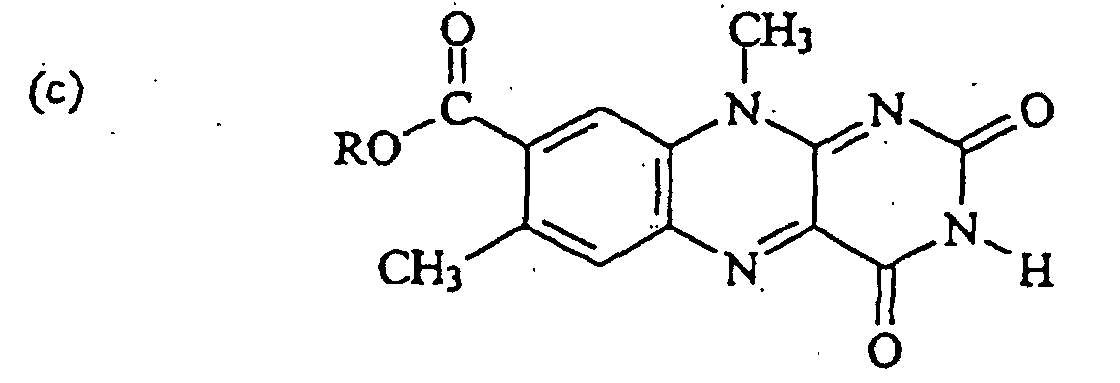 in der W ausgewählt wird aus der Gruppe, bestehend aus Alkoholen, Polyalkoholen, geradkettigen oder cyclischen Sacchariden, Aminen, Polyaminen, Sulfatgruppen, Phosphatgruppen, Ascorbatgruppen, Alkylketten, die an einer beliebigen Position ggfs. mit -OH substituiert sind, Glycolen, Ethern und Polyethern, wobei die Verbindung bei einer Konzentration von mindestens 10 µM in Wasser löslich ist.
- Verbindung nach Anspruch 18, in der mindestens eines von R1, R2, R3, R4, R5 und R6 Alkylierungsmittel sind.
- Verbindung nach Anspruch 18, in der mindestens eines von R1, R2, R3, R4, R5 und R6 Substituenten sind, die dafür sorgen, dass die Verbindung bei einem im Wesentlichen neutralen pH im Wesentlichen nicht mit Mikroorganismen reaktiv ist und beim pH des biologischen Fluids neutralisierend auf Mikroorganismen wirkt.
- Verfahren zur Herstellung einer Verbindung der Strukturin der W eine Gruppe ist, die die Verbindung bei einer Konzentration von mindestens 10 µM in Wasser löslich macht, umfassend
 (a) die Photolyse von Carboxyriboflavin;(b) das Umsetzen von (a) mit Oxallylchlorid;(c) das Umsetzen von (b) mit einer Komponente aus der Gruppe, bestehend aus Ascorbat, Glucosamin, geschützten Glucosederivaten, Diethylenglycol und Triethylenglycol.
 - Verfahren zur Herstellung einer Verbindung der Strukturin der W eine Gruppe ist, die die Verbindung bei einer Konzentration von mindestens 10 µM in Wasser löslich macht;
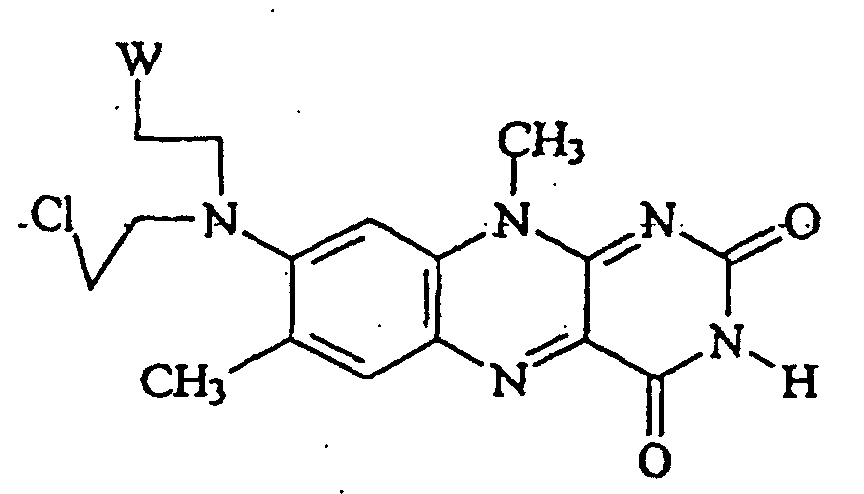
umfassend(a) das In-Kontakt-Bringen vonmit Natriumazid;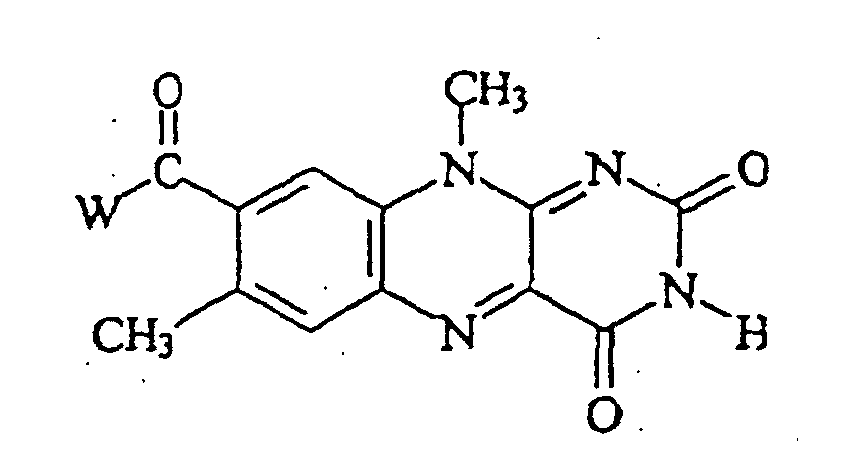 (b) das Umsetzen von (a) mitund POCl3-;
 (c) das Umsetzen von (b) mit einer Gruppe, ausgewählt aus Alkoholen, Polyalkoholen, geradkettigen oder cyclischen Sacchariden, Aminen, Polyaminen, Sulfatgruppen, Phosphatgruppen, Ascorbatgruppen, Alkylketten, die ggfs. an einer beliebigen Position mit -OH substituiert sind, Glycolen, Ethern und Polyethern.
Applications Claiming Priority (3)
| Application Number | Priority Date | Filing Date | Title |
|---|---|---|---|
| US09/420,652 US6268120B1 (en) | 1999-10-19 | 1999-10-19 | Isoalloxazine derivatives to neutralize biological contaminants |
| US420652 | 1999-10-19 | ||
| PCT/US2000/025213 WO2001028599A1 (en) | 1999-10-19 | 2000-09-15 | Isoalloxazine derivatives to neutralize biological contaminants |
Publications (2)
| Publication Number | Publication Date |
|---|---|
| EP1221982A1 EP1221982A1 (de) | 2002-07-17 |
| EP1221982B1 true EP1221982B1 (de) | 2005-07-20 |
Family
ID=23667315
Family Applications (1)
| Application Number | Title | Priority Date | Filing Date |
|---|---|---|---|
| EP00965012A Expired - Lifetime EP1221982B1 (de) | 1999-10-19 | 2000-09-15 | Isoalloxazinderivate zur neutralisierung von biologischen schmutzstoffen |
Country Status (8)
| Country | Link |
|---|---|
| US (2) | US6268120B1 (de) |
| EP (1) | EP1221982B1 (de) |
| JP (1) | JP2003512340A (de) |
| AT (1) | ATE299713T1 (de) |
| AU (1) | AU7580700A (de) |
| CA (1) | CA2387779C (de) |
| DE (1) | DE60021403T2 (de) |
| WO (1) | WO2001028599A1 (de) |
Families Citing this family (54)
| Publication number | Priority date | Publication date | Assignee | Title |
|---|---|---|---|---|
| US20040055965A1 (en) * | 1997-06-13 | 2004-03-25 | Hubig Stephan M. | Recreational water treatment employing singlet oxygen |
| US20030194433A1 (en) * | 2002-03-12 | 2003-10-16 | Ecolab | Antimicrobial compositions, methods and articles employing singlet oxygen- generating agent |
| US7498156B2 (en) | 1998-07-21 | 2009-03-03 | Caridianbct Biotechnologies, Llc | Use of visible light at wavelengths of 500 to 550 nm to reduce the number of pathogens in blood and blood components |
| US7186543B1 (en) * | 1998-07-21 | 2007-03-06 | Gambro Inc. | Preparation of vaccines using a photosensitizer and light |
| US7049110B2 (en) | 1998-07-21 | 2006-05-23 | Gambro, Inc. | Inactivation of West Nile virus and malaria using photosensitizers |
| US7094378B1 (en) * | 2000-06-15 | 2006-08-22 | Gambro, Inc. | Method and apparatus for inactivation of biological contaminants using photosensitizers |
| US7220747B2 (en) * | 1999-07-20 | 2007-05-22 | Gambro, Inc. | Method for preventing damage to or rejuvenating a cellular blood component using mitochondrial enhancer |
| US7897140B2 (en) | 1999-12-23 | 2011-03-01 | Health Research, Inc. | Multi DTPA conjugated tetrapyrollic compounds for phototherapeutic contrast agents |
| TW590780B (en) | 2000-06-02 | 2004-06-11 | Gambro Inc | Additive solutions containing riboflavin |
| US7648699B2 (en) | 2000-06-02 | 2010-01-19 | Caridianbct Biotechnologies, Llc | Preventing transfusion related complications in a recipient of a blood transfusion |
| US7985588B2 (en) | 2000-06-02 | 2011-07-26 | Caridianbct Biotechnologies, Llc | Induction of and maintenance of nucleic acid damage in pathogens using riboflavin and light |
| US6843961B2 (en) * | 2000-06-15 | 2005-01-18 | Gambro, Inc. | Reduction of contaminants in blood and blood products using photosensitizers and peak wavelengths of light |
| US9044523B2 (en) | 2000-06-15 | 2015-06-02 | Terumo Bct, Inc. | Reduction of contaminants in blood and blood products using photosensitizers and peak wavelengths of light |
| US6548241B1 (en) * | 2000-11-28 | 2003-04-15 | Gambro, Inc. | Storage solution containing photosensitizer for inactivation of biological contaminants |
| US20030141260A1 (en) * | 2001-12-28 | 2003-07-31 | Frank Corbin | Oxygen-enhanced pathogen inactivation |
| EP1404379A2 (de) * | 2001-05-30 | 2004-04-07 | Gambro, Inc. | Methode zur inaktivierung von virien mittels antioxidantien |
| US20030228564A1 (en) * | 2001-05-30 | 2003-12-11 | Edrich Richard Alan | Nitric oxide in a pathogen inactivation process |
| US20030031584A1 (en) * | 2001-08-10 | 2003-02-13 | Wilson Burgess | Methods for sterilizing biological materials using dipeptide stabilizers |
| US20030077264A1 (en) * | 2001-09-20 | 2003-04-24 | Goodrich Laura L. | Antimicrobial blood treatment using allicin and related compounds |
| US7264608B2 (en) * | 2001-12-05 | 2007-09-04 | Fenwal, Inc. | Manual processing systems and methods for providing blood components conditioned for pathogen inactivation |
| US20040038373A1 (en) * | 2001-12-07 | 2004-02-26 | Platz Matthew S. | Apoptotic EBV-transformed lymphocytes, a therapeutic agent for post-transplant lymphoproliferative disorder |
| US7235392B2 (en) * | 2001-12-07 | 2007-06-26 | The Ohio State University Research Foundation | Apoptotic EBV-transformed lymphocytes, a therapeutic agent for post-transplant lymphoproliferative disorder |
| WO2003054176A2 (en) * | 2001-12-20 | 2003-07-03 | Gambro, Inc. | Preparation of vaccines using photosensitizer and light |
| WO2003063902A2 (en) * | 2002-02-01 | 2003-08-07 | Gambro, Inc. | Inactivation of west nile virus and plasmodium falciparum using alloxazine-derivating photosensitizers |
| US20070020300A1 (en) * | 2002-03-12 | 2007-01-25 | Ecolab Inc. | Recreational water treatment employing singlet oxygen |
| EP1487559A4 (de) | 2002-03-14 | 2008-12-24 | Fenwal Inc | Vorrichtung zur entfernung von verbindungen |
| CA2482021C (en) * | 2002-04-24 | 2007-06-19 | Gambro, Inc. | Removal of adenine during a process of pathogen reducing blood and blood components |
| AU2003221787A1 (en) * | 2002-04-26 | 2003-11-10 | Gambro, Inc. | Solution containing platelet activation inhibitors for pathogen reducing and storing blood platelets |
| CA2483046A1 (en) * | 2002-05-06 | 2003-11-20 | Gambro, Inc. | Method for preventing damage to or rejuvenating a cellular blood component using mitochondrial enhancer |
| US6933285B2 (en) * | 2002-05-10 | 2005-08-23 | The Ohio State University | Flavin N-oxides: new anti-cancer agents and pathogen eradication agents |
| WO2004002476A2 (en) | 2002-06-27 | 2004-01-08 | Health Research, Inc. | Fluorinated chlorin and bacteriochlorin photosensitizers for photodynamic therapy |
| US7053210B2 (en) | 2002-07-02 | 2006-05-30 | Health Research, Inc. | Efficient synthesis of pyropheophorbide a and its derivatives |
| CA2495909C (en) * | 2002-08-23 | 2012-02-21 | Gambro, Inc. | Nucleic acid damage using riboflavin and light |
| RU2248978C1 (ru) * | 2003-08-26 | 2005-03-27 | ООО "Исследовательский институт химического разнообразия" | Фармацевтические композиции, способ их получения и применения |
| US7534348B2 (en) * | 2003-09-12 | 2009-05-19 | Fenwal, Inc. | Flow-through removal device and system using such device |
| US20050137517A1 (en) * | 2003-12-19 | 2005-06-23 | Baxter International Inc. | Processing systems and methods for providing leukocyte-reduced blood components conditioned for pathogen inactivation |
| US8296071B2 (en) * | 2004-03-15 | 2012-10-23 | Terumo Bct Biotechnologies, Llc | Methods for uniformly treating biological samples with electromagnetic radiation |
| US20070025918A1 (en) * | 2005-07-28 | 2007-02-01 | General Electric Company | Magnetic resonance imaging (MRI) agents: water soluble carbon-13 enriched fullerene and carbon nanotubes for use with dynamic nuclear polarization |
| DE102005062634A1 (de) | 2005-12-23 | 2007-06-28 | Blutspendedienst der Landesverbände des Deutschen Roten Kreuzes Niedersachsen, Sachsen-Anhalt, Thüringen, Oldenburg und Bremen gGmbH | Verfahren zur Inaktivierung von Pathogenen in Spenderblut, Blutplasma oder Erythrozytenkonzentraten in flexiblen Behältnissen unter Bewegung |
| DE102005062410A1 (de) * | 2005-12-23 | 2007-08-09 | Forschungsgemeinschaft Der Drk-Blutspendedienste E.V. | Verfahren zur Bestrahlung von Thrombozytenkonzentraten in flexiblen Behältnissen mit ultraviolettem Licht |
| EP1976852A1 (de) * | 2006-01-27 | 2008-10-08 | CaridianBCT Biotechnologies, LLC | Verfahren und zusammensetzungen zur herstellung hochkonzentrierter alloxazin-lösungen |
| EP1902740A1 (de) | 2006-09-19 | 2008-03-26 | Maco Pharma S.A. | Blutbeutelsystem und Verfahren, um Pathogene in Blutplättchenkonzentraten mit Hilfe des Blutbeutelsystems zu neutralisieren |
| EP2008669A1 (de) * | 2007-06-22 | 2008-12-31 | Maco Pharma S.A. | Bestrahlungsvorrichtung zur Deaktivierung von Krankheitserregern und/oder Leukozyten in einer biologischen Flüssigkeit und entsprechendes Verfahren |
| WO2009005853A1 (en) * | 2007-07-02 | 2009-01-08 | Caridianbct Biotechnologies, Llc | Apparatus for photo reduction of contaminants in blood and blood products with calibration means |
| US9907976B2 (en) | 2011-07-08 | 2018-03-06 | Immunolight, Llc | Phosphors and scintillators for light stimulation within a medium |
| AU2009282478A1 (en) * | 2008-08-11 | 2010-02-18 | Biorelix,Inc. | Flavin derivatives |
| WO2010132167A1 (en) * | 2009-05-11 | 2010-11-18 | Caridianbct Biotechnologies, Llc | Stable calibration means for apparatus for photo reduction of contaminants in blood |
| US20130029980A1 (en) * | 2010-04-06 | 2013-01-31 | Coish Philip D G | Flavin derivatives |
| US20140127077A1 (en) | 2012-11-05 | 2014-05-08 | Gail Rock | Device and method for sterilization of instruments and surfaces |
| US10858643B2 (en) | 2015-10-30 | 2020-12-08 | Sensor Electronic Technology, Inc. | Vaccine preparation using ultraviolet radiation |
| US20190099543A1 (en) | 2016-03-23 | 2019-04-04 | Terumo Kabushiki Kaisha | Light irradiation device |
| JP2018131410A (ja) * | 2017-02-15 | 2018-08-23 | ヒノキ新薬株式会社 | カスパーゼ−3阻害剤とその用途 |
| CN114366831A (zh) * | 2022-01-10 | 2022-04-19 | 南京双威生物医学科技有限公司 | 一种基于核黄素光化学法的血浆病原体灭活处理方法 |
| CN115057911B (zh) * | 2022-05-20 | 2025-01-03 | 广州朗圣药业有限公司 | 一种hiv抑制剂 |
Family Cites Families (213)
| Publication number | Priority date | Publication date | Assignee | Title |
|---|---|---|---|---|
| US683690A (en) | 1900-06-13 | 1901-10-01 | Charles M Johnson | Apparatus for sterilizing disease-germs. |
| US1733239A (en) | 1929-01-31 | 1929-10-29 | Donald E Roberts | Applicator for conducting ultra-violet rays |
| US1961700A (en) | 1932-07-29 | 1934-06-05 | Gen Electric Vapor Lamp Co | Apparatus for sterilizing articles by ultraviolet radiation |
| US2056614A (en) | 1933-06-13 | 1936-10-06 | Gen Electric Vapor Lamp Co | Ultraviolet sterilizer |
| US2111491A (en) * | 1935-01-26 | 1938-03-15 | Winthrop Chem Co Inc | Process of preparing phosphoric acid esters of hydroxyalkyl isoalloxazines |
| US2212330A (en) | 1938-05-03 | 1940-08-20 | Albert G Thomas | Sterilizing device |
| US2212230A (en) | 1938-05-28 | 1940-08-20 | Internat Telephone Dev Co Inc | Airplane guiding beacon |
| US2340890A (en) | 1941-02-25 | 1944-02-08 | Lang Alphonse | Method and apparatus for sterilizing, preserving, and irradiating of various liquid substances |
| US2654735A (en) * | 1949-07-29 | 1953-10-06 | Us Vitamin Corp | Process for the production of derivatives of 9-polyhydroxyalkylisoalloxazines and products obtained |
| US2654753A (en) | 1951-02-12 | 1953-10-06 | Lilly Co Eli | 2-sulfanilamido-5-aminopyrimidine and salts thereof |
| US2825729A (en) * | 1955-05-24 | 1958-03-04 | Upjohn Co | Isoalloxazines |
| US3189598A (en) * | 1960-01-14 | 1965-06-15 | Yagi Kunio | Fatty acid esters of riboflavin |
| US3456053A (en) | 1966-05-06 | 1969-07-15 | Pfizer & Co C | Inactivated hog cholera virus vaccine |
| US3683183A (en) | 1969-06-04 | 1972-08-08 | Radiation Machinery Corp | A flow-through irradiator for the extra corporeal irradiation of fluid |
| US3705985A (en) | 1969-06-27 | 1972-12-12 | Nuclear Associates Inc | Fluid irradiator and process for its manufacture |
| US3683177A (en) | 1970-06-30 | 1972-08-08 | Louis P Veloz | Sterilization of a fluid by ultraviolet radiation |
| US3852032A (en) | 1971-06-07 | 1974-12-03 | Uroptics Int Inc | Process for sterilizing hydrophilic gelatin lenses having ultraviolet stabilizers |
| US3776694A (en) | 1972-04-04 | 1973-12-04 | L Leittl | Germicidal toiletry cabinet for different personal hygiene items |
| US3926556A (en) | 1973-05-30 | 1975-12-16 | Raymond Marcel Gut Boucher | Biocidal electromagnetic synergistic process |
| US3864081A (en) | 1973-06-12 | 1975-02-04 | Spectroderm International Inc | Apparatus for sterilizing biologic material and the like by ultra-violet irradiation |
| US3920650A (en) * | 1973-09-19 | 1975-11-18 | Morton Norwich Products Inc | Isoalloxazines |
| US3894236A (en) | 1973-12-10 | 1975-07-08 | Wayne K Hazelrigg | Device for irradiating fluids |
| US3927325A (en) | 1974-07-10 | 1975-12-16 | Us Energy | Tissue irradiator |
| US4305390A (en) | 1975-11-28 | 1981-12-15 | Massachusetts Institute Of Technology | Method for generating oxygen in an excited electronic state and inactivation of microorganisms |
| US4139348A (en) | 1975-11-28 | 1979-02-13 | Massachusetts Institute Of Technology | Electrochemical process and apparatus to control the chemical state of a material |
| US4181128A (en) | 1975-11-28 | 1980-01-01 | Massachusetts Institute Of Technology | Virus inactivation applicator and the like |
| US4173631A (en) | 1976-08-23 | 1979-11-06 | Merck & Co., Inc. | 7-Methyl-8-methylamino-10-(1'-D-ribityl)isoalloxazine |
| US4124598A (en) | 1976-10-20 | 1978-11-07 | Hoffmann-La Roche Inc. | Psoralens |
| US4196281A (en) | 1976-10-20 | 1980-04-01 | Regents Of The University Of California | Psoralens |
| US4169204A (en) | 1976-10-20 | 1979-09-25 | Regents Of The University Of California | Psoralens |
| US4424201A (en) | 1978-11-28 | 1984-01-03 | Rockefeller University | Employment of a mereyanine dye for the detection of malignant leukocytic cells |
| IT1166343B (it) | 1979-08-20 | 1987-04-29 | Francarosa Baccichetti | Furocumarina per la fotochemioterapia della fsoriasi e di altre malattie cutanee ad essa sensibili |
| US4321918A (en) | 1979-10-23 | 1982-03-30 | Clark Ii William T | Process for suppressing immunity to transplants |
| US4321919A (en) | 1979-12-11 | 1982-03-30 | Leukocyte Research, Inc. | Method and system for externally treating human blood |
| US4428744A (en) | 1979-12-11 | 1984-01-31 | Frederic A. Bourke, Jr. | Method and system for externally treating the blood |
| US4398906A (en) | 1979-12-11 | 1983-08-16 | Frederic A. Bourke, Jr. | Method for externally treating the blood |
| DE8007265U1 (de) | 1980-03-17 | 1981-08-27 | ESPE Fabrik pharmazeutischer Präparate GmbH, 8031 Seefeld | Geraet zum behandeln von zahnersatzteilen |
| US4336809A (en) | 1980-03-17 | 1982-06-29 | Burleigh Instruments, Inc. | Human and animal tissue photoradiation system and method |
| US4481167A (en) | 1980-04-11 | 1984-11-06 | The Dow Chemical Company | Sanitizing complexes of polyoxazolines or polyoxazines and polyhalide anions |
| US4398031A (en) | 1980-06-11 | 1983-08-09 | The Regents Of The University Of California | Coumarin derivatives and method for synthesizing 5'-methyl psoralens therefrom |
| JPS616899Y2 (de) | 1981-04-27 | 1986-03-03 | ||
| US4568542A (en) | 1981-06-09 | 1986-02-04 | Lee Biomolecular Research Laboratories, Inc. | Vaccine compositions |
| US4464166A (en) | 1981-06-12 | 1984-08-07 | Frederic A. Bourke, Jr. | Method for externally treating the blood |
| US4612007A (en) | 1981-06-16 | 1986-09-16 | Edelson Richard Leslie | Method and system for externally treating the blood |
| EP0087441A1 (de) | 1981-09-08 | 1983-09-07 | Quentron Optics Pty. Ltd. | Photostrahlungsverfahren und anordnung |
| JPS5862333A (ja) | 1981-10-09 | 1983-04-13 | Mazda Motor Corp | エンジンのアイドル回転制御装置 |
| US4467206A (en) | 1981-12-14 | 1984-08-21 | Extracorporeal Medical Specialties, Inc. | Method and apparatus for the irradiation of fluids |
| US4456512A (en) | 1982-03-10 | 1984-06-26 | The Dow Chemical Company | Photochemical reactor and method |
| US4649151A (en) | 1982-09-27 | 1987-03-10 | Health Research, Inc. | Drugs comprising porphyrins |
| CA1216518A (en) | 1982-11-01 | 1987-01-13 | Gail A. Rock | Plasma-free medium for platelet storage |
| US4684521A (en) | 1982-12-08 | 1987-08-04 | Frederic A. Bourke, Jr. | Method and system for externally treating the blood |
| US4613322A (en) | 1982-12-08 | 1986-09-23 | Edelson Richard Leslie | Method and system for externally treating the blood |
| US4683889A (en) | 1983-03-29 | 1987-08-04 | Frederic A. Bourke, Jr. | Method and system for externally treating the blood |
| ATE59145T1 (de) | 1983-05-02 | 1991-01-15 | Diamond Scient Co | Photochemische entkeimungsbehandlung von vollem blut oder blutbestandteilen. |
| US4748120A (en) | 1983-05-02 | 1988-05-31 | Diamond Scientific Co. | Photochemical decontamination treatment of whole blood or blood components |
| US4727027A (en) | 1983-05-02 | 1988-02-23 | Diamond Scientific Co. | Photochemical decontamination treatment of whole blood or blood components |
| US4861704A (en) | 1983-09-01 | 1989-08-29 | The Trustees Of Columbia University In The City Of New York | Processes for development of acceptance of transplanted organs and tissues |
| US4946438A (en) | 1983-09-01 | 1990-08-07 | The Trustees Of Columbia University In The City Of New York | Process for development of acceptance of transplanted organs and tissues |
| US4992363A (en) | 1983-11-09 | 1991-02-12 | Thomas Jefferson University | Method for preparing glucose free media for storing blood platelets |
| US4693981A (en) | 1983-12-20 | 1987-09-15 | Advanced Genetics Research Institute | Preparation of inactivated viral vaccines |
| US4604356A (en) | 1983-12-21 | 1986-08-05 | Miles Laboratories, Inc. | Purification of flavin adenine dinucleotide synthetase |
| CH657864A5 (de) | 1984-02-17 | 1986-09-30 | Ciba Geigy Ag | Wasserloesliche phthalocyaninverbindungen und deren verwendung als photoaktivatoren. |
| US4493981A (en) | 1984-03-05 | 1985-01-15 | General Electric Company | Boil dry protection system for cooking appliance |
| US5550111A (en) | 1984-07-11 | 1996-08-27 | Temple University-Of The Commonwealth System Of Higher Education | Dual action 2',5'-oligoadenylate antiviral derivatives and uses thereof |
| JPH0622222B2 (ja) | 1984-09-18 | 1994-03-23 | 株式会社東芝 | 光処理装置 |
| JPS6176160A (ja) | 1984-09-21 | 1986-04-18 | 松永 是 | 殺細胞方法 |
| US4576143A (en) | 1984-10-05 | 1986-03-18 | Clark Iii William T | Method of immune modification by means of extracorporeal irradiation of the blood |
| US4623328A (en) | 1984-10-29 | 1986-11-18 | Mcneilab, Inc. | Pump monitor for photoactivation patient treatment system |
| US4737140A (en) | 1984-10-29 | 1988-04-12 | Mcneilab, Inc. | Irradiation chamber for photoactivation patient treatment system |
| US4568328A (en) | 1984-10-29 | 1986-02-04 | Extracorporeal Medical Specialties, Inc. | Automated photophoresis blood portion control methods and apparatus |
| US4596547A (en) | 1984-10-29 | 1986-06-24 | Mcneilab, Inc. | Valve apparatus for photoactivation patient treatment system |
| US4573961A (en) | 1984-10-29 | 1986-03-04 | Extracorporeal Medical Specialties, Inc. | Electronic control methods for puvapheresis apparatus |
| US4573960A (en) | 1984-10-29 | 1986-03-04 | Extracorporeal Medical Specialties, Inc. | Three phase irradiation treatment process |
| US4573962A (en) | 1984-10-29 | 1986-03-04 | Extracorporeal Medical Specialties, Inc. | Cassette drawer assembly for photoactivation patient treatment system |
| US4578056A (en) | 1984-10-29 | 1986-03-25 | Extracorporeal Medical Specialties, Inc. | Patient photopheresis treatment apparatus and method |
| US4708715A (en) | 1984-10-29 | 1987-11-24 | Mcneilab, Inc. | Light array assembly for photoactivation patient treatment system |
| US4608255A (en) | 1985-01-31 | 1986-08-26 | American National Red Cross | Biocompatible method for in situ production of functional platelets and product produced thereby lacking immunogenicity |
| JPS61275228A (ja) * | 1985-03-14 | 1986-12-05 | バクスタ−、トラベノ−ル、ラボラトリ−ズ、インコ−ポレイテツド | 治療用タンパク組成物中のビ−ルスの光動的不活性化 |
| DD249143A3 (de) | 1985-03-20 | 1987-09-02 | Ilmenau Tech Hochschule | Vorrichtung zur physiologisch-therapeutisch wirksamen optischen bestrahlung koerpereigenen venenblutes |
| US4683195A (en) | 1986-01-30 | 1987-07-28 | Cetus Corporation | Process for amplifying, detecting, and/or-cloning nucleic acid sequences |
| US4683202A (en) | 1985-03-28 | 1987-07-28 | Cetus Corporation | Process for amplifying nucleic acid sequences |
| US4651739A (en) | 1985-04-08 | 1987-03-24 | The General Hospital Corporation | Light-induced killing of carcinoma cells |
| US4998931A (en) | 1985-07-05 | 1991-03-12 | Puget Sound Blood Center | Method of reducing immunogenicity and inducing immunologic tolerance |
| US4930516B1 (en) | 1985-11-13 | 1998-08-04 | Laser Diagnostic Instr Inc | Method for detecting cancerous tissue using visible native luminescence |
| US5248506A (en) | 1986-03-19 | 1993-09-28 | American National Red Cross | Synthetic, plasma-free, transfusible storage medium for red blood cells and platelets |
| US4695460A (en) | 1986-03-19 | 1987-09-22 | American Red Cross | Synthetic, plasma-free, transfusible platelet storage medium |
| US4961928A (en) | 1986-03-19 | 1990-10-09 | American Red Cross | Synthetic, plasma-free, transfusible storage medium for red blood cells and platelets |
| US5017338A (en) | 1986-04-11 | 1991-05-21 | The Center For Blood Research, Inc. | Platelet concentrates |
| US4726949A (en) | 1986-08-26 | 1988-02-23 | Baxter Travenol Laboratories, Inc. | Irradiation of blood products |
| US4866282A (en) | 1986-08-26 | 1989-09-12 | Baxter International Inc. | Irradiation of blood products |
| US4952812A (en) | 1986-08-26 | 1990-08-28 | Baxter International Inc. | Irradiation of blood products |
| US4915683A (en) | 1986-11-21 | 1990-04-10 | The Medical College Of Wisconsin, Inc. | Antiviral method, agents and apparatus |
| US5304113A (en) | 1986-11-21 | 1994-04-19 | The Mcw Research Foundation, Inc. | Method of eradicating infectious biological contaminants |
| US4775625A (en) | 1986-11-21 | 1988-10-04 | The Medical College Of Wisconsin, Inc. | Inactivating enveloped viruses with a merocyanine dye |
| US5039483A (en) | 1987-03-10 | 1991-08-13 | The Medical College Of Wisconsin, Inc. | Antiprotozoan method |
| US4878891A (en) | 1987-06-25 | 1989-11-07 | Baylor Research Foundation | Method for eradicating infectious biological contaminants in body tissues |
| US4833165A (en) | 1987-10-07 | 1989-05-23 | Louderback Allan Lee | Method of inactivating HTLV-III virus in blood |
| CA1316666C (en) | 1987-10-22 | 1993-04-27 | Robert E. Duthie, Jr. | Sterilization method and apparatus |
| US4880788A (en) | 1987-10-30 | 1989-11-14 | Baylor College Of Medicine | Method for preventing and treating thrombosis |
| US5229081A (en) | 1988-02-12 | 1993-07-20 | Regal Joint Co., Ltd. | Apparatus for semiconductor process including photo-excitation process |
| DE3805459A1 (de) | 1988-02-22 | 1989-08-31 | Biotest Pharma Gmbh | Verfahren zur sterilisation von blut, plasma, blut- und plasmaderivaten, zellsuspensionen oder dgl. |
| GB8807380D0 (en) | 1988-03-29 | 1988-05-05 | Gunn A | Blood processing apparatus |
| US5288647A (en) | 1988-05-02 | 1994-02-22 | Stratagene | Method of irradiating biological specimens |
| DE3824647A1 (de) | 1988-07-20 | 1990-02-01 | Wedeco Entkeimungsanlagen | Vorrichtung zur bestrahlung von medien mittels uv-licht |
| AU4181089A (en) | 1988-08-01 | 1990-03-05 | George D. Cimino | Identification of allele specific nucleic acid sequences by hybridization with crosslinkable oligonucleotide probes |
| EP0386241A4 (en) | 1988-08-23 | 1990-10-03 | Radiotech Inst An | Light-guiding device for medical treatment |
| DE3831141A1 (de) | 1988-09-13 | 1990-03-22 | Zeiss Carl Fa | Verfahren und vorrichtung zur mikrochirurgie am auge mittels laserstrahlung |
| US4994367A (en) | 1988-10-07 | 1991-02-19 | East Carolina University | Extended shelf life platelet preparations and process for preparing the same |
| US4950665A (en) | 1988-10-28 | 1990-08-21 | Oklahoma Medical Research Foundation | Phototherapy using methylene blue |
| US5571666A (en) | 1988-10-28 | 1996-11-05 | Oklahoma Medical Research Foundation | Thiazine dyes used to inactivate HIV in biological fluids |
| US5089384A (en) | 1988-11-04 | 1992-02-18 | Amoco Corporation | Method and apparatus for selective cell destruction using amplified immunofluorescence |
| US5419759A (en) | 1988-11-17 | 1995-05-30 | Naficy; Sadeque S. | Apparatus and methods for treatment of HIV infections and AIDS |
| US5020995A (en) | 1989-01-18 | 1991-06-04 | Guy Levy | Surgical treatment method and instrument |
| US5092773A (en) | 1989-01-18 | 1992-03-03 | Endo Technic Corporation | Method and apparatus for filling a tooth canal |
| US4960408A (en) | 1989-01-10 | 1990-10-02 | Klainer Albert S | Treatment methods and vaccines for stimulating an immunological response against retroviruses |
| US5273713A (en) | 1989-01-18 | 1993-12-28 | Laser Medical Technology, Inc. | Water purification and sterilization process |
| US4921473A (en) | 1989-02-02 | 1990-05-01 | Therakos, Inc. | Multicomponent fluid separation and irradiation system |
| US5041078A (en) | 1989-03-06 | 1991-08-20 | Baylor Research Foundation, A Nonprofit Corporation Of The State Of Texas | Photodynamic viral deactivation with sapphyrins |
| US4978688A (en) | 1989-03-24 | 1990-12-18 | Louderback Allan Lee | Method of treating white blood cells |
| US4999375A (en) | 1989-04-11 | 1991-03-12 | Hoffmann-La Roche Inc. | Psoralen reagent compositions for extracorporeal treatment of blood |
| MY108087A (en) | 1989-07-12 | 1996-08-15 | Randy L Stinson | Apparatus and method for irradiating cells. |
| US5150705A (en) | 1989-07-12 | 1992-09-29 | Stinson Randy L | Apparatus and method for irradiating cells |
| DE3930510A1 (de) | 1989-09-13 | 1991-03-21 | Blutspendedienst Dt Rote Kreuz | Verfahren zur inaktivierung von viren in blut und blutprodukten |
| DE3930668A1 (de) * | 1989-09-14 | 1991-03-28 | Basf Ag | Verfahren zur herstellung von riboflavin-5'-phosphat(5'-fmn) bzw. dessen natriumsalz |
| US5192264A (en) | 1989-10-06 | 1993-03-09 | The Beth Israel Hospital Association | Methods and apparatus for treating disease states using oxidized lipoproteins |
| US5366440A (en) | 1989-10-06 | 1994-11-22 | The Beth Israel Hospital Association | Methods for treating disease states using oxidized lipoproteins in conjunction with chemotherapeutic effector agents |
| US5556958A (en) | 1989-10-26 | 1996-09-17 | Steritech, Inc. | Inactivation of pathogens in clinical samples |
| US5184020A (en) | 1989-10-26 | 1993-02-02 | Hearst David P | Device and method for photoactivation |
| US5503721A (en) | 1991-07-18 | 1996-04-02 | Hri Research, Inc. | Method for photoactivation |
| US5089146A (en) | 1990-02-12 | 1992-02-18 | Miles Inc. | Pre-storage filtration of platelets |
| US5236716A (en) | 1990-02-12 | 1993-08-17 | Miles Inc. | Platelets concentrate with low white blood cells content |
| US5147776A (en) | 1990-02-26 | 1992-09-15 | University Of Iowa Research Foundation | Use of 2,5-anhydromannitol for control of pH during blood storage |
| US5587490A (en) | 1990-04-16 | 1996-12-24 | Credit Managers Association Of California | Method of inactivation of viral and bacterial blood contaminants |
| US5516629A (en) | 1990-04-16 | 1996-05-14 | Cryopharm Corporation | Photoinactivation of viral and bacterial blood contaminants using halogenated coumarins |
| US5418130A (en) | 1990-04-16 | 1995-05-23 | Cryopharm Corporation | Method of inactivation of viral and bacterial blood contaminants |
| US5342752A (en) | 1990-04-16 | 1994-08-30 | Cryopharm Corporation | Method of inactivation of viral blood contaminants using acridine deriatives |
| US5798238A (en) | 1990-04-16 | 1998-08-25 | Baxter International Inc. | Method of inactivation of viral and bacterial blood contaminants with quinolines as photosensitizer |
| US5545516A (en) | 1990-05-01 | 1996-08-13 | The American National Red Cross | Inactivation of extracellular enveloped viruses in blood and blood components by phenthiazin-5-ium dyes plus light |
| US5114957A (en) | 1990-05-08 | 1992-05-19 | Biodor U.S. Holding | Tocopherol-based antiviral agents and method of using same |
| US5120649A (en) | 1990-05-15 | 1992-06-09 | New York Blood Center, Inc. | Photodynamic inactivation of viruses in blood cell-containing compositions |
| US5712086A (en) | 1990-05-15 | 1998-01-27 | New York Blood Center, Inc. | Process for transfusing cell containing fractions sterilized with radiation and a quencher of type I and type II photodynamic reactions |
| US5232844A (en) | 1990-05-15 | 1993-08-03 | New York Blood Center | Photodynamic inactivation of viruses in cell-containing compositions |
| US5658722A (en) | 1990-05-15 | 1997-08-19 | New York Blood Center, Inc. | Process for the sterilization of biological compositions using UVA1 irradiation |
| DE4017091A1 (de) | 1990-05-27 | 1991-11-28 | Walter Dr Mach | Molekuelverbundsystem zur kontra-eskalativen therapie viraler infektionskrankheiten |
| US5114670A (en) | 1990-08-30 | 1992-05-19 | Liqui-Box/B-Bar-B Corporation | Process for sterilizing surfaces |
| EP0516836B1 (de) | 1990-12-20 | 1996-03-13 | Baxter International Inc. | Vorrichtung und verfahren zum entfernen von verunreinigungen aus flüssigkeiten |
| US5935092A (en) | 1990-12-20 | 1999-08-10 | Baxter International Inc. | Systems and methods for removing free and entrained contaminants in plasma |
| CA2074830C (en) | 1990-12-20 | 1999-03-02 | Daniel F. Bischof | Systems and methods for simultaneously removing free and entrained contaminants in fluid like blood using photoactive therapy and cellular separation techniques |
| JP3051996B2 (ja) | 1990-12-20 | 2000-06-12 | バクスター、インターナショナル、インコーポレイテッド | 液体中の汚染物を根絶するためのシステム |
| US5376524A (en) | 1991-04-01 | 1994-12-27 | Thomas Jefferson University | Platelet storage medium containing acetate and phosphate |
| US5569579A (en) | 1991-04-01 | 1996-10-29 | Thomas Jefferson University | Synthetic-based platelet storage media |
| FR2715303A1 (fr) | 1991-04-02 | 1995-07-28 | Berque Jean | Utilisation du FAD et/ou du NAD comme médicaments. |
| FR2674753B1 (fr) | 1991-04-02 | 1995-03-10 | Jean Berque | Nouvelles indications therapeutiques, en particulier pour le traitement du sida, d'un medicament deja existant et fabrique a partir d'une molecule denuee de contre-indications et d'effets indesirables. |
| US5318023A (en) | 1991-04-03 | 1994-06-07 | Cedars-Sinai Medical Center | Apparatus and method of use for a photosensitizer enhanced fluorescence based biopsy needle |
| US5185532A (en) | 1991-05-21 | 1993-02-09 | Oral Card Products | Dental instrument sterilizer |
| US5269946A (en) | 1991-05-22 | 1993-12-14 | Baxter Healthcare Corporation | Systems and methods for removing undesired matter from blood cells |
| US5340716A (en) | 1991-06-20 | 1994-08-23 | Snytex (U.S.A.) Inc. | Assay method utilizing photoactivated chemiluminescent label |
| EP0544895B1 (de) | 1991-06-21 | 1997-08-27 | Baxter International Inc. | Verfahren zur inaktivierung von pathogenen in einer körperflüssigkeit |
| NZ244270A (en) * | 1991-09-13 | 1995-07-26 | Eisai Co Ltd | Injectable composition comprising riboflavin |
| US5166528A (en) | 1991-10-04 | 1992-11-24 | Le Vay Thurston C | Microwave-actuated ultraviolet sterilizer |
| US5216251A (en) | 1991-10-18 | 1993-06-01 | Matschke Arthur L | Apparatus and method for a bio-conditioning germicidal dryer |
| US5234808A (en) | 1991-10-30 | 1993-08-10 | Thomas Jefferson University | Acetate addition to platelets stored in plasma |
| US5344752A (en) | 1991-10-30 | 1994-09-06 | Thomas Jefferson University | Plasma-based platelet concentrate preparations |
| US5474891A (en) | 1991-10-30 | 1995-12-12 | Thomas Jefferson University | Plasma-based platelet concentrate preparations with additive |
| US5258124A (en) | 1991-12-06 | 1993-11-02 | Solarchem Enterprises, Inc. | Treatment of contaminated waste waters and groundwaters with photolytically generated hydrated electrons |
| US5247178A (en) | 1991-12-12 | 1993-09-21 | Fusion Systems Corporation | Method and apparatus for treating fluids by focusing reflected light on a thin fluid layer |
| FR2684999A1 (fr) | 1991-12-16 | 1993-06-18 | Aquitaine Dev Transf Sanguine | Procede de fabrication d'un concentre de facteur vii active de haute purete essentiellement depourvu des facteurs vitamine k dependants et des facteurs viiic et viiicag. |
| US5639382A (en) | 1991-12-23 | 1997-06-17 | Baxter International Inc. | Systems and methods for deriving recommended storage parameters for collected blood components |
| US5607924A (en) | 1992-01-21 | 1997-03-04 | Pharmacyclics, Inc. | DNA photocleavage using texaphyrins |
| AU4107396A (en) | 1992-03-02 | 1996-06-06 | Cerus Corporation | Synthetic media for blood components |
| US5459030A (en) | 1992-03-02 | 1995-10-17 | Steritech, Inc. | Synthetic media compositions for inactivating bacteria and viruses in blood preparations with 8-methoxypsoralen |
| US5288605A (en) | 1992-03-02 | 1994-02-22 | Steritech, Inc. | Methods for inactivating bacteria in blood preparations with 8-methoxypsoralen |
| US5709991A (en) | 1992-03-02 | 1998-01-20 | Cerus Corporation | Proralen inactivation of microorganisms and psoralen removal |
| US5378601A (en) | 1992-07-24 | 1995-01-03 | Montefiore Medical Center | Method of preserving platelets with apyrase and an antioxidant |
| CA2141803C (en) | 1992-08-07 | 2003-06-17 | Lily Lin | Methods for inactivating bacteria in blood preparations with 8-methoxypsoralen |
| US5597722A (en) | 1993-01-28 | 1997-01-28 | Baxter International Inc. | Method for inactivating pathogens in compositions containing cells and plasma using photoactive compounds and plasma protein reduction |
| US5358844A (en) | 1993-02-18 | 1994-10-25 | Brigham And Women's Hospital, Inc. | Preservation of blood platelets |
| US5686436A (en) | 1993-05-13 | 1997-11-11 | Hiv Diagnostics, Inc. | Multi-faceted method to repress reproduction of latent viruses in humans and animals |
| US5593823A (en) | 1993-06-28 | 1997-01-14 | Cerus Corporation | Method for inactivating pathogens in blood using photoactivation of 4'-primary amino-substituted psoralens |
| US5871900A (en) | 1993-06-28 | 1999-02-16 | Cerus Corporation | Method of inactivating pathogens in biological fluids using photoactivated 5-primaryamino psoralens |
| US5399719A (en) | 1993-06-28 | 1995-03-21 | Steritech, Inc. | Compounds for the photodecontamination of pathogens in blood |
| US5712085A (en) | 1993-06-28 | 1998-01-27 | Cerus Corporation | 5'-(4-amino-2-oxa)butye-4,4', 8-trinethylpsoralen in synthetic medium |
| EG20321A (en) | 1993-07-21 | 1998-10-31 | Otsuka Pharma Co Ltd | Medical material and process for producing the same |
| US5427695A (en) | 1993-07-26 | 1995-06-27 | Baxter International Inc. | Systems and methods for on line collecting and resuspending cellular-rich blood products like platelet concentrate |
| DE69324826D1 (de) | 1993-09-24 | 1999-06-10 | Budowskij Edward I | Gegen Papillomaviren wirksame 2',5'-OLIGOADENYLAT-2',3'-CYCLOPHOSPHATE und 2',5'-OLIGOADENYLATE |
| US5639376A (en) | 1994-01-10 | 1997-06-17 | Hemasure, Inc. | Process for simultaneously removing leukocytes and methylene blue from plasma |
| IL108918A (en) | 1994-03-10 | 1997-04-15 | Medic Lightech Ltd | Apparatus for efficient photodynamic treatment |
| FR2718353B3 (fr) | 1994-04-11 | 1996-06-28 | Jean Berque | Compositions pharmaceutiques à base de produits biologiques atoxiques destinées à la protection locale des muqueuses génitales et rectales. |
| CN1069162C (zh) | 1994-05-02 | 2001-08-08 | 诺尔科化学公司 | 用作改进的抗微生物剂的荧光杀生物剂组合物 |
| DE4416166C2 (de) | 1994-05-06 | 1997-11-20 | Immuno Ag | Stabiles Präparat zur Behandlung von Blutgerinnungsstörungen |
| WO1996009776A1 (en) | 1994-09-27 | 1996-04-04 | Purepulse Technologies, Inc. | Photocatalyst and pulsed light synergism in deactivation of contaminants |
| US5622867A (en) | 1994-10-19 | 1997-04-22 | Lifecell Corporation | Prolonged preservation of blood platelets |
| US5691132A (en) | 1994-11-14 | 1997-11-25 | Cerus Corporation | Method for inactivating pathogens in red cell compositions using quinacrine mustard |
| US5527704A (en) | 1994-12-06 | 1996-06-18 | Baxter International Inc. | Apparatus and method for inactivating viral contaminants in body fluids |
| US5557098A (en) | 1994-12-20 | 1996-09-17 | Baxter International Inc. | System to identify bags disinfected by irradiation which punches holes in a polarized portion of the bag to indicate processing thereof |
| US5683768A (en) | 1994-12-21 | 1997-11-04 | Baxter International Inc. | Plastic formulations for platelet storage containers and the like |
| US5643334A (en) | 1995-02-07 | 1997-07-01 | Esc Medical Systems Ltd. | Method and apparatus for the diagnostic and composite pulsed heating and photodynamic therapy treatment |
| AU2133495A (en) | 1995-04-10 | 1996-10-30 | Labatt Brewing Company Limited | Beer having increased light stability |
| US5624435A (en) | 1995-06-05 | 1997-04-29 | Cynosure, Inc. | Ultra-long flashlamp-excited pulse dye laser for therapy and method therefor |
| US5714328A (en) | 1995-06-07 | 1998-02-03 | Board Of Regents, The University Of Texas System | RNA photocleavage using texaphyrins |
| AU703108B2 (en) * | 1995-06-07 | 1999-03-18 | Baxter International Inc. | Method of inactivation of viral and bacterial blood contaminants |
| US5653887A (en) | 1995-06-07 | 1997-08-05 | Cobe Laboratories, Inc. | Apheresis blood processing method using pictorial displays |
| US5628727A (en) | 1995-08-15 | 1997-05-13 | Hakky; Said I. | Extracorporeal virioncidal apparatus |
| ES2163574T3 (es) | 1995-12-04 | 2002-02-01 | Jms Co Ltd | Recipiente para uso medico. |
| US5817519A (en) | 1995-12-28 | 1998-10-06 | Bayer Corporation | Automated method and device for identifying and quantifying platelets and for determining platelet activation state using whole blood samples |
| US5843459A (en) | 1996-01-19 | 1998-12-01 | Human Gene Therapy Research Institute | Differential inactivation of nucleic acids by chemical modification |
| US5834198A (en) | 1996-03-21 | 1998-11-10 | Boehringer Mamnnheim Gmbh | Selective photoinducted flavin-dependent cleavage of RNA at G-U base pairs and kits therefor |
| US5798523A (en) | 1996-07-19 | 1998-08-25 | Theratechnologies Inc. | Irradiating apparatus using a scanning light source for photodynamic treatment |
| US5709653A (en) | 1996-07-25 | 1998-01-20 | Cordis Corporation | Photodynamic therapy balloon catheter with microporous membrane |
| US5922278A (en) | 1996-11-19 | 1999-07-13 | Baxter International Inc. | Method and apparatus for inactivating contaminants in biological fluid |
| US5866074A (en) | 1996-12-20 | 1999-02-02 | Baxter International Inc. | Systems for quantifying the illumination characteristics of vessels such as blood processing containers with respect to light energy |
| US5891705A (en) | 1997-04-08 | 1999-04-06 | Pentose Pharmaceuticals, Inc. | Method for inactivating a virus |
| US6258577B1 (en) * | 1998-07-21 | 2001-07-10 | Gambro, Inc. | Method and apparatus for inactivation of biological contaminants using endogenous alloxazine or isoalloxazine photosensitizers |
-
1999
- 1999-10-19 US US09/420,652 patent/US6268120B1/en not_active Expired - Lifetime
-
2000
- 2000-09-15 WO PCT/US2000/025213 patent/WO2001028599A1/en not_active Ceased
- 2000-09-15 CA CA2387779A patent/CA2387779C/en not_active Expired - Fee Related
- 2000-09-15 AU AU75807/00A patent/AU7580700A/en not_active Abandoned
- 2000-09-15 EP EP00965012A patent/EP1221982B1/de not_active Expired - Lifetime
- 2000-09-15 DE DE60021403T patent/DE60021403T2/de not_active Expired - Lifetime
- 2000-09-15 JP JP2001531427A patent/JP2003512340A/ja active Pending
- 2000-09-15 AT AT00965012T patent/ATE299713T1/de not_active IP Right Cessation
-
2001
- 2001-02-05 US US09/777,727 patent/US6828323B2/en not_active Expired - Lifetime
Also Published As
| Publication number | Publication date |
|---|---|
| DE60021403D1 (de) | 2005-08-25 |
| CA2387779C (en) | 2010-10-12 |
| CA2387779A1 (en) | 2001-04-26 |
| US6828323B2 (en) | 2004-12-07 |
| US20010024781A1 (en) | 2001-09-27 |
| DE60021403T2 (de) | 2006-04-27 |
| JP2003512340A (ja) | 2003-04-02 |
| ATE299713T1 (de) | 2005-08-15 |
| AU7580700A (en) | 2001-04-30 |
| US6268120B1 (en) | 2001-07-31 |
| EP1221982A1 (de) | 2002-07-17 |
| WO2001028599A1 (en) | 2001-04-26 |
Similar Documents
| Publication | Publication Date | Title |
|---|---|---|
| CA2387779C (en) | Isoalloxazine derivatives to neutralize biological contaminants | |
| EP1471940B1 (de) | Inaktivierung des west nile virus und plasmodium falciparum durch die verwendung von alloxazin-derivaten von photosensitizers | |
| EP1289991B1 (de) | Verfahren zur inaktivierung von mikroorganismen unter verwendung von photosensibilisatoren | |
| AU744978B2 (en) | Method and apparatus for inactivation of biological contaminants using photosensitizers | |
| EP1047458B1 (de) | Verfahren zur inaktivierung von mikroorganismen unter verwendung von photosensibilisatoren | |
| US6843961B2 (en) | Reduction of contaminants in blood and blood products using photosensitizers and peak wavelengths of light | |
| US4878891A (en) | Method for eradicating infectious biological contaminants in body tissues | |
| EP1345491B1 (de) | Photosensibilisator-enthaltende lagerungslösung zur inaktivierung von biologischen verunreinigungen | |
| EP1469891B1 (de) | Reduzierung von verunreinigungen in blut und blutprodukten durch verwendung von photoaktiven substanzen und bestrahlung mit licht eines engen wellelängenbereichs | |
| WO2001094349A1 (en) | Method and apparatus for inactivation of biological contaminants using photosensitizers | |
| US20030141260A1 (en) | Oxygen-enhanced pathogen inactivation | |
| US7049110B2 (en) | Inactivation of West Nile virus and malaria using photosensitizers | |
| JP2005524714A (ja) | ミトコンドリアのエンハンサーを使用する、細胞性の血液成分に対するダメージを防止し、または若返らせる方法。 | |
| AU770614B2 (en) | Method and apparatus for inactivation of biological contaminants using photosensitizers | |
| CZ20001406A3 (cs) | Řešení se týká léčiva k léčení získaného hyperkoagulovatelného stavu nebo získané nedostatečnosti proteinu C. Týká se lidských pacientů se získaným hyperkoagulovatelným stavem nebo získanou nedostatečností proteinu C souvisejícím se sepsí, purpura fulminans, meningokokální sepsí, transplantací kostní dřeně nebo dalšími transplantacemi, těžkými popáleninami, těhotenstvím, těžkými chirurgickými zákroky, těžkým traumatem nebo ARDS, které zahrnuje podávání aktivovaného proteinu C, který představuje vysoce selektivní terapeutické činidlo s nízkým potenciálem způsobení komplikací představujících krvácením. |
Legal Events
| Date | Code | Title | Description |
|---|---|---|---|
| PUAI | Public reference made under article 153(3) epc to a published international application that has entered the european phase |
Free format text: ORIGINAL CODE: 0009012 |
|
| 17P | Request for examination filed |
Effective date: 20020422 |
|
| AK | Designated contracting states |
Kind code of ref document: A1 Designated state(s): AT BE CH CY DE DK ES FI FR GB GR IE IT LI LU MC NL PT SE |
|
| AX | Request for extension of the european patent |
Free format text: AL;LT;LV;MK;RO;SI |
|
| 17Q | First examination report despatched |
Effective date: 20021107 |
|
| GRAP | Despatch of communication of intention to grant a patent |
Free format text: ORIGINAL CODE: EPIDOSNIGR1 |
|
| RAP1 | Party data changed (applicant data changed or rights of an application transferred) |
Owner name: GAMBRO, INC. |
|
| RIN1 | Information on inventor provided before grant (corrected) |
Inventor name: PLATZ, MATTHEW, STEWART Inventor name: GOODRICH, RAYMOND, PAUL, JR. |
|
| GRAS | Grant fee paid |
Free format text: ORIGINAL CODE: EPIDOSNIGR3 |
|
| GRAA | (expected) grant |
Free format text: ORIGINAL CODE: 0009210 |
|
| AK | Designated contracting states |
Kind code of ref document: B1 Designated state(s): AT BE CH CY DE DK ES FI FR GB GR IE IT LI LU MC NL PT SE |
|
| PG25 | Lapsed in a contracting state [announced via postgrant information from national office to epo] |
Ref country code: BE Free format text: LAPSE BECAUSE OF FAILURE TO SUBMIT A TRANSLATION OF THE DESCRIPTION OR TO PAY THE FEE WITHIN THE PRESCRIBED TIME-LIMIT Effective date: 20050720 Ref country code: LI Free format text: LAPSE BECAUSE OF FAILURE TO SUBMIT A TRANSLATION OF THE DESCRIPTION OR TO PAY THE FEE WITHIN THE PRESCRIBED TIME-LIMIT Effective date: 20050720 Ref country code: NL Free format text: LAPSE BECAUSE OF FAILURE TO SUBMIT A TRANSLATION OF THE DESCRIPTION OR TO PAY THE FEE WITHIN THE PRESCRIBED TIME-LIMIT Effective date: 20050720 Ref country code: FI Free format text: LAPSE BECAUSE OF FAILURE TO SUBMIT A TRANSLATION OF THE DESCRIPTION OR TO PAY THE FEE WITHIN THE PRESCRIBED TIME-LIMIT Effective date: 20050720 Ref country code: AT Free format text: LAPSE BECAUSE OF FAILURE TO SUBMIT A TRANSLATION OF THE DESCRIPTION OR TO PAY THE FEE WITHIN THE PRESCRIBED TIME-LIMIT Effective date: 20050720 Ref country code: CH Free format text: LAPSE BECAUSE OF FAILURE TO SUBMIT A TRANSLATION OF THE DESCRIPTION OR TO PAY THE FEE WITHIN THE PRESCRIBED TIME-LIMIT Effective date: 20050720 |
|
| REG | Reference to a national code |
Ref country code: GB Ref legal event code: FG4D |
|
| REG | Reference to a national code |
Ref country code: CH Ref legal event code: EP |
|
| REG | Reference to a national code |
Ref country code: IE Ref legal event code: FG4D |
|
| REF | Corresponds to: |
Ref document number: 60021403 Country of ref document: DE Date of ref document: 20050825 Kind code of ref document: P |
|
| PG25 | Lapsed in a contracting state [announced via postgrant information from national office to epo] |
Ref country code: IE Free format text: LAPSE BECAUSE OF NON-PAYMENT OF DUE FEES Effective date: 20050915 Ref country code: CY Free format text: LAPSE BECAUSE OF FAILURE TO SUBMIT A TRANSLATION OF THE DESCRIPTION OR TO PAY THE FEE WITHIN THE PRESCRIBED TIME-LIMIT Effective date: 20050915 |
|
| PG25 | Lapsed in a contracting state [announced via postgrant information from national office to epo] |
Ref country code: LU Free format text: LAPSE BECAUSE OF NON-PAYMENT OF DUE FEES Effective date: 20050930 Ref country code: MC Free format text: LAPSE BECAUSE OF NON-PAYMENT OF DUE FEES Effective date: 20050930 |
|
| PG25 | Lapsed in a contracting state [announced via postgrant information from national office to epo] |
Ref country code: GR Free format text: LAPSE BECAUSE OF FAILURE TO SUBMIT A TRANSLATION OF THE DESCRIPTION OR TO PAY THE FEE WITHIN THE PRESCRIBED TIME-LIMIT Effective date: 20051020 Ref country code: SE Free format text: LAPSE BECAUSE OF FAILURE TO SUBMIT A TRANSLATION OF THE DESCRIPTION OR TO PAY THE FEE WITHIN THE PRESCRIBED TIME-LIMIT Effective date: 20051020 Ref country code: DK Free format text: LAPSE BECAUSE OF FAILURE TO SUBMIT A TRANSLATION OF THE DESCRIPTION OR TO PAY THE FEE WITHIN THE PRESCRIBED TIME-LIMIT Effective date: 20051020 |
|
| PG25 | Lapsed in a contracting state [announced via postgrant information from national office to epo] |
Ref country code: ES Free format text: LAPSE BECAUSE OF FAILURE TO SUBMIT A TRANSLATION OF THE DESCRIPTION OR TO PAY THE FEE WITHIN THE PRESCRIBED TIME-LIMIT Effective date: 20051031 |
|
| PG25 | Lapsed in a contracting state [announced via postgrant information from national office to epo] |
Ref country code: PT Free format text: LAPSE BECAUSE OF FAILURE TO SUBMIT A TRANSLATION OF THE DESCRIPTION OR TO PAY THE FEE WITHIN THE PRESCRIBED TIME-LIMIT Effective date: 20051221 |
|
| REG | Reference to a national code |
Ref country code: CH Ref legal event code: PL |
|
| NLV1 | Nl: lapsed or annulled due to failure to fulfill the requirements of art. 29p and 29m of the patents act | ||
| ET | Fr: translation filed | ||
| PLBE | No opposition filed within time limit |
Free format text: ORIGINAL CODE: 0009261 |
|
| STAA | Information on the status of an ep patent application or granted ep patent |
Free format text: STATUS: NO OPPOSITION FILED WITHIN TIME LIMIT |
|
| REG | Reference to a national code |
Ref country code: IE Ref legal event code: MM4A |
|
| 26N | No opposition filed |
Effective date: 20060421 |
|
| REG | Reference to a national code |
Ref country code: GB Ref legal event code: 732E |
|
| REG | Reference to a national code |
Ref country code: FR Ref legal event code: TP Ref country code: FR Ref legal event code: CJ Ref country code: FR Ref legal event code: CD |
|
| REG | Reference to a national code |
Ref country code: FR Ref legal event code: CD |
|
| REG | Reference to a national code |
Ref country code: DE Ref legal event code: R082 Ref document number: 60021403 Country of ref document: DE Representative=s name: SCHWABE SANDMAIR MARX, DE |
|
| REG | Reference to a national code |
Ref country code: DE Ref legal event code: R082 Ref document number: 60021403 Country of ref document: DE Representative=s name: SCHWABE SANDMAIR MARX PATENTANWAELTE RECHTSANW, DE Effective date: 20120706 Ref country code: DE Ref legal event code: R082 Ref document number: 60021403 Country of ref document: DE Representative=s name: SCHWABE SANDMAIR MARX, DE Effective date: 20120706 Ref country code: DE Ref legal event code: R081 Ref document number: 60021403 Country of ref document: DE Owner name: TERUMO BCT BIOTECHNOLOGIES, LLC (N.D.GESETZEN , US Free format text: FORMER OWNER: CARIDIANBCT BIOTECHNOLOGIES.LLC (N. D. GES.D. STAATES DELAWRE), LAKEWOOD, COL., US Effective date: 20120706 |
|
| REG | Reference to a national code |
Ref country code: FR Ref legal event code: CD Owner name: TERUMO BCT BIOTECHNOLOGIES LLC, US Effective date: 20120801 |
|
| REG | Reference to a national code |
Ref country code: FR Ref legal event code: PLFP Year of fee payment: 17 |
|
| REG | Reference to a national code |
Ref country code: FR Ref legal event code: PLFP Year of fee payment: 18 |
|
| REG | Reference to a national code |
Ref country code: FR Ref legal event code: PLFP Year of fee payment: 19 |
|
| PGFP | Annual fee paid to national office [announced via postgrant information from national office to epo] |
Ref country code: IT Payment date: 20180919 Year of fee payment: 19 Ref country code: FR Payment date: 20180817 Year of fee payment: 19 Ref country code: DE Payment date: 20180815 Year of fee payment: 19 |
|
| PGFP | Annual fee paid to national office [announced via postgrant information from national office to epo] |
Ref country code: GB Payment date: 20180828 Year of fee payment: 19 |
|
| REG | Reference to a national code |
Ref country code: DE Ref legal event code: R119 Ref document number: 60021403 Country of ref document: DE |
|
| PG25 | Lapsed in a contracting state [announced via postgrant information from national office to epo] |
Ref country code: DE Free format text: LAPSE BECAUSE OF NON-PAYMENT OF DUE FEES Effective date: 20200401 |
|
| PG25 | Lapsed in a contracting state [announced via postgrant information from national office to epo] |
Ref country code: IT Free format text: LAPSE BECAUSE OF NON-PAYMENT OF DUE FEES Effective date: 20190915 |
|
| GBPC | Gb: european patent ceased through non-payment of renewal fee |
Effective date: 20190915 |
|
| PG25 | Lapsed in a contracting state [announced via postgrant information from national office to epo] |
Ref country code: GB Free format text: LAPSE BECAUSE OF NON-PAYMENT OF DUE FEES Effective date: 20190915 Ref country code: FR Free format text: LAPSE BECAUSE OF NON-PAYMENT OF DUE FEES Effective date: 20190930 |