EP1224295B1 - Methode und zusammensetzungen zur verbesserten polynucleotidsynthese - Google Patents
Methode und zusammensetzungen zur verbesserten polynucleotidsynthese Download PDFInfo
- Publication number
- EP1224295B1 EP1224295B1 EP00966814A EP00966814A EP1224295B1 EP 1224295 B1 EP1224295 B1 EP 1224295B1 EP 00966814 A EP00966814 A EP 00966814A EP 00966814 A EP00966814 A EP 00966814A EP 1224295 B1 EP1224295 B1 EP 1224295B1
- Authority
- EP
- European Patent Office
- Prior art keywords
- phosphatase
- polynucleotide
- seq
- dna
- primer
- Prior art date
- Legal status (The legal status is an assumption and is not a legal conclusion. Google has not performed a legal analysis and makes no representation as to the accuracy of the status listed.)
- Expired - Lifetime
Links
- 239000002157 polynucleotide Substances 0.000 title claims abstract description 99
- 102000040430 polynucleotide Human genes 0.000 title claims abstract description 82
- 108091033319 polynucleotide Proteins 0.000 title claims abstract description 82
- 238000000034 method Methods 0.000 title claims abstract description 67
- 239000000203 mixture Substances 0.000 title claims abstract description 14
- 230000015572 biosynthetic process Effects 0.000 title abstract description 16
- 238000003786 synthesis reaction Methods 0.000 title abstract description 15
- 102000004190 Enzymes Human genes 0.000 claims abstract description 46
- 108090000790 Enzymes Proteins 0.000 claims abstract description 46
- 108091034117 Oligonucleotide Proteins 0.000 claims abstract description 25
- 230000000903 blocking effect Effects 0.000 claims abstract description 22
- 108090000608 Phosphoric Monoester Hydrolases Proteins 0.000 claims description 142
- 102000004160 Phosphoric Monoester Hydrolases Human genes 0.000 claims description 132
- 108020004414 DNA Proteins 0.000 claims description 74
- 238000003752 polymerase chain reaction Methods 0.000 claims description 63
- 108090000623 proteins and genes Proteins 0.000 claims description 61
- 230000000694 effects Effects 0.000 claims description 56
- 108090000765 processed proteins & peptides Proteins 0.000 claims description 41
- 102000004196 processed proteins & peptides Human genes 0.000 claims description 37
- 102000004169 proteins and genes Human genes 0.000 claims description 32
- 229920001184 polypeptide Polymers 0.000 claims description 31
- 230000014509 gene expression Effects 0.000 claims description 28
- 108010014303 DNA-directed DNA polymerase Proteins 0.000 claims description 26
- 102000016928 DNA-directed DNA polymerase Human genes 0.000 claims description 26
- 238000006243 chemical reaction Methods 0.000 claims description 26
- 239000002773 nucleotide Substances 0.000 claims description 25
- 125000003729 nucleotide group Chemical group 0.000 claims description 25
- 108091028043 Nucleic acid sequence Proteins 0.000 claims description 22
- 239000003446 ligand Substances 0.000 claims description 22
- 150000007523 nucleic acids Chemical class 0.000 claims description 21
- 102000053602 DNA Human genes 0.000 claims description 20
- 102000039446 nucleic acids Human genes 0.000 claims description 18
- 108020004707 nucleic acids Proteins 0.000 claims description 18
- 241000205156 Pyrococcus furiosus Species 0.000 claims description 16
- 239000011541 reaction mixture Substances 0.000 claims description 16
- 125000003275 alpha amino acid group Chemical group 0.000 claims description 15
- 239000013604 expression vector Substances 0.000 claims description 14
- 230000000295 complement effect Effects 0.000 claims description 12
- 108010092799 RNA-directed DNA polymerase Proteins 0.000 claims description 11
- 230000006870 function Effects 0.000 claims description 11
- 230000001105 regulatory effect Effects 0.000 claims description 11
- 239000003153 chemical reaction reagent Substances 0.000 claims description 10
- 239000013598 vector Substances 0.000 claims description 10
- 102000045595 Phosphoprotein Phosphatases Human genes 0.000 claims description 7
- 108700019535 Phosphoprotein Phosphatases Proteins 0.000 claims description 7
- 239000001226 triphosphate Substances 0.000 claims description 7
- 125000002467 phosphate group Chemical group [H]OP(=O)(O[H])O[*] 0.000 claims description 5
- 238000004519 manufacturing process Methods 0.000 claims description 4
- 238000012258 culturing Methods 0.000 claims description 2
- 230000003028 elevating effect Effects 0.000 claims description 2
- 102100034343 Integrase Human genes 0.000 claims 1
- 230000009711 regulatory function Effects 0.000 claims 1
- 230000003321 amplification Effects 0.000 abstract description 12
- 238000003199 nucleic acid amplification method Methods 0.000 abstract description 12
- 230000035945 sensitivity Effects 0.000 abstract description 11
- JLCPHMBAVCMARE-UHFFFAOYSA-N [3-[[3-[[3-[[3-[[3-[[3-[[3-[[3-[[3-[[3-[[3-[[5-(2-amino-6-oxo-1H-purin-9-yl)-3-[[3-[[3-[[3-[[3-[[3-[[5-(2-amino-6-oxo-1H-purin-9-yl)-3-[[5-(2-amino-6-oxo-1H-purin-9-yl)-3-hydroxyoxolan-2-yl]methoxy-hydroxyphosphoryl]oxyoxolan-2-yl]methoxy-hydroxyphosphoryl]oxy-5-(5-methyl-2,4-dioxopyrimidin-1-yl)oxolan-2-yl]methoxy-hydroxyphosphoryl]oxy-5-(6-aminopurin-9-yl)oxolan-2-yl]methoxy-hydroxyphosphoryl]oxy-5-(6-aminopurin-9-yl)oxolan-2-yl]methoxy-hydroxyphosphoryl]oxy-5-(6-aminopurin-9-yl)oxolan-2-yl]methoxy-hydroxyphosphoryl]oxy-5-(6-aminopurin-9-yl)oxolan-2-yl]methoxy-hydroxyphosphoryl]oxyoxolan-2-yl]methoxy-hydroxyphosphoryl]oxy-5-(5-methyl-2,4-dioxopyrimidin-1-yl)oxolan-2-yl]methoxy-hydroxyphosphoryl]oxy-5-(4-amino-2-oxopyrimidin-1-yl)oxolan-2-yl]methoxy-hydroxyphosphoryl]oxy-5-(5-methyl-2,4-dioxopyrimidin-1-yl)oxolan-2-yl]methoxy-hydroxyphosphoryl]oxy-5-(5-methyl-2,4-dioxopyrimidin-1-yl)oxolan-2-yl]methoxy-hydroxyphosphoryl]oxy-5-(6-aminopurin-9-yl)oxolan-2-yl]methoxy-hydroxyphosphoryl]oxy-5-(6-aminopurin-9-yl)oxolan-2-yl]methoxy-hydroxyphosphoryl]oxy-5-(4-amino-2-oxopyrimidin-1-yl)oxolan-2-yl]methoxy-hydroxyphosphoryl]oxy-5-(4-amino-2-oxopyrimidin-1-yl)oxolan-2-yl]methoxy-hydroxyphosphoryl]oxy-5-(4-amino-2-oxopyrimidin-1-yl)oxolan-2-yl]methoxy-hydroxyphosphoryl]oxy-5-(6-aminopurin-9-yl)oxolan-2-yl]methoxy-hydroxyphosphoryl]oxy-5-(4-amino-2-oxopyrimidin-1-yl)oxolan-2-yl]methyl [5-(6-aminopurin-9-yl)-2-(hydroxymethyl)oxolan-3-yl] hydrogen phosphate Polymers Cc1cn(C2CC(OP(O)(=O)OCC3OC(CC3OP(O)(=O)OCC3OC(CC3O)n3cnc4c3nc(N)[nH]c4=O)n3cnc4c3nc(N)[nH]c4=O)C(COP(O)(=O)OC3CC(OC3COP(O)(=O)OC3CC(OC3COP(O)(=O)OC3CC(OC3COP(O)(=O)OC3CC(OC3COP(O)(=O)OC3CC(OC3COP(O)(=O)OC3CC(OC3COP(O)(=O)OC3CC(OC3COP(O)(=O)OC3CC(OC3COP(O)(=O)OC3CC(OC3COP(O)(=O)OC3CC(OC3COP(O)(=O)OC3CC(OC3COP(O)(=O)OC3CC(OC3COP(O)(=O)OC3CC(OC3COP(O)(=O)OC3CC(OC3COP(O)(=O)OC3CC(OC3COP(O)(=O)OC3CC(OC3COP(O)(=O)OC3CC(OC3CO)n3cnc4c(N)ncnc34)n3ccc(N)nc3=O)n3cnc4c(N)ncnc34)n3ccc(N)nc3=O)n3ccc(N)nc3=O)n3ccc(N)nc3=O)n3cnc4c(N)ncnc34)n3cnc4c(N)ncnc34)n3cc(C)c(=O)[nH]c3=O)n3cc(C)c(=O)[nH]c3=O)n3ccc(N)nc3=O)n3cc(C)c(=O)[nH]c3=O)n3cnc4c3nc(N)[nH]c4=O)n3cnc4c(N)ncnc34)n3cnc4c(N)ncnc34)n3cnc4c(N)ncnc34)n3cnc4c(N)ncnc34)O2)c(=O)[nH]c1=O JLCPHMBAVCMARE-UHFFFAOYSA-N 0.000 abstract description 8
- 238000004458 analytical method Methods 0.000 abstract description 6
- 238000001514 detection method Methods 0.000 abstract description 6
- 241001465754 Metazoa Species 0.000 abstract description 3
- 238000003745 diagnosis Methods 0.000 abstract description 2
- 244000052769 pathogen Species 0.000 abstract description 2
- 230000001717 pathogenic effect Effects 0.000 abstract description 2
- 238000011160 research Methods 0.000 abstract description 2
- 239000013615 primer Substances 0.000 description 112
- 229940088598 enzyme Drugs 0.000 description 40
- 210000004027 cell Anatomy 0.000 description 31
- 239000012634 fragment Substances 0.000 description 29
- 239000000047 product Substances 0.000 description 23
- FAPWRFPIFSIZLT-UHFFFAOYSA-M Sodium chloride Chemical compound [Na+].[Cl-] FAPWRFPIFSIZLT-UHFFFAOYSA-M 0.000 description 18
- 229910019142 PO4 Inorganic materials 0.000 description 16
- 239000010452 phosphate Substances 0.000 description 16
- NBIIXXVUZAFLBC-UHFFFAOYSA-K phosphate Chemical compound [O-]P([O-])([O-])=O NBIIXXVUZAFLBC-UHFFFAOYSA-K 0.000 description 15
- 108091032973 (ribonucleotides)n+m Proteins 0.000 description 11
- 102100031780 Endonuclease Human genes 0.000 description 11
- 239000000872 buffer Substances 0.000 description 11
- 239000000523 sample Substances 0.000 description 11
- 150000001413 amino acids Chemical class 0.000 description 10
- 108010006785 Taq Polymerase Proteins 0.000 description 9
- UEZVMMHDMIWARA-UHFFFAOYSA-M phosphonate Chemical group [O-]P(=O)=O UEZVMMHDMIWARA-UHFFFAOYSA-M 0.000 description 9
- 239000011780 sodium chloride Substances 0.000 description 9
- 238000002415 sodium dodecyl sulfate polyacrylamide gel electrophoresis Methods 0.000 description 9
- 108700026244 Open Reading Frames Proteins 0.000 description 8
- 108010002747 Pfu DNA polymerase Proteins 0.000 description 8
- 238000003556 assay Methods 0.000 description 8
- 230000001939 inductive effect Effects 0.000 description 8
- 239000003550 marker Substances 0.000 description 8
- 238000000746 purification Methods 0.000 description 8
- 108010021757 Polynucleotide 5'-Hydroxyl-Kinase Proteins 0.000 description 7
- 102000008422 Polynucleotide 5'-hydroxyl-kinase Human genes 0.000 description 7
- 238000001502 gel electrophoresis Methods 0.000 description 7
- 238000010438 heat treatment Methods 0.000 description 7
- 241000588724 Escherichia coli Species 0.000 description 6
- TWRXJAOTZQYOKJ-UHFFFAOYSA-L Magnesium chloride Chemical compound [Mg+2].[Cl-].[Cl-] TWRXJAOTZQYOKJ-UHFFFAOYSA-L 0.000 description 6
- OKKJLVBELUTLKV-UHFFFAOYSA-N Methanol Chemical compound OC OKKJLVBELUTLKV-UHFFFAOYSA-N 0.000 description 6
- 238000004587 chromatography analysis Methods 0.000 description 6
- 238000005516 engineering process Methods 0.000 description 6
- 238000000338 in vitro Methods 0.000 description 6
- 230000008569 process Effects 0.000 description 6
- QKNYBSVHEMOAJP-UHFFFAOYSA-N 2-amino-2-(hydroxymethyl)propane-1,3-diol;hydron;chloride Chemical compound Cl.OCC(N)(CO)CO QKNYBSVHEMOAJP-UHFFFAOYSA-N 0.000 description 5
- DBMJMQXJHONAFJ-UHFFFAOYSA-M Sodium laurylsulphate Chemical compound [Na+].CCCCCCCCCCCCOS([O-])(=O)=O DBMJMQXJHONAFJ-UHFFFAOYSA-M 0.000 description 5
- 230000001580 bacterial effect Effects 0.000 description 5
- 238000005119 centrifugation Methods 0.000 description 5
- 108700004026 gag Genes Proteins 0.000 description 5
- 101150098622 gag gene Proteins 0.000 description 5
- 238000006467 substitution reaction Methods 0.000 description 5
- 238000001712 DNA sequencing Methods 0.000 description 4
- 230000006820 DNA synthesis Effects 0.000 description 4
- 241000725303 Human immunodeficiency virus Species 0.000 description 4
- XSQUKJJJFZCRTK-UHFFFAOYSA-N Urea Chemical compound NC(N)=O XSQUKJJJFZCRTK-UHFFFAOYSA-N 0.000 description 4
- 239000004202 carbamide Substances 0.000 description 4
- 238000010367 cloning Methods 0.000 description 4
- PCHJSUWPFVWCPO-UHFFFAOYSA-N gold Chemical compound [Au] PCHJSUWPFVWCPO-UHFFFAOYSA-N 0.000 description 4
- 239000010931 gold Substances 0.000 description 4
- 229910052737 gold Inorganic materials 0.000 description 4
- 108020004999 messenger RNA Proteins 0.000 description 4
- 238000006384 oligomerization reaction Methods 0.000 description 4
- 210000001236 prokaryotic cell Anatomy 0.000 description 4
- 235000019333 sodium laurylsulphate Nutrition 0.000 description 4
- 239000000758 substrate Substances 0.000 description 4
- 238000013518 transcription Methods 0.000 description 4
- 230000035897 transcription Effects 0.000 description 4
- 238000012546 transfer Methods 0.000 description 4
- 230000004544 DNA amplification Effects 0.000 description 3
- KCXVZYZYPLLWCC-UHFFFAOYSA-N EDTA Chemical compound OC(=O)CN(CC(O)=O)CCN(CC(O)=O)CC(O)=O KCXVZYZYPLLWCC-UHFFFAOYSA-N 0.000 description 3
- 102000003960 Ligases Human genes 0.000 description 3
- 108090000364 Ligases Proteins 0.000 description 3
- 108010052285 Membrane Proteins Proteins 0.000 description 3
- 241001148023 Pyrococcus abyssi Species 0.000 description 3
- 102400000368 Surface protein Human genes 0.000 description 3
- 108010020713 Tth polymerase Proteins 0.000 description 3
- 125000000539 amino acid group Chemical group 0.000 description 3
- 230000033228 biological regulation Effects 0.000 description 3
- 239000003795 chemical substances by application Substances 0.000 description 3
- 238000007796 conventional method Methods 0.000 description 3
- SUYVUBYJARFZHO-RRKCRQDMSA-N dATP Chemical compound C1=NC=2C(N)=NC=NC=2N1[C@H]1C[C@H](O)[C@@H](COP(O)(=O)OP(O)(=O)OP(O)(O)=O)O1 SUYVUBYJARFZHO-RRKCRQDMSA-N 0.000 description 3
- SUYVUBYJARFZHO-UHFFFAOYSA-N dATP Natural products C1=NC=2C(N)=NC=NC=2N1C1CC(O)C(COP(O)(=O)OP(O)(=O)OP(O)(O)=O)O1 SUYVUBYJARFZHO-UHFFFAOYSA-N 0.000 description 3
- 230000001419 dependent effect Effects 0.000 description 3
- 239000000539 dimer Substances 0.000 description 3
- 210000003527 eukaryotic cell Anatomy 0.000 description 3
- 238000002474 experimental method Methods 0.000 description 3
- 230000004927 fusion Effects 0.000 description 3
- 239000001963 growth medium Substances 0.000 description 3
- 230000002779 inactivation Effects 0.000 description 3
- 238000002955 isolation Methods 0.000 description 3
- 229910001629 magnesium chloride Inorganic materials 0.000 description 3
- 239000012528 membrane Substances 0.000 description 3
- 239000013612 plasmid Substances 0.000 description 3
- 239000000243 solution Substances 0.000 description 3
- 239000006228 supernatant Substances 0.000 description 3
- 235000011178 triphosphate Nutrition 0.000 description 3
- 125000002264 triphosphate group Chemical class [H]OP(=O)(O[H])OP(=O)(O[H])OP(=O)(O[H])O* 0.000 description 3
- 241001515965 unidentified phage Species 0.000 description 3
- AZQWKYJCGOJGHM-UHFFFAOYSA-N 1,4-benzoquinone Chemical compound O=C1C=CC(=O)C=C1 AZQWKYJCGOJGHM-UHFFFAOYSA-N 0.000 description 2
- 102000002260 Alkaline Phosphatase Human genes 0.000 description 2
- 108020004774 Alkaline Phosphatase Proteins 0.000 description 2
- 239000003155 DNA primer Substances 0.000 description 2
- 108010042407 Endonucleases Proteins 0.000 description 2
- 241000620209 Escherichia coli DH5[alpha] Species 0.000 description 2
- 101000899111 Homo sapiens Hemoglobin subunit beta Proteins 0.000 description 2
- 241000713772 Human immunodeficiency virus 1 Species 0.000 description 2
- 239000012807 PCR reagent Substances 0.000 description 2
- 229920002873 Polyethylenimine Polymers 0.000 description 2
- 241000522615 Pyrococcus horikoshii Species 0.000 description 2
- 241001222730 Pyrococcus horikoshii OT3 Species 0.000 description 2
- 239000011543 agarose gel Substances 0.000 description 2
- 238000000246 agarose gel electrophoresis Methods 0.000 description 2
- 210000004102 animal cell Anatomy 0.000 description 2
- 238000000137 annealing Methods 0.000 description 2
- 239000000427 antigen Substances 0.000 description 2
- 108091007433 antigens Proteins 0.000 description 2
- 102000036639 antigens Human genes 0.000 description 2
- 238000000211 autoradiogram Methods 0.000 description 2
- 230000008901 benefit Effects 0.000 description 2
- 238000004422 calculation algorithm Methods 0.000 description 2
- 239000013599 cloning vector Substances 0.000 description 2
- 239000002299 complementary DNA Substances 0.000 description 2
- 238000004590 computer program Methods 0.000 description 2
- 238000010276 construction Methods 0.000 description 2
- 230000008878 coupling Effects 0.000 description 2
- 238000010168 coupling process Methods 0.000 description 2
- 238000005859 coupling reaction Methods 0.000 description 2
- HAAZLUGHYHWQIW-KVQBGUIXSA-N dGTP Chemical compound C1=NC=2C(=O)NC(N)=NC=2N1[C@H]1C[C@H](O)[C@@H](COP(O)(=O)OP(O)(=O)OP(O)(O)=O)O1 HAAZLUGHYHWQIW-KVQBGUIXSA-N 0.000 description 2
- NHVNXKFIZYSCEB-XLPZGREQSA-N dTTP Chemical compound O=C1NC(=O)C(C)=CN1[C@@H]1O[C@H](COP(O)(=O)OP(O)(=O)OP(O)(O)=O)[C@@H](O)C1 NHVNXKFIZYSCEB-XLPZGREQSA-N 0.000 description 2
- 238000004925 denaturation Methods 0.000 description 2
- 230000036425 denaturation Effects 0.000 description 2
- 238000010586 diagram Methods 0.000 description 2
- DNJIEGIFACGWOD-UHFFFAOYSA-N ethyl mercaptane Natural products CCS DNJIEGIFACGWOD-UHFFFAOYSA-N 0.000 description 2
- 238000000605 extraction Methods 0.000 description 2
- 230000002538 fungal effect Effects 0.000 description 2
- 102000037865 fusion proteins Human genes 0.000 description 2
- 108020001507 fusion proteins Proteins 0.000 description 2
- 230000002068 genetic effect Effects 0.000 description 2
- 238000010348 incorporation Methods 0.000 description 2
- 238000005259 measurement Methods 0.000 description 2
- 239000002609 medium Substances 0.000 description 2
- 238000010369 molecular cloning Methods 0.000 description 2
- 125000001805 pentosyl group Chemical group 0.000 description 2
- YBYRMVIVWMBXKQ-UHFFFAOYSA-N phenylmethanesulfonyl fluoride Chemical compound FS(=O)(=O)CC1=CC=CC=C1 YBYRMVIVWMBXKQ-UHFFFAOYSA-N 0.000 description 2
- 239000013600 plasmid vector Substances 0.000 description 2
- 238000006116 polymerization reaction Methods 0.000 description 2
- 238000001556 precipitation Methods 0.000 description 2
- 239000002987 primer (paints) Substances 0.000 description 2
- 238000003259 recombinant expression Methods 0.000 description 2
- 108091008146 restriction endonucleases Proteins 0.000 description 2
- 238000010839 reverse transcription Methods 0.000 description 2
- 238000012163 sequencing technique Methods 0.000 description 2
- 239000001509 sodium citrate Substances 0.000 description 2
- NLJMYIDDQXHKNR-UHFFFAOYSA-K sodium citrate Chemical compound O.O.[Na+].[Na+].[Na+].[O-]C(=O)CC(O)(CC([O-])=O)C([O-])=O NLJMYIDDQXHKNR-UHFFFAOYSA-K 0.000 description 2
- 238000000527 sonication Methods 0.000 description 2
- 238000011144 upstream manufacturing Methods 0.000 description 2
- 230000003612 virological effect Effects 0.000 description 2
- DGVVWUTYPXICAM-UHFFFAOYSA-N β‐Mercaptoethanol Chemical compound OCCS DGVVWUTYPXICAM-UHFFFAOYSA-N 0.000 description 2
- OAKPWEUQDVLTCN-NKWVEPMBSA-N 2',3'-Dideoxyadenosine-5-triphosphate Chemical compound C1=NC=2C(N)=NC=NC=2N1[C@H]1CC[C@@H](CO[P@@](O)(=O)O[P@](O)(=O)OP(O)(O)=O)O1 OAKPWEUQDVLTCN-NKWVEPMBSA-N 0.000 description 1
- ASCFNMCAHFUBCO-UHFFFAOYSA-N 2-phosphoglycolic acid Chemical compound OC(=O)COP(O)(O)=O ASCFNMCAHFUBCO-UHFFFAOYSA-N 0.000 description 1
- QGZKDVFQNNGYKY-UHFFFAOYSA-O Ammonium Chemical compound [NH4+] QGZKDVFQNNGYKY-UHFFFAOYSA-O 0.000 description 1
- 241000193830 Bacillus <bacterium> Species 0.000 description 1
- 101100480824 Bacillus subtilis (strain 168) tetB gene Proteins 0.000 description 1
- 108010061982 DNA Ligases Proteins 0.000 description 1
- 102000012410 DNA Ligases Human genes 0.000 description 1
- 230000005971 DNA damage repair Effects 0.000 description 1
- 238000012270 DNA recombination Methods 0.000 description 1
- 230000004543 DNA replication Effects 0.000 description 1
- AHCYMLUZIRLXAA-SHYZEUOFSA-N Deoxyuridine 5'-triphosphate Chemical compound O1[C@H](COP(O)(=O)OP(O)(=O)OP(O)(O)=O)[C@@H](O)C[C@@H]1N1C(=O)NC(=O)C=C1 AHCYMLUZIRLXAA-SHYZEUOFSA-N 0.000 description 1
- 238000002965 ELISA Methods 0.000 description 1
- 102000004533 Endonucleases Human genes 0.000 description 1
- 108060002716 Exonuclease Proteins 0.000 description 1
- 101150082479 GAL gene Proteins 0.000 description 1
- SXRSQZLOMIGNAQ-UHFFFAOYSA-N Glutaraldehyde Chemical compound O=CCCCC=O SXRSQZLOMIGNAQ-UHFFFAOYSA-N 0.000 description 1
- 108010043121 Green Fluorescent Proteins Proteins 0.000 description 1
- 102000004144 Green Fluorescent Proteins Human genes 0.000 description 1
- 108091005904 Hemoglobin subunit beta Proteins 0.000 description 1
- 241000238631 Hexapoda Species 0.000 description 1
- 108060001084 Luciferase Proteins 0.000 description 1
- 125000001429 N-terminal alpha-amino-acid group Chemical group 0.000 description 1
- 241000244206 Nematoda Species 0.000 description 1
- 108020004711 Nucleic Acid Probes Proteins 0.000 description 1
- 239000002033 PVDF binder Substances 0.000 description 1
- 102000035195 Peptidases Human genes 0.000 description 1
- 108091005804 Peptidases Proteins 0.000 description 1
- 102000001253 Protein Kinase Human genes 0.000 description 1
- 241000589516 Pseudomonas Species 0.000 description 1
- 108020004511 Recombinant DNA Proteins 0.000 description 1
- 229920002684 Sepharose Polymers 0.000 description 1
- 241000187747 Streptomyces Species 0.000 description 1
- 101100206306 Streptomyces lividans tetM gene Proteins 0.000 description 1
- 241000589500 Thermus aquaticus Species 0.000 description 1
- 241000589499 Thermus thermophilus Species 0.000 description 1
- YXFVVABEGXRONW-UHFFFAOYSA-N Toluene Chemical compound CC1=CC=CC=C1 YXFVVABEGXRONW-UHFFFAOYSA-N 0.000 description 1
- 239000007997 Tricine buffer Substances 0.000 description 1
- AZJLCKAEZFNJDI-DJLDLDEBSA-N [[(2r,3s,5r)-5-(4-aminopyrrolo[2,3-d]pyrimidin-7-yl)-3-hydroxyoxolan-2-yl]methoxy-hydroxyphosphoryl] phosphono hydrogen phosphate Chemical compound C1=CC=2C(N)=NC=NC=2N1[C@H]1C[C@H](O)[C@@H](COP(O)(=O)OP(O)(=O)OP(O)(O)=O)O1 AZJLCKAEZFNJDI-DJLDLDEBSA-N 0.000 description 1
- HDRRAMINWIWTNU-NTSWFWBYSA-N [[(2s,5r)-5-(2-amino-6-oxo-3h-purin-9-yl)oxolan-2-yl]methoxy-hydroxyphosphoryl] phosphono hydrogen phosphate Chemical compound C1=2NC(N)=NC(=O)C=2N=CN1[C@H]1CC[C@@H](COP(O)(=O)OP(O)(=O)OP(O)(O)=O)O1 HDRRAMINWIWTNU-NTSWFWBYSA-N 0.000 description 1
- ARLKCWCREKRROD-POYBYMJQSA-N [[(2s,5r)-5-(4-amino-2-oxopyrimidin-1-yl)oxolan-2-yl]methoxy-hydroxyphosphoryl] phosphono hydrogen phosphate Chemical compound O=C1N=C(N)C=CN1[C@@H]1O[C@H](COP(O)(=O)OP(O)(=O)OP(O)(O)=O)CC1 ARLKCWCREKRROD-POYBYMJQSA-N 0.000 description 1
- ZXZIQGYRHQJWSY-NKWVEPMBSA-N [hydroxy-[[(2s,5r)-5-(6-oxo-3h-purin-9-yl)oxolan-2-yl]methoxy]phosphoryl] phosphono hydrogen phosphate Chemical compound O1[C@H](COP(O)(=O)OP(O)(=O)OP(O)(=O)O)CC[C@@H]1N1C(NC=NC2=O)=C2N=C1 ZXZIQGYRHQJWSY-NKWVEPMBSA-N 0.000 description 1
- LPQOADBMXVRBNX-UHFFFAOYSA-N ac1ldcw0 Chemical compound Cl.C1CN(C)CCN1C1=C(F)C=C2C(=O)C(C(O)=O)=CN3CCSC1=C32 LPQOADBMXVRBNX-UHFFFAOYSA-N 0.000 description 1
- 238000001042 affinity chromatography Methods 0.000 description 1
- 238000002299 affinity electrophoresis Methods 0.000 description 1
- 102000004139 alpha-Amylases Human genes 0.000 description 1
- 108090000637 alpha-Amylases Proteins 0.000 description 1
- 229940024171 alpha-amylase Drugs 0.000 description 1
- 150000001408 amides Chemical class 0.000 description 1
- BFNBIHQBYMNNAN-UHFFFAOYSA-N ammonium sulfate Chemical compound N.N.OS(O)(=O)=O BFNBIHQBYMNNAN-UHFFFAOYSA-N 0.000 description 1
- 229910052921 ammonium sulfate Inorganic materials 0.000 description 1
- 238000012870 ammonium sulfate precipitation Methods 0.000 description 1
- 235000011130 ammonium sulphate Nutrition 0.000 description 1
- 239000003242 anti bacterial agent Substances 0.000 description 1
- 229940088710 antibiotic agent Drugs 0.000 description 1
- 230000000890 antigenic effect Effects 0.000 description 1
- 238000013459 approach Methods 0.000 description 1
- 244000052616 bacterial pathogen Species 0.000 description 1
- 102000005936 beta-Galactosidase Human genes 0.000 description 1
- 108010005774 beta-Galactosidase Proteins 0.000 description 1
- 230000008827 biological function Effects 0.000 description 1
- 239000007853 buffer solution Substances 0.000 description 1
- 239000007975 buffered saline Substances 0.000 description 1
- 239000006227 byproduct Substances 0.000 description 1
- 210000004900 c-terminal fragment Anatomy 0.000 description 1
- 238000004364 calculation method Methods 0.000 description 1
- 150000001718 carbodiimides Chemical class 0.000 description 1
- 230000001413 cellular effect Effects 0.000 description 1
- 239000001913 cellulose Substances 0.000 description 1
- 229920002678 cellulose Polymers 0.000 description 1
- 238000013375 chromatographic separation Methods 0.000 description 1
- 238000001816 cooling Methods 0.000 description 1
- NKLPQNGYXWVELD-UHFFFAOYSA-M coomassie brilliant blue Chemical compound [Na+].C1=CC(OCC)=CC=C1NC1=CC=C(C(=C2C=CC(C=C2)=[N+](CC)CC=2C=C(C=CC=2)S([O-])(=O)=O)C=2C=CC(=CC=2)N(CC)CC=2C=C(C=CC=2)S([O-])(=O)=O)C=C1 NKLPQNGYXWVELD-UHFFFAOYSA-M 0.000 description 1
- 238000004132 cross linking Methods 0.000 description 1
- 230000001351 cycling effect Effects 0.000 description 1
- RGWHQCVHVJXOKC-SHYZEUOFSA-J dCTP(4-) Chemical compound O=C1N=C(N)C=CN1[C@@H]1O[C@H](COP([O-])(=O)OP([O-])(=O)OP([O-])([O-])=O)[C@@H](O)C1 RGWHQCVHVJXOKC-SHYZEUOFSA-J 0.000 description 1
- UFJPAQSLHAGEBL-RRKCRQDMSA-N dITP Chemical compound O1[C@H](COP(O)(=O)OP(O)(=O)OP(O)(O)=O)[C@@H](O)C[C@@H]1N1C(N=CNC2=O)=C2N=C1 UFJPAQSLHAGEBL-RRKCRQDMSA-N 0.000 description 1
- URGJWIFLBWJRMF-JGVFFNPUSA-N ddTTP Chemical compound O=C1NC(=O)C(C)=CN1[C@@H]1O[C@H](COP(O)(=O)OP(O)(=O)OP(O)(O)=O)CC1 URGJWIFLBWJRMF-JGVFFNPUSA-N 0.000 description 1
- 238000012217 deletion Methods 0.000 description 1
- 230000037430 deletion Effects 0.000 description 1
- 239000005549 deoxyribonucleoside Substances 0.000 description 1
- 238000001962 electrophoresis Methods 0.000 description 1
- 239000003623 enhancer Substances 0.000 description 1
- 230000002255 enzymatic effect Effects 0.000 description 1
- 150000002148 esters Chemical class 0.000 description 1
- 102000013165 exonuclease Human genes 0.000 description 1
- 238000000855 fermentation Methods 0.000 description 1
- 230000004151 fermentation Effects 0.000 description 1
- 239000012530 fluid Substances 0.000 description 1
- 238000009472 formulation Methods 0.000 description 1
- 239000000499 gel Substances 0.000 description 1
- 239000005090 green fluorescent protein Substances 0.000 description 1
- 238000003505 heat denaturation Methods 0.000 description 1
- 238000009396 hybridization Methods 0.000 description 1
- 125000002887 hydroxy group Chemical group [H]O* 0.000 description 1
- 229910052588 hydroxylapatite Inorganic materials 0.000 description 1
- 239000005457 ice water Substances 0.000 description 1
- 230000000984 immunochemical effect Effects 0.000 description 1
- 238000011419 induction treatment Methods 0.000 description 1
- 230000000977 initiatory effect Effects 0.000 description 1
- 238000003780 insertion Methods 0.000 description 1
- 230000037431 insertion Effects 0.000 description 1
- BPHPUYQFMNQIOC-NXRLNHOXSA-N isopropyl beta-D-thiogalactopyranoside Chemical compound CC(C)S[C@@H]1O[C@H](CO)[C@H](O)[C@H](O)[C@H]1O BPHPUYQFMNQIOC-NXRLNHOXSA-N 0.000 description 1
- 230000000155 isotopic effect Effects 0.000 description 1
- 238000002372 labelling Methods 0.000 description 1
- 101150109249 lacI gene Proteins 0.000 description 1
- 101150066555 lacZ gene Proteins 0.000 description 1
- 238000009630 liquid culture Methods 0.000 description 1
- 238000012423 maintenance Methods 0.000 description 1
- 210000004962 mammalian cell Anatomy 0.000 description 1
- 230000004060 metabolic process Effects 0.000 description 1
- 239000002184 metal Substances 0.000 description 1
- 229910052751 metal Inorganic materials 0.000 description 1
- 230000000813 microbial effect Effects 0.000 description 1
- 238000002156 mixing Methods 0.000 description 1
- 238000000329 molecular dynamics simulation Methods 0.000 description 1
- 238000012544 monitoring process Methods 0.000 description 1
- 239000000178 monomer Substances 0.000 description 1
- 230000035772 mutation Effects 0.000 description 1
- 238000007899 nucleic acid hybridization Methods 0.000 description 1
- 239000002853 nucleic acid probe Substances 0.000 description 1
- 235000015097 nutrients Nutrition 0.000 description 1
- 125000004430 oxygen atom Chemical group O* 0.000 description 1
- 239000008188 pellet Substances 0.000 description 1
- XYJRXVWERLGGKC-UHFFFAOYSA-D pentacalcium;hydroxide;triphosphate Chemical compound [OH-].[Ca+2].[Ca+2].[Ca+2].[Ca+2].[Ca+2].[O-]P([O-])([O-])=O.[O-]P([O-])([O-])=O.[O-]P([O-])([O-])=O XYJRXVWERLGGKC-UHFFFAOYSA-D 0.000 description 1
- 210000003819 peripheral blood mononuclear cell Anatomy 0.000 description 1
- 238000003616 phosphatase activity assay Methods 0.000 description 1
- 229940080469 phosphocellulose Drugs 0.000 description 1
- 238000002264 polyacrylamide gel electrophoresis Methods 0.000 description 1
- 229920002981 polyvinylidene fluoride Polymers 0.000 description 1
- 238000002360 preparation method Methods 0.000 description 1
- 230000037452 priming Effects 0.000 description 1
- 235000019833 protease Nutrition 0.000 description 1
- 108060006633 protein kinase Proteins 0.000 description 1
- 239000012474 protein marker Substances 0.000 description 1
- 238000001742 protein purification Methods 0.000 description 1
- 230000002797 proteolythic effect Effects 0.000 description 1
- 230000002285 radioactive effect Effects 0.000 description 1
- 239000000376 reactant Substances 0.000 description 1
- 239000011535 reaction buffer Substances 0.000 description 1
- 101150079601 recA gene Proteins 0.000 description 1
- 230000014493 regulation of gene expression Effects 0.000 description 1
- 230000003362 replicative effect Effects 0.000 description 1
- 230000004044 response Effects 0.000 description 1
- 210000003705 ribosome Anatomy 0.000 description 1
- 238000000926 separation method Methods 0.000 description 1
- 238000002864 sequence alignment Methods 0.000 description 1
- 238000013207 serial dilution Methods 0.000 description 1
- 238000007086 side reaction Methods 0.000 description 1
- 108010068698 spleen exonuclease Proteins 0.000 description 1
- 238000003756 stirring Methods 0.000 description 1
- 230000002194 synthesizing effect Effects 0.000 description 1
- 238000012360 testing method Methods 0.000 description 1
- 101150118377 tet gene Proteins 0.000 description 1
- 238000009210 therapy by ultrasound Methods 0.000 description 1
- 238000005382 thermal cycling Methods 0.000 description 1
- 210000001519 tissue Anatomy 0.000 description 1
- 230000002103 transcriptional effect Effects 0.000 description 1
- 238000013519 translation Methods 0.000 description 1
- 101150059923 trc gene Proteins 0.000 description 1
- 238000011282 treatment Methods 0.000 description 1
- 238000005199 ultracentrifugation Methods 0.000 description 1
- 210000003501 vero cell Anatomy 0.000 description 1
- 108700026220 vif Genes Proteins 0.000 description 1
- 210000005253 yeast cell Anatomy 0.000 description 1
Images




Classifications
-
- C—CHEMISTRY; METALLURGY
- C12—BIOCHEMISTRY; BEER; SPIRITS; WINE; VINEGAR; MICROBIOLOGY; ENZYMOLOGY; MUTATION OR GENETIC ENGINEERING
- C12P—FERMENTATION OR ENZYME-USING PROCESSES TO SYNTHESISE A DESIRED CHEMICAL COMPOUND OR COMPOSITION OR TO SEPARATE OPTICAL ISOMERS FROM A RACEMIC MIXTURE
- C12P19/00—Preparation of compounds containing saccharide radicals
- C12P19/26—Preparation of nitrogen-containing carbohydrates
- C12P19/28—N-glycosides
- C12P19/30—Nucleotides
- C12P19/34—Polynucleotides, e.g. nucleic acids, oligoribonucleotides
-
- C—CHEMISTRY; METALLURGY
- C12—BIOCHEMISTRY; BEER; SPIRITS; WINE; VINEGAR; MICROBIOLOGY; ENZYMOLOGY; MUTATION OR GENETIC ENGINEERING
- C12N—MICROORGANISMS OR ENZYMES; COMPOSITIONS THEREOF; PROPAGATING, PRESERVING, OR MAINTAINING MICROORGANISMS; MUTATION OR GENETIC ENGINEERING; CULTURE MEDIA
- C12N9/00—Enzymes; Proenzymes; Compositions thereof; Processes for preparing, activating, inhibiting, separating or purifying enzymes
- C12N9/14—Hydrolases (3)
- C12N9/16—Hydrolases (3) acting on ester bonds (3.1)
-
- C—CHEMISTRY; METALLURGY
- C12—BIOCHEMISTRY; BEER; SPIRITS; WINE; VINEGAR; MICROBIOLOGY; ENZYMOLOGY; MUTATION OR GENETIC ENGINEERING
- C12Q—MEASURING OR TESTING PROCESSES INVOLVING ENZYMES, NUCLEIC ACIDS OR MICROORGANISMS; COMPOSITIONS OR TEST PAPERS THEREFOR; PROCESSES OF PREPARING SUCH COMPOSITIONS; CONDITION-RESPONSIVE CONTROL IN MICROBIOLOGICAL OR ENZYMOLOGICAL PROCESSES
- C12Q1/00—Measuring or testing processes involving enzymes, nucleic acids or microorganisms; Compositions therefor; Processes of preparing such compositions
- C12Q1/68—Measuring or testing processes involving enzymes, nucleic acids or microorganisms; Compositions therefor; Processes of preparing such compositions involving nucleic acids
- C12Q1/6844—Nucleic acid amplification reactions
- C12Q1/6853—Nucleic acid amplification reactions using modified primers or templates
-
- C—CHEMISTRY; METALLURGY
- C07—ORGANIC CHEMISTRY
- C07K—PEPTIDES
- C07K2319/00—Fusion polypeptide
Definitions
- the invention relates to compositions and the methods for use in improving the sensitivity and specificity of polynucleotide synthesis.
- the inventive method comprises protecting the 3'-end of an oligonucleotide used as a primer in the synthesis of a polynucleotide to prevent non-specific chain elongation reaction, and removing the protection at an elevated temperature, using a 3'-polynucleotide phosphatase enzyme, to allow template-specific polynucleotide synthesis.
- the present invention is also directed to a thermostable 3' polynucleotide phosphatase and its use as a marker protein.
- the present invention further relates to oligonucleotides with a 3' end protected by a blocking group.
- the instant invention also relates to methods for improving the sensitivity and specificity of amplification and analysis of DNA/RNA from a variety of samples.
- the compositions and methods of the invention are very useful in a variety of techniques for DNA/RNA amplification and analysis, including medical genetics research and diagnosis, pathogen detection, forensic, and animal and plant genetics applications, among others.
- Polynucleotide synthesis is a process of information transfer and usually requires another polynucleotide molecule as a template.
- template-dependent polynucleotide synthesis involves the denaturing of the template polynucleotide molecule, the annealing of a primer molecule, and a step of chain extension whereby the 3' terminus of the primer is extended by a polynucleotide polymerase, using nucleoside-5'-triphosphate. This process is often repeated many times in vitro, such as in the case of a polymerase chain reaction (PCR).
- PCR polymerase chain reaction
- thermostable DNA polymerases which are stable at a temperature of up to 95 °C, such as the Taq DNA polymerase isolated from the thermophilic bacterium Thermus aquaticus and Pfu DNA polymerase from the thermophilic archaebacterium Pyrococcus furiosus has improved the specificity and sensitivity of PCR by significantly reducing mispriming.
- Tth polymerase a thermostable polymerase from Thermus thermophilus (Tth polymerase), that can function as both reverse transcriptase and DNA polymerase (Myers and Gelfand, Biochemistry 30 :7662-7666 (1991)), has overcome the limitation of mesophilic viral reverse transcriptases which can only function at lower temperatures and which cannot "read through” the secondary structures of the RNA template at the low temperature.
- the reverse transcription performed at an elevated temperature using Tth polymerase eliminates secondary structures of template RNA, making the synthesis of full-length cDNA possible.
- the primer should bind very specifically to the target sites. While primer binding usually is very specific at elevated temperatures, the reaction mixture[,] must be held at lower temperatures (such as the ambient temperature) at certain stages of the PCR process, especially during the assembly of the reaction cocktail prior to the PCR temperature cycle. At lower temperatures, the primers may undesirably bind to the non-targeted nucleic acids, or to other primer molecules in the reaction mixture, resulting in nonspecific primer extension products and primer dimers, in addition to the specific product produced from the target nucleic acid. These undesired products cause high background, decrease amplification efficiency, and lower reaction specificity.
- the first method termed "hot start" PCR, has various permutations, (Chou et al. Nucleic Acid Res. 20 :1717-1723. (1992); D'Aquila et al. Nucleic Acid Res. 19 :3749(1991)), with the common feature that all of the reagents are heated to 72 °C before a final reagent, usually the polymerase, is added to the reaction cocktail, preventing mispriming and primer oligomerization.
- this method does increase specificity, thereby reducing side products, the method is error-prone and tedious for dealing with a large number of samples, and the reaction mixture can become more easily contaminated.
- a polymerase-neutralizing antibody for example, the Taq polymerase antibody sold under the tradename TaqStart Antibody
- This antibody inhibits the polymerase activity at ambient temperature (Kellogg et al. Biotechniques 16 :1134-1137 (1994)), but is inactivated by heat denaturation once the reaction is thermocycled, releasing the active polymerase.
- the drawback of this approach is that the antibody needs to be stored at -20°C until use, which means that detection kits need to be packaged and shipped in a controlled environment, adding to their cost.
- a significant amount of antibody (about 1 ⁇ g of antibody/5 U of Taq) is needed for a single PCR.
- the added antibody represents a significant amount of protein in the reaction mixture and interferes with further analysis of the PCR products by immunochemical assays such as ELISA.
- a modified form of Taq DNA polymerse is employed in the PCR (Birch, D.E. et al. Nature 381 :445-6 (1996)).
- the AmpliTaq Gold is inactive at room temperate and has to be heated to a temperature above 90°C for at least 5 minutes in order to restore its activity. Therefore, a pre-PCR heating step at 95°C is required.
- the AmpliTaq Gold can be activated during cycling and pre-PCR heat step can be eliminated, ten or more extra cycles are necessary to give equivalent product yield.
- many researchers find that it is difficult to amplify certain length of target sequence, for example 4kb, from human genomic DNA by using AmpliTaq Gold.
- WO98/28443 discloses a method using a primer with a blocked 3'end such as an ester or amide linkage of the 3'OH group, whereby extension of the primer is initiated by enzymatically removing the blocking group.
- the instant invention provides a method for the addition of a nucleotide to a 3'-hydroxyl terminus of a preexisting polynucleotide molecule, comprising: (A). contacting a specimen suspected of containing a target polynucleotide molecule with a reaction mixture comprising (1) a primer complementary to said target polynucleotide molecule, wherein the 3'-hydroxyl terminus of the primer is protected with a blocking group that prevents chain-elongation; (2) a thermostable 3' polynucleotide phosphatase ; (3) a thermostable polynucleotide polymerase, (3) at least one nucleoside-5'-triphosphate; and (B) elevating the temperature of the resulting mixture to higher than about 38°C, thereby generating a primer extension product.
- the instant method further comprises a step of (C) denaturing the primer extension product and conducting at least one additional primer extension reaction.
- thermostable 3'-polynucleotide phosphatase it is another object of the invention to provide a purified or recombinant thermostable 3'-polynucleotide phosphatase.
- the thermostable 3'-polynucleotide phosphatase according to the instant invention is capable of removing a 3' phosphate moiety of a 3' end modified primer only at a sufficiently high temperature. The removal of the 3' phosphate moiety allows the chain extension reaction to commence and continue only when the temperature of the reaction cocktail is sufficiently high, thus preventing non-specific amplification.
- Still further provided by the instant invention is a recombinant thermostable 3' polynucleotide phosphatase from Pfu.
- This invention also relates to a method for producing a recombinant thermostable 3' polynucleotide phosphatase that is derived from a hyperthermophilic archaebacteriumm P . furiosus
- the present invention also relates to using the thermostable 3'-phosphatase as a marker protein.
- this invention relates to a method for quickly determining whether an in vitro expression system successfully expresses the target protein, the method comprising (1) fusing a DNA molecule having DNA sequence encoding the protein of interest to the DNA sequence encoding a thermostable 3' phosphatase activity such that the protein produced by the DNA molecule will have the protein of interest fused to the 3' phosphatase of the invention; (2) placing the fusion gene in a suitable expression vector; (3) expressing the fused-DNA molecule; (4) heating the expressing cells to a temperature of 70°C; and (5) detecting the thermostable 3'-phosphatase activity.
- nucleotide refers to a base-sugar-phosphate combination. Nucleotides are monomeric units of a nucleic acid sequence (DNA and RNA).
- nucleotide includes deoxyribonucleoside triphosphates such as dATP, dITP, dUTP, dGTP, dTTP, or derivatives thereof. Such derivatives include for example, ( ⁇ S) dATP, 7-deaza-dGTP and 7-deaza-dATP.
- nucleotide as used herein also include dideoxyribonucleoside triphosphates (ddNTPs) and their derivatives.
- ddATP dideoxyribonucleoside triphosphates
- ddCTP dideoxyribonucleoside triphosphates
- ddGTP dideoxyribonucleoside triphosphates
- ddTTP dideoxyribonucleoside triphosphates
- Detectable labels include, for example, radioactive isotopes, fluorescent labels, chemiluminescent labels and enzyme labels.
- Oligonucleotide refers to a synthetic or natural molecule comprising a covalently linked sequence of nucleotides which are joined by a phosphodiester bond between the 3' position of the pentose of one nucleotide and the 5' position of the pentose of the adjacent nucleotide.
- Gene A DNA sequence that contains information necessary for expression of a polypeptide or protein or functional RNA. It includes the promoter and the structural gene as well as other sequences involved in expression of the protein or functional RNA.
- Structural Gene A DNA sequence that is transcribed into messenger RNA that is then translated into a sequence of amino acids characteristic of a specific polypeptide.
- substantially pure means that the desired purified protein is essentially free from activities of contaminating enzymes which are associated with the desired protein in nature. Contaminating cellular components may include, but are no limited to, 5'-phosphatases, kinase, ligase, exonucleases, endonucleases or DNA polymerase enzymes.
- Purifying refers herein to increasing the specific activity of an enzymatic activity over the level produced in a culture in terms of units of activity per weight of protein. This term does not imply that a protein is purified to homogeneity.
- Primer refers to a single-stranded oligonucleotide that can be extended by covalent bonding of nucleotide monomers during amplification or polymerization of a nucleic acid molecule.
- template refers to a double-stranded or single-stranded nucleic acid molecule which is to be amplified, synthesized or sequenced.
- template denaturation of its strands to form a first and a second strand is performed before these molecules may be amplified, synthesized or sequenced.
- a primer, complementary to a portion of a template is hybridized under appropriate conditions and an appropriate polymerase may then synthesize a molecule complementary to the template or a portion thereof. The newly synthesized molecule may be equal or shorter in length than the original template.
- incorporas means becoming a part of a nucleic acid (e.g. DNA) molecule or primer.
- Amplification refers to any in vitro method for increasing the number of copies of a nucleic acid sequence with the use of a DNA polymerase. Nucleic acid amplification results in the incorporation of nucleotides into a DNA molecule or primer thereby forming a new DNA molecule complementary to a DNA template. The newly formed DNA molecule and its template can be used as templates to synthesize additional DNA molecules.
- one amplification reaction may consist of many rounds of DNA replication.
- DNA amplification reactions include, for example, polymerase chain reactions (PCR).
- PCR polymerase chain reactions
- One PCR reaction may consist of 5-100 "cycles" of denaturation, annealing, and synthesis of a DNA molecule.
- PCR Polymerase Chain Reaction
- the method consists of synthesizing a set of primers that have nucleotide sequences complementary to the DNA that flanks the target sequence.
- the primers are then mixed with a solution of the target DNA, a thermostable DNA polymerase and all four deoxynucleotides (A, T, C and G).
- the solution is then heated to a temperature sufficient to separate the complementary strands of DNA (approximately 95°C) and then cooled to a temperature sufficient to allow the primers to bind to the flanking sequences.
- the reaction mixture is then heated again (to approximately 72°C) to allow the DNA synthesis to proceed. After a short period of time the temperature of the reaction mixture is once again raised to a temperature sufficient to separate the newly formed double-stranded DNA, thus completing the first cycle of PCR.
- the reaction mixture is then cooled and the cycle is repeated.
- thermostable refers to an enzyme which is resistant to inactivation by heat.
- the activity for a mesophilic enzyme may be inactivated by heat treatment.
- the 3' phosphatase activity associated with T4 polynucleotide kinase is totally inactivated by exposing the enzyme to a temperature of 75°C for one minute.
- a thermostable 3' phosphatase activity is more resistant to heat inactivation than a mesophilic activity associated with other enzyme such as T4 polynucleotide kinase.
- thermostable enzyme does not mean to refer to an enzyme which is totally resistant to heat inactivation and thus heat treatment may reduce the 3' phosphatase activity to some extent.
- a thermostable enzyme typically will also have a higher optimum temperature than mesophilic enzyme.
- Heterologous refers herein to two DNA segments having different origins, i.e., not being genetically or physically linked to each other in nature. Heterologous also describes molecules that are physically or genetically linked together but which are linked together in a substantially different way than is found in nature.
- homology refers to the comparison of two different nucleic acid sequences. For the present purposes, assessment of homology is as a percentage of identical bases, not including gaps introduced into the sequence to achieve good alignment. Percent homology may be estimated by nucleic acid hybridization techniques, as is well understood in the art, as well as by determining and comparing the exact base order of the two sequences.
- substantially sequence homology is meant a sequence ("A") which is capable of hybridizing to a sequence ("B") which is complementary to the invention nucleotide sequence, such that the double stranded molecule formed between A and B has a Tm within 20 °C of that of a double stranded molecule formed between B and an inventive sequence, preferably within 10 °C of each other. Calculation or measurement of the Tm of a nucleotide molecule is well known in the art.
- a and B hybridize under stringent conditions, at a temperature of between 50 ° and 70 °C in double strength SSC (2 X NaCl 17.5 g/l and sodium citrate (SC) at 8.8 g/l) buffered saline containing 0.1 % sodium dodecyl sulphate (SDS) followed by rinsing at the same temperature but with a buffer having a reduced SSC concentration such as single strength SSC containing 0.1% SDS, half strength SSC containing 0.1% SDS and one tenth strength SSC containing 0.1% SDS.
- SSC single strength SSC
- SSC sodium dodecyl sulphate
- optimal conditions will vary, depending on the particular hybridization reaction involved, and can be determined empirically.
- a " promoter” is a nucleotide sequence upstream from the transcriptional initiation site and which contains all the regulatory regions required for transcription.
- promoters suitable for use in DNA constructs of the present invention include viral, fungal, bacterial, animal and plant derived promoters.
- the promoter may be selected from so-called constitutive promoters or inducible promoters. If a promoter is an inducible promoter, then the rate of transcription increases in response to an inducing agent. In contrast, the rate of transcription is not regulated or largely unregulated by an inducing agent, if the promoter is a constitutive promoter.
- constitutive promoters include the int promoter of bacteriophage, and the bla promoter of the -lactamase gene of pBR322.
- inducible prokaryotic promoters include the major right and left promoters of bacteriophage (Pr and Pl), trp, recA, lacZ, lacI, tet, gal, trc, and tac promoters and E.coli.
- the B subtilis promoters include ⁇ -amylase (Ulmanen et al., J. Bacteriol 162 :176-182 (1985)) and Bacillus bateriophage promoters (Gryczan, T., In: The Molecular Biology of Bacilli, Academic Press, New York (1982)).
- Streptomyces promoters are described by Ward et al., Mol. Gen. Genet. 203 :468478 (1986)). Prokaryotic promoters are also reviewed by Glick, J. Ind. Microbiol. 1:277-282 (1987); Cenatiempto, Y., Biochimie 68 :505-516 (1986); and Gottesman, Ann. Rev. Genet. 18 :415-442 (1984). Expression in a prokaryotic cell also requires the presence of a ribosomal binding site upstream of the gene-encoding sequence. Such rebosomal binding sites are disclosed, for example, by Gold et al., Ann. Rev. Microbiol. 35 :365404 (1981).
- a " cloning vector” is a DNA molecule, such as a plasmid, cosmid, or bacteriophage, that has the capability of replicating autonomously in a host cell.
- Cloning vectors typically contain a marker gene and one or a small number of restriction endonuclease recognition sites for insertion of foreign DNA sequences without affecting the essential biological function of the vector.
- “Expression” is the process by which a structural gene produces a polypeptide or an RNA molecule. It includes transcription of the gene into messenger RNA (mRNA) and the translation of such mRNA into polypeptide(s).
- mRNA messenger RNA
- an " expression vector" is a DNA molecule comprising a gene that is expressed in a host cell. Typically, gene expression is placed under the control of certain regulatory elements, including constitutive or inducible promoters, regulatory elements, and enhancers. As used herein, " a regulatory element” is the DNA sequence which controls or regulates the expression of the gene. Such a gene is said to be “ operably linked to “ or “operatively linked to " the regulatory elements, meaning that following such a link the regulatory element can direct the expression of a gene so linked thereto.
- a " recombinant host” may be any prokaryotic or eukaryotic cell that contains either a cloning vector or expression vector. This term also includes those prokaryotic or eukaryotic cells that have been genetically modified.
- the blocking group is removable by a corresponding thermostable 3' polynucleotide phosphatase enzyme
- 3' polynucleotide phosphatase refers to a native or modified enzyme that can efficiently remove the 3' blocking group at temperature at above about 38°C. Examples include 3'-polynucleotide phosphatase which are capable of removing the 3' phosphate group.
- certain amino acid substitutions are considered not usually affecting the activity of the resulting peptides (see e.g. determining the conserved amino acid substitutions using the BESTFIT program of the Genetic Computing Group, Madison, Wisconsin).
- Similarity between two polypeptides is determined by comparing the amino acid sequence and its conserved amino acid substitutes of one polypeptide to the sequence of a second polypeptide. Such a determination is well known in the art and can be accomplished using computer programs such as BLAST.
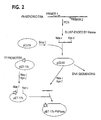
- the present invention overcomes the problem of amplification of non-target nucleic acids resulting from mispriming at ambient temperature by blocking the 3'-hydroxyl terminus of the primer with a blocking group and removing this blockage by a corresponding, thermostable, 3'-blocking group removing enzyme, which remains inactive until reaction is desired.
- (B) shows that when a modified primer with a blocking group at its 3' end is used, the 3' blocking group prevents the extension of the mis-annealed primer at low temperatures, while the 3' polynucleotide phosphatase specifically and efficiently removes the corresponding 3' blocking group at an elevated temperature, converting modified primer to conventional primer for DNA synthesis by the DNA polymerase.
- the combination of the functions of a modified primer and the 3' polynucleotide phosphatase increases the specificity and sensitivity ofPCR and PCR related techniques. The temperatures at which these events occur are indicated in the left by a vertical bar.
- the blocking group is a phosphate moiety and the corresponding enzyme is a thermostable 3'-polynucleotide phosphatase.
- the 3'-polynucleotide phosphatase according to the instant invention does not have any appreciable activity at a temperature below about 38°C, and remains active at temperatures higher than 95°C.
- the preferred temperature range for the enzyme is above 40°C, more preferably above 45°C, and still preferably 50°C, particularly preferably above 55°C, and most preferably above 60°C.
- the phosphate moiety at the 3' end of an oligonucleotides primer complementary to the template of DNA/RNA for DNA synthesis blocks primer extension by a reverse transcriptase (RT) or a DNA polymerase, while the thermostable 3'-polynucleotide phosphatase removes the phosphate moiety from the 3'end of the primer at certain high temperatures (for example higher than 38°C), making the primers extendable by RT or DNA polymerase.
- RT reverse transcriptase
- DNA polymerase a reverse transcriptase
- the instant invention eliminates mispriming and primer oligomerization by the use of 3'- protected primers and a 3' polynucleotide phosphatase.
- the suitable for the instant invention does not have any appreciable activity, at a temperature below about 38°C. Because only a very small amount of the 3' polynucleotide phosphatase is needed according to the instant invention, the disadvantages of the use of encapsulated PCR reagents and an antibody against DNA polymerase are avoided.
- primers modified at the 3'-hydroxyl terminus a 3' polynucleotide phosphatase with a thermostable DNA polymerase and/or reverse transcriptase.
- the modified primers are not extendable by DNA polymerase and/or reverse transcriptase, even in the presence of all needed components including dNTP and metal cofactors in the reaction mixture at any temperature.
- the 3' polynucleotide phosphatase removes the 3' blocking group of primers at an efficient rate at temperatures higher than about 38°C, supplying desired primers for the DNA polymerase and/or reverse transcriptase.
- the present invention further provides modified oligonucleotides with a 3'-blocking group, and a 3' polynucleotide phosphatase having activity to specifically remove the blocking group from the 3' end of the oligonucleotide molecule but not from the 5' end.
- thermostable 3'-polynucleotide phosphate from the thermophilic archaebacterium Pyrococcus furiosus (Pfu).
- This thermostable 3' polynucleotide phosphatase has an apparent molecular weight of 31 kD compared with protein standard marker (Protein BenchMarker, Life Technologies, Inc. Rockville, MD) in 4-20% SDS PAGE (Novex, CA), and is capable of removing the 3' phosphate moiety of primers at efficient rate at temperature higher than 38°C, preferably higher than 45°C, most preferably higher than 50°C, supplying desired primers for DNA polymerase and/or reverse transcriptase.
- protein standard marker Protein BenchMarker, Life Technologies, Inc. Rockville, MD
- SDS PAGE Novex, CA
- thermostable 3'-polynucleotide phosphatase having the thermostable 3'-polynucleotide phosphatase, polynucleotide molecules that encode these polypeptides, a DNA vector that comprises the isolated polynucleotide molecule, a host cell comprising the same, and a method for producing a recombinant form of the 3'-polynucleotide phosphatase using said cell.
- the 3' phosphatase gene from the Pfu according to the present invention comprises 846 base pairs (e.g., SEQ ID NO:5) that encodes 281 amino acids( SEQ ID NO:6).
- Genbank search using the BLAST algorithm (Altschul SF. et al. Nucleic Acids Res. 25: 3389-4302 (1997)) revealed that SEQ ID NO:6 shares 91% and 88% identities (see Figure 8) with a hypothetical open reading frame (Ph 1905) from Pyrococcus horikoshii OT3, and an ORF (Pab 1103) from Pyrococcus abyssi, respectively.
- the present invention further includes polypeptides and DNA molecules coding for polypeptides, that are analogs, fragments or derivatives of SEQ ID NO:6, which differ in terms of the identity or location of one or more amino acid residues. These include deletion analogs containing less than all of the residues specified for SEQ ID N0:6, substitution analogs wherein one or more residues specified are replaced by other residues and addition analogs where in one or more amino acid residues is added to a terminal or medial portion of the polypeptide, and which retain some or all properties of naturally-occurring enzyme.
- polypeptides of the present invention include the polypeptide of SEQ ID NO:6 as well as polypeptides which have at least 92% identity to the polypeptide of SEQ ID NO. 6 and preferably at least 95% identity to the polypeptide of SEQ ID NO.6 and also include portions or fragments of such polypeptides with such fragment of the polypeptide generally containing at least 30 amino acids and more preferably at least 50 amino acids.
- similarity between two polypeptides is determined by comparing the amino acid sequence and its conserved amino acid substitutes of one polypeptide to the sequence of a second polypeptide. Such a determination is well known in the art and can be accomplished using computer programs such as BLAST.
- Fragments or portions of the polynucleotides of the present invention generally contain at least 15 nucleotides, and preferably contain at least 20 nucleotides, and more preferably contain 25 nucleotides. Fragments or portions of the polynucleotides of the present invention may be used to synthesize full-length polynucleotides of the present invention.
- the present invention provides nucleotide sequences which share substantial sequence homology to the disclosed nucleotide sequences, such as SEQ ID NO:5.
- the instant invention also provides DNA sequences which are degenerate to SEQ ID NO:5.
- Degenerate DNA sequences encode the amino acid sequence of SEQ ID NO:6, but have variations in the nucleotide coding sequences.
- the cloned structural gene for the 3'-phosphatase may be used to express the enzyme in a recombinant host cell.
- well known inducible or constitutive promoters may be used to express high levels of a 3' phosphatase structural gene in a recombinant host.
- high copy number vectors well known in the art, may be used to achieve high levels of expression. Vectors having an inducible high copy number may also be useful to enhance expression of the 3' phosphatase of the invention in a recombinant host.
- a prokaryotic cell such as, E . coli, B subtilis, Pseudomonas, etc.
- the natural promoter of the 3' phosphatase gene may function in prokaryotic hosts allowing expression of the 3' phosphatase gene, and may be used to express the 3' phosphatase gene.
- 3' phosphatase of the invention in a eukaryotic cell, well known eukaryotic promoters and hosts may be used. Preferably, however, enhanced expression of the 3' phosphatase is accomplished in a prokaryotic host.
- the most preferred prokaryotic host for over-expressing the 3' phosphatase of the invention is E . coli.
- the enzymes of the present invention are preferably produced by fermentation of the recombinant host containing and expressing the desired 3' phosphatase gene.
- the 3' phosphatase of the present invention may be isolated and purified from any strain which produces the 3' phosphatase of the present invention.
- Fragments of the 3' phosphatase having the enzyme activity are also included in the present invention. Such fragments include proteolytic fragments, and fragments fused into other peptides, and fragments.
- Any nutrient that can be assimilated by a host containing the 3' phosphatase gene may be added to the culture medium.
- Optimal culture conditions should be selected case by case according to the strain used and the composition of the culture medium.
- Antibiotics may also be added to the growth media to insure maintenance of vector DNA containing the desired gene to be expressed.
- Media formulations have been described in ATCC Catalogs and Sambrook et al., In: Molecular Cloning, a Laboratory Manual (2 nd ed.), Cold Spring Harbor Laboratory Press, Cold Spring Harbor, NY (1989).
- Host cells producing the 3' phosphatase of this invention can be separated from liquid culture, for example, by centrifugation.
- the collected microbial cells are dispersed in a suitable buffer, and then broken down by ultrasonic treatment or by other well known procedures to allow extraction of the enzymes by the buffer solution.
- the 3' phosphatase can be purified by standard protein purification techniques such as extraction, precipitation, chromatography, affinity chromatography, electrophoresis or the like.
- Assays to detect the presence of the 3' phosphatase during purification are well known in the art (see, for example, Jilani, A, et al. J . Bio. Chem.
- thermostable 3' phosphatase as markers to determine gene expression
- this invention provides a method for determining the expression of a protein of interest which comprises: a) constructing a fusion DNA molecule containing a DNA sequence encoding the protein of interest and the DNA sequence encoding the thermostable 3'-polynucleotide phosphatase; b) inserting the fusion DNA molecule into an expression vector; c) introducing the expression vector into a suitable host cell; d) culturing the introduced cells in conditions permitting expression of the fusion protein; and e) assaying the activity of the thermostable 3' phosphatase.
- thermostable 3' phophatase genes of the invention can be used to study gene expression regulation.
- a cell comprising a DNA molecule having a regulatory element from a gene, other than a gene encoding Pfu 3' phosphatase may be operatively linked to a DNA sequence encoding Pfu 3' phosphatase. By assaying the 3' phosphatase one could assess the function of the regulatory element.
- the cell may be selected from bacterial cell, yeast cell, fungal cell, insect cell, nematode cell, plant or animal cell. Suitable animal cells include, but are not limited to Vero cells, HeLa cells, Cos cells, CV1 cells and various primary mammalian cells.
- the bacterial cell is Escherichia coli.
- the Pfu 3' phosphatase of this invention has several potential uses as non-isotopic methods for the detection of proteins and nucleic acids.
- the high thermostability of the 3' phosphatase makes it useful for direct crosslinking to protein or nucleic acid probes.
- a purified recombinant Pfu 3' phosphatase or its active fragments can be used for diagnostic purposes to determine the presence or concentration of a ligand in a sample.
- the sample can be a fluid or tissue specimen obtained, for example, from a patient suspected of being exposed to a particular antigen or DNA fragment.
- any assay capable of using an enzyme-catalyzed system can be used in the detection methods of the present invention.
- a reagent-phosphatase complex is first formed via attaching a substantially pure 3' polynucleotide phosphatase or an active fragment thereof to a reagent capable of specifically binding to the ligand to be detected; (2) a sample suspected of containing the ligand is contacted with the reagent-phosphatase complex; (3) the reagent-phophatase complex that are not bound to the specific ligand is removed; (4) a detectable agent catalyzed by the 3' polynucleotide phosphatase is then contacted with the reagent-phosphatase complex; and (6) the reaction catalyzed by the 3' polynucleotide phosphatase is detected, wherein a positive reaction indicates the presence of the ligand in the sample.
- the methods can also be used to determine the concentration of a ligand in the sample by relating the amount of reaction to the concentration of the ligand according to procedures well known in the art [Noya, O. and Alarcon de Noya B. Immunol Lett 63 (1):53-6 (1998); Walenga, J.M. and Fareed, J. Clin Lab Med 14 (4):709-28 (1994)).
- concentration of the ligand the amount of activities of 3' phosphatase in the test can be compared to known concentrations of the ligand or to standardized measurements, such as slopes, determined from known concentrations of the ligand.
- the antibody against specific surface protein of HIV can be conjugated with the purified recombinant 3' phosphatase or its fragment.
- the purified recombinant 3' phosphatase or its fragment By comparing a standard curve of the activity of the 3'phosphatase vs the known concentration of the surface protein, one can know the concentration of the surface protein of HIV in the sample.
- the ligand can be, for example, a protein or polypeptide having antigenic properties, or a nucleic acid, such as DNA or RNA.
- Reagents capable of specifically binding to such ligands can be antibodies or reactive fragments of such antibodies when the ligand is an antigen or antigen-like molecule.
- the reagent can also be a nucleotide probe that hybridizes or binds to a specific nucleic acid, such as DNA or RNA.
- Such probes can be oligonucleotides that are complementary to cDNA or genomic fragments of a ligand.
- Procedures for attaching enzymes to various reagents are well known in the art. Techniques for coupling enzymes to antibodies, for example, are described (Kennedy et al., Clin. Chim. Acta 70 :1 (1976)), incorporated herein by reference. Reagents useful for such coupling include, for example, glutaraldehyde, p-toluene diisocyanate, various carbodiimide reagents, p-benzoquinone m-periodate, N,N'-o-phenylenediamalemide and the like. Alternatively, the multifunctional polypeptides of the present invention can be used.
- a modified oligonucleotide with 3' phosphate was chemically synthesized (Midland Certified Reaget Company, Midland, TX).
- the oligonucleotide is comprised following seqence:
- the Oligonucleotide was labeled with 32 P at 5' end by T4 polynucleotide kinase that lacks 3' polynucleotide phosphatase as described (Yang, S.W., et al. Proc. Natl. Acad. Sci. U . S. A . 93 (21):11534-9 (1996)).
- the 32 P labeled substrates were incubated with purified 3' polynucleotide phosphatase in 1X PCR reaction buffer 10 mM Tris-HCl, pH 8.3, 50 mM KC1, 2.5 mM MgCl 2 at 72°C for 5 minutes.
- the location of the 3' phosphatase on the SDS-PAGE was determined by a renaturizing the protein excised from SDS-PAGE as described (Yang, S.W., et al. Proc. Natl. Acad. Sci. U. S. A. 93 (21):11534-9 (1996)).
- the purified 3' phosphatase has relative molecular weight about 31 KD when analyzed by 4-20% SDS-PAGE Compared with standard Protein Marker (Life Technologies, Inc).
- the partially purified 3' phosphatase was subjected to 7% SDS-Tricine PAGE.
- the proteins on the SDS gel were transferred to a PVDF membrane (Immobolin-P from Millipore) by electrophoresis in transfer buffer (0.5 X TBE (pH 8.4), 20% methanol, 0.5 mM EDTA) for 1 hr at 0.5 A current.
- transfer buffer 0.5 X TBE (pH 8.4), 20% methanol, 0.5 mM EDTA
- the membrane was stained with Coomassie blue R-250 for 10 min and then destained with 100% methanol twice.
- the band corresponding to the 3' phosphatase on the membrane was excised.
- the amino acid sequencing was carried out by the commercial service facility at Yale University. The 27 amino acid sequence is lised in a single letter symbol starting from N-terminus as following:
- thermostable 3' phasphatase gene In order to clone the thermostable 3' phasphatase gene, the inventor of the present invention, based upon SEQ ID NO:1 and SEQ ID NO:2, designed and chemically synthesized a pair of primers (SEQ ID NO:3 and SEQ ID NO:4):
- the restriction enzyme recognition sequences for Nde I and Kpn I flanks the 5' end of primer 1 and primer 2, respectively. These primers were used in the PCR mixture containing the Pfu genomic DNA as template and the Pfu DNA polymerase according to the instruction of the manufacturer (Stratagene Inc., CA). The synthesized DNA fragment was purified by 1% agrose gel electrophoresis. After their 3' end was blunted and 5' end dephosphoryllated by conventional methods as described (Sambrook et al. in: Molecular Cloning, A Laboratory Manual (2 nd Ed.) Cold Spring Harbor Laboratory Press, Cold Spring Harbor, NY (1989)) the fragment was ligated into the plasmid vector pUC19.
- the plasmid (pUC19-PNPtase) containing the DNA fragment was recovered from the clone strain E. coli DH5 ⁇ and DNA sequence (SEQ ID NO:5) for the fragment was determined by conventional method (PE Applied Biosystems). Further, the amino acid sequence (SEQ ID NO:6) was deduced from the determined DNA sequence.
- the 3' phosphatase gene derived from Pfu strain comprised 846 bases wherein 281 amino acids were encoded.
- the amino acid sequence of 3' phosphatase from Pfu in the present invention shares 91% and 88% identities with Ph 1905 and Pab 1103, respectively (see Figure 8). Therefore, there is a high possibility that these two open reading frames may also encoding similar peptides as SEQ ID NO:6 that function as thermostable 3' phosphatase.
- the plasmid DNA (pUC19-PNPtase) was digested with Nde I and Kpn I.
- the DNA fragment containing the 3' phosphatase gene was purified by 1% agrose gel electrophoresis and ligated into the E . coli expression vector pET-17b (Novagen, CA) to create pET-17b-PNPtase.
- the ligation mixture was used to transform the E . coli DH5 ⁇ cells.
- the correct clone was selected by PCR with primer 1 and primer 2.
- the sequence of the 3' phosphatase gene in pET-17b-PNPtase was determined again as mentioned above.
- Example 6 Expression and purification of the recombinant 3' phosphatase derived from Pfu
- Escherichia coli (BL21 (DE3)) was transformed using the recombinant expression vector (pET-17b-PNPtase) obtained in Example 5.
- the resulting transformant was cultured in a LB medium. Three hours before collecting the bacterial cells, an induction treatment was conducted by addition of isopropylthio- ⁇ -D-galactopyranoside(IPTG). Bacterial cells were recovered from the cultural medium by centrifugation. The cells were resuspended in a buffer and disintegrated by an untrasonic treatment. The cell extract was heated at 76°C for 20 min. After cooling in ice-water for 10 min, polyethyleneimine was added to the extract.
- the supernatant was recovered and ammonium precipitation (45-80% saturation) was performed as above.
- the resulting pellet was resuspended in buffer R (20 mM Tris-HCl, pH 7.5, 1 mM EDTA, 1 mM DTT, 0.2 M NaCl, 10 mM mercaptoethanol).
- buffer R 20 mM Tris-HCl, pH 7.5, 1 mM EDTA, 1 mM DTT, 0.2 M NaCl, 10 mM mercaptoethanol.
- the sample was subjected to chromatography through a Hydroxylapatite (BioRad) column and the 3' phosphatase was eluted with a gradient of 1mM to 400 mM phosphate in buffer R.
- the fractions containing the 3' phosphatase were further processed through Mono S and Mono Q column as mentioned above.
- the purified 3' phosphatase as shown in Figure 3 does not contain detectable activities of exonulease, DNA ligase, polynucleotide kinase, DNA polymerase, proteinase, or 5' polynucleotide phosphatase that may interfere with a PCR reaction (data not shown).
- Oligonucleotides with phosphate at the 3'end were labeled with 32 P labeled at the 5' end by T4 polynucleotide kinase that lacks 3' polynucleotide phosphatase as described (Yang, S.W., et al. Proc. Natl. Acad. Sci. U. S. A. 93 (21):11534-9 (1996)).
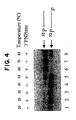
- the 32 P labeled substrates were incubated with the purified recombinant 3' phosphatase in 1X PCR buffer (10 mM Tris-HCl, pH 8.3, 50 mM KCl, 2.5 mM MgCl 2 ) at the desired temperature for 5 min. After addition of DNA sequencing buffer and heating at 90°C for 2 minutes, the samples were analyzed by 12% polyacrylamide-7 M urea gel electrophoresis.
- a 32 P labeled oligonucleotide with 3' end phosphate blocking group (SEQ ID No:7) annealed to its complementary template
- thermostable alkaline phosphatase derivatived from Tth failed to be used in the present invention to increase the sensitivity and specificity of DNA amplification because it contains both 3' and 5' phosphatase activities.
- the 5' phosphatase destroys the deoxynucleoside-triphosphates (termed dNTP including dATP, dTTP, dCTP and dGTP), the substrates that a thermostable DNA polymerase uses to synthesize DNA in PCR.
- dNTP deoxynucleoside-triphosphates
- the modified primer with a phosphate at the 3' end is stable at 68°C for 10 min in the absence of the recombinant 3' phosphatase in the reaction mixture in this experiment( Figure 5, lanes 4 and 5).
- the absence of any extended product in these two lanes indicates that the 3' phosphate moiety of the primers is stable at 68°C and resists the 3' exonuclease associated with Pfu DNA polymerase, blocking their extension by Taq and Pfu DNA polymerases.
- a pair of primers was selected from a region of the human ⁇ -globin gene (Collins, F.S. and Weissman, S.M. Prog Nucleic Acid Res Mol Biol 31 :315-462 (1984)) was chemically synthesized with or without phosphate at the 3' ends and expected to yield PCR products with length of 2.8 kb:
- the PCR was performed as: 94°C for 2 min followed by 30 cycles of 55°C 15 seconds, 72°C 3 minutes and 94°C for -15 seconds. These PCR products were subj ected to an agarose gel electrophoresis.
- SK38 and SK39 A pair of conventional oligonucleotides complementary to the gag gene sequences 1551-1578 and 1638-1665, termed SK38 and SK39, respectively, have been used to amplify the a 115 bp DNA fragment for direct detection HIV-1 in peripheral blood mononuclear cells (Ou, C.Y. et al, Science 239 (4837):295-7 (1988)).
- the gag gene of HIV-1 was inserted into a plasmid vector pUC19 to construct pUC19-gag to be used as template.
- the SK38 and SK39 primers with phosphate at their 3' ends were chemically synthesized:
- the purified recombinant 3' phosphatase and primers 7 and 8 was used in the PCR to amplify the 115 bp fragment by Taq DNA polymerase.
- the PCR mixture as described in the Example 9 contains a serial dilution of gag gene templates (pUC19-gag) and 200 ng of human genomic DNA as nonspecific-target.
- the PCR was performed as: 94°C for 2 min followed by 40 cycles of 55°C 15 seconds, 72°C 3 minutes and 94°C for 15 seconds.
- the products of the reaction were analyzed by agarose gel electrophoresis.
- the 3' phosphatase was omitted in the same PCR reaction and conventional SK3 8 and SK39 primers were used:
Landscapes
- Chemical & Material Sciences (AREA)
- Life Sciences & Earth Sciences (AREA)
- Health & Medical Sciences (AREA)
- Organic Chemistry (AREA)
- Zoology (AREA)
- Engineering & Computer Science (AREA)
- Wood Science & Technology (AREA)
- Molecular Biology (AREA)
- Genetics & Genomics (AREA)
- Bioinformatics & Cheminformatics (AREA)
- Biotechnology (AREA)
- Microbiology (AREA)
- Biochemistry (AREA)
- General Engineering & Computer Science (AREA)
- General Health & Medical Sciences (AREA)
- Chemical Kinetics & Catalysis (AREA)
- Proteomics, Peptides & Aminoacids (AREA)
- Biomedical Technology (AREA)
- General Chemical & Material Sciences (AREA)
- Physics & Mathematics (AREA)
- Analytical Chemistry (AREA)
- Biophysics (AREA)
- Medicinal Chemistry (AREA)
- Immunology (AREA)
- Measuring Or Testing Involving Enzymes Or Micro-Organisms (AREA)
- Enzymes And Modification Thereof (AREA)
- Saccharide Compounds (AREA)
- Preparation Of Compounds By Using Micro-Organisms (AREA)
- Micro-Organisms Or Cultivation Processes Thereof (AREA)
Claims (22)
- Verfahren zur Anlagerung eines Nukleotids an einen 3'-Hydroxyl-Terminus eines bereits vorliegenden Polynukleotidmoleküls, wobei das Verfahren Folgendes umfasst:A. Kontaktieren eines Musters, von dem vermutet wird, das es ein Target-Polynukleotidmolekül enthält, mit einem Reaktionsgemisch, das Folgendes umfasst: einen Primer, der zu dem Target-Polynukleotidmolekül komplementär ist, wobei der 3'-Hydroxyl-Terminus des Primers mit einem Phosphatteil geschützt ist, der eine Kettenverlängerung verhindert; eine thermostabile 3'-Polynukleotid-Phosphatase mit mindestens 92 % Identität zu dem Polypeptid von SEQ ID NO: 6; eine thermostabile Polynukleotid-Polymerase; mindestens ein Nukleosid-5'-triphosphat; undB. Anheben der Temperatur des resultierenden Gemischs auf mehr als etwa 38 °C, wodurch ein Primerextensionsprodukt erzeugt wird.
- Verfahren nach Anspruch 1, das weiterhin den folgenden Schritt umfasst:C. Denaturieren des Primerextensionsprodukts und Durchführen mindestens einer weiteren Primerextensionsreaktion.
- Verfahren nach Anspruch 2, wobei die Primerextensionsreaktion Teil eines Polymerase-Kettenreaktionszyklus (PCR-Zyklus) ist.
- Verfahren nach Anspruch 3, wobei das Primerextensionsprodukt nach dem letzten PCR-Zyklus nachgewiesen wird, indem das Vorliegen der Target-Nukleinsäure in dem Muster nachgewiesen wird.
- Verfahren nach einem der Ansprüche 1 - 4, wobei es sich bei der thermostabilen Polynukleotid-Polymerase um eine DNA-Polymerase oder eine reverse Transkriptase handelt.
- Verfahren nach einem der Ansprüche 1 - 5, wobei die 3'-Polynukleotid-Phosphatase aus einem thermophilen Archaebakterium isoliert werden kann.
- Verfahren nach Anspruch 6, wobei es sich bei dem thermophilen Archaebakterium um Pyrococcus furiosus handelt.
- Isoliertes Polypeptid mit einer Aktivität von thermostabiler 3'-Polynukleotid-Phosphatase, wobei das Polypeptid eine Aminosäuresequenz mit mindestens 92 % Identität zu dem Polypeptid von SEQ ID NO: 6 umfasst.
- Isoliertes DNA-Molekül, das ein Polypeptid nach Anspruch 8 kodiert.
- Isoliertes DNA-Molekül nach Anspruch 9, wobei das DNA-Molekül die Nukleotidsequenz von SEQ ID NO: 5 umfasst.
- Vektor, der das isolierte DNA-Molekül nach Anspruch 9 oder 10 umfasst, mit einem Promotor operativ verbunden, wobei das DNA-Molekül ein Peptid kodiert, das eine Aktivität von thermostabiler 3'-Polynukleotid-Phosphatase aufweist.
- Vektor nach Anspruch 11, wobei das Peptid die Aminosäuresequenz von SEQ ID NO: 6 umfasst.
- Vektor nach Anspruch 11 oder 12, wobei das DNA-Molekül die Nukleotidsequenz von SEQ ID NO: 5 umfasst.
- Wirtszelle, die den Expressionsvektor nach einem der Ansprüche 11-13 umfasst.
- Verfahren zum Produzieren einer thermostabilen 3'-Polynukleotid-Phosphatase, wobei die Phosphatase eine Sequenzidentität von mindestens 95 % im Vergleich zu SEQ ID NO: 6 aufweist und wobei die Phosphatase ihre Enzymaktivität bei einer Temperatur von 55 °C oder mehr als 55 °C bewahrt, wobei das Verfahren Folgendes umfasst: (a) Bereitstellen eines rekombinanten Wirts, der einen Expressionsvektor enthält, der die Phosphatase exprimieren kann; (b) Kultivieren des Wirts unter Bedingungen, die die Expression der Phosphatase ermöglichen.
- Kit, das einen Oligonukleotid-Primer, dessen 3'-Hydroxyl-Terminus mit einer Blockierungsgruppe geschützt ist; und eine 3'-Polynukleotid-Phosphatase umfasst, wobei das Enzym eine Sequenzidentität von mindestens 95 % im Vergleich zu SEQ ID NO: 6 aufweist und wobei das Enzym seine Enzymaktivität bei einer Temperatur von 55 °C oder mehr als 55 °C bewahrt.
- Verfahren zum Nachweisen von Proteinexpression, wobei das Verfahren Folgendes umfasst: (1) Bereitstellen eines Expressionsvektors, der ein Gen umfasst, das ein Protein von Interesse kodiert, fusioniert mit dem isolierten DNA-Molekül nach Anspruch 9 oder 10;
(2) Exprimieren des Expressionsvektors und
(3) Prüfen auf 3'-Phosphatase-Aktivität, wobei das Vorliegen der 3'-Phosphatase-Aktivität auf eine erfolgreiche Expression des Proteins von Interesse hinweist. - Verfahren zum Bestimmen der Funktion eines regulatorischen Elements, wobei das Verfahren Folgendes umfasst: (1) Bereitstellen eines Expressionsvektors, der ein Gen umfasst, das ein Gen einer thermostabilen 3'-Polynukleotid-Phosphatase kodiert, wobei die Phosphatase SEQ ID NO: 6 umfasst, mit einer DNA-Sequenz operativ verbunden, von der vermutet wird oder bekannt ist, dass sie eine regulatorische Funktion hat; und (2) Prüfen auf die 3'-Phosphatase-Aktivität, wobei das Expressionsmuster der 3'-Phosphatase-Aktivität auf das Muster des regulatorischen Elements zum Steuern einer Genexpression hinweist.
- Verfahren zum Bestimmen des Vorliegens eines Liganden, wobei das Verfahren Folgendes umfasst: (1) Bereitstellen eines Komplexes von einem Reagens und einer 3'-Polynukleotid-Phosphatase, wobei die Phosphatase SEQ ID NO: 6 umfasst, wobei das Reagens den Liganden spezifisch binden kann; (2) Kontaktieren einer Probe, von der vermutet wird, dass sie den Liganden enthält, mit dem Komplex; (3) Entfernen von Komplexen, die nicht an den Liganden gebunden sind; (4) Anwenden einer 3'-Polynukleotid-Phosphatase, wobei eine positive Reaktion auf das Vorliegen des Liganden in der Probe hinweist.
- Verfahren nach einem der Ansprüche 1 - 7, wobei die 3'-Polynukleotid-Phosphatase von einem Molekül kodiert wird, das die Nukleotidsequenz von SEQ ID NO: 5 umfasst.
- Verfahren nach einem der Ansprüche 1 - 7, wobei die 3'-Polynukleotid-Phosphatase die Aminosäuresequenz von SEQ ID NO: 6 umfasst.
- Kit nach Anspruch 16, wobei die 3'-Polynukleotid-Phosphatase von einem Molekül kodiert wird, das die Nukleotidsequenz von SEQ ID NO: 5 umfasst.
Applications Claiming Priority (3)
| Application Number | Priority Date | Filing Date | Title |
|---|---|---|---|
| US404258 | 1982-08-02 | ||
| US09/404,258 US6274353B1 (en) | 1999-09-22 | 1999-09-22 | Method and compositions for improved polynucleotide synthesis |
| PCT/US2000/026107 WO2001021813A1 (en) | 1999-09-22 | 2000-09-22 | Method and compositions for improved polynucleotide synthesis |
Publications (2)
| Publication Number | Publication Date |
|---|---|
| EP1224295A1 EP1224295A1 (de) | 2002-07-24 |
| EP1224295B1 true EP1224295B1 (de) | 2007-03-21 |
Family
ID=23598857
Family Applications (1)
| Application Number | Title | Priority Date | Filing Date |
|---|---|---|---|
| EP00966814A Expired - Lifetime EP1224295B1 (de) | 1999-09-22 | 2000-09-22 | Methode und zusammensetzungen zur verbesserten polynucleotidsynthese |
Country Status (8)
| Country | Link |
|---|---|
| US (2) | US6274353B1 (de) |
| EP (1) | EP1224295B1 (de) |
| JP (1) | JP2003510052A (de) |
| CN (2) | CN100590198C (de) |
| AT (1) | ATE357529T1 (de) |
| AU (1) | AU7710200A (de) |
| DE (1) | DE60034053D1 (de) |
| WO (1) | WO2001021813A1 (de) |
Families Citing this family (28)
| Publication number | Priority date | Publication date | Assignee | Title |
|---|---|---|---|---|
| US6670127B2 (en) | 1997-09-16 | 2003-12-30 | Egea Biosciences, Inc. | Method for assembly of a polynucleotide encoding a target polypeptide |
| WO2002064833A1 (en) * | 2001-02-15 | 2002-08-22 | Takara Bio Inc. | Method of detecting nucleotide polymorphism |
| EP1275735A1 (de) | 2001-07-11 | 2003-01-15 | Roche Diagnostics GmbH | Zusammensetzung und Methode zur 'Hot start' Nukleinsäureamplifizierung |
| US6667165B2 (en) | 2001-11-13 | 2003-12-23 | Eppendorf Ag | Method and compositions for reversible inhibition of thermostable polymerases |
| US6896727B2 (en) * | 2002-06-28 | 2005-05-24 | Seh America, Inc. | Method of determining nitrogen concentration within a wafer |
| WO2004003228A1 (en) * | 2002-07-01 | 2004-01-08 | Unisearch Limited | Genotyping method |
| US20060228786A1 (en) * | 2003-02-06 | 2006-10-12 | Salerno John C | Polymerase-based protocols for the introduction of deletions and insertions |
| US20060183123A1 (en) * | 2003-02-06 | 2006-08-17 | Salerno John C | Polymerase-based protocols for the introduction of combinatorial deletions... |
| US20060257876A1 (en) * | 2003-02-06 | 2006-11-16 | Rensselaer Polytechnis Institute | Polymerase-based protocols for generating chimeric and combinatorial... |
| US20060134624A1 (en) * | 2003-02-06 | 2006-06-22 | Salerno John C | Polymerase-based protocols for the introductions of deletions and insertions |
| WO2004090153A2 (en) | 2003-04-01 | 2004-10-21 | Eragen Biosciences,Inc. | Polymerase inhibitor and method of using same |
| EP1706502A4 (de) * | 2003-11-26 | 2007-05-23 | Eppendorf Ag | Verfahren und zusammensetzungen zur in-vitro-amplifikation extrachromosomaler nukleinsäure |
| CN101426908B (zh) * | 2004-06-09 | 2014-06-11 | 纽星实验室 | 可逆性修饰的热稳定酶组合物及其制备方法和使用方法 |
| AU2007268075C1 (en) * | 2006-06-01 | 2013-03-07 | Trilink Biotechnologies | Chemically modified oligonucleotide primers for nucleic acid amplification |
| DK2279263T3 (da) * | 2008-04-30 | 2013-11-11 | Integrated Dna Tech Inc | Rnase-h-baserede assays med anvendelse af modificerede rna-monomerer |
| US9434988B2 (en) | 2008-04-30 | 2016-09-06 | Integrated Dna Technologies, Inc. | RNase H-based assays utilizing modified RNA monomers |
| US8911948B2 (en) | 2008-04-30 | 2014-12-16 | Integrated Dna Technologies, Inc. | RNase H-based assays utilizing modified RNA monomers |
| WO2014143228A1 (en) * | 2013-03-15 | 2014-09-18 | Integrated Dna Technologies, Inc. | Rnase h-based assays utilizing modified rna monomers |
| US10227641B2 (en) | 2008-04-30 | 2019-03-12 | Integrated Dna Technologies, Inc. | RNase H-based assays utilizing modified RNA monomers |
| CN102803956A (zh) * | 2009-06-12 | 2012-11-28 | 纳内克蒂斯生物技术公司 | 用于检测在aids患者的抗逆转录病毒疗法后剩余的病毒hiv dna的高灵敏方法 |
| CA2777446A1 (en) * | 2009-10-13 | 2011-04-21 | Syntezza Molecular Detection Israel Ltd. | Methods and compositions for amplifying target sequences from nucleic acid samples |
| US10378051B2 (en) | 2011-09-29 | 2019-08-13 | Illumina Cambridge Limited | Continuous extension and deblocking in reactions for nucleic acids synthesis and sequencing |
| CN103205425B (zh) * | 2012-01-17 | 2015-07-01 | 北京万达因生物医学技术有限责任公司 | 抑制引物非特异性扩增的反义干扰寡核苷酸 |
| SG11201405669XA (en) * | 2012-03-13 | 2014-10-30 | Swift Biosciences Inc | Methods and compositions for size-controlled homopolymer tailing of substrate polynucleotides by a nucleic acid polymerase |
| WO2021120095A1 (zh) * | 2019-12-19 | 2021-06-24 | 深圳华大生命科学研究院 | 抗聚合酶的单克隆抗体及其应用 |
| US20240102067A1 (en) * | 2022-09-26 | 2024-03-28 | Illumina, Inc. | Resynthesis Kits and Methods |
| CN117070514B (zh) * | 2023-10-16 | 2024-04-26 | 吉林凯莱英医药化学有限公司 | 非天然rna的制备方法及产品 |
| CN117821422B (zh) * | 2023-12-07 | 2024-11-08 | 北京擎科生物科技股份有限公司 | 核酸内切酶iv突变体及其应用 |
Family Cites Families (9)
| Publication number | Priority date | Publication date | Assignee | Title |
|---|---|---|---|---|
| CA2080305A1 (en) * | 1991-10-11 | 1993-04-12 | Linda M. Western | Method for producing a polynucleotide for use in single primer amplification and phosphorothioate-containing oligonucleotides as primers in nucleic acid amplification |
| US5516664A (en) | 1992-12-23 | 1996-05-14 | Hyman; Edward D. | Enzymatic synthesis of repeat regions of oligonucleotides |
| US5939257A (en) | 1994-04-18 | 1999-08-17 | Amersham Life Science, Inc. | Thermostable alkaline phosphatases |
| CA2176193A1 (en) * | 1995-05-22 | 1996-11-23 | John Wesley Backus | Methods for polymerase chain reaction preamplification sterilization by exonucleases in the presence of phosphorothioated primers |
| CA2217143A1 (en) * | 1996-02-01 | 1997-08-07 | Behringwerke Aktiengesellschaft | Positive controls for use in polynucleotide amplification |
| ATE278416T1 (de) * | 1996-06-19 | 2004-10-15 | Diversa Corp | Thermostabilen phosphatasen |
| US6482590B1 (en) * | 1996-12-20 | 2002-11-19 | Aventis Behring Gmbh | Method for polynucleotide amplification |
| US5853997A (en) * | 1997-06-11 | 1998-12-29 | Incyte Pharmaceuticals, Inc. | Human protein phosphatase |
| US6200757B1 (en) * | 1999-01-19 | 2001-03-13 | Dade Behring Inc. | Method for controlling the extension of an oligonucleotide |
-
1999
- 1999-09-22 US US09/404,258 patent/US6274353B1/en not_active Expired - Fee Related
-
2000
- 2000-09-22 EP EP00966814A patent/EP1224295B1/de not_active Expired - Lifetime
- 2000-09-22 DE DE60034053T patent/DE60034053D1/de not_active Expired - Lifetime
- 2000-09-22 WO PCT/US2000/026107 patent/WO2001021813A1/en not_active Ceased
- 2000-09-22 JP JP2001525371A patent/JP2003510052A/ja active Pending
- 2000-09-22 CN CN00815973A patent/CN100590198C/zh not_active Expired - Fee Related
- 2000-09-22 CN CN2009101511681A patent/CN101649307B/zh not_active Expired - Lifetime
- 2000-09-22 AT AT00966814T patent/ATE357529T1/de not_active IP Right Cessation
- 2000-09-22 AU AU77102/00A patent/AU7710200A/en not_active Abandoned
-
2001
- 2001-05-14 US US09/853,701 patent/US6699981B2/en not_active Expired - Lifetime
Also Published As
| Publication number | Publication date |
|---|---|
| CN1408025A (zh) | 2003-04-02 |
| US6699981B2 (en) | 2004-03-02 |
| CN100590198C (zh) | 2010-02-17 |
| AU7710200A (en) | 2001-04-24 |
| JP2003510052A (ja) | 2003-03-18 |
| DE60034053D1 (de) | 2007-05-03 |
| ATE357529T1 (de) | 2007-04-15 |
| EP1224295A1 (de) | 2002-07-24 |
| US6274353B1 (en) | 2001-08-14 |
| CN101649307A (zh) | 2010-02-17 |
| US20020182686A1 (en) | 2002-12-05 |
| CN101649307B (zh) | 2011-11-30 |
| WO2001021813A1 (en) | 2001-03-29 |
Similar Documents
| Publication | Publication Date | Title |
|---|---|---|
| EP1224295B1 (de) | Methode und zusammensetzungen zur verbesserten polynucleotidsynthese | |
| JP5813637B2 (ja) | 逆転写及び増幅反応において核酸汚染を除去する方法 | |
| JP6579204B2 (ja) | 改変された耐熱性dnaポリメラーゼ | |
| CA2417798A1 (en) | Method of amplifying nucleic acid | |
| US10544404B2 (en) | DNA polymerases with increased 3′-mismatch discrimination | |
| AU2011267421B2 (en) | DNA polymerases with increased 3'-mismatch discrimination | |
| US8183023B2 (en) | Thermus egertssonii DNA polymerases | |
| JP3891330B2 (ja) | 改変された耐熱性dnaポリメラーゼ | |
| US10590400B2 (en) | DNA polymerases with increased 3′-mismatch discrimination | |
| CN109943549B (zh) | 一种超高速扩增型Taq DNA聚合酶 | |
| EP2582804B1 (de) | Dna polymerasen mit erhöhter unterscheidung von 3' fehlpaarungen | |
| EP2582803B1 (de) | Dna polymerasen mit erhöhter unterscheidung von 3' fehlpaarungen | |
| US20210324352A1 (en) | Enhanced speed polymerases for sanger sequencing | |
| RU2809366C1 (ru) | Способ получения большого фрагмента Bst-полимеразы (варианты) | |
| EP2582805B1 (de) | Dna polymerasen mit erhöhter unterscheidung von 3' fehlpaarungen | |
| JPH0576399A (ja) | イン ビトロで複製可能な核酸の製造方法 | |
| KR20090126538A (ko) | 나노아케움 이퀴탄스 플러스 DNA 중합효소, 이의제조방법 및 데옥시유티피 (dUTP)와 우라실-DNA글리코실라제 (UDG)를 이용한 중합효소 연쇄 반응(PCR) 방법 |
Legal Events
| Date | Code | Title | Description |
|---|---|---|---|
| PUAI | Public reference made under article 153(3) epc to a published international application that has entered the european phase |
Free format text: ORIGINAL CODE: 0009012 |
|
| 17P | Request for examination filed |
Effective date: 20020412 |
|
| AK | Designated contracting states |
Kind code of ref document: A1 Designated state(s): AT BE CH CY DE DK ES FI FR GB GR IE IT LI LU MC NL PT SE |
|
| AX | Request for extension of the european patent |
Free format text: AL;LT;LV;MK;RO;SI |
|
| 17Q | First examination report despatched |
Effective date: 20040825 |
|
| GRAP | Despatch of communication of intention to grant a patent |
Free format text: ORIGINAL CODE: EPIDOSNIGR1 |
|
| GRAS | Grant fee paid |
Free format text: ORIGINAL CODE: EPIDOSNIGR3 |
|
| GRAA | (expected) grant |
Free format text: ORIGINAL CODE: 0009210 |
|
| AK | Designated contracting states |
Kind code of ref document: B1 Designated state(s): AT BE CH CY DE DK ES FI FR GB GR IE IT LI LU MC NL PT SE |
|
| PG25 | Lapsed in a contracting state [announced via postgrant information from national office to epo] |
Ref country code: LI Free format text: LAPSE BECAUSE OF FAILURE TO SUBMIT A TRANSLATION OF THE DESCRIPTION OR TO PAY THE FEE WITHIN THE PRESCRIBED TIME-LIMIT Effective date: 20070321 Ref country code: BE Free format text: LAPSE BECAUSE OF FAILURE TO SUBMIT A TRANSLATION OF THE DESCRIPTION OR TO PAY THE FEE WITHIN THE PRESCRIBED TIME-LIMIT Effective date: 20070321 Ref country code: AT Free format text: LAPSE BECAUSE OF FAILURE TO SUBMIT A TRANSLATION OF THE DESCRIPTION OR TO PAY THE FEE WITHIN THE PRESCRIBED TIME-LIMIT Effective date: 20070321 Ref country code: CH Free format text: LAPSE BECAUSE OF FAILURE TO SUBMIT A TRANSLATION OF THE DESCRIPTION OR TO PAY THE FEE WITHIN THE PRESCRIBED TIME-LIMIT Effective date: 20070321 Ref country code: NL Free format text: LAPSE BECAUSE OF FAILURE TO SUBMIT A TRANSLATION OF THE DESCRIPTION OR TO PAY THE FEE WITHIN THE PRESCRIBED TIME-LIMIT Effective date: 20070321 Ref country code: FI Free format text: LAPSE BECAUSE OF FAILURE TO SUBMIT A TRANSLATION OF THE DESCRIPTION OR TO PAY THE FEE WITHIN THE PRESCRIBED TIME-LIMIT Effective date: 20070321 |
|
| REG | Reference to a national code |
Ref country code: GB Ref legal event code: FG4D |
|
| REG | Reference to a national code |
Ref country code: CH Ref legal event code: EP |
|
| REF | Corresponds to: |
Ref document number: 60034053 Country of ref document: DE Date of ref document: 20070503 Kind code of ref document: P |
|
| REG | Reference to a national code |
Ref country code: IE Ref legal event code: FG4D |
|
| PG25 | Lapsed in a contracting state [announced via postgrant information from national office to epo] |
Ref country code: SE Free format text: LAPSE BECAUSE OF FAILURE TO SUBMIT A TRANSLATION OF THE DESCRIPTION OR TO PAY THE FEE WITHIN THE PRESCRIBED TIME-LIMIT Effective date: 20070621 |
|
| PG25 | Lapsed in a contracting state [announced via postgrant information from national office to epo] |
Ref country code: ES Free format text: LAPSE BECAUSE OF FAILURE TO SUBMIT A TRANSLATION OF THE DESCRIPTION OR TO PAY THE FEE WITHIN THE PRESCRIBED TIME-LIMIT Effective date: 20070702 |
|
| PG25 | Lapsed in a contracting state [announced via postgrant information from national office to epo] |
Ref country code: PT Free format text: LAPSE BECAUSE OF FAILURE TO SUBMIT A TRANSLATION OF THE DESCRIPTION OR TO PAY THE FEE WITHIN THE PRESCRIBED TIME-LIMIT Effective date: 20070821 |
|
| REG | Reference to a national code |
Ref country code: CH Ref legal event code: PL |
|
| NLV1 | Nl: lapsed or annulled due to failure to fulfill the requirements of art. 29p and 29m of the patents act | ||
| EN | Fr: translation not filed | ||
| PLBE | No opposition filed within time limit |
Free format text: ORIGINAL CODE: 0009261 |
|
| STAA | Information on the status of an ep patent application or granted ep patent |
Free format text: STATUS: NO OPPOSITION FILED WITHIN TIME LIMIT |
|
| PG25 | Lapsed in a contracting state [announced via postgrant information from national office to epo] |
Ref country code: DE Free format text: LAPSE BECAUSE OF FAILURE TO SUBMIT A TRANSLATION OF THE DESCRIPTION OR TO PAY THE FEE WITHIN THE PRESCRIBED TIME-LIMIT Effective date: 20070622 Ref country code: DK Free format text: LAPSE BECAUSE OF FAILURE TO SUBMIT A TRANSLATION OF THE DESCRIPTION OR TO PAY THE FEE WITHIN THE PRESCRIBED TIME-LIMIT Effective date: 20070321 |
|
| 26N | No opposition filed |
Effective date: 20071227 |
|
| PG25 | Lapsed in a contracting state [announced via postgrant information from national office to epo] |
Ref country code: FR Free format text: LAPSE BECAUSE OF FAILURE TO SUBMIT A TRANSLATION OF THE DESCRIPTION OR TO PAY THE FEE WITHIN THE PRESCRIBED TIME-LIMIT Effective date: 20071123 Ref country code: MC Free format text: LAPSE BECAUSE OF NON-PAYMENT OF DUE FEES Effective date: 20070930 Ref country code: IT Free format text: LAPSE BECAUSE OF FAILURE TO SUBMIT A TRANSLATION OF THE DESCRIPTION OR TO PAY THE FEE WITHIN THE PRESCRIBED TIME-LIMIT Effective date: 20070321 Ref country code: GR Free format text: LAPSE BECAUSE OF FAILURE TO SUBMIT A TRANSLATION OF THE DESCRIPTION OR TO PAY THE FEE WITHIN THE PRESCRIBED TIME-LIMIT Effective date: 20070622 |
|
| GBPC | Gb: european patent ceased through non-payment of renewal fee |
Effective date: 20070922 |
|
| PG25 | Lapsed in a contracting state [announced via postgrant information from national office to epo] |
Ref country code: IE Free format text: LAPSE BECAUSE OF NON-PAYMENT OF DUE FEES Effective date: 20070924 |
|
| PG25 | Lapsed in a contracting state [announced via postgrant information from national office to epo] |
Ref country code: FR Free format text: LAPSE BECAUSE OF FAILURE TO SUBMIT A TRANSLATION OF THE DESCRIPTION OR TO PAY THE FEE WITHIN THE PRESCRIBED TIME-LIMIT Effective date: 20070321 Ref country code: GB Free format text: LAPSE BECAUSE OF NON-PAYMENT OF DUE FEES Effective date: 20070922 |
|
| PG25 | Lapsed in a contracting state [announced via postgrant information from national office to epo] |
Ref country code: CY Free format text: LAPSE BECAUSE OF FAILURE TO SUBMIT A TRANSLATION OF THE DESCRIPTION OR TO PAY THE FEE WITHIN THE PRESCRIBED TIME-LIMIT Effective date: 20070321 |
|
| PG25 | Lapsed in a contracting state [announced via postgrant information from national office to epo] |
Ref country code: LU Free format text: LAPSE BECAUSE OF NON-PAYMENT OF DUE FEES Effective date: 20070922 |