EP1230821B1 - Procede de transfert entre differents noeuds dans un systeme de telecommunication mobile - Google Patents
Procede de transfert entre differents noeuds dans un systeme de telecommunication mobile Download PDFInfo
- Publication number
- EP1230821B1 EP1230821B1 EP00993132A EP00993132A EP1230821B1 EP 1230821 B1 EP1230821 B1 EP 1230821B1 EP 00993132 A EP00993132 A EP 00993132A EP 00993132 A EP00993132 A EP 00993132A EP 1230821 B1 EP1230821 B1 EP 1230821B1
- Authority
- EP
- European Patent Office
- Prior art keywords
- base station
- switching node
- user equipment
- connection
- protocol
- Prior art date
- Legal status (The legal status is an assumption and is not a legal conclusion. Google has not performed a legal analysis and makes no representation as to the accuracy of the status listed.)
- Expired - Lifetime
Links
- 238000000034 method Methods 0.000 title claims abstract description 58
- 238000010295 mobile communication Methods 0.000 title claims abstract description 5
- 238000004891 communication Methods 0.000 claims abstract description 23
- 238000013507 mapping Methods 0.000 claims description 13
- 230000004044 response Effects 0.000 description 12
- 230000011664 signaling Effects 0.000 description 8
- 101150117600 msc1 gene Proteins 0.000 description 7
- 101150081027 RNC1 gene Proteins 0.000 description 5
- 101100426111 Saccharomyces cerevisiae (strain ATCC 204508 / S288c) TRM2 gene Proteins 0.000 description 5
- 238000005538 encapsulation Methods 0.000 description 4
- 101150079307 BSC3 gene Proteins 0.000 description 3
- 102000047724 Member 2 Solute Carrier Family 12 Human genes 0.000 description 3
- 108091006621 SLC12A1 Proteins 0.000 description 3
- 108091006620 SLC12A2 Proteins 0.000 description 3
- 238000011156 evaluation Methods 0.000 description 2
- 238000012546 transfer Methods 0.000 description 2
- 101100078001 Saccharomyces cerevisiae (strain ATCC 204508 / S288c) MSC2 gene Proteins 0.000 description 1
- 230000006978 adaptation Effects 0.000 description 1
- 238000004873 anchoring Methods 0.000 description 1
- 230000010267 cellular communication Effects 0.000 description 1
- 230000001419 dependent effect Effects 0.000 description 1
- 230000003292 diminished effect Effects 0.000 description 1
- 238000000605 extraction Methods 0.000 description 1
- 230000026676 system process Effects 0.000 description 1
Images

Classifications
-
- H—ELECTRICITY
- H04—ELECTRIC COMMUNICATION TECHNIQUE
- H04W—WIRELESS COMMUNICATION NETWORKS
- H04W36/00—Hand-off or reselection arrangements
- H04W36/12—Reselecting a serving backbone network switching or routing node
Definitions
- the present invention relates to a method according to the preamble of claim 1.
- a switching node and a program are described.
- Customary base station subsystems comprise one or several base stations for the wireless connection to the user equipment and a base station controller which controls the base stations and connects them to the core network of the communication system.
- the controller can be for example a base station controller (BSC) as defined in GSM or a radio network controller (RNC) for a base station subsystem according to the UMTS standard.
- BSC base station controller
- RNC radio network controller
- a base station subsystem i.e. the controller, is in turn controlled by a switching node, e. g. a mobile switching center (MSC).
- a switching node is connectable or permanently connected to a base station subsystem with a protocol corresponding to the connection specification used between the base station subsystem and the user equipment.
- the RANAP Radio Access Network Application Protocol
- BSSMAP Base Station System Management Application Part
- an MSC in a GSM system generally exchanges only BSSMAP messages with a BSC while a 3G MSC in a UMTS system processes RANAP messages.
- a 3G MSC can normally also process BSSMAP messages and can be connected to a BSC according to GSM specifications over an A interface .
- a handover is necessary between base station subsystems which are controlled by different switching nodes.
- the switching nodes exchange messages to perform the handover procedure of the user equipment from the first base station subsystem to the second base station subsystem which is controlled by a second switching node.
- the messages are described in 3GPP technical specification 3G TS 29.010 V 3.0.0. They encapsulate a set of parameters used in the protocol between the switching nodes and the base station subsystem.
- the set is necessary to perform the handover and comprises an identification of the connection for which the handover is to be executed and parameters which are required to provide defined services to the user.
- the necessary parameters for different types of connections, especially speech and data connections can differ.
- MAP Mobile Application Part
- 3GPP Technical Specification 29.002 V 3.2.0 3GPP Technical Specification 29.002 V 3.2.0 are suitable which allow to encapsulate BSSMAP messages.
- the parameter set is generated in the first switching node serving the user equipment from a message which is transmitted from the user equipment to the first switching node.
- the latter message which is generally in the DTAP (Direct Transfer Application Part) protocol is forwarded by the first base station subsystem without evaluation.
- connection specifications e.g. according to the standards for the GSM and UMTS air interfaces.
- User equipment which can set up connections according to further standards, e.g. DECT (Digital European Cordless Telecommunications) or WLAN (Wireless Local Area Network), in addition to at least one of these or other connection specifications is also possible.
- DECT Digital European Cordless Telecommunications
- WLAN Wireless Local Area Network
- many communication systems comprise base station subsystems for connection to the user equipment wherein different subsystems use different connection specifications on the interface to the user equipment.
- the necessary parameters in the set used in the protocol between a switching node and a base station subsystem are dependent on the connection specification between the user equipment and the base station subsystem because the protocol is adapted to the connection specification, i.e. the interface between base station and user equipment.
- the messages over a specific interface comprise mandatory fields which have to be filled in from the parameter set.
- Parameter sets for different protocols comprise different mandatory parameters. Consequently, the connection will be lost in an intersystem handover if the parameters necessary for the handover are not provided. This problem is aggravated if the movements of the user require a repeated handover between connections of different specifications. An additional problem is that the handover between different switching nodes requires a considerable time which can also lead to a disruption of the connection.
- the first switching node determines from a message transmitted from the user equipment whether the user equipment is capable of connections according to different specifications.
- the user equipment can be for example a mobile phone, a personal digital assistant (PDA) or a palmtop computer which is connectable to the communication network according to different specifications, e.g. with a GSM or UTRAN (UMTS Terrestrial Radio Access Network) and a WLAN connection.
- the evaluated message is a DTAP message from the user equipment to the first switching node during the idle mode of the user equipment before a connection or during the establishment of the connection,
- the evaluated message can be the message which is used for the generation of the parameter set transmitted in the handover procedure.
- the first switching node selects the parameter set encapsulated in the message to the second switching node according to the protocol for the connection of the second switching node to the target base station subsystem, i.e. the subsystem to which the handover procedure of the user equipment is performed.
- the selection depends on the implementations described below. It is either possible to generate only the selected parameter set or to generate different parameter sets and select one of them for encapsulation.
- a MAP message can enclose different message types it is sufficient for this purpose to amend the list of allowed message types for encapsulation in MAP messages by the specific type.
- the message type contained in the MAP message is indicated by a data field in the header of the MAP message which can then be set to the specific message type enclosed from the amended list.
- RANAP messages or further message specifications can be encapsulated into a MAP message and processed by the target switching node.
- the proposed method has the advantage that it is simple to implement and ensures a safe execution of the handover procedure.
- the selection of the parameter set ensures that the target base station subsystem is provided with the parameters necessary for the establishment of the connection to the user equipment. Disruptions of a connection due to a handover of the user equipment between base station subsystems using different connection specifications are avoided.
- the first switching node serving the user equipment generates parameter sets for different protocols.
- a parameter set corresponding to every connection specification to which a handover is possible is generated.
- the parameter sets are stored in the first switching node.
- the parameter set according to the target base station subsystem is encapsulated in the message and sent to the target switching node. In this way, the time for the execution of the handover is reduced and the risk for a disruption of a connection during handover is diminished.
- the first switching node serving the user equipment generates all parameter sets from a message transmitted from the user equipment.
- a mapping between parameter sets for different types of messages for example BSSMAP and RANAP messages.
- An advantage is that those parameters which are defined only in one of the messages are not lost during the mapping procedure and need not to be replaced by default values.
- a switching node maps the parameter set for one protocol from a parameter set for a different protocol.
- the mapping can either be performed in the switching node first serving the user or in the target switching node of a handover.
- the latter embodiment is preferable if only a small number of nodes is connected to base station subsystems of a defined specification, for example base stations for a connection specification used mainly for indoor cells like the DECT or WLAN standards. Adaptations of other control nodes in the communication system to the specific specification can be avoided.
- all messages encapsulating parameter sets to further switching nodes in subsequent handover procedures are sent from the first switching node, i.e. the first node serves as an anchor node. Consequently, the parameters for every handover of a connection between different switching nodes are sent from the node which first served the user equipment in the connection.
- the embodiment is especially suitable if the parameter sets are generated in the first node from a message originating directly, i.e. without mapping, from the user equipment.
- the latter embodiment is also suitable, if the second and the further switching node are identical or collocated and control base station subsystems using different protocols. In this way a mapping in the further handover with a corresponding loss of information is avoided. If the first switching node serves as anchor node of the connection, the signaling load in the communication system is only slightly increased as every subsequent handover is communicated to the anchoring node.
- the parameter set encapsulated in the message between the switching nodes corresponds preferably to the protocol used between the second switching node and the second base station subsystem. In this way, the target switching node can relay the encapsulated parameter set without change of the protocol in a minimum time.
- a suitable message is a MAP message encapsulating a BSSMAP massage with the parameter set.
- a MAP message encapsulates a RANAP message comprising the parameter set.
- Advantages of this embodiment are the short length of the messages between the switching nodes and that all parameter sets can be generated in the first switching node serving the user equipment out of the parameters sent by the user equipment, e.g. in a DTAP message.
- the parameter set is sent according to a predefined protocol which can be processed by any switching node in the communication system.
- the predefined protocol is a protocol which is already used in all switching nodes of the system.
- the preferable predefined protocol is the BSSMAP protocol.
- the receiving switching node maps the parameter set to the protocol for the control of the second base station subsystem. Generally, a mapping is performed only in the target node.
- the embodiment is advantageous if base station subsystems according to an additional communication specification or only few base station subsystems according to a specific communication specification are connected to the communication system because only the switching nodes connectable to these base station subsystems need to perform a mapping.
- the protocol between the switching nodes needs not to be changed.
- the flexibility of this embodiment is limited by the parameters in the set according to the default protocol.
- the parameter set is sent for the predefined protocol and a parameter set for a further protocol is encapsulated in an extension field of the predefined protocol if the further protocol is used between the target switching node and the target base station subsystem. It is possible to encapsulate the parameter set for the further protocol in a message according to the further protocol which is in turn encapsulated in the extension field. This simplifies the handling of the parameters in the target switching node. If the predefined protocol is used between the target switching node and the target base station subsystem no parameters for a further protocol need to be encapsulated.
- the BSSMAP message comprises an extension field which can contain a RANAP message or the parameters according to a RANAP message.
- the MAP message between the switching nodes encapsulates a BSSMAP message with a further RANAP message or a RANAP parameter set encapsulated in the extension field of a BSSMAP message.
- the handover is performed to a base station subsystem controlled by a BSC, the MAP message between the switching nodes encapsulates an ordinary BSSMAP message. In this way all necessary parameters are transferred to the second or further switching node at the expense of an increased length of the messages.
- the target node performs a message extraction or a mapping to the message according to the required specification for the base station subsystem.
- a first group of parameters have to be set to default values in a mapping between the parameter sets while other parameters are identical in both sets or can be calculated from parameters in the other set without loss of information.
- the first group of parameters according to the further protocol is encapsulated in the extension field.
- the target switching node performs a mapping from the predefined protocol to the protocol for the control of the second base station subsystem.
- the preferable handling depends on the computing expense and additional length of the messages, i.e. these parameters can be either mapped or included in the extension field.
- a preferable switching node can be used in a mobile communications system with further switching nodes and user equipment connectable to base station subsystems according to different connection specifications.
- the switching node comprises means for the control of a first base station subsystem and a first interface for the connection to the first base station subsystem with a first protocol corresponding to the connection specification used on the interface between the base station subsystem and the user equipment.
- a second interface is provided for the exchange of messages with at least one further switching node in a handover procedure of user equipment from the first base station subsystem to a second base station subsystem which is controlled by the further switching node.
- the message can encapsulate a parameter set for the connection protocol between the second base station subsystem and the further switching node.
- the switching node has furthermore means to generate the parameter set from a message which is transmitted from the user equipment and means to detect out of this or a different message transmitted from the user equipment whether the user equipment is capable of connections according to different connection specifications on the interface to a base station subsystem.
- the first and the second base station subsystems each use a different one of the connection specifications for connection to the user equipment.
- the switching node selects the parameter set encapsulated in the message to the second switching node according to the protocol for the connection of the second switching node to the base station subsystem to which the handover procedure of the user equipment is performed. It is possible to select which set is generated for encapsulation or select a set from several ones generated before.
- the switching node comprises a processor system which allows to embody all of the means described as software programs.
- the switching node comprises means to generate parameter sets for different protocols and a memory to store the sets. This embodiment allows a reduced handover duration.
- a preferable node comprises means to generate parameter sets from a message transmitted from the user equipment or means to map the parameter set for one protocol to a parameter set for a different protocol.
- the switching node comprises means to encapsulate a parameter set for a first connection specification into a message for a second connection specification and/or to extract a parameter set for a first connection specification out of a message for a second connection specification.
- the encapsulated parameter set may be a subset of the parameters necessary for the handover if remaining parameters can be mapped from the message according to the second specification.
- messages of the second specification can be used, especially as default message type, without loosing information in mapping procedures and with reduced restrictions from limitations of the second connection specification.
- a program unit according to the invention can be stored on a data carrier or be loadable into a switching node for the control of base station subsystems in a communication system.
- the program unit is preferably part of a program which is executed in the handover of user equipment from a first base station subsystem to a second base station subsystem which is controlled by a second switching node in a communication system comprising base station subsystems differing in the connection specification on the interface to the user equipment.
- the first and the second base station subsystems each use a different one of the connection specifications for connection to the user equipment.
- the switching node controls a base station subsystem with a protocol corresponding to the connection specification for the interface between the base station subsystem and the user equipment.
- the program unit comprises means, e.g.
- routines or subroutines to exchange messages in the handover procedure with the second switching node, said message encapsulating a parameter set for one of said protocols and means to generate the parameter set from a message which is transmitted from the user equipment to the switching node.
- the program unit checks a message transmitted from the user equipment whether the user equipment is capable of connections according to different specifications. It selects the parameter set encapsulated in the message to the second switching node according to the protocol for the connection of the second switching node to the base station subsystem to which the handover procedure of the user equipment is performed.
- the program unit can perform any steps of the methods described above.
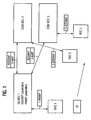
- user equipment UE is connected to a first base station subsystem which is controlled by a radio network controller RNC1.
- the controller RNC1 is in turn connected to a switching node 3G MSC1 with a connection 1 over an lu interface. Over the lu interface, RANAP messages between the switching node 3G MSC and the controller RNC1 and DTAP messages can be exchanged. DTAP messages are sent between the switching node and the user equipment UE and forwarded by the controller RNC1 without evaluation.
- the DTAP messages comprise an indication which connection specifications can be processed by the user equipment.
- the control node 3G MSC1 When a DTAP message sent by the user equipment UE indicates, that the equipment can process different connection specifications used in the communication system, the control node 3G MSC1 generates and stores parameter sets for a handover to base station subsystems which use these specifications for connection to the user equipment.
- BSSMAP messages are used when the connection on the interface to the user equipment corresponds to the GSM standard, i.e. the controller is denoted as BSC
- RANAP messages are used if the connection corresponds to the UMTS standard, i.e. the controller is denoted as RNC.
- a node which is denoted as 3G MSC can process both RANAP messages and BSSMAP messages in addition to DTAP messages while a GSM MSC processes only BSSMAP messages in addition to DTAP messages.
- a handover of the connection to the second base station subsystem is performed.
- the handover is executed by the following signaling sequence wherein the connection over which the message is sent is denoted in brackets and the message types are used as in proposed specification 3G TS 29.010 V 3.0.0:
- the target base station system for the handover is indicated as target base station subsystem or as target cell. Therefore, the switching node 3G MSC1 is provided with the information which protocol is used on the connection 3 between the switching node GSM MSC2 and the target controller BSC 2.
- the controller BSC2 corresponds to the GSM standard and BSSMAP messages sent over a GSM A interface are used on the connection 3. Therefore, the MAP PREPARE HANDOVER REQUEST (HANDOVER REQUEST) comprises a parameter set for the execution of the handover which is selected according to the protocol on connection 3.
- the parameter set for a BSSMAP message is selected from the memory of switching node 3G MSC 1 and encapsulated in the MAP message on connection 2.
- the encapsulated message type is indicated in a box stacked on the box denoting the connection and protocol type used on the respective connection.
- the message MAP PREPARE SUBSEQUENT HANDOVER REQUEST (HANDOVER REQUEST) is sent to the switching node 3G MSC1. Because the target base station system for the handover indicated in this message is the controller BSC3 corresponding to the GSM standard, BSSMAP messages sent over a GSM A interface are used on the connection 5. The parameter set for the execution of the handover is selected in the switching node 3G MSC1 according to the protocol on connection 5.
- the parameter set for a BSSMAP message is selected from the memory of switching node 3G MSC 1 and encapsulated in the MAP PREPARE HANDOVER REQUEST (HANDOVER REQUEST) on connection 4.
- HANDOVER REQUEST HANDOVER REQUEST
- additional handover procedures are also performed between base station systems served by the same switching node. The execution of the latter handover procedures as well as the execution of those steps of the handover procedures performed in the base station subsystems to execute the commands received by the control nodes are known to a skilled person.
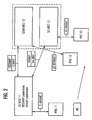
- FIG 2 a second example for a handover sequence according to the invention is depicted for a different arrangement of control nodes.
- a first handover from a first base station subsystem with controller RNC11 using a UMTS air interface specification for the connection with the user equipment to a second base station subsystem with controller BSC12 using a GSM air interface specification for the connection to the user equipment the following messaging sequence is executed.
- the links over which the messages are sent are indicated in brackets.
- the switching nodes GSM MSC12 and 3G MSC13 controlling the nodes are collocated or different logical nodes in a single physical node, i.e. the switching nodes GSM MSC12 and 3G MSC13 can be different interfaces of a single device.
- FIG 3 an example for a handover sequence according to the invention is depicted for a further arrangement of control nodes.
- the first base station subsystem with controller BSC21 using a GSM air interface specification for the connection to the user equipment is connected to the controlling node 3G MSC 21 over a connection 21 on which BSSMAP messages are sent over A interfaces.
- the controlling node 3G MSC 21 can also process RANAP messages.
- the following messaging sequence is executed.
- the MAP PREPARE HANDOVER REQUEST (RELOCATION REQUEST) on connection 22 comprises a RANAP message according to the RANAP protocol used on the connection 23 between 3G MSC 22 and RNC 22. As before, the links over which the messages are sent are indicated in brackets.
- MAP PREPARE HANDOVER REQUEST HANDOVER REQUEST
- BSSMAP message with the parameter set for connection 25:
- any handover sequence between any combination of base station subsystems according to GSM and UMTS specifications can be performed.
- all switching nodes and base station subsystem controllers correspond to UMTS specifications and can process RANAP messages, preferably on all connections between the switching nodes and the base station subsystem controllers RANAP messages are used while on all links between switching nodes, MAP messages encapsulating RANAP messages are preferable.
Landscapes
- Engineering & Computer Science (AREA)
- Computer Networks & Wireless Communication (AREA)
- Signal Processing (AREA)
- Mobile Radio Communication Systems (AREA)
- Small-Scale Networks (AREA)
Claims (16)
- Procédé de transfert intercellulaire d'un équipement d'utilisateur (UE) dans un système de communication mobile depuis un premier sous-système de station de base comprenant au moins une première station de base et étant commandé par un premier noeud de commutation (3G MSC 1) vers un second sous-système de station de base comprenant au moins une seconde station de base et étant commandé par un second noeud de commutation (GSM MSC2),
dans lequel l'équipement d'utilisateur (UE) est capable de connexions vers des stations de base selon au moins deux spécifications de connexion ;
et dans lequel le premier et le second sous-systèmes de station de base proviennent d'une pluralité de sous-systèmes de station de base dans le système de communication, la pluralité comprenant différents sous-systèmes de station de base, dans lequel le premier et le second sous-systèmes de station de base sont des sous-systèmes de station de base différents qui utilisent chacune une spécification différente des spécifications de connexion à des fins de connexion à l'équipement d'utilisateur (UE),
dans lequel le second noeud de commutation (GSM MSC 2) commande le second sous-système de station de base en utilisant un protocole correspondan t à 1 a spécification de connexion utilisée sur l'interface entre le second sous-système de station de base et l'équipement d'utilisateur (UE),
le premier et le second noeuds de commutation (3G MSC 1, GSM MSC 2) échangent des messages lors de la procédure de transfert intercellulaire qui encapsulent un jeu de paramètres pour le protocole,
et le jeu de paramètres est généré dans le premier noeud de commutation (3G MSC 1) d'après un premier message qui est transmis de l'équipement d'utilisateur (UE) au premier noeud de commutation (3G MSC 1), caractérisé en ce que
le premier noeud de commutation (3G MSC 1) détecte dans le premier ou un autre message transmis depuis l'équipement d'utilisateur (UE) que l'équipement d'utilisateur (UE) est capable de connexions selon des spécifications différentes,
et le le premier noeud de commutation (3G MSC 1) sélectionne le jeu de paramètres encapsulé dans le message vers le second noeud de commutation (GSM MSC 2), ladite sélection étant effectuée selon le protocole à des fins de connexion du second noeud de commutation (GSM MSC 2) au second sous-système de station de base. - Procédé selon la revendication 1, dans lequel le premier noeud de commutation génère des jeux de paramètres pour des protocoles différents.
- Procédé selon la revendication 2, dans lequel le premier noeud de commutation génère les jeux de paramètres d'après le premier message transmis depuis l'équipement d'utilisateur.
- Procédé selon la revendication 1, dans lequel un noeud de commutation traduit le jeu de paramètres d'un protocole en un jeu de paramètres d'un protocole différent.
- Procédé selon une quelconque des revendications précédentes, dans lequel un message encapsulant un jeu de paramètres d'un des protocoles vers un autre noeud de commutation dans un transfert intercellulaire suivant est envoyé depuis le premier noeud de commutation.
- Procédé selon la revendication 5, dans lequel le second et l'autre noeud de commutation sont identiques ou colocalisés et commandent les sous-systèmes de station de base en utilisant des protocoles différents.
- Procédé selon une quelconque des revendications 1 à 6, dans lequel le jeu de paramètres d'un protocole prédéfini est envoyé et traduit dans le second noeud ou un autre noeud de commutation en le jeu de paramètres déterminé pour le protocole utilisé pour la commande du second sous-système de station de base.
- Procédé selon une quelconque des revendications 2 à 6, dans lequel le jeu de paramètres est envoyé pour un protocole prédéfini et un jeu de paramètres pour un autre protocole est encapsulé dans un champ d'extension du protocole prédéfini.
- Procédé selon la revendication 8, dans lequel le jeu de paramètres pour l'autre protocole est encapsulé dans un message selon l'autre protocole qui est encapsulé dans le champ d'extension.
- Procédé selon la revendication 8, dans lequel un premier groupe de paramètres selon l'autre protocole est encapsulé dans le champ d'extension et le second noeud de commutation effectue une traduction d'un second group de paramètres du protocole prédéfini au protocole pour la commande du second sous-système de station de base.
- Noeud de commutation pour un système de communication mobile avec d'autres noeuds de commutation et un équipement d'utilisateur pouvant être connecté aux sous-systèmes de station de base selon différentes spécifications de connexion,
dans lequel un noeud de commutation comprend un moyen pour la commande d'un premier sous-système de station de base et une première interface pour la connexion au premier sous-système de station de base avec un premier protocole correspondant à la spécification de connexion utilisée sur l'interface entre le premier sous-système de station de base et l'équipement d'utilisateur,
ledit noeud de commutation comprenant une seconde interface pour l'échange de messages avec un second noeud de commutation à partir des autres noeuds de commutation dans une procédure de transfert intercellulaire de l'équipement d'utilisateur du premier sous-système de station de base à un second sous-système de station de base qui est commandé par le second noeud de commutation, ledit message encapsulant un jeu de paramètres d'un second protocole correspondant à la spécification de connexion utilisée entre le second sous-système de station de base et le second noeud de commutation, dans lequel le premier et le second sous-systèmes de station de base utilisent chacun une spécification différente des spécifications de connexion à des fins de connexion à l'équipement d'utilisateur,
et un moyen pour générer le jeu de paramètres d'après un premier message qui est transmis depuis l'équipement d'utilisateur, dans lequel
le noeud de commutation comprend un moyen pour détecter dans le premier message ou un autre message transmis depuis l'équipement d'utilisateur que l'équipement d'utilisateur est capable de connexions selon différentes spécifications de connexion sur l'interface avec un sous-système de station de base,
et un moyen pour sélectionner le jeu de paramètres encapsulés dans le message vers le second noeud de commutation selon le second protocole à des fins de connexion du second noeud de commutation au second sous-système de station de base sur lequel la procédure de transfert intercellulaire de l'équipement d'utilisateur est effectué. - Noeud de commutation selon la revendication 11, caractérisé en ce que le noeud comprend un moyen pour générer des jeux de paramètres pour différents protocoles et une mémoire pour mémoriser les jeux.
- Noeud de commutation selon la revendication 11 ou 12, caractérisé en ce que le noeud comprend un moyen pour traduire le jeu de paramètres d'un protocole en un jeu de paramètres d'un protocole différent.
- Noeud de commutation selon une quelconque des revendications 11 à 13, caractérisé en ce que le noeud comprend un moyen pour extraire un jeu de paramètres d'une première spécification de connexion hors d'un message d'une seconde spécification de connexion.
- Unité de programme sur un support de données ou chargeable dans un noeud de commutation pour la commande de sous-systèmes de station de base dans un système de communication,
dans laquelle l'unité de programme est exécutable dans un transfert intercellulaire d'un équipement d'utilisateur d'un premier sous-système de station de base à un second sous-système de station de base qui est commandé par un second noeud de commutation,
et le système de communication comprend des sous-systèmes de station de base différant en ce qui concerne la spécification de connexion sur l'interface vers l'équipement d'utilisateur, dans lequel le premier et le second sous-systèmes de station de base utilisent chacun une spécification différente des spécifications de connexion à des fins de connexion à l'équipement d'utilisateur,
et le noeud de commutation commande le premier sous-système de station de base avec un premier protocole correspondant à la spécification de connexion pour l'interface entre le premier sous-système de station de base et l'équipement d'utilisateur,
ladite unité de programme comprenant un moyen pour échanger des messages lors de la procédure de transfert intercellulaire avec le second noeud de commutation, ledit message encapsulant un jeu de paramètres d'un second protocole correspondant à la spécification de connexion utilisée pour l'interface entre le second sous-système de station de base et l'équipement d'utilisateur,
et un moyen pour générer le jeu de paramètres d'après un premier message qui est transmis de l'équipement d'utilisateur au noeud de commutation, dans lequel l'unité de programme est adaptée afin de vérifier dans le premier message ou un autre message transmis depuis l'équipement d'utilisateur si l'équipement d'utilisateur est capable de connexion selon différentes spécifications de connexion,
et l'unité de programme est adaptée afin de sélectionner le jeu de paramètres encapsulé dans le message vers le second noeud de commutation, ladite sélection étant effectuée selon le second protocole à des fins de connexion du second noeud de commutation au second sous-système de station de base sur lequel la procédure de transfert intercellulaire de l'équipement d'utilisateur est effectuée. - Unité de programme selon la revendication 15, dans laquelle l'unité de programme effectue au moins une étape d'un procédé selon une quelconque des revendications 1 à 10.
Priority Applications (1)
| Application Number | Priority Date | Filing Date | Title |
|---|---|---|---|
| EP00993132A EP1230821B1 (fr) | 1999-11-15 | 2000-10-28 | Procede de transfert entre differents noeuds dans un systeme de telecommunication mobile |
Applications Claiming Priority (4)
| Application Number | Priority Date | Filing Date | Title |
|---|---|---|---|
| EP99122660 | 1999-11-15 | ||
| EP99122660A EP1102511A1 (fr) | 1999-11-15 | 1999-11-15 | Procédé pour la commutation entre différents noeuds dans un système de communication mobile |
| PCT/EP2000/010644 WO2001037600A2 (fr) | 1999-11-15 | 2000-10-28 | Procede de transfert entre differents noeuds dans un systeme de telecommunication mobile |
| EP00993132A EP1230821B1 (fr) | 1999-11-15 | 2000-10-28 | Procede de transfert entre differents noeuds dans un systeme de telecommunication mobile |
Publications (2)
| Publication Number | Publication Date |
|---|---|
| EP1230821A2 EP1230821A2 (fr) | 2002-08-14 |
| EP1230821B1 true EP1230821B1 (fr) | 2010-07-21 |
Family
ID=8239389
Family Applications (2)
| Application Number | Title | Priority Date | Filing Date |
|---|---|---|---|
| EP99122660A Withdrawn EP1102511A1 (fr) | 1999-11-15 | 1999-11-15 | Procédé pour la commutation entre différents noeuds dans un système de communication mobile |
| EP00993132A Expired - Lifetime EP1230821B1 (fr) | 1999-11-15 | 2000-10-28 | Procede de transfert entre differents noeuds dans un systeme de telecommunication mobile |
Family Applications Before (1)
| Application Number | Title | Priority Date | Filing Date |
|---|---|---|---|
| EP99122660A Withdrawn EP1102511A1 (fr) | 1999-11-15 | 1999-11-15 | Procédé pour la commutation entre différents noeuds dans un système de communication mobile |
Country Status (12)
| Country | Link |
|---|---|
| US (1) | US6650899B1 (fr) |
| EP (2) | EP1102511A1 (fr) |
| JP (1) | JP4571363B2 (fr) |
| CN (1) | CN1191735C (fr) |
| AT (1) | ATE475283T1 (fr) |
| AU (1) | AU2835401A (fr) |
| CA (1) | CA2389139C (fr) |
| DE (1) | DE60044723D1 (fr) |
| DK (1) | DK1230821T3 (fr) |
| ES (1) | ES2349272T3 (fr) |
| PT (1) | PT1230821E (fr) |
| WO (1) | WO2001037600A2 (fr) |
Families Citing this family (31)
| Publication number | Priority date | Publication date | Assignee | Title |
|---|---|---|---|---|
| FI108772B (fi) * | 1998-03-31 | 2002-03-15 | Nokia Corp | Matkaviestimen yhteyksien hallintamenetelmä |
| US6810256B2 (en) | 2000-01-03 | 2004-10-26 | Telefonaktiebolaget Lm Ericsson | Method and system for handling the transcoding of connections handed off between mobile switching centers |
| US6970719B1 (en) | 2000-06-15 | 2005-11-29 | Sprint Spectrum L.P. | Private wireless network integrated with public wireless network |
| US7010300B1 (en) * | 2000-06-15 | 2006-03-07 | Sprint Spectrum L.P. | Method and system for intersystem wireless communications session hand-off |
| US6901429B2 (en) | 2000-10-27 | 2005-05-31 | Eric Morgan Dowling | Negotiated wireless peripheral security systems |
| US6965914B2 (en) | 2000-10-27 | 2005-11-15 | Eric Morgan Dowling | Negotiated wireless peripheral systems |
| US7035932B1 (en) | 2000-10-27 | 2006-04-25 | Eric Morgan Dowling | Federated multiprotocol communication |
| US7843878B2 (en) * | 2000-12-04 | 2010-11-30 | Ericsson Ab | Method and apparatus to control handoff between different wireless systems |
| KR100493280B1 (ko) * | 2000-12-29 | 2005-06-02 | 엘지전자 주식회사 | 이동 단말의 위치 등록 제어 방법 |
| GB0104281D0 (en) * | 2001-02-21 | 2001-04-11 | Nokia Networks Oy | A communication system |
| JP3717798B2 (ja) * | 2001-03-26 | 2005-11-16 | 株式会社エヌ・ティ・ティ・ドコモ | ハンドオーバ制御方法及び装置、並びに移動通信システム |
| EP1374619A1 (fr) * | 2001-03-28 | 2004-01-02 | Nokia Corporation | Procede pour delivrer des parametres pendant un changement d'acces, systeme de communication cellulaire, equipement utilisateur et element de reseau |
| GB2381414A (en) * | 2001-10-18 | 2003-04-30 | Ericsson Telefon Ab L M | Mobile telecommunications networks |
| WO2003073773A2 (fr) * | 2002-02-27 | 2003-09-04 | Spatial Communication Technologies, Inc. | Procede et systeme permettant de realiser le transfert de mobiles entre reseaux hybrides |
| US7257403B2 (en) | 2002-05-03 | 2007-08-14 | Telefonaktiebolaget Lm Ericsson (Publ) | Service-based inter-system handover |
| EP1504551A4 (fr) * | 2002-05-10 | 2005-11-30 | Qualcomm Inc | Transfert dans un reseau de communication hybride |
| US7035242B2 (en) * | 2002-07-29 | 2006-04-25 | Interdigital Technology Corporation | Method and apparatus for delivery of universal mobile telecommunications system (UMTS) based unidirectional services over a wireless local area network (WLAN) |
| ITMI20021724A1 (it) * | 2002-08-01 | 2004-02-02 | Siemens Mobile Comm Spa | Controllore per stazioni radio base gsm e 3g in una core |
| CN1682468A (zh) * | 2003-07-07 | 2005-10-12 | 三菱电机株式会社 | 移动通信台、通信方法及通信系统 |
| CA2543149A1 (fr) * | 2003-10-24 | 2005-05-06 | Qualcomm Incorporated | Transfert entre un reseau local sans fil et un systeme de communication cellulaire |
| GB0405875D0 (en) * | 2004-03-16 | 2004-04-21 | Nokia Corp | Transmission of messages between network entities in a wireless communications network |
| US7706797B2 (en) * | 2005-06-30 | 2010-04-27 | Nokia Corporation | Method for inter-system inter-MSC handover to UMA |
| US8553643B2 (en) * | 2005-07-19 | 2013-10-08 | Qualcomm Incorporated | Inter-system handover using legacy interface |
| CN100450299C (zh) * | 2005-10-18 | 2009-01-07 | 华为技术有限公司 | 一种基于预配置处理的连接建立方法、装置及系统 |
| CN101606422B (zh) * | 2006-12-01 | 2015-11-25 | 西格拉姆申德勒有限公司 | 切换便利信息服务(hocis)的方法和系统 |
| US20100069073A1 (en) * | 2008-09-12 | 2010-03-18 | Industrial Technology Research Institute | System and method for system switch and handover between wireless communication systems |
| US9277021B2 (en) * | 2009-08-21 | 2016-03-01 | Avaya Inc. | Sending a user associated telecommunication address |
| CN102104987B (zh) * | 2009-12-21 | 2014-03-12 | 华为技术有限公司 | 一种接口数据处理方法及设备 |
| CN102238661B (zh) | 2010-04-30 | 2015-06-03 | 中兴通讯股份有限公司 | 一种本地交换时的切换系统及切换方法 |
| WO2014161138A1 (fr) * | 2013-04-01 | 2014-10-09 | Nokia Corporation | Procédé et appareil de gestion diversifiée de la sécurité dans un réseau local amélioré |
| WO2015142240A1 (fr) * | 2014-03-20 | 2015-09-24 | Telefonaktiebolaget L M Ericsson (Publ) | Premier noeud de réseau, second noeud de réseau et procédés de préparation de transfert |
Family Cites Families (12)
| Publication number | Priority date | Publication date | Assignee | Title |
|---|---|---|---|---|
| US5664004A (en) * | 1995-01-13 | 1997-09-02 | Nokia Telecommunications Oy | Support of multiplicity of radio interfaces over an interface between a base station system and a mobile switch |
| JPH09247741A (ja) * | 1996-03-07 | 1997-09-19 | Toshiba Corp | 移動通信ネットワークシステム |
| US6125276A (en) * | 1996-09-06 | 2000-09-26 | Telefonaktiebolaget Lm Ericsson (Publ) | Inter-exchange signaling for in-call service change requests |
| US5911122A (en) * | 1996-10-01 | 1999-06-08 | Telefonaktiebolaget Lm Ericsson | Inter-exchange passing of hand-off related parameters |
| FI105309B (fi) * | 1997-06-24 | 2000-07-14 | Nokia Mobile Phones Ltd | Matkaviestinjärjestelmät |
| US6115608A (en) * | 1997-09-10 | 2000-09-05 | Northern Telecom Limited | Intersystem handover method and apparatus |
| FI981041L (fi) * | 1998-05-11 | 1999-11-12 | Nokia Networks Oy | Handover kahden eri linkkiprotokollaa käyttävän radiojärjestelmän välillä |
| FI981407L (fi) * | 1998-05-11 | 1999-11-12 | Nokia Networks Oy | Handover ja verkkosovitus radiojärjestelmässä |
| FI108200B (fi) * | 1998-09-14 | 2001-11-30 | Nokia Mobile Phones Ltd | Yhteyden vaihto matkaviestinverkkojen välillä |
| US6230005B1 (en) * | 1998-10-01 | 2001-05-08 | Nokia Telecommunications, Oy | Method and apparatus for providing overlay to support third generation cellular services |
| GB2389750B (en) * | 1999-05-28 | 2004-02-25 | Nec Corp | Mobile telecommunications system |
| ATE246420T1 (de) * | 1999-08-18 | 2003-08-15 | Cit Alcatel | Datenübertragung zwischen einer ersten mobilfunkvermittlungsstelle eines ersten mobilfunksystems und einer zweiten mobilfunkvermittlungsstelle eines zweiten mobilfunksystems |
-
1999
- 1999-11-15 EP EP99122660A patent/EP1102511A1/fr not_active Withdrawn
-
2000
- 2000-10-28 AU AU28354/01A patent/AU2835401A/en not_active Abandoned
- 2000-10-28 AT AT00993132T patent/ATE475283T1/de not_active IP Right Cessation
- 2000-10-28 WO PCT/EP2000/010644 patent/WO2001037600A2/fr not_active Ceased
- 2000-10-28 DK DK00993132.0T patent/DK1230821T3/da active
- 2000-10-28 PT PT00993132T patent/PT1230821E/pt unknown
- 2000-10-28 DE DE60044723T patent/DE60044723D1/de not_active Expired - Lifetime
- 2000-10-28 ES ES00993132T patent/ES2349272T3/es not_active Expired - Lifetime
- 2000-10-28 CA CA002389139A patent/CA2389139C/fr not_active Expired - Fee Related
- 2000-10-28 CN CNB008182914A patent/CN1191735C/zh not_active Expired - Lifetime
- 2000-10-28 JP JP2001538442A patent/JP4571363B2/ja not_active Expired - Fee Related
- 2000-10-28 EP EP00993132A patent/EP1230821B1/fr not_active Expired - Lifetime
- 2000-11-13 US US09/711,592 patent/US6650899B1/en not_active Expired - Lifetime
Also Published As
| Publication number | Publication date |
|---|---|
| CN1423912A (zh) | 2003-06-11 |
| WO2001037600A2 (fr) | 2001-05-25 |
| ATE475283T1 (de) | 2010-08-15 |
| DE60044723D1 (de) | 2010-09-02 |
| AU2835401A (en) | 2001-05-30 |
| JP2003515296A (ja) | 2003-04-22 |
| EP1230821A2 (fr) | 2002-08-14 |
| JP4571363B2 (ja) | 2010-10-27 |
| ES2349272T3 (es) | 2010-12-29 |
| US6650899B1 (en) | 2003-11-18 |
| CN1191735C (zh) | 2005-03-02 |
| CA2389139C (fr) | 2009-10-06 |
| WO2001037600A3 (fr) | 2001-10-04 |
| PT1230821E (pt) | 2010-10-12 |
| EP1102511A1 (fr) | 2001-05-23 |
| CA2389139A1 (fr) | 2001-05-25 |
| DK1230821T3 (da) | 2010-11-22 |
Similar Documents
| Publication | Publication Date | Title |
|---|---|---|
| EP1230821B1 (fr) | Procede de transfert entre differents noeuds dans un systeme de telecommunication mobile | |
| EP1362496B1 (fr) | Systeme de communication avec comprenant plusieurs reseaus de communication | |
| AU762309B2 (en) | Adaptation layer for realising protocol adaptations in a digital wireless data transmission system | |
| US7130285B2 (en) | Method for providing concurrent service handoff in a mobile communication system | |
| EP1212919B1 (fr) | Deplacement de protocole dans un systeme de communication | |
| EP1892993A2 (fr) | Système de communication mobile, procédé de sélection de noeud de réseau de coeur et station de base et station mobile utilisées à ces fins | |
| KR20040102225A (ko) | 하이브리드 통신 네트워크에서의 핸드오버 방법 및 장치 | |
| WO2011086528A2 (fr) | Contrôle d'encombrement permettant un interfonctionnement entre des réseaux | |
| JP3727539B2 (ja) | シグナリング方法 | |
| EP2920997B1 (fr) | Communication de dispositif sans fil | |
| US7706797B2 (en) | Method for inter-system inter-MSC handover to UMA | |
| EP2897392A1 (fr) | Système et procédé de communications mobile, dispositif de passerelle et station de base | |
| JP2004274740A (ja) | 分散無線アクセスネットワークの移動体制御機能エンティティとセル制御機能エンティティの間でメッセージを経路指定する方法 | |
| JP3518496B2 (ja) | 移動体通信サービスシステム及びその提供方法 | |
| KR100659196B1 (ko) | 비동기식 utran과 동기식 cn 간 핸드오프를 위한 계층 3 프로토콜을 처리하는 제어국 | |
| CN105578563A (zh) | 一种终端作为无线小站的工作方法及装置 | |
| US20050208972A1 (en) | Transmission of messages between network entities in a wireless communications network | |
| KR20080050446A (ko) | 이동국, 무선 액세스 네트워크 장치 및 이동통신시스템 | |
| WO2003047299A1 (fr) | Radiomessagerie de communication mobile |
Legal Events
| Date | Code | Title | Description |
|---|---|---|---|
| PUAI | Public reference made under article 153(3) epc to a published international application that has entered the european phase |
Free format text: ORIGINAL CODE: 0009012 |
|
| 17P | Request for examination filed |
Effective date: 20020423 |
|
| AK | Designated contracting states |
Kind code of ref document: A2 Designated state(s): AT BE CH CY DE DK ES FI FR GB GR IE IT LI LU MC NL PT SE |
|
| AX | Request for extension of the european patent |
Free format text: AL;LT;LV;MK;RO;SI |
|
| RAP1 | Party data changed (applicant data changed or rights of an application transferred) |
Owner name: TELEFONAKTIEBOLAGET LM ERICSSON (PUBL) |
|
| 17Q | First examination report despatched |
Effective date: 20071217 |
|
| GRAP | Despatch of communication of intention to grant a patent |
Free format text: ORIGINAL CODE: EPIDOSNIGR1 |
|
| RIC1 | Information provided on ipc code assigned before grant |
Ipc: H04W 40/36 20090101AFI20100205BHEP |
|
| GRAS | Grant fee paid |
Free format text: ORIGINAL CODE: EPIDOSNIGR3 |
|
| GRAA | (expected) grant |
Free format text: ORIGINAL CODE: 0009210 |
|
| AK | Designated contracting states |
Kind code of ref document: B1 Designated state(s): AT BE CH CY DE DK ES FI FR GB GR IE IT LI LU MC NL PT SE |
|
| REG | Reference to a national code |
Ref country code: GB Ref legal event code: FG4D |
|
| REG | Reference to a national code |
Ref country code: CH Ref legal event code: EP |
|
| REG | Reference to a national code |
Ref country code: IE Ref legal event code: FG4D |
|
| REF | Corresponds to: |
Ref document number: 60044723 Country of ref document: DE Date of ref document: 20100902 Kind code of ref document: P |
|
| REG | Reference to a national code |
Ref country code: SE Ref legal event code: TRGR |
|
| REG | Reference to a national code |
Ref country code: NL Ref legal event code: T3 |
|
| REG | Reference to a national code |
Ref country code: DK Ref legal event code: T3 |
|
| REG | Reference to a national code |
Ref country code: ES Ref legal event code: FG2A Effective date: 20101216 |
|
| PG25 | Lapsed in a contracting state [announced via postgrant information from national office to epo] |
Ref country code: AT Free format text: LAPSE BECAUSE OF FAILURE TO SUBMIT A TRANSLATION OF THE DESCRIPTION OR TO PAY THE FEE WITHIN THE PRESCRIBED TIME-LIMIT Effective date: 20100721 |
|
| PG25 | Lapsed in a contracting state [announced via postgrant information from national office to epo] |
Ref country code: CY Free format text: LAPSE BECAUSE OF FAILURE TO SUBMIT A TRANSLATION OF THE DESCRIPTION OR TO PAY THE FEE WITHIN THE PRESCRIBED TIME-LIMIT Effective date: 20100721 |
|
| REG | Reference to a national code |
Ref country code: CH Ref legal event code: NV Representative=s name: SERVOPATENT GMBH |
|
| PG25 | Lapsed in a contracting state [announced via postgrant information from national office to epo] |
Ref country code: GR Free format text: LAPSE BECAUSE OF FAILURE TO SUBMIT A TRANSLATION OF THE DESCRIPTION OR TO PAY THE FEE WITHIN THE PRESCRIBED TIME-LIMIT Effective date: 20101022 |
|
| PLBE | No opposition filed within time limit |
Free format text: ORIGINAL CODE: 0009261 |
|
| STAA | Information on the status of an ep patent application or granted ep patent |
Free format text: STATUS: NO OPPOSITION FILED WITHIN TIME LIMIT |
|
| PG25 | Lapsed in a contracting state [announced via postgrant information from national office to epo] |
Ref country code: MC Free format text: LAPSE BECAUSE OF NON-PAYMENT OF DUE FEES Effective date: 20101031 |
|
| 26N | No opposition filed |
Effective date: 20110426 |
|
| REG | Reference to a national code |
Ref country code: DE Ref legal event code: R097 Ref document number: 60044723 Country of ref document: DE Effective date: 20110426 |
|
| REG | Reference to a national code |
Ref country code: DE Ref legal event code: R082 Ref document number: 60044723 Country of ref document: DE Representative=s name: ANDREAS TONSCHEIDT, DE Ref country code: DE Ref legal event code: R082 Ref document number: 60044723 Country of ref document: DE Representative=s name: TONSCHEIDT, ANDREAS, DIPL.-PHYS. DR. RER. NAT., DE |
|
| PG25 | Lapsed in a contracting state [announced via postgrant information from national office to epo] |
Ref country code: LU Free format text: LAPSE BECAUSE OF NON-PAYMENT OF DUE FEES Effective date: 20101028 |
|
| REG | Reference to a national code |
Ref country code: FR Ref legal event code: PLFP Year of fee payment: 16 |
|
| REG | Reference to a national code |
Ref country code: DE Ref legal event code: R082 Ref document number: 60044723 Country of ref document: DE Representative=s name: TONSCHEIDT, ANDREAS, DIPL.-PHYS. DR. RER. NAT., DE Ref country code: DE Ref legal event code: R081 Ref document number: 60044723 Country of ref document: DE Owner name: IDTP HOLDINGS, INC., WILMINGTON, US Free format text: FORMER OWNER: TELEFONAKTIEBOLAGET LM ERICSSON (PUBL), STOCKHOLM, SE |
|
| REG | Reference to a national code |
Ref country code: FR Ref legal event code: TP Owner name: IDTP HOLDINGS, INC., US Effective date: 20160125 |
|
| REG | Reference to a national code |
Ref country code: NL Ref legal event code: PD Owner name: IDTP HOLDINGS, INC.; US Free format text: DETAILS ASSIGNMENT: VERANDERING VAN EIGENAAR(S), OVERDRACHT; FORMER OWNER NAME: TELEFONAKTIEBOLAGET LM ERICSSON (PUBL) Effective date: 20151030 |
|
| REG | Reference to a national code |
Ref country code: ES Ref legal event code: PC2A Owner name: IDTP HOLDINGS, INC. Effective date: 20160804 |
|
| REG | Reference to a national code |
Ref country code: FR Ref legal event code: PLFP Year of fee payment: 17 |
|
| PGFP | Annual fee paid to national office [announced via postgrant information from national office to epo] |
Ref country code: DK Payment date: 20160922 Year of fee payment: 17 Ref country code: IE Payment date: 20160922 Year of fee payment: 17 Ref country code: FI Payment date: 20160922 Year of fee payment: 17 Ref country code: CH Payment date: 20160927 Year of fee payment: 17 |
|
| PGFP | Annual fee paid to national office [announced via postgrant information from national office to epo] |
Ref country code: FR Payment date: 20160921 Year of fee payment: 17 Ref country code: SE Payment date: 20160928 Year of fee payment: 17 |
|
| PGFP | Annual fee paid to national office [announced via postgrant information from national office to epo] |
Ref country code: ES Payment date: 20160922 Year of fee payment: 17 Ref country code: BE Payment date: 20160923 Year of fee payment: 17 |
|
| PGFP | Annual fee paid to national office [announced via postgrant information from national office to epo] |
Ref country code: IT Payment date: 20160923 Year of fee payment: 17 Ref country code: PT Payment date: 20161003 Year of fee payment: 17 |
|
| REG | Reference to a national code |
Ref country code: CH Ref legal event code: NV Representative=s name: MARKS AND CLERK (LUXEMBOURG) LLP, CH Ref country code: CH Ref legal event code: PUE Owner name: IDTP HOLDINGS, INC., US Free format text: FORMER OWNER: TELEFONAKTIEBOLAGET LM ERICSSON (PUBL), SE |
|
| REG | Reference to a national code |
Ref country code: BE Ref legal event code: PD Owner name: IDTP HOLDINGS, INC.; US Free format text: DETAILS ASSIGNMENT: CHANGE OF OWNER(S), AFFECTATION / CESSION; FORMER OWNER NAME: TELEFONAKTIEBOLAGET LM ERICSSON (PUBL) Effective date: 20171110 |
|
| REG | Reference to a national code |
Ref country code: DK Ref legal event code: EBP Effective date: 20171031 |
|
| REG | Reference to a national code |
Ref country code: SE Ref legal event code: EUG |
|
| REG | Reference to a national code |
Ref country code: CH Ref legal event code: PL |
|
| REG | Reference to a national code |
Ref country code: IE Ref legal event code: MM4A |
|
| REG | Reference to a national code |
Ref country code: FR Ref legal event code: ST Effective date: 20180629 |
|
| PG25 | Lapsed in a contracting state [announced via postgrant information from national office to epo] |
Ref country code: FI Free format text: LAPSE BECAUSE OF NON-PAYMENT OF DUE FEES Effective date: 20171028 Ref country code: LI Free format text: LAPSE BECAUSE OF NON-PAYMENT OF DUE FEES Effective date: 20171031 Ref country code: PT Free format text: LAPSE BECAUSE OF NON-PAYMENT OF DUE FEES Effective date: 20180430 Ref country code: CH Free format text: LAPSE BECAUSE OF NON-PAYMENT OF DUE FEES Effective date: 20171031 |
|
| REG | Reference to a national code |
Ref country code: BE Ref legal event code: MM Effective date: 20171031 |
|
| PG25 | Lapsed in a contracting state [announced via postgrant information from national office to epo] |
Ref country code: BE Free format text: LAPSE BECAUSE OF NON-PAYMENT OF DUE FEES Effective date: 20171031 Ref country code: SE Free format text: LAPSE BECAUSE OF NON-PAYMENT OF DUE FEES Effective date: 20171029 Ref country code: FR Free format text: LAPSE BECAUSE OF NON-PAYMENT OF DUE FEES Effective date: 20171031 |
|
| PG25 | Lapsed in a contracting state [announced via postgrant information from national office to epo] |
Ref country code: IE Free format text: LAPSE BECAUSE OF NON-PAYMENT OF DUE FEES Effective date: 20171028 Ref country code: IT Free format text: LAPSE BECAUSE OF NON-PAYMENT OF DUE FEES Effective date: 20171028 |
|
| PG25 | Lapsed in a contracting state [announced via postgrant information from national office to epo] |
Ref country code: DK Free format text: LAPSE BECAUSE OF NON-PAYMENT OF DUE FEES Effective date: 20171031 |
|
| REG | Reference to a national code |
Ref country code: ES Ref legal event code: FD2A Effective date: 20181221 |
|
| PG25 | Lapsed in a contracting state [announced via postgrant information from national office to epo] |
Ref country code: ES Free format text: LAPSE BECAUSE OF NON-PAYMENT OF DUE FEES Effective date: 20171029 |
|
| PGFP | Annual fee paid to national office [announced via postgrant information from national office to epo] |
Ref country code: NL Payment date: 20191025 Year of fee payment: 20 |
|
| PGFP | Annual fee paid to national office [announced via postgrant information from national office to epo] |
Ref country code: DE Payment date: 20191227 Year of fee payment: 20 Ref country code: GB Payment date: 20191029 Year of fee payment: 20 |
|
| REG | Reference to a national code |
Ref country code: NL Ref legal event code: MK Effective date: 20201027 |
|
| REG | Reference to a national code |
Ref country code: GB Ref legal event code: PE20 Expiry date: 20201027 |
|
| PG25 | Lapsed in a contracting state [announced via postgrant information from national office to epo] |
Ref country code: GB Free format text: LAPSE BECAUSE OF EXPIRATION OF PROTECTION Effective date: 20201027 |