EP1247532A1 - Composition favorisant la secretion lacrymale - Google Patents
Composition favorisant la secretion lacrymale Download PDFInfo
- Publication number
- EP1247532A1 EP1247532A1 EP00979995A EP00979995A EP1247532A1 EP 1247532 A1 EP1247532 A1 EP 1247532A1 EP 00979995 A EP00979995 A EP 00979995A EP 00979995 A EP00979995 A EP 00979995A EP 1247532 A1 EP1247532 A1 EP 1247532A1
- Authority
- EP
- European Patent Office
- Prior art keywords
- composition
- lacrimal secretion
- acid
- promoting lacrimal
- leu
- Prior art date
- Legal status (The legal status is an assumption and is not a legal conclusion. Google has not performed a legal analysis and makes no representation as to the accuracy of the status listed.)
- Granted
Links
Images

Classifications
-
- G—PHYSICS
- G02—OPTICS
- G02B—OPTICAL ELEMENTS, SYSTEMS OR APPARATUS
- G02B1/00—Optical elements characterised by the material of which they are made; Optical coatings for optical elements
- G02B1/04—Optical elements characterised by the material of which they are made; Optical coatings for optical elements made of organic materials, e.g. plastics
- G02B1/041—Lenses
- G02B1/043—Contact lenses
-
- A—HUMAN NECESSITIES
- A61—MEDICAL OR VETERINARY SCIENCE; HYGIENE
- A61K—PREPARATIONS FOR MEDICAL, DENTAL OR TOILETRY PURPOSES
- A61K38/00—Medicinal preparations containing peptides
- A61K38/04—Peptides having up to 20 amino acids in a fully defined sequence; Derivatives thereof
- A61K38/06—Tripeptides
-
- A—HUMAN NECESSITIES
- A61—MEDICAL OR VETERINARY SCIENCE; HYGIENE
- A61K—PREPARATIONS FOR MEDICAL, DENTAL OR TOILETRY PURPOSES
- A61K38/00—Medicinal preparations containing peptides
- A61K38/04—Peptides having up to 20 amino acids in a fully defined sequence; Derivatives thereof
- A61K38/08—Peptides having 5 to 11 amino acids
-
- A—HUMAN NECESSITIES
- A61—MEDICAL OR VETERINARY SCIENCE; HYGIENE
- A61K—PREPARATIONS FOR MEDICAL, DENTAL OR TOILETRY PURPOSES
- A61K38/00—Medicinal preparations containing peptides
- A61K38/16—Peptides having more than 20 amino acids; Gastrins; Somatostatins; Melanotropins; Derivatives thereof
- A61K38/17—Peptides having more than 20 amino acids; Gastrins; Somatostatins; Melanotropins; Derivatives thereof from animals; from humans
- A61K38/177—Receptors; Cell surface antigens; Cell surface determinants
-
- A—HUMAN NECESSITIES
- A61—MEDICAL OR VETERINARY SCIENCE; HYGIENE
- A61K—PREPARATIONS FOR MEDICAL, DENTAL OR TOILETRY PURPOSES
- A61K38/00—Medicinal preparations containing peptides
- A61K38/16—Peptides having more than 20 amino acids; Gastrins; Somatostatins; Melanotropins; Derivatives thereof
- A61K38/43—Enzymes; Proenzymes; Derivatives thereof
- A61K38/46—Hydrolases (3)
- A61K38/48—Hydrolases (3) acting on peptide bonds (3.4)
- A61K38/482—Serine endopeptidases (3.4.21)
-
- A—HUMAN NECESSITIES
- A61—MEDICAL OR VETERINARY SCIENCE; HYGIENE
- A61K—PREPARATIONS FOR MEDICAL, DENTAL OR TOILETRY PURPOSES
- A61K38/00—Medicinal preparations containing peptides
- A61K38/16—Peptides having more than 20 amino acids; Gastrins; Somatostatins; Melanotropins; Derivatives thereof
- A61K38/43—Enzymes; Proenzymes; Derivatives thereof
- A61K38/46—Hydrolases (3)
- A61K38/48—Hydrolases (3) acting on peptide bonds (3.4)
- A61K38/482—Serine endopeptidases (3.4.21)
- A61K38/4826—Trypsin (3.4.21.4) Chymotrypsin (3.4.21.1)
-
- A—HUMAN NECESSITIES
- A61—MEDICAL OR VETERINARY SCIENCE; HYGIENE
- A61L—METHODS OR APPARATUS FOR STERILISING MATERIALS OR OBJECTS IN GENERAL; DISINFECTION, STERILISATION OR DEODORISATION OF AIR; CHEMICAL ASPECTS OF BANDAGES, DRESSINGS, ABSORBENT PADS OR SURGICAL ARTICLES; MATERIALS FOR BANDAGES, DRESSINGS, ABSORBENT PADS OR SURGICAL ARTICLES
- A61L27/00—Materials for grafts or prostheses or for coating grafts or prostheses
- A61L27/14—Macromolecular materials
- A61L27/22—Polypeptides or derivatives thereof, e.g. degradation products
- A61L27/227—Other specific proteins or polypeptides not covered by A61L27/222, A61L27/225 or A61L27/24
-
- A—HUMAN NECESSITIES
- A61—MEDICAL OR VETERINARY SCIENCE; HYGIENE
- A61P—SPECIFIC THERAPEUTIC ACTIVITY OF CHEMICAL COMPOUNDS OR MEDICINAL PREPARATIONS
- A61P27/00—Drugs for disorders of the senses
- A61P27/02—Ophthalmic agents
-
- A—HUMAN NECESSITIES
- A61—MEDICAL OR VETERINARY SCIENCE; HYGIENE
- A61P—SPECIFIC THERAPEUTIC ACTIVITY OF CHEMICAL COMPOUNDS OR MEDICINAL PREPARATIONS
- A61P43/00—Drugs for specific purposes, not provided for in groups A61P1/00-A61P41/00
Definitions
- the present invention relates to a composition for promoting lacrimal secretion for treating and/or preventing an ocular disease followed by lowered lacrimal secretion, that are, dry eye, ectocorneal desquamation, corneitis, corneal ulcer, conjunctivitis and the like. Furthermore, the present invention relates to a DDS (drug delivery system) preparation, a percutaneously absorbing preparation, a topical ophthalmic agent (such as eye drops, ophthalmic ointments and the like) and a composition for a contact lens which contain the composition for promoting lacrimal secretion.
- DDS drug delivery system
- Dry eye patients have been increased with spread of a contact lens and increase in a VDT-operation.
- Dry eye is a disease exhibiting symptoms such as xerophthalmia, comeal afflux, foreign body feeling, itching feeling and the like, which results in corneal disorders, in principal, due to a lowered lacrimal secretion.
- it is said that when dry eye becomes severe, it also causes paropsia and asthenopia.
- the lacrimal fluid exists in a border portion where an eyeball contacts with air, and constitutes a thin fluid layer having a thickness of approximately 7 ⁇ m which covers an outermost layer of the eyeball.
- the lacrimal fluid has a three-layered structure, which consists of, from an outer side, an oily layer, an aqueous layer and a mucinous layer, and each layer plays an important role in preventing the eyeball from dryness.
- the aqueous layer which occupies most of the lacrimal fluid thickness, is prevented from the decrement by existing between the oily layer and the mucinous layer to maintain the wettability of the eyeball.
- the oily layer is in principle secreted from a gland existing around an eyelid, which is called meibom gland, and prevents moisture from evaporation by covering throughout the aqueous layer. Accordingly, when the production of the oily layer is reduced due to meibomitis, the aqueous layer becomes apt to evaporate and, thereby, symptom of dry eye is exhibited.
- the mucinous layer covers a hydrophobic ectocorneal surface to change the surface to hydrophilic and, thereby, has the function of retaining the aqueous layer on an ectocorneal surface.
- the lacrimal fluid has various functions in addition to prevention of dry eye.
- Other functions of the lacrimal fluid include, for example, protection of cornea and conjunctiva, bacteriostatic action, prevention of infection with bacteria, fungus, virus and the like, feeding of oxygen and a variety of nutritions to cornea and removal of a carbon dioxide gas and metabolites therefrom, dilution and removal of harmful stimuli in the case where cornea and conjunctiva injured, transportation of liquid components such as epidermal growth factors which participate in wound healing and the like and hematocyte components such as fibronectin and the like to the injured portion, retainment of cornea and a conjunctival epithelial cell, regulation of wound healing and the like.
- the ophthalmologists and dry eye patients have desired development of a composition for promoting lacrimal secretion which can be used safely and effectively in the lacrimal secretion promoting therapy, not in the conventional lacrimal fluid components supplementing therapy.
- PAR Protease-activated receptor
- PAR is cleaved at a particular N-terminal site of an extracellular domain by a protease to expose a new N-terminal. It is believed that the newly exposed N-terminal becomes a linear ligand and binds to an own active site to activate the receptor (Hollenberg, M. D., Trends Pharmacol. Sci., 17, 3-6, 1996; Hollenberg, M. D., Trends Pharmacol. Sci., 20, 271-273, 1999; Vu, T. K. et al., Cell, 64, 1057-68, 1991).
- PAR-1, PAR-2, PAR-3 and PAR-4 are activated by thrombin (Vu, T. K. et al., Cell, 64, 1057-1063, 1991; Hollenberg, M. D., Trends Pharmacol. Sci., 17, 3-6, 1996; Ishihara, H. et al., Nature, 386, 502-6, 1997; Kahn, M. L. et al., Nature, 394, 690-4, 1998; Xu, W. F. et al., Proc. Natl. Acad. Sci.
- PAR-2 is activated by trypsin (Nystedt, S. et al., Proc. Natl. Acad. Sci. USA, 91, 9208-12, 1994; Molino, M. et al., J. Biol. Chem., 272, 6011-7, 1997) and tryptase (Molino, M. et al., J. Biol. Chem., 272, 6011-7, 1997; Fox, M. T. et al., FEBS Lett., 417, 267-9, 1997).
- a site to be cleaved on the amino acid sequences of PAR-1 (Vu, T. K. et al., Cell, 64, 1057-1063, 1991), PAR-2 (Nystedt, S. et al., Proc. Natl. Acad. Sci. USA, 91, 9208-12, 1994), PAR-3 (Ishihara, H. et al., Nature, 386, 502-6, 1997) and PAR-4 (Kahn, M. L. et al., Nature, 394, 690-4, 1998; Xu, W. F. et al., Proc. Natl. Acad. Sci.
- IP3 inositol 1,4,5-trisphosphate
- PAR-2 Hollenberg, M. D., Trends Pharmacol. Sci., 20, 271-273, 1999; Dery, O. et al., Am. J. Physiol., 274, C1429-52, 1998; Zheng, X. L. et al., J. Pharmacol. Exp. Ther., 285, 325-34, 1998).
- the present invention was done in light of the above prior art, and an object of the present invention is to provide a safe and effective composition for promoting lacrimal secretion. That is, the object of the present invention is to provide a composition possessing the novel lacrimal secretion promoting action, which can solve a problem of side effects caused by conventional artificial lacrimal fluid-type eye drops aiming at supplement of lacrimal fluid components, and lacrimal secretory stimulating agents such as muscarinic drugs or the like.
- the present inventors have investigated for the purpose of developing a preferable drug for a composition for promoting lacrimal secretion and, as the result, found that the lacrimal secretion is caused by a component which activates PAR-2, which resulted in completion of the present invention.
- the present invention provides:
- a component which activates PAR-2 refers to any substance, which is naturally occurring or artificially synthesized, possessing the ability to activate PAR-2 and, includes, for example, a peptide, a protein, other compounds and the like.
- the component which activates PAR-2 includes, for example, trypsin and tryptase, that are naturally occurring proteins which activate PAR-2; the Ser-Phe-Leu-Leu-Arg-NH 2 peptide (SEQ ID NO:4) which is synthesized based on the previously reported amino acid sequence of human PAR-1 (Vu, T. K. et al., Cell, 64(6), 1057-1068, 1991) and which is known to have the agonist activity for human PAR-1 (Hollenberg, M.
- SLp-NH 2 Ser-Leu-lie-Gly-Arg-Leu-OH peptide
- SEQ ID NO:3 the trans -cynnamoyl-Leu-Ile-Gly-Arg-Leu-ornithine-NH 2 peptide
- tcLp-NH 2 the trans -cynnamoyl-Leu-Ile-Gly-Arg-Leu-ornithine-NH 2 peptide
- the component which activates PAR-2 may be obtained by screening various substances for the ability to activate PAR-2 according to any known method.
- a substance which binds to PAR-2 may be screened by directly detecting interaction between PAR-2 and the substance to be tested using labeling with a radioisotope, surface plasmon resonance and the like.
- a substance which induces signal transmission through PAR-2 may be screened using an index of the biological activity caused by activation of PAR-2 in a cell or tissue expressing PAR-2.
- a substance which exhibits the lacrimal secretion promoting action can be screened by using the following method for measurement of an amount of lacrimal fluid. For example, an assay method for PAR-2 activation is described in Hollenberg, M. D., Can. J.
- peptide refers to an oligopeptide and a relatively short polypeptide.
- the peptide contains, for example, 2-40 amino acid residues, preferably 3-20 amino acid residues, and more preferably 5-15 amino acid residues.
- the peptide may be naturally created or chemically synthesized.
- the peptide may be synthesized according to the known method, for example, such as that described in Carpino, L. A. et al., J. Org. Chem., 37, 3404-3409, 1972.
- the peptide may be produced by using the recombinant DNA technique.
- the peptide may contain a modified or non-natural amino acid residue.
- An amount of lacrimal fluid may be measured according to the known method such as a method of Iga et al. using a rat (Iga, Y. et al., Jpn. J. Pharmacol., 78, 373-80, 1998).
- a rat is anesthetized with pentobarbital (50 mg/kg, intraabdominal administration), and a paper with 2 mm width for testing the human lacrimal secretion function, the Schirmer test paper (Showa Yakuhin Kako Co., Ltd.) is inserted into a lower eyelid of the rat.
- test paper After a period of time fixed has passed, the test paper is removed, and a length of the wetted portion of the test paper is measured using a caliper square. If a statistically significant increase of lacrimal secretion is observed when a test substance is administered, it can be said that the substance possesses the lacrimal secretion promoting activity.
- the composition for promoting lacrimal secretion of the present invention is a composition comprising the component which activates PAR-2, and is useful as an agent for treatment or prevention of ocular diseases such as dry eye, ectocorneal desquamation, corneitis, corneal ulcer, conjunctivitis and the like, which can be treated or prevented by promoting the lacrimal secretion.
- ocular diseases such as dry eye, ectocorneal desquamation, corneitis, corneal ulcer, conjunctivitis and the like, which can be treated or prevented by promoting the lacrimal secretion.
- the composition for promoting lacrimal secretion of the present invention can be used as such or can be used after various treatments such as dilution with water and the like thereto.
- the composition for promoting lacrimal secretion can be used by incorporation in a drug or a quasi-drug, particularly in a composition for eye drops, a percutaneously absorbing preparation or the like.
- An amount of the agent for promoting lacrimal secretion to be incorporated may be appropriately selected depending on a product, but may be usually 0.001-50 % by weight, and particularly 0.01-10 % by weight in the case of a systemic administration preparation. When the amount is below 0.001 % by weight, there is a possibility that the satisfactory lacrimal secretion promoting activity is not observed. On the other hand, when the amount exceeds 50 % by weight, there is a possibility that properties of the product itself such as the stability, the flavoring property and the like are deteriorated.
- the component which activates PAR-2 which is contained in the composition for promoting lacrimal secretion of the present invention, may be contained in the preparation as a pharmaceutically acceptable salt thereof.
- the pharmaceutically acceptable salt includes, for example, salts with bases such as an inorganic base and an organic base, and acid addition salts with acids such as an inorganic acid, an organic acid and a basic or acidic amino acid and the like.
- the inorganic base includes, for example, alkali metals such as sodium, potassium and the like, alkaline-earth metals such as calcium, magnesium and the like, and aluminum, ammonium and the like.
- the organic base includes, for example, primary amines such as ethanolamine and the like, secondary amines such as diethylamine, diethanolamine, dicyclohexylamine and N,N' -dibenzylethylenediamine and the like, tertiary amines such as trimethylamine, triethylamine, pyridine, picoline, triethanolamine and the like, and the like.
- the inorganic acid includes, for example, hydrochloric acid, hydrobromic acid, nitric acid, sulfuric acid, phosphoric acid and the like.
- the organic acid includes, for example, formic acid, acetic acid, lactic acid, trifluoroacetic acid, fumaric acid, oxalic acid, tartaric acid, maleic acid, benzoic acid, citric acid, succinic acid, malic acid, methanesulfonic acid, ethanesulfonic acid, benzenesulfonic acid, p -toluenesulfonic acid and the like.
- the basic amino acid includes, for example, arginine, lysine, ornithine and the like.
- the acidic amino acid includes, for example, aspartic acid, glutamic acid and the like.
- the durability of the activity of PAR-2 activation can be enhanced by using together with a drug such as amastatine, a peptidase inhibitor, or by incorporating amastatine into the composition, because the peptide and protein are degraded by a peptidase existing in a living body.
- a drug such as amastatine, a peptidase inhibitor, or by incorporating amastatine into the composition, because the peptide and protein are degraded by a peptidase existing in a living body.
- those skilled in the art can identify the substance which inactivates or degrades the component, select another substance which inhibits the substance, and use the selected substance together or incorporated it in the composition.
- a mode of administrating a pharmaceutical composition of the present invention oral, topical ocular, intravenous, transmucosal, transdermal, intramuscular, subcutaneous, or rectal administration or the like can be properly selected, and the pharmaceutical composition of the present invention can be formulated into various preparations depending on the mode of the administration. Although each preparation is described below, a dosage form used in the present invention is not limited thereto, and the composition of the present invention can be used as various kinds of preparations which are ordinarily used in the field of pharmaceutical preparation.
- an oral dosage of the component which activates PAR-2 is preferably in a range of 3-300 mg/kg, and more preferably in a range of 10-100 mg/kg.
- the component should be administered such that the effective blood concentration thereof becomes in a range of 2-200 ⁇ g/mL, more preferably in a range of 5-100 ⁇ g/mL, although it may vary depending on sex, age and body type of the subject.
- the dosage form of the drug can be properly selected from the group consisting of powders, granules, capsules, pills, tablets, elixirs, suspensions, emulsions, syrups and the like.
- modification such as sustained-releasing, stabilizing, easy-disintegrating, hard-disintegrating, enterally solubilizing, and easy-absorbing properties and the like may be applied to such the preparation depending on the purpose.
- the dosage form in the case of the oral administration includes, for example, chew, sublingual, buccal, lozenges, ointments, attaching preparations, solution and the like, and it can be properly selected therefrom.
- modification such as sustained-releasing, stabilizing, easy-disintegrating, hard-disintegrating, enterally solubilizing, and easy-absorbing properties and the like may be applied to such the preparation.
- DDS preparation refers to a preparation having an optimal form in light of an administration route, bioavailability, side effect or the like, such as a sustained-releasing preparation, a topically applying preparation (such as a lozenge, a buccal tablet, a sublingual tablet and the like), a controlled-releasing preparation, an enteric preparation, a gastric-soluble preparation and the like.
- constituents of DDS there are a drug, a drug-releasing module, a film, and a therapeutic program.
- the drug has preferably a short half-life such that the blood concentration of the drug is quickly lowered when the releasing thereof is stopped
- the film is preferably not reactive with a biological tissue at the administered portion
- the therapeutic program preferably maintains the excellent drug concentration during a predetermined period.
- the drug-releasing module has a drug reservoir, a release-controlling portion, an energy source and a releasing port or a releasing surface.
- the material to be used for DDS includes polymers, cyclodextrin derivatives, lecithin and the like.
- the polymers include an insoluble-polymer (silicone, ethylene-vinyl acetate copolymer, ethylene-vinyl alcohol copolymer, ethyl cellulose, cellulose acetate and the like), a water-soluble polymer and a hydroxylgel-forming polymer (polyacrylamide, a cross-linked polyhydroxyethyl methacrylate polymer, a cross-linked polyacrylic polymer, polyvinyl alcohol, polyethylene oxide, a water-soluble cellulose derivative, cross-linked poloxamer, chitin, chitosan and the like), a gradually-dissolving polymer (ethyl cellulose, partial ester of methyl vinyl ether-malic anhydride copolymer and the like), a gastric-soluble polymer (hydroxypropylmethyl cellulose, hydroxypropyl cellulose, carmellose
- silicone, ethylene-vinyl acetate copolymer, ethylene-vinyl alcohol copolymer, and partial ester of methyl vinyl ether-maleic anhydride copolymer may be used for controlling release of a drug
- cellulose acetate may be used as a material of an osmotic pump
- ethyl cellulose, hydroxypropylmethyl cellulose, hydroxypropyl cellulose and methyl cellulose may be used as a film raw material of the sustained-release preparation
- the cross-linked polyacryl polymer may be used as an adsorbing agent to oral or ophthalmic mucosa.
- the preparation can be produced by adding additives such as solvents, excipients, coating agents, bases, binding agents, lubricants, disintegrating agents, solution adjuvants, suspending agents, thickening agents, emulsifying agents, stabilizing agents, buffering agents, isotonicity adjusting agents, soothing agents, preservatives, corrigents, flavors, coloring agents and the like thereto depending on the dosage form thereof (known dosage form such as oral preparation, injections, suppository, percutaneously absorbing preparation and the like).
- additives such as solvents, excipients, coating agents, bases, binding agents, lubricants, disintegrating agents, solution adjuvants, suspending agents, thickening agents, emulsifying agents, stabilizing agents, buffering agents, isotonicity adjusting agents, soothing agents, preservatives, corrigents, flavors, coloring agents and the like.
- effects such as the sustained effective blood concentration of a drug, enhancement of bioavailability and the like can be expected by formulating a pharmaceutical into a DDS preparation such as a sustained-releasing preparation, an enteric preparation, a drug controlled-releasing preparation and the like.
- a pharmaceutical such as a sustained-releasing preparation, an enteric preparation, a drug controlled-releasing preparation and the like.
- the component which activates PAR-2 is inactivated or degraded in a living body and, as the result, the desired effect is lowered or disappear.
- the component which activates PAR-2 is a peptide
- it is known that many of such the peptides are degraded by aminopeptidase in a living body (Godin, D. et al., Eur. J. Pharmacol., 253, 225-30, 1994).
- a substance which inhibits a substance which inactivates or degrades the component which activates PAR-2 (for example, a substance which inhibits aminopeptidase), may be used together with the composition for promoting lacrimal secretion of the present invention to further sustain the effects of the component.
- Amastatine, Arphamenine A, Arphamenine B, and bestatin and the like are known as an aminopeptidase inhibitor. These compounds may be incorporated in the preparation, or may be administered apart from the preparation. When the above component is not a peptide, those skilled in the art can properly identify a substance which inactivates or degrades the component, select another substance which inhibits the substance, and can incorporated the substance in the preparation or use together with the preparation.
- ingredients other than those described above, which are used in the conventional composition as an additive, may be used in the preparation.
- An amount of these ingredients to be added may be a usual amount without deteriorating the effect of the present invention.
- composition for promoting lacrimal secretion of the present invention can be also applied to the skin.
- a preparation to be applied to the skin is not particularly limited to, but includes lotions, creams, gels, ointments, paste, plaster, attaching preparations, patch, cataplasm, tape, TTS (Transdermal Therapeutic System) preparations and the like.
- An application site is not particularly limited to, but includes breast, nether parts, regions of back, leg, cheek, eyelid, lower eyelid, arm, neck and the like.
- a percutaneously absorbing preparation herein refers to all the preparations as described above in a broader sense, but refers to a preparation having a support such as plaster, attaching preparations, patch, cataplasm, tape, TTS preparations and the like in a narrower sense.
- a sticky polymer which is used for the percutaneously absorbing preparation having a support includes acrylic series, rubber series, silicone series and the like, but is not particularly limited thereto so long as it is biologically acceptable.
- (co)polymers containing alkyl (meth)acrylate as a main component may be suitably used, copolymers of alkyl (meth)acrylate and a monomer which is copolymerizable with said alkyl (meth)acrylate may be used.
- a ratio of alkyl (meth)acrylate in the constituents of (co)polymers containing alkyl (meth)acrylate as a main component is preferably equal to or higher than 20% by weight.
- Alkyl (meth)acrylate includes methyl acrylate, butyl acrylate, isobutyl acrylate, hexyl acrylate, octyl acrylate, 2-ethylhexyl acrylate, isooctyl acrylate, decyl acrylate, isodecyl acrylate, lauryl acrylate, stearyl acrylate, methyl methacrylate, butyl methacrylate, isobutyl methacrylate, 2-ethylhexyl methacrylate, isooctyl methacrylate, decyl methacrylate, isodecyl methacrylate, lauryl methacrylate, stearyl methacrylate and the like, and they may be used alone or in combination thereof.
- the polymerizable monomer as described above is preferably a functional monomer such as a monomer containing an alkoxy group having an ether linkage on a side chain, a monomer having a hydroxy group, a monomer having a carboxyl group, a monomer having an amido group, a monomer having an amino group, a monomer having a sulfoxyl group, a monomer having an alkoxy group, a monomer having a nitrogen-containing heterocycle and the like.
- a functional monomer such as a monomer containing an alkoxy group having an ether linkage on a side chain, a monomer having a hydroxy group, a monomer having a carboxyl group, a monomer having an amido group, a monomer having an amino group, a monomer having a sulfoxyl group, a monomer having an alkoxy group, a monomer having a nitrogen-containing heterocycle and the like.
- the monomer containing an alkoxy group having an ether linkage on a side chain includes, for example, methoxyethyl (meth)acrylate, ethoxydiethyl (meth)acrylate, methoxydiethyleneglycol (meth)acrylate, methoxypropylene glycol (meth)acrylate and the like.
- the monomer having a hydroxy group includes, for example, hydroxyalkyl (meth)acrylates such as hydroxyethyl (meth)acrylate, hydroxypropyl (meth)acrylate and the like.
- the monomer having a carboxyl group includes, for example, ⁇ , ⁇ -unsaturated carboxylic acids such as (meth)acrylic acid and the like, monoalkyl maleates such as butyl maleate and the like, maleic acid (anhydride), itaconic acid, fumaric acid, crotonic acid and the like.
- the monomer having an amido group includes, for example, alkyl (meth)acrylamides such as (meth)acrylamide, dimethyl (meth)acrylamide, N -butylacrylamide, diethylacrylamide and the like, N -alkoxy (methyl)acrylamides such as butoxymethylacrylamide, ethoxymethylacrylamide and the like, and the like.
- alkyl (meth)acrylamides such as (meth)acrylamide, dimethyl (meth)acrylamide, N -butylacrylamide, diethylacrylamide and the like
- N -alkoxy (methyl)acrylamides such as butoxymethylacrylamide, ethoxymethylacrylamide and the like, and the like.
- the monomer having an amino group includes, for example, dimethylaminoacrylate and the like.
- the monomer having a sulfoxyl group includes, for example, styrenesulfonic acid, acrylsulfonic acid, sulfopropyl (meth)acrylate, (meth)acryloyloxynaphthalenesulfonic acid, acrylamidemethylpropanesulfonic acid and the like.
- the monomer having an alkoxy group includes, for example, methoxyethyl (meth)acrylate, tetrahydrofurfuryl (meth)acrylate, methoxyethyleneglycol (meth)acrylate, methoxypolyethyleneglycol (meth)acrylate and the like.
- the monomer having a nitrogen-containing heterocycle includes, for example, vinylpyrrolidone, methyl vinylpyrrolidone, vinylpiperazine, vinylimidazole and the like.
- monomers such as vinyl chloride, vinyl acetate, vinyl propionate, styrene, ⁇ -methylstyrene, acrylonitrile, ethylene, propylene, butadiene and the like may be used.
- the (co)polymer containing alkyl (meth)acrylate as a main component as described above is usually prepared by conducting solution polymerization, in which the monomer as described above is contained in the presence of a polymerization initiator.
- a solvent for polymerization such as ethyl acetate and the like may be added to a predetermined amount of various monomers, and the mixture may be reacted, under the nitrogen atmosphere, at 50-90°C for 5-100 hours in a reaction vessel equipped with a stirrer and a condenser in the presence of a polymerization initiator such as azobis- and peroxide-compounds and the like.
- the organic solvent for polymerization includes, for example, benzene, ethylbenzene, butylbenzene, toluene, xylene, hexane, heptane, ethyl acetate, hydroxyethyl acetate, methyl benzoate, acetone, methyl cellosolve, ethyleneglycol monoethyl ether, methyl alcohol, propyl alcohol and the like.
- the azobis polymerization initiator includes 2,2-azobis-iso-butyronitrile, 1,1'-azobis(cyclohexane-1-carbonitrile), 2,2'-azobis(2,4-dimethylvaleronitrile) and the like, and the peroxide polymerization initiator includes, for example, lauroyl peroxide, benzoyl peroxide and the like.
- rubber series pressure-sensitive adhesive for example, natural rubber, isoprene rubber, polyisobutylene, polyvinyl ether, polyurethane, polyisoprene, polybutadiene, styrene-butadiene copolymer, styreneisoprene copolymer, styrene-isoprene-styrene block copolymer and the like may be used.
- silicone rubber such as of polyorgano-siloxane and the like may be used.
- pressure-sensitive adhesive those generally used for preparing a percutaneously absorbing preparation, such as described in JP-A 9-208605, JP-A 10-94595, JP-A 10-94596, JP-A 10-298068 and the like may be used.
- a layer of the pressure-sensitive adhesive as described above may be formed on a sheet- or tape-shaped support.
- the support those in which an amount of the percutaneously absorbing drug contained in a layer of the pressure-sensitive adhesive is not lowered due to the loss of the drug through a backside of the support, that is, those comprised of a drug non-permeable material may be suitably utilized.
- films such as of nylon, polyvinyl chloride, plasticized polyvinyl chloride, polyvinylidene chloride, polyethylene, polyethylene terephthalate, polypropylene, cellulose acetate, ethyl cellulose, placticized vinyl acetate-vinyl chloride copolymer, ethylene-vinyl acetate copolymer, ethylene-ethyl acrylate copolymer and polyurethane, a polyester/polyethylene-vinyl acetate copolymer laminate, a polyethylene-vinyl acetate copolymer/rayon nonwoven fabric laminate, a polyester nonwoven fabric/polyester film laminate, a vinylon nonwoven fabric/polyester film laminate (particularly, see JP-A 10-310521) and films such as of an aluminum sheet and the like may be used, and these materials may be as a single layer or a laminate comprised of two or more thereof.
- a thickness of the support is preferably equal to or smaller than 2000 ⁇ m, and more
- the composition for promoting lacrimal secretion of the present invention may be contained in finely-divided polymer particles dispersed in a layer of the pressure-sensitive adhesive.
- the finely-divided polymer particle is, for example, of cross-linked polyvinyl pyrrolidone, cross-linked cellulose, polystyrene, styrenedivinylbenzene copolymer or the like, and the material of the finely-divided polymer particle is properly selected depending on a kind of a drug and the like.
- a diameter of the finely-divided polymer particle is preferably equal to or smaller than 200 ⁇ m, and more preferably equal to or smaller than 50 ⁇ m.
- the drug contained in the finely-divided polymer particle may be existed in the solubilized or non-solubilized state.
- the solvent to be used for incorporating a drug in the finely-divided polymer particle may be properly selected depending on a kind of a drug or finely-divided polymer particle, and examples thereof include ethyl acetate, toluene, tetrahydrofuran and the like.
- conventional methods for producing a pressure-sensitive adhesive tape can be applied for forming a layer of the pressure-sensitive adhesive, such as a solvent coating method, a hot-melt coating method, an electron radiation curing emulsion coating method and the like.
- a layer of the pressure-sensitive adhesive having a predetermined thickness can be formed on a support by dissolving or dispersing a pressure-sensitive adhesive, a drug and, if necessary, other additive in a suitable solvent, coating the resulting solution or dispersion on the surface of the support, and then drying the solvent to remove.
- a layer of the pressure-sensitive adhesive may be prepared by coating the solution or dispersion as described above on a release paper and adhering the resulting layer of the pressure-sensitive adhesive on the surface of a support after drying.
- the percutaneously absorbing preparation in which a finely-divided polymer particle containing a drug is dispersed in a layer of the pressure-sensitive adhesive can be obtained by using a finely-divided polymer particle containing a drug in advance.
- the solvent to be used includes, for example, benzyl alcohol, butyl benzoate, isopropyl myristate, octanol, propylene glycol, polypropylene glycol, ethylene glycol and the like.
- the solution or dispersion as described above may be applied to a release paper on which a silicone resin or the like is coated, and the release paper is dried and adhered to a support, without directly applying the solution or dispersion to the surface of the support.
- a release paper may be used for protecting the surface of a layer of the pressure-sensitive adhesive of the percutaneously absorbing preparation such as of tape and the like until use.
- a release paper in which the surface of a polyethylene terephthalate film is treated with silicone may be used.
- a thickness of the release paper is preferably equal to or smaller than 1000 ⁇ m, and more preferably 10-300 ⁇ m.
- a thickness of a layer of the pressure-sensitive adhesive may vary depending on an object of use and an application site and, when a thickness becomes small, an adhering force thereof becomes weak, and the content of a drug per unit area of the percutaneously absorbing preparation becomes insufficient. On the other hand, when a thickness becomes large, there is a possibility that a drug-releasing rate is lowered since a drug contained in a layer of the pressure-sensitive adhesive near a support does not sufficiently diffuse.
- a layer of the pressure-sensitive adhesive is prepared such that it has a thickness of preferably 3-1000 ⁇ m, and more preferably 10-500 ⁇ m.
- a crosslinking treatment may be applied to a layer of the pressure-sensitive adhesive.
- additives such as plasticizer, absorption-promoting agent, skin torpent, antioxidant and the like may be added to a layer of the pressure-sensitive adhesive.
- An amount of the additive to be used varies depending on a kind of an additive and is preferably 1-50 % by weight, and more preferably 1-10 % by weight based on a total weight of a layer of the pressure-sensitive adhesive.
- an adhering force-lowering action becomes small.
- the amount exceeds 50 % by weight there is a possibility that an adhering force to a skin becomes too weak, and pressure-sensitive adhesive transfer is caused due to lowering of cohesion or the like.
- a placticizer can regulate an adhering force of a layer of the pressure-sensitive adhesive to the skin and reduce irritation upon peeling off from the skin.
- the plasticizer includes, for example, diisopropyl adipate, phthalic acid ester, diethyl sebacate, higher fatty acid esters, a softening agent described in JP-A 10-179711 and the like.
- An absorption-promoting agent includes a compound which enhances the solubility or the dispersibility of a drug in a layer of the pressure-sensitive adhesive, a compound which changes a water-retaining ability of keratin, a keratin-softening ability, a keratin- permeability, or the like, a compound which acts as a carrier and the like.
- the compound which enhances the solubility or the dispersibility includes glycols such as ethylene glycol, diethylene glycol, propylene glycol, triethylene glycol, polyethylene glycol, polypropylene glycol and the like, oils and fats such as olive oil, caster oil, squalene, lanolin and the like, and the like.
- glycols such as ethylene glycol, diethylene glycol, propylene glycol, triethylene glycol, polyethylene glycol, polypropylene glycol and the like
- oils and fats such as olive oil, caster oil, squalene, lanolin and the like, and the like.
- the compound which changes the water-retaining ability of keratin, the keratin-softening ability, the keratin-permeability includes 1-dodecylazocycloheptane-2-one, oleic acid, isopropyl myristate, middle-chain fatty acid monoglyceride, monoterpenes, 1-menthol, d-limonene urea, allantoin, salicylic acid, methyloctyl sulfoxide, dimethyllaurylamide, dodecylpyrrolidone, iso-sorbitol, dimethylacetamide, dimethyl sulfoxide, dimethylformamide and the like.
- the compound which acts as a carrier includes, for example, ethanol, iso-propanol, N -methyl-2-pyrrolidone, propylene glycol and the like.
- benzyl nicotinate which is a hair pore opening agent, dibutylhydroxytoluene which is an antioxidant, and the like may be used.
- the additive or synergistic absorption-promoting effect can be expected by using two or more of absorption-promoting agents as described above together.
- the additive includes hydrocarbons, various surfactants, aliphatic alcohols such as myristyl alcohol, pentadecyl alcohol, cetyl alcohol, heptadecyl alcohol, stearyl alcohol and the like, straight-chain fatty acids such as pentadecanoic acid, palmitic acid, heptadecanoic acid, stearic acid, oleic acid and the like, and aliphatic esters such as methyl oleate, ethyl oleate, propyl oleate, methyl stearate, ethyl stearate, propyl stearate, butyl stearate, lauryl stearate, myristyl stearate, nonadecanoic acid methyl ester and the like, and the like.
- aliphatic alcohols such as myristyl alcohol, pentadecyl alcohol, cetyl alcohol, heptadecyl alcohol, ste
- a method for crosslinking includes a physical crosslinking treatment with radiation such as ultraviolet ray, electron beam, X ray, ⁇ ray, ⁇ ray and the like, and a chemical crosslinking treatment which uses crosslinking agents such as polyisocyanate compound, organic peroxide, organometallic salt, metal alcoholate, metal-chelating compound, isocyanate compound, epoxy compound and the like.
- An amount of the crosslinking agent to be added in a layer of the pressure-sensitive adhesive is 0.001-10 %, and preferably 0.05-1 %.
- An amount of a drug to be contained in the percutaneously absorbing preparation is properly set depending on a kind of a drug and an application site and is usually in a range of 1-60 % by weight, preferably 2-40 % by weight.
- the content of a drug in the percutaneously absorbing preparation is below 1 % by weight, release of a drug at an effective amount for treatment or prevention can not be expected.
- the content of the drug exceeds 60 % by weight, it is economically disadvantageous because enhancement of the effect can not be expected for increment of a drug.
- a whole drug contained in the percutaneously absorbing preparation is not necessarily dissolved in a layer of the pressure-sensitive adhesive, and a drug can be contained at an amount equal to or exceeding its solubility in a layer of the pressure-sensitive adhesive and dispersed in the undissolved state.
- JP-A 9-77658 JP-A 9-12448, JP-A 9-176000, JP-A 9-301853, JP-A 9-169635, JP-A 10-130172, JP-A 10-179711, JP-A 10-298067, JP-A 10-306023, JP-A 11-92361, JP-A 11-104229, JP-A 11-292794 and the like, and the composition for promoting lacrimal secretion of the present invention may be prepared by utilizing these techniques.
- Ophthalmic preparation for topical administration Ophthalmic preparation for topical administration
- composition for promoting lacrimal secretion of the present invention can be used as ophthalmic preparations for topical administration such as eyewash, eye drops, ophthalmic ointments, ophthalmic gels and the like.
- an amount of the composition for promoting lacrimal secretion may be 0.00001-50 % (w/v), preferably 0.0001-5 % (w/v), and particularly 0.001-0.01 % (w/v).
- the amount is below 0.00001 % (w/v)
- the amount exceeds 50 % (w/v)
- properties of a product itself such as the stability and the like is deteriorated.
- an osmotic pressure thereof is adjusted at 230-450 m0sm, and preferably 260-320 m0sm.
- a pH of an aqueous eye drop is adjusted to around 3.5-8.5, and preferably around 5.0-8.0.
- an amount of lacrimal fluid on the surface of an eye is usually around 7 ⁇ L, and that a time during which an amount of a drug is decreased to a half level due to dilution or outflow by lacrimal fluid exchange on the surface of an eye is around 7 minutes.
- a time during which an amount of a drug is decreased to a half level due to dilution or outflow by lacrimal fluid exchange on the surface of an eye is around 7 minutes.
- the dosage form of the composition for promoting lacrimal secretion includes solutions, ointments, ophthalmic inserting agents, gels, emulsions, suspensions and solid eye drops and the like, and may be properly selected therefrom. In addition, modifications such as sustained-releasing, stabilizing and easy-absorbing properties and the like may be further applied to such the preparations.
- These dosage forms are sterilized, for example, by filtration through a microorganism separating filter, heat sterilization or the like .
- a size of a particle contained in ophthalmic ointments or the like is preferably equal to or smaller than 75 ⁇ m.
- DDS drug delivery system
- a DDS preparation may be prepared in which the composition for promoting lacrimal secretion of the present invention is contained in an alginic acid matrix between membranes which are controlled releasing membranes of an insoluble ethylene-vinyl acetate copolymer.
- Such a DDS preparation can be continuously placed inside eyelids, and can continuously release a drug at a constant rate.
- a rate of releasing a drug is preferably 0.1 ⁇ g/h-10 mg/h, and more preferably 1 ⁇ g/h-100 ⁇ g/h.
- sustained release can be realized by adding a thickening agent to the ophthalmic preparation for topical administration, or formulating the ophthalmic preparation for topical administration into an oily or aqueous suspension, an oily solution or the like.
- the ophthalmic preparation for topical administration can be formulated into a viscous eye drop or ophthalmic ointment with a gradually dissolving polymer (povidone and a water-soluble polymer) or the like added.
- sustained releasing property, absorbability and the like of a drug can be significantly enhanced by encapsulating the drug in ointments and liposomes.
- the buffer to be used in the aqueous eye drop is particularly preferably a borate buffer.
- a borate buffer is used as the buffer, a solution having a lower irritation as compared with the case where other buffers, for example, a phosphate buffer is used.
- an amount of borate to be added is 0.01-10 % (w/v), preferably 0.1-4 % (w/v), and more preferably 0.5-2 % (w/v).
- additives such as solvents, bases, solution adjuvants, suspending agents, thickening agents, emulsifying agents, stabilizing agents, buffering agents, isotonicity adjusting agents, soothing agents, preservatives, corrigents, flavoring agents, coloring agents, excipients, binding agents, lubricants and the like can be added to a preparation, depending on the dosage forms (known dosage forms such as solutions, ointments, ophthalmic inserting agents, gels, emulsions, suspensions, solid eye drops and the like).
- various additives such as pH adjusting agents, gelling agents, solubilizing agents, surfactants, sweetening agents, absorption-promoting agents, dispersing agents, preservatives, solubilizing agents and the like can be used
- drugs such as antibiotics, antivirals, anti-inflammatory drugs, antiallergics, vasoconstrictors, local anesthetics, analgesics, intraocular pressure-lowering agents, immunoregulators, vitamins and the like can be incorporated in the composition for promoting lacrimal secretion of the present invention, so long as they does not deteriorate the object of the present invention.
- Such drugs are illustrated by way of embodiments below, but not limited thereto.
- the known vitamins for example, vitamin A, vitamin C, vitamin E, vitamin B 1 , B 2 , B 6 , B 12 , and the like as well as derivatives thereof can be used alone or in combination of two or more thereof.
- Retinol as a derivative of vitamin A ascorbates as a derivative of vitamin C
- tocopherol succinate as a derivative of vitamin E
- bisibutiamine as a derivative of vitamin B 1
- flavin adenine dinucleotide as a derivative of vitamin B 2
- salts of pyridoxine and pyridoxal as a derivative of vitamin B 6
- hydroxocobalamin as a derivative of vitamin B 12 , and the like
- other vitamins such as nicotinates, pantothenates, biotin and the like can be used.
- a preferable amount of vitamins to be added is, 0.1-10 % (w/v), preferably 0.25-5 % (w/v) of vitamine A and derivatives thereof, 0.01-0.5 % (w/v), preferably 0.03-0.3 % (w/v) of vitamin B 1 and derivatives thereof, 0.005-0.3 % (w/v), preferably 0.01-0.2 % (w/v) of vitamin B 2 and derivatives thereof, 0.01-0.5 % (w/v), preferably 0.03-0.3 % (w/v) of vitamin B 6 and derivatives thereof, 0.000005-0.003 % (w/v), preferably 0.00001-0.0015 % (w/v) of vitamin B 12 and derivatives thereof, 0.005-0.2 % (w/v), preferably 0.01-0.1 % (w/v) of vitamin C and derivatives thereof, and 0.005-0.2 % (w/v), preferably 0.01-0.1 % (w/v) of vitamin E and derivatives thereof
- amino acids as an osmoregulating chemical, a nutrient source or the like
- water-soluble polymers as an osmoregulating chemical, a thickening agent or the like
- neutral salts as an osmoregulating chemical, lacrimal fluid ingredients equivalent or the like and the like
- the amino acids include, for example, ⁇ -aminocaproic acid, glutamic acid, lysine, histidine, leucine, methionine, phenylalanine and the like.
- the amino acids may be added as such or in the form of salts thereof.
- Such salts include, for example, sodium glutamate, lysine hydrochloride, histidine hydrochloride and the like.
- the concentration thereof is preferably 0.01-1 % (w/v), and more preferably 0.05-0.5 % (w/v).
- the water-soluble polymers include, for example, polyvinyl pyrrolidone, hydroxypropylmethyl cellulose, polyvinyl alcohol, carboxymethyl cellulose and the like.
- the concentration of the water-soluble polymer is preferably 0.1-5 % (w/v), and more preferably 0.3-3 % (w/v).
- the neutral salts include, for example, sodium chloride, calcium chloride, magnesium chloride, sodium sulfate, calcium sulfate, magnesium sulfate, sodium nitrate, calcium nitrate and magnesium nitrate, and particularly preferred among them are sodium chloride, calcium chloride, magnesium chloride and magnesium sulfate.
- concentration of the neutral salts should be determined considering the osmotic pressure.
- the solution adjuvants may be used in the ophthalmic preparation for topical administration of the present invention.
- the solution adjuvants include, for example, cyclodextrin, polyvinyl pyrrolidone, caffeine, propylene glycol, benzyl benzoate, ethanol, trisaminomethane, mannitol, sodium carbonate, sodium citrate, taurine, nonionic surfactants such as polyoxyethylenesorbitan mono higher fatty acid ester (polyoxypolyoxyethylenesorbitan monooleate, polyoxyethyleneoxystearic acid triglyceride and the like), polyethylene glycol, polyoxyethylene hydrogenated castor oil, polyoxyethylenesorbitan monooleate, polyoxyethylene monostearyl, polyoxyethylene lauryl ether, monolaurate decaglyceryl, polyoxyethylene polyoxypropylene glycol and the like.
- the nonionic surfactants to be used in the eye drop and the like are known to have the relatively low irritation for mucosa and cornea and, therefore, they are widely used.
- the concentration of the nonionic surfactant is preferably 0.01-10 % (w/v), more preferably 0.05-5 % (w/v), and yet more preferably 0.1-2 % (w/v).
- Other surfactants include anionic surfactants (alkyl sulfate, sodium lauryl sulfate, sodium lauroyl sarcosinate), but it is not preferable that they are used in the eye drop because they have irritation for mucosa and the like, although they have the strong dissolution aiding action.
- a preservative and an antiseptic are preferably contained in the ophthalmic preparation for topical administration.
- the preservative includes, for example, phenolic substances such as phenol, cresol and paraoxybenzoic acid esters, alcohols such as chlorobutanol, propylene glycol and the like, acidic substances such as benzoic acid, dehydroacetic acid and the like and salts thereof, quaternary ammonium salts such as benzalkonium chloride, benzethonium chloride and the like, polyethyleneoxide-containing high molecular quaternary ammonium compounds, thimerosal and the like.
- the antiseptic is preferably prepared in the concentration between 0.0001 %(w/v) and 5 % (w/v), and includes quaternary ammonium salts such as benzalkonium chloride, benzethonium chloride, cetylpyridinium chloride and the like, paraoxybenzoic acid esters such as methyl paraoxybenzoate, ethyl paraoxybenzoate, propyl paraoxybenzoate, butyl paraoxybenzoate and the like, benzyl alcohol, phenethyl alcohol, chlorobutanol, thiomersal, thimerosal, methylparaben, propylparaben, disodium editate, sorbic acid and salts thereof, sodium dehydroacetate and the like.
- quaternary ammonium salts such as benzalkonium chloride, benzethonium chloride, cetylpyridinium chloride and the like, paraoxybenzoic acid esters such as methyl paraoxybenzo
- sustained effects can be expected by using together an aminopeptidase inhibitor because it is known that many peptides which activate PAR are degraded by aminopeptidase in a living body.
- Amastatine, Arphamenine A, Arphamenine B, bestatin and the like are known as the aminopeptidase inhibitor, and these compounds may be contained in or may be used together with the preparation.
- the component as described above is not a peptide
- the substance which inactivates or degrades the component may be contained in or may be used together with the preparation to sustain the effects of the component.
- oils such as caster oil, liquid paraffin and the like may be added in the preparation, in addition to the composition for promoting lacrimal secretion of the present invention.
- ingredients which are used in the conventional composition other than above ingredients can be used in the preparation, and an amount of these ingredients to be added may be a usual amount so long as they do not deteriorate the effects of the present invention.
- composition for promoting lacrimal secretion of the present invention can be applied to an eye drop for contact lens, a washing solution for contact lens and a preserving solution for contact lens, and a contact lens composition.
- composition of the present invention When the composition of the present invention is used as the eye drop for contact lens, the washing solution for contact lens and the preserving solution for contact lens, it is preferable that surfactant is incorporated therein.
- surfactant is incorporated therein.
- the effect of preventing adsorption of a phospholipid-like polymer to the contact lens can be expected by incorporating the surfactant therein.
- the surfactant includes nonionic surfactants such as polyoxyethylene-polyoxypropylene block copolymer, polyoxyethylene/polyoxypropylene-substituted ethylenediamine, Polysorbate 80, polyoxyethylene hydrogenated castor oil, polyoxyethylenestearate and the like, amphoteric surfactants such as alkylpolyaminoethyl glycine and the like, and anionic surfactants such as alkylbenzene sulfonate, alkyl sulfate and the like and, among them, nonionic surfactants are the most preferable in light of safety to eyes.
- An amount of the surfactant to be incorporated is preferably 0.001-5 %, and more preferably 0.01-1%.
- the eye drop for contact lens, the washing solution for contact lens and the preserving solution for contact lens having a generally used composition may be used, and the additives to be used therein may be properly selected from the additives described above for the ophthalmic preparation for topical administration.
- the eye drop for contact lens, the washing solution for contact lens and the preserving solution for contact lens may be produced according to the method similar to that as described above for the ophthalmic preparation for topical administration.
- a drug-sustained releasing contact lens may be produced in which the composition for promoting lacrimal secretion of the present invention is retained in and/or adhered to a contact lens.
- the contact lens may be produced using the known materials.
- materials for water-containing soft ophthalmic lens as described in JP-A 9-80358, 2-hydroxyethyl methacrylate polymers as described in JP-A 9-124715, ophthalmic lens materials as described in JP-A 9-189887, molded ophthalmic collagen gels as described in JP-A 11-197234, the hydrogel lens which is coated with a lipid layer in advance as described in JP-A 9-101488 and the like may be used.
- known materials such as methacrylic acid ester polymers, copolymers of oligosiloxanylalkyl(meth)acrylate monomers/methacrylic acid ester monomer and the like may be used.
- contact lens such as hard or rigid cornea-type lens, and gel, hydrogel or soft-type lens which are produced from the above known materials may be used.
- the drug sustained-releasing contact lens may be produced, for example, by incorporating in or adhering to the contact lens the composition for promoting lacrimal fluid secretion of the present invention according to the known methods for producing the drug sustained-releasing contact lens as described in JP-A 8-24325, JP-A 11-24010, JP-A 10-339857 and the like.
- the drug sustained-releasing contact lens may be produced by adhering to a part of the contact lens a finely-divided or gel drug sustained-releasing agent which is prepared from a component which activate PAR-2 and polymers such as polyvinyl pyrrolidone, sodium hyaluronate and the like.
- the drug sustained-releasing contact lens may be produced by forming a drug reservoir such as by producing a contact lens from a member which forms a front surface of the lens and a member which forms a rear surface of the lens.
- the contact lens of the present invention may be produced according to the known methods for producing the drug sustained-releasing contact lens other than those described above.
- the column for peptide synthesis was prepared according to the above method, and 283 mg of Fmoc-L-Leu-OH (WAKO), 519 mg of Fmoc-L-Arg(Pbf)-OH (PE Biocystems), 238 mg of Fmoc-L-Gly-OH (BACHEM), 283 mg of Fmoc-L-Ile-OH (WAKO), 283 mg of Fmoc-L-Leu-OH (WAKO) or 307 mg of Fmoc-L-Ser(tBu)-OH (PE Biosystems) was separately weighted in a tube, and 380 mg of HATU (O-(7-azabenzotriazole-1-yl)-1,1,3,3-tetramethyluronium hexafluorophosphate) (PE Biosystems) was added to each tube.
- HATU O-(7-azabenzotriazole-1-yl)-1,1,3,3-tetramethyluronium he
- the crude peptide was obtained from the synthesized peptide-resin and, thereafter, it was purified by subjecting to HPLC.
- the fraction containing purified peptide was lyophilized to obtain Ser-Leu-Ile-Gly-Arg-Leu-OH (SEQ ID NO:2).
- the synthesized peptide-resin was treated with a mixture of TFA-H 2 O-phenoltriisopropylsilane (8.8:0.5:0.5:0.2) for 3 hours, filtrated, then the filtrate was recrystallized from an ether to obtain a crude peptide. Then, the crude peptide was purified by subjecting to HPLC (A: 0.02 % TFA in water, B: 0.02 % TFA in 50% CH 3 CN). The fraction containing purified peptide was lyophilized to obtain Ser-Phe-Leu-Leu-Arg-NH 2 (SEQ ID NO:4).
- a column for peptide synthesis was prepared according to the above method, and 307 mg of Fmoc-L-Ser(tBu)-OH (PE Biosystems), 283 mg of Fmoc-L-Leu-OH (WAKO), 283 mg of Fmoc-L-Ile-OH (WAKO), 238 mg of Fmoc-L-Gly-OH (BACHEM), 519 mg of Fmoc-L-Arg(Pbf)-OH (PE Biosystems), or 283 mg of Fmoc-L-Lew-OH (WAKO) was separately weighted in a tube, and 380 mg of HATU was added thereto.
- Amino acids described above were placed in an order from the C-terminal, and synthesis was performed using a peptide synthesizer PIONEER.
- the crude peptide was obtained from the synthesized peptide-resin according to the method described above, and purified by subjecting to HPLC.
- the fraction containing purified peptide was lyophilized to obtain Leu-Arg-Gly-Ile-Leu-Ser-NH 2 (SEQ ID NO:5).
- mice Male Wistar-line rat at 6 weeks of age was used in experiments. Each animal was housed for one week under the environment of room temperature of 23 ⁇ 2 °C, a humidity of 50 ⁇ 5 % and a 12 hours light/dark cycle (light: 07:00-19:00) and, thereafter, it was subjected to experiments. During the housing and experiment period, the animal was fed a solid chaw and water ad lib.
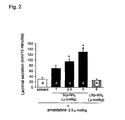
- rat lacrimal fluid was measured according to the method of Iga et al. (Iga, Y. et al., Jpn. J. Pharmacol., 78, 373-80, 1998). That is, the rat was anesthetized with pentobarbital (50 mg/kg, intraabdominal administration), and a paper with 2 mm width for testing human lacrimal secretion function, the Schirmer test paper (Showa Yakuhin Kako Co., Ltd.) was inserted into a lower eyelid of the rat. After the period of time fixed has passed, the test paper was removed, and a length of a wetted portion of the test paper was measured using a caliper square. An amount of lacrimal fluid was measured at 1, 2, 4, 6, 8 and 10 minutes after intravenous administration of a solvent or PAR-associated peptides.
- SLp-NH 2 When 5 ⁇ mol/kg of a PAR-2 peptide, SLp-NH 2 was administered to the rat intravenously, significant promotion of lacrimal secretion was observed with a peak 1 minute after the intravenous administration. Then, the effect of SLp-NH 2 , in combination with amastatine, which is an aminopeptidase inhibitor, on the lacrimal secretion promoting action of SLp-NH 2 was investigated, in light of that many PAR-2 agonist peptides are known to be degraded by aminopeptidase (Godin, D. et al., Eur. J. Pharmacol., 253, 225-30, 1994).
- Amastatine (Peptide Lab.) was intravenously administered at 2.5 ⁇ mol/kg 1 minute before administration of SLp-NH 2 .
- SLp-NH 2 a significant promotion of lacrimal secretion having a peak 1 minute after the administration was observed in SLp-NH 2 alone.
- the action thereof was more persistent than that of SLp-NH 2 alone, and a significant promotion of lacrimal secretion was observed 8 and 10 minutes after the treatment as compared with SLp-NH 2 alone.
- the SLp-NH 2 promoted the rat lacrimal secretion in doses of ranging from 1 to 5 ⁇ mol/kg in a dose-dependent manner.
- a control peptide, LRp-NH 2 had no effect on the rat lacrimal secretion even at 5 ⁇ mol/kg, and resulted in an amount of lacrimal secretion similar to that of a solvent-administrated group.
- compositions of the present invention manufactured according to the conventional method are shown in each table in the following Examples.
- SLp-NH 2 150 mg Sodium acetate 50 mg Benzalkonium chloride 5 mg Sodium chloride 650 mg Human serum albumin 100 mg Sodium hydroxide q.s. Diluted hydrochloric acid q.s. Sterilized purified water q.s. Total 100 mL
- SLp-NH 2 100 mg Poloxamer 407 100 mg Sodium chloride 450 mg Potassium chloride 100 mg Sodium dihydrogenphosphate 200 mg Borax 200 mg Alkylpolyaminoethyl glycine 10 mg Sterilized purified water q.s. Total 100 mL
- a composition for promoting lacrimal secretion of the present invention possesses the excellent lacrimal secretion promoting action and, thus, is the excellent therapeutic drug for dry eye resulted from the side effect of a drug, diseases, lowered function of lacrimal secretion or the like.
- the composition of the present invention can treat or prevent xerophthalmia, corneal afflux, foreign body feeling, itching feeling, paropsia, asthenopia, unpleasantness, burning feeling and the like followed by dry eye.
- composition for promoting lacrimal secretion of the present invention can be applied to an eye drop for contact lens, a washing solution for contact lens and a preserving solution for contact lens as well as a composition of contact lens.
Landscapes
- Health & Medical Sciences (AREA)
- Life Sciences & Earth Sciences (AREA)
- Veterinary Medicine (AREA)
- Chemical & Material Sciences (AREA)
- Public Health (AREA)
- General Health & Medical Sciences (AREA)
- Medicinal Chemistry (AREA)
- Animal Behavior & Ethology (AREA)
- Epidemiology (AREA)
- Pharmacology & Pharmacy (AREA)
- Engineering & Computer Science (AREA)
- Bioinformatics & Cheminformatics (AREA)
- Gastroenterology & Hepatology (AREA)
- Immunology (AREA)
- Proteomics, Peptides & Aminoacids (AREA)
- Physics & Mathematics (AREA)
- General Physics & Mathematics (AREA)
- Dermatology (AREA)
- Cell Biology (AREA)
- Zoology (AREA)
- Organic Chemistry (AREA)
- Nuclear Medicine, Radiotherapy & Molecular Imaging (AREA)
- General Chemical & Material Sciences (AREA)
- Chemical Kinetics & Catalysis (AREA)
- Transplantation (AREA)
- Optics & Photonics (AREA)
- Oral & Maxillofacial Surgery (AREA)
- Ophthalmology & Optometry (AREA)
- Medicines That Contain Protein Lipid Enzymes And Other Medicines (AREA)
- Medicinal Preparation (AREA)
- Peptides Or Proteins (AREA)
- Eyeglasses (AREA)
- Enzymes And Modification Thereof (AREA)
- Pharmaceuticals Containing Other Organic And Inorganic Compounds (AREA)
- Acyclic And Carbocyclic Compounds In Medicinal Compositions (AREA)
Applications Claiming Priority (3)
| Application Number | Priority Date | Filing Date | Title |
|---|---|---|---|
| JP36999699 | 1999-12-27 | ||
| JP36999699A JP3677421B2 (ja) | 1999-12-27 | 1999-12-27 | 涙液分泌促進組成物 |
| PCT/JP2000/008687 WO2001047556A1 (fr) | 1999-12-27 | 2000-12-08 | Composition favorisant la secretion lacrymale |
Publications (3)
| Publication Number | Publication Date |
|---|---|
| EP1247532A1 true EP1247532A1 (fr) | 2002-10-09 |
| EP1247532A4 EP1247532A4 (fr) | 2005-01-19 |
| EP1247532B1 EP1247532B1 (fr) | 2009-02-25 |
Family
ID=18495821
Family Applications (1)
| Application Number | Title | Priority Date | Filing Date |
|---|---|---|---|
| EP00979995A Expired - Lifetime EP1247532B1 (fr) | 1999-12-27 | 2000-12-08 | Composition favorisant la secretion lacrymale |
Country Status (8)
| Country | Link |
|---|---|
| US (2) | US20030203849A1 (fr) |
| EP (1) | EP1247532B1 (fr) |
| JP (1) | JP3677421B2 (fr) |
| AT (1) | ATE423572T1 (fr) |
| AU (1) | AU777262B2 (fr) |
| CA (1) | CA2396542C (fr) |
| DE (1) | DE60041658D1 (fr) |
| WO (1) | WO2001047556A1 (fr) |
Cited By (4)
| Publication number | Priority date | Publication date | Assignee | Title |
|---|---|---|---|---|
| WO2006085351A1 (fr) * | 2005-02-09 | 2006-08-17 | Safilens S.R.L. | Verre de contact, procede de production de celui et emballage destine au stockage et a l'entretien de celui-ci |
| EP2035015A4 (fr) * | 2006-05-01 | 2009-11-11 | Riolan Technologies Inc | Compositions, procédés et trousses pour le traitement des yeux secs |
| EP2097086A4 (fr) * | 2006-11-14 | 2012-01-11 | Yissum Res Dev Co | Compositions pour verres de contact |
| US8865681B2 (en) | 2004-03-02 | 2014-10-21 | Yissum Research Development Company of the Hebrew Unitersity of Jerusalem | Use of lipid conjugates in the treatment of diseases or disorders of the eye |
Families Citing this family (36)
| Publication number | Priority date | Publication date | Assignee | Title |
|---|---|---|---|---|
| US6346510B1 (en) | 1995-10-23 | 2002-02-12 | The Children's Medical Center Corporation | Therapeutic antiangiogenic endostatin compositions |
| JP5092138B2 (ja) * | 2001-08-30 | 2012-12-05 | ライオン株式会社 | コンタクトレンズ装着液 |
| JP4544391B2 (ja) * | 2001-12-28 | 2010-09-15 | ライオン株式会社 | 眼科用組成物 |
| JP5212657B2 (ja) * | 2001-12-28 | 2013-06-19 | ライオン株式会社 | 防腐組成物、眼科用組成物、増強方法及び防腐力増強剤 |
| GB0213286D0 (en) | 2002-06-10 | 2002-07-24 | Univ Edinburgh | Par-2-Activating peptide derivative and pharmaceutical composition using the same |
| WO2004052403A1 (fr) * | 2002-12-11 | 2004-06-24 | Santen Pharmaceutical Co., Ltd. | Conservateur pour l'ophtalmologie |
| US20040116470A1 (en) * | 2002-12-16 | 2004-06-17 | Nickel Alfred A. | Novel use of ion channel active compound, meperidine, to mediate process of accelerated wound healing |
| US20070082017A1 (en) * | 2004-01-10 | 2007-04-12 | Tseng Scheffer C | Lipid compositions and methods of use |
| WO2005067907A1 (fr) * | 2004-01-16 | 2005-07-28 | House Foods Corporation | Reactif pour examen de larmoiement et procede d'examen de larmoiement |
| JP4653516B2 (ja) * | 2004-02-27 | 2011-03-16 | 扶桑薬品工業株式会社 | 涙液分泌促進ペプチドおよびその組成物 |
| US7220800B2 (en) * | 2004-04-02 | 2007-05-22 | Adherent Laboratories, Inc. | Water soluble contact lens blocking composition with absorbent disintegrant |
| US7578996B2 (en) * | 2004-04-07 | 2009-08-25 | Advanced Medical Optics, Inc. | Cetylpyridinium chloride as an antimicrobial agent in ophthalmic compositions |
| PL1754491T3 (pl) * | 2004-05-21 | 2010-08-31 | Senju Pharma Co | Preparat do oczu do wchłaniania przezskórnego zawierający agonistę receptora muskarynowego |
| US20060063930A1 (en) * | 2004-08-20 | 2006-03-23 | Agoston Gregory E | Compositions and methods comprising proteinase activated receptor antagonists |
| US8268789B2 (en) | 2004-09-30 | 2012-09-18 | Kowa Company, Ltd. | PAR-2 antagonists |
| US8246949B2 (en) | 2004-10-27 | 2012-08-21 | Aciont, Inc. | Methods and devices for sustained in-vivo release of an active agent |
| JP4642449B2 (ja) * | 2004-12-06 | 2011-03-02 | 株式会社メニコン | コンタクトレンズ用液剤組成物 |
| EP1845104A4 (fr) | 2004-12-28 | 2009-08-05 | Kowa Co | Agoniste du récepteur par-2 |
| US8133864B2 (en) | 2005-03-29 | 2012-03-13 | Kowa Company, Ltd. | PAR-2 agonist |
| US7381707B2 (en) * | 2005-06-30 | 2008-06-03 | Johnson & Johnson Consumer Companies, Inc. | Treatment of dry eye |
| WO2007013661A1 (fr) * | 2005-07-26 | 2007-02-01 | Senju Pharmaceutical Co., Ltd. | Préparation ophtalmique absorbable par voie cutanée |
| US8435965B2 (en) * | 2005-12-27 | 2013-05-07 | Lion Corporation | Composition for soft contact lens and adsorption suppressing method |
| US7785624B2 (en) * | 2006-03-02 | 2010-08-31 | Inspire Pharmaceuticals, Inc. | Pharmaceutical latrunculin formulations |
| CN101668511A (zh) * | 2007-02-28 | 2010-03-10 | 阿西克斯医疗公司 | 正常化睑板腺分泌的方法和化合物 |
| US20090081194A1 (en) * | 2007-04-04 | 2009-03-26 | Kalsow Carolyn M | Compositions and methods for reducing risk of development, or severity, of inappropriate immune response in eyes |
| CA2686866A1 (fr) * | 2007-05-07 | 2008-11-13 | Erning Xia | Compositions pour reduire, ameliorer, traiter, ou prevenir la keratoconjonctivite et procedes pour leur fabrication et utilisation |
| US20080293127A1 (en) * | 2007-05-22 | 2008-11-27 | Applera Corporation | Method to Render Pressure Sensitive Adhesive Compatible with Polymerase Chain Reaction Systems |
| CN101317847B (zh) * | 2007-06-06 | 2010-10-13 | 深圳市瑞谷医药技术有限公司 | 一种眼用或耳鼻用药物组合物及其用途 |
| US20090176183A1 (en) * | 2008-01-09 | 2009-07-09 | Tp Orthodontics, Inc. | Lubricious metal orthodontic appliance |
| JP5421910B2 (ja) * | 2008-06-19 | 2014-02-19 | 学校法人近畿大学 | ペプチド誘導体およびそれを含む涙液分泌促進組成物 |
| AR075196A1 (es) * | 2009-02-03 | 2011-03-16 | Otsuka Pharma Co Ltd | Un derivado de cianopirimidina para el tratamiento de una enfermedad ocular |
| US9320690B2 (en) | 2010-12-20 | 2016-04-26 | Colgate-Palmolive Company | Gelatin encapsulated oral care composition containing hydrophilic active, hydrophobic structuring agent and oil carrier |
| JP2012145967A (ja) * | 2012-05-07 | 2012-08-02 | Lion Corp | コンタクトレンズ装着液 |
| WO2014167611A1 (fr) * | 2013-04-12 | 2014-10-16 | ロート製薬株式会社 | Composition pour lentilles de contact, et paquet de lentilles de contact mettant en œuvre celle-ci |
| CN107614018A (zh) * | 2015-05-28 | 2018-01-19 | 乐敦制药株式会社 | 水性眼科组合物 |
| JP2022125941A (ja) * | 2021-02-17 | 2022-08-29 | 株式会社ティ・エム・ディ | コンタクトレンズ |
Family Cites Families (6)
| Publication number | Priority date | Publication date | Assignee | Title |
|---|---|---|---|---|
| US3910296A (en) * | 1973-04-20 | 1975-10-07 | Allergan Pharma | Method of removing proteinaceous deposits from contact lenses |
| US3912296A (en) * | 1973-12-03 | 1975-10-14 | Ford Motor Co | Shock absorber mounting |
| JPS6216429A (ja) * | 1985-05-14 | 1987-01-24 | アイ・リサ−チ・インステイテユ−ト・オブ・ザ・レテイナ・フアウンデイシヨン | 涙液分秘の刺激 |
| US4745100A (en) * | 1985-05-14 | 1988-05-17 | Eye Research Institute Of Retina Foundation | Stimulation of tear secretion |
| US5629174A (en) * | 1993-07-26 | 1997-05-13 | Cor Therapeutics, Inc. | Recombinant C140 receptor |
| JPH10236972A (ja) * | 1997-02-28 | 1998-09-08 | Mitsubishi Chem Corp | 涙液分泌促進剤 |
-
1999
- 1999-12-27 JP JP36999699A patent/JP3677421B2/ja not_active Expired - Fee Related
-
2000
- 2000-12-08 DE DE60041658T patent/DE60041658D1/de not_active Expired - Lifetime
- 2000-12-08 EP EP00979995A patent/EP1247532B1/fr not_active Expired - Lifetime
- 2000-12-08 WO PCT/JP2000/008687 patent/WO2001047556A1/fr not_active Ceased
- 2000-12-08 CA CA2396542A patent/CA2396542C/fr not_active Expired - Fee Related
- 2000-12-08 AT AT00979995T patent/ATE423572T1/de not_active IP Right Cessation
- 2000-12-08 US US10/169,046 patent/US20030203849A1/en not_active Abandoned
- 2000-12-08 AU AU17342/01A patent/AU777262B2/en not_active Ceased
-
2005
- 2005-08-26 US US11/211,600 patent/US7348306B2/en not_active Expired - Fee Related
Cited By (8)
| Publication number | Priority date | Publication date | Assignee | Title |
|---|---|---|---|---|
| US8865681B2 (en) | 2004-03-02 | 2014-10-21 | Yissum Research Development Company of the Hebrew Unitersity of Jerusalem | Use of lipid conjugates in the treatment of diseases or disorders of the eye |
| WO2006085351A1 (fr) * | 2005-02-09 | 2006-08-17 | Safilens S.R.L. | Verre de contact, procede de production de celui et emballage destine au stockage et a l'entretien de celui-ci |
| US7726809B2 (en) | 2005-02-09 | 2010-06-01 | Safilens S.R.L. | Contact lens, method for producing same, and pack for storage and maintenance of a contact lens |
| US8298595B2 (en) | 2005-02-09 | 2012-10-30 | Safilens S.R.L. | Contact lens, method for producing same, and pack for storage and maintenance of a contact lens |
| US8469183B2 (en) | 2005-02-09 | 2013-06-25 | Safilens S.R.L. | Contact lens, method for producing same, and pack for storage and maintenance of a contact lens |
| EP2035015A4 (fr) * | 2006-05-01 | 2009-11-11 | Riolan Technologies Inc | Compositions, procédés et trousses pour le traitement des yeux secs |
| EP2097086A4 (fr) * | 2006-11-14 | 2012-01-11 | Yissum Res Dev Co | Compositions pour verres de contact |
| AU2007320737B2 (en) * | 2006-11-14 | 2014-04-03 | Celsus Therapeutics Plc | Contact lens compositions |
Also Published As
| Publication number | Publication date |
|---|---|
| CA2396542A1 (fr) | 2001-07-05 |
| JP3677421B2 (ja) | 2005-08-03 |
| AU777262B2 (en) | 2004-10-07 |
| EP1247532B1 (fr) | 2009-02-25 |
| EP1247532A4 (fr) | 2005-01-19 |
| CA2396542C (fr) | 2011-04-12 |
| US20030203849A1 (en) | 2003-10-30 |
| US7348306B2 (en) | 2008-03-25 |
| ATE423572T1 (de) | 2009-03-15 |
| DE60041658D1 (de) | 2009-04-09 |
| AU1734201A (en) | 2001-07-09 |
| US20060019904A1 (en) | 2006-01-26 |
| JP2001181208A (ja) | 2001-07-03 |
| WO2001047556A1 (fr) | 2001-07-05 |
Similar Documents
| Publication | Publication Date | Title |
|---|---|---|
| US7348306B2 (en) | Composition for promoting lacrimal secretion | |
| US8383595B2 (en) | Peptide derivative and composition for promoting tear secretion comprising the same | |
| US20150094260A1 (en) | Buffered ophthalmic compositions and methods of use thereof | |
| CZ76893A3 (en) | Use of plasminogen activator inhibitors for the preparation of medicaments | |
| CN104244964A (zh) | 用于预防或治疗眼科病状的方法和组合物 | |
| US20070004640A1 (en) | Treatment of dry eye | |
| WO2003033019A2 (fr) | Procede de production de plasmine dans l'humeur vitree de l'oeil, provoquant un detachement hyaloide posterieur de la retine | |
| US20040081643A1 (en) | Process for inhibiting vascular proliferation in the eye | |
| WO2001080862A9 (fr) | Utilisation d'inhibiteurs mmp pour filtrer les papules et en cas d'ischemie | |
| JP4653516B2 (ja) | 涙液分泌促進ペプチドおよびその組成物 | |
| KR100698449B1 (ko) | 안구 혈관신생 질환 치료용 스타우로스포린 유도체의 용도 | |
| Liang et al. | Noncross-linked collagen discs and cross-linked collagen shields in the delivery of gentamicin to rabbits eyes. | |
| JP2005187482A (ja) | 涙液分泌促進組成物 | |
| RU2343885C1 (ru) | Способ лечения субэпителиального флера роговицы после фоторефракционной кератэктомии | |
| KR100794288B1 (ko) | 인간 인테그린 결합 단백질 또는 펩타이드를 유효성분으로하는 안질환 치료제 | |
| CA3243814A1 (fr) | Peptides et leurs méthodes d'utilisation dans le traitement de troubles oculaires |
Legal Events
| Date | Code | Title | Description |
|---|---|---|---|
| PUAI | Public reference made under article 153(3) epc to a published international application that has entered the european phase |
Free format text: ORIGINAL CODE: 0009012 |
|
| 17P | Request for examination filed |
Effective date: 20020726 |
|
| AK | Designated contracting states |
Kind code of ref document: A1 Designated state(s): AT BE CH CY DE DK ES FI FR GB GR IE IT LI LU MC NL PT SE TR |
|
| AX | Request for extension of the european patent |
Free format text: AL;LT;LV;MK;RO;SI |
|
| A4 | Supplementary search report drawn up and despatched |
Effective date: 20041203 |
|
| RIC1 | Information provided on ipc code assigned before grant |
Ipc: 7A 61K 38/55 K Ipc: 7A 61P 27/02 B Ipc: 7A 61K 38:08 J Ipc: 7A 61K 38/55 J Ipc: 7A 61K 38/48 B Ipc: 7A 61K 38/08 B Ipc: 7A 61K 45/00 A Ipc: 7A 61K 38/55 B Ipc: 7A 61K 38:48 K |
|
| 17Q | First examination report despatched |
Effective date: 20061012 |
|
| GRAP | Despatch of communication of intention to grant a patent |
Free format text: ORIGINAL CODE: EPIDOSNIGR1 |
|
| RIC1 | Information provided on ipc code assigned before grant |
Ipc: A61K 38/55 20060101ALI20080613BHEP Ipc: A61K 38/48 20060101ALI20080613BHEP Ipc: A61P 27/02 20060101ALI20080613BHEP Ipc: A61K 38/08 20060101ALI20080613BHEP Ipc: A61K 45/00 20060101AFI20080613BHEP |
|
| GRAS | Grant fee paid |
Free format text: ORIGINAL CODE: EPIDOSNIGR3 |
|
| GRAA | (expected) grant |
Free format text: ORIGINAL CODE: 0009210 |
|
| AK | Designated contracting states |
Kind code of ref document: B1 Designated state(s): AT BE CH CY DE DK ES FI FR GB GR IE IT LI LU MC NL PT SE TR |
|
| REG | Reference to a national code |
Ref country code: GB Ref legal event code: FG4D |
|
| REG | Reference to a national code |
Ref country code: CH Ref legal event code: EP |
|
| REG | Reference to a national code |
Ref country code: IE Ref legal event code: FG4D |
|
| REF | Corresponds to: |
Ref document number: 60041658 Country of ref document: DE Date of ref document: 20090409 Kind code of ref document: P |
|
| PG25 | Lapsed in a contracting state [announced via postgrant information from national office to epo] |
Ref country code: NL Free format text: LAPSE BECAUSE OF FAILURE TO SUBMIT A TRANSLATION OF THE DESCRIPTION OR TO PAY THE FEE WITHIN THE PRESCRIBED TIME-LIMIT Effective date: 20090225 Ref country code: FI Free format text: LAPSE BECAUSE OF FAILURE TO SUBMIT A TRANSLATION OF THE DESCRIPTION OR TO PAY THE FEE WITHIN THE PRESCRIBED TIME-LIMIT Effective date: 20090225 |
|
| NLV1 | Nl: lapsed or annulled due to failure to fulfill the requirements of art. 29p and 29m of the patents act | ||
| PG25 | Lapsed in a contracting state [announced via postgrant information from national office to epo] |
Ref country code: AT Free format text: LAPSE BECAUSE OF FAILURE TO SUBMIT A TRANSLATION OF THE DESCRIPTION OR TO PAY THE FEE WITHIN THE PRESCRIBED TIME-LIMIT Effective date: 20090225 Ref country code: SE Free format text: LAPSE BECAUSE OF FAILURE TO SUBMIT A TRANSLATION OF THE DESCRIPTION OR TO PAY THE FEE WITHIN THE PRESCRIBED TIME-LIMIT Effective date: 20090525 |
|
| PG25 | Lapsed in a contracting state [announced via postgrant information from national office to epo] |
Ref country code: BE Free format text: LAPSE BECAUSE OF FAILURE TO SUBMIT A TRANSLATION OF THE DESCRIPTION OR TO PAY THE FEE WITHIN THE PRESCRIBED TIME-LIMIT Effective date: 20090225 |
|
| PG25 | Lapsed in a contracting state [announced via postgrant information from national office to epo] |
Ref country code: DK Free format text: LAPSE BECAUSE OF FAILURE TO SUBMIT A TRANSLATION OF THE DESCRIPTION OR TO PAY THE FEE WITHIN THE PRESCRIBED TIME-LIMIT Effective date: 20090225 Ref country code: ES Free format text: LAPSE BECAUSE OF FAILURE TO SUBMIT A TRANSLATION OF THE DESCRIPTION OR TO PAY THE FEE WITHIN THE PRESCRIBED TIME-LIMIT Effective date: 20090605 Ref country code: PT Free format text: LAPSE BECAUSE OF FAILURE TO SUBMIT A TRANSLATION OF THE DESCRIPTION OR TO PAY THE FEE WITHIN THE PRESCRIBED TIME-LIMIT Effective date: 20090812 |
|
| PLBE | No opposition filed within time limit |
Free format text: ORIGINAL CODE: 0009261 |
|
| STAA | Information on the status of an ep patent application or granted ep patent |
Free format text: STATUS: NO OPPOSITION FILED WITHIN TIME LIMIT |
|
| 26N | No opposition filed |
Effective date: 20091126 |
|
| PG25 | Lapsed in a contracting state [announced via postgrant information from national office to epo] |
Ref country code: MC Free format text: LAPSE BECAUSE OF NON-PAYMENT OF DUE FEES Effective date: 20100701 |
|
| REG | Reference to a national code |
Ref country code: CH Ref legal event code: PL |
|
| REG | Reference to a national code |
Ref country code: IE Ref legal event code: MM4A |
|
| PG25 | Lapsed in a contracting state [announced via postgrant information from national office to epo] |
Ref country code: LI Free format text: LAPSE BECAUSE OF NON-PAYMENT OF DUE FEES Effective date: 20091231 Ref country code: IE Free format text: LAPSE BECAUSE OF NON-PAYMENT OF DUE FEES Effective date: 20091208 Ref country code: GR Free format text: LAPSE BECAUSE OF FAILURE TO SUBMIT A TRANSLATION OF THE DESCRIPTION OR TO PAY THE FEE WITHIN THE PRESCRIBED TIME-LIMIT Effective date: 20090526 Ref country code: CH Free format text: LAPSE BECAUSE OF NON-PAYMENT OF DUE FEES Effective date: 20091231 |
|
| PG25 | Lapsed in a contracting state [announced via postgrant information from national office to epo] |
Ref country code: IT Free format text: LAPSE BECAUSE OF FAILURE TO SUBMIT A TRANSLATION OF THE DESCRIPTION OR TO PAY THE FEE WITHIN THE PRESCRIBED TIME-LIMIT Effective date: 20090225 |
|
| PG25 | Lapsed in a contracting state [announced via postgrant information from national office to epo] |
Ref country code: LU Free format text: LAPSE BECAUSE OF NON-PAYMENT OF DUE FEES Effective date: 20091208 |
|
| PG25 | Lapsed in a contracting state [announced via postgrant information from national office to epo] |
Ref country code: TR Free format text: LAPSE BECAUSE OF FAILURE TO SUBMIT A TRANSLATION OF THE DESCRIPTION OR TO PAY THE FEE WITHIN THE PRESCRIBED TIME-LIMIT Effective date: 20090225 |
|
| PG25 | Lapsed in a contracting state [announced via postgrant information from national office to epo] |
Ref country code: CY Free format text: LAPSE BECAUSE OF FAILURE TO SUBMIT A TRANSLATION OF THE DESCRIPTION OR TO PAY THE FEE WITHIN THE PRESCRIBED TIME-LIMIT Effective date: 20090225 |
|
| REG | Reference to a national code |
Ref country code: FR Ref legal event code: PLFP Year of fee payment: 16 |
|
| REG | Reference to a national code |
Ref country code: FR Ref legal event code: PLFP Year of fee payment: 17 |
|
| PGFP | Annual fee paid to national office [announced via postgrant information from national office to epo] |
Ref country code: GB Payment date: 20161228 Year of fee payment: 17 Ref country code: FR Payment date: 20161028 Year of fee payment: 17 |
|
| PGFP | Annual fee paid to national office [announced via postgrant information from national office to epo] |
Ref country code: DE Payment date: 20161229 Year of fee payment: 17 |
|
| REG | Reference to a national code |
Ref country code: DE Ref legal event code: R119 Ref document number: 60041658 Country of ref document: DE |
|
| GBPC | Gb: european patent ceased through non-payment of renewal fee |
Effective date: 20171208 |
|
| REG | Reference to a national code |
Ref country code: FR Ref legal event code: ST Effective date: 20180831 |
|
| PG25 | Lapsed in a contracting state [announced via postgrant information from national office to epo] |
Ref country code: FR Free format text: LAPSE BECAUSE OF NON-PAYMENT OF DUE FEES Effective date: 20180102 Ref country code: DE Free format text: LAPSE BECAUSE OF NON-PAYMENT OF DUE FEES Effective date: 20180703 |
|
| PG25 | Lapsed in a contracting state [announced via postgrant information from national office to epo] |
Ref country code: GB Free format text: LAPSE BECAUSE OF NON-PAYMENT OF DUE FEES Effective date: 20171208 |