EP1248170A1 - Méthode de gestion de systèmes d'atelier basée sur un système de gestion d'automatisation - Google Patents
Méthode de gestion de systèmes d'atelier basée sur un système de gestion d'automatisation Download PDFInfo
- Publication number
- EP1248170A1 EP1248170A1 EP20010830237 EP01830237A EP1248170A1 EP 1248170 A1 EP1248170 A1 EP 1248170A1 EP 20010830237 EP20010830237 EP 20010830237 EP 01830237 A EP01830237 A EP 01830237A EP 1248170 A1 EP1248170 A1 EP 1248170A1
- Authority
- EP
- European Patent Office
- Prior art keywords
- sample
- resource
- workcell
- resources
- protocol
- Prior art date
- Legal status (The legal status is an assumption and is not a legal conclusion. Google has not performed a legal analysis and makes no representation as to the accuracy of the status listed.)
- Granted
Links
Images


Classifications
-
- G—PHYSICS
- G01—MEASURING; TESTING
- G01N—INVESTIGATING OR ANALYSING MATERIALS BY DETERMINING THEIR CHEMICAL OR PHYSICAL PROPERTIES
- G01N35/00—Automatic analysis not limited to methods or materials provided for in any single one of groups G01N1/00 - G01N33/00; Handling materials therefor
- G01N35/00584—Control arrangements for automatic analysers
- G01N35/00594—Quality control, including calibration or testing of components of the analyser
- G01N35/00603—Reinspection of samples
-
- G—PHYSICS
- G01—MEASURING; TESTING
- G01N—INVESTIGATING OR ANALYSING MATERIALS BY DETERMINING THEIR CHEMICAL OR PHYSICAL PROPERTIES
- G01N35/00—Automatic analysis not limited to methods or materials provided for in any single one of groups G01N1/00 - G01N33/00; Handling materials therefor
- G01N35/00584—Control arrangements for automatic analysers
- G01N35/0092—Scheduling
-
- G—PHYSICS
- G01—MEASURING; TESTING
- G01N—INVESTIGATING OR ANALYSING MATERIALS BY DETERMINING THEIR CHEMICAL OR PHYSICAL PROPERTIES
- G01N35/00—Automatic analysis not limited to methods or materials provided for in any single one of groups G01N1/00 - G01N33/00; Handling materials therefor
- G01N35/0099—Automatic analysis not limited to methods or materials provided for in any single one of groups G01N1/00 - G01N33/00; Handling materials therefor comprising robots or similar manipulators
-
- G—PHYSICS
- G05—CONTROLLING; REGULATING
- G05B—CONTROL OR REGULATING SYSTEMS IN GENERAL; FUNCTIONAL ELEMENTS OF SUCH SYSTEMS; MONITORING OR TESTING ARRANGEMENTS FOR SUCH SYSTEMS OR ELEMENTS
- G05B19/00—Program-control systems
- G05B19/02—Program-control systems electric
- G05B19/04—Program control other than numerical control, i.e. in sequence controllers or logic controllers
- G05B19/042—Program control other than numerical control, i.e. in sequence controllers or logic controllers using digital processors
- G05B19/0426—Programming the control sequence
-
- G—PHYSICS
- G05—CONTROLLING; REGULATING
- G05B—CONTROL OR REGULATING SYSTEMS IN GENERAL; FUNCTIONAL ELEMENTS OF SUCH SYSTEMS; MONITORING OR TESTING ARRANGEMENTS FOR SUCH SYSTEMS OR ELEMENTS
- G05B19/00—Program-control systems
- G05B19/02—Program-control systems electric
- G05B19/418—Total factory control, i.e. centrally controlling a plurality of machines, e.g. direct or distributed numerical control [DNC], flexible manufacturing systems [FMS], integrated manufacturing systems [IMS] or computer integrated manufacturing [CIM]
- G05B19/41865—Total factory control, i.e. centrally controlling a plurality of machines, e.g. direct or distributed numerical control [DNC], flexible manufacturing systems [FMS], integrated manufacturing systems [IMS] or computer integrated manufacturing [CIM] characterised by job scheduling, process planning, material flow
-
- G—PHYSICS
- G01—MEASURING; TESTING
- G01N—INVESTIGATING OR ANALYSING MATERIALS BY DETERMINING THEIR CHEMICAL OR PHYSICAL PROPERTIES
- G01N35/00—Automatic analysis not limited to methods or materials provided for in any single one of groups G01N1/00 - G01N33/00; Handling materials therefor
- G01N35/00584—Control arrangements for automatic analysers
- G01N35/0092—Scheduling
- G01N2035/0093—Scheduling random access not determined by physical position
-
- G—PHYSICS
- G01—MEASURING; TESTING
- G01N—INVESTIGATING OR ANALYSING MATERIALS BY DETERMINING THEIR CHEMICAL OR PHYSICAL PROPERTIES
- G01N35/00—Automatic analysis not limited to methods or materials provided for in any single one of groups G01N1/00 - G01N33/00; Handling materials therefor
- G01N35/02—Automatic analysis not limited to methods or materials provided for in any single one of groups G01N1/00 - G01N33/00; Handling materials therefor using a plurality of sample containers moved by a conveyor system past one or more treatment or analysis stations
- G01N35/021—Automatic analysis not limited to methods or materials provided for in any single one of groups G01N1/00 - G01N33/00; Handling materials therefor using a plurality of sample containers moved by a conveyor system past one or more treatment or analysis stations having a flexible chain, e.g. "cartridge belt", conveyor for reaction cells or cuvettes
-
- G—PHYSICS
- G05—CONTROLLING; REGULATING
- G05B—CONTROL OR REGULATING SYSTEMS IN GENERAL; FUNCTIONAL ELEMENTS OF SUCH SYSTEMS; MONITORING OR TESTING ARRANGEMENTS FOR SUCH SYSTEMS OR ELEMENTS
- G05B2219/00—Program-control systems
- G05B2219/30—Nc systems
- G05B2219/32—Operator till task planning
- G05B2219/32247—Real time scheduler
-
- G—PHYSICS
- G05—CONTROLLING; REGULATING
- G05B—CONTROL OR REGULATING SYSTEMS IN GENERAL; FUNCTIONAL ELEMENTS OF SUCH SYSTEMS; MONITORING OR TESTING ARRANGEMENTS FOR SUCH SYSTEMS OR ELEMENTS
- G05B2219/00—Program-control systems
- G05B2219/30—Nc systems
- G05B2219/32—Operator till task planning
- G05B2219/32287—Medical, chemical, biological laboratory
-
- G—PHYSICS
- G05—CONTROLLING; REGULATING
- G05B—CONTROL OR REGULATING SYSTEMS IN GENERAL; FUNCTIONAL ELEMENTS OF SUCH SYSTEMS; MONITORING OR TESTING ARRANGEMENTS FOR SUCH SYSTEMS OR ELEMENTS
- G05B2219/00—Program-control systems
- G05B2219/30—Nc systems
- G05B2219/32—Operator till task planning
- G05B2219/32298—Designate at least two group of articles, first with priority, reschedule second
-
- G—PHYSICS
- G05—CONTROLLING; REGULATING
- G05B—CONTROL OR REGULATING SYSTEMS IN GENERAL; FUNCTIONAL ELEMENTS OF SUCH SYSTEMS; MONITORING OR TESTING ARRANGEMENTS FOR SUCH SYSTEMS OR ELEMENTS
- G05B2219/00—Program-control systems
- G05B2219/30—Nc systems
- G05B2219/32—Operator till task planning
- G05B2219/32328—Dynamic scheduling, resource allocation, multi agent negotiation
-
- Y—GENERAL TAGGING OF NEW TECHNOLOGICAL DEVELOPMENTS; GENERAL TAGGING OF CROSS-SECTIONAL TECHNOLOGIES SPANNING OVER SEVERAL SECTIONS OF THE IPC; TECHNICAL SUBJECTS COVERED BY FORMER USPC CROSS-REFERENCE ART COLLECTIONS [XRACs] AND DIGESTS
- Y02—TECHNOLOGIES OR APPLICATIONS FOR MITIGATION OR ADAPTATION AGAINST CLIMATE CHANGE
- Y02P—CLIMATE CHANGE MITIGATION TECHNOLOGIES IN THE PRODUCTION OR PROCESSING OF GOODS
- Y02P90/00—Enabling technologies with a potential contribution to greenhouse gas [GHG] emissions mitigation
- Y02P90/02—Total factory control, e.g. smart factories, flexible manufacturing systems [FMS] or integrated manufacturing systems [IMS]
Definitions
- the present invention relates to a method for the management of Workcell Systems capable to control concurrent processes that use pieces of equipment, here called Resources, interacting each other according to the needs and the changes that have not been forecast in advance in their process cycles, by means of a continuous real-time re-scheduling of automatic tasks. Further it relates to an Automation Management System.
- the automation concept has been limited, so far, to production processes where pieces of equipment are dedicated to specific tasks, notwithstanding if they were saturated or not, and without any attempt to use them to perform concurrent processes, or to take any automatic decision, based on expert-system rules, to re-do some process steps or to schedule new process tasks according to rules applied to the results achieved by the System and/or to unexpected Operator requests.
- prior art automation concepts cannot be applied to environments where the tasks can be changed very often as, for example, the ones of Laboratory Medicine and Research Laboratories, that are distinguished by: unpredictable environment, use of general purpose instruments that may be used for different assays, small scale automation, need of flexible automation, need to saturate complex and expensive equipment that are generally used for different protocols that need to be run almost contemporaneously, need to give the automated system the possibility to automatically modify the sample protocols upon User request and/or expert-system rules based on the results of the assay process.
- a Sample is a specimen of material in a form that allows treatment or assay on the appropriate Resources
- a Sample Protocol is a collection of data indicating the tasks that have to be executed on the associated Sample in said Workcell System.
- R1, R2,... Rn represent the various Resources, D1, D2,... Dn the associated Resource Drivers, S1 a generic Sample and SP1 the associated Sample Protocol,
- PC represents the Process Controller, DM the Data Manager, LIS the Laboratory Information System, LD the Laboratory Information System Driver, U the User or human Operator, GUI the Graphic User Interface, AMS the Automation Managing System and WS the Workcell System itself.
- IVD LAWS In Vitro Diagnostics Laboratory Automation Workcell System
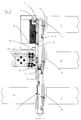
- Sample Containers sample tubes containing a biological fluid (e.g. blood or any other material), sample racks carrying, for example, 12, 20 or 48 sample tubes each, and the following pieces of equipment as Resources:
- Sample Carrier Devices an Inpeco Transport and Positioning Module (TPM) 1, i.e. a belt conveyor system transporting Pallets (i.e.
- TPM Inpeco Transport and Positioning Module
- Sample Tubes each Pallet is identified by a radio-frequency transponder, appropriately read from time to time by radio frequency devices integrated in a Transponder Tag Reading System
- IOM Input/Output Module
- CM Centrifuge Module
- Sample Container Handling Devices two Datalogic barcode readers 5 for Sample Container identification, an Input/Output area 6 equipped with sensors and actuators to detect and lock sample racks, a Vision System 7 to recognise sample racks and sample tubes, two Sample Container Detection Devices 8 to identify sample tube height and diameter, a Decapper System 9 to remove sample closures (caps) from sample tubes as necessary, Sample Treatment Devices: a Hettich Rotanta Centrifuge 10 for sample centrifugation, and as Sample Assay Devices: up to ten different Clinical-Chemistry, Immunochemistry, or other Diagnostics Analysers 11, and a Sartorius BP6100 Balance Scale 12 to measure sample weights.
- the state of the art provides for systems that perform Laboratory Diagnostics analyses foresees either the manual execution of the pre-analytical tasks (i.e. sample identification, centrifugation, decapping, loading of samples into the Analysers) and post-analytical tasks (i.e. unloading of samples from the Analysers, sample sorting, test re-execution in case of errors, new analysis requests due to particular rules), or the automatic execution of the pre-analytical phase only, but in a sequential fashion, without the handling of priorities and concurrency.
- pre-analytical tasks i.e. sample identification, centrifugation, decapping, loading of samples into the Analysers
- post-analytical tasks i.e. unloading of samples from the Analysers, sample sorting, test re-execution in case of errors, new analysis requests due to particular rules
- the In Vitro Diagnostics Laboratory Automation Workcell System that uses the Laboratory Automation Management System, automates all the pre-analytical, analytical and post-analytical phases of Sample assaying in a homogeneous, concurrent, reactive, dynamic and expert-system-rule-based fashion.
- the only manual tasks to be performed by the Operator are loading and unloading Sample Racks, containing barcode-labelled sample tubes, that arrive from the Hospital blood draw area or from other clinical locations.
- the Workcell System automatically senses and locks the racks, and the IOM Robot takes a picture of each rack by a digital camera 7, identifying the sample tubes contained in the rack and the rack ID (and consequently the area where the sample was collected or eventually the phlebotomist who performed the collection).
- the IOM robot 2 automatically picks up the tubes from the racks and puts them into the TPM 1, where the Barcode Reader 5 and the Sample Container Detection Device 8 detect the Sample Container ID and its dimension (height and diameter).
- the Sample Container ID is associated with the proper Sample Protocol (i.e. the test orders) downloaded by the Laboratory Information System (or manually inserted by the Operator using the Graphic User Interface as necessary) and the proper pallet ID, in order to trace the Sample Container along the TPM 1.
- the Sample is centrifuged as necessary (in this phase, the sample quantity is measured by the Balance Scale 12 in order to know if the sample is sufficient to perform the analyses, and to load the Sample Containers into the Centrifuge 10 in a balanced way: a balancing algorithm is used in this respect), and decapped as necessary by the Decapper System 9 (i.e. the Sample Container closure is removed - it is possible also to load pre-centrifuged or pre-decapped Sample Containers in particular Input locations, and these tubes will be treated by the System accordingly).
- each Analyser 11 is handled by two Resource Drivers, the first one managing the Laboratory Information System (LIS) data communication, i.e. the transmission of the test orders and the reception of sample results and/or analytical errors after the assays are performed, the second one managing the Laboratory Automation System (LAS) communication, i.e. the management of the robotic automation commands that actually load the Sample into the analyser.
- LIS Laboratory Information System
- LAS Laboratory Automation System
- the Sample Container is moved into the appropriate sorting rack (depending on the test request that have to be eventually executed in other off-line Analysers), and, when all the test results are received (and eventually some derived results are mathematically calculated), the LAWS Process Controller (the co-ordinator of Resource drivers) takes a decision, depending on the results and the configured expert-system rules, to release the results to the Laboratory Information System or to ask the Operator intervention to validate the results.
- the LAWS Process Controller the co-ordinator of Resource drivers
- the Data Manager (the handler of the Sample Protocol database) may automatically ask for new test orders to be added to the Sample Protocol, or to automatically re-execute some tests and/or add some new tests (called reflex tests) to the Sample Protocol for further analytical investigation (in this cases, the Sample Container is automatically picked up again by the IOM Robot 2 and routed to the appropriate Analysers 11 accordingly - provided that the Sample quantity is estimated as sufficient to complete the newly requested analyses).
- sample Container it is possible to co-ordinate all the Resources of the System in a multi-tasking/multi-threading fashion, and thus allowing each Sample Container to have a different treatment based on Sample Protocol priority, Sample and Sample Container characteristics (i.e. whether the sample must be centrifuged or not, or whether the sample container has the closure or not, or sample container height, diameter and weight), Sample Protocol tests to be executed (tests may be executed on different Analysers, and Sample Containers may be sorted to different output racks according to tests that are left for Analysers that are located outside the Laboratory Automation Workcell System), and test results that may cause new test requests.
- Sample Protocol priority i.e. whether the sample must be centrifuged or not, or whether the sample container has the closure or not, or sample container height, diameter and weight
- Sample Protocol tests to be executed tests may be executed on different Analysers, and Sample Containers may be sorted to different output racks according to tests that are left for Analysers that are located outside the Laboratory Automation Workcell System
- test results
- Some critical resources like the Input/Output area 6, the Centrifuge 10, or some Analyser 11 buffers (i.e. waiting queues of Pallets containing Samples to be assayed in those Analysers), that can cause system bottlenecks, are handled with User-configurable expert-system-based rules, which allow the Process Controller to have an intelligent control of the workload balancing flow, taking the appropriate decisions on the Sample Container routing.
- the system automatically estimates the time before completion of each Sample test, and then it distributes Sample Containers along the System in order to optimise the workflow, avoiding queues and bottlenecks. Also, if a Resource is off-line or busy (e.g. an Analyser), some tasks that were scheduled for that Resource are automatically re-scheduled for a different resource (e.g. another equivalent Analyser), maximising efficiency and throughput. Also, depending on User request or event-driven re-scheduling algorithms, the assaying process is distributed along the equivalent Analysers in order to minimise the splitting of test requests (i.e.
- the User can access the Graphic User interface to modify the configuration parameters and the rules to handle automatic test re-execution, reflex testing, and mathematical calculation of derived results, or to view test results and eventually validate or schedule a re-execution of the tests that the internal LAWS Data Manager expert system does not handle automatically, or for diagnostics and troubleshooting reasons.
- RLS Resource Logical Status
- RPS Resource Physical Status
- the RLS variable indicates the status of the current task execution of the relevant Resource, i.e. it may be Ready if the Resource is ready to execute new tasks, Busy if it is busy executing a task and thus it cannot currently receive new commands, Error if it is in error state, Task End if it has terminated its current task and it is waiting that the Process Controller updates the RPS variables, etc.
- the RPS variables indicate the physical status of a Resource, e.g. for an Analyser
- the RPS is a set of variables indicating the current menu of the Analyser itself (i.e. the list of all available calibrated reagents to perform the tests), the available consumables (i.e. tips, aliquots, cuvettes, etc.) and the current Analyser workload (i.e. the number of tests being currently performed, the estimated average time for completion, the number of scheduled tests to be run, etc.).
- the Process Controller depending upon the RLS and the RPS variables of the various Resources, and upon the Sample Protocols of the Samples being currently in process on the Workcell System, automatically decides, step by step, where and when to execute sample treatment (e.g. centrifuging), sample container handling (i.e. decapping) and sample assaying (i.e. executing some of all tests on the relevant samples).
- sample treatment e.g. centrifuging
- sample container handling i.e. decapping
- sample assaying i.e. executing some of all tests on the relevant samples.
- Sample Containers Microtiter Plates (plates containing a multiple number of Samples, located in portions of the Plate called wells), Tip Racks (containers of tips, that are used by some Resources to move part of a Sample to and from the Sample Container, and Sample Tubes), and the following pieces of equipment as Resources: Sample Carrier Devices: CRS Robotics A255 articulated robot 13 mounted on a 4.5 meter long Inpeco TR-10/4 air bearing track (a double pair of pincers are designed to transfer Microtiter plates and Tip Racks and Sample Tubes to and from all Resources in the LAWS), and a Turntable 14 (for plate rotation).
- Sample Containers Microtiter Plates (plates containing a multiple number of Samples, located in portions of the Plate called wells), Tip Racks (containers of tips, that are used by some Resources to move part of a Sample to and from the Sample Container, and Sample Tubes), and the following pieces of equipment as Resources: Sample Carrier Devices: CRS Robotics A255 articulate
- Sample Container Handling Devices a MicroScan Raster barcode reader 15 for Sample Container identification, two Plate Storage Carousels 16 that can accommodate 144 Microtiter Plates each, one Tip Rack Storage Carousel 17, which can accommodate 72 tip racks or deep well plates, a Sagian Plate Sealer 18, two Plate Slides 19 for waste plates and tip racks disposal, as Sample Treatment Devices: three LabSystems Multidrop 8-Channel Dispensers 20, a Beckman Biomek 2000 Liquid Handling Robot 21, a Beckman Multimek 96-channel dispenser 22, an Inpeco 20-position vertical Plate Shaker 23, a Heraeus BB 6220 M3 Incubator 24 with sliding back door, a Beckman GS 6R Plate Centrifuge 25 modified by Inpeco for automatic loading, an SLT Columbus Plate Washer 26, and as Sample Assay Devices: a Wallac Trilux 1450-025 Scintillation Counter 27 with ParaLux option, a Wallac Victor2 Multilabel Detector 28, an SLT
- Static scheduling of screening protocols provides an identical sample history for all plates, although appropriate optimisation of the throughput and the way protocols are executed (the order of operations) is based on the knowledge and the experience of the scientist.
- Dynamic scheduling systems have several interesting advantages, like the possibility to add plates or other protocols once the workcell has already started the execution, or the possibility to resume the original run automatically after a User intervention or other kinds of interruptions. Dynamic scheduling systems usually are not capable of maintaining requested timing and therefore are only useful for protocols with relaxed timing constraints.
- the present invention it is possible to provide a Laboratory Automation Workcell System particularly interesting for medium/high throughput situations where very high flexibility and adaptability are required.
- the reactivity of the system gives the possibility to support many different assay formats sequentially or in parallel and immediate adaptability to program changes and unforeseen circumstances around and during a program run.
- the Laboratory Automation Workcell System is flexible and thus capable to support any kind of Protocol; the assay implementation is easy and quick to perform; Sample Results are immediately and easily accessible in a standard format; and it is rigorously modular, so that any subsystem might be substituted with an upgraded or completely new module whenever required.
- the scheduling process enables the User of the Laboratory Automation Workcell System to define a set of operation steps using the Resources of the system, set the number of Samples Plates to be assayed, generate a feasible program for processing all Samples and execute the program.
- the Laboratory Workcell Management System includes a Graphical User Interface (GUI), able to create the Protocols to be stored in the Protocol Database and a Diagnostic Module to troubleshoot eventual problems.
- GUI Graphical User Interface
- the Process Controller acquires the programs to be run, controls the timing with the internal database that maintains the history and status of each plate processed through the system. It communicates with the Resource Drivers, while it creates a log file and data export files for the Laboratory Information System. Finally, the Resource Drivers communicate with the Resources in a modular and concurrent way.
- Each plate has a local copy of its Sample Protocol with its associated execution status stored in the Protocol Database. This allows in a simple way to execute multiple Sample Protocols either sequentially or in competition.
- the Process Controller knows the status of each Resource at any moment.
- Each Resource can then operate as an independent module in a parallel fashion (multi-threading) with respect to the other Resources of the System. Therefore, a series of logical and physical states are defined, by which the Process Controller can control the system, by means of said Resources.
- the RLS has a finite number of logical values that allow the communication between each Resource Driver and the Process Controller.
- the Process Controller initiates specific activities only when it reads certain values of the RLS and it may set other values to be communicated to the Driver.
- the Driver can read and write different values and act upon them consequentially.
- the Process Controller and the Drivers together can execute Sample Protocols.
- the Process Controller checks whether the Resource is needed for Protocols that have been foreseen, and in case it launches the initiation routine and sets the RLS to Busy.
- the Process Controller depending on the Resource Physical Status (RPS), explained here below, may either launch a command for execution and set the RLS to Busy, or have the plate unloaded from the equipment and set the RLS to Transport.
- RPS Resource Physical Status
- Transport in this case, it is the Resource Driver, in communication with the Sample Carrier Device Driver, to unload the plate and set the RLS to Ready.
- the Process Controller does not react while the Resource Driver, together with the Sample Carrier Device Driver, is loading the plate and running the executable command requested for that Resource.
- the Resource Driver sets the RLS to Task End.
- the Resource Driver indicates an error that cannot be automatically recovered by the Resource Driver itself, it will set the RLS to Error.
- a particular case occurs in a multi-plate assay, where more than one plate needs to be loaded into a Resource before it can execute its own protocol. In this case, after the arrival of a plate, the Resource Driver, in synchronisation with the Sample Carrier Device Driver, puts its RLS immediately to Ready to allow the loading of a next plate.
- this value of the RLS induces the Process Controller to update the protocol of the analysed plate and to execute the management of the data produced by the plate reader. After this, it sets the Resource Driver to Ready.
- the error value of the RLS is indicated to the Operator when the Resource Driver is not able to resolve an error message, sending the appropriate command to the Graphical User Interface (GUI).
- GUI Graphical User Interface
- the Operator has to enter the Diagnostics Module and, on the basis of the specific error code, he/she has to decide either to re-execute the task (perhaps after a manual or low-level software intervention), or to consider it concluded and proceed with the next task. In case of an unrecoverable error, the Operator may eventually decide to abort the program.
- the Diagnostics Module itself will then execute the appropriate command, adjust the appropriate RLS and/or RPS values and pass the control back to the Process Controller for continuing or aborting of the script of the relevant protocol.
- the Sample Carrier Device Driver and the Process Controller need the Resource Physical Status parameters (RPS) to define a reliable plate transfer protocol between the Sample Carrier Device (i.e. the robot, in this case) and the appropriate Resource.
- RPS Resource Physical Status parameters
- Resources that need to open or close a door or to rotate a plate carousel before they can be loaded, unloaded or commanded to run a protocol need additional parameters to allow unequivocal communication.
- These parameters are Free-Space, Full, Open, Closed, Unload and Load, depending on the fact that said Resource has free space for new plates, or it is full, or it is in open, closed, unload or load status respectively.
- the process that needs to be controlled in detail is always the unloading of an source Resource and the loading of a destination Resource. This happens with the following sequence.
- Unloading the Process Controller, on the basis of the plate protocol and the Resource RLS, needs to move a plate. It will check whether the destination Resource RLS is Ready and the RPS is Free-Space and whether the source Resource RLS is Ready and RPS is either Free-Space (for multi-plate capacity) or Full (for single-plate capacity). If these conditions are satisfied, the Process Controller sends its commands to the destination Resource Driver and to the Sample Carrier Device Driver, while setting the RLS of both Drivers to Busy. The Sample Carrier Device Driver sets the source Resource Driver RPS to Unload, which is acknowledged by the Process Controller changing the RLS to Transport.
- the Sample Carrier Device Driver now sets the destination Resource RPS to Load so that it may execute the task to prepare the Resource for reception and to set the RPS to Open.
- the robot may now put the plate in place, and afterwards the Sample Carrier Device Driver will set the RPS to Closed.
- a Wait parameter can be introduced by the User by means of the GUI and associated to any Resource that has no bi-directional communication to indicate the end of its process (like multi-plate shakers and virtual incubators i.e. plates waiting at room temperature for the next processing step).
- the Process Controller will not move plates before the Wait period has passed.
- the Wait parameter also permits to link two non-consecutive steps. If a plate needs to be read 10 minutes after reagent addition, but there are still a shake step and a plate sealing step in between, it is possible to place the plate into a carousel after the sealing step and to specify a 10 minutes incubation period with respect to the reagent addition step. This allows a very precise control of a reaction and can prevent the use of stop-reagents.
- a Critical Timing parameter (a delay) can be introduced by the User by means of the GUI and associated to any Resource. This is a purely biology-driven parameter. If for example an incubation period of cells or membranes in a CO2 incubator must take 45 minutes, but no more than 50 minutes, the robot must complete its current activity and unload the plate from the incubator within the 50 minutes. At the end of the 50 minutes period this operation must have absolute priority and the robot should leave any other activity to allow the Unload operation before continuing the program. Critical Timing may be imposed to every incubation step, including virtual incubations defined by the Wait parameter.
- the first one is to take the plates off-line for counting or, if timing is not important, to leave the plates on the LAWS for counting them when the beta-counter is free.
- the second one is to create some feedback mechanism to counteract LAWS overloading.
- a new concept, the variable Bottleneck is introduced to deal with the traffic problems.
- the Bottleneck is caused by a slow Resource (like the beta-counter in our example), but more generally it represents the minimum time that is needed between processing one plate and the next one without causing a traffic jam.
- the Bottleneck value becomes therefore a crucial parameter that allows the control of plate traffic on a LAWS.
- Its initial value may be set (in the GUI) to the length of a known slow step (derived during assay optimisation) or simply taking 30-60 seconds for every protocol step, as this is the minimum robot time required in steady state to process each single plate. Three cases can be distinguished to fully control the throughput.
- the third case consists of no delays at all and the transport robot actually having spare time.
- the Bottleneck can gradually be shortened, based on the level of spare time of the robot itself.
- the resulting system actually provides a negative and a positive feedback loop that can effectively optimise the plate throughput on the LAWS. Giving the Bottleneck a start value close to the real experimental value, the Process Controller may start close to the optimal throughput and only minor corrections are needed. A very regular process will be the result, without any problems that are the consequence of having the transport robot operate at maximum capacity, irrespective of bottlenecks in the protocol.
- GUI Graphical User Interface
- the Graphical User Interface has three different functions. The first one is the creation of Sample Protocols, i.e. the definition of a processing path that each plate of a batch may undergo during an experimental run. The second one is the creation and the execution of a batch run program in which all locations of the plates at the start of a run are defined as well as the Protocol that they will be submitted to. Finally, there is a diagnostic module that allows to access most Resources for troubleshooting and to intervene manually in case an unrecoverable error occurred.
- any protocol from the GUI is quite intuitive, fast and can be learnt with minimal training. It basically consists of pointing and clicking, on a map of the LAWS, at the Resources that need to be used in the Protocol. For each Resource a pop-up window appears and it is possible to set a series of parameters specific for that Resource in that Protocol. This parameters include elements like addition of a certain volume of a reagent to all wells or to specific wells on a plate for a dispenser, shaking speed and time for a plate shaker, a read protocol ID for a plate reader, the time a plate needs to remain in an incubator, or any other instruction that the User specifies.
- the User can also set the priority rules (see here below) by defining the Critical Timing parameter, e.g. a maximum incubation time, or an optional Bottleneck parameter. It is also possible to create ramified protocols by setting a Node point in the protocol. This allows for instance the transfer of a plate to another position, the introduction of new plates (called daughter plates) and the differentiation of processing of the original and the daughter plates.
- the Critical Timing parameter e.g. a maximum incubation time, or an optional Bottleneck parameter.
- Protocols are saved, into the protocol Database, with a specific identification and version number so that they can be used in any future moment.
- the Operator will have to load one or more Protocols and indicate plate types and positions for each Protocol.
- the Plate carousels also within an incubator for cellular assays
- a plate position pop-up window appears, on which the User can indicate which plate positions are filled and which type of plates or tip racks are used (choosing from an appropriate list of available plates and tip racks).
- each Resource Driver has its own small database in which it keeps track of all plates that it is containing or processing at that moment in time. This allows the Process Controller and the Sample Carrier Device Driver to fully control and check the status of each plate as necessary.
- the User can define additional runs and simply add them to the running batch.
- the system allows either sequential processing, i.e. additional plates will be run at the end of the batch of plates already running (as if some plates had been added to the original protocol), or parallel processing, i.e. the second protocol will run as soon as the LAWS has free processing time available. It will be evident that running in parallel two complex protocols that each could saturate the LAWS will significantly slow down either protocol. Running an easy two-step protocol in the wait times of a complex protocol with long incubation times or a slow plate reading step may be very successful and will allow optimal use of the LAWS.
- the GUI has some additional features that help the User in troubleshooting error conditions that may occur.
- a Maintenance function may be activated to access low-level control of each Resource, including the transport robot.
- each Resource can be set to any status desired by the Operator for purposes of maintenance or quality control.
- the Operator may activate the Diagnostics function, interrupt the run and access the low-level control options. In this way he/she can either reset a Resource via software or allow the manual intervention and reset a Resource (e.g. to release a plate blocked in a reader or to adjust the settings of a plate sealer that has missed a plate).
- the failed operation may be retried or skipped and the diagnostics mode may be left, allowing the Process Controller to continue processing the batch.
- the Operator also has the possibility during a run to intervene on Resources, which are not in error condition. This is done through the Maintenance function. Finally, the Operator may at any moment select the Stand-by function to intervene manually in the LAWS. The system will halt the next command and will continue only when the Stand-by status is released by the Operator.
- Each screening plate being 96, 384 or higher well density format, must have a barcode affixed on the left front (short side) or right front (long side) of the plate.
- the barcode defines the plate contents, which can be retrieved from the Database. During the screening procedure there is no need to retrieve this information.
- the barcode becomes a mere plate ID, which is assigned to a standardised data export file. In case the compounds cannot be pre-dispensed into the plates but have to be dispensed during the assay (e.g. some agonist-activated assays), the barcode will inherit the plate map of the mother compound plate.
- the standardised export file contains the data deriving from any plate reader and a number of meta-data that describe the experiment (like date, time, Operator name, protocol name, reader type, reader settings for positive control of e.g. correct settings of filters and measurement units).
- the data are saved locally, but are continuously accessible through the network by the Laboratory Information System.
- Data analysis is performed off-line, and can be done right from the moment the screening execution has completed.
- the LAWS and the data analysis software are both based on the barcode and on centralised plate map management, there is no need to maintain a particular plate order while loading the LAWS. Loading 100 or more plates on the plate carousels can consequently be done without the fear of inverting any plate order or location. Also it will be impossible to assign data to the wrong plate, because of mixed plate identification between a reader and the screening system.
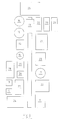
- Sample Containers sample tubes containing a biological fluid, that has to be kept in refrigerators for a long time and delivered upon request for research analysis, genetic screening or other reasons, and the following pieces of equipment as Resources: Sample Carrier Devices: an Inpeco Transport and Positioning Module (TPM) 30, i.e. a belt conveyor system transporting Pallets (i.e.
- TPM Inpeco Transport and Positioning Module
- Sample Tubes each Pallet is identified by a radio-frequency transponder, appropriately read from time to time by radio frequency devices integrated in a Transponder Tag Reading System
- IOM Input/Output Module
- transport robot systems 32 capable to move samples into and out from refrigerator systems where the samples are loaded to be stored or unloaded to be assayed
- Sample Container Handling Devices a barcode reader 33 for sample identification, one or more refrigeration systems 34 (or other storing systems) to store samples, and a barcode reader 35 inside each refrigeration system for Sample Container double-check reading.
- the Bio-Repository Workcell System that uses the Laboratory Automation Management System, automates all the Bio-Repository tasks, i.e. loading, offloading and compacting samples.
- This target is achieved by centralising the sample database in the Workcell System Data Manager, and handling the loading and the offloading of samples into and out from refrigerators in a fully automatic way, allowing the Operator to load samples into an Input/Output area, where samples are automatically recognised, transported and loaded to the proper refrigerator, and to request samples locally from the Graphic User Interface or remotely from the Laboratory Information System, allowing the system to automatically unload the requested samples from the appropriate refrigerators, and transport them to the Input/Output area, re-compacting as necessary the free space generated inside the refrigerators.
- the RLS variable indicate the status of the current task execution of the relevant Resource, i.e. it may be Ready if it is ready to execute new tasks, Busy if it is busy executing a task and cannot currently receive new commands, Error if it is in error state, Task End if it has terminated its current task and it is waiting that the Process Controller updates the RPS variables, etc.
- the RPS variables indicate the physical status of a resource, e.g. for a refrigeration system, the RPS is a set of variables indicating the number of samples contained in that Resource, their fragmentation status (for re-compacting options), their accessibility and availability, etc.
Landscapes
- Engineering & Computer Science (AREA)
- Physics & Mathematics (AREA)
- General Physics & Mathematics (AREA)
- Biochemistry (AREA)
- Quality & Reliability (AREA)
- Chemical & Material Sciences (AREA)
- General Health & Medical Sciences (AREA)
- Life Sciences & Earth Sciences (AREA)
- Immunology (AREA)
- Pathology (AREA)
- Health & Medical Sciences (AREA)
- Analytical Chemistry (AREA)
- Automation & Control Theory (AREA)
- Robotics (AREA)
- General Engineering & Computer Science (AREA)
- Manufacturing & Machinery (AREA)
- Automatic Analysis And Handling Materials Therefor (AREA)
- General Factory Administration (AREA)
- Computer And Data Communications (AREA)
- Communication Control (AREA)
Priority Applications (5)
| Application Number | Priority Date | Filing Date | Title |
|---|---|---|---|
| EP01830237A EP1248170B1 (fr) | 2001-04-05 | 2001-04-05 | Méthode de gestion de systèmes d'atelier basée sur un système de gestion d'automatisation |
| DE60139922T DE60139922D1 (de) | 2001-04-05 | 2001-04-05 | Verfahren zur Verwaltung von Arbeitszellensystemen mit einem Automatisierungsverwaltungssystem |
| AT01830237T ATE443285T1 (de) | 2001-04-05 | 2001-04-05 | Verfahren zur verwaltung von arbeitszellensystemen mit einem automatisierungsverwaltungssystem |
| ES01830237T ES2333697T3 (es) | 2001-04-05 | 2001-04-05 | Metodo para la gestion de sistemas de celula de trabajo basado en un sistema de gestion de la automatizacion. |
| US10/113,575 US6721615B2 (en) | 2001-04-05 | 2002-04-02 | Method for the management of workcell systems based on an automation management system |
Applications Claiming Priority (1)
| Application Number | Priority Date | Filing Date | Title |
|---|---|---|---|
| EP01830237A EP1248170B1 (fr) | 2001-04-05 | 2001-04-05 | Méthode de gestion de systèmes d'atelier basée sur un système de gestion d'automatisation |
Publications (2)
| Publication Number | Publication Date |
|---|---|
| EP1248170A1 true EP1248170A1 (fr) | 2002-10-09 |
| EP1248170B1 EP1248170B1 (fr) | 2009-09-16 |
Family
ID=8184478
Family Applications (1)
| Application Number | Title | Priority Date | Filing Date |
|---|---|---|---|
| EP01830237A Expired - Lifetime EP1248170B1 (fr) | 2001-04-05 | 2001-04-05 | Méthode de gestion de systèmes d'atelier basée sur un système de gestion d'automatisation |
Country Status (5)
| Country | Link |
|---|---|
| US (1) | US6721615B2 (fr) |
| EP (1) | EP1248170B1 (fr) |
| AT (1) | ATE443285T1 (fr) |
| DE (1) | DE60139922D1 (fr) |
| ES (1) | ES2333697T3 (fr) |
Cited By (19)
| Publication number | Priority date | Publication date | Assignee | Title |
|---|---|---|---|---|
| WO2004097707A3 (fr) * | 2003-04-25 | 2005-05-26 | Novartis Ag | Systeme et procede d'analyse d'images entierement automatisee et assistee par robot pour des essais de genotoxicite in vitro et in vivo |
| US7996172B2 (en) | 2006-06-01 | 2011-08-09 | Roche Diagnostics Operations, Inc. | System and a method for managing sample test results and respective sample result context information |
| EP1579190A4 (fr) * | 2002-12-20 | 2011-12-28 | Dakocytomation Denmark As | Systeme de traitement d'echantillons programme a l'avance et procedes de traitement de preparations d'essai biologiques |
| ITMI20122011A1 (it) * | 2012-11-27 | 2014-05-28 | Inpeco Ip Ltd | Apparato di deposito, conservazione e recupero automatico di campioni di materiale biologico in/da un magazzino refrigerato per mezzo di due robot statici distinti. |
| EP1496365B1 (fr) * | 2003-07-11 | 2014-06-04 | Tecan Trading AG | Dispositif et procédé de transport d'objets |
| EP2098868A3 (fr) * | 2008-03-07 | 2015-03-25 | Sysmex Corporation | Analyseur, procédé de transport d'échantillons et produit de programme informatique |
| EP2857843A1 (fr) * | 2013-10-07 | 2015-04-08 | Eppendorf Ag | Système présentant au moins deux appareils de laboratoire pour le traitement commandé par un appareil d'une tâche relative à une pièce dans un processus de traitement contenant des traitements d'au moins un échantillon de laboratoire, appareil de laboratoire et procédé |
| US9182324B2 (en) | 2002-12-20 | 2015-11-10 | Dako Denmark A/S | Systems and methods for the automated pre-treatment and processing of biological samples |
| EP2943116A4 (fr) * | 2013-01-09 | 2016-09-07 | Siemens Healthcare Diagnostics | Distribution de réactif pour l'optimisation de débit |
| US10274505B2 (en) | 2011-11-07 | 2019-04-30 | Beckman Coulter, Inc. | Robotic arm |
| EP3349013A4 (fr) * | 2015-09-11 | 2019-05-22 | Hitachi High-Technologies Corporation | Analyseur automatisé |
| US10452035B2 (en) | 2013-10-07 | 2019-10-22 | Eppendorf Ag | Laboratory instrument for instrument-controlled treatment of at least one laboratory sample |
| US10466262B2 (en) | 2013-10-07 | 2019-11-05 | Eppendorf Ag | Laboratory instrument with access control device and method for instrument-controlled treatment of laboratory samples |
| US10739362B2 (en) | 2013-10-07 | 2020-08-11 | Eppendorf Ag | Laboratory instrument, system and method for instrument-controlled treatment of at least one laboratory sample using at least one consumable |
| US20210156848A1 (en) * | 2007-10-02 | 2021-05-27 | Labrador Diagnostics Llc | Modular point-of-care devices, systems, and uses thereof |
| CN113242971A (zh) * | 2018-11-16 | 2021-08-10 | 埃佩多夫股份公司 | 包括至少部分联网的实验室设备的实验室系统以及用于控制包括至少部分联网的实验室设备的实验室系统的方法 |
| US11408902B2 (en) | 2017-10-18 | 2022-08-09 | Roche Diagnostics Operations, Inc. | Method to store sample tubes in a laboratory storage and retrieval system |
| EP4054806A4 (fr) * | 2019-11-05 | 2024-03-06 | Biosero Inc. | Commande automatisée de processus multiples utilisant un équipement robotisé pour des flux complexes de travaux |
| US12313641B2 (en) | 2019-02-15 | 2025-05-27 | Roche Diagnostics Operations, Inc. | Method of operating an analytical laboratory |
Families Citing this family (83)
| Publication number | Priority date | Publication date | Assignee | Title |
|---|---|---|---|---|
| US7814198B2 (en) | 2007-10-26 | 2010-10-12 | Microsoft Corporation | Model-driven, repository-based application monitoring system |
| EP1286270A1 (fr) * | 2001-07-24 | 2003-02-26 | Deutsche Thomson-Brandt Gmbh | Circuit integré avec interface de communication générique |
| US20030074439A1 (en) * | 2001-10-12 | 2003-04-17 | International Business Machines Corporation | Systems and methods for providing off-line decision support for correlation analysis |
| US7562362B1 (en) * | 2003-06-18 | 2009-07-14 | Apple Inc. | User control of task priority |
| US20080235055A1 (en) * | 2003-07-17 | 2008-09-25 | Scott Mattingly | Laboratory instrumentation information management and control network |
| US7860727B2 (en) | 2003-07-17 | 2010-12-28 | Ventana Medical Systems, Inc. | Laboratory instrumentation information management and control network |
| US8719053B2 (en) * | 2003-07-17 | 2014-05-06 | Ventana Medical Systems, Inc. | Laboratory instrumentation information management and control network |
| US20050209721A1 (en) * | 2003-11-06 | 2005-09-22 | Applied Materials, Inc. | Methods and apparatus for enhanced operation of substrate carrier handlers |
| US20050158212A1 (en) * | 2004-01-15 | 2005-07-21 | Michael Yavilevich | Automated laboratory system and analytical module |
| US7721287B2 (en) * | 2004-08-31 | 2010-05-18 | Sap Ag | Organizing transmission of repository data |
| US7721288B2 (en) * | 2004-08-31 | 2010-05-18 | Sap Ag | Organizing transmission of repository data |
| US7320205B2 (en) * | 2005-02-02 | 2008-01-22 | Tvi Corporation | Method for manufacturing filter canisters and tracking quality assurance |
| US7661013B2 (en) * | 2006-01-13 | 2010-02-09 | Agilent Technologies, Inc. | System and method for error recovery |
| US7555672B2 (en) * | 2006-01-13 | 2009-06-30 | Agilent Technologies, Inc. | Distributed system and method for error recovery |
| WO2007087136A2 (fr) * | 2006-01-13 | 2007-08-02 | Velocity11 | Système et procédé de reprise sur incident |
| US8443351B2 (en) * | 2006-02-23 | 2013-05-14 | Microsoft Corporation | Parallel loops in a workflow |
| EP1870825B1 (fr) | 2006-06-01 | 2016-08-17 | F.Hoffmann-La Roche Ag | Système et procédé pour la gestion de test d'échantillon de laboratoire |
| US20080020469A1 (en) * | 2006-07-20 | 2008-01-24 | Lawrence Barnes | Method for scheduling samples in a combinational clinical analyzer |
| JP4854425B2 (ja) * | 2006-08-04 | 2012-01-18 | キヤノン株式会社 | 検体処理装置および検体処理方法 |
| US8703492B2 (en) | 2007-04-06 | 2014-04-22 | Qiagen Gaithersburg, Inc. | Open platform hybrid manual-automated sample processing system |
| US7739690B2 (en) * | 2007-04-26 | 2010-06-15 | Microsoft Corporation | Meta-container for model-based distributed applications |
| US8024396B2 (en) * | 2007-04-26 | 2011-09-20 | Microsoft Corporation | Distributed behavior controlled execution of modeled applications |
| US8112229B2 (en) * | 2007-05-31 | 2012-02-07 | Abbott Laboratories | Method for determining the order of execution of assays of a sample in a laboratory automation system |
| US8556564B2 (en) * | 2007-06-26 | 2013-10-15 | Siemens Healthcare Diagnostics Inc. | Mobile sample storage and retrieval unit for a laboratory automated sample handling worksystem |
| US8239505B2 (en) * | 2007-06-29 | 2012-08-07 | Microsoft Corporation | Progressively implementing declarative models in distributed systems |
| US7970892B2 (en) | 2007-06-29 | 2011-06-28 | Microsoft Corporation | Tuning and optimizing distributed systems with declarative models |
| US8230386B2 (en) | 2007-08-23 | 2012-07-24 | Microsoft Corporation | Monitoring distributed applications |
| US7908360B2 (en) * | 2007-09-28 | 2011-03-15 | Rockwell Automation Technologies, Inc. | Correlation of non-times series events in industrial systems |
| US8225308B2 (en) | 2007-10-26 | 2012-07-17 | Microsoft Corporation | Managing software lifecycle |
| US8099720B2 (en) | 2007-10-26 | 2012-01-17 | Microsoft Corporation | Translating declarative models |
| US8181151B2 (en) * | 2007-10-26 | 2012-05-15 | Microsoft Corporation | Modeling and managing heterogeneous applications |
| US7974939B2 (en) | 2007-10-26 | 2011-07-05 | Microsoft Corporation | Processing model-based commands for distributed applications |
| US7926070B2 (en) | 2007-10-26 | 2011-04-12 | Microsoft Corporation | Performing requested commands for model-based applications |
| US9211549B2 (en) | 2007-12-11 | 2015-12-15 | Tripath Imaging, Inc. | Sequential centrifuge |
| US8571706B2 (en) * | 2008-02-20 | 2013-10-29 | Abb Research Ltd. | Method and system for optimizing the layout of a robot work cell |
| US8024615B2 (en) * | 2008-04-28 | 2011-09-20 | Microsoft Corporation | Steady state computer testing |
| US8473085B2 (en) * | 2008-04-30 | 2013-06-25 | Perkinelmer Las, Inc. | Mutex-mediated control of spatial access by appliances moveable over a common physical space |
| WO2010006158A1 (fr) * | 2008-07-10 | 2010-01-14 | Siemens Healthcare Diagnostics Inc. | Programmateur de traitement d'erreur rapide/d'exception rapide |
| CN102803959B (zh) * | 2009-05-15 | 2015-07-08 | 生物梅里埃有限公司 | 用于样品中的微生物剂的快速的识别和/或表征的系统和方法 |
| US9953141B2 (en) | 2009-11-18 | 2018-04-24 | Becton, Dickinson And Company | Laboratory central control unit method and system |
| US20120225785A1 (en) * | 2010-03-09 | 2012-09-06 | Chau Chiu W | Automated Storage of a Discrete Sample Among Multiple Samples And Automated Selection of Such Discrete Sample for Processing |
| EP2752668A3 (fr) | 2010-07-23 | 2014-10-15 | Beckman Coulter, Inc. | Système ou procédé comprenant des unités analytiques |
| EP2450711A1 (fr) | 2010-11-03 | 2012-05-09 | F. Hoffmann-La Roche AG | Système d'analyse pour analyser des échantillons biologiques |
| JP5686710B2 (ja) * | 2011-09-21 | 2015-03-18 | 株式会社日立ハイテクノロジーズ | 自動分析装置 |
| US20130125648A1 (en) * | 2011-11-07 | 2013-05-23 | Beckman Coulter, Inc. | Centrifuge imbalance sensor and non-contact specimen container characterization |
| KR20140091033A (ko) | 2011-11-07 | 2014-07-18 | 베크만 컬터, 인코포레이티드 | 검체 컨테이너 검출 |
| WO2013070755A2 (fr) | 2011-11-07 | 2013-05-16 | Beckman Coulter, Inc. | Système de centrifugeuse et flux de travail |
| KR20140091032A (ko) | 2011-11-07 | 2014-07-18 | 베크만 컬터, 인코포레이티드 | 검체 수송 시스템의 자기 감쇠 |
| CN104040357B (zh) | 2011-11-07 | 2016-11-23 | 贝克曼考尔特公司 | 等分器系统以及工作流 |
| ES2778054T3 (es) | 2011-11-07 | 2020-08-07 | Beckman Coulter Inc | Sistema y método para transportar recipientes de muestras |
| AU2013246418B2 (en) | 2012-04-13 | 2017-02-23 | Becton, Dickinson And Company | Reflex testing of samples using residual materials from a prior test |
| CA2887643C (fr) * | 2012-10-11 | 2021-06-08 | Siemens Healthcare Diagnostics Inc. | Cellules de travail modulaires pour automatisation de laboratoire |
| CA2887635C (fr) * | 2012-10-11 | 2021-01-26 | Siemens Healthcare Diagnostics Inc. | Porteur de maintenance d'automatisation |
| IN2015DN03201A (fr) * | 2012-11-07 | 2015-10-02 | Beckman Coulter Inc | |
| CA2903013C (fr) * | 2013-03-08 | 2021-05-11 | Siemens Healthcare Diagnostics Inc. | Station de caracterisation de tubes a essai |
| JP6210891B2 (ja) * | 2014-01-27 | 2017-10-11 | 株式会社日立ハイテクノロジーズ | 自動分析装置 |
| WO2015171735A1 (fr) | 2014-05-06 | 2015-11-12 | Beckman Coulter, Inc. | Procédé et système de création d'un réseau de sites |
| JP6340245B2 (ja) * | 2014-05-15 | 2018-06-06 | 株式会社日立ハイテクノロジーズ | 自動分析装置 |
| US9909406B2 (en) | 2014-05-16 | 2018-03-06 | Baker Hughes, A Ge Company, Llc | Automated delivery of wellbore construction services |
| US9722951B2 (en) | 2015-05-04 | 2017-08-01 | Saudi Arabian Oil Company | Systems, methods, and computer medium to provide adaptive priority scheduling of communications over a network and dynamic resources allocation among devices within the network |
| CH711717B1 (de) * | 2015-10-29 | 2019-11-29 | Chemspeed Tech Ag | Anlage und Verfahren zur Durchführung eines Bearbeitungsprozesses. |
| US11625025B2 (en) * | 2016-05-27 | 2023-04-11 | BIOMéRIEUX, INC. | System and method of load balancing specimen containers within detection instruments |
| CN109074538A (zh) * | 2016-07-20 | 2018-12-21 | 惠普发展公司,有限责任合伙企业 | 在组织中创建数字员工 |
| WO2018111721A1 (fr) * | 2016-12-12 | 2018-06-21 | Beckman Coulter, Inc. | Manipulation intelligente de matériaux |
| US10427162B2 (en) | 2016-12-21 | 2019-10-01 | Quandx Inc. | Systems and methods for molecular diagnostics |
| CN106743326B (zh) * | 2017-03-17 | 2020-09-11 | 惠科股份有限公司 | 一种物料搬送方法及系统 |
| EP3410323B1 (fr) * | 2017-05-29 | 2020-11-25 | F. Hoffmann-La Roche AG | Procédé de fonctionnement d'un système de laboratoire |
| EP3451253A1 (fr) | 2017-09-01 | 2019-03-06 | F. Hoffmann-La Roche AG | Procédé de fonctionnement d'un système de laboratoire |
| EP3502708B1 (fr) * | 2017-12-21 | 2023-09-27 | Tecan Trading AG | Surveillance d'un dispositif d'automatisation de laboratoire par l'intermédiaire d'un modèle de simulation |
| US11406981B2 (en) | 2018-08-22 | 2022-08-09 | Biomerieux, Inc. | Detection instruments with automated cell location selection for newly intaken specimen containers and related methods |
| CN110501511B (zh) * | 2019-08-13 | 2023-08-08 | 迈克医疗电子有限公司 | 在线试剂调整方法、装置及分析检测系统 |
| KR102848024B1 (ko) * | 2019-12-17 | 2025-08-21 | 베크만 컬터, 인코포레이티드 | 컴퓨터 구현 액체 핸들러 프로토콜 |
| CN113125776A (zh) * | 2019-12-31 | 2021-07-16 | 科美诊断技术股份有限公司 | 测试流程控制方法及装置 |
| EP3848937A1 (fr) | 2020-01-09 | 2021-07-14 | F. Hoffmann-La Roche AG | Techniques de commande d'analyseurs automatisés |
| US12522799B2 (en) * | 2020-08-11 | 2026-01-13 | Indian Institute Of Technology Delhi | Surge tank based system to control surge tanks for automated operation and control of continuous manufacturing train |
| EP4294605A4 (fr) * | 2021-02-22 | 2025-03-05 | Biosero Inc. | Utilisation de la robotique mobile dans des cellules de travail à auto-assemblage de flux de travaux complexes |
| WO2022178547A1 (fr) * | 2021-02-22 | 2022-08-25 | BioSero Inc. | Utilisation de la robotique mobile dans des cellules de travail à auto-assemblage de flux de travaux complexes |
| EP4137820B1 (fr) * | 2021-08-19 | 2025-04-30 | F. Hoffmann-La Roche AG | Masquage d'appareils de laboratoire et acheminement de récipients d'échantillons d'essai dans un système de laboratoire |
| WO2023138863A1 (fr) | 2022-01-20 | 2023-07-27 | Roche Diagnostics Gmbh | Procédé de fonctionnement d'un système de laboratoire et système de laboratoire |
| EP4507856A4 (fr) | 2022-04-14 | 2026-04-08 | Biosero Inc | Modélisation et gestionnaire de services de données pour la transformation et la contextualisation de données dans des performances automatisées de flux de travail |
| CN116205023B (zh) * | 2022-07-12 | 2024-03-08 | 上海奔曜科技有限公司 | 机器人智能实验室的设计方法、装置、设备和存储介质 |
| CN116047090B (zh) * | 2022-12-09 | 2025-12-23 | 深圳市瑞图生物技术有限公司 | 样本图像扫描设备及生物样本检测系统 |
| IL322030A (en) * | 2023-01-11 | 2025-09-01 | Regeneron Pharma | Methods and systems for automated regulatory compliance testing |
Citations (8)
| Publication number | Priority date | Publication date | Assignee | Title |
|---|---|---|---|---|
| EP0240134A2 (fr) * | 1986-03-06 | 1987-10-07 | Zymark Corporation | Système de commande et de maîtrise pour robot et système muni d'un moyen pour régler la position programmée |
| US5093794A (en) * | 1989-08-22 | 1992-03-03 | United Technologies Corporation | Job scheduling system |
| US5282149A (en) * | 1991-06-03 | 1994-01-25 | Abbott Laboratories | Adaptive scheduling system and method for a biological analyzer with reproducible operation time periods |
| EP0596205A2 (fr) * | 1992-11-03 | 1994-05-11 | Hewlett-Packard Company | Système informatisé d'analyse chimique |
| WO1994011838A1 (fr) * | 1992-11-06 | 1994-05-26 | Abbott Laboratories | Systeme de commande automatique de test d'un fluide biologique |
| EP0633207A1 (fr) * | 1993-07-07 | 1995-01-11 | Siemens Aktiengesellschaft | Système de transport pour transporter des échantillons sur des dispositifs de traitement différents |
| US6022746A (en) * | 1998-03-12 | 2000-02-08 | Abbott Laboratories | Allocation method |
| WO2001009618A1 (fr) * | 1999-07-30 | 2001-02-08 | Coulter International Corp. | Architecture logicielle pour laboratoire automatise |
Family Cites Families (4)
| Publication number | Priority date | Publication date | Assignee | Title |
|---|---|---|---|---|
| US5696887A (en) * | 1991-08-05 | 1997-12-09 | Biotek Solutions, Incorporated | Automated tissue assay using standardized chemicals and packages |
| US5380487A (en) * | 1992-05-05 | 1995-01-10 | Pasteur Sanofi Diagnostics | Device for automatic chemical analysis |
| US6208904B1 (en) * | 1994-02-02 | 2001-03-27 | Mitsubishi Electric & Electronics Usa, Inc | General purpose data communications protocol converter |
| US5619428A (en) * | 1995-05-31 | 1997-04-08 | Neopath, Inc. | Method and apparatus for integrating an automated system to a laboratory |
-
2001
- 2001-04-05 ES ES01830237T patent/ES2333697T3/es not_active Expired - Lifetime
- 2001-04-05 DE DE60139922T patent/DE60139922D1/de not_active Expired - Lifetime
- 2001-04-05 AT AT01830237T patent/ATE443285T1/de not_active IP Right Cessation
- 2001-04-05 EP EP01830237A patent/EP1248170B1/fr not_active Expired - Lifetime
-
2002
- 2002-04-02 US US10/113,575 patent/US6721615B2/en not_active Expired - Lifetime
Patent Citations (8)
| Publication number | Priority date | Publication date | Assignee | Title |
|---|---|---|---|---|
| EP0240134A2 (fr) * | 1986-03-06 | 1987-10-07 | Zymark Corporation | Système de commande et de maîtrise pour robot et système muni d'un moyen pour régler la position programmée |
| US5093794A (en) * | 1989-08-22 | 1992-03-03 | United Technologies Corporation | Job scheduling system |
| US5282149A (en) * | 1991-06-03 | 1994-01-25 | Abbott Laboratories | Adaptive scheduling system and method for a biological analyzer with reproducible operation time periods |
| EP0596205A2 (fr) * | 1992-11-03 | 1994-05-11 | Hewlett-Packard Company | Système informatisé d'analyse chimique |
| WO1994011838A1 (fr) * | 1992-11-06 | 1994-05-26 | Abbott Laboratories | Systeme de commande automatique de test d'un fluide biologique |
| EP0633207A1 (fr) * | 1993-07-07 | 1995-01-11 | Siemens Aktiengesellschaft | Système de transport pour transporter des échantillons sur des dispositifs de traitement différents |
| US6022746A (en) * | 1998-03-12 | 2000-02-08 | Abbott Laboratories | Allocation method |
| WO2001009618A1 (fr) * | 1999-07-30 | 2001-02-08 | Coulter International Corp. | Architecture logicielle pour laboratoire automatise |
Non-Patent Citations (1)
| Title |
|---|
| LINDSEY J S ET AL: "TOWARD HIGH PERFORMANCE PARALLEL EXPERIMENTATION MACHINES. USE OF ASCHEDULER AS A QUANTITATIVE COMPUTER-AIDED DESIGN TOOL FOR EVALUATING WORKSTATION PERFORMANCE", CHEMOMETRICS AND INTELLIGENT LABORATORY SYSTEMS, ELSEVIER SCIENCE PUBLISHERS B.V. AMSTERDAM, NL, vol. 21, 1993, pages 139 - 150, XP000413287, ISSN: 0169-7439 * |
Cited By (33)
| Publication number | Priority date | Publication date | Assignee | Title |
|---|---|---|---|---|
| US9182324B2 (en) | 2002-12-20 | 2015-11-10 | Dako Denmark A/S | Systems and methods for the automated pre-treatment and processing of biological samples |
| EP1579190A4 (fr) * | 2002-12-20 | 2011-12-28 | Dakocytomation Denmark As | Systeme de traitement d'echantillons programme a l'avance et procedes de traitement de preparations d'essai biologiques |
| EP1573311A4 (fr) * | 2002-12-20 | 2011-12-28 | Dakocytomation Denmark As | Systeme de traitement d'echantillons a notification d'informations et traitements de lames biologiques |
| US9778273B2 (en) | 2002-12-20 | 2017-10-03 | Dako Denmark A/S | Isolated communication sample processing system and methods of biological slide processing |
| US10156580B2 (en) | 2002-12-20 | 2018-12-18 | Dako Denmark A/S | Information notification sample processing system and methods of biological slide processing |
| US9229016B2 (en) | 2002-12-20 | 2016-01-05 | Dako Denmark A/S | Information notification sample processing system and methods of biological slide processing |
| WO2004097707A3 (fr) * | 2003-04-25 | 2005-05-26 | Novartis Ag | Systeme et procede d'analyse d'images entierement automatisee et assistee par robot pour des essais de genotoxicite in vitro et in vivo |
| EP1496365B1 (fr) * | 2003-07-11 | 2014-06-04 | Tecan Trading AG | Dispositif et procédé de transport d'objets |
| US7996172B2 (en) | 2006-06-01 | 2011-08-09 | Roche Diagnostics Operations, Inc. | System and a method for managing sample test results and respective sample result context information |
| US20210156848A1 (en) * | 2007-10-02 | 2021-05-27 | Labrador Diagnostics Llc | Modular point-of-care devices, systems, and uses thereof |
| EP2098869A3 (fr) * | 2008-03-07 | 2015-04-01 | Sysmex Corporation | Analyseur, procédé de transport d'échantillons pour analyseur et produit de programme informatique |
| EP2098868A3 (fr) * | 2008-03-07 | 2015-03-25 | Sysmex Corporation | Analyseur, procédé de transport d'échantillons et produit de programme informatique |
| US10274505B2 (en) | 2011-11-07 | 2019-04-30 | Beckman Coulter, Inc. | Robotic arm |
| WO2014082944A1 (fr) | 2012-11-27 | 2014-06-05 | Inpeco Holding Ltd. | Appareil permettant de déposer, de conserver et de récupérer automatiquement des échantillons de matériels biologiques dans/à partir d'une chambre réfrigérée à l'aide de deux robots statiques distincts |
| ITMI20122011A1 (it) * | 2012-11-27 | 2014-05-28 | Inpeco Ip Ltd | Apparato di deposito, conservazione e recupero automatico di campioni di materiale biologico in/da un magazzino refrigerato per mezzo di due robot statici distinti. |
| US9869687B2 (en) | 2012-11-27 | 2018-01-16 | Inpeco Holding Ltd. | Apparatus for automatically depositing, preserving and recovering specimens of biological materials in/from a refrigerated store using two distinct static robots |
| US10139422B2 (en) | 2013-01-09 | 2018-11-27 | Siemens Healthcare Diagnostics Inc. | Throughput optimizing reagent distribution |
| EP2943116A4 (fr) * | 2013-01-09 | 2016-09-07 | Siemens Healthcare Diagnostics | Distribution de réactif pour l'optimisation de débit |
| EP2857843A1 (fr) * | 2013-10-07 | 2015-04-08 | Eppendorf Ag | Système présentant au moins deux appareils de laboratoire pour le traitement commandé par un appareil d'une tâche relative à une pièce dans un processus de traitement contenant des traitements d'au moins un échantillon de laboratoire, appareil de laboratoire et procédé |
| WO2015051906A1 (fr) * | 2013-10-07 | 2015-04-16 | Eppendorf Ag | Système comprenant au moins deux instruments de laboratoire pour la manipulation commandée par instrument d'un problème partiel dans un processus de traitement contenant des traitements d'au moins un échantillon de laboratoire, instrument de laboratoire et procédé |
| US10452035B2 (en) | 2013-10-07 | 2019-10-22 | Eppendorf Ag | Laboratory instrument for instrument-controlled treatment of at least one laboratory sample |
| US10466262B2 (en) | 2013-10-07 | 2019-11-05 | Eppendorf Ag | Laboratory instrument with access control device and method for instrument-controlled treatment of laboratory samples |
| US10551397B2 (en) | 2013-10-07 | 2020-02-04 | Eppendorf Ag | System comprising at least two laboratory instruments for instrument-controlled handling of a partial problem in a treatment process containing treatments of at least one laboratory sample, laboratory instrument and method |
| US12385932B2 (en) | 2013-10-07 | 2025-08-12 | Eppendorf Se | Laboratory instrument, system and method for instrument-controlled treatment of at least one laboratory sample using at least one consumable |
| US11536738B2 (en) | 2013-10-07 | 2022-12-27 | Eppendorf Se | System comprising at least two laboratory instruments for instrument-controlled handling of a partial problem in a treatment process containing treatments of at least one laboratory sample, laboratory instrument and method |
| US10739362B2 (en) | 2013-10-07 | 2020-08-11 | Eppendorf Ag | Laboratory instrument, system and method for instrument-controlled treatment of at least one laboratory sample using at least one consumable |
| EP4053565A1 (fr) * | 2015-09-11 | 2022-09-07 | Hitachi High-Tech Corporation | Analyseur automatisé |
| EP3349013A4 (fr) * | 2015-09-11 | 2019-05-22 | Hitachi High-Technologies Corporation | Analyseur automatisé |
| US10684298B2 (en) | 2015-09-11 | 2020-06-16 | Hitachi High-Tech Corporation | Automated analyzer |
| US11408902B2 (en) | 2017-10-18 | 2022-08-09 | Roche Diagnostics Operations, Inc. | Method to store sample tubes in a laboratory storage and retrieval system |
| CN113242971A (zh) * | 2018-11-16 | 2021-08-10 | 埃佩多夫股份公司 | 包括至少部分联网的实验室设备的实验室系统以及用于控制包括至少部分联网的实验室设备的实验室系统的方法 |
| US12313641B2 (en) | 2019-02-15 | 2025-05-27 | Roche Diagnostics Operations, Inc. | Method of operating an analytical laboratory |
| EP4054806A4 (fr) * | 2019-11-05 | 2024-03-06 | Biosero Inc. | Commande automatisée de processus multiples utilisant un équipement robotisé pour des flux complexes de travaux |
Also Published As
| Publication number | Publication date |
|---|---|
| US6721615B2 (en) | 2004-04-13 |
| ES2333697T3 (es) | 2010-02-26 |
| US20020147515A1 (en) | 2002-10-10 |
| ATE443285T1 (de) | 2009-10-15 |
| DE60139922D1 (de) | 2009-10-29 |
| EP1248170B1 (fr) | 2009-09-16 |
Similar Documents
| Publication | Publication Date | Title |
|---|---|---|
| US6721615B2 (en) | Method for the management of workcell systems based on an automation management system | |
| JP7033111B2 (ja) | 分析実験室の操作方法 | |
| US6588625B2 (en) | Sample handling system | |
| CN102759630B (zh) | 用于操作自动化样本工作间的方法 | |
| EP2296819B1 (fr) | Procédé de chargement de centrifugeuse à l'intérieur d'un système de laboratoire automatisé | |
| EP2804002B1 (fr) | Système automatisé de laboratoire ayant un module de routage d'échantillons commun | |
| EP3299794A1 (fr) | Programmateur automatique destiné à un équipement de laboratoire | |
| US9846170B2 (en) | Automated analyzer | |
| US20220206023A1 (en) | Method of operating an analytical laboratory | |
| EP3474018B1 (fr) | Procédé de stockage de tubes échantillons dans un système de stockage et de récupération de laboratoire | |
| EP3696550B1 (fr) | Procédé de fonctionnement d'un laboratoire analytique ayant la route de transportation optimale | |
| WO2017145556A1 (fr) | Unité de chargement/stockage de contenants d'échantillon | |
| JPWO2014119378A1 (ja) | 遠心分離システム、検体前処理システム、制御方法 | |
| AU2013265318B2 (en) | Distributed automation apparatus for laboratory diagnostics | |
| CN119023980A (zh) | 样本处理方法及装置、样本分析方法及系统及存储介质 | |
| EP4372384A1 (fr) | Procédé d'optimisation de système de laboratoire | |
| WO2025111444A1 (fr) | Planification de traitement d'échantillon dans des systèmes d'automatisation de diagnostic de laboratoire | |
| Pfost et al. | Robotic analyzers |
Legal Events
| Date | Code | Title | Description |
|---|---|---|---|
| PUAI | Public reference made under article 153(3) epc to a published international application that has entered the european phase |
Free format text: ORIGINAL CODE: 0009012 |
|
| AK | Designated contracting states |
Kind code of ref document: A1 Designated state(s): AT BE CH CY DE DK ES FI FR GB GR IE IT LI LU MC NL PT SE TR |
|
| AX | Request for extension of the european patent |
Free format text: AL;LT;LV;MK;RO;SI |
|
| 17P | Request for examination filed |
Effective date: 20030401 |
|
| AKX | Designation fees paid |
Designated state(s): AT BE CH CY DE DK ES FI FR GB GR IE IT LI LU MC NL PT SE TR |
|
| 17Q | First examination report despatched |
Effective date: 20060119 |
|
| RAP1 | Party data changed (applicant data changed or rights of an application transferred) |
Owner name: INPECO S.P.A. |
|
| GRAP | Despatch of communication of intention to grant a patent |
Free format text: ORIGINAL CODE: EPIDOSNIGR1 |
|
| RAP1 | Party data changed (applicant data changed or rights of an application transferred) |
Owner name: INPECO IP LTD. |
|
| GRAS | Grant fee paid |
Free format text: ORIGINAL CODE: EPIDOSNIGR3 |
|
| GRAA | (expected) grant |
Free format text: ORIGINAL CODE: 0009210 |
|
| AK | Designated contracting states |
Kind code of ref document: B1 Designated state(s): AT BE CH CY DE DK ES FI FR GB GR IE IT LI LU MC NL PT SE TR |
|
| REG | Reference to a national code |
Ref country code: GB Ref legal event code: FG4D |
|
| REG | Reference to a national code |
Ref country code: CH Ref legal event code: EP |
|
| REG | Reference to a national code |
Ref country code: IE Ref legal event code: FG4D |
|
| REF | Corresponds to: |
Ref document number: 60139922 Country of ref document: DE Date of ref document: 20091029 Kind code of ref document: P |
|
| PG25 | Lapsed in a contracting state [announced via postgrant information from national office to epo] |
Ref country code: SE Free format text: LAPSE BECAUSE OF FAILURE TO SUBMIT A TRANSLATION OF THE DESCRIPTION OR TO PAY THE FEE WITHIN THE PRESCRIBED TIME-LIMIT Effective date: 20090916 Ref country code: FI Free format text: LAPSE BECAUSE OF FAILURE TO SUBMIT A TRANSLATION OF THE DESCRIPTION OR TO PAY THE FEE WITHIN THE PRESCRIBED TIME-LIMIT Effective date: 20090916 |
|
| REG | Reference to a national code |
Ref country code: CH Ref legal event code: NV Representative=s name: E. BLUM & CO. AG PATENT- UND MARKENANWAELTE VSP |
|
| REG | Reference to a national code |
Ref country code: ES Ref legal event code: FG2A Ref document number: 2333697 Country of ref document: ES Kind code of ref document: T3 |
|
| PG25 | Lapsed in a contracting state [announced via postgrant information from national office to epo] |
Ref country code: CY Free format text: LAPSE BECAUSE OF FAILURE TO SUBMIT A TRANSLATION OF THE DESCRIPTION OR TO PAY THE FEE WITHIN THE PRESCRIBED TIME-LIMIT Effective date: 20090916 |
|
| PG25 | Lapsed in a contracting state [announced via postgrant information from national office to epo] |
Ref country code: PT Free format text: LAPSE BECAUSE OF FAILURE TO SUBMIT A TRANSLATION OF THE DESCRIPTION OR TO PAY THE FEE WITHIN THE PRESCRIBED TIME-LIMIT Effective date: 20100118 |
|
| PLBI | Opposition filed |
Free format text: ORIGINAL CODE: 0009260 |
|
| PLBI | Opposition filed |
Free format text: ORIGINAL CODE: 0009260 |
|
| PG25 | Lapsed in a contracting state [announced via postgrant information from national office to epo] |
Ref country code: AT Free format text: LAPSE BECAUSE OF FAILURE TO SUBMIT A TRANSLATION OF THE DESCRIPTION OR TO PAY THE FEE WITHIN THE PRESCRIBED TIME-LIMIT Effective date: 20090916 Ref country code: BE Free format text: LAPSE BECAUSE OF FAILURE TO SUBMIT A TRANSLATION OF THE DESCRIPTION OR TO PAY THE FEE WITHIN THE PRESCRIBED TIME-LIMIT Effective date: 20090916 |
|
| PLAX | Notice of opposition and request to file observation + time limit sent |
Free format text: ORIGINAL CODE: EPIDOSNOBS2 |
|
| 26 | Opposition filed |
Opponent name: ROCHE DIAGNOSTICS AG Effective date: 20100615 |
|
| 26 | Opposition filed |
Opponent name: BECKMAN COULTER, INC. Effective date: 20100616 Opponent name: ROCHE DIAGNOSTICS AG Effective date: 20100615 |
|
| PG25 | Lapsed in a contracting state [announced via postgrant information from national office to epo] |
Ref country code: DK Free format text: LAPSE BECAUSE OF FAILURE TO SUBMIT A TRANSLATION OF THE DESCRIPTION OR TO PAY THE FEE WITHIN THE PRESCRIBED TIME-LIMIT Effective date: 20090916 |
|
| PG25 | Lapsed in a contracting state [announced via postgrant information from national office to epo] |
Ref country code: GR Free format text: LAPSE BECAUSE OF FAILURE TO SUBMIT A TRANSLATION OF THE DESCRIPTION OR TO PAY THE FEE WITHIN THE PRESCRIBED TIME-LIMIT Effective date: 20091217 |
|
| PLBP | Opposition withdrawn |
Free format text: ORIGINAL CODE: 0009264 |
|
| PLAF | Information modified related to communication of a notice of opposition and request to file observations + time limit |
Free format text: ORIGINAL CODE: EPIDOSCOBS2 |
|
| PG25 | Lapsed in a contracting state [announced via postgrant information from national office to epo] |
Ref country code: MC Free format text: LAPSE BECAUSE OF NON-PAYMENT OF DUE FEES Effective date: 20100430 |
|
| PLBB | Reply of patent proprietor to notice(s) of opposition received |
Free format text: ORIGINAL CODE: EPIDOSNOBS3 |
|
| PLBP | Opposition withdrawn |
Free format text: ORIGINAL CODE: 0009264 |
|
| PLBD | Termination of opposition procedure: decision despatched |
Free format text: ORIGINAL CODE: EPIDOSNOPC1 |
|
| PLBM | Termination of opposition procedure: date of legal effect published |
Free format text: ORIGINAL CODE: 0009276 |
|
| STAA | Information on the status of an ep patent application or granted ep patent |
Free format text: STATUS: OPPOSITION PROCEDURE CLOSED |
|
| 27C | Opposition proceedings terminated |
Effective date: 20120129 |
|
| PG25 | Lapsed in a contracting state [announced via postgrant information from national office to epo] |
Ref country code: LU Free format text: LAPSE BECAUSE OF NON-PAYMENT OF DUE FEES Effective date: 20100405 |
|
| REG | Reference to a national code |
Ref country code: CH Ref legal event code: PFA Owner name: INPECO HOLDING LTD, MT Free format text: FORMER OWNER: INPECO IP LTD., MT |
|
| PGFP | Annual fee paid to national office [announced via postgrant information from national office to epo] |
Ref country code: CH Payment date: 20130328 Year of fee payment: 13 |
|
| REG | Reference to a national code |
Ref country code: FR Ref legal event code: CD Owner name: INPECO HOLDING LTD., MT Effective date: 20130408 |
|
| REG | Reference to a national code |
Ref country code: DE Ref legal event code: R082 Ref document number: 60139922 Country of ref document: DE Representative=s name: PRUEFER & PARTNER GBR, DE Effective date: 20130411 Ref country code: DE Ref legal event code: R081 Ref document number: 60139922 Country of ref document: DE Owner name: INPECO HOLDING LTD., MT Free format text: FORMER OWNER: INPECO IP LTD., VALLETTA, MT Effective date: 20130411 Ref country code: DE Ref legal event code: R082 Ref document number: 60139922 Country of ref document: DE Representative=s name: PRUEFER & PARTNER MBB PATENTANWAELTE RECHTSANW, DE Effective date: 20130411 Ref country code: ES Ref legal event code: PC2A Owner name: INEPCO HOLDING LTD. Effective date: 20130527 |
|
| PGFP | Annual fee paid to national office [announced via postgrant information from national office to epo] |
Ref country code: IE Payment date: 20130425 Year of fee payment: 13 |
|
| PGFP | Annual fee paid to national office [announced via postgrant information from national office to epo] |
Ref country code: NL Payment date: 20130415 Year of fee payment: 13 |
|
| REG | Reference to a national code |
Ref country code: NL Ref legal event code: V1 Effective date: 20141101 |
|
| REG | Reference to a national code |
Ref country code: CH Ref legal event code: PL |
|
| REG | Reference to a national code |
Ref country code: IE Ref legal event code: MM4A |
|
| PG25 | Lapsed in a contracting state [announced via postgrant information from national office to epo] |
Ref country code: CH Free format text: LAPSE BECAUSE OF NON-PAYMENT OF DUE FEES Effective date: 20140430 Ref country code: LI Free format text: LAPSE BECAUSE OF NON-PAYMENT OF DUE FEES Effective date: 20140430 |
|
| PG25 | Lapsed in a contracting state [announced via postgrant information from national office to epo] |
Ref country code: NL Free format text: LAPSE BECAUSE OF NON-PAYMENT OF DUE FEES Effective date: 20141101 |
|
| PG25 | Lapsed in a contracting state [announced via postgrant information from national office to epo] |
Ref country code: IE Free format text: LAPSE BECAUSE OF NON-PAYMENT OF DUE FEES Effective date: 20140405 |
|
| REG | Reference to a national code |
Ref country code: FR Ref legal event code: PLFP Year of fee payment: 16 |
|
| REG | Reference to a national code |
Ref country code: FR Ref legal event code: PLFP Year of fee payment: 17 |
|
| REG | Reference to a national code |
Ref country code: FR Ref legal event code: PLFP Year of fee payment: 18 |
|
| PGFP | Annual fee paid to national office [announced via postgrant information from national office to epo] |
Ref country code: TR Payment date: 20200319 Year of fee payment: 20 |
|
| PGFP | Annual fee paid to national office [announced via postgrant information from national office to epo] |
Ref country code: FR Payment date: 20200427 Year of fee payment: 20 Ref country code: DE Payment date: 20200429 Year of fee payment: 20 Ref country code: ES Payment date: 20200504 Year of fee payment: 20 |
|
| PGFP | Annual fee paid to national office [announced via postgrant information from national office to epo] |
Ref country code: GB Payment date: 20200427 Year of fee payment: 20 Ref country code: IT Payment date: 20200423 Year of fee payment: 20 |
|
| REG | Reference to a national code |
Ref country code: DE Ref legal event code: R071 Ref document number: 60139922 Country of ref document: DE |
|
| REG | Reference to a national code |
Ref country code: GB Ref legal event code: PE20 Expiry date: 20210404 |
|
| REG | Reference to a national code |
Ref country code: ES Ref legal event code: FD2A Effective date: 20210729 |
|
| PG25 | Lapsed in a contracting state [announced via postgrant information from national office to epo] |
Ref country code: GB Free format text: LAPSE BECAUSE OF EXPIRATION OF PROTECTION Effective date: 20210404 |
|
| PG25 | Lapsed in a contracting state [announced via postgrant information from national office to epo] |
Ref country code: ES Free format text: LAPSE BECAUSE OF EXPIRATION OF PROTECTION Effective date: 20210406 |