EP1258522A2 - Procede de limitation, a l'aide de gaz nobles, de l'oxydation des produits chimiques pendant leur entreposage - Google Patents
Procede de limitation, a l'aide de gaz nobles, de l'oxydation des produits chimiques pendant leur entreposage Download PDFInfo
- Publication number
- EP1258522A2 EP1258522A2 EP02012889A EP02012889A EP1258522A2 EP 1258522 A2 EP1258522 A2 EP 1258522A2 EP 02012889 A EP02012889 A EP 02012889A EP 02012889 A EP02012889 A EP 02012889A EP 1258522 A2 EP1258522 A2 EP 1258522A2
- Authority
- EP
- European Patent Office
- Prior art keywords
- oxidation
- nitrogen
- chemical
- gases
- atmosphere
- Prior art date
- Legal status (The legal status is an assumption and is not a legal conclusion. Google has not performed a legal analysis and makes no representation as to the accuracy of the status listed.)
- Withdrawn
Links
Images







Classifications
-
- C—CHEMISTRY; METALLURGY
- C09—DYES; PAINTS; POLISHES; NATURAL RESINS; ADHESIVES; COMPOSITIONS NOT OTHERWISE PROVIDED FOR; APPLICATIONS OF MATERIALS NOT OTHERWISE PROVIDED FOR
- C09K—MATERIALS FOR MISCELLANEOUS APPLICATIONS, NOT PROVIDED FOR ELSEWHERE
- C09K15/00—Anti-oxidant compositions; Compositions inhibiting chemical change
- C09K15/02—Anti-oxidant compositions; Compositions inhibiting chemical change containing inorganic compounds
-
- A—HUMAN NECESSITIES
- A61—MEDICAL OR VETERINARY SCIENCE; HYGIENE
- A61K—PREPARATIONS FOR MEDICAL, DENTAL OR TOILETRY PURPOSES
- A61K47/00—Medicinal preparations characterised by the non-active ingredients used, e.g. carriers or inert additives; Targeting or modifying agents chemically bound to the active ingredient
- A61K47/02—Inorganic compounds
Definitions
- the present invention provides a method of controlling the oxidation of chemicals during storage using a noble gas, a mixture of noble gases or a gaseous mixture containing at least one noble gas.
- French Patent 1,339,669 discloses that argon may be used to render oxidizable chemicals of biological origin inert to oxidation because it desorbs oxygen.
- this patent specifically states that oxygen must be removed for any inhibitory effect upon oxidation to be observed.
- U.S. 3,143,471 a method is described whereby dry argon is used in the packaging of lyophilized pharmaceuticals, generally, wherein the sole object of the process is the displacement of water and oxygen from the packaging space.
- inert or non-reactive atmospheres which can be either nitrogen or argon are recommended for packaging or storaging chemicals or chemical preparations such as oils (JP 3200568), polyacrylic acids (U.S. 4,622,425), N,N-dialkylaminopropyl compounds (JP 63077848), alpha-cyano-acrylic ester (JP 52097913, 85007609), vinylidene halide compounds (U.S. 3,957,892), sodium products (FR 2,261,518), chemical propellants (DE 3,007,712), medical solutions (U.S. 4,664,256), silicon wafers (U.S.
- preparation or synthesis of chemicals under generally inert atmospheres in which the use of either nitrogen or argon without distinction is recommended include, as examples, purification and stabilization of catechol-containing proteins (U.S. 4,496,397), preparation of cosmetic dyes (U.S. 4,314,810), synthesis of peptides (FR 1,454,653, AU 6565762), synthesis of antibiotics (JP 58039650, JP 89039416).
- an object of the present invention to provide a method for enhancing the stability of chemicals or chemical preparations during storage thereof.
- a method of controlling the oxidation of chemicals or chemical preparations during at least a portion of storage thereof by contacting the same with a noble gas, a mixture of noble gases or a gaseous mixture containing at least one noble gas.
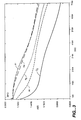
- Figure 1 represents the absorptivity of a solution of Quercetin under both oxygen and nitrogen atmosphere.
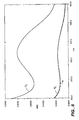
- Figure 2 illustrates the absorptivity of Quercetin under different atmospheres of oxygen, nitrogen, argon, krypton and xenon at 25°C.
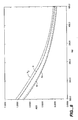
- Figure 3 illustrates the absorptivity of Quercetin under different atmospheres of oxygen, nitrogen, argon, neon and air at 25°C.
- Figure 4 illustrates the absorptivity of morphine sulfate under different atmospheres of oxygen, nitrogen and argon after 31 days of storage at ambient temperature.
- Figure 5 illustrates the absorptivity of apomorphine hydrochloride under different atmospheres of oxygen, nitrogen and argon after 31 days of storage at ambient temperature.
- Figure 6 illustrates the absorptivity of apomorphine hydrochloride under different atmospheres of oxygen, nitrogen and argon after 31 days of storage at ambient temperature.
- Figure 7 illustrates the absorptivity of apomorphine hydrochloride under different atmospheres of nitrogen and argon after 31 days at ambient temperature.
- Figure 8 illustrates the absorptivity of epinephrine hydrochloride under different atmospheres of nitrogen, argon, krypton and xenon after 31 days at ambient temperature.
- Figure 9 illustrates the absorptivity of epinephrine hydrochloride under different atmospheres of nitrogen and xenon for 31 days and three and one-half months, respectively, for each.
- Figure 10 illustrates the absorptivity of L-ascorbic acid under different atmospheres of oxygen and nitrogen.
- Figure 11 illustrates the absorptivity of L-ascorbic acid under different atmospheres of nitrogen, argon, krypton, xenon and neon after 30 days at ambient temperature.
- Figure 12 illustrates the absorptivity of retinol under different atmospheres of nitrogen, argon, krypton and xenon after 3 months at ambient temperature in darkness.
- Figure 13 illustrates the absorptivity of tetracycline hydrochloride under different atmospheres of air and nitrogen for 33 days and four months each, respectively.
- Figure 14 illustrates the absorptivity of tetracycline hydrochloride under different atmospheres of air and neon for 33 days and four months each, respectively.
- the present invention it has been surprisingly discovered that it is possible to directly affect the rate of oxidation of chemicals or chemical preparations. That is, in accordance with the present invention it has been discovered that certain gases can directly affect the oxidation rate of chemicals and not merely slow oxidation only as function of physical and inert displacement of oxygen.
- the present invention is effected by contacting the chemicals or chemical preparations during at least a portion of storage thereof to a noble gas, a mixture of noble gases or a gaseous mixture containing at least one noble gas.
- the present invention is predicated upon the discovery that by contacting chemicals or chemical preparations with an atmosphere containing a noble gas, a mixture of noble or a gaseous mixture containing at least one noble gas during at least a portion of storage it is possible to effectively control oxidation reactions which degrade such compounds or preparations.
- noble gases are surprisingly more effective than nitrogen or other inert or non-reactive gases in actually and effectively controlling the oxidation of chemical compounds or chemical preparations.
- the present invention is predicated upon a, heretofore, undiscovered property of noble gases in interfering with oxidation reactions of chemicals and chemical preparations during storage.
- a method is also provided for inhibiting oxidation of chemicals or chemical preparations. Further, the present invention may be advantageously used at any time during storage of chemicals or chemical preparations.
- noble gases possess a surprising ability to control, and specifically inhibit oxidation to a degree quite superior to that exhibited by nitrogen.
- the use of noble gases instead of nitrogen confers additional stability to stored chemical products or chemical preparations.
- the term "noble gas” generally includes argon, xenon, krypton or neon. While other noble gases, such as radon or helium may be used, the use of radon is generally impractical as it is dangerously reactive. While helium confers a positive benefit, and less than the other noble gases, and may be freely admixed with any other noble gas to advantage, its use is limited by its poor solubility in aqueous solutions and its tendency to dissipate by penetrating packaging materials. However, it is reiterated that the present invention is predicated upon the surprising discovery of the ability of all of the noble gases to control the oxidation of chemicals or chemical preparations.
- atmospheres containing noble gases in quantities greater than those normally found in ambient air significantly improve storage characteristics and shelf-life of chemicals or chemical preparations. Further, the effective improvement is of wide practical utility and clear economic benefit.
- any amount of noble gas above that found in normal atmospheric air may be used to advantage in the present invention.
- argon is generally accepted as being present in the atmosphere in the amount of about 0.934% by volume.
- neon, krypton and xenon are normally present in the atmosphere in amounts of 1.82 X 10 -3 , 1.14 X 10 -3 and 8.7 X 10 -6 , respectively, by % volume.
- Advanced Inorganic Chemistry , Cotton and Wilkinson (Third Edition, Wiley).
- any amount of noble gas may be used which is greater than that found in atmospheric air.
- this amount is preferably at least 1% by volume, and is more preferably in excess of 1% by volume for argon.
- krypton and xenon amounts generally used are at least 0.05% each, by volume. However, it is generally preferred that the amounts of neon, krypton and xenon used be greater than about 0.1% each, by volume.
- any gas, mixtures of gases, liquid or mixtures of liquids may be used in accordance with the present invention as long as they contain an amount of at least one noble gas as described above. Preferably, however, they contain at least the preferred amounts noted above.
- any gaseous mixture may be used in accordance with the present invention which contains at least one noble gas.
- atmospheric pressures of from less than one to greater than 1 may be used.
- it has been found acceptable to use quite low pressures such as those near vacuum conditions, such as, for example about 10 -9 torr to very high pressures of about 100 atm or greater.
- atmospheres ranging from about 0.5 to 20 atm, preferably about from 1 to 10 atm.
- the effective stabilization is observed even when the noble gas-containing atmosphere contains other inert gases, such as nitrogen.
- the effect appears to be directly related to the actual quantitative amount of noble gas present and available to the reactive sites on the subject chemical or chemical preparation.
- the effect thereof is observed even when the noble gas-containing atmosphere contains other reactive gases including oxygen, carbon dioxide, water, or nitrous oxide.
- diminution of the antioxidative effect is seen in direct consequence of the inclusion of these oxygen-containing gases, and is a direct, linear function of their concentration.
- the maximum antioxidative effect of argon is seen when argon is present as 100% of the superimposed atmosphere (and effectiveness may be increased by increasing the relative molar concentration of argon by increasing pressure), whereas the minimal effect is observed when argon is present in concentrations only slightly greater than its normal concentration in air (0.1% by volume) admixed with any of oxygen, carbon dioxide, water or nitrous oxide.
- the method is most effective when noble gas concentrations in excess of 50% of the atmosphere are used, preferably in excess of 90%, preferably in excess of 95% of the atmosphere.
- the improvement of the present invention is generally noted for noble gas-containing atmospheres which might also contain other gases, except that reactive components of these other gases may promote oxidation and mask the desired effect.
- reactive components of these other gases may promote oxidation and mask the desired effect.
- complex mixtures of gases which include noble gases will promote oxidation less than similar mixtures which do not contain noble gases.
- the antioxidation potential of the noble gases is of the order of: Xe>Kr>Ar>Ne>He
- the observed effectiveness of the noble gases is partially, but not wholly dependent, upon their relative solubility in the chemicals or chemical preparations treated.
- the observed effectiveness of the noble gases is partially, but not wholly dependent, upon their relative ability to desorb oxygen or water from subject chemical preparations.
- the effects of the noble gases may be either ameliorated or potentiated by the admixture of other gases thereto.
- the observed improvement in accordance with the present invention is notable for noble-containing solutions, either aqueous or non-aqueous, when applied to retard oxidation, in a manner similar to the use of atmospheres.
- the optimal method consists of saturating the solution with the desired gas by sparging or superimposition or by use of pressure or through introduction of cryogenic liquid.
- cryogenic liquid composed of or containing noble gases, such as cryogenic argon
- cryogenic nitrogen inert
- carbon dioxide reactive
- the quantative improvement in shelf-life may be observed is several times that observed with nitrogen, with the improvement being 25 to 100% being obtained with ease.
- the preferred method of use of the present invention is to store the chemicals or chemical preparations under an atmosphere containing a noble gas, mixture of noble gases or gaseous mixture containing at least one noble gas which gases exhibit the best effect, and additionally storing in gas- and moisture-impermeable containers, storing at low temperatures and storing in containers which block incident light or other radiation.
- any chemical or chemical preparation which is susceptible to oxidative degradation may be protected by the present invention.
- such chemicals or preparations may include chemical reagents, deoxygenated solvents, reducing agents and catalysts.
- storage temperatures of from about -20°C to about 60°C, preferably from about -10°C to about 30°C, may be used.
- the progress of the oxidations were monitored either by ultraviolet/visible spectrophotometry, or by spectrocolorimetry, or by direct visual observation, or by the production of a detectable product (detected chemically, or by gas chromatography/mass spectrometry, or by thin layer chromatography), or by other standard means, depending upon the nature of the chemical oxidation to be measured.
- the atmospheres tested include argon, xenon, krypton, neon, helium, nitrogen, oxygen, air, carbon dioxide, nitrous oxide, and decile mixtures of each possible pair and triad, and certain representative other combinations. Tests were conducted in the presence or absence of water vapor, light, temperature, and under differing conditions of concentration and pH. In certain cases, atmospheres were changed after a certain time period in order to observe changing effects. For instance, it was observed in every case of noble gas retardation of oxidation that replacing the noble gas-containing atmosphere with air or oxygen immediately produced the maximum degenerative effect, and that replacing the effective noble gas-containing atmosphere with nitrogen immediately ended the observed retardation effect.
- nitrous oxide, carbon dioxide, air and oxygen produced degenerative oxidative effects, nitrogen diminished these effects to the extent that oxygen was excluded from the reaction, and the noble gases diminished the effect further. This further effect was evident even when oxygen was added in amounts greater than could be accounted for by the different desorptive ability of the various noble gases and nitrogen, and in amounts greater than could be accounted for by different solubilities of the gases in solution.
- the 2 vials are stored at room temperature over the week-end (unprotected from light).
- Vial C/O 2 (see 09/13/91 QUERC01.WP) has turned orange, while vial C/N 2 is still yellow. No further color changes are observed on the following days.
- Purge cuvet 1 with O 2 on-line for 30 s.
- Purge cuvet 2 with N 2 on-line for 30 s.
- Blank cuvet acrylic cuvet filled with 3 ml D.I. H 2 O.
- Blank cuvet acrylic cuvet filled with 2.5 ml of TRIS buffer pH 9.0.
- Label and stopper 5 acrylic cuvets with blue silicone (gas-tight).
- Label QT4Gn, where:
- the gassing is done in the following order: N 2 , Ne, Ar, Air and finally O 2 .
- the gassing order is still: N 2 , Ar, Kr, Xe and finally O 2 .
- the gassing is done in the following order: N 2 , Ne, Ar, Air and finally O 2 .
- Quercetin (Sigma Q-0125). Put into a 100cc serum vial. Cap and seal (rubber stopper + aluminum seal). Flush vial headspace with on-line nitrogen (very low flow) for 3 min.
- the 100 ⁇ g/ml quercetin solution is stored in refrigerator (serum vial being wrapped in aluminum foil to prevent light degradation).
- Blank cuvet acrylic cuvet filled with 2.5 ml of TRIS buffer pH 9.0.
- Label and stopper 5 acrylic cuvets with blue silicone (gas-tight).
- Label QO2T1G0n where:
- bubble 4x10cc of air in QO2T1G02 cuvet Bubble 4x10cc of O 2 in QO2T1G01 cuvet. Place the cuvets into cell holder (temp. 25°C). Pick needles of tuberculin syringes into blue silicone stoppers of cuvets (after purging 0.5 ml of O 2 out). Slide needles through and push plungers simultaneously, thus injecting 0.5 ml of O 2 per cuvet. Start run.
- Quercetin (Sigma Q-0125). Put into a 100cc serum vial. Cap and seal (rubber stopper + aluminum seal). Flush vial headspace with on-line nitrogen (very low flow) for 3 min.
- the 100 ⁇ g/ml quercetin solution is stored in refrigerator (serum vial being wrapped in aluminum foil to prevent light degradation).
- Blank cuvet acrylic cuvet filled with 2.5 ml of TRIS buffer pH 9.0.
- Stopper 1 acrylic cuvet with blue silicone (gas-tight). Flush cuvet with on-line nitrogen for 1 min. Using a 3cc B-D syringe (purged with N 2 ), transfer 2.5 ml of solution C into the cuvet.
- Bubble 3x30cc of the appropriate gas through each vial Inject an additional 10cc of the appropriate gas to leave vial under positive pressure.
- Gassing is done in the following order: N 2 , Ne, Ar, Kr, Xe, Air, and finally O 2 .
- the 10cc vials are left on the lab bench at room temperature.
- the vials are regularly observed visually for color changes.
- Figure 1 shows that following ABS at 400 nm will reveal the progressive oxidation of the molecule.
- Figure 2 shows that nitrogen retards oxidation poorly compared to argon, and krypton and xenon inhibit oxidation much better than argon.
- Figure 3 shows a replicate (differences between Figs. 2 and 3 are due to different start times) which shows additionally that neon inhibits about as well as argon. Since the solubilities of argon and neon are very different yet that of neon and nitrogen very similar, the activity is clearly at least partly independent of solubility.
- Figure 9 demonstrates the same for nitrogen and xenon in comparing degree of oxidation after 1 month versus 3 1/2 months of storage.
- Figure 10 shows the oxidative abscissal absorbance shift.
- Figure 11 shows that preservation is in the order Kr>Ar>Ne>N 2 >Xe after 30 days.
- Figure 12 shows the very great improvement obtained in storing retinol under noble gases compared with nitrogen.
- diminution of absorbance in the 320-324 nm range is indicative of oxidation.
- Figure 13 compares oxidation over this time period in an oxygen atmosphere versus a nitrogen atmosphere. Comparing Figure 13 with Figure 14 demonstrates clearly that a neon atmosphere provides greater protection.
- the present invention is surprisingly effective in controlling oxidation of chemicals or chemical preparations or both in storage.
- binary mixtures such as argon-krypton, krypton-neon, xenon-krypton or argon-neon, for example, ternary mixtures or even quaternary mixtures of noble gases may be used.
- deoxygenated air generally means an oxygen content of less than about 15%, better yet less than about 10%, and more preferably less than about 5% by volume.
- the gases or gas mixture may be introduced either in gaseous or liquid form. If liquid form, the noble gases may be used neat or dissolved in a suitable liquid gas such as liquid nitrogen.
- the advantage of the present invention may be obtained even if the chemicals or chemical preparations are contacted with the gases of the present invention for only a portion of the storage period. However, it is generally preferably to effect such contact throughout the entire storage period.
Landscapes
- Chemical & Material Sciences (AREA)
- Health & Medical Sciences (AREA)
- Inorganic Chemistry (AREA)
- General Health & Medical Sciences (AREA)
- Veterinary Medicine (AREA)
- Epidemiology (AREA)
- Life Sciences & Earth Sciences (AREA)
- Animal Behavior & Ethology (AREA)
- Medicinal Chemistry (AREA)
- Public Health (AREA)
- Pharmacology & Pharmacy (AREA)
- Engineering & Computer Science (AREA)
- Materials Engineering (AREA)
- Organic Chemistry (AREA)
- Pharmaceuticals Containing Other Organic And Inorganic Compounds (AREA)
- Medicinal Preparation (AREA)
- Medical Preparation Storing Or Oral Administration Devices (AREA)
- Anti-Oxidant Or Stabilizer Compositions (AREA)
Applications Claiming Priority (3)
| Application Number | Priority Date | Filing Date | Title |
|---|---|---|---|
| US86305692A | 1992-04-03 | 1992-04-03 | |
| US863056 | 1992-04-03 | ||
| EP93908878A EP0596059A1 (fr) | 1992-04-03 | 1993-03-31 | Procede de limitation, a l'aide de gaz nobles, de l'oxydation des produits chimiques pendant leur entreposage |
Related Parent Applications (1)
| Application Number | Title | Priority Date | Filing Date |
|---|---|---|---|
| EP93908878A Division EP0596059A1 (fr) | 1992-04-03 | 1993-03-31 | Procede de limitation, a l'aide de gaz nobles, de l'oxydation des produits chimiques pendant leur entreposage |
Publications (1)
| Publication Number | Publication Date |
|---|---|
| EP1258522A2 true EP1258522A2 (fr) | 2002-11-20 |
Family
ID=25340133
Family Applications (2)
| Application Number | Title | Priority Date | Filing Date |
|---|---|---|---|
| EP02012889A Withdrawn EP1258522A2 (fr) | 1992-04-03 | 1993-03-31 | Procede de limitation, a l'aide de gaz nobles, de l'oxydation des produits chimiques pendant leur entreposage |
| EP93908878A Withdrawn EP0596059A1 (fr) | 1992-04-03 | 1993-03-31 | Procede de limitation, a l'aide de gaz nobles, de l'oxydation des produits chimiques pendant leur entreposage |
Family Applications After (1)
| Application Number | Title | Priority Date | Filing Date |
|---|---|---|---|
| EP93908878A Withdrawn EP0596059A1 (fr) | 1992-04-03 | 1993-03-31 | Procede de limitation, a l'aide de gaz nobles, de l'oxydation des produits chimiques pendant leur entreposage |
Country Status (5)
| Country | Link |
|---|---|
| EP (2) | EP1258522A2 (fr) |
| JP (1) | JPH06507940A (fr) |
| AU (1) | AU3950493A (fr) |
| CA (1) | CA2102779A1 (fr) |
| WO (1) | WO1993020168A1 (fr) |
Families Citing this family (9)
| Publication number | Priority date | Publication date | Assignee | Title |
|---|---|---|---|---|
| WO1998000382A1 (fr) * | 1996-07-02 | 1998-01-08 | Toray Industries, Inc. | Procedes de preparation de cetones optiquement actives |
| IT1301771B1 (it) * | 1998-06-22 | 2000-07-07 | Laffon Spa | Procedimento di riempimento meccanico di un contenitore per prodotticosmetici. |
| EP2512489A4 (fr) * | 2009-12-15 | 2014-04-02 | Merck Sharp & Dohme | Mode de préparation d'acadésine |
| US20170189352A1 (en) | 2015-03-13 | 2017-07-06 | Par Pharmaceutical, Inc. | Epinephrine formulations |
| US9119876B1 (en) | 2015-03-13 | 2015-09-01 | Par Pharmaceutical, Inc. | Epinephrine formulations |
| WO2019183416A1 (fr) | 2018-03-23 | 2019-09-26 | Nevakar Inc. | Compositions et récipients d'épinéphrine |
| US20200197355A1 (en) * | 2018-12-20 | 2020-06-25 | Public Joint Stock Company "Scientific Industrial Centre "Borshchahivskiy Chemical-Pharmaceutical Pl | Methods, compositions and containers for reducing solid form quercetin degradation and 2-(3,4-dihydroxybenzoyloxy)-4,6-dihydroxybenzoic acid toxic byproducts thereof |
| US20200197354A1 (en) * | 2018-12-20 | 2020-06-25 | Public Joint Stock Company "Scientific Industrial Centre "Borshchahivskiy Chemical- Pharmaceutical P | Methods, compositions and containers for reducing solid form quercetin degradation and 2,4,6-trihydroxybenzoic acid toxic byproduct thereof |
| US11156623B2 (en) | 2018-12-20 | 2021-10-26 | Public Joint Stock Company “Scientific Industrial Centre Borshchahivskiy Chemical-Pharmaceutical Plant” | Methods of monitoring safety of quercetin compositions |
Family Cites Families (10)
| Publication number | Priority date | Publication date | Assignee | Title |
|---|---|---|---|---|
| FR1339669A (fr) * | 1962-08-31 | 1963-10-11 | Air Liquide | Procédé de stabilisation de produits altérables à l'air |
| JPS548840A (en) * | 1977-06-22 | 1979-01-23 | Suwa Seikosha Kk | Time keeper using cell |
| JPS56161841A (en) * | 1980-05-19 | 1981-12-12 | Mitsubishi Petrochem Co Ltd | Manufacture of composite oxide catalyst |
| US4328249A (en) * | 1981-01-30 | 1982-05-04 | Life Savers, Inc. | Method for treating gum base to improve shelf-life without need for antioxidants |
| DE3341513A1 (de) * | 1983-11-17 | 1985-06-20 | Hans 5462 Bad Hönningen Ziegeler | Verfahren fuer korrosionsschutz und konservierung von sauerstoff und mit sauerstoff oxidierenden gegenstaenden, aller art und groesse |
| DE3912153C1 (en) * | 1989-04-13 | 1990-08-02 | Christoph V. Dr.Rer.Nat. Stein | Preventing deterioration of solns. by oxidn. - by feeding solns. in containers from which air has been expelled by injected protective gas |
| AR243327A1 (es) * | 1989-10-05 | 1993-08-31 | Air Liquide | Procedimiento para el tratamiento de la conservacion de productos alimenticios vegetales frescos. |
| US5021251A (en) * | 1990-07-23 | 1991-06-04 | Borden, Inc. | Process for preserving lemon juice utilizating a non-sulfite preservative |
| TW284788B (fr) * | 1991-05-28 | 1996-09-01 | L Air Liquide Soliete And Nyme Dour L Expl Des Proce | |
| KR950006897B1 (ko) * | 1991-07-04 | 1995-06-26 | 롱-쁠랑 쉬미 | 포화 탄화수소의 암모산화 방법 |
-
1993
- 1993-03-31 WO PCT/EP1993/000802 patent/WO1993020168A1/fr not_active Ceased
- 1993-03-31 EP EP02012889A patent/EP1258522A2/fr not_active Withdrawn
- 1993-03-31 EP EP93908878A patent/EP0596059A1/fr not_active Withdrawn
- 1993-03-31 CA CA002102779A patent/CA2102779A1/fr not_active Abandoned
- 1993-03-31 JP JP5517101A patent/JPH06507940A/ja active Pending
- 1993-03-31 AU AU39504/93A patent/AU3950493A/en not_active Abandoned
Also Published As
| Publication number | Publication date |
|---|---|
| WO1993020168A1 (fr) | 1993-10-14 |
| CA2102779A1 (fr) | 1993-10-04 |
| AU3950493A (en) | 1993-11-08 |
| EP0596059A1 (fr) | 1994-05-11 |
| JPH06507940A (ja) | 1994-09-08 |
Similar Documents
| Publication | Publication Date | Title |
|---|---|---|
| EP1258522A2 (fr) | Procede de limitation, a l'aide de gaz nobles, de l'oxydation des produits chimiques pendant leur entreposage | |
| Davison et al. | Mechanism of the inhibition of catalase by ascorbate. Roles of active oxygen species, copper and semidehydroascorbate. | |
| US5051353A (en) | Preservation and restoration of hemoglobin in blood substitutes | |
| Osaki et al. | Kinetic Studies of Ferrous Ion Oxidation with Crystalline Human Ferroxidase: II. Rate constants at various steps and formation of a possible enzyme-substrate complex | |
| GB1599361A (en) | Oxygen indicator | |
| US5654164A (en) | Method and device for reducing oxygen with a reduced oxidase with color formation | |
| US4236633A (en) | Process for storage | |
| Notari et al. | Hydroxamic acids I: Factors affecting the stability of the hydroxamic acid-iron complex | |
| WO1998032837A1 (fr) | Procede et dispositif permettant une reduction d'oxygene a l'aide d'une oxydase, accompagnee d'une coloration | |
| KR100226649B1 (ko) | 희유가스에 의한 효소활성의 조절방법 | |
| RS63736B1 (sr) | Rastvor bortezomiba spreman za upotrebu | |
| Hogg et al. | The reaction between nitric oxide and α-tocopherol: a reappraisal | |
| US20040205900A1 (en) | Method of stabilizing oxidation color former | |
| Ewing | Synergistic Damage from H2 O2 and OH Radicals in Irradiated Cells | |
| Mendenhall | Stability of parenterals | |
| KR102773160B1 (ko) | 코엘렌테라진 및 이의 유사체 및 유도체를 안정화하기 위한 조성물 및 방법 | |
| EP0599677B1 (fr) | Méthode pour améliorer les procédés utilisant des enzymes pectinases au moyen de gaz nobles | |
| US4073907A (en) | Stabilized aminophylline solution and process therefor | |
| EP0006582B1 (fr) | Méthode pour la stabilisation de solutions de gamma-glutamyle-p-nitroanilide | |
| Thomas et al. | Evidence against formation of A23187 dimers and oligomers in solution: photo-induced degradation of Ionophore A23187 | |
| Levanon et al. | Electron transfer, equilibrium, and protonation in the system of cis-and trans-stilbene in 2-propanol | |
| MANABE et al. | Kinetic studies on the aerobic oxidation of reduced human ceruloplasmin | |
| Lambeir et al. | The formation and decay of the oxyferrous forms of the cytochromes P-450 isolated from Rhizobium japonicum. Rapid spectral scan and stopped flow studies | |
| Bosanquet et al. | Stability of 2, 5-diaziridinyl-3, 6-bis (2-hydroxyethylamino)-1, 4-benzoquinone (BZQ; NSC 224070) in aqueous solutions by high-performance liquid chromatography | |
| KR0135928B1 (ko) | β-락탐 항생물질의 주사제 키트 |
Legal Events
| Date | Code | Title | Description |
|---|---|---|---|
| PUAI | Public reference made under article 153(3) epc to a published international application that has entered the european phase |
Free format text: ORIGINAL CODE: 0009012 |
|
| AC | Divisional application: reference to earlier application |
Ref document number: 596059 Country of ref document: EP |
|
| AK | Designated contracting states |
Kind code of ref document: A2 Designated state(s): CH DE ES FR GB IT LI |
|
| RAP1 | Party data changed (applicant data changed or rights of an application transferred) |
Owner name: L'AIR LIQUIDE, SOCIETE ANONYME POUR L'ETUDE ET L'E |
|
| RAP1 | Party data changed (applicant data changed or rights of an application transferred) |
Owner name: L'AIR LIQUIDE, SOCIETE ANONYME POUR L'ETUDE ET L'E |
|
| STAA | Information on the status of an ep patent application or granted ep patent |
Free format text: STATUS: THE APPLICATION HAS BEEN WITHDRAWN |
|
| 18W | Application withdrawn |
Effective date: 20090702 |