EP1260282A2 - Procédé pour améliorer la phytodécontamination de milieux pollués - Google Patents
Procédé pour améliorer la phytodécontamination de milieux pollués Download PDFInfo
- Publication number
- EP1260282A2 EP1260282A2 EP20020447089 EP02447089A EP1260282A2 EP 1260282 A2 EP1260282 A2 EP 1260282A2 EP 20020447089 EP20020447089 EP 20020447089 EP 02447089 A EP02447089 A EP 02447089A EP 1260282 A2 EP1260282 A2 EP 1260282A2
- Authority
- EP
- European Patent Office
- Prior art keywords
- plant
- endophytic
- plants
- contaminated
- toluene
- Prior art date
- Legal status (The legal status is an assumption and is not a legal conclusion. Google has not performed a legal analysis and makes no representation as to the accuracy of the status listed.)
- Withdrawn
Links
Images

Classifications
-
- C—CHEMISTRY; METALLURGY
- C12—BIOCHEMISTRY; BEER; SPIRITS; WINE; VINEGAR; MICROBIOLOGY; ENZYMOLOGY; MUTATION OR GENETIC ENGINEERING
- C12N—MICROORGANISMS OR ENZYMES; COMPOSITIONS THEREOF; PROPAGATING, PRESERVING, OR MAINTAINING MICROORGANISMS; MUTATION OR GENETIC ENGINEERING; CULTURE MEDIA
- C12N1/00—Microorganisms; Compositions thereof; Processes of propagating, maintaining or preserving microorganisms or compositions thereof; Processes of preparing or isolating a composition containing a microorganism; Culture media therefor
- C12N1/20—Bacteria; Culture media therefor
- C12N1/205—Bacterial isolates
-
- B—PERFORMING OPERATIONS; TRANSPORTING
- B09—DISPOSAL OF SOLID WASTE; RECLAMATION OF CONTAMINATED SOIL
- B09C—RECLAMATION OF CONTAMINATED SOIL
- B09C1/00—Reclamation of contaminated soil
- B09C1/10—Reclamation of contaminated soil microbiologically, biologically or by using enzymes
- B09C1/105—Reclamation of contaminated soil microbiologically, biologically or by using enzymes using fungi or plants
-
- C—CHEMISTRY; METALLURGY
- C02—TREATMENT OF WATER, WASTE WATER, SEWAGE, OR SLUDGE
- C02F—TREATMENT OF WATER, WASTE WATER, SEWAGE, OR SLUDGE
- C02F3/00—Biological treatment of water, waste water, or sewage
- C02F3/32—Biological treatment of water, waste water, or sewage characterised by the animals or plants used, e.g. algae
- C02F3/327—Biological treatment of water, waste water, or sewage characterised by the animals or plants used, e.g. algae characterised by animals and plants
-
- G—PHYSICS
- G21—NUCLEAR PHYSICS; NUCLEAR ENGINEERING
- G21F—PROTECTION AGAINST X-RADIATION, GAMMA RADIATION, CORPUSCULAR RADIATION OR PARTICLE BOMBARDMENT; TREATING RADIOACTIVELY CONTAMINATED MATERIAL; DECONTAMINATION ARRANGEMENTS THEREFOR
- G21F9/00—Treating radioactively contaminated material; Decontamination arrangements therefor
- G21F9/28—Treating solids
-
- C—CHEMISTRY; METALLURGY
- C02—TREATMENT OF WATER, WASTE WATER, SEWAGE, OR SLUDGE
- C02F—TREATMENT OF WATER, WASTE WATER, SEWAGE, OR SLUDGE
- C02F2101/00—Nature of the contaminant
- C02F2101/003—Explosive compounds, e.g. TNT
-
- C—CHEMISTRY; METALLURGY
- C02—TREATMENT OF WATER, WASTE WATER, SEWAGE, OR SLUDGE
- C02F—TREATMENT OF WATER, WASTE WATER, SEWAGE, OR SLUDGE
- C02F2101/00—Nature of the contaminant
- C02F2101/10—Inorganic compounds
- C02F2101/20—Heavy metals or heavy metal compounds
-
- C—CHEMISTRY; METALLURGY
- C02—TREATMENT OF WATER, WASTE WATER, SEWAGE, OR SLUDGE
- C02F—TREATMENT OF WATER, WASTE WATER, SEWAGE, OR SLUDGE
- C02F2101/00—Nature of the contaminant
- C02F2101/10—Inorganic compounds
- C02F2101/20—Heavy metals or heavy metal compounds
- C02F2101/22—Chromium or chromium compounds, e.g. chromates
-
- C—CHEMISTRY; METALLURGY
- C02—TREATMENT OF WATER, WASTE WATER, SEWAGE, OR SLUDGE
- C02F—TREATMENT OF WATER, WASTE WATER, SEWAGE, OR SLUDGE
- C02F2101/00—Nature of the contaminant
- C02F2101/30—Organic compounds
- C02F2101/306—Pesticides
-
- C—CHEMISTRY; METALLURGY
- C02—TREATMENT OF WATER, WASTE WATER, SEWAGE, OR SLUDGE
- C02F—TREATMENT OF WATER, WASTE WATER, SEWAGE, OR SLUDGE
- C02F2101/00—Nature of the contaminant
- C02F2101/30—Organic compounds
- C02F2101/34—Organic compounds containing oxygen
-
- C—CHEMISTRY; METALLURGY
- C02—TREATMENT OF WATER, WASTE WATER, SEWAGE, OR SLUDGE
- C02F—TREATMENT OF WATER, WASTE WATER, SEWAGE, OR SLUDGE
- C02F2101/00—Nature of the contaminant
- C02F2101/30—Organic compounds
- C02F2101/36—Organic compounds containing halogen
- C02F2101/363—PCB's; PCP's
-
- C—CHEMISTRY; METALLURGY
- C12—BIOCHEMISTRY; BEER; SPIRITS; WINE; VINEGAR; MICROBIOLOGY; ENZYMOLOGY; MUTATION OR GENETIC ENGINEERING
- C12R—INDEXING SCHEME ASSOCIATED WITH SUBCLASSES C12C - C12Q, RELATING TO MICROORGANISMS
- C12R2001/00—Microorganisms ; Processes using microorganisms
- C12R2001/01—Bacteria or Actinomycetales ; using bacteria or Actinomycetales
- C12R2001/38—Pseudomonas
-
- Y—GENERAL TAGGING OF NEW TECHNOLOGICAL DEVELOPMENTS; GENERAL TAGGING OF CROSS-SECTIONAL TECHNOLOGIES SPANNING OVER SEVERAL SECTIONS OF THE IPC; TECHNICAL SUBJECTS COVERED BY FORMER USPC CROSS-REFERENCE ART COLLECTIONS [XRACs] AND DIGESTS
- Y02—TECHNOLOGIES OR APPLICATIONS FOR MITIGATION OR ADAPTATION AGAINST CLIMATE CHANGE
- Y02W—CLIMATE CHANGE MITIGATION TECHNOLOGIES RELATED TO WASTEWATER TREATMENT OR WASTE MANAGEMENT
- Y02W10/00—Technologies for wastewater treatment
- Y02W10/10—Biological treatment of water, waste water, or sewage
Definitions
- the present invention is in the field of biotechnology and is related to the use of endophytic microorganisms, especially bacteria to improve phytoremediation of a contaminated medium, especially soils contaminated by heavy metals, radionuclides and/or organic pollutants.
- Phytoremediation is the process of using plants for in situ remediation of soils or groundwater contaminated with different pollutants via extraction, degradation and/or stabilization of contaminants.
- Phytoremediation of organic xenobiotics is based on combined action between plants and their associated microorganisms. Degradation of organic contaminants can occur in the plant rhizosphere and in planta.
- bioremediation is the only alternative economically and socially acceptable.
- phytoremediation one of the soft bioremediation techniques, is becoming an acceptable alternative for the treatment of contaminated sites and wastewater.
- Phytoremediation of organic contaminants is based on the combined action between plants and their associated microorganisms, such as mycorrhizal fungi and bacteria.
- Degradation of organic xenobiotics can occur in the plant rhizosphere and in planta. However, certain organic pollutants may not be degraded, but may be accumulated in the plant or be volatilised through the plant leaves.
- phytoremediation of contaminated medium by phytoextraction of heavy metals and radionuclides still has its limitations.
- a suitable plant used in extraction of heavy metals should possess several characteristics, which are rarely found within one plant species. For this reason, different strategies are currently being investigated in order to improve crops for phytoextraction processes (Cunningham & Berti, 1993; Cunningham & Ow, 1996; Burd et al., 1998; Arazi et al., 1999; Brewer et al., 1999).
- Endophytic microorganisms especially bacteria are ubiquitous in most plant species, residing latently or actively colonising plant tissues. Historically, endophytic microorganisms, especially bacteria have been thought to be weakly virulent plant pathogens, but have recently been discovered to have several beneficial effects on host plants, such as plant growth promotion and increased resistance against plant pathogens and parasites.
- Endophytic bacteria have been isolated from different parts of the plants, including roots, stems and leaves. Endophytic colonisation of the vascular system (phloem, xylem) has been reported, their numbers being quite significant (10 +3 -10 +6 cfu/ml). Especially in trees, such as poplar or willow that are currently used to develop phytoremediation strategies for organics, the time period between uptake of organics by the roots and their arrival in the leaves takes several hours to days (Mc Crady et al., 1987; Trapp et al., 2001), as the compounds travel through the vascular system.
- the present invention aims to provide a new method and plant for improving phytoremediation, especially for water soluble and volatile organic pollutants degradation by plant and to improve treatment of toxic pollutants or their metabolites by the plant without being toxic for said plant.
- Another aim of the invention is to reduce the possible volatilisation through the plant's leaves of said pollutants and their possible metabolites.
- a further aim of the present invention is to improve the phytoremediation of heavy metal and radionuclides, especially improving heavy metals radionuclides uptake and translocation by plants and improving the phytoextraction of heavy metals and radionuclides of a contaminated medium, especially of a contaminated soil.
- the present invention is related to a method for the phytoremediation treatment of a medium (such as a soil or an aqueous medium), contaminated with at least one element selected from the group consisting of (preferably, water soluble or volatile) organic pollutants, heavy metals or radionuclides, said method comprising the step of cultivating in or upon said medium, a plant associated with an endophytic microorganism able to improve phytoremediation by said plant and the step of recovering the element or the degraded metabolites of said element inside the plant.
- a medium such as a soil or an aqueous medium
- element selected from the group consisting of (preferably, water soluble or volatile) organic pollutants, heavy metals or radionuclides preferably, water soluble or volatile) organic pollutants, heavy metals or radionuclides
- the endophytic microorganism present in said plant is an endophytic bacteria (or an endophytic fungi).
- Endophytic microorganisms especially endophytic bacteria are defined as those microorganisms that are able to enter plant tissues and to establish themselves inter- and intra-cellularly (Di Fiori & Del Gallo, 1995). They have the ability to establish an active relationship with their hosts and can be defined as colonists (Kloepper & Beauchamp, 1992; Kloepper et al., 1992).
- Said endophytic microorganism could be a isolated and purified natural microorganism or a genetically modified microorganism.
- said endophytic microorganisms are present in the vascular system (phloem, xylem) or the root system of the plant.
- the endophytic microorganism is selected but not limited to the group consisting of the genera Pseudomonas, Azotobacter, Azomonas, Acinetobacter, Xanthomonas, Stenotrophomonas, Comamonas, Burkholderia, Ralstonia, Alcaligenes, Derxia, Xylella, Delftia, Rhizobium, Bradyrhizobium, Rhizomonas, Sphingomonas, Azospirillum, Blastomonas, Porphyrobacter, Zymomonas, Brevundimonas, Phenylbacterium, Agrobacterium, Chelatobacter, Sinorhizobium, Allorhizobium, Phyllobacterium, Aminobacter, Mesorhizobium, Ochrobactrum, Beijerinckia, Azorhizobium, Devosia, Nevskia,
- the water soluble or volatile organic pollutant is an agrochemical such as an herbicide, or a pollutant such as toluene, benzene, phenols, chlorophenols, TNT, amino-dinitrotoluene, MTBE, BTEX, chlorinated ethenes, organotin compounds, PCBs, PBBs, brominated flame retardants, fluorinated alkylsulfonates, in particular perfluoro-octanyl sulfonate (PFOS).
- agrochemical such as an herbicide
- a pollutant such as toluene, benzene, phenols, chlorophenols, TNT, amino-dinitrotoluene, MTBE, BTEX, chlorinated ethenes, organotin compounds, PCBs, PBBs, brominated flame retardants, fluorinated alkylsulfonates, in particular perfluoro-octanyl s
- the heavy metals or radionuclides are metals selected from the group consisting of zinc, cadmium, cobalt, nickel, copper, lead, mercury, thallium, barium, boric, selenium, chrome, cesium, strontium, uranium, plutonium, lanthanides or their salts.
- Another aspect of the present invention is related to a plant comprising in its vascular system (phloem, xylem) a genetically modified, or a naturally occurring isolated and purified, endophytic microorganism that is able to express proteins that allow an efficient degradation or a phytoaccumulation of at least one of the elements above-mentioned (organic pollutants, heavy metals, radionuclides, or a mixture thereof).
- Bio-precipitation and sequestration processes also seem to take place when bacteria are equipped with efflux mechanisms. This phenomenon was observed in cultures of Ralstonia metallidurans CH34 (previous Alcaligenes eutrophus CH34) when grown in the presence of high concentrations of Cd or Zn and attributed to the action of the czc resistance operon on the pMOL30 plasmid (Diels et al., 1995).
- Such bio-precipitation and sequestration characteristics could offer interesting benefits for the bacteria, and in the case of endophytic bacteria the speciation of the heavy metals might be altered in the host plant from a free to a less available form and lead to a reduced toxicity of the heavy metals on plant metabolism.
- Figure 1 represents an Ni concentration (mg/kg dry weight) in roots and shoots of Lupinus luteus L. plants for different inocula and following 0.25mM NiCl 2 treatment (L.S.2.4 was inoculated as the wild type strain and L.S.2.4:: ncc-nre as its Ni resistant derivative. Data are mean values of 3 replicate samples ⁇ S.D. Different letters indicate values that are statistically significant (P ⁇ 0.05)).
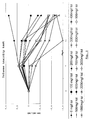
- Figure 2 shows the influence of different concentration of toluene on growth of Lupinus luteus
- Example 1 heavy metal sequestration by natural and genetically modified endophytic bacteria
- VM422 Pseudomonas sp. VM422 was isolated as an endophytic strain from surface sterilised Brassica napus. This strain was selected for its zinc resistance phenotype: VM422 had a MIC value for zinc of 20 mM on Tris minimal medium (Mergeay et al., 1985). This strain was tested for its zinc complexing capacity by growing it for 66 hours in liquid medium in the presence of 60000 ⁇ g/l ZnCl 2 . After the incubation period, approximately 800 ⁇ g/l Zn remained in the solution: the majority of the Zn was biosequestrated around the VM422 cells.
- Burkholderia cepacia L.S.2.4:: ncc-nre in which the miniTn 5-ncc-nre transposon had been introduced (Taghavi et al, 2001) was examined for its efficiency for nickel sequestration.
- Strain L.S.2.4 was grown for 7 days in liquid medium in the presence of 25 mg/l NiCl2. After the incubation period, approximately 15 mg/l Ni remained in the solution, indicating that 40% of the Ni was sequestrated around the B. cepacia L.S.2.4.:ncc-nre cells. This experiment demonstrates the feasibility to use genetically modified, heavy metal resistant endophytic bacteria for heavy metal sequestration from solution.
- Example 2 construction of recombinant endophytic strains equipped with degradation pathways for specific organic xenobiotics
- Natural gene transfer is based on bi or tri parental conjugation or exogenous plasmid isolation.
- strain BU 0072 As a model endophytic strain to be equipped with degradation pathways was used a nickel-kanamycin marked derivative of Burkolderia cepacia L.S.2.4 named strain BU 0072, which was constructed at VITO (Taghavi, S. et all,2001). Burkolderia cepacia L.S.2.4 has yellow lupine (Lupinus luteus L.) as host.
- Burkolderia cepacia G4 (TOM, conjugative plasmid, tol + ) was used.
- Donor strain and receptor strain were grown overnight in LB medium, washed in 10 -2 MgSO 4 and aliquots of 100 ⁇ l were added to a sterile filter (0.45 ⁇ l) and incubated overnight at 30C° on solid LB medium.
- the filter containing donor, receptor and transconjugants were washed in a 10 -2 MgSO 4 solution in order to release the bacteria.
- Transconjugant was selected by means of their acquired Ni+Km+Tol resistance on minimal Tris buffered medium supplemented with the appropriate concentration of selective marker i.e. 1mM NiCl 2 , 100 ⁇ g/ml Km and toluene as carbon source.
- the strain BU0072 was used as a positive control.
- Amplification was carried out as follows: a preliminary denaturation step was done at 95°C for 10 min, followed by 35 cycles of 2 min at 95°C, 1 min at 55°C, 2 min at 72°C and 8 min at 72°C. PCR product of 930 bp was checked by electrophoresis in 1,2% agarose gels. All the transconjugants showed the nre specific fragment.
- pTOM The presence of pTOM was confirmed by plasmid isolation of the transconjunants and of Burkolderia cepacia G4 as positive control, while strain BU0072 was used as a negative control. A large fragment corresponding with the plasmid was present in the transconjugants and in G4, but was lacking in BU0072.
- One of the representative transconjugants was chosen and named VM1330.
- Strain VM1330 is used to reinoculate lupine plants to prove the concept of the project.
- Example 3 development and comparison techniques for efficient reinoculation of endophytic strains in their host plants.
- a VM 1330 strain was grown in 284 tris buffered, salted, minimal liquid medium with addition of 0.2% gluconate at 22°C on rotary shaker for a period of 7 days. Next, inoculum was centrifuged at 6000rpm during 15 minutes, washed twice in MgSO 4 -2 . Inoculum was diluted and plated on 284 medium with addition of 1mM Ni, 50 mg/l kanamicyne and toluene in order to test the purity of the solution and the presence of Ni, Km and toluene resistance characteristics.
- Seeds of Lupinus luteus were surface sterilized in solution containing 1% active chloride and 1 droplet Tween per 100ml solution. After sterilization seeds were rinsed 3 times in sterile water and dried on sterile filter paper. In order to test sterilization efficiency seeds were incubated on 869 medium during 3 days at 30°C.
- Perlite was chosen as plant growth substrate because it can be sterilized easily and provides the roots with moisture, nutrients and a good aeration due to the large surface area and the physical shape of each particle.
- the bacterial inoculum was added in each jar at concentration of 10 8 colony forming units (CFU) per milliliter Hoagland's solution. Inoculum was added in MgSO 4 -2 , whereas for the non-inoculated plants the same amount of MgSO 4 -2 was added.
- CFU colony forming units
- the jars were covered with sterile tinfoil in order to allow a good bacterial colonization and prevent contamination and dispersion of the inoculated bacteria through the air. After germination of the seeds, holes were made in the tinfoil and plans were grown through the holes.
- Plants were grown for 21 days in climate chamber with constant temperature 22°C, relative humidity 65% and 12 hour light and dark cycle.
- Roots and shoots were separated. Fresh root and shoot material was vigorously washed in distilled water, sterilized in solution containing 1% active chloride supplemented with 1 droplet Tween per 100ml solution, rinsed 3 times in sterile distilled water. After sterilization roots and shoots were macerated using mixer in 10ml sterile MgSO 4 -2 . 100 ⁇ l of supernatant was immediately plated on three different media: 284 + 0.2% gluconate; 284+1mM Ni + 100 Km+ 0.2% gluconat and 284 + 1mM Ni +50 Km + toluene.
- Burkholderia cepacia was selected as endophytic strain. Some B. cepacia strains have been reported as facultative endophytes of lupine plants or were found to colonise roots of various maize cultivars (Hebbar et al., 1992a; Hebbar et al., 1992b).
- Wild type strain Burkholderia cepacia L.S.2.4 and its nickel resistant derivative L.S.2.4:: ncc-nre were inoculated in perlite and the sterile Lupinus seedlings were grown on this substrate for 21 days under controlled environmental conditions. Non-inoculated sterile plants were used as controls. In the absence of NiCl 2 , no difference in growth response was observed between the 21 days-old non- inoculated control plants and the inoculated lupine plants when the shoot biomass and length were considered. The roots seemed to be slightly but significantly affected in their growth when B. cepacia was added as a wild type strain or as the nickel resistant derivative, indicating that the presence of B. cepacia L.S.2.4 has a minor, but positive effect on the root development in the absence of nickel. The nickel concentration in both roots and shoots was measured with A.A.S but was below the detection limit ( ⁇ 2.5 mg/kg DW).
- cepacia L.S.2.4 ncc-nre
- the non-inoculated control plants and the plants inoculated with the wild type strain L.S.2.4 had similar but lower nickel contents.
- the nickel concentration in the shoots was comparable for the different treatments ( Figure 1). This is explained by the preferential colonization by B. cepacia L.S.2.4 of the Lupinus roots. Another reason might be that the nickel ions are complexed by B. cepacia L.S.2.4 in the roots, and consequently their transfer to the shoots is blocked.
- Transconjugants should be selected on their ability to grow on toluene in the presence of 2 mM Ni. In addition the transconjugants will be able to degrade TCE (tri-chloro-ethylene) without induction of the tom A gene by toluene, due to the constitutive expression of the toluene- ortho -monooxygenase (Shields and Reagin, 1992).
- TCE tri-chloro-ethylene
- mutated pathways that show constitutive expression of degradation should be preferentially introduced in the endophytic bacteria.
- An example is constitutively expressed toluene- ortho -monooxygenase of B. cepacia G4 (Shields and Reagin, 1992), which results in constitutive TCE degradation without the need to induce TCE cometabolism by the presence of phenol or toluene.
- trees For phytoremediation of contaminated groundwater, preferentially deep-rooting trees are used, such as poplar or willow. In addition to their large water consumption, trees have the advantage that the retention time of the contaminant in the xylem is quite long (up to two days) allowing sufficient time for in planta degradation of the contaminant by the endophytic bacteria.
- Toluene was added in concentration of 1000mg/liter.
- Biomass of the plants was measured at the beginning and on the end of the experiment. Results are presented in table 2.2: Biomass of the reinoculated and control plants before and after experiment where toluene was added in concentration 1000mg/l Growth chamber number biomass day 1 biomass day 5 Difference 1 Reinoculated plant 7.26 g 9.26 g 2 g 2 Reinoculated plant 7.15 g 9.17 g 2.02 g 3 Control plant 7.62 g 8.42 g 0.8 g
- Biomass of reinoculated plants increased in five days for 2 grams, while biomass of control plant increased 0.8 grams.
- the bacteria were isolated from reinoculated and not reinoculated plants not used in the experiment. Once the experiment was finished, the bacteria were also isolated from the plants used in the experiment. The results are presented in table 2.3 and 2.4.
- Toluene was added in concentration of 500mg/liter.
- Biomass of the plants was measured at the beginning and at the end of the experiment. Results are presented in table 2.6: Biomass of the reinoculated and control plants before and after experiment where toluene was added in concentration 500mg/l Growth chamber Biomass day 1 Biomass day 3 Difference 1 Reinoculated plant 6.99 g 8.6 g 1.66 2 Reinoculated plant 7.15 g 9.01 g 1.86 3 Control plant 7.44 g 8.56 g 0.92
- Biomass of reinoculated plants increased in three days by nearly 2 grams, while biomass of control plant increased 1.12 grams.
- Toluene concentration in Tenax traps was measured by means of GC-MS . Results are presented in table 2.9. Amount of toluene in ⁇ g detected in Tenax traps, means by GC-MS Compartment above Compartment under Measurement in hours First trap Control trap First trap Control trap Reinoculated plant 1 24 27.3 91.6 106.2 307.7 48 22.1 6.7 128.7 134.5 72 11.9 1.6 121.2 141.1 61.3 99.9 356.1 583.3 161.2 939.4 1100.6 Reinoculated plant 2 24 31.6 115.4 138.6 346.0 48 13.1 3.2 154.3 219 72 3.4 0.2 129.8 173.5 48.1 118.8 422.7 738.5 166.9 1161.2 1328.1 Control plant 24 4.2 0.7 142.9 285.2 48 1.7 0.1 125.8 195.9 72 0.3 0 98.1 144 6.2 0.8 366.8 625.1 7 991 998
- Toxicity test influence of different concentrates of toluene on growth of Lupinus luteus
- Figure 2 shows the influence of different concentration of toluene on growth of Lupinus luteus .
- Example 6 Decreased accumulation of tri-chloro-acetate (TCA) as metabolite of TCE degradation
- Certain organic xenobiotics are partially degraded by plants. However, their efficient remediation is hindered by the accumulation of toxic degradation product.
- An example is the degradation of TCE by several wild plants (like oak, castor bean and others), which results in the accumulation of phytotoxic TCA (tri-chloro-acetate).
- TCE tri-chloro-acetate
- the in planta accumulation of TCA and consequently its phytotoxicity might be reduced by inoculation with endophytic bacteria able to degrade TCA.
- Improved phytoremediation of TCE due to reduced accumulation of phytotoxic TCA would involve the following steps:
- Example 7 Decreased toxicity of organic xenobiotics, including agrochemicals such as herbicides
- 2,4-dichlorophenoxyacetic acid 2,4-D
- 2,4-D functions as a systemic herbicide that can be used to control a range of broad leaf weeds. It is normally applied as a foliar spray and although its exact mode of action is unknown it is transported through the xylem and phloem and through the roots.
- Plant-specific endophytic degrader bacteria might be introduced to agricultural crop plants, which are not resistant to the herbicidal action. Endophytical degradation of compounds might therefore be used to make plants selectively resistant against broad-spectrum herbicides.
- Pseudomonas sp. strain ADP initiates catabolism of atrazine (a triazin type herbicide) via three enzymatic steps, encoded by atz A, -B, and -C, which yield cyanuric acid, a valuable nitrogen source for many bacteria and plants. Plasmid transfer studies indicated that the atzA, -B, and -C genes are localised on a 96-kb broad host-range, self-transmissible plasmid, pADP-1, in Pseudomonas sp. strain ADP (de Souza et al., 1998).
- endophytic bacteria that can biodegrade herbicides and their inoculation on plants may confer on the plant host the ability to resist and detoxify the herbicide. This may provide many benefits including an alternative approach to generating herbicide resistant plants, allow the use of specific herbicides to promote the establishment of phytoremediation plants for in situ bioremediation, and allow the application of existing or future herbicides to a broader range of agricultural plants.
Landscapes
- Life Sciences & Earth Sciences (AREA)
- Engineering & Computer Science (AREA)
- Chemical & Material Sciences (AREA)
- Biotechnology (AREA)
- Health & Medical Sciences (AREA)
- Organic Chemistry (AREA)
- Microbiology (AREA)
- Bioinformatics & Cheminformatics (AREA)
- Botany (AREA)
- Biomedical Technology (AREA)
- Genetics & Genomics (AREA)
- Mycology (AREA)
- Wood Science & Technology (AREA)
- Zoology (AREA)
- Environmental & Geological Engineering (AREA)
- General Engineering & Computer Science (AREA)
- General Health & Medical Sciences (AREA)
- Biochemistry (AREA)
- Virology (AREA)
- Tropical Medicine & Parasitology (AREA)
- Molecular Biology (AREA)
- Soil Sciences (AREA)
- Medicinal Chemistry (AREA)
- Physics & Mathematics (AREA)
- High Energy & Nuclear Physics (AREA)
- Biodiversity & Conservation Biology (AREA)
- Hydrology & Water Resources (AREA)
- Water Supply & Treatment (AREA)
- Micro-Organisms Or Cultivation Processes Thereof (AREA)
- Processing Of Solid Wastes (AREA)
Applications Claiming Priority (2)
| Application Number | Priority Date | Filing Date | Title |
|---|---|---|---|
| US29134401P | 2001-05-16 | 2001-05-16 | |
| US291344P | 2001-05-16 |
Publications (2)
| Publication Number | Publication Date |
|---|---|
| EP1260282A2 true EP1260282A2 (fr) | 2002-11-27 |
| EP1260282A3 EP1260282A3 (fr) | 2004-06-30 |
Family
ID=23119925
Family Applications (1)
| Application Number | Title | Priority Date | Filing Date |
|---|---|---|---|
| EP20020447089 Withdrawn EP1260282A3 (fr) | 2001-05-16 | 2002-05-16 | Procédé pour améliorer la phytodécontamination de milieux pollués |
Country Status (2)
| Country | Link |
|---|---|
| US (2) | US20030126632A1 (fr) |
| EP (1) | EP1260282A3 (fr) |
Cited By (12)
| Publication number | Priority date | Publication date | Assignee | Title |
|---|---|---|---|---|
| US6945925B2 (en) | 2003-07-31 | 2005-09-20 | Joel Pooler | Biosequestration and organic assimilation of greenhouse gases |
| CZ296791B6 (cs) * | 2005-04-27 | 2006-06-14 | Ústav organické chemie a biochemie, AV CR | Zpusob odstranování výbusnin z odpadních vod pomocí rostlin |
| WO2008029423A1 (fr) * | 2006-09-07 | 2008-03-13 | Ccs Aosta S.R.L. | procédé de décontamination de vastes étendues de sol |
| CZ301110B6 (cs) * | 2005-05-27 | 2009-11-11 | Ústav experimentální botaniky | Zpusob odstranování uranu a jeho rozpadových produktu z vody a cistírna používající tento zpusob |
| US8222187B2 (en) * | 2003-09-12 | 2012-07-17 | Universite De Rennes 1 | Method for improving the phytoremediation of polluted sites by providing plants with exogenous carbohydrates |
| WO2012140623A1 (fr) | 2011-04-13 | 2012-10-18 | Universidad De Santiago De Chile | Procédé pour la récupération de substrats qui présentent des déchets industriels |
| CN102989754A (zh) * | 2012-12-20 | 2013-03-27 | 江苏省中国科学院植物研究所 | 一种利用鸢尾属植物并结合刈割措施强化修复铜污染土壤的方法 |
| CN105149333A (zh) * | 2015-10-30 | 2015-12-16 | 四川师范大学 | 一种利用油菜修复锶污染土壤的方法 |
| CN105670980A (zh) * | 2016-04-20 | 2016-06-15 | 国家烟草质量监督检验中心 | 一种修复重金属污染土壤的微生物菌株及其应用 |
| CN111019855A (zh) * | 2019-11-27 | 2020-04-17 | 福建省农业科学院农业生态研究所 | 一种重金属抗性菌及其应用 |
| CN111117918A (zh) * | 2020-01-06 | 2020-05-08 | 江南大学 | 缓解pfos毒害作用的多功能戊糖片球菌ccfm1107、其发酵食品及应用 |
| CN116618425A (zh) * | 2023-03-02 | 2023-08-22 | 西安工程大学 | 利用固体废物修复草甘膦-镉复合污染土壤的方法 |
Families Citing this family (6)
| Publication number | Priority date | Publication date | Assignee | Title |
|---|---|---|---|---|
| KR100694881B1 (ko) | 2006-03-27 | 2007-03-14 | 주식회사 닉시안 | 화약류 분해능을 갖는 새로운 미생물 균주 및 이를 이용한화약류 오염 토양 처리방법 |
| ITRM20080183A1 (it) * | 2008-04-07 | 2009-10-08 | Univ Milano Bicocca | Rimozione microbiologica di mercurio da materiali contaminati. |
| CN105838740B (zh) * | 2016-05-03 | 2020-11-06 | 湖北大学 | 一种茶树内生草螺菌制备纳米红色元素硒的方法 |
| CN111108840B (zh) * | 2019-12-02 | 2020-12-08 | 南华大学 | 一种低品位镍矿的植物采镍方法 |
| CN111747531A (zh) * | 2020-06-19 | 2020-10-09 | 北京爱尔斯生态环境工程有限公司 | 一种基于微生物与水生植物相互作用修复水生态环境的方法 |
| CN118345006B (zh) * | 2024-04-26 | 2024-12-13 | 中核第四研究设计工程有限公司 | 一种伯克霍尔德氏菌hsy-3及其应用 |
Family Cites Families (1)
| Publication number | Priority date | Publication date | Assignee | Title |
|---|---|---|---|---|
| CA2079827C (fr) * | 1991-12-09 | 2003-08-19 | Theresa Chen Yen Wang | Systeme de reperage d'unites mobiles |
-
2002
- 2002-05-16 US US10/150,884 patent/US20030126632A1/en not_active Abandoned
- 2002-05-16 EP EP20020447089 patent/EP1260282A3/fr not_active Withdrawn
-
2005
- 2005-02-11 US US11/056,502 patent/US20050150003A1/en not_active Abandoned
Non-Patent Citations (9)
| Title |
|---|
| BRAZIL G M ET AL: "Construction of a rhizosphere pseudomonad with potential to degrade polychlorinated biphenyls and detection of bph gene expression in the rhizosphere" APPLIED AND ENVIRONMENTAL MICROBIOLOGY, vol. 61, no. 5, 1995, pages 1946-1952, XP002278507 ISSN: 0099-2240 * |
| HOLLOWELL GAIL P ET AL: "Genetic transfer and expression of plasmid RP4::TOL in Sinorhizobium meliloti, Bradyrhizobium japonicum and B. elkanii" SOIL BIOLOGY AND BIOCHEMISTRY, vol. 31, no. 13, November 1999 (1999-11), pages 1811-1819, XP002278509 ISSN: 0038-0717 * |
| LODEWYCKX C. ET AL., : "Heterologous expression of heavy metal resistance genes in endophytic bacteria and colonization of their host plant in the perspective of phytoremediation" 5TH INTERNATIONAL CONFERENCE ON THE BIOGEOCHEMISTRY OF TRACE ELEMENTS, 11 - 15 July 1999, pages 880-881, XP009030075 * |
| LODEWYCKX C. ET AL., : "The effect of recombinant heavy metal-resistant endophytic bacteria on heavy metal uptake by their host plant" INTERNATIONAL JOURNAL OF PHYTOREMEDIATION, vol. 3, no. 2, 2001, pages 173-187, XP009029944 * |
| MUROOKA Y ET AL., : "A new remediation system for heavy metals using leguminous plant and rhizobia symbiosis. Abstract nr L046" 12TH INT. CONGRS. ON NITROGEN FIXATION, September 1999 (1999-09), page 20 XP009030074 * |
| RIGOT JEROME F AND MATSUMURA FUMIO: "A biocentrol fungus genetically modified for plant-mediated soil bioremediation. Abstract n°083" 217TH NATIONAL MEETING OF THE AMERICAN CHEMICAL SOCIETY , 21 - 25 March 1999, XP009029934 * |
| SHIM HOJAE ET AL: "Rhizosphere competitiveness of trichloroethylene-degrading, poplar-colonizing recombinant bacteria" APPLIED AND ENVIRONMENTAL MICROBIOLOGY, vol. 66, no. 11, November 2000 (2000-11), pages 4673-4678, XP002278506 ISSN: 0099-2240 * |
| TAGHAVI S ET AL: "Nickel-resistance-based minitransposons: new tools for genetic manipulation of environmental bacteria." APPLIED AND ENVIRONMENTAL MICROBIOLOGY. UNITED STATES FEB 2001, vol. 67, no. 2, February 2001 (2001-02), pages 1015-1019, XP002278510 ISSN: 0099-2240 * |
| YEE DENNIS C ET AL: "Rhizoremediation of trichloroethylene by a recombinant, root-colonizing Pseudomonas fluorescens strain expressing toluene ortho-monooxygenase constitutively" APPLIED AND ENVIRONMENTAL MICROBIOLOGY, vol. 64, no. 1, January 1998 (1998-01), pages 112-118, XP002278508 ISSN: 0099-2240 * |
Cited By (15)
| Publication number | Priority date | Publication date | Assignee | Title |
|---|---|---|---|---|
| US6945925B2 (en) | 2003-07-31 | 2005-09-20 | Joel Pooler | Biosequestration and organic assimilation of greenhouse gases |
| US8222187B2 (en) * | 2003-09-12 | 2012-07-17 | Universite De Rennes 1 | Method for improving the phytoremediation of polluted sites by providing plants with exogenous carbohydrates |
| CZ296791B6 (cs) * | 2005-04-27 | 2006-06-14 | Ústav organické chemie a biochemie, AV CR | Zpusob odstranování výbusnin z odpadních vod pomocí rostlin |
| CZ301110B6 (cs) * | 2005-05-27 | 2009-11-11 | Ústav experimentální botaniky | Zpusob odstranování uranu a jeho rozpadových produktu z vody a cistírna používající tento zpusob |
| WO2008029423A1 (fr) * | 2006-09-07 | 2008-03-13 | Ccs Aosta S.R.L. | procédé de décontamination de vastes étendues de sol |
| WO2012140623A1 (fr) | 2011-04-13 | 2012-10-18 | Universidad De Santiago De Chile | Procédé pour la récupération de substrats qui présentent des déchets industriels |
| CN102989754A (zh) * | 2012-12-20 | 2013-03-27 | 江苏省中国科学院植物研究所 | 一种利用鸢尾属植物并结合刈割措施强化修复铜污染土壤的方法 |
| CN105149333A (zh) * | 2015-10-30 | 2015-12-16 | 四川师范大学 | 一种利用油菜修复锶污染土壤的方法 |
| CN105670980A (zh) * | 2016-04-20 | 2016-06-15 | 国家烟草质量监督检验中心 | 一种修复重金属污染土壤的微生物菌株及其应用 |
| CN105670980B (zh) * | 2016-04-20 | 2019-11-05 | 国家烟草质量监督检验中心 | 一种修复重金属污染土壤的微生物菌株的应用 |
| CN111019855A (zh) * | 2019-11-27 | 2020-04-17 | 福建省农业科学院农业生态研究所 | 一种重金属抗性菌及其应用 |
| CN111019855B (zh) * | 2019-11-27 | 2021-12-31 | 福建省农业科学院农业生态研究所 | 一种重金属抗性菌及其应用 |
| CN111117918A (zh) * | 2020-01-06 | 2020-05-08 | 江南大学 | 缓解pfos毒害作用的多功能戊糖片球菌ccfm1107、其发酵食品及应用 |
| CN116618425A (zh) * | 2023-03-02 | 2023-08-22 | 西安工程大学 | 利用固体废物修复草甘膦-镉复合污染土壤的方法 |
| CN116618425B (zh) * | 2023-03-02 | 2024-04-23 | 西安工程大学 | 利用固体废物修复草甘膦-镉复合污染土壤的方法 |
Also Published As
| Publication number | Publication date |
|---|---|
| US20030126632A1 (en) | 2003-07-03 |
| EP1260282A3 (fr) | 2004-06-30 |
| US20050150003A1 (en) | 2005-07-07 |
Similar Documents
| Publication | Publication Date | Title |
|---|---|---|
| EP1260282A2 (fr) | Procédé pour améliorer la phytodécontamination de milieux pollués | |
| Barac et al. | Engineered endophytic bacteria improve phytoremediation of water-soluble, volatile, organic pollutants | |
| Zhang et al. | Biochemical mechanism of phytoremediation process of lead and cadmium pollution with Mucor circinelloides and Trichoderma asperellum | |
| Korade et al. | Rhizosphere remediation of chlorpyrifos in mycorrhizospheric soil using ryegrass | |
| Yahaghi et al. | Isolation and characterization of Pb-solubilizing bacteria and their effects on Pb uptake by Brassica juncea: implications for microbe-assisted phytoremediation | |
| EP2578675B1 (fr) | Bacterie capable de reduire la teneur de metaux lourds d'une plante | |
| Bashan et al. | Environmental uses of plant growth-promoting bacteria | |
| US20160205939A1 (en) | Atrazine-degrading bacterium and method of uisng the same for soil and plant remediation | |
| Yateem et al. | Plants‐associated microflora and the remediation of oil‐contaminated soil | |
| KR20140054570A (ko) | 중금속에 오염된 토양으로부터 분리한 비소에 내성을 가지고 식물 생장을 촉진하는 박테리아 균주 및 이의 용도 | |
| US20070101461A1 (en) | Method for Improving Phytoremediation Treatment of a Contaminated Medium | |
| US8263385B2 (en) | S-triazine-herbicide-degrading bacteria, product for the bioremediation and method of bioremediation | |
| Ghosh et al. | Bacterial bio-mobilization and-sequestration of arsenic in contaminated paddy fields of West Bengal, India | |
| Marschner et al. | Effect of manganese-reducing rhizosphere bacteria on the growth of Gaeumannomyces graminis var. tritici and on manganese uptake by wheat (Triticum aestivum L.) | |
| CN102989761A (zh) | 一种用降解性细菌修复除草剂阿特拉津污染土壤的方法 | |
| CA2531182C (fr) | Support pour systeme enrichi complexe de bacteries de decomposition et methode de fabrication connexe, nouvelles bacteries et methode de nettoyage de milieux pollues et dispositifs connexes | |
| Rong et al. | Biodegradation of pentachloronitrobenzene by Labrys portucalensis pcnb-21 isolated from polluted soil | |
| EP1991658B1 (fr) | Culture bacterienne melangee pour la degradation de l'atrazine | |
| Banach et al. | Phytoremediation as a promising technology for water and soil purification: Azolla caroliniana Willd. as a case study | |
| Joshi | Chlorpyrifos: It’s bioremediation in agricultural soils’ | |
| Miller et al. | Phytoremediation of pentachlorophenol in the crested wheatgrass (Agropyron cristatum× desertorum) rhizosphere | |
| Ahmad et al. | Bioremediation of pesticides | |
| Sharma et al. | Impact of soil, plant-microbe interaction in metal contaminated soils | |
| Ozawa et al. | Improvement of simazine degradation by inoculation of corn and soybean plants with rhizobacteria | |
| Takagi et al. | Recent technology on bio-remediation of POPs and persistent pesticides |
Legal Events
| Date | Code | Title | Description |
|---|---|---|---|
| PUAI | Public reference made under article 153(3) epc to a published international application that has entered the european phase |
Free format text: ORIGINAL CODE: 0009012 |
|
| AK | Designated contracting states |
Kind code of ref document: A2 Designated state(s): AT BE CH CY DE DK ES FI FR GB GR IE IT LI LU MC NL PT SE TR |
|
| AX | Request for extension of the european patent |
Free format text: AL;LT;LV;MK;RO;SI |
|
| PUAL | Search report despatched |
Free format text: ORIGINAL CODE: 0009013 |
|
| RIC1 | Information provided on ipc code assigned before grant |
Ipc: 7C 12N 15/82 B Ipc: 7B 09C 1/10 A |
|
| AK | Designated contracting states |
Kind code of ref document: A3 Designated state(s): AT BE CH CY DE DK ES FI FR GB GR IE IT LI LU MC NL PT SE TR |
|
| AX | Request for extension of the european patent |
Extension state: AL LT LV MK RO SI |
|
| 17P | Request for examination filed |
Effective date: 20041029 |
|
| AKX | Designation fees paid |
Designated state(s): AT BE CH CY DE DK ES FI FR GB GR IE IT LI LU MC NL PT SE TR |
|
| GRAP | Despatch of communication of intention to grant a patent |
Free format text: ORIGINAL CODE: EPIDOSNIGR1 |
|
| STAA | Information on the status of an ep patent application or granted ep patent |
Free format text: STATUS: THE APPLICATION IS DEEMED TO BE WITHDRAWN |
|
| 18D | Application deemed to be withdrawn |
Effective date: 20090818 |