EP1273006B1 - Utilisation de composes absorbeurs de lumiere dans la couche informations de supports de donnees optiques et supports de donnees optiques en question - Google Patents
Utilisation de composes absorbeurs de lumiere dans la couche informations de supports de donnees optiques et supports de donnees optiques en question Download PDFInfo
- Publication number
- EP1273006B1 EP1273006B1 EP01936132A EP01936132A EP1273006B1 EP 1273006 B1 EP1273006 B1 EP 1273006B1 EP 01936132 A EP01936132 A EP 01936132A EP 01936132 A EP01936132 A EP 01936132A EP 1273006 B1 EP1273006 B1 EP 1273006B1
- Authority
- EP
- European Patent Office
- Prior art keywords
- alkyl
- hydrogen
- alkoxy
- cyano
- oder
- Prior art date
- Legal status (The legal status is an assumption and is not a legal conclusion. Google has not performed a legal analysis and makes no representation as to the accuracy of the status listed.)
- Expired - Lifetime
Links
- 150000001875 compounds Chemical class 0.000 title claims abstract description 88
- 230000003287 optical effect Effects 0.000 title claims abstract description 44
- 239000000969 carrier Substances 0.000 title claims abstract description 15
- 239000010410 layer Substances 0.000 claims abstract description 49
- 238000010521 absorption reaction Methods 0.000 claims abstract description 33
- 239000000758 substrate Substances 0.000 claims abstract description 30
- 239000002904 solvent Substances 0.000 claims abstract description 19
- 239000011230 binding agent Substances 0.000 claims abstract description 10
- 239000000654 additive Substances 0.000 claims abstract description 7
- 239000011241 protective layer Substances 0.000 claims abstract description 7
- 238000004519 manufacturing process Methods 0.000 claims abstract 2
- -1 cyano, carboxyl Chemical group 0.000 claims description 624
- 125000001495 ethyl group Chemical group [H]C([H])([H])C([H])([H])* 0.000 claims description 174
- 229910052739 hydrogen Inorganic materials 0.000 claims description 167
- 239000001257 hydrogen Substances 0.000 claims description 167
- 125000002496 methyl group Chemical group [H]C([H])([H])* 0.000 claims description 151
- UFHFLCQGNIYNRP-UHFFFAOYSA-N Hydrogen Chemical compound [H][H] UFHFLCQGNIYNRP-UHFFFAOYSA-N 0.000 claims description 144
- 150000002431 hydrogen Chemical class 0.000 claims description 141
- 125000004093 cyano group Chemical group *C#N 0.000 claims description 124
- 125000002347 octyl group Chemical group [H]C([*])([H])C([H])([H])C([H])([H])C([H])([H])C([H])([H])C([H])([H])C([H])([H])C([H])([H])[H] 0.000 claims description 80
- 125000000217 alkyl group Chemical group 0.000 claims description 78
- 229910052736 halogen Inorganic materials 0.000 claims description 58
- 150000002367 halogens Chemical class 0.000 claims description 58
- 125000001997 phenyl group Chemical group [H]C1=C([H])C([H])=C(*)C([H])=C1[H] 0.000 claims description 53
- 125000003545 alkoxy group Chemical group 0.000 claims description 33
- 125000003118 aryl group Chemical group 0.000 claims description 23
- 125000000449 nitro group Chemical group [O-][N+](*)=O 0.000 claims description 23
- WKBOTKDWSSQWDR-UHFFFAOYSA-N Bromine atom Chemical group [Br] WKBOTKDWSSQWDR-UHFFFAOYSA-N 0.000 claims description 22
- GDTBXPJZTBHREO-UHFFFAOYSA-N bromine Chemical group BrBr GDTBXPJZTBHREO-UHFFFAOYSA-N 0.000 claims description 18
- 229910052794 bromium Inorganic materials 0.000 claims description 18
- 125000002887 hydroxy group Chemical group [H]O* 0.000 claims description 17
- 125000002112 pyrrolidino group Chemical group [*]N1C([H])([H])C([H])([H])C([H])([H])C1([H])[H] 0.000 claims description 15
- 125000000339 4-pyridyl group Chemical group N1=C([H])C([H])=C([*])C([H])=C1[H] 0.000 claims description 14
- 125000003917 carbamoyl group Chemical group [H]N([H])C(*)=O 0.000 claims description 12
- 125000005389 trialkylsiloxy group Chemical group 0.000 claims description 12
- 125000004665 trialkylsilyl group Chemical group 0.000 claims description 12
- 125000004521 1,3,4-thiadiazol-2-yl group Chemical group S1C(=NN=C1)* 0.000 claims description 10
- 125000004174 2-benzimidazolyl group Chemical group [H]N1C(*)=NC2=C([H])C([H])=C([H])C([H])=C12 0.000 claims description 10
- IJGRMHOSHXDMSA-UHFFFAOYSA-N Atomic nitrogen Chemical compound N#N IJGRMHOSHXDMSA-UHFFFAOYSA-N 0.000 claims description 10
- 229910052757 nitrogen Inorganic materials 0.000 claims description 10
- 125000000437 thiazol-2-yl group Chemical group [H]C1=C([H])N=C(*)S1 0.000 claims description 10
- 238000002835 absorbance Methods 0.000 claims description 9
- 125000004453 alkoxycarbonyl group Chemical group 0.000 claims description 9
- 125000004914 dipropylamino group Chemical group C(CC)N(CCC)* 0.000 claims description 9
- 125000002768 hydroxyalkyl group Chemical group 0.000 claims description 9
- 125000006539 C12 alkyl group Chemical group [H]C([H])([H])C([H])([H])C([H])([H])C([H])([H])C([H])([H])C([H])([H])C([H])([H])C([H])([H])C([H])([H])C([H])([H])C([H])([H])C([H])([H])* 0.000 claims description 8
- 125000004190 benzothiazol-2-yl group Chemical group [H]C1=C([H])C([H])=C2N=C(*)SC2=C1[H] 0.000 claims description 8
- 125000000623 heterocyclic group Chemical group 0.000 claims description 8
- 125000004105 2-pyridyl group Chemical group N1=C([*])C([H])=C([H])C([H])=C1[H] 0.000 claims description 7
- 125000000175 2-thienyl group Chemical group S1C([*])=C([H])C([H])=C1[H] 0.000 claims description 7
- RJSYPKWVIJGNLO-UHFFFAOYSA-N CCOClOC Chemical group CCOClOC RJSYPKWVIJGNLO-UHFFFAOYSA-N 0.000 claims description 7
- 150000001450 anions Chemical class 0.000 claims description 7
- 125000002837 carbocyclic group Chemical group 0.000 claims description 6
- 125000001543 furan-2,5-diyl group Chemical group O1C(=CC=C1*)* 0.000 claims description 5
- 125000004573 morpholin-4-yl group Chemical group N1(CCOCC1)* 0.000 claims description 5
- 125000004353 pyrazol-1-yl group Chemical group [H]C1=NN(*)C([H])=C1[H] 0.000 claims description 5
- 125000004244 benzofuran-2-yl group Chemical group [H]C1=C(*)OC2=C([H])C([H])=C([H])C([H])=C12 0.000 claims description 4
- 229910052799 carbon Inorganic materials 0.000 claims description 4
- 229910052717 sulfur Inorganic materials 0.000 claims description 4
- 229910052727 yttrium Inorganic materials 0.000 claims description 4
- 125000001140 1,4-phenylene group Chemical group [H]C1=C([H])C([*:2])=C([H])C([H])=C1[*:1] 0.000 claims description 3
- 125000002490 anilino group Chemical group [H]N(*)C1=C([H])C([H])=C([H])C([H])=C1[H] 0.000 claims description 3
- 125000004663 dialkyl amino group Chemical group 0.000 claims description 3
- 238000000034 method Methods 0.000 claims description 3
- 125000000963 oxybis(methylene) group Chemical group [H]C([H])(*)OC([H])([H])* 0.000 claims description 3
- UUFQTNFCRMXOAE-UHFFFAOYSA-N 1-methylmethylene Chemical compound C[CH] UUFQTNFCRMXOAE-UHFFFAOYSA-N 0.000 claims description 2
- 229910052760 oxygen Inorganic materials 0.000 claims description 2
- 239000002250 absorbent Substances 0.000 claims 17
- 230000009102 absorption Effects 0.000 claims 11
- 125000003178 carboxy group Chemical group [H]OC(*)=O 0.000 claims 7
- 150000001721 carbon Chemical group 0.000 claims 2
- 125000004169 (C1-C6) alkyl group Chemical group 0.000 claims 1
- 125000001054 5 membered carbocyclic group Chemical group 0.000 claims 1
- 125000004008 6 membered carbocyclic group Chemical group 0.000 claims 1
- 239000011229 interlayer Substances 0.000 claims 1
- 230000008033 biological extinction Effects 0.000 abstract description 13
- 239000011248 coating agent Substances 0.000 abstract description 9
- 238000000576 coating method Methods 0.000 abstract description 9
- 125000000484 butyl group Chemical group [H]C([*])([H])C([H])([H])C([H])([H])C([H])([H])[H] 0.000 description 153
- 125000001436 propyl group Chemical group [H]C([*])([H])C([H])([H])C([H])([H])[H] 0.000 description 153
- 125000006232 ethoxy propyl group Chemical group [H]C([H])([H])C([H])([H])OC([H])([H])C([H])([H])C([H])([H])* 0.000 description 97
- GAWIXWVDTYZWAW-UHFFFAOYSA-N C[CH]O Chemical group C[CH]O GAWIXWVDTYZWAW-UHFFFAOYSA-N 0.000 description 96
- 125000004051 hexyl group Chemical group [H]C([H])([H])C([H])([H])C([H])([H])C([H])([H])C([H])([H])C([H])([H])* 0.000 description 94
- 125000001147 pentyl group Chemical group C(CCCC)* 0.000 description 94
- 125000003754 ethoxycarbonyl group Chemical group C(=O)(OCC)* 0.000 description 74
- 125000004742 propyloxycarbonyl group Chemical group 0.000 description 72
- 125000004744 butyloxycarbonyl group Chemical group 0.000 description 70
- 125000002704 decyl group Chemical group [H]C([H])([H])C([H])([H])C([H])([H])C([H])([H])C([H])([H])C([H])([H])C([H])([H])C([H])([H])C([H])([H])C([H])([H])* 0.000 description 70
- 125000001797 benzyl group Chemical group [H]C1=C([H])C([H])=C(C([H])=C1[H])C([H])([H])* 0.000 description 50
- 125000001148 pentyloxycarbonyl group Chemical group 0.000 description 50
- 125000004344 phenylpropyl group Chemical group 0.000 description 41
- 125000001160 methoxycarbonyl group Chemical group [H]C([H])([H])OC(*)=O 0.000 description 30
- 101100083446 Danio rerio plekhh1 gene Proteins 0.000 description 24
- 125000002777 acetyl group Chemical group [H]C([H])([H])C(*)=O 0.000 description 23
- 125000003944 tolyl group Chemical group 0.000 description 22
- ZAMOUSCENKQFHK-UHFFFAOYSA-N Chlorine atom Chemical compound [Cl] ZAMOUSCENKQFHK-UHFFFAOYSA-N 0.000 description 21
- RYHBNJHYFVUHQT-UHFFFAOYSA-N 1,4-Dioxane Chemical compound C1COCCO1 RYHBNJHYFVUHQT-UHFFFAOYSA-N 0.000 description 20
- 125000001501 propionyl group Chemical group O=C([*])C([H])([H])C([H])([H])[H] 0.000 description 20
- 239000000460 chlorine Substances 0.000 description 19
- ZMXDDKWLCZADIW-UHFFFAOYSA-N N,N-Dimethylformamide Chemical compound CN(C)C=O ZMXDDKWLCZADIW-UHFFFAOYSA-N 0.000 description 18
- 229910052801 chlorine Inorganic materials 0.000 description 18
- 125000002485 formyl group Chemical group [H]C(*)=O 0.000 description 18
- 150000003254 radicals Chemical class 0.000 description 18
- JCXJVPUVTGWSNB-UHFFFAOYSA-N Nitrogen dioxide Chemical class O=[N]=O JCXJVPUVTGWSNB-UHFFFAOYSA-N 0.000 description 17
- OKKJLVBELUTLKV-UHFFFAOYSA-N Methanol Chemical compound OC OKKJLVBELUTLKV-UHFFFAOYSA-N 0.000 description 15
- 125000004063 butyryl group Chemical group O=C([*])C([H])([H])C([H])([H])C([H])([H])[H] 0.000 description 14
- 150000001732 carboxylic acid derivatives Chemical class 0.000 description 12
- 125000004432 carbon atom Chemical group C* 0.000 description 10
- 125000003074 decanoyl group Chemical group [H]C([H])([H])C([H])([H])C([H])([H])C([H])([H])C([H])([H])C([H])([H])C([H])([H])C([H])([H])C([H])([H])C(*)=O 0.000 description 10
- 125000003104 hexanoyl group Chemical group O=C([*])C([H])([H])C([H])([H])C([H])([H])C([H])([H])C([H])([H])[H] 0.000 description 10
- 125000004108 n-butyl group Chemical group [H]C([H])([H])C([H])([H])C([H])([H])C([H])([H])* 0.000 description 10
- 125000002801 octanoyl group Chemical group C(CCCCCCC)(=O)* 0.000 description 10
- 125000002914 sec-butyl group Chemical group [H]C([H])([H])C([H])([H])C([H])(*)C([H])([H])[H] 0.000 description 10
- 125000003774 valeryl group Chemical group O=C([*])C([H])([H])C([H])([H])C([H])([H])C([H])([H])[H] 0.000 description 10
- YMWUJEATGCHHMB-UHFFFAOYSA-N Dichloromethane Chemical compound ClCCl YMWUJEATGCHHMB-UHFFFAOYSA-N 0.000 description 9
- QYSGYZVSCZSLHT-UHFFFAOYSA-N octafluoropropane Chemical compound FC(F)(F)C(F)(F)C(F)(F)F QYSGYZVSCZSLHT-UHFFFAOYSA-N 0.000 description 9
- 125000003236 benzoyl group Chemical group [H]C1=C([H])C([H])=C(C([H])=C1[H])C(*)=O 0.000 description 8
- HJMZMZRCABDKKV-UHFFFAOYSA-N carbonocyanidic acid Chemical compound OC(=O)C#N HJMZMZRCABDKKV-UHFFFAOYSA-N 0.000 description 7
- 125000000999 tert-butyl group Chemical group [H]C([H])([H])C(*)(C([H])([H])[H])C([H])([H])[H] 0.000 description 7
- RFCAUADVODFSLZ-UHFFFAOYSA-N 1-Chloro-1,1,2,2,2-pentafluoroethane Chemical compound FC(F)(F)C(F)(F)Cl RFCAUADVODFSLZ-UHFFFAOYSA-N 0.000 description 6
- 125000000068 chlorophenyl group Chemical group 0.000 description 6
- WMIYKQLTONQJES-UHFFFAOYSA-N hexafluoroethane Chemical compound FC(F)(F)C(F)(F)F WMIYKQLTONQJES-UHFFFAOYSA-N 0.000 description 6
- 125000000956 methoxy group Chemical group [H]C([H])([H])O* 0.000 description 6
- 125000000951 phenoxy group Chemical group [H]C1=C([H])C([H])=C(O*)C([H])=C1[H] 0.000 description 6
- NMJQBLVCTWZTJG-UHFFFAOYSA-M 1,2-dimethyl-1-[3-(2-methylphenoxy)-3-phenylpropyl]piperidin-1-ium;bromide Chemical compound [Br-].CC1CCCC[N+]1(C)CCC(C=1C=CC=CC=1)OC1=CC=CC=C1C NMJQBLVCTWZTJG-UHFFFAOYSA-M 0.000 description 5
- LRHPLDYGYMQRHN-UHFFFAOYSA-N N-Butanol Chemical compound CCCCO LRHPLDYGYMQRHN-UHFFFAOYSA-N 0.000 description 5
- 238000013500 data storage Methods 0.000 description 5
- 239000000975 dye Substances 0.000 description 5
- 239000000203 mixture Substances 0.000 description 5
- 238000004528 spin coating Methods 0.000 description 5
- 125000002941 2-furyl group Chemical group O1C([*])=C([H])C([H])=C1[H] 0.000 description 4
- WKIXQUMETCNZKK-UHFFFAOYSA-N 2-methyl-4h-1,3-oxazol-5-one Chemical compound CC1=NCC(=O)O1 WKIXQUMETCNZKK-UHFFFAOYSA-N 0.000 description 4
- 125000000094 2-phenylethyl group Chemical group [H]C1=C([H])C([H])=C(C([H])=C1[H])C([H])([H])C([H])([H])* 0.000 description 4
- 125000000389 2-pyrrolyl group Chemical group [H]N1C([*])=C([H])C([H])=C1[H] 0.000 description 4
- 125000004106 butoxy group Chemical group [*]OC([H])([H])C([H])([H])C(C([H])([H])[H])([H])[H] 0.000 description 4
- XNVMFDGFXSZPDU-UHFFFAOYSA-N cyano nitroformate Chemical compound [O-][N+](=O)C(=O)OC#N XNVMFDGFXSZPDU-UHFFFAOYSA-N 0.000 description 4
- SWXVUIWOUIDPGS-UHFFFAOYSA-N diacetone alcohol Chemical compound CC(=O)CC(C)(C)O SWXVUIWOUIDPGS-UHFFFAOYSA-N 0.000 description 4
- 125000001664 diethylamino group Chemical group [H]C([H])([H])C([H])([H])N(*)C([H])([H])C([H])([H])[H] 0.000 description 4
- 125000002147 dimethylamino group Chemical group [H]C([H])([H])N(*)C([H])([H])[H] 0.000 description 4
- 239000004922 lacquer Substances 0.000 description 4
- 230000001681 protective effect Effects 0.000 description 4
- 238000007740 vapor deposition Methods 0.000 description 4
- OFCFYWOKHPOXKF-UHFFFAOYSA-N 1-(benzenesulfonyl)-4-chlorobenzene Chemical compound C1=CC(Cl)=CC=C1S(=O)(=O)C1=CC=CC=C1 OFCFYWOKHPOXKF-UHFFFAOYSA-N 0.000 description 3
- ZWEHNKRNPOVVGH-UHFFFAOYSA-N 2-Butanone Chemical compound CCC(C)=O ZWEHNKRNPOVVGH-UHFFFAOYSA-N 0.000 description 3
- QKCKCXFWENOGER-UHFFFAOYSA-N 2-phenyloxazol-5(4H)-one Chemical compound O1C(=O)CN=C1C1=CC=CC=C1 QKCKCXFWENOGER-UHFFFAOYSA-N 0.000 description 3
- NHHQJBCNYHBUSI-UHFFFAOYSA-N 6-[[5-fluoro-2-(3,4,5-trimethoxyanilino)-4-pyrimidinyl]amino]-2,2-dimethyl-4H-pyrido[3,2-b][1,4]oxazin-3-one Chemical compound COC1=C(OC)C(OC)=CC(NC=2N=C(NC=3N=C4NC(=O)C(C)(C)OC4=CC=3)C(F)=CN=2)=C1 NHHQJBCNYHBUSI-UHFFFAOYSA-N 0.000 description 3
- UHOVQNZJYSORNB-UHFFFAOYSA-N Benzene Chemical compound C1=CC=CC=C1 UHOVQNZJYSORNB-UHFFFAOYSA-N 0.000 description 3
- 101100129500 Caenorhabditis elegans max-2 gene Proteins 0.000 description 3
- RTZKZFJDLAIYFH-UHFFFAOYSA-N Diethyl ether Chemical compound CCOCC RTZKZFJDLAIYFH-UHFFFAOYSA-N 0.000 description 3
- PXGOKWXKJXAPGV-UHFFFAOYSA-N Fluorine Chemical compound FF PXGOKWXKJXAPGV-UHFFFAOYSA-N 0.000 description 3
- YXFVVABEGXRONW-UHFFFAOYSA-N Toluene Chemical compound CC1=CC=CC=C1 YXFVVABEGXRONW-UHFFFAOYSA-N 0.000 description 3
- KZLCCMBSJDXNDG-UHFFFAOYSA-N azepan-1-yl(phenyl)methanone Chemical compound C=1C=CC=CC=1C(=O)N1CCCCCC1 KZLCCMBSJDXNDG-UHFFFAOYSA-N 0.000 description 3
- 229910052731 fluorine Inorganic materials 0.000 description 3
- 239000011737 fluorine Substances 0.000 description 3
- 125000003187 heptyl group Chemical group [H]C([*])([H])C([H])([H])C([H])([H])C([H])([H])C([H])([H])C([H])([H])C([H])([H])[H] 0.000 description 3
- GXHFUVWIGNLZSC-UHFFFAOYSA-N meldrum's acid Chemical compound CC1(C)OC(=O)CC(=O)O1 GXHFUVWIGNLZSC-UHFFFAOYSA-N 0.000 description 3
- 229910052751 metal Inorganic materials 0.000 description 3
- 239000002184 metal Substances 0.000 description 3
- VLKZOEOYAKHREP-UHFFFAOYSA-N n-Hexane Chemical compound CCCCCC VLKZOEOYAKHREP-UHFFFAOYSA-N 0.000 description 3
- 238000002360 preparation method Methods 0.000 description 3
- 239000011877 solvent mixture Substances 0.000 description 3
- 238000004544 sputter deposition Methods 0.000 description 3
- 239000003381 stabilizer Substances 0.000 description 3
- 238000003860 storage Methods 0.000 description 3
- 125000000391 vinyl group Chemical group [H]C([*])=C([H])[H] 0.000 description 3
- 239000000080 wetting agent Substances 0.000 description 3
- QPFMBZIOSGYJDE-UHFFFAOYSA-N 1,1,2,2-tetrachloroethane Chemical compound ClC(Cl)C(Cl)Cl QPFMBZIOSGYJDE-UHFFFAOYSA-N 0.000 description 2
- WWOLKXANPHCFTQ-UHFFFAOYSA-N 2-(2-phenylethenyl)-4h-1,3-oxazol-5-one Chemical compound O1C(=O)CN=C1C=CC1=CC=CC=C1 WWOLKXANPHCFTQ-UHFFFAOYSA-N 0.000 description 2
- 125000001731 2-cyanoethyl group Chemical group [H]C([H])(*)C([H])([H])C#N 0.000 description 2
- ZNQVEEAIQZEUHB-UHFFFAOYSA-N 2-ethoxyethanol Chemical compound CCOCCO ZNQVEEAIQZEUHB-UHFFFAOYSA-N 0.000 description 2
- LFQSCWFLJHTTHZ-UHFFFAOYSA-N Ethanol Chemical compound CCO LFQSCWFLJHTTHZ-UHFFFAOYSA-N 0.000 description 2
- SIKJAQJRHWYJAI-UHFFFAOYSA-N Indole Chemical compound C1=CC=C2NC=CC2=C1 SIKJAQJRHWYJAI-UHFFFAOYSA-N 0.000 description 2
- BZLVMXJERCGZMT-UHFFFAOYSA-N Methyl tert-butyl ether Chemical compound COC(C)(C)C BZLVMXJERCGZMT-UHFFFAOYSA-N 0.000 description 2
- AVRWEULSKHQETA-UHFFFAOYSA-N Thiophene-2 Chemical compound S1C=2CCCCCC=2C(C(=O)OC)=C1NC(=O)C1=C(F)C(F)=C(F)C(F)=C1F AVRWEULSKHQETA-UHFFFAOYSA-N 0.000 description 2
- 239000006096 absorbing agent Substances 0.000 description 2
- 239000012790 adhesive layer Substances 0.000 description 2
- 150000001298 alcohols Chemical class 0.000 description 2
- HSMPSHPWCOOUJH-UHFFFAOYSA-N anilinyl Chemical compound [NH]C1=CC=CC=C1 HSMPSHPWCOOUJH-UHFFFAOYSA-N 0.000 description 2
- 125000000051 benzyloxy group Chemical group [H]C1=C([H])C([H])=C(C([H])=C1[H])C([H])([H])O* 0.000 description 2
- 230000015556 catabolic process Effects 0.000 description 2
- 239000000470 constituent Substances 0.000 description 2
- JHAYEQICABJSTP-UHFFFAOYSA-N decoquinate Chemical group N1C=C(C(=O)OCC)C(=O)C2=C1C=C(OCC)C(OCCCCCCCCCC)=C2 JHAYEQICABJSTP-UHFFFAOYSA-N 0.000 description 2
- 238000006731 degradation reaction Methods 0.000 description 2
- 125000001301 ethoxy group Chemical group [H]C([H])([H])C([H])([H])O* 0.000 description 2
- IIEWJVIFRVWJOD-UHFFFAOYSA-N ethylcyclohexane Chemical compound CCC1CCCCC1 IIEWJVIFRVWJOD-UHFFFAOYSA-N 0.000 description 2
- 229930195733 hydrocarbon Natural products 0.000 description 2
- 150000002430 hydrocarbons Chemical class 0.000 description 2
- 125000004435 hydrogen atom Chemical group [H]* 0.000 description 2
- 239000000463 material Substances 0.000 description 2
- 230000015654 memory Effects 0.000 description 2
- 229910001092 metal group alloy Inorganic materials 0.000 description 2
- 150000002739 metals Chemical class 0.000 description 2
- 125000004170 methylsulfonyl group Chemical group [H]C([H])([H])S(*)(=O)=O 0.000 description 2
- 125000004115 pentoxy group Chemical group [*]OC([H])([H])C([H])([H])C([H])([H])C(C([H])([H])[H])([H])[H] 0.000 description 2
- 229920003023 plastic Polymers 0.000 description 2
- 239000004417 polycarbonate Substances 0.000 description 2
- 229920000515 polycarbonate Polymers 0.000 description 2
- 238000002310 reflectometry Methods 0.000 description 2
- 229910052709 silver Inorganic materials 0.000 description 2
- 239000004332 silver Substances 0.000 description 2
- GSCVMJPACRKDQD-UHFFFAOYSA-N 1,3,4-trimethyl-2,3-dihydropyrrole Chemical compound CC1CN(C)C=C1C GSCVMJPACRKDQD-UHFFFAOYSA-N 0.000 description 1
- DURPTKYDGMDSBL-UHFFFAOYSA-N 1-butoxybutane Chemical compound CCCCOCCCC DURPTKYDGMDSBL-UHFFFAOYSA-N 0.000 description 1
- NBUKAOOFKZFCGD-UHFFFAOYSA-N 2,2,3,3-tetrafluoropropan-1-ol Chemical compound OCC(F)(F)C(F)F NBUKAOOFKZFCGD-UHFFFAOYSA-N 0.000 description 1
- RPLSBADGISFNSI-UHFFFAOYSA-N 2,2-dimethyl-1,3-dioxane Chemical compound CC1(C)OCCCO1 RPLSBADGISFNSI-UHFFFAOYSA-N 0.000 description 1
- GVNVAWHJIKLAGL-UHFFFAOYSA-N 2-(cyclohexen-1-yl)cyclohexan-1-one Chemical compound O=C1CCCCC1C1=CCCCC1 GVNVAWHJIKLAGL-UHFFFAOYSA-N 0.000 description 1
- XNWFRZJHXBZDAG-UHFFFAOYSA-N 2-METHOXYETHANOL Chemical compound COCCO XNWFRZJHXBZDAG-UHFFFAOYSA-N 0.000 description 1
- 101150065749 Churc1 gene Proteins 0.000 description 1
- RYGMFSIKBFXOCR-UHFFFAOYSA-N Copper Chemical compound [Cu] RYGMFSIKBFXOCR-UHFFFAOYSA-N 0.000 description 1
- XDTMQSROBMDMFD-UHFFFAOYSA-N Cyclohexane Chemical compound C1CCCCC1 XDTMQSROBMDMFD-UHFFFAOYSA-N 0.000 description 1
- 101001093181 Homo sapiens Short coiled-coil protein Proteins 0.000 description 1
- CTQNGGLPUBDAKN-UHFFFAOYSA-N O-Xylene Chemical compound CC1=CC=CC=C1C CTQNGGLPUBDAKN-UHFFFAOYSA-N 0.000 description 1
- 102100038239 Protein Churchill Human genes 0.000 description 1
- 102100036292 Short coiled-coil protein Human genes 0.000 description 1
- BQCADISMDOOEFD-UHFFFAOYSA-N Silver Chemical compound [Ag] BQCADISMDOOEFD-UHFFFAOYSA-N 0.000 description 1
- 238000003848 UV Light-Curing Methods 0.000 description 1
- ASVQXRCMNUOGMA-UHFFFAOYSA-N [N+](=O)([O-])COC(C(OC1=C(OOC(=O)C#N)C(=C(C(=C1OCCCCCCCCCC)OCCCCCCCC)OCCCCCC)OCCCCC)(OCC)OC)(OCCCC)OCCC Chemical compound [N+](=O)([O-])COC(C(OC1=C(OOC(=O)C#N)C(=C(C(=C1OCCCCCCCCCC)OCCCCCCCC)OCCCCCC)OCCCCC)(OCC)OC)(OCCCC)OCCC ASVQXRCMNUOGMA-UHFFFAOYSA-N 0.000 description 1
- 238000000862 absorption spectrum Methods 0.000 description 1
- 150000001252 acrylic acid derivatives Chemical class 0.000 description 1
- 229910045601 alloy Inorganic materials 0.000 description 1
- 239000000956 alloy Substances 0.000 description 1
- 229910052782 aluminium Inorganic materials 0.000 description 1
- XAGFODPZIPBFFR-UHFFFAOYSA-N aluminium Chemical compound [Al] XAGFODPZIPBFFR-UHFFFAOYSA-N 0.000 description 1
- VIHAEDVKXSOUAT-UHFFFAOYSA-N but-2-en-4-olide Chemical compound O=C1OCC=C1 VIHAEDVKXSOUAT-UHFFFAOYSA-N 0.000 description 1
- BTANRVKWQNVYAZ-UHFFFAOYSA-N butan-2-ol Chemical compound CCC(C)O BTANRVKWQNVYAZ-UHFFFAOYSA-N 0.000 description 1
- 229910052802 copper Inorganic materials 0.000 description 1
- 239000010949 copper Substances 0.000 description 1
- POLCUAVZOMRGSN-UHFFFAOYSA-N dipropyl ether Chemical compound CCCOCCC POLCUAVZOMRGSN-UHFFFAOYSA-N 0.000 description 1
- 150000002170 ethers Chemical class 0.000 description 1
- 230000002349 favourable effect Effects 0.000 description 1
- PCHJSUWPFVWCPO-UHFFFAOYSA-N gold Chemical compound [Au] PCHJSUWPFVWCPO-UHFFFAOYSA-N 0.000 description 1
- 229910052737 gold Inorganic materials 0.000 description 1
- 239000010931 gold Substances 0.000 description 1
- 150000008282 halocarbons Chemical class 0.000 description 1
- 238000005286 illumination Methods 0.000 description 1
- PZOUSPYUWWUPPK-UHFFFAOYSA-N indole Natural products CC1=CC=CC2=C1C=CN2 PZOUSPYUWWUPPK-UHFFFAOYSA-N 0.000 description 1
- RKJUIXBNRJVNHR-UHFFFAOYSA-N indolenine Natural products C1=CC=C2CC=NC2=C1 RKJUIXBNRJVNHR-UHFFFAOYSA-N 0.000 description 1
- JXDYKVIHCLTXOP-UHFFFAOYSA-N isatin Chemical compound C1=CC=C2C(=O)C(=O)NC2=C1 JXDYKVIHCLTXOP-UHFFFAOYSA-N 0.000 description 1
- 238000005304 joining Methods 0.000 description 1
- 150000002576 ketones Chemical class 0.000 description 1
- 235000021190 leftovers Nutrition 0.000 description 1
- TVMXDCGIABBOFY-UHFFFAOYSA-N octane Chemical compound CCCCCCCC TVMXDCGIABBOFY-UHFFFAOYSA-N 0.000 description 1
- 230000003647 oxidation Effects 0.000 description 1
- 238000007254 oxidation reaction Methods 0.000 description 1
- WVDDGKGOMKODPV-ZQBYOMGUSA-N phenyl(114C)methanol Chemical compound O[14CH2]C1=CC=CC=C1 WVDDGKGOMKODPV-ZQBYOMGUSA-N 0.000 description 1
- 239000004033 plastic Substances 0.000 description 1
- 229920003050 poly-cycloolefin Polymers 0.000 description 1
- 229920000058 polyacrylate Polymers 0.000 description 1
- 229920000307 polymer substrate Polymers 0.000 description 1
- 229920000098 polyolefin Polymers 0.000 description 1
- 150000004033 porphyrin derivatives Chemical class 0.000 description 1
- 125000002924 primary amino group Chemical group [H]N([H])* 0.000 description 1
- BDERNNFJNOPAEC-UHFFFAOYSA-N propan-1-ol Chemical compound CCCO BDERNNFJNOPAEC-UHFFFAOYSA-N 0.000 description 1
- 230000005855 radiation Effects 0.000 description 1
- 239000004065 semiconductor Substances 0.000 description 1
- 230000003595 spectral effect Effects 0.000 description 1
- 230000006641 stabilisation Effects 0.000 description 1
- 238000011105 stabilization Methods 0.000 description 1
- 239000008096 xylene Substances 0.000 description 1
Classifications
-
- G—PHYSICS
- G11—INFORMATION STORAGE
- G11B—INFORMATION STORAGE BASED ON RELATIVE MOVEMENT BETWEEN RECORD CARRIER AND TRANSDUCER
- G11B7/00—Recording or reproducing by optical means, e.g. recording using a thermal beam of optical radiation by modifying optical properties or the physical structure, reproducing using an optical beam at lower power by sensing optical properties; Record carriers therefor
- G11B7/24—Record carriers characterised by shape, structure or physical properties, or by the selection of the material
- G11B7/241—Record carriers characterised by shape, structure or physical properties, or by the selection of the material characterised by the selection of the material
- G11B7/242—Record carriers characterised by shape, structure or physical properties, or by the selection of the material characterised by the selection of the material of recording layers
- G11B7/244—Record carriers characterised by shape, structure or physical properties, or by the selection of the material characterised by the selection of the material of recording layers comprising organic materials only
- G11B7/246—Record carriers characterised by shape, structure or physical properties, or by the selection of the material characterised by the selection of the material of recording layers comprising organic materials only containing dyes
- G11B7/247—Record carriers characterised by shape, structure or physical properties, or by the selection of the material characterised by the selection of the material of recording layers comprising organic materials only containing dyes methine or polymethine dyes
-
- G—PHYSICS
- G11—INFORMATION STORAGE
- G11B—INFORMATION STORAGE BASED ON RELATIVE MOVEMENT BETWEEN RECORD CARRIER AND TRANSDUCER
- G11B7/00—Recording or reproducing by optical means, e.g. recording using a thermal beam of optical radiation by modifying optical properties or the physical structure, reproducing using an optical beam at lower power by sensing optical properties; Record carriers therefor
- G11B7/24—Record carriers characterised by shape, structure or physical properties, or by the selection of the material
- G11B7/241—Record carriers characterised by shape, structure or physical properties, or by the selection of the material characterised by the selection of the material
- G11B7/242—Record carriers characterised by shape, structure or physical properties, or by the selection of the material characterised by the selection of the material of recording layers
-
- G—PHYSICS
- G11—INFORMATION STORAGE
- G11B—INFORMATION STORAGE BASED ON RELATIVE MOVEMENT BETWEEN RECORD CARRIER AND TRANSDUCER
- G11B7/00—Recording or reproducing by optical means, e.g. recording using a thermal beam of optical radiation by modifying optical properties or the physical structure, reproducing using an optical beam at lower power by sensing optical properties; Record carriers therefor
- G11B7/24—Record carriers characterised by shape, structure or physical properties, or by the selection of the material
- G11B7/241—Record carriers characterised by shape, structure or physical properties, or by the selection of the material characterised by the selection of the material
- G11B7/242—Record carriers characterised by shape, structure or physical properties, or by the selection of the material characterised by the selection of the material of recording layers
- G11B7/244—Record carriers characterised by shape, structure or physical properties, or by the selection of the material characterised by the selection of the material of recording layers comprising organic materials only
-
- G—PHYSICS
- G11—INFORMATION STORAGE
- G11B—INFORMATION STORAGE BASED ON RELATIVE MOVEMENT BETWEEN RECORD CARRIER AND TRANSDUCER
- G11B7/00—Recording or reproducing by optical means, e.g. recording using a thermal beam of optical radiation by modifying optical properties or the physical structure, reproducing using an optical beam at lower power by sensing optical properties; Record carriers therefor
- G11B7/24—Record carriers characterised by shape, structure or physical properties, or by the selection of the material
- G11B7/26—Apparatus or processes specially adapted for the manufacture of record carriers
-
- G—PHYSICS
- G11—INFORMATION STORAGE
- G11B—INFORMATION STORAGE BASED ON RELATIVE MOVEMENT BETWEEN RECORD CARRIER AND TRANSDUCER
- G11B7/00—Recording or reproducing by optical means, e.g. recording using a thermal beam of optical radiation by modifying optical properties or the physical structure, reproducing using an optical beam at lower power by sensing optical properties; Record carriers therefor
- G11B7/24—Record carriers characterised by shape, structure or physical properties, or by the selection of the material
- G11B7/241—Record carriers characterised by shape, structure or physical properties, or by the selection of the material characterised by the selection of the material
- G11B7/242—Record carriers characterised by shape, structure or physical properties, or by the selection of the material characterised by the selection of the material of recording layers
- G11B7/244—Record carriers characterised by shape, structure or physical properties, or by the selection of the material characterised by the selection of the material of recording layers comprising organic materials only
- G11B7/246—Record carriers characterised by shape, structure or physical properties, or by the selection of the material characterised by the selection of the material of recording layers comprising organic materials only containing dyes
- G11B7/2467—Record carriers characterised by shape, structure or physical properties, or by the selection of the material characterised by the selection of the material of recording layers comprising organic materials only containing dyes azo-dyes
-
- G—PHYSICS
- G11—INFORMATION STORAGE
- G11B—INFORMATION STORAGE BASED ON RELATIVE MOVEMENT BETWEEN RECORD CARRIER AND TRANSDUCER
- G11B7/00—Recording or reproducing by optical means, e.g. recording using a thermal beam of optical radiation by modifying optical properties or the physical structure, reproducing using an optical beam at lower power by sensing optical properties; Record carriers therefor
- G11B7/24—Record carriers characterised by shape, structure or physical properties, or by the selection of the material
- G11B7/241—Record carriers characterised by shape, structure or physical properties, or by the selection of the material characterised by the selection of the material
- G11B7/252—Record carriers characterised by shape, structure or physical properties, or by the selection of the material characterised by the selection of the material of layers other than recording layers
- G11B7/253—Record carriers characterised by shape, structure or physical properties, or by the selection of the material characterised by the selection of the material of layers other than recording layers of substrates
- G11B7/2533—Record carriers characterised by shape, structure or physical properties, or by the selection of the material characterised by the selection of the material of layers other than recording layers of substrates comprising resins
- G11B7/2534—Record carriers characterised by shape, structure or physical properties, or by the selection of the material characterised by the selection of the material of layers other than recording layers of substrates comprising resins polycarbonates [PC]
-
- G—PHYSICS
- G11—INFORMATION STORAGE
- G11B—INFORMATION STORAGE BASED ON RELATIVE MOVEMENT BETWEEN RECORD CARRIER AND TRANSDUCER
- G11B7/00—Recording or reproducing by optical means, e.g. recording using a thermal beam of optical radiation by modifying optical properties or the physical structure, reproducing using an optical beam at lower power by sensing optical properties; Record carriers therefor
- G11B7/24—Record carriers characterised by shape, structure or physical properties, or by the selection of the material
- G11B7/241—Record carriers characterised by shape, structure or physical properties, or by the selection of the material characterised by the selection of the material
- G11B7/252—Record carriers characterised by shape, structure or physical properties, or by the selection of the material characterised by the selection of the material of layers other than recording layers
- G11B7/254—Record carriers characterised by shape, structure or physical properties, or by the selection of the material characterised by the selection of the material of layers other than recording layers of protective topcoat layers
- G11B7/2542—Record carriers characterised by shape, structure or physical properties, or by the selection of the material characterised by the selection of the material of layers other than recording layers of protective topcoat layers consisting essentially of organic resins
-
- G—PHYSICS
- G11—INFORMATION STORAGE
- G11B—INFORMATION STORAGE BASED ON RELATIVE MOVEMENT BETWEEN RECORD CARRIER AND TRANSDUCER
- G11B7/00—Recording or reproducing by optical means, e.g. recording using a thermal beam of optical radiation by modifying optical properties or the physical structure, reproducing using an optical beam at lower power by sensing optical properties; Record carriers therefor
- G11B7/24—Record carriers characterised by shape, structure or physical properties, or by the selection of the material
- G11B7/241—Record carriers characterised by shape, structure or physical properties, or by the selection of the material characterised by the selection of the material
- G11B7/252—Record carriers characterised by shape, structure or physical properties, or by the selection of the material characterised by the selection of the material of layers other than recording layers
- G11B7/256—Record carriers characterised by shape, structure or physical properties, or by the selection of the material characterised by the selection of the material of layers other than recording layers of layers improving adhesion between layers
-
- Y—GENERAL TAGGING OF NEW TECHNOLOGICAL DEVELOPMENTS; GENERAL TAGGING OF CROSS-SECTIONAL TECHNOLOGIES SPANNING OVER SEVERAL SECTIONS OF THE IPC; TECHNICAL SUBJECTS COVERED BY FORMER USPC CROSS-REFERENCE ART COLLECTIONS [XRACs] AND DIGESTS
- Y10—TECHNICAL SUBJECTS COVERED BY FORMER USPC
- Y10T—TECHNICAL SUBJECTS COVERED BY FORMER US CLASSIFICATION
- Y10T428/00—Stock material or miscellaneous articles
- Y10T428/21—Circular sheet or circular blank
Definitions
- the invention relates to the use of light-absorbing compounds in the information layer of write-once optical data carriers, optical data carriers and a method for their preparation.
- the write-once optical media using organic and / or inorganic light-absorbing compounds or their Mixhungen are particularly suitable for use in high-density recordable optical data storage, for example, with blue laser diodes, in particular GaN or SHG laser diodes (360-460 nm) and For use with DVD-R or CD-R discs that use red (635 - 660 nm) or infrared (780 - 830 nm) laser diodes.
- the recordable compact disc (CD-R, 780 nm) has recently undergone enormous volume growth and represents the technically established system.
- the DVD - is introduced to the market.
- shorter wavelength laser radiation (635 - 660 nm) and higher numerical aperture NA
- NA the storage density can be increased.
- the recordable format in this case is the DVD-R.
- the blue laser diodes (based GaN, JP 08191171 or S econd H armonic G eneration SHG JP 09050629) are (360 nm - 460 nm) using high laser power developed. Recordable optical data storage will therefore also be used in this generation.
- the achievable storage density depends on the focusing of the laser spot in the information plane.
- the spot size scales with the laser wavelength ⁇ / NA.
- NA is the numerical aperture of the objective lens used.
- To obtain the highest possible Storage density is the aim of the use of the smallest possible wavelength ⁇ . Are possible based on semiconductor laser diodes currently 390 nm.
- JP-A 11 043 481 and JP-A 10 181 206 The patent literature describes dye-based recordable optical data memories which are equally suitable for CD-R and DVD-R systems (JP-A 11 043 481 and JP-A 10 181 206). JP-A 02 557 335, JP-A 10058 828, JP-A 06 336 086, JP-A 02 865 955, WO-A 09 917 284 and US Pat. No. 5,266,699 work at a working wavelength of 450 nm.
- JP-A 11 110 815 describes a recordable optical disk which can be written at a wavelength of 630 to 685 nm and read at wavelengths in the range of 630 to 685 or 400 to 550 nm. Disadvantage of the system is that the writing of high-density information in the range 400 to 500 nm is not possible.
- US Pat. No. 5,871,882 describes the same principle for the wavelength ranges 600 to 700 nm for writing and reading and 400 to 500 nm for reading only.
- JP-A 07 304 257 and JP-A 11 334 207 describe as dyes porphyrin derivatives
- JP-A 11 334 206 describes as dyes di-cyano-vinyl-phenyl compounds
- JP-A 11 334 205 describes as dyes pyrazole Azo compounds
- JP-A 11 334204 describes pyridone-azo compounds as materials which are suitable for generating blue-laser-writeable optical data memories.
- the object of the invention is therefore to provide suitable compounds which meet the high requirements (such as light stability, favorable signal-to-noise ratio, damage-free application to the substrate material, etc.) for use in fulfill the information layer in a write-once optical disk, in particular for high-density recordable optical data storage formats in a laser wavelength of 360 to 460 nm.
- the invention therefore relates to the use of light-absorbing compounds in the information layer of write -once optical data carriers, wherein the UV absorber has an absorption maximum ⁇ max1 of 345 to 400 nm and the wavelength ⁇ 1 ⁇ 2 , at which the extinction in the long-wavelength edge of the absorption maximum Wavelength ⁇ max1 is half of the extinction value at ⁇ max1 and the wavelength ⁇ 1/10 at which the extinction in the long-wavelength edge of the absorption maximum of the wavelength ⁇ max1 is one tenth of the extinction value at ⁇ max1 , ie ⁇ 1/2 and ⁇ 1 / 10 both together in the wavelength range of 380 to 430 nm and wherein by spin coating the light-absorbing compound itself or in combination with other light-absorbing compounds or with suitable solvents is applied to a transparent substrate.
- the preferred wavelength ranges and the light-absorbing compounds are mentioned below among the optical data carriers according to the invention and also apply to the use according to the invention.
- the absorption spectra are measured, for example, in solution.
- the above-described light-absorbing compounds guarantee a sufficiently high reflectivity (> 10%) of the optical data carrier in the unrecorded state and a sufficiently high absorption for thermal degradation of the information layer with selective illumination with focused light, when the wavelength of light is in the range of 360 to 460 nm.
- the contrast between written and unwritten locations on the data carrier is determined by the change in reflectivity of the amplitude as well as the phase of the incident light realized by the changed after the thermal degradation of the optical properties of the information layer.
- the invention further relates to a write-once optical data carrier, comprising a transparent substrate, on the surface of which at least one information layer writable with light, optionally a reflective layer and / or optionally a protective layer are applied, which can be described and read with blue light, preferably laser light in which the information layer contains a light-absorbing compound and optionally a binder wetting agents, stabilizers, thinners and sensitizers and further constituents, characterized in that the light-absorbing compound has an absorption maximum ⁇ max1 of 345 to 400 nm and the wavelength ⁇ 1/2 at which the extinction in the long-wave flank of the absorption maximum of the wavelength ⁇ max1 is half of the extinction value at ⁇ max1 , and the wavelength ⁇ 1/10 , at which the extinction in the long-wavelength flank of the absorption maximum Wavelength ⁇ max1 is one tenth of the absorbance value at ⁇ max1 , both together in the range of 380 to 430 nm, and wherein the light absorbing compound itself
- light-absorbing compounds having an absorption maximum ⁇ max1 of 350 to 380 nm and a range in which ⁇ is 1/2 and ⁇ 1/10 , from 390 to 420 nm.
- the invention relates to a write- once optical disk characterized in that the light-absorbing compound in the range of wavelengths greater than ⁇ max1 up to a wavelength of 500 nm has no further absorption maximum ⁇ max2 .
- the invention relates to a write- once optical disk characterized in that the light-absorbing compound in the range of shorter wavelengths than ⁇ max1 further, preferably strong absorption and absorption maxima.
- the object of the invention is a write- once optical data carrier characterized in that at the absorption maximum ⁇ max1 the molar extinction coefficient ⁇ of the light-absorbing compound is> 100001 / mol cm.
- write- once optical data carriers are characterized in that at the absorption maximum ⁇ max1, the molar extinction coefficient ⁇ of the light-absorbing compound is> 15000 1 / mol cm.
- One-time write-on optical data carriers are particularly preferably characterized in that, at the absorption maximum ⁇ max1, the molar extinction coefficient ⁇ of the light-absorbing compound is> 20000 l / mol cm.
- the invention relates to the use of the light-absorbing compounds listed below in optical data carriers.
- Mixtures of the above-mentioned light-absorbing compounds may also be used, e.g. to adapt the spectral properties and / or in particular to optimize the film-forming properties.
- results in a mixture of 75% of the compound of the formula and 25% of the compound of the formula a better amorphous film than either component individually.
- a mixture of 50% of the compound gives the formula and 50% of the compound of the formula a more stable amorphous film than the individual components.
- the preparation of the write-once optical data carrier according to the invention is achieved by spin coating of the light-absorbing compounds themselves or in combination with other light-absorbing compounds or with suitable solvents on a transparent substrate.
- the substrate may already have been provided with a reflection layer produced by sputtering or vapor deposition.
- the light-absorbing compound is preferably dissolved with or without additives in a suitable solvent or solvent mixture so that the light-absorbing compound constitutes 100 or less parts by weight per 100 parts by weight of solvent. Subsequently, this primary solution may be diluted with another suitable solvent such that the light-absorbing compound accounts for 20 or less parts by weight per 100 parts by weight of solvent.
- the writable information layer is then optionally metallized either at reduced pressure by sputtering or vapor deposition and then provided with a protective lacquer or glued instead of a protective lacquer with a second substrate or optionally with an intermediate layer and a cover layer.
- the information layer may also contain binders, wetting agents, stabilizers, thinners and sensitizers, as well as further constituents.
- the substrates may be made of optically transparent plastics which have been surface treated if necessary.
- Preferred plastics are polycarbonates and polyacrylates, as well as polycycloolefins or polyolefins.
- the light-absorbing compound can also be used in low concentration for the protection of the polymer substrate and its light stabilization.
- the reflective layer may be made of any metal or metal alloy commonly used for recordable optical media. Suitable metals or metal alloys can be vapor-deposited and sputtered and contain e.g. Gold, silver, copper, aluminum and their alloys with each other or with other metals.
- the protective lacquer over the reflection layer can consist of UV-curing acrylates.
- An intermediate layer that protects the reflective layer from oxidation may also be present.
- Mixtures of the above-mentioned light-absorbing compound can also be used.
- the invention further relates to a process for the preparation of the optical data carriers according to the invention, which comprises using a transparent substrate, optionally previously provided with a reflective layer with the light-absorbing compound, optionally in combination with suitable binders and optionally suitable solvents by spin coating coated and optionally provided with a reflective layer, further intermediate layers and optionally a protective layer or a further substrate or a cover layer.
- the coating of the substrate with the light-absorbing compound optionally in combination with dyes, binders and / or solvents is carried out by spin coating.
- the light-absorbing compound is preferably dissolved with or without additives in a suitable solvent or solvent mixture, so that the UV absorber is 100 or less, for example 10 to 2 parts by weight per 100 parts by weight solvent.
- the writable information layer is then metallized preferably at reduced pressure by sputtering or vapor deposition (reflection layer) and possibly then provided with a protective lacquer (protective layer) or another substrate or a cover layer. Multilayer arrangements with partially transparent reflection layer are also possible.
- Solvents or solvent mixtures for coating the light-absorbing compounds or their mixtures with additives and / or binders are selected on the one hand according to their solubility for the light-absorbing compound and the other additives and on the other hand after a minimal influence on the substrate.
- Suitable solvents which have little influence on the substrate are, for example, alcohols, ethers, hydrocarbons, halogenated hydrocarbons, cellosolve, ketones.
- solvents examples include methanol, ethanol, propanol, 2,2,3,3-tetrafluoropropanol, butanol, diacetone alcohol, benzyl alcohol, tetrachloroethane, dichloromethane, diethyl ether, dipropyl ether, dibutyl ether, methyl tert-butyl ether, methyl cellosolve, ethyl cellosolve, 1-methyl 2-propanol, methyl ethyl ketone, 4-hydroxy-4-methyl-2-pentanone, hexane, cyclohexane, ethylcyclohexane, octane, benzene, toluene, xylene.
- Preferred solvents are hydrocarbons and alcohols because they exert the least influence on the substrate.
- Suitable additives for the recordable information layer are stabilizers, wetting agents, binders, thinners and sensitizers.
Landscapes
- Engineering & Computer Science (AREA)
- Manufacturing & Machinery (AREA)
- Plural Heterocyclic Compounds (AREA)
- Optical Record Carriers And Manufacture Thereof (AREA)
- Thermal Transfer Or Thermal Recording In General (AREA)
Claims (11)
- Support de données optiques inscriptible une seule fois, comprenant un substrat transparent, éventuellement déjà revêtu d'une couche réfléchissante, sur la surface duquel une couche d'informations inscriptibles à la lumière, éventuellement une couche réfléchissante et éventuellement une couche protectrice ou un substrat supplémentaire ou une couche de recouvrement ont été appliqués, et qui peut être inscrit et lu avec de la lumière bleue, de préférence de la lumière laser, où la couche d'informations comprend un composé absorbeur de lumière et éventuellement un liant, caractérisé en ce que le composé absorbeur de lumière présente un maximum d'absorption λmax1 de 345 à 400 nm et la longueur d'onde λ1/2, à laquelle l'absorbance sur le flanc d'onde longue du maximum d'absorption de la longueur d'onde λmax1 est la moitié de la valeur d'absorbance à λmax1, et la longueur d'onde λ1/10, à laquelle l'absorbance sur le flanc d'onde longue du maximum d'absorption de la longueur d'onde λmax1 est un dixième de la valeur d'absorbance à λmax1, sont toutes les deux conjointement dans la plage de 380 à 430 nm, et où le composé absorbeur de lumière lui-même, ou en combinaison avec d'autres composés absorbeurs de lumière ou avec des solvants appropriés, est appliqué sur un substrat transparent par revêtement par centrifugation.
- Support de données optiques selon la revendication 1, caractérisé en ce que le composé absorbeur de lumière ne présente pas de maximum d'absorption supplémentaire λmax2 dans la plage de longueurs d'onde supérieures à λmax1 jusqu'à une longueur d'onde de 500 nm.
- Support de données optiques selon l'une ou les deux des revendications 1 et 2, caractérisé en ce que le composé absorbeur de lumière présente des absorptions et des maximums d'absorption supplémentaires, de préférence intenses, dans la plage de longueurs d'onde plus courtes que λmax1.
- Support de données optiques selon l'une ou plusieurs des revendications 1 à 3, caractérisé en ce que le coefficient d'absorption molaire ε du composé absorbeur de lumière est supérieur à 10 000 l/mol cm au maximum d'absorption λmax1.
- Support de données optiques selon l'une ou plusieurs des revendications 1 à 4, caractérisé en ce que le composé absorbeur de lumière est l'un des composés suivants :


 R100 représente un atome d'hydrogène ou un groupe alkyle en C1 à C4,x représente un entier de 1 à 3 et où pour x > 1, les radicaux peuvent être différents,R101 représente un atome d'hydrogène, un atome d'halogène, un groupe nitro, un groupe alkyle en C1 à C16, un groupe alcoxy en C1 à C16, un groupe cyano, un groupe acide carboxylique ou un groupe C1-C16-alcoxycarbonyle,Y1 et Y2 représentent, indépendamment l'un de l' autre, un groupe C-R102, etY1 ou Y2 peuvent en outre représenter un atome d'azote,R102 représente un atome d'hydrogène, un groupe aryle en C6 à C10, un groupe alkyle en C1 à C16, un groupe cyano, un groupe acide carboxylique, un groupe C1-C16-alcoxycarbonyle, un groupe alcanoyle en C1 à C16,Het représente un groupe benzothiazol-2-yle, un groupe benzoxazol-2-yle, un groupe benzimidazol-2-yle, un groupe thiazol-2-yle, un groupe 1,3,4-thiadiazol-2-yle, un groupe 2-pyridyle ou 4-pyridyle, un groupe 2-quinolyle ou 4-quinolyle ou un groupe 3,3-diméthylindolén-2-yle, qui peuvent être substitués par un groupe méthyle, un groupe éthyle, un groupe méthoxy, un groupe éthoxy, un atome de chlore, un atome de brome, un atome d'iode, un groupe cyano, un groupe nitro, un groupe méthoxycarbonyle, un groupe méthylthio, -un groupe diméthylamino, un groupe diéthylamino ou un groupe dipropylamino, et
qui peuvent éventuellement être quaternisés sur l'atome d'azote par un groupe alkyle ou un groupe (C2H4O)nH dans lequel n vaut de 1 à 16, et renferment un groupe alkylSO3 -, alcoxySO3 - ou un groupe halogène- en tant que contre-ion, ou représente un groupe furan-2-yle ou furan-3-yle, un groupe thiophén-2-yle ou thiophén-3-yle, un groupe pyrrol-2-yle ou pyrrol-3-yle, un groupe N-alkylpyrrol-2-yle ou N-alkylpyrrol-3-yle, qui peuvent être substitués par un groupe méthyle, un groupe éthyle, un groupe méthoxy, un groupe éthoxy, un atome de chlore, un groupe cyano, un groupe nitro, un groupe méthoxycarbonyle, un groupe méthylthio, un groupe diméthylamino, un groupe diéthylamino ou un groupe dipropylamino et/ou peuvent être benzo-condensés,R103 et R104 représentent, indépendamment l'un de l'autre, un groupe cyano, un groupe acide carboxylique, un groupe C1-C16-alcoxycarbonyle, un groupe aminocarbonyle ou un groupe alcanoyle en C1 à C16, ou R104 représente un atome d'hydrogène, un groupe CH2-COOalkyle ou un groupe P(O) (O-C1-C12-alkyle)2 ou un groupe alkyle en C1 à C16,A représente un noyau carbocyclique ou hétérocyclique à cinq ou six chaînons, qui peut être benzo-condensé,B représente un noyau carbocyclique ou hétérocyclique à cinq ou six chaînons, qui peut être benzo-condensé,R105 représente un atome d'hydrogène, un atome d'halogène, un groupe alkyle en C1 à C16, un groupe alcoxy en C1 à C16, un groupe cyano, un groupe nitro, un groupe acide carboxylique ou un groupe C1-C16-alcoxycarbonyle,R106 représente un atome d'hydrogène, un groupe alkyle en C1 à C4, un groupe C1-C16-alcoxycarbonyle ou un groupe cyano,R107 représente un atome d'hydrogène, un atome d'halogène, un groupe alkyle en C1 à C16, un groupe alcoxy en C1 à C16, un groupe nitro, un groupe cyano ou un groupe C1-C16-alcoxycarbonyle,R108 représente un atome d'hydrogène, un groupe nitro, un groupe cyano, un atome d'halogène, un groupe alkyle en C1 à C16, un groupe acide carboxylique, un groupe C1-C16-alcoxycarbonyle ou un groupe alcoxy en C1 à C16,R109 et R110 représentent, indépendamment l'un de l'autre, un atome d'hydrogène, un groupe cyano, un groupe nitro, un atome d'halogène, un groupe acide carboxylique, un groupe C1-C16-alcoxycarbonyle ou un groupe alcanoyle en C1 à C16, un groupe alkyle en C1 à C16 ou un groupe alcoxy en C1 à C16,R111 représente un groupe cyano, un groupe CH=CH-NR113R114,R112 représente un atome d'hydrogène, un groupe anilino, un groupe N-C1-C16-alkylanilino ou un groupe N=CH-NR113R114, ou R111 et R112 représentent un groupe =C=C-NR113R114,R113 et R114 représentent, indépendamment l'un de l'autre, un atome d'hydrogène, un groupe alkyle en C1 à C16,X1 représente un atome de soufre ou un groupe N-R100,=Y3-Y4= représente une double liaison directe ou un groupe =N-N=,R115 et R116 représentent, indépendamment l' un de l'autre, un groupe cyano, un groupe acide carboxylique, un groupe C1-C16-alcoxycarbonyle, un groupe aminocarbonyle, un groupe P(O)(O-C1-C12-alkyle)2 ou un groupe alcanoyle en C1 à C16, ou R115 et R116 forment, conjointement avec l'atome de carbone les reliant, un noyau carbocyclique ou hétérocyclique, à cinq ou six chaînons, éventuellement benzo-condensé,R117 et R118 représentent, indépendamment l'un de l'autre, un atome d'hydrogène, un groupe alkyle en C1 à C16, un groupe cyano, un groupe SCO-C6-C10-aryle, un groupe acide carboxylique, un groupe C1-C16-alcoxycarbonyle ou un groupe alcanoyle en C1 à C16, ou représentent conjointement un pont -CH=CH-CH=CH-,où les radicaux alkyle, alcoxy, aryle et hétérocycliques peuvent éventuellement porter des radicaux supplémentaires, tels qu'un groupe phényle, un atome d'halogène, un groupe nitro, un groupe cyano, un groupe CO-NH2, un groupe alcoxy, un groupe trialkylsilyle, un groupe trialkylsiloxy ou un groupe phényle, les radicaux alkyle et alcoxy peuvent être linéaires ou ramifiés, les radicaux alkyle peuvent être partiellement halogénés ou perhalogénés, les radicaux alkyle et alcoxy peuvent être éthoxylés ou propoxylés ou silylés, des radicaux alkyle et/ou alcoxy adjacents sur des radicaux aryle ou hétérocycliques peuvent former conjointement un pont à trois ou quatre chaînons, et les radicaux hétérocycliques peuvent être benzo-condensés. - Support de données optiques selon l'une ou plusieurs des revendications 1 à 4, caractérisé en ce que le composé absorbeur de lumière est l'un des composés suivants :


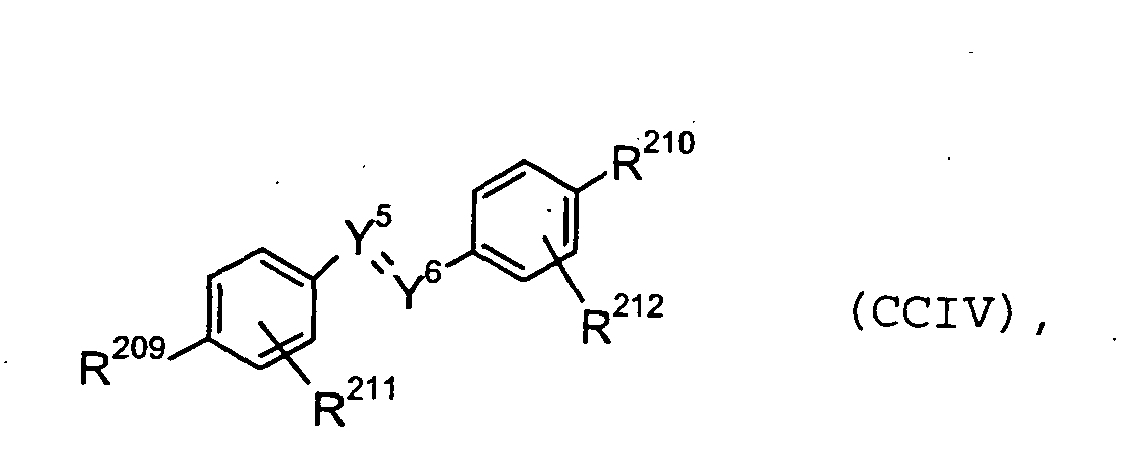


 R200 représente un groupe cyano, un groupe aryle en C6 à C10 ou un groupe C1-C16-alcoxycarbonyle,R201 et R202 représentent, indépendamment l'un de l'autre, un atome d'hydrogène, un atome d'halogène, un groupe alkyle en C1 à C16, un groupe alcoxy en C1 à C16, ouR201 et R202, s'ils sont en position ortho l'un par rapport à l'autre, peuvent former un pont à trois ou quatre chaînons, de préférence tel qu'un groupe -O- CH2-O-, un groupe -O-CF2-O-, un groupe -O-(CH2)2-O-, un groupe -O-(CH2)2-R203 et R204 représentent; indépendamment l'un de l'autre, un atome d'hydrogène ou un groupe alkyle en C1 à C16,R205 représente un groupe alkyle en C1 à C16, un groupe alcoxy en C1 à C16, un groupe C1-C16- mono- ou dialkylamino, ouR205 représente un radical bivalent tel qu'un groupe -O(CH2)n-O-, un groupe -O(CH2CH2O)n- ou un groupe -O(CH2(CHCH3)O)n-, qui relie les deux radicaux de formule (CCI),n représente un entier de 1 à 16, ouR200 et R205 peuvent former conjointement un pont à trois ou quatre chaînons, de préférence tel qu'un groupe - (CO)-(CH2)3-, un groupe - (CO) - CH2-C(CH3)2-CH2-, un groupe - (CO) -O-C (CH3)2-O- ou un groupe (CO)-O-C6H4-,X représente un atome de soufre ou un groupe N-R206,R206 et R227 représentent, indépendamment l'un de l'autre, un groupe alkyle en C1 à C16,R207 et R208 représentent, indépendamment l'un de l'autre, un groupe hydroxy, un groupe alcoxy en C1 à C16 ou un groupe aryloxy en C6 à C10,R209 et R210 représentent, indépendamment l'un de l'autre, un groupe alcoxy en C1 à C16, un groupe alkylthio en C1 à C16, un groupe NR217R218, un groupe aryloxy en C6 à C16, un groupe cyano, un groupe CO-OR217, un groupe CO-NR217R218, un groupe NR218-CO-R219, un groupe NR218-SO2-R219, etR209 représente en outre un atome d'hydrogène ou un groupe alkyle en C1 à C16,R211 et R212 représentent, indépendamment l'un de l'autre, un atome d'hydrogène, un atome d'halogène, un groupe alkyle en C1 à C16, un groupe alcoxy en C1 à C16 ou un groupe NR218-CO-R219,Het représente un groupe benzothiazol-2-yle, un groupe benzoxazol-2-yle, un groupe benzimidazol-2-yle, un groupe thiazol-2-yle, un groupe 1,3,4-thiadiazol-2-yle, un groupe 2-pyridyle ou 4-pyridyle, un groupe 2-quinolyle ou 4-quinolyle, un groupe pyrrol-2-yle ou pyrrol-3-yle, un groupe thiophén-2-yle ou thiophén-3-yle, un groupe furan-2-yle ou furan-3-yle, un groupe indol-2-yle ou indol-3-yle, un groupe benzothiophén-2-yle, un groupe benzofuran-2-yle ou un groupe 3,3-diméthylindolén-2-yle, qui peuvent être substitués par un groupe méthyle, un groupe éthyle, un groupe méthoxy, un groupe éthoxy, un atome de chlore, un groupe cyano, un groupe nitro, un groupe méthoxycarbonyle, un groupe méthylthio, un groupe diméthylamino, un groupe diéthylamino ou un groupe dipropylamino,Y, Y5 et Y6 représentent, indépendamment des uns des autres, un atome d'azote ou un groupe C-R213,R213 représente un atome d'hydrogène, un groupe alkyle en C1 à C4, un groupe cyano, un groupe CO-R219, un groupe CO-O-R217 ou un groupe CO-NR217R218,R214 et R215 représentent, indépendamment l'un de l'autre, un atome d'hydrogène, un groupe alkyle en C1 à C16, un groupe CO-R219 ou un groupe aryle en C6 à C10, ouNR214R215 représente un groupe pyrrolidino, un groupe pipéridino ou un groupe morpholino,R216 représente un atome d'hydrogène, un atome d'halogène, un groupe alkyle en C1 à C16, un groupe alcoxy en C1 à C16 ou un groupe NH-CO-R219,R217 et R218 représentent, indépendamment l'un de l'autre, un atome d'hydrogène, un groupe alkyle en C1 à C16 ou un groupe aryle en C6 à C10,R219 représente un groupe alkyle en C1 à C16 ou un groupe aryle en C6 à C10,R220 à R222 représentent, indépendamment l'un de l'autre, un atome d'hydrogène, un groupe alkyle en C1 à C16 ou un groupe alcoxy en C1 à C16, oùR220 et R221, s'ils sont en position ortho l'un par rapport à l'autre, peuvent former conjointement un pont -O-CH2-O-, -O-CF2-O-, -O-(CH2)2-O-, -O-(CH2)2-,R223 représente un atome d'hydrogène ou un groupe hydroxy,R224 représente un atome d'hydrogène, un atome d'halogène ou un groupe alkyle en C1 à C16,R225 représente un atome d'hydrogène ou un atome d'halogène,y représente un entier de 1 à 4,R226 représente un groupé CHO, un groupe CN, un groupe CO-C1-C8-alky, un groupe CO-C6-C10-aryle ou un groupe CH=C (CO-C1-C8-alkyl)-CH2-CO-C1-C8-alkyle, etR248 et R249 représentent, indépendamment l'un de l'autre, un atome d'hydrogène, un groupe alkyle en C1 à C16 ou un groupe aryle en C6 à C10, ou représentent conjointement un pont -CH=CH-CH=CH- ou o-C6H4-CH=CH-CH=CH-,où les radicaux alkyle, alcoxy, aryle et hétérocycliques peuvent éventuellement porter des radicaux supplémentaires, tels qu'un groupe phényle, un atome d'halogène, un groupe nitro, un groupe cyano, un groupe CO-NH2, un groupe alcoxy, un groupe trialkylsilyle, un groupe trialkylsiloxy ou un groupe phényle, les radicaux alkyle et alcoxy peuvent être linéaires ou ramifiés, les radicaux alkyle peuvent être partiellement halogénés ou perhalogénés, les radicaux alkyle et alcoxy peuvent être éthoxylés ou propoxylés ou silylés, des radicaux alkyle et/ou alcoxy adjacents sur des radicaux aryle ou hétérocycliques peuvent former conjointement un pont à trois ou quatre chaînons, et les radicaux hétérocycliques peuvent être benzo-condensés.
 - Support de données optiques selon l'une ou plusieurs des revendications 1 à 4, caractérisé en ce que le composé absorbeur de lumière est l'un des composés suivants :


 R228 à R231 représentent, indépendamment des uns des autres, un atome d'hydrogène, un atome d'halogène, un groupe cyano, un groupe alkyle en C1 à C16, un groupe alcoxy en C1 à C16 ou un groupe C1-C16-alcoxycarbonyle,w vaut 1 ou 2,R232 représente un atome d'hydrogène, un groupe cyano, un groupe CO-O-C1-C4-alkyle, un groupe aryle en C6 à C10, un groupe thiophén-2-yle, un groupe pyrid-2-yle ou pyrid-4-yle, un groupe pyrazol-1-yle ou un groupe 1,2,4-triazol-1-yle ou 1,2,4-triazol-4-yle,R233 représente un atome d'hydrogène, un groupe alcoxy en C1 à C16, un groupe 1,2,3-triazol-2-yle ou un groupe di-C1-C16-alkylamino,R234 et R235 représentent un atome d'hydrogène ou représentent conjointement un pont -CH=CH-CH=CH-,R237 représente un atome d'hydrogène, un groupe alkyle en C1 à C16 ou un groupe cyano,R238 et R239 représentent, indépendamment l'un de l'autre, un atome d'hydrogène, un atome d'halogène, un groupe CO-C1-C16-alkyle, un groupe SO2-C1-C16-alkyle ou un groupe SO2-NH-C1-C16-alkylA+ An-,A+ représente un groupe N(C1-C16-alkyl)3 + ou un groupe pyridinio,R240, R241 et R243 représentent, indépendamment les uns des autres, un atome d'hydrogène, un atome d'halogène, un groupe alkyle en C1 à C16 ou un groupe CO-O-C1-C16-alkyle, etR240 et R241 représentent en outre un groupe -CH2-A+ An-,v représente un entier de 1 à 3, où pour v > 1, les radicaux peuvent présenter une signification différente,D représente un groupe -CH=CH-, un groupe thiophène-2,5-diyle, un groupe furane-2,5-diyle ou un groupe p-phénylène,Z représente un atome d'oxygène, un atome de soufre ou un groupe N-R244,W représente un atome d'azote ou un groupe CH,R242 représente un atome d'hydrogène, un groupe cyano ou un groupe CO-O-C1-C16-alkyle,z vaut 0 ou 1,R244 et R245 représentent, indépendamment l' un de l'autre, un groupe alkyle en C1 à C16,An- représente un anion,Cat+ représente un groupe Na+, un groupe Li+; un groupe NH4 + ou un groupe N(C1-C12alkyle)4 +,E représente un groupe CH, un groupe C-CN ou un atome d'azote,R246 et R247 représentent, indépendamment l'un de l'autre, un groupe alkylamino en C1 à C16, un groupe dialkylamino en C1 à C16, un groupe anilino, un groupe morpholino, un groupe pipéridino ou un groupe pyrrolidino,où les radicaux alkyle, alcoxy, aryle et hétérocycliques peuvent éventuellement porter des radicaux supplémentaires, tels qu'un groupe phényle, un atome d'halogène, un groupe hydroxyalkyle, un groupe nitro, un groupe cyano, un groupe CO-NH2, un groupe alcoxy, un groupe alcoxycarbonyle, un groupe trialkylsilyle, un groupe trialkylsiloxy ou un groupe phényle, les radicaux alkyle et alcoxy peuvent être linéaires ou ramifiés, les radicaux alkyle peuvent être partiellement halogènes ou perhalogénés, les radicaux alkyle et alcoxy peuvent être éthoxylés ou propoxylés ou silylés, des radicaux alkyle et/ou alcoxy adjacents sur des radicaux aryle ou hétérocycliques peuvent former conjointement un pont à trois ou quatre chaînons, et les radicaux hétérocycliques peuvent être benzo-condensés.
 - Support de données optiques selon l'une ou plusieurs des revendications 1 à 4, caractérisé en ce que le composé absorbeur de lumière est l'un des composés suivants ;


 R300, R301 et R303 représentent, indépendamment les uns des autres, un atome d'hydrogène ou un groupe alkyle en C1 à C16,m représente un entier de 0 à 10,u représente un entier de 1 à 3, où pour u > 1, les radicaux peuvent être différents,R302 représente un atome d' hydrogène, un groupe-C1-C16-alcoxycarbonyle ou un groupe alkyle en C1 à C16,R304 représente un atome d'hydrogène, un atome d'halogène, un groupe cyano, un groupe nitro, un groupe alcoxy en C1 à C16, un groupe di-C1-C8-alkylamino, un groupe C1-C16-alcoxycarbonyle ou un groupe alkyle en C1 à C16,R305 représente un atome d'hydrogène, un groupe alcoxy en C1 à C16, un groupe C1-C16-alcoxycarbonyle ou un groupe alkyle en C1 à C16,R306 et R307 représentent, indépendamment l'un de l'autre, un atome d'hydrogène, un groupe alkyle en C1 à C16 ou un groupe aryle en C6 à C10, ou NR306R307 représente un groupe morpholino, un groupe pipéridino ou un groupe pyrrolidino,R308 représente un groupe C1-C16-alcoxycarbonyle, un groupe acide carboxylique, un groupe alkyle en C1 à C16, un groupe alcoxy en C1 à C16, un groupe C1-C16-alkylaminocarbonyle ou un groupe C1-C16-dialkylaminocarbonyle,R309 à R314 représentent, indépendamment les uns des autres, un atome d'hydrogène, un groupe aryle en C6 à C10, un groupe acide carboxylique, un groupe cyano, un groupe C1-C16-alcoxycarbonyle, un groupe alcoxy en C1 à C16 ou un groupe alkyle en C1 à C16,R315 et R316 représentent, indépendamment l'un de l'autre, un groupe acide carboxylique, un groupe C1-C16-alcoxycarbonyle, un groupe alcoxy en C1 à C16 ou un groupe cyano, ou R315 et R316 forment , conjointement avec l'atome de carbone les reliant, un noyau carbocyclique ou hétérocyclique à 5 ou 6 chaînons,R317 à R324 représentent, indépendamment les uns des autres, un groupe alkyle en C1 à C16, un atome d'hydrogène, un groupe, hydroxy, un groupe acide carboxylique, un groupe C1-C16-alcoxycarbonyle, un groupe alcoxy en C1 à C16, un groupe aryloxy en C6 à C10 ou un groupe cyano,où
les radicaux alkyle, alcoxy, aryle et hétérocycliques peuvent éventuellement porter des radicaux supplémentaires, tels qu'un groupe phényle, un atome d'halogène, un groupe hydroxyalkyle, un groupe nitro, un groupe cyano, un groupe CO-NH2, un groupe alcoxy, un groupe alcoxycarbonyle, un groupe trialkylsilyle, un groupe trialkylsiloxy ou un groupe phényle, les radicaux alkyle et alcoxy peuvent être linéaires ou ramifiés, les radicaux alkyle peuvent être partiellement halogénés ou perhalogénés, les radicaux alkyle et alcoxy peuvent être éthoxylés ou propoxylés ou silylés, dés radicaux alkyle et/ou alcoxy adjacents sur des radicaux aryle ou hétérocycliques peuvent former conjointement un pont à trois ou quatre chaînons, et les radicaux hétérocycliques peuvent être benzo-condensés. - Support de données optiques selon l'une ou plusieurs des revendications 1 à 4, caractérisé en ce que le composé absorbeur de lumière est l'un des composés suivants :
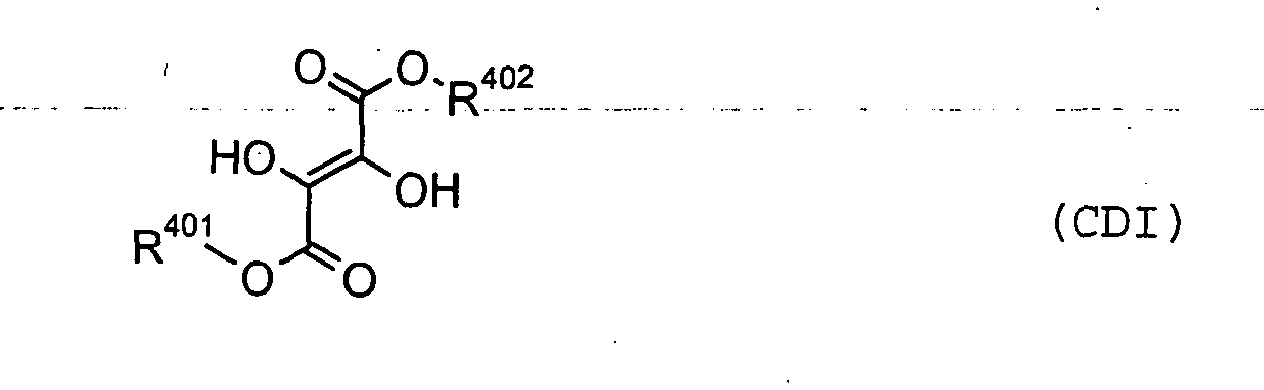


 R400 représente un atome d'hydrogène, un groupe alkyle en C1 à C12 ou un groupe alcoxy eh C1 à C12,t représente un entier de 1 à 3, où pour t > 1, les radicaux peuvent être différents,R401 et R402 représentent, indépendamment l'un de l'autre, un atome d'hydrogène ou un groupe alkyle en C1 à C16,R403 représente un atome d'hydrogène, un groupe aryle en C6 à C10 ou un groupe alkyle en C1 à C16,R404 et R405 représentent, indépendamment l'un de l'autre, un groupe alkyle en C1 à C16, un groupe aryle en C6 à C10, ou NR404R405 représente un groupe morpholino, un groupe pipéridino ou un groupe pyrrolidino,R406 représente un atome d'hydrogène, un groupe cyano, un groupe nitro, un groupe acide carboxylique, un groupe alkyle en C1 à C16, un groupe alcoxy en C1 à C16 ou un groupe C1-C16-alcoxycarbonyle,R407 et R408 représentent, indépendamment l'un de l'autre, un atome d'hydrogène ou un groupe alkyle en C1 à C16,où
les radicaux alkyle, alcoxy, aryle et hétérocycliques peuvent éventuellement porter des radicaux supplémentaires, tels qu'un groupe phényle, un atome d'halogène, un groupe hydroxyalkyle, un groupe nitro, un groupe cyano, un groupe CO-NH2, un groupe alcoxy, un groupe alcoxycarbonyle, un groupe trialkylsilyle, un groupe trialkylsiloxy ou un groupe phényle, les radicaux alkyle et alcoxy peuvent être linéaires ou ramifiés, les radicaux alkyle peuvent être partiellement halogénés ou perhalogénés, les radicaux alkyle et alcoxy peuvent être éthoxylés ou propoxylés ou silylés, des radicaux alkyle et/ou alcoxy adjacents sur des radicaux aryle ou hétérocycliques peuvent former conjointement un pont à trois ou quatre chaînons, et les radicaux hétérocycliques peuvent être benzo-condensés. - Utilisation de composés absorbeurs de lumière dans la couche d'informations de supports de données optiques inscriptibles une seule fois, où les composés absorbeurs de lumière présentent un maximum d'absorption λmax1 de 345 à 400 nm et la longueur d'onde λ1/2, à laquelle l'absorbance sur le flanc d'onde longue du maximum d'absorption de la longueur d'onde λmax1 est la moitié de la valeur d'absorbance à λmax1, et la longueur d'onde λ1/10, à laquelle l'absorbance sur le flanc d'onde longue du maximum d'absorption de la longueur d'onde λmax1 est un dixième de la valeur d'absorbance à λmax1, c'est-à-dire que λ1/2 et λ1/10 sont toutes les deux conjointement dans la plage de longueurs d'onde de 380 à 430 nm, et où le composé absorbeur de lumière lui-même, ou en combinaison avec d'autres composés absorbeurs de lumière ou avec des solvants appropriés, est appliqué sur un substrat transparent par revêtement par centrifugation.
- Procédé de production d'un support de données optiques inscriptible une seule fois selon la revendication 1, qui est caractérisé en ce qu'un substrat transparent, éventuellement déjà revêtu d'une couche réfléchissante, est appliqué par revêtement par centrifugation avec les composés absorbeurs de lumière, éventuellement en combinaison avec des liants et des additifs appropriés et éventuellement des solvants appropriés, et éventuellement pourvu d'une couche réfléchissante, de couches intermédiaires supplémentaires et éventuellement d'une couche protectrice ou d'un substrat supplémentaire ou d'une couche de recouvrement.
Applications Claiming Priority (3)
| Application Number | Priority Date | Filing Date | Title |
|---|---|---|---|
| DE10016669 | 2000-04-04 | ||
| DE10016669A DE10016669A1 (de) | 2000-04-04 | 2000-04-04 | Verwendung von lichtabsorbierenden Verbindungen in der Informationsschicht von optischen Datenträgern sowie optische Datenträger |
| PCT/EP2001/003334 WO2001075873A1 (fr) | 2000-04-04 | 2001-03-23 | Utilisation de composes absorbeurs de lumiere dans la couche informations de supports de donnees optiques et supports de donnees optiques en question |
Publications (2)
| Publication Number | Publication Date |
|---|---|
| EP1273006A1 EP1273006A1 (fr) | 2003-01-08 |
| EP1273006B1 true EP1273006B1 (fr) | 2006-08-30 |
Family
ID=7637516
Family Applications (1)
| Application Number | Title | Priority Date | Filing Date |
|---|---|---|---|
| EP01936132A Expired - Lifetime EP1273006B1 (fr) | 2000-04-04 | 2001-03-23 | Utilisation de composes absorbeurs de lumiere dans la couche informations de supports de donnees optiques et supports de donnees optiques en question |
Country Status (12)
| Country | Link |
|---|---|
| US (1) | US6926943B2 (fr) |
| EP (1) | EP1273006B1 (fr) |
| JP (1) | JP2003529475A (fr) |
| KR (1) | KR20020088420A (fr) |
| CN (1) | CN1427990A (fr) |
| AT (1) | ATE338334T1 (fr) |
| AU (1) | AU6213101A (fr) |
| CZ (1) | CZ20023315A3 (fr) |
| DE (2) | DE10016669A1 (fr) |
| PL (1) | PL358128A1 (fr) |
| TW (1) | TWI300223B (fr) |
| WO (1) | WO2001075873A1 (fr) |
Families Citing this family (16)
| Publication number | Priority date | Publication date | Assignee | Title |
|---|---|---|---|---|
| JP4185270B2 (ja) | 2000-09-27 | 2008-11-26 | 富士フイルム株式会社 | 光情報記録媒体および情報記録方法 |
| DE10055940A1 (de) * | 2000-11-10 | 2002-05-29 | Bayer Ag | Neue Indanylidenverbindungen |
| WO2002082438A2 (fr) * | 2001-03-21 | 2002-10-17 | Ciba Specialty Chemicals Holding Inc. | Materiel d'enregistrement optique a haute densite de memorisation |
| TW589349B (en) * | 2002-04-19 | 2004-06-01 | Ind Tech Res Inst | New indolestyryl compounds and its use for a high density optical recording medium |
| JP3902523B2 (ja) * | 2002-08-05 | 2007-04-11 | 富士フイルム株式会社 | 光情報記録媒体および情報記録方法 |
| EP1514906A1 (fr) * | 2003-09-11 | 2005-03-16 | Clariant International Ltd. | Compositions de colorants du type cyanine résistant à la lumière pour l'enregistrement optique de données |
| CN101379559A (zh) * | 2004-05-05 | 2009-03-04 | 西巴特殊化学品控股有限公司 | 金属螯合物以及其在高存储能力的光记录介质中的应用 |
| PL1621584T3 (pl) * | 2004-07-29 | 2007-06-29 | Clariant Finance Bvi Ltd | Ligandy azowe na bazie aminoantypiryny i ich kompleksy z metalami do stosowania w optycznych nośnikach rejestrujących |
| MX2007005881A (es) * | 2004-11-22 | 2007-07-04 | Clariant Finance Bvi Ltd | Tintes de complejo metalicoacido escuarico monosubstituido y su uso en capas opticas para el registro de datos opticos. |
| US20100130638A1 (en) * | 2007-03-30 | 2010-05-27 | Fujifilm Corporation | Ultraviolet absorbent composition |
| EP2280823A4 (fr) * | 2008-05-15 | 2011-05-04 | 3M Innovative Properties Co | Génération d'images en couleur |
| US9045654B2 (en) * | 2008-05-15 | 2015-06-02 | 3M Innovative Properties Company | Multilayer articles capable of forming color images |
| US8256346B2 (en) * | 2008-08-06 | 2012-09-04 | Lewis Thomas E | Plateless lithographic printing |
| CN107721956B (zh) * | 2017-09-08 | 2021-02-12 | 西北农林科技大学 | 苯并丁内酯类衍生物、合成方法及其制备杀菌剂的应用 |
| KR102166306B1 (ko) * | 2018-08-20 | 2020-10-15 | 주식회사 엘지화학 | 폴리카보네이트 수지 조성물 및 이를 포함하는 광학 성형품 |
| WO2025242899A1 (fr) * | 2024-05-24 | 2025-11-27 | Basf Se | Dérivés d'acide cinnamique substitués utilisés en tant qu'absorbeurs d'uv et leurs utilisations |
Family Cites Families (17)
| Publication number | Priority date | Publication date | Assignee | Title |
|---|---|---|---|---|
| JP2557335B2 (ja) | 1984-03-02 | 1996-11-27 | 三菱電機株式会社 | 情報の記録・再生方法 |
| JP2842939B2 (ja) * | 1990-10-15 | 1999-01-06 | パイオニア株式会社 | 光記録媒体 |
| JP2865955B2 (ja) | 1992-09-09 | 1999-03-08 | 日本コロムビア株式会社 | 光記録媒体 |
| JPH06295469A (ja) | 1993-04-08 | 1994-10-21 | Sony Corp | 光記録媒体 |
| JP3451715B2 (ja) | 1994-05-12 | 2003-09-29 | ソニー株式会社 | 光記録媒体及び光記録再生装置 |
| DE59710799D1 (de) * | 1996-07-12 | 2003-11-06 | Ciba Sc Holding Ag | Speichermedien mit hoher Kapazität |
| JPH1058828A (ja) | 1996-08-16 | 1998-03-03 | Mitsui Petrochem Ind Ltd | 光記録媒体 |
| JPH10181206A (ja) | 1996-12-26 | 1998-07-07 | Ricoh Co Ltd | 光記録媒体 |
| JPH1143481A (ja) | 1997-07-25 | 1999-02-16 | Ricoh Co Ltd | アゾ化合物、アゾ金属キレート化合物及び光記録媒体 |
| JPH11110815A (ja) | 1997-09-30 | 1999-04-23 | Ricoh Co Ltd | 光記録媒体および該光記録媒体を用いた光記録再生方法 |
| JPH11221964A (ja) | 1998-02-09 | 1999-08-17 | Mitsubishi Chemical Corp | 光学記録媒体 |
| JP3633279B2 (ja) | 1998-05-27 | 2005-03-30 | 三菱化学株式会社 | 光学記録媒体 |
| JP3438587B2 (ja) | 1998-05-27 | 2003-08-18 | 三菱化学株式会社 | 光学記録媒体 |
| JPH11334204A (ja) | 1998-05-27 | 1999-12-07 | Mitsubishi Chemical Corp | 光学記録媒体 |
| DE10115227A1 (de) * | 2001-03-28 | 2002-12-19 | Bayer Ag | Optischer Datenträger enthaltend in der Informationsschicht eine lichtabsorbierende Verbindung mit mehreren chromophoren Zentren |
| TWI223807B (en) * | 2001-03-28 | 2004-11-11 | Bayer Ag | Optical data carrier comprising a merocyanine dye as light-absorbent compound in the information layer |
| WO2002080159A1 (fr) * | 2001-03-28 | 2002-10-10 | Bayer Aktiengesellschaft | Support de donnees optique dont la couche d'informations contient un colorant de cyanine en tant que compose d'absorption lumineuse |
-
2000
- 2000-04-04 DE DE10016669A patent/DE10016669A1/de not_active Withdrawn
-
2001
- 2001-03-23 EP EP01936132A patent/EP1273006B1/fr not_active Expired - Lifetime
- 2001-03-23 JP JP2001573466A patent/JP2003529475A/ja active Pending
- 2001-03-23 CZ CZ20023315A patent/CZ20023315A3/cs unknown
- 2001-03-23 AU AU62131/01A patent/AU6213101A/en not_active Abandoned
- 2001-03-23 US US10/240,566 patent/US6926943B2/en not_active Expired - Fee Related
- 2001-03-23 AT AT01936132T patent/ATE338334T1/de not_active IP Right Cessation
- 2001-03-23 WO PCT/EP2001/003334 patent/WO2001075873A1/fr not_active Ceased
- 2001-03-23 DE DE50110878T patent/DE50110878D1/de not_active Expired - Lifetime
- 2001-03-23 PL PL01358128A patent/PL358128A1/xx not_active Application Discontinuation
- 2001-03-23 KR KR1020027013196A patent/KR20020088420A/ko not_active Withdrawn
- 2001-03-23 CN CN01809250A patent/CN1427990A/zh active Pending
- 2001-03-28 TW TW090107288A patent/TWI300223B/zh not_active IP Right Cessation
Also Published As
| Publication number | Publication date |
|---|---|
| CN1427990A (zh) | 2003-07-02 |
| AU6213101A (en) | 2001-10-15 |
| US6926943B2 (en) | 2005-08-09 |
| WO2001075873A1 (fr) | 2001-10-11 |
| PL358128A1 (en) | 2004-08-09 |
| KR20020088420A (ko) | 2002-11-27 |
| ATE338334T1 (de) | 2006-09-15 |
| DE10016669A1 (de) | 2001-10-11 |
| US20030175616A1 (en) | 2003-09-18 |
| TWI300223B (en) | 2008-08-21 |
| EP1273006A1 (fr) | 2003-01-08 |
| JP2003529475A (ja) | 2003-10-07 |
| DE50110878D1 (de) | 2006-10-12 |
| CZ20023315A3 (cs) | 2003-03-12 |
Similar Documents
| Publication | Publication Date | Title |
|---|---|---|
| DE69725607T2 (de) | Polymethin-komplex-farbstoffe und ihre verwendung | |
| EP1273006A1 (fr) | Utilisation de composes absorbeurs de lumiere dans la couche informations de supports de donnees optiques et supports de donnees optiques en question | |
| EP1377976A2 (fr) | Support de donnees optique contenant dans la couche d'informations un colorant merocyanine en tant que compose photoabsorbant | |
| EP1377974A1 (fr) | Support de donnees optique renfermant dans la couche d'information un colorant au xanthene en tant que compose absorbant la lumiere | |
| EP1377978A2 (fr) | Support de donnees optique contenant dans sa couche d'informations un compose d'absorption lumineuse dote de plusieurs centres chromophores | |
| DE69824920T2 (de) | Optisches Medium zur Aufzeichnung von Informationen und Verfahren zur Herstellung dafür | |
| EP1377971A1 (fr) | Support de donnees optique contenant dans la couche d'informations un colorant amine heterocyclique cationique en tant que compose photoabsorbant | |
| EP1374233A1 (fr) | Support de donnees optique contenant dans la couche d'informations un colorant triazacyanine en tant que compose photoabsorbant | |
| US20040096775A1 (en) | Optical recording materials having high storage density | |
| EP1377968A2 (fr) | Support de donnees optique dont la couche d'informations contient un colorant azoique heterocyclique en tant que compose d'absorption lumineuse | |
| DE602004001135T2 (de) | Materialien für optische aufzeichnung mit hoher speicherdichte | |
| EP1709039A1 (fr) | Complexes metalliques utilises comme composes absorbant la lumiere dans la couche d'informations de supports de donnees optiques | |
| DE10305925A1 (de) | Optischer Datenträger enthaltend in der Infromationsschicht einen Azometallfarbstoff als lichtabsorbierende Verbindung | |
| EP1377970A1 (fr) | Support de donnees optique contenant un compose cyclisable dans la couche d'information | |
| DE102006022756A1 (de) | Optischer Datenträger enthaltend in der Informationsschicht einen Indolcyaninfarbstoff als lichtabsorbierende Verbindung | |
| DE102004034866A1 (de) | Mischungen von Azometallkomplexen als lichtabsorbierende Verbindungen in der Informationsschicht von optischen Datenträgern | |
| DE102005054770A1 (de) | Mischungen von Azometallkomplexen als lichtabsorbierende Verbindungen in der Informationsschicht von optischen Datenträgern | |
| DE10117461A1 (de) | Optischer Datenträger enthaltend in der Informationsschicht einen heterocyclischen Azofarbstoff als lichtabsorbierende Verbindung | |
| DE10117464A1 (de) | Optischer Datenträger enthaltend in der Informationsschicht einen Merocyaninfarbstoff als lichtabsorbierende Verbindung | |
| DE10305924A1 (de) | Metallkomplexe als lichtabsorbierende Verbindungen in der Informationsschicht von optischen Datenträgern | |
| DE10117462A1 (de) | Optischer Datenträger enthaltend in der Informationsschicht einen Hemicyaninfarbstoff als lichtabsorbierende Verbindung | |
| DE3813333A1 (de) | Azulenmethinfarbstoffe sowie optisches aufzeichnungsmedium, enthaltend die neuen farbstoffe | |
| DE10117463A1 (de) | Optischer Datenträger enthaltend in der Informationsschicht einen Triazacyaninfarbstoff als lichtabsorbierende Verbindung | |
| DE10136063A1 (de) | Optischer Datenträger enthaltend in der Informationsschicht einen kationischen aminoheterocyclischen Farbstoff als lichtabsorbierende Verbindung | |
| JPS6254850A (ja) | 光学的記録媒体 |
Legal Events
| Date | Code | Title | Description |
|---|---|---|---|
| PUAI | Public reference made under article 153(3) epc to a published international application that has entered the european phase |
Free format text: ORIGINAL CODE: 0009012 |
|
| 17P | Request for examination filed |
Effective date: 20021104 |
|
| AK | Designated contracting states |
Kind code of ref document: A1 Designated state(s): AT BE CH CY DE DK ES FI FR GB GR IE IT LI LU MC NL PT SE TR |
|
| AX | Request for extension of the european patent |
Free format text: AL;LT;LV;MK;RO;SI |
|
| RIN1 | Information on inventor provided before grant (corrected) |
Inventor name: BERNETH, HORST Inventor name: HASSENRUECK, KARIN Inventor name: BRUDER, FRIEDRICH-KARL |
|
| RAP1 | Party data changed (applicant data changed or rights of an application transferred) |
Owner name: BAYER CHEMICALS AG |
|
| 17Q | First examination report despatched |
Effective date: 20050415 |
|
| GRAP | Despatch of communication of intention to grant a patent |
Free format text: ORIGINAL CODE: EPIDOSNIGR1 |
|
| GRAS | Grant fee paid |
Free format text: ORIGINAL CODE: EPIDOSNIGR3 |
|
| GRAA | (expected) grant |
Free format text: ORIGINAL CODE: 0009210 |
|
| AK | Designated contracting states |
Kind code of ref document: B1 Designated state(s): AT BE CH CY DE DK ES FI FR GB GR IE IT LI LU MC NL PT SE TR |
|
| PG25 | Lapsed in a contracting state [announced via postgrant information from national office to epo] |
Ref country code: IT Free format text: LAPSE BECAUSE OF FAILURE TO SUBMIT A TRANSLATION OF THE DESCRIPTION OR TO PAY THE FEE WITHIN THE PRESCRIBED TIME-LIMIT;WARNING: LAPSES OF ITALIAN PATENTS WITH EFFECTIVE DATE BEFORE 2007 MAY HAVE OCCURRED AT ANY TIME BEFORE 2007. THE CORRECT EFFECTIVE DATE MAY BE DIFFERENT FROM THE ONE RECORDED. Effective date: 20060830 Ref country code: FI Free format text: LAPSE BECAUSE OF FAILURE TO SUBMIT A TRANSLATION OF THE DESCRIPTION OR TO PAY THE FEE WITHIN THE PRESCRIBED TIME-LIMIT Effective date: 20060830 Ref country code: IE Free format text: LAPSE BECAUSE OF FAILURE TO SUBMIT A TRANSLATION OF THE DESCRIPTION OR TO PAY THE FEE WITHIN THE PRESCRIBED TIME-LIMIT Effective date: 20060830 Ref country code: NL Free format text: LAPSE BECAUSE OF FAILURE TO SUBMIT A TRANSLATION OF THE DESCRIPTION OR TO PAY THE FEE WITHIN THE PRESCRIBED TIME-LIMIT Effective date: 20060830 Ref country code: GB Free format text: LAPSE BECAUSE OF FAILURE TO SUBMIT A TRANSLATION OF THE DESCRIPTION OR TO PAY THE FEE WITHIN THE PRESCRIBED TIME-LIMIT Effective date: 20060830 |
|
| REG | Reference to a national code |
Ref country code: GB Ref legal event code: FG4D Free format text: NOT ENGLISH |
|
| REG | Reference to a national code |
Ref country code: CH Ref legal event code: EP Ref country code: CH Ref legal event code: NV Representative=s name: E. BLUM & CO. PATENTANWAELTE |
|
| RAP2 | Party data changed (patent owner data changed or rights of a patent transferred) |
Owner name: LANXESS DEUTSCHLAND GMBH |
|
| REG | Reference to a national code |
Ref country code: IE Ref legal event code: FG4D Free format text: LANGUAGE OF EP DOCUMENT: GERMAN |
|
| REF | Corresponds to: |
Ref document number: 50110878 Country of ref document: DE Date of ref document: 20061012 Kind code of ref document: P |
|
| PG25 | Lapsed in a contracting state [announced via postgrant information from national office to epo] |
Ref country code: DK Free format text: LAPSE BECAUSE OF FAILURE TO SUBMIT A TRANSLATION OF THE DESCRIPTION OR TO PAY THE FEE WITHIN THE PRESCRIBED TIME-LIMIT Effective date: 20061130 Ref country code: SE Free format text: LAPSE BECAUSE OF FAILURE TO SUBMIT A TRANSLATION OF THE DESCRIPTION OR TO PAY THE FEE WITHIN THE PRESCRIBED TIME-LIMIT Effective date: 20061130 |
|
| NLT2 | Nl: modifications (of names), taken from the european patent patent bulletin |
Owner name: LANXESS DEUTSCHLAND GMBH Effective date: 20061004 |
|
| PG25 | Lapsed in a contracting state [announced via postgrant information from national office to epo] |
Ref country code: ES Free format text: LAPSE BECAUSE OF FAILURE TO SUBMIT A TRANSLATION OF THE DESCRIPTION OR TO PAY THE FEE WITHIN THE PRESCRIBED TIME-LIMIT Effective date: 20061211 |
|
| PG25 | Lapsed in a contracting state [announced via postgrant information from national office to epo] |
Ref country code: PT Free format text: LAPSE BECAUSE OF FAILURE TO SUBMIT A TRANSLATION OF THE DESCRIPTION OR TO PAY THE FEE WITHIN THE PRESCRIBED TIME-LIMIT Effective date: 20070212 |
|
| NLV1 | Nl: lapsed or annulled due to failure to fulfill the requirements of art. 29p and 29m of the patents act | ||
| GBV | Gb: ep patent (uk) treated as always having been void in accordance with gb section 77(7)/1977 [no translation filed] |
Effective date: 20060830 |
|
| REG | Reference to a national code |
Ref country code: IE Ref legal event code: FD4D |
|
| EN | Fr: translation not filed | ||
| PLBE | No opposition filed within time limit |
Free format text: ORIGINAL CODE: 0009261 |
|
| STAA | Information on the status of an ep patent application or granted ep patent |
Free format text: STATUS: NO OPPOSITION FILED WITHIN TIME LIMIT |
|
| 26N | No opposition filed |
Effective date: 20070531 |
|
| REG | Reference to a national code |
Ref country code: CH Ref legal event code: PFA Owner name: LANXESS DEUTSCHLAND GMBH Free format text: LANXESS DEUTSCHLAND GMBH# #51369 LEVERKUSEN (DE) -TRANSFER TO- LANXESS DEUTSCHLAND GMBH# #51369 LEVERKUSEN (DE) |
|
| REG | Reference to a national code |
Ref country code: CH Ref legal event code: PL |
|
| BERE | Be: lapsed |
Owner name: BAYER CHEMICALS A.G. Effective date: 20070331 |
|
| PG25 | Lapsed in a contracting state [announced via postgrant information from national office to epo] |
Ref country code: BE Free format text: LAPSE BECAUSE OF NON-PAYMENT OF DUE FEES Effective date: 20070331 |
|
| PG25 | Lapsed in a contracting state [announced via postgrant information from national office to epo] |
Ref country code: MC Free format text: LAPSE BECAUSE OF NON-PAYMENT OF DUE FEES Effective date: 20070331 |
|
| PG25 | Lapsed in a contracting state [announced via postgrant information from national office to epo] |
Ref country code: LI Free format text: LAPSE BECAUSE OF NON-PAYMENT OF DUE FEES Effective date: 20070331 Ref country code: CH Free format text: LAPSE BECAUSE OF NON-PAYMENT OF DUE FEES Effective date: 20070331 |
|
| PG25 | Lapsed in a contracting state [announced via postgrant information from national office to epo] |
Ref country code: GR Free format text: LAPSE BECAUSE OF FAILURE TO SUBMIT A TRANSLATION OF THE DESCRIPTION OR TO PAY THE FEE WITHIN THE PRESCRIBED TIME-LIMIT Effective date: 20061201 Ref country code: FR Free format text: LAPSE BECAUSE OF FAILURE TO SUBMIT A TRANSLATION OF THE DESCRIPTION OR TO PAY THE FEE WITHIN THE PRESCRIBED TIME-LIMIT Effective date: 20070511 |
|
| PG25 | Lapsed in a contracting state [announced via postgrant information from national office to epo] |
Ref country code: AT Free format text: LAPSE BECAUSE OF NON-PAYMENT OF DUE FEES Effective date: 20070323 |
|
| PG25 | Lapsed in a contracting state [announced via postgrant information from national office to epo] |
Ref country code: FR Free format text: LAPSE BECAUSE OF FAILURE TO SUBMIT A TRANSLATION OF THE DESCRIPTION OR TO PAY THE FEE WITHIN THE PRESCRIBED TIME-LIMIT Effective date: 20060830 |
|
| PG25 | Lapsed in a contracting state [announced via postgrant information from national office to epo] |
Ref country code: CY Free format text: LAPSE BECAUSE OF FAILURE TO SUBMIT A TRANSLATION OF THE DESCRIPTION OR TO PAY THE FEE WITHIN THE PRESCRIBED TIME-LIMIT Effective date: 20060830 Ref country code: LU Free format text: LAPSE BECAUSE OF NON-PAYMENT OF DUE FEES Effective date: 20070323 |
|
| PG25 | Lapsed in a contracting state [announced via postgrant information from national office to epo] |
Ref country code: TR Free format text: LAPSE BECAUSE OF FAILURE TO SUBMIT A TRANSLATION OF THE DESCRIPTION OR TO PAY THE FEE WITHIN THE PRESCRIBED TIME-LIMIT Effective date: 20060830 |
|
| PGFP | Annual fee paid to national office [announced via postgrant information from national office to epo] |
Ref country code: DE Payment date: 20100429 Year of fee payment: 10 |
|
| PG25 | Lapsed in a contracting state [announced via postgrant information from national office to epo] |
Ref country code: DE Free format text: LAPSE BECAUSE OF NON-PAYMENT OF DUE FEES Effective date: 20111001 |
|
| REG | Reference to a national code |
Ref country code: DE Ref legal event code: R119 Ref document number: 50110878 Country of ref document: DE Effective date: 20111001 |