EP1283207A1 - Prozess zur Herstellung von benzopyran carboxamid - Google Patents
Prozess zur Herstellung von benzopyran carboxamid Download PDFInfo
- Publication number
- EP1283207A1 EP1283207A1 EP02017862A EP02017862A EP1283207A1 EP 1283207 A1 EP1283207 A1 EP 1283207A1 EP 02017862 A EP02017862 A EP 02017862A EP 02017862 A EP02017862 A EP 02017862A EP 1283207 A1 EP1283207 A1 EP 1283207A1
- Authority
- EP
- European Patent Office
- Prior art keywords
- aminopropionitrile
- water
- sulfate
- benzopyran
- process according
- Prior art date
- Legal status (The legal status is an assumption and is not a legal conclusion. Google has not performed a legal analysis and makes no representation as to the accuracy of the status listed.)
- Granted
Links
- 238000000034 method Methods 0.000 title claims abstract description 54
- URTUXBDUHHHBDC-UHFFFAOYSA-N 2h-chromene-2-carboxamide Chemical compound C1=CC=C2C=CC(C(=O)N)OC2=C1 URTUXBDUHHHBDC-UHFFFAOYSA-N 0.000 title claims abstract description 43
- AGSPXMVUFBBBMO-UHFFFAOYSA-N beta-aminopropionitrile Chemical compound NCCC#N AGSPXMVUFBBBMO-UHFFFAOYSA-N 0.000 claims abstract description 97
- QAOWNCQODCNURD-UHFFFAOYSA-L Sulfate Chemical compound [O-]S([O-])(=O)=O QAOWNCQODCNURD-UHFFFAOYSA-L 0.000 claims abstract description 58
- QAOWNCQODCNURD-UHFFFAOYSA-N Sulfuric acid Chemical compound OS(O)(=O)=O QAOWNCQODCNURD-UHFFFAOYSA-N 0.000 claims abstract description 55
- -1 benzopyran carboxylic halide Chemical class 0.000 claims abstract description 21
- 239000000460 chlorine Chemical group 0.000 claims abstract description 8
- 229910052801 chlorine Inorganic materials 0.000 claims abstract description 8
- ZAMOUSCENKQFHK-UHFFFAOYSA-N Chlorine atom Chemical group [Cl] ZAMOUSCENKQFHK-UHFFFAOYSA-N 0.000 claims abstract description 7
- 229910052731 fluorine Inorganic materials 0.000 claims abstract description 7
- 239000011737 fluorine Substances 0.000 claims abstract description 7
- 125000005010 perfluoroalkyl group Chemical group 0.000 claims abstract description 7
- ZCYVEMRRCGMTRW-UHFFFAOYSA-N 7553-56-2 Chemical group [I] ZCYVEMRRCGMTRW-UHFFFAOYSA-N 0.000 claims abstract description 6
- WKBOTKDWSSQWDR-UHFFFAOYSA-N Bromine atom Chemical group [Br] WKBOTKDWSSQWDR-UHFFFAOYSA-N 0.000 claims abstract description 6
- GDTBXPJZTBHREO-UHFFFAOYSA-N bromine Chemical group BrBr GDTBXPJZTBHREO-UHFFFAOYSA-N 0.000 claims abstract description 6
- 229910052794 bromium Inorganic materials 0.000 claims abstract description 6
- 125000001153 fluoro group Chemical group F* 0.000 claims abstract description 6
- 239000011630 iodine Chemical group 0.000 claims abstract description 6
- 229910052740 iodine Chemical group 0.000 claims abstract description 6
- 230000000087 stabilizing effect Effects 0.000 claims abstract description 6
- 238000006243 chemical reaction Methods 0.000 claims description 51
- YXFVVABEGXRONW-UHFFFAOYSA-N Toluene Chemical compound CC1=CC=CC=C1 YXFVVABEGXRONW-UHFFFAOYSA-N 0.000 claims description 33
- XLYOFNOQVPJJNP-UHFFFAOYSA-N water Substances O XLYOFNOQVPJJNP-UHFFFAOYSA-N 0.000 claims description 30
- 239000000243 solution Substances 0.000 claims description 28
- WEVYAHXRMPXWCK-UHFFFAOYSA-N Acetonitrile Chemical compound CC#N WEVYAHXRMPXWCK-UHFFFAOYSA-N 0.000 claims description 21
- 239000002904 solvent Substances 0.000 claims description 21
- 239000003960 organic solvent Substances 0.000 claims description 19
- 239000007864 aqueous solution Substances 0.000 claims description 18
- LFQSCWFLJHTTHZ-UHFFFAOYSA-N Ethanol Chemical compound CCO LFQSCWFLJHTTHZ-UHFFFAOYSA-N 0.000 claims description 13
- 239000013078 crystal Substances 0.000 claims description 11
- 239000011877 solvent mixture Substances 0.000 claims description 11
- AGSPXMVUFBBBMO-UHFFFAOYSA-O beta-ammoniopropionitrile Chemical compound [NH3+]CCC#N AGSPXMVUFBBBMO-UHFFFAOYSA-O 0.000 claims description 10
- 125000002023 trifluoromethyl group Chemical group FC(F)(F)* 0.000 claims description 5
- 230000003472 neutralizing effect Effects 0.000 claims description 3
- 230000001376 precipitating effect Effects 0.000 claims description 2
- 239000003799 water insoluble solvent Substances 0.000 claims description 2
- 125000001309 chloro group Chemical group Cl* 0.000 claims 1
- HEMHJVSKTPXQMS-UHFFFAOYSA-M Sodium hydroxide Chemical compound [OH-].[Na+] HEMHJVSKTPXQMS-UHFFFAOYSA-M 0.000 description 24
- XEKOWRVHYACXOJ-UHFFFAOYSA-N Ethyl acetate Chemical compound CCOC(C)=O XEKOWRVHYACXOJ-UHFFFAOYSA-N 0.000 description 21
- OKKJLVBELUTLKV-UHFFFAOYSA-N Methanol Chemical compound OC OKKJLVBELUTLKV-UHFFFAOYSA-N 0.000 description 15
- 150000001875 compounds Chemical class 0.000 description 12
- 238000003756 stirring Methods 0.000 description 9
- 239000000047 product Substances 0.000 description 8
- 239000011541 reaction mixture Substances 0.000 description 7
- ZMXDDKWLCZADIW-UHFFFAOYSA-N N,N-Dimethylformamide Chemical compound CN(C)C=O ZMXDDKWLCZADIW-UHFFFAOYSA-N 0.000 description 6
- KWYUFKZDYYNOTN-UHFFFAOYSA-M Potassium hydroxide Chemical compound [OH-].[K+] KWYUFKZDYYNOTN-UHFFFAOYSA-M 0.000 description 6
- ZMANZCXQSJIPKH-UHFFFAOYSA-N Triethylamine Chemical compound CCN(CC)CC ZMANZCXQSJIPKH-UHFFFAOYSA-N 0.000 description 6
- 239000000126 substance Substances 0.000 description 6
- 239000002994 raw material Substances 0.000 description 5
- 230000007704 transition Effects 0.000 description 5
- 238000007039 two-step reaction Methods 0.000 description 5
- JUJWROOIHBZHMG-UHFFFAOYSA-N Pyridine Chemical compound C1=CC=NC=C1 JUJWROOIHBZHMG-UHFFFAOYSA-N 0.000 description 4
- CDBYLPFSWZWCQE-UHFFFAOYSA-L Sodium Carbonate Chemical compound [Na+].[Na+].[O-]C([O-])=O CDBYLPFSWZWCQE-UHFFFAOYSA-L 0.000 description 4
- WYURNTSHIVDZCO-UHFFFAOYSA-N Tetrahydrofuran Chemical compound C1CCOC1 WYURNTSHIVDZCO-UHFFFAOYSA-N 0.000 description 4
- HEDRZPFGACZZDS-MICDWDOJSA-N Trichloro(2H)methane Chemical compound [2H]C(Cl)(Cl)Cl HEDRZPFGACZZDS-MICDWDOJSA-N 0.000 description 4
- 239000002253 acid Substances 0.000 description 4
- FYSNRJHAOHDILO-UHFFFAOYSA-N thionyl chloride Chemical compound ClS(Cl)=O FYSNRJHAOHDILO-UHFFFAOYSA-N 0.000 description 4
- 238000005406 washing Methods 0.000 description 4
- UHOVQNZJYSORNB-UHFFFAOYSA-N Benzene Chemical compound C1=CC=CC=C1 UHOVQNZJYSORNB-UHFFFAOYSA-N 0.000 description 3
- RTZKZFJDLAIYFH-UHFFFAOYSA-N Diethyl ether Chemical compound CCOCC RTZKZFJDLAIYFH-UHFFFAOYSA-N 0.000 description 3
- KFZMGEQAYNKOFK-UHFFFAOYSA-N Isopropanol Chemical compound CC(C)O KFZMGEQAYNKOFK-UHFFFAOYSA-N 0.000 description 3
- 150000001298 alcohols Chemical class 0.000 description 3
- 238000000113 differential scanning calorimetry Methods 0.000 description 3
- 239000003814 drug Substances 0.000 description 3
- 229940079593 drug Drugs 0.000 description 3
- 230000000694 effects Effects 0.000 description 3
- 238000002156 mixing Methods 0.000 description 3
- VLKZOEOYAKHREP-UHFFFAOYSA-N n-Hexane Chemical compound CCCCCC VLKZOEOYAKHREP-UHFFFAOYSA-N 0.000 description 3
- 0 *C1(*)Oc(ccc(*)c2)c2C(C(NCCC#N)=O)=C1 Chemical compound *C1(*)Oc(ccc(*)c2)c2C(C(NCCC#N)=O)=C1 0.000 description 2
- 238000005160 1H NMR spectroscopy Methods 0.000 description 2
- PNDBIEZREPQODS-UHFFFAOYSA-N 2,2-bis(fluoromethyl)-6-(trifluoromethyl)chromene-4-carbonyl chloride Chemical compound C1=C(C(F)(F)F)C=C2C(C(Cl)=O)=CC(CF)(CF)OC2=C1 PNDBIEZREPQODS-UHFFFAOYSA-N 0.000 description 2
- OISVCGZHLKNMSJ-UHFFFAOYSA-N 2,6-dimethylpyridine Chemical compound CC1=CC=CC(C)=N1 OISVCGZHLKNMSJ-UHFFFAOYSA-N 0.000 description 2
- SOWHACJNMKTTRC-UHFFFAOYSA-N 3-aminopropanenitrile;hydrochloride Chemical compound Cl.NCCC#N SOWHACJNMKTTRC-UHFFFAOYSA-N 0.000 description 2
- CURLTUGMZLYLDI-UHFFFAOYSA-N Carbon dioxide Chemical compound O=C=O CURLTUGMZLYLDI-UHFFFAOYSA-N 0.000 description 2
- VEXZGXHMUGYJMC-UHFFFAOYSA-N Hydrochloric acid Chemical compound Cl VEXZGXHMUGYJMC-UHFFFAOYSA-N 0.000 description 2
- FXHOOIRPVKKKFG-UHFFFAOYSA-N N,N-Dimethylacetamide Chemical compound CN(C)C(C)=O FXHOOIRPVKKKFG-UHFFFAOYSA-N 0.000 description 2
- IMNFDUFMRHMDMM-UHFFFAOYSA-N N-Heptane Chemical compound CCCCCCC IMNFDUFMRHMDMM-UHFFFAOYSA-N 0.000 description 2
- OFBQJSOFQDEBGM-UHFFFAOYSA-N Pentane Chemical compound CCCCC OFBQJSOFQDEBGM-UHFFFAOYSA-N 0.000 description 2
- UIIMBOGNXHQVGW-UHFFFAOYSA-M Sodium bicarbonate Chemical compound [Na+].OC([O-])=O UIIMBOGNXHQVGW-UHFFFAOYSA-M 0.000 description 2
- 239000003905 agrochemical Substances 0.000 description 2
- XAGFODPZIPBFFR-UHFFFAOYSA-N aluminium Chemical compound [Al] XAGFODPZIPBFFR-UHFFFAOYSA-N 0.000 description 2
- 229910052782 aluminium Inorganic materials 0.000 description 2
- UCMIRNVEIXFBKS-UHFFFAOYSA-N beta-alanine Chemical compound NCCC(O)=O UCMIRNVEIXFBKS-UHFFFAOYSA-N 0.000 description 2
- 238000009835 boiling Methods 0.000 description 2
- AXCZMVOFGPJBDE-UHFFFAOYSA-L calcium dihydroxide Chemical compound [OH-].[OH-].[Ca+2] AXCZMVOFGPJBDE-UHFFFAOYSA-L 0.000 description 2
- 239000000920 calcium hydroxide Substances 0.000 description 2
- 229910001861 calcium hydroxide Inorganic materials 0.000 description 2
- PFKFTWBEEFSNDU-UHFFFAOYSA-N carbonyldiimidazole Chemical compound C1=CN=CN1C(=O)N1C=CN=C1 PFKFTWBEEFSNDU-UHFFFAOYSA-N 0.000 description 2
- 239000003153 chemical reaction reagent Substances 0.000 description 2
- 238000004519 manufacturing process Methods 0.000 description 2
- 239000012299 nitrogen atmosphere Substances 0.000 description 2
- 238000000655 nuclear magnetic resonance spectrum Methods 0.000 description 2
- BWHMMNNQKKPAPP-UHFFFAOYSA-L potassium carbonate Chemical compound [K+].[K+].[O-]C([O-])=O BWHMMNNQKKPAPP-UHFFFAOYSA-L 0.000 description 2
- 238000000746 purification Methods 0.000 description 2
- UMJSCPRVCHMLSP-UHFFFAOYSA-N pyridine Natural products COC1=CC=CN=C1 UMJSCPRVCHMLSP-UHFFFAOYSA-N 0.000 description 2
- 229910000029 sodium carbonate Inorganic materials 0.000 description 2
- 239000007787 solid Substances 0.000 description 2
- 230000006641 stabilisation Effects 0.000 description 2
- 238000011105 stabilization Methods 0.000 description 2
- 238000003786 synthesis reaction Methods 0.000 description 2
- YLQBMQCUIZJEEH-UHFFFAOYSA-N tetrahydrofuran Natural products C=1C=COC=1 YLQBMQCUIZJEEH-UHFFFAOYSA-N 0.000 description 2
- 238000002411 thermogravimetry Methods 0.000 description 2
- RYHBNJHYFVUHQT-UHFFFAOYSA-N 1,4-Dioxane Chemical compound C1COCCO1 RYHBNJHYFVUHQT-UHFFFAOYSA-N 0.000 description 1
- DURPTKYDGMDSBL-UHFFFAOYSA-N 1-butoxybutane Chemical compound CCCCOCCCC DURPTKYDGMDSBL-UHFFFAOYSA-N 0.000 description 1
- 238000004293 19F NMR spectroscopy Methods 0.000 description 1
- XNMBDDRSRPDEDA-UHFFFAOYSA-N 2,2-bis(fluoromethyl)-6-(trifluoromethyl)chromene-4-carboxamide Chemical compound C1=C(C(F)(F)F)C=C2C(C(=O)N)=CC(CF)(CF)OC2=C1 XNMBDDRSRPDEDA-UHFFFAOYSA-N 0.000 description 1
- UNXJQBYPFPFIKT-UHFFFAOYSA-N 2,2-bis(fluoromethyl)-6-(trifluoromethyl)chromene-4-carboxylic acid Chemical compound C1=C(C(F)(F)F)C=C2C(C(=O)O)=CC(CF)(CF)OC2=C1 UNXJQBYPFPFIKT-UHFFFAOYSA-N 0.000 description 1
- UGFAIRIUMAVXCW-UHFFFAOYSA-N Carbon monoxide Chemical compound [O+]#[C-] UGFAIRIUMAVXCW-UHFFFAOYSA-N 0.000 description 1
- YCKRFDGAMUMZLT-UHFFFAOYSA-N Fluorine atom Chemical compound [F] YCKRFDGAMUMZLT-UHFFFAOYSA-N 0.000 description 1
- CTQNGGLPUBDAKN-UHFFFAOYSA-N O-Xylene Chemical compound CC1=CC=CC=C1C CTQNGGLPUBDAKN-UHFFFAOYSA-N 0.000 description 1
- 150000001408 amides Chemical class 0.000 description 1
- 238000004458 analytical method Methods 0.000 description 1
- 239000012298 atmosphere Substances 0.000 description 1
- RQPZNWPYLFFXCP-UHFFFAOYSA-L barium dihydroxide Chemical compound [OH-].[OH-].[Ba+2] RQPZNWPYLFFXCP-UHFFFAOYSA-L 0.000 description 1
- 229910001863 barium hydroxide Inorganic materials 0.000 description 1
- 229940000635 beta-alanine Drugs 0.000 description 1
- 230000015572 biosynthetic process Effects 0.000 description 1
- 239000012267 brine Substances 0.000 description 1
- 239000001569 carbon dioxide Substances 0.000 description 1
- 229910002092 carbon dioxide Inorganic materials 0.000 description 1
- 229910002091 carbon monoxide Inorganic materials 0.000 description 1
- 239000007795 chemical reaction product Substances 0.000 description 1
- 239000003795 chemical substances by application Substances 0.000 description 1
- 238000009833 condensation Methods 0.000 description 1
- 230000005494 condensation Effects 0.000 description 1
- 230000018044 dehydration Effects 0.000 description 1
- 238000006297 dehydration reaction Methods 0.000 description 1
- 230000006866 deterioration Effects 0.000 description 1
- HPYNZHMRTTWQTB-UHFFFAOYSA-N dimethylpyridine Natural products CC1=CC=CN=C1C HPYNZHMRTTWQTB-UHFFFAOYSA-N 0.000 description 1
- 238000004090 dissolution Methods 0.000 description 1
- 238000004821 distillation Methods 0.000 description 1
- 150000002170 ethers Chemical class 0.000 description 1
- 239000011521 glass Substances 0.000 description 1
- 150000004820 halides Chemical class 0.000 description 1
- 238000010438 heat treatment Methods 0.000 description 1
- 125000006342 heptafluoro i-propyl group Chemical group FC(F)(F)C(F)(*)C(F)(F)F 0.000 description 1
- 125000006341 heptafluoro n-propyl group Chemical group FC(F)(F)C(F)(F)C(F)(F)* 0.000 description 1
- 238000004811 liquid chromatography Methods 0.000 description 1
- XTAZYLNFDRKIHJ-UHFFFAOYSA-N n,n-dioctyloctan-1-amine Chemical compound CCCCCCCCN(CCCCCCCC)CCCCCCCC XTAZYLNFDRKIHJ-UHFFFAOYSA-N 0.000 description 1
- TTXRTVULGZKXJS-UHFFFAOYSA-N n-(2-cyanoethyl)-2,2-bis(fluoromethyl)-6-(trifluoromethyl)chromene-4-carboxamide Chemical compound C1=C(C(F)(F)F)C=C2C(C(=O)NCCC#N)=CC(CF)(CF)OC2=C1 TTXRTVULGZKXJS-UHFFFAOYSA-N 0.000 description 1
- TVMXDCGIABBOFY-UHFFFAOYSA-N octane Chemical compound CCCCCCCC TVMXDCGIABBOFY-UHFFFAOYSA-N 0.000 description 1
- 238000005580 one pot reaction Methods 0.000 description 1
- YJVFFLUZDVXJQI-UHFFFAOYSA-L palladium(ii) acetate Chemical compound [Pd+2].CC([O-])=O.CC([O-])=O YJVFFLUZDVXJQI-UHFFFAOYSA-L 0.000 description 1
- 229910000027 potassium carbonate Inorganic materials 0.000 description 1
- 238000001556 precipitation Methods 0.000 description 1
- 238000001953 recrystallisation Methods 0.000 description 1
- 238000010992 reflux Methods 0.000 description 1
- 238000005057 refrigeration Methods 0.000 description 1
- 230000008929 regeneration Effects 0.000 description 1
- 238000011069 regeneration method Methods 0.000 description 1
- 238000007086 side reaction Methods 0.000 description 1
- 229910000030 sodium bicarbonate Inorganic materials 0.000 description 1
- 235000017557 sodium bicarbonate Nutrition 0.000 description 1
- HPALAKNZSZLMCH-UHFFFAOYSA-M sodium;chloride;hydrate Chemical compound O.[Na+].[Cl-] HPALAKNZSZLMCH-UHFFFAOYSA-M 0.000 description 1
- 238000000638 solvent extraction Methods 0.000 description 1
- 238000000967 suction filtration Methods 0.000 description 1
- 150000003467 sulfuric acid derivatives Chemical class 0.000 description 1
- 230000002194 synthesizing effect Effects 0.000 description 1
- 238000004809 thin layer chromatography Methods 0.000 description 1
- CYRMSUTZVYGINF-UHFFFAOYSA-N trichlorofluoromethane Chemical compound FC(Cl)(Cl)Cl CYRMSUTZVYGINF-UHFFFAOYSA-N 0.000 description 1
- 238000001291 vacuum drying Methods 0.000 description 1
- 239000003021 water soluble solvent Substances 0.000 description 1
- 239000008096 xylene Substances 0.000 description 1
Images

Classifications
-
- C—CHEMISTRY; METALLURGY
- C07—ORGANIC CHEMISTRY
- C07D—HETEROCYCLIC COMPOUNDS
- C07D311/00—Heterocyclic compounds containing six-membered rings having one oxygen atom as the only hetero atom, condensed with other rings
- C07D311/02—Heterocyclic compounds containing six-membered rings having one oxygen atom as the only hetero atom, condensed with other rings ortho- or peri-condensed with carbocyclic rings or ring systems
- C07D311/04—Benzo[b]pyrans, not hydrogenated in the carbocyclic ring
- C07D311/58—Benzo[b]pyrans, not hydrogenated in the carbocyclic ring other than with oxygen or sulphur atoms in position 2 or 4
Definitions
- the present invention relates to a process for producing fluorine-containing benzopyran carboxamide derivatives, which are useful as medicines. Furthermore, it relates to a process for stabilizing 3-aminopropionitrile, which is a useful compound as an intermediate for medicines and agricultural chemicals.
- 3-aminopropionitrile which is used in Bioorg. Med. Chem. (2000), 8(6), 1393-1405 and WO/00/18754, is a less stable compound at normal temperature (e.g., room temperature), its storing and handling methods are not described in these publications.
- 3-aminopropionitrile is a useful compound as an intermediate for medicines and agricultural chemicals.
- Organic Synthesis Collective Volume Vol. III (1955) p. 34 discloses that 3-aminopropionitrile is added in a dropwise manner to a barium hydroxide aqueous solution, followed by addition of hot water and by saturation with carbon dioxide, thereby synthesizing ⁇ alanine, which is a useful compound in industry.
- a process for stabilizing 3-aminopropionitrile comprising turning said 3-aminopropionitrile into a sulfate of said 3-aminopropionitrile (e.g., 3-aminopropionitrile ⁇ 1/2 sulfate represented by the formula N ⁇ CCH 2 CH 2 NH 2 ⁇ 1/2(H 2 SO 4 )).
- 3-aminopropionitrile ⁇ 1/2 sulfate represented by the formula N ⁇ CCH 2 CH 2 NH 2 ⁇ 1/2(H 2 SO 4 )
- a first process for producing a benzopyran carboxamide represented by the general formula [1] (hereinafter the benzopyran carboxamide [1]).
- the first process comprises reacting 3-aminopropionitrile ⁇ 1/2 sulfate represented by the formula N ⁇ CCH 2 CH 2 NH 2 ⁇ 1/2(H 2 SO 4 ), with a benzopyran carboxylic halide represented by the general formula [2] (hereinafter the benzopyran carboxylic halide [2]), in the presence of a base, where R is a straight-chain or non-straight-chain perfluoroalkyl group represented by C n F 2n+1 where n is an integer of 1-10, and X is fluorine, chlorine, bromine or iodine.
- the second process comprises the steps of:
- the present inventors unexpectedly found that it is possible to easily produce the benzopyran carboxamide [1] by the first or second process using the above-mentioned 3-aminopropionitrile ⁇ 1/2 sulfate (a novel compound). It is not necessary in the first and second processes to handle 3-aminopropionitrile itself (an unstable compound) outside the reaction system.
- a process for stabilizing 3-aminopropionitrile according to the present invention is described in detail in the following. It is possible to turn 3-aminopropionitrile into a sulfate of 3-aminopropionitrile by adding sulfuric acid to 3-aminopropionitrile, thereby producing an aqueous solution (pH: 8.0 or lower) of 3-aminopropionitrile ⁇ 1/2 sulfate represented by the following formula [3] N ⁇ CCH 2 CH 2 NH 2 ⁇ 1/2(H 2 SO 4 ) Furthermore, it is possible to add an alcohol to the aqueous solution, thereby precipitating crystals of the 1/2 sulfate. Thus, the 1/2 sulfate can be stored and used in the form of crystals (solid). When sulfuric acid reacts quantitatively with 3-aminopropionitrile, the 1/2 sulfate is formed.
- the formula [3] can also be expressed by the following formula [4].
- the 1/2 sulfate is stable in its aqueous solution and in the form of crystals and that it is possible to isolate 3-aminopropionitrile ⁇ 1/2 sulfate of high purity in the form of stable white crystals by adding an alcohol (e.g., methanol) to the aqueous solution.
- an alcohol e.g., methanol
- the 1/2 sulfate does not decompose up to at least 160°C and that the 1/2 sulfate is a very stable compound that does not deteriorate during long-time storage (e.g., four (4) months storage in the air) at normal temperature (e.g., room temperature).
- the 1/2 sulfate may be in the form of crystals with no solvent, represented by the formula [3] or [4]. Furthermore, it may be in the form of solvated crystals containing solvent (e.g., water) or in the form of a solution formed by dissolution in solvent.
- solvent e.g., water
- the reaction temperature for turning 3-aminopropionitrile into the 1/2 sulfate is not particularly limited, it is preferable that the temperature does not exceed 100°C in view of that 3-aminopropionitrile is a less stable compound. It is possible to mix together 3-aminopropionitrile and sulfuric acid at one time. It is, however, preferable that a reaction vessel is firstly charged with one of 3-aminopropionitrile and sulfuric acid, and then the other of 3-aminopropionitrile and sulfuric acid is introduced into the reaction vessel intermittently or continuously, since this can efficiently prevent the increase of the reaction temperature.
- reaction solution turns to have a pH of 8.0 or lower by adding sulfuric acid in the theoretical amount or greater to 3-aminopropionitrile and that the system (reaction solution) with a pH of 8.0 or lower hardly turns to have a color and hardly deteriorates, and thus maintains high stability. Therefore, it is optional to mix together 3-aminopropionitrile and sulfuric acid in a manner to adjust pH of the reaction solution to 8.0 or lower, without measuring the amounts of 3-aminopropionitrile and sulfuric acid prior to their mixing.
- 3-aminopropionitrile ⁇ 1/2 sulfate in the form of crystals of high purity by adding an alcohol to the obtained aqueous solution of 3-aminopropionitrile ⁇ 1/2 sulfate.
- This alcohol is not limited to particular types. Its examples include common alcohols such as methanol and ethanol.
- the amount of alcohol used is not particularly limited. Although it may be changed depending on the concentration and pH of the above aqueous solution, it is necessary to add an alcohol until precipitation of a sufficient amount of the crystals is found.
- the base is not limited to particular types. It may be selected from common bases such as sodium hydroxide, potassium hydroxide, calcium hydroxide, sodium carbonate and triethylamine.
- the manner of adding the base is not particularly limited. For example, a reaction vessel may be firstly charged with 3-aminopropionitrile ⁇ 1/2 sulfate, followed by adding the base continuously or intermittently. This is preferable, since the reaction temperature increase can efficiently be suppressed.
- the reaction temperature for the regeneration is not particularly limited, it is preferably 100°C or lower in view of that 3-aminopropionitrile is a less stable compound.
- the benzopyran carboxylic halide (a raw material for producing the benzopyran carboxamide) is represented by the general formula [2] in which R is a straight-chain or non-straight-chain perfluoroalkyl group represented by C n F 2n+1 where n is an integer of 1-10, and X is fluorine, chlorine, bromine or iodine.
- n is preferably 1-3, particularly preferably 1, and X is particularly preferably chlorine, in view of raw material availability. More specifically, when n is an integer of 1-3, the perfluoroalkyl group (R) is trifluoromethyl group (CF 3 ), pentafluoromethyl group (C 2 F 5 ), heptafluoro-n-propyl group (CF 3 CF 2 CF 2 ), or heptafluoro-i-propyl group (CF 3 CFCF 3 ).
- benzopyran carboxamides [1], N-(2-cyanoethyl)-2,2-bis(fluoromethyl)-6-(trifluoromethyl)-2H-1-benzopyran-4-carboxamide, represented by the general formula [1] where R is CF 3 , is a particularly preferable compound, since it is markedly useful. Therefore, it is particularly preferable to use in the invention a benzopyran carboxylic halide represented by the general formula [2] where R is CF 3 .
- the theoretical molar ratio of 3-aminopropionitrile ⁇ 1/2 sulfate to the benzopyran carboxylic halide [2] is 1:1.
- the actual molar ratio is, however, not limited to 1:1, since purification of the target product may become easy by using one of these two raw materials in an excessive amount in the reaction in order to completely consume the other of these two raw materials.
- 3-aminopropionitrile ⁇ 1/2 sulfate is a water-soluble substance. Therefore, it is possible to easily remove the unreacted 3-aminopropionitrile by washing the reaction mixture with an acid aqueous solution after completing the reaction.
- a base is used in the first and second processes in order to turn 3-aminopropionitrile ⁇ 1/2 sulfate into 3-aminopropionitrile (a compound reactive with the benzopyran carboxylic halide [2]) in the reaction system.
- This base is not limited to particular types. It may be selected from common bases such as sodium hydroxide, potassium hydroxide, calcium hydroxide, sodium carbonate, potassium carbonate, sodium hydrogencarbonate, triethylamine, tri-n-octylamine, pyridine, and lutidine. It is necessary to add the base in an amount sufficient for neutralizing 3-aminopropionitrile ⁇ 1/2 sulfate.
- a monovalent base e.g., sodium hydroxide
- a monovalent base e.g., sodium hydroxide
- the amount of the base added is no particular upper limit of the amount of the base added. However, the addition of too much amount may cause economical disadvantage.
- the reaction (for example, the step (b) in the second process) for producing the benzopyran carboxamide [2] is conducted preferably in a solvent.
- This solvent can be selected from water, water-insoluble organic solvents, and water-soluble organic solvents.
- the solvent is preferably a first solvent mixture containing (a) water and (b) at least one water-insoluble organic solvent, since it allows the reaction to proceed smoothly and allows the increase of selectivity in producing the target product.
- the solvent is more preferably a second solvent mixture containing (a) water, (b) at least one water-insoluble organic solvent, and (c) at least one water-soluble organic solvent, since the reaction rate is also improved in addition to the above advantages of the first solvent mixture.
- Exemplary water-insoluble solvents are benzene, toluene, xylene, pentane, hexane, heptane, octane, diethyl ether, and dibutyl ether.
- toluene is particularly preferable, since it is high in chemical stability and has an adequate boiling point (110°C) for easy handling.
- Exemplary water-soluble solvents are alcohols (e.g., methanol, ethanol, and 2-propanol), ethers (e.g., tetrahydrofuran and dioxane), acetonitrile, N,N-dimethylformamide, N,N-dimethylacetoamide, and pyridine.
- alcohols e.g., methanol, ethanol, and 2-propanol
- ethers e.g., tetrahydrofuran and dioxane
- acetonitrile is particularly preferable, since it is high in chemical stability and has an adequate boiling point (82°C) for easy handling.
- it is particularly preferable to conduct the reaction in a solvent mixture of water, toluene and acetonitrile.
- a solvent e.g., water
- solvent e.g., water
- the amount of the solvent is not particularly limited. However, too little amount may result in insufficient effect of adding solvent. In contrast, too much amount may cause economical disadvantage.
- the amount of water existing in the system is preferably 0.5-50 g, more preferably 1-10 g, relative to 1g of 3-aminopropionitrile.
- the amount of the water-insoluble organic solvent existing in the system is preferably 0.1-20 g, more preferably 0.5-10 g.
- the amount of the water-soluble organic solvent is preferably 0.1-20 g, more preferably 0.2-5 g.
- reaction temperature for producing the benzopyran carboxamide [1] is not particularly limited, it is preferably 0°C or higher to make the reaction procedure simple. Furthermore, it is preferably not exceeding 100°C in view of that 3-aminopropionitrile, which is formed as an intermediate in the system, is a less stable compound.
- the order of adding the reagents is not particularly limited.
- 3-aminopropionitrile ⁇ 1/2 sulfate, base, the benzopyran carboxylic halide [2] solvent may be mixed together at once or with a particular order.
- the mixing of the reagents can be conducted intermittently or continuously with sufficient stirring in order to control the reaction temperature.
- reaction for producing the benzopyran carboxamide [1] may be divided into the steps of:
- the two-step reaction may be conducted, as follows.
- the step (a) may be conducted by adding a necessary amount of a base (e.g., sodium hydroxide) to a solution containing 1-10 g of water relative to 1g of 3-aminopropionitrile ⁇ 1/2 sulfate, followed by stirring at 0-100°C.
- the step (b) may be conducted by adding 0.5-10 g of toluene and 0.2-5 g of acetonitrile to the reaction mixture of the step (a), then by adding the benzopyran carboxamide [1], and then by conducting the reaction at 0-100°C.
- the two-step reaction does not require the handling of 3-aminopropionitrile outside the system.
- 3-aminopropionitrile is formed in the system by the step (a). Therefore, it is preferable to conduct the step (b) in the same reaction vessel as that for the step (a) without having an interruption after completing the step (a).
- the two-step reaction (the second process) may be the same as the one-step reaction (the first process) with respect to the type and the amount of the base, the type and the amount of the solvent, and the reaction temperature.
- the reaction rate in producing the benzopyran carboxamide [1] may be changed depending on the reaction conditions.
- a common analytical technique such as liquid chromatography and thin layer chromatography.
- reaction mixture after the reaction can be washed with acid, followed by washing with water, then distilling solvent away, and then recrystallization, thereby isolating the benzopyran carboxamide [1], as described in detail in Example 3.
- the precipitated white solid was subjected to suction filtration using a Kiriyama funnel, then to washing with a small amount of methanol, and then to vacuum drying, thereby obtaining 23.6g (0.198mol) of 3-aminopropionitrile ⁇ 1/2 sulfate in the form of white crystals.
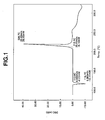
- DSC Differential scanning calorimetry
- TG curve in Fig. 2 shows the relative change of the sample weight with the temperature increase. In fact, this TG curve was made by plotting the weight increase upwardly and the weight decrease downwardly. In contrast, DTA curve in Fig. 2 was made by plotting exothermic transition upwardly and endothermic transition downwardly.
- Example 3 is illustrative of the second aspect of the present invention (i.e., production of the benzopyran carboxamide [1]).
- the benzopyran carboxylic halide [2], 2,2-bis(fluoromethyl)-6-(trifluoromethyl)-2H-1-benzopyran-4-carboxylic chloride was produced, as follows. At first, a 10-liter three-necked flask equipped with a stirrer, a reflux condenser and a thermometer was charged with 7,200ml (6,242g) of toluene, 720g (2.74mol) of 2,2-bis(fluoromethyl)-6-(trifluoromethyl)-2H-1-benzopyran-4-carboxylic acid, 556.8g (4.68mol) of thionyl chloride, and 0.7g of N,N-dimethylformamide, thereby conducting the reaction for 4hr under heating with a mantle heater to maintain the internal temperature at 75-80°C.
- 3-aminopropionitrile ⁇ 1/2 sulfate was produced, as follows. Firstly, 475.2g of water were added to a 10-liter three-necked flask equipped with a stirrer, a dropping funnel and a thermometer. Then, 212g of 98% sulfuric acid (containing 2.12 moles of H 2 SO 4 ) were gradually added with stirring to the flask kept in an iced water bath, thereby preparing a sulfuric acid aqueous solution.
- the benzopyran carboxamide [1] was produced as follows. After the 10days standing still of Solution B, a sodium hydroxide aqueous solution was prepared by dissolving 302.4g (7.56 moles) of sodium hydroxide in 1,930g of water. Then, this sodium hydroxide aqueous solution was added to Solution B contained in the 10-liter flask in a dropwise manner by spending 10 min with stirring of Solution B, while this flask (reaction vessel) was cooled down with ice to keep the internal temperature within a range of 10-20°C. After completing the dropping, stirring was further continued for 30 min at 10-20°C. The resulting solution is referred to as "Solution C".
- solvent extraction was conducted by adding 1,290g of 3.7% hydrochloric acid (aqueous solution) and 2,300 ml of ethyl acetate to the reaction solution, followed by sufficient shaking, thereby transferring the target product into the ethyl acetate layer. Then, 1,150 ml of ethyl acetate were added to the separated water layer, thereby transferring again the target product from the water layer into the ethyl acetate layer. The resulting two layers of ethyl acetate were combined together, followed by washing with 1,440g of water two times and then with 1,440g of 20% brine one time.
Landscapes
- Chemical & Material Sciences (AREA)
- Organic Chemistry (AREA)
- Organic Low-Molecular-Weight Compounds And Preparation Thereof (AREA)
Applications Claiming Priority (6)
| Application Number | Priority Date | Filing Date | Title |
|---|---|---|---|
| JP2001244196A JP2003055330A (ja) | 2001-08-10 | 2001-08-10 | 3−アミノプロピオニトリルの安定化方法 |
| JP2001244196 | 2001-08-10 | ||
| JP2001315465 | 2001-10-12 | ||
| JP2001315486 | 2001-10-12 | ||
| JP2001315486A JP2003119174A (ja) | 2001-10-12 | 2001-10-12 | 酸アミド化合物の製造方法 |
| JP2001315465A JP2003119189A (ja) | 2001-10-12 | 2001-10-12 | ベンゾピラン誘導体の製造方法 |
Publications (2)
| Publication Number | Publication Date |
|---|---|
| EP1283207A1 true EP1283207A1 (de) | 2003-02-12 |
| EP1283207B1 EP1283207B1 (de) | 2004-03-03 |
Family
ID=27347320
Family Applications (1)
| Application Number | Title | Priority Date | Filing Date |
|---|---|---|---|
| EP02017862A Expired - Lifetime EP1283207B1 (de) | 2001-08-10 | 2002-08-08 | Prozess zur Herstellung von benzopyran carboxamid |
Country Status (3)
| Country | Link |
|---|---|
| US (1) | US6653488B2 (de) |
| EP (1) | EP1283207B1 (de) |
| DE (1) | DE60200241T2 (de) |
Citations (2)
| Publication number | Priority date | Publication date | Assignee | Title |
|---|---|---|---|---|
| EP0995438A1 (de) * | 1997-03-03 | 2000-04-26 | Chugai Seiyaku Kabushiki Kaisha | Medikamenten gegen pheripherischen blutströmungsstörungen |
| EP1120412A1 (de) * | 1998-09-30 | 2001-08-01 | Chugai Seiyaku Kabushiki Kaisha | Verfahren zur herstellung von 4-subsituierten benzopyranderivaten |
-
2002
- 2002-08-08 EP EP02017862A patent/EP1283207B1/de not_active Expired - Lifetime
- 2002-08-08 DE DE60200241T patent/DE60200241T2/de not_active Expired - Fee Related
- 2002-08-08 US US10/214,397 patent/US6653488B2/en not_active Expired - Fee Related
Patent Citations (2)
| Publication number | Priority date | Publication date | Assignee | Title |
|---|---|---|---|---|
| EP0995438A1 (de) * | 1997-03-03 | 2000-04-26 | Chugai Seiyaku Kabushiki Kaisha | Medikamenten gegen pheripherischen blutströmungsstörungen |
| EP1120412A1 (de) * | 1998-09-30 | 2001-08-01 | Chugai Seiyaku Kabushiki Kaisha | Verfahren zur herstellung von 4-subsituierten benzopyranderivaten |
Non-Patent Citations (1)
| Title |
|---|
| TAKA, N.; ET AL.: "6-Substituted 2,2-Bis(fluoromethyl)-benzopyran-4-carboxamide K+ channel openers", BIOORG. MED. CHEM., vol. 8, no. 6, 2000, pages 1393 - 1405, XP002212443 * |
Also Published As
| Publication number | Publication date |
|---|---|
| EP1283207B1 (de) | 2004-03-03 |
| US6653488B2 (en) | 2003-11-25 |
| DE60200241T2 (de) | 2005-01-27 |
| DE60200241D1 (de) | 2004-04-08 |
| US20030065197A1 (en) | 2003-04-03 |
Similar Documents
| Publication | Publication Date | Title |
|---|---|---|
| JP6268093B2 (ja) | 縮合複素環誘導体の製造方法およびその製造中間体 | |
| US20100179319A1 (en) | Process for production of optically active mirtazapine | |
| EP1283207B1 (de) | Prozess zur Herstellung von benzopyran carboxamid | |
| JP4186404B2 (ja) | 3,4−メチレンジオキシマンデル酸の製造方法 | |
| RU2119911C1 (ru) | Способ и промежуточные продукты для получения простых гидроксиламиновых эфиров и их солей | |
| JP4032861B2 (ja) | β−オキソニトリル誘導体又はそのアルカリ金属塩の製法 | |
| US20060149073A1 (en) | Adamantane derivative and process for producing the same | |
| RU2315747C2 (ru) | Способ получения ацетиленового соединения | |
| JP4030293B2 (ja) | β−ケトニトリル類の製造法 | |
| US7049458B2 (en) | Process for producing β-ketonitrile compound | |
| WO2021241725A1 (ja) | 高純度のn-(5-メトキシ―2-フェノキシフェニル)メタンスルホンアミド及びその製造方法 | |
| IL287941A (en) | Method for making an ankle | |
| JP4030289B2 (ja) | β−ケトニトリル類の製法 | |
| US8097746B2 (en) | Method for producing 2-isopropenyl-5-methyl-4-hexen-1-yl 3-methyl-2-butenoate | |
| JP4039026B2 (ja) | 3−アミノ−2−チオフェンカルボン酸エステルの製法 | |
| US20090030233A1 (en) | Process for the production of biphenyls | |
| JP2001509501A (ja) | 2−アルキルチオ安息香酸誘導体の製造方法 | |
| JP4345671B2 (ja) | テトラヒドロピラン−4−オールの製法並びにその中間体及びその製法 | |
| JP4192526B2 (ja) | クマリン化合物の製法 | |
| JP4123709B2 (ja) | 芳香族アクリロニトリル誘導体の製法 | |
| JP4165110B2 (ja) | 4−オキシピリミジン誘導体の製法 | |
| JPH11302215A (ja) | モノクロロピナコロンの製造方法 | |
| US20250388535A1 (en) | Sulfonated and sulfated aryl-alkyl compounds useful as surfactants | |
| JP2000309595A (ja) | N−[5−(ジフェニルホスフィノイルメチル)−4−(4−フルオロフェニル)−6−イソプロピルピリミジン−2−イル]−n−メチルメタンスルホンアミドの製造方法 | |
| JP3918468B2 (ja) | 3,3−ビス(アルコキシカルボニル−メチルチオ)プロピオニトリル及びその製造方法 |
Legal Events
| Date | Code | Title | Description |
|---|---|---|---|
| PUAI | Public reference made under article 153(3) epc to a published international application that has entered the european phase |
Free format text: ORIGINAL CODE: 0009012 |
|
| AK | Designated contracting states |
Designated state(s): AT BE BG CH CY CZ DE DK EE ES FI FR GB GR IE IT LI LU MC NL PT SE SK TR |
|
| AX | Request for extension of the european patent |
Extension state: AL LT LV MK RO SI |
|
| 17P | Request for examination filed |
Effective date: 20030205 |
|
| GRAP | Despatch of communication of intention to grant a patent |
Free format text: ORIGINAL CODE: EPIDOSNIGR1 |
|
| AKX | Designation fees paid |
Designated state(s): DE FR GB |
|
| GRAS | Grant fee paid |
Free format text: ORIGINAL CODE: EPIDOSNIGR3 |
|
| GRAA | (expected) grant |
Free format text: ORIGINAL CODE: 0009210 |
|
| AK | Designated contracting states |
Kind code of ref document: B1 Designated state(s): DE FR GB |
|
| REG | Reference to a national code |
Ref country code: GB Ref legal event code: FG4D |
|
| REG | Reference to a national code |
Ref country code: IE Ref legal event code: FG4D |
|
| REF | Corresponds to: |
Ref document number: 60200241 Country of ref document: DE Date of ref document: 20040408 Kind code of ref document: P |
|
| PGFP | Annual fee paid to national office [announced via postgrant information from national office to epo] |
Ref country code: FR Payment date: 20040819 Year of fee payment: 3 |
|
| PGFP | Annual fee paid to national office [announced via postgrant information from national office to epo] |
Ref country code: DE Payment date: 20041029 Year of fee payment: 3 |
|
| ET | Fr: translation filed | ||
| PLBE | No opposition filed within time limit |
Free format text: ORIGINAL CODE: 0009261 |
|
| STAA | Information on the status of an ep patent application or granted ep patent |
Free format text: STATUS: NO OPPOSITION FILED WITHIN TIME LIMIT |
|
| 26N | No opposition filed |
Effective date: 20041206 |
|
| REG | Reference to a national code |
Ref country code: IE Ref legal event code: MM4A |
|
| PG25 | Lapsed in a contracting state [announced via postgrant information from national office to epo] |
Ref country code: DE Free format text: LAPSE BECAUSE OF NON-PAYMENT OF DUE FEES Effective date: 20060301 |
|
| PG25 | Lapsed in a contracting state [announced via postgrant information from national office to epo] |
Ref country code: FR Free format text: LAPSE BECAUSE OF NON-PAYMENT OF DUE FEES Effective date: 20060428 |
|
| REG | Reference to a national code |
Ref country code: FR Ref legal event code: ST Effective date: 20060428 |
|
| GBPC | Gb: european patent ceased through non-payment of renewal fee |
Effective date: 20060808 |
|
| PG25 | Lapsed in a contracting state [announced via postgrant information from national office to epo] |
Ref country code: GB Free format text: LAPSE BECAUSE OF NON-PAYMENT OF DUE FEES Effective date: 20060808 |