EP1284554A2 - Système de communication de données sans fil et procédé utilisant une structure de trame de transmission sans fil pour améliorier l'efficacité de la communication - Google Patents
Système de communication de données sans fil et procédé utilisant une structure de trame de transmission sans fil pour améliorier l'efficacité de la communication Download PDFInfo
- Publication number
- EP1284554A2 EP1284554A2 EP02255671A EP02255671A EP1284554A2 EP 1284554 A2 EP1284554 A2 EP 1284554A2 EP 02255671 A EP02255671 A EP 02255671A EP 02255671 A EP02255671 A EP 02255671A EP 1284554 A2 EP1284554 A2 EP 1284554A2
- Authority
- EP
- European Patent Office
- Prior art keywords
- period
- network access
- toll center
- station
- data communication
- Prior art date
- Legal status (The legal status is an assumption and is not a legal conclusion. Google has not performed a legal analysis and makes no representation as to the accuracy of the status listed.)
- Withdrawn
Links
Images



Classifications
-
- H—ELECTRICITY
- H04—ELECTRIC COMMUNICATION TECHNIQUE
- H04B—TRANSMISSION
- H04B7/00—Radio transmission systems, i.e. using radiation field
- H04B7/24—Radio transmission systems, i.e. using radiation field for communication between two or more posts
- H04B7/26—Radio transmission systems, i.e. using radiation field for communication between two or more posts at least one of which is mobile
-
- H—ELECTRICITY
- H04—ELECTRIC COMMUNICATION TECHNIQUE
- H04W—WIRELESS COMMUNICATION NETWORKS
- H04W28/00—Network traffic management; Network resource management
- H04W28/16—Central resource management; Negotiation of resources or communication parameters, e.g. negotiating bandwidth or QoS [Quality of Service]
- H04W28/18—Negotiating wireless communication parameters
- H04W28/20—Negotiating bandwidth
-
- H—ELECTRICITY
- H04—ELECTRIC COMMUNICATION TECHNIQUE
- H04L—TRANSMISSION OF DIGITAL INFORMATION, e.g. TELEGRAPHIC COMMUNICATION
- H04L1/00—Arrangements for detecting or preventing errors in the information received
- H04L1/12—Arrangements for detecting or preventing errors in the information received by using return channel
- H04L1/16—Arrangements for detecting or preventing errors in the information received by using return channel in which the return channel carries supervisory signals, e.g. repetition request signals
- H04L1/1607—Details of the supervisory signal
- H04L1/1642—Formats specially adapted for sequence numbers
-
- H—ELECTRICITY
- H04—ELECTRIC COMMUNICATION TECHNIQUE
- H04L—TRANSMISSION OF DIGITAL INFORMATION, e.g. TELEGRAPHIC COMMUNICATION
- H04L1/00—Arrangements for detecting or preventing errors in the information received
- H04L1/12—Arrangements for detecting or preventing errors in the information received by using return channel
- H04L1/16—Arrangements for detecting or preventing errors in the information received by using return channel in which the return channel carries supervisory signals, e.g. repetition request signals
- H04L1/18—Automatic repetition systems, e.g. Van Duuren systems
- H04L1/1829—Arrangements specially adapted for the receiver end
- H04L1/1858—Transmission or retransmission of more than one copy of acknowledgement message
-
- H—ELECTRICITY
- H04—ELECTRIC COMMUNICATION TECHNIQUE
- H04L—TRANSMISSION OF DIGITAL INFORMATION, e.g. TELEGRAPHIC COMMUNICATION
- H04L1/00—Arrangements for detecting or preventing errors in the information received
- H04L1/12—Arrangements for detecting or preventing errors in the information received by using return channel
- H04L1/16—Arrangements for detecting or preventing errors in the information received by using return channel in which the return channel carries supervisory signals, e.g. repetition request signals
- H04L1/18—Automatic repetition systems, e.g. Van Duuren systems
- H04L1/1867—Arrangements specially adapted for the transmitter end
- H04L1/188—Time-out mechanisms
-
- H—ELECTRICITY
- H04—ELECTRIC COMMUNICATION TECHNIQUE
- H04L—TRANSMISSION OF DIGITAL INFORMATION, e.g. TELEGRAPHIC COMMUNICATION
- H04L5/00—Arrangements affording multiple use of the transmission path
- H04L5/02—Channels characterised by the type of signal
- H04L5/023—Multiplexing of multicarrier modulation signals, e.g. multi-user orthogonal frequency division multiple access [OFDMA]
-
- H—ELECTRICITY
- H04—ELECTRIC COMMUNICATION TECHNIQUE
- H04W—WIRELESS COMMUNICATION NETWORKS
- H04W74/00—Wireless channel access
- H04W74/08—Non-scheduled access, e.g. ALOHA
Definitions
- the present invention relates to a wireless data communication system, and more particularly, to a wireless data communication system and method using wireless transmission frame structure for increasing communication efficiency.
- FIG. 1 is a view of a general transmission frame structure, for use in a wireless data system, which includes a broadcast period, a downlink period, an uplink period and a contention period.
- a network access toll center distributes or allocates an uplink resource to each station that accesses the network access toll center, and each station transmits data to the network access toll center, using the allocated uplink resource.
- the network access toll center also transmits data to each station via the downlink period.
- a wireless data communication system is still less reliable in transmitting data due to the characteristics of its wireless channel than a cable channel. Therefore, unlike in a cable channel, the wireless data communication system requires a resending mechanism to improve the reliability of data transmission in a data link layer.
- the resending mechanism is based on an acknowledgement signal (hereinafter, denoted as ACK) or ACK timeout.
- FIG. 2 is a view illustrating a general method of generating an ACK to be transmitted from each station to a network access toll center.
- the network access toll center uses a downlink period for transmitting data to a certain station.
- the related station receives the data from the network access toll center via the downlink period, and sends the ACK, which acknowledges receipt of the data, to the network access toll center.
- the station sends the ACK together with data to the network access toll center, illustrated in FIG. 2.
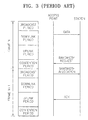
- FIG. 3 is a view explaining a process of sending the ACK to a network access toll center when a certain station is not allocated with an uplink resource.
- a station when a station is not given the uplink resource in a frame N, it requests the network access toll center to allocate an uplink resource for a frame N+1 via a competition period of the frame N, i.e., the station performs a bandwidth request.
- the station sends the ACK to the network access toll center in an uplink period of the frame N+1.
- the station fails to completely receive data from the network access toll center when the bandwidth request or ACK is lost in a wireless interface or the data, which is transmitted from the network access toll center, is lost in transit. In this case, the network access toll center resends the data to the station.
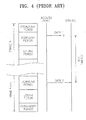
- FIG. 4 is a view explaining a process of resending data when data is lost in a wireless interface.
- a station fails to completely receive the data, and thus cannot send the ACK to the network access toll center. If the network access toll center is not given the ACK within a limited time, i.e., the ACK timeout, from the station, the network access toll center considers that the station fails to normally receive the data, and resends the data in a frame N+m.
- the ACK timeout is a relatively long time, and therefore, it will take time for the network access toll center to recognize a failure of the transmission of data and resend the data to the station. That is, the immediate resending of data is difficult to be made. For this reason, some research papers suggested not to adopt a resending mechanism for real-time data service, or to set the ACK timeout to be short, but this is insufficient to completely solve the above problem.
- a wireless data communication system that performs a wireless data communication between a network access toll center and a plurality of stations.
- the wireless data communication system performs a wireless data communication using a wireless transmission frame structure including a broadcast period, a downlink period, an uplink period, an acknowledgement period and a contention period.
- the acknowledgement period is a period in which a plurality of stations send an acknowledgement signal confirming safe receipt of data transmitted from the network access toll center to the network access toll center.
- the present invention thus provides a wireless data communication system that transmits data using a new wireless transmission frame structure capable of minimizing the time spent for a network access toll center, within the wireless data communication system, to check if a station receives the data or not.
- a wireless data communication system performing a wireless data communication using a wireless transmission frame structure including a broadcast period, a downlink period, an uplink period, an acknowledgement period and a contention period, the wireless data communication system including a network access toll center for allocating a subcarrier channel to a station that requests access to the network access toll center, and sending data to the station in the downlink period; and a plurality of stations being allocated with the subcarrier channel by the network access toll center when a plurality of stations access the network access toll center, the plurality of stations activating the allocated subcarrier channel after receipt of data from the network access toll center in the downlink period and sending the activated subcarrier channels to the network access toll center in the acknowledgement period, wherein the network access toll center sends new data or resends the data, which was sent in the previous frame, in the next frame, depending on whether the allocated subcarrier channels are activated or not.
- the present invention thus provides a wireless data communication system that allows a network access toll center to send data to a station and check whether the data is completely sent to a station in the same frame, and a method therefor.
- a wireless data communication method carried out between a network access toll center and a plurality of stations using a wireless transmission frame structure including a broadcast period, a downlink period, an uplink period, an acknowledgement period and a contention period, the wireless data communication method including (a) the network access toll center allocating at least one subcarrier channel, which is to be used in the acknowledgement period, to stations that request access to the network access toll center, and sending data to the stations in the downlink period; (b) each station, which accesses the network access toll center, activating the subcarrier channel(s), which was given in step (a), in the acknowledgement period when data is completely transmitted to each station from the network access toll center; and (c) the network access toll center checking the activation of the subcarrier channel(s) allocated to each station in the acknowledgement period and determining whether to send new data or resend the data which was sent in step (a) according to the checking result.
- a wireless transmission frame structure that increases communication efficiency, a wireless data communication system that performs communication using the wireless transmission frame structure, and a method therefor, are now explained with reference to the accompanying drawings.
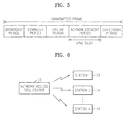
- FIG. 5 is a view of a wireless transmission frame structure according to the present invention.
- this wireless transmission frame structure includes a broadcast period, a downlink period, an uplink period, an acknowledgement period, and a contention period.
- the acknowledgement period is present between the uplink period and the contention period of the wireless transmission frame, and takes place when a station sends an acknowledgement signal (hereinafter, denoted as ACK) informing a network access toll center of receipt of data.
- ACK acknowledgement signal
- the network access toll center can also check if the station normally receives the data in the frame at which the data is transmitted to the station.
- the acknowledgement period is one slot time period.
- FIG. 6 is a schematic block diagram of a wireless data communication system that performs a data communication using the wireless transmission frame.
- This wireless data communication system includes a network access toll center 10 and a plurality of stations 12 through 16.
- the network access toll center 10 allocates a subcarrier channel, which is to be used as the ACK in the acknowledgement period, to a certain station that requests access to the network access toll center. Preferably, at this time, the network access toll center 10 allocates the subcarrier channel to a station that requests real-time data service.
- an orthogonal frequency division multiplex (OFDM) mode has a plurality of subcarrier channels in a carrier wave.
- wireless local area network includes 52 subcarrier channels
- BWA broadband wireless access
- the network access toll center 10 allocates a plurality of subcarrier channels to each station and uses the allocated subcarrier channels as ACK. In other words, the network access toll center 10 allocates subcarrier channels to a station that requests access to the network access toll center, and then sends data to the network-connected stations 12 through 16 in a downlink period via a wireless communication network. Next, the network access toll center 10 checks the activation of the subcarrier channel allocated to each station in the acknowledgement period, and sends new data or resends the data, which was sent in the previous frame, to each station in the next frame.
- Each of a plurality of stations 12 through 16 is allocated with the subcarrier channel by the network access toll center 10 when it is connected to the network access toll center 10. If each of a plurality of stations 12 through 16 normally receives data from the network access toll center 10 in the downlink period, it activates the allocated subcarrier channel in the acknowledgement period and sends the activated subcarrier to the network access toll center 10. However, in the event that each station is not normally received the data, it does not activate the allocated subcarrier channel so that it can receive the data again in the next frame.
- the activated subcarrier channel While the activated subcarrier channel is transmitted from each station to the network access toll center in the acknowledgement period, the activated subcarrier channel may be lost in the wireless communication network due to multi-path fading. This is why the network access toll center 10 allocates a plurality of subcarrier channels to each station.
- the allocation of a plurality of sub-carrier channels increases the probability that each station receives a subcarrier channel, which is used as ACK. That is, when three subcarrier channels, for example, are allocated to each station, the network access toll center 10 considers each station as receiving data, even if at least one of the three-subcarrier channels is activated.
- FIG. 7 is a flow chart explaining a preferred embodiment of a wireless data communication method performed by the wireless data communication system of FIG. 6.
- FIG. 8 is a view explaining a process of transmitting data to each station according to the wireless data communication method of FIG. 7.
- the number of stations that can access a network access toll center is seven
- the first, third and seventh stations now access a network access toll center.
- the mapping table shown in FIG. 8 the first station is allocated with the fifth, thirteenth and seventeenth subcarrier channels
- the third station is allocated with the third, seventh and fifteenth subcarrier channels
- the seventh station is allocated with the second, sixteenth and fifty-first subcarrier channels.
- the network access toll center allocates a subcarrier channel, which is the used ACK in an acknowledgement period, to a station that requests access to the network access toll center.
- the network access toll center may allocate a plurality of subcarrier channels to each station for a loss in a subcarrier channel(s) in the acknowledgement period.
- the number of subcarrier channels to be allocated to each station is set to three, for the sake of convenience.
- the network access toll center sends data to the first, third and seventh stations that access the network access toll center in a downlink period of a frame. That is, the network access toll center sends data DATA1-1, DATA3-1 and DATA7-1 to the first, third and seventh stations in the downlink period of a frame N, respectively, and each station selectively receives the related one of the data DATA1-1, DATA3-1 and DATA7-1 .
- each station connected to the network access toll center checks if the related data is completely transmitted to itself. If the transmission of the data is satisfactorily completed, in step 40, each station activates the subcarrier channels given in step 20 and sends the activated subcarrier channels to the network access toll center in the acknowledgement period of the frame N. However, in the event that the transmission of data is incomplete, in step 35, a station does not activate the subcarrier channels given in step 20.
- the first and third stations receive the data DATA1-1 and the data DATA3-1 from the network access toll center, respectively. However, the data DATA7-1 is lost in transit and therefore, the seventh station does not receive it.
- the first and third stations activate the allocated fifth, thirteenth and seventeenth subcarrier channels, and third, seventh and fifteenth subcarrier channels, respectively, and send them to the network access toll center via the acknowledgement period of the frame N.
- the seventh station since the seventh station is not given the data, it does not activate the second, sixteenth and fifty-first subcarrier channels allocated in step 20.
- step 45 the network access toll center checks whether the subcarrier channels are activated or not in the acknowledgement period of the frame N, and sends next data, in step 50, to stations in which the given subcarrier channels are activated, i.e., the first and third stations, during a downlink period of a frame N+1.
- the network access toll center resends the data, which was sent during the downlink period of the frame N, in the downlink period of the frame N+1 to a station having inactivated subcarrier channels, i.e., the seventh station, in step 55. More specifically, referring to FIG.
- the network access toll center checks receipt of the activated subcarrier channels in the acknowledgement period of the frame N, and as a result, recognizes the activation of the third, fifth, thirteenth, fifteenth and seventeenth subcarrier channels.
- the fifth, thirteenth and seventeenth subcarrier channels are the subcarrier channels allocated to the first station
- the third and fifteenth subcarrier channels are the subcarrier channels allocated to the third station. That is, all of the subcarrier channels allocated to the first station are activated, but one of the subcarrier channels allocated to the third station, i.e., the seventh subcarrier channel, was lost in transit and the other subcarrier channels are activated. Also, none of the subcarrier channels allocated to the seventh station are activated.
- the network access toll center considers the first and third stations in which at least one of the subcarrier channels are activated as receiving the data, and the seventh station as failing to completely receive the data.
- the network access toll center sends new data DATA1-2 and DATA3-2 to the first and third stations, and resends the data DATA7-1 that was sent in the frame N to the seventh station.
- a network access toll center can send data to each station and check whether the data is completely transmitted to each station in the same frame, thereby effectively performing real-time data service. Also, the allocation of a plurality of subcarrier channels to each station minimizes the resending of data because receipt of data is confirmed when at least one of the allocated subcarrier channels is completely transmitted from each station, even if the most part of the subcarrier channels are lost in a wireless interface.
- the present invention can be embodied as a computer readable code in a computer readable medium.
- the computer readable medium may be any recording apparatus capable of storing data that can be read by a computer system, e.g., a read-only memory (ROM), a random access memory (RAM), a compact disc (CD)-ROM, a magnetic tape, a floppy disk, an optical data storage device, and so on.
- the computer readable medium may be a carrier wave that transmits data via the Internet, for example.
- the computer readable recording medium can be installed in a computer connected to a network, stored and used as a computer readable code by a distributed computing environment.
Landscapes
- Engineering & Computer Science (AREA)
- Computer Networks & Wireless Communication (AREA)
- Signal Processing (AREA)
- Quality & Reliability (AREA)
- Mobile Radio Communication Systems (AREA)
Applications Claiming Priority (2)
| Application Number | Priority Date | Filing Date | Title |
|---|---|---|---|
| KR2001049034 | 2001-08-14 | ||
| KR10-2001-0049034A KR100438823B1 (ko) | 2001-08-14 | 2001-08-14 | 통신 효율을 높이는 무선 전송 프레임 구조에 따라 통신을수행하는 무선 데이터 통신 시스템 및 방법 |
Publications (2)
| Publication Number | Publication Date |
|---|---|
| EP1284554A2 true EP1284554A2 (fr) | 2003-02-19 |
| EP1284554A3 EP1284554A3 (fr) | 2003-09-10 |
Family
ID=19713194
Family Applications (1)
| Application Number | Title | Priority Date | Filing Date |
|---|---|---|---|
| EP02255671A Withdrawn EP1284554A3 (fr) | 2001-08-14 | 2002-08-14 | Système de communication de données sans fil et procédé utilisant une structure de trame de transmission sans fil pour améliorier l'efficacité de la communication |
Country Status (5)
| Country | Link |
|---|---|
| US (1) | US20030048765A1 (fr) |
| EP (1) | EP1284554A3 (fr) |
| JP (1) | JP2003087163A (fr) |
| KR (1) | KR100438823B1 (fr) |
| CN (1) | CN1402462A (fr) |
Cited By (2)
| Publication number | Priority date | Publication date | Assignee | Title |
|---|---|---|---|---|
| EP1603266A3 (fr) * | 2004-05-31 | 2008-07-09 | Samsung Electronics Co., Ltd. | Procédé et système de transmission d'informations d'accusé de réception dans la liaison montante d'un système de communication OFDMA |
| WO2009034554A3 (fr) * | 2007-09-14 | 2009-11-05 | Nokia Corporation | Procédé et appareil pour réalisation d'un canal commun d'accusés de réception |
Families Citing this family (14)
| Publication number | Priority date | Publication date | Assignee | Title |
|---|---|---|---|---|
| FR2829272A1 (fr) * | 2000-08-22 | 2003-03-07 | France Telecom | Dispositif de commande automatisee d'un equipement electrique par une personne |
| KR100677137B1 (ko) | 2004-10-01 | 2007-02-02 | 삼성전자주식회사 | 데이터 처리 상태 디스플레이 방법 |
| US8312142B2 (en) * | 2005-02-28 | 2012-11-13 | Motorola Mobility Llc | Discontinuous transmission/reception in a communications system |
| CN100426878C (zh) * | 2005-08-09 | 2008-10-15 | 中兴通讯股份有限公司 | 动态分配相关保留块周期的方法 |
| CN101909190B (zh) * | 2005-09-30 | 2012-09-26 | 松下电器产业株式会社 | 无线传送系统 |
| KR100615139B1 (ko) * | 2005-10-18 | 2006-08-22 | 삼성전자주식회사 | 무선통신 시스템에서 전송 시간 구간의 할당 방법과 장치및 그 시스템 |
| CN101288249B (zh) * | 2005-10-18 | 2012-06-20 | 三星电子株式会社 | 在无线通信系统分配传输时间段的方法和设备及其系统 |
| EP2014005B1 (fr) | 2006-04-25 | 2017-08-16 | LG Electronics Inc. | Procédé permettant de transmettre des données à l'aide de ressources dans des opérations de demandes automatiques hybrides |
| EP2193689B1 (fr) * | 2007-08-13 | 2014-04-23 | Telefonaktiebolaget LM Ericsson (publ) | Attribution améliorée de ressources de liaison montante |
| KR20090078723A (ko) * | 2008-01-15 | 2009-07-20 | 삼성전자주식회사 | 무선 이동 통신 시스템에서 복합 자동 재송신 요구 방식에 기반한 신호 송수신 방법 |
| KR100930277B1 (ko) * | 2008-04-29 | 2009-12-09 | 강릉원주대학교산학협력단 | 양방향 데이터 통신이 가능한 이중 링크된 무선 센서네트워크 및 데이터 송수신 방법 |
| US10236950B2 (en) * | 2009-02-27 | 2019-03-19 | Qualcomm Incorporated | Video transmission over SDMA |
| KR101307625B1 (ko) * | 2009-08-20 | 2013-09-12 | 후지쯔 가부시끼가이샤 | 조정 다중점 송신을 이용하여 수신된 패킷에 대한 부정 승인의 송신에서의 지연 도입 |
| US8411631B2 (en) * | 2010-06-11 | 2013-04-02 | Intel Corporation | Response mechanisms for wireless networks using wide bandwidth |
Family Cites Families (6)
| Publication number | Priority date | Publication date | Assignee | Title |
|---|---|---|---|---|
| JP3087886B2 (ja) * | 1995-10-24 | 2000-09-11 | 株式会社エヌ・ティ・ティ・ドコモ | Cdma移動通信の再送制御方法 |
| JPH09130447A (ja) * | 1995-10-31 | 1997-05-16 | Nec Corp | 無線データ伝送装置 |
| JPH10224328A (ja) * | 1997-02-06 | 1998-08-21 | Sony Corp | データ通信方法及びデータ通信機 |
| KR100283083B1 (ko) * | 1999-02-12 | 2001-02-15 | 이계철 | 프레임단위로 수신확인신호를 전달하는 방법 |
| US6285662B1 (en) * | 1999-05-14 | 2001-09-04 | Nokia Mobile Phones Limited | Apparatus, and associated method for selecting a size of a contention window for a packet of data system |
| FI20001133A7 (fi) * | 2000-05-12 | 2001-11-13 | Nokia Corp | Menetelmä päätelaitteiden ja yhteysaseman välisen tiedonsiirron järjestämiseksi tiedonsiirtojärjestelmässä |
-
2001
- 2001-08-14 KR KR10-2001-0049034A patent/KR100438823B1/ko not_active Expired - Fee Related
-
2002
- 2002-08-09 JP JP2002232879A patent/JP2003087163A/ja active Pending
- 2002-08-14 CN CN02131529A patent/CN1402462A/zh active Pending
- 2002-08-14 US US10/218,031 patent/US20030048765A1/en not_active Abandoned
- 2002-08-14 EP EP02255671A patent/EP1284554A3/fr not_active Withdrawn
Cited By (3)
| Publication number | Priority date | Publication date | Assignee | Title |
|---|---|---|---|---|
| EP1603266A3 (fr) * | 2004-05-31 | 2008-07-09 | Samsung Electronics Co., Ltd. | Procédé et système de transmission d'informations d'accusé de réception dans la liaison montante d'un système de communication OFDMA |
| US7586834B2 (en) | 2004-05-31 | 2009-09-08 | Samsung Electronics Co., Ltd | Method and apparatus for transmitting uplink acknowledgement information in an OFDMA communication system |
| WO2009034554A3 (fr) * | 2007-09-14 | 2009-11-05 | Nokia Corporation | Procédé et appareil pour réalisation d'un canal commun d'accusés de réception |
Also Published As
| Publication number | Publication date |
|---|---|
| KR100438823B1 (ko) | 2004-07-05 |
| CN1402462A (zh) | 2003-03-12 |
| JP2003087163A (ja) | 2003-03-20 |
| EP1284554A3 (fr) | 2003-09-10 |
| KR20030014998A (ko) | 2003-02-20 |
| US20030048765A1 (en) | 2003-03-13 |
Similar Documents
| Publication | Publication Date | Title |
|---|---|---|
| EP1284554A2 (fr) | Système de communication de données sans fil et procédé utilisant une structure de trame de transmission sans fil pour améliorier l'efficacité de la communication | |
| US6693892B1 (en) | Method of controlling communication resources | |
| US8743793B2 (en) | Systems and methods for providing a separate contention window allowing allocations for pending uplink SDMA transmission opportunities | |
| CN104170341B (zh) | 一种数据传输方法、设备和系统 | |
| WO2019192285A1 (fr) | Procédé et dispositif de transmission et de communication en liaison montante, station de base, terminal et support de stockage | |
| EP1292061A1 (fr) | Procédé et appareil de données sans fil de communication à multiporteuse, et format de la trame de transmission associé | |
| KR20080026619A (ko) | 할당 확인응답 메시지를 대신하는 링크 할당 메시지 | |
| KR20050120306A (ko) | 데이터 재전송을 위한 무선 접속 통신시스템과 데이터재전송 장치 및 그의 방법 | |
| US7197313B1 (en) | Method for allocating wireless resource in wireless communication system | |
| KR20080079567A (ko) | 중계방식을 사용하는 무선통신시스템에서 제어메시지 전송장치 및 방법 | |
| JP2002544733A (ja) | 複数のアクセスパケットよりなるランダムアクセス要求を有する無線通信システム | |
| JP2000069547A (ja) | 無線通信装置 | |
| CN100433592C (zh) | 在无线上行链路系统中传输移动设备请求的方法 | |
| CN102204384A (zh) | 请求资源的方法、设备和通信系统 | |
| CN104170306B (zh) | 一种数据传输方法、设备和系统 | |
| EP4224969A1 (fr) | Procédé et appareil de communication | |
| KR101397112B1 (ko) | 무선통신 시스템에서 피드백 영역을 구성하는 방법 | |
| KR101461972B1 (ko) | 상향링크 할당요청 피드백 방법 | |
| US7411933B2 (en) | Radio communication device, radio communication method, and computer program | |
| JPH0591009A (ja) | 再送制御方式 | |
| KR100921004B1 (ko) | 무선 접속 시스템에서 자원 재할당 및 대역 요청 방법 | |
| TW202032939A (zh) | 通訊裝置、及通訊方法 | |
| US20050192018A1 (en) | Wireless data communication apparatus and method capable of checking receipt and status | |
| JP2006203337A (ja) | リソース割当方法及び基地局装置 | |
| WO2008004842A2 (fr) | Procédé de réception et d'émission de paquets |
Legal Events
| Date | Code | Title | Description |
|---|---|---|---|
| PUAI | Public reference made under article 153(3) epc to a published international application that has entered the european phase |
Free format text: ORIGINAL CODE: 0009012 |
|
| 17P | Request for examination filed |
Effective date: 20020911 |
|
| AK | Designated contracting states |
Designated state(s): AT BE BG CH CY CZ DE DK EE ES FI FR GB GR IE IT LI LU MC NL PT SE SK TR |
|
| AX | Request for extension of the european patent |
Extension state: AL LT LV MK RO SI |
|
| PUAL | Search report despatched |
Free format text: ORIGINAL CODE: 0009013 |
|
| AK | Designated contracting states |
Kind code of ref document: A3 Designated state(s): AT BE BG CH CY CZ DE DK EE ES FI FR GB GR IE IT LI LU MC NL PT SE SK TR |
|
| AX | Request for extension of the european patent |
Extension state: AL LT LV MK RO SI |
|
| AKX | Designation fees paid |
Designated state(s): DE FR GB |
|
| 17Q | First examination report despatched |
Effective date: 20040422 |
|
| STAA | Information on the status of an ep patent application or granted ep patent |
Free format text: STATUS: THE APPLICATION IS DEEMED TO BE WITHDRAWN |
|
| 18D | Application deemed to be withdrawn |
Effective date: 20051027 |