EP1284740B1 - Traitement prophylactique et therapeutique de maladies infectieuses allergiques rt autoimmunes avec des composes a base de monosaccharides - Google Patents
Traitement prophylactique et therapeutique de maladies infectieuses allergiques rt autoimmunes avec des composes a base de monosaccharides Download PDFInfo
- Publication number
- EP1284740B1 EP1284740B1 EP01948222A EP01948222A EP1284740B1 EP 1284740 B1 EP1284740 B1 EP 1284740B1 EP 01948222 A EP01948222 A EP 01948222A EP 01948222 A EP01948222 A EP 01948222A EP 1284740 B1 EP1284740 B1 EP 1284740B1
- Authority
- EP
- European Patent Office
- Prior art keywords
- accordance
- medicament
- group
- disease
- treating
- Prior art date
- Legal status (The legal status is an assumption and is not a legal conclusion. Google has not performed a legal analysis and makes no representation as to the accuracy of the status listed.)
- Expired - Lifetime
Links
Images






Classifications
-
- C—CHEMISTRY; METALLURGY
- C07—ORGANIC CHEMISTRY
- C07H—SUGARS; DERIVATIVES THEREOF; NUCLEOSIDES; NUCLEOTIDES; NUCLEIC ACIDS
- C07H13/00—Compounds containing saccharide radicals esterified by carbonic acid or derivatives thereof, or by organic acids, e.g. phosphonic acids
- C07H13/02—Compounds containing saccharide radicals esterified by carbonic acid or derivatives thereof, or by organic acids, e.g. phosphonic acids by carboxylic acids
- C07H13/04—Compounds containing saccharide radicals esterified by carbonic acid or derivatives thereof, or by organic acids, e.g. phosphonic acids by carboxylic acids having the esterifying carboxyl radicals attached to acyclic carbon atoms
-
- A—HUMAN NECESSITIES
- A61—MEDICAL OR VETERINARY SCIENCE; HYGIENE
- A61K—PREPARATIONS FOR MEDICAL, DENTAL OR TOILETRY PURPOSES
- A61K31/00—Medicinal preparations containing organic active ingredients
- A61K31/70—Carbohydrates; Sugars; Derivatives thereof
- A61K31/7024—Esters of saccharides
-
- A—HUMAN NECESSITIES
- A61—MEDICAL OR VETERINARY SCIENCE; HYGIENE
- A61P—SPECIFIC THERAPEUTIC ACTIVITY OF CHEMICAL COMPOUNDS OR MEDICINAL PREPARATIONS
- A61P1/00—Drugs for disorders of the alimentary tract or the digestive system
- A61P1/02—Stomatological preparations, e.g. drugs for caries, aphtae, periodontitis
-
- A—HUMAN NECESSITIES
- A61—MEDICAL OR VETERINARY SCIENCE; HYGIENE
- A61P—SPECIFIC THERAPEUTIC ACTIVITY OF CHEMICAL COMPOUNDS OR MEDICINAL PREPARATIONS
- A61P1/00—Drugs for disorders of the alimentary tract or the digestive system
- A61P1/04—Drugs for disorders of the alimentary tract or the digestive system for ulcers, gastritis or reflux esophagitis, e.g. antacids, inhibitors of acid secretion, mucosal protectants
-
- A—HUMAN NECESSITIES
- A61—MEDICAL OR VETERINARY SCIENCE; HYGIENE
- A61P—SPECIFIC THERAPEUTIC ACTIVITY OF CHEMICAL COMPOUNDS OR MEDICINAL PREPARATIONS
- A61P1/00—Drugs for disorders of the alimentary tract or the digestive system
- A61P1/16—Drugs for disorders of the alimentary tract or the digestive system for liver or gallbladder disorders, e.g. hepatoprotective agents, cholagogues, litholytics
-
- A—HUMAN NECESSITIES
- A61—MEDICAL OR VETERINARY SCIENCE; HYGIENE
- A61P—SPECIFIC THERAPEUTIC ACTIVITY OF CHEMICAL COMPOUNDS OR MEDICINAL PREPARATIONS
- A61P11/00—Drugs for disorders of the respiratory system
-
- A—HUMAN NECESSITIES
- A61—MEDICAL OR VETERINARY SCIENCE; HYGIENE
- A61P—SPECIFIC THERAPEUTIC ACTIVITY OF CHEMICAL COMPOUNDS OR MEDICINAL PREPARATIONS
- A61P11/00—Drugs for disorders of the respiratory system
- A61P11/02—Nasal agents, e.g. decongestants
-
- A—HUMAN NECESSITIES
- A61—MEDICAL OR VETERINARY SCIENCE; HYGIENE
- A61P—SPECIFIC THERAPEUTIC ACTIVITY OF CHEMICAL COMPOUNDS OR MEDICINAL PREPARATIONS
- A61P11/00—Drugs for disorders of the respiratory system
- A61P11/06—Antiasthmatics
-
- A—HUMAN NECESSITIES
- A61—MEDICAL OR VETERINARY SCIENCE; HYGIENE
- A61P—SPECIFIC THERAPEUTIC ACTIVITY OF CHEMICAL COMPOUNDS OR MEDICINAL PREPARATIONS
- A61P17/00—Drugs for dermatological disorders
-
- A—HUMAN NECESSITIES
- A61—MEDICAL OR VETERINARY SCIENCE; HYGIENE
- A61P—SPECIFIC THERAPEUTIC ACTIVITY OF CHEMICAL COMPOUNDS OR MEDICINAL PREPARATIONS
- A61P17/00—Drugs for dermatological disorders
- A61P17/06—Antipsoriatics
-
- A—HUMAN NECESSITIES
- A61—MEDICAL OR VETERINARY SCIENCE; HYGIENE
- A61P—SPECIFIC THERAPEUTIC ACTIVITY OF CHEMICAL COMPOUNDS OR MEDICINAL PREPARATIONS
- A61P19/00—Drugs for skeletal disorders
- A61P19/02—Drugs for skeletal disorders for joint disorders, e.g. arthritis, arthrosis
-
- A—HUMAN NECESSITIES
- A61—MEDICAL OR VETERINARY SCIENCE; HYGIENE
- A61P—SPECIFIC THERAPEUTIC ACTIVITY OF CHEMICAL COMPOUNDS OR MEDICINAL PREPARATIONS
- A61P25/00—Drugs for disorders of the nervous system
- A61P25/28—Drugs for disorders of the nervous system for treating neurodegenerative disorders of the central nervous system, e.g. nootropic agents, cognition enhancers, drugs for treating Alzheimer's disease or other forms of dementia
-
- A—HUMAN NECESSITIES
- A61—MEDICAL OR VETERINARY SCIENCE; HYGIENE
- A61P—SPECIFIC THERAPEUTIC ACTIVITY OF CHEMICAL COMPOUNDS OR MEDICINAL PREPARATIONS
- A61P29/00—Non-central analgesic, antipyretic or antiinflammatory agents, e.g. antirheumatic agents; Non-steroidal antiinflammatory drugs [NSAID]
-
- A—HUMAN NECESSITIES
- A61—MEDICAL OR VETERINARY SCIENCE; HYGIENE
- A61P—SPECIFIC THERAPEUTIC ACTIVITY OF CHEMICAL COMPOUNDS OR MEDICINAL PREPARATIONS
- A61P31/00—Antiinfectives, i.e. antibiotics, antiseptics, chemotherapeutics
-
- A—HUMAN NECESSITIES
- A61—MEDICAL OR VETERINARY SCIENCE; HYGIENE
- A61P—SPECIFIC THERAPEUTIC ACTIVITY OF CHEMICAL COMPOUNDS OR MEDICINAL PREPARATIONS
- A61P31/00—Antiinfectives, i.e. antibiotics, antiseptics, chemotherapeutics
- A61P31/04—Antibacterial agents
-
- A—HUMAN NECESSITIES
- A61—MEDICAL OR VETERINARY SCIENCE; HYGIENE
- A61P—SPECIFIC THERAPEUTIC ACTIVITY OF CHEMICAL COMPOUNDS OR MEDICINAL PREPARATIONS
- A61P31/00—Antiinfectives, i.e. antibiotics, antiseptics, chemotherapeutics
- A61P31/12—Antivirals
-
- A—HUMAN NECESSITIES
- A61—MEDICAL OR VETERINARY SCIENCE; HYGIENE
- A61P—SPECIFIC THERAPEUTIC ACTIVITY OF CHEMICAL COMPOUNDS OR MEDICINAL PREPARATIONS
- A61P31/00—Antiinfectives, i.e. antibiotics, antiseptics, chemotherapeutics
- A61P31/12—Antivirals
- A61P31/14—Antivirals for RNA viruses
- A61P31/18—Antivirals for RNA viruses for HIV
-
- A—HUMAN NECESSITIES
- A61—MEDICAL OR VETERINARY SCIENCE; HYGIENE
- A61P—SPECIFIC THERAPEUTIC ACTIVITY OF CHEMICAL COMPOUNDS OR MEDICINAL PREPARATIONS
- A61P33/00—Antiparasitic agents
- A61P33/02—Antiprotozoals, e.g. for leishmaniasis, trichomoniasis, toxoplasmosis
-
- A—HUMAN NECESSITIES
- A61—MEDICAL OR VETERINARY SCIENCE; HYGIENE
- A61P—SPECIFIC THERAPEUTIC ACTIVITY OF CHEMICAL COMPOUNDS OR MEDICINAL PREPARATIONS
- A61P37/00—Drugs for immunological or allergic disorders
-
- A—HUMAN NECESSITIES
- A61—MEDICAL OR VETERINARY SCIENCE; HYGIENE
- A61P—SPECIFIC THERAPEUTIC ACTIVITY OF CHEMICAL COMPOUNDS OR MEDICINAL PREPARATIONS
- A61P37/00—Drugs for immunological or allergic disorders
- A61P37/02—Immunomodulators
- A61P37/04—Immunostimulants
-
- A—HUMAN NECESSITIES
- A61—MEDICAL OR VETERINARY SCIENCE; HYGIENE
- A61P—SPECIFIC THERAPEUTIC ACTIVITY OF CHEMICAL COMPOUNDS OR MEDICINAL PREPARATIONS
- A61P37/00—Drugs for immunological or allergic disorders
- A61P37/02—Immunomodulators
- A61P37/06—Immunosuppressants, e.g. drugs for graft rejection
-
- A—HUMAN NECESSITIES
- A61—MEDICAL OR VETERINARY SCIENCE; HYGIENE
- A61P—SPECIFIC THERAPEUTIC ACTIVITY OF CHEMICAL COMPOUNDS OR MEDICINAL PREPARATIONS
- A61P37/00—Drugs for immunological or allergic disorders
- A61P37/08—Antiallergic agents
-
- A—HUMAN NECESSITIES
- A61—MEDICAL OR VETERINARY SCIENCE; HYGIENE
- A61P—SPECIFIC THERAPEUTIC ACTIVITY OF CHEMICAL COMPOUNDS OR MEDICINAL PREPARATIONS
- A61P43/00—Drugs for specific purposes, not provided for in groups A61P1/00-A61P41/00
-
- C—CHEMISTRY; METALLURGY
- C07—ORGANIC CHEMISTRY
- C07H—SUGARS; DERIVATIVES THEREOF; NUCLEOSIDES; NUCLEOTIDES; NUCLEIC ACIDS
- C07H11/00—Compounds containing saccharide radicals esterified by inorganic acids; Metal salts thereof
-
- C—CHEMISTRY; METALLURGY
- C07—ORGANIC CHEMISTRY
- C07H—SUGARS; DERIVATIVES THEREOF; NUCLEOSIDES; NUCLEOTIDES; NUCLEIC ACIDS
- C07H13/00—Compounds containing saccharide radicals esterified by carbonic acid or derivatives thereof, or by organic acids, e.g. phosphonic acids
- C07H13/02—Compounds containing saccharide radicals esterified by carbonic acid or derivatives thereof, or by organic acids, e.g. phosphonic acids by carboxylic acids
- C07H13/04—Compounds containing saccharide radicals esterified by carbonic acid or derivatives thereof, or by organic acids, e.g. phosphonic acids by carboxylic acids having the esterifying carboxyl radicals attached to acyclic carbon atoms
- C07H13/06—Fatty acids
-
- C—CHEMISTRY; METALLURGY
- C07—ORGANIC CHEMISTRY
- C07H—SUGARS; DERIVATIVES THEREOF; NUCLEOSIDES; NUCLEOTIDES; NUCLEIC ACIDS
- C07H15/00—Compounds containing hydrocarbon or substituted hydrocarbon radicals directly attached to hetero atoms of saccharide radicals
- C07H15/02—Acyclic radicals, not substituted by cyclic structures
- C07H15/14—Acyclic radicals, not substituted by cyclic structures attached to a sulfur, selenium or tellurium atom of a saccharide radical
Definitions
- the innate immune system coordinates the inflammatory response to pathogens by a system that discriminates between self and non-self via receptors that identify classes of molecules synthesized exclusively by microbes. These classes are sometimes referred to as pathogen associated molecular patterns (PAMPs) and include, for example, lipopolysaccharide (LPS), peptidoglycans, lipotechoic acids, and bacterial lipoproteins (BLPs).
- PAMPs pathogen associated molecular patterns
- LPS lipopolysaccharide
- peptidoglycans peptidoglycans
- lipotechoic acids lipotechoic acids
- BLPs bacterial lipoproteins
- LPS is an abundant outer cell-wall constituent from gram-negative bacteria that is recognized by the innate immune system. Although the chemical structure of LPS has been known for some time, the molecular basis of recognition of LPS by serum proteins and/or cells has only recently begun to be elucidated. In a series of recent reports, a family of receptors, referred to as Toll-like receptors (TLRs), have been linked to the potent innate immune response to LPS and other microbial components. All members of the TLR family are membrane proteins having a single transmembrane domain. The cytoplasmic domains are approximately 200 amino acids and share similarity with the cytoplasmic domain of the IL-1 receptor. The extracellular domains of the Toll family of proteins are relatively large (about 550-980 amino acids) and may contain multiple ligand-binding sites.
- TLRs Toll-like receptors
- TLRs in the immune response to LPS has been specifically demonstrated for at least two Toll-like receptors, Tlr2 and Tlr4.
- transfection studies with embryonic kidney cells revealed that human Tlr2 was sufficient to confer responsiveness to LPS ( Yang et al., Nature 395:284-288 (1998 ); Kirschning et al. J Exp Med.11:209.1-97 (1998 )).
- a strong response by LPS appeared to require both the LPS-binding protein (LBP) and CD14, which binds LPS with high affinity. Direct binding of LPS to Tlr2 was observed at a relatively low affinity, suggesting that accessory proteins may facilitate binding and/or activation of TIr2 by LPS in vivo.
- LBP LPS-binding protein
- Tlr4 in the immune response to LPS was demonstrated in conjunction with positional cloning in lps mutant mouse strains.
- Two mutant alleles of the mouse lps gene have been identified, a semidominant allele that arose in the C3H/HeJ strain and a second, recessive allele that is present in the C57BL/14ScN and C57BL/10ScCr strains.
- Mice that are homozygous for mutant alleles of lps are sensitive to infection by Gram-negative bacteria and are resistant to LPS-induced septic shock.
- the biologically active endotoxic sub-structural moiety of LPS is lipid-A, a phosphorylated, multiply fatty-acid-acylated glucosamine disaccharide that serves to anchor the entire structure in the outer membrane of Gram-negative bacteria.
- lipid-A a phosphorylated, multiply fatty-acid-acylated glucosamine disaccharide that serves to anchor the entire structure in the outer membrane of Gram-negative bacteria.
- MPL® immunostimulant and related compounds had significant adjuvant activities when used in vaccine formulations with protein and carbohydrate antigens for enhancing humoral and/or cell-mediated immunity to the antigens.
- compositions containing monophosphoryl lipid A for inhibiting the onset of septicaemia and of endotoxemia ( U.S. patent 4,844,894 ) and in allergy treatment ( U.S. patent 5,762,943 ).
- AGPs aminalkyl glucosaminide phosphates
- AGPs aminalkyl glucosaminide phosphates
- these compounds have been demonstrated to retain significant adjuvant characteristics when formulated with antigens in vaccine compositions and, in addition, have similar or improved toxicity profiles when compared with monophosphoryl lipid A.
- a significant advantage offered by the AGPs is that they are readily producible on a commercial scale by synthetic means.
- monophosphoryl lipid A and the AGPs have been described primarily for use in combination with antigens in vaccine formulations, their use as monotherapies, in the absence of antigen, for the prophylactic and/or therapeutic treatment of plant and animal diseases and conditions, such as infectious disease, autoimmunity and allergies, has not been previously reported.
- the present invention as a result of a growing understanding of certain mechanisms underlying the activities of AGP compounds, makes possible the novel therapeutic opportunities described herein.
- the present invention provides the use, for the manufacture of a medicament for treating (e.g. ameliorating or substantially preventing) an infectious disease, autoimmune disease or allergic condition by monotherapy (i.e. in the absence of exogenous antigen), of a compound having the formula: and pharmaceutically acceptable salts thereof, wherein X is -O- or -NH-; R 1 and R 2 are each independently a (C 2 -C 24 )acyl group, including saturated, unsaturated and branched acyl groups; R 3 is -H or -PO 3 R 11 R 12 , wherein R 11 and R 12 are each independently -H or (C 1 -C 4 )alkyl; R 4 is -H, -CH 3 or -PO 3 R 13 R 14 , wherein R 13 and R 14 are each independently selected from -H and (C 1 -C 4 )alkyl; and Y is of the formula: wherein the subscripts n, m, p and q are each independently an integer of
- the above medicaments are for treating, ameliorating or substantially preventing infectious diseases, autoimmune diseases and allergies.
- the present invention in other aspects, provides pharmaceutical compositions comprising one or more of the compounds described above in a suitable excipient, formulated and administered in the absence of exogenous antigen.
- Figure 1 is a graph depicting clinical symptoms following intranasal administration of L-Seryl Aminoalkyl Glucosaminide Phosphates (AGPs) to mice.
- AGPs L-Seryl Aminoalkyl Glucosaminide Phosphates
- Figure 2 is a graph depicting clinical symptoms following L-Seryl Aminoalkyl Glucosaminide Phosphates (AGPs) monotherapy and influenza challenge.
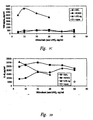
- Figures 3-5 are graphs depicting cytokine induction by RC522 as compared to MPL in overnight whole blood cultures from three human donors (donors A-C, respectively).
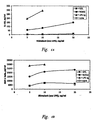
- Figure 6 are graphs depicting cytokine induction by RC522 as compared to MPL in short term whole blood cultures from donor A.
- Figure 7 are graphs depicting cytokine induction by RC522 as compared to MPL in murine (BaIb/c and C3H/HEJ) splenic cultures.
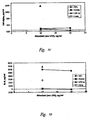
- Figure 8 are graphs' depicting cytokine induction by RC529 and RC552 as compared to MPL in human peripheral blood mononuclear cells (PBMC).
- PBMC peripheral blood mononuclear cells
- the present invention broadly concerns prophylactic and therapeutic methods of treating certain diseases and other medical conditions by administration of an effective amount of one or more monosaccharide compounds described herein or a pharmaceutical composition comprising one or more such compounds: While certain of the monosaccharide compounds have been described for use as adjuvants in combination with exogenously administered antigens in vaccine formulations, and for use in certain other applications, the present invention relates to novel therapeutic methods that employ the compounds in monotherapeutic applications, i.e., in the absence of exogenously administered antigen.
- the present invention provides the use of the described compounds for the manufacture of medicaments for treating, ameliorating and/or substantially preventing infectious diseases in enkaryotic subjects, particularly in animals, preferably in humans
- the ability to stimulate such pathways selectively and with minimal toxicity represents a powerful approach for prophylactic and/or therapeutic treatment modalities against a wide range of infectious agents.
- the medicaments described herein are applicable against essentially any type of infectious agent; including bacteria, viruses, parasites, and fungi.
- the medicaments are useful for the prophylactic and/or therapeutic treatment of bacterial infections by species from Pseudomonas. Escherichia, Klebsiella, Enterobacter, Proteus, Serratia, Candida, Staphylococci, Streptococci, Chlamydia, Mycoplasma and numerous others.
- Illustrative viral conditions that may be treated include those caused, for example, by Influenza viruses, Adenoviruses, parainfluenza viruses, Rhinoviruses, respiratory syncytial viruses (RSVs), Herpes viruses, Cytomegaloviruses, Hepatitis viruses, eg. , Hepatitis B and C viruses, and others:
- Illustrative-fungi include, for example , Aspergillis, Candida albicans, Cryptococcus neoformans, Coccidioides immitus; and others.
- the invention provides the use of the described compounds for the manufacture of medicaments for the treatment of subjects, particularly immunocompromised subjects, that have developed or are at risk for developing infections, such as nosocomial bacterial and viral infections.
- infections such as nosocomial bacterial and viral infections.
- this embodiment fills a significant need for effective prophylactic approaches in the treatment of nosocomial infections.
- the medicaments are for prophylactic treatments for immunocompromised patients, such as HIV-positive patients, who have developed or are at risk for developing pneumonia from either an opportunistic infection or from the reactivation of a suppressed or latent infection.
- immunocompromised patients such as HIV-positive patients
- the present invention in this embodiment provides effective prophylactic methods for this at-risk population.
- the medicaments are used for treating other patient populations that may be immunocompromised and/or at risk for developing infections diseases, including, for example, patients with cystic fibrosis, chronic obstructive pulmonary disease and other immunocompromized and/or institutionalized patients.
- the mono- and disaccharide compounds described herein are employed in the manufacture of medicaments for treating, ameliorating or substantially preventing allergic disorders and conditions, such as sinusitis, chronic rhinosinusitus, asthma, atopic dermatitis and psoriasis.
- This approach is based at least in part on the ability of the monosaccharide compounds to activate the production of cytokines from target cells that can compete with stereotypic allergic-type cytokine responses characterized by IL-4 production or hyperresponsiveness to IL-4 activity.
- monosaccharide compounds are employed in the manufacture of medicaments for treating autoimmune diseases and conditions.
- the monosaccharide compounds for use in this embodiment will typically be selected from those capable of antagonizing, inhibiting or otherwise negatively modulating one or more Toll-like receptors, particularly Tlr2 and/or Tlr4, such that an, autoimmune response associated with a given condition is ameliorated or substantially prevented.
- the methods provided by this embodiment can be used in the treatment of conditions such as inflammatory bowel disease, rheumatoid arthritis, chronic arthritis, multiple sclerosis and psoriasis.
- the efficacy of the prophylactic and therapeutic applications described above are based at least in part on the involvement of the monosaccharide compounds in the modulation of Toll-like receptor activity.
- Toll-like receptors Tlr2, TIr4, and others are believed to be specifically activated, competitively inhibited or otherwise affected by the non-toxic LPS derivatives and mimetics disclosed herein. Accordingly, the invention provides a powerful and selective approach for modulating the innate immune response pathways in animals without giving rise to the toxicities often associated with the native bacterial components that normally stimulate those pathways
- Illustrative monosaccharide compounds employed in the above prophylactic and therapeutic applications comprise compounds having the formula: and pharmaceutically acceptable salts thereof, wherein X is -O- or -NH-; R 1 and R 2 are each independently a (C 2 -C 24 )acyl group, including saturated, unsaturated and branched acyl groups; R 3 is -H or -PO 3 R 11 R 12 , wherein R 11 and R 12 are each independently-H or (C 1 -C 4 )alkyl; R 4 is -H, -CH 3 or -PO 3 R 13 R 14 , wherein R 13 and R 14 are each independently selected from -H and (C 1 -C 4 )alkyl; and Y is of the formula: wherein the subscripts n, m, p and q are each independently an integer of from 0 to 6; R 5 is a (C 2 -C 24 )acyl group (including, as above, saturated, unsaturated and branched acyl groups
- R 3 is -PO 3 H 2
- R 4 is H
- R 10 is H
- R 1 is n-tetradecanoyl
- R 2 is n-octadecanoyl
- R 5 is n-hexadecanoyl
- X is other than -O-.
- the configuration of the 3' stereogenic centers to which the normal fatty acid acyl residues are attached is R or S , but preferably R .
- the stereochemistry of the carbon atoms to which R 6 and R 7 are attached can be R or S. All stereoisomers, enantiomers, diastereomers and mixtures thereof are considered to be within the scope of the present invention.
- the acyl groups R 1 , R 2 and R 5 will be selected such that at least two of the groups are (C 2 -C 6 )acyl. Further preferred are those embodiments in which the total number of carbon atoms in R 1 , R 2 and R 5 is from about 6 to about 22, more preferably about from about 12 to about 18. In other preferred embodiments, X is O and Z is O.
- the subscripts n, m, p and q are preferably integers of from 0 to 3, more preferably, 0 to 2. Of the remaining substituents, R 6 and R 7 are preferably H.
- the present invention further contemplates those embodiments in which the preferred substituents are combined in one molecule.
- R 1 R 2 and R 5 are selected from (C 12 -C 20 )acyl with the proviso that the total number of carbon atoms in R 1 , R 2 and R 5 is from about 44 to about 60. More preferably, the total number of carbon atoms in R 1 , R 2 and R 5 is from about 46 to about 52. Still further preferred are those embodiments in which X and Z are both -O-.
- alkyl by itself or as part of another substituent, means, unless otherwise stated, a straight or branched chain, or cyclic hydrocarbon radical, or combination thereof which may be fully saturated, mono- or polyunsaturated and can include di- and multivalent radicals, having the number of carbon atoms designated ( i.e ., C 1 -C 10 means one to ten carbons).
- saturated hydrocarbon radicals include groups such as methyl, ethyl n-propyt isopropyl n-bidyl t-butyl, isobutyl, sec-butyl, cyclohexyl, (cyclohexyl)methyl, cyclopropylmethyl, homologs and isomers of, for example, n-pentyl, n-hexyl, n-heptyl, n-octyl, and the like.
- An unsaturated alkyl group is one having one or more double bonds or triple bonds.
- unsaturated alkyl groups include vinyl, 2-propenyl, crotyl, 2-isopmtenyl 2-(butadienyl), 2,4-pentadienyl, 3-(1,4-pentadienyl), ethynyl, 1- and 3-propynyl, 3-butynyl, and the higher homologs and isomers.
- alkyl group will have from 1 to 24 carbon atoms.
- alkoxy "alkylamino” and “alkylthio” (or thioalkoxy) are used in their conventional sense, and refer to those alkyl groups attached to the remainder of the molecule via an oxygen atom, an amino group, or a sulfur atom, respectively.
- acyl refers to a group derived from an organic acid by removal of the hydroxy group.
- examples of acyl groups include acetyl, propionyl, dodecanoyl, tetradecanoyl, isobutyryl, and the like. Accordingly, the term “acyl” is meant to include a group otherwise defined as -C(O)-alkyl.
- R', R" and R"' each independently refer to hydrogen and unsubstituted (C 1 -C 8 )alkyl.
- R' and R" When R' and R" are attached to the same nitrogen atom, they can be combined with the nitrogen atom to form a 5-, 6-, or 7-membered ring.
- - NR'R is meant to include 1 pyrrolidinyl and 4-morpholinyl.
- salts are meant to include salts of the active compounds which are prepared with relatively nontoxic acids or bases, depending on the particular substituents found on the compounds described herein.
- base addition salts can be obtained by contacting the neutral form of such compounds with a sufficient amount of the desired base, either neat or in a suitable inert solvent.
- pharmaceutically acceptable base addition salts include sodium, potassium, calcium, ammonium, organic amino, or magnesium salt, or a similar salt.
- acid addition salts can be obtained by contacting the neutral form of such compounds with a sufficient amount of the desired acid, either neat or in a suitable inert solvent
- suitable inert solvent examples include those derived from inorganic acids like hydrochloric, hydrobromic, nitric, carbonic, monohydrogencarbonic, phosphoric, monohydrogenphosphoric, dihydrogenphosphoric, sulfuric, monohydrogensulfuric, hydriodic, or phosphorous acids and the like, as well as the salts derived from relatively nontoxic organic acids like acetic, propionic, isobutyric, maleic, malonic, benzoic, succinic, suberic, fumaric, lactic, mandelic, phthalic, benzenesulfonic, p-tolylsulfonic, citric, tartaric, methanesulfonic, and the like.
- salts of amino acids such as arginate and the like, and salts of organic acids like glucuronic or galactunoric acids and the like (see, for example, Berge, S.M., et al, "pharmaceutical Salts", Journal of Pharmaceutical Science, 66, 1-19, 1977 ).
- Certain specific compounds of the present invention contain both basic and acidic functionalities that allow the compounds to be converted into either base or acid addition salts.
- the neutral forms of the compounds may be regenerated by contacting the salt with a base or acid and isolating the parent compound in the conventional manner
- the parent form of the compound differs from the various salt forms in certain physical properties, such as solubility in polar solvents, but otherwise the salts are equivalent to the parent form of the compound for the purposes of the present invention.
- the compounds may be in a prodrug form.
- Prodrugs of the compounds described herein are those compounds that readily undergo chemical changes under physiological conditions to provide the compounds of the present invention. Additionally, prodrugs can be converted to the described compounds by chemical or biochemical methods in an ex vivo environment. For example, prodrugs can be slowly converted to the compounds when placed in a transdermal patch reservoir with a suitable enzyme or chemical reagent.
- Certain compounds can exist in unsolvated forms as well as solvated forms, including hydrated forms. In general, the solvated forms are equivalent to unsolvated forms and are intended to be encompassed within the scope of the present invention. Certain compounds may exist in multiple crystalline or amorphous forms. In general, all physical forms are equivalent for the uses contemplated by the present invention and are intended to be within the scope of the present invention.
- Certain compounds used in the present invention possess asymmetric carbon atoms (Optical centers) or double bonds; the racemates, diastereomers, geometric isomers and individual isomers are all intended to be encompassed within the scope of the present invention.
- the compounds may also contain unnatural proportions of atomic isotopes at one or more of the atoms that constitute such compounds.
- the compounds may be radiolabeled with radioactive isotopes, such as for example tritium ( 3 H), iodine-125 ( 125 I) or carbon-14 ( 14 C). All isotopic variations of the described compounds, whether radioactive or not, are intended to be encompassed within the scope of the present invention.
- the monosaccharide compounds can be prepared by any suitable means, many of which have been described. For example, certain, compounds useful in the present invention are described in co-pending applications Ser. Nos. 09/953,826 . 09/439,839 (Bled November 12; 1999)- and in PCT/US98/09385 , the disclosures of which are incorporated herein by reference in their entities. Other compounds can be prepared in a manner similar to that described for RC-552 (L34) in U.S. Patent No. 6,013,640 . Still other compounds can be prepared using methods outlined in Johnson, et al., J. Med Chem. 42:4640-4649 (1999) , Johnson et al.; Bioorg. Med Chem. Lett.
- Still other compounds can be prepared according to, for example, U.S. Patent Nos. 4,436,727 ; 4,877,611 ; 4,866,034 ; 4,912,094 ; and 4,987,237 .
- the synthetic methods described in the above-noted references and other synthetic methods otherwise familiar in the art are broadly applicable to the preparation these compounds.
- the convergent methods described therein can be modified to use alternate acylating agents, or can be initiated with commercially available materials having appropriate acyl groups attached.
- the present invention concerns pharmaceutical compositions comprising one or more of the monosaccharide compounds disclosed herein in pharmaceutically-acceptable carrier excipient for administration to a cell, tissue, animal or plant, either alone, or in combination with one or more other modalities of therapy.
- the pharmaceutical compositions are formulated and administered in the absence of exogenous antigen, i. e., are used in monotherapeutic applications.
- the pharmaceutical compositions of the invention will comprise one or more of the monosaccharide compounds described herein.
- Illustrative carriers for use in formulating the pharmaceutical compositions include, for example, oil-in-water or water-in-oil emulsions, aqueous compositions with or without inclusion of organic co-solvents suitable for intravenous (TV) use, liposomes or suriactant-containing vesicles, microspheres, miccobeads and microsomes, powders, tablets, capsules, suppositories, aqueous suspensions, aerosols, and other carriers apparent to one of ordinary skill in the art.
- TV intravenous
- the pharmaceutical compositions will comprise one or more buffers (e.g ., neutral buffered saline or phosphate buffered saline), carbohydrates (eg ., glucose, mannose, sucrose or dextrans), mannitol, proteins, polypeptides or amino acids such as glycine, antioxidants, bacteriostats, chelating agents such as EDTA or glutathione, adjuvants (e.g ., aluminum hydroxide), solutes that render the formulation isotonic, hypotonic or weakly hypertonic with the blood of a recipient, suspending agents, thickening agents and/or preservatives.
- buffers e.g ., neutral buffered saline or phosphate buffered saline
- carbohydrates e.g ., glucose, mannose, sucrose or dextrans
- mannitol proteins
- proteins polypeptides or amino acids
- proteins e.glycine
- antioxidants e.g g g
- aqueous formulations will be preferred, particularly those comprising an effective amount of one or more surfactants.
- me composition can be in the form of a micellar dispersion comprising at least one suitable surfactant, e.g ., a phospholipid surfactant
- suitable surfactant e.g ., a phospholipid surfactant
- phospholipids include diacyl phosphatidyl glycerols, such as dimyristoyl phosphatidyl glycerol (DPMG), dipalmitoyl phosphatidyl glycerol (DPPG), and distearoyl phosphatidyl glycerol (DSPG), diacyl phosphatidyl cholines; such as dimyristoyl phosphatidylcholine (DPMC), dipalmitoyl phosphatidylcholine (DPPC), and distearoyl phosphatidylcholine (DSPC); diacyl phosphatidic acids, such
- a surfactant:mono/disaccharide molar ratio in an aqueous formulation will be from about 10:1 to about 1:10, more typically from about 5:1 to about 1:5, however any effective amount of surfactant may be used in an aqueous formulation to best suit the specific objectives of interest.
- the compounds and pharmaceutical compositions can be formulated for essentially any route of administration, e.g., injection, inhalation by oral or intranasal routes, rectal , vaginal or intratracheal instillation, ingestion, or transdermal or transmucosal routes, and the like.
- routes of administration e.g., injection, inhalation by oral or intranasal routes, rectal , vaginal or intratracheal instillation, ingestion, or transdermal or transmucosal routes, and the like.
- the therapeutic effects attainable by the compositions can be, for example, systemic, local, tissue-specific, etc., depending of the specific needs of a given application of the invention.
- Illustrative formulations can be prepared and administered parenterally, i.e. , intraperitoneally, subcutaneously, intramuscularly or intravenously.
- a carrier for intravenous use includes a mixture of 10% USP ethanol, 40% USP propylene glycol or polyethylene glycol 600 and the balance USP Water for Injection. (WFI).
- WFI Water for Injection.
- Other illustrative earners include 10% USP ethanol and USP WFI; 0.01-0.1% triethanolamine in USP WF1; or 0.01-0.2% dipalmitoyl diphosphatidylcholine in USP WFI; and 1-10% squalene or parenteral vegetable oil-in-water emulsion.
- Pharmaceutically acceptable parenteral solvents will generally be selected such that they provide a solution or dispersion which may be filtered through a 0.22 micro filter without removing the active ingredient.
- Illustrative examples of carriers for subcutaneous or intramuscular use include phosphate buffered saline (PBS) solution, 5% dextrose in WFI and 0.01-0.1% triethanolamine in 5% dextrose or 0.9% sodium chloride in USP. WFI, or a 1 to 2 or 1 to 4 mixture of 10% USP ethanol, 40% propylene glycol and the balance an acceptable isotonic solution such as 5% dextrose or O.9% sodium chloride; or 0.01-0.2% dipalmitoyl diphosphatidylcholine in USP WFI and 1 to 10% squalene or parenteral vegetable oil-in-water emulsions.
- PBS phosphate buffered saline
- Examples of carriers for administration via mucosal surfaces depend upon the particular route, e.g. , oral, sublingual, intranasal, etc.
- illustrative examples include pharmaceutical grades of mannitol, starch, lactose, magnesium stearate, sodium saccharide, cellulose, magnesium carbonate and the like, with mannitol being preferred.
- illustrative examples include polyethylene glycol, phospholipids, glycols and glycolipids, sucrose, and/or methylcellulose, powder suspensions with or without bulking agents such as lactose and preservatives such as benzalkonium chloride, EDTA.
- the phospholipid 1,2 dipalinitoyl-sn-glycero-3-phosphocholine is used as an isotonic aqueous carrier at about 0.01-0.2% for intranasal administration of the compound of the subject invention at a concentration of about 0.1 to 3.0 mg/ml.
- illustrative carriers When administered by inhalation, illustrative carriers include polyethylene glycol or glycols, DPPC, methylcellulose, powdered dispersing agents, and preservatives, with polyethylene glycols and DPPC being preferred.
- the mono- or disaccharide compounds be in a nebulized form when administration by inhalation.
- delivery may be by use of a single-use delivery device, a mist nebulizer, a breath-activated powder inhaler, an aerosol metered-dose inhaler (MDI) or any other of the numerous nebulizer delivery devices available in the art.
- MDI aerosol metered-dose inhaler
- mist tents or direct administration through endotracheal tubes may also be used. Delivery via an intratracheal or nasopharyngeal mode will be efficacious for certain indications.
- the compounds can be evaluated in a variety of assay formats to identify and select those having the characteristics best suited for a given application of the invention.
- animal models can be used for identifying and evaluating cytokine release profiles into systemic circulation following administration of a mono- and/or disaccharide compound.
- various in vitro and in vivo models exist for examining changes in one or more aspects of an immune response to different antigenic components in order to identify compounds best suited for eliciting a specific immune response of interest.
- a compound can be contacted with target cells, such as macrophages, dendritic cells or Langerhans cells in vitro, and elaborated cytokines can be measured.
- gene expression arrays can be used to identify specific pathways activated or inhibited by a particular mono- or disaccharide of interest.
- the compounds disclosed herein may be administered in combination with other therapeutic modalities, such as antimicrobial, antiviral and antifungal compounds or therapies, various DNA-based therapeutics, RNA-based therapeutics, polypeptide-based therapeutics. and/or with other immunoeffectors.
- other therapeutic modalities such as antimicrobial, antiviral and antifungal compounds or therapies, various DNA-based therapeutics, RNA-based therapeutics, polypeptide-based therapeutics. and/or with other immunoeffectors.
- essentially any other component may also be included, given that the additional component(s) do not cause a significant adverse effect upon contact with the target cells or host tissues.
- the compositions may thus be delivered along with various other agents as required or desired for the specific embodiment(s) of the invention being implemented.
- the pharmaceutical compositions of the invention can include, or be used in conjunction with, DNA encoding one or more therapeutic proteins, antisense RNAs, ribozymes or the like.
- the DNA may be present within any of a variety of delivery systems known to those of ordinary skill in the art, including nucleic acid expression systems, bacteria and viral expression systems. Numerous gene delivery techniques are well known in the art, such as those described by Rolland, Crit. Rev. Therap. Drug Carrier Systems 15:143-198, 1998 , and references cited therein. Appropriate nucleic acid expression systems contain the necessary DNA sequences for expression in the patient (such as a suitable promoter and terminating signal).
- the DNA may be introduced using a viral expression system (e.g ., vaccinia or other pox virus, retrovirus, or adenovirus), which may involve the use of a non-pathogenic (defective), replication competent virus.
- a viral expression system e.g ., vaccinia or other pox virus, retrovirus, or adenovirus
- Suitable systems are disclosed, for example, in Fisher-Hoch et al., Proc. Natl. Acad Sci. USA 86:317-321, 1989 ; Flexner et al., Ann N.Y. Acad Sci. 569:86-103, 1989 ; Flexner et al., Vaccine 8:17-21, 1990 ; U.S. Patent Nos.
- the DNA may also be "naked," as described, for example, in Ulmer et al., Science 259:1745-1749, 1993 and reviewed by Cohen, Science 259:1691-1692, 1993 .
- the uptake of naked DNA may be increased by coating the DNA onto biodegradable beads, which are efficiently transported into the cells.
- a pharmaceutical composition of the invention may comprise both a polynucleotide and a protein component.
- cytokines such as GM-CSF, interferons or interleukins to further modulate an immune response of interest.
- additional components may be included in the compositions to further enhance the induction of high levels of Th1-type cytokines (e.g ., IFN- ⁇ , TNF ⁇ , IL-2 and IL-12).
- Th1-type cytokines e.g ., IFN- ⁇ , TNF ⁇ , IL-2 and IL-12
- Th2-type cytokines e.g ., IL-4, IL-5, IL-6 and IL-10) may be desired for certain therapeutic applications.
- the levels of these cytokines may be readily assessed using standard assays. For a review of the families of cytokines, see Mosmann and Coffman, Ann. Rev. Immunol. 7:145-173, 1989 .
- compositions for use in induction of Th1-type cytokines include, for example, a combination of CpG-containing oligonucleotides (in which the CpG dinucleotide is unmethylated) as described, for example, in WO 96/02555 , WO 99/33488 and U.S. Patent Nos. 6,008,200 and 5,856,462 .
- Immunostimulatory DNA sequences are also described, for example, by Sato et al., Science 273:352, 1996 .
- Other suitable immunostimulants comprise saponins, such as QS21 1 (Aquila Biopharmaceuticals Inc., Framingham, MA), and related saponin deriviatives and mimetics thereof.
- an effective amount is that amount which shows a response over and above the vehicle or negative controls.
- the precise dosage of the compound of the subject invention to be administered to a patient will depend the route of administration, the pharmaceutical composition, and the patient.
- phrases "pharmaceutically-acceptable" refers to molecular entities and compositions that do not produce an allergic or similar untoward reaction when administered to a human.
- carrier or “excipient” includes any and all solvents, dispersion media, vehicles, coatings, diluents, antibacterial and antifungal agents, isotonic and absorption delaying agents, buffers, carrier solutions, suspensions, colloids, and the like.
- carrier or “excipient” includes any and all solvents, dispersion media, vehicles, coatings, diluents, antibacterial and antifungal agents, isotonic and absorption delaying agents, buffers, carrier solutions, suspensions, colloids, and the like.
- a series of L-Seryl Aminoalkyl Glucosaminide Phosphate compounds was prepared as described in U.S. Patent No. 6,113,918, issued September 5, 2000 , and in U.S. Patent Application No. 09/439,839, filed November 12,1999 , each of which is incorporated herein by reference in its entirety.
- a dose of 20 ⁇ g of L-Seryl AGPs (RC-S26, RC-554, RC-555, RC-537, RC-527, RC-538, RC-560, RC-512 and vehicle only) was given to groups of female BALB/c mice by intranasal (i.n.) administration.
- the mice were monitored for three subjective indicators of disease (i.e. disease index) including observing ruffled fur, hunched posture and labored breathing.
- the results of these experiments is presented in Figure 1 . These data indicated that in administration of the RC-537, RC-527, RC-538 and RC-560 induce some toxicity in mice at the given dose of 20 ⁇ g.
- a dose of 20 ⁇ g L-Seryl AGPs (RC-526, RC.554, RC-555, RC-537, RC-527, RC-538, RC-560, RC-512 and vehicle only) was given to groups of female BALB/c mice by intranasal (i.n.) administration 2 days prior to or the day of lethal influenza challenge. All mice were challenged with approximately 2 LD50 infectious influenza A/HK/68 administered i.n. The disease index (ruffled fur, hunched posture and labored breathing) was monitored during days 4-19 following influenza challenge. Weight loss and mortality were monitored for 21 days following influenza challenge. The results of these experiments are presented in Figure 2 .
- This Example discloses cytokine induction by the synthetic lipid A compound RC552 as compared to the modified natural substance monophosphoryl lipid A (MPL) using human whole blood cultures and mouse splenocyte culture.
- MPL monophosphoryl lipid A
- Lipid A compounds were tested by reconstitution in 0.2% triethanolamine in sterile water for irrigation, incubated at 56°C and sonicated for 2x 10 minutes at 37°C.
- LPS 055B5 Sigma-Aldrich; St Louis, MO was diluted into PBS.
- mice BALB/c, DBA/2 and C3H/HEJ mice were purchased from The Jackson Laboratory (Bar Harbor, ME). Spleens were taken from the mice between 2PM and 3 PM, and separate single cell suspensions were obtained for each .mouse strain. Red blood cells were lysed using Tris-ammonium chloride solution (Sigma-Aldrich), cells were washed and counted using Trypan Blue (Sigma-Aldrich) exclusion. One million splenocytes were cultured per well in 1.0 mL of culture medium.
- Splenic culture medium was designed for 5 day or longer cultures of mouse splenocytes and consisted of RPMI 1640 (Sigma-Aldrich) supplemented to 5% with fetal bovine serum (HyClone; Logan, UT), 100 ug/mL Gentamicin (Sigma-Aldrich), 250 ng/mL amphothericin (In Vitrogen Life Technologies; Carlsbad, California), 1x ITS (bovine insulin 500 ng/mL, human transferring 500 ng/mLg, sodium selenite 250 ng/mL, Sigma), beta-mercaptoethanol 43nM (Sigma-Aldrich) purivic acid I mM (Sigma-Aldrich), HEPES 10 mM (Sigma-Aldrich). Data from these experiments is presented herein as Figure 7 .
- cytokines were measured: IL-10, MIP-1 beta, TNF alpha, and IL-8. Two donors were tested once and one donor was tested twice. It is noteworthy that the donor who was tested twice had very high background TNF alpha at one test, but very low background TNF alpha one month later. Significant, however, is the time span of culture. High background TNF alpha was obtained with a 5.5 hour culture, and low background TNF alpha was obtained with an overnight, about 24 hour, culture.
- RC552 was similar to MPL for elaboration of TNF alpha in two of three 24 hours cultures, and one 5.5 hour culture. BL-8 induction, however, by RCS52 was different than that for MPL in three of three cases. IL-8 induction by RC552 was lessened for two overnight cultures compared to MPL, but greater than MPL in one overnight culture.
- IL-10 induction by RC552 was less than that for MPL.
- MIP-1 beta induction was lessened in one of 3 cases of overnight culture.
- C3H/HEJ mice are genetic hyporesponders to LPS due to a mutation in toll-receptor 4.
- an oligonucleotide stimulant was used as a positive control for C3H/HEJ cultures. This oligonucleotide induced large amounts of IL-6 in BALB/c mice (1000' pg/mL) and in C3H/HEJ mice (4885 pg/mL).
- MIP-1 beta was induced in BALB/c and C3H/HEJ cultures (589 pg/mL and 554 pg/mL), as was IL-10 (342 pg/ml and 609 pg/mL), and TNF alpha (204 pg/mL and 30 pg/mL) in response to 10 ug/mL MPL or RC552, respectively.
- MPL nor RC552 induced a cytokine response using C3H/HFJ splenocytes.
- UL-10 MIP-1 beta, TNF alpha and IL-6 were induced.
- RC552 induced less MEP-1 beta, TNF alpha and IL-6 than did MPL at the same concentrations.
- RC552 induced very little IL-10 (10.4 to 11.6 pg/mL) compared to MPL (1144.1 to 176.6 pg/mL).
- RC552 When tested in a solution of 0.2% triethanolamine, RC552 has a similar but not identical pro-inflammatory profile for TNF alpha induction as does MPL in two of three overnight cultures and one short-term culture of human whole blood. See, Figures 3-5 (overnight cultures for donors A-C, respectively) and Figure 6 (short-term culture for donor A).
- MIP-1 beta induction by RC552 was similar in two of three overnight cultures. Lessened IL-10 was induced by RC552 than MPL in one overnight culture. IL-8 induction was different than that for MPL in all cases tested.
- RC552 signals via toll-like receptor 4.
- BALB/c mice that are lipid A responsive, RC552 induced a lessened cytokine profile at the concentrations tested.
- concentrations tested were at the high end of a dose response relationship, and RC552 induced slightly greater MIP-1 beta and TNF alpha at the lower concentration (10 ⁇ g/mL) than at the higher concentration (20 ⁇ g/mL) tested.
- synthetic lipid A compound RC552 lessened capacity for IL-10 induction in 2 day mouse splenocyte cultures and in 1 of 3 human blood cultures overnight, when tested at high concentrations of stimulant.
- less TNF alpha was induced in overnight human blood cultures by RC552 than MPL.
- About equal TNF alpha levels were induced in short term (5.5 hour) cultures of human blood by RC552 compared to MPL.
- RC552 induced very little 6 hour TNF alpha as opposed to MPL which had measurable 6 hour RNA.
- PBMC peripheral blood mononuclear cells
- PBMC peripheral blood mononuclear cells
- RCS29 did not achieve dose-responsiveness at the lowest dose for IL-6 or IL-8.
- RC529 induced more IL-6, IL-10 and MIP-1 beta than did MPL.
- a disaccharide compound, RC552 was generally intermediate in stimulatory capability on a mass basis. See, Figure 7 . These data show that RC529 is a strong inducer of 1L-6, IL-10 and MIP-1 beta from frozen human PBMC.
Landscapes
- Health & Medical Sciences (AREA)
- Chemical & Material Sciences (AREA)
- Life Sciences & Earth Sciences (AREA)
- Organic Chemistry (AREA)
- General Health & Medical Sciences (AREA)
- Engineering & Computer Science (AREA)
- Veterinary Medicine (AREA)
- Animal Behavior & Ethology (AREA)
- Medicinal Chemistry (AREA)
- Pharmacology & Pharmacy (AREA)
- Public Health (AREA)
- Nuclear Medicine, Radiotherapy & Molecular Imaging (AREA)
- General Chemical & Material Sciences (AREA)
- Chemical Kinetics & Catalysis (AREA)
- Bioinformatics & Cheminformatics (AREA)
- Molecular Biology (AREA)
- Immunology (AREA)
- Biotechnology (AREA)
- Biochemistry (AREA)
- Genetics & Genomics (AREA)
- Pulmonology (AREA)
- Communicable Diseases (AREA)
- Oncology (AREA)
- Epidemiology (AREA)
- Virology (AREA)
- Dermatology (AREA)
- Neurosurgery (AREA)
- Neurology (AREA)
- Tropical Medicine & Parasitology (AREA)
- Biomedical Technology (AREA)
- Rheumatology (AREA)
- Crystallography & Structural Chemistry (AREA)
- Hospice & Palliative Care (AREA)
- Transplantation (AREA)
- AIDS & HIV (AREA)
- Psychiatry (AREA)
- Pain & Pain Management (AREA)
- Otolaryngology (AREA)
- Orthopedic Medicine & Surgery (AREA)
- Physical Education & Sports Medicine (AREA)
Claims (44)
- L'utilisation pour la fabrication d'un médicament pour traiter une maladie infectieuse, une maladie auto-immune ou un état allergique par monothérapie (c'est-à-dire en l'absence d'antigène exogène), d'un ou plusieurs composés ayant la formule :

X est un élément choisi dans le groupe comprenant -0- et -NH- ;
R1 et R2 sont chacun des éléments choisis indépendamment dans le groupe acyle (C2-C24) ;
R3 est un élément choisi dans le groupe comprenant -H et -PO3R11R12, où R11 et R12 sont chacun des éléments choisis indépendamment dans le groupe comprenant -H et alkyle (Ci - C4) ;
R4 est un élément choisi dans le groupe comprenant -H, -CH3 et -PO3R13R14, où R13 et R14 sont chacun des éléments choisis indépendamment dans le groupe comprenant -H et alkyle (Ci - C4) ; et
Y est un radical de formule :
R5 est un acyle (C2-C24) ;
R6 et R7 sont des éléments choisis indépendamment dans le groupe comprenant H et CH3 ;
R8 et R9 sont des éléments choisis indépendamment dans le groupe comprenant H, OH, alkoxy (C1-C4), -PO3H2, -OPO3H2, -SO3H, -OSO3H, -NR15R16, -SR15, -CN, -NO2, -CHO, -CO2R15, -CONR15R16, -PO3R15R16, -OPO3R16, -SO3R15 et -OSO3R15 où R15 and R16 sont chacun des éléments choisis indépendamment dans le groupe comprenant H et alkyle (C1-C4) ; et
Z est -0- ou -S- ;
à la condition que, quand R3 est -PO3R11R12, R4 soit autre que -PO3R13R14. - L'utilisation selon la revendication 1 dans laquelle le médicament est pour traiter une infection bactérienne ou virale.
- L'utilisation selon la revendication 1, dans laquelle le médicament est pour traiter la pneumonie.
- L'utilisation selon la revendication 3, dans laquelle le médicament est pour traiter la pneumonie chez un patient séropositif.
- L'utilisation selon la revendication 2, dans laquelle le médicament est pour traiter une infection chronique.
- L'utilisation selon l'une des revendications 1 et 2, dans laquelle le médicament est pour traiter une infection chez un sujet immunocompromis.
- L'utilisation selon la revendication 6, dans laquelle le médicament est pour soigner un patient ayant une maladie pulmonaire obstructive chronique.
- L'utilisation selon la revendication 1, dans laquelle le médicament est pour traiter une maladie auto-immune choisie parmi une maladie intestinale inflammatoire, un rhumatisme articulaire, l'arthrite chronique, la sclérose en plaques et le psoriasis.
- L'utilisation selon la revendication 8, dans laquelle le médicament est pour traiter une maladie intestinale inflammatoire.
- L'utilisation selon la revendication 1, dans laquelle le médicament est pour traiter un état allergique choisi dans le groupe comprenant l'asthme, la dermatite atopique, un désordre allergique saisonnier et une rhino-sinusite chronique.
- L'utilisation selon la revendication 1, dans laquelle le médicament est pour traiter une dite maladie ou un dit état en modulant la production de cytokines.
- L'utilisation selon la revendication 11, dans laquelle le médicament est pour traiter une dite maladie ou un dit état en augmentant la production de cytokines.
- L'utilisation selon la revendication 11, dans laquelle le médicament est pour traiter une dite maladie ou un dit état par inhibition de la production de cytokines.
- L'utilisation selon la revendication 1, dans laquelle le médicament est pour moduler l'activité des récepteurs "Toll-like".
- L'utilisation selon la revendication 14, dans laquelle le médicament est pour activer les récepteurs "Toli-üke".
- L'utilisation selon la revendication 14, dans laquelle le médicament est pour moduler négativement l'activité des récepteurs "Toll-Iike".
- L'utilisation selon l'une quelconque des revendications 1 à 16, dans laquelle au moins deux des dits R1, R2 et R5 sont choisis dans le groupe acyle (C2-C6).
- L'utilisation selon la revendication 17, dans laquelle deux des dits R1, R2 et R5 sont choisis indépendamment dans le groupe acyle (C2-C6) et le nombre total d'atomes de Carbone dans R1, R2 et R5 est de 6 à 22.
- L'utilisation selon la revendication 17, dans laquelle deux des dits R1, R2 et R5 sont choisis indépendamment dans le groupe acyle (C2-C6) et le nombre total d'atomes de Carbone dans R1, R2 et R5 est de 12 à 18.
- L'utilisation selon l'une des revendications 8 et 9, dans laquelle au moins deux des dits R1, R2 et R5 sont choisis dans le groupe acyle (C2-C6).
- L'utilisation selon la revendication 20, dans laquelle deux des dits R1, R2 et R5 sont choisis indépendamment dans le groupe acyle (C2-C6) et le nombre total d'atomes de Carbone dans R1, R2 et R5 est d'environ 6 à environ 22.
- L'utilisation selon la revendication 20, dans laquelle deux des dits R1, R2 et R5 sont choisis indépendamment dans le groupe acyle (C2-C6) et le nombre total d'atomes de Carbone dans R1 R2 et R5 est de 12 à environ 18.
- L'utilisation selon l'une quelconque des revendications à 16, dans laquelle deux des dits R1, R2 et R5 sont choisis indépendamment dans le groupe acyle (C12-C24) à la condition que le nombre total d'atomes de Carbone dans R1, R2 et R5 soit d'environ 44 à environ 60.
- L'utilisation selon la revendication 23, dans laquelle le nombre total d'atomes de Carbone est d'environ 46 à environ 52.
- L'utilisation selon l'une quelconque des revendications précédentes, dans laquelle X et Z sont tous les deux -O-.
- L'utilisation selon l'une quelconque des revendications précédentes, dans laquelle ledit médicament est pour être administré au dit sujet par une voie choisie dans le groupe comprenant les voies parentérale, orale, intraveineuse, intra-nasale, percutanée et trans-mucosale, l'infusion et l'inhalation.
- L'utilisation selon l'une quelconque des revendications 1 à 25, dans laquelle ledit médicament est pour être administré par voie intra-nasale.
- L'utilisation selon l'une quelconque des revendications précédentes, dans laquelle le composé ou les composés sont sous la forme de sels pharmaceutiquement acceptables.
- L'utilisation selon l'une quelconque des revendications 1 à 27, dans laquelle le composé ou les composés sont sous la forme d'une prodrogue ou de prodrogues.
- L'utilisation selon l'une quelconque des revendications précédentes, dans laquelle le médicament est sous la forme d'une composition comprenant en outre un ou plusieurs porteurs pharmaceutiquement acceptables.
- L'utilisation selon l'une quelconque des revendications 1 à 29, dans laquelle le médicament est sous la forme d'une composition aqueuse comprenant de l'eau et un ou plusieurs surfactants.
- L'utilisation selon la revendication 31, dans laquelle un ou plusieurs dits surfactants sont choisis dans le groupe comprenant le glycérol phosphatidylique de dimyristol (DPMG), le glycérol phosphatidylique dipalmitoyl (DPPG), le glycérol phosphatidylique distéaroyl (DSPG), dimyristoyl phosphatidylcholine (DPMC), dipalmitoyl phosphatidylcholine (DPPC), distéaroyl phosphatidylcholine (DSPC) ; acide phosphatidique dimyristoyle (DPMA), acide phosphatidique dipalmitoyle (DPPA), acide phosphatidique distéaroyl (DSPA) ; éthanolamines dimyristoyl phosphatidyliques (DPME), éthanolamines phosphatidyliques de dipalmitoyl (DPPE) et éthanolamines phosphatidyliques de distearoyl (DSPE).
- L'utilisation selon l'une des revendications 31 et 32, dans laquelle le rapport molaire du dit composé ou des dits composés au surfactant est d'environ 10: à environ 1:10.
- L'utilisation d'un composé comme défini dans l'une quelconque des revendications 1, 17 à 19, 23 à 25, dans la fabrication d'un médicament anti-infectieux sans antigène exogène avec des instructions pour l'utilisation du médicament, sans antigène exogène, pour traiter une maladie infectieuse.
- L'utilisation selon la revendication 34, dans laquelle la maladie est la pneumonie.
- L'utilisation selon l'une des revendications 34 et 35, dans laquelle la maladie est chez un sujet immunocompromis.
- L'utilisation d'un composé comme défini dans l'une quelconque des revendications 1, 17 à 19, 23 à 25, dans la fabrication d'un médicament sans antigène exogène contre une maladie autoimmune avec des instructions pour l'utilisation du médicament, sans antigène exogène, pour traiter (par exemple améliorer ou empêcher sensiblement) une maladie autoimmune.
- L'utilisation de la revendication 37, dans laquelle la maladie est comme définie dans la revendication 8.
- L'utilisation d'un composé comme défini dans l'une quelconque des revendications 1, 17 à 19, 23 à 25 dans la fabrication d'un médicament anti-allergie sans antigène exogène avec des instructions pour l'utilisation du médicament, sans antigène exogène, pour traiter une allergie.
- L'utilisation selon la revendication 39, dans laquelle l'allergie est comme définie dans la revendication 10.
- L'utilisation pour la fabrication d'un médicament pour améliorer ou empêcher sensiblement une maladie infectieuse ou une maladie autoimmune comprenant un composé choisi parmi des composés L-Seryl Aminoalkyle Glucosaminide Phosphate, le médicament étant pour traiter ladite maladie infectieuse ou autoimmune par monothérapie.
- L'utilisation selon la revendication 41, dans laquelle le composé est un L-Seryl Aminoalkyle Glucosaminide Phosphate choisi parmi les RC-526, RC-554, RC-555, RC-537, RC-527, RC-538, RC-560 et RC-512.
- L'utilisation selon la revendication 41, dans laquelle ledit composé L-Seryl Aminoalkyle Glucosaminide Phosphate est choisi parmi les RC-538, RC-560 et RC-512.
- L'utilisation selon l'une quelconque des revendications 1 à 42, dans laquelle le médicament est pour améliorer ou empêcher sensiblement ladite maladie, l'état ou l'allergie.
Priority Applications (2)
| Application Number | Priority Date | Filing Date | Title |
|---|---|---|---|
| EP08153476A EP2000144A1 (fr) | 2000-05-19 | 2001-05-18 | Traitement prophylactique et thérapeutique des maladies infectieuses et autres avec composés à base de mono et di-saccharide |
| CY20081100772T CY1108211T1 (el) | 2000-05-19 | 2008-07-24 | Προφυλακτικη και θεραπευτικη αγωγη των μολυσματικων, αυτοανοσων και αλλεργικων νοσων με ενωσεις βασης μονοσακχαριτη |
Applications Claiming Priority (5)
| Application Number | Priority Date | Filing Date | Title |
|---|---|---|---|
| US20582000P | 2000-05-19 | 2000-05-19 | |
| US205820P | 2000-05-19 | ||
| US28156701P | 2001-04-04 | 2001-04-04 | |
| US281567P | 2001-04-04 | ||
| PCT/US2001/016327 WO2001090129A2 (fr) | 2000-05-19 | 2001-05-18 | Traitement prophylactique et therapeutique de maladies infectieuses et autres avec des composes a base de mono- et disaccharides |
Related Child Applications (1)
| Application Number | Title | Priority Date | Filing Date |
|---|---|---|---|
| EP08153476A Division EP2000144A1 (fr) | 2000-05-19 | 2001-05-18 | Traitement prophylactique et thérapeutique des maladies infectieuses et autres avec composés à base de mono et di-saccharide |
Publications (2)
| Publication Number | Publication Date |
|---|---|
| EP1284740A2 EP1284740A2 (fr) | 2003-02-26 |
| EP1284740B1 true EP1284740B1 (fr) | 2008-05-21 |
Family
ID=26900794
Family Applications (2)
| Application Number | Title | Priority Date | Filing Date |
|---|---|---|---|
| EP01948222A Expired - Lifetime EP1284740B1 (fr) | 2000-05-19 | 2001-05-18 | Traitement prophylactique et therapeutique de maladies infectieuses allergiques rt autoimmunes avec des composes a base de monosaccharides |
| EP08153476A Withdrawn EP2000144A1 (fr) | 2000-05-19 | 2001-05-18 | Traitement prophylactique et thérapeutique des maladies infectieuses et autres avec composés à base de mono et di-saccharide |
Family Applications After (1)
| Application Number | Title | Priority Date | Filing Date |
|---|---|---|---|
| EP08153476A Withdrawn EP2000144A1 (fr) | 2000-05-19 | 2001-05-18 | Traitement prophylactique et thérapeutique des maladies infectieuses et autres avec composés à base de mono et di-saccharide |
Country Status (21)
| Country | Link |
|---|---|
| US (1) | US6800613B2 (fr) |
| EP (2) | EP1284740B1 (fr) |
| JP (1) | JP5004261B2 (fr) |
| KR (1) | KR100829674B1 (fr) |
| CN (1) | CN1606446A (fr) |
| AT (1) | ATE395923T1 (fr) |
| AU (3) | AU2001269695B2 (fr) |
| BR (1) | BR0110975A (fr) |
| CA (1) | CA2409221C (fr) |
| CY (1) | CY1108211T1 (fr) |
| DE (1) | DE60134134D1 (fr) |
| DK (1) | DK1284740T3 (fr) |
| ES (1) | ES2305086T3 (fr) |
| HU (1) | HU230847B1 (fr) |
| IL (3) | IL152935A0 (fr) |
| MX (1) | MXPA02011486A (fr) |
| NO (1) | NO331939B1 (fr) |
| NZ (1) | NZ522755A (fr) |
| PL (1) | PL206832B1 (fr) |
| PT (1) | PT1284740E (fr) |
| WO (1) | WO2001090129A2 (fr) |
Families Citing this family (82)
| Publication number | Priority date | Publication date | Assignee | Title |
|---|---|---|---|---|
| US7915238B2 (en) | 1999-02-01 | 2011-03-29 | Eisai R & D Management Co., Ltd. | Immunomodulatory compounds and methods of use thereof |
| US20040006242A1 (en) * | 1999-02-01 | 2004-01-08 | Hawkins Lynn D. | Immunomodulatory compounds and method of use thereof |
| US6835721B2 (en) | 1999-02-01 | 2004-12-28 | Eisai Co., Ltd. | Immunomodulatory compounds and methods of use thereof |
| US20030105032A1 (en) * | 2000-05-19 | 2003-06-05 | Persing David H. | Phophylactic and therapeutic treatment of infectious and other diseases with mono-and disaccharide-based compounds |
| JP2005501917A (ja) * | 2001-09-07 | 2005-01-20 | ザ トラスティーズ オブ ボストン ユニバーシティ | 免疫複合体関連疾患を処置するための方法および組成物 |
| EP1302206A1 (fr) * | 2001-10-11 | 2003-04-16 | Universitair Medisch Centrum Utrecht | Procédés et moyens pour l'utilisation du récépteur toll-like adventitiel |
| AU2002255513B2 (en) * | 2002-02-04 | 2008-03-06 | Corixa Corporation | Prophylactic and therapeutic treatment of infectious and other diseases with immunoeffector compounds |
| US6911434B2 (en) | 2002-02-04 | 2005-06-28 | Corixa Corporation | Prophylactic and therapeutic treatment of infectious and other diseases with immunoeffector compounds |
| ES2456066T3 (es) | 2002-07-08 | 2014-04-21 | Corixa Corporation | Procesos para la producción de fosfato de aminoalquil glucosaminida e inmunoefectores disacáridos, e intermedios para ello |
| CN101863930A (zh) | 2003-01-06 | 2010-10-20 | 科里克萨有限公司 | 一些氨烷基氨基葡糖苷磷酸酯化合物和它们的用途 |
| US7960522B2 (en) | 2003-01-06 | 2011-06-14 | Corixa Corporation | Certain aminoalkyl glucosaminide phosphate compounds and their use |
| CA2558012C (fr) * | 2004-03-05 | 2012-05-01 | Mayo Foundation For Medical Education And Research | Animaux presentant une masse grasse reduite et une densite osseuse accrue |
| WO2006081429A1 (fr) * | 2005-01-27 | 2006-08-03 | Novartis Vaccines And Diagnostics Inc. | Methode de caracterisation de l'efficacite d'un agent ciblant un defaut de fibrose cystique primaire |
| CN103285392A (zh) | 2005-04-26 | 2013-09-11 | 卫材R&D管理株式会社 | 用于癌症免疫疗法的组合物和其用途 |
| GB0510463D0 (en) * | 2005-05-23 | 2005-06-29 | Britania Pharmaceuticals Ltd | Improvements in or relating to organic materials |
| US7622128B2 (en) * | 2005-12-13 | 2009-11-24 | University Of Washington | Porphyromonas gingivalis 1435/1449 LPS as an immune modulator |
| PL2068918T5 (pl) | 2006-09-26 | 2024-12-02 | Access To Advanced Health Institute | Kompozycja szczepionki zawierająca syntetyczny adiuwant |
| US20090181078A1 (en) * | 2006-09-26 | 2009-07-16 | Infectious Disease Research Institute | Vaccine composition containing synthetic adjuvant |
| US20090215710A1 (en) * | 2007-09-24 | 2009-08-27 | Reliance Life Sciences Pvt. Ltd. | Carbohydrate based toll-like receptor (tlr) antagonists |
| WO2009059143A2 (fr) * | 2007-10-31 | 2009-05-07 | Centocor, Inc. | Utilisation d'antagonistes du récepteur 4 de type toll (tlr4) pour le traitement ou la prévention de troubles ostéoarthritiques |
| CA2764374C (fr) | 2009-06-05 | 2019-11-19 | Infectious Disease Research Institute | Adjuvants lipidiques synthetiques a base de glucopyranosyle |
| AU2011230619C1 (en) | 2010-03-25 | 2016-06-23 | Oregon Health & Science University | CMV glycoproteins and recombinant vectors |
| EP2618842B1 (fr) | 2010-09-22 | 2019-04-24 | Ena Therapeutics Pty Ltd | Nouvelle méthode d'immunostimulation |
| GB201101331D0 (en) | 2011-01-26 | 2011-03-09 | Glaxosmithkline Biolog Sa | Compositions and uses |
| HUE037408T2 (hu) | 2011-06-10 | 2018-08-28 | Univ Oregon Health & Science | CMV glikoproteinek és rekombináns vektorok |
| GB201113570D0 (en) | 2011-08-05 | 2011-09-21 | Glaxosmithkline Biolog Sa | Vaccine |
| CA2789539A1 (fr) | 2011-09-12 | 2013-03-12 | International Aids Vaccine Initiative | Immunoselection de virus de la stomatite vesiculeuse recombinant exprimant des proteines hiv-1 en neutralisant largement les anticorps |
| US9402894B2 (en) | 2011-10-27 | 2016-08-02 | International Aids Vaccine Initiative | Viral particles derived from an enveloped virus |
| US9241988B2 (en) * | 2012-04-12 | 2016-01-26 | Avanti Polar Lipids, Inc. | Disaccharide synthetic lipid compounds and uses thereof |
| HRP20181102T1 (hr) | 2012-05-16 | 2018-09-07 | Immune Design Corp | Cjepiva za hsv-2 |
| ES2631608T3 (es) | 2012-06-27 | 2017-09-01 | International Aids Vaccine Initiative | Variante de la glicoproteína Env del VIH-1 |
| CN105188710A (zh) * | 2013-03-15 | 2015-12-23 | 葛兰素史密丝克莱恩生物有限公司 | 包含缓冲的氨基烷基氨基葡糖苷磷酸酯衍生物的组合物及其用于增强免疫应答的用途 |
| MX370573B (es) | 2013-04-18 | 2019-12-17 | Immune Design Corp | Monoterapia con glucopiranosil lipido a para usarse en el tratamiento del cancer. |
| US9463198B2 (en) | 2013-06-04 | 2016-10-11 | Infectious Disease Research Institute | Compositions and methods for reducing or preventing metastasis |
| EP2848937A1 (fr) | 2013-09-05 | 2015-03-18 | International Aids Vaccine Initiative | Procédés d'identification de nouveaux immunogènes du VIH-1 |
| US10058604B2 (en) | 2013-10-07 | 2018-08-28 | International Aids Vaccine Initiative | Soluble HIV-1 envelope glycoprotein trimers |
| EP3116479A1 (fr) | 2014-03-12 | 2017-01-18 | GlaxoSmithKline Biologicals S.A. | Compositions liposomales pour administration par voie muqueuse |
| BE1022518B1 (fr) | 2014-03-12 | 2016-05-19 | Glaxosmithkline Biologicals S.A. | Formulation liposomale immunogene |
| MA41414A (fr) | 2015-01-28 | 2017-12-05 | Centre Nat Rech Scient | Protéines de liaison agonistes d' icos |
| EP3069730A3 (fr) | 2015-03-20 | 2017-03-15 | International Aids Vaccine Initiative | Trimères de glycoprotéines de l'enveloppe du vih-1 soluble |
| US9931394B2 (en) | 2015-03-23 | 2018-04-03 | International Aids Vaccine Initiative | Soluble HIV-1 envelope glycoprotein trimers |
| WO2017013603A1 (fr) | 2015-07-21 | 2017-01-26 | Glaxosmithkline Biologicals Sa | Immunothérapie complémentaire pour la prévention ou le traitement d'une maladie infectieuse |
| EP3331565A1 (fr) | 2015-08-06 | 2018-06-13 | GlaxoSmithKline Intellectual Property Development Ltd | Agonistes de tlr4, leurs compositions et leur utilisation dans le traitement du cancer |
| WO2017021912A1 (fr) | 2015-08-06 | 2017-02-09 | Glaxosmithkline Intellectual Property Development Limited | Modulateurs de tlr combinés avec anticorps anti-ox40 |
| TW201716084A (zh) | 2015-08-06 | 2017-05-16 | 葛蘭素史克智慧財產發展有限公司 | 組合物及其用途與治療 |
| CN107849084B (zh) | 2015-12-03 | 2021-09-14 | 葛兰素史密斯克莱知识产权发展有限公司 | 作为sting调节剂的环状嘌呤二核苷酸 |
| WO2017098421A1 (fr) | 2015-12-08 | 2017-06-15 | Glaxosmithkline Intellectual Property Development Limited | Composés benzothiadiazine |
| WO2017153952A1 (fr) | 2016-03-10 | 2017-09-14 | Glaxosmithkline Intellectual Property Development Limited | Dérivés de 5-sulfamoyl-2-hydroxybenzamide |
| JP2019510802A (ja) | 2016-04-07 | 2019-04-18 | グラクソスミスクライン、インテレクチュアル、プロパティー、ディベロップメント、リミテッドGlaxosmithkline Intellectual Property Development Limited | タンパク質調節物質として有用な複素環アミド |
| PT3440076T (pt) | 2016-04-07 | 2022-07-29 | Glaxosmithkline Ip Dev Ltd | Amidas heterocíclicas úteis como modeladores de proteína |
| KR20190003699A (ko) | 2016-05-05 | 2019-01-09 | 글락소스미스클라인 인털렉츄얼 프로퍼티 (넘버 2) 리미티드 | 제스트 인핸서 상동체 2 억제제 |
| US20190241573A1 (en) | 2016-07-20 | 2019-08-08 | Glaxosmithkline Intellectual Property Development Limited | Isoquinoline derivatives as perk inhibitors |
| WO2018100536A1 (fr) | 2016-12-01 | 2018-06-07 | Glaxosmithkline Intellectual Property Development Limited | Procédés de traitement du cancer |
| US11389465B2 (en) | 2017-05-01 | 2022-07-19 | Vanderbilt University | Phosphorylated hexaacyl disaccharides (PHADs) for treating or preventing infections |
| WO2019021208A1 (fr) | 2017-07-27 | 2019-01-31 | Glaxosmithkline Intellectual Property Development Limited | Dérivés d'indazole utiles en tant qu'inhibiteurs de perk |
| WO2019053617A1 (fr) | 2017-09-12 | 2019-03-21 | Glaxosmithkline Intellectual Property Development Limited | Composés chimiques |
| AU2018344902B2 (en) | 2017-10-05 | 2021-06-03 | Glaxosmithkline Intellectual Property Development Limited | Modulators of stimulator of interferon genes (STING) useful in treating HIV |
| CA3077337A1 (fr) | 2017-10-05 | 2019-04-11 | Glaxosmithkline Intellectual Property Development Limited | Modulateurs de stimulateur des genes (sting) de l'interferon |
| AU2018391325B2 (en) | 2017-12-21 | 2024-07-11 | Axelia Oncology Pty Ltd | Optimised compounds |
| JP7362667B2 (ja) | 2018-02-12 | 2023-10-17 | イニミューン・コーポレーション | Toll様受容体リガンド |
| GB201807924D0 (en) | 2018-05-16 | 2018-06-27 | Ctxt Pty Ltd | Compounds |
| WO2020030570A1 (fr) | 2018-08-06 | 2020-02-13 | Glaxosmithkline Intellectual Property Development Limited | Combinaisons d'un anticorps ox40 et d'un modulateur de tlr4 et leurs utilisations |
| WO2020030571A1 (fr) | 2018-08-06 | 2020-02-13 | Glaxosmithkline Intellectual Property Development Limited | Combinaisons d'un anticorps pd-1 et d'un modulateur de tlr4 et leurs utilisations |
| WO2020031087A1 (fr) | 2018-08-06 | 2020-02-13 | Glaxosmithkline Intellectual Property Development Limited | Polythérapie |
| EP3886901A1 (fr) | 2018-11-29 | 2021-10-06 | GlaxoSmithKline Biologicals S.A. | Procédés de fabrication d'un adjuvant |
| MX2021015961A (es) | 2019-06-26 | 2022-03-22 | Ena Respiratory Pty Ltd | Moleculas novedosas. |
| EP3990494A1 (fr) | 2019-06-26 | 2022-05-04 | GlaxoSmithKline Intellectual Property Development Limited | Protéines de liaison à l'il1rap |
| GB201910304D0 (en) | 2019-07-18 | 2019-09-04 | Ctxt Pty Ltd | Compounds |
| GB201910305D0 (en) | 2019-07-18 | 2019-09-04 | Ctxt Pty Ltd | Compounds |
| US20220273789A1 (en) | 2019-07-21 | 2022-09-01 | Glaxosmithkline Biologicals Sa | Therapeutic viral vaccine |
| WO2021018941A1 (fr) | 2019-07-31 | 2021-02-04 | Glaxosmithkline Intellectual Property Development Limited | Méthodes de traitement du cancer |
| WO2021043961A1 (fr) | 2019-09-06 | 2021-03-11 | Glaxosmithkline Intellectual Property Development Limited | Schéma posologique pour le traitement du cancer avec un anticorps agoniste anti-icos et une chimiothérapie |
| WO2021048081A1 (fr) | 2019-09-09 | 2021-03-18 | Glaxosmithkline Biologicals Sa | Compositions immunothérapeutiques |
| WO2021058711A2 (fr) | 2019-09-27 | 2021-04-01 | Glaxosmithkline Intellectual Property Development Limited | Protéines de liaison à un antigène |
| EP4077318B1 (fr) | 2019-12-18 | 2025-10-15 | Ctxt Pty Ltd | Dimères de benzimidazole en tant que modulateurs de sting |
| CN112999233B (zh) * | 2019-12-19 | 2023-10-20 | 中国医学科学院药物研究所 | 一类来源于赤芍的单萜苷类化合物及其制法和应用 |
| CA3171408A1 (fr) * | 2020-03-13 | 2021-09-16 | Martine Caroff | Lipopolysaccharides (lps) detoxifiees, lps naturellement non toxiques, et leurs utilisations |
| WO2021245611A1 (fr) | 2020-06-05 | 2021-12-09 | Glaxosmithkline Biologicals Sa | Protéines modifiées de spicule de coronavirus bêta |
| TW202233200A (zh) * | 2020-11-11 | 2022-09-01 | 日商第一三共股份有限公司 | 新穎胺基烷基葡萄胺糖苷4-磷酸衍生物 |
| EP4032547A1 (fr) | 2021-01-20 | 2022-07-27 | GlaxoSmithKline Biologicals S.A. | Fragments dérivés du hsv 1 fce pour le traitement du hsv |
| CA3212345A1 (fr) | 2021-03-02 | 2022-09-09 | Glaxosmithkline Intellectual Property Development Limited | Pyridines substituees utiles en tant qu'inhibiteurs de la dnmt1 |
| JP2024511831A (ja) | 2021-03-31 | 2024-03-15 | グラクソスミスクライン、インテレクチュアル、プロパティー、ディベロップメント、リミテッド | 抗原結合タンパク質およびそれらの組み合わせ |
Family Cites Families (35)
| Publication number | Priority date | Publication date | Assignee | Title |
|---|---|---|---|---|
| US4769330A (en) | 1981-12-24 | 1988-09-06 | Health Research, Incorporated | Modified vaccinia virus and methods for making and using the same |
| US4603112A (en) | 1981-12-24 | 1986-07-29 | Health Research, Incorporated | Modified vaccinia virus |
| US4436727A (en) | 1982-05-26 | 1984-03-13 | Ribi Immunochem Research, Inc. | Refined detoxified endotoxin product |
| US4866034A (en) | 1982-05-26 | 1989-09-12 | Ribi Immunochem Research Inc. | Refined detoxified endotoxin |
| US4987237A (en) | 1983-08-26 | 1991-01-22 | Ribi Immunochem Research, Inc. | Derivatives of monophosphoryl lipid A |
| US4844894A (en) * | 1984-07-12 | 1989-07-04 | Ribi Immunochem Research Inc. | Method of inhibiting the onset of septicemia and endotoxemia |
| GB8508845D0 (en) | 1985-04-04 | 1985-05-09 | Hoffmann La Roche | Vaccinia dna |
| US4777127A (en) | 1985-09-30 | 1988-10-11 | Labsystems Oy | Human retrovirus-related products and methods of diagnosing and treating conditions associated with said retrovirus |
| US4877611A (en) | 1986-04-15 | 1989-10-31 | Ribi Immunochem Research Inc. | Vaccine containing tumor antigens and adjuvants |
| GB8702816D0 (en) | 1987-02-07 | 1987-03-11 | Al Sumidaie A M K | Obtaining retrovirus-containing fraction |
| WO1989001973A2 (fr) | 1987-09-02 | 1989-03-09 | Applied Biotechnology, Inc. | Virus variolique recombinant d'immunisation contre des antigenes associes a une tumeur |
| EP0324455A3 (fr) * | 1988-01-15 | 1991-03-27 | Hans O. Ribi | Nouvel adjuvant immunologique polymerique |
| AP129A (en) | 1988-06-03 | 1991-04-17 | Smithkline Biologicals S A | Expression of retrovirus gag protein eukaryotic cells |
| US4912094B1 (en) | 1988-06-29 | 1994-02-15 | Ribi Immunochem Research Inc. | Modified lipopolysaccharides and process of preparation |
| AU648261B2 (en) | 1989-08-18 | 1994-04-21 | Novartis Vaccines And Diagnostics, Inc. | Recombinant retroviruses delivering vector constructs to target cells |
| AU660325B2 (en) * | 1991-10-11 | 1995-06-22 | Eisai Co. Ltd. | Anti-endotoxin compounds and related molecules and methods |
| EP1167379A3 (fr) | 1994-07-15 | 2004-09-08 | University Of Iowa Research Foundation | Oligonucléotides immunomodulateurs |
| US6887483B2 (en) * | 1995-12-01 | 2005-05-03 | University Of Iowa Research Foundation | Non-toxic mutants of pathogenic gram-negative bacteria |
| US5762943A (en) | 1996-05-14 | 1998-06-09 | Ribi Immunochem Research, Inc. | Methods of treating type I hypersensitivity using monophosphoryl lipid A |
| US5856462A (en) | 1996-09-10 | 1999-01-05 | Hybridon Incorporated | Oligonucleotides having modified CpG dinucleosides |
| US6491919B2 (en) * | 1997-04-01 | 2002-12-10 | Corixa Corporation | Aqueous immunologic adjuvant compostions of monophosphoryl lipid A |
| US6764840B2 (en) * | 1997-05-08 | 2004-07-20 | Corixa Corporation | Aminoalkyl glucosaminide phosphate compounds and their use as adjuvants and immunoeffectors |
| US6355257B1 (en) | 1997-05-08 | 2002-03-12 | Corixa Corporation | Aminoalkyl glucosamine phosphate compounds and their use as adjuvants and immunoeffectors |
| US6303347B1 (en) * | 1997-05-08 | 2001-10-16 | Corixa Corporation | Aminoalkyl glucosaminide phosphate compounds and their use as adjuvants and immunoeffectors |
| US6113918A (en) | 1997-05-08 | 2000-09-05 | Ribi Immunochem Research, Inc. | Aminoalkyl glucosamine phosphate compounds and their use as adjuvants and immunoeffectors |
| US6368604B1 (en) * | 1997-09-26 | 2002-04-09 | University Of Maryland Biotechnology Institute | Non-pyrogenic derivatives of lipid A |
| GB9727262D0 (en) | 1997-12-24 | 1998-02-25 | Smithkline Beecham Biolog | Vaccine |
| WO1999052549A1 (fr) | 1998-04-09 | 1999-10-21 | Smithkline Beecham Biologicals S.A. | Compositions adjuvantes |
| EP1096954B1 (fr) * | 1998-07-14 | 2004-10-06 | Wyeth Holdings Corporation | Compositions d'adjuvants et de vaccins contenant un lipide monophosphoryle a |
| US6013640A (en) | 1998-08-21 | 2000-01-11 | Ribi Immunochem Research, Inc. | Phosphoglycolipid and methods for its use |
| US6261573B1 (en) * | 1998-10-30 | 2001-07-17 | Avant Immunotherapeutics, Inc. | Immunoadjuvants |
| AU762369B2 (en) * | 1998-11-03 | 2003-06-26 | De Staat Der Nederlanden Vertegenwoordigd Door De Minister Van Welzijn, Volksgezonheid En Cultuur | LPS with reduced toxicity from genetically modified gram negative bacteria |
| AU6896300A (en) * | 1999-08-06 | 2001-03-05 | Corixa Corporation | Vaccines for the treatment of autoimmune disease |
| AU1392801A (en) * | 1999-11-10 | 2001-06-06 | Smithkline Beecham Biologicals (Sa) | Casb7434, an antigen over-expressed in colon cancer |
| US6699846B2 (en) * | 2000-03-17 | 2004-03-02 | Corixa Corporation | Mono- and disaccharides for the treatment of nitric oxide related disorders |
-
2001
- 2001-05-18 HU HU0301815A patent/HU230847B1/hu unknown
- 2001-05-18 KR KR1020027015626A patent/KR100829674B1/ko not_active Expired - Lifetime
- 2001-05-18 PT PT01948222T patent/PT1284740E/pt unknown
- 2001-05-18 AU AU2001269695A patent/AU2001269695B2/en not_active Expired
- 2001-05-18 JP JP2001586316A patent/JP5004261B2/ja not_active Expired - Lifetime
- 2001-05-18 EP EP01948222A patent/EP1284740B1/fr not_active Expired - Lifetime
- 2001-05-18 DK DK01948222T patent/DK1284740T3/da active
- 2001-05-18 CA CA2409221A patent/CA2409221C/fr not_active Expired - Lifetime
- 2001-05-18 WO PCT/US2001/016327 patent/WO2001090129A2/fr not_active Ceased
- 2001-05-18 AT AT01948222T patent/ATE395923T1/de active
- 2001-05-18 BR BR0110975-8A patent/BR0110975A/pt not_active IP Right Cessation
- 2001-05-18 EP EP08153476A patent/EP2000144A1/fr not_active Withdrawn
- 2001-05-18 DE DE60134134T patent/DE60134134D1/de not_active Expired - Lifetime
- 2001-05-18 ES ES01948222T patent/ES2305086T3/es not_active Expired - Lifetime
- 2001-05-18 US US09/861,466 patent/US6800613B2/en not_active Expired - Lifetime
- 2001-05-18 CN CNA018114881A patent/CN1606446A/zh active Pending
- 2001-05-18 NZ NZ522755A patent/NZ522755A/en not_active IP Right Cessation
- 2001-05-18 PL PL365169A patent/PL206832B1/pl not_active IP Right Cessation
- 2001-05-18 IL IL15293501A patent/IL152935A0/xx unknown
- 2001-05-18 AU AU6969501A patent/AU6969501A/xx active Pending
- 2001-05-18 MX MXPA02011486A patent/MXPA02011486A/es active IP Right Grant
-
2002
- 2002-11-19 NO NO20025543A patent/NO331939B1/no not_active IP Right Cessation
- 2002-11-19 IL IL152935A patent/IL152935A/en unknown
-
2007
- 2007-05-11 AU AU2007202117A patent/AU2007202117B2/en not_active Expired
- 2007-10-08 IL IL186495A patent/IL186495A/en active IP Right Grant
-
2008
- 2008-07-24 CY CY20081100772T patent/CY1108211T1/el unknown
Also Published As
Similar Documents
| Publication | Publication Date | Title |
|---|---|---|
| EP1284740B1 (fr) | Traitement prophylactique et therapeutique de maladies infectieuses allergiques rt autoimmunes avec des composes a base de monosaccharides | |
| AU2001269695A1 (en) | Prophylactic and therapeutic treatment of infectious, autoimmune and allergic diseases with mono and disaccharide-based compounds | |
| US7829542B2 (en) | Prophylactic and therapeutic treatment of infectious and other diseases with immunoeffector compounds | |
| US8318697B2 (en) | Prophylactic and therapeutic treatment of infectious and other diseases with mono- and disaccharide-based compounds | |
| EP1482955B1 (fr) | Traitement prophylactique et therapeutique de maladies infectieuses et autres maladies utilisant des composes immuno-effecteurs | |
| US20080119415A1 (en) | Prophylactic and therapeutic treatment of infectious and other diseases with mono- and disaccharide-based compounds | |
| RU2289410C2 (ru) | Профилактика и лечение инфекционных и других заболеваний с помощью соединений, основанных на моно- и дисахаридах | |
| ZA200209438B (en) | Prophylactic and therapeutic treatment of infectious autoimmune and allergic diseases with mono and disaccharide-base compounds. | |
| HK1126398A (en) | Prophylactic and therapeutic treatment of infectious, autoimmune and allergic diseases with mono-and disaccharide-based compounds | |
| RU2288723C2 (ru) | Профилактическое и терапевтическое лечение инфекционных и других заболеваний с помощью иммуноэффективных соединений |
Legal Events
| Date | Code | Title | Description |
|---|---|---|---|
| PUAI | Public reference made under article 153(3) epc to a published international application that has entered the european phase |
Free format text: ORIGINAL CODE: 0009012 |
|
| 17P | Request for examination filed |
Effective date: 20021216 |
|
| AK | Designated contracting states |
Kind code of ref document: A2 Designated state(s): AT BE CH CY DE DK ES FI FR GB GR IE IT LI LU MC NL PT SE TR |
|
| AX | Request for extension of the european patent |
Extension state: AL LT LV MK RO SI |
|
| 17Q | First examination report despatched |
Effective date: 20040303 |
|
| RTI1 | Title (correction) |
Free format text: PROPHYLACTIC AND THERAPEUTIC TREATMENT OF INFECTIOUS, AUTOIMMUNE AND ALLERGIC DISEASES WITH MONOSACCHARIDE-BASED COMPOUNDS |
|
| GRAP | Despatch of communication of intention to grant a patent |
Free format text: ORIGINAL CODE: EPIDOSNIGR1 |
|
| GRAS | Grant fee paid |
Free format text: ORIGINAL CODE: EPIDOSNIGR3 |
|
| GRAA | (expected) grant |
Free format text: ORIGINAL CODE: 0009210 |
|
| AK | Designated contracting states |
Kind code of ref document: B1 Designated state(s): AT BE CH CY DE DK ES FI FR GB GR IE IT LI LU MC NL PT SE TR |
|
| REG | Reference to a national code |
Ref country code: GB Ref legal event code: FG4D |
|
| REG | Reference to a national code |
Ref country code: CH Ref legal event code: NV Representative=s name: BRAUNPAT BRAUN EDER AG Ref country code: CH Ref legal event code: EP |
|
| REF | Corresponds to: |
Ref document number: 60134134 Country of ref document: DE Date of ref document: 20080703 Kind code of ref document: P |
|
| REG | Reference to a national code |
Ref country code: PT Ref legal event code: SC4A Free format text: AVAILABILITY OF NATIONAL TRANSLATION Effective date: 20080626 |
|
| REG | Reference to a national code |
Ref country code: DK Ref legal event code: T3 |
|
| REG | Reference to a national code |
Ref country code: IE Ref legal event code: FG4D |
|
| REG | Reference to a national code |
Ref country code: GR Ref legal event code: EP Ref document number: 20080401815 Country of ref document: GR |
|
| REG | Reference to a national code |
Ref country code: SE Ref legal event code: TRGR |
|
| REG | Reference to a national code |
Ref country code: ES Ref legal event code: FG2A Ref document number: 2305086 Country of ref document: ES Kind code of ref document: T3 |
|
| PLBE | No opposition filed within time limit |
Free format text: ORIGINAL CODE: 0009261 |
|
| STAA | Information on the status of an ep patent application or granted ep patent |
Free format text: STATUS: NO OPPOSITION FILED WITHIN TIME LIMIT |
|
| 26N | No opposition filed |
Effective date: 20090224 |
|
| REG | Reference to a national code |
Ref country code: FR Ref legal event code: PLFP Year of fee payment: 16 |
|
| REG | Reference to a national code |
Ref country code: DE Ref legal event code: R082 Ref document number: 60134134 Country of ref document: DE Representative=s name: SSM SANDMAIR PATENTANWAELTE RECHTSANWALT PARTN, DE Ref country code: DE Ref legal event code: R082 Ref document number: 60134134 Country of ref document: DE Representative=s name: SCHWABE SANDMAIR MARX PATENTANWAELTE RECHTSANW, DE |
|
| REG | Reference to a national code |
Ref country code: FR Ref legal event code: PLFP Year of fee payment: 17 |
|
| REG | Reference to a national code |
Ref country code: DE Ref legal event code: R082 Ref document number: 60134134 Country of ref document: DE Representative=s name: SSM SANDMAIR PATENTANWAELTE RECHTSANWALT PARTN, DE Ref country code: DE Ref legal event code: R082 Ref document number: 60134134 Country of ref document: DE Representative=s name: SCHWABE SANDMAIR MARX PATENTANWAELTE RECHTSANW, DE Ref country code: DE Ref legal event code: R081 Ref document number: 60134134 Country of ref document: DE Owner name: CORIXA CORP., WILMINGTON, US Free format text: FORMER OWNER: CORIXA CORP., SEATTLE, WASH., US |
|
| REG | Reference to a national code |
Ref country code: LU Ref legal event code: HC Owner name: CORIXA CORPORATION; US Free format text: FORMER OWNER: CORIXA CORPORATION Effective date: 20180110 |
|
| REG | Reference to a national code |
Ref country code: FR Ref legal event code: PLFP Year of fee payment: 18 |
|
| REG | Reference to a national code |
Ref country code: CH Ref legal event code: PCAR Free format text: NEW ADDRESS: HOLEESTRASSE 87, 4054 BASEL (CH) |
|
| REG | Reference to a national code |
Ref country code: FR Ref legal event code: CA Effective date: 20180507 |
|
| PGFP | Annual fee paid to national office [announced via postgrant information from national office to epo] |
Ref country code: LU Payment date: 20200320 Year of fee payment: 20 |
|
| PGFP | Annual fee paid to national office [announced via postgrant information from national office to epo] |
Ref country code: NL Payment date: 20200421 Year of fee payment: 20 Ref country code: CH Payment date: 20200421 Year of fee payment: 20 Ref country code: FI Payment date: 20200428 Year of fee payment: 20 Ref country code: FR Payment date: 20200421 Year of fee payment: 20 Ref country code: ES Payment date: 20200602 Year of fee payment: 20 Ref country code: DE Payment date: 20200417 Year of fee payment: 20 Ref country code: CY Payment date: 20200415 Year of fee payment: 20 Ref country code: GR Payment date: 20200428 Year of fee payment: 20 Ref country code: TR Payment date: 20200514 Year of fee payment: 20 Ref country code: DK Payment date: 20200428 Year of fee payment: 20 Ref country code: IE Payment date: 20200429 Year of fee payment: 20 Ref country code: PT Payment date: 20200428 Year of fee payment: 20 |
|
| PGFP | Annual fee paid to national office [announced via postgrant information from national office to epo] |
Ref country code: IT Payment date: 20200519 Year of fee payment: 20 Ref country code: BE Payment date: 20200421 Year of fee payment: 20 Ref country code: GB Payment date: 20200429 Year of fee payment: 20 Ref country code: SE Payment date: 20200508 Year of fee payment: 20 |
|
| PGFP | Annual fee paid to national office [announced via postgrant information from national office to epo] |
Ref country code: AT Payment date: 20200428 Year of fee payment: 20 |
|
| PGFP | Annual fee paid to national office [announced via postgrant information from national office to epo] |
Ref country code: MC Payment date: 20200701 Year of fee payment: 20 |
|
| REG | Reference to a national code |
Ref country code: DE Ref legal event code: R071 Ref document number: 60134134 Country of ref document: DE |
|
| REG | Reference to a national code |
Ref country code: NL Ref legal event code: MK Effective date: 20210517 |
|
| REG | Reference to a national code |
Ref country code: DK Ref legal event code: EUP Expiry date: 20210518 |
|
| REG | Reference to a national code |
Ref country code: CH Ref legal event code: PL |
|
| REG | Reference to a national code |
Ref country code: GB Ref legal event code: PE20 Expiry date: 20210517 |
|
| REG | Reference to a national code |
Ref country code: FI Ref legal event code: MAE |
|
| REG | Reference to a national code |
Ref country code: IE Ref legal event code: MK9A |
|
| REG | Reference to a national code |
Ref country code: BE Ref legal event code: MK Effective date: 20210518 |
|
| REG | Reference to a national code |
Ref country code: SE Ref legal event code: EUG |
|
| REG | Reference to a national code |
Ref country code: AT Ref legal event code: MK07 Ref document number: 395923 Country of ref document: AT Kind code of ref document: T Effective date: 20210518 |
|
| PG25 | Lapsed in a contracting state [announced via postgrant information from national office to epo] |
Ref country code: PT Free format text: LAPSE BECAUSE OF EXPIRATION OF PROTECTION Effective date: 20210526 |
|
| REG | Reference to a national code |
Ref country code: ES Ref legal event code: FD2A Effective date: 20210827 |
|
| PG25 | Lapsed in a contracting state [announced via postgrant information from national office to epo] |
Ref country code: GB Free format text: LAPSE BECAUSE OF EXPIRATION OF PROTECTION Effective date: 20210517 Ref country code: IE Free format text: LAPSE BECAUSE OF EXPIRATION OF PROTECTION Effective date: 20210518 |
|
| PG25 | Lapsed in a contracting state [announced via postgrant information from national office to epo] |
Ref country code: ES Free format text: LAPSE BECAUSE OF EXPIRATION OF PROTECTION Effective date: 20210519 |