EP1284994B1 - Utilisation comme substitut sanguin d'une hemoglobine extracellulaire de poids moleculaire eleve - Google Patents
Utilisation comme substitut sanguin d'une hemoglobine extracellulaire de poids moleculaire eleve Download PDFInfo
- Publication number
- EP1284994B1 EP1284994B1 EP20010936553 EP01936553A EP1284994B1 EP 1284994 B1 EP1284994 B1 EP 1284994B1 EP 20010936553 EP20010936553 EP 20010936553 EP 01936553 A EP01936553 A EP 01936553A EP 1284994 B1 EP1284994 B1 EP 1284994B1
- Authority
- EP
- European Patent Office
- Prior art keywords
- blood substitute
- blood
- approximately
- haemoglobin
- hemoglobin
- Prior art date
- Legal status (The legal status is an assumption and is not a legal conclusion. Google has not performed a legal analysis and makes no representation as to the accuracy of the status listed.)
- Expired - Lifetime
Links
Images



Classifications
-
- C—CHEMISTRY; METALLURGY
- C07—ORGANIC CHEMISTRY
- C07K—PEPTIDES
- C07K14/00—Peptides having more than 20 amino acids; Gastrins; Somatostatins; Melanotropins; Derivatives thereof
- C07K14/795—Porphyrin- or corrin-ring-containing peptides
- C07K14/805—Haemoglobins; Myoglobins
-
- A—HUMAN NECESSITIES
- A61—MEDICAL OR VETERINARY SCIENCE; HYGIENE
- A61P—SPECIFIC THERAPEUTIC ACTIVITY OF CHEMICAL COMPOUNDS OR MEDICINAL PREPARATIONS
- A61P7/00—Drugs for disorders of the blood or the extracellular fluid
-
- A—HUMAN NECESSITIES
- A61—MEDICAL OR VETERINARY SCIENCE; HYGIENE
- A61P—SPECIFIC THERAPEUTIC ACTIVITY OF CHEMICAL COMPOUNDS OR MEDICINAL PREPARATIONS
- A61P7/00—Drugs for disorders of the blood or the extracellular fluid
- A61P7/08—Plasma substitutes; Perfusion solutions; Dialytics or haemodialytics; Drugs for electrolytic or acid-base disorders, e.g. hypovolemic shock
-
- C—CHEMISTRY; METALLURGY
- C07—ORGANIC CHEMISTRY
- C07K—PEPTIDES
- C07K14/00—Peptides having more than 20 amino acids; Gastrins; Somatostatins; Melanotropins; Derivatives thereof
- C07K14/435—Peptides having more than 20 amino acids; Gastrins; Somatostatins; Melanotropins; Derivatives thereof from animals; from humans
- C07K14/43504—Peptides having more than 20 amino acids; Gastrins; Somatostatins; Melanotropins; Derivatives thereof from animals; from humans from invertebrates
- C07K14/43536—Peptides having more than 20 amino acids; Gastrins; Somatostatins; Melanotropins; Derivatives thereof from animals; from humans from invertebrates from worms
Definitions
- the invention relates to the use for the preparation of a blood substitute, a hemoglobin extracellular high molecular weight.
- the invention also relates to novel blood substitutes comprising a extracellular hemoglobin of high molecular weight.
- Blood is a complex liquid whose main function is to transport oxygen and carbon dioxide, to ensure the respiratory processes. It's here hemoglobin molecule, which is found in red blood cells, which provides this function.
- the mammalian hemoglobin molecule is formed by the assembly of four similar functional polypeptide chains in pairs (2 chains of globin type ⁇ and 2 globin chains of type ⁇ ). Each of these polypeptide chains has the same tertiary structure of a myoglobin molecule (11).
- Heme the active site of hemoglobin, is a protoporphyrin ring tetrapyrrolic, containing at its center a single ferrous atom.
- PFCs perfluorocarbons
- PFCs remains in their oxyphoric capacity directly proportional to the amount of oxygen in the lungs.
- hemoglobins from genetically modified microorganisms, or of human or animal origin, especially the bovine hemoglobin molecule.
- bovine hemoglobin is slightly different from human hemoglobin on the plane immunological, but it transports oxygen more easily to tissues. Nevertheless, the risk of viral contamination or spongiform encephalopathy always remains important.
- hemoglobin To be functional, hemoglobin must be in contact with an effector allosteric acid 2,3-diphosphoglycerate (2,3-DPG), present only within the red blood cells (38). In addition, without 2,3-DPG and other elements present in red blood cells like methemoglobin reductase, hemoglobin undergoes a process auto-oxidation and loses its ability to carry oxygen or carbon dioxide. carbon.
- 2,3-DPG effector allosteric acid 2,3-diphosphoglycerate
- Annelids have been studied extensively for their extracellular hemoglobin (10,44). These extracellular hemoglobin molecules are present in all three classes of Annelids: Polychaetes, Oligochaetes and Achetes and even among Vestimentiferan. They are giant biopolymers, consisting of about 200 chains polypeptides belonging to 6 or 7 different types that are generally grouped into two categories. The first category, with 144 to 192 elements, groups together so-called "functional" polypeptide chains carrying an active site and capable of binding reversibly oxygen; these are global-type chains whose masses are between 15 and 18 kDa and which are very similar to the ⁇ and ⁇ type chains of vertebrates. The second category, with 36 to 42 elements, groups the chains so-called "structure" polypeptides having little or no active site but allowing the assembly of the twelfths.
- the molecule native is composed of twelve of these subunits, with a molecular weight of approximately 250 kDa.
- the invention overcomes these disadvantages.
- the object of the invention is to propose new blood substitutes allowing eliminate problems of shortage of donations.
- the invention also aims to propose new blood substitutes to avoid the problems of transmitting infectious diseases when donating some blood.
- the subject of the invention is also new blood substitutes making it possible to preserve the organs during transplantations.
- the subject of the invention is also new blood substitutes making it possible to to overcome the problems of compatibility of blood groups, especially when transfusions.
- the invention relates to the use for the preparation of a blood substitute, an extracellular hemoglobin with a molecular weight of about 3 to about 4 million daltons, comprising chains of polymerized globins containing free cysteines capable of binding to NO and / or SNO groups and whose P 50 is from about 6 to about 7 mmHg at 37 ° C.
- the invention also relates to a blood substitute, in particular a human blood substitute, comprising an extracellular hemoglobin with a molecular weight of approximately 3 to approximately 4 million daltons, comprising chains of polymerized globins, containing free cysteines capable of binding to groups NO and / or SNO groups, and having a P 50 of approximately 6 to approximately 7 mm Hg at 37 ° C.
- blood substitute is defined a biological product capable of substituting for the hemoglobin present in the red blood cells (or red blood cells) and capable of performing its functions as a gas transporter (oxygen and carbon dioxide). This blood substitute must also deliver oxygen to the tissues and charge CO 2 at this level to release this gas at the exchange surfaces (lungs).
- Extracellular hemoglobin means an unbound hemoglobin in the cells and dissolves in the blood.
- chains of polymerized globins are defined covalent associations of chains of globines.
- the number of free cysteines that can bind to NO and / or SNO groups can range from about 120 to about 150, and especially from about 120 to about 130.
- a test to determine the binding to NO groups is for example the one used by Jia et al. (71).
- a test to determine the binding to SNO groups is for example the one used by Jia et al. (71).
- P 50 is a parameter for measuring the affinity of a respiratory pigment for oxygen, which corresponds to 50% oxygen saturation of the binding sites of a respiratory pigment.
- the measurement of P 50 can be performed according to the technique of hemox (1).
- the cooperative coefficient of extracellular hemoglobin is 2 to 3 (n 50 ).
- the co-operative coefficient of hemoglobin (n 50 ) is defined as being the parameter enabling the oxygen binding capacity to be estimated by the different active sites of the globin chains.
- n 50 can be performed on saturation curves of a respiratory pigment by oxygen, obtained from the hemox technique.
- the globin chains of extracellular hemoglobin are stabilized with each other, by covalent bonds, especially intermolecular disulfide bridges, and chains of globin are auto-stabilized by intramolecular disulfide bridges.
- extracellular hemoglobin has structural chains which confer hemoglobin a hexagonal structure.
- Structure chains designate polypeptide chains with little or no heme, and which maintain the hexagonal structure of the molecule.
- extracellular hemoglobin is likely to neutralize toxic compounds, such than hydrogen sulphide.
- extracellular hemoglobin is likely to neutralize toxic compounds "refers to the attachment of hydrogen sulfide to cysteine residues free to reduce or even eliminate this compound from the inner environment of a organization. Once fixed, the hydrogen sulfide becomes nontoxic.
- toxic compounds for example, a chemical element is defined or which will cause physiological disturbances or disorders pathological in an organism.
- a test to verify the neutralization of toxic compounds is by the one used in the two publications (59,74), a test that involves a assay by gas chromatography.
- Extracellular hemoglobin does not require a cofactor to release oxygen possibly attached to hemoglobin.
- extracellular hemoglobin does not require a cofactor refers to a hemoglobin dissolved in the blood that is able to release its oxygen without the intervention of another molecule as is the case for hemoglobins intracellular which, for example, involve 2,3-DPG.
- Vertebrate hemoglobin is contained in anucleate cells or globules red. Inside these cells, the main cofactor is 2,3-DPG which allows to release the fixed oxygen.
- nontoxic means that the blood substitute does not cause any pathological disorder such as immune, allergic or nephrotoxic reactions.
- pathogen-free refers to the absence of microorganisms or viruses identified.
- the expression "can be stored at 4 ° C. for at least 6 weeks without oxidation” means that the active site, and in particular the iron present in the heme and intervening in the oxygen bond, remains in Fe 2+ form. (functional state).
- the oxidation of the active site is due to the passage Fe 2+ ⁇ Fe 3+ involving an impossibility of binding oxygen.
- transfusable to all blood types refers to the absence of typing blood (ABO or rhesus system). This hemoglobin could be considered as hemoglobin of the universal donor type.
- the expression "with a residence time long enough to ensure the regeneration into natural hemoglobin of the organism in which it is transfused” refers to the presence of this hemoglobin in the bloodstream after at least 48 hours before the transfusion. This time is long enough for an organism can resynthesize its own red blood cells.
- the time should be advantageously of the order of 48 hours.
- red blood cell In vertebrates, the lifespan of a red blood cell is about 120 days.
- the red blood cell is then phagocytized (physiological haemolysis). Hemoglobin is then converts to biliverdin and bilirubin which are eliminated by the bile.
- Extracellular hemoglobin is from Annelids.
- extracellular hemoglobin is from Arenicola marina.
- the number of cysteines free to bind to NO and / or SNO groups is equal to 124.
- each twelfth of the molecule is consisting of twelve globine-type chains associated in the following manner: 3 trimers covalent and 3 monomers. There are therefore 52 intermolecular links between the chains of globins.
- the abscissa axis corresponds to weeks and the ordinate axis corresponds to by weight.
- the curve with white circles corresponds to the control mouse, the one with black circles with the mouse n ° 1, the one with white triangles with the mouse n ° 2, the one with black triangles with the mouse n ° 3, the one with white squares with the mouse n ° 4.
- mice Even after the blood exchange the mice continue to grow, the mouse controls being the witness of the good shape of the animals.
- mice After 9 weeks, two mice are retransfused with the hemoglobin of Arenicola marina . Again, no disorder is observed, indicating no immunoreactivity or allergic response.
- the Arenicoles were harvested at low tide on the foreshore near Saint-Pol de Leon, Nord-Fi concludedre, France.
- the blood is taken from the ventral vessel after dissection on a bed of ice.
- Samples are taken using a glass micropipette, connected to a mouth suction system, developed by Toulmond (1975) or hypodermic syringes of 1 ml equipped with a needle 25Gx5 / 8 "samples are collected on ice After centrifugation at cold (15,000 g for 15 min at 4 ° C) to remove any tissue debris, The supernatants are either frozen at -20 ° C or in liquid nitrogen, or immediately purified.
- the thawed sample Before purification, the thawed sample is centrifuged for 5 min at 5,000 g. at 4 ° C. After centrifugation, a small pellet is usually present, it is removed.
- the low pressure filtration (FPLC, Pharmacia, LKB Biotechnology Inc.) of 100 ⁇ l aliquots of the supernatant is carried out on a Superose 6-C column (Pharmacia, separation range between 5.10 3 and 5.10 6 Da) or by simple chromatography on a 2.5 x 100 cm Sephacryl S-500 HR column (Amersham Pharmacia Biotech, separation range between 40 and 20,000 kDa).
- the samples are eluted with the Riftia saline buffer developed by Arp et al. (1987) and Fisher et al. (1988).
- composition of this modified buffer is as follows, for one liter: 23.38 g NaCl (400 mM); 0.22 g KCl (2.95 mM); 7.88 g MgSO 4 , 7H 2 O (31.97 mM); 1.62 g CaCl 2 , 2H 2 O (11.02 mM) and HEPES (50 mM).
- the flow rate used is generally 0.4 to 0.5 ml / min.
- the absorbance of the eluate is monitored at two wavelengths: 280 nm (peak of protein absorbance) and 414 nm (peak of hemoglobin absorbance). Fractions containing heme are concentrated using Centricon-100 tubes (15 ml) or using a stirring cell retaining molecules of a weight greater than or equal to 10,000 Da. Two purifications following the same protocol are necessary to obtain pure fractions.
- mice 30 adult male C57 BL / 6J mice were used, mass was between 25 and 40 g. Four mice served as controls. In general, the blood volume of a mouse of this type is between 1.5 and 2 ml.
- mice were anesthetized with chloroform after weighing and clearly identified.
- the mixture thus prepared was injected into the tail vein.
- the same sample volume was injected an isotonic saline solution containing their respective plasma.
- mice 10 ⁇ l of blood from the mouse was preserved before transfusion and 10 ⁇ l of blood after transfusion for the study of functional properties.
- a 30 to 40 ⁇ l blood sample was taken from the orbital plexus after 2 and 48 hours for the analysis of the functional properties and the realization of studies spectrophotometric data allowing the possible identification of methemoglobin.
- mice were monitored for three months with particular observation their general behavior and their weight gain.
- mice transfused with ArHb would not die and that they behaved similarly to the control mice.
- the analysis of the blood samples showed the following: i) the ArHb was still present after 48 hours prior to transfusion; ii) no modification functional properties of blood from transfused mice; iii) no sign of the presence of methemoglobin.
- This lack of immune response may be related to the size of this protein that would not allow activation of the immune system is to the fact that after a few days the macrophages have totally eliminated these foreign proteins.
- the measurement of P 50 was performed according to the technique of hemox (1).
- n 50 was performed on the oxygen saturation curves of a respiratory pigment, obtained from the hemox technique.
- the following table shows the measurements of P 50 (affinity) and n 50 (cooperativity) for Arenicola marina in comparison with the corresponding human hemoglobin values. These measurements were obtained in vitro under the same conditions, for human hemoglobin and that of Arenicola marina.
- a blood vessel can be represented by a cylinder consisting of smooth muscle tissue on the outside, then a layer of cells endothelial cells in contact with the blood.
- This layer of endothelial cells plays a important role as it is involved in NO release processes.
- NO is the major factor controlling vascular tone.
- Nitric oxide is also known as neuromediator (69). He also intervenes in other metabolic regulation mechanisms (70). Junctions between cells endothelial allow a tetrameric hemoglobin to cross this layer cell and be eliminated from circulation.
- hemoglobin is able to fix the nitric oxide, this one, when leaving the vessels, acts like a well for the NO, which generates phenomena of vessel vasoconstriction but also many neurological problems.
- modified hemoglobins bridged, polymerized or conjugated
- hemoglobins extracellular high molecular weight species such as those of Arenicola marina which are naturally polymerized and too large to cross the wall of vessels.
- the hemoglobin of vertebrates has in addition to its role of carrier oxygen, an important role in the transport of NO and SNO (71). Briefly, he Oxyhemoglobin has been shown to have a greater affinity for SNO than deoxyhemoglobin, that deoxyhemoglobin had a greater affinity for NO that oxyhemoglobin and that the SNO was notably produced in the lungs and that he had a major role in controlling the vasoconstriction and vasodilatation of vessels.
- Red blood cells contain many enzymes such as catalases and superoxide dismutases (SOD) which have an indispensable role in inactivation radical oxygen, a highly toxic compound.
- SOD superoxide dismutases
- a oxygen deficiency in the body caused by haemorrhagic shock or ischemia, stimulates the production of hypoxanthine and activates xanthine oxidase. If this organism is then under oxygen, xanthine oxidase will transform hypoxanthine into superoxide that will give free radical oxygen.
- the superoxide dismutase enzyme will have then for the role of transforming radical oxygen into hydrogen peroxide itself transformed into water by catalase.
- the SOD (Superoxide dismutase) activity of ArHb was measured and found to be values of the order of 10 U / mg of protein.
- SOD activity was studied by luminescence.
- This assay is based on the competition between SOD and an imidazolopyrazine for the superoxide anion.
- This anion generated by the action of xanthine oxidase on hypoxanthine in the presence of oxygen, can react with imidazolopyrazine and produce light.
- SOD the superoxide anion
- one part of the superoxide anions is consumed and the other oxidizes the imidazolopyrazine, in excess in the reaction medium, releasing the measured light.
- the measured luminescence is therefore high as the SOD content of the sample is low.
- mice 9 weeks after initial transfusion with Arenicola marina hemoglobin showed no allergic response and no deaths were reported.
- 200 ⁇ g of hemoglobin are transfused by the tail vein into 2 experimental mice. After recovery from anesthesia, these mice behave normally.
- Two weeks after this transfusion that is, 12 weeks after the initial transfusion
- the mice are again retransfused with a solution of Arenicola marina hemoglobin by intraperitoneal injection, again no allergies or pathological responses have been reported. could be observed ( Figure 4). It can thus be concluded that the recognition mechanisms by the antigens resulting from the formation of antibodies are not activated by a protein of this size or that the macrophages have eliminated this large protein without any apparent problem.
Landscapes
- Health & Medical Sciences (AREA)
- Chemical & Material Sciences (AREA)
- Organic Chemistry (AREA)
- Life Sciences & Earth Sciences (AREA)
- General Health & Medical Sciences (AREA)
- Medicinal Chemistry (AREA)
- Biophysics (AREA)
- Biochemistry (AREA)
- Genetics & Genomics (AREA)
- Molecular Biology (AREA)
- Proteomics, Peptides & Aminoacids (AREA)
- Gastroenterology & Hepatology (AREA)
- Tropical Medicine & Parasitology (AREA)
- Chemical Kinetics & Catalysis (AREA)
- Veterinary Medicine (AREA)
- Hematology (AREA)
- Bioinformatics & Cheminformatics (AREA)
- General Chemical & Material Sciences (AREA)
- Nuclear Medicine, Radiotherapy & Molecular Imaging (AREA)
- Pharmacology & Pharmacy (AREA)
- Animal Behavior & Ethology (AREA)
- Public Health (AREA)
- Diabetes (AREA)
- Engineering & Computer Science (AREA)
- Toxicology (AREA)
- Zoology (AREA)
- Medicines Containing Material From Animals Or Micro-Organisms (AREA)
- Medicines That Contain Protein Lipid Enzymes And Other Medicines (AREA)
- Addition Polymer Or Copolymer, Post-Treatments, Or Chemical Modifications (AREA)
- Peptides Or Proteins (AREA)
- Pharmaceuticals Containing Other Organic And Inorganic Compounds (AREA)
- Polysaccharides And Polysaccharide Derivatives (AREA)
Description
- elle est non toxique
- elle est dépourvue d'agent pathogène
- elle se conserve à 4°C pendant au moins 6 semaines sans oxydation
- elle est transfusable à tous les types sanguins
- elle est dotée d'un temps de résidence suffisamment long pour assurer la régénération en hémoglobine naturelle de l'organisme dans lequel elle est transfusée
- elle est éliminée par l'organisme dans lequel elle est transfusée sans effet secondaire.
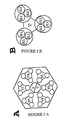
- Fig 2A :
- Vue de face
Tn correspond aux différents trimères composés des chaínes b, c et d de type globine - Fig 2B :
- détail d'un douzième
- Fig 3A :
- Vue d'ensemble d'une solution contenant de l'hémoglobine extracellulaire de Arenicola marina.
- Fig 3B :
- Vue de face de la molécule
- Fig 3C :
- Vue de profil

Claims (10)
- Utilisation pour la préparation d'un substitut sanguin, d'une hémoglobine extracellulaire de poids moléculaire d'environ 3 à environ 4 millions de daltons, comportant des chaínes de globines polymérisées, contenant des cystéines libres susceptibles de se lier à des groupes NO et/ou SNO et dont la P50 est d'environ 6 à environ 7 mm d'Hg à 37°C.
- Substitut sanguin, notamment substitut sanguin humain, comprenant une hémoglobine extracellulaire de poids moléculaire d'environ 3 à environ 4 millions de daltons, comportant des chaínes de globines polymérisées, contenant des cystéines libres susceptibles de se lier à des groupes NO et/ou SNO et dont la P50 est d'environ 6 à environ 7 mm d'Hg à 37°C.
- Substitut sanguin selon la revendication 2, dans lequel le coefficient de coopérativité de l'hémoglobine extracellulaire est de 2 à 3 (n50).
- Substitut sanguin selon la revendication 2 ou 3, dans lequel les chaínes de globine de l'hémoglobine extracellulaire sont stabilisées entre elles, par des liaisons covalentes, notamment des ponts disulfures intermoléculaires, et les chaínes de globine sont auto-stabilisées par des ponts disulfures intramoléculaires.
- Substitut sanguin selon l'une des revendications 2 à 4, dans lequel l'hémoglobine extracellulaire comporte des chaínes de structure qui confèrent à l'hémoglobine une structure hexagonale.
- Substitut sanguin selon l'une des revendications 2 à 5, dans lequel l'hémoglobine extracellulaire est susceptible de neutraliser des composés toxiques, tel que l'hydrogène sulfuré.
- Substitut sanguin selon l'une des revendications 2 à 6, dans lequel l'hémoglobine extracellulaire ne nécessite pas de cofacteur pour libérer l'oxygène éventuellement fixé sur l'hémoglobine.
- Substitut sanguin selon l'une des revendications 2 à 7, dans lequel l'hémoglobine extracellulaire possède les propriétés suivantes :elle est non toxiqueelle est dépourvue d'agent pathogèneelle se conserve à 4°C pendant au moins 6 semaines sans oxydationelle est transfusable à tous les types sanguinselle est dotée d'un temps de résidence suffisamment long pour assurer la régénération en hémoglobine naturelle de l'organisme dans lequel elle est transfuséeelle est éliminée par l'organisme dans lequel elle est transfusée sans effet secondaire
- Substitut sanguin selon l'une des revendications 2 à 8, dans lequel l'hémoglobine extracellulaire provient d'Annélides.
- Substitut sanguin selon la revendication 9, dans lequel l'hémoglobine extracellulaire provient d'Arenicola marina.
Applications Claiming Priority (3)
| Application Number | Priority Date | Filing Date | Title |
|---|---|---|---|
| FR0007031 | 2000-05-31 | ||
| FR0007031A FR2809624B1 (fr) | 2000-05-31 | 2000-05-31 | Utilisation comme substitut sanguin d'une hemoglobine extracellulaire de poids moleculaire eleve |
| PCT/FR2001/001505 WO2001092320A2 (fr) | 2000-05-31 | 2001-05-17 | Utilisation comme substitut sanguin d'une hemoglobine extracellulaire de poids moleculaire eleve |
Publications (2)
| Publication Number | Publication Date |
|---|---|
| EP1284994A2 EP1284994A2 (fr) | 2003-02-26 |
| EP1284994B1 true EP1284994B1 (fr) | 2004-07-28 |
Family
ID=8850865
Family Applications (1)
| Application Number | Title | Priority Date | Filing Date |
|---|---|---|---|
| EP20010936553 Expired - Lifetime EP1284994B1 (fr) | 2000-05-31 | 2001-05-17 | Utilisation comme substitut sanguin d'une hemoglobine extracellulaire de poids moleculaire eleve |
Country Status (9)
| Country | Link |
|---|---|
| US (2) | US20030181358A1 (fr) |
| EP (1) | EP1284994B1 (fr) |
| JP (1) | JP5001500B2 (fr) |
| AT (1) | ATE272071T1 (fr) |
| AU (1) | AU6243601A (fr) |
| DE (1) | DE60104542T2 (fr) |
| DK (1) | DK1284994T3 (fr) |
| FR (1) | FR2809624B1 (fr) |
| WO (1) | WO2001092320A2 (fr) |
Families Citing this family (15)
| Publication number | Priority date | Publication date | Assignee | Title |
|---|---|---|---|---|
| FR2860796B1 (fr) | 2003-10-14 | 2006-02-10 | Centre Nat Rech Scient | Procede de dissociation de la molecule d'hemoglobine extracellulaire d'arenicola marina, chaines proteiques constituant ladite molecule et sequences nucleotidiques codant pour lesdites chaines proteiques |
| AU2007209331B2 (en) * | 2006-01-24 | 2012-10-11 | Centre National De La Recherche Scientifique (Cnrs) | Use of a high molecular weight extracellular hemoglobin for the manufacture of a medicament for treating and/or preventing diseases by inhibition of calcium |
| FR2919785B1 (fr) * | 2007-08-09 | 2017-10-20 | Hemarina Sa | Utilisation d'une globine, d'un protomere de globine ou d'une hemoglobine extracellulaire pour la preservation d'organes, de tissus, ou de cellules d'organes ou de tissus, ou de culture de cellules |
| NL1035741C2 (en) * | 2008-07-23 | 2010-01-26 | Albertus Ide Marie Meijering | Extracellular hemoglobin blood substitute derived from ragworm species and the use. |
| EP2421951B1 (fr) * | 2009-04-23 | 2013-07-17 | Hemarina | Bioréacteur utilisant des molécules de transport d'oxygène |
| EP2424463B1 (fr) | 2009-05-01 | 2016-12-28 | Bimini Technologies LLC | Systèmes, procédés et compositions permettant d'optimiser des greffons enrichis en tissus et cellules |
| EP2427483B1 (fr) | 2009-05-07 | 2015-03-11 | Hemarina | Nouvelle hémoglobine et ses utilisations |
| US8273857B2 (en) * | 2009-09-22 | 2012-09-25 | Jen-Chang Hsia | Compositions and methods of use of neurovascular protective multifunctional polynitroxylated pegylated carboxy hemoglobins for transfusion and critical care medicine |
| FR2991327B1 (fr) | 2012-06-05 | 2018-04-13 | Hemarina | Procede de lyophilisation d'hemoglobine d'annelides |
| FR3002146B1 (fr) * | 2013-02-15 | 2016-03-04 | Hemarina | Utilisation d'hemoglobine d'annelides pour traiter les cancers |
| FR3005663B1 (fr) * | 2013-05-16 | 2016-02-26 | Hemarina | Lyophilisat de ver marin et ses utilisations |
| WO2015100235A1 (fr) | 2013-12-27 | 2015-07-02 | Virginia Commonwealth University | Modificateurs allostériques de l'hémoglobine avec une partie libérant de l'oxyde nitrique |
| CL2018002378A1 (es) * | 2018-08-20 | 2018-10-12 | Univ Austral De Chile | Medicamento útil como sustituto sanguineo para tratar, a la vez, la anemia aguda por pedida de sangre y la infección bacteriana en mamíferos |
| FR3108842B1 (fr) * | 2020-04-02 | 2022-06-03 | Hemarina | Utilisation d'hémoglobine d'Annélides pour traiter le syndrome de détresse respiratoire aiguë |
| WO2022040820A1 (fr) * | 2020-08-28 | 2022-03-03 | Universidad Austral De Chile | Supplément alimentaire pour prévenir l'anémie et ayant un effet orexigène et fortifiant chez des animaux |
Family Cites Families (4)
| Publication number | Priority date | Publication date | Assignee | Title |
|---|---|---|---|---|
| US5599907A (en) * | 1989-05-10 | 1997-02-04 | Somatogen, Inc. | Production and use of multimeric hemoglobins |
| US5405742A (en) * | 1993-07-16 | 1995-04-11 | Cyromedical Sciences, Inc. | Solutions for tissue preservation and bloodless surgery and methods using same |
| IS4198A (is) * | 1993-08-13 | 1995-02-14 | Somatogen, Inc | Meðferð vegna aukaverkana sem tengjast gjöf á utanfrumublóðrauða |
| US5929031A (en) * | 1995-05-02 | 1999-07-27 | Baxter Biotech Technology Sarl | Storage stable hemoglobin solutions |
-
2000
- 2000-05-31 FR FR0007031A patent/FR2809624B1/fr not_active Expired - Lifetime
-
2001
- 2001-05-17 JP JP2002500931A patent/JP5001500B2/ja not_active Expired - Lifetime
- 2001-05-17 US US10/296,982 patent/US20030181358A1/en not_active Abandoned
- 2001-05-17 EP EP20010936553 patent/EP1284994B1/fr not_active Expired - Lifetime
- 2001-05-17 AU AU62436/01A patent/AU6243601A/en not_active Abandoned
- 2001-05-17 DE DE60104542T patent/DE60104542T2/de not_active Expired - Lifetime
- 2001-05-17 AT AT01936553T patent/ATE272071T1/de not_active IP Right Cessation
- 2001-05-17 WO PCT/FR2001/001505 patent/WO2001092320A2/fr not_active Ceased
- 2001-05-17 DK DK01936553T patent/DK1284994T3/da active
-
2008
- 2008-04-28 US US12/110,936 patent/US20080305178A1/en not_active Abandoned
Also Published As
| Publication number | Publication date |
|---|---|
| FR2809624A1 (fr) | 2001-12-07 |
| JP2004501118A (ja) | 2004-01-15 |
| DE60104542D1 (de) | 2004-09-02 |
| EP1284994A2 (fr) | 2003-02-26 |
| US20030181358A1 (en) | 2003-09-25 |
| US20080305178A1 (en) | 2008-12-11 |
| DE60104542T2 (de) | 2005-09-01 |
| WO2001092320A3 (fr) | 2002-04-04 |
| WO2001092320A2 (fr) | 2001-12-06 |
| AU6243601A (en) | 2001-12-11 |
| ATE272071T1 (de) | 2004-08-15 |
| DK1284994T3 (da) | 2004-11-29 |
| FR2809624B1 (fr) | 2002-08-02 |
| JP5001500B2 (ja) | 2012-08-15 |
Similar Documents
| Publication | Publication Date | Title |
|---|---|---|
| US20080305178A1 (en) | Use of a high molecular weight extracellular haemoglobin as a blood substitute | |
| Rousselot et al. | Arenicola marina extracellular hemoglobin: a new promising blood substitute | |
| US6083909A (en) | Haemoglobin-hydroxyethyl starch conjugates as oxygen carriers | |
| JP3568541B2 (ja) | 酸化窒素によるヘモグロビン含有赤血球の処理 | |
| FR2600255A1 (fr) | Substituant acellulaire des hematies | |
| Chang | Modified hemoglobin‐based blood substitutes: crosslinked, recombinant and encapsulated hemoglobin | |
| FR2600895A1 (fr) | Utilisation de l'activateur tissulaire du plasminogene, son association avec une superoxyde-dismutase et formulation pharmaceutique contenant cette association | |
| Kruczkowska et al. | The artificial oxygen carrier erythrocruorin—characteristics and potential significance in medicine | |
| DeVenuto | Modified hemoglobin solution as a resuscitation fluid | |
| Levy | The use of haemoglobin glutamer-250 (HBOC-201) as an oxygen bridge in patients with acute anaemia associated with surgical blood loss | |
| Mozzarelli et al. | Chemistry and biochemistry of oxygen therapeutics: from transfusion to artificial blood | |
| US12180266B2 (en) | Modified haemoglobin proteins | |
| Frietsch et al. | Artificial oxygen carriers | |
| Scatena et al. | O-raffinose-polymerised haemoglobin. A biochemical and pharmacological profile of an oxygen carrier | |
| CN113811323A (zh) | 经修饰的血红蛋白分子及其用途 | |
| CN101711255A (zh) | 具有改变的电子传递途径的修饰珠蛋白 | |
| CA2542478C (fr) | Procede de dissociation de la molecule d'hemoglobine extracellulaire d'arenicola marina, caracterisation des chaines proteiques constituant ladite molecule et des sequences nucleotidiques codant pour lesdites chaines proteiques | |
| EP0784983A2 (fr) | Utilisation d'hemoglobine extracellulaire | |
| Ogden et al. | The development of hemoglobin solutions as red cell substitutes | |
| FI106362B (fi) | Menetelmä verenkorvikkeena käytettäväksi soveltuvan koostumuksen valmistamiseksi | |
| JP7811393B2 (ja) | RcoMタンパク質ベースの一酸化炭素スカベンジャーおよび一酸化炭素中毒の処置のための調製物 | |
| Alomari | Protein therapeutics for clinical applications: Hemoglobin-based oxygen carriers and modulation of their oxygen-binding properties | |
| Gu | Engineering the Biophysical and Biochemical Properties of Polymerized Hemoglobin as a Red Blood Cell Substitute via Various Strategies | |
| HK40065887A (en) | Modified hemoglobin molecules and uses thereof | |
| CH674939A5 (fr) |
Legal Events
| Date | Code | Title | Description |
|---|---|---|---|
| PUAI | Public reference made under article 153(3) epc to a published international application that has entered the european phase |
Free format text: ORIGINAL CODE: 0009012 |
|
| 17P | Request for examination filed |
Effective date: 20021121 |
|
| AK | Designated contracting states |
Kind code of ref document: A2 Designated state(s): AT BE CH CY DE DK ES FI FR GB GR IE IT LI LU MC NL PT SE TR |
|
| AX | Request for extension of the european patent |
Extension state: AL LT LV MK RO SI |
|
| GRAP | Despatch of communication of intention to grant a patent |
Free format text: ORIGINAL CODE: EPIDOSNIGR1 |
|
| RTI1 | Title (correction) |
Free format text: USE OF A HIGH-MOLECULAR-WEIGHT EXTRACELLULAR HAEMOGLOBIN AS BLOOD SUBSTITUTE |
|
| RTI1 | Title (correction) |
Free format text: USE OF A HIGH-MOLECULAR-WEIGHT EXTRACELLULAR HAEMOGLOBIN AS BLOOD SUBSTITUTE |
|
| RTI1 | Title (correction) |
Free format text: USE OF A HIGH-MOLECULAR-WEIGHT EXTRACELLULAR HAEMOGLOBIN AS BLOOD SUBSTITUTE |
|
| GRAS | Grant fee paid |
Free format text: ORIGINAL CODE: EPIDOSNIGR3 |
|
| GRAA | (expected) grant |
Free format text: ORIGINAL CODE: 0009210 |
|
| AK | Designated contracting states |
Kind code of ref document: B1 Designated state(s): AT BE CH CY DE DK ES FI FR GB GR IE IT LI LU MC NL PT SE TR |
|
| PG25 | Lapsed in a contracting state [announced via postgrant information from national office to epo] |
Ref country code: TR Free format text: LAPSE BECAUSE OF FAILURE TO SUBMIT A TRANSLATION OF THE DESCRIPTION OR TO PAY THE FEE WITHIN THE PRESCRIBED TIME-LIMIT Effective date: 20040728 Ref country code: NL Free format text: LAPSE BECAUSE OF FAILURE TO SUBMIT A TRANSLATION OF THE DESCRIPTION OR TO PAY THE FEE WITHIN THE PRESCRIBED TIME-LIMIT Effective date: 20040728 Ref country code: AT Free format text: LAPSE BECAUSE OF FAILURE TO SUBMIT A TRANSLATION OF THE DESCRIPTION OR TO PAY THE FEE WITHIN THE PRESCRIBED TIME-LIMIT Effective date: 20040728 Ref country code: FI Free format text: LAPSE BECAUSE OF FAILURE TO SUBMIT A TRANSLATION OF THE DESCRIPTION OR TO PAY THE FEE WITHIN THE PRESCRIBED TIME-LIMIT Effective date: 20040728 Ref country code: IT Free format text: LAPSE BECAUSE OF FAILURE TO SUBMIT A TRANSLATION OF THE DESCRIPTION OR TO PAY THE FEE WITHIN THE PRESCRIBED TIME-LIMIT;WARNING: LAPSES OF ITALIAN PATENTS WITH EFFECTIVE DATE BEFORE 2007 MAY HAVE OCCURRED AT ANY TIME BEFORE 2007. THE CORRECT EFFECTIVE DATE MAY BE DIFFERENT FROM THE ONE RECORDED. Effective date: 20040728 |
|
| REG | Reference to a national code |
Ref country code: GB Ref legal event code: FG4D Free format text: NOT ENGLISH |
|
| REG | Reference to a national code |
Ref country code: CH Ref legal event code: EP |
|
| GBT | Gb: translation of ep patent filed (gb section 77(6)(a)/1977) |
Effective date: 20040728 |
|
| REG | Reference to a national code |
Ref country code: IE Ref legal event code: FG4D Free format text: FRENCH |
|
| REG | Reference to a national code |
Ref country code: CH Ref legal event code: NV Representative=s name: ABREMA AGENCE BREVETS ET MARQUES GANGUILLET & HUMP |
|
| REF | Corresponds to: |
Ref document number: 60104542 Country of ref document: DE Date of ref document: 20040902 Kind code of ref document: P |
|
| PG25 | Lapsed in a contracting state [announced via postgrant information from national office to epo] |
Ref country code: SE Free format text: LAPSE BECAUSE OF FAILURE TO SUBMIT A TRANSLATION OF THE DESCRIPTION OR TO PAY THE FEE WITHIN THE PRESCRIBED TIME-LIMIT Effective date: 20041028 Ref country code: GR Free format text: LAPSE BECAUSE OF FAILURE TO SUBMIT A TRANSLATION OF THE DESCRIPTION OR TO PAY THE FEE WITHIN THE PRESCRIBED TIME-LIMIT Effective date: 20041028 |
|
| PG25 | Lapsed in a contracting state [announced via postgrant information from national office to epo] |
Ref country code: ES Free format text: LAPSE BECAUSE OF FAILURE TO SUBMIT A TRANSLATION OF THE DESCRIPTION OR TO PAY THE FEE WITHIN THE PRESCRIBED TIME-LIMIT Effective date: 20041108 |
|
| REG | Reference to a national code |
Ref country code: DK Ref legal event code: T3 |
|
| NLV1 | Nl: lapsed or annulled due to failure to fulfill the requirements of art. 29p and 29m of the patents act | ||
| LTIE | Lt: invalidation of european patent or patent extension |
Effective date: 20040728 |
|
| PG25 | Lapsed in a contracting state [announced via postgrant information from national office to epo] |
Ref country code: LU Free format text: LAPSE BECAUSE OF NON-PAYMENT OF DUE FEES Effective date: 20050517 Ref country code: CY Free format text: LAPSE BECAUSE OF FAILURE TO SUBMIT A TRANSLATION OF THE DESCRIPTION OR TO PAY THE FEE WITHIN THE PRESCRIBED TIME-LIMIT Effective date: 20050517 |
|
| PG25 | Lapsed in a contracting state [announced via postgrant information from national office to epo] |
Ref country code: MC Free format text: LAPSE BECAUSE OF NON-PAYMENT OF DUE FEES Effective date: 20050531 |
|
| PLBE | No opposition filed within time limit |
Free format text: ORIGINAL CODE: 0009261 |
|
| STAA | Information on the status of an ep patent application or granted ep patent |
Free format text: STATUS: NO OPPOSITION FILED WITHIN TIME LIMIT |
|
| 26N | No opposition filed |
Effective date: 20050429 |
|
| PG25 | Lapsed in a contracting state [announced via postgrant information from national office to epo] |
Ref country code: PT Free format text: LAPSE BECAUSE OF NON-PAYMENT OF DUE FEES Effective date: 20041228 |
|
| REG | Reference to a national code |
Ref country code: FR Ref legal event code: PLFP Year of fee payment: 16 |
|
| REG | Reference to a national code |
Ref country code: FR Ref legal event code: PLFP Year of fee payment: 17 |
|
| REG | Reference to a national code |
Ref country code: FR Ref legal event code: PLFP Year of fee payment: 18 |
|
| REG | Reference to a national code |
Ref country code: CH Ref legal event code: PFA Owner name: CENTRE NATIONAL DE LA RECHERCHE SCIENTIFIQUE (, FR Free format text: FORMER OWNER: CENTRE NATIONAL DE LA RECHERCHE SCIENTIFIQUE (CNRS), FR |
|
| PGFP | Annual fee paid to national office [announced via postgrant information from national office to epo] |
Ref country code: CH Payment date: 20200528 Year of fee payment: 20 Ref country code: FR Payment date: 20200421 Year of fee payment: 20 Ref country code: DE Payment date: 20200513 Year of fee payment: 20 Ref country code: DK Payment date: 20200423 Year of fee payment: 20 Ref country code: IE Payment date: 20200424 Year of fee payment: 20 |
|
| PGFP | Annual fee paid to national office [announced via postgrant information from national office to epo] |
Ref country code: BE Payment date: 20200519 Year of fee payment: 20 Ref country code: GB Payment date: 20200527 Year of fee payment: 20 |
|
| REG | Reference to a national code |
Ref country code: CH Ref legal event code: PFUS Owner name: CENTRE NATIONAL DE LA RECHERCHE SCIENTIFIQUE (, FR Free format text: FORMER OWNER: CENTRE NATIONAL DE LA RECHERCHE SCIENTIFIQUE (CNRS), FR |
|
| REG | Reference to a national code |
Ref country code: DE Ref legal event code: R071 Ref document number: 60104542 Country of ref document: DE |
|
| REG | Reference to a national code |
Ref country code: DK Ref legal event code: EUP Expiry date: 20210517 |
|
| REG | Reference to a national code |
Ref country code: CH Ref legal event code: PL |
|
| REG | Reference to a national code |
Ref country code: GB Ref legal event code: PE20 Expiry date: 20210516 |
|
| REG | Reference to a national code |
Ref country code: IE Ref legal event code: MK9A |
|
| REG | Reference to a national code |
Ref country code: BE Ref legal event code: MK Effective date: 20210517 |
|
| PG25 | Lapsed in a contracting state [announced via postgrant information from national office to epo] |
Ref country code: GB Free format text: LAPSE BECAUSE OF EXPIRATION OF PROTECTION Effective date: 20210516 Ref country code: IE Free format text: LAPSE BECAUSE OF EXPIRATION OF PROTECTION Effective date: 20210517 |