EP1286959B1 - Cristallisation de solution extractive de composes chimiques - Google Patents
Cristallisation de solution extractive de composes chimiques Download PDFInfo
- Publication number
- EP1286959B1 EP1286959B1 EP01946062A EP01946062A EP1286959B1 EP 1286959 B1 EP1286959 B1 EP 1286959B1 EP 01946062 A EP01946062 A EP 01946062A EP 01946062 A EP01946062 A EP 01946062A EP 1286959 B1 EP1286959 B1 EP 1286959B1
- Authority
- EP
- European Patent Office
- Prior art keywords
- solvent
- phenyl ester
- crystallization
- ester salt
- mixture
- Prior art date
- Legal status (The legal status is an assumption and is not a legal conclusion. Google has not performed a legal analysis and makes no representation as to the accuracy of the status listed.)
- Expired - Lifetime
Links
- 238000002425 crystallisation Methods 0.000 title claims abstract description 103
- 230000008025 crystallization Effects 0.000 title claims abstract description 103
- 150000001875 compounds Chemical class 0.000 title claims abstract description 56
- 239000002904 solvent Substances 0.000 claims abstract description 141
- -1 phenyl ester salt Chemical class 0.000 claims abstract description 103
- 238000000034 method Methods 0.000 claims abstract description 96
- 239000012535 impurity Substances 0.000 claims abstract description 61
- 239000000203 mixture Substances 0.000 claims abstract description 49
- FUZZWVXGSFPDMH-UHFFFAOYSA-N hexanoic acid Chemical compound CCCCCC(O)=O FUZZWVXGSFPDMH-UHFFFAOYSA-N 0.000 claims abstract description 37
- 229910052708 sodium Inorganic materials 0.000 claims abstract description 37
- 239000011734 sodium Substances 0.000 claims abstract description 37
- 238000000746 purification Methods 0.000 claims abstract description 24
- DGAQECJNVWCQMB-PUAWFVPOSA-M Ilexoside XXIX Chemical compound C[C@@H]1CC[C@@]2(CC[C@@]3(C(=CC[C@H]4[C@]3(CC[C@@H]5[C@@]4(CC[C@@H](C5(C)C)OS(=O)(=O)[O-])C)C)[C@@H]2[C@]1(C)O)C)C(=O)O[C@H]6[C@@H]([C@H]([C@@H]([C@H](O6)CO)O)O)O.[Na+] DGAQECJNVWCQMB-PUAWFVPOSA-M 0.000 claims abstract description 20
- 238000002955 isolation Methods 0.000 claims abstract description 12
- KVSYNOOPFSVLNF-UHFFFAOYSA-M sodium;4-nonanoyloxybenzenesulfonate Chemical compound [Na+].CCCCCCCCC(=O)OC1=CC=C(S([O-])(=O)=O)C=C1 KVSYNOOPFSVLNF-UHFFFAOYSA-M 0.000 claims abstract description 6
- XLYOFNOQVPJJNP-UHFFFAOYSA-N water Substances O XLYOFNOQVPJJNP-UHFFFAOYSA-N 0.000 claims description 45
- 239000002253 acid Substances 0.000 claims description 22
- 238000001914 filtration Methods 0.000 claims description 18
- 150000003839 salts Chemical class 0.000 claims description 17
- 239000013078 crystal Substances 0.000 claims description 16
- 229910052739 hydrogen Inorganic materials 0.000 claims description 15
- 239000001257 hydrogen Substances 0.000 claims description 15
- IJGRMHOSHXDMSA-UHFFFAOYSA-N Atomic nitrogen Chemical compound N#N IJGRMHOSHXDMSA-UHFFFAOYSA-N 0.000 claims description 14
- 238000001816 cooling Methods 0.000 claims description 12
- NTIZESTWPVYFNL-UHFFFAOYSA-N Methyl isobutyl ketone Chemical compound CC(C)CC(C)=O NTIZESTWPVYFNL-UHFFFAOYSA-N 0.000 claims description 11
- UIHCLUNTQKBZGK-UHFFFAOYSA-N Methyl isobutyl ketone Natural products CCC(C)C(C)=O UIHCLUNTQKBZGK-UHFFFAOYSA-N 0.000 claims description 11
- 238000001704 evaporation Methods 0.000 claims description 11
- 150000002431 hydrogen Chemical class 0.000 claims description 9
- QAOWNCQODCNURD-UHFFFAOYSA-N Sulfuric acid Chemical compound OS(O)(=O)=O QAOWNCQODCNURD-UHFFFAOYSA-N 0.000 claims description 8
- HPXRVTGHNJAIIH-UHFFFAOYSA-N cyclohexanol Chemical compound OC1CCCCC1 HPXRVTGHNJAIIH-UHFFFAOYSA-N 0.000 claims description 8
- 229910052757 nitrogen Inorganic materials 0.000 claims description 7
- 125000000041 C6-C10 aryl group Chemical group 0.000 claims description 6
- 125000005915 C6-C14 aryl group Chemical group 0.000 claims description 6
- XEKOWRVHYACXOJ-UHFFFAOYSA-N Ethyl acetate Chemical compound CCOC(C)=O XEKOWRVHYACXOJ-UHFFFAOYSA-N 0.000 claims description 6
- 125000000753 cycloalkyl group Chemical group 0.000 claims description 6
- 125000000623 heterocyclic group Chemical group 0.000 claims description 6
- VLKZOEOYAKHREP-UHFFFAOYSA-N n-Hexane Chemical compound CCCCCC VLKZOEOYAKHREP-UHFFFAOYSA-N 0.000 claims description 6
- 239000003125 aqueous solvent Substances 0.000 claims description 5
- 238000010438 heat treatment Methods 0.000 claims description 5
- SYBYTAAJFKOIEJ-UHFFFAOYSA-N 3-Methylbutan-2-one Chemical compound CC(C)C(C)=O SYBYTAAJFKOIEJ-UHFFFAOYSA-N 0.000 claims description 4
- AMQJEAYHLZJPGS-UHFFFAOYSA-N N-Pentanol Chemical compound CCCCCO AMQJEAYHLZJPGS-UHFFFAOYSA-N 0.000 claims description 4
- 239000000463 material Substances 0.000 claims description 4
- FDPIMTJIUBPUKL-UHFFFAOYSA-N pentan-3-one Chemical compound CCC(=O)CC FDPIMTJIUBPUKL-UHFFFAOYSA-N 0.000 claims description 4
- 125000000008 (C1-C10) alkyl group Chemical group 0.000 claims description 3
- 125000004178 (C1-C4) alkyl group Chemical group 0.000 claims description 3
- CKSYEJTXXXFCEV-UHFFFAOYSA-N C1(=CC=CC=C1)S(=O)(=O)OOC(C1=CC=CC=C1)=O.[Na] Chemical compound C1(=CC=CC=C1)S(=O)(=O)OOC(C1=CC=CC=C1)=O.[Na] CKSYEJTXXXFCEV-UHFFFAOYSA-N 0.000 claims description 3
- 125000006374 C2-C10 alkenyl group Chemical group 0.000 claims description 3
- 125000005865 C2-C10alkynyl group Chemical group 0.000 claims description 3
- UFHFLCQGNIYNRP-UHFFFAOYSA-N Hydrogen Chemical compound [H][H] UFHFLCQGNIYNRP-UHFFFAOYSA-N 0.000 claims description 3
- 229910052500 inorganic mineral Inorganic materials 0.000 claims description 3
- 125000002496 methyl group Chemical group [H]C([H])([H])* 0.000 claims description 3
- 239000011707 mineral Substances 0.000 claims description 3
- 239000003495 polar organic solvent Substances 0.000 claims description 3
- QTBSBXVTEAMEQO-UHFFFAOYSA-M Acetate Chemical group CC([O-])=O QTBSBXVTEAMEQO-UHFFFAOYSA-M 0.000 claims description 2
- QGZKDVFQNNGYKY-UHFFFAOYSA-O Ammonium Chemical group [NH4+] QGZKDVFQNNGYKY-UHFFFAOYSA-O 0.000 claims description 2
- OKTJSMMVPCPJKN-UHFFFAOYSA-N Carbon Chemical compound [C] OKTJSMMVPCPJKN-UHFFFAOYSA-N 0.000 claims description 2
- CTQNGGLPUBDAKN-UHFFFAOYSA-N O-Xylene Chemical compound CC1=CC=CC=C1C CTQNGGLPUBDAKN-UHFFFAOYSA-N 0.000 claims description 2
- FKNQFGJONOIPTF-UHFFFAOYSA-N Sodium cation Chemical compound [Na+] FKNQFGJONOIPTF-UHFFFAOYSA-N 0.000 claims description 2
- 229910052783 alkali metal Chemical group 0.000 claims description 2
- 150000001340 alkali metals Chemical group 0.000 claims description 2
- 229910052799 carbon Inorganic materials 0.000 claims description 2
- XLYOFNOQVPJJNP-UHFFFAOYSA-M hydroxide Chemical group [OH-] XLYOFNOQVPJJNP-UHFFFAOYSA-M 0.000 claims description 2
- 150000002484 inorganic compounds Chemical class 0.000 claims description 2
- JZMJDSHXVKJFKW-UHFFFAOYSA-M methyl sulfate(1-) Chemical group COS([O-])(=O)=O JZMJDSHXVKJFKW-UHFFFAOYSA-M 0.000 claims description 2
- 150000002894 organic compounds Chemical class 0.000 claims description 2
- 229910001415 sodium ion Inorganic materials 0.000 claims description 2
- 239000008096 xylene Substances 0.000 claims description 2
- 125000005843 halogen group Chemical group 0.000 claims 1
- 125000004435 hydrogen atom Chemical group [H]* 0.000 claims 1
- 229910010272 inorganic material Inorganic materials 0.000 claims 1
- 235000011149 sulphuric acid Nutrition 0.000 claims 1
- 239000001117 sulphuric acid Substances 0.000 claims 1
- 238000000605 extraction Methods 0.000 abstract description 7
- 238000002288 cocrystallisation Methods 0.000 abstract description 6
- 239000000284 extract Substances 0.000 abstract description 4
- 125000002924 primary amino group Chemical group [H]N([H])* 0.000 abstract description 3
- 238000010977 unit operation Methods 0.000 abstract description 2
- MIKSWWHQLZYKGU-UHFFFAOYSA-M sodium;2-benzoyloxybenzenesulfonate Chemical compound [Na+].[O-]S(=O)(=O)C1=CC=CC=C1OC(=O)C1=CC=CC=C1 MIKSWWHQLZYKGU-UHFFFAOYSA-M 0.000 abstract 1
- 239000000243 solution Substances 0.000 description 37
- 239000000047 product Substances 0.000 description 26
- 239000012071 phase Substances 0.000 description 21
- 239000007844 bleaching agent Substances 0.000 description 19
- 239000012190 activator Substances 0.000 description 17
- 239000000706 filtrate Substances 0.000 description 15
- 239000002002 slurry Substances 0.000 description 12
- 125000003118 aryl group Chemical group 0.000 description 10
- 238000006243 chemical reaction Methods 0.000 description 10
- 239000003599 detergent Substances 0.000 description 10
- 229940043265 methyl isobutyl ketone Drugs 0.000 description 10
- 238000011084 recovery Methods 0.000 description 10
- 238000000926 separation method Methods 0.000 description 10
- WFDIJRYMOXRFFG-UHFFFAOYSA-N Acetic anhydride Chemical compound CC(=O)OC(C)=O WFDIJRYMOXRFFG-UHFFFAOYSA-N 0.000 description 9
- 239000008346 aqueous phase Substances 0.000 description 9
- RAXXELZNTBOGNW-UHFFFAOYSA-N imidazole Natural products C1=CNC=N1 RAXXELZNTBOGNW-UHFFFAOYSA-N 0.000 description 9
- 150000004965 peroxy acids Chemical class 0.000 description 8
- 125000001997 phenyl group Chemical class [H]C1=C([H])C([H])=C(*)C([H])=C1[H] 0.000 description 8
- 238000001035 drying Methods 0.000 description 7
- 125000005842 heteroatom Chemical group 0.000 description 7
- 239000002245 particle Substances 0.000 description 7
- 239000007858 starting material Substances 0.000 description 7
- 125000001424 substituent group Chemical group 0.000 description 7
- HXJUTPCZVOIRIF-UHFFFAOYSA-N sulfolane Chemical compound O=S1(=O)CCCC1 HXJUTPCZVOIRIF-UHFFFAOYSA-N 0.000 description 7
- 238000013019 agitation Methods 0.000 description 6
- 230000008020 evaporation Effects 0.000 description 6
- 239000007788 liquid Substances 0.000 description 6
- 239000007787 solid Substances 0.000 description 6
- NINIDFKCEFEMDL-UHFFFAOYSA-N Sulfur Chemical compound [S] NINIDFKCEFEMDL-UHFFFAOYSA-N 0.000 description 5
- QVGXLLKOCUKJST-UHFFFAOYSA-N atomic oxygen Chemical compound [O] QVGXLLKOCUKJST-UHFFFAOYSA-N 0.000 description 5
- 239000003795 chemical substances by application Substances 0.000 description 5
- 238000004821 distillation Methods 0.000 description 5
- 229910052736 halogen Inorganic materials 0.000 description 5
- 150000002367 halogens Chemical class 0.000 description 5
- 238000011031 large-scale manufacturing process Methods 0.000 description 5
- 239000012074 organic phase Substances 0.000 description 5
- 229910052760 oxygen Inorganic materials 0.000 description 5
- 239000001301 oxygen Substances 0.000 description 5
- MDAWSFAGHIMLSE-UHFFFAOYSA-N 2,2-bis(nonanoylamino)hexanoic acid Chemical compound CCCCCCCCC(=O)NC(CCCC)(C(O)=O)NC(=O)CCCCCCCC MDAWSFAGHIMLSE-UHFFFAOYSA-N 0.000 description 4
- 125000003368 amide group Chemical group 0.000 description 4
- 238000004458 analytical method Methods 0.000 description 4
- 150000001450 anions Chemical class 0.000 description 4
- 230000015572 biosynthetic process Effects 0.000 description 4
- 239000006227 byproduct Substances 0.000 description 4
- 238000005119 centrifugation Methods 0.000 description 4
- 235000014113 dietary fatty acids Nutrition 0.000 description 4
- 239000000194 fatty acid Substances 0.000 description 4
- 229930195729 fatty acid Natural products 0.000 description 4
- 239000012467 final product Substances 0.000 description 4
- 238000009472 formulation Methods 0.000 description 4
- 239000011521 glass Substances 0.000 description 4
- 239000007791 liquid phase Substances 0.000 description 4
- 239000000843 powder Substances 0.000 description 4
- BYMHXIQVEAYSJD-UHFFFAOYSA-M sodium;4-sulfophenolate Chemical compound [Na+].OC1=CC=C(S([O-])(=O)=O)C=C1 BYMHXIQVEAYSJD-UHFFFAOYSA-M 0.000 description 4
- QTBSBXVTEAMEQO-UHFFFAOYSA-N Acetic acid Chemical compound CC(O)=O QTBSBXVTEAMEQO-UHFFFAOYSA-N 0.000 description 3
- OFOBLEOULBTSOW-UHFFFAOYSA-N Malonic acid Chemical compound OC(=O)CC(O)=O OFOBLEOULBTSOW-UHFFFAOYSA-N 0.000 description 3
- OKKJLVBELUTLKV-UHFFFAOYSA-N Methanol Chemical compound OC OKKJLVBELUTLKV-UHFFFAOYSA-N 0.000 description 3
- MUBZPKHOEPUJKR-UHFFFAOYSA-N Oxalic acid Chemical compound OC(=O)C(O)=O MUBZPKHOEPUJKR-UHFFFAOYSA-N 0.000 description 3
- VMHLLURERBWHNL-UHFFFAOYSA-M Sodium acetate Chemical compound [Na+].CC([O-])=O VMHLLURERBWHNL-UHFFFAOYSA-M 0.000 description 3
- 239000005864 Sulphur Substances 0.000 description 3
- 125000003342 alkenyl group Chemical group 0.000 description 3
- 125000000217 alkyl group Chemical group 0.000 description 3
- 125000000304 alkynyl group Chemical group 0.000 description 3
- 239000007864 aqueous solution Substances 0.000 description 3
- 238000003556 assay Methods 0.000 description 3
- 239000003054 catalyst Substances 0.000 description 3
- 239000003518 caustics Substances 0.000 description 3
- 239000007810 chemical reaction solvent Substances 0.000 description 3
- 238000004140 cleaning Methods 0.000 description 3
- 238000010924 continuous production Methods 0.000 description 3
- 239000013058 crude material Substances 0.000 description 3
- 238000013461 design Methods 0.000 description 3
- 238000001640 fractional crystallisation Methods 0.000 description 3
- BHEPBYXIRTUNPN-UHFFFAOYSA-N hydridophosphorus(.) (triplet) Chemical compound [PH] BHEPBYXIRTUNPN-UHFFFAOYSA-N 0.000 description 3
- 230000007062 hydrolysis Effects 0.000 description 3
- 238000006460 hydrolysis reaction Methods 0.000 description 3
- 230000002209 hydrophobic effect Effects 0.000 description 3
- 125000002887 hydroxy group Chemical group [H]O* 0.000 description 3
- 239000003960 organic solvent Substances 0.000 description 3
- 238000001556 precipitation Methods 0.000 description 3
- 239000011541 reaction mixture Substances 0.000 description 3
- 238000001953 recrystallisation Methods 0.000 description 3
- 239000001632 sodium acetate Substances 0.000 description 3
- 235000017281 sodium acetate Nutrition 0.000 description 3
- 239000007790 solid phase Substances 0.000 description 3
- 239000012265 solid product Substances 0.000 description 3
- BAQAVOSOZGMPRM-QBMZZYIRSA-N sucralose Chemical class O[C@@H]1[C@@H](O)[C@@H](Cl)[C@@H](CO)O[C@@H]1O[C@@]1(CCl)[C@@H](O)[C@H](O)[C@@H](CCl)O1 BAQAVOSOZGMPRM-QBMZZYIRSA-N 0.000 description 3
- 238000003786 synthesis reaction Methods 0.000 description 3
- VZCYOOQTPOCHFL-OWOJBTEDSA-N Fumaric acid Chemical compound OC(=O)\C=C\C(O)=O VZCYOOQTPOCHFL-OWOJBTEDSA-N 0.000 description 2
- VEXZGXHMUGYJMC-UHFFFAOYSA-N Hydrochloric acid Chemical compound Cl VEXZGXHMUGYJMC-UHFFFAOYSA-N 0.000 description 2
- KFZMGEQAYNKOFK-UHFFFAOYSA-N Isopropanol Chemical compound CC(C)O KFZMGEQAYNKOFK-UHFFFAOYSA-N 0.000 description 2
- NBIIXXVUZAFLBC-UHFFFAOYSA-N Phosphoric acid Chemical compound OP(O)(O)=O NBIIXXVUZAFLBC-UHFFFAOYSA-N 0.000 description 2
- OAICVXFJPJFONN-UHFFFAOYSA-N Phosphorus Chemical compound [P] OAICVXFJPJFONN-UHFFFAOYSA-N 0.000 description 2
- 239000004376 Sucralose Substances 0.000 description 2
- 150000007513 acids Chemical class 0.000 description 2
- WNLRTRBMVRJNCN-UHFFFAOYSA-N adipic acid Chemical compound OC(=O)CCCCC(O)=O WNLRTRBMVRJNCN-UHFFFAOYSA-N 0.000 description 2
- 125000003545 alkoxy group Chemical group 0.000 description 2
- 125000003277 amino group Chemical group 0.000 description 2
- 125000000732 arylene group Chemical group 0.000 description 2
- 238000010923 batch production Methods 0.000 description 2
- WPYMKLBDIGXBTP-UHFFFAOYSA-N benzoic acid Chemical compound OC(=O)C1=CC=CC=C1 WPYMKLBDIGXBTP-UHFFFAOYSA-N 0.000 description 2
- 125000002619 bicyclic group Chemical group 0.000 description 2
- 230000002051 biphasic effect Effects 0.000 description 2
- 239000012455 biphasic mixture Substances 0.000 description 2
- 238000004061 bleaching Methods 0.000 description 2
- 238000009835 boiling Methods 0.000 description 2
- 239000011203 carbon fibre reinforced carbon Substances 0.000 description 2
- 238000012993 chemical processing Methods 0.000 description 2
- 239000012043 crude product Substances 0.000 description 2
- 230000005496 eutectics Effects 0.000 description 2
- 150000004665 fatty acids Chemical class 0.000 description 2
- 238000005187 foaming Methods 0.000 description 2
- 230000008014 freezing Effects 0.000 description 2
- 238000007710 freezing Methods 0.000 description 2
- IPCSVZSSVZVIGE-UHFFFAOYSA-N hexadecanoic acid Chemical compound CCCCCCCCCCCCCCCC(O)=O IPCSVZSSVZVIGE-UHFFFAOYSA-N 0.000 description 2
- 238000004128 high performance liquid chromatography Methods 0.000 description 2
- 238000004519 manufacturing process Methods 0.000 description 2
- 125000002950 monocyclic group Chemical group 0.000 description 2
- 230000000269 nucleophilic effect Effects 0.000 description 2
- 150000007524 organic acids Chemical class 0.000 description 2
- 235000005985 organic acids Nutrition 0.000 description 2
- 229910052698 phosphorus Inorganic materials 0.000 description 2
- 239000011574 phosphorus Substances 0.000 description 2
- XNGIFLGASWRNHJ-UHFFFAOYSA-N phthalic acid Chemical compound OC(=O)C1=CC=CC=C1C(O)=O XNGIFLGASWRNHJ-UHFFFAOYSA-N 0.000 description 2
- WLJVNTCWHIRURA-UHFFFAOYSA-N pimelic acid Chemical compound OC(=O)CCCCCC(O)=O WLJVNTCWHIRURA-UHFFFAOYSA-N 0.000 description 2
- 125000003367 polycyclic group Chemical group 0.000 description 2
- 125000002098 pyridazinyl group Chemical group 0.000 description 2
- 230000003381 solubilizing effect Effects 0.000 description 2
- 239000000126 substance Substances 0.000 description 2
- 235000019408 sucralose Nutrition 0.000 description 2
- 229910052717 sulfur Inorganic materials 0.000 description 2
- 239000011593 sulfur Substances 0.000 description 2
- VZCYOOQTPOCHFL-UHFFFAOYSA-N trans-butenedioic acid Natural products OC(=O)C=CC(O)=O VZCYOOQTPOCHFL-UHFFFAOYSA-N 0.000 description 2
- 238000012546 transfer Methods 0.000 description 2
- 125000000027 (C1-C10) alkoxy group Chemical group 0.000 description 1
- 125000000229 (C1-C4)alkoxy group Chemical group 0.000 description 1
- 125000006376 (C3-C10) cycloalkyl group Chemical group 0.000 description 1
- 125000006570 (C5-C6) heteroaryl group Chemical group 0.000 description 1
- WRIDQFICGBMAFQ-UHFFFAOYSA-N (E)-8-Octadecenoic acid Natural products CCCCCCCCCC=CCCCCCCC(O)=O WRIDQFICGBMAFQ-UHFFFAOYSA-N 0.000 description 1
- 125000002030 1,2-phenylene group Chemical group [H]C1=C([H])C([*:1])=C([*:2])C([H])=C1[H] 0.000 description 1
- 125000001989 1,3-phenylene group Chemical group [H]C1=C([H])C([*:1])=C([H])C([*:2])=C1[H] 0.000 description 1
- 125000001140 1,4-phenylene group Chemical group [H]C1=C([H])C([*:2])=C([H])C([H])=C1[*:1] 0.000 description 1
- RTBFRGCFXZNCOE-UHFFFAOYSA-N 1-methylsulfonylpiperidin-4-one Chemical compound CS(=O)(=O)N1CCC(=O)CC1 RTBFRGCFXZNCOE-UHFFFAOYSA-N 0.000 description 1
- MKJHXLKVZNDNDB-UHFFFAOYSA-N 2-phenyloctadecanoic acid Chemical compound CCCCCCCCCCCCCCCCC(C(O)=O)C1=CC=CC=C1 MKJHXLKVZNDNDB-UHFFFAOYSA-N 0.000 description 1
- LQJBNNIYVWPHFW-UHFFFAOYSA-N 20:1omega9c fatty acid Natural products CCCCCCCCCCC=CCCCCCCCC(O)=O LQJBNNIYVWPHFW-UHFFFAOYSA-N 0.000 description 1
- FEPBITJSIHRMRT-UHFFFAOYSA-M 4-hydroxybenzenesulfonate Chemical compound OC1=CC=C(S([O-])(=O)=O)C=C1 FEPBITJSIHRMRT-UHFFFAOYSA-M 0.000 description 1
- 125000002373 5 membered heterocyclic group Chemical group 0.000 description 1
- 125000004070 6 membered heterocyclic group Chemical group 0.000 description 1
- QSBYPNXLFMSGKH-UHFFFAOYSA-N 9-Heptadecensaeure Natural products CCCCCCCC=CCCCCCCCC(O)=O QSBYPNXLFMSGKH-UHFFFAOYSA-N 0.000 description 1
- 239000005711 Benzoic acid Substances 0.000 description 1
- 239000004215 Carbon black (E152) Substances 0.000 description 1
- 241001481760 Erethizon dorsatum Species 0.000 description 1
- GRYLNZFGIOXLOG-UHFFFAOYSA-N Nitric acid Chemical compound O[N+]([O-])=O GRYLNZFGIOXLOG-UHFFFAOYSA-N 0.000 description 1
- 239000005642 Oleic acid Substances 0.000 description 1
- ZQPPMHVWECSIRJ-UHFFFAOYSA-N Oleic acid Natural products CCCCCCCCC=CCCCCCCCC(O)=O ZQPPMHVWECSIRJ-UHFFFAOYSA-N 0.000 description 1
- 229910019142 PO4 Inorganic materials 0.000 description 1
- 235000021314 Palmitic acid Nutrition 0.000 description 1
- 239000004721 Polyphenylene oxide Chemical group 0.000 description 1
- KDYFGRWQOYBRFD-UHFFFAOYSA-N Succinic acid Natural products OC(=O)CCC(O)=O KDYFGRWQOYBRFD-UHFFFAOYSA-N 0.000 description 1
- QAOWNCQODCNURD-UHFFFAOYSA-L Sulfate Chemical group [O-]S([O-])(=O)=O QAOWNCQODCNURD-UHFFFAOYSA-L 0.000 description 1
- 239000001361 adipic acid Substances 0.000 description 1
- 235000011037 adipic acid Nutrition 0.000 description 1
- 125000001931 aliphatic group Chemical group 0.000 description 1
- 125000002877 alkyl aryl group Chemical group 0.000 description 1
- 229910000147 aluminium phosphate Inorganic materials 0.000 description 1
- 150000001413 amino acids Chemical class 0.000 description 1
- 125000004397 aminosulfonyl group Chemical group NS(=O)(=O)* 0.000 description 1
- 150000008064 anhydrides Chemical class 0.000 description 1
- JFCQEDHGNNZCLN-UHFFFAOYSA-N anhydrous glutaric acid Natural products OC(=O)CCCC(O)=O JFCQEDHGNNZCLN-UHFFFAOYSA-N 0.000 description 1
- 230000003466 anti-cipated effect Effects 0.000 description 1
- 238000000149 argon plasma sintering Methods 0.000 description 1
- 125000006615 aromatic heterocyclic group Chemical group 0.000 description 1
- 230000009286 beneficial effect Effects 0.000 description 1
- 125000003785 benzimidazolyl group Chemical group N1=C(NC2=C1C=CC=C2)* 0.000 description 1
- 235000010233 benzoic acid Nutrition 0.000 description 1
- 125000001164 benzothiazolyl group Chemical group S1C(=NC2=C1C=CC=C2)* 0.000 description 1
- 125000004541 benzoxazolyl group Chemical group O1C(=NC2=C1C=CC=C2)* 0.000 description 1
- ZADPBFCGQRWHPN-UHFFFAOYSA-N boronic acid Chemical compound OBO ZADPBFCGQRWHPN-UHFFFAOYSA-N 0.000 description 1
- KDYFGRWQOYBRFD-NUQCWPJISA-N butanedioic acid Chemical compound O[14C](=O)CC[14C](O)=O KDYFGRWQOYBRFD-NUQCWPJISA-N 0.000 description 1
- 125000003917 carbamoyl group Chemical group [H]N([H])C(*)=O 0.000 description 1
- 125000002837 carbocyclic group Chemical group 0.000 description 1
- 150000007942 carboxylates Chemical group 0.000 description 1
- 150000001735 carboxylic acids Chemical class 0.000 description 1
- 150000001768 cations Chemical class 0.000 description 1
- 238000001311 chemical methods and process Methods 0.000 description 1
- 239000007795 chemical reaction product Substances 0.000 description 1
- 239000003153 chemical reaction reagent Substances 0.000 description 1
- 238000010960 commercial process Methods 0.000 description 1
- 239000002131 composite material Substances 0.000 description 1
- 238000011109 contamination Methods 0.000 description 1
- 239000006184 cosolvent Substances 0.000 description 1
- 125000004122 cyclic group Chemical group 0.000 description 1
- 238000000354 decomposition reaction Methods 0.000 description 1
- 238000011161 development Methods 0.000 description 1
- 150000001991 dicarboxylic acids Chemical class 0.000 description 1
- 238000010494 dissociation reaction Methods 0.000 description 1
- 230000005593 dissociations Effects 0.000 description 1
- 238000004090 dissolution Methods 0.000 description 1
- 230000000694 effects Effects 0.000 description 1
- 125000006575 electron-withdrawing group Chemical group 0.000 description 1
- 238000005516 engineering process Methods 0.000 description 1
- 239000004744 fabric Substances 0.000 description 1
- 239000013505 freshwater Substances 0.000 description 1
- 239000001530 fumaric acid Substances 0.000 description 1
- 125000002541 furyl group Chemical group 0.000 description 1
- 238000007429 general method Methods 0.000 description 1
- 238000004442 gravimetric analysis Methods 0.000 description 1
- 150000004820 halides Chemical class 0.000 description 1
- 229930195733 hydrocarbon Natural products 0.000 description 1
- 125000002636 imidazolinyl group Chemical group 0.000 description 1
- 125000002883 imidazolyl group Chemical group 0.000 description 1
- 125000001041 indolyl group Chemical group 0.000 description 1
- 238000003842 industrial chemical process Methods 0.000 description 1
- 229910017053 inorganic salt Inorganic materials 0.000 description 1
- QXJSBBXBKPUZAA-UHFFFAOYSA-N isooleic acid Natural products CCCCCCCC=CCCCCCCCCC(O)=O QXJSBBXBKPUZAA-UHFFFAOYSA-N 0.000 description 1
- 125000001786 isothiazolyl group Chemical group 0.000 description 1
- 125000000842 isoxazolyl group Chemical group 0.000 description 1
- 150000002605 large molecules Chemical class 0.000 description 1
- 238000010667 large scale reaction Methods 0.000 description 1
- 238000004900 laundering Methods 0.000 description 1
- 238000004811 liquid chromatography Methods 0.000 description 1
- VZCYOOQTPOCHFL-UPHRSURJSA-N maleic acid Chemical compound OC(=O)\C=C/C(O)=O VZCYOOQTPOCHFL-UPHRSURJSA-N 0.000 description 1
- 239000011976 maleic acid Substances 0.000 description 1
- 230000008018 melting Effects 0.000 description 1
- 238000002844 melting Methods 0.000 description 1
- 239000012452 mother liquor Substances 0.000 description 1
- WQEPLUUGTLDZJY-UHFFFAOYSA-N n-Pentadecanoic acid Natural products CCCCCCCCCCCCCCC(O)=O WQEPLUUGTLDZJY-UHFFFAOYSA-N 0.000 description 1
- 125000001624 naphthyl group Chemical group 0.000 description 1
- 229930014626 natural product Natural products 0.000 description 1
- 238000006396 nitration reaction Methods 0.000 description 1
- 229910017604 nitric acid Inorganic materials 0.000 description 1
- ZQPPMHVWECSIRJ-KTKRTIGZSA-N oleic acid Chemical compound CCCCCCCC\C=C/CCCCCCCC(O)=O ZQPPMHVWECSIRJ-KTKRTIGZSA-N 0.000 description 1
- 125000001715 oxadiazolyl group Chemical group 0.000 description 1
- 235000006408 oxalic acid Nutrition 0.000 description 1
- 125000002971 oxazolyl group Chemical group 0.000 description 1
- 238000005192 partition Methods 0.000 description 1
- 150000002989 phenols Chemical class 0.000 description 1
- NBIIXXVUZAFLBC-UHFFFAOYSA-K phosphate Chemical group [O-]P([O-])([O-])=O NBIIXXVUZAFLBC-UHFFFAOYSA-K 0.000 description 1
- 239000010452 phosphate Chemical group 0.000 description 1
- UEZVMMHDMIWARA-UHFFFAOYSA-M phosphonate Chemical group [O-]P(=O)=O UEZVMMHDMIWARA-UHFFFAOYSA-M 0.000 description 1
- 229920000570 polyether Chemical group 0.000 description 1
- 230000001376 precipitating effect Effects 0.000 description 1
- 238000012545 processing Methods 0.000 description 1
- 125000000561 purinyl group Chemical group N1=C(N=C2N=CNC2=C1)* 0.000 description 1
- 125000003373 pyrazinyl group Chemical group 0.000 description 1
- 125000003226 pyrazolyl group Chemical group 0.000 description 1
- 125000004076 pyridyl group Chemical group 0.000 description 1
- 125000000714 pyrimidinyl group Chemical group 0.000 description 1
- 125000000168 pyrrolyl group Chemical group 0.000 description 1
- 238000005057 refrigeration Methods 0.000 description 1
- 238000012552 review Methods 0.000 description 1
- YGSDEFSMJLZEOE-UHFFFAOYSA-N salicylic acid Chemical compound OC(=O)C1=CC=CC=C1O YGSDEFSMJLZEOE-UHFFFAOYSA-N 0.000 description 1
- RPQSWSMNPBZEHT-UHFFFAOYSA-M sodium;2-acetyloxybenzenesulfonate Chemical compound [Na+].CC(=O)OC1=CC=CC=C1S([O-])(=O)=O RPQSWSMNPBZEHT-UHFFFAOYSA-M 0.000 description 1
- 239000002689 soil Substances 0.000 description 1
- 238000001179 sorption measurement Methods 0.000 description 1
- 150000003431 steroids Chemical class 0.000 description 1
- 238000003756 stirring Methods 0.000 description 1
- 238000003860 storage Methods 0.000 description 1
- 238000006467 substitution reaction Methods 0.000 description 1
- 239000000758 substrate Substances 0.000 description 1
- BDHFUVZGWQCTTF-UHFFFAOYSA-M sulfonate Chemical group [O-]S(=O)=O BDHFUVZGWQCTTF-UHFFFAOYSA-M 0.000 description 1
- 239000000725 suspension Substances 0.000 description 1
- 125000005247 tetrazinyl group Chemical group N1=NN=NC(=C1)* 0.000 description 1
- 125000003831 tetrazolyl group Chemical group 0.000 description 1
- 125000004525 thiadiazinyl group Chemical group S1NN=C(C=C1)* 0.000 description 1
- 125000001113 thiadiazolyl group Chemical group 0.000 description 1
- 125000005307 thiatriazolyl group Chemical group S1N=NN=C1* 0.000 description 1
- 125000004305 thiazinyl group Chemical group S1NC(=CC=C1)* 0.000 description 1
- 125000000335 thiazolyl group Chemical group 0.000 description 1
- 125000001544 thienyl group Chemical group 0.000 description 1
- 125000004306 triazinyl group Chemical group 0.000 description 1
- 125000001425 triazolyl group Chemical group 0.000 description 1
- 239000011345 viscous material Substances 0.000 description 1
- 238000005406 washing Methods 0.000 description 1
- 239000002699 waste material Substances 0.000 description 1
- 238000004065 wastewater treatment Methods 0.000 description 1
- 230000004580 weight loss Effects 0.000 description 1
Images

Classifications
-
- C—CHEMISTRY; METALLURGY
- C07—ORGANIC CHEMISTRY
- C07C—ACYCLIC OR CARBOCYCLIC COMPOUNDS
- C07C303/00—Preparation of esters or amides of sulfuric acids; Preparation of sulfonic acids or of their esters, halides, anhydrides or amides
- C07C303/42—Separation; Purification; Stabilisation; Use of additives
- C07C303/44—Separation; Purification
-
- B—PERFORMING OPERATIONS; TRANSPORTING
- B01—PHYSICAL OR CHEMICAL PROCESSES OR APPARATUS IN GENERAL
- B01D—SEPARATION
- B01D9/00—Crystallisation
Definitions
- This invention relates to extractive solution crystallization techniques for a broad class of chemical compounds, including salts of chemical compounds. More particularly, the invention relates to a process for the isolation and purification of inorganic salts or organic salts by extractive solution crystallization. In a highly preferred embodiment, the invention relates to phenyl ester salts.
- Phenyl ester salts as are known in the art, have been used in detergents and as bleach activators for fabric laundering and cleaning applications.
- the synthesis and purification of phenyl ester salts is described in U.S. Patent No. 5,717,118, U.S. Patent No. 5,650,527, and U.S. Patent No. 5,523,434.
- the phenyl ester salt to be purified is first isolated in a crude form, for example, through either evaporation of the reaction solvent, or by solid-liquid separation through filtration or centrifugation. This crude product is then purified using techniques known in the art, such as distillation or crystallization.
- Crystallization For the isolation and purification of solid chemical compounds, crystallization is often more appropriate than distillation. Crystallization comprises precipitating a chemical compound from a solution, followed by crystal growth. As a purification technique, crystallization has been used extensively to separate inorganic and organic chemical compounds from impurities, and thereby purifying the inorganic or organic chemical compound.
- simple fractional crystallization is used to separate and/or purify chemical compounds from crude mixtures containing the desired compound and one or more undesired impurities.
- Simple fractional crystallization is the sequential and separate crystallization of more than one compound from the same solution.
- crystallization techniques such as adductive crystallization and extractive crystallization have been employed.
- Adductive crystallization processes have been described, for example, in U.S. Patent Nos. 2,768,222; 2,778,864; and 2,520,716.
- Extractive crystallization processes have been described, for example, in U.S. Patent Nos. 3,767,724 and 2,398,526.
- Adductive crystallization involves adding an adductive agent to a solution containing a mixture of chemical compounds to selectively form an adduct with a desired chemical compound, which then selectively crystallizes or crystallizes out of the solution.
- the resulting adduct may then be separated as a solid from the mixture.
- the desired product is subsequently recovered by ''breaking'' the adduct and removing the adductive agent.
- Disadvantages of adductive crystallization include the extra steps which are required to isolate the desired chemical compound, as well as the mechanical problems and large expense involved if this process is to be adapted for large scale production. Further, some chemical compounds, such as the detergent or bleach activators described below, may not be stable under the conditions required to remove the adductive agent from the resulting adduct of the compound.
- Extractive crystallization in contrast, involves adding an additional component, such as a solvent, to a solution containing a mixture of chemical compounds (e . g ., isomers, binary pairs, or similar compounds) to lower the eutectic point of the mixture. Extractive crystallization affords enhanced recovery of the purified desired component as a solid, and may also allow the recovery of the other isomer as a purified co-product. Extractive crystallization is normally limited to separations of fairly high molecular weight compounds with relatively high freezing points (Dale, G. H., "Crystallization, Extractive and Adductive," Encyclopedia of Chemical Processing and Design, J. J. McKetta and W. A. Cunningham, Eds., Vol. 13, p.
- Extractive crystallization has also been adapted to crystallize salts from concentrated aqueous solutions.
- the added solvent extracts the water away from the inorganic salt phase (e . g ., Weingaertner, D. L., et al., Ind. Eng. Chem. Res ., 30 , 490-501, 1991; Zerres, H., et al., A. I. Ch. E ., 40 , 676-691, 1994; Lynn Scott, A. L., et al., Ind. Eng. Chem. Res., 35 , 4236-4245, 1996).
- a sucralose pentaester is crystallized in a biphasic mixture.
- the crystallization of the sucralose pentaester is in the organic phase while the impurities are in the aqueous phase.
- the ratio of aqueous to organic appears to be between 1:1 and 1:5.
- Such crystallization techniques are particularly needed with respect to phenyl ester salts, which are used in detergents and cleaning formulations as bleach activators.
- numerous solvents have been investigated for the purification of sodium 4-sulfophenyl-6-[(1-oxynonyl)-amino] hexanoate after separation from sulfolane, including acetic acid, water, methanol, isopropanol, and combinations thereof ( e.g ., U.S. Patent No. 5,523,434).
- the purification of sodium 4-sulfophenyl-6-[(1-oxynonyl)-amino] hexanoate is hot trivial.
- the invention relates to a process for the isolation and purification of salts of chemical compounds, such as phenyl ester salts, by extractive solution crystallization.
- Extractive solution crystallization is the process whereby a salt of an inorganic or organic chemical compound is crystallized from a solvent system comprising a first solvent and a second solvent. In this process, extraction is combined with solution crystallization.
- the invention is different from conventional extractive crystallization, because it employs systems with two liquid phases, one aqueous, and one organic. Additionally, the invention advantageously does not require the reaction of the desired product to form an adduct, as in adductive crystallization. Extractive solution crystallization may be particularly useful in avoiding situations where an impurity cocrystallizes with the desired product.
- the first step of the process involves combining in any order: a first solvent, a second solvent, and a mixture comprising a chemical compound and at least one impurity.
- the solvents are selected such that the chemical compound is substantially soluble in the first solvent and substantially insoluble in the second solvent. Further, the impurity is substantially soluble in the second solvent.
- the second solvent is substantially immiscible in the first solvent under conditions where a chemical compound crystallizes from the first solvent.
- the second solvent may initially be miscible in the first solvent at the dissolution temperature of the system, and then form at least two phases during the course of the crystallization prior to the precipitation of any impurities. It is permissible for the second solvent to form a separate phase during the course of the crystallization, as long as it is present as a second phase prior to the anticipated precipitation of any impurities.
- the mixture comprising a chemical compound and at least one impurity is then substantially dissolved in the solvents.
- the mixture may be dissolved directly in a combination of the first and second solvents.
- the mixture may be first dissolved in one solvent, followed by the addition of the second solvent, prior to the crystallization step or the precipitation of any impurities.
- the dissolving step can be achieved through stirring and/or heating, or other methods as will be apparent to one skilled in the art.
- any remaining undissolved material from the above steps may be optionally removed, e.g , by filtration.
- the chemical compound is crystallized from the first solvent under conditions where the impurity remains substantially dissolved in the second solvent After crystallization, the crystals are collected.
- the invention describes a process that is applicable to a broad range of inorganic and organic chemical compounds as well as salts of inorganic and organic compounds.
- the invention is used as a process to purify phenyl ester salts.
- the process of the invention substantially improves the properties of the resulting purified phenyl ester salts.
- salts of phenyl esters which are used as detergents or bleach activators such improvements include, but are not limited to, greater purity, larger particle size, and improved product color over other methods of purification.
- this invention advantageously combines into one unit operation, the previously separate steps of solid-liquid separation, extraction, drying, and re-crystallization. This reduces capital costs over multi-step processes and results in higher efficiency. In industrial process chemistry, increased throughput on a given device can be the difference between an economic process and an uneconomic process.
- a further aspect of this invention is that the impurities that are dissolved in the second solvent may easily be isolated and recycled. These impurities may include unreacted starting material, or other useful side products, for instance. For large-scale production, this may be a highly desirable advantage.
- the invention provides a more efficient process for the separation and purification of sodium 4-sulfophenyl-6-[(1-oxynonyl)-amino] hexanoate without requiring the pre-extraction of water insoluble impurities, or compromising on yield, stability, or purity of product.
- This invention alleviates problems encountered previously when crystallizing sodium 4-sulfophenyl-6-[(1-oxynonyl)-amino] hexanoate directly from water, including slow filtering and foaming during the filtration step.
- the invention relates to extractive solution crystallization, which is a process for the isolation and purification of salts of chemical compounds, including phenyl ester salts, bleach activators and detergents.
- phenyl ester salts are used as bleach activators in laundry detergents and other cleaning formulations. As shown in the reaction scheme below, the phenyl ester salt is hydrolyzed upon nucleophilic attack by a perhydroxide anion to yield a peroxy acid that acts as a bleaching agent and a substituted phenolic anion.
- the phenyl ester salt must readily react with a perhydroxide anion to produce (activate) the corresponding peroxyacid within the length of time and at the temperature of a typical wash cycle.
- Employing the process of the invention improves the perhydrolysis rate of phenyl ester salts.
- this invention improves the efficacy of the detergent containing a phenyl ester salt bleach activator.
- the process of the invention can be used with any phenyl ester salt.
- phenyl ester salts which are used as bleach activators, are described in U. S. Patents 4,634,551; 4,852,989; 5,391,780; 5,393,905; 5,393,901; 5,414,099; 5,466,840; 5,523,434; 5,650,527; and 5,717,118; as well as in published PCT applications WO 94/18159, WO 95/07883, WO 96/16148, and WO 99/09004.
- phenyl ester salts which may be isolated and purified using the process of this invention, include the compounds described by formula (I) or (II) below:
- R 1 is selected from C 1 -C 22 alkyl, C 2 -C 22 alkenyl, C 2 -C 22 alkynyl, C 3 -C 22 cycloalkyl, and C 6 -C 14 aryl.
- R 1 is selected from C 6 -C 10 alkyl, and C 6 -C 10 aryl.
- R 2 and R 5 are each independently selected from hydrogen, C 1 -C 22 alkyl, C 2 -C 22 alkenyl, C 2 -C 22 alkynyl, C 3 -C 22 cycloalkyl, and C 6 -C 14 aryl.
- R 2 and R 5 together with the nitrogen carrying them, form a C 3 -C 10 heterocycle.
- This heterocycle may or may not contain additional heteroatoms selected from: nitrogen, oxygen, sulphur, or phosphorous.
- R 2 is hydrogen
- R 5 is selected from hydrogen, C 6 -C 10 alkyl, and C 6 -C 10 aryl.
- R 3 and R 4 are each independently selected in each instance from hydrogen, C 1 -C 10 alkyl, C 2 -C 10 alkenyl, C 2 -C 10 alkynyl, C 3 -C 10 cycloalkyl, and C 6 -C 10 aryl.
- the R 3 and R 4 groups, together with the carbon carrying them, may form a C 3 -C 10 cycloalkyl group.
- This cycloalkyl group may or may not contain heteroatoms selected from: nitrogen, oxygen, sulphur, or phosphorous.
- R 3 and R 4 are independently selected in each instance from hydrogen and methyl.
- the substituent Y on the phenyl ring is selected from SO 3 - M + , CO 2 - M + , SO 4 - M + , and N + (R 6 ) 3 X - .
- M represents a cation, and may be selected from hydrogen, ammonium and alkali metal atom.
- R 6 in each instance is independently a C 1 -C 4 alkyl group.
- X is an anion, and may be selected from a halide, hydroxide, methylsulfate, or acetate ion.
- Y is selected from SO 3 - M + , and CO 2 - M + ; where M is a sodium ion.
- the phenyl ring may also be further substituted with 1 to 4 other substituents.
- the substituents may be electron-withdrawing or electron-donating groups.
- the substituents may, for example, be chosen to adjust the perhydrolysis rate, to adjust the hydrophilic/hydrophobic nature of the phenyl ester salt, or to adjust the solubility of the phenyl ester salt.
- Possible groups include, but are not limited to, hydroxyl, halogen, C 1 -C 10 alkyl, C 2 -C 10 alkenyl, C 2 -C 10 alkynyl, C 3 -C 10 cycloalkyl, and C 1 -C 10 alkoxy, and amino groups.
- phenyl ester salts When the phenyl ester salts are to be used as bleach activators, it is also desirable to have electron-withdrawing groups on the phenyl ring, to facilitate nucleophilic attack by a perhydroxide anion.
- a substituted phenol is the preferred leaving group, however there may be other acceptable leaving groups, as will be evident to one of ordinary skill in the art.
- the substituted phenyl group should be sufficiently reactive for the reaction to occur within an optimum time frame, such as a wash cycle.
- the leaving group should also be sufficiently stable to ensure that the rate of back reaction will be negligible.
- the substituted phenyl group should not be too reactive, as this may lead to storage and stability problems in a bleaching or detergent formulation.
- the value of "m” is 0 or 1 and represents the presence or absence of an amido group in the compound. Acceptable values for “n” may range from about 0 to 20, and preferred values for “n” include from about 0 to about 6.
- the value of "n” in formulae I or II for the phenyl ester salt may be dictated to a large extent by the hydrophilicity of the resulting phenyl ester salt.
- the value of "n” and the choice of the various substitutions or solubilizing groups should preferably be selected such that the resulting peroxy acid is water soluble.
- the bleaching effectiveness of the resulting peroxy acid resulting from the phenyl ester salt may be related to its hydrophilic/hyprophobic balance. This balance, related to the choice of "m” and particularly "n", affects the solubility of the peroxy acid in water. In addition, the hydrophilic/hydrophobic balance determines which types of stains and soils that the molecule will bleach most efficiently.
- the presence of an amido group in the phenyl ester salt may impart certain desirable features to a bleach activator, as described in U.S. Patent No. 4,852,989.
- the presence of an amido group has been found to lower the vapor pressure and/or increase the melting point of the resulting peroxyacid thereby increasing the stability of the peroxyacid.
- the alkyl, alkenyl, and alkynyl groups may be straight or branched.
- the alkyl, alkenyl, and alkynyl groups may be optionally substituted with halogen, alkoxy groups, or water-solubilizing groups.
- these groups may also be substituted with various steroids, natural products and fatty acids, as known in the art.
- a ''water-solubilizing group is a substituent that increases the solubility of a compound in aqueous solution.
- Exemplary water-solubilizing groups include, but are not limited to, quaternary amine, sulfate, sulfonate, carboxylate, phosphate, phosphonate, polyether, polyhydroxyl, boronate, and amide groups such as --CONH 2 and CONHCH 3 .
- the water solubilizing groups may also include sulfo, sulfonamido, carbonamido, sulfamoyl, carbamoyl, hydroxyl, and salts thereof.
- the C 2 -C 22 alkenyl and C 3 -C 22 alkynyl groups represent straight or branched chain hydrocarbon radicals containing 2 to 22 carbons in the chain and which contains at least one of a carbon-carbon double bond and/or at least one of a carbon-carbon triple bond.
- the C 3 -C 22 cycloalkyl heterocycles and rings may contain more than one degree of unsaturation and may be unsubstituted or substituted.
- the heterocycles and cycloalhyl rings may be optionally substituted with halogen, alkoxy groups, or water-solubilizing groups. These rings may be monocyclic, bicyclic, or polycyclic.
- these cycloalkyl rings may or may not contain one or more heteroatoms in the ring. Acceptable heteroatoms are selected from: oxygen, nitrogen, sulfur and phosphorus.
- the C 6 -C 14 aryl ring may be monocyclic, bicyclic, or polycyclic.
- the aryl ring may contain one or more heteroatoms. Appropriate heteroatoms include oxygen, nitrogen, sulfur, and phosphorus.
- Both the C 3 -C 22 cycloalkyl rings and C 6 -C 14 aryl rings may be substituted with appropriate C 1 -C 4 alkylaryl, hydroxy, C 1 -C 4 alkanyloxy, halogen or water-solubilizing groups.
- the aryl group may be substituted or unsubstituted.
- aryl includes carbocyclic aryl groups containing up to fourteen carbons, e.g. , phenyl and naphthyl.
- aryl also includes heterocyclic aryl groups such as a 5 or 6-membered heterocyclic aromatic ring. These heterocyclic aromatic rings may also contain other heteroatoms selected from: oxygen, nitrogen, sulphur, and phosphorous. These heterocyclic aryl rings may be optionally fused to one or two phenyl rings or another 5 or 6-membered heteroaryl ring.
- ring systems include thienyl, furyl, pyrrolyl, imidazolyl, pyrazolyl, thiazolyl, isothiazolyl, oxazolyl, isoxazolyl, triazolyl, thiadiazolyl, oxadiazolyl, tetrazolyl, thiatriazolyl, oxatriazolyl, pyridyl, pyrimidyl, pyrazinyl, pyridazinyl, thiazinyl, oxazinyl, triazinyl, thiadiazinyl, oxadiazinyl, dithiazinyl, dioxazinyl, oxathiazinyl, tetrazinyl, thiatriazinyl, oxatriazinyl, dithiadiazinyl, imidazolinyl, dihydropyrimidyl, tetrahydropyr
- aryl includes arylene groups.
- arylene defines a divalent carbocyclic aryl hydrocarbon moiety containing up to fourteen carbons, e . g ., o-, m- and p-phenylene, and those substituted with one or two groups selected from C 1 -C 4 -alkyl, C 1 -C 4 -alkoxy or halogen.
- the invention describes a process for the isolation and purification of phenyl ester salts.
- the phenyl ester salt to be isolated may be from a reaction product mixture with the reaction solvent (or a portion thereof) removed.
- the starting phenyl ester salt may be the product after drying.
- Preferred dryers are mechanically agitated dryers capable of handling viscous material such as a Porcupine dryer from Bethlehem Corporation, Easton, PA or a List dryer from List Corporation, Acton, MA.
- the starting phenyl ester salt may have been previously worked up to remove unwanted impurities, reaction by-products, solvent, color bodies, etc.
- the invention relates to phenyl ester salts such as sodium 4-sulfophenyl-6-[(1-oxynonyl)amino] hexanoate, sodium 4-(nonanoyloxy) benzenesulfonate, or sodium benzoyloxy benzenesulphonate.
- phenyl ester salts such as sodium 4-sulfophenyl-6-[(1-oxynonyl)amino] hexanoate, sodium 4-(nonanoyloxy) benzenesulfonate, or sodium benzoyloxy benzenesulphonate.
- this process may generally be used to isolate and purify chemical compounds and their salts, in addition to those described in detail below. The discussion below illustrates the invention in terms of this preferred embodiment.
- the first step of the process comprises combining in any order: a first solvent, a second solvent, and a mixture comprising a phenyl ester salt, with at least one impurity.
- the mixture comprising the phenyl ester salt with at least one impurity may be any type of mixture.
- the crude reaction mixture in which the phenyl ester salt is produced may be used.
- the mixture used in this invention may also be a crude solid or paste which is obtained by isolating the crude material through either filtration, centrifugation, or distillation. Alternatively, the mixture may have been produced from a prior purification of the compound. Accordingly, the invention is a general method for isolation and purification, and is applicable and easily adaptable to a broad class of mixtures.
- the mixture of the phenyl ester salt with at least one impurity may be dissolved in a combination of the first and second solvents.
- the mixture may first be dissolved in one solvent, with subsequent addition of the second solvent prior to the end of the crystallizing step.
- the solvents may be preheated prior to the step where they are combined with the mixture.
- the solvents are selected such that the phenyl ester salt is substantially soluble in the first solvent and substantially insoluble in the second solvent.
- the impurity should be substantially soluble in the second solvent.
- the second solvent is substantially immiscible in the first solvent under conditions where the phenyl ester salt crystallizes from the first solvent.
- the first solvent should also be chosen such that the phenyl ester salt will dissolve at higher temperatures and crystallize at lower temperatures.
- the first solvent may be an aqueous solvent, water, or a polar organic solvent.
- suitable solvents as will be apparent to one skilled in the art, may also be used.
- the second solvent should be substantially insoluble in the first solvent at the temperature at which the phenyl ester salt crystallizes from the first solvent.
- the phenyl ester salt should also be significantly insoluble in the second solvent.
- the second solvent should not react with the phenyl ester salt. Any impurities should partition to a greater extent in the second solvent than in the first solvent.
- the second solvent will preferably have some characteristic that makes it easy to recover from the primary liquid phase and the organic solid phase.
- the second solvent may be added either before or during the course of crystallization. In this invention, careful selection of the secondary solvent allows for improvement of the separability and purity of the phenyl ester salt without compromising on the yield.
- Both the first and second solvents are normally low boiling to allow removal in the drying step once the desired product is obtained in the desired purity.
- the process temperatures should not exceed the boiling point of the solvent system, or the equipment would have to be pressurized.
- the temperature should not drop below the freezing point of the solvent system, as the formation of a second solid phase would contaminate the solid phase of the desired product.
- Suitable solvent systems include various combinations of water, methyl isobutyl ketone, cyclohexanol, ethyl acetate, 1-pentanol, methyl isopropyl ketone, hexane, xylene, and diethyl-ketone.
- Organic solvents of similar polarity and hydrogen bonding characteristics could also be employed as alternative solvents. Mixtures of solvents that approximate these polar and hydrogen bonding characteristics can also be employed.
- the mixture comprising the phenyl ester salt with at least one impurity is substantially dissolved in at least one of the first and second solvents.
- the ratio of aqueous to organic solvent will depend upon the chemical compound being crystallized is not limited to particular values. However, in a preferred embodiment of the invention the ratio of the aqueous to organic solvent may vary from 100:1 to 1:100, from 30:1 to 1:30, or from 5:1 to 1:5.
- the solvents and mixture may optionally be agitated as required to substantially dissolve the mixture comprising the phenyl ester salt. It may also be necessary to heat the solvent or solvent system in order to dissolve the crude product. This is typically accomplished by heating to a temperature at which decomposition of the phenyl ester salt is minimized. A temperature range of 50-100°C is typically used.
- any undissolved material is optionally removed from the mixture resulting from the steps described above prior to the crystallizing step. This can be accomplished, for example by filtration or other methods known in the art.
- the pH of the aqueous layer may optionally be adjusted to within a range of from 1 to 6.9, a range from 6.5 to 4.5, or to 5.5 with the use of an acid.
- acids include mineral acids, such as sulfuric acid, nitric acid, hydrochloric acid, and phosphoric acid, or organic acids.
- Typical organic acids include, but are not limited to, carboxylic acids, aliphatic acids such as benzoic acid and salicyclic acid, dicarboxylic acids (such as oxalic acid, malonic acid, succinic acid, glutaric acid, adipic acid, pimelic acid, maleic acid, fumaric acid, phthalic acid, and sebaic acid), fatty acids (including aliphatic fatty acids such as oleic acid, palmitic acid, and steraric acid or aromatic fatty acids such as phenylstearic acid) and amino acids.
- the acid may be added in any suitable form including: fuming, concentrated or glacial forms of the acid, aqueous solutions, or anhydrides of the acid.
- a second solvent phase Prior to or during the crystallizing step, a second solvent phase forms which extracts the hydrophobic impurities out of the water phase and keeps them dissolved during the crystallization, thereby preventing co-crystallization of the impurities with the phenyl ester salt.
- the second phase is formed during some phase of the crystallization, however. For best results, the second phase should form early enough to avoid inclusion of impurities in the crystals.
- the second phase may be formed during the course of the cooling.
- crystallization is effected by cooling or evaporation, and it is not necessary to add the second solvent in order to induce crystallization. Crystallization may occur in either the organic or aqueous phase, with impurities dissolved in the opposite phase.
- the phenyl ester salt is crystallized from the first solvent under conditions where the impurity remains substantially dissolved in the second solvent.
- the crystallization step may be effected by methods known in the art. Typical means of forming crystals is either cooling or evaporation.
- the crystallization step may optionally be carried out by cooling.
- the cooling step should be carried out to be consistent with good crystallization and good economics. A slower rate of cooling may provide better results, such as larger crystal size.
- the rate of cooling is at a rate of about 8-15°C/hour.
- Crystallization may also be effected by evaporating a sufficient amount of the first solvent from the combined solvents and the mixture to induce crystallization of the salt of the phenyl ester salt. Since extraction and crystallization occur at the same time it may be desirable to agitate the solution during the crystallization step, as an optional step. The agitation in the equipment should be adequate to ensure good mass and heat transfer.
- the collecting step is accomplished generally through methods known in the art, such as filtration or centrifugation.
- a tricanter centrifuge is particularly useful for this purpose because it separates the three phase mixture into two separate liquid streams and one solids stream in one piece of equipment.
- other acceptable techniques known in the art may also be used, as will be apparent to one of ordinary skill in the art.
- the impurities contained in the second phase may optionally be recovered and, if appropriate, recycled in a subsequent step. This may have economic advantages, particularly for a large-scale or commercial process. In some cases, the impurities are unreacted starting materials, and their subsequent and separate recovery may be desired.
- This invention may be easily adapted to any scale.
- this process can be carried out in a variety of types of crystallizes that are listed in state-of-the-art reviews (e.g. , Meyers, C. G., et al., "Crystallization Operation, Handbook of Separation Process Technology," R. W. Rousseau, Ed., 578-643, 1987; Mullin, J. W., “Ullmann's Encyclopedia of Industrial Chemistry,” Volume B2, 3-1, 1988). Since extraction and crystallization occur at the same time, the agitation in the equipment should be adequate to ensure good mass and heat transfer, particularly for large scale reactions.
- This process can also be adapted to continuous, semibatch or batch modes.
- batch, semi-batch, and continuous crystallization may be appropriate.
- Batch crystallization processes add the solution to be crystallized to a vessel as a lot and then carrying out the crystallization process.
- Semibatch crystallization (sometimes referred to as semicontinuous) feeds or adds additional solution during crystallization or removal of the product crystals.
- a continuous crystallization utilizes a continuous feed of the solution to be crystallized and a continuous removal of the product crystals. While batch and semibatch processes are normally performed in a single vessel, continuous processes can require multiple agitated vessels in series. The larger the desired capacity of the process the more likely the process will be a continuous one since the operating cost of batch processes are normally much higher than continuous processes.
- the semibatch process is a technique used to maximize output of a plant that would otherwise be batch.
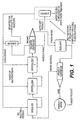
- Figure 1 and 2 illustrate the process of extractive solution crystallization.
- Crude dry reactor product containing impurities is continuously charged to a dissolver along with recycled water from the product centrifuge. This solution is crystallized in one or more continuous crystallizers where an organic extractant is added at the optimal time in the optimal amount.
- the resulting slurry is separated into three phases; (1) a liquid organic phase containing the oil soluble impurities, (2) a water wet solid product containing the desired organic crystal, and (3) a liquid aqueous phase containing water soluble impurities and minimal amounts of dissolved product.
- the organic stream is sent to a stripper where the oil soluble impurities are remove and the extractant is purified for recycle.
- the Aqueous stream is sent to a separate striper where any dissolved organic extractant is recovered and the water stream with impurities is set to recovery of disposal.
- the product stream is re-slurried and centrifuged again as a wash step prior to drying.
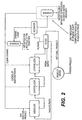
- FIG 2 The process shown in Figure 2, is similar to that of Figure 1.
- This example is similar to the first.
- the difference here is the use of separation device after the crystallizers that removes and washes the solid product but can not separate the aqueous phase from the liquid-organic phase.
- the two-phase liquid stream is then be decanted in a separate device prior to recovery of the organic and oil soluble impurities in a stripping device.
- the stripper on the lower aqueous phase is needed only if the extractant is not completely insoluble in the aqueous phase.
- the wet cake can be sent to the dryer for production of the final product.
- the invention relates to a process for the isolation and purification of phenyl ester salts such as sodium 4-sulfophenyl-6-[(1-oxynonyl)amino] hexanoate, sodium 4-(nonanoyloxy) benzenesulfonate, or sodium benzoyloxy benzenesulphonate.
- phenyl ester salts such as sodium 4-sulfophenyl-6-[(1-oxynonyl)amino] hexanoate, sodium 4-(nonanoyloxy) benzenesulfonate, or sodium benzoyloxy benzenesulphonate.
- the phenyl ester salt sodium 4-sulfophenyl-6-[(1-oxynonyl)-amino] hexanoate
- Sodium 4-sulfophenyl 6-[(1-oxynonyl)-amino] hexanoate is useful as a bleach activator (See e.g., U.S. Patent No. 4,634,551; and U.S. Patent No. 4,852,989) and can be synthesized through a variety of routes.
- One synthetic route involves the reaction of sodium 4-hydroxybenzene-sulfonate, acetic anhydride, and nonanamidohexanoic acid in sulfolane with sodium acetate, imidazole, and/or caustic as catalysts(s).
- One of the recovery methods for sulfolane is direct evaporation of the reaction mixture in which the phenyl ester salt is produced (e . g ., U.S. Patent No. 5,466,840). Through evaporation, the sulfolane is removed while the impurities remain with the sodium 4-sulfophenyl-6-[(1-oxynonyl)-amino] hexanoate. In this process, the impurities must then be removed by further purification, so the product meets desired specifications, such as color, rate of perhydrolysis or purity.
- the rate of perhydrolysis is a measure of the effectiveness of the bleach activator, and is the amount of phenyl ester salt that undergoes hydrolysis within a certain amount of time at a given temperature.
- the invention provides a more efficient separation and purification of sodium 4-sulfophenyl-6-[(1-oxynonyl)-amino] hexanoate from water in a single step without pre-extracting water insoluble impurities or compromising on the yield, stability, or purity of the product.
- This invention alleviates problems encountered previously when crystallizing sodium 4-sulfophenyl-6-[(1-oxynonyl)-amino] hexanoate directly from water, including slow filtering and foaming during the filtration step.
- a further aspect of this invention is that the impurities that are dissolved in the second solvent may easily be isolated and recycled. These impurities may include unreacted starting material, or other useful side products, for instance. For large-scale production, this may be a highly desirable advantage. For example, this is an advantage in a process for making sodium 4-sulfophenyl-6-[(1-oxynonyl)-amino] hexanoate from the reaction of sodium 4-hydroxy benzenesulfonate, acetic anhydride, and nonanamidohexanoic acid in sulfolane with sodium acetate, imidazole, and/or caustic as catalysts(s), as described in U.S. Patent No. 5,650,527.
- This invention will allow for the recovery of excess nonanamidohexanoic acid from the second solvent, which means that an excess of nonanamidohexanoic acid starting material may be used in this reaction.
- an excess of nonanamidohexanoic acid starting material reduces the amount of unreacted sodium 4-hydroxy benzenesulfonate (SPS), which is another starting material. Reducing the amount of unreacted SPS reduces waste of this reagent which previously was unrecovered, and also reduces the load on the waste water treatment facilities.
- SPS sodium 4-hydroxy benzenesulfonate
- the crude phenyl ester salt used in these examples is sodium 4-sulfophenyl-6-[(1-oxynonyl)-amino] hexanoate which has been prepared from the reaction of sodium 4-hydroxy benzenesulfonate, acetic anhydride, and nonanamidohexanoic acid in sulfolane with sodium acetate, imidazole, and/or caustic as catalysts(s), as described in U.S. Patent No. 5,650,527 which is incorporated herein in its entirety.
- the cake moisture was determined by gravimetric analysis (i . e ., weight loss upon drying). Powder color was measured using a Hunterlab Colorquest II spectrophotometer. The samples are analyzed as dry powders in reflectance mode, using a standard powder cell. Standard reflectance tiles are used prior to each analysis to calibrate the spectrophotometer to ensure consistency and accuracy. For commercial use as a bleach activator, a Hunter L value of 85 or greater and Hunter a and b values near zero are generally desired. The particle size was measured by a Malvem Autosizer using light scattering of dilute suspensions. The final compound purity was determined by using liquid chromatography.
- a jacketed 1.5-liter crystallizer with 3 baffles, 1 thermocouple, and a 2" high-efficiency impeller was charged with 400 grams of demineralized water and heated to 75°C. Once the water reached the desired temperature, 100 grams of crude reaction mixture containing sodium 4-sulfophenyl-6-[(1-oxynonyl)-amino] hexanoate, (where the reaction solvent had been removed by distillation), was charged to the vessel and mixed to form a solution.
- the crude sodium 4-sulfophenyl 6-[(1-oxynonyl)-amino] hexanoate assay is given in Table 1. Agitation was set at 600 rpm.
- the solution was held for thirty minutes at 75°C to allow the sodium 4-sulfophenyl 6-[(1-oxynonyl)-amino] hexanoate to dissolve.
- the solution was then cooled to 30°C at 15°C/hr, and held at 30°C for one hour.
- the phenyl ester salt crystallized out of solution forming a slurry.
- Example 1 demonstrates the poor performance of sodium 4-sulfophenyl-6-[(1-oxynonyl)-amino] hexanoate crystallization with only water at a low temperature. Although the yield is satisfactory, the nonanamidohexanoic acid and di-nonanamido hexanoic acid have come out of solution and sufficiently slowed the filtration process down, such that it is not economically viable. Several filters of maximum size would be required for the plant capacity needed. However, the slow filtering nature of the cake also results in a cake that has high levels of impurities.
- Example 1 The slurry remaining from Example 1 was heated to 40°C and held at this temperature for 30 minutes. This slurry (containing about 180 grams of the phenyl ester salt) was filtered at room temperature on a coarse-fritted glass filter with 19"Hg vacuum. The nitration proceeded much quicker. About 125 g of filtrate was collected in less than one minute. The wet cake was removed and weighed 55 grams. Analyses of the cake and filtrate are shown in Table 1. The median particle size was determined to be 35 microns. The yield from this filtration was estimated at 91%. The analytical data show higher than expected levels of nonanamidohexanoic acid and SPS. This is likely due to hydrolysis of sodium 4-sulfophenyl 6-[(1-oxynonyl)-amino] hexanoate while in water at the elevated temperatures.
- Example 2 demonstrates the poor performance of sodium 4-sulfophenyl-6-[(1-oxynonyl)-amino] hexanoate crystallization when carrying out the filtration step at a temperature of 40oC with only water. Although the rate of filtration is acceptable for commercial use, there is a higher level of impurities formed at the higher temperature due to hydrolysis of the phenyl ester salt at elevated temperatures, and an unacceptable amount of sodium 4-sulfophenyl-6-[(1-oxynonyl)-amino] hexanoate is lost to the filtrate due to its greater solubility at higher temperatures.
- Example 3A was washed with 5% cyclohexanol solution in water.
- Example 3B was washed with 95% cyclohexanol in water.
- Example 3A the time to collect 132 grams of filtrate was 127 seconds, and the where the filtrate contained 2.6% sodium 4-sulfophenyl 6-[(1-oxynonyl)-amino] hexanoate and 9.6% cyclohexanol.
- the cake contained 42% moisture.
- the purity of the final dried product was 86% as measured by HPLC (high pressure liquid chromatography). All impurities were reported at levels less than 0.25%.
- Example 3B the final dried cake was analyzed to be 89.5% sodium 4-sulfophenyl 6-[(1-oxynonyl)-amino] hexanoate with all impurities reported at less than 0.2%.
- Example 3 demonstrates that the second solvent should be added prior to the end of the crystallization process, and the second liquid phase should form early enough to prevent contamination of the desired crystals with cocrystallized impurities or inclusions of mother liquor containing the impurities.
- examples 3-6 provide extractive solution crystallization processes whereby the co-solvent extracts out the nonanamidohexanoic acid selectively over the sodium 4-sulfophenyl 6-[(1-oxynonyl)- amino] hexanoate to allow easy separation of the phenyl ester salt.
- Tables 1 and 2 summarize these results.
- LC Analysis for Examples 1-3 all results given in estimated wt.
- a jacketed 1-liter model reactor with one 2.25" A310 agitator and four baffles was set up.
- a charge of 500 grams of water and 300 grams of methyl-isobutyl-ketone (MIBK) was added to the vessel and heated to 75°C.
- MIBK methyl-isobutyl-ketone
- An amount of 200 grams of crude sodium 4-sulfophenyl 6-[(1-oxynonyl)-amino] hexanoate was charged to the vessel and dissolved.
- the agitation speed was set at 500 rpm.
- the pH of the solution was adjusted with H 2 SO 4 to 5.5 and the solution was held at 75°C for 60 minutes and then cooled to 22°C at 8°C/hour.
- An aliquot of 236 grams was removed from the vessel and filtered with 20"Hg vacuum on a coarse-fritted glass filter. The cake was washed twice in place, once with 2% MIBK in water and then by 99% MIBK in water.
- the filtration time to collect 71 grams of filtrate was 191 seconds; the filtrate was two-phase and the composite analyzed to be 2.3% sodium 4-sulfophenyl 6-[(1-oxynonyl)-amino] hexanoate.
- the upper (organic) phase was analyzed to be 89% MIBK, 1.98% nonanamidohexanoic acid, 0.22% di-nonanamidohexanoic acid, and only 0.04% sodium 4-sulfophenyl 6-[(1-oxynonyl)-amino] hexanoate.
- the cake moisture was determined to be 50%.
- the median particle size was reported to be 131.9 microns.
- Example 4 shows an improvement in purity and color compared to Example 3.
- Example 5 shows an improvement in purity and color compared to Example 3.
- a jacketed 1-liter model reactor with 4 baffles and 1-2.25" A310 agitator was utilized.
- a charge of 60 grams of water and 540 grams of MIBK was added to the vessel and the mixture was heated to 85°C.
- a charge of 200 grams of the crude material used in Example 4 was charged to the vessel and dissolved.
- the agitation speed was set at 320 rpm.
- the pH of the solution was adjusted to 5.5 with H 2 SO 4 and the solution was held a 75°C for 60 minutes and then cooled to 22°C at 8°C/hour.
- An aliquot of 167 grams of slurry was removed from the vessel and centrifuged for 15 minutes at 2500 G's. The centrate appeared to be two phases and was decanted (95 grams).
- Example 6 shows the improvement over Examples 1-5. This result is due to adjusting the proportions of the first solvent and the second solvent. Extractive Solution Crystallization (Examples 1-6)
Landscapes
- Chemical & Material Sciences (AREA)
- Organic Chemistry (AREA)
- Organic Low-Molecular-Weight Compounds And Preparation Thereof (AREA)
- Pharmaceuticals Containing Other Organic And Inorganic Compounds (AREA)
Claims (25)
- Procédé pour la purification et l'isolement d'un sel d'ester phénylique par cristallisation d'une solution extractive selon la revendication 17, comprenant les étapes consistant à :(i) combiner dans n'importe quel ordre : un premier solvant, un deuxième solvant et un sel d'ester phénylique brut avec au moins une impureté, dans lequel le sel d'ester phénylique est essentiellement soluble dans le premier solvant et essentiellement non soluble dans le deuxième solvant et l'impureté est essentiellement soluble dans le deuxième solvant, et dans lequel le deuxième solvant est essentiellement non miscible dans le premier solvant dans des conditions dans lesquelles le sel d'ester phénylique se cristallise à partir du premier solvant ;(ii) dissoudre essentiellement le sel d'ester phénylique brut dans les solvants combinés ;(iii) supprimer éventuellement tout matériau non dissous restant des étapes (i) ou (ii) ;(iv) cristalliser le sel d'ester phénylique à partir du premier solvant dans des conditions dans lesquelles l'impureté reste essentiellement dissoute dans le deuxième solvant ; et(v) récupérer les cristaux.
- Procédé selon la revendication 1, dans lequel le premier solvant est un solvant aqueux, de l'eau ou un solvant organique polaire.
- Procédé selon la revendication 2, dans lequel le deuxième solvant est au moins un élément parmi le cyclohexanol, la méthyl isobutyl cétone, l'acétate éthylique, le 1-pentanol, la méthyl isopropyl cétone, l'hexane, le xylène ou la diéthyl cétone.
- Procédé selon la revendication 1, comprenant en outre, avant l'étape de combinaison (i), l'étape consistant à préchauffer au moins un du premier solvant ou du deuxième solvant à une température se situant dans la plage allant de 50 °C à 100 °C.
- Procédé selon la revendication 1, comprenant en outre, après l'étape de combinaison (i), l'étape consistant à chauffer le premier solvant, le deuxième solvant et le mélange combiné dans l'étape (i) à une température se situant dans la plage allant de 50 °C à 100 °C.
- Procédé selon la revendication 2, dans lequel le premier solvant est un solvant aqueux ou de l'eau, et comprenant en outre, avant l'étape de cristallisation (iv), l'étape consistant à ajuster le pH du premier solvant à un pH d'environ 4 à 6.
- Procédé selon la revendication 6, dans lequel le pH est ajusté en ajoutant un acide minéral.
- Procédé selon la revendication 7, dans lequel l'acide minéral est un acide sulfurique.
- Procédé selon la revendication 1, dans lequel l'étape de cristallisation (iv) comprend le refroidissement des solvants combinés et du mélange à une température suffisante pour cristalliser le sel d'ester phénylique à partir du premier solvant.
- Procédé selon la revendication 9, dans lequel l'étape de cristallisation (iv) comprend le refroidissement à une vitesse de 8 à 15 °C/heure environ.
- Procédé selon la revendication 1, dans lequel l'étape de cristallisation (iv) comprend l'évaporation d'une quantité suffisante du premier solvant des solvants combinés et du mélange en vue d'induire la cristallisation du sel d'ester phénylique sans provoquer l'évaporation d'une quantité importante du deuxième solvant, évitant ainsi la cristallisation de l'impureté.
- Procédé selon la revendication 1, dans lequel l'étape de récupération (v) comprend le filtrage ou la centrifugation des solvants combinés et du mélange après l'étape de cristallisation (iv).
- Procédé selon la revendication 12, dans lequel l'étape de récupération (v) comprend l'utilisation d'une centrifugeuse à tricanter.
- Procédé selon la revendication 1, dans lequel le sel d'ester phénylique est un composé de formule (I) ou (II) :
 dans lesquelles :
 R1 est choisi parmi un groupe alkyle en C1 à C22, un groupe alcényle en C2 à C22, un groupe alcynyle C2 à C22, un groupe cycloalkyle en C3 à C22 et un groupe aryle en C6 à C14 ;R2 et R5 sont chacun choisis indépendamment parmi un atome d'hydrogène, un groupe alkyle en C1 à C22, un groupe alcényle en C2 à C22, un groupe alcynyle C2 à C22, un groupe cycloalkyle en C3 à C22, et un groupe aryle en C6 à C14, ou dans la formule II, R2 et R5, conjointement avec l'atome d'azote les portant, forment un hétérocycle en C3 à C10 ; R3 et R4 sont chacun choisis indépendamment dans chaque cas parmi un atome d'hydrogène, un groupe alkyle en C1 à C10, un groupe alcényle en C2 à C10, un groupe alcynyle C2 à C10, un groupe cycloalkyle en C3 à C10 et un groupe aryle en C6 à C10, ou R3 et R4, conjointement avec l'atome de carbone les portant, forment un groupe cycloalkyle en C3 à C10,Y est choisi parmi SO3 -M+, CO2 -M+, SO4 -M+, et N+(R6)3X- ;M est choisi parmi un atome d'hydrogène, un ammonium et un atome de métal alcalin ;R6 représente dans chaque cas un groupe alkyle en C1 à C4 ;X représente un halogénure, un hydroxyde, un sulfate de méthyle ou un ion acétate ;m représente un nombre entier de 0 à 1 ; etn représente un nombre entier de 0 à 20.
 - Procédé selon la revendication 14, dans lequel le sel d'ester phénylique est un composé de formule (I) ou (II), dans lesquelles :R1 est un choisi parmi un groupe alkyle en C6 à C10 et un groupe aryle en C6 à C10 ;R2 représente un atome d'hydrogène ;R3 dans chaque cas est choisi indépendamment parmi un atome d'hydrogène et un groupe méthyle ;R4 dans chaque cas est choisi indépendamment parmi un atome d'hydrogène et un groupe méthyle ;R5 est choisi parmi un atome d'hydrogène, un groupe alkyle en C6 à C10, et un groupe aryle en C6 à C10 ;Y est choisi parmi SO3 -M+ et CO2 -M+ ;M représente un ion sodium ;m représente un nombre entier de 0 à 1 ; etn représente un nombre entier de 0 à 6.
- Procédé selon la revendication 15, dans lequel le sel d'ester phénylique est un 4-sulfophényl-6-[(1-oxynonyl)-amino]hexanoate de sodium, un 4-(nonanoyloxy)benzènesulfonate de sodium ou un benzoyloxy benzènesulfonate de sodium.
- Procédé pour la purification et l'isolement d'un composé chimique par la cristallisation d'une solution extractive, comprenant les étapes consistant à :(i) combiner dans n'importe quel ordre : un premier solvant, un deuxième solvant et un mélange comprenant un composé chimique et au moins une impureté, dans lequel le composé chimique est essentiellement soluble dans le premier solvant et essentiellement non soluble dans le deuxième solvant et l'impureté est essentiellement soluble dans le deuxième solvant, et dans lequel le deuxième solvant est essentiellement non miscible dans le premier solvant dans des conditions dans lesquelles le composé chimique se cristallise à partir du premier solvant ;(ii) dissoudre essentiellement le mélange dans les solvants combinés ;(iii) supprimer éventuellement tout matériau non dissous restant des étapes (i) ou (ii) ;(iv) cristalliser le composé chimique à partir du premier solvant dans des conditions dans lesquelles l'impureté reste essentiellement dissoute dans le deuxième solvant ; et(v) récupérer les cristaux.
- Procédé selon la revendication 17, dans lequel le premier solvant est un solvant aqueux, de l'eau ou un solvant organique polaire.
- Procédé selon la revendication 17, comprenant en outre, avant l'étape de combinaison (i), l'étape consistant à préchauffer au moins un du premier solvant ou du deuxième solvant à une température se situant dans la plage allant de 50 °C à 100 °C.
- Procédé selon la revendication 17, comprenant en outre, après l'étape de combinaison (i), l'étape consistant à chauffer le premier solvant, le deuxième solvant et le mélange combiné dans l'étape (i) à une température se situant dans la plage allant de 50 °C à 100 °C.
- Procédé selon la revendication 18, dans lequel le premier solvant est un solvant aqueux ou de l'eau, et comprenant en outre, avant l'étape de cristallisation (iv), l'étape consistant à ajuster le pH du premier solvant à un pH d'environ 4 à 6.
- Procédé selon la revendication 17, dans lequel l'étape de cristallisation (iv) comprend le refroidissement des solvants combinés et du mélange à une température suffisante pour cristalliser le sel d'ester phénylique à partir du premier solvant.
- Procédé selon la revendication 22, dans lequel l'étape de cristallisation (iv) comprend le refroidissement à une vitesse de 8 à 15 °C/heure environ.
- Procédé selon la revendication 17, dans lequel l'étape de cristallisation (iv) comprend l'évaporation d'une quantité suffisante du premier solvant des solvants combinés et du mélange en vue d'induire la cristallisation du composé chimique sans provoquer l'évaporation d'une quantité importante du deuxième solvant, évitant ainsi la cristallisation de l'impureté.
- Procédé selon la revendication 24, dans lequel le composé chimique est un sel d'un composé organique ou un sel d'un composé inorganique.
Applications Claiming Priority (3)
| Application Number | Priority Date | Filing Date | Title |
|---|---|---|---|
| US20856500P | 2000-06-02 | 2000-06-02 | |
| US208565P | 2000-06-02 | ||
| PCT/US2001/017968 WO2001094302A2 (fr) | 2000-06-02 | 2001-06-04 | Cristallisation de solution extractive de composes chimiques |
Publications (2)
| Publication Number | Publication Date |
|---|---|
| EP1286959A2 EP1286959A2 (fr) | 2003-03-05 |
| EP1286959B1 true EP1286959B1 (fr) | 2004-12-22 |
Family
ID=22775061
Family Applications (1)
| Application Number | Title | Priority Date | Filing Date |
|---|---|---|---|
| EP01946062A Expired - Lifetime EP1286959B1 (fr) | 2000-06-02 | 2001-06-04 | Cristallisation de solution extractive de composes chimiques |
Country Status (6)
| Country | Link |
|---|---|
| US (1) | US6500973B2 (fr) |
| EP (1) | EP1286959B1 (fr) |
| AT (1) | ATE285397T1 (fr) |
| AU (1) | AU2001268157A1 (fr) |
| DE (1) | DE60107947T2 (fr) |
| WO (1) | WO2001094302A2 (fr) |
Cited By (1)
| Publication number | Priority date | Publication date | Assignee | Title |
|---|---|---|---|---|
| CN107019925A (zh) * | 2017-03-02 | 2017-08-08 | 南京航空航天大学 | 闭式溶液循环零排放蒸发浓缩系统及其方法 |
Families Citing this family (1)
| Publication number | Priority date | Publication date | Assignee | Title |
|---|---|---|---|---|
| FR2951461B1 (fr) * | 2009-10-16 | 2011-11-25 | Lorraine Inst Nat Polytech | Procede d'extraction enzymatique en milieu aqueux d'huiles et de proteines a partir de matiere vegetale |
Family Cites Families (39)
| Publication number | Priority date | Publication date | Assignee | Title |
|---|---|---|---|---|
| US2520716A (en) | 1950-08-29 | Method of separating organic com | ||
| US2398526A (en) | 1943-08-07 | 1946-04-16 | Allied Chem & Dye Corp | Isolation of para-xylene |
| US2768222A (en) | 1950-03-31 | 1956-10-23 | Shell Dev | Separation of xylenes with antimony trichloride |
| US2778864A (en) | 1951-04-07 | 1957-01-22 | Exxon Research Engineering Co | Process for separating pure para xylene by complexing with antimony trichloride |
| US2941019A (en) | 1956-09-12 | 1960-06-14 | Standard Oil Co | Extractive crystallization process for the recovery of naphthalene from hydrocarbon stocks utilizing polynitro aromatic compounds as complexors |
| US3767724A (en) | 1971-10-15 | 1973-10-23 | Chevron Res | Extractive crystallization method for the separation of mixtures of alkenes and alkanes |
| US4107443A (en) | 1976-12-30 | 1978-08-15 | General Electric Company | Process for purifying impure diphenols |
| JPS56120799A (en) | 1980-02-28 | 1981-09-22 | Lion Corp | Manufacture of high quality fatty ester |
| US4634551A (en) | 1985-06-03 | 1987-01-06 | Procter & Gamble Company | Bleaching compounds and compositions comprising fatty peroxyacids salts thereof and precursors therefor having amide moieties in the fatty chain |
| GB8422158D0 (en) | 1984-09-01 | 1984-10-03 | Procter & Gamble Ltd | Bleach compositions |
| US4852989A (en) | 1987-05-08 | 1989-08-01 | The Procter & Gamble Company | Bleaching compounds and compositions comprising fatty peroxyacids salts thereof and precursors therefor having amide moieties in the fatty chain |
| DD295349A5 (de) | 1987-12-30 | 1991-10-31 | Addinol Mineraloel Gmbh Luetzkendorf,De | Verfahren zur herstellung von hochbasischen phenolathaltigen calcium-sulfonaten |
| US5252770A (en) | 1989-06-05 | 1993-10-12 | Monsanto Company | Process for the production of carbonate esters |
| US4980463A (en) | 1989-07-18 | 1990-12-25 | Noramco, Inc. | Sucrose-6-ester chlorination |
| GB8919006D0 (en) | 1989-08-21 | 1989-10-04 | Unilever Plc | Granulated bleach activator particles |
| DE4017466A1 (de) | 1990-05-30 | 1991-12-05 | Henkel Kgaa | Verfahren zur herstellung hellfarbiger pasten von alpha-sulfofettsaeurealkylester-alkalimetallsalzen |
| GB9023006D0 (en) | 1990-10-23 | 1990-12-05 | Bp Chem Int Ltd | Bleach activators |
| IT1245724B (it) | 1990-11-09 | 1994-10-14 | Caffaro Spa Ind Chim | Procedimento di purificazione della taed |
| JPH06179648A (ja) | 1992-12-15 | 1994-06-28 | Kao Corp | スルホベタインの製造方法 |
| US5429773A (en) | 1993-02-05 | 1995-07-04 | The Procter & Gamble Company | Process to improve alkyl ester sulfonate surfactant compositions |
| US5298611A (en) | 1993-03-12 | 1994-03-29 | Mcneil-Ppc, Inc. | Sucralose pentaester production |
| JPH06306042A (ja) | 1993-04-22 | 1994-11-01 | Kao Corp | スルホベタインの製造方法 |
| EP0699233B1 (fr) | 1993-05-20 | 1999-03-24 | The Procter & Gamble Company | Procede de blanchiment avec des compositions comprenant des adjuvants au peroxyacide ayant des fractions amide |
| ES2120047T3 (es) | 1993-05-20 | 1998-10-16 | Procter & Gamble | Metodos de blanqueo con activadores de peroxiacido utilizados con enzimas. |
| US5414099A (en) | 1993-09-14 | 1995-05-09 | The Procter & Gamble Company | Synthesis of amido acids from carboxylic acids and lactams |
| US5534195A (en) | 1993-12-23 | 1996-07-09 | The Procter & Gamble Co. | Process for making particles comprising lactam bleach activators |
| US5534196A (en) | 1993-12-23 | 1996-07-09 | The Procter & Gamble Co. | Process for making lactam bleach activator containing particles |
| US5391780A (en) | 1994-04-15 | 1995-02-21 | Eastman Chemical Company | Aqueous process for preparing amido-carboxylic acids by reacting an aminoacid with a carboxylic acid anhydride |
| US5393901A (en) | 1994-04-15 | 1995-02-28 | Eastman Chemical Company | Aqueous process for preparing amido-carboxylic acids |
| US5393905A (en) | 1994-04-15 | 1995-02-28 | Eastman Chemical Company | Purification of amido-carboxylic acids |
| US5466840A (en) | 1994-08-22 | 1995-11-14 | Eastman Chemical Company | Process for preparing purified alkali metal salts of 4-sulfophenyl-[(1-oxyalkanoyl)amino]alkanoate without isolation of intermediates |
| GB9423374D0 (en) | 1994-11-19 | 1995-01-11 | Procter & Gamble | Peroxyacid bleach precursor compositions |
| JPH08245549A (ja) | 1995-03-13 | 1996-09-24 | Kao Corp | スルホナートの製造法 |
| US5523434A (en) | 1995-03-15 | 1996-06-04 | The Procter & Gamble Company | Synthesis of bleach activators |
| US5650527A (en) | 1995-06-05 | 1997-07-22 | Eastman Chemical Company | Preparation of amido ester compounds |
| US5717118A (en) | 1995-09-05 | 1998-02-10 | Eastman Chemical Company | Process for preparing amido-carboxylic acid esters having internal amide linkages |
| JP3553231B2 (ja) | 1995-10-18 | 2004-08-11 | 花王株式会社 | アシルオキシベンゼンスルホン酸又はその塩の精製法 |
| AU1582597A (en) | 1996-01-29 | 1997-08-20 | Procter & Gamble Company, The | Process for making particulate bleach activator component |
| EP1005451A2 (fr) | 1997-08-20 | 2000-06-07 | The Procter & Gamble Company | Procede de preparation et/ou de purification de sulfonates d'ester vinylique d'acide amine |
-
2001
- 2001-06-01 US US09/870,988 patent/US6500973B2/en not_active Expired - Fee Related
- 2001-06-04 DE DE60107947T patent/DE60107947T2/de not_active Expired - Fee Related
- 2001-06-04 WO PCT/US2001/017968 patent/WO2001094302A2/fr not_active Ceased
- 2001-06-04 AU AU2001268157A patent/AU2001268157A1/en not_active Abandoned
- 2001-06-04 EP EP01946062A patent/EP1286959B1/fr not_active Expired - Lifetime
- 2001-06-04 AT AT01946062T patent/ATE285397T1/de not_active IP Right Cessation
Cited By (1)
| Publication number | Priority date | Publication date | Assignee | Title |
|---|---|---|---|---|
| CN107019925A (zh) * | 2017-03-02 | 2017-08-08 | 南京航空航天大学 | 闭式溶液循环零排放蒸发浓缩系统及其方法 |
Also Published As
| Publication number | Publication date |
|---|---|
| DE60107947D1 (de) | 2005-01-27 |
| DE60107947T2 (de) | 2005-05-19 |
| US6500973B2 (en) | 2002-12-31 |
| US20020035284A1 (en) | 2002-03-21 |
| WO2001094302A3 (fr) | 2002-05-30 |
| WO2001094302A2 (fr) | 2001-12-13 |
| EP1286959A2 (fr) | 2003-03-05 |
| ATE285397T1 (de) | 2005-01-15 |
| AU2001268157A1 (en) | 2001-12-17 |
Similar Documents
| Publication | Publication Date | Title |
|---|---|---|
| US5852211A (en) | Process for the conversion of the sodium salt of 2-keto-L-gulonic acid to the free acid | |
| JPH0377199B2 (fr) | ||
| US6500973B2 (en) | Extractive solution crystallization of chemical compounds | |
| JP3894511B2 (ja) | イミド−アルカン過カルボン酸中の水分および極性不純物を減少させる方法 | |
| EP3856732B1 (fr) | Procédé et sels pour la préparation d'acide 2,5-furanedicarboxylique | |
| EP1286960B1 (fr) | Isolement ameliore de sels de phenylesters a partir de melanges au sulfolane | |
| JPH1025277A (ja) | ジヒドロキシジフェニルスルホンの製造方法 | |
| JPH075543B2 (ja) | 高純度カプロラクタムの製造法 | |
| CA2300943A1 (fr) | Procede de preparation et/ou de purification de sulfonates d'ester vinylique d'acide amine | |
| JP3553231B2 (ja) | アシルオキシベンゼンスルホン酸又はその塩の精製法 | |
| EP0468821A1 (fr) | Procédé pour la production de la rhodamine | |
| JP3534903B2 (ja) | 1−[3−クロロ−(2s)−メチルプロピオニル]−ピロリジン−(2s)−カルボン酸の製造方法 | |
| US4529800A (en) | Novel process for the preparation of 2-halo-3-nitro-6-alkoxy-pyridines | |
| CA2301187C (fr) | Procede de purification et de recuperation d'edulcorant | |
| JP3407336B2 (ja) | アミノエタンスルホン酸類の精製方法 | |
| CN110615814B (zh) | 一种半富马酸替诺福韦二吡呋酯的制备方法 | |
| MXPA00002197A (es) | Proceso para la purificacion o recuperacion de endulzante | |
| KR20070053697A (ko) | 개선된 미르타자핀 제조방법 | |
| JPS58162570A (ja) | p−トルエンスルホン酸クロリドの精製方法 | |
| SU692821A1 (ru) | Способ разделени антраценкарбазольной смеси | |
| JPS6113460B2 (fr) | ||
| EP1386911A2 (fr) | Procédé pour la préparation de sulfonates d'acyloxybenzene | |
| JPH09216854A (ja) | 3−クロロ−3’−ニトロ−4’−メトキシベンゾフエノンの製造方法 | |
| JPH01246229A (ja) | 4,4’‐ジイソプロピルビフェニルの分離方法 | |
| JPH04983B2 (fr) |
Legal Events
| Date | Code | Title | Description |
|---|---|---|---|
| PUAI | Public reference made under article 153(3) epc to a published international application that has entered the european phase |
Free format text: ORIGINAL CODE: 0009012 |
|
| 17P | Request for examination filed |
Effective date: 20021218 |
|
| AK | Designated contracting states |
Kind code of ref document: A2 Designated state(s): AT BE CH CY DE DK ES FI FR GB GR IE IT LI LU MC NL PT SE TR Designated state(s): AT BE CH CY DE DK ES FI FR GB GR IE IT LI LU MC NL PT SE TR |
|
| AX | Request for extension of the european patent |
Extension state: AL LT LV MK RO SI |
|
| 17Q | First examination report despatched |
Effective date: 20030626 |
|
| GRAP | Despatch of communication of intention to grant a patent |
Free format text: ORIGINAL CODE: EPIDOSNIGR1 |
|
| GRAS | Grant fee paid |
Free format text: ORIGINAL CODE: EPIDOSNIGR3 |
|
| GRAA | (expected) grant |
Free format text: ORIGINAL CODE: 0009210 |
|
| AK | Designated contracting states |
Kind code of ref document: B1 Designated state(s): AT BE CH CY DE DK ES FI FR GB GR IE IT LI LU MC NL PT SE TR |
|
| PG25 | Lapsed in a contracting state [announced via postgrant information from national office to epo] |
Ref country code: TR Free format text: LAPSE BECAUSE OF FAILURE TO SUBMIT A TRANSLATION OF THE DESCRIPTION OR TO PAY THE FEE WITHIN THE PRESCRIBED TIME-LIMIT Effective date: 20041222 Ref country code: NL Free format text: LAPSE BECAUSE OF FAILURE TO SUBMIT A TRANSLATION OF THE DESCRIPTION OR TO PAY THE FEE WITHIN THE PRESCRIBED TIME-LIMIT Effective date: 20041222 Ref country code: LI Free format text: LAPSE BECAUSE OF FAILURE TO SUBMIT A TRANSLATION OF THE DESCRIPTION OR TO PAY THE FEE WITHIN THE PRESCRIBED TIME-LIMIT Effective date: 20041222 Ref country code: IT Free format text: LAPSE BECAUSE OF FAILURE TO SUBMIT A TRANSLATION OF THE DESCRIPTION OR TO PAY THE FEE WITHIN THE PRESCRIBED TIME-LIMIT;WARNING: LAPSES OF ITALIAN PATENTS WITH EFFECTIVE DATE BEFORE 2007 MAY HAVE OCCURRED AT ANY TIME BEFORE 2007. THE CORRECT EFFECTIVE DATE MAY BE DIFFERENT FROM THE ONE RECORDED. Effective date: 20041222 Ref country code: FI Free format text: LAPSE BECAUSE OF FAILURE TO SUBMIT A TRANSLATION OF THE DESCRIPTION OR TO PAY THE FEE WITHIN THE PRESCRIBED TIME-LIMIT Effective date: 20041222 Ref country code: CH Free format text: LAPSE BECAUSE OF FAILURE TO SUBMIT A TRANSLATION OF THE DESCRIPTION OR TO PAY THE FEE WITHIN THE PRESCRIBED TIME-LIMIT Effective date: 20041222 Ref country code: BE Free format text: LAPSE BECAUSE OF FAILURE TO SUBMIT A TRANSLATION OF THE DESCRIPTION OR TO PAY THE FEE WITHIN THE PRESCRIBED TIME-LIMIT Effective date: 20041222 Ref country code: AT Free format text: LAPSE BECAUSE OF FAILURE TO SUBMIT A TRANSLATION OF THE DESCRIPTION OR TO PAY THE FEE WITHIN THE PRESCRIBED TIME-LIMIT Effective date: 20041222 |
|
| REG | Reference to a national code |
Ref country code: GB Ref legal event code: FG4D |
|
| REG | Reference to a national code |
Ref country code: CH Ref legal event code: EP |
|
| REG | Reference to a national code |
Ref country code: IE Ref legal event code: FG4D |
|
| REF | Corresponds to: |
Ref document number: 60107947 Country of ref document: DE Date of ref document: 20050127 Kind code of ref document: P |
|
| PG25 | Lapsed in a contracting state [announced via postgrant information from national office to epo] |
Ref country code: SE Free format text: LAPSE BECAUSE OF FAILURE TO SUBMIT A TRANSLATION OF THE DESCRIPTION OR TO PAY THE FEE WITHIN THE PRESCRIBED TIME-LIMIT Effective date: 20050322 Ref country code: GR Free format text: LAPSE BECAUSE OF FAILURE TO SUBMIT A TRANSLATION OF THE DESCRIPTION OR TO PAY THE FEE WITHIN THE PRESCRIBED TIME-LIMIT Effective date: 20050322 Ref country code: DK Free format text: LAPSE BECAUSE OF FAILURE TO SUBMIT A TRANSLATION OF THE DESCRIPTION OR TO PAY THE FEE WITHIN THE PRESCRIBED TIME-LIMIT Effective date: 20050322 |
|
| PG25 | Lapsed in a contracting state [announced via postgrant information from national office to epo] |
Ref country code: ES Free format text: LAPSE BECAUSE OF FAILURE TO SUBMIT A TRANSLATION OF THE DESCRIPTION OR TO PAY THE FEE WITHIN THE PRESCRIBED TIME-LIMIT Effective date: 20050402 |
|
| NLV1 | Nl: lapsed or annulled due to failure to fulfill the requirements of art. 29p and 29m of the patents act | ||
| PG25 | Lapsed in a contracting state [announced via postgrant information from national office to epo] |
Ref country code: LU Free format text: LAPSE BECAUSE OF NON-PAYMENT OF DUE FEES Effective date: 20050604 Ref country code: GB Free format text: LAPSE BECAUSE OF NON-PAYMENT OF DUE FEES Effective date: 20050604 Ref country code: CY Free format text: LAPSE BECAUSE OF FAILURE TO SUBMIT A TRANSLATION OF THE DESCRIPTION OR TO PAY THE FEE WITHIN THE PRESCRIBED TIME-LIMIT Effective date: 20050604 |
|
| PG25 | Lapsed in a contracting state [announced via postgrant information from national office to epo] |
Ref country code: IE Free format text: LAPSE BECAUSE OF NON-PAYMENT OF DUE FEES Effective date: 20050607 |
|
| PG25 | Lapsed in a contracting state [announced via postgrant information from national office to epo] |
Ref country code: MC Free format text: LAPSE BECAUSE OF NON-PAYMENT OF DUE FEES Effective date: 20050630 |
|
| REG | Reference to a national code |
Ref country code: CH Ref legal event code: PL |
|
| PLBE | No opposition filed within time limit |
Free format text: ORIGINAL CODE: 0009261 |
|
| STAA | Information on the status of an ep patent application or granted ep patent |
Free format text: STATUS: NO OPPOSITION FILED WITHIN TIME LIMIT |
|
| ET | Fr: translation filed | ||
| 26N | No opposition filed |
Effective date: 20050923 |
|
| PG25 | Lapsed in a contracting state [announced via postgrant information from national office to epo] |
Ref country code: DE Free format text: LAPSE BECAUSE OF NON-PAYMENT OF DUE FEES Effective date: 20060103 |
|
| GBPC | Gb: european patent ceased through non-payment of renewal fee |
Effective date: 20050604 |
|
| REG | Reference to a national code |
Ref country code: IE Ref legal event code: MM4A |
|
| PG25 | Lapsed in a contracting state [announced via postgrant information from national office to epo] |
Ref country code: PT Free format text: LAPSE BECAUSE OF NON-PAYMENT OF DUE FEES Effective date: 20050522 |
|
| PG25 | Lapsed in a contracting state [announced via postgrant information from national office to epo] |
Ref country code: FR Free format text: LAPSE BECAUSE OF NON-PAYMENT OF DUE FEES Effective date: 20050630 |
|
| REG | Reference to a national code |
Ref country code: FR Ref legal event code: ST Effective date: 20111202 |