EP1292332B1 - ADJUVANTS ET MéTHODES POUR INDUIRE UNE REPONSE IMMUNITAIRE Th2 - Google Patents
ADJUVANTS ET MéTHODES POUR INDUIRE UNE REPONSE IMMUNITAIRE Th2 Download PDFInfo
- Publication number
- EP1292332B1 EP1292332B1 EP01944590A EP01944590A EP1292332B1 EP 1292332 B1 EP1292332 B1 EP 1292332B1 EP 01944590 A EP01944590 A EP 01944590A EP 01944590 A EP01944590 A EP 01944590A EP 1292332 B1 EP1292332 B1 EP 1292332B1
- Authority
- EP
- European Patent Office
- Prior art keywords
- gingivalis
- lps
- lipid
- detoxified
- immune response
- Prior art date
- Legal status (The legal status is an assumption and is not a legal conclusion. Google has not performed a legal analysis and makes no representation as to the accuracy of the status listed.)
- Expired - Lifetime
Links
- 239000002671 adjuvant Substances 0.000 title claims abstract description 62
- 230000029069 type 2 immune response Effects 0.000 title claims abstract description 46
- 238000000034 method Methods 0.000 title claims description 30
- 230000008569 process Effects 0.000 title description 3
- 241000605862 Porphyromonas gingivalis Species 0.000 claims abstract description 258
- GZQKNULLWNGMCW-PWQABINMSA-N lipid A (E. coli) Chemical compound O1[C@H](CO)[C@@H](OP(O)(O)=O)[C@H](OC(=O)C[C@@H](CCCCCCCCCCC)OC(=O)CCCCCCCCCCCCC)[C@@H](NC(=O)C[C@@H](CCCCCCCCCCC)OC(=O)CCCCCCCCCCC)[C@@H]1OC[C@@H]1[C@@H](O)[C@H](OC(=O)C[C@H](O)CCCCCCCCCCC)[C@@H](NC(=O)C[C@H](O)CCCCCCCCCCC)[C@@H](OP(O)(O)=O)O1 GZQKNULLWNGMCW-PWQABINMSA-N 0.000 claims abstract description 89
- 230000029662 T-helper 1 type immune response Effects 0.000 claims abstract description 26
- 241001465754 Metazoa Species 0.000 claims abstract description 23
- 238000010171 animal model Methods 0.000 claims abstract description 9
- 208000035473 Communicable disease Diseases 0.000 claims abstract description 6
- 239000000427 antigen Substances 0.000 claims description 47
- 102000036639 antigens Human genes 0.000 claims description 47
- 108091007433 antigens Proteins 0.000 claims description 47
- 201000010099 disease Diseases 0.000 claims description 35
- 208000037265 diseases, disorders, signs and symptoms Diseases 0.000 claims description 35
- 150000002632 lipids Chemical group 0.000 claims description 30
- 239000008194 pharmaceutical composition Substances 0.000 claims description 28
- 241000124008 Mammalia Species 0.000 claims description 20
- 230000004044 response Effects 0.000 claims description 16
- 238000002360 preparation method Methods 0.000 claims description 12
- 230000002708 enhancing effect Effects 0.000 claims description 9
- 238000004519 manufacturing process Methods 0.000 claims description 8
- 208000023275 Autoimmune disease Diseases 0.000 claims description 6
- 238000003306 harvesting Methods 0.000 claims description 5
- 208000015181 infectious disease Diseases 0.000 claims description 2
- 230000022023 interleukin-5 production Effects 0.000 claims description 2
- 230000004936 stimulating effect Effects 0.000 claims description 2
- 238000011160 research Methods 0.000 abstract description 3
- 238000002255 vaccination Methods 0.000 abstract description 2
- 230000006472 autoimmune response Effects 0.000 abstract 1
- 238000009776 industrial production Methods 0.000 abstract 1
- 239000002158 endotoxin Substances 0.000 description 240
- 229920006008 lipopolysaccharide Polymers 0.000 description 236
- 108010058846 Ovalbumin Proteins 0.000 description 85
- 229940092253 ovalbumin Drugs 0.000 description 84
- 241000588724 Escherichia coli Species 0.000 description 71
- 241000699670 Mus sp. Species 0.000 description 53
- 230000028993 immune response Effects 0.000 description 32
- 210000001744 T-lymphocyte Anatomy 0.000 description 31
- 210000004443 dendritic cell Anatomy 0.000 description 29
- 238000001727 in vivo Methods 0.000 description 22
- 239000007924 injection Substances 0.000 description 22
- 238000002347 injection Methods 0.000 description 22
- 210000001165 lymph node Anatomy 0.000 description 22
- 210000000952 spleen Anatomy 0.000 description 21
- 210000004027 cell Anatomy 0.000 description 18
- 102000003814 Interleukin-10 Human genes 0.000 description 15
- 108090000174 Interleukin-10 Proteins 0.000 description 15
- 108010002616 Interleukin-5 Proteins 0.000 description 15
- 102000000743 Interleukin-5 Human genes 0.000 description 15
- 108010060804 Toll-Like Receptor 4 Proteins 0.000 description 15
- 102100039360 Toll-like receptor 4 Human genes 0.000 description 15
- 102100022297 Integrin alpha-X Human genes 0.000 description 14
- 102000003816 Interleukin-13 Human genes 0.000 description 12
- 108090000176 Interleukin-13 Proteins 0.000 description 12
- 238000011740 C57BL/6 mouse Methods 0.000 description 11
- 102000004127 Cytokines Human genes 0.000 description 11
- 108090000695 Cytokines Proteins 0.000 description 11
- 102000004388 Interleukin-4 Human genes 0.000 description 11
- 108090000978 Interleukin-4 Proteins 0.000 description 11
- 238000002474 experimental method Methods 0.000 description 11
- 238000000684 flow cytometry Methods 0.000 description 11
- 102000000588 Interleukin-2 Human genes 0.000 description 9
- 108010002350 Interleukin-2 Proteins 0.000 description 9
- 108091008874 T cell receptors Proteins 0.000 description 9
- 102000016266 T-Cell Antigen Receptors Human genes 0.000 description 9
- 239000006285 cell suspension Substances 0.000 description 9
- 238000000338 in vitro Methods 0.000 description 9
- 210000004988 splenocyte Anatomy 0.000 description 9
- 238000002965 ELISA Methods 0.000 description 8
- 101000800116 Homo sapiens Thy-1 membrane glycoprotein Proteins 0.000 description 8
- 102100033523 Thy-1 membrane glycoprotein Human genes 0.000 description 8
- 230000016396 cytokine production Effects 0.000 description 8
- LOKCTEFSRHRXRJ-UHFFFAOYSA-I dipotassium trisodium dihydrogen phosphate hydrogen phosphate dichloride Chemical compound P(=O)(O)(O)[O-].[K+].P(=O)(O)([O-])[O-].[Na+].[Na+].[Cl-].[K+].[Cl-].[Na+] LOKCTEFSRHRXRJ-UHFFFAOYSA-I 0.000 description 8
- 239000002953 phosphate buffered saline Substances 0.000 description 8
- 102000013462 Interleukin-12 Human genes 0.000 description 7
- 108010065805 Interleukin-12 Proteins 0.000 description 7
- 102000004889 Interleukin-6 Human genes 0.000 description 7
- 108090001005 Interleukin-6 Proteins 0.000 description 7
- 230000005867 T cell response Effects 0.000 description 7
- 230000000694 effects Effects 0.000 description 7
- YBJHBAHKTGYVGT-ZKWXMUAHSA-N (+)-Biotin Chemical compound N1C(=O)N[C@@H]2[C@H](CCCCC(=O)O)SC[C@@H]21 YBJHBAHKTGYVGT-ZKWXMUAHSA-N 0.000 description 6
- 108091003079 Bovine Serum Albumin Proteins 0.000 description 6
- 210000001266 CD8-positive T-lymphocyte Anatomy 0.000 description 6
- 241000282412 Homo Species 0.000 description 6
- 239000012228 culture supernatant Substances 0.000 description 6
- 230000036039 immunity Effects 0.000 description 6
- 230000001939 inductive effect Effects 0.000 description 6
- 238000007912 intraperitoneal administration Methods 0.000 description 6
- 239000007928 intraperitoneal injection Substances 0.000 description 6
- 230000007246 mechanism Effects 0.000 description 6
- 230000011664 signaling Effects 0.000 description 6
- 230000009261 transgenic effect Effects 0.000 description 6
- 238000011830 transgenic mouse model Methods 0.000 description 6
- 241000699660 Mus musculus Species 0.000 description 5
- 230000003213 activating effect Effects 0.000 description 5
- 210000001151 cytotoxic T lymphocyte Anatomy 0.000 description 5
- 230000001419 dependent effect Effects 0.000 description 5
- 239000003937 drug carrier Substances 0.000 description 5
- MHMNJMPURVTYEJ-UHFFFAOYSA-N fluorescein-5-isothiocyanate Chemical compound O1C(=O)C2=CC(N=C=S)=CC=C2C21C1=CC=C(O)C=C1OC1=CC(O)=CC=C21 MHMNJMPURVTYEJ-UHFFFAOYSA-N 0.000 description 5
- 239000008024 pharmaceutical diluent Substances 0.000 description 5
- 101150013553 CD40 gene Proteins 0.000 description 4
- 101000914484 Homo sapiens T-lymphocyte activation antigen CD80 Proteins 0.000 description 4
- 102000015696 Interleukins Human genes 0.000 description 4
- 108010063738 Interleukins Proteins 0.000 description 4
- 206010028980 Neoplasm Diseases 0.000 description 4
- 102100027222 T-lymphocyte activation antigen CD80 Human genes 0.000 description 4
- 108060008682 Tumor Necrosis Factor Proteins 0.000 description 4
- 102000000852 Tumor Necrosis Factor-alpha Human genes 0.000 description 4
- 102100040245 Tumor necrosis factor receptor superfamily member 5 Human genes 0.000 description 4
- 108010004469 allophycocyanin Proteins 0.000 description 4
- 238000011260 co-administration Methods 0.000 description 4
- 230000014509 gene expression Effects 0.000 description 4
- 239000003102 growth factor Substances 0.000 description 4
- 230000001771 impaired effect Effects 0.000 description 4
- 230000018711 interleukin-13 production Effects 0.000 description 4
- -1 krypton ion Chemical class 0.000 description 4
- 239000000203 mixture Substances 0.000 description 4
- 230000001717 pathogenic effect Effects 0.000 description 4
- 230000002062 proliferating effect Effects 0.000 description 4
- 230000035755 proliferation Effects 0.000 description 4
- 108090000623 proteins and genes Proteins 0.000 description 4
- 238000007920 subcutaneous administration Methods 0.000 description 4
- 239000000126 substance Substances 0.000 description 4
- XLYOFNOQVPJJNP-UHFFFAOYSA-N water Substances O XLYOFNOQVPJJNP-UHFFFAOYSA-N 0.000 description 4
- 108010090804 Streptavidin Proteins 0.000 description 3
- 238000004458 analytical method Methods 0.000 description 3
- 230000001580 bacterial effect Effects 0.000 description 3
- 229960002685 biotin Drugs 0.000 description 3
- 235000020958 biotin Nutrition 0.000 description 3
- 239000011616 biotin Substances 0.000 description 3
- 238000000605 extraction Methods 0.000 description 3
- 239000012091 fetal bovine serum Substances 0.000 description 3
- 230000001404 mediated effect Effects 0.000 description 3
- 244000052769 pathogen Species 0.000 description 3
- 108090000765 processed proteins & peptides Proteins 0.000 description 3
- 230000009696 proliferative response Effects 0.000 description 3
- 102000004169 proteins and genes Human genes 0.000 description 3
- 238000000746 purification Methods 0.000 description 3
- 238000002415 sodium dodecyl sulfate polyacrylamide gel electrophoresis Methods 0.000 description 3
- 230000003393 splenic effect Effects 0.000 description 3
- 229960005486 vaccine Drugs 0.000 description 3
- CSCPPACGZOOCGX-UHFFFAOYSA-N Acetone Chemical compound CC(C)=O CSCPPACGZOOCGX-UHFFFAOYSA-N 0.000 description 2
- XKRFYHLGVUSROY-UHFFFAOYSA-N Argon Chemical compound [Ar] XKRFYHLGVUSROY-UHFFFAOYSA-N 0.000 description 2
- IJGRMHOSHXDMSA-UHFFFAOYSA-N Atomic nitrogen Chemical compound N#N IJGRMHOSHXDMSA-UHFFFAOYSA-N 0.000 description 2
- 210000004366 CD4-positive T-lymphocyte Anatomy 0.000 description 2
- 101000914514 Homo sapiens T-cell-specific surface glycoprotein CD28 Proteins 0.000 description 2
- 241000699666 Mus <mouse, genus> Species 0.000 description 2
- 239000006146 Roswell Park Memorial Institute medium Substances 0.000 description 2
- FAPWRFPIFSIZLT-UHFFFAOYSA-M Sodium chloride Chemical compound [Na+].[Cl-] FAPWRFPIFSIZLT-UHFFFAOYSA-M 0.000 description 2
- 230000024932 T cell mediated immunity Effects 0.000 description 2
- 102100027213 T-cell-specific surface glycoprotein CD28 Human genes 0.000 description 2
- 230000004913 activation Effects 0.000 description 2
- 239000008346 aqueous phase Substances 0.000 description 2
- 229940098773 bovine serum albumin Drugs 0.000 description 2
- 230000001427 coherent effect Effects 0.000 description 2
- 150000001875 compounds Chemical class 0.000 description 2
- 238000004624 confocal microscopy Methods 0.000 description 2
- 230000002950 deficient Effects 0.000 description 2
- 238000000432 density-gradient centrifugation Methods 0.000 description 2
- 238000001514 detection method Methods 0.000 description 2
- 230000007893 endotoxin activity Effects 0.000 description 2
- 239000012634 fragment Substances 0.000 description 2
- 210000002443 helper t lymphocyte Anatomy 0.000 description 2
- 229940025294 hemin Drugs 0.000 description 2
- BTIJJDXEELBZFS-QDUVMHSLSA-K hemin Chemical compound CC1=C(CCC(O)=O)C(C=C2C(CCC(O)=O)=C(C)\C(N2[Fe](Cl)N23)=C\4)=N\C1=C/C2=C(C)C(C=C)=C3\C=C/1C(C)=C(C=C)C/4=N\1 BTIJJDXEELBZFS-QDUVMHSLSA-K 0.000 description 2
- 210000000987 immune system Anatomy 0.000 description 2
- 230000002601 intratumoral effect Effects 0.000 description 2
- QWTDNUCVQCZILF-UHFFFAOYSA-N isopentane Chemical compound CCC(C)C QWTDNUCVQCZILF-UHFFFAOYSA-N 0.000 description 2
- 239000002609 medium Substances 0.000 description 2
- 239000011325 microbead Substances 0.000 description 2
- 238000002156 mixing Methods 0.000 description 2
- 230000003389 potentiating effect Effects 0.000 description 2
- 230000037452 priming Effects 0.000 description 2
- 230000005855 radiation Effects 0.000 description 2
- 102000005962 receptors Human genes 0.000 description 2
- 108020003175 receptors Proteins 0.000 description 2
- 239000011780 sodium chloride Substances 0.000 description 2
- 238000010186 staining Methods 0.000 description 2
- 230000001225 therapeutic effect Effects 0.000 description 2
- JVJGCCBAOOWGEO-RUTPOYCXSA-N (2s)-2-[[(2s)-2-[[(2s)-2-[[(2s)-2-[[(2s)-4-amino-2-[[(2s,3s)-2-[[(2s,3s)-2-[[(2s)-2-azaniumyl-3-hydroxypropanoyl]amino]-3-methylpentanoyl]amino]-3-methylpentanoyl]amino]-4-oxobutanoyl]amino]-3-phenylpropanoyl]amino]-4-carboxylatobutanoyl]amino]-6-azaniumy Chemical compound OC[C@H](N)C(=O)N[C@@H]([C@@H](C)CC)C(=O)N[C@@H]([C@@H](C)CC)C(=O)N[C@@H](CC(N)=O)C(=O)N[C@H](C(=O)N[C@@H](CCC(O)=O)C(=O)N[C@@H](CCCCN)C(=O)N[C@@H](CC(C)C)C(O)=O)CC1=CC=CC=C1 JVJGCCBAOOWGEO-RUTPOYCXSA-N 0.000 description 1
- 238000000035 BCA protein assay Methods 0.000 description 1
- 108010021064 CTLA-4 Antigen Proteins 0.000 description 1
- 229940045513 CTLA4 antagonist Drugs 0.000 description 1
- 241000283707 Capra Species 0.000 description 1
- 102100039498 Cytotoxic T-lymphocyte protein 4 Human genes 0.000 description 1
- 238000008157 ELISA kit Methods 0.000 description 1
- 108010067770 Endopeptidase K Proteins 0.000 description 1
- 241000287828 Gallus gallus Species 0.000 description 1
- 101000609762 Gallus gallus Ovalbumin Proteins 0.000 description 1
- 208000009329 Graft vs Host Disease Diseases 0.000 description 1
- 101001046686 Homo sapiens Integrin alpha-M Proteins 0.000 description 1
- 108060003951 Immunoglobulin Proteins 0.000 description 1
- 206010061218 Inflammation Diseases 0.000 description 1
- 102100022338 Integrin alpha-M Human genes 0.000 description 1
- 102000008070 Interferon-gamma Human genes 0.000 description 1
- 108010074328 Interferon-gamma Proteins 0.000 description 1
- 241001529936 Murinae Species 0.000 description 1
- 101710163270 Nuclease Proteins 0.000 description 1
- 240000007594 Oryza sativa Species 0.000 description 1
- ISWSIDIOOBJBQZ-UHFFFAOYSA-N Phenol Chemical compound OC1=CC=CC=C1 ISWSIDIOOBJBQZ-UHFFFAOYSA-N 0.000 description 1
- 239000012980 RPMI-1640 medium Substances 0.000 description 1
- 101150052863 THY1 gene Proteins 0.000 description 1
- 102220500920 Telomerase reverse transcriptase_H12K_mutation Human genes 0.000 description 1
- 210000000447 Th1 cell Anatomy 0.000 description 1
- 210000004241 Th2 cell Anatomy 0.000 description 1
- IQFYYKKMVGJFEH-XLPZGREQSA-N Thymidine Chemical compound O=C1NC(=O)C(C)=CN1[C@@H]1O[C@H](CO)[C@@H](O)C1 IQFYYKKMVGJFEH-XLPZGREQSA-N 0.000 description 1
- 101150082427 Tlr4 gene Proteins 0.000 description 1
- 102100024333 Toll-like receptor 2 Human genes 0.000 description 1
- 108010060888 Toll-like receptor 2 Proteins 0.000 description 1
- 238000009825 accumulation Methods 0.000 description 1
- 230000004721 adaptive immunity Effects 0.000 description 1
- 239000000556 agonist Substances 0.000 description 1
- 230000030741 antigen processing and presentation Effects 0.000 description 1
- 229910052786 argon Inorganic materials 0.000 description 1
- 238000003556 assay Methods 0.000 description 1
- 230000008901 benefit Effects 0.000 description 1
- AIYUHDOJVYHVIT-UHFFFAOYSA-M caesium chloride Chemical compound [Cl-].[Cs+] AIYUHDOJVYHVIT-UHFFFAOYSA-M 0.000 description 1
- 150000001720 carbohydrates Chemical class 0.000 description 1
- 238000004113 cell culture Methods 0.000 description 1
- 230000011712 cell development Effects 0.000 description 1
- 230000024245 cell differentiation Effects 0.000 description 1
- 238000005119 centrifugation Methods 0.000 description 1
- 238000012512 characterization method Methods 0.000 description 1
- 239000002299 complementary DNA Substances 0.000 description 1
- 238000011109 contamination Methods 0.000 description 1
- 230000001054 cortical effect Effects 0.000 description 1
- 230000004940 costimulation Effects 0.000 description 1
- 238000012258 culturing Methods 0.000 description 1
- 230000006378 damage Effects 0.000 description 1
- 230000003247 decreasing effect Effects 0.000 description 1
- 239000008367 deionised water Substances 0.000 description 1
- 229910021641 deionized water Inorganic materials 0.000 description 1
- 238000012217 deletion Methods 0.000 description 1
- 230000037430 deletion Effects 0.000 description 1
- 238000011161 development Methods 0.000 description 1
- 230000018109 developmental process Effects 0.000 description 1
- 230000007120 differential activation Effects 0.000 description 1
- 230000009274 differential gene expression Effects 0.000 description 1
- 230000004069 differentiation Effects 0.000 description 1
- 230000029087 digestion Effects 0.000 description 1
- 239000012153 distilled water Substances 0.000 description 1
- 230000008030 elimination Effects 0.000 description 1
- 238000003379 elimination reaction Methods 0.000 description 1
- 238000005516 engineering process Methods 0.000 description 1
- 210000003979 eosinophil Anatomy 0.000 description 1
- 238000013401 experimental design Methods 0.000 description 1
- 239000012894 fetal calf serum Substances 0.000 description 1
- 108700014844 flt3 ligand Proteins 0.000 description 1
- 230000008014 freezing Effects 0.000 description 1
- 238000007710 freezing Methods 0.000 description 1
- 238000010230 functional analysis Methods 0.000 description 1
- 239000011521 glass Substances 0.000 description 1
- 208000024908 graft versus host disease Diseases 0.000 description 1
- 244000000013 helminth Species 0.000 description 1
- 230000028996 humoral immune response Effects 0.000 description 1
- 230000004727 humoral immunity Effects 0.000 description 1
- 102000018358 immunoglobulin Human genes 0.000 description 1
- 230000016784 immunoglobulin production Effects 0.000 description 1
- 239000000568 immunological adjuvant Substances 0.000 description 1
- 238000010348 incorporation Methods 0.000 description 1
- 230000006698 induction Effects 0.000 description 1
- 230000004054 inflammatory process Effects 0.000 description 1
- 229960003130 interferon gamma Drugs 0.000 description 1
- 230000019734 interleukin-12 production Effects 0.000 description 1
- 230000017306 interleukin-6 production Effects 0.000 description 1
- 238000001361 intraarterial administration Methods 0.000 description 1
- 230000003834 intracellular effect Effects 0.000 description 1
- 238000007918 intramuscular administration Methods 0.000 description 1
- 238000001990 intravenous administration Methods 0.000 description 1
- 229910052743 krypton Inorganic materials 0.000 description 1
- 239000007788 liquid Substances 0.000 description 1
- 230000004807 localization Effects 0.000 description 1
- 210000003563 lymphoid tissue Anatomy 0.000 description 1
- 210000002540 macrophage Anatomy 0.000 description 1
- 239000000463 material Substances 0.000 description 1
- 230000035800 maturation Effects 0.000 description 1
- 239000000693 micelle Substances 0.000 description 1
- 239000013586 microbial product Substances 0.000 description 1
- 238000012986 modification Methods 0.000 description 1
- 230000004048 modification Effects 0.000 description 1
- 229940035032 monophosphoryl lipid a Drugs 0.000 description 1
- 230000035772 mutation Effects 0.000 description 1
- 229910052757 nitrogen Inorganic materials 0.000 description 1
- 231100000252 nontoxic Toxicity 0.000 description 1
- 230000003000 nontoxic effect Effects 0.000 description 1
- 230000037361 pathway Effects 0.000 description 1
- 239000008188 pellet Substances 0.000 description 1
- KSSNXJHPEFVKHY-UHFFFAOYSA-N phenol;hydrate Chemical compound O.OC1=CC=CC=C1 KSSNXJHPEFVKHY-UHFFFAOYSA-N 0.000 description 1
- 229920000729 poly(L-lysine) polymer Polymers 0.000 description 1
- 230000002265 prevention Effects 0.000 description 1
- 102000004196 processed proteins & peptides Human genes 0.000 description 1
- 230000000069 prophylactic effect Effects 0.000 description 1
- 229940044551 receptor antagonist Drugs 0.000 description 1
- 239000002464 receptor antagonist Substances 0.000 description 1
- 230000001105 regulatory effect Effects 0.000 description 1
- 210000002966 serum Anatomy 0.000 description 1
- 238000004611 spectroscopical analysis Methods 0.000 description 1
- 210000004989 spleen cell Anatomy 0.000 description 1
- 238000012453 sprague-dawley rat model Methods 0.000 description 1
- 239000007929 subcutaneous injection Substances 0.000 description 1
- 238000010254 subcutaneous injection Methods 0.000 description 1
- 239000006228 supernatant Substances 0.000 description 1
- 210000001541 thymus gland Anatomy 0.000 description 1
- 210000001519 tissue Anatomy 0.000 description 1
- 231100000331 toxic Toxicity 0.000 description 1
- 230000002588 toxic effect Effects 0.000 description 1
- 238000012546 transfer Methods 0.000 description 1
- 238000002054 transplantation Methods 0.000 description 1
- 230000003827 upregulation Effects 0.000 description 1
- 239000012646 vaccine adjuvant Substances 0.000 description 1
- 229940124931 vaccine adjuvant Drugs 0.000 description 1
- 238000012800 visualization Methods 0.000 description 1
Images






Classifications
-
- A—HUMAN NECESSITIES
- A61—MEDICAL OR VETERINARY SCIENCE; HYGIENE
- A61K—PREPARATIONS FOR MEDICAL, DENTAL OR TOILETRY PURPOSES
- A61K31/00—Medicinal preparations containing organic active ingredients
- A61K31/70—Carbohydrates; Sugars; Derivatives thereof
- A61K31/715—Polysaccharides, i.e. having more than five saccharide radicals attached to each other by glycosidic linkages; Derivatives thereof, e.g. ethers, esters
- A61K31/739—Lipopolysaccharides
-
- A—HUMAN NECESSITIES
- A61—MEDICAL OR VETERINARY SCIENCE; HYGIENE
- A61K—PREPARATIONS FOR MEDICAL, DENTAL OR TOILETRY PURPOSES
- A61K39/00—Medicinal preparations containing antigens or antibodies
- A61K39/39—Medicinal preparations containing antigens or antibodies characterised by the immunostimulating additives, e.g. chemical adjuvants
-
- A—HUMAN NECESSITIES
- A61—MEDICAL OR VETERINARY SCIENCE; HYGIENE
- A61P—SPECIFIC THERAPEUTIC ACTIVITY OF CHEMICAL COMPOUNDS OR MEDICINAL PREPARATIONS
- A61P37/00—Drugs for immunological or allergic disorders
-
- A—HUMAN NECESSITIES
- A61—MEDICAL OR VETERINARY SCIENCE; HYGIENE
- A61P—SPECIFIC THERAPEUTIC ACTIVITY OF CHEMICAL COMPOUNDS OR MEDICINAL PREPARATIONS
- A61P37/00—Drugs for immunological or allergic disorders
- A61P37/02—Immunomodulators
- A61P37/04—Immunostimulants
-
- A—HUMAN NECESSITIES
- A61—MEDICAL OR VETERINARY SCIENCE; HYGIENE
- A61K—PREPARATIONS FOR MEDICAL, DENTAL OR TOILETRY PURPOSES
- A61K39/00—Medicinal preparations containing antigens or antibodies
- A61K2039/555—Medicinal preparations containing antigens or antibodies characterised by a specific combination antigen/adjuvant
- A61K2039/55511—Organic adjuvants
- A61K2039/55572—Lipopolysaccharides; Lipid A; Monophosphoryl lipid A
-
- A—HUMAN NECESSITIES
- A61—MEDICAL OR VETERINARY SCIENCE; HYGIENE
- A61K—PREPARATIONS FOR MEDICAL, DENTAL OR TOILETRY PURPOSES
- A61K39/00—Medicinal preparations containing antigens or antibodies
- A61K2039/57—Medicinal preparations containing antigens or antibodies characterised by the type of response, e.g. Th1, Th2
Definitions
- the present invention relates to the field of using adjuvants to promote a specific type of immunological response.
- the immune system has evolved two different types of adaptive immunity, each specialized for the elimination of a particular class of pathogens.
- CD4+ T-helper (Th) cells differentiate into Th1 cells, which produce interferon ⁇ (IFN ⁇ ) and interleukin (IL)-1, which, in turn, enhance cell-mediated immunity and inhibit the humoral immune responses.
- helminths induce differentiation of CD4+ T-helper (Th) cells into Th2 cells, which produce cytokines (principally IL-4, IL-5, and IL-10) to induce immunoglobulin E (IgE) and eosinophil-mediated destruction of pathogens.
- Th2 immune response inhibits cell-mediated immunity and enhances humoral immunity.
- the mechanism by which a given pathogen induces a Th1 or Th2 type of immune response is unknown.
- DCs dendritic cells
- the putative lymphoid-related CD8 ⁇ + DCs in spleens induce Th1 immune responses (Shortman, K.D., et al. 1998. "The linkage between T-cell and dendritic cell development in the mouse thymus," Immune Rev 165:39-46).
- Th2 immune responses are induced by the CD8 ⁇ -myeloid DCs (Maldonado-Lopez, R., et al. 1999.
- CD8 ⁇ + and CD8 ⁇ - subclasses of dendritic cells direct the development of distinct T helper cells in vivo," J Exp Med 189:587-592; Pulendran, B., et al. 1999. "Distinct dendritic cell subsets differentially regulate the class of immune response in vivo," Proc Natl Acad Sci USA 96:1036-1041; Rissoan, M.C., et al. 1999. “Reciprocal control of T helper cell and dendritic cell differentiation,” Science 283:1183-1186). Different patterns of immunity can be elicited by activating distinct DC subsets.
- Escherichia coli lipopolysaccharide is reported to signal through the Toll-like receptor 4 (TLR4) complex (Qureshi, S.T., et al. 1999. "Endotoxin-tolerant mice have mutations in Toll-like receptor 4 (Tlr4)," J Exp Med 189:615-625; published erratum appears in J Exp Med 189:1518) and promote a Th1 immune response in vivo (Khoruts, A., A., et al. 1998. "A natural immunological adjuvant enhances T cell clonal expansion through a CD28-dependent, interleukin (IL)-2-independent mechanism,” J Exp Med 187:225-236).
- IL interleukin
- Porphyromonas gingivalis LPS is reported to signal through a TLR4-independent mechanism (Tanamoto, K., S., et al. 1997. "The lipid A moiety of Porphyromonas gingivalis lipopolysaccharide specifically mediates the activation of C3H/HeJ mice," J Immunol 158:4430-4436). It has now been found that although the LPS from these two different bacterial sources induce potent clonal expansion of antigen-specific CD4+ and CD8+ T cells in mice, they elicit strikingly different T cell cytokine profiles through differential cytokine expression by the CD8 ⁇ + and CD8 ⁇ - DCs.
- FIG. 1 depicts the experimental design utilized herein.
- B6.PL.THY1 a (B6.PL) mice or C57BL/6 mice reconstituted with OT-2 cells were injected with either soluble OVA, soluble OVA + E. coli LPS, soluble OVA + P. gingivalis LPS, E. coli LPS alone, or P. gingivalis LPS alone intraperitoneally or in the footpad.
- the spleens Intraperitoneal route
- draining lymph nodes footpad route
- phenotypic and functional analyses including clonal expansion of OVA-specific CD4+ T cells, in vitro proliferation of OVA-specific CD4+ T cells and cytokine production by the OVA-specific CD4+ T cells.
- FIGS 2A-2G depict E. coli LPS and P. gingivalis LPS enhancing antigen-specific T-helper responses in vivo.
- B6.PL.THY1 a (B6.PL) mice reconstituted with OT-2 transgenic T cells were immunized with soluble OVA, E. coli LPS alone, P. gingivalis LPS alone, OVA + E. coli LPS, or OVA + P. gingivalis LPS, either subcutaneously in the footpad ( Figures 2B, 2D and 2F) or intraperitoneally ( Figures 2C, 2E and 2G).
- FIG. 2A depicts flow cytometry profiles from Day 4 of the response in the popliteal lymph nodes (subcutaneous route), from a representative experiment.
- Figures 2B and 2C depict the percentage expansion of OVA-specific CD4+ T cells (Thy1.2+, CD4+) in the draining lymph nodes and the spleens, respectively, at Day 4.
- E. coli LPS and P. gingivalis LPS significantly enhanced the clonal expansion, regardless of the route of injection.
- Figures 2D and 2E depict the absolute numbers of Thy1.2+ CD4+ cells per popliteal lymph node or per spleen, respectively, at Day 4.
- Figures 2F and 2G depict in vitro restimulation of OVA-specific T cells expanded in vivo, by footpad injections or intraperitoneal injections, respectively.
- Four days after priming single cell suspensions from the draining popliteal lymph nodes (Figure 2F) or spleens ( Figure 2G) were restimulated with varying concentrations of OVA for 72 hours, and pulsed with [ 3 H] for 12 hours. Injections of E. coli LPS alone, or P. gingivalis LPS alone did not result in significant clonal expansion or in vitro proliferation.
- the data presented in Figures 2A-2G are representative of ten independent experiments.
- Figures 3A-3H depict E. coli LPS and P. gingivalis LPS inducing distinct types of antigen-specific T-helper responses in vivo.
- Culture supernatants from the cultures described in Figure 2F (subcutaneous injection) and Figure 2G (intraperitoneal injection) were assayed for IL-2 ( Figures 3A and 3E), IFN ⁇ ( Figures 3B and 3F), IL-10 ( Figures 3C and 3G), IL-4 (data not shown), and IL-5 ( Figure 3D and 3H) with ELISA. Injections of E. coli LPS alone or P. gingivalis LPS alone did not result in significant cytokine production.
- the data presented in Figures 3A-3H are representative of ten independent experiments.
- FIGS 4A-4G depict E. coli LPS and P. gingivalis LPS enhancing antigen-specific CD8+ T-cell responses in vivo.
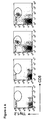
- C57BL/6 mice, or B6.PL.THY1 a (B6.PL) mice reconstituted with OT-1 transgenic T cells were immunized with soluble OVA, OVA + E. coli LPS, or OVA + P. gingivalis LPS, either subcutaneously in the footpad ( Figures 4B, 4D and 4F) or intraperitoneally ( Figure 4C, 4E and 4G).
- FIG. 4A depicts flow cytometry profiles from Day 4 of the response in the popliteal lymph nodes from a representative experiment.
- Figures 4B and 4C depict the percentage expansion of OVA-specific CD8+ T cells (CD8+ Thy1.2+) in the draining lymph nodes and the spleens, respectively, at Day 4. Both E. coli LPS and P.
- FIGS 4D and 4E depict the absolute numbers of OVA-specific CD8+ T cells per popliteal lymph node or per spleen, respectively, at Day 4.
- Figures 4F and 4G depict in vitro restimulation of OVA-specific CD8+T cells expanded in vivo, by footpad injections or intraperitoneal injections, respectively.
- Four days after priming single cell suspensions from the draining popliteal lymph nodes (Figure 4F) or spleens ( Figure 4G) were restimulated with varying concentrations of OVA for 72 hours, and pulsed with [ 3 H] for 12 hours. Injections of E. coli LPS alone or P. gingivalis LPS alone did not result in significant clonal expansion, or in vitro proliferation (data not shown).
- the data presented in Figures 4A-4G are representative of three independent experiments.
- Figures 5A-5H depict E. coli LPS and P. gingivalis LPS inducing distinct types of antigen-specific CD8+ T-cell responses in vivo.
- Culture supernatants from the cultures described in Figures 3E and 3F were assayed for IL-2 ( Figures 5A and 5B), IFN ⁇ ( Figures 5C and 5D), IL-10 ( Figures 5E and 5F), IL-4 (data not shown), and IL-5 ( Figures 5G and 5H) with ELISA. Injections of E. coli LPS alone or P. gingivalis LPS alone did not result in significant cytokine production (data not shown).
- the data presented in Figures 5A-5H are representative of three independent experiments.
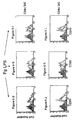
- Figures 6A-6L depict both E. coli LPS and P. gingivalis LPS activating CD8 ⁇ + and CD8 ⁇ - DC subsets in vivo.
- C57BL/6 mice were injected with PBS (light histograms), or with E. coli LPS or P.
- gingivalis LPS (heavy, open histograms), either intravenously or intraperitoneally, and 6 hours later, the expression of CD80 ( Figures 6A, 6D, 6G, and 6J), CD86 ( Figures 6B, 6E, 6H, and 6K), and CD40 ( Figures 6C, 6F, 6I, and 6L) assessed on gated, splenic CD11c+CD8 ⁇ + and CD11c+CD8 ⁇ - DC subsets, by flow cytometry. Isotype controls are filled histograms. The data presented in Figures 6A-6L are representative of three experiments.
- Figures 7A-7C depict E. coli LPS, but not P. gingivalis LPS inducing IL-12 in CD8 ⁇ + DCs.
- Splenic CD11c+CD8 ⁇ + and CD11c+CD8 ⁇ - DCs were isolated from C57BL/6 mice by microbead enrichment, followed by flow cytometry and stimulated in vitro with 10 ⁇ g/mL of E. coli LPS or P. gingivalis LPS. Culture supernatants were assayed for IL-12 (Figure 7A), IL-6 ( Figure 7B), or TNF ⁇ (Figure 7C) 24 hours later.
- the data presented in Figures 7A-7C are representative of ten independent experiments.
- FIGS 8A and 8B demonstrate that TLR4 is the dominant receptor for signaling mediated by E. coli LPS, but not for P. gingivalis LPS.
- Splenocytes from C3H/HeJ mice and C3H/HeN mice were cultured with varying concentrations of E. coli LPS (Figure 8A) or P. gingivalis LPS ( Figure 8B) for 72 hours. The cultures were pulsed with [ 3 H] during the last 12 hours of culture.
- the data presented in Figures 8A-8B are representative of three independent experiments.
- Figures 9A-9D depict IL-6 production by splenocytes stimulated with E. coli LPS or P. gingivalis LPS in C3H/HeN and C3H/HeJ mice.
- Splenocytes from C3H/HeJ mice and C3H/HeN mice were cultured with varying concentrations of E. coli LPS for 12 hours or 48 hours ( Figures 9A and Figure 9C, respectively) or P. gingivalis LPS for 12 hours or 48 hours ( Figures 9B and 9D, respectively).
- IL-6 was measured by cytokine ELISA.
- the data presented in Figures 9A-9B are representative of three independent experiments.
- FIG 10 depicts P. gingivalis LPS inducing much greater levels of IL-13 than E. coli LPS.
- B6.PL.THY1 a (B6.PL) mice reconstituted with OT-2 transgenic T cells were immunized with soluble OVA, E. coli LPS alone, P. gingivalis LPS alone, OVA + E. coli LPS, or OVA + P. gingivalis LPS, either subcutaneously in the footpad or intraperitoneally.
- the invention is an adjuvant isolated lipid moiety selected from the group consisting of P. gingivalis LPS, detoxified P. gingivalis LPS, P. gingivalis Lipid A and detoxified P. gingivalis Lipid A and its use for the preparation of a pharmaceutical composition.
- the adjuvant is for eliciting a Th2 response in a mammal. In another aspect, the adjuvant is for modulating the balance between Th1 and Th2 immune response in a mammal. In another aspect, the adjuvant is for modulating the Th2 immune response in a mammal.
- the invention is a use of an adjuvant lipid moiety selected from the group consisting of P. gingivalis LPS, detoxified P. gingivalis LPS, P. gingivalis Lipid A and detoxified P. gingivalis Lipid A for the preparation of a pharmaceutical composition for enhancing antibody harvest in a laboratory animal through elicited Th2 immune response.
- an adjuvant lipid moiety selected from the group consisting of P. gingivalis LPS, detoxified P. gingivalis LPS, P. gingivalis Lipid A and detoxified P. gingivalis Lipid A for the preparation of a pharmaceutical composition for enhancing antibody harvest in a laboratory animal through elicited Th2 immune response.
- the invention is a use of an adjuvant lipid moiety selected from the group consisting of P. gingivalis LPS, detoxified P. gingivalis LPS, P. gingivalis Lipid A and detoxified P. gingivalis Lipid A for the preparation of a pharmaceutical composition for treating an autoimmune disease in a mammal.
- the pharmaceutical composition further comprises disease-specific antigens.
- the pharmaceutical composition further comprises a co-adjuvant which elicits a Th1 immune response.
- the invention is a use of an adjuvant lipid moiety selected from the group consisting of P. gingivalis LPS, detoxified P. gingivalis LPS, P. gingivalis Lipid A and detoxified P. gingivalis Lipid A for the preparation of a pharmaceutical composition for treating an infectious disease in a mammal.
- the invention is a use of an adjuvant isolated lipid moiety selected from the group consisting of P. gingivalis LPS, detoxified P. gingivalis LPS, P. gingivalis Lipid A and detoxified P. gingivalis Lipid A for the preparation of a pharmaceutical composition for modulating the Th2 immune response in a laboratory animal.
- the invention is a use of an adjuvant lipid moiety selected from the group consisting of P. gingivalis LPS, detoxified P. gingivalis LPS P. gingivalis Lipid A and detoxified P. gingivalis Lipid A for the preparation of a pharmaceutical composition for stimulating IL-5 production in a mammal.
- the invention is a use of an adjuvant lipid moiety selected from the group consisting of P. gingivalis LPS, detoxified P. gingivalis LPS, P. gingivalis Lipid A and detoxified P. gingivalis Lipid A for the preparation of a pharmaceutical composition for dampening IFN ⁇ production in a mammal.
- an adjuvant lipid moiety selected from the group consisting of P. gingivalis LPS, detoxified P. gingivalis LPS, P. gingivalis Lipid A and detoxified P. gingivalis Lipid A for the preparation of a pharmaceutical composition for dampening IFN ⁇ production in a mammal.
- the invention is a pharmaceutical composition
- a pharmaceutical composition comprising at least one isolated lipid moiety selected from the group consisting of P. gingivalis LPS, detoxified P. gingivalis LPS, P. gingivalis Lipid A and detoxified P. gingivalis Lipid A.
- the pharmaceutical composition further comprises disease-specific antigens.
- the pharmaceutical composition further comprises a co-adjuvant which elicits a Th1 immune response.
- the invention is a method of enhancing antibody harvest in a laboratory animal through elicited Th2 immune response comprising administering to the animal an adjuvant lipid moiety selected from the group consisting of P. gingivalis LPS, detoxified P. gingivalis LPS, P. gingivalis Lipid A and detoxified P. gingivalis Lipid A.
- the method further comprises co-administering to the mammal disease-specific antigens.
- the method further comprises co-administering to the mammal a co-adjuvant which elicits a Th1 immune response.
- the adjuvant, disease-specific antigens and, optionally, the co-adjuvant can be administered concurrently or sequentially.
- P. gingivalis lipopolysaccharide can be extracted from any isolated strain of Porphyromonas gingivalis.
- P. gingivalis 33277, P. gingivalis 49417, and P. gingivalis 53978 from the American Type Culture Collection (Manassas, VA) can be utilized.
- a clinical P. gingivalis isolate is another acceptable source for LPS extraction.
- P. gingivalis LPS may be toxic from de novo preparations, it can be detoxified with existing technology without compromising its adjuvant activity (Rietschel, E.T., et al. 1994. "Bacterial endotoxin: molecular relationships of structure to activity and function," FASEB Journal 8:217-825; Johnson, A.G., et al. 1987. "Characterization of a nontoxic monophosphoryl lipid A,” Rev Infectious Diseases 9 (Suppl 5):S512-S516).
- P. gingivalis LPS, detoxified P. gingivalis LPS, P. gingivalis Lipid A, detoxified P. gingivalis Lipid A, or any combination thereof can be used to induce a Th2 immune response in humans and animals for clinical benefit, experimental purposes, or industrial applications.
- the invention disclosed herein is the elicitation of a Th2 immune response through the administration of an adjuvant comprising one or more of the following: P. gingivalis LPS, detoxified P. gingivalis LPS, P. gingivalis Lipid A or detoxified P. gingivalis Lipid A.
- P. gingivalis LPS, detoxified P. gingivalis LPS, P. gingivalis Lipid A and detoxified P. gingivalis Lipid A used singly or in any combination, are considered suitable for use as an adjuvant to produce a Th2 immune response in a human or animal.
- P. gingivalis LPS, detoxified P. gingivalis LPS, P. gingivalis Lipid A or detoxified P. gingivalis Lipid A can be used in combination with other adjuvants known in the art to modulate and induce immune responses in humans and animals.
- Th2 immune response The selective elicitation of the Th2 immune response is highly desirable for treatment or prophylactic vaccination of humans or animals against various autoimmune diseases and graft-versus-host disease. Many autoimmune diseases are characterized by pathogenic Th1 immune responses. Currently, there are intensive efforts to discover adjuvants that can redirect a pathogenic Th1 immune response towards a benign Th2 immune response. Activating a Th2 immune response in a human or animal suffering from an autoimmune disease may decrease the pathogenic Th1 immune response, thereby decreasing the debilitating inflammation characteristic of such diseases. According to the instant disclosure, this effect of activating a Th2 immune response in a human or animal can be achieved through administration of a therapeutically effective composition comprising P. gingivalis LPS, detoxified P.
- gingivalis LPS P. gingivalis Lipid A
- detoxified P. gingivalis Lipid A or any combination thereof by methods well known in the art (Pulendran, B., et al. 2001. “Modulating the immune response with dendritic cells and their growth factors,” Trends in Immunology 22(1):41-47).
- Th2 immune responses Therapeutic immunity against many tumors or infectious diseases or in transplantation requires Th2 immune responses.
- these diseases can be treated by administration of an adjuvant comprising P. gingivalis LPS, detoxified P. gingivalis LPS, P. gingivalis Lipid A, detoxified P. gingivalis Lipid A, or any combination thereof to induce a Th2 immune response.
- P. gingivalis LPS, detoxified P. gingivalis LPS, P. gingivalis Lipid A, detoxified P. gingivalis Lipid A, or any combination thereof can be co-administered concurrently or sequentially with an adjuvant causing a Th1 immune response when a mixed response is required in the prevention or cure of diseases affecting humans or animals.
- This effect can be achieved through the introduction of a therapeutically effective amount of P. gingivalis LPS, detoxified P. gingivalis LPS, derivatives of P. gingivalis LPS, derivatives of detoxified P. gingivalis LPS, P.
- gingivalis Lipid A detoxified P. gingivalis Lipid A, derivatives of P. gingivalis Lipid A, derivatives of detoxified P. gingivalis Lipid A, mimetics thereof, or any combination thereof by methods well known in the art (Pulendran, B., et al. 2001. “Modulating the immune response with dendritic cells and their growth factors," Trends in Immunology 22(1):41-47).
- an adjuvant comprising P. gingivalis LPS, detoxified P. gingivalis LPS, P. gingivalis Lipid A, detoxified P. gingivalis Lipid A, or any combination thereof is preferably administered intravenously, intra-arterially, intra-muscularly, intra-dermally, and local (e.g., intra-tumoral or at the vicinity of a tumor site). Regardless of administration route, P.
- gingivalis LPS detoxified P. gingivalis LPS, P. gingivalis Lipid A, detoxified P. gingivalis Lipid A, or any combination thereof can be administered with or without additional adjuvants and antigens.
- An effective amount of P. gingivalis LPS, detoxified P. gingivalis LPS, P. gingivalis Lipid A, detoxified P. gingivalis Lipid A, or any combination thereof will elicit a Th2 immune response in a human or animal.
- gingivalis Lipid A maintains the solubility of the compound.
- Formulating an effective amount of P. gingivalis LPS, detoxified P. gingivalis LPS, P. gingivalis Lipid A, detoxified P. gingivalis Lipid A, or any combination thereof to elicit a Th2 immune response in a human or animal for oral administration is also contemplated.
- the adjuvant of the instant invention can be administered concurrently or sequentially with a vaccine to enhance immunity by eliciting a Th2 immune response.
- Sequential administration indicates that the adjuvant and vaccine may be injected separately, in any order.
- Preferred administration routes include intravenous, intra-arterial, intra-muscular, intra-dermal, and local (e.g., intra-tumoral or at the vicinity of a tumor site).
- Methods for co-administering an adjuvant with a vaccine to increase immunoreactivity are well known in the art (Pulendran, B., et al. 2001. "Modulating the immune response with dendritic cells and their growth factors," Trends in Immunology 22(1):41-47).
- the instant invention includes use of adjuvants comprising P. gingivalis LPS, detoxified P. gingivalis LPS, P. gingivalis Lipid A, detoxified P. gingivalis Lipid A, or any combination thereof as research tools to study the immune system in laboratory animals.
- P. gingivalis LPS, detoxified P. gingivalis LPS, P. gingivalis Lipid A, detoxified P. gingivalis Lipid A, or any combination thereof can also be used in conjunction with an antigen for enhancing the production and harvest of antibodies in animals by methods well known in the art.
- OT-2 TCR transgenic mice (strain 426-6), generated by Dr. W. Heath (Walter & Eliza Hall Institute, Melbourne, Australia) and Dr. F. Carbone (Monash University, Melbourne, Australia) were obtained from Dr. J. Kapp (Emory University, Atlanta).
- OT-1 TCR transgenic mice were purchased from Jackson Laboratory (Bar Harbor, ME).
- C57BL/6 mice, B6.PL.THY1 a (B6.PL) mice, and C3H/HeJ mice were purchased from Jackson Laboratory (Bar Harbor, ME).
- C3H/HeN mice were purchased from Harlan Sprague Dawley (Indianapolis, IN). All mice were kept in microisolator cages in a specific-pathogen free facility.
- age matched, male C57BL/6 or B6.PL.THY1 a recipients were given 2.5 x 10 6 of either OT-2 cells or OT-1 TCR transgenic T cells intravenously.
- P. gingivalis strain A7436 Hirschfeld, M., et al. 2001. "Signaling by toll-like receptor 2 and 4 agonists results in differential gene expression in murine macrophages," Infect Immun 69:1477-1482) and E. coli strain 25922 (American Type Culture Collection, Manassas, VA) were cultured under identical conditions and LPS purified as previously described (Cutler, C.W., et al. 1996. "Hemin-induced modifications of the antigenicity and hemin-binding capacity of Porphyromonas gingivalis lipopolysaccharide,” Infect Immun 64:2282-2287; Westphal, O., and K. Jann. 1965.
- the dialyzed LPS preparation was then subjected to cesium chloride isopycnic density gradient centrifugation (in 0.5837 g CsCl 2 per 4.4 mL of the LPS preparation) at 42,000 rpm for 72 hours in a Beckman L-60 Ultracentrifuge (Palo Alto, CA).
- the refractive indices of the gradient fractions were determined with a refractometer (Milton Roy, Rochester, NY), and values were converted to density (grams per milliliter).
- Fractions containing LPS density fractions between 1.42 and 1.52 g/mL were pooled, dialyzed against distilled water for 3 days, lyophilized and stored at room temperature.
- LPS was analyzed for protein by the BCA protein assay (Pierce Chemical Company, Rockford, IL). LPS samples were also separated by sodium dodecyl-sulfate-polyacrylamide gel electrophoresis (SDS-PAGE) and stained for protein with Coomasie blue (Pierce Chemical Company, Rockford, IL). Selected samples were also subjected to proteinase K digestion and nuclease treatment and reanalyzed by SDS-PAGE to confirm the purity of the LPS moieties (Pierce Chemical Company, Rockford, IL).
- Chicken OVALBUMIN (OVA) (Sigma Chemical Co., St. Louis, MO) was freshly prepared in phosphate buffered saline (PBS) at a concentration of 20 mg/mL, and depleted of the endotoxin activity (measured by LAL QCL-1000 kit from Bio Whittaker, Walkersville, MD, using manufacturer's protocol dated 2000), with the Detoxi-Gel Affinity Pack Columns (Pierce Chemical Company, Rockford, IL). After depletion, the endotoxin level was below the limit of detection of the LAL QCL-1000 kit ( ⁇ 0.1 EU).
- mice 3-5 per group were injected either intraperitoneally, or in the footpad, with either 2 mg OVA in saline, 2 mg OVA+25 ⁇ g E. coli LPS, or 2mg OVA+25 ⁇ g P. gingivalis LPS. Endotoxin activity in saline was measured by LAL QCL-1000 kit, and observed to be below the detection limit. Prior to mixing with OVA, LPS was sonicated extensively, to ensure uniform mixing of micelles. Footpad injections were given in a volume of 25 ⁇ l. Intraperitoneal injections were given in a volume of 100 ⁇ l.
- cell suspensions were prepared from the draining popliteal lymph nodes or spleens, and incubated on ice with PE-labeled anti-Thy1.2 (Pharmingen, San Diego, CA), FITC-labeled V ⁇ 2 (Pharmingen), Cy-Chrome labeled CD4 (Pharmingen) and Biotin-labeled V ⁇ 5 (Pharmingen), followed by streptavidin allophycocyanin (APC) (Pharmingen).
- PE-labeled anti-Thy1.2 Pharmingen, San Diego, CA
- FITC-labeled V ⁇ 2 Pharmingen
- Cy-Chrome labeled CD4 conjugated immunoglobulfen
- Biotin-labeled V ⁇ 5 Pharmingen
- streptavidin allophycocyanin APC
- DCs were stained with FITC-labeled CD11c (Pharmingen), in combination with PE-labeled CD11b (Pharmingen), or biotin-labeled CD8 ⁇ (Pharmingen), followed by streptavidin allophycocyanin (Pharmingen) using a FACSvantage flow cytometer (Becton Dickinson), equipped with Enterprise II laser (Coherent Radiation, Palo Alto, CA).
- Proliferative responses were assessed after 72 hours of culture in a humidified atmosphere of 5% CO 2 in air. Cultures were pulsed with 1.0 ⁇ Ci [ 3 H] thymidine for 12 hours, and incorporation of the radionucleotide was measured by ⁇ -scintillation spectroscopy (Pulendran, B., et al. 1999. "Distinct dendritic cell subsets differentially regulate the class of immune response in vivo," Proc Natl Acad Sci USA 96:1036-1041).
- cytokine assays aliquots of culture supernatants were removed after 72 hours, pooled, and assayed for the presence of IFN ⁇ , IL-2, IL-4, IL-5, IL-10, and IL-13 by ELISA.
- IFN ⁇ , IL-2, IL-10, IL-4, IL-5, IL-6, IL-12, IL-13 and TNF ⁇ were quantified by ELISA kits from Pharmingen (San Diego, CA) using manufacturer's instructions dated 2000.
- Splenic sections were rehydrated with PBS, and blocked with PBS/5% bovine serum albumin (BSA)/1% goat serum for 20 minutes, and stained with FITC-conjugated anti-CD11c (Pharmingen, San Diego, CA) and PE-conjugated anti-CD4 (Pharmingen, San Diego, CA) for 1 hour.
- the sections were washed and coverslips mounted onto glass slides with Fluoromount (Southern Biotechnology Associates, Birmingham, AL). Confocal microscopy was performed using a TCS SP microscope equipped with argon and krypton ion lasers and a 10X HC PL-APO objective (Leica Microsystem, Heidelberg, Germany).
- CD11c+CD8 ⁇ + and CD11c+CD8 ⁇ - DC subsets were purified from spleens as follows. Spleens of C57BL/6 mice were dissected, cut into small fragments and then digested with collegenase D (0.5 mg/mL; Boehringer-Mannheim, Mannheim, Germany) and Dnase I (40 mg/mL, Boehringer-Mannheim) in RPMI 1640 medium supplemented with 5% fetal calf serum (PCS) for 10 minutes at 37°C. Digested fragments were washed twice in PBS/5% FCS.
- PCS fetal calf serum
- CD11c+ DCs were enriched using CD11c+ microbeads (Miltenyi Biotech, San Diego, CA).
- the enriched DCs were stained with FITC-conjugated CD11c (Pharmingen) and PE-conjugated CD8 ⁇ + (Pharmingen) and sorted into the CD11c+ CD8 ⁇ + and CD11c+ CD8 ⁇ - subsets, using a FACSvantage flow cytometer (Becton Dickinson), equipped with Enterprise II laser (Coherent Radiation, Palo Alto, CA).
- CD 11c+ CD8 ⁇ + and CD 11c+ CD8 ⁇ - were isolated by flow cytometry and cultured in RPMI complete medium supplemented with 5% FBS and with either 10 ⁇ g/mL E. coli LPS or 10 ⁇ g/mL P. gingivalis LPS for 24 hours or 48 hours.
- EXAMPLE 1 E. coli LPS and P. gingivalis LPS enhance antigen-specific T-helper responses in vivo
- TCR transgenic T cells were adoptively transferred into Thy-1 congenic B6.PL.THY1 a (B6.PL) mice, such that they constituted a small but detectable proportion of all T cells (Kearney, E.R., et al. 1995, "Antigen-dependent clonal expansion of a trace population of antigen-specific CD4+ T cells in vivo is dependent on CD28 costimulation and inhibited by CTLA-4," J Immunol 155:1032-1036). In this system, the fate of OVA-specifc, transgenic T cells was followed using the Thy1.2 antibody, which stains only the transferred cells. T cells with the phenotype Thy1.2+ CD4+ V ⁇ 2+ V ⁇ 5+ was considered OVA-specific CD4+ T cells.
- mice were injected with one of the following compositions: soluble endotoxin-free OVA, E. coli LPS alone, P. gingivalis LPS alone, OVA + E. coli LPS, or OVA + P. gingivalis LPS. Injections were either intraperitoneal or in a footpad ( Figure 1). Prior to the injection, the OVA was depleted of endotoxin contamination using methods described above. The CD4+ OVA-specific T cell response in either the draining lymph nodes or in the spleen was monitored by flow cytometry ( Figure 2A).
- EXAMPLE 2 E. coli LPS and P. gingivalis LPS induce distinct types of antigen-specific T-helper responses in vivo
- Cytokine production by antigen-specific T cells was measured by assaying the culture supernatants from the single cell suspensions of the draining lymph nodes described above for IL-2, IFN ⁇ , IL-4, IL-10 and IL-5. Assessment of cytokine production in these cultures revealed significant differences between mice injected with OVA, OVA + E. coli LPS, or OVA + P. gingivalis LPS ( Figures 3A-3H). In cultures from mice injected with OVA alone, there was little, if any, IL-2, IFN ⁇ , IL-10, IL-4, or IL-5 produced. In contrast, in cultures from mice injected with OVA + E. coli LPS, there was significant IL-2 and IL-10 and very high levels of IFN ⁇ produced by the antigen-specific T cells. Neither IL-4 nor IL-5 could be detected in cells from OVA + E. coli LPS injected mice.
- EXAMPLE 3 E. coli LPS and P. gingivalis LPS enhance antigen-specific CD8+ T-cell responses in vivo
- EXAMPLE 4 E. coli LPS and P. gingivalis LPS induce distinct types of antigen-specific CD8+ T-cell responses in vivo
- gingivalis LPS produced much lower levels of IFN ⁇ ( Figures 5B and 5F), but significant levels of IL-10 ( Figures 5C and 5G) and IL-5 ( Figures 5D and 5H), consistent with the cytokine patterns observed with CD4+ OT-2 cells ( Figures 3A-3H). No significant levels of IL-4 were detected in any condition.
- EXAMPLE 5 Both E. coli LPS and P. gingivalis LPS activate CD8 ⁇ + and CD8 ⁇ - DC subsets in vivo
- EXAMPLE 6 E. coli LPS, but not P. gingivalis LPS induces IL-12 in CD8 ⁇ + DCs
- IL-10 and IL-13 may be Th2-inducing cytokines, significant levels of either IL-10 or IL-13 could not be consistently detected in these cultures.
- TLR4 is the dominant receptor for signaling mediated by E. coli LPS, but not for P. gingivalis LPS
- TLR4 Toll-like receptor 4
- P. gingivalis LPS may signal through a TLR4-independent mechanism.
- C3H/HeJ mice C3H/HeJ mice
- C3H/HeN mice C3H/HeN mice
- C3H/HeJ splenocytes cultured with E. coli LPS were greatly impaired in their proliferative capacity, compared to the C3H/HeN controls ( Figure 8A).
- gingivalis LPS were only modestly impaired in their proliferative capacity, compared to the C3H/HeN controls ( Figure 8B). Consistent with this, production of IL-6 induced by E. coli LPS was greatly impaired in C3H/HeJ splenocytes, compared to C3H/HeN splenocytes ( Figures 9A and 9C). However, production of IL-6 induced by P. gingivalis LPS was not impaired in C3H/HeJ mice ( Figures 9B and 9D). Therefore, as reported previously, while E. coli LPS signaling is largely dependent on TLR4, P. gingivalis LPS appears to signal mainly through a TLR4-independent mechanism. Therefore, as reported previously, E. coli LPS signaling is largely dependent on TLR4, whereas P. gingivalis LPS appears to signal mainly through a TLR4-independent mechanism.
- EXAMPLE 8 P. gingivalis LPS, but not E. coli LPS, stimulates IL-13 production
- Examples 1-8 have demonstrated that different microbial products may induce distinct types of immune responses via differential activation of DC subsets.
- E. coli LPS induced Th1 and Tc1 responses with high levels of IFN ⁇ , but no IL-4 or IL-5.
- P. gingivalis LPS induced Th2 and Tc2 immune responses characterized by significant levels ofIL-10, IL-13, and IL-5, but very little or no IFN ⁇ .
- an adjuvant which selectively induces the Th2 immune response.
- the subject of Examples 9-12 is the application of the ability to selectively activate the Th2 immune response rather than the Th1 immune response.
- the subject matter of Examples 9-12 is meant to be illustrative and in no way limit the application of using P.
- the invention contemplates a method to elicit a Th2 or Th2-like immune response in a subject who suffers from a disease state that can be alleviated at least in part with an appropriate Th2 or Th2-like immune response.
- the next step may be to determine disease specific antigens.
- the subsequent step may be to co-administer the disease specific antigens with P. gingivalis LPS, detoxified P. gingivalis LPS, derivatives of P. gingivalis LPS, derivatives of detoxified P. gingivalis LPS, P. gingivalis Lipid A, detoxified P. gingivalis Lipid A, derivatives of P.
- gingivalis Lipid A derivatives of detoxified P. gingivalis Lipid A, mimetics thereof, or any combination thereof, to induce a Th2 immune response.
- Co-administration of disease specific antigens and adjuvants of the present invention that elicit a Th2 or Th2-like immune response can be sequentially or concurrently delivered intravenously, intra-arterially, intra-muscularly, intra-dermally, intra-tumorally, or orally. Any pharmaceutical carrier or diluent that maintains the solubility of the components can be used.
- EXAMPLE 10 Modulating the balance of Th1 and Th2 immune responses for treating disease states
- the invention contemplates a method to elicit a Th2 or Th2-like immune response in a subject who suffers from a disease state in which an inappropriate Th1 immune response is associated.
- the method can be implemented to alleviate at least in part an inappropriate Th1 immune response by shifting the response away from the Th1 to a Th2 or Th2-like immune response.
- the next step may be to determine disease specific antigens.
- the subsequent step may be to co-administer the disease specific antigens with P. gingivalis LPS, detoxified P. gingivalis LPS, derivatives of P. gingivalis LPS, derivatives of detoxified P. gingivalis LPS, P.
- a Th2 immune response to induce a Th2 immune response.
- Co-administration of disease specific antigens and adjuvants of the present invention that elicit a Th2 or Th2-like immune response can be sequentially or concurrently delivered intravenously, intra-arterially, intra-muscularly, intra-dermally, intra-tumorally, or orally. Any pharmaceutical carrier or diluent that maintains the solubility of the components can be used.
- EXAMPLE 11 Using P. gingivalis LPS in conjunction with other adjuvants to elicit a combined Th1/Th2 immune response
- the invention contemplates a method to elicit both a Th1 and a Th2 or Th2-like immune response in a subject who suffers from a disease state that can be alleviated at least in part with a combined Th1 and Th2 or Th2-like immune response.
- the next step may be to determine disease specific antigens.
- the subsequent step may be to co-administer the disease specific antigens with P. gingivalis LPS, detoxified P. gingivalis LPS, derivatives of P. gingivalis LPS, derivatives of detoxified P. gingivalis LPS, P. gingivalis Lipid A, detoxified P.
- gingivalis Lipid A derivatives of P. gingivalis Lipid A, derivatives of detoxified P. gingivalis Lipid A, mimetics thereof, or any combination thereof, and at least one adjuvant known to induce a Th1 immune response, to induce a combined Th1/Th2 immune response.
- Co-administration of disease specific antigens, adjuvants for a Th1 immune response, and adjuvants of the present invention that elicit a Th2 or Th2-like immune response can be sequentially or concurrently delivered intravenously, intra-arterially, intra-muscularly, intra-dermally, intra-tumorally, or orally. Any pharmaceutical carrier or diluent that maintains the solubility of the components can be used.
- EXAMPLE 12 Using P. gingivalis LPS as a vaccine adjuvant
- the invention contemplates a method to elicit a Th2 or Th2-like immune response in a subject to prevent disease onset.
- the next step may be to determine disease specific antigens.
- the next step may be to co-administer the disease specific antigens with P. gingivalis LPS, detoxified P. gingivalis LPS, derivatives of P. gingivalis LPS, derivatives of detoxified P. gingivalis LPS, P. gingivalis Lipid A, detoxified P. gingivalis Lipid A, derivatives of P. gingivalis Lipid A, derivatives of detoxified P.
- a Th2 immune response to induce a Th2 immune response.
- Co-administration of disease specific antigens and adjuvants of the present invention that elicit a Th2 or Th2-like immune response can be sequentially or concurrently delivered intravenously, intra-arterially, intra-muscularly, intra-dermally, or orally. Any pharmaceutical carrier or diluent that maintains the solubility of the components can be used.
Landscapes
- Health & Medical Sciences (AREA)
- Life Sciences & Earth Sciences (AREA)
- Chemical & Material Sciences (AREA)
- Veterinary Medicine (AREA)
- Public Health (AREA)
- Immunology (AREA)
- Medicinal Chemistry (AREA)
- General Health & Medical Sciences (AREA)
- Animal Behavior & Ethology (AREA)
- Pharmacology & Pharmacy (AREA)
- Epidemiology (AREA)
- General Chemical & Material Sciences (AREA)
- Chemical Kinetics & Catalysis (AREA)
- Mycology (AREA)
- Microbiology (AREA)
- Engineering & Computer Science (AREA)
- Bioinformatics & Cheminformatics (AREA)
- Nuclear Medicine, Radiotherapy & Molecular Imaging (AREA)
- Organic Chemistry (AREA)
- Molecular Biology (AREA)
- Medicines Containing Antibodies Or Antigens For Use As Internal Diagnostic Agents (AREA)
- Steroid Compounds (AREA)
- Medicines That Contain Protein Lipid Enzymes And Other Medicines (AREA)
Claims (29)
- Fragment lipidique choisi dans le groupe constitué par le LPS de Porphyromonas gingivalis (P. gingivalis), le LPS détoxifié de P. gingivalis, le lipide A de P. gingivalis et le lipide A détoxifié de P. gingivalis, destiné à être utilisé en tant qu'adjuvant dans une composition pharmaceutique.
- Fragment lipidique selon la revendication 1, où la composition pharmaceutique est destinée à la provocation d'une réponse Th2 chez un mammifère.
- Fragment lipidique selon la revendication 1, où la composition pharmaceutique est destinée à la modulation de l'équilibre entre les réponses immunitaires Th1 et Th2 chez un mammifère.
- Fragment lipidique selon la revendication 1, où la composition pharmaceutique est destinée au traitement d'une maladie auto-immune chez un mammifère.
- Fragment lipidique selon la revendication 1, où la composition pharmaceutique est destinée au traitement d'une maladie infectieuse chez un mammifère.
- Fragment lipidique selon la revendication 1, où la composition pharmaceutique est destinée à la modulation de la réponse immunitaire Th2 chez un animal de laboratoire.
- Fragment lipidique selon la revendication 1, où la composition pharmaceutique est destinée à la modulation de la réponse immunitaire Th2 chez un mammifère.
- Fragment lipidique selon la revendication 1, où la composition pharmaceutique est destinée à la stimulation de la production d'IL-5 chez un mammifère.
- Fragment lipidique selon la revendication 1, où la composition pharmaceutique est destinée au freinage de la production d'IFNγ chez un mammifère.
- Composition pharmaceutique comprenant au moins un fragment lipidique isolé choisi dans le groupe constitué par le LPS de P. gingivalis, le LPS détoxifié de P. gingivalis, le lipide A de P. gingivalis et le lipide A détoxifié de P. gingivalis.
- Composition pharmaceutique selon la revendication 10, comprenant en outre des antigènes spécifiques des maladies.
- Composition pharmaceutique selon la revendication 10 ou 11, comprenant en outre un coadjuvant qui provoque une réponse immunitaire Th1.
- Procédé d'amplification de la récolte d'anticorps chez un animal de laboratoire par l'intermédiaire d'une réponse immunitaire Th2 provoquée comprenant l'administration audit animal d'un adjuvant comprenant au moins un fragment lipidique choisi dans le groupe constitué par le LPS de P. gingivalis, le LPS détoxifié de P. gingivalis, le lipide A de P. gingivalis et le lipide A détoxifié de P. gingivalis.
- Procédé selon la revendication 13, comprenant en outre la coadministration au dit mammifère d'antigènes spécifiques des maladies.
- Procédé selon la revendication 13 ou 14, comprenant en outre la coadministration au dit mammifère d'un coadjuvant qui provoque une réponse immunitaire Th1.
- Procédé selon la revendication 14 ou 15, dans lequel ledit adjuvant, lesdits antigènes spécifiques des maladies et, éventuellement, ledit coadjuvant sont administrés simultanément.
- Procédé selon la revendication 14 ou 15, dans lequel ledit adjuvant, lesdits antigènes spécifiques des maladies et, éventuellement, ledit coadjuvant sont administrés séquentiellement.
- Procédé selon la revendication 13, 14, 15, 16 ou 17, dans lequel ledit fragment lipidique est le LPS de P. gingivalis.
- Procédé selon la revendication 13, 14, 15, 16 ou 17, dans lequel ledit fragment lipidique est le LPS détoxifié de P. gingivalis.
- Procédé selon la revendication 13, 14, 15, 16 ou 17, dans lequel ledit fragment lipidique est le lipide A de P. gingivalis.
- Procédé selon la revendication 13, 14, 15, 16 ou 17, dans lequel ledit fragment lipidique est le lipide A détoxifié de P. gingivalis.
- Utilisation d'une quantité efficace d'un adjuvant comprenant au moins un fragment lipidique isolé choisi dans le groupe constitué par le LPS de P. gingivalis, le LPS détoxifié de P. gingivalis, le lipide A de P. gingivalis et le lipide A détoxifié de P. gingivalis pour la préparation d'une composition pharmaceutique destinée à amplifier la récolte d'anticorps chez un animal de laboratoire par l'intermédiaire d'une réponse immunitaire Th2 provoquée.
- Utilisation d'une quantité efficace d'un adjuvant comprenant au moins un fragment lipidique isolé choisi dans le groupe constitué par le LPS de P. gingivalis, le LPS détoxifié de P. gingivalis, le lipide A de P. gingivalis et le lipide A détoxifié de P. gingivalis pour la préparation d'une composition pharmaceutique destinée au traitement d'une maladie auto-immune chez un mammifère.
- Utilisation selon la revendication 23, où ladite composition pharmaceutique comprend en outre des antigènes spécifiques des maladies.
- Utilisation selon la revendication 23 ou 24, où ladite composition pharmaceutique comprend en outre un coadjuvant qui provoque une réponse immunitaire Th1.
- Utilisation selon la revendication 22, 23, 24 ou 25, où ledit fragment lipidique est le LPS de P. gingivalis.
- Utilisation selon la revendication 22, 23, 24 ou 25, où ledit fragment lipidique est le LPS détoxifié de P. gingivalis.
- Utilisation selon la revendication 22, 23, 24 ou 25, où ledit fragment lipidique est le lipide A de P. gingivalis.
- Utilisation selon la revendication 22, 23, 24 ou 25, où ledit fragment lipidique est le lipide A détoxifié de P. gingivalis.
Applications Claiming Priority (3)
| Application Number | Priority Date | Filing Date | Title |
|---|---|---|---|
| US21218200P | 2000-06-16 | 2000-06-16 | |
| US212182P | 2000-06-16 | ||
| PCT/US2001/019411 WO2001097838A2 (fr) | 2000-06-16 | 2001-06-18 | Adjuvants et methodes pour induire un type specifique de reponse immunitaire |
Publications (2)
| Publication Number | Publication Date |
|---|---|
| EP1292332A2 EP1292332A2 (fr) | 2003-03-19 |
| EP1292332B1 true EP1292332B1 (fr) | 2007-02-21 |
Family
ID=22789909
Family Applications (1)
| Application Number | Title | Priority Date | Filing Date |
|---|---|---|---|
| EP01944590A Expired - Lifetime EP1292332B1 (fr) | 2000-06-16 | 2001-06-18 | ADJUVANTS ET MéTHODES POUR INDUIRE UNE REPONSE IMMUNITAIRE Th2 |
Country Status (6)
| Country | Link |
|---|---|
| US (1) | US6818221B2 (fr) |
| EP (1) | EP1292332B1 (fr) |
| AT (1) | ATE354371T1 (fr) |
| AU (1) | AU2001266983A1 (fr) |
| DE (1) | DE60126768T2 (fr) |
| WO (1) | WO2001097838A2 (fr) |
Families Citing this family (3)
| Publication number | Priority date | Publication date | Assignee | Title |
|---|---|---|---|---|
| WO2004074435A2 (fr) * | 2003-01-30 | 2004-09-02 | Emory University | Procedes d'identification et d'administration d'agents qui sollicitent la reponse immune via des cellules dendritiques |
| JP2007504145A (ja) * | 2003-08-25 | 2007-03-01 | スリーエム イノベイティブ プロパティズ カンパニー | 免疫刺激性の組み合わせおよび治療 |
| US7622128B2 (en) * | 2005-12-13 | 2009-11-24 | University Of Washington | Porphyromonas gingivalis 1435/1449 LPS as an immune modulator |
Family Cites Families (2)
| Publication number | Priority date | Publication date | Assignee | Title |
|---|---|---|---|---|
| CA2249994A1 (fr) * | 1996-03-22 | 1997-09-25 | University Of Georgia Research Foundation, Inc. | Compositions immunogenes comprenant des peptides porphyromonas gingivalis et procedes |
| AUPN901296A0 (en) * | 1996-03-29 | 1996-04-26 | University Of Melbourne, The | Porphyromonas gingivalis antigens for the diagnosis and treatment of periodontitis |
-
2001
- 2001-06-18 DE DE60126768T patent/DE60126768T2/de not_active Expired - Lifetime
- 2001-06-18 EP EP01944590A patent/EP1292332B1/fr not_active Expired - Lifetime
- 2001-06-18 AT AT01944590T patent/ATE354371T1/de not_active IP Right Cessation
- 2001-06-18 WO PCT/US2001/019411 patent/WO2001097838A2/fr not_active Ceased
- 2001-06-18 US US10/311,123 patent/US6818221B2/en not_active Expired - Fee Related
- 2001-06-18 AU AU2001266983A patent/AU2001266983A1/en not_active Abandoned
Also Published As
| Publication number | Publication date |
|---|---|
| DE60126768T2 (de) | 2007-10-25 |
| DE60126768D1 (de) | 2007-04-05 |
| EP1292332A2 (fr) | 2003-03-19 |
| AU2001266983A1 (en) | 2002-01-02 |
| WO2001097838A2 (fr) | 2001-12-27 |
| WO2001097838A3 (fr) | 2002-06-27 |
| US6818221B2 (en) | 2004-11-16 |
| ATE354371T1 (de) | 2007-03-15 |
| US20040082538A1 (en) | 2004-04-29 |
Similar Documents
| Publication | Publication Date | Title |
|---|---|---|
| Nguyen et al. | Tumor growth enhances cross-presentation leading to limited T cell activation without tolerance | |
| US7129037B2 (en) | Methods for use of apoptotic cells to deliver antigen to dendritic cells for induction or tolerization of T cells | |
| US9855330B2 (en) | Granulysin in immunotherapy | |
| JP2003533486A (ja) | ヒト樹状細胞による外因性抗原のクラスi提示を増加させる方法 | |
| US20060233750A1 (en) | Materials and method of modulating the immune response | |
| US20090175890A1 (en) | Use of immature dendritic cells to silence antigen specific cd8+ t cell function | |
| KR101374091B1 (ko) | 수포에 담긴 불완전 리보솜 생성물(DRibble) 및 면역 반응을 자극하기 위해 이를 이용하는 방법 | |
| WO2004053095A2 (fr) | Maturation in situ de cellules dendritiques | |
| Hao et al. | Intradermal vaccination of dendritic cell–derived exosomes is superior to a subcutaneous one in the induction of antitumor immunity | |
| EP1292332B1 (fr) | ADJUVANTS ET MéTHODES POUR INDUIRE UNE REPONSE IMMUNITAIRE Th2 | |
| US20070243159A1 (en) | Therapeutic Compositions and Vaccines By Glycosyl-Phosphatidylinositol (Gpi)-Anchored Cytokines and Immunostimulatory Molecules | |
| CN115461063A (zh) | 使用同种异体肿瘤特异性cd4+t细胞输注的癌症免疫疗法 | |
| Ahmed et al. | Acquired pMHC I complexes greatly enhance CD4+ Th cell's stimulatory effect on CD8+ T cell-mediated diabetes in Transgenic RIP-mOVA mice | |
| EP2393505B1 (fr) | Utilisation de peptides specifiques pour la preparation d'un medicament pour le traitement de l'hyperglobulinemie monoclonale de signification indeterminee ou du myelome multiple couvant | |
| Hemagglutinin | Enhanced Efficacy of Therapeutic Cancer Vaccines Produced | |
| Sofra | Microsomal membranes from antigen presenting cells present antigenic peptides to T cells: a novel approach in vaccine development. | |
| Cotter et al. | Adhesion molecules | |
| Frleta | Regulation of dendritic cell biology in vitro and in vivo with biological response modifiers | |
| Shen | The role of Dendritic cells (DC) in Friend Retrovirus-induced immunosuppression and immunotherapeutic applications of functionalized nanoparticles | |
| Coffman et al. | Session 01: Dendritic cell: regulatory T-cell interactions | |
| van de Loosdrecht et al. | Dendritic Cell-Based Immunotherapy in Myeloid Leukaemia: Translating | |
| Bunn | Immune Regulation during Experimental Visceral Leishmaniasis |
Legal Events
| Date | Code | Title | Description |
|---|---|---|---|
| PUAI | Public reference made under article 153(3) epc to a published international application that has entered the european phase |
Free format text: ORIGINAL CODE: 0009012 |
|
| 17P | Request for examination filed |
Effective date: 20030107 |
|
| AK | Designated contracting states |
Kind code of ref document: A2 Designated state(s): AT BE CH CY DE DK ES FI FR GB GR IE IT LI LU MC NL PT SE TR |
|
| AX | Request for extension of the european patent |
Extension state: AL LT LV MK RO SI |
|
| RIN1 | Information on inventor provided before grant (corrected) |
Inventor name: PULENDRAN, BALI Inventor name: BANCHEREAU, JACQUES, F. Inventor name: CUTLER, CHRISTOPHER, W. |
|
| 17Q | First examination report despatched |
Effective date: 20040416 |
|
| GRAP | Despatch of communication of intention to grant a patent |
Free format text: ORIGINAL CODE: EPIDOSNIGR1 |
|
| RTI1 | Title (correction) |
Free format text: ADJUVANTS AND PROCESSES TO INDUCE A TH2 IMMUNE RESPONSE |
|
| GRAS | Grant fee paid |
Free format text: ORIGINAL CODE: EPIDOSNIGR3 |
|
| GRAA | (expected) grant |
Free format text: ORIGINAL CODE: 0009210 |
|
| AK | Designated contracting states |
Kind code of ref document: B1 Designated state(s): AT BE CH CY DE DK ES FI FR GB GR IE IT LI LU MC NL PT SE TR |
|
| PG25 | Lapsed in a contracting state [announced via postgrant information from national office to epo] |
Ref country code: FI Free format text: LAPSE BECAUSE OF FAILURE TO SUBMIT A TRANSLATION OF THE DESCRIPTION OR TO PAY THE FEE WITHIN THE PRESCRIBED TIME-LIMIT Effective date: 20070221 Ref country code: LI Free format text: LAPSE BECAUSE OF FAILURE TO SUBMIT A TRANSLATION OF THE DESCRIPTION OR TO PAY THE FEE WITHIN THE PRESCRIBED TIME-LIMIT Effective date: 20070221 Ref country code: AT Free format text: LAPSE BECAUSE OF FAILURE TO SUBMIT A TRANSLATION OF THE DESCRIPTION OR TO PAY THE FEE WITHIN THE PRESCRIBED TIME-LIMIT Effective date: 20070221 Ref country code: CH Free format text: LAPSE BECAUSE OF FAILURE TO SUBMIT A TRANSLATION OF THE DESCRIPTION OR TO PAY THE FEE WITHIN THE PRESCRIBED TIME-LIMIT Effective date: 20070221 Ref country code: NL Free format text: LAPSE BECAUSE OF FAILURE TO SUBMIT A TRANSLATION OF THE DESCRIPTION OR TO PAY THE FEE WITHIN THE PRESCRIBED TIME-LIMIT Effective date: 20070221 Ref country code: DK Free format text: LAPSE BECAUSE OF FAILURE TO SUBMIT A TRANSLATION OF THE DESCRIPTION OR TO PAY THE FEE WITHIN THE PRESCRIBED TIME-LIMIT Effective date: 20070221 Ref country code: BE Free format text: LAPSE BECAUSE OF FAILURE TO SUBMIT A TRANSLATION OF THE DESCRIPTION OR TO PAY THE FEE WITHIN THE PRESCRIBED TIME-LIMIT Effective date: 20070221 |
|
| REG | Reference to a national code |
Ref country code: GB Ref legal event code: FG4D |
|
| REG | Reference to a national code |
Ref country code: CH Ref legal event code: EP |
|
| REF | Corresponds to: |
Ref document number: 60126768 Country of ref document: DE Date of ref document: 20070405 Kind code of ref document: P |
|
| REG | Reference to a national code |
Ref country code: IE Ref legal event code: FG4D |
|
| PG25 | Lapsed in a contracting state [announced via postgrant information from national office to epo] |
Ref country code: SE Free format text: LAPSE BECAUSE OF FAILURE TO SUBMIT A TRANSLATION OF THE DESCRIPTION OR TO PAY THE FEE WITHIN THE PRESCRIBED TIME-LIMIT Effective date: 20070521 |
|
| PG25 | Lapsed in a contracting state [announced via postgrant information from national office to epo] |
Ref country code: ES Free format text: LAPSE BECAUSE OF FAILURE TO SUBMIT A TRANSLATION OF THE DESCRIPTION OR TO PAY THE FEE WITHIN THE PRESCRIBED TIME-LIMIT Effective date: 20070601 |
|
| ET | Fr: translation filed | ||
| PG25 | Lapsed in a contracting state [announced via postgrant information from national office to epo] |
Ref country code: PT Free format text: LAPSE BECAUSE OF FAILURE TO SUBMIT A TRANSLATION OF THE DESCRIPTION OR TO PAY THE FEE WITHIN THE PRESCRIBED TIME-LIMIT Effective date: 20070723 |
|
| NLV1 | Nl: lapsed or annulled due to failure to fulfill the requirements of art. 29p and 29m of the patents act | ||
| REG | Reference to a national code |
Ref country code: CH Ref legal event code: PL |
|
| PLBE | No opposition filed within time limit |
Free format text: ORIGINAL CODE: 0009261 |
|
| STAA | Information on the status of an ep patent application or granted ep patent |
Free format text: STATUS: NO OPPOSITION FILED WITHIN TIME LIMIT |
|
| 26N | No opposition filed |
Effective date: 20071122 |
|
| PG25 | Lapsed in a contracting state [announced via postgrant information from national office to epo] |
Ref country code: MC Free format text: LAPSE BECAUSE OF NON-PAYMENT OF DUE FEES Effective date: 20070630 |
|
| PG25 | Lapsed in a contracting state [announced via postgrant information from national office to epo] |
Ref country code: GR Free format text: LAPSE BECAUSE OF FAILURE TO SUBMIT A TRANSLATION OF THE DESCRIPTION OR TO PAY THE FEE WITHIN THE PRESCRIBED TIME-LIMIT Effective date: 20070522 Ref country code: IT Free format text: LAPSE BECAUSE OF FAILURE TO SUBMIT A TRANSLATION OF THE DESCRIPTION OR TO PAY THE FEE WITHIN THE PRESCRIBED TIME-LIMIT Effective date: 20070221 |
|
| PG25 | Lapsed in a contracting state [announced via postgrant information from national office to epo] |
Ref country code: CY Free format text: LAPSE BECAUSE OF FAILURE TO SUBMIT A TRANSLATION OF THE DESCRIPTION OR TO PAY THE FEE WITHIN THE PRESCRIBED TIME-LIMIT Effective date: 20070221 |
|
| PG25 | Lapsed in a contracting state [announced via postgrant information from national office to epo] |
Ref country code: LU Free format text: LAPSE BECAUSE OF NON-PAYMENT OF DUE FEES Effective date: 20070618 |
|
| PG25 | Lapsed in a contracting state [announced via postgrant information from national office to epo] |
Ref country code: TR Free format text: LAPSE BECAUSE OF FAILURE TO SUBMIT A TRANSLATION OF THE DESCRIPTION OR TO PAY THE FEE WITHIN THE PRESCRIBED TIME-LIMIT Effective date: 20070221 |
|
| PGFP | Annual fee paid to national office [announced via postgrant information from national office to epo] |
Ref country code: IE Payment date: 20120612 Year of fee payment: 12 Ref country code: DE Payment date: 20120613 Year of fee payment: 12 |
|
| PGFP | Annual fee paid to national office [announced via postgrant information from national office to epo] |
Ref country code: FR Payment date: 20120619 Year of fee payment: 12 Ref country code: GB Payment date: 20120613 Year of fee payment: 12 |
|
| GBPC | Gb: european patent ceased through non-payment of renewal fee |
Effective date: 20130618 |
|
| REG | Reference to a national code |
Ref country code: IE Ref legal event code: MM4A |
|
| REG | Reference to a national code |
Ref country code: FR Ref legal event code: ST Effective date: 20140228 |
|
| REG | Reference to a national code |
Ref country code: DE Ref legal event code: R119 Ref document number: 60126768 Country of ref document: DE Effective date: 20140101 |
|
| PG25 | Lapsed in a contracting state [announced via postgrant information from national office to epo] |
Ref country code: DE Free format text: LAPSE BECAUSE OF NON-PAYMENT OF DUE FEES Effective date: 20140101 Ref country code: GB Free format text: LAPSE BECAUSE OF NON-PAYMENT OF DUE FEES Effective date: 20130618 Ref country code: IE Free format text: LAPSE BECAUSE OF NON-PAYMENT OF DUE FEES Effective date: 20130618 |
|
| PG25 | Lapsed in a contracting state [announced via postgrant information from national office to epo] |
Ref country code: FR Free format text: LAPSE BECAUSE OF NON-PAYMENT OF DUE FEES Effective date: 20130701 |