EP1298623A2 - Système et dispositif de répartition de véhicules - Google Patents
Système et dispositif de répartition de véhicules Download PDFInfo
- Publication number
- EP1298623A2 EP1298623A2 EP02251881A EP02251881A EP1298623A2 EP 1298623 A2 EP1298623 A2 EP 1298623A2 EP 02251881 A EP02251881 A EP 02251881A EP 02251881 A EP02251881 A EP 02251881A EP 1298623 A2 EP1298623 A2 EP 1298623A2
- Authority
- EP
- European Patent Office
- Prior art keywords
- vehicle
- dispatching
- service status
- charge
- dispatch
- Prior art date
- Legal status (The legal status is an assumption and is not a legal conclusion. Google has not performed a legal analysis and makes no representation as to the accuracy of the status listed.)
- Withdrawn
Links
Images




Classifications
-
- G—PHYSICS
- G08—SIGNALLING
- G08G—TRAFFIC CONTROL SYSTEMS
- G08G1/00—Traffic control systems for road vehicles
- G08G1/20—Monitoring the location of vehicles belonging to a group, e.g. fleet of vehicles, countable or determined number of vehicles
- G08G1/202—Dispatching vehicles on the basis of a location, e.g. taxi dispatching
Definitions
- the present invention relates to a vehicle dispatching system and a vehicle dispatching processing apparatus for deciding, at a vehicle dispatching center, an appropriate taxi, out of a plurality of taxis, based upon a request for dispatching a vehicle, from a communication unit, to dispatch the vehicle.
- a customer who is going to request a dispatch sends a request for dispatch to a vehicle dispatching center by using his cellular phone.
- the most appropriate vehicle is selected, out of vehicles such as taxis, that have been registered in advance at the vehicle dispatching center, relying upon the customer information related to requesting the dispatch, dispatching conditions, present position information of the customer, desired destination, number of the passengers and the like.
- the registered vehicles such as taxis are each provided with vehicle position detection means, and position information is sent to the vehicle dispatching center at suitable timings. Therefore, the vehicle dispatching center is allowed to select the most appropriate taxi based on the position information.
- the vehicle dispatching center asks the driver of the selected taxi to make sure he can pick up the customer.
- the vehicle dispatching center informs the customer through his cellular phone of the estimated arrival time of the dispatched taxi and the car number, and dispatches the taxi.
- the vehicle can be dispatched to the requested place.
- the customer is not present at the requested place when the taxi has really arrived at that place, then, the cost of dispatching the taxi and the time are wasted.
- a picking-up fare system has generally been employed for collecting the charge involved in dispatching the vehicle.
- the picking-up fare is charged separately from the riding fare. If there is no customer at the place to where it is requested to dispatch the taxi, then, the expected riding fare is not collected and, besides, the picking-up fare is not collected, either.
- a vehicle dispatching system comprises: a communication unit for transmitting a request for dispatching a vehicle inclusive of the riding conditions; a vehicle dispatching center which makes reference to a service status data base storing the service status of the vehicles, and decides the dispatching of a vehicle that is adapted to the riding conditions; and a bank organization which collects a charge involved in the dispatching of the vehicle before the dispatched vehicle arrives at the place where it is requested to dispatch the vehicle.
- This system makes it possible to reduce the monetary risks, involved in dispatching the vehicles, to a person who offers the vehicles.
- a vehicle dispatching system comprises:
- a request for dispatching a vehicle is received, a vehicle suited for the riding conditions is selected to be dispatched, and a charge involved in dispatching the vehicle or, concretely, a picking-up charge is collected before the vehicle selected to be dispatched arrives at the place to where it was requested to dispatch the vehicle.
- the charge is collected early, so that at least the charge such as the picking-up charge involved in dispatching the vehicle is collected even in case that there is no requester at the place to where it is requested to dispatch the vehicle by the time the vehicle being dispatched has really arrived at the place.
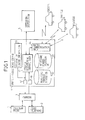
- FIG. 1 is a block diagram illustrating the constitution of a vehicle dispatching system according to the present invention, and wherein reference numeral 1 denotes a mobile communication unit such as a cellular phone or a PHS.
- the cellular phone contains an internet connection service function that utilizes a widely known cellular phone network.
- the cellular phone 1 further contains a known GPS (global positioning system) receiver unit to pinpoint the location of the cellular phone 1 by utilizing signals from a GPS satellite orbiting the Earth, and further has a function for transmitting the pinpointed location.
- GPS global positioning system
- Reference numeral 2 denotes a fixed telephone which is generally installed in a home or a shop, which is connected to a public telephone network or to an ISDN network, and is a dedicated fixed telephone capable of utilizing an internet connection service function belonging to general internet connection service functions using the above-mentioned cellular phone network.
- Reference numeral 3 denotes a carrier which stands for a communications enterprise which owns a communication facility including a circuit network.
- Reference numeral 4 denotes a vehicle dispatching center which is a management facility established in a taxi company.
- the vehicle dispatching center 4 includes a receiver unit 46 for receiving a request for dispatching the vehicle from the cellular phone 1 through the carrier 3, a vehicle dispatching control unit 41 for deciding a vehicle to be dispatched based on the riding conditions in the request for dispatching the vehicle by making reference to the real-time service status DB 42 and to the telephone number position DB 43, a radio communication unit 44 which makes communication with the vehicles A to C, such as taxis, a register 45 for storing picking-up charge information related to the charge involved in dispatching the vehicle, and a transmitter unit 47 which, after the vehicle to be dispatched has been selected, informs the cellular phone 1 of the dispatch of the vehicle including the picking-up charge information.
- the vehicle dispatching control unit 41 is capable of exchanging information with a settlement institution 5 such as a bank in order to charge the picking-up fare.
- the vehicles A to C such as taxis are each provided with a known GPS (global positioning system) receiver unit to pinpoint their present positions by using the signals from a GPS satellite orbiting the Earth and to transmit their present positions.
- GPS global positioning system
- the picking-up charge information stored in the register 45 is a charge obtained by multiplying a prescribed picking-up charge by a predetermined reduction rate.
- the picking-up charge information stored in the register 45 is a charge obtained by multiplying a prescribed picking-up charge by a predetermined reduction rate.
- the picking-up charge can be collected though the charge is reduced to some extent, creating a monetary merit as compared to when the picking-up charge is not collected, despite visiting the place to where it is requested to dispatch the vehicle, because of the absence of the customer.
- the vehicle dispatching center is allowed to dispatch the vehicles systematically offering an advantage of covering the pick-up charge at the reduced rate with the riding fare.
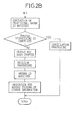
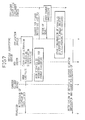
- FIGs. 2A and 2B are flowcharts illustrating processing at the vehicle dispatching center.
- Riding conditions are received by the receiver unit 46 from the requester through the cellular phone or the fixed telephone. It is judged whether present position information is included in the received information. When the present position information is included, the requested position is pinpointed. When the present position information is not included, the requested position is pinpointed by making reference to the telephone number position DB 43.
- the position information is included in the riding condition in the request for dispatching the vehicle. If the request for dispatch is sent from the fixed telephone, on the other hand, the position information is not included. Therefore, the position is pinpointed by using the telephone number position DB 43 as shown in FIG. 4.
- the telephone number position DB 43 stores the names of shops and the locations of persons whose numbers have been registered, that are allocated to the telephone numbers.
- the locations of persons whose numbers have been registered include latitudes, longitudes and addresses. If a request for dispatching the vehicle is transmitted from a fixed telephone of a telephone number of, for example, 03 - xxxx - xxxx, then, reference is made to the DB 43 to pinpoint the shop name (asd), latitude, longitude, and the address (---, --- WARD, TOKYO).
- the real-time service status DB stores the car numbers, names of the drivers, current vehicle positions (latitudes, longitudes) and status flags, that are allocated to the taxi IDs.
- the status flags identify, depending upon the codes thereof, the statuses of the vehicles belonging to the vehicle dispatching center 4.
- the status flag "000" of the vehicle A and the vehicle C represents that they are empty and are running about the city.
- the status flag "011" of the vehicle B and the vehicle n-2 represents that they are hired and are traveling toward their destinations carrying passengers.
- the flag "010" of the vehicle n-1 represents that the vehicle is in a picking-up state and is traveling toward the customer's location or toward the place specified by the customer as called by the customer to pick up the customer.
- the status flag "100" of the vehicle n represents that the vehicle is in an out-of-service state and is returning to its home office after having finished the work of that day.
- the status flag "001” represents that the vehicle is in a standby state waiting for a call of a final decision from the vehicle dispatching center to pick up a customer.
- the status flag "101” represents a state where the vehicle that has ended the work is in the garage of its home office.
- a provisional order processing is executed to dispatch the vehicle to the requester.
- an order is announced from the radio communication unit 44 to the vehicles that can be dispatched while making reference to the current vehicle positions and the status flags in the real-time service status DB 42, and the vehicles that can be dispatched send back a reply if they can be dispatched.
- the status flag in the real-time service status DB 42 is updated. Concretely speaking, the flag "000" is updated to flag "001".
- the requester After the completion of the provisional order processing, the requester is informed of the provisional order. If the provisional order has not been completed, an instruction is issued to display "under processing" to the customer. If the requester does not cancel the dispatching of the vehicle after he has been informed of the result of the provisional order, it is then so regarded that the provisional order is effective, and the charge calculation processing is executed between the vehicle dispatching control unit 41 and the settlement institution 5.
- the charge count stands for a collection of the picking-up charge.
- the picking-up charge is usually called an "initial charge".
- the requester feels a monetary merit.
- the processing is, then, executed for selecting the vehicle to be dispatched based on the provisional order processing of the vehicle.
- the vehicle which is selected to be dispatched is, then, informed of the notice of decision and information such as requester's name, requester's present position, destination and the like, through the radio communication unit 44.
- the vehicle is, then, instructed to go and pick up the requester.
- the status flag in the real-time service status DB 42 is updated. Concretely speaking, the flag "001" is updated to flag "010".
- processing is executed to add the picking-up charge information to the notice of decision of dispatching the vehicle to the requester, and the requester is informed of the notice and information through the transmitter unit 47.
- This notice is sent to the cellular phone of the requester before the vehicle selected to be dispatched arrives at the requested place, i.e., before the vehicle for picking up arrives at the place to where it is requested to dispatch the vehicle.
- the requester cancels the dispatching of the vehicle, on the other hand, it is so regarded that there existed no provisional order, the vehicle to be dispatched is informed of this fact, and the status flag in the real-time service status DB 42 is updated from the flag "001" to the flag "000".
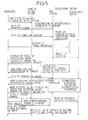
- FIG. 5 is a first procedure for making a reservation of a taxi according to an embodiment of the present invention.
- a requester who is a customer makes a request for dispatching a vehicle by using his cellular phone equipped with the GPS.
- the carrier is equipped with a gateway server.
- the vehicle dispatching center is provided with a web server for exchanging information by using the gateway server of the carrier and an open line network such as the Internet, and an application server connected to the web server via the dedicated line.
- the vehicle dispatching center is located within the taxi company.
- a secured communication is effected between the carrier and the cellular phone or the fixed telephone, and, similarly, between the carrier and the vehicle dispatching center.
- the requester who requests the dispatching of a vehicle first, connects the network to the carrier and authenticates the carrier by using his cellular phone equipped with the GPS.
- the carrier confirms the authentication and, if there is no problem, connects the network to the web server in the vehicle dispatching center, and the web server displays the reception on the screen of the customer's cellular phone.
- a communication network is established between the requester and the vehicle dispatching center.
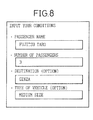
- FIG. 8 shows an example of a screen of input.
- the riding conditions including the data input as described above and the present position information of the requester input by utilizing the GPS function of the cellular phone, are transmitted to the web server as a request for dispatching a vehicle.
- a provisional order processing of a vehicle dispatch is executed by the application server.
- the processing is executed, such as making reference to the real-time service status DB, making sure whether the vehicle to be dispatched can pick up the customer, selecting the vehicle to be dispatched provisionally, and updating the flag in the real-time service status DB relying upon the flowchart of the processing at the vehicle dispatching center shown in FIGs. 2A and 2B.
- "under processing" is displayed on the screen of the requester's cellular phone.
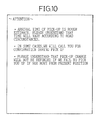
- the results of provisional order are displayed as shown in FIG. 9 and FIG. 10, i.e., passenger name, number of passengers, present location, destination, type of vehicle, and arrival time for pick-up are notified.
- the display of results of the provisional order also serves as a screen for receiving the request for dispatching a vehicle.
- FIG. 10 is a continuation of FIG. 9, and is a screen notifying matters that require attention in connection with the provisional order.
- the requester depresses the button for requesting the dispatch within 3 minutes when he agrees with the content of the provisional order, or depresses the cancel button when he wishes to cancel the request. If the time of 3 minutes elapses, the result is the time-out and the provisional order is automatically cancelled. The words "Three minutes have passed, and provisional order is cancelled" are displayed on the requester's cellular phone.
- the first one is to change the conditions and try again the provisional order. In this case, the requester inputs the riding conditions again.
- the second one is to so regard that there was no provisional order and the order is invalidated, and the display returns to the initial screen.
- a display is made on the screen to input a secret number for charging the fare so as to count the fare involved in the dispatch, i.e., the pick-up fare.
- the requester inputs his secret number, and the gateway server executes the authentication processing concerning if it is in agreement. When it is in agreement, the charge is counted. If the secret number is not in agreement, the requester is permitted to input his secret number again a few more times. If the secrete number is not still in agreement, the provisional order is cancelled.
- the charge is counted by utilizing the settlement by the carrier. Namely, the picking-up charge is added to the monthly payment inclusive of the usage rate of the cellular phone, so as to be paid later at one time.
- a processing is executed for deciding the dispatching of a vehicle. The vehicle which is selected to be dispatched is informed of the notice of finally deciding the dispatch, customer's name, customer's present location, as well as such data as destination and the like.
- the requester's present location is set to the car navigation system, and the driver of the vehicle is allowed to smoothly travel to the requester's present position or to a position where the customer can be picked up.
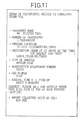
- a display of completion of the vehicle dispatching illustrated in FIG. 11 is shown on the screen of the requester's cellular phone. On this screen is displayed in detail information concerning the order of dispatching the vehicle as well as the amount of the picking-up charge as the amount of already paid charge. This is displayed on the requester's cellular phone before the vehicle that is selected to be dispatched arrives at the place to where it was requested to dispatch the vehicle, i.e., before the vehicle for picking up the customer arrives at the place to where it is requested to dispatch the vehicle.
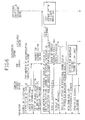
- the carrier is equipped with a gateway server.
- the vehicle dispatching center is provided with a web server for exchanging information by using the gateway server of the carrier and an open line network such as the Internet, and an application server connected to the web server via the dedicated line.
- the vehicle dispatching center is located within the taxi company.
- a secured communication is carried out between the carrier and the cellular phone or the fixed telephone, and, similarly, between the carrier and the vehicle dispatching center.
- the secured communication is further carried out between the vehicle dispatching center and the settlement institution.
- the requester who requests the dispatching of a vehicle first, connects with the carrier via the network and the carrier effects the authentication using his cellular phone equipped with the GPS.
- the carrier confirms that authentication and, if there is no problem, connects it to the web server in the vehicle dispatching center via the network, and the web server displays the charge information on the screen of the customer's cellular phone.
- the requester operates his/her cellular phone to input authentication information which includes a contractor ID and a password PW registered to the settlement provider, and which is used as charge information as well.
- the web server requests the settlement server to execute the authentication.
- the settlement server authenticates the user, checks the balance in the account, and returns the results to the application server. When there is no problem as a result of checking the balance in the account and when the authentication has succeeded, the riding conditions are input from the requester's cellular phone.
- the subsequent processing is not executed; i.e., the processing ends.
- the screen for retry of input is displayed on the requester's cellular phone so that he may retry to input the request. If the authentication does not succeed despite retrying a few times, the processing ends at that moment.
- FIG. 8 illustrates an example of a screen for that input.
- the riding conditions including the data input as described above and the present position information of the requester input by utilizing the GPS function of the cellular phone, are transmitted to the web server as a request for dispatching a vehicle.
- a provisional order processing of a vehicle dispatch is executed by the application server.
- processing is executed, such as making reference to the real-time service status DB, making sure whether the vehicle to be dispatched can pick up the customer, deciding the vehicle to be dispatched provisionally, and updating the flag in the real-time service status DB relying upon the flowchart of the processing at the vehicle dispatching center shown in FIGs. 2A and 2B.
- "under processing" is displayed on the screen of the requester's cellular phone.
- the results of provisional order are displayed as shown in FIG. 9 and FIG. 10, i.e., passenger name, number of passengers, present location, destination, type of vehicle, and arrival time till pick-up are notified.
- the display of results of the provisional order also serves as a screen for receiving the request for dispatching a vehicle. Namely, a push button is provided in the lower part of the display screen, and the dispatch is finally requested upon depressing the push button after the requester has agreed with the results of the provisional order.
- FIG. 10 is a continuation of FIG. 9, and shows a screen notifying matters that require attention in connection with the provisional order.
- the requester depresses within 3 minutes the button for requesting the dispatch when he agrees with the content of the provisional order, or depresses the cancel button when he wishes to cancel the request. If the time of 3 minutes elapses, the result is the time-out and the provisional order is automatically cancelled. The words "Three minutes have passed, and provisional order is cancelled" are displayed on the requester's cellular phone.
- the first one is to change the conditions and try again the provisional order. In this case, the requester inputs the riding conditions again.
- the second one is to so regard that there was no provisional order and the order is invalidated, and the display returns to the initial screen.
- the settlement server When the request of dispatch is finally sent from the requester, the settlement server is requested to calculate the charge in order to charge the fee involved in dispatching the vehicle, i.e., the picking-up charge. Based on the contractor ID sent from the web server and used for the authentication and the contractor ID in the password PW, the settlement server executes the user charge processing to collect the picking-up charge from the contractor's account.
- the application server executes the processing for deciding the dispatch of the vehicle, i.e., informs the vehicle which is selected to be dispatched of the notice of finally deciding the dispatch, customer's name, customer's present location, as well as such data as destination and the like, and instructs the vehicle to pick up the customer.
- the dispatching of the vehicle is finally ordered after the payment of the picking-up charge has really been completed by the settlement server.
- the requester's present location information is set to the car navigation system, and the driver of the vehicle is allowed to smoothly travel to the requester's present position or to a position where the customer can be picked up.
- a screen of the completion of the vehicle dispatching shown in FIG. 11 is displayed on the requester's cellular phone. On this screen is displayed in detail information concerning the order of dispatching the vehicle as well as the amount of the picking-up charge as the amount of already paid charge. This is displayed on the requester's cellular phone before the vehicle that is decided to be dispatched arrives at the place to where it is requested to dispatch the vehicle, i.e., before the vehicle for picking up the customer arrives at the place to where it is requested to dispatch the vehicle.
- the requester requests the dispatching of a vehicle by using his cellular phone equipped with the GPS.
- the communication unit which the requester uses is not always the cellular phone with the GPS.
- the requester may use, for example, a PHS, a fixed telephone capable of receiving an Internet connection service, a personal computer incorporating a communication card module or a communication card set into a PC slot, or a PDA (personal digital assistant).
- Information related to the position of the vehicle for picking up may be notified to the requester to offer improved service for the requester.
- This is a service for letting the requester know where the vehicle for picking up is now running relative to the requester's present position by transmitting information related to the position of the vehicle for picking up to the requester's cellular phone at regular time intervals, e.g., every after 30 seconds in addition to letting the requester know, as a notice of final decision, a rough period of time until the vehicle will arrive to pick the customer up.
- a computer program product embodying the present invention need not be stored on a computer-readable medium and could, for example, be embodied in a signal such as a downloadable data signal provided from an Internet website.
- the appended computer program claims are to be interpreted as covering a computer program by itself, or as a record on a carrier, or as a signal, or in any other form.
- embodiments of the present invention make it possible to reduce the monetary risks involved in dispatching the vehicles to the person who offers the vehicles. It is further made possible to decrease the cost of dispatching the vehicles and to offer a quick service for the customers who are the requesters.
Landscapes
- Physics & Mathematics (AREA)
- General Physics & Mathematics (AREA)
- Traffic Control Systems (AREA)
- Management, Administration, Business Operations System, And Electronic Commerce (AREA)
- Financial Or Insurance-Related Operations Such As Payment And Settlement (AREA)
Applications Claiming Priority (2)
| Application Number | Priority Date | Filing Date | Title |
|---|---|---|---|
| JP2001303710A JP2003109191A (ja) | 2001-09-28 | 2001-09-28 | 配車システム及び配車処理装置 |
| JP2001303710 | 2001-09-28 |
Publications (1)
| Publication Number | Publication Date |
|---|---|
| EP1298623A2 true EP1298623A2 (fr) | 2003-04-02 |
Family
ID=19123755
Family Applications (1)
| Application Number | Title | Priority Date | Filing Date |
|---|---|---|---|
| EP02251881A Withdrawn EP1298623A2 (fr) | 2001-09-28 | 2002-03-15 | Système et dispositif de répartition de véhicules |
Country Status (3)
| Country | Link |
|---|---|
| US (1) | US20030065556A1 (fr) |
| EP (1) | EP1298623A2 (fr) |
| JP (1) | JP2003109191A (fr) |
Cited By (13)
| Publication number | Priority date | Publication date | Assignee | Title |
|---|---|---|---|---|
| WO2005029376A1 (fr) * | 2003-09-19 | 2005-03-31 | Robert Bosch Gmbh | Systeme pour la fourniture de services |
| EP1562090A1 (fr) * | 2004-02-06 | 2005-08-10 | Rockwell Automation Technologies, Inc. | Procédé et appareil de diagnostic dépendant de la position |
| GB2431535A (en) * | 2005-10-22 | 2007-04-25 | John Leech | Means for summoning a taxi based on GPS position |
| WO2008006595A3 (fr) * | 2006-07-12 | 2008-03-20 | Eric Masaba | Système d'expédition de taxi |
| CN102164127A (zh) * | 2011-03-21 | 2011-08-24 | 中兴通讯股份有限公司 | 基于物联网的预约系统及方法 |
| CN102542790A (zh) * | 2011-11-15 | 2012-07-04 | 浪潮齐鲁软件产业有限公司 | 一种出租车停靠载客点选择的智能调度方法 |
| CN103077607A (zh) * | 2012-10-22 | 2013-05-01 | 杭州九树网络科技有限公司 | 出租车客源信息实时获取和调度的系统及方法 |
| CN104766467A (zh) * | 2010-11-23 | 2015-07-08 | 互动网数位科技股份有限公司 | 具配对功能的计程车叫车系统及其方法 |
| WO2016054700A1 (fr) * | 2014-10-10 | 2016-04-14 | Ot Ip Pty Ltd | Système de réservation en ligne |
| GB2534273A (en) * | 2014-11-30 | 2016-07-20 | Creative Mobile Tech Llc | System and method for pairing passengers and in-vehicle equipment |
| CN103077607B (zh) * | 2012-10-22 | 2016-11-30 | 杭州九树网络科技有限公司 | 出租车客源信息实时获取和调度的方法 |
| EP2649817A4 (fr) * | 2010-12-06 | 2017-08-02 | Jiun Chang Lai | Système de commande de service mobile |
| US9928745B2 (en) | 2014-11-30 | 2018-03-27 | Creative Mobile Technologies, LLC | System and method for pairing passengers and in-vehicle equipment |
Families Citing this family (42)
| Publication number | Priority date | Publication date | Assignee | Title |
|---|---|---|---|---|
| GB0012195D0 (en) * | 2000-05-19 | 2000-07-12 | Nokia Networks Oy | Location information services |
| JP2004054444A (ja) * | 2002-07-17 | 2004-02-19 | Omron Corp | 運転サービス情報仲介システム |
| AU2003258018A1 (en) * | 2002-08-02 | 2004-02-23 | Limoq, Inc. | Method, system and apparatus for providing transportation services |
| JP2004157698A (ja) * | 2002-11-06 | 2004-06-03 | Nec Corp | タクシーサービスシステム、携帯端末装置及びそれに用いるタクシーサービス方法並びにそのプログラム |
| US20050075924A1 (en) * | 2003-07-07 | 2005-04-07 | Greenlee Garrett M. | Shuttle and car delivery service |
| JP2006040007A (ja) * | 2004-07-28 | 2006-02-09 | Nobutoshi Umeda | タクシー配車システム及び配車方法 |
| US9552599B1 (en) | 2004-09-10 | 2017-01-24 | Deem, Inc. | Platform for multi-service procurement |
| US7996881B1 (en) * | 2004-11-12 | 2011-08-09 | Aol Inc. | Modifying a user account during an authentication process |
| US20060136254A1 (en) * | 2004-11-24 | 2006-06-22 | Mark Greenstein | System and method for dispatching transportation to persons who want transportation |
| US7353034B2 (en) | 2005-04-04 | 2008-04-01 | X One, Inc. | Location sharing and tracking using mobile phones or other wireless devices |
| US7706808B1 (en) * | 2005-07-07 | 2010-04-27 | Rearden Commerce, Inc. | One-click service status tracking and updates |
| WO2007073470A2 (fr) * | 2005-12-23 | 2007-06-28 | Perdiem, Llc | Systeme et procede permettant la definition d'un evenement en fonction d'une relation entre une localisation d'objet et une zone definie par l'utilisateur |
| US9117223B1 (en) | 2005-12-28 | 2015-08-25 | Deem, Inc. | Method and system for resource planning for service provider |
| US10453107B2 (en) * | 2007-07-30 | 2019-10-22 | At&T Intellectual Property I, L.P. | System and method for procuring taxicab service |
| WO2009089182A1 (fr) | 2008-01-03 | 2009-07-16 | Lubeck Olaf M | Procédé permettant de demander des services de transport |
| WO2009100481A1 (fr) * | 2008-02-12 | 2009-08-20 | Peter John Gosney | Système automatisé de répartition de taxis au moyen de réseaux téléphoniques |
| US10552849B2 (en) | 2009-04-30 | 2020-02-04 | Deem, Inc. | System and method for offering, tracking and promoting loyalty rewards |
| US8630897B1 (en) * | 2011-01-11 | 2014-01-14 | Google Inc. | Transportation-aware physical advertising conversions |
| US9449288B2 (en) | 2011-05-20 | 2016-09-20 | Deem, Inc. | Travel services search |
| KR101110639B1 (ko) | 2011-06-22 | 2012-06-12 | 팅크웨어(주) | 세이프 서비스 시스템 및 그 방법 |
| US20130185124A1 (en) * | 2012-01-18 | 2013-07-18 | Square Inc. | Mobile Card Processing Using Multiple Wireless Devices |
| US9785920B2 (en) | 2012-01-18 | 2017-10-10 | Square, Inc. | Acquisition of card information to enhance user experience |
| US10496977B2 (en) | 2012-07-16 | 2019-12-03 | Square, Inc. | Storing and forwarding payment transactions |
| US10057719B2 (en) | 2013-11-27 | 2018-08-21 | Alan Snyder | Methods and systems for locating persons and places with mobile devices |
| US9892637B2 (en) | 2014-05-29 | 2018-02-13 | Rideshare Displays, Inc. | Vehicle identification system |
| US10249184B2 (en) * | 2014-05-29 | 2019-04-02 | Rideshare Displays, Inc. | Vehicle identification system and method |
| US10467896B2 (en) | 2014-05-29 | 2019-11-05 | Rideshare Displays, Inc. | Vehicle identification system and method |
| US10672265B2 (en) | 2014-05-29 | 2020-06-02 | Rideshare Displays, Inc. | Vehicle identification system and method |
| DE102014220646A1 (de) * | 2014-10-13 | 2016-04-14 | Bayerische Motoren Werke Aktiengesellschaft | Nutzung einer Bus-Leitung zur Übertragung alternativer Signalcodierungen |
| US9881302B1 (en) | 2014-12-11 | 2018-01-30 | Square, Inc. | Intelligent payment capture in failed authorization requests |
| GB2535718A (en) | 2015-02-24 | 2016-08-31 | Addison Lee Ltd | Resource management |
| GB201503083D0 (en) | 2015-02-24 | 2015-04-08 | Addison Lee Ltd | Allocating vehicles to private hire bookings |
| GB2535719B (en) | 2015-02-24 | 2018-06-13 | Addison Lee Ltd | Telephone call placement |
| CN104994167A (zh) * | 2015-07-13 | 2015-10-21 | 洪颖艺 | 一种基于互联网的洗车场所搜寻与洗车预约系统 |
| KR20170067179A (ko) * | 2015-12-07 | 2017-06-16 | 엔에이치엔엔터테인먼트 주식회사 | 콜택시 서비스 시스템 및 이를 이용한 콜택시 서비스 방법 |
| US11288716B1 (en) * | 2016-11-04 | 2022-03-29 | Jpmorgan Chase Bank, N.A. | Systems and methods for digital wallet transit payments |
| US11132626B2 (en) | 2016-11-30 | 2021-09-28 | Addison Lee Limited | Systems and methods for vehicle resource management |
| CN112907934B (zh) * | 2018-07-18 | 2022-05-31 | 西安艾润物联网技术服务有限责任公司 | 出租车调度系统及出租车调度方法 |
| JP7249882B2 (ja) * | 2019-06-03 | 2023-03-31 | 株式会社Mobility Technologies | 車両の配車を管理するためのシステム、方法、及びプログラム |
| GB201917581D0 (en) | 2019-12-02 | 2020-01-15 | Addison Lee Ltd | Vehicle control |
| JP7265469B2 (ja) * | 2019-12-20 | 2023-04-26 | 本田技研工業株式会社 | 情報処理装置、情報処理方法、およびプログラム |
| CN118138633B (zh) * | 2024-04-30 | 2024-07-05 | 成都湃尔智芯科技有限公司 | 一种应用于大型公共场所的网约汽车管理方法及系统 |
Family Cites Families (2)
| Publication number | Priority date | Publication date | Assignee | Title |
|---|---|---|---|---|
| US5168451A (en) * | 1987-10-21 | 1992-12-01 | Bolger John G | User responsive transit system |
| US6694248B2 (en) * | 1995-10-27 | 2004-02-17 | Total Technology Inc. | Fully automated vehicle dispatching, monitoring and billing |
-
2001
- 2001-09-28 JP JP2001303710A patent/JP2003109191A/ja not_active Withdrawn
-
2002
- 2002-03-14 US US10/096,646 patent/US20030065556A1/en not_active Abandoned
- 2002-03-15 EP EP02251881A patent/EP1298623A2/fr not_active Withdrawn
Cited By (17)
| Publication number | Priority date | Publication date | Assignee | Title |
|---|---|---|---|---|
| WO2005029376A1 (fr) * | 2003-09-19 | 2005-03-31 | Robert Bosch Gmbh | Systeme pour la fourniture de services |
| US9026454B2 (en) | 2003-09-19 | 2015-05-05 | Robert Bosch Gmbh | System for procuring services |
| EP1562090A1 (fr) * | 2004-02-06 | 2005-08-10 | Rockwell Automation Technologies, Inc. | Procédé et appareil de diagnostic dépendant de la position |
| GB2431535A (en) * | 2005-10-22 | 2007-04-25 | John Leech | Means for summoning a taxi based on GPS position |
| WO2008006595A3 (fr) * | 2006-07-12 | 2008-03-20 | Eric Masaba | Système d'expédition de taxi |
| US11586999B2 (en) | 2006-07-12 | 2023-02-21 | Eric Masaba | Taxi dispatch system |
| CN104766467A (zh) * | 2010-11-23 | 2015-07-08 | 互动网数位科技股份有限公司 | 具配对功能的计程车叫车系统及其方法 |
| EP2649817A4 (fr) * | 2010-12-06 | 2017-08-02 | Jiun Chang Lai | Système de commande de service mobile |
| CN102164127A (zh) * | 2011-03-21 | 2011-08-24 | 中兴通讯股份有限公司 | 基于物联网的预约系统及方法 |
| WO2012126227A1 (fr) * | 2011-03-21 | 2012-09-27 | 中兴通讯股份有限公司 | Système et procédé de réservation basés sur l'internet des choses |
| CN102542790B (zh) * | 2011-11-15 | 2013-10-16 | 浪潮齐鲁软件产业有限公司 | 一种出租车停靠载客点选择的智能调度方法 |
| CN102542790A (zh) * | 2011-11-15 | 2012-07-04 | 浪潮齐鲁软件产业有限公司 | 一种出租车停靠载客点选择的智能调度方法 |
| CN103077607B (zh) * | 2012-10-22 | 2016-11-30 | 杭州九树网络科技有限公司 | 出租车客源信息实时获取和调度的方法 |
| CN103077607A (zh) * | 2012-10-22 | 2013-05-01 | 杭州九树网络科技有限公司 | 出租车客源信息实时获取和调度的系统及方法 |
| WO2016054700A1 (fr) * | 2014-10-10 | 2016-04-14 | Ot Ip Pty Ltd | Système de réservation en ligne |
| GB2534273A (en) * | 2014-11-30 | 2016-07-20 | Creative Mobile Tech Llc | System and method for pairing passengers and in-vehicle equipment |
| US9928745B2 (en) | 2014-11-30 | 2018-03-27 | Creative Mobile Technologies, LLC | System and method for pairing passengers and in-vehicle equipment |
Also Published As
| Publication number | Publication date |
|---|---|
| JP2003109191A (ja) | 2003-04-11 |
| US20030065556A1 (en) | 2003-04-03 |
Similar Documents
| Publication | Publication Date | Title |
|---|---|---|
| EP1298623A2 (fr) | Système et dispositif de répartition de véhicules | |
| US20040219933A1 (en) | Transportation ordering system | |
| JP6143214B2 (ja) | 携帯端末を用いたタクシー車両の呼び寄せシステム | |
| JP4886132B2 (ja) | タクシー配車処理システム、および配車センタサーバ | |
| US20070073552A1 (en) | On-demand transportation system | |
| US20040181439A1 (en) | Reservation acceptance system and computer program product | |
| JP2002032889A (ja) | タクシー手配システム | |
| US20060136254A1 (en) | System and method for dispatching transportation to persons who want transportation | |
| JPWO2002003735A1 (ja) | 位置情報サービスを支援するための方法及び装置 | |
| KR101718433B1 (ko) | 택시 합승 서비스 제공방법 | |
| KR101654201B1 (ko) | 임대요금의 분배 방법 및 시스템 | |
| JP2003058984A (ja) | タクシーの配車サービス方法及びそのシステム、並びに見積処理プログラムを記録した記録媒体 | |
| JP2002024659A (ja) | 配車予約システム | |
| JP2002163335A (ja) | タクシー業務運営システム | |
| JP3951769B2 (ja) | タクシー配車方法,タクシー配車システム,タクシー端末,配車センタ端末およびプログラム | |
| CN107358749A (zh) | 一种景区车辆管理系统 | |
| JP3950816B2 (ja) | タクシー配車システム、タクシー配車装置、タクシー配車方法及びタクシー配車プログラム | |
| KR20090022201A (ko) | 운송 및 운전서비스에 대한 보험서비스 제공 시스템 및방법 | |
| JP2002074119A (ja) | 配車予約システム | |
| JP2002245381A (ja) | 車両配車システム、車両配車方法及び車両配車プログラム | |
| KR20090000565A (ko) | 택시 콜 서비스 시스템 및 그 서비스 방법 | |
| JP3529357B2 (ja) | 最適車両配車方法および最適車両配車システム | |
| JP2013218414A (ja) | タクシーのカード決済システムおよび方法 | |
| JP5823190B2 (ja) | タクシー用無線システム | |
| KR101504321B1 (ko) | 포인트를 이용한 콜 택시 서비스 방법 |
Legal Events
| Date | Code | Title | Description |
|---|---|---|---|
| PUAI | Public reference made under article 153(3) epc to a published international application that has entered the european phase |
Free format text: ORIGINAL CODE: 0009012 |
|
| AK | Designated contracting states |
Kind code of ref document: A2 Designated state(s): AT BE CH CY DE DK ES FI FR GB GR IE IT LI LU MC NL PT SE TR Designated state(s): AT BE CH CY DE DK ES FI FR GB GR IE IT LI LU MC NL PT SE TR |
|
| AX | Request for extension of the european patent |
Extension state: AL LT LV MK RO SI |
|
| STAA | Information on the status of an ep patent application or granted ep patent |
Free format text: STATUS: THE APPLICATION HAS BEEN WITHDRAWN |
|
| 18W | Application withdrawn |
Effective date: 20041129 |