EP1299416B1 - Peptides antifongiques et/ou antibacteriens, leurs preparations et les compositions les contenant - Google Patents
Peptides antifongiques et/ou antibacteriens, leurs preparations et les compositions les contenant Download PDFInfo
- Publication number
- EP1299416B1 EP1299416B1 EP01984240A EP01984240A EP1299416B1 EP 1299416 B1 EP1299416 B1 EP 1299416B1 EP 01984240 A EP01984240 A EP 01984240A EP 01984240 A EP01984240 A EP 01984240A EP 1299416 B1 EP1299416 B1 EP 1299416B1
- Authority
- EP
- European Patent Office
- Prior art keywords
- artificial sequence
- peptide
- heliomicin
- peptides
- infection
- Prior art date
- Legal status (The legal status is an assumption and is not a legal conclusion. Google has not performed a legal analysis and makes no representation as to the accuracy of the status listed.)
- Expired - Lifetime
Links
- 108090000765 processed proteins & peptides Proteins 0.000 title claims abstract description 270
- 230000000843 anti-fungal effect Effects 0.000 title claims abstract description 30
- 239000000203 mixture Substances 0.000 title claims abstract description 15
- 229940121375 antifungal agent Drugs 0.000 title claims abstract description 12
- 230000000844 anti-bacterial effect Effects 0.000 title claims abstract description 7
- 102000004196 processed proteins & peptides Human genes 0.000 title abstract description 78
- 238000002360 preparation method Methods 0.000 title description 6
- 150000001413 amino acids Chemical class 0.000 claims abstract description 80
- 230000002209 hydrophobic effect Effects 0.000 claims abstract description 20
- 230000035772 mutation Effects 0.000 claims description 19
- 241001465754 Metazoa Species 0.000 claims description 7
- 239000013604 expression vector Substances 0.000 claims description 6
- 108091028043 Nucleic acid sequence Proteins 0.000 claims description 5
- 150000007523 nucleic acids Chemical group 0.000 claims description 5
- 201000010099 disease Diseases 0.000 claims description 3
- 208000037265 diseases, disorders, signs and symptoms Diseases 0.000 claims description 3
- 239000013543 active substance Substances 0.000 claims description 2
- 125000003275 alpha amino acid group Chemical group 0.000 claims 2
- 239000002253 acid Substances 0.000 abstract description 7
- 238000006467 substitution reaction Methods 0.000 abstract description 6
- 150000007513 acids Chemical class 0.000 abstract description 3
- 208000015181 infectious disease Diseases 0.000 description 73
- 229940024606 amino acid Drugs 0.000 description 59
- 235000001014 amino acid Nutrition 0.000 description 58
- 241000699670 Mus sp. Species 0.000 description 52
- 101000741919 Homo sapiens Activator of RNA decay Proteins 0.000 description 47
- WEVYAHXRMPXWCK-UHFFFAOYSA-N Acetonitrile Chemical compound CC#N WEVYAHXRMPXWCK-UHFFFAOYSA-N 0.000 description 42
- 240000004808 Saccharomyces cerevisiae Species 0.000 description 41
- 230000000694 effects Effects 0.000 description 40
- 108091034117 Oligonucleotide Proteins 0.000 description 38
- 102100038740 Activator of RNA decay Human genes 0.000 description 36
- 241000222122 Candida albicans Species 0.000 description 36
- 229940095731 candida albicans Drugs 0.000 description 26
- 239000000902 placebo Substances 0.000 description 25
- 229940068196 placebo Drugs 0.000 description 25
- DCXYFEDJOCDNAF-REOHCLBHSA-N L-asparagine Chemical compound OC(=O)[C@@H](N)CC(N)=O DCXYFEDJOCDNAF-REOHCLBHSA-N 0.000 description 23
- 230000004083 survival effect Effects 0.000 description 22
- 108020004414 DNA Proteins 0.000 description 21
- ROHFNLRQFUQHCH-YFKPBYRVSA-N L-leucine Chemical compound CC(C)C[C@H](N)C(O)=O ROHFNLRQFUQHCH-YFKPBYRVSA-N 0.000 description 20
- DTQVDTLACAAQTR-UHFFFAOYSA-N Trifluoroacetic acid Chemical compound OC(=O)C(F)(F)F DTQVDTLACAAQTR-UHFFFAOYSA-N 0.000 description 19
- XLYOFNOQVPJJNP-UHFFFAOYSA-N water Chemical compound O XLYOFNOQVPJJNP-UHFFFAOYSA-N 0.000 description 19
- AGPKZVBTJJNPAG-WHFBIAKZSA-N L-isoleucine Chemical compound CC[C@H](C)[C@H](N)C(O)=O AGPKZVBTJJNPAG-WHFBIAKZSA-N 0.000 description 18
- 238000012360 testing method Methods 0.000 description 18
- 241001225321 Aspergillus fumigatus Species 0.000 description 17
- 239000012634 fragment Substances 0.000 description 16
- JLCPHMBAVCMARE-UHFFFAOYSA-N [3-[[3-[[3-[[3-[[3-[[3-[[3-[[3-[[3-[[3-[[3-[[5-(2-amino-6-oxo-1H-purin-9-yl)-3-[[3-[[3-[[3-[[3-[[3-[[5-(2-amino-6-oxo-1H-purin-9-yl)-3-[[5-(2-amino-6-oxo-1H-purin-9-yl)-3-hydroxyoxolan-2-yl]methoxy-hydroxyphosphoryl]oxyoxolan-2-yl]methoxy-hydroxyphosphoryl]oxy-5-(5-methyl-2,4-dioxopyrimidin-1-yl)oxolan-2-yl]methoxy-hydroxyphosphoryl]oxy-5-(6-aminopurin-9-yl)oxolan-2-yl]methoxy-hydroxyphosphoryl]oxy-5-(6-aminopurin-9-yl)oxolan-2-yl]methoxy-hydroxyphosphoryl]oxy-5-(6-aminopurin-9-yl)oxolan-2-yl]methoxy-hydroxyphosphoryl]oxy-5-(6-aminopurin-9-yl)oxolan-2-yl]methoxy-hydroxyphosphoryl]oxyoxolan-2-yl]methoxy-hydroxyphosphoryl]oxy-5-(5-methyl-2,4-dioxopyrimidin-1-yl)oxolan-2-yl]methoxy-hydroxyphosphoryl]oxy-5-(4-amino-2-oxopyrimidin-1-yl)oxolan-2-yl]methoxy-hydroxyphosphoryl]oxy-5-(5-methyl-2,4-dioxopyrimidin-1-yl)oxolan-2-yl]methoxy-hydroxyphosphoryl]oxy-5-(5-methyl-2,4-dioxopyrimidin-1-yl)oxolan-2-yl]methoxy-hydroxyphosphoryl]oxy-5-(6-aminopurin-9-yl)oxolan-2-yl]methoxy-hydroxyphosphoryl]oxy-5-(6-aminopurin-9-yl)oxolan-2-yl]methoxy-hydroxyphosphoryl]oxy-5-(4-amino-2-oxopyrimidin-1-yl)oxolan-2-yl]methoxy-hydroxyphosphoryl]oxy-5-(4-amino-2-oxopyrimidin-1-yl)oxolan-2-yl]methoxy-hydroxyphosphoryl]oxy-5-(4-amino-2-oxopyrimidin-1-yl)oxolan-2-yl]methoxy-hydroxyphosphoryl]oxy-5-(6-aminopurin-9-yl)oxolan-2-yl]methoxy-hydroxyphosphoryl]oxy-5-(4-amino-2-oxopyrimidin-1-yl)oxolan-2-yl]methyl [5-(6-aminopurin-9-yl)-2-(hydroxymethyl)oxolan-3-yl] hydrogen phosphate Polymers Cc1cn(C2CC(OP(O)(=O)OCC3OC(CC3OP(O)(=O)OCC3OC(CC3O)n3cnc4c3nc(N)[nH]c4=O)n3cnc4c3nc(N)[nH]c4=O)C(COP(O)(=O)OC3CC(OC3COP(O)(=O)OC3CC(OC3COP(O)(=O)OC3CC(OC3COP(O)(=O)OC3CC(OC3COP(O)(=O)OC3CC(OC3COP(O)(=O)OC3CC(OC3COP(O)(=O)OC3CC(OC3COP(O)(=O)OC3CC(OC3COP(O)(=O)OC3CC(OC3COP(O)(=O)OC3CC(OC3COP(O)(=O)OC3CC(OC3COP(O)(=O)OC3CC(OC3COP(O)(=O)OC3CC(OC3COP(O)(=O)OC3CC(OC3COP(O)(=O)OC3CC(OC3COP(O)(=O)OC3CC(OC3COP(O)(=O)OC3CC(OC3CO)n3cnc4c(N)ncnc34)n3ccc(N)nc3=O)n3cnc4c(N)ncnc34)n3ccc(N)nc3=O)n3ccc(N)nc3=O)n3ccc(N)nc3=O)n3cnc4c(N)ncnc34)n3cnc4c(N)ncnc34)n3cc(C)c(=O)[nH]c3=O)n3cc(C)c(=O)[nH]c3=O)n3ccc(N)nc3=O)n3cc(C)c(=O)[nH]c3=O)n3cnc4c3nc(N)[nH]c4=O)n3cnc4c(N)ncnc34)n3cnc4c(N)ncnc34)n3cnc4c(N)ncnc34)n3cnc4c(N)ncnc34)O2)c(=O)[nH]c1=O JLCPHMBAVCMARE-UHFFFAOYSA-N 0.000 description 15
- 238000011282 treatment Methods 0.000 description 14
- 239000004475 Arginine Substances 0.000 description 13
- ODKSFYDXXFIFQN-UHFFFAOYSA-N arginine Natural products OC(=O)C(N)CCCNC(N)=N ODKSFYDXXFIFQN-UHFFFAOYSA-N 0.000 description 13
- 238000002347 injection Methods 0.000 description 13
- 239000007924 injection Substances 0.000 description 13
- AGPKZVBTJJNPAG-UHFFFAOYSA-N isoleucine Natural products CCC(C)C(N)C(O)=O AGPKZVBTJJNPAG-UHFFFAOYSA-N 0.000 description 13
- 229960000310 isoleucine Drugs 0.000 description 13
- ROHFNLRQFUQHCH-UHFFFAOYSA-N Leucine Natural products CC(C)CC(N)C(O)=O ROHFNLRQFUQHCH-UHFFFAOYSA-N 0.000 description 12
- 230000034994 death Effects 0.000 description 12
- 231100000517 death Toxicity 0.000 description 12
- 241000233866 Fungi Species 0.000 description 11
- 239000002609 medium Substances 0.000 description 11
- 241000196324 Embryophyta Species 0.000 description 10
- 241000132887 Lomentospora prolificans Species 0.000 description 10
- 239000013598 vector Substances 0.000 description 10
- 229920001817 Agar Polymers 0.000 description 9
- DCXYFEDJOCDNAF-UHFFFAOYSA-N Asparagine Natural products OC(=O)C(N)CC(N)=O DCXYFEDJOCDNAF-UHFFFAOYSA-N 0.000 description 9
- 108020004705 Codon Proteins 0.000 description 9
- DHMQDGOQFOQNFH-UHFFFAOYSA-N Glycine Chemical compound NCC(O)=O DHMQDGOQFOQNFH-UHFFFAOYSA-N 0.000 description 9
- 241000699666 Mus <mouse, genus> Species 0.000 description 9
- 235000009582 asparagine Nutrition 0.000 description 9
- 229960001230 asparagine Drugs 0.000 description 9
- 238000010790 dilution Methods 0.000 description 9
- 239000012895 dilution Substances 0.000 description 9
- 210000000087 hemolymph Anatomy 0.000 description 9
- 239000013612 plasmid Substances 0.000 description 9
- 238000012163 sequencing technique Methods 0.000 description 9
- 239000000243 solution Substances 0.000 description 9
- 239000000725 suspension Substances 0.000 description 9
- CKLJMWTZIZZHCS-REOHCLBHSA-N L-aspartic acid Chemical compound OC(=O)[C@@H](N)CC(O)=O CKLJMWTZIZZHCS-REOHCLBHSA-N 0.000 description 8
- 239000008272 agar Substances 0.000 description 8
- 230000008859 change Effects 0.000 description 8
- 230000007423 decrease Effects 0.000 description 8
- 238000001840 matrix-assisted laser desorption--ionisation time-of-flight mass spectrometry Methods 0.000 description 8
- 239000012071 phase Substances 0.000 description 8
- FAPWRFPIFSIZLT-UHFFFAOYSA-M Sodium chloride Chemical compound [Na+].[Cl-] FAPWRFPIFSIZLT-UHFFFAOYSA-M 0.000 description 7
- 238000004458 analytical method Methods 0.000 description 7
- 235000003704 aspartic acid Nutrition 0.000 description 7
- OQFSQFPPLPISGP-UHFFFAOYSA-N beta-carboxyaspartic acid Natural products OC(=O)C(N)C(C(O)=O)C(O)=O OQFSQFPPLPISGP-UHFFFAOYSA-N 0.000 description 7
- 230000002441 reversible effect Effects 0.000 description 7
- 239000008223 sterile water Substances 0.000 description 7
- 206010007134 Candida infections Diseases 0.000 description 6
- PEDCQBHIVMGVHV-UHFFFAOYSA-N Glycerine Chemical compound OCC(O)CO PEDCQBHIVMGVHV-UHFFFAOYSA-N 0.000 description 6
- 229940091771 aspergillus fumigatus Drugs 0.000 description 6
- 238000010276 construction Methods 0.000 description 6
- 230000001934 delay Effects 0.000 description 6
- 238000001514 detection method Methods 0.000 description 6
- ZDXPYRJPNDTMRX-UHFFFAOYSA-N glutamine Natural products OC(=O)C(N)CCC(N)=O ZDXPYRJPNDTMRX-UHFFFAOYSA-N 0.000 description 6
- 238000000746 purification Methods 0.000 description 6
- 241000238631 Hexapoda Species 0.000 description 5
- 241000282412 Homo Species 0.000 description 5
- WHUUTDBJXJRKMK-VKHMYHEASA-N L-glutamic acid Chemical compound OC(=O)[C@@H](N)CCC(O)=O WHUUTDBJXJRKMK-VKHMYHEASA-N 0.000 description 5
- AYFVYJQAPQTCCC-GBXIJSLDSA-N L-threonine Chemical compound C[C@@H](O)[C@H](N)C(O)=O AYFVYJQAPQTCCC-GBXIJSLDSA-N 0.000 description 5
- KZSNJWFQEVHDMF-BYPYZUCNSA-N L-valine Chemical compound CC(C)[C@H](N)C(O)=O KZSNJWFQEVHDMF-BYPYZUCNSA-N 0.000 description 5
- 206010042938 Systemic candida Diseases 0.000 description 5
- KZSNJWFQEVHDMF-UHFFFAOYSA-N Valine Natural products CC(C)C(N)C(O)=O KZSNJWFQEVHDMF-UHFFFAOYSA-N 0.000 description 5
- 238000002835 absorbance Methods 0.000 description 5
- 230000002378 acidificating effect Effects 0.000 description 5
- 235000010419 agar Nutrition 0.000 description 5
- 201000003984 candidiasis Diseases 0.000 description 5
- 208000019164 disseminated candidiasis Diseases 0.000 description 5
- 238000004128 high performance liquid chromatography Methods 0.000 description 5
- 231100000518 lethal Toxicity 0.000 description 5
- 230000001665 lethal effect Effects 0.000 description 5
- 238000000034 method Methods 0.000 description 5
- 238000011084 recovery Methods 0.000 description 5
- 239000004474 valine Substances 0.000 description 5
- 239000003643 water by type Substances 0.000 description 5
- 241000462365 Archaeoprepona demophoon Species 0.000 description 4
- 241000894006 Bacteria Species 0.000 description 4
- 102100021277 Beta-secretase 2 Human genes 0.000 description 4
- 101710150190 Beta-secretase 2 Proteins 0.000 description 4
- 241000222120 Candida <Saccharomycetales> Species 0.000 description 4
- 108091026890 Coding region Proteins 0.000 description 4
- WHUUTDBJXJRKMK-UHFFFAOYSA-N Glutamic acid Natural products OC(=O)C(N)CCC(O)=O WHUUTDBJXJRKMK-UHFFFAOYSA-N 0.000 description 4
- 239000004471 Glycine Substances 0.000 description 4
- QNAYBMKLOCPYGJ-REOHCLBHSA-N L-alanine Chemical compound C[C@H](N)C(O)=O QNAYBMKLOCPYGJ-REOHCLBHSA-N 0.000 description 4
- KDXKERNSBIXSRK-UHFFFAOYSA-N Lysine Natural products NCCCCC(N)C(O)=O KDXKERNSBIXSRK-UHFFFAOYSA-N 0.000 description 4
- 208000031888 Mycoses Diseases 0.000 description 4
- 230000009418 agronomic effect Effects 0.000 description 4
- 235000004279 alanine Nutrition 0.000 description 4
- 230000001032 anti-candidal effect Effects 0.000 description 4
- 210000004899 c-terminal region Anatomy 0.000 description 4
- 125000002091 cationic group Chemical group 0.000 description 4
- 238000006243 chemical reaction Methods 0.000 description 4
- 125000000151 cysteine group Chemical class N[C@@H](CS)C(=O)* 0.000 description 4
- 206010014599 encephalitis Diseases 0.000 description 4
- 229960004884 fluconazole Drugs 0.000 description 4
- RFHAOTPXVQNOHP-UHFFFAOYSA-N fluconazole Chemical compound C1=NC=NN1CC(C=1C(=CC(F)=CC=1)F)(O)CN1C=NC=N1 RFHAOTPXVQNOHP-UHFFFAOYSA-N 0.000 description 4
- 235000013922 glutamic acid Nutrition 0.000 description 4
- 239000004220 glutamic acid Substances 0.000 description 4
- 230000036541 health Effects 0.000 description 4
- 238000011081 inoculation Methods 0.000 description 4
- 239000007788 liquid Substances 0.000 description 4
- 238000011002 quantification Methods 0.000 description 4
- 238000003756 stirring Methods 0.000 description 4
- 239000006228 supernatant Substances 0.000 description 4
- 238000003786 synthesis reaction Methods 0.000 description 4
- 229910021642 ultra pure water Inorganic materials 0.000 description 4
- 239000012498 ultrapure water Substances 0.000 description 4
- QTBSBXVTEAMEQO-UHFFFAOYSA-N Acetic acid Chemical compound CC(O)=O QTBSBXVTEAMEQO-UHFFFAOYSA-N 0.000 description 3
- CSCPPACGZOOCGX-UHFFFAOYSA-N Acetone Chemical compound CC(C)=O CSCPPACGZOOCGX-UHFFFAOYSA-N 0.000 description 3
- APKFDSVGJQXUKY-KKGHZKTASA-N Amphotericin-B Natural products O[C@H]1[C@@H](N)[C@H](O)[C@@H](C)O[C@H]1O[C@H]1C=CC=CC=CC=CC=CC=CC=C[C@H](C)[C@@H](O)[C@@H](C)[C@H](C)OC(=O)C[C@H](O)C[C@H](O)CC[C@@H](O)[C@H](O)C[C@H](O)C[C@](O)(C[C@H](O)[C@H]2C(O)=O)O[C@H]2C1 APKFDSVGJQXUKY-KKGHZKTASA-N 0.000 description 3
- 108700042778 Antimicrobial Peptides Proteins 0.000 description 3
- 102000044503 Antimicrobial Peptides Human genes 0.000 description 3
- 101150046766 BGL2 gene Proteins 0.000 description 3
- 101100002951 Caenorhabditis elegans asp-17 gene Proteins 0.000 description 3
- 206010017533 Fungal infection Diseases 0.000 description 3
- 101000848625 Homo sapiens E3 ubiquitin-protein ligase TRIM23 Proteins 0.000 description 3
- ONIBWKKTOPOVIA-BYPYZUCNSA-N L-Proline Chemical compound OC(=O)[C@@H]1CCCN1 ONIBWKKTOPOVIA-BYPYZUCNSA-N 0.000 description 3
- FFEARJCKVFRZRR-BYPYZUCNSA-N L-methionine Chemical compound CSCC[C@H](N)C(O)=O FFEARJCKVFRZRR-BYPYZUCNSA-N 0.000 description 3
- QIVBCDIJIAJPQS-VIFPVBQESA-N L-tryptophane Chemical compound C1=CC=C2C(C[C@H](N)C(O)=O)=CNC2=C1 QIVBCDIJIAJPQS-VIFPVBQESA-N 0.000 description 3
- OUYCCCASQSFEME-QMMMGPOBSA-N L-tyrosine Chemical compound OC(=O)[C@@H](N)CC1=CC=C(O)C=C1 OUYCCCASQSFEME-QMMMGPOBSA-N 0.000 description 3
- 239000004472 Lysine Substances 0.000 description 3
- 241000221961 Neurospora crassa Species 0.000 description 3
- ONIBWKKTOPOVIA-UHFFFAOYSA-N Proline Natural products OC(=O)C1CCCN1 ONIBWKKTOPOVIA-UHFFFAOYSA-N 0.000 description 3
- AYFVYJQAPQTCCC-UHFFFAOYSA-N Threonine Natural products CC(O)C(N)C(O)=O AYFVYJQAPQTCCC-UHFFFAOYSA-N 0.000 description 3
- QIVBCDIJIAJPQS-UHFFFAOYSA-N Tryptophan Natural products C1=CC=C2C(CC(N)C(O)=O)=CNC2=C1 QIVBCDIJIAJPQS-UHFFFAOYSA-N 0.000 description 3
- APKFDSVGJQXUKY-INPOYWNPSA-N amphotericin B Chemical compound O[C@H]1[C@@H](N)[C@H](O)[C@@H](C)O[C@H]1O[C@H]1/C=C/C=C/C=C/C=C/C=C/C=C/C=C/[C@H](C)[C@@H](O)[C@@H](C)[C@H](C)OC(=O)C[C@H](O)C[C@H](O)CC[C@@H](O)[C@H](O)C[C@H](O)C[C@](O)(C[C@H](O)[C@H]2C(O)=O)O[C@H]2C1 APKFDSVGJQXUKY-INPOYWNPSA-N 0.000 description 3
- 229960003942 amphotericin b Drugs 0.000 description 3
- 230000015572 biosynthetic process Effects 0.000 description 3
- 230000015556 catabolic process Effects 0.000 description 3
- 239000003795 chemical substances by application Substances 0.000 description 3
- 229960005091 chloramphenicol Drugs 0.000 description 3
- 238000010367 cloning Methods 0.000 description 3
- 235000018417 cysteine Nutrition 0.000 description 3
- 238000006731 degradation reaction Methods 0.000 description 3
- 238000010828 elution Methods 0.000 description 3
- 238000002474 experimental method Methods 0.000 description 3
- 101150089730 gly-10 gene Proteins 0.000 description 3
- 239000001963 growth medium Substances 0.000 description 3
- HNDVDQJCIGZPNO-UHFFFAOYSA-N histidine Natural products OC(=O)C(N)CC1=CN=CN1 HNDVDQJCIGZPNO-UHFFFAOYSA-N 0.000 description 3
- 238000001802 infusion Methods 0.000 description 3
- 230000002401 inhibitory effect Effects 0.000 description 3
- 238000004519 manufacturing process Methods 0.000 description 3
- 229930182817 methionine Natural products 0.000 description 3
- 230000003287 optical effect Effects 0.000 description 3
- 230000036470 plasma concentration Effects 0.000 description 3
- 230000002829 reductive effect Effects 0.000 description 3
- 238000004366 reverse phase liquid chromatography Methods 0.000 description 3
- 230000028327 secretion Effects 0.000 description 3
- 238000010257 thawing Methods 0.000 description 3
- 230000001225 therapeutic effect Effects 0.000 description 3
- 229960004799 tryptophan Drugs 0.000 description 3
- OUYCCCASQSFEME-UHFFFAOYSA-N tyrosine Natural products OC(=O)C(N)CC1=CC=C(O)C=C1 OUYCCCASQSFEME-UHFFFAOYSA-N 0.000 description 3
- 102000002260 Alkaline Phosphatase Human genes 0.000 description 2
- 108020004774 Alkaline Phosphatase Proteins 0.000 description 2
- 108010039627 Aprotinin Proteins 0.000 description 2
- 241000228197 Aspergillus flavus Species 0.000 description 2
- 241001465318 Aspergillus terreus Species 0.000 description 2
- 244000197813 Camelina sativa Species 0.000 description 2
- 241000222173 Candida parapsilosis Species 0.000 description 2
- 241000222178 Candida tropicalis Species 0.000 description 2
- 241000221204 Cryptococcus neoformans Species 0.000 description 2
- 241000427940 Fusarium solani Species 0.000 description 2
- 101000588230 Homo sapiens N-alpha-acetyltransferase 10 Proteins 0.000 description 2
- 206010061598 Immunodeficiency Diseases 0.000 description 2
- 244000285963 Kluyveromyces fragilis Species 0.000 description 2
- ODKSFYDXXFIFQN-BYPYZUCNSA-P L-argininium(2+) Chemical compound NC(=[NH2+])NCCC[C@H]([NH3+])C(O)=O ODKSFYDXXFIFQN-BYPYZUCNSA-P 0.000 description 2
- COLNVLDHVKWLRT-QMMMGPOBSA-N L-phenylalanine Chemical compound OC(=O)[C@@H](N)CC1=CC=CC=C1 COLNVLDHVKWLRT-QMMMGPOBSA-N 0.000 description 2
- 241000699729 Muridae Species 0.000 description 2
- 102100031641 N-alpha-acetyltransferase 10 Human genes 0.000 description 2
- FULZLIGZKMKICU-UHFFFAOYSA-N N-phenylthiourea Chemical compound NC(=S)NC1=CC=CC=C1 FULZLIGZKMKICU-UHFFFAOYSA-N 0.000 description 2
- 241000235645 Pichia kudriavzevii Species 0.000 description 2
- 229920001213 Polysorbate 20 Polymers 0.000 description 2
- ABLACSIRCKEUOB-UHFFFAOYSA-N Resistomycin Chemical compound O=C1C(C)(C)C2=CC(O)=C3C(C)=CC(O)=C4C3=C2C2=C1C(O)=CC(O)=C2C4=O ABLACSIRCKEUOB-UHFFFAOYSA-N 0.000 description 2
- MTCFGRXMJLQNBG-UHFFFAOYSA-N Serine Natural products OCC(N)C(O)=O MTCFGRXMJLQNBG-UHFFFAOYSA-N 0.000 description 2
- 239000004473 Threonine Substances 0.000 description 2
- 231100000403 acute toxicity Toxicity 0.000 description 2
- 230000007059 acute toxicity Effects 0.000 description 2
- 230000000845 anti-microbial effect Effects 0.000 description 2
- 229960004405 aprotinin Drugs 0.000 description 2
- 125000003118 aryl group Chemical group 0.000 description 2
- 210000004027 cell Anatomy 0.000 description 2
- 238000005119 centrifugation Methods 0.000 description 2
- 230000008878 coupling Effects 0.000 description 2
- 238000010168 coupling process Methods 0.000 description 2
- 238000005859 coupling reaction Methods 0.000 description 2
- 230000003247 decreasing effect Effects 0.000 description 2
- 238000001704 evaporation Methods 0.000 description 2
- 230000008020 evaporation Effects 0.000 description 2
- 239000000284 extract Substances 0.000 description 2
- 230000002538 fungal effect Effects 0.000 description 2
- 230000000855 fungicidal effect Effects 0.000 description 2
- 125000003630 glycyl group Chemical group [H]N([H])C([H])([H])C(*)=O 0.000 description 2
- 230000009036 growth inhibition Effects 0.000 description 2
- 238000010438 heat treatment Methods 0.000 description 2
- 150000002433 hydrophilic molecules Chemical class 0.000 description 2
- 238000001727 in vivo Methods 0.000 description 2
- 230000036512 infertility Effects 0.000 description 2
- ZPNFWUPYTFPOJU-LPYSRVMUSA-N iniprol Chemical compound C([C@H]1C(=O)NCC(=O)NCC(=O)N[C@H]2CSSC[C@H]3C(=O)N[C@@H](CCCCN)C(=O)N[C@@H](C)C(=O)N[C@@H](CCCNC(N)=N)C(=O)N[C@H](C(N[C@H](C(=O)N[C@@H](CCCNC(N)=N)C(=O)N[C@@H](CC=4C=CC(O)=CC=4)C(=O)N[C@@H](CC=4C=CC=CC=4)C(=O)N[C@@H](CC=4C=CC(O)=CC=4)C(=O)N[C@@H](CC(N)=O)C(=O)N[C@@H](C)C(=O)N[C@@H](CCCCN)C(=O)N[C@@H](C)C(=O)NCC(=O)N[C@@H](CC(C)C)C(=O)N[C@@H](CSSC[C@H](NC(=O)[C@H](CC(O)=O)NC(=O)[C@H](CCC(O)=O)NC(=O)[C@H](C)NC(=O)[C@H](CO)NC(=O)[C@H](CCCCN)NC(=O)[C@H](CC=4C=CC=CC=4)NC(=O)[C@H](CC(N)=O)NC(=O)[C@H](CC(N)=O)NC(=O)[C@H](CCCNC(N)=N)NC(=O)[C@H](CCCCN)NC(=O)[C@H](C)NC(=O)[C@H](CCCNC(N)=N)NC2=O)C(=O)N[C@@H](CCSC)C(=O)N[C@@H](CCCNC(N)=N)C(=O)N[C@@H]([C@@H](C)O)C(=O)N[C@@H](CSSC[C@H](NC(=O)[C@H](CC=2C=CC=CC=2)NC(=O)[C@H](CC(O)=O)NC(=O)[C@H]2N(CCC2)C(=O)[C@@H](N)CCCNC(N)=N)C(=O)N[C@@H](CC(C)C)C(=O)N[C@@H](CCC(O)=O)C(=O)N2[C@@H](CCC2)C(=O)N2[C@@H](CCC2)C(=O)N[C@@H](CC=2C=CC(O)=CC=2)C(=O)N[C@@H]([C@@H](C)O)C(=O)NCC(=O)N2[C@@H](CCC2)C(=O)N3)C(=O)NCC(=O)NCC(=O)N[C@@H](C)C(O)=O)C(=O)N[C@@H](CCC(N)=O)C(=O)N[C@H](C(=O)N[C@@H](CC=2C=CC=CC=2)C(=O)N[C@H](C(=O)N1)C(C)C)[C@@H](C)O)[C@@H](C)CC)=O)[C@@H](C)CC)C1=CC=C(O)C=C1 ZPNFWUPYTFPOJU-LPYSRVMUSA-N 0.000 description 2
- 230000010354 integration Effects 0.000 description 2
- 238000001990 intravenous administration Methods 0.000 description 2
- 238000004949 mass spectrometry Methods 0.000 description 2
- 238000005259 measurement Methods 0.000 description 2
- 230000004048 modification Effects 0.000 description 2
- 238000012986 modification Methods 0.000 description 2
- 239000012299 nitrogen atmosphere Substances 0.000 description 2
- 230000001717 pathogenic effect Effects 0.000 description 2
- COLNVLDHVKWLRT-UHFFFAOYSA-N phenylalanine Natural products OC(=O)C(N)CC1=CC=CC=C1 COLNVLDHVKWLRT-UHFFFAOYSA-N 0.000 description 2
- 239000000256 polyoxyethylene sorbitan monolaurate Substances 0.000 description 2
- 235000010486 polyoxyethylene sorbitan monolaurate Nutrition 0.000 description 2
- 229920001184 polypeptide Polymers 0.000 description 2
- -1 polypropylene Polymers 0.000 description 2
- 230000006337 proteolytic cleavage Effects 0.000 description 2
- 239000012429 reaction media Substances 0.000 description 2
- 230000009467 reduction Effects 0.000 description 2
- 108091008146 restriction endonucleases Proteins 0.000 description 2
- 239000006152 selective media Substances 0.000 description 2
- 238000002741 site-directed mutagenesis Methods 0.000 description 2
- 239000000126 substance Substances 0.000 description 2
- 210000003462 vein Anatomy 0.000 description 2
- 238000005406 washing Methods 0.000 description 2
- MTCFGRXMJLQNBG-REOHCLBHSA-N (2S)-2-Amino-3-hydroxypropansäure Chemical compound OC[C@H](N)C(O)=O MTCFGRXMJLQNBG-REOHCLBHSA-N 0.000 description 1
- BVAUMRCGVHUWOZ-ZETCQYMHSA-N (2s)-2-(cyclohexylazaniumyl)propanoate Chemical compound OC(=O)[C@H](C)NC1CCCCC1 BVAUMRCGVHUWOZ-ZETCQYMHSA-N 0.000 description 1
- OIXLLKLZKCBCPS-RZVRUWJTSA-N (2s)-2-azanyl-5-[bis(azanyl)methylideneamino]pentanoic acid Chemical compound OC(=O)[C@@H](N)CCCNC(N)=N.OC(=O)[C@@H](N)CCCNC(N)=N OIXLLKLZKCBCPS-RZVRUWJTSA-N 0.000 description 1
- PQMRRAQXKWFYQN-UHFFFAOYSA-N 1-phenyl-2-sulfanylideneimidazolidin-4-one Chemical class S=C1NC(=O)CN1C1=CC=CC=C1 PQMRRAQXKWFYQN-UHFFFAOYSA-N 0.000 description 1
- XXMFJKNOJSDQBM-UHFFFAOYSA-N 2,2,2-trifluoroacetic acid;hydrate Chemical compound [OH3+].[O-]C(=O)C(F)(F)F XXMFJKNOJSDQBM-UHFFFAOYSA-N 0.000 description 1
- VHVPQPYKVGDNFY-DFMJLFEVSA-N 2-[(2r)-butan-2-yl]-4-[4-[4-[4-[[(2r,4s)-2-(2,4-dichlorophenyl)-2-(1,2,4-triazol-1-ylmethyl)-1,3-dioxolan-4-yl]methoxy]phenyl]piperazin-1-yl]phenyl]-1,2,4-triazol-3-one Chemical compound O=C1N([C@H](C)CC)N=CN1C1=CC=C(N2CCN(CC2)C=2C=CC(OC[C@@H]3O[C@](CN4N=CN=C4)(OC3)C=3C(=CC(Cl)=CC=3)Cl)=CC=2)C=C1 VHVPQPYKVGDNFY-DFMJLFEVSA-N 0.000 description 1
- QKNYBSVHEMOAJP-UHFFFAOYSA-N 2-amino-2-(hydroxymethyl)propane-1,3-diol;hydron;chloride Chemical compound Cl.OCC(N)(CO)CO QKNYBSVHEMOAJP-UHFFFAOYSA-N 0.000 description 1
- YVOOPGWEIRIUOX-UHFFFAOYSA-N 2-azanyl-3-sulfanyl-propanoic acid Chemical compound SCC(N)C(O)=O.SCC(N)C(O)=O YVOOPGWEIRIUOX-UHFFFAOYSA-N 0.000 description 1
- FWMNVWWHGCHHJJ-SKKKGAJSSA-N 4-amino-1-[(2r)-6-amino-2-[[(2r)-2-[[(2r)-2-[[(2r)-2-amino-3-phenylpropanoyl]amino]-3-phenylpropanoyl]amino]-4-methylpentanoyl]amino]hexanoyl]piperidine-4-carboxylic acid Chemical compound C([C@H](C(=O)N[C@H](CC(C)C)C(=O)N[C@H](CCCCN)C(=O)N1CCC(N)(CC1)C(O)=O)NC(=O)[C@H](N)CC=1C=CC=CC=1)C1=CC=CC=C1 FWMNVWWHGCHHJJ-SKKKGAJSSA-N 0.000 description 1
- KFDVPJUYSDEJTH-UHFFFAOYSA-N 4-ethenylpyridine Chemical compound C=CC1=CC=NC=C1 KFDVPJUYSDEJTH-UHFFFAOYSA-N 0.000 description 1
- HBAQYPYDRFILMT-UHFFFAOYSA-N 8-[3-(1-cyclopropylpyrazol-4-yl)-1H-pyrazolo[4,3-d]pyrimidin-5-yl]-3-methyl-3,8-diazabicyclo[3.2.1]octan-2-one Chemical class C1(CC1)N1N=CC(=C1)C1=NNC2=C1N=C(N=C2)N1C2C(N(CC1CC2)C)=O HBAQYPYDRFILMT-UHFFFAOYSA-N 0.000 description 1
- 241000223600 Alternaria Species 0.000 description 1
- 241000228212 Aspergillus Species 0.000 description 1
- 208000035143 Bacterial infection Diseases 0.000 description 1
- OBMZMSLWNNWEJA-XNCRXQDQSA-N C1=CC=2C(C[C@@H]3NC(=O)[C@@H](NC(=O)[C@H](NC(=O)N(CC#CCN(CCCC[C@H](NC(=O)[C@@H](CC4=CC=CC=C4)NC3=O)C(=O)N)CC=C)NC(=O)[C@@H](N)C)CC3=CNC4=C3C=CC=C4)C)=CNC=2C=C1 Chemical compound C1=CC=2C(C[C@@H]3NC(=O)[C@@H](NC(=O)[C@H](NC(=O)N(CC#CCN(CCCC[C@H](NC(=O)[C@@H](CC4=CC=CC=C4)NC3=O)C(=O)N)CC=C)NC(=O)[C@@H](N)C)CC3=CNC4=C3C=CC=C4)C)=CNC=2C=C1 OBMZMSLWNNWEJA-XNCRXQDQSA-N 0.000 description 1
- 108050004290 Cecropin Proteins 0.000 description 1
- 201000007336 Cryptococcosis Diseases 0.000 description 1
- 108010002069 Defensins Proteins 0.000 description 1
- 102000000541 Defensins Human genes 0.000 description 1
- 101710164770 Drosomycin Proteins 0.000 description 1
- KCXVZYZYPLLWCC-UHFFFAOYSA-N EDTA Chemical compound OC(=O)CN(CC(O)=O)CCN(CC(O)=O)CC(O)=O KCXVZYZYPLLWCC-UHFFFAOYSA-N 0.000 description 1
- 102000004190 Enzymes Human genes 0.000 description 1
- 108090000790 Enzymes Proteins 0.000 description 1
- WQZGKKKJIJFFOK-GASJEMHNSA-N Glucose Natural products OC[C@H]1OC(O)[C@H](O)[C@@H](O)[C@@H]1O WQZGKKKJIJFFOK-GASJEMHNSA-N 0.000 description 1
- 206010053759 Growth retardation Diseases 0.000 description 1
- 208000031886 HIV Infections Diseases 0.000 description 1
- 208000037357 HIV infectious disease Diseases 0.000 description 1
- 241000256244 Heliothis virescens Species 0.000 description 1
- PMMYEEVYMWASQN-DMTCNVIQSA-N Hydroxyproline Chemical compound O[C@H]1CN[C@H](C(O)=O)C1 PMMYEEVYMWASQN-DMTCNVIQSA-N 0.000 description 1
- 206010062016 Immunosuppression Diseases 0.000 description 1
- 241000500891 Insecta Species 0.000 description 1
- 208000037026 Invasive Fungal Infections Diseases 0.000 description 1
- AHLPHDHHMVZTML-BYPYZUCNSA-N L-Ornithine Chemical compound NCCC[C@H](N)C(O)=O AHLPHDHHMVZTML-BYPYZUCNSA-N 0.000 description 1
- ZDXPYRJPNDTMRX-VKHMYHEASA-N L-glutamine Chemical compound OC(=O)[C@@H](N)CCC(N)=O ZDXPYRJPNDTMRX-VKHMYHEASA-N 0.000 description 1
- HNDVDQJCIGZPNO-YFKPBYRVSA-N L-histidine Chemical compound OC(=O)[C@@H](N)CC1=CN=CN1 HNDVDQJCIGZPNO-YFKPBYRVSA-N 0.000 description 1
- KDXKERNSBIXSRK-YFKPBYRVSA-N L-lysine Chemical compound NCCCC[C@H](N)C(O)=O KDXKERNSBIXSRK-YFKPBYRVSA-N 0.000 description 1
- LRQKBLKVPFOOQJ-YFKPBYRVSA-N L-norleucine Chemical compound CCCC[C@H]([NH3+])C([O-])=O LRQKBLKVPFOOQJ-YFKPBYRVSA-N 0.000 description 1
- 239000006391 Luria-Bertani Medium Substances 0.000 description 1
- 244000128833 Mimulus luteus Species 0.000 description 1
- OLYPWXRMOFUVGH-LURJTMIESA-N N(2)-methyl-L-lysine Chemical compound CN[C@H](C(O)=O)CCCCN OLYPWXRMOFUVGH-LURJTMIESA-N 0.000 description 1
- RYFOQDQDVYIEHN-ZETCQYMHSA-N N,N-Dimethyllysine Chemical compound CN(C)[C@H](C(O)=O)CCCCN RYFOQDQDVYIEHN-ZETCQYMHSA-N 0.000 description 1
- GXCLVBGFBYZDAG-UHFFFAOYSA-N N-[2-(1H-indol-3-yl)ethyl]-N-methylprop-2-en-1-amine Chemical compound CN(CCC1=CNC2=C1C=CC=C2)CC=C GXCLVBGFBYZDAG-UHFFFAOYSA-N 0.000 description 1
- 238000011795 OF1 mouse Methods 0.000 description 1
- AHLPHDHHMVZTML-UHFFFAOYSA-N Orn-delta-NH2 Natural products NCCCC(N)C(O)=O AHLPHDHHMVZTML-UHFFFAOYSA-N 0.000 description 1
- UTJLXEIPEHZYQJ-UHFFFAOYSA-N Ornithine Natural products OC(=O)C(C)CCCN UTJLXEIPEHZYQJ-UHFFFAOYSA-N 0.000 description 1
- 101710176384 Peptide 1 Proteins 0.000 description 1
- 102000007079 Peptide Fragments Human genes 0.000 description 1
- 108010033276 Peptide Fragments Proteins 0.000 description 1
- 108010030544 Peptidyl-Lys metalloendopeptidase Proteins 0.000 description 1
- 239000001888 Peptone Substances 0.000 description 1
- 108010080698 Peptones Proteins 0.000 description 1
- 239000004743 Polypropylene Substances 0.000 description 1
- 101710127332 Protease I Proteins 0.000 description 1
- 229940124158 Protease/peptidase inhibitor Drugs 0.000 description 1
- 101710196635 Pyrrhocoricin Proteins 0.000 description 1
- 239000006159 Sabouraud's agar Substances 0.000 description 1
- 208000020456 Scedosporiosis Diseases 0.000 description 1
- 101100272391 Schizosaccharomyces pombe (strain 972 / ATCC 24843) bgs1 gene Proteins 0.000 description 1
- 241001080024 Telles Species 0.000 description 1
- 239000004098 Tetracycline Substances 0.000 description 1
- 101710137710 Thioesterase 1/protease 1/lysophospholipase L1 Proteins 0.000 description 1
- 239000007983 Tris buffer Substances 0.000 description 1
- 239000006035 Tryptophane Substances 0.000 description 1
- 208000027418 Wounds and injury Diseases 0.000 description 1
- 230000003187 abdominal effect Effects 0.000 description 1
- 230000021736 acetylation Effects 0.000 description 1
- 238000006640 acetylation reaction Methods 0.000 description 1
- 231100000215 acute (single dose) toxicity testing Toxicity 0.000 description 1
- 230000010933 acylation Effects 0.000 description 1
- 238000005917 acylation reaction Methods 0.000 description 1
- 230000009435 amidation Effects 0.000 description 1
- 238000007112 amidation reaction Methods 0.000 description 1
- 150000001412 amines Chemical class 0.000 description 1
- 150000001491 aromatic compounds Chemical class 0.000 description 1
- 238000003556 assay Methods 0.000 description 1
- 239000012298 atmosphere Substances 0.000 description 1
- 230000001580 bacterial effect Effects 0.000 description 1
- 208000022362 bacterial infectious disease Diseases 0.000 description 1
- 230000008901 benefit Effects 0.000 description 1
- 230000003115 biocidal effect Effects 0.000 description 1
- 210000000601 blood cell Anatomy 0.000 description 1
- 239000000872 buffer Substances 0.000 description 1
- 210000004900 c-terminal fragment Anatomy 0.000 description 1
- 238000004364 calculation method Methods 0.000 description 1
- 238000011088 calibration curve Methods 0.000 description 1
- 229940041514 candida albicans extract Drugs 0.000 description 1
- GPRBEKHLDVQUJE-VINNURBNSA-N cefotaxime Chemical compound N([C@@H]1C(N2C(=C(COC(C)=O)CS[C@@H]21)C(O)=O)=O)C(=O)/C(=N/OC)C1=CSC(N)=N1 GPRBEKHLDVQUJE-VINNURBNSA-N 0.000 description 1
- 229960004261 cefotaxime Drugs 0.000 description 1
- 238000012512 characterization method Methods 0.000 description 1
- 238000007385 chemical modification Methods 0.000 description 1
- 238000002512 chemotherapy Methods 0.000 description 1
- 238000003776 cleavage reaction Methods 0.000 description 1
- 230000000295 complement effect Effects 0.000 description 1
- 238000012790 confirmation Methods 0.000 description 1
- 239000000470 constituent Substances 0.000 description 1
- 239000003246 corticosteroid Substances 0.000 description 1
- 229960001334 corticosteroids Drugs 0.000 description 1
- 239000013078 crystal Substances 0.000 description 1
- 230000001186 cumulative effect Effects 0.000 description 1
- 230000006378 damage Effects 0.000 description 1
- 230000006866 deterioration Effects 0.000 description 1
- 238000011161 development Methods 0.000 description 1
- 230000018109 developmental process Effects 0.000 description 1
- VHJLVAABSRFDPM-QWWZWVQMSA-N dithiothreitol Chemical compound SC[C@@H](O)[C@H](O)CS VHJLVAABSRFDPM-QWWZWVQMSA-N 0.000 description 1
- PMMYEEVYMWASQN-UHFFFAOYSA-N dl-hydroxyproline Natural products OC1C[NH2+]C(C([O-])=O)C1 PMMYEEVYMWASQN-UHFFFAOYSA-N 0.000 description 1
- 229940079593 drug Drugs 0.000 description 1
- 239000003814 drug Substances 0.000 description 1
- 238000001035 drying Methods 0.000 description 1
- 238000011156 evaluation Methods 0.000 description 1
- 239000013613 expression plasmid Substances 0.000 description 1
- 238000000605 extraction Methods 0.000 description 1
- 206010016256 fatigue Diseases 0.000 description 1
- 230000008014 freezing Effects 0.000 description 1
- 238000007710 freezing Methods 0.000 description 1
- 238000010353 genetic engineering Methods 0.000 description 1
- 230000035784 germination Effects 0.000 description 1
- 239000008103 glucose Substances 0.000 description 1
- 230000013595 glycosylation Effects 0.000 description 1
- 238000006206 glycosylation reaction Methods 0.000 description 1
- 230000036449 good health Effects 0.000 description 1
- 231100000001 growth retardation Toxicity 0.000 description 1
- PJJJBBJSCAKJQF-UHFFFAOYSA-N guanidinium chloride Chemical compound [Cl-].NC(N)=[NH2+] PJJJBBJSCAKJQF-UHFFFAOYSA-N 0.000 description 1
- 230000003862 health status Effects 0.000 description 1
- 229950011491 heliomycin Drugs 0.000 description 1
- 208000033519 human immunodeficiency virus infectious disease Diseases 0.000 description 1
- 230000036571 hydration Effects 0.000 description 1
- 238000006703 hydration reaction Methods 0.000 description 1
- 229960002591 hydroxyproline Drugs 0.000 description 1
- 230000007124 immune defense Effects 0.000 description 1
- 230000001506 immunosuppresive effect Effects 0.000 description 1
- 238000011534 incubation Methods 0.000 description 1
- 230000006698 induction Effects 0.000 description 1
- 230000001524 infective effect Effects 0.000 description 1
- 239000003112 inhibitor Substances 0.000 description 1
- 230000005764 inhibitory process Effects 0.000 description 1
- 208000014674 injury Diseases 0.000 description 1
- 239000002054 inoculum Substances 0.000 description 1
- 238000002955 isolation Methods 0.000 description 1
- 229960004130 itraconazole Drugs 0.000 description 1
- 231100000636 lethal dose Toxicity 0.000 description 1
- 150000002632 lipids Chemical class 0.000 description 1
- 238000011068 loading method Methods 0.000 description 1
- 125000003588 lysine group Chemical group [H]N([H])C([H])([H])C([H])([H])C([H])([H])C([H])([H])C([H])(N([H])[H])C(*)=O 0.000 description 1
- 238000001819 mass spectrum Methods 0.000 description 1
- 230000007246 mechanism Effects 0.000 description 1
- 230000029052 metamorphosis Effects 0.000 description 1
- 238000002703 mutagenesis Methods 0.000 description 1
- 231100000350 mutagenesis Toxicity 0.000 description 1
- 210000004897 n-terminal region Anatomy 0.000 description 1
- 150000002829 nitrogen Chemical class 0.000 description 1
- 229910052757 nitrogen Inorganic materials 0.000 description 1
- 238000002414 normal-phase solid-phase extraction Methods 0.000 description 1
- 239000002773 nucleotide Substances 0.000 description 1
- 125000003729 nucleotide group Chemical group 0.000 description 1
- 229960003104 ornithine Drugs 0.000 description 1
- 230000003204 osmotic effect Effects 0.000 description 1
- 230000020477 pH reduction Effects 0.000 description 1
- 244000052769 pathogen Species 0.000 description 1
- 239000008188 pellet Substances 0.000 description 1
- 239000000137 peptide hydrolase inhibitor Substances 0.000 description 1
- 235000019319 peptone Nutrition 0.000 description 1
- 230000003285 pharmacodynamic effect Effects 0.000 description 1
- 229920001155 polypropylene Polymers 0.000 description 1
- 230000004481 post-translational protein modification Effects 0.000 description 1
- 239000001965 potato dextrose agar Substances 0.000 description 1
- 239000000047 product Substances 0.000 description 1
- 208000018299 prostration Diseases 0.000 description 1
- 230000002797 proteolythic effect Effects 0.000 description 1
- 238000013094 purity test Methods 0.000 description 1
- UWTNKIQOJMCYQD-WWVPZDBJSA-N pyrrhocoricin Chemical compound C([C@H](NC(=O)[C@@H](N)[C@@H](C)CC)C(=O)N[C@@H](CC(N)=O)C(=O)N[C@@H](CCCNC(N)=N)C(=O)N[C@@H](CC(N)=O)C(=O)OC(=O)[C@]1(N(CCC1)C(=O)[C@H](CCCNC(N)=N)NC(=O)[C@H]1N(CCC1)C(=O)[C@H]1N(CCC1)C(=O)[C@@H](NC(=O)[C@H](CC=1C=CC(O)=CC=1)NC(=O)[C@H](CO)NC(=O)CNC(=O)[C@H](CCCCN)NC(=O)[C@H](CC(O)=O)NC(=O)[C@@H](N)C(C)C)[C@@H](C)OC1[C@@H]([C@@H](O)[C@@H](O)[C@@H](CO)O1)NC(C)=O)C(=O)[C@H]1N(CCC1)C(=O)[C@H](CCCNC(N)=N)NC(=O)[C@H]1N(CCC1)C(=O)[C@@H](N)CC(C)C)C1=CC=C(O)C=C1 UWTNKIQOJMCYQD-WWVPZDBJSA-N 0.000 description 1
- 238000013139 quantization Methods 0.000 description 1
- 238000011160 research Methods 0.000 description 1
- 230000004044 response Effects 0.000 description 1
- 238000004007 reversed phase HPLC Methods 0.000 description 1
- 239000012449 sabouraud dextrose agar Substances 0.000 description 1
- 239000012047 saturated solution Substances 0.000 description 1
- 230000007017 scission Effects 0.000 description 1
- 238000007423 screening assay Methods 0.000 description 1
- 239000011780 sodium chloride Substances 0.000 description 1
- 239000002904 solvent Substances 0.000 description 1
- 238000001228 spectrum Methods 0.000 description 1
- 230000006641 stabilisation Effects 0.000 description 1
- 238000011105 stabilization Methods 0.000 description 1
- 238000000528 statistical test Methods 0.000 description 1
- 235000000346 sugar Nutrition 0.000 description 1
- 150000008163 sugars Chemical class 0.000 description 1
- 239000012085 test solution Substances 0.000 description 1
- 229960002180 tetracycline Drugs 0.000 description 1
- 229930101283 tetracycline Natural products 0.000 description 1
- 235000019364 tetracycline Nutrition 0.000 description 1
- 150000003522 tetracyclines Chemical class 0.000 description 1
- 238000002560 therapeutic procedure Methods 0.000 description 1
- 231100000419 toxicity Toxicity 0.000 description 1
- 230000001988 toxicity Effects 0.000 description 1
- FGMPLJWBKKVCDB-UHFFFAOYSA-N trans-L-hydroxy-proline Natural products ON1CCCC1C(O)=O FGMPLJWBKKVCDB-UHFFFAOYSA-N 0.000 description 1
- 230000009466 transformation Effects 0.000 description 1
- 230000001131 transforming effect Effects 0.000 description 1
- LENZDBCJOHFCAS-UHFFFAOYSA-N tris Chemical compound OCC(N)(CO)CO LENZDBCJOHFCAS-UHFFFAOYSA-N 0.000 description 1
- 230000024883 vasodilation Effects 0.000 description 1
- 238000012795 verification Methods 0.000 description 1
- 239000012138 yeast extract Substances 0.000 description 1
- 239000007221 ypg medium Substances 0.000 description 1
- AFVLVVWMAFSXCK-UHFFFAOYSA-N α-cyano-4-hydroxycinnamic acid Chemical compound OC(=O)C(C#N)=CC1=CC=C(O)C=C1 AFVLVVWMAFSXCK-UHFFFAOYSA-N 0.000 description 1
Images




Classifications
-
- C—CHEMISTRY; METALLURGY
- C07—ORGANIC CHEMISTRY
- C07K—PEPTIDES
- C07K14/00—Peptides having more than 20 amino acids; Gastrins; Somatostatins; Melanotropins; Derivatives thereof
- C07K14/435—Peptides having more than 20 amino acids; Gastrins; Somatostatins; Melanotropins; Derivatives thereof from animals; from humans
-
- C—CHEMISTRY; METALLURGY
- C07—ORGANIC CHEMISTRY
- C07K—PEPTIDES
- C07K14/00—Peptides having more than 20 amino acids; Gastrins; Somatostatins; Melanotropins; Derivatives thereof
- C07K14/435—Peptides having more than 20 amino acids; Gastrins; Somatostatins; Melanotropins; Derivatives thereof from animals; from humans
- C07K14/43504—Peptides having more than 20 amino acids; Gastrins; Somatostatins; Melanotropins; Derivatives thereof from animals; from humans from invertebrates
- C07K14/43563—Peptides having more than 20 amino acids; Gastrins; Somatostatins; Melanotropins; Derivatives thereof from animals; from humans from invertebrates from insects
-
- A—HUMAN NECESSITIES
- A01—AGRICULTURE; FORESTRY; ANIMAL HUSBANDRY; HUNTING; TRAPPING; FISHING
- A01N—PRESERVATION OF BODIES OF HUMANS OR ANIMALS OR PLANTS OR PARTS THEREOF; BIOCIDES, e.g. AS DISINFECTANTS, AS PESTICIDES OR AS HERBICIDES; PEST REPELLANTS OR ATTRACTANTS; PLANT GROWTH REGULATORS
- A01N37/00—Biocides, pest repellants or attractants, or plant growth regulators containing organic compounds containing a carbon atom having three bonds to hetero atoms with at the most two bonds to halogen, e.g. carboxylic acids
- A01N37/44—Biocides, pest repellants or attractants, or plant growth regulators containing organic compounds containing a carbon atom having three bonds to hetero atoms with at the most two bonds to halogen, e.g. carboxylic acids containing at least one carboxylic group or a thio analogue, or a derivative thereof, and a nitrogen atom attached to the same carbon skeleton by a single or double bond, this nitrogen atom not being a member of a derivative or of a thio analogue of a carboxylic group, e.g. amino-carboxylic acids
- A01N37/46—N-acyl derivatives
-
- A—HUMAN NECESSITIES
- A01—AGRICULTURE; FORESTRY; ANIMAL HUSBANDRY; HUNTING; TRAPPING; FISHING
- A01N—PRESERVATION OF BODIES OF HUMANS OR ANIMALS OR PLANTS OR PARTS THEREOF; BIOCIDES, e.g. AS DISINFECTANTS, AS PESTICIDES OR AS HERBICIDES; PEST REPELLANTS OR ATTRACTANTS; PLANT GROWTH REGULATORS
- A01N63/00—Biocides, pest repellants or attractants, or plant growth regulators containing microorganisms, viruses, microbial fungi, animals or substances produced by, or obtained from, microorganisms, viruses, microbial fungi or animals, e.g. enzymes or fermentates
- A01N63/50—Isolated enzymes; Isolated proteins
-
- A—HUMAN NECESSITIES
- A61—MEDICAL OR VETERINARY SCIENCE; HYGIENE
- A61P—SPECIFIC THERAPEUTIC ACTIVITY OF CHEMICAL COMPOUNDS OR MEDICINAL PREPARATIONS
- A61P31/00—Antiinfectives, i.e. antibiotics, antiseptics, chemotherapeutics
-
- A—HUMAN NECESSITIES
- A61—MEDICAL OR VETERINARY SCIENCE; HYGIENE
- A61P—SPECIFIC THERAPEUTIC ACTIVITY OF CHEMICAL COMPOUNDS OR MEDICINAL PREPARATIONS
- A61P31/00—Antiinfectives, i.e. antibiotics, antiseptics, chemotherapeutics
- A61P31/04—Antibacterial agents
-
- A—HUMAN NECESSITIES
- A61—MEDICAL OR VETERINARY SCIENCE; HYGIENE
- A61P—SPECIFIC THERAPEUTIC ACTIVITY OF CHEMICAL COMPOUNDS OR MEDICINAL PREPARATIONS
- A61P31/00—Antiinfectives, i.e. antibiotics, antiseptics, chemotherapeutics
- A61P31/10—Antimycotics
-
- A—HUMAN NECESSITIES
- A61—MEDICAL OR VETERINARY SCIENCE; HYGIENE
- A61K—PREPARATIONS FOR MEDICAL, DENTAL OR TOILETRY PURPOSES
- A61K38/00—Medicinal preparations containing peptides
Definitions
- the present invention relates to novel peptides having antibacterial and antifungal properties.
- the invention also relates to the preparation of these peptides and the compositions containing them that can be used in agriculture and in human or animal therapy.
- peptides having antimicrobial properties are useful for the treatment of fungal diseases in both plants and humans (De Lucca et al., 1999, Antimicrob Agents Chemother 43, 1-11).
- Invasive fungal infections are very serious infections that are caused by wild-spread fungi that become pathogenic in immunocompromised individuals. Immunosuppression can be the result of different causes: corticosteroids, chemotherapy, transplants, HIV infection.
- Opportunistic fungal infections are currently a major cause of mortality in humans.
- yeasts mainly of the genus Candida
- filamentous fungi mainly of the genus Aspergillus .
- it is frequently observed failure of antifungal treatments because of the toxicity of these, eg treatment with amphotericin B, or the appearance of resistant fungi, for example the resistance of Candida albicans to nitrogen derivatives. It is therefore essential to develop new anti-fungal drugs derived from innovative molecules.
- the present invention is concerned with peptides having a three-dimensional structure of the type comprising an ⁇ helix and an antiparallel ⁇ sheet connected by three disulfide bridges, also designated CS ⁇ structure.
- CS ⁇ structure These peptides exhibit antifungal activity useful in the treatment of infection in humans and animals as well as in plants.
- the invention particularly relates to heliomicine which is a peptide isolated from the haemolymph Heliothis virescens Lepidoptera .
- the sequence and properties of heliomicin are described in PCT International Patent Application Publication No. WO 9953053.
- Heliomicine is an amphiphilic peptide having a three-dimensional structure of the CS ⁇ type.
- the amino acid sequence of the heliomicine represented in the sequence list under the number SEQ ID NO: 1 is the following:
- the sequence of Ard1 differs from that of heliomicine in 2 positions: an aspartic acid (Asp) at position 17 in heliomicine is replaced by an asparagine (Asn) and a glycine (Gly) at position 20 is replaced by an alanine (To the).
- the corresponding codons were modified in the heliomicin expression vector pSEA2 and the Ard1 peptide was produced and secreted by the yeast S. cerevisiae .
- pSEA2 is a yeast expression vector carrying the ⁇ 1 MF promoter and the pre-sequences of BGL2 and MF ⁇ 1 pro-secretions allowing the secretion of the peptide in the culture medium (Lamberty et al., 1999, J. Biol Chem. , 274, 9320-9326).
- the antifungal activity (anti- Candida albicans and anti- Aspergillus fumigatus activity) of Ard1 was compared to that of heliomicine.
- the anti- Candida albicans activity of Ard1 is 4 to 8 times greater than that of heliomicine.
- the anti- Aspergillus fumigatus activity of Ard1 is 2 times higher than that of heliomicine.
- the Applicant has analyzed the charge and hydrophobicity of heliomicine and the peptide Ard1.
- the hydrophobicity profile shown in the appended FIG. 1 was carried out by the method of Kyte and Doolittle (1982, J. Mol Biol., 157, 105-132).
- the research work carried out in the context of the present invention therefore consisted in carrying out mutations, in particular in the hydrophobic regions and loaded in such a way as to increase the charge and / or the hydrophobicity of the peptides without modifying or improving their amphiphilic nature, and thus having peptides having improved antifungal and / or antibiotic properties compared to the heliomicine.
- the peptides of the invention possess the CS ⁇ structure of heliomicine, since the substitutions do not relate to the C 7 , C 18 , C 22 , C 32 , C 40 and C 42 cysteines.
- a first preferred group of peptides according to the invention is one in which at least one of X 1 , X 17 , X 43 is a basic or preferably polar polar amino acid broad, and X 21 is an acidic amino acid capable of establish ionic bonds with at least one of X 23 , X 24 and X 25 which are basic amino acids. Indeed, these bonds are likely to participate in the stabilization of the CS ⁇ structure of the peptides of the invention.
- a second preferred group of peptides according to the invention is one in which at least one of X 36 and X 38 is a strongly non-aromatic hydrophobic amino acid.
- a sixth preferred group of peptides according to the invention is that in which X 43 is glutamine and X 17 is aspartic acid.
- the peptides of the invention may be prepared by chemical synthesis or by genetic engineering techniques well known to those skilled in the art.
- Preferred peptides derived from heliomicine according to the invention have the following amino acid sequences:
- Preferred peptides derived from Ard1 according to the invention have the following amino acid sequences:
- the invention also relates to functional equivalents of the above peptides.
- These are, for example, fragments of the above peptides or modifications resulting from post-translational processes such as glycosylation or chemical modifications such as amidation, acetylation, acylation, coupling with lipids or sugars, coupling with nucleotides, etc.
- Functional equivalents also include peptides of the invention of which one or more of the amino acids of the amino acids are enantiomers, diastereoisomers, natural amino acids of conformation D, rare amino acids, in particular hydroxyproline, methyllysine, dimethyllysine and synthetic amino acids, in particular ornithine, norleucine, cyclohexylalanine and omega-amino acids.
- the invention also covers retropeptides and retro-inversopeptides.
- the peptide of formula (I) may also comprise at one or other of their N- or C-terminal ends one or more amino acids which do not interfere with the structure of formula (I).
- the invention is intended, of course, peptides having a three-dimensional structure of the type comprising an ⁇ helix and an antiparallel ⁇ sheet connected by three disulfide bridges, such as heliomicine.
- Table 1 reports mutations carried out on the amino acids at positions 1, 6, 13, 16, 19, 36, 38, 43 and 44 of heliomicine, as well as the antifungal activity on C.albicans (Ca. ) and A. fumigatus (Af) peptides obtained.
- Table 2 reports mutations carried out on the amino acids at positions 1, 10, 16, 17, 19, 36, 38, 43 and 44 of the peptide Ard1, as well as the antifungal activity on C.albicans (Ca). and A. fumigatus (Af) peptides obtained.
- the different mutants were produced in the yeast S.cerevisiae , purified by HPLC and their antifungal activity ( C.albicans and A.fumigatus ) was compared with that of heliomicine or the peptide Ard1.
- Tables 1 and 2 above show a gain in activity on at least one of the two fungi tested for all positive charge increase mutants with the exception of the Asn 13 mutant in Arg (pEM45). The other mutants are all located in hydrophilic regions. The majority of mutants have increased activity on C.albicans (Ser16 in Arg, Asn17 in Arg (Ard1), Asn19 in Arg, Thr44 in Arg). A single mutation (Glu43 in Gln) allows a significant increase in activity on A. fumigatus .
- the invention also relates to the use of the above peptides for preventing or treating a fungal and / or bacterial infection in humans, animals and plants.
- the subject of the invention is therefore a composition, more particularly a pharmaceutical antifungal and / or antibacterial composition, comprising as active agent at least one peptide as defined above, advantageously combined in said composition with an acceptable vehicle.
- the vehicle is chosen according to the type of application of the composition for pharmaceutical or agronomic purposes.
- the invention particularly relates to the pharmaceutical applications in humans and animals of these peptides and compositions containing them, but it is also interested in agronomic applications.
- the peptides of the invention are useful for making plants resistant against diseases including fungal and bacterial.
- a first form of implementation of this agronomic application consists in applying to the plants an effective amount of peptides or a composition containing them.
- a second form of implementation of this agronomic application consists of transforming plant cells or plants with a nucleic acid sequence coding for a peptide of the invention so as to confer on the plants a resistance to diseases.
- Example 1 Isolation of Ard1 from haemolymph taken from immunized larvae of A. demophoon lepidopteran .
- the mature fourth-instar larvae of the A. demophoon lepidoptera were immunized with two injections of 20 ⁇ l of a PBS solution containing Gram-positive ( M. luteus and S. aureus) and Gram-negative ( P. aeruginosa) bacteria.
- Gram-positive ( M. luteus and S. aureus) and Gram-negative ( P. aeruginosa) bacteria spores of filamentous fungus (A. fumigatus) and yeast (C. albicans).
- the bacteria are prepared from cultures carried out in Luria-Bertani medium for 12 hours at 37 ° C.
- the yeasts are prepared from cultures made in Sabouraud medium for 12 hours at 30 ° C.
- Spores of A. fumigatus are taken from a frozen stock at -80 ° C.
- the animals thus infected were kept for 24 hours on their host plant, in a ventilated space. Before collection of the haemolymph, the larvae
- the hemolymph (approximately 160 ⁇ l per larva, for a total of 81 specimens) was collected by excision of an abdominal appendix and collected in 1.5 ml polypropylene microcentrifuge tubes cooled in ice and containing 100 ml of water. aprotinin as protease inhibitor (20 ⁇ g / ml in final concentration) and phenylthiourea as inhibitor of melanization (final concentration of 40 ⁇ M).
- the haemolymph (13 ml) thus collected from the immunized larvae was centrifuged at 8000 rpm for 1 min at 4 ° C to remove haemocytes. The centrifugation supernatant was then centrifuged at 12000 rpm. Haemolymph lacking blood cells was stored at -80 ° C until used.
- the plasma of A. demophoon was acidified to pH 3 with a 1% (volume to volume) solution of trifluoroacetic acid containing aprotinin (20 ⁇ g / ml in final concentration) and the phenylthiourea (final concentration of 40 ⁇ M).
- the extraction under acidic conditions of the peptide was carried out for 30 min with gentle stirring in a water bath Ice.
- the resulting extract was then centrifuged at 4 ° C for 30 min at 10000g.
- the number of cysteine residues was determined on the native peptide by reduction and S-pyridylethylation. 400 pmoles of native peptide were reduced in 40 ⁇ l of 0.5 M Tris / HCl buffer, pH 7.5 containing 2 mM EDTA and 6 M guanidinium chloride in the presence of 2 ⁇ l of dithiothreitol (2.2 M ). The reaction medium was placed under a nitrogen atmosphere. After 60 min of incubation in the dark, 2 ⁇ l of freshly distilled 4-vinylpyridine was added to the reaction which was then incubated for 10 min at 45 ° C in the dark and under a nitrogen atmosphere.
- the pyridylethylated peptide was then separated from the constituents of the reaction medium by reverse phase chromatography on an Aquapore RP-300 C 8 reverse phase analytical column (Brownlee TM, 220 ⁇ 4.6 mm, 300 ⁇ ), using a linear gradient. acetonitrile in the presence of 0.05% TFA from 2 to 52% for 70 minutes.
- Mass measurements were performed on a MALDI-TOF Bruker Biflex mass spectrometer (Bremen, Germany) in positive linear mode.
- the mass spectra were externally calibrated with a standard mixture of known m / z peptides of 2199.5 Da, 3046.4 Da and 4890.5 Da, respectively.
- the different products to be analyzed were deposited on a thin layer of crystals of ⁇ -cyano-4-hydroxycinnamic acid obtained by rapid evaporation of a saturated solution in acetone. After drying under a slight vacuum, the samples were washed with a drop of 0.1% trifluoroacetic acid before being introduced into the mass spectrometer.
- the peptide fragments were separated by reverse phase HPLC on a Narrowbore Delta-Pak TM HPIC 18 column (Waters Associates, 150 x 2 mm) in a linear gradient of acetonitrile from 2 to 60% in 80 min in 0.05% TFA with a flow rate of 0.2 ml / min and a constant temperature of 37.degree.
- the fragments obtained were analyzed by MALDI-TOF mass spectrometry and the peptide corresponding to the C-terminal fragment was sequenced by Edman degradation.
- Example 3 Production of ARD1 peptide in the yeast S. cerevisiae.
- site-directed mutagenesis was performed by PCR to modify the Asp17 codons into Asn and Gly20 into Ala.
- a fragment carrying the MF ⁇ 1 promoter, pre BGL2 and pro MF ⁇ 1 sequences and the coding sequence of heliomicine to the Sac II site was amplified by PCR with the oligonucleotides EM 72 and EM 89. The mutations of codons 17 and 20 were introduced into the EM89 oligonucleotide.
- the PCR amplified fragment was digested with the restriction enzymes Sph I and Sac II and cloned into the plasmid pSEA2 digested with the same enzymes and treated with alkaline phosphatase.
- the resulting plasmid pEM2 was monitored by restriction analysis and sequencing.
- the yeast strain TGY48.1 ( MAT ⁇ , ura3- ⁇ 5,, his, pra1, prb1, prc1, cps1, Reichhart et al., 1992, Invert, Reprod Dev 21 , 15-24) was transformed by the plasmid pEM2.
- the transformants were selected on YNBG selective medium supplemented with 0.5% of casamino acids.
- Example 4 Preparation of heliomycin analogs pEM22, pEM24, pEM30, pEM31, pEM34, pEM35, pEM37, pEM46 and pEM48 .
- Synthetic Bam HI- Sal I consisting of EM119 and EM120 previously hybridized oligonucleotides was cloned into the vector pEGO1.
- the ligation reaction was digested with Xho I to remove plasmids that did not insert the synthetic EM119 / EM120 fragment.
- the resulting plasmid pEM22 was monitored by restriction analysis and sequencing.
- An identical cloning strategy was used for the construction of pEM24 using the pair of EM127 and EM128 oligonucleotides.
- This Bam HI- Sal I synthetic fragment contains the Xho I and Nhe I restriction sites.
- the resulting vector pEM16 was monitored by restriction analysis and sequencing.
- Synthetic Bam HI- Sal I consisting of EM135 and EM136 previously hybridized oligonucleotides was cloned into the vector pEM16.
- the ligation reaction was digested with Xho I to remove plasmids that did not insert the synthetic EM135 / EM136 fragment.
- the resulting plasmid pEM30 was monitored by restriction analysis and sequencing.
- a cloning strategy The same was used for the constructions of pEM31 (EM117 / EM118), pEM34 (EM127 / EM128), pEM35 (EM129 / EM130), pEM46 (EM158 / EM159), pEM48 (EM162 / EM163).
- site-directed mutagenesis was performed by PCR to modify the Asp1 codon to Asn.
- a fragment carrying the end of the pro sequence of MF ⁇ 1 and the coding sequence of heliomicine was amplified by PCR with oligonucleotides EM 137 and EM53.
- the mutation of the codon Asp1 to Asn was introduced into the oligonucleotide EM137.
- the PCR amplified fragment was digested with the restriction enzymes Hin dIII and Sal I and cloned simultaneously with a 1.2 kb Sph I- Hin dIII fragment carrying the MF ⁇ 1 promoter, the pre sequence of BGL2 and the pro sequence. from MF ⁇ 1 to the Hin dIII site in the vector pTG4812 (Michaud et al., 1996, FEBS Lett., 395, 6-10) digested with Sph I and Sal I, and treated with alkaline phosphatase. The resulting plasmid pEM37 was monitored by restriction analysis and sequencing.
- Yeast clones transformed with the expression plasmids of heliomicine and its analogues were cultured in a selective medium (50 ml YNBG + 0.5% casamino acid) for 72 hours with stirring at 29 ° C. After centrifugation at 4000 g for 30 min at 4 ° C, the supernatants were acidified to pH 3 with acetic acid.
- the equivalent of 5 to 20 ml of prepurified supernatant was analyzed by reverse phase chromatography on a semi-preparative Aquapore RP-300 C 8 column (Brownlee TM, 220 ⁇ 7 mm, 300 ⁇ ), the elution was carried out by an acetonitrile gradient in 0.05% TFA from 2% to 22% over 5 minutes, then from 22 to 40% in 30 minutes after an isocratic of 2 minutes in 22 minutes. %, at a constant flow rate of 1.4 ml / min. Fractions eluted between 27% and 38% acetonitrile were manually collected following the change in absorbance at 225 nm.
- 1 ⁇ l of the major fractions is diluted twice in water acidified with 0.05% TFA and analyzed by Maldi-TOF mass spectrometry.
- the fraction whose measured mass corresponds to the theoretical mass was dried under vacuum, and reconstituted by adding a volume of ultrapure water calculated as described in the following paragraph.
- a calibration curve of the Aquapore RP-300 C 8 semi-preparative column is performed by injection of 5, 10, 20 and 25 ⁇ g of heliomicine.
- the integration, the calculation of the areas and the slope of the line is done by the software Millenium (Waters).
- the quantification of the analogs is calculated by automatic integration of the peak of the chromatogram corresponding to the analogue, by this software.
- the volume of recovery of the sample after evaporation is calculated as a function of the quantification thus obtained of in order to adjust the peptide concentration to 1 ⁇ g / ⁇ l.
- the anti- Candida albicans and anti- Aspergillus fumigatus activities of the various analogues are evaluated by a growth inhibition test in a liquid medium made in 96-well microplates.
- the activity of the purified peptides is tested for different dilutions of each peptide and is compared to those of Heliomicin and Ard I quantified under the same conditions.
- the activity test is carried out directly on yeasts from a frozen stock at -80 ° C. in Sabouraud medium containing 15% glycerol.
- the yeast density in the stock is adjusted to an optical density of 0.4 OD at 600 nm.
- the yeast suspension is reduced by dilution to an optical density of 1 mDO at 600 nm in Sabouraud medium and 90 .mu.l of this dilution are deposited in wells of microtiter plates in the presence of 10 .mu.l of sample to be tested.
- Control cultures are systematically carried out in which 10 .mu.l of samples are replaced by 10 .mu.l of sterile water.
- the sterility of the media is controlled by incubating 10 ⁇ l of sterile water in the presence of 90 ⁇ l of medium.
- the samples are incubated at 30 ° C for 40 h with gentle shaking and the antifungal activity is quantified by measuring the optical density at 600 nm.
- the spores of Aspergillus fumigatus come from a freezing stock at -80 ° C, titrated at 10 7 spores / ml in a 25% glycerol solution. After slow thawing at room temperature, the spores are suspended in a PDB culture medium (12 g of Potato Dextrose Broth medium, Difco, per 1 liter of demineralized water, 10 .mu.l of each sample is deposited in plate wells. microtiter in the presence of 90 ⁇ l of PDB culture medium, supplemented with tetracycline (100 ⁇ l).
- Control cultures are systematically carried out in which 10 .mu.l of samples are replaced by 10 .mu.l of sterile water.
- the sterility of the media is controlled by incubating 10 ⁇ l of sterile water in the presence of 90 ⁇ l of medium.
- the samples are incubated at 37 ° C for 24 h to 48 h in a humid atmosphere and the antifungal activity is quantified by a score of 0 to 9 taking into account the germination, the size and the morphology of the hyphae are determined under the binocular microscope. .
- the MIC represents a score of 4.
- the peptide solutions used for the activity tests are systematically subjected to a quantification control by injection of 10 ⁇ l in HPLC, on a Narrowbore Delta-pack TM HPI C 18 column previously calibrated with 2, 5, 7.5 and 10 ⁇ g heliomicin. The amount of peptides actually deposited in the wells is readjusted if necessary, when interpreting the results.
- Heliomicin and its analogues have been tested for in vivo antifungal activity in a model of disseminated Candida albicans infection, lethal to mouse.
- the pathogen Candida albicans (strain IHEM 8060) is inoculated intravenously (iv) at a dose of 2.5 x 10 6 CFU / mouse.
- the peptides are administered iv in 4 injections at 6 h, 24 h, 48 h and 72 h after infection.
- the evaluation criteria for the activity used are the study of survival and morbidity at 7 days.
- mice In a standard protocol, groups of 10 male Swiss OF1 12 g mice are infected iv with a dose of 2.5 x 10 6 CFU / mouse. Heliomicin and Ard1 are administered iv in 4 injections, 6h, 24h, 48h and 72h after infection. For each peptide, 2 doses are tested: 10 mg / kg and 30 mg / kg. A placebo group is injected with the peptide solvent of 0.9% sodium chloride.
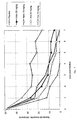
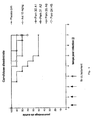
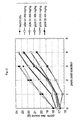
- Figures 2 and 3 in the appendix represent respectively the percentage of survival and the morbidity scores (10 mice) compared to the days post-infection.
- Heliomicin administered at 10 and 30 mg / kg, was found to have no significant effect on survival, although the curves were always above the curve for the placebo group.
- the Ard1 peptide administered at a dose of 30 mg / kg delays the appearance of the first death by 24 hours. 5 out of 10 mice are still alive at day 7, with a morbidity score of 16/50.
- the comparison of the survival curves (Meier-Kaplan) by the statistical test of logrank makes it possible to conclude that there is a significant difference between the placebo group and the group treated with Ard1 at 30 mg / kg (p ⁇ 0.001).
- Ard1 administered at the dose of 10 mg / kg does not improve the survival and general condition of the mice, 50% of the mice having died 2 days after infection.
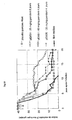
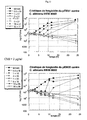
- Figures 4 and 5 in the appendix represent respectively the percentage of survival and the morbidity scores (10 mice) compared to the days after infection.
- the inoculation of the mice with 2.5 ⁇ 10 6 CFU / mouse is 50% lethal at day 5, in the case of the group having received the placebo treatment.
- the first deaths occur on day 2.5 post-infection and the median mortality is on day 5 post-infection.
- 5 mice are alive and the morbidity score is 15/50.
- the four peptides tested at a dose of 10 mg / kg, pEM24 (H5), pEM30 (A1), pEM31 (A2) and pEM35 (A6), are more active than ARD1: respectively the time of occurrence of 1 and death the number of live mice at day 7, are 3 days and 7 mice for the group treated with pEM24 (H5), 4 days and 7 mice for the group treated with pEM30 (A1), 5.5 days and 8 mice for the group treated with pEM31 (A2) and 7 days and 9 mice for the group treated with pEM35 (A6).
- Each of these peptides maintains the mice in good general condition for the first 3 days, with morbidity scores ranging from 42 to 48/50 on day 3, compared to 22/50 for the placebo group.
- the mice state declines 24 hours after the 4 th injection.
- Only the group treated with pEM31 maintains a morbidity score of greater than 40/50 for 5 days.
- Figures 6 and 7 in the appendix respectively represent the percentage of survival and the morbidity scores (10 mice) compared to the days post-infection.
- mice treated with pEM35 were better than that of mice given the other treatments, with a morbidity score which remained at 28/50 until day 5 after infection compared with a 11/50 for the mice that received the pEM51 and a score of 1/50 for the mice that received the placebo.
- the antifungal activity of pEM35 is greater than that of pEM51, itself superior to the activity of pEM46.
- the molecules Ard1 and pEM31 are not effective.
- Figure 8 in the appendix shows the percentage of survival (10 mice) compared to days post-infection.
- the inoculation of the mice with 2.5 ⁇ 10 6 CFU / mouse is lethal at 50% at day 5 and at 100% at day 8 for the mice of the placebo group.
- the first death occurs 3 days after infection.
- the morbidity score decreases rapidly below 30/50 (25/50 on day 2.5).
- the pEM35 peptide was administered at doses of 10 and 30 mg / kg / injection, at a rate of 3 daily doses for 4 days (1h, 5h and 10h post-infection at day 0, at 8h, 14h and 20h at day 1, 2 and 3); either daily doses of 30 and 90 mg / kg.
- the pEM35 makes it possible to delay the appearance of the first death by 4 and a half days for the 2 doses.
- the mice are maintained in good health until day 7, with a morbidity score that remains above 40/50.
- the scores decrease to 30/50. No major differences were observed between the groups treated with pEM35 at the low dose of 30 mg / kg / day and the high dose of 90 mg / kg / day.
- the survival curves for the groups treated with pEM35 are statistically different from the curve for the placebo group (p ⁇ 0.001 for both doses).
- mice are infected intravenously (iv) with a lethal dose of Scedosporium inflatum (strain FSSP 7908 grown on agar malt agar for 7 days at 37 ° C).
- the infective dose is 7.10 6 spores per mouse, injected into a volume of 100 ⁇ l by the lateral vein of the tail.
- the peptides pEM35 and pEM51 are delivered in continuous with ALZET 1003D osmotic pumps (flow rate: 0.97 ⁇ l / h, volume: 93 ⁇ l: infusion time: 4 days) and 1007D (flow rate: 0.47 ⁇ l / h, volume: 100 ⁇ l, infusion duration: 81 ⁇ 2 days) ) implanted intraperitoneally.
- Figures 9 and 10 in the appendix represent respectively the percentage of survival and the morbidity index (8 mice) compared to the days post-infection.
- Treatment with pEM51 at a dose of 60 mg / kg for 4 days delays the appearance of the first death by 4 days. There is 50% mortality on day 12 post-infection, a 5-day delay compared with control and placebo groups. At day 20, 3 out of 8 mice are still alive. The morbidity index decreases from day 5 post-infection (30/40), corresponding to the appearance of signs of encephalitis, and decreases gradually to an index of 6/40 on day 14 post-infection. The mortality curve is statistically different from those for the control and placebo groups. (logrank: p 0.0176).
- Treatment with pEM35 at a dose of 35 mg / kg for 4 days delays the appearance of the first death by 5 days. There is 50% mortality on day 15 post-infection, a delay of 8 days compared to control groups and placebo. At day 20, 1 in 8 mice is still alive. The morbidity index decreases from day 5 post-infection (28/40), corresponding to the onset of encephalitis, and gradually decreases to an index of 8/40 on day 15 post-infection. The mortality curve is statistically different from those for the control and placebo groups. (logrank: p 0.0177).
- the pEM51 administered at the dose of 30 mg / kg for 8 days has a very good therapeutic efficacy in terms of survival.
- the administration of a dose twice as high (60 mg / kg) over a period which is twice as short decreases the efficacy of the pEM51 significantly.
- the morbidity score of the 30 mg / kg dose group was significantly lower than that of the 60 mg / kg dose group.
- Administration of a dose of 60 mg / kg for 8 days should therefore further improve the therapeutic efficacy of pEM51.
- PEM35 at the dose of 35 mg / kg for 4 days demonstrated the same efficacy as pEM51 at a dose of 60 mg / kg for 4 days.
- the therapeutic activity of pEM35 in this model of Sciodospora is therefore at least equivalent to that of pEM51.
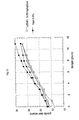
- Figures 11 and 12 in the appendix represent the weight change of healthy mice treated as a function of time.
- the weight change of healthy mice treated with 3 times 30 mg / kg of pEM51 for 3 days is similar to that of the mice injected with 0.9% NaCl.
- Acute toxicity of pEM35 and pEM51 as a single intravenous dose was tested in Swiss OF1 male mice of 17-18 g at doses of 200, 300 and 400 mg / kg.
- the peptides are solubilized in 0.9% NaCl solution; the injection volume is 150 ⁇ l, injected in 45 seconds by the lateral vein of the tail.
- mice exhibited vasodilation associated with prostration. The condition of the mice returned to normal 20 to 40 minutes after injection, depending on the dose.
- the 4-day weight evolution curves show a slight growth retardation the day after the injection, of approximately 1 g for the mice receiving the pEM35 at the doses of 200 and 400 mg / kg or the pEM51 at doses of 200. and 300 mg / kg; and about 2 g for the mouse that received pEM51 at a dose of 400 mg / kg.
- the weight change is then normal for all the mice.
- Example 7 Spectrum of the antifungal activity of Ard1 and analogs pEM31, pEM35, pEM46, pEM48 and pEM51 .
- Antifungal activity was detected by a growth inhibition test in a liquid medium.
- Filamentous fungi A. fumigatus, A. flavus and A. terreus , donated by Dr. H. Koenig, Civil Hospital, France, and S. prolificans and F. solani, donated by Dr. J. Meis and J. Mouton, Hospital University, Microbiology Department, Nijmegen, The Netherlands
- Filamentous fungi A. fumigatus, A. flavus and A. terreus , donated by Dr. H. Koenig, Civil Hospital, France, and S. prolificans and F. solani, donated by Dr. J. Meis and J. Mouton, Hospital University, Microbiology Department, Nijmegen, The Netherlands
- agar slant of Malt-Agar Biomérieux
- the spores are then harvested with 10 ml of YPG medium containing 0.05% Tween 20 and filtered through a gauze.
- the spores are centrifuged for 10 min at 1700 rpm, the pellet is taken up in YPG (1 g of Yeast extract, 1 g of Peptone, 3 g of Glucose for 1 1).
- the suspension is counted by a counting cell (Coverslide) and adjusted to 10 4 spores / ml.
- peptide dilutions concentration of 50 to 0.097 ⁇ g / ml of peptide
- 100 ⁇ l to 10 4 spores / ml of filamentous fungi or 1000 spores are then added.
- test plates are incubated for 48 h at 37 ° C.
- MIC minimal inhibitory concentration
- Candida C. albicans, C. glabrata, C. dubliensis, C. tropicalis, C. kefyr, C. krusei and C. parapsilosis, gift of Dr. H. Koenig, Civil Hospital, France
- C. albicans resistant to fluconazole No. 245962, No. 2332, No. 246335 and No. 3552, donated by Dr. J. Meis and J. Mouton, University Hospital, Microbiology Department, Nijmegen Netherlands
- Cryptococus neoformans donated by Dr. Dr. H.
- Some yeast colonies are suspended in liquid Sabouraud (Biomérieux) medium in order to obtain a final concentration of 0.1 OD at 600 nm corresponding to 2.5 ⁇ 10 6 yeasts / ml.
- the yeast suspension is adjusted to 5.10 3 yeasts / ml in Sabouraud medium.
- 100 ⁇ l of peptide dilutions (concentration of 50 to 0.097 ⁇ g / ml of peptide) are deposited in microtiter plates. After addition of 100 ⁇ l of a suspension of yeast with 5 ⁇ 10 3 yeasts / ml, ie 500 yeasts, the test plates are incubated for 24 hours at 30 ° C. (genus Candida ) with slow stirring or 72 hours at 37 ° C. (genus Cryptoccus). .
- the determination of minimum inhibitory concentrations is done by measuring the absorbance at 600 nm using a microtiter plate reader spectrophotometer. The MIC is set for a 50% shoot inhibition percentage.
- test plates After addition of 100 ⁇ l of spores frozen to 10 4 spores / ml of A. brassicola and N. crassa (gift of Dr. Bullet, IBMC, France), the test plates are incubated for 48 h at 30 ° C.
- MIC minimal inhibitory concentrations
- Fltx peptide MIC ( ⁇ g / ml) FASF 5161 pEM35 6.25 to 3.125 A.
- fumigatus pEM51 3.125 to 1.56 ampho B 0.5 FASF V02-31 pEM35 12.5 to 6.25 A. fumigatus pEM51 12.5 to 6.25 ampho B 1-0.5 FSSP 7902 pEM35 0.39 to 0.19 S. prolificans pEM51 0.19 to 0.09 ampho B > 16 FSSP 7908 pEM35 0.19 to 0.09 S. prolificans pEM51 0.09 to 0.048 ampho B > 16 FFUS 8591 pEM35 3.125 to 1.56 F. solani pEM51 0.78 to 0.39 ampho B > 16
- Example 8 Fungicidal kinetics of the pEM35 and pEM51 peptides against Candida albicans IHEM 8060.
- FIG. 13 in the appendix shows the kinetics of fungicidia of the pEM35 and pEM51 peptides against Candida albicans IHEM 8060.
- Candida albicans yeast strains used are identical to those previously used for yeast activity detection tests (donated by Dr. Koenig, Hôpital Civil, France).
- the yeast strains are inoculated on Sabouraud-Chloramphenicol agars and incubated for 24 to 48 hours at 30 ° C. Some colonies of yeasts are suspended in 4 ml of liquid Sabouraud medium (Biomérieux) then incubated with stirring overnight at 30 ° C.
- the yeast suspension is adjusted to 1.10 6- 5.10 6 yeasts / ml in fresh Sabouraud.
- a 1: 10 dilution is prepared by adding 1 ml of the yeast suspension with 9 ml Sabouraud-Chloramphenicol (Biomerieux) containing or not (controlling) a defined amount of peptide pEM35 or pEM51.
- the concentration of yeasts in the starting inoculum is thus 1.10 5 -5 ⁇ 10 5 yeasts / ml.
- the pEM35 and pEM51 peptides are tested over a concentration range ranging from 1 ⁇ g / ml to 64 ⁇ g / ml.
- Each of the solutions is incubated at 35 ° C.
- a 100 ⁇ l sample of each of the solutions is taken and diluted serially 10 times in sterile water.
- An aliquot of 30 .mu.l is then spread on Sabouraud (Biomérieux) agar plates in order to count the colonies.
- amphotericin B control test (concentration corresponding to 1 time and 16 times the MIC) is performed in parallel according to the protocol described by Klepser et al. ( Antimicrob Agents Chemother 1997 June; 41 (6): 1392-1395, "Antifungal pharmacodynamic characteristics of fluconazole and Amphotericin B tested against Candida albicans ").
- the minimum detection threshold of the number of yeasts / ml is determined by preparing a suspension of yeast Candida albicans in sterile water with the peptide pEM35 or pEM51 then adjustment to 0.5 standard turbidity Mc Farland (concentration 1.10 6 - 5.10 6 yeasts / ml). Dilutions in sterile water are made so as to obtain 3 suspensions of concentration respectively 100, 50 and 30 yeasts / ml. 30 .mu.l of each suspension are removed and plated on Sabouraud (Biomérieux) agar plates in order to count the colonies. The dishes are incubated for 24 to 48 hours at 35 ° C.
- the counted values (log 10 yeasts / ml) are plotted on the predefined time scale for each of the pEM35 and pEM51 peptide concentrations tested.
Landscapes
- Health & Medical Sciences (AREA)
- Life Sciences & Earth Sciences (AREA)
- Chemical & Material Sciences (AREA)
- General Health & Medical Sciences (AREA)
- Zoology (AREA)
- Organic Chemistry (AREA)
- Engineering & Computer Science (AREA)
- Medicinal Chemistry (AREA)
- Proteomics, Peptides & Aminoacids (AREA)
- Plant Pathology (AREA)
- Environmental Sciences (AREA)
- Pest Control & Pesticides (AREA)
- Dentistry (AREA)
- Wood Science & Technology (AREA)
- Agronomy & Crop Science (AREA)
- Biochemistry (AREA)
- Genetics & Genomics (AREA)
- Pharmacology & Pharmacy (AREA)
- Toxicology (AREA)
- Gastroenterology & Hepatology (AREA)
- Communicable Diseases (AREA)
- Biophysics (AREA)
- General Chemical & Material Sciences (AREA)
- Molecular Biology (AREA)
- Chemical Kinetics & Catalysis (AREA)
- Oncology (AREA)
- Veterinary Medicine (AREA)
- Public Health (AREA)
- Nuclear Medicine, Radiotherapy & Molecular Imaging (AREA)
- Animal Behavior & Ethology (AREA)
- Tropical Medicine & Parasitology (AREA)
- Virology (AREA)
- Microbiology (AREA)
- Biotechnology (AREA)
- Insects & Arthropods (AREA)
- Medicines That Contain Protein Lipid Enzymes And Other Medicines (AREA)
- Peptides Or Proteins (AREA)
- Pharmaceuticals Containing Other Organic And Inorganic Compounds (AREA)
- Micro-Organisms Or Cultivation Processes Thereof (AREA)
- Medicines Containing Material From Animals Or Micro-Organisms (AREA)
Description
- La présente invention a pour objet de nouveaux peptides ayant des propriétés antibactériennes et antifongiques. L'invention concerne également la préparation de ces peptides et les compositions les contenant utilisables en agriculture et en thérapie humaine ou animale.
- On a décrit dans l'art antérieur de nombreuses substances d'origine naturelle, notamment des peptides présentant des propriétés anti-microbiennes, plus particulièrement bactéricides ou fongicides. De tels peptides sont utiles pour le traitement des maladies fongiques tant chez les plantes que chez l'homme (De Lucca et al., 1999, Antimicrob. Agents Chemother. 43, 1-11). En santé humaine, on peut rappeler que l'incidence des infections fongiques opportunistes a connu une progression très nette au cours des dernières années. Les mycoses invasives sont des infections très graves qui sont provoquées par des champignons répandus dans la nature et qui deviennent pathogènes chez des sujets immunodéprimés. L'immunosuppression peut être le résultat de différentes causes : corticothérapie, chimiothérapie, transplantations, infection par le VIH. Les infections fongiques opportunistes représentent à l'heure actuelle une cause importante de mortalité chez l'homme. Elles peuvent être causées par des levures, principalement du genre Candida, ou des champignons filamenteux, principalement du genre Aspergillus. Chez les patients immunodéprimés, il est fréquent d'observer l'échec des traitements antifongiques en raison de la toxicité de ceux-ci, par exemple le traitement par l'amphotéricine B, ou de l'apparition de champignons résistants, par exemple la résistance de Candida albicans aux dérivés azotés. Il est donc essentiel de développer de nouveaux médicaments anti-fongiques dérivés de molécules innovantes.
- La production de peptides antimicrobiens représente, chez une grande variété d'espèces animales et végétales, un mécanisme essentiel de défense immunitaire contre les infections. En particulier, les insectes présentent une résistance très efficace contre les bactéries et les champignons. Cette réponse repose pour une large part sur la synthèse rapide de plusieurs familles de peptides antimicrobiens à large spectre d'activité (Bulet et al. (1999) Dev. Comp. Immunol. 23, 329-344). Cette synthèse est induite par une blessure septique ou par l'injection d'une faible dose de bactéries (Hoffmann et al. (1999) Science 284, 1313-1318). A ce jour, les peptides antimicrobiens d'insectes ont été surtout caractérisés à partir d'insectes ayant une métamorphose complète pendant le développement, par exemple les diptères, lépidoptères et coléoptères. Parmi les peptides anti-microbiens induits chez ces insectes, on peut distinguer les quatre groupes suivants :
- Des peptides cationiques de 4 kDa, formant deux hélices α amphipathiques. Dans ce groupe, on classe en particulier les cécropines.
- Des peptides cationiques riches en proline, de taille comprise entre 2 kDa et 4 kDa qui peuvent être glycosylés, comme par exemple, la drosocine, la pyrrhocoricine, et les lébocines, ou non glycosylés comme par exemple, les apidaecines et les métalnikowines.
- Plusieurs polypeptides distincts, ayant un poids moléculaires de 8 à 27 kDa, pour la plupart cationiques et fréquemment riches en résidus glycine comme par exemple les attacines, les sarcotoxines II, les diptéricines et la coléoptéricine.
- Des peptides comprenant des ponts disulfures intramoléculaires. Dans ce groupe, on classe les défensines d'insecte (4 kDa, 3 ponts disulfure), la drosomycine (4 kDa, 4 ponts disulfure) et la thanatine (2 kDa, 1 pont disulfure).
- Parmi ceux-ci, la présente invention s'intéresse à des peptides présentant une structure tridimensionnelle du type comportant une hélice α et un feuillet β antiparallèle reliés par trois ponts disulfures, également désignée structure CSαβ. Ces peptides présentent une activité antifongique utile dans le traitement d'infection chez l'homme et l'animal ainsi que chez les plantes. L'invention concerne tout particulièrement l'héliomicine qui est un peptide isolé à partir de l'hémolymphe de lépidoptère Heliothis virescens. La séquence et les propriétés de l'héliomicine sont décrites dans la demande de brevet internationale PCT publiée sous le No. WO 9953053.
- Dans les séquences peptidiques rapportées ci-après, les acides aminés sont représentés par leur code à une lettre, mais ils peuvent être aussi représentés par leur code à trois lettres selon la nomenclature ci-dessous.
A Ala alanine C Cys cystéine D Asp acide aspartique E Glu acide glutamique F Phe phénylalanine G Gly glycine H His histidine I Ile isoleucine K Lys lysine L Leu leucine M Met méthionine N Asn asparagine P Pro proline Q Gln glutamine R Arg arginine S Ser sérine T Thr thréonine V Val valine W Trp tryptophane Y Tyr tyrosine - L'héliomicine est un peptide amphiphile présentant une structure tridimensionnelle du type CSαβ. La séquence en acides aminés de l'héliomicine représentée dans la liste de séquence sous le numéro SEQ ID NO :1 est la suivante :

- La Demanderesse a maintenant isolé, à partir de l'hémolymphe de larves immunisées du lépidoptère Archeoprepona demophoon, un homologue de l'héliomicine. Ce peptide, désigné Ard1, a été caractérisé par séquençage et mesure de masse. La séquence en acides aminés de Ard1 est représentée dans la liste de séquence sous le numéro SEQ ID NO :2

- La séquence de Ard1 diffère de celle de l'héliomicine en 2 positions : un acide aspartique (Asp) en position 17 dans l'héliomicine est remplacé par une asparagine (Asn) et une glycine (Gly) en position 20 est remplacée par une alanine (Ala). Les codons correspondants ont été modifiés dans le vecteur d'expression de l'héliomicine pSEA2 et le peptide Ard1 a été produit et sécrété par la levure S.cerevisiae.
- pSEA2 est un vecteur d'expression de levure porteur du promoteur MFα1 et des séquences pré de BGL2 et pro de MFα1 permettant la sécrétion du peptide dans le milieu de culture (Lamberty et al., 1999, J. Biol. Chem., 274, 9320-9326).
- Après purification par HPLC, l'activité antifongique (activité anti-Candida albicans et anti-Aspergillus fumigatus) de Ard1 a été comparée à celle de l'héliomicine. L'activité anti-Candida albicans de Ard1 est de 4 à 8 fois supérieure à celle de l'héliomicine. L'activité anti-Aspergillus fumigatus de Ard1 est 2 fois supérieure à celle de l'héliomicine.
- La Demanderesse a analysé la charge et l'hydrophobicité de l'héliomicine et du peptide Ard1. Le profil d'hydrophobicité représenté à la figure 1 en annexe a été réalisé par la méthode de Kyte et Doolittle (1982, J. Mol. Biol.,157, 105-132).
- L'héliomicine et son homologue Ard1 possèdent deux régions à caractère plutôt hydrophobe séparées par une région à caractère plutôt hydrophile. Les régions N et C terminales présentent un caractère plutôt hydrophile. En outre la région centrale à caractère hydrophile présente une charge nette positive. La figure 1 indique la charge des acides aminés de la séquence de l'héliomicine.
- Le remplacement de l'acide aspartique dé l'héliomicine en asparagine (position 17) dans l'homologue naturel Ard1 augmente le caractère cationique du peptide (+1 par rapport à l'héliomicine). D'autres mutations visant à augmenter la charge positive et l'hydrophobicité ont été réalisées dans l'héliomicine et son homologue Ard1 par mutagenèses dirigées générées par PCR ou par clonage de fragments synthétiques.
- Les travaux de recherche réalisés dans le cadre de la présente invention ont donc consisté à effectuer des mutations notamment dans les régions hydrophobes et chargés de façon à augmenter la charge et/ou l'hydrophobicité des peptides sans modifier ou en améliorant leur caractère amphiphile, et ainsi disposer de peptides présentant des propriétés antifongiques et/ou antibiotiques améliorées par rapport à l'héliomicine.
- Ce but est atteint grâce à un peptide dérivé de l'héliomicine de formule SEQ ID No. 1 :par substitution de un à plusieurs acides aminés. Les peptides de l'invention répondent à la formule (I), où « X » représente un acide aminé :

X1 X2 X3 X4 X5 X6 C7 X8 X9 X10 X11 X12 X13 X14 X15 X16 X17 C18 X19 X20X21 C22 X23 X24 X25 X26 X27 X28 X29 X30 X31 C32 X33 X34 X35 X36 X37 X38 X39 C40 X41 C42 X43 X44 (I)
dans laquelle : - X1, X17, X21, X43 sont des acides aminés acides,
- X16, X44 sont des acides aminés polaires petits,
- X19 est un acide aminé polaire large,
- X36 est un acide aminé petit ou faiblement hydrophobe,
- X38 est un acide aminé faiblement hydrophobe ou petit,
- l'un au moins des X1, X17, X21, X43 est un acide aminé basique ou polaire avantageusement polaire large, et/ou
- l'un au moins des acides aminés X16, X44 est un acide aminé basique ou un acide aminé polaire large, et/ou
- X19 est un acide aminé basique, et/ou
- l'un au moins des acides aminés X36, X38 est un acide aminé fortement hydrophobe,
- X13, X37, X39 représentent des acides aminés polaires larges,
- X6, X15, X34 représentent des acides aminés polaires petits,
- X2, X23, X24, X25, X28, X31 représentent des acides aminés basiques,
- X3, X4, X8, X12 représentent des acides aminés hydrophobes,
- X9, X14, X27, X35, X41 représentent des acides aminés hydrophobes aromatiques,
- X5, X10, X11, X20, X26, X29, X30, X33 représentent des acides aminés petits,
- C7, C18, C22, C32, C40, C42 représentent des cystéines.
- Ainsi, dans les peptides de l'invention de formule (I), lorsque :
- tout ou partie des X1, X17, X21, X43 n'est pas un acide aminé basique ou polaire avantageusement polaire large, il(s) est (sont) un (des) acide(s) aminé(s) acide(s),
- tout ou partie des X16, X44 n'est pas un acide aminé basique ou polaire large, il(s) est (sont) un (des) acide(s) aminé(s) polaire(s) petit(s),
- X19 n'est pas un acide aminé basique, il est un acide aminé polaire large,
- X36 n'est pas un acide aminé fortement hydrophobe, il est un acide aminé petit ou faiblement hydrophobe,
- X38 n'est pas un acide aminé fortement hydrophobe, il est un acide faiblement hydrophobe ou petit.
- Les peptides de l'invention possèdent la structure CSαβ de l'héliomicine, car les substitutions ne concernent pas les cystéines C7, C18, C22, C32, C40, C42.
- Un premier groupe préféré de peptides selon l'invention est celui dans lequel l'un au moins des X1, X17, X43 est un acide aminé basique ou polaire avantageusement polaire large, et X21 est un acide aminé acide capable d'établir des liaisons ioniques avec l'un au moins des X23, X24 et X25 qui sont des acides aminés basiques. En effet, ces liaisons sont susceptibles de participer à la stabilisation de la structure CSαβ des peptides de l'invention.
- Un deuxième groupe préféré de peptides selon l'invention est celui dans lequel l'un au moins des X36 et X38 est un acide aminé fortement hydrophobe non aromatique.
- Un troisième groupe préféré de peptides selon l'invention est celui dans lequel X17 est l'asparagine ou l'arginine, X43 est l'acide glutamique et dans lequel :
- X36 est la leucine ou l'isoleucine, et/ou
- X19 est l'arginine, et/ou
- X16 est l'arginine.
- Un quatrième groupe préféré de peptides selon l'invention est celui dans lequel X17 est l'acide aspartique, X43 est l'acide glutamique et dans lequel :
- X36 est la leucine ou l'isoleucine, et/ou
- X19 est l'arginine, et/ou
- X16 est l'arginine.
- Un cinquième groupe préféré de peptides selon l'invention est celui dans lequel X43 est la glutamine, X17 est l'asparagine et dans lequel :
- X36 est la leucine ou l'isoleucine, et/ou
- X19 est l'arginine.
- Un sixième groupe préféré de peptides selon l'invention est celui dans lequel X43 est la glutamine et X17 est l'acide aspartique.
- Un septième groupe préféré de peptides selon l'invention est celui dans lequel X43 est la glutamine, X17 est l'acide aspartique et dans lequel :
- X1 est l'asparagine, et/ou
- X36 est la leucine ou l'isoleucine.
- On entend plus particulièrement par :
- acides aminés basiques : l'arginine, la lysine ou l'histidine,
- acides aminés hydrophobes :
- . non aromatiques : la méthionine, la valine, la leucine, l'isoleucine, étant entendu que la leucine et l'isoleucine sont des acides aminés fortement hydrophobe et que la méthionine et la valine sont des acides aminés faiblement hydrophobes,
- . aromatiques : la phénylalanine, la tyrosine, ou le tryptophane, qui sont des acides aminés fortement hydrophobes,
- acides aminés acides : l'acide aspartique ou l'acide glutamique,
- acides aminés polaires larges : la glutamine ou l'asparagine,
- acides aminés polaires petits : la sérine ou la thréonine,
- acides aminés polaires : acides aminés polaires petits et larges,
- acides aminés petits : la glycine ou l'alanine.
- Les peptides de l'invention peuvent être préparés par synthèse chimique ou par génie génétique par des techniques bien connues de l'homme du métier.
- Trois types de mutations ont plus particulièrement été générées :
- des acides aminés acides ont été remplacés par des acides aminés polaires, comme les mutations Asp1 en Asn, Asp17 en Asn, Glu43 en Gln, et
- des acides aminés polaires de préférence polaires larges ont été remplacés par des acides aminés basiques, comme les mutations Asn13 en Arg, Ser16 en Arg, Asn 17 en Arg (Ard1), Asn 19 en Arg, Thr 44 en Arg.
- des mutations visant à augmenter l'hydrophobicité ont également été générées, comme les mutations Gly10 en Leu, Ala36 en Leu ou Ile et Val38 en Ile.
- Des peptides préférés dérivés de l'héliomicine selon l'invention présentent les séquences en acide aminés suivantes :


- Des peptides préférés dérivés de Ard1 selon l'invention présentent les séquences en acides aminés suivantes :


- L'invention concerne aussi des équivalents fonctionnels des peptides ci-dessus. Il s'agit par exemple de fragments des peptides ci-dessus ou de modifications résultant des processus post-traductionnels comme des glycosylation ou des modifications chimiques telles que l'amidation, l'acétylation, l'acylation, le couplage avec des lipides ou des sucres, le couplage avec des nucléotides, etc.
- Les équivalents fonctionnels comprennent également des peptides de l'invention dont un ou plusieurs des acides aminés des acides aminés sont des énantiomères, des diastéréoisomères, des acides aminés naturels de conformation D, des acides aminés rares notamment l'hydroxyproline, la méthyllysine, la diméthyllysine et les acides aminés synthétiques, notamment l'ornithine, la norleucine, la cyclohexylalanine et les oméga-aminoacides. L'invention couvre également les rétropeptides et les rétro-inversopeptides.
- Les.peptide de formule (I) peuvent comprendre également à l'une ou l'autre de leurs extrémités N- ou C-terminale un ou plusieurs acides aminés qui n'interfèrent pas avec la structure de la formule (I). En effet, l'invention vise bien entendu des peptides présentant une structure tridimensionnelle du type comportant une hélice α et un feuillet β antiparallèle reliés par trois ponts disulfures, comme l'héliomicine.
- Le tableau 1 ci-dessous rapporte des mutations effectuées sur les acides aminés en positions 1, 6, 13, 16, 19, 36, 38, 43 et 44 de l'héliomicine, ainsi que l'activité antifongique sur C.albicans (C.a) et A.fumigatus (A.f) des peptides obtenus.
Tableau 1 position 1 6 13 16 19 36 38 43 44 Héliomicine D S N S N A V E T Activité+ Mutants C.a A.f pEM37 N 2 - pEM38 T 1 1 pEM45 R 0,5 <<<1 pEM43 T 1 2 pEM42 R 8 1 pEM44 R 8 2 pEM22 I 1-2 4-8 pEM23 I 1 2 pEM25 L 10 6 pEM24 L I 4 8 pEM7 R 4-8 1 pEM21 Q 2 10-20 pEM39 N Q 2 4 - 8 pEM61 N L Q 5-10 3-6 pEM62 N I Q 3-6 2-4 + activité relative par rapport à l'héliomicine. - Le tableau 2 ci-dessous rapporte des mutations effectuées sur les acides aminés en positions 1, 10, 16, 17, 19, 36, 38, 43 et 44 du peptide Ard1, ainsi que l'activité antifongique sur C.albicans (C.a) et A.fumigatus (A.f) des peptides obtenus.
Tableau 2 position 1 10 16 17 19 36 38 43 44 Ard1 D G S N N A V E T Activité+ Mutants C.a A.f pEM40 N 2 1 pEM50 R 1-2 2 pEM56 L 1-2 0,5 pEM52 R 1-2 0,5 pEM51 R 2-4 1 pEM32 I 1 2 pEM33 I 1 1 pEM34 L I 4 4 pEM35 L 4 2-4 pEM31 Q 2 4-8 pEM30 R 4 0,5-1 pEM46 L Q 4-8 6-8 pEM47 I Q 2-4 8 pEM48 L R 6-12 1-2 pPEM49 I R 3 1-2 pEM54 L L 1 1 pEM57 L Q 1 8 pEM55 L L Q 1-2 2-7 + activité relative par rapport à Ard1. - Les différents mutants ont été produits dans la levure S.cerevisiae, purifiés par HPLC et leur activité antifongique (C.albicans et A.fumigatus) a été comparée à celle de l'héliomicine ou du peptide Ard1.
- Les tableaux 1 et 2 ci-dessus montrent un gain d'activité sur au moins un des deux champignons testés pour tous les mutants d'augmentation de charge positive à l'exception du mutant Asn 13 en Arg (pEM45). Les autres mutants sont tous localisés dans des régions hydrophiles. La majorité des mutants ont une activité accrue sur C.albicans (Ser16 en Arg, Asn17 en Arg (Ard1), Asn19 en Arg, Thr44 en Arg). Une seule mutation (Glu43 en Gln) permet un gain d'activité significativement important sur A. fumigatus.
- En ce qui concerne les mutations d'augmentation d'hydrophobicité, la modification de l'Ala36 en Leu (pEM35) permet le meilleur gain d'activité sur C.albicans et A.fumigatus. Les mutations Gly10 en Leu et Va138 en Ile n'ont pas d'effet significatif sur l'activité antifongique de l'héliomicine et de Ard1.
- Les mutants les plus actifs d'augmentation d'hydrophobicité ont été associés aux mutants d'augmentation de charge. Des effets cumulatifs ont ainsi été observés.
- L'invention a aussi pour objet l'utilisation des peptides ci-dessus, pour prévenir ou traiter une infection fongique et/ou bactérienne tant chez l'homme et l'animal que chez les plantes. L'invention a donc pour objet une composition, plus particulièrement pharmaceutique antifongique et/ou antibactérienne, comprenant à titre d'agent actif au moins un peptide tel que défini précédemment, avantageusement associé dans ladite composition avec un véhicule acceptable.
- Le véhicule est choisi en fonction du type d'application de la composition à titre pharmaceutique ou agronomique.
- L'invention concerne tout particulièrement les applications pharmaceutiques chez l'homme et l'animal de ces peptides et des compositions les contenant, mais elle s'intéresse aussi aux applications agronomiques. En effet, les peptides de l'invention sont utiles pour rendre des plantes résistantes contre des maladies notamment fongiques et bactériennes. Une première forme de mise en oeuvre de cette application agronomique, consiste à appliquer sur les plantes une quantité efficace de peptides ou d'une composition les contenant. Une seconde forme de mise en oeuvre de cette application agronomique consiste à transformer des cellules végétales ou des plantes avec une séquence d'acide nucléique codant pour un peptide de l'invention de façon à conférer aux plantes une résistance aux maladies.
- D'autres avantages et caractéristiques de l'invention apparaîtront des exemples qui suivent concernant la préparation du peptide Ard1 et d'analogues de l'héliomicine et de Ard1 et leur activité antifongique et dans lesquels il sera fait référence aux dessins en annexe dans lesquels :
- la figure 1 représente le profil d'hydrophobicité du peptide Héliomicine par la méthode de Kyte et Doolittle (1982, J. Mol. Biol., 157, 105-132);
- la figure 2 représente les activités (pourcentage de survie par rapport aux jours post-infection) des peptides Héliomicine et Ard 1 dans le modèle d'infection disséminé à Candida albicans;
- la figure 3 représente les activités (scores de morbidité par rapport aux jours post-infection) des peptides Héliomicine et Ard 1 dans le modèle d'infection disséminé à Candida albicans;
- la figure 4 représente les activités (pourcentage de survie par rapport aux jours post-infection) des peptides pEM24, pEM30, pEM31 et pEM35 dans le modèle d'infection disséminé à Candida albicans;
- la figure 5 représente les activités (scores de morbidité par rapport aux jours post-infection) des peptides pEM24, pEM30, pEM31 et pEM35 dans le modèle d'infection disséminé à Candida albicans;
- la figure 6 représente les activités (pourcentage de survie par rapport aux jours post-infection) des peptides pEM31, pEM35, pEM46 et pEM51 dans le modèle d'infection disséminé à Candida albicans;
- la figure 7 représente les activités (scores de morbidité par rapport aux jours post-infection) des peptides pEM31, pEM35, pEM46 et pEM51 dans le modèle d'infection disséminé à Candida albicans;
- la figure 8 représente les activités (pourcentage de survie par rapport aux jours post-infection) du peptide pEM35 dans le modèle d'infection disséminé à Candida albicans;
- la figure 9 représente les activités (pourcentage de survie par rapport aux jours post-infection) des peptides pEM35 et pEM51 dans le modèle d'infection disséminé à Scedosporium inflatum;
- la figure 10 représente les activités (indice de morbidité par rapport aux jours post-infection) des peptides pEM35 et pEM51 dans le modèle d'infection disséminé à Scedosporium inflatum;
- la figure 11 représente l'évolution pondérale en fonction du temps des souris saines traitées avec le peptide pEM51;
- la figure 12 représente l'évolution pondérale en fonction du temps des souris saines traitées avec les peptides pEM35 et pEM51;
- la figure 13 représente la cinétique de fongicidie des peptides pEM35 et pEM51 contre Candida albicans IHEM 8060;
- Les larves matures de 4ème stade du lépidoptère A. demophoon ont été immunisées par deux injections de 20 µl d'une solution de PBS contenant des bactéries à Gram positif (M. luteus et S. aureus) et à Gram négatif (P. aeruginosa), des spores de champignon filamenteux (A. fumigatus) et des levures (C. albicans). Les bactéries sont préparées à partir de cultures réalisées en milieu de Luria-Bertani durant 12 heures à 37°C. Les levures sont préparées à partir de cultures réalisées en milieu de Sabouraud durant 12 heures à 30°C. Les spores d'A. fumigatus sont prélevées d'un stock congelé à -80°C. Les animaux ainsi infectés ont été conservés pendant 24 heures sur leur plante hôte, dans un espace ventilé. Avant le prélèvement de l'hémolymphe, les larves ont été refroidies sur de la glace.
- L'hémolymphe (environ 160 µl par larve, pour un total de 81 spécimens) a été collectée par excision d'un appendice abdominal et recueillie dans des tubes de microcentrifugation en polypropylène de 1,5 ml refroidis dans de la glace et contenant de l'aprotinine comme inhibiteur de protéases (20 µg/ml en concentration finale) et de la phénylthiourée comme inhibiteur de la mélanisation (concentration finale de 40 µM). L'hémolymphe (13 ml) ainsi collectée à partir des larves immunisées a été centrifugée à 8000 rpm pendant 1 min à 4°C afin d'éliminer les hémocytes. Le surnageant de centrifugation a été alors centrifugé à 12000 rpm. L'hémolymphe dépourvue des cellules sanguines a été conservée à -80°C jusqu'à son utilisation.
- Après décongélation rapide, le plasma d'A. demophoon a été acidifié jusqu'à pH 3 avec une solution d'acide trifluoroacétique à 1% (volume à volume) contenant de l'aprotinine (20 µg/ml en concentration finale) et la phénylthiourée (concentration finale de 40 µM). L'extraction en condition acide du peptide a été réalisée pendant 30 min sous agitation légère dans un bain d'eau glacée. L'extrait obtenu a été ensuite centrifugé à 4°C pendant 30 min à 10000g.
- Une quantité d'extrait équivalente à 5 ml d'hémolymphe a été déposée sur un support de 2 g de phase inverse, tel que commercialisé sous la forme de cartouche (Sep-Pak™ C18, Waters Associates), équilibré avec de l'eau acidifiée (TFA 0,05 %). Les molécules hydrophiles ont été éliminées par un simple lavage avec de l'eau acidifiée. L'élution du peptide a été réalisée par une solution d'acétonitrile à 60% préparée dans le TFA 0,05%. La fraction éluée à 60% d'acétonitrile a été séchée sous vide dans le but d'éliminer l'acétonitrile et le TFA puis elle a été reconstituée dans de l'eau acidifiée (TFA 0,05%) stérile avant d'être soumise à la première étape de purification.
-
- première étape : la fraction contenant le peptide a été analysée par chromatographie de phase inverse sur une colonne préparative Aquapore RP-300 C8 (Brownlee™, 220 x 10 mm, 300 Å ), l'élution a été réalisée par un gradient d'acétonitrile dans le TFA 0,05% de 2% à 10% en 5 minutes, puis de 10 à 25% en 30 minutes, puis de 25% à 35% en 40 minutes, puis de 35% à 60% en 50 minutes, pour une durée totale de 125 minutes à un débit constant de 2,5 ml/min. Les fractions ont été collectées manuellement en suivant la variation de l'absorbance à 225 nm. Les fractions recueillies ont été asséchées sous vide, reconstituées avec de l'eau ultrapure et analysées pour leur activité antifongique en utilisant le test décrit ci-dessous.
- seconde étape : la fraction antifongique éluée à 27% d'acétonitrile correspondant au peptide a été analysée sur une colonne analytique de phase inverse Aquapore RP-300 C8 (Brownlee™, 220 x 4,6 mm, 300 Å), en utilisant un gradient linéaire diphasique d'acétonitrile de 2% à 23% en 5 min et de 23 à 31% en 50 min dans le TFA 0,05% avec un débit constant de 0,8 ml/min. Les fractions ont été collectées manuellement en suivant la variation de l'absorbance à 225 nm. Les fractions recueillies ont été asséchées sous vide, reconstituées avec de l'eau ultrapure et analysées pour leur activité antifongique dans les conditions décrites ci-dessous.
- troisième étape : la fraction antifongique contenant le peptide a été purifiée jusqu'à homogénéité sur une colonne de phase inverse Narrowbore Delta-Pak™ HPI C18 (Waters Associates, 150 x 2 mm) en utilisant un gradient linéaire diphasique d'acétonitrile de 2% à 22% en 5 min et de 22 à 30% en 50 min dans le TFA 0,05% avec un débit constant de 0,25 ml/min à une température contrôlée de 30°C. Les fractions ont été collectées manuellement en suivant la variation de l'absorbance à 225 nm. Les fractions recueillies ont été asséchées sous vide, reconstituées avec de l'eau ultrapure filtrée et analysées pour leur activité antifongique.
- Le contrôle de pureté a été effectué sur un spectromètre de masse MALDI-TOF Bruker Biflex (Bremen, Allemagne) en mode linéaire positif (voir section 3 ci-dessous).
- Le nombre de résidus cystéine a été déterminé sur le peptide natif par réduction et S-pyridyléthylation. 400 pmoles de peptide natif ont été réduites dans 40 µl de tampon Tris/HCl 0,5 M, pH 7,5 contenant 2 mM d'EDTA et 6 M de chlorure de guanidinium en présence de 2 µl de dithiothréitol (2,2 M). Le milieu réactionnel a été placé sous atmosphère d'azote. Après 60 min d'incubation à l'obscurité, 2 µl de 4-vinylpyridine fraîchement distillée ont été ajoutés à la réaction qui a été alors incubée durant 10 min à 45°C à l'obscurité et sous atmosphère d'azote. Le peptide pyridyléthylé a été ensuite séparé des constituants du milieu réactionnel par chromatographie de phase inverse sur une colonne analytique de phase inverse Aquapore RP-300 C8 (Brownlee™, 220 x 4,6 mm, 300 Å), en utilisant un gradient linéaire d'acétonitrile en présence de TFA 0,05% de 2 à 52% pendant 70 minutes.
- Les mesures de masses ont été effectuées sur un spectromètre de masse MALDI-TOF Bruker Biflex (Bremen, Allemagne) en mode linéaire positif. Les spectres de masse ont été calibrés de façon externe avec un mélange standard de peptides de m/z connues, respectivement 2199,5 Da, 3046,4 Da et 4890,5 Da. Les différents produits à analyser ont été déposés sur une fine couche de cristaux d'acide α-cyano-4-hydroxycinnamique obtenue par une évaporation rapide d'une solution saturée dans l'acétone. Après séchage sous un léger vide, les échantillons ont été lavés par une goutte d'acide trifluoroacétique à 0,1% avant d'être introduits dans le spectromètre de masse.
- Le séquençage automatique par dégradation d'Edman du peptide natif, du peptide S-pyridyléthylé et des différents fragments obtenus après les différents clivages protéolytiques et la détection des dérivés phénylthiohydantoines ont été réalisés sur un séquenceur ABI473A (PEApplied Biosystems division de Perkin Elmer).
- Confirmation de la séquence peptidique dans la région C-terminale. 200 pmoles de peptide réduit et S-pyridyléthylé ont été incubées en présence de 5 pmoles d'endoprotéinase-Lys-C (Acromobacter protease I, clivage spécifique des résidus lysine du côté C-terminal, Takara, Otsu) selon les conditions préconisées par le fournisseur (Tris-Hcl 10 mM pH 9 en présence de Tween 20 à 0,01%). Après arrêt de la réaction avec du TFA 1%, les fragments peptidiques ont été séparés par HPLC en phase inverse sur une colonne de type Narrowbore Delta-Pak™ HPIC18 (Waters Associates, 150 x 2 mm) dans un gradient linéaire d'acétonitrile de 2 à 60% en 80 min dans le TFA 0,05% avec un débit de 0,2 ml/min et une température constante de 37°C. Les fragments obtenus ont été analysés par spectrométrie de masse MALDI-TOF et le peptide correspondant au fragment C-terminal a été séquencé par dégradation d'Edman.
- A partir du vecteur d'expression de l'héliomicine pSEA2 décrit par Lamberty et al. (1999, J. Biol. Chem., 274, 9320-9326), une mutagenèse dirigée a été réalisée par PCR pour modifier les codons Asp17 en Asn et Gly20 en Ala. Un fragment porteur du promoteur MFα1, des séquences pre BGL2 et pro MFα1 et de la séquence codante de l'héliomicine jusqu'au site SacII a été amplifié par PCR avec les oligonucléotides EM 72 et EM 89. Les mutations des codons 17 et 20 ont été introduites dans l'oligonucléotide EM89.


- Le fragment amplifié par PCR a été digéré par les enzymes de restriction SphI et SacII et cloné dans le plasmide pSEA2 digéré par les mêmes enzymes et traité à la phosphatase alcaline. Le plasmide résultant pEM2 a été contrôlé par analyse de restriction et séquençage.
- La souche de levure TGY48.1 (MATα, ura3-Δ5, ,his, pra1, prb1, prc1, cps1, Reichhart et al., 1992, Invert. Reprod. Dev. 21, 15-24) a été transformée par le plasmide pEM2. Les transformants ont été sélectionnés sur milieu sélectif YNBG supplémenté de 0,5% de casamino acides.
- Un fragment synthétique constitué des oligonucléotides EM25 et EM26 préalablement hybridés (chauffage à 100°C et diminution lente de la température jusqu'à 25°C) a été cloné dans le vecteur pSEA2 digéré par BamHI et SalI (remplacement de l'extrémité 3' de la séquence codant pour l'héliomicine, codon Ser34 jusqu'au codon stop). Ce fragment synthétique BamHI-SalI contient les sites de restriction XhoI et Nhe1. Le vecteur résultant pEGO1 a été contrôlé par analyse de restriction et séquençage.


- Un fragment synthétique BamHI-SalI constitué des oligonucléotides EM119 et EM120 préalablement hybridés a été cloné dans le vecteur pEGO1. La réaction de ligation a été digérée par XhoI afin d'éliminer les plasmides n'ayant pas inséré le fragment synthétique EM119/EM120. Le plasmide résultant pEM22 a été contrôlé par analyse de restriction et séquençage. Une stratégie de clonage identique a été utilisée pour la construction de pEM24 en utilisant le couple d'oligonucléotides EM127 et EM128.




- Un fragment synthétique constitué des oligonucléotides EM25 et EM26 préalablement hybridés (chauffage à 100°C et diminution lente de la température jusqu'à 25°C) a été cloné dans le vecteur pEM2 digéré par BamHI et SalI (remplacement de l'extrémité 3' de la séquence codant pour Ard1, codon Ser34 jusqu'au codon stop). Ce fragment synthétique BamHI-SalI contient les sites de restriction XhoI et Nhe1. Le vecteur résultant pEM16 a été contrôlé par analyse de restriction et séquençage.
- Un fragment synthétique BamHI-SalI constitué des oligonucléotides EM135 et EM136 préalablement hybridés a été cloné dans le vecteur pEM16. La réaction de ligation a été digérée par XhoI afin d'éliminer les plasmides n'ayant pas inséré le fragment synthétique EM135/EM136. Le plasmide résultant pEM30 a été contrôlé par analyse de restriction et séquençage. Une stratégie de clonage identique a été utilisée pour les constructions de pEM31 (EM117 /EM118), pEM34 (EM127/EM128), pEM35 (EM129/EM130), pEM46 (EM158/EM159), pEM48(EM162/EM163).





- A partir du vecteur d'expression de l'héliomicine pSEA2, une mutagenèse dirigée a été réalisée par PCR pour modifier le codon Asp1 en Asn. Un fragment porteur de la fin de la séquence pro de MFα1 et de la séquence codante de l'héliomicine a été amplifié par PCR avec les oligonucléotides EM 137 et EM53. La mutation du codon Asp1 en Asn a été introduite dans l'oligonucléotide EM137.


- Le fragment amplifié par PCR a été digéré par les enzymes de restriction HindIII et SalI et cloné simultanément avec un fragment SphI-HindIII de 1,2 kb porteur du promoteur MFα1, de la séquence pre de BGL2 et de la séquence pro de MFα1 jusqu'au site HindIII dans le vecteur pTG4812 (Michaud et al., 1996, FEBS Lett., 395, 6-10) digéré par SphI et SalI, et traité à la phosphatase alcaline. Le plasmide résultant pEM37 a été contrôlé par analyse de restriction et séquençage.
- Les clones de levure transformés par les plasmides d'expression de l'héliomicine et de ses analogues ont été cultivés en milieu sélectif (50 ml de YNBG + 0,5% de casamino acide) pendant 72 heures sous agitation à 29°C. Après centrifugation à 4000g pendant 30 min à 4°C, les surnageants ont été acidifiés à pH 3 avec de l'acide acétique.
- Les surnageants ont ensuite été déposés sur un support de 360 mg de phase inverse Sep-Pak™ C18 (Waters Associates), équilibré avec de l'eau acidifiée (TFA 0,05 %). Les molécules hydrophiles ont été éliminées par un simple lavage avec de l'eau acidifiée. Les peptides ont été élués par une solution d'acétonitrile à 60% préparée dans le TFA 0,05%. La fraction éluée à 60% d'acétonitrile a été séchée sous vide dans le but d'éliminer l'acétonitrile et le TFA puis elle a été reconstituée dans 1 ml de l'eau TFA 0,05% avant d'être soumise à la purification.
- Selon le niveau de production obtenu pour chaque analogue, l'équivalent de 5 à 20 ml de surnageant prépurifié a été analysé par chromatographie de phase inverse sur une colonne semi-préparative Aquapore RP-300 C8 (Brownlee™, 220 x 7 mm, 300 Å ), l'élution a été réalisée par un gradient d'acétonitrile dans le TFA 0,05% de 2% à 22% en 5 minutes, puis de 22 à 40% en 30 minutes après un isocratique de 2 minutes en 22%, à un débit constant de 1,4 ml/min. Les fractions éluées entre 27% et 38% d'acétonitrile ont été collectées manuellement en suivant la variation de l'absorbance à 225 nm.
- 1 µl des fractions majoritaires est dilué 2 fois dans de l'eau acidifiée par du TFA 0,05% et analysé en spectrométrie de masse Maldi-TOF. La fraction dont la masse mesurée correspond à la masse théorique a été asséchée sous vide, et reconstituée par ajout d'un volume d'eau ultrapure calculé comme décrit au paragraphe suivant.
- Une courbe de calibration de la colonne semi-préparative Aquapore RP-300 C8 est réalisée par injection de 5, 10, 20 et 25 µg d'héliomicine. L'intégration, le calcul des aires et de la pente de la droite est effectué par le logiciel Millenium (Waters). Par la suite, la quantification des analogues (en µg) est calculée par intégration automatique du pic du chromatogramme correspondant à l'analogue, par ce logiciel Le volume de reprise de l'échantillon après évaporation est calculé en fonction de la quantification ainsi obtenue de manière à ajuster la concentration en peptide à 1 µg/µl.
- Les activités anti-Candida albicans et anti-Aspergillus fumigatus des différents analogues sont évaluées par un test d'inhibition de croissance en milieu liquide réalisé en microplaques de 96 puits. L'activité des peptides purifiés est testée pour différentes dilutions de chaque peptide et elle est comparée à celles de l'héliomicine et de Ard I quantifiée dans les mêmes conditions.
- Le test d'activité est réalisé directement sur des levures issues d'un stock congelé à -80°C, dans du milieu Sabouraud contenant 15% de glycérol. La densité des levures dans le stock est ajustée à une densité optique de 0,4 DO à 600 nm. Après décongélation lente à température ambiante, la suspension de levures est ramenée par dilution à une densité optique de 1 mDO à 600nm dans du milieu Sabouraud et 90 µl de cette dilution sont déposés dans des puits de plaques de microtitration en présence de 10 µl d'échantillon à tester. Des cultures témoins sont réalisées systématiquement dans lesquelles 10 µl d'échantillons sont remplacés par 10 µl d'eau stérile. La stérilité des milieux est contrôlée en incubant 10 µl d'eau stérile en présence de 90 µl de milieu. Les échantillons sont incubés à 30°C pendant 40 h sous agitation faible et l'activité antifongique est quantifiée par la mesure de la densité optique à 600 nm.
- Les spores d'Aspergillus fumigatus proviennent d'un stock de congélation à -80°C, titré à 107 spores/ml dans une solution de glycérol à 25%. Après décongélation lente à température ambiante, les spores sont mises en suspension dans un milieu de culture PDB (12 g de milieu Potato Dextrose Broth, Difco, pour 1 1 d'eau déminéralisée. On dépose 10 µl de chaque échantillon dans des puits de plaques de microtitration en présence de 90 µl de milieu de culture PDB, supplémenté avec de la tetracycline (100 µg/ml) et du cefotaxime (1 µg/ml), et contenant les spores (à une concentration finale de 1000 spores/puit). Des cultures témoins sont réalisées systématiquement dans lesquelles 10 µl d'échantillons sont remplacés par 10 µl d'eau stérile. La stérilité des milieux est contrôlée en incubant 10 µl d'eau stérile en présence de 90 µl de milieu. Les échantillons sont incubés à 37°C pendant 24 h à 48 h en atmosphère humide et l'activité antifongique est quantifiée par un score de 0 à 9 prenant en compte la germination, la taille et la morphologie des hyphes sont déterminées sous la loupe binoculaire. La CMI correspond à un score de 4.
- Les solutions de peptides utilisées pour les tests d'activité sont systématiquement soumises à un contrôle de quantification par injection de 10 µl en HPLC, sur une colonne Narrowbore Delta-pack™ HPI C18 préalablement étalonnée avec 2, 5, 7,5 et 10 µg d'héliomicine. La quantité de peptides effectivement déposée dans les puits est réajustée si besoin, lors de l'interprétation des résultats.
- L'héliomicine et ses analogues ont été testés pour leur activité antifongique in vivo dans un modèle d'infection disséminée à Candida albicans, léthale chez la souris. L'agent pathogène Candida albicans (souche IHEM 8060) est inoculé par voie intraveineuse (i.v.) à une dose de 2,5 x 10⁶ CFU/souris. Les peptides sont administrés par voie i.v. en 4 injections 6 h, 24 h, 48 h et 72 h après l'infection Les critères d'évaluation de l'activité utilisés sont l'étude de la survie et de la morbidité à 7 jours. Les scores de morbidité, qui prennent en compte l'état de santé générale (état du poil, mobilité, hydratation...) sont établis pour chaque souris par des valeurs comprises entre 0 à 5 et définies ci-après : 0 = morte, 1 = moribonde, 2 = très malade, 3 = malade, 4 = légèrement malade, 5 = saine. La somme des scores individuels est calculée pour chaque groupe, un score de 50 pour un groupe de 10 souris signifiant que toutes les souris sont saines.
- Dans un protocole type, des groupes de 10 souris mâles Swiss OF1 de 12 g sont infectées par voie i.v. par une dose 2,5 x 10⁶ CFU/souris. L'Héliomicine et Ard1 sont administrées par voie i.v. en 4 injections, 6h, 24h, 48h et 72 h après l'infection. Pour chaque peptide, 2 doses sont testées : 10 mg/kg et 30 mg/kg. Un groupe placebo est injecté avec le solvant des peptides du chlorure de sodium à 0,9%.
- Les figures 2 et 3 en annexe représentent respectivement le pourcentage de survie et les scores de morbidité (10 souris) par rapport aux jours post-infection.
- Dans ce modèle d'infection très sévère, léthale à 100% au jour 4 post-infection, 60% des souris du groupe placebo sont mortes dès le premier jour suivant l'infection.
- On observe que l'Héliomicine, administrée à 10 et 30 mg/kg n'a pas d'effet significatif sur l'évolution de la survie, bien que les courbes soient toujours au dessus de la courbe relative au groupe placebo. La mortalité médiane intervient, respectivement pour les groupes traités avec des doses de 10 et 30 mg/kg d'Héliomicine, à 48 h et 60 h après l'infection , et les scores de morbidité sont de 0/50 et 5/50 au jour 7.
- Dans ces conditions, le peptide Ard1 administré à la dose de 30 mg/kg retarde de 24 h l'apparition du premier décès. 5 souris sur 10 sont encore vivantes au jour 7, avec un score de morbidité de 16/50. La comparaison des courbes de survie (Meier-Kaplan) par le test statistique du logrank permet de conclure à une différence significative entre le groupe placebo et le groupe traité avec Ard1 à 30 mg/kg (p<0,001).
- Ard1 administré à la dose de 10 mg/kg ne permet pas d'améliorer la survie et l'état général des souris, 50 % des souris étant mortes 2 jours après l'infection.
- Les figures 4 et 5 en annexe représentent respectivement le pourcentage de survie et les scores de morbidité (10 souris) par rapport aux jours post-infection.
- Dans cette expérience, l'inoculation des souris avec 2,5.106 CFU/souris est léthale à 50 % au jour 5, dans le cas du groupe ayant reçu le traitement placebo. Les premiers décès ont lieu au jour 2,5 post-infection et la mortalité médiane se situe au jour 5 post infection. Au jour 7, 5 souris sont vivantes et le score de morbidité de 15/50.
- Ard1 à la dose de 10 mg/kg retarde de 1,5 jours l'apparition du premier décès. 8 souris sont encore vivantes au jours 7 post-innoculation. La courbe de survie n'est cependant pas statistiquement différente de celle du groupe placebo (p= 0,2516).
- Les quatre peptides testés à la dose de 10 mg/kg, pEM24 (H5), pEM30 (A1), pEM31 (A2) et pEM35 (A6), sont plus actifs que Ard1 : respectivement les délais d'apparition du 1er décès et le nombre de souris vivantes au jour 7, sont de 3 jours et 7 souris pour le groupe traité avec le pEM24 (H5), 4 jours et 7 souris pour le groupe traité avec le pEM30 (A1), 5,5 jours et 8 souris pour le groupe traité avec le pEM31 (A2) et de 7 jours et 9 souris pour le groupe traité avec le pEM35 (A6). Chacun de ces peptide permet de maintenir les souris en bon état général pendant les 3 premiers jours, les scores de morbidité étant compris entre 42 et 48/50 au jour 3, comparé à 22/50 pour le groupe ayant reçu le placebo. L'état des souris décline 24 h après la 4ème injection. Seul le groupe traité avec le pEM31 conserve un score de morbidité supérieur à 40/50 pendant 5 jours.
- La comparaison statistique des courbes de survie avec celle du groupe placebo fait apparaître une différence significative pour le groupe traité avec le pEM35 avec un p égal à 0,041.
- La comparaison statistique des courbes de survie avec celle du groupe placebo fait apparaître une différence significative pour les groupe traité avec le pEM31 au jour 8 avec un p égal à 0,0195.
- Les activités relatives des peptides sont les suivantes : pEM31≥pEM35>pEM30>pEM24≥Ard1
- Les figures 6 et 7 en annexe représentent respectivement le pourcentage de survie et les scores de morbidité (10 souris) par rapport aux jours post-infection.
- Dans cette expérience, l'inoculation de souris Swiss OF1 de 15 g avec 3.106 CFU de Candida albicans induit, pour le groupe traité par le placebo, une mortalité de 50% au jour 4 après l'infection. Les 1er décès interviennent 2,5 jours après l'infection, et 100% des souris sont mortes au jour 5,5.
- Le traitement par Ard1 ainsi que par le pEM31 et le pEM46, administré en trois injections i.v. à la dose de 5 mg/kg n'augmente pas de façon significative la survie des souris par rapport au traitement placebo. Toutefois, le traitement par le pEM46 retarde la dégradation de l'état de santé des souris avec un indice de morbidité de 31/50, 3 jours après l'infection, comparé à 9/50 pour les souris du groupe placebo.
- A cette dose, les traitements par le pEM51 et le pEM35 retardent de 1,5 jours l'apparition du 1er décès ; la mortalité médiane intervient à 5 et 6 jours post-infection, respectivement, pour les groupes traités avec le pEM51 et le pEM35. Statistiquement, l'analyse des courbes de survie au jour 7, montre une différence significative par rapport au groupe placebo, avec un p égal à 0,015 pour le groupe traité avec le pEM51 et un p égal à 0,0004 pour le groupe traité avec le pEM35. L'état de santé général des souris traitées par le pEM35 est meilleur que celui des souris ayant reçu les autres traitements, avec un score de morbidité qui se maintient à 28/50 jusqu'au jour 5 après l'infection comparé à un score de 11/50 pour les souris ayant reçu le pEM51 et un score de 1/50 pour les souris ayant reçu le placebo.
- Globalement, dans ce modèle de candidose disséminée, l'activité antifongique du pEM35 est supérieure à celle du pEM51, elle-même supérieure à l'activité du pEM46. A la dose de 5 mg/kg utilisée, les molécules Ard1 et le pEM31 ne sont pas efficaces.
- La figure 8 en annexe représente le pourcentage de survie (10 souris) par rapport aux jours post-infection. Dans cette expérience, l'inoculation des souris avec 2,5.106 CFU/souris est léthale à 50% au jour 5 et à 100% au jour 8 pour les souris du groupe placebo. Le premier décès intervient 3 jours après l'infection. Le score de morbidité décroît rapidement en dessous de 30/50 (25/50 au jour 2,5).
- Le peptide pEM35 a été administré aux doses de 10 et 30 mg/kg/injection, à raison de 3 doses journalières pendant 4 jours (1h, 5h et 10h post-infection au jour 0 ; à 8h, 14h et 20h aux jours 1, 2 et 3) ; soit des doses journalières de 30 et 90 mg/kg.
- Avec ce schéma d'administration, le pEM35 permet de retarder l'apparition du premier décès de 4 jours et demi pour les 2 doses. Au jour 8 post-infection, on observe un taux de survie, de 80% et 90%, respectivement, pour les souris traitées avec les doses de 30 et 90 mg/kg/jour. Les souris se maintiennent en bon état de santé jusqu'au jour 7, avec un score de morbidité qui se maintient au dessus de 40/50. Au jour 8, les scores diminuent à 30/50. Aucune différence majeure n'a été observée entre les groupes traités par le pEM35 à la dose faible de 30 mg/kg/jour et à celle forte de 90 mg/kg/jour.
- Les courbes de survie relatives aux groupes traités par le pEM35 sont statistiquement différentes de la courbe relative au groupe placebo (p < 0.001 pour les deux doses).
- Des souris Swiss OF1 de 22g sont infectées par voie intraveineuse (i.v.) avec une dose léthale de Scedosporium inflatum, (souche FSSP 7908 cultivée sur gélose Malt Agar pendant 7 jours à 37°C). La dose infectante est de 7.106 spores par souris, injectée dans un volume de 100 µl par la veine latérale de la queue.
- Les peptides pEM35 et pEM51 sont délivrés en continu avec des pompes osmotiques ALZET 1003D (débit : 0.97 µl/h ; volume : 93 µl : durée de perfusion : 4 jours) et 1007D (débit : 0.47 µl/h ; volume : 100 µl ; durée de perfusion : 8 jours et demi) implantées en intra-péritonéale.
- Des groupes de 8 souris infectées sont traitées soit
- a) par le placebo : NaCl 0.9% dans des pompes 1007D implantées en intra-péritonéale (i.p.);
- b) non traitées ;
- c) par le pEM51 délivré par des pompes 1007D en i.p. à une dose de 30 mg/kg pendant 8 jours correspondant à une concentration plasmatique théorique à l'équilibre de 0.3 µg/ml ;
- d) par le pEM51 délivré par des pompes 1003D en i.p. à une dose de 60 mg/kg pendant 4 jours correspondant à une concentration plasmatique théorique à l'équilibre de 0.6 µg/ml ; e) par le pEM35 délivré par des pompes 1003D en i.p. à une dose de 35 mg/kg pendant 4 jours correspondant à une concentration plasmatique théorique à l'équilibre de 0.35 µg/ml.
- Les figures 9 et 10 en annexe représentent respectivement le pourcentage de survie et l'indice de morbidité (8 souris) par rapport aux jours post-infection.
- Dans ce modèle de scédosporiose invasive, l'inoculation d'une dose de 7.106 spores de Scedosporium inflatum est léthale à 50% au jour 7 après l'infection. Le premier décès intervient à 5 jours et à 6 jours après l'infection, respectivement, pour le groupe de souris témoin (infectées non traitées) et pour le groupe de souris placebo (infectées et implantées avec les pompes Alzet). On observe 100% de mortalité au jour 11 pour le groupe témoin et 75% de mortalité au jour 20 pour le groupe placebo. L'état de santé des souris se dégrade rapidement à partir du jour 3 après l'infection avec pour ces deux groupes, un score de morbidité de 28/40 et 34/40 au jour 3 et de 6/40 et 7/40 au jour 7 après l'infection. Des signes d'encéphalite apparaissent au jour 4 après l'infection.
- Le traitement par le pEM51 à la dose de 30 mg/kg pendant 8 jours permet de retarder de 9 jours l'apparition du premier décès. Au jour 20, 5 souris sur 8 sont encore vivantes. L'indice de morbidité diminue à partir du jour 4 post-infection (28/40), correspondant à l'apparition de signe d'encéphalite, et se stabilise à 24/40 au jour 5 post-infection jusqu'au jour 14 post-infection. L'état des souris se dégrade ensuite progressivement, avec un indice de 11/40 au jour 20 post-infection. La courbe de mortalité est statistiquement différente de celles relatives aux groupes témoins et placebo. (logrank : p = 0.0027)
- Le traitement par le pEM51 à la dose de 60 mg/kg pendant 4 jours permet de retarder de 4 jours l'apparition du premier décès. On observe 50% de mortalité au jour 12 post-infection, soit un délai de 5 jours par rapport aux groupes témoins et placebo. Au jour 20, 3 souris sur 8 sont encore vivantes. L'indice de morbidité diminue à partir du jour 5 post-infection (30/40), correspondant à l'apparition de signes d'encéphalite, et diminue progressivement à un indice de 6/40 au jour 14 post-infection. La courbe de mortalité est statistiquement différente de celles relatives aux groupes témoins et placebo. (logrank : p = 0.0176).
- Le traitement par le pEM35 à la dose de 35 mg/kg pendant 4 jours permet de retarder de 5 jours l'apparition du premier décès. On observe 50% de mortalité au jour 15 post-infection, soit un délai de 8 jours par rapport aux groupes témoins et placebo. Au jour 20, 1 souris sur 8 est encore vivante. L'indice de morbidité diminue à partir du jour 5 post-infection (28/40), correspondant à l'apparition de signe d'encéphalite, et diminue progressivement à un indice de 8/40 au jour 15 post-infection. La courbe de mortalité est statistiquement différente de celles relatives aux groupes témoins et placebo. (logrank : p = 0.0177).
- Dans ce modèle, le pEM51 administré à la dose de 30 mg/kg pendant 8 jours présente une très bonne efficacité thérapeutique en terme de survie. L'administration d'une dose 2 fois plus élevée (60mg/kg) sur une période 2 fois plus courte diminue nettement l'efficacité du pEM51. Toutefois, pendant les 4 premiers jours de traitement, le score de morbidité du groupe traité par la dose 30 mg/kg est sensiblement plus faible que celui du groupe traité par la dose 60 mg/kg. L'administration d'une dose de 60 mg/kg pendant 8 jours devrait donc encore améliorer l'efficacité thérapeutique du pEM51.
- Le pEM35 à la dose de 35 mg/kg pendant 4 jours a démontré la même efficacité que le pEM51 à la dose de 60 mg/kg pendant 4 jours. L'activité thérapeutique du pEM35 dans ce modèle de Scédosporiose est donc au moins équivalente à celle du pEM51.
- Les figures 11 et 12 en annexe représentent l'évolution pondérale de souris saines traitées en fonction du temps.
- Au cours des essais d'efficacité thérapeutique chez la souris, aucune toxicité aiguë n'a été observée lors de l'administration en intraveineuse du pEM35 et du pEM51 dissout dans du NaCl 0.9%, en injections répétées à 30 minutes d'intervalle, de 3 fois 30 mg/kg pendant 3 jours.
- L'évolution pondérale de souris saines traitées par 3 fois 30 mg/kg de pEM51 pendant 3 jours est semblable à celle des souris injectées avec du NaCl 0.9%.
- La toxicité aiguë du pEM35 et du pEM51 en dose unique par voie intraveineuse, a été testée chez des souris mâles Swiss OF1 de 17-18 g à des doses de 200, 300 et 400 mg/kg. Les peptides sont solubilisés dans une solution de NaCl 0.9% ; le volume d'injection est de 150 µl, injecté en 45 secondes par la veine latérale de la queue.
- Toutes les souris ont présenté une vasodilatation associée à une prostration. L'état des souris est redevenu normal 20 à 40 minutes après l'injection, en fonction de la dose.
- Les courbes d'évolutions pondérales sur 4 jours montrent un léger retard de croissance le jour suivant l'injection, d'environ 1 g pour les souris ayant reçu le pEM35 aux doses de 200 et 400 mg/kg ou le pEM51 aux doses de 200 et 300 mg/kg ; et d'environ 2 g pour la souris ayant reçu le pEM51 à la dose de 400 mg/kg. L'évolution pondérale est ensuite normale pour toutes les souris.
- L'activité antifongique a été détectée par un test d'inhibition de croissance en milieu liquide.
- Les champignons filamenteux (A. fumigatus, A. flavus et A. terreus, don des Dr H. Koenig, Hopital Civil, Strasbourg ; et S. prolificans et F. solani, don des Dr. J. Meis et J. Mouton, Hopital Universitaire, Département Microbiologie, Nijmegen, Pays-Bas) sont ensemencés sur une gélose inclinée de Malt-Agar (Biomérieux) et incubés 7 jours à 37 °C.
- Les spores sont ensuite récoltées avec 10 ml de milieu YPG contenant 0,05% de Tween 20 et filtrées à travers une gaze. Les spores sont centrifugées 10 min à 1700 rpm, le culot est repris dans du YPG (1 g de Yeast extract, 1 g de Peptone, 3 g de Glucose pour 1 1).
- La suspension est comptée grâce à une cellule de comptage (Coverslide) et ajustée à 104 spores/ml.
- 100 µl des dilutions de peptides (concentration de 50 à 0,097 µg/ml de peptide) sont déposées dans des plaques de microtitrations. 100 µl à 104 spores/ml de champignons filamenteux soit 1000 spores sont ensuite ajoutées.
- Les plaques de test sont incubées 48 h à 37°C.
- La détermination des concentrations minimales inhibitrices (CMI) se fait par observation du pourcentage de recouvrement du puits. La CMI est établie pour un recouvrement de 50 % du puits.
- Les levures du genre Candida (C. albicans, C. glabrata, C. dubliensis, C. tropicalis, C. kefyr, C. krusei et C. parapsilosis ; don du Dr H. Koenig, Hôpital Civil, Strasbourg), C. albicans résistants au fluconazole (n°245962, n°2332, n°246335 et n°3552 ; don des Dr. J. Meis et J. Mouton, Hopital Universitaire, département Microbiologie, Nijmegen Pays-Bas), et Cryptoccocus neoformans (don du Dr H. Koenig, Hôpital Civil, Strasbourg) sont ensemencées sur des géloses inclinées de Sabouraud-Cloramphénicol Agar (Biomérieux) et mises à incuber pendant 24 h à 30°C (Candida sp.) et pendant 72 h à 37°C (Cryptoccocus neoformans).
- Quelques colonies de levures sont mises en suspension dans du milieu Sabouraud liquide (Biomérieux) afin d'obtenir une concentration finale de 0.1 DO à 600 nm correspondant à 2,5.106 levures/ml.
- La suspension de levures est ajustée à 5.103 levures/ml dans du milieu Sabouraud.
- 100 µl des dilutions de peptides (concentration de 50 à 0,097 µg/ml de peptide) sont déposées dans des plaques de microtitrations. Après addition de 100 µl d'une suspension de levure à 5.103 levures/ml soit 500 levures, les plaques de test sont incubées 24 h à 30°C (genre Candida) sous agitation lente ou 72h à 37°C (genre Cryptoccus).
- La détermination des concentrations minimales inhibitrices (CMI) se fait par la mesure de l'absorbance à 600 nm à l'aide d'un spectrophotomètre lecteur de plaque de microtitration. La CMI est établie pour un pourcentage d'inhibition de pousse de 50 %.
- 100 µl des dilutions de peptides (concentration de 50 à 0,097 µg/ml de peptide) sont déposées dans des plaques de microtitrations.
- Après addition de 100 µl de spores congelées à 104 spores/ml d'A. brassicola et de N. crassa (don du Dr. Bullet, IBMC, Strasbourg), les plaques de test sont incubées 48 h à 30°C.
- La détermination des concentrations minimales inhibitrices (CMI) se fait par observation du pourcentage de recouvrement du puits. La CMI est établie pour un recouvrement de 50 % du puits. Le tableau 3 ci-dessous représente les CMI de Ard1 et de ses analogues (µg/ml) contre les levures et les champignons filamenteux. Les tableaux 4 et 5 ci-dessous représentent les CMI des analogues pEM35 et pEM51 (µg/ml) respectivement contre les souches de levure Candida albicans résistantes au fluconazole et contre les champignons filamenteux.
Tableau 3 Levures Ard-1 pEM 31 pEM 48 pEM 51 pEM 46 pEM 35 C. albicans 3,125-6,25 3,125-6,25 1,56 1,56-3,125 1,56-3,125 1,56 C. tropicalis 6,25-12,5 6,25 3,125 3,125 3,125 1,56 C. glabrata > 25 > 25 > 25 > 25 > 25 > 25 C. parapsilosis 3,125-6,25 1,56 0,78 0,78-1,56 0,78-1,56 0,78-1,56 C. dubliensis 1,56-3,125 6,25 1,56-3,125 1,56-3,125 3,125 0,78-1,56 C. kefyr > 25 > 25 25 > 25 > 25 > 25 C. krusei 3,125 3,125 1,56 1,56 1,56 1,56 C. neoformans 12,5-25 12,5 3,125-6,25 1,56 6,25 6,25 Chp. fltx A. fumigatus 12,5 6,25-12,5 6,25-12,5 6,25-12,5 3,125 6,25 A. flavus 6,25-12,5 > 25 6,25-12,5 6,25 12,5-25 3,125 A. terreus 1,56-3,125 3,125-6,25 3,125-6,25 3,125 6,25 6,25 A. brassicola > 25 > 25 12.5 > 25 25 > 25 N. crassa 0,097 < 0,048 0,39 0,195 0,195 < 0,048 Tableau 4 C. albicans pEM51 pEM35 ampho B fluconazole itraconazole n° 245962 0,78-0,39 3,125-1,56 0,125 > à 64 1-0,5 n° 2332 1,56 1,56-0,79 0,25 > à 64 0,5-0,25 n° 246335 1,56-0,78 3,125-1,56 0,0625 > à 64 0,5-0,25 n° 3552 1,56-0,78 3,125-1,56 0,125-0,0625 > à 64 1-0,5 Tableau 5 Chp. Fltx peptide CMI (µg/ml) FASF 5161 pEM35 6,25-3,125 A. fumigatus pEM51 3,125-1,56 ampho B 0,5 FASF V02-31 pEM35 12,5-6,25 A. fumigatus pEM51 12,5-6,25 ampho B 1-0,5 FSSP 7902 pEM35 0,39-0,19 S. prolificans pEM51 0,19-0,09 ampho B > 16 FSSP 7908 pEM35 0,19-0,09 S. prolificans pEM51 0,09-0,048 ampho B > 16 FFUS 8591 pEM35 3,125-1,56 F. solani pEM51 0,78-0,39 ampho B >16 - La figure 13 en annexe représente la cinétique de fongicidie des peptides pEM35 et pEM51 contre Candida albicans IHEM 8060.
- Le test été effectué selon le protocole décrit par Klepser et al. (Antimicrob Agents Chemother, 1998 May, 42(5):1207-12 "Influence of test conditions on antifungal time-kill curve results: proposal for standardized methods"). Les souches de levures Candida albicans utilisées sont identiques à celles précédemment utilisées pour les tests de détection d'activité contre les levures (don du Dr. Koenig, Hôpital Civil, Strasbourg).
- Les souches de levures sont ensemencées sur des géloses Sabouraud-Chloramphénicol et mises à incuber pendant 24 à 48 h à 30°C. Quelques colonies de levures sont mises en suspension dans 4 ml de milieu Sabouraud liquide (Biomérieux) puis incubées sous agitation pendant une nuit à 30°C.
- La suspension de levures est ajustée à 1.106-5.106 levures/ml dans du Sabouraud frais. Une dilution 1 :10 est préparée par addition de 1 ml de la suspension de levures avec 9 ml de Sabouraud-Chloramphénicol (Biomérieux) contenant ou non (contrôle) une quantité définie de peptide pEM35 ou pEM51. La concentration de levures dans l'inoculum de départ est ainsi de 1.105-5.105 levures/ml.
- Les peptides pEM35 et pEM51 sont testés sur une gamme de concentration s'échelonnant de 1 µg/ml à 64 µg/ml. Chacune des solutions est incubée à 35°C. A des temps prédéterminés (0, 1, 2, 3, 4, 6, 8, 10 et 24 h), un échantillon de 100 µl de chacune des solutions est prélevé et dilué en série 10 fois dans de l'eau stérile. Une aliquote de 30 µl est ensuite étalée sur boîtes de gélose Sabouraud (Biomérieux) afin de décompter les colonies. Lorsque le nombre de colonies est, selon estimation, inférieur à 1000 levures/ml, un échantillon de 30 µl est prélevé directement à partir de la solution test et étalé sur boîtes de gélose Sabouraud (Biomérieux) sans dilution préalable. Les boîtes sont incubées pendant 24 à 48 heures à 35°C.
- Un test contrôle amphotéricine B (concentration correspondant à 1 fois et 16 fois la CMI) est réalisé en parallèle selon le protocole décrit par Klepser et al. (Antimicrob Agents Chemother 1997 June; 41(6):1392-1395, "Antifungal pharmacodynamic characteristics of fluconazole and Amphotericin B tested against Candida albicans").
- Le seuil minimal de détection du nombre de levures/ml est déterminé par préparation d'une suspension de levure Candida albicans dans de l'eau stérile avec le peptide pEM35 ou pEM51 puis ajustement à 0,5 turbidité standard Mc Farland (concentration 1.106-5.106 levures/ml). Des dilutions dans l'eau stérile sont réalisées de façon à obtenir 3 suspensions de concentration respective 100, 50 et 30 levures/ml. 30 µl de chaque suspension sont prélevés et étalés sur boîtes de gélose Sabouraud (Biomérieux) afin de décompter les colonies. Les boîtes sont incubées pendant 24 à 48 heures à 35°C.
- Les valeurs décomptées (log10 levures/ml) sont reportées sur l'échelle de temps prédéfinie pour chacune des concentrations de peptide pEM35 et pEM51 testées.
-
- <110> ENTOMED S.A.
- <120> PEPTIDES ANTIFONGIQUES ET/OU ANTIBACTERIENS, LEURS PREPARATIONS ET LES COMPOSITIONS LES CONTENANT.
- <130> (9800+8219)PCT-Hélio-juillet 2001
- <140> XXXXXXXX
<141> 2001-07-13 - <150> FR00/11949
<151> 2000-09-19 - <150> FR00/09248
<151> 2000-07-13 - <160> 96
- <170> PatentIn Ver. 2.1
- <210> 1
<211> 44
<212> PRT
<213> Séquence artificielle - <220>
<223> Description de la séquence artificielle: héliomicine - <400> 1

- <210> 2
<211> 44
<212> PRT
<213> Séquence artificielle - <220>
<223> Description de la séquence artificielle: Ard1, peptide homologue de l'héliomicine - <400> 2

- <210> 3
<211> 44
<212> PRT
<213> Séquence artificielle - <220>
<223> Description de la séquence artificielle: peptide dérivé de l'héliomicine - <220>
<223> peptide pEM37 - <400> 3

- <210> 4
<211> 44
<212> PRT
<213> Séquence artificielle - <220>
<223> Description de la séquence artificielle: peptide dérivé de l'héliomicine - <220>
<223> peptide pEM38 - <400> 4

- <210> 5
<211> 44
<212> PRT
<213> Séquence artificielle - <220>
<223> Description de la séquence artificielle: peptide dérivé de l'héliomicine - <220>
<223> peptide pEM43 - <400> 5


- <210> 6
<211> 44
<212> PRT
<213> Séquence artificielle - <220>
<223> Description de la séquence artificielle:peptide dérivé de l'héliomicine - <220>
<223> peptide pEM42 - <400> 6

- <210> 7
<211> 44
<212> PRT
<213> Séquence artificielle - <220>
<223> Description de la séquence artificielle:peptide dérivé de l'héliomicine - <220>
<223> peptide pEM44 - <400> 7

- <210> 8
<211> 44
<212> PRT
<213> Séquence artificielle - <220>
<223> Description de la séquence artificielle:peptide dérivé de l'héliomicine - <220>
<223> peptide pEM22 - <400> 8


- <210> 9
<211> 44
<212> PRT
<213> Séquence artificielle - <220>
<223> Description de la séquence artificielle: peptide dérivé de l'héliomicine - <220>
<223> peptide pEM23 - <400> 9

- <210> 10
<211> 44
<212> PRT
<213> Séquence artificielle - <220>
<223> Description de la séquence artificielle: peptide dérivé de l'héliomicine - <220>
<223> peptide pEM25 - <400> 10

- <210> 11
<211> 44
<212> PRT
<213> Séquence artificielle - <220>
<223> Description de la séquence artificielle: peptide dérivé de l'héliomicine - <220>
<223> peptide pEM24 - <400> 11


- <210> 12
<211> 44
<212> PRT
<213> Séquence artificielle - <220>
<223> Description de la séquence artificielle: peptide dérivé de l'héliomicine - <220>
<223> peptide pEM7 - <400> 12

- <210> 13
<211> 44
<212> PRT
<213> Séquence artificielle - <220>
<223> Description de la séquence artificielle: peptide dérivé de l'héliomicine - <220>
<223> peptide pEM21 - <400> 13

- <210> 14
<211> 44
<212> PRT
<213> Séquence artificielle - <220>
<223> Description de la séquence artificielle: peptide dérivé de l'héliomicine - <220>
<223> peptide pEM39 - <400> 14


- <210> 15
<211> 44
<212> PRT
<213> Séquence artificielle - <220>
<223> Description de la séquence artificielle: peptide dérivé de l'héliomicine - <220>
<223> peptide pEM61 - <400> 15

- <210> 16
<211> 44
<212> PRT
<213> Séquence artificielle - <220>
<223> Description de la séquence artificielle: peptide dérivé de l'héliomicine - <220>
<223> peptide pEM62 - <400> 16

- <210> 17
<211> 44
<212> PRT
<213> Séquence artificielle - <220>
<223> Description de la séquence artificielle: peptide dérivé de l'héliomicine - <220>
<223> peptide pEM40 - <400> 17


- <210> 18
<211> 44
<212> PRT
<213> Séquence artificielle - <220>
<223> Description de la séquence artificielle: peptide dérivé de l'héliomicine - <220>
<223> peptide pEM50 - <400> 18

- <210> 19
<211> 44
<212> PRT
<213> Séquence artificielle - <220>
<223> Description de la séquence artificielle: peptide dérivé de l'héliomicine - <220>
<223> peptide pEM56 - <400> 19

- <210> 20
<211> 44
<212> PRT
<213> Séquence artificielle - <220>
<223> Description de la séquence artificielle:peptide dérivé de l'héliomicine - <220>
<223> peptide pEM52 - <400> 20


- <210> 21
<211> 44
<212> PRT
<213> Séquence artificielle - <220>
<223> Description de la séquence artificielle: peptide dérivé de l'héliomicine - <220>
<223> peptide pEM51 - <400> 21

- <210> 22
<211> 44
<212> PRT
<213> Séquence artificielle - <220>
<223> Description de la séquence artificielle: peptide dérivé de l'héliomicine - <220>
<223> peptide pEM32 - <400> 22

- <210> 23
<211> 44
<212> PRT
<213> Séquence artificielle - <220>
<223> Description de la séquence artificielle: peptide dérivé de l'héliomicine - <220>
<223> peptide pEM33 - <400> 23


- <210> 24
<211> 44
<212> PRT
<213> Séquence artificielle - <220>
<223> Description de la séquence artificielle: peptide dérivé de l'héliomicine - <220>
<223> peptide pEM34 - <400> 24

- <210> 25
<211> 44
<212> PRT
<213> Séquence artificielle - <220>
<223> Description de la séquence artificielle: peptide dérivé de l'héliomicine - <220>
<223> peptide pEM35 - <400> 25

- <210> 26
<211> 44
<212> PRT
<213> Séquence artificielle - <220>
<223> Description de la séquence artificielle: peptide dérivé de l'héliomicine - <220>
<223> peptide pEM31 - <400> 26
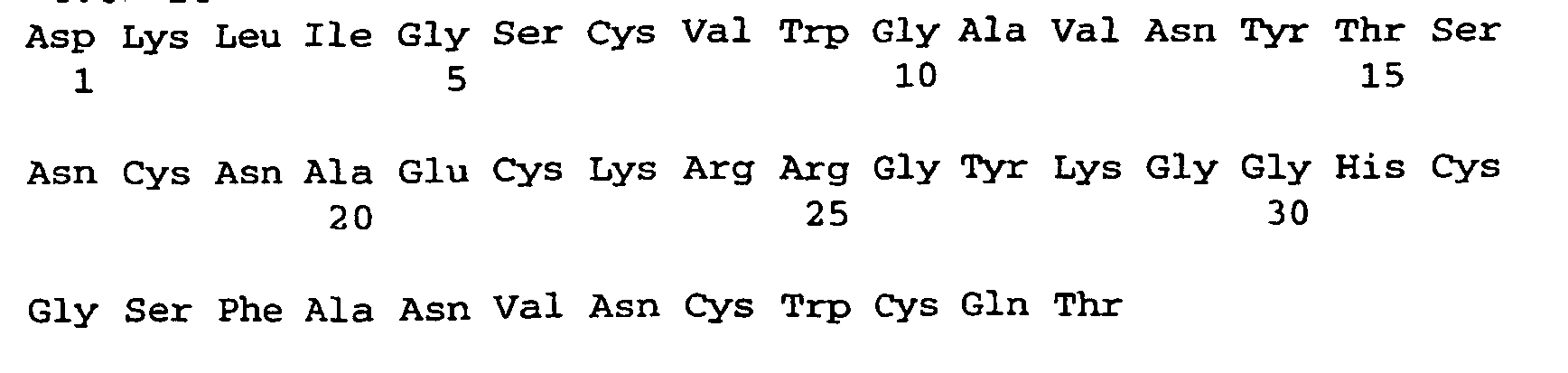

- <210> 27
<211> 44
<212> PRT
<213> Séquence artificielle - <220>
<223> Description de la séquence artificielle: peptide dérivé de l'héliomicine - <220>
<223> peptide pEM30 - <400> 27

- <210> 28
<211> 44
<212> PRT
<213> Séquence artificielle - <220>
<223> Description de la séquence artificielle: peptide dérivé de l'héliomicine - <220>
<223> peptide pEM46 - <400> 28

- <210> 29
<211> 44
<212> PRT
<213> Séquence artificielle - <220>
<223> Description de la séquence artificielle: peptide dérivé de l'héliomicine - <220>
<223> peptide pEM47 - <400> 29


- <210> 30
<211> 44
<212> PRT
<213> Séquence artificielle - <220>
<223> Description de la séquence artificielle: peptide dérivé de l'héliomicine - <220>
<223> peptide pEM48 - <400> 30

- <210> 31
<211> 44
<212> PRT
<213> Séquence artificielle - <220>
<223> Description de la séquence artificielle: peptide dérivé de l'héliomicine - <220>
<223> peptide pEM49 - <400> 31

- <210> 32
<211> 44
<212> PRT
<213> Séquence artificielle - <220>
<223> Description de la séquence artificielle: peptide dérivé de l'héliomicine - <220>
<223> peptide pEM54 - <400> 32


- <210> 33
<211> 44
<212> PRT
<213> Séquence artificielle - <220>
<223> Description de la séquence artificielle: peptide dérivé de l'héliomicine - <220>
<223> peptide pEM57 - <400> 33

- <210> 34
<211> 44
<212> PRT
<213> Séquence artificielle - <220>
<223> Description de la séquence artificielle: peptide dérivé de l'héliomicine - <220>
<223> peptide pEM55 - <400> 34

- <210> 35
<211> 44
<212> PRT
<213> Séquence artificielle - <220>
<223> Description de la séquence artificielle: peptide dérivé de l'héliomicine - <220>
<223> peptide pEM37 - <400> 35


- <210> 36
<211> 44
<212> PRT
<213> Séquence artificielle - <220>
<223> Description de la séquence artificielle: peptide dérivé de l'héliomicine - <220>
<223> peptide pEM38 - <400> 36

- <210> 37
<211> 44
<212> PRT
<213> Séquence artificielle - <220>
<223> Description de la séquence artificielle: peptide dérivé de l'héliomicine - <220>
<223> peptide pEM45 - <400> 37

- <210> 38
<211> 44
<212> PRT
<213> Séquence artificielle - <220>
<223> Description de la séquence artificielle: peptide dérivé de l'héliomicine - <220>
<223> peptide pEM42 - <400> 38


- <210> 39
<211> 44
<212> PRT
<213> Séquence artificielle - <220>
<223> Description de la séquence artificielle: peptide dérivé de l'héliomicine - <220>
<223> peptide pEM44 - <400> 39

- <210> 40
<211> 44
<212> PRT
<213> Séquence artificielle - <220>
<223> Description de la séquence artificielle: peptide dérivé de l'héliomicine - <220>
<223> peptide pEM22 - <400> 40

- <210> 41
<211> 44
<212> PRT
<213> Séquence artificielle - <220>
<223> Description de la séquence artificielle: peptide dérivé de l'héliomicine - <220>
<223> peptide pEM23 - <400> 41


- <210> 42
<211> 44
<212> PRT
<213> Séquence artificielle - <220>
<223> Description de la séquence artificielle: peptide dérivé de l'héliomicine - <220>
<223> peptide pEM25 - <400> 42
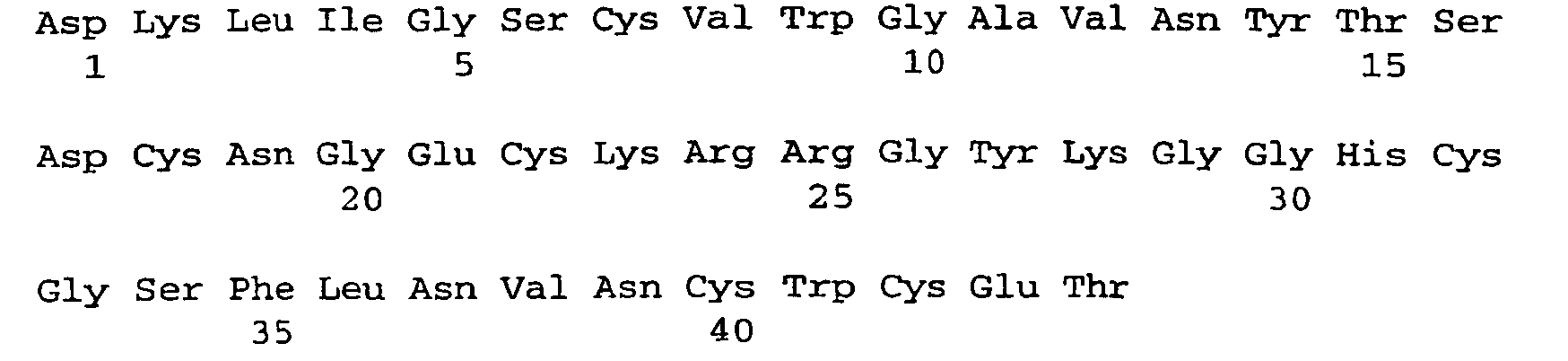
- <210> 43
<211> 44
<212> PRT
<213> Séquence artificielle - <220>
<223> Description de la séquence artificielle: peptide dérivé de l'héliomicine - <220>
<223> peptide pEM24 - <400> 43

- <210> 44
<211> 44
<212> PRT
<213> Séquence artificielle - <220>
<223> Description de la séquence artificielle: peptide dérivé de l'héliomicine - <220>
<223> peptide pEM7 - <400> 44


- <210> 45
<211> 44
<212> PRT
<213> Séquence artificielle - <220>
<223> Description de la séquence artificielle: peptide dérivé de l'héliomicine - <220>
<223> peptide pEM21 - <400> 45

- <210> 46
<211> 44
<212> PRT
<213> Séquence artificielle - <220>
<223> Description de la séquence artificielle: peptide dérivé de l'héliomicine - <220>
<223> peptide pEM39 - <400> 46

- <210> 47
<211> 44
<212> PRT
<213> Séquence artificielle - <220>
<223> Description de la séquence artificielle: peptide dérivé de l'héliomicine - <220>
<223> peptide pEM61 - <400> 47


- <210> 48
<211> 44
<212> PRT
<213> Séquence artificielle - <220>
<223> Description de la séquence artificielle: peptide dérivé de l'héliomicine - <220>
<223> peptide pEM62 - <400> 48

- <210> 49
<211> 44
<212> PRT
<213> Séquence artificielle - <220>
<223> Description de la séquence artificielle: peptide dérivé de l'héliomicine - <220>
<223> peptide pEM50 - <400> 49

- <210> 50
<211> 44
<212> PRT
<213> Séquence artificielle - <220>
<223> Description de la séquence artificielle: peptide dérivé de l'héliomicine - <220>
<223> peptide pEM56 - <400> 50


- <210> 51
<211> 44
<212> PRT
<213> Séquence artificielle - <220>
<223> Description de la séquence artificielle: peptide dérivé de l'héliomicine - <220>
<223> peptide pEM56 - <400> 51

- <210> 52
<211> 44
<212> PRT
<213> Séquence artificielle - <220>
<223> Description de la séquence artificielle: peptide dérivé de l'héliomicine - <220>
<223> peptide pEM52 - <400> 52

- <210> 53
<211> 44
<212> PRT
<213> Séquence artificielle - <220>
<223> Description de la séquence artificielle: peptide dérivé de l'héliomicine - <220>
<223> peptide pEM51 - <400> 53


- <210> 54
<211> 44
<212> PRT
<213> Séquence artificielle - <220>
<223> Description de la séquence artificielle: peptide dérivé de l'héliomicine - <220>
<223> peptide pEM32 - <400> 54

- <210> 55
<211> 44
<212> PRT
<213> Séquence artificielle - <220>
<223> Description de la séquence artificielle: peptide dérivé de l'héliomicine - <220>
<223> peptide pEM33 - <400> 55

- <210> 56
<211> 44
<212> PRT
<213> Séquence artificielle - <220>
<223> Description de la séquence artificielle: peptide dérivé de l'héliomicine - <220>
<223> peptide pEM34 - <400> 56


- <210> 57
<211> 44
<212> PRT
<213> Séquence artificielle - <220>
<223> Description de la séquence artificielle: peptide dérivé de l'héliomicine - <220>
<223> peptide pEM35 - <400> 57

- <210> 58
<211> 44
<212> PRT
<213> Séquence artificielle - <220>
<223> Description de la séquence artificielle: peptide dérivé de l'héliomicine - <220>
<223> peptide pEM31 - <400> 58

- <210> 59
<211> 44
<212> PRT
<213> Séquence artificielle - <220>
<223> Description de la séquence artificielle: peptide dérivé de l'héliomicine - <220>
<223> peptide pEM30 - <400> 59


- <210> 60
<211> 44
<212> PRT
<213> Séquence artificielle - <220>
<223> Description de la séquence artificielle: peptide dérivé de l'héliomicine - <220>
<223> peptide pEM46 - <400> 60

- <210> 61
<211> 44
<212> PRT
<213> Séquence artificielle - <220>
<223> Description de la séquence artificielle: peptide dérivé de l'héliomicine - <220>
<223> peptide pEM47 - <400> 61

- <210> 62
<211> 44
<212> PRT
<213> séquence artificielle - <220>
<223> Description de la séquence artificielle: peptide dérivé de l'héliomicine - <220>
<223> peptide pEM48 - <400> 62


- <210> 63
<211> 44
<212> PRT
<213> Séquence artificielle - <220>
<223> Description de la séquence artificielle: peptide dérivé de l'héliomicine - <220>
<223> peptide pEM49 - <400> 63

- <210> 64
<211> 44
<212> PRT
<213> Séquence artificielle - <220>
<223> Description de la séquence artificielle: peptide dérivé de l'héliomicine - <220>
<223> peptide pEM54 - <400> 64

- <210> 65
<211> 44
<212> PRT
<213> Séquence artificielle - <220>
<223> Description de la séquence artificielle: peptide dérivé de l'héliomicine - <220>
<223> peptide pEM54 - <400> 65


- <210> 66
<211> 44
<212> PRT
<213> Séquence artificielle - <220>
<223> Description de la séquence artificielle: peptide dérivé de l'héliomicine - <220>
<223> peptide pEM55 - <400> 66

- <210> 67
<211> 26
<212> ADN
<213> Séquence artificielle - <220>
<223> Description de la séquence artificielle: oligonucléotide EM72 - <400> 67

- <210> 68
<211> 55
<212> ADN
<213> Séquence artificielle - <220>
<223> Description de la séquence artificielle: oligonucléotide EM89 - <400> 68

- <210> 69
<211> 47
<212> ADN
<213> Séquence artificielle - <220>
<223> Description de la séquence artificielle: oligonucléotide EM89 brin complémentaire - <400> 69

- <210> 70
<211> 15
<212> PRT
<213> Séquence artificielle - <220>
<223> Description de la séquence artificielle: peptide muté analogue de Ard1 - <400> 70

- <210> 71
<211> 20
<212> ADN
<213> Séquence artificielle - <220>
<223> Description de la séquence artificielle: oligonucléotide EM25 - <400> 71

- <210> 72
<211> 20
<212> ADN
<213> Séquence artificielle - <220>
<223> Description de la séquence artificielle: oligonucléotide EM26 - <400> 72

- <210> 73
<211> 42
<212> ADN
<213> Séquence artificielle - <220>
<223> Description de la séquence artificielle: oligonucléotide EM119 - <400> 73

- <210> 74
<211> 11
<212> PRT
<213> Séquence artificielle - <220>
<223> Description de la séquence artificielle: peptide muté (oligonucléotides EM119 et EM120) - <400> 74

- <210> 75
<211> 42
<212> ADN
<213> Séquence artificielle - <220>
<223> Description de la séquence artificielle: oligonucléotide EM120 - <400> 75

- <210> 76
<211> 42
<212> ADN
<213> Séquence artificielle - <220>
<223> Description de la séquence artificielle: oligonucléotide EM127 - <400> 76

- <210> 77
<211> 11
<212> PRT
<213> Séquence artificielle - <220>
<223> Description de la séquence artificielle: peptide muté (oligonucléotides EM127 et EM128) - <400> 77

- <210> 78
<211> 42
<212> ADN
<213> Séquence artificielle - <220>
<223> Description de la séquence artificielle: oligonucléotide EM128 - <400> 78

- <210> 79
<211> 42
<212> ADN
<213> Séquence artificielle - <220>
<223> Description de la séquence artificielle: oligonucléotide EM117 - <400> 79

- <210> 80
<211> 11
<212> PRT
<213> Séquence artificielle - <220>
<223> Description de la séquence artificielle: peptide muté (oligonucléotides EM117 et EM 118) - <400> 80

- <210> 81
<211> 42
<212> ADN
<213> Séquence artificielle - <220>
<223> Description de la séquence artificielle: oligonucléotide EM118 - <400> 81

- <210> 82
<211> 42
<212> ADN
<213> Séquence artificielle - <220>
<223> Description de la séquence artificielle:oligonucléotide EM129 - <400> 82

- <210> 83
<211> 11
<212> PRT
<213> Séquence artificielle - <220>
<223> Description de la séquence artificielle: peptide muté (oligonucléotides EM129 et EM130) - <400> 83

- <210> 84
<211> 42
<212> ADN
<213> Séquence artificielle - <220>
<223> Description de la séquence artificielle: oligonucléotide 130 - <400> 84

- <210> 85
<211> 42
<212> ADN
<213> Séquence artificielle - <220>
<223> Description de la séquence artificielle: oligonucléotide EM135 - <400> 85

- <210> 86
<211> 11
<212> PRT
<213> Séquence artificielle - <220>
<223> Description de la séquence artificielle: peptide muté (oligonucléotides EM135 et EM136) - <400> 86

- <210> 87
<211> 42
<212> ADN
<213> Séquence artificielle - <220>
<223> Description de la séquence artificielle: oligonucléotide EM136 - <400> 87

- <210> 88
<211> 42
<212> ADN
<213> Séquence artificielle - <220>
<223> Description de la séquence artificielle: oligonucléotide EM158 - <400> 88

- <210> 89
<211> 11
<212> PRT
<213> Séquence artificielle - <220>
<223> Description de la séquence artificielle: peptide muté (oligonuclméotides EM158 et EM159) - <400> 89

- <210> 90
<211> 42
<212> ADN
<213> Séquence artificielle - <220>
<223> Description de la séquence artificielle: oligonucléotide EM159 - <400> 90

- <210> 91
<211> 42
<212> ADN
<213> Séquence artificielle - <220>
<223> Description de la séquence artificielle: oligonucléotide EM162 - <400> 91

- <210> 92
<211> 11
<212> PRT
<213> Séquence artificielle - <220>
<223> Description de la séquence artificielle :peptide muté (oligonucléotides EM162 et EM163) - <400> 92

- <210> 93
<211> 42
<212> ADN
<213> Séquence artificielle - <220>
<223> Description de la séquence artificielle: oligonucléotide EM163 - <400> 93

- <210> 94
<211> 22
<212> ADN
<213> Séquence artificielle - <220>
<223> Description de la séquence artificielle: oligonucléotide EM53 - <400> 94

- <210> 95
<211> 39
<212> ADN
<213> Séquence artificielle - <220>
<223> Description de la séquence artificielle: oligonucléotide EM137 - <400> 95

- <210> 96
<211> 10
<212> PRT
<213> Séquence artificielle - <220>
<223> Description de la séquence artificielle: peptide muté (oligonucléotides EM53 et EM137) - <400> 96

Claims (9)
- Peptide dérivé de l'héliomicine, caractérisé en ce que sa séquence en acides aminés correspond à celle de l'héliomicine dans laquelle les régions hydrophobes et chargées présentent une ou plusieurs mutations et en ce que ledit peptide est choisi parmi les séquences en acides aminés suivantes :


- Peptide dérivé de l'héliomicine, caractérisé en ce que sa séquence en acides aminés correspond à celle de l'héliomicine dans laquelle les régions hydrophobes et chargées présentent une ou plusieurs mutations et en ce que ledit peptide est choisi parmi les séquences en acides aminés suivantes :


- Composition antifongique et/ou antibactérienne, caractérisé en ce qu'elle comprend à titre d'agent actif au moins un peptide selon l'une quelconque des revendications 1 ou 2, avantageusement associé dans ladite composition avec un véhicule acceptable.
- Composition selon la revendication 3 pour être utilisée chez l'homme ou l'animal.
- Composition selon la revendication 3 pour être utilisée chez les plantes.
- Séquence d'acide nucléique, caractérisée en ce qu'elle code pour un peptide selon l'une quelconque des revendications 1 ou 2.
- Vecteur d'expression, caractérisé en ce qu'il comprend une séquence d'acide nucléique selon la revendication 6.
- Cellule végétale, caractérisée en ce qu'elle comprend une séquence d'acide nucléique selon la revendication 6.
- Plante résistante aux maladies, caractérisée en ce qu'elle comprend une séquence d'acide nucléique selon la revendication 6 et qu'elle exprime un peptide selon l'une quelconque des revendications 1 ou 2.
Applications Claiming Priority (5)
| Application Number | Priority Date | Filing Date | Title |
|---|---|---|---|
| FR0009248 | 2000-07-13 | ||
| FR0009248A FR2811665B1 (fr) | 2000-07-13 | 2000-07-13 | Peptides antifongiques et/ou antibacteriens, leurs preparations et les compositions les contenant |
| FR0011949 | 2000-09-19 | ||
| FR0011949A FR2811666B1 (fr) | 2000-07-13 | 2000-09-19 | Peptides antifongiques et/ou antibacteriens, leurs preparations et les compositions les contenant |
| PCT/FR2001/002164 WO2002006324A2 (fr) | 2000-07-13 | 2001-07-05 | Peptides antifongiques et/ou antibacteriens, leurs preparations et les compositions les contenant |
Publications (2)
| Publication Number | Publication Date |
|---|---|
| EP1299416A2 EP1299416A2 (fr) | 2003-04-09 |
| EP1299416B1 true EP1299416B1 (fr) | 2006-04-12 |
Family
ID=26212534
Family Applications (1)
| Application Number | Title | Priority Date | Filing Date |
|---|---|---|---|
| EP01984240A Expired - Lifetime EP1299416B1 (fr) | 2000-07-13 | 2001-07-05 | Peptides antifongiques et/ou antibacteriens, leurs preparations et les compositions les contenant |
Country Status (15)
| Country | Link |
|---|---|
| US (1) | US20030208035A1 (fr) |
| EP (1) | EP1299416B1 (fr) |
| JP (1) | JP2004537960A (fr) |
| KR (1) | KR20030032997A (fr) |
| CN (1) | CN1441809A (fr) |
| AT (1) | ATE323104T1 (fr) |
| AU (1) | AU2002222936A1 (fr) |
| BR (1) | BR0112299A (fr) |
| CA (1) | CA2415481A1 (fr) |
| DE (1) | DE60118746D1 (fr) |
| FR (1) | FR2811666B1 (fr) |
| IL (1) | IL153635A0 (fr) |
| NZ (1) | NZ523497A (fr) |
| RU (1) | RU2003104278A (fr) |
| WO (1) | WO2002006324A2 (fr) |
Families Citing this family (4)
| Publication number | Priority date | Publication date | Assignee | Title |
|---|---|---|---|---|
| AU2011235933B2 (en) * | 2004-08-18 | 2012-06-07 | Novabiotics Limited | Antimicrobial peptides comprising an arginine- and/or lysine-containing motif |
| EP1927597B1 (fr) * | 2004-08-18 | 2016-11-02 | Novabiotics Limited | Peptides antibactériens |
| KR101653141B1 (ko) * | 2014-05-28 | 2016-09-01 | 주식회사 베네팜 | 비단멍게 유래 항균 펩타이드의 신규한 유사체 및 그 용도 |
| AU2018304493B2 (en) | 2017-07-17 | 2022-07-28 | Linnane Pharma Ab | Peptides with antibiotic potential against Mycobacterium tuberculosis |
Family Cites Families (2)
| Publication number | Priority date | Publication date | Assignee | Title |
|---|---|---|---|---|
| FR2695392B1 (fr) * | 1992-09-04 | 1994-10-14 | Centre Nat Rech Scient | Peptides possédant notamment des propriétés antibactériennes, leur procédé d'obtention, et leurs applications biologiques. |
| FR2777568B1 (fr) * | 1998-04-15 | 2002-10-31 | Rhone Poulenc Agrochimie | Gene codant pour l'heliomicine, proteine obtenue, vecteur le contenant, organismes transformes obtenus et procede de preparation |
-
2000
- 2000-09-19 FR FR0011949A patent/FR2811666B1/fr not_active Expired - Fee Related
-
2001
- 2001-07-05 AU AU2002222936A patent/AU2002222936A1/en not_active Abandoned
- 2001-07-05 AT AT01984240T patent/ATE323104T1/de not_active IP Right Cessation
- 2001-07-05 NZ NZ523497A patent/NZ523497A/en unknown
- 2001-07-05 RU RU2003104278/13A patent/RU2003104278A/ru not_active Application Discontinuation
- 2001-07-05 WO PCT/FR2001/002164 patent/WO2002006324A2/fr not_active Ceased
- 2001-07-05 EP EP01984240A patent/EP1299416B1/fr not_active Expired - Lifetime
- 2001-07-05 JP JP2002512224A patent/JP2004537960A/ja active Pending
- 2001-07-05 KR KR10-2003-7000370A patent/KR20030032997A/ko not_active Withdrawn
- 2001-07-05 DE DE60118746T patent/DE60118746D1/de not_active Expired - Lifetime
- 2001-07-05 CN CN01812730A patent/CN1441809A/zh active Pending
- 2001-07-05 CA CA002415481A patent/CA2415481A1/fr not_active Abandoned
- 2001-07-05 BR BR0112299-1A patent/BR0112299A/pt not_active IP Right Cessation
- 2001-07-05 IL IL15363501A patent/IL153635A0/xx unknown
-
2003
- 2003-01-10 US US10/340,414 patent/US20030208035A1/en not_active Abandoned
Also Published As
| Publication number | Publication date |
|---|---|
| FR2811666B1 (fr) | 2005-04-01 |
| KR20030032997A (ko) | 2003-04-26 |
| WO2002006324A2 (fr) | 2002-01-24 |
| CA2415481A1 (fr) | 2002-01-24 |
| FR2811666A1 (fr) | 2002-01-18 |
| RU2003104278A (ru) | 2004-08-20 |
| BR0112299A (pt) | 2003-06-10 |
| AU2002222936A1 (en) | 2002-01-30 |
| EP1299416A2 (fr) | 2003-04-09 |
| JP2004537960A (ja) | 2004-12-24 |
| DE60118746D1 (de) | 2006-05-24 |
| WO2002006324A3 (fr) | 2002-05-23 |
| NZ523497A (en) | 2004-04-30 |
| ATE323104T1 (de) | 2006-04-15 |
| IL153635A0 (en) | 2003-07-06 |
| US20030208035A1 (en) | 2003-11-06 |
| CN1441809A (zh) | 2003-09-10 |
Similar Documents
| Publication | Publication Date | Title |
|---|---|---|
| Lee et al. | Design of novel analogue peptides with potent antibiotic activity based on the antimicrobial peptide, HP (2–20), derived from N-terminus of Helicobacter pylori ribosomal protein L1 | |
| Supungul et al. | Cloning, expression and antimicrobial activity of crustinPm1, a major isoform of crustin, from the black tiger shrimp Penaeus monodon | |
| EP1071767B1 (fr) | Gene codant pour l'heliomicine et son utilisation | |
| US10738093B2 (en) | Discovery of cationic nonribosomal peptides as Gram-negative antibiotics through global genome mining | |
| FR2766191A1 (fr) | Peptides anti-microbiens de crustaces | |
| EP1299416B1 (fr) | Peptides antifongiques et/ou antibacteriens, leurs preparations et les compositions les contenant | |
| JP2023519844A (ja) | 新規の抗細菌性ペプチド及びその使用 | |
| EP1517916B1 (fr) | Sphéniscines et peptides analogues antimicrobiens pour la conservation des aliments | |
| FR2695392A1 (fr) | Peptides possédant notamment des propriétés antibactériennes, leur procédé d'obtention, et leurs applications biologiques. | |
| EP1519951B1 (fr) | Peptides lineaires cationiques ayant des proprietes antifongiques | |
| CA2328590C (fr) | Utilisation d'un polypeptide derive d'une albumine pa1b de legumineuse comme insecticide | |
| FR2811665A1 (fr) | Peptides antifongiques et/ou antibacteriens, leurs preparations et les compositions les contenant | |
| KR101184008B1 (ko) | 애기뿔소똥구리로부터 분리된 항진균 활성을 가지는 코프리신 펩타이드 및 그의 용도 | |
| FR2843591A1 (fr) | Peptides antimicrobiens, polypeptides comprenant lesdits peptides, genes codant lesdits peptides, vecteurs, organismes transformes et compositions les contenant | |
| KR0161146B1 (ko) | 흰불나방 유래의 신규 항생물질 하이판신 3 | |
| FR2850656A1 (fr) | Peptide antifongique, polypeptide comprenant ledit peptide, gene codant ledit peptide, vecteur, organisme transforme et composition le contenant | |
| FR2839311A1 (fr) | Peptides antibacteriens, genes codant les peptides, vecteurs, organismes transformes, leurs preparations et les compositions les contenant | |
| CA2410575A1 (fr) | Peptides antimicrobiens de la famille des defensines, polynucleotides codant ces peptides, vecteurs et organismes transformes les contenant | |
| KR20170054587A (ko) | 융합 항균펩타이드 p9p12 및 이를 합성하는 방법 | |
| FR2810986A1 (fr) | Peptides antibacteriens et antifongiques, leur procede de preparation et les compositions les contenant | |
| WO2020008158A1 (fr) | Utilisation de peptides en tant qu'agents insecticides | |
| Mamhende | Investigation of the antifungal activity of tryptophan-rich cyclic peptides | |
| FR2992319A1 (fr) | Peptides cycliques incluant alpha-amino et aza-beta 3 aminoacide en tant que fongicides |
Legal Events
| Date | Code | Title | Description |
|---|---|---|---|
| PUAI | Public reference made under article 153(3) epc to a published international application that has entered the european phase |
Free format text: ORIGINAL CODE: 0009012 |
|
| 17P | Request for examination filed |
Effective date: 20030127 |
|
| AK | Designated contracting states |
Kind code of ref document: A2 Designated state(s): AT BE CH CY DE DK ES FI FR GB GR IE IT LI LU MC NL PT SE TR |
|
| AX | Request for extension of the european patent |
Extension state: AL LT LV MK RO SI |
|
| 17Q | First examination report despatched |
Effective date: 20040406 |
|
| GRAP | Despatch of communication of intention to grant a patent |
Free format text: ORIGINAL CODE: EPIDOSNIGR1 |
|
| GRAS | Grant fee paid |
Free format text: ORIGINAL CODE: EPIDOSNIGR3 |
|
| GRAA | (expected) grant |
Free format text: ORIGINAL CODE: 0009210 |
|
| AK | Designated contracting states |
Kind code of ref document: B1 Designated state(s): AT BE CH CY DE DK ES FI FR GB GR IE IT LI LU MC NL PT SE TR |
|
| PG25 | Lapsed in a contracting state [announced via postgrant information from national office to epo] |
Ref country code: IT Free format text: LAPSE BECAUSE OF FAILURE TO SUBMIT A TRANSLATION OF THE DESCRIPTION OR TO PAY THE FEE WITHIN THE PRESCRIBED TIME-LIMIT;WARNING: LAPSES OF ITALIAN PATENTS WITH EFFECTIVE DATE BEFORE 2007 MAY HAVE OCCURRED AT ANY TIME BEFORE 2007. THE CORRECT EFFECTIVE DATE MAY BE DIFFERENT FROM THE ONE RECORDED. Effective date: 20060412 Ref country code: FI Free format text: LAPSE BECAUSE OF FAILURE TO SUBMIT A TRANSLATION OF THE DESCRIPTION OR TO PAY THE FEE WITHIN THE PRESCRIBED TIME-LIMIT Effective date: 20060412 Ref country code: AT Free format text: LAPSE BECAUSE OF FAILURE TO SUBMIT A TRANSLATION OF THE DESCRIPTION OR TO PAY THE FEE WITHIN THE PRESCRIBED TIME-LIMIT Effective date: 20060412 Ref country code: NL Free format text: LAPSE BECAUSE OF FAILURE TO SUBMIT A TRANSLATION OF THE DESCRIPTION OR TO PAY THE FEE WITHIN THE PRESCRIBED TIME-LIMIT Effective date: 20060412 Ref country code: IE Free format text: LAPSE BECAUSE OF FAILURE TO SUBMIT A TRANSLATION OF THE DESCRIPTION OR TO PAY THE FEE WITHIN THE PRESCRIBED TIME-LIMIT Effective date: 20060412 Ref country code: GB Free format text: LAPSE BECAUSE OF FAILURE TO SUBMIT A TRANSLATION OF THE DESCRIPTION OR TO PAY THE FEE WITHIN THE PRESCRIBED TIME-LIMIT Effective date: 20060412 |
|
| REG | Reference to a national code |
Ref country code: GB Ref legal event code: FG4D Free format text: NOT ENGLISH |
|
| REG | Reference to a national code |
Ref country code: CH Ref legal event code: EP |
|
| REF | Corresponds to: |
Ref document number: 60118746 Country of ref document: DE Date of ref document: 20060524 Kind code of ref document: P |
|
| REG | Reference to a national code |
Ref country code: IE Ref legal event code: FG4D Free format text: LANGUAGE OF EP DOCUMENT: FRENCH |
|
| PG25 | Lapsed in a contracting state [announced via postgrant information from national office to epo] |
Ref country code: SE Free format text: LAPSE BECAUSE OF FAILURE TO SUBMIT A TRANSLATION OF THE DESCRIPTION OR TO PAY THE FEE WITHIN THE PRESCRIBED TIME-LIMIT Effective date: 20060712 Ref country code: DK Free format text: LAPSE BECAUSE OF FAILURE TO SUBMIT A TRANSLATION OF THE DESCRIPTION OR TO PAY THE FEE WITHIN THE PRESCRIBED TIME-LIMIT Effective date: 20060712 |
|
| PG25 | Lapsed in a contracting state [announced via postgrant information from national office to epo] |
Ref country code: DE Free format text: LAPSE BECAUSE OF FAILURE TO SUBMIT A TRANSLATION OF THE DESCRIPTION OR TO PAY THE FEE WITHIN THE PRESCRIBED TIME-LIMIT Effective date: 20060713 |
|
| PG25 | Lapsed in a contracting state [announced via postgrant information from national office to epo] |
Ref country code: ES Free format text: LAPSE BECAUSE OF FAILURE TO SUBMIT A TRANSLATION OF THE DESCRIPTION OR TO PAY THE FEE WITHIN THE PRESCRIBED TIME-LIMIT Effective date: 20060723 |
|
| PG25 | Lapsed in a contracting state [announced via postgrant information from national office to epo] |
Ref country code: MC Free format text: LAPSE BECAUSE OF NON-PAYMENT OF DUE FEES Effective date: 20060731 Ref country code: LI Free format text: LAPSE BECAUSE OF NON-PAYMENT OF DUE FEES Effective date: 20060731 Ref country code: BE Free format text: LAPSE BECAUSE OF NON-PAYMENT OF DUE FEES Effective date: 20060731 Ref country code: CH Free format text: LAPSE BECAUSE OF NON-PAYMENT OF DUE FEES Effective date: 20060731 |
|
| PG25 | Lapsed in a contracting state [announced via postgrant information from national office to epo] |
Ref country code: PT Free format text: LAPSE BECAUSE OF FAILURE TO SUBMIT A TRANSLATION OF THE DESCRIPTION OR TO PAY THE FEE WITHIN THE PRESCRIBED TIME-LIMIT Effective date: 20060912 |
|
| NLV1 | Nl: lapsed or annulled due to failure to fulfill the requirements of art. 29p and 29m of the patents act | ||
| GBV | Gb: ep patent (uk) treated as always having been void in accordance with gb section 77(7)/1977 [no translation filed] |
Effective date: 20060412 |
|
| REG | Reference to a national code |
Ref country code: IE Ref legal event code: FD4D |
|
| PLBE | No opposition filed within time limit |
Free format text: ORIGINAL CODE: 0009261 |
|
| STAA | Information on the status of an ep patent application or granted ep patent |
Free format text: STATUS: NO OPPOSITION FILED WITHIN TIME LIMIT |
|
| REG | Reference to a national code |
Ref country code: CH Ref legal event code: PL |
|
| 26N | No opposition filed |
Effective date: 20070115 |
|
| REG | Reference to a national code |
Ref country code: FR Ref legal event code: ST Effective date: 20070330 |
|
| BERE | Be: lapsed |
Owner name: ENTOMED Effective date: 20060731 |
|
| PG25 | Lapsed in a contracting state [announced via postgrant information from national office to epo] |
Ref country code: FR Free format text: LAPSE BECAUSE OF NON-PAYMENT OF DUE FEES Effective date: 20060731 Ref country code: GR Free format text: LAPSE BECAUSE OF FAILURE TO SUBMIT A TRANSLATION OF THE DESCRIPTION OR TO PAY THE FEE WITHIN THE PRESCRIBED TIME-LIMIT Effective date: 20060713 |
|
| PG25 | Lapsed in a contracting state [announced via postgrant information from national office to epo] |
Ref country code: TR Free format text: LAPSE BECAUSE OF FAILURE TO SUBMIT A TRANSLATION OF THE DESCRIPTION OR TO PAY THE FEE WITHIN THE PRESCRIBED TIME-LIMIT Effective date: 20060412 Ref country code: LU Free format text: LAPSE BECAUSE OF NON-PAYMENT OF DUE FEES Effective date: 20060705 |
|
| PG25 | Lapsed in a contracting state [announced via postgrant information from national office to epo] |
Ref country code: CY Free format text: LAPSE BECAUSE OF FAILURE TO SUBMIT A TRANSLATION OF THE DESCRIPTION OR TO PAY THE FEE WITHIN THE PRESCRIBED TIME-LIMIT Effective date: 20060412 |
|
| REG | Reference to a national code |
Ref country code: HK Ref legal event code: WD Ref document number: 1054752 Country of ref document: HK |