EP1300497B1 - Procede permettant d'assembler des tissus maille - Google Patents
Procede permettant d'assembler des tissus maille Download PDFInfo
- Publication number
- EP1300497B1 EP1300497B1 EP00970198A EP00970198A EP1300497B1 EP 1300497 B1 EP1300497 B1 EP 1300497B1 EP 00970198 A EP00970198 A EP 00970198A EP 00970198 A EP00970198 A EP 00970198A EP 1300497 B1 EP1300497 B1 EP 1300497B1
- Authority
- EP
- European Patent Office
- Prior art keywords
- knitted fabric
- knitted
- loop
- knitting
- needle bed
- Prior art date
- Legal status (The legal status is an assumption and is not a legal conclusion. Google has not performed a legal analysis and makes no representation as to the accuracy of the status listed.)
- Expired - Lifetime
Links
Images











Classifications
-
- D—TEXTILES; PAPER
- D04—BRAIDING; LACE-MAKING; KNITTING; TRIMMINGS; NON-WOVEN FABRICS
- D04B—KNITTING
- D04B7/00—Flat-bed knitting machines with independently-movable needles
- D04B7/30—Flat-bed knitting machines with independently-movable needles specially adapted for knitting goods of particular configuration
-
- D—TEXTILES; PAPER
- D04—BRAIDING; LACE-MAKING; KNITTING; TRIMMINGS; NON-WOVEN FABRICS
- D04B—KNITTING
- D04B1/00—Weft knitting processes for the production of fabrics or articles not dependent on the use of particular machines; Fabrics or articles defined by such processes
- D04B1/22—Weft knitting processes for the production of fabrics or articles not dependent on the use of particular machines; Fabrics or articles defined by such processes specially adapted for knitting goods of particular configuration
- D04B1/24—Weft knitting processes for the production of fabrics or articles not dependent on the use of particular machines; Fabrics or articles defined by such processes specially adapted for knitting goods of particular configuration wearing apparel
- D04B1/246—Upper torso garments, e.g. sweaters, shirts, leotards
-
- D—TEXTILES; PAPER
- D04—BRAIDING; LACE-MAKING; KNITTING; TRIMMINGS; NON-WOVEN FABRICS
- D04B—KNITTING
- D04B1/00—Weft knitting processes for the production of fabrics or articles not dependent on the use of particular machines; Fabrics or articles defined by such processes
- D04B1/10—Patterned fabrics or articles
- D04B1/102—Patterned fabrics or articles with stitch pattern
- D04B1/106—Patterned fabrics or articles with stitch pattern at a selvedge, e.g. hems or turned welts
-
- D—TEXTILES; PAPER
- D10—INDEXING SCHEME ASSOCIATED WITH SUBLASSES OF SECTION D, RELATING TO TEXTILES
- D10B—INDEXING SCHEME ASSOCIATED WITH SUBLASSES OF SECTION D, RELATING TO TEXTILES
- D10B2403/00—Details of fabric structure established in the fabric forming process
- D10B2403/03—Shape features
- D10B2403/033—Three dimensional fabric, e.g. forming or comprising cavities in or protrusions from the basic planar configuration, or deviations from the cylindrical shape as generally imposed by the fabric forming process
- D10B2403/0333—Three dimensional fabric, e.g. forming or comprising cavities in or protrusions from the basic planar configuration, or deviations from the cylindrical shape as generally imposed by the fabric forming process with tubular portions of variable diameter or distinct axial orientation
Definitions
- the present invention relates to a knitted fabric joining method for joining together knitted fabrics and, more particularly, to a knitted fabric joining method capable of eliminating the need of transference of loop between front and back needle beds for making the knitted fabrics close to each other or capable of reducing the number of times for the transference of loop therebetween therefor.
- this knitting method can allow sleeves of the sweater and a body of the same to be joined together in a joining region extending from the underarms up to the shoulder, while they are knitted, so that the after knitting treatment can be simplified or eliminated.
- FIGS. 22-25 In FIGS.
- FD denotes a front lower needle bed
- FU denotes a front upper needle bed
- BD denotes a rear lower bed
- BU denotes a back upper bed
- numeric characters at the left side of the diagrams denote course numbers.
- the right sleeve 102, the body 104 and the left sleeve 103 are retained in order, as viewed from the left.
- a right front sleeve 102a and a right back sleeve 102b, a front body 104a and a back body 104b, and a left front sleeve 103a and a left back sleeve 103b are each joined together at both ends thereof and formed into a tubular body.
- the right back sleeve 102b is transferred to the front upper needle bed FU and the left front sleeve 103a is transferred to the back upper needle bed BU.
- the right back sleeve 102b is transferred to the rear lower bed BD, so that a loop at the right end of the right back sleeve 102b is laid over a loop at the left end of the back body 104b, and the left front sleeve 103a is transferred to the front lower needle bed FD, so that a loop at the left end of the left front sleeve 103a is laid over a loop at the right end of the front body 104a.
- the right front sleeve 102a is transferred to the back upper needle bed BU and the left back sleeve 103b is transferred to the front upper needle bed FU.
- the right front sleeve 102a is transferred to the front lower needle bed FD, so that a loop at the right end of the right front sleeve 102a is laid over a loop at the left end of the front body 104a, and the left back sleeve 103b is transferred to the back lower needle bed BD, so that a loop at the left end of the left back sleeve 103b is laid over a loop at the right end of the back body 104b.
- a yarn feeder 110 is driven to knit the front body 104a
- another yarn feeder 111 is driven to knit the back body 104b.
- the right and left sleeves 102, 103 are joined to the body 104 without being knitted.
- the same knitting as in the courses 1 to 4 is performed, so that the loops at the side end of the right sleeve 102 and the loops of the left sleeve 103 are laid over the loops of the front body 104a and the back body 104b.
- the front body 104a is knitted by using the yarn feeder 110 and the right front sleeve 102a is knitted by using the yarn feeder 113 used to knit the right sleeve 102.
- the front body 104a and the right front sleeve 102a are knitted, and the left front sleeve 103a is knitted by using the yarn feeder 114.
- the back body 104b, the right back sleeve 102b and the left front sleeve 103a are knitted.
- the back body 104b, the right back sleeve 102b and the left back sleeve 103b are knitted.
- the left back sleeve is knitted. Subsequently, the knitting in which whenever the knitting (1) is repeated an adequate number of times, the knitting (2) is performed is repeated, whereby the sleeves 102, 103 and the body 104 are joined together.
- the knitting (1) for joining together the sleeves 102, 103 and the body 104 without knitting the sleeves 102, 103 is only required.
- the front knitted fabric parts 102a, 103a and the back knitted fabric parts 102b, 103b are changed over between the front and back needle beds by transferring loops the corresponding number of times to each back-and-forth movement therebetween, in order to shift the sleeves 102, 103 toward the body 104.
- the loops must be transferred two times or more the number of wale of the sleeves 102, 103, for joining all the loops to the body 104. Accordingly, for example, when there is a large number of wale of the sleeves 102, 103, or when a weak yarn is used for knitting, or when further finer loops are formed in the knitting, there is the possibility that when the same loop is repeatedly transferred between the front and back needle beds, yarn breakage may occur or the loop may be stretched out or elongated. To avoid this problem, in the joining method mentioned above, whenever the knitting (1) is repeated an adequate number of times, the knitting (2) is performed, whereby the knitting for joining is performed while the loop to be transferred is transferred to a loop newly formed.
- the knitting (2) produces sleeve caps 105a, 105b, resulting in reduction in the sleeve joining angle ⁇ .
- the sleeves 102, 103 must be knitted in order to avoid the yarn breakage and the elongation of the loop. Due to this, it is hard to join together the sleeves 102, 103 and the body 104 at a sleeve joining angle ⁇ as large as right angles at which an orientation of the wale of the sleeves and an orientation of the wale of the body are crossed each other.
- the knitting (2) for knitting the sleeves 102, 103 must be performed an increased number of times and, as a result of this, a sufficient sleeve joining angle ⁇ is not afforded.
- Japanese Laid-open (Unexamined) Patent Publication No. 2000-256947 discloses the method for joining the sleeves with sleeve caps formed by a flechage knitting to the body, before the start of the joining of the sleeves and the body.
- right and left sleeves and the body are knitted in different regions on needle beds, respectively, with the body sandwiched between the right and left sleeves. Then, the sleeves are knitted from cuffs up to and the body is knitted from a rib up to their underarms at which the joining of the sleeves and the body is started.
- the knitting of the body is halted temporarily and the sleeve caps are knitted in the flechage knitting and formed into any desired shape.
- the final courses of the sleeve caps are knitted by using a special yarn such as an elastic yarn.
- a special yarn such as an elastic yarn.
- the knitting method mentioned above has the advantage that since the sleeve caps are formed before the joining of the sleeves and the body is started, the shape of the sleeve caps can be freely set, without any need to consider a ratio between the number of knitting courses of the sleeves and that of the body, differently from the knitting wherein the sleeves and the body are joined together while the sleeves and the body are knitted in parallel with each other.
- it also has the advantage that since the special yarn is used for knitting the final courses of the sleeve caps, even when the loops in the joining region are transferred between the front and back needle beds again and again to shift the sleeves toward the body, occurrence of yarn breakage and yarn elongation in the joining region are suppressed.
- the use of the special yarn produces increase in manufacturing costs and needs a special device for feeding the elastic yarn with an adequate tension.
- the present invention discloses a knitted fabric joining method capable of eliminating the need to transfer a loop between front and back needle beds for making the knitted fabrics close to each other or reducing the number of times for the loop to be transferred therebetween.
- the present invention provides a knitted fabric joining method, using a flat knitting machine comprising at least a pair of first and second needle beds, which are extended laterally and confront each other in front and back; each of which has a large number of needles; and at least either of which can be racked laterally to transfer loops between the front and back needle beds, for knitting a first knitted fabric, a second knitted fabric and a third knitted fabric, with the first knitted fabric sandwiched between the second and third knitted fabrics, and joining the first knitted fabric to the second and third knitted fabrics in a joining process in which the knitting wherein loops in final courses of the second and third knitted fabrics are sequentially overlapped with loops at ends of the first knitted fabric from a side thereof closer to the first knitted fabric, processing from one end thereof toward the other end thereof, and next course loops are formed in the first knitted fabric is repeatedly performed, wherein with the second knitted fabric and the third knitted fabric separately retained on front and back needle beds, the first knitted fabric
- the third knitted fabric is shifted toward the second knitted fabric by racking of the front and back needle beds and also the first knitted fabric is changed over between the front and back needle beds, whereby the first and third knitted fabrics are both shifted toward the second knitted fabric.
- This knitting for joining together the knitted fabrics can provide a decreased number of times for the loop to be transferred between the front and back needle beds, as compared with the conventional method according to which the knitted fabrics can be allowed to be close to each other so as to be joined together solely by changing over the knitted fabrics between the front and back needle beds by transferring loops therebetween.
- the first knitted fabric, the second knitted fabric, and the third knitted fabric each comprise a first knitted fabric part knitted in association with the first needle bed and a second knitted fabric part knitted in association with the second needle bed, the first knitted fabric part and the second knitted fabric part being knitted in an overlapping relation in front and back and formed into a tubular form, and wherein the knitting for shifting the first knitted fabric parts of the first and third knitted fabrics toward the first knitted fabric part of the second knitted fabric and the knitting for shifting the second knitted fabric parts of the first and third knitted fabrics toward the second knitted fabric part of the second knitted fabric are performed in parallel.
- the joining process comprises the steps:
- the first knitted fabric part of the third knitted fabric is shifted toward the first knitted fabric part of the first knitted fabric, so that a loop of the first knitted fabric part of the third knitted fabric at a side end thereof and a loop of the first knitted fabric part of the first knitted fabric at an end thereof on the third knitted fabric side are opposed to each other and are overlapped with each other, and a loop of the second knitted fabric part of the first knitted fabric at an end thereof on the second knitted fabric side and a loop of the second knitted fabric part of the second knitted fabric at a side end thereof are opposed to each other and are overlapped with each other.
- the needle beds are racked so that a loop of the first knitted fabric part of the first knitted fabric at an end thereof on the second knitted fabric side and a loop of the first knitted fabric part of the second knitted fabric at a side end thereof are opposed to each other and overlapped with each other and then the second knitted part of the first knitted fabric is transferred back to the second needle bed and then a yarn is fed to the second knitted fabric part of the first knitted fabric to form next course loops therein.
- the needle beds are racked so that a loop of the second knitted fabric part of the first knitted fabric at a side end thereof and a loop of the second knitted fabric part of the third knitted fabric at a side end thereof are opposed to each other and overlapped with each other and then the first knitted part of the first knitted fabric is transferred back to the first needle bed and then a yarn is fed to the first knitted fabric part of the first knitted fabric to form next course loops therein.
- the repetition of this knitting provides the result that while the first knitted fabric and the third knitted fabric are shifted toward the second knitted fabric, the first knitted fabric part and the second knitted fabric part are joined together.
- a forked portion is formed in the first knitted fabric part of the first knitted fabric, and after the forked portion is started in form, the first knitted fabric part of the first knitted fabric is knitted in the form of a first "a" knitted fabric and a first "b" knitted fabric which confront each other across the forked portion, the joining method comprising the steps:
- the first knitted fabric is a knitted fabric knitted in the form of a body and the second and third knitted fabrics are knitted fabrics knitted in the form of right and left sleeves, and after sleeve caps of the right and left sleeves are formed in a flechage knitting, the sleeves and the body may be joined together.
- the first knitted fabric, the second knitted fabric, and the third knitted fabric may be knitted in the form of a first region, a second region, and a third region of an entire knitted fabric formed in the form of a single tubular fabric.
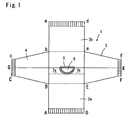
- FIG. 1 shows a knitted fabric of a sweater knitted in a first embodiment.
- FIG. 2 illustrates the knitting steps for knitting the knitted fabric of the sweater in the first embodiment.
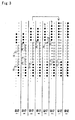
- FIGs. 3-5 illustrate knitting courses of the first embodiment.
- FIG. 6 shows a knitted fabric of a sweater knitted in a second embodiment.
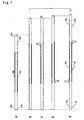
- FIG. 7 illustrates the knitting in the step Y of the second embodiment.
- FIG. 8 illustrates the knitting in the step X of the second embodiment.
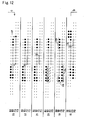
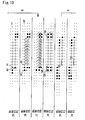
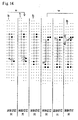
- FIGs. 9-15 illustrate knitting courses of the second embodiment.
- FIG. 16 shows a dolman sweater knitted in the third embodiment.
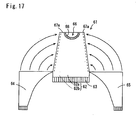
- FIG. 17 illustrates knitting steps in the third embodiment.
- FIG. 18 illustrates a fourth embodiment.
- FIG. 19 illustrates the steps of the fourth embodiment.
- FIG. 20 shows a sweater knitted in the method of the fourth embodiment.
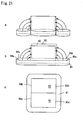
- FIG. 21 illustrates a variant of the second embodiment.
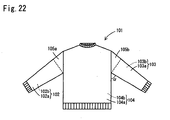
- FIG. 22 shows a sweater whose sleeves and body are joined together in a conventional joining method.
- a two-bed flat knitting machine wherein a front needle bed FD and a back needle bed BD, each having a large number of needles arranged in parallel thereon, are disposed in front and back to confront each other, and the back needle bed BD is so structured as to be racked laterally relative to the front needle bed FD so that the stitch transfer can be made between the front needle bed FD and the back needle bed BD.
- a four-bed flat knitting machine wherein a front lower needle bed FD and a back lower needle bed BD are arranged in front and back to confront each other and a front upper needle bed FU and a back upper needle bed BU, each having a large number of needles arranged in parallel at the same pitches as in the lower needle beds, are disposed over the front lower needle bed FD and the back lower needle bed BD, respectively, and which is structured so that the back needle beds BD are so structured as to be racked laterally relative to the front needle beds FD so that the stitch transfer can be made between the front lower needle bed and the back lower needle bed and between the upper needle bed and the lower needle bed confronting each other.
- the first embodiment may use the four-bed flat knitting machine for knitting knitted fabrics
- the second to fourth embodiments may use the two-bed knitting machine for knitting knitted fabrics.
- a half-gauge knitting is performed. In the half-gauge knitting, needles used for knitting front stitches of a front knitted fabric and needles used for knitting back stitches of a back knitted fabric are alternately arranged on the front needle bed FD, and needles used for knitting front stitches of the back knitted fabric and needles used for knitting back stitches of the front knitted fabric are arranged on the back needle bed BD, so that the respective knitted fabrics are knitted with the alternate needles.
- the half-gauge knitting enables the empty needles used for transference of stitch to be always reserved for the knitted fabrics on the opposed needle beds.
- the use of the empty needles enables the knitting of the structure pattern, such as links, garter and rib, in which front stitches and back stitches are mixed and also enables the loops of the sleeves and body to be shifted laterally so as to be joined to each other.
- the first embodiment is an embodiment of a method for knitting a T-sleeve sweater.
- a knitted fabric 1 of the sweater is knitted in the direction indicated by an arrow I.
- the knitted fabric 1 includes a front body 2a, a back body 2b, a left sleeve 3 and a right sleeve 4, and the front body 2a has a neckline opening 6 around which a collar is formed.
- the "right" and "left” of the sweater are intended to mean the right-hand part and the left-hand part when viewing from a wearer who wears the sweater 1.
- the knitted fabric 1 of the sweater is knitted in the steps L-P of FIG. 2 .
- the body 2a and the left and right sleeves 3, 4 are knitted in parallel with each other in different regions before they are joined together.
- a right front body 7a of the front body 2a and a left front body 7b of the same are knitted via their respective yarn feeders, and the sleeves 3, 4 and the front body 2a are joined together while forming the neckline opening 6.
- a collar 5 is formed in the front body 2a and the final course of the collar is bound off in a known cast-off knitting to prevent stitch loosening.
- the collar 5 is knitted up before the knitting of the back body 2b.
- the left and right sleeves 3, 4 are shifted toward the body, so that the sleeves 3, 4 and the body 2 are joined together.
- the back body 2b is knitted in the step P, and the final course of the back body 2b is bound off in the cast-off knitting, to bring the knitted fabric 1 of the sweater to completion.
- the lines A-B-C and a-b-c and the lines D-E-F and d-e-f are sewed together to bring the sweater into completion.
- the knitted fabric joining method of this embodiment is characterized in the knitting in the steps M-O for joining together the sleeves 3, 4 and the body 2.
- the knitting in the steps M-O is described in detail.
- the course 0 of FIG. 3 shows the state after the knitting in the step L is completed.
- the left and right sleeves 3, 4 depicted by black circles are retained at the right and left sides of the front body 2a depicted by white circles.
- the knitting in the step M before the start of forming of the neckline opening 6 at which the knitted fabric is forked is described.
- the loops of the front body 2a and left sleeve 3 are transferred to the back needle bed BD.
- the front body 2a is transferred to the front needle bed FD, so that the loop 11 at the left end of the front body 2a and the loop 12 at the left end of the right sleeve 4 are overlapped with each other.
- the loop 13 of the left sleeve 3 at a side end thereof on the body 2 side is transferred to the front needle bed FD, so that the loop 13 is overlapped with the loop 14 at the right end of the front body 2a.
- the yarn feeder 15 is used to knit the front body 2a.
- the knitting in the courses 1-5 are repeated in the step M to join together the sleeves 3, 4 and the front body 2a.
- the loops are overlapped in the order of the loop of the right sleeve 4 and the loop of the front body 2a, and then the loop of the front body 2a and the loop of the left sleeve 3, the loops may be overlapped in the same order at both right and left sides by transferring the front body 2a to the front needle bed FD, with the loops of the right sleeve 4 transferred to the back needle bed BD, and overlapping the loop of the right sleeve 4 with the loop of the front body 2a retained on the front needle bed FD.
- an additional yarn feeder 16 is added for the courses 6-7.
- the yarn feeder 15 is used to knit the right front body 7a and the yarn feeder 16 is used to knit the left front body 7b.
- the needles are put into the resting state from the center of the front body 2a toward the outside of the same, to form the neckline opening 6.
- the front body 2a and the left sleeve 3 are transferred to the back needle bed BD.
- the front body 2a is transferred to the front needle bed FD, so that the loop 19 at the side end of the front body 2a is overlapped with the loop 18 at the right end of the right sleeve 4.
- the loop 20 at the right end of the left sleeve 3 is transferred to the front needle bed FD, so as to be overlapped with the loop 21 at the right side end of the front body 2a.
- next step O after the front body 2a is knitted in the courses 15, 16, the same knitting as the knitting of the courses 1-5 is repeated in the courses 17-21 to join together the back body 2b and the left and right sleeves 3, 4. Then, in the step P after the completion of the joining of the sleeves 3, 4 and the back body 2b, the remaining part of the back body 2b is knitted.
- the illustrated embodiment shows an example that all loops can be joined together within a maximum racking pitch of the back needle bed BD
- a racking-back knitting may be performed in which the loops retained on the back needle bed BD are transferred to the front needle bed for a while and after the back needle bed BD is racked rightwards, with all the loops retained on the front needle bed FD, the loops as were transferred to the front needle bed FD are transferred back to the back needle bed BD.
- a phase lag resulting from the racking of the front and back needle beds is used, whereby whenever the body 2 and the left and right sleeves 3, 4 are joined together, the body 2 is shifted one pitch toward the right sleeve 4 and the left sleeve 3 is shifted two pitches toward the body, to overlap their respective loops with each other. Consequently, after the start of the knitting for joining, the sleeves 3, 4 in which no next course loop is formed need not be transferred between the front and back needle beds, in order to be shifted toward the body 2, except the case where the racking-back knitting is performed.
- the sleeves 3, 4 in which no next course loop is formed to allow the loops of the body 2 and the loops of the sleeves 3, 4 to be overlapped with each other in the state in which the body 2 and the sleeves 3, 4 are close to each other, need not be transferred between the front and back needle beds so as to be shifted toward the body 2. As a result of this, yarn breakage or loop elongation is hardly generated.
- the sleeves 3, 4 can be joined to the body without knitting the sleeves 3, 4.
- This enables the sleeves 3, 4 and the body 2 to be joined together at an angle as large as right angles at which an orientation of the wale of the sleeves and an orientation of the wale of the body are crossed each other, and as such can allow the sleeve joining angle to be freely set.
- the second embodiment is an example of an application of the knitting of the first embodiment to the joining of tubular fabrics and is an embodiment of the method for knitting the T-sleeve sweater.
- the sweater 31 left and right tubular sleeves 32, 33 and a tubular body 34 are joined together from underarms 35a, 35b to shoulders 36a, 36b.
- the left and right sleeves 32, 33 are knitted from cuffs 37, 38 and the body 34 is knitted from a hem 39 in the direction indicated by an arrow J.
- a front body 34a and a back body 34b are knitted with different yarn feeders running in reciprocation.
- the loops of the final courses of the sleeves 32, 33 are overlapped with the loops at the side ends of the body 34 and the yarn is fed to the front body 34a and the back body 34b to join together the sleeves 32, 33 and the body 34.
- the neckline opening 41 is formed in the front body 34a in the process of joining the front body 34a to the sleeves 32, 33, and after the start of the forming of the neckline opening 41, a right front body 42a and a left front body 42b of the front body 34a are knitted by use of different yarn feeders.
- the front body 34a and the back body 34b are joined together at the shoulders 36a, 36b and then bound off in the known cast-off knitting and, finally, the collar 43 is formed around the neckline. After this manner, the sweater 31 is completed.
- FIGS. 7-8 the outline of the knitted step Y where the neckline opening 41 is not formed and the knitting step X where the neckline opening 41 is formed will be described first.
- FIGS. 7-8 the part where the next course loop is formed is depicted by a bold line and the part where the next course loop is not formed is depicted by a thin line.
- the knitting wherein whenever after the front body 34a and the left front sleeve 33a are shifted toward the right front sleeve 32a by racking the needle bed, a loop at the right end of the front body 34a and a loop at the side end of the right front sleeve 32a are overlapped with each other and a loop at the side end of the left front sleeve 33a and a loop at the side end of the front body 34a are overlapped with each other, the yarn is fed to the front body 34a and the knitting wherein whenever after the back body 34b and the left back sleeve 33b are shifted toward the right back sleeve 32b, a loop at the left end of the back body 34b and a loop at the side end of the right back sleeve 32b are overlapped with each other and a loop at the side end of the left back sleeve 33b and a loop at the side end of the back body 34b are overlapped with each
- the state shown in FIG. 7-a is put into the state shown in FIG. 7-b by the knitting wherein the left front sleeve 33a is shifted toward the front body 34a to overlap the loops and the knitting (1) where the back body 34b and the left back sleeve 33b are shifted toward the right back sleeve 32b to overlap the loops.
- the knitting (2) wherein the left front sleeve 33a and the front body 34a are shifted toward the right front sleeve 32a to overlap the loop at the side end of the front body 34a and the loop at the side end of the right front sleeve 32a with each other is performed to produce the state of FIG.
- FIG. 7-c wherein the front knitted fabric is smaller in width than the back knitted fabric by one stitch.
- the knitting (3) wherein the left back sleeve 33b is shifted toward the back body 34b to overlap the loop at the side end of the back body 34b and the loop at the side end of the left back sleeve 33b with each other is performed to produce the state of FIG. 7-d .
- the knitting between FIG. 7-a and FIG. 7-d is repeated, whereby the number of stitches of the front knitted fabric and the back knitted fabric are gradually reduced by two stitches for each fabric. As a result of this, the state of FIG. 7-e is produced.
- the body 34 in which the next course loop is formed even after the start of knitting for joining is transferred between the front and back needle beds so as to be joined to the sleeves 32, 33.
- step X after the left front body 42b is knitted, the left front body 42b and the left front sleeve 33a are joined together, as is illustrated from FIG. 8-a to FIG. 8-b .
- a circle knitting is performed, that is, a loop at the side end of the right back sleeve 32b is transferred to outside of the right front sleeve 32a, to minimize the difference between the number of loops retained by the needles on the front needle bed and the number of loops retained by the needles on the back needle bed.
- the knitting wherein whenever after the back body 34b and the right back sleeve 32b are each shifted toward the left back sleeve 33b, a loop at the side end of the back body 34b and a loop at the side end of the right back sleeve 32b are overlapped with each other and a loop at the side end of the left back sleeve 33b and a loop at the side end of the back body 34b are overlapped with each other, the back body 34b is knitted and the circle knitting wherein a loop of at the side end of the right back sleeve 32b on the front needle bed is transferred to the back needle bed are performed in parallel.
- the knitting of the step X and the step Y will be described, beginning with the step Y.
- the right sleeve 32, the body 34 and the left sleeve 33 are retained in the order from the left as viewed in the figure.
- the right front sleeve 32a and the right back sleeve 32b; the front body 34a and the back body 34b; and the left front sleeve 32a and the right back sleeve 32b are each joined to each other at both ends thereof and formed into a tubular fabric.
- the left and right sleeves 32, 33 and the body 34 comprise a front knitted fabric part comprising the right front sleeve 32a, the front body 34a, and the left front sleeve 33a, and a back knitted fabric part comprising the right back sleeve 32b, the back body 32b, and the left back sleeve 33b.
- the front knitted fabric part is associated with the front lower needle bed FD and the back knitted fabric part is associated with the back lower needle bed BD, when knitted.
- the knitting (1) of FIG. 7-a is performed.
- the left front sleeve 33a is transferred to the back upper needle bed BU and the right back sleeve 32b is transferred to the front upper needle bed FU.
- a loop 41 at the left end of the left front sleeve 33a retained on the back upper needle bed BU is transferred to the front lower needle bed FD to overlap the loop 41 with a loop 42 at the right end of the front body 34a and simultaneously a loop 43 at the right end of the right back sleeve 32b retained on the front upper needle bed FU is transferred to the back lower needle bed BD to overlap the loop 43 with a loop 44 at the left end of the back body 34b.
- the knitting (2) is performed.
- the front body 34a including a double loop formed by overlapping with the loop 41 of the left front sleeve 33a and a loop 45 at the right end of the right front sleeve 32a are transferred to the back upper needle bed BU.
- the loops of the front body 34a are transferred to the front lower needle bed FD.
- a loop 46 at the right end of the right front sleeve 32a is overlapped with a loop 47 at the right end of the front body 34a.
- the back body 34b including a double loop formed by overlapping with the loop of the right back sleeve 32b and a loop 48 at the left end of the left back sleeve 33b are transferred to the front upper needle bed FU.
- the loops of the back body 34b are transferred to the back lower needle bed BD.
- the loop 48 at the left end of the left back sleeve 33b is transferred to the back lower needle bed BD and overlapped with a loop 49 at the left end of the back body 34b.
- the loops in front and back parts of the right and left sleeves 32, 33 are, one loop for each, joined to the body 34.
- the yarn is fed to the front body 34a via a yarn feeder 51 and in the courses 11, 12, the yarn is fed to the back body 34b via a yarn feeder 52, whereby loops are formed on the double loops of the sleeves 32, 33 and the body 34.
- the next course 13 the same knitting as that of the course 2 is performed. Thereafter, the knitting in the courses 3 to 13 are repeated and, as a result, the left sleeve 33 and the body 34 are shifted toward the right sleeve 32 and the sleeves 32, 33 and the body 34 are joined together.
- step X description will be made of the step X.
- a yarn feeder 55 is reversed to knit the left front body 42b.
- a loop 56 at the side end of the left front sleeve 33a retained on the back upper needle bed is overlapped with a loop 57 at the side end of the left front body 42b retained on the front needle bed.
- the circle knitting is performed, that is, a loop 58 at the side end of the right back sleeve 32b is transferred to outside of the right front sleeve 32a on the front needle bed.
- the left front body 42b is knitted.
- the knitting of FIG. 8-d for joining of the back body 34b and the left and right sleeves 32b, 33b is performed.
- the loops of the back body 34b and the left back sleeve 33b and a loop 59 at the side end of the right back sleeve 32b are transferred to the front upper needle bed FU, before the back body 34b and the left back sleeve 33b are shifted toward the right back sleeve 32b.
- the loop 59 at the side end of the right back sleeve 32b is transferred to the front needle bed in this course, for the purpose of the sleeves 32, 33 at the right and left sides being overlapped with the back body 34b in the same order, though the knitting of this embodiment need not necessarily have the same overlapping order.
- the back body 34b is transferred back to the back lower needle bed BD and a loop 60 at the left end of the right back sleeve 32b on the front lower needle bed is transferred to and retained on the back lower needle bed BD by the circle knitting.
- the knitting of the courses 27-32 is repeated, so that the left and right back sleeve parts 32b, 33b are sequentially joined to the back body 34b from the side closer to the back body 34b until the state of the course 33 is produced.
- the loops of the right back sleeve 32b are transferred back to the back lower needle bed BD by the circle knitting.
- the knitting of FIG. 8-e is performed.
- the loop of the right back sleeve 32b is racked rightwards one pitch.
- the loops of the right back sleeve 32b and left back sleeve 33b are transferred to the front upper needle bed FU and the loops of the same at a side thereof closer to the back body 34 are overlapped with the loops at the side ends of the back body 34b.
- the yarn is fed to the back body.
- the knitting of the courses 34-37 are repeated until all the loops are joined together. As a result of this, the state of the course 38 is produced, with which the joining is completed.
- the right sleeve 32 is retained on the same needles during the joining process.
- the front body 34a and the back body 34b of the body 34 are both sequentially changed over the needles closer to the right sleeve 32 on the front needle bed or the back needle bed.
- the left sleeve 33 is shifted toward the right sleeve 32 by racking, with the loops of the left sleeve 33 retained on the same needles.
- the sleeves 32, 33 and the body 34 are joined together via the knitting for shifting the body 34 and the left sleeve 33 toward the right sleeve 32 through the use of a phase lag resulting from the racking of the front and back needle beds and the knitting for changing over the front and back bodies 34a, 34b between the front and back needle beds to overlap the loops of the body 34 and the loops of the right sleeve 32 and the left sleeve 33 at their respective side ends. Accordingly, when the joining method of this embodiment is used for at least a part of the joining process, the number of times for the loops to be transferred between the front and back needle beds for making the sleeves 32, 33 and the body 34 close to each other is reduced.
- the third embodiment is a dolman sweater 61 of FIG. 16 which is knitted by the method of the invention.
- the dolman sweater 61 comprises a body 62 comprising a front body 62a and a back body 62b which are overlapped with each other and left and right sleeves 64, 65 which are each knitted in a tubular form.
- the sleeves 64, 65 which increase in width increasingly toward joining regions and the body 62 are joined together from a position near to the rib hem 63, in the process of which the knitting for narrowing the body 62 is performed to gradually decrease the knitting width of the body 62.
- the knitting for narrowing the body 62 may be performed either by using the outside narrowing wherein an outermost loop of the body 62 and a loop located inside of that loop are overlapped or by using the inside narrowing wherein the loops in the wale located inside at a proper distance from the side end of the body are overlapped with each other.
- the dolman sweater 61 is knitted in such a manner that a neckline opening 66 is formed in the process of knitting the body 62 and after completion of the joining of the sleeves 64, 65 and the body 62, the front body 62a and the back body 62b are joined together at the shoulders 67a, 67b and then a collar 68 is formed along the neckline opening 66.
- the general dolman sweater has the sleeves which are knitted in a different knitting direction from a direction in which sleeves of a general sweater are knitted from the cuffs toward the joining regions of the sleeves and the body.
- the knitting method of this embodiment enables the sleeves to be knitted from the cuffs toward the joining regions of the sleeves and the body, thus affording the knitting of the sweater of a good design.
- the third embodiment can also eliminate the need to transfer a loop between the front and back needle beds for making the knitted fabrics close to each other or can reduce the number of times for the loop to be transferred therebetween, as is the case with the second embodiment. While in the third embodiment, the sleeves and the body are joined together without knitting the sleeves during the joining of the sleeves and the body, a proper number of courses of the sleeves may be knitted during the joining of the sleeves and the body.
- the sleeve attaching angle can be freely set. Also, while the knitting for narrowing is provided for the body in this embodiment, the knitting for narrowing is not necessarily needed.
- the fourth embodiment is an example of an application of the knitting method of the present invention to the knitting method of Japanese Laid-open (Unexamined) Patent Publication No. 2000-256947 as previously cited.
- This embodiment can eliminate the need of the special yarn which is required in the invention of Japanese Laid-open (Unexamined) Patent Publication No. 2000-256947 .
- FIG. 19 illustrates the knitting steps of the fourth embodiment. In FIG. 19 , the part where the next course loop is formed is depicted by a bold line and the part where the next course loop is not formed is depicted by a thin line.
- sleeves 71, 72 are knitted up from cuffs 77, 78 and a body 73 is knitted up from a rib hem 79.
- the sleeves and the body are each knitted in the form of a tubular body until the knitting for joining together the body 73 and the sleeves 71, 72 is started, as is the case with the second embodiment.
- a flechage knitting is performed, that is, a yarn is fed in a C-shape by moving a yarn feeder in reciprocation between the loops at the side ends of the front sleeve 71 a, 72a on the body side retained on the front needle bed and the loops at the side ends of the back sleeves 71b, 72b retained on the back needle bed, with those loops as the turning points of the yarn feeder, whereby the left and right sleeves 71, 72 are knitted to form left and right sleeve caps 74, 75.
- the front body 73a and the left front sleeve 72a are shifted toward the right front sleeve 71 a in the steps g-i, as is the case with the second embodiment and also the back body 73b is shifted toward the right back sleeve 71b and the left back sleeve 72b is shifted toward the back body 73b in the same manner, whereby the sleeves 71, 72 and the body 73 are overlapped with each other.
- the knitting for forming the next course loops in the body 73 with the yarn fed to the body 73 is repeated to join together the sleeves 71, 72 and the body 73, in the process of which the neckline opening 80 is formed. Then, the front body 73a and the back body 73b are joined together at the shoulders 81a, 81 b and then a collar 82 is formed along the neckline opening 80. After this manner, the sweater 76 is completed.
- the shape of the sleeve caps 74, 75 can be freely set, without any need to consider a ratio between the number of knitting courses of the sleeve caps 74, 75 and that of the body 73, and also the body and the sleeves can be knitted by using different yarn feeders.
- the fourth embodiment can also provide a decreased number of times for the loop to be transferred between the front and back needle beds for changing over the sleeves 71, 72 therebetween when the sleeves 71, 72 and the body 73 are joined together.
- the joining method of the embodiments mentioned above need not necessarily be used from first to last for the joining process.
- the conventional joining method may be used for the region where possible yarn break or the like problem is not generated and the method of the present invention may be used for the remaining region.
- the body and the left sleeve are shifted toward the right sleeve, it is of course possible that the body and the right sleeve are shifted toward the left sleeve.
- the knitting in which the body and the left sleeve are shifted toward the right sleeve and the knitting in which the body and the right sleeve may be shifted toward the left sleeve may be used in combination.
- the method of the present invention is applicable to the knitting of knitwear of other forms than the sweater, for example, to the knitting of a vest in which tubular rib fabrics are joined around the armholes or the knitting of a cardigan in which the first knitted fabric is knitted, with the front body parted right and left, rather than with the front body knitted into a completely tubular form.
- the embodiments above are merely shown as examples of carrying out the invention in practice and are not intended to put any limitation on the matters that could be easily modified or changed by persons skilled in the art having the ordinary knowledge, such as the knitting order and the handling of the yarn feeder.
- the knitted fabrics to be joined together need not necessarily be separate knitted fabrics.
- the knitted fabrics to be joined together may be a knitted fabric formed in the manner as shown in FIG. 21-b .
- a single tubular fabric 91 is knitted, first, and, then, a front knitted fabric 92 and a back knitted fabric 93 are knitted in a center region of the front knitted fabric.
- the front and back knitted fabrics comes to open at the both sides.
- the hem of a polo shirt is formed to be larger in width than the body; then the resting parts are joined along the body; and then the front and back bodies are knitted into a tubular form, a slit can be formed in the hem of the polo shirt.
- the body and the left sleeve may be shifted toward the right sleeve and joined thereto.
- the left sleeve and the right sleeve may be associated with the front and back needle beds, respectively, without any limitation on the needle beds to be associated with.
- the loops of the body to be joined to the loops of the sleeves need not necessarily be limited to the outermost loops.
- the body may be joined to the sleeves once each time one course of the body is knitted or three or four courses of the body are knitted.
- the number of courses of the body to be knitted for each joining of the body to the sleeves can be freely set without any limitation.
- the method of the present invention can provide a decreased number of times for the loop to be transferred between the front and back needle beds, as compared with the conventional method according to which the knitted fabrics can be allowed to be close to each other so as to be joined together solely by changing over the knitted fabrics between the front and back needle beds by transferring loops therebetween.
- the present invention can suppress or minimize occurrence of yarn breakage, elongation of the loop to be joined and the like problem.
Landscapes
- Engineering & Computer Science (AREA)
- Textile Engineering (AREA)
- Knitting Machines (AREA)
- Knitting Of Fabric (AREA)
Claims (6)
- Procédé d'assemblage de tissu tricoté, utilisant une machine à tricoter rectiligne comprenant au moins une paire de première et deuxième fontures, qui s'étendent latéralement et se font face en fontures avant et arrière (FD, BD) ; chacune d'elles possédant un grand nombre d'aiguilles ; et au moins l'une d'elles pouvant être déplacée latéralement pour transférer des boucles entre les fontures avant et arrière, pour tricoter un premier tissu tricoté (2a, 2b), un deuxième tissu tricoté (4) et un troisième tissu tricoté (3), le premier tissu tricoté (2a, 2b) étant intercalé entre les deuxième (4) et troisième tissus tricotés (3), et pour assembler le premier tissu tricoté (2a, 2b) au deuxième (4) et troisième tissu tricoté (3) dans un procédé d'assemblage caractérisé en ce que le tricotage dans lequel des boucles dans les courses finales des deuxième (4) et troisième tissus tricotés (3) sont chevauchées de manière séquentielle par des boucles aux extrémités du premier tissu tricoté (2a, 2b) à partir d'un côté de celui-ci plus proche du premier tissu tricoté (2a, 2b), en partant d'une extrémité de celui-ci vers l'autre extrémité de celui-ci, et les boucles de la course suivante sont formées dans le premier tissu tricoté (2a, 2b) est réalisé de manière répétée,
dans lequel le deuxième tissu tricoté (4) et le troisième tissu tricoté (3) étant maintenus séparément sur les fontures avant et arrière, le premier tissu tricoté (2a) et le troisième tissu tricoté (3) sont décalés vers le deuxième tissu tricoté (4) par déplacement latéral ; ensuite les étapes consistant en ce que le premier tissu tricoté (2a, 2b) est passé entre les fontures avants (FD) et les fontures arrières (BD) et en ce qu'une boucle (11) du premier tissu tricoté (2a, 2b) à une extrémité de celui-ci sur le côté du deuxième tissu tricoté (4) et une boucle (12) du deuxième tissu tricoté (4) à une extrémité latérale de celui-ci se chevauchent les unes les autres et en ce qu'une boucle (13) du troisième tissu tricoté (3) à une extrémité latérale de celui-ci et une boucle (14) du premier tissu tricoté (2a, 2b) à une extrémité de celui-ci sur le côté du troisième tissu tricoté (4) se chevauchent l'une l'autre sont réalisées ; et ensuite un fil (15) est alimenté au premier tissu tricoté (2a, 2b) pour y former les boucles de course suivante, ce procédé de tricotage étant réalisé de manière répétée. - Procédé d'assemblage de tissu tricoté selon la revendication 1, dans lequel le premier tissu tricoté (34), le deuxième tissu tricoté (32), et le troisième tissu tricoté (33) comprennent chacun une première partie de tissu tricoté (34a, 32a, 33a) tricotée en association avec la première fonture et une deuxième partie de tissu tricoté (34b, 32b, 33b) tricotée en association avec la deuxième fonture, la première partie de tissu tricoté et la deuxième partie de tissu tricoté étant tricotées dans une relation de chevauchement en avant et en arrière et étant formées sous une forme tubulaire, et ou le tricotage pour décaler les premières parties de tissu tricoté (34a, 33a) du premier (34) et troisième tissu tricoté (33) vers la première partie de tissu tricoté (32a) du deuxième tissu tricoté (32) et le tricotage pour décaler les deuxièmes parties de tissu tricoté (34b, 33b) du premier (34) et troisième tissu tricoté (33) vers la deuxième partie de tissu tricoté (32b) du deuxième tissu tricoté (32) sont réalisés en parallèle.
- Procédé d'assemblage de tissu tricoté selon la revendication 2, dans lequel le procédé d'assemblage comprend les étapes consistant en ce que :a) la deuxième partie de tissu tricoté (32b) du deuxième tissu tricoté (32) est maintenue sur la première fonture et la première partie de tissu tricoté (33a) du troisième tissu tricoté (33) est maintenue sur la deuxième fonture ;b) la deuxième partie de tissu tricoté (32b) du deuxième tissu tricoté (32) étant maintenue sur la première fonture et la première partie de tissu tricoté (33a) du troisième tissu tricoté (33) étant maintenue sur la deuxième fonture, la première partie de tissu tricoté (33a) du troisième tissu tricoté (33) est décalée vers la première partie de tissu tricoté (34a) du premier tissu tricoté (34) par déplacement latéral, de sorte qu'une boucle (41) de la première partie de tissu tricoté (33a) du troisième tissu tricoté (33) à une extrémité latérale de celui-ci et une boucle (42) de la première partie de tissu tricoté (34a) du premier tissu tricoté (34) à une extrémité latérale de celui-ci sont opposées l'une à l'autre et se chevauchent l'une l'autre, et la deuxième partie de tissu tricoté (34b) du premier tissu tricoté (34) est décalée vers la deuxième partie de tissu tricoté (32b) du deuxième tissu tricoté (32), de sorte qu'une boucle (44) de la deuxième partie de tissu tricoté (34b) du premier tissu tricoté (34) à une extrémité de celui-ci sur le côté du deuxième tissu tricoté (32) et une boucle (43) de la deuxième partie de tissu tricoté (32b) du deuxième tissu tricoté (32) à une extrémité latérale de celui-ci sont opposées l'une à l'autre et se chevauchent l'une l'autre ;c) au cours du passage de la première partie de tissu tricoté (34a) du premier tissu tricoté (34) passant entre les fontures avant (FD) et arrière (BD), la première partie de tissu tricoté (34a) du premier tissu tricoté (34a) est décalée vers la première partie de tissu tricoté (32a) du deuxième tissu tricoté (32), de sorte qu'une boucle (47) de la première partie de tissu tricoté (34a) du premier tissu tricoté (34) à une extrémité de celui-ci sur le côté de deuxième tissu tricoté (32) et une boucle (46) de la première partie de tissu tricoté (32a) du deuxième tissu tricoté (32) à une extrémité latérale de celui-ci sont opposées l'une à l'autre et se chevauchent l'une l'autre ;d) au cours du passage de la deuxième partie de tissu tricoté (34b) du premier tissu tricoté (34) passant entre les fontures avant (FD) et arrière (BD), la deuxième partie de tissu tricoté (33b) du troisième tissu tricoté (33) est décalée vers la deuxième partie de tissu tricoté (34b) du premier tissu tricoté (34), de sorte qu'une boucle (48) de la deuxième partie de tissu tricoté (33b) du troisième tissu tricoté à une extrémité latérale de celui-ci et une boucle (49) de la deuxième partie de tissu tricoté (34b) du premier tissu tricoté (34) à une extrémité de celui-ci sur le côté du troisième tissu tricoté sont opposées l'une à l'autre et se chevauchent l'une l'autre ;e) les fils (51, 52) sont alimentés à la première partie de tissu tricoté (34a) et à la deuxième partie de tissu tricoté (34b) du premier tissu tricoté pour y former les boucles de la course suivante ; etf) les étapes b à e sont répétées.
- Procédé d'assemblage de tissu tricoté selon la revendication 2 ou 3, dans lequel une partie fourchue est formée dans la première partie de tissu tricoté (34a) du premier tissu tricoté (34), et une fois que la partie fourchue a commencé à se former, la première partie de tissu tricoté (34a) du premier tissu tricoté (34) est tricotée sous la forme d'un premier tissu tricoté "a" (42a) et d'un premier tissu tricoté "b" (42b) qui se font face de part et d'autre de la partie fourchue, le procédé d'assemblage comprenant les étapes consistant en ce que :a) le tricotage dans lequel à chaque fois qu'une des fontures est déplacée par rapport à l'autre, la première partie de tissu tricoté (33a) du troisième tissu tricoté (33) étant maintenue sur la deuxième fonture, de sorte qu'une boucle (56) de la première partie de tissu tricoté (33a) du troisième tissu tricoté (33a) à une extrémité latérale de celui-ci et une boucle (57) du premier tissu tricoté "b" (42b) à une extrémité latérale de celui-ci sont opposées l'une l'autre et se chevauchent l'une avec l'autre, le fil (55) est alimenté vers le premier tissu tricoté "b" (42b) pour former les boucles de course suivante et le tricotage où une boucle (58) de la deuxième partie de tissu tricoté (32b) du deuxième tissu tricoté est amenée à former un cercle dans la première fonture sont répétés ;b) le tricotage dans lequel à chaque fois que la deuxième fonture est déplacée latéralement, la première partie de tissu tricoté (32a) du deuxième tissu tricoté (32) et la boucle de la deuxième partie de tissu tricoté (32b) telle que transférée à la première fonture étant maintenues sur la deuxième fonture, de sorte qu'une boucle de la première partie de tissu tricoté (32a) du deuxième tissu tricoté (32) à une extrémité latérale de celui-ci et une boucle du premier tissu tricoté "a" (42a) à une extrémité latérale de celui-ci sont opposés l'une à l'autre et se chevauchent l'une avec l'autre, le fil est alimenté au premier tissu tricoté "a" pour y former les boucles de la course suivante et le tricotage dans lequel une boucle du troisième tissu tricoté (33) est amenée à former un cercle dans la première fonture sont répétés ;c) au cours du passage de la deuxième partie de tissu tricoté (34b) du premier tissu tricoté (34) passant entre les fontures avant (FD) et arrière (13b), une boucle de la deuxième partie de tissu tricoté (34b) du premier tissu tricoté (34) à une extrémité latérale de celui-ci et une boucle de la deuxième partie de tissu tricoté (33b) du troisième tissu tricoté (33) à une extrémité latérale de celui-ci sont opposées l'une à l'autre se chevauchent l'une avec l'autre ; et
à chaque fois qu'une boucle (60) de la deuxième partie de tissu tricoté (32b) du deuxième tissu tricoté (32) à une extrémité latérale de celui-ci et une boucle (61) de la deuxième partie de tissu tricoté (34b) du premier tissu tricoté (34) à une extrémité de celui-ci sur le côté de deuxième tissu tricoté sont opposées l'une à l'autre et se chevauchent l'une l'autre, le fil alimenté à la deuxième partie de tissu tricoté (34b) du premier tissu tricoté (34) pour y former les boucles de la course suivante et également une boucle (60) de la deuxième partie de tissu tricoté (32b) du deuxième tissu tricoté (32) (32b) sur la première fonture est amenée à former un cercle dans la deuxième fonture ; etd) au cours du passage de la deuxième partie de tissu tricoté (34b) du premier tissu tricoté (34) passant entre les fontures avant (FD) et arrière (BD), une boucle de la deuxième partie de tissu tricoté (34b) du premier tissu tricoté (34) à une extrémité de celui-ci sur le côté de deuxième tissu tricoté (34) et une boucle de la deuxième partie de tissu tricoté (32b) du deuxième tissu tricoté (32) à une extrémité latérale de celui-ci sont opposées l'une à l'autre et se chevauchent l'une avec l'autre ; et à chaque fois qu'une boucle de la deuxième partie de tissu tricoté (33b)) du troisième tissu tricoté (33) à une extrémité latérale de celui-ci et une boucle de la deuxième partie de tissu tricoté (34b) du premier tissu tricoté (34) à une extrémité latérale de celui-ci sont opposées l'une à l'autre et se chevauchent l'une l'autre, le fil est alimenté à la deuxième partie de tissu tricoté (34b) du premier tissu tricoté (34) pour y former les boucles de la course suivante. - Procédé d'assemblage de tissu tricoté selon la revendication 2, ou le premier tricoté est un tissu tricoté sous la forme d'un corps et les deuxième et troisième tissus tricotés sont des tricots tricotés sous la forme de manches droite et gauche, et où des têtes de manche des manches droite et gauche sont formées par tricotage en fléchage, les manches et le corps sont assemblés.
- Procédé d'assemblage de tissu tricoté selon la revendication 2, dans lequel le premier tissu tricoté, le deuxième tissu tricoté, et le troisième tissu tricoté sont tricotés sous la forme d'une première région (92, 93), une deuxième région (94), et une troisième région (95) d'un tricot entier formé sous la forme d'un seul tissu tubulaire (91),
Applications Claiming Priority (5)
| Application Number | Priority Date | Filing Date | Title |
|---|---|---|---|
| JP2000168225 | 2000-06-05 | ||
| JP2000168225 | 2000-06-05 | ||
| JP2000256035 | 2000-08-25 | ||
| JP2000256035 | 2000-08-25 | ||
| PCT/JP2000/007617 WO2001094671A1 (fr) | 2000-06-05 | 2000-10-27 | Procede permettant d'assembler des tissus maille et tissus maille assembles |
Publications (3)
| Publication Number | Publication Date |
|---|---|
| EP1300497A1 EP1300497A1 (fr) | 2003-04-09 |
| EP1300497A4 EP1300497A4 (fr) | 2005-11-16 |
| EP1300497B1 true EP1300497B1 (fr) | 2010-06-30 |
Family
ID=26593356
Family Applications (1)
| Application Number | Title | Priority Date | Filing Date |
|---|---|---|---|
| EP00970198A Expired - Lifetime EP1300497B1 (fr) | 2000-06-05 | 2000-10-27 | Procede permettant d'assembler des tissus maille |
Country Status (6)
| Country | Link |
|---|---|
| US (1) | US6655175B1 (fr) |
| EP (1) | EP1300497B1 (fr) |
| JP (1) | JP3887409B2 (fr) |
| KR (1) | KR100610760B1 (fr) |
| DE (1) | DE60044618D1 (fr) |
| WO (1) | WO2001094671A1 (fr) |
Families Citing this family (16)
| Publication number | Priority date | Publication date | Assignee | Title |
|---|---|---|---|---|
| DE60236721D1 (de) * | 2001-02-02 | 2010-07-29 | Shima Seiki Mfg | Verfahren zum verknüpfen von schlauchförmigen maschenwaren und dafür geeignete maschenware |
| EP1441054B1 (fr) * | 2001-10-05 | 2009-12-16 | Shima Seiki Mfg., Ltd | Procede de formation d'un soufflet et vetement tricote comprenant le soufflet forme |
| EP1541732B1 (fr) * | 2002-08-28 | 2014-06-11 | Shima Seiki Mfg., Ltd | Procede de tricotage pour tricot tubulaire |
| JP4336155B2 (ja) * | 2003-06-30 | 2009-09-30 | 株式会社島精機製作所 | くり違いのある衣類の編成方法とくり違いのある衣類及びニットデザイン装置 |
| JP4233409B2 (ja) * | 2003-08-01 | 2009-03-04 | 株式会社島精機製作所 | くり違いのある衣類の編成方法及びニットデザイン装置 |
| JP4353765B2 (ja) * | 2003-10-10 | 2009-10-28 | 株式会社島精機製作所 | 突起部を有する筒状編地の編成方法および突起部を有する筒状編地。 |
| CN1704514A (zh) * | 2004-05-31 | 2005-12-07 | 沈小菩 | 线编织接缝织物及其缝合方法 |
| JP5466948B2 (ja) * | 2007-11-06 | 2014-04-09 | 株式会社島精機製作所 | 二重筒状編地の端部接続方法 |
| JPWO2010016205A1 (ja) * | 2008-08-08 | 2012-01-12 | 株式会社島精機製作所 | 筒状編地の編成方法、および筒状編地 |
| JP5905221B2 (ja) * | 2011-09-16 | 2016-04-20 | 株式会社島精機製作所 | 編地の接合方法、および編地 |
| JP2014025159A (ja) * | 2012-07-25 | 2014-02-06 | Shima Seiki Mfg Ltd | 編地の編成方法 |
| JP6045245B2 (ja) | 2012-08-06 | 2016-12-14 | 株式会社島精機製作所 | 編地の編成方法、および編地 |
| US9863070B2 (en) | 2014-12-08 | 2018-01-09 | Federal-Mogul Powertrain Llc | Tubular protective sleeve with curl resistant knit ends and method of construction thereof |
| WO2020065686A1 (fr) * | 2018-09-28 | 2020-04-02 | W-Z International S.R.L. | Procédure de fabrication d'un maillot de corps et maillot de corps obtenu par le biais de cette procédure |
| CN110512343B (zh) * | 2019-09-23 | 2021-03-02 | 江南大学 | 一种全成形横向沿背中心分片编织方法及编织织物 |
| US11910889B2 (en) | 2019-12-06 | 2024-02-27 | Dee Volin | Method of manufacturing and using a multi-function and multi-orientation carapace system |
Family Cites Families (6)
| Publication number | Priority date | Publication date | Assignee | Title |
|---|---|---|---|---|
| DE4228408A1 (de) * | 1992-08-26 | 1994-03-03 | Stoll & Co H | Verfahren zur Herstellung eines formgerechten, einstückigen Flachgestricks, für ein mit Ärmeln versehenes Kleidungsstück |
| DE19704646B4 (de) | 1997-02-07 | 2005-02-03 | H. Stoll Gmbh & Co. | Verfahren zur Herstellung eines mit Ärmeln versehenen Kleidungsstückes auf einer Zweibett-Flachstrickmaschine |
| JP3164528B2 (ja) * | 1997-02-17 | 2001-05-08 | 株式会社島精機製作所 | 横編機による編地の接合編成方法 |
| DE19739136A1 (de) * | 1997-09-06 | 1999-03-11 | Stoll & Co H | Verfahren zum Verbinden zweier Gestrickteile auf einer Flachstrickmaschine |
| TW446774B (en) | 1998-08-28 | 2001-07-21 | Shima Seiki Mfg | Knitwear knitting method |
| JP4025453B2 (ja) | 1999-03-12 | 2007-12-19 | 株式会社島精機製作所 | 横編機によるニットウエア編成方法 |
-
2000
- 2000-10-27 JP JP2002502205A patent/JP3887409B2/ja not_active Expired - Fee Related
- 2000-10-27 KR KR1020027016566A patent/KR100610760B1/ko not_active Expired - Fee Related
- 2000-10-27 WO PCT/JP2000/007617 patent/WO2001094671A1/fr not_active Ceased
- 2000-10-27 US US10/297,197 patent/US6655175B1/en not_active Expired - Fee Related
- 2000-10-27 DE DE60044618T patent/DE60044618D1/de not_active Expired - Lifetime
- 2000-10-27 EP EP00970198A patent/EP1300497B1/fr not_active Expired - Lifetime
Also Published As
| Publication number | Publication date |
|---|---|
| EP1300497A4 (fr) | 2005-11-16 |
| DE60044618D1 (de) | 2010-08-12 |
| WO2001094671A1 (fr) | 2001-12-13 |
| EP1300497A1 (fr) | 2003-04-09 |
| KR100610760B1 (ko) | 2006-08-09 |
| US6655175B1 (en) | 2003-12-02 |
| KR20030007875A (ko) | 2003-01-23 |
| JP3887409B2 (ja) | 2007-02-28 |
Similar Documents
| Publication | Publication Date | Title |
|---|---|---|
| EP1300497B1 (fr) | Procede permettant d'assembler des tissus maille | |
| KR100768350B1 (ko) | 개구부를 구비하는 니트 편성포 및 그 편성방법 | |
| EP1270782B1 (fr) | Procede de tricotage de partie col d'un tricot au moyen d'un metier a mailles cueillies | |
| KR100706657B1 (ko) | 편성포 편성방법 | |
| JP3071147B2 (ja) | 衿付衣服の編成方法 | |
| US6581417B2 (en) | Knit wear knitting method | |
| US6766666B2 (en) | Method of knitting neck portion of knit wear by flat knitting machine and the knit wear | |
| US6658899B2 (en) | Method of knitting neck of knit wear by weft knitting machine and the knit wear | |
| WO2007099709A1 (fr) | Procede de tricotage d'un tricot tubulaire et tricot tubulaire correspondant | |
| WO2007099708A1 (fr) | Procede de realisation d'une augmentation et tricot dans lequel des augmentations sont realisees du cote interne de l'extremite du tricot dans le sens de la largeur de tricotage | |
| JPWO2001094671A1 (ja) | 編地接合方法及び接合された編地 | |
| EP0675219B1 (fr) | Procédé de tricotage d'un bord-cÔte | |
| US7739886B2 (en) | Knitwear having open part in body tubular part, and method of knitting the same | |
| EP1260624B1 (fr) | Procédé de tricotage de tricot vanise tubulaire au moyen d'un métier à tricoter rectiligne à quatre fontures | |
| JP5543927B2 (ja) | V首剣先部を有する衿付きニットウェアの編成方法および編地 | |
| KR19990077454A (ko) | 코늘이기방법 | |
| EP1260623B1 (fr) | Procede de tricotage du col d'un vetement tricote au moyen d'un metier a tricoter trame et vetement tricote |
Legal Events
| Date | Code | Title | Description |
|---|---|---|---|
| PUAI | Public reference made under article 153(3) epc to a published international application that has entered the european phase |
Free format text: ORIGINAL CODE: 0009012 |
|
| 17P | Request for examination filed |
Effective date: 20021223 |
|
| AK | Designated contracting states |
Designated state(s): AT BE CH CY DE DK ES FI FR GB GR IE IT LI LU MC NL PT SE Kind code of ref document: A1 Designated state(s): AT BE CH CY DE DK ES FI FR GB GR IE IT LI LU MC NL PT SE |
|
| RBV | Designated contracting states (corrected) |
Designated state(s): AT BE CH CY DE ES FR GB IT LI |
|
| A4 | Supplementary search report drawn up and despatched |
Effective date: 20051004 |
|
| 17Q | First examination report despatched |
Effective date: 20060904 |
|
| GRAC | Information related to communication of intention to grant a patent modified |
Free format text: ORIGINAL CODE: EPIDOSCIGR1 |
|
| GRAP | Despatch of communication of intention to grant a patent |
Free format text: ORIGINAL CODE: EPIDOSNIGR1 |
|
| RTI1 | Title (correction) |
Free format text: METHOD OF JOINING KNITTED FABRICS |
|
| RBV | Designated contracting states (corrected) |
Designated state(s): DE ES FR GB IT |
|
| GRAS | Grant fee paid |
Free format text: ORIGINAL CODE: EPIDOSNIGR3 |
|
| GRAA | (expected) grant |
Free format text: ORIGINAL CODE: 0009210 |
|
| AK | Designated contracting states |
Kind code of ref document: B1 Designated state(s): DE ES FR GB IT |
|
| REG | Reference to a national code |
Ref country code: GB Ref legal event code: FG4D |
|
| REF | Corresponds to: |
Ref document number: 60044618 Country of ref document: DE Date of ref document: 20100812 Kind code of ref document: P |
|
| PLBE | No opposition filed within time limit |
Free format text: ORIGINAL CODE: 0009261 |
|
| STAA | Information on the status of an ep patent application or granted ep patent |
Free format text: STATUS: NO OPPOSITION FILED WITHIN TIME LIMIT |
|
| 26N | No opposition filed |
Effective date: 20110331 |
|
| GBPC | Gb: european patent ceased through non-payment of renewal fee |
Effective date: 20101027 |
|
| PG25 | Lapsed in a contracting state [announced via postgrant information from national office to epo] |
Ref country code: ES Free format text: LAPSE BECAUSE OF FAILURE TO SUBMIT A TRANSLATION OF THE DESCRIPTION OR TO PAY THE FEE WITHIN THE PRESCRIBED TIME-LIMIT Effective date: 20101011 |
|
| REG | Reference to a national code |
Ref country code: DE Ref legal event code: R097 Ref document number: 60044618 Country of ref document: DE Effective date: 20110330 |
|
| PG25 | Lapsed in a contracting state [announced via postgrant information from national office to epo] |
Ref country code: FR Free format text: LAPSE BECAUSE OF NON-PAYMENT OF DUE FEES Effective date: 20101102 |
|
| REG | Reference to a national code |
Ref country code: FR Ref legal event code: ST Effective date: 20110630 |
|
| PG25 | Lapsed in a contracting state [announced via postgrant information from national office to epo] |
Ref country code: GB Free format text: LAPSE BECAUSE OF NON-PAYMENT OF DUE FEES Effective date: 20101027 |
|
| PGFP | Annual fee paid to national office [announced via postgrant information from national office to epo] |
Ref country code: DE Payment date: 20161018 Year of fee payment: 17 |
|
| PGFP | Annual fee paid to national office [announced via postgrant information from national office to epo] |
Ref country code: IT Payment date: 20161024 Year of fee payment: 17 |
|
| REG | Reference to a national code |
Ref country code: DE Ref legal event code: R119 Ref document number: 60044618 Country of ref document: DE |
|
| PG25 | Lapsed in a contracting state [announced via postgrant information from national office to epo] |
Ref country code: DE Free format text: LAPSE BECAUSE OF NON-PAYMENT OF DUE FEES Effective date: 20180501 |
|
| PG25 | Lapsed in a contracting state [announced via postgrant information from national office to epo] |
Ref country code: IT Free format text: LAPSE BECAUSE OF NON-PAYMENT OF DUE FEES Effective date: 20171027 |