EP1316437B1 - Procédé de formation d'une image et produit comportant une image formée sur sa surface - Google Patents
Procédé de formation d'une image et produit comportant une image formée sur sa surface Download PDFInfo
- Publication number
- EP1316437B1 EP1316437B1 EP02026702A EP02026702A EP1316437B1 EP 1316437 B1 EP1316437 B1 EP 1316437B1 EP 02026702 A EP02026702 A EP 02026702A EP 02026702 A EP02026702 A EP 02026702A EP 1316437 B1 EP1316437 B1 EP 1316437B1
- Authority
- EP
- European Patent Office
- Prior art keywords
- light transparent
- image
- recording medium
- transfer recording
- protective layer
- Prior art date
- Legal status (The legal status is an assumption and is not a legal conclusion. Google has not performed a legal analysis and makes no representation as to the accuracy of the status listed.)
- Expired - Lifetime
Links
- 238000000034 method Methods 0.000 title claims description 39
- 230000015572 biosynthetic process Effects 0.000 title claims description 36
- 238000012546 transfer Methods 0.000 claims description 256
- 239000010410 layer Substances 0.000 claims description 215
- 239000011241 protective layer Substances 0.000 claims description 162
- 239000000758 substrate Substances 0.000 claims description 94
- 239000003086 colorant Substances 0.000 claims description 38
- 229920005992 thermoplastic resin Polymers 0.000 claims description 38
- 238000010438 heat treatment Methods 0.000 claims description 28
- 239000000178 monomer Substances 0.000 claims description 15
- 229920001225 polyester resin Polymers 0.000 claims description 15
- 239000004645 polyester resin Substances 0.000 claims description 15
- 229920002433 Vinyl chloride-vinyl acetate copolymer Polymers 0.000 claims description 14
- 229920001577 copolymer Polymers 0.000 claims description 14
- CERQOIWHTDAKMF-UHFFFAOYSA-M Methacrylate Chemical compound CC(=C)C([O-])=O CERQOIWHTDAKMF-UHFFFAOYSA-M 0.000 claims description 11
- 230000009477 glass transition Effects 0.000 claims description 11
- 229920001519 homopolymer Polymers 0.000 claims description 10
- 229920000642 polymer Polymers 0.000 claims description 8
- 238000006116 polymerization reaction Methods 0.000 claims description 7
- 150000002148 esters Chemical class 0.000 claims description 6
- 229920005989 resin Polymers 0.000 description 63
- 239000011347 resin Substances 0.000 description 63
- 238000000576 coating method Methods 0.000 description 40
- 239000000975 dye Substances 0.000 description 39
- 239000011248 coating agent Substances 0.000 description 37
- 239000011230 binding agent Substances 0.000 description 21
- -1 polyethylene terephthalate Polymers 0.000 description 21
- 239000000463 material Substances 0.000 description 17
- 239000001993 wax Substances 0.000 description 17
- 238000005299 abrasion Methods 0.000 description 16
- 239000000203 mixture Substances 0.000 description 14
- LYCAIKOWRPUZTN-UHFFFAOYSA-N Ethylene glycol Chemical compound OCCO LYCAIKOWRPUZTN-UHFFFAOYSA-N 0.000 description 13
- 239000007788 liquid Substances 0.000 description 12
- 239000002904 solvent Substances 0.000 description 12
- 239000000123 paper Substances 0.000 description 11
- NIXOWILDQLNWCW-UHFFFAOYSA-M Acrylate Chemical compound [O-]C(=O)C=C NIXOWILDQLNWCW-UHFFFAOYSA-M 0.000 description 10
- 230000005540 biological transmission Effects 0.000 description 10
- 239000000049 pigment Substances 0.000 description 10
- 230000001105 regulatory effect Effects 0.000 description 10
- 239000012790 adhesive layer Substances 0.000 description 9
- 239000002245 particle Substances 0.000 description 9
- 230000004075 alteration Effects 0.000 description 8
- 238000001035 drying Methods 0.000 description 8
- 239000010408 film Substances 0.000 description 8
- 230000003449 preventive effect Effects 0.000 description 8
- 239000003795 chemical substances by application Substances 0.000 description 7
- 230000000052 comparative effect Effects 0.000 description 7
- 229920002554 vinyl polymer Polymers 0.000 description 7
- VYPSYNLAJGMNEJ-UHFFFAOYSA-N Silicium dioxide Chemical compound O=[Si]=O VYPSYNLAJGMNEJ-UHFFFAOYSA-N 0.000 description 6
- 239000000654 additive Substances 0.000 description 6
- 229910052782 aluminium Inorganic materials 0.000 description 6
- XAGFODPZIPBFFR-UHFFFAOYSA-N aluminium Chemical compound [Al] XAGFODPZIPBFFR-UHFFFAOYSA-N 0.000 description 6
- 238000007756 gravure coating Methods 0.000 description 6
- 239000000314 lubricant Substances 0.000 description 6
- 239000002932 luster Substances 0.000 description 6
- 229920000728 polyester Polymers 0.000 description 6
- 239000004925 Acrylic resin Substances 0.000 description 5
- 229920000178 Acrylic resin Polymers 0.000 description 5
- 239000004372 Polyvinyl alcohol Substances 0.000 description 5
- 229940081735 acetylcellulose Drugs 0.000 description 5
- 239000002253 acid Substances 0.000 description 5
- 229920002301 cellulose acetate Polymers 0.000 description 5
- 230000006866 deterioration Effects 0.000 description 5
- 239000001023 inorganic pigment Substances 0.000 description 5
- 238000004519 manufacturing process Methods 0.000 description 5
- 239000012860 organic pigment Substances 0.000 description 5
- 239000003960 organic solvent Substances 0.000 description 5
- 229920002037 poly(vinyl butyral) polymer Polymers 0.000 description 5
- 229920001296 polysiloxane Polymers 0.000 description 5
- 229920002451 polyvinyl alcohol Polymers 0.000 description 5
- 238000000859 sublimation Methods 0.000 description 5
- 230000008022 sublimation Effects 0.000 description 5
- VTYYLEPIZMXCLO-UHFFFAOYSA-L Calcium carbonate Chemical compound [Ca+2].[O-]C([O-])=O VTYYLEPIZMXCLO-UHFFFAOYSA-L 0.000 description 4
- RYGMFSIKBFXOCR-UHFFFAOYSA-N Copper Chemical compound [Cu] RYGMFSIKBFXOCR-UHFFFAOYSA-N 0.000 description 4
- 239000004698 Polyethylene Substances 0.000 description 4
- KKEYFWRCBNTPAC-UHFFFAOYSA-N Terephthalic acid Chemical compound OC(=O)C1=CC=C(C(O)=O)C=C1 KKEYFWRCBNTPAC-UHFFFAOYSA-N 0.000 description 4
- 238000009835 boiling Methods 0.000 description 4
- 229910052802 copper Inorganic materials 0.000 description 4
- 239000010949 copper Substances 0.000 description 4
- 239000006185 dispersion Substances 0.000 description 4
- 239000000945 filler Substances 0.000 description 4
- QQVIHTHCMHWDBS-UHFFFAOYSA-N isophthalic acid Chemical compound OC(=O)C1=CC=CC(C(O)=O)=C1 QQVIHTHCMHWDBS-UHFFFAOYSA-N 0.000 description 4
- 229920003023 plastic Polymers 0.000 description 4
- 239000004033 plastic Substances 0.000 description 4
- 229920000573 polyethylene Polymers 0.000 description 4
- 238000002360 preparation method Methods 0.000 description 4
- 229920002545 silicone oil Polymers 0.000 description 4
- ARCGXLSVLAOJQL-UHFFFAOYSA-N trimellitic acid Chemical compound OC(=O)C1=CC=C(C(O)=O)C(C(O)=O)=C1 ARCGXLSVLAOJQL-UHFFFAOYSA-N 0.000 description 4
- 239000002966 varnish Substances 0.000 description 4
- 239000001856 Ethyl cellulose Substances 0.000 description 3
- ZZSNKZQZMQGXPY-UHFFFAOYSA-N Ethyl cellulose Chemical compound CCOCC1OC(OC)C(OCC)C(OCC)C1OC1C(O)C(O)C(OC)C(CO)O1 ZZSNKZQZMQGXPY-UHFFFAOYSA-N 0.000 description 3
- 239000004952 Polyamide Substances 0.000 description 3
- 239000004743 Polypropylene Substances 0.000 description 3
- BQCADISMDOOEFD-UHFFFAOYSA-N Silver Chemical compound [Ag] BQCADISMDOOEFD-UHFFFAOYSA-N 0.000 description 3
- XTXRWKRVRITETP-UHFFFAOYSA-N Vinyl acetate Chemical group CC(=O)OC=C XTXRWKRVRITETP-UHFFFAOYSA-N 0.000 description 3
- NIXOWILDQLNWCW-UHFFFAOYSA-N acrylic acid group Chemical group C(C=C)(=O)O NIXOWILDQLNWCW-UHFFFAOYSA-N 0.000 description 3
- 238000007796 conventional method Methods 0.000 description 3
- 229920001249 ethyl cellulose Polymers 0.000 description 3
- 235000019325 ethyl cellulose Nutrition 0.000 description 3
- 238000011156 evaluation Methods 0.000 description 3
- 238000001704 evaporation Methods 0.000 description 3
- 230000008020 evaporation Effects 0.000 description 3
- PCHJSUWPFVWCPO-UHFFFAOYSA-N gold Chemical compound [Au] PCHJSUWPFVWCPO-UHFFFAOYSA-N 0.000 description 3
- 229910052737 gold Inorganic materials 0.000 description 3
- 239000010931 gold Substances 0.000 description 3
- 235000019271 petrolatum Nutrition 0.000 description 3
- 239000002985 plastic film Substances 0.000 description 3
- 229920002647 polyamide Polymers 0.000 description 3
- 239000004417 polycarbonate Substances 0.000 description 3
- 229920000515 polycarbonate Polymers 0.000 description 3
- 229920006324 polyoxymethylene Polymers 0.000 description 3
- 229920001155 polypropylene Polymers 0.000 description 3
- 229920002689 polyvinyl acetate Polymers 0.000 description 3
- 239000011118 polyvinyl acetate Substances 0.000 description 3
- 239000000377 silicon dioxide Substances 0.000 description 3
- 229920002050 silicone resin Polymers 0.000 description 3
- 229910052709 silver Inorganic materials 0.000 description 3
- 239000004332 silver Substances 0.000 description 3
- 229920003002 synthetic resin Polymers 0.000 description 3
- 239000000057 synthetic resin Substances 0.000 description 3
- 125000000391 vinyl group Chemical group [H]C([*])=C([H])[H] 0.000 description 3
- XLYOFNOQVPJJNP-UHFFFAOYSA-N water Substances O XLYOFNOQVPJJNP-UHFFFAOYSA-N 0.000 description 3
- SOGAXMICEFXMKE-UHFFFAOYSA-N Butylmethacrylate Chemical compound CCCCOC(=O)C(C)=C SOGAXMICEFXMKE-UHFFFAOYSA-N 0.000 description 2
- RTZKZFJDLAIYFH-UHFFFAOYSA-N Diethyl ether Chemical compound CCOCC RTZKZFJDLAIYFH-UHFFFAOYSA-N 0.000 description 2
- 229920002153 Hydroxypropyl cellulose Polymers 0.000 description 2
- 239000000020 Nitrocellulose Substances 0.000 description 2
- 239000004793 Polystyrene Substances 0.000 description 2
- DNIAPMSPPWPWGF-UHFFFAOYSA-N Propylene glycol Chemical compound CC(O)CO DNIAPMSPPWPWGF-UHFFFAOYSA-N 0.000 description 2
- ZJCCRDAZUWHFQH-UHFFFAOYSA-N Trimethylolpropane Chemical compound CCC(CO)(CO)CO ZJCCRDAZUWHFQH-UHFFFAOYSA-N 0.000 description 2
- BZHJMEDXRYGGRV-UHFFFAOYSA-N Vinyl chloride Chemical compound ClC=C BZHJMEDXRYGGRV-UHFFFAOYSA-N 0.000 description 2
- FJWGYAHXMCUOOM-QHOUIDNNSA-N [(2s,3r,4s,5r,6r)-2-[(2r,3r,4s,5r,6s)-4,5-dinitrooxy-2-(nitrooxymethyl)-6-[(2r,3r,4s,5r,6s)-4,5,6-trinitrooxy-2-(nitrooxymethyl)oxan-3-yl]oxyoxan-3-yl]oxy-3,5-dinitrooxy-6-(nitrooxymethyl)oxan-4-yl] nitrate Chemical compound O([C@@H]1O[C@@H]([C@H]([C@H](O[N+]([O-])=O)[C@H]1O[N+]([O-])=O)O[C@H]1[C@@H]([C@@H](O[N+]([O-])=O)[C@H](O[N+]([O-])=O)[C@@H](CO[N+]([O-])=O)O1)O[N+]([O-])=O)CO[N+](=O)[O-])[C@@H]1[C@@H](CO[N+]([O-])=O)O[C@@H](O[N+]([O-])=O)[C@H](O[N+]([O-])=O)[C@H]1O[N+]([O-])=O FJWGYAHXMCUOOM-QHOUIDNNSA-N 0.000 description 2
- 239000011354 acetal resin Substances 0.000 description 2
- DHKHKXVYLBGOIT-UHFFFAOYSA-N acetaldehyde Diethyl Acetal Natural products CCOC(C)OCC DHKHKXVYLBGOIT-UHFFFAOYSA-N 0.000 description 2
- 150000001241 acetals Chemical class 0.000 description 2
- 230000001070 adhesive effect Effects 0.000 description 2
- WNLRTRBMVRJNCN-UHFFFAOYSA-N adipic acid Chemical compound OC(=O)CCCCC(O)=O WNLRTRBMVRJNCN-UHFFFAOYSA-N 0.000 description 2
- 125000001931 aliphatic group Chemical group 0.000 description 2
- WERYXYBDKMZEQL-UHFFFAOYSA-N butane-1,4-diol Chemical compound OCCCCO WERYXYBDKMZEQL-UHFFFAOYSA-N 0.000 description 2
- 229910000019 calcium carbonate Inorganic materials 0.000 description 2
- 229920002678 cellulose Polymers 0.000 description 2
- 239000001913 cellulose Substances 0.000 description 2
- 229920006217 cellulose acetate butyrate Polymers 0.000 description 2
- 230000008859 change Effects 0.000 description 2
- 239000000470 constituent Substances 0.000 description 2
- 238000010586 diagram Methods 0.000 description 2
- 230000000694 effects Effects 0.000 description 2
- 229920001971 elastomer Polymers 0.000 description 2
- 239000010419 fine particle Substances 0.000 description 2
- 229920000578 graft copolymer Polymers 0.000 description 2
- WGCNASOHLSPBMP-UHFFFAOYSA-N hydroxyacetaldehyde Natural products OCC=O WGCNASOHLSPBMP-UHFFFAOYSA-N 0.000 description 2
- 239000001863 hydroxypropyl cellulose Substances 0.000 description 2
- 235000010977 hydroxypropyl cellulose Nutrition 0.000 description 2
- 229940071676 hydroxypropylcellulose Drugs 0.000 description 2
- 238000010348 incorporation Methods 0.000 description 2
- 230000005865 ionizing radiation Effects 0.000 description 2
- 229910052751 metal Inorganic materials 0.000 description 2
- 239000002184 metal Substances 0.000 description 2
- 229920000609 methyl cellulose Polymers 0.000 description 2
- 239000001923 methylcellulose Substances 0.000 description 2
- 229960002900 methylcellulose Drugs 0.000 description 2
- SLCVBVWXLSEKPL-UHFFFAOYSA-N neopentyl glycol Chemical compound OCC(C)(C)CO SLCVBVWXLSEKPL-UHFFFAOYSA-N 0.000 description 2
- 229920001220 nitrocellulos Polymers 0.000 description 2
- BDJRBEYXGGNYIS-UHFFFAOYSA-N nonanedioic acid Chemical compound OC(=O)CCCCCCCC(O)=O BDJRBEYXGGNYIS-UHFFFAOYSA-N 0.000 description 2
- 239000012188 paraffin wax Substances 0.000 description 2
- 235000019809 paraffin wax Nutrition 0.000 description 2
- MTZWHHIREPJPTG-UHFFFAOYSA-N phorone Chemical compound CC(C)=CC(=O)C=C(C)C MTZWHHIREPJPTG-UHFFFAOYSA-N 0.000 description 2
- 229930193351 phorone Natural products 0.000 description 2
- XNGIFLGASWRNHJ-UHFFFAOYSA-N phthalic acid Chemical compound OC(=O)C1=CC=CC=C1C(O)=O XNGIFLGASWRNHJ-UHFFFAOYSA-N 0.000 description 2
- 229920006255 plastic film Polymers 0.000 description 2
- 229920003229 poly(methyl methacrylate) Polymers 0.000 description 2
- 229920000058 polyacrylate Polymers 0.000 description 2
- 239000004431 polycarbonate resin Substances 0.000 description 2
- 229920005668 polycarbonate resin Polymers 0.000 description 2
- 229920000139 polyethylene terephthalate Polymers 0.000 description 2
- 239000005020 polyethylene terephthalate Substances 0.000 description 2
- 239000004926 polymethyl methacrylate Substances 0.000 description 2
- 229920002223 polystyrene Polymers 0.000 description 2
- 229920005749 polyurethane resin Polymers 0.000 description 2
- 229920000036 polyvinylpyrrolidone Polymers 0.000 description 2
- 239000001267 polyvinylpyrrolidone Substances 0.000 description 2
- 235000013855 polyvinylpyrrolidone Nutrition 0.000 description 2
- 239000011148 porous material Substances 0.000 description 2
- 238000007639 printing Methods 0.000 description 2
- CYIDZMCFTVVTJO-UHFFFAOYSA-N pyromellitic acid Chemical compound OC(=O)C1=CC(C(O)=O)=C(C(O)=O)C=C1C(O)=O CYIDZMCFTVVTJO-UHFFFAOYSA-N 0.000 description 2
- 238000009877 rendering Methods 0.000 description 2
- 239000005060 rubber Substances 0.000 description 2
- CXMXRPHRNRROMY-UHFFFAOYSA-N sebacic acid Chemical compound OC(=O)CCCCCCCCC(O)=O CXMXRPHRNRROMY-UHFFFAOYSA-N 0.000 description 2
- 238000000926 separation method Methods 0.000 description 2
- 239000007787 solid Substances 0.000 description 2
- 229920002803 thermoplastic polyurethane Polymers 0.000 description 2
- 238000002834 transmittance Methods 0.000 description 2
- DNIAPMSPPWPWGF-VKHMYHEASA-N (+)-propylene glycol Chemical compound C[C@H](O)CO DNIAPMSPPWPWGF-VKHMYHEASA-N 0.000 description 1
- YPFDHNVEDLHUCE-UHFFFAOYSA-N 1,3-propanediol Substances OCCCO YPFDHNVEDLHUCE-UHFFFAOYSA-N 0.000 description 1
- PXGZQGDTEZPERC-UHFFFAOYSA-N 1,4-cyclohexanedicarboxylic acid Chemical compound OC(=O)C1CCC(C(O)=O)CC1 PXGZQGDTEZPERC-UHFFFAOYSA-N 0.000 description 1
- UWFRVQVNYNPBEF-UHFFFAOYSA-N 1-(2,4-dimethylphenyl)propan-1-one Chemical compound CCC(=O)C1=CC=C(C)C=C1C UWFRVQVNYNPBEF-UHFFFAOYSA-N 0.000 description 1
- KPAPHODVWOVUJL-UHFFFAOYSA-N 1-benzofuran;1h-indene Chemical compound C1=CC=C2CC=CC2=C1.C1=CC=C2OC=CC2=C1 KPAPHODVWOVUJL-UHFFFAOYSA-N 0.000 description 1
- QFGCFKJIPBRJGM-UHFFFAOYSA-N 12-[(2-methylpropan-2-yl)oxy]-12-oxododecanoic acid Chemical compound CC(C)(C)OC(=O)CCCCCCCCCCC(O)=O QFGCFKJIPBRJGM-UHFFFAOYSA-N 0.000 description 1
- OEPOKWHJYJXUGD-UHFFFAOYSA-N 2-(3-phenylmethoxyphenyl)-1,3-thiazole-4-carbaldehyde Chemical compound O=CC1=CSC(C=2C=C(OCC=3C=CC=CC=3)C=CC=2)=N1 OEPOKWHJYJXUGD-UHFFFAOYSA-N 0.000 description 1
- HDPLHDGYGLENEI-UHFFFAOYSA-N 2-[1-(oxiran-2-ylmethoxy)propan-2-yloxymethyl]oxirane Chemical compound C1OC1COC(C)COCC1CO1 HDPLHDGYGLENEI-UHFFFAOYSA-N 0.000 description 1
- TXBCBTDQIULDIA-UHFFFAOYSA-N 2-[[3-hydroxy-2,2-bis(hydroxymethyl)propoxy]methyl]-2-(hydroxymethyl)propane-1,3-diol Chemical compound OCC(CO)(CO)COCC(CO)(CO)CO TXBCBTDQIULDIA-UHFFFAOYSA-N 0.000 description 1
- NQAJBKZEQYYFGK-UHFFFAOYSA-N 2-[[4-[2-(4-cyclohexylphenoxy)ethyl-ethylamino]-2-methylphenyl]methylidene]propanedinitrile Chemical compound C=1C=C(C=C(C#N)C#N)C(C)=CC=1N(CC)CCOC(C=C1)=CC=C1C1CCCCC1 NQAJBKZEQYYFGK-UHFFFAOYSA-N 0.000 description 1
- WDQMWEYDKDCEHT-UHFFFAOYSA-N 2-ethylhexyl 2-methylprop-2-enoate Chemical compound CCCCC(CC)COC(=O)C(C)=C WDQMWEYDKDCEHT-UHFFFAOYSA-N 0.000 description 1
- VHSHLMUCYSAUQU-UHFFFAOYSA-N 2-hydroxypropyl methacrylate Chemical compound CC(O)COC(=O)C(C)=C VHSHLMUCYSAUQU-UHFFFAOYSA-N 0.000 description 1
- RUMACXVDVNRZJZ-UHFFFAOYSA-N 2-methylpropyl 2-methylprop-2-enoate Chemical compound CC(C)COC(=O)C(C)=C RUMACXVDVNRZJZ-UHFFFAOYSA-N 0.000 description 1
- 229920000298 Cellophane Polymers 0.000 description 1
- VYZAMTAEIAYCRO-UHFFFAOYSA-N Chromium Chemical compound [Cr] VYZAMTAEIAYCRO-UHFFFAOYSA-N 0.000 description 1
- FBPFZTCFMRRESA-FSIIMWSLSA-N D-Glucitol Natural products OC[C@H](O)[C@H](O)[C@@H](O)[C@H](O)CO FBPFZTCFMRRESA-FSIIMWSLSA-N 0.000 description 1
- FBPFZTCFMRRESA-JGWLITMVSA-N D-glucitol Chemical compound OC[C@H](O)[C@@H](O)[C@H](O)[C@H](O)CO FBPFZTCFMRRESA-JGWLITMVSA-N 0.000 description 1
- LFQSCWFLJHTTHZ-UHFFFAOYSA-N Ethanol Chemical compound CCO LFQSCWFLJHTTHZ-UHFFFAOYSA-N 0.000 description 1
- 241000238631 Hexapoda Species 0.000 description 1
- 239000004354 Hydroxyethyl cellulose Substances 0.000 description 1
- 229920000663 Hydroxyethyl cellulose Polymers 0.000 description 1
- WOBHKFSMXKNTIM-UHFFFAOYSA-N Hydroxyethyl methacrylate Chemical compound CC(=C)C(=O)OCCO WOBHKFSMXKNTIM-UHFFFAOYSA-N 0.000 description 1
- 208000015724 Hypomyelination with brain stem and spinal cord involvement and leg spasticity Diseases 0.000 description 1
- 239000004166 Lanolin Substances 0.000 description 1
- VVQNEPGJFQJSBK-UHFFFAOYSA-N Methyl methacrylate Chemical compound COC(=O)C(C)=C VVQNEPGJFQJSBK-UHFFFAOYSA-N 0.000 description 1
- ALQSHHUCVQOPAS-UHFFFAOYSA-N Pentane-1,5-diol Chemical compound OCCCCCO ALQSHHUCVQOPAS-UHFFFAOYSA-N 0.000 description 1
- 239000004264 Petrolatum Substances 0.000 description 1
- 229930182556 Polyacetal Natural products 0.000 description 1
- 239000004642 Polyimide Substances 0.000 description 1
- 229920002367 Polyisobutene Polymers 0.000 description 1
- 239000004721 Polyphenylene oxide Substances 0.000 description 1
- 229920001328 Polyvinylidene chloride Polymers 0.000 description 1
- 235000021355 Stearic acid Nutrition 0.000 description 1
- KDYFGRWQOYBRFD-UHFFFAOYSA-N Succinic acid Natural products OC(=O)CCC(O)=O KDYFGRWQOYBRFD-UHFFFAOYSA-N 0.000 description 1
- 206010057040 Temperature intolerance Diseases 0.000 description 1
- GWEVSGVZZGPLCZ-UHFFFAOYSA-N Titan oxide Chemical compound O=[Ti]=O GWEVSGVZZGPLCZ-UHFFFAOYSA-N 0.000 description 1
- 241000276425 Xiphophorus maculatus Species 0.000 description 1
- HCHKCACWOHOZIP-UHFFFAOYSA-N Zinc Chemical compound [Zn] HCHKCACWOHOZIP-UHFFFAOYSA-N 0.000 description 1
- SMEGJBVQLJJKKX-HOTMZDKISA-N [(2R,3S,4S,5R,6R)-5-acetyloxy-3,4,6-trihydroxyoxan-2-yl]methyl acetate Chemical compound CC(=O)OC[C@@H]1[C@H]([C@@H]([C@H]([C@@H](O1)O)OC(=O)C)O)O SMEGJBVQLJJKKX-HOTMZDKISA-N 0.000 description 1
- YIMQCDZDWXUDCA-UHFFFAOYSA-N [4-(hydroxymethyl)cyclohexyl]methanol Chemical compound OCC1CCC(CO)CC1 YIMQCDZDWXUDCA-UHFFFAOYSA-N 0.000 description 1
- 230000002159 abnormal effect Effects 0.000 description 1
- 150000007513 acids Chemical class 0.000 description 1
- 229920001893 acrylonitrile styrene Polymers 0.000 description 1
- 239000000853 adhesive Substances 0.000 description 1
- 239000001361 adipic acid Substances 0.000 description 1
- 235000011037 adipic acid Nutrition 0.000 description 1
- 125000002723 alicyclic group Chemical group 0.000 description 1
- 125000000217 alkyl group Chemical group 0.000 description 1
- 239000000956 alloy Substances 0.000 description 1
- 229910045601 alloy Inorganic materials 0.000 description 1
- PNEYBMLMFCGWSK-UHFFFAOYSA-N aluminium oxide Inorganic materials [O-2].[O-2].[O-2].[Al+3].[Al+3] PNEYBMLMFCGWSK-UHFFFAOYSA-N 0.000 description 1
- 239000002280 amphoteric surfactant Substances 0.000 description 1
- 239000003945 anionic surfactant Substances 0.000 description 1
- 159000000032 aromatic acids Chemical class 0.000 description 1
- 125000003118 aryl group Chemical group 0.000 description 1
- 235000013871 bee wax Nutrition 0.000 description 1
- 239000012166 beeswax Substances 0.000 description 1
- 230000008901 benefit Effects 0.000 description 1
- AOJOEFVRHOZDFN-UHFFFAOYSA-N benzyl 2-methylprop-2-enoate Chemical compound CC(=C)C(=O)OCC1=CC=CC=C1 AOJOEFVRHOZDFN-UHFFFAOYSA-N 0.000 description 1
- 230000000903 blocking effect Effects 0.000 description 1
- 239000001045 blue dye Substances 0.000 description 1
- 238000005282 brightening Methods 0.000 description 1
- 239000004566 building material Substances 0.000 description 1
- KDYFGRWQOYBRFD-NUQCWPJISA-N butanedioic acid Chemical compound O[14C](=O)CC[14C](O)=O KDYFGRWQOYBRFD-NUQCWPJISA-N 0.000 description 1
- 239000004204 candelilla wax Substances 0.000 description 1
- 235000013868 candelilla wax Nutrition 0.000 description 1
- 229940073532 candelilla wax Drugs 0.000 description 1
- 239000003990 capacitor Substances 0.000 description 1
- 239000006229 carbon black Substances 0.000 description 1
- 239000003575 carbonaceous material Substances 0.000 description 1
- 150000001735 carboxylic acids Chemical class 0.000 description 1
- 239000004203 carnauba wax Substances 0.000 description 1
- 235000013869 carnauba wax Nutrition 0.000 description 1
- 239000003093 cationic surfactant Substances 0.000 description 1
- OIQPTROHQCGFEF-UHFFFAOYSA-L chembl1371409 Chemical compound [Na+].[Na+].OC1=CC=C2C=C(S([O-])(=O)=O)C=CC2=C1N=NC1=CC=C(S([O-])(=O)=O)C=C1 OIQPTROHQCGFEF-UHFFFAOYSA-L 0.000 description 1
- 229910052804 chromium Inorganic materials 0.000 description 1
- 239000011651 chromium Substances 0.000 description 1
- 239000002131 composite material Substances 0.000 description 1
- 239000004020 conductor Substances 0.000 description 1
- 239000013039 cover film Substances 0.000 description 1
- 238000004132 cross linking Methods 0.000 description 1
- 239000003431 cross linking reagent Substances 0.000 description 1
- IFDVQVHZEKPUSC-UHFFFAOYSA-N cyclohex-3-ene-1,2-dicarboxylic acid Chemical compound OC(=O)C1CCC=CC1C(O)=O IFDVQVHZEKPUSC-UHFFFAOYSA-N 0.000 description 1
- QSAWQNUELGIYBC-UHFFFAOYSA-N cyclohexane-1,2-dicarboxylic acid Chemical compound OC(=O)C1CCCCC1C(O)=O QSAWQNUELGIYBC-UHFFFAOYSA-N 0.000 description 1
- XBZSBBLNHFMTEB-UHFFFAOYSA-N cyclohexane-1,3-dicarboxylic acid Chemical compound OC(=O)C1CCCC(C(O)=O)C1 XBZSBBLNHFMTEB-UHFFFAOYSA-N 0.000 description 1
- OIWOHHBRDFKZNC-UHFFFAOYSA-N cyclohexyl 2-methylprop-2-enoate Chemical compound CC(=C)C(=O)OC1CCCCC1 OIWOHHBRDFKZNC-UHFFFAOYSA-N 0.000 description 1
- 230000001627 detrimental effect Effects 0.000 description 1
- 235000014113 dietary fatty acids Nutrition 0.000 description 1
- 239000002270 dispersing agent Substances 0.000 description 1
- 238000004090 dissolution Methods 0.000 description 1
- 239000000839 emulsion Substances 0.000 description 1
- SUPCQIBBMFXVTL-UHFFFAOYSA-N ethyl 2-methylprop-2-enoate Chemical compound CCOC(=O)C(C)=C SUPCQIBBMFXVTL-UHFFFAOYSA-N 0.000 description 1
- FKIRSCKRJJUCNI-UHFFFAOYSA-N ethyl 7-bromo-1h-indole-2-carboxylate Chemical compound C1=CC(Br)=C2NC(C(=O)OCC)=CC2=C1 FKIRSCKRJJUCNI-UHFFFAOYSA-N 0.000 description 1
- UHESRSKEBRADOO-UHFFFAOYSA-N ethyl carbamate;prop-2-enoic acid Chemical compound OC(=O)C=C.CCOC(N)=O UHESRSKEBRADOO-UHFFFAOYSA-N 0.000 description 1
- 239000005038 ethylene vinyl acetate Substances 0.000 description 1
- 238000005562 fading Methods 0.000 description 1
- 239000000194 fatty acid Substances 0.000 description 1
- 229930195729 fatty acid Natural products 0.000 description 1
- 150000004665 fatty acids Chemical class 0.000 description 1
- 150000002193 fatty amides Chemical class 0.000 description 1
- 150000002194 fatty esters Chemical class 0.000 description 1
- 239000000835 fiber Substances 0.000 description 1
- 239000000499 gel Substances 0.000 description 1
- 239000011086 glassine Substances 0.000 description 1
- 238000007646 gravure printing Methods 0.000 description 1
- 230000008543 heat sensitivity Effects 0.000 description 1
- IUJAMGNYPWYUPM-UHFFFAOYSA-N hentriacontane Chemical compound CCCCCCCCCCCCCCCCCCCCCCCCCCCCCCC IUJAMGNYPWYUPM-UHFFFAOYSA-N 0.000 description 1
- ACCCMOQWYVYDOT-UHFFFAOYSA-N hexane-1,1-diol Chemical compound CCCCCC(O)O ACCCMOQWYVYDOT-UHFFFAOYSA-N 0.000 description 1
- XXMIOPMDWAUFGU-UHFFFAOYSA-N hexane-1,6-diol Chemical compound OCCCCCCO XXMIOPMDWAUFGU-UHFFFAOYSA-N 0.000 description 1
- 238000007757 hot melt coating Methods 0.000 description 1
- 125000002887 hydroxy group Chemical group [H]O* 0.000 description 1
- 235000019447 hydroxyethyl cellulose Nutrition 0.000 description 1
- 150000002484 inorganic compounds Chemical class 0.000 description 1
- 229910010272 inorganic material Inorganic materials 0.000 description 1
- 239000010954 inorganic particle Substances 0.000 description 1
- 229920000554 ionomer Polymers 0.000 description 1
- 125000001449 isopropyl group Chemical group [H]C([H])([H])C([H])(*)C([H])([H])[H] 0.000 description 1
- 239000012182 japan wax Substances 0.000 description 1
- 239000004922 lacquer Substances 0.000 description 1
- 235000019388 lanolin Nutrition 0.000 description 1
- 150000002736 metal compounds Chemical class 0.000 description 1
- 150000002739 metals Chemical class 0.000 description 1
- 239000000113 methacrylic resin Substances 0.000 description 1
- 239000004200 microcrystalline wax Substances 0.000 description 1
- 235000019808 microcrystalline wax Nutrition 0.000 description 1
- 239000002480 mineral oil Substances 0.000 description 1
- 238000002156 mixing Methods 0.000 description 1
- CWQXQMHSOZUFJS-UHFFFAOYSA-N molybdenum disulfide Chemical compound S=[Mo]=S CWQXQMHSOZUFJS-UHFFFAOYSA-N 0.000 description 1
- 229910052982 molybdenum disulfide Inorganic materials 0.000 description 1
- VKWNTWQXVLKCSG-UHFFFAOYSA-N n-ethyl-1-[(4-phenyldiazenylphenyl)diazenyl]naphthalen-2-amine Chemical compound CCNC1=CC=C2C=CC=CC2=C1N=NC(C=C1)=CC=C1N=NC1=CC=CC=C1 VKWNTWQXVLKCSG-UHFFFAOYSA-N 0.000 description 1
- RXOHFPCZGPKIRD-UHFFFAOYSA-N naphthalene-2,6-dicarboxylic acid Chemical compound C1=C(C(O)=O)C=CC2=CC(C(=O)O)=CC=C21 RXOHFPCZGPKIRD-UHFFFAOYSA-N 0.000 description 1
- 239000002736 nonionic surfactant Substances 0.000 description 1
- QIQXTHQIDYTFRH-UHFFFAOYSA-N octadecanoic acid Chemical compound CCCCCCCCCCCCCCCCCC(O)=O QIQXTHQIDYTFRH-UHFFFAOYSA-N 0.000 description 1
- OQCDKBAXFALNLD-UHFFFAOYSA-N octadecanoic acid Natural products CCCCCCCC(C)CCCCCCCCC(O)=O OQCDKBAXFALNLD-UHFFFAOYSA-N 0.000 description 1
- 239000011146 organic particle Substances 0.000 description 1
- WXZMFSXDPGVJKK-UHFFFAOYSA-N pentaerythritol Chemical compound OCC(CO)(CO)CO WXZMFSXDPGVJKK-UHFFFAOYSA-N 0.000 description 1
- 229940066842 petrolatum Drugs 0.000 description 1
- 239000003208 petroleum Substances 0.000 description 1
- 239000004014 plasticizer Substances 0.000 description 1
- 229920001200 poly(ethylene-vinyl acetate) Polymers 0.000 description 1
- 229920002401 polyacrylamide Polymers 0.000 description 1
- 229920006122 polyamide resin Polymers 0.000 description 1
- 229920001083 polybutene Polymers 0.000 description 1
- 229920000570 polyether Polymers 0.000 description 1
- 229920000120 polyethyl acrylate Polymers 0.000 description 1
- 229920013716 polyethylene resin Polymers 0.000 description 1
- 229920001721 polyimide Polymers 0.000 description 1
- 229920001228 polyisocyanate Polymers 0.000 description 1
- 239000005056 polyisocyanate Substances 0.000 description 1
- 229920000098 polyolefin Polymers 0.000 description 1
- 229920005990 polystyrene resin Polymers 0.000 description 1
- 229920000166 polytrimethylene carbonate Polymers 0.000 description 1
- 229920002635 polyurethane Polymers 0.000 description 1
- 239000004814 polyurethane Substances 0.000 description 1
- 239000004800 polyvinyl chloride Substances 0.000 description 1
- 229920000915 polyvinyl chloride Polymers 0.000 description 1
- 229920002102 polyvinyl toluene Polymers 0.000 description 1
- 239000005033 polyvinylidene chloride Substances 0.000 description 1
- 239000000843 powder Substances 0.000 description 1
- 238000003825 pressing Methods 0.000 description 1
- 230000008569 process Effects 0.000 description 1
- SCUZVMOVTVSBLE-UHFFFAOYSA-N prop-2-enenitrile;styrene Chemical compound C=CC#N.C=CC1=CC=CC=C1 SCUZVMOVTVSBLE-UHFFFAOYSA-N 0.000 description 1
- KCTAWXVAICEBSD-UHFFFAOYSA-N prop-2-enoyloxy prop-2-eneperoxoate Chemical compound C=CC(=O)OOOC(=O)C=C KCTAWXVAICEBSD-UHFFFAOYSA-N 0.000 description 1
- 239000001044 red dye Substances 0.000 description 1
- 238000007763 reverse roll coating Methods 0.000 description 1
- 238000007650 screen-printing Methods 0.000 description 1
- 239000012176 shellac wax Substances 0.000 description 1
- 238000007776 silk screen coating Methods 0.000 description 1
- 239000000600 sorbitol Substances 0.000 description 1
- 239000012177 spermaceti Substances 0.000 description 1
- 229940084106 spermaceti Drugs 0.000 description 1
- 239000008117 stearic acid Substances 0.000 description 1
- 239000000454 talc Substances 0.000 description 1
- 229910052623 talc Inorganic materials 0.000 description 1
- 238000012360 testing method Methods 0.000 description 1
- TXEYQDLBPFQVAA-UHFFFAOYSA-N tetrafluoromethane Chemical compound FC(F)(F)F TXEYQDLBPFQVAA-UHFFFAOYSA-N 0.000 description 1
- UFDHBDMSHIXOKF-UHFFFAOYSA-N tetrahydrophthalic acid Natural products OC(=O)C1=C(C(O)=O)CCCC1 UFDHBDMSHIXOKF-UHFFFAOYSA-N 0.000 description 1
- 229920001169 thermoplastic Polymers 0.000 description 1
- 229920006230 thermoplastic polyester resin Polymers 0.000 description 1
- 239000004416 thermosoftening plastic Substances 0.000 description 1
- XOLBLPGZBRYERU-UHFFFAOYSA-N tin dioxide Chemical compound O=[Sn]=O XOLBLPGZBRYERU-UHFFFAOYSA-N 0.000 description 1
- 229910001887 tin oxide Inorganic materials 0.000 description 1
- OGIDPMRJRNCKJF-UHFFFAOYSA-N titanium oxide Inorganic materials [Ti]=O OGIDPMRJRNCKJF-UHFFFAOYSA-N 0.000 description 1
- 239000006097 ultraviolet radiation absorber Substances 0.000 description 1
- 150000003673 urethanes Chemical class 0.000 description 1
- 235000015112 vegetable and seed oil Nutrition 0.000 description 1
- 239000008158 vegetable oil Substances 0.000 description 1
- 239000002023 wood Substances 0.000 description 1
- 239000001043 yellow dye Substances 0.000 description 1
- 229910052725 zinc Inorganic materials 0.000 description 1
- 239000011701 zinc Substances 0.000 description 1
Images
Classifications
-
- B—PERFORMING OPERATIONS; TRANSPORTING
- B41—PRINTING; LINING MACHINES; TYPEWRITERS; STAMPS
- B41M—PRINTING, DUPLICATING, MARKING, OR COPYING PROCESSES; COLOUR PRINTING
- B41M5/00—Duplicating or marking methods; Sheet materials for use therein
- B41M5/26—Thermography ; Marking by high energetic means, e.g. laser otherwise than by burning, and characterised by the material used
- B41M5/382—Contact thermal transfer or sublimation processes
- B41M5/38257—Contact thermal transfer or sublimation processes characterised by the use of an intermediate receptor
-
- B—PERFORMING OPERATIONS; TRANSPORTING
- B41—PRINTING; LINING MACHINES; TYPEWRITERS; STAMPS
- B41M—PRINTING, DUPLICATING, MARKING, OR COPYING PROCESSES; COLOUR PRINTING
- B41M7/00—After-treatment of prints, e.g. heating, irradiating, setting of the ink, protection of the printed stock
- B41M7/0027—After-treatment of prints, e.g. heating, irradiating, setting of the ink, protection of the printed stock using protective coatings or layers by lamination or by fusion of the coatings or layers
Definitions
- the present invention relates to a method for image formation, wherein a color image, a light transparent image, and a light transparent protective layer are formed on an object by using an intermediate transfer recording medium comprising a substrate and a light transparent protective layer provided on one side of the substrate, a first thermal transfer recording medium comprising a substrate and a light transparent ink layer provided on one side of the substrate, and a second thermal transfer recording medium comprising a substrate and, provided on one side of the substrate, a color ink layer comprising a thermoplastic resin and a colorant.
- the present invention relates also to an image formed object produced by the method for image formation.
- Thermal transfer can easily record variable information and thus is extensively used in a wide variety of applications.
- the thermal transfer is a method which comprises the steps of: putting a thermal transfer film, comprising a colorant layer provided on a substrate, on top of an object optionally provided with a receptive layer; pressing the assembly between a heating device, such as a thermal head, and a platen roll; and selectively heating the heating device in its heating portion according to image information to transfer the colorant contained in the colorant layer on the thermal transfer film onto the object, whereby an image is recorded on the object.
- Thermal transfer methods are roughly classified into thermal ink transfer (hot melt-type thermal transfer) and thermal dye sublimation transfer (sublimation-type thermal transfer).
- the thermal ink transfer is a method for image formation wherein a thermal transfer film bearing thereon a heat-fusion ink layer is heated by the above heating means and the component of the softened heat-fusion ink layer is transferred onto an object such as natural fiber paper or plastic sheet to form an image.
- the heat-fusion ink layer used herein is formed of a dispersion of a colorant, such as a pigment, in a binder, such as heat-fusion wax or resin and is supported on a substrate such as a plastic film.
- the formed image has high density and high sharpness, and this method is suitable for recording binary images such as characters and line drawings.
- the thermal dye sublimation transfer is a method for image formation wherein a thermal transfer film bearing thereon a sublimable dye layer is heated by the above heating means to sublimate and transfer the sublimable dye contained in the dye layer onto a receptive layer provided on an object, whereby an image is formed on the object.
- the sublimable dye layer used herein is formed of a solution or dispersion of a sublimable dye used as the colorant in a binder resin and is supported on a substrate film such as a plastic film. According to this method, since the amount of the dye transferred can be regulated dot by dot according to the quantity of energy applied to a heating device, such as a thermal head, the reproduction of gradation can be realized by varying the density.
- the thermal ink transfer method and the thermal dye sublimation transfer method have respective features, that is, the thermal ink transfer method can easily and clearly form images of characters, numerals and the like, while the thermal dye sublimation transfer method is excellent in gradation rendering and can form images such as a photograph-like image of a face in a faithful, clear manner.
- Images formed by the above thermal transfer methods are unsatisfactory in fastness or resistance properties such as abrasion resistance, lightfastness, and alteration preventive properties.
- a protective layer has hitherto been formed on the image.
- Japanese Patent Laid-Open No. 159795/1991 describes that information such as images and characters are formed on a card substrate and a transparent protective layer is provided on at least a part of the surface of the information. In this case, for example, two or more protective layers are transferred so that they overlap with each other and are different from each other in transfer area.
- At least one of the protective layers contains a brightening agent and/or an ultraviolet absorber.
- a brightening agent and/or an ultraviolet absorber In this method, however, since the transfer of the protective layer onto the object (card) is carried out twice or more, damage to the object is large. Further, the number of steps (transfer) necessary for preparing a print is large, and a great deal of time is required. Therefore, for example, a deterioration in print quality and an increase in production cost are disadvantageously likely to occur.
- Japanese Patent Laid-Open No. 177249/2000 describes a record produced by forming a color image on recording paper and forming a transparent image of a transparent ink on the color image and further discloses that an overcoat is formed between the color image and the transparent image.
- the claimed advantage of the record is to improve the weathering resistance and abrasion resistance of the color image and to permit the transparent image on the color image to be viewed by the reflection of light according to the angle of the line of sight to the transparent image recorded face.
- the transfer onto the color image on the recording paper is carried out a plurality of times, that is, since the transparent image and the overcoat are transferred onto the color image on the recording paper, damage to the object is significant. Further, the number of steps (transfer) necessary for preparing a print is large, and a great deal of time is required. Therefore, for example, a deterioration in print quality and an increase in production cost are disadvantageously likely to occur.
- US-A-2001/0046592 discloses a heat transfer cover film enabling heat transferred images to be improved in terms of such durability as rub resistance and allowing them to develop color and luster so well and to a heat transfer process making use of such cover films.
- the present invention has been made with a view to solving the above problems of the prior art, and it is an object of the present invention to provide a method for image formation which can produce an image formed object possessing excellent fastness or resistance properties such as excellent abrasion resistance, lightfastness, and alteration preventive property, is less likely to cause damage to an object, is free from a deterioration in quality of the image, and does not incur an increase in production cost, and to provide an image formed object.
- a method for image formation comprising the steps of: providing an intermediate transfer recording medium comprising a substrate and a light transparent protective layer provided on one side of the substrate; providing a first thermal transfer recording medium comprising a substrate and a light transparent ink layer provided on one side of the substrate; putting the intermediate transfer recording medium and the first thermal transfer recording medium on top of each other so that the light transparent protective layer in the intermediate transfer recording medium faces the light transparent ink layer in the first thermal transfer recording medium; imagewise heating the assembly to form a light transparent image on the light transparent protective layer in the intermediate transfer recording medium; providing a second thermal transfer recording medium comprising a substrate and, provided on one side of the
- US-B-6284708 discloses an intermediate transfer recording medium which is used to form an image on a transfer-receiving member and a protective layer on the image to thereby impart durability to the image and which can simply transfer the protective layer to the image with high accuracy and also an image forming method using said intermediate recording medium.
- a color ink layer comprising a thermoplastic resin and a colorant
- an image formed object comprising an image formed by the above method for image formation, wherein the thickness of the light transparent image is 0.3 to 5.0 ⁇ m.
- the light transparent protective layer is preferably composed mainly of a thermoplastic resin having a glass transition point of 50 to 120°C.
- the thermoplastic resin is at least one member selected from a polyester resin having a number average molecular weight of 2000 to 30000, a vinyl chloride-vinyl acetate copolymer having an average degree of polymerization of 150 to 500, and a homopolymer or copolymer, of a methacrylate monomer, having a weight average molecular weight of 20000 to 80000.
- the light transparent ink layer for the formation of light transparent image is composed mainly of a thermoplastic resin having a glass transition point of 50 to 120°C.
- the thermoplastic resin is at least one member selected from a polyester resin having a number average molecular weight of 2000 to 30000, a vinyl chloride-vinyl acetate copolymer having an average degree of polymerization of 150 to 500, and a homopolymer or copolymer, of a methacrylate monomer, having a weight average molecular weight of 20000 to 80000.
- both the light transparent ink layer, for the formation of the light transparent image, and the light transparent protective layer contain respective thermoplastic resins, and the thermoplastic resin contained in the light transparent ink layer and the thermoplastic resin contained in the light transparent protective layer are analogous to each other in polymer structure and each have an ester linkage in its molecular structure.
- the image formed object according to the present invention is produced as follows.
- An intermediate transfer recording medium comprising a substrate and a light transparent protective layer provided on one side of the substrate, and a first thermal transfer recording medium comprising a substrate and a light transparent ink layer provided on one side of the substrate are first provided.
- the intermediate transfer recording medium and the first thermal transfer recording medium are put on top of each other so that the light transparent protective layer in the intermediate transfer recording medium faces the light transparent ink layer in the first thermal transfer recording medium.
- the assembly is imagewise heated to form a light transparent image on the light transparent protective layer in the intermediate transfer recording medium.
- the intermediate transfer recording medium with the light transparent image formed thereon is then put on top of a second thermal transfer recording medium comprising a substrate and, provided on one side of the substrate, a color ink layer comprising a thermoplastic resin and a colorant so that the light transparent protective layer on its light transparent image-formed side in the intermediate transfer recording medium faces the color ink layer in the second thermal transfer recording medium.
- the assembly is imagewise heated to transfer the color ink layer or the colorant contained in the color ink layer onto the light transparent protective layer on its light transparent image-formed side in the intermediate transfer recording medium, whereby a color image is formed on the light transparent protective layer.
- An object is then put on top of the intermediate transfer recording medium with the light transparent image and the color image formed on its light transparent protective layer so that the light transparent image and the color image face the object.
- the whole assembly is heated to form a color image, a light transparent image, and a light transparent protective layer on the object.
- the image formed object thus obtained, the image formed by the transfer of the color ink layer is protected by the light transparent protective layer and, further, by virtue of a combination thereof with the light transparent image, has excellent fastness or resistance properties such as excellent abrasion resistance, lightfastness, and alteration preventive properties. Further, for example, according to the angle of the line of sight to the image-recorded face in the image formed object, the convex portion in the light transparent image transferred to the object is legible by the reflection of light.
- a protective layer having on its surface a color image and a light transparent image can be formed on an object by single transfer operation using an intermediate transfer recording medium comprising a light transparent protective layer having on its surface a color image, formed by the transfer of a color ink layer, and a light transparent image formed by the transfer of a light transparent ink layer. Therefore, the damage to the object by the transfer operation is less likely to occur, and a deterioration in image quality and an increase in production cost can be suppressed.
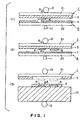
- Fig. 1 is a schematic diagram illustrating the method for image formation according to the present invention.
- An intermediate transfer recording medium 1 comprising a substrate 21 and a light transparent protective layer 3 provided on one side of the substrate 21 is provided.
- a first thermal transfer recording medium 5 comprising a substrate 22 and a light transparent ink layer 4 provided on one side of the substrate 22 is also provided.
- the intermediate transfer recording medium 1 and the first thermal transfer recording medium 5 are put on top of each other so that the light transparent protective layer 3 faces the light transparent ink layer 4.
- the assembly is then imagewise heated to form a light transparent image 6 on the light transparent protective layer 3 in the intermediate transfer recording medium 1.
- the heating is carried out by means of a thermal head 11 in such a manner that the intermediate transfer recording medium 1 and the first thermal transfer recording medium 5 are sandwiched between the thermal head 11 and a platen roll 12 and the assembly is imagewise heated by means of the thermal head 11 from the first thermal transfer recording medium 5 on its side remote from the light transparent ink layer 4 (see Fig. 1 (1)).
- the light transparent image 6 When this light transparent image 6 is viewed in a direction indicated by A, the light transparent image 6 is a reverse image (a mirror image), while, when this image 6 is viewed in a direction indicated by B, the image 6 is a non-reverse image.
- a second thermal transfer recording medium 8 comprising a substrate 23 and, provided on one side of the substrate 23, a color ink layer 7 comprising a thermoplastic resin and a colorant is provided.
- the intermediate transfer recording medium 1 with the light transparent image 6 formed thereon is put on top of the second thermal transfer recording medium 8 so that the light transparent protective layer 3 with the light transparent image 6 formed thereon faces the color ink layer 7.
- the assembly is imagewise heated to transfer the color ink layer 7 or a colorant contained in the color ink layer 7 onto the light transparent protective layer 3 with the light transparent image 6 formed thereon in the intermediate transfer recording medium 1 to form a color image 9.
- the heating is carried out by means of the thermal head 11 in such a manner that the intermediate transfer recording medium 1 and the second thermal transfer recording medium 8 are sandwiched between the thermal head 11 and the platen roll 12 and the assembly is imagewise heated by means of the thermal head 11 from the second thermal transfer recording medium 8 on its side remote from the color ink layer 7 (see Fig. 1 (2)).
- the color image 9 When this color image 9 is viewed in a direction indicated by A, the color image 9 is a reverse image (a mirror image), while, when this image 9 is viewed in a direction indicated by B, the image 9 is a non-reverse image.
- the intermediate transfer recording medium 1 and an object 10 are put on top of each other so that the light transparent protective layer 3 with the light transparent image 6 and the color image 9 formed thereon in the intermediate transfer recording medium 1 faces the image forming face of the object 10.
- the assembly is heated by means of a heat roll 13 from the intermediate transfer recording medium 1 on its side remote from the light transparent protective layer 3.
- the intermediate transfer recording medium 1 and the object 10 are sandwiched between the heat roll 13 and the platen roll 12, and, in this state, the assembly is heated and pressed.
- the stacked intermediate transfer recording medium 1 and the object 10 are separated from each other.
- the light transparent protective layer 3, together with the light transparent image 6 and the color image 9, in the intermediate transfer recording medium 1 is transferred onto the object 10 (see Fig. 1 (3)).
- the light transparent image 6 and the color image 9 provided on the object 10 are covered with and protected by the light transparent protective layer 3 and thus possess excellent fastness or resistance properties such as excellent abrasion resistance, lightfastness, and alteration preventive properties.
- the images each are a non-reverse image.
- substrates having a surface subjected to easy-adhesion treatment and the like may also be adopted without particular limitation.
- Specific examples of preferred substrates include: films of plastics including polyethylene terephthalate and, further, polyesters, polycarbonates, polyamides, polyimides, cellulose acetate, polyvinylidene chloride, polyvinyl chloride, polystyrene, fluororesin, polypropylene, polyethylene, and ionomers; papers such as glassine paper, capacitor paper, and paraffin-waxed paper; and cellophane.
- the thickness of the substrate 2 may properly vary depending upon materials so that the substrate has proper strength and heat resistance. In general, however, the thickness of the substrate 2 is preferably about 2 to 100 ⁇ m.
- the transferred light transparent protective layer 3 functions as a protective layer for the images 6 and 9 and contributes to fastness or resistance properties, such as abrasion resistance, lightfastness, and alteration preventive properties, of these images.
- the light transparent image 6 formed by the transfer of the light transparent ink layer 4 is legible by the reflection of light according to the angle of the line of sight to the transferred face. Therefore, the image formed object has alteration preventive properties and a good three-dimensional appearance (see Fig. 1).
- the light transparent protective layer may be formed of a proper resin having excellent abrasion resistance, transparency, hardness and other properties.
- resins usable herein include polyester resin, vinyl chloride-vinyl acetate copolymer, polystyrene resin, acrylic resin, polyurethane resin, acrylated urethane resin, silicone-modified products of these resins, polycarbonate resin, and mixtures of these resins.
- a resin produced by crosslinking and curing an acrylic monomer or the like by ionizing radiation irradiation may also be used.
- acrylic monomers include ethylene glycol di(meth)acrylate, hexanediol di(meth)acrylate, trimethylolpropane tri(meth)acrylate, trimethylolpropane di(meth)acrylate, pentaerythritol tetra(meth)acrylate, dipentaerythritol hexa(meth)acrylate, ethylene glycol diglycidyl ether di(meth)acrylate, propylene glycol diglycidyl ether di(meth)acrylate, and sorbitol tetraglycidyl ether tetra(meth)acrylate.
- the material to be cured by the ionizing radiation is not limited to the monomer and may also be used as an oligomer. Further, polymers or derivatives of the above materials, reactive acrylic polymers, such as polyester acrylate, epoxy acrylate, urethane acrylate, and polyether acrylate polymers, may be used. The above materials may also be used in combination with other acrylic resin(s).
- These resins may contain, for example, highly transparent fine particles of silica, alumina, calcium carbonate, plastic pigment or the like or wax, from the viewpoint of the transferability of these resins in such an amount that is not detrimental to the transparency. Further, these resins may contain lubricants or the like from the viewpoint of improving abrasion resistance, gloss and the like of the image.
- the light transparent protective layer is preferably composed mainly of a thermoplastic resin having a glass transition point of 50 to 120°C. This can improve the transferability and fixation of the light transparent protective layer onto the object.
- This thermoplastic resin is particularly preferably a polyester resin having a number average molecular weight of 2000 to 30000, a vinyl chloride-vinyl acetate copolymer having an average degree of polymerization of 150 to 500, or a homopolymer or copolymer, of a methacrylate monomer, having a weight average molecular weight of 20000 to 80000.
- the light transparent protective layer upon transfer of the light transparent protective layer onto the object, the light transparent protective layer functions as a protective layer which can impart excellent fastness or resistance properties such as excellent abrasion resistance and lightfastness to the image.
- examples of aromatic acids usable as the acid component include terephthalic acid, isophthalic acid, o-phthalic acid, and 2,6-naphthalenedicarboxylic acid
- examples of aliphatic or alicyclic dicarboxylic acids usable as the acid component include succinic acid, adipic acid, azelaic acid, sebacic acid, dodecanedioic acid, dimmer acid, tetrahydrophthalic acid, hexahydrophthalic acid, hexahydroisophthalic acid, and hexahydroterephthalic acid.
- Tri- or higher functional polycarboxylic acids such as trimellitic acid and pyromellitic acid, may also be used.
- the light transparent protective layer is formed of a polyester resin particularly using terephthalic acid, isophthalic acid, and trimellitic acid as constituent monomers of the acid component.
- the light transparent protective layer upon transfer of the light transparent protective layer onto the object, the light transparent protective layer functions as a protective layer which can impart excellent fastness or resistance properties such as excellent abrasion resistance and lightfastness.
- Examples of the alcohol component as another material of the polyester resin include ethylene glycol, 1,2-propylene glycol, 1,3-propanediol, 1,4-butanediol, neopentyl glycol, 1,5-pentanediol, 1,6-hexanediol, 1,4-cyclohexanedimethanol, and tricyclodecane glycol.
- a polyester resin particularly using at least two or more of ethylene glycol, neopentyl glycol, and tricyclodecane glycol as constituent monomers is preferred because the glass transition point can be easily regulated to the range of 50 to 120°C.
- a vinyl chloride-vinyl acetate copolymer may be mentioned as a preferred thermoplastic resin used in the light transparent protective layer.
- the vinyl chloride-vinyl acetate copolymer preferably has a glass transition point in the range of 50 to 120°C and an average degree of polymerization in the range of 150 to 500.
- this vinyl chloride-vinyl acetate copolymer preferably, 5 to 40% by weight of a vinyl acetate monomer is formulated. When the amount of vinyl acetate formulated is above the upper limit of the above-defined amount range, blocking is likely to occur.
- the thermoplastic resin constituting the light transparent protective layer is preferably a homopolymer or copolymer of a methacrylate monomer, the homopolymer or copolymer having a glass transition point of 50 to 120°C and a weight average molecular weight of 20000 to 80000.
- Methacrylate monomers usable herein include, for example, methyl methacrylate, ethyl methacrylate, n-picopyl methacrylate, i-propyl methacrylate, n-butyl methacrylate, i-butyl methacrylate, sec-butyl methacrylate, cyclohexyl methacrylate, benzyl methacrylate, 2-ethylhexyl methacrylate, 2-hydroxyethyl methacrylate, and 2-hydroxypropyl methacrylate.
- the light transparent protective layer in the intermediate transfer recording medium used in the present invention is preferably transparent or translucent so that, upon transfer of the light transparent protective layer onto the object, the color image derived from the color ink layer in the second thermal transfer recording medium can be seen through the light transparent protective layer.
- Translucent refers to a state intermediate between a transparent state and an opaque state. That is, when the light transparent protective layer is transparent to light, the difference in refractive index of light between the color image portion derived from the color ink layer in the second thermal transfer recording medium and the light transparent protective layer transferred onto the object is so small that, when the image formed object is viewed, the color image portion can be easily seen through the light transparent protective layer.
- the difference in refractive index of light between the color image portion derived from the color ink layer in the second thermal transfer recording medium and the light transparent protective layer portion transferred onto the object is so large that the color image portion cannot be seen through the protective layer, that is, light cannot pass through the protective layer.
- Methods usable for regulating the transparency or light transmission property of the light transparent protective layer include one wherein a conventional colorant is incorporated into the light transparent protective layer, one wherein particles are incorporated into the light transparent protective layer, and one wherein the structure of the light transparent protective layer is brought to a porous network structure.
- cyan, magenta, yellow, black or other hues may be properly selected as the colorant.
- Pigments having a metallic luster such as gold color, silver color, or copper color, fluorescent inorganic or organic pigments or dyes, and pigments or dyes of white or intermediate colors such as green, orange, and purple, may also be used.
- the amount of the colorant added should be regulated so that the colorant does not conceal the light transparent image portion derived from the light transparent ink layer in the first thermal transfer recording medium and the color image portion derived from the color ink layer in the second thermal transfer recording medium and permits the light transparent image portion and the color image portion to be seen through the light transparent protective layer.
- the colorant is preferably in the state of dissolution in the coating liquid for the light transparent protective layer. From this point of view, the use of the dye as the colorant is preferred.
- Preferred particles usable for regulating the transparency or light transmission property of the light transparent protective layer include inorganic particles, such as particles of silica, titanium oxide, and calcium carbonate, and organic particles such as synthetic resin fillers.
- the porous network structure of the light transparent protective layer can be formed by a conventional method.
- a transparent resin varnish as a coating liquid for the light transparent protective layer, comprising a resin, a good solvent having a relatively low boiling point, and a poor solvent having a relatively high boiling point is coated onto a substrate.
- This resin varnish is coated by a conventional coating method, such as gravure coating or silk screen coating.
- resin varnish coating is dried.
- the good solvent having a relatively low boiling point preferentially evaporates.
- the resin phase in the resin varnish is separated from the remaining poor solvent phase. In this case, the resin gels, while the poor solvent takes the form of particles dispersed in the resin.
- the evaporation of the high-boiling poor solvent in a particle form proceeds.
- the light transparent protective layer having a porous structure is formed.
- the pore diameter of the porous structure can be regulated by regulating the temperature, air flow and the like at the time of drying. In this connection, the following point should be noted.
- the pore diameter of the porous structure is regulated by taking into consideration the transparency and light transmission properties of the light transparent protective layer after transfer onto the object, rather than the transparency and light transmission properties of the light transparent protective layer in the intermediate transfer recording medium. This is because, in the light transparent protective layer having a porous structure, in some cases, heating at the time of thermal transfer of the protective layer causes a change in porous structure and consequently somewhat enhances the transparency and light transmission properties.
- the light transparent protective layer may be formed by adding necessary additives to the above resin for the light transparent protective layer, dissolving the mixture in a suitable organic solvent or dispersing the mixture in an organic solvent or water, coating the solution or dispersion onto a substrate by forming means, such as gravure coating, gravure reverse coating, or roll coating, and drying the coating.
- the light transparent protective layer may be formed in any desired thickness.
- the coverage of the light transparent protective layer is 0.1 to 50 g/m 2 , more preferably 0.2 to 10 g/m 2 , on a dry basis.
- a light transparent protective layer is provided separably on the substrate.
- the light transparent protective layer may be provided on the substrate through a release layer. In this case, upon heating, the light transparent protective layer can be more easily separated from the substrate. At the time of the thermal transfer, the release layer is not separated from the substrate and stays on the substrate side.
- a release layer may be previously provided on the substrate.
- the release layer may be formed of one material or a mixture of two or more materials selected from waxes, silicone waxes, and resins such as silicone resins, fluororesins, acrylic resins, polyvinyl alcohol, urethane resins, cellulosic resins such as cellulose acetate, polyvinyl acetal resins, and polyvinyl butyral resins.
- a watersoluble resin may be used according to need.
- the release layer may be formed by coating a coating liquid composed mainly of these resins by a conventional method, such as gravure coating or gravure reverse coating, and drying the coating. A coverage of the coating of about 0.01 to 2 g/m 2 suffices for the release layer.
- a coating liquid composed mainly of these resins by a conventional method, such as gravure coating or gravure reverse coating, and drying the coating.
- a coverage of the coating of about 0.01 to 2 g/m 2 suffices for the release layer.
- Unsatisfactory adhesion between the release layer and the substrate is causative of abnormal transfer such as transfer of the release layer together with the thermal transfer layer.
- the surface of the print after the transfer of the light transparent protective layer can be rendered matte by incorporating various particles into the release layer or by using a substrate of which the surface on the release layer side has been rendered matte.
- the light transparent protective layer is provided separably on the substrate.
- the light transparent protective layer may be provided on the substrate through a peel layer. In this case, upon heating, the light transparent protective layer can be more easily separated from the substrate. This peel layer can be separated from the substrate at the time of thermal transfer.
- the peel layer may be formed by coating a coating liquid containing, for example, waxes, silicone waxes, silicone resins, fluororesins, acrylic resins, polyvinyl alcohol resins, cellulose derivative resins, polyvinyl acetal resins, polyvinyl butyral resins, vinyl chloride-vinyl acetate copolymer, or chlorinated polyolefin or a copolymer of a group of these resins or the like by conventional forming means such as gravure printing, screen printing, or reverse roll coating using a gravure plate, and drying the coating.
- a coating liquid containing, for example, waxes, silicone waxes, silicone resins, fluororesins, acrylic resins, polyvinyl alcohol resins, cellulose derivative resins, polyvinyl acetal resins, polyvinyl butyral resins, vinyl chloride-vinyl acetate copolymer, or chlorinated polyolefin or a copolymer of a group of these resin
- the coverage of the peel layer is about 0.01 to 5 g/m 2 on a dry basis.
- an adhesive layer may be provided on the light transparent protective layer provided on the substrate to improve the fixation of the light transparent protective layer onto an object at the time of the thermal transfer.
- the adhesive layer is preferably formed of a material which, upon heating, can develop an adhesive property.
- the adhesive layer may be formed using thermoplastic synthetic resin, naturally occurring resin, rubber, wax or the like by the same forming means as used in the formation of the peel layer.
- the coverage of the adhesive layer is about 0.01 to 5 g/m 2 .
- a first thermal transfer recording medium 5 comprising a substrate 22 and a light transparent ink layer 4 provided on one side of the substrate 22 used in the present invention will be described.
- the same substrate as used in the conventional thermal transfer recording medium as such may be used as the substrate 22 in the first thermal transfer recording medium, and examples thereof include those as described above in connection with the intermediate transfer recording medium.
- the light transparent ink layer may be formed of the same material as described above in connection with the light transparent protective layer in the intermediate transfer recording medium, such as thermoplastic resins.
- the light transparent ink layer is preferably composed mainly of a thermoplastic resin having a glass transition point of 50 to 120°C. This can improve the transferability and fixation of the light transparent ink layer onto the object (intermediate transfer recording medium).
- This thermoplastic resin is particularly preferably a polyester resin having a number average molecular weight of 2000 to 30000, a vinyl chloride-vinyl acetate copolymer having an average degree of polymerization of 150 to 500, or a homopolymer or copolymer, of a methacrylate monomer, having a weight average molecular weight of 20000 to 80000. In this case, upon transfer of the light transparent ink layer onto the object, better fastness or resistance properties, such as better abrasion resistance and lightfastness, can be realized.
- a binder as a main component of the light transparent ink layer is preferably highly compatible with a main component of the light transparent protective layer. More specifically, particularly preferably, the light transparent ink layer and the light transparent protective layer contain respective thermoplastic resins, and the thermoplastic resin contained in the light transparent ink layer and the thermoplastic resin contained in the light transparent protective layer are similar to each other in polymer structure and each have an ester linkage in its molecular structure.
- thermoplastic polyester resins such as aromatic polyester resins and aliphatic or alicyclic polyester resins, vinyl chloride-vinyl acetate copolymers, and homopolymers or copolymers of methacrylate monomers.
- both the thermoplastic resin contained in the light transparent ink layer and the thermoplastic resin contained in the light transparent protective layer are polyester resins, vinyl chloride-vinyl acetate copolymers, homopolymers or copolymers of methacrylate monomers or the like and are similar to each other in polymer structure and have an ester linkage in its molecular structure.
- the glass transition point and molecular weight of the analogous polymers having an ester linkage in its molecular structure as the thermoplastic resins are not limited so far as these polymers are thermally transferable or coatable onto the substrate.
- the transparency or light transmission properties of the light transparent ink layer may be regulated so that, in the final image formed object, a difference in transparency or light transmission properties is provided between the light transparent protective layer and the light transparent ink layer.
- Methods usable for regulating the transparency or light transmission properties of the light transparent ink layer include one wherein a conventional colorant is incorporated into the light transparent ink layer, one wherein particles are incorporated into the light transparent ink layer, and one wherein the structure of the light transparent ink layer is brought to a porous network structure.
- the incorporation of the colorant or the particles into the light transparent ink layer or the formation of the porous network structure in the light transparent ink layer may not be adopted, and the level of the transparency or light transmission properties of the light transparent ink layer may be kept very high.
- the light transparent image formed by the transfer of the light transparent ink layer is legible by the reflection of light according to the angle of the line of sight to the transferred face. Therefore, the image formed object has alteration preventive properties and a good three-dimensional appearance.
- the light transparent ink layer may be formed by adding necessary additives to the above resin for the light transparent ink layer, dissolving the mixture in a suitable organic solvent or dispersing the mixture in an organic solvent or water, coating the solution or dispersion onto a substrate by forming means, such as gravure coating, gravure reverse coating, or roll coating, and drying the coating.
- the light transparent ink layer may be formed in any desired thickness. Preferably, however, the coverage of the light transparent ink layer is 0.1 to 10 g/m 2 , more preferably 0.3 to 5 g/m 2 , on a dry basis.
- a backside layer is preferably provided on the substrate in its side remote from the light transparent ink layer from the viewpoints of improving slipperiness on and preventing sticking to heating means, such as a thermal head, used in imagewise heating and transfer of the light transparent ink layer in the first thermal transfer recording medium onto the light transparent protective layer.
- the backside layer may be formed of a single resin or a mixture of two or more resins selected from naturally occurring or synthetic resins, for example, cellulosic resins, such as ethylcellulose, hydroxycellulose, hydroxypropylcellulose, methylcellulose, cellulose acetate, cellulose acetate butyrate and nitrocellulose, vinyl resins, such as polyvinyl alcohol, polyvinyl acetate, polyvinyl butyral, polyvinyl acetal, and polyvinyl pyrrolidone, acrylic resins, such as polymethyl methacrylate, polyethyl acrylate, polyacrylanlide, and acrylonitrile-styrene copolymer, polyamide resin, polyvinyltoluene resin, coumarone-indene resin, polyester resin, polyurethane resin, and silicone-modified or fluorine-modified urethane.
- cellulosic resins such as ethylcellulose, hydroxycellulose, hydroxyprop
- a resin containing a reactive group based on a hydroxyl group is used in combination with polyisocyanate or the like as a crosslinking agent to form a crosslinked resin layer as the backside layer.
- a solid or liquid release agent or lubricant may be added to the backside layer to impart heat-resistant slipperiness to the backside layer.
- Release agents or lubricants include, for example, various waxes, such as polyethylene waxes and paraffin waxes, higher aliphatic alcohols, organopolysiloxanes, anionic surfactants, cationic surfactants, amphoteric surfactants, nonionic surfactants, fluorosurfactants, organic carboxylic acids and derivatives thereof, fluororesins, silicone resins, and fine particles of inorganic compounds such as talc, and silica.
- the content of the lubricant in the backside layer is about 5 to 50% by weight, preferably about 10 to 30% by weight.
- the backside layer may be formed by dissolving or dispersing the above resin, optionally together with a release agent, a lubricant and the like, in a suitable solvent to prepare a coating liquid, coating the coating liquid by a conventional coating method such as gravure coating, roll coating, or wire bar coating, and drying the coating.
- the coverage of the backside layer is about 0.1 to 10 g/m 2 on a dry basis.
- a release layer or a peel layer and an adhesive layer may be additionally provided. Details of these layers are as described above in connection with the intermediate transfer recording medium.
- a second thermal transfer recording medium 8 comprising a substrate 23 and, provided on one side of the substrate 23, a color ink layer 7 comprising a thermoplastic resin and a colorant used in the present invention will be described.
- the same substrate as used in the conventional thermal transfer recording medium as such may be used as the substrate 23 in the second thermal transfer recording medium, and examples thereof include those as described above in connection with the intermediate transfer recording medium.
- the color ink layer 7 provided on the substrate may be formed using a coating liquid containing a thermoplastic resin and a colorant and optionally additives, for example, lubricants such as waxes, dispersants, and anti-settling agents.
- lubricants such as waxes, dispersants, and anti-settling agents.
- colorant Various conventional colorants may be used as the colorant.
- organic or inorganic pigments or dyes those having good properties as a recording material, for example, those, which have satisfactory color density and are less likely to cause color change and fading upon exposure, for example, to light, heat, and temperature, are preferred as the colorant.
- Colorants having cyan, magenta, yellow, black and other hues may be properly selected.
- Pigments having a metallic luster, such as gold color, silver color, or copper color, fluorescent inorganic or organic pigments or dyes, and pigments or dyes of white or intermediate colors such as green, orange, and purple may also be used.
- an aluminum pigment is preferably used because excellent metallic luster and opacifying effect can be realized independently of, for example, the color of the ground of the transfer face of the object.
- the aluminum pigment may be in a spherical form or a form similar to spheres.
- a platy aluminum pigment is preferred because excellent metallic luster and opacifying effect can be provided.
- Aluminum used in the color ink layer preferably has an average length of about 1 to 20 ⁇ m and an average thickness of about 0.01 to 5 ⁇ m because the dispersibility in the coating liquid and the metallic luster of the formed image are excellent.
- the second thermal transfer recording medium comprises a substrate and a color ink layer provided on one side of the substrate.
- Color ink layers usable herein are roughly classified into two types, heat-fusion ink layers or sublimable dye ink layers.
- the heat-fusion ink layer comprises conventional colorant and binder and optionally various additives, for example, mineral oils, vegetable oils, higher fatty acids such as stearic acid, plasticizers, and fillers.
- the resin component used as the binder examples include ethylene-vinyl acetate copolymer, ethylene-acrylic ester copolymer, polyethylene, polystyrene, polypropylene, polybutene, petroleum resin, vinyl chloride resin, vinyl chloride-vinyl acetate copolymer, polyvinyl alcohol, vinylidene chloride resin, methacrylic resin, polyamide, polycarbonate, fluororesin, polyvinylformal, polyvinyl butyral, acetylcellulose, nitrocellulose, polyvinyl acetate, polyisobutylene, ethylcellulose, polyacetal, and polyester.
- wax component used as the binder examples include various waxes, for example, microcrystalline wax, carnauba wax, and paraffin wax. Further, other various waxes such as Fischer-Tropsch wax, various types of low-molecular weight polyethylene, Japan wax, beeswax, spermaceti, insect wax, wool wax, shellac wax, candelilla wax, petrolatum, polyester wax, partially modified wax, fatty esters, and fatty amides may also be used.
- various waxes such as Fischer-Tropsch wax, various types of low-molecular weight polyethylene, Japan wax, beeswax, spermaceti, insect wax, wool wax, shellac wax, candelilla wax, petrolatum, polyester wax, partially modified wax, fatty esters, and fatty amides may also be used.
- the thermoplastic resin as the binder contained in the heat-fusion ink layer has a structure similar to the binder resin in the thermal transfer layer onto which the ink layer is to be transferred. In this case, high compatibility can be provided. This can realize excellent transferability and fixation of the ink layer onto the thermal transfer layer.
- the colorant may be properly selected from the above-described conventional organic or inorganic pigments or dyes.
- a heat-conductive material may be incorporated as a filler for the binder from the viewpoint of imparting good heat conductivity and heat-fusion transferability to the heat-fusion ink layer.
- Such fillers include, for example, carbonaceous materials, such as carbon black, and metals and metal compounds such as aluminum, copper, tin oxide, and molybdenum disulfide.
- the heat-fusion ink layer may be formed by providing a coating liquid for a heat-fusion ink layer, prepared by mixing the colorant component, binder component, and optionally a solvent component, such as water or an organic solvent, and coating the coating liquid by a conventional method such as hot-melt coating, hot lacquer coating, gravure coating, gravure reverse coating, or roll coating.
- a formation method using an aqueous or nonaqueous emulsion coating liquid may also be used.
- the coverage of the heat-fusion ink layer should be determined so as to obtain a balance between necessary print density and heat sensitivity and is preferably in the range of about 0.1 to 10 g/m 2 , more preferably about 0.5 to 5 g/m 2 .
- the sublimable dye ink layer as the color ink layer is a layer comprising a sublimable dye supported by a binder resin. All dyes commonly used in conventional thermal transfer recording media may be effectively used in the present invention without particular limitation. The following dyes may be mentioned as several examples of preferred dyes. Specifically, MS Red G, Macrolex Red Vioret R, Ceres Red 7B, Samaron Red HBSL, Resolin Red F 3BS and the like may be mentioned as red dyes. Phorone Brilliant Yellow 6 GL, PTY-52, Macrolex Yellow 6G and the like may be mentioned as yellow dyes. Kayaset Blue 714, Waxoline Blue AP-FW, Phorone Brilliant Blue S-R, MS Blue 100 and the like may be mentioned as blue dyes.
- binder resin thermoplastic resin
- binder resins include: cellulosic resins such as ethylcellulose, hydroxyethylcellulose, ethylhydroxy-cellulose, hydroxypropylcellulose, methylcellulose, cellulose acetate, and cellulose acetate butyrate; vinyl resins such as polyvinyl alcohol, polyvinyl acetate, polyvinyl butyral, polyvinyl acetal, polyvinyl pyrrolidone, and polyacrylamide; and polyesters.
- a graft copolymer having at least one releasable segment selected from a polysiloxane segment, a carbon fluoride segment, and a long-chain alkyl segment each graft bonded to the main chain of an acrylic, vinyl, polyester, polyurethane, polyamide, or cellulosic resin may be used as the binder resin for carrying the thermally transferable dye.
- a dyeable thermoplastic resin binder is required in the light transparent protective layer for receiving the dye in the sublimable dye ink layer.
- a release agent such as a fluorosurfactant, a silicone oil and/or a cured product thereof, may be incorporated into the sublimable dye ink layer so that, upon heating at the time of the formation of an image, the sublimable dye ink layer and the thermal transfer layer can be smoothly separated from each other without heat fusing.
- Fluorosurfactants include Fluorad FC-430 and FC-431, manufactured by 3M.
- Silicone oils include various modified silicone oils and cured products thereof, as described in "Sirikohn Handobukku (Silicone Handbook)" published by The Nikkan Kogyo Shimbun, Ltd.
- a fluorosurfactant and an uncured silicone oil is particularly preferred because they have high adhesion.
- the use of the graft copolymer having a releasable segment as the binder resin in the light transparent protective layer can eliminate the need to add any release agent and can realize high adhesion between the object and the image-formed light transparent protective layer and thus is preferred.
- the sublimable dye ink layer may contain, in addition to the dye and the binder resin, optional various conventional additives.
- the sublimable dye ink layer may be formed by dissolving or dispersing the dye, the binder resin, and additives in a suitable solvent to prepare an ink and coating the ink onto the substrate by the same conventional coating method as described above in connection with the heat-fusion ink layer.
- the coverage of the sublimable dye ink layer is about 0.1 to 5.0 g/m 2 , preferably about 0.4 to 2.0 g/m 2 .
- the thermal transfer color ink layer is provided on the substrate.
- the thermal transfer ink layer may be provided through a release layer or a peel layer on the substrate to further facilitate the separation of the thermal transfer ink layer from the substrate upon heating.
- an adhesive layer, an intermediate layer or the like may be provided on the thermal transfer ink layer in the second thermal transfer recording medium.
- the color ink layer is provided on the substrate.
- an intermediate layer such as a primer layer, may be provided between the substrate and the color ink layer to enhance the adhesion between the substrate and the color ink layer.
- the same material and formation method as used in the release layer, the peel layer, and the adhesive layer in the intermediate transfer recording medium may be applied to the release layer, the peel layer, and the adhesive layer in the second thermal transfer recording medium.
- the intermediate layer may be a conventional one.
- the thickness of the light transparent image is 0.3 to 5.0 ⁇ m.
- the thickness of the light transparent image is less than 0.3 ⁇ m, the visibility is disadvantageously deteriorated.
- the thickness of the light transparent image exceeds 5.0 ⁇ m, the transferability is disadvantageously deteriorated.
- means for image formation by imagewise heating used in thermally transferring the light transparent ink layer in the first thermal transfer recording medium onto the light transparent protective layer in the intermediate transfer recording medium to form a light transparent image and used in thermally transferring the color ink layer in the second thermal transfer recording medium onto the light transparent protective layer in the intermediate transfer recording medium to form a color image may be conventional thermal energy impartation means for thermal transfer, such as heating by means of a thermal head or laser beam irradiation.
- Examples of means for the transfer, onto an object, of the light transparent protective layer, on which the light transparent image derived from the light transparent ink layer and the color image derived from the color ink layer have been formed include a thermal head usable in the formation of a transferred image, a line heater, a heat roll, and a hot stamp.
- images in order that the finally obtained images in the image formed object are oriented in a proper direction, images (light transparent image and color image) having a mirror relationship with the final images should be formed in the light transparent protective layer provided on the intermediate transfer recording medium.
- the object, on which images are formed by the retransfer of the image-formed light transparent protective layer in the intermediate transfer recording medium is not particularly limited. Examples thereof include sheets or three-dimensional molded products of plain paper, wood free paper, tracing paper, various plastics or the like.
- the object may be in the form of any of cards, postal cards, passports, letter papers or writing pads, report pads, notebooks, catalogs, cups, cases, building materials, panels, electronic components, such as telephones, radios, and televisions, and rechargeable batteries.
- recording can be carried out even on objects formed of a sparingly adhesive plastic material, particularly polycarbonate resin, polypropylene resin, polyethylene resin, polyethylene terephthalate resin, polymethyl methacrylate, etc. with excellent transferability and adhesion.
- a sparingly adhesive plastic material particularly polycarbonate resin, polypropylene resin, polyethylene resin, polyethylene terephthalate resin, polymethyl methacrylate, etc. with excellent transferability and adhesion.
- Intermediate transfer recording media 1 to 25 are prepared. Conditions for the formation of each layer constituting the intermediate transfer recording media are shown in Table 5 below. Specifically, a release layer, a peel layer, and a light transparent protective layer are formed in that order on a substrate shown in Table 5 under conditions shown in Table 5. The composition of the release layer in each intermediate transfer recording medium is as shown in Table 5. Details of resins used in the release layer are as shown in Table 2.
- composition of the peel layer in each intermediate transfer recording medium is as shown in Table 5. Details of resins used in the peel layer are as shown in Table 3.
- composition of the light transparent protective layer in each intermediate transfer recording medium is as shown in Table 5. Details of resins used in the light transparent protective layer are as shown in Table 1.
- Thermal transfer recording media 1-1 to 1-10 are prepared. Conditions for the formation of each layer constituting the thermal transfer recording media are shown in Table 6 below. Specifically, a backside layer having a composition shown in Table 4 is formed on one side of a substrate shown in Table 6 by coating at a coverage of 0.2 g/m 2 on a solid basis. A release layer, a peel layer, and a light transparent ink layer are formed in that order on the other side of the substrate under conditions specified in Table 6. The composition of the release layer in each thermal transfer recording medium is as shown in Table 6. Details of resins used in the release layer are as shown in Table 2.
- composition of the peel layer in each thermal transfer recording medium is as shown in Table 6. Details of resins used in the peel layer are as shown in Table 3.
- composition of the light transparent ink layer in each thermal transfer recording medium is as shown in Table 6. Details of resins used in the light transparent ink layer are as shown in Table 1.
- Thermal transfer recording media 2-1 to 2-5 for color image formation were prepared. Conditions for the formation of each layer constituting the thermal transfer recording media are shown in Table 7.
- a 200 ⁇ m-thick white flexible vinyl chloride sheet or a 200 ⁇ m-thick black polycarbonate sheet was provided as an object for the evaluation of image formed objects.
- a thermal transfer recording medium 1 is put on top of an intermediate transfer recording medium so that the light transparent ink layer in the thermal transfer recording medium 1 faces the light transparent protective layer in the intermediate transfer recording medium.
- the assembly is imagewise heated by a thermal head from the backside of the thermal transfer recording medium 1 to imagewise transfer the light transparent ink layer in the thermal transfer recording medium 1 onto the light transparent protective layer in the intermediate transfer recording medium, whereby a light transparent image is formed on the light transparent protective layer.
- the distance between the top of the convex portion and the top of the light transparent protective layer was measured and indicated as the thickness of the convex in Table 8.
- heating was carried out by a thermal head under the following printing conditions.
- a printer for evaluation was used under printing conditions of line speed 2.8 msec/line, pulse duty 80%, resolution of thermal head 300 dpi, resistance value of thermal head 1600 ⁇ , and applied voltage 17.5 V.
- the intermediate transfer recording medium provided with the light transparent image prepared by the above method and the thermal transfer recording medium 2 are put on top of each other so that the light transparent protective layer in the intermediate transfer recording medium faces the color ink layer in the thermal transfer recording medium 2.
- the assembly is imagewise heated by a thermal head from the backside of the thermal transfer recording medium 2 to imagewise transfer the colorant alone or a combination of the colorant with the binder onto the light transparent protective layer in the intermediate transfer recording medium, whereby a color image is formed on the light transparent protective layer in the intermediate transfer recording medium.
- an object and the intermediate transfer recording medium with the light transparent image and the color image formed on its light transparent protective layer are put on top of each other so that the object faces the light transparent image and the color image.
- the whole assembly is heated from the backside of the intermediate transfer recording medium by means of a heat roll covered with rubber heated at 180°C to transfer the whole area of the light transparent protective layer, with the light transparent image and the color image formed thereon, in the intermediate transfer recording medium, whereby a color image and a light transparent image are formed on the object.
- the color image was printed under the same conditions as used in the preparation of the light transparent image.
- Example 1 to 27 and Comparative Examples 1 to 4 the intermediate transfer recording medium provided in each example, the thermal transfer recording medium 1 and thermal transfer recording medium 2, and the object were used in combination as specified in Table 8. Further, the color image and the light transparent image were formed on the object.
- the light transparent ink layer was transferred as a light transparent image in the form of a letter "ABC" having a size of 7 point onto the light transparent protective layer in the intermediate transfer recording medium.
- a light transparent image and a color image were formed on the object by the above method using this intermediate transfer recording medium, and the legibility of the letter "ABC" was evaluated.
- the object with a light transparent image and a color image formed thereon by the above method was visually inspected for the following items to evaluate the transferability.
- the object with a light transparent image and a color image formed thereon was subjected to a 200-revolution abrasion resistance test with a TABER tester using a truck wheel CS-10F under a load of "4.9 N" (500 gf), and the object was then inspected for the loss of the color image and the light transparent image.
- the image formed objects prepared in Examples 26 and 27 were slightly opaque and translucent in their light transparent image portion and, since the light transparent protective layer in its portion adjacent to the image portion was transparent, the light transmittance of the light transparent image portion was different from the light transmittance of the light transparent protective layer in its portion adjacent to the image portion, rendering the light transparent image portion conspicuous.
- an intermediate transfer recording medium comprising a substrate and a light transparent protective layer provided on one side of the substrate, and a first thermal transfer recording medium comprising a substrate and a light transparent ink layer provided on one side of the substrate are first provided.
- the intermediate transfer recording medium and the first thermal transfer recording medium are put on top of each other so that the light transparent protective layer in the intermediate transfer recording medium faces the light transparent ink layer in the first thermal transfer recording medium.
- the assembly is imagewise heated to form a light transparent image on the light transparent protective layer in the intermediate transfer recording medium.
- the intermediate transfer recording medium with the light transparent image formed thereon is then put on top of a second thermal transfer recording medium comprising a substrate and, provided on one side of the substrate, a color ink layer comprising a thermoplastic resin and a colorant so that the light transparent protective layer on its light transparent image-formed side in the intermediate transfer recording medium faces the color ink layer in the second thermal transfer recording medium.
- the assembly is imagewise heated to transfer the color ink layer or the colorant contained in the color ink layer onto the light transparent protective layer on its light transparent image-formed side in the intermediate transfer recording medium, whereby a color image is formed on the light transparent protective layer.
- An object is then put on top of the intermediate transfer recording medium with the light transparent image and the color image formed on its light transparent protective layer so that the light transparent image and the color image face the object.
- the whole assembly is heated to form a color image, a light transparent image and a light transparent protective layer on the object.
- the image formed object thus obtained, the image formed by the transfer of the color ink layer is protected by the light transparent protective layer and, further, by virtue of a combination thereof with the light transparent image, has excellent fastness or resistance properties such as excellent abrasion resistance, lightfastness, and alteration preventive properties. Further, for example, according to the angle of the line of sight to the image-recorded face in the image formed object, the convex portion in the light transparent image transferred to the object is legible by the reflection of light.
- a protective layer having on its surface a color image and a light transparent image can be formed on an object by single transfer using an intermediate transfer recording medium comprising a light transparent protective layer having on its surface a color image, formed by the transfer of a color ink layer, and a light transparent image formed by the transfer of a light transparent ink layer. Therefore, the damage to the object by the transfer operation is less likely to occur, and a deterioration in image quality and an increase in production cost can be suppressed.
Landscapes
- Physics & Mathematics (AREA)
- Optics & Photonics (AREA)
- Thermal Transfer Or Thermal Recording In General (AREA)
- Electronic Switches (AREA)
- Decoration By Transfer Pictures (AREA)
Claims (7)
- Procédé de formation d'image comprenant les étapes consistant à :fournir un support d'enregistrement par transfert intermédiaire comprenant un substrat et une couche protectrice transparente à la lumière disposée sur un côté du substrat ;fournir un premier support d'enregistrement par transfert thermique comprenant un substrat et une couche d'encre transparente à la lumière disposée sur un côté du substrat ;placer le support d'enregistrement par transfert intermédiaire et le premier support d'enregistrement par transfert thermique l'un au-dessus de l'autre de façon que la couche protectrice transparente à la lumière dans le support d'enregistrement par transfert intermédiaire fasse face à la couche d'encre transparente à la lumière dans le premier support d'enregistrement par transfert thermique ;chauffer sous forme d'image l'assemblage pour former une image transparente à la lumière sur la couche protectrice transparente à la lumière dans le support d'enregistrement par transfert intermédiaire ;fournir un deuxième support d'enregistrement par transfert thermique comprenant un substrat et, placé sur un côté du substrat, une couche d'encre en couleur comprenant une résine thermoplastique et un colorant ;placer le support d'enregistrement par transfert intermédiaire avec l'image transparente à la lumière formée sur celui-ci sur le dessus du deuxième support d'enregistrement par transfert thermique de façon que la couche protectrice transparente à la lumière sur son côté où est formée l'image transparente à la lumière dans le support d'enregistrement par transfert intermédiaire fasse face à la couche d'entre en couleur dans le deuxième support d'enregistrement par transfert thermique ;chauffer sous forme d'image l'assemblage pour transférer la couche d'encre en couleur ou le colorant contenu dans la couche d'encre en couleur sur la couche protectrice transparente à la lumière sur son côté où est formée l'image transparente à la lumière dans le support d'enregistrement par transfert intermédiaire, en conséquence de quoi une image en couleur est formée sur la couche protectrice transparente à la lumière ;placer un objet sur le dessus du support d'enregistrement par transfert intermédiaire, avec l'image transparente à la lumière et l'image en couleur formées sur sa couche protectrice transparente à la lumière, de façon que l'image transparente à la lumière et l'image en couleur fassent face à l'objet ; etchauffer la totalité de l'assemblage pour former une image en couleur, une image transparente à la lumière, et une couche protectrice transparente à la lumière sur l'objet.
- Objet formé avec une image comprenant une image formée par le procédé selon la revendication 1, dans lequel l'épaisseur de l'image transparente à la lumière est de 0,3 à 5,0 µm.
- Objet formé avec une image selon la revendication 2, dans lequel la couche protectrice transparente à la lumière est composée principalement d'une résine thermoplastique ayant un point de transition vitreuse de 50 à 120°C.
- Objet formé avec une image selon la revendication 3, dans lequel la résine thermoplastique est au moins un élément choisi parmi une résine de polyester ayant une masse moléculaire moyenne en nombre de 2 000 à 30 000, un copolymère de chlorure de vinyle/acétate de vinyle ayant un degré moyen de polymérisation de 150 à 500, et un homopolymère ou copolymère d'un monomère méthacrylate ayant une masse moléculaire moyenne en masse de 20 000 à 80 000.
- Objet formé avec une image selon la revendication 2, dans lequel la couche d'encre transparente à la lumière pour la formation de l'image transparente à la lumière est composée principalement d'une résine thermoplastique ayant un point de transition vitreuse de 50 à 120°C.
- Objet formé avec une image selon la revendication 5, dans lequel la résine thermoplastique est au moins un élément choisi parmi une résine de polyester ayant une masse moléculaire moyenne en nombre de 2 000 à 30 000, un copolymère de chlorure de vinyle/acétate de vinyle ayant un degré moyen de polymérisation de 150 à 500, et un homopolymère ou copolymère d'un monomère méthacrylate ayant une masse moléculaire moyenne en masse de 20 000 à 80 000.
- Objet formé avec une image selon la revendication 2, dans lequel à la fois la couche d'encre transparente à la lumière, pour la formation de l'image transparente à la lumière, et la couche protectrice transparente à la lumière, contiennent des résines thermoplastiques respectives, et la résine thermoplastique contenue dans la couche d'encre transparente à la lumière et la résine thermoplastique contenue dans la couche protectrice transparente à la lumière ont des structures polymères mutuellement similaire et ont chacune une liaison ester dans leur structure moléculaire.
Applications Claiming Priority (2)
| Application Number | Priority Date | Filing Date | Title |
|---|---|---|---|
| JP2001367203 | 2001-11-30 | ||
| JP2001367203A JP3923793B2 (ja) | 2001-11-30 | 2001-11-30 | 画像形成方法及び画像形成物 |
Publications (2)
| Publication Number | Publication Date |
|---|---|
| EP1316437A1 EP1316437A1 (fr) | 2003-06-04 |
| EP1316437B1 true EP1316437B1 (fr) | 2006-03-08 |
Family
ID=19176986
Family Applications (1)
| Application Number | Title | Priority Date | Filing Date |
|---|---|---|---|
| EP02026702A Expired - Lifetime EP1316437B1 (fr) | 2001-11-30 | 2002-11-29 | Procédé de formation d'une image et produit comportant une image formée sur sa surface |
Country Status (4)
| Country | Link |
|---|---|
| US (1) | US6797671B2 (fr) |
| EP (1) | EP1316437B1 (fr) |
| JP (1) | JP3923793B2 (fr) |
| DE (1) | DE60209619T2 (fr) |
Families Citing this family (19)
| Publication number | Priority date | Publication date | Assignee | Title |
|---|---|---|---|---|
| US6757077B1 (en) * | 2000-05-09 | 2004-06-29 | Nikon Corporation | Three-dimensional image making apparatus for forming a relief configuration of an object |
| US7977326B2 (en) * | 2004-04-22 | 2011-07-12 | Howard J Smith | Supportive treatment of liver disease |
| JP4967378B2 (ja) * | 2005-03-29 | 2012-07-04 | セイコーエプソン株式会社 | インク組成物 |
| US9676179B2 (en) | 2005-04-20 | 2017-06-13 | Zih Corp. | Apparatus for reducing flash for thermal transfer printers |
| US7870824B2 (en) | 2005-04-20 | 2011-01-18 | Zih Corp. | Single-pass double-sided image transfer process and system |
| EP1927633A1 (fr) | 2006-11-30 | 2008-06-04 | Seiko Epson Corporation | Composition d'encre, ensemble de composition d'encre de séchage à deux composants, et procédé d'impression et matière imprimée les utilisant |
| JP5472670B2 (ja) | 2007-01-29 | 2014-04-16 | セイコーエプソン株式会社 | インクセット、インクジェット記録方法及び記録物 |
| US8894197B2 (en) | 2007-03-01 | 2014-11-25 | Seiko Epson Corporation | Ink set, ink-jet recording method, and recorded material |
| JP4816976B2 (ja) * | 2007-08-09 | 2011-11-16 | セイコーエプソン株式会社 | 光硬化型インク組成物 |
| JP4766281B2 (ja) * | 2007-09-18 | 2011-09-07 | セイコーエプソン株式会社 | インクジェット記録用非水系インク組成物、インクジェット記録方法および記録物 |
| JP2009269397A (ja) * | 2008-02-29 | 2009-11-19 | Seiko Epson Corp | 不透明層の形成方法、記録方法、インクセット、インクカートリッジ、記録装置 |
| JP5493473B2 (ja) * | 2009-05-29 | 2014-05-14 | ソニー株式会社 | 熱転写シートおよびインクリボン |
| JP2011152747A (ja) | 2010-01-28 | 2011-08-11 | Seiko Epson Corp | 水性インク組成物、およびインクジェット記録方法ならびに記録物 |
| JP5692490B2 (ja) * | 2010-01-28 | 2015-04-01 | セイコーエプソン株式会社 | 水性インク組成物、およびインクジェット記録方法ならびに記録物 |
| DE102010026071A1 (de) | 2010-07-05 | 2012-01-05 | Giesecke & Devrient Gmbh | Transparente Farbannahmeschicht |
| CN103079832B (zh) * | 2010-08-31 | 2015-09-02 | 大日本印刷株式会社 | 中间转印介质 |
| WO2013129415A1 (fr) | 2012-02-29 | 2013-09-06 | 大日本印刷株式会社 | Support de transfert intermédiaire |
| JP6019620B2 (ja) * | 2012-03-01 | 2016-11-02 | 大日本印刷株式会社 | 保護層転写シート |
| JP6024513B2 (ja) * | 2013-02-26 | 2016-11-16 | 大日本印刷株式会社 | 中間転写媒体 |
Family Cites Families (7)
| Publication number | Priority date | Publication date | Assignee | Title |
|---|---|---|---|---|
| EP0407615B2 (fr) * | 1989-01-31 | 2004-06-23 | Dai Nippon Insatsu Kabushiki Kaisha | Support d'enregistrement par transfert thermique |
| JP3021490B2 (ja) | 1989-11-20 | 2000-03-15 | 大日本印刷株式会社 | カード |
| DK0487727T3 (da) * | 1989-07-14 | 1995-04-10 | Dainippon Printing Co Ltd | Ved varmebehandling overførbare dækfilm |
| US5545605A (en) * | 1993-11-22 | 1996-08-13 | Matsushita Electric Industrial Co., Ltd. | Thermal transfer printing method and image-forming layer transfer medium |
| JPH10129115A (ja) * | 1996-10-28 | 1998-05-19 | Fujicopian Co Ltd | 中間転写方式熱転写記録方法 |
| JP2000177249A (ja) * | 1998-12-21 | 2000-06-27 | Alps Electric Co Ltd | 記録物および熱転写記録方法 |
| JP2000238439A (ja) * | 1999-02-19 | 2000-09-05 | Dainippon Printing Co Ltd | 中間転写記録媒体及び画像形成方法 |
-
2001
- 2001-11-30 JP JP2001367203A patent/JP3923793B2/ja not_active Expired - Lifetime
-
2002
- 2002-11-29 DE DE60209619T patent/DE60209619T2/de not_active Expired - Lifetime
- 2002-11-29 EP EP02026702A patent/EP1316437B1/fr not_active Expired - Lifetime
- 2002-12-02 US US10/307,430 patent/US6797671B2/en not_active Expired - Fee Related
Also Published As
| Publication number | Publication date |
|---|---|
| DE60209619T2 (de) | 2006-12-28 |
| US6797671B2 (en) | 2004-09-28 |
| EP1316437A1 (fr) | 2003-06-04 |
| JP3923793B2 (ja) | 2007-06-06 |
| US20030157356A1 (en) | 2003-08-21 |
| JP2003165275A (ja) | 2003-06-10 |
| DE60209619D1 (de) | 2006-05-04 |
Similar Documents
| Publication | Publication Date | Title |
|---|---|---|
| EP1316437B1 (fr) | Procédé de formation d'une image et produit comportant une image formée sur sa surface | |
| US5006502A (en) | Heat transfer sheet | |
| JP4142517B2 (ja) | 保護層熱転写シートおよびマット調印画物 | |
| US6998213B2 (en) | Thermal transfer film, thermal transfer recording medium, and method for image formation using the same | |
| JP2009083146A (ja) | 熱転写シート及び画像形成方法 | |
| EP1293357B1 (fr) | Feuille pour transfert thermique procédé pour sa fabrication, et méthode pour former des images utilisant cette feuille | |
| JP3963555B2 (ja) | 接着層転写シートおよび印画物 | |
| JP3967125B2 (ja) | 画像形成方法及び画像形成物 | |
| US5236767A (en) | Thermal transfer recording film | |
| JP2002103828A (ja) | 染料層インキ及び熱転写シート | |
| JP2006272960A (ja) | 熱転写シート | |
| JP5782770B2 (ja) | 保護層転写シート | |
| JP2999515B2 (ja) | 熱転写カバーフイルム | |
| JP2000141922A (ja) | 接着層転写シートおよび印刷物 | |
| JP3114977B2 (ja) | 熱転写シート | |
| JP4221745B2 (ja) | 保護層転写シート及び印画物 | |
| JP4467851B2 (ja) | 熱転写シート | |
| JP4478359B2 (ja) | 画像形成方法及び画像形成物 | |
| JP3009101B2 (ja) | カード | |
| JPH03106691A (ja) | 熱転写シート及びカードの製造方法 | |
| JP2003165278A (ja) | 熱転写フィルム及び熱転写記録媒体 | |
| JP3384377B2 (ja) | 熱転写記録媒体及び画像形成方法 | |
| JP3325817B2 (ja) | カード | |
| JP2003211856A (ja) | 熱転写記録媒体と受像シート及びそれらを用いた画像形成方法 | |
| JP2003094835A (ja) | 熱転写フィルム及び熱転写記録媒体 |
Legal Events
| Date | Code | Title | Description |
|---|---|---|---|
| PUAI | Public reference made under article 153(3) epc to a published international application that has entered the european phase |
Free format text: ORIGINAL CODE: 0009012 |
|
| AK | Designated contracting states |
Designated state(s): AT BE BG CH CY CZ DE DK EE ES FI FR GB GR IE IT LI LU MC NL PT SE SK TR |
|
| AX | Request for extension of the european patent |
Extension state: AL LT LV MK RO SI |
|
| 17P | Request for examination filed |
Effective date: 20030605 |
|
| AKX | Designation fees paid |
Designated state(s): DE FR GB |
|
| 17Q | First examination report despatched |
Effective date: 20040128 |
|
| GRAP | Despatch of communication of intention to grant a patent |
Free format text: ORIGINAL CODE: EPIDOSNIGR1 |
|
| GRAS | Grant fee paid |
Free format text: ORIGINAL CODE: EPIDOSNIGR3 |
|
| GRAA | (expected) grant |
Free format text: ORIGINAL CODE: 0009210 |
|
| RIC1 | Information provided on ipc code assigned before grant |
Ipc: B41M 7/00 20060101ALI20060110BHEP Ipc: B41M 5/382 20060101AFI20060110BHEP |
|
| AK | Designated contracting states |
Kind code of ref document: B1 Designated state(s): DE FR GB |
|
| REG | Reference to a national code |
Ref country code: GB Ref legal event code: FG4D |
|
| REF | Corresponds to: |
Ref document number: 60209619 Country of ref document: DE Date of ref document: 20060504 Kind code of ref document: P |
|
| ET | Fr: translation filed | ||
| PLBE | No opposition filed within time limit |
Free format text: ORIGINAL CODE: 0009261 |
|
| STAA | Information on the status of an ep patent application or granted ep patent |
Free format text: STATUS: NO OPPOSITION FILED WITHIN TIME LIMIT |
|
| 26N | No opposition filed |
Effective date: 20061211 |
|
| REG | Reference to a national code |
Ref country code: FR Ref legal event code: PLFP Year of fee payment: 14 |
|
| REG | Reference to a national code |
Ref country code: FR Ref legal event code: PLFP Year of fee payment: 15 |
|
| REG | Reference to a national code |
Ref country code: FR Ref legal event code: PLFP Year of fee payment: 16 |
|
| PGFP | Annual fee paid to national office [announced via postgrant information from national office to epo] |
Ref country code: FR Payment date: 20201120 Year of fee payment: 19 Ref country code: GB Payment date: 20201120 Year of fee payment: 19 Ref country code: DE Payment date: 20201119 Year of fee payment: 19 |
|
| REG | Reference to a national code |
Ref country code: DE Ref legal event code: R119 Ref document number: 60209619 Country of ref document: DE |
|
| GBPC | Gb: european patent ceased through non-payment of renewal fee |
Effective date: 20211129 |
|
| PG25 | Lapsed in a contracting state [announced via postgrant information from national office to epo] |
Ref country code: GB Free format text: LAPSE BECAUSE OF NON-PAYMENT OF DUE FEES Effective date: 20211129 Ref country code: DE Free format text: LAPSE BECAUSE OF NON-PAYMENT OF DUE FEES Effective date: 20220601 |
|
| PG25 | Lapsed in a contracting state [announced via postgrant information from national office to epo] |
Ref country code: FR Free format text: LAPSE BECAUSE OF NON-PAYMENT OF DUE FEES Effective date: 20211130 |