EP1317103B1 - Système de gestion de communication, procédé de gestion de communication et terminal mobile - Google Patents
Système de gestion de communication, procédé de gestion de communication et terminal mobile Download PDFInfo
- Publication number
- EP1317103B1 EP1317103B1 EP20020026912 EP02026912A EP1317103B1 EP 1317103 B1 EP1317103 B1 EP 1317103B1 EP 20020026912 EP20020026912 EP 20020026912 EP 02026912 A EP02026912 A EP 02026912A EP 1317103 B1 EP1317103 B1 EP 1317103B1
- Authority
- EP
- European Patent Office
- Prior art keywords
- traffic
- base station
- realtime
- mobile terminal
- type
- Prior art date
- Legal status (The legal status is an assumption and is not a legal conclusion. Google has not performed a legal analysis and makes no representation as to the accuracy of the status listed.)
- Expired - Lifetime
Links
Images





Classifications
-
- H—ELECTRICITY
- H04—ELECTRIC COMMUNICATION TECHNIQUE
- H04W—WIRELESS COMMUNICATION NETWORKS
- H04W28/00—Network traffic management; Network resource management
- H04W28/16—Central resource management; Negotiation of resources or communication parameters, e.g. negotiating bandwidth or QoS [Quality of Service]
- H04W28/26—Resource reservation
-
- H—ELECTRICITY
- H04—ELECTRIC COMMUNICATION TECHNIQUE
- H04L—TRANSMISSION OF DIGITAL INFORMATION, e.g. TELEGRAPHIC COMMUNICATION
- H04L47/00—Traffic control in data switching networks
- H04L47/10—Flow control; Congestion control
- H04L47/24—Traffic characterised by specific attributes, e.g. priority or QoS
- H04L47/2416—Real-time traffic
-
- H—ELECTRICITY
- H04—ELECTRIC COMMUNICATION TECHNIQUE
- H04L—TRANSMISSION OF DIGITAL INFORMATION, e.g. TELEGRAPHIC COMMUNICATION
- H04L47/00—Traffic control in data switching networks
- H04L47/10—Flow control; Congestion control
- H04L47/24—Traffic characterised by specific attributes, e.g. priority or QoS
-
- H—ELECTRICITY
- H04—ELECTRIC COMMUNICATION TECHNIQUE
- H04L—TRANSMISSION OF DIGITAL INFORMATION, e.g. TELEGRAPHIC COMMUNICATION
- H04L47/00—Traffic control in data switching networks
- H04L47/70—Admission control; Resource allocation
-
- H—ELECTRICITY
- H04—ELECTRIC COMMUNICATION TECHNIQUE
- H04L—TRANSMISSION OF DIGITAL INFORMATION, e.g. TELEGRAPHIC COMMUNICATION
- H04L47/00—Traffic control in data switching networks
- H04L47/70—Admission control; Resource allocation
- H04L47/72—Admission control; Resource allocation using reservation actions during connection setup
-
- H—ELECTRICITY
- H04—ELECTRIC COMMUNICATION TECHNIQUE
- H04L—TRANSMISSION OF DIGITAL INFORMATION, e.g. TELEGRAPHIC COMMUNICATION
- H04L47/00—Traffic control in data switching networks
- H04L47/70—Admission control; Resource allocation
- H04L47/78—Architectures of resource allocation
- H04L47/788—Autonomous allocation of resources
-
- H—ELECTRICITY
- H04—ELECTRIC COMMUNICATION TECHNIQUE
- H04L—TRANSMISSION OF DIGITAL INFORMATION, e.g. TELEGRAPHIC COMMUNICATION
- H04L47/00—Traffic control in data switching networks
- H04L47/70—Admission control; Resource allocation
- H04L47/80—Actions related to the user profile or the type of traffic
- H04L47/801—Real time traffic
-
- H—ELECTRICITY
- H04—ELECTRIC COMMUNICATION TECHNIQUE
- H04L—TRANSMISSION OF DIGITAL INFORMATION, e.g. TELEGRAPHIC COMMUNICATION
- H04L47/00—Traffic control in data switching networks
- H04L47/70—Admission control; Resource allocation
- H04L47/80—Actions related to the user profile or the type of traffic
- H04L47/805—QOS or priority aware
-
- H—ELECTRICITY
- H04—ELECTRIC COMMUNICATION TECHNIQUE
- H04L—TRANSMISSION OF DIGITAL INFORMATION, e.g. TELEGRAPHIC COMMUNICATION
- H04L47/00—Traffic control in data switching networks
- H04L47/70—Admission control; Resource allocation
- H04L47/82—Miscellaneous aspects
- H04L47/822—Collecting or measuring resource availability data
-
- H—ELECTRICITY
- H04—ELECTRIC COMMUNICATION TECHNIQUE
- H04L—TRANSMISSION OF DIGITAL INFORMATION, e.g. TELEGRAPHIC COMMUNICATION
- H04L47/00—Traffic control in data switching networks
- H04L47/70—Admission control; Resource allocation
- H04L47/82—Miscellaneous aspects
- H04L47/824—Applicable to portable or mobile terminals
-
- H—ELECTRICITY
- H04—ELECTRIC COMMUNICATION TECHNIQUE
- H04L—TRANSMISSION OF DIGITAL INFORMATION, e.g. TELEGRAPHIC COMMUNICATION
- H04L47/00—Traffic control in data switching networks
- H04L47/70—Admission control; Resource allocation
- H04L47/83—Admission control; Resource allocation based on usage prediction
-
- H—ELECTRICITY
- H04—ELECTRIC COMMUNICATION TECHNIQUE
- H04W—WIRELESS COMMUNICATION NETWORKS
- H04W24/00—Supervisory, monitoring or testing arrangements
- H04W24/08—Testing, supervising or monitoring using real traffic
-
- H—ELECTRICITY
- H04—ELECTRIC COMMUNICATION TECHNIQUE
- H04W—WIRELESS COMMUNICATION NETWORKS
- H04W28/00—Network traffic management; Network resource management
- H04W28/02—Traffic management, e.g. flow control or congestion control
-
- H—ELECTRICITY
- H04—ELECTRIC COMMUNICATION TECHNIQUE
- H04W—WIRELESS COMMUNICATION NETWORKS
- H04W72/00—Local resource management
- H04W72/50—Allocation or scheduling criteria for wireless resources
- H04W72/54—Allocation or scheduling criteria for wireless resources based on quality criteria
- H04W72/541—Allocation or scheduling criteria for wireless resources based on quality criteria using the level of interference
-
- H—ELECTRICITY
- H04—ELECTRIC COMMUNICATION TECHNIQUE
- H04W—WIRELESS COMMUNICATION NETWORKS
- H04W72/00—Local resource management
- H04W72/50—Allocation or scheduling criteria for wireless resources
- H04W72/54—Allocation or scheduling criteria for wireless resources based on quality criteria
- H04W72/543—Allocation or scheduling criteria for wireless resources based on quality criteria based on requested quality, e.g. QoS
-
- H—ELECTRICITY
- H04—ELECTRIC COMMUNICATION TECHNIQUE
- H04W—WIRELESS COMMUNICATION NETWORKS
- H04W8/00—Network data management
- H04W8/02—Processing of mobility data, e.g. registration information at HLR [Home Location Register] or VLR [Visitor Location Register]; Transfer of mobility data, e.g. between HLR, VLR or external networks
- H04W8/04—Registration at HLR or HSS [Home Subscriber Server]
-
- H—ELECTRICITY
- H04—ELECTRIC COMMUNICATION TECHNIQUE
- H04W—WIRELESS COMMUNICATION NETWORKS
- H04W24/00—Supervisory, monitoring or testing arrangements
-
- H—ELECTRICITY
- H04—ELECTRIC COMMUNICATION TECHNIQUE
- H04W—WIRELESS COMMUNICATION NETWORKS
- H04W72/00—Local resource management
- H04W72/50—Allocation or scheduling criteria for wireless resources
- H04W72/56—Allocation or scheduling criteria for wireless resources based on priority criteria
-
- H—ELECTRICITY
- H04—ELECTRIC COMMUNICATION TECHNIQUE
- H04W—WIRELESS COMMUNICATION NETWORKS
- H04W88/00—Devices specially adapted for wireless communication networks, e.g. terminals, base stations or access point devices
- H04W88/08—Access point devices
Definitions
- the present invention relates to a communication control system, a communication control method, a base station device and a mobile terminal device for carrying out packet communications between the base station device and the mobile terminal device.
- EP 1 119 213 A1 there is described a radio resource allocation method and apparatus involving allocation of transmission channels to and from a node based on the system load requirement.
- WO 00/42805 there is described a method for for managing physical resources of a radio access network adapted to transmit data packets in real time traffic and in non-real time traffic.
- the uplink resource control or traffic control method in the mobile packet communications including a resource reserving type method and a resource non-reserving type method.
- Exemplary techniques for this resource reservation includes those disclosed in Japanese Patent Application No. 9-180261 (1997) and Japanese Patent Application Laid Open No. 10-191455 (1998), and these examples use the resource reserving type method for reserving resources according to a reservation from a mobile terminal regardless of types of traffics.
- PRMA Packet Reservation Multiple Access
- PRMA Packet Reservation Multiple Access
- the above described resource reserving type method is associated with problems of low resource utilization efficiency including a problem that a reservation delay due to the resource reservation processing occurs for packets in small sizes and a problem that a control overhead becomes large as a rate of reservation signals becomes large. Also, there are cases where the actually used resources are less than the reserved resources due to a variation in the amount of occurred traffics, and in such cases the resources are reserved wastefully so that the resource utilization efficiency is lowered.
- the above described resource non-reserving type method has a drawback that the QoS satisfaction level is lowered at the beginning of the burst in the realtime traffic as the quality degradation such as delay or interruption at a time of the start of the burst occurs due to the fact that the transmission of the initial packet is managed by the transmission permission establishing. Also, when there is temporarily no transmission packet during a communication session, the reservation will be released so that there is a possibility of becoming impossible to make the reservation for some time due to a variation of the transmission permission establishing when a next burst occurs, and this situation tends to cause a forceful disconnection of the realtime communication so that it can potentially be a factor for the service quality degradation.
- a communication control method having the features of claim 1, for mobile communications in which packet communications are carried out between a mobile terminal and a base station, comprising the steps of: (a) checking a priority level of a traffic and judging a type of the traffic, at the mobile terminal; (b) transmitting a reservation signal for a transmission request to the base station when the type of the traffic is a high priority level or realtime type, and not transmitting the reservation signal to the base station when the type of the traffic is a low priority level or non-realtime type, at the mobile terminal; (c) determining a resource amount to be reserved for packet transmission according to a resource utilization state and the reservation signal for the traffic of the high priority level or realtime type, or determining an average transmission interval or transmission rate for the traffic of the low priority level or non-realtime type according to margins in remaining resources, at the base station; and (d) notifying the resource amount or the average transmission interval or transmission rate determined by the step (c) from the base station to the mobile terminal
- a communication control system having the features of claim 9, for mobile communications in which packet communications are carried out between a mobile terminal and a base station.
- a priority level checking unit for checking a priority level of a traffic and judging a type of the traffic, at the mobile terminal
- a reservation signal generation unit for transmitting a reservation signal for a transmission request to the base station when the type of the traffic is a high priority level or realtime type, and not transmitting the reservation signal to the base station when the type of the traffic is a low priority level or non-realtime type, at the mobile terminal
- a resource determination unit for determining a resource amount To be reserved for packet transmission according to a resource utilization state and the reservation signal for the traffic of the high priority level or realtime type, or determining an average transmission interval or transmission rate for the traffic of the low priority level or non-realtime type according to margins in remaining resources, at the base station
- a notification information control unit for notifying the resource amount or the average transmission interval or transmission rate determined by the resource
- a mobile terminal device for carrying out packet communications with a base station having the features of claim 17, comprising: a priority level checking unit for checking a priority level of a traffic and judging a type of the traffic; and a reservation signal generation unit for transmitting a reservation signal for a transmission request to the base station when the type of the traffic is a high priority level or realtime type, and not transmitting the reservation signal to the base station when the type of the traffic is a low priority level or non-realtime type.
- Fig. 1 to Fig. 8 one embodiment of a communication control system and a communication control method according to the present invention will be described in detail.
- Fig. 1 to Fig. 3 show the procedure of the communication control method according to this embodiment.
- the communication control method has the major features that, in the mobile communications for carrying out packet communications between a mobile terminal and a base station, a priority level of an application traffic is checked and a type of that traffic is judged at the mobile terminal side, and when that traffic is a traffic of a high priority level or of a realtime type, a transmission request reservation signal is transmitted to the base station, whereas when that traffic is of a low priority level or of a non-realtime type, the reservation signal is not transmitted, while the base station determines an amount of resources to be reserved for the realtime packet transmission according to presence or absence of that reservation signal and in the case of the low priority level or the non-realtime type, the base station determines not to reserve any resources while determining an average transmission interval of the packets and notifies this determination to the mobile terminal side.
- the priority level and the realtime characteristic of the IP packets are judged by DSCP (Diffserv Code Point).
- Diffserv control is a QoS control on the Internet or the like, in which the priority level is specified by each IP packet header and the priority control is carried out for each packet at each router, and its implementation is the standard for a network communication device in a form of a router.
- the header fields of the IP packet include a Diffserv field, and 6 bits of this field indicate a Diffserv Code Point (DSCP) of the packet.
- DSCP Diffserv Code Point
- Fig. 6 shows a correspondence relationship between the traffic type or the priority level and the DSCP.
- AF sured Forwarding
- Fig. 6 shows DSCPs of the AF classes.
- EF and AF4 are regarded as the realtime traffics while AF3, AF2, AF1 and BE are regarded as the non-realtime traffics.
- AF3, AF2, AF1 and BE are regarded as the non-realtime traffics.
- this embodiment is directed to the case of one-to-one correspondence between the DSCP and the QoS. but it is also possible to use different QoS mappings for the same DSCP according to the desire of the user. In such a case, the desire of the user should be given a higher priority. For example, in the case where three ranks of high, medium and low are available for the image quality of the video phone, they can be set in correspondence to AF4, AF3 and AF2, respectively. At the system side, such three ranks of the image quality are notified to the user in advance, such that the user makes a selection before carrying out communications. When there is no user selection, it is mapped to AF4.
- Fig. 1 shows an operation of the mobile terminal in this embodiment.
- the mobile terminal carries out the identification of the traffic type first (S101, S102). More specifically, the DSCP of the packets is recognized and whether it is realtime or non-realtime is judged.
- a reservation packet containing the QoS request (a maximum request, an average request, or a minimum request, for example) specified from the user is transmitted (S103), and the resource allocation by the base station is waited. After that, the transmission of the packets using a code and a slot allocated by the base station is carried out (S104).
- a packet average transmission interval or transmission rate of that traffic type (AF3, AF2, AF1, BE) as notified from the base station for that frame is received (S105), and the actual transmission timing of the packet is calculated (S106).
- This embodiment uses an exemplary calculation method in which the actual packet transmission interval is calculated according to the exponential distribution with an average set equal to the average transmission interval notified from the base station.
- the uplink interference power level in the previous slot or the average of the uplink interference powers in the previous frame is measured, and the average transmission interval of each traffic type in the next slot or frame is notified from the base station according to margins in the resources.
- Each mobile terminal calculates the packet transmission interval for the traffic type of the own device according to the notified information.
- the mobile terminal receives the average transmission interval of each traffic type that is periodically notified from the base station, and adjusts the average transmission timing according to the latest average transmission interval. For example, as shown in Fig. 2, the user of AF3 checks the average transmission interval (5 slots) at a time of the slot2, and determines the actual transmission timing according to the exponential distribution.
- the calculation is made by setting the actual transmission interval equal to 6 slots. Consequently, it will be transmitted at the slot8 that is 6 slots ahead from the slot2.
- this "7" is compared with the transmission timing "8" calculated in the previous slot, and one with the earlier timing (slot7) is selected as the transmission timing.
- the transmission timing is calculated at each slot on a basis of the latest notified average transmission interval, compared with the transmission timing calculated in the previous slot, and one with the earlier transmission time is selected as the transmission timing. Consequently, it is possible to deal with the variation of the traffic load quickly, and it is possible to utilize the resources efficiently.
- the packet transmission is carried out at the calculated transmission timing (S107).
- this embodiment is directed to the exemplary case where the average transmission interval notifying period and the transmission timing calculation period are set equal to one slot, but it is also possible to set them equal to one frame.
- each mobile terminal checks the transmission rate corresponding to the priority level or the traffic type of the own device, and determines the number of packets to be transmitted per unit time. For example, when the transmission rate of the AF3 traffic is notified as 320 kbps, if the frame length is 10 ms and the packet size is 320 bits, the number of packets to be transmitted per frame is 10. Also, if the number of slots per frame is 15, these 10 transmission packets are transmitted by randomly selecting 10 slots from these 15 slots.
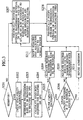
- Fig. 3 shows an operation of the base station.
- the base station receives the reservation packet (containing the QoS request) for the realtime traffic from the mobile terminal (S201)
- the availability of the resources is checked (S202). More specifically, in this embodiment, the QoS request from the user is set as the transmission rate.
- the availability of the resources is indicated by a rate of the average of the uplink interference powers of the slots in the previous frame with respect to the uplink maximum tolerable power, for example.
- the uplink interference powers contain interferences from the other cells.
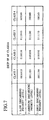
- the QoS (transmission rate) to be provided to the realtime traffic (EF, AF4) is determined (S203). For example, as shown in Fig. 8, when the resource availability coefficient is between 0.7 and 1.0, many resources are available so that it is determined to provide the maximum transmission rate of the user. Also, when the resource availability coefficient is between 0 to 0.3, not many resources are available so that it is determined to provide the minimum transmission rate of the user. This is an exemplary case where the maximum request and the minimum request for the QoS are declared by the mobile terminal at a time of the reservation, but in the case where the maximum request and the minimum request of the QoS are not declared, it is possible for the base station to set several steps such as high, medium and low.
- the transmission rate can be adjusted by the value of the spreading factor (SF) or the multi-code number to be used for each user.
- SF spreading factor
- a provision for reducing the SF to a half and a provision for using twice as many orthogonal codes will require the same amount of the required power resource, so that the exemplary case of adjusting the transmission rate by the number of orthogonal codes to be used will be described here.
- the amount of resources required for providing the determined transmission rate is calculated (S204).
- the transmission power is controlled such that the SIR (Signal-to-Interference Ratio) becomes a target SIR (which will be denoted as "SIRtg").
- SIRtg target SIR
- Sumliup the amount of the uplink interferences as seen from the base station.
- the receiving power necessary at the base station in order to provide the determined transmission rate "rateqos” is calculated by the following equation (2).
- the transmission rate and the number of codes (rateqos/ratecd) for providing "rateqos” are allocated (S209), and notified to the mobile terminal (S212).
- the packet average transmission intervals or the transmission rates for AF3, AF2, AF1 and BE are determined according to the margins of the resources after the allocation of the resources to EF and AF4 as indicated in Fig. 8 (S207), and notified to the mobile terminal by using the notification signal (S208). For example, when the traffics are heavy (when the availability coefficient is between 0 to 0.3), the average transmission intervals of AF3, AF2, AF1 and BE traffics are set to be "12", “24", "36” and "48", respectively, and notified to the mobile terminal.
- the mobile terminal determines the actual transmission timing according to the exponential distribution with the average value equal to the notified average transmission interval of that traffic type. For example, even in the case where a plurality of mobile terminals of the BE traffic exist, each one determines the actual transmission timing according to the exponential distribution with the average of "48", so that it is possible to reduce collisions in the uplink.
- the decision of the resource allocation at the steps S209 and S210 it is decided when the transmission request is made in the case of the realtime traffic, whereas it is decided and notified according to the latest traffic state by setting a certain period (one slot interval or one frame interval, for example) as the average transmission interval in the case of the non-realtime traffic.
- each mobile terminal checks the transmission rate corresponding to the priority level or the traffic type of the own device, determines the number of packets to be transmitted per unit time, and transmits the packets by selecting slots randomly.
- Fig. 4 and Fig. 5 show a configuration of the communication control system according to this embodiment.
- the base station has a circulator 100, a demodulation circuit 101, a signal demultiplexing circuit 102, a decoding circuit 103, a modulation circuit 110, a signal multiplexing circuit 111, an encoding circuit 112, and a resource determination unit 113.
- the circulator 100 carries out transmission and reception of packets through radio communications with the mobile terminal, and the received uplink packets are outputted to the demodulation circuit 101 while the downlink packets modulated by the modulation circuit 110 are inputted from the modulation circuit 110 and transmitted to the mobile terminal.
- the demodulation circuit 101 converts the received signals by a despreading processing or the like, and the converted signals are outputted to the signal demultiplexing circuit 102.
- the signal demultiplexing circuit 102 is a circuit for demultiplexing prescribed signals from the converted signals, and in this embodiment, the control signal such as the reservation signal is demultiplexed and outputted to the resource determination unit 113. Also, the signal demultiplexing circuit 102 outputs the signals after demultiplexing the reservation signal to the decoding circuit 103.
- the decoding circuit 103 decodes the inputted signals and outputs them as the uplink information to circuits of the subsequent stage.
- the encoding circuit 112 encodes the downlink information, and the encoded signals are outputted to the signal multiplexing circuit 111.
- the signal multiplexing circuit 111 is a circuit for multiplexing the signals inputted from the encoding circuit 112 and the notification information inputted from the resource determination unit 113, assembling packets, and outputting them to the modulation circuit 110.
- the modulation circuit 110 modulates the multiplexed data and outputs them to the circulator 100.
- the resource determination unit 113 has a reservation information recognition circuit 120, a vacant resource amount checking circuit 104, a QoS determination circuit 105, a resource determination circuit 106, a remaining resource amount checking circuit 107, a packet average transmission interval or transmission rate determination circuit 108, and a notification information control circuit 109.
- the reservation information recognition circuit 120 is a circuit for recognizing the reservation signal among the control signals demultiplexed by the signal demultiplexing circuit 102 and analyzing its content.
- the vacant resource amount checking circuit 104 is a circuit for checking the amount of currently used resources, judging the vacant resources, and outputting that judgement result to the QoS determination circuit 105.
- the QoS determination circuit 105 is a circuit for judging the priority level of the service request of the user according to the content of the reservation signal.
- the resource determination circuit 106 is a circuit for determining the resource amount according to the checking result of the vacant resource amount checking circuit 104 in the case where the traffic requested from the mobile terminal is realtime.
- the remaining resource amount checking circuit 107 is a circuit for subtracting the resource amount allocated to the realtime traffic from the vacant resource amount to check the remaining resource amount.
- the packet average transmission interval or transmission rate determination circuit 108 is a circuit for determining the average transmission interval according to the priority level of the request from the mobile terminal in the case where the traffic requested by the mobile terminal is non-realtime.
- the notification information control circuit 109 is a circuit for notifying the determined resource amount and average transmission interval to the mobile terminal, which outputs these informations to the signal multiplexing circuit 111.
- the signal demultiplexing circuit 102, the reservation information recognition circuit 120, the vacant resource amount checking circuit 104, the QoS determination circuit 105, the resource determination circuit 106, the remaining resource amount checking circuit 107, the packet average transmission interval or transmission rate determination circuit 108 and the notification information control circuit 109 may be provided behind the decoding circuit 103. Also, the signal multiplexing circuit 111 may be provided in front of the encoding circuit 112.
- the reservation packet transmitted from the mobile terminal is recognized by the reservation information recognition circuit 120 through the circulator 100, the demodulation circuit 101, and the signal demultiplexing circuit 102.
- the vacant resource amount accounting for the interferences of the other cells is checked at the vacant resource amount checking circuit 104, and the QoS to be provided is determined by the QoS determination circuit 105.
- the amount of resources to be reserved for the realtime is calculated and allocated by the resource determination circuit 106.
- the remaining resource amount by subtracting the resources reserved for the real time is checked by the remaining resource amount checking circuit 107.
- the packet average transmission interval or transmission rate for each priority level of the non-realtime is determined by the packet average transmission interval or transmission rate determination circuit 108, and after multiplexing the notification information from the notification information control circuit 109 with the downlink information at the signal multiplexing circuit 111, they are transmitted to the mobile terminal through the modulation circuit 110 and the circulator 100.
- the mobile terminal has a priority level checking unit 199, a reservation information generation circuit 200, an encoding circuit 201, a modulation circuit 202, a circulator 203, a signal demultiplexing circuit 204, a demodulation circuit 205, a decoding circuit 206, a packet average transmission interval or transmission rate checking circuit 207, a number of packets determination circuit 208, and a transmission timing determination circuit 209.
- the circulator 203 carries out transmission and reception of packets through radio communications with the base station, and the received downlink packets are outputted to the signal demultiplexing circuit 204 while the uplink packets modulated by the modulation circuit 202 are inputted from the modulation circuit 202 and transmitted to the base station.
- the signal demultiplexing circuit 204 is a circuit for demultiplexing prescribed signals from the signals inputted from the circulator 203, and in this embodiment, the control signal containing information regarding the QoS and the radio resource amount (notification information) is demultiplexed and outputted to the packet average transmission interval or transmission rate checking circuit 207. Also, the signal demultiplexing circuit 204 outputs the signals after demultiplexing the control signal to the demodulation circuit 205.
- the demodulation circuit 205 converts the received signals by a despreading processing or the like, and the converted signals are outputted to the decoding circuit 206.
- the decoding circuit 206 decodes the inputted signals and outputs them as the downlink information to circuits of the subsequent stage.
- the encoding circuit 201 encodes the uplink information, and the encoded signals are outputted to the modulation circuit 202.
- the modulation circuit 202 modulates the encoded data and outputs them to the circulator 203.
- the priority level checking unit 199 is a circuit for checking the transmission type traffic type (a value of the DSCP, for example), and judging whether it is the realtime traffic or the non-realtime traffic according to Fig. 6 described above. The judgement result of this priority level checking unit 199 is outputted to the reservation information generation circuit 200.
- the reservation information generation circuit 200 is a circuit for generating the reservation signal according to the judgement result of the priority level checking unit 199, and outputting it to the encoding circuit 201. More specifically, the reservation information generation circuit 200 generates the reservation information in the case of the realtime traffic such as EF and AF4 as indicated in Fig. 6.
- the packet average transmission interval or transmission rate checking circuit 207 checks the packet average transmission interval or transmission rate according to the notification information (information regarding the QoS and the radio resource amount) demultiplexed by the signal demultiplexing circuit 204, and outputs this checking result to the number of packets determination circuit 208.
- the number of packets determination circuit 208 determines the number of packets to be transmitted per unit time according to the packet average transmission interval or transmission rate, and outputs the determined number of packets to the transmission timing calculation circuit 209.
- the transmission timing calculation circuit 209 calculates the transmission timing according to the number of packets to be transmitted per unit time and outputs the calculated transmission timing to the encoding circuit 201, the modulation circuit 202 and the circulator 203.
- the encoding circuit 201, the modulation circuit 202 and the circulator 203 encode and modulate the packets and transmit them to the base station at the inputted transmission timing.
- the transmission target traffic type is checked by the priority level checking unit 199, and in the case of the realtime traffic, the reservation information is generated by the reservation information generation circuit 200, and this reservation information is transmitted to the base station through the encoding circuit 201, the modulation circuit 202 and the circulator 203.
- the notification information regarding the QoS and the radio resource amount determined by the base station is received through the circulator 203 and the signal demultiplexing circuit 204.
- the mobile terminal transmits the packet data by using the allocated resource amount through the encoding circuit 201, the modulation circuit 202 and the circulator 203.
- the packet average transmission interval or transmission rate demultiplexed by the signal demultiplexing circuit 204 is checked at the packet average transmission interval or transmission rate checking circuit 207, the transmission timing is calculated at the transmission timing determination circuit 209, and the packet data are transmitted to the base station through the encoding circuit 201, the modulation circuit 202 and the circulator 203 at the determined transmission timing.
- the resources are reserved and the base station allocates the resources according to the resource utilization state and the QoS request of the user, so that it is possible to realize the QoS support and the service quality improvement.
- the resources are not reserved and the packet reservation is unnecessary, so that the delay due to the reservation packet can be reduced by omitting the reservation packet.
- the average transmission interval is determined dynamically according to the resource utilization state so that it is possible to realize the efficient resource utilization.
- the actual transmission timings of the mobile terminals are distributed on a basis of the average transmission interval notified from the base station, so that it is possible to reduce the transmission collisions of the uplink packets and improve the capacity.
- the mobile terminal side judges the traffic type and transmits the reservation signal in the case of the high priority level or the realtime traffic so as to carry out the resource reservation at the base station, so that the QoS can be supported. Also, in the case of the low priority level or the non-realtime traffic, the processing delay and the overhead can be reduced by not transmitting the reservation signal in advance.
- the packet transmission in accordance with the variations of the resource utilization state, by not reserving the resources, referring to the traffic priority level and determining the packet average transmission interval or transmission rate according to the resource utilization state at each period.
- the resource amount according to the reservation signal is determined in advance with respect to the realtime traffic, and when the realtime traffic is less than the reserved amount, the non-realtime packets are transmitted by utilizing the vacant resources, so that the efficient resource utilization can be realized.
- the mobile terminal determines the actual transmission timing on a basis of the average transmission interval notified from the base station, so that it is possible to distribute the transmission timings, and it is possible to reduce the transmission collisions of the uplink packets and improve the capacity.
- the base station allocates the resources to the low priority level or the non-realtime traffic according to the remaining available resource amount by accounting for the interferences from the other cells and the resource amount reserved for the high priority level or the realtime traffic, so that it is possible to realize the efficient utilization of the radio resources while accounting for the QoS support.
Landscapes
- Engineering & Computer Science (AREA)
- Computer Networks & Wireless Communication (AREA)
- Signal Processing (AREA)
- Quality & Reliability (AREA)
- Databases & Information Systems (AREA)
- Mobile Radio Communication Systems (AREA)
- Data Exchanges In Wide-Area Networks (AREA)
- Small-Scale Networks (AREA)
Claims (21)
- Procédé de commande de communication pour des communications du service mobile dans lesquelles des communications par paquet sont effectuées entre un terminal mobile et une station de base, comprenant les étapes consistant à :(a) vérifier un niveau de priorité d'un trafic et juger, (S101) le type du trafic, au niveau du terminal mobile ;(b) transmettre (S103) un signal de réservation pour une demande de transmission à la station de base quand le type du trafic est un niveau de priorité élevé ou un type en temps réel, et ne pas transmettre le signal de réservation à la station de base quand le type du trafic est un niveau de priorité bas ou un type non en temps réel au niveau du terminal mobile ;(c) déterminer (S203) une quantité de ressource à réserver pour une transmission par paquet de priorité élevée ou en temps réel selon un état d'utilisation de ressource et le signal de réservation pour le trafic du niveau de priorité élevé ou de type en temps réel, ou déterminer (S106) un intervalle de transmission moyen ou un débit de transmission pour le trafic du niveau de priorité bas ou du type non en temps réel selon des marges dans les ressources restantes, au niveau de la station de base ; et(d) notifier (S212) la quantité de ressource et l'attribution de ressource ou l'intervalle de transmission moyen ou le débit de transmission déterminés à l'étape (c) de la station de base au terminal mobile.
- Procédé de commande de communication selon la revendication 1, dans lequel le terminal mobile à l'étape (b) transmet le signal de réservation qui contient une demande de QoS (Qualité de Service) d'une application reconnue au niveau du terminal mobile, et la station de base à l'étape (c) vérifie (S202) l'état d'utilisation d'une ressource courante et détermine la quantité de ressource à attribuer à un trafic en temps réel selon l'état d'utilisation de ressource courante et la demande de QoS contenue dans le signal de réservation.
- Procédé de commande de communication selon la revendication 1, dans lequel la station de base à l'étape (c) détermine (S106) l'intervalle de transmission moyen ou le débit de transmission quand le type de trafic de l'application n'est pas en temps réel.
- Procédé de commande de communication selon la revendication 1, dans lequel la station de base à l'étape (c) obtient l'état d'utilisation de ressource en mesurant un niveau de puissance d'interférence de liaison montante ou un débit du niveau de puissance d'interférence de liaison montante et un niveau de puissance d'interférence tolérable de liaison montante.
- Procédé de commande de communication selon la revendication 1, dans lequel la station de base à l'étape (c) attribue (S209) des ressources à un trafic en temps réel chaque fois que la demande de transmission se produit, et détermine l'intervalle de transmission moyen ou le débit de transmission pour un trafic non en temps réel à chaque période prédéterminée selon une quantité totale de ressource disponible sur la base de l'état d'utilisation de ressource dans une période de temps prédéterminée passée.
- Procédé de commande de communication selon la revendication 1, comprenant de plus l'étape consistant à déterminer un nombre de paquets à transmettre par unité de temps selon un débit de transmission d'un type de trafic notifié depuis la station de base, au niveau du terminal mobile.
- Procédé de commande de communication selon la revendication 1, comprenant de plus l'étape consistant à calculer un cadencement de transmission réel selon l'intervalle de transmission moyen d'un type de trafic notifié depuis la station de base et une distribution prédéterminée, au niveau du terminal mobile.
- Procédé de commande de communication selon la revendication 7, comprenant de plus l'étape consistant à mettre à jour le cadencement de transmission réel pour des paquets non encore transmis d'un trafic non en temps réel, selon l'intervalle de transmission moyen qui est périodiquement notifié depuis la station de base.
- Système de commande de communication pour des communications mobiles dans lesquelles des communications par paquet sont effectuées entre un terminal mobile et une station de base, comprenant :une unité de vérification de niveau de priorité (199) pour vérifier un niveau de priorité d'un trafic et pour juger d'un type de trafic, au niveau du terminal mobile ;une unité de production de signal de réservation (200) pour transmettre un signal de réservation pour une demande de transmission à la station de base quand le type du trafic est un niveau de priorité élevé ou un type en temps réel, et pour ne pas transmettre le signal de réservation à la station de base quand le type du trafic est un niveau de priorité bas ou un type non en temps réel, au niveau du terminal mobile ;une unité de détermination de ressource (113) pour déterminer une quantité de ressource à réserver pour une transmission par paquet de priorité élevée ou en temps réel selon un état d'utilisation de ressource et le signal de réservation pour le trafic du niveau de priorité élevé ou du type en temps réel, ou pour déterminer un intervalle de transmission moyen ou un débit de transmission pour le trafic du niveau de priorité bas ou du type non en temps réel selon des marges dans des ressources restantes, au niveau de la station de base ; etune unité de commande d'information de notification (109) pour notifier la quantité de ressource et l'attribution de ressource ou l'intervalle de transmission moyen ou le débit de transmission déterminés par l'unité de détermination de ressource depuis la station de base au terminal mobile.
- Système de commande de communication selon la revendication 9, comprenant de plus une unité de vérification de ressource vacante (104) pour vérifier l'état d'utilisation d'une ressource courante au niveau de la station de base, dans lequel l'unité de production de signal de réservation (200) transmet le signal de réservation qui contient une demande de QoS d'une application reconnue au niveau du terminal mobile, et l'unité de détermination de ressource (113) détermine la quantité de ressource à attribuer à un trafic en temps réel selon l'état d'utilisation de ressource courante et la demande de QoS contenue dans le signal de réservation.
- Système de commande de communication selon la revendication 9, dans lequel l'unité de détermination de ressource (113) détermine l'intervalle de transmission moyen ou le débit de transmission quand un type de trafic de l'application n'est pas en temps réel.
- Système de commande de communication selon la revendication 9, dans lequel l'unité de détermination de ressource (113) obtient l'état d'utilisation de ressource en mesurant un niveau de puissance d'interférence de liaison montante ou un débit du niveau de puissance d'interférence de liaison montante et un niveau de puissance d'interférence tolérable de liaison montante.
- Système de commande de communication selon la revendication 9, dans lequel l'unité de détermination de ressource (111) attribue également des ressources à un trafic en temps réel chaque fois que la demande de transmission se produit, et détermine l'intervalle de transmission moyen ou le débit de transmission pour un trafic non en temps réel à chaque période prédéterminée selon une quantité totale de ressource disponible sur la base de l'état d'utilisation de ressource dans une période de temps prédéterminée passée.
- Système de commande de communication selon la revendication 9, comprenant de plus une unité (208) pour déterminer un nombre de paquets à transmettre par unité de temps selon un débit de transmission d'un type de trafic notifié depuis la station de base, au niveau du terminal mobile.
- Système de commande de communication selon la revendication 9, comprenant de plus une unité de détermination de cadencement de transmission (209) pour calculer un cadencement de transmission réel selon l'intervalle de transmission moyen d'un type de trafic notifié depuis la station de base et une distribution prédéterminée, au niveau du terminal mobile.
- Système de commande de communication selon la revendication 15, dans lequel l'unité de détermination de cadencement de transmission (209) met également à jour le cadencement de transmission réel pour des paquets non encore transmis d'un trafic non en temps réel, selon l'intervalle de transmission moyen qui est périodiquement notifié depuis la station de base.
- Dispositif formant terminal mobile pour effectuer des communications par paquet avec une station de base, comprenant :une unité de vérification de niveau de priorité (119) pour vérifier un niveau de priorité d'un trafic et pour déterminer le type du trafic ; etune unité de production de signal de réservation (250) pour transmettre un signal de réservation pour une demande de transmission à la station de base lorsque le type du trafic est un niveau de priorité élevé ou un type en temps réel, et pour ne pas transmettre le signal de réservation à la station de base lorsque le type du trafic est un niveau de priorité bas ou un type non en temps réel.
- Dispositif formant terminal mobile selon la revendication 17, dans lequel l'unité de production de signal de réservation (200) transmet le signal de réservation qui contient une demande de QoS d'une application reconnue au niveau du dispositif formant station mobile.
- Dispositif formant terminal mobile selon la revendication 17, comprenant de plus une unité (208) pour déterminer un nombre de paquets à transmettre par unité de temps selon un débit de transmission d'un type de trafic notifié depuis la station de base.
- Dispositif formant terminal mobile selon la revendication 17, comprenant de plus une unité de détermination de cadencement de transmission (209) pour calculer un cadencement de transmission réel selon un intervalle de transmission moyen d'un type de trafic notifié depuis la station de base et une distribution prédéterminée.
- Dispositif formant terminal mobile selon la revendication 20, dans lequel l'unité de détermination de cadencement de transmission (209) met également à jour le cadencement de transmission réel pour des paquets non encore transmis d'un trafic non en temps réel, selon l'intervalle de transmission moyen qui est périodiquement notifié et reçu en provenance de la station de base.
Applications Claiming Priority (2)
| Application Number | Priority Date | Filing Date | Title |
|---|---|---|---|
| JP2001369078A JP3895165B2 (ja) | 2001-12-03 | 2001-12-03 | 通信制御システム、通信制御方法、通信基地局及び移動端末 |
| JP2001369078 | 2001-12-03 |
Publications (3)
| Publication Number | Publication Date |
|---|---|
| EP1317103A2 EP1317103A2 (fr) | 2003-06-04 |
| EP1317103A3 EP1317103A3 (fr) | 2003-10-22 |
| EP1317103B1 true EP1317103B1 (fr) | 2006-03-01 |
Family
ID=19178545
Family Applications (1)
| Application Number | Title | Priority Date | Filing Date |
|---|---|---|---|
| EP20020026912 Expired - Lifetime EP1317103B1 (fr) | 2001-12-03 | 2002-12-03 | Système de gestion de communication, procédé de gestion de communication et terminal mobile |
Country Status (7)
| Country | Link |
|---|---|
| US (2) | US7760680B2 (fr) |
| EP (1) | EP1317103B1 (fr) |
| JP (1) | JP3895165B2 (fr) |
| KR (1) | KR100547215B1 (fr) |
| CN (1) | CN1224223C (fr) |
| DE (1) | DE60209427T2 (fr) |
| SG (1) | SG154317A1 (fr) |
Families Citing this family (135)
| Publication number | Priority date | Publication date | Assignee | Title |
|---|---|---|---|---|
| US7295509B2 (en) | 2000-09-13 | 2007-11-13 | Qualcomm, Incorporated | Signaling method in an OFDM multiple access system |
| US9130810B2 (en) | 2000-09-13 | 2015-09-08 | Qualcomm Incorporated | OFDM communications methods and apparatus |
| KR100663854B1 (ko) | 2003-06-20 | 2007-01-02 | 가부시키가이샤 엔.티.티.도코모 | 네트워크 시스템, 제어 장치, 라우터 장치, 액세스 포인트및 이동 단말기 |
| BR0318524A (pt) * | 2003-09-30 | 2006-09-12 | Thomson Licensing | controle de qualidade de serviço em uma rede local sem fios |
| JP3938916B2 (ja) * | 2003-10-16 | 2007-06-27 | 株式会社国際電気通信基礎技術研究所 | 無線ネットワークのための制御方法及び制御装置 |
| JP4105073B2 (ja) * | 2003-10-21 | 2008-06-18 | 株式会社エヌ・ティ・ティ・ドコモ | パケット送信制御装置及びパケット送信制御方法 |
| JP4216694B2 (ja) | 2003-11-07 | 2009-01-28 | 株式会社エヌ・ティ・ティ・ドコモ | 移動通信システムにおける基地局及び送信電力設定方法 |
| JP4088243B2 (ja) * | 2003-11-20 | 2008-05-21 | 松下電器産業株式会社 | 無線通信装置及び伝送レート予測方法 |
| CN100375572C (zh) * | 2004-04-08 | 2008-03-12 | 大唐移动通信设备有限公司 | 控制移动终端非实时业务数据传输的方法 |
| JP4302001B2 (ja) * | 2004-05-17 | 2009-07-22 | 株式会社国際電気通信基礎技術研究所 | 無線ネットワークのための制御装置 |
| JP4779438B2 (ja) * | 2004-05-31 | 2011-09-28 | パナソニック株式会社 | 無線通信方法および無線通信装置 |
| WO2005120109A1 (fr) * | 2004-06-04 | 2005-12-15 | Nortel Networks Limited | Procede et systeme de transfert intercellulaire sans coupure dans des systemes mobiles a large bande |
| JP4291745B2 (ja) * | 2004-06-18 | 2009-07-08 | 株式会社国際電気通信基礎技術研究所 | 無線ネットワークのための制御装置 |
| US9137822B2 (en) | 2004-07-21 | 2015-09-15 | Qualcomm Incorporated | Efficient signaling over access channel |
| US9148256B2 (en) | 2004-07-21 | 2015-09-29 | Qualcomm Incorporated | Performance based rank prediction for MIMO design |
| KR100883915B1 (ko) | 2004-07-27 | 2009-02-18 | 닛본 덴끼 가부시끼가이샤 | 상향회선 무선 리소스 제어 방법, 기지국 장치, 무선 네트워크 제어 장치, 기록 매체, 이동체 통신 시스템, 및 이동국 |
| CN101626622A (zh) * | 2004-07-27 | 2010-01-13 | 日本电气株式会社 | 上行链路无线电资源控制方法、基站设备和无线电网络控制器 |
| US7987499B2 (en) * | 2004-08-18 | 2011-07-26 | Broadcom Corporation | Method and system for exchanging setup configuration protocol information in beacon frames in a WLAN |
| JP4166741B2 (ja) * | 2004-09-17 | 2008-10-15 | 富士通株式会社 | 通信方法 |
| US7742581B2 (en) | 2004-11-24 | 2010-06-22 | Value-Added Communications, Inc. | Electronic messaging exchange |
| KR100788891B1 (ko) * | 2004-12-23 | 2007-12-27 | 한국전자통신연구원 | 통합 트래픽을 위한 패킷 레벨 자원 할당 방법 및 장치 |
| US9876915B2 (en) | 2005-01-28 | 2018-01-23 | Value-Added Communications, Inc. | Message exchange |
| US9282188B2 (en) | 2005-01-28 | 2016-03-08 | Value-Added Communications, Inc. | Voice message exchange |
| US9246560B2 (en) | 2005-03-10 | 2016-01-26 | Qualcomm Incorporated | Systems and methods for beamforming and rate control in a multi-input multi-output communication systems |
| US9154211B2 (en) | 2005-03-11 | 2015-10-06 | Qualcomm Incorporated | Systems and methods for beamforming feedback in multi antenna communication systems |
| US8446892B2 (en) | 2005-03-16 | 2013-05-21 | Qualcomm Incorporated | Channel structures for a quasi-orthogonal multiple-access communication system |
| US9143305B2 (en) | 2005-03-17 | 2015-09-22 | Qualcomm Incorporated | Pilot signal transmission for an orthogonal frequency division wireless communication system |
| US9461859B2 (en) | 2005-03-17 | 2016-10-04 | Qualcomm Incorporated | Pilot signal transmission for an orthogonal frequency division wireless communication system |
| US9520972B2 (en) * | 2005-03-17 | 2016-12-13 | Qualcomm Incorporated | Pilot signal transmission for an orthogonal frequency division wireless communication system |
| US9184870B2 (en) | 2005-04-01 | 2015-11-10 | Qualcomm Incorporated | Systems and methods for control channel signaling |
| JP4711750B2 (ja) * | 2005-04-13 | 2011-06-29 | 株式会社エヌ・ティ・ティ・ドコモ | 移動通信システム、移動局及び基地局並びに通信制御方法 |
| JP2006295725A (ja) * | 2005-04-13 | 2006-10-26 | Ntt Docomo Inc | 移動局、基地局および移動通信システム並びに通信制御方法 |
| US9408220B2 (en) | 2005-04-19 | 2016-08-02 | Qualcomm Incorporated | Channel quality reporting for adaptive sectorization |
| US9036538B2 (en) | 2005-04-19 | 2015-05-19 | Qualcomm Incorporated | Frequency hopping design for single carrier FDMA systems |
| JP2006310919A (ja) * | 2005-04-26 | 2006-11-09 | Evolium Sas | 無線通信ネットワークにおけるサービス優先制御方法、無線通信システム、無線制御装置、端末装置、およびコアネットワーク |
| US8565194B2 (en) | 2005-10-27 | 2013-10-22 | Qualcomm Incorporated | Puncturing signaling channel for a wireless communication system |
| US8879511B2 (en) | 2005-10-27 | 2014-11-04 | Qualcomm Incorporated | Assignment acknowledgement for a wireless communication system |
| US8611284B2 (en) | 2005-05-31 | 2013-12-17 | Qualcomm Incorporated | Use of supplemental assignments to decrement resources |
| US8462859B2 (en) | 2005-06-01 | 2013-06-11 | Qualcomm Incorporated | Sphere decoding apparatus |
| US9179319B2 (en) | 2005-06-16 | 2015-11-03 | Qualcomm Incorporated | Adaptive sectorization in cellular systems |
| US8599945B2 (en) | 2005-06-16 | 2013-12-03 | Qualcomm Incorporated | Robust rank prediction for a MIMO system |
| US8885628B2 (en) | 2005-08-08 | 2014-11-11 | Qualcomm Incorporated | Code division multiplexing in a single-carrier frequency division multiple access system |
| US9209956B2 (en) | 2005-08-22 | 2015-12-08 | Qualcomm Incorporated | Segment sensitive scheduling |
| US20070041457A1 (en) | 2005-08-22 | 2007-02-22 | Tamer Kadous | Method and apparatus for providing antenna diversity in a wireless communication system |
| US8644292B2 (en) | 2005-08-24 | 2014-02-04 | Qualcomm Incorporated | Varied transmission time intervals for wireless communication system |
| JP4891323B2 (ja) * | 2005-08-24 | 2012-03-07 | クゥアルコム・インコーポレイテッド | 無線通信システムに関する可変送信時間間隔 |
| US9136974B2 (en) | 2005-08-30 | 2015-09-15 | Qualcomm Incorporated | Precoding and SDMA support |
| JP2007068054A (ja) * | 2005-09-01 | 2007-03-15 | Fujitsu Ltd | 無線装置 |
| US9172453B2 (en) | 2005-10-27 | 2015-10-27 | Qualcomm Incorporated | Method and apparatus for pre-coding frequency division duplexing system |
| US8477684B2 (en) | 2005-10-27 | 2013-07-02 | Qualcomm Incorporated | Acknowledgement of control messages in a wireless communication system |
| US9210651B2 (en) | 2005-10-27 | 2015-12-08 | Qualcomm Incorporated | Method and apparatus for bootstraping information in a communication system |
| US9225416B2 (en) | 2005-10-27 | 2015-12-29 | Qualcomm Incorporated | Varied signaling channels for a reverse link in a wireless communication system |
| US9088384B2 (en) | 2005-10-27 | 2015-07-21 | Qualcomm Incorporated | Pilot symbol transmission in wireless communication systems |
| US8693405B2 (en) | 2005-10-27 | 2014-04-08 | Qualcomm Incorporated | SDMA resource management |
| US8045512B2 (en) | 2005-10-27 | 2011-10-25 | Qualcomm Incorporated | Scalable frequency band operation in wireless communication systems |
| US9225488B2 (en) | 2005-10-27 | 2015-12-29 | Qualcomm Incorporated | Shared signaling channel |
| US9144060B2 (en) | 2005-10-27 | 2015-09-22 | Qualcomm Incorporated | Resource allocation for shared signaling channels |
| US8582509B2 (en) | 2005-10-27 | 2013-11-12 | Qualcomm Incorporated | Scalable frequency band operation in wireless communication systems |
| US8582548B2 (en) | 2005-11-18 | 2013-11-12 | Qualcomm Incorporated | Frequency division multiple access schemes for wireless communication |
| KR100998748B1 (ko) * | 2005-12-10 | 2010-12-07 | 한국전자통신연구원 | Wibro 시스템에서의 과금 산정 방법 |
| KR100735387B1 (ko) * | 2005-12-14 | 2007-07-04 | 삼성전자주식회사 | 초고속 이동통신 시스템에서 기지국의 스케쥴링 방법 |
| US8831607B2 (en) | 2006-01-05 | 2014-09-09 | Qualcomm Incorporated | Reverse link other sector communication |
| KR100842646B1 (ko) * | 2006-01-17 | 2008-06-30 | 삼성전자주식회사 | 광대역 무선 통신 시스템에서 상향링크 데이터 송신 시스템 및 방법 |
| CN100372403C (zh) * | 2006-01-20 | 2008-02-27 | 华为技术有限公司 | 一种控制用户占用上行信道的方法 |
| KR100946902B1 (ko) * | 2006-05-06 | 2010-03-09 | 삼성전자주식회사 | 이동 통신 시스템에서 자원 운용 장치 및 방법 |
| JP4986702B2 (ja) * | 2006-06-02 | 2012-07-25 | 京セラ株式会社 | 割当方法およびそれを利用した基地局装置 |
| CN1889558B (zh) * | 2006-07-20 | 2010-05-12 | 华为技术有限公司 | 一种iptv承载网中节目频道差异化处理的方法 |
| KR100810910B1 (ko) * | 2006-07-31 | 2008-03-10 | 삼성전자주식회사 | 이동통신 시스템에서 무선 자원 관리 방법 및 장치 |
| KR101138485B1 (ko) | 2006-09-28 | 2012-07-02 | 콸콤 인코포레이티드 | 효율성을 위한 통신 신호들의 번들링 |
| JP2010506459A (ja) | 2006-09-28 | 2010-02-25 | クゥアルコム・インコーポレイテッド | 迅速なセッション確立のための予測的なQoSリソース割り当て |
| CN102695277A (zh) * | 2006-11-01 | 2012-09-26 | 富士通株式会社 | 无线通信系统和无线通信方法 |
| EP2079246A4 (fr) * | 2006-11-01 | 2012-08-22 | Fujitsu Ltd | Appareil de communication sans fil et procédé de communication sans fil |
| KR100848889B1 (ko) * | 2006-12-20 | 2008-07-29 | 에스케이 텔레콤주식회사 | EV-DO 망에서 Layer 3 메시지를 이용한 특정서비스 패킷 인식 장치 및 그 방법 |
| CN100546415C (zh) * | 2007-01-05 | 2009-09-30 | 华为技术有限公司 | 通知终端处理消息的方法、系统、基站及进行消息处理的终端 |
| JP5029025B2 (ja) | 2007-01-18 | 2012-09-19 | 日本電気株式会社 | 無線基地局装置および無線リソース管理方法 |
| US20090028127A1 (en) * | 2007-07-26 | 2009-01-29 | Gordon Kent Walker | Methods and apparatus for providing computational load allocation in a network environment |
| JP5206684B2 (ja) * | 2007-09-28 | 2013-06-12 | 富士通株式会社 | 無線通信システムにおける無線リソースの割当方法並びに無線端末及び無線基地局 |
| CN101843133B (zh) * | 2007-10-31 | 2015-05-13 | 日本电气株式会社 | 通信系统中的资源分配方法、资源分配系统及用于其的基站 |
| JP5059555B2 (ja) | 2007-11-07 | 2012-10-24 | 株式会社エヌ・ティ・ティ・ドコモ | 移動通信システム、無線回線制御装置、移動機、交換機、および、無線回線制御方法 |
| US9455912B2 (en) * | 2007-12-17 | 2016-09-27 | Broadcom Corporation | Method and system for a distinct physical pattern on an active channel to indicate a data rate transition for energy efficient ethernet |
| JP5368474B2 (ja) * | 2007-12-27 | 2013-12-18 | ジー. マークス,ジェームス | コンピュータ実行される方法 |
| US8526442B2 (en) * | 2008-03-13 | 2013-09-03 | Qualcomm Incorporated | Methods and apparatus for using multiple connection identifiers based on traffic requirements |
| US9084231B2 (en) * | 2008-03-13 | 2015-07-14 | Qualcomm Incorporated | Methods and apparatus for acquiring and using multiple connection identifiers |
| JP5277712B2 (ja) | 2008-05-12 | 2013-08-28 | 富士通株式会社 | 無線端末および無線端末における接続方法 |
| KR20090122862A (ko) * | 2008-05-26 | 2009-12-01 | 엘지전자 주식회사 | 프로파일 인덱스 전송을 이용한 상향링크 데이터 송수신방법 |
| JP5537022B2 (ja) * | 2008-12-18 | 2014-07-02 | パナソニック株式会社 | 通信方法及び通信装置 |
| US9621714B2 (en) | 2009-01-27 | 2017-04-11 | Value-Added Communications, Inc. | System and method for electronic notification in institutional communication |
| JP5222763B2 (ja) | 2009-03-23 | 2013-06-26 | Kddi株式会社 | 無線通信端末 |
| JP5104794B2 (ja) * | 2009-03-26 | 2012-12-19 | 住友電気工業株式会社 | 通信装置、通信システムおよび通信方法 |
| KR101623977B1 (ko) * | 2009-10-09 | 2016-05-24 | 삼성전자주식회사 | 이동통신 시스템에서 스케줄링 요청 신호를 전송하는 방법 및 장치 |
| JP5459783B2 (ja) | 2010-03-19 | 2014-04-02 | Kddi株式会社 | 無線端末 |
| CN102939790B (zh) | 2010-04-06 | 2017-02-15 | 富士通株式会社 | 无线通信装置、信息处理装置和无线通信控制方法 |
| JP5660802B2 (ja) * | 2010-04-23 | 2015-01-28 | 京セラ株式会社 | 無線基地局及び通信制御方法 |
| US8526383B2 (en) * | 2010-05-03 | 2013-09-03 | Telefonaktiebolaget Lm Ericsson (Publ) | System and method for allocating transmission resources based on a transmission rank |
| JP5522255B2 (ja) * | 2010-05-07 | 2014-06-18 | 富士通株式会社 | 無線通信システム、管理装置、無線通信方法及び無線通信プログラム |
| JP5348696B2 (ja) | 2010-08-20 | 2013-11-20 | Kddi株式会社 | 無線端末 |
| GB2485234B (en) * | 2010-11-08 | 2015-03-25 | Sca Ipla Holdings Inc | Mobile communications device and method |
| CN102036391A (zh) * | 2010-12-09 | 2011-04-27 | 中兴通讯股份有限公司 | 基于终端服务等级的上行mu-mimo传输方法及基站 |
| GB2488512B (en) * | 2011-01-28 | 2015-03-11 | Sca Ipla Holdings Inc | Telecommunications method and system |
| US9030935B2 (en) * | 2011-03-30 | 2015-05-12 | International Business Machines Corporation | Device and method for adjusting rate limits for transmission rates of data flows having a certain priority in a transmitter |
| US8774208B2 (en) * | 2011-09-14 | 2014-07-08 | Qualcomm Incorporated | Management of TCP/IP messaging in wireless networks |
| JP5849786B2 (ja) * | 2012-03-08 | 2016-02-03 | 富士通株式会社 | データブロック出力装置、通信システム、データブロック出力方法、及び通信方法 |
| WO2014038792A1 (fr) * | 2012-09-05 | 2014-03-13 | 에스케이플래닛 주식회사 | Système et procédé pour un service de fourniture de contenu et dispositif appliqué au service |
| US9455927B1 (en) * | 2012-10-25 | 2016-09-27 | Sonus Networks, Inc. | Methods and apparatus for bandwidth management in a telecommunications system |
| JP2014116732A (ja) * | 2012-12-07 | 2014-06-26 | Toshiba Corp | 無線通信装置 |
| US9948563B2 (en) * | 2013-05-23 | 2018-04-17 | Telefonaktiebolaget Lm Ericsson (Publ) | Transmitting node, receiving node and methods therein |
| CN105338506B (zh) | 2014-07-23 | 2019-05-28 | 华为技术有限公司 | 计费方法和设备、接入设备、服务质量控制方法和设备 |
| US10313208B2 (en) * | 2014-12-17 | 2019-06-04 | Telefonaktiebolaget Lm Ericsson (Publ) | Flexible assignment of network functions for radio access |
| KR101950456B1 (ko) * | 2015-01-19 | 2019-04-22 | 엘에스산전 주식회사 | 태양광발전 장치의 데이터 수집 장치 |
| KR102027047B1 (ko) * | 2015-01-23 | 2019-11-04 | 텔레폰악티에볼라겟엘엠에릭슨(펍) | 이벤트-트리거된 전송을 위한 무선 네트워크 내의 선제적인 리소스 할당 |
| CN107431999B (zh) | 2015-03-18 | 2021-04-09 | 瑞典爱立信有限公司 | 用于寻呼的装置和方法 |
| EP3289803B1 (fr) | 2015-04-30 | 2019-06-12 | Telefonaktiebolaget LM Ericsson (PUBL) | Création de rapport de mesurage assoupli avec double connectivité du plan de commande |
| US9826408B2 (en) * | 2015-12-07 | 2017-11-21 | Cisco Technology, Inc. | System and method to provide uplink interference coordination in a network environment |
| US20170324834A1 (en) * | 2016-05-06 | 2017-11-09 | Global Tel*Link Corp. | System and method for generating and transmitting a non-real time communication |
| US10291730B1 (en) * | 2016-05-27 | 2019-05-14 | Symantec Corporation | Throttling push notifications using predictive workload modeling |
| CN106338128B (zh) * | 2016-09-20 | 2018-04-17 | 珠海格力电器股份有限公司 | 空调器的通讯方法和装置 |
| US11252456B2 (en) | 2016-11-15 | 2022-02-15 | Siden, Inc. | Method and system for providing non-real-time content distribution services |
| US11115705B2 (en) | 2016-11-15 | 2021-09-07 | Siden, Inc. | Method and system for providing non-real-time content distribution services |
| US10433022B2 (en) * | 2016-11-15 | 2019-10-01 | Siden, Inc. A Delaware C Corp | Method and system for providing non-real-time content distribution services |
| US10749827B2 (en) | 2017-05-11 | 2020-08-18 | Global Tel*Link Corporation | System and method for inmate notification and training in a controlled environment facility |
| US11997527B2 (en) | 2017-11-14 | 2024-05-28 | Siden, Inc. | Method and system for controlling the use of dormant capacity for distributing data |
| JP6837418B2 (ja) * | 2017-11-29 | 2021-03-03 | 株式会社日立ビルシステム | 通信制御装置 |
| JP7014041B2 (ja) * | 2018-05-11 | 2022-02-01 | 株式会社デンソー | レーダ装置 |
| US11228923B2 (en) | 2019-05-23 | 2022-01-18 | Siden, Inc. | Dymnamic wireless broadcast system and method for operating the same |
| US11533366B2 (en) | 2020-10-04 | 2022-12-20 | Siden, Inc. | Method and system for controlling the use of dormant capacity for distributing data |
| CN112702108B (zh) * | 2020-12-21 | 2022-12-20 | 上海擎昆信息科技有限公司 | 一种控制用户设备准入的方法和装置 |
| US11979626B2 (en) | 2021-01-22 | 2024-05-07 | Siden, Inc. | Method and system for delivering real-time content using broadcasting and unicasting |
| US12041535B2 (en) | 2021-03-22 | 2024-07-16 | Siden, Inc. | System and method for network conditions aware content distribution |
| US12238155B2 (en) | 2021-05-11 | 2025-02-25 | Siden, Inc. | Method and system for delivering real-time content using broadcasting and unicasting |
| US12432393B2 (en) | 2021-05-31 | 2025-09-30 | Siden, Inc. | Method and system for pre-positioning and post positioning content in a content distribution system |
| US12055655B2 (en) * | 2021-06-24 | 2024-08-06 | Intel Corporation | Signal-to-noise ratio range consistency check for radar ghost target detection |
| US11848990B2 (en) | 2021-10-15 | 2023-12-19 | Siden, Inc. | Method and system for distributing and storing content using local clouds and network clouds |
| TWI821926B (zh) * | 2022-03-02 | 2023-11-11 | 陳立新 | 一種單一帳號的跨類型多方連線通訊方法 |
| CN115913465B (zh) * | 2022-03-22 | 2025-01-17 | 国网山东省电力公司莘县供电公司 | 基于qos等级自适应调整的数据解码方法 |
| CN117351688B (zh) * | 2023-10-09 | 2024-07-16 | 深圳市五兴科技有限公司 | 一种基于5g网络的设备搭建远程操控系统 |
Family Cites Families (21)
| Publication number | Priority date | Publication date | Assignee | Title |
|---|---|---|---|---|
| DK381382A (da) * | 1982-08-26 | 1984-02-27 | Keld Lundqvist | Fraesevaerktoej til brug ved f.eks. fraesning af asfaltveje |
| JP2714061B2 (ja) | 1988-10-27 | 1998-02-16 | 株式会社東芝 | 通信方式 |
| US5521925A (en) * | 1993-09-09 | 1996-05-28 | Hughes Aircraft Company | Method and apparatus for providing mixed voice and data communication in a time division multiple access radio communication system |
| US5729542A (en) | 1995-06-28 | 1998-03-17 | Motorola, Inc. | Method and apparatus for communication system access |
| US5940765A (en) * | 1996-08-30 | 1999-08-17 | Telefonaktiebolaget Lm Ericsson | Radio communications systems and methods for jittered beacon transmission |
| US5790534A (en) * | 1996-09-20 | 1998-08-04 | Nokia Mobile Phones Limited | Load control method and apparatus for CDMA cellular system having circuit and packet switched terminals |
| JP3361707B2 (ja) | 1996-12-27 | 2003-01-07 | 株式会社エヌ・ティ・ティ・ドコモ | 移動通信システムのトラヒック制御方法および基地局装置 |
| JPH10190565A (ja) | 1996-12-27 | 1998-07-21 | Toshiba Corp | 無線通信システム |
| JP3361722B2 (ja) | 1997-05-29 | 2003-01-07 | 株式会社エヌ・ティ・ティ・ドコモ | 移動通信システムのトラヒック制御方法 |
| JP2978456B2 (ja) | 1997-06-23 | 1999-11-15 | 株式会社ワイ・アール・ピー移動通信基盤技術研究所 | 無線パケット伝送システム |
| DE19747534A1 (de) | 1997-10-28 | 1999-04-29 | Cit Alcatel | Digitales Telekommunikations-System mit DECT-Interface für Fax- und Datenanwendungen |
| JP3589851B2 (ja) * | 1998-02-20 | 2004-11-17 | 株式会社日立製作所 | パケット通信システム及びパケット通信装置 |
| CA2302269C (fr) | 1998-07-16 | 2003-11-04 | Samsung Electronics Co., Ltd. | Traitement de donnees en paquets, dans un systeme de communication mobile |
| DE69936665T2 (de) | 1999-01-12 | 2008-05-21 | Nokia Corp. | Verfahren zur verwaltung von physischen betriebsmitteln in einem funkzugriffsnetz |
| JP2000224231A (ja) | 1999-02-02 | 2000-08-11 | Hitachi Ltd | 移動通信システム及びパケットデータ送信方法 |
| KR100321785B1 (ko) | 1999-03-19 | 2002-02-01 | 조정남 | 무선통신 시스템에서의 패킷 트래픽 제어 방법 |
| DE60035481T2 (de) | 2000-01-19 | 2008-03-20 | Lucent Technologies Inc. | Verfahren zur Zuteilung von Funkressourcen |
| JP2001217772A (ja) | 2000-02-02 | 2001-08-10 | Matsushita Electric Ind Co Ltd | 基地局装置及び伝送レート制御方法 |
| AU2001241654A1 (en) * | 2000-02-23 | 2001-09-03 | Microsoft Corporation | Quality of service over paths having a wireless-link |
| JP2001313656A (ja) | 2000-04-28 | 2001-11-09 | Sony Corp | 基地局装置、端末装置、無線通信システム及び無線通信方法 |
| US6760306B1 (en) * | 2000-09-27 | 2004-07-06 | Nortel Networks Limited | Method for reserving network resources using a hierarchical/segment tree for starting and ending times of request |
-
2001
- 2001-12-03 JP JP2001369078A patent/JP3895165B2/ja not_active Expired - Fee Related
-
2002
- 2002-12-02 US US10/307,448 patent/US7760680B2/en not_active Expired - Fee Related
- 2002-12-03 CN CNB021536945A patent/CN1224223C/zh not_active Expired - Fee Related
- 2002-12-03 KR KR20020076162A patent/KR100547215B1/ko not_active Expired - Fee Related
- 2002-12-03 DE DE2002609427 patent/DE60209427T2/de not_active Expired - Lifetime
- 2002-12-03 SG SG200207388-0A patent/SG154317A1/en unknown
- 2002-12-03 EP EP20020026912 patent/EP1317103B1/fr not_active Expired - Lifetime
-
2010
- 2010-03-18 US US12/727,034 patent/US20100254263A1/en not_active Abandoned
Also Published As
| Publication number | Publication date |
|---|---|
| SG154317A1 (en) | 2009-08-28 |
| US20100254263A1 (en) | 2010-10-07 |
| JP2003169363A (ja) | 2003-06-13 |
| CN1424835A (zh) | 2003-06-18 |
| US7760680B2 (en) | 2010-07-20 |
| DE60209427T2 (de) | 2006-09-21 |
| DE60209427D1 (de) | 2006-04-27 |
| JP3895165B2 (ja) | 2007-03-22 |
| US20030103520A1 (en) | 2003-06-05 |
| CN1224223C (zh) | 2005-10-19 |
| KR20030045638A (ko) | 2003-06-11 |
| EP1317103A3 (fr) | 2003-10-22 |
| KR100547215B1 (ko) | 2006-01-26 |
| EP1317103A2 (fr) | 2003-06-04 |
Similar Documents
| Publication | Publication Date | Title |
|---|---|---|
| US7760680B2 (en) | Prioritized communication between base station and mobile unit | |
| US6661777B1 (en) | Process for controlling uplink packet transmission in a wireless communication system | |
| EP1406419B1 (fr) | Procédé d'allocation de resources, station de base, station mobile, et réseau de communication radio à pâquet correspondant | |
| KR100401210B1 (ko) | 부호분할다중접속 이동통신시스템에서 공통채널을할당하기 위한 장치 및 방법 | |
| US8787158B2 (en) | Scheduling data transmissions in a wireless communications network | |
| US7738508B2 (en) | Packet switched connections using dedicated channels | |
| EP1787436B1 (fr) | Methode et systeme pour gerer des ressources radio dans des reseaux de communication mobile, reseau associe et produit de programme informatique correspondant | |
| KR100614597B1 (ko) | 패킷 전송방법, 기지국 및 이동국 | |
| KR100429540B1 (ko) | 이동통신시스템의패킷데이터통신장치및방법 | |
| EP1596621B1 (fr) | Appareil pour l'allocation de ressources radio | |
| US20040090948A1 (en) | Method in a communications system for assigning transmission resources | |
| CA2239524C (fr) | Dispositif et methode d'etablissement de services complementaires dans un systeme de communication | |
| WO2001063851A1 (fr) | Services de paquets de donnees dans un systeme de telecommunications | |
| EP1033849A1 (fr) | Procédé contrôlant l'accès à la ressource radio pour la transmission de paquets d'uplink dans un réseau de transmission sans fil | |
| EP1708378A1 (fr) | Station de base émettrice-réceptrice | |
| KR100547839B1 (ko) | 이동 통신시스템의 선택적 역방향 데이터 전송 장치 및 방법 | |
| KR100566233B1 (ko) | 이동통신 시스템에서 단말의 데이터 레이트 전송 장치 및방법 | |
| JP2003052069A (ja) | 通信システムにおける周波数資源割当方法 | |
| KR20020014148A (ko) | 부호분할다중접속 통신시스템의 역방향 부가채널의 할당방법 | |
| KR100785305B1 (ko) | 광대역 무선 액세스 시스템 및 그 시스템의 무선자원낭비방지방법 |
Legal Events
| Date | Code | Title | Description |
|---|---|---|---|
| PUAI | Public reference made under article 153(3) epc to a published international application that has entered the european phase |
Free format text: ORIGINAL CODE: 0009012 |
|
| 17P | Request for examination filed |
Effective date: 20021203 |
|
| AK | Designated contracting states |
Designated state(s): AT BE BG CH CY CZ DE DK EE ES FI FR GB GR IE IT LI LU MC NL PT SE SI SK TR |
|
| AX | Request for extension of the european patent |
Extension state: AL LT LV MK RO |
|
| PUAL | Search report despatched |
Free format text: ORIGINAL CODE: 0009013 |
|
| AK | Designated contracting states |
Kind code of ref document: A3 Designated state(s): AT BE BG CH CY CZ DE DK EE ES FI FR GB GR IE IT LI LU MC NL PT SE SI SK TR |
|
| AX | Request for extension of the european patent |
Extension state: AL LT LV MK RO |
|
| RIC1 | Information provided on ipc code assigned before grant |
Ipc: 7H 04L 12/56 A Ipc: 7H 04Q 7/38 B |
|
| 17Q | First examination report despatched |
Effective date: 20031229 |
|
| AKX | Designation fees paid |
Designated state(s): DE GB IT |
|
| GRAP | Despatch of communication of intention to grant a patent |
Free format text: ORIGINAL CODE: EPIDOSNIGR1 |
|
| RTI1 | Title (correction) |
Free format text: COMMUNICATION CONTROL SYSTEM, COMMUNICATION CONTROL METHOD AND MOBILE TERMINAL DEVICE |
|
| GRAS | Grant fee paid |
Free format text: ORIGINAL CODE: EPIDOSNIGR3 |
|
| GRAA | (expected) grant |
Free format text: ORIGINAL CODE: 0009210 |
|
| AK | Designated contracting states |
Kind code of ref document: B1 Designated state(s): DE GB IT |
|
| REG | Reference to a national code |
Ref country code: GB Ref legal event code: FG4D |
|
| REF | Corresponds to: |
Ref document number: 60209427 Country of ref document: DE Date of ref document: 20060427 Kind code of ref document: P |
|
| PLBE | No opposition filed within time limit |
Free format text: ORIGINAL CODE: 0009261 |
|
| STAA | Information on the status of an ep patent application or granted ep patent |
Free format text: STATUS: NO OPPOSITION FILED WITHIN TIME LIMIT |
|
| 26N | No opposition filed |
Effective date: 20061204 |
|
| PGFP | Annual fee paid to national office [announced via postgrant information from national office to epo] |
Ref country code: IT Payment date: 20101218 Year of fee payment: 9 Ref country code: GB Payment date: 20101201 Year of fee payment: 9 |
|
| PGFP | Annual fee paid to national office [announced via postgrant information from national office to epo] |
Ref country code: DE Payment date: 20101130 Year of fee payment: 9 |
|
| GBPC | Gb: european patent ceased through non-payment of renewal fee |
Effective date: 20121203 |
|
| REG | Reference to a national code |
Ref country code: DE Ref legal event code: R119 Ref document number: 60209427 Country of ref document: DE Effective date: 20130702 |
|
| PG25 | Lapsed in a contracting state [announced via postgrant information from national office to epo] |
Ref country code: DE Free format text: LAPSE BECAUSE OF NON-PAYMENT OF DUE FEES Effective date: 20130702 |
|
| PG25 | Lapsed in a contracting state [announced via postgrant information from national office to epo] |
Ref country code: GB Free format text: LAPSE BECAUSE OF NON-PAYMENT OF DUE FEES Effective date: 20121203 |
|
| PG25 | Lapsed in a contracting state [announced via postgrant information from national office to epo] |
Ref country code: IT Free format text: LAPSE BECAUSE OF NON-PAYMENT OF DUE FEES Effective date: 20121203 |