EP1322948B1 - Procedes haute sensibilite, haute resolution, pour electrophorese capillaire - Google Patents
Procedes haute sensibilite, haute resolution, pour electrophorese capillaire Download PDFInfo
- Publication number
- EP1322948B1 EP1322948B1 EP01975779A EP01975779A EP1322948B1 EP 1322948 B1 EP1322948 B1 EP 1322948B1 EP 01975779 A EP01975779 A EP 01975779A EP 01975779 A EP01975779 A EP 01975779A EP 1322948 B1 EP1322948 B1 EP 1322948B1
- Authority
- EP
- European Patent Office
- Prior art keywords
- capillary
- uncoated
- analytes
- polymer
- capillaries
- Prior art date
- Legal status (The legal status is an assumption and is not a legal conclusion. Google has not performed a legal analysis and makes no representation as to the accuracy of the status listed.)
- Expired - Lifetime
Links
- 238000000034 method Methods 0.000 title claims abstract description 50
- 238000005251 capillar electrophoresis Methods 0.000 title claims abstract description 35
- 239000000203 mixture Substances 0.000 claims abstract description 42
- 229920002401 polyacrylamide Polymers 0.000 claims abstract description 39
- 238000007873 sieving Methods 0.000 claims abstract description 21
- 230000003993 interaction Effects 0.000 claims abstract description 15
- 239000012634 fragment Substances 0.000 claims description 37
- 238000001712 DNA sequencing Methods 0.000 claims description 17
- -1 poly(N,N-dimethylacrylamide) Polymers 0.000 claims description 14
- XSQUKJJJFZCRTK-UHFFFAOYSA-N Urea Chemical compound NC(N)=O XSQUKJJJFZCRTK-UHFFFAOYSA-N 0.000 claims description 12
- 239000003398 denaturant Substances 0.000 claims description 12
- 229920006037 cross link polymer Polymers 0.000 claims description 9
- 239000011521 glass Substances 0.000 claims description 9
- ZHNUHDYFZUAESO-UHFFFAOYSA-N Formamide Chemical compound NC=O ZHNUHDYFZUAESO-UHFFFAOYSA-N 0.000 claims description 8
- VYPSYNLAJGMNEJ-UHFFFAOYSA-N Silicium dioxide Chemical compound O=[Si]=O VYPSYNLAJGMNEJ-UHFFFAOYSA-N 0.000 claims description 8
- 125000000217 alkyl group Chemical group 0.000 claims description 8
- 239000004202 carbamide Substances 0.000 claims description 8
- 229920002939 poly(N,N-dimethylacrylamides) Polymers 0.000 claims description 8
- 230000005684 electric field Effects 0.000 claims description 7
- 229920003023 plastic Polymers 0.000 claims description 7
- 239000004033 plastic Substances 0.000 claims description 7
- 239000000758 substrate Substances 0.000 claims description 6
- BPQQTUXANYXVAA-UHFFFAOYSA-N Orthosilicate Chemical compound [O-][Si]([O-])([O-])[O-] BPQQTUXANYXVAA-UHFFFAOYSA-N 0.000 claims description 4
- PNEYBMLMFCGWSK-UHFFFAOYSA-N aluminium oxide Inorganic materials [O-2].[O-2].[O-2].[Al+3].[Al+3] PNEYBMLMFCGWSK-UHFFFAOYSA-N 0.000 claims description 4
- 239000005350 fused silica glass Substances 0.000 claims description 4
- 239000005365 phosphate glass Substances 0.000 claims description 4
- HNJBEVLQSNELDL-UHFFFAOYSA-N pyrrolidin-2-one Chemical compound O=C1CCCN1 HNJBEVLQSNELDL-UHFFFAOYSA-N 0.000 claims description 4
- 239000010453 quartz Substances 0.000 claims description 4
- 238000011068 loading method Methods 0.000 claims description 2
- 229920000642 polymer Polymers 0.000 abstract description 50
- 102000040430 polynucleotide Human genes 0.000 description 24
- 108091033319 polynucleotide Proteins 0.000 description 24
- 239000002157 polynucleotide Substances 0.000 description 24
- 239000000243 solution Substances 0.000 description 21
- 238000000926 separation method Methods 0.000 description 18
- 108020004414 DNA Proteins 0.000 description 15
- 102000053602 DNA Human genes 0.000 description 15
- 239000002773 nucleotide Substances 0.000 description 15
- 125000003729 nucleotide group Chemical group 0.000 description 15
- CSCPPACGZOOCGX-UHFFFAOYSA-N Acetone Chemical compound CC(C)=O CSCPPACGZOOCGX-UHFFFAOYSA-N 0.000 description 12
- 150000007523 nucleic acids Chemical class 0.000 description 11
- KFZMGEQAYNKOFK-UHFFFAOYSA-N Isopropanol Chemical compound CC(C)O KFZMGEQAYNKOFK-UHFFFAOYSA-N 0.000 description 10
- XLYOFNOQVPJJNP-UHFFFAOYSA-N water Substances O XLYOFNOQVPJJNP-UHFFFAOYSA-N 0.000 description 10
- 125000002496 methyl group Chemical group [H]C([H])([H])* 0.000 description 9
- 102000039446 nucleic acids Human genes 0.000 description 9
- 108020004707 nucleic acids Proteins 0.000 description 9
- 239000000499 gel Substances 0.000 description 8
- 238000013508 migration Methods 0.000 description 8
- 230000005012 migration Effects 0.000 description 8
- HRPVXLWXLXDGHG-UHFFFAOYSA-N Acrylamide Chemical compound NC(=O)C=C HRPVXLWXLXDGHG-UHFFFAOYSA-N 0.000 description 6
- 125000006539 C12 alkyl group Chemical group [H]C([H])([H])C([H])([H])C([H])([H])C([H])([H])C([H])([H])C([H])([H])C([H])([H])C([H])([H])C([H])([H])C([H])([H])C([H])([H])C([H])([H])* 0.000 description 6
- 229920001577 copolymer Polymers 0.000 description 6
- 238000005227 gel permeation chromatography Methods 0.000 description 6
- 238000010907 mechanical stirring Methods 0.000 description 6
- 238000006116 polymerization reaction Methods 0.000 description 6
- 238000003756 stirring Methods 0.000 description 6
- 239000000872 buffer Substances 0.000 description 5
- 238000006243 chemical reaction Methods 0.000 description 5
- 239000000839 emulsion Substances 0.000 description 5
- 229960004592 isopropanol Drugs 0.000 description 5
- 239000000178 monomer Substances 0.000 description 5
- 238000003752 polymerase chain reaction Methods 0.000 description 5
- 239000000843 powder Substances 0.000 description 5
- 238000002360 preparation method Methods 0.000 description 5
- 238000012163 sequencing technique Methods 0.000 description 5
- 208000034953 Twin anemia-polycythemia sequence Diseases 0.000 description 4
- ROOXNKNUYICQNP-UHFFFAOYSA-N ammonium persulfate Chemical compound [NH4+].[NH4+].[O-]S(=O)(=O)OOS([O-])(=O)=O ROOXNKNUYICQNP-UHFFFAOYSA-N 0.000 description 4
- 238000004458 analytical method Methods 0.000 description 4
- 238000000149 argon plasma sintering Methods 0.000 description 4
- 239000012153 distilled water Substances 0.000 description 4
- 238000001962 electrophoresis Methods 0.000 description 4
- 239000001307 helium Substances 0.000 description 4
- 229910052734 helium Inorganic materials 0.000 description 4
- SWQJXJOGLNCZEY-UHFFFAOYSA-N helium atom Chemical compound [He] SWQJXJOGLNCZEY-UHFFFAOYSA-N 0.000 description 4
- 238000010926 purge Methods 0.000 description 4
- 238000011160 research Methods 0.000 description 4
- QTBSBXVTEAMEQO-UHFFFAOYSA-N Acetic acid Natural products CC(O)=O QTBSBXVTEAMEQO-UHFFFAOYSA-N 0.000 description 3
- 239000012491 analyte Substances 0.000 description 3
- 230000015572 biosynthetic process Effects 0.000 description 3
- 239000007853 buffer solution Substances 0.000 description 3
- 125000001495 ethyl group Chemical group [H]C([H])([H])C([H])([H])* 0.000 description 3
- 238000010528 free radical solution polymerization reaction Methods 0.000 description 3
- 229920001519 homopolymer Polymers 0.000 description 3
- 238000002347 injection Methods 0.000 description 3
- 239000007924 injection Substances 0.000 description 3
- 238000012688 inverse emulsion polymerization Methods 0.000 description 3
- 239000002777 nucleoside Substances 0.000 description 3
- 239000000126 substance Substances 0.000 description 3
- 125000001424 substituent group Chemical group 0.000 description 3
- LENZDBCJOHFCAS-UHFFFAOYSA-N tris Chemical compound OCC(N)(CO)CO LENZDBCJOHFCAS-UHFFFAOYSA-N 0.000 description 3
- FSVCELGFZIQNCK-UHFFFAOYSA-N N,N-bis(2-hydroxyethyl)glycine Chemical compound OCCN(CCO)CC(O)=O FSVCELGFZIQNCK-UHFFFAOYSA-N 0.000 description 2
- DBXNUXBLKRLWFA-UHFFFAOYSA-N N-(2-acetamido)-2-aminoethanesulfonic acid Chemical compound NC(=O)CNCCS(O)(=O)=O DBXNUXBLKRLWFA-UHFFFAOYSA-N 0.000 description 2
- 108091034117 Oligonucleotide Proteins 0.000 description 2
- 239000004809 Teflon Substances 0.000 description 2
- 229920006362 Teflon® Polymers 0.000 description 2
- IQFYYKKMVGJFEH-XLPZGREQSA-N Thymidine Chemical compound O=C1NC(=O)C(C)=CN1[C@@H]1O[C@H](CO)[C@@H](O)C1 IQFYYKKMVGJFEH-XLPZGREQSA-N 0.000 description 2
- 239000007983 Tris buffer Substances 0.000 description 2
- OIRDTQYFTABQOQ-KQYNXXCUSA-N adenosine Chemical compound C1=NC=2C(N)=NC=NC=2N1[C@@H]1O[C@H](CO)[C@@H](O)[C@H]1O OIRDTQYFTABQOQ-KQYNXXCUSA-N 0.000 description 2
- 229910001870 ammonium persulfate Inorganic materials 0.000 description 2
- 230000003321 amplification Effects 0.000 description 2
- 230000000740 bleeding effect Effects 0.000 description 2
- 239000001913 cellulose Substances 0.000 description 2
- 229920002678 cellulose Polymers 0.000 description 2
- KRKNYBCHXYNGOX-UHFFFAOYSA-N citric acid Natural products OC(=O)CC(O)(C(O)=O)CC(O)=O KRKNYBCHXYNGOX-UHFFFAOYSA-N 0.000 description 2
- 239000013599 cloning vector Substances 0.000 description 2
- 239000011248 coating agent Substances 0.000 description 2
- 238000000576 coating method Methods 0.000 description 2
- 238000004132 cross linking Methods 0.000 description 2
- 238000001879 gelation Methods 0.000 description 2
- YMAWOPBAYDPSLA-UHFFFAOYSA-N glycylglycine Chemical compound [NH3+]CC(=O)NCC([O-])=O YMAWOPBAYDPSLA-UHFFFAOYSA-N 0.000 description 2
- CBOIHMRHGLHBPB-UHFFFAOYSA-N hydroxymethyl Chemical compound O[CH2] CBOIHMRHGLHBPB-UHFFFAOYSA-N 0.000 description 2
- 239000010410 layer Substances 0.000 description 2
- 239000007788 liquid Substances 0.000 description 2
- 238000005259 measurement Methods 0.000 description 2
- 239000012528 membrane Substances 0.000 description 2
- BDAGIHXWWSANSR-UHFFFAOYSA-N methanoic acid Natural products OC=O BDAGIHXWWSANSR-UHFFFAOYSA-N 0.000 description 2
- 238000010369 molecular cloning Methods 0.000 description 2
- 238000003199 nucleic acid amplification method Methods 0.000 description 2
- 150000003833 nucleoside derivatives Chemical class 0.000 description 2
- VWDWKYIASSYTQR-UHFFFAOYSA-N sodium nitrate Chemical compound [Na+].[O-][N+]([O-])=O VWDWKYIASSYTQR-UHFFFAOYSA-N 0.000 description 2
- 238000001228 spectrum Methods 0.000 description 2
- 229920003169 water-soluble polymer Polymers 0.000 description 2
- ZORQXIQZAOLNGE-UHFFFAOYSA-N 1,1-difluorocyclohexane Chemical compound FC1(F)CCCCC1 ZORQXIQZAOLNGE-UHFFFAOYSA-N 0.000 description 1
- WKBPZYKAUNRMKP-UHFFFAOYSA-N 1-[2-(2,4-dichlorophenyl)pentyl]1,2,4-triazole Chemical compound C=1C=C(Cl)C=C(Cl)C=1C(CCC)CN1C=NC=N1 WKBPZYKAUNRMKP-UHFFFAOYSA-N 0.000 description 1
- UEKSZTNDVRLVAZ-UHFFFAOYSA-N 1-amino-3-hydroxy-2,2-bis(hydroxymethyl)propane-1-sulfonic acid Chemical compound OCC(CO)(CO)C(S(=O)(=O)O)N UEKSZTNDVRLVAZ-UHFFFAOYSA-N 0.000 description 1
- YKBGVTZYEHREMT-KVQBGUIXSA-N 2'-deoxyguanosine Chemical compound C1=NC=2C(=O)NC(N)=NC=2N1[C@H]1C[C@H](O)[C@@H](CO)O1 YKBGVTZYEHREMT-KVQBGUIXSA-N 0.000 description 1
- OSWFIVFLDKOXQC-UHFFFAOYSA-N 4-(3-methoxyphenyl)aniline Chemical compound COC1=CC=CC(C=2C=CC(N)=CC=2)=C1 OSWFIVFLDKOXQC-UHFFFAOYSA-N 0.000 description 1
- CKTSBUTUHBMZGZ-ULQXZJNLSA-N 4-amino-1-[(2r,4s,5r)-4-hydroxy-5-(hydroxymethyl)oxolan-2-yl]-5-tritiopyrimidin-2-one Chemical compound O=C1N=C(N)C([3H])=CN1[C@@H]1O[C@H](CO)[C@@H](O)C1 CKTSBUTUHBMZGZ-ULQXZJNLSA-N 0.000 description 1
- PXRKCOCTEMYUEG-UHFFFAOYSA-N 5-aminoisoindole-1,3-dione Chemical compound NC1=CC=C2C(=O)NC(=O)C2=C1 PXRKCOCTEMYUEG-UHFFFAOYSA-N 0.000 description 1
- 239000007991 ACES buffer Substances 0.000 description 1
- 229920000936 Agarose Polymers 0.000 description 1
- 0 CC(C)(*)C(N(*)*)=O Chemical compound CC(C)(*)C(N(*)*)=O 0.000 description 1
- 229920013683 Celanese Polymers 0.000 description 1
- 108010014303 DNA-directed DNA polymerase Proteins 0.000 description 1
- 102000016928 DNA-directed DNA polymerase Human genes 0.000 description 1
- KCXVZYZYPLLWCC-UHFFFAOYSA-N EDTA Chemical compound OC(=O)CN(CC(O)=O)CCN(CC(O)=O)CC(O)=O KCXVZYZYPLLWCC-UHFFFAOYSA-N 0.000 description 1
- 102000004190 Enzymes Human genes 0.000 description 1
- 108090000790 Enzymes Proteins 0.000 description 1
- 108010008488 Glycylglycine Proteins 0.000 description 1
- 102100034343 Integrase Human genes 0.000 description 1
- KWYHDKDOAIKMQN-UHFFFAOYSA-N N,N,N',N'-tetramethylethylenediamine Chemical compound CN(C)CCN(C)C KWYHDKDOAIKMQN-UHFFFAOYSA-N 0.000 description 1
- YNLCVAQJIKOXER-UHFFFAOYSA-N N-[tris(hydroxymethyl)methyl]-3-aminopropanesulfonic acid Chemical compound OCC(CO)(CO)NCCCS(O)(=O)=O YNLCVAQJIKOXER-UHFFFAOYSA-N 0.000 description 1
- 108091093037 Peptide nucleic acid Proteins 0.000 description 1
- 239000004743 Polypropylene Substances 0.000 description 1
- 108010092799 RNA-directed DNA polymerase Proteins 0.000 description 1
- 108020004682 Single-Stranded DNA Proteins 0.000 description 1
- WREGKURFCTUGRC-POYBYMJQSA-N Zalcitabine Chemical compound O=C1N=C(N)C=CN1[C@@H]1O[C@H](CO)CC1 WREGKURFCTUGRC-POYBYMJQSA-N 0.000 description 1
- OROQEEMZZJQQSA-UHFFFAOYSA-N [N].NC(=O)C=C Chemical group [N].NC(=O)C=C OROQEEMZZJQQSA-UHFFFAOYSA-N 0.000 description 1
- 229920006322 acrylamide copolymer Polymers 0.000 description 1
- 150000003926 acrylamides Chemical class 0.000 description 1
- 125000003368 amide group Chemical group 0.000 description 1
- 239000007864 aqueous solution Substances 0.000 description 1
- 230000003796 beauty Effects 0.000 description 1
- 239000007998 bicine buffer Substances 0.000 description 1
- 239000005388 borosilicate glass Substances 0.000 description 1
- 229920002301 cellulose acetate Polymers 0.000 description 1
- 239000012986 chain transfer agent Substances 0.000 description 1
- 238000012512 characterization method Methods 0.000 description 1
- 238000004587 chromatography analysis Methods 0.000 description 1
- 238000007796 conventional method Methods 0.000 description 1
- 239000003431 cross linking reagent Substances 0.000 description 1
- 150000001923 cyclic compounds Chemical class 0.000 description 1
- 239000005549 deoxyribonucleoside Substances 0.000 description 1
- 238000009826 distribution Methods 0.000 description 1
- 239000003792 electrolyte Substances 0.000 description 1
- 238000005370 electroosmosis Methods 0.000 description 1
- 238000005516 engineering process Methods 0.000 description 1
- 239000012530 fluid Substances 0.000 description 1
- 239000007850 fluorescent dye Substances 0.000 description 1
- 125000001153 fluoro group Chemical group F* 0.000 description 1
- 235000019253 formic acid Nutrition 0.000 description 1
- 229940043257 glycylglycine Drugs 0.000 description 1
- 230000017525 heat dissipation Effects 0.000 description 1
- 229920001600 hydrophobic polymer Polymers 0.000 description 1
- 229920013821 hydroxy alkyl cellulose Polymers 0.000 description 1
- 150000002500 ions Chemical class 0.000 description 1
- SYJRVVFAAIUVDH-UHFFFAOYSA-N ipa isopropanol Chemical compound CC(C)O.CC(C)O SYJRVVFAAIUVDH-UHFFFAOYSA-N 0.000 description 1
- 125000001449 isopropyl group Chemical group [H]C([H])([H])C([H])(*)C([H])([H])[H] 0.000 description 1
- 150000003951 lactams Chemical class 0.000 description 1
- 150000002605 large molecules Chemical class 0.000 description 1
- 238000004811 liquid chromatography Methods 0.000 description 1
- 239000007791 liquid phase Substances 0.000 description 1
- 229920002521 macromolecule Polymers 0.000 description 1
- 239000000463 material Substances 0.000 description 1
- 150000007522 mineralic acids Chemical class 0.000 description 1
- 238000012986 modification Methods 0.000 description 1
- 230000004048 modification Effects 0.000 description 1
- 125000004123 n-propyl group Chemical group [H]C([H])([H])C([H])([H])C([H])([H])* 0.000 description 1
- 150000007524 organic acids Chemical class 0.000 description 1
- 235000005985 organic acids Nutrition 0.000 description 1
- 150000007530 organic bases Chemical class 0.000 description 1
- 239000012044 organic layer Substances 0.000 description 1
- 150000004713 phosphodiesters Chemical class 0.000 description 1
- 125000005642 phosphothioate group Chemical group 0.000 description 1
- 229920000058 polyacrylate Polymers 0.000 description 1
- 229920000098 polyolefin Polymers 0.000 description 1
- 229920001155 polypropylene Polymers 0.000 description 1
- 229920000036 polyvinylpyrrolidone Polymers 0.000 description 1
- 239000001267 polyvinylpyrrolidone Substances 0.000 description 1
- 235000013855 polyvinylpyrrolidone Nutrition 0.000 description 1
- 239000002243 precursor Substances 0.000 description 1
- 239000000047 product Substances 0.000 description 1
- 230000000644 propagated effect Effects 0.000 description 1
- 238000005086 pumping Methods 0.000 description 1
- 239000011541 reaction mixture Substances 0.000 description 1
- 230000003362 replicative effect Effects 0.000 description 1
- 229920005989 resin Polymers 0.000 description 1
- 239000011347 resin Substances 0.000 description 1
- 239000002342 ribonucleoside Substances 0.000 description 1
- 239000007790 solid phase Substances 0.000 description 1
- 239000002904 solvent Substances 0.000 description 1
- 239000001593 sorbitan monooleate Substances 0.000 description 1
- 235000011069 sorbitan monooleate Nutrition 0.000 description 1
- 229940035049 sorbitan monooleate Drugs 0.000 description 1
- 238000001179 sorption measurement Methods 0.000 description 1
- 239000006228 supernatant Substances 0.000 description 1
- 239000013589 supplement Substances 0.000 description 1
- 238000012546 transfer Methods 0.000 description 1
- 239000001226 triphosphate Substances 0.000 description 1
- 235000011178 triphosphate Nutrition 0.000 description 1
- 238000011179 visual inspection Methods 0.000 description 1
- 239000003643 water by type Substances 0.000 description 1
- 229920003170 water-soluble synthetic polymer Polymers 0.000 description 1
- 229960000523 zalcitabine Drugs 0.000 description 1
Images


Classifications
-
- G—PHYSICS
- G01—MEASURING; TESTING
- G01N—INVESTIGATING OR ANALYSING MATERIALS BY DETERMINING THEIR CHEMICAL OR PHYSICAL PROPERTIES
- G01N27/00—Investigating or analysing materials by the use of electric, electrochemical, or magnetic means
- G01N27/26—Investigating or analysing materials by the use of electric, electrochemical, or magnetic means by investigating electrochemical variables; by using electrolysis or electrophoresis
- G01N27/416—Systems
- G01N27/447—Systems using electrophoresis
- G01N27/44704—Details; Accessories
- G01N27/44747—Composition of gel or of carrier mixture
-
- B—PERFORMING OPERATIONS; TRANSPORTING
- B01—PHYSICAL OR CHEMICAL PROCESSES OR APPARATUS IN GENERAL
- B01D—SEPARATION
- B01D53/00—Separation of gases or vapours; Recovering vapours of volatile solvents from gases; Chemical or biological purification of waste gases, e.g. engine exhaust gases, smoke, fumes, flue gases, aerosols
- B01D53/02—Separation of gases or vapours; Recovering vapours of volatile solvents from gases; Chemical or biological purification of waste gases, e.g. engine exhaust gases, smoke, fumes, flue gases, aerosols by adsorption, e.g. preparative gas chromatography
-
- G—PHYSICS
- G01—MEASURING; TESTING
- G01N—INVESTIGATING OR ANALYSING MATERIALS BY DETERMINING THEIR CHEMICAL OR PHYSICAL PROPERTIES
- G01N27/00—Investigating or analysing materials by the use of electric, electrochemical, or magnetic means
- G01N27/26—Investigating or analysing materials by the use of electric, electrochemical, or magnetic means by investigating electrochemical variables; by using electrolysis or electrophoresis
- G01N27/416—Systems
- G01N27/447—Systems using electrophoresis
- G01N27/44756—Apparatus specially adapted therefor
- G01N27/44791—Microapparatus
Definitions
- the invention relates to a method for separating analytes by capillary electrophoresis.
- Capillary electrophoresis has been applied widely as an analytical technique because of several technical advantages: (i) capillaries have high surface-to-volume ratios which permit more efficient heat dissipation which, in turn, permit high electric fields to be used for more rapid separations; (ii) the technique requires minimal sample volumes; (iii) superior resolution of most analytes is attainable; and (iv) the technique is amenable to automation, see, e.g., Camilleri, editor, Capillary Electrophoresis: Theory and Practice (CRC Press, Boca Raton, 1993 ); and Grossman et al., editors, Capillary Electrophoresis (Academic Press, San Diego, 1992 ).
- electroendoosmosis Another factor that may complicate separations by capillary electrophoresis is the phenomena of electroendoosmosis.
- This phenomena sometimes referred to as electroosmosis or electroendoosmotic flow (EOF)
- EEF electroendoosmotic flow
- This phenomenon has impeded the application of capillary electrophoresis to situations where high resolution separations typically are sought, such as in the analysis of DNA sequencing fragments.
- the phenomena can arise in capillary electrophoresis when the inner wall of the capillary contains immobilized charges. Such charges can cause the formation of a mobile layer of counter ions which, in turn, moves in the presence of an electrical field to create a bulk flow of liquid.
- the magnitude of the EOF can vary depending on a host of factors, including variation in the distribution of charges, selective adsorption of components of the analyte and/or separation medium, pH of the separation medium, and the like. Because this variability can reduce one's ability to resolve closely spaced analyte bands, many attempts have been made to directly or indirectly control such flow.
- the attempts have included covalent coating or modification of the inner wall of the capillary to suppress charged groups, use of high viscosity polymers, adjustment of buffer pH and/or concentration, use of a gel separation medium for covalently coating the capillary wall, and the application of an electric field radial to the axis of the capillary.
- capillary electrophoresis of nucleic acid fragments is often performed using precoated capillaries.
- Precoated capillary tubes typically are expensive to make, have a limited lifetime, and can be subject to reproducibility problems. These problems are particularly important with large scale capillary electrophoresis using multiple capillaries run in parallel.
- compositions that comprise a sieving component, comprising at least one low viscosity, high molecular weight non-crosslinked acrylamide polymer, and a surface interaction component, comprising at least one non-crosslinked polymer.
- the method of the invention can further be carried out in parallel using a plurality of uncoated capillaries or capillary electrophoresis elements containing compositions disclosed herein.
- the values for x and y range from 1 to 3 and the value of p ranges from 1 to 200.
- molecular weight refers to weight average molecular weight, unless otherwise specified.
- capillary refers to a tube or channel or other structure for carrying out electrophoresis that is capable of supporting a volume of separation medium, such as a composition for separating analytes, as disclosed herein.
- the geometry of a capillary may vary widely and includes, but is not limited to, tubes with circular, rectangular or square cross-sections, channels, grooves, plates, and the like, and may be fabricated by a wide range of technologies.
- An important feature of a capillary for use with the method of the invention is the surface-to-volume ratio of the surface in contact with the volume of separation medium. High values of this ratio typically permit better heat transfer from the separation medium during electrophoresis.
- Capillaries for use with the invention are made of silica, fused silica, quartz, silicate-based glass, such as borosilicate glass, phosphate glass, alumina-containing glass, and the like, or other silica-like materials. Capillaries formed in plastic substrates are used.
- Plastic substrates may comprise, for example, polyacrylates and polyolefins, such as LUCRYL ® (BASF, Germany), TPXTM (Matsui Plastics, Inc., White Plains, NY), TOPAS ® (Hoechst Celanese Corp., Summit, NJ), and ZEONOR ® (Zeon Chemicals, Louisville, KY). Descriptions of plastic substrates for channel capillaries may be found, among other places, in U.S. Patent No. 5,750,015 .
- composition for separating analytes comprises a low viscosity, high molecular weight sieving component and optionally, a surface interaction component.
- Such compositions are particularly useful for separating polynucleotides, or other biomolecules having different sizes but similar or identical charge-frictional drag ratios in free solution using capillary electrophoresis.
- a charge-carrying component, or electrolyte is typically included in such compositions.
- the charge-carrying component is usually part of a buffer system for maintaining the separation medium at a constant pH.
- the compositions for separating analytes contain one or more non-crosslinked acrylamide polymers.
- DNA sequencing fragments refers to DNA polynucleotides generated for the purpose of obtaining sequence information about a selected DNA target sequence. Such fragments can be generated enzymatically, e.g., by the Sanger dideoxy method, or chemically, e.g., by the Maxam and Gilbert method. The fragments may originate in a single sequencing reaction (e.g., a dideoxy sequencing reaction performed in the presence of dideoxycytidine tripohophate), or from more than one sequencing reaction (e.g., from four different dideoxy sequencing reactions which include suitably labeled 5'-primers to identify the 3'-terminal base of each fragment).
- Polymer is used in its traditional sense, referring to a large molecule composed of smaller monomeric or oligomeric subunits covalently linked together to form a chain.
- a “homopolymer” is a polymer made up of only one monomeric repeat unit.
- a “copolymer” refers to a polymer made up of two or more kinds of monomeric repeat unit.
- Linear polymers are composed of monomeric repeat units linked together in one continuous length to form polymer molecules. Branched polymers are similar to linear polymers but have side chains protruding from various branch points along the main polymer.
- Star-shaped polymers are similar to branched polymers except that multiple side branches radiate from a single branch site, resulting in a star-shaped or wheel-and-spoke appearance.
- Crosslinked polymers contain, for example, polymer molecules that are covalently linked to each other at points other than at their ends. Crosslinking can occur during the polymerization process in the presence of crosslinking agents. At some degree of crosslinking, known as the gel point, gelation occurs. At the gel point, a visible gel or insoluble polymer forms and the system tends to lose fluidity.
- This crosslinked polymer gel which corresponds to the formation of a network of polymer molecules that are crosslinked to form a macroscopic molecule, is insoluble in all solvents, even at elevated temperatures. Discussion of acrylamide polymers and polymer gels may be found in references known in the art, for example, Odian, Principles of Polymerization, Third Edition (Wiley Interscience, 1991 ).
- non-crosslinked acrylamide polymer refers to polymer molecules comprising acrylamide monomers, with or without branching, but excluding polymer molecules that are crosslinked together. Thus, a non-crosslinked polymer does not contain polymer molecules that are linked at points other than their end, and does not undergo gelation during polymerization.
- polynucleotide refers to linear polymers of natural or modified nucleoside monomers, including double and single stranded deoxyribonucleosides, ribonucleosides, ⁇ -anomeric forms thereof, and the like. Typically, the nucleoside monomers are linked by phosphodiester bonds or analogs thereof to form polynucleotides, however, peptide nucleic acids are also contemplated. Polynucleotides range in size from a few monomeric units, e.g., 20, to several thousands of monomeric units.
- Analogs of phosphodiester linkages include phosphothioate, phosphodithioate, phosphoselenate, phosphodiselenate, phosphoroanilothioate, phosphoranilidate, phosphooramidite, and the like.
- single base resolution refers to the measurement of resolution between two peaks arising from two polynucleotide fragments that differ in size by one nucleotide.
- “Migration time” is the time that it takes for a polynucleotide fragment to travel the length of the capillar
- single base resolution limit refers to the size of a polynucleotide fragment where the single base resolution value drops below 0.58 in a particular system.
- a method is provided for high speed, high resolution capillary electrophoresis of analytes, particularly polynucleotide sequences according to claim 1.
- Non-crosslinked acrylamide polymers with a molecular weight of between 1,000,000 Da and 3,000,000 Da provide unexpected advantages when used in the disclosed method.
- Linear acrylamide polymers with molecular weights less than about 1,000,000 Da provide poorer resolution than the compositions of the invention.
- Linear acrylamide polymers with molecular weights greater than about 3,000,000 Da present viscosity problems and are hard to manipulate, e.g., to insert into and remove from capillaries.
- the compositions of the invention have a viscosity at 25° C of less than 10,000 mPas, preferably less than 5,000 mPas, more preferably less than 1,000 mPas, and most preferably less than 600 mPas.
- Non-crosslinked acrylamide polymers may include, for example, linear polymers such as polyacrylamide (LPA), branched polymers, and star-shaped polymers.
- the sieving component may comprise hydrophilic N-substituted acrylamide polymers (i.e., the substituent is attached to the acrylamide nitrogen) other than polyacrylamide.
- exemplary hydrophilic N-substituted acrylamide polymers include the following homopolymers and their copolymers: where R 3 can be -H or -CH 3 , R 4 and R 5 can be independently -H, -CH 3 , -(CH 2 ) x OH, -CH 2 CH(OH)(CH 2 ) y OR 6 , -CH(CH 2 OH)CH(OH)CH 3 , -CH 2 CH 2 (OCH 2 CH 2 ) p OR 6 , -CH 2 CONH 2 , and R 6 can be independently -H, -CH 3 , or -CH 2 CH 3 .
- the values for x and y range from 1 to 3, the value of p ranges from 1 to 200, and q is directly proportional to the molecular weight of the polymer and ranges from a few hundred to hundreds of thousands.
- the average molecular weight ranges from 100,000 Da to 25,000,000 Da, preferably from 1,000,000 Da to 3,000,000 Da.
- One exemplary hydrophilic N-substituted acrylamide copolymer suitable for use as a sieving component in the disclosed compositions is: where, R 3 , R 4 , R 5 , and the molecular weight of copolymers, are as previously described, and the ratio of m:n ranges from about 100:1 to about 1:100.
- the sieving component comprises a non-crosslinked acrylamide polymer having an average molecular weight between about 1,000,000 Da and 3,000,000 Da.
- Non-crosslinked acrylamide polymers with average molecular weights of 1,000,000 Da or greater provide improved resolution.
- Non-crosslinked acrylamide polymers with average molecular weights of 3,000,000 Da or less provide improved flowability, making such polymers easier to handle and load into uncoated capillaries.
- the surface interaction component of the compositions of the invention may comprise one or more non-crosslinked polymer.
- Such components may belong to a variety of chemical classes, such as those described in the following references: Molyneux, Water-Soluble Synthetic Polymers: Properties and Behavior, Volumes I and II (CRC Press, Boca Raton, 1982 ); Davidson, Editor, Handbook of Water-Soluble Gums and Resins (McGraw-Hill, New York, 1980 ); Franks, editor, Water: A Comprehensive Treatise (Plenum Press, New York, 1973 ); and the like.
- non-crosslinked polymers that may be suitable as a surface interaction component include polyvinylpyrrolidone, N,N-disubstituted polyacrylamide, N- monosubstituted polyacrylamides, and the like.
- the surface interaction component comprises poly(N,N-dimethylacrylamide) (pDMA) in the range of 0.05-0.5%, preferably 0.1-0.4%, and most preferably 0.2%.
- N-substituents of the N-substituted polyacrylamides include C 1 to C 12 alkyl; halo-substituted C 1 to C 12 alkyl; methoxy-substituted C 1 to C 12 alkyl; hydroxyl-substituted C 1 to C 12 alkyl and the like.
- the halo substituent is fluoro and the hydroxyl-substituted C 1 to C 12 alkyl is monosubstituted. It is understood that the above monomer substituents are typically selected so that the resulting polymer is water soluble.
- the C 12 alkyl-containing monomer is often only present as a small fractional component of a copolymer.
- exemplary substituents are selected from the group consisting of C 1 to C 3 alkyl; halo-substituted C 1 to C 3 alkyl; methoxy-substituted C 1 to C 3 alkyl; and hydroxyl-substituted C 1 to C 3 alkyl.
- Such polymers are synthesized by conventional techniques, e.g., as disclosed in Odian, Principles of Polymerization, Third Edition (John Wiley, New York, 1991 ), Glass, editor, Water-Soluble Polymers: Beauty and Performance (Adv. Chem. Ser., #213, American Chemical Society, Washington, D.C., 1986 ), and Molyneux, Water-Soluble Polymers: Properties and Behavior, Vols. I & II (CRC Press, Boca Raton, FL, 1982 ).
- a preferred surface interaction component is pDMA.
- Hydrophobic polymers other than pDMA can be used as the surface interaction component. They include, but are not limited to, the following homopolymers: N-alkyl-substituted acrylamides and their copolymers, where R 7 can be -H or -CH 3 , R 8 and R 9 can be independently -H, -CH 3 , -CH 2 CH 3 , -CH 2 CH 2 CH 3 , -CH(CH 3 ) 2 , or -CH 2 CONH 2 , and z ranges from about 2000 to 50,000. The average molecular weight ranges from 200,000 Da to 5,000,000 Da, preferably 300,000 Da to 2,500,000 Da.
- the amide group can also be cyclic compounds such as
- the polymers comprising the surface interaction component of the separation medium may be present at a concentration of from about 0.001 % to about 10% weight:weight (w:w). Preferably, such polymers are present at a concentration in the range of about 0.01 % to about 1% w:w.
- the composition may comprise additional components such as denaturants.
- denaturants may be useful when it is desirable to prevent the formation of duplexes or secondary structures, for example, with analytes comprising polynucleotides.
- exemplary denaturants include formamide, e.g., 40-90%, urea, e.g., 6-8 M, commercially available lactams, such as pyrrolidone, 2-pyrollidinone, and the like.
- denaturants include urea, formamide, or 2-pyrollidinone, alone or in combination.
- composition viscosity is less than 1,000 mPas at 25° C, or less than 600 mPas at 25° C. All viscosity measurements were made using a Brookfield Model DV-II viscometer (Brookfield Engineering Laboratories, Inc., Middleboro, MA). The spindle speed was 3 rpm for samples with a viscosity of less than 1000 mPas.
- a buffer system may be employed to control pH and as a charge-carrying component.
- exemplary buffers include: aqueous solutions of organic acids, such as citric, acetic, or formic acid; zwitterionics, such as TES (N-tris[hydroxymethyl]-2-aminoethanesulfonic acid, BICINE (N,N-bis[2-hydroxyethyl]glycine, ACES (N-[2-Acetamido]-2-aminoethanesulfonic acid), TAPS (N-tris[Hydroxymethyl]methyl-3- aminopropanesulfonic acid) or glycylglycine; inorganic acids, such as phosphoric; and organic bases, such as Tris (Tris[hydroxymethyl]aminomethane) buffers, e.g., available from Sigma or Calbiochem.
- TES N-tris[hydroxymethyl]-2-aminoethanesulfonic acid
- BICINE N,N-
- Buffer concentration can vary widely, for example between about 1 mM to 1 M.
- exemplary buffer solutions for use in the capillary electrophoresis methods of the invention include: (i) 100 mM TAPS, 7 M urea, pH 8.0; or (ii) TTE (50 mM Tris - 50 mM TAPS), 7 M urea, pH 8.0.
- Double-stranded polynucleotides e.g., DNA fragments from PCR or LCR amplifications, enzyme digests, or the like, are separated by standard protocols, or manufacturer's suggested protocols where a commercial capillary electrophoresis instrument is employed, e.g., a model 270-HT, 310, 3100, or 3700 instrument (Applied Biosystems, Foster City).
- a commercial capillary electrophoresis instrument e.g., a model 270-HT, 310, 3100, or 3700 instrument (Applied Biosystems, Foster City).
- An exception to such standard or suggested protocols is that the compositions and/or capillary electrophoresis elements of the invention are employed.
- the method according to the claims for separating analytes by capillary electrophoresis comprises inserting into an uncoated capillary, having a first and a second end, a composition comprising a sieving component and a surface interaction component.
- a sample of different sized analytes is loaded in the capillary and an electric field is applied between the first and second ends of the capillary.
- the different sized analytes in the sample migrate through the composition within the capillary, separating the analytes.
- the method of the invention can be employed for DNA sequencing, such sequencing involves separation of single stranded polynucleotides prepared by DNA sequencing protocols.
- DNA sequencing protocols can be found, among other places, in Automated DNA Sequencing Chemistry Guide (Applied Biosystems, Part No. 4305080); Sambrook et al., Molecular Cloning: A Laboratory Manual, Second Edition (Cold Spring Harbor Laboratory, New York, 1989 ); Ausbel et al., Current Protocols in Molecular Biology (John Wiley & Sons, 1993 , including supplements through August 2000); or the like.
- the chain-termination methods of DNA sequencing may comprise (1) providing an oligonucleotide primer and a template nucleic acid containing, a target nucleic acid whose sequence is to be determined, (2) hybridizing the oligonucleotide primer to the template nucleic acid, (3) extending the primer with a nucleic acid polymerase, e.g., T7 DNA polymerase, SequenaseTM, reverse transcriptase, or the like, in a reaction mixture containing nucleoside triphosphate precursors and at least one chain terminating nucleotide to form a nested series of DNA fragment populations, such that every shorter DNA fragment is a subsequence of every longer DNA fragment and such that each DNA fragment of the same size terminates with the same chain-terminating nucleotide,
- a nucleic acid polymerase e.g., T7 DNA polymerase, SequenaseTM, reverse transcriptase, or the like
- Acceptable templates include those discussed in the art, e.g., Technical Manual for ABI Model 370A DNA Sequencer (Applied Biosystems, Foster City, CA).
- the target sequence may be inserted into a suitable cloning vector, such as the replicative form of an M13 cloning vector, which is then propagated to amplify the number of copies of the target sequence.
- a suitable cloning vector such as the replicative form of an M13 cloning vector, which is then propagated to amplify the number of copies of the target sequence.
- M13 single-stranded form of M13 is isolated for use as a template.
- a template can be provided by polymerase chain reaction (PCR) as taught in the art, e.g., Innis et al., (cited above); Wilson et al., Biotechniques, Vol. 8, pgs.
- the template can be used in the polymerization reaction(s) either in liquid phase or attached to a solid phase support, e.g., as taught by Stahl et al, Nucleic Acids Research, Vol. 16, pgs. 3025-3038 (1988 ); Hultman et al., Nucleic Acids Research, Vol. 17, pgs. 4937-4946 (1989 ); or the like.
- the nested series DNA fragments are generated, they are separated by capillary electrophoresis using the method of the invention.
- a solution containing 94.50 g distilled water (18 M ohm-cm) and 32.02 g (0.129 mol) of a 28.57 wt% acrylamide solution (Bio-Rad, Hercules, CA) was prepared in a 500-mL three-necked round bottom flask fitted with a 2" Teflon blade for mechanical stirring, a bleeding tube for purging, and a thermometer. Ultrapure helium (99.99%) was bubbled into the solution, with constant mechanical stirring, at a rate of 150 mL/min for 120 minutes, to deoxygenate the solution.
- the resulting water-clear solution was placed in a regenerated 50 K molecular weight cutoff (MWCO) Spectra/Por-7 cellulose membrane and dialyzed against 4.5 gallons of distilled (18 M ohm-cm) water for three days. The water was changed twice daily. The dialyzed solution was lyophilized and 8.41 g of non-crosslinked acrylamide polymer was obtained (92% yield).
- MWCO molecular weight cutoff
- This polymer was characterized by gel permeation chromatography (GPC) using polyacrylamide primary standards by American Polymer Standards (Mentor, Ohio). Separations were performed at 30° C with three chromatography columns in series, an Ultrahydrogel (Waters Corp., Milford, MA) 2000 Angstrom column, an Ultrahydrogel 1000 Angstrom column, and a guard column, using 0.05M NaNO 3 at a flow rate of 1 ml/min. The injection volume was 100 ⁇ l and the detector was a Knauer DRI 8X.
- GPC gel permeation chromatography
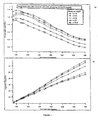
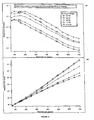
- This non-crosslinked acrylamide polymer was found to have a M n of 589 kilodaltons (kDa), a M w of 2517 kDa (2.5 M in Figures 1-3 ), and a polydispersity of 4.23.
- the M w as determined by batch mode light scattering, was 1936 kDa (Prep. No. 1 in Table 1).
- the skilled artisan will appreciate that the observed molecular weight of a polymer may vary depending on the method of characterization.
- the molecular weights recited in the appended claims are based on the GPC method described above.
- the polymer was vacuum dried at 40 °C for at least 4 hours prior to use.
- a second non-crosslinked acrylamide polymer was prepared as described in Example 1, except that 2.0 mL (26.12 mmol) of isopropanol were added to the deoxygenated solution.
- isopropanol serves as a chain transfer agent, limiting the molecular weight of the polymer as it is prepared.
- the molecular weight of the polymer may be altered.
- the resulting water-clear solution was dialyzed and lyophilized, as in Example 1.
- the yield was 9.0 g of non-crosslinked acrylamide polymer (98% yield).
- the polymer was characterized by gel permeation chromatography and was found to have a M n of 310 kDa, a M w of 1376 kDa (1.4 M in Figures1-3 ), and a polydispersity of 4.40.
- the M w as determined by batch mode light scattering was 975kDa. (Prep. No. 2 in Table 1).
- a fifth non-crosslinked acrylamide polymer was prepared by inverse emulsion polymerization (IEP) as follows. To a 1-L polypropylene beaker was added 100.05 g of Petrolum Special (bp 180-220 °C, Fluka), 100.01 g of a 28.57 wt % acrylamide solution (Bio-Rad), 2.50 g of sorbitan monooleate (Fluka), and 1.00 mL of a 1.0109 wt % solution of ammonium persulfate (99.99 %, Aldrich). The mixture was emulsified by stirring with a 2" magnetic stir bar for 10 minutes at 800 rpm.
- IEP inverse emulsion polymerization
- the emulsion was then transferred into a 1-L three-necked round bottom flask equipped with a 2" Teflon stirring blade for mechanical stirring, a bleeding tube for purging, and a thermometer.
- the emulsion was purged with ultra pure helium (99.99 %) at a rate of 150 mL/min for 120 minutes with constant mechanical stirring at 300 rpm.
- To the emulsion was added 0.010 mL of N,N,N,N-tetramethylethylenediamine (ultra pure, Armesco) using a microsyringe.
- the flask was lowered into an oil bath at 35 ⁇ 1 °C with constant mechanical stirring at 300 rpm and helium purging at 150 mL/min for 19 hours.
- the temperature of the emulsion never exceeded 35° C.
- Exemplary sieving components were prepared as follows. One hundred milligrams of any of the non-crosslinked acrylamide polymers shown in Table 1 was added to 2.44 grams of water, 0.075 grams of 12.3% pDMA solution, and 0.5 grams of 1 M Na-TAPS/10mM EDTA buffer, pH 8.0. The mixture was dissolved by rotating on a rotor wheel overnight. Following this procedure, five different sieving components, each comprising a different non-crosslinked acrylamide polymer shown in Table 1, were prepared.
- compositions for separating analytes were prepared by combining one of the five sieving components from Example 4 with 0.2% pDMA. These five compositions were analyzed to evaluate their ability to separate polynucleotide analytes using an ABI 310 capillary electrophoresis apparatus (Applied Biosystems, Foster City, CA) with 47cm uncoated capillaries (36 cm from the injection end to the detector). Capillary electrophoresis elements were prepared by pumping one of the five compositions through uncoated capillaries for 400 seconds before each analysis.
- Analytes comprising fluorescently labeled DNA sequencing fragments and a single-stranded DNA sequencing ladder, including 18 DNA fragments of known size, labeled with the fluorescent dye TET, were dissolved in formamide. This analyte solution was injected into the capillary electrophoresis elements at 1.5 kV for 10 seconds. Separations were performed at run temperatures of 50°C, 60°C, or 70°C, using an electric field of 200 V/cm.
- the peak width (defined as 4 times the standard deviation of a Gaussian peak) and migration time of peaks from the DNA sequencing ladder and fragments were measured. These values were used to calculate single base resolution values.
- the single base resolution value and migration time for three or four replicate runs performed at each of the run temperatures is shown in Figures 1 , 2 , and 3 .
- the single base resolution limit for the five compositions and the three run temperatures are shown in Figure 4 . Regardless of run temperature, the single base resolution increases as the polymer molecular weight increase until about 3,000,000 Da (see Figure 4 ). Each of the three run temperature curves plateau, however, when the polymer molecular weight increases above about 3,000,000 Da. Thus, increasing the molecular weight of the polymer above about 3,000,000 Da does not noticeably increase the single base resolution. Increasing the molecular weight of the polymer above about 3,000,000 Da does, however, cause a rapid increase in viscosity of the polymer solution.
- the viscosity of the 2,500,000 Da polymer used in the Examples was approximately 500 mPas, while the viscosity of the 6,400,000 Da polymer was greater than 50,000 mPas.
- sieving compositions with molecular weights of 1,000,000 to 3,000,000 Da provide efficient single base resolution while retaining sufficiently low viscosity for capillary loading.
Landscapes
- Chemical & Material Sciences (AREA)
- Health & Medical Sciences (AREA)
- Life Sciences & Earth Sciences (AREA)
- Molecular Biology (AREA)
- Analytical Chemistry (AREA)
- Chemical Kinetics & Catalysis (AREA)
- Immunology (AREA)
- Electrochemistry (AREA)
- Biochemistry (AREA)
- General Health & Medical Sciences (AREA)
- General Physics & Mathematics (AREA)
- Dispersion Chemistry (AREA)
- Pathology (AREA)
- Physics & Mathematics (AREA)
- Engineering & Computer Science (AREA)
- General Chemical & Material Sciences (AREA)
- Oil, Petroleum & Natural Gas (AREA)
- Measuring Or Testing Involving Enzymes Or Micro-Organisms (AREA)
- Compositions Of Macromolecular Compounds (AREA)
- Addition Polymer Or Copolymer, Post-Treatments, Or Chemical Modifications (AREA)
- Processes Of Treating Macromolecular Substances (AREA)
- Investigating Or Analysing Biological Materials (AREA)
- Electrostatic Separation (AREA)
- Solid-Sorbent Or Filter-Aiding Compositions (AREA)
- Electrochromic Elements, Electrophoresis, Or Variable Reflection Or Absorption Elements (AREA)
- Nitrogen Condensed Heterocyclic Rings (AREA)
- Peptides Or Proteins (AREA)
Claims (21)
- Procédé de résolution de bases individuelles de fragments de séquençage d'ADN par électrophorèse capillaire, comprenant :la séparation des fragments de séquençage d'ADN par électrophorèse capillaire dans une composition comprenant : un composant de tamisageet un composant d'interaction de surface comprenant un ou plusieurs polymères non réticulés choisis dans le groupe comprenant le polyacrylamide N,N-disubstitué et le polyacrylamide N-substitué, les substituants N étant choisis dans le groupe comprenant les groupes alkyle en C1 à C3, alkyle en C1 à C3 halo-substitué, alkyle en C1 à C3 méthoxy-substitué et alkyle en C1 à C3 hydoxyl-substitué ; le composant de tamisage et le composant d'interaction de surface étant identiques ou différents ; et la composition ne comprenant pas de gel polymère réticulé,caractérisé en ce que le composant de tamisage est un polymère acrylamide non réticulé ayant un poids moléculaire supérieur à 1 000 000 Da et inférieur ou égal à environ 3 000 000 Da et ayant une viscosité inférieure à 1 000 mPa à 25° C.
- Procédé selon la revendication 1, qui est réalisé en parallèle avec une pluralité de capillaires non revêtus.
- Procédé selon la revendication 1, dans lequel le polymère acrylamide non réticulé a une viscosité inférieure à 500 mPa à 25° C.
- Procédé selon la revendication 1, dans lequel la composition comprend en outre au moins un dénaturant.
- Procédé selon la revendication 4, dans lequel au moins un agent dénaturant est choisi dans le groupe comprenant au moins l'un des composants formamide, urée et 2-pyrrollidinone.
- Procédé selon la revendication 5, dans lequel au moins un dénaturant comprend de l'urée.
- Procédé selon la revendication 1, dans lequel la séparation des analytes dans la composition comprend la séparation des analytes avec un élément d'électrophorèse capillaire, l'élément d'électrophorèse capillaire comprenant un capillaire non revêtu et la composition se trouvant dans le capillaire non revêtu.
- Procédé selon la revendication 7, qui est réalisé en parallèle avec une pluralité de capillaires non revêtus.
- Procédé selon la revendication 8, dans lequel les capillaires non revêtus comprennent la silice, la silice fusionnée, le quartz, le verre à base de silicate, le verre de phosphate ou le verre contenant de l'alumine.
- Procédé selon la revendication 8, dans lequel les capillaires non revêtus comprennent un substrat de plastique.
- Procédé selon la revendication 7, dans lequel la composition comprend en outre un dénaturant, le dénaturant comprenant de l'urée ; le composant de tamisage ayant une viscosité inférieure à 600 mPa à 25° C ; et le composant d'interaction de surface comprenant du poly(N,N-diméthylacrylamide).
- Procédé selon la revendication 7, qui est réalisé en parallèle avec une pluralité de capillaires.
- Procédé selon la revendication 12, dans lequel les capillaires comprennent la silice, la silice fusionnée, le quartz, le verre à base de silicate, le verre de phosphate ou le verre contenant de l'alumine.
- Procédé selon la revendication 12, dans lequel les capillaires comprennent un substrat de plastique.
- Procédé selon la revendication 1, dans lequel la séparation des analytes dans la composition comprend l'insertion de la composition dans un capillaire non revêtu ayant une première et une deuxième extrémité ;
le chargement d'un échantillon d'analytes de tailles différentes dans le capillaire ; et
l'application d'un champ électrique entre les première et deuxième extrémités du capillaire de sorte que les analytes de différents tailles dans l'échantillon migrent dans le capillaire, séparant ainsi les analytes. - Procédé selon la revendication 15, dans lequel la composition comprend en outre au moins un dénaturant.
- Procédé selon la revendication 16, dans lequel au moins un dénaturant comprend de l'urée.
- Procédé selon la revendication 15, dans lequel le polymère non réticulé d'interaction de surface est le poly(N,N-diméthylacrylamide).
- Procédé selon la revendication 15, qui est réalisé en parallèle avec une pluralité de capillaires non revêtus.
- Procédé selon la revendication 19, dans lequel les capillaires non revêtus comprennent la silice, la silice fusionnée, le quartz, le verre à base de silicate, le verre de phosphate ou le verre contenant de l'alumine.
- Procédé selon la revendication 19, dans lequel les capillaires non revêtus comprennent un substrat de plastique.
Priority Applications (1)
| Application Number | Priority Date | Filing Date | Title |
|---|---|---|---|
| EP09016061.5A EP2172771B1 (fr) | 2000-09-25 | 2001-09-25 | Procédé haute sensibilité, haute resolution, pour electrophorese capillaire |
Applications Claiming Priority (3)
| Application Number | Priority Date | Filing Date | Title |
|---|---|---|---|
| US09/668,960 US6706162B1 (en) | 2000-09-25 | 2000-09-25 | High speed, high resolution compositions, methods, and kits for capillary electrophoresis |
| US668960 | 2000-09-25 | ||
| PCT/US2001/042271 WO2002024313A2 (fr) | 2000-09-25 | 2001-09-25 | Compositions haute sensibilite, haute resolution, procedes et trousses pour electrophorese capillaire |
Related Child Applications (1)
| Application Number | Title | Priority Date | Filing Date |
|---|---|---|---|
| EP09016061.5A Division EP2172771B1 (fr) | 2000-09-25 | 2001-09-25 | Procédé haute sensibilité, haute resolution, pour electrophorese capillaire |
Publications (2)
| Publication Number | Publication Date |
|---|---|
| EP1322948A2 EP1322948A2 (fr) | 2003-07-02 |
| EP1322948B1 true EP1322948B1 (fr) | 2010-01-06 |
Family
ID=24684445
Family Applications (2)
| Application Number | Title | Priority Date | Filing Date |
|---|---|---|---|
| EP01975779A Expired - Lifetime EP1322948B1 (fr) | 2000-09-25 | 2001-09-25 | Procedes haute sensibilite, haute resolution, pour electrophorese capillaire |
| EP09016061.5A Expired - Lifetime EP2172771B1 (fr) | 2000-09-25 | 2001-09-25 | Procédé haute sensibilité, haute resolution, pour electrophorese capillaire |
Family Applications After (1)
| Application Number | Title | Priority Date | Filing Date |
|---|---|---|---|
| EP09016061.5A Expired - Lifetime EP2172771B1 (fr) | 2000-09-25 | 2001-09-25 | Procédé haute sensibilité, haute resolution, pour electrophorese capillaire |
Country Status (10)
| Country | Link |
|---|---|
| US (9) | US6706162B1 (fr) |
| EP (2) | EP1322948B1 (fr) |
| JP (1) | JP5059280B2 (fr) |
| CN (5) | CN1266471C (fr) |
| AT (1) | ATE454621T1 (fr) |
| AU (2) | AU9506801A (fr) |
| CA (1) | CA2422971C (fr) |
| DE (1) | DE60141031D1 (fr) |
| ES (1) | ES2537583T3 (fr) |
| WO (1) | WO2002024313A2 (fr) |
Cited By (1)
| Publication number | Priority date | Publication date | Assignee | Title |
|---|---|---|---|---|
| US8221607B2 (en) | 2000-09-25 | 2012-07-17 | Applied Biosystems, Llc | High speed, high resolution compositions, methods and kits for capillary electrophoresis |
Families Citing this family (28)
| Publication number | Priority date | Publication date | Assignee | Title |
|---|---|---|---|---|
| US20020012971A1 (en) * | 2000-03-20 | 2002-01-31 | Mehta Tammy Burd | PCR compatible nucleic acid sieving medium |
| GB0010957D0 (en) * | 2000-05-05 | 2000-06-28 | Novartis Ag | Compound & method |
| IL155179A0 (en) * | 2000-10-10 | 2003-11-23 | Genset Sa | Surface adsorbing polymers and their use in treating surfaces |
| EP1399735A2 (fr) * | 2001-06-13 | 2004-03-24 | Symyx Technologies, Inc. | Additif polymere utilise dans des milieux de separation |
| EP2196799A3 (fr) | 2001-07-19 | 2010-08-25 | Applera Corporation | Tampons pour électrophorèse et leur utilisation |
| GB0121189D0 (en) * | 2001-08-31 | 2001-10-24 | Diagnoswiss Sa | Apparatus and method for separating an analyte |
| ATE480573T1 (de) * | 2002-07-29 | 2010-09-15 | Life Technologies Corp | Pfropfcopolymere, deren herstellung und verwendung bei der kapillarelektrophorese |
| JP4320210B2 (ja) * | 2003-05-01 | 2009-08-26 | 株式会社日立ハイテクノロジーズ | 電気泳動装置 |
| US20050025741A1 (en) | 2003-05-15 | 2005-02-03 | Lau Aldrich N.K. | Poly and copoly(N-vinylamide)s and their use in capillary electrophoresis |
| WO2005032686A2 (fr) * | 2003-09-19 | 2005-04-14 | The Research Foundation Of State University Of New York | Reseaux quasi-interpenetrants utilises comme milieux de separation |
| US7037978B2 (en) * | 2003-09-25 | 2006-05-02 | The Research Foundation Of Suny At Stony Brook | Quasi-interpenetrating networks used as separation media |
| JP4438499B2 (ja) | 2004-04-26 | 2010-03-24 | 株式会社豊田自動織機 | 旋回半径算出方法、該旋回半径算出方法を用いた操舵支援装置及び駐車支援装置、旋回半径算出プログラム及び記録媒体 |
| US7682497B1 (en) | 2004-06-30 | 2010-03-23 | Northwestern University | Thermo-gelling matrices for microchannel DNA sequencing |
| US20060070880A1 (en) * | 2004-08-31 | 2006-04-06 | Applera Corporation | Methods and apparatus for manipulating separation media |
| US20070014699A1 (en) * | 2005-06-23 | 2007-01-18 | Beckman Coulter, Inc, | Methods and apparatus for improving the sensitivity of capillary zone electrophoresis |
| DE102005035388A1 (de) * | 2005-07-28 | 2007-02-01 | Fraunhofer-Gesellschaft zur Förderung der angewandten Forschung e.V. | Mikroverkapselte Kautschukadditive und Verfahren zu deren Herstellung |
| WO2011134072A1 (fr) | 2010-04-27 | 2011-11-03 | Dgel Electrosystem Inc. | Tampon d'électrophorèse pour migration plus rapide, résolution améliorée et durée de vie prolongée |
| CN102286125B (zh) * | 2011-05-05 | 2014-11-05 | 公安部物证鉴定中心 | 一种用于毛细管电泳的聚合物及其制备方法 |
| US20150133310A1 (en) | 2012-05-02 | 2015-05-14 | Ibis Biosciences, Inc. | Nucleic acid sequencing systems and methods |
| WO2014005076A2 (fr) | 2012-06-29 | 2014-01-03 | The Regents Of The University Of Michigan | Procédés et biomarqueurs pour la détection de troubles rénaux |
| JP2016512437A (ja) | 2013-03-14 | 2016-04-28 | アボツト・モレキユラー・インコーポレイテツド | 多重メチル化特異的増幅システムおよび方法 |
| CN105651848A (zh) * | 2014-11-13 | 2016-06-08 | 浙江海正药业股份有限公司 | 一种含有保护剂的毛细管凝胶电泳检测试剂盒 |
| WO2018217816A1 (fr) | 2017-05-22 | 2018-11-29 | Integenx Inc. | Compositions, procédés, kits et dispositifs d'analyse moléculaire |
| CN111344562B (zh) * | 2017-05-22 | 2023-09-12 | 因特根克斯股份有限公司 | 用于分子分析的组合物、方法、试剂盒和装置 |
| US11040882B2 (en) * | 2018-03-23 | 2021-06-22 | Kabushiki Kaisha Toyota Chuo Kenkyusho | Carbon material precursor, carbon material precursor composition containing the same, and method for producing carbon material using these |
| CN108675407A (zh) * | 2018-05-18 | 2018-10-19 | 齐鲁工业大学 | 磁性多金属复合有机高分子磷酸根去除剂及其制备方法 |
| US12116637B2 (en) | 2020-07-24 | 2024-10-15 | The Regents Of The University Of Michigan | Compositions and methods for detecting and treating high grade subtypes of uterine cancer |
| WO2022133439A1 (fr) | 2020-12-17 | 2022-06-23 | Hongene Biotech Corporation | Compositions et trousses avec réseaux interpénétrés pour électrophorèse capillaire |
Family Cites Families (31)
| Publication number | Priority date | Publication date | Assignee | Title |
|---|---|---|---|---|
| US4808683A (en) * | 1986-06-19 | 1989-02-28 | Mitsubishi Chemical Industries Limited | Vinylamine copolymer, flocculating agent using the same, and process for preparing the same |
| US4997537A (en) * | 1986-10-21 | 1991-03-05 | Northeastern University | High performance microcapillary gel electrophoresis |
| US4865707A (en) * | 1986-10-21 | 1989-09-12 | Northeastern University | Capillary gel electrophoresis columns |
| US4999340A (en) * | 1988-08-04 | 1991-03-12 | Board Of Regents, The University Of Texas System | Rehydratable agarose gels |
| US5089111A (en) | 1989-01-27 | 1992-02-18 | Bio-Rad Laboratories, Inc. | Electrophoretic sieving in gel-free media with dissolved polymers |
| US5015350A (en) * | 1989-11-06 | 1991-05-14 | Applied Biosystems, Inc. | Flow-rate-controlled surface-charge coating for capillary electrophoresis |
| US5264101A (en) * | 1989-11-06 | 1993-11-23 | Applied Biosystems, Inc. | Capillary electrophoresis molecular weight separation of biomolecules using a polymer-containing solution |
| US5164055A (en) * | 1990-01-29 | 1992-11-17 | Applied Biosystems, Inc. | High-viscosity polymer matrix and methods |
| US5750015A (en) | 1990-02-28 | 1998-05-12 | Soane Biosciences | Method and device for moving molecules by the application of a plurality of electrical fields |
| US5126021A (en) | 1991-07-17 | 1992-06-30 | Applied Biosystems Inc. | Low-viscosity polymer solution for capillary electrophoresis |
| FR2690012B1 (fr) | 1992-04-13 | 1994-07-08 | France Telecom | Procede de reglage d'une source lumineuse continument syntonisable. |
| US5290418A (en) * | 1992-09-24 | 1994-03-01 | Applied Biosystems, Inc. | Viscous electrophoresis polymer medium and method |
| US5292416A (en) * | 1992-11-13 | 1994-03-08 | Indiana University Foundation | Pulsed-field separation of polysaccharides in capillaries |
| US5374527A (en) | 1993-01-21 | 1994-12-20 | Applied Biosystems, Inc. | High resolution DNA sequencing method using low viscosity medium |
| US5338427A (en) * | 1993-02-26 | 1994-08-16 | Biometric Imaging Inc. | Single use separation cartridge for a capillary electrophoresis instrument |
| US5354371A (en) * | 1993-05-28 | 1994-10-11 | Courtaulds Fibres (Holdings) Limited | Transport of solutions of cellulose through pipes |
| AU1254295A (en) * | 1993-12-17 | 1995-07-03 | Perkin-Elmer Corporation, The | Uncharged polymers for separation of biomolecules by capillary electrophoresis |
| JPH10502052A (ja) * | 1994-04-08 | 1998-02-24 | ハイブライドン インコーポレイテッド | 陰イオン交換クロマトグラフィーを用いるオリゴデオキシヌクレオチド・ホスホロチエオエートの精製 |
| US6001229A (en) * | 1994-08-01 | 1999-12-14 | Lockheed Martin Energy Systems, Inc. | Apparatus and method for performing microfluidic manipulations for chemical analysis |
| US5571398A (en) * | 1994-12-23 | 1996-11-05 | Northeastern University | Precise capillary electrophoretic interface for sample collection or analysis |
| US5582705A (en) * | 1995-05-19 | 1996-12-10 | Iowa State University Research Foundation, Inc. | Multiplexed capillary electrophoresis system |
| WO1997003098A1 (fr) * | 1995-07-07 | 1997-01-30 | Fraunhofer-Gesellschaft zur Förderung der angewandten Forschung e.V. | Copolymeres d'acrylamide ramifies hydrosolubles a poids moleculaire eleve et leur procede de preparation |
| US5883211A (en) * | 1996-01-19 | 1999-03-16 | Aclara Biosciences, Inc. | Thermoreversible hydrogels comprising linear copolymers and their use in electrophoresis |
| EP0868535B9 (fr) * | 1996-01-23 | 2007-05-09 | Qiagen Genomics, Inc. | Procedes et compositions permettant de determiner la sequence de molecules d'acides nucleiques |
| JPH09236580A (ja) | 1996-02-29 | 1997-09-09 | Mitsuru Akashi | キャピラリー電気泳動用媒体 |
| US5779868A (en) | 1996-06-28 | 1998-07-14 | Caliper Technologies Corporation | Electropipettor and compensation means for electrophoretic bias |
| SE9602638D0 (sv) * | 1996-07-03 | 1996-07-03 | Pharmacia Biotech Ab | An improved method for the capillary electrophoresis of nucleic acids, proteins and low molecular charged compounds |
| US6554985B2 (en) | 1998-11-10 | 2003-04-29 | Curagen Corporation | Methods and formulations for the separation of biological macromolecules |
| CA2358480A1 (fr) | 1999-01-12 | 2000-07-20 | Spectrumedix Corporation | Copolymeres destines a l'electrophorese capillaire en gel |
| US6787016B2 (en) * | 2000-05-01 | 2004-09-07 | Aclara Biosciences, Inc. | Dynamic coating with linear polymer mixture for electrophoresis |
| US6706162B1 (en) * | 2000-09-25 | 2004-03-16 | Applera Corporation | High speed, high resolution compositions, methods, and kits for capillary electrophoresis |
-
2000
- 2000-09-25 US US09/668,960 patent/US6706162B1/en not_active Expired - Lifetime
-
2001
- 2001-09-25 AU AU9506801A patent/AU9506801A/xx active Pending
- 2001-09-25 DE DE60141031T patent/DE60141031D1/de not_active Expired - Lifetime
- 2001-09-25 WO PCT/US2001/042271 patent/WO2002024313A2/fr not_active Ceased
- 2001-09-25 AT AT01975779T patent/ATE454621T1/de not_active IP Right Cessation
- 2001-09-25 EP EP01975779A patent/EP1322948B1/fr not_active Expired - Lifetime
- 2001-09-25 CN CNB018162290A patent/CN1266471C/zh not_active Expired - Lifetime
- 2001-09-25 CN CNA2005100937123A patent/CN1737563A/zh active Pending
- 2001-09-25 JP JP2002528377A patent/JP5059280B2/ja not_active Expired - Lifetime
- 2001-09-25 CN CN201710539023.3A patent/CN107576712A/zh active Pending
- 2001-09-25 CN CNB2006100959748A patent/CN100526874C/zh not_active Expired - Fee Related
- 2001-09-25 AU AU2001295068A patent/AU2001295068B2/en not_active Ceased
- 2001-09-25 CA CA2422971A patent/CA2422971C/fr not_active Expired - Fee Related
- 2001-09-25 CN CN201410283658.8A patent/CN104132992B/zh not_active Expired - Lifetime
- 2001-09-25 EP EP09016061.5A patent/EP2172771B1/fr not_active Expired - Lifetime
- 2001-09-25 ES ES09016061.5T patent/ES2537583T3/es not_active Expired - Lifetime
-
2004
- 2004-03-05 US US10/794,486 patent/US8221607B2/en not_active Expired - Lifetime
-
2010
- 2010-03-16 US US12/725,425 patent/US8366900B2/en not_active Expired - Fee Related
-
2012
- 2012-09-12 US US13/612,634 patent/US20130105314A1/en not_active Abandoned
- 2012-09-13 US US13/615,417 patent/US8734630B2/en not_active Expired - Fee Related
-
2013
- 2013-08-23 US US13/975,138 patent/US20140090980A1/en not_active Abandoned
-
2015
- 2015-10-23 US US14/921,002 patent/US9625416B2/en not_active Expired - Fee Related
-
2017
- 2017-03-07 US US15/451,916 patent/US9964517B2/en not_active Expired - Fee Related
-
2018
- 2018-04-24 US US15/960,838 patent/US20190064108A1/en not_active Abandoned
Cited By (2)
| Publication number | Priority date | Publication date | Assignee | Title |
|---|---|---|---|---|
| US8221607B2 (en) | 2000-09-25 | 2012-07-17 | Applied Biosystems, Llc | High speed, high resolution compositions, methods and kits for capillary electrophoresis |
| US8366900B2 (en) | 2000-09-25 | 2013-02-05 | Applied Biosystems, Llc | High speed, high resolution compositions, methods and kits for capillary electrophoresis |
Also Published As
Similar Documents
| Publication | Publication Date | Title |
|---|---|---|
| US9964517B2 (en) | High speed, high resolution compositions, methods and kits for capillary electrophoresis | |
| AU2001295068A1 (en) | High speed, high resolution compositions, methods, and kits for capillary electrophoresis | |
| AU677495B2 (en) | Polymers for separation of biomolecules by capillary capillary electrophoresis | |
| US7045048B2 (en) | Polymers for separation of biomolecules by capillary electrophoresis | |
| US6355709B1 (en) | Polymers for separation of biomolecules by capillary electrophoresis | |
| US12092606B2 (en) | Compositions and kits comprising interpenetrating polymer network for capillary electrophoresis | |
| CA2538505A1 (fr) | Reseaux quasi-interpenetrants utilises comme milieux de separation |
Legal Events
| Date | Code | Title | Description |
|---|---|---|---|
| PUAI | Public reference made under article 153(3) epc to a published international application that has entered the european phase |
Free format text: ORIGINAL CODE: 0009012 |
|
| 17P | Request for examination filed |
Effective date: 20030423 |
|
| AK | Designated contracting states |
Designated state(s): AT BE CH CY DE DK ES FI FR GB GR IE IT LI LU MC NL PT SE TR |
|
| AX | Request for extension of the european patent |
Extension state: AL LT LV MK RO SI |
|
| RIN1 | Information on inventor provided before grant (corrected) |
Inventor name: LAU, ALDRICH, N., K. Inventor name: VOSS, KARL, O. |
|
| 17Q | First examination report despatched |
Effective date: 20050630 |
|
| GRAP | Despatch of communication of intention to grant a patent |
Free format text: ORIGINAL CODE: EPIDOSNIGR1 |
|
| RTI1 | Title (correction) |
Free format text: HIGH SPEED, HIGH RESOLUTION METHOD FOR CAPILLARY ELECTROPHORESIS |
|
| GRAS | Grant fee paid |
Free format text: ORIGINAL CODE: EPIDOSNIGR3 |
|
| GRAA | (expected) grant |
Free format text: ORIGINAL CODE: 0009210 |
|
| RAP1 | Party data changed (applicant data changed or rights of an application transferred) |
Owner name: APPLIED BIOSYSTEMS, LLC |
|
| AK | Designated contracting states |
Kind code of ref document: B1 Designated state(s): AT BE CH CY DE DK ES FI FR GB GR IE IT LI LU MC NL PT SE TR |
|
| REG | Reference to a national code |
Ref country code: GB Ref legal event code: FG4D |
|
| REG | Reference to a national code |
Ref country code: CH Ref legal event code: EP |
|
| REG | Reference to a national code |
Ref country code: IE Ref legal event code: FG4D |
|
| REF | Corresponds to: |
Ref document number: 60141031 Country of ref document: DE Date of ref document: 20100225 Kind code of ref document: P |
|
| RAP2 | Party data changed (patent owner data changed or rights of a patent transferred) |
Owner name: LIFE TECHNOLOGIES CORPORATION |
|
| REG | Reference to a national code |
Ref country code: NL Ref legal event code: VDEP Effective date: 20100106 |
|
| RAP2 | Party data changed (patent owner data changed or rights of a patent transferred) |
Owner name: LIFE TECHNOLOGIES CORPORATION |
|
| PG25 | Lapsed in a contracting state [announced via postgrant information from national office to epo] |
Ref country code: AT Free format text: LAPSE BECAUSE OF FAILURE TO SUBMIT A TRANSLATION OF THE DESCRIPTION OR TO PAY THE FEE WITHIN THE PRESCRIBED TIME-LIMIT Effective date: 20100106 |
|
| PG25 | Lapsed in a contracting state [announced via postgrant information from national office to epo] |
Ref country code: PT Free format text: LAPSE BECAUSE OF FAILURE TO SUBMIT A TRANSLATION OF THE DESCRIPTION OR TO PAY THE FEE WITHIN THE PRESCRIBED TIME-LIMIT Effective date: 20100506 Ref country code: NL Free format text: LAPSE BECAUSE OF FAILURE TO SUBMIT A TRANSLATION OF THE DESCRIPTION OR TO PAY THE FEE WITHIN THE PRESCRIBED TIME-LIMIT Effective date: 20100106 Ref country code: ES Free format text: LAPSE BECAUSE OF FAILURE TO SUBMIT A TRANSLATION OF THE DESCRIPTION OR TO PAY THE FEE WITHIN THE PRESCRIBED TIME-LIMIT Effective date: 20100417 |
|
| PG25 | Lapsed in a contracting state [announced via postgrant information from national office to epo] |
Ref country code: FI Free format text: LAPSE BECAUSE OF FAILURE TO SUBMIT A TRANSLATION OF THE DESCRIPTION OR TO PAY THE FEE WITHIN THE PRESCRIBED TIME-LIMIT Effective date: 20100106 |
|
| PG25 | Lapsed in a contracting state [announced via postgrant information from national office to epo] |
Ref country code: SE Free format text: LAPSE BECAUSE OF FAILURE TO SUBMIT A TRANSLATION OF THE DESCRIPTION OR TO PAY THE FEE WITHIN THE PRESCRIBED TIME-LIMIT Effective date: 20100106 Ref country code: GR Free format text: LAPSE BECAUSE OF FAILURE TO SUBMIT A TRANSLATION OF THE DESCRIPTION OR TO PAY THE FEE WITHIN THE PRESCRIBED TIME-LIMIT Effective date: 20100407 Ref country code: CY Free format text: LAPSE BECAUSE OF FAILURE TO SUBMIT A TRANSLATION OF THE DESCRIPTION OR TO PAY THE FEE WITHIN THE PRESCRIBED TIME-LIMIT Effective date: 20100106 Ref country code: BE Free format text: LAPSE BECAUSE OF FAILURE TO SUBMIT A TRANSLATION OF THE DESCRIPTION OR TO PAY THE FEE WITHIN THE PRESCRIBED TIME-LIMIT Effective date: 20100106 |
|
| PLBE | No opposition filed within time limit |
Free format text: ORIGINAL CODE: 0009261 |
|
| STAA | Information on the status of an ep patent application or granted ep patent |
Free format text: STATUS: NO OPPOSITION FILED WITHIN TIME LIMIT |
|
| 26N | No opposition filed |
Effective date: 20101007 |
|
| PG25 | Lapsed in a contracting state [announced via postgrant information from national office to epo] |
Ref country code: DK Free format text: LAPSE BECAUSE OF FAILURE TO SUBMIT A TRANSLATION OF THE DESCRIPTION OR TO PAY THE FEE WITHIN THE PRESCRIBED TIME-LIMIT Effective date: 20100106 |
|
| PG25 | Lapsed in a contracting state [announced via postgrant information from national office to epo] |
Ref country code: IT Free format text: LAPSE BECAUSE OF FAILURE TO SUBMIT A TRANSLATION OF THE DESCRIPTION OR TO PAY THE FEE WITHIN THE PRESCRIBED TIME-LIMIT Effective date: 20100106 |
|
| PG25 | Lapsed in a contracting state [announced via postgrant information from national office to epo] |
Ref country code: MC Free format text: LAPSE BECAUSE OF NON-PAYMENT OF DUE FEES Effective date: 20100930 |
|
| REG | Reference to a national code |
Ref country code: CH Ref legal event code: PL |
|
| PG25 | Lapsed in a contracting state [announced via postgrant information from national office to epo] |
Ref country code: IE Free format text: LAPSE BECAUSE OF NON-PAYMENT OF DUE FEES Effective date: 20100925 Ref country code: CH Free format text: LAPSE BECAUSE OF NON-PAYMENT OF DUE FEES Effective date: 20100930 Ref country code: LI Free format text: LAPSE BECAUSE OF NON-PAYMENT OF DUE FEES Effective date: 20100930 |
|
| PG25 | Lapsed in a contracting state [announced via postgrant information from national office to epo] |
Ref country code: LU Free format text: LAPSE BECAUSE OF NON-PAYMENT OF DUE FEES Effective date: 20100925 |
|
| PG25 | Lapsed in a contracting state [announced via postgrant information from national office to epo] |
Ref country code: TR Free format text: LAPSE BECAUSE OF FAILURE TO SUBMIT A TRANSLATION OF THE DESCRIPTION OR TO PAY THE FEE WITHIN THE PRESCRIBED TIME-LIMIT Effective date: 20100106 |
|
| REG | Reference to a national code |
Ref country code: FR Ref legal event code: PLFP Year of fee payment: 16 |
|
| REG | Reference to a national code |
Ref country code: FR Ref legal event code: PLFP Year of fee payment: 17 |
|
| REG | Reference to a national code |
Ref country code: FR Ref legal event code: PLFP Year of fee payment: 18 |
|
| PGFP | Annual fee paid to national office [announced via postgrant information from national office to epo] |
Ref country code: GB Payment date: 20200916 Year of fee payment: 20 Ref country code: FR Payment date: 20200812 Year of fee payment: 20 Ref country code: DE Payment date: 20200916 Year of fee payment: 20 |
|
| REG | Reference to a national code |
Ref country code: DE Ref legal event code: R071 Ref document number: 60141031 Country of ref document: DE |
|
| REG | Reference to a national code |
Ref country code: GB Ref legal event code: PE20 Expiry date: 20210924 |
|
| PG25 | Lapsed in a contracting state [announced via postgrant information from national office to epo] |
Ref country code: GB Free format text: LAPSE BECAUSE OF EXPIRATION OF PROTECTION Effective date: 20210924 |