EP1330136B1 - Procede de recherche initiale cellulaire dans un systeme de communication mobile numerique a acces multiple par repartition de code (amrc) - Google Patents
Procede de recherche initiale cellulaire dans un systeme de communication mobile numerique a acces multiple par repartition de code (amrc) Download PDFInfo
- Publication number
- EP1330136B1 EP1330136B1 EP01900378A EP01900378A EP1330136B1 EP 1330136 B1 EP1330136 B1 EP 1330136B1 EP 01900378 A EP01900378 A EP 01900378A EP 01900378 A EP01900378 A EP 01900378A EP 1330136 B1 EP1330136 B1 EP 1330136B1
- Authority
- EP
- European Patent Office
- Prior art keywords
- carrier
- deviation
- training sequence
- characteristic window
- synchronization
- Prior art date
- Legal status (The legal status is an assumption and is not a legal conclusion. Google has not performed a legal analysis and makes no representation as to the accuracy of the status listed.)
- Expired - Lifetime
Links
- 238000000034 method Methods 0.000 title claims abstract description 79
- 238000012549 training Methods 0.000 claims abstract description 40
- 238000001514 detection method Methods 0.000 claims abstract description 24
- 238000010295 mobile communication Methods 0.000 claims abstract description 19
- 238000012937 correction Methods 0.000 claims abstract description 17
- 238000005516 engineering process Methods 0.000 claims description 18
- 101000802640 Homo sapiens Lactosylceramide 4-alpha-galactosyltransferase Proteins 0.000 claims description 3
- 102100035838 Lactosylceramide 4-alpha-galactosyltransferase Human genes 0.000 claims description 3
- 230000001413 cellular effect Effects 0.000 abstract description 11
- 230000000694 effects Effects 0.000 description 3
- 238000004891 communication Methods 0.000 description 2
- 230000003247 decreasing effect Effects 0.000 description 2
- 238000010586 diagram Methods 0.000 description 2
- 230000008713 feedback mechanism Effects 0.000 description 2
- 238000011084 recovery Methods 0.000 description 2
- 230000005540 biological transmission Effects 0.000 description 1
- 239000013078 crystal Substances 0.000 description 1
- 230000007423 decrease Effects 0.000 description 1
- 238000012545 processing Methods 0.000 description 1
- 230000001360 synchronised effect Effects 0.000 description 1
Images


Classifications
-
- H—ELECTRICITY
- H04—ELECTRIC COMMUNICATION TECHNIQUE
- H04W—WIRELESS COMMUNICATION NETWORKS
- H04W52/00—Power management, e.g. Transmission Power Control [TPC] or power classes
- H04W52/04—Transmission power control [TPC]
- H04W52/30—Transmission power control [TPC] using constraints in the total amount of available transmission power
- H04W52/32—TPC of broadcast or control channels
-
- H—ELECTRICITY
- H04—ELECTRIC COMMUNICATION TECHNIQUE
- H04B—TRANSMISSION
- H04B1/00—Details of transmission systems, not covered by a single one of groups H04B3/00 - H04B13/00; Details of transmission systems not characterised by the medium used for transmission
- H04B1/69—Spread spectrum techniques
- H04B1/707—Spread spectrum techniques using direct sequence modulation
- H04B1/7073—Synchronisation aspects
- H04B1/7075—Synchronisation aspects with code phase acquisition
- H04B1/70758—Multimode search, i.e. using multiple search strategies
-
- H—ELECTRICITY
- H04—ELECTRIC COMMUNICATION TECHNIQUE
- H04B—TRANSMISSION
- H04B1/00—Details of transmission systems, not covered by a single one of groups H04B3/00 - H04B13/00; Details of transmission systems not characterised by the medium used for transmission
- H04B1/69—Spread spectrum techniques
- H04B1/707—Spread spectrum techniques using direct sequence modulation
- H04B1/7073—Synchronisation aspects
- H04B1/7075—Synchronisation aspects with code phase acquisition
- H04B1/7077—Multi-step acquisition, e.g. multi-dwell, coarse-fine or validation
-
- H—ELECTRICITY
- H04—ELECTRIC COMMUNICATION TECHNIQUE
- H04B—TRANSMISSION
- H04B1/00—Details of transmission systems, not covered by a single one of groups H04B3/00 - H04B13/00; Details of transmission systems not characterised by the medium used for transmission
- H04B1/69—Spread spectrum techniques
- H04B1/707—Spread spectrum techniques using direct sequence modulation
- H04B1/7073—Synchronisation aspects
- H04B1/7083—Cell search, e.g. using a three-step approach
-
- H—ELECTRICITY
- H04—ELECTRIC COMMUNICATION TECHNIQUE
- H04W—WIRELESS COMMUNICATION NETWORKS
- H04W56/00—Synchronisation arrangements
- H04W56/001—Synchronization between nodes
-
- H—ELECTRICITY
- H04—ELECTRIC COMMUNICATION TECHNIQUE
- H04W—WIRELESS COMMUNICATION NETWORKS
- H04W52/00—Power management, e.g. Transmission Power Control [TPC] or power classes
- H04W52/04—Transmission power control [TPC]
- H04W52/38—TPC being performed in particular situations
- H04W52/50—TPC being performed in particular situations at the moment of starting communication in a multiple access environment
-
- H—ELECTRICITY
- H04—ELECTRIC COMMUNICATION TECHNIQUE
- H04W—WIRELESS COMMUNICATION NETWORKS
- H04W56/00—Synchronisation arrangements
Definitions
- the present invention relates generally to mobile communication technology, and more particularly to a cell initial search method of user equipment (UE) in a CDMA digital cellular mobile communication system with training sequence (pilot).
- UE user equipment
- a cell initial search is made first. Purposes of the cell initial search are to select a suitable working frequency and to obtain downlink synchronization between the UE and a base station at this working frequency. Only in this way, the UE can correctly receive message sent by the base station.
- the main clock in UE and a base station is completely independent. Even if both are working at same working frequency, there must be a carrier deviation (or called frequency difference, frequency deviation) between them.
- carrier deviation or called frequency difference, frequency deviation
- UE cannot implement relative accurate carrier deviation recovery (or said calibration, correction) then there will be remaining carrier component in the baseband signal, this will affect processing of the baseband signal, further cause code error and make the UE cannot correctly receive information sent by a base station.
- UE must perform the following works during cell initial search: working frequency locking, obtaining downlink synchronization with the base station at the locked working frequency, correcting carrier frequency deviation.
- the downlink synchronization is performed by a pilot channel.
- the convention implementation of a downlink synchronization are: first, locking at a working frequency, then solving the correlation between the whole data frame received and a preset pilot sequence (training sequence), continuously sliding the working frequency for solving correlation until the correlation peak is greater than a preset threshold, then the downlink synchronization is performed at this working frequency.
- the working frequency where the correlation peak is located is the UE receiving position.
- the conventional correlation operation has the following limitation. As the correlation operation is slid at each chip or even fractional chip level of the whole data frame, so the operation volume is huge and a long calculation time is needed. Besides, as the correlation operation is taken for whole data frame, it increases probability of error decision, especially, in the Time Division Duplex CDMA (TDD-CMDA) system.
- TDD-CDMA Time Division Duplex CDMA
- the UE A receives a more powerful signal power sent by UE B than a signal power sent by the base station. This leads a mistaken decision about the correlation peak position that is not the real receiving position of the UE, and produces mistaken downlink synchronization information.
- carrier frequency deviation is corrected at a digital demodulator (for general situation, a certain degree of carrier deviation will not affect downlink synchronization, but will affect the demodulated information).
- An analogy phase-locked circuit which is mature in technology, is used in convention. Disadvantages of this solution are: it is difficult to take account of performance and capture bandwidth at the same time, and it is sensitive to carrier jitter and it is complex for hardware circuit.
- UMTS Universal Mobile Telecommunications System
- TDD Physical Layer Procedures
- ETSI TS 125 224 discloses initial cell search, which is carried out in three steps: Step 1: slot synchronization, during which the UE uses the primary synchronization code c p to acquire slot synchronization to the strongest cell; Step 2: frame synchronization and code-group identification, during which the UE uses the modulated Secondary Synchronization codes to find frame synchronization and identify one out of 32 code groups; Step 3: scrambling code identification, during which the UE determines the exact basic midamble code and the accompanying scrambling code used by the found cell.
- EP 0852430 A2 discloses an initial synchronization method for a DS-CDMA inter base station asynchronous cellular system, which comprises: receiving a control signal in the control channel of a base station, correlating the control signal with the specific short code to produce a correlation signal, determining a long code synchronization timing of the control signal based on the correlation signal, detecting correlation between the control signal and segments of the synthesized spread code sequences, and identifying which of the different long codes synthesizes said one of the synthesized spread code sequence.
- Purpose of the invention is to provide a cell initial search method for a CDMA digital mobile communication system.
- the method improves the conventional cell initial search method, i.e. proposes a solution for downlink synchronization and carrier deviation correction during cell initial search.
- UE can rapidly and accurately perform downlink synchronization with base station and has a better effect for carrier deviation correction.
- An implementation of the invention can be as follows:
- each synchronization symbol power is that first suppose the receiving moment is a synchronization symbol beginning point, then add powers of all chips belonging to the symbol to obtain the power of each synchronization symbol.
- the said: "calculate power characteristic window value at each synchronization symbol position" is that based on each chip power with chip level sliding, calculate power characteristic window value at each position.
- the method further includes:
- the said: “estimating the carrier deviation by software, and adjusting hardware by using a decision and feedback method” includes: estimating carrier deviation of each data frame by software, calculating adjustment value for hardware, adjusting automatic frequency control hardware in the digital demodulator with the calculated adjustment value.
- fa n fe ⁇ n * ⁇ coef k n
- fe(n) is the estimated frequency difference for the n th data frame received
- the range of adjustment coefficient coef k is between 0 ⁇ 1, and when k is greater, select a smaller coef k .
- the said: “by using a carrier deviation correction method based on joint detection, suppressing multipath and multiple access interference and correcting the carrier deviation to a range required by baseband demodulation” includes: a training sequence midamble of data burst is inserted into each frame; the user equipment suppresses multipath and multiple access interference with joint detection technology, and symbols near the training sequence midamble is demodulated; with carrier frequency difference information included in these symbols, automatic frequency control hardware is adjusted.
- compress multipath and multiple access interference with joint detection technology, and symbols near the training sequence midamble is demodulated further includes: demodulate data with the joint detection technology and obtain P characters before and after the training sequence midamble, and recorded as X(1) ... X(P) and Y(1) ...
- the said: “estimating the carrier deviation by software, and adjusting hardware by using a decision and feedback method” includes:
- the said: “by using a carrier deviation correction method based on joint detection, suppressing multipath and multiple access interference and correcting the carrier deviation to a range required by baseband demodulation” includes:
- the invention is a cell initial search method for a CDMA mobile communication system, and is a downlink synchronization method for a CDMA mobile communication system.
- the method implements locking a working frequency point during a cell initial search, obtaining downlink synchronization with the base station and recovering carrier frequency difference between the base station and user equipment.
- the method of locking a working frequency point and obtaining downlink synchronization with the base station is: first, deciding a rough range of the training sequence by using a power characteristic window value method based on training sequence, then solving correlation of a data frame received and the training sequence to obtain the accurate receiving position and to complete a downlink synchronization with the base station.
- the method of recovering carrier frequency difference between the base station and user equipment is a carrier frequency difference correction method based on joint detection technology. Implementing several steps of the two methods above (or any one of them) will implement a cell initial search of the invention and user equipment completes downlink synchronization rapidly and accurately.
- the method of the invention is a cell initial search method mainly pointed to mobile communication system with training sequence.
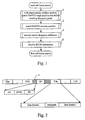
- Fig.1 shows basic steps of a cell initial search procedure from starting to ending in a cellular mobile communication system, by taking a Time Division - Synchronized Code Division Multiple Access (TD-SCDMA) system as an example.
- Step1 searches a rough position range of DwPTS by using the power characteristic window value method of the invention, and defines the working frequency point.
- Step2 searches accurate receiving position by using conventional solving correlation method in the position range defined by step 1, and obtains accurate receiving position.
- Step3 start to recover carrier frequency difference based on the joint detection method of carrier frequency difference correction used in the invention.
- information in the broadcast channel (BCCH) can be monitored.
- BCCH broadcast channel
- Fig.2 shows a frame structure required when using the power characteristic window value method for implementing downlink synchronization.
- two training sequences are defined in a frame structure of TD-SCDMA system: an independent DwPTS 5 and a midamble in burst data TD0 ?? TDn, TU0 Hz Tun.
- the two training sequences have different function during a cell initial search.
- the DwPTS 5 occupies an independent timeslot including N GP (guard) symbols, M SYNC (synchronization) symbols and again N GP symbols.
- N GP guard
- M SYNC synchronization
- P data symbols Before and after the midamble, there are P data symbols, respectively, and the two data symbols and the midamble together occupy a timeslot.
- the SYNC symbol is a code selected from a set of orthogonal codes. The code can be obtained by solving correlation, but the operation must be made over whole data frame and the set of orthogonal codes, so the operation volume is very large.
- the downlink synchronization method of the invention let base station raise transmitting power of SYNC symbols but there is no transmitting power at GP symbols. In this way when receiving, user equipment can first search the power characteristic window value of the DwPTS, and discovers a rough position range of the SYNC symbols, then solves correlation only near the position range. Therefore, the downlink synchronization time will be greatly shrunk and probability of decision error will be decreased.
- Fig.3 shows procedure for searching rough position range of DwPTS.
- the procedure starts searching with the characteristic window method and ends with discovering the rough position range of DwPTS or without finding the rough position range of DwPTS.
- step6 first user equipment is locked at a working frequency point, which should be a possible frequency point of a mobile communication system, and then the user equipment receives a complete data frame (e.g. 5ms + ⁇ ms).
- step7 calculate each symbol power P, i.e. first suppose that the receiving moment is the starting point of a symbol, then add power of all chips belong to the symbol to obtain the symbol power.
- P a complete data frame
- R t is the power characteristic window value for each position
- i represents the real receiving position
- P(k) represents each symbol power
- M are parameters of the characteristic window shape.
- Raver / Rmin i.e. average power characteristic window value/ minimum power characteristic window value
- correcting carrier deviation is implemented by two big steps, which are shown in Fig. 4 and 5 , respectively.
- Fig.4 the first big step, a frequency difference is estimated by software and a decision and feedback mechanism for hardware adjustment is introduced.
- frequency difference is recovered from an initial larger value to a smaller range; for example, when using a crystal oscillator with accuracy 3ppm and working frequency range about 2G, the initial value can be considered as about 6 kHz.
- the second big step by mainly using joint detection technology to suppress multipath and multiple access interference, the smaller frequency difference (for example, about 1kHz) will be corrected to a range required by baseband demodulation in order to obtain a more accurate frequency difference information for guiding hardware adjustment.
- Fig.4 is an uninterrupted procedure starting from recovering carrier frequency difference until higher frequency accuracy obtained by using midamble.
- the frequency difference is estimated by software, the automatic frequency control (AFC) is made for hardware by a decision and feedback mechanism.
- the procedure corrects frequency difference from an initial larger value to a smaller range.
- Estimating frequency difference by software is also a software compensation process. If only using the software compensation without adjustment for hardware, each time the estimation must be accurate. In addition, under wireless channel the software estimation method is not estimation without tolerance. Therefore, only with software compensation, the effect is not good enough. On the other hand, although under wireless channel the software estimation is not very accurate, but the estimated frequency difference direction is reliable, especially in an average of multiple frames. Therefore, the software estimation can be used to guide the AFC hardware adjustment, to satisfy the requirement of the first big step. The specific steps are as follow.
- Step 12 estimate frequency difference of each data frame by software with formula (2): Ae - jk ⁇ ⁇ 1 L ⁇ L I i + jQ i * ⁇ I ⁇ i + K + jQ ⁇ i + K * Wherein ⁇ represents an estimated frequency difference, I and Q are orthogonal demodulation signal, L is a statistic length.
- fe(n) is an estimated frequency difference, i.e. ⁇ for the n th data frame received; adjustment coefficient coef k ranges between 0 ⁇ 1, the selection principle is that greater k takes smaller coef k .
- a received data frame can be divided into k1, k2, ..., kn sections; when there are k1 ⁇ k2 ⁇ ... ⁇ kn , take coef k1 . > coef k2 > ... > coef kn .
- Q is a preset number of adjustment frames
- the feedback in this case is interadjusting between software and hardware, i.e. first calculate frequency difference with software, then adjust hardware guided by the calculated frequency difference; after hardware has been adjusted, software estimates frequency difference again; repeat the procedure until a preset number of times.
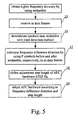
- Fig.5 shows a procedure that deploys midamble to obtain higher frequency accuracy. Based on joint detection, a smaller frequency deviation is corrected into a range, which can be borne by the baseband demodulation.
- using joint detection technology means inserting a training sequence (midamble) to each frame for estimating real channel response.
- user equipment can suppress multipath and multiple access interference with joint detection technology, demodulates data symbols near the training sequence midamble, and guides adjustment of AFC by using frequency deviation information involved in these symbols. Specific steps are as following:
- Steps 15 to 19 can be repeated. Along with a corrected frequency difference decreases gradually, more data symbols near the training sequence midamble can be taken to obtain more frequency difference information, and the adjustment step length of AFC hardware can be decreased gradually.
- the method of the invention is a cell initial search method based on having training sequence system and can be used in a CDMA mobile communication system.
- a CDMA communication system using joint detection technology can use the invention, which is a method for correcting carrier deviation based on joint detection, to estimate carrier deviation. In a space wireless channel environment, the method can have a well effect.
- the invention a downlink synchronization and carrier deviation correction method, is designed based on a TD-SCDMA system, which is proposed by CWTS (China Wireless Telecommunication Standardization) and is one of the RTT (Radio Transmission Technology) of International IMT-2000, but it can be fully used on other digital cellular mobile communication systems after an adequate update.
- CWTS China Wireless Telecommunication Standardization
- RTT Radio Transmission Technology
Landscapes
- Engineering & Computer Science (AREA)
- Computer Networks & Wireless Communication (AREA)
- Signal Processing (AREA)
- Mobile Radio Communication Systems (AREA)
- Radio Relay Systems (AREA)
- Synchronisation In Digital Transmission Systems (AREA)
Claims (12)
- Procédé de recherche initiale de cellule dans un système de communication mobile numérique à accès multiple par répartition en code CDMA, pour un équipement d'utilisateur recevant des informations envoyées par une station de base, comprenant les étapes ci-dessous consistant à :sélectionner un point de fréquence d'exploitation par le biais de l'équipement d'utilisateur et obtenir une synchronisation en liaison descendante avec la station de base au niveau du point de fréquence d'exploitation ; caractérisé en ce que :l'étape consistant à obtenir une synchronisation en liaison descendante avec la station de base au niveau du point de fréquence d'exploitation comporte les étapes ci-dessous consistant à :déterminer (1) une plage de tranche de temps de séquence d'apprentissage en liaison descendante en utilisant un procédé de calcul de valeur de fenêtre caractéristique de puissance basé sur une séquence d'apprentissage ; etobtenir (2) une position de réception précise de l'équipement d'utilisateur en calculant une corrélation des données reçues et de la séquence d'apprentissage dans la plage ;dans lequel le procédé de calcul de valeur de fenêtre caractéristique de puissance basé sur la séquence d'apprentissage comprend les étapes ci-dessous consistant à :augmenter une puissance de transmission de symboles de synchronisation dans une tranche de temps de séquence pilote en liaison descendante, DwPTS, d'une trame de données de station de base, et caractérisé en ce qu'il n'existe pas de puissance de transmission sur des symboles protégés situés avant et après les symboles de synchronisation dans la tranche de temps DwPTS ; etrechercher des valeurs de fenêtre caractéristique de puissance de la tranche de temps DwPTS dans un premier temps, par le biais de l'équipement d'utilisateur, durant la réception, et après avoir découvert une plage de position des symboles de synchronisation, mettre en oeuvre un calcul de corrélation uniquement à proximité de la position ;dans lequel l'étape consistant à rechercher des valeurs de fenêtre caractéristique de puissance de la tranche de temps DwPTS en vue de découvrir une plage de position des symboles de synchronisation comprend les étapes ci-dessous consistant à :verrouiller (6) un point de fréquence d'exploitation, par le biais de l'équipement d'utilisateur dans un premier temps, et recevoir une trame de données ;calculer (7) chaque puissance de symbole de synchronisation dans la tranche de temps DwPTS ;calculer (8) des valeurs de fenêtre caractéristique de puissance au niveau de chaque position de symbole de synchronisation ;calculer (9) une valeur moyenne de fenêtre caractéristique de puissance sur la trame de données complète ;rechercher (10) une valeur minimale parmi des valeurs de fenêtre caractéristique de puissance au niveau de toutes les positions de symboles de synchronisation de la trame de données de réception ;déterminer (10) si le rapport entre la valeur moyenne de fenêtre caractéristique de puissance et la valeur minimale de fenêtre caractéristique de puissance est supérieur à une valeur seuil, et si tel est le cas, alors la position de la valeur minimale de fenêtre caractéristique de puissance est la position de début de la tranche de temps DwPTS ; etrésoudre une corrélation à proximité de la position de début en vue d'obtenir un point de départ de réception précis et mettre fin à la synchronisation en liaison descendante ;dans lequel, l'étape consistant à calculer les valeurs de fenêtre caractéristique de puissance au niveau de chaque position de symbole de synchronisation comprend les étapes ci-dessous consistant à :mettre en oeuvre un glissement avec un niveau de symbole sur la trame de données de réception, et calculer chaque valeur de fenêtre caractéristique de puissance, R(i), au niveau de chaque position à l'aide de la formule ci-dessous :

où i représente une position de réception réelle, P(k) représente une valeur de puissance de chaque symbole de synchronisation, et N et M sont des paramètres de fenêtre caractéristique. - Procédé selon la revendication 1, dans lequel l'étape consistant à calculer chaque puissance de symbole de synchronisation comprend les étapes ci-dessous consistant à :supposer dans un premier temps que l'instant de réception est un point de départ de symbole de synchronisation, ajouter les puissances de toutes les puces appartenant au symbole de synchronisation, et obtenir la puissance du symbole de synchronisation.
- Procédé selon la revendication 1, dans lequel l'étape consistant à calculer les valeurs de fenêtre caractéristique de puissance au niveau de chaque position de symbole de synchronisation comprend les étapes ci-dessous consistant à :mettre en oeuvre un glissement avec un niveau de puce sur la base de chaque puissance de puce, et calculer la valeur de fenêtre caractéristique de puissance au niveau de chaque position.
- Procédé selon la revendication 1, comprenant en outre l'étape ci-dessous consistant à :tracer un écart de porteuse entre l'équipement d'utilisateur et la station de base, par le biais de l'équipement d'utilisateur, et corriger l'écart de porteuse dans un démodulateur numérique de l'équipement d'utilisateur ;dans lequel l'étape consistant à corriger l'écart de porteuse dans un démodulateur numérique de l'équipement d'utilisateur comprend les étapes ci-dessous consistant à :estimer l'écart de porteuse par un moyen logiciel, et ajuster le matériel en utilisant un procédé de décision et de rétroaction ; eten faisant appel à un procédé de correction d'écart de porteuse basé sur une détection conjointe, supprimer (3) un brouillage d'accès multiple et multi-chemin et corriger l'écart de porteuse vers une plage requise par la démodulation en bande de base.
- Procédé selon la revendication 4, dans lequel l'étape consistant à estimer l'écart de porteuse par un moyen logiciel et à ajuster le matériel en utilisant un procédé de décision et de rétroaction comprend les étapes ci-dessous consistant à :estimer l'écart de porteuse de chaque trame de données par un moyen logiciel ;calculer une valeur d'ajustement pour le matériel ; etajuster un matériel de commande automatique de fréquence, AFC, dans le démodulateur numérique à l'aide de la valeur d'ajustement calculée.
- Procédé selon la revendication 5, comportant l'étape consistant à utiliser la formule ci-dessous en vue d'estimer l'écart de porteuse de chaque trame de données :

où α représente l'écart de fréquence estimé, I et Q sont des signaux de démodulation orthogonale, et L est une longueur statistique. - Procédé selon la revendication 5, comportant l'étape consistant à utiliser la formule ci-dessous en vue de calculer une valeur d'ajustement pour le matériel :

où fe(n) est l'écart de fréquence de porteuse estimé pour la nème trame de données de réception, la plage de coefficient d'ajustement coefk se situe entre 0 et 1, et lorsque k est supérieur, il convient de sélectionner un coefficient d'ajustement coefk inférieur. - Procédé selon la revendication 4, dans lequel, les étapes consistant à utiliser un procédé de correction d'écart de porteuse basé sur une détection conjointe, à supprimer le brouillage d'accès multiple et multi-chemin, et à corriger l'écart de porteuse vers une plage requise par la démodulation en bande de base, comportent les étapes ci-dessous consistant à :introduire un préambule intermédiaire de séquence d'apprentissage de salve de données dans chaque trame de données en vue d'estimer une réponse de canal réel ;supprimer un brouillage d'accès multiple et multi-chemin au moyen d'une technologie de détection conjointe, par le biais de l'équipement d'utilisateur, et démoduler les symboles proches du préambule intermédiaire de séquence d'apprentissage ;ajuster le matériel de commande automatique de fréquence à l'aide des informations d'écart de porteuse incluses dans ces symboles.
- Procédé selon la revendication 8, dans lequel les étapes consistant à supprimer un brouillage d'accès multiple et multi-chemin au moyen d'une technologie de détection conjointe, et à démoduler les symboles proches du préambule intermédiaire de séquence d'apprentissage comporte les étapes ci-dessous consistant à :démoduler des données de réception au moyen de la technologie de détection conjointe, et obtenir P caractères, avant et après le préambule intermédiaire de séquence d'apprentissage, lesquels sont enregistrés sous la forme X(1) ... X(P) et Y(1) ... Y(P), respectivement ;calculer Xi(n) = X(n) / Xj(n), Yi(n) = Y(n) / Yj(n), respectivement, où Xj(n) = Yj(n) = ±π/4 ou ±3π/4 ;obtenir la direction d'écart de porteuse par le biais de la formule ci-dessous :
 définir une longueur d'étape d'ajustement de matériel de commande automatique de fréquence sur la base de la direction d'écart de fréquence de porteuse calculée ; etajuster le matériel de commande automatique de fréquence avec la longueur d'étape d'ajustement selon la direction d'écart de fréquence de porteuse.
 - Procédé selon la revendication 4, dans lequel l'étape consistant à estimer l'écart de porteuse par le biais d'un moyen logiciel, et l'étape consistant à ajuster le matériel en faisant appel à un procédé de décision et de rétroaction, comportent les étapes ci-dessous consistant à :a) définir (11) le nombre de trames sur n = 0 pour recevoir une trame de données ;b) estimer (12) l'écart de fréquence de porteuse de la trame de données par le biais du moyen logiciel ;c) calculer (13) une valeur d'ajustement de l'écart de fréquence de porteuse, c'est-à-dire calculer la valeur d'ajustement du matériel ;d) ajuster (14) le matériel de commande automatique de fréquence selon la valeur d'ajustement du matériel calculée, appliquer n = n + 1, et déterminer si n est supérieur à un nombre prédéfini de trames d'ajustement Q, si ce n'est pas le cas, recevoir la trame de données successive et passer à l'étape b, sinon mettre fin au processus.
- Procédé selon la revendication 4 ou 10, dans lequel les étapes consistant à utiliser un procédé de correction d'écart de porteuse basé sur une détection conjointe, à supprimer le brouillage d'accès multiple et multi-chemin, et à corriger l'écart de porteuse vers une plage requise par la démodulation en bande de base, comportent les étapes ci-dessous consistant à :e) recevoir (15) m trames de données ;f) démoduler (16) les m trames de données reçues au moyen de la technologie de détection conjointe, à savoir démoduler les symboles de données proches d'un préambule intermédiaire de séquence d'apprentissage, et obtenir P symboles avant et après le préambule intermédiaire de séquence d'apprentissage, respectivement ;g) calculer (17) la direction d'écart de fréquence de porteuse sur les P symboles avant et après le préambule intermédiaire de séquence d'apprentissage de m trames de données, respectivement ;h) définir (18) une longueur d'étape d'ajustement pour le matériel de commande automatique de fréquence, selon la direction d'écart de fréquence de porteuse calculée ;i) ajuster (19) le matériel de commande automatique de fréquence avec la longueur d'étape d'ajustement, selon la direction d'écart de porteuse de fréquence obtenue.
- Procédé selon la revendication 11, comprenant en outre l'étape consistant à répéter les étapes e à i.
Applications Claiming Priority (3)
| Application Number | Priority Date | Filing Date | Title |
|---|---|---|---|
| CN00103548 | 2000-03-27 | ||
| CN00103548A CN1131653C (zh) | 2000-03-27 | 2000-03-27 | 一种码分多址数字移动通信系统的小区初始搜索方法 |
| PCT/CN2001/000018 WO2001074103A1 (fr) | 2000-03-27 | 2001-01-12 | Procede de recherche initiale cellulaire dans un systeme de communication mobile numerique a acces multiple par repartition de code (amrc) |
Publications (3)
| Publication Number | Publication Date |
|---|---|
| EP1330136A1 EP1330136A1 (fr) | 2003-07-23 |
| EP1330136A4 EP1330136A4 (fr) | 2009-11-04 |
| EP1330136B1 true EP1330136B1 (fr) | 2012-03-07 |
Family
ID=4577070
Family Applications (1)
| Application Number | Title | Priority Date | Filing Date |
|---|---|---|---|
| EP01900378A Expired - Lifetime EP1330136B1 (fr) | 2000-03-27 | 2001-01-12 | Procede de recherche initiale cellulaire dans un systeme de communication mobile numerique a acces multiple par repartition de code (amrc) |
Country Status (13)
| Country | Link |
|---|---|
| US (1) | US6778588B2 (fr) |
| EP (1) | EP1330136B1 (fr) |
| JP (1) | JP4530603B2 (fr) |
| KR (1) | KR100564826B1 (fr) |
| CN (1) | CN1131653C (fr) |
| AT (1) | ATE548807T1 (fr) |
| AU (2) | AU2001225004B2 (fr) |
| BR (1) | BRPI0109610B1 (fr) |
| CA (1) | CA2403929C (fr) |
| MX (1) | MXPA02009561A (fr) |
| RU (1) | RU2274954C2 (fr) |
| TW (1) | TW508967B (fr) |
| WO (1) | WO2001074103A1 (fr) |
Families Citing this family (45)
| Publication number | Priority date | Publication date | Assignee | Title |
|---|---|---|---|---|
| JP3851525B2 (ja) * | 2001-08-09 | 2006-11-29 | 株式会社エヌ・ティ・ティ・ドコモ | 移動局装置、移動通信システムおよびキャリア検出方法 |
| KR100524730B1 (ko) * | 2002-11-02 | 2005-10-31 | 엘지전자 주식회사 | 이동 통신 시스템의 초기 동기 검색 방법 |
| CN1224280C (zh) * | 2002-12-27 | 2005-10-19 | 大唐移动通信设备有限公司 | 用于分时隙移动通信系统的时变信道校准方法 |
| CN1512794A (zh) * | 2002-12-30 | 2004-07-14 | �ʼҷ����ֵ��ӹɷ�����˾ | 一种tdd-cdma系统中用于移动终端的小区搜索方法及装置 |
| CN1640041A (zh) * | 2003-01-23 | 2005-07-13 | 连宇通信有限公司 | 一种下行链路同步子系统实现方法及装置 |
| US7633927B2 (en) | 2003-01-31 | 2009-12-15 | Nokia Corporation | System and method for extending neighboring cell search window |
| CN1259785C (zh) | 2003-08-04 | 2006-06-14 | 大唐移动通信设备有限公司 | 获取时分同步cdma(td-scdma)用户终端的载波频偏的方法 |
| CN1263322C (zh) * | 2003-08-06 | 2006-07-05 | 大唐移动通信设备有限公司 | Td-scdma移动通信系统小区初始搜索中的增益控制方法 |
| KR100565313B1 (ko) * | 2003-11-26 | 2006-03-30 | 엘지전자 주식회사 | 시분할다중접속 방식과 코드분할다중접속 방식이 혼합된이동통신 시스템의 도메인 전력 측정방법 |
| CN1303839C (zh) * | 2003-12-19 | 2007-03-07 | 北京天碁科技有限公司 | 一种降低小区初搜运算量并提高运算精度的方法及装置 |
| CN100337508C (zh) * | 2004-01-12 | 2007-09-12 | 大唐移动通信设备有限公司 | 移动通信系统中搜索下行同步信号位置的方法 |
| CN1298114C (zh) * | 2004-05-14 | 2007-01-31 | 中兴通讯股份有限公司 | 一种td-scdma系统确定上行同步时间提前量的方法 |
| CN100403657C (zh) * | 2004-05-25 | 2008-07-16 | 大唐移动通信设备有限公司 | 基于训练序列的td-scdma系统频偏补偿方法及装置 |
| CN100356704C (zh) * | 2004-06-02 | 2007-12-19 | 大唐移动通信设备有限公司 | 无线移动通信系统中对频偏进行补偿的方法 |
| CN100369386C (zh) * | 2004-06-29 | 2008-02-13 | 大唐移动通信设备有限公司 | 一种结合频偏补偿的联合检测方法和装置 |
| CN100362892C (zh) * | 2004-07-01 | 2008-01-16 | 凯明信息科技股份有限公司 | 时分同步码分多址系统中的初始小区搜索方法和装置 |
| JP4351284B2 (ja) | 2004-08-05 | 2009-10-28 | エルジー エレクトロニクス インコーポレイティド | 周波数層収束方式の利用の一時停止方法 |
| RU2384948C2 (ru) * | 2004-08-05 | 2010-03-20 | Эл Джи Электроникс Инк. | Прерывание использования схемы схождения частотных уровней |
| US7684378B2 (en) * | 2004-11-08 | 2010-03-23 | Interdigital Technology Corporation | Method and apparatus for estimating channelization codes in a wireless transmit/receive unit |
| CN1780175B (zh) * | 2004-11-19 | 2010-09-29 | 上海宣普实业有限公司 | 时分双工系统中小区搜索第一和第二步骤的并行迭代方法 |
| CN1780174B (zh) * | 2004-11-19 | 2011-05-25 | 上海宣普实业有限公司 | 时分双工系统中小区搜索第一和第二步骤的并行迭代方法 |
| US7917140B2 (en) | 2004-12-06 | 2011-03-29 | Telefonaktiebolaget L M Ericsson (Publ) | Initial cell search in mobile communications systems |
| WO2006067657A1 (fr) * | 2004-12-24 | 2006-06-29 | Koninklijke Philips Electronics N.V. | Procede et appareil de recherche de cellule dans un systeme de communication sans fil |
| CN1797990B (zh) * | 2004-12-27 | 2010-12-08 | 上海宣普实业有限公司 | 时分同步码分多址系统中的频点扫描方法 |
| WO2006121302A1 (fr) | 2005-05-13 | 2006-11-16 | Samsung Electronics Co., Ltd. | Procede et appareil d'indexation de canaux physiques dans un systeme ofdma |
| CN100409588C (zh) * | 2005-06-03 | 2008-08-06 | 上海原动力通信科技有限公司 | 时隙码分多址系统多小区联合检测方法 |
| CN1905406B (zh) * | 2005-07-28 | 2011-04-20 | 上海原动力通信科技有限公司 | 宽带时分双工蜂窝系统的同步方法 |
| CN1988415B (zh) * | 2005-12-21 | 2010-04-14 | 大唐移动通信设备有限公司 | 在cdma通信系统中判断下行导频信号发送方式的方法 |
| CN1996791B (zh) * | 2006-01-06 | 2015-09-09 | 上海原动力通信科技有限公司 | 一种宽带时分双工蜂窝系统下行同步方法 |
| CN101009513B (zh) * | 2006-01-26 | 2013-02-13 | 上海原动力通信科技有限公司 | 宽带时分双工蜂窝系统的小区同步方法及小区初搜方法 |
| KR101208541B1 (ko) | 2006-11-01 | 2012-12-05 | 엘지전자 주식회사 | 동기 신호 위치 검출 방법 및 이를 이용한 셀 탐색 방법 |
| CN101072438B (zh) * | 2007-06-15 | 2010-09-29 | 中兴通讯股份有限公司 | 一种td-scdma系统移动终端进行初始小区搜索的方法 |
| JP2009089203A (ja) * | 2007-10-02 | 2009-04-23 | Panasonic Corp | 無線装置および無線通信システム |
| CN101222280B (zh) * | 2007-11-30 | 2012-02-29 | 深圳国人通信有限公司 | 单时隙功率检测的方法和装置 |
| JP2009141832A (ja) * | 2007-12-10 | 2009-06-25 | Mitsubishi Electric Corp | 通信システム、受信端末機および無線基地局 |
| CN101958746B (zh) * | 2010-04-02 | 2014-03-12 | 展讯通信(上海)有限公司 | 无线终端的粗同步方法 |
| CN102821442B (zh) * | 2011-06-10 | 2014-10-22 | 联芯科技有限公司 | 一种频点扫描方法和装置 |
| CN103298101B (zh) * | 2013-06-19 | 2016-02-17 | 中国人民解放军空军工程大学 | 一种宽范围的码辅助载波同步实现方法 |
| CN104253680B (zh) * | 2013-06-27 | 2018-07-31 | 华为技术有限公司 | 一种fbmc系统中同步信号的发送方法和装置 |
| KR102421473B1 (ko) * | 2015-10-01 | 2022-07-18 | 삼성전자주식회사 | Td-scdma 시스템에서 캐리어 서치를 수행하는 통신 디바이스 및 그 제어 방법 |
| CN105933052B (zh) * | 2016-05-20 | 2019-09-06 | 中国电子科技集团公司第十研究所 | 时域交叉极化干扰对消方法 |
| CN105897304B (zh) * | 2016-05-31 | 2018-02-06 | 西安空间无线电技术研究所 | 一种跳频通信系统的快速同步方法 |
| WO2018163440A1 (fr) | 2017-03-10 | 2018-09-13 | Nec Corporation | Appareil d'estimation de position |
| EP3769483A1 (fr) * | 2018-03-20 | 2021-01-27 | Telefonaktiebolaget LM Ericsson (publ) | Dispositif sans fil, noeud de réseau et procédés associés d'activation et de détermination de configurations de signal de référence dans un réseau de communication sans fil |
| CN114584438B (zh) * | 2022-01-05 | 2023-08-15 | 华信咨询设计研究院有限公司 | 一种基于基准载波频偏的5g cfo估计方法 |
Family Cites Families (13)
| Publication number | Priority date | Publication date | Assignee | Title |
|---|---|---|---|---|
| US6128470A (en) * | 1996-07-18 | 2000-10-03 | Ericsson Inc. | System and method for reducing cumulative noise in a distributed antenna network |
| US5805983A (en) * | 1996-07-18 | 1998-09-08 | Ericsson Inc. | System and method for equalizing the delay time for transmission paths in a distributed antenna network |
| JP2937897B2 (ja) * | 1996-09-30 | 1999-08-23 | 株式会社ワイ・アール・ピー移動通信基盤技術研究所 | チャネル割当て方法および該方法を使用する通信網 |
| JP3376224B2 (ja) * | 1996-10-23 | 2003-02-10 | 株式会社エヌ・ティ・ティ・ドコモ | Ds−cdma基地局間非同期セルラ方式における初期同期方法および受信機 |
| JP3373746B2 (ja) * | 1997-01-07 | 2003-02-04 | 株式会社鷹山 | Ds−cdma基地局間非同期セルラ方式における初期同期方法および受信機 |
| WO1998058463A1 (fr) * | 1997-06-17 | 1998-12-23 | Siemens Aktiengesellschaft | Procede de synchronisation temporelle pour une station mobile dans un systeme de radiocommunication |
| CN1061205C (zh) * | 1997-07-24 | 2001-01-24 | 北京信威通信技术有限公司 | 扩频通信系统中载波恢复和补偿的方法及其装置 |
| JPH11112472A (ja) * | 1997-08-04 | 1999-04-23 | Toshiba Corp | スぺクトラム拡散通信装置 |
| JP3897427B2 (ja) * | 1997-12-01 | 2007-03-22 | 松下電器産業株式会社 | 基地局装置、移動局装置、移動体通信システム、無線送信方法及び無線受信方法 |
| JP3793632B2 (ja) * | 1997-12-18 | 2006-07-05 | 松下電器産業株式会社 | セルサーチ方法及び移動局装置 |
| US6490454B1 (en) * | 1998-08-07 | 2002-12-03 | Telefonaktiebolaget Lm Ericsson (Publ) | Downlink observed time difference measurements |
| KR20040008204A (ko) * | 2001-05-31 | 2004-01-28 | 노오텔 네트웍스 리미티드 | 부반송파 주파수 및 부반송파 주파수 오프셋 측정 장치 및방법 |
| US7693123B2 (en) * | 2001-11-29 | 2010-04-06 | Interdigital Technology Corporation | System and method using primary and secondary synchronization codes during cell search |
-
2000
- 2000-03-27 CN CN00103548A patent/CN1131653C/zh not_active Expired - Lifetime
-
2001
- 2001-01-12 AT AT01900378T patent/ATE548807T1/de active
- 2001-01-12 MX MXPA02009561A patent/MXPA02009561A/es active IP Right Grant
- 2001-01-12 AU AU2001225004A patent/AU2001225004B2/en not_active Expired
- 2001-01-12 WO PCT/CN2001/000018 patent/WO2001074103A1/fr not_active Ceased
- 2001-01-12 RU RU2002128747A patent/RU2274954C2/ru active
- 2001-01-12 BR BRPI0109610-9A patent/BRPI0109610B1/pt not_active IP Right Cessation
- 2001-01-12 EP EP01900378A patent/EP1330136B1/fr not_active Expired - Lifetime
- 2001-01-12 AU AU2500401A patent/AU2500401A/xx active Pending
- 2001-01-12 JP JP2001571693A patent/JP4530603B2/ja not_active Expired - Lifetime
- 2001-01-12 CA CA 2403929 patent/CA2403929C/fr not_active Expired - Lifetime
- 2001-01-12 KR KR1020027012743A patent/KR100564826B1/ko not_active Expired - Lifetime
- 2001-08-24 TW TW90121115A patent/TW508967B/zh not_active IP Right Cessation
-
2002
- 2002-09-25 US US10/255,334 patent/US6778588B2/en not_active Expired - Lifetime
Also Published As
| Publication number | Publication date |
|---|---|
| MXPA02009561A (es) | 2004-07-30 |
| US20030031238A1 (en) | 2003-02-13 |
| CA2403929C (fr) | 2008-09-23 |
| TW508967B (en) | 2002-11-01 |
| EP1330136A1 (fr) | 2003-07-23 |
| JP4530603B2 (ja) | 2010-08-25 |
| CN1315808A (zh) | 2001-10-03 |
| BRPI0109610B1 (pt) | 2015-08-18 |
| AU2500401A (en) | 2001-10-08 |
| RU2274954C2 (ru) | 2006-04-20 |
| WO2001074103A8 (fr) | 2003-05-15 |
| JP2003529302A (ja) | 2003-09-30 |
| WO2001074103A1 (fr) | 2001-10-04 |
| ATE548807T1 (de) | 2012-03-15 |
| KR100564826B1 (ko) | 2006-03-30 |
| EP1330136A4 (fr) | 2009-11-04 |
| AU2001225004B2 (en) | 2005-03-17 |
| US6778588B2 (en) | 2004-08-17 |
| CN1131653C (zh) | 2003-12-17 |
| BR0109610A (pt) | 2003-06-17 |
| RU2002128747A (ru) | 2004-03-10 |
| KR20020092401A (ko) | 2002-12-11 |
| CA2403929A1 (fr) | 2002-09-24 |
Similar Documents
| Publication | Publication Date | Title |
|---|---|---|
| EP1330136B1 (fr) | Procede de recherche initiale cellulaire dans un systeme de communication mobile numerique a acces multiple par repartition de code (amrc) | |
| US8005129B2 (en) | Acquisition circuit for low chip rate option for mobile telecommunication system | |
| US8738054B2 (en) | Efficient frame tracking in mobile receivers | |
| EP1668786B1 (fr) | Synchronisation initiale pour des recepteurs | |
| US20070140203A1 (en) | Method and device for estimating carrier frequency offset of subscriber terminal | |
| CN1607787B9 (zh) | 时分无线通信系统的自动频率校正方法 | |
| CN100403657C (zh) | 基于训练序列的td-scdma系统频偏补偿方法及装置 | |
| CN1607788B (zh) | 时分无线通信系统接收机的自动频率校正方法 | |
| CN1777160B (zh) | 粗略频率校正方法 | |
| KR101137344B1 (ko) | 프레임 동기 추정 방법 및 그 장치 |
Legal Events
| Date | Code | Title | Description |
|---|---|---|---|
| PUAI | Public reference made under article 153(3) epc to a published international application that has entered the european phase |
Free format text: ORIGINAL CODE: 0009012 |
|
| 17P | Request for examination filed |
Effective date: 20020917 |
|
| AK | Designated contracting states |
Designated state(s): AT BE CH CY DE DK ES FI FR GB GR IE IT LI LU MC NL PT SE TR |
|
| A4 | Supplementary search report drawn up and despatched |
Effective date: 20091007 |
|
| 17Q | First examination report despatched |
Effective date: 20100421 |
|
| REG | Reference to a national code |
Ref country code: DE Ref legal event code: R079 Ref document number: 60146215 Country of ref document: DE Free format text: PREVIOUS MAIN CLASS: H04Q0007360000 Ipc: H04B0001707000 |
|
| RIC1 | Information provided on ipc code assigned before grant |
Ipc: H04B 1/707 20110101AFI20110530BHEP |
|
| GRAP | Despatch of communication of intention to grant a patent |
Free format text: ORIGINAL CODE: EPIDOSNIGR1 |
|
| GRAS | Grant fee paid |
Free format text: ORIGINAL CODE: EPIDOSNIGR3 |
|
| GRAA | (expected) grant |
Free format text: ORIGINAL CODE: 0009210 |
|
| AK | Designated contracting states |
Kind code of ref document: B1 Designated state(s): AT BE CH CY DE DK ES FI FR GB GR IE IT LI LU MC NL PT SE TR |
|
| REG | Reference to a national code |
Ref country code: GB Ref legal event code: FG4D |
|
| REG | Reference to a national code |
Ref country code: AT Ref legal event code: REF Ref document number: 548807 Country of ref document: AT Kind code of ref document: T Effective date: 20120315 Ref country code: CH Ref legal event code: EP |
|
| REG | Reference to a national code |
Ref country code: IE Ref legal event code: FG4D |
|
| REG | Reference to a national code |
Ref country code: DE Ref legal event code: R096 Ref document number: 60146215 Country of ref document: DE Effective date: 20120510 |
|
| REG | Reference to a national code |
Ref country code: NL Ref legal event code: VDEP Effective date: 20120307 |
|
| PG25 | Lapsed in a contracting state [announced via postgrant information from national office to epo] |
Ref country code: NL Free format text: LAPSE BECAUSE OF FAILURE TO SUBMIT A TRANSLATION OF THE DESCRIPTION OR TO PAY THE FEE WITHIN THE PRESCRIBED TIME-LIMIT Effective date: 20120307 |
|
| PG25 | Lapsed in a contracting state [announced via postgrant information from national office to epo] |
Ref country code: FI Free format text: LAPSE BECAUSE OF FAILURE TO SUBMIT A TRANSLATION OF THE DESCRIPTION OR TO PAY THE FEE WITHIN THE PRESCRIBED TIME-LIMIT Effective date: 20120307 Ref country code: GR Free format text: LAPSE BECAUSE OF FAILURE TO SUBMIT A TRANSLATION OF THE DESCRIPTION OR TO PAY THE FEE WITHIN THE PRESCRIBED TIME-LIMIT Effective date: 20120608 |
|
| REG | Reference to a national code |
Ref country code: AT Ref legal event code: MK05 Ref document number: 548807 Country of ref document: AT Kind code of ref document: T Effective date: 20120307 |
|
| PG25 | Lapsed in a contracting state [announced via postgrant information from national office to epo] |
Ref country code: CY Free format text: LAPSE BECAUSE OF FAILURE TO SUBMIT A TRANSLATION OF THE DESCRIPTION OR TO PAY THE FEE WITHIN THE PRESCRIBED TIME-LIMIT Effective date: 20120307 |
|
| PG25 | Lapsed in a contracting state [announced via postgrant information from national office to epo] |
Ref country code: SE Free format text: LAPSE BECAUSE OF FAILURE TO SUBMIT A TRANSLATION OF THE DESCRIPTION OR TO PAY THE FEE WITHIN THE PRESCRIBED TIME-LIMIT Effective date: 20120307 Ref country code: BE Free format text: LAPSE BECAUSE OF FAILURE TO SUBMIT A TRANSLATION OF THE DESCRIPTION OR TO PAY THE FEE WITHIN THE PRESCRIBED TIME-LIMIT Effective date: 20120307 |
|
| PG25 | Lapsed in a contracting state [announced via postgrant information from national office to epo] |
Ref country code: PT Free format text: LAPSE BECAUSE OF FAILURE TO SUBMIT A TRANSLATION OF THE DESCRIPTION OR TO PAY THE FEE WITHIN THE PRESCRIBED TIME-LIMIT Effective date: 20120709 |
|
| PLBE | No opposition filed within time limit |
Free format text: ORIGINAL CODE: 0009261 |
|
| STAA | Information on the status of an ep patent application or granted ep patent |
Free format text: STATUS: NO OPPOSITION FILED WITHIN TIME LIMIT |
|
| PG25 | Lapsed in a contracting state [announced via postgrant information from national office to epo] |
Ref country code: AT Free format text: LAPSE BECAUSE OF FAILURE TO SUBMIT A TRANSLATION OF THE DESCRIPTION OR TO PAY THE FEE WITHIN THE PRESCRIBED TIME-LIMIT Effective date: 20120307 Ref country code: DK Free format text: LAPSE BECAUSE OF FAILURE TO SUBMIT A TRANSLATION OF THE DESCRIPTION OR TO PAY THE FEE WITHIN THE PRESCRIBED TIME-LIMIT Effective date: 20120307 |
|
| 26N | No opposition filed |
Effective date: 20121210 |
|
| PG25 | Lapsed in a contracting state [announced via postgrant information from national office to epo] |
Ref country code: IT Free format text: LAPSE BECAUSE OF FAILURE TO SUBMIT A TRANSLATION OF THE DESCRIPTION OR TO PAY THE FEE WITHIN THE PRESCRIBED TIME-LIMIT Effective date: 20120307 |
|
| REG | Reference to a national code |
Ref country code: DE Ref legal event code: R097 Ref document number: 60146215 Country of ref document: DE Effective date: 20121210 |
|
| PG25 | Lapsed in a contracting state [announced via postgrant information from national office to epo] |
Ref country code: ES Free format text: LAPSE BECAUSE OF FAILURE TO SUBMIT A TRANSLATION OF THE DESCRIPTION OR TO PAY THE FEE WITHIN THE PRESCRIBED TIME-LIMIT Effective date: 20120618 |
|
| PG25 | Lapsed in a contracting state [announced via postgrant information from national office to epo] |
Ref country code: MC Free format text: LAPSE BECAUSE OF NON-PAYMENT OF DUE FEES Effective date: 20130131 |
|
| REG | Reference to a national code |
Ref country code: CH Ref legal event code: PL |
|
| REG | Reference to a national code |
Ref country code: IE Ref legal event code: MM4A |
|
| PG25 | Lapsed in a contracting state [announced via postgrant information from national office to epo] |
Ref country code: LI Free format text: LAPSE BECAUSE OF NON-PAYMENT OF DUE FEES Effective date: 20130131 Ref country code: CH Free format text: LAPSE BECAUSE OF NON-PAYMENT OF DUE FEES Effective date: 20130131 |
|
| PG25 | Lapsed in a contracting state [announced via postgrant information from national office to epo] |
Ref country code: IE Free format text: LAPSE BECAUSE OF NON-PAYMENT OF DUE FEES Effective date: 20130112 |
|
| PG25 | Lapsed in a contracting state [announced via postgrant information from national office to epo] |
Ref country code: TR Free format text: LAPSE BECAUSE OF FAILURE TO SUBMIT A TRANSLATION OF THE DESCRIPTION OR TO PAY THE FEE WITHIN THE PRESCRIBED TIME-LIMIT Effective date: 20120307 |
|
| PG25 | Lapsed in a contracting state [announced via postgrant information from national office to epo] |
Ref country code: LU Free format text: LAPSE BECAUSE OF NON-PAYMENT OF DUE FEES Effective date: 20130112 |
|
| REG | Reference to a national code |
Ref country code: FR Ref legal event code: PLFP Year of fee payment: 16 |
|
| REG | Reference to a national code |
Ref country code: FR Ref legal event code: PLFP Year of fee payment: 17 |
|
| REG | Reference to a national code |
Ref country code: FR Ref legal event code: PLFP Year of fee payment: 18 |
|
| PGFP | Annual fee paid to national office [announced via postgrant information from national office to epo] |
Ref country code: GB Payment date: 20200131 Year of fee payment: 20 Ref country code: DE Payment date: 20200113 Year of fee payment: 20 |
|
| PGFP | Annual fee paid to national office [announced via postgrant information from national office to epo] |
Ref country code: FR Payment date: 20200130 Year of fee payment: 20 |
|
| REG | Reference to a national code |
Ref country code: DE Ref legal event code: R071 Ref document number: 60146215 Country of ref document: DE |
|
| REG | Reference to a national code |
Ref country code: GB Ref legal event code: PE20 Expiry date: 20210111 |
|
| PG25 | Lapsed in a contracting state [announced via postgrant information from national office to epo] |
Ref country code: GB Free format text: LAPSE BECAUSE OF EXPIRATION OF PROTECTION Effective date: 20210111 |