EP1335563A2 - Procédé pour la sécurisation de la communication sur un réseau - Google Patents
Procédé pour la sécurisation de la communication sur un réseau Download PDFInfo
- Publication number
- EP1335563A2 EP1335563A2 EP03250701A EP03250701A EP1335563A2 EP 1335563 A2 EP1335563 A2 EP 1335563A2 EP 03250701 A EP03250701 A EP 03250701A EP 03250701 A EP03250701 A EP 03250701A EP 1335563 A2 EP1335563 A2 EP 1335563A2
- Authority
- EP
- European Patent Office
- Prior art keywords
- group
- devices
- wireless device
- authentication information
- communication
- Prior art date
- Legal status (The legal status is an assumption and is not a legal conclusion. Google has not performed a legal analysis and makes no representation as to the accuracy of the status listed.)
- Granted
Links
Images

Classifications
-
- H—ELECTRICITY
- H04—ELECTRIC COMMUNICATION TECHNIQUE
- H04L—TRANSMISSION OF DIGITAL INFORMATION, e.g. TELEGRAPHIC COMMUNICATION
- H04L63/00—Network architectures or network communication protocols for network security
- H04L63/18—Network architectures or network communication protocols for network security using different networks or channels, e.g. using out of band channels
-
- G—PHYSICS
- G06—COMPUTING OR CALCULATING; COUNTING
- G06F—ELECTRIC DIGITAL DATA PROCESSING
- G06F21/00—Security arrangements for protecting computers, components thereof, programs or data against unauthorised activity
- G06F21/30—Authentication, i.e. establishing the identity or authorisation of security principals
- G06F21/31—User authentication
- G06F21/42—User authentication using separate channels for security data
- G06F21/43—User authentication using separate channels for security data wireless channels
-
- G—PHYSICS
- G06—COMPUTING OR CALCULATING; COUNTING
- G06F—ELECTRIC DIGITAL DATA PROCESSING
- G06F21/00—Security arrangements for protecting computers, components thereof, programs or data against unauthorised activity
- G06F21/30—Authentication, i.e. establishing the identity or authorisation of security principals
- G06F21/44—Program or device authentication
- G06F21/445—Program or device authentication by mutual authentication, e.g. between devices or programs
-
- H—ELECTRICITY
- H04—ELECTRIC COMMUNICATION TECHNIQUE
- H04L—TRANSMISSION OF DIGITAL INFORMATION, e.g. TELEGRAPHIC COMMUNICATION
- H04L63/00—Network architectures or network communication protocols for network security
- H04L63/04—Network architectures or network communication protocols for network security for providing a confidential data exchange among entities communicating through data packet networks
- H04L63/0428—Network architectures or network communication protocols for network security for providing a confidential data exchange among entities communicating through data packet networks wherein the data content is protected, e.g. by encrypting or encapsulating the payload
- H04L63/0492—Network architectures or network communication protocols for network security for providing a confidential data exchange among entities communicating through data packet networks wherein the data content is protected, e.g. by encrypting or encapsulating the payload by using a location-limited connection, e.g. near-field communication or limited proximity of entities
-
- H—ELECTRICITY
- H04—ELECTRIC COMMUNICATION TECHNIQUE
- H04L—TRANSMISSION OF DIGITAL INFORMATION, e.g. TELEGRAPHIC COMMUNICATION
- H04L63/00—Network architectures or network communication protocols for network security
- H04L63/06—Network architectures or network communication protocols for network security for supporting key management in a packet data network
- H04L63/065—Network architectures or network communication protocols for network security for supporting key management in a packet data network for group communications
-
- H—ELECTRICITY
- H04—ELECTRIC COMMUNICATION TECHNIQUE
- H04L—TRANSMISSION OF DIGITAL INFORMATION, e.g. TELEGRAPHIC COMMUNICATION
- H04L67/00—Network arrangements or protocols for supporting network services or applications
- H04L67/34—Network arrangements or protocols for supporting network services or applications involving the movement of software or configuration parameters
-
- H—ELECTRICITY
- H04—ELECTRIC COMMUNICATION TECHNIQUE
- H04L—TRANSMISSION OF DIGITAL INFORMATION, e.g. TELEGRAPHIC COMMUNICATION
- H04L69/00—Network arrangements, protocols or services independent of the application payload and not provided for in the other groups of this subclass
- H04L69/16—Implementation or adaptation of Internet protocol [IP], of transmission control protocol [TCP] or of user datagram protocol [UDP]
-
- H—ELECTRICITY
- H04—ELECTRIC COMMUNICATION TECHNIQUE
- H04L—TRANSMISSION OF DIGITAL INFORMATION, e.g. TELEGRAPHIC COMMUNICATION
- H04L69/00—Network arrangements, protocols or services independent of the application payload and not provided for in the other groups of this subclass
- H04L69/16—Implementation or adaptation of Internet protocol [IP], of transmission control protocol [TCP] or of user datagram protocol [UDP]
- H04L69/161—Implementation details of TCP/IP or UDP/IP stack architecture; Specification of modified or new header fields
- H04L69/162—Implementation details of TCP/IP or UDP/IP stack architecture; Specification of modified or new header fields involving adaptations of sockets based mechanisms
-
- H—ELECTRICITY
- H04—ELECTRIC COMMUNICATION TECHNIQUE
- H04L—TRANSMISSION OF DIGITAL INFORMATION, e.g. TELEGRAPHIC COMMUNICATION
- H04L69/00—Network arrangements, protocols or services independent of the application payload and not provided for in the other groups of this subclass
- H04L69/16—Implementation or adaptation of Internet protocol [IP], of transmission control protocol [TCP] or of user datagram protocol [UDP]
- H04L69/168—Implementation or adaptation of Internet protocol [IP], of transmission control protocol [TCP] or of user datagram protocol [UDP] specially adapted for link layer protocols, e.g. asynchronous transfer mode [ATM], synchronous optical network [SONET] or point-to-point protocol [PPP]
-
- H—ELECTRICITY
- H04—ELECTRIC COMMUNICATION TECHNIQUE
- H04L—TRANSMISSION OF DIGITAL INFORMATION, e.g. TELEGRAPHIC COMMUNICATION
- H04L69/00—Network arrangements, protocols or services independent of the application payload and not provided for in the other groups of this subclass
- H04L69/30—Definitions, standards or architectural aspects of layered protocol stacks
- H04L69/32—Architecture of open systems interconnection [OSI] 7-layer type protocol stacks, e.g. the interfaces between the data link level and the physical level
- H04L69/322—Intralayer communication protocols among peer entities or protocol data unit [PDU] definitions
- H04L69/329—Intralayer communication protocols among peer entities or protocol data unit [PDU] definitions in the application layer [OSI layer 7]
-
- H—ELECTRICITY
- H04—ELECTRIC COMMUNICATION TECHNIQUE
- H04L—TRANSMISSION OF DIGITAL INFORMATION, e.g. TELEGRAPHIC COMMUNICATION
- H04L9/00—Cryptographic mechanisms or cryptographic arrangements for secret or secure communications; Network security protocols
- H04L9/08—Key distribution or management, e.g. generation, sharing or updating, of cryptographic keys or passwords
- H04L9/0816—Key establishment, i.e. cryptographic processes or cryptographic protocols whereby a shared secret becomes available to two or more parties, for subsequent use
- H04L9/0838—Key agreement, i.e. key establishment technique in which a shared key is derived by parties as a function of information contributed by, or associated with, each of these
- H04L9/0841—Key agreement, i.e. key establishment technique in which a shared key is derived by parties as a function of information contributed by, or associated with, each of these involving Diffie-Hellman or related key agreement protocols
- H04L9/0844—Key agreement, i.e. key establishment technique in which a shared key is derived by parties as a function of information contributed by, or associated with, each of these involving Diffie-Hellman or related key agreement protocols with user authentication or key authentication, e.g. ElGamal, MTI, MQV-Menezes-Qu-Vanstone protocol or Diffie-Hellman protocols using implicitly-certified keys
-
- H—ELECTRICITY
- H04—ELECTRIC COMMUNICATION TECHNIQUE
- H04W—WIRELESS COMMUNICATION NETWORKS
- H04W12/00—Security arrangements; Authentication; Protecting privacy or anonymity
- H04W12/06—Authentication
- H04W12/062—Pre-authentication
-
- H—ELECTRICITY
- H04—ELECTRIC COMMUNICATION TECHNIQUE
- H04W—WIRELESS COMMUNICATION NETWORKS
- H04W12/00—Security arrangements; Authentication; Protecting privacy or anonymity
- H04W12/50—Secure pairing of devices
-
- G—PHYSICS
- G06—COMPUTING OR CALCULATING; COUNTING
- G06F—ELECTRIC DIGITAL DATA PROCESSING
- G06F2221/00—Indexing scheme relating to security arrangements for protecting computers, components thereof, programs or data against unauthorised activity
- G06F2221/21—Indexing scheme relating to G06F21/00 and subgroups addressing additional information or applications relating to security arrangements for protecting computers, components thereof, programs or data against unauthorised activity
- G06F2221/2111—Location-sensitive, e.g. geographical location, GPS
-
- H—ELECTRICITY
- H04—ELECTRIC COMMUNICATION TECHNIQUE
- H04L—TRANSMISSION OF DIGITAL INFORMATION, e.g. TELEGRAPHIC COMMUNICATION
- H04L2209/00—Additional information or applications relating to cryptographic mechanisms or cryptographic arrangements for secret or secure communication H04L9/00
- H04L2209/80—Wireless
- H04L2209/805—Lightweight hardware, e.g. radio-frequency identification [RFID] or sensor
-
- H—ELECTRICITY
- H04—ELECTRIC COMMUNICATION TECHNIQUE
- H04W—WIRELESS COMMUNICATION NETWORKS
- H04W84/00—Network topologies
- H04W84/18—Self-organising networks, e.g. ad-hoc networks or sensor networks
Definitions
- Network communications have enabled users to receive information, such as documents, over the network medium.
- the network medium includes wired networks and wireless networks. Information transmitted over the network medium may be accessible to others. However, users typically desire that such information received not be available to others.
- the user wants to print a sensitive document that the user just received on the user's wireless device.
- the user needs to let the wireless device know how to find the first printer over a wireless medium, such as a wireless network.
- a wireless medium such as a wireless network.
- the wireless device may perform a key exchange with the first printer and establish an authenticated and secret channel with the first printer.
- an immense public key infrastructure may be required and every printer, including potential participants of the public key infrastructure, may require a unique name with a certificate being issued by the trusted authority. This is typically very expensive. Further, an immense public key infrastructure may not be practical.
- Another method may be to use an out-of- band mechanism for establishing security.
- Frank Stajano et al. "Resurrecting Duckling: Security Issues for Ad-hoc Wireless Networks," 7 th International Workshop, Lecture Notes in Computer Science, Cambridge, United Kingdom, April 1999, Springer-Verlag, Berlin, Germany, describes a security model usable to regulate secure transient association between devices in ad-hoc wireless networks.
- a method for securing a communication over a network medium between at least two devices comprises transmitting pre-authentication information from a first device to a second device over a location-limited channel; and using the pre-authentication information secured by the second device to authenticate the communication from the first device.
- This invention provides systems and methods that allow a communication between a plurality of devices to be secured.
- Location-limited communication channels are used to transmit the pre-authentication information between the plurality of devices.
- a software framework that supports inclusion of different location-limited channel types, public key algorithms used for the key exchange protocols and the final key exchange protocols chosen, and allows these to be dynamically chosen, can be used.
- the framework can be extended, to provide a new location-limited channel type, or a new key exchange protocol for example, by implementing a JavaTM interface to provide a small amount of syntactic "glue".
- the framework provides both client and server components, and allows developers to choose from either low-level, step-by-step control over data exchange, or to use simpler, higher-level interfaces.
- Such interfaces for instance, provide server threads that can manage pre-authentication of multiple clients over the location-limited channel, and offer control over how such pre-authentication information is used to authenticate those clients over the wireless link.
- Framework components maintain state tracking regarding which devices have currently pre-authenticated, what keying information is currently in use by a particular device, and the like.
- a system comprises a client, which is the initiator of the authenticated channel, and a responding server.
- the server listens for a connection on both the location-limited channel and the primary link, but only admits primary-link connections from clients who have performed pre-authentication on the location-limited channel.
- the commercially-available Infra-red Data Association (IrDA) system can be used as a medium for the location-limited channel.
- the client opens an IrDA connection to the server, and generates an error if it discovers more than one potential IrDA endpoint.
- the client and the server exchange pre-authentication data such as, for example, XML-encoded pre-authentication data, containing pre-authentication information, such as, for example, a commitment to an ephemeral Digital Signature Algorithm (DSA) public key, a "friendly name", and an IP address and a port on which the server is listening.
- DSA Digital Signature Algorithm
- the IR channel is closed, and the client extracts the server's IP address and port number from the data it received.
- the client opens a normal SSL/TLS connection to the server on the primary link.
- Each side uses the information gained in the pre-authentication step, i.e., the commitments to the public keys, to authenticate the newly opened channel.
- the client and server are now free to securely exchange any information they choose over the primary link.
- pre-authenticating a number of wireless devices is used to securely authenticate arbitrary peer-to-peer ad-hoc interactions.
- This may include a bootstrap to a key exchange protocol that is used to set up an encrypted channel.
- a public key is committed to on the pre-authentication channel.
- a key exchange protocol using public key cryptography is used in the main wireless link to establish secure communications. Due to pre-authenticating the wireless devices using public keys, the types of media usable as location-limited channels do not need to be immune to eavesdropping and can include, for example, audio and/or infra-red channels. Pre-authenticating the wireless devices using public keys allows a range of public-key-base key exchange protocols which can authenticate wireless devices to be used.
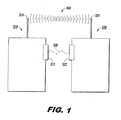
- Fig. 1 illustrates one exemplary embodiment of a wireless system 300. Only two wireless devices 310 and 320 are shown. However, the system 300 is capable of including more than two wireless devices.
- the first wireless device 310 includes a location-limited channel receiver/transmitter 312 and a main wireless link receiver/transmitter 314.
- the second wireless device 320 includes a location-limited channel receiver/transmitter 322 and a main wireless link receiver/transmitter 324.
- the first and second wireless devices each has a main wired link receiver/transmitter, such as Transport Control Protocol/ Internet Protocol (TCP/IP) sockets or any other known or later developed wired network receivers/transmitter.
- TCP/IP Transport Control Protocol/ Internet Protocol
- the first and second wireless devices have both a main wireless link and a main wired link.
- the first wireless device 310 initiate communication with the second wireless device 320, the first wireless device 310 initially sends pre-authentication information through the location-limited channel receiver/transmitter 312 to the second wireless device 320 via the location-limited channel 330.
- the second wireless device 320 receives the pre-authentication information from the first wireless device 310 through the location-limited channel receiver/transmitter 322.
- the first wireless device 310 does not need to send pre-authentication information to the second wireless device 320.
- a wireless device that does not mutually exchange pre-authentication information with another wireless device cannot authenticate the communication received from the other wireless device. Thus, that wireless device is unprotected against attacks by an eavesdropper.
- the second wireless device 320 responds by sending additional pre-authentication information through the location-limited channel receiver/transmitter 322 to the wireless device 310 via the location-limited channel 330.
- the first wireless device 310 receives the pre-authentication information through its location-limited channel receiver/transmitter 312. With the pre-authentication information exchanged between the first and second wireless device 310 and 320, the first wireless device 310 uses the main wireless link receiver/transmitter 314 to communicate with the second wireless device 320 via the main wireless link 340. The second wireless device 320 uses its main wireless link receiver/transmitter 324 to communicate with the first wireless device 310 via the main wireless link 340.
- each of the first and second wireless devices 310 and 320 authenticates the communication of the other wireless device 320 and 310, respectively, using the received pre-authentication information received from that other wireless device 320 or 310, respectively.
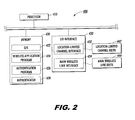
- Fig. 2 illustrates one exemplary embodiment of a wireless device 400.
- the wireless device 400 may be a Personal Digital Assistant (PDA), a laptop computer with wireless capability, a wireless hand held computer, a BlackberryTM device, a printer with wireless capability, a wireless phone and the like.
- the wireless device 400 includes a processor 410, a memory 420, an input/output (I/O) interface 430, a location-limited channel receiver/transmitter 442 and a main wireless link receiver/transmitter 444.
- I/O input/output
- the memory 420 stores an operating system 422, a wireless application 424, an authentication application 426 and an authenticator 428.
- the operating system 422 provides the computer instructions which, when executed by the processor 410, programs and controls various I/O controllers including the I/O interface 430 of the wireless device 400.
- the operating system 422 provides instructions that stores the wireless application 424, the authentication application 426 and the authenticator 428 in a retrievable manner.
- the wireless application 424 provides instructions that, allows the wireless device 400 to communicate with a wireless network through the main wireless link receiver/transmitter 444 connected to a main wireless link interface 434 of the I/O interface 430.
- the wireless application 424 may be BluetoothTM, ANSI/IEEE 802.11, and the like.
- a wireless receiver/transmitter and interface used in a wireless network can be used as the main wireless link interface 434 and the main wireless link receiver/transmitter 444.
- the wireless device has main wired link interface and main wireless link receiver/transmitter such as TCP/IP interface and socket or both the main wireless link interface and transmitter, and main wired interface and receiver/transmitter.
- the location-limited channel receiver/transmitter 442 may be separate from the main wireless link receiver/transmitter 444.
- a suitable location-limited channel receiver/transmitter 442 has at least two properties in order to send and receive pre-authentication information of the wireless devices. The first such property is a demonstrative property.
- a suitable location-limited channel receiver/transmitter 442 has physical limitations in its transmissions. For example, sound, whether in the audible and/or in the ultrasonic range, which has a limited transmission range and broadcast characteristics, may be used as a location-limited channel for a group of wireless devices. For point-to-point communication, such as between two wireless devices, a location-limited channel with directionality, such as an infra-red channel may be used.
- the demonstrative property allows for communication across a location-limited channel to "name" a target device or group of devices based on the physical relationships between the devices and the limited locations accessible through the location -limited channel.
- the second property is authenticity. This property ensures that pre-authentication information exchanged over the location-limited channel allows the exchanging wireless devices to securely authenticate each other over the main wireless link, even in the presence of eavesdroppers. If the participants use the location-limited channel to exchange their public keys as pre-authentication information, an attack by an eavesdropper on location-limited channel does not matter because the eavesdropper does not know the participants' private keys. The participants will authenticate each other over the main wireless link by proving possession of their corresponding private keys as part of a key exchange protocol. Thus, the eavesdropper will not be able to impersonate any of the participants.
- location-limited channel receiver/transmitter Another property of a location-limited channel receiver/transmitter is that the location-limited channel is difficult to attack without the attack being detected by at least one legitimate participant (human or device).
- a receiver/transmitter that uses infra-red, sound, whether audio and/or ultrasound, and/or near-field signaling across the body.
- Detecting the attack may not require that the devices transmitting on the location-limited channel be identified. Instead, for example, detecting the attack may merely depend on one's ability to count. Thus, if two wireless devices are attempting to communicate, and the communication is successful, as indicated, for example, by the lights on the target device blinking, or by the human that is using a laptop computer indicating that the communication was successful, then the number of legitimate participants are known. If extra, illegitimate, participants are detected, for example, by the laptop indicating that a third participant has joined the communication, the communication may simply be aborted by the legitimate participants.
- the pre-authentication information is used to authenticate the received authenticator 428.
- the authenticator 428 may be a key, a secret, or the like.
- the key may be either a long-lived key or an ephemeral key. The choice is usually based on the application in which the key is being used. In either case, the key does not require certification by a trusted authority. However, if the key exchange protocol chosen requires an exchange of certificates, the certificate may be self-signed by the wireless device 400.
- the amount of information exchanged across the location-limited channel is a small fraction of the amount of information sent across the main wireless link.
- One method of reducing the size of the pre-authentication information is to use cryptographically-secure hash functions, such as, for example, Secure Hash Algorithm-1 (SHA-1). Using this method, the participants need not actually exchange their complete public keys as pre-authentication information. Instead the participants send commitments of the keys, for example, by exchanging digests of the keys. The participants exchange commitments to their public keys across a chosen location-limited channel. In doing so, each participant is able to identify whom that participant is communicating with.
- cryptographically-secure hash functions such as, for example, Secure Hash Algorithm-1 (SHA-1).
- the wireless device 400 communicates with another wireless device using the main wireless link receiver/transmitter 444.
- the wireless device 400 uses the authentication application 426, which may include various established public-key-based key exchange protocol, such as the commercially available Secure Socket Layer/ Transport Layer Security (SSL/TLS), Secure Key Exchange Mechanism (SKEME), Internet Key Exchange (IKE) and the like, to prove possession of the private key, which corresponds to the public key committed during the pre-authentication information exchange.
- SSL/TLS Secure Socket Layer/ Transport Layer Security
- SKEME Secure Key Exchange Mechanism
- IKE Internet Key Exchange
- the key exchange may either be prefixed to protocol execution, or, as in Socket Layer/ Transport Layer Security (SSL/TLS), occurs naturally as a standard part of the key exchange protocol.
- SSL/TLS Socket Layer/ Transport Layer Security
- the keys are authenticated by the fact that they were the ones committed to across the location-limited channel.
- the wireless device 400 having authenticated the other wireless device's public keys, proceed with the exchange protocol on the main wireless link.
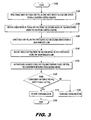
- Fig. 3 is a flowchart outlining one method for authenticating a communication over a network medium.
- the first wireless device contains a first public key PK 1 .
- the second wireless device contains a second public key PK 2 .
- step S100 operation continues to step S110, where first wireless device sends a commitment to the public key PK 1 using a location-limited channel to a second wireless device. This is at least a part of the exchange of pre-authentication information over the location-limited channel.
- the commitment can be the public key itself, a certificate, or a digest of the public key.
- step S120 in response to receiving the commitment to the public key PK 1 from the first wireless device, the second wireless device sends a commitment to the public key PK 2 over the location-limited channel, which is received by the first wireless device.
- the first wireless device may also receive the address of the second wireless device to provide for communication over the main wireless link.
- step S130 the first wireless device sends the public key PK 1 to the second wireless device using the wireless main link.
- step S140 the second wireless device sends its public key PK 2 to the first wireless device and the exchange of keys take place.
- step S150 the first wireless device authenticates the public key PK 2 received from the second wireless device and compares the public key PK 2 against the commitment received in the pre-authentication information stage.
- the authentication of the received public key PK 2 is performed using a key exchange protocol, such as those illustrated in Fig. 2, that proves ownership of a private key corresponding to the public key.
- the second wireless device In the event that the second wireless device is using a secret S 2 when the first wireless device sends its public key PK 1 across the wireless main link the second wireless device verifies the public key PK 1 against the commitment, and uses it to encrypt its secret S 2 and returns the result EPK 1 (S 2 ) to the first wireless device. Authentication is performed by the second wireless device's ability to produce the secret S 2 , and the first wireless device's ability to decrypt the result EPK 1 (S 2 ).
- step S160 a determination is made whether the commitment for the public key PK 2 previously received from the second wireless device matches the received public key PK 2 . If so, operation continues to step S170. Otherwise, operation jumps to step S180.
- step S170 the first wireless device resumes communication with the second wireless device over the main wireless link using the symmetric key agreed upon during the key exchange protocol to encrypt the communication. Operation then jumps to step S190.
- step S180 if the first wireless device cannot authenticate the public key PK 2 of the second wireless device the first wireless device terminates the communication with the second wireless device. Operation then continues to step S190, where the method ends.
- the first wireless device includes an arbitrary secret S 1 , such as a random number.
- the first wireless device is sending a commitment to the arbitrary secret S 1, the commitment is sent in a form of a cryptographic digest h (S 1 ) because S 1 is to remain a secret.
- the first wireless device may also transmit its address, such as an IP address and port number, a Bluetooth device address, a user-friendly name or any other appropriate information to provide for communication at the main wireless link.
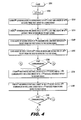
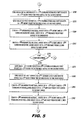
- Figs. 4-6 are a flowchart outlining one exemplary embodiment of a method that complements an improved Guy Fawkes protocol that provides for interactive communication. This method may be used where the wireless devices have limited computational resources, such that public key operations are infeasible, and the location-limited channel does not provide a trusted exchange of secret data.
- Guy Fawkes protocol An example of a conventional Guy Fawkes protocol is described in Anderson et al., "A New Family of Authentication Protocols", ACMOSR: ACM Operating Systems Review, 32, 1998. Initially designed for authenticating digital streams the Guy Fawkes protocol assumes that parties A and B want to exchange streams, comprising sequential blocks A 0 ,A 1 ,A 2 , ... and B 0 ,B 1 ,B 2 , ... respectively.
- B does the same during that step i. Assuming that B received an authenticated packet P. B authenticates the packet Pi as soon as B receives it, because the packet Pi contained the digest n(a i+1 ). It should be appreciated that this does not hold if A and B do not execute in lock-step.
- this protocol requires both A and B to know, one step ahead of time, what they want to say next, which makes the protocol unsuitable for interactive exchanges.
- step S200 begins in step S200 and continues to step S205, where a counter N is set to 1.
- a first wireless device sends an N th communication that includes a digest of its N th secret (authenticator) that will be used to authenticate its N th message together with a digest of its N th message over a location-limited channel to a second wireless device.
- the second wireless device sends an N th communication that includes a digest of its N th secret that will be used to authenticate its N th message together with a digest of its N th message over the location-limited channel to the first wireless device.
- step S220 the first wireless device sends a digest of the N th communication of the second wireless device and the first wireless device's N th secret to the second wireless device.
- step 225 the second wireless device sends a digest of the N th communication of the first wireless device and the second device's N th secret to the first wireless device.
- step S230 a determination is made by one or both of the first and second wireless devices whether to terminate the communication. If either of the first wireless device or the second wireless device determines to terminate the communication, operation proceeds to step S320. Otherwise, the communication continues and operation continues to step S235.
- step S235 the first wireless device continues the communication over a main wireless link.
- the first wireless device sends an N th message which is meaningful, and a digest of its (N+1) th secret that will be used to authenticate its (N+1) th message together with an (N+1) th communication that includes a digest of the (N+1) th message to the second wireless device.
- the second wireless device sends an N th message which is meaningless, and a digest of its (N+1) th secret that will be used to authenticate its (N+1) th message together with an (N+1) th communication that includes a digest of the (N+1) th message to the first wireless device.
- the N th message of the second wireless device is meaningless because the N th message was committed to in step S215, when the second wireless device did not know the N th message of the first wireless device that was transmitted in step S210. At this point, either of the wireless device can terminate the communication. Accordingly, in step S245, a determination is made by one or both of the first and second wireless devices whether to terminate the communication. In either of the first wireless device or the second wireless device determines to terminate the communication, operation proceeds to step S320. Otherwise, the communication continues and operation continues to step S250.
- step S250 the first wireless device sends a digest of the second wireless device's (N+1) th communication and the first wireless device's (N+1) th secret to the second wireless device.
- step S255 the second wireless device sends a digest of the first wireless device's (N+1) th communication and the second device's (N+1) th secret to the first wireless device.
- step S260 the first wireless device sends an (N+1) th message which is meaningless, and a digest of its (N+2) th secret that will be used to authenticate its (N+2) th message together with a (N+2) th communication that includes a digest of the (N+2) th message to the second wireless device.
- the (N+1) th message of the first wireless device is meaningless because it is the second wireless device's turn to send a message which is meaningful.
- step S265 the second wireless device sends an (N+1) th message which is meaningful, and a digest of its (N+2) th secret that will be used to authenticate its (N+2) th message together with a (N+2) th communication that includes a digest of the (N+2) th message to the first wireless device.
- the second wireless device sends the message that is meaningful due to the commitment made in step S240 after the second wireless device learned of the N th message of the first wireless device that was meaningful.
- step S270 a determination is made by one or both of the first and second wireless devices whether to terminate the communication. In either of the first wireless device or the second wireless device determines to terminate the communication, operation proceeds to step S320. Otherwise, the continues operation and continues to step S275.
- step S275 the first wireless device sends a digest of the second wireless device's (N+2) th communication and the first device's (N+2) th secret to the second wireless device.
- step S280 the second wireless device sends a digest of the first wireless device's (N+2) th communication and the second device's (N+2) th secret to the first wireless device.
- step S285 the first wireless device sends an (N+2) th message that is meaningless, and a digest of its (N+3) th secret that will be used to authenticate its (N+3) th message together with a (N+3) th communication that includes a digest of the (N+3) th message to the second wireless device.
- the (N+2) th message is meaningless because the first wireless device was committed in step S260 when the first wireless device had not received the (N+1) th message of the second wireless device that was meaningful.
- the first wireless device can commit to the (N+3) th message that is meaningful because the first wireless device had the (N+1) th message from the second wireless device in step S265 that was meaningful.
- step S290 the second wireless device sends an (N+2) th message that is meaningless, and a digest of its (N+3) th secret that will be used to authenticate its (N+3) th message together with a (N+3) th communication including a digest of the (N+3) th message to the first wireless device.
- the (N+2) th message of the second wireless device is meaningless because the next turn to "talk" belongs to the first wireless device.
- either of the wireless devices can terminate the communication.
- step S295 a determination is made by one or both of the first wireless device and the second wireless device whether to terminate the communication. If either of the first wireless device or the second wireless device determines to terminate the communication, operation jumps to step S320. Otherwise, the communication continues and operation continues to step S300.
- step S300 the first wireless device sends a digest of the second wireless device's (N+3) th communication and the first device's (N+3) th secret to the second wireless device.
- step S305 the second wireless device sends a digest of the first wireless device's (N+3) th communication and the second device's (N+3) th secret to the first wireless device.
- step S310 the controller N is incremented by 4. Operation then returns to step S235. In contrast, in step S320 operation of the method ends.
- a device designed to provide a service to anyone that requests the service does not need to authenticate the device with which it is communicating, and therefore may be the only one to send pre-authentication information.
- a device may have, for example, a passive beacon such as, for example, an Infra-red (IR) beacon or Radio frequency Identification (RFId) tag, sending pre-authentication information that is sufficient to uniquely and securely identify its active proxy in wireless space.
- IR Infra-red
- RFIDd Radio frequency Identification
- Some of the location-limited channels described with respect to Fig. 4 have broadcast capability. Using such broadcast capabilities, protocols may be constructed that provide for authenticated group communication. Applications can include networked games and meeting support and/or conferencing software.
- Audio is a medium that may provide a broadcast location-limited channel. Audio may be monitored and tracked by participants. Even if the participants in the exchange do not know what is carried in the audio messages, they can recognize the legitimate group participants that ought to be sending such audio messages. Audio may be incorporated into sounds that are already used by many pieces of software to provide feedback to participants. For example, most corporate conference call settings play a short "join tone" whenever a new participant enters a call. Such tones may be altered to also contain the participant's key information. Because designated channels designed to carry audio and/or voice information already exists, audio as a location-limited channel may be used via the telephone network.
- the broadcast characteristics of an audio channel may be used to pre-authenticate group communication.
- Each participant in the group communication broadcasts that participant's pre-authentication information over the audio channel, which is heard by all other legitimate participants.
- the preauthorization information will generally include a commitment to a public key.
- the broadcast may also be heard by attackers, but that poses no risk to the protocol's security unless those attackers also managed to broadcast their own pre-authentication information over the audio channel without detection by the legitimate participants, whether by humans or by devices.
- Any attackers so attempting to broadcast the attacker's information to mount an active attack on the location-limited channel will usually be detected by the legitimate human or device participants, because there will be an "extra" broadcast. For example, in the case of audio, there will be a broadcast from an unexpected location.
- Legitimate participants proceed with known or later developed group key exchange protocol, where each participant proves, to one or more legitimate participants, that participant's possession of the private key corresponding to the public key committed to by the participant on the location-limited channel. Any participant capable of proving possession of the private key corresponding to one of the public keys so committed to is considered an authenticated participant in the group communication.
- the chosen key exchange protocol may also result in all participants sharing a number of additional keys that can be used for encrypting and/or authenticating further communication between the participants of the group communication.
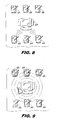
- Figs. 7-9 illustrates an exemplary setting for authenticating a communication over a network medium among a group of wireless devices.
- one participant acts as the group manager 610.
- the first participant to send pre-authenticate information becomes the group manager 610. Otherwise, a random participant is selected as the group manager.
- the group manager 610 broadcasts pre-authentication information, such as a commitment to a group public key, or its own public key, during a pre-authentication stage to various legitimate participants 612, 614 and 616 over a broadcast location-limited channel.
- pre-authentication information such as a commitment to a group public key, or its own public key, during a pre-authentication stage to various legitimate participants 612, 614 and 616 over a broadcast location-limited channel.
- other parties 622, 624 and 626 are present and have access to the wireless network.
- Any attempt to send on the location-limited channel results in the detection of the attempt, because the legitimate participants are usually able to detect all transmissions on the location-limited channel, and are able compare the number of such transmissions with the number of expected transmissions, i.e., the number of legitimate participants.
- each participant 612, 614 and 616 responds to the pre-authentication broadcast information from the group manager 610 by each broadcasting that participant's own pre-authentication information, each containing a commitment to that participant's own public key, over the location-limited channel. These broadcasts are received by both the group manager 610 and the other legitimate participants 612, 614 and 616. After broadcasting that participant's pre-authentication information, each participant 612, 614, and 616 in turn makes a point-to-point connection to the group manager 610, for example, using the address provided by the group manager 610 as part of the group manager's pre-authentication information.
- Each participant 612, 614, and 616 engages with the group manager 610 in a point-to-point key exchange protocol, such as, for example Socket Layer/Transport Layer Security (SSL/TLS).
- SSL/TLS Socket Layer/Transport Layer Security
- the group manager 610 gives each of the participants 612, 614, and 616 a copy of a shared group encryption key or keys. These keys are used to encrypt and authenticate further communication between all the participants, including the group manager 610 and the other participants 612, 614 and 616.
- the group manager 610 does not recognize the parties 622, 624 and 626 as legitimate participants in the group communication. The parties 622, 624 and 626, therefore, will not be able to successfully create point-to-point connections on the main wireless link with the group manager, 610. This results in the parties 622, 624 and 626 not receiving the shared group key that would allow them to decrypt group communications between the legitimate participants including the group manager 610 and all the other participants 612, 614, and 616.
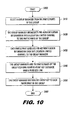
- Fig. 10 is a flowchart outlining a first exemplary embodiment of a method for authenticating a communication over a network medium among a group of wireless devices. Operation starts from step S400 to go to S410, where a group manager is selected for participants of the group. In step S420, the group manager broadcasts its pre-authentication information over a location-limited channel to the participants of the group.
- the pre-authentication information may be a digest of a public key of the group manager.
- each participant that receives the pre-authentication information of the group manager reciprocates by sending its pre-authentication information to the group manager and the other participants. The exchange of the pre-authentication information between the participants, including the group manager, occurs as a broadcast over the location-limited channel.
- the pre-authentication information of a participant is a digest of a public key of that participant.
- step S440 the group manager and each of the participants perform a point-to-point key exchange using the public keys corresponding to the digest of the public keys received during the pre-authentication stage, using any known or later-developed key exchange protocol over the wireless link, for example. Such a protocol will also set up a point-to-point encrypted and authenticated channel between the group manager and the current participants of the group.
- the group manager may distribute to each participant over the wireless link a copy of a group key to be used as a shared session key.
- step 460 operation of the authentication method ends, allowing for secure communication among participants of the group, including the group manager, to proceed.
- a joining participant may use one of the two-party protocols discussed above with the group manager 610 to authenticate itself, and to receive the group key over a secured wireless link.
- the group manager 610 can distribute a new group key to all remaining participants over the wireless link. This may be done because the group manager 610 has established shared secret keys with each individual participant of the group during the point-to-point key exchange.
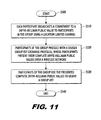
- Fig. 11 is a flowchart outlining another method for authenticating a communication over a network medium among a group of wireless devices.
- the method outlined in Fig. 11 allows all participants to equally participate in key generation, and thus all participants may be equally trusted.
- step S500 begins in step S500 and continues to step S510, where each participant broadcasts its pre-authentication information, such as a commitment to a Diffie-Hellman public value, to the participants of the group using a broadcast location-limited channel.
- each participant proceed with a chosen group key exchange protocol, where participants present their complete Diffie-Hellman public values over a wireless network.
- the group key exchange protocol may be a modified Diffie-Hellman key exchange among participants of the group, which allows all participants to share in the generation of the group shared secret key.
- step S530 the participants may then proceed with the chosen group key exchange protocol over the wireless link and, for example, use the presented complete Diffie-Hellman public values to derive a group key. Operation then continues to step S540, where operation of the authentication method ends, allowing secure communication to proceed.
- a participant who joins in after a session has started may broadcast that participant's key commitment over the location-limited channel to the rest of the participants of the group as that participant joins.
- a randomly selected current participant can respond, providing mutual authentication.
- the chosen group key exchange protocol is used to handle the details of updating the shared group key for these new participants, or revoking keys of departing participants.
Landscapes
- Engineering & Computer Science (AREA)
- Computer Security & Cryptography (AREA)
- Computer Networks & Wireless Communication (AREA)
- Signal Processing (AREA)
- Computer Hardware Design (AREA)
- General Engineering & Computer Science (AREA)
- Theoretical Computer Science (AREA)
- Software Systems (AREA)
- Computing Systems (AREA)
- Physics & Mathematics (AREA)
- General Physics & Mathematics (AREA)
- Mobile Radio Communication Systems (AREA)
- Small-Scale Networks (AREA)
Applications Claiming Priority (2)
| Application Number | Priority Date | Filing Date | Title |
|---|---|---|---|
| US66699 | 2002-02-06 | ||
| US10/066,699 US20030149874A1 (en) | 2002-02-06 | 2002-02-06 | Systems and methods for authenticating communications in a network medium |
Publications (3)
| Publication Number | Publication Date |
|---|---|
| EP1335563A2 true EP1335563A2 (fr) | 2003-08-13 |
| EP1335563A3 EP1335563A3 (fr) | 2003-10-15 |
| EP1335563B1 EP1335563B1 (fr) | 2007-10-31 |
Family
ID=27610512
Family Applications (1)
| Application Number | Title | Priority Date | Filing Date |
|---|---|---|---|
| EP03250701A Expired - Lifetime EP1335563B1 (fr) | 2002-02-06 | 2003-02-04 | Procédé pour la sécurisation de la communication sur un réseau |
Country Status (4)
| Country | Link |
|---|---|
| US (2) | US20030149874A1 (fr) |
| EP (1) | EP1335563B1 (fr) |
| JP (1) | JP4481574B2 (fr) |
| DE (1) | DE60317123T2 (fr) |
Cited By (33)
| Publication number | Priority date | Publication date | Assignee | Title |
|---|---|---|---|---|
| EP1513288A3 (fr) * | 2003-09-05 | 2005-05-11 | Xerox Corporation | Procédé, appareil et produit programme de mise à disposition de détecteurs sans fil sécurisés |
| EP1564963A1 (fr) * | 2004-02-13 | 2005-08-17 | Microsoft Corporation | Système et procédé pour protéger un dispositif informatique d'une attaque transmis sur un réseau dans une communication sécurisée |
| WO2005088932A1 (fr) * | 2004-02-13 | 2005-09-22 | Nokia Corporation | Acces a des donnees protegees dans une memoire reseau a partir de multiples dispositifs |
| EP1655922A1 (fr) * | 2004-11-08 | 2006-05-10 | Canon Kabushiki Kaisha | Méthode et système d'authentification et méthode et dispositif pour traiter des informations |
| GB2424151A (en) * | 2005-03-11 | 2006-09-13 | Dell Products Lp | Managing in-band connection of devices to a wireless network using out-of-band wireless communications |
| WO2007045937A1 (fr) * | 2005-10-18 | 2007-04-26 | Nokia Corporation | Securisation des communications dans des environnements sans fil au moyen de canal hors bande |
| WO2007044597A3 (fr) * | 2005-10-05 | 2007-07-19 | Qualcomm Inc | Communication d'egal a egal dans un reseau sans fil ad hoc |
| DE102006027462A1 (de) * | 2006-06-12 | 2007-12-13 | Nec Europe Ltd. | Verfahren zum Betreiben eines drahtlosen Sensornetzwerks |
| WO2008122846A1 (fr) * | 2007-04-04 | 2008-10-16 | Sony Ericsson Mobile Communications Ab | Procédé et système de communication entre un dispositif accessoire et un dispositif mobile |
| US7454619B2 (en) | 2003-06-24 | 2008-11-18 | Palo Alto Research Center Incorporated | Method, apparatus, and program product for securely presenting situation information |
| WO2008142367A3 (fr) * | 2007-05-24 | 2009-02-26 | Iti Scotland Ltd | Authentification de réseau |
| WO2010033919A2 (fr) | 2008-09-22 | 2010-03-25 | Jumpstart Wireless Corporation | Système et procédé destinés à la sélection d'une voie de communication automatique et dynamique, la synchronisation d'un dispositif distribué et une délégation de tâche |
| US7716727B2 (en) | 2004-10-29 | 2010-05-11 | Microsoft Corporation | Network security device and method for protecting a computing device in a networked environment |
| US7814543B2 (en) | 2004-02-13 | 2010-10-12 | Microsoft Corporation | System and method for securing a computer system connected to a network from attacks |
| EP1695563A4 (fr) * | 2003-12-16 | 2010-12-29 | Seiko Epson Corp | Securite pour une transmission sans fil |
| EP1740003A4 (fr) * | 2004-03-31 | 2012-02-22 | Nec Corp | Systeme de reseau de communication sans fil et procede pour obtenir un service de communication, programme et support d"enregistrement pour le systeme |
| EP2076994A4 (fr) * | 2006-09-01 | 2012-07-25 | Intel Corp | Introduction de dispositifs sécurisés avec évaluation de leurs capacités |
| WO2012167200A1 (fr) * | 2011-06-01 | 2012-12-06 | Qualcomm Incorporated | Admission sélective dans une session de partage de réseau |
| US8495244B2 (en) | 2005-06-29 | 2013-07-23 | Jumpstart Wireless Corporation | System and method for dynamic automatic communication path selection, distributed device synchronization and task delegation |
| EP2665235A1 (fr) * | 2012-05-15 | 2013-11-20 | Nxp B.V. | Procédé pour établir une communication sécurisée entre des neuds dans un réseau, neud de réseau, gestionnaire de clé, dispositif d'installation et produit de programme informatique |
| WO2014052031A1 (fr) * | 2012-09-29 | 2014-04-03 | Microsoft Corporation | Rattachement sécurisé à un réseau de communications sans fil sécurisé |
| WO2014060873A1 (fr) * | 2012-10-15 | 2014-04-24 | Koninklijke Philips N.V. | Système de télécommunication sans fil |
| EP2014011A4 (fr) * | 2006-04-17 | 2014-05-14 | Raritan Computer Inc | Association de reference d'identification intra bande et hors bande d'un dispositif cible |
| US20140258392A1 (en) * | 2013-03-05 | 2014-09-11 | Cisco Technology, Inc. | System and associated methodology for detecting same-room presence using ultrasound as an out-of-band channel |
| WO2014138333A1 (fr) * | 2013-03-06 | 2014-09-12 | Qualcomm Incorporated | Systèmes et procédés de maintenance de liaison à haute vitesse sécurisée via nfc |
| DE102013007202A1 (de) * | 2013-04-25 | 2014-10-30 | Giesecke & Devrient Gmbh | Verfahren zum Aufbauen einer Schlüsselinfrastruktur |
| CN107925566A (zh) * | 2015-07-29 | 2018-04-17 | 三星电子株式会社 | 在设备之间通信的方法及其设备 |
| US9953145B2 (en) | 2012-01-31 | 2018-04-24 | Nxp B.V. | Configuration method, configuration device, computer program product and control system |
| WO2018125945A1 (fr) * | 2016-12-30 | 2018-07-05 | Pcms Holdings, Inc. | Système et procédé d'authentification de diffusion allégée |
| US10567353B2 (en) | 2017-03-02 | 2020-02-18 | Nintendo Co., Ltd. | Information processing apparatus, wireless communication system, and communication method |
| US10630532B2 (en) | 2017-03-02 | 2020-04-21 | Nintendo Co., Ltd. | Wireless communication system, communication method, and information processing apparatus |
| EP4096154A1 (fr) * | 2021-05-28 | 2022-11-30 | Samsung SDS Co., Ltd. | Procédé de communication de proximité entre terminaux et appareil correspondant |
| EP4096155A1 (fr) * | 2021-05-28 | 2022-11-30 | Samsung SDS Co., Ltd. | Procédé de communication de proximité entre terminaux et appareil correspondant |
Families Citing this family (146)
| Publication number | Priority date | Publication date | Assignee | Title |
|---|---|---|---|---|
| HK1049750B (en) * | 2001-04-19 | 2006-08-04 | Ntt Docomo, Inc. | Terminal communication system |
| US20030149874A1 (en) | 2002-02-06 | 2003-08-07 | Xerox Corporation | Systems and methods for authenticating communications in a network medium |
| US20030235309A1 (en) | 2002-03-08 | 2003-12-25 | Marinus Struik | Local area network |
| KR100888472B1 (ko) * | 2002-07-06 | 2009-03-12 | 삼성전자주식회사 | 이중키를 이용한 암호화방법 및 이를 위한 무선 랜 시스템 |
| US7885896B2 (en) | 2002-07-09 | 2011-02-08 | Avaya Inc. | Method for authorizing a substitute software license server |
| US8041642B2 (en) | 2002-07-10 | 2011-10-18 | Avaya Inc. | Predictive software license balancing |
| US7599496B2 (en) * | 2002-08-27 | 2009-10-06 | Pine Valley Investments, Inc. | Secure encryption key distribution |
| US7228567B2 (en) * | 2002-08-30 | 2007-06-05 | Avaya Technology Corp. | License file serial number tracking |
| US7698225B2 (en) * | 2002-08-30 | 2010-04-13 | Avaya Inc. | License modes in call processing |
| US7185199B2 (en) * | 2002-08-30 | 2007-02-27 | Xerox Corporation | Apparatus and methods for providing secured communication |
| US7966520B2 (en) | 2002-08-30 | 2011-06-21 | Avaya Inc. | Software licensing for spare processors |
| US7707116B2 (en) | 2002-08-30 | 2010-04-27 | Avaya Inc. | Flexible license file feature controls |
| US7681245B2 (en) | 2002-08-30 | 2010-03-16 | Avaya Inc. | Remote feature activator feature extraction |
| US8271786B1 (en) * | 2002-10-16 | 2012-09-18 | Hewlett-Packard Development Company, L.P. | Method and system for providing secure communications between a first and a second peer device |
| US7917748B2 (en) * | 2002-10-25 | 2011-03-29 | Pine Valley Investments, Inc. | Secure group secret distribution |
| JP4349788B2 (ja) * | 2002-10-31 | 2009-10-21 | パナソニック株式会社 | 半導体集積回路装置 |
| US7549047B2 (en) * | 2002-11-21 | 2009-06-16 | Xerox Corporation | Method and system for securely sharing files |
| US7890997B2 (en) | 2002-12-26 | 2011-02-15 | Avaya Inc. | Remote feature activation authentication file system |
| US20060146765A1 (en) * | 2003-02-19 | 2006-07-06 | Koninklijke Philips Electronics, N.V. | System for ad hoc sharing of content items between portable devices and interaction methods therefor |
| JP3898651B2 (ja) * | 2003-02-25 | 2007-03-28 | 株式会社東芝 | 情報表示装置、情報表示方法および情報表示システム |
| US7260557B2 (en) * | 2003-02-27 | 2007-08-21 | Avaya Technology Corp. | Method and apparatus for license distribution |
| US7373657B2 (en) * | 2003-03-10 | 2008-05-13 | Avaya Technology Corp. | Method and apparatus for controlling data and software access |
| US7577837B1 (en) * | 2003-04-17 | 2009-08-18 | Cisco Technology, Inc. | Method and apparatus for encrypted unicast group communication |
| US7426271B2 (en) * | 2003-04-25 | 2008-09-16 | Palo Alto Research Center Incorporated | System and method for establishing secondary channels |
| US7525928B2 (en) * | 2003-06-16 | 2009-04-28 | Microsoft Corporation | System and process for discovery of network-connected devices at remote sites using audio-based discovery techniques |
| US7443807B2 (en) * | 2003-06-16 | 2008-10-28 | Microsoft Corporation | System and process for discovery of network-connected devices |
| KR20050000673A (ko) * | 2003-06-24 | 2005-01-06 | 삼성전자주식회사 | 암호화된 초고속광대역 신호의 송/수신 방법 및 이를 위한초고속광대역 단말 |
| US11106424B2 (en) | 2003-07-28 | 2021-08-31 | Sonos, Inc. | Synchronizing operations among a plurality of independently clocked digital data processing devices |
| US8290603B1 (en) | 2004-06-05 | 2012-10-16 | Sonos, Inc. | User interfaces for controlling and manipulating groupings in a multi-zone media system |
| US11294618B2 (en) | 2003-07-28 | 2022-04-05 | Sonos, Inc. | Media player system |
| US11650784B2 (en) | 2003-07-28 | 2023-05-16 | Sonos, Inc. | Adjusting volume levels |
| US8234395B2 (en) | 2003-07-28 | 2012-07-31 | Sonos, Inc. | System and method for synchronizing operations among a plurality of independently clocked digital data processing devices |
| US8020023B2 (en) | 2003-07-28 | 2011-09-13 | Sonos, Inc. | Systems and methods for synchronizing operations among a plurality of independently clocked digital data processing devices without a voltage controlled crystal oscillator |
| US11106425B2 (en) | 2003-07-28 | 2021-08-31 | Sonos, Inc. | Synchronizing operations among a plurality of independently clocked digital data processing devices |
| US7401217B2 (en) * | 2003-08-12 | 2008-07-15 | Mitsubishi Electric Research Laboratories, Inc. | Secure routing protocol for an ad hoc network using one-way/one-time hash functions |
| US20050100166A1 (en) * | 2003-11-10 | 2005-05-12 | Parc Inc. | Systems and methods for authenticating communications in a network medium |
| US7757076B2 (en) * | 2003-12-08 | 2010-07-13 | Palo Alto Research Center Incorporated | Method and apparatus for using a secure credential infrastructure to access vehicle components |
| US20050129240A1 (en) * | 2003-12-15 | 2005-06-16 | Palo Alto Research Center Incorporated | Method and apparatus for establishing a secure ad hoc command structure |
| US7665126B2 (en) * | 2003-12-17 | 2010-02-16 | Microsoft Corporation | Mesh networks with exclusion capability |
| US7353388B1 (en) | 2004-02-09 | 2008-04-01 | Avaya Technology Corp. | Key server for securing IP telephony registration, control, and maintenance |
| JP4628684B2 (ja) * | 2004-02-16 | 2011-02-09 | 三菱電機株式会社 | データ送受信装置及び電子証明書発行方法 |
| US7272500B1 (en) * | 2004-03-25 | 2007-09-18 | Avaya Technology Corp. | Global positioning system hardware key for software licenses |
| WO2005093542A1 (fr) * | 2004-03-26 | 2005-10-06 | Bce Inc. | Systeme et procede de securite |
| JP4554968B2 (ja) * | 2004-03-26 | 2010-09-29 | 株式会社日立製作所 | アドホックネットワークにおける無線通信端末装置 |
| US9977561B2 (en) | 2004-04-01 | 2018-05-22 | Sonos, Inc. | Systems, methods, apparatus, and articles of manufacture to provide guest access |
| US20050266826A1 (en) * | 2004-06-01 | 2005-12-01 | Nokia Corporation | Method for establishing a security association between a wireless access point and a wireless node in a UPnP environment |
| US8868698B2 (en) | 2004-06-05 | 2014-10-21 | Sonos, Inc. | Establishing a secure wireless network with minimum human intervention |
| US8326951B1 (en) | 2004-06-05 | 2012-12-04 | Sonos, Inc. | Establishing a secure wireless network with minimum human intervention |
| JP2005352710A (ja) * | 2004-06-10 | 2005-12-22 | Hitachi Ltd | 個人認証装置 |
| US7552322B2 (en) * | 2004-06-24 | 2009-06-23 | Palo Alto Research Center Incorporated | Using a portable security token to facilitate public key certification for devices in a network |
| US20060020797A1 (en) * | 2004-07-08 | 2006-01-26 | Kan Zhang | Method for verifying a secure association between devices |
| US8738693B2 (en) | 2004-07-09 | 2014-05-27 | Qualcomm Incorporated | System and method for managing distribution of media files |
| US8787164B2 (en) | 2004-07-09 | 2014-07-22 | Qualcomm Incorporated | Media delivery system and method for transporting media to desired target devices |
| US9077766B2 (en) | 2004-07-09 | 2015-07-07 | Qualcomm Incorporated | System and method for combining memory resources for use on a personal network |
| US8819140B2 (en) * | 2004-07-09 | 2014-08-26 | Qualcomm Incorporated | System and method for enabling the establishment and use of a personal network |
| US7937484B2 (en) | 2004-07-09 | 2011-05-03 | Orb Networks, Inc. | System and method for remotely controlling network resources |
| US7451316B2 (en) * | 2004-07-15 | 2008-11-11 | Cisco Technology, Inc. | Method and system for pre-authentication |
| US7644276B2 (en) * | 2004-08-03 | 2010-01-05 | Hewlett-Packard Development Company, L.P. | Method for verifying a secure association between devices |
| US8146142B2 (en) | 2004-09-03 | 2012-03-27 | Intel Corporation | Device introduction and access control framework |
| US7707405B1 (en) | 2004-09-21 | 2010-04-27 | Avaya Inc. | Secure installation activation |
| US7270228B2 (en) * | 2004-09-22 | 2007-09-18 | Metal Fabricating Corporation | Hanger for conveyor assembly |
| US8229858B1 (en) | 2004-09-30 | 2012-07-24 | Avaya Inc. | Generation of enterprise-wide licenses in a customer environment |
| US7747851B1 (en) | 2004-09-30 | 2010-06-29 | Avaya Inc. | Certificate distribution via license files |
| US7965701B1 (en) | 2004-09-30 | 2011-06-21 | Avaya Inc. | Method and system for secure communications with IP telephony appliance |
| US9282455B2 (en) * | 2004-10-01 | 2016-03-08 | Intel Corporation | System and method for user certificate initiation, distribution, and provisioning in converged WLAN-WWAN interworking networks |
| GB2419067A (en) * | 2004-10-06 | 2006-04-12 | Sharp Kk | Deciding whether to permit a transaction, based on the value of an identifier sent over a communications channel and returned over a secure connection |
| US20060126838A1 (en) * | 2004-12-09 | 2006-06-15 | Avner Taieb | Method and system for facilitating communication |
| US7634802B2 (en) * | 2005-01-26 | 2009-12-15 | Microsoft Corporation | Secure method and system for creating a plug and play network |
| US7975140B2 (en) * | 2005-04-08 | 2011-07-05 | Nortel Networks Limited | Key negotiation and management for third party access to a secure communication session |
| US7616594B2 (en) * | 2005-04-22 | 2009-11-10 | Microsoft Corporation | Wireless device discovery and configuration |
| US7882238B2 (en) * | 2005-07-08 | 2011-02-01 | Qualcomm Incorporated | Using bluetooth to establish ad-hoc connections between non-bluetooth wireless communication modules |
| US8832792B2 (en) | 2005-08-03 | 2014-09-09 | At&T Mobility Ii Llc | Limiting services based on location |
| US7814023B1 (en) | 2005-09-08 | 2010-10-12 | Avaya Inc. | Secure download manager |
| US8583926B1 (en) | 2005-09-19 | 2013-11-12 | Jpmorgan Chase Bank, N.A. | System and method for anti-phishing authentication |
| US20070079113A1 (en) * | 2005-09-30 | 2007-04-05 | Amol Kulkarni | Automatic secure device introduction and configuration |
| WO2007059378A2 (fr) * | 2005-11-10 | 2007-05-24 | Motorola Inc. | Procede pour gerer les codes de securite utilises par des dispositifs multimedias dans un reseau local |
| US8191161B2 (en) * | 2005-12-13 | 2012-05-29 | Microsoft Corporation | Wireless authentication |
| US8462627B2 (en) | 2005-12-30 | 2013-06-11 | Altec Lansing Australia Pty Ltd | Media data transfer in a network environment |
| US7539889B2 (en) * | 2005-12-30 | 2009-05-26 | Avega Systems Pty Ltd | Media data synchronization in a wireless network |
| US7900817B2 (en) * | 2006-01-26 | 2011-03-08 | Ricoh Company, Ltd. | Techniques for introducing devices to device families with paper receipt |
| US9130993B2 (en) * | 2006-02-09 | 2015-09-08 | Sony Corporation | Wireless connection system and wireless connection method |
| JP4187010B2 (ja) * | 2006-05-31 | 2008-11-26 | ブラザー工業株式会社 | ネットワーク機器及び情報処理装置並びにプログラム |
| US7966419B2 (en) * | 2006-07-03 | 2011-06-21 | Palo Alto Research Center Incorporated | Congestion management in an ad-hoc network based upon a predicted information utility |
| US20080022417A1 (en) * | 2006-07-20 | 2008-01-24 | Garrison John M | System and Method For Securing Portable Computers |
| US8483853B1 (en) | 2006-09-12 | 2013-07-09 | Sonos, Inc. | Controlling and manipulating groupings in a multi-zone media system |
| US9202509B2 (en) | 2006-09-12 | 2015-12-01 | Sonos, Inc. | Controlling and grouping in a multi-zone media system |
| US8788080B1 (en) | 2006-09-12 | 2014-07-22 | Sonos, Inc. | Multi-channel pairing in a media system |
| US12167216B2 (en) | 2006-09-12 | 2024-12-10 | Sonos, Inc. | Playback device pairing |
| JP5018315B2 (ja) | 2006-09-14 | 2012-09-05 | ソニー株式会社 | 無線通信システム、無線通信装置、無線通信装置の認証方法、および、プログラム |
| EP2080315B1 (fr) | 2006-10-17 | 2019-07-03 | D&M Holdings, Inc. | Diffusion multimédia dans un réseau sans fil |
| WO2008046143A1 (fr) * | 2006-10-17 | 2008-04-24 | Avega Systems Pty Ltd | Configuration et connexion à un réseau sans fil multimédia |
| AU2007312942A1 (en) * | 2006-10-17 | 2008-04-24 | Altec Lansing Australia Pty Ltd | Unification of multimedia devices |
| US20080114251A1 (en) * | 2006-11-10 | 2008-05-15 | Penrith Corporation | Transducer array imaging system |
| US9295444B2 (en) | 2006-11-10 | 2016-03-29 | Siemens Medical Solutions Usa, Inc. | Transducer array imaging system |
| US8522019B2 (en) * | 2007-02-23 | 2013-08-27 | Qualcomm Incorporated | Method and apparatus to create trust domains based on proximity |
| US8387124B2 (en) * | 2007-03-15 | 2013-02-26 | Palo Alto Research Center Incorporated | Wormhole devices for usable secure access to remote resource |
| US20090025062A1 (en) * | 2007-07-17 | 2009-01-22 | Alcatel Lucent | Verifying authenticity of conference call invitees |
| KR101412747B1 (ko) | 2007-07-18 | 2014-07-01 | 삼성전자주식회사 | 데이터를 인증하는 방법 및 상기 방법을 수행하는 시스템 |
| JP2009043168A (ja) * | 2007-08-10 | 2009-02-26 | Yamaha Marine Co Ltd | 機器認証制御方法、機器認証制御装置および船舶 |
| US8086398B2 (en) * | 2007-10-25 | 2011-12-27 | Research In Motion Limited | Sending location information from within a communication application |
| BRPI0820948A2 (pt) * | 2007-12-19 | 2018-06-12 | Paysert Ab | sistema para recepção e transmissão de dados criptografados |
| JP4613969B2 (ja) * | 2008-03-03 | 2011-01-19 | ソニー株式会社 | 通信装置、及び通信方法 |
| US8606873B2 (en) * | 2008-06-27 | 2013-12-10 | Qualcomm Incorporated | Methods and apparatus for securely advertising identification and/or discovery information |
| US8078873B2 (en) | 2008-06-30 | 2011-12-13 | Intel Corporation | Two-way authentication between two communication endpoints using a one-way out-of-band (OOB) channel |
| US7936736B2 (en) | 2008-09-08 | 2011-05-03 | Proctor Jr James Arthur | Enforcing policies in wireless communication using exchanged identities |
| US20120081207A1 (en) * | 2010-09-30 | 2012-04-05 | Apple Inc. | Application launching in conjunction with an accessory |
| US8700789B2 (en) | 2009-03-16 | 2014-04-15 | Apple Inc. | Accessory and mobile computing device communication using an application communication protocol |
| US8769285B2 (en) * | 2009-08-13 | 2014-07-01 | Qualcomm Incorporated | Methods and apparatus for deriving, communicating and/or verifying ownership of expressions |
| US8750507B2 (en) * | 2010-01-25 | 2014-06-10 | Cisco Technology, Inc. | Dynamic group creation for managed key servers |
| JP5418460B2 (ja) * | 2010-10-04 | 2014-02-19 | ブラザー工業株式会社 | 通信制御装置、および通信システム |
| US11265652B2 (en) | 2011-01-25 | 2022-03-01 | Sonos, Inc. | Playback device pairing |
| US11429343B2 (en) | 2011-01-25 | 2022-08-30 | Sonos, Inc. | Stereo playback configuration and control |
| US8793780B2 (en) * | 2011-04-11 | 2014-07-29 | Blackberry Limited | Mitigation of application-level distributed denial-of-service attacks |
| JP5903815B2 (ja) * | 2011-09-15 | 2016-04-13 | 株式会社リコー | 情報送信システム、情報送信装置、情報受信装置、情報送信プログラム、及び情報受信プログラム |
| WO2013100912A1 (fr) * | 2011-12-27 | 2013-07-04 | Intel Corporation | Systèmes et procédés de configuration de connexions sécurisées inter-couches |
| US9344292B2 (en) | 2011-12-30 | 2016-05-17 | Sonos, Inc. | Systems and methods for player setup room names |
| CA2860917A1 (fr) | 2012-01-06 | 2013-07-11 | Optio Labs, LLC | Systemes et procedes d'application de securite en informatique mobile |
| US9787681B2 (en) | 2012-01-06 | 2017-10-10 | Optio Labs, Inc. | Systems and methods for enforcing access control policies on privileged accesses for mobile devices |
| US9609020B2 (en) | 2012-01-06 | 2017-03-28 | Optio Labs, Inc. | Systems and methods to enforce security policies on the loading, linking, and execution of native code by mobile applications running inside of virtual machines |
| TWI528766B (zh) * | 2012-02-05 | 2016-04-01 | 財團法人資訊工業策進會 | 直接通訊系統及其探索互動方法 |
| US9219715B2 (en) * | 2012-02-13 | 2015-12-22 | PivotCloud, Inc. | Mediator utilizing electronic content to enforce policies to a resource |
| JP2013207376A (ja) * | 2012-03-27 | 2013-10-07 | Toshiba Corp | 情報処理装置およびプログラム |
| US9363670B2 (en) | 2012-08-27 | 2016-06-07 | Optio Labs, Inc. | Systems and methods for restricting access to network resources via in-location access point protocol |
| US10785630B2 (en) | 2012-12-10 | 2020-09-22 | Nokia Technologies Oy | Method and apparatus for low energy discovery |
| US9773107B2 (en) | 2013-01-07 | 2017-09-26 | Optio Labs, Inc. | Systems and methods for enforcing security in mobile computing |
| US20140273857A1 (en) * | 2013-03-13 | 2014-09-18 | Optio Labs, Inc. | Systems and methods to secure short-range proximity signals |
| US9215075B1 (en) | 2013-03-15 | 2015-12-15 | Poltorak Technologies Llc | System and method for secure relayed communications from an implantable medical device |
| US20140351480A1 (en) * | 2013-05-23 | 2014-11-27 | Samsung Electronics Co., Ltd. | Method and apparatus for managing wireless docking network |
| US9426185B1 (en) * | 2013-06-03 | 2016-08-23 | Ayla Networks, Inc. | Proximity based communication with embedded system |
| EP2811770A1 (fr) * | 2013-06-07 | 2014-12-10 | Gemalto SA | Dispositif d'appariement |
| US8769610B1 (en) * | 2013-10-31 | 2014-07-01 | Eventure Interactive, Inc. | Distance-modified security and content sharing |
| US9485093B2 (en) * | 2014-02-10 | 2016-11-01 | Broadcom Corporation | Push button configuration pairing |
| US9754097B2 (en) * | 2014-02-21 | 2017-09-05 | Liveensure, Inc. | Method for peer to peer mobile context authentication |
| US9311504B2 (en) | 2014-06-23 | 2016-04-12 | Ivo Welch | Anti-identity-theft method and hardware database device |
| EP3068143A1 (fr) * | 2015-03-10 | 2016-09-14 | Nxp B.V. | Dispositifs audio émetteur et récepteur et procédés associés |
| US10248376B2 (en) | 2015-06-11 | 2019-04-02 | Sonos, Inc. | Multiple groupings in a playback system |
| US10303422B1 (en) | 2016-01-05 | 2019-05-28 | Sonos, Inc. | Multiple-device setup |
| TWI602076B (zh) * | 2016-05-13 | 2017-10-11 | 矽統科技股份有限公司 | 音訊處理編碼鎖定方法與收音裝置 |
| US10462109B2 (en) * | 2016-06-12 | 2019-10-29 | Apple Inc. | Secure transfer of a data object between user devices |
| US10712997B2 (en) | 2016-10-17 | 2020-07-14 | Sonos, Inc. | Room association based on name |
| US10432614B2 (en) * | 2017-05-16 | 2019-10-01 | Apple Inc. | Techniques for verifying user intent and securely configuring computing devices |
| US11874936B2 (en) | 2018-10-31 | 2024-01-16 | Hewlett-Packard Development Company, L.P. | Group printing |
| KR102885076B1 (ko) * | 2019-01-10 | 2025-11-13 | 삼성전자주식회사 | 전자 장치, 전자 장치 제어방법 및 네트워크 시스템 |
| KR102008670B1 (ko) * | 2019-04-18 | 2019-08-08 | 주식회사 유니온플레이스 | 멀티캐스트 그룹을 모니터링하는 장치 |
| US12549945B2 (en) | 2020-09-25 | 2026-02-10 | Sonos, Inc. | Intelligent setup for playback devices |
| GB2643413A (en) * | 2024-08-13 | 2026-02-18 | Pqshield Ltd | Methods for verifying a key |
Family Cites Families (42)
| Publication number | Priority date | Publication date | Assignee | Title |
|---|---|---|---|---|
| US301931A (en) * | 1884-07-15 | Or cooling pad | ||
| US231194A (en) * | 1880-08-17 | Sectional steam-generator | ||
| US5091942A (en) * | 1990-07-23 | 1992-02-25 | Ericsson Ge Mobile Communications Holding, Inc. | Authentication system for digital cellular communications |
| JPH05199342A (ja) * | 1991-05-20 | 1993-08-06 | Xerox Corp | 無声の手書きによる携帯式通信装置および方法 |
| US5341426A (en) * | 1992-12-15 | 1994-08-23 | Motorola, Inc. | Cryptographic key management apparatus and method |
| CA2169449A1 (fr) * | 1993-08-13 | 1995-02-23 | Frank Thomson Leighton | Echange de cles secretes |
| DE69330065T2 (de) * | 1993-12-08 | 2001-08-09 | International Business Machines Corp., Armonk | Verfahren und System zur Schlüsselverteilung und Authentifizierung in einem Datenübertragungssystem |
| DE19514084C1 (de) * | 1995-04-13 | 1996-07-11 | Siemens Ag | Verfahren zum rechnergestützten Austausch kryptographischer Schlüssel zwischen einer Benutzercomputereinheit U und einer Netzcomputereinheit N |
| US5598459A (en) * | 1995-06-29 | 1997-01-28 | Ericsson Inc. | Authentication and handover methods and systems for radio personal communications |
| US6243373B1 (en) * | 1995-11-01 | 2001-06-05 | Telecom Internet Ltd. | Method and apparatus for implementing a computer network/internet telephone system |
| US6243772B1 (en) * | 1997-01-31 | 2001-06-05 | Sharewave, Inc. | Method and system for coupling a personal computer with an appliance unit via a wireless communication link to provide an output display presentation |
| US6075860A (en) * | 1997-02-19 | 2000-06-13 | 3Com Corporation | Apparatus and method for authentication and encryption of a remote terminal over a wireless link |
| US6105133A (en) * | 1997-03-10 | 2000-08-15 | The Pacid Group | Bilateral authentication and encryption system |
| US20020159598A1 (en) * | 1997-10-31 | 2002-10-31 | Keygen Corporation | System and method of dynamic key generation for digital communications |
| US6396612B1 (en) * | 1998-02-11 | 2002-05-28 | Telefonaktiebolaget L M Ericsson | System, method and apparatus for secure transmission of confidential information |
| US6901241B2 (en) * | 1998-02-11 | 2005-05-31 | Telefonaktiebolaget L M Ericsson (Publ) | System, method and apparatus for secure transmission of confidential information |
| US6366654B1 (en) * | 1998-07-06 | 2002-04-02 | Nortel Networks Limited | Method and system for conducting a multimedia phone cell |
| EP1024626A1 (fr) | 1999-01-27 | 2000-08-02 | International Business Machines Corporation | Méthode, appareil, et système de communication pour l'échange d'information dans des environnements répandus |
| US20020022483A1 (en) * | 2000-04-18 | 2002-02-21 | Wayport, Inc. | Distributed network communication system which allows multiple wireless service providers to share a common network infrastructure |
| JP3585422B2 (ja) * | 2000-06-01 | 2004-11-04 | シャープ株式会社 | アクセスポイント装置及びその認証処理方法 |
| JP3628250B2 (ja) * | 2000-11-17 | 2005-03-09 | 株式会社東芝 | 無線通信システムで用いられる登録・認証方法 |
| US20020065065A1 (en) * | 2000-11-30 | 2002-05-30 | E. Michael Lunsford | Method and system for applying line of sight IR selection of a receiver to implement secure transmission of data to a mobile computing device via an RF link |
| US7440572B2 (en) * | 2001-01-16 | 2008-10-21 | Harris Corportation | Secure wireless LAN device and associated methods |
| US7047405B2 (en) * | 2001-04-05 | 2006-05-16 | Qualcomm, Inc. | Method and apparatus for providing secure processing and data storage for a wireless communication device |
| US20020176579A1 (en) * | 2001-05-24 | 2002-11-28 | Deshpande Nikhil M. | Location-based services using wireless hotspot technology |
| US7202973B2 (en) * | 2001-07-04 | 2007-04-10 | Dainippon Screen Mfg. Co., Ltd. | Patch measurement device |
| US7231521B2 (en) * | 2001-07-05 | 2007-06-12 | Lucent Technologies Inc. | Scheme for authentication and dynamic key exchange |
| US8140845B2 (en) * | 2001-09-13 | 2012-03-20 | Alcatel Lucent | Scheme for authentication and dynamic key exchange |
| US7321784B2 (en) | 2001-10-24 | 2008-01-22 | Texas Instruments Incorporated | Method for physically updating configuration information for devices in a wireless network |
| US7688975B2 (en) * | 2001-10-26 | 2010-03-30 | Authenex, Inc. | Method and apparatus for dynamic generation of symmetric encryption keys and exchange of dynamic symmetric key infrastructure |
| US20030095663A1 (en) * | 2001-11-21 | 2003-05-22 | Nelson David B. | System and method to provide enhanced security in a wireless local area network system |
| JP3792154B2 (ja) | 2001-12-26 | 2006-07-05 | インターナショナル・ビジネス・マシーンズ・コーポレーション | ネットワークセキュリティシステム、コンピュータ装置、アクセスポイントの認識処理方法、アクセスポイントのチェック方法、プログラムおよび記憶媒体 |
| US20030149874A1 (en) | 2002-02-06 | 2003-08-07 | Xerox Corporation | Systems and methods for authenticating communications in a network medium |
| US7937089B2 (en) | 2002-02-06 | 2011-05-03 | Palo Alto Research Center Incorporated | Method, apparatus, and program product for provisioning secure wireless sensors |
| US20040030887A1 (en) * | 2002-08-07 | 2004-02-12 | Harrisville-Wolff Carol L. | System and method for providing secure communications between clients and service providers |
| US7581096B2 (en) * | 2002-08-30 | 2009-08-25 | Xerox Corporation | Method, apparatus, and program product for automatically provisioning secure network elements |
| US7185199B2 (en) | 2002-08-30 | 2007-02-27 | Xerox Corporation | Apparatus and methods for providing secured communication |
| US7027836B2 (en) * | 2002-09-10 | 2006-04-11 | Eastman Kodak Company | Method and system for establishing a communication network |
| US7904720B2 (en) * | 2002-11-06 | 2011-03-08 | Palo Alto Research Center Incorporated | System and method for providing secure resource management |
| US7549047B2 (en) | 2002-11-21 | 2009-06-16 | Xerox Corporation | Method and system for securely sharing files |
| US7426271B2 (en) | 2003-04-25 | 2008-09-16 | Palo Alto Research Center Incorporated | System and method for establishing secondary channels |
| US7454619B2 (en) | 2003-06-24 | 2008-11-18 | Palo Alto Research Center Incorporated | Method, apparatus, and program product for securely presenting situation information |
-
2002
- 2002-02-06 US US10/066,699 patent/US20030149874A1/en not_active Abandoned
-
2003
- 2003-02-03 JP JP2003026278A patent/JP4481574B2/ja not_active Expired - Lifetime
- 2003-02-04 DE DE60317123T patent/DE60317123T2/de not_active Expired - Lifetime
- 2003-02-04 EP EP03250701A patent/EP1335563B1/fr not_active Expired - Lifetime
-
2006
- 2006-04-03 US US11/395,274 patent/US8156337B2/en not_active Expired - Fee Related
Cited By (70)
| Publication number | Priority date | Publication date | Assignee | Title |
|---|---|---|---|---|
| US8515389B2 (en) | 2002-02-06 | 2013-08-20 | Palo Alto Research Center Incorporated | Method, apparatus, and program product for provisioning secure wireless sensors |
| US7937089B2 (en) | 2002-02-06 | 2011-05-03 | Palo Alto Research Center Incorporated | Method, apparatus, and program product for provisioning secure wireless sensors |
| US7454619B2 (en) | 2003-06-24 | 2008-11-18 | Palo Alto Research Center Incorporated | Method, apparatus, and program product for securely presenting situation information |
| EP1513288A3 (fr) * | 2003-09-05 | 2005-05-11 | Xerox Corporation | Procédé, appareil et produit programme de mise à disposition de détecteurs sans fil sécurisés |
| EP1695563A4 (fr) * | 2003-12-16 | 2010-12-29 | Seiko Epson Corp | Securite pour une transmission sans fil |
| KR101130394B1 (ko) * | 2004-02-13 | 2012-03-28 | 마이크로소프트 코포레이션 | 보안 통신에서 네트워크 환경을 통해 전달된 컴퓨터 익스플로이트로부터 컴퓨팅 장치를 보호하기 위한 시스템 및 방법 |
| US8059818B2 (en) | 2004-02-13 | 2011-11-15 | Nokia Corporation | Accessing protected data on network storage from multiple devices |
| US7716726B2 (en) | 2004-02-13 | 2010-05-11 | Microsoft Corporation | System and method for protecting a computing device from computer exploits delivered over a networked environment in a secured communication |
| US7814543B2 (en) | 2004-02-13 | 2010-10-12 | Microsoft Corporation | System and method for securing a computer system connected to a network from attacks |
| EP1564963A1 (fr) * | 2004-02-13 | 2005-08-17 | Microsoft Corporation | Système et procédé pour protéger un dispositif informatique d'une attaque transmis sur un réseau dans une communication sécurisée |
| WO2005088932A1 (fr) * | 2004-02-13 | 2005-09-22 | Nokia Corporation | Acces a des donnees protegees dans une memoire reseau a partir de multiples dispositifs |
| EP1740003A4 (fr) * | 2004-03-31 | 2012-02-22 | Nec Corp | Systeme de reseau de communication sans fil et procede pour obtenir un service de communication, programme et support d"enregistrement pour le systeme |
| US7716727B2 (en) | 2004-10-29 | 2010-05-11 | Microsoft Corporation | Network security device and method for protecting a computing device in a networked environment |
| EP1655922A1 (fr) * | 2004-11-08 | 2006-05-10 | Canon Kabushiki Kaisha | Méthode et système d'authentification et méthode et dispositif pour traiter des informations |
| US7797535B2 (en) | 2004-11-08 | 2010-09-14 | Canon Kabushiki Kaisha | Authentication method and system, and information processing method and apparatus |
| US7386275B2 (en) | 2005-03-11 | 2008-06-10 | Dell Products Llp | Systems and methods for managing out-of-band device connection |
| GB2424151A (en) * | 2005-03-11 | 2006-09-13 | Dell Products Lp | Managing in-band connection of devices to a wireless network using out-of-band wireless communications |
| GB2424151B (en) * | 2005-03-11 | 2007-08-29 | Dell Products Lp | Systems and methods for managing out-of-band device connection |
| US7715795B2 (en) | 2005-03-11 | 2010-05-11 | Dell Products L.P. | Systems and methods for managing out-of-band device connection |
| US8495244B2 (en) | 2005-06-29 | 2013-07-23 | Jumpstart Wireless Corporation | System and method for dynamic automatic communication path selection, distributed device synchronization and task delegation |
| TWI401915B (zh) * | 2005-10-05 | 2013-07-11 | Qualcomm Inc | 在特定模式無線網路中之點對點通信 |
| EP2207374A1 (fr) * | 2005-10-05 | 2010-07-14 | Qualcomm Incorporated | Communication point à point dans un réseau dans fil ad hoc |
| CN101742495A (zh) * | 2005-10-05 | 2010-06-16 | 高通股份有限公司 | 在特定模式无线网络中的点对点通信 |
| US8942133B2 (en) | 2005-10-05 | 2015-01-27 | Qualcomm Incorporated | Peer-to-peer communication in ad hoc wireless network |
| CN101742495B (zh) * | 2005-10-05 | 2014-10-22 | 高通股份有限公司 | 无线装置及操作无线装置的方法 |
| CN101742493A (zh) * | 2005-10-05 | 2010-06-16 | 高通股份有限公司 | 在特定模式无线网络中的点对点通信 |
| US8942130B2 (en) | 2005-10-05 | 2015-01-27 | Qualcomm Incorporated | Peer-to-peer communication in ad hoc wireless network |
| KR101336186B1 (ko) * | 2005-10-05 | 2013-12-03 | 퀄컴 인코포레이티드 | 애드 혹 무선 네트워크에서의 피어―투―피어 통신 |
| US8576846B2 (en) | 2005-10-05 | 2013-11-05 | Qualcomm Incorporated | Peer-to-peer communication in ad hoc wireless network |
| WO2007044597A3 (fr) * | 2005-10-05 | 2007-07-19 | Qualcomm Inc | Communication d'egal a egal dans un reseau sans fil ad hoc |
| WO2007045937A1 (fr) * | 2005-10-18 | 2007-04-26 | Nokia Corporation | Securisation des communications dans des environnements sans fil au moyen de canal hors bande |
| EP2014011A4 (fr) * | 2006-04-17 | 2014-05-14 | Raritan Computer Inc | Association de reference d'identification intra bande et hors bande d'un dispositif cible |
| WO2007144106A1 (fr) * | 2006-06-12 | 2007-12-21 | Nec Europe Ltd. | Procédé d'exploitation d'un réseau de capteurs sans fil |
| DE102006027462B4 (de) * | 2006-06-12 | 2009-06-18 | Nec Europe Ltd. | Verfahren zum Betreiben eines drahtlosen Sensornetzwerks |
| CN101467404B (zh) * | 2006-06-12 | 2013-09-25 | Nec欧洲有限公司 | 运行无线传感器网络的方法 |
| DE102006027462A1 (de) * | 2006-06-12 | 2007-12-13 | Nec Europe Ltd. | Verfahren zum Betreiben eines drahtlosen Sensornetzwerks |
| EP2076994A4 (fr) * | 2006-09-01 | 2012-07-25 | Intel Corp | Introduction de dispositifs sécurisés avec évaluation de leurs capacités |
| US8464322B2 (en) | 2006-09-01 | 2013-06-11 | Intel Corporation | Secure device introduction with capabilities assessment |
| WO2008122846A1 (fr) * | 2007-04-04 | 2008-10-16 | Sony Ericsson Mobile Communications Ab | Procédé et système de communication entre un dispositif accessoire et un dispositif mobile |
| WO2008142367A3 (fr) * | 2007-05-24 | 2009-02-26 | Iti Scotland Ltd | Authentification de réseau |
| EP2340666A4 (fr) * | 2008-09-22 | 2012-06-20 | Jumpstart Wireless Corp | Système et procédé destinés à la sélection d'une voie de communication automatique et dynamique, la synchronisation d'un dispositif distribué et une délégation de tâche |
| WO2010033919A2 (fr) | 2008-09-22 | 2010-03-25 | Jumpstart Wireless Corporation | Système et procédé destinés à la sélection d'une voie de communication automatique et dynamique, la synchronisation d'un dispositif distribué et une délégation de tâche |
| US10681021B2 (en) | 2011-06-01 | 2020-06-09 | Qualcomm Incorporated | Selective admission into a network sharing session |
| CN110086765A (zh) * | 2011-06-01 | 2019-08-02 | 高通股份有限公司 | 选择性允许进入网络共享会话 |
| WO2012167200A1 (fr) * | 2011-06-01 | 2012-12-06 | Qualcomm Incorporated | Admission sélective dans une session de partage de réseau |
| US9953145B2 (en) | 2012-01-31 | 2018-04-24 | Nxp B.V. | Configuration method, configuration device, computer program product and control system |
| EP2665235A1 (fr) * | 2012-05-15 | 2013-11-20 | Nxp B.V. | Procédé pour établir une communication sécurisée entre des neuds dans un réseau, neud de réseau, gestionnaire de clé, dispositif d'installation et produit de programme informatique |
| US9800554B2 (en) | 2012-05-15 | 2017-10-24 | Nxp B.V. | Method for establishing secure communication between nodes in a network, network node, key manager, installation device and computer program product |
| WO2014052031A1 (fr) * | 2012-09-29 | 2014-04-03 | Microsoft Corporation | Rattachement sécurisé à un réseau de communications sans fil sécurisé |
| RU2659488C2 (ru) * | 2012-10-15 | 2018-07-02 | Конинклейке Филипс Н.В. | Система беспроводной связи |
| US10149153B2 (en) | 2012-10-15 | 2018-12-04 | Koninklijke Philips N.V. | Wireless communication system |
| WO2014060873A1 (fr) * | 2012-10-15 | 2014-04-24 | Koninklijke Philips N.V. | Système de télécommunication sans fil |
| US20140258392A1 (en) * | 2013-03-05 | 2014-09-11 | Cisco Technology, Inc. | System and associated methodology for detecting same-room presence using ultrasound as an out-of-band channel |
| US9241016B2 (en) | 2013-03-05 | 2016-01-19 | Cisco Technology, Inc. | System and associated methodology for detecting same-room presence using ultrasound as an out-of-band channel |
| US11303362B2 (en) | 2013-03-05 | 2022-04-12 | Cisco Technology, Inc. | System and associated methodology for detecting same-room presence using ultrasound as an out-of-band channel |
| US10491311B2 (en) | 2013-03-05 | 2019-11-26 | Cisco Technology, Inc. | System and associated methodology for detecting same-room presence using ultrasound as an out-of-band channel |
| EP3531661A1 (fr) * | 2013-03-05 | 2019-08-28 | Cisco Technology, Inc. | Système et méthodologie associée pour détecter une présence dans une même pièce à l'aide d'un ultrason en tant que canal hors bande |
| WO2014137746A3 (fr) * | 2013-03-05 | 2015-02-26 | Cisco Technology, Inc. | Système et méthodologie associée pour détecter une présence dans la même pièce à l'aide d'un ultrason en tant que canal hors bande |
| US10277332B2 (en) | 2013-03-05 | 2019-04-30 | Cisco Technology, Inc. | System and associated methodology for detecting same room presence using ultrasound as an out-of-band channel |
| US9277402B2 (en) | 2013-03-06 | 2016-03-01 | Qualcomm Incorporated | Systems and methods for secure high-speed link maintenance via NFC |
| WO2014138333A1 (fr) * | 2013-03-06 | 2014-09-12 | Qualcomm Incorporated | Systèmes et procédés de maintenance de liaison à haute vitesse sécurisée via nfc |
| DE102013007202A1 (de) * | 2013-04-25 | 2014-10-30 | Giesecke & Devrient Gmbh | Verfahren zum Aufbauen einer Schlüsselinfrastruktur |
| DE102013007202A8 (de) | 2013-04-25 | 2014-12-24 | Giesecke & Devrient Gmbh | Verfahren zum Aufbauen einer Schlüsselinfrastruktur |
| US10771244B2 (en) | 2015-07-29 | 2020-09-08 | Samsung Electronics Co., Ltd. | Method for communication between devices and devices thereof |
| CN107925566A (zh) * | 2015-07-29 | 2018-04-17 | 三星电子株式会社 | 在设备之间通信的方法及其设备 |
| WO2018125945A1 (fr) * | 2016-12-30 | 2018-07-05 | Pcms Holdings, Inc. | Système et procédé d'authentification de diffusion allégée |
| US10567353B2 (en) | 2017-03-02 | 2020-02-18 | Nintendo Co., Ltd. | Information processing apparatus, wireless communication system, and communication method |
| US10630532B2 (en) | 2017-03-02 | 2020-04-21 | Nintendo Co., Ltd. | Wireless communication system, communication method, and information processing apparatus |
| EP4096154A1 (fr) * | 2021-05-28 | 2022-11-30 | Samsung SDS Co., Ltd. | Procédé de communication de proximité entre terminaux et appareil correspondant |
| EP4096155A1 (fr) * | 2021-05-28 | 2022-11-30 | Samsung SDS Co., Ltd. | Procédé de communication de proximité entre terminaux et appareil correspondant |
Also Published As
| Publication number | Publication date |
|---|---|
| EP1335563A3 (fr) | 2003-10-15 |
| JP4481574B2 (ja) | 2010-06-16 |
| US8156337B2 (en) | 2012-04-10 |
| US20060174116A1 (en) | 2006-08-03 |
| JP2003309558A (ja) | 2003-10-31 |
| DE60317123D1 (de) | 2007-12-13 |
| US20030149874A1 (en) | 2003-08-07 |
| EP1335563B1 (fr) | 2007-10-31 |
| DE60317123T2 (de) | 2008-08-14 |
Similar Documents
| Publication | Publication Date | Title |
|---|---|---|
| EP1335563B1 (fr) | Procédé pour la sécurisation de la communication sur un réseau | |
| Balfanz et al. | Talking to strangers: Authentication in ad-hoc wireless networks. | |
| US7181614B1 (en) | Method and arrangement in a communication network | |
| EP1536609B1 (fr) | Systèmes et méthodes d'authentification des communications dans un réseau | |
| US7957534B2 (en) | System and method for security association between communication devices within a wireless home network | |
| JP3552648B2 (ja) | アドホック無線通信用データ送受システム及びアドホック無線通信用データ送受方法 | |
| US7076654B2 (en) | Multicast system, authentication server terminal, multicast receiver terminal controlling method, and storage medium | |
| Suomalainen et al. | Security associations in personal networks: A comparative analysis | |
| US20040015689A1 (en) | Mobile-ad-hoc network including node authentication features and related methods | |
| EP0887982A2 (fr) | Procédé et système de distribution sécurisée de clés cryptographiques dans un réseau à destinations multiples | |
| EP1473899A1 (fr) | Sécurité dans un reseau | |
| US20040228492A1 (en) | Method of distributing encryption keys among nodes in mobile ad hoc network and network device using the same | |
| JP2010535443A (ja) | ネットワーク内のデバイスの識別および認証 | |
| US20020106085A1 (en) | Security breach management | |
| Fokine | Key management in ad hoc networks | |
| US7751569B2 (en) | Group admission control apparatus and methods | |
| GB2411801A (en) | Establishing secure connections in ad-hoc wireless networks in blind trust situations | |
| Faye et al. | A survey of access control schemes in wireless sensor networks | |
| JP4371629B2 (ja) | グループ暗号通信方法、認証方法、計算機及びプログラム | |
| WO2004098145A1 (fr) | Securite dans un reseau de communication | |
| KR101165350B1 (ko) | 유비쿼터스 컴퓨팅 네트워크 환경에서 커뮤니티 컴퓨팅을 위한 디바이스 멤버 인증방법 | |
| WO2008004174A2 (fr) | Procédé d'établissement d'une voie sécurisée authentifiée | |
| CN114501473B (zh) | Mesh网络的配网方法、电子设备及计算机可读存储介质 | |
| Verma et al. | Progressive authentication in ad hoc networks | |
| JP2007129764A (ja) | グループ暗号通信方法、認証方法、計算機及びプログラム |
Legal Events
| Date | Code | Title | Description |
|---|---|---|---|
| PUAI | Public reference made under article 153(3) epc to a published international application that has entered the european phase |
Free format text: ORIGINAL CODE: 0009012 |
|
| AK | Designated contracting states |
Designated state(s): AT BE BG CH CY CZ DE DK EE ES FI FR GB GR HU IE IT LI LU MC NL PT SE SI SK TR |
|
| AX | Request for extension of the european patent |
Extension state: AL LT LV MK RO |
|
| RIN1 | Information on inventor provided before grant (corrected) |
Inventor name: SMETTERS, DIANA K. Inventor name: WONG, HAO-CHI Inventor name: STEWART, PAUL JOSEPH Inventor name: LOPES, CRISTINA V. Inventor name: BALFANZ, DIRK |
|
| PUAL | Search report despatched |
Free format text: ORIGINAL CODE: 0009013 |
|
| AK | Designated contracting states |
Kind code of ref document: A3 Designated state(s): AT BE BG CH CY CZ DE DK EE ES FI FR GB GR HU IE IT LI LU MC NL PT SE SI SK TR |
|
| AX | Request for extension of the european patent |
Extension state: AL LT LV MK RO |
|
| 17P | Request for examination filed |
Effective date: 20040415 |
|
| AKX | Designation fees paid |
Designated state(s): DE FR GB |
|
| 17Q | First examination report despatched |
Effective date: 20050111 |
|
| 17Q | First examination report despatched |
Effective date: 20050111 |
|
| GRAP | Despatch of communication of intention to grant a patent |
Free format text: ORIGINAL CODE: EPIDOSNIGR1 |
|
| GRAS | Grant fee paid |
Free format text: ORIGINAL CODE: EPIDOSNIGR3 |
|
| GRAA | (expected) grant |
Free format text: ORIGINAL CODE: 0009210 |
|
| AK | Designated contracting states |
Kind code of ref document: B1 Designated state(s): DE FR GB |
|
| REG | Reference to a national code |
Ref country code: GB Ref legal event code: FG4D |
|
| REF | Corresponds to: |
Ref document number: 60317123 Country of ref document: DE Date of ref document: 20071213 Kind code of ref document: P |
|
| ET | Fr: translation filed | ||
| PLBE | No opposition filed within time limit |
Free format text: ORIGINAL CODE: 0009261 |
|
| STAA | Information on the status of an ep patent application or granted ep patent |
Free format text: STATUS: NO OPPOSITION FILED WITHIN TIME LIMIT |
|
| 26N | No opposition filed |
Effective date: 20080801 |
|
| REG | Reference to a national code |
Ref country code: FR Ref legal event code: PLFP Year of fee payment: 14 |
|
| REG | Reference to a national code |
Ref country code: FR Ref legal event code: PLFP Year of fee payment: 15 |
|
| REG | Reference to a national code |
Ref country code: DE Ref legal event code: R082 Ref document number: 60317123 Country of ref document: DE Representative=s name: MATHYS & SQUIRE LLP, GB Ref country code: DE Ref legal event code: R082 Ref document number: 60317123 Country of ref document: DE Representative=s name: MATHYS & SQUIRE GBR, DE Ref country code: DE Ref legal event code: R082 Ref document number: 60317123 Country of ref document: DE Representative=s name: MATHYS & SQUIRE EUROPE PATENTANWAELTE PARTNERS, DE |
|
| REG | Reference to a national code |
Ref country code: FR Ref legal event code: PLFP Year of fee payment: 16 |
|
| PGFP | Annual fee paid to national office [announced via postgrant information from national office to epo] |
Ref country code: DE Payment date: 20200227 Year of fee payment: 18 Ref country code: GB Payment date: 20200227 Year of fee payment: 18 |
|
| PGFP | Annual fee paid to national office [announced via postgrant information from national office to epo] |
Ref country code: FR Payment date: 20200225 Year of fee payment: 18 |
|
| REG | Reference to a national code |
Ref country code: DE Ref legal event code: R082 Ref document number: 60317123 Country of ref document: DE Representative=s name: MATHYS & SQUIRE GBR, DE Ref country code: DE Ref legal event code: R082 Ref document number: 60317123 Country of ref document: DE Representative=s name: MATHYS & SQUIRE EUROPE PATENTANWAELTE PARTNERS, DE |
|
| REG | Reference to a national code |
Ref country code: DE Ref legal event code: R119 Ref document number: 60317123 Country of ref document: DE |
|
| GBPC | Gb: european patent ceased through non-payment of renewal fee |
Effective date: 20210204 |
|
| PG25 | Lapsed in a contracting state [announced via postgrant information from national office to epo] |
Ref country code: GB Free format text: LAPSE BECAUSE OF NON-PAYMENT OF DUE FEES Effective date: 20210204 Ref country code: FR Free format text: LAPSE BECAUSE OF NON-PAYMENT OF DUE FEES Effective date: 20210228 Ref country code: DE Free format text: LAPSE BECAUSE OF NON-PAYMENT OF DUE FEES Effective date: 20210901 |