EP4096155A1 - Procédé de communication de proximité entre terminaux et appareil correspondant - Google Patents
Procédé de communication de proximité entre terminaux et appareil correspondant Download PDFInfo
- Publication number
- EP4096155A1 EP4096155A1 EP22173991.5A EP22173991A EP4096155A1 EP 4096155 A1 EP4096155 A1 EP 4096155A1 EP 22173991 A EP22173991 A EP 22173991A EP 4096155 A1 EP4096155 A1 EP 4096155A1
- Authority
- EP
- European Patent Office
- Prior art keywords
- terminal
- key
- applet
- public key
- communication
- Prior art date
- Legal status (The legal status is an assumption and is not a legal conclusion. Google has not performed a legal analysis and makes no representation as to the accuracy of the status listed.)
- Withdrawn
Links
Images







Classifications
-
- H—ELECTRICITY
- H04—ELECTRIC COMMUNICATION TECHNIQUE
- H04L—TRANSMISSION OF DIGITAL INFORMATION, e.g. TELEGRAPHIC COMMUNICATION
- H04L63/00—Network architectures or network communication protocols for network security
- H04L63/18—Network architectures or network communication protocols for network security using different networks or channels, e.g. using out of band channels
-
- H—ELECTRICITY
- H04—ELECTRIC COMMUNICATION TECHNIQUE
- H04W—WIRELESS COMMUNICATION NETWORKS
- H04W12/00—Security arrangements; Authentication; Protecting privacy or anonymity
- H04W12/04—Key management, e.g. using generic bootstrapping architecture [GBA]
- H04W12/047—Key management, e.g. using generic bootstrapping architecture [GBA] without using a trusted network node as an anchor
- H04W12/0471—Key exchange
-
- H—ELECTRICITY
- H04—ELECTRIC COMMUNICATION TECHNIQUE
- H04L—TRANSMISSION OF DIGITAL INFORMATION, e.g. TELEGRAPHIC COMMUNICATION
- H04L63/00—Network architectures or network communication protocols for network security
- H04L63/06—Network architectures or network communication protocols for network security for supporting key management in a packet data network
- H04L63/061—Network architectures or network communication protocols for network security for supporting key management in a packet data network for key exchange, e.g. in peer-to-peer networks
-
- H—ELECTRICITY
- H04—ELECTRIC COMMUNICATION TECHNIQUE
- H04L—TRANSMISSION OF DIGITAL INFORMATION, e.g. TELEGRAPHIC COMMUNICATION
- H04L63/00—Network architectures or network communication protocols for network security
- H04L63/08—Network architectures or network communication protocols for network security for authentication of entities
-
- H—ELECTRICITY
- H04—ELECTRIC COMMUNICATION TECHNIQUE
- H04L—TRANSMISSION OF DIGITAL INFORMATION, e.g. TELEGRAPHIC COMMUNICATION
- H04L9/00—Cryptographic mechanisms or cryptographic arrangements for secret or secure communications; Network security protocols
- H04L9/08—Key distribution or management, e.g. generation, sharing or updating, of cryptographic keys or passwords
- H04L9/0816—Key establishment, i.e. cryptographic processes or cryptographic protocols whereby a shared secret becomes available to two or more parties, for subsequent use
- H04L9/0819—Key transport or distribution, i.e. key establishment techniques where one party creates or otherwise obtains a secret value, and securely transfers it to the other(s)
- H04L9/0827—Key transport or distribution, i.e. key establishment techniques where one party creates or otherwise obtains a secret value, and securely transfers it to the other(s) involving distinctive intermediate devices or communication paths
-
- H—ELECTRICITY
- H04—ELECTRIC COMMUNICATION TECHNIQUE
- H04L—TRANSMISSION OF DIGITAL INFORMATION, e.g. TELEGRAPHIC COMMUNICATION
- H04L9/00—Cryptographic mechanisms or cryptographic arrangements for secret or secure communications; Network security protocols
- H04L9/08—Key distribution or management, e.g. generation, sharing or updating, of cryptographic keys or passwords
- H04L9/0816—Key establishment, i.e. cryptographic processes or cryptographic protocols whereby a shared secret becomes available to two or more parties, for subsequent use
- H04L9/0838—Key agreement, i.e. key establishment technique in which a shared key is derived by parties as a function of information contributed by, or associated with, each of these
- H04L9/0841—Key agreement, i.e. key establishment technique in which a shared key is derived by parties as a function of information contributed by, or associated with, each of these involving Diffie-Hellman or related key agreement protocols
-
- H—ELECTRICITY
- H04—ELECTRIC COMMUNICATION TECHNIQUE
- H04L—TRANSMISSION OF DIGITAL INFORMATION, e.g. TELEGRAPHIC COMMUNICATION
- H04L9/00—Cryptographic mechanisms or cryptographic arrangements for secret or secure communications; Network security protocols
- H04L9/08—Key distribution or management, e.g. generation, sharing or updating, of cryptographic keys or passwords
- H04L9/0894—Escrow, recovery or storing of secret information, e.g. secret key escrow or cryptographic key storage
- H04L9/0897—Escrow, recovery or storing of secret information, e.g. secret key escrow or cryptographic key storage involving additional devices, e.g. trusted platform module [TPM], smartcard or USB
-
- H—ELECTRICITY
- H04—ELECTRIC COMMUNICATION TECHNIQUE
- H04W—WIRELESS COMMUNICATION NETWORKS
- H04W12/00—Security arrangements; Authentication; Protecting privacy or anonymity
- H04W12/04—Key management, e.g. using generic bootstrapping architecture [GBA]
- H04W12/041—Key generation or derivation
-
- H—ELECTRICITY
- H04—ELECTRIC COMMUNICATION TECHNIQUE
- H04W—WIRELESS COMMUNICATION NETWORKS
- H04W12/00—Security arrangements; Authentication; Protecting privacy or anonymity
- H04W12/06—Authentication
-
- H—ELECTRICITY
- H04—ELECTRIC COMMUNICATION TECHNIQUE
- H04W—WIRELESS COMMUNICATION NETWORKS
- H04W12/00—Security arrangements; Authentication; Protecting privacy or anonymity
- H04W12/30—Security of mobile devices; Security of mobile applications
- H04W12/35—Protecting application or service provisioning, e.g. securing SIM application provisioning
-
- H—ELECTRICITY
- H04—ELECTRIC COMMUNICATION TECHNIQUE
- H04W—WIRELESS COMMUNICATION NETWORKS
- H04W12/00—Security arrangements; Authentication; Protecting privacy or anonymity
- H04W12/40—Security arrangements using identity modules
- H04W12/47—Security arrangements using identity modules using near field communication [NFC] or radio frequency identification [RFID] modules
-
- H—ELECTRICITY
- H04—ELECTRIC COMMUNICATION TECHNIQUE
- H04W—WIRELESS COMMUNICATION NETWORKS
- H04W4/00—Services specially adapted for wireless communication networks; Facilities therefor
- H04W4/80—Services using short range communication, e.g. near-field communication [NFC], radio-frequency identification [RFID] or low energy communication
Definitions
- the present disclosure relates to a method and apparatus for communication between terminals, and more particularly, to a communication method for mutually registering information on terminals in close proximity by applying ultra-wideband (UWB) technology or the like to the terminals and authenticating the terminals through short-range communication, and terminal apparatuses in which the communication method is implemented.
- UWB ultra-wideband
- UWB communication technology is attracting much attention as a technology for performing general data exchange between terminals, precisely measuring a relative position or distance between terminals indoors or outdoors, and enabling access control to buildings or vehicles or payment in stores or public transportation without close contact between terminals.
- the Fine Ranging (FiRa) Consortium is a group of related companies assembled for the purpose of defining standardized UWB communication technology, and the FiRa Consortium is defining technical specifications for convenient methods and security for using UWB technology.
- the UWB communication specification of the FiRa Consortium only defines a process related to mutual identification and authentication through communication channel establishment and data exchange between terminals, and does not define a procedure for mutually pre-registering terminals for this purpose.
- the UWB communication specification of the FiRa Consortium only defines an authentication procedure through terminal identifiers or the like exchanged when terminal hardware components are physically approaching, and does not define a process for enhancing security by requiring additional security authentication from a user through the corresponding terminal or an external device. Therefore, when a user loses a terminal pre-registered to be used for access or payment, there is a risk of losing security.
- the UWB communication specification of the FiRa Consortium handles only the case of using a symmetric key as an encryption/decryption key value for protecting a sub-session created between applications of two terminals communicating with each other.
- a terminal that generates a key value for sub-session protection has to unilaterally provide the key value to other terminals, and thus the security is relatively low compared to a scheme that uses a public key infrastructure (PKI)-based key.
- PKI public key infrastructure
- a technical aspect to be achieved through an embodiment of the present disclosure is to provide detailed communication procedures necessary for implementing various applications based on communication between terminals through an ultra-wideband (UWB) technology and the like.
- UWB ultra-wideband
- a technical aspect to be achieved through another embodiment of the present disclosure is to provide a method of registering authentication information of terminals between the terminals using a UWB technology and the like and a terminal device in which the method is implemented.
- a technical aspect to be achieved through another embodiment of the present disclosure is to provide a UWB authentication method that does not lose security even if a terminal is lost and a terminal device in which the method is implemented.
- a technical aspect to be achieved through another embodiment of the present disclosure is to provide a UWB authentication method that may require additional security authentication from a user through a terminal or an external device and a terminal device in which the method is implemented.
- a technical aspect to be achieved through another embodiment of the present disclosure is to provide a UWB authentication method that may require additional security authentication from a user through a terminal or an external device and a terminal device in which the method is implemented.
- a technical aspect to be achieved through another embodiment of the present disclosure is to provide a safe method of determining an encryption/decryption key value for protecting a sub-session generated between applications of terminals and a terminal device in which the method is implemented.
- a method for communication includes establishing, by a second terminal, a connection with a first terminal through a first communication channel that uses a first protocol, receiving, by the second terminal, a first message including a public key of the first terminal from the first terminal through the first communication channel, storing, by the second terminal, the public key of the first terminal, transmitting, by the second terminal, a second message including a public key of the second terminal to the first terminal through the first communication channel, and generating a first secret key, wherein the first secret key is configured to be generated by the second terminal when the public key of the first terminal and a private key of the second terminal are input into a key exchange function, the first secret key is configured to be generated by the first terminal when a private key of the first terminal and the public key of the second terminal are input into the key exchange function, and the first secret key is configured to be used for communication using a second protocol between the first terminal and the second terminal.
- a method for communication includes establishing, by a second terminal, a connection with a first terminal through a first communication channel that uses a first protocol, receiving, by the second terminal through the first communication channel, a first message regarding a configuration of a second communication channel that uses a second protocol from the first terminal, acquiring, by the second terminal, a first secret key by inputting a public key of the first terminal and a private key of the second terminal into a key exchange function, wherein the public key of the first terminal is stored in the second terminal in advance, initiating, by the second terminal, ranging to establish the second communication channel, establishing, by the second terminal, a connection with the first terminal through the second communication channel; and receiving data protected using the first secret key through the second communication channel.
- a method for communication includes establishing, by a first terminal, a connection with a second terminal through a first communication channel that uses a first protocol, transmitting, by the first terminal, a first message including a public key of the first terminal to the second terminal through the first communication channel, receiving, by the first terminal, a second message including a public key of the second terminal from the second terminal through the first communication channel, storing, by the first terminal, the public key of the second terminal, and generating a first secret key, wherein the first secret key is configured to be generated by the first terminal when the public key of the second terminal and a private key of the first terminal are input into a key exchange function, the first secret key is configured to be generated by the second terminal when a private key of the second terminal and the public key of the first terminal are input into the key exchange function, and the first secret key is configured to be used for communication using a second protocol between the first terminal and the second terminal.
- a method for communication includes establishing, by a first terminal, a connection with a second terminal through a first communication channel that uses a first protocol, transmitting, by the first terminal through the first communication channel, a first message regarding a configuration of a second communication channel that uses a second protocol to the second terminal, acquiring, by the first terminal, a first secret key by inputting a private key of the first terminal and a public key of the second terminal into a key exchange function, wherein the public key of the second terminal is stored in the first terminal in advance, initiating, by the first terminal, ranging to establish the second communication channel, establishing, by the first terminal, a connection with the second terminal through the second communication channel, and transmitting data protected using the first secret key through the second communication channel.
- first, second, A, B, (a), (b) can be used. These terms are only for distinguishing the components from other components, and the nature or order of the components is not limited by the terms. If a component is described as being “connected,” “coupled” or “contacted” to another component, that component may be directly connected to or contacted with that other component, but it should be understood that another component also may be “connected,” “coupled” or “contacted” between each component.
- FIG. 1 An exemplary access control system in which a method and an apparatus according to an embodiment of the present disclosure are implemented will be described with reference to FIG. 1 .
- the access control system may include a target device (e.g., a digital door lock) 10 and a plurality of user devices (e.g., smartphones) 20a to 20c, as shown in FIG. 1 .
- the access control system according to this embodiment may further include a remote server, which is not shown in FIG. 1 .
- the target device 10 shown in FIG. 1 may have a short-range communication module.
- the target device 10 may include one or more communication modules that support at least some of communication technologies such as near-field communication (NFC), Bluetooth, Bluetooth Low Energy (BLE), ultra-wideband (UWB), WiFi, etc.
- NFC near-field communication
- BLE Bluetooth Low Energy
- UWB ultra-wideband
- WiFi etc.
- the target device 10 may pre-register the plurality of user devices 20a to 20c by executing a registration process, measure distances from the user devices 20a to 20c, which are located in close physical proximity, through communication with the user devices 20a to 20c, identify the user devices 20a to 20c, and authenticate the user devices 20a to 20c using pre-registered information.
- the target device 10 may detect the pre-registered user devices 20a to 20c and provide a function of permitting access only to the registered devices.
- the user devices 20a to 20c are registered with the target device 10, whether to acquire additional security authentication from a user of the corresponding device may be designated.
- the first user device 20a is designated to proceed with an authentication procedure with the target device 10 without additional user security authentication when the first user device 20a is physically approaching the target device 10.
- the second user device 20b and the third user device 20c may be designated so that the authentication procedure with the target device 10 can be completed only when additional security authentication is acquired through the user's fingerprint, face, iris, password, etc. before or after the second user device 20b and the third user device 20c physically approach the target device 10.
- the user devices 20a to 20c shown in FIG. 1 may include a short-range communication module and a fast identity online (FIDO) security authentication module.
- the user devices 20a to 20c may include one or more communication modules that support communication technologies such as NFC, Bluetooth, BLE, UWB, and WiFi.
- the user devices 20a to 20c may be registered with the target device 10 by executing a registration process. During the registration process, security information that allows the target device 10 to uniquely identify and authenticate the user devices 20a to 20c may be provided from the user devices 20a to 20c to the target device 10. Also, during the registration process, security information that allows the user devices 20a to 20c to uniquely identify and authenticate the target device 10 may be provided from the target device 10 to the user devices 20a to 20c.
- the user devices 20a to 20c may initiate communication with the target device 10 according to a previously shared protocol and may exchange information for identifying and authenticating the user devices 20a to 20c with the target device 10.
- the second user device 20b is designated to undergo additional security authentication, e.g., fingerprint authentication, from the user of the second user device 20b when registered with the target device 10
- the second user device 10b may proceed with the authentication process with the target device 10 only after the fingerprint authentication procedure for the user.
- the above restrictions may be implemented by individual applications running in the user devices 20a to 20c and may also be implemented by a communication module (e.g., a UWB communication module) driven in security areas of the user devices 20a to 20c.
- a communication module e.g., a UWB communication module
- the user devices 20a to 20c may perform the communication and/or authentication procedures with other target devices not shown in FIG. 1 in addition to the target device 10, and one or more applications for performing the communication and/or authentication procedures with different target devices may be installed and run in the user devices 20a to 20c.
- one or more applications such as a first application for authentication of access to a door controlled by a digital door lock, a second application for unlocking and driving a vehicle, and a third application for contactless payment when public transport is used may be installed and run in the user devices 20a to 20c.
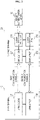
- FIG. 2 is a block diagram showing a configuration of a first terminal 10 and a second terminal 20 according to an embodiment of the present disclosure.
- the first terminal 10 may be the target device 10 in the embodiment described with reference to FIG. 1
- the second terminal 20 may be one of the user devices 20a to 20c described with reference to FIG. 1 .
- the first terminal 10 may include one or more applications 101 and a UWB applet 102.
- the second terminal 20 may include one or more applications 201, a UWB applet 202, a security authentication application 211, and a security authentication applet 212.
- FIG. 2 only components related to the embodiment of the present disclosure are shown in FIG. 2 . Accordingly, those skilled in the art can know that other general-purpose components, for example, a processor, a memory, an input/output interface, and the like, may be further included in addition to the components shown in FIG. 2 .
- the components of the first terminal 10 and the second terminal 20 illustrated in FIG. 2 represent functional elements that are functionally distinct from each other, and it should be noted that the plurality of components may be integrated with each other in an actual physical environment. Each component will be described in detail below.
- an application 101 running in the first terminal 10 may be an application for implementing functions corresponding to various purposes for which the first terminal 10 is utilized, such as access authentication, unlocking, vehicle driving, and payment.
- the application 101 may be executed in a security area (secure element) of the first terminal 10 and may also be executed in a normal area other than the security area.
- the application 101 may establish a first communication channel with another terminal, for example, the second terminal 20, through an arbitrary communication module included in the first terminal 10 and exchange data through the first communication channel.
- the UWB applet 102 running in the first terminal 10 may be a component for providing a UWB communication function to the application 101 of the first terminal 10.
- the UWB applet 102 may be executed in the security area (secure element) of the first terminal 10, but the present disclosure is not limited thereto.
- the UWB applet 102 may include a FiRa applet and a SUS applet.
- the UWB applet 102 may generate and manage the IDs of a session and a sub-session for UWB communication with a counterpart terminal, a key pair for the session and the sub-session, etc.
- the application 201 running in the second terminal 20 may be an application for implementing functions corresponding to various purposes for which the second terminal 20 is utilized, such as access authentication, unlocking, vehicle driving, and payment.
- the application 201 may be executed in a security area of the second terminal 20 and may also be executed in a normal area rather than the security area.
- the application 201 may establish a first communication channel with another terminal, for example, the first terminal 10, through an arbitrary communication module included in the second terminal 20 and exchange data through the first communication channel.
- the UWB applet 202 running in the first terminal 10 may be a component for providing a UWB communication function to the application 201 of the second terminal 20.
- the UWB applet 202 may be executed in the security area (secure element) of the second terminal 20, but the present disclosure is not limited thereto.
- the UWB applet 202 of the second terminal 20 reference may be made to the description of the UWB applet 102 of the first terminal 10.
- the second terminal 20 may further include a security authentication unit (211 and 212).
- the security authentication unit (211 and 212) may be implemented or installed in the second terminal 20 and may also be implemented in a hardware device distinct from the second terminal 20 and may be communicatively connected to the second terminal 20.
- the security authentication unit (211 and 212) may be referred to as a security authentication apparatus.
- the security authentication unit may include a security authentication application 211 executed in a normal area and a security authentication applet 212 executed in a security area (secure element).
- the security authentication application 211 may communicate with the application 201 and the security authentication applet 212. In some embodiments, the security authentication application 211 may communicate with a security authentication server 30 outside the second terminal 20.
- the security authentication applet 212 may communicate with the UWB applet 202 in the security area. Specifically, in an embodiment, the security authentication applet may exchange data with the UWB applet 202 through a sharable interface object provided in the security area.
- FIGS. 1 and 2 So far, the exemplary access control system and apparatus according to some embodiments of the present disclosure have been described with reference to FIGS. 1 and 2 .
- a communication method between terminals according to some embodiments of the present disclosure will be described in more detail with reference to FIGS. 3 to 13 .
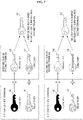
- FIG. 3 is a diagram illustrating key pairs generated based on the elliptic-curve Diffie-Hellman algorithm, which may be referenced to understand some embodiments of the present disclosure.
- the first terminal 10 may generate and retain a private-key-and-public-key key pair (41 and 42) of the first terminal
- the second terminal 20 may generate and retain a private-key-and-public-key key pair (51 and 52) of the second terminal.
- the key pair (41 and 42) of the first terminal and the key pair (51 and 52) of the second terminal may be used to generate a first secret key 61 using the elliptic-curve Diffie-Hellman algorithm and the like.
- the first secret key 61 may be derived when the public key 41 of the first terminal and the private key 52 of the second terminal are input into a key exchange function, and the same first secret key 61 may be derived when the private key 42 of the first terminal and the public key 51 of the second terminal are input into the key exchange function.
- the second terminal may derive the first secret key 61 using the public key 41 of the first terminal together with its own private key 52 when the public key 41 of the first terminal is provided to the second terminal, and the first terminal may derive the same first secret key 61 using the public key 51 of the second terminal together with its own private key 42 when the public key 51 of the second terminal is provided to the first terminal.
- the first secret key 61 may be used as an encryption key for protecting data exchanged between the first terminal 10 and the second terminal 20 or a key for deriving the encryption key.
- the first secret key 61 may be used to determine a session key of a communication session formed between the first terminal 10 and the second terminal 20.
- the key pair (41 and 42) of the first terminal and the key pair (51 and 52) of the second terminal 20 may be generated and retained by the UWB applets 102 and 202 of the first terminal 10 and the second terminal 20.
- the key pair (41 and 42), of the first terminal and the key pair (51 and 52) of the second terminal 20 may be generated and retained by the FiRa applets.
- the first terminal 10 or the second terminal 20 may generate two or more key pairs and additionally use the generated key pairs to communicate with other terminals.
- the second terminal 20 may additionally generate and retain the second key pair (53 and 54).
- the second key pair (53 and 54) of the second terminal may be used to generate a second secret key 62 using the elliptic-curve Diffie-Hellman algorithm and the like along with the key pair (41 and 42) of the first terminal.
- the second secret key 62 may be derived when the public key 41 of the first terminal and the second private key 54 of the second terminal are input into the key exchange function, and the same second secret key 62 may be derived when the private key 42 of the first terminal and the second public key 53 of the second terminal are input into the key exchange function.
- the second terminal may derive the second secret key 62 using the public key 41 of the first terminal together with its own second private key 54 when the public key 41 of the first terminal is provided to the second terminal, and the first terminal may derive the same second secret key 62 using the second public key 53 of the second terminal together with its own private key 42 when the second public key 53 of the second terminal is provided to the first terminal.
- the second secret key 62 may be used to determine a sub-session key for encrypting and protecting a sub-session of the communication session formed between the first terminal 10 and the second terminal 20.
- the second key pair (53 and 54) of the second terminal 20 may be a key pair that is generated and retained by a component other than the UWB applet (or the FiRa applet) of the second terminal 20.
- the second key pair (53 and 54) of the second terminal 20 may be generated by the application 201 of the second terminal.
- the second key pair (53 and 54) of the second terminal 20 may be generated by the security authentication unit (211 and 212) of the second terminal.
- the UWB applet Since the sub-session is encrypted using, as a sub-session key, the second secret key 62 derived using the second key pair (53 and 54) generated by a component other than the UWB applet (or the FiRa applet) of the second terminal 20, the UWB applet cannot read data of the sub-session, and thus it is possible to provide high security for data exchanged through the sub-session when terminals communicate with each other through multiple channels.
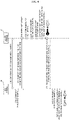
- FIG. 4 is a diagram showing operations of the first terminal 10 and the second terminal 20 based on data sequentially exchanged between the first terminal 10 and the second terminal 20 according to the present embodiment
- FIG. 5 is a diagram showing in more detail the detailed operations of the application 201 and the UWB applet 202, which are components of the second terminal 20.
- the first terminal 10 may be understood as, for example, the target device 10 in the embodiments described with reference to FIGS. 1 and 2
- the second terminal 20 may be understood as, for example, one of the user devices 20a to 20c in the embodiments described with reference to FIGS. 1 and 2 .
- a first communication channel may be established between the first terminal 10 and the second terminal 20 in operations S100 and S200.
- the applications 101 and 201 of the first terminal 10 and the second terminal 20 may exchange data through the first communication channel.
- the first communication channel may be, for example, a communication channel according to a protocol such as BLE or NFC.
- the first communication channel may include various channels according to various communication protocols widely known to those skilled in the art in addition to BLE or NFC.
- the application 101 of the first terminal 10 may request key information from the UWB applet 102.
- the UWB applet 102 of the first terminal 10 may acquire a key pair of the first terminal 10.
- the UWB applet 102 of the first terminal 10 may acquire a public key 41 and a private key 42 which are generated and stored in advance.
- the UWB applet 102 may generate a new key pair of the public key 41 and the private key 42.
- the key pair of the first terminal 10 may be a key pair generated based on the elliptic-curve Diffie-Hellman algorithm described with reference to FIG. 3 .
- the UWB applet 102 may provide the public key 41 of the first terminal 10 to the application 101.
- the application 101 of the first terminal 10 may transmit a first message to the second terminal 20 through the first communication channel.
- the identifier of the first terminal 10 and the public key 41 of the first terminal 10 may be included in the first message.
- the first message may further include a field indicating a user authentication mode required by the second terminal 20.
- the user authentication mode may include, for example, a security mode and a non-security mode.
- the authentication procedure with the first terminal 10 may be completed only when additional security authentication is acquired through the user's fingerprint, face, iris, password, etc. before or after the user of the second terminal 20 physically approaches the first terminal 10.
- the user authentication mode in the second terminal 20 is the non-security mode
- the authentication procedure with the first terminal 10 may be performed even without acquiring separate security authentication from the user when the second terminal 20 physically approaches the first terminal 10.
- FIGS. 4 and 5 will also be referred to.
- the second terminal 20 may receive the first message from the first terminal 10 through the first communication channel.
- the application 201 of the second terminal 20 provides the public key 41 of the first terminal to the UWB applet 202 of the second terminal 20.
- the public key 41 of the first terminal may be acquired from the first message.
- the UWB applet 202 of the second terminal 20 may store the public key 41 of the first terminal.
- the application 201 and the UWB applet 202 of the second terminal 20 may perform a security authentication routine in operation S205.
- the security authentication routine will be described below with reference to FIGS. 8 and 11 .
- a key pair of the second terminal may be acquired.
- the UWB applet 202 of the second terminal 20 may acquire a public key 51 and a private key 52 which are generated and stored in advance.
- the UWB applet 202 may generate a new key pair of the public key 51 and the private key 52.
- the key pair of the second terminal 20 may be a key pair generated based on the elliptic-curve Diffie-Hellman algorithm described with reference to FIG. 3 .
- the UWB applet 202 may acquire a first secret key 61 that may be used as a session key of a session of a second communication channel between the first terminal 10 and the second terminal 20.
- the first secret key 61 may be acquired by the second terminal 20 inputting the private key 52 of the second terminal and the public key 41 of the first terminal acquired from the first terminal 10 through the first message into the key exchange function.
- the UWB applet 202 may store the first secret key 61.
- the UWB applet 202 of the second terminal 20 may provide the public key 51 of the second terminal to the application 201.
- the application 201 of the second terminal 20 may transmit a second message to the first terminal 10 through the first communication channel.
- the identifier of the second terminal 20, the public key 51 of the second terminal 20, a field containing information regarding a setting result of the user authentication mode required by the second terminal 20, etc. may be included in the second message.
- the application 101 of the first terminal 10 may receive the second message from the second terminal 20 through the first communication channel.
- the application 101 of the first terminal 10 may provide the public key 51 of the second terminal 20 included in the second message to the UWB applet 102.
- the UWB applet 102 of the first terminal 10 may store the public key 51 of the second terminal 20.
- the UWB applet 102 of the first terminal 10 may store information on a user authentication mode required by the second terminal 20.
- the UWB applet 102 of the first terminal 10 may acquire the first secret key 61 that may be used as the session key of the session of the second communication channel between the first terminal 10 and the second terminal 20.
- the first secret key 61 may be acquired by the first terminal 10 inputting the private key 42 of the first terminal and the public key 51 of the second terminal acquired from the second terminal 20 through the second message into the key exchange function.
- the UWB applet 102 may store the first secret key 61.
- identification information or registration information required in advance to exchange data may be exchanged through the second communication channel between the first terminal 10 and the second terminal 20, for example, short-range communication based on UWB communication technology.
- a session key e.g., the first secret key
- each terminal may provide the public key of the key pair generated based on the elliptic-curve Diffie-Hellman algorithm or the like to the other.
- Each terminal may derive and use the same session key (the first secret key) by combining its own private key and the public key of the other acquired through this process. Therefore, it is possible to exchange data safely compared to a scheme of providing a symmetric key generated by one terminal to the other.
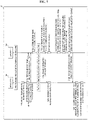
- FIG. 6 is a diagram showing operations of the first terminal 10 and the second terminal 20 based on data sequentially exchanged between the first terminal 10 and the second terminal 20 according to the present embodiment
- FIG. 7 is a diagram showing in more detail the detailed operations of the application 201 and the UWB applet 202, which are components of the second terminal 20.
- a first security authentication routine may be performed in the second terminal 20 in operation S401.
- the first security authentication routine will be described below with reference to FIGS. 9 and 12 .
- the first communication channel may be established between the first terminal 10 and the second terminal 20 in order to perform the authentication procedure between the first terminal 10 and the second terminal 20.
- the applications 101 and 201 of the first terminal 10 and the second terminal 20 may exchange data through the first communication channel.
- the first communication channel may be, for example, a communication channel according to a protocol such as BLE or NFC.
- the first communication channel may include various channels according to various communication protocols widely known to those skilled in the art in addition to BLE or NFC.
- the application 101 of the first terminal 10 may acquire, from the UWB applet 202, information on the user authentication mode required from the second terminal 20.
- the application 101 of the first terminal 10 may transmit a third message to the second terminal 20 through the first communication channel.
- the third message may include a message requesting to initiate the establishment of the second communication channel.
- the third message may further include a field indicating a user authentication mode required from the second terminal 20.
- FIGS. 6 and 7 will also be referred to.
- the second terminal 20 may receive the third message from the first terminal 10 through the first communication channel.
- the second key pair of the second terminal 20 that is, the second public key 53 and the second private key 54, may be acquired.
- the second key pair of the second terminal may include the public key 53 and the private key 54 which are generated by the application 201.
- the application 201 of the second terminal 20 may provide the second public key 53 of the second terminal 20 to the UWB applet 202 of the second terminal.
- the UWB applet 202 of the second terminal 20 may store the second public key of the second terminal.
- the application 201 and the UWB applet 202 of the second terminal 20 may perform a second security authentication routine in operation S413.
- the second security authentication routine will be described below with reference to FIGS. 10 and 13 .
- session information for establishing the second communication channel with the first terminal 10 may be set by the UWB applet 202 of the second terminal 20.
- the UWB applet 202 may acquire the first secret key 61 to be used as a session key by inputting the public key 41 of the first terminal 10 acquired during the registration process between the first terminal 10 and the second terminal 20 into the key exchange function in addition to the private key 52 of the second terminal 20.
- the UWB applet 202 may acquire and store the first secret key 61 during the registration process between the first terminal 10 and the second terminal 20 and may restore the pre-stored first secret key 61 in operation S415.
- information for setting the sub-session between the application 101 of the first terminal 10 and the second application 201 of the second terminal 20 may be stored in the UWB applet 202 of the second terminal 20.
- the second public key 53 of the second terminal 20 provided by the second application 201 may be set as a sub-session key for the UWB applet 202.
- a result of setting the session and sub-session information may be provided from the UWB applet 202 to the application 201.
- the ranging of the second terminal 20 may be initiated to establish the second communication channel with the first terminal 10.
- the application 201 of the second terminal 20 may transmit a fourth message to the first terminal 10 through the first communication channel.
- the fourth message may include a field indicating the user authentication mode of the second terminal and the setting result for the session information.
- the application 101 of the first terminal 10 may receive the fourth message.
- the UWB applet 102 of the first terminal 10 may set the session and sub-session information for establishing the second communication channel.
- the UWB applet 102 may acquire the first secret key 61 to be used as a session key by inputting the public key 51 of the second terminal 20 acquired during the registration process between the first terminal 10 and the second terminal 20 into the key exchange function in addition to the private key 42 of the first terminal 10.
- the UWB applet 202 may acquire and store the first secret key 61 during the registration process between the first terminal 10 and the second terminal 20 and may restore the pre-stored first secret key 61 in operation S305.
- the ranging of the first terminal 10 may be initiated to establish the second communication channel with the first terminal 10.
- the second communication channel between the first terminal 10 and the second terminal 20 for example, a short-range communication channel based on UWB communication technology, may be established.
- the second communication channel may be established between the UWB applets 102 and 202 of the first terminal 10 and the second terminal 20.
- the second communication channel may be protected by the first secret key 61.
- the first terminal 10 may acquire the first secret key 61 and use the first secret key 61 as the session key of the second communication channel in operation S305
- the second terminal 20 may acquire the first secret key 61 and use the first secret key 61 as the session key of the second communication channel in operation S415.
- FIGS. 6 and 7 will also be referred to.
- the UWB applet 202 of the second terminal 20 may transmit the second public key 53 of the second terminal to the first terminal 10 through the second communication channel.
- the second public key 53 may be used as a key of the sub-session to be formed between the applications 101 and 201 of the first terminal 10 and the second terminal 20.
- the UWB applet 102 of the first terminal 10 may store the second public key 53 of the second terminal 20.
- the UWB applet 102 of the first terminal 10 may acquire the second secret key 62 that may be used as the session key of the sub-session of the second communication channel between the first terminal 10 and the second terminal 20.
- the second secret key 62 may be acquired by the first terminal 10 inputting the private key 42 of the first terminal and the second public key 53 of the second terminal acquired from the second terminal 20 into the key exchange function.
- the UWB applet 102 may store the second secret key 62.
- the UWB applet 102 of the first terminal 10 may transmit data protected by additionally using the second secret key 62 to the UWB applet 202 of the second terminal 20, and the UWB applet 202 of the second terminal 20 may receive the protected data.
- the UWB applet 202 of the second terminal 20 may provide, to the application 201, the public key 41 of the first terminal and the data received from the first terminal 10 in operation S423.
- the application 201 of the second terminal 20 may acquire the second secret key 62.
- the second secret key 62 may be a key used as the session key of the sub-session of the second communication channel between the first terminal 10 and the second terminal 20.
- the second secret key 62 may be acquired by the second terminal 20 inputting the second private key 54 of the second terminal and the public key 41 of the first terminal acquired from the first terminal 10 into the key exchange function.
- the second private key 54 of the second terminal may be the private key of the public-key-and-private-key key pair (53 and 54) that is generated or retained by the application 201.
- the application 201 of the second terminal 20 may decrypt the data received from the first terminal 10 in operation S423 with the second secret key 62 acquired in operation S425 and may decrypt and read the data.
- the embodiment that has been described with reference to FIGS. 6 and 7 may provide a method of safely generating a session and a sub-session for the first terminal 10 and the second terminal 20 to authenticate each other through the second communication channel therebetween, for example, through the short-range communication based on UWB communication technology.
- the second communication channel protected using, as the session key, the first secret key 61 derived using the public key exchanged during the registration process between the first terminal 10 and the second terminal 20 may be formed between the first terminal 10 and the second terminal 20.
- the second secret key 62 may be acquired by additionally using the public-key-and-private-key key pair generated or retained by the application of the second terminal 20, and the sub-session formed between the applications 101 and 201 of the first terminal 10 and the second terminal 20 may be safely protected by using the second secret key 62 as the sub-session key.
- a registration procedure and an authentication procedure between terminals according to a first embodiment of the present disclosure in which an additional security authentication procedure is performed in the second terminal 20 will be described below with reference to FIGS. 8 to 10 .
- the second terminal 20 may include the application 201 and the security authentication application 211 which are executed in the normal area and the UWB applet 202 which is executed in the security area. Also, the security authentication application 211 may exchange authentication-related data with the security authentication server 30 outside the second terminal 20.
- FIG. 8 may be understood as a drawing that shows in more detail operations performed by the second terminal 20 in operation S205 during the registration procedure of the first terminal 10 and the second terminal 20 which has been described with reference to FIGS. 4 and 5 . Accordingly, detailed descriptions of the operations already described with reference to FIGS. 4 and 5 will not be repeated, but detailed operations of operation S205 will be described.
- the second terminal 20 may establish the first communication channel with the first terminal 10 (S200) and receive the first message including the user authentication mode field and the public key 41 of the first terminal 10 from the first terminal 10 (S201), and the UWB applet 202 of the second terminal 20 may store the public key 41 of the first terminal 10 (S203).
- the application 201 and the UWB applet 202 of the second terminal 20 may perform the security authentication routine in operation S205.
- the UWB applet 202 may request security authentication from the application 201.
- the application 201 may provide, to the security authentication application 211, information related to the registration of the second terminal 20 with the first terminal 10.
- the security authentication application 211 may perform registration.
- the security authentication application 211 may acquire information for security authentication, such as fingerprint information, facial (face) shape information, iris information, and a password, from the user and register the acquired information.
- the above information may be transmitted to the security authentication server 30 and verified by the server 30, and the verification result may be provided from the server 30 to the security authentication application 211.
- the security authentication information registration result may be provided from the security authentication application 211 to the application 201.
- the security authentication information registration result may include information on the authentication means (fingerprint, face, iris, password, etc.) and the public key of the security authentication application 211.
- the application 201 may provide, to the UWB applet 202, the security authentication information registration result and the public key received from the security authentication application 211.
- the UWB applet 202 may store the public key of the security authentication application and it may be used in the authentication procedure of the first terminal 10 and the second terminal 20 in the future.
- the security authentication routine performing operation S205 shown in FIG. 5 may be completed.
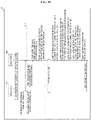
- FIG. 9 is a diagram illustrating the first security authentication routine S401 in more detail
- FIG. 10 is a diagram illustrating the second security authentication routine S413 in more detail.
- the first security authentication routine S401 will be described with reference to FIG. 9 .
- the first security authentication routine S401 may be performed after the first terminal 10 and the second terminal 20 physically approach each other so that the first communication channel is established.
- the first security authentication routine S401 may be performed in advance by the user of the second terminal 20 before the first terminal 10 and the second terminal 20 physically approach each other.
- the authentication procedure of the first terminal 10 and the second terminal 20 can be quickly performed even without the intervention of the user of the second terminal 20 after the first terminal 10 and the second terminal 20 physically approach each other.
- the security authentication application 211 may require authentication from the user of the second terminal 20 through the authentication means (fingerprint, face, iris, password, etc.) pre-registered in operation S605 for the registration procedure.
- the authentication means fingerprint, face, iris, password, etc.
- the security authentication application 211 provides, to the application 201, the authentication result and information on the authentication means (fingerprint, face, iris, password, etc.) used for the authentication in operation S805.
- the authentication result may include a token value including whether the authentication has succeeded or failed, identification information on the authenticated user, information on the valid time or expiration date of the user authentication, the number of times the user authentication is valid, and the like.
- the authentication result may include a value signed by the security authentication application 211 using its own private key.
- the application 201 may check the authentication result and store the token and the signed value.
- the stored information may be used while the second security authentication routine S413 which will be described below is being performed.
- the second security authentication routine S413 will be described below with reference to FIG. 10 .
- the second security authentication routine S413 may be performed after the first terminal 10 and the second terminal 20 physically approach each other so that the first communication channel is established.
- the first security authentication routine S401 is performed in advance before the first terminal 10 and the second terminal 20 physically approach each other, the authentication procedure of the first terminal 10 and the second terminal 20 can be performed even without the intervention of the user of the second terminal 20 during the second security authentication routine S413.
- FIG. 10 may be understood as a drawing that shows in more detail operations performed by the second terminal 20 in operation S413 during the authentication procedure of the first terminal 10 and the second terminal 20 which has been described with reference to FIGS. 6 and 7 . Accordingly, detailed descriptions of the operations already described with reference to FIGS. 6 and 7 will not be repeated, but detailed operations of operation S413 will be described.
- the first security authentication routine S401 may be performed in the second terminal 20 in operation S401, and the first communication channel may be established between the first terminal 10 and the second terminal 20 in operation S410.
- the application 201 of the second terminal 20 may receive the third message (including fields such as a second communication channel setup initiation request, a user authentication mode, etc.) from the first terminal 10, and the received third message may be provided to the UWB applet 202 of the second terminal 20.
- the application 201 may check the user security authentication result that is acquired and stored in advance as a result of performing the first security authentication routine S401.
- the user security authentication result may include a token value including whether the authentication has succeeded or failed, identification information on the authenticated user, information on the valid time or expiration date of the user authentication, the number of times the user authentication is valid, and the like.
- the application 201 may proceed with operation S1003 and subsequent operations.
- the application 201 may perform operation S1001 again after re-performing the first security authentication routine S401.
- the application 201 may provide, to the UWB applet 202, the token and signed value acquired from the security authentication application 211 while the first security authentication routine S401 is being performed.
- the UWB applet 202 may verify the token and the signed value with the public key of the security authentication application 211 in operation S1005.
- the public key of the security authentication application 211 may be received from the application 201 of the UWB applet 202 and then stored.
- the UWB applet 202 may verify the authenticity of the token and the signed value provided from the application 201 through operation S1003 by the security authentication application 211 verifying the value signed with its own private key using the public key of the security authentication application 211.
- the UWB applet 202 may generate a temporary key pair (a temporary public key and a temporary private key) to be used in a sub-session which will be established through the second communication channel with the first terminal 10.
- the temporary key pair may be understood as replacing the second key pair (the second public key 53 and the second private key 54) of the second terminal 20 which has been described in relation to the operation S411-2 of FIG. 6 . That is, the temporary key pair may be used to generate the second secret key 62 using the elliptic-curve Diffie-Hellman algorithm and the like along with the key pair (41 and 42) of the first terminal.
- the second secret key 62 may be derived when the public key 41 of the first terminal and the temporary private key of the second terminal are input into the key exchange function, and the same second secret key 62 may be derived when the private key 42 of the first terminal and the temporary public key of the second terminal are input into the key exchange function.
- the second terminal may derive the second secret key 62 using the public key 41 of the first terminal together with its own temporary private key when the public key 41 of the first terminal is provided to the second terminal, and the first terminal may derive the same second secret key 62 using the temporary public key of the second terminal together with its own private key 42 when the temporary public key of the second terminal is provided to the first terminal.
- the second secret key 62 may be used to determine a sub-session key for encrypting and protecting a sub-session of the communication session formed between the first terminal 10 and the second terminal 20.
- the second terminal 20 may perform operations S415 to S417 that have been described above with reference to FIG. 7 . Operations after the second communication channel is established between the first terminal 10 and the second terminal 20 will be described below.
- the second communication channel may be established between the first terminal 10 and the second terminal 20, and data protected with the first secret key may be received by the UWB applet 202 from the first terminal 10.
- the UWB applet 202 may transmit the second public key of the second terminal to the first terminal 10 through the second communication channel.
- the second public key of the second terminal may be the public key of the temporary key pair generated in operation S 1007.
- the UWB applet 202 may receive data protected with the second secret key from the first terminal 10 through the second communication channel.
- the UWB applet 202 may acquire the second secret key.
- the second secret key 62 may be a key used as the session key of the sub-session of the second communication channel between the first terminal 10 and the second terminal 20.
- the second secret key 62 may be acquired by the second terminal 20 inputting the private key of the temporary key pair of the second terminal and the public key 41 of the first terminal acquired from the first terminal 10 into the key exchange function.
- the UWB applet 202 may decrypt the data received from the first terminal 10 in operation S423 with the second secret key.
- the UWB applet 202 may provide the decrypted data to the application 201, and the application 201 may read the decrypted data.
- the authentication procedure of the first terminal 10 and the second terminal 20 may be quickly performed even without the intervention of the user of the second terminal 20 after the first terminal 10 and the second terminal 20 physically approach each other.
- a registration procedure and an authentication procedure between terminals according to a second embodiment of the present disclosure in which an additional security authentication procedure is performed in the second terminal 20 will be described below with reference to FIGS. 11 to 13 .
- the second terminal 20 may include the application 201 and the security authentication application 211 which are executed in the normal area and the UWB applet 202 and the security authentication applet 212 which are executed in the security area.
- the UWB applet 202 and the security authentication applet 212 may exchange data with each other through a sharable interface object in the security area.
- the security authentication application 211 may exchange authentication-related data with the security authentication server 30 outside the second terminal 20.
- FIG. 11 may be understood as a drawing that shows in more detail operations performed by the second terminal 20 in operation S205 during the registration procedure of the first terminal 10 and the second terminal 20 which has been described with reference to FIGS. 4 and 5 . Accordingly, detailed descriptions of the operations already described with reference to FIGS. 4 and 5 will not be repeated, but detailed operations of operation S205 will be described.
- the second terminal 20 may establish the first communication channel with the first terminal 10 (S200) and receive the first message including the user authentication mode field and the public key 41 of the first terminal 10 from the first terminal 10 (S201), and the UWB applet 202 of the second terminal 20 may store the public key 41 of the first terminal 10 (S203).
- the application 201 and the UWB applet 202 of the second terminal 20 may perform the security authentication routine in operation S205.
- the UWB applet 202 may request security authentication from the application 201.
- the application 201 may provide, to the security authentication application 211, information related to the registration of the second terminal 20 with the first terminal 10.
- the security authentication application 211 may request the security authentication applet 212 to process the registration.
- the security authentication applet 212 may acquire information for security authentication, such as fingerprint information, facial shape information, iris information, and a password, from the user and register the acquired information. Also, the above information may be transmitted to the security authentication server 30 and verified by the server 30, and the verification result may be provided from the server 30 to the security authentication application 211.
- the security authentication information registration result may be provided from the security authentication application 211 to the application 201.
- the security authentication information registration result may include information on the authentication means (fingerprint, face, iris, password, etc.), etc.
- operation S607-1 of this embodiment is different from operation S607 of the embodiment described with reference to FIGS. 8 to 10 in that the public key of the security authentication application 211 may not be provided to the application 201.
- this embodiment is different from the embodiment described with reference to FIGS. 8 to 10 in that the public key of the security authentication application 211 may not be provided to the UWB applet 202.
- the security authentication routine performing operation S205 shown in FIG. 5 may be completed.
- FIG. 12 is a diagram illustrating the first security authentication routine S401 in more detail
- FIG. 13 is a diagram illustrating the second security authentication routine S413 in more detail.
- the temporary key pair generated by the UWB applet 202 of the second terminal 20 in order to generate the second secret key for encrypting the sub-session and allowing the temporary key pair to be automatically discarded, for example, after a predetermined time has elapsed or after a predetermined number of authentications have been completed, it is possible to safely protect data transmitted or received between the applications of the first terminal 10 and the second terminal 20.
- the first security authentication routine S401 will be described with reference to FIG. 12 .
- the first security authentication routine S401 may be performed after the first terminal 10 and the second terminal 20 physically approach each other so that the first communication channel is established.
- the first security authentication routine S401 may be performed in advance by the user of the second terminal 20 before the first terminal 10 and the second terminal 20 physically approach each other.
- the authentication procedure of the first terminal 10 and the second terminal 20 can be quickly performed even without the intervention of the user of the second terminal 20 after the first terminal 10 and the second terminal 20 physically approach each other.
- the security authentication application 211 may request the security authentication applet 212 to process the user security authentication.
- the security authentication applet 212 may require authentication from the user of the second terminal 20 through the authentication means (fingerprint, face, iris, password, etc.) pre-registered in operation S605 for the registration procedure.
- the security authentication application 211 provides, to the application 201 through the security authentication application 211, the authentication result and information on the authentication means (fingerprint, face, iris, password, etc.) used for the authentication in operations S805-1 and S805-2.
- the authentication result may include a token value including whether the authentication has succeeded or failed, identification information on the authenticated user, information on the valid time or expiration date of the user authentication, the number of times the user authentication is valid, and the like.
- This embodiment is distinguishable from the embodiment that has been described with reference to FIGS. 8 to 10 in that the value signed with the private key of the security authentication application 211 or the security authentication applet 212 need not be provided to the application 201.
- the application 201 may check the authentication result and provide the token to the UWB applet 202.
- the UWB applet 202 may store the provided token. The stored token may be used while the second security authentication routine S413 which will be described below is being performed.
- the second security authentication routine S413 will be described below with reference to FIG. 13 .
- the second security authentication routine S413 may be performed after the first terminal 10 and the second terminal 20 physically approach each other so that the first communication channel is established.
- the first security authentication routine S401 is performed in advance before the first terminal 10 and the second terminal 20 physically approach each other, the authentication procedure of the first terminal 10 and the second terminal 20 can be performed even without the intervention of the user of the second terminal 20 during the second security authentication routine S413.
- FIG. 13 may be understood as a drawing that shows in more detail operations performed by the second terminal 20 in operation S413 during the authentication procedure of the first terminal 10 and the second terminal 20 which has been described with reference to FIGS. 6 and 7 . Accordingly, detailed descriptions of the operations already described with reference to FIGS. 6 and 7 will not be repeated, but detailed operations of operation S413 will be described.
- the first security authentication routine S401 may be performed in the second terminal 20 in operation S401, and the first communication channel may be established between the first terminal 10 and the second terminal 20 in operation S410.
- the application 201 of the second terminal 20 may receive the third message (including fields such as a second communication channel setup initiation request, a user authentication mode, etc.) from the first terminal 10, and the received third message may be provided to the UWB applet 202 of the second terminal 20.
- the UWB applet 202 may check the user security authentication result that is acquired and stored in advance as a result of performing the first security authentication routine S401.
- the user security authentication result may include a token value including whether the authentication has succeeded or failed, identification information on the authenticated user, information on the valid time or expiration date of the user authentication, the number of times the user authentication is valid, and the like.
- the UWB applet 202 may proceed with operation S1203 and subsequent operations.
- the UWB applet 202 may perform operation S1201 again after re-performing the first security authentication routine S401.
- the UWB applet 202 may request security authentication from the security authentication applet 212 together with the public key 41 of the first terminal acquired from the first terminal 10 during the registration process.
- the token acquired from the security authentication applet 212 during the first security authentication routine S401 may be included in the security authentication request.
- the security authentication applet 212 may verify the token. There may be various methods of the security authentication applet 212 verifying the token the security authentication applet 212 has issued during the first security authentication routine S401 in this operation.
- the security authentication applet 212 may generate and retain its own key pair.
- the key pair of the security authentication applet 212 may be understood as replacing the second key pair (the second public key 53 and the second private key 54) of the second terminal 20 which has been described in relation to the operation S411-2 of FIG. 6 . That is, the key pair of the security authentication applet 212 may be used to generate the second secret key 62 using the elliptic-curve Diffie-Hellman algorithm and the like along with the key pair (41 and 42) of the first terminal.
- the second secret key 62 may be derived when the public key 41 of the first terminal and the private key of the security authentication applet 212 are input into the key exchange function, and the same second secret key 62 may be derived when the private key 42 of the first terminal and the public key of the security authentication applet 212 are input into the key exchange function.
- the security authentication applet 212 of the second terminal may derive the second secret key 62 using the public key 41 of the first terminal together with its own private key when the public key 41 of the first terminal is provided to the second terminal, and the first terminal 10 may derive the same second secret key 62 using the public key of the security authentication applet 212 of the second terminal together with its own private key 42 when the public key of the security authentication applet 212 of the second terminal is provided to the first terminal.
- the second secret key 62 may be used to determine a sub-session key for encrypting and protecting a sub-session of the communication session formed between the first terminal 10 and the second terminal 20.
- the public key of the security authentication applet 212 along with the token verification result may be provided to the UWB applet 202 by the security authentication applet 212 in operation S1205.
- the UWB applet 202 may store the public key of the security authentication applet 212 to be provided to the first terminal 10.
- the second terminal 20 may perform operations S415 to S417 that have been described above with reference to FIG. 7 . Operations after the second communication channel is established between the first terminal 10 and the second terminal 20 will be described below.
- the second communication channel may be established between the first terminal 10 and the second terminal 20, and data protected with the first secret key may be received by the UWB applet 202 from the first terminal 10.
- the UWB applet 202 may transmit the second public key of the second terminal 20 to the first terminal 10 through the second communication channel.
- the second public key of the second terminal 20 may be the public key of the security authentication applet 212 received from the security authentication applet 212 in operation S1205.
- the UWB applet 202 may receive data protected with the second secret key from the first terminal 10 through the second communication channel.
- the UWB applet 202 may provide the data received in operation S423 to the security authentication applet 212 along with the public key 41 of the first terminal.
- the security authentication applet 212 may acquire the second secret key.
- the second secret key 62 may be a key used as the session key of the sub-session of the second communication channel between the first terminal 10 and the second terminal 20.
- the second secret key 62 may be acquired by inputting the public key 41 of the first terminal and the private key of the security authentication applet 212 into the key exchange function.
- the security authentication applet 212 may decrypt the data received from the first terminal 10 in operation S423 using the second secret key.
- the security authentication applet 212 may provide the decrypted data to the UWB applet 202.
- the UWB applet 202 may provide the decrypted data to the application 201.
- the application 201 may read the decrypted data.
- At least some operations of additional security authentication required from the user of the second terminal 20 may be processed in the security area (e.g., Secure Element) of the second terminal 20, and thus it is possible to enhance security.
- the UWB applet 202 and the security authentication applet 212 may be executed in the security area, and the two applets 202 and 212 may safely exchange data through a sharable interface object in the security area. Thus, it is possible to safely protect data from external hacking.
- the technical spirit of the present disclosure may be implemented as computer-readable code on a computer-readable medium.
- the computer-readable recording medium may be, for example, a removable recording medium (a compact disc (CD), a digital versatile disc (DVD), a Blu-ray disc, a USB storage device, or a portable hard disk) or a fixed recording medium (a read-only memory (ROM), a random access memory (RAM), or a hard disk in computer).
- the computer program recorded on the computer-readable recording medium may be transmitted to another computing apparatus via a network such as the Internet and installed in the computing apparatus, and thus can be used in the computing apparatus.
- FIG. 14 A hardware configuration of an exemplary computing apparatus according to some embodiments of the present disclosure will be described with reference to FIG. 14 .
- the computing apparatus described with reference to FIG. 14 may be, for example, the hardware configuration of the first terminal 10 or the second terminal 20 that has been described with reference to FIG. 2 .
- FIG. 14 is an exemplary hardware configuration diagram in which the computing apparatus can be implemented according to various embodiments of the present disclosure.
- a computing apparatus 1000 may include one or more processors 1100, a system bus 1600, a communication interface 1200, and a memory 1400 for loading a computer program 1500 executed by the processor 1100, and a storage 1300 for storing the computer program 1500.
- the processor 1100 may control the overall operation of each component of the computing apparatus 1000.
- the processor 1100 may be configured to include at least one of a central processing unit (CPU), a micro-processor unit (MPU), a micro-controller unit (MCU), a graphic processing unit (GPU), or any type of processor well known in the art. Also, the processor 1100 may perform computation for at least one application or program for executing the methods or operations according to various embodiments of the present disclosure.
- the computing apparatus 1000 may include two or more processors.
- the memory 1400 stores various kinds of data, instructions, and/or information.
- the memory 1400 may load one or more computer programs 1500 from the storage 1300 in order to execute the methods or operations according to various embodiments of the present disclosure.
- the memory 1400 may be, for example, a RAM, but the present disclosure is not limited thereto.
- the system bus 1600 provides a communication function between the components of the computing apparatus 1000.
- the system bus 1600 may be implemented as various types of buses, such as an address bus, a data bus, and a control bus.
- the communication interface 1200 supports wired or wireless Internet communication of the computing apparatus 1000.
- the communication interface 1200 may support various communication schemes in addition to Internet communication.
- the communication interface 1200 may be configured to include a communication module well known in the art.
- the storage 1300 may non-temporarily store one or more computer programs 1500.
- the storage 1300 may be configured to include a non-volatile memory such as a flash memory, a hard disk, a removable disk, or any type of computer-readable recording medium well known in the art.
- the computer program 1500 may include one or more instructions in which methods or operations according to various embodiments of the present disclosure are implemented.
- the processor 1100 may perform the methods or operations according to various embodiments of the present disclosure by executing the instructions.
- the technical features of the present disclosure described so far may be embodied as computer readable codes on a computer readable medium.
- the computer readable medium may be, for example, a removable recording medium (CD, DVD, Blu-ray disc, USB storage device, removable hard disk) or a fixed recording medium (ROM, RAM, computer equipped hard disk).
- the computer program recorded on the computer readable medium may be transmitted to other computing device via a network such as internet and installed in the other computing device, thereby being used in the other computing device.
Landscapes
- Engineering & Computer Science (AREA)
- Computer Security & Cryptography (AREA)
- Computer Networks & Wireless Communication (AREA)
- Signal Processing (AREA)
- Computer Hardware Design (AREA)
- Computing Systems (AREA)
- General Engineering & Computer Science (AREA)
- Mobile Radio Communication Systems (AREA)
Applications Claiming Priority (1)
| Application Number | Priority Date | Filing Date | Title |
|---|---|---|---|
| KR1020210069489A KR20220161066A (ko) | 2021-05-28 | 2021-05-28 | 근접 통신 방법 및 장치 |
Publications (1)
| Publication Number | Publication Date |
|---|---|
| EP4096155A1 true EP4096155A1 (fr) | 2022-11-30 |
Family
ID=81841911
Family Applications (1)
| Application Number | Title | Priority Date | Filing Date |
|---|---|---|---|
| EP22173991.5A Withdrawn EP4096155A1 (fr) | 2021-05-28 | 2022-05-18 | Procédé de communication de proximité entre terminaux et appareil correspondant |
Country Status (3)
| Country | Link |
|---|---|
| US (1) | US20220386118A1 (fr) |
| EP (1) | EP4096155A1 (fr) |
| KR (1) | KR20220161066A (fr) |
Families Citing this family (2)
| Publication number | Priority date | Publication date | Assignee | Title |
|---|---|---|---|---|
| US10778435B1 (en) | 2015-12-30 | 2020-09-15 | Jpmorgan Chase Bank, N.A. | Systems and methods for enhanced mobile device authentication |
| DE102021110142A1 (de) * | 2021-04-21 | 2022-10-27 | Bundesdruckerei Gmbh | Personalisieren eines Sicherheitsapplets auf einem mobilen Endgerät |
Citations (3)
| Publication number | Priority date | Publication date | Assignee | Title |
|---|---|---|---|---|
| EP1335563A2 (fr) * | 2002-02-06 | 2003-08-13 | Xerox Corporation | Procédé pour la sécurisation de la communication sur un réseau |
| WO2018160863A1 (fr) * | 2017-03-01 | 2018-09-07 | Apple Inc. | Accès au système à l'aide d'un dispositif mobile |
| US20190116619A1 (en) * | 2016-04-14 | 2019-04-18 | Apple Inc. | Methods and architectures for secure ranging |
Family Cites Families (35)
| Publication number | Priority date | Publication date | Assignee | Title |
|---|---|---|---|---|
| EP1410557A4 (fr) * | 2001-06-22 | 2009-11-18 | Wonderware Corp | Architecture de securite pour plate-forme de commande de processus executant des applications |
| JP2004120708A (ja) * | 2002-09-30 | 2004-04-15 | Brother Ind Ltd | 通信装置 |
| US7496750B2 (en) * | 2004-12-07 | 2009-02-24 | Cisco Technology, Inc. | Performing security functions on a message payload in a network element |
| KR100666947B1 (ko) * | 2005-02-01 | 2007-01-10 | 삼성전자주식회사 | 근거리 무선통신단말의 네트워크 접근방법 및 그네트워크시스템 |
| CA2531533C (fr) * | 2005-12-28 | 2013-08-06 | Bce Inc. | Infrastructure de cle publique a base de sessions |
| US20120183144A1 (en) * | 2011-01-17 | 2012-07-19 | General Electric Company | Key management system and methods for distributed software |
| DE102011015711A1 (de) * | 2011-03-31 | 2012-10-04 | Giesecke & Devrient Gmbh | Aktualisierung einer Datenträgerapplikation |
| GB2500560A (en) * | 2011-11-03 | 2013-10-02 | Proxama Ltd | Authorising transactions in a mobile device |
| DE102013007202A1 (de) * | 2013-04-25 | 2014-10-30 | Giesecke & Devrient Gmbh | Verfahren zum Aufbauen einer Schlüsselinfrastruktur |
| KR102088018B1 (ko) * | 2013-09-03 | 2020-05-27 | 삼성전자주식회사 | 전자 기기간 연동 방법 및 장치 |
| CN105706390B (zh) * | 2013-10-30 | 2020-03-03 | 三星电子株式会社 | 在无线通信网络中执行设备到设备通信的方法和装置 |
| KR102209814B1 (ko) * | 2013-12-13 | 2021-02-01 | 삼성전자주식회사 | 데이터 처리 방법 및 이를 지원하는 전자 장치 |
| US9225742B2 (en) * | 2014-03-24 | 2015-12-29 | Airwatch Llc | Managed real-time communications between user devices |
| US9338164B1 (en) * | 2014-04-14 | 2016-05-10 | Symantec Corporation | Two-way authentication using two-dimensional codes |
| JP6327994B2 (ja) | 2014-07-28 | 2018-05-23 | ルネサスエレクトロニクス株式会社 | 制御システムおよび半導体装置 |
| WO2016018028A1 (fr) * | 2014-07-31 | 2016-02-04 | Samsung Electronics Co., Ltd. | Dispositif et procédé de mise en place ou de suppression de la sécurité sur un contenu |
| US9858429B2 (en) * | 2014-12-01 | 2018-01-02 | Samsung Electronics Co., Ltd. | Methods of data transfer in electronic devices |
| EP3122082A1 (fr) * | 2015-07-24 | 2017-01-25 | Gemalto Sa | Procédé de sécurisation d'une fonction applicative dans un contexte utilisant des éléments sécurisés virtuels dans le cloud |
| KR102125564B1 (ko) * | 2015-07-29 | 2020-06-22 | 삼성전자주식회사 | 디바이스들 간의 통신 방법 및 그 디바이스 |
| KR102399665B1 (ko) * | 2015-09-11 | 2022-05-19 | 삼성전자주식회사 | 전자 장치의 근접 인증 방법 및 그 장치 |
| US9882894B2 (en) * | 2015-12-15 | 2018-01-30 | Verizon Patent And Licensing Inc. | Secure authentication service |
| KR102616860B1 (ko) * | 2016-02-05 | 2023-12-21 | 삼성전자주식회사 | 근거리 통신을 이용한 결제 시스템 및 방법 |
| CA3014603C (fr) * | 2016-03-31 | 2024-06-18 | Dexcom, Inc. | Systemes et procedes de communications entre des applications |
| KR102425368B1 (ko) * | 2016-05-02 | 2022-07-27 | 삼성전자주식회사 | 가상 sim 운용 방법 및 그 장치 |
| WO2017212495A1 (fr) * | 2016-06-08 | 2017-12-14 | Unibeam Ltd. | Utilisation d'un canal de communication d'un équipement mobile à sim pour une surveillance d'état d'applications d'un combiné |
| KR102263223B1 (ko) * | 2017-03-14 | 2021-06-09 | 삼성전자 주식회사 | 전자장치 및 그 제어방법 |
| KR101978774B1 (ko) * | 2017-10-20 | 2019-05-15 | 한국전자통신연구원 | 사용자 인증 기반의 양자 직접 통신 방법 및 이를 이용한 장치 |
| EP3576441A1 (fr) * | 2018-05-31 | 2019-12-04 | Koninklijke Philips N.V. | Dispositif de transfert de communication sans fil |
| US11178148B2 (en) * | 2018-08-21 | 2021-11-16 | HYPR Corp. | Out-of-band authentication to access web-service with indication of physical access to client device |
| KR102835530B1 (ko) * | 2019-03-22 | 2025-07-16 | 삼성전자주식회사 | 통신 방법 및 통신 디바이스 |
| WO2021086325A1 (fr) * | 2019-10-29 | 2021-05-06 | Hewlett-Packard Development Company, L.P. | Génération de modèle d'objet |
| US11829773B2 (en) * | 2020-06-11 | 2023-11-28 | Verizon Patent And Licensing Inc. | Systems and methods for securely booting a network device with a service provider trust anchor |
| US12355761B2 (en) * | 2020-11-25 | 2025-07-08 | Samsung Electronics Co., Ltd. | Electronic device for verifying a user's identity |
| US20220300639A1 (en) * | 2021-03-16 | 2022-09-22 | Capital One Services, Llc | Web application field level encryption for sensitive data elements |
| EP4184892B1 (fr) * | 2021-11-23 | 2025-01-01 | Abb Schweiz Ag | Procédé et système d'exécution d'applications de l'internet des objets |
-
2021
- 2021-05-28 KR KR1020210069489A patent/KR20220161066A/ko not_active Withdrawn
-
2022
- 2022-05-18 EP EP22173991.5A patent/EP4096155A1/fr not_active Withdrawn
- 2022-05-27 US US17/826,290 patent/US20220386118A1/en not_active Abandoned
Patent Citations (3)
| Publication number | Priority date | Publication date | Assignee | Title |
|---|---|---|---|---|
| EP1335563A2 (fr) * | 2002-02-06 | 2003-08-13 | Xerox Corporation | Procédé pour la sécurisation de la communication sur un réseau |
| US20190116619A1 (en) * | 2016-04-14 | 2019-04-18 | Apple Inc. | Methods and architectures for secure ranging |
| WO2018160863A1 (fr) * | 2017-03-01 | 2018-09-07 | Apple Inc. | Accès au système à l'aide d'un dispositif mobile |
Also Published As
| Publication number | Publication date |
|---|---|
| US20220386118A1 (en) | 2022-12-01 |
| KR20220161066A (ko) | 2022-12-06 |
Similar Documents
| Publication | Publication Date | Title |
|---|---|---|
| KR101877333B1 (ko) | 블록체인 기반의 모바일 아이디를 이용하여 사용자를 비대면 인증하는 방법, 단말 및 이를 이용한 서버 | |
| KR101330867B1 (ko) | 결제 디바이스에 대한 상호인증 방법 | |
| AU2019101564A4 (en) | Information registration and authentication method and device | |
| AU2015218507A1 (en) | Method of using one device to unlock another device | |
| US20170005800A9 (en) | Reading of an attribute from an id token | |
| US20170302460A1 (en) | Method for creating, registering, revoking authentication information and server using the same | |
| CN112204549B (zh) | 利用生物信息执行服务的系统及其控制方法 | |
| EP3206329B1 (fr) | Procédé, dispositif, terminal et serveur de contrôle de sécurité | |
| EP4096155A1 (fr) | Procédé de communication de proximité entre terminaux et appareil correspondant | |
| CN110290134A (zh) | 一种身份认证方法、装置、存储介质及处理器 | |
| KR20180129475A (ko) | 인증을 수행하기 위한 방법, 사용자 단말 및 인증 서비스 서버 | |
| EP3745289B1 (fr) | Appareil et procédé d'enregistrement d'informations biométriques, appareil et procédé d'authentification biométrique | |
| JP2008299457A (ja) | 認証システム、認証方法及び認証ソケット装置 | |
| EP4096154A1 (fr) | Procédé de communication de proximité entre terminaux et appareil correspondant | |
| KR102348823B1 (ko) | 사용자가 소지한 금융 카드 기반 본인 인증 시스템 및 방법 | |
| WO2012001768A1 (fr) | Terminal de communication mobile, procédé d'activation de celui-ci, et système de communication de réseau | |
| KR20200013494A (ko) | 사용자가 소지한 금융 카드 기반 본인 인증 시스템 및 방법 | |
| EP4210273A1 (fr) | Terminal d'utilisateur et dispositif d'exécution d'authentification permettant d'effectuer une authentification de facteur 2 de pseudonyme, et son procédé de fonctionnement associé | |
| CN115935318B (zh) | 一种信息处理方法、装置、服务器、客户端及存储介质 | |
| KR20240084885A (ko) | 서버, 그것의 결제 처리 방법 및 사용자 단말 | |
| US20180060558A1 (en) | Method of authenticating a user at a security device | |
| CN113191778A (zh) | 身份认证方法及身份认证装置 | |
| CN116074437B (zh) | 终端解锁方法、装置和存储介质 | |
| EP4589880A1 (fr) | Système et programme iot | |
| JP4626372B2 (ja) | Icカード |
Legal Events
| Date | Code | Title | Description |
|---|---|---|---|
| PUAI | Public reference made under article 153(3) epc to a published international application that has entered the european phase |
Free format text: ORIGINAL CODE: 0009012 |
|
| STAA | Information on the status of an ep patent application or granted ep patent |
Free format text: STATUS: REQUEST FOR EXAMINATION WAS MADE |
|
| STAA | Information on the status of an ep patent application or granted ep patent |
Free format text: STATUS: EXAMINATION IS IN PROGRESS |
|
| 17P | Request for examination filed |
Effective date: 20220518 |
|
| AK | Designated contracting states |
Kind code of ref document: A1 Designated state(s): AL AT BE BG CH CY CZ DE DK EE ES FI FR GB GR HR HU IE IS IT LI LT LU LV MC MK MT NL NO PL PT RO RS SE SI SK SM TR |
|
| 17Q | First examination report despatched |
Effective date: 20221111 |
|
| GRAP | Despatch of communication of intention to grant a patent |
Free format text: ORIGINAL CODE: EPIDOSNIGR1 |
|
| STAA | Information on the status of an ep patent application or granted ep patent |
Free format text: STATUS: GRANT OF PATENT IS INTENDED |
|
| RIC1 | Information provided on ipc code assigned before grant |
Ipc: H04L 9/08 20060101ALI20240610BHEP Ipc: H04L 9/40 20220101AFI20240610BHEP |
|
| INTG | Intention to grant announced |
Effective date: 20240626 |
|
| STAA | Information on the status of an ep patent application or granted ep patent |
Free format text: STATUS: THE APPLICATION IS DEEMED TO BE WITHDRAWN |
|
| 18D | Application deemed to be withdrawn |
Effective date: 20241029 |