EP1340732A1 - Corps fritte de nitrure d'aluminium, procede de production d'un corps fritte de nitrure d'aluminium, substrat ceramique et procede de production d'un substrat ceramique - Google Patents
Corps fritte de nitrure d'aluminium, procede de production d'un corps fritte de nitrure d'aluminium, substrat ceramique et procede de production d'un substrat ceramique Download PDFInfo
- Publication number
- EP1340732A1 EP1340732A1 EP01997469A EP01997469A EP1340732A1 EP 1340732 A1 EP1340732 A1 EP 1340732A1 EP 01997469 A EP01997469 A EP 01997469A EP 01997469 A EP01997469 A EP 01997469A EP 1340732 A1 EP1340732 A1 EP 1340732A1
- Authority
- EP
- European Patent Office
- Prior art keywords
- ceramic substrate
- sintered body
- aluminum nitride
- ceramic
- resistance heating
- Prior art date
- Legal status (The legal status is an assumption and is not a legal conclusion. Google has not performed a legal analysis and makes no representation as to the accuracy of the status listed.)
- Withdrawn
Links
- 239000000919 ceramic Substances 0.000 title claims abstract description 311
- 239000000758 substrate Substances 0.000 title claims abstract description 287
- 238000004519 manufacturing process Methods 0.000 title claims abstract description 60
- PMHQVHHXPFUNSP-UHFFFAOYSA-M copper(1+);methylsulfanylmethane;bromide Chemical compound Br[Cu].CSC PMHQVHHXPFUNSP-UHFFFAOYSA-M 0.000 title claims description 68
- 239000004020 conductor Substances 0.000 claims abstract description 93
- 238000000137 annealing Methods 0.000 claims abstract description 54
- 238000000034 method Methods 0.000 claims abstract description 35
- 238000010304 firing Methods 0.000 claims abstract description 25
- 239000000843 powder Substances 0.000 claims abstract description 22
- 230000008569 process Effects 0.000 claims abstract description 7
- RUDFQVOCFDJEEF-UHFFFAOYSA-N yttrium(III) oxide Inorganic materials [O-2].[O-2].[O-2].[Y+3].[Y+3] RUDFQVOCFDJEEF-UHFFFAOYSA-N 0.000 claims description 30
- 238000005452 bending Methods 0.000 claims description 23
- 229910052761 rare earth metal Inorganic materials 0.000 claims description 20
- 239000004065 semiconductor Substances 0.000 abstract description 12
- 238000010438 heat treatment Methods 0.000 description 103
- 229910052751 metal Inorganic materials 0.000 description 41
- 239000002184 metal Substances 0.000 description 41
- 239000002245 particle Substances 0.000 description 35
- PXHVJJICTQNCMI-UHFFFAOYSA-N Nickel Chemical compound [Ni] PXHVJJICTQNCMI-UHFFFAOYSA-N 0.000 description 28
- 238000005245 sintering Methods 0.000 description 27
- XUIMIQQOPSSXEZ-UHFFFAOYSA-N Silicon Chemical compound [Si] XUIMIQQOPSSXEZ-UHFFFAOYSA-N 0.000 description 21
- 229910052710 silicon Inorganic materials 0.000 description 21
- 239000010703 silicon Substances 0.000 description 21
- 239000002923 metal particle Substances 0.000 description 16
- VYPSYNLAJGMNEJ-UHFFFAOYSA-N Silicium dioxide Chemical compound O=[Si]=O VYPSYNLAJGMNEJ-UHFFFAOYSA-N 0.000 description 15
- 229910044991 metal oxide Inorganic materials 0.000 description 14
- 150000004706 metal oxides Chemical class 0.000 description 14
- 229910000679 solder Inorganic materials 0.000 description 14
- BQCADISMDOOEFD-UHFFFAOYSA-N Silver Chemical compound [Ag] BQCADISMDOOEFD-UHFFFAOYSA-N 0.000 description 13
- 229910052759 nickel Inorganic materials 0.000 description 13
- 229910052709 silver Inorganic materials 0.000 description 13
- 239000004332 silver Substances 0.000 description 13
- XLOMVQKBTHCTTD-UHFFFAOYSA-N Zinc monoxide Chemical compound [Zn]=O XLOMVQKBTHCTTD-UHFFFAOYSA-N 0.000 description 12
- 239000002904 solvent Substances 0.000 description 11
- LFQSCWFLJHTTHZ-UHFFFAOYSA-N Ethanol Chemical compound CCO LFQSCWFLJHTTHZ-UHFFFAOYSA-N 0.000 description 10
- 230000000052 comparative effect Effects 0.000 description 10
- 239000002826 coolant Substances 0.000 description 10
- 239000010931 gold Substances 0.000 description 10
- 239000011148 porous material Substances 0.000 description 10
- OKTJSMMVPCPJKN-UHFFFAOYSA-N Carbon Chemical compound [C] OKTJSMMVPCPJKN-UHFFFAOYSA-N 0.000 description 9
- LRHPLDYGYMQRHN-UHFFFAOYSA-N N-Butanol Chemical compound CCCCO LRHPLDYGYMQRHN-UHFFFAOYSA-N 0.000 description 9
- NLXLAEXVIDQMFP-UHFFFAOYSA-N Ammonia chloride Chemical compound [NH4+].[Cl-] NLXLAEXVIDQMFP-UHFFFAOYSA-N 0.000 description 8
- 239000011230 binding agent Substances 0.000 description 8
- 229910052799 carbon Inorganic materials 0.000 description 8
- PCHJSUWPFVWCPO-UHFFFAOYSA-N gold Chemical compound [Au] PCHJSUWPFVWCPO-UHFFFAOYSA-N 0.000 description 8
- 229910052737 gold Inorganic materials 0.000 description 8
- 150000004767 nitrides Chemical class 0.000 description 8
- 238000007747 plating Methods 0.000 description 8
- HBMJWWWQQXIZIP-UHFFFAOYSA-N silicon carbide Chemical compound [Si+]#[C-] HBMJWWWQQXIZIP-UHFFFAOYSA-N 0.000 description 8
- IJGRMHOSHXDMSA-UHFFFAOYSA-N Atomic nitrogen Chemical compound N#N IJGRMHOSHXDMSA-UHFFFAOYSA-N 0.000 description 7
- PNEYBMLMFCGWSK-UHFFFAOYSA-N aluminium oxide Inorganic materials [O-2].[O-2].[O-2].[Al+3].[Al+3] PNEYBMLMFCGWSK-UHFFFAOYSA-N 0.000 description 7
- 239000012298 atmosphere Substances 0.000 description 7
- 230000015572 biosynthetic process Effects 0.000 description 7
- 238000009529 body temperature measurement Methods 0.000 description 7
- 239000002270 dispersing agent Substances 0.000 description 7
- 238000003475 lamination Methods 0.000 description 7
- LWUVWAREOOAHDW-UHFFFAOYSA-N lead silver Chemical compound [Ag].[Pb] LWUVWAREOOAHDW-UHFFFAOYSA-N 0.000 description 7
- 239000000463 material Substances 0.000 description 7
- 238000002156 mixing Methods 0.000 description 7
- 239000000377 silicon dioxide Substances 0.000 description 7
- WFKWXMTUELFFGS-UHFFFAOYSA-N tungsten Chemical compound [W] WFKWXMTUELFFGS-UHFFFAOYSA-N 0.000 description 7
- WUOACPNHFRMFPN-SECBINFHSA-N (S)-(-)-alpha-terpineol Chemical compound CC1=CC[C@@H](C(C)(C)O)CC1 WUOACPNHFRMFPN-SECBINFHSA-N 0.000 description 6
- 239000004925 Acrylic resin Substances 0.000 description 6
- 229920000178 Acrylic resin Polymers 0.000 description 6
- GWEVSGVZZGPLCZ-UHFFFAOYSA-N Titan oxide Chemical compound O=[Ti]=O GWEVSGVZZGPLCZ-UHFFFAOYSA-N 0.000 description 6
- OVKDFILSBMEKLT-UHFFFAOYSA-N alpha-Terpineol Natural products CC(=C)C1(O)CCC(C)=CC1 OVKDFILSBMEKLT-UHFFFAOYSA-N 0.000 description 6
- 229940088601 alpha-terpineol Drugs 0.000 description 6
- JKWMSGQKBLHBQQ-UHFFFAOYSA-N diboron trioxide Chemical compound O=BOB=O JKWMSGQKBLHBQQ-UHFFFAOYSA-N 0.000 description 6
- 239000011888 foil Substances 0.000 description 6
- 229910000833 kovar Inorganic materials 0.000 description 6
- 229910000464 lead oxide Inorganic materials 0.000 description 6
- 239000000203 mixture Substances 0.000 description 6
- YEXPOXQUZXUXJW-UHFFFAOYSA-N oxolead Chemical compound [Pb]=O YEXPOXQUZXUXJW-UHFFFAOYSA-N 0.000 description 6
- 229910010271 silicon carbide Inorganic materials 0.000 description 6
- 238000004544 sputter deposition Methods 0.000 description 6
- 229910052721 tungsten Inorganic materials 0.000 description 6
- 239000010937 tungsten Substances 0.000 description 6
- 239000011787 zinc oxide Substances 0.000 description 6
- 229920005822 acrylic binder Polymers 0.000 description 5
- 230000008859 change Effects 0.000 description 5
- 238000001816 cooling Methods 0.000 description 5
- 238000004453 electron probe microanalysis Methods 0.000 description 5
- 239000011261 inert gas Substances 0.000 description 5
- 150000002739 metals Chemical class 0.000 description 5
- 238000007639 printing Methods 0.000 description 5
- 238000012545 processing Methods 0.000 description 5
- 239000000523 sample Substances 0.000 description 5
- 238000007650 screen-printing Methods 0.000 description 5
- 238000004804 winding Methods 0.000 description 5
- XKRFYHLGVUSROY-UHFFFAOYSA-N Argon Chemical compound [Ar] XKRFYHLGVUSROY-UHFFFAOYSA-N 0.000 description 4
- LYCAIKOWRPUZTN-UHFFFAOYSA-N Ethylene glycol Chemical compound OCCO LYCAIKOWRPUZTN-UHFFFAOYSA-N 0.000 description 4
- ZOKXTWBITQBERF-UHFFFAOYSA-N Molybdenum Chemical compound [Mo] ZOKXTWBITQBERF-UHFFFAOYSA-N 0.000 description 4
- KDLHZDBZIXYQEI-UHFFFAOYSA-N Palladium Chemical compound [Pd] KDLHZDBZIXYQEI-UHFFFAOYSA-N 0.000 description 4
- 235000019270 ammonium chloride Nutrition 0.000 description 4
- 229910052810 boron oxide Inorganic materials 0.000 description 4
- 238000009792 diffusion process Methods 0.000 description 4
- 238000009826 distribution Methods 0.000 description 4
- 239000011521 glass Substances 0.000 description 4
- 229910052750 molybdenum Inorganic materials 0.000 description 4
- 230000003647 oxidation Effects 0.000 description 4
- 238000007254 oxidation reaction Methods 0.000 description 4
- 239000011224 oxide ceramic Substances 0.000 description 4
- BASFCYQUMIYNBI-UHFFFAOYSA-N platinum Chemical compound [Pt] BASFCYQUMIYNBI-UHFFFAOYSA-N 0.000 description 4
- 239000011347 resin Substances 0.000 description 4
- 229920005989 resin Polymers 0.000 description 4
- 239000002002 slurry Substances 0.000 description 4
- 229910003481 amorphous carbon Inorganic materials 0.000 description 3
- 239000007864 aqueous solution Substances 0.000 description 3
- KGBXLFKZBHKPEV-UHFFFAOYSA-N boric acid Chemical compound OB(O)O KGBXLFKZBHKPEV-UHFFFAOYSA-N 0.000 description 3
- 239000004327 boric acid Substances 0.000 description 3
- 229910010293 ceramic material Inorganic materials 0.000 description 3
- 238000005520 cutting process Methods 0.000 description 3
- 229910001873 dinitrogen Inorganic materials 0.000 description 3
- 238000007606 doctor blade method Methods 0.000 description 3
- 238000005553 drilling Methods 0.000 description 3
- 230000005484 gravity Effects 0.000 description 3
- 238000005259 measurement Methods 0.000 description 3
- 239000011733 molybdenum Substances 0.000 description 3
- LGQLOGILCSXPEA-UHFFFAOYSA-L nickel sulfate Chemical compound [Ni+2].[O-]S([O-])(=O)=O LGQLOGILCSXPEA-UHFFFAOYSA-L 0.000 description 3
- 229910000363 nickel(II) sulfate Inorganic materials 0.000 description 3
- 229910052574 oxide ceramic Inorganic materials 0.000 description 3
- 229920001721 polyimide Polymers 0.000 description 3
- 238000003825 pressing Methods 0.000 description 3
- 238000001694 spray drying Methods 0.000 description 3
- 238000012360 testing method Methods 0.000 description 3
- UONOETXJSWQNOL-UHFFFAOYSA-N tungsten carbide Chemical compound [W+]#[C-] UONOETXJSWQNOL-UHFFFAOYSA-N 0.000 description 3
- POAOYUHQDCAZBD-UHFFFAOYSA-N 2-butoxyethanol Chemical compound CCCCOCCO POAOYUHQDCAZBD-UHFFFAOYSA-N 0.000 description 2
- KWSLGOVYXMQPPX-UHFFFAOYSA-N 5-[3-(trifluoromethyl)phenyl]-2h-tetrazole Chemical compound FC(F)(F)C1=CC=CC(C2=NNN=N2)=C1 KWSLGOVYXMQPPX-UHFFFAOYSA-N 0.000 description 2
- ZOXJGFHDIHLPTG-UHFFFAOYSA-N Boron Chemical compound [B] ZOXJGFHDIHLPTG-UHFFFAOYSA-N 0.000 description 2
- 239000001856 Ethyl cellulose Substances 0.000 description 2
- ZZSNKZQZMQGXPY-UHFFFAOYSA-N Ethyl cellulose Chemical compound CCOCC1OC(OC)C(OCC)C(OCC)C1OC1C(O)C(O)C(OC)C(CO)O1 ZZSNKZQZMQGXPY-UHFFFAOYSA-N 0.000 description 2
- 239000004372 Polyvinyl alcohol Substances 0.000 description 2
- 229910052581 Si3N4 Inorganic materials 0.000 description 2
- MCMNRKCIXSYSNV-UHFFFAOYSA-N Zirconium dioxide Chemical compound O=[Zr]=O MCMNRKCIXSYSNV-UHFFFAOYSA-N 0.000 description 2
- 229910052786 argon Inorganic materials 0.000 description 2
- 229910052796 boron Inorganic materials 0.000 description 2
- 230000015556 catabolic process Effects 0.000 description 2
- 239000011248 coating agent Substances 0.000 description 2
- 238000000576 coating method Methods 0.000 description 2
- 239000003086 colorant Substances 0.000 description 2
- 229910003460 diamond Inorganic materials 0.000 description 2
- 239000010432 diamond Substances 0.000 description 2
- 230000000694 effects Effects 0.000 description 2
- 238000007772 electroless plating Methods 0.000 description 2
- 238000005530 etching Methods 0.000 description 2
- 229920001249 ethyl cellulose Polymers 0.000 description 2
- 235000019325 ethyl cellulose Nutrition 0.000 description 2
- 229920006015 heat resistant resin Polymers 0.000 description 2
- WGCNASOHLSPBMP-UHFFFAOYSA-N hydroxyacetaldehyde Natural products OCC=O WGCNASOHLSPBMP-UHFFFAOYSA-N 0.000 description 2
- 238000007689 inspection Methods 0.000 description 2
- 229910052757 nitrogen Inorganic materials 0.000 description 2
- 239000012299 nitrogen atmosphere Substances 0.000 description 2
- 229910052575 non-oxide ceramic Inorganic materials 0.000 description 2
- 239000011225 non-oxide ceramic Substances 0.000 description 2
- 229910052763 palladium Inorganic materials 0.000 description 2
- 229910052697 platinum Inorganic materials 0.000 description 2
- 239000009719 polyimide resin Substances 0.000 description 2
- 229920002451 polyvinyl alcohol Polymers 0.000 description 2
- LJCNRYVRMXRIQR-OLXYHTOASA-L potassium sodium L-tartrate Chemical compound [Na+].[K+].[O-]C(=O)[C@H](O)[C@@H](O)C([O-])=O LJCNRYVRMXRIQR-OLXYHTOASA-L 0.000 description 2
- 238000004080 punching Methods 0.000 description 2
- 229910001404 rare earth metal oxide Inorganic materials 0.000 description 2
- HQVNEWCFYHHQES-UHFFFAOYSA-N silicon nitride Chemical compound N12[Si]34N5[Si]62N3[Si]51N64 HQVNEWCFYHHQES-UHFFFAOYSA-N 0.000 description 2
- 229910001379 sodium hypophosphite Inorganic materials 0.000 description 2
- 235000011006 sodium potassium tartrate Nutrition 0.000 description 2
- 239000010935 stainless steel Substances 0.000 description 2
- 229910001220 stainless steel Inorganic materials 0.000 description 2
- 239000004575 stone Substances 0.000 description 2
- 238000007669 thermal treatment Methods 0.000 description 2
- 239000010936 titanium Substances 0.000 description 2
- GHPYJLCQYMAXGG-WCCKRBBISA-N (2R)-2-amino-3-(2-boronoethylsulfanyl)propanoic acid hydrochloride Chemical compound Cl.N[C@@H](CSCCB(O)O)C(O)=O GHPYJLCQYMAXGG-WCCKRBBISA-N 0.000 description 1
- WURBVZBTWMNKQT-UHFFFAOYSA-N 1-(4-chlorophenoxy)-3,3-dimethyl-1-(1,2,4-triazol-1-yl)butan-2-one Chemical compound C1=NC=NN1C(C(=O)C(C)(C)C)OC1=CC=C(Cl)C=C1 WURBVZBTWMNKQT-UHFFFAOYSA-N 0.000 description 1
- 229910000838 Al alloy Inorganic materials 0.000 description 1
- 229910001020 Au alloy Inorganic materials 0.000 description 1
- 229910052582 BN Inorganic materials 0.000 description 1
- PZNSFCLAULLKQX-UHFFFAOYSA-N Boron nitride Chemical compound N#B PZNSFCLAULLKQX-UHFFFAOYSA-N 0.000 description 1
- 239000004642 Polyimide Substances 0.000 description 1
- ZLMJMSJWJFRBEC-UHFFFAOYSA-N Potassium Chemical compound [K] ZLMJMSJWJFRBEC-UHFFFAOYSA-N 0.000 description 1
- VMHLLURERBWHNL-UHFFFAOYSA-M Sodium acetate Chemical compound [Na+].CC([O-])=O VMHLLURERBWHNL-UHFFFAOYSA-M 0.000 description 1
- NRTOMJZYCJJWKI-UHFFFAOYSA-N Titanium nitride Chemical compound [Ti]#N NRTOMJZYCJJWKI-UHFFFAOYSA-N 0.000 description 1
- 229910026551 ZrC Inorganic materials 0.000 description 1
- OTCHGXYCWNXDOA-UHFFFAOYSA-N [C].[Zr] Chemical compound [C].[Zr] OTCHGXYCWNXDOA-UHFFFAOYSA-N 0.000 description 1
- 239000002253 acid Substances 0.000 description 1
- NIXOWILDQLNWCW-UHFFFAOYSA-N acrylic acid group Chemical group C(C=C)(=O)O NIXOWILDQLNWCW-UHFFFAOYSA-N 0.000 description 1
- 229910000272 alkali metal oxide Inorganic materials 0.000 description 1
- 229910000287 alkaline earth metal oxide Inorganic materials 0.000 description 1
- 229910045601 alloy Inorganic materials 0.000 description 1
- 239000000956 alloy Substances 0.000 description 1
- 239000003990 capacitor Substances 0.000 description 1
- 150000001720 carbohydrates Chemical class 0.000 description 1
- 239000003610 charcoal Substances 0.000 description 1
- 238000005229 chemical vapour deposition Methods 0.000 description 1
- 229910052681 coesite Inorganic materials 0.000 description 1
- 238000004891 communication Methods 0.000 description 1
- 230000000295 complement effect Effects 0.000 description 1
- 229910052878 cordierite Inorganic materials 0.000 description 1
- 238000005336 cracking Methods 0.000 description 1
- 229910052906 cristobalite Inorganic materials 0.000 description 1
- 238000005238 degreasing Methods 0.000 description 1
- 238000013461 design Methods 0.000 description 1
- JSKIRARMQDRGJZ-UHFFFAOYSA-N dimagnesium dioxido-bis[(1-oxido-3-oxo-2,4,6,8,9-pentaoxa-1,3-disila-5,7-dialuminabicyclo[3.3.1]nonan-7-yl)oxy]silane Chemical compound [Mg++].[Mg++].[O-][Si]([O-])(O[Al]1O[Al]2O[Si](=O)O[Si]([O-])(O1)O2)O[Al]1O[Al]2O[Si](=O)O[Si]([O-])(O1)O2 JSKIRARMQDRGJZ-UHFFFAOYSA-N 0.000 description 1
- KZHJGOXRZJKJNY-UHFFFAOYSA-N dioxosilane;oxo(oxoalumanyloxy)alumane Chemical compound O=[Si]=O.O=[Si]=O.O=[Al]O[Al]=O.O=[Al]O[Al]=O.O=[Al]O[Al]=O KZHJGOXRZJKJNY-UHFFFAOYSA-N 0.000 description 1
- 239000006185 dispersion Substances 0.000 description 1
- 230000005611 electricity Effects 0.000 description 1
- 238000009713 electroplating Methods 0.000 description 1
- 238000011156 evaluation Methods 0.000 description 1
- 239000012530 fluid Substances 0.000 description 1
- -1 for example Substances 0.000 description 1
- 239000007789 gas Substances 0.000 description 1
- 239000008187 granular material Substances 0.000 description 1
- 229930195733 hydrocarbon Natural products 0.000 description 1
- 150000002430 hydrocarbons Chemical class 0.000 description 1
- 230000006872 improvement Effects 0.000 description 1
- 239000012535 impurity Substances 0.000 description 1
- 238000009434 installation Methods 0.000 description 1
- 239000011810 insulating material Substances 0.000 description 1
- 239000012212 insulator Substances 0.000 description 1
- 238000011835 investigation Methods 0.000 description 1
- 150000002500 ions Chemical class 0.000 description 1
- 238000010030 laminating Methods 0.000 description 1
- QSHDDOUJBYECFT-UHFFFAOYSA-N mercury Chemical compound [Hg] QSHDDOUJBYECFT-UHFFFAOYSA-N 0.000 description 1
- 229910052753 mercury Inorganic materials 0.000 description 1
- 150000001247 metal acetylides Chemical class 0.000 description 1
- NFFIWVVINABMKP-UHFFFAOYSA-N methylidynetantalum Chemical compound [Ta]#C NFFIWVVINABMKP-UHFFFAOYSA-N 0.000 description 1
- 229910052863 mullite Inorganic materials 0.000 description 1
- 229910000510 noble metal Inorganic materials 0.000 description 1
- 230000003287 optical effect Effects 0.000 description 1
- 239000003960 organic solvent Substances 0.000 description 1
- 230000001590 oxidative effect Effects 0.000 description 1
- SIWVEOZUMHYXCS-UHFFFAOYSA-N oxo(oxoyttriooxy)yttrium Chemical compound O=[Y]O[Y]=O SIWVEOZUMHYXCS-UHFFFAOYSA-N 0.000 description 1
- SWELZOZIOHGSPA-UHFFFAOYSA-N palladium silver Chemical compound [Pd].[Ag] SWELZOZIOHGSPA-UHFFFAOYSA-N 0.000 description 1
- 238000000059 patterning Methods 0.000 description 1
- 238000013001 point bending Methods 0.000 description 1
- 238000005498 polishing Methods 0.000 description 1
- 229920001296 polysiloxane Polymers 0.000 description 1
- 229910052700 potassium Inorganic materials 0.000 description 1
- 239000011591 potassium Substances 0.000 description 1
- 230000005855 radiation Effects 0.000 description 1
- 239000002994 raw material Substances 0.000 description 1
- 239000004576 sand Substances 0.000 description 1
- 239000001632 sodium acetate Substances 0.000 description 1
- 235000017281 sodium acetate Nutrition 0.000 description 1
- 239000001509 sodium citrate Substances 0.000 description 1
- NLJMYIDDQXHKNR-UHFFFAOYSA-K sodium citrate Chemical compound O.O.[Na+].[Na+].[Na+].[O-]C(=O)CC(O)(CC([O-])=O)C([O-])=O NLJMYIDDQXHKNR-UHFFFAOYSA-K 0.000 description 1
- 238000005476 soldering Methods 0.000 description 1
- 239000000243 solution Substances 0.000 description 1
- 229910052682 stishovite Inorganic materials 0.000 description 1
- 239000000126 substance Substances 0.000 description 1
- 229910003468 tantalcarbide Inorganic materials 0.000 description 1
- 239000002562 thickening agent Substances 0.000 description 1
- 101150095744 tin-9.1 gene Proteins 0.000 description 1
- 229910052719 titanium Inorganic materials 0.000 description 1
- 229910052905 tridymite Inorganic materials 0.000 description 1
- MTPVUVINMAGMJL-UHFFFAOYSA-N trimethyl(1,1,2,2,2-pentafluoroethyl)silane Chemical compound C[Si](C)(C)C(F)(F)C(F)(F)F MTPVUVINMAGMJL-UHFFFAOYSA-N 0.000 description 1
Images





Classifications
-
- C—CHEMISTRY; METALLURGY
- C04—CEMENTS; CONCRETE; ARTIFICIAL STONE; CERAMICS; REFRACTORIES
- C04B—LIME, MAGNESIA; SLAG; CEMENTS; COMPOSITIONS THEREOF, e.g. MORTARS, CONCRETE OR LIKE BUILDING MATERIALS; ARTIFICIAL STONE; CERAMICS; REFRACTORIES; TREATMENT OF NATURAL STONE
- C04B35/00—Shaped ceramic products characterised by their composition; Ceramics compositions; Processing powders of inorganic compounds preparatory to the manufacturing of ceramic products
- C04B35/622—Forming processes; Processing powders of inorganic compounds preparatory to the manufacturing of ceramic products
- C04B35/64—Burning or sintering processes
- C04B35/645—Pressure sintering
-
- B—PERFORMING OPERATIONS; TRANSPORTING
- B32—LAYERED PRODUCTS
- B32B—LAYERED PRODUCTS, i.e. PRODUCTS BUILT-UP OF STRATA OF FLAT OR NON-FLAT, e.g. CELLULAR OR HONEYCOMB, FORM
- B32B18/00—Layered products essentially comprising ceramics, e.g. refractory products
-
- C—CHEMISTRY; METALLURGY
- C04—CEMENTS; CONCRETE; ARTIFICIAL STONE; CERAMICS; REFRACTORIES
- C04B—LIME, MAGNESIA; SLAG; CEMENTS; COMPOSITIONS THEREOF, e.g. MORTARS, CONCRETE OR LIKE BUILDING MATERIALS; ARTIFICIAL STONE; CERAMICS; REFRACTORIES; TREATMENT OF NATURAL STONE
- C04B33/00—Clay-wares
- C04B33/02—Preparing or treating the raw materials individually or as batches
- C04B33/13—Compounding ingredients
- C04B33/14—Colouring matters
-
- C—CHEMISTRY; METALLURGY
- C04—CEMENTS; CONCRETE; ARTIFICIAL STONE; CERAMICS; REFRACTORIES
- C04B—LIME, MAGNESIA; SLAG; CEMENTS; COMPOSITIONS THEREOF, e.g. MORTARS, CONCRETE OR LIKE BUILDING MATERIALS; ARTIFICIAL STONE; CERAMICS; REFRACTORIES; TREATMENT OF NATURAL STONE
- C04B33/00—Clay-wares
- C04B33/02—Preparing or treating the raw materials individually or as batches
- C04B33/20—Preparing or treating the raw materials individually or as batches for dry-pressing
-
- C—CHEMISTRY; METALLURGY
- C04—CEMENTS; CONCRETE; ARTIFICIAL STONE; CERAMICS; REFRACTORIES
- C04B—LIME, MAGNESIA; SLAG; CEMENTS; COMPOSITIONS THEREOF, e.g. MORTARS, CONCRETE OR LIKE BUILDING MATERIALS; ARTIFICIAL STONE; CERAMICS; REFRACTORIES; TREATMENT OF NATURAL STONE
- C04B33/00—Clay-wares
- C04B33/30—Drying methods
-
- C—CHEMISTRY; METALLURGY
- C04—CEMENTS; CONCRETE; ARTIFICIAL STONE; CERAMICS; REFRACTORIES
- C04B—LIME, MAGNESIA; SLAG; CEMENTS; COMPOSITIONS THEREOF, e.g. MORTARS, CONCRETE OR LIKE BUILDING MATERIALS; ARTIFICIAL STONE; CERAMICS; REFRACTORIES; TREATMENT OF NATURAL STONE
- C04B33/00—Clay-wares
- C04B33/32—Burning methods
-
- C—CHEMISTRY; METALLURGY
- C04—CEMENTS; CONCRETE; ARTIFICIAL STONE; CERAMICS; REFRACTORIES
- C04B—LIME, MAGNESIA; SLAG; CEMENTS; COMPOSITIONS THEREOF, e.g. MORTARS, CONCRETE OR LIKE BUILDING MATERIALS; ARTIFICIAL STONE; CERAMICS; REFRACTORIES; TREATMENT OF NATURAL STONE
- C04B35/00—Shaped ceramic products characterised by their composition; Ceramics compositions; Processing powders of inorganic compounds preparatory to the manufacturing of ceramic products
- C04B35/01—Shaped ceramic products characterised by their composition; Ceramics compositions; Processing powders of inorganic compounds preparatory to the manufacturing of ceramic products based on oxide ceramics
- C04B35/10—Shaped ceramic products characterised by their composition; Ceramics compositions; Processing powders of inorganic compounds preparatory to the manufacturing of ceramic products based on oxide ceramics based on aluminium oxide
-
- C—CHEMISTRY; METALLURGY
- C04—CEMENTS; CONCRETE; ARTIFICIAL STONE; CERAMICS; REFRACTORIES
- C04B—LIME, MAGNESIA; SLAG; CEMENTS; COMPOSITIONS THEREOF, e.g. MORTARS, CONCRETE OR LIKE BUILDING MATERIALS; ARTIFICIAL STONE; CERAMICS; REFRACTORIES; TREATMENT OF NATURAL STONE
- C04B35/00—Shaped ceramic products characterised by their composition; Ceramics compositions; Processing powders of inorganic compounds preparatory to the manufacturing of ceramic products
- C04B35/01—Shaped ceramic products characterised by their composition; Ceramics compositions; Processing powders of inorganic compounds preparatory to the manufacturing of ceramic products based on oxide ceramics
- C04B35/16—Shaped ceramic products characterised by their composition; Ceramics compositions; Processing powders of inorganic compounds preparatory to the manufacturing of ceramic products based on oxide ceramics based on silicates other than clay
- C04B35/18—Shaped ceramic products characterised by their composition; Ceramics compositions; Processing powders of inorganic compounds preparatory to the manufacturing of ceramic products based on oxide ceramics based on silicates other than clay rich in aluminium oxide
- C04B35/185—Mullite 3Al2O3-2SiO2
-
- C—CHEMISTRY; METALLURGY
- C04—CEMENTS; CONCRETE; ARTIFICIAL STONE; CERAMICS; REFRACTORIES
- C04B—LIME, MAGNESIA; SLAG; CEMENTS; COMPOSITIONS THEREOF, e.g. MORTARS, CONCRETE OR LIKE BUILDING MATERIALS; ARTIFICIAL STONE; CERAMICS; REFRACTORIES; TREATMENT OF NATURAL STONE
- C04B35/00—Shaped ceramic products characterised by their composition; Ceramics compositions; Processing powders of inorganic compounds preparatory to the manufacturing of ceramic products
- C04B35/01—Shaped ceramic products characterised by their composition; Ceramics compositions; Processing powders of inorganic compounds preparatory to the manufacturing of ceramic products based on oxide ceramics
- C04B35/16—Shaped ceramic products characterised by their composition; Ceramics compositions; Processing powders of inorganic compounds preparatory to the manufacturing of ceramic products based on oxide ceramics based on silicates other than clay
- C04B35/18—Shaped ceramic products characterised by their composition; Ceramics compositions; Processing powders of inorganic compounds preparatory to the manufacturing of ceramic products based on oxide ceramics based on silicates other than clay rich in aluminium oxide
- C04B35/195—Alkaline earth aluminosilicates, e.g. cordierite or anorthite
-
- C—CHEMISTRY; METALLURGY
- C04—CEMENTS; CONCRETE; ARTIFICIAL STONE; CERAMICS; REFRACTORIES
- C04B—LIME, MAGNESIA; SLAG; CEMENTS; COMPOSITIONS THEREOF, e.g. MORTARS, CONCRETE OR LIKE BUILDING MATERIALS; ARTIFICIAL STONE; CERAMICS; REFRACTORIES; TREATMENT OF NATURAL STONE
- C04B35/00—Shaped ceramic products characterised by their composition; Ceramics compositions; Processing powders of inorganic compounds preparatory to the manufacturing of ceramic products
- C04B35/01—Shaped ceramic products characterised by their composition; Ceramics compositions; Processing powders of inorganic compounds preparatory to the manufacturing of ceramic products based on oxide ceramics
- C04B35/46—Shaped ceramic products characterised by their composition; Ceramics compositions; Processing powders of inorganic compounds preparatory to the manufacturing of ceramic products based on oxide ceramics based on titanium oxides or titanates
-
- C—CHEMISTRY; METALLURGY
- C04—CEMENTS; CONCRETE; ARTIFICIAL STONE; CERAMICS; REFRACTORIES
- C04B—LIME, MAGNESIA; SLAG; CEMENTS; COMPOSITIONS THEREOF, e.g. MORTARS, CONCRETE OR LIKE BUILDING MATERIALS; ARTIFICIAL STONE; CERAMICS; REFRACTORIES; TREATMENT OF NATURAL STONE
- C04B35/00—Shaped ceramic products characterised by their composition; Ceramics compositions; Processing powders of inorganic compounds preparatory to the manufacturing of ceramic products
- C04B35/515—Shaped ceramic products characterised by their composition; Ceramics compositions; Processing powders of inorganic compounds preparatory to the manufacturing of ceramic products based on non-oxide ceramics
- C04B35/56—Shaped ceramic products characterised by their composition; Ceramics compositions; Processing powders of inorganic compounds preparatory to the manufacturing of ceramic products based on non-oxide ceramics based on carbides or oxycarbides
- C04B35/5607—Shaped ceramic products characterised by their composition; Ceramics compositions; Processing powders of inorganic compounds preparatory to the manufacturing of ceramic products based on non-oxide ceramics based on carbides or oxycarbides based on refractory metal carbides
-
- C—CHEMISTRY; METALLURGY
- C04—CEMENTS; CONCRETE; ARTIFICIAL STONE; CERAMICS; REFRACTORIES
- C04B—LIME, MAGNESIA; SLAG; CEMENTS; COMPOSITIONS THEREOF, e.g. MORTARS, CONCRETE OR LIKE BUILDING MATERIALS; ARTIFICIAL STONE; CERAMICS; REFRACTORIES; TREATMENT OF NATURAL STONE
- C04B35/00—Shaped ceramic products characterised by their composition; Ceramics compositions; Processing powders of inorganic compounds preparatory to the manufacturing of ceramic products
- C04B35/515—Shaped ceramic products characterised by their composition; Ceramics compositions; Processing powders of inorganic compounds preparatory to the manufacturing of ceramic products based on non-oxide ceramics
- C04B35/56—Shaped ceramic products characterised by their composition; Ceramics compositions; Processing powders of inorganic compounds preparatory to the manufacturing of ceramic products based on non-oxide ceramics based on carbides or oxycarbides
- C04B35/5607—Shaped ceramic products characterised by their composition; Ceramics compositions; Processing powders of inorganic compounds preparatory to the manufacturing of ceramic products based on non-oxide ceramics based on carbides or oxycarbides based on refractory metal carbides
- C04B35/5611—Shaped ceramic products characterised by their composition; Ceramics compositions; Processing powders of inorganic compounds preparatory to the manufacturing of ceramic products based on non-oxide ceramics based on carbides or oxycarbides based on refractory metal carbides based on titanium carbides
-
- C—CHEMISTRY; METALLURGY
- C04—CEMENTS; CONCRETE; ARTIFICIAL STONE; CERAMICS; REFRACTORIES
- C04B—LIME, MAGNESIA; SLAG; CEMENTS; COMPOSITIONS THEREOF, e.g. MORTARS, CONCRETE OR LIKE BUILDING MATERIALS; ARTIFICIAL STONE; CERAMICS; REFRACTORIES; TREATMENT OF NATURAL STONE
- C04B35/00—Shaped ceramic products characterised by their composition; Ceramics compositions; Processing powders of inorganic compounds preparatory to the manufacturing of ceramic products
- C04B35/515—Shaped ceramic products characterised by their composition; Ceramics compositions; Processing powders of inorganic compounds preparatory to the manufacturing of ceramic products based on non-oxide ceramics
- C04B35/56—Shaped ceramic products characterised by their composition; Ceramics compositions; Processing powders of inorganic compounds preparatory to the manufacturing of ceramic products based on non-oxide ceramics based on carbides or oxycarbides
- C04B35/5607—Shaped ceramic products characterised by their composition; Ceramics compositions; Processing powders of inorganic compounds preparatory to the manufacturing of ceramic products based on non-oxide ceramics based on carbides or oxycarbides based on refractory metal carbides
- C04B35/5622—Shaped ceramic products characterised by their composition; Ceramics compositions; Processing powders of inorganic compounds preparatory to the manufacturing of ceramic products based on non-oxide ceramics based on carbides or oxycarbides based on refractory metal carbides based on zirconium or hafnium carbides
-
- C—CHEMISTRY; METALLURGY
- C04—CEMENTS; CONCRETE; ARTIFICIAL STONE; CERAMICS; REFRACTORIES
- C04B—LIME, MAGNESIA; SLAG; CEMENTS; COMPOSITIONS THEREOF, e.g. MORTARS, CONCRETE OR LIKE BUILDING MATERIALS; ARTIFICIAL STONE; CERAMICS; REFRACTORIES; TREATMENT OF NATURAL STONE
- C04B35/00—Shaped ceramic products characterised by their composition; Ceramics compositions; Processing powders of inorganic compounds preparatory to the manufacturing of ceramic products
- C04B35/515—Shaped ceramic products characterised by their composition; Ceramics compositions; Processing powders of inorganic compounds preparatory to the manufacturing of ceramic products based on non-oxide ceramics
- C04B35/56—Shaped ceramic products characterised by their composition; Ceramics compositions; Processing powders of inorganic compounds preparatory to the manufacturing of ceramic products based on non-oxide ceramics based on carbides or oxycarbides
- C04B35/5607—Shaped ceramic products characterised by their composition; Ceramics compositions; Processing powders of inorganic compounds preparatory to the manufacturing of ceramic products based on non-oxide ceramics based on carbides or oxycarbides based on refractory metal carbides
- C04B35/5626—Shaped ceramic products characterised by their composition; Ceramics compositions; Processing powders of inorganic compounds preparatory to the manufacturing of ceramic products based on non-oxide ceramics based on carbides or oxycarbides based on refractory metal carbides based on tungsten carbides
-
- C—CHEMISTRY; METALLURGY
- C04—CEMENTS; CONCRETE; ARTIFICIAL STONE; CERAMICS; REFRACTORIES
- C04B—LIME, MAGNESIA; SLAG; CEMENTS; COMPOSITIONS THEREOF, e.g. MORTARS, CONCRETE OR LIKE BUILDING MATERIALS; ARTIFICIAL STONE; CERAMICS; REFRACTORIES; TREATMENT OF NATURAL STONE
- C04B35/00—Shaped ceramic products characterised by their composition; Ceramics compositions; Processing powders of inorganic compounds preparatory to the manufacturing of ceramic products
- C04B35/515—Shaped ceramic products characterised by their composition; Ceramics compositions; Processing powders of inorganic compounds preparatory to the manufacturing of ceramic products based on non-oxide ceramics
- C04B35/56—Shaped ceramic products characterised by their composition; Ceramics compositions; Processing powders of inorganic compounds preparatory to the manufacturing of ceramic products based on non-oxide ceramics based on carbides or oxycarbides
- C04B35/565—Shaped ceramic products characterised by their composition; Ceramics compositions; Processing powders of inorganic compounds preparatory to the manufacturing of ceramic products based on non-oxide ceramics based on carbides or oxycarbides based on silicon carbide
-
- C—CHEMISTRY; METALLURGY
- C04—CEMENTS; CONCRETE; ARTIFICIAL STONE; CERAMICS; REFRACTORIES
- C04B—LIME, MAGNESIA; SLAG; CEMENTS; COMPOSITIONS THEREOF, e.g. MORTARS, CONCRETE OR LIKE BUILDING MATERIALS; ARTIFICIAL STONE; CERAMICS; REFRACTORIES; TREATMENT OF NATURAL STONE
- C04B35/00—Shaped ceramic products characterised by their composition; Ceramics compositions; Processing powders of inorganic compounds preparatory to the manufacturing of ceramic products
- C04B35/515—Shaped ceramic products characterised by their composition; Ceramics compositions; Processing powders of inorganic compounds preparatory to the manufacturing of ceramic products based on non-oxide ceramics
- C04B35/56—Shaped ceramic products characterised by their composition; Ceramics compositions; Processing powders of inorganic compounds preparatory to the manufacturing of ceramic products based on non-oxide ceramics based on carbides or oxycarbides
- C04B35/565—Shaped ceramic products characterised by their composition; Ceramics compositions; Processing powders of inorganic compounds preparatory to the manufacturing of ceramic products based on non-oxide ceramics based on carbides or oxycarbides based on silicon carbide
- C04B35/575—Shaped ceramic products characterised by their composition; Ceramics compositions; Processing powders of inorganic compounds preparatory to the manufacturing of ceramic products based on non-oxide ceramics based on carbides or oxycarbides based on silicon carbide obtained by pressure sintering
-
- C—CHEMISTRY; METALLURGY
- C04—CEMENTS; CONCRETE; ARTIFICIAL STONE; CERAMICS; REFRACTORIES
- C04B—LIME, MAGNESIA; SLAG; CEMENTS; COMPOSITIONS THEREOF, e.g. MORTARS, CONCRETE OR LIKE BUILDING MATERIALS; ARTIFICIAL STONE; CERAMICS; REFRACTORIES; TREATMENT OF NATURAL STONE
- C04B35/00—Shaped ceramic products characterised by their composition; Ceramics compositions; Processing powders of inorganic compounds preparatory to the manufacturing of ceramic products
- C04B35/515—Shaped ceramic products characterised by their composition; Ceramics compositions; Processing powders of inorganic compounds preparatory to the manufacturing of ceramic products based on non-oxide ceramics
- C04B35/58—Shaped ceramic products characterised by their composition; Ceramics compositions; Processing powders of inorganic compounds preparatory to the manufacturing of ceramic products based on non-oxide ceramics based on borides, nitrides, i.e. nitrides, oxynitrides, carbonitrides or oxycarbonitrides or silicides
- C04B35/58007—Shaped ceramic products characterised by their composition; Ceramics compositions; Processing powders of inorganic compounds preparatory to the manufacturing of ceramic products based on non-oxide ceramics based on borides, nitrides, i.e. nitrides, oxynitrides, carbonitrides or oxycarbonitrides or silicides based on refractory metal nitrides
-
- C—CHEMISTRY; METALLURGY
- C04—CEMENTS; CONCRETE; ARTIFICIAL STONE; CERAMICS; REFRACTORIES
- C04B—LIME, MAGNESIA; SLAG; CEMENTS; COMPOSITIONS THEREOF, e.g. MORTARS, CONCRETE OR LIKE BUILDING MATERIALS; ARTIFICIAL STONE; CERAMICS; REFRACTORIES; TREATMENT OF NATURAL STONE
- C04B35/00—Shaped ceramic products characterised by their composition; Ceramics compositions; Processing powders of inorganic compounds preparatory to the manufacturing of ceramic products
- C04B35/515—Shaped ceramic products characterised by their composition; Ceramics compositions; Processing powders of inorganic compounds preparatory to the manufacturing of ceramic products based on non-oxide ceramics
- C04B35/58—Shaped ceramic products characterised by their composition; Ceramics compositions; Processing powders of inorganic compounds preparatory to the manufacturing of ceramic products based on non-oxide ceramics based on borides, nitrides, i.e. nitrides, oxynitrides, carbonitrides or oxycarbonitrides or silicides
- C04B35/58007—Shaped ceramic products characterised by their composition; Ceramics compositions; Processing powders of inorganic compounds preparatory to the manufacturing of ceramic products based on non-oxide ceramics based on borides, nitrides, i.e. nitrides, oxynitrides, carbonitrides or oxycarbonitrides or silicides based on refractory metal nitrides
- C04B35/58014—Shaped ceramic products characterised by their composition; Ceramics compositions; Processing powders of inorganic compounds preparatory to the manufacturing of ceramic products based on non-oxide ceramics based on borides, nitrides, i.e. nitrides, oxynitrides, carbonitrides or oxycarbonitrides or silicides based on refractory metal nitrides based on titanium nitrides, e.g. TiAlON
-
- C—CHEMISTRY; METALLURGY
- C04—CEMENTS; CONCRETE; ARTIFICIAL STONE; CERAMICS; REFRACTORIES
- C04B—LIME, MAGNESIA; SLAG; CEMENTS; COMPOSITIONS THEREOF, e.g. MORTARS, CONCRETE OR LIKE BUILDING MATERIALS; ARTIFICIAL STONE; CERAMICS; REFRACTORIES; TREATMENT OF NATURAL STONE
- C04B35/00—Shaped ceramic products characterised by their composition; Ceramics compositions; Processing powders of inorganic compounds preparatory to the manufacturing of ceramic products
- C04B35/515—Shaped ceramic products characterised by their composition; Ceramics compositions; Processing powders of inorganic compounds preparatory to the manufacturing of ceramic products based on non-oxide ceramics
- C04B35/58—Shaped ceramic products characterised by their composition; Ceramics compositions; Processing powders of inorganic compounds preparatory to the manufacturing of ceramic products based on non-oxide ceramics based on borides, nitrides, i.e. nitrides, oxynitrides, carbonitrides or oxycarbonitrides or silicides
- C04B35/581—Shaped ceramic products characterised by their composition; Ceramics compositions; Processing powders of inorganic compounds preparatory to the manufacturing of ceramic products based on non-oxide ceramics based on borides, nitrides, i.e. nitrides, oxynitrides, carbonitrides or oxycarbonitrides or silicides based on aluminium nitride
-
- C—CHEMISTRY; METALLURGY
- C04—CEMENTS; CONCRETE; ARTIFICIAL STONE; CERAMICS; REFRACTORIES
- C04B—LIME, MAGNESIA; SLAG; CEMENTS; COMPOSITIONS THEREOF, e.g. MORTARS, CONCRETE OR LIKE BUILDING MATERIALS; ARTIFICIAL STONE; CERAMICS; REFRACTORIES; TREATMENT OF NATURAL STONE
- C04B35/00—Shaped ceramic products characterised by their composition; Ceramics compositions; Processing powders of inorganic compounds preparatory to the manufacturing of ceramic products
- C04B35/515—Shaped ceramic products characterised by their composition; Ceramics compositions; Processing powders of inorganic compounds preparatory to the manufacturing of ceramic products based on non-oxide ceramics
- C04B35/58—Shaped ceramic products characterised by their composition; Ceramics compositions; Processing powders of inorganic compounds preparatory to the manufacturing of ceramic products based on non-oxide ceramics based on borides, nitrides, i.e. nitrides, oxynitrides, carbonitrides or oxycarbonitrides or silicides
- C04B35/583—Shaped ceramic products characterised by their composition; Ceramics compositions; Processing powders of inorganic compounds preparatory to the manufacturing of ceramic products based on non-oxide ceramics based on borides, nitrides, i.e. nitrides, oxynitrides, carbonitrides or oxycarbonitrides or silicides based on boron nitride
-
- C—CHEMISTRY; METALLURGY
- C04—CEMENTS; CONCRETE; ARTIFICIAL STONE; CERAMICS; REFRACTORIES
- C04B—LIME, MAGNESIA; SLAG; CEMENTS; COMPOSITIONS THEREOF, e.g. MORTARS, CONCRETE OR LIKE BUILDING MATERIALS; ARTIFICIAL STONE; CERAMICS; REFRACTORIES; TREATMENT OF NATURAL STONE
- C04B35/00—Shaped ceramic products characterised by their composition; Ceramics compositions; Processing powders of inorganic compounds preparatory to the manufacturing of ceramic products
- C04B35/515—Shaped ceramic products characterised by their composition; Ceramics compositions; Processing powders of inorganic compounds preparatory to the manufacturing of ceramic products based on non-oxide ceramics
- C04B35/58—Shaped ceramic products characterised by their composition; Ceramics compositions; Processing powders of inorganic compounds preparatory to the manufacturing of ceramic products based on non-oxide ceramics based on borides, nitrides, i.e. nitrides, oxynitrides, carbonitrides or oxycarbonitrides or silicides
- C04B35/584—Shaped ceramic products characterised by their composition; Ceramics compositions; Processing powders of inorganic compounds preparatory to the manufacturing of ceramic products based on non-oxide ceramics based on borides, nitrides, i.e. nitrides, oxynitrides, carbonitrides or oxycarbonitrides or silicides based on silicon nitride
-
- C—CHEMISTRY; METALLURGY
- C04—CEMENTS; CONCRETE; ARTIFICIAL STONE; CERAMICS; REFRACTORIES
- C04B—LIME, MAGNESIA; SLAG; CEMENTS; COMPOSITIONS THEREOF, e.g. MORTARS, CONCRETE OR LIKE BUILDING MATERIALS; ARTIFICIAL STONE; CERAMICS; REFRACTORIES; TREATMENT OF NATURAL STONE
- C04B35/00—Shaped ceramic products characterised by their composition; Ceramics compositions; Processing powders of inorganic compounds preparatory to the manufacturing of ceramic products
- C04B35/622—Forming processes; Processing powders of inorganic compounds preparatory to the manufacturing of ceramic products
- C04B35/626—Preparing or treating the powders individually or as batches ; preparing or treating macroscopic reinforcing agents for ceramic products, e.g. fibres; mechanical aspects section B
- C04B35/62605—Treating the starting powders individually or as mixtures
- C04B35/62645—Thermal treatment of powders or mixtures thereof other than sintering
- C04B35/62655—Drying, e.g. freeze-drying, spray-drying, microwave or supercritical drying
-
- C—CHEMISTRY; METALLURGY
- C04—CEMENTS; CONCRETE; ARTIFICIAL STONE; CERAMICS; REFRACTORIES
- C04B—LIME, MAGNESIA; SLAG; CEMENTS; COMPOSITIONS THEREOF, e.g. MORTARS, CONCRETE OR LIKE BUILDING MATERIALS; ARTIFICIAL STONE; CERAMICS; REFRACTORIES; TREATMENT OF NATURAL STONE
- C04B35/00—Shaped ceramic products characterised by their composition; Ceramics compositions; Processing powders of inorganic compounds preparatory to the manufacturing of ceramic products
- C04B35/622—Forming processes; Processing powders of inorganic compounds preparatory to the manufacturing of ceramic products
- C04B35/626—Preparing or treating the powders individually or as batches ; preparing or treating macroscopic reinforcing agents for ceramic products, e.g. fibres; mechanical aspects section B
- C04B35/63—Preparing or treating the powders individually or as batches ; preparing or treating macroscopic reinforcing agents for ceramic products, e.g. fibres; mechanical aspects section B using additives specially adapted for forming the products, e.g.. binder binders
- C04B35/6303—Inorganic additives
-
- C—CHEMISTRY; METALLURGY
- C04—CEMENTS; CONCRETE; ARTIFICIAL STONE; CERAMICS; REFRACTORIES
- C04B—LIME, MAGNESIA; SLAG; CEMENTS; COMPOSITIONS THEREOF, e.g. MORTARS, CONCRETE OR LIKE BUILDING MATERIALS; ARTIFICIAL STONE; CERAMICS; REFRACTORIES; TREATMENT OF NATURAL STONE
- C04B35/00—Shaped ceramic products characterised by their composition; Ceramics compositions; Processing powders of inorganic compounds preparatory to the manufacturing of ceramic products
- C04B35/622—Forming processes; Processing powders of inorganic compounds preparatory to the manufacturing of ceramic products
- C04B35/64—Burning or sintering processes
-
- H—ELECTRICITY
- H05—ELECTRIC TECHNIQUES NOT OTHERWISE PROVIDED FOR
- H05B—ELECTRIC HEATING; ELECTRIC LIGHT SOURCES NOT OTHERWISE PROVIDED FOR; CIRCUIT ARRANGEMENTS FOR ELECTRIC LIGHT SOURCES, IN GENERAL
- H05B3/00—Ohmic-resistance heating
- H05B3/10—Heating elements characterised by the composition or nature of the materials or by the arrangement of the conductor
- H05B3/12—Heating elements characterised by the composition or nature of the materials or by the arrangement of the conductor characterised by the composition or nature of the conductive material
- H05B3/14—Heating elements characterised by the composition or nature of the materials or by the arrangement of the conductor characterised by the composition or nature of the conductive material the material being non-metallic
- H05B3/141—Conductive ceramics, e.g. metal oxides, metal carbides, barium titanate, ferrites, zirconia, vitrous compounds
- H05B3/143—Conductive ceramics, e.g. metal oxides, metal carbides, barium titanate, ferrites, zirconia, vitrous compounds applied to semiconductors, e.g. wafers heating
-
- B—PERFORMING OPERATIONS; TRANSPORTING
- B32—LAYERED PRODUCTS
- B32B—LAYERED PRODUCTS, i.e. PRODUCTS BUILT-UP OF STRATA OF FLAT OR NON-FLAT, e.g. CELLULAR OR HONEYCOMB, FORM
- B32B38/00—Ancillary operations in connection with laminating processes
- B32B38/04—Punching, slitting or perforating
- B32B2038/042—Punching
-
- B—PERFORMING OPERATIONS; TRANSPORTING
- B32—LAYERED PRODUCTS
- B32B—LAYERED PRODUCTS, i.e. PRODUCTS BUILT-UP OF STRATA OF FLAT OR NON-FLAT, e.g. CELLULAR OR HONEYCOMB, FORM
- B32B2311/00—Metals, their alloys or their compounds
- B32B2311/02—Noble metals
- B32B2311/08—Silver
-
- C—CHEMISTRY; METALLURGY
- C04—CEMENTS; CONCRETE; ARTIFICIAL STONE; CERAMICS; REFRACTORIES
- C04B—LIME, MAGNESIA; SLAG; CEMENTS; COMPOSITIONS THEREOF, e.g. MORTARS, CONCRETE OR LIKE BUILDING MATERIALS; ARTIFICIAL STONE; CERAMICS; REFRACTORIES; TREATMENT OF NATURAL STONE
- C04B2235/00—Aspects relating to ceramic starting mixtures or sintered ceramic products
- C04B2235/02—Composition of constituents of the starting material or of secondary phases of the final product
- C04B2235/30—Constituents and secondary phases not being of a fibrous nature
- C04B2235/32—Metal oxides, mixed metal oxides, or oxide-forming salts thereof, e.g. carbonates, nitrates, (oxy)hydroxides, chlorides
- C04B2235/3217—Aluminum oxide or oxide forming salts thereof, e.g. bauxite, alpha-alumina
-
- C—CHEMISTRY; METALLURGY
- C04—CEMENTS; CONCRETE; ARTIFICIAL STONE; CERAMICS; REFRACTORIES
- C04B—LIME, MAGNESIA; SLAG; CEMENTS; COMPOSITIONS THEREOF, e.g. MORTARS, CONCRETE OR LIKE BUILDING MATERIALS; ARTIFICIAL STONE; CERAMICS; REFRACTORIES; TREATMENT OF NATURAL STONE
- C04B2235/00—Aspects relating to ceramic starting mixtures or sintered ceramic products
- C04B2235/02—Composition of constituents of the starting material or of secondary phases of the final product
- C04B2235/30—Constituents and secondary phases not being of a fibrous nature
- C04B2235/32—Metal oxides, mixed metal oxides, or oxide-forming salts thereof, e.g. carbonates, nitrates, (oxy)hydroxides, chlorides
- C04B2235/3224—Rare earth oxide or oxide forming salts thereof, e.g. scandium oxide
-
- C—CHEMISTRY; METALLURGY
- C04—CEMENTS; CONCRETE; ARTIFICIAL STONE; CERAMICS; REFRACTORIES
- C04B—LIME, MAGNESIA; SLAG; CEMENTS; COMPOSITIONS THEREOF, e.g. MORTARS, CONCRETE OR LIKE BUILDING MATERIALS; ARTIFICIAL STONE; CERAMICS; REFRACTORIES; TREATMENT OF NATURAL STONE
- C04B2235/00—Aspects relating to ceramic starting mixtures or sintered ceramic products
- C04B2235/02—Composition of constituents of the starting material or of secondary phases of the final product
- C04B2235/30—Constituents and secondary phases not being of a fibrous nature
- C04B2235/32—Metal oxides, mixed metal oxides, or oxide-forming salts thereof, e.g. carbonates, nitrates, (oxy)hydroxides, chlorides
- C04B2235/3224—Rare earth oxide or oxide forming salts thereof, e.g. scandium oxide
- C04B2235/3225—Yttrium oxide or oxide-forming salts thereof
-
- C—CHEMISTRY; METALLURGY
- C04—CEMENTS; CONCRETE; ARTIFICIAL STONE; CERAMICS; REFRACTORIES
- C04B—LIME, MAGNESIA; SLAG; CEMENTS; COMPOSITIONS THEREOF, e.g. MORTARS, CONCRETE OR LIKE BUILDING MATERIALS; ARTIFICIAL STONE; CERAMICS; REFRACTORIES; TREATMENT OF NATURAL STONE
- C04B2235/00—Aspects relating to ceramic starting mixtures or sintered ceramic products
- C04B2235/02—Composition of constituents of the starting material or of secondary phases of the final product
- C04B2235/30—Constituents and secondary phases not being of a fibrous nature
- C04B2235/32—Metal oxides, mixed metal oxides, or oxide-forming salts thereof, e.g. carbonates, nitrates, (oxy)hydroxides, chlorides
- C04B2235/3284—Zinc oxides, zincates, cadmium oxides, cadmiates, mercury oxides, mercurates or oxide forming salts thereof
-
- C—CHEMISTRY; METALLURGY
- C04—CEMENTS; CONCRETE; ARTIFICIAL STONE; CERAMICS; REFRACTORIES
- C04B—LIME, MAGNESIA; SLAG; CEMENTS; COMPOSITIONS THEREOF, e.g. MORTARS, CONCRETE OR LIKE BUILDING MATERIALS; ARTIFICIAL STONE; CERAMICS; REFRACTORIES; TREATMENT OF NATURAL STONE
- C04B2235/00—Aspects relating to ceramic starting mixtures or sintered ceramic products
- C04B2235/02—Composition of constituents of the starting material or of secondary phases of the final product
- C04B2235/30—Constituents and secondary phases not being of a fibrous nature
- C04B2235/32—Metal oxides, mixed metal oxides, or oxide-forming salts thereof, e.g. carbonates, nitrates, (oxy)hydroxides, chlorides
- C04B2235/3296—Lead oxides, plumbates or oxide forming salts thereof, e.g. silver plumbate
-
- C—CHEMISTRY; METALLURGY
- C04—CEMENTS; CONCRETE; ARTIFICIAL STONE; CERAMICS; REFRACTORIES
- C04B—LIME, MAGNESIA; SLAG; CEMENTS; COMPOSITIONS THEREOF, e.g. MORTARS, CONCRETE OR LIKE BUILDING MATERIALS; ARTIFICIAL STONE; CERAMICS; REFRACTORIES; TREATMENT OF NATURAL STONE
- C04B2235/00—Aspects relating to ceramic starting mixtures or sintered ceramic products
- C04B2235/02—Composition of constituents of the starting material or of secondary phases of the final product
- C04B2235/30—Constituents and secondary phases not being of a fibrous nature
- C04B2235/34—Non-metal oxides, non-metal mixed oxides, or salts thereof that form the non-metal oxides upon heating, e.g. carbonates, nitrates, (oxy)hydroxides, chlorides
- C04B2235/3409—Boron oxide, borates, boric acids, or oxide forming salts thereof, e.g. borax
-
- C—CHEMISTRY; METALLURGY
- C04—CEMENTS; CONCRETE; ARTIFICIAL STONE; CERAMICS; REFRACTORIES
- C04B—LIME, MAGNESIA; SLAG; CEMENTS; COMPOSITIONS THEREOF, e.g. MORTARS, CONCRETE OR LIKE BUILDING MATERIALS; ARTIFICIAL STONE; CERAMICS; REFRACTORIES; TREATMENT OF NATURAL STONE
- C04B2235/00—Aspects relating to ceramic starting mixtures or sintered ceramic products
- C04B2235/02—Composition of constituents of the starting material or of secondary phases of the final product
- C04B2235/30—Constituents and secondary phases not being of a fibrous nature
- C04B2235/34—Non-metal oxides, non-metal mixed oxides, or salts thereof that form the non-metal oxides upon heating, e.g. carbonates, nitrates, (oxy)hydroxides, chlorides
- C04B2235/3418—Silicon oxide, silicic acids or oxide forming salts thereof, e.g. silica sol, fused silica, silica fume, cristobalite, quartz or flint
-
- C—CHEMISTRY; METALLURGY
- C04—CEMENTS; CONCRETE; ARTIFICIAL STONE; CERAMICS; REFRACTORIES
- C04B—LIME, MAGNESIA; SLAG; CEMENTS; COMPOSITIONS THEREOF, e.g. MORTARS, CONCRETE OR LIKE BUILDING MATERIALS; ARTIFICIAL STONE; CERAMICS; REFRACTORIES; TREATMENT OF NATURAL STONE
- C04B2235/00—Aspects relating to ceramic starting mixtures or sintered ceramic products
- C04B2235/02—Composition of constituents of the starting material or of secondary phases of the final product
- C04B2235/30—Constituents and secondary phases not being of a fibrous nature
- C04B2235/38—Non-oxide ceramic constituents or additives
- C04B2235/3817—Carbides
- C04B2235/3821—Boron carbides
-
- C—CHEMISTRY; METALLURGY
- C04—CEMENTS; CONCRETE; ARTIFICIAL STONE; CERAMICS; REFRACTORIES
- C04B—LIME, MAGNESIA; SLAG; CEMENTS; COMPOSITIONS THEREOF, e.g. MORTARS, CONCRETE OR LIKE BUILDING MATERIALS; ARTIFICIAL STONE; CERAMICS; REFRACTORIES; TREATMENT OF NATURAL STONE
- C04B2235/00—Aspects relating to ceramic starting mixtures or sintered ceramic products
- C04B2235/02—Composition of constituents of the starting material or of secondary phases of the final product
- C04B2235/30—Constituents and secondary phases not being of a fibrous nature
- C04B2235/38—Non-oxide ceramic constituents or additives
- C04B2235/3817—Carbides
- C04B2235/3826—Silicon carbides
-
- C—CHEMISTRY; METALLURGY
- C04—CEMENTS; CONCRETE; ARTIFICIAL STONE; CERAMICS; REFRACTORIES
- C04B—LIME, MAGNESIA; SLAG; CEMENTS; COMPOSITIONS THEREOF, e.g. MORTARS, CONCRETE OR LIKE BUILDING MATERIALS; ARTIFICIAL STONE; CERAMICS; REFRACTORIES; TREATMENT OF NATURAL STONE
- C04B2235/00—Aspects relating to ceramic starting mixtures or sintered ceramic products
- C04B2235/02—Composition of constituents of the starting material or of secondary phases of the final product
- C04B2235/30—Constituents and secondary phases not being of a fibrous nature
- C04B2235/38—Non-oxide ceramic constituents or additives
- C04B2235/3852—Nitrides, e.g. oxynitrides, carbonitrides, oxycarbonitrides, lithium nitride, magnesium nitride
- C04B2235/3865—Aluminium nitrides
-
- C—CHEMISTRY; METALLURGY
- C04—CEMENTS; CONCRETE; ARTIFICIAL STONE; CERAMICS; REFRACTORIES
- C04B—LIME, MAGNESIA; SLAG; CEMENTS; COMPOSITIONS THEREOF, e.g. MORTARS, CONCRETE OR LIKE BUILDING MATERIALS; ARTIFICIAL STONE; CERAMICS; REFRACTORIES; TREATMENT OF NATURAL STONE
- C04B2235/00—Aspects relating to ceramic starting mixtures or sintered ceramic products
- C04B2235/02—Composition of constituents of the starting material or of secondary phases of the final product
- C04B2235/30—Constituents and secondary phases not being of a fibrous nature
- C04B2235/42—Non metallic elements added as constituents or additives, e.g. sulfur, phosphor, selenium or tellurium
- C04B2235/422—Carbon
-
- C—CHEMISTRY; METALLURGY
- C04—CEMENTS; CONCRETE; ARTIFICIAL STONE; CERAMICS; REFRACTORIES
- C04B—LIME, MAGNESIA; SLAG; CEMENTS; COMPOSITIONS THEREOF, e.g. MORTARS, CONCRETE OR LIKE BUILDING MATERIALS; ARTIFICIAL STONE; CERAMICS; REFRACTORIES; TREATMENT OF NATURAL STONE
- C04B2235/00—Aspects relating to ceramic starting mixtures or sintered ceramic products
- C04B2235/60—Aspects relating to the preparation, properties or mechanical treatment of green bodies or pre-forms
- C04B2235/604—Pressing at temperatures other than sintering temperatures
-
- C—CHEMISTRY; METALLURGY
- C04—CEMENTS; CONCRETE; ARTIFICIAL STONE; CERAMICS; REFRACTORIES
- C04B—LIME, MAGNESIA; SLAG; CEMENTS; COMPOSITIONS THEREOF, e.g. MORTARS, CONCRETE OR LIKE BUILDING MATERIALS; ARTIFICIAL STONE; CERAMICS; REFRACTORIES; TREATMENT OF NATURAL STONE
- C04B2235/00—Aspects relating to ceramic starting mixtures or sintered ceramic products
- C04B2235/65—Aspects relating to heat treatments of ceramic bodies such as green ceramics or pre-sintered ceramics, e.g. burning, sintering or melting processes
- C04B2235/66—Specific sintering techniques, e.g. centrifugal sintering
- C04B2235/661—Multi-step sintering
- C04B2235/662—Annealing after sintering
-
- C—CHEMISTRY; METALLURGY
- C04—CEMENTS; CONCRETE; ARTIFICIAL STONE; CERAMICS; REFRACTORIES
- C04B—LIME, MAGNESIA; SLAG; CEMENTS; COMPOSITIONS THEREOF, e.g. MORTARS, CONCRETE OR LIKE BUILDING MATERIALS; ARTIFICIAL STONE; CERAMICS; REFRACTORIES; TREATMENT OF NATURAL STONE
- C04B2235/00—Aspects relating to ceramic starting mixtures or sintered ceramic products
- C04B2235/70—Aspects relating to sintered or melt-casted ceramic products
- C04B2235/74—Physical characteristics
- C04B2235/75—Products with a concentration gradient
-
- C—CHEMISTRY; METALLURGY
- C04—CEMENTS; CONCRETE; ARTIFICIAL STONE; CERAMICS; REFRACTORIES
- C04B—LIME, MAGNESIA; SLAG; CEMENTS; COMPOSITIONS THEREOF, e.g. MORTARS, CONCRETE OR LIKE BUILDING MATERIALS; ARTIFICIAL STONE; CERAMICS; REFRACTORIES; TREATMENT OF NATURAL STONE
- C04B2235/00—Aspects relating to ceramic starting mixtures or sintered ceramic products
- C04B2235/70—Aspects relating to sintered or melt-casted ceramic products
- C04B2235/74—Physical characteristics
- C04B2235/78—Grain sizes and shapes, product microstructures, e.g. acicular grains, equiaxed grains, platelet-structures
-
- C—CHEMISTRY; METALLURGY
- C04—CEMENTS; CONCRETE; ARTIFICIAL STONE; CERAMICS; REFRACTORIES
- C04B—LIME, MAGNESIA; SLAG; CEMENTS; COMPOSITIONS THEREOF, e.g. MORTARS, CONCRETE OR LIKE BUILDING MATERIALS; ARTIFICIAL STONE; CERAMICS; REFRACTORIES; TREATMENT OF NATURAL STONE
- C04B2235/00—Aspects relating to ceramic starting mixtures or sintered ceramic products
- C04B2235/70—Aspects relating to sintered or melt-casted ceramic products
- C04B2235/96—Properties of ceramic products, e.g. mechanical properties such as strength, toughness, wear resistance
-
- C—CHEMISTRY; METALLURGY
- C04—CEMENTS; CONCRETE; ARTIFICIAL STONE; CERAMICS; REFRACTORIES
- C04B—LIME, MAGNESIA; SLAG; CEMENTS; COMPOSITIONS THEREOF, e.g. MORTARS, CONCRETE OR LIKE BUILDING MATERIALS; ARTIFICIAL STONE; CERAMICS; REFRACTORIES; TREATMENT OF NATURAL STONE
- C04B2237/00—Aspects relating to ceramic laminates or to joining of ceramic articles with other articles by heating
- C04B2237/30—Composition of layers of ceramic laminates or of ceramic or metallic articles to be joined by heating, e.g. Si substrates
- C04B2237/32—Ceramic
- C04B2237/36—Non-oxidic
- C04B2237/365—Silicon carbide
-
- C—CHEMISTRY; METALLURGY
- C04—CEMENTS; CONCRETE; ARTIFICIAL STONE; CERAMICS; REFRACTORIES
- C04B—LIME, MAGNESIA; SLAG; CEMENTS; COMPOSITIONS THEREOF, e.g. MORTARS, CONCRETE OR LIKE BUILDING MATERIALS; ARTIFICIAL STONE; CERAMICS; REFRACTORIES; TREATMENT OF NATURAL STONE
- C04B2237/00—Aspects relating to ceramic laminates or to joining of ceramic articles with other articles by heating
- C04B2237/30—Composition of layers of ceramic laminates or of ceramic or metallic articles to be joined by heating, e.g. Si substrates
- C04B2237/32—Ceramic
- C04B2237/36—Non-oxidic
- C04B2237/366—Aluminium nitride
-
- C—CHEMISTRY; METALLURGY
- C04—CEMENTS; CONCRETE; ARTIFICIAL STONE; CERAMICS; REFRACTORIES
- C04B—LIME, MAGNESIA; SLAG; CEMENTS; COMPOSITIONS THEREOF, e.g. MORTARS, CONCRETE OR LIKE BUILDING MATERIALS; ARTIFICIAL STONE; CERAMICS; REFRACTORIES; TREATMENT OF NATURAL STONE
- C04B2237/00—Aspects relating to ceramic laminates or to joining of ceramic articles with other articles by heating
- C04B2237/30—Composition of layers of ceramic laminates or of ceramic or metallic articles to be joined by heating, e.g. Si substrates
- C04B2237/40—Metallic
- C04B2237/403—Refractory metals
-
- C—CHEMISTRY; METALLURGY
- C04—CEMENTS; CONCRETE; ARTIFICIAL STONE; CERAMICS; REFRACTORIES
- C04B—LIME, MAGNESIA; SLAG; CEMENTS; COMPOSITIONS THEREOF, e.g. MORTARS, CONCRETE OR LIKE BUILDING MATERIALS; ARTIFICIAL STONE; CERAMICS; REFRACTORIES; TREATMENT OF NATURAL STONE
- C04B2237/00—Aspects relating to ceramic laminates or to joining of ceramic articles with other articles by heating
- C04B2237/30—Composition of layers of ceramic laminates or of ceramic or metallic articles to be joined by heating, e.g. Si substrates
- C04B2237/40—Metallic
- C04B2237/408—Noble metals, e.g. palladium, platina or silver
-
- C—CHEMISTRY; METALLURGY
- C04—CEMENTS; CONCRETE; ARTIFICIAL STONE; CERAMICS; REFRACTORIES
- C04B—LIME, MAGNESIA; SLAG; CEMENTS; COMPOSITIONS THEREOF, e.g. MORTARS, CONCRETE OR LIKE BUILDING MATERIALS; ARTIFICIAL STONE; CERAMICS; REFRACTORIES; TREATMENT OF NATURAL STONE
- C04B2237/00—Aspects relating to ceramic laminates or to joining of ceramic articles with other articles by heating
- C04B2237/50—Processing aspects relating to ceramic laminates or to the joining of ceramic articles with other articles by heating
-
- C—CHEMISTRY; METALLURGY
- C04—CEMENTS; CONCRETE; ARTIFICIAL STONE; CERAMICS; REFRACTORIES
- C04B—LIME, MAGNESIA; SLAG; CEMENTS; COMPOSITIONS THEREOF, e.g. MORTARS, CONCRETE OR LIKE BUILDING MATERIALS; ARTIFICIAL STONE; CERAMICS; REFRACTORIES; TREATMENT OF NATURAL STONE
- C04B2237/00—Aspects relating to ceramic laminates or to joining of ceramic articles with other articles by heating
- C04B2237/50—Processing aspects relating to ceramic laminates or to the joining of ceramic articles with other articles by heating
- C04B2237/62—Forming laminates or joined articles comprising holes, channels or other types of openings
-
- C—CHEMISTRY; METALLURGY
- C04—CEMENTS; CONCRETE; ARTIFICIAL STONE; CERAMICS; REFRACTORIES
- C04B—LIME, MAGNESIA; SLAG; CEMENTS; COMPOSITIONS THEREOF, e.g. MORTARS, CONCRETE OR LIKE BUILDING MATERIALS; ARTIFICIAL STONE; CERAMICS; REFRACTORIES; TREATMENT OF NATURAL STONE
- C04B2237/00—Aspects relating to ceramic laminates or to joining of ceramic articles with other articles by heating
- C04B2237/50—Processing aspects relating to ceramic laminates or to the joining of ceramic articles with other articles by heating
- C04B2237/70—Forming laminates or joined articles comprising layers of a specific, unusual thickness
- C04B2237/704—Forming laminates or joined articles comprising layers of a specific, unusual thickness of one or more of the ceramic layers or articles
Definitions
- the present invention relates to an aluminum nitride sintered body to be employed mainly as an apparatus for semiconductor production and inspection such as a hot plate (a ceramic heater), an electrostatic chuck, a chuck top plate for a wafer prober and a manufacturing method thereof, and also a ceramic substrate including the aluminum nitride sintered body as a material and a manufacturing method thereof.
- a semiconductor production and inspection apparatus including a chemical vapor deposition apparatus and the like, a heater using a substrate made of a metal such as a stainless steel, an aluminum alloy and the like, a chuck top plate for a wafer prober and so on have conventionally been employed.
- the thickness of a heater plate has to be as thick as about 15 mm. Because in the case of a thin metal plate, thermal expansion attributed to heating causes warp or strains and the like to result in breaks and inclination of a semiconductor wafer put on the metal plate. However, in case the thickness of the heater plate is made thick, it causes a problem that the heater becomes heavy and bulky.
- a heating face for heating an object to be heated such as a semiconductor wafer (hereinafter, referred to as a heating face) is controlled by changing the voltage and the electric current applied to a resistance heating element, and in the case the metal plate is thick, the temperature of the heater plate cannot promptly follow the change of the voltage and the electric current, to result in a problem of the difficulty of temperature control.
- JP Kokai Hei 4-324276 discloses a hot plate employing aluminum nitride, which is a non-oxide ceramic having a high thermal conductivity and strength, as a substrate, having resistance heating elements and conductor-filled through holes of tungsten formed at the aluminum nitride substrate and comprising Nichrom wires connected with a solder to them as external terminals.
- the thickness of the ceramic substrate can be made thin to lower the thermal capacity and as a result, the temperature of the ceramic substrate become capable of promptly responding to the change of the voltage and the electric current.
- the size of the ceramic substrate to be employed for manufacture of such a semiconductor device becomes large and in order to avoid crack and damage formation when pushing pressure is applied to the ceramic substrate, a ceramic substrate with a further high strength is required, however, presently, no ceramic substrate having such a high strength is made available.
- the present invention is achieved to solve the above-mentioned problems and aims to provide an aluminum nitride sintered body having a higher strength than that of conventional ones, a method for manufacturing it, and a ceramic substrate containing the aluminum nitride sintered body as a material, and a method for manufacturing it.
- an aluminum nitride sintered body with a high strength and a ceramic substrate containing the aluminum nitride sintered body as a material can be obtained by producing a formed body containing a ceramic powder, degreasing and firing the formed body to once produce a primary sintered body and then subjecting the primary sintered body to anneal ing treatment at a temperature of 1400°C to 1800°C.
- a ceramic substrate of a first aspect of the present invention is a ceramic substrate having a conductor formed on a surface thereof, or internally thereof, wherein a bending strength thereof is 350 MPa or more.
- the aluminum nitride sintered body of the first aspect of the present invention is an aluminum nitride sintered body, wherein a bending strength thereof is 350 MPa or more.
- the bending strength of the ceramic substrate is as high as about 350 MPa or more, consequently, in the case a large size ceramic substrate capable of placing a semiconductor wafer with large diameter thereon is manufactured, thus, even if pushing pressure and the like is applied to the ceramic substrate at a high temperature, cracking or damaging attributed to the pushing pressure does not take place easily and also since grains are firmly bonded to one another, coming-off of particle does not take place easily. Consequently, the ceramic substrate is suitable to be used for various purposes for such as a chuck top plate for a wafer prober, a probe card, a hot plate, an electrostatic chuck and the like.
- the primary sintered body means the one obtained by sintering a formed body containing a ceramic powder (an aluminum nitride powder) but not subjected to the annealing treatment.
- the one simply called as a sintered body in the present invention therefore, means the one obtained by subjecting the primary sintered body to the annealing treatment.
- the phrase, at a high temperature means a temperature of 150°C or more in this specification.
- the above-mentioned ceramic substrate can be manufactured by subjecting the above-mentioned primary sintered body obtained by sintering a formed body to annealing treatment in temperature condition of 1400°C to 1800°C.
- a ceramic substrate of a second aspect of the present invention is a ceramic substrate having a conductor formed on a surface thereof, or internally thereof, wherein a grain composing the surface thereof has round shape.
- An aluminum nitride sintered body of the second aspect of the present invention is an aluminum nitride sintered body wherein a grain composing the surface thereof has round shape.
- the second aspect of the present invention is the ceramic substrate (the aluminumnitride sintered body) whose surface is composed of round grains.
- Such round grains can be formed by subjecting a primary sintered body produced by firing beforehand to annealing treatment at a high temperature. At the time when primary sintered body is manufactured at first, angular grains are formed. However, if annealing treatment is carried out, for example, at 1400°C to 1800°C, the grains in surface of the ceramic substrate change tobe round.
- annealing treatment is carried out, for example, at 1400°C to 1800°C, the grains in surface of the ceramic substrate change tobe round.
- the word, "round” means the state having no angular portion and in mathematics terms, grains are respectively composed of curved faces which can be differentiated or partially differentiated.
- the ceramic substrate can suitably be used for various purposes such as a chuck top plate for a wafer prober, a probe card, a hot plate, an electrostatic chuck and the like.
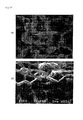
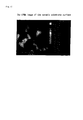
- Whether grains are round or not can be judged by cutting a ceramic substrate and observing a scanning electron microscopic (SEM) photograph of a cross-section including the surface of the ceramic substrate. Practically, the grains having curved faces in the ranges of 0.5 ⁇ m or wider width in the vicinity of portions where ridgelines are supposed to be formed are defined as round grains in this specification.
- a ceramic substrate of a third aspect of the present invention is a ceramic substrate having a conductor formed on a surface thereof, or internally thereof, wherein the ceramic substrate has a content of a rare earth element gradually increasing toward the vicinity of the surface part from the inside.
- An aluminum nitride sintered body of a third aspect of the present invention is an aluminum nitride sintered body wherein the aluminum nitride sintered body has a content of a rare earth element gradually increasing toward the vicinity of the surface part from the inside.
- the rare earth elements are generally added as sintering aids. Along with proceeding of the sintering, sintering aids are gradually discharged to the outside of the system of the sintered body. Accordingly, along with the proceeding of the sintering, the sintering aids move from the center of the sintered body toward the surface. Further, above-mentioned annealing treatment causes larger change of the concentration attributed to the movement of the rare earth element and thus, the content of the rare earth elements in the ceramic substrate (the aluminum nitride sintered body) after the annealing treatment increases toward the vicinity of the surface part.
- the ratio of the concentration at the center in the thickness direction of the substrate to the concentration near the surface of the substrate is within a range of 0 or more and 0.5 or less.
- a ceramic substrate having such rare earth element distribution has generally been subjected to annealing treatment in conditions described for the first aspect of the present invention and the mechanical characteristics such as the strength and the like are improved and even if the pushing pressure is applied to the ceramic substrate at a high temperature, cracks and damages are not caused easily.
- the ceramic substrate is suitable to be employed for various purposes for such as a chuck top plate for a wafer prober, a probe card, a hot plate, an electrostatic chuck and the like.
- the bending strength of an aluminum nitride substrate (an aluminum nitride sintered body) manufactured by adding yttria (Y 2 O 3 ) as the above-mentioned rare earth element, as a sintering aid, to aluminum nitride is preferably 350 MPa or more, further preferably 400 MPa or more. It is because aluminum nitride has the highest thermal conductivity and is the most preferable ceramic material, and yttria (Y 2 O 3 ) is generally employed as a sintering aid for aluminum nitride.
- the bending strength of the manufactured aluminum nitride substrate is 400 MPa or more, cracks and damages attributed to pushing pressure are not caused easily and coming-off of particle also does not take place easily.
- the similar effect of the annealing treatment can be observed in the case of silicon nitride and the annealing treatment to the silicone nitride makes it possible to realize the bending strength of 400 MPa or more.
- a method for manufacturing a ceramic substrate of a fourth aspect of the present invention is a method for manufacturing a ceramic substrate having a conductor formed on a surface thereof, or internally thereof, comprising the steps of: firing a formed body containing a ceramic powder to produce a primary sintered body; and performing an annealing process to the primary sintered body at a temperature of 1400°C to 1800°C, after the preceding step.
- a method for manufacturing an aluminum nitride sintered body of a fourth aspect of the present invention is a method for manufacturing an aluminum nitride sintered body, containing the steps of : firing a formed body containing an aluminum nitride powder to produce a primary sintered body; and performing an annealing process to said primary sintered body at a temperature of 1400°C to 1800°C, after the preceding step.
- the method for manufacturing a ceramic substrate (an aluminum nitride sintered body) of the present invention comprises steps of producing a primary sintered body by firing and then subjecting the primary sintered body to annealing treatment at a temperature of 1400°C to 1800°C. Consequently, molecular movement (for example, volumetric diffusion) is caused so as to promote sintering, and at the same time, strains of the primary sintered body are moderated to result in excellency in the mechanical characteristics such as the bending strength and the like thereof.
- the bending strength is generally improved by about 5 to 50% as compared with that before the annealing treatment.
- the ceramic substrate is suitable to be used for various purposes for such as a wafer prober (a chuck top plate for a wafer prober) a probe card, a hot plate, an electrostatic chuck and the like.
- an aluminum nitride sintered body is one of materials constituting a ceramic substrate of the present invention and contained in a material of the ceramic substrate to be described hereinafter, so that description of only an aluminum nitride sintered body itself will be omitted.
- Any ceramic substrate of a first to a third aspects of the present invention is a ceramic substrate having a conductor on the surface thereof or internally thereof and in the case a resistance heating element as the above-mentioned conductor is formed, the above-mentioned ceramic substrate functions as a hot plate and in the case the ceramic substrate has an electrostatic electrode as the conductor embedded therein, the above-mentioned ceramic substrate functions as an electrostatic chuck.
- the above-mentioned ceramic substrate functions as a wafer prober.
- a ceramic substrate of a first aspect of the present invention is characterized in that the substrate has a bending strength of 350 MPa or more.
- a ceramic substrate of a second aspect of the present invention is characterized in that the shape of grains composing the surface of the substrate is round.
- a ceramic substrate of a third aspect of the present invention is characterized in that the substrate has a content of a rare earth element gradually increasing toward the vicinity of the surface part.
- the respective ceramic substrates of the first to the third aspects of the present invention are not particularly limited other than the above-mentioned constitutional factors as long as they are ceramic substrates satisfying the above-mentioned constitutional factors.
- a ceramic substrate manufactured by a ceramic substrate manufacturing method of the present invention to be described later satisfies the constitutional factors of the ceramic substrate of the above-mentioned first to the third aspects of the present invention, hereinafter, as an embodiment of the present invention, a ceramic substrate manufactured by a ceramic manufacturing method of the present invention is exemplified for the description.
- the ceramic substrate manufactured by the ceramic manufacturing method of the present invent ion is referred simply as to a ceramic substrate of the present invention.
- a ceramic material composing the ceramic substrate of the present invention is not particularly limited, and examples thereof include, for example, a nitride ceramic, a carbide ceramic, an oxide ceramic and the like.
- nitride ceramic examples include metal nitride ceramics such as aluminum nitride, silicon nitride, boron nitride, titanium nitride and the like.
- examples of the above-mentioned carbide ceramic include metal carbide ceramics such as silicon carbide, zirconium carbide, titanium carbide, tantalum carbide, tungsten carbide and the like.
- oxide ceramic examples include metal oxide ceramics such as alumina, zirconia, cordierite, mullite and the like.
- These ceramics may be used alone or in combination of two or more of them.
- nitride ceramics and carbide ceramics are preferable as compared with oxide ceramics, because of a higher thermal conductivity.
- the thermal conductivity is highest, that is, 180 W/m ⁇ K.
- the above-mentioned ceramic material desirably contains a sintering aid.
- a sintering aid for example, alkali metal oxides, alkaline earth metal oxides, rare earth metal oxides and the like can be exemplified.
- the rare earth metal oxides are preferable and Y 2 O 3 is especially preferable. These content is preferably 0.1 to 10 % by weight.
- the ceramic substrate of the present invention preferably has the lightness of N6 or less on the basis of the regulations of JIS Z 8721. It is because those having such lightness are excellent in heat radiation quantity and shielding property. Further, it is made possible to accurately measure the surface temperature of such a ceramic substrate by a thermo-viewer.
- the lightness N is expressed as the symbols of N0 to N10 defined by setting the lightness of ideal black to be 0 and the lightness of ideal white to be 10 and dividing the respective colors into 10 grades so as to make the sensible lightness of the respective colors be at equal degrees between the lightness of black and the lightness of white.
- the actual measurement is carried out by comparison with the color chips corresponding to N0 to N10 and in this case, the numeral value of the first decimal place is set to be 0 or 5.
- the ceramic substrate having such characteristics can be obtained by adding 100 to 5000 ppm of carbon in the ceramic substrate.
- carbon There are types of carbon, amorphous one and crystalline one.
- the amorphous carbon can suppress the drop of the volume resistivity of the ceramic substrate at a high temperature and the crystalline carbon can suppress the drop of the thermal conductivity of the ceramic substrate at a high temperature, so that types of carbon can properly be selected depending on the purposes of the substrate to be manufactured.
- the amorphous carbon can be obtained, for example, by firing hydrocarbons consisting of only C, H, and O, preferably, saccharides, in air; and as the crystalline carbon, a graphite powder and the like can be employed.
- the resulting material is heated and pressurized to obtain carbon and, further, the degree of the crystallinity (the non-crystallinity) can be adjusted by changing the acid value of the acrylic resin.
- the bending strength of the above-mentioned ceramic substrate is preferably 350 MPa or more, more preferably 400 MPa or more.
- Such a ceramic substrate with high strength is not particularly limited, however, as described above, such a ceramic substrate can be manufactured by producing a primary sintered body which is going to be a ceramic substrate by firing and then subjecting the primary sintered body to annealing treatment in temperature condition from 1400°C to 1800°C.
- a rare earth element as a sintering aid to raw material powders. It is because sintering is promoted easily and a dense body with a high strength can be formed.
- the strength of the ceramic substrate is preferably 400 MPa or more. It is to further increase the strength of the ceramic substrate.
- Such a ceramic substrate with high strength can be obtained by subjecting a fired primary sintered body to annealing treatment at a temperature of 1600 to 1800°C for 0.5 to 10 hours in vacuum or atmosphere of an inert gas (nitrogen, argon and the like).
- the ceramic substrate comprises grains with round shape composing the surface thereof and has the content of rare earth element gradually increasing toward the outer rim part.
- Such grains with the round shape are supposedly formed in a manner attributable to movement of the molecules which promotes sintering, caused by the annealing treatment. Owing to the molecule movement, a further dense structure body can be obtained and the strains of the structure body are moderated and the drop of the strength attributed to the strains is suppressed to result in a ceramic substrate with high strength.
- Fig. 13(a) is a scanning electron microscopic (SEM) photograph showing the surface of a ceramic substrate made of aluminum nitride before annealing treatment and (b) is a cross-sectional view thereof.
- Fig. 14 (a) is a scanning electron microscopic (SEM) photograph showing the surface of the above-mentioned ceramic substrate after annealing treatment at a temperature of 1700°C and (b) is a cross-sectional view thereof.
- the relatively angular surface of the grains before the annealing treatment is changed to be rather round grains and it is understood that molecules in the grains are moved by the annealing treatment.
- the increased strength of the sintered body is attributed to the movement of the molecules composing the sintered body.
- the rare earth element moves from the center of the primary sintered body toward the outer rim direction and owing to the concentration change attributed to the movement of the rare earth element, the content of the rare earth element in the ceramic substrate is increased gradually toward the vicinity of the surface of the ceramic substrate.
- the ratio of the concentration of the centerpoint in the thickness direction of the substrate to the concentration in the vicinity of the substrate is 0 or more and 0.5 or less, preferably 0 to 0.1.
- the diameter of the above-mentioned ceramic substrate is preferably 200 mm or more. Especially, it is desirable to be 12 inches (300mm) or more. It is because such a ceramic substrate will be a main stream of a semiconductor wafer of the next generation. It is also because the problem of the cracks and damages which the present invention solves does not take place easily if the ceramic substrate has a diameter of 200 mm or less.
- the thickness of the above-mentioned ceramic substrate is preferably 50 mm or less, more preferably 20 mm or less, and most preferably 1 to 5 mm.
- the thermal capacity of the ceramic substrate sometimes becomes too high and especially, when heating and cooling is carried out by installing a temperature control means, the temperature following property is deteriorated in some cases owing to the high thermal capacity. Further, the warping problem of the ceramic substrate is not easily caused in the case the ceramic substrate has a thickness exceeding 50 mm.
- the ceramic substrate of the present invention is to be used at 150°C or more, preferably 200°C or more.
- the porosity of the ceramic substrate is preferably 0, or 5% or less. It is because drop of the thermal conductivity, occurrence of warp, drop of the strength at a high temperature can be suppressed. If the porosity exceeds 5%, it becomes difficult to make the bending strength of the ceramic substrate at 400 MPa or more.
- the porosity is measured by an Archimedes' method. A sintered body is pulverized, and then the pulverized pieces are put in an organic solvent or mercury to determine its volume. Then the true specific gravity of the pieces is obtained from the weight and the measured volume thereof, and the porosity is calculated from the true specific gravity and apparent specific gravity.
- the pore diameter of the largest pores of the above-mentioned ceramic substrate is preferably 50 ⁇ m or smaller, more preferably 10 ⁇ m or smaller.
- the pore diameter exceeds 50 ⁇ m, it becomes difficult to keep the breakdown voltage characteristics at a high temperature, especially at 200°C or more, and at the time of cooling the ceramic substrate, gas leakage easily takes place to result in drop of the thermal efficiency for cooling.
- the reason why the pore diameter of the largest pores is preferable to be 10 ⁇ m or smaller is that the warp amount at 200°C or more can be suppressed to small and the drop of the strength can be prevented.
- the breakdown voltage at a high temperature is especially increased and on the contrary, if pores exist, the fracture toughness value is increased. Therefore, which design should be chosen depends on the required characteristics.
- thermocouple can be embedded in the ceramic substrate based on the necessity. It is because the temperature of a resistance heating element can be measured by the thermocouple and based on the obtained data, the temperature can be controlled by changing the voltage and the current.
- the size of connecting portions of metal wires of the above-mentioned thermocouple is preferably either equal to or larger than the diameter of a strand wire of the respective metal wires and 0.5 mm or smaller.
- thermocouple examples include K type, R type, B type, E type, J type, and T type thermocouples as exemplified in JIS-C-1602 (1980).
- the above-mentioned ceramic substrate functions as a hot plate.
- Fig. 1 is a bottom face view schematically showing one example of a hot plate according to the present invention and Fig. 2 is a partially enlarged cross-sectional view schematically showing a part of the hot plate shown in Fig. 1.
- the resistance heating element is formed on the bottom face of the ceramic substrate.
- the ceramic substrate 11 is formed like a disk and a plurality of resistance heating elements 12 in the form of concentric circles are formed on the bottom face 11b of the ceramic substrate 11.
- These resistance heating elements 12 are arranged in a manner that two concentric circles neighboring each other constitute one line as a set of circuits and thus, the temperature in the heating face 11a is made to be even by combining the respective circuits.
- a metal covering layer 12a is formed on each resistance heating element 12 in order to prevent oxidation and external terminals 13 are joined to both ends by connecting with a solder and the like (not illustrated) .
- Sockets 170 equipped with wiring are attached to the external terminals 13 to connect the terminals to an electric power source and the like.
- Bottomed holes 14 to insert temperature measurement elements 18 into are formed in the ceramic substrate 14 and temperature measurement elements 18 such as thermocouples are embedded internally of the bottomed holes 14. In the portion near the center, through holes 15 to insert lifter pins 16 are formed.
- through holes or concave portions are formed in the ceramic substrate 11 and after supporting pins having pinnacle-like or hemispherical tips are inserted into the through holes or concave portions, the supporting pins are fixed while being slightly projected out of the ceramic substrate 11 and the silicon wafer 9 may be supported by the supporting pins to be heated while being kept at 50 to 2000 ⁇ m distance from the heating face 11a.
- Fig. 3 is a cross-sectional view schematically showing a supporting case 30 to fit the hot plate (the ceramic substrate) 10 with the above-mentioned structure.
- the ceramic substrate 11 is fitted through a heat insulating material 35 and fixed using bolts 38 and pressing metal tools 37. Under the portions of the ceramic substrate 11 where through holes 15 are formed, guide pipes 32 communicated with the through holes are formed. Further, in the supporting case 30, coolant outlets 30a are formed to blow a coolant into through coolant inlets 39 and discharge the coolant out of the coolant outlets 30a to the outside, so that owing to the function of the coolant, the ceramic substrate 11 can be cooled.
- Fig. 4 is a partially enlarged cross-sectional view schematically showing another example of a hot plate of the present invention.
- resistance heating elements are formed internally of the ceramic substrate.
- the ceramic substrate 21 is formed in a disc shape and resistance heating elements 22 are formed internally of the ceramic substrate 21 while being made to have similar patterns as that shown in Fig. 1, that is, patterns comprising concentric circles wherein two concentric circles neighboring each other constitute one line as a set of circuits.
- Conductor-filled through holes 28 are formed immediately under the end parts of the resistance heating elements 22 and further, blind holes 27 to expose the conductor-filled through holes 28 are formed on the bottom face 21b and the external terminals 23 are inserted into the blind holes 27 and connected by a solder and the like (not illustrated).
- sockets having conductive wires are attached to the external terminals 23 and the conductive wires are connected to an electric power source and the like.
- the resistance heating elements are formed internally of the ceramic substrate constituting the heater plate of the present invention, a plurality of layers may be formed.
- the patterns of the respective layers are formed so as to complement one another and that a pattern is formed in any of layers when being observed above the heating face.
- a staggered arrangement can be exemplified.
- a sintered body of a metal or a conductive ceramic, a metal foil, a metal wire, and the like can be exemplified.
- a metal sintered body at least one of metals selected from tungsten and molybdenum is preferable. It is because these metals are relatively hard to be oxidized and have a sufficient resistance value to radiate heat.
- the sintered body to be employed as a resistance heating element is those obtained by firing but not subjected to annealing treatment.
- At least one carbide selected from carbides of tungsten and molybdenum can be employed.
- a noble metal gold, silver, palladium, platinum
- nickel nickel
- silver, silver-palladium and the like can be used.
- a metal particle to be used for the above-mentioned metal sintered body may be spherical, scaly, or a mixture of spherical and scaly ones.
- resistance heating elements are formed internally of the ceramic substrate, after a conductor containing paste layer is formed on a green sheet, a green sheet is layered and the resulting product is fired to form resistance heating elements internally.
- a conductor containing paste layer is formed on a green sheet, a green sheet is layered and the resulting product is fired to form resistance heating elements internally.
- firing is carried out to produce a ceramic substrate and then a conductor containing paste layer is formed on the surface and fired to produce the resistance heating elements.
- the above-mentioned conductor containing paste is not particularlylimited, however those containing resin, a solvent, a thickening agent other than a metal particle or a conductive ceramic which is for assuring the conductivity are preferable.
- a metal oxide may be added to a metal for sintering.
- Use of the above-mentioned metal oxide is to increase the adhesion strength between the ceramic substrate and the metal particle.
- the reason for the improvement of the adhesion strength between the ceramic substrate and the metal particle owing to the above-mentioned metal oxide is not clear, however the surface of the metal particle is slightly covered with an oxide film and in the case of not only the ceramic substrate of an oxide but also a non-oxide ceramic, an oxide film is formed on the surface of the ceramic substrate. Accordingly, it is supposed that these oxide films are sintered on the ceramic substrate surface through the metal oxide so as to be integrated with each other to result in close adhesion between the metal particle and the ceramic substrate.
- metal oxide for example, at least one of oxides selected from lead oxide, zinc oxide, silica, boron oxide (B 2 O 3 ), alumina, yttria, and titania is preferable, because these oxides can improve the adhesion strength between the metal particle and the ceramic substrate without increasing the resistance value of the resistance heating elements too much.
- the above-mentioned metal oxides are preferable to be 0.1 parts by weight or more and less than 10 parts by weight in 100 parts by weight of the metal particle. It is because use of such a metal oxide within the range can improve the adhesion strength between the metal particle and the ceramic substrate without making the resistance value too high.
- the ratio of lead oxide, zinc oxide, silica, boron oxide (B 2 O 3 ), alumina, yttria, and titania is preferable to be 1 to 10 parts by weight for lead oxide, 1 to 30 parts by weight for silica, 5 to 50 parts by weight for boron oxide, 20 to 70 parts by weight for zinc oxide, 1 to 10 parts by weight for alumina, 1 to 50 parts by weight for yttria, 1 to 50 parts by weight for titania in the case the total amount of the metal oxides is 100 parts by weight. Nevertheless, it is preferable to adjust the total of these oxides to be within a range not exceeding 100 parts by weight. Because the adhesion strength to the ceramic substrate is especially improved if the ratios are within these ranges.
- the surface of the resistance heating elements 12 are preferable to be coated with a metal layer 12a (reference to Fig. 2).
- the resistance heating elements 12 are a sintered body of a metal particle and easy to be oxidized when being exposed owing to the oxidation, and the resistance value is changed. Therefore, the covering of the surface with the metal layer 12a can prevent oxidation.
- the thickness of the metal layer 12a is preferably 0.1 to 100 ⁇ m, because it is the range in which the resistance value of the resistance heating elements is not changed and oxidation of the resistance heating elements can be prevented.
- any non-oxidative metal may be used. Specifically, at least one or more metals selected from gold, silver, palladium, platinum, and nickel is/are preferable. Above all, nickel is more preferable. It is because the resistance heating elements require terminals to be connected with an electric power source and the terminals are attached to the resistance heating elements by a solder and nickel suppresses thermal diffusion of the solder. As the connecting terminals, external terminals made of Kovar can be employed.
- the resistance heating element are formed internally of the ceramic substrate, the surface of the resistance heating elements are not oxidized, so that the covering is unnecessary. In the case the resistance heating elements are formed internally of the ceramic substrate, some portion of the surface of the resistance heating element may be exposed.
- a metal foil or a metal wire may be used.
- a nickel foil and a stainless steel foil are preferable to be formed as the resistance heating elements by patterning by etching and the like.
- a patterned metal foil may be laminated with a resin film and the like.
- the metal wire for example, a tungsten wire, a molybdenum wire and the like can be exemplified.
- the ceramic substrate functions as an electrostatic chuck.
- Fig. 5(a) is a cross-sectional view schematically showing an electrostatic chuck and (b) is a cross-sectional view along the A-A line of the electrostatic chuck shown in Fig. 5(a).
- chuck positive and negative electrode layers 62, 63 are embedded internally of the ceramic substrate 61 and a ceramic dielectric film 64 is formed on the electrodes. Further, internally of a ceramic substrate 61, resistance heating elements 66 are formed to heat a silicon wafer 29. Additionally, an RF electrode may be embedded in the ceramic substrate 61 based on the necessity.
- the electrostatic chuck 60 is generally formed to be circular shape as viewed from the above.
- a chuck positive electrostatic layer 62 composed of a semicircular arc part 62a and comb teeth-shaped parts 62b and an chuck negative electrostatic layer 63 composed of a semicircular arc part 63a and comb teeth-shaped parts 63b are arranged face to face so as to alternately arrange the comb teeth-shaped parts 62b, 63b internally of the ceramic substrate 61 as shown in Fig. 5.
- the + side and the - side of a d.c. power source are connected respectively to the chuck positive electrostatic layer 62 and the chuck negative electrostatic layer 63 and d.c. voltage is applied. Consequently, a semiconductor wafer put on the electrostatic chuck is electrostatically adsorbed.
- Fig. 6 and Fig. 7 are horizontal cross-sectional views schematically showing the shapes of other electrostatic electrodes constituting electrostatic chucks.
- electrostatic chuck 70 shown in Fig. 6 semi-circular chuck positive electrostatic layer 72 and chuck negative electrostatic layer 73 are formed internally of a ceramic substrate 71 and in the electrostatic chuck 80 shown in Fig. 7, chuck positive electrostatic layers 82a, 82b and chuck negative electrostatic layers 83a, 83b respectively with a shape formed by quartering a circle are formed internally of a ceramic substrate 81.
- Two chuck positive electrostatic layers 82a, 82b and two chuck negative electrostatic layers 83a, 83b are so formed as to be reciprocally crossing one another.
- the number of the division is not particularly limited and may be 5 or more and the shape is neither limited to a sector.
- a chuck top conductor layer is formed on the surface of a ceramic substrate of the present invention and in the case a guard electrode and ground electrode are formed as a conductor internally, the above-mentioned ceramic substrate functions as a chuck top plate for a wafer prober.
- Fig. 8 is a cross-sectional view schematically showing a chuck top plate for a wafer prober (hereinafter, referred simply as to a wafer prober), which is one example of a ceramic substrate of the present invention.
- Fig. 9 is its planar view and
- Fig. 10 is a cross-sectional view along the A-A line of the wafer prober shown in Fig. 8.
- grooves 7, in the form of concentric circles, are formed on the surface of a ceramic substrate 3 with a circular shape as a planar view and a plurality of suction holes 8 for attracting a silicon wafer are formed in some parts of the grooves 7 and a chuck top conductor 2 with a circular shape is formed in the almost entire portion of the ceramic substrate 3 including the groove 7.
- resistance heating elements 41 composed by combining concentric patterns with winding line patterns as shown in Fig. 1 are formed and external terminals are connected to and fixed in terminal portions formed in both ends of the respective resistance heating elements 41.
- guard electrodes 5 and ground electrodes 6, in the shape of lattice, shown in Fig. 10 are formed.
- the reason why the rectangular electrode non-formed portion 52 are formed in the guard electrodes 5 is to stuck upper and lower ceramic substrates sandwiching the guard electrodes.
- a probe card having tester pins is pushed against the silicon wafer and voltage is applied while heating and cooling being carried out to carry out an electric communication test to examine whether the circuit is normally operated or not.
- the method for manufacturing ceramic substrates of a first to a third aspects of the present invention is not particularly limited and a ceramic substrate manufacturing method of the present invention described below can be employed. Together with description of the method for manufacturing the ceramic substrates of the first to the third aspects of the present invention, a ceramic substrate manufacturing method of the present invention will be described.
- the ceramic substrate manufacturing method of the present invention is a method for manufacturing a ceramic substrate having a conductor formed on a surface thereof, or internally thereof, comprising the steps of : firing a formed body containing a ceramic powder to produce a primary sintered body; and performing an annealing process to the primary sintered body at a temperature of 1400°C to 1800°C, after the preceding step.
- an electrostatic chuck can be manufactured by installing electrostatic electrodes internally of the ceramic substrate and also, a ceramic substrate for a wafer prober can be manufactured by forming a chuck top conductor layer in the heating face and guard and ground electrodes internally of the ceramic substrate.
- a metal foil and the like may be embedded internally of the ceramic substrate.
- a conductor is formed on the surface of the ceramic substrate, a sputtering method and a plating method may be employed and these methods may be employed in combination.
- Fig. 12(a) to 12(d) shows a cross-sectional view schematically showing the above-mentioned hot plate manufacturing method.
- the above-mentioned hot plate While placing a silicon wafer thereon or supporting a silicon wafer with supporting pins and then heating or cooling the silicon wafer, the above-mentioned hot plate is capable of carrying out various operations.
- electrostatic electrodes may be formed internally of the ceramic substrate to manufacture an electrostatic chuck and also, a chuck top conductor layer is formed on a heating face and guard electrodes and ground electrodes are formed internally of the ceramic substrate to manufacture a ceramic substrate for a wafer prober.
- conductor containing paste layers may be formed on the surface of a green sheet similarly to the case of forming the resistance heating elements.
- a sputtering method and a plating method may be employed and these methods may be employed in combination.
- Example 2 Manufacture of an electrostatic chuck made of aluminum nitride
- Example 3 Manufacture of a chuck top plate for a wafer prober made of aluminum nitride.
- a hot plate was manufacture in the same manner as Example 1, except that no annealing treatment was carried out.
- a hot plate was manufacture in the same manner as Example 4, except that no annealing treatment was carried out.
- the ceramic substrates constituting hot plates according to Examples 1 to 4 had a bending strength of 400 to 500 MPa, whereas the ceramic substrates constituting hot plates according to Comparative Examples 1 and 2 had a bending strength of 290 MPa, manifesting inferiority.
- the ceramic substrates according to Examples had grains having round surface.
- the ceramic substrates according to Examples 1 to 3 had a low concentration ratio of yttria and a content of Y 2 O 3 gradually increased toward the vicinity of the surface part. That was obvious from the fact that yttria was scarcely observed internally of the ceramic substrate and that yttria locally existed at triple points where grains were brought into contact with one another at the surface of the ceramic substrate on the basis of the electron microscopic photograph of the vicinity of the surface of the ceramic substrate shown in Fig. 15 to 17 and the electron microscopic photograph and EPMA image of the inner portion of the ceramic substrate.
- the ceramic substrate according to Comparative Example had a yttria concentration ratio of 1.0, that is, the concentration in the vicinity of the surface and the center part was same.
- the ceramic heaters according to Examples all had the number of free particles: 5 pieces or less/cm 2
- the ceramic heaters according to Comparative Examples had the number of free particles: 20 pieces or more/cm 2 .
- any ceramic substrate of the present invention was obtained by subjecting a primary sintered body which is obtained by firing a formed body to annealing treatment in the temperature condition of 1400°C to 1800°C, its bending strength was especially excellent and coming-off of particle also did not take place easily.
- a ceramic substrate and an aluminum nitride sintered body of the first aspect of the present invention had a bending strength as high as 400 MPa or more, so that even if the ceramic substrate is made to be a large size ceramic substrate capable of placing a semiconductor wafer with a large diameter thereon, cracks and damages attributed to the pushing pressure do not take place easily and coming-off of particle also do not takes place easily.
- a ceramic substrate and an aluminum nitride sintered body of the second aspect of the present invention wherein a grain composing the surface thereof has round shape.
- Such a ceramic substrate and aluminum nitride sintered body are generally subjected to annealing treatment at a temperature of 1400°C to 1800°C after production of a primary sintered body, so that they become a further dense structure body and are provided with improved mechanical characteristics such as the strength and therefore, even if pushing pressure is applied to the ceramic substrate, cracks and damages do not take place easily.
- a ceramic substrate and an aluminum nitride sintered body of the third aspect of the present invention wherein the ceramic substrate and aluminum nitride sintered body has a content of a rare earth element gradually increasing toward the vicinity of the surface part.
- Such a ceramic substrate and aluminum nitride sintered body are generally subjected to annealing treatment at a temperature of 1400°C to 1800°C after production of a primary sintered body, so that they become a further dense structure body and are provided with improved mechanical characteristics such as the strength and therefore, even if pushing pressure is applied to the ceramic substrate, cracks and damages do not take place easily.
- a ceramic substrate manufacturing method of the present invention includes a step of subjecting a primary sintered body to the annealing treatment at a temperature of 1400°C to 1800°C after production of the primary sintered body by firing a formed body containing a ceramic powder, molecular movement (for example, volumetric diffusion) which promotes sintering in the primary sintered body is caused and at the same time the strains in the primary sintered body are moderated and consequently the manufactured ceramic substrate is provided with excellent mechanical characteristics such as bending strength and the like.
- the production method of aluminum nitride sintered body of the present invention is similar to the production method of a ceramic substrate, except that aluminum nitride is used as a ceramic powder, and the obtained effects are also similar.
Landscapes
- Chemical & Material Sciences (AREA)
- Engineering & Computer Science (AREA)
- Ceramic Engineering (AREA)
- Materials Engineering (AREA)
- Organic Chemistry (AREA)
- Structural Engineering (AREA)
- Manufacturing & Machinery (AREA)
- Inorganic Chemistry (AREA)
- Dispersion Chemistry (AREA)
- Physics & Mathematics (AREA)
- Thermal Sciences (AREA)
- Container, Conveyance, Adherence, Positioning, Of Wafer (AREA)
- Exposure And Positioning Against Photoresist Photosensitive Materials (AREA)
- Ceramic Products (AREA)
- Exposure Of Semiconductors, Excluding Electron Or Ion Beam Exposure (AREA)
- Resistance Heating (AREA)
Applications Claiming Priority (3)
| Application Number | Priority Date | Filing Date | Title |
|---|---|---|---|
| JP2000356539A JP2002160974A (ja) | 2000-11-22 | 2000-11-22 | 窒化アルミニウム焼結体、窒化アルミニウム焼結体の製造方法、セラミック基板およびセラミック基板の製造方法 |
| JP2000356539 | 2000-11-22 | ||
| PCT/JP2001/010255 WO2002042241A1 (fr) | 2000-11-22 | 2001-11-22 | Corps fritte de nitrure d'aluminium, procede de production d'un corps fritte de nitrure d'aluminium, substrat ceramique et procede de production d'un substrat ceramique |
Publications (1)
| Publication Number | Publication Date |
|---|---|
| EP1340732A1 true EP1340732A1 (fr) | 2003-09-03 |
Family
ID=18828771
Family Applications (1)
| Application Number | Title | Priority Date | Filing Date |
|---|---|---|---|
| EP01997469A Withdrawn EP1340732A1 (fr) | 2000-11-22 | 2001-11-22 | Corps fritte de nitrure d'aluminium, procede de production d'un corps fritte de nitrure d'aluminium, substrat ceramique et procede de production d'un substrat ceramique |
Country Status (4)
| Country | Link |
|---|---|
| US (1) | US20040097359A1 (fr) |
| EP (1) | EP1340732A1 (fr) |
| JP (1) | JP2002160974A (fr) |
| WO (1) | WO2002042241A1 (fr) |
Families Citing this family (24)
| Publication number | Priority date | Publication date | Assignee | Title |
|---|---|---|---|---|
| EP1120829A4 (fr) * | 1999-08-10 | 2009-05-27 | Ibiden Co Ltd | Plaque ceramique pour dispositif de production de semi-conducteurs |
| EP1249433A4 (fr) * | 1999-09-06 | 2005-01-05 | Ibiden Co Ltd | Briquette et substrat ceramique en nitrure d'aluminium carbone fritte destine a des equipements de fabrication ou de verification de semi-conducteurs |
| US6861165B2 (en) * | 2000-02-24 | 2005-03-01 | Ibiden Co., Ltd. | Aluminum nitride sintered compact, ceramic substrate, ceramic heater and electrostatic chuck |
| JP2001247382A (ja) * | 2000-03-06 | 2001-09-11 | Ibiden Co Ltd | セラミック基板 |
| EP1233651A1 (fr) * | 2000-04-07 | 2002-08-21 | Ibiden Co., Ltd. | Element ceramique chauffant |
| JP3516392B2 (ja) * | 2000-06-16 | 2004-04-05 | イビデン株式会社 | 半導体製造・検査装置用ホットプレート |
| EP1229572A1 (fr) * | 2000-07-04 | 2002-08-07 | Ibiden Co., Ltd. | Plaque chaude destinee a la fabrication et aux essais de semiconducteurs |
| US6815646B2 (en) * | 2000-07-25 | 2004-11-09 | Ibiden Co., Ltd. | Ceramic substrate for semiconductor manufacture/inspection apparatus, ceramic heater, electrostatic clampless holder, and substrate for wafer prober |
| US20060011139A1 (en) * | 2004-07-16 | 2006-01-19 | Applied Materials, Inc. | Heated substrate support for chemical vapor deposition |
| US20060088692A1 (en) * | 2004-10-22 | 2006-04-27 | Ibiden Co., Ltd. | Ceramic plate for a semiconductor producing/examining device |
| US8252410B2 (en) * | 2007-09-05 | 2012-08-28 | Applied Materials, Inc. | Ceramic cover wafers of aluminum nitride or beryllium oxide |
| US8580593B2 (en) * | 2009-09-10 | 2013-11-12 | Micron Technology, Inc. | Epitaxial formation structures and associated methods of manufacturing solid state lighting devices |
| JP5684023B2 (ja) * | 2011-03-28 | 2015-03-11 | 株式会社小松製作所 | 加熱装置 |
| US9691644B2 (en) * | 2012-09-28 | 2017-06-27 | Semes Co., Ltd. | Supporting unit, substrate treating device including the same, and method of manufacturing the supporting unit |
| CN107207367A (zh) * | 2014-05-07 | 2017-09-26 | 摩根先进陶瓷公司 | 用于制造大型共烧物件的改进的方法 |
| JP6219229B2 (ja) * | 2014-05-19 | 2017-10-25 | 東京エレクトロン株式会社 | ヒータ給電機構 |
| CN111620701B (zh) * | 2020-03-27 | 2022-05-13 | 烟台睿瓷新材料技术有限公司 | 一种多层复合陶瓷盘及其制造方法 |
| JP7429825B2 (ja) * | 2021-03-31 | 2024-02-08 | デンカ株式会社 | 窒化アルミニウム焼結体、及びその製造方法、回路基板、並びに、積層基板 |
| JP7303249B2 (ja) * | 2021-06-30 | 2023-07-04 | 新光電気工業株式会社 | 静電チャック及び基板固定装置 |
| US12142468B2 (en) * | 2021-08-30 | 2024-11-12 | Applied Materials, Inc. | Stress treatments for cover wafers |
| CN116410000B (zh) * | 2021-12-31 | 2024-06-14 | 江苏博睿光电股份有限公司 | 一种基板、制备方法及应用 |
| CN115172571B (zh) * | 2022-07-15 | 2023-04-07 | 广州市明电照明科技有限公司 | 一种圆形超匀光led芯片及其切割和封装方法 |
| CN115710132A (zh) * | 2022-11-24 | 2023-02-24 | 宜宾红星电子有限公司 | 氧化物陶瓷基板一体烧结方法 |
| CN119930299A (zh) * | 2025-01-23 | 2025-05-06 | 宁波江丰电子材料股份有限公司 | 一种氮化铝陶瓷加热器支撑体及其制备和焊接方法 |
Family Cites Families (19)
| Publication number | Priority date | Publication date | Assignee | Title |
|---|---|---|---|---|
| US5314850A (en) * | 1985-10-31 | 1994-05-24 | Kyocera Corporation | Aluminum nitride sintered body and production thereof |
| JPS62197379A (ja) * | 1986-02-20 | 1987-09-01 | 株式会社東芝 | 窒化アルミニウム基板 |
| JPS6483407A (en) * | 1987-09-24 | 1989-03-29 | Yokohama Rubber Co Ltd | Pneumatic radial tire for heavy load |
| JPH04275982A (ja) * | 1991-02-28 | 1992-10-01 | Shin Etsu Chem Co Ltd | 窒化ほう素・窒化アルミニウム複合焼結体及びその製造方法 |
| US5320990A (en) * | 1993-03-30 | 1994-06-14 | The Dow Chemical Company | Process for sintering aluminum nitride to a high thermal conductivity and resultant sintered bodies |
| US6017485A (en) * | 1996-03-28 | 2000-01-25 | Carborundum Corporation | Process for making a low electrical resistivity, high purity aluminum nitride electrostatic chuck |
| JPH10310475A (ja) * | 1997-05-02 | 1998-11-24 | Denki Kagaku Kogyo Kk | 窒化アルミニウム焼結体及びその用途 |
| JP4161423B2 (ja) * | 1997-10-30 | 2008-10-08 | 住友電気工業株式会社 | 窒化アルミニウム焼結体及びそのメタライズ基板 |
| US6294275B1 (en) * | 1998-05-06 | 2001-09-25 | Sumitomo Electric Industries, Ltd. | Aluminum-nitride sintered body, method for fabricating the same, and semiconductor substrate comprising the same |
| JP2000178072A (ja) * | 1998-12-18 | 2000-06-27 | Kyocera Corp | 窒化アルミニウム質焼結体 |
| JP2000226261A (ja) * | 1999-02-08 | 2000-08-15 | Fuji Electric Co Ltd | 窒化アルミニウム焼結体およびその製造方法 |
| JP4342634B2 (ja) * | 1999-04-30 | 2009-10-14 | 株式会社東芝 | 回路基板 |
| JP2001118664A (ja) * | 1999-08-09 | 2001-04-27 | Ibiden Co Ltd | セラミックヒータ |
| EP1120829A4 (fr) * | 1999-08-10 | 2009-05-27 | Ibiden Co Ltd | Plaque ceramique pour dispositif de production de semi-conducteurs |
| EP1124404B1 (fr) * | 1999-11-19 | 2005-08-10 | Ibiden Co., Ltd. | Plaque chauffante en ceramique |
| WO2001041508A1 (fr) * | 1999-11-30 | 2001-06-07 | Ibiden Co., Ltd. | Appareil chauffant en ceramique |
| JP3228923B2 (ja) * | 2000-01-18 | 2001-11-12 | イビデン株式会社 | 半導体製造・検査装置用セラミックヒータ |
| JP3228924B2 (ja) * | 2000-01-21 | 2001-11-12 | イビデン株式会社 | 半導体製造・検査装置用セラミックヒータ |
| JP2001244320A (ja) * | 2000-02-25 | 2001-09-07 | Ibiden Co Ltd | セラミック基板およびその製造方法 |
-
2000
- 2000-11-22 JP JP2000356539A patent/JP2002160974A/ja active Pending
-
2001
- 2001-11-22 EP EP01997469A patent/EP1340732A1/fr not_active Withdrawn
- 2001-11-22 US US10/181,724 patent/US20040097359A1/en not_active Abandoned
- 2001-11-22 WO PCT/JP2001/010255 patent/WO2002042241A1/fr not_active Ceased
Non-Patent Citations (1)
| Title |
|---|
| See references of WO0242241A1 * |
Also Published As
| Publication number | Publication date |
|---|---|
| US20040097359A1 (en) | 2004-05-20 |
| WO2002042241A1 (fr) | 2002-05-30 |
| JP2002160974A (ja) | 2002-06-04 |
Similar Documents
| Publication | Publication Date | Title |
|---|---|---|
| EP1340732A1 (fr) | Corps fritte de nitrure d'aluminium, procede de production d'un corps fritte de nitrure d'aluminium, substrat ceramique et procede de production d'un substrat ceramique | |
| US6861165B2 (en) | Aluminum nitride sintered compact, ceramic substrate, ceramic heater and electrostatic chuck | |
| US6731496B2 (en) | Electrostatic chuck | |
| US7084376B2 (en) | Semiconductor production device ceramic plate | |
| US6921881B2 (en) | Ceramic joint body | |
| US6849938B2 (en) | Ceramic substrate for semiconductor production and inspection | |
| KR20020092967A (ko) | 세라믹 기판 및 그 제조 방법 | |
| EP1286390A1 (fr) | Substrat ceramique pour dispositif de fabrication de semi-conducteurs | |
| US7011874B2 (en) | Ceramic substrate for semiconductor production and inspection devices | |
| WO2001066488A1 (fr) | Substrat ceramique pour fabrication/inspection de semi-conducteur | |
| EP1225157A1 (fr) | Substrat en ceramique | |
| JP2002134600A (ja) | 静電チャック | |
| JP2001319967A (ja) | セラミック基板の製造方法 | |
| JP2001308163A (ja) | 半導体製造・検査装置用セラミック基板 | |
| JP2001257196A (ja) | 半導体製造・検査装置用セラミック基板 | |
| JP2004172637A (ja) | 半導体製造・検査装置用セラミック基板 | |
| JP2001308168A (ja) | 半導体製造・検査装置用セラミック基板 | |
| JP2001351970A (ja) | 静電チャック | |
| JP2003208966A (ja) | セラミック基板およびその製造方法 | |
| JP2004026635A (ja) | 半導体製造・検査装置用セラミック基板 |
Legal Events
| Date | Code | Title | Description |
|---|---|---|---|
| PUAI | Public reference made under article 153(3) epc to a published international application that has entered the european phase |
Free format text: ORIGINAL CODE: 0009012 |
|
| 17P | Request for examination filed |
Effective date: 20020820 |
|
| AK | Designated contracting states |
Kind code of ref document: A1 Designated state(s): AT BE CH CY DE DK ES FI FR GB GR IE IT LI LU MC NL PT SE TR |
|
| STAA | Information on the status of an ep patent application or granted ep patent |
Free format text: STATUS: THE APPLICATION HAS BEEN WITHDRAWN |
|
| 18W | Application withdrawn |
Effective date: 20050502 |