EP1344423B1 - Dispositif et procede permettant de connecter en mode paquets des abonnes a des reseaux isdn/pstn classiques a un systeme de commutation - Google Patents
Dispositif et procede permettant de connecter en mode paquets des abonnes a des reseaux isdn/pstn classiques a un systeme de commutation Download PDFInfo
- Publication number
- EP1344423B1 EP1344423B1 EP01271777A EP01271777A EP1344423B1 EP 1344423 B1 EP1344423 B1 EP 1344423B1 EP 01271777 A EP01271777 A EP 01271777A EP 01271777 A EP01271777 A EP 01271777A EP 1344423 B1 EP1344423 B1 EP 1344423B1
- Authority
- EP
- European Patent Office
- Prior art keywords
- pae
- peripheral
- tne
- subscriber terminal
- switching system
- Prior art date
- Legal status (The legal status is an assumption and is not a legal conclusion. Google has not performed a legal analysis and makes no representation as to the accuracy of the status listed.)
- Expired - Lifetime
Links
- 238000000034 method Methods 0.000 title claims abstract description 22
- 230000002093 peripheral effect Effects 0.000 claims abstract description 76
- 230000006978 adaptation Effects 0.000 claims abstract description 53
- 238000004891 communication Methods 0.000 claims abstract description 20
- 230000003993 interaction Effects 0.000 claims abstract 2
- 230000011664 signaling Effects 0.000 claims description 30
- 238000012545 processing Methods 0.000 claims description 9
- 238000011084 recovery Methods 0.000 claims 3
- 125000004122 cyclic group Chemical group 0.000 claims 1
- 230000005540 biological transmission Effects 0.000 abstract description 11
- 238000006243 chemical reaction Methods 0.000 description 7
- 238000005516 engineering process Methods 0.000 description 5
- 230000008901 benefit Effects 0.000 description 3
- 238000012546 transfer Methods 0.000 description 2
- 239000000654 additive Substances 0.000 description 1
- 230000000996 additive effect Effects 0.000 description 1
- 230000008878 coupling Effects 0.000 description 1
- 238000010168 coupling process Methods 0.000 description 1
- 238000005859 coupling reaction Methods 0.000 description 1
- 230000001934 delay Effects 0.000 description 1
- 230000006866 deterioration Effects 0.000 description 1
- 238000011161 development Methods 0.000 description 1
- 230000018109 developmental process Effects 0.000 description 1
- 230000000694 effects Effects 0.000 description 1
- 238000012423 maintenance Methods 0.000 description 1
- 230000007246 mechanism Effects 0.000 description 1
- 230000008439 repair process Effects 0.000 description 1
- 238000012360 testing method Methods 0.000 description 1
- 238000013519 translation Methods 0.000 description 1
- 230000001960 triggered effect Effects 0.000 description 1
- 238000011144 upstream manufacturing Methods 0.000 description 1
Images


Classifications
-
- H—ELECTRICITY
- H04—ELECTRIC COMMUNICATION TECHNIQUE
- H04Q—SELECTING
- H04Q11/00—Selecting arrangements for multiplex systems
- H04Q11/04—Selecting arrangements for multiplex systems for time-division multiplexing
- H04Q11/0428—Integrated services digital network, i.e. systems for transmission of different types of digitised signals, e.g. speech, data, telecentral, television signals
- H04Q11/0435—Details
- H04Q11/0442—Exchange access circuits
-
- H—ELECTRICITY
- H04—ELECTRIC COMMUNICATION TECHNIQUE
- H04Q—SELECTING
- H04Q2213/00—Indexing scheme relating to selecting arrangements in general and for multiplex systems
- H04Q2213/13034—A/D conversion, code compression/expansion
-
- H—ELECTRICITY
- H04—ELECTRIC COMMUNICATION TECHNIQUE
- H04Q—SELECTING
- H04Q2213/00—Indexing scheme relating to selecting arrangements in general and for multiplex systems
- H04Q2213/13109—Initializing, personal profile
-
- H—ELECTRICITY
- H04—ELECTRIC COMMUNICATION TECHNIQUE
- H04Q—SELECTING
- H04Q2213/00—Indexing scheme relating to selecting arrangements in general and for multiplex systems
- H04Q2213/13167—Redundant apparatus
-
- H—ELECTRICITY
- H04—ELECTRIC COMMUNICATION TECHNIQUE
- H04Q—SELECTING
- H04Q2213/00—Indexing scheme relating to selecting arrangements in general and for multiplex systems
- H04Q2213/13176—Common channel signaling, CCS7
-
- H—ELECTRICITY
- H04—ELECTRIC COMMUNICATION TECHNIQUE
- H04Q—SELECTING
- H04Q2213/00—Indexing scheme relating to selecting arrangements in general and for multiplex systems
- H04Q2213/13196—Connection circuit/link/trunk/junction, bridge, router, gateway
-
- H—ELECTRICITY
- H04—ELECTRIC COMMUNICATION TECHNIQUE
- H04Q—SELECTING
- H04Q2213/00—Indexing scheme relating to selecting arrangements in general and for multiplex systems
- H04Q2213/13203—Exchange termination [ET]
-
- H—ELECTRICITY
- H04—ELECTRIC COMMUNICATION TECHNIQUE
- H04Q—SELECTING
- H04Q2213/00—Indexing scheme relating to selecting arrangements in general and for multiplex systems
- H04Q2213/13298—Local loop systems, access network
-
- H—ELECTRICITY
- H04—ELECTRIC COMMUNICATION TECHNIQUE
- H04Q—SELECTING
- H04Q2213/00—Indexing scheme relating to selecting arrangements in general and for multiplex systems
- H04Q2213/13389—LAN, internet
Definitions
- the invention relates to a method according to the preamble of claim 1.
- subscriber switch concentrators Remote Switching Units, RSU
- AN subscriber access networks
- the subscriber line concentrators / subscriber access networks have distinct mechanisms for preempting subscriber signaling to the peripheral equipment of the switching system.
- signaling options for controlling the therapeuticanschlußkonzentrators / Operanemeranschlußnetzes itself are provided. These relate for example to the switching of voice channels of the subscriber line or the extension to voice channels of the interface of the subscriber line concentrator / subscriber access network to the peripheral devices of the switching node. Also, the operating state of subscriber line and extension is matched in this way between therapeuticanschlußkonzentrator / subscriber line network and the switching system.
- the exchange of subscriber signaling and control information is generally message-based in the manner specified by the interface definition. Typically, the entire interface is PCM-based and certain timeslots are reserved for the message-based ones Transmission of subscriber / extension signaling and control information.
- V5.2 interface As an example of a concentrating interface between a subscriber access network and a local exchange, let us mention the V5.2 interface.
- This provides that ISDN signaling, ISDN packet data on the D channel, message-based analog signaling (PSTN) are transmitted in time slots of the interface that can be defined according to standard specifications.
- PSTN message-based analog signaling
- Signalisierzangsprotokolle are provided which relate to the switching of information through the subscriber line network, the adjustment of port and PCM path conditions and the equivalent circuit of failed signaling channels.
- High-speed access to the Internet can be made via xDSL links to the subscriber line or via cable networks.
- all subscriber features known from classical PSTN / ISDN networks should remain available.
- the user data necessary for the switching traffic are transmitted in a packet-based manner, in contrast to the situation of a subscriber line concentrator / subscriber access network. The same applies to the signaling.
- a subscriber access network AN which supplies information of a plurality of subscriber terminals to the peripheral devices of a central office LE.
- a subscriber termination device there is provided a device IAD that supports specific functions of xDSL transmission methods.
- DSLAM narrowband are separated from broadband information and completed the xDSL route.
- the voice and signaling information is supplied IP-based over an ATM network as the bearer of a device IAT which forms the headend of the subscriber access network AN. The latter forwards the voice and signaling information via a V5.2 interface to a local exchange LE.
- the invention has for its object to provide a way how classic participants can be connected by simple means of packet-based transmission method to a central office and in failure situations of communication paths stable connections can be obtained.
- the invention is achieved on the basis of the features specified in the preamble of claim 1 by the features of the characterizing part.
- An advantage of the invention is in particular that the participant near participant completion device at loss of Mednikations sukeit with the exchange independently tries to establish them over a plurality of available ways again.
- Inadmissible provision of switching resources, such as the switching of a user channel to a remote subscriber are in the case of loss of communication of the subscriber unit with the exchange also canceled automatically by the subscriber terminal device.
- a further advantage is provided by the fact that the switching center actively checks all subscriber termination devices cyclically for availability, whereby in particular already identified as unavailable ports to subscriber termination facilities and ports with call processing activity (eg, ports with switched-through user channels) are checked. This results in an up-to-date status image of the availability in the switching system and thus reduces the dummy load which would result from the unavailability of test ports. Furthermore, after repair ports can be automatically and quickly reconnected switchable and already switched connections in which one of the participating subscriber equipment on the part of the switching system can no longer be signalized achieved can be triggered quickly and reliably, and the associated billing can be stopped.
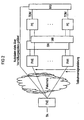
- Fig. 2 shows a subscriber terminal TNE with the classical subscriber interfaces (a / b wire, SO, S2M). This terminates the physical lines of POTS, ISDN BA and ISDN PRI.
- the subscriber termination device TNE is substantially identical to that of the prior art according to FIG Fig. 1 , It has access to at least 2 peripheral adaptation devices PAE of the exchange, whereby this access is packet-based.
- peripheral adaptation devices PAE further shown here are a peripheral component of the switching center. You have access to the message distribution system MB of the exchange. In addition, access to the switching network SN may exist, wherein alternatively PCM-based interfaces may be present on the peripheral adaptation device PAE.
- peripheral exchanges PE of the exchange with access to message distribution system MB and switching network SN are provided.
- a plurality of peripheral devices PE associated with a concentrating interface provides the call processing function for these concentrating Interface ready.
- a peripheral device PE in conventional application terminates a plurality of PCM links of this concentrating interface. If ISDN packet data is supported on the D channel, then the transfer function for D channel packet data to the packet handler interface is also provided by said plurality of peripheral devices PE assigned to the concentrating interface.
- the latter attempts to communicate with one of its associated peripheral adaptation devices PAE.
- the packet addresses of the associated peripheral adaptation devices PAE can hereby be stored locally in the subscriber termination device TNE. Alternatively, they can be queried with the run-up to the management system responsible for the network. If the communication with the relevant peripheral adaptation device PAE fails, a new communication attempt is made with a further associated peripheral adaptation device PAE. If unsuccessful, the communication attempt is repeated cyclically with one of the peripheral adaptation device PAE.
- the subscriber signaling takes place transparently for ISDN subscribers and extensions. This means that the messages arriving via the D channel are sent packet-based in the direction of the peripheral adaptation device PAE.
- Messages sent to the peripheral adaptation device PAE contain the packet address of the subscriber termination device TNE supplemented by the identifier of the relevant port or a packet address from which the sending D channel is unambiguously evident.
- Messages sent by the peripheral adaptation device PAE to the subscriber termination device TNE contain the packet address of the subscriber-oriented device TNE supplemented by the identifier of the subscriber line affected ports or a packet address that clearly indicates the receiving D-channel.
- Signaling messages and packet data on the D-channel are transmitted in the same way.
- the transmission of the ISDN L2 can be unsecured, which is perfectly adequate, especially in good packet networks.
- the ISDN L2 in the subscriber terminal device TNE is preferably terminated and a secure protocol is used between it and the peripheral adaptation device PAE.
- the line signals in the subscriber terminal device TNE are converted to switching-oriented messages, or switching-oriented messages are converted into line signals in the opposite direction. These are exchanged in the same way between the subscriber terminal device TNE and the peripheral adaptation device PAE, as is the case for signaling messages of the ISDN subscribers to the subscriber terminal device TNE. If necessary, a protocol deviating from the ISDN case can be used.
- the addressing of the analog port takes place via a packet address per analog port or via a packet address supplemented by a port identifier for a plurality of analog ports at the subscriber-oriented device TNE.
- the switching jobs of a channel for a port at the subscriber termination device TNE and, if appropriate, the availability state of the port are exchanged between the subscriber termination device TNE and the peripheral adaptation device PAE.
- a packet-based protocol is used, which covers the mentioned functions.
- peripheral adaptation device PAE The functions of the peripheral adaptation device PAE are used to adapt the messages used on the interface between the subscriber termination device TNE and the peripheral adaptation device PAE to the needs of the concentrating interface assigned to the TNE port:
- the address translation between the addressing used for the TNE port and the exchange-internal address of the port on the concentrating interface responsible for the port takes place. Furthermore, the protocol conversion of the subscriber signaling of the messages used in the direction of the subscriber terminal device TNE is performed on the protocol used for the respective signaling channels of the concentrating interface.
- the message transmission via the NUC and the switching network can also be dispensed with and, alternatively, the message distribution system used for the transmission of the signaling messages between the peripheral device and the peripheral adaptation device.
- the peripheral adaptation device PAE creates the prerequisite that in the belonging to the concentrating interface of the switching system peripheral device PE signaling the subscriber to the subscriber terminal TNE arrives in the same way as if it had been introduced via an intermediate subscriber access network AN via TDM technology , Signaling data is processed in the manner of the concentrating interface. D-channel packet data is forwarded to the Packet Handler Interface.
- the signaling necessary for the control of the concentrating interface for effecting touch switches and for adjusting the port state likewise takes place via a peripheral adaptation device PAE, whereby these are likewise routed via NUC or via the message distribution system.
- the above method enables 2 types of concentrating interfaces.
- the first one is like in Fig. 2 shown, characterized in that it always leads the user data channels of the ports on the subscriber termination device TNE via a media gateway MG in one of the call processing associated with the peripheral device PE.
- all subscriber features for the port are provided with this connection type (concentrating interface with compulsory user data conversion).
- the second type of concentrating interface is omitted as in Fig. 3 shown on the unconditional conversion of the user channel to TDM format and thus allows the direct exchange of user data between two participants in the subscriber terminal TNE, bypassing the exchange. This can be associated with restrictions on the availability of the subscriber features (concentrating interface without forcibly payload conversion).
- peripheral adaptation device PE transmits switching commands in the direction of the subscriber line concentrator, subscriber access network in the context of the connection setup, these are converted in the peripheral adaptation device PAE to setting commands to the subscriber-oriented device TNE and the intermediately stored media gateways MG.
- TNE variants subscriber termination devices
- the functionality of a subscriber access network required for this purpose can also be provided by the peripheral adaptation device PAE.
- the data structures necessary for these alarming and maintenance functions are maintained and maintained in the peripheral adaptation device PAE.
- the necessary interface to the management system is separate from that of the Switching system for advantageously reducing the complexity of the overall system, which then provides both functions of a local exchange as well as that of a connection network, without the latter being as a separate device.
Landscapes
- Engineering & Computer Science (AREA)
- Computer Networks & Wireless Communication (AREA)
- Data Exchanges In Wide-Area Networks (AREA)
- Telephonic Communication Services (AREA)
Abstract
Claims (14)
- Procédé pour le raccordement d'abonnés analogiques classiques et ISDN à un système de commutation, la signalisation d'abonné étant transmise, entre un dispositif de terminaison d'abonné (TNE) et le système de commutation, en mode paquet au moyen d'un réseau et respectivement une pluralité de tels abonnés étant attribuée à un ensemble commun de dispositifs périphériques (PE) du système de commutation,
caractérisé en ce que
au moins un dispositif d'adaptation périphérique (PAE) est prévu, lequel est disposé dans la périphérie du système de commutation et sert à l'adaptation des messages, utilisés sur l'interface entre le dispositif de terminaison d'abonné (TNE) et le dispositif d'adaptation périphérique (PAE), aux exigences de l'ensemble attribué au port TNE, de dispositifs périphériques (PE),
en ce que des fonctions de logiciel sont prévues pour le traitement de défaillance dans le dispositif de terminaison d'abonné (TNE), dans le au moins un dispositif d'adaptation périphérique (PAE) et dans les dispositifs périphériques (PE) attribués du système de commutation,
en ce que la mise en circuit de remplacement et la remise en service de dispositifs périphériques (PE), de dispositifs d'adaptation périphériques (PAE) et de voies de communication vers des dispositifs de terminaison d'abonné (TNE) qui sont devenus défaillants sont commandés par la coopération de ces fonctions de logiciel pour le traitement des défaillances. - Procédé selon la revendication 1,
caractérisé en ce que
le dispositif de terminaison d'abonné (TNE) établit la communication via un autre dispositif d'adaptation périphérique (PAE), en cas de perte de la communication via un dispositif d'adaptation périphérique (PAE). - Procédé selon les revendications 1, 2
caractérisé en ce que
le dispositif de terminaison d'abonné (TNE) tente en cas de perte de la communication via tous les dispositifs d'adaptation périphériques (PAE) qui lui sont attribués d'établir de façon cyclique la communication via un autre dispositif d'adaptation périphérique (PAE), libère les ressources liées au niveau de la commutation et supprime des commutations établies, de flux de données utiles sur ses raccordements. - Procédé selon l'une des revendications 1 à 3,
caractérisé en ce que
la défaillance et la nouvelle disponibilité d'un raccordement sur le dispositif de terminaison d'abonné sont signalées au système de commutation par le dispositif de terminaison d'abonné (TNE) via la communication avec le dispositif d'adaptation (PAE) périphérique et la représentation de l'état d'un raccordement est gérée au central et décrit la disponibilité du raccordement au niveau de commutation dans le système de commutation. - Procédé selon la revendication 4,
caractérisé en ce que
le protocole MGCP ou H.248 est utilisé pour la signalisation de l'état d'un raccordement sur le dispositif de terminaison d'abonné (TNE) au système de commutation. - Procédé selon l'une quelconque des revendications précédentes,
caractérisé en ce que
les raccordements signalés comme étant défaillants sur le dispositif de terminaison d'abonné (TNE) sont testés de façon cyclique par le dispositif d'adaptation (PAE) périphérique en ce qui concerne la nouvelle disponibilité - Procédé selon la revendication 6,
caractérisé en ce que
le protocole MGCP ou H.248 est utilisé pour le contrôle de l'état d'un raccordement sur le dispositif de terminaison d'abonné (TNE) par le dispositif d'adaptation périphérique (PAE) du système de commutation. - Procédé selon l'une quelconque des revendications précédentes,
caractérisé en ce que
des raccordements actifs au niveau de la commutation sur le dispositif de terminaison d'abonné (TNE) sont testés de façon cyclique en ce qui concerne la disponibilité par le dispositif d'adaptation périphérique (PAE), le déclenchement des connexions et transactions au niveau de la commutation s'effectuant en cas de non-disponibilité constatée ainsi que l'arrêt de la taxation du raccordement concerné au central de commutation. - Procédé selon la revendication 8,
caractérisé en ce que
le protocole MGCP ou H.248 est utilisé pour le contrôle de raccordements actifs au niveau de la commutation sur le dispositif de terminaison d'abonné (TNE) par le dispositif d'adaptation périphérique (PAE) du système de commutation. - Procédé selon l'une quelconque des revendications précédentes,
caractérisé en ce que,
dans le cas de défaillances du dispositif d'adaptation périphérique (PAE), des liaisons stables sont obtenues par un stockage redondant des états de connexion dans un dispositif d'adaptation périphérique (PAE) redondant ou par récupération des états de connexion par l'interrogation des dispositifs de terminaison d'abonnés concernés et des Media Gateways après la commutation sur un autre dispositif d'adaptation périphérique (PAE). - Procédé selon l'une quelconque des revendications précédentes,
caractérisé en ce que,
dans le cas de la défaillance d'un dispositif périphérique (PE), des connexions, au niveau de la commutation, de liaisons qui ne peuvent plus être utilisées sont corrigées par l'utilisation du stockage des états de connexion dans les dispositifs d'adaptation périphériques (PAE) ou par la récupération des états de connexion par l'interrogation des dispositifs de terminaison d'abonnés et des Media Gateways concernés. - Procédé selon la revendication 10 ou 11,
caractérisé en ce que
le protocole MGCP ou H.248 est utilisé pour la récupération des états de connexion par interrogation des dispositifs de terminaison d'abonnés (TNE) et des Media Gateways concernés. - Procédé selon l'une quelconque des revendications précédentes,
caractérisé en ce que
la défaillance d'un dispositif de terminaison d'abonné (TNE) est détectée par des essais de communication s'effectuant de façon cyclique d'un dispositif d'adaptation périphérique (PAE) et est reproduite sur la non-disponibilité des raccordements attribués. - Procédé selon l'une quelconque des revendications précédentes,
caractérisé en ce que,
des ports, guidés dans le système de commutation sous forme de raccordements non disponibles au niveau de la commutation, d'un dispositif de terminaison d'abonné ne sont pas occupés au niveau de la commutation même dans le cas d'appels en terminaison.
Applications Claiming Priority (3)
| Application Number | Priority Date | Filing Date | Title |
|---|---|---|---|
| DE10063081A DE10063081A1 (de) | 2000-12-18 | 2000-12-18 | Verfahren zum paketbasierten Anschluss von klassischen ISDN/PSTN-Teilnehmern an ein Vermittlungssystem |
| DE10063081 | 2000-12-18 | ||
| PCT/DE2001/004238 WO2002051195A1 (fr) | 2000-12-18 | 2001-11-12 | Dispositif et procede permettant de connecter en mode paquets des abonnes a des reseaux isdn/pstn classiques a un systeme de commutation |
Publications (2)
| Publication Number | Publication Date |
|---|---|
| EP1344423A1 EP1344423A1 (fr) | 2003-09-17 |
| EP1344423B1 true EP1344423B1 (fr) | 2008-02-27 |
Family
ID=7667649
Family Applications (1)
| Application Number | Title | Priority Date | Filing Date |
|---|---|---|---|
| EP01271777A Expired - Lifetime EP1344423B1 (fr) | 2000-12-18 | 2001-11-12 | Dispositif et procede permettant de connecter en mode paquets des abonnes a des reseaux isdn/pstn classiques a un systeme de commutation |
Country Status (5)
| Country | Link |
|---|---|
| US (1) | US7372869B2 (fr) |
| EP (1) | EP1344423B1 (fr) |
| BR (1) | BR0116258A (fr) |
| DE (2) | DE10063081A1 (fr) |
| WO (1) | WO2002051195A1 (fr) |
Families Citing this family (6)
| Publication number | Priority date | Publication date | Assignee | Title |
|---|---|---|---|---|
| DE10063082A1 (de) * | 2000-12-18 | 2002-07-11 | Siemens Ag | Vorrichtung und Verfahren zum paketbasierten Anschluss von klassischen ISDN/PSTN-Teilnehmern an ein Vermittlungssystem |
| DE10234937A1 (de) * | 2002-07-31 | 2004-02-19 | Siemens Ag | Effiziente Behandlung von ISDN-Anschlüssen durch eine paketorientierte Vermittlungsstelle |
| DE10339279A1 (de) * | 2003-08-26 | 2005-03-31 | Siemens Ag | Verfahren zur Steuerung von hochverfügbaren Teilnehmerzugangsnetzen durch eine paketbasierte Vermittlungsstelle |
| TWI312462B (en) * | 2006-04-07 | 2009-07-21 | Hon Hai Prec Ind Co Ltd | Network device and subscribers' states synchronizing method thereof |
| JP4948311B2 (ja) * | 2007-08-01 | 2012-06-06 | キヤノン株式会社 | ライセンス管理システム、ライセンス管理方法、及びコンピュータプログラム |
| US8401166B1 (en) | 2008-05-20 | 2013-03-19 | Peerless Network, Inc. | Systems and methods of mitigating phantom call traffic |
Family Cites Families (8)
| Publication number | Priority date | Publication date | Assignee | Title |
|---|---|---|---|---|
| US5949762A (en) * | 1996-01-24 | 1999-09-07 | Telebit Corporation | Apparatus and method for processing multiple telephone calls |
| US6285680B1 (en) * | 1997-03-27 | 2001-09-04 | Microcom Systems, Inc. | Central site call routing apparatus and method |
| US6154465A (en) * | 1998-10-06 | 2000-11-28 | Vertical Networks, Inc. | Systems and methods for multiple mode voice and data communications using intelligenty bridged TDM and packet buses and methods for performing telephony and data functions using the same |
| US6498791B2 (en) * | 1998-04-03 | 2002-12-24 | Vertical Networks, Inc. | Systems and methods for multiple mode voice and data communications using intelligently bridged TDM and packet buses and methods for performing telephony and data functions using the same |
| EP0966145A3 (fr) * | 1998-06-19 | 2003-07-16 | Nortel Networks Limited | Passerelle pour IP telephonie |
| US6553116B1 (en) * | 1999-09-03 | 2003-04-22 | Siemens Information And Communication Networks, Inc. | System and method for early detection of area code changes |
| JP2001186193A (ja) * | 1999-12-24 | 2001-07-06 | Fujitsu Ltd | Ip通信インタフェース装置、回線交換機及びip通信ネットワークシステム |
| DE10063082A1 (de) * | 2000-12-18 | 2002-07-11 | Siemens Ag | Vorrichtung und Verfahren zum paketbasierten Anschluss von klassischen ISDN/PSTN-Teilnehmern an ein Vermittlungssystem |
-
2000
- 2000-12-18 DE DE10063081A patent/DE10063081A1/de not_active Withdrawn
-
2001
- 2001-11-12 US US10/450,881 patent/US7372869B2/en not_active Expired - Fee Related
- 2001-11-12 DE DE50113674T patent/DE50113674D1/de not_active Expired - Lifetime
- 2001-11-12 WO PCT/DE2001/004238 patent/WO2002051195A1/fr not_active Ceased
- 2001-11-12 EP EP01271777A patent/EP1344423B1/fr not_active Expired - Lifetime
- 2001-11-12 BR BR0116258-6A patent/BR0116258A/pt not_active IP Right Cessation
Also Published As
| Publication number | Publication date |
|---|---|
| BR0116258A (pt) | 2003-12-30 |
| DE50113674D1 (de) | 2008-04-10 |
| WO2002051195A1 (fr) | 2002-06-27 |
| US20040071156A1 (en) | 2004-04-15 |
| US7372869B2 (en) | 2008-05-13 |
| DE10063081A1 (de) | 2002-07-11 |
| EP1344423A1 (fr) | 2003-09-17 |
Similar Documents
| Publication | Publication Date | Title |
|---|---|---|
| EP1250818B1 (fr) | Procede pour raccorder des unites, presentant des interfaces normalisees, a des unites d'un systeme de transmission | |
| EP0437422B1 (fr) | Systeme de communication servant a former des reseaux annulaires virtuels dans un reseau de commutation par paquets a multiplexage temporel | |
| EP1421767B1 (fr) | Dispositif pour fournir des annonces et des dialogues dans des reseaux de transmission par paquets | |
| EP0731618B1 (fr) | Procédé pour commander un réseau d'accès et central avec un tel réseau d'accès | |
| DE69731111T2 (de) | Verteiltes sprachverarbeitungssystem | |
| EP1344424B1 (fr) | Dispositif permettant de connecter en mode paquets des abonnes a des reseaux isdn/pstn classiques a un systeme de commutation | |
| DE69738041T2 (de) | Wiederherstellung eines ISDN D-Kanals ohne Verlust von Signalisierungs- oder Paketdaten | |
| WO2004014087A1 (fr) | Passerelle media permettant de fournir les services pstn/isdn dans des reseaux de la prochaine generation | |
| DE69735794T2 (de) | Automatische Wiederherstellung von Kanalen und Datenverbindungen | |
| WO2002051195A1 (fr) | Dispositif et procede permettant de connecter en mode paquets des abonnes a des reseaux isdn/pstn classiques a un systeme de commutation | |
| EP1658719B1 (fr) | Procédé de gestion d'une passerelle média | |
| DE19524029C1 (de) | Verfahren zum Anschluß von Access-Networks mit V5.2-Schnittstellen an Kommunikationssysteme mit nichtredundanten peripheren Einrichtungen | |
| EP1319312B1 (fr) | Procede de commande d'annonces et de dialogues dans des reseaux de paquets | |
| EP0294644A1 (fr) | Procédé pour le fonctionnement d'un montage pour un central de télécommunication, à commande centralisée, en particulier un central téléphonique MIC avec une partie centrale et avec des groupes de connexion connectés à cette partie centrale | |
| EP1269767B1 (fr) | Traitement de donnees de signalisation et de commande de connexions d'abonnes d'un reseau de communication a commutation de paquets | |
| EP1203483A1 (fr) | Procede et dispositif pour accroitre l'insensibilite aux defaillances d'un centre d'appel raccorde a des centraux telephoniques | |
| EP1214863B1 (fr) | Systeme de telecommunication | |
| EP1104205A1 (fr) | Procédé pour optimiser le traitement de connexions à l'extérieur d'un central de commutation | |
| EP1410612A1 (fr) | Repartition du traitement de fonctions relatives aux canaux telephoniques dans un reseau de telecommunication, seules les fonctions les moins utilisees etant disponibles de maniere centralisee | |
| DE4314791A1 (de) | Vermittlungssystem | |
| DE10212374B4 (de) | Lastverteilung auf periphere Einrichtungen eines paketbasierten Vermittlungssystems | |
| EP1236373B1 (fr) | Procede et dispositif pour commuter des liaisons a largeur de bande reduite | |
| EP1131980B1 (fr) | Procede et circuit pour etablir simultanement des liaisons de communication | |
| EP1525755B1 (fr) | Procédé, unité périphérique et commutateur de paquets pour échanger des informations de signalisation entre un accès RNIS et la partie centrale d'un commutateur de paquets | |
| EP1730924A1 (fr) | Procede et dispositif pour la commande, sur la base de paquets, d'une interface normalisee |
Legal Events
| Date | Code | Title | Description |
|---|---|---|---|
| PUAI | Public reference made under article 153(3) epc to a published international application that has entered the european phase |
Free format text: ORIGINAL CODE: 0009012 |
|
| 17P | Request for examination filed |
Effective date: 20030513 |
|
| AK | Designated contracting states |
Kind code of ref document: A1 Designated state(s): DE FR GB |
|
| GRAP | Despatch of communication of intention to grant a patent |
Free format text: ORIGINAL CODE: EPIDOSNIGR1 |
|
| RAP1 | Party data changed (applicant data changed or rights of an application transferred) |
Owner name: NOKIA SIEMENS NETWORKS GMBH & CO. KG |
|
| RAP3 | Party data changed (applicant data changed or rights of an application transferred) |
Owner name: NOKIA SIEMENS NETWORKS S.P.A. |
|
| RAP3 | Party data changed (applicant data changed or rights of an application transferred) |
Owner name: NOKIA SIEMENS NETWORKS GMBH & CO. KG |
|
| GRAS | Grant fee paid |
Free format text: ORIGINAL CODE: EPIDOSNIGR3 |
|
| GRAA | (expected) grant |
Free format text: ORIGINAL CODE: 0009210 |
|
| AK | Designated contracting states |
Kind code of ref document: B1 Designated state(s): DE FR GB |
|
| REG | Reference to a national code |
Ref country code: GB Ref legal event code: FG4D Free format text: NOT ENGLISH |
|
| REF | Corresponds to: |
Ref document number: 50113674 Country of ref document: DE Date of ref document: 20080410 Kind code of ref document: P |
|
| ET | Fr: translation filed | ||
| PLBE | No opposition filed within time limit |
Free format text: ORIGINAL CODE: 0009261 |
|
| STAA | Information on the status of an ep patent application or granted ep patent |
Free format text: STATUS: NO OPPOSITION FILED WITHIN TIME LIMIT |
|
| 26N | No opposition filed |
Effective date: 20081128 |
|
| PGFP | Annual fee paid to national office [announced via postgrant information from national office to epo] |
Ref country code: FR Payment date: 20081113 Year of fee payment: 8 |
|
| PGFP | Annual fee paid to national office [announced via postgrant information from national office to epo] |
Ref country code: GB Payment date: 20081117 Year of fee payment: 8 |
|
| GBPC | Gb: european patent ceased through non-payment of renewal fee |
Effective date: 20091112 |
|
| REG | Reference to a national code |
Ref country code: FR Ref legal event code: ST Effective date: 20100730 |
|
| PG25 | Lapsed in a contracting state [announced via postgrant information from national office to epo] |
Ref country code: FR Free format text: LAPSE BECAUSE OF NON-PAYMENT OF DUE FEES Effective date: 20091130 |
|
| PG25 | Lapsed in a contracting state [announced via postgrant information from national office to epo] |
Ref country code: GB Free format text: LAPSE BECAUSE OF NON-PAYMENT OF DUE FEES Effective date: 20091112 |
|
| REG | Reference to a national code |
Ref country code: DE Ref legal event code: R081 Ref document number: 50113674 Country of ref document: DE Owner name: NOKIA SOLUTIONS AND NETWORKS GMBH & CO. KG, DE Free format text: FORMER OWNER: NOKIA SIEMENS NETWORKS GMBH & CO. KG, 81541 MUENCHEN, DE Effective date: 20140731 |
|
| PGFP | Annual fee paid to national office [announced via postgrant information from national office to epo] |
Ref country code: DE Payment date: 20161121 Year of fee payment: 16 |
|
| REG | Reference to a national code |
Ref country code: DE Ref legal event code: R119 Ref document number: 50113674 Country of ref document: DE |
|
| PG25 | Lapsed in a contracting state [announced via postgrant information from national office to epo] |
Ref country code: DE Free format text: LAPSE BECAUSE OF NON-PAYMENT OF DUE FEES Effective date: 20180602 |
|
| REG | Reference to a national code |
Ref country code: DE Ref legal event code: R081 Ref document number: 50113674 Country of ref document: DE Owner name: WSOU INVESTMENTS, LLC, LOS ANGELES, US Free format text: FORMER OWNER: NOKIA SOLUTIONS AND NETWORKS GMBH & CO. KG, 81541 MUENCHEN, DE |